20 Quiff Undercut Hairstyles for Men
Twenty quiff undercut men are asking for by name — hard-line disconnected sides, lifted front, and the exact clipper numbers to hand your barber.
In this article · 32
- What Is a Quiff Undercut Haircut?
- How to Choose Your Quiff Undercut
- The 20 Quiff Undercut Variations
- 1. The Classic Quiff Undercut
- 2. The Disconnected Skin Undercut Quiff
- 3. The Textured Quiff Undercut
- 4. The Messy Quiff Undercut
- 5. The Slick Back Quiff Undercut
- 6. The Modern Quiff Undercut
- 7. The Long Quiff Undercut
- 8. The Short Quiff Undercut
- 9. The Wavy Quiff Undercut
- 10. The Curly Quiff Undercut
- 11. The Pompadour Quiff Undercut
- 12. The Side Swept Quiff Undercut
- 13. The Hard Part Quiff Undercut
- 14. The High Undercut Quiff
- 15. The Low Undercut Quiff
- 16. The Quiff Undercut with Beard
- 17. The Blonde Quiff Undercut
- 18. The Asymmetric Quiff Undercut
- 19. The Fringe Quiff Undercut
- 20. The Grown-Out Quiff Undercut
- How to Ask Your Barber
- Styling and Maintenance
- FAQ
- Can I get a quiff undercut at any barber?
- What's the difference between a quiff undercut and a quiff fade?
- Does the quiff undercut work for thinning hair?
- Which quiff undercut is the most professional?
- Does a quiff undercut suit round faces?
- How is a quiff undercut different from a two block undercut?
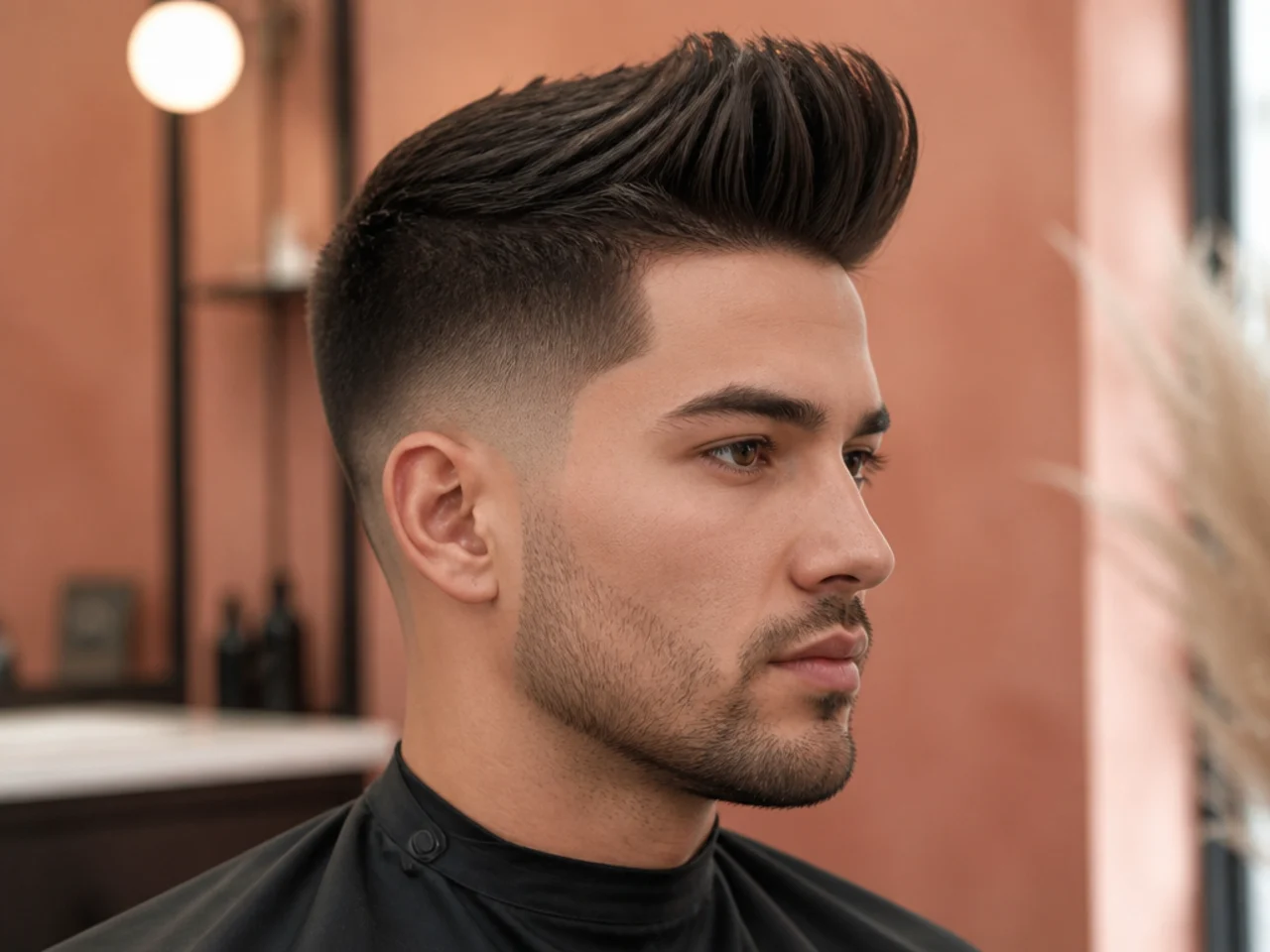
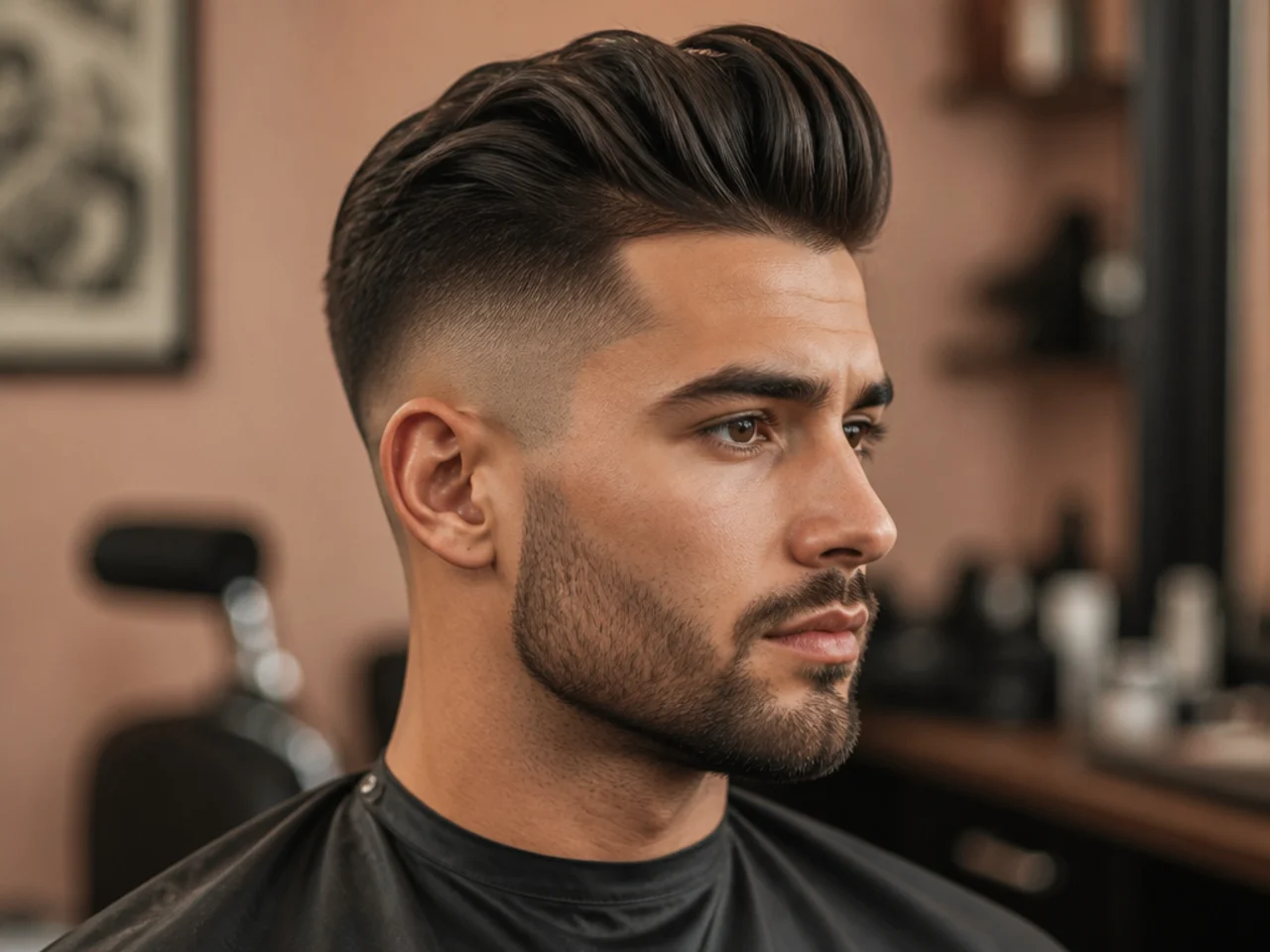
The quiff undercut is the sharpest version of the quiff family. Long styled hair up top, swept up and slightly back with real front lift. Below the horseshoe line, a single clipper guard runs straight down to skin — no fade, no taper, no blend. At rest the quiff carries the shape; the second you push the front back, a hard-line disconnect shows. This guide covers 20 quiff undercut variations men are asking for in 2026 — classic, textured, slick back, curly, long — with face-shape notes and the exact ask for your barber.
What Is a Quiff Undercut Haircut?
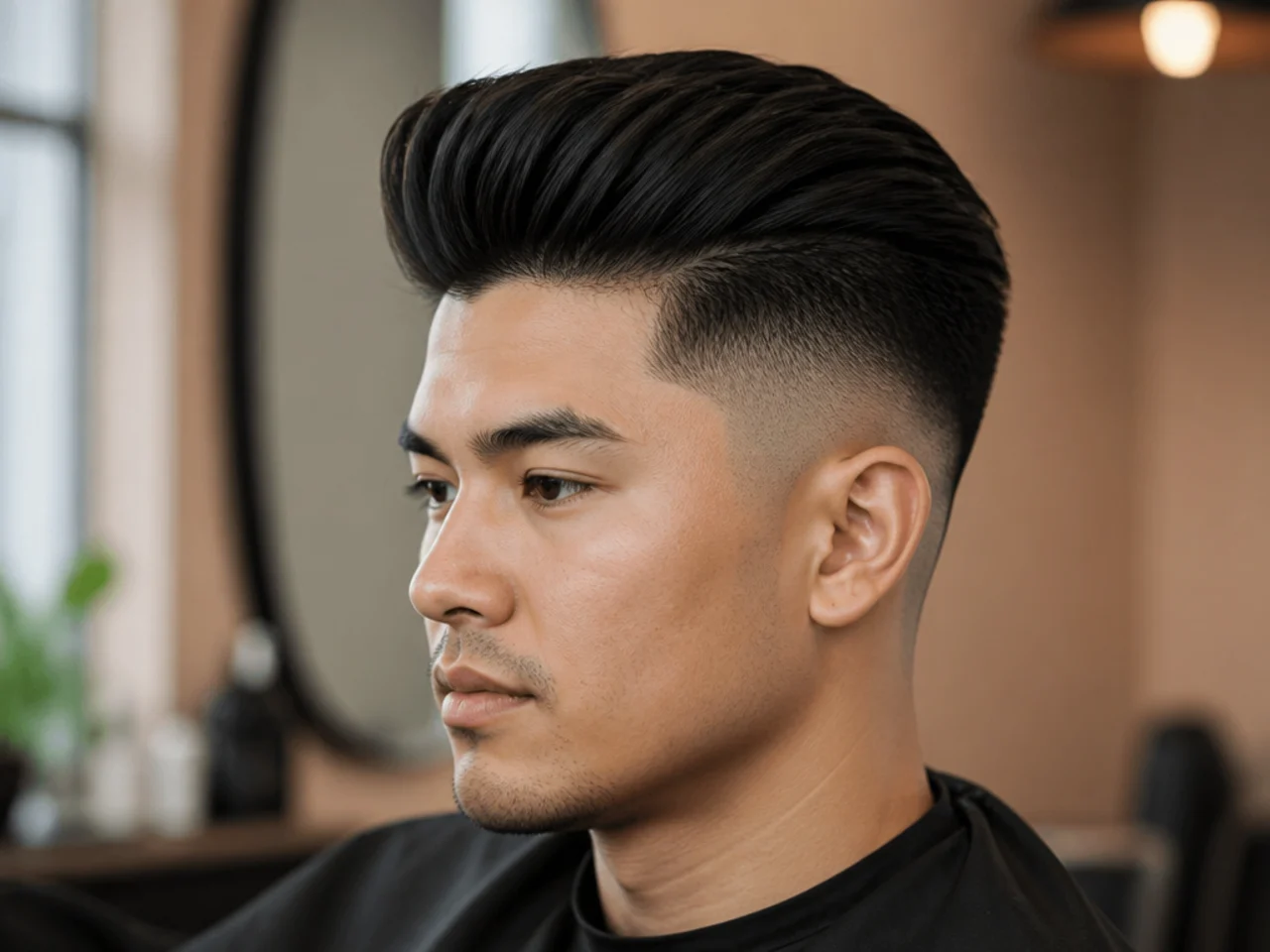
A quiff undercut is built from two lengths with a hard visible edge between them. The upper block — everything above a horseshoe line running from temple to temple across the crown — stays long. Four, five, six inches, depending on the variation, cut with front weight so it lifts and sweeps back. Below that line the sides and back get clipped in one pass to a single guard, usually a zero, a half, or a one, and the clipper runs straight down to skin with no taper.
That single hard-cut line is what makes it an undercut instead of a fade. A quiff paired with a low taper fade or mid fade blends the two lengths softly. A quiff undercut refuses to blend them. When the front sweeps up and the top lifts, the disconnect shows in one clean line at the temple. That vertical edge is what gives the cut its edge.
Ask for "a quiff undercut." Then give three numbers. The length of the top at the front in inches. The single guard number for the disconnected sides. Whether you want the front swept back, up, or off to a side. That is the whole conversation.
How to Choose Your Quiff Undercut
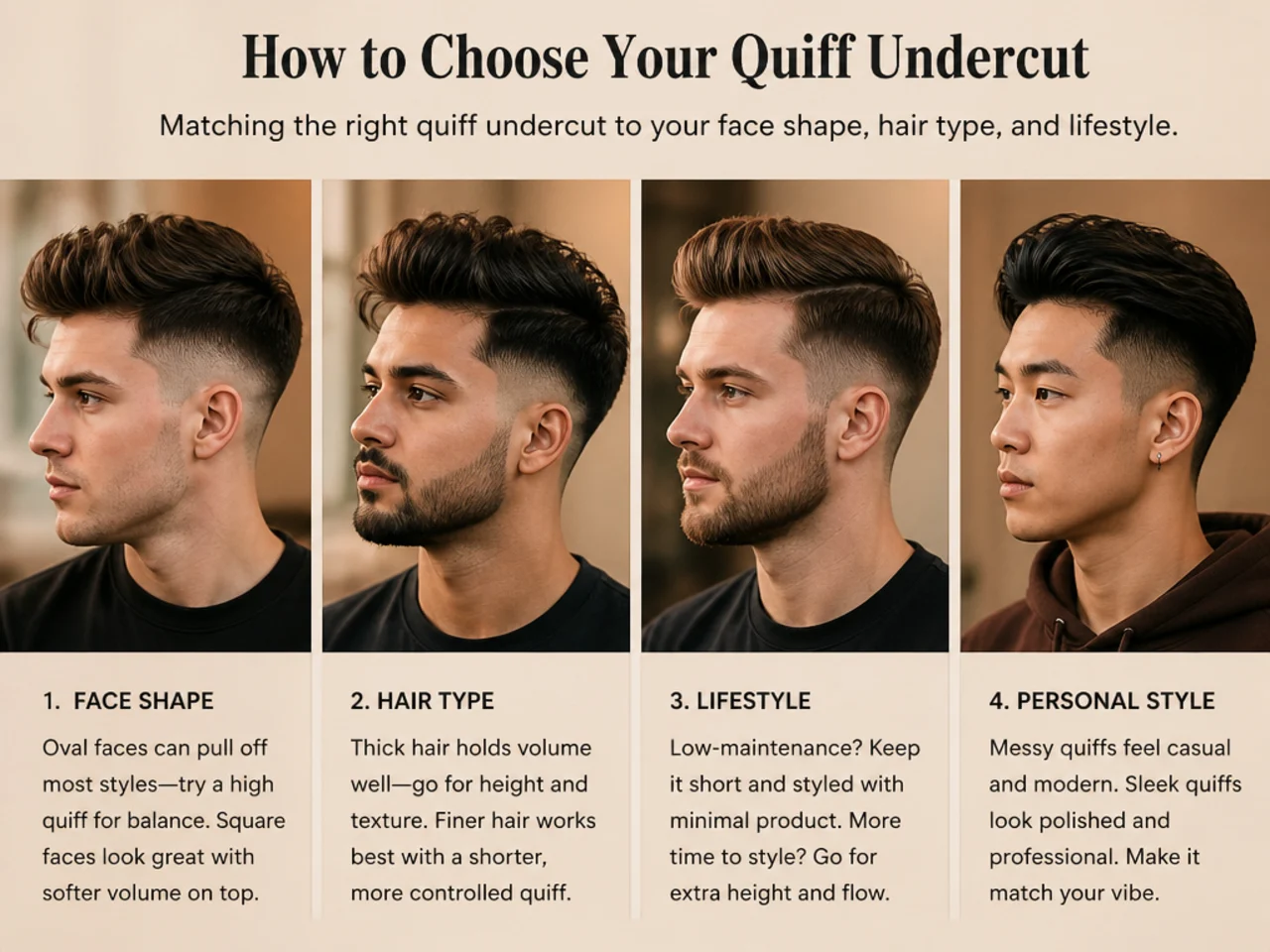
Start with hair type. Straight, medium-density hair is the reference — the top lifts cleanly, holds shape with a pea of clay, and drapes into a quiff sweep without collapsing. Wavy hair leans into the textured, messy, and long variations because the natural bend does half the styling work. Curly hair needs at least 5 inches on top and a half-guard second block so the curl pattern still carries visible weight over the disconnect. Fine hair wants a mousse pre-styler at the roots — the shape works, but not without help.
Face shape decides the undercut placement. Oval faces get every variation below. Round faces want a high undercut line and 5 inches on top styled with real vertical lift — the extra height narrows the visible face. Square and angular faces soften with the textured, wavy, or long-fringe versions. Long or oblong faces want a low undercut and less front lift so the head does not read taller than it already is.
Then the honest question: how loud a cut do you want to wear? The classic and low quiff undercut are subtle at rest — the top covers the disconnect until you actively push it back. The skin, hard-part, and high versions are statement cuts that read loud even before you touch them. Pick the version that matches how much attention you actually want.
The 20 Quiff Undercut Variations
Every variation below is a quiff plus a hard-line undercut hybrid your barber will recognize with a photo. Numbers matter — inches on top at the front, single guard number on the sides — so bring both.
1. The Classic Quiff Undercut
The template every other version bends. Top runs 5 inches at the front and tapers softly to 3 inches at the crown, swept up and slightly back into a clean rounded quiff. The disconnect drops straight from the horseshoe on a one guard, no taper, no blend. If you are unsure which quiff undercut to try first, this is the default. It sits close to the classic quiff hairstyle but swaps the tapered sides for the harder disconnected line.
Best on straight to lightly wavy hair with medium density. Oval, square, and long faces.
Ask for: "Classic quiff undercut, 5 inches at the front, 3 inches at the crown, one guard hard-line disconnect straight down at the horseshoe. No taper anywhere."
Styling tip: sea-salt spray on damp hair, blow-dry the front up and back with a round brush, a nickel of matte clay pressed through the ends. Cool-shot to set. Three minutes total.
2. The Disconnected Skin Undercut Quiff
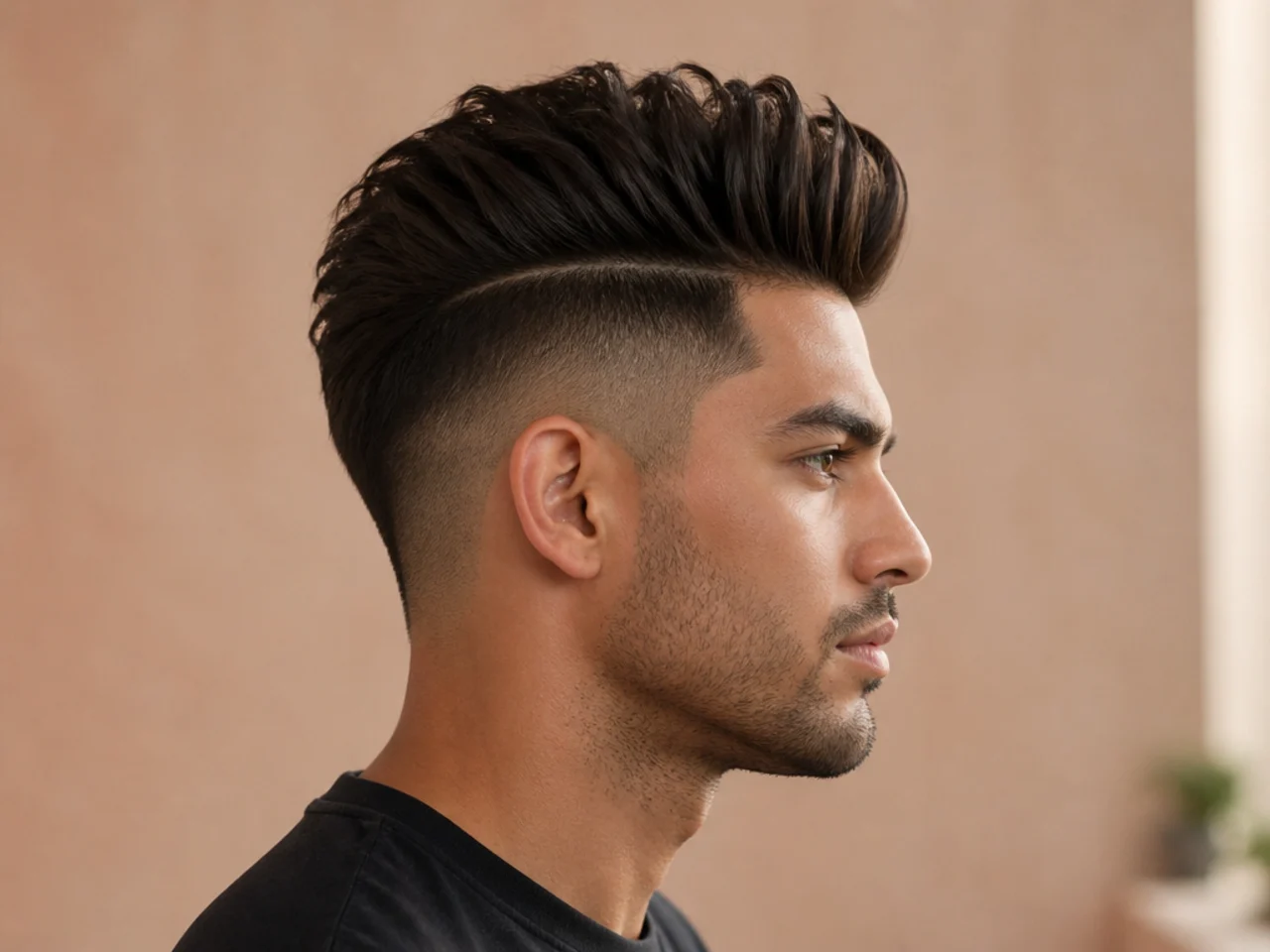
The sharpest possible version. Sides clipped to a zero — bald at the skin — with the top left at 5 inches. The disconnect between the fully shaved sides and the styled quiff is maximum contrast. Fashion-forward, statement-cut territory. Reads loud in every room whether the quiff is up or down. Sits next to the undercut fade family, but with a hard line where a fade would have a gradient.
Best on straight or wavy hair with strong density. Oval and diamond faces. Skip on very round faces — no side weight can read heavy.
Ask for: "Quiff undercut with a zero-guard hard-line disconnect, sides taken to skin, 5 inches at the front."
Styling tip: mousse for lift at the roots, blow-dry the front up and back with a round brush, matte clay through the mid-lengths. Cool shot to lock.
3. The Textured Quiff Undercut
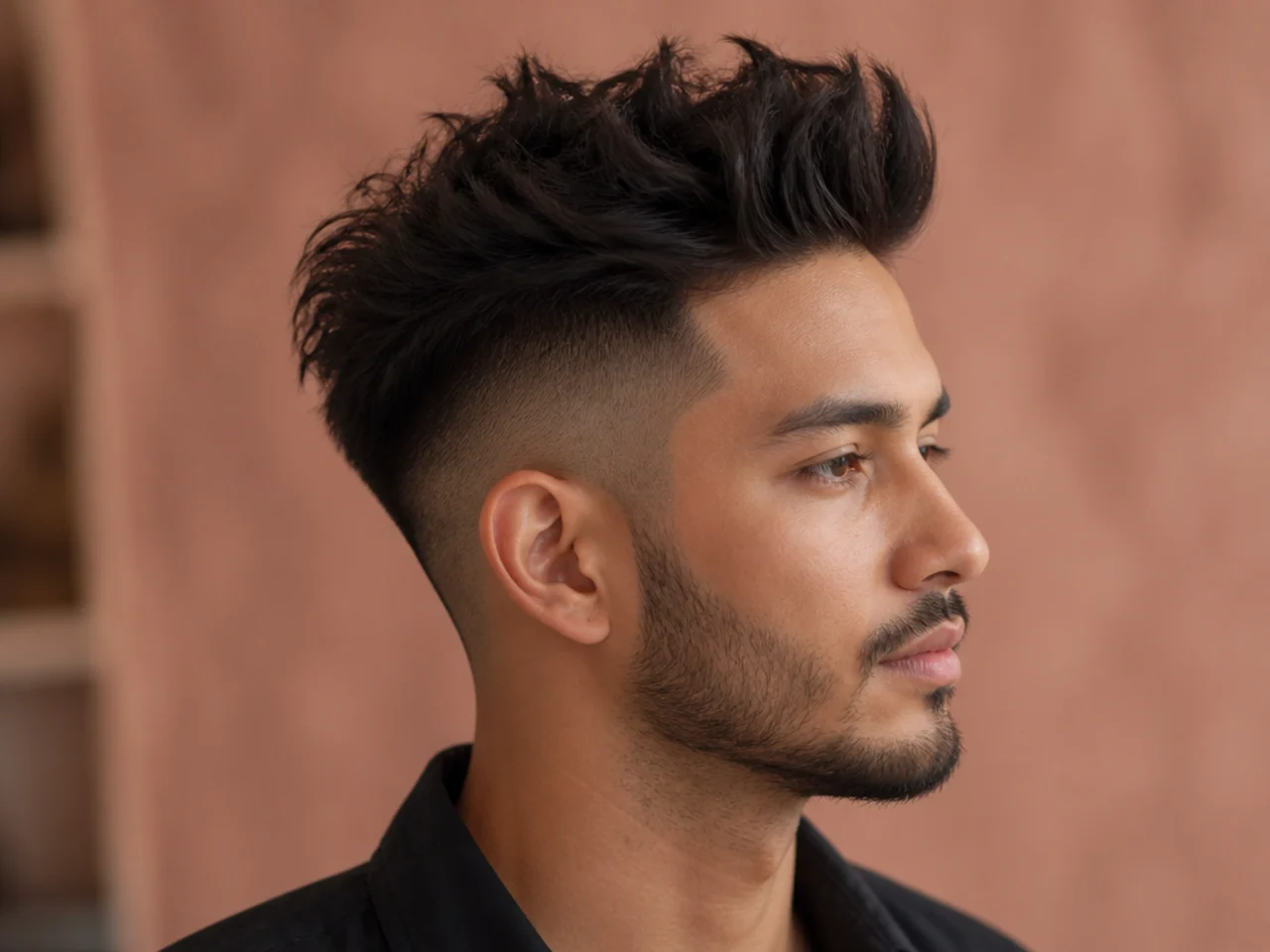
Point-cut ends across the top layer break up the flat helmet look you get when the quiff is cut blunt. The piecey ends move independently and the finished quiff reads with real separation. The disconnect stays clean on a one guard. Sits close to the textured haircuts for men family but keeps the hard-line undercut instead of a taper.
Best on straight or wavy medium-to-thick hair. Every face shape.
Ask for: "Quiff undercut, 5 inches at the front with heavy internal texture, one guard hard-line disconnect. Point-cut the top — don't blunt it."
Styling tip: sea-salt spray on damp hair, rough-dry with fingers, then a pea of matte clay pressed into the ends only. Push the front up with open fingers, no comb.
4. The Messy Quiff Undercut
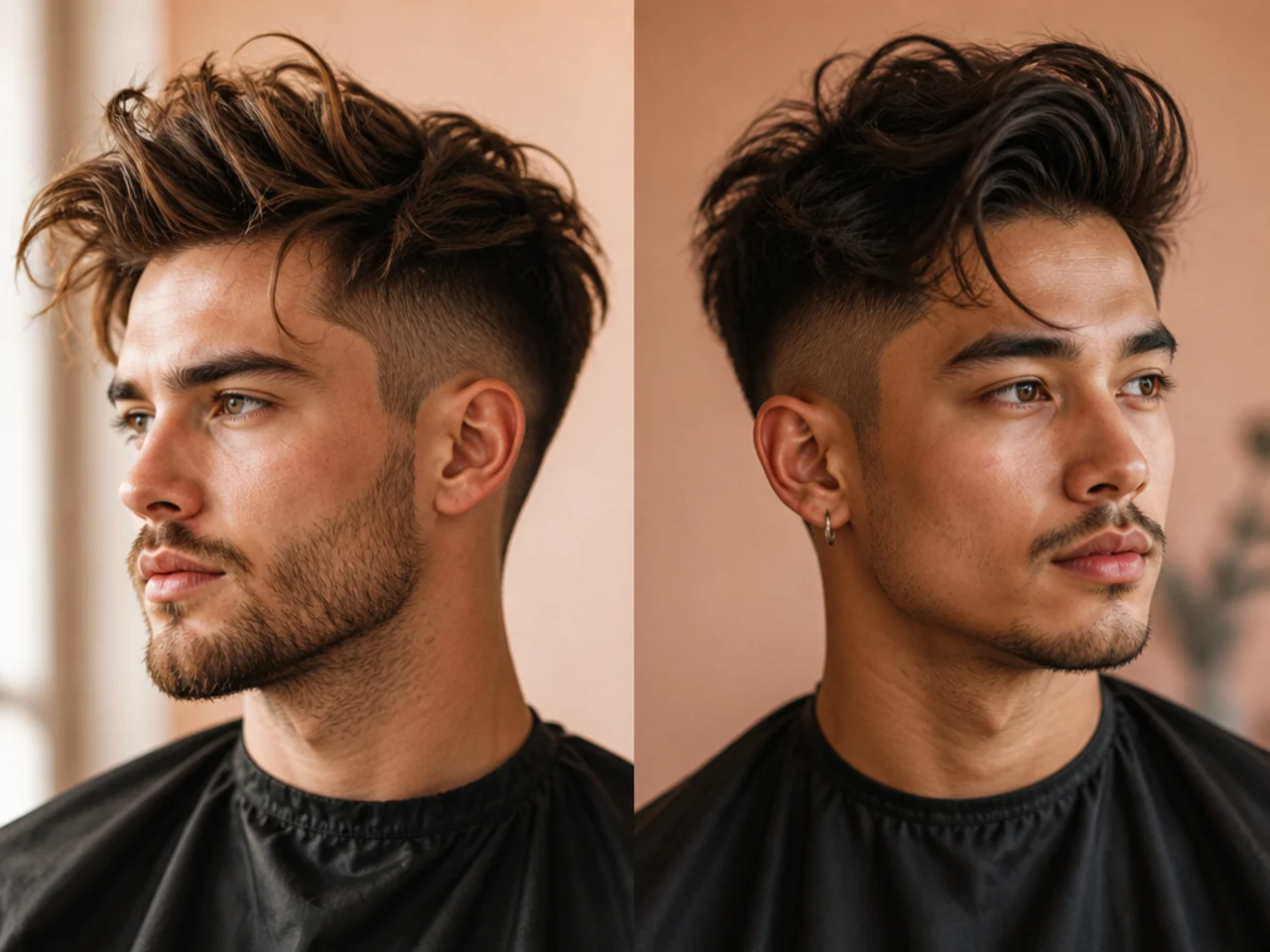
Keeps the front lift of a classic quiff but breaks the finish so it looks slept-in rather than styled. Layers run longer at the front and the perimeter is left slightly rough, so the sweep never sits locked in place. The disconnect on a one guard keeps the whole cut looking intentional even with the deliberately undone top. Sits close to the messy quiff hairstyle but with a sharper side line.
Best on wavy or fine-but-plentiful hair. Every face shape.
Ask for: "Messy quiff undercut, 5 to 6 inches at the front with scissor layering, one guard hard-line disconnect. Leave the perimeter rough."
Styling tip: rough-dry with fingers on high heat, no brush. Warm a pea of matte clay between palms and press it in from ends toward roots. Never comb.
5. The Slick Back Quiff Undercut
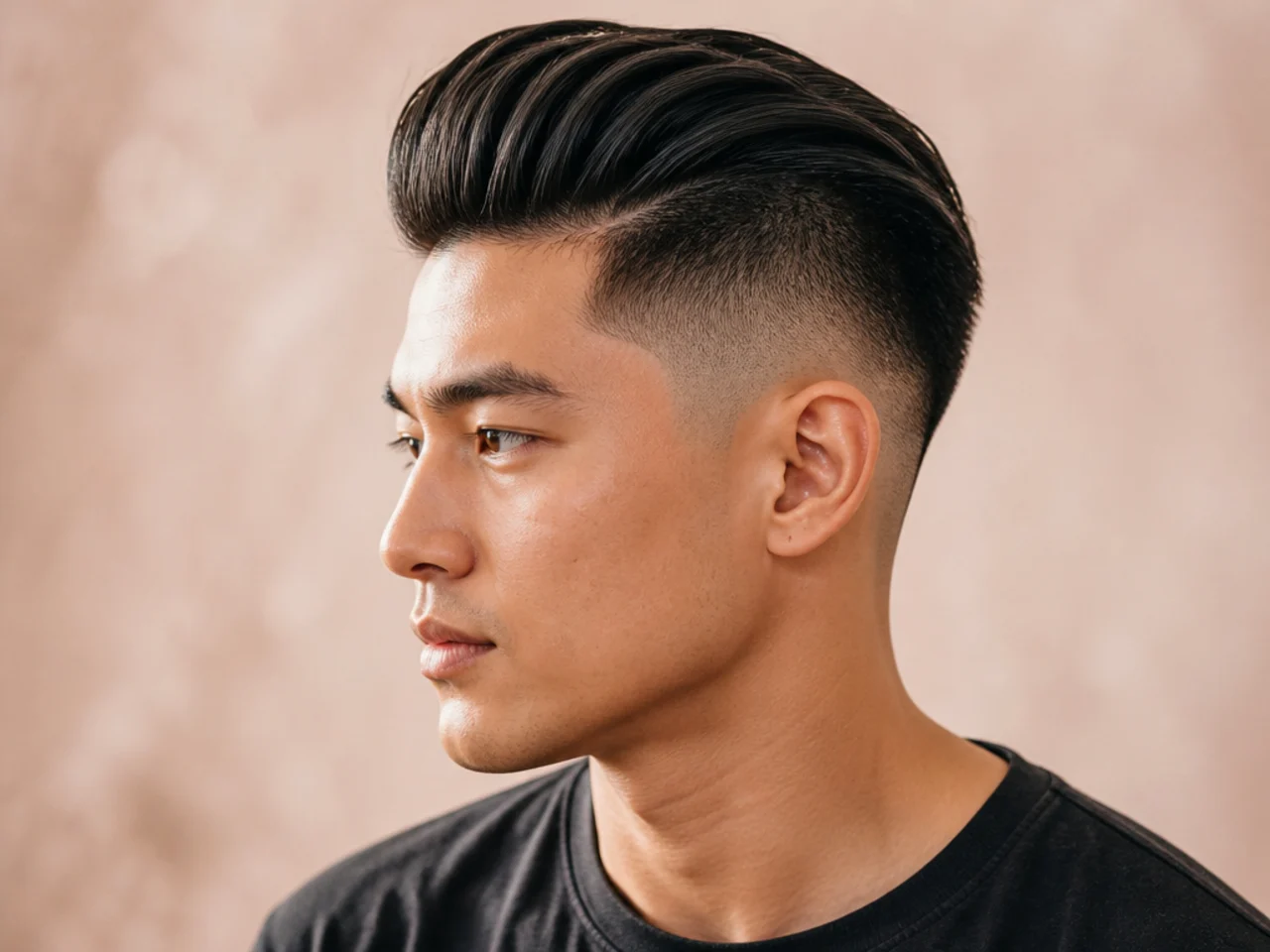
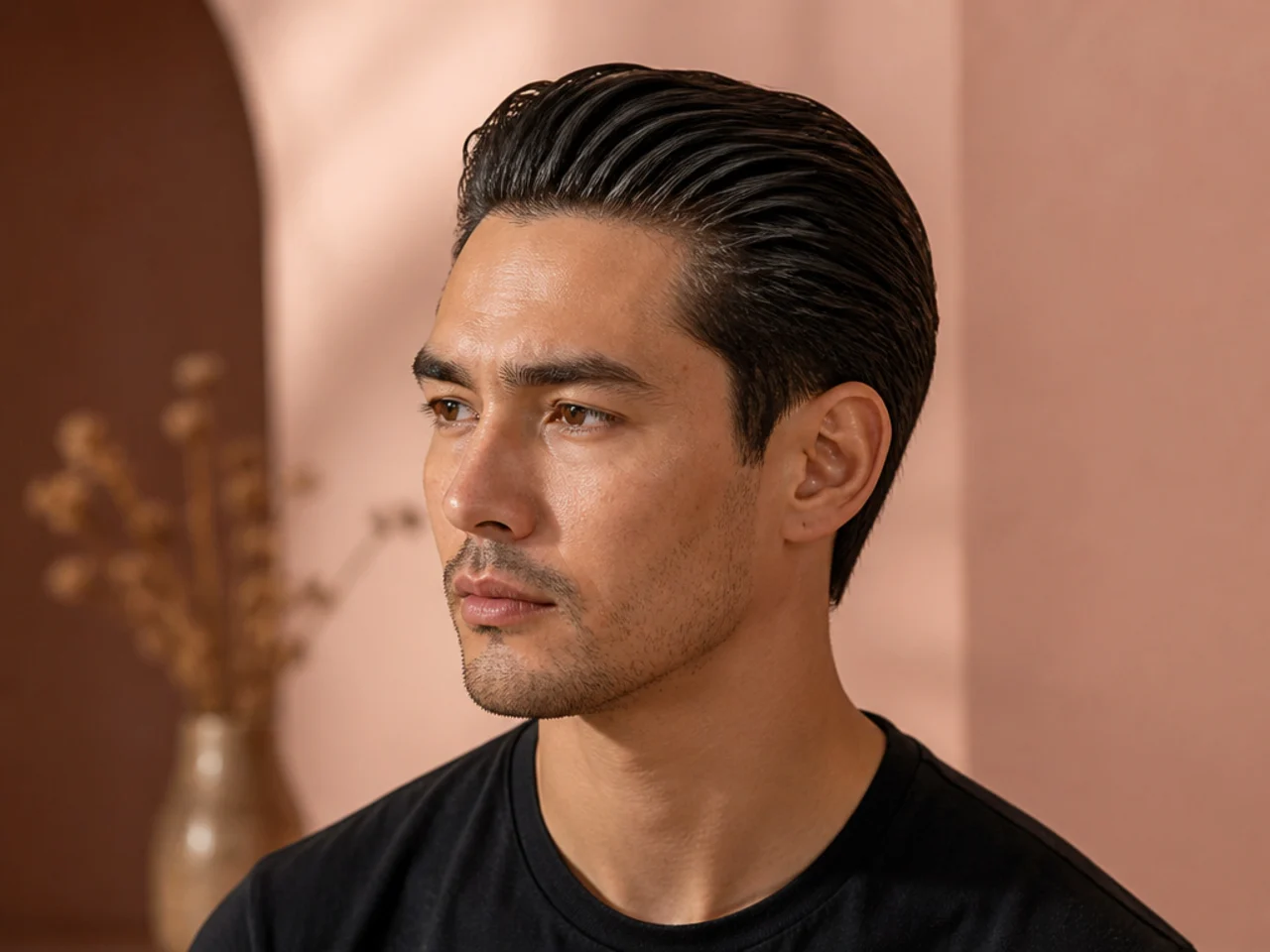
The subtle version becomes bold. Top gets slicked cleanly back — no forward drape, no textured sweep — which means the hard-line disconnect is fully visible from every angle. Reads corporate-punk and sharper than a plain slick back because the exposed disconnected sides frame the polished top. This is the quiff undercut that dresses up best.
Best on straight hair with medium density. Oval, square, and diamond faces.
Ask for: "Quiff undercut styled as a slick back, 5 inches at the front swept straight back, zero or one guard hard-line disconnect."
Styling tip: a nickel of pomade combed strictly backward from a wet hairline. No fingers. Set with a shine spray from twelve inches away. Never let the top go rough — the polish balances the exposed sides.
6. The Modern Quiff Undercut
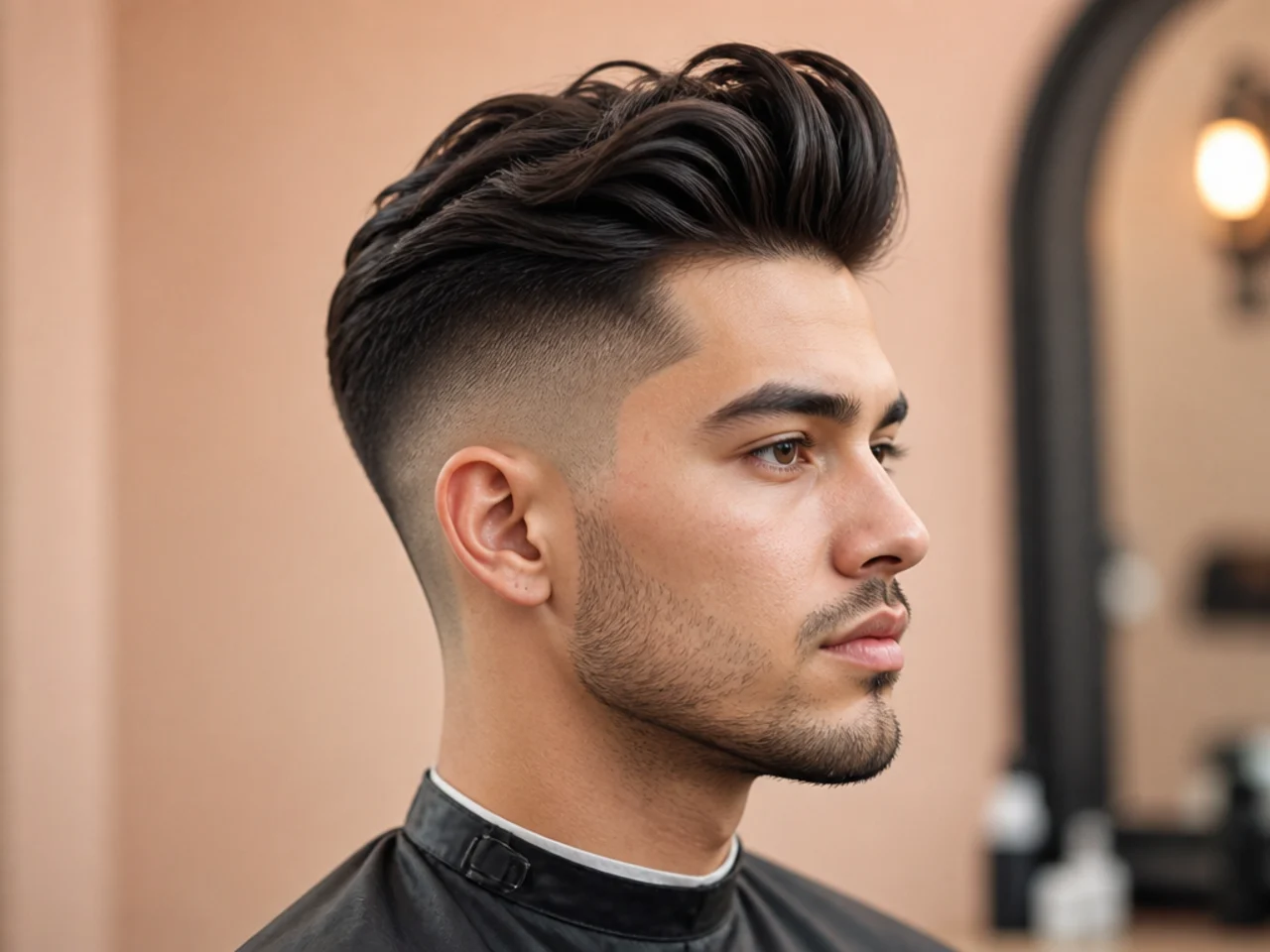
The modern quiff undercut sharpens every edge of the classic. Sides get a defined hard-line at a zero guard, the top is left long at the front (5–6 inches) and tighter through the crown, and the front lifts high with visible movement rather than the classic soft curl. Every element trades restraint for contrast.
Best for 20s–30s guys who want a haircut that photographs well. Straight to wavy hair, oval and square face shapes.
Ask for: "Modern quiff undercut, zero-guard hard-line disconnect, scissor detail through the crown, 6 inches at the front with lift."
Styling tip: mousse for lift at the roots, round-brush the front up and back, matte clay pressed into the ends only. Skip pomade — it kills the texture the disconnect is meant to contrast.
7. The Long Quiff Undercut
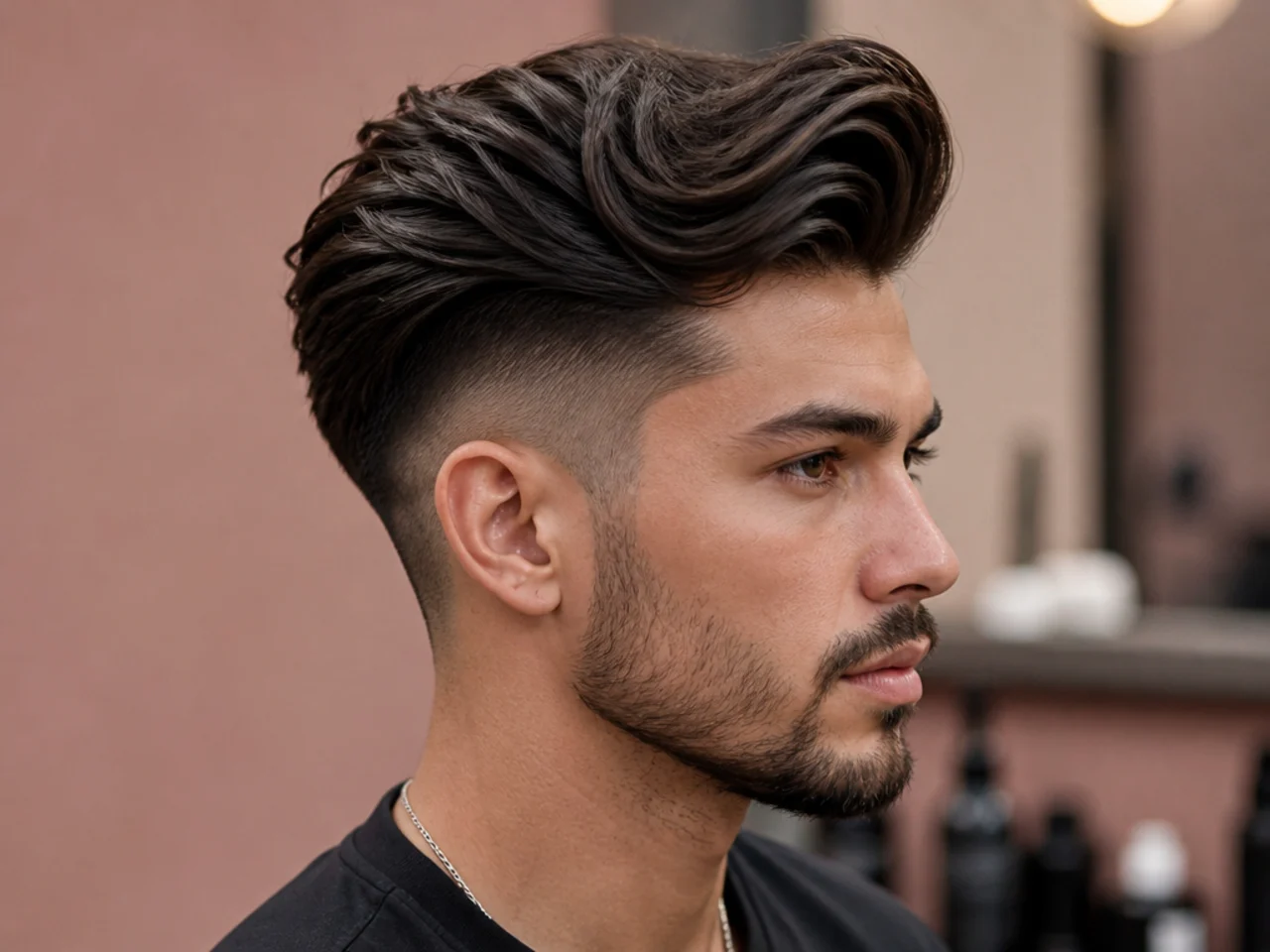
Top pushed past 6 inches so the quiff has real drama when swept back. Needs thicker hair to hold shape and 5 minutes of styling most days, but the payoff is a cut that stops people in a room. The disconnected sides at a zero or one guard keep the top from reading like a mullet — the hard line separates length from bare skin cleanly. Sits close to the long quiff hairstyle with a harder side edge.
Best on thick straight-to-wavy hair. Oval and long face shapes.
Ask for: "Long quiff undercut, 6 to 7 inches at the front, layered down to 4 inches at the crown, zero guard hard-line disconnect."
Styling tip: volumizing mousse, blow-dry with a big round brush from front to crown, set with a firm-hold matte cream. A light hairspray to hold the height through the day.
8. The Short Quiff Undercut
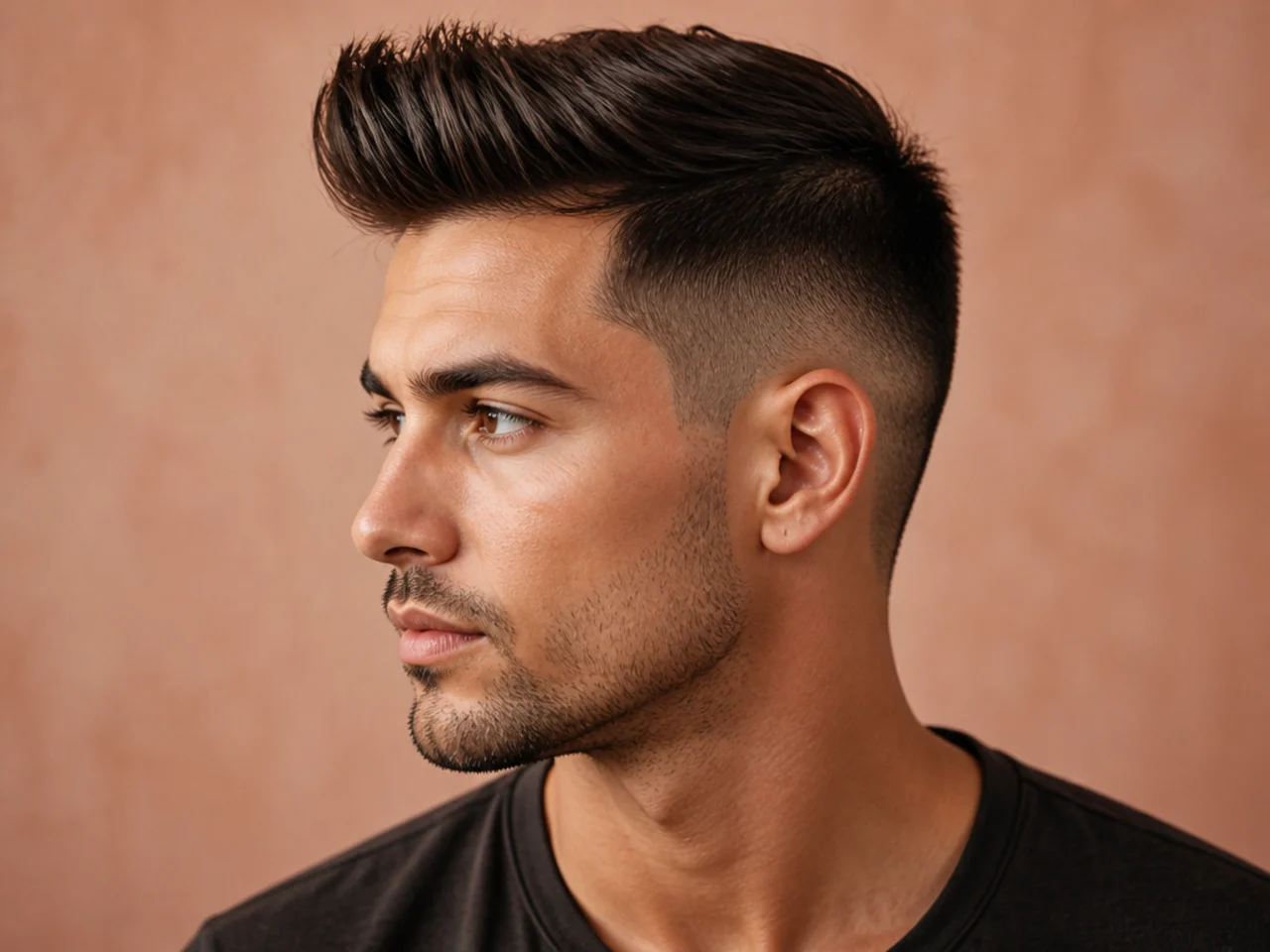
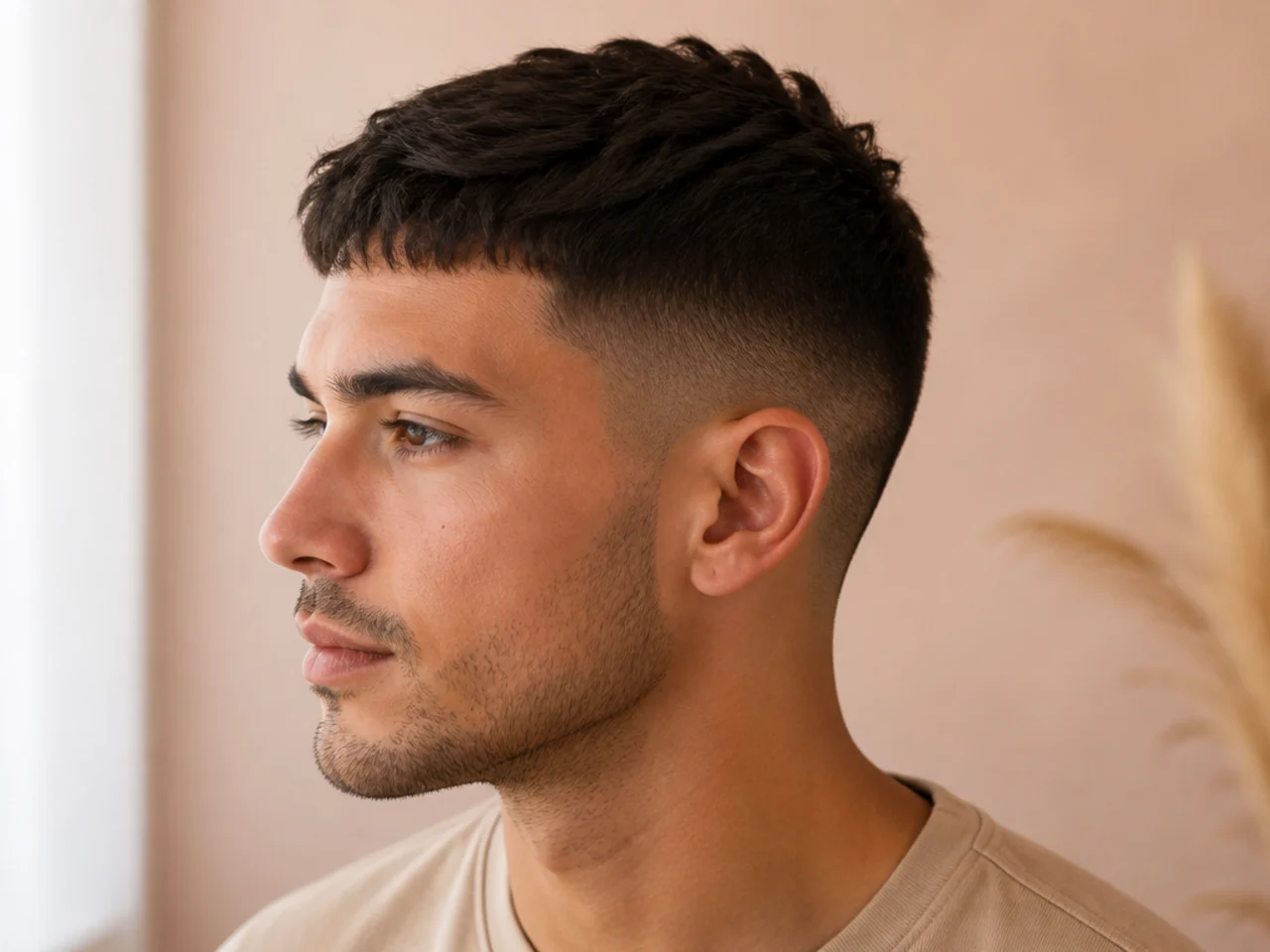
The shortest version that still reads as a quiff. Top runs 3 to 4 inches — long enough to lift and sweep, short enough that it holds shape on its own without daily styling. The disconnect on a one guard reads sharp but not aggressive. Close to the short quiff hairstyle, just with the hard-line side instead of a taper. Reads office-safe from most angles.
Best on straight hair with medium density. Every face shape.
Ask for: "Short quiff undercut, 3 to 4 inches on top, one guard hard-line disconnect, soft blend at the crown so nothing looks blocky."
Styling tip: matte paste between the palms, push the front up and back with fingers. Thirty seconds most mornings — no blow-dryer needed unless you want extra lift.
9. The Wavy Quiff Undercut
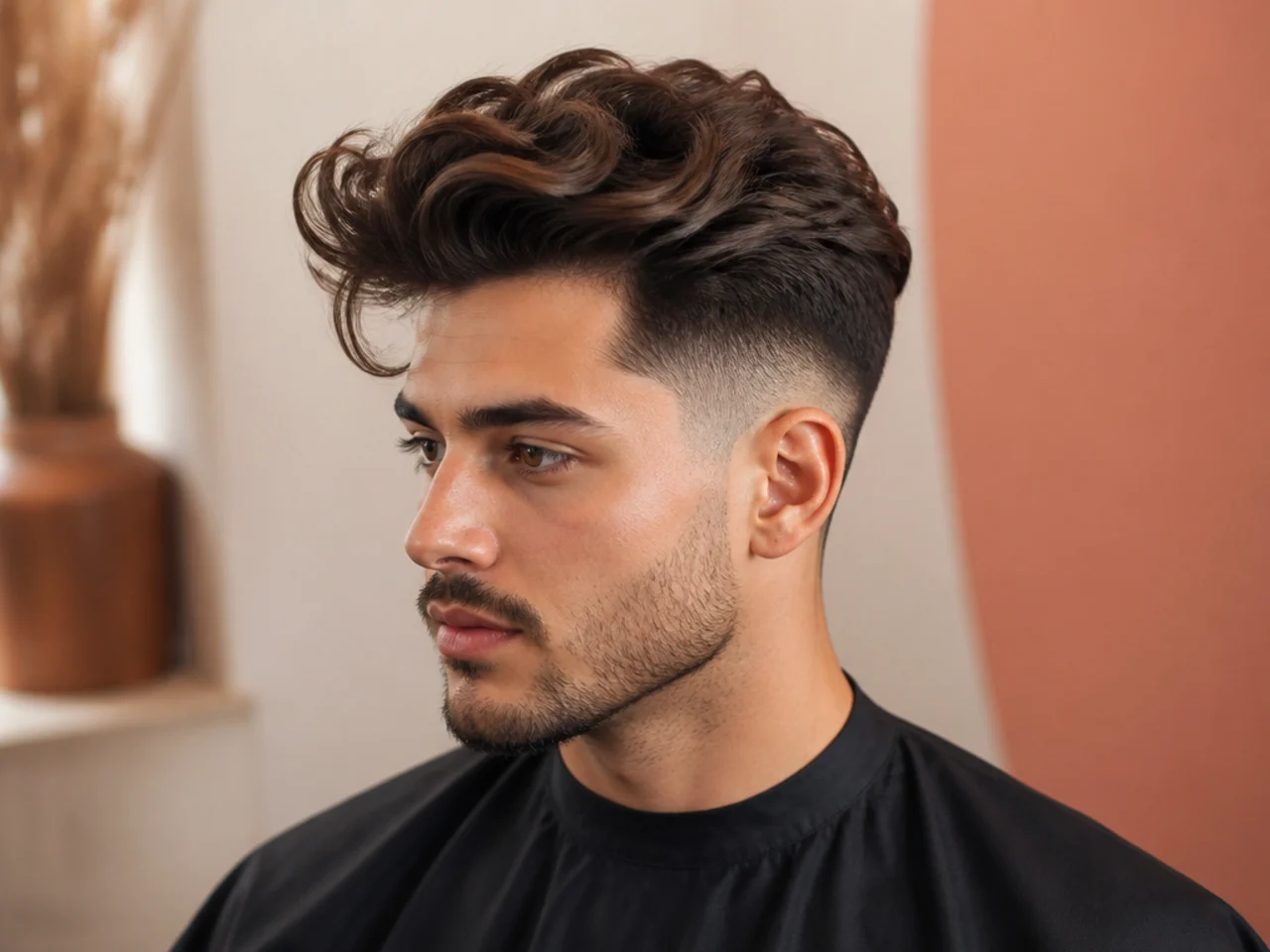
If your hair has a natural bend, let it show. The waves handle the texture for you — all you add is direction and lift at the front. Your barber cuts the top with the wave pattern in mind so the finished shape reads intentional rather than untidy. The disconnect stays hard on a one guard.
Best on type 2A through 2C waves. Any face shape.
Ask for: "Wavy quiff undercut, cut the top with my wave direction, 5 inches at the front, one guard hard-line disconnect. No thinning — thinning kills wave definition."
Styling tip: wave-friendly cream on damp hair, air-dry with the front swept back or diffuse on low. Skip clay — too thick for waves. A light wax or defining cream at the ends.
10. The Curly Quiff Undercut
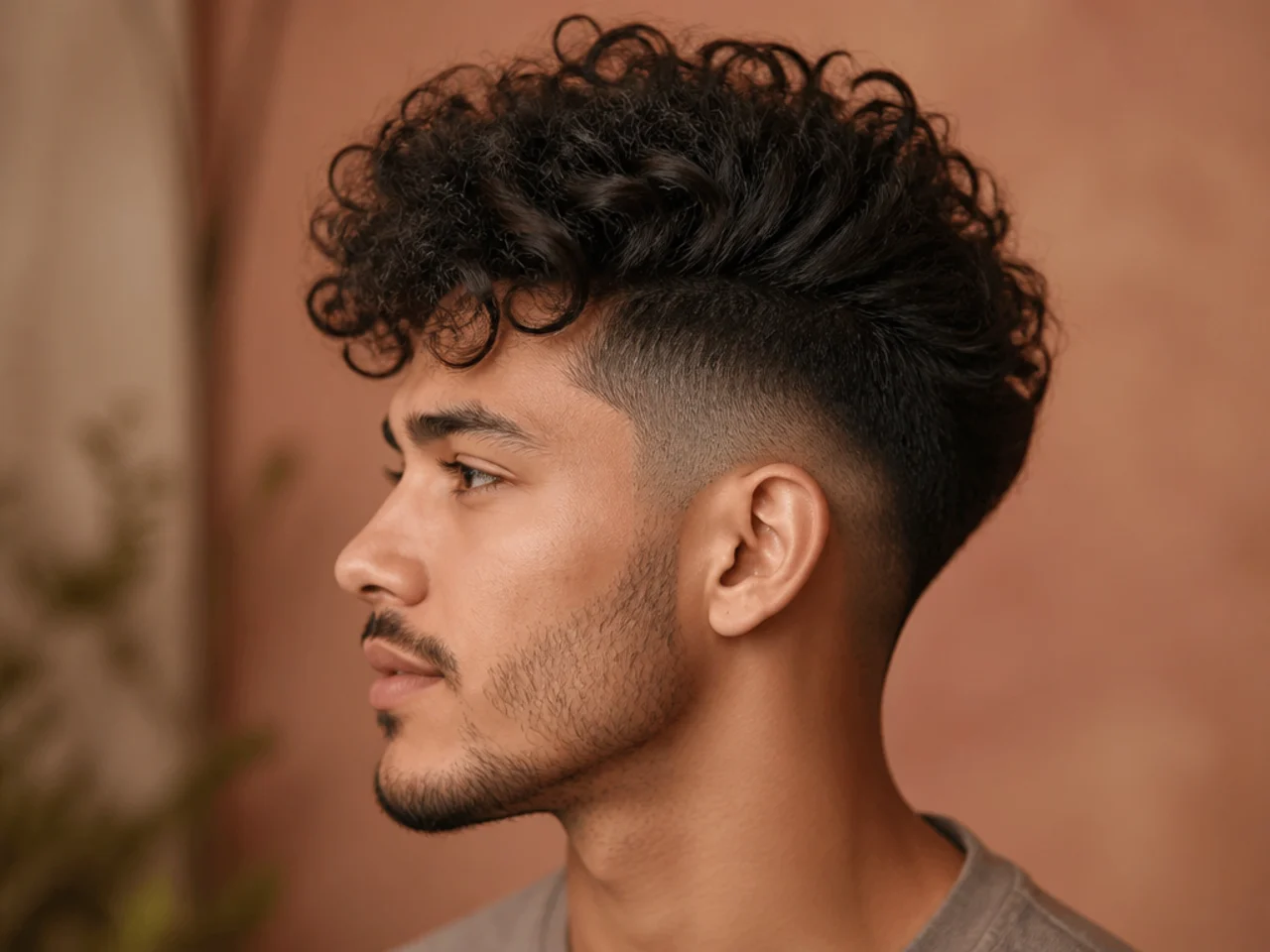
Curls make the quiff shape read differently. Volume is built-in, so the barber controls the perimeter and gives the front room to lift naturally. The disconnect goes to a half or one guard — shorter than straight-hair versions — so the curl pattern still covers the buzz when the top moves. Sits close to the curly quiff hairstyle family.
Best on 3A to 3C curl patterns. Any face shape.
Ask for: "Curly quiff undercut, scissor layers cut on dry curl, 5 inches at the front measured stretched, half guard hard-line disconnect. No razor, no thinning."
Styling tip: curl cream or leave-in on damp hair. Scrunch upward at the front to encourage lift. Diffuse on low if you have time, air-dry if you don't. Light gel with an open hand — never combed.
11. The Pompadour Quiff Undercut
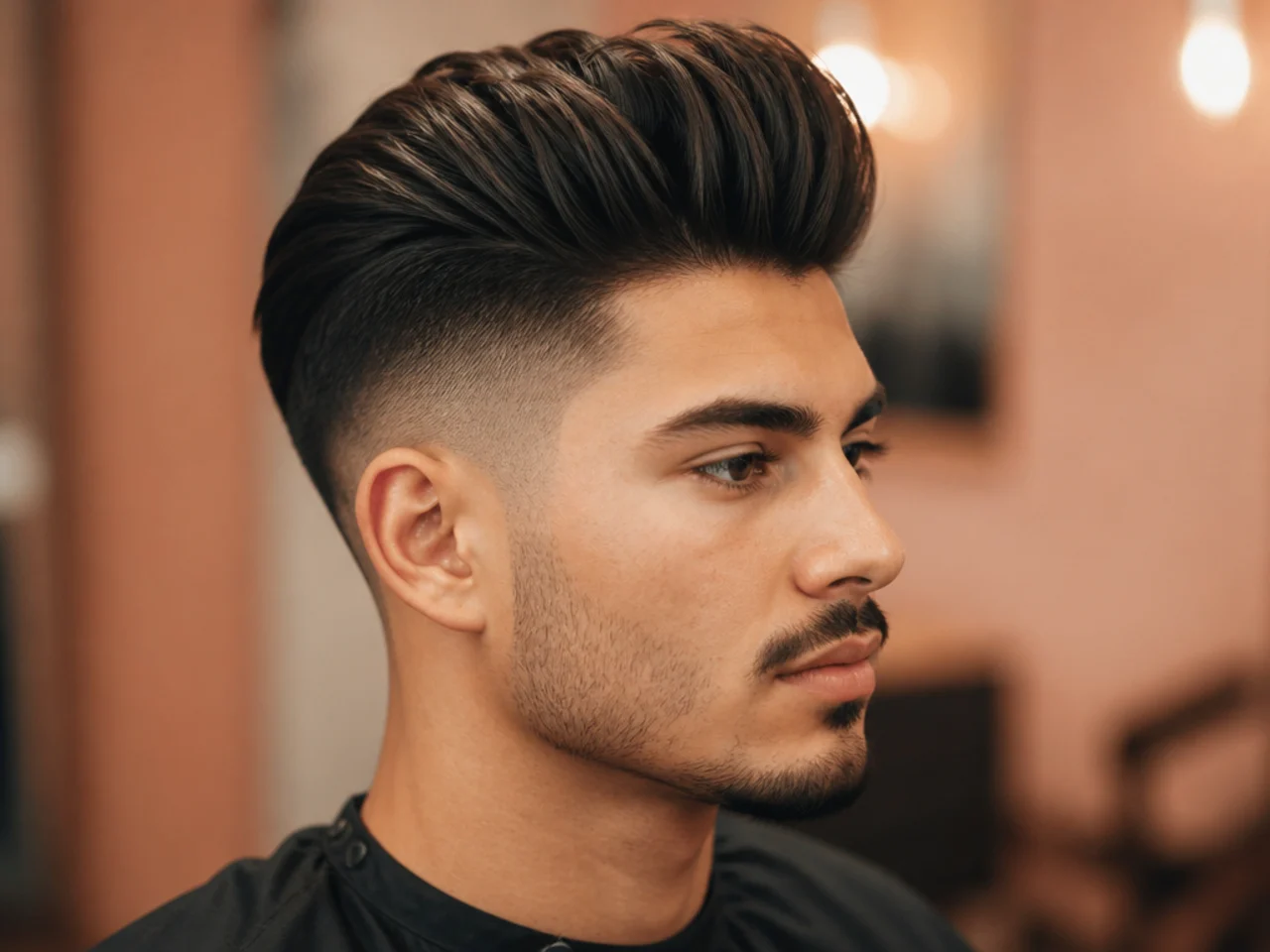
The quiff pushed further toward pompadour territory. Top runs 6 inches, the front lifts high and holds vertical volume rather than the softer sweep of a classic quiff. The disconnected sides at a zero guard read maximum contrast against the height. This is the loudest quiff undercut in the lineup at rest — the pompadour front does not hide when the top is styled.
Best on straight thick hair. Oval, square, and round faces (the height narrows a round face).
Ask for: "Pompadour quiff undercut, 6 inches at the front, layered down to 3 at the crown, zero guard hard-line disconnect. Vertical lift, not a soft sweep."
Styling tip: volumizing mousse, round-brush from underneath the front for maximum lift, firm-hold matte cream through the mid-lengths, hairspray to hold. Five minutes of work.
12. The Side Swept Quiff Undercut
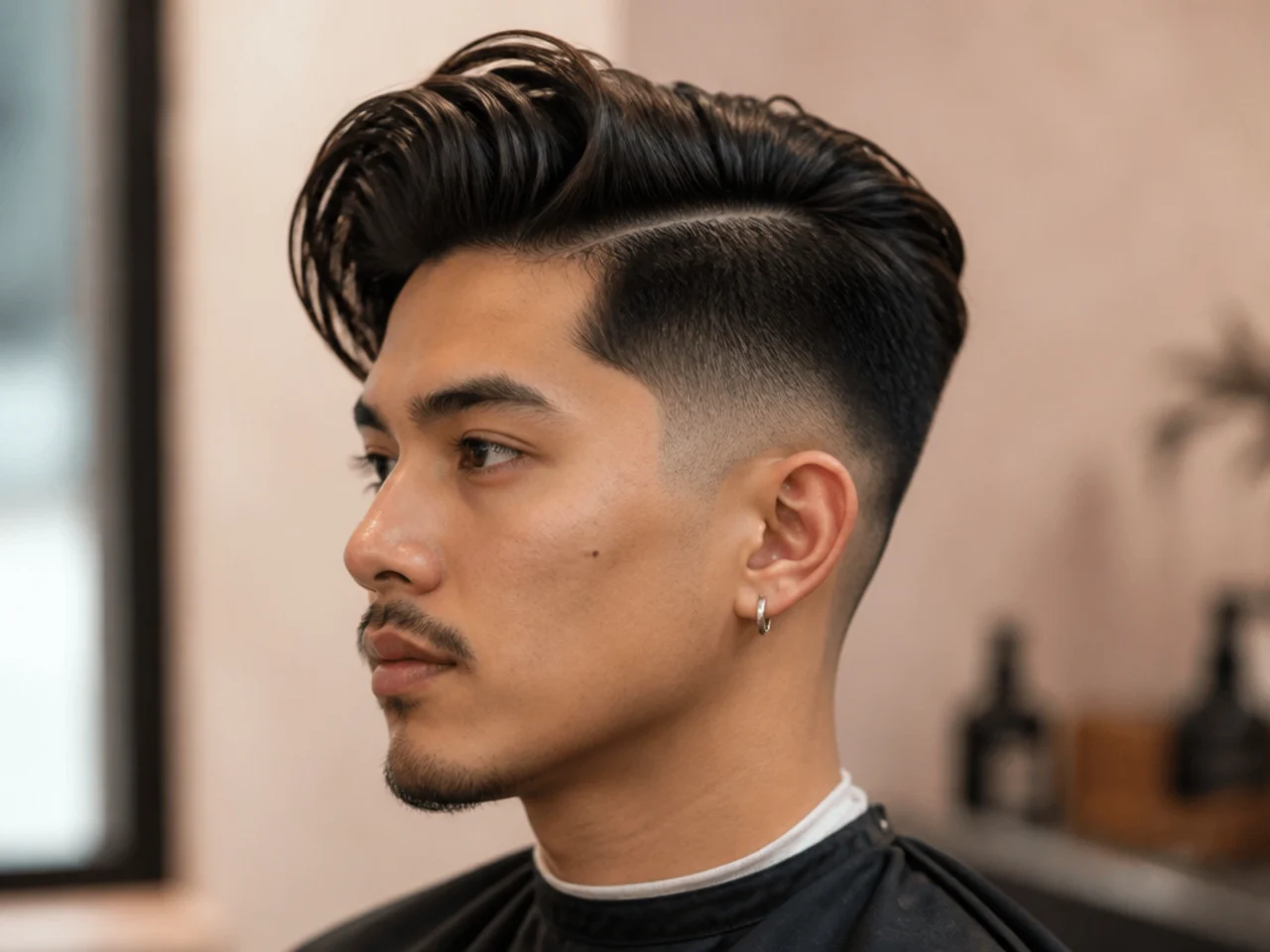
The quiff swept diagonally rather than straight back. Top runs 5 inches with heavier weight on one side of the front, and the sweep drops from that heavier side across the forehead at an angle. Reads softer than a straight-back quiff and more current than a full side part. The disconnect stays uniform on a one guard around both sides. Sits close to the side quiff for men family.
Best on straight or lightly wavy hair. Oval, square, and diamond faces.
Ask for: "Side swept quiff undercut, 5 inches at the front with the sweep going diagonally across the forehead, one guard hard-line disconnect on both sides."
Styling tip: blow-dry the front with a vented brush pulling the length across the forehead. A pea of cream through the mid-lengths. Fingers only after that.
13. The Hard Part Quiff Undercut
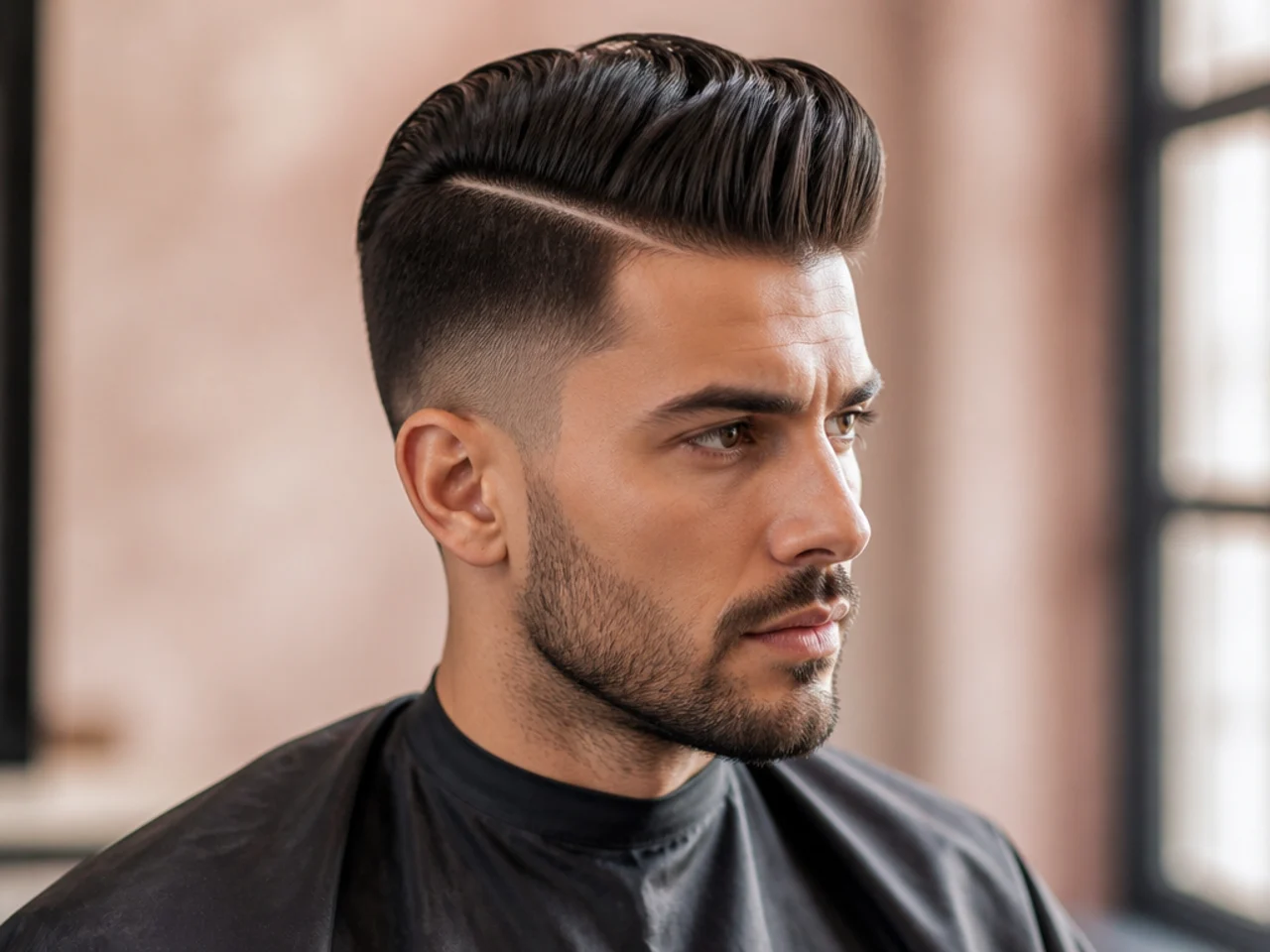
A shaved part line — cut into the disconnected side with the corner of a straight razor — separates the quiff from the sides at a single sharp point. The rest of the disconnect stays hard on a one guard. Reads bold, retro, and instantly recognizable. Works especially well with the slick back and modern versions where the top is polished enough to show the part cleanly.
Best on any straight hair. Oval, square, and diamond faces.
Ask for: "Quiff undercut with a hard part, 5 inches at the front, one guard hard-line disconnect, and a razored part line above my left temple that runs 2 inches back."
Styling tip: comb the part crisp while the pomade is still workable. The part line does the framing — do not fight it by combing the top across.
14. The High Undercut Quiff
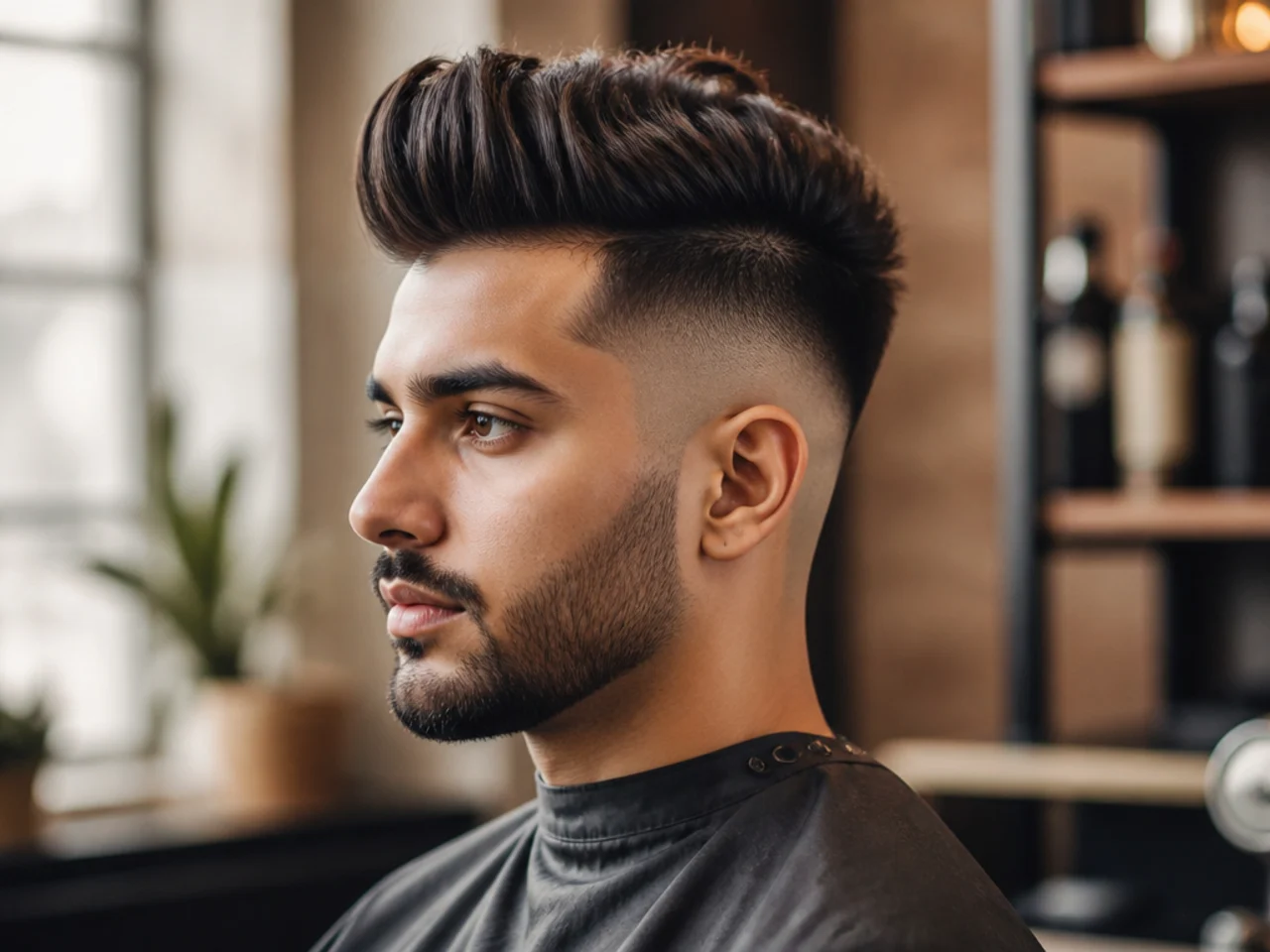
The disconnect line drops the horseshoe higher on the head — closer to the crown than the temple — so more of the sides gets buzzed and less of the top gets to drape. The quiff on top has to work harder because the covering layer is smaller. Reads bold, angular, and much less conservative than the classic. Sits in the same family as the high taper fade — same visual mood, harder edge.
Best on straight hair with strong density. Angular, square, and long faces.
Ask for: "High undercut quiff, 5 inches at the front, one guard hard-line disconnect with the horseshoe line set high near the crown."
Styling tip: mousse at the roots on damp hair, blow-dry pulling the front up and back so the raised disconnect stays visible. Light matte spray to hold.
15. The Low Undercut Quiff
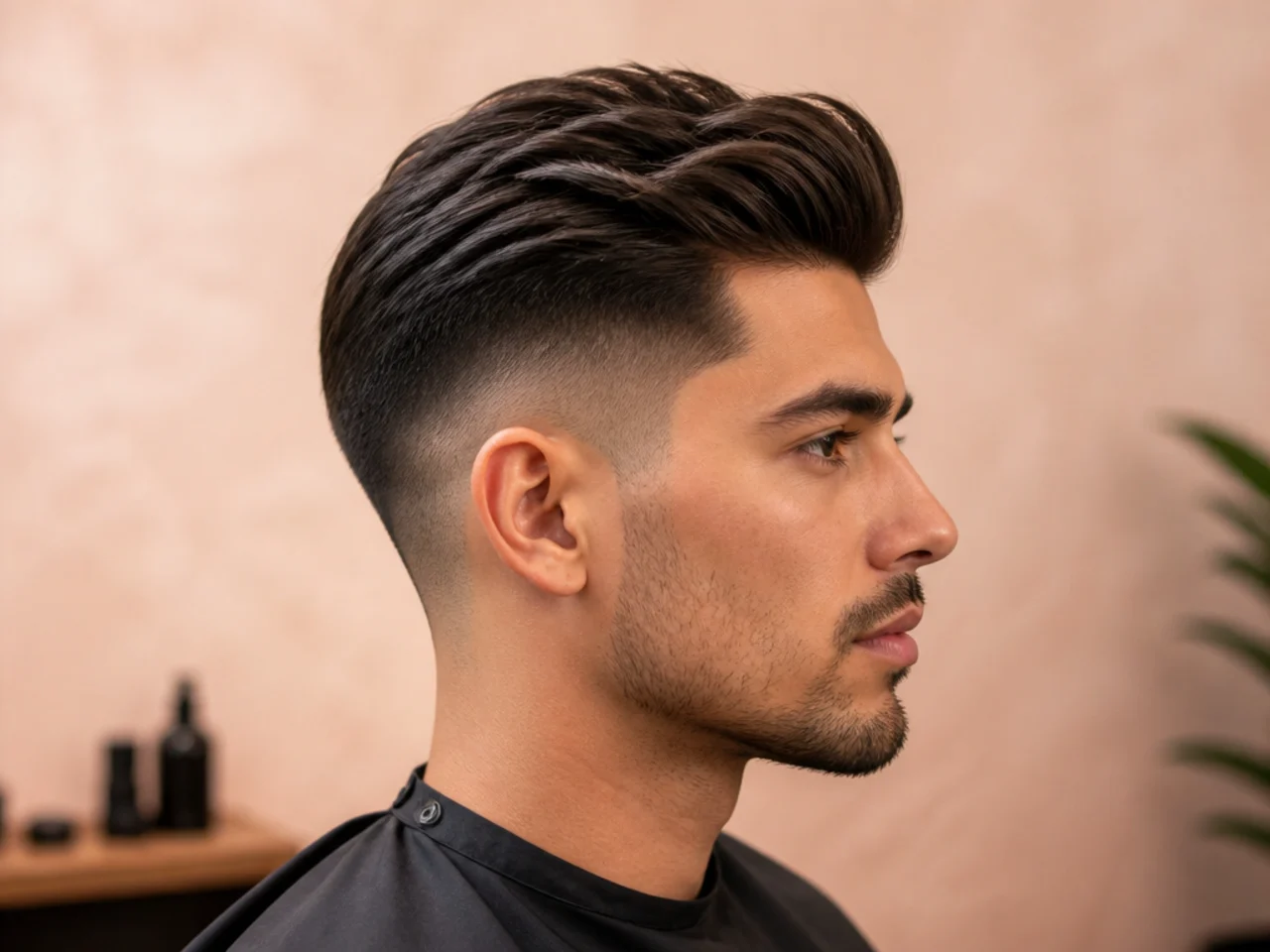
The mirror version of the high. The horseshoe drops low, close to the ears, so less of the sides gets buzzed and more of the top drapes over the disconnect at rest. This is the most subtle quiff undercut on the list — the disconnect only shows when you actively push the quiff back or the wind lifts the front. Corporate-safe from most angles, reveals the sharper shape only when you want it to.
Best on every face shape. Great for professional workplaces that discourage visible fades.
Ask for: "Low undercut quiff, 5 inches at the front, one guard hard-line disconnect with the horseshoe line dropped low near the ears."
Styling tip: pea of cream through damp hair, blow-dry the front up and back, done. The low line is hidden by default — no need to overwork the styling.
16. The Quiff Undercut with Beard
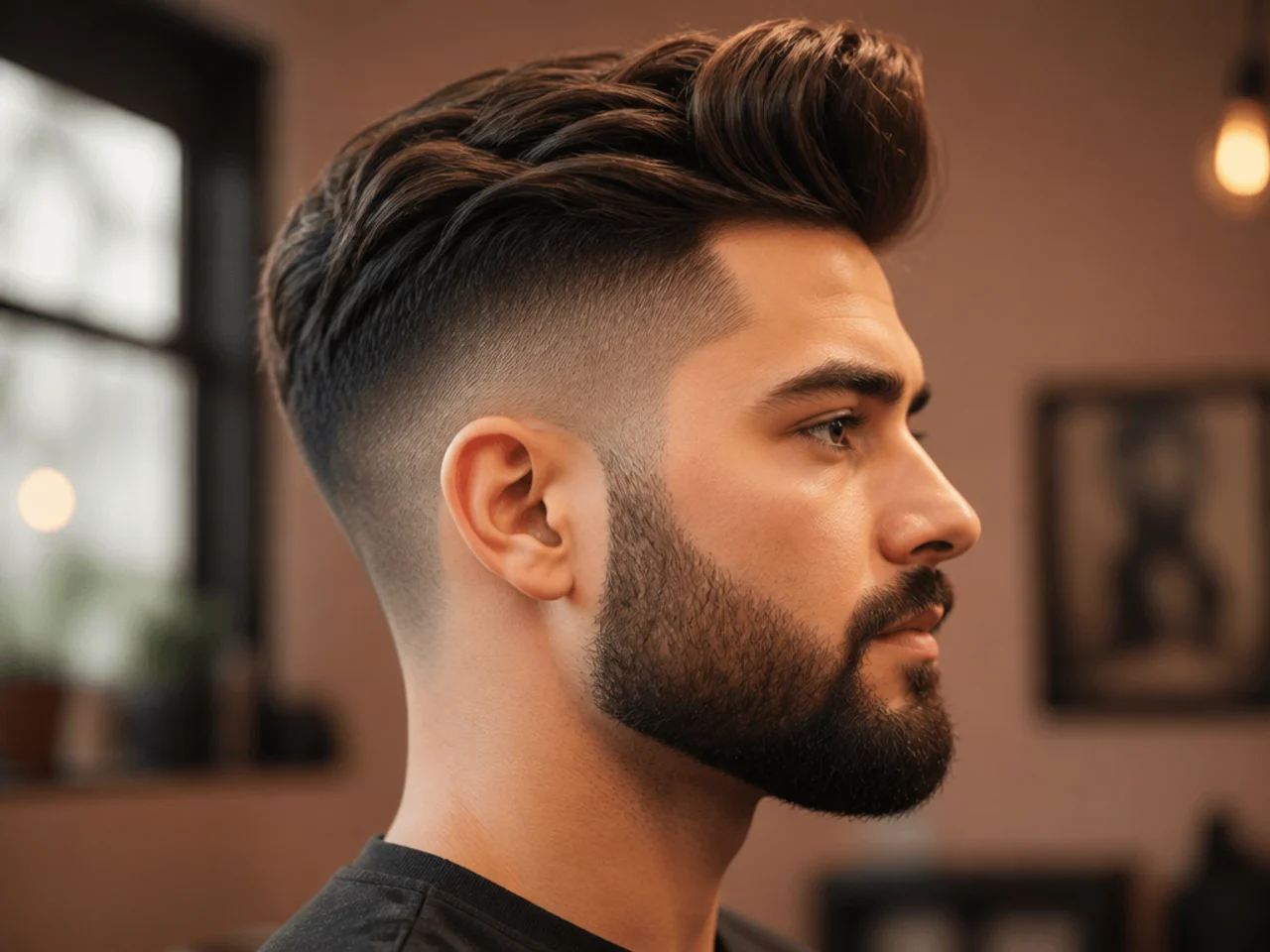
Pairing a quiff undercut with a beard doubles the frame — height on top, weight along the jaw — which reads masculine without any effort on your part. The trick is matching density: full quiff with a full beard, textured quiff with shorter stubble. The disconnect at a one guard keeps the visual line between hair and beard clean.
Best on square, oval, and heart-shaped faces. Round faces should keep the beard tighter to avoid a helmet effect.
Ask for: "Quiff undercut, 5 inches at the front, one guard hard-line disconnect, connect the sideburns cleanly into the beard line."
Styling tip: matte clay pushed up and back on top. Beard oil in the beard, product on top — mixing them makes both look greasy. Trim the beard weekly to keep the density matched.
17. The Blonde Quiff Undercut
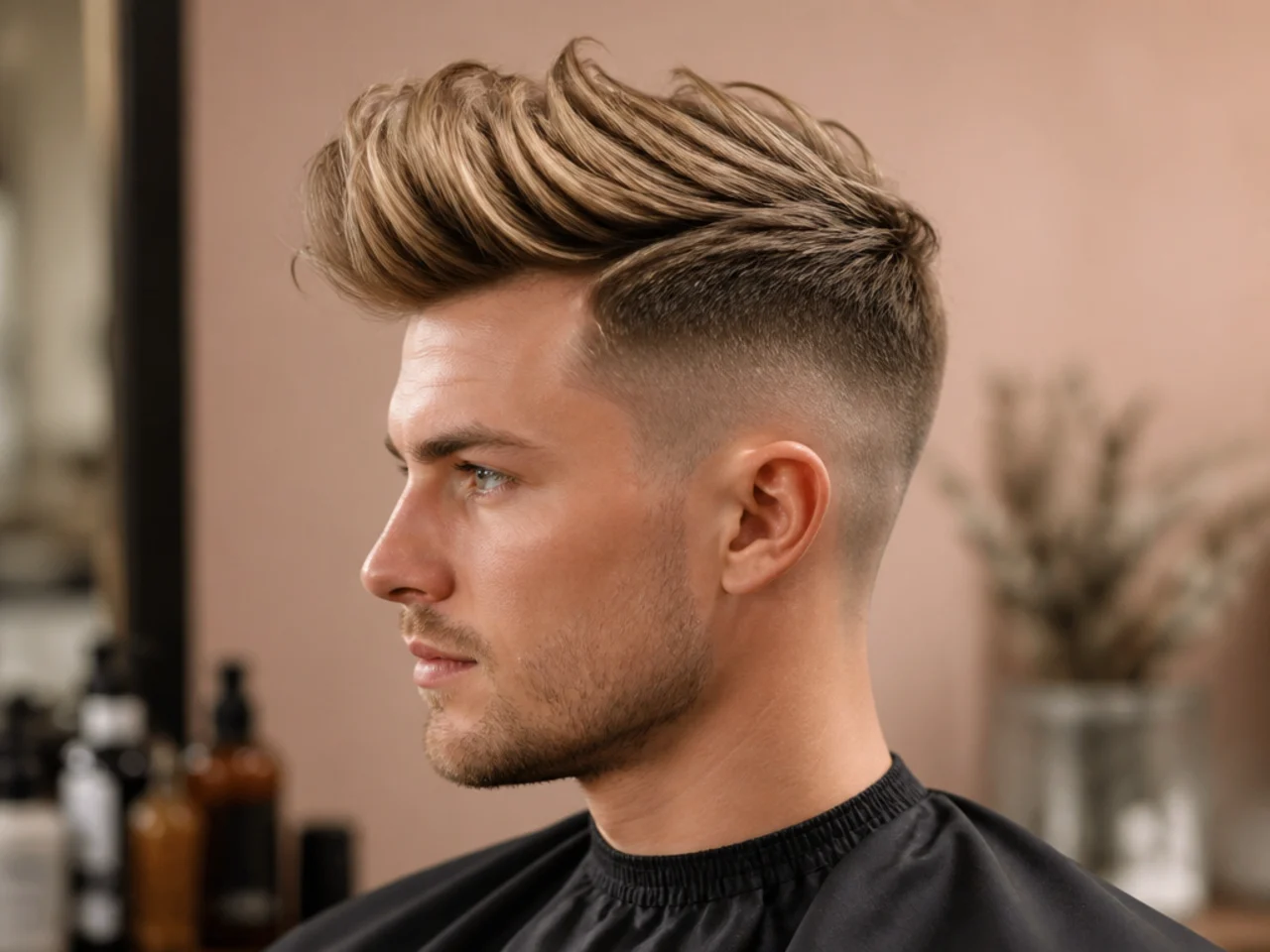
Add color to any quiff undercut and the shape reads twice as loud. Platinum, icy blonde, and honey tones all work — the lighter the tone, the more the texture and disconnect pop in photos. Blonde takes 2 to 3 sessions on darker starting hair, plus toner every 6 weeks. The disconnect stays hard on a one guard.
Best on guys ready for the maintenance. Cooler skin tones especially. Any face shape.
Ask for: "Textured quiff undercut, 5 inches at the front, one guard hard-line disconnect." Then book the color session separately with your colorist and talk lift and tone with them.
Styling tip: matte clay only — gloss on bleached hair looks brassy. Purple shampoo weekly to keep tones from going yellow. Cold rinses after wash to seal the cuticle.
18. The Asymmetric Quiff Undercut
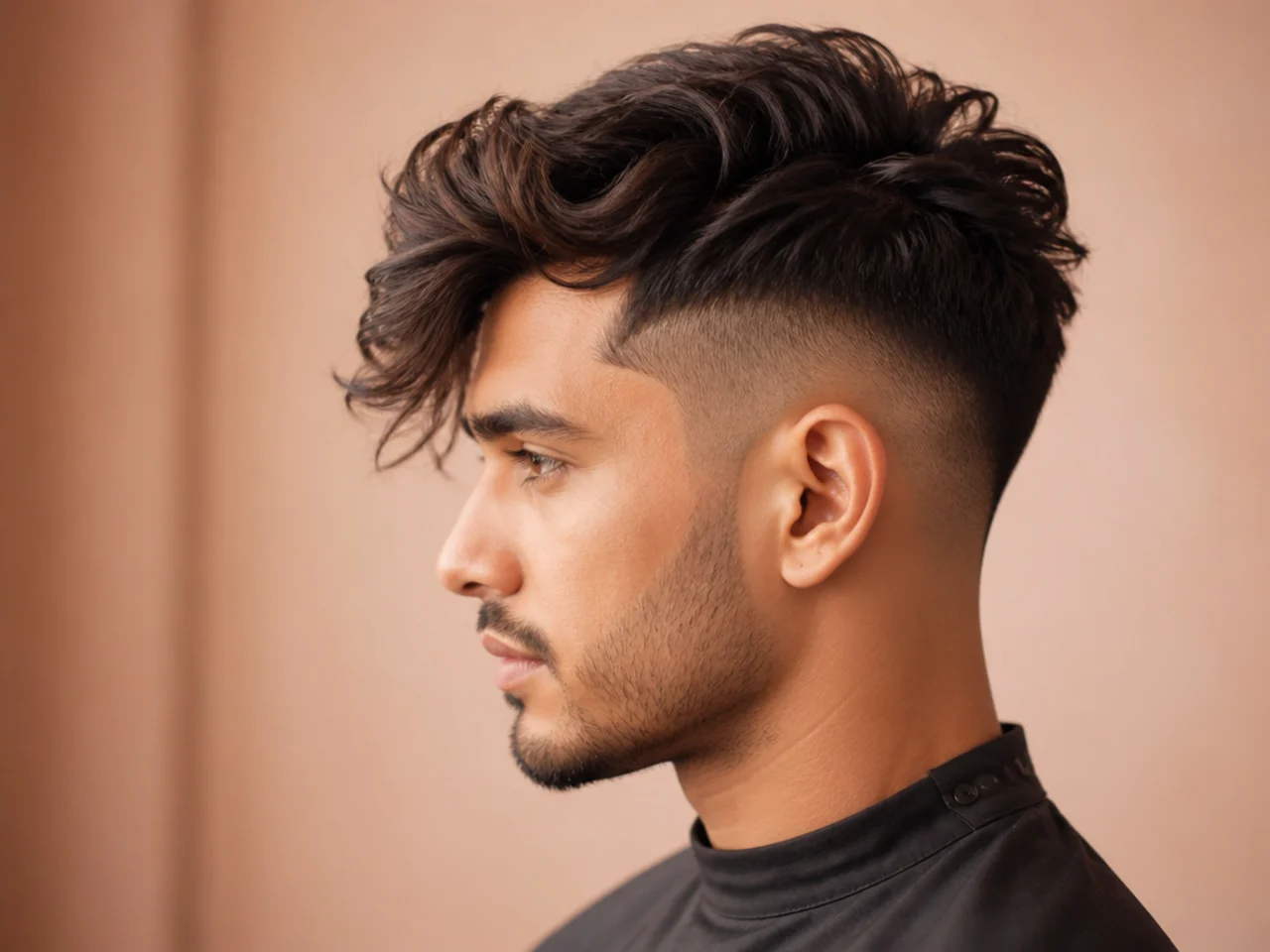
The quiff cut and styled off-center. The barber leaves more weight on one side of the front so the shape sits asymmetrically without daily forcing. The disconnect stays uniform on a one guard around both sides. Reads more contemporary than a straight-back quiff and less formal than a hard side part. Sits in the same family as the side part hairstyles for men, but the sweep goes up as well as across.
Best on straight or wavy hair. Oval, square, and diamond faces.
Ask for: "Asymmetric quiff undercut, 5 inches at the front with the heavier weight on my right, one guard hard-line disconnect around both sides."
Styling tip: blow-dry the heavier panel outward from the crown, then push the front up and across with fingers. A pea of cream through the ends to hold direction.
19. The Fringe Quiff Undercut
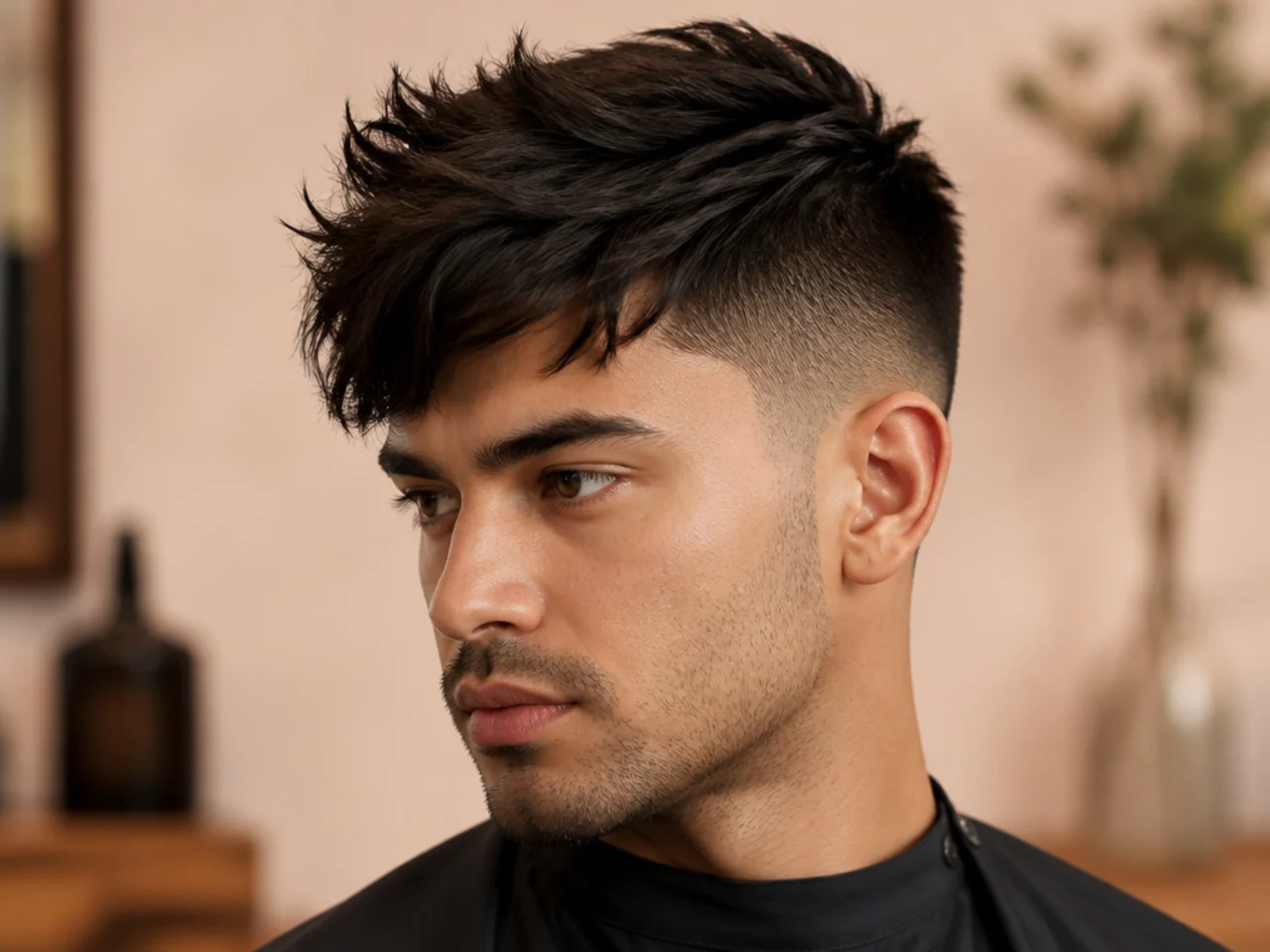
A quiff undercut with the front section cut long enough to fall as a fringe when you want it down. Same top length as the classic, but styled either as a full quiff sweep or dropped forward into a soft fringe depending on the day. The disconnect stays hard on a one guard. Two haircuts for the price of one — sits alongside the fringe haircuts for men family when worn down.
Best on straight or wavy hair. Long, oblong, and heart-shaped faces.
Ask for: "Quiff undercut with a fringe option, 5 to 6 inches at the front so it can drape forward or lift, one guard hard-line disconnect."
Styling tip: blow-dry down and forward for fringe days, up and back for quiff days. Same cut, different direction. Light cream through the ends for either style.
20. The Grown-Out Quiff Undercut
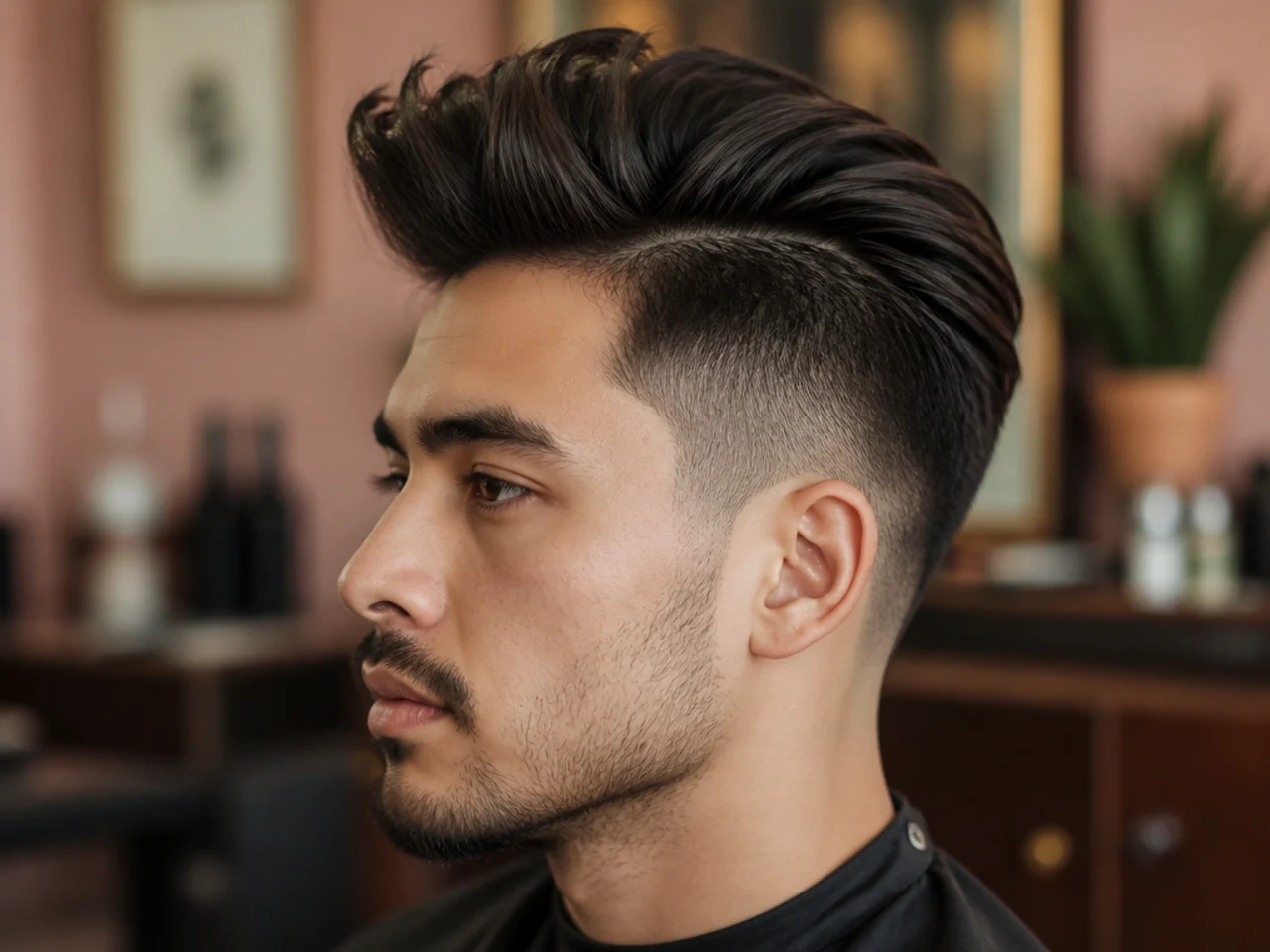
A quiff undercut let out for six to eight weeks. The buzzed sides grow into a soft self-blend, the disconnect line softens, and the top pushes past 6 inches. Half the appeal is that the shape ages well — it doesn't collapse into a shapeless mess between cuts. Reads relaxed and slightly rebellious, halfway between the classic version and a full medium quiff hairstyle grow-out.
Best on straight-to-wavy hair with density to spare. Every face shape.
Ask for: "Grow-out shape from a quiff undercut — leave the sides where they are, cut only the top so the sweep still carries over the softened disconnect."
Styling tip: sea-salt spray on damp hair, blow-dry front up and back with fingers, done. The shape is forgiving at this stage — push the top wherever the weight sits naturally.
How to Ask Your Barber
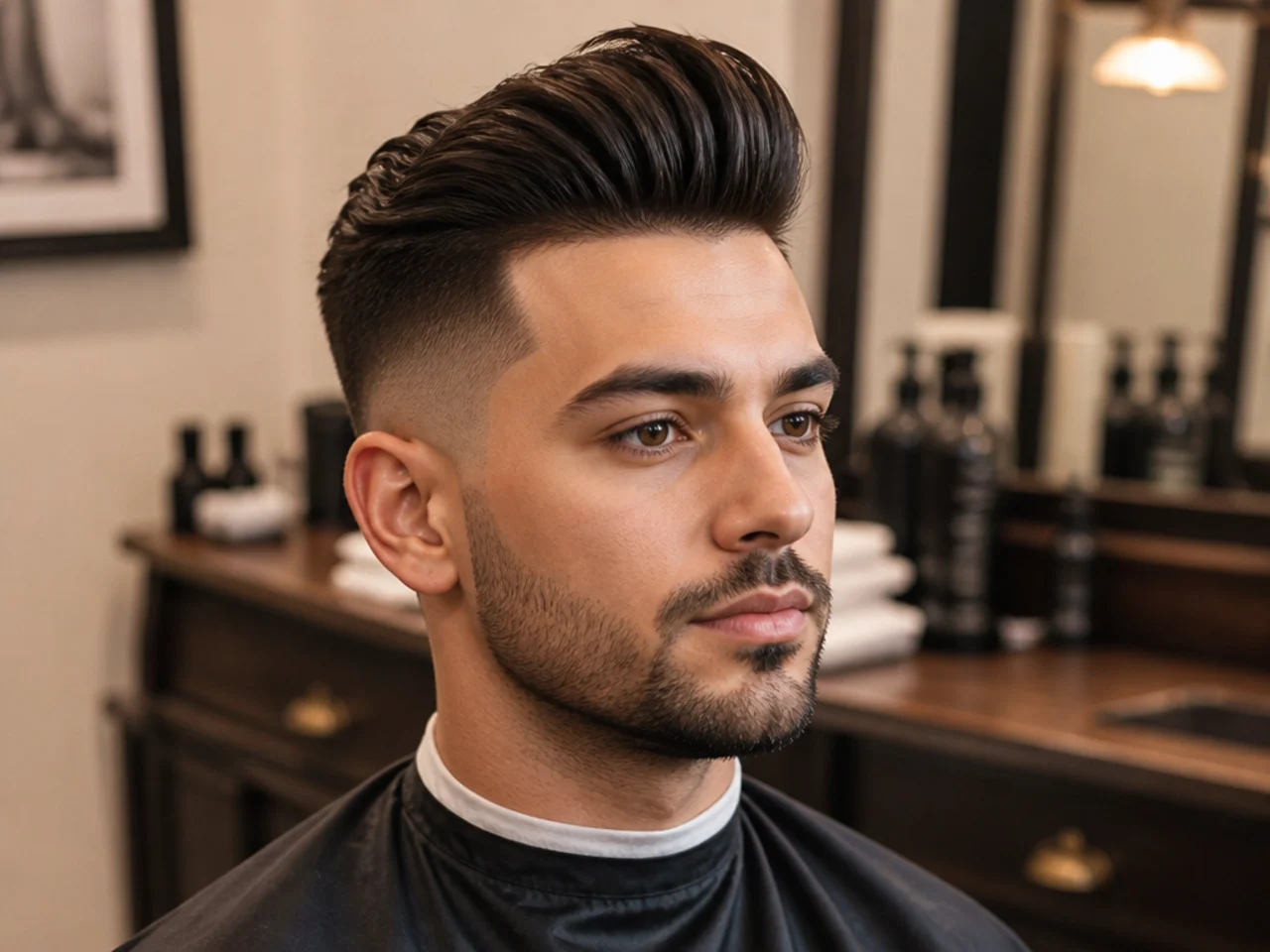
Quiff undercut vocabulary trips up barbers who default to a taper on every men's cut, and the wrong translation gets you a quiff fade or a quiff taper — not the sharp disconnected hybrid. This script gets you the version you had in mind:
- Bring three photos — front, side, and three-quarter of the exact variation you want. One photo lets your barber guess; three photos remove the guessing.
- Say "quiff undercut" and point to the horseshoe line. Touch your temple where you want the hidden line to sit — high, low, or standard. Showing the placement removes ambiguity.
- Say "hard line, no blend, no taper." This is the single most important sentence. Without it, most barbers default to a taper — which turns your quiff undercut into a quiff taper.
- Give the top length in inches, not adjectives. "Five inches at the front, three at the crown" is unambiguous. "Medium-long" is not.
- Give the single guard number for the sides. Zero, half, one, two, or three. Say it out loud with the number.
- Specify the sweep direction. "Up and back," "diagonally across the forehead," "straight back." The word for how the front sits.
- Book the follow-up before you leave. 3 to 4 weeks for short and classic versions, 5 to 6 weeks for long, grown-out, and pompadour ones.
Styling and Maintenance
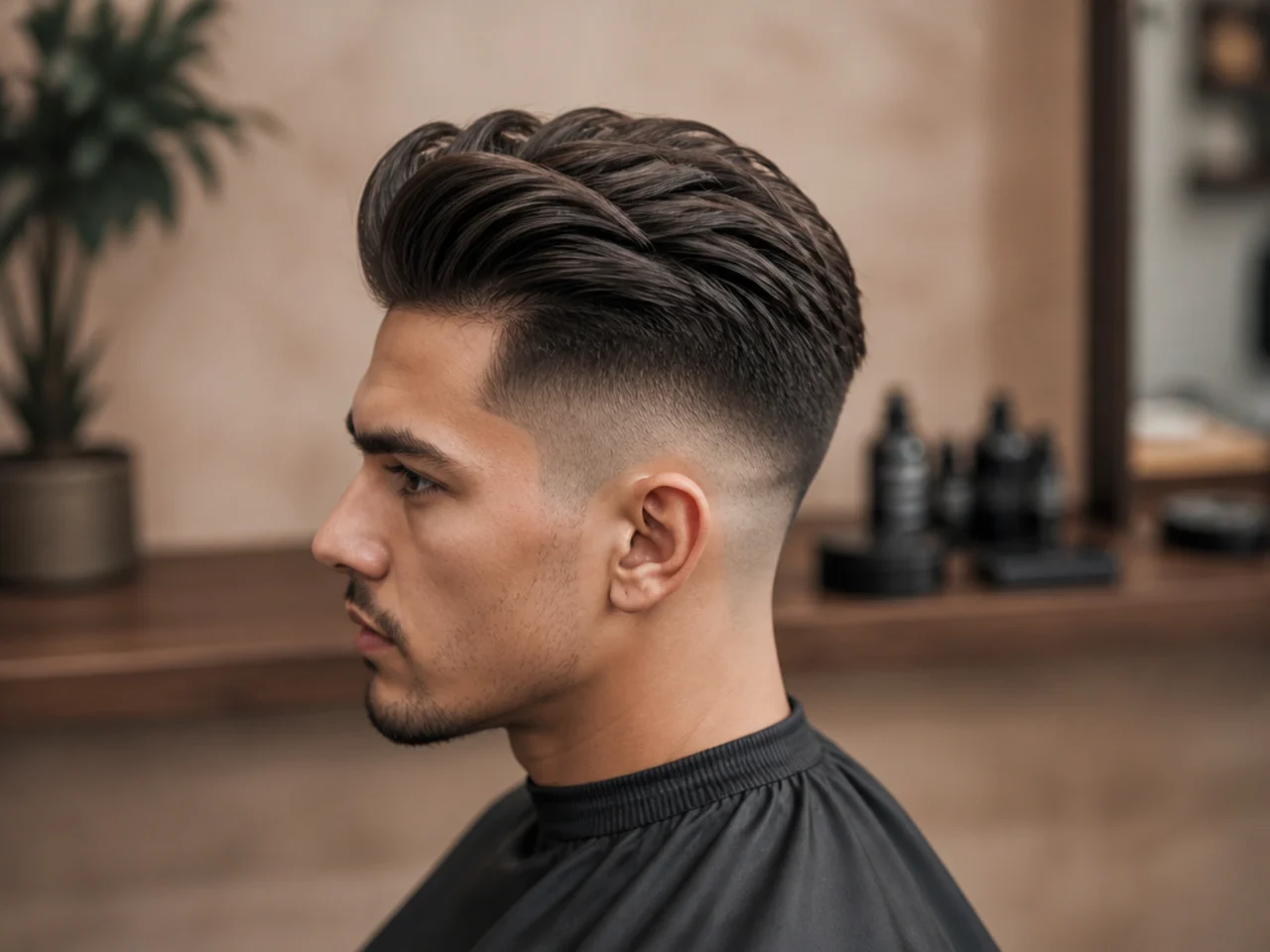
The quiff undercut does most of its work in the barber's chair — the disconnected line and the lifted front are the shape. Home styling stays minimal. Five habits keep the cut reading sharp between visits.
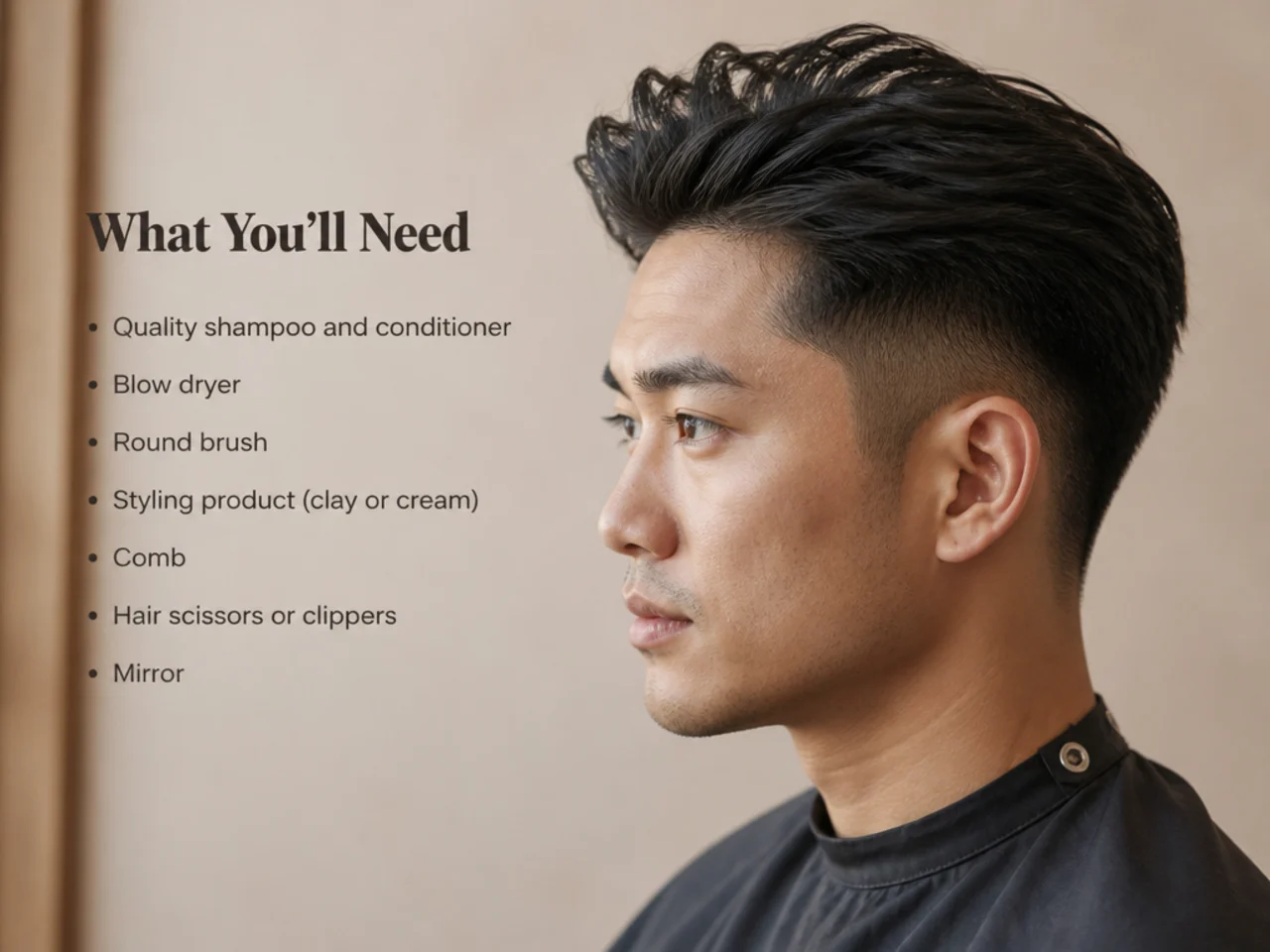
Wash and rough-dry first. Rough-dry until the hair is damp, not wet. Product goes in damp — soaking wet dilutes it, bone dry fights it. A sulfate-free shampoo twice a week for oily scalps, once for dry. Skip anything with silicones on the curly variations — they coat the pattern and drop the definition within a week.
Blow-dry from the roots up and back. This is where the height comes from. Point the nozzle down the shaft after lifting the roots so the cuticle stays smooth. Cool-shot the shape at the front once it is where you want it — the cool air locks the direction. Two minutes with a dryer beats ten minutes of product.
Match the product to the finish. Matte clay or paste for the classic, textured, messy, and modern versions. Pomade for the slick back, hard part, and side swept. Curl cream or defining cream for the wavy and curly. Volumizing mousse for the pompadour and long. One product, small amount — a nickel-size scoop is enough for most cuts.
Keep the disconnect fresh. The buzzed sides are half of what makes it a quiff undercut. As soon as the buzz grows past a fingernail's length, the hard line softens and the shape starts reading unkempt. A clipper touch-up on the sides at week two or three — home or barbershop — stretches the cut a full extra week. Pick up a solid set of clippers if you're doing it yourself.
Sleep on a satin pillowcase. It saves the round-brush work overnight, especially on the pompadour, slick back, and modern variations. The satin also protects the coloured tone if you are running a blonde version.
FAQ
Can I get a quiff undercut at any barber?
Yes — the quiff undercut is a standard modern men's cut and any barber trained in the last decade can execute it. Bring three photos, use inches and guard numbers, and say the phrase "hard line, no blend, no taper" out loud. That single sentence is what stops a Western barber from defaulting to a soft-blend quiff fade instead of the sharp disconnected version.
What's the difference between a quiff undercut and a quiff fade?
A quiff fade blends the sides down through several clipper guards or fades all the way to skin gradually. A quiff undercut refuses to blend. A single clipper guard runs straight down from the horseshoe line to skin with no transition. When the front lifts, a fade shows a smooth gradient underneath; an undercut shows a sharp horizontal edge. Undercuts also grow out slower because there is no gradient to soften.
Does the quiff undercut work for thinning hair?
Yes, with a shorter top and heavier internal texture. Keep the front at 4 inches, ask for point-cut or razor-cut layers to build visual mass, and drop the disconnected sides to a one guard so nothing peeks through when the top thins. The messy quiff hairstyle with the undercut treatment covers the front more forgivingly than the pompadour or slick back versions.
Which quiff undercut is the most professional?
The short quiff undercut, the low undercut quiff, and the classic version with a one-guard disconnect all read office-ready. Keep the top at 4 inches, the disconnect line low near the ears, and style the front swept back rather than up. Skip the skin, hard-part, and pompadour versions for strict dress codes — those read statement, not corporate.
Does a quiff undercut suit round faces?
Yes — it is one of the strongest cuts for round faces. The lifted front adds visible vertical height and the disconnected sides remove width, so the visible face reads narrower and longer. Ask for the round-face quiff variation with 5 inches on top, a mid or high undercut line, and mousse at the roots for real lift.
How is a quiff undercut different from a two block undercut?
A two block undercut keeps the top draped forward and down over the disconnected sides — the top is cut on a horseshoe line and the length falls to cover the buzz at rest. A quiff undercut lifts the top up and back away from the forehead, so the disconnected sides show through the styling by default. Same disconnected side treatment, opposite top direction.