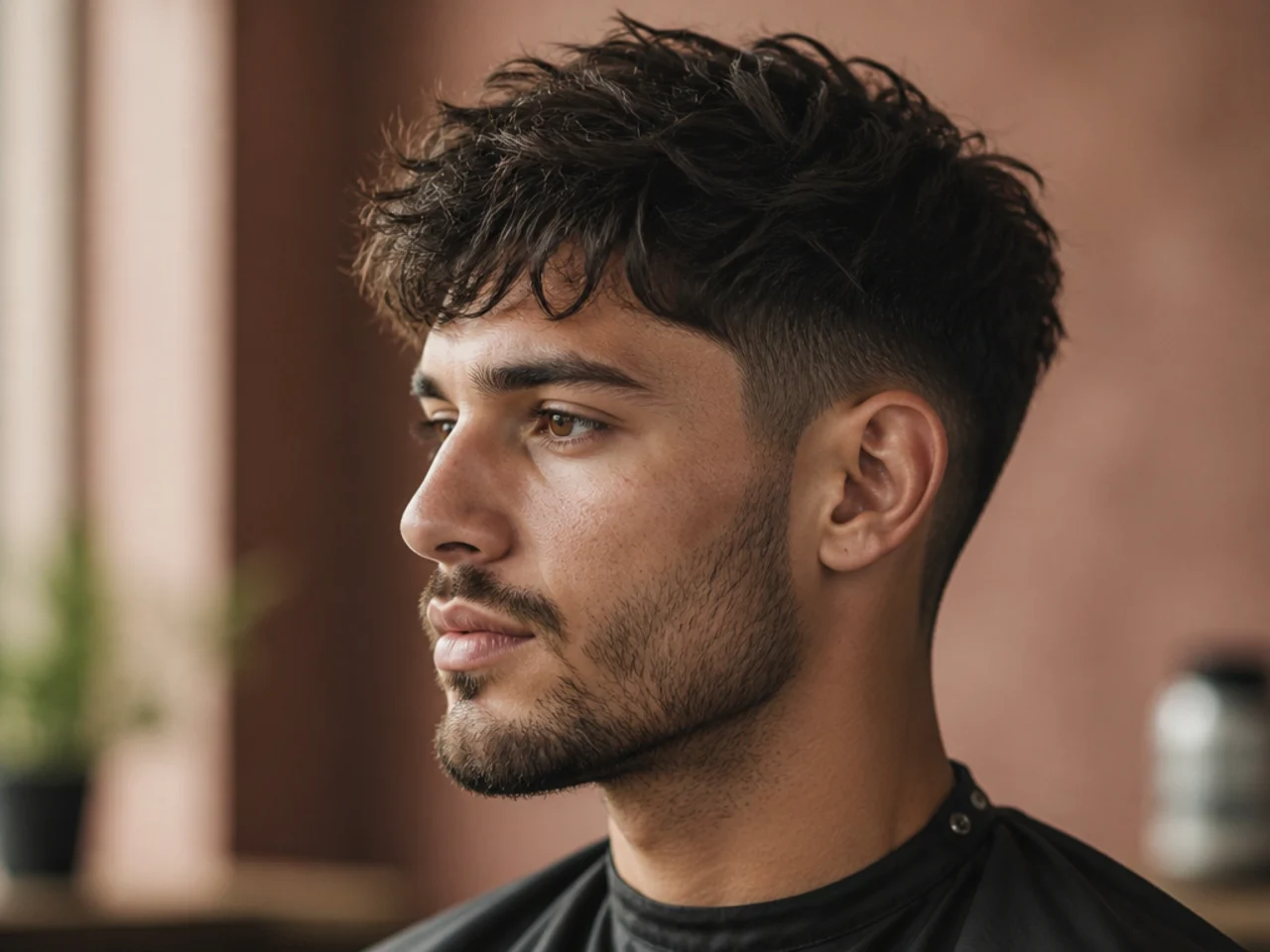
27 Stylish Textured Haircuts For Men
Discover trendy examples of textured haircuts for men that blend effortless volume and light layering to create fresh looks with dimension...
In this article · 39
- What is a textured haircut for men?
- Popular Textured Men's Hairstyles
- Textured French Crop
- Textured Mod Cut
- Long Middle Part
- Side Swept Hair with Short Sides
- Messy Curly Hair with Taper Fade
- Mullet Fade
- Crew Cut with Fringe
- Textured Mohawk
- Short Messy Waves
- Textured Quiff
- Textured Brush Back
- Textured Faux Hawk with Low Burst Fade
- Messy Textured Medium Hair
- Flowing Wolf Cut
- Textured Side Part Fade
- Textured Shaggy Hair
- Heavy Textured Fringe
- Thick Brush Up
- Textured Curtains
- Short Brush Forward with High Skin Fade
- Modern Pompadour Fade
- Textured Short Hairstyle with Mid Fade
- Classic Crew Cut with Taper Fade
- Long Loose Curls
- Short Brush Up with High Fade
- Messy Spiky Hair and Fringe with Low Drop Fade
- Faux Hawk
- Textured Comb Over Taper
- Popular Short Textured Men's Haircuts
- Medium-Length Textured Haircuts For Men
- FAQs: Textured Haircut For Men
- How do I ask my barber for a textured haircut?
- Which hair types suit a textured cut?
- What products help create texture?
- Can textured hairstyles work for professionals?
- Are textured haircuts good for thinning hair?
- What is the difference between messy and textured?
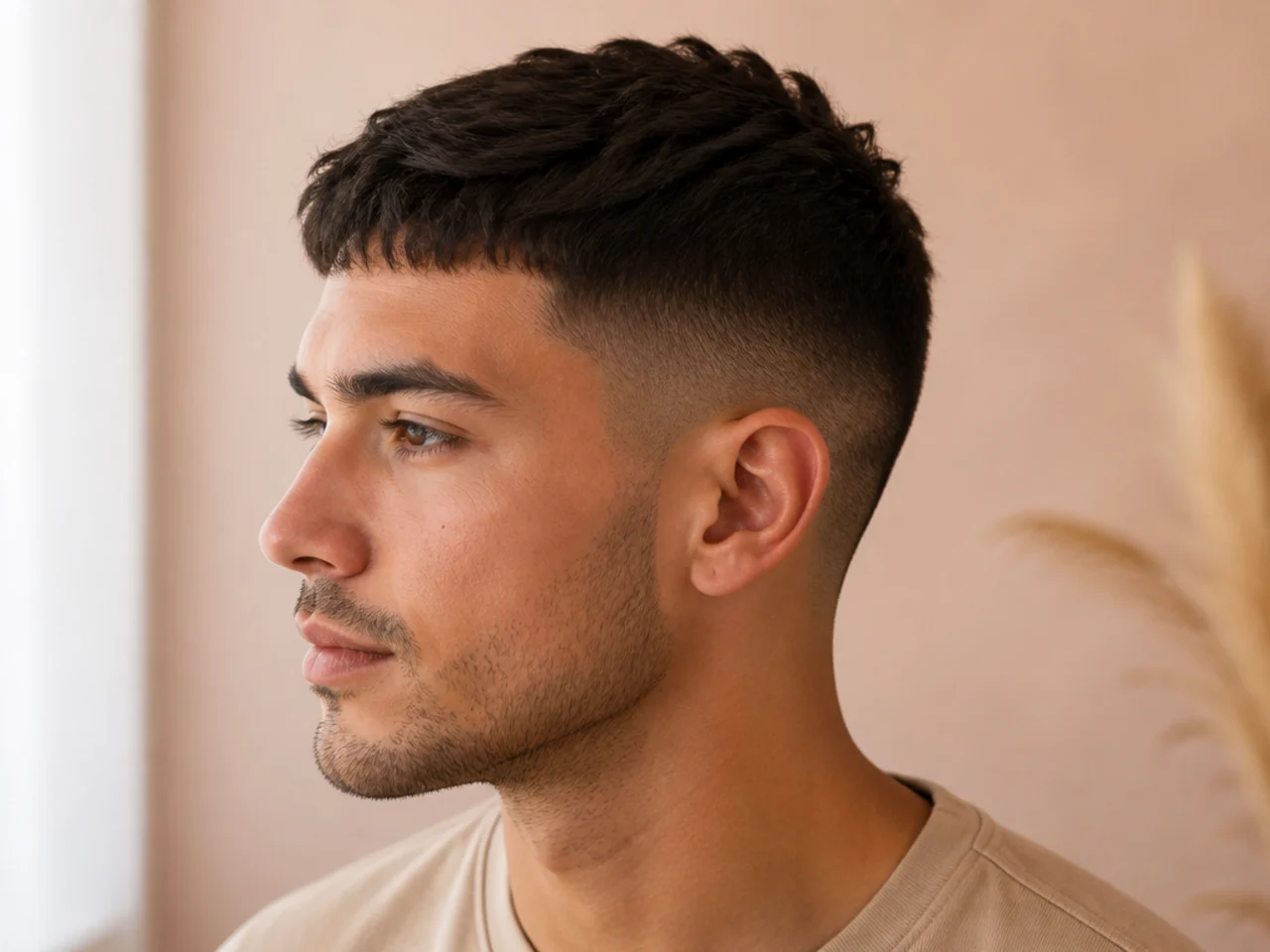
"Textured" isn't a haircut. It's how the hair gets cut. Your barber breaks up the ends with point-cutting, razoring, or thinning shears so the shape sits with movement and separation instead of a heavy solid block. Every modern men's cut can be textured — crops, quiffs, side parts, anything paired with a fade. This guide runs the full range so you know exactly what to walk in and ask for.
What is a textured haircut for men?
Texture is a cutting technique, not a style. When you ask for a textured haircut, you're telling the barber to leave the ends broken up. That happens three ways.
Point-cutting means angling the scissors into the ends and snipping vertically. Weight comes off the tips without disturbing the interior. Razoring goes further — the barber slides a razor down each section for soft, feathered ends that taper to nothing. Thinning shears strip weight from inside the hair without changing the outline.
The payoff is separation. Individual pieces catch light and shadow, so the shape reads three-dimensional. Fine hair looks denser because broken ends stack visually. Thick hair moves easier because the weight is pulled out. Wavy and curly hair get room to bend the way they want to.
Every cut in this guide uses those same techniques. What changes is length, side treatment, and how you finish it with product.
Popular Textured Men's Hairstyles
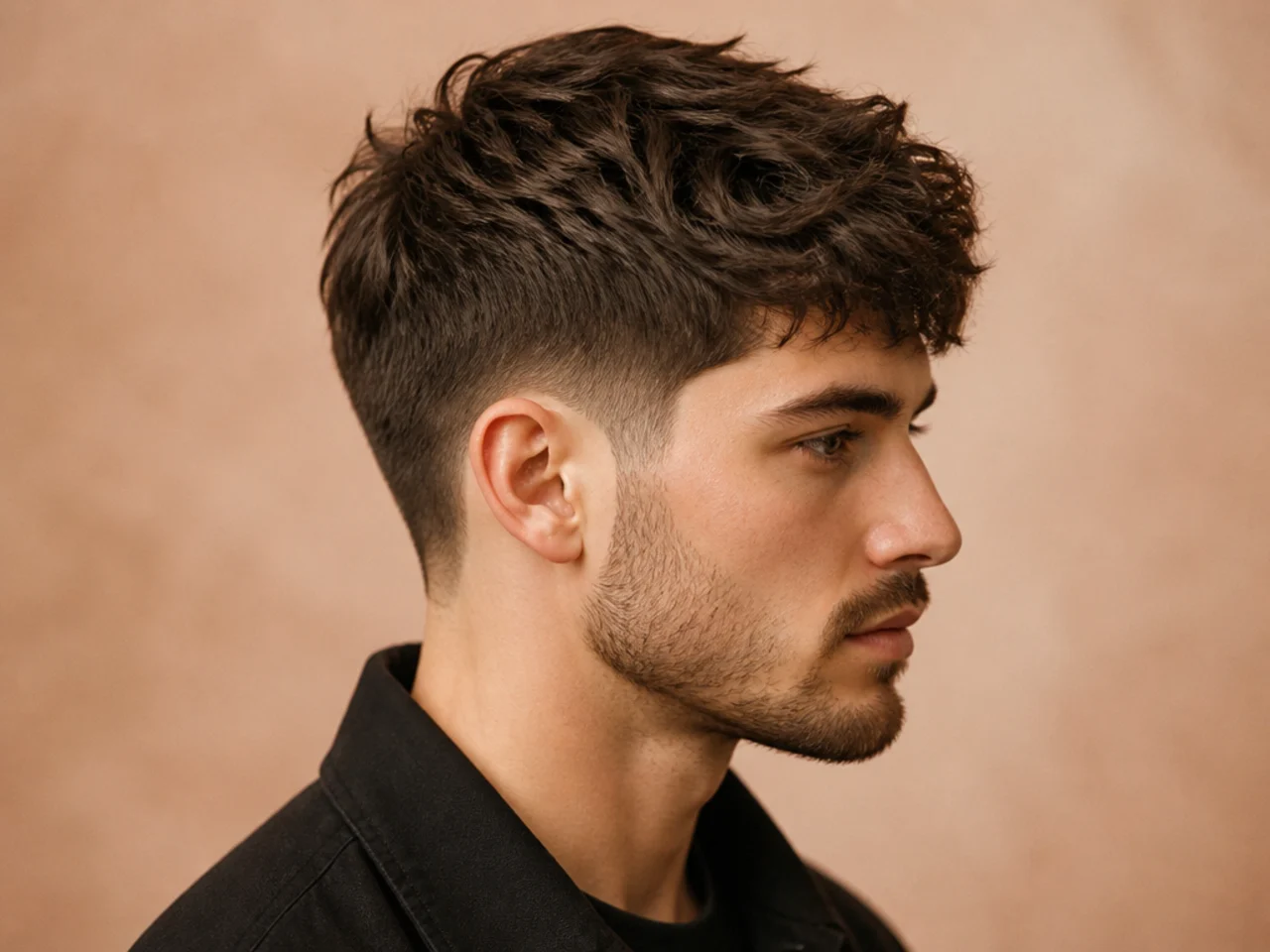
Below are 28 textured cuts your barber can actually deliver. Some short, some medium. Some pair with skin fades, some with scissor-cut sides. Each entry covers the shape, who it flatters, exactly how to ask, and one styling tip that gets the finish right without over-working the hair.
Textured French Crop
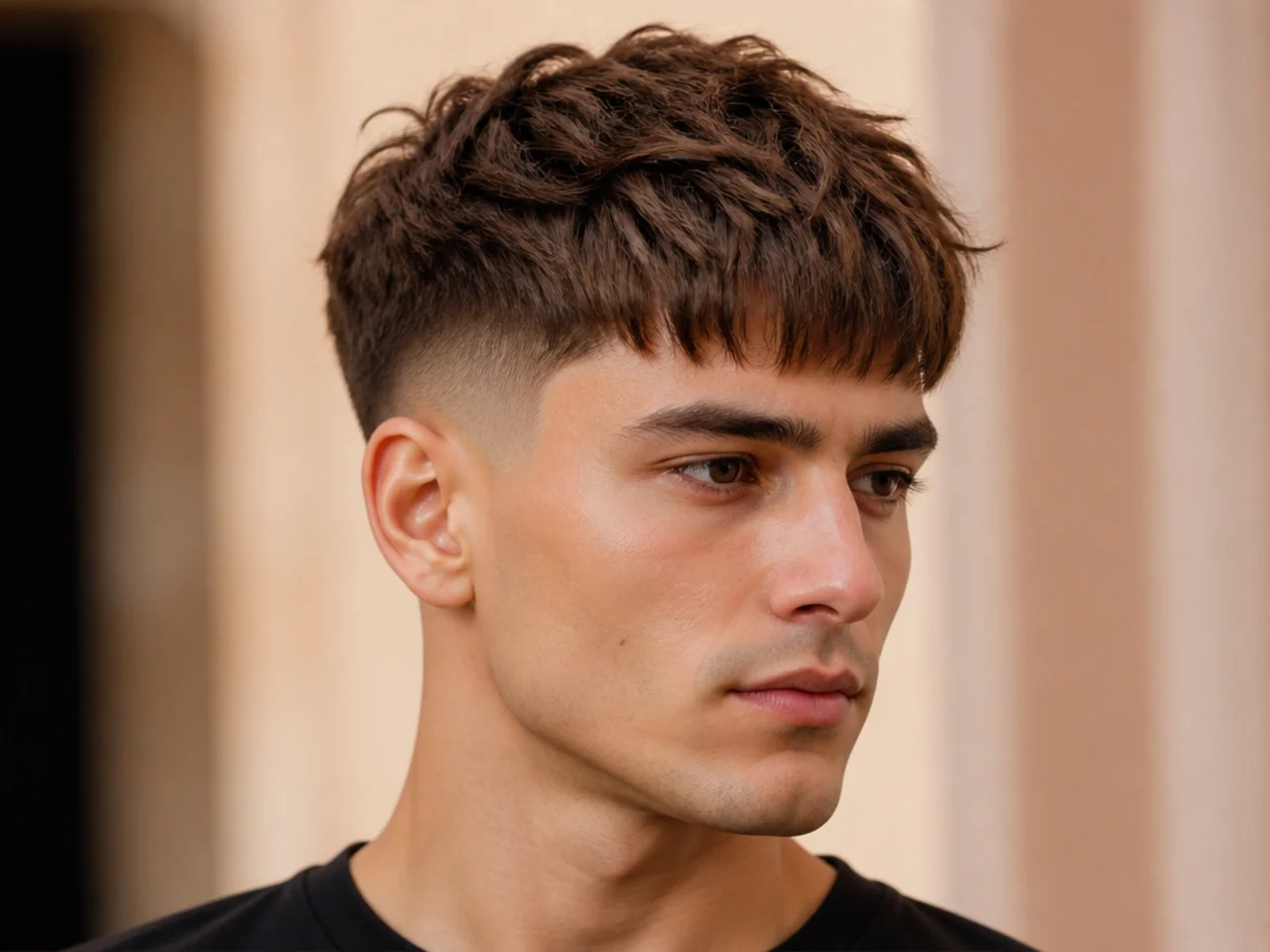
The French crop is textured cutting in its purest form. Top length runs 1.5 to 2 inches, brushed forward. The fringe stops just above the brow and gets point-cut afterward to break the edge — no blunt shelf, just soft irregular tips.
This suits round, square, and oval faces. Fine hair benefits most because the shortness plus broken ends reads as density. Weak or receding hairlines get camouflaged by the forward fringe. See our full French crop guide for every variation.
Ask for a "textured French crop, 2 inches on top, point-cut fringe, mid taper fade on the sides."
Style with a pea-size drop of matte clay rubbed between your palms, pushed forward and down from the crown. Air dry.
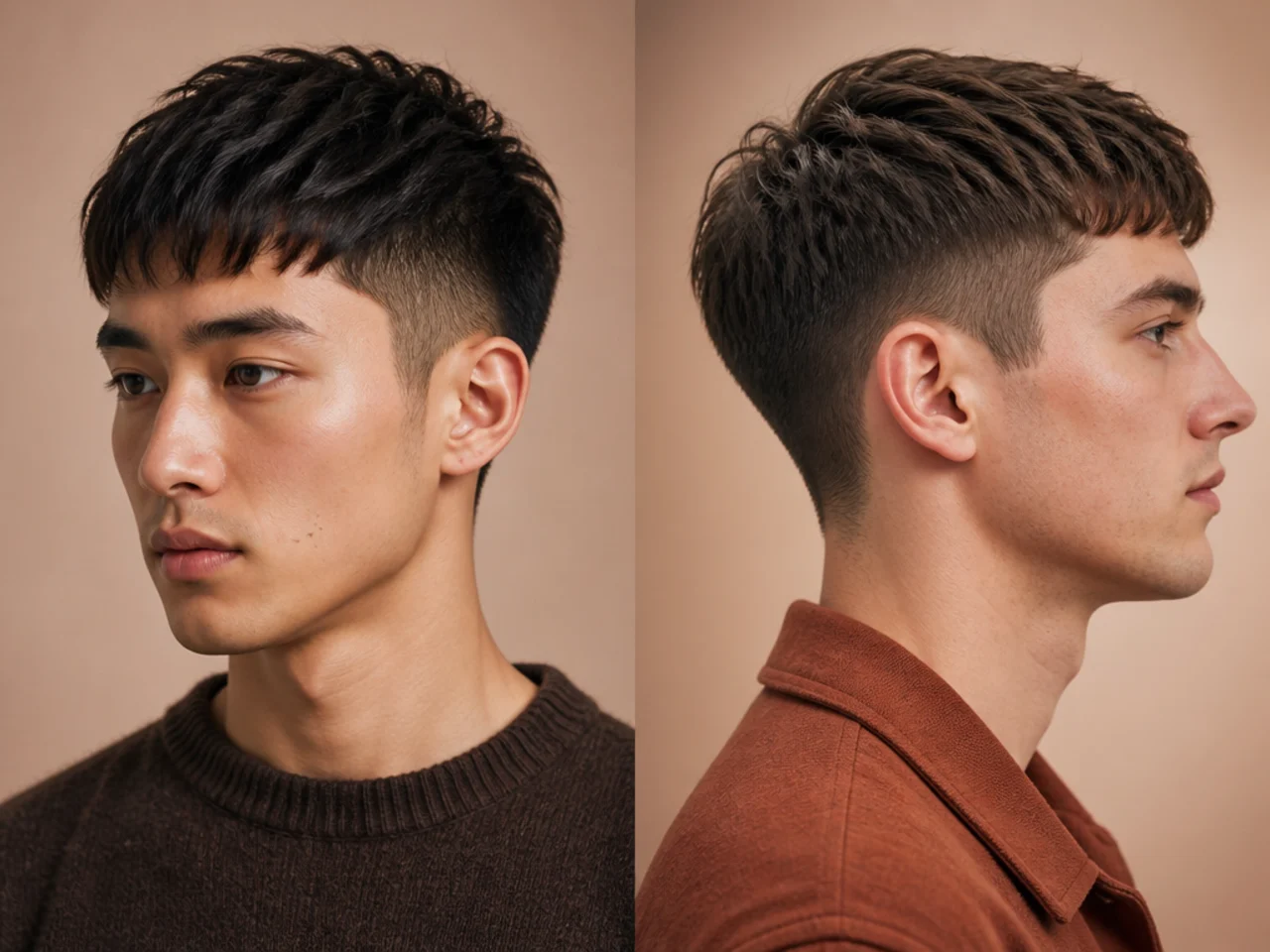
Textured Mod Cut
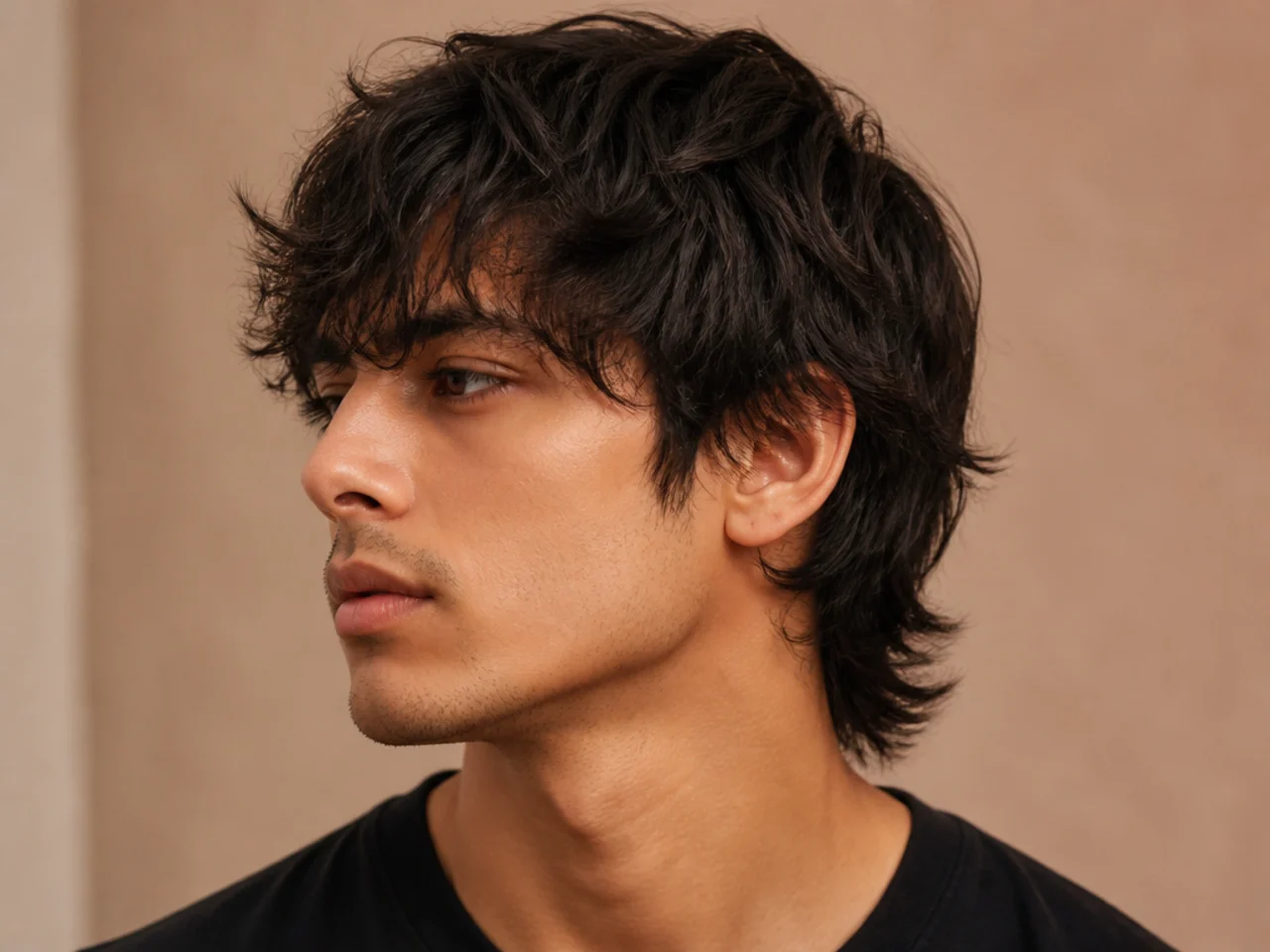
The mod cut borrows the 1960s British silhouette — rounded shape, soft fringe, ears mostly covered — and updates it with modern texturizing. Top runs 2 to 3 inches, layered short at the crown, longer toward the front. Sides taper down but stay long enough to lie flat instead of fading to skin.
Rounded and oval faces suit this best. The soft rounded silhouette softens a strong jaw. Straight and slightly wavy hair holds the shape cleanly.
Ask for a "textured mod cut with rounded layers, razored ends throughout, and a scissor-blended taper on the sides."
Style with a small amount of matte paste worked through damp hair, then blow-dry with fingers pushing the fringe forward and slightly down.
Long Middle Part
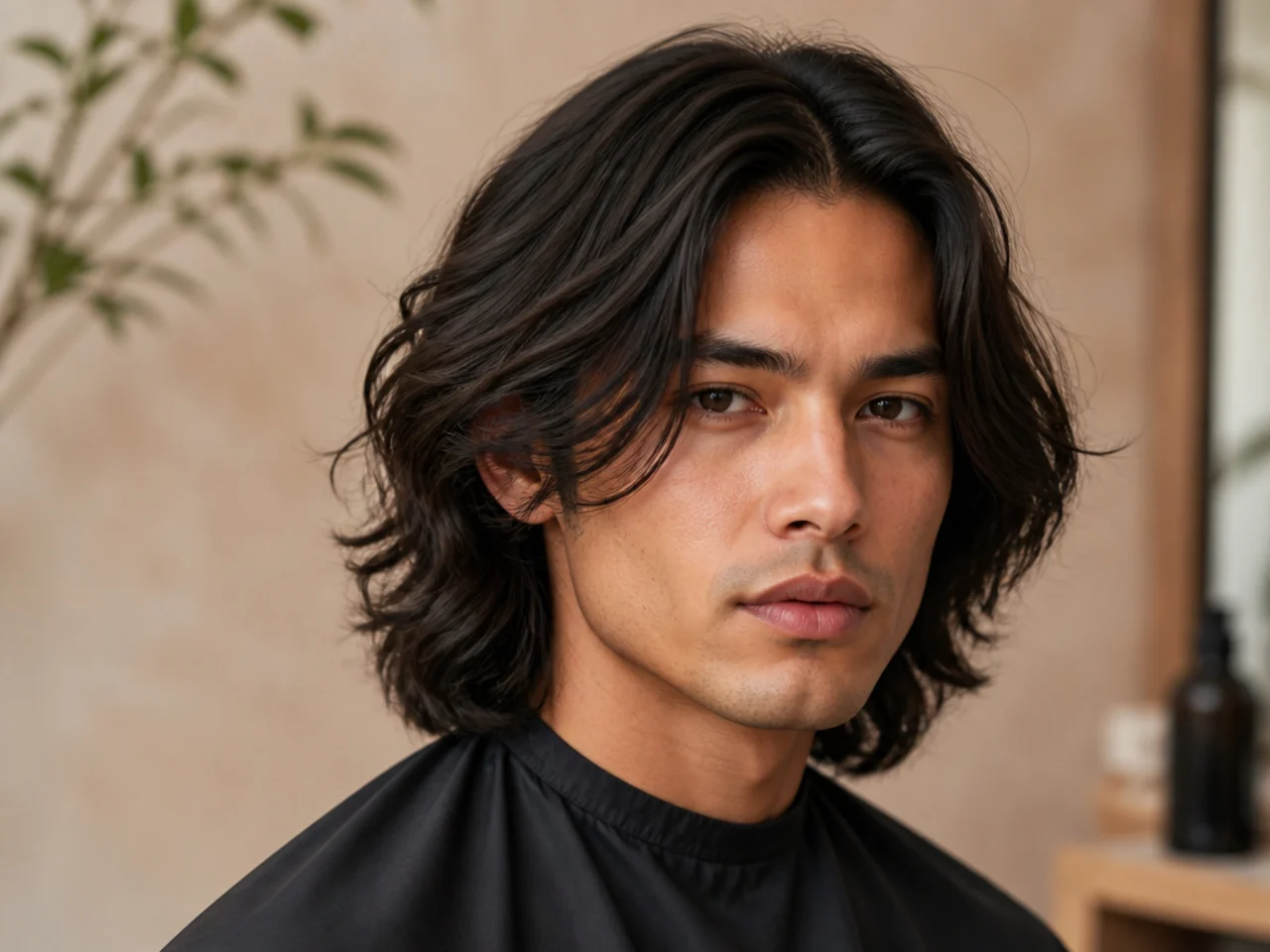
The middle part splits the hair evenly from the front hairline to the crown, dropping length to the cheekbones or below. Top runs 3 to 5 inches. Layers are razored so the ends taper to soft feathered points instead of blunt shelves.
Oval and long face shapes wear this best. Straight and wavy hair holds the parted drop; tight coils won't. For more length options at this range, see our medium-length hairstyles guide.
Ask for a "3-to-5-inch middle-part cut, razored ends, face-framing layers, no fade."
Style with sea-salt spray on damp hair, rough-dry with fingers, then run a wide-tooth comb through the part to set the split clean.
Side Swept Hair with Short Sides
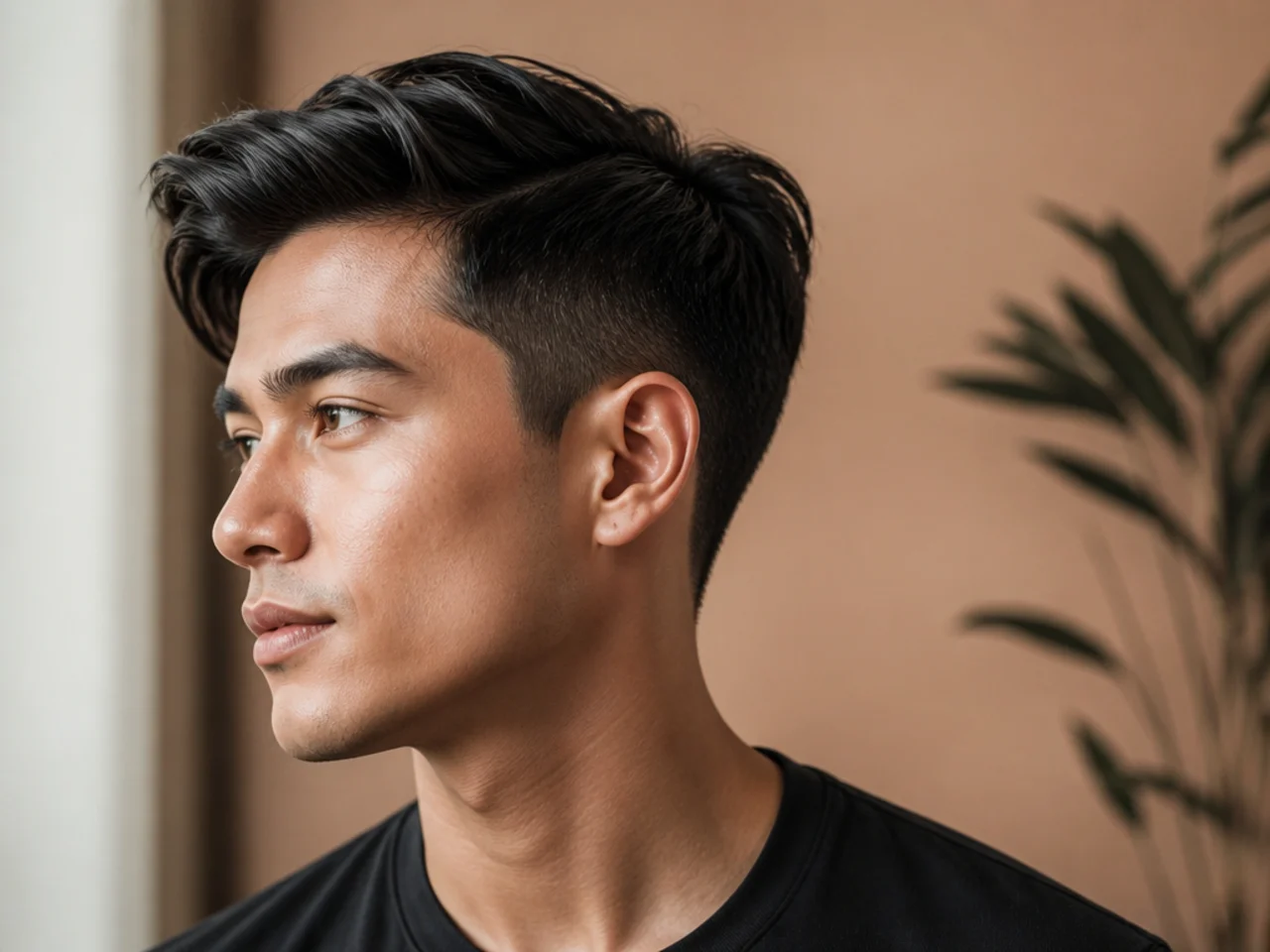
The side-swept top runs 2 to 3 inches, directed at an angle across the head. Sides sit short — usually a taper or low fade — so the contrast pushes the eye up toward the swept top. Layers grow slightly longer at the front for the sweep to flow, then get point-cut across the ends.
Works on any face shape because the diagonal line breaks up symmetry. Straight and wavy hair holds direction; curly hair needs relaxing for the sweep to sit right.
Ask for a "side-swept top, 2 inches at the crown, longer at the front, point-cut ends, low taper on the sides."
Blow-dry the fringe across with a paddle brush after applying a light cream. Finish with matte clay for hold.
Messy Curly Hair with Taper Fade
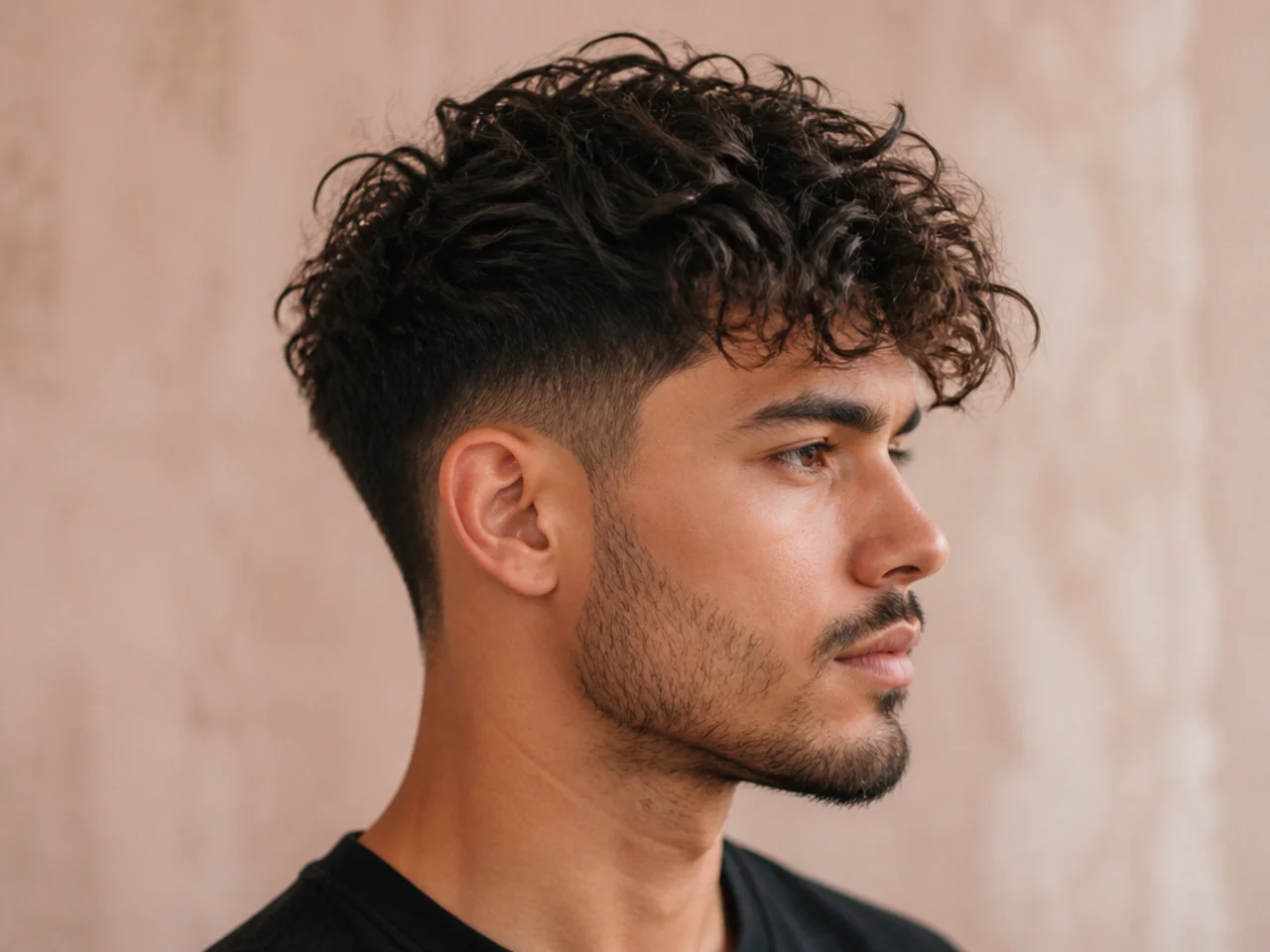
This one pairs natural curls left at 2 to 4 inches on top with a clean taper fade at the sides. The curls sit forward and slightly to one side. The fade sits low around the ears and neck, keeping bulk away from the temples so the curls read as the star of the cut.
Great for anyone with a natural curl pattern from wavy through 4A. The taper flatters round, square, and oval face shapes.
Ask for a "curly cut on top, 3 inches long, dry-cut for shape, with a low taper fade on the sides."
Apply curl cream to damp hair, scrunch upward, then diffuse-dry on low heat. Skip brushes.
Mullet Fade
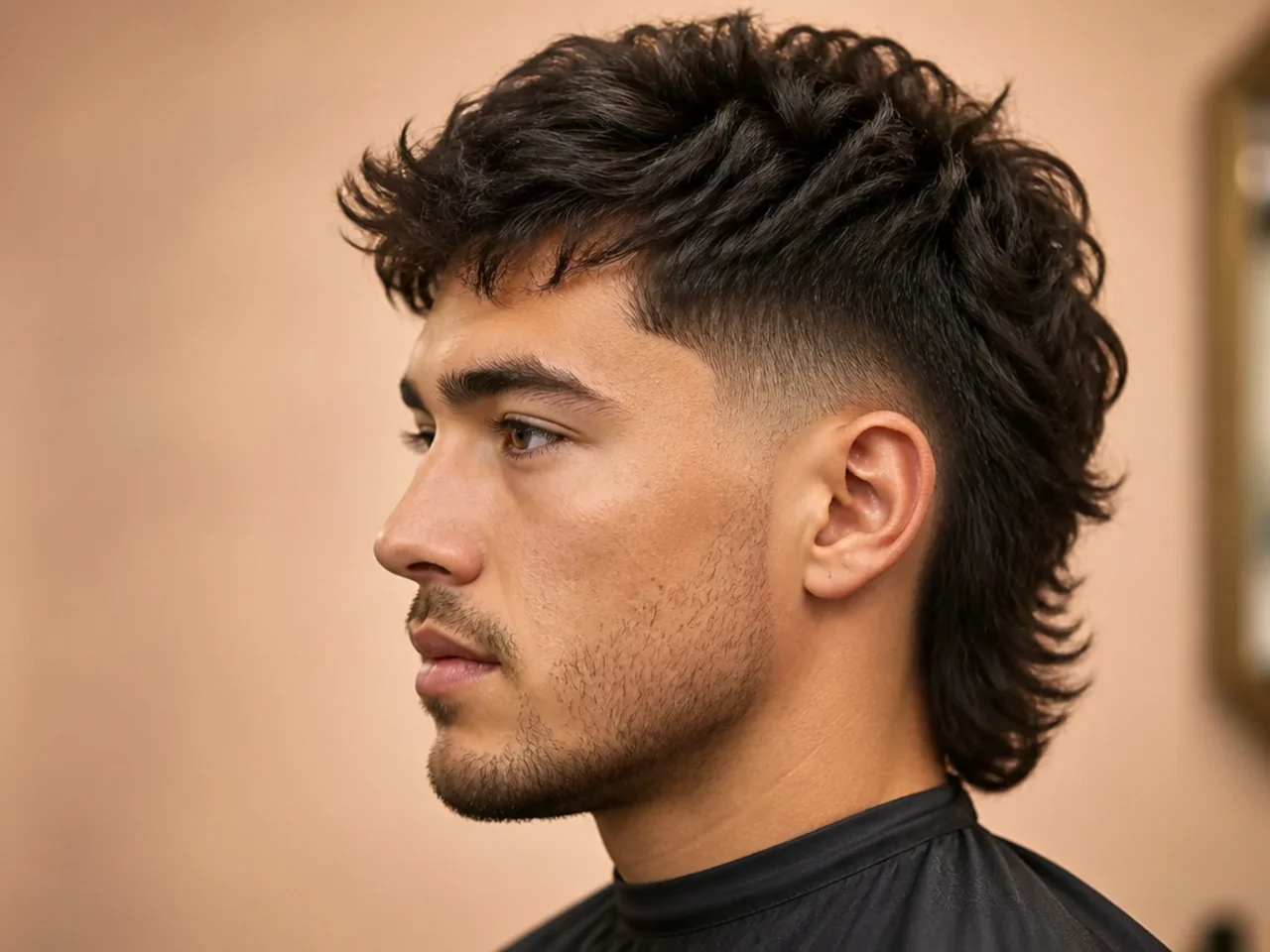
The modern mullet fade keeps length short-to-medium on top and at the front but grows longer through the back — usually 3 to 5 inches at the nape. Sides are cleaned up with a fade that starts low or mid. The back is heavily point-cut so the length reads as texture, not a rat tail.
Suits oval and square faces. Straight to wavy hair works best; curly mullets need more length to sit right.
Ask for a "textured mullet with a mid fade, short-to-medium top, longer back with point-cut ends."
Style with sea-salt spray on damp hair, air-dry, then finger-comb matte paste through the back for separation.
Crew Cut with Fringe
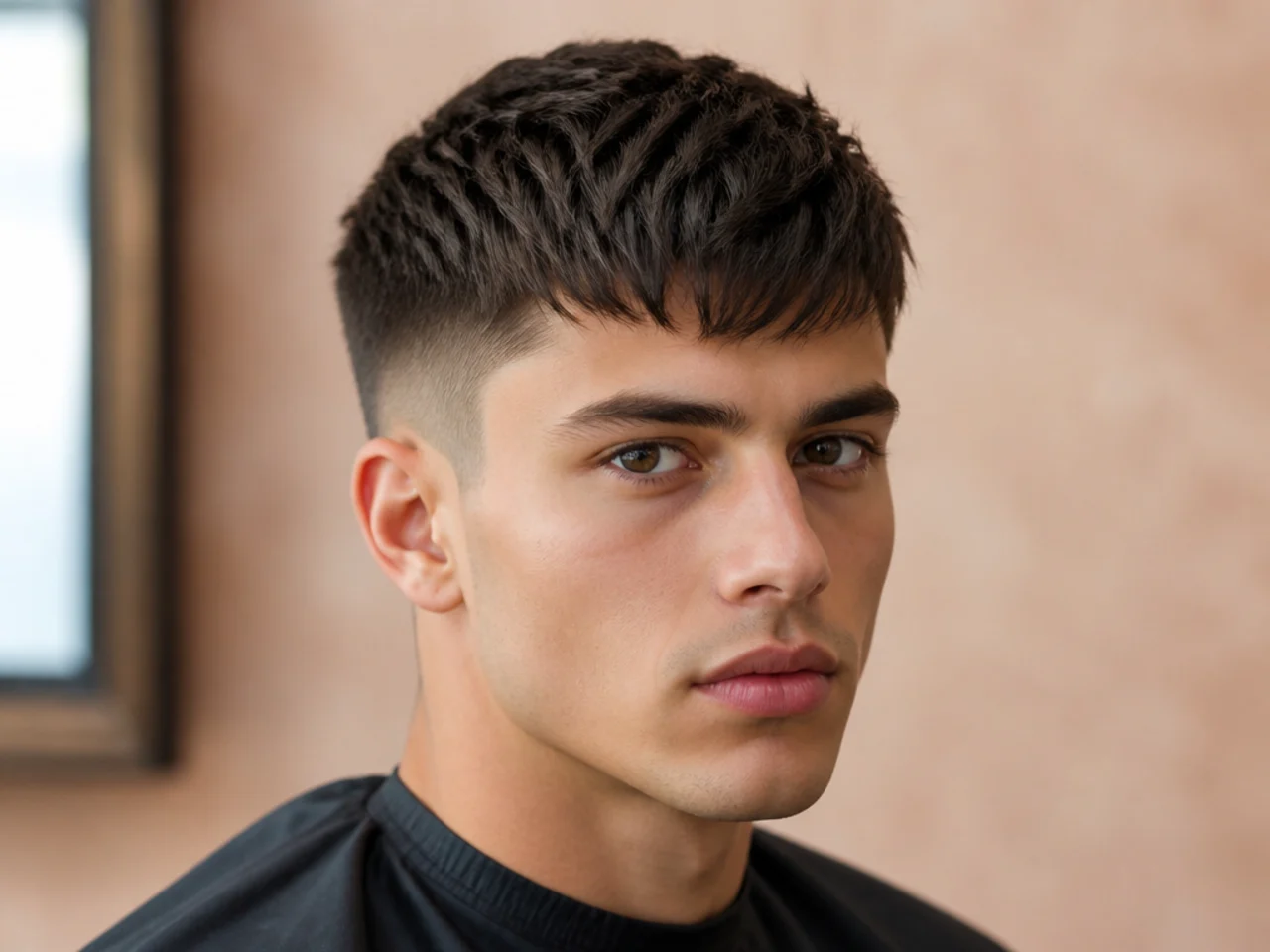
The crew cut with fringe keeps a 1-inch crop everywhere except the front, where the fringe stretches to 2 inches and falls forward. Sides are usually scissor-cut or taper-faded. The fringe gets point-cut into a soft irregular edge instead of a blunt line.
Suits round, square, and oval faces. Fine and medium-thickness hair takes this best because the short length highlights density.
Ask for a "crew cut with a 2-inch textured fringe, point-cut across the front, low taper on the sides."
Style with a fingertip of matte paste worked through the fringe. Skip the blow-dryer — air-dry so the fringe lies where it wants to.
Textured Mohawk
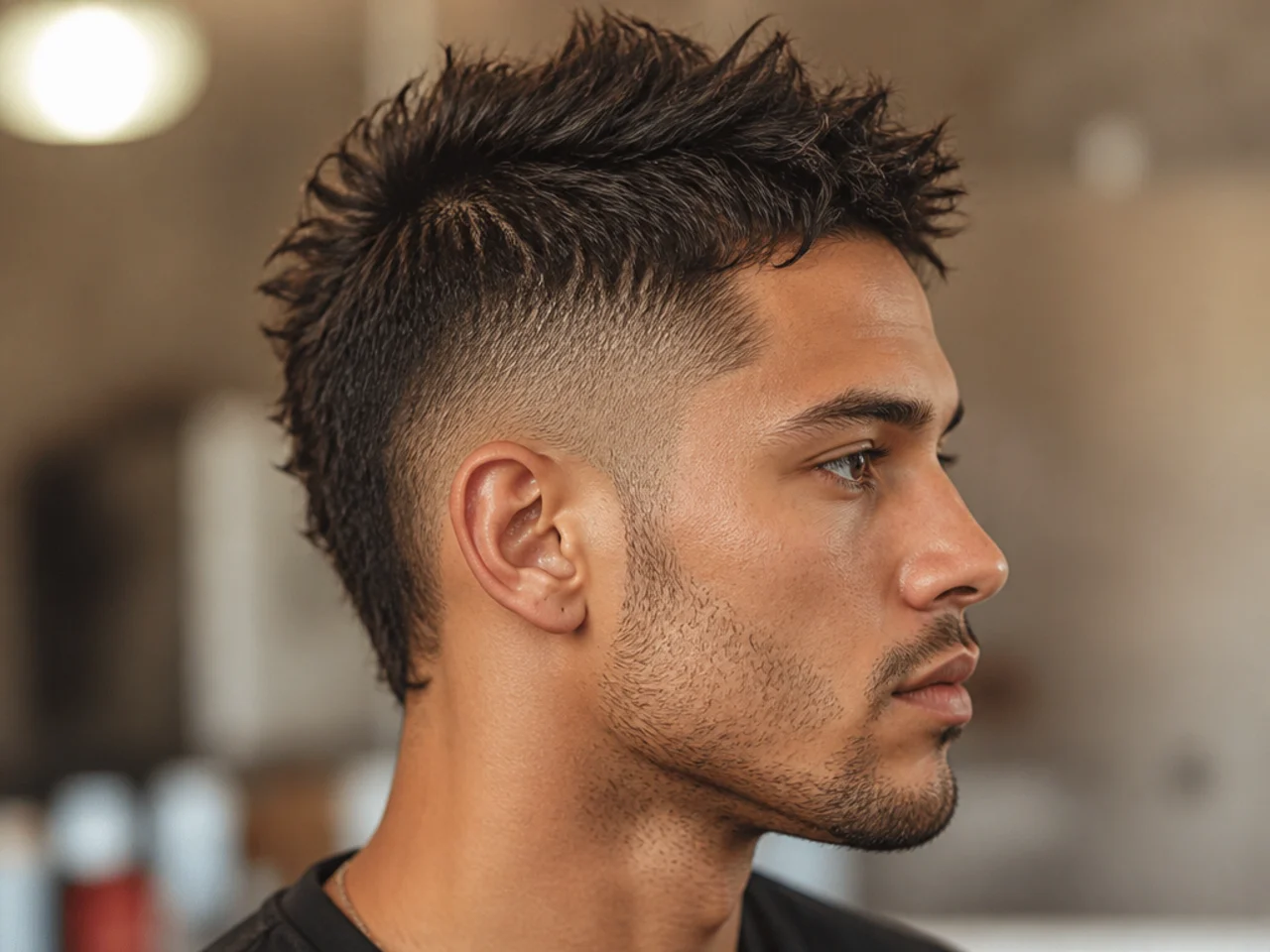
The textured mohawk keeps a 2-to-4-inch strip running from front hairline to crown. Sides drop to a short taper or skin fade. Layers are razored short at the crown, longer at the front, so the strip lifts into a soft peak instead of a stiff spine.
Suits oval and square face shapes and anyone comfortable with the profile.
Ask for a "textured mohawk with 3 inches on the strip, razored ends, and a high skin fade or drop fade on the sides."
Style with sea-salt spray on damp hair, blow-dry the strip straight up with fingers, then set with matte clay for a tousled peak — not a sharp ridge.
Short Messy Waves
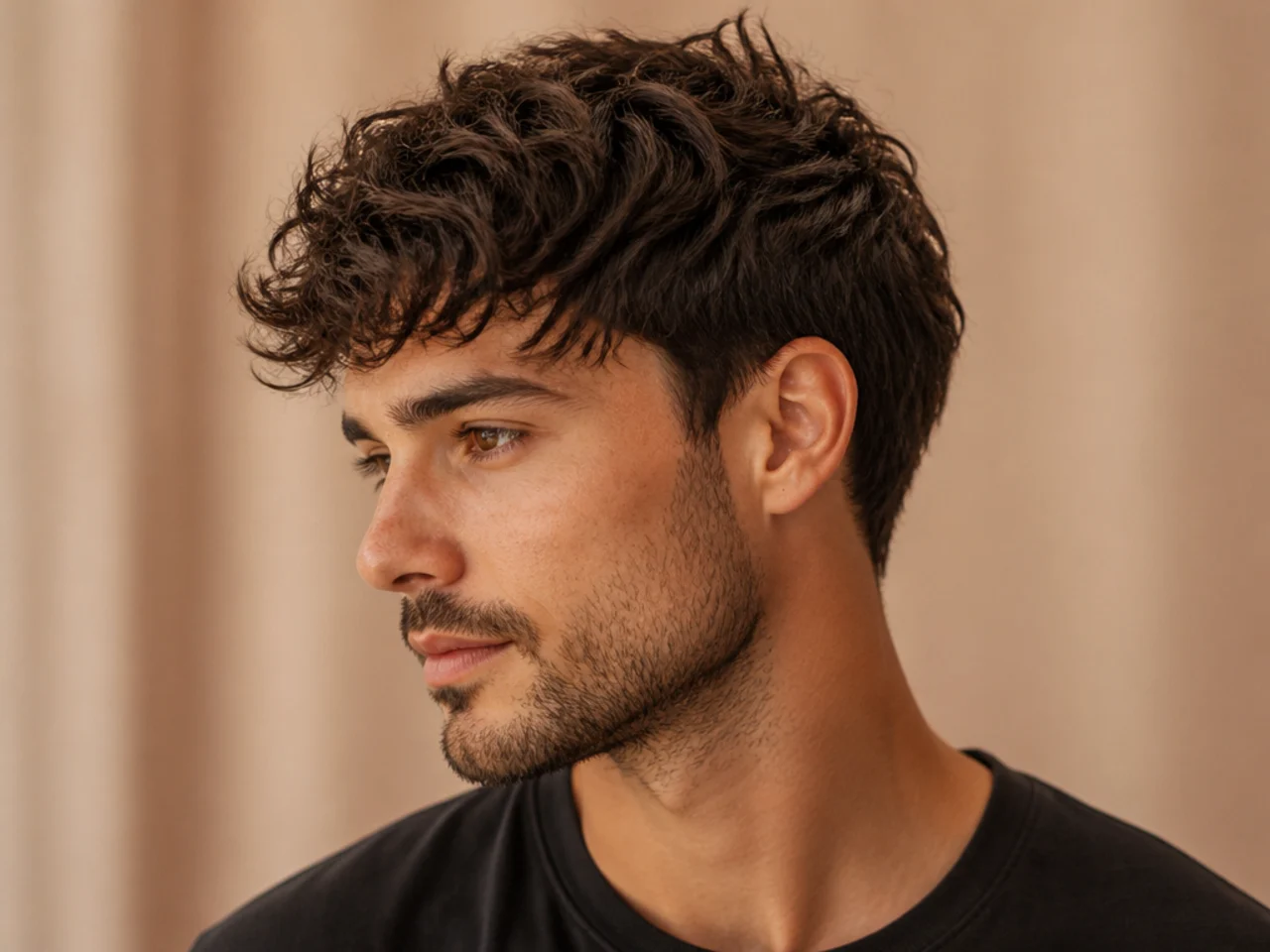
Short messy waves keep 2 to 3 inches on top for the natural wave pattern to show. Sides taper down or fade. The top is scissor-cut with point-cutting through the length so each wave sits with visible separation. No blunt perimeter to fight.
Great for anyone with a natural wave pattern. Round and square faces suit the loose top. If you want to see more casual variations, our messy hairstyles guide covers the range.
Ask for a "wavy top, 2.5 inches long, dry-cut with point-cutting throughout, low taper on the sides."
Style with sea-salt spray on damp hair, scrunch upward, then air-dry. Light cream through the ends for frizz control.
Textured Quiff
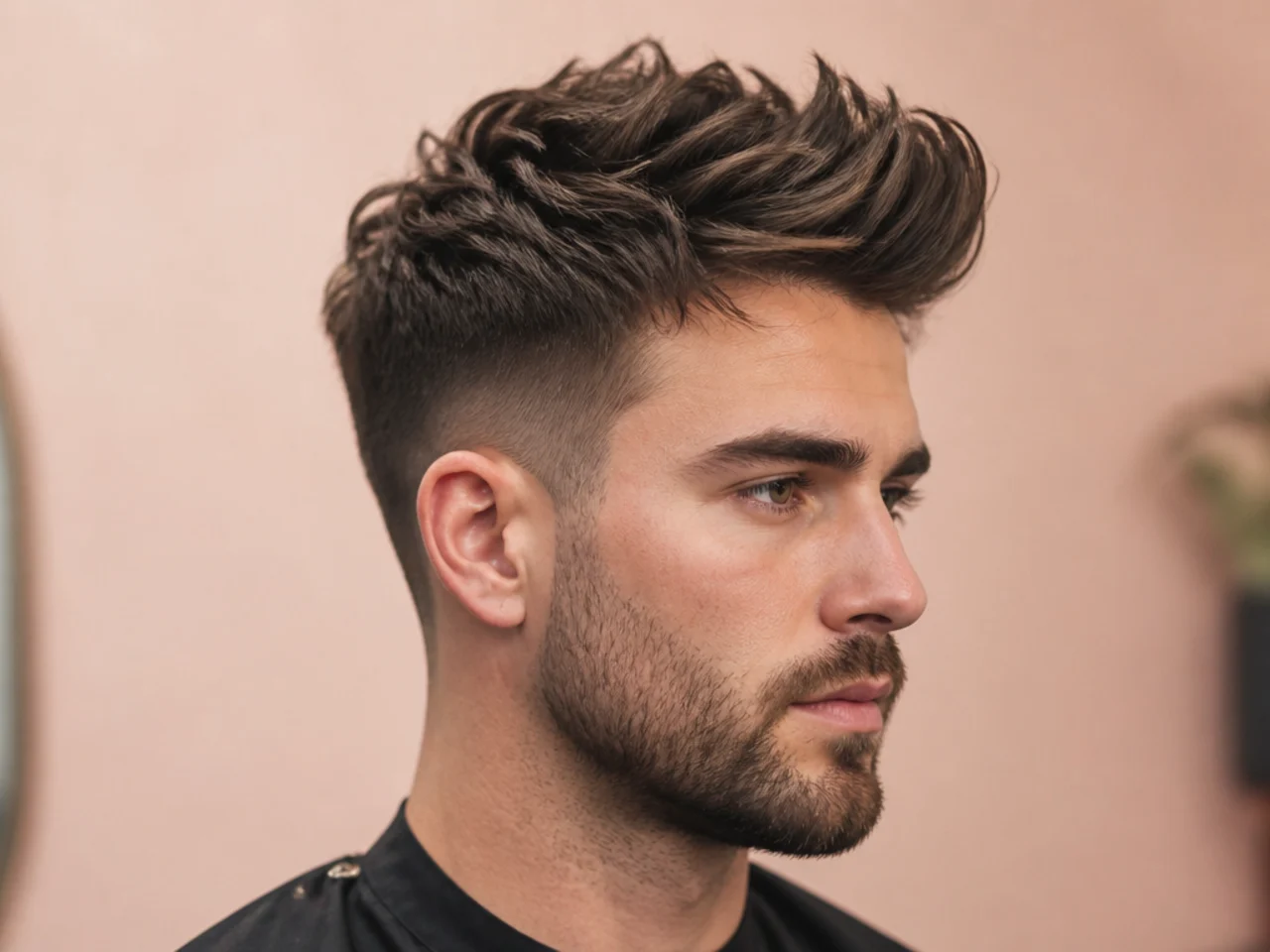
The textured quiff lifts the front section up and slightly back, then lets the mid-section flow with movement instead of solid volume. Top runs 3 to 5 inches, longest at the front. Sides sit short with a taper or fade. Internal layers are point-cut so the quiff has separation, not a helmet finish. Our full quiff guide breaks down every variation.
Suits oval, round, and heart-shaped faces — the lift adds vertical length. Fine hair benefits from the illusion of volume.
Ask for a "textured quiff with 4 inches at the front, point-cut internal layers, mid fade on the sides."
Blow-dry upward with a round or vented brush. Finish with matte clay for hold with movement.
Textured Brush Back
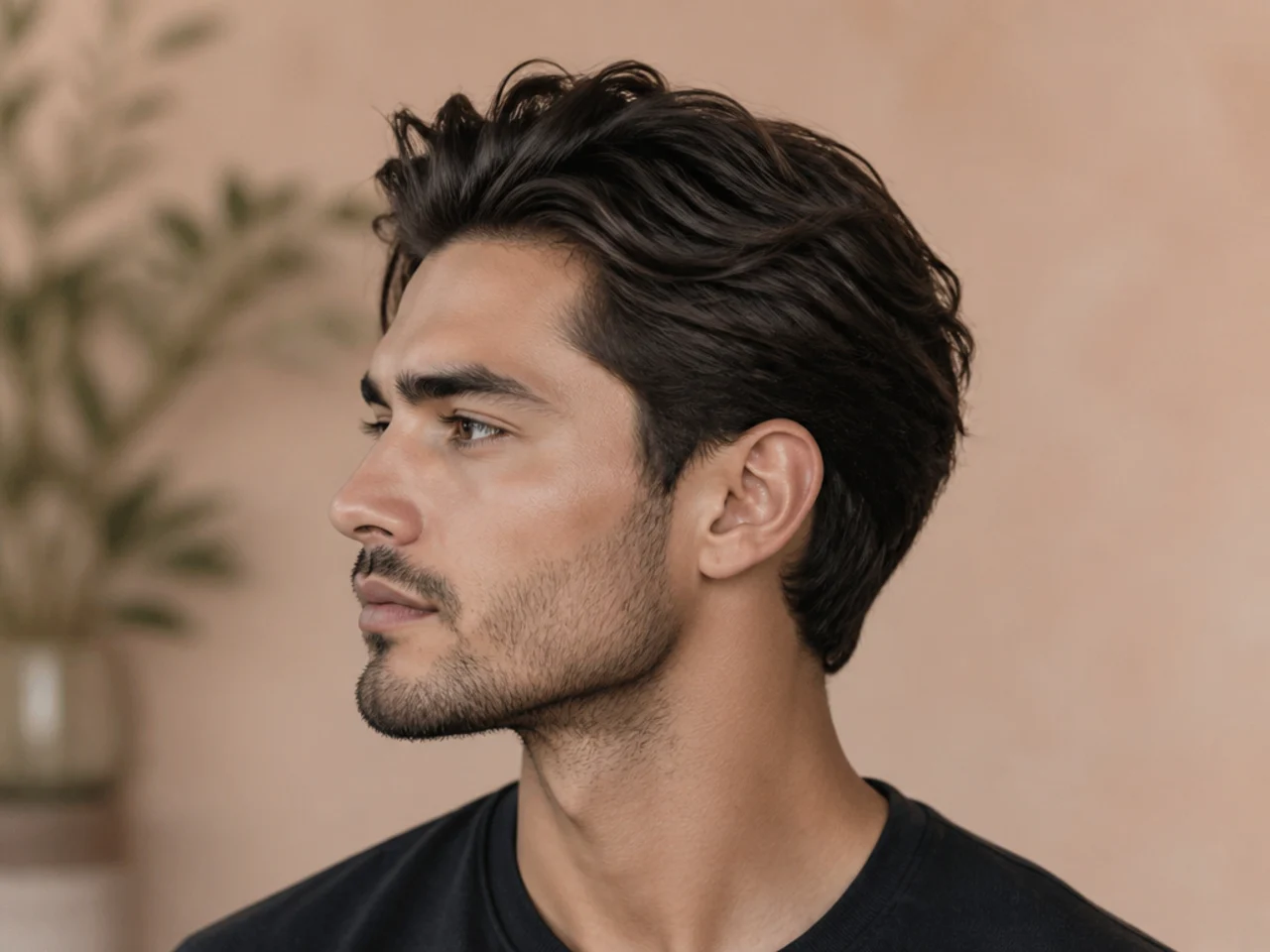
Brush back means the top flows straight back from the hairline instead of forward or sideways. Length runs 3 to 4 inches. The brush-back needs point-cut layers throughout so the volume sits soft, not slicked. A low drop fade at the sides keeps the profile clean.
Oval, square, and long face shapes suit this well. Straight to slightly wavy hair holds the direction cleanly.
Ask for a "textured brush back, 3 inches on top, point-cut layers throughout, low drop fade on the sides."
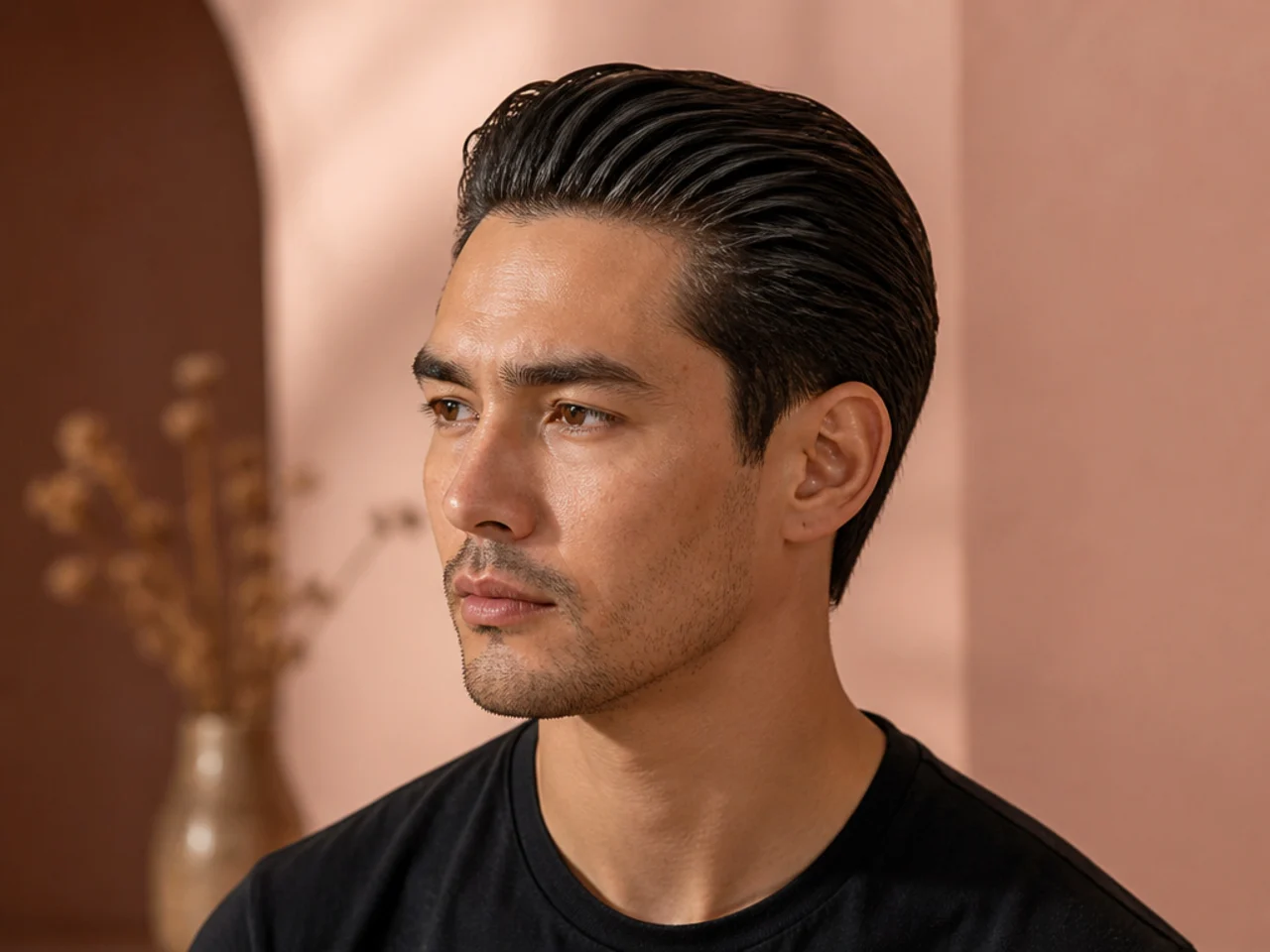
Style with a light cream through damp hair, blow-dry back with a paddle brush, then finger-work matte clay across the top for hold with separation.
Textured Faux Hawk with Low Burst Fade
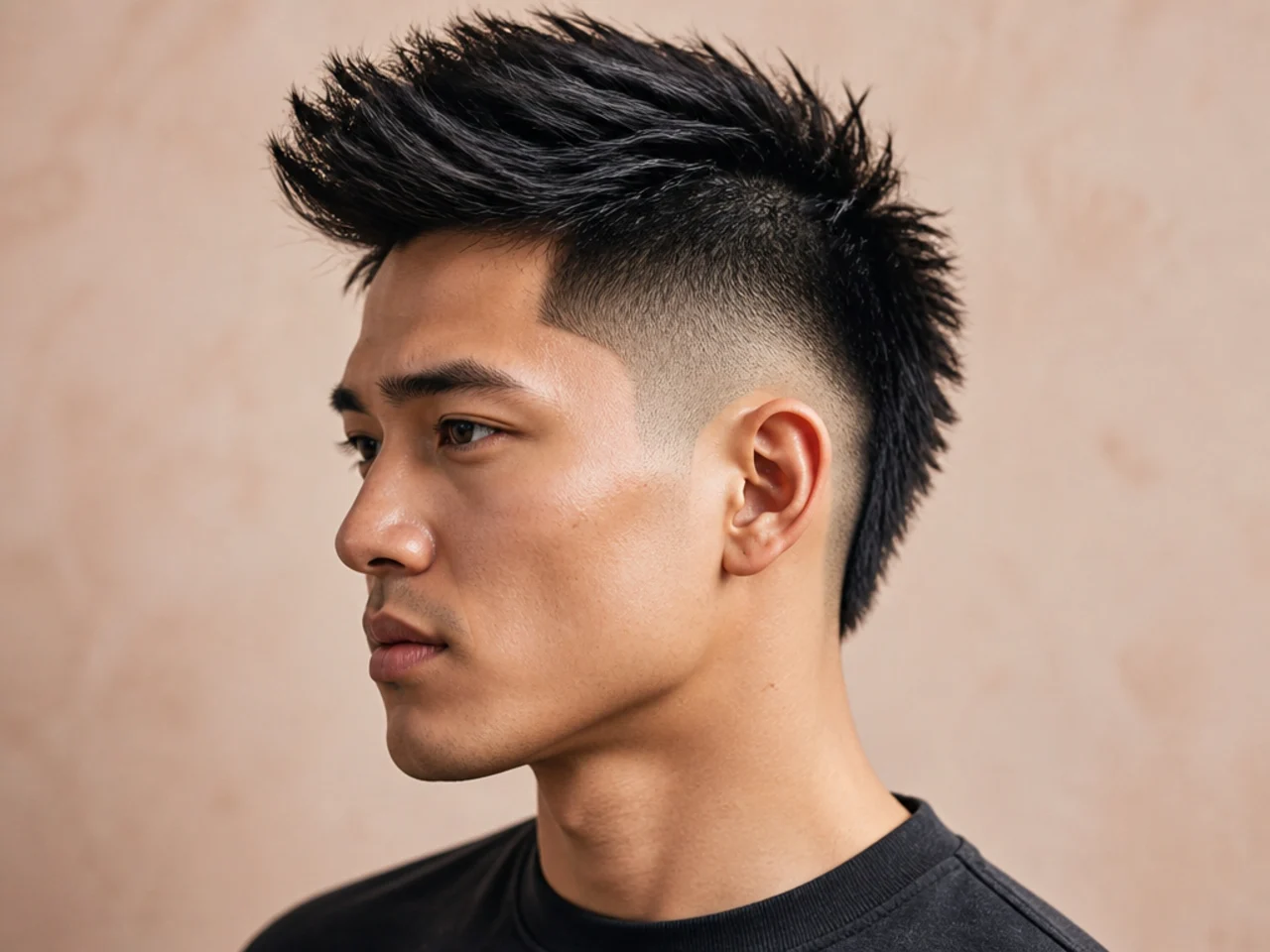
The faux hawk keeps the mohawk silhouette without shaving the sides. The center strip runs 3 to 4 inches and lifts into a soft ridge. Instead of a full mohawk fade, the burst fade radiates around the ear only, leaving longer hair above the temple to soften the shape.
Suits square, oval, and heart-shaped faces. Medium-thickness straight or wavy hair holds the ridge cleanly.
Ask for a "textured faux hawk with a low burst fade around the ears, razored top at 3.5 inches."
Style with sea-salt spray on damp hair, rough-dry upward with fingers, then apply matte clay along the center strip. Push toward the front for the peak.
Messy Textured Medium Hair
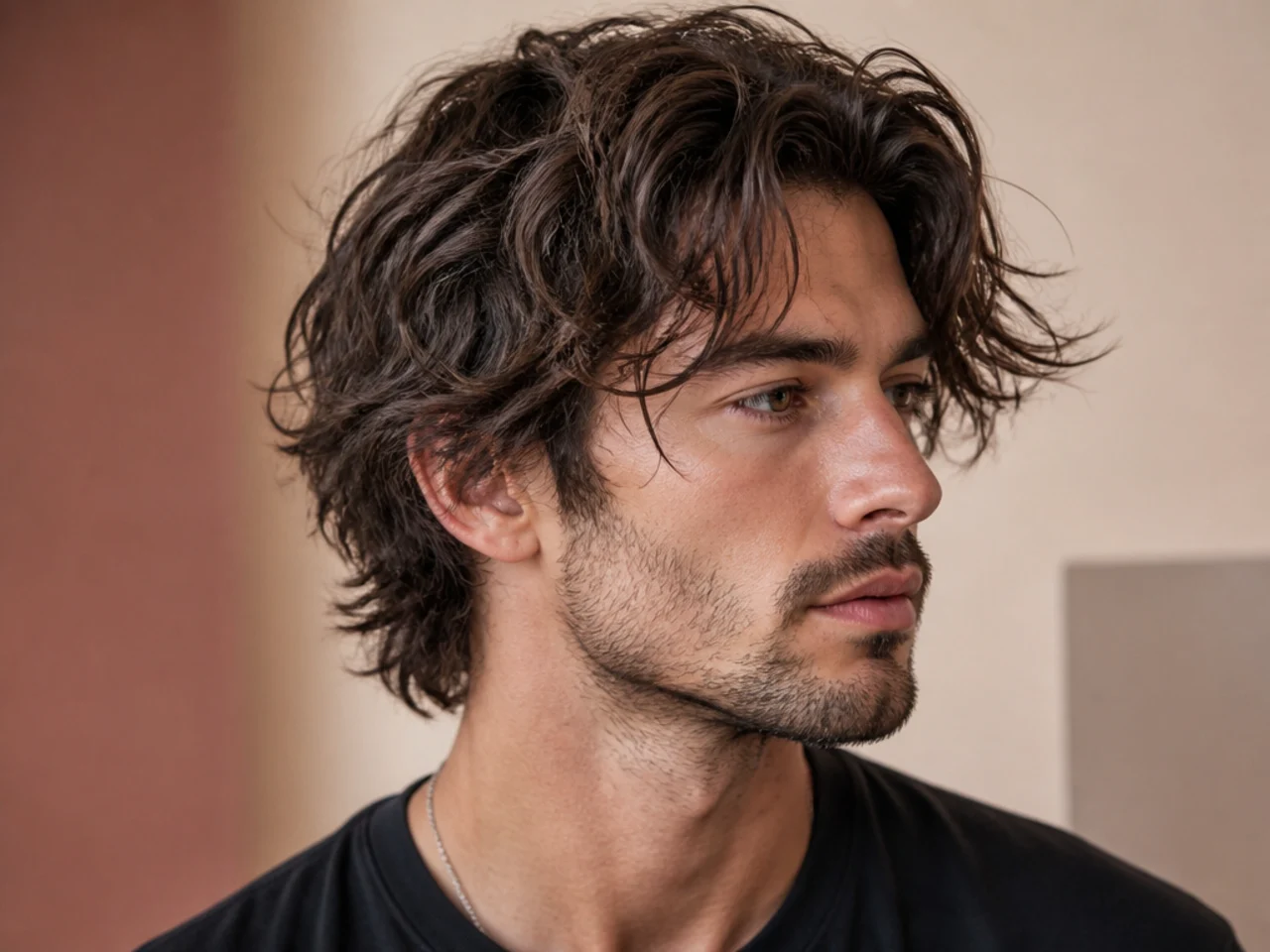
Medium-length messy texture runs 4 to 5 inches on top with sides tapered down slightly shorter — not faded to skin, just cleaned up. The whole cut gets heavily point-cut and razored so the mid-length sits with visible separation instead of pancaking flat. For structural context at this length, see our layered haircuts guide.
Great for oval and square faces. Straight, wavy, and loose-curl types all work.
Ask for a "medium-length messy cut, 4 inches on top, razored throughout with heavy point-cutting, blended taper on the sides."
Style with sea-salt spray, rough-dry with fingers pushing in different directions, then matte paste for hold that doesn't crunch.
Flowing Wolf Cut
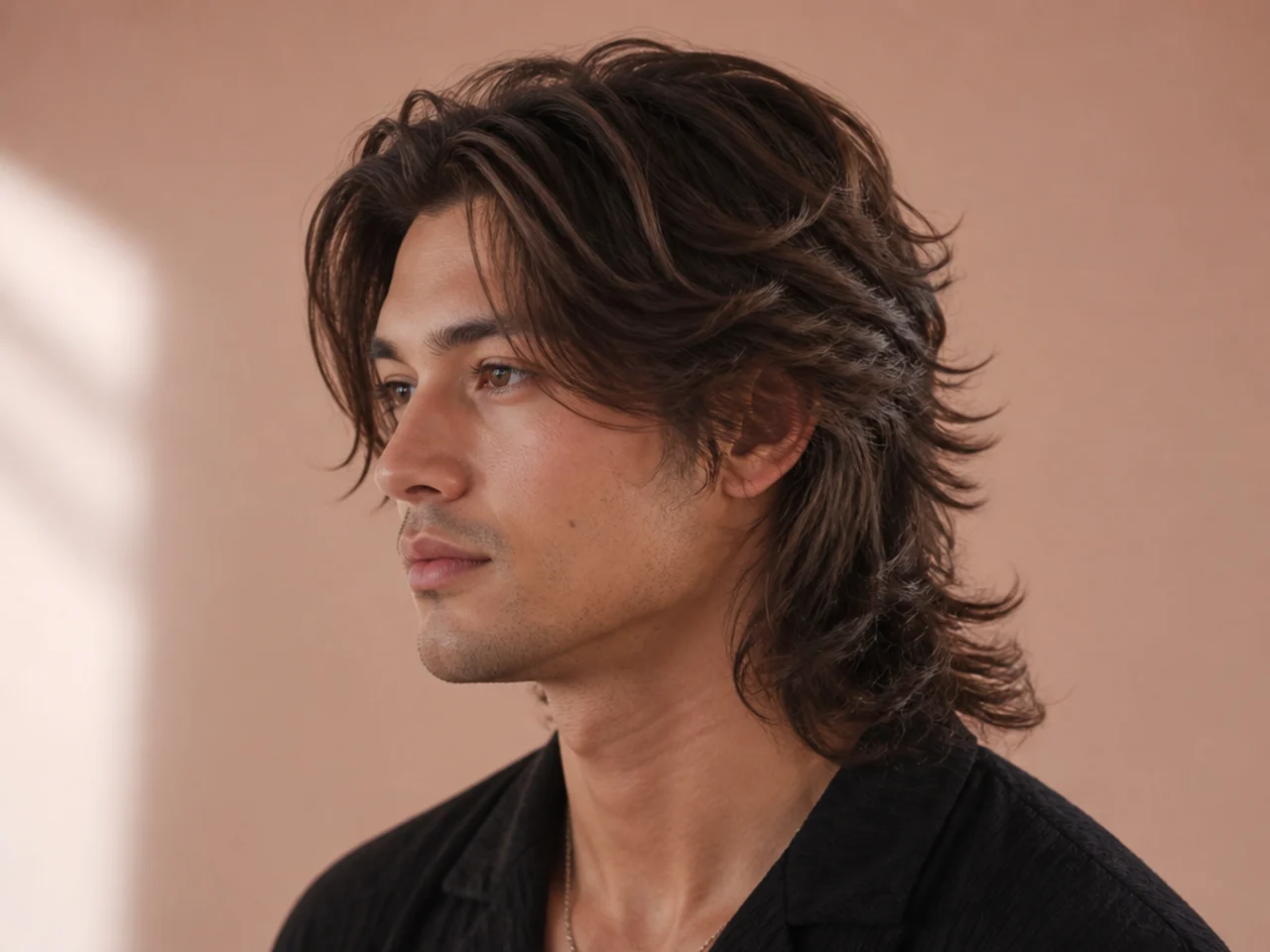
The wolf cut brings shag energy to men — short choppy layers at the crown, longer wispy layers falling around the face and nape. Top length starts around 3 inches; the front and back grow to 5 or 6 inches. Every layer gets razored so the ends feather softly.
Suits oval and long face shapes. Fine to medium hair holds the shape without collapsing.
Ask for a "wolf cut, 3 inches at the crown, 5 to 6 inches at the front and back, razored throughout, curtain-parted fringe."
Style with sea-salt spray on damp hair, blow-dry with fingers lifting the crown, then air-dry the rest so the length flows naturally.
Textured Side Part Fade
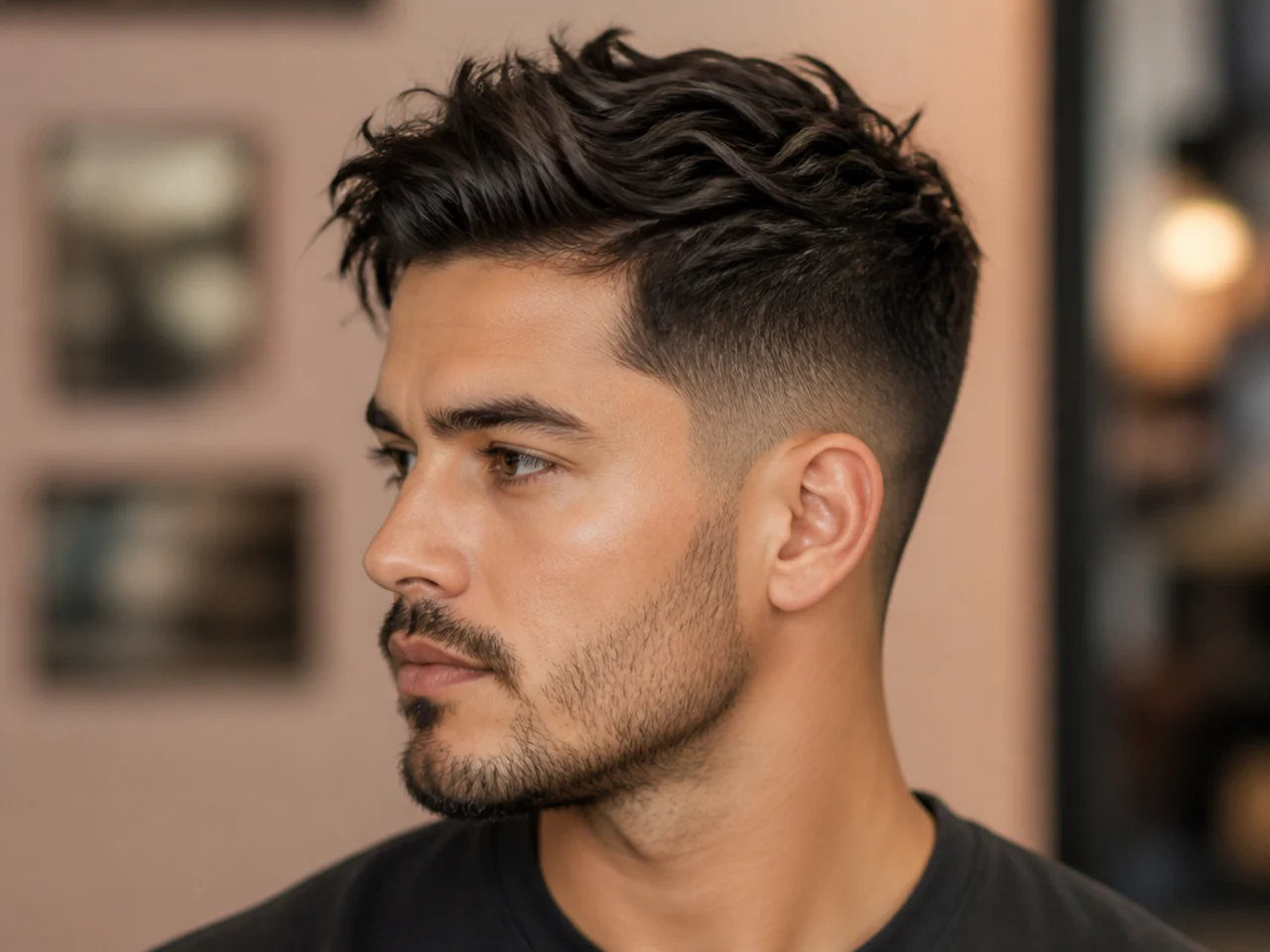
The textured side part scores a hard part into one side of the head, then flows the top across. Length runs 2 to 3 inches on top, longer at the front for the sweep. Sides fade cleanly. The top is point-cut so the side-swept flow has separation instead of a slicked plate.
Suits oval, square, and long face shapes. Straight to lightly wavy hair holds the part.
Ask for a "textured side part with a hard part line, 2.5 inches on top, point-cut across, mid fade on the sides."
Style with a light cream, blow-dry across, then finish with matte pomade for hold with movement.
Textured Shaggy Hair
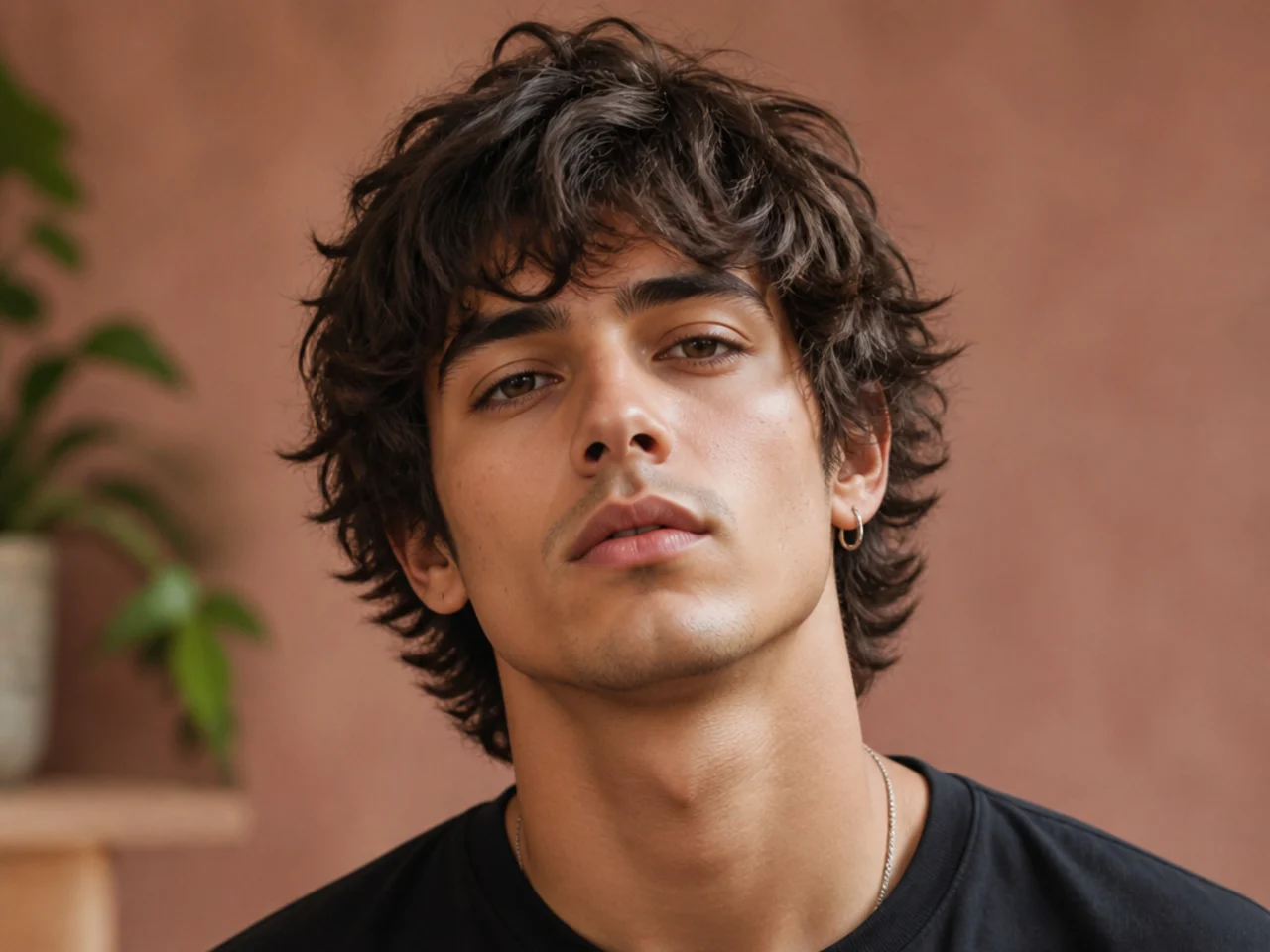
Shag keeps length medium-to-long — 4 to 6 inches on top — with heavy layering that starts short at the crown and lengthens through the sides and back. Fringe is wispy and feathered. Every edge is razored for that "just left the beach" softness. Our layered shaggy guide covers the longer versions.
Great for oval, long, and heart-shaped faces. Straight and wavy hair takes this best.
Ask for a "shag cut with 5 inches at the front, wispy fringe, razored ends throughout, no fade — just soft length around the ears."
Style with sea-salt spray, air-dry, then a fingertip of matte cream through the ends. Skip combs.
Heavy Textured Fringe
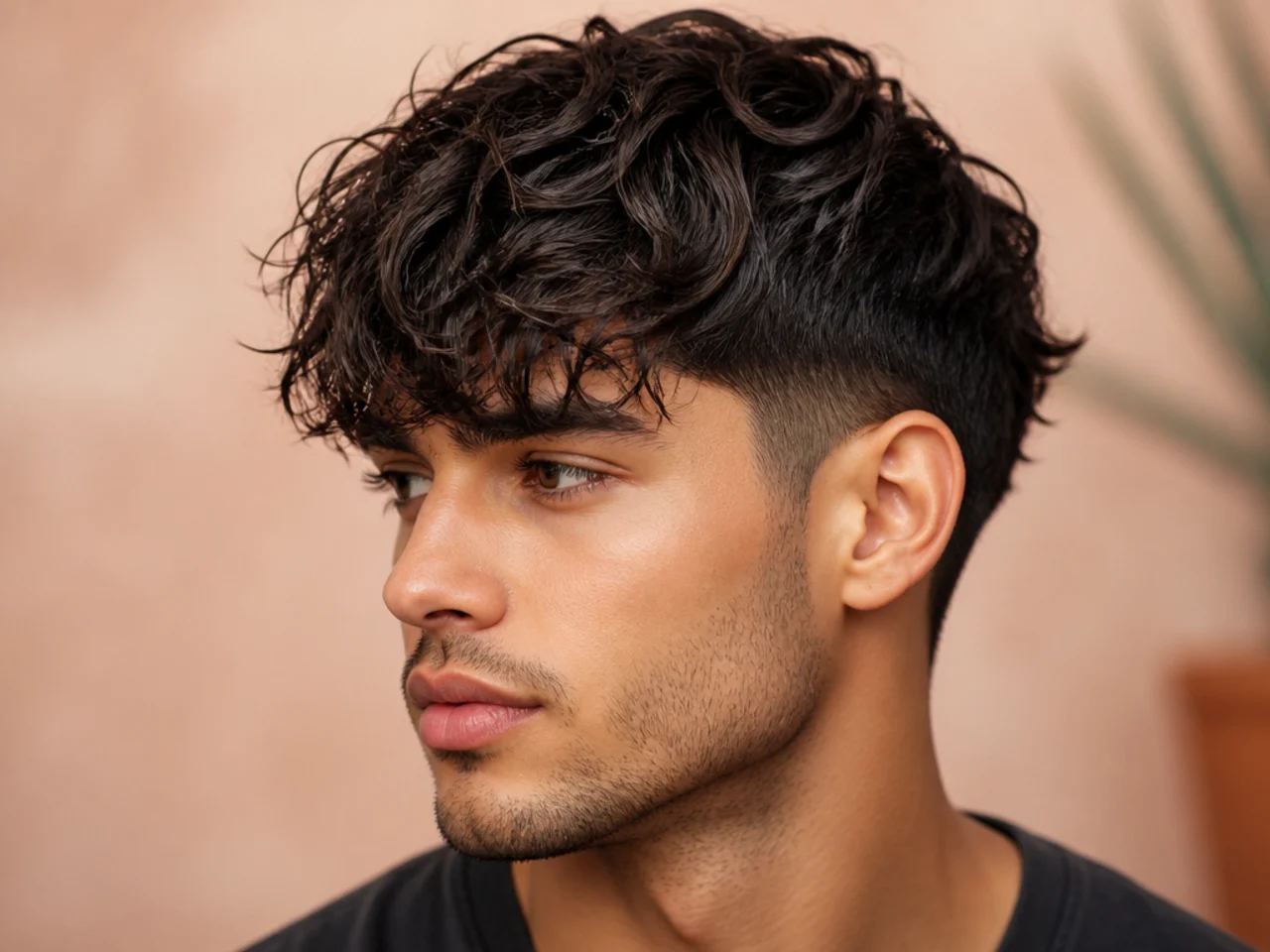
The heavy fringe keeps the front longer than the rest — usually 3 to 4 inches at the fringe, dropping to 1.5 to 2 inches at the crown and sides. The fringe is razored heavily so the ends feather down onto the forehead instead of sitting as a blunt shelf.
Great for square and round faces — the forward-and-down fringe adds vertical softness. Fine to medium hair suits it best. Bleached or dyed hair reads even more textured because the color variation reinforces the separation.
Ask for a "heavy textured fringe, 4 inches at the front, 2 at the crown, razored fringe, low or mid fade on the sides."
Style with matte paste worked through damp hair, air-dry, then finger-pull the fringe down and across the forehead.
Thick Brush Up
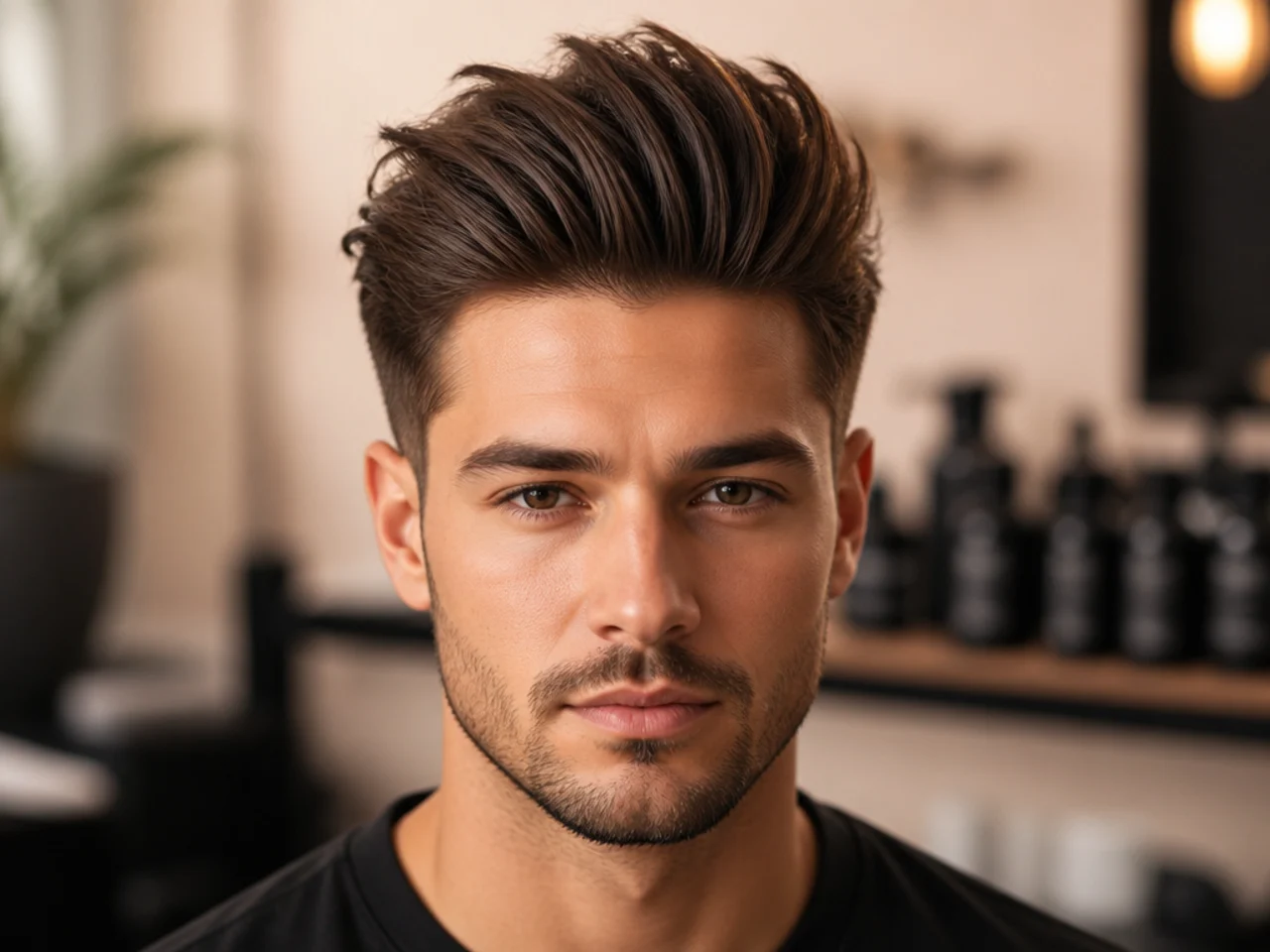
The thick brush up is what happens when dense hair meets brush-back cutting — everything lifts up and slightly back into a full-volume shape. Top runs 3 to 5 inches. Sides sit tight with a skin fade or high fade so the volume on top reads as intentional, not accidental bulk.
Suits oval and square faces. Naturally thick straight or wavy hair only — fine hair won't hold the lift.
Ask for a "thick textured brush up, 4 inches on top, razored for separation, high skin fade on the sides with a defined line-up."
Style with volumizing mousse on damp hair, blow-dry upward with a round brush, then matte clay for hold.
Textured Curtains
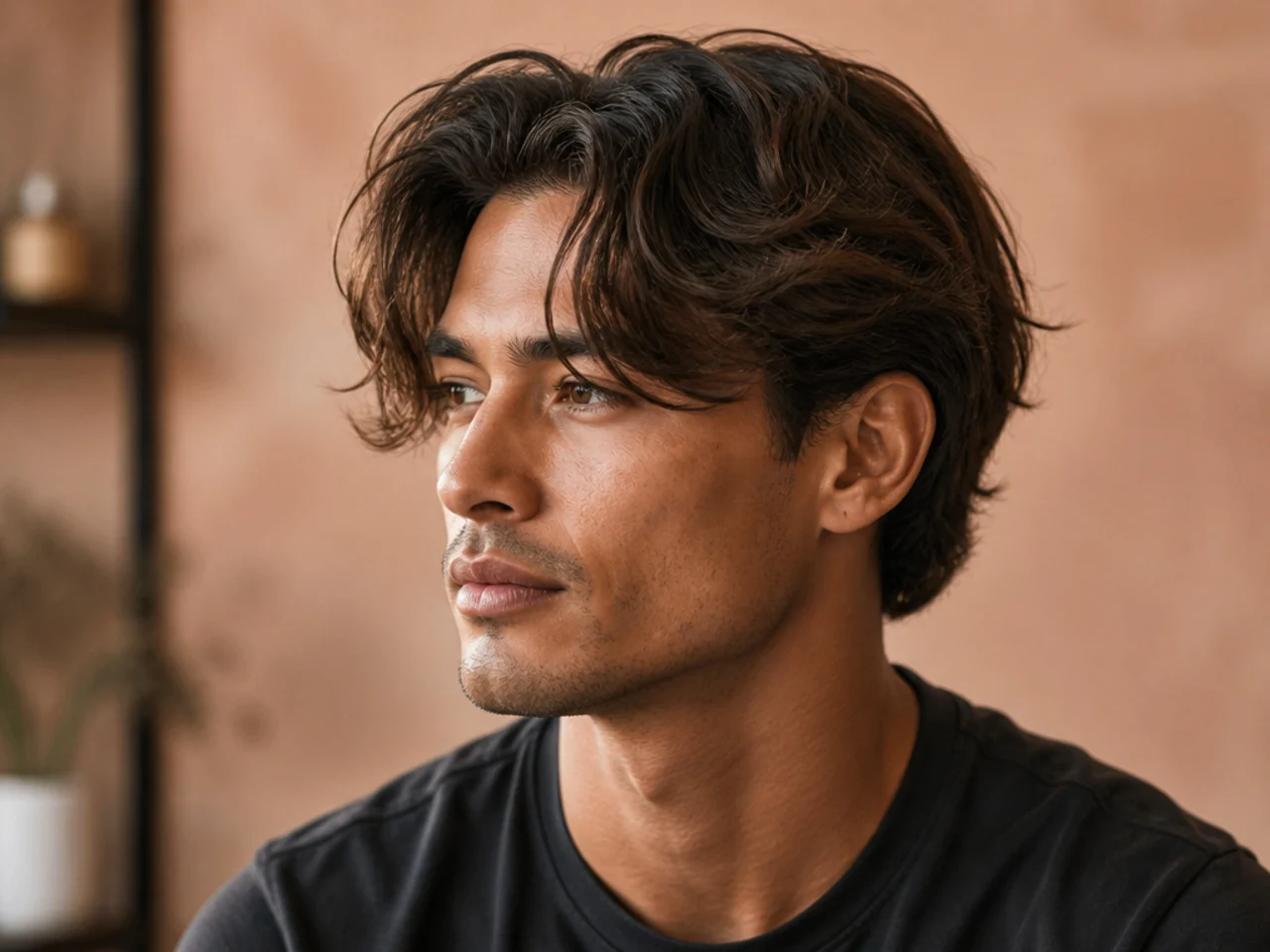
The curtain shape parts the fringe in the middle (or slightly off-center) and lets the two sides fall around the forehead. Fringe length runs 4 to 6 inches. The crown sits at 3 to 4 inches. Sides are longer than a fade — usually scissor-cut down to the ears.
Suits oval, long, and heart-shaped faces. Straight and wavy hair drapes best.
Ask for a "textured curtain cut, 5 inches at the fringe, 3 at the crown, scissor-cut sides down to the ears, razored ends throughout."
Style with a light sea-salt spray on damp hair, blow-dry the fringe forward, then part with fingers and let air-dry into shape.
Short Brush Forward with High Skin Fade
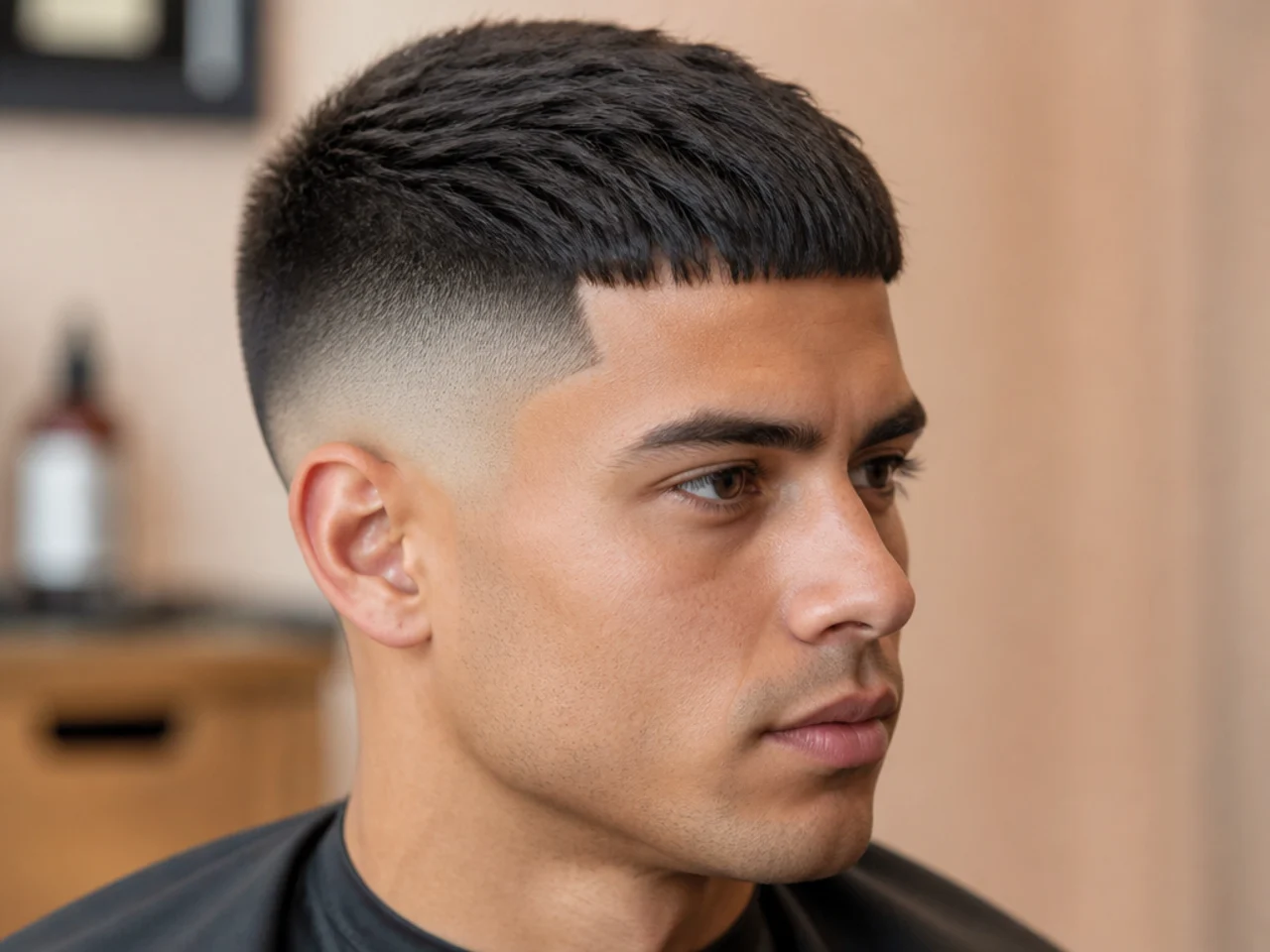
This one runs 1.5 to 2 inches on top, brushed straight forward and down into a tight fringe. Sides drop to skin with a high fade — starting well above the ears. The top is heavily point-cut to break up the front edge so the fringe reads as texture, not a bowl.
Suits round, oval, and square faces. Fine to medium hair works best. Pairs cleanly with a short beard.
Ask for a "short brush forward, 2 inches on top, point-cut fringe, high skin fade with a defined line-up."
Style with a small amount of matte paste rubbed through the fringe with fingers pushing forward. Air-dry.
Modern Pompadour Fade
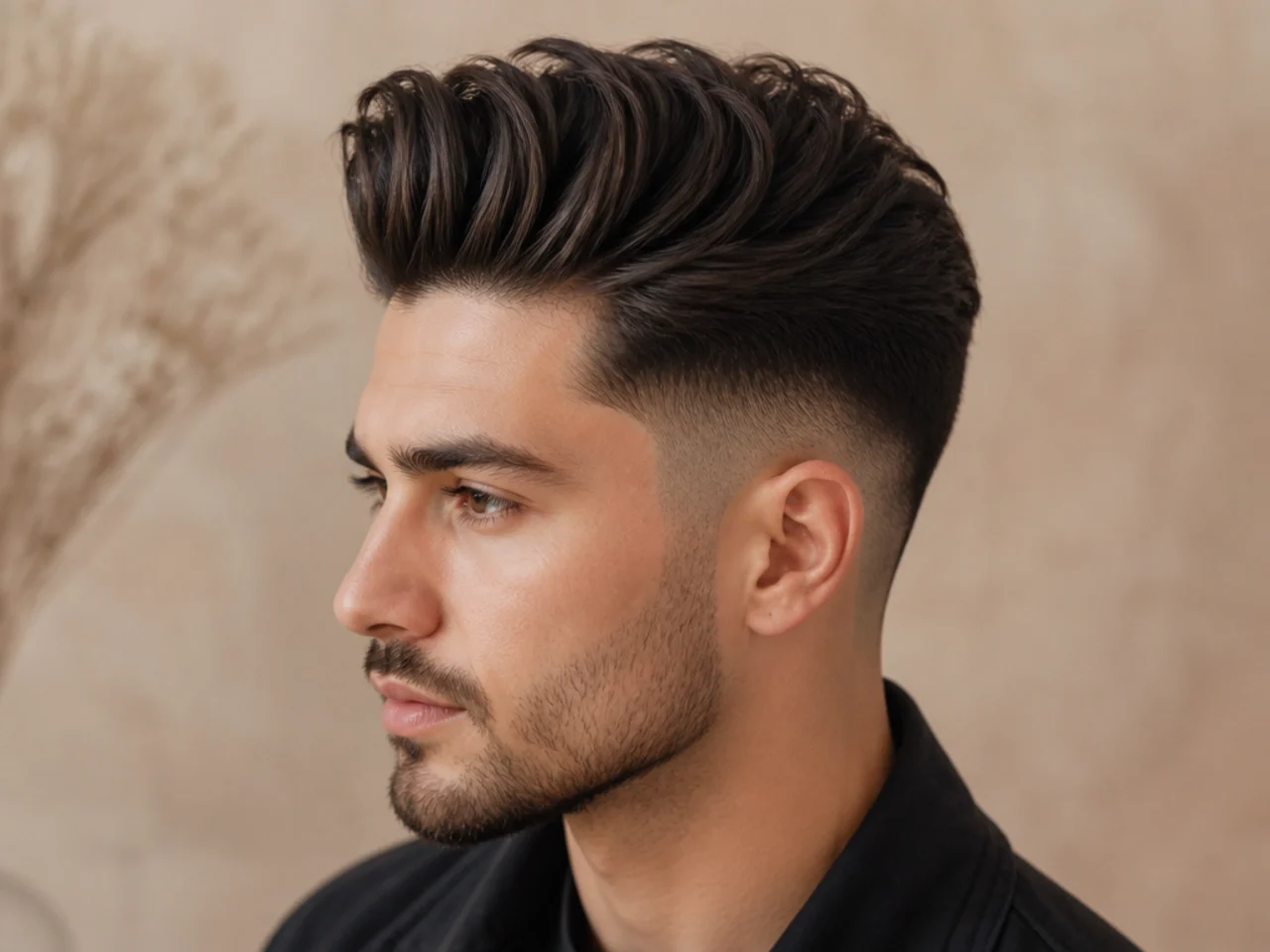
The modern pompadour lifts the front high, then flows back with volume across the crown. Length runs 4 to 5 inches at the front, 2 to 3 at the crown. Sides sit tight with a mid fade or skin fade for the contrast that makes the pomp read as a pomp.
Suits oval, round, and square faces. Straight to slightly wavy hair with medium thickness holds the shape.
Ask for a "modern textured pompadour, 4 inches at the front, razored throughout, mid fade on the sides."
Style with volumizing spray on damp hair, blow-dry upward and back with a round brush, then pomade for hold with shine, or matte clay for a drier finish.
Textured Short Hairstyle with Mid Fade
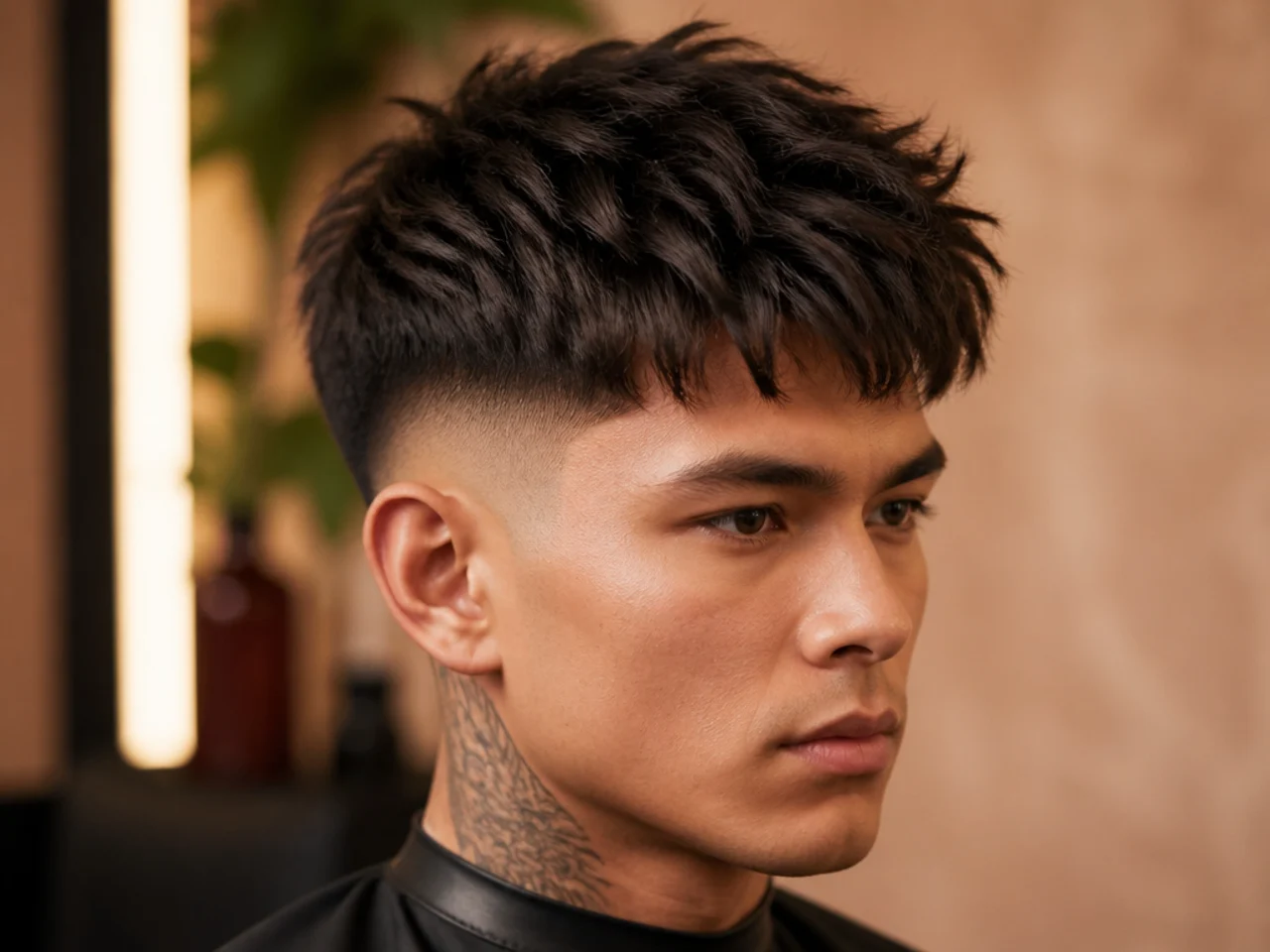
Short on top — 1.5 to 2 inches — with a clean mid fade at the sides. Length is worn either brushed forward or slightly to one side. The top gets heavy point-cutting or razoring so even at that short length the hair sits with visible separation.
Great for any face shape because the length is versatile. Straight, wavy, or curly all work — the mid fade keeps the outline clean regardless.
Ask for a "short textured top, 2 inches long, point-cut throughout, mid fade with a defined line."
Style with matte clay — small amount rubbed through damp hair, air-dry with fingers directing the front.
Classic Crew Cut with Taper Fade
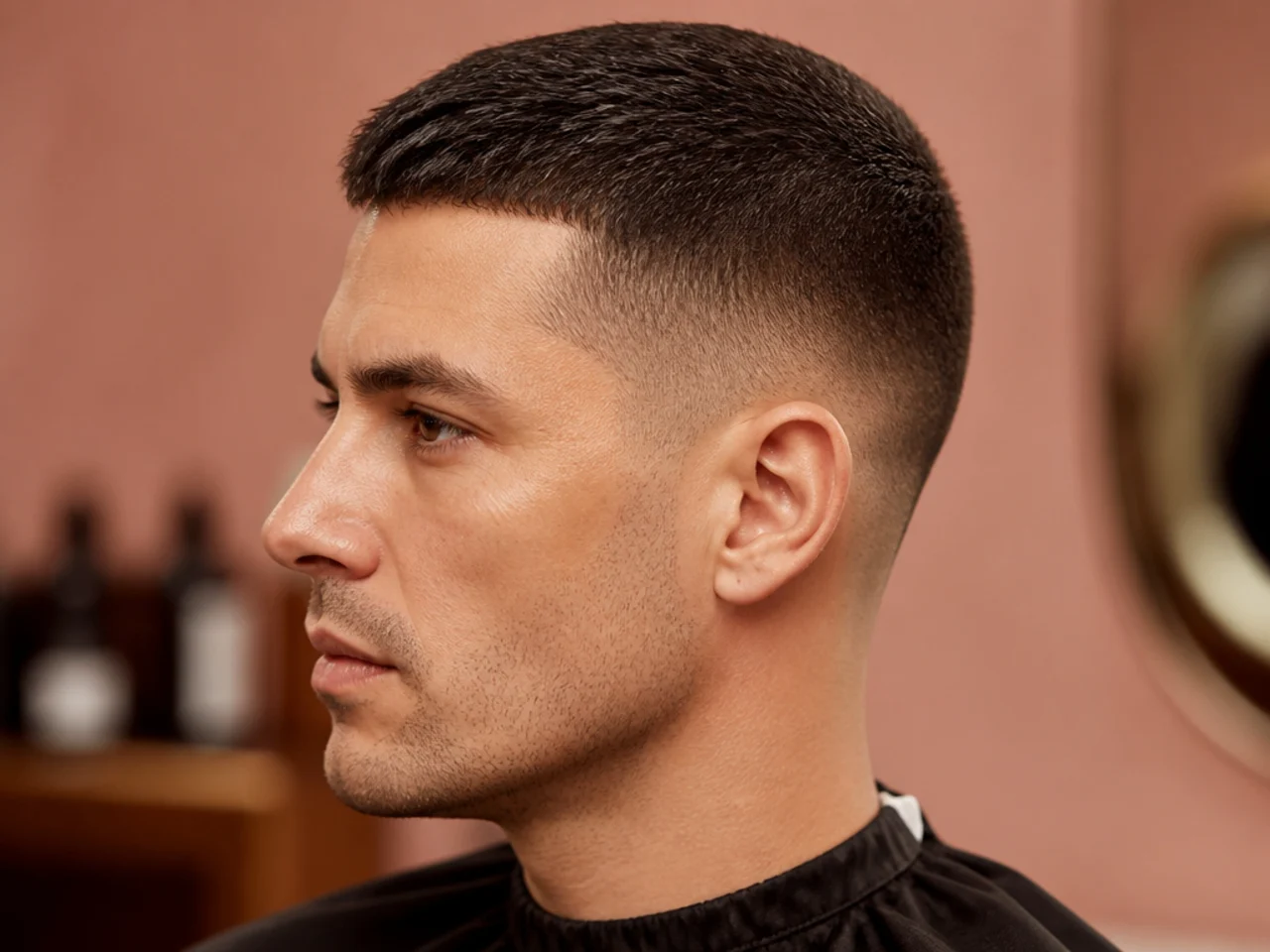
The classic crew keeps the top at 1 inch, blending gradually longer toward the front (up to 1.5 inches). Sides sit tight with a low taper fade for that soft military-modern hybrid. Even at this short length, texturizing scissors give the top a matte, non-uniform finish.
Suits any face shape. Any hair type.
Ask for a "textured crew cut, 1 inch top with the front slightly longer, texturized throughout, low taper fade."
Style with a small amount of matte paste rubbed evenly across the top. Air-dry. This is the cut that requires the least maintenance in the entire guide.
Long Loose Curls
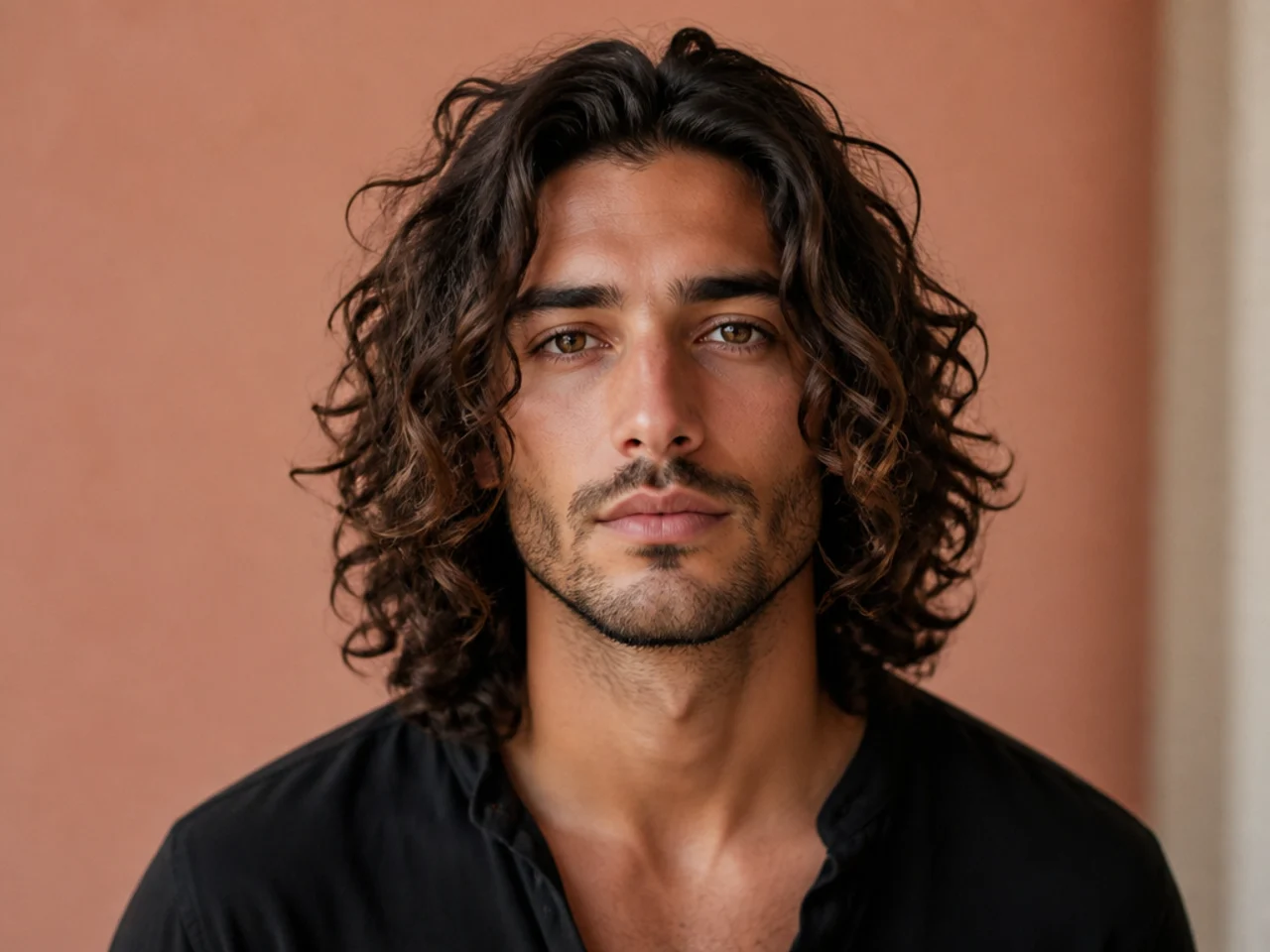
This cut keeps length at 4 to 6 inches on top so the natural curl pattern hangs loose. Sides are usually scissor-cut or a very low fade so the curls remain the focus. Layers are dry-cut when the hair is in its natural curl state — never wet, because wet curl length lies about where the curl will actually sit.
Great for anyone with 3A to 4A curl patterns. Oval, long, and heart-shaped faces suit the length.
Ask for a "dry-cut curly cut, 5 inches on top, layered for shape, low fade or scissor-cut sides."
Style with curl cream on damp hair, scrunch upward, then diffuse-dry on low heat. Never brush dry curls — you'll destroy the pattern.
Short Brush Up with High Fade
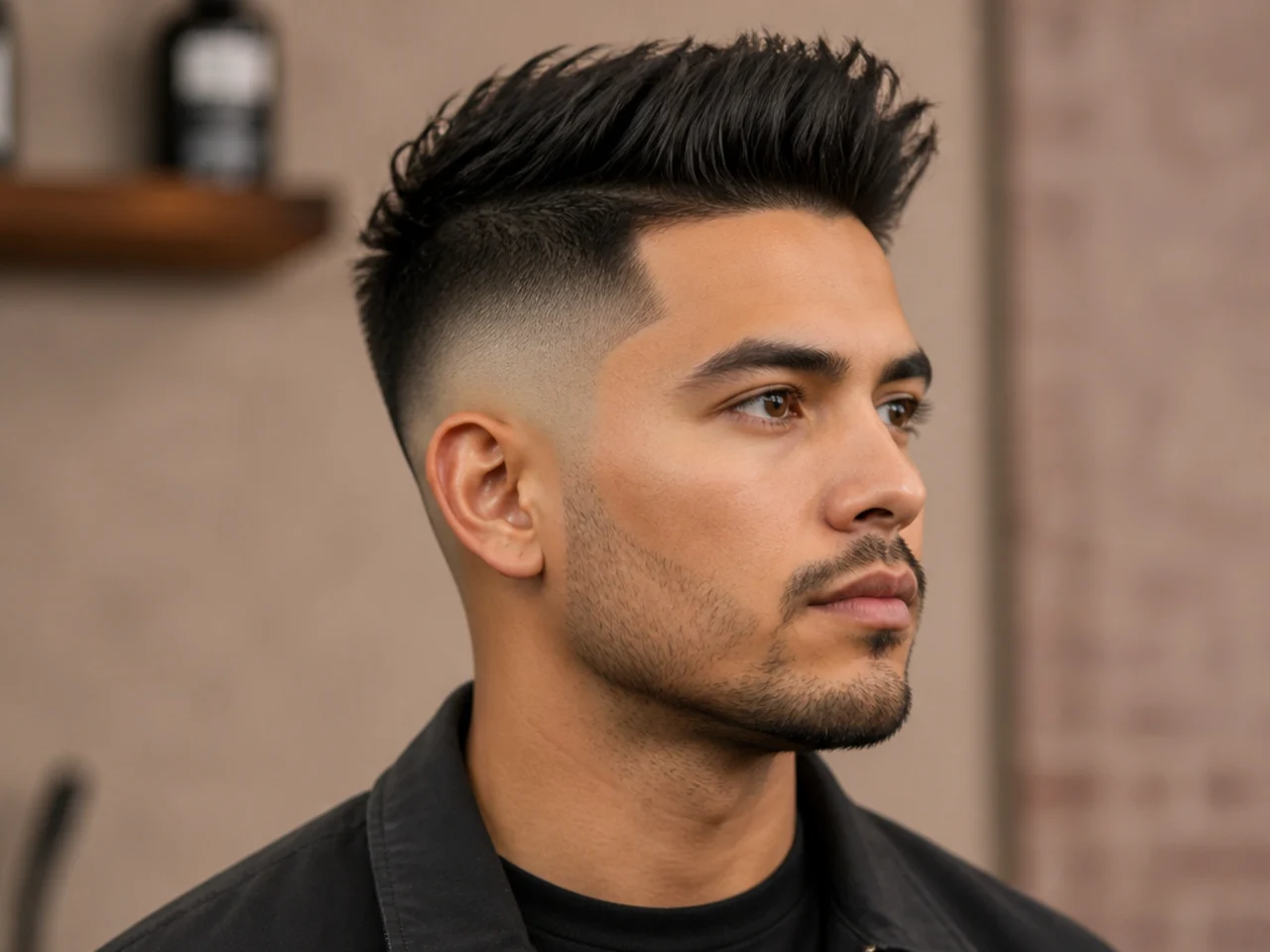
The short brush up runs 1.5 to 2 inches on top, lifted straight up and slightly back. Sides drop to a high fade so the contrast pushes the eye up. Top is heavily point-cut for that lift-with-separation finish — no helmet block.
Suits oval, square, and diamond face shapes. Medium-thickness straight or wavy hair holds the lift. Pairs cleanly with a neat beard for a sharper masculine profile.
Ask for a "short textured brush up, 2 inches on top, razored throughout, high skin fade with a line-up."
Style with a fingertip of matte clay on damp hair, blow-dry upward with a small vented brush, then finish with a light spray for hold.
Messy Spiky Hair and Fringe with Low Drop Fade
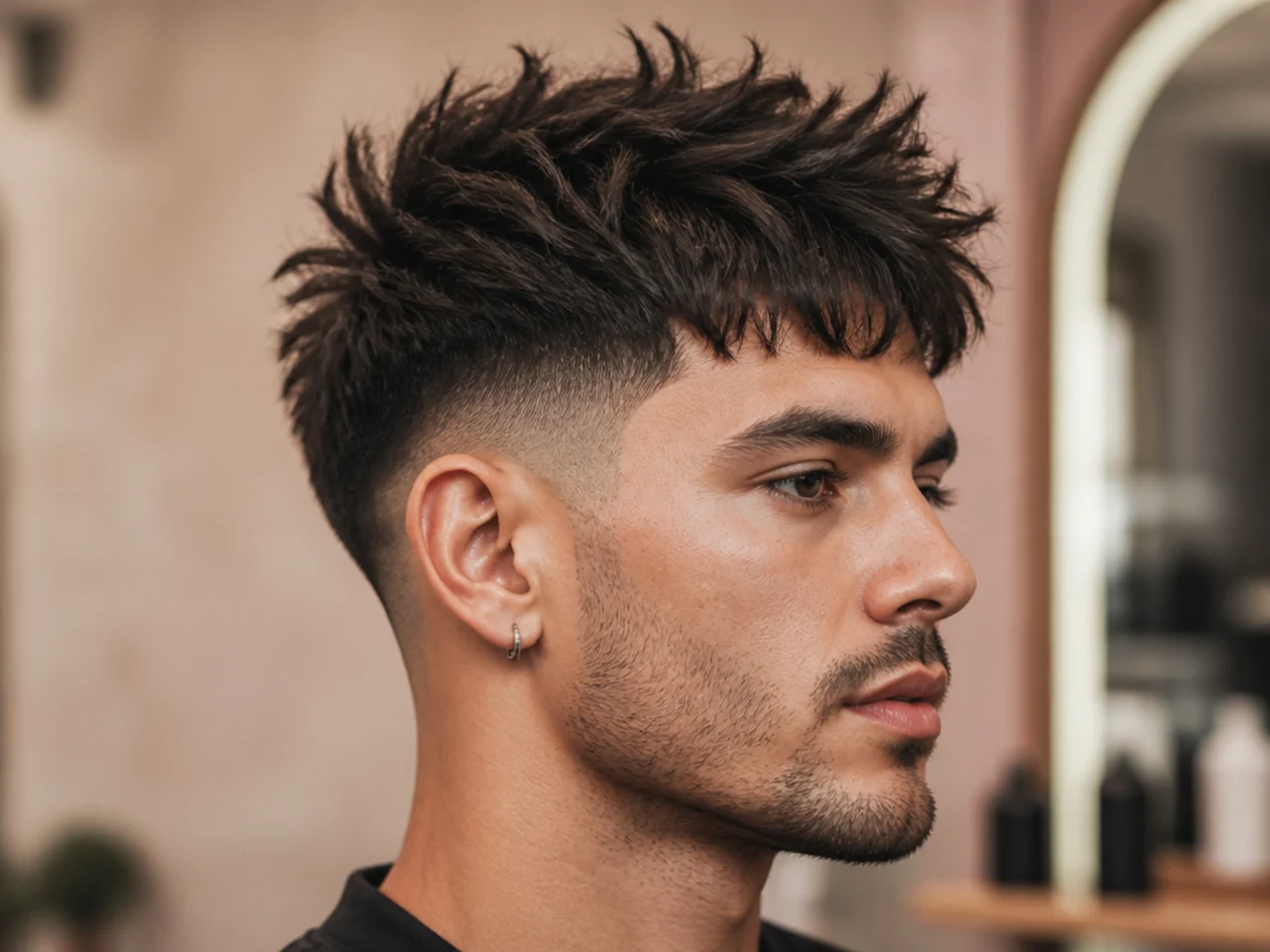
This one throws the top into random spiky separation while keeping a distinct forward fringe. Length runs 2 to 3 inches. Sides drop into a low drop fade that follows the head shape around the ear. Every piece is point-cut heavily so the spikes stand naturally instead of gelled peaks.
Suits oval, square, and round faces. Straight and wavy hair holds the spikes; curly hair needs to be a little longer.
Ask for a "messy spiky top, 2.5 inches long, point-cut throughout, distinct forward fringe, low drop fade on the sides."
Style with matte clay — pull sections in random directions, twist between fingers for definition, then leave the fringe forward.
Faux Hawk
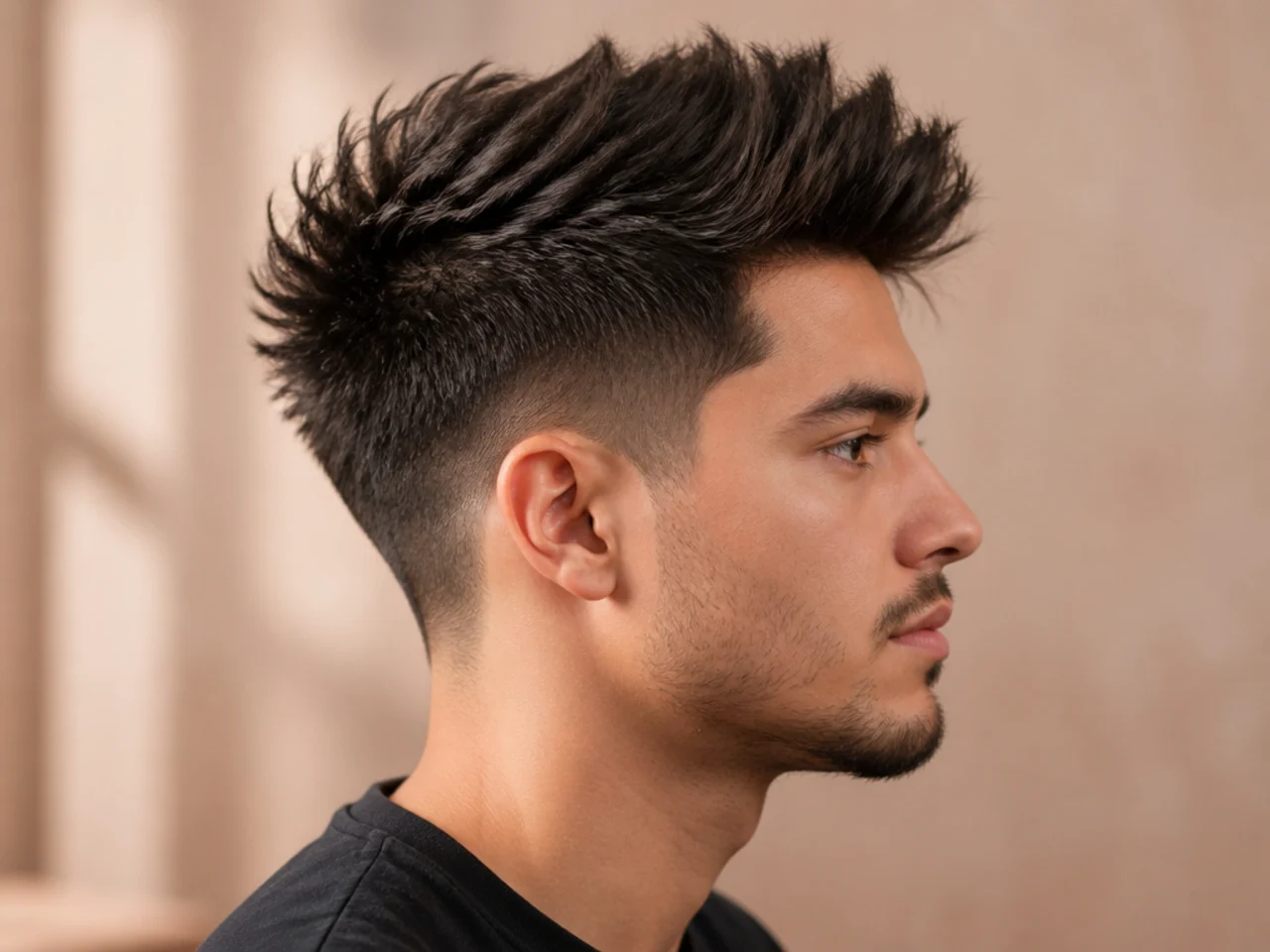
The pure faux hawk without the burst-fade variation. Center strip runs 3 to 4 inches. Sides taper down but stay long enough that you could brush the whole thing flat if you wanted. Everything on top is razored for a soft peak that never looks stiff.
Suits square, oval, and heart-shaped faces. Straight, wavy, and loose curls all work at this length.
Ask for a "faux hawk with 3.5 inches on the center strip, razored top, tapered sides — not faded to skin."
Style with sea-salt spray on damp hair, rough-dry lifting the center strip with fingers, then matte clay for hold. Push toward the front for peak, straight up for spine.
Textured Comb Over Taper
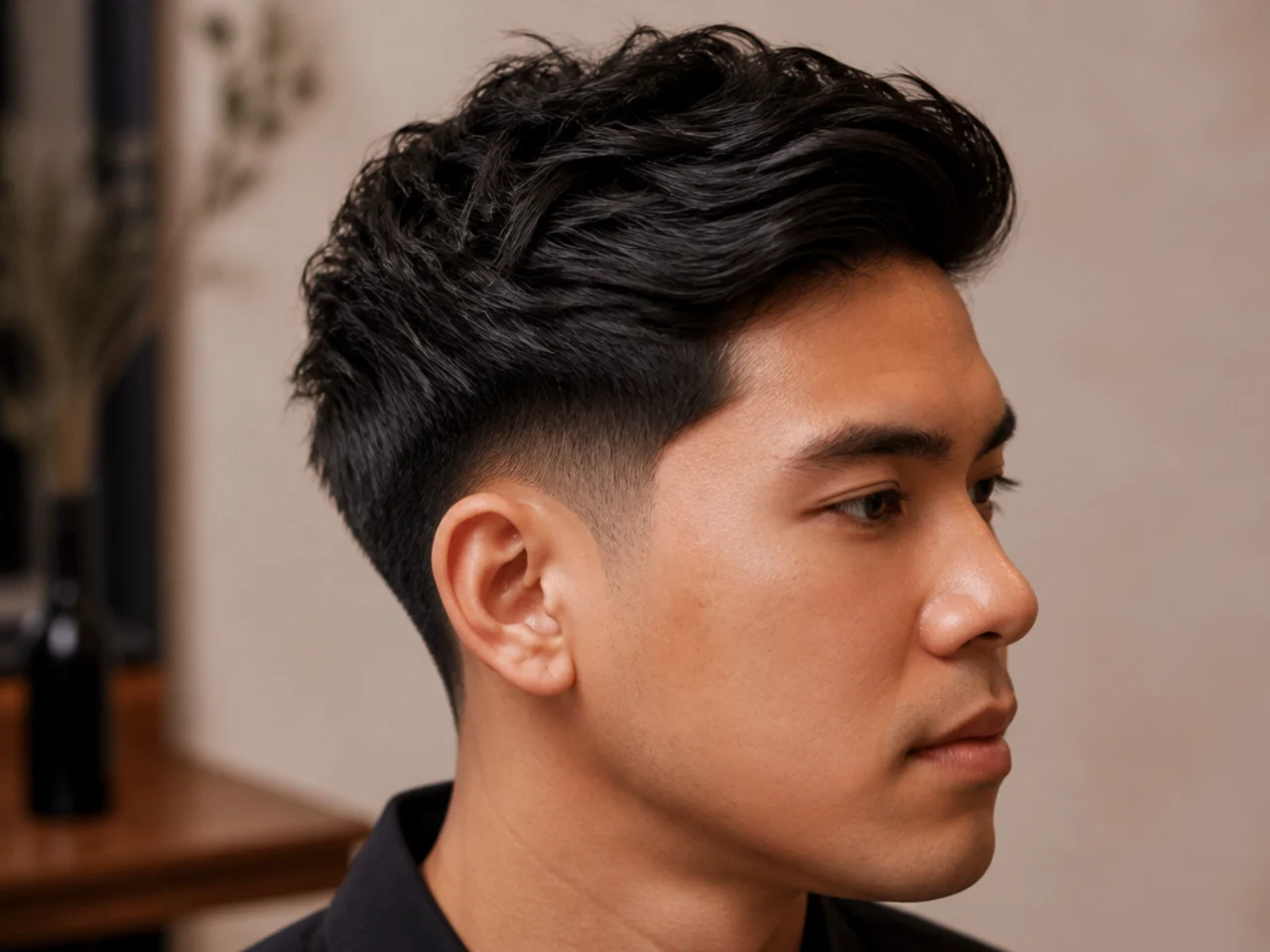
The comb over parts the hair on one side and combs the top diagonally across the head. Modern textured versions run 3 to 4 inches on top, layered internally so the comb-over has movement instead of a solid shelf. Sides sit with a taper — clean but not too tight.
Suits oval, square, and long face shapes. Straight to lightly wavy hair takes the comb direction cleanly. This is the safest office-appropriate cut in the guide.
Ask for a "textured comb over, 3 inches on top, razored internal layers, side part on the left (or right), scissor taper on the sides."
Style with a light cream on damp hair, blow-dry diagonally with a comb, then matte clay for hold. Air-dry for a looser finish.
Popular Short Textured Men's Haircuts
Short textured cuts — anything under 2 inches on top — are the most-requested category in men's barbering right now. That covers crops, crew cuts, short brush ups, spiky tops, side parts, and the short-fringe French crop. The reason is simple: they're low-maintenance, they suit almost any face shape, and the texturizing hides the exact thing men worry about most as they age — thinning density. Broken ends stack visually. Fine hair reads denser than it is.
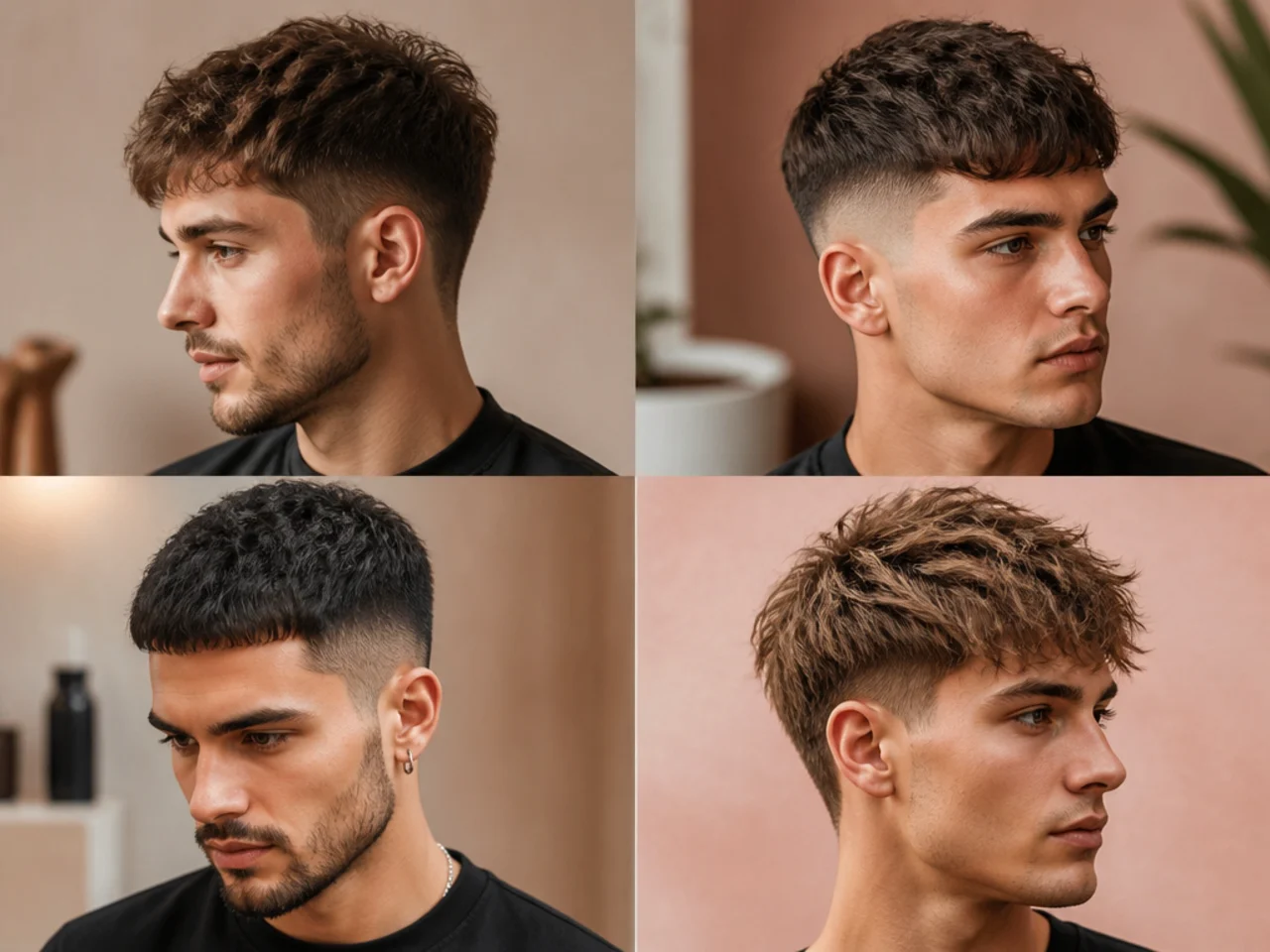
Style short textured cuts with matte clay or paste. Skip pomade unless you specifically want shine. One product is enough — layering isn't better.
Medium-Length Textured Haircuts For Men
Medium-length textured cuts run 3 to 6 inches on top. The category covers the mod cut, mullet, wolf cut, shag, curtains, middle part, brush back, quiff, and long comb over. For the full length range and shape reference, see our medium-length hairstyles guide.
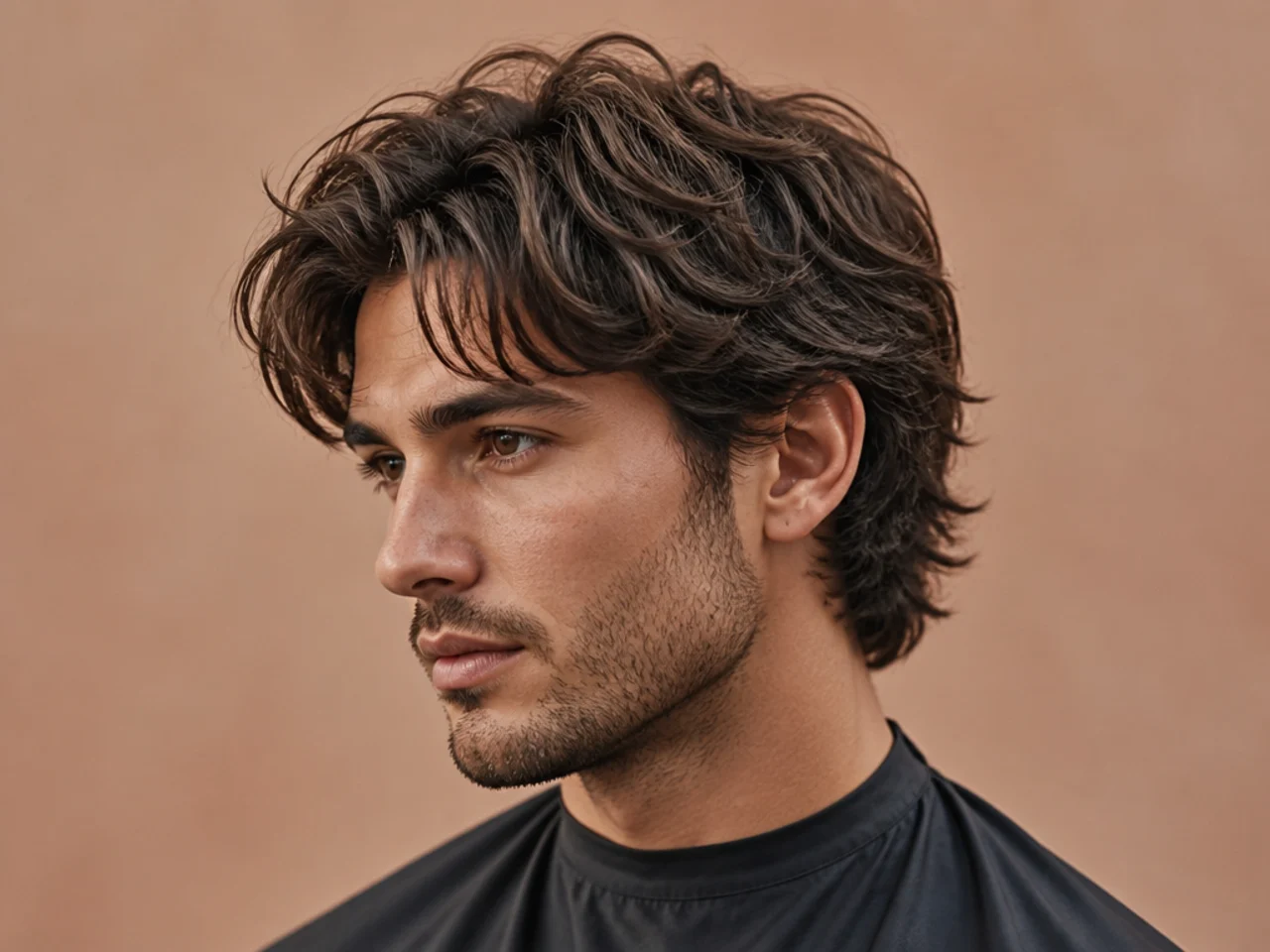
Texturizing does more work at medium length than at short. Medium hair without texture goes flat and heavy. Razored ends, point-cut layers, and a thinned interior all pull weight out so the length can breathe. Sea-salt spray builds separation. Matte clay holds shape. Skip the blow-dryer if your hair holds shape naturally — over-styling kills the effortless read that makes these cuts work.
FAQs: Textured Haircut For Men
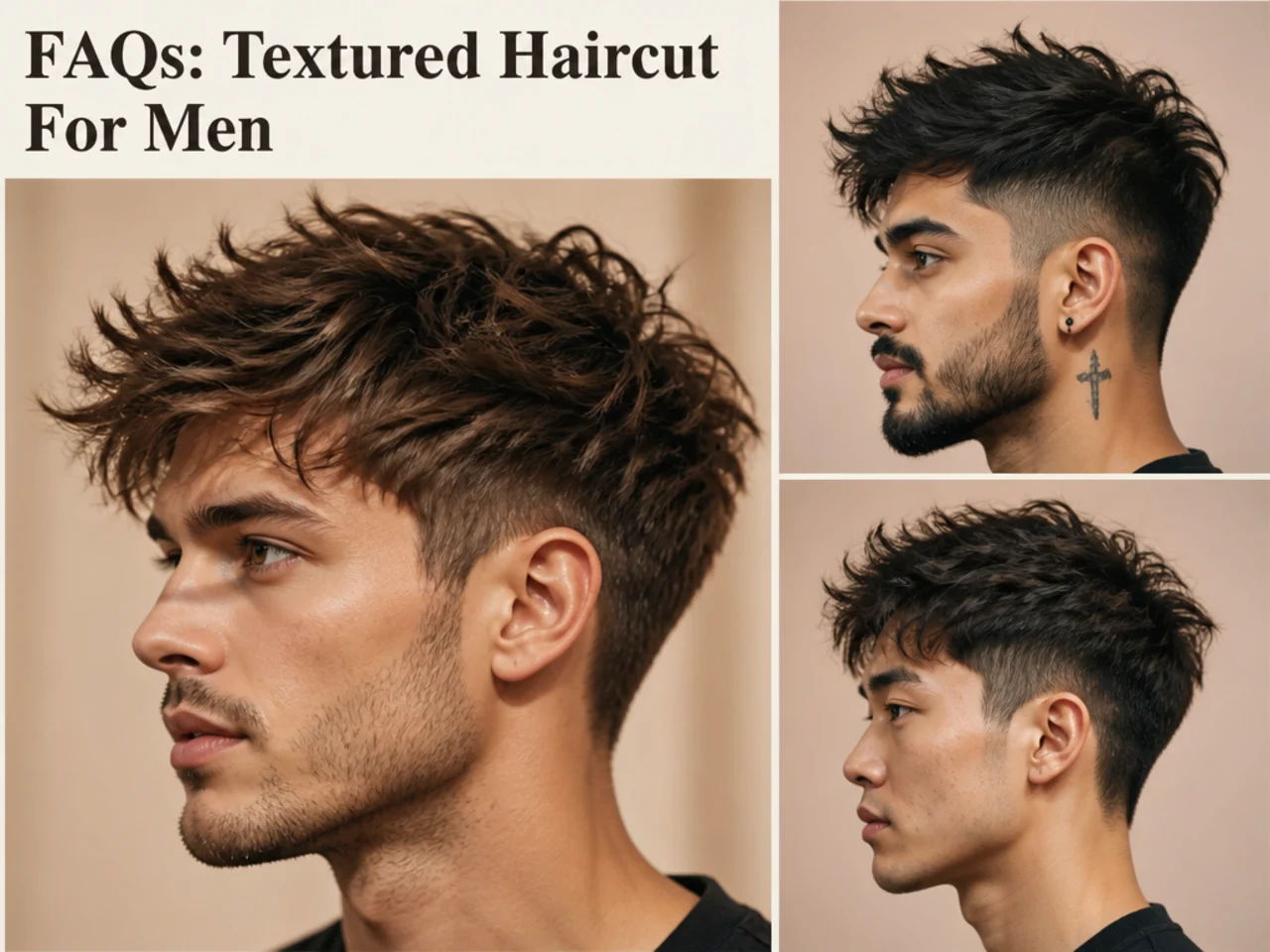
How do I ask my barber for a textured haircut?
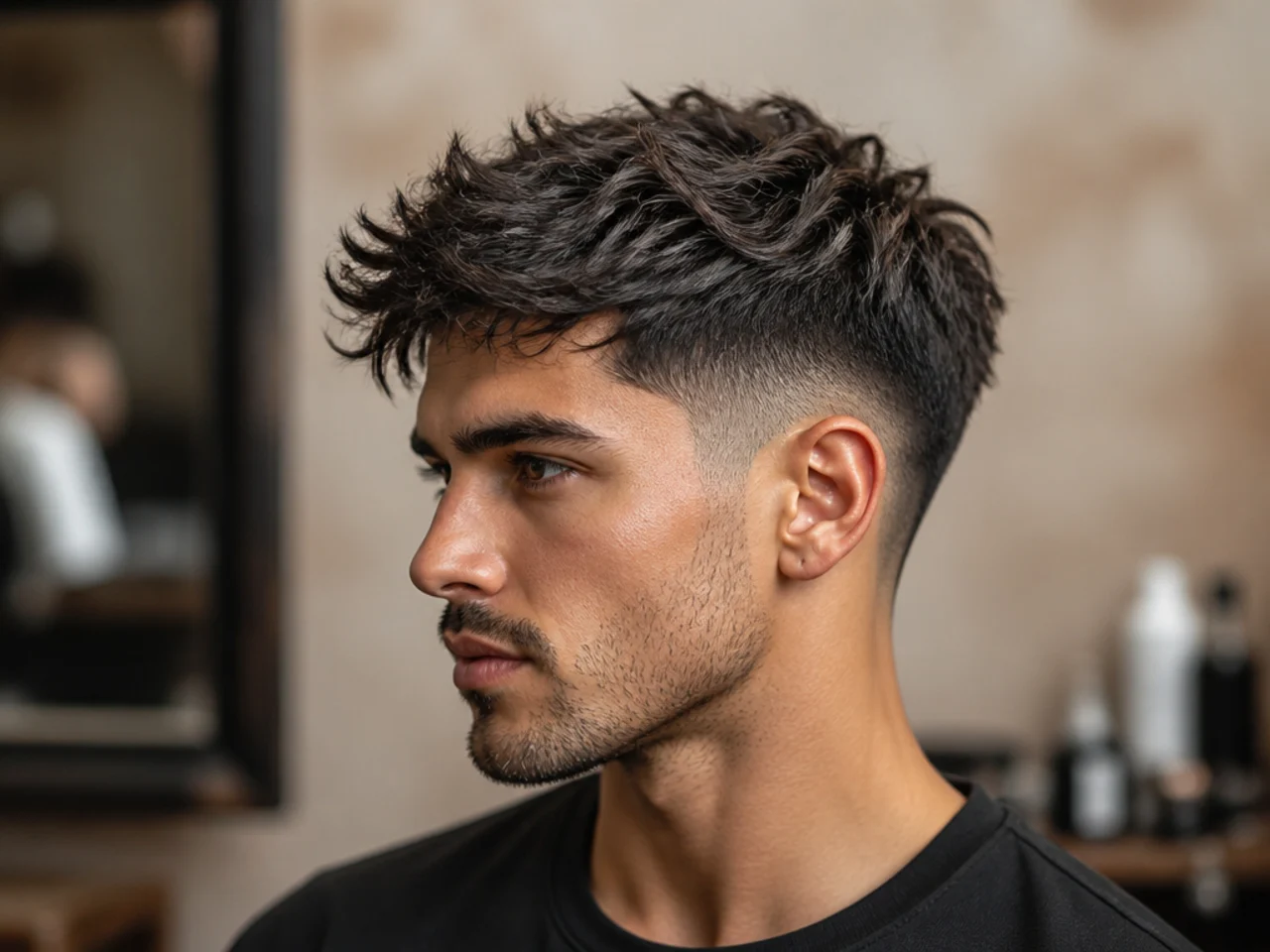
Tell the barber which technique you want on the ends: "point-cut ends," "razored throughout," or "thinning shears to remove weight from the interior." Then specify top length in inches, sides (fade, taper, or scissor-cut), and how you want the fringe finished — blunt, softened, or forward-swept. A photo of the exact variation seals it.
Which hair types suit a textured cut?
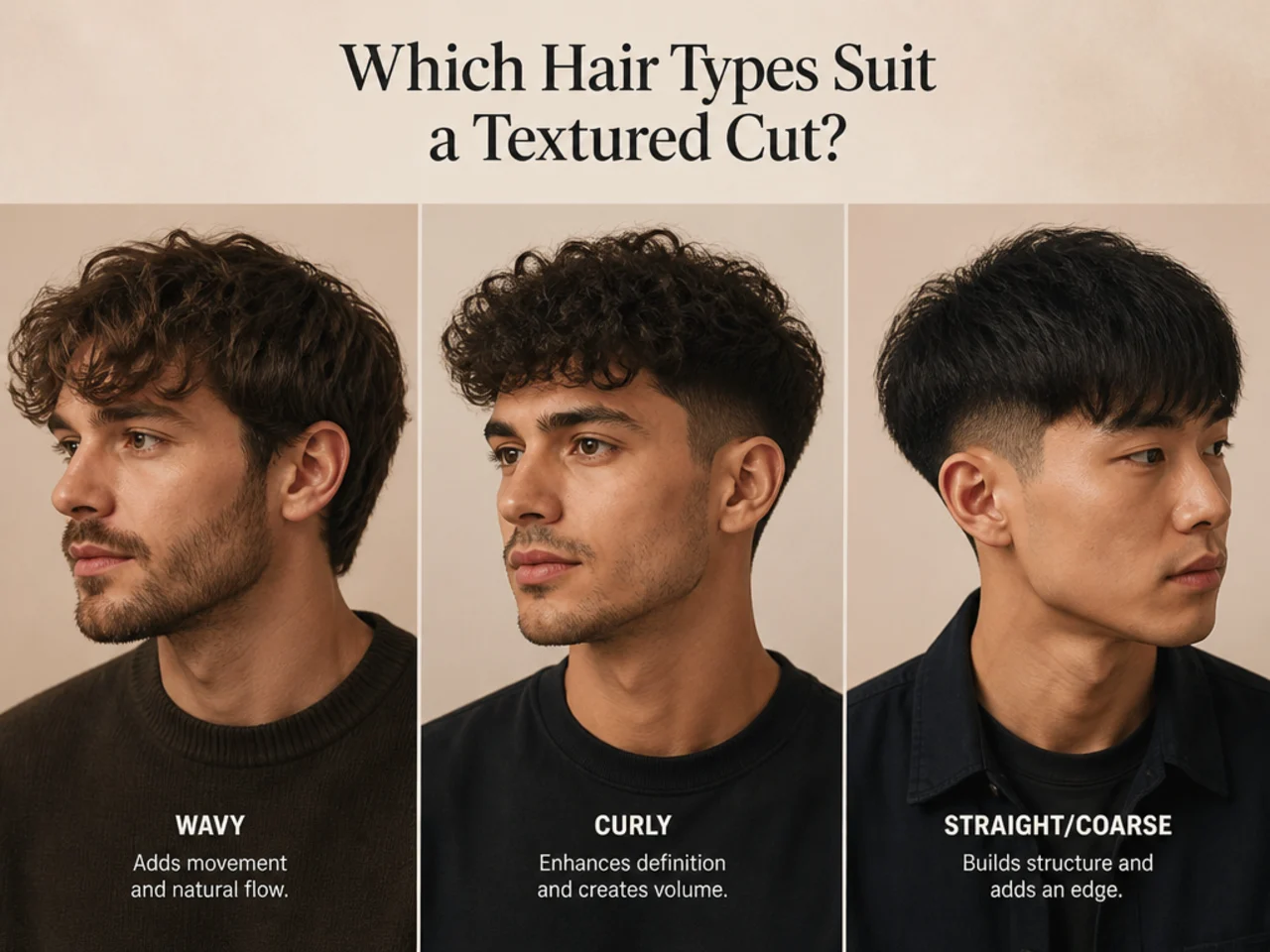
All of them. Fine hair benefits the most because texturizing creates the illusion of density. Thick hair benefits because thinning removes bulk. Wavy and curly hair benefits because texture gives room for the natural pattern to sit. Only exception: very fine, very straight hair that's already thin — over-razoring can leave it wispy instead of full.
What products help create texture?
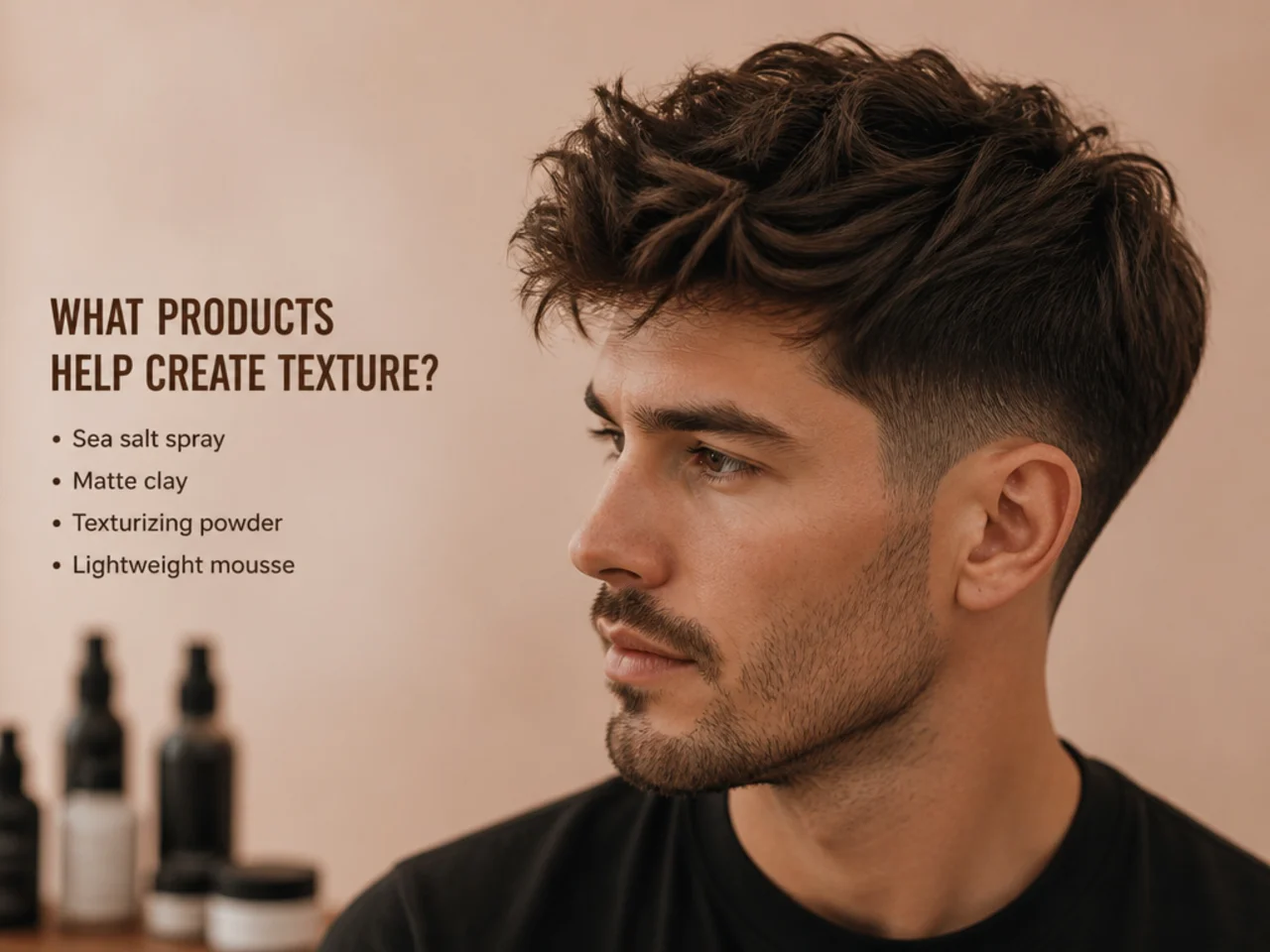
Sea-salt spray on damp hair mimics the mineral grip of ocean water. Matte clay for hold with a dry, natural finish. Matte paste for lighter hold with more pliability. Skip pomade unless you want shine. Skip gel unless you want a hard, crunchy hold. One product is usually enough — layering products often cancels each other out.
Can textured hairstyles work for professionals?
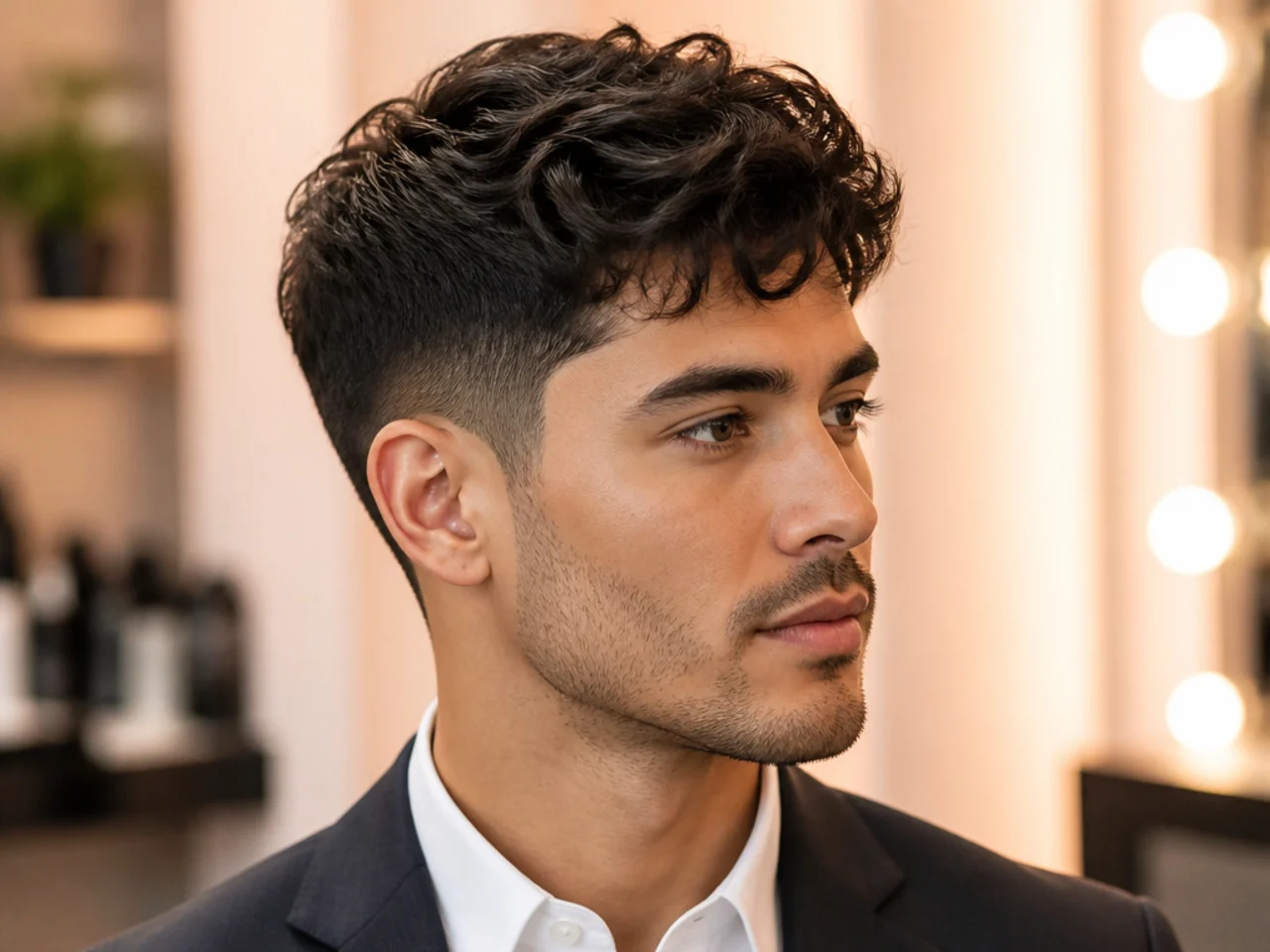
Yes. The textured comb over, brush back, side part fade, crew cut, and short French crop all sit within any corporate dress code. The texturizing gives the cut a modern read without pushing into statement-territory. Ask for a "clean textured [cut] with a low taper fade" and you land in office-appropriate every time.
Are textured haircuts good for thinning hair?
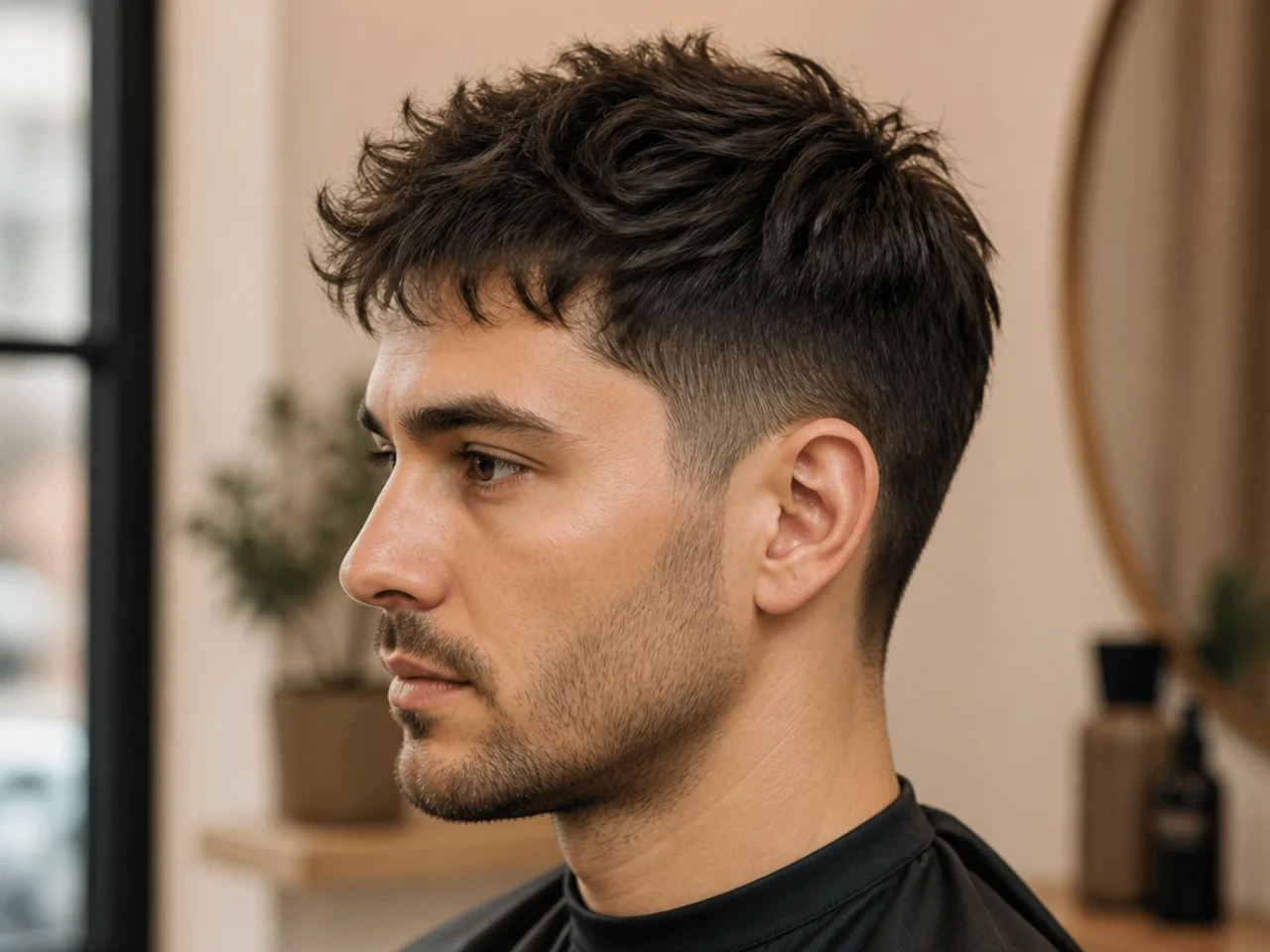
Yes — this is where they earn their keep. Broken ends stack visually so density reads higher than it actually is. Forward-swept fringes hide receding hairlines. Short top paired with a fade minimizes the contrast between hair and scalp. Skip long lengths that reveal scalp when parted; go short-to-medium instead.
What is the difference between messy and textured?
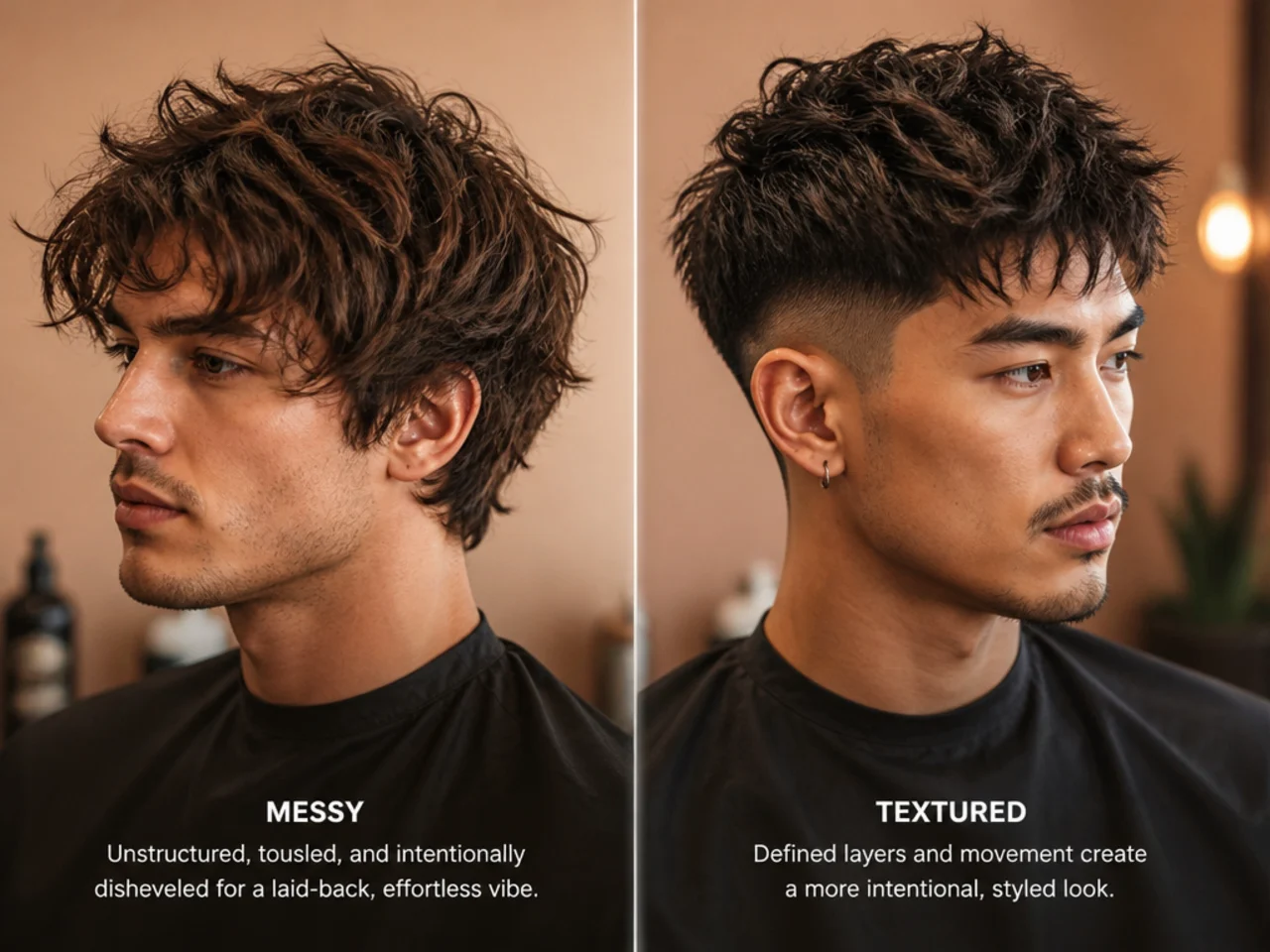
Textured is what the barber did to the cut with scissors and razor. Messy is what you do with your hands after. Textured cuts style easier into a messy finish because the ends are already broken up. But you can wear a textured cut neatly — brushed back, side-parted, combed forward — and it still reads with more shape than a solid blunt cut ever would.
READ:
42 Bob Haircut Ideas Beginner Friendly Easy Variation
Easy 32 Layered Womans Short Hair Styles
39 Best Curly Hairstyles For Men
Surfer Hairstyle: 27 Cool Ideas for Men & How To Get Look
25 Best Comma Haircuts for Men