
25 Trendy Haircuts for Thick Wavy Hair You’ll Love
Finding the perfect haircut for thick wavy hair can feel challenging, but the right style can completely transform your look. Thick waves offer natural volume and texture, mak
In this article · 26
- 1\. Shoulder-Length Shag Cut for Thick Waves
- 2\. Long Layered Cut with Face-Framing Pieces
- 3\. Blunt Bob with Textured Ends
- 4\. Long Bob with Curtain Bangs
- 5\. Choppy Pixie Cut for Thick Waves
- 6\. Mid-Length Waves with Soft Layers
- 7\. Textured Lob with Undercut
- 8\. Soft Bob with Side Bangs
- 9\. Classic V-Cut for Long Waves
- 10\. Layered Waves with a Textured Fringe
- 11\. Disconnected Bob for Thick Wavy Hair
- 12\. Long Layers with Beachy Waves
- 13\. Graduated Bob for Volume
- 14\. Smooth Lob with Layered Texture
- 15\. Playful Mullet for Thick Waves
- 16\. Curly Lob with Volume
- 17\. Soft Layered Waves with Subtle Highlights
- 18\. Edgy Blunt Cut with Waves
- 19\. Layered Waves with a Side Part
- 20\. Bold Undercut with Long Wavy Top
- 21\. Fluffy Curls with a Defined Shape
- 22\. Soft Wavy Shag with Wispy Layers
- 23\. Lob with Asymmetrical Cut
- 24\. Long Messy Waves with Bangs
- 25\. Textured Bangs with Long Flowing Curls
- Finding Your Perfect Cut for Thick Wavy Hair
Thick wavy hair carries two forces at once: natural body and serious density. Fight either one and you get a pyramid. Work with both and you get real movement. The right cut removes weight from inside the mid-shaft with thinning shears, and never touches the ends where your wave pattern actually lives. Below, 25 cuts that thin, shape, and celebrate what thick waves already do best.
1. Shoulder-Length Shag Cut for Thick Waves
The shoulder-length shag is the gold standard for thick wavy hair. Heavy internal layering at the mid-shaft removes bulk so the waves can breathe, while collarbone length holds enough weight to prevent the triangular shape thick hair falls into when cut too short. Best on oval, heart, and long face shapes.
Ask for internal thinning shears at the mid-shaft, and be explicit: don't touch the ends. Request long layers starting at the chin plus a soft curtain fringe. Style with a curl cream on damp hair, diffuse upside down for three minutes, then flip up. Skip brushing when dry; finger-comb only to keep the wave clumps intact. Retrims every 8-10 weeks. See more shag-inspired shapes worth screenshotting.
2. Long Layered Cut with Face-Framing Pieces

Long layers stop thick waves from stacking into a heavy shelf across the shoulders. Face-framing pieces cut in front open up the eyes and cheekbones, which matters most on round and square face shapes that need vertical lift.
Bring a photo. Ask for internal thinning through the mid-lengths only, no ends thinning ever. Request long, invisible layers starting at the jawline, plus two shorter face-framing pieces at cheekbone and collarbone. Don't let the stylist over-layer the crown or the waves will lose the weight that holds their S-curve. Style with a lightweight mousse on damp hair and rough-dry with a diffuser. Use a curling wand only where the wave breaks. Browse more layered cut variations for ideas.
3. Blunt Bob with Textured Ends

A blunt bob controls thick waves through weight. The straight-across baseline creates a heavy perimeter that pulls the wave down instead of letting it puff out sideways. The textured ends stop it from reading flat or helmet-like. This suits square and heart shapes that want to soften the jaw.
Ask for a chin-length blunt line, then request point-cutting into the last inch to break the perimeter without losing shape. Add internal thinning at the mid-shaft to lose interior bulk. Do not let anyone razor the ends. A razor on wavy hair kills the pattern. Style with a smoothing cream, blow-dry with a round brush, then bend the ends with a flat iron. Explore more classic bob options before your appointment.
4. Long Bob with Curtain Bangs

The long bob at collarbone length is the safest starting point for thick waves. Long enough to weigh the wave down, short enough to lose the bottom-heavy triangle. Curtain bangs on top add softness without commitment. They grow into face-framing layers if you change your mind.
Ask for a one-length lob just below the collarbone with heavy internal thinning through the mid-shaft. Curtain bangs should start at the cheekbone and get slightly longer toward the temples. Do not request blunt bangs on wavy hair. Your fringe will cowlick and lift. Style by rough-drying with a diffuser on medium heat, then twist the bangs around a large round brush for two seconds. See more layered bob variations for inspiration.
5. Choppy Pixie Cut for Thick Waves

A textured pixie proves thick waves can go short, but only if the cutting technique is right. Choppy layers remove density so the waves stand up in soft, controlled pieces instead of flipping out into a mushroom. Best for oval and heart shapes with strong bone structure.
Ask for internal thinning throughout the crown to remove bulk, then point-cut the perimeter for pieciness. The nape should stay short (one-guard clipper), and the top should reach three to four inches so the waves can form. Do not go blunt on any layer. Style with a matte paste worked through damp hair, then diffuse or air-dry. Trim every 4-6 weeks. Pixies show grow-out fast, and thick hair grows faster than most.
6. Mid-Length Waves with Soft Layers

Mid-length between the collarbone and mid-chest is the sweet spot for thick wavy hair. Short enough for easy daily styling, long enough to weigh the wave into a defined S-curve. Soft layers add movement without stripping the length that keeps thick hair looking intentional.
Ask for internal thinning at the mid-shaft, invisible layers starting mid-neck, and a blunt baseline. Face-framing at the chin softens round faces; skip it if you have a heart shape. Style with a curl-defining cream on soaking-wet hair (not damp, soaking) and diffuse in sections. The right wavy hair products make the difference between defined S-waves and dry frizz. Retrims every 8-10 weeks.
7. Textured Lob with Undercut
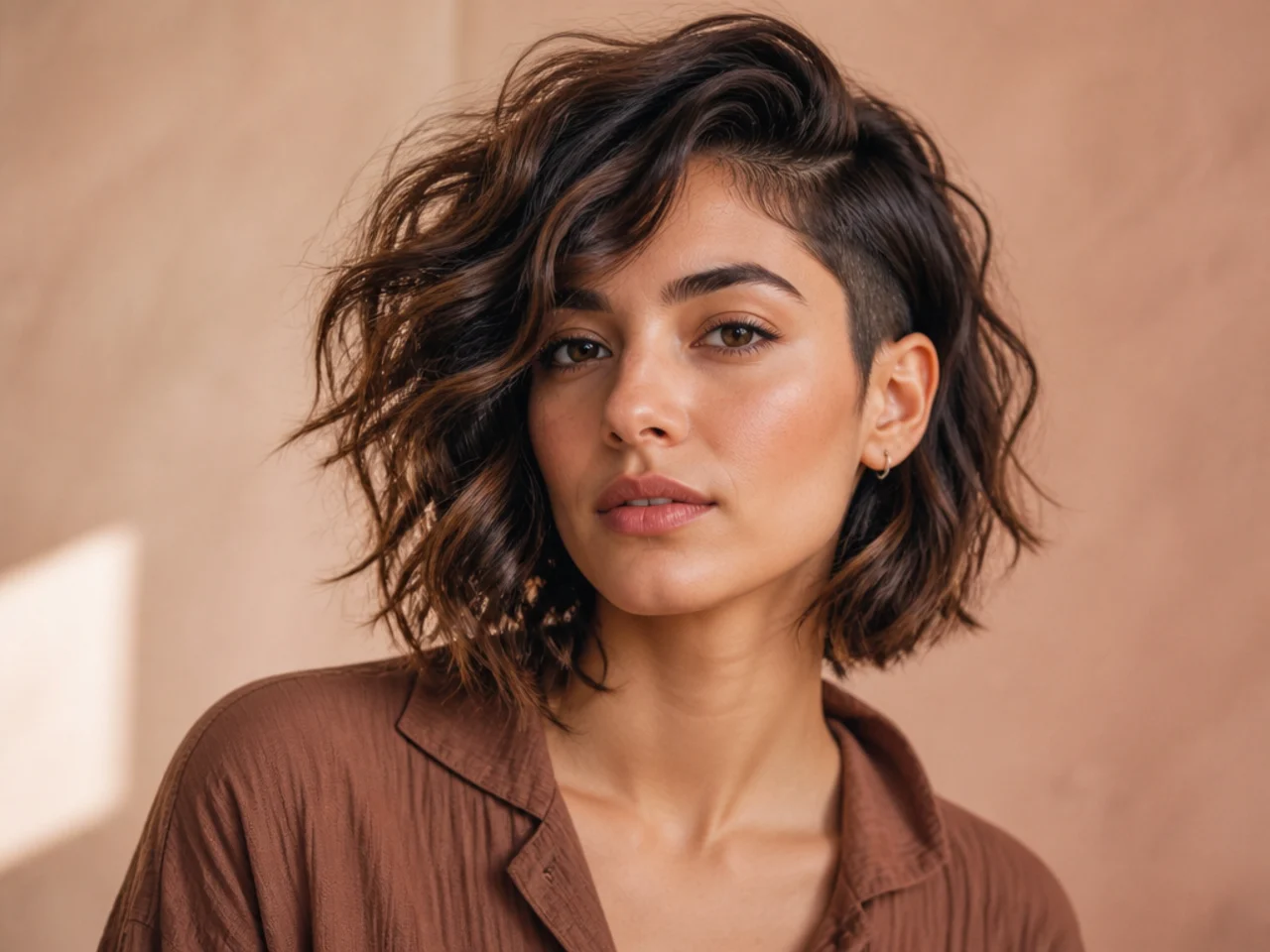
The hidden undercut is the secret weapon for very thick waves. Buzzing a small section behind the ear removes serious weight without touching visible hair. From the front, you see a normal lob. Lift the top and the undercut appears.
Ask for a collarbone-length lob with internal thinning at the mid-shaft, then request a nape undercut roughly the size of your palm. Discuss the shape (horseshoe, panel, or double-panel) before the clippers come out. Style the lob normally: mousse on damp hair, diffuse, then a curl wand where the wave breaks. The undercut needs clipper touch-ups every 4-6 weeks. The top can wait 10-12. Great option if you love long looks but hate the weight.
8. Soft Bob with Side Bangs

A soft bob at jaw length adds body to thick waves that otherwise sit flat at the top. Side bangs create asymmetry that flatters round and square faces by breaking up the horizontal read of a chin-length line.
Ask for a bob that sits at the jaw when dry. Thick waves shrink up when cut wet, so go slightly longer than you think. Internal thinning at the mid-shaft is essential. Side-swept bangs should start behind the crown and sweep to below the cheekbone. Style by rough-drying with your fingers, then flip the side part with a round brush for lift. Add a piece of texturizing paste at the crown for airy volume. Retrims every 6-8 weeks.
9. Classic V-Cut for Long Waves
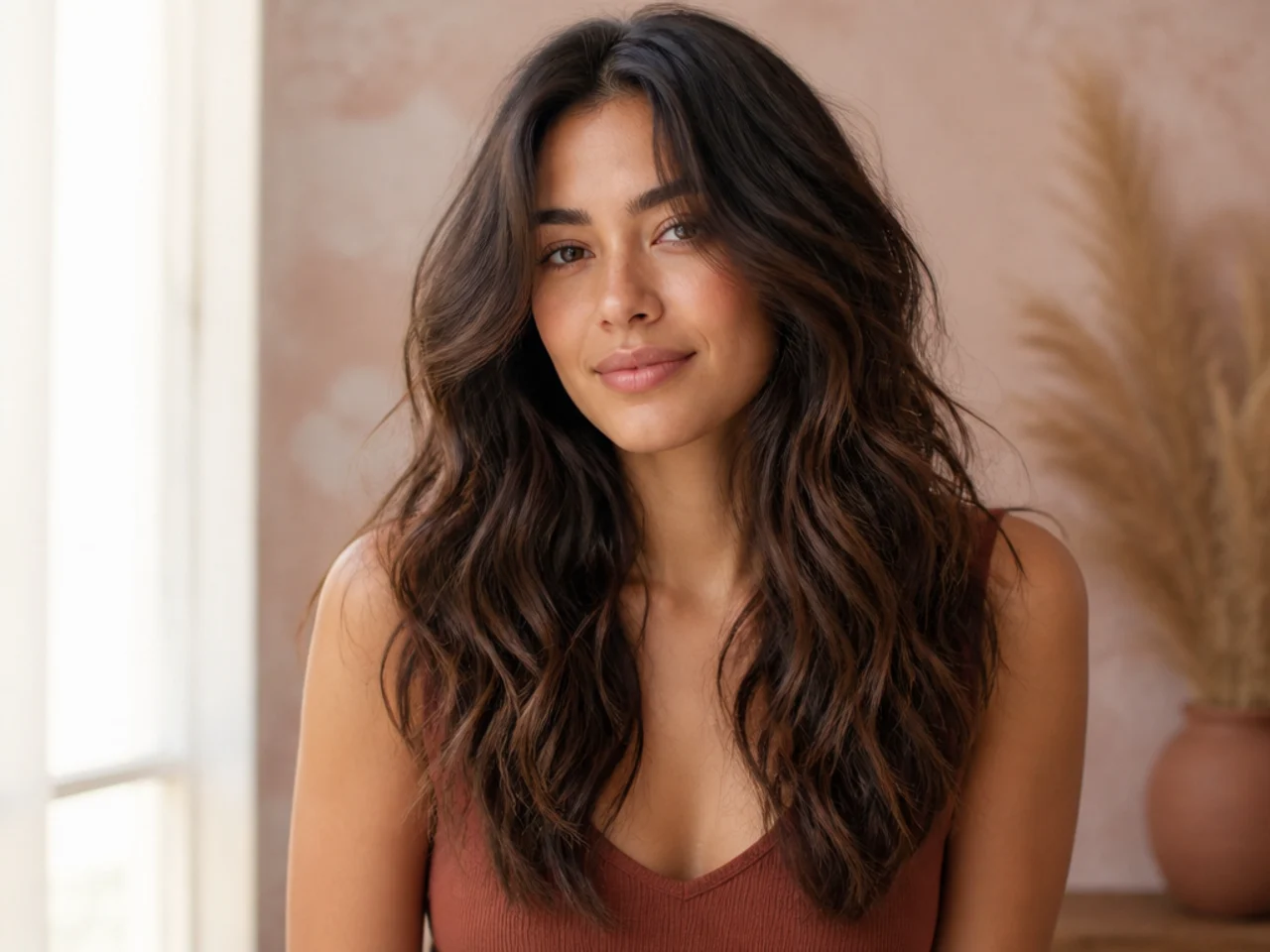
The V-cut shapes long waves from front to back, letting the length drop into a soft V at the back. Interior weight loss stops the pyramid effect, while the outline stays long and glamorous. This flatters oval and long face shapes best.
Ask for a V-shape baseline, long layers starting at the collarbone, and internal thinning through the mid-shaft. No razoring on the ends. The V should be scissor-cut. Style with a leave-in conditioner on damp hair, wide-tooth comb to distribute, then air-dry. A curling wand can smooth out any rogue waves along the way. Trim every 10-12 weeks to keep the V crisp. Skip trims longer than that and the V rounds off into a U.
10. Layered Waves with a Textured Fringe

Layered waves with a full textured fringe reframe the whole face. The fringe pulls attention up to the eyes, while the layers keep thick wavy volume under control. Best for oval and long face shapes; heart shapes should ask for a wispier fringe to avoid top-heaviness.
Ask for internal thinning at the mid-shaft, invisible layers throughout the length, and a fringe that's point-cut (never blunt) to hit the brow bone. On wavy hair, the fringe needs weight removed underneath so it doesn't flip up. Style the fringe first with a small round brush, then work through the length with a diffuser. Book fringe-only trims every 3-4 weeks between full haircuts.
11. Disconnected Bob for Thick Wavy Hair

A disconnected bob keeps the front longer than the back with a sharp step, not a graduated blend. This creates architecture that reads intentional, not accidental. Best on oval faces and strong jawlines that can carry the asymmetry.
Ask for a chin-length back with a jaw-to-collarbone front, connected by a clean disconnect line, no graduation. Internal thinning at the mid-shaft removes bulk that would soften the shape you're paying for. Style by round-brushing the front pieces forward and diffusing the back for volume. A drop of hair oil on the ends prevents the disconnect from reading blunt or unfinished. Retrims every 6-8 weeks. A disconnected line grows out fast and loses its edge inside a month past that.
12. Long Layers with Beachy Waves
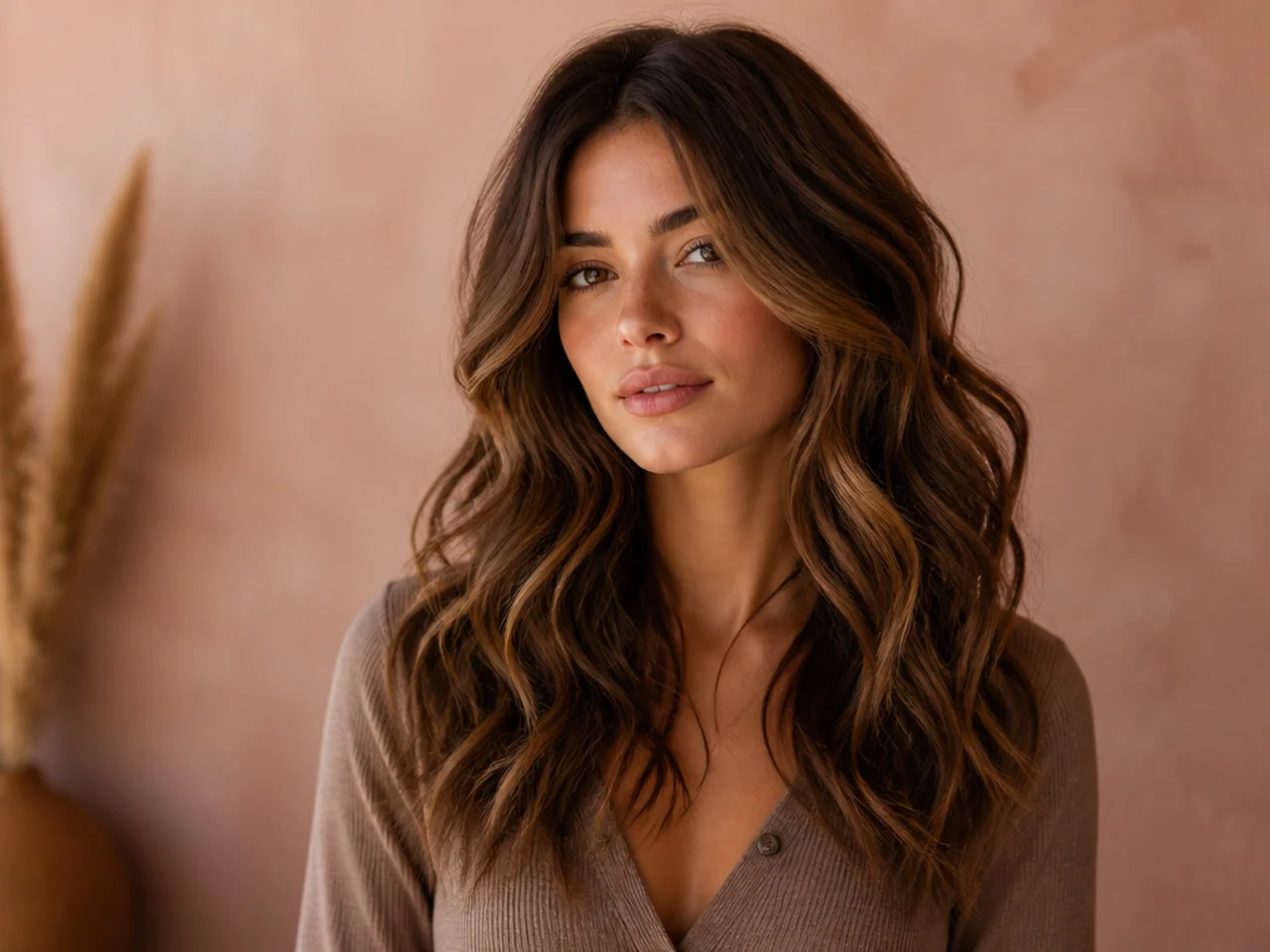
Long, invisible layers give thick wavy hair the illusion of an effortless beachy shape. The key word is invisible. Heavy visible layers on thick hair create obvious steps that read dated the second the wave breaks.
Ask for long, feathered layers starting at the collarbone, plus internal thinning at the mid-shaft to break up density. The overall shape should stay one-length from the front. Style with a salt spray on damp hair (not dry, dry salt spray on thick waves reads crunchy), scrunch, and air-dry. Braid overnight if your waves need help forming. Trim every 10-12 weeks to keep length without letting weight collect. Long layers hide grow-out well, so you can push that timeline in a pinch.
13. Graduated Bob for Volume

A graduated bob stacks weight at the crown, which lifts thick wavy hair off the neck instead of letting it collapse. The stacked back creates a rounded natural shape, and the longer front softens the jaw. Great for square and round faces that need lift.
Ask for a graduated back with weight at the crown, a chin-length front, and internal thinning through the middle to prevent a triangle silhouette. Do not let the graduation go too steep. Thick waves need gradual stacking, not chunky layered steps. Style with a mousse at the roots, blow-dry upside down, then round-brush the ends under. A soft bend from a flat iron finishes the perimeter. Trim every 6-8 weeks to hold the stack.
14. Smooth Lob with Layered Texture
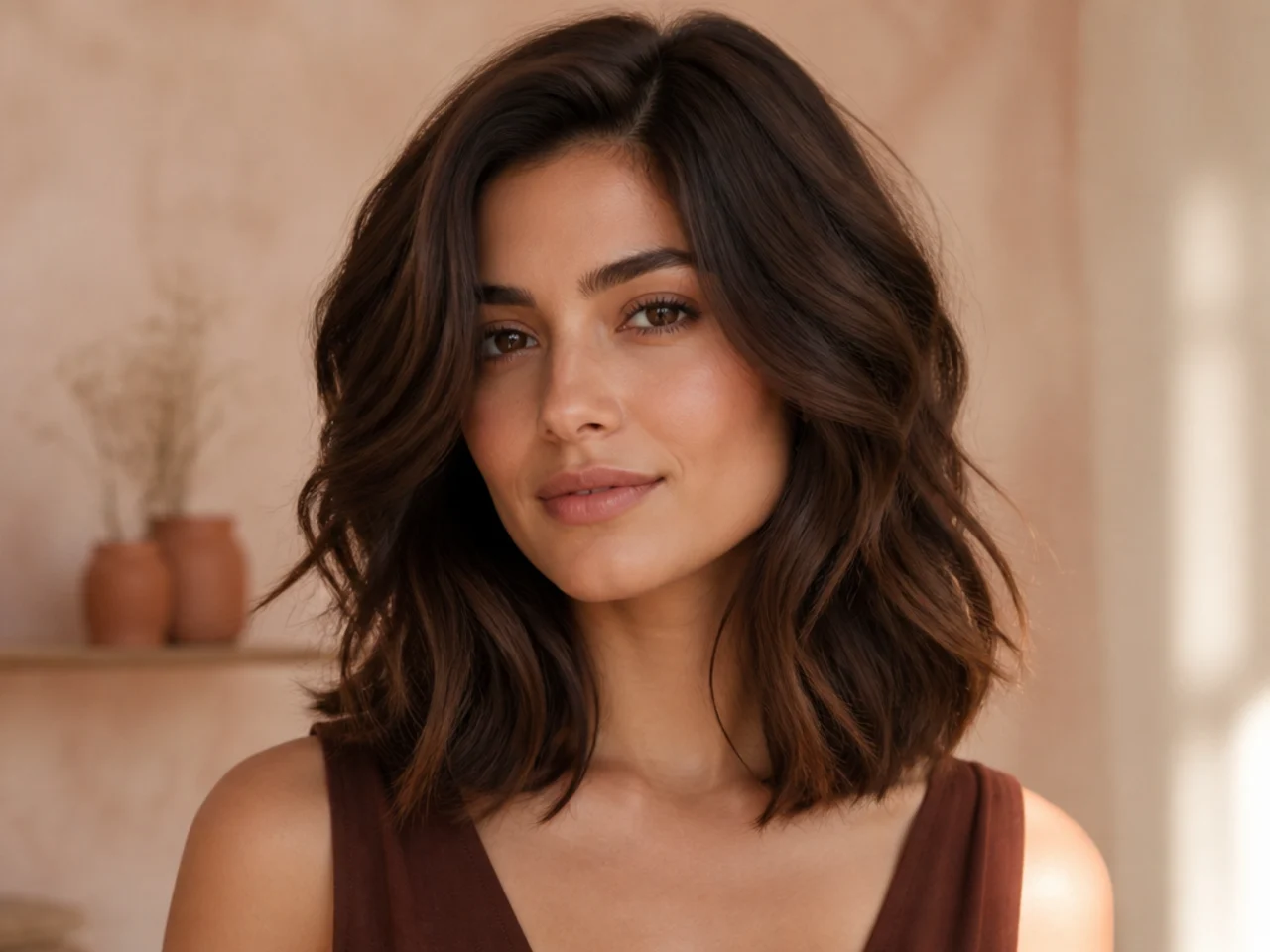
The smooth lob wears thick waves on off days too. Blow it straight and it reads polished. Air-dry it and the internal layers let the wave pattern show through. That versatility depends on the cut. The layers have to be internal, not visible.
Ask for a one-length collarbone lob with heavy internal thinning at the mid-shaft, plus point-cutting through the ends to soften the perimeter. No visible layers on the top. Style smooth by blow-drying with a large round brush and finishing with a flat iron. Style wavy by scrunching in a curl cream and diffusing. Trim every 8-10 weeks. This is the cut to bring your stylist when you want a real two-in-one.
15. Playful Mullet for Thick Waves

The modern wolf-cut mullet works for thick waves because heavy interior layering removes density where it collects worst: the crown and the sides. The longer back keeps length; the shorter front and curtain fringe reframe the face.
Ask for a nape length that grazes the shoulders, a top layer at chin length, and a curtain fringe at cheekbone height. Heavy internal thinning at the mid-shaft is non-negotiable. Without it, a mullet on thick waves puffs out into a mushroom cap. Style with a curl cream on damp hair, diffuse upside down, then finger-fluff at the crown. Retrims every 6-8 weeks. Not for round or square faces. The mullet reads best on oval and long shapes.
16. Curly Lob with Volume

A curly lob styled to enhance the wave-to-curl end of your range works when your hair sits on the tighter side of wavy. Mid-length holds weight while layers loosen the density that flattens the curl pattern.
Ask for a curly-hair cut done dry, curl-by-curl, at collarbone length. Internal thinning removes bulk without breaking curl clumps. Never let the stylist point-cut the ends of an already-formed curl. It kills the shape. Style with a curl gel on soaking-wet hair, praying-hands to distribute, then squish-to-condish. Air-dry or diffuse on low heat. Explore more curly hair cutting techniques if your waves lean curlier than you realized.
17. Soft Layered Waves with Subtle Highlights
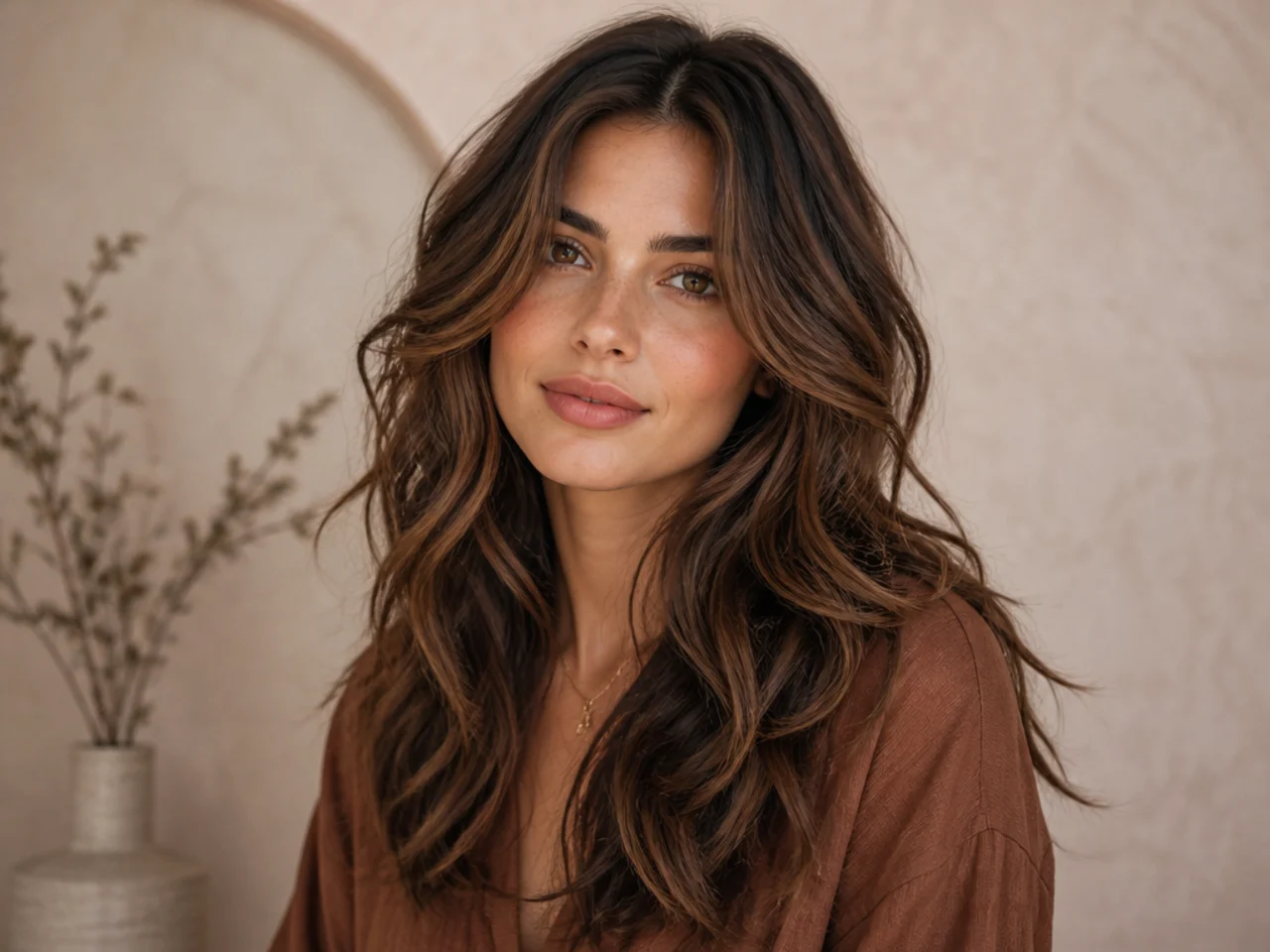
Subtle highlights on thick wavy hair add dimension the eye reads as movement. Combined with soft layers, they create the illusion of lighter, more textured hair, even at full density.
Ask for internal thinning at the mid-shaft, long invisible layers starting at the collarbone, and a base color half a shade darker than your natural. Face-framing highlights (money pieces) at the temples brighten the face without a full-head commitment. Style with a leave-in on damp hair, diffuse until 80 percent dry, then let it air-finish. A shine spray at the end keeps the highlights luminous. Trim every 10-12 weeks; refresh color roughly every 12 weeks to keep the dimension crisp.
18. Edgy Blunt Cut with Waves

A one-length blunt cut on thick wavy hair reads modern and expensive. But only if the interior is thinned. Without internal weight removal, a blunt cut on thick waves turns into a helmet by hour two.
Ask for a collarbone or shoulder-length blunt line, heavy internal thinning through the mid-shaft, and zero visible layering. The blunt line is the point. The interior work is invisible and load-bearing. Style by air-drying with a curl cream, then bending the ends with a flat iron for a soft finish. A hair oil on damp mid-lengths tames frizz without weighing down the wave. Retrims every 6-8 weeks to keep the blunt line clean.
19. Layered Waves with a Side Part

A deep side part shifts thick wavy volume to one side, which reads more polished than a middle part on dense hair. Layers underneath keep the shape from stacking heavy on the parted side.
Ask for internal thinning at the mid-shaft, long invisible layers starting mid-neck, and a slightly longer piece on the parted side to fall over the eye. This works on square and round faces that benefit from asymmetry. Style by parting hair while damp, applying mousse from mid-lengths down, then diffusing away from the face. A curling wand smooths any rogue waves at the front piece. Retrims every 8-10 weeks. Retrain the part every wash. Wavy hair holds a part with encouragement.
20. Bold Undercut with Long Wavy Top
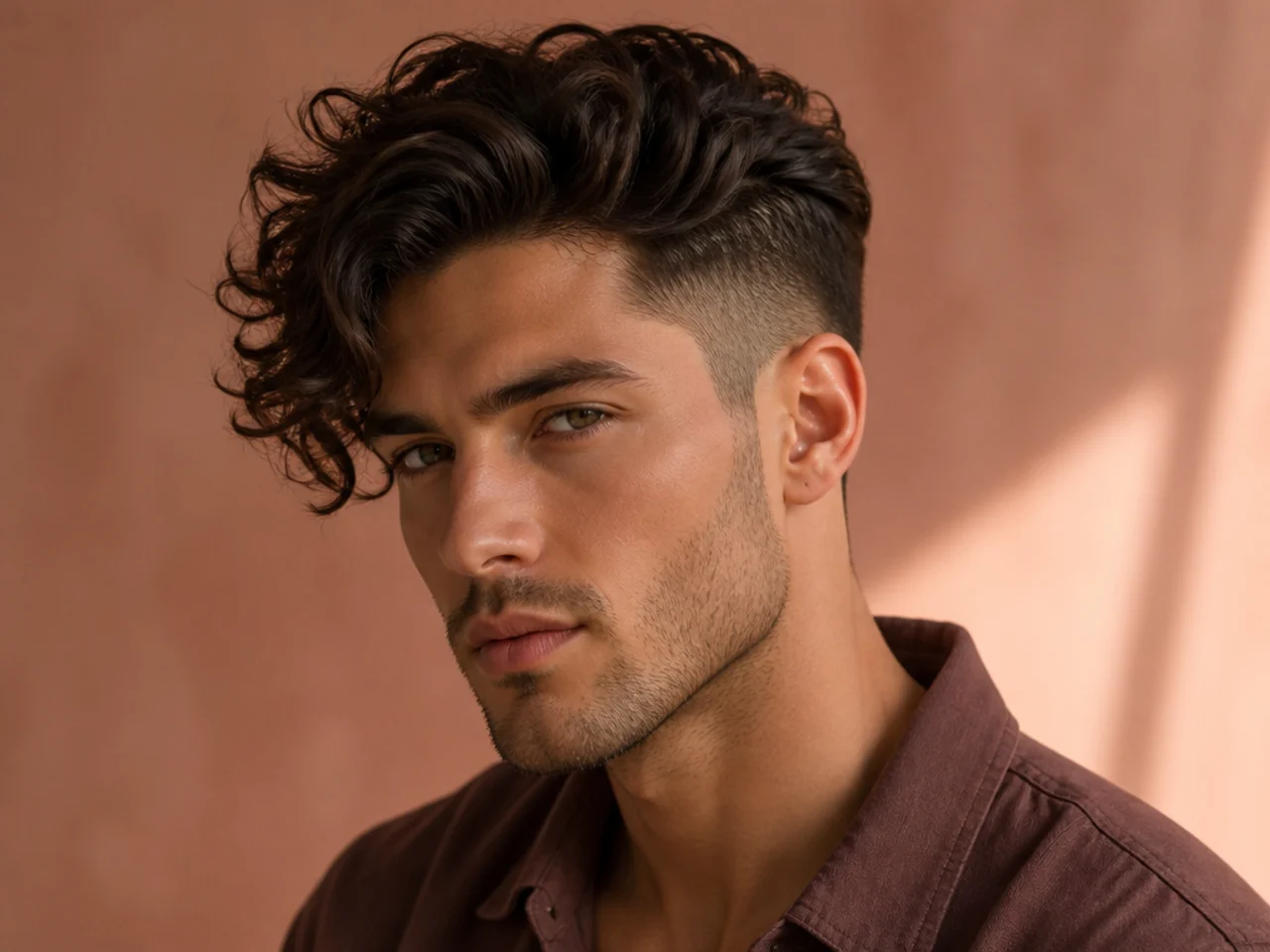
A full temple-to-nape undercut with long waves on top is the most dramatic way to lose weight from thick hair. The top layer covers the shave completely when down, so you control when the undercut shows.
Ask for a horseshoe undercut behind the ear line, then long layers on top with internal thinning through the mid-shaft. The visible perimeter stays long: waist-length or mid-back. Style the top with a curl cream, diffuse, and let air finish. Undercuts need clipper resets every 3-4 weeks; the top can wait 10-12. Best on oval, long, and square faces with strong bone structure. This is a big commitment. Book a consultation before the cut appointment.
21. Fluffy Curls with a Defined Shape

When your waves lean toward loose curls, a shape-defining cut done dry gets the best results. The shape follows your existing curl clumps instead of forcing them into a preset silhouette.
Ask for a dry cut, curl-by-curl, at shoulder to collarbone length. Internal thinning at the mid-shaft removes density without touching the ends. Avoid any point-cutting or razoring on the actual curl. The stylist should be shaping clumps, not slicing them. Style with a curl gel on wet hair, plop with a t-shirt for 15 minutes, then diffuse on low heat. A pick at the roots when dry adds volume without breaking the pattern. Retrims every 8-10 weeks.
22. Soft Wavy Shag with Wispy Layers

A softer take on the shag keeps the movement without the extreme layering. Wispy layers at the ends replace choppy ones, giving thick waves a lived-in shape that flatters oval, heart, and long faces.
Ask for a modern shag with internal thinning at the mid-shaft, feathered layers starting at the chin, and wispy ends point-cut with scissors. No razors on wavy hair, ever. Add a curtain fringe if you want to reframe the face without commitment. The butterfly haircut borrows this same soft-shag DNA if you want a related shape to compare. Style with mousse on damp hair, diffuse upside down, then finger-comb into place. Retrims every 8-10 weeks.
23. Lob with Asymmetrical Cut

An asymmetrical lob cuts one side shorter than the other, adding architectural interest to thick waves. The asymmetry breaks up the symmetry that thick hair tends to force onto every silhouette.
Ask for a two-inch length difference between the shorter and longer side, with the longer side falling past the collarbone. Internal thinning at the mid-shaft removes bulk that would flatten the asymmetry. Do not go dramatic on the length difference. Subtle reads chic; extreme reads costume. Style by parting hair away from the longer side and diffusing with your head tilted toward the shorter side for asymmetric volume. Retrims every 6-8 weeks to hold the sharp shape. This one lives or dies by the trim schedule.
24. Long Messy Waves with Bangs

Long messy waves with full bangs work on thick hair when the bangs are cut with weight removed underneath. Otherwise they cowlick straight up on wash day one. The length below stays long and layered to show off the wave pattern.
Ask for internal thinning at the mid-shaft, long invisible layers starting at the collarbone, and full bangs that are heavily thinned on the underside. The bangs should hit the brows when dry. They shrink up 20 percent on thick waves. Style with a texturizing spray on second-day hair. Thick waves look best on day two anyway. Round-brush the bangs first, then finger-tousle the length. Trim bangs every 3-4 weeks.
25. Textured Bangs with Long Flowing Curls

Textured bangs with long waves-into-curls is a maximalist thick-hair look that works when the layering is done properly. Length can hit the mid-back or waist as long as the interior is thinned to prevent the pyramid.
Ask for long, invisible layers starting at the collarbone, internal thinning through the entire mid-shaft, and wispy, point-cut bangs at brow length. If your pattern reads curlier than wavy, borrow the techniques used for short hairstyles for thick hair: remove interior weight, preserve the perimeter, protect the ends. Style with a curl cream on soaking-wet hair, diffuse in sections, and finish with a shine spray. Retrims every 10 weeks. Longer than that and the interior weight rebuilds.
Finding Your Perfect Cut for Thick Wavy Hair

Every cut on this list shares one rule: remove weight from inside, leave the ends alone. Thinning shears at the mid-shaft break up density. Scissors at the ends protect the wave pattern. That's the whole game.
Before your appointment, pick two or three cuts here that share a length and shape you can live with day to day. Bring the photos. Ask the stylist to talk through the internal thinning plan before they pick up any tool. If they want to razor your ends or thin at the tips, walk out. Your wave pattern lives in the last three inches. Protect that section, and the shape does the rest of the work for you.
Frequently asked questions
Related posts
See all posts
17 Best Curly Hair Haircuts for Ultimate Style in 2026
Read more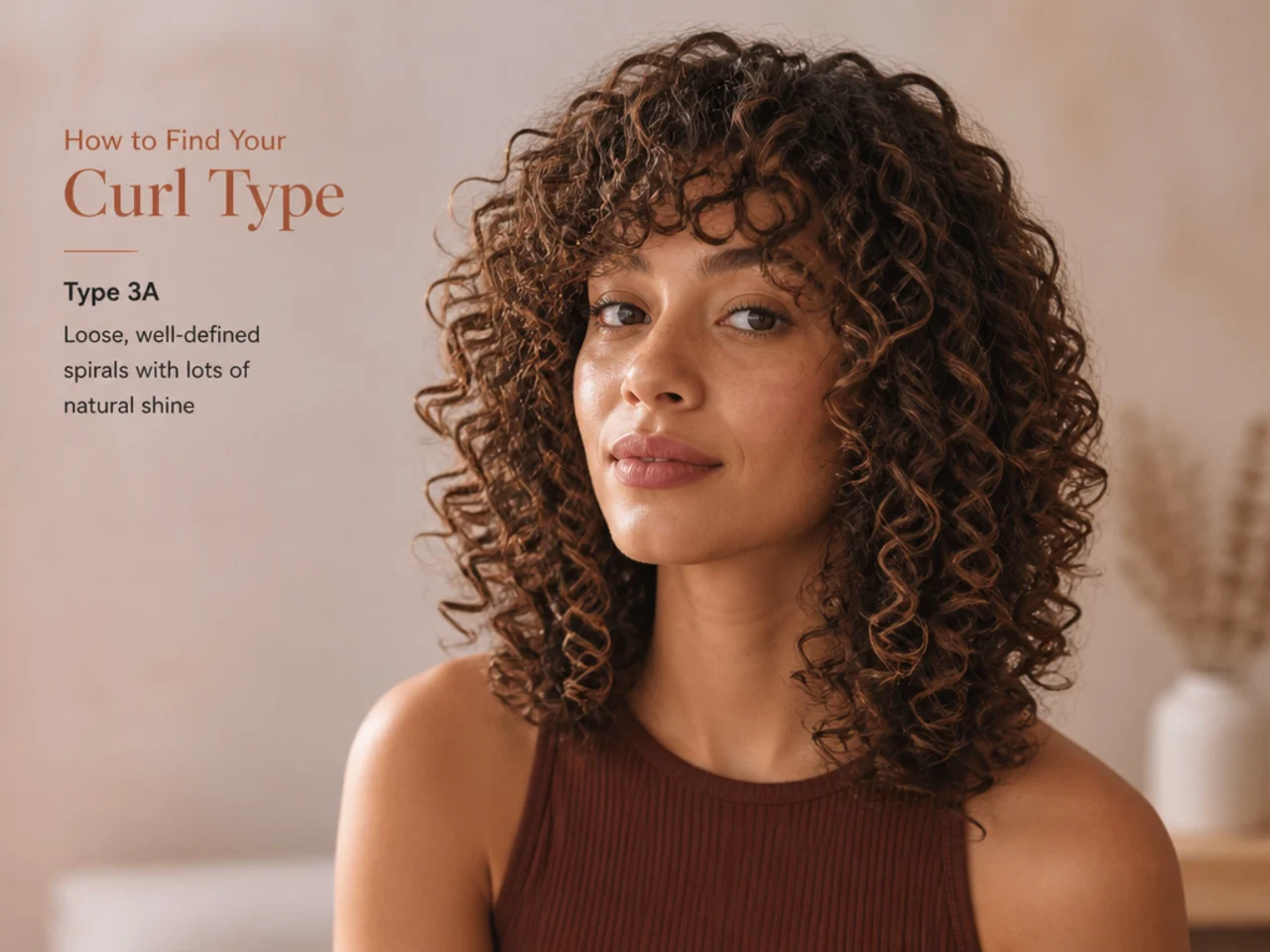
This Is the Simplest Way to Figure Out Your Curl Types: 2026
Read more
15 Stunning Layered Haircuts for Every Face Shape
Read more