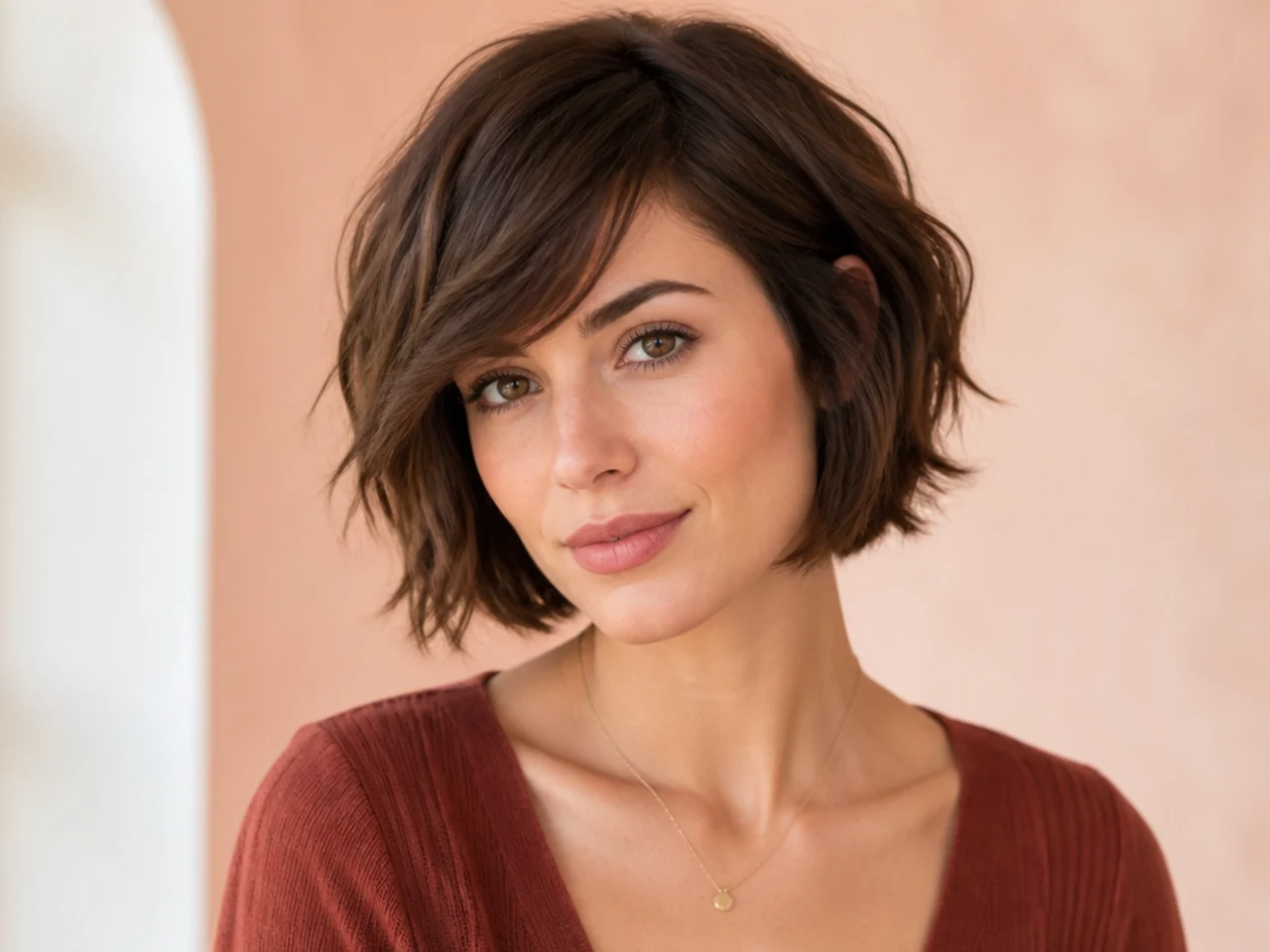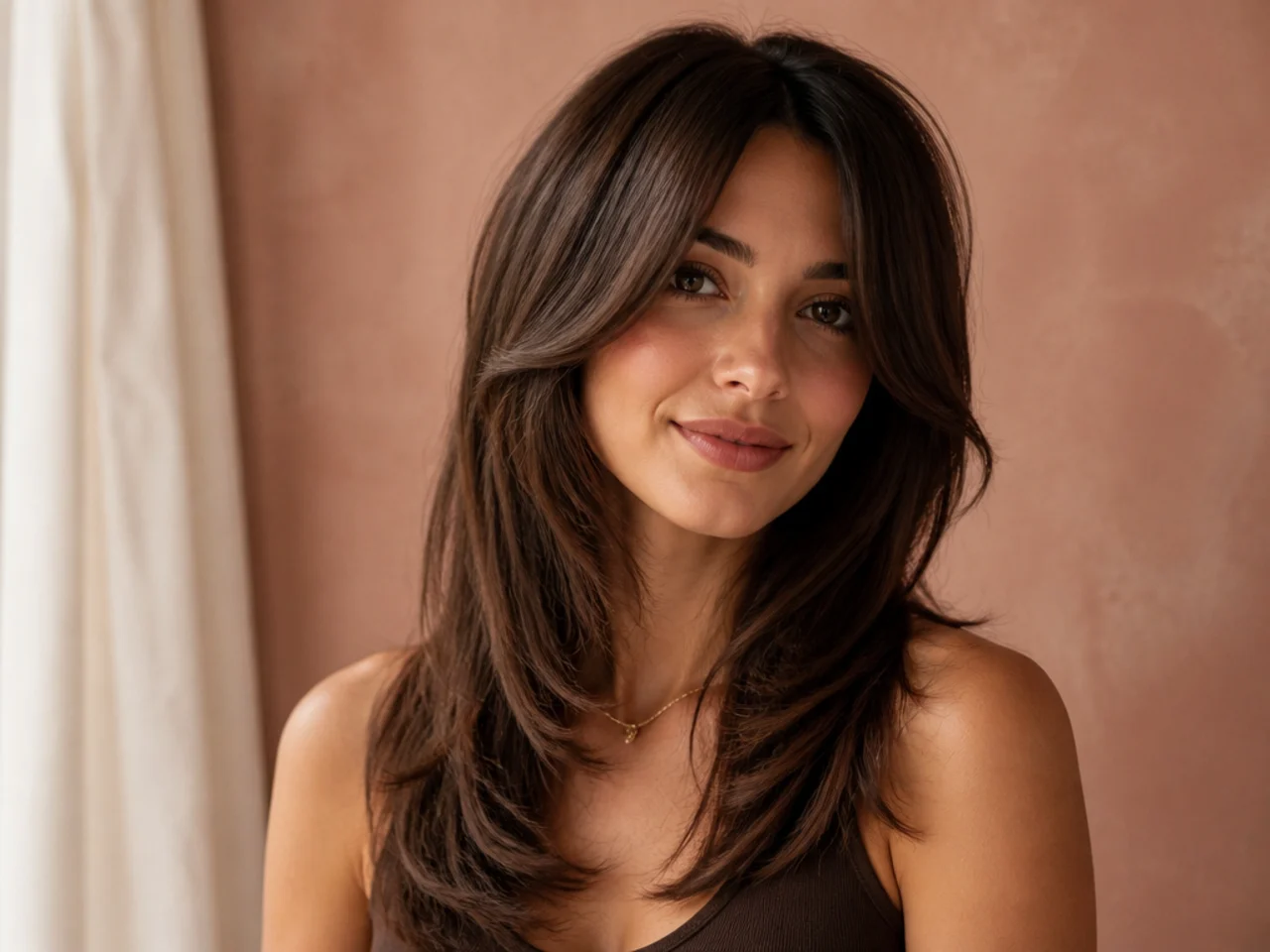
15 Stunning Layered Haircuts for Every Face Shape
Discover 15 stunning layered haircuts for every face shape to add movement, volume, and a flattering stylish look.
In this article · 16
- 1\. Long Layered Haircut with Face-Framing Layers for Oval Faces
- 2\. Medium-length Shag with Curtain Bangs for Heart-shaped Faces
- 3\. Textured Bob with Undercut for Square Faces
- 4\. Long Layers with Tapered Ends for Curly Hair
- 5\. Shoulder-Length Layered Cut with Blunt Bangs for Round Faces
- 6\. Soft Layered Lob with Wispy Ends for Thin Hair
- 7\. Feathered Layered Haircuts for Thick Hair
- 8\. Blunt Cut with Side Layers for Oblong Faces
- 9\. Asymmetrical Bob with Textured Layers for Diamond Faces
- 10\. Choppy Layers with Angled Bangs for Short Hair
- 11\. Long Layered HairCut with Ombre for Straight Hair
- 12\. Curly Lob with Soft Bangs for Medium Texture
- 13\. Long Layered Bob with Side-Swept Bangs for Rectangular Faces
- 14\. Wispy Layers with Blunt Ends for Straight Thick Hair
- 15\. Long Shag with Textured Layers Haircut for Wavy Hair
- Narrowing down your choices
Layers do the heavy lifting in a great haircut. They control weight, add movement, and — cut right — reshape your face without touching your bone structure. This guide breaks down 15 layered variations by face shape, so you know exactly which cut flatters yours and why. Each one covers what makes the shape different, how to ask for it in the chair, and one styling tip that keeps it working between visits.
1. Long Layered Haircut with Face-Framing Layers for Oval Faces
This is the workhorse of the long-layer category. Layers start at the chin and cascade down, with the shortest face-framing pieces cut on a slight diagonal so they sweep away from the cheek instead of falling flat against it. The rest of the length stays intact, so you keep the swing.
Oval faces are the natural home for this cut. Your proportions are already balanced, so long layers frame without fighting the shape. Face-framing pieces at the chin highlight your cheekbones and jaw without shortening or widening the face. If you want to see how the shape scales in other lengths, browse the wider long layered haircuts library.
Ask for: long layers starting at the chin, face-framing pieces cut on a diagonal, blunt or lightly point-cut ends for weight, and no aggressive internal thinning.
Styling tip: mist damp hair with sea salt spray, air-dry to about 80 percent, then finish with a light texturizing spray through the mid-lengths. Skip a heavy round-brush blowout. This cut lives on natural movement.
2. Medium-length Shag with Curtain Bangs for Heart-shaped Faces
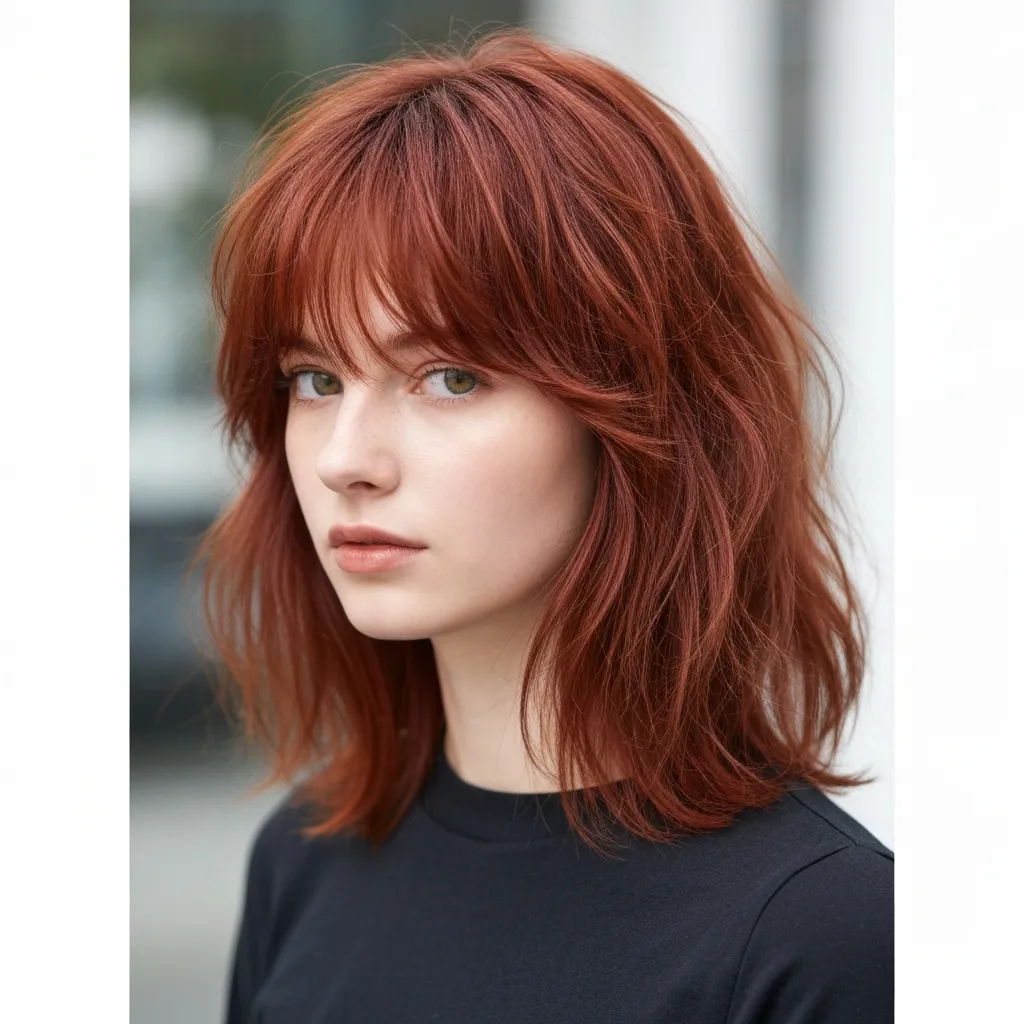
The shag is a layer buffet. You get cheekbone-length pieces around the face, mid-length layers through the crown, and curtain bangs split down the middle. The result reads as intentional messiness with real structure underneath.
Heart-shaped faces are wider at the forehead and taper to a narrow chin. Curtain bangs break up that forehead width, and the shag's layers add fullness right where the face narrows — at the jaw. That balances your top-heavy triangle instead of amplifying it. The wider family of shag haircuts covers longer and shorter variations if you want to see the full range.
Ask for: choppy layers starting at cheekbone level, curtain bangs parted down the middle with the longest pieces hitting your cheekbones, texture through the mid-lengths, and blunt ends kept slightly heavier to ground the shape.
Styling tip: rough-dry with your fingers, then wrap 1-inch sections around a curling wand in alternating directions. Break the waves apart with your hands, not a brush.
3. Textured Bob with Undercut for Square Faces
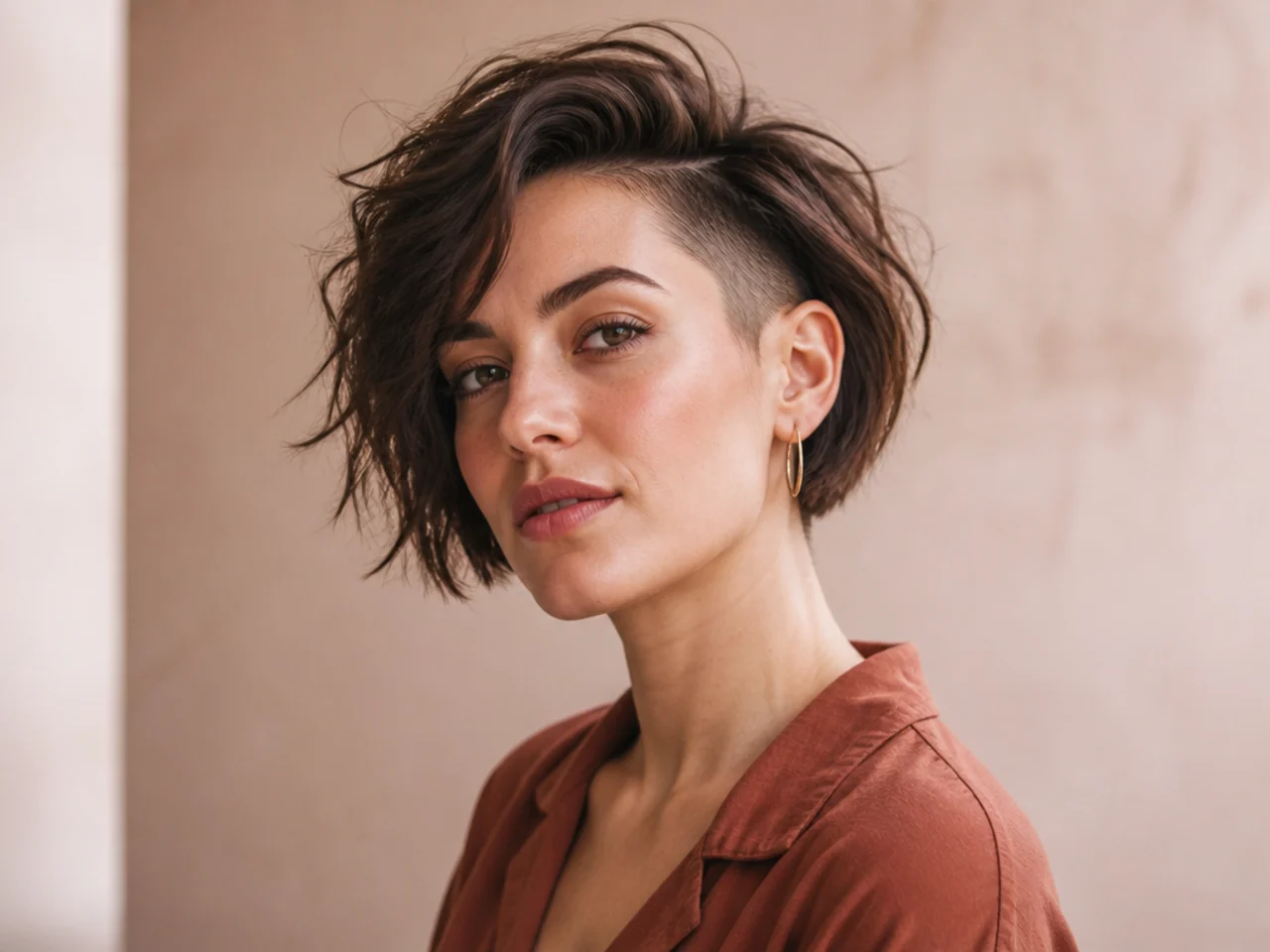
The undercut is the twist. Underneath the top layers, one side gets clipped short — hidden when your hair falls forward, visible when you tuck it behind your ear. The top stays chin-length with internal texturing that keeps the shape from reading as a helmet.
Square faces have a strong, angular jaw and a wide forehead. The undercut narrows the head shape at the temples, and the softer textured top breaks up your natural angles without hiding them. If you want the full lineup of shapes that flatter a strong jaw, cross-reference the haircuts for square faces guide before your appointment.
Ask for: a chin-length bob, a hidden undercut on one side (usually opposite your part), weight kept at the ends, and internal point-cutting through the top for surface movement.
Styling tip: run a pea-sized amount of smoothing serum through the mid-lengths, then flat-iron each section with a slight bend at the ends. The bend — not straight-and-flat — is what makes the bob look finished instead of flat.
4. Long Layers with Tapered Ends for Curly Hair
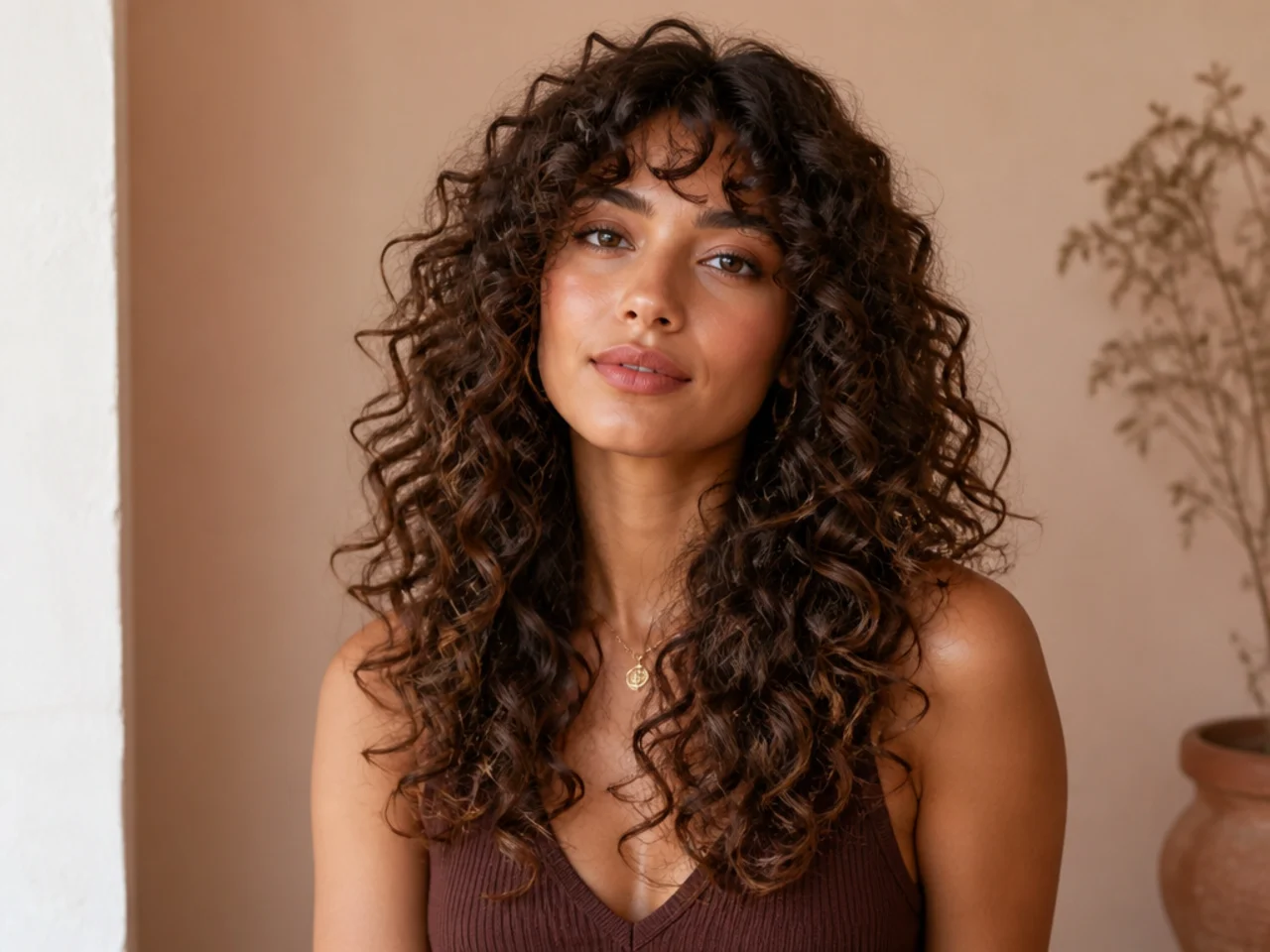
The difference here lives in the technique. This cut is done dry, curl by curl. Your stylist reads how each spiral falls and tapers the ends instead of chopping them straight across. That prevents the dreaded triangle where the base widens and the top stays flat.
This works best on oval and slightly longer faces. Curls naturally add width, so oval proportions can carry that volume without looking wider. The tapered ends give you a soft silhouette instead of a pyramid. Long faces get the same benefit — width without weight at the bottom.
Ask for: a dry cut, curl-by-curl, long layers with tapered ends, no razor work, and no thinning shears. Bring a photo of your hair on a good curl day. That is the reference, not a straight-hair picture.
Styling tip: on soaking-wet hair, rake in a quarter-sized dollop of curl cream, then cup and scrunch upward. Diffuse on low heat, low speed, and do not touch the curls until they are 90 percent dry.
5. Shoulder-Length Layered Cut with Blunt Bangs for Round Faces
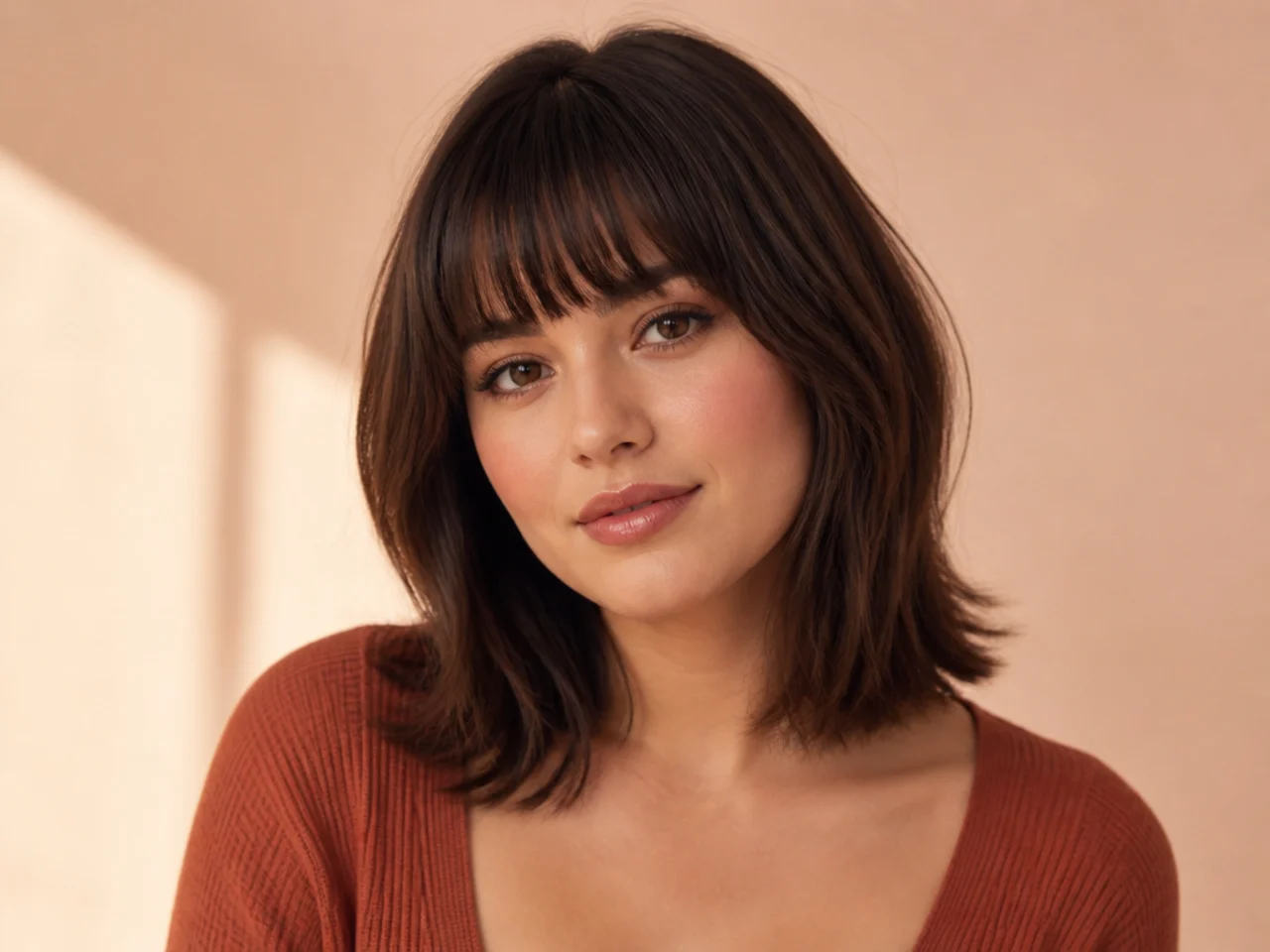
Three weights in one cut. Body-adding layers sit below the chin, blunt bangs land at the brow, and the ends stay heavy at the shoulder. The mix is what does the visual work.
Round faces are wider than they are long, with soft, less-defined angles. Blunt bangs stop your eye at the brow line, and layers that start below the chin pull the eye downward instead of outward. Together they add vertical length rather than horizontal width. Watch the trap: layers that start above the chin do the opposite and make round faces look rounder.
Ask for: layers starting below the chin, blunt bangs that graze the brows (not micro-short), and blunt or slightly point-cut ends that sit at the shoulder.
Styling tip: blow-dry with a large round brush, rolling under at the ends. Set the shape with a shot of cool air and a light hairspray. Do not curl the bangs — they should stay flat and heavy across the brow line.
6. Soft Layered Lob with Wispy Ends for Thin Hair
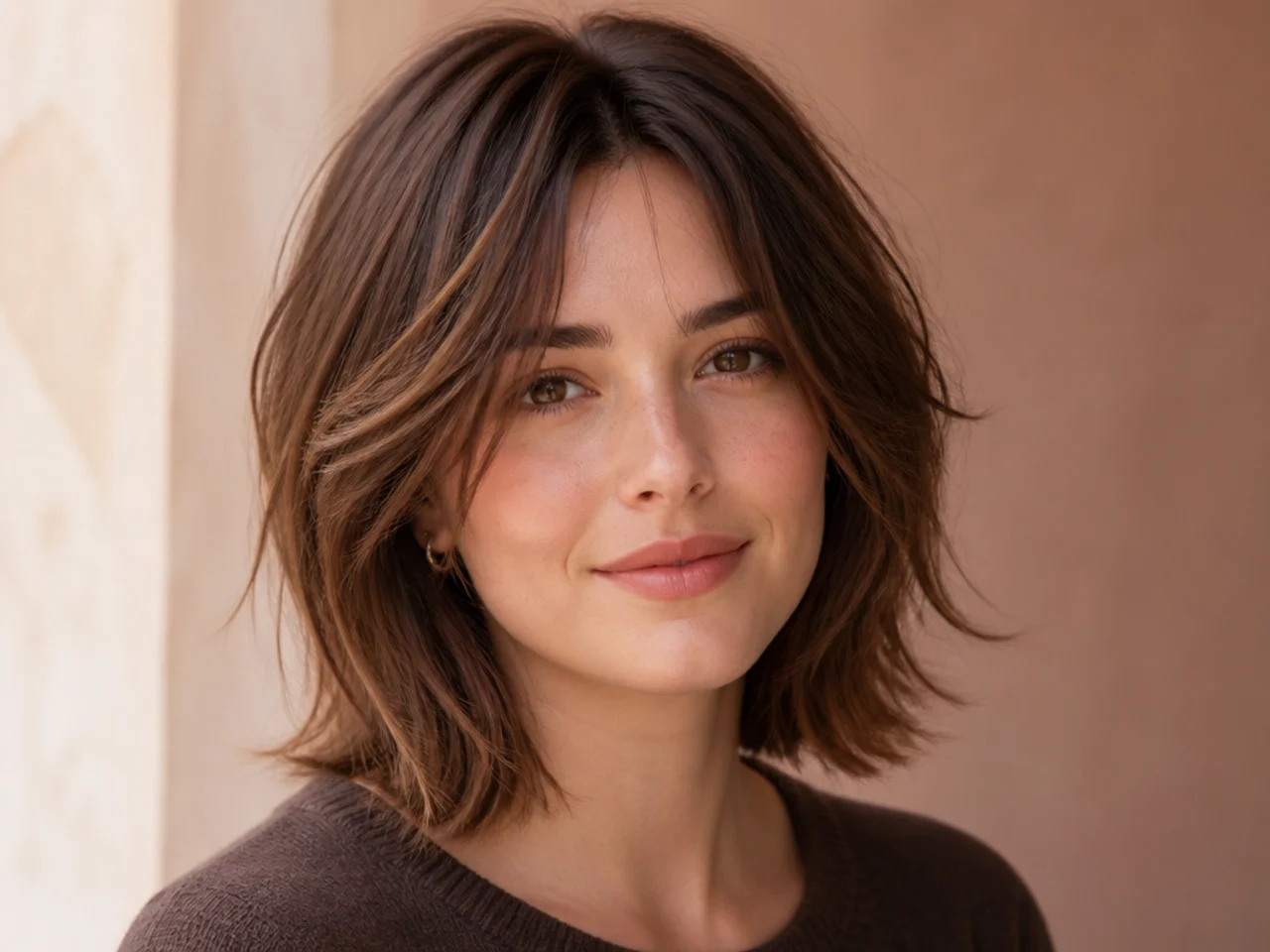
The trick with fine or thin hair is knowing when to stop cutting. This is a lob with two or three long, soft internal layers — nothing more — and ends that get point-cut into wispy separation. Aggressive layering strips density; this preserves it.
Best on oval, heart, and slightly oblong faces. The collarbone-grazing length flatters most proportions, and the wispy ends create the illusion of thickness at the very bottom, where thin hair usually disappears. If you want to compare against other options at this length, the layered bob haircuts collection is the right rabbit hole.
Ask for: a lob that sits between the chin and collarbone, two or three soft internal layers only, wispy point-cut ends, and no razor cutting — razors further thin out already-fine hair.
Styling tip: work volumizing mousse into damp roots, flip your head upside down, and rough-dry. Finish with a light texturizing spray through the mid-lengths only. Skip the ends so the wispy separation stays visible.
7. Feathered Layered Haircuts for Thick Hair
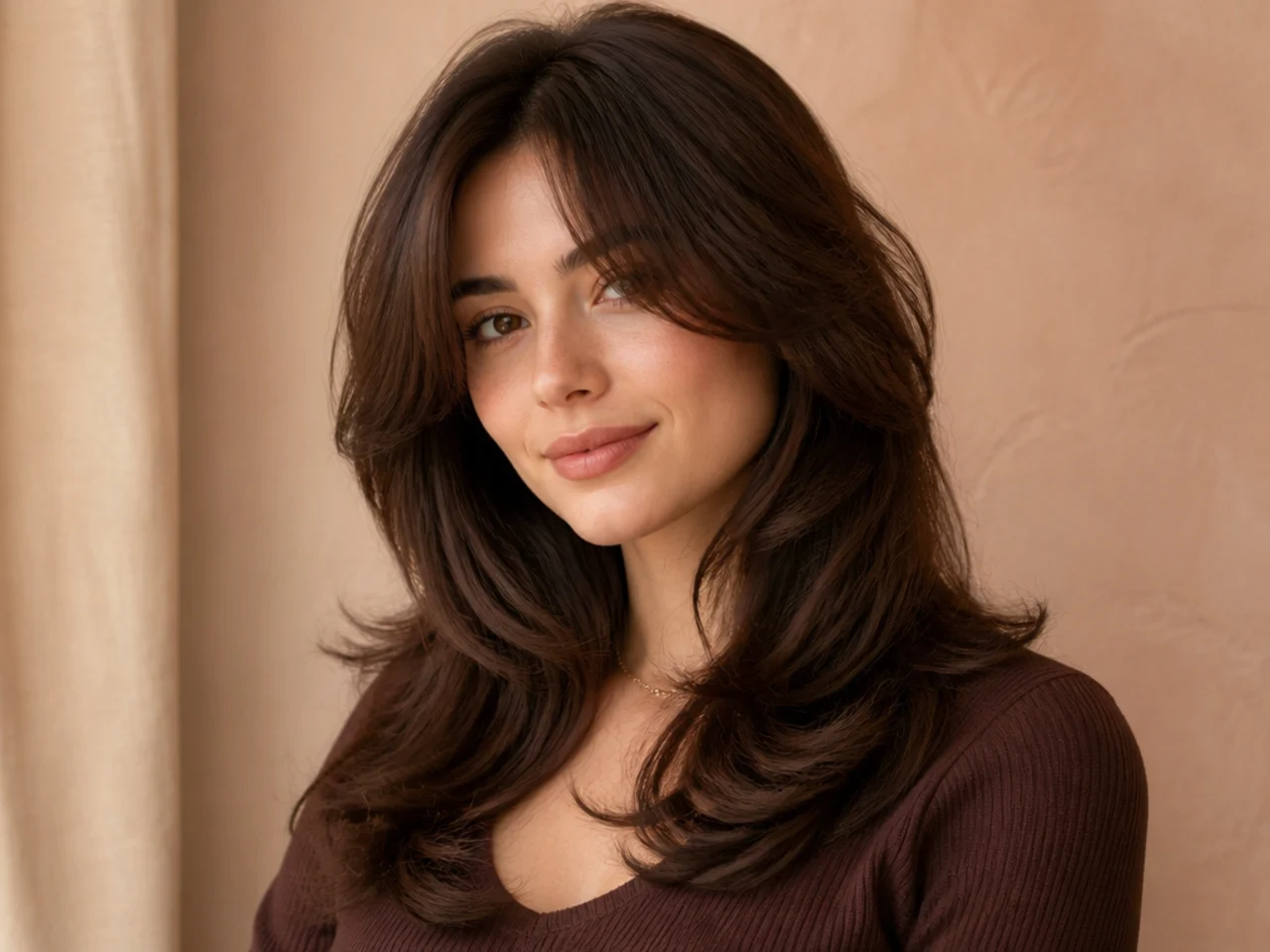
Feathering is soft internal layering that removes bulk without creating obvious steps. From the outside your hair looks the same length; underneath it has been quietly de-weighted. On thick hair, this is often the difference between a cut that swings and a cut that just sits there.
Great for square and diamond faces because feathered pieces soften strong angles at the jaw and cheekbones. Oval faces benefit too — feathering keeps thick hair from turning into a solid block around the shoulders.
Ask for: long feathered layers starting at the collarbone, subtle internal thinning through the mid-shaft (not the ends), and outline length preserved. Ask your stylist to keep thinning shears away from the ends — that causes fraying and stringy tips.
Styling tip: apply a hydrating cream to damp mid-lengths, then blow-dry with a medium round brush, rolling away from the face. The natural weight settles into a soft outward bend as it cools. No product needed after.
8. Blunt Cut with Side Layers for Oblong Faces
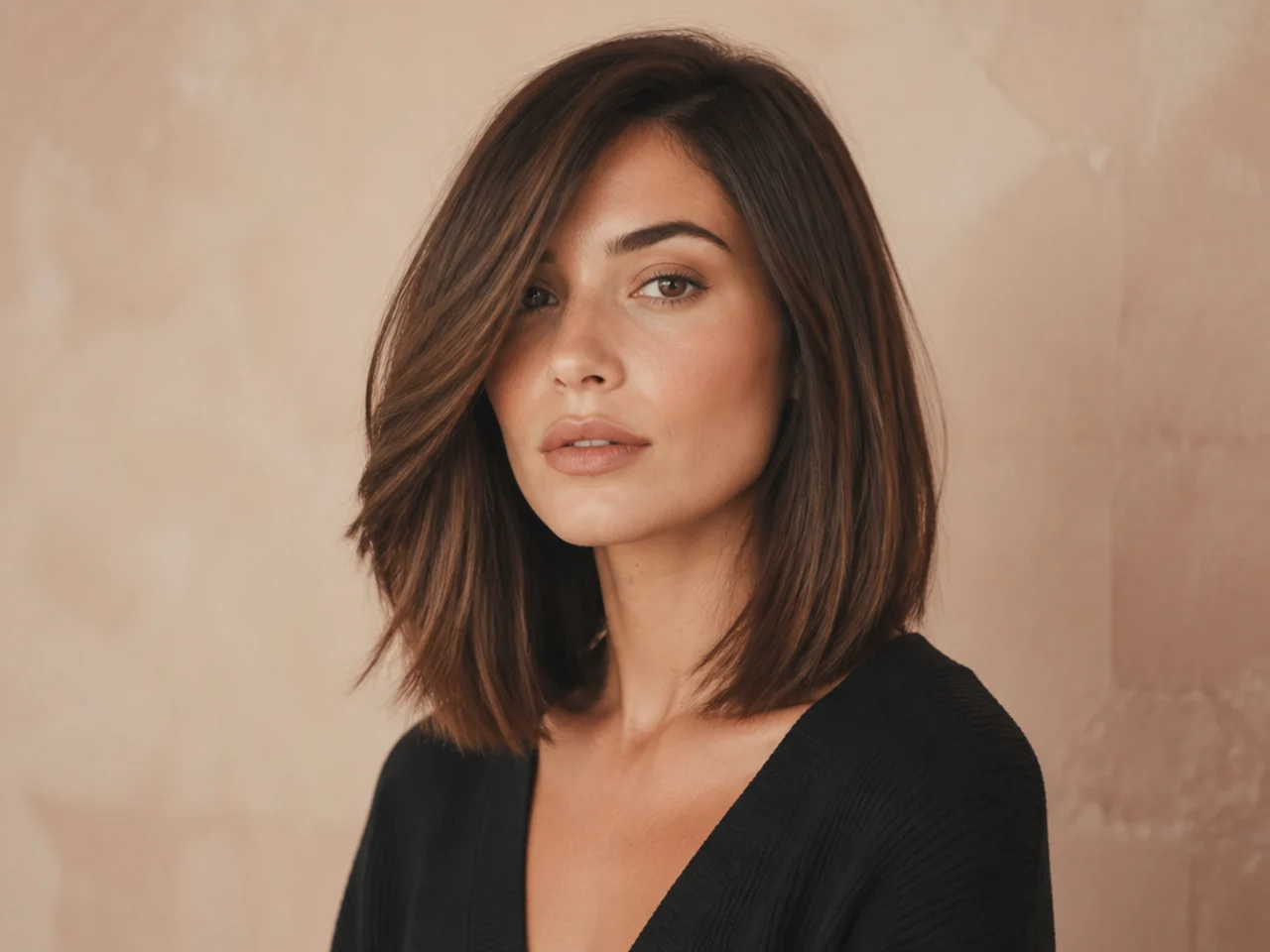
The blunt ends are non-negotiable — they add horizontal density. Side layers get cut into the mid-shaft only, sweeping outward from the face. Nothing shorter. Nothing on top. That restraint is what makes the cut work.
Oblong faces are longer than they are wide with a straight, narrow profile. The blunt line at the shoulder adds horizontal weight and visually shortens the face. Side layers add width at the cheeks where the face reads narrow. Layer this cut throughout and you lengthen the face — the exact opposite of what you want.
Ask for: a blunt shoulder-length cut, side layers starting mid-shaft and only around the face, no internal layering through the top, and no bangs unless they are heavy and blunt at the brow.
Styling tip: add loose waves with a 1.25-inch iron, curling away from the face. The horizontal S-shape of the wave adds even more width — which is the whole point of the shape.
9. Asymmetrical Bob with Textured Layers for Diamond Faces
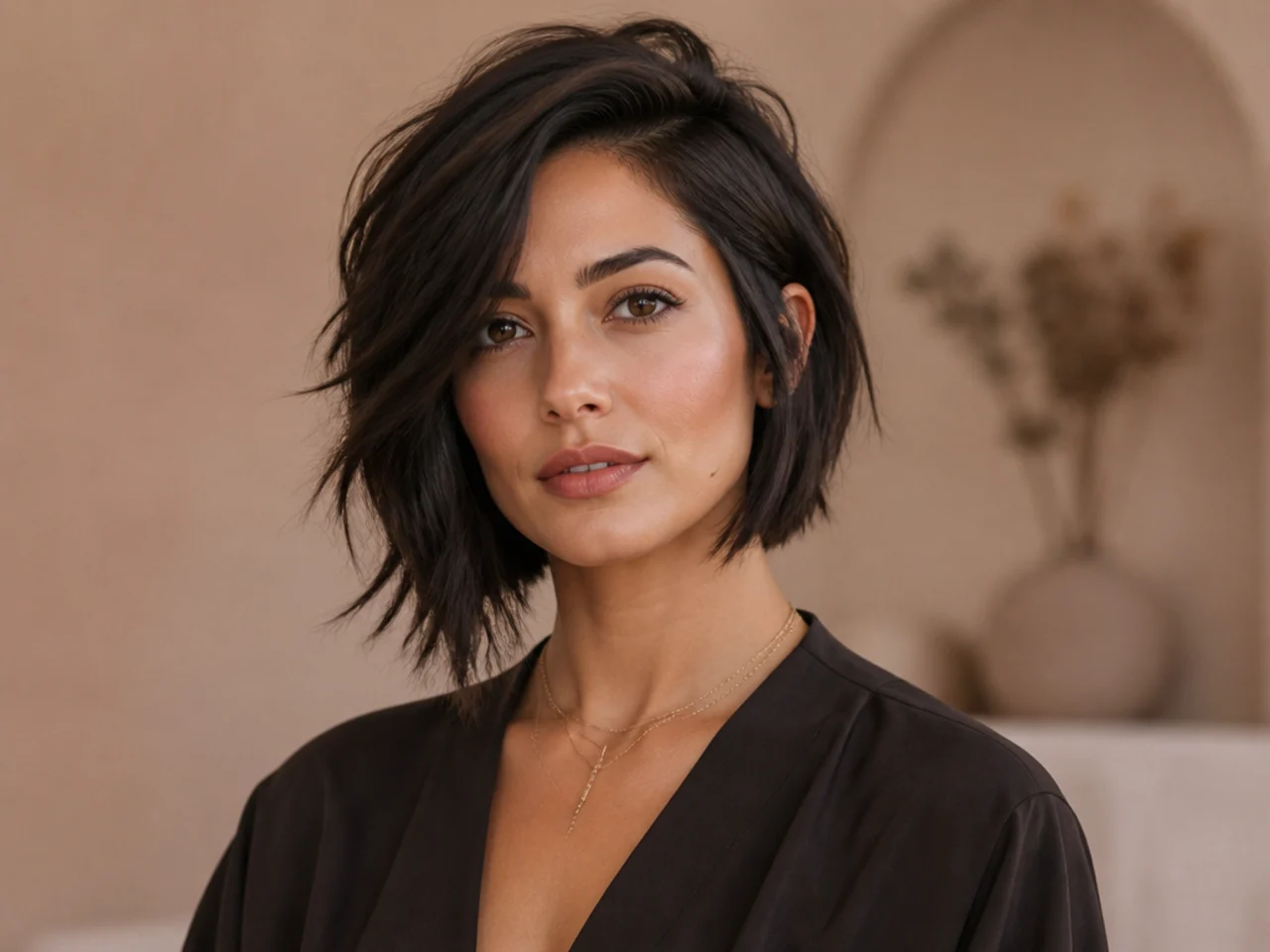
The asymmetry is the star. One side sits at the jaw; the other extends an inch or two past. Textured internal layers add movement so the shape reads as intentional, not lopsided.
Diamond faces have narrow foreheads and chins with prominent cheekbones. Symmetrical cuts amplify the cheekbone width; asymmetry breaks that up. The textured layers soften the strong cheekbone line without hiding it — which is what you want, because it is your best feature. This shape works especially well if you want an editorial edge without going short.
Ask for: a bob where one side sits at the jaw and the other extends one to two inches past, textured internal layers throughout, and a soft, blended perimeter rather than a hard line.
Styling tip: rough-dry the roots for lift, then run a flat iron through the mid-lengths with a slight outward flick at the ends. Mist with texturizing spray and shake with your hands. Volume at the back, flat sides — that is the finished silhouette.
10. Choppy Layers with Angled Bangs for Short Hair
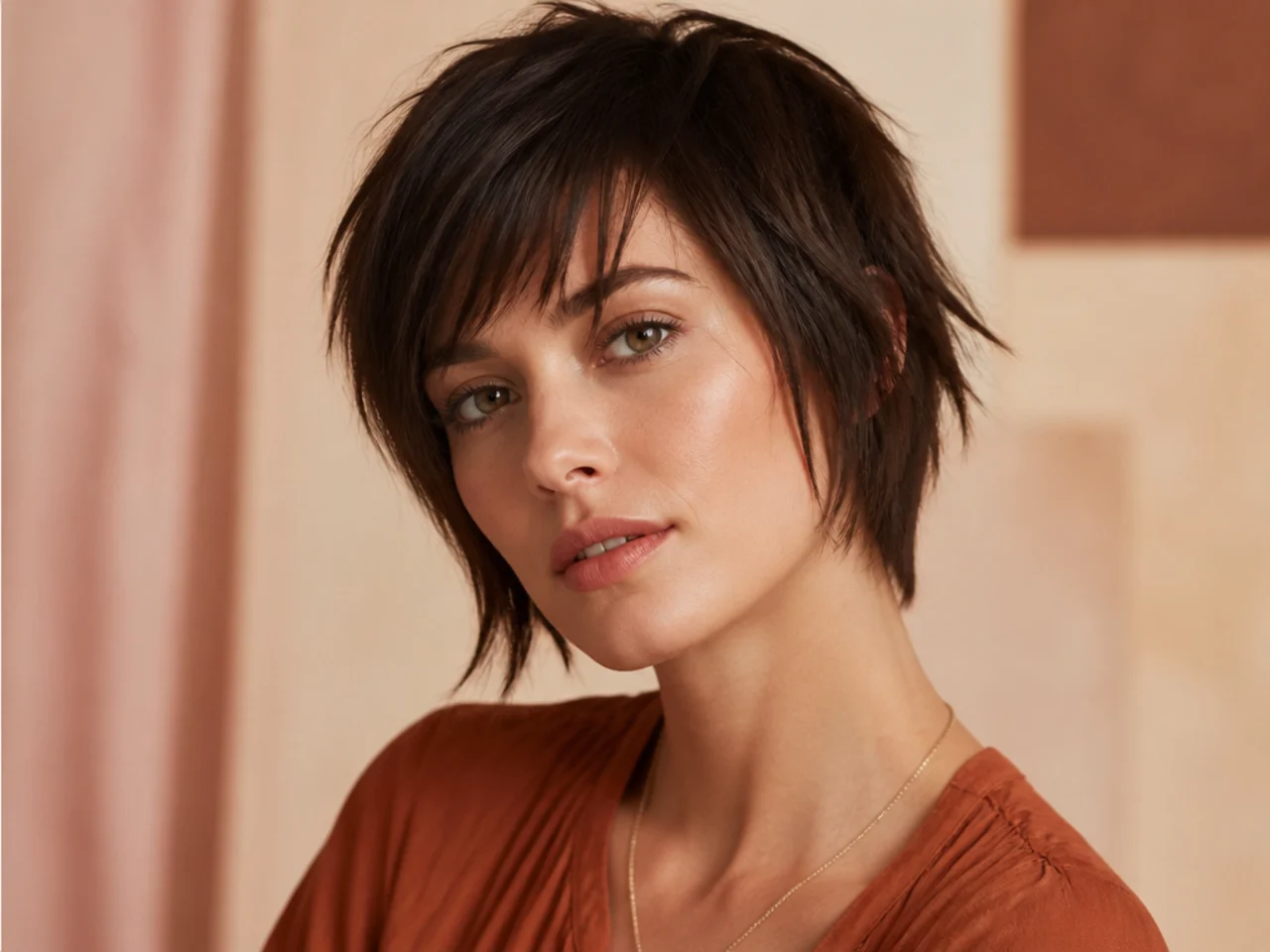
This is a short cut with attitude. Layers start high — right at the crown — and get progressively shorter with choppy, uneven ends. Angled bangs sweep across the forehead, longer on one side than the other.
Oval and heart shapes wear this best. Oval faces handle the sharpness because there is no wrong proportion to fight. Heart shapes benefit from the diagonal bang, which cuts across the wide forehead and softens the top-heavy triangle. If you are curious about going even shorter, this cut is the bridge to pixie cuts and the broader layered short hair styles for women family.
Ask for: choppy layers starting at the crown, angled bangs sweeping from the outside of one brow down toward the opposite cheekbone, and jagged, point-cut ends throughout.
Styling tip: work a dime-sized amount of curl cream through damp hair, tousle with your fingers, and let it air-dry. Zero brushing. The messier the finish, the more the cut reads.
11. Long Layered HairCut with Ombre for Straight Hair
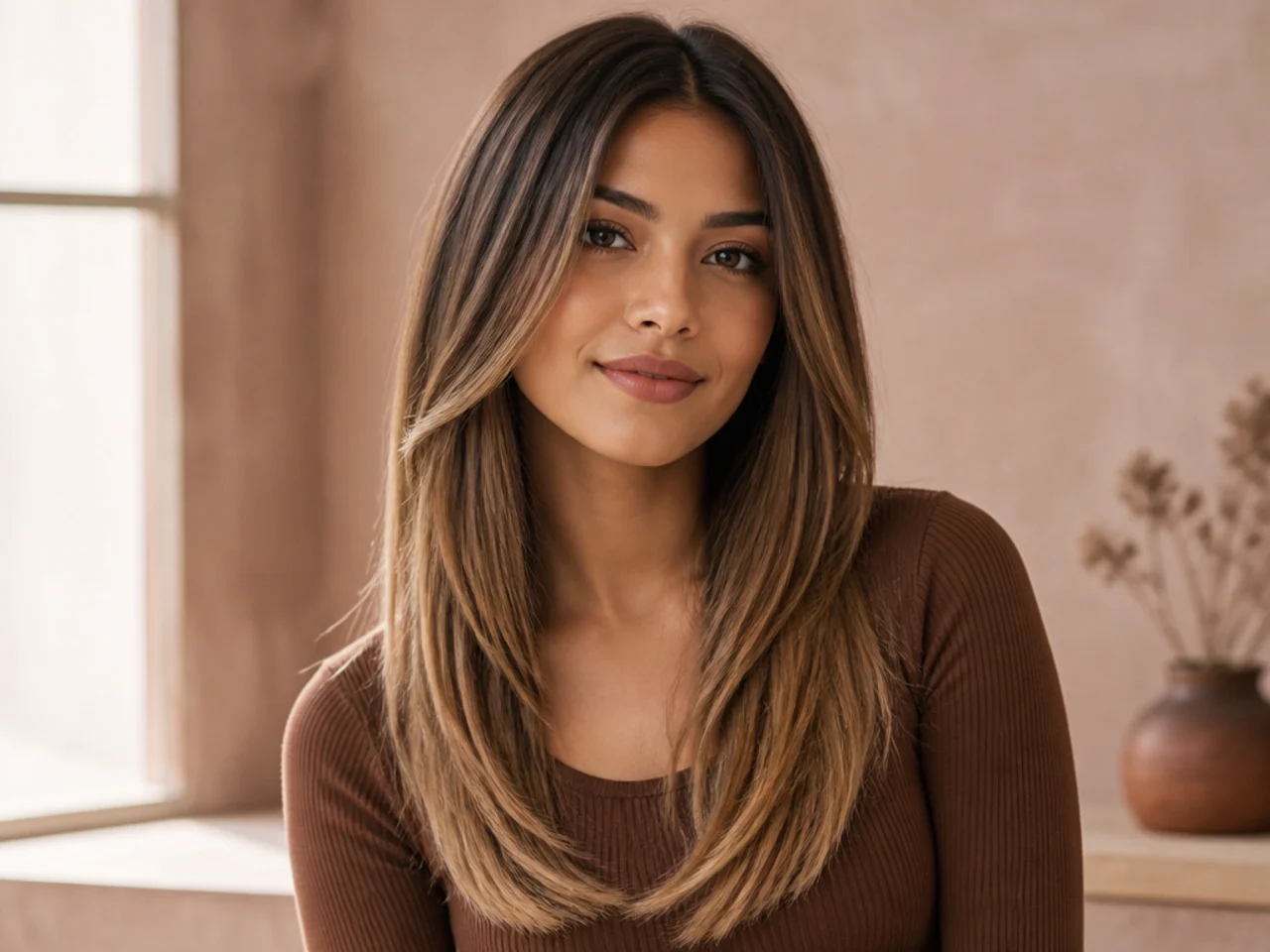
The layers do the cut; the ombre is the finishing move. Long internal layers start at the shoulders and continue down. The color melts from your natural depth at the roots to a lighter shade through the mid-lengths, so the eye tracks downward instead of side to side.
Best on oval, heart, and oblong faces. That vertical color pull elongates the face and makes even a mostly one-length shape read as layered from ten feet away. If your face is round, keep the ombre subtle — a dramatic contrast adds width and works against you.
Ask for: long internal layers starting around the shoulders, a soft ombre transition beginning at the cheekbones (not the roots), and no visible line where the color changes.
Styling tip: for a sleek finish, flat-iron in vertical sections and follow the iron with a boar-bristle brush for shine. For waves, use a 1-inch iron and leave the last inch straight. That keeps the ombre color panel visible at the ends.
12. Curly Lob with Soft Bangs for Medium Texture

The lob length is the ground floor — collarbone or slightly above. The bangs are soft and blended, cut into the front so they merge with the face-framing layers instead of sitting apart as a separate fringe.
Heart and oval faces work best here. The soft bangs break up a wide forehead without going full curtain-bang, and the collarbone length keeps proportions balanced. Curly bangs require a stylist who understands curl behavior. They shrink up when dry, so length gets cut long, with the spring factor in mind.
Ask for: a collarbone-length lob cut dry, curl by curl, with soft bangs blended into the face-framing layers so there is no visible separation between them.
Styling tip: apply a curl-defining cream to soaking-wet hair, press it in with your palms, and diffuse upside down on low heat. Once dry, break the crunch by rubbing a drop of light oil between your palms and scrunching gently upward.
13. Long Layered Bob with Side-Swept Bangs for Rectangular Faces
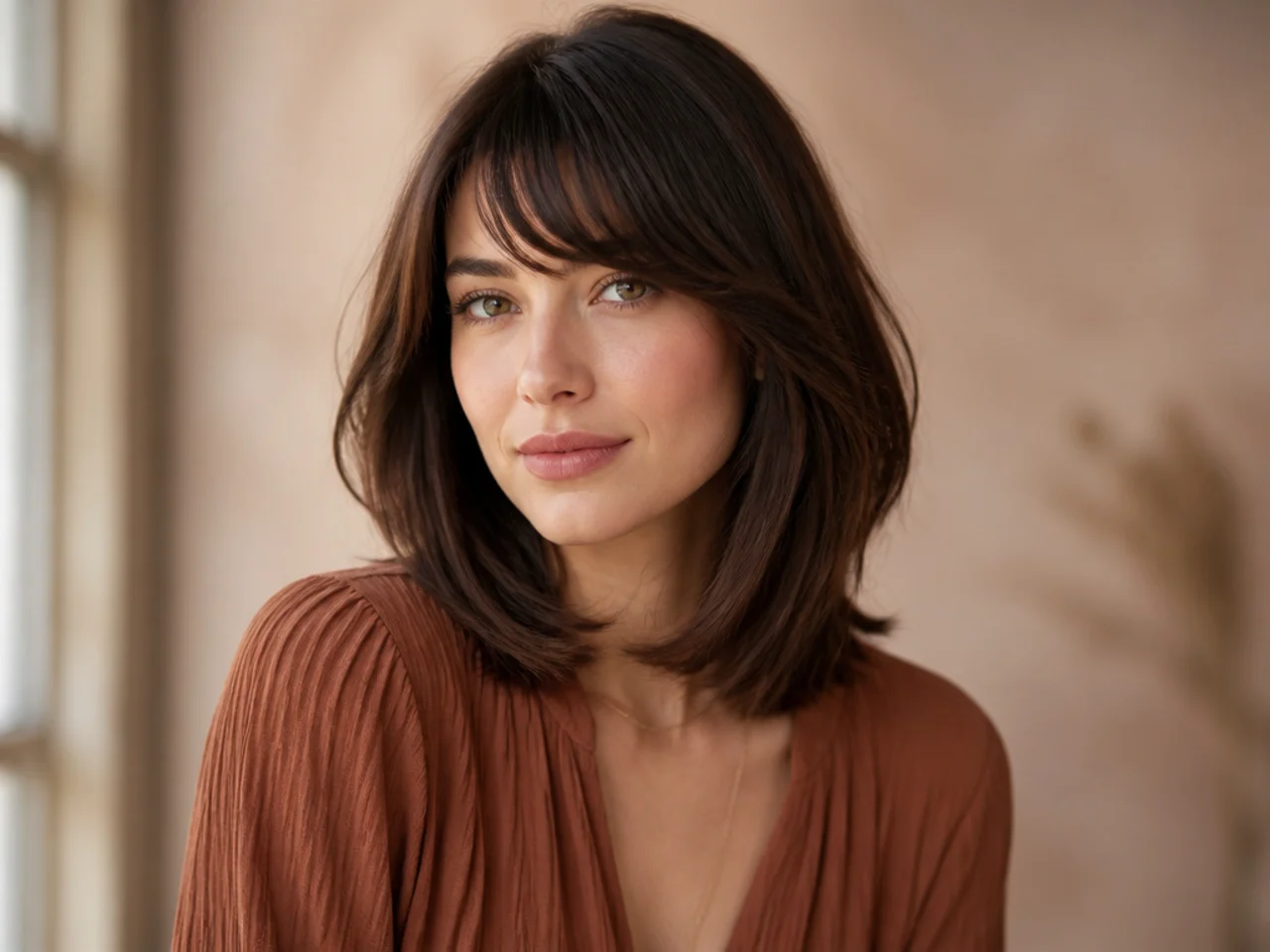
The long bob does the horizontal work — a strong line sitting just above the collarbone. Side-swept bangs cross the forehead diagonally, adding width where the face reads narrow.
Rectangular faces are long and angular with a strong jaw. This long bob haircut length breaks up vertical space, and the diagonal bangs pull the eye across the forehead instead of down it. Together they compress the face's proportions and soften the angles without hiding them.
Ask for: a bob that sits just above the collarbone with soft internal layers, side-swept bangs starting at your natural part and reaching just past the outside of the opposite brow, and blunt ends to anchor the horizontal line.
Styling tip: work a dime of styling cream through the mid-lengths and use a 1.5-inch iron to add a loose bend from the mid-shaft down. Keep the bang blown to the side with a small round brush — cool air locks it in place.
14. Wispy Layers with Blunt Ends for Straight Thick Hair
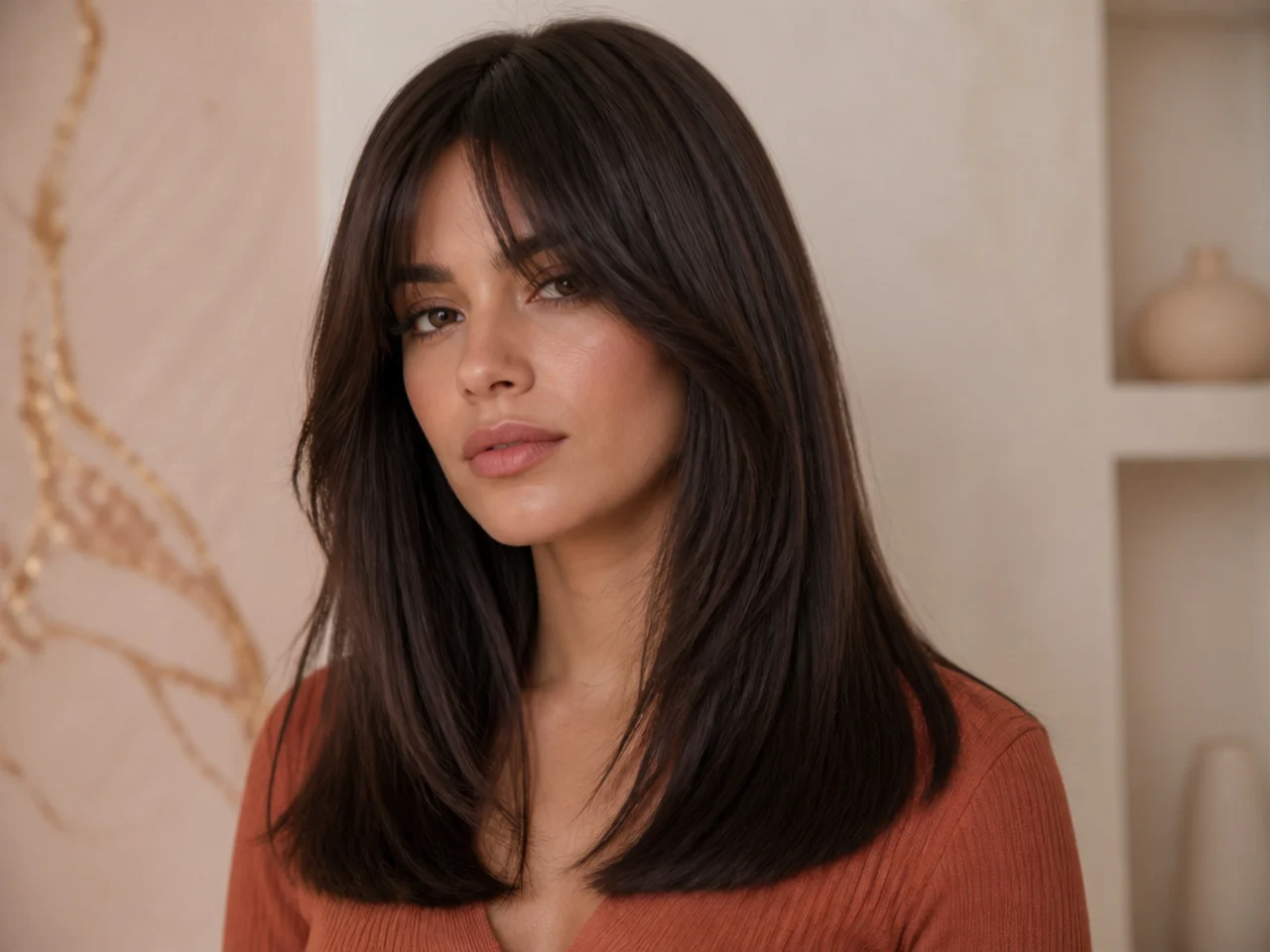
Wispy internal layers thin out the interior without touching the perimeter. The outline stays sharp and blunt. Thick hair gets movement it would not otherwise have, while the silhouette stays crisp and graphic.
Oval, square, and diamond faces all work here. Oval benefits from the strong blunt weight at the ends. Square and diamond faces get softening from the internal wisps around the face, especially at the cheekbones, without losing the clean line of a blunt cut. If your hair is thick, this shape is often the smartest entry into the fuller, more voluminous butterfly haircut territory as well.
Ask for: internal wispy layers concentrated through the mid-shaft, a strong blunt outline at the ends, and light point-cutting only in the top layer for surface movement.
Styling tip: apply a smoothing serum to damp mid-lengths, blow-dry straight with a large paddle brush, and finish with a flat iron only where needed. Leave the ends alone — the blunt line does the work.
15. Long Shag with Textured Layers Haircut for Wavy Hair
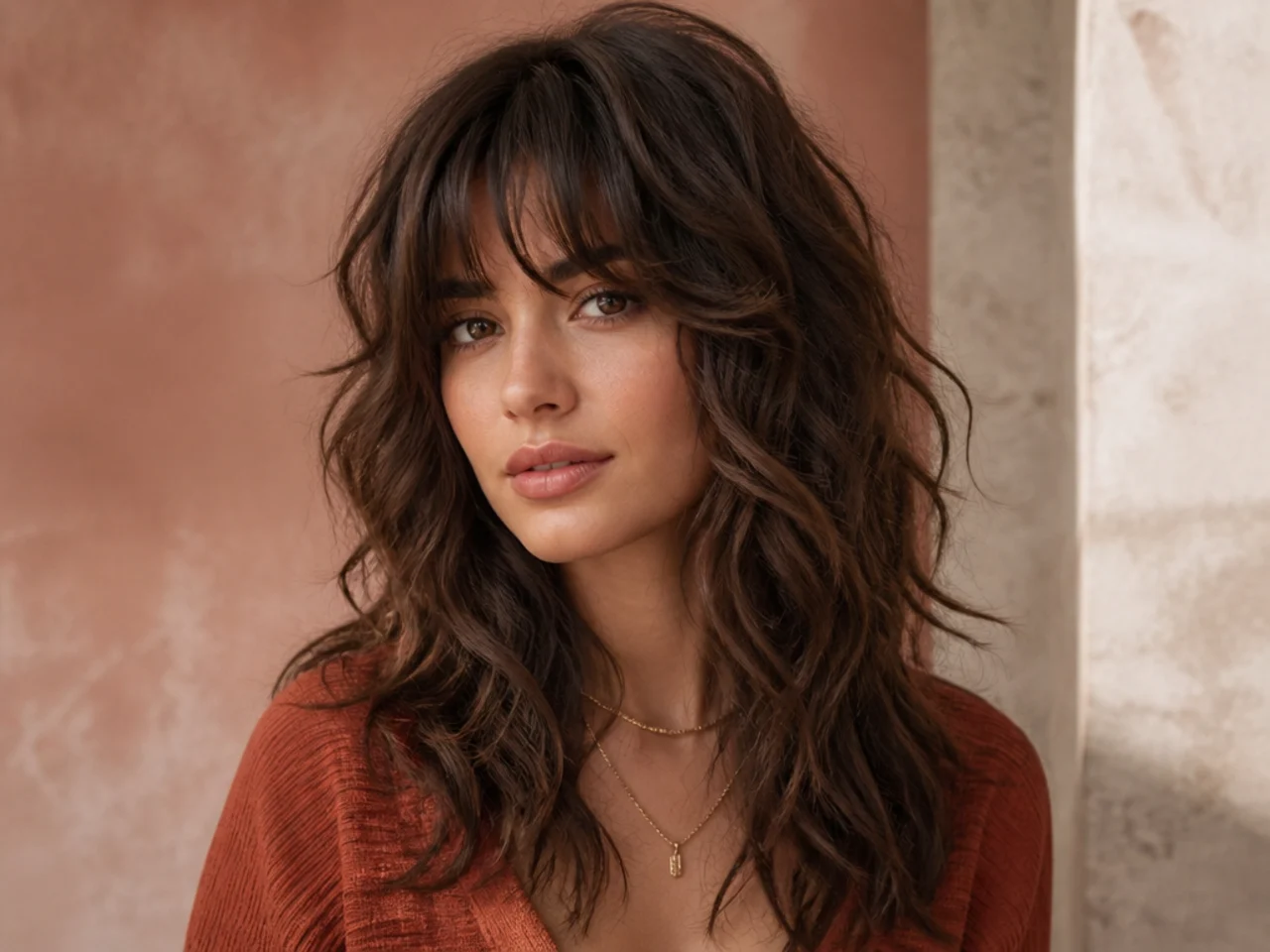
The long shag keeps the length but stacks texture on top. Layers start above the shoulders and get progressively shorter through the crown. Some pieces are cut noticeably shorter than others — that disconnection is what gives waves somewhere to break instead of falling flat.
Oval, heart, and oblong faces wear this well. Oval carries any shag variation. Heart shapes get face-framing softness at the jaw where the face narrows. Oblong faces gain horizontal width from the layered volume around the cheekbones, which shortens the visual length.
Ask for: long shag layers starting above the shoulders, disconnected texture through the crown for lift, face-framing pieces at the cheekbones, and a lived-in perimeter rather than a blunt line.
Styling tip: apply a wave cream to damp hair, scrunch upward toward the scalp for 30 seconds, then let it air-dry. Once dry, flip your head over and shake it out. That final shake is the shag reveal — the shape only reads once the pieces separate.
Narrowing down your choices
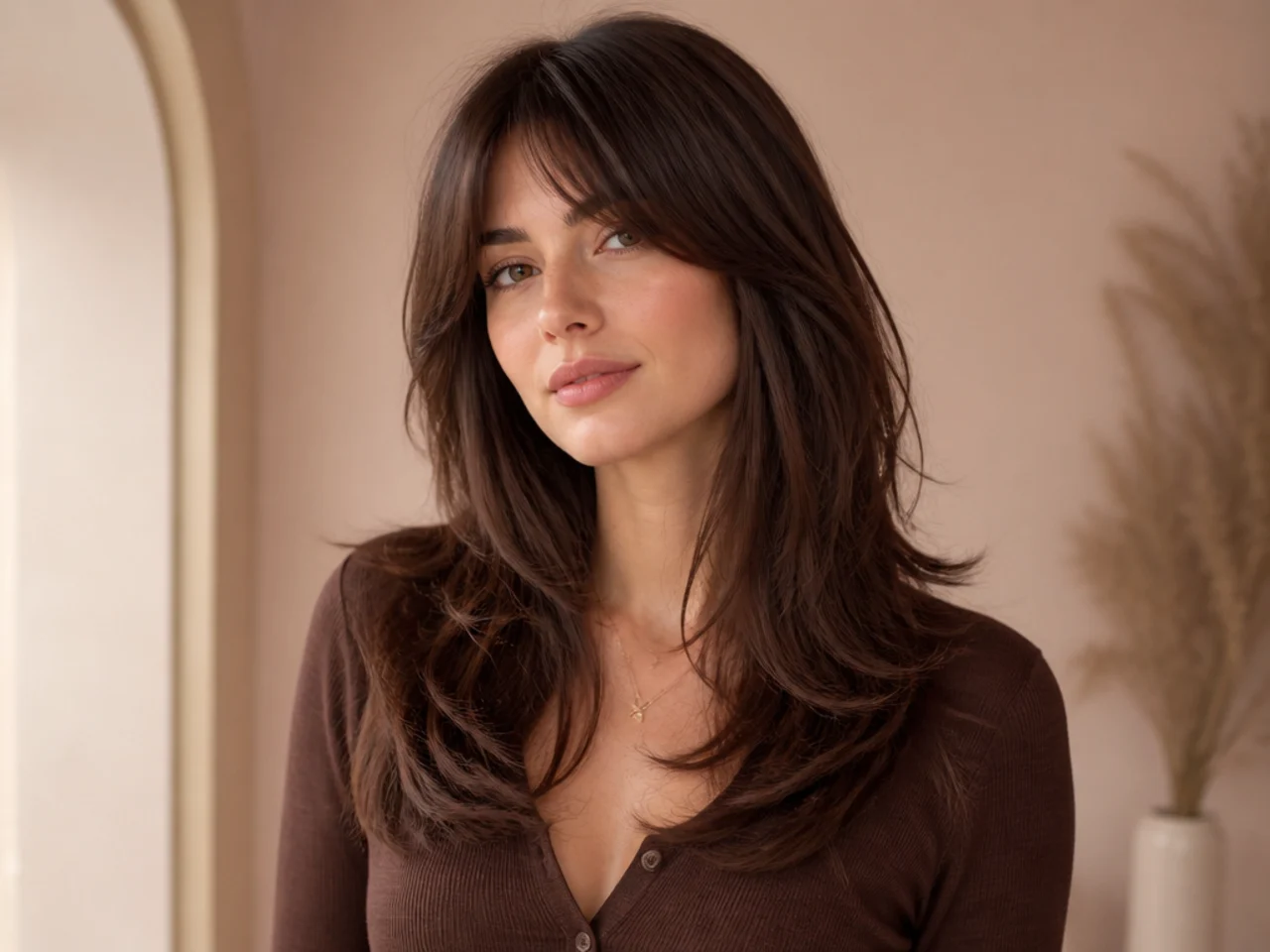
Face shape is where you start, but it is not the whole answer. Here is the shortcut:
- Round face: go vertical. Long layers starting below the chin, blunt bangs, side-swept diagonals.
- Oval face: your options are open. Any shape above will flatter — pick based on texture and lifestyle.
- Square face: soften the angles. Undercuts, textured internal layers, wispy face-framing pieces.
- Heart face: balance the top-heavy triangle. Curtain bangs, jaw-length shag layers, diagonal fringes.
- Diamond face: break the cheekbone symmetry. Asymmetrical bobs, feathered internal work.
- Oblong face: add horizontal weight. Blunt ends at the shoulder, side layers only, no aggressive top layering.
- Rectangular face: compress the length. Long bobs above the collarbone, side-swept bangs, blunt ends.
Hair texture is the tiebreaker. Fine hair wants blunt cutting and minimal layers. Thick hair wants feathering or subtle internal thinning. Curly hair wants a dry cut, curl by curl. Lifestyle is the sanity check — if you do not blow-dry, do not pick a cut that requires a blowout to look right.
Bring two or three reference photos to the consultation, and tell your stylist honestly how much time you actually spend on your hair each morning. That last part is where most cuts fail. A shape that works on the photo but not on your schedule is the wrong shape.
Frequently asked questions
Related posts
See all posts
17 Best Curly Hair Haircuts for Ultimate Style in 2026
Read more
This Is the Simplest Way to Figure Out Your Curl Types: 2026
Read more
25 Trendy Haircuts for Thick Wavy Hair You’ll Love
Read more