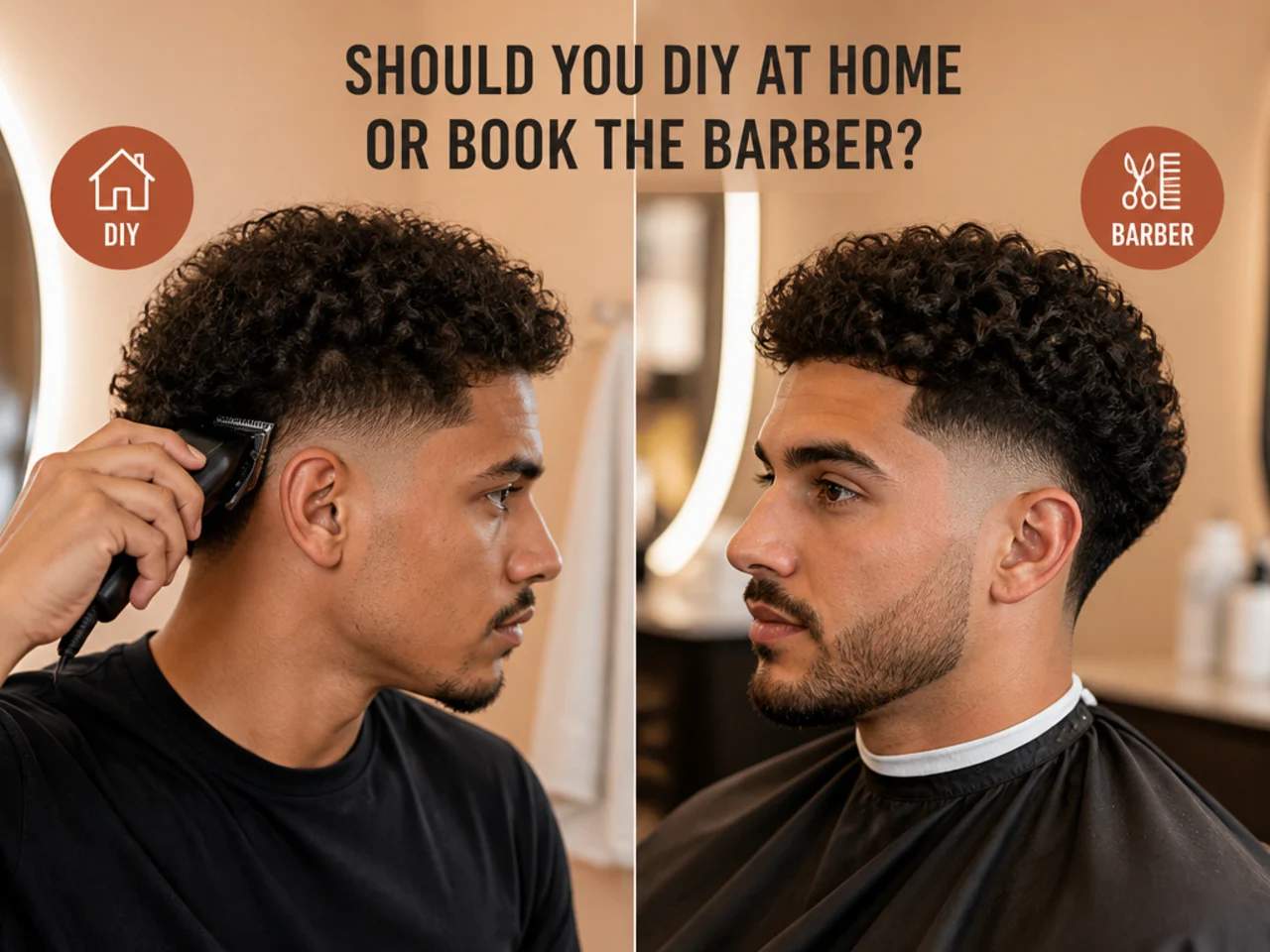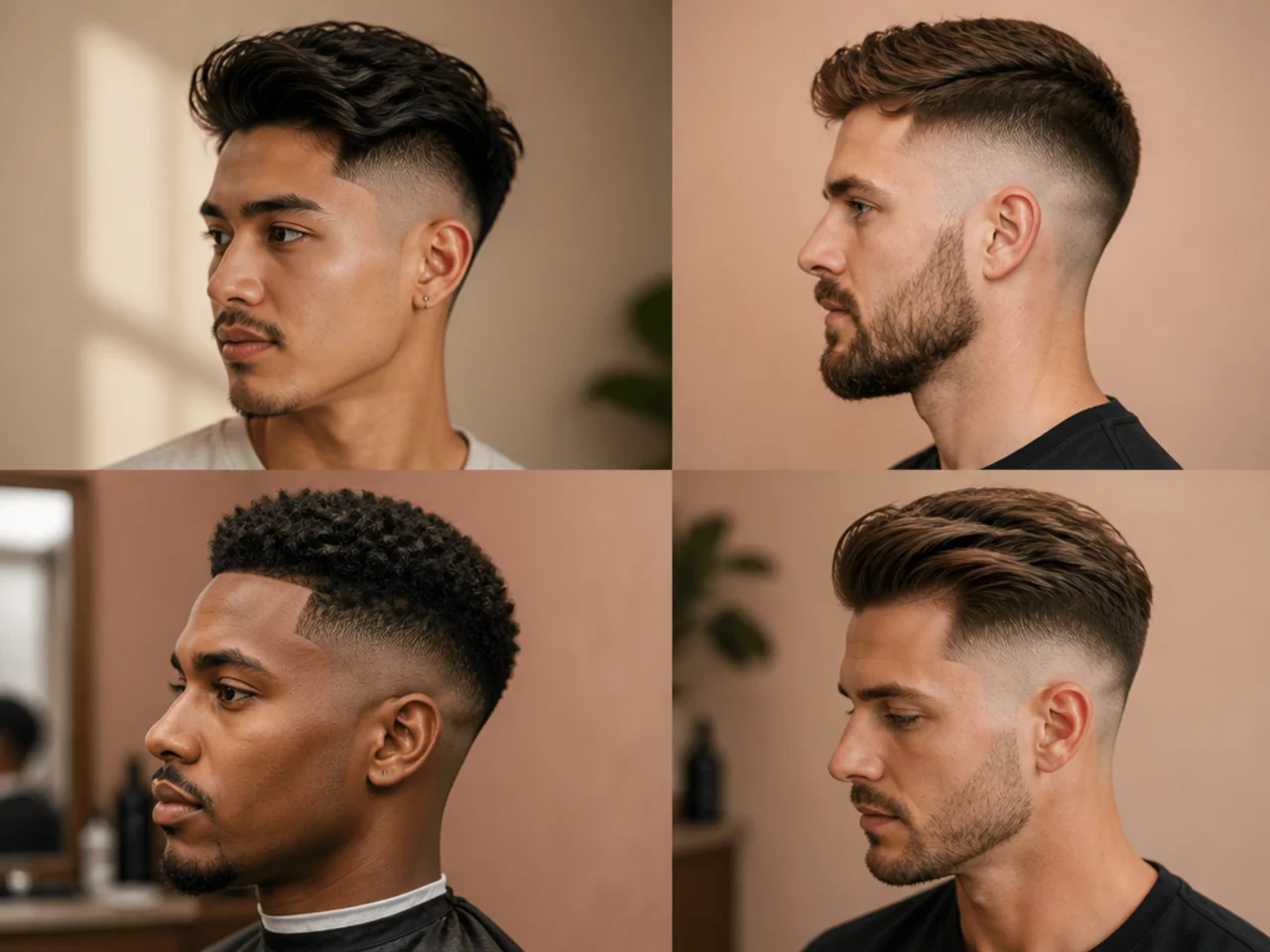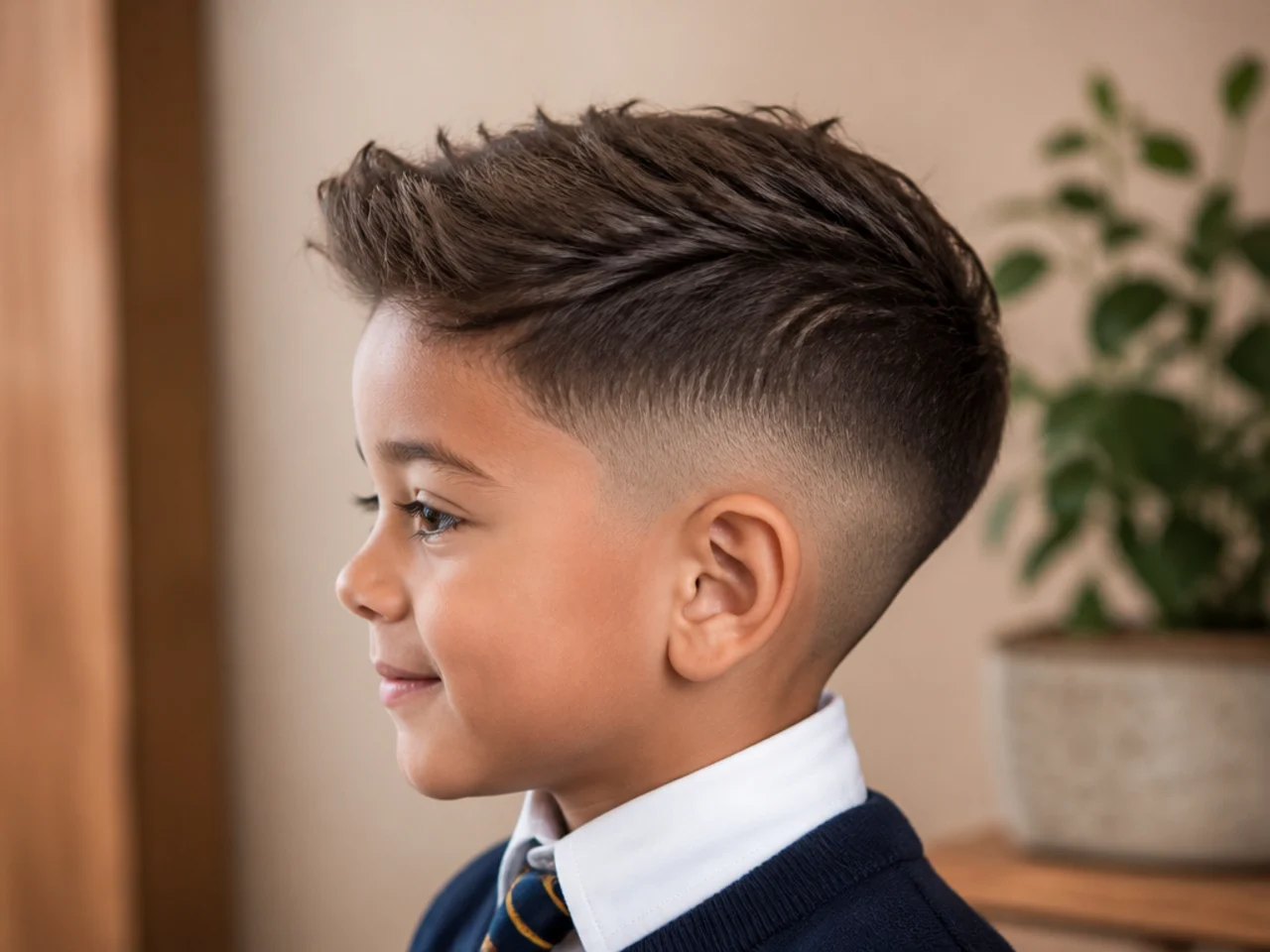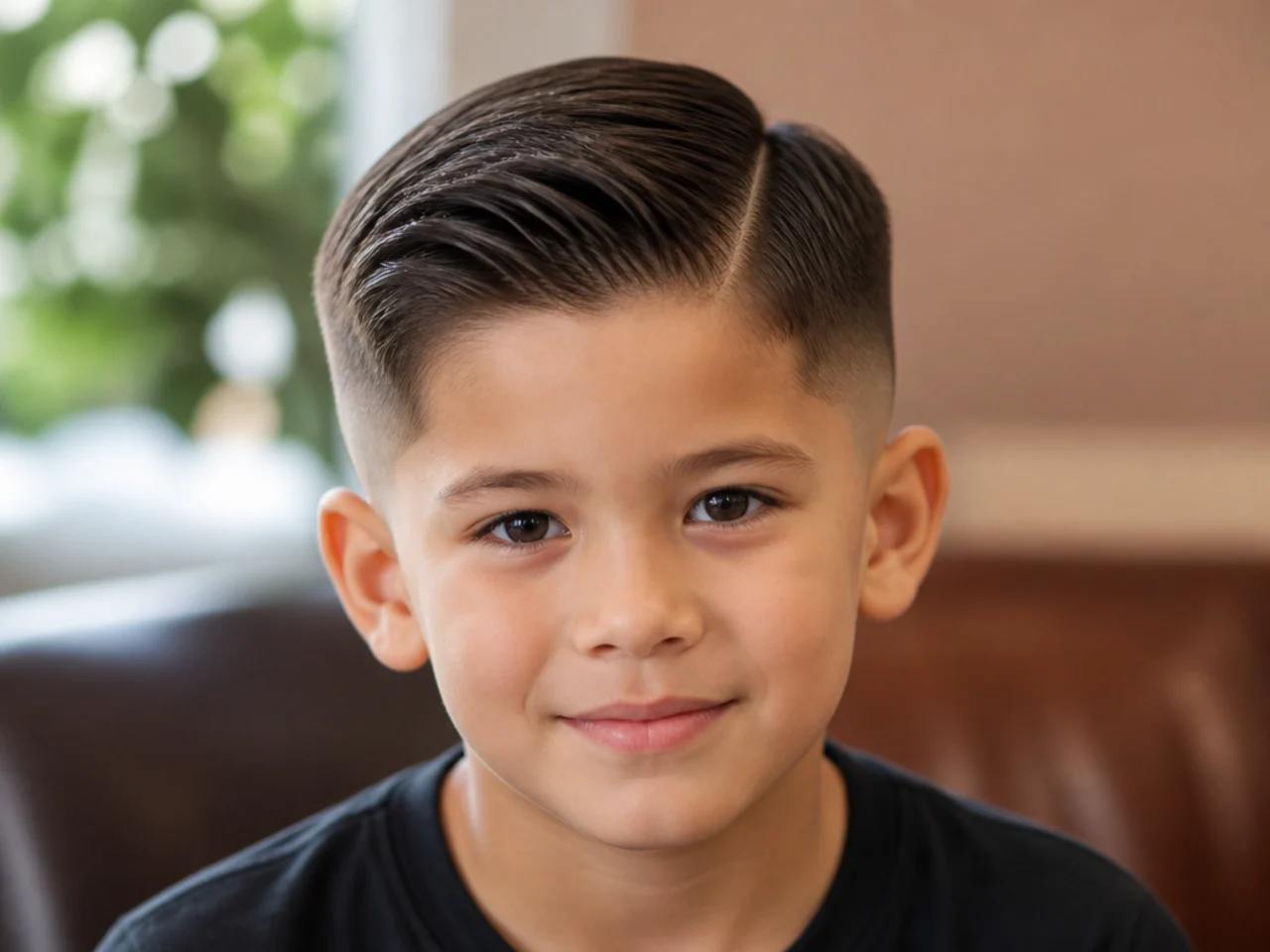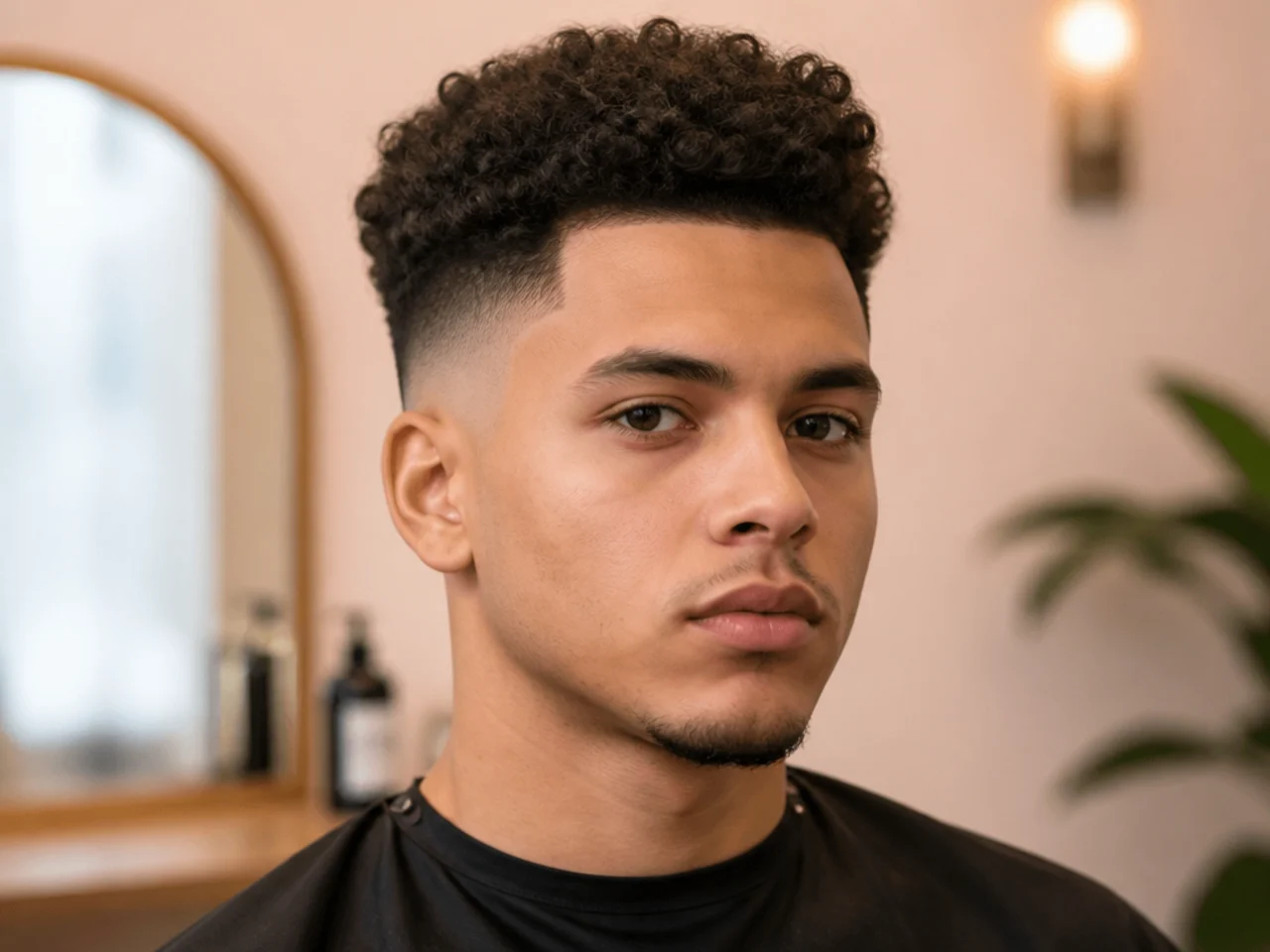
15 Trendy Fade Haircuts for Every Face Shape
The high fade with a curly top is a dynamic choice for women with round face shapes. This style features a short fade on the sides with voluminous curls on top, drawing the ey
In this article · 16
- 1\. High Fade with Curly Top for Round Face Shapes
- 2\. Low Fade with Long Layered Hair for Square Face Shapes
- 3\. Taper Fade with Textured Bob for Oval Face Shapes
- 4\. High Fade with Pixie Cut for Heart Face Shapes
- 5\. Low Fade with Shaggy Layers for Oblong Face Shapes
- 6\. High Fade with Side Swept Bangs for Diamond Face Shapes
- 7\. Taper Fade with Wavy Lob for Triangular Face Shapes
- 8\. Low Fade with Fringe for Pear Face Shapes
- 9\. High Fade with Braided Crown for Oval Face Shapes
- 10\. Taper Fade with Soft Curls for Round Face Shapes
- 11\. High Fade with Slicked Back Undercut for Square Face Shapes
- 12\. Low Fade with Beachy Waves for Heart Face Shapes
- 13\. Taper Fade with Afro for Oblong Face Shapes
- 14\. High Fade with Messy Bun for Triangular Face Shapes
- 15\. Low Fade with Layered Undercut for Diamond Face Shapes
- Choosing the Right Fade for Your Face Shape
Your face shape decides which fade haircut actually flatters you — and which one drags your proportions the wrong way. Height on top elongates a round face. Softer sides balance a strong jaw. A shorter fringe widens a narrow forehead. Every variation below is tagged for the shape it works with, along with the guard number, top length, and finish to ask for. Pick the cut, then walk into the shop with the four numbers ready.
1. High Fade with Curly Top for Round Face Shapes
A round face wants vertical lift. This cut delivers it. The high fade wipes out the sides right up to the temple, so nothing distracts from the curl stack sitting on top. That column of texture stretches the face and shaves visual width off the cheeks — exactly what a round shape needs.
What makes it different: the fade line runs high and clean, so the top reads as a separate silhouette instead of blending into the sides. It's the sharpest lift you can build without going full undercut.
How to ask: "High skin fade, #0 at the shortest, blended up to a #2 at the parietal ridge. Leave three to four inches on top. Matte finish." A wet look kills the height, so avoid gel.
Styling tip: work a nickel-sized dollop of curl cream through damp hair with fingers spread wide. Scrunch upward toward the crown to lock in bounce, then diffuse on low. Rebook every two weeks — a drifted fade line softens the whole elongating effect.
2. Low Fade with Long Layered Hair for Square Face Shapes
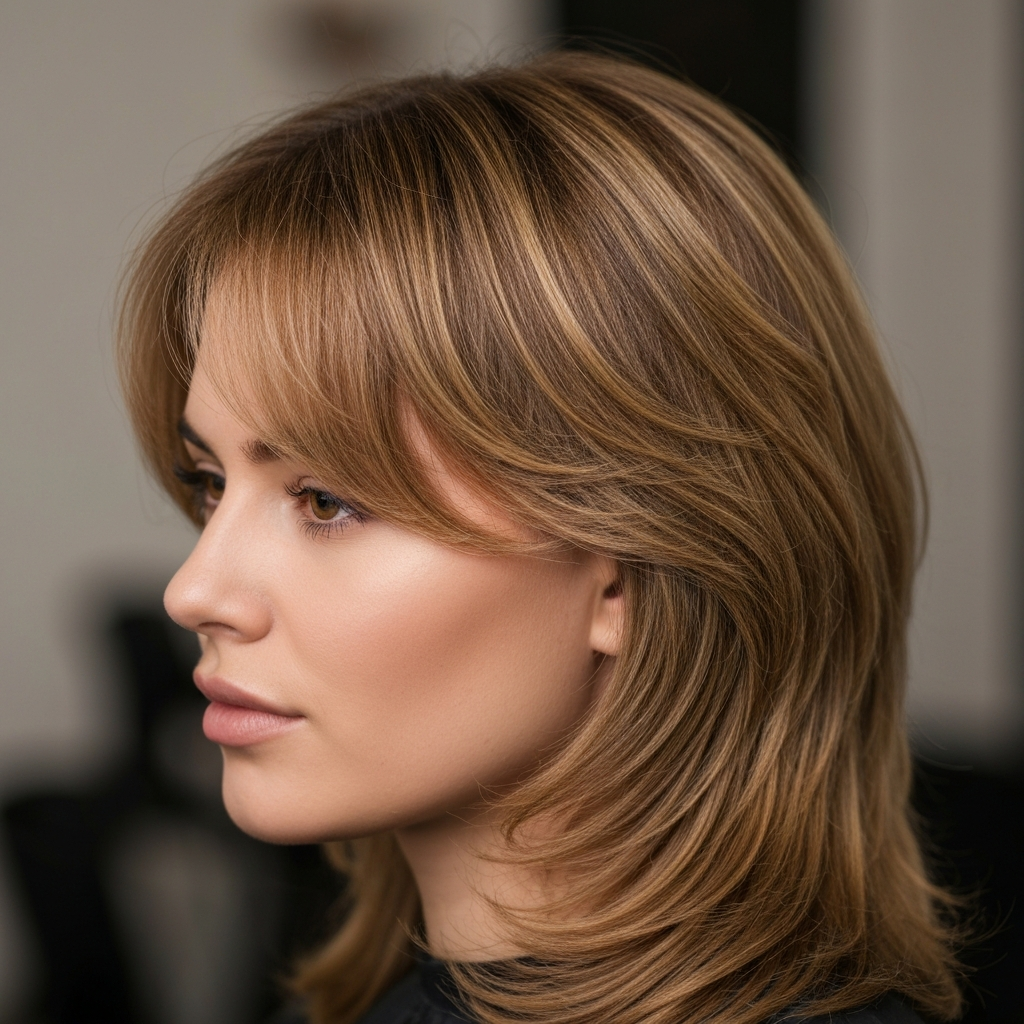
A square jaw needs softening, not sharpening. A high fade would amplify the angles you're trying to soften. This low version keeps the blend hugging the neckline, so the length above your ears stays full and drapes forward. Long layers on top break the geometry and pull the eye off the corners of the jaw.
What makes it different: the fade barely announces itself. It reads as clean sides, not a statement — perfect when the top length is doing all the styling work.
How to ask: "Low fade starting just above the ear, drop to a #1 at the shortest, blended into a #3 above the arc. Keep four to six inches on top with long face-framing layers. Soft matte finish, no shine."
Styling tip: bend loose waves in with a 1.25-inch flat iron, then break them up with a pea-sized drop of styling cream on your fingertips. For more shape-friendly picks, see our full haircuts for square faces guide.
3. Taper Fade with Textured Bob for Oval Face Shapes
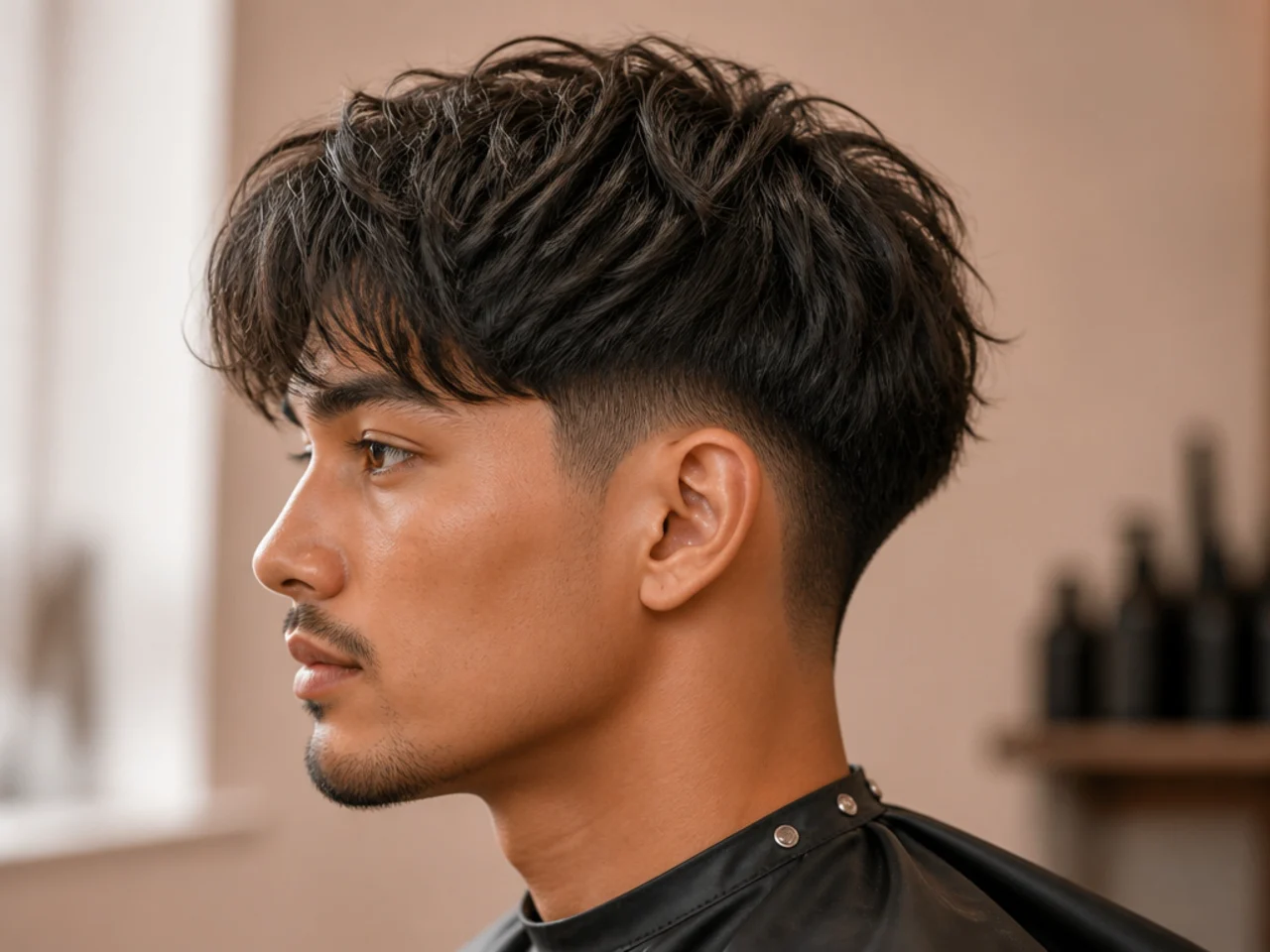
An oval face is the barber's dream — balanced proportions, no hard corners to fix, no length to compensate for. That means you get to lead with style instead of correction. A taper fade tucked under a textured bob keeps the neckline crisp while the bob does the front-of-house work.
What makes it different: the fade lives only around the ears and nape. Above the arc, the hair stays long enough to swing. It's the softest fade family in this list — closer to a mid fade in visual weight if you push the transition higher.
How to ask: "Taper fade at the ears and nape, drop to a #1, blend into scissor length above the arc. Cut a chin-length bob with heavy internal texture. Air-dry finish."
Styling tip: mist damp hair with a sea-salt spray, then rough-dry upside down with your fingers. That's the whole routine. Trim every six to eight weeks to keep the ends from getting stringy.
4. High Fade with Pixie Cut for Heart Face Shapes
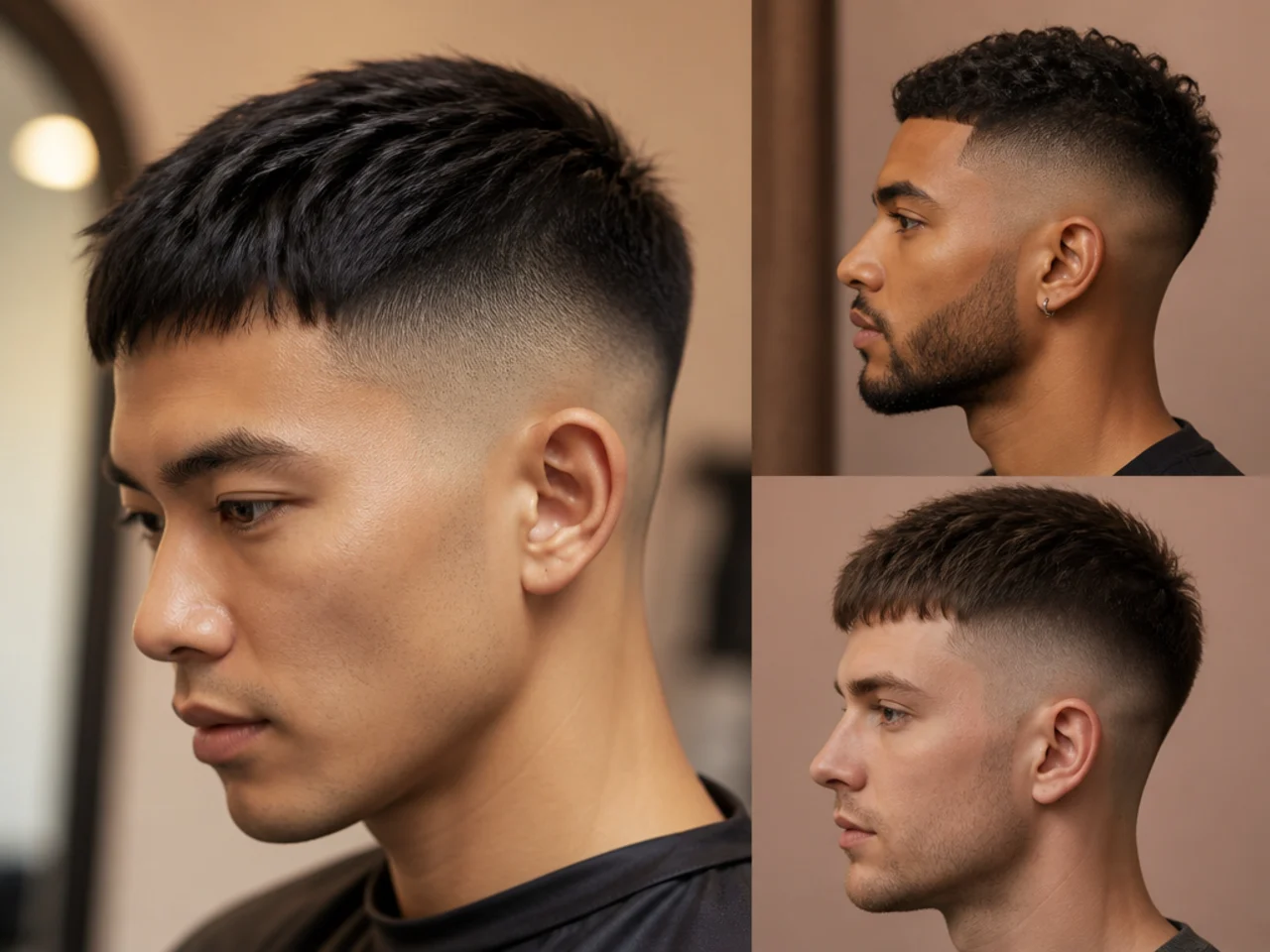
A heart-shaped face is wider at the temples and narrows to a pointed chin. The fix is to keep volume off the crown and push texture toward the jaw. A high fade with a pixie does that job efficiently — the sides go bare, the top stays cropped, and a longer front piece falls forward to visually widen the chin.
What makes it different: this is closer to a high taper fade in silhouette — the transition sits above the temple, but the top is scissor-sculpted rather than clippered flat. Sharper than a classic pixie, softer than an undercut.
How to ask: "High skin fade to a #0.5, blended to a #2 at the corner. Scissor-cut pixie on top, one and a half to two inches at the crown, longer front pieces to fall past the eyebrow. Textured matte finish."
Styling tip: rub a pea-sized amount of matte clay between your palms and press it through the top with a piston motion. Nudge the front piece across your forehead to soften the chin below.
5. Low Fade with Shaggy Layers for Oblong Face Shapes
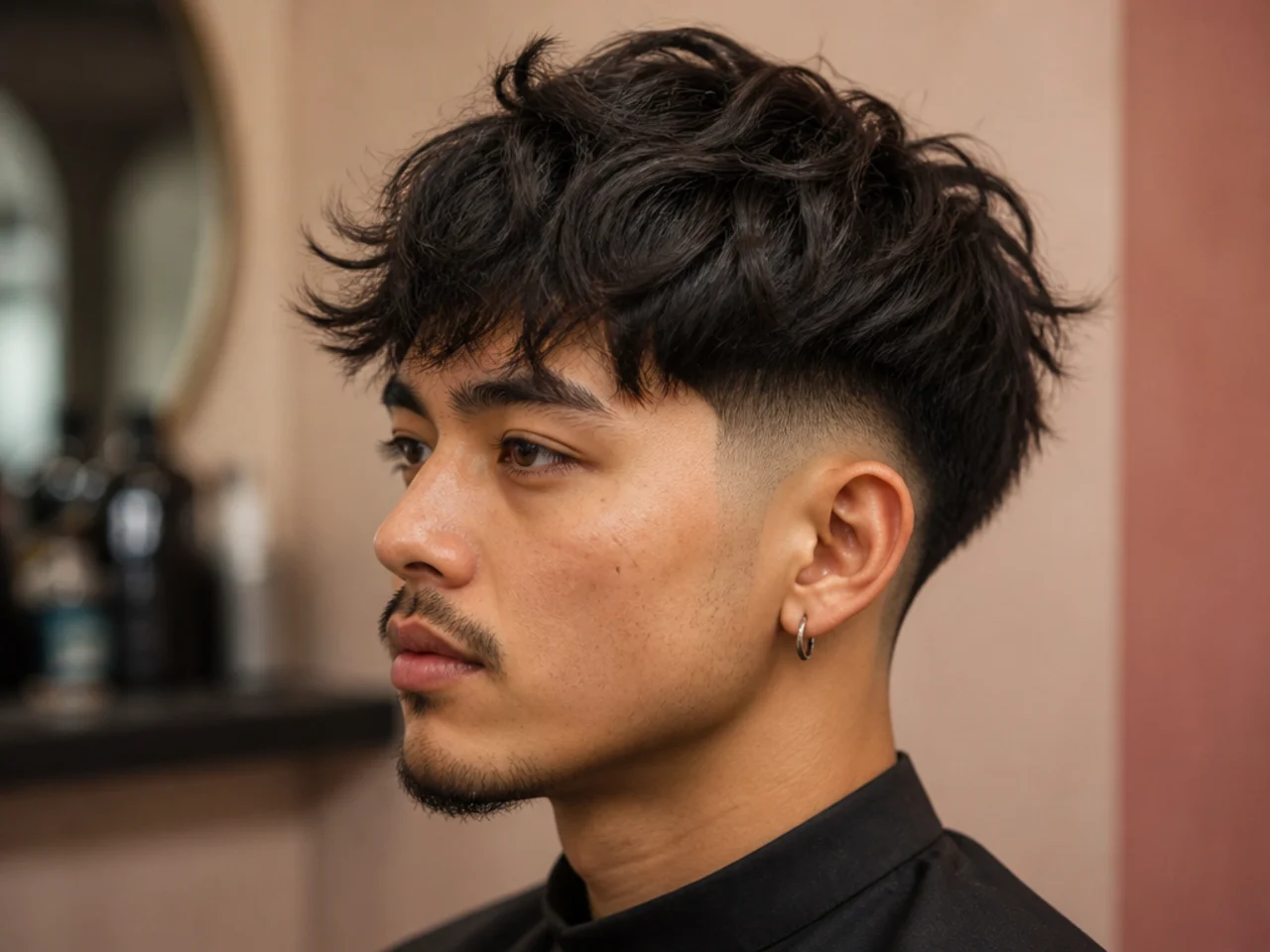
An oblong face is longer than it is wide. Height on top is the enemy — it stretches the face further. A low fade keeps the visual weight down at the neckline, and shaggy horizontal layers add width where you need it: at the cheekbones and jaw.
What makes it different: the layers are chopped, not blunt. That randomness kicks hair outward instead of down, and the low fade gives the whole thing a modern edge without pushing the vertical line.
How to ask: "Low fade at a #1.5, blended into scissor-cut length by the parietal ridge. Shaggy internal layers throughout, curtain-style bangs cut to the cheekbone. Air-dry, no polish."
Styling tip: wrap two-inch sections around a 1.25-inch curling wand, alternating direction. Break the waves apart with your fingers and a dime-sized drop of texture cream. The bangs are the load-bearing piece — they shorten the face visually, so don't skip them.
6. High Fade with Side Swept Bangs for Diamond Face Shapes
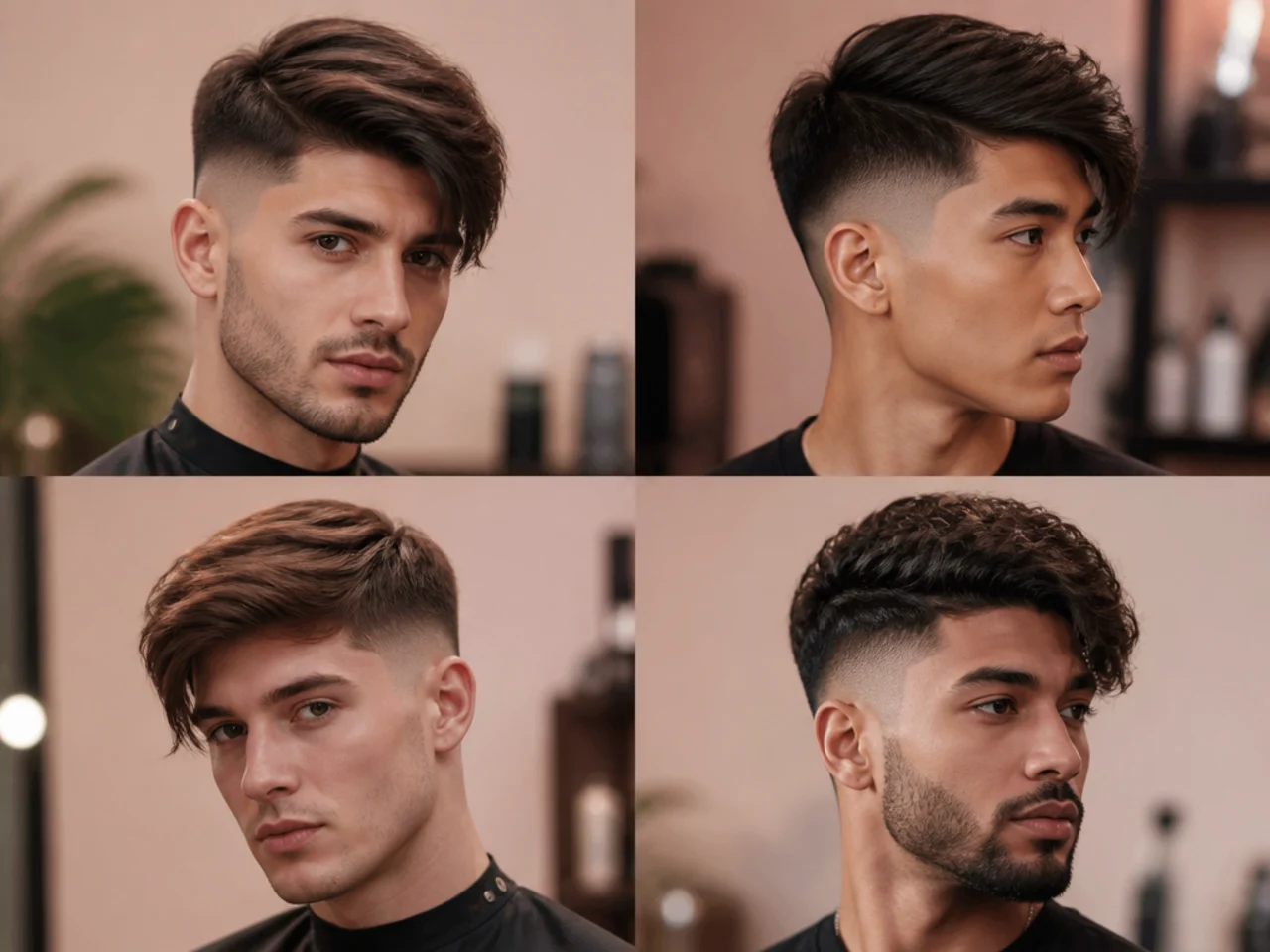
A diamond face has sharp cheekbones and narrow at both the forehead and chin. You need width up top to balance those cheeks. The high fade shows off the bone structure, and side-swept bangs pull volume across the forehead — the two moves fight the diamond in opposite directions and meet in the middle.
What makes it different: the top isn't cropped or messy. It's blown out and directional. Think closer to a blowout taper in feel — polished volume with real movement, not just texture.
How to ask: "High fade to a #0.5, blended to a #2 above the temple. Keep four inches on top, cut side-swept bangs that fall to just above the eyebrow. Smooth satin finish, not matte."
Styling tip: blow-dry with a two-inch round brush, rolling the front section away from your parting to build a soft crescent of volume across the forehead. A pump of light mousse at the root holds the lift all day without stiffness.
7. Taper Fade with Wavy Lob for Triangular Face Shapes
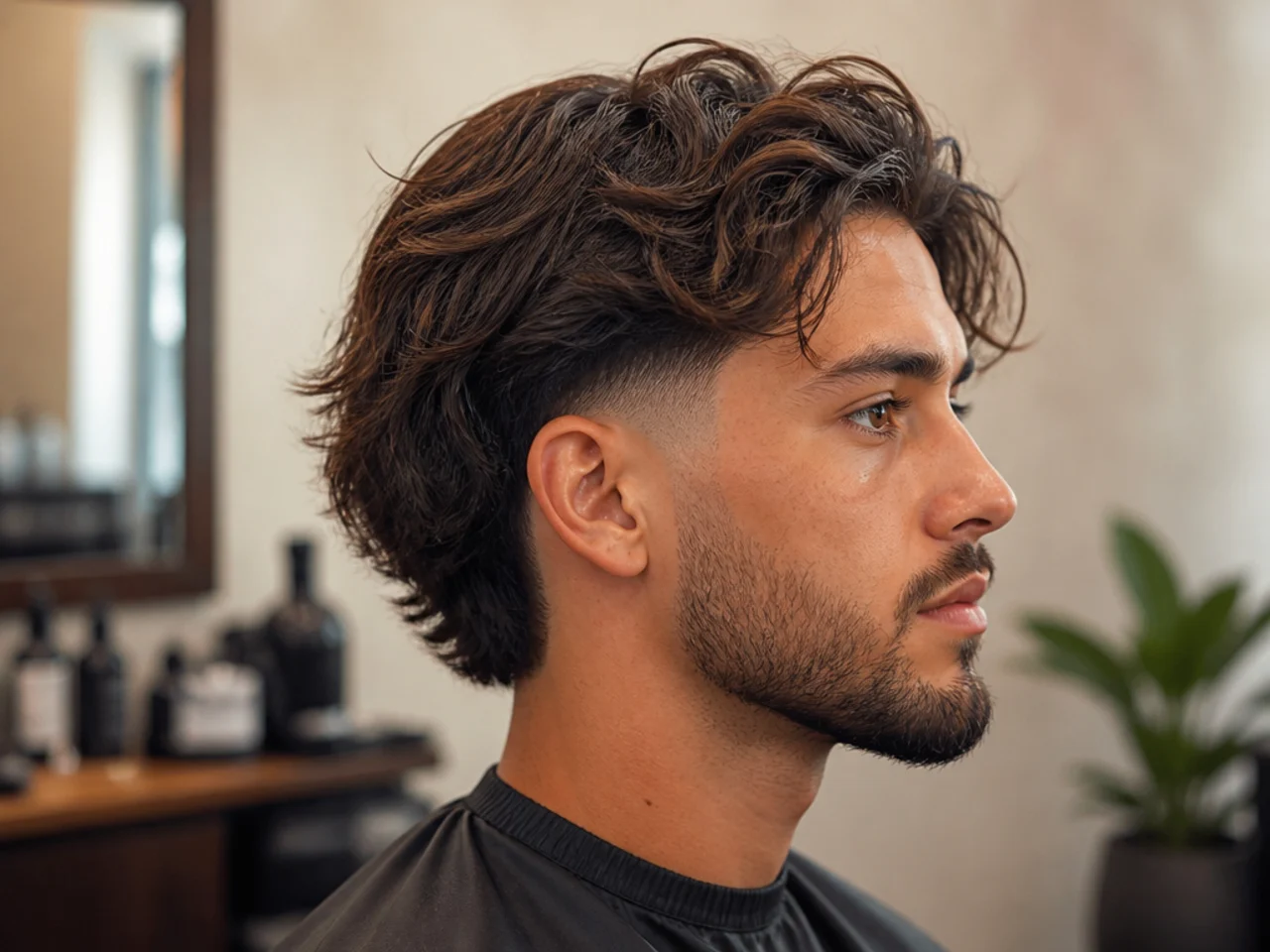
A triangular face is narrow at the forehead and wider at the jaw — the inverse of the heart. You need to add visual width up high and slim the sides. A low taper fade hidden under a wavy lob pulls the jaw line in, while volume built at the crown widens the top of the frame.
What makes it different: the taper stays subtle and low, so from the front the cut reads as a straight lob. From the back it reveals a crisp fade — a two-view style that gives you options.
How to ask: "Low taper fade around the ears and nape, drop to a #1, blend into shoulder-length scissor-cut. Cut a lob with soft internal layers starting at the collarbone. Air-dry, tousled finish."
Styling tip: rough-dry the top upside down to build root volume, then run a 1-inch curling iron through the mids in loose S-waves. Skip the ends — a straight tip keeps the lob looking modern instead of prom-ready.
8. Low Fade with Fringe for Pear Face Shapes
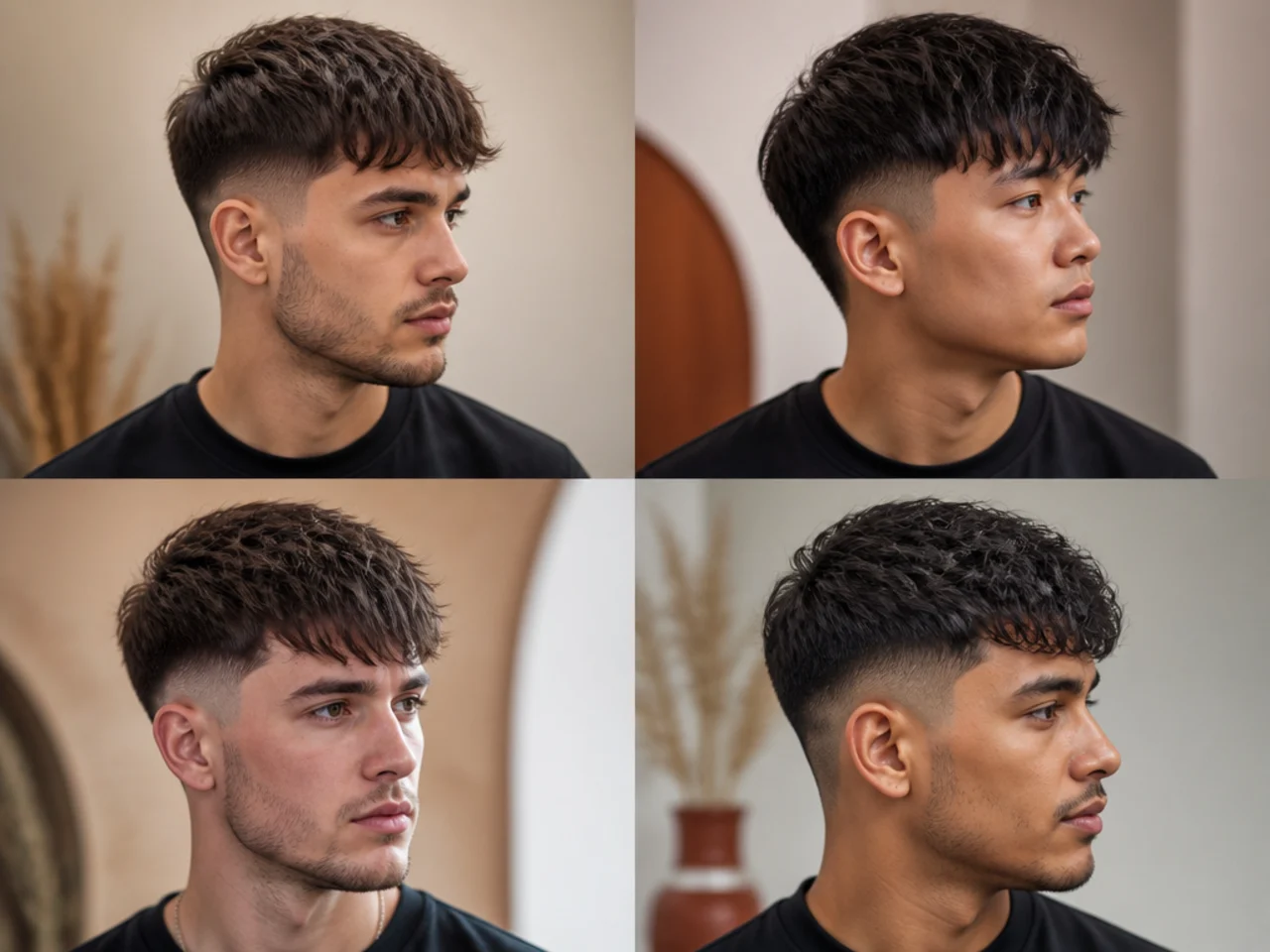
A pear-shaped face carries most of its width at the jaw and narrows toward the forehead. The goal is to add mass up top and quiet the sides. A low fade drops the visual weight below the ear, and a long, weighty fringe piles volume across the forehead to rebalance the frame.
What makes it different: the fringe is the star, and the fade exists to support it. A burst fade around the ear is a strong alternate finish here — it fans the fade outward from behind the ear and keeps even more length at the perimeter, giving the fringe more mass to sit above.
How to ask: "Low fade to a #1 around the ear and nape, blended into three inches on top. Cut a heavy blunt fringe to sit at the cheekbone. Soft matte finish."
Styling tip: blow-dry the fringe down and slightly forward with a paddle brush while still damp. Once dry, finger-comb a pinch of styling paste through the ends to break up the line. Recut the fringe every three weeks — it grows into your eyes faster than you think.
9. High Fade with Braided Crown for Oval Face Shapes
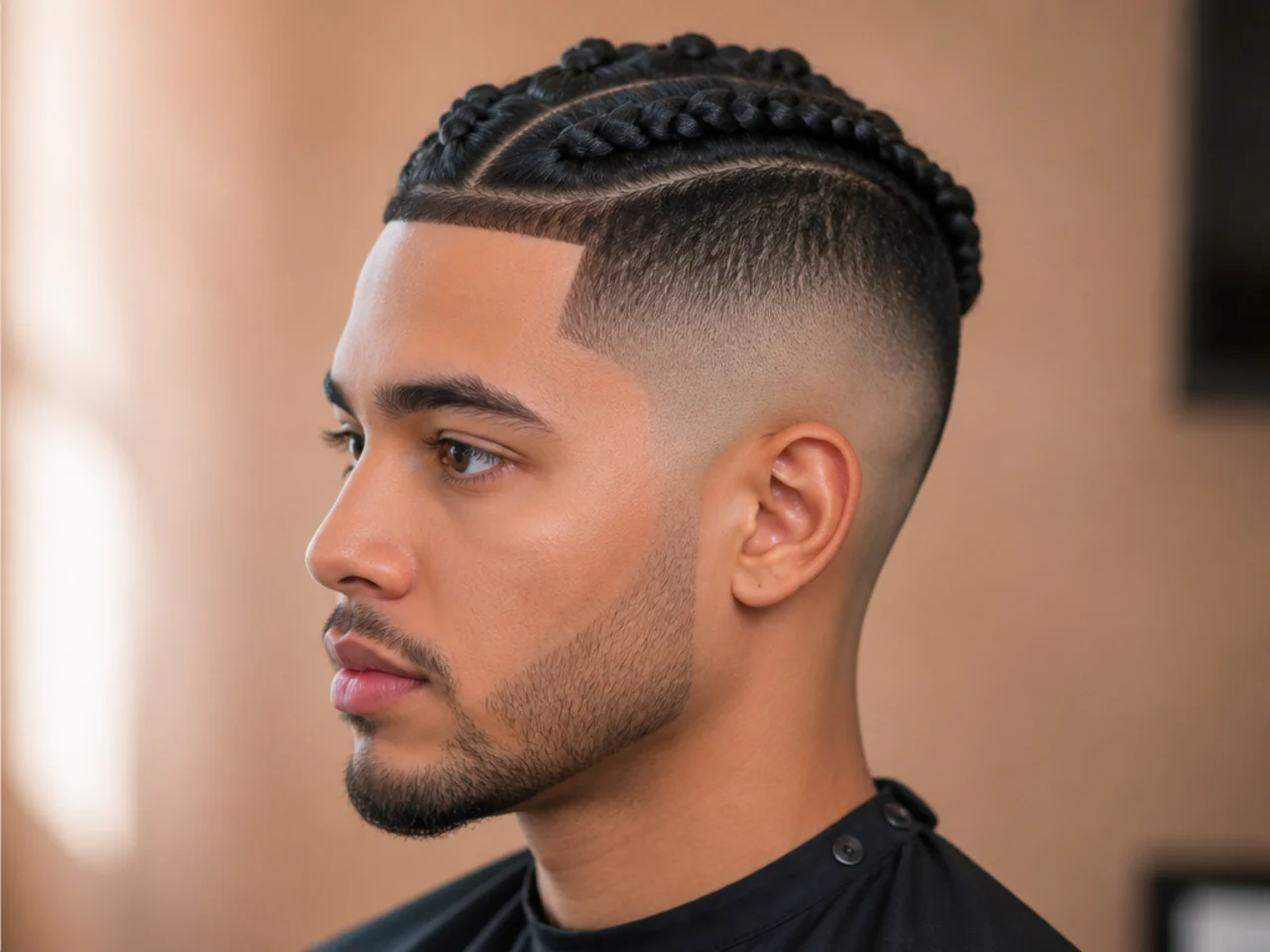
Oval faces let you push style. A high fade with braided crown is a showcase cut — the clean sides frame the braid pattern like a picture frame, and because the oval already has ideal proportions, you don't have to correct anything. You just get to display.
What makes it different: the fade runs high and skin-tight so the braid pattern reads sharp against bare scalp. Any softer transition and the braid detail blurs at the perimeter.
How to ask: "High skin fade to a #0 at the shortest, blended to a #1 above the temple. Leave four to six inches on top for braiding. Sharp lineup at the forehead."
Styling tip: dampen the top with leave-in conditioner before braiding to keep the strands from snapping. Cornrows, halo braids, or a single scalp braid all work — pick the one that matches your face length. For deeper texture-first fade guidance, see our full breakdown of fade haircuts for Black men, which applies just as directly to Black women and anyone with coily or Type 4 hair.
10. Taper Fade with Soft Curls for Round Face Shapes
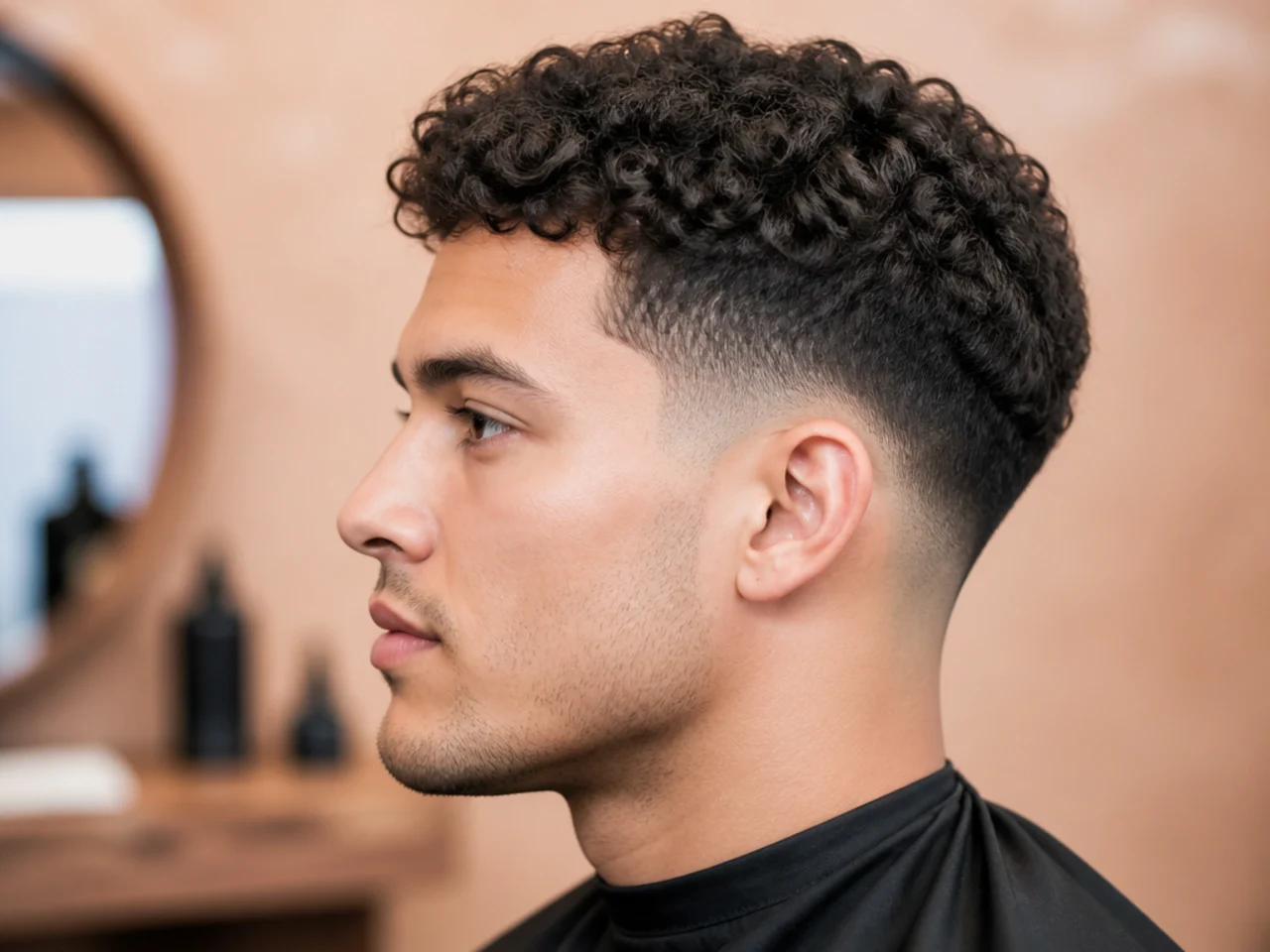
The second cut for round faces in this list, and a softer alternative to the high fade version above. A taper fade keeps more length at the sides than a full fade, so the overall silhouette stays gentler — but the curls piled on top still deliver the vertical stretch a round face needs.
What makes it different: this is the low-drama option. The taper only touches the sideburns and nape, meaning most of the side length stays intact. The elongating effect comes entirely from the curl height on top, not from bare-sided contrast.
How to ask: "Taper fade around the ears and neckline, drop to a #1 at the shortest, keep the rest of the sides at scissor length. Cut the top into loose layers, three inches at the crown, longer through the front."
Styling tip: work a quarter-sized dollop of curl cream through soaking-wet hair, then diffuse upside down for three minutes to pump volume into the roots. Let the curls fall back into place — don't touch them until they're fully dry.
11. High Fade with Slicked Back Undercut for Square Face Shapes
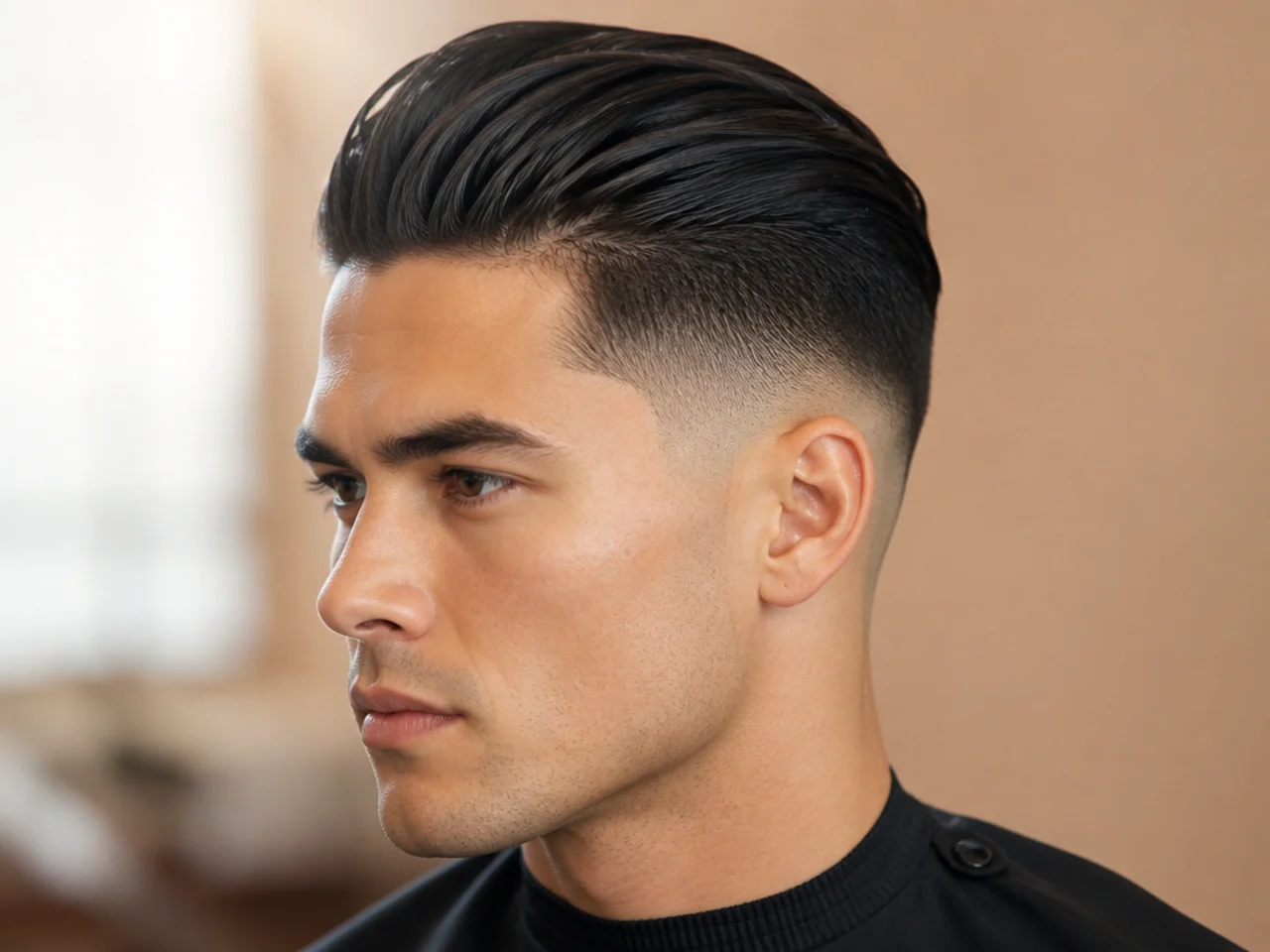
The second square-face cut, and the bolder move. Where the first pick (low fade with long layers) softens the jaw, this one leans in. The disconnected undercut and slicked-back top create clean, deliberate lines that echo the geometry of a square face — you're owning the angles, not hiding them.
What makes it different: this is a proper undercut fade, not a graduated one. The top and sides are two separate lengths that don't blend — a hard line runs around your head where the top meets the shave. Sharper contrast, more attitude.
How to ask: "High fade to skin at the shortest, no blend into the top — leave a disconnected line at the crown. Keep five to six inches on top for a slick back. Glossy finish."
Styling tip: rake a strong-hold pomade through damp hair with a fine comb, pulling straight back from the front. Set it with a light mist of hairspray while it's still slightly wet. Rebook the fade every two weeks — the disconnected line is unforgiving once it grows out.
12. Low Fade with Beachy Waves for Heart Face Shapes
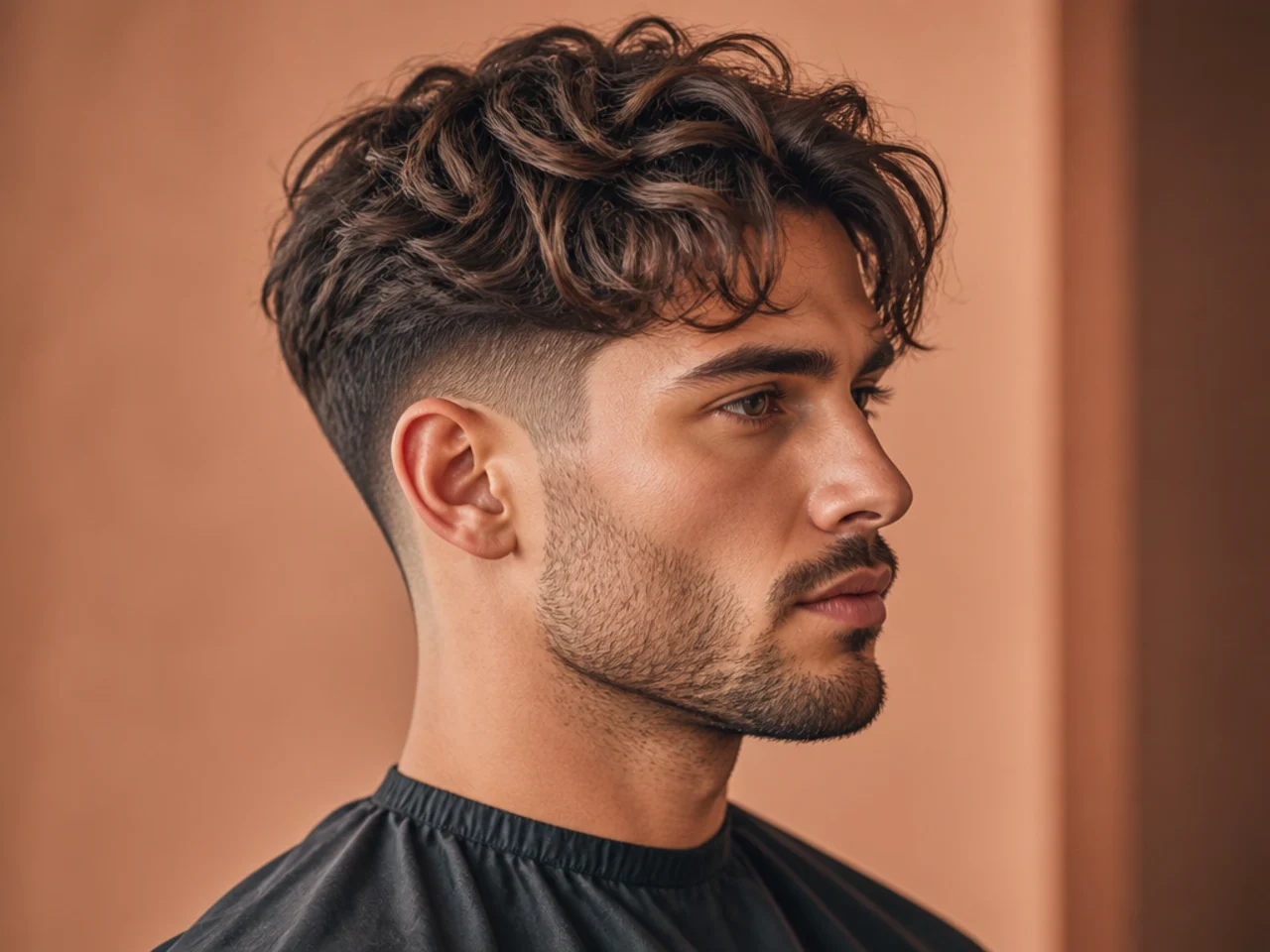
The second heart-face cut, and the softer counterpart to the high fade pixie. Where the pixie leans sharp, this one leans loose. A low fade keeps visual weight down near the neckline, and beachy waves through the mid-lengths spread volume horizontally across the jaw — exactly where a heart face needs mass to balance the wider forehead.
What makes it different: the fade is nearly invisible from the front. All the drama is in the wave pattern and the way the front pieces fall around the cheekbones.
How to ask: "Low fade at a #1.5 around the ears and nape, blend into shoulder-length scissor-cut. Cut soft internal layers starting at the chin, keep the front sections cheek-length. Air-dry finish."
Styling tip: braid damp hair into two loose plaits before bed. In the morning, undo them and shake the waves out with a spritz of sea-salt spray. That single move gets you the whole look — no heat, no round brush, no product buildup.
13. Taper Fade with Afro for Oblong Face Shapes
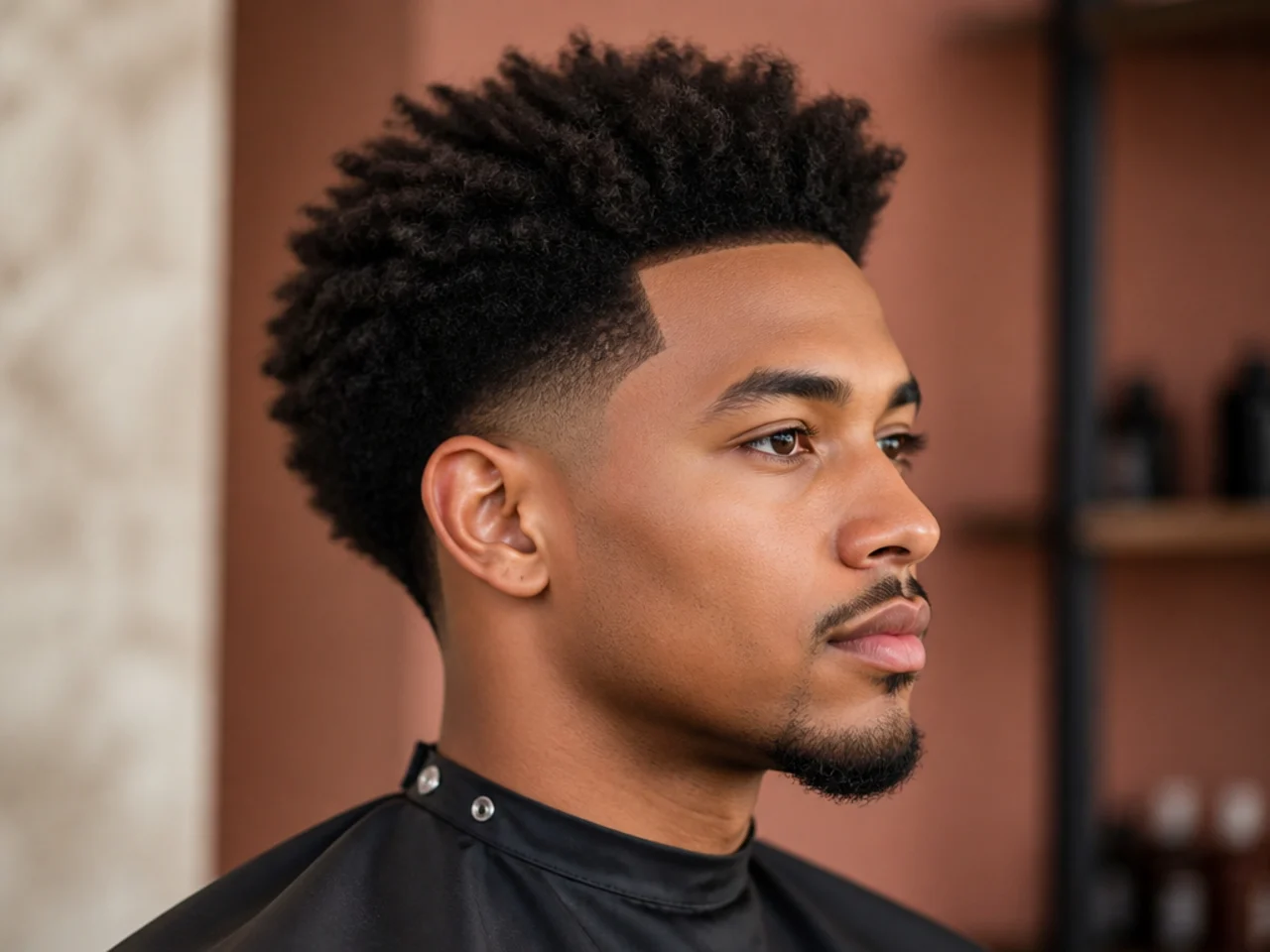
The second oblong-face cut, and the one that pushes the format further. An oblong face is already vertically long — but width on the sides fights that, and a full afro adds real horizontal mass at the cheek line. The taper fade at the perimeter keeps the shape from looking bottom-heavy or unfinished.
What makes it different: the top isn't just voluminous, it's round. A well-cut afro sits like a sphere on top of the fade, and that circular shape pulls attention outward instead of upward — the exact opposite of what a high curly top does.
How to ask: "Taper fade around the ears and nape, drop to a #1 at the shortest, blend up gently. Scissor-cut the afro to a round shape, four to five inches all around. Preserve the curl pattern — no thinning shears."
Styling tip: mist the afro with a water-and-leave-in-conditioner mix daily, then pick it out from the roots with a wide-tooth afro pick. Pat the shape round with an open palm to keep the silhouette even.
14. High Fade with Messy Bun for Triangular Face Shapes
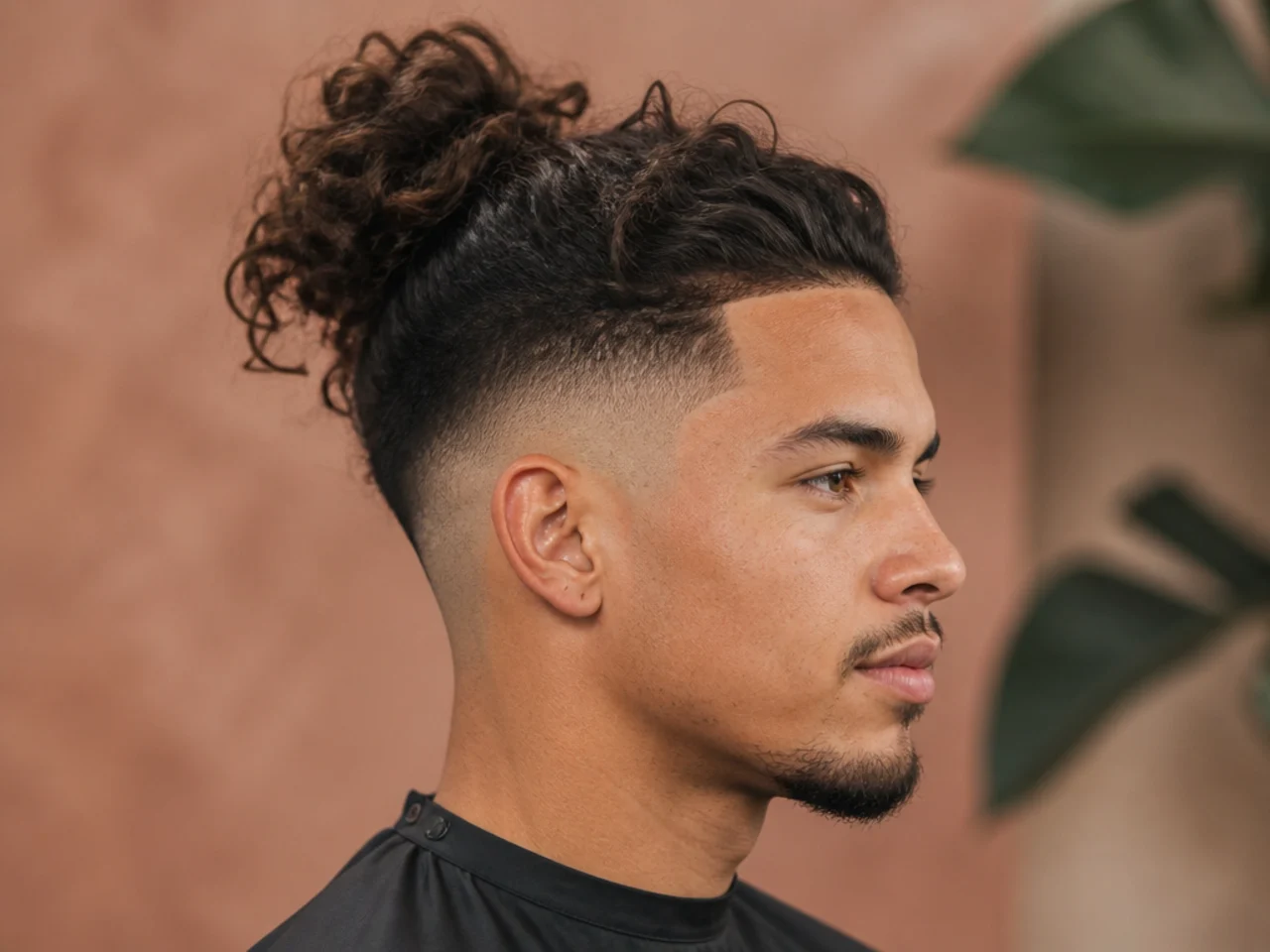
The second triangular-face cut, and a step up in contrast from the taper-under-a-lob version above. A triangular face carries width at the jaw, so anything that adds visual height and width at the crown helps rebalance the frame. The high fade shaves the sides clean and pulls the eye up, and the top-knotted bun stacks even more volume overhead.
What makes it different: the fade goes high — up to the parietal ridge — but the top stays long enough to gather. It's a two-length cut that gives you shaved-side attitude on weekdays and a full updo on weekends.
How to ask: "High fade to a #0.5 at the shortest, blend to a #2 above the temple. Leave eight inches or longer on top so the bun sits high on the crown. Matte or satin finish, dealer's choice."
Styling tip: gather the top into a high loose knot with a snag-free elastic, then pull a few pieces down around the temples with your fingertips. The escapees are what turn the bun from "gym" to "styled."
15. Low Fade with Layered Undercut for Diamond Face Shapes
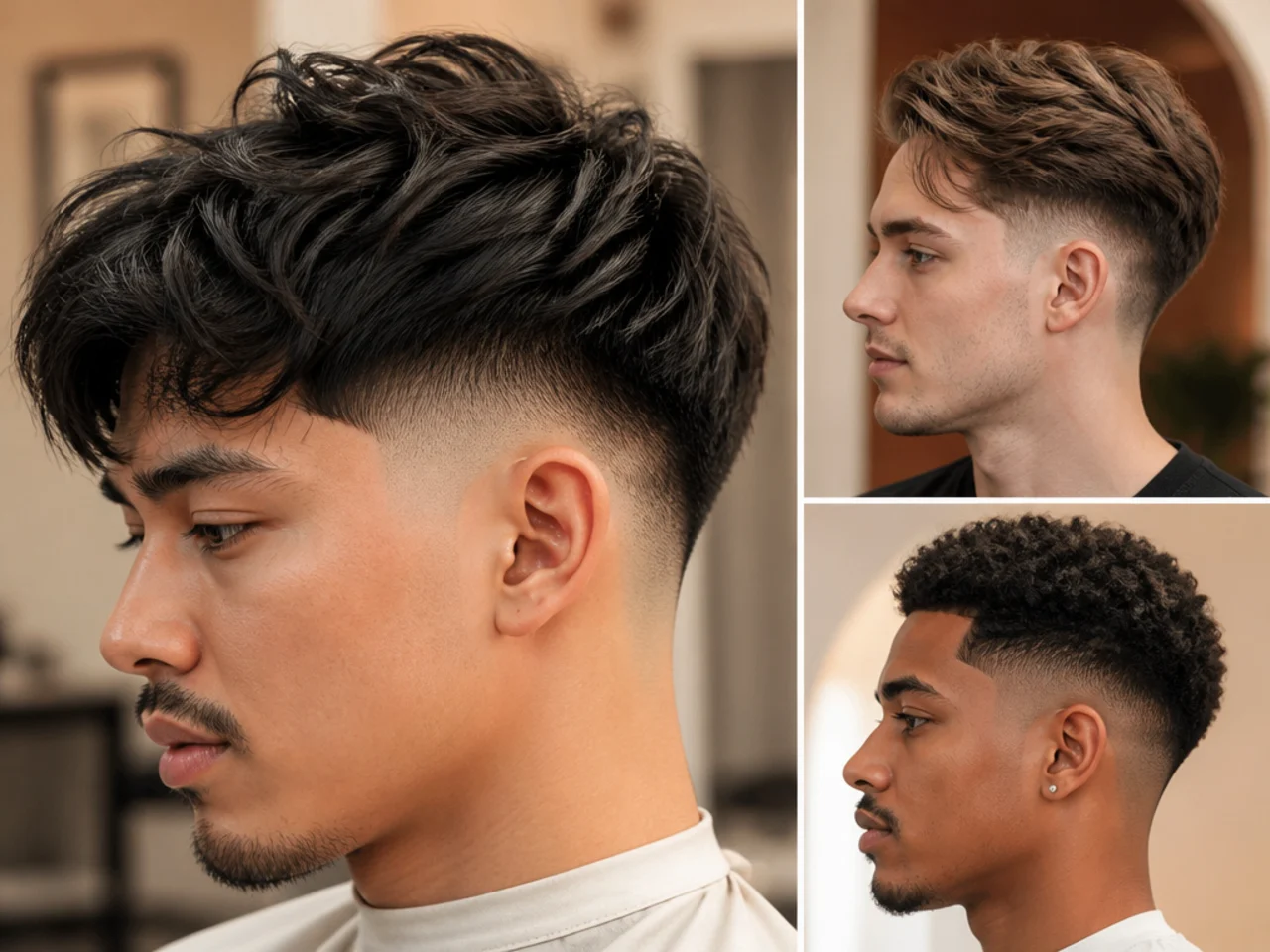
The second diamond-face cut, and the softer of the two. Where the high fade with side-swept bangs plays up the cheekbones, this low-fade layered version tones them down. Wide layers falling past the cheekbones cover the widest part of the face and pull the eye toward the length, not the width.
What makes it different: the undercut sits low and hidden. Above it, long chopped layers move with real weight — this is a cut that reads soft from the front and revealing from behind or when tucked. It gives you the option to hide or show the fade depending on the day.
How to ask: "Low fade at a #1 around the ears and nape, blended into a disconnected undercut at the temples only. Cut long shaggy layers throughout the top, keeping the length past the collarbone. Air-dry finish."
Styling tip: tuck one side behind the ear when you want the fade visible, drop both sides forward when you don't. Rake a walnut-sized dab of styling cream through the ends to lock the layer separation and stop them clumping.
Choosing the Right Fade for Your Face Shape
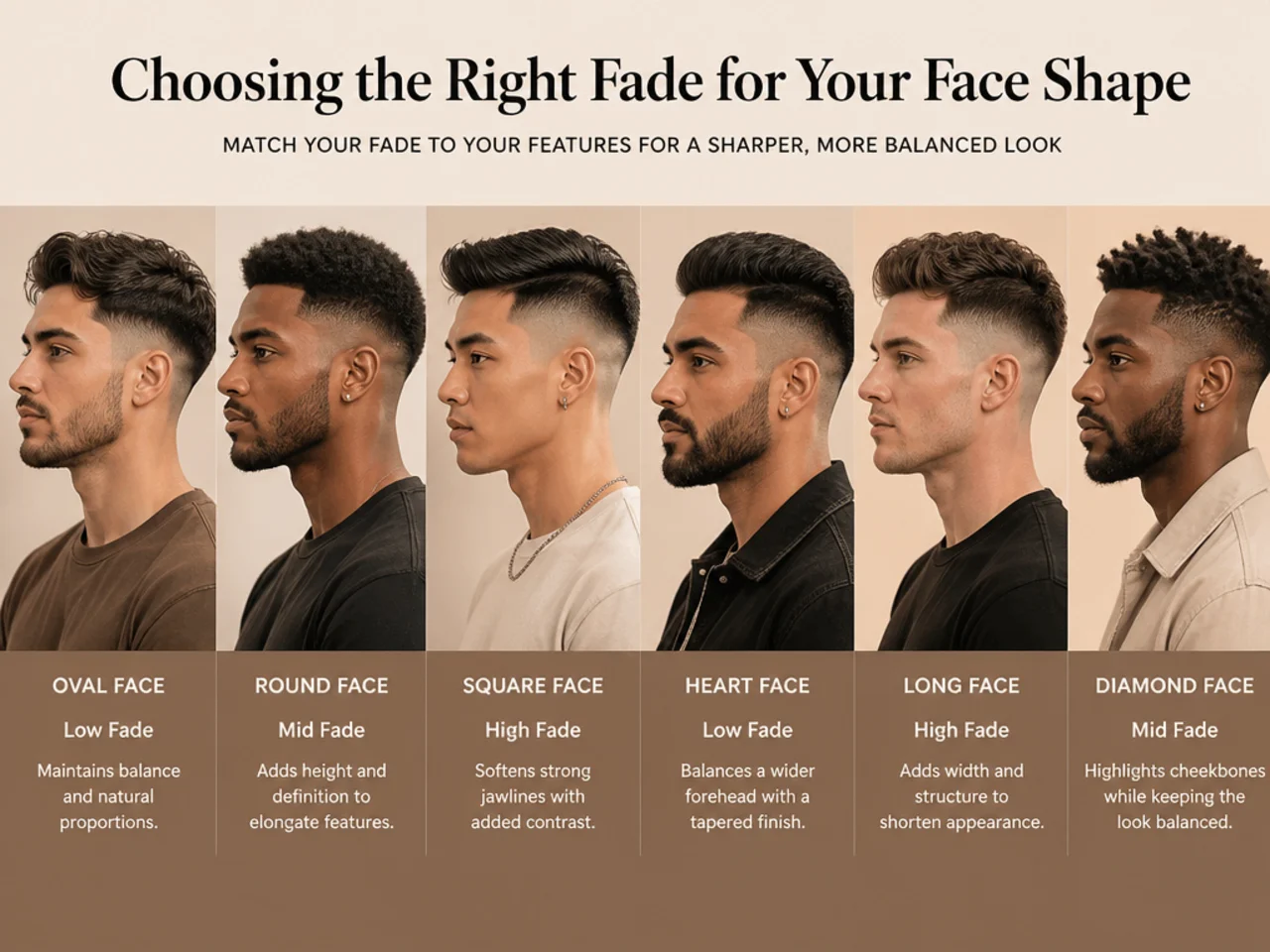
Here's the shortcut a good barber will run through with you before the clippers come out.
Round face: add height on top, keep the sides tight. High fade or high skin fade with three-plus inches of vertical volume.
Oval face: you have options. Any fade height works. Pick based on the top style you want.
Square face: soften the jaw with textured length on top. Low fade with long layers, or lean into the geometry with a disconnected undercut fade.
Heart face: keep the crown low, push weight down toward the jaw. Longer fringe, cheek-length layers, low fade.
Diamond face: widen forehead and jaw with fringe or volume, keep the cheekbone area quieter. High fade with side-swept bangs, or low fade with long layers.
Oblong face: add width, kill the vertical. Low fade with horizontal layers, curtain bangs, no height on top.
Triangular face (wider jaw): stack volume up top, tighten the perimeter. High fade with a bun or taper fade under a lob.
Pear face: similar rule — mass on top, less at the sides. Low fade with a heavy fringe.
Then bring the four numbers to your barber: fade height (low, mid, high), guard number at the shortest point (0, 0.5, 1), top length in inches, and finish (matte, satin, or glossy). Book the next appointment before you leave the chair — every fade in this list holds shape for about two weeks and starts blurring by week four.