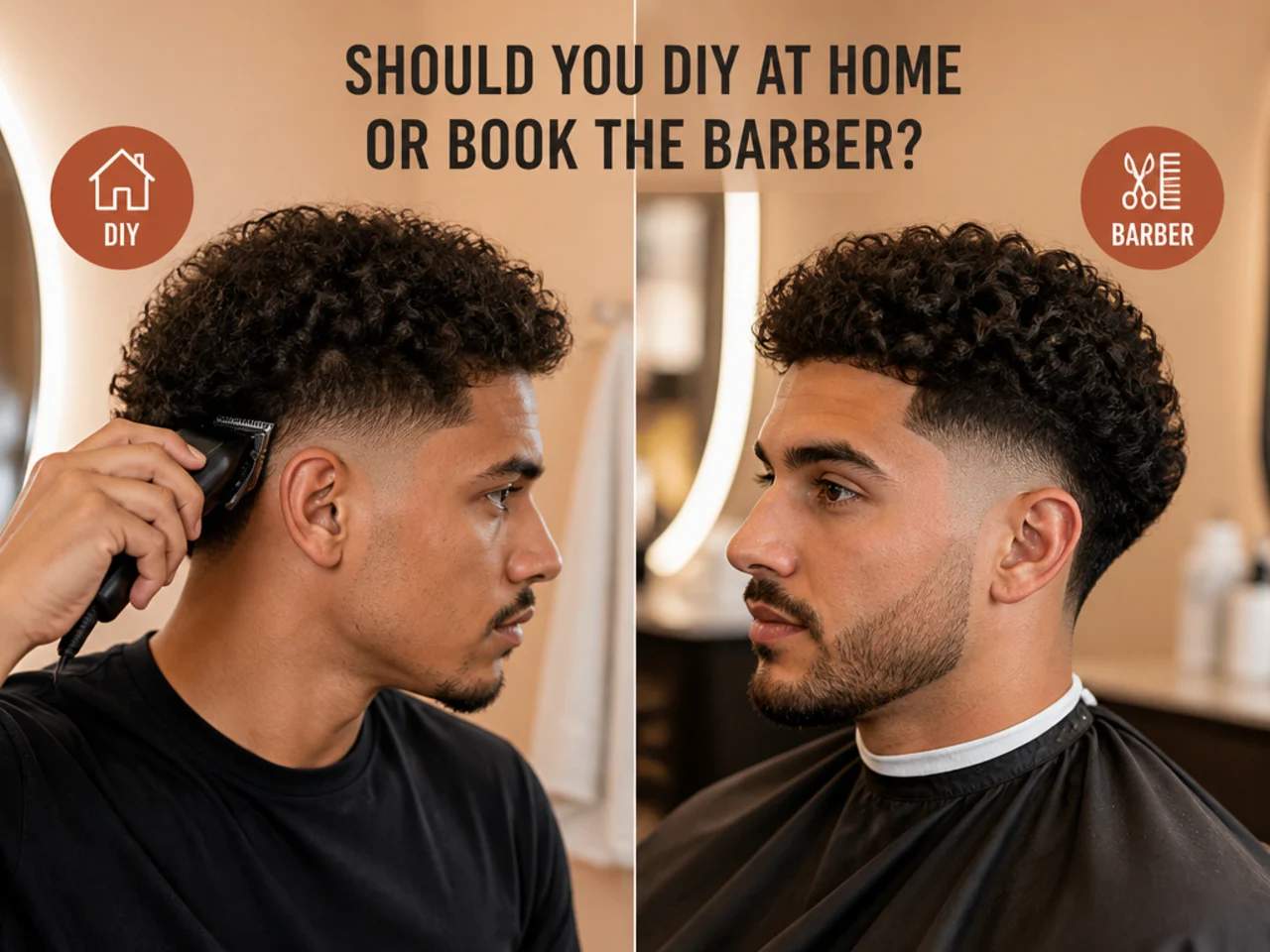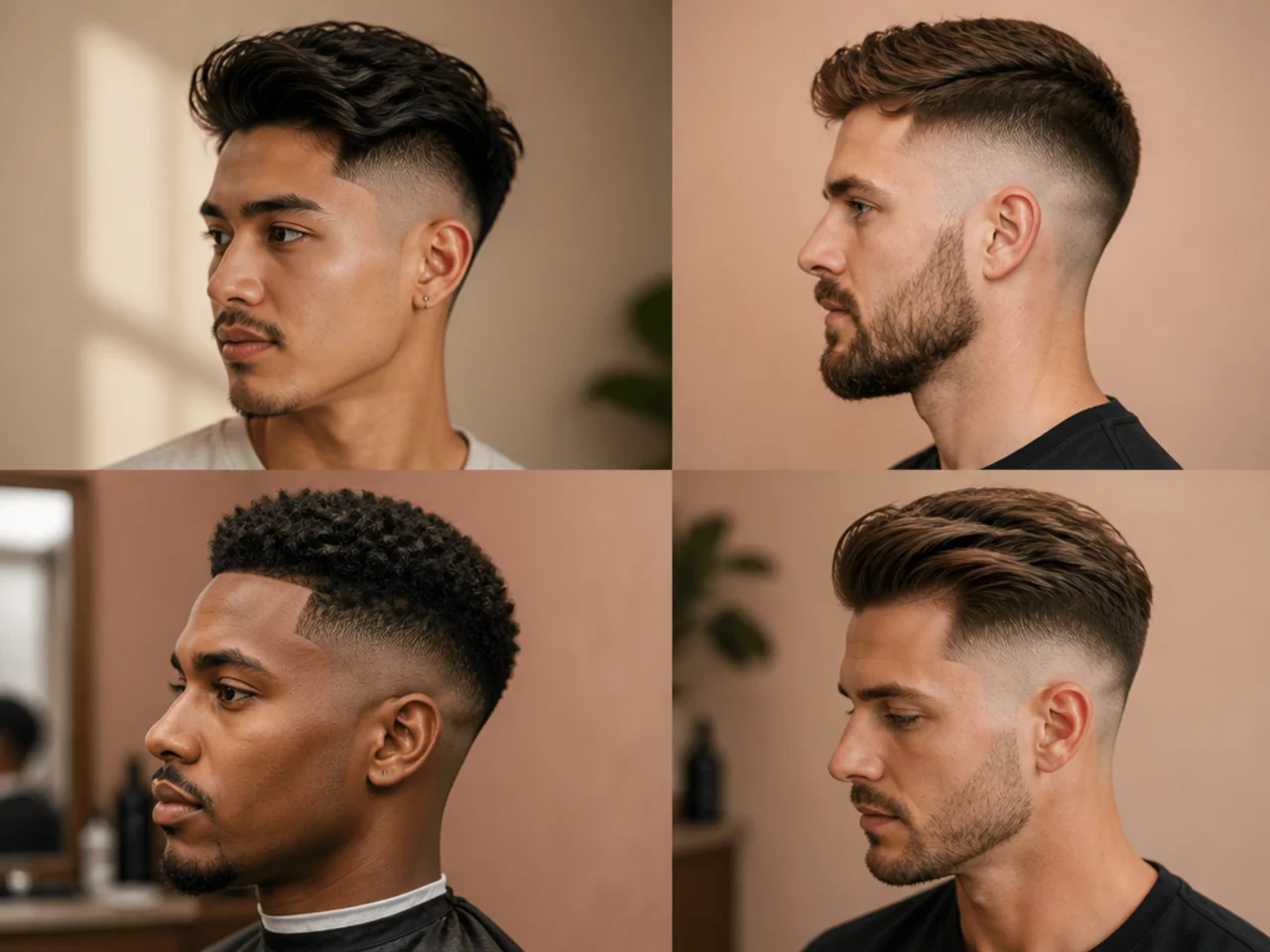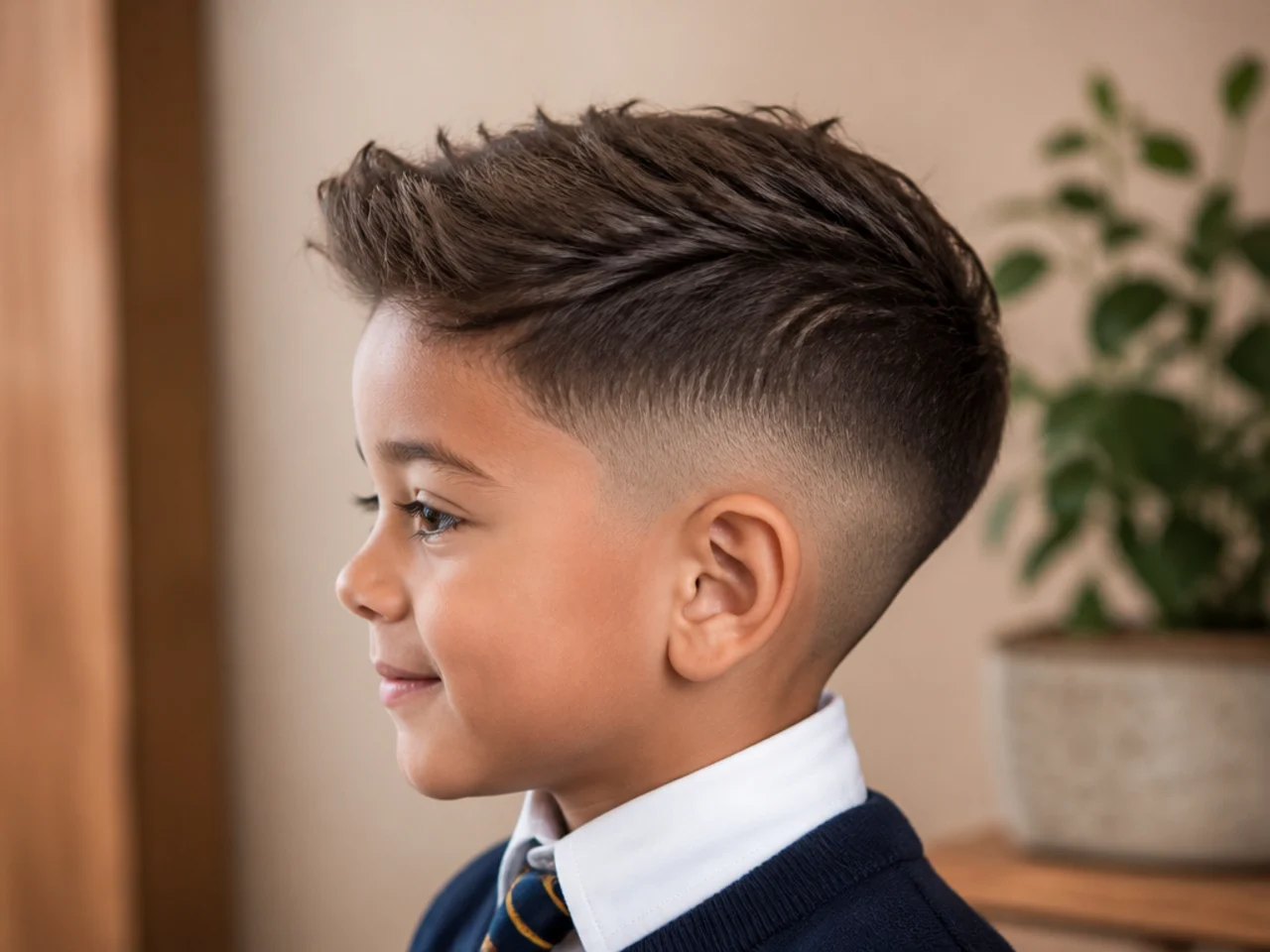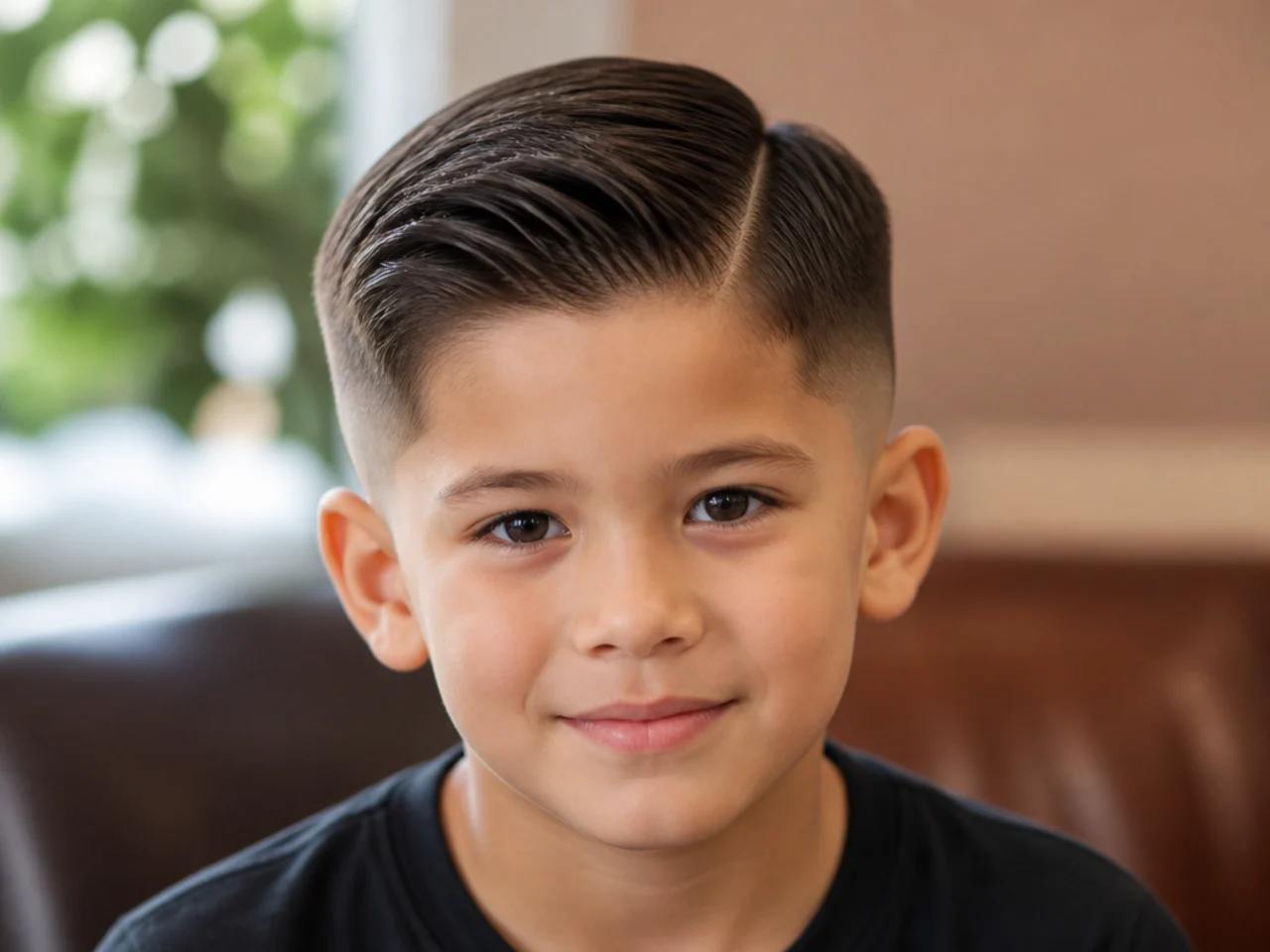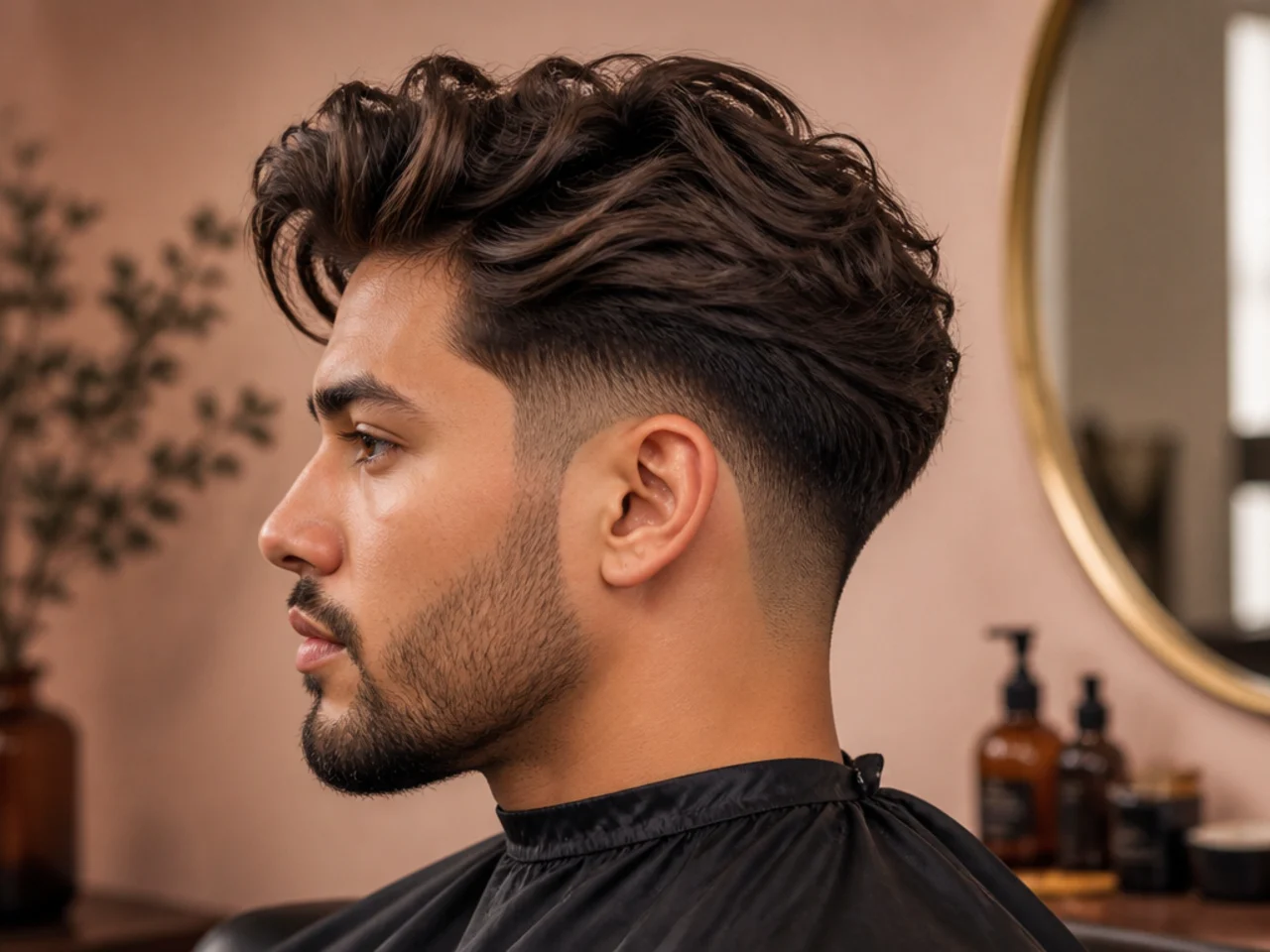
Blowout Taper Haircuts: A Fusion of Volume and Precision
Discover the blowout taper haircut – a bold, voluminous style blending precision, versatility, and modern edge for men...
In this article · 31
- What’s a Blowout Taper?
- 20 Blowout Taper Fade Haircut Ideas
- 1\. Mid Taper Blowout
- 2\. Mid Fade Blowout
- 3\. The Edgar Haircut
- 4\. Low Drop Fade Blowout
- 5\. Low Taper Blowout
- 6\. Blowout Afro Taper Fade
- 7\. Blowout Taper for Wavy Hair
- 8\. High Blowout Taper
- 9\. Wavy Mid Blowout Taper
- 10\. Blowout Taper Fade for Curly Hair
- 11\. Curly Hair Blowout Taper with Enhancements
- 12\. Blowout Taper with Heavy Crown
- 13\. Disconnected Blowout Taper
- 14\. The TikTok Hairstyle
- 15\. Blonde Blowout Taper
- 16\. Mid Taper Blowout for Straight Hair
- 17\. Mid Taper Blowout for Thin Hair
- 18\. Afro Blowout with Enhancements
- 19\. Curly Crop Blowout Taper
- 20\. Low Blowout Taper for Straight Hair
- Origins and Evolution of the Blowout Taper
- Key Characteristics of the Blowout Taper
- Why the Blowout Taper Remains Popular
- Who Should Consider a Blowout Taper?
- Styling a Blowout Taper
- Maintenance and Upkeep
- Choosing the Right Barber for a Blowout Fade
- Common Mistakes to Avoid
- Conclusion
The blowout taper is a volume-first cut. Your barber tapers the sides and back, then you round-brush the top forward into a puffy, rounded silhouette. Pompadour body meets clean taper edges. This guide breaks down twenty barbershop-ready variations, tells you who each one suits, and gives you the exact language to bring to your appointment.
What’s a Blowout Taper?
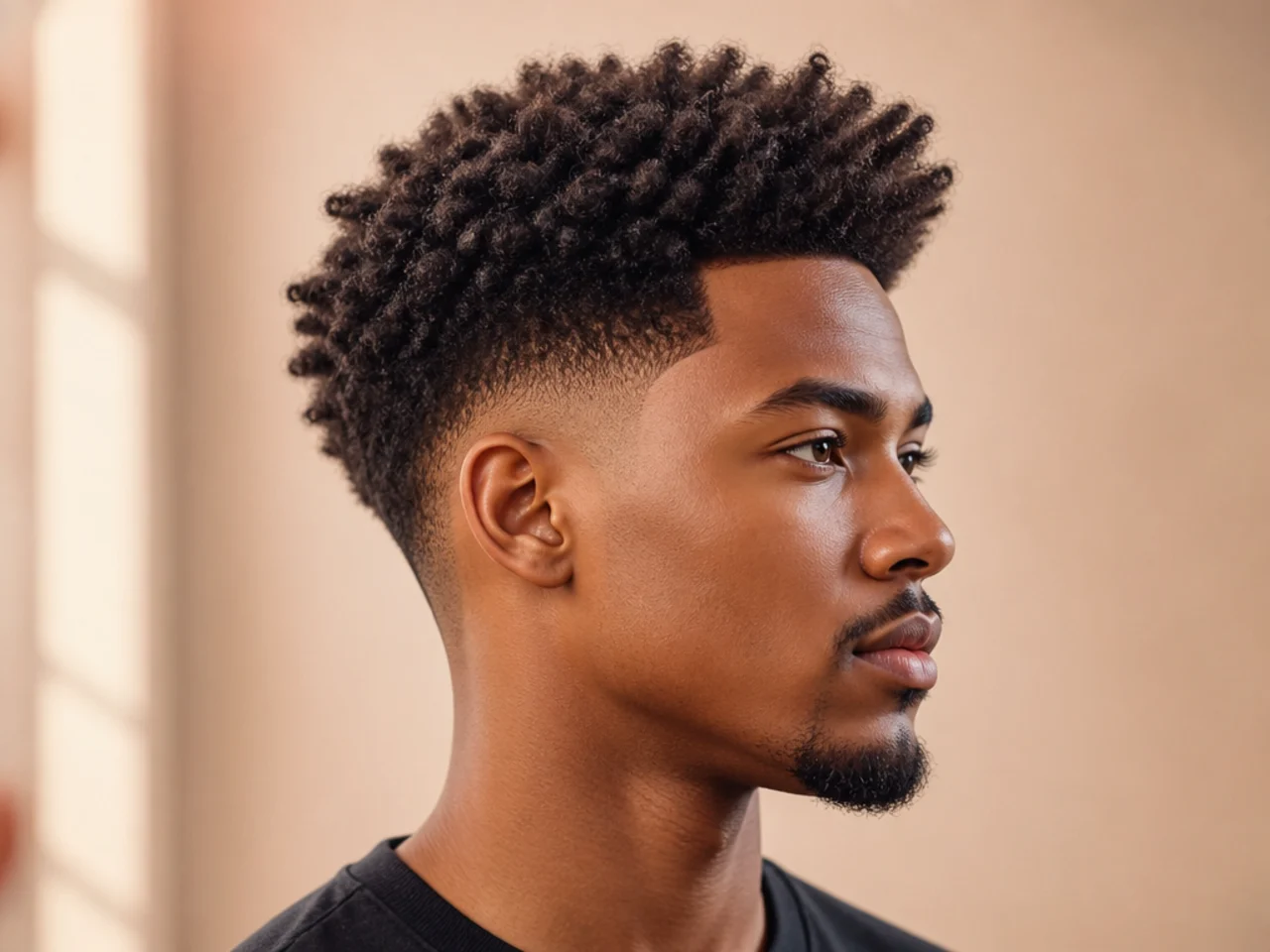
The blowout taper is a two-part cut. The bottom half is a taper — hair shrinks down gradually on the sides and around the ears, never buzzed to skin. The top stays long. Then you build the volume with a blow-dryer and a round brush, pushing hair up and forward until you get that domed, air-filled shape.
The volume is the whole point. Without the blowout, this is just a taper. Without the taper, it's a puffy top with no perimeter. Together, the shape reads fresh, groomed, big. The soft taper edge lets the volume own the silhouette instead of fighting a hard fade line.
Blowout tapers work best on straight or wavy hair with natural body. Coarse straight hair holds the round-brush shape for days. Fine hair needs mousse and a heat-set to hold. Tight coils can wear the silhouette too — you'll pick and pat into shape rather than round-brush.
A fade haircut goes to skin at the shortest point; a taper doesn't. A quiff is the pompadour's textured cousin. The blowout borrows quiff volume and marries it to taper cleanliness.
20 Blowout Taper Fade Haircut Ideas
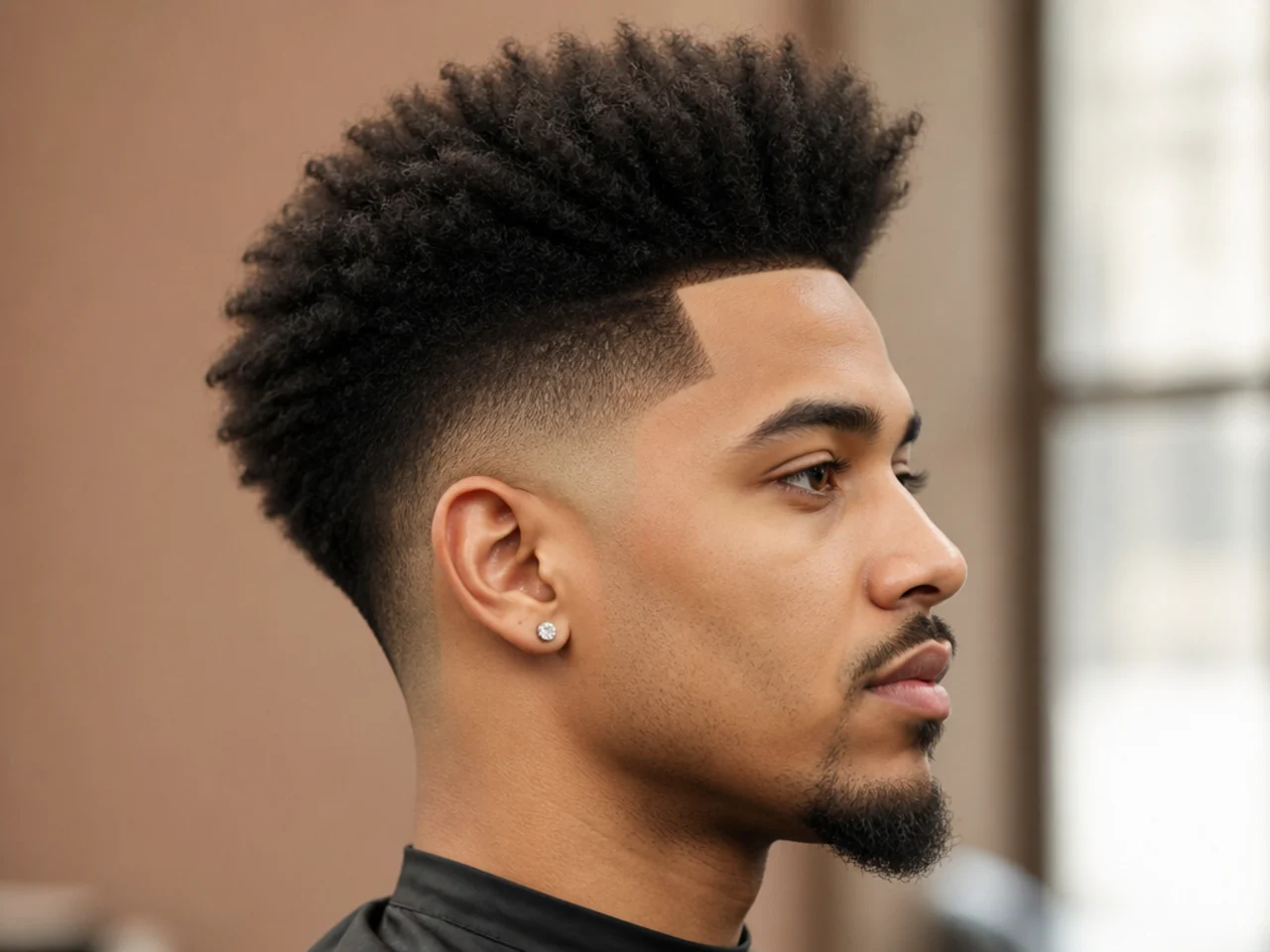
The variations below sort by fade height, hair texture, and top length. Each entry tells you what makes it different, who it flatters, exactly what to ask for, and one styling move to lock the shape in. You should know high fade vs mid fade vs low fade for better selection.
1. Mid Taper Blowout
The mid taper sits at the temple line — high enough to show contrast, low enough to keep the sides soft. That balance lets a big top look intentional, not top-heavy. Best for oval and square faces.
How to ask: "Mid taper on the sides, 0.5 guard at the shortest point, four to five inches on top, cut for a blowout." Say the word blowout so your barber leaves length pointing up and back.
Styling tip: Blow-dry damp hair forward and up with a round brush, then finish with matte paste. This cut can't air-dry — the top collapses in an hour.
2. Mid Fade Blowout
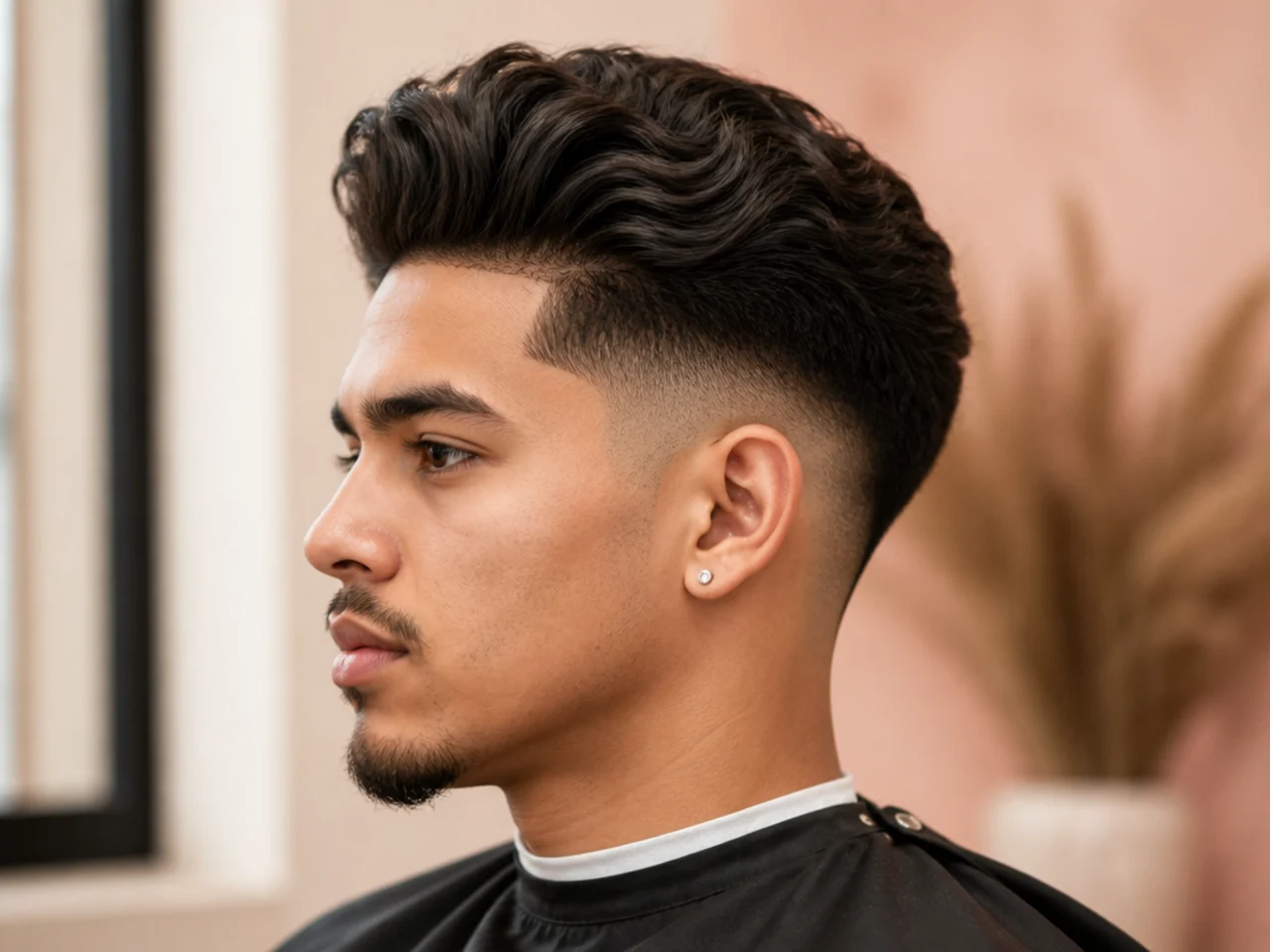
Technically this is a mid fade taken to skin, but the top gets styled the same way. Trade softness for sharper contrast — the blowout pops harder against a clean fade underneath. Best for guys with strong facial features.
How to ask: "Mid skin fade, blowout on top, five inches of length, keep the weight in the front third." Front weight matters — that's where the round brush lifts hardest.
Styling tip: Prep with volumizing mousse at the roots before you blow-dry. No product on damp hair means no hold once the dryer's done.
3. The Edgar Haircut
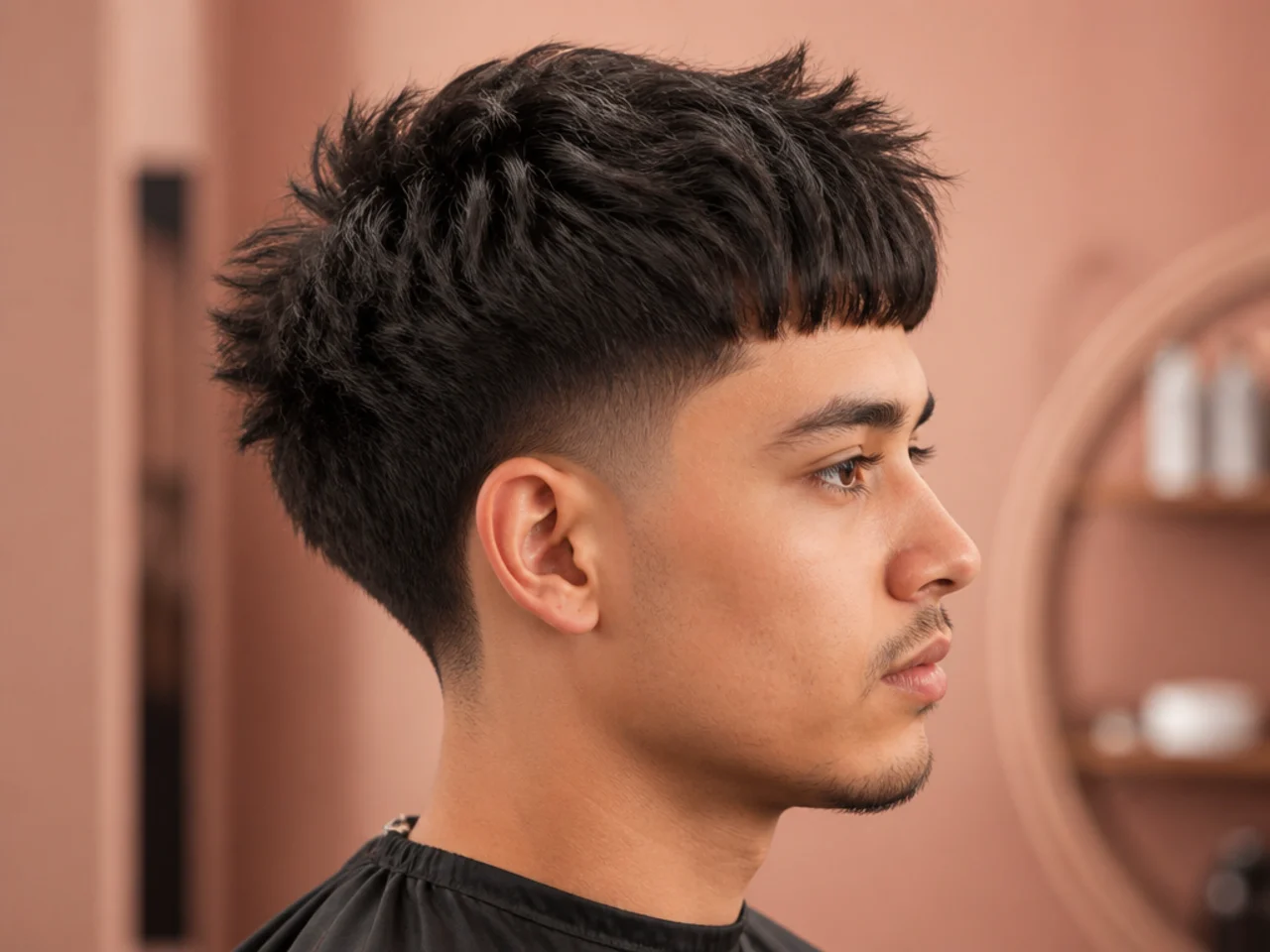
The Edgar is the fringe swap — straight-across bangs cut heavy at the forehead. Pair it with a blowout taper and the top keeps volume behind the fringe while the front stays flat and geometric. Best for longer forehead heights; skip if your face is already short.
How to ask: "Edgar fringe, blunt across the brow, blowout taper behind it, low or mid fade on the sides." Bring a photo — Edgar length varies shop to shop.
Styling tip: Blow-dry the back and crown forward, then comb the fringe flat against your forehead. Setting spray locks it.
4. Low Drop Fade Blowout
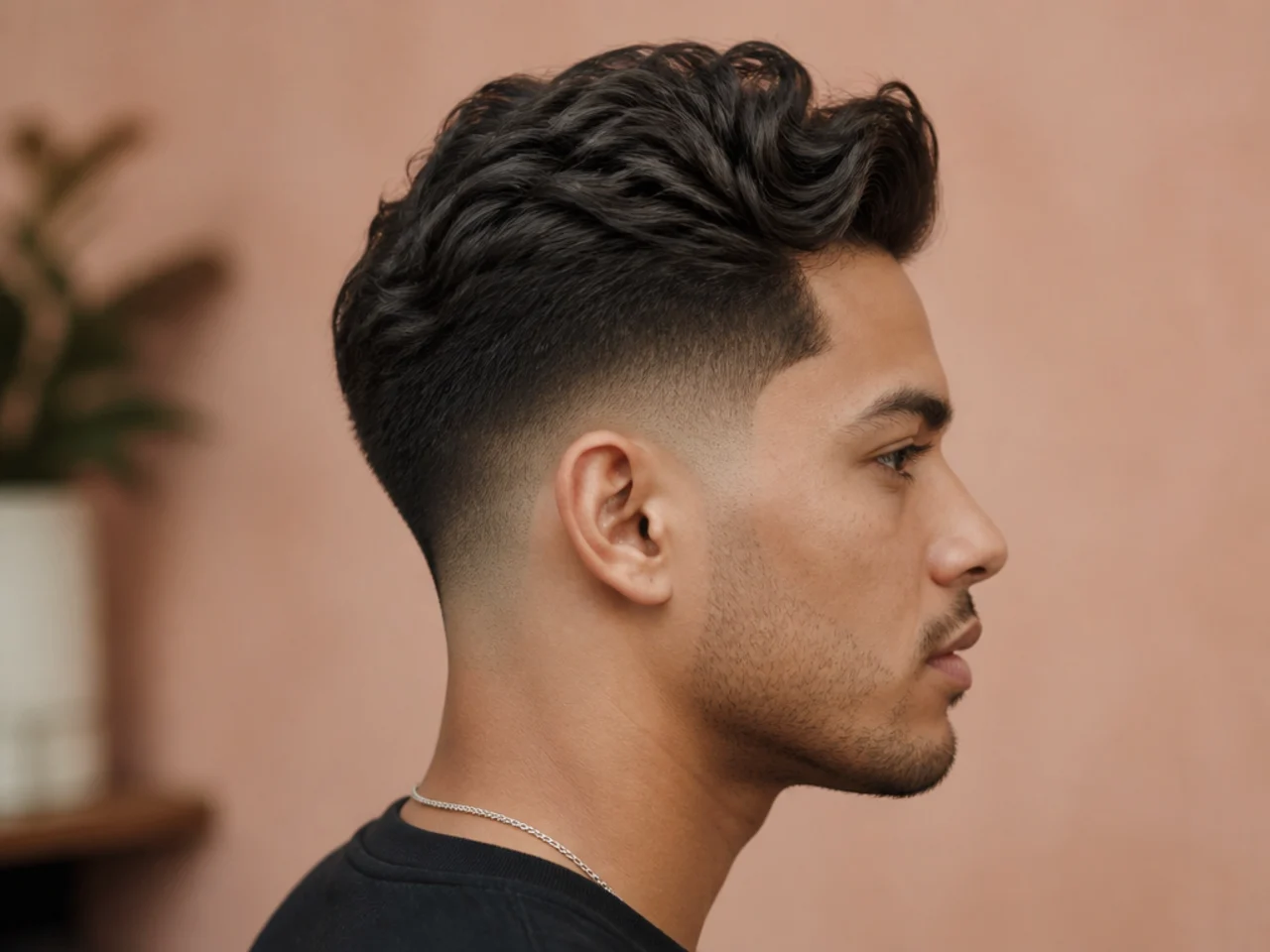
The drop fade arcs down behind the ear instead of staying level. That curve gives the back of your head a rounder profile, which balances a tall blowout on top. Best for guys with a flatter occipital bone — the drop compensates for the shape. This haircut is famous for black men.
How to ask: "Low drop fade around the ear, blowout on top, four inches of length, keep the crown full." Point at the curve behind your ear so the barber sees the drop line.
Styling tip: Blow-dry the back forward first, before the sides. That trains the hair to sit up rather than fall flat against your neck.
5. Low Taper Blowout
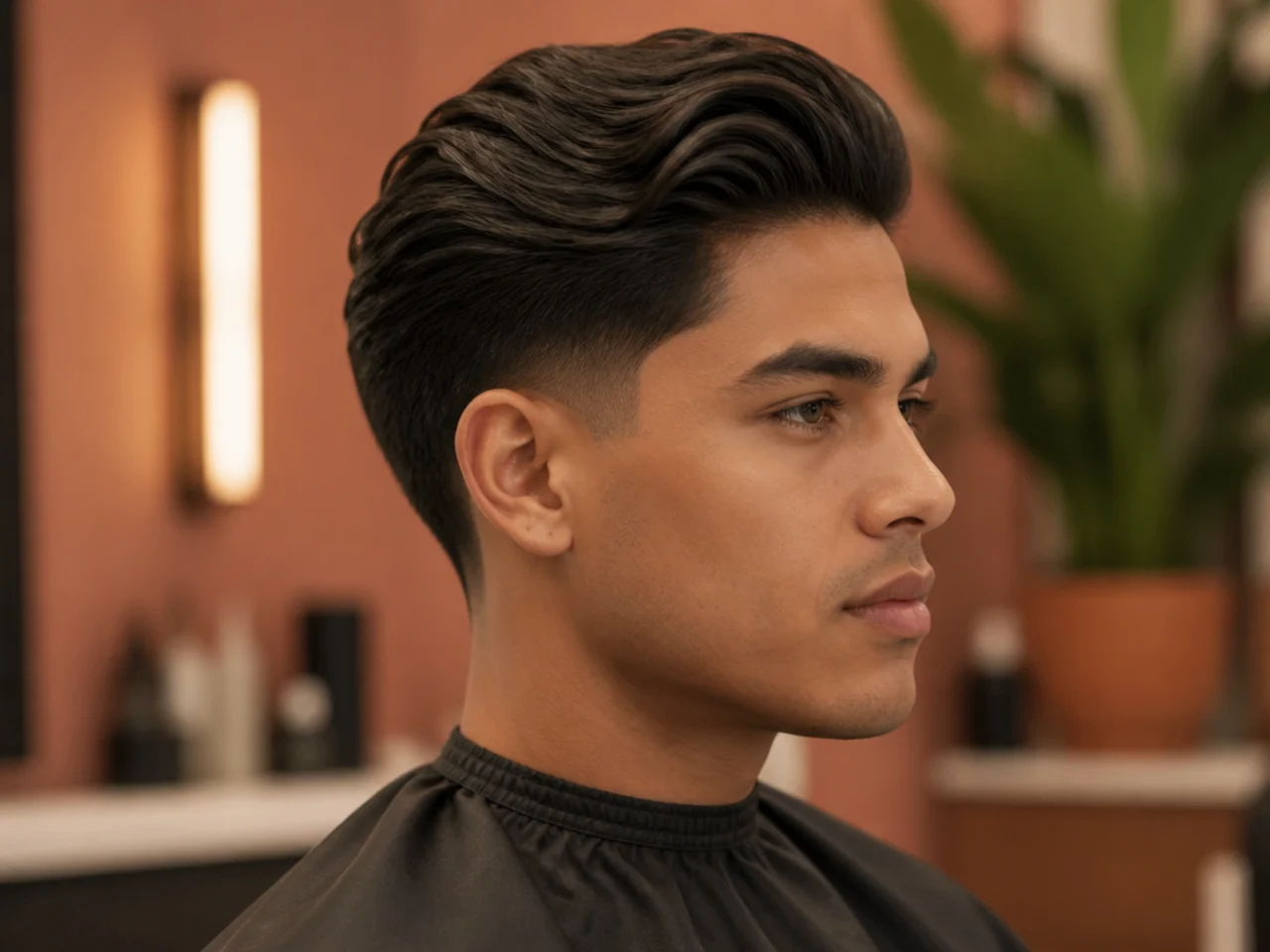
The low taper barely touches the ear — most of the length above stays intact. It's the most conservative version of this cut and reads well in professional settings. Best for guys who want volume with understated sides.
How to ask: "Low taper — just clean up above the ear and around the neckline. Blowout on top, four inches, cut for lift." Keep the taper zone small and the top does the talking.
Styling tip: Rough-dry with your hands first, then finish with a round brush on the front section only. Shape the visible half — that's all you need.
6. Blowout Afro Taper Fade
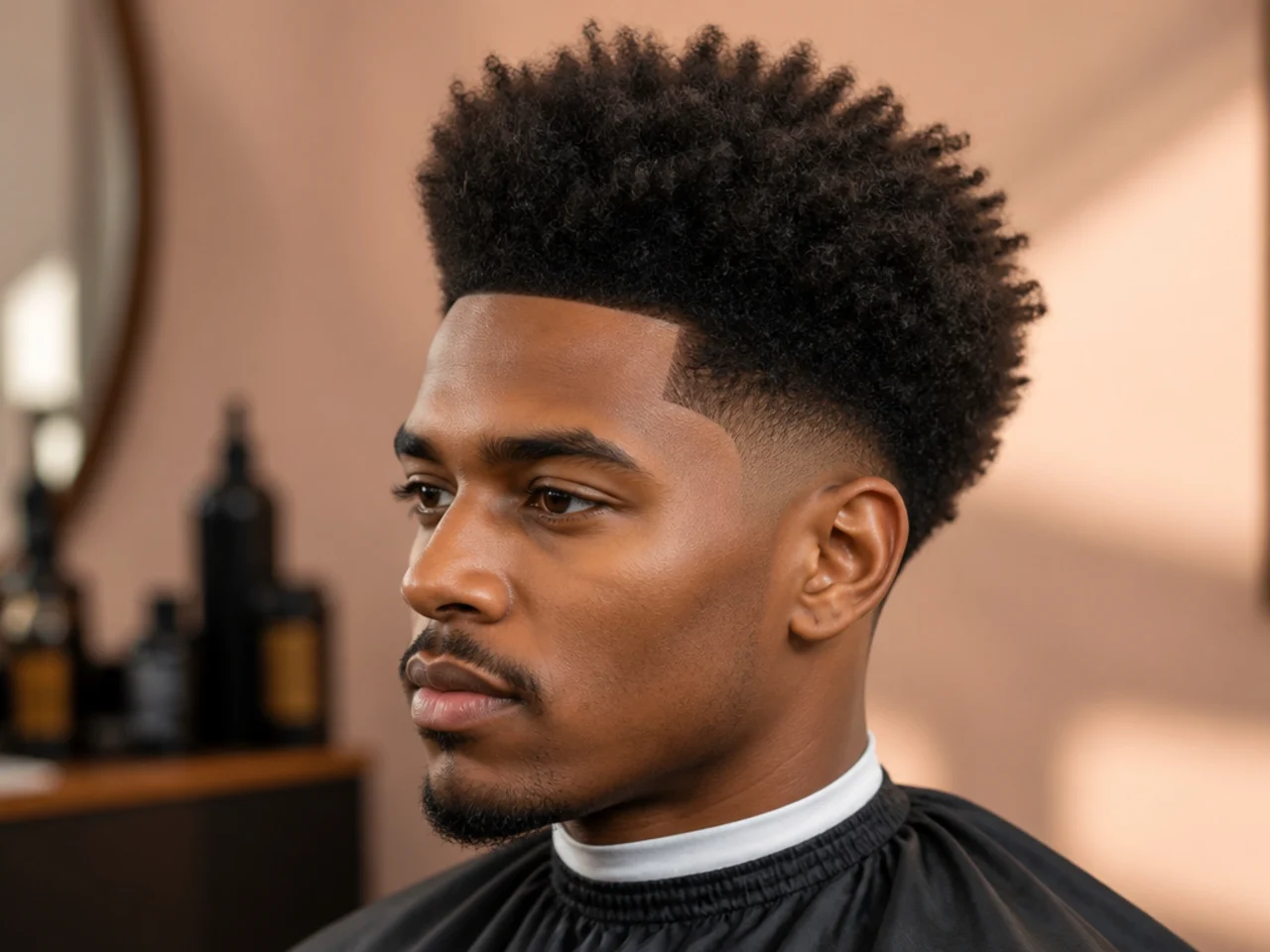
An afro blowout keeps a full coil pattern on top and lets the taper handle the sides. The volume already lives in the curl. Best for 4a–4c coils with three to five inches of length grown out.
How to ask: "Scissor cut on top to keep the curl pattern, blowout shape, taper on the sides — mid or low, your call." Scissors matter. Clippers on top flatten the coil.
Styling tip: Pick out damp hair with a wide-tooth pick, then blow-dry with a diffuser on low. Never round-brush coils — you'll break the pattern.
7. Blowout Taper for Wavy Hair
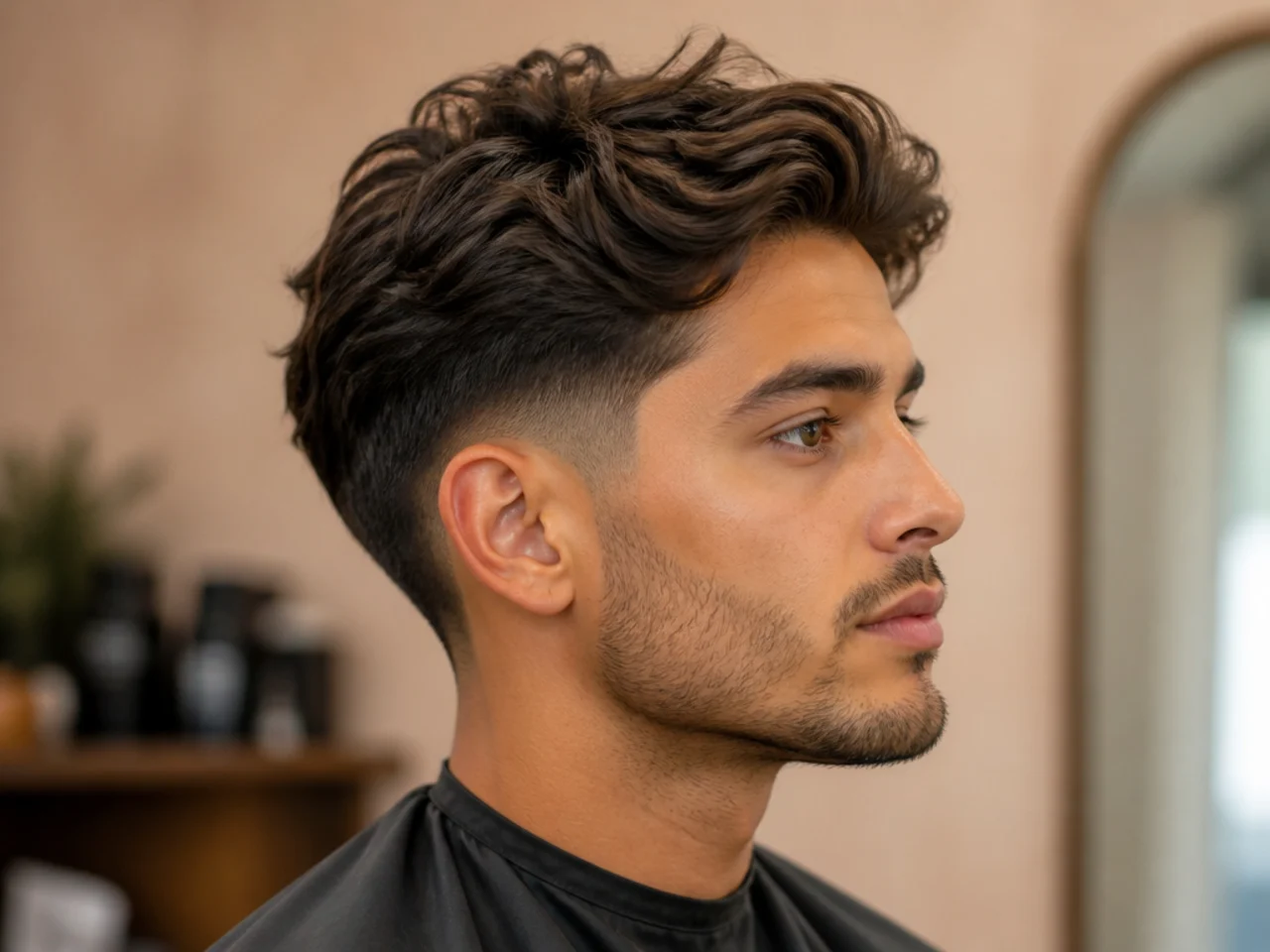
Wavy hair is the sweet spot for this cut. The wave adds movement, the blow-dry adds height, and the two stack into a full silhouette without much product. Best for 2b–2c waves with three to six inches on top.
How to ask: "Blowout taper, mid height on the sides, five inches on top, thin the crown so it doesn't sit heavy." The thinning matters — wavy hair gets bulky at the back if left alone.
Styling tip: Curl cream on damp hair, blow-dry with a round brush going backward, then break up the shape with your fingers. Don't over-brush.
8. High Blowout Taper
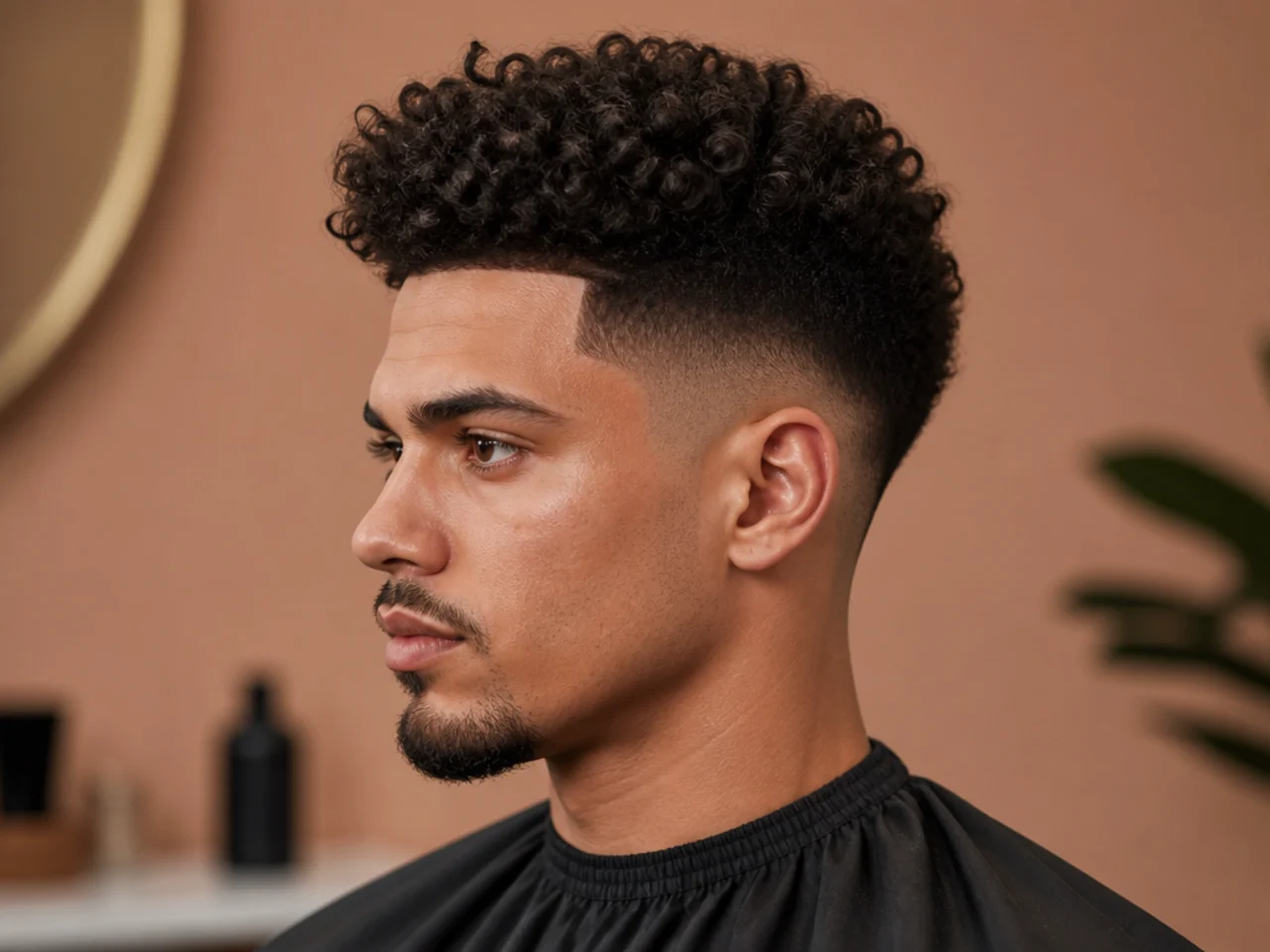
The high taper starts up near the parietal ridge. Only a small band of hair remains on the sides, which lets the blowout read as huge. Best for oval and diamond faces; round faces will look shorter.
How to ask: "High taper, 0 guard at the shortest, blowout on top, six inches of length, no weight up top." Length matters most — a big blowout needs hair to build the shape.
Styling tip: Straight hair often needs a light perm or a strong texture spray to hold this height. Blow-dry with heat protectant, use strong-hold cream, then reapply the dryer over the shape until it locks.
9. Wavy Mid Blowout Taper
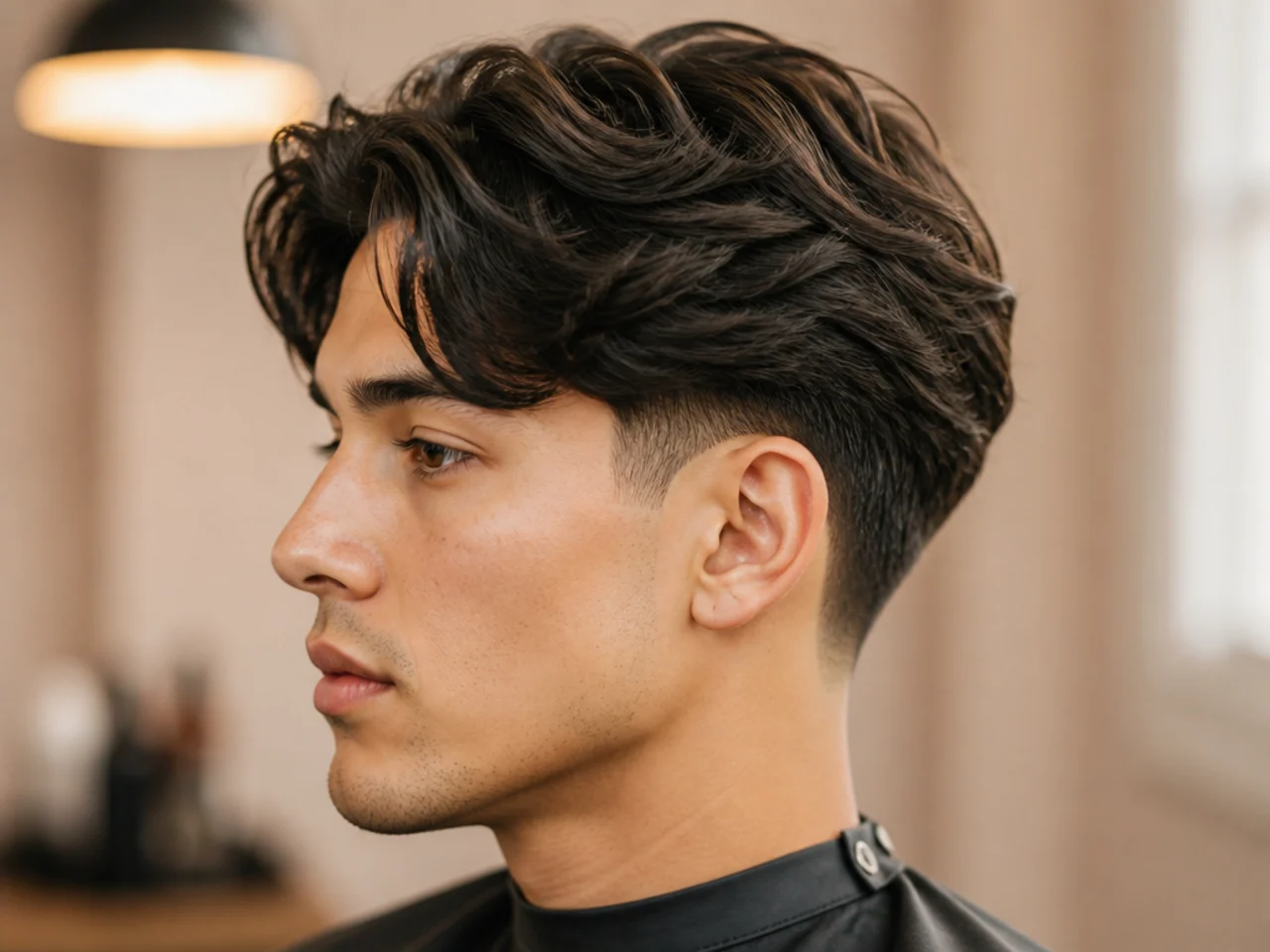
Thick wavy hair on a mid taper is a workhorse cut. The waves stack in the blowout for natural body, and the mid taper reads clean without being aggressive. Best for dense, coarse waves.
How to ask: "Mid taper, blowout on top, five inches, texturize the ends so the waves separate." Texturizing shears break up bulk so waves stand out individually.
Styling tip: Sea salt spray on damp hair before you blow-dry. It adds the grit that lets waves hold the round-brush shape all day.
10. Blowout Taper Fade for Curly Hair
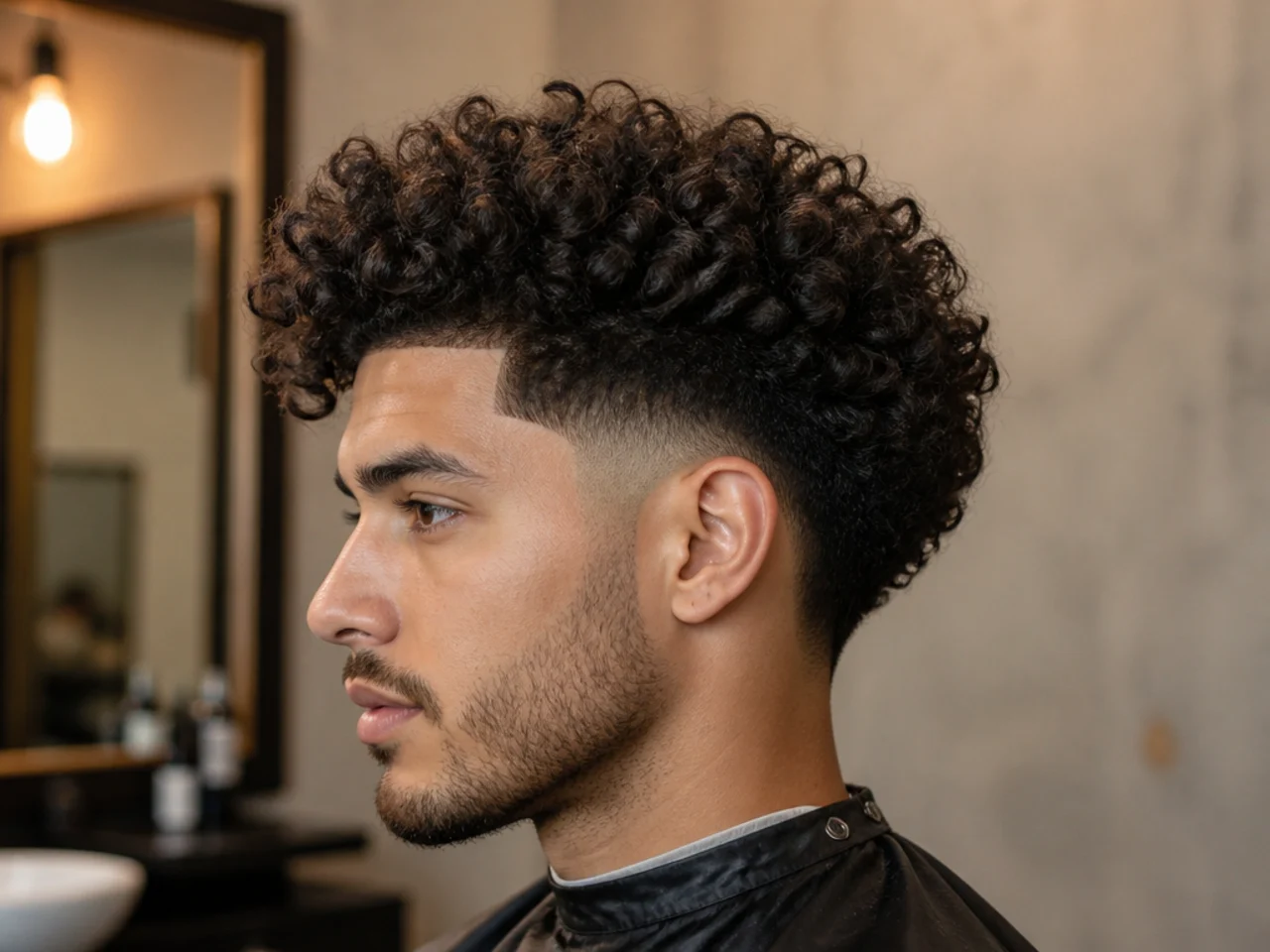
Curly hair on a blowout taper reads as a full, rounded crown with a clean perimeter. The curl handles the volume — you're really just shaping the outer edge. Best for 3a–3c curls with four to six inches on top.
How to ask: "Blowout taper, low or mid on the sides, scissor cut on top, leave the curl pattern intact, shape it round." Round shape — that's the ask.
Styling tip: Curl cream on damp hair, diffuser on low heat, plop and lift at the roots as you dry. Don't touch it after — every touch flattens the curl.
11. Curly Hair Blowout Taper with Enhancements
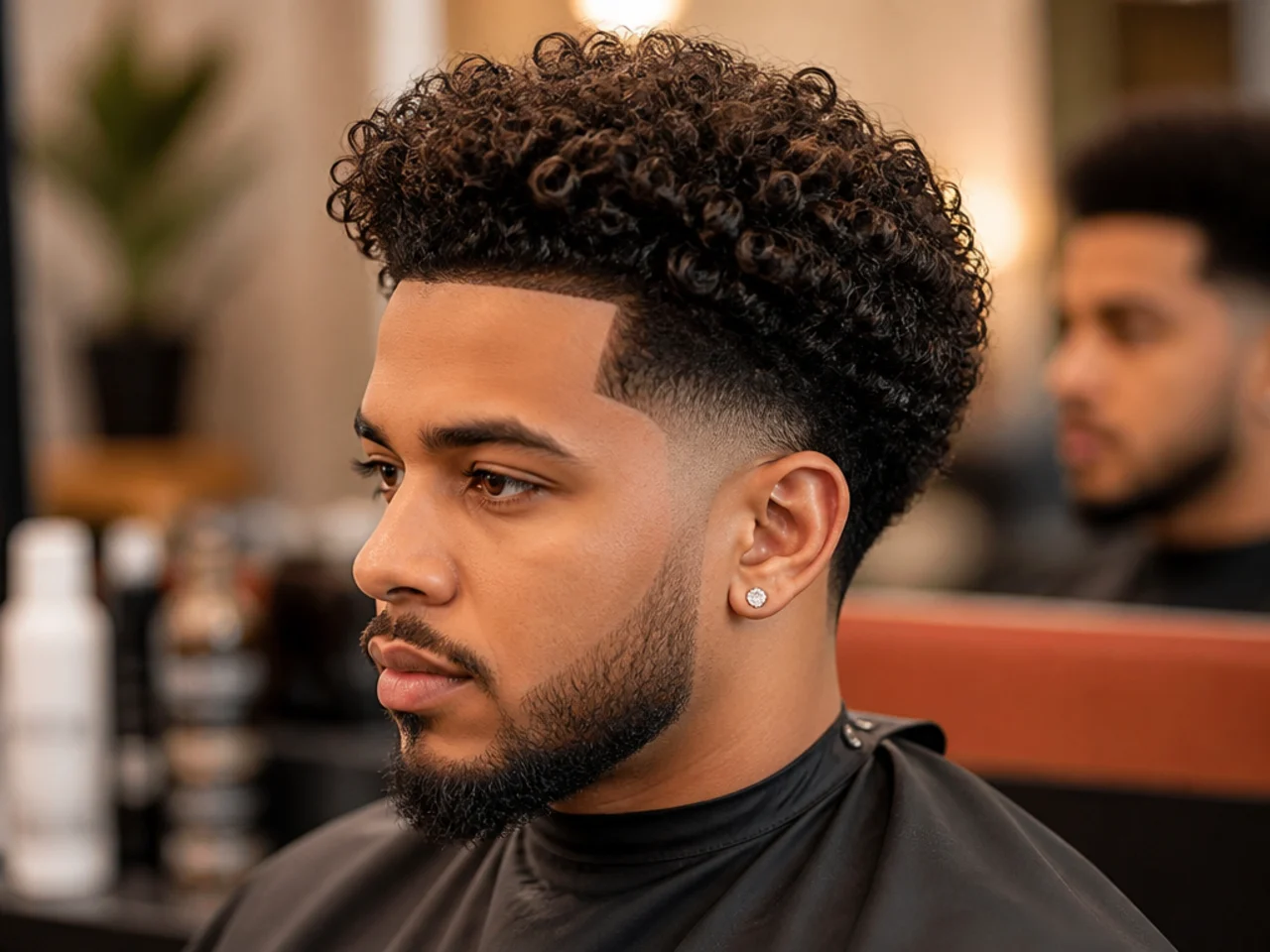
Same silhouette as #10, but with enhancement spray to darken the hairline and edges. The extra pop makes the taper look sharper against skin. Photographs great. Best for dense curl.
How to ask: "Blowout taper with enhancement spray on the perimeter and beard line. Low taper, scissor top." Ask if the spray is included — some shops charge extra.
Styling tip: Enhancement fades over the day. Refresh with a hairline pencil if you're going out later.
12. Blowout Taper with Heavy Crown
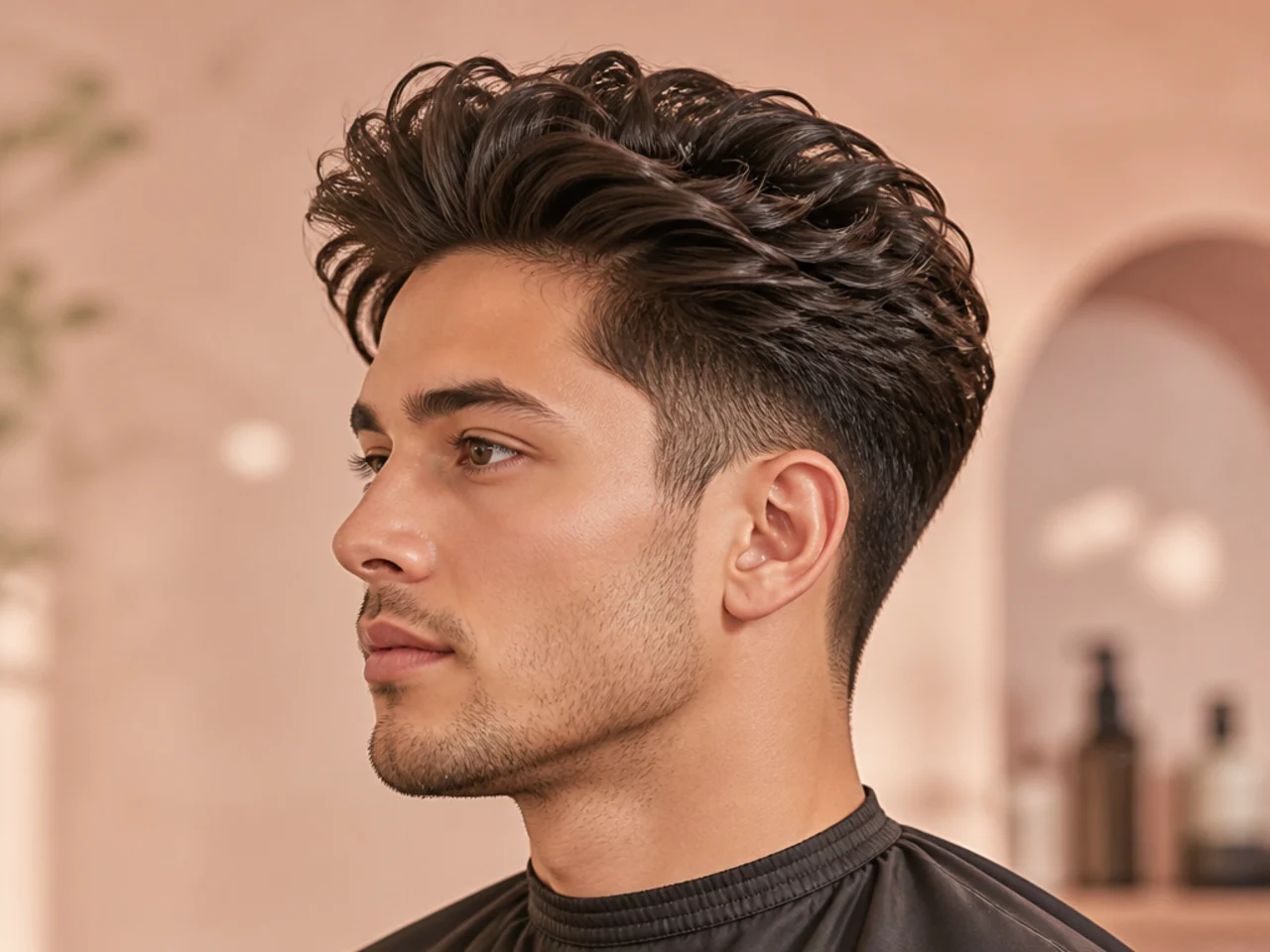
Standard blowout tapers keep the front tall and the crown medium. This version reverses that — the crown gets more weight, and the whole top reads fuller from the side profile. Best for guys with a flatter head shape at the crown.
How to ask: "Blowout taper, mid on the sides, keep extra weight in the crown, five to six inches on top." Say "extra weight in the crown" — your barber knows what that means.
Styling tip: Blow-dry the crown up and forward first, then let the front fall naturally. Flips the usual direction — front follows crown here.
13. Disconnected Blowout Taper
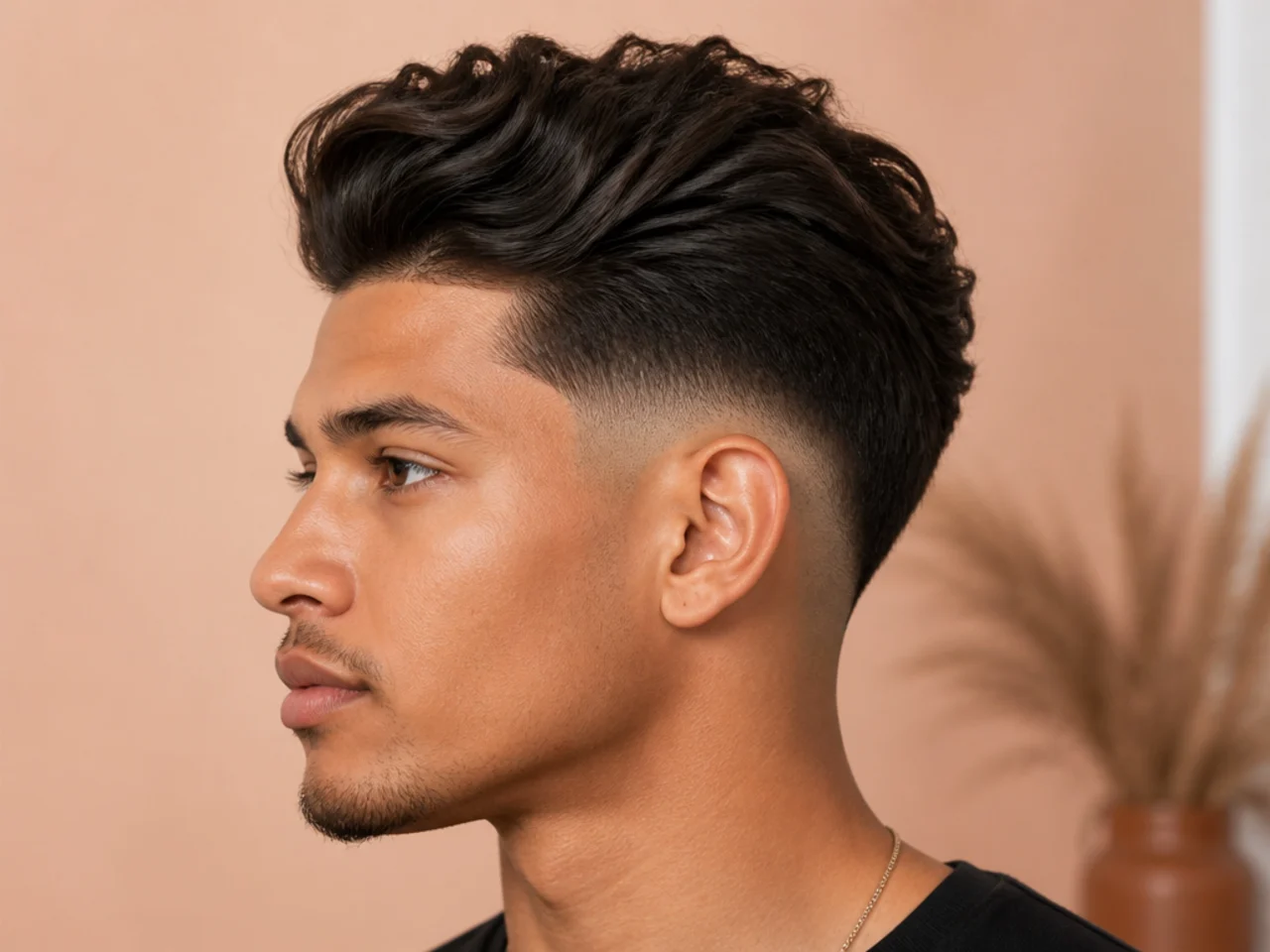
Disconnected means the top length doesn't blend into the taper — there's a visible line where long meets short. The blowout exaggerates that contrast. Great for curly hair. Best for guys who want maximum contrast between top and sides.
How to ask: "Disconnected blowout taper, hard line at the parietal ridge, five inches on top, low taper below the disconnection." The hard line is the whole idea. Don't let anyone blend it.
Styling tip: Strong-hold cream or pomade. You need product that anchors the top so the disconnection reads intentional, not accidental.
14. The TikTok Hairstyle
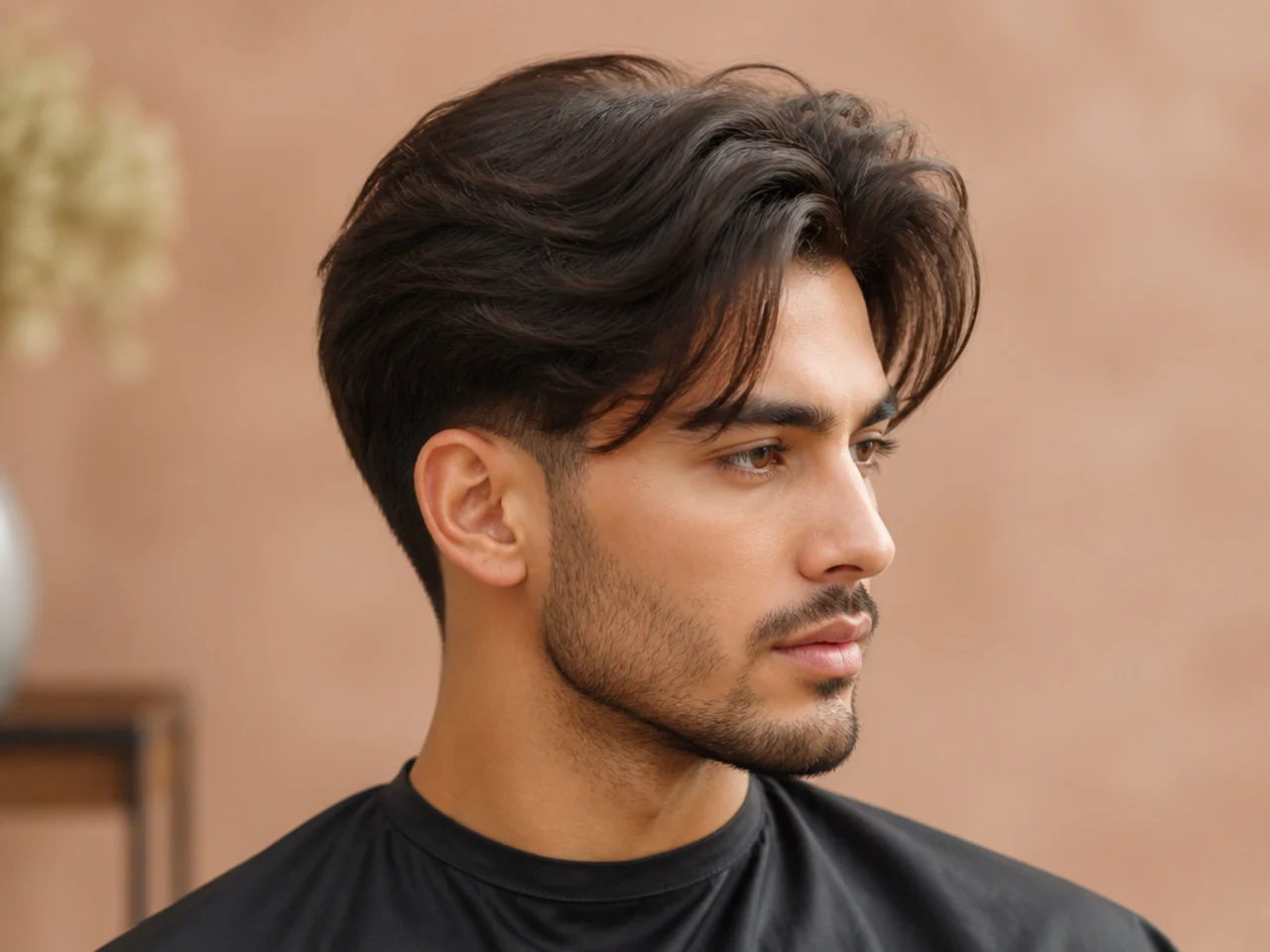
The TikTok cut is the flipped-up front fringe — hair pushed forward, then flicked upward at the very end. Add a blowout taper underneath and you get social-ready volume with clean edges. Also called the broccoli cut when it goes bigger. Best for teens and guys with wavy or curly hair.
How to ask: "Blowout taper, mid fade, front fringe left long enough to flip up — five inches or so." Bring a photo. This one has fifty variations.
Styling tip: Blow-dry the front forward with a round brush, then curl the ends up at the very tip. Setting spray holds the flip.
15. Blonde Blowout Taper
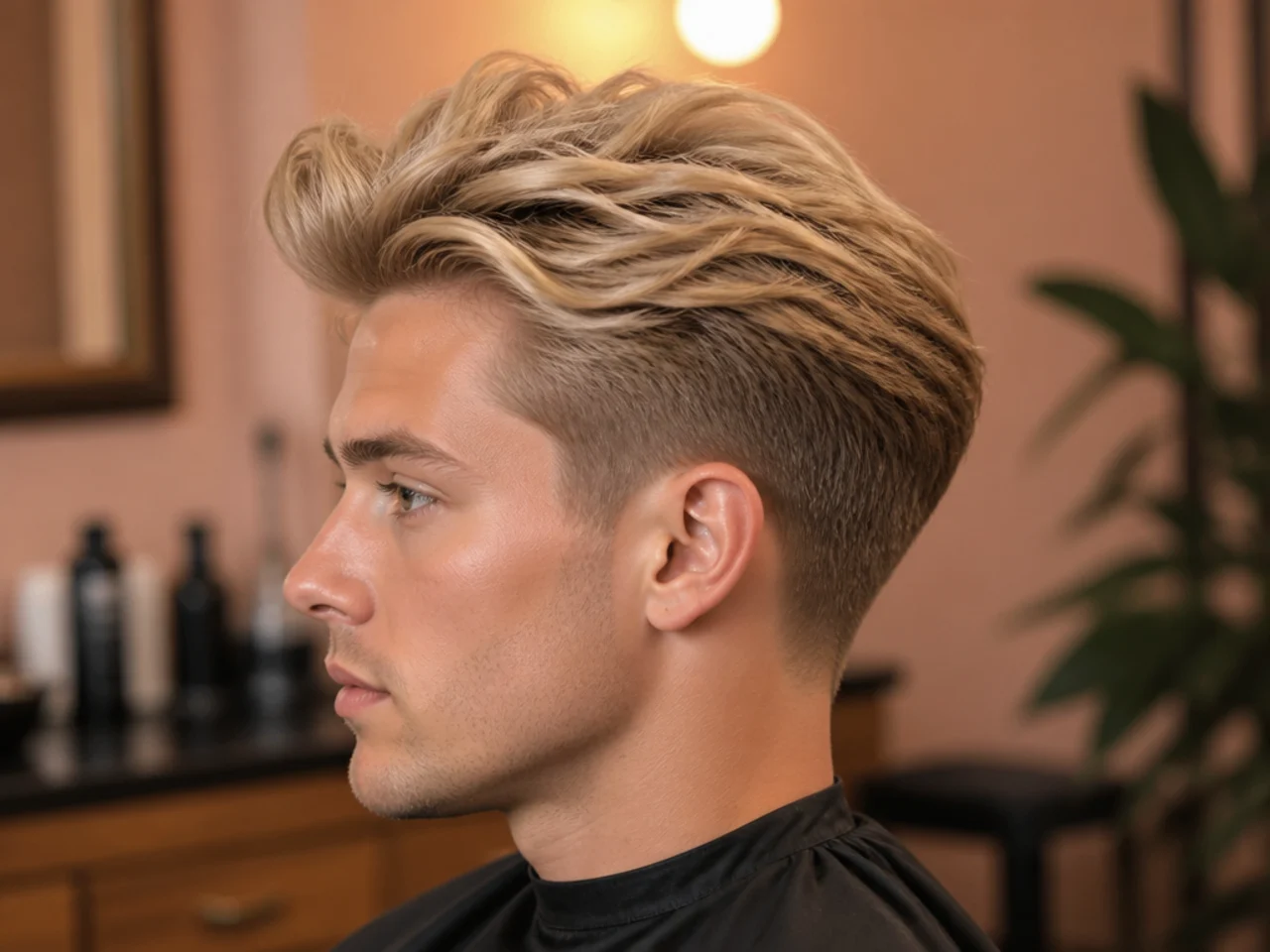
Same shape with a color story. Light hair softens the contrast at the taper line, which shifts the focus to the volume up top rather than the fade transition. Best for guys who want the silhouette without sharp taper contrast.
How to ask: "Blowout taper, mid height on the sides, blend the color transition." If you're bleaching, cut first — over-processed hair won't hold the blowout shape.
Styling tip: Purple shampoo weekly to kill brass. Yellow blonde ages the whole look. Cool blonde keeps it fresh.
16. Mid Taper Blowout for Straight Hair
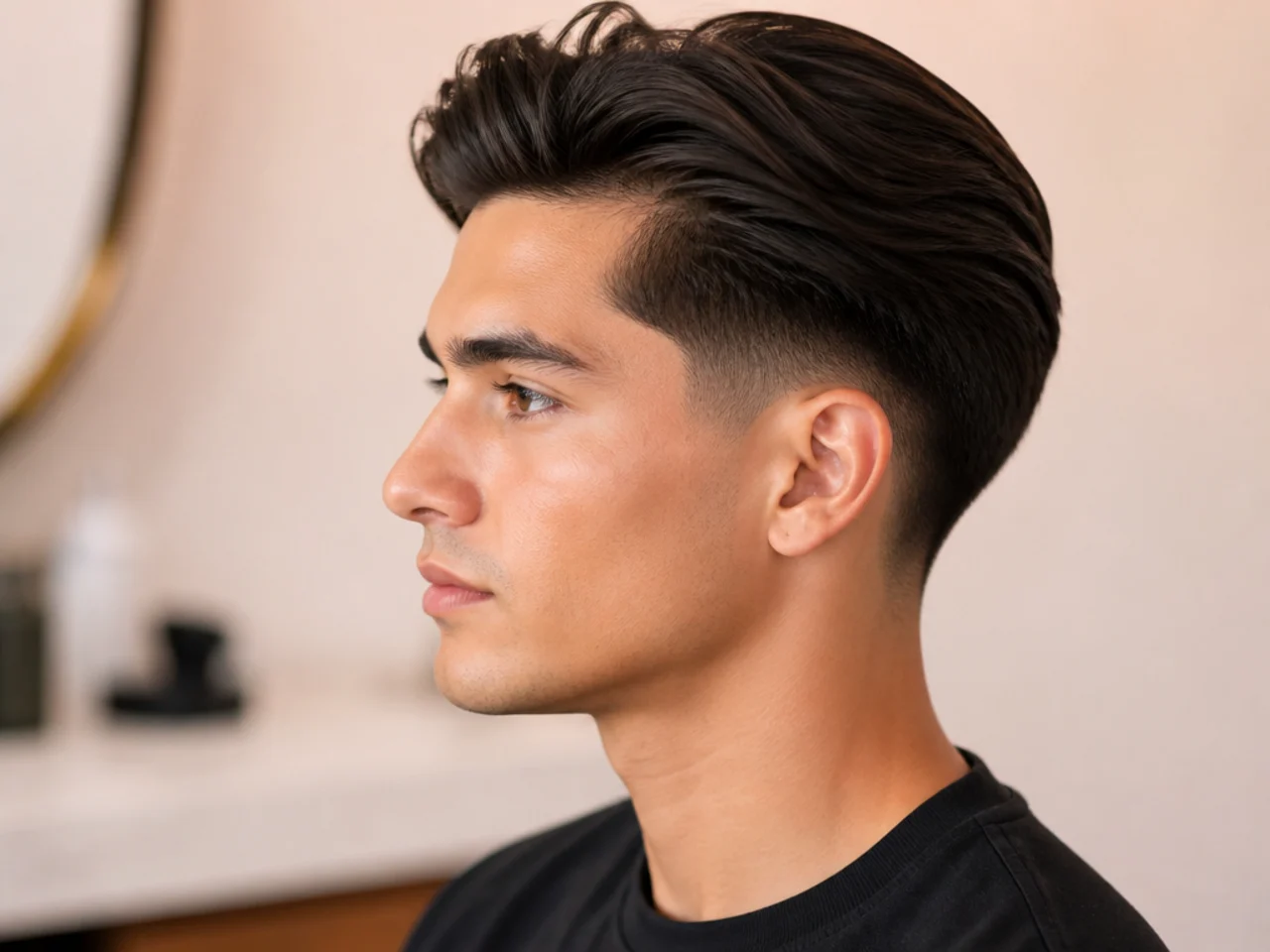
Straight hair is the hardest texture to blow out — no natural body means every bit of volume is engineered with heat and product. It works if you commit to the routine. Best for medium-density straight hair.
How to ask: "Mid taper, blowout top, four inches, add point-cut texture through the length." Texturing gives the dryer something to grip.
Styling tip: Mousse at the roots on damp hair, blow-dry upside down for the first pass, then flip up and shape with a round brush. Finish with texture powder.
17. Mid Taper Blowout for Thin Hair
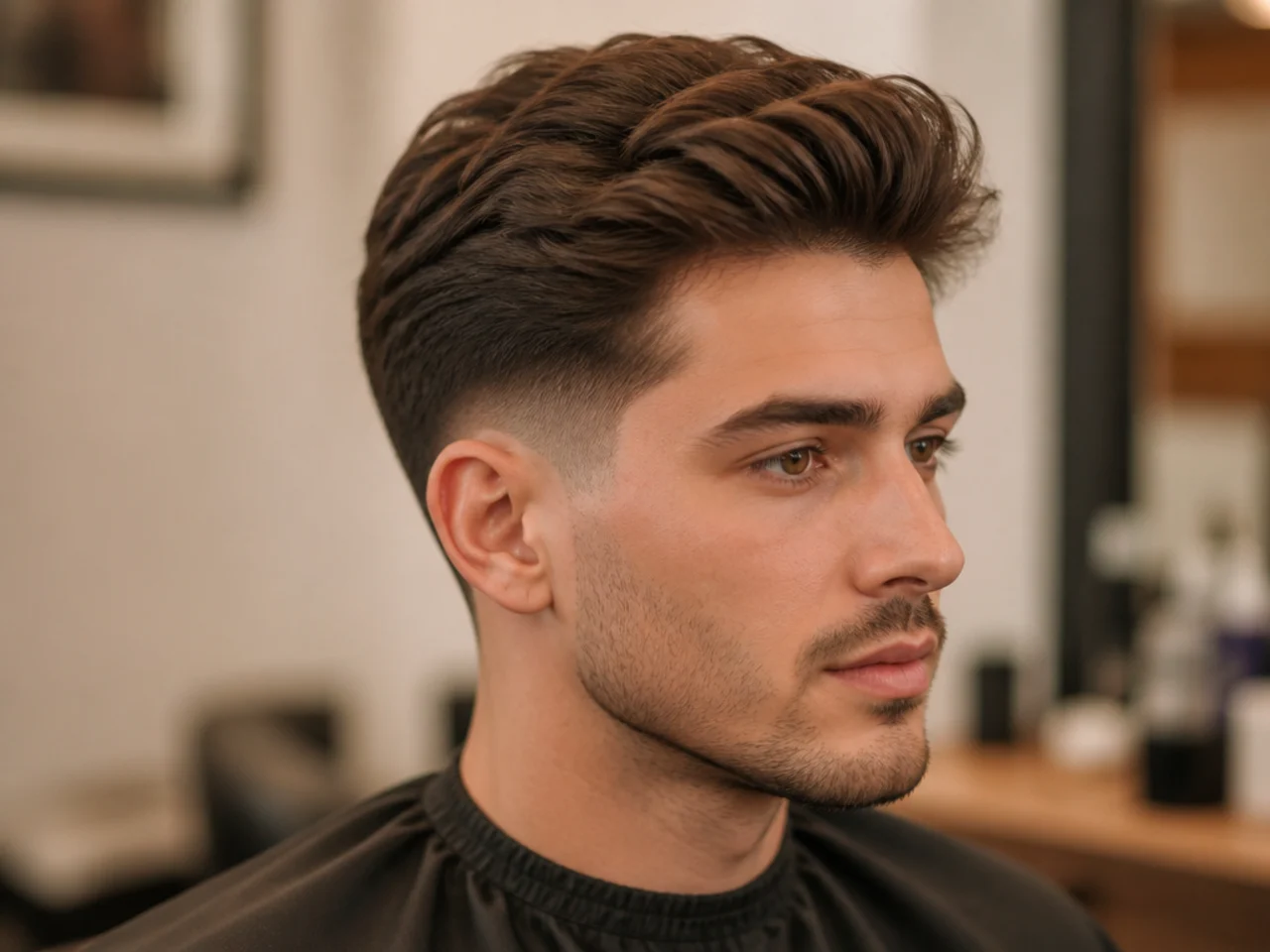
Thin hair reads fuller when it's cut shorter and blown out with lift at the roots. The blowout taper is one of the best cuts for thin hair because volume is the whole point. Best for guys with density loss who still have enough length to work with.
How to ask: "Mid taper, blowout on top, three to four inches — no longer. Cut to make the hair look denser." Shorter is fuller for thin hair. Length exposes scalp.
Styling tip: Root-lift spray, blow-dry against the natural fall, finish with a fiber that doesn't clump. Wet-look kills volume — stay matte.
18. Afro Blowout with Enhancements
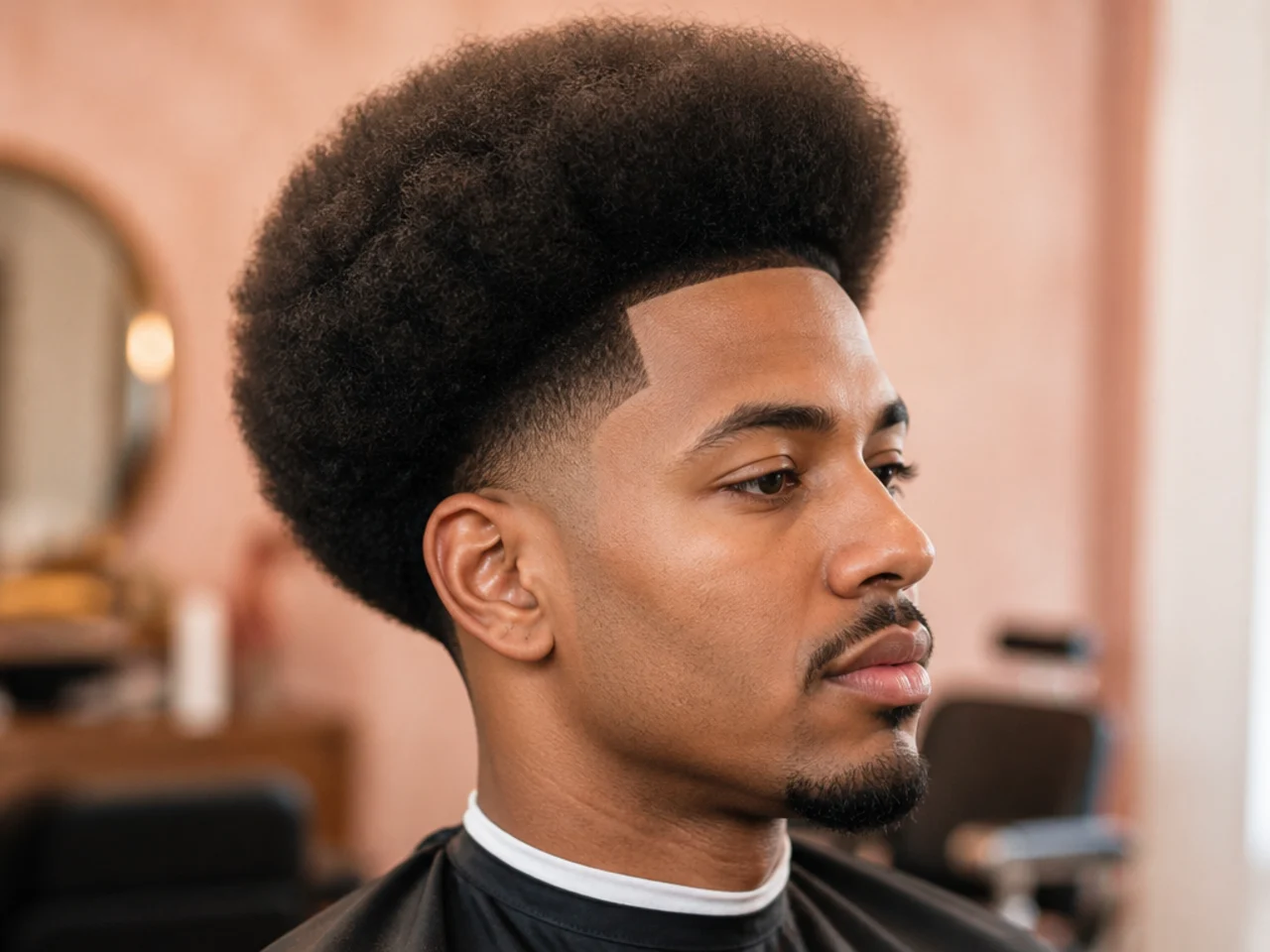
The afro blowout with enhancement spray pairs a full coil pattern on top with a sharp, sprayed-in perimeter. Common on 4a–4c hair for events and photos. Best for guys who want max sharpness at the hairline against a big top.
How to ask: "Afro blowout, scissor cut on top, low or mid taper, enhancement spray on the hairline and beard." Ask which brand — some hold longer than others.
Styling tip: Pick out with a wide-tooth comb, shape with your hands, then set with a light-hold spray. Silk pillow or bonnet overnight to keep the shape.
19. Curly Crop Blowout Taper
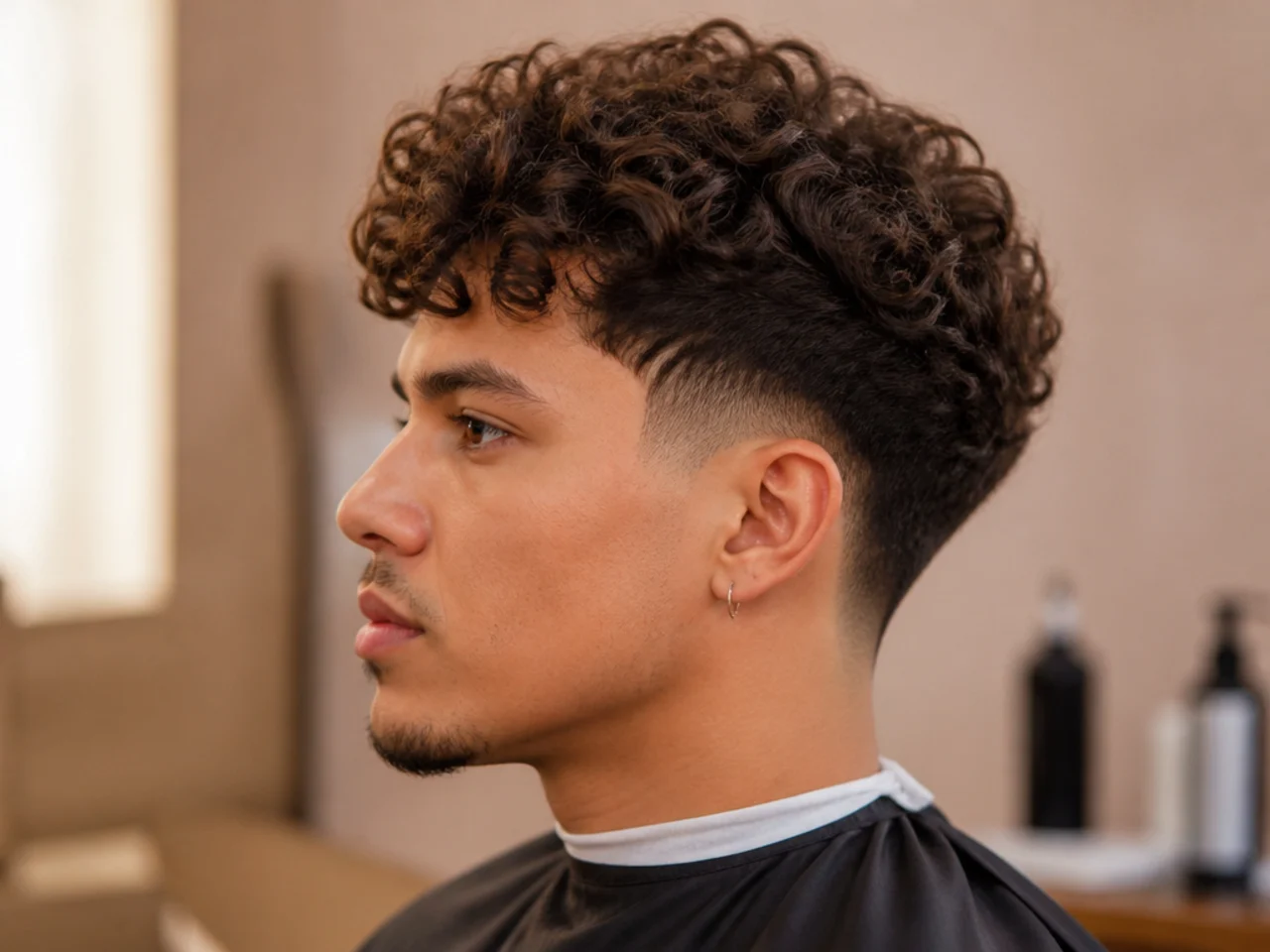
The curly crop is short curls on top with a heavy fringe. Swap the usual full fade for a taper and you keep the crop shape while softening the sides. Falls into the textured haircut family. Best for 3a–3b curls.
How to ask: "Curly crop with a fringe, low taper on the sides, three inches on top, scissor cut to preserve the curl." Say scissor cut. Clippers destroy the curl pattern up top.
Styling tip: Curl cream on damp hair, diffuser on low if you have five minutes. This is the one variation that tolerates air-drying.
20. Low Blowout Taper for Straight Hair
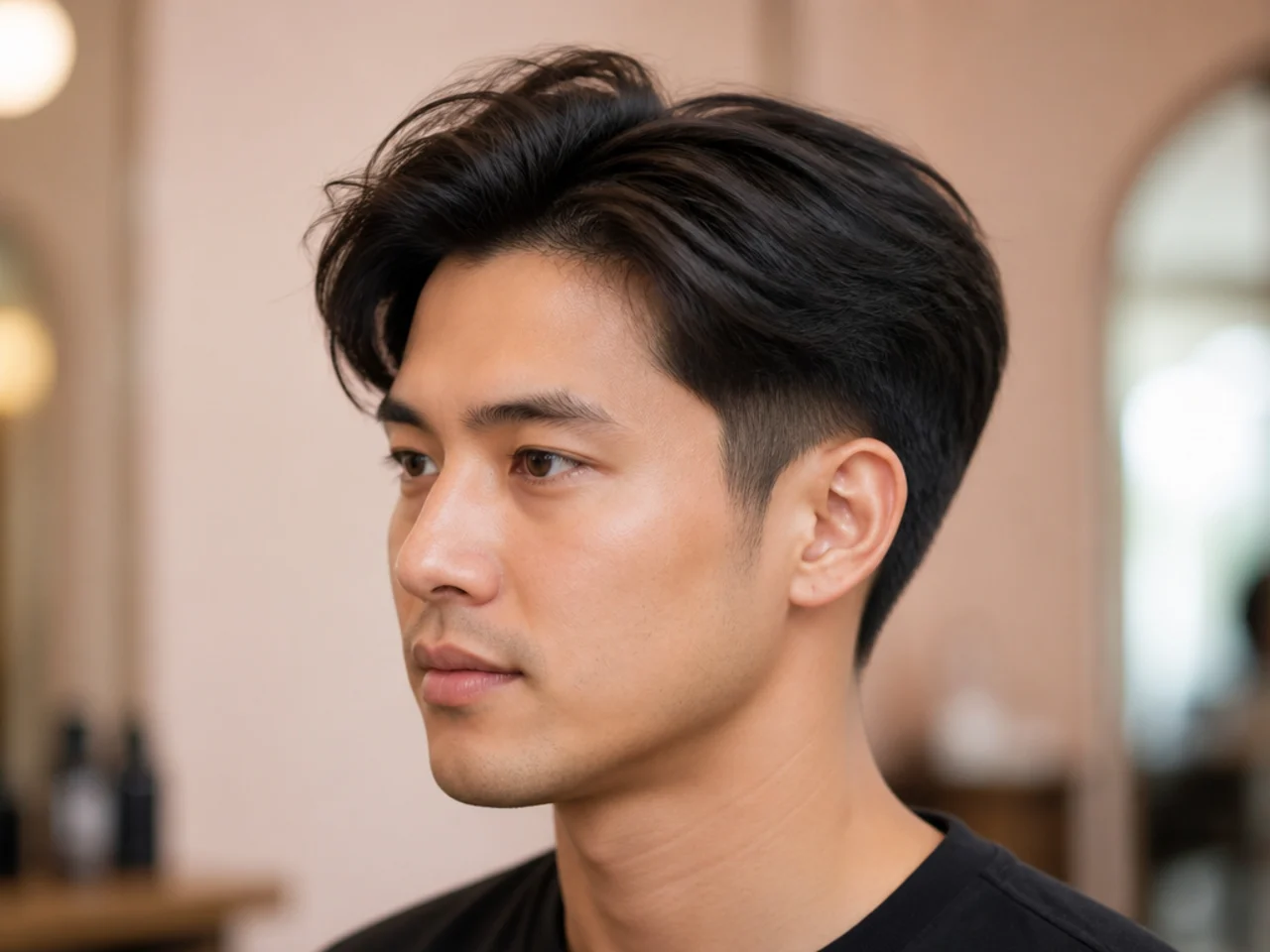
Straight hair with a low taper gives you a subtle silhouette — the sides read almost untouched, and the blowout does all the lifting. Wearable for offices that side-eye anything bolder.
How to ask: "Low taper — just clean around the ears and neck. Blowout on top, four inches, cut to lift." The taper zone should be small enough that a suit collar covers most of it.
Styling tip: Blow-dry with a round brush going up and back. Finish with matte cream. No shine — shine on straight hair reads slick, not blown out.
Origins and Evolution of the Blowout Taper
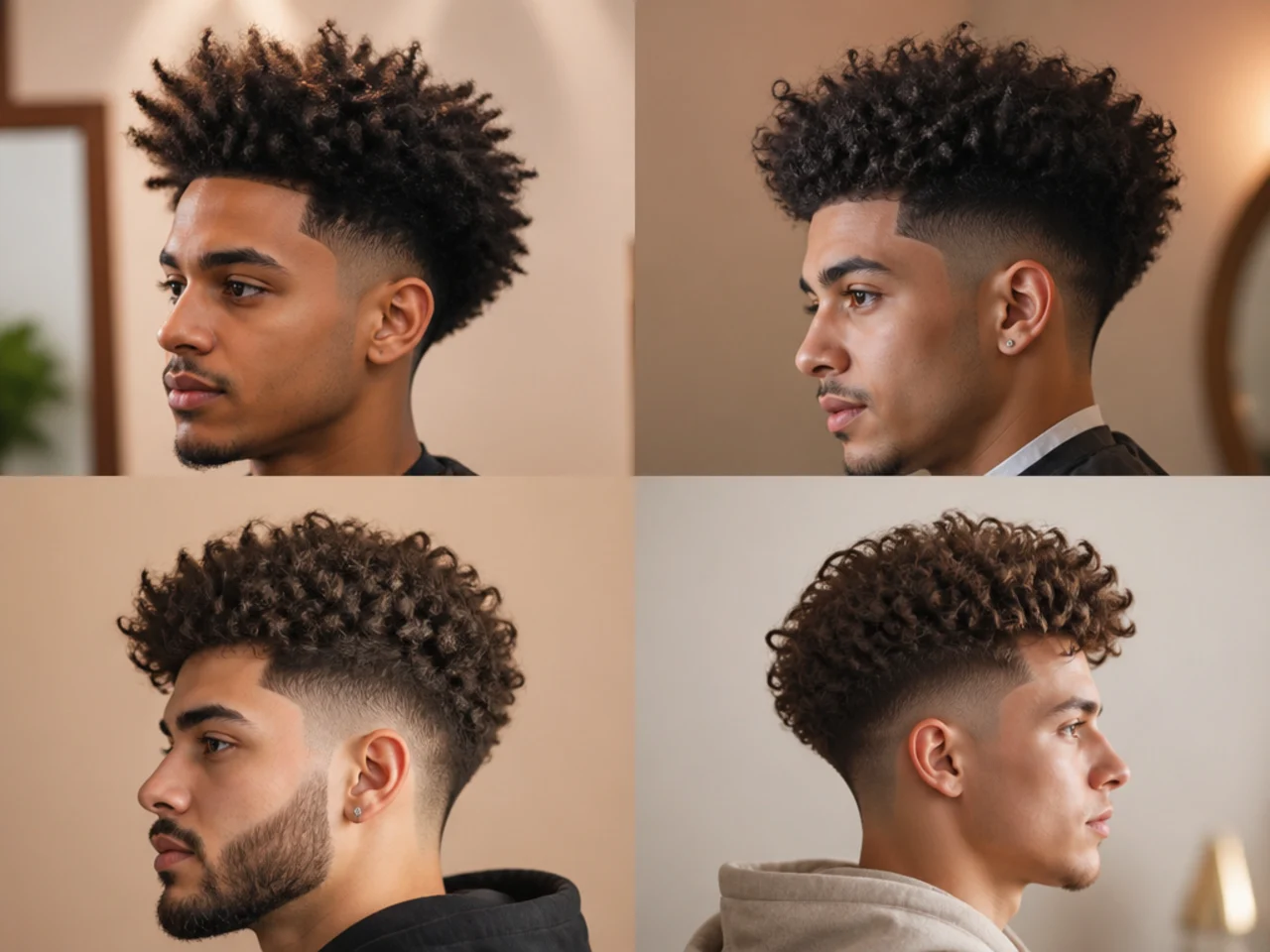
The blowout started in East Coast barbershops in the early 2000s. Hip-hop, athletes, club-circuit guys — different scenes ran the same silhouette. Big top, short sides, glossy finish. It was a full skin fade back then. The taper version came later, once barbers softened the sides for professional wear.
The 2010s were quiet on volume. Textured crops, low fades, side parts — the industry drifted toward flatter, closer cuts. The blowout got tagged as dated.
Pinterest and TikTok flipped it around 2022. Volume came back with the broccoli cut and the textured pompadour revival, and the blowout followed. The modern version is softer at the base (taper, not skin fade) and drier at the top (matte, not gel). The silhouette hasn't changed. The details drift with the decade.
Key Characteristics of the Blowout Taper
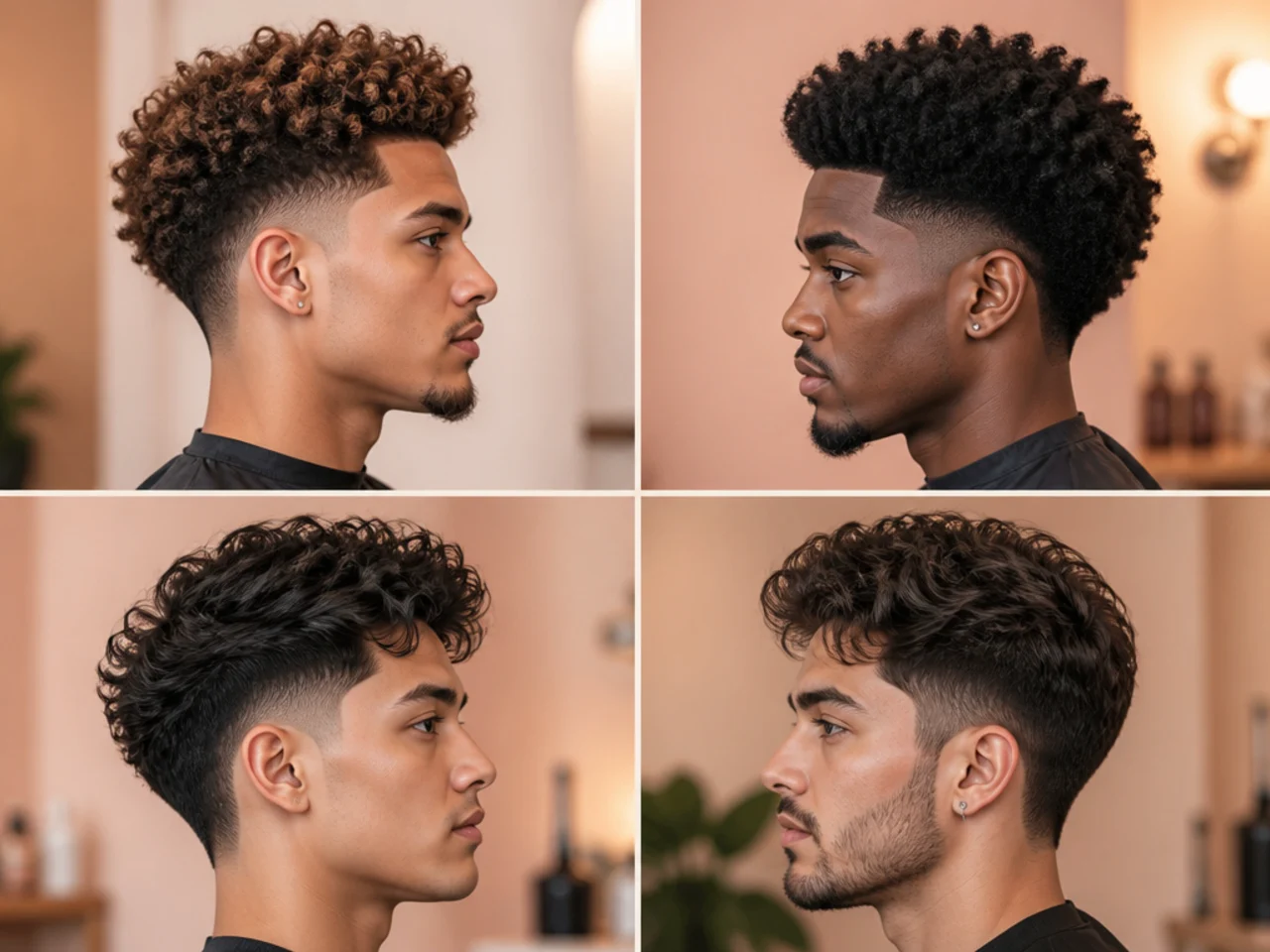
Four traits define this cut:
- Voluminous Top: The whole style hangs on the volume. If it doesn't lift, it isn't a blowout.
- Tapered Sides and Neckline: Sides shrink gradually, never buzzed to skin. Different from a full fade.
- Line-Ups and Edges: Front hairline and temples get squared or arched with a razor.
- Versatility in Texture: Straight, wavy, curly, coily — it all works. Styling changes; the shape doesn't.
Hit all four and it's a blowout taper regardless of fade height or hair type.
Why the Blowout Taper Remains Popular
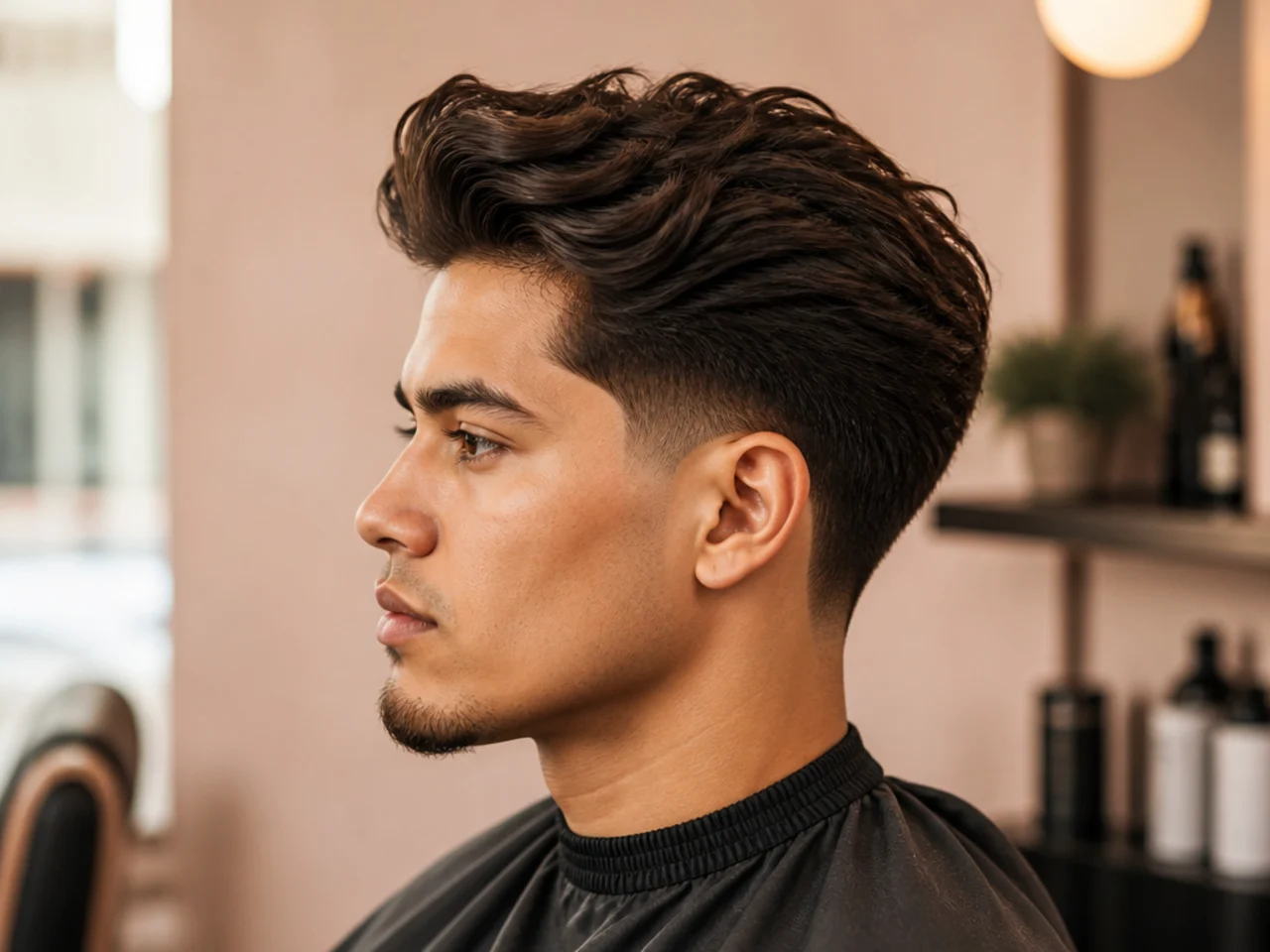
The blowout taper hits three demands at once. It's dressy enough for work. Loud enough for weekends. And it grows out gracefully — the taper doesn't develop a hard line the way a burst fade or high skin fade does. You get an extra week between cuts.
It's also camera-ready. Volume photographs well, and every social platform rewards silhouette. A flat cut disappears in a scroll.
The last reason is barber accessibility. Most working barbers can do this cut. Anyone with taper experience can execute it.
Who Should Consider a Blowout Taper?
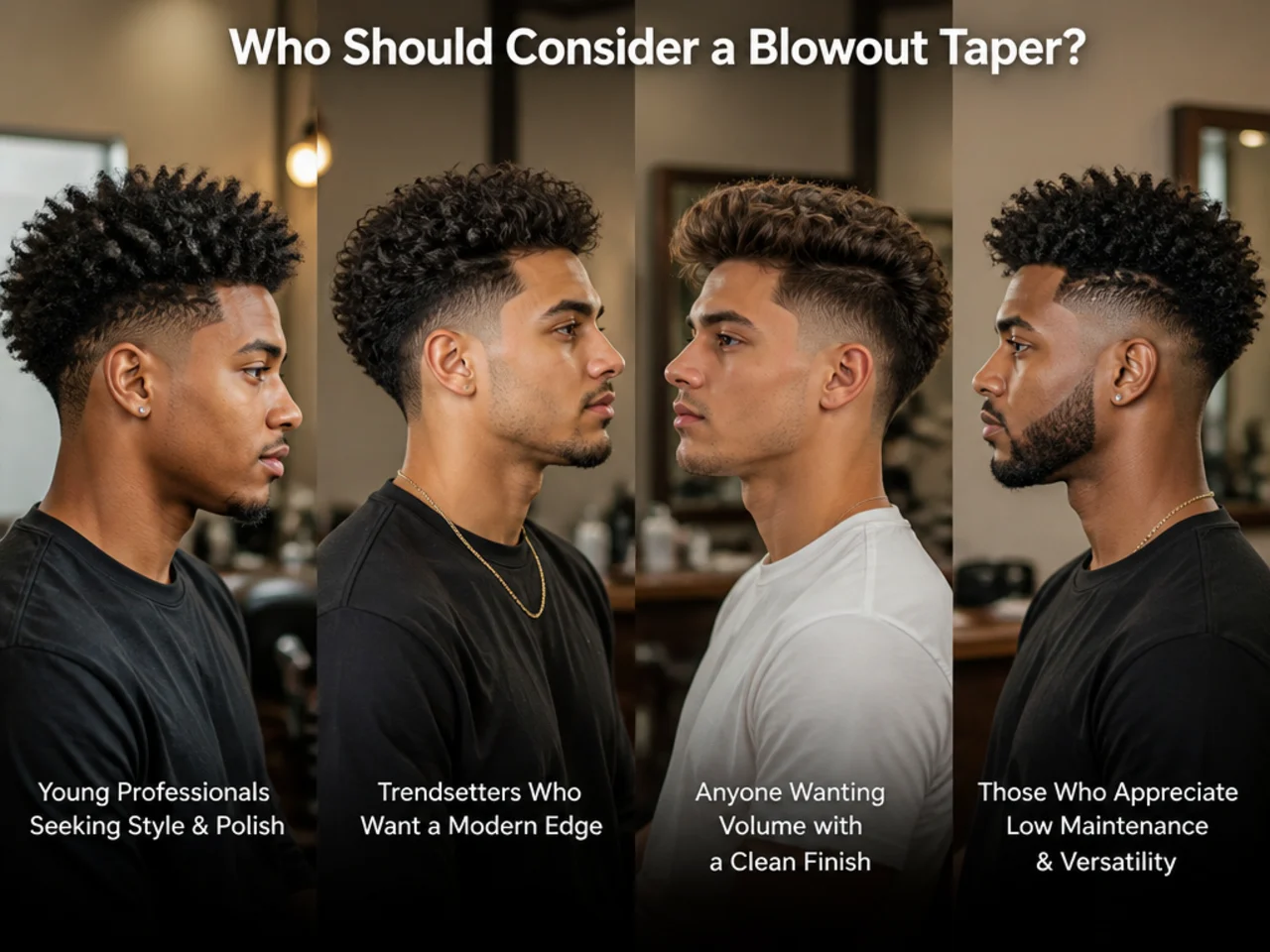
You're a good fit if:
- Medium or Thick Hair: Density gives the round brush something to shape. Fine hair works with mousse; thick hair works without.
- Natural Texture: Wave and curl add body for free. Straight hair needs product and heat to fake what wavy hair does naturally.
- Sharp Facial Features: The clean sides highlight the jaw. Rounder faces still work — go taller on top to balance width.
Skip this cut if you don't own a blow-dryer and refuse to buy one. The blowout is styled, not cut.
Styling a Blowout Taper
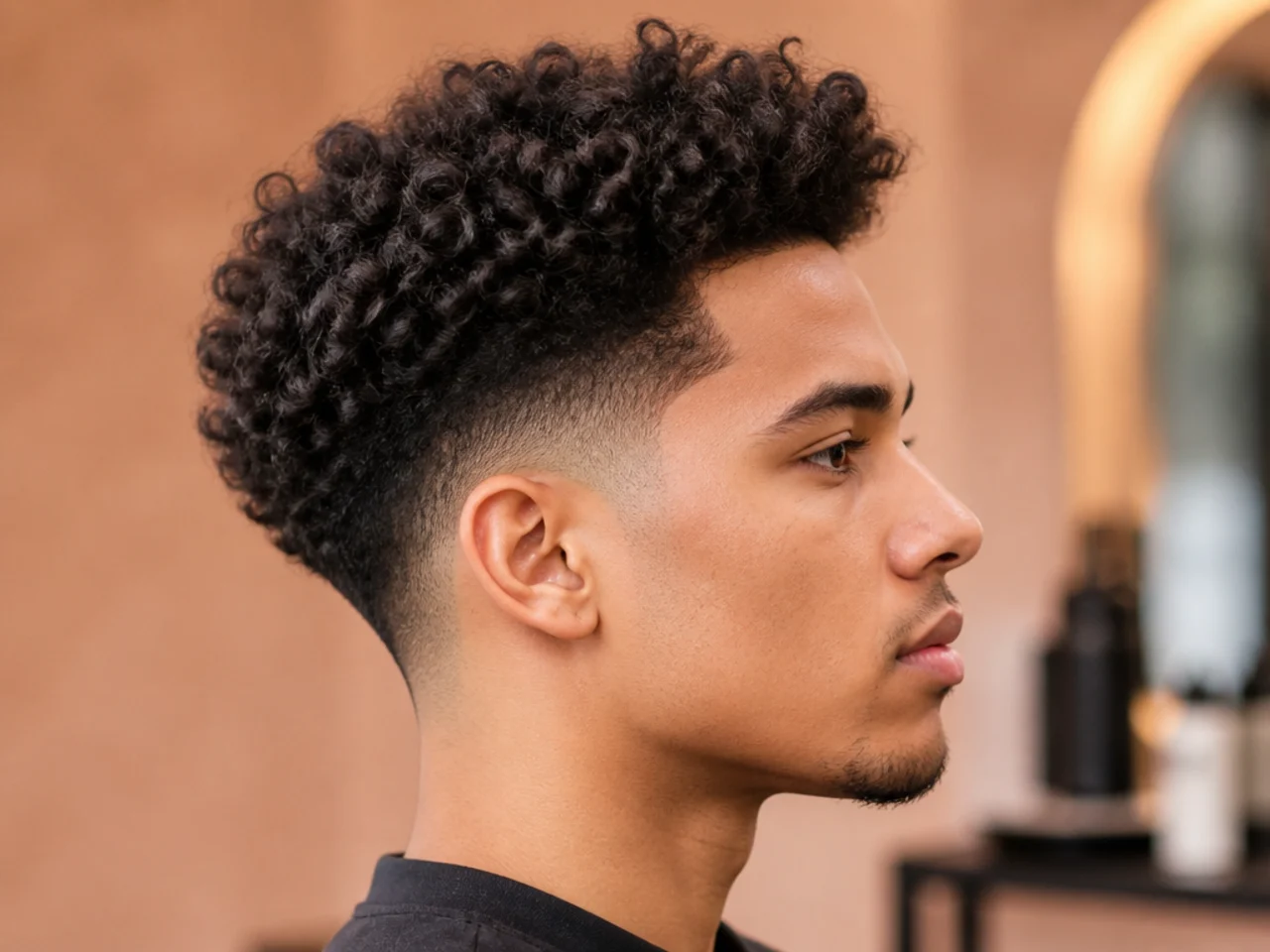
Routine matters more than the cut. A great cut with lazy styling looks flat.
- Towel-dry: Damp, not soaking. Squeeze the excess water out.
- Prep product: Root-lift mousse or volumizing spray at the base. Curl cream if you're curly.
- Blow-dry with a round brush: Medium heat, medium airflow. Brush from root outward and upward, opposite to how your hair falls naturally. That's what builds lift.
- Cool shot: Every dryer has one. Use it at the end. Heat shapes; cool locks.
- Finishing product: Matte cream or paste, worked into the ends only. Roots need to breathe or the volume drops.
Ten minutes with practice.
Maintenance and Upkeep
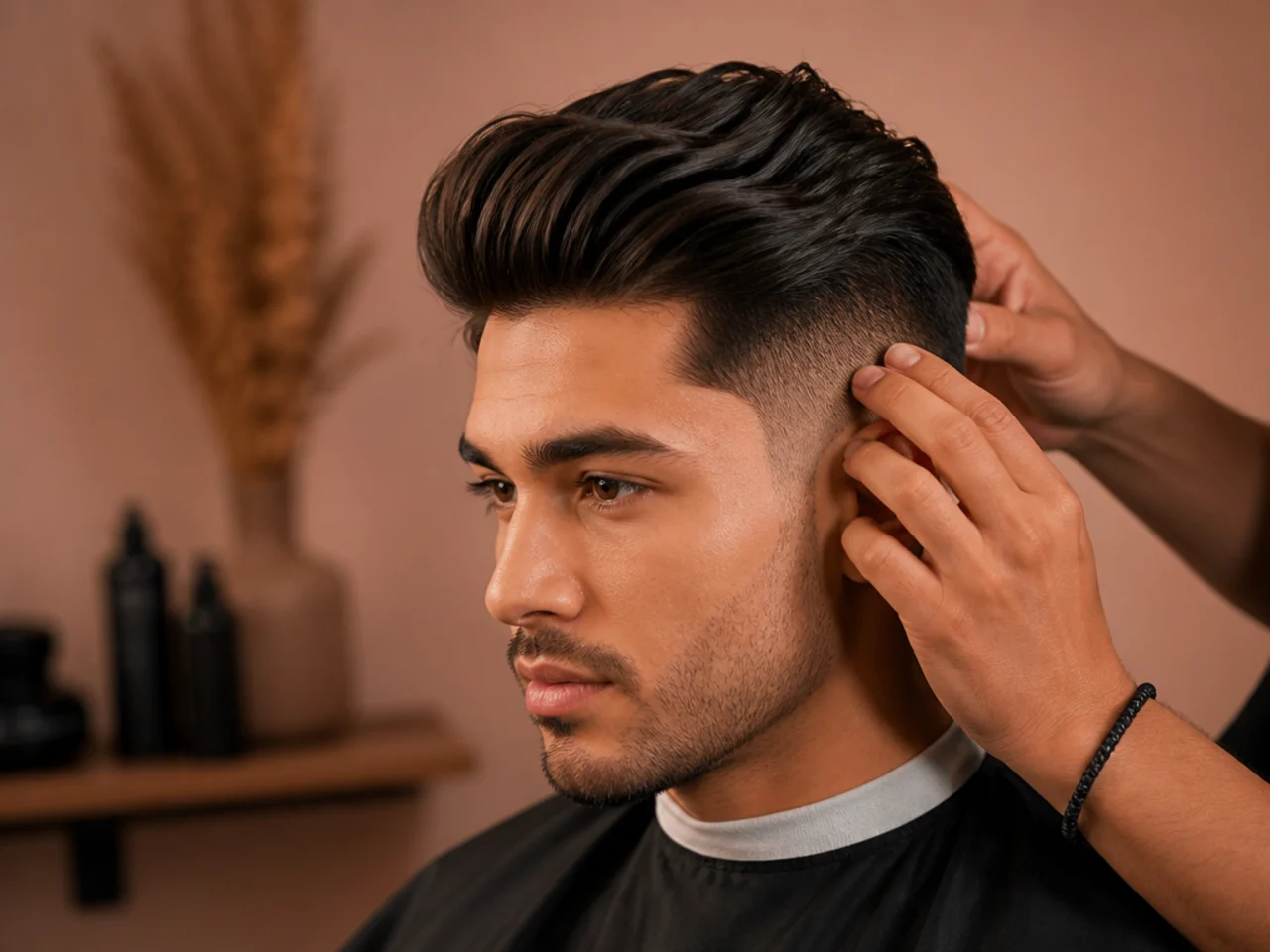
Book every two to three weeks. The taper line blurs first — you'll notice the sides getting fuzzy around week two. That's when the whole cut starts looking untidy.
Between cuts:
- Trim your own neckline: Cheap trimmers keep the back clean between visits.
- Wash every two to three days: Overwashing strips the oils that give hair body. Underwashing weighs it down.
- Condition the top, not the sides: Conditioner on the sides softens the taper edge. Keep it above the taper line.
- Sleep on silk: Cotton crushes the volume and pulls moisture out. A silk pillowcase or cap holds the shape overnight.
Rebook before you leave the shop. Good blowout barbers book out — you don't want to be scrambling for a chair the day your fade goes fuzzy.
Choosing the Right Barber for a Blowout Fade
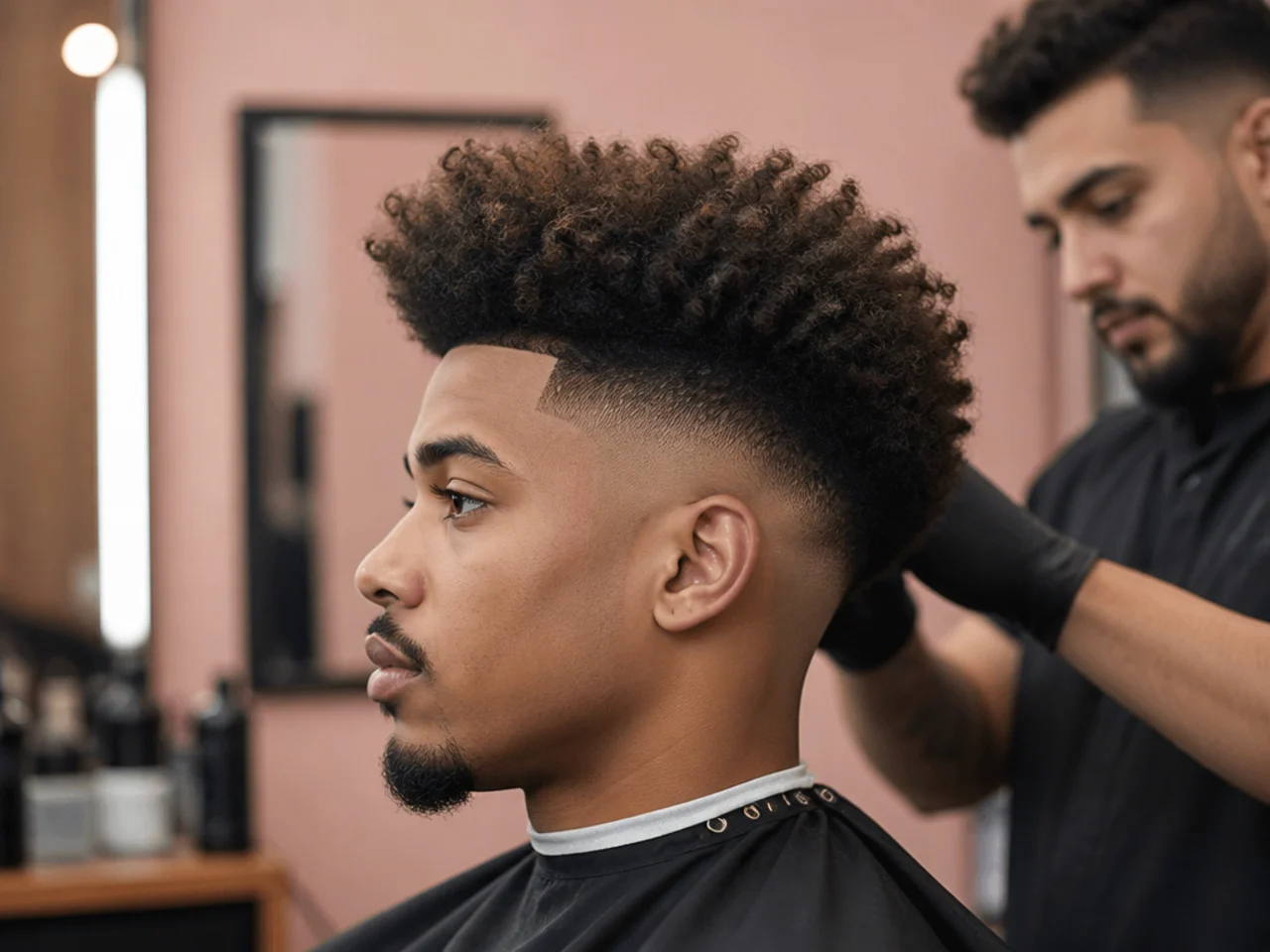
Not every barber cuts for blowout. Some cut for finger-style, some for slick-back, some for crop. The finished shape depends on the layering.
Ask three things:
- "Do you cut for blowout?" A puzzled look means walk out.
- "Can I see cuts on my hair type?" Skip anyone who won't show you an Instagram portfolio.
- "What products do you recommend?" Barbers who know the cut know the product ecosystem.
Pay more for the right barber. A $30 blowout from someone who doesn't know it costs three weeks of a bad silhouette.
Common Mistakes to Avoid
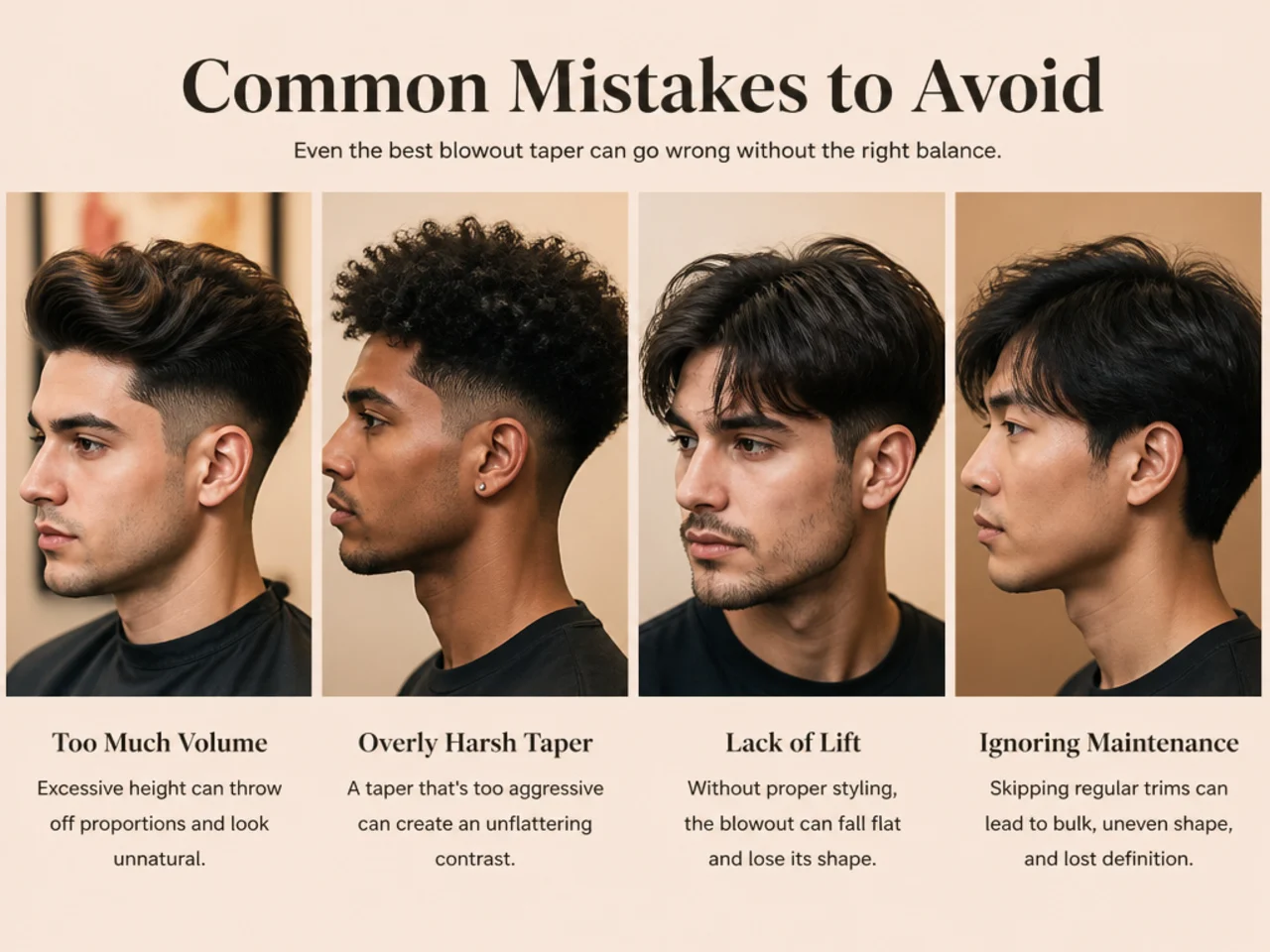
The pattern of failure is the same across most bad blowout tapers:
- Skipping the Blow Dryer: This is the whole cut. Skipping the dryer isn't a shortcut — it's a different haircut.
- Using Too Much Product: Gel, pomade, anything shiny weighs the volume down. Matte only, ends only.
- Cutting Too Short on Top: Below three inches, there's no hair to shape. Four to six inches gives you real range.
- Fade Instead of Taper: Sides to skin at the top of the taper line makes a fade blowout, not a taper blowout. The softer edge is the point.
- No Cool Shot: Heat shapes, cool sets. Skip it and the volume falls by lunch.
Reverse each one. Blow-dry every time. Matte product. Length. Real taper. Cool shot.
Conclusion
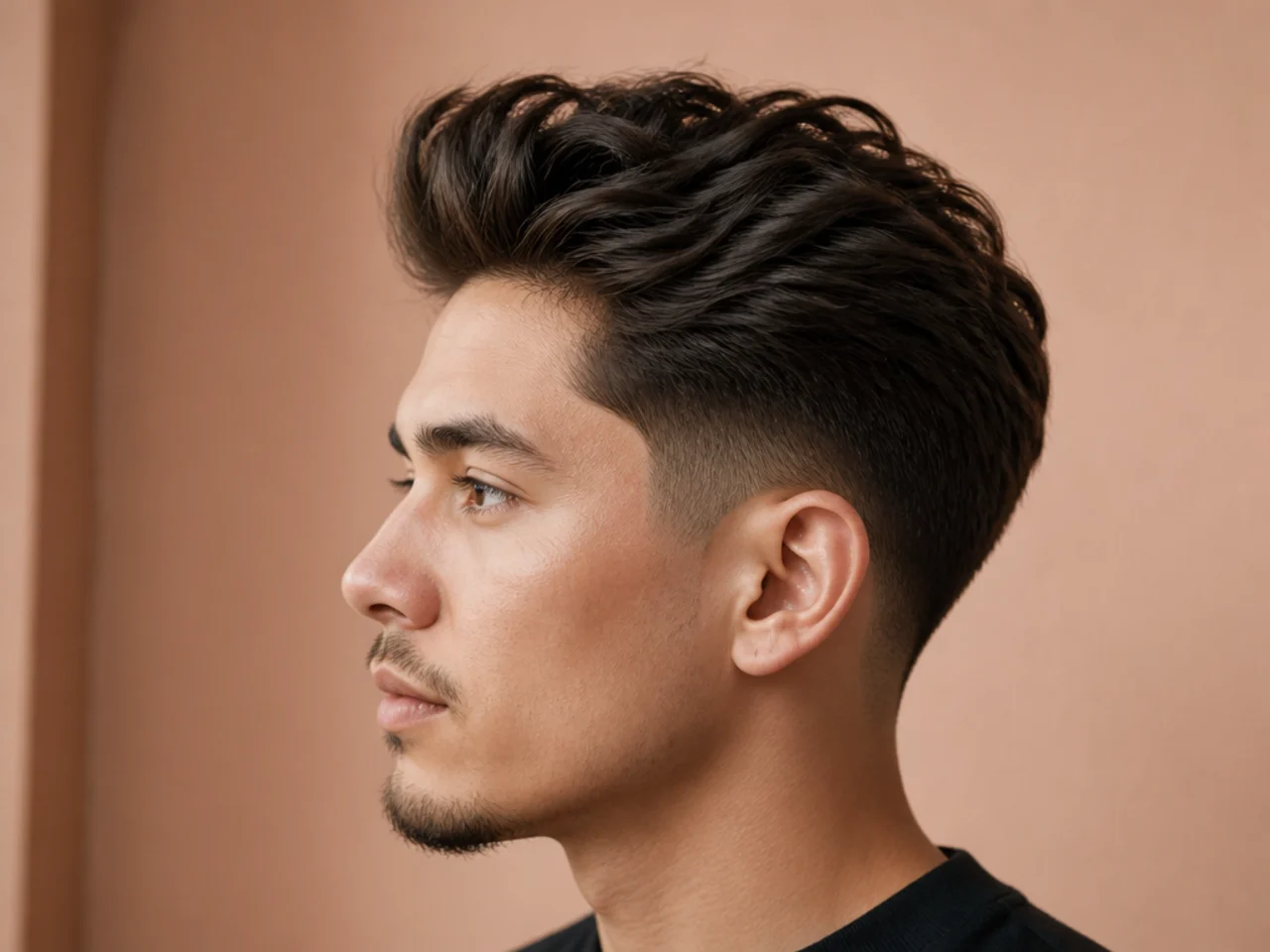
The blowout taper is a two-part deal: precision at the perimeter, volume up top. The taper is the frame; the blowout is the picture. Get one without the other and the whole thing collapses.
Ask for length. Ask for taper height. Say the word blowout. Bring a photo. Then commit — dryer, round brush, matte product, cool shot. Ten minutes a day for a cut that looks intentional every time.