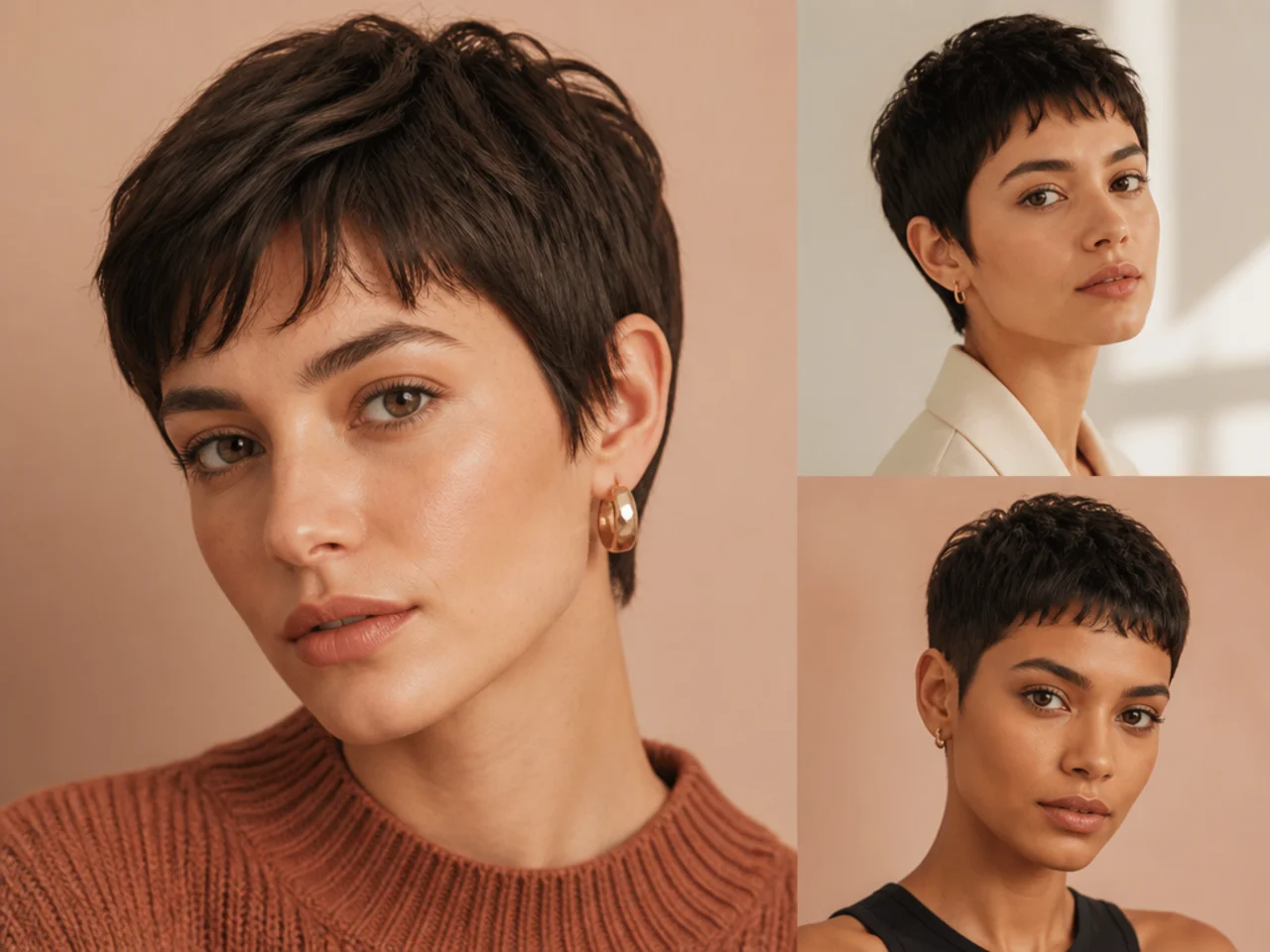
Pixie Cuts: 30+ Styles And Tips For Men | 2026
The pixie is the boldest cut most people will ever make — and one of the most rewarding. This guide walks through 30+ pixie variations with photos, matches each one to face shapes and hair types, and covers the exact wording to hand your stylist so you leave the chair with the version you actually wanted.
In this article · 51
- Is a pixie right for you?
- 30 Types of Pixie Cuts
- 1\. Traditional Pixie Cut
- 2\. Textured Pixie Cut
- 3\. Sleek Pixie Cuts
- 4\. Tousled Pixie Cut
- 5\. Asymmetrical Pixie Cut
- 6\. Undercut Pixie
- 7\. Pixie Bob
- 8\. Layered Pixie Cut
- 9\. Punk Pixie Cut
- 10\. Razor Cut Pixie
- 11\. Choppy Pixie Cut
- 12\. Mohawk Pixie
- 13\. Side-Swept Pixie
- 14\. Vintage Pixie Cut
- 15\. Feathered Pixie
- 16\. Polished Pixie
- 17\. Round Face Pixie
- 18\. Long Face Pixie
- 19\. Heart-Shaped Face Pixie
- 20\. Square Face Pixie
- 21\. Curly Pixie Cut
- 22\. Wavy Pixie Cut
- 23\. Fine Hair Pixie
- 24\. Thick Hair Pixie
- 25\. Platinum Pixie
- 26\. Ombre Pixie
- 27\. Highlighted Pixie
- 28\. Rainbow Pixie
- 29\. Ultra-Short Pixie
- 30\. Long Pixie Cut
- Pixie Cuts for Different Face Shapes
- Round Face Shapes
- Oval Face Shapes
- Square Face Shapes
- Heart-Shaped Face Shapes
- Long Face Shapes
- How to Choose the Right Pixie Cut for Your Hair Type
- Fine Hair Considerations
- Thick Hair Adaptations
- Curly and Wavy Hair
- Styling Your Pixie Cut
- Daily Styling Routine
- Styling Products and Tools
- Special Occasion Styling
- Maintenance and Care
- Regular Trimming Schedule
- Hair Care Routine
- Growing Out Your Pixie Cut
- Conclusion
The pixie is the boldest cut most women will ever make. There is no gentle transition — the length is gone, your neck is exposed, and you meet your own face fresh in the mirror. It is also more flattering than most people expect, and easier to live with once you commit. This guide walks you through 30+ pixie variations, how to pick one for your face shape and hair type, and exactly how to ask for it.
Is a pixie right for you?
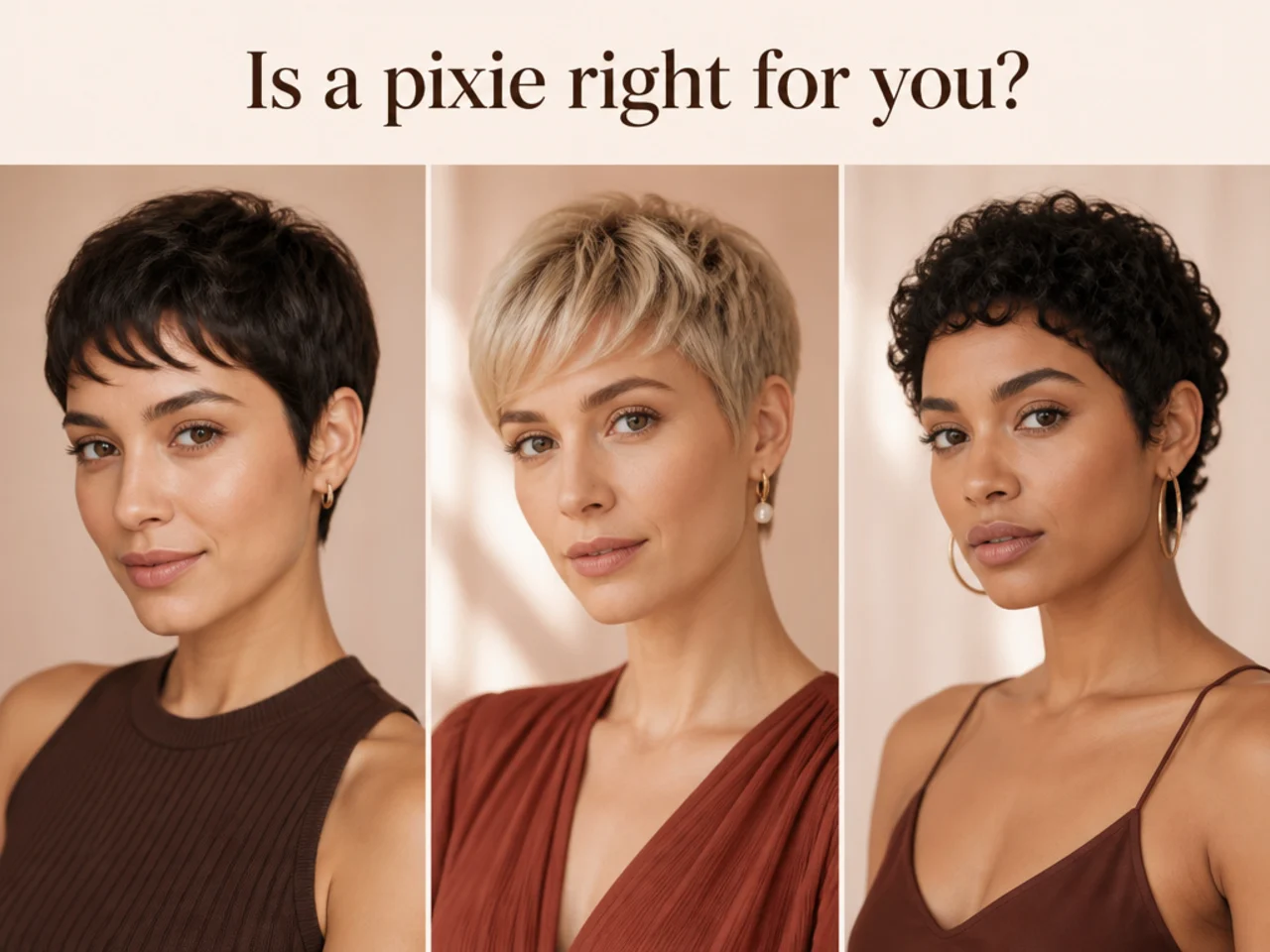
Before you sit in the chair, three quick questions.
Am I ready for a re-cut every 4–6 weeks? The pixie shape holds for about a month. After that the neckline creeps down and the crown loses its lift. If the calendar or the budget cannot take that cadence, start with a longer bob variation and grow into the idea.
Do I want a low daily-styling load? A well-cut pixie is two to five minutes with a fingertip of texture cream. If your morning is built around a long blow-out routine, this cut asks you to give that up.
Am I open to seeing my face in a new way? You will. The pixie exposes your jaw, your neck, your ears, and your cheekbones. Almost everyone loves the reflection after a week — but the first mirror moment is real, so be ready for it.
Three yeses? Keep reading.
30 Types of Pixie Cuts
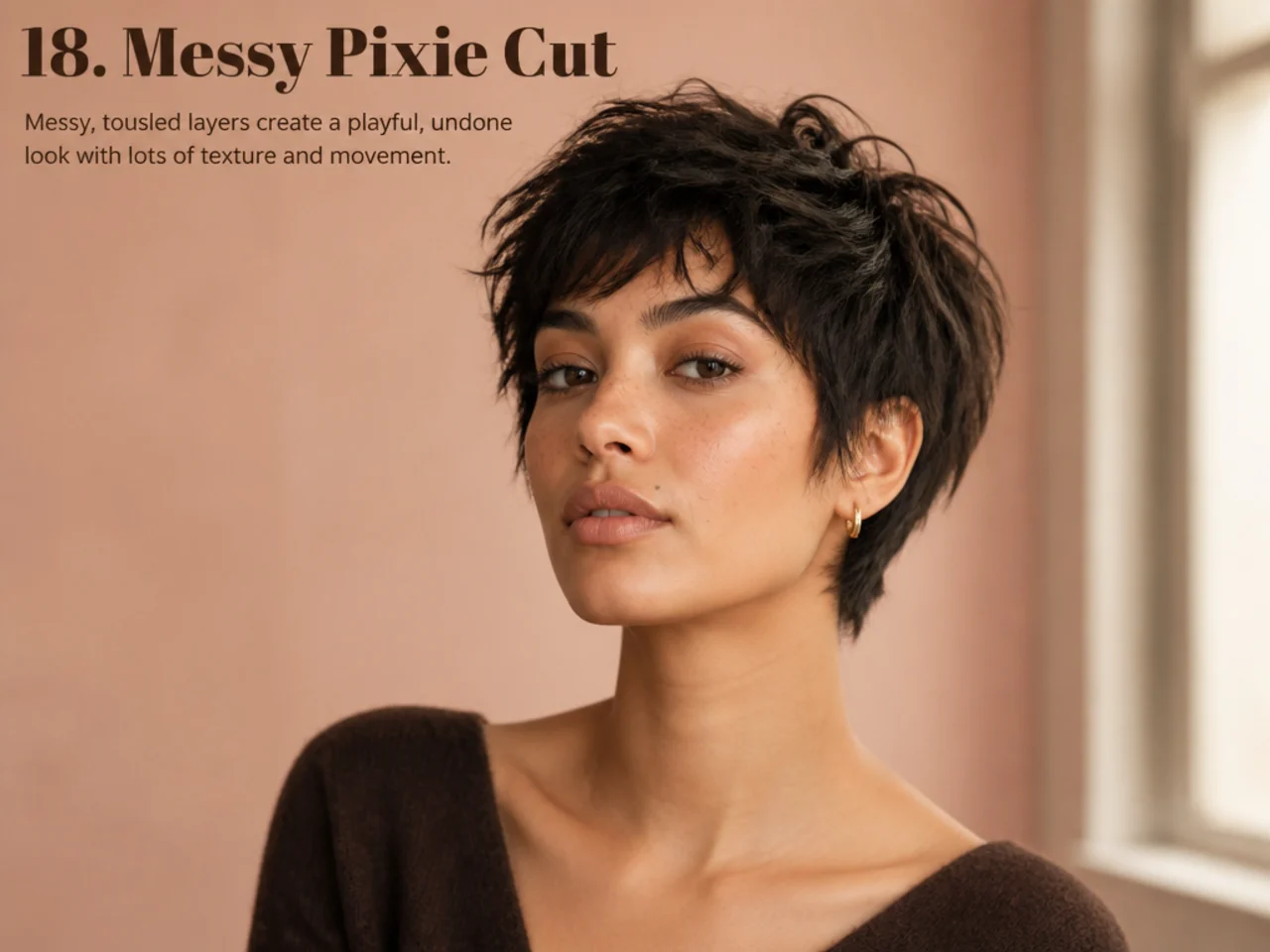
1. Traditional Pixie Cut
The starting point. Sides and back cut close (1–2 inches), top left at 3–4 inches, no fringe or a soft side-swept one. Best for oval and heart-shaped faces because the balanced silhouette works with almost any bone structure. Fine to medium straight hair sits cleanest here. To ask: "Traditional pixie, sides tapered to about an inch, top around three inches, ends softly point-cut." Styling is three minutes — a pea of texture cream through damp hair, air dry, go.
2. Textured Pixie Cut
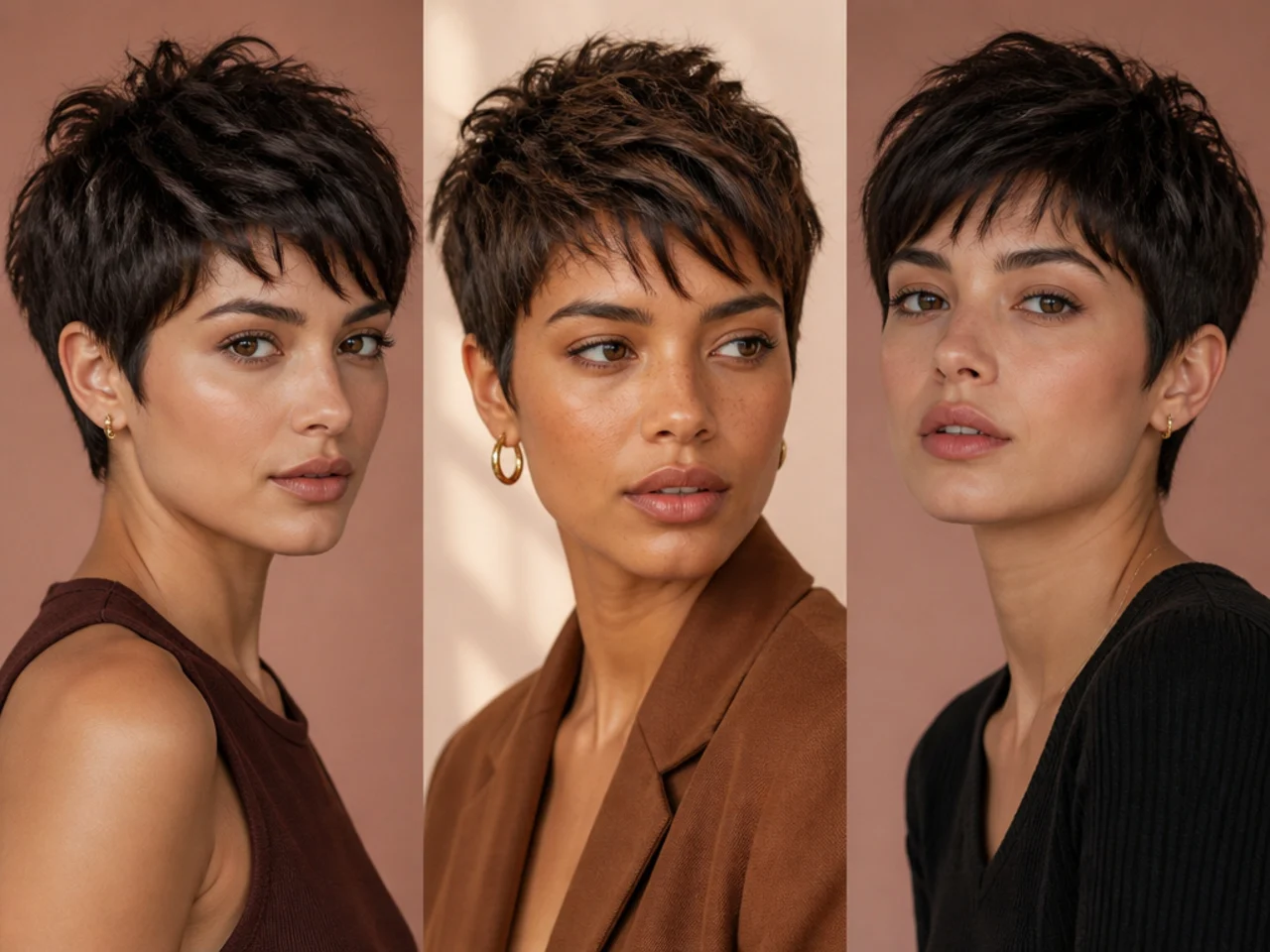
The traditional pixie with movement built into the cut. Point-cutting through the top gives you piecey ends instead of one blunt surface, so the hair falls with intent instead of sitting helmet-style. Ideal for thick hair (removes weight without hollowing it out) and for oval, square, or heart faces. To ask: "Pixie with texture through the top, 3–4 inches, point-cut ends, sides at an inch." Styling: matte paste on dry hair, work through with fingertips, done in two minutes.
3. Sleek Pixie Cuts
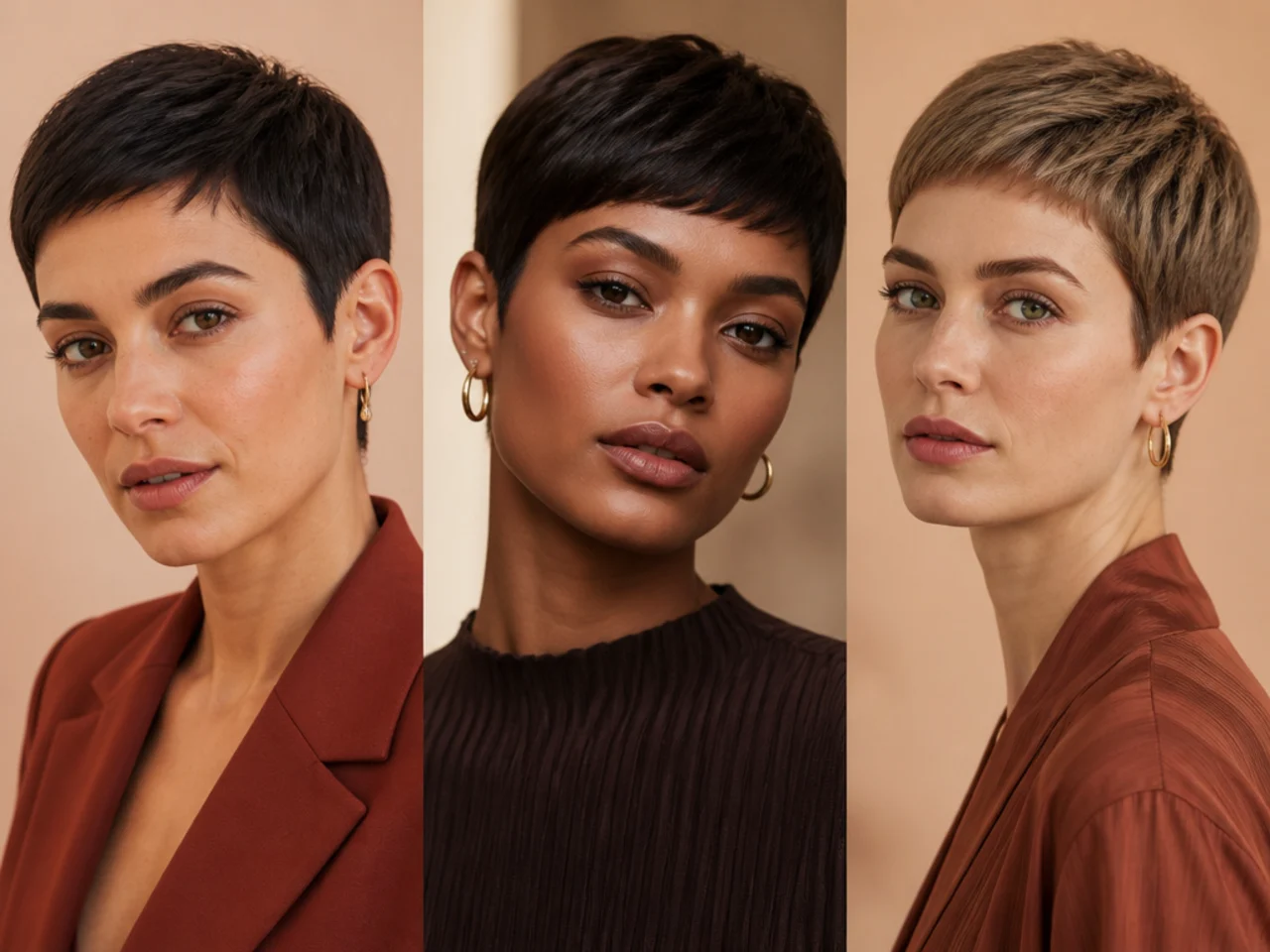
The polished, every-hair-in-place version. Scissor cut (never razor) so the edges stay crisp, then styled with a smoothing serum and a small round brush. Best for straight, medium-density hair — curls and thick waves fight this finish. Flatters oval, square, and long faces because the clean lines add elegance without adding width. To ask: "Sleek pixie, blunt-cut through the top, tapered sides, no razoring anywhere." Styling: heat protectant, blow-dry with a 1-inch round brush, drop of shine serum.
4. Tousled Pixie Cut
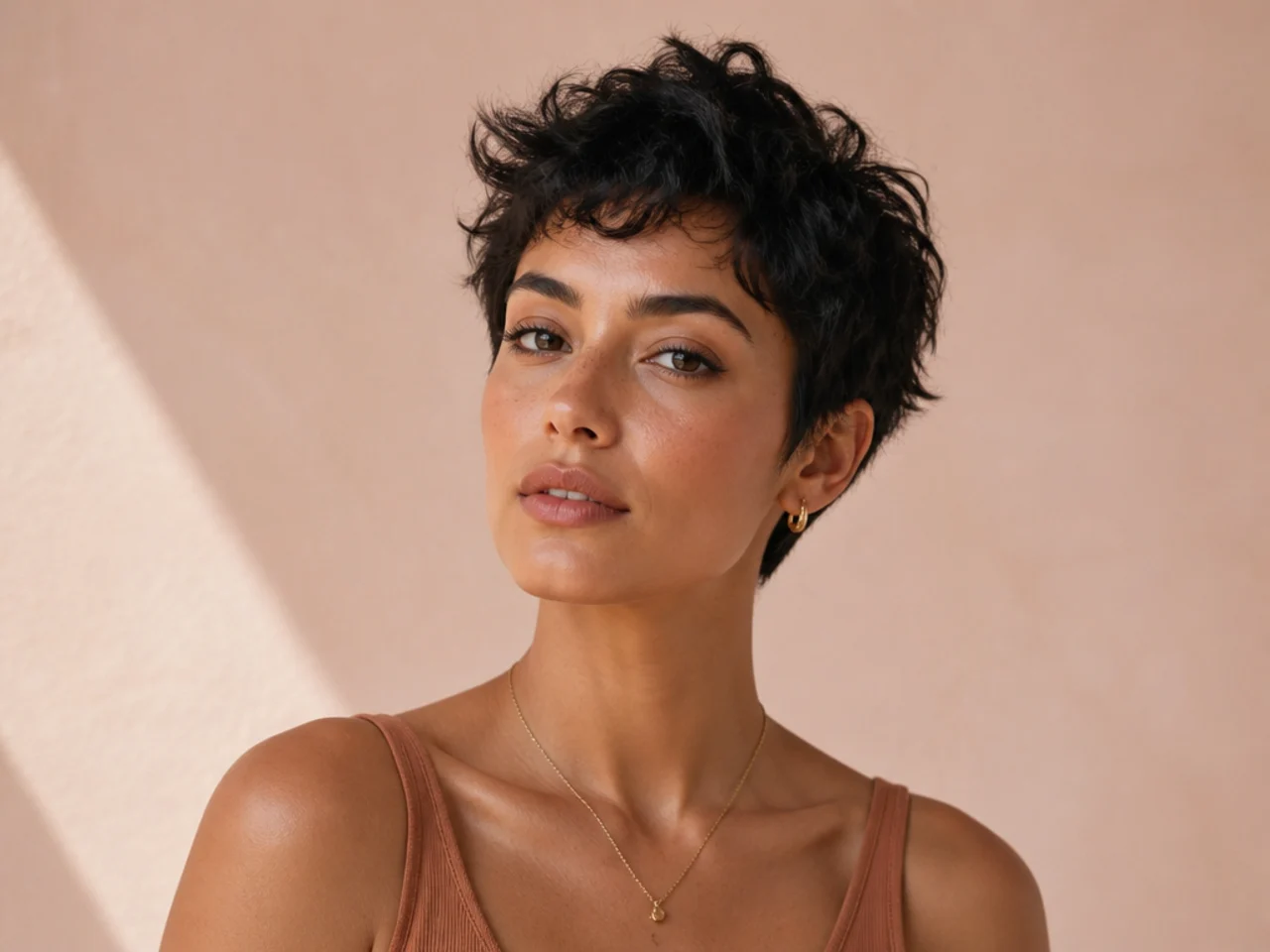
The anti-sleek. The cut can be almost anything; the styling is what does the work. Best for wavy or straight hair with any natural grit to it. A universal flatterer, especially forgiving on square jaws because the softness gentles hard angles. To ask: "Textured, choppy pixie, ends I can rough up with my fingers, no polish anywhere." Styling: sea salt spray on damp hair, scrunch, air dry.
5. Asymmetrical Pixie Cut
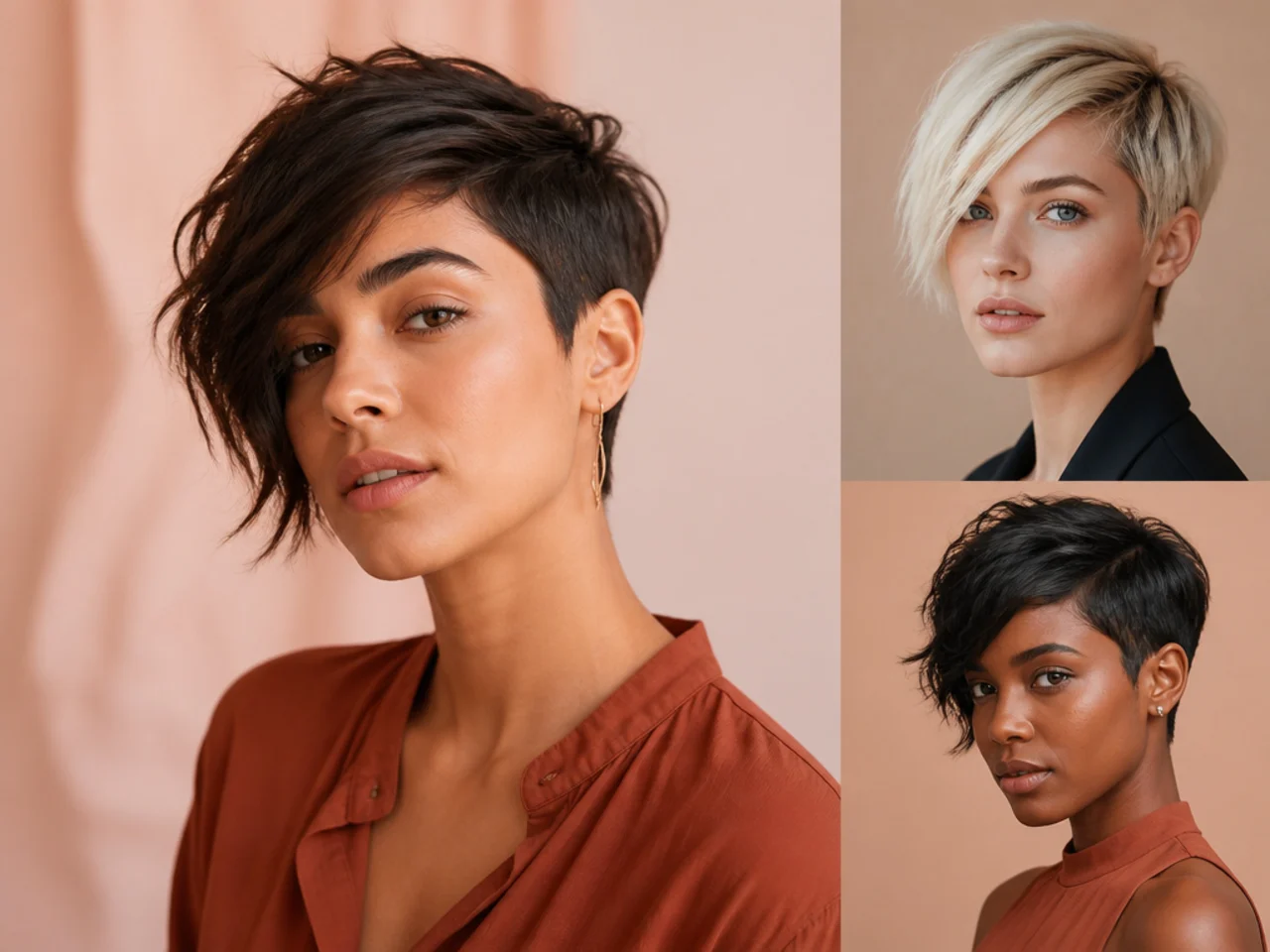
One side markedly shorter than the other, sometimes with an angled fringe cut to match. The boldest pixie you can get without going into shaved territory. Best on oval and round faces — the diagonal line elongates round shapes and adds visual interest to symmetrical ones. To ask: "Asymmetrical pixie, longer on the [left/right], shorter side around an inch, fringe angled to match." Styling: deep side-part, pomade to hold the direction, done in two minutes.
6. Undercut Pixie
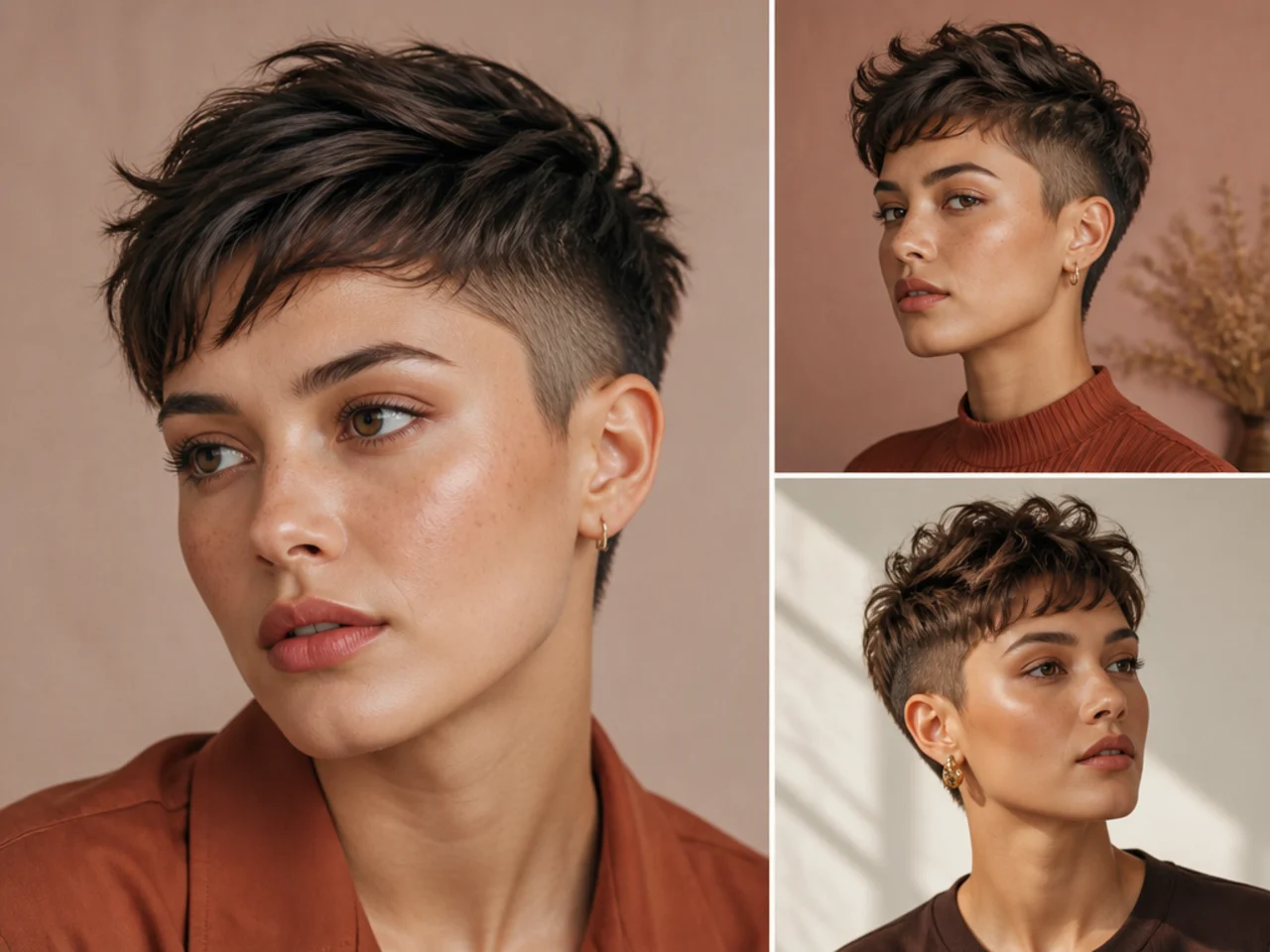
Sides and nape buzzed to a #2 or #3, top left long enough to cover the shave or expose it as you like. Halfway between a pixie and a boyish crop for women. Best for thick hair (removes bulk cleanly), round faces (the shaved sides carve contour), and anyone tired of neck weight in summer. The feel is similar to a low taper fade. To ask: "Undercut pixie, sides and nape to a #2, top at 4 inches, disconnected line at the parietal ridge." Styling: pomade through the top, brush in the direction you want.
7. Pixie Bob
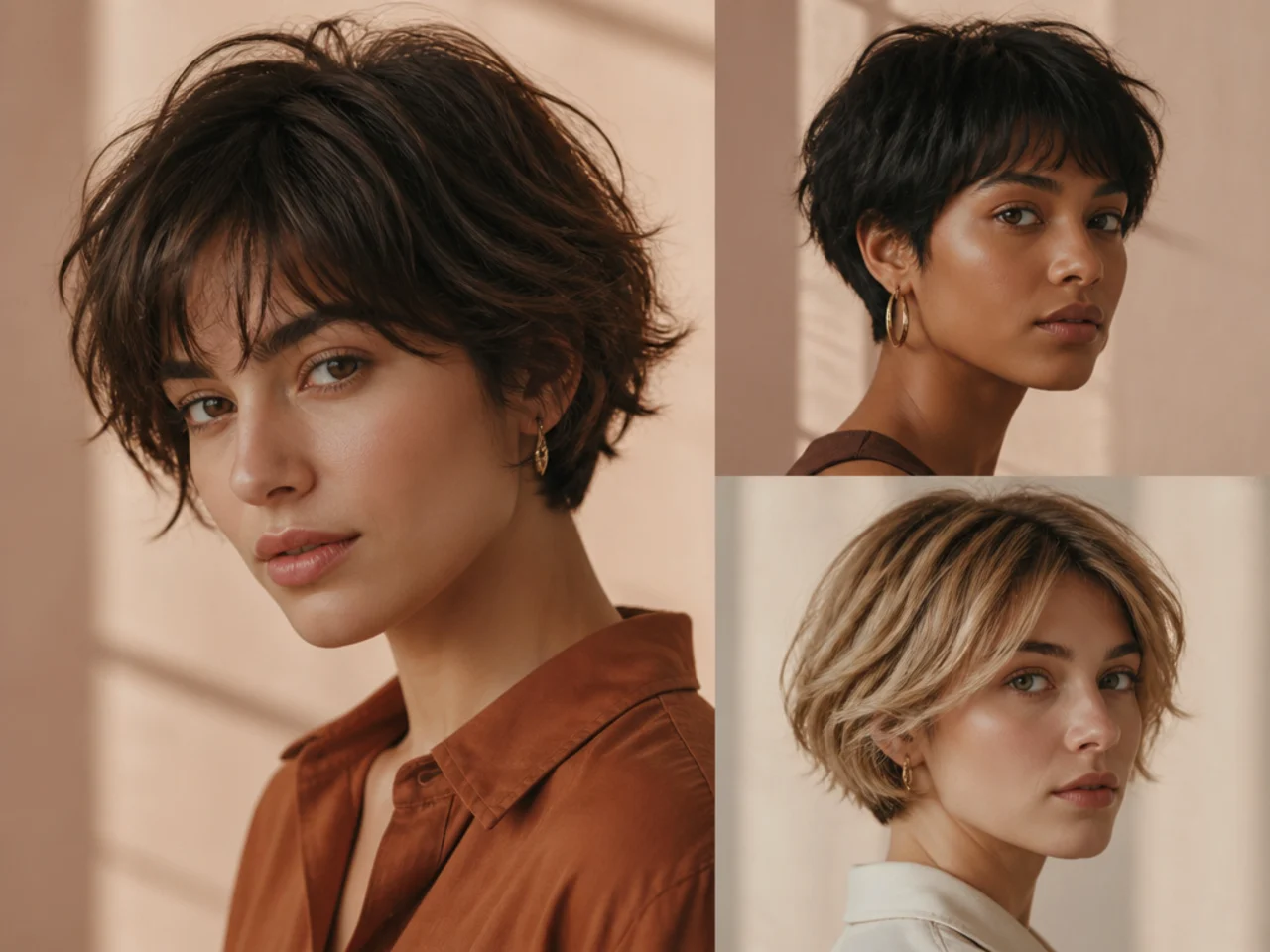
The bridge shape between a full pixie and a proper bob. Length sits at the earlobe or an inch below, the crown stays layered short. This is where most women start when they want to test the water before going fully short. Beautifully flatters heart-shaped faces — the chin-grazing length balances a wider forehead. To ask: "Pixie bob, jaw-length in front, layered short in the back and crown." Styling: leave-in cream, air dry, or round-brush the front for a smoother finish.
8. Layered Pixie Cut
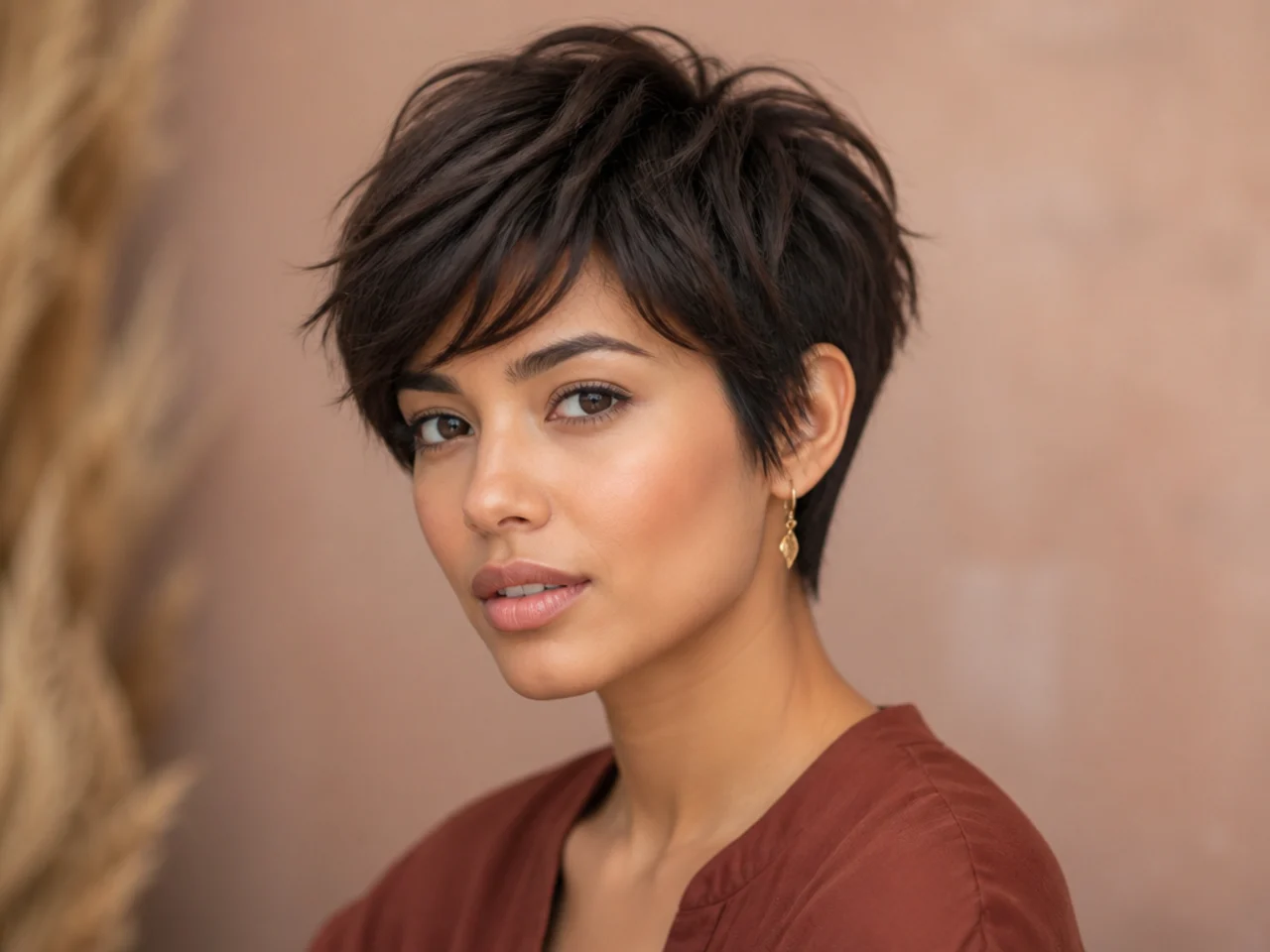
Multiple internal layers cut through the top for movement and controlled volume — think of it as the layered short-hair approach for women compressed into pixie length. Works across hair types because the layer count can be dialed up (for thick) or down (for fine). Best for medium to fine density. To ask: "Layered pixie, 3–4 inches on top with soft internal layers, sides tapered close." Styling: mousse at the roots, blow-dry with fingers for lift.
9. Punk Pixie Cut
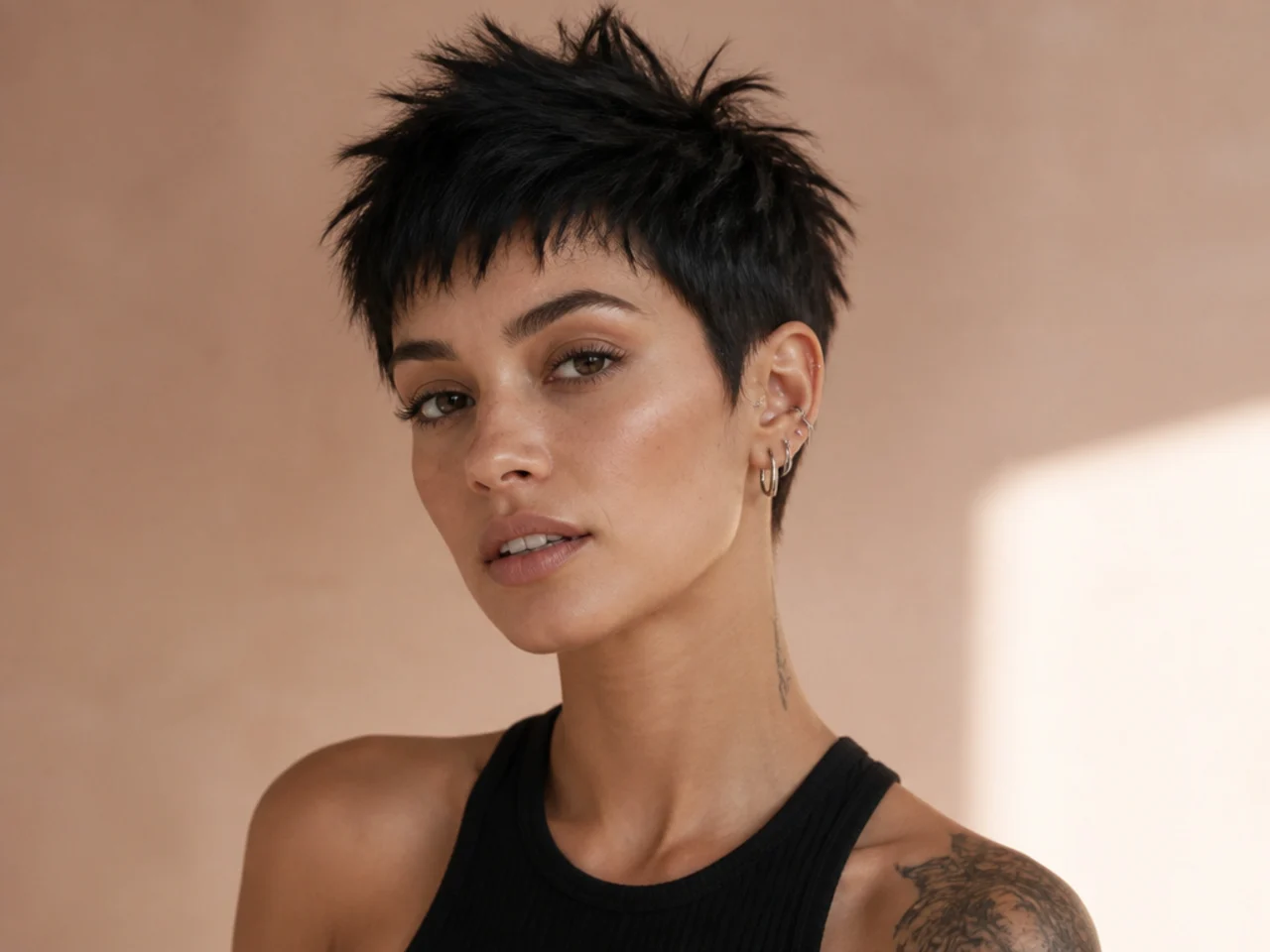
Shorter sides, longer piecey top built to stand up. Softer than a mohawk but with the same attitude. Best for square and heart-shaped faces because the height on top elongates. To ask: "Spiky pixie, sides at half an inch, top at 3 inches, piecey ends I can point up." Styling: strong-hold matte paste worked upward from the roots, finish with hairspray. Give yourself five minutes for this one.
10. Razor Cut Pixie
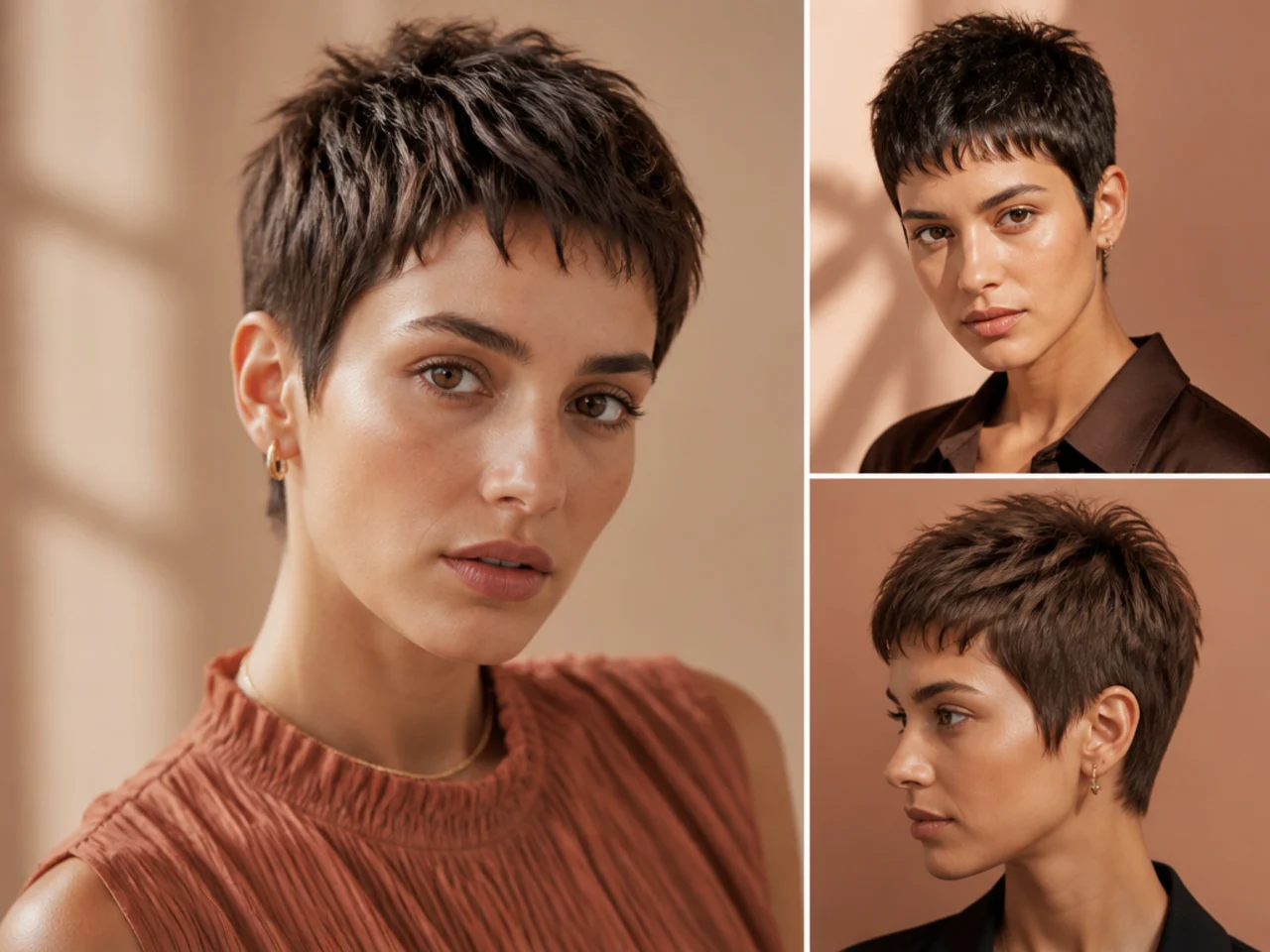
Cut with a straight razor instead of scissors. The razor feathers the ends so nothing reads harsh — organic and lived-in. Best for fine to medium straight hair; razors do not play well with curls or coarse texture. Flatters heart, oval, and long faces because the softened edges avoid hard lines. To ask: "Razor-cut pixie, feathered through the top, side-swept fringe." Styling: light cream, air dry, run fingers through.
11. Choppy Pixie Cut
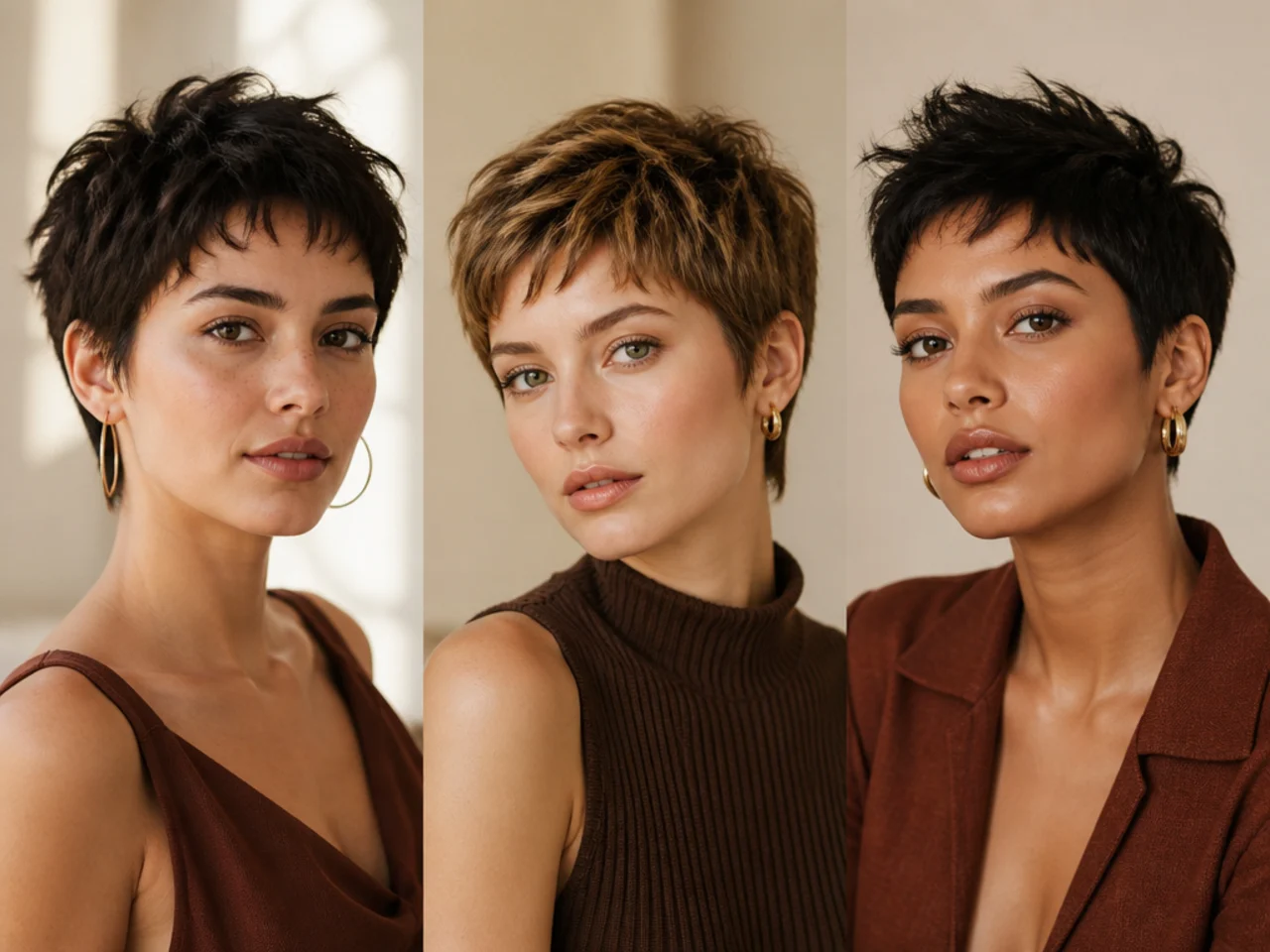
Uneven layers at deliberately different lengths — controlled mess. Works with the natural fall of wavy or straight hair. Best on oval and square faces because the movement softens without collapsing the structure. To ask: "Choppy pixie, deliberately uneven layers, 3 inches on top with pieces shorter and longer." Styling: salt spray, scrunch, walk out the door.
12. Mohawk Pixie
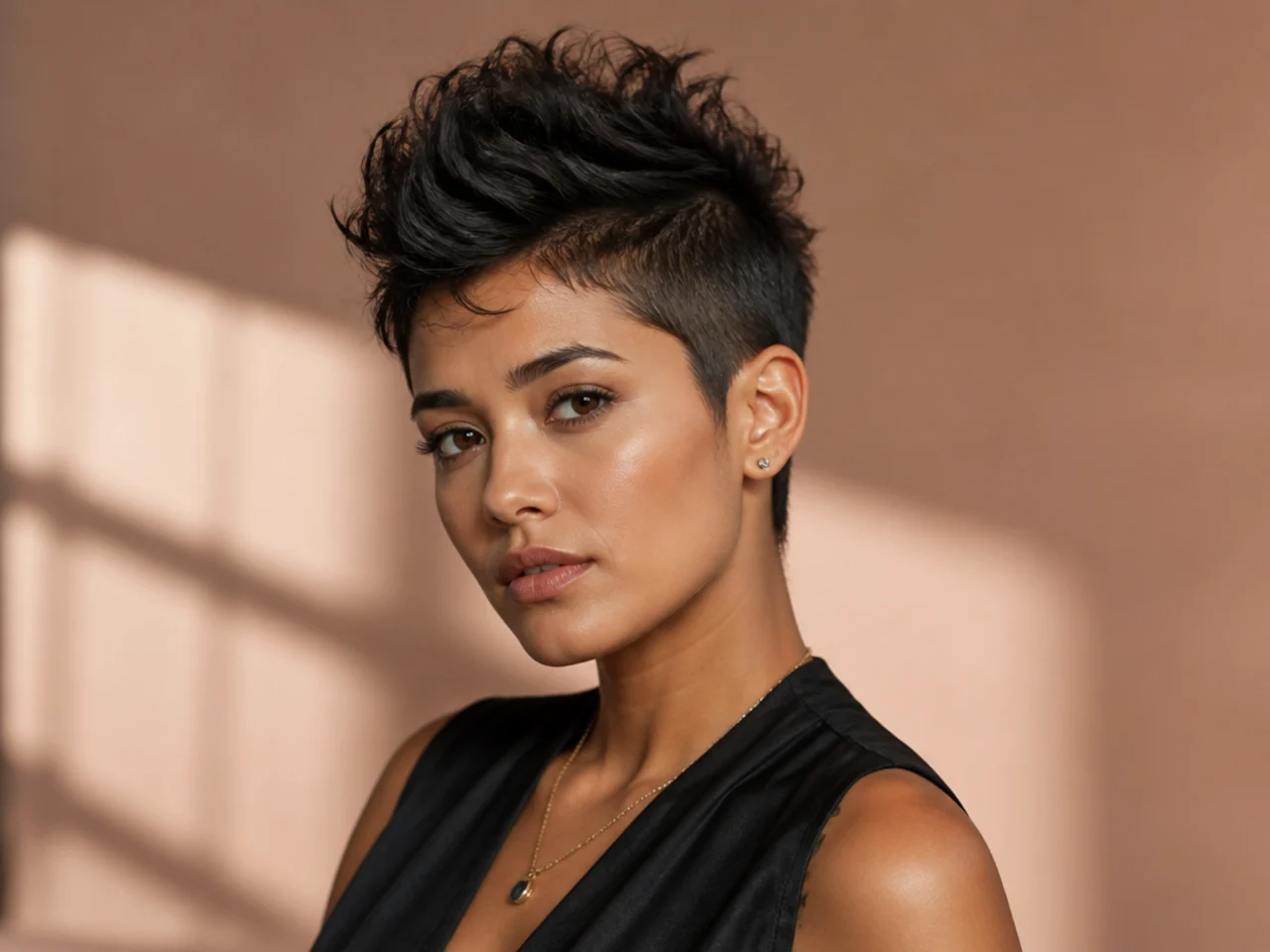
A subtle mohawk silhouette — center strip 4+ inches, sides tapered short but not shaved. Softer than a true mohawk, bolder than a standard pixie. Best on oval and heart faces where crown height reads elegant rather than top-heavy. To ask: "Mohawk-inspired pixie, longer center panel, sides scissored short but not clippered." Styling: pomade in the palms, hands sweep the center up and slightly forward.
13. Side-Swept Pixie
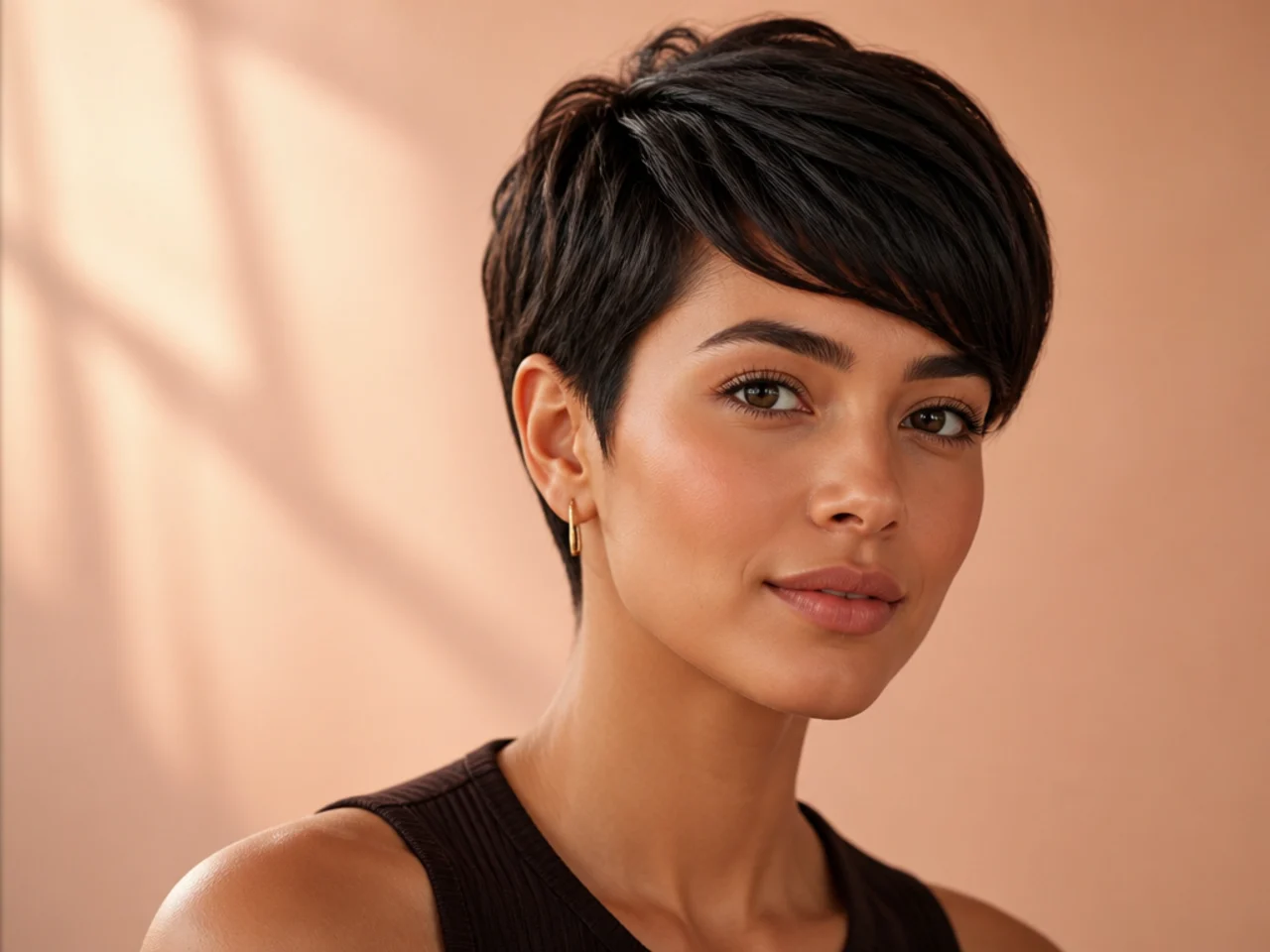
The classic pixie with a longer front section swept across the forehead. This is the pixie most women are picturing when they say "flattering." The diagonal fringe softens strong features and adds instant polish. A universal flatterer, especially strong on round and square faces because the sweep breaks up symmetry. To ask: "Side-swept pixie, longer front piece to just past the eyebrow, angled fringe swept to the [left/right]." Styling: deep side-part with a fine-tooth comb, light cream, blow-dry the fringe flat.
14. Vintage Pixie Cut
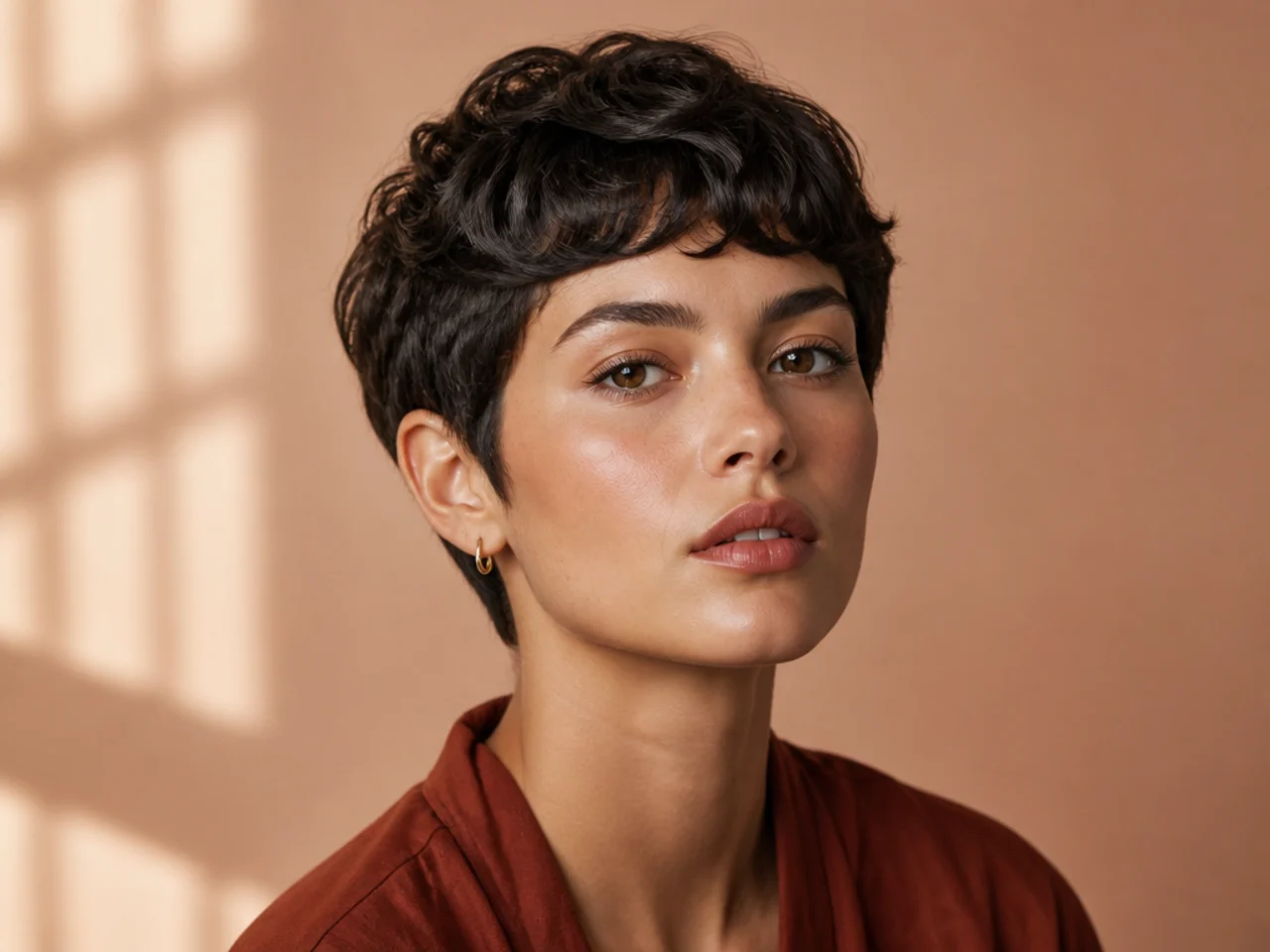
Inspired by 60s icons like Twiggy and Mia Farrow. Blunt lines, soft finger waves, sometimes a curled-under fringe. Best for straight to slightly wavy hair with enough body to hold a set. Flatters oval and heart faces. To ask: "Vintage pixie, blunt fringe just above the brows, soft length at the temples, no razoring." Styling: small round brush, curl the fringe under, finish with a matte spray.
15. Feathered Pixie
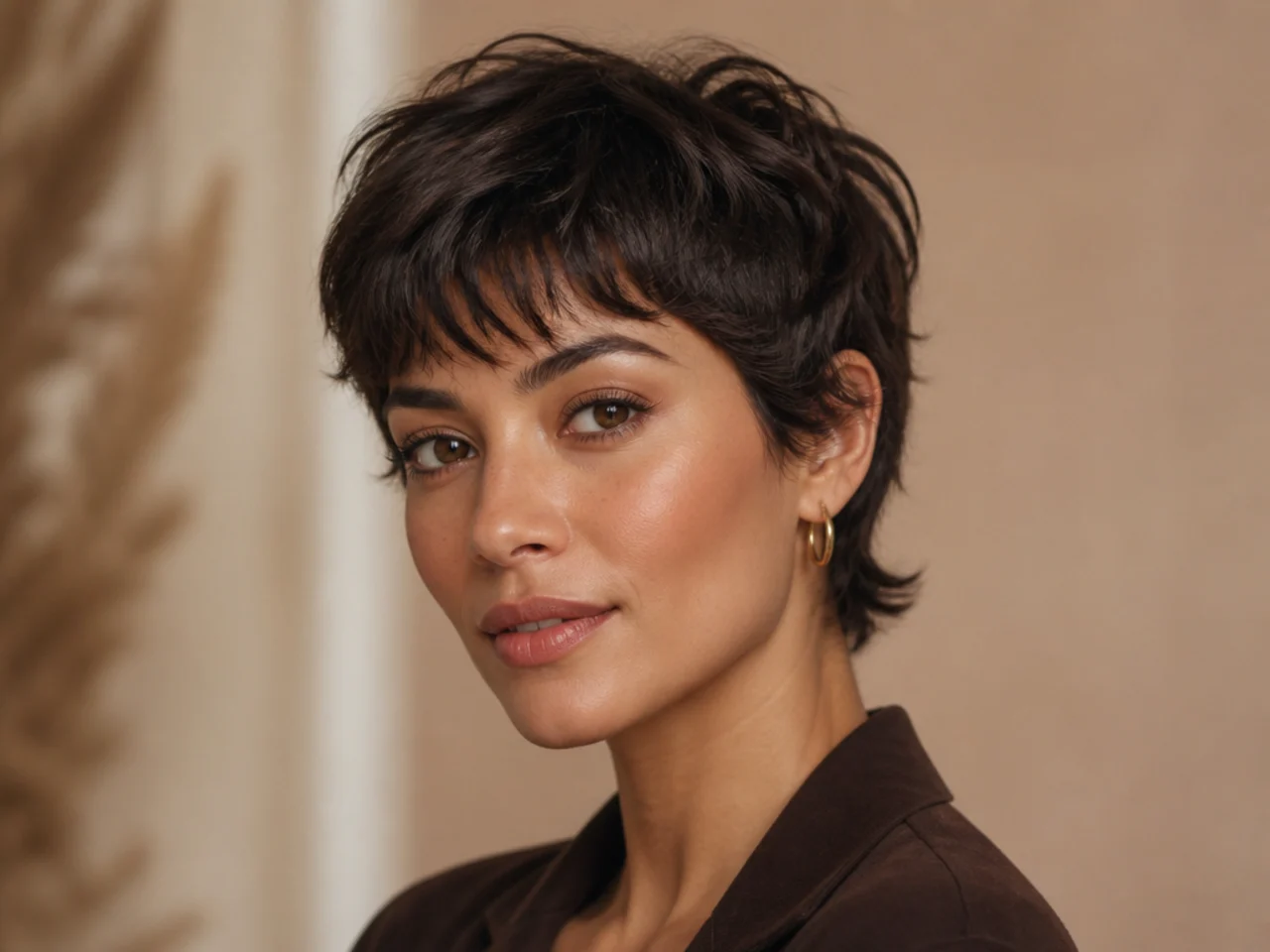
Ends cut and flipped outward for a soft, feminine finish. Adds visual volume at the crown and softness at the temples. Best on fine to medium hair; especially strong on long and square faces because the sideways lift breaks vertical lines. To ask: "Feathered pixie, layers flipping out at the ends, wispy fringe." Styling: round brush at the ends to flip them, quick blast of hairspray to hold.
16. Polished Pixie
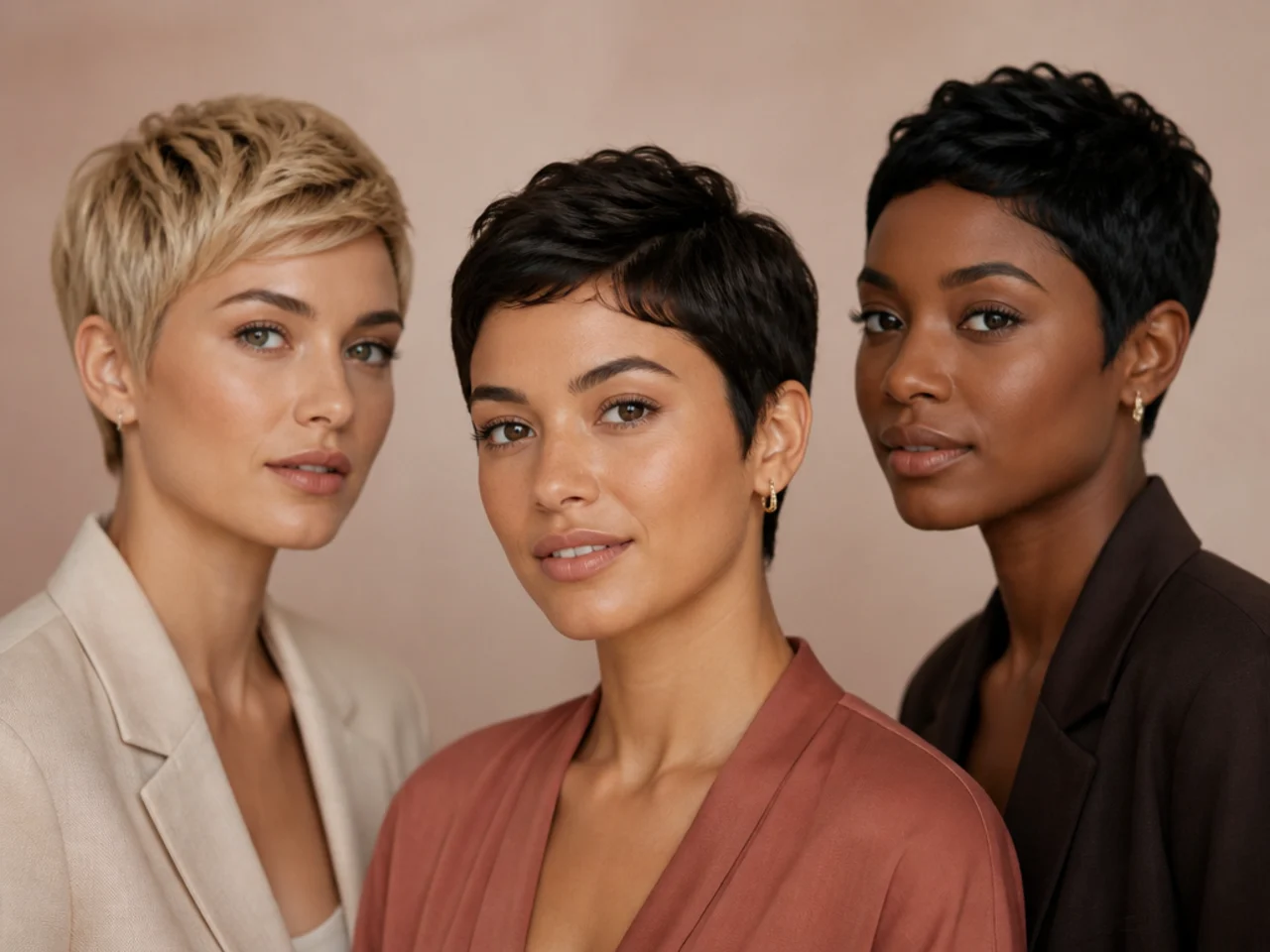
The dressed-up sleek pixie. Every hair placed, no visible texture, a glossy finish. Made for boardrooms, weddings, and any occasion where a short cut still has to read considered. Best on straight to wavy hair, most face shapes. To ask: "Polished pixie, precision-cut, no razor, ends blunt not textured." Styling: smoothing balm on damp hair, blow-dry with a small round brush, drop of oil to close it out.
17. Round Face Pixie
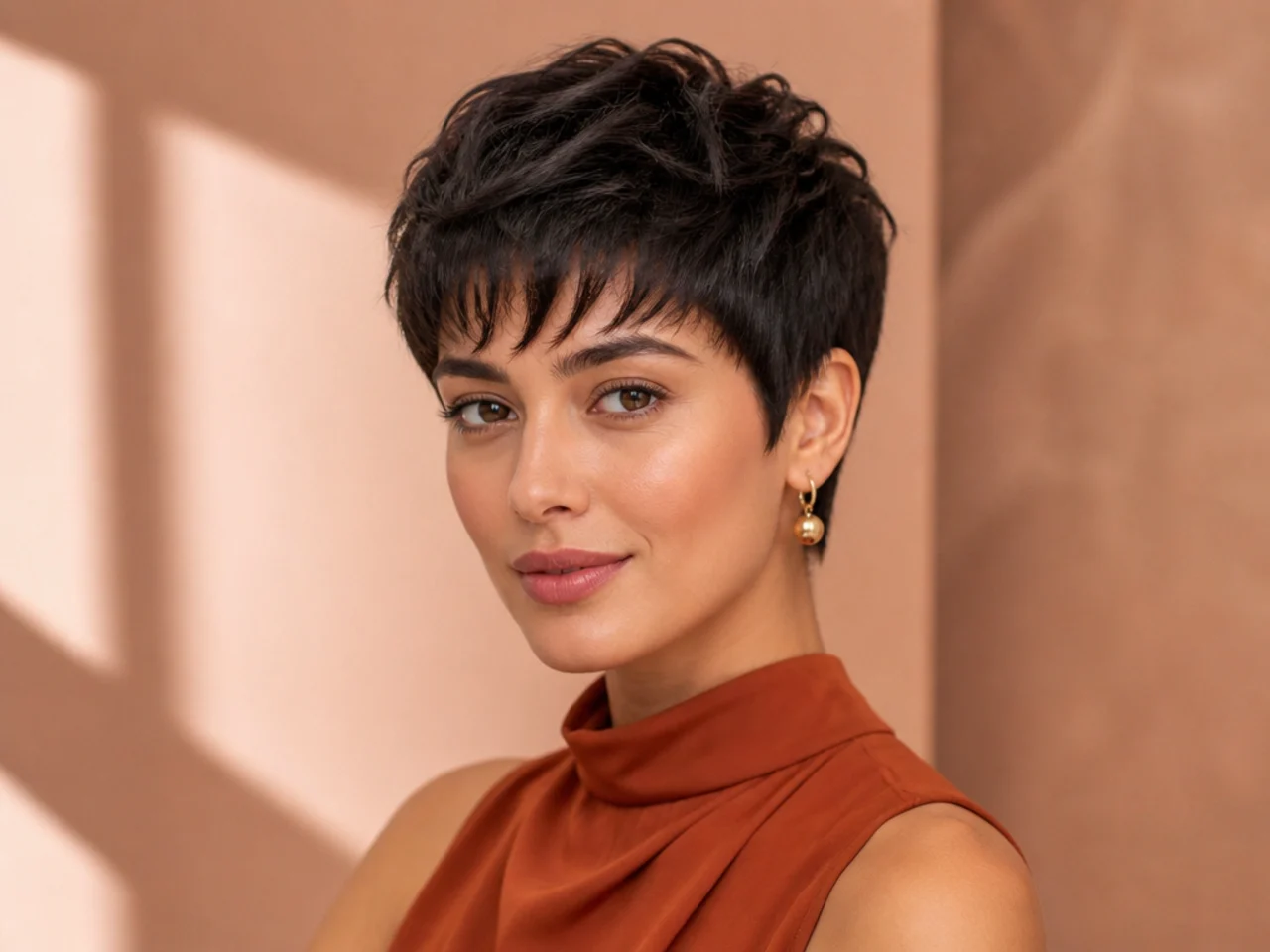
Cut specifically to counter roundness. Height at the crown, sides kept close, and a longer side-swept fringe that cuts a diagonal across the forehead. Skip any width at the cheekbones. To ask: "Pixie for a round face — height at the crown, sides tapered close to the head, long side-swept fringe past the eyebrow." Styling: root-lift spray at the crown, blow-dry upward with a small brush, finish with paste.
18. Long Face Pixie
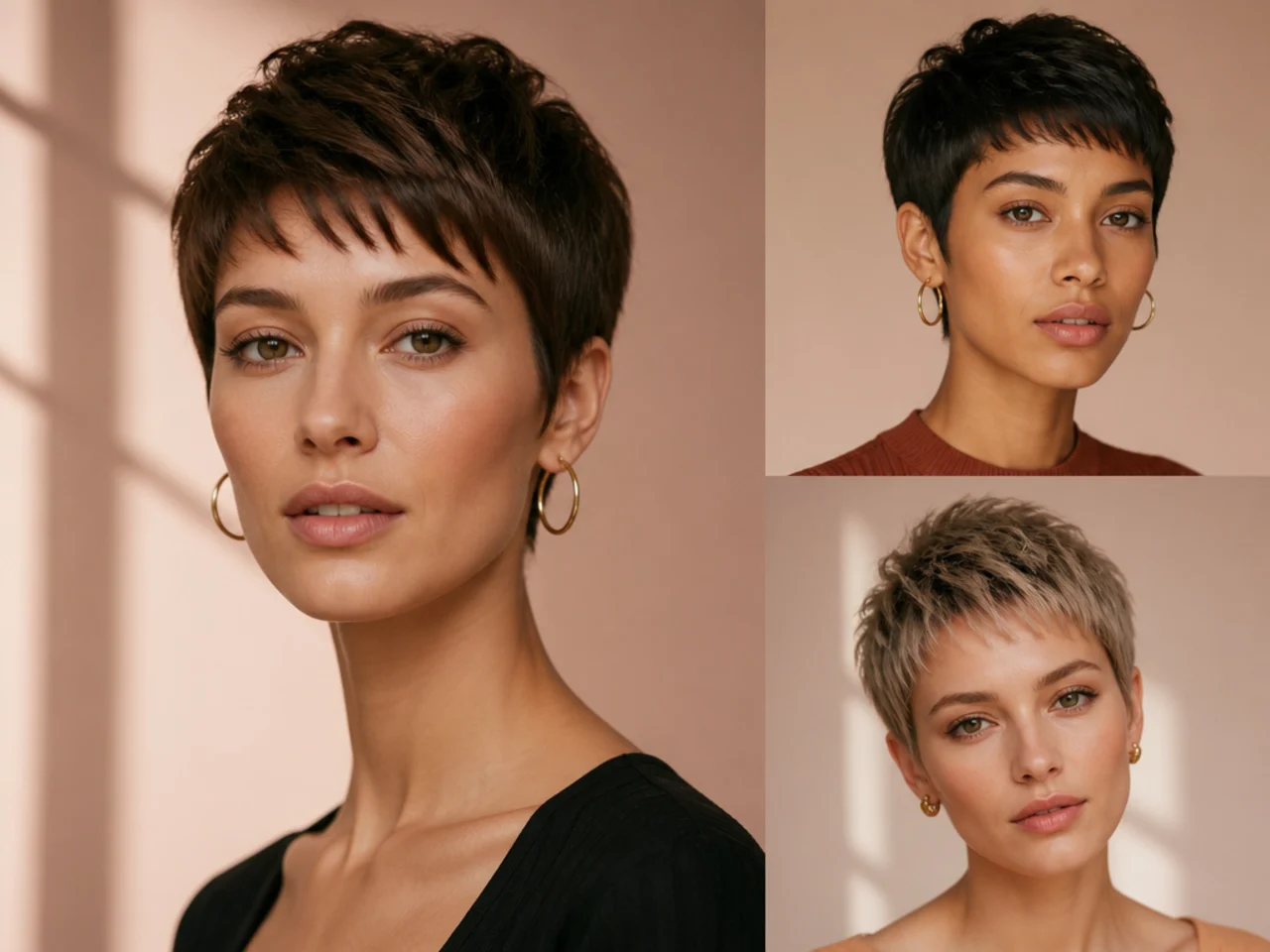
Volume built onto the sides, not the top. A blunt or curtain fringe cuts the face length visually. Layers around the ears add width where you need it. To ask: "Pixie for a long face — no crown height, fullness at the sides, straight fringe just above the brows." Styling: round-brush the sides outward, keep the crown deliberately flat.
19. Heart-Shaped Face Pixie
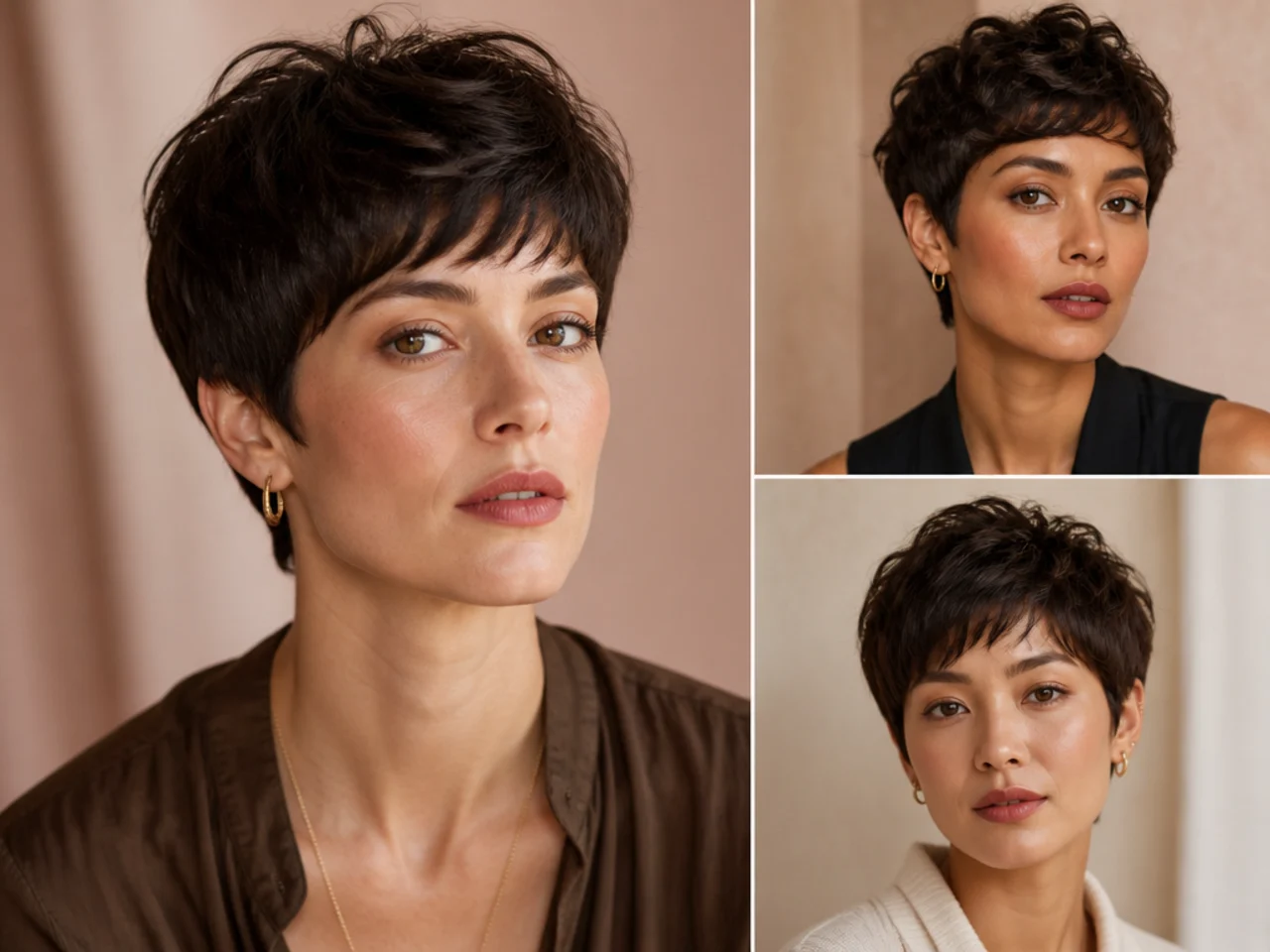
A chin-grazing pixie with a wispy fringe that softens the forehead. Length in front, shorter crown, softness through the sides. Works with the natural balance of a heart face — narrow chin needs visual width, wide forehead needs cover. To ask: "Heart-face pixie, longer at the jawline, soft wispy fringe past the brows, shorter through the crown." Styling: light cream at the front pieces, air dry.
20. Square Face Pixie
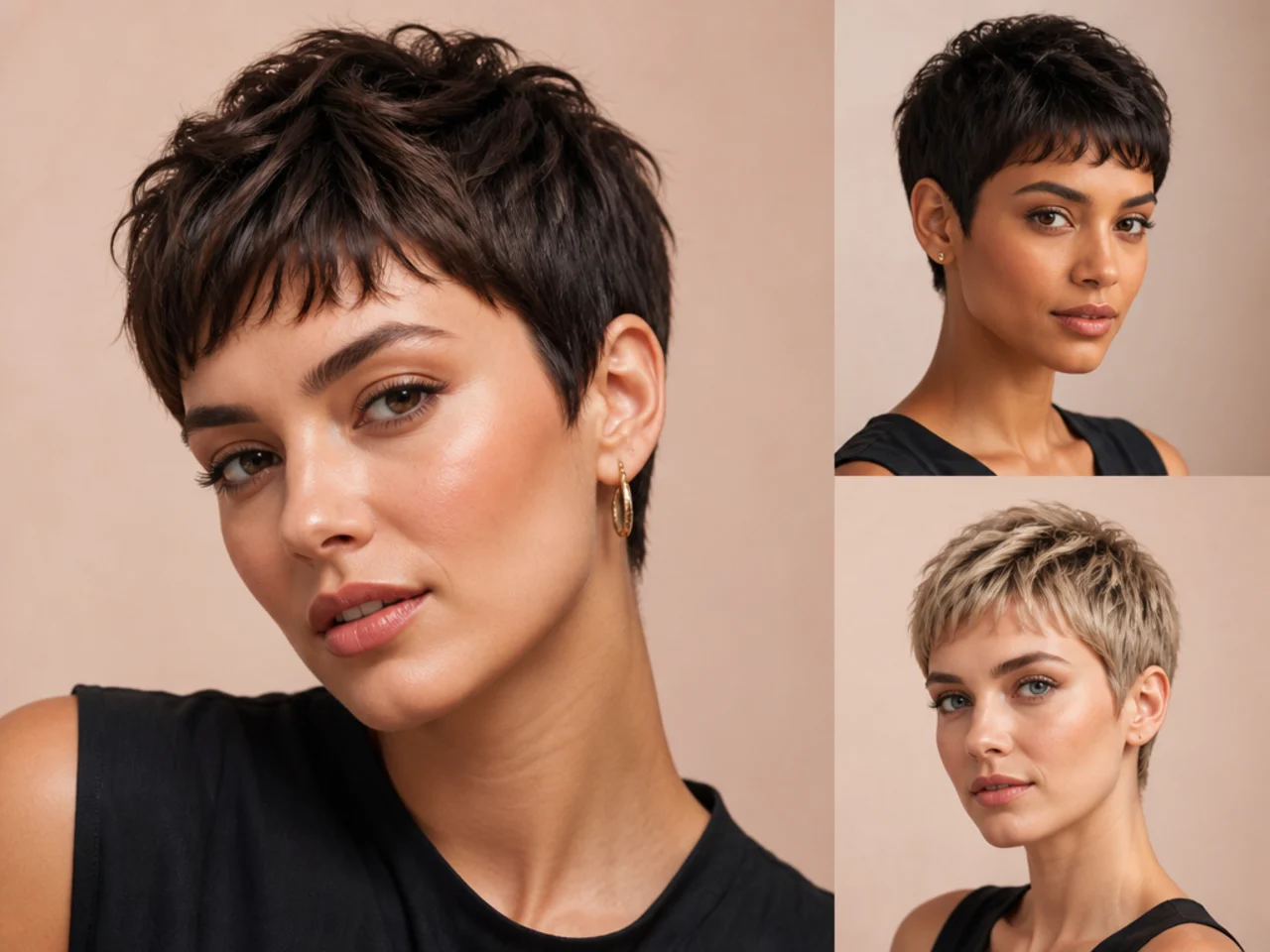
Softness is the whole strategy. Wispy layers, point-cut ends, no blunt geometric lines anywhere. Height at the crown to elongate the vertical. To ask: "Square-face pixie, soft point-cut layers, no blunt edges, gentle side-swept fringe." Styling: texture cream, tousle with fingers, keep the finish deliberately imperfect.
21. Curly Pixie Cut
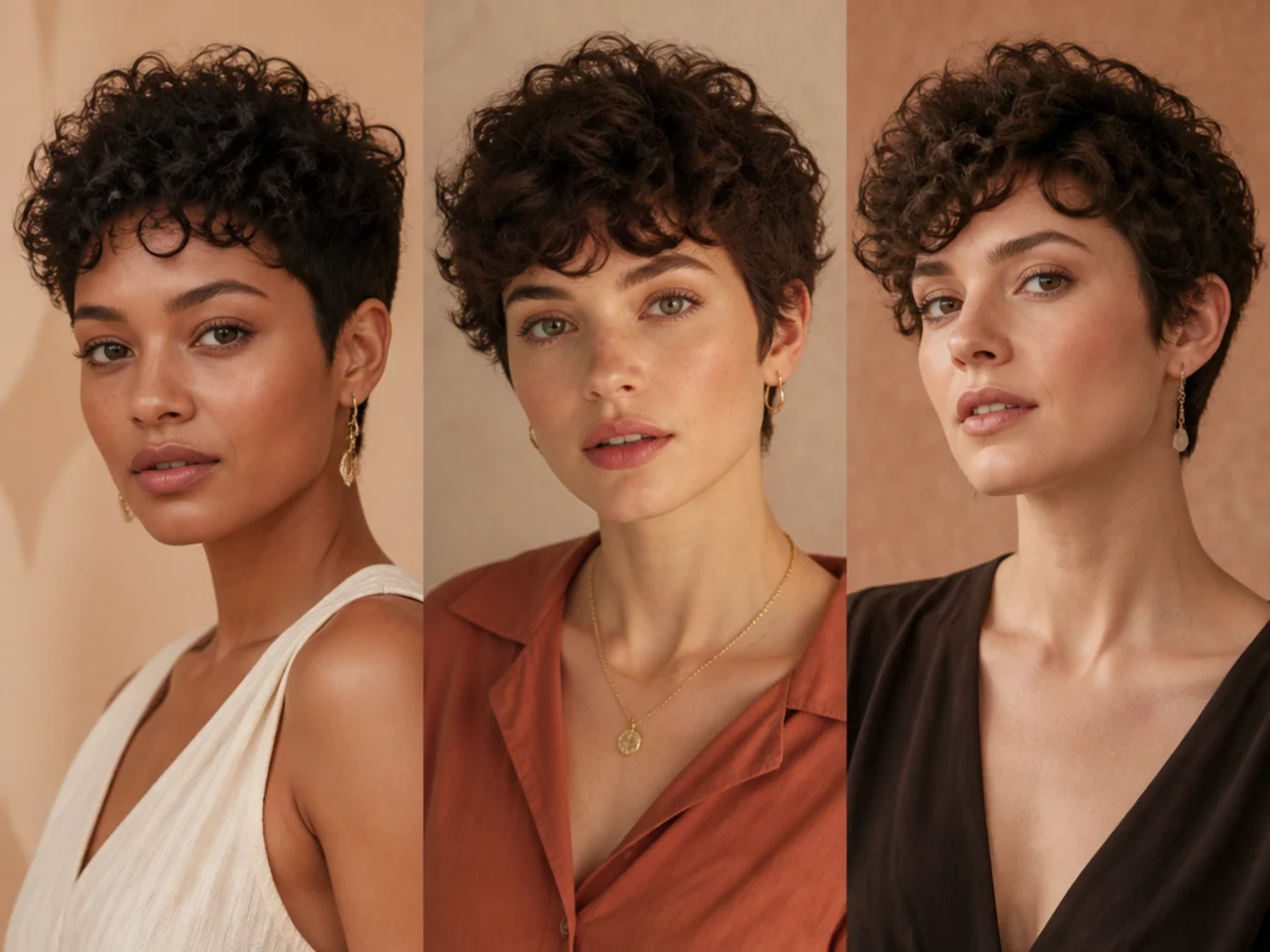
The pixie for natural curl. Cut dry on the curl (never wet) so each spring settles at its true length, with internal layers that let the curl pattern do its thing. See our fuller guide to short curly hairstyles for depth. Best on 2C–4A curls. Flatters most face shapes because curl adds soft volume in every direction. To ask: "Curly pixie, cut dry on my curls, internal layers, longer on top so my curl pattern reads." Styling: curl cream on damp hair, scrunch, diffuse or air dry.
22. Wavy Pixie Cut
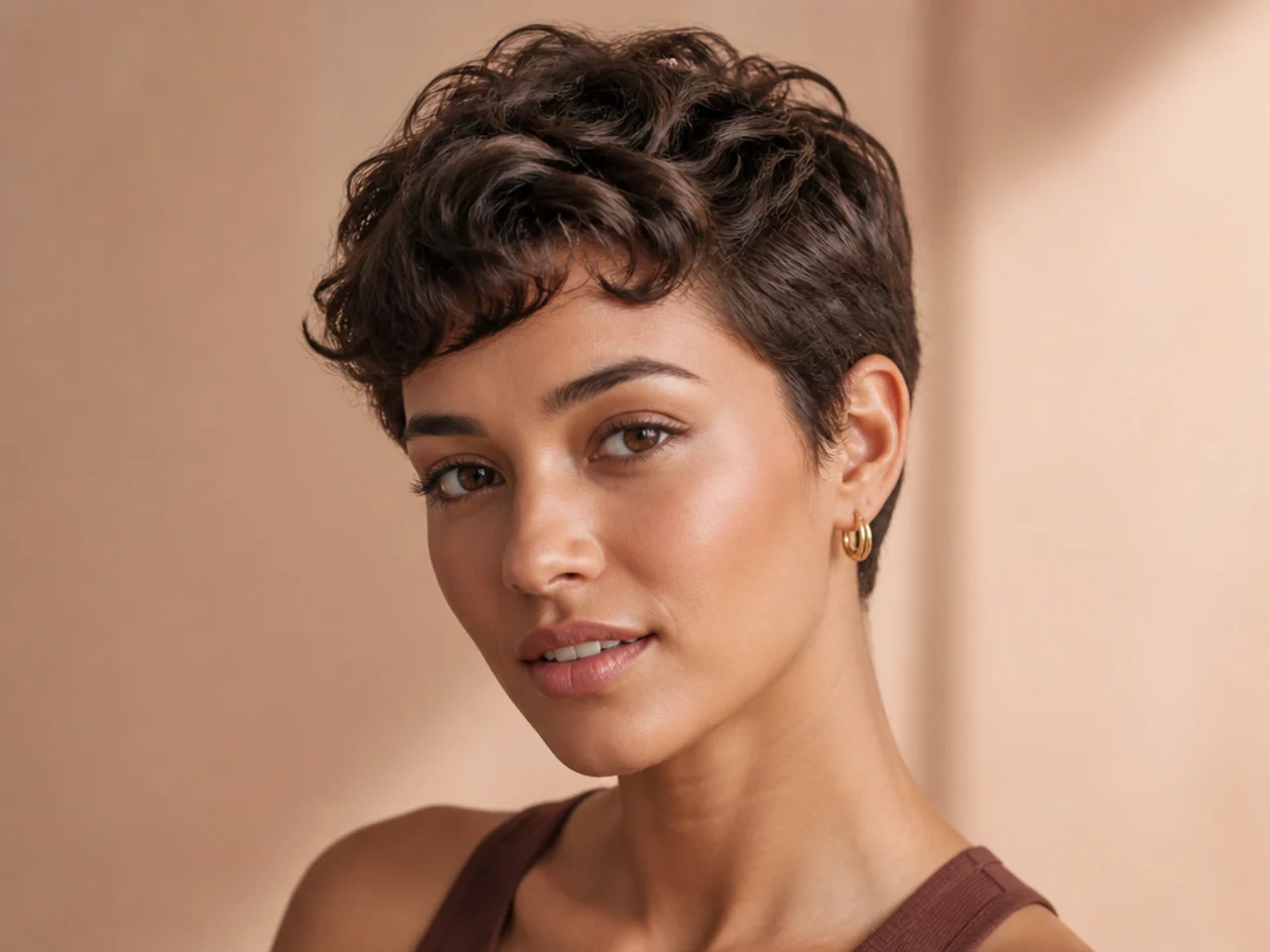
The natural pixie for 2A–2B hair — bend but no full curl. Cut to work with the wave, not fight it. Suits oval, square, and heart faces. To ask: "Wavy pixie, longer through the top, ends razor-cut so my waves fall soft." Styling: sea salt spray on damp hair, scrunch, air dry.
23. Fine Hair Pixie
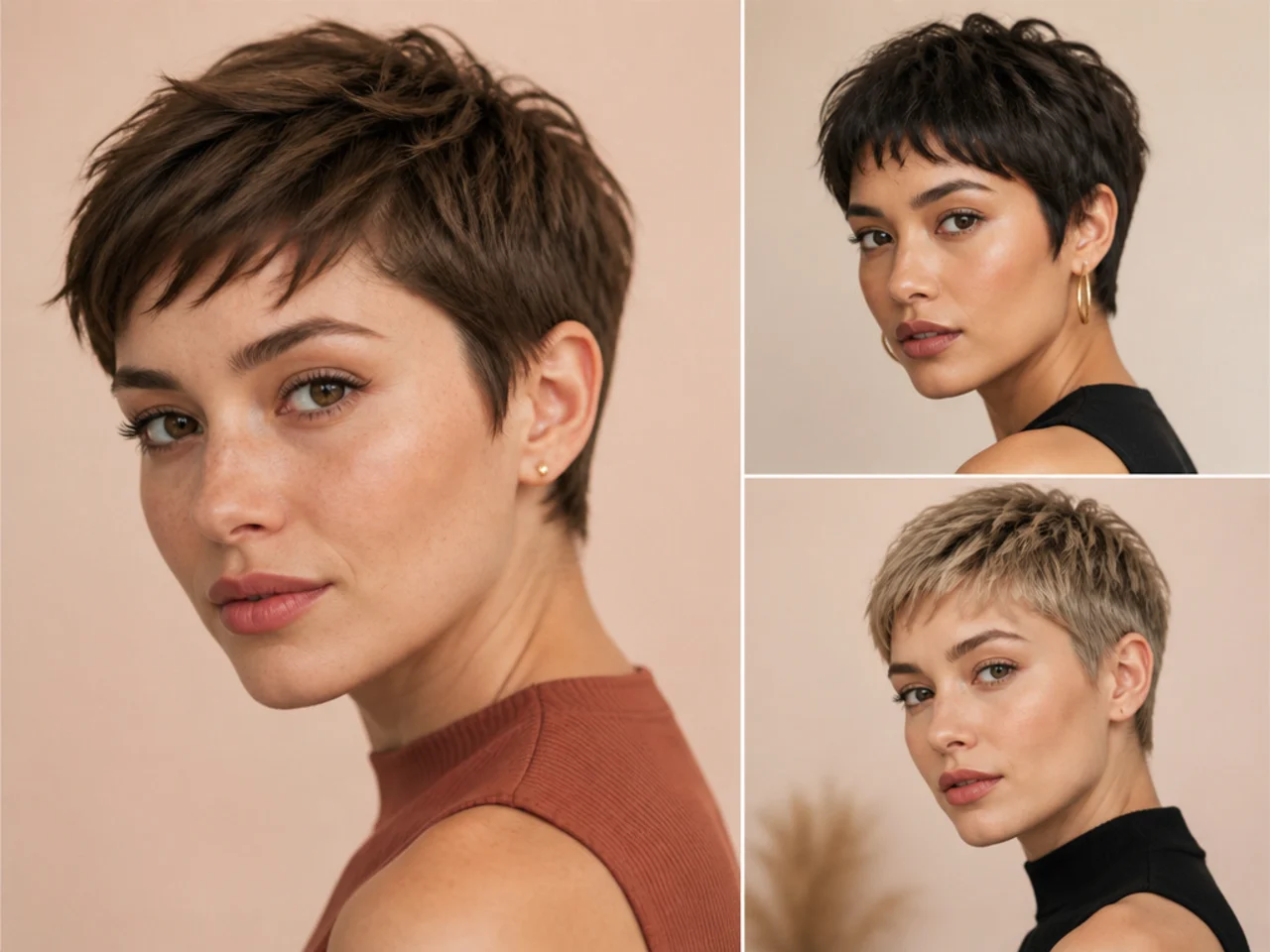
The single most flattering cut for fine hair. The pixie removes the weight that flattens long fine strands and creates density that longer styles cannot fake. See our full guide to short haircuts for thin hair if you want to compare shapes. Blunt ends, minimal thinning, sides shorter than the top so the density reads on top. Best for oval, round, and square faces. To ask: "Pixie for fine hair, blunt cut through the ends, minimal thinning, root support built in." Styling: root-lift mousse, blow-dry with the head upside down for two minutes.
24. Thick Hair Pixie
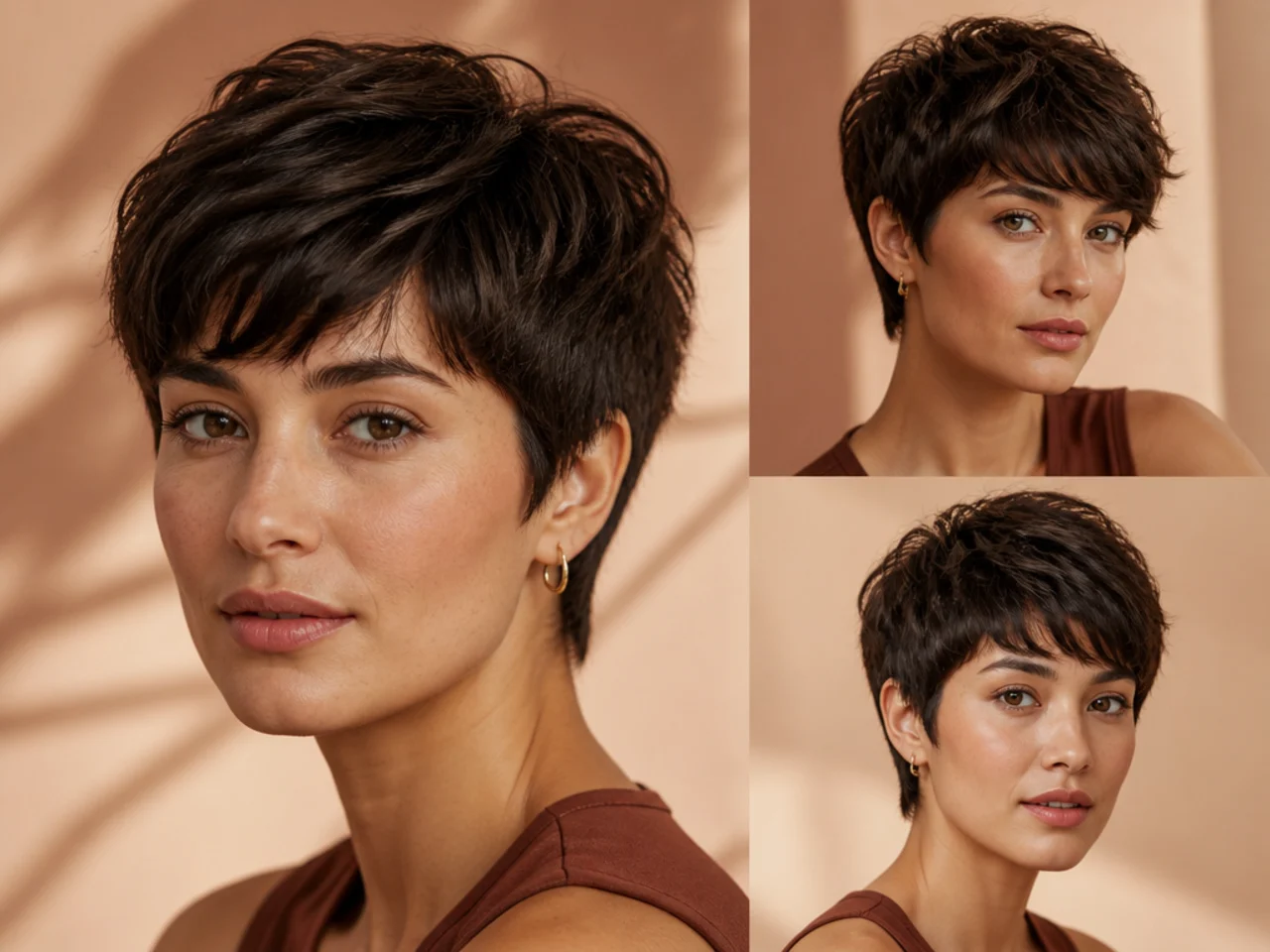
The reverse problem: cut aggressively into thick hair or it turns into a helmet. Internal thinning through the top, layered lengths, sometimes a hidden undercut behind the ear to remove weight without changing the silhouette. Best for thick straight to wavy hair; works on all face shapes because bulk, not shape, is the enemy. To ask: "Pixie for thick hair, internal thinning through the top, layered through the crown, sides tapered close, hidden undercut if it needs one." Styling: light pomade, hands only, no round brush.
25. Platinum Pixie
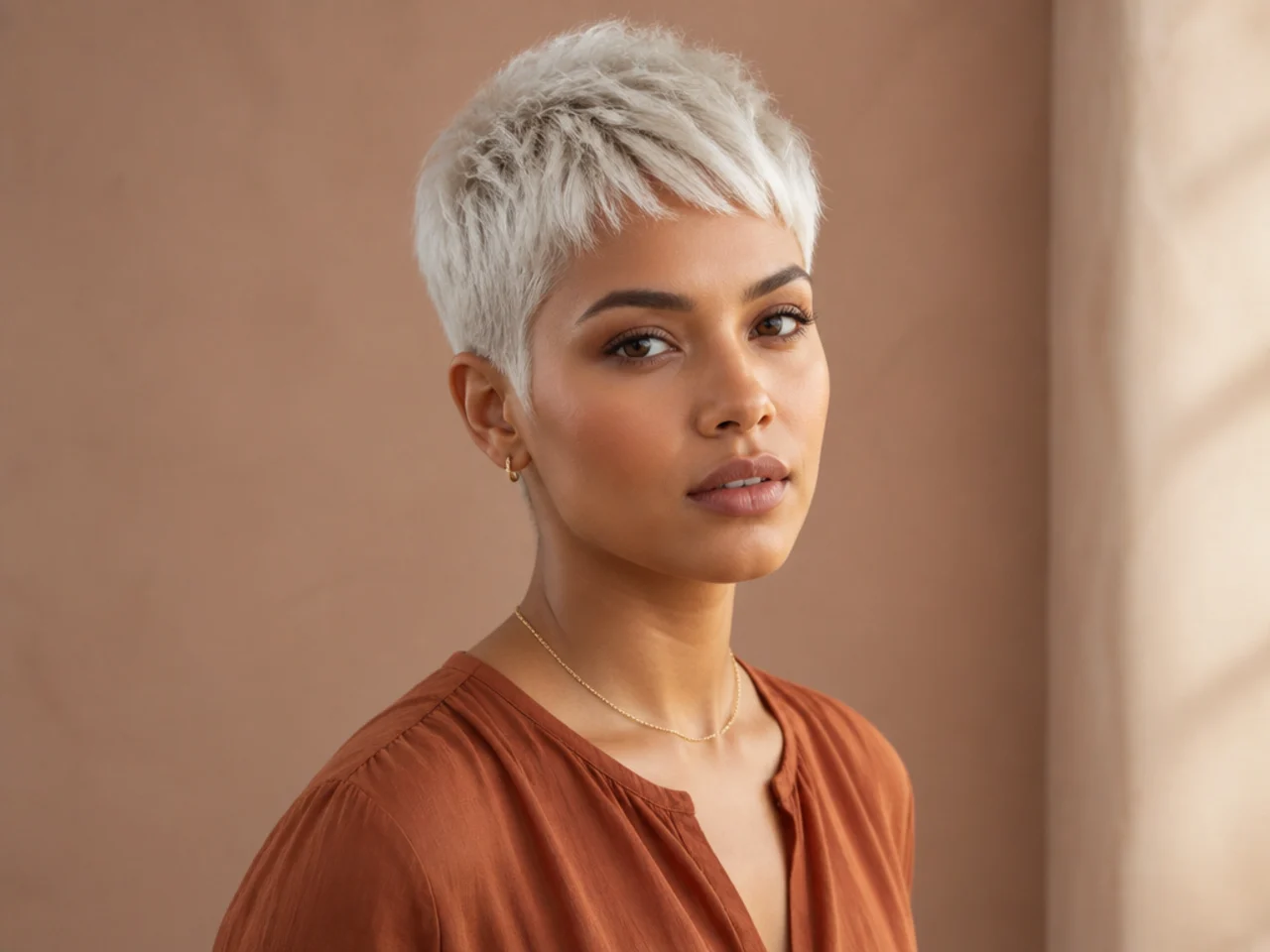
The pixie's color statement. Ultra-light blonde makes every line of the cut readable and turns your whole head into a piece of styling. Suits any face shape, reads best on cool skin undertones. To ask: "Platinum pixie, level 10 with a cool toner, cut precise so the color shows the shape." Styling: purple shampoo weekly, bond-repair mask, a drop of oil to fight platinum dryness.
26. Ombre Pixie
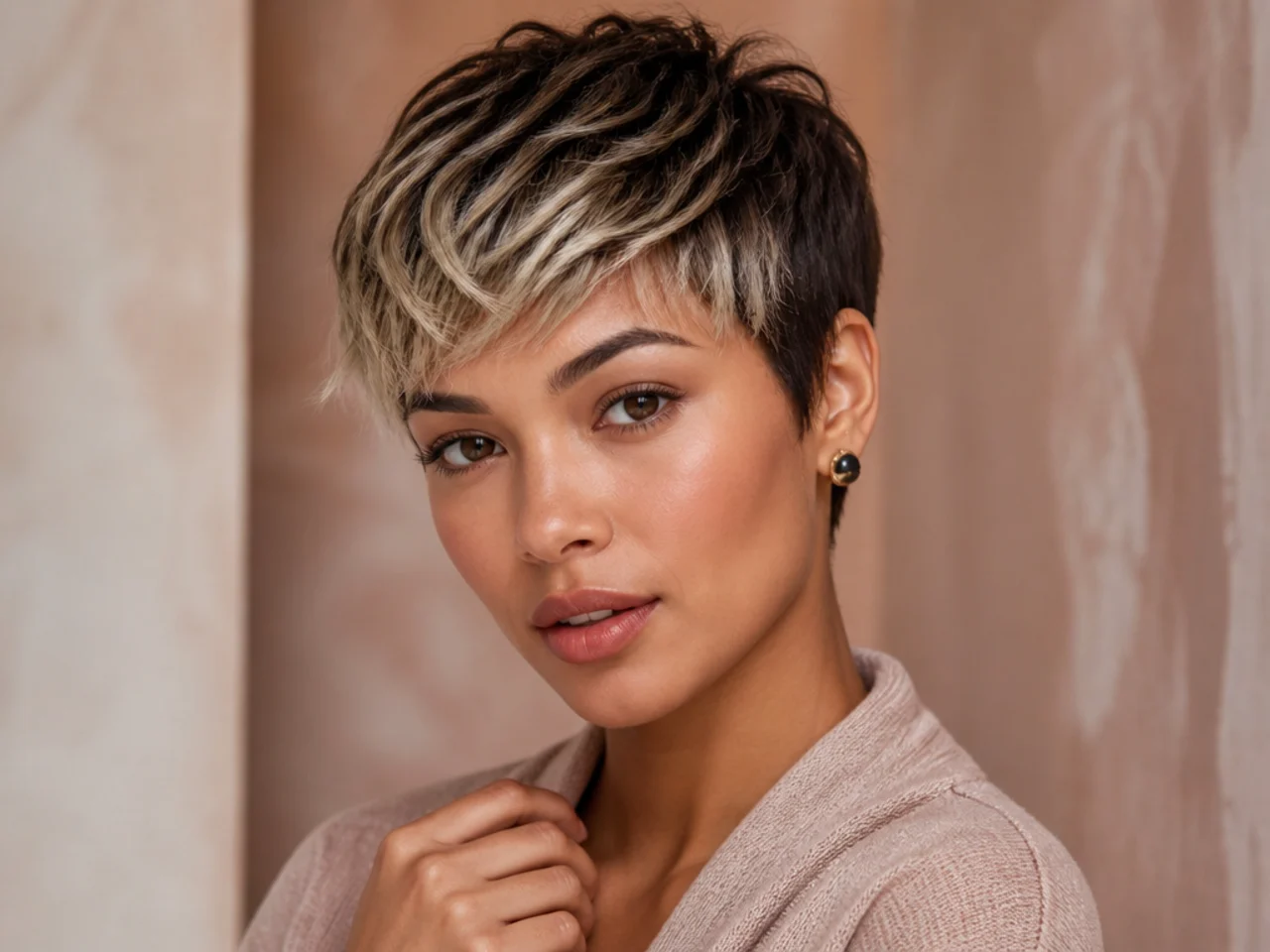
Dark roots melting into lighter ends. Rare on such short hair, but it works — the ends catch light where the cut is at its softest. Best on wavy or textured pixies where the transition has room to show. To ask: "Ombre pixie, natural dark root, softly lightened through the last inch of the ends." Styling: whatever your base pixie needs.
27. Highlighted Pixie
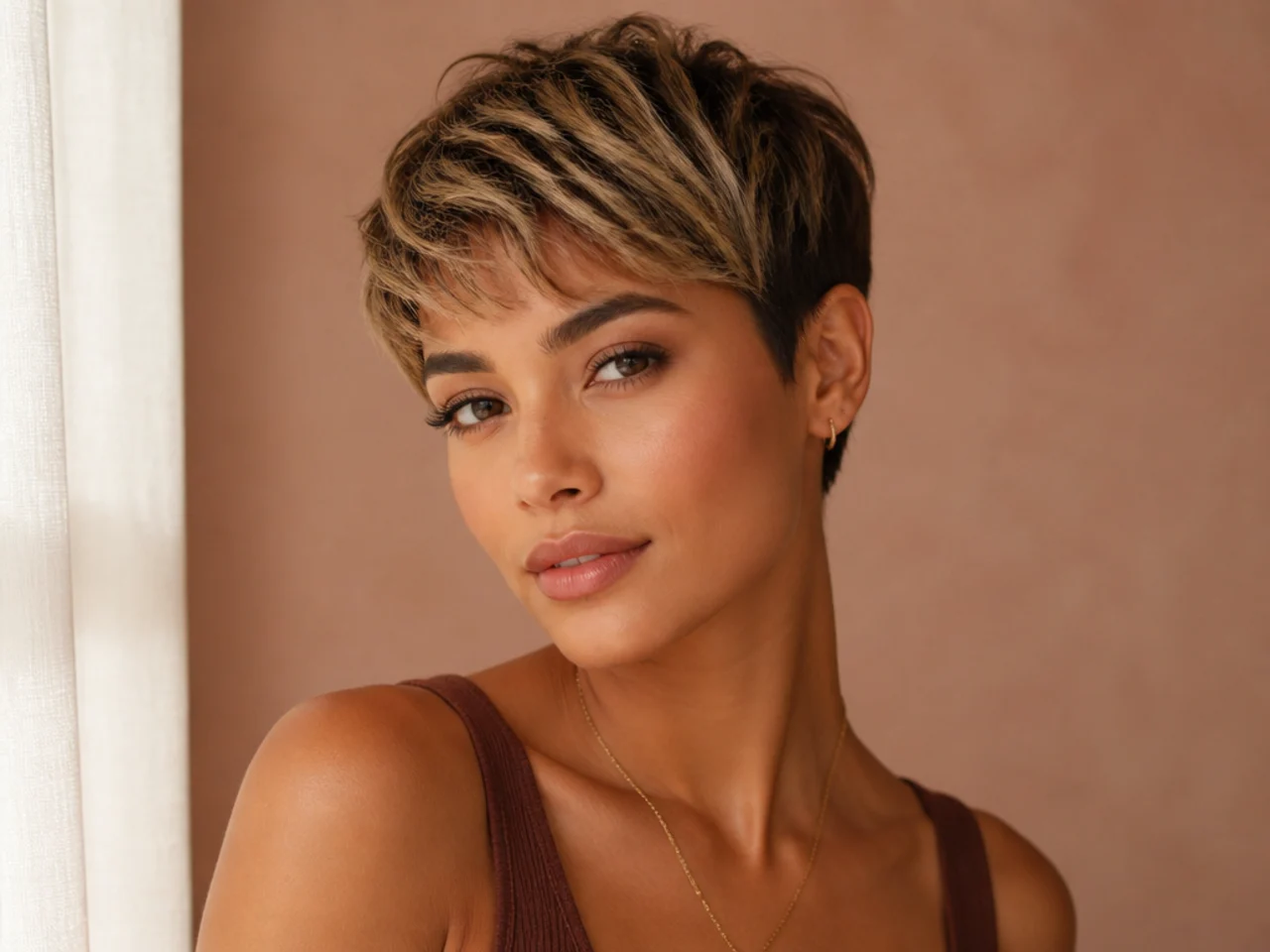
Fine or babylight-style highlights placed through the top. Adds visual depth and makes fine hair read denser. Best for medium and fine density on oval, round, or square faces. To ask: "Foil highlights through the top and fringe, half a shade lighter than my natural base, kept soft at the roots." Styling: same as your base pixie.
28. Rainbow Pixie
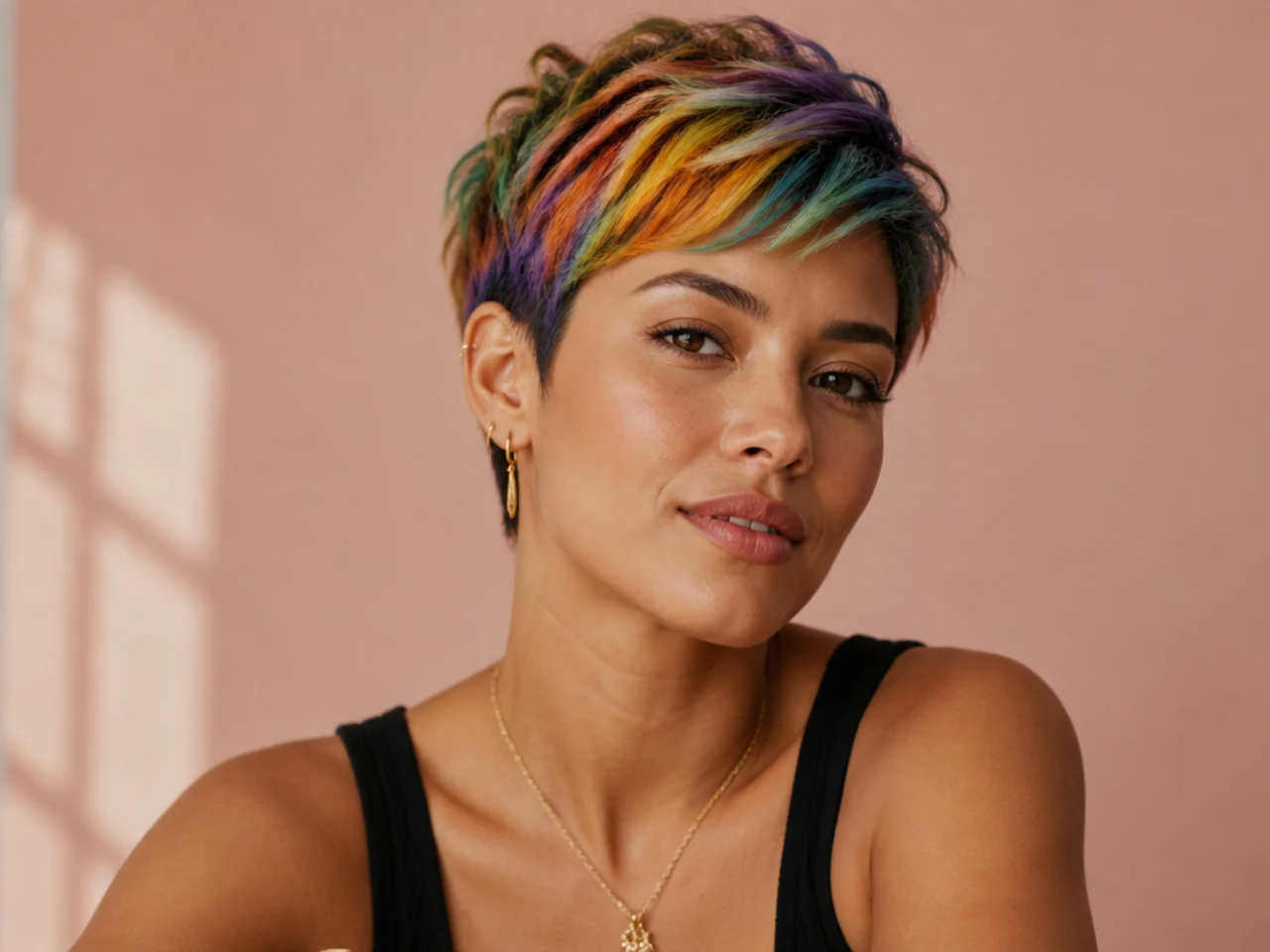
For maximum expression: sections dyed in vivid colors placed to follow the cut lines. The pixie is the ideal canvas because you can see everything at once. Best if you can commit to the upkeep — color fades fast on short hair that is washed often. To ask: "Rainbow pixie, sections placed to follow the cut lines, [name your colors]." Styling: cool-water washes, color-safe shampoo, minimal heat.
29. Ultra-Short Pixie
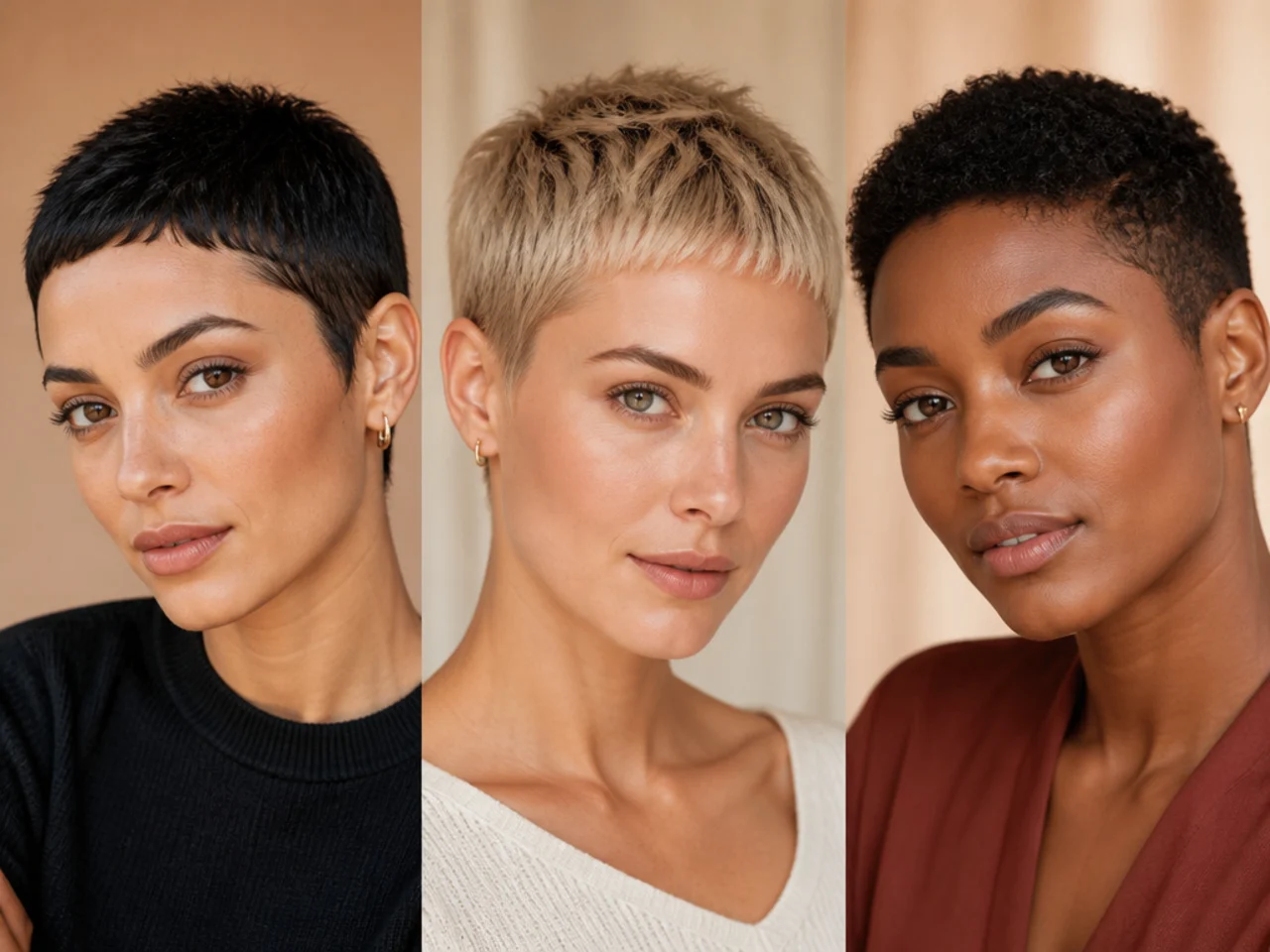
The full commitment. Top at 1–1.5 inches, sides even shorter. Sometimes called a boyish crop because it plays with androgynous proportions. Requires features that can carry it — strong cheekbones, a defined jaw, or eyes you want front and center. Best on oval faces, but a well-cut ultra-short works on most shapes. To ask: "Ultra-short pixie, top at an inch and a half, sides clippered to a #2." Styling: pomade, fingers, thirty seconds.
30. Long Pixie Cut
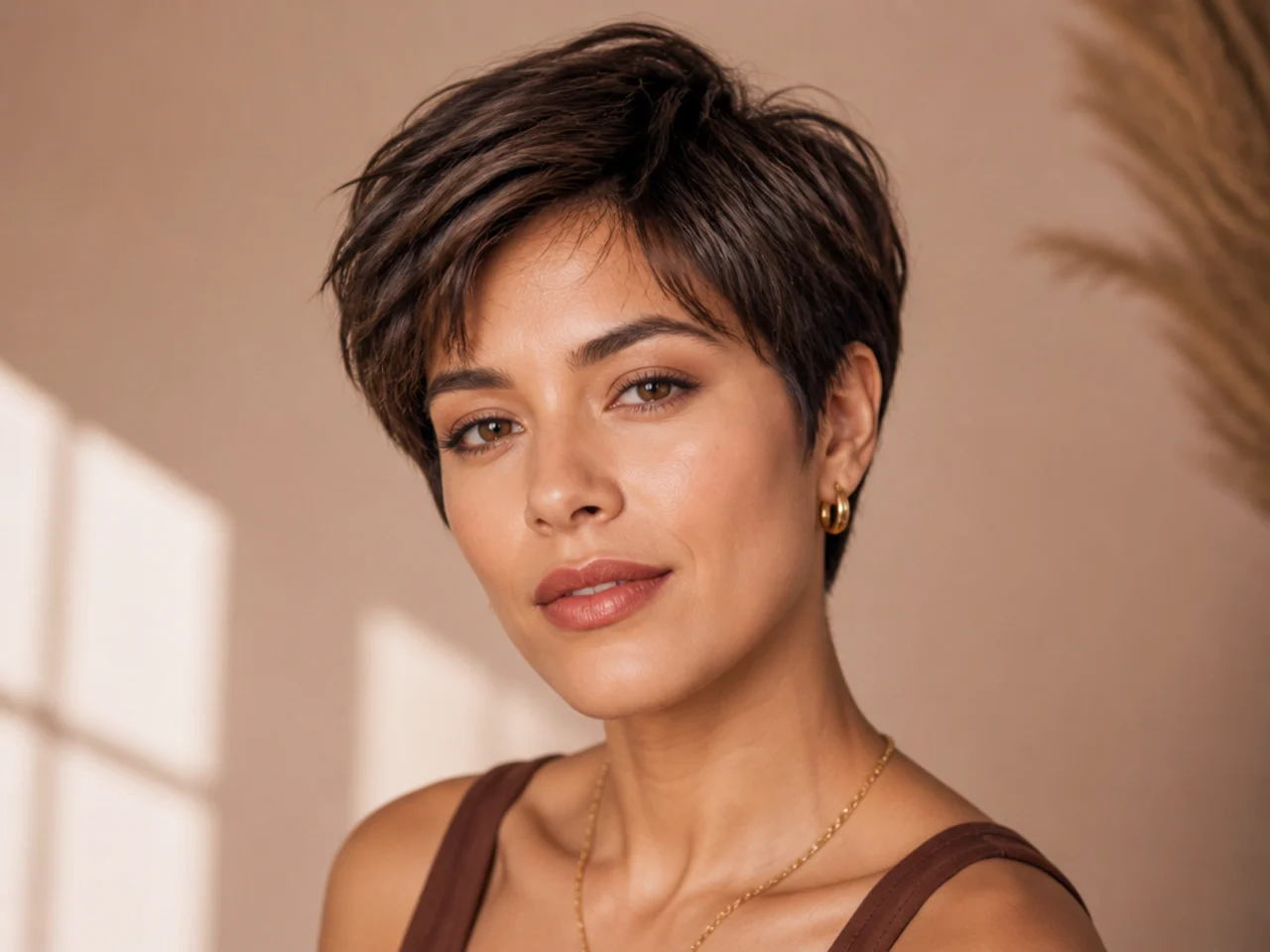
The gateway pixie. Top at 4–5 inches, sides tapered (not clippered), length kept at the nape. Almost a pixie bob, but with more shape at the crown. Ideal if you love the pixie idea but want maximum styling flexibility — you can sweep it back, side-part it, or leave a full fringe. A universal flatterer, especially strong on heart and long faces. To ask: "Long pixie, 4–5 inches on top, scissored sides, length at the nape kept for shape." Styling: cream and a round brush; or salt spray and hands.
Pixie Cuts for Different Face Shapes
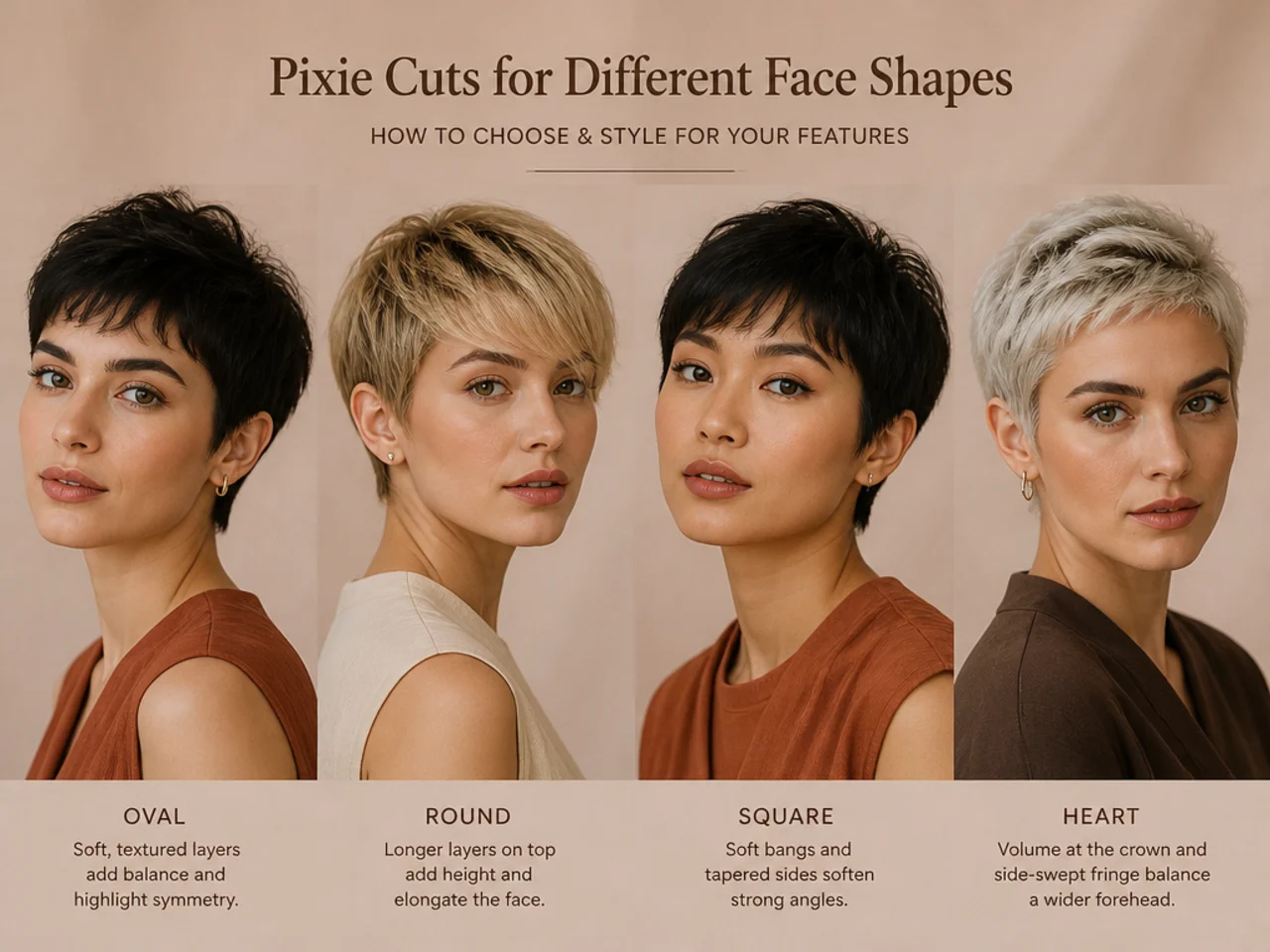
Your bone structure decides which pixie flatters you and which one you fight. Figure out your face shape first — measure the width of your forehead, cheekbones, and jaw, plus the length from hairline to chin — then pick the variation that works with the structure you actually have, not the one you wish you had.
Round Face Shapes
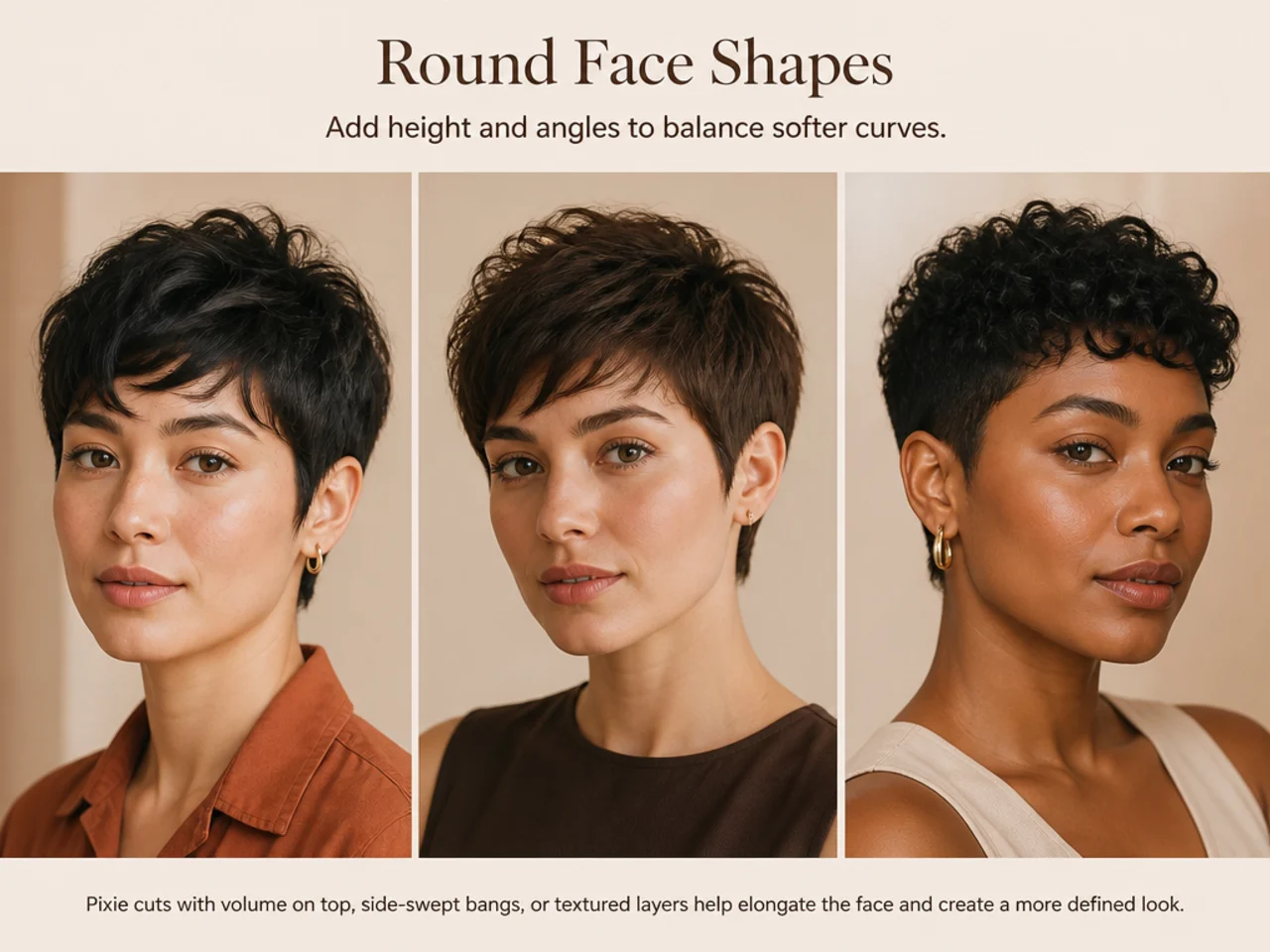
Round faces have soft, curved lines with cheek width close to forehead width, and a face length close to the width. Your pixie should add vertical lines. That means height at the crown (blow-dry upward, use a root-lift spray), sides kept close to the head, and a long side-swept fringe that cuts a diagonal across the forehead. Skip anything blunt at cheek level — including chin-grazing pixie bobs. Asymmetrical shapes work brilliantly because the diagonal breaks the circle. Undercut sides carve contour where a round face naturally lacks it. The trap to avoid: a rounded top that mirrors your face shape and doubles the softness.
Oval Face Shapes
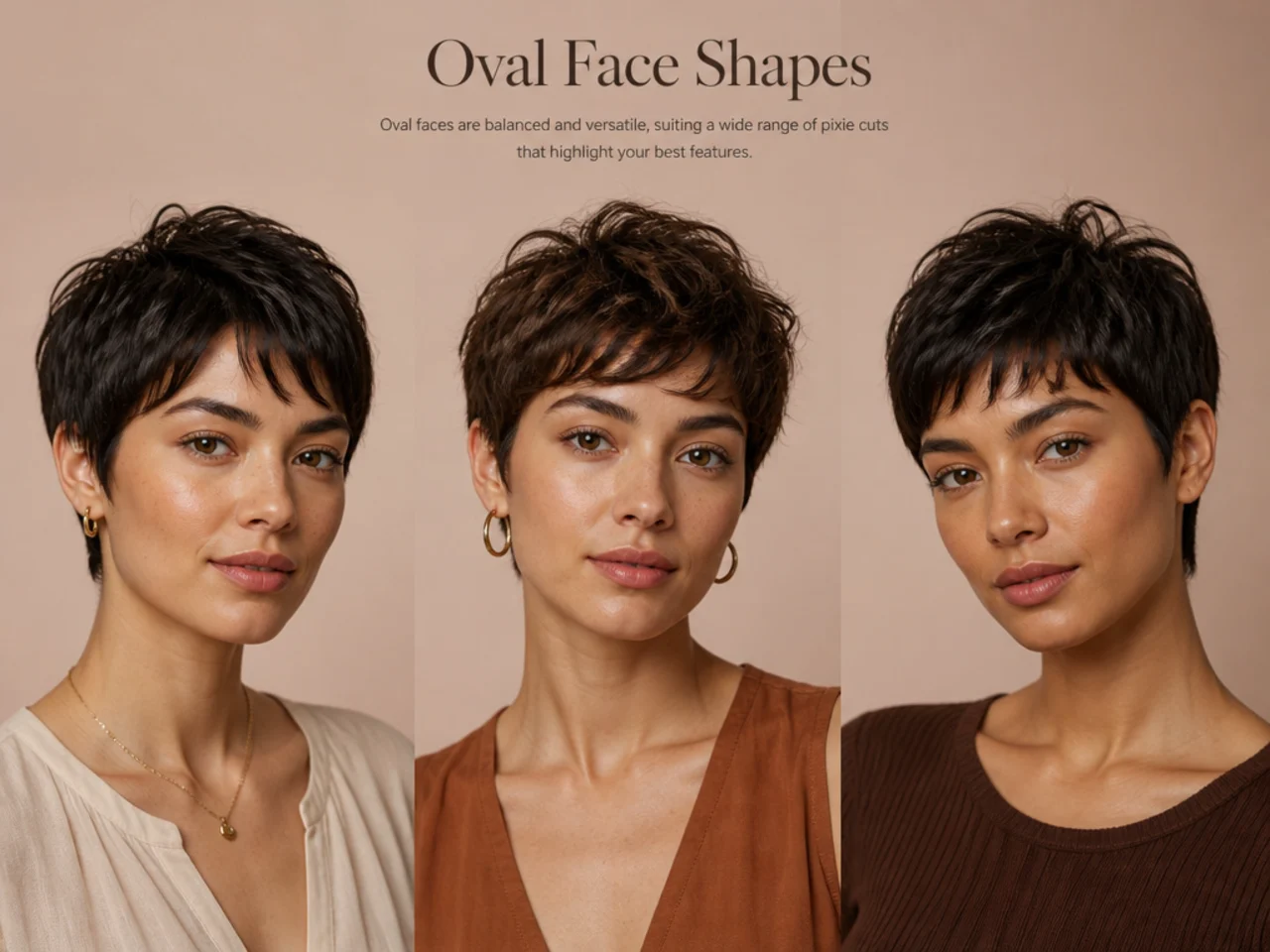
Oval faces are longer than wide, with balanced proportions and a slightly narrower chin than forehead. This is the jackpot for pixies — almost every variation on this page works on you. Pick based on personality, hair type, and how bold you want to go. Ultra-short crops, asymmetrical cuts, sleek polished versions, tousled textured cuts — they all sit well. The only real trap is choosing a pixie that fights your hair type (fine hair with heavy blunt cuts goes flat, thick hair without thinning goes triangular). Focus your decision on lifestyle: how much daily styling you will actually do and how often you can get to the salon.
Square Face Shapes
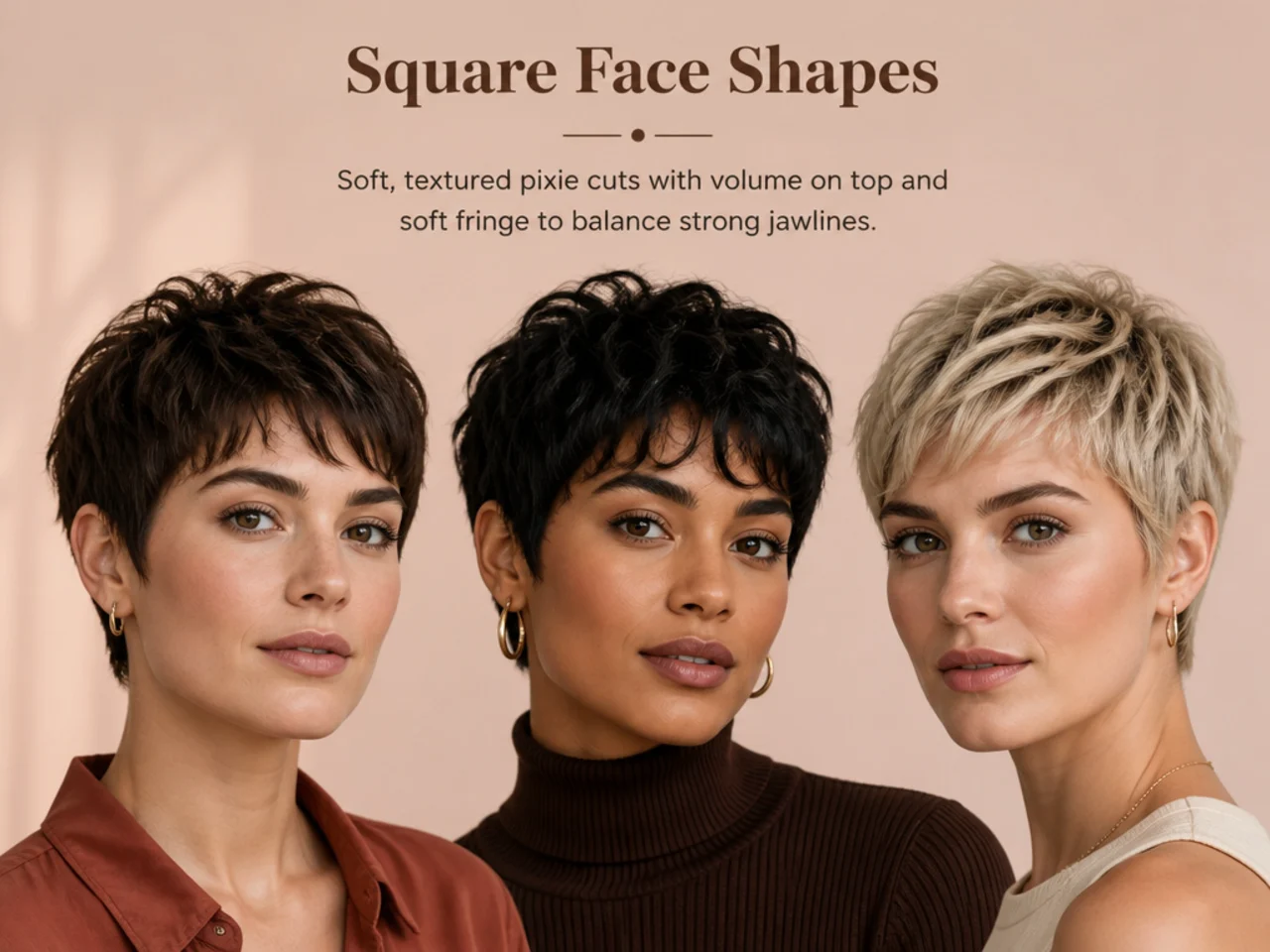
Square faces have a strong jaw with forehead width close to jaw width. Your job with a pixie is softening — no blunt geometry, no hard lines at the jaw. Wispy fringes, textured tops, point-cut ends, feathered variations. Add height at the crown to elongate the vertical. Side-swept anything works better than straight-across. Avoid an ultra-short pixie with clean clippered sides — the geometric contrast can emphasize the square rather than soften it. Your sweet spot is a tousled, layered pixie with a curtain or side-swept fringe.
Heart-Shaped Face Shapes
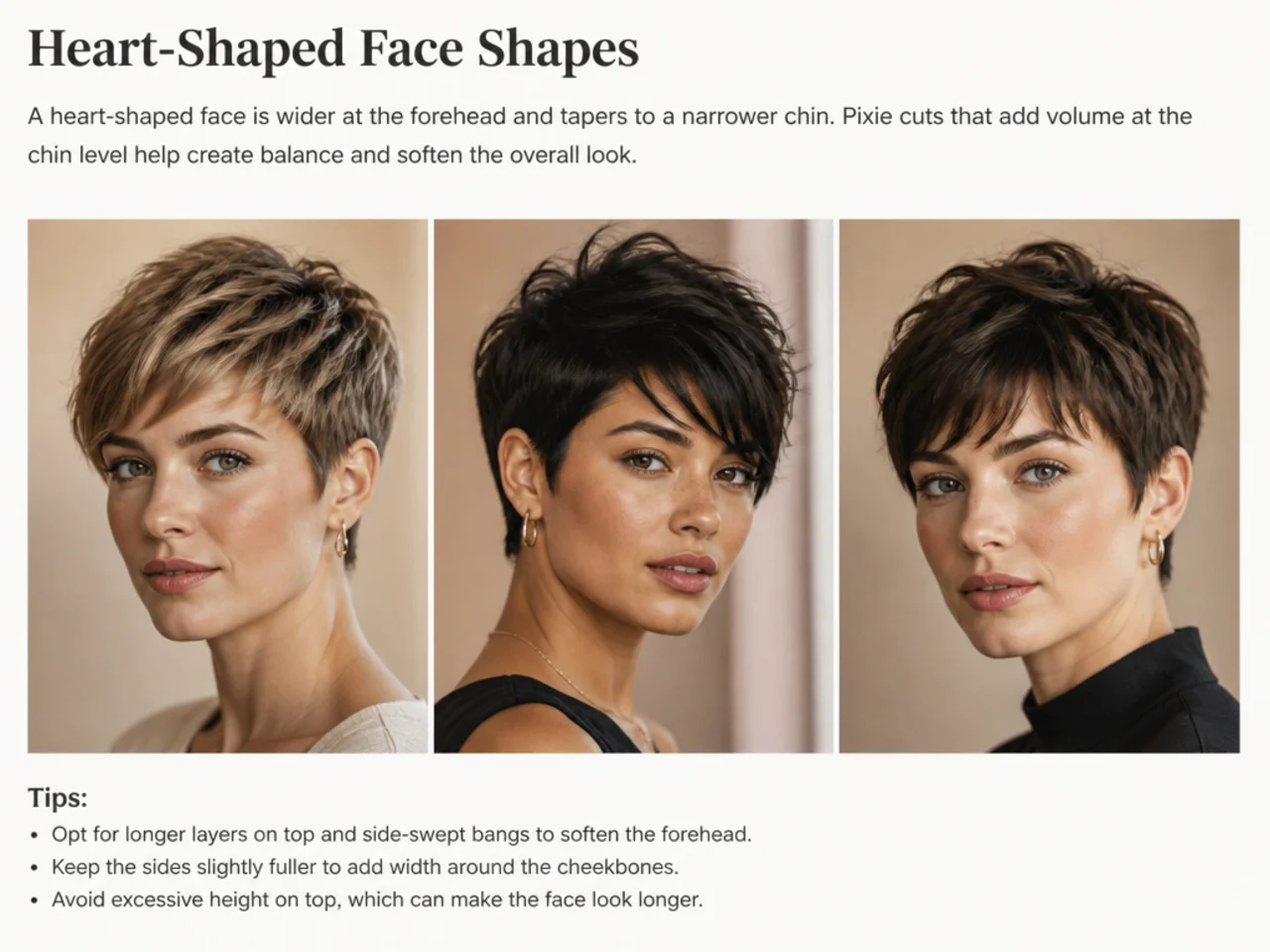
Heart faces are widest at the forehead and taper to a narrower chin. The strategy is balancing — cover forehead width with a fringe, add visual volume at the jaw. Chin-grazing pixie bobs are ideal. Wispy fringes soften the forehead. Longer front pieces that hit the jawline add width where you want it. Avoid slick-back styles that pull hair away from the forehead and exaggerate the width. Avoid crown volume that pushes the eye upward — you want the visual weight at the chin, not the temples.
Long Face Shapes
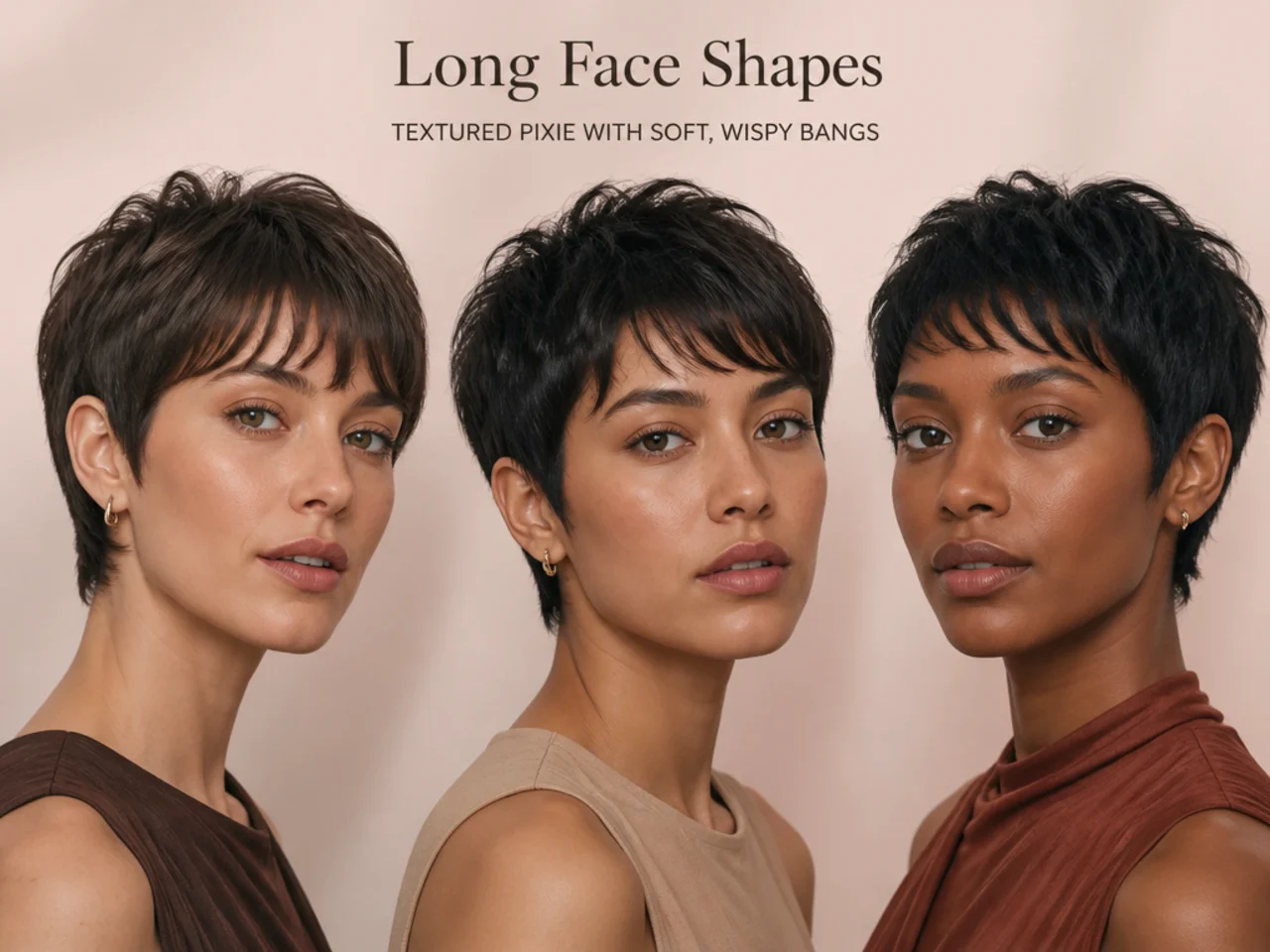
Long faces have length noticeably greater than width, sometimes with a high forehead. The strategy is shortening — a blunt or curtain fringe cuts the face length visually, and volume on the sides adds width. Skip crown height at all costs. Feathered layers around the ears add fullness where you want it. Long, layered pixies and pixie bobs work well because the length at the sides creates horizontal balance. Round-face techniques (crown height, close sides, long side-swept fringes) will make a long face read longer — do the opposite.
How to Choose the Right Pixie Cut for Your Hair Type
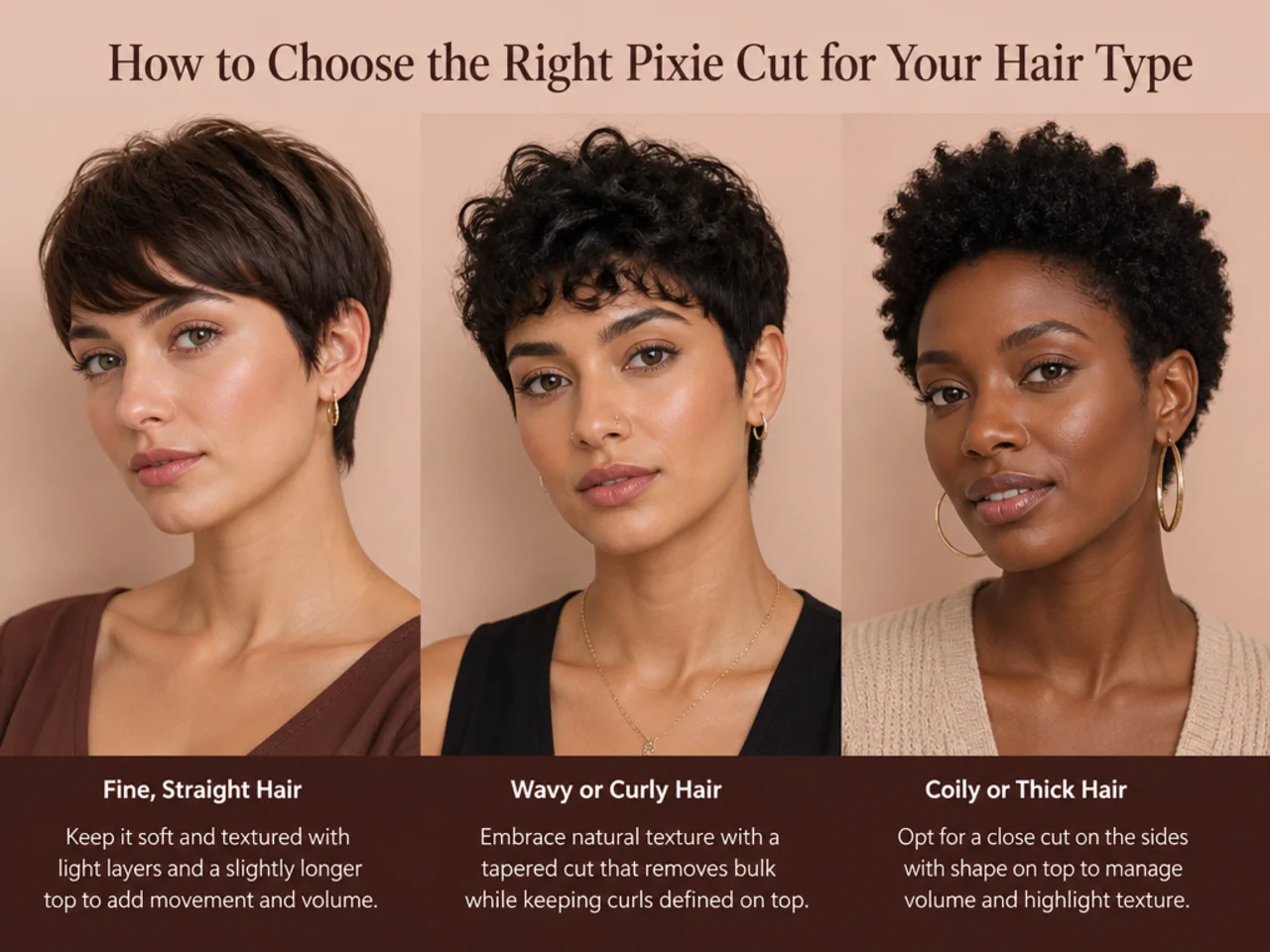
Fine Hair Considerations
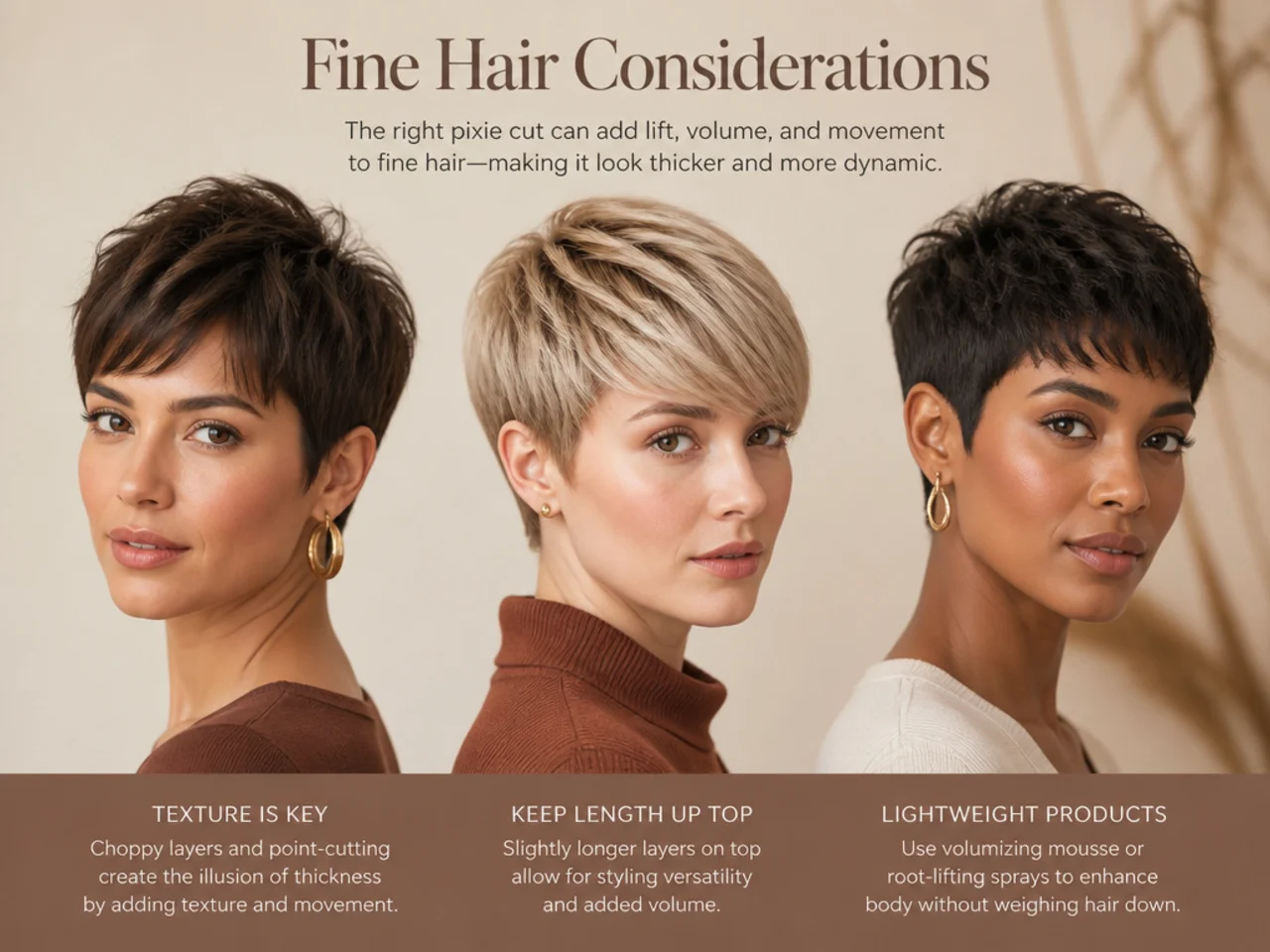
Fine hair is the pixie's secret weapon. The cut removes the weight that drags fine strands flat, and the shape creates density that longer cuts cannot fake. Go blunt — sharp scissor ends hold weight better than razored ones. Keep sides shorter than the top so the eye reads density where you have the least length. Skip aggressive thinning; you do not have hair to spare. Root-lift spray and a blow-dry with the head upside down build volume in under three minutes. If you want to compare related shapes for fine hair, our thin hair short-cut guide and fine-hair short bob options sit side-by-side with this cut.
Thick Hair Adaptations
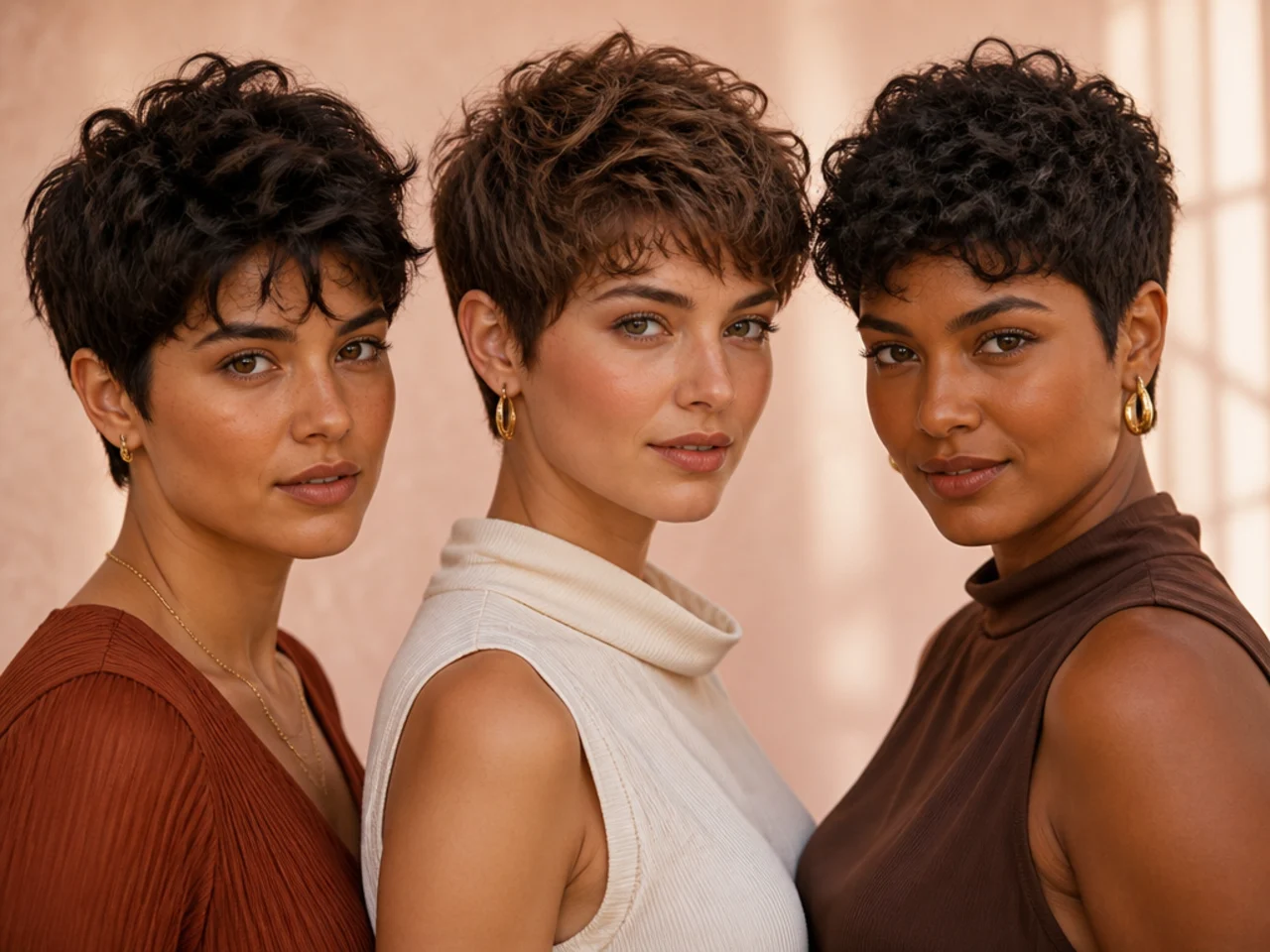
Thick hair on a pixie needs internal thinning or it grows into a helmet within three weeks. Ask your stylist to use point-cutting or thinning shears throughout the top, and to taper the sides tightly. An undercut behind the ear is a stealth trick that removes weight without changing the silhouette. Avoid clean blunt ends — thick hair pushed into geometry becomes a wig. Textured, layered, and razored variations all work. Styling is minimal: pomade or matte paste in your hands, no brush.
Curly and Wavy Hair
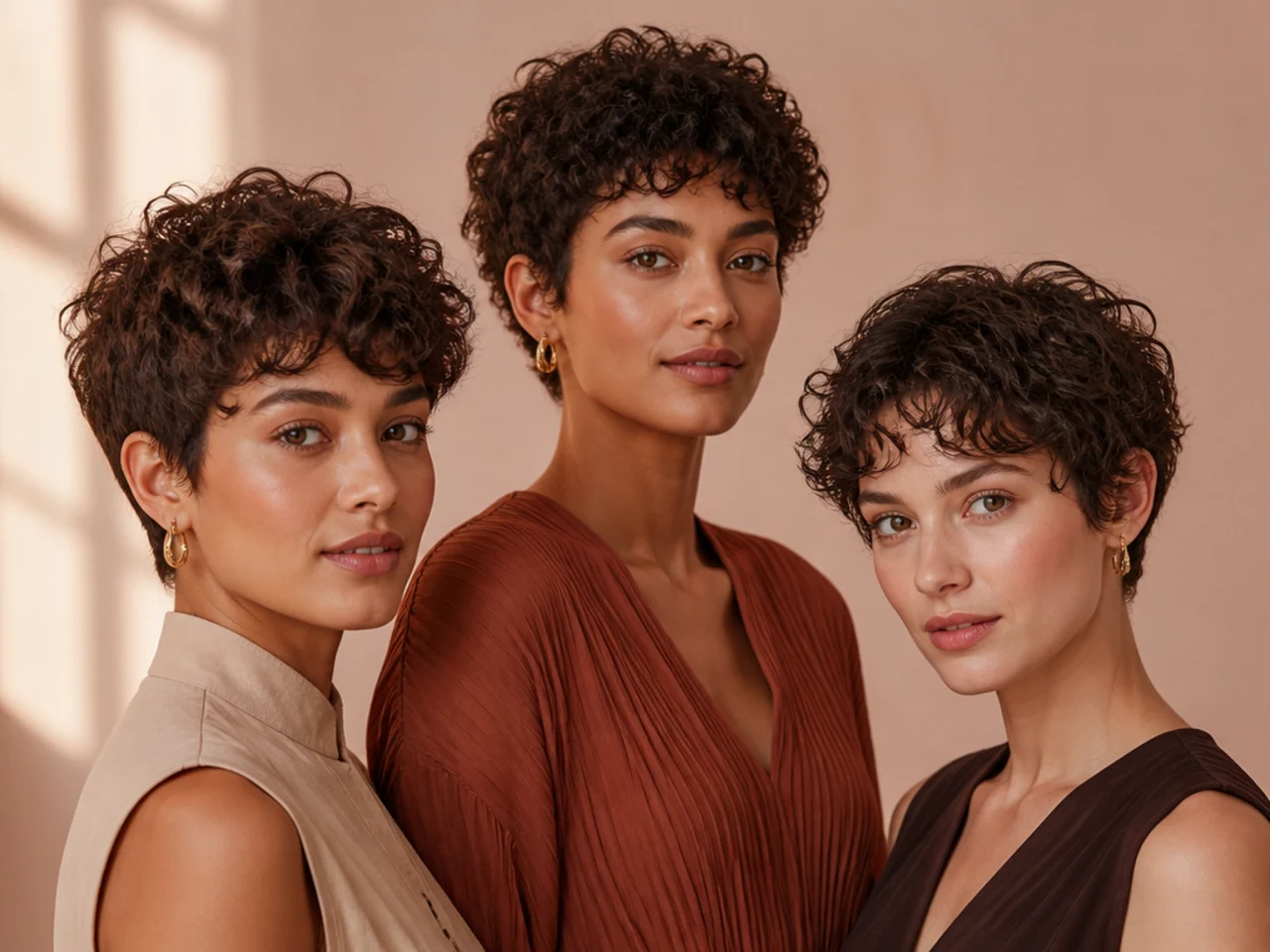
Curly hair (3A and up) needs a stylist who cuts curl dry and cuts each curl to its own length so nothing springs up short. Ask for internal layers, not a blunt one-length cut. Wavy hair (2A–2B) can be cut wet or dry, with razored ends to enhance the wave rather than break it. Both textures do well with a curl or wave cream on damp hair, plus a diffuser or air dry. Fight the urge to flat-iron — the pixie was built to let your natural texture show. Our short curly hairstyles guide covers curl-specific pixies in more depth.
Styling Your Pixie Cut
Daily Styling Routine
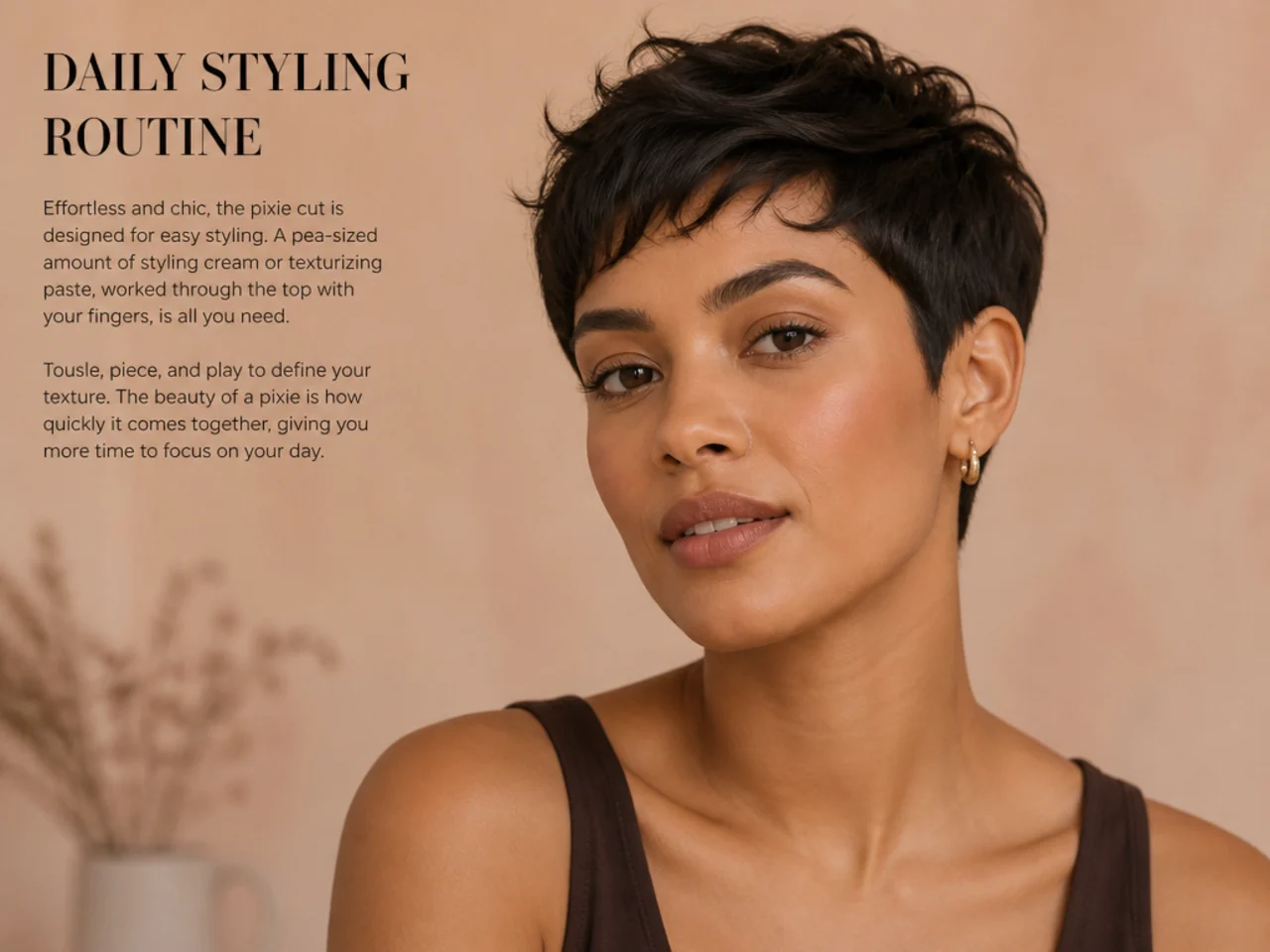
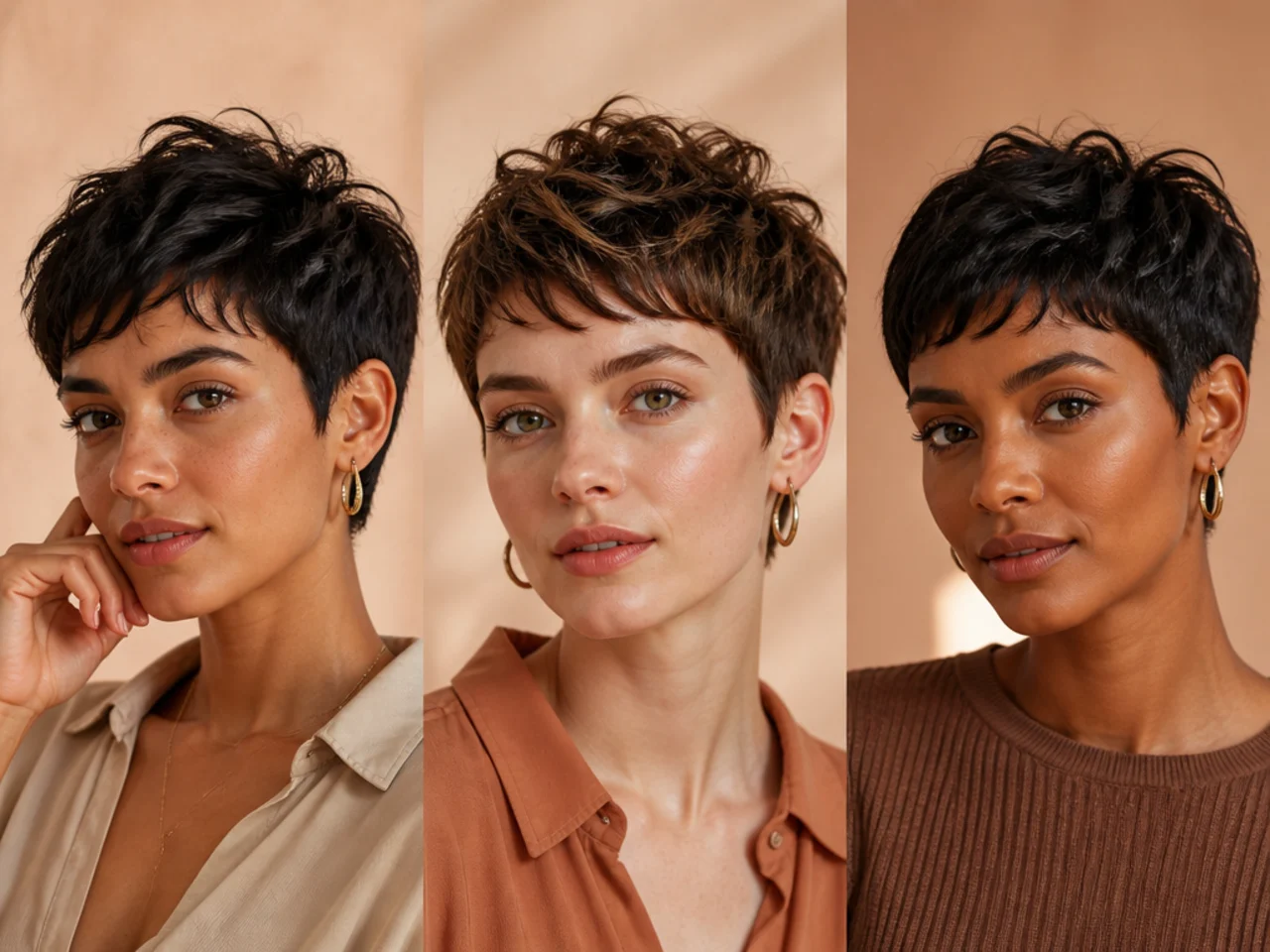
This is what makes people fall in love with the pixie: two to five minutes, start to finish. On damp hair, apply a dime-sized amount of texture cream or leave-in. Work it through with your fingers. Rough-dry with a hairdryer while shaking with your other hand for two minutes. Finish with a pea of styling paste or matte pomade on dry hair to define the pieces you want. For a sleeker version, add a blow-dry with a small round brush at the crown to build lift. That is the whole routine.
Styling Products and Tools
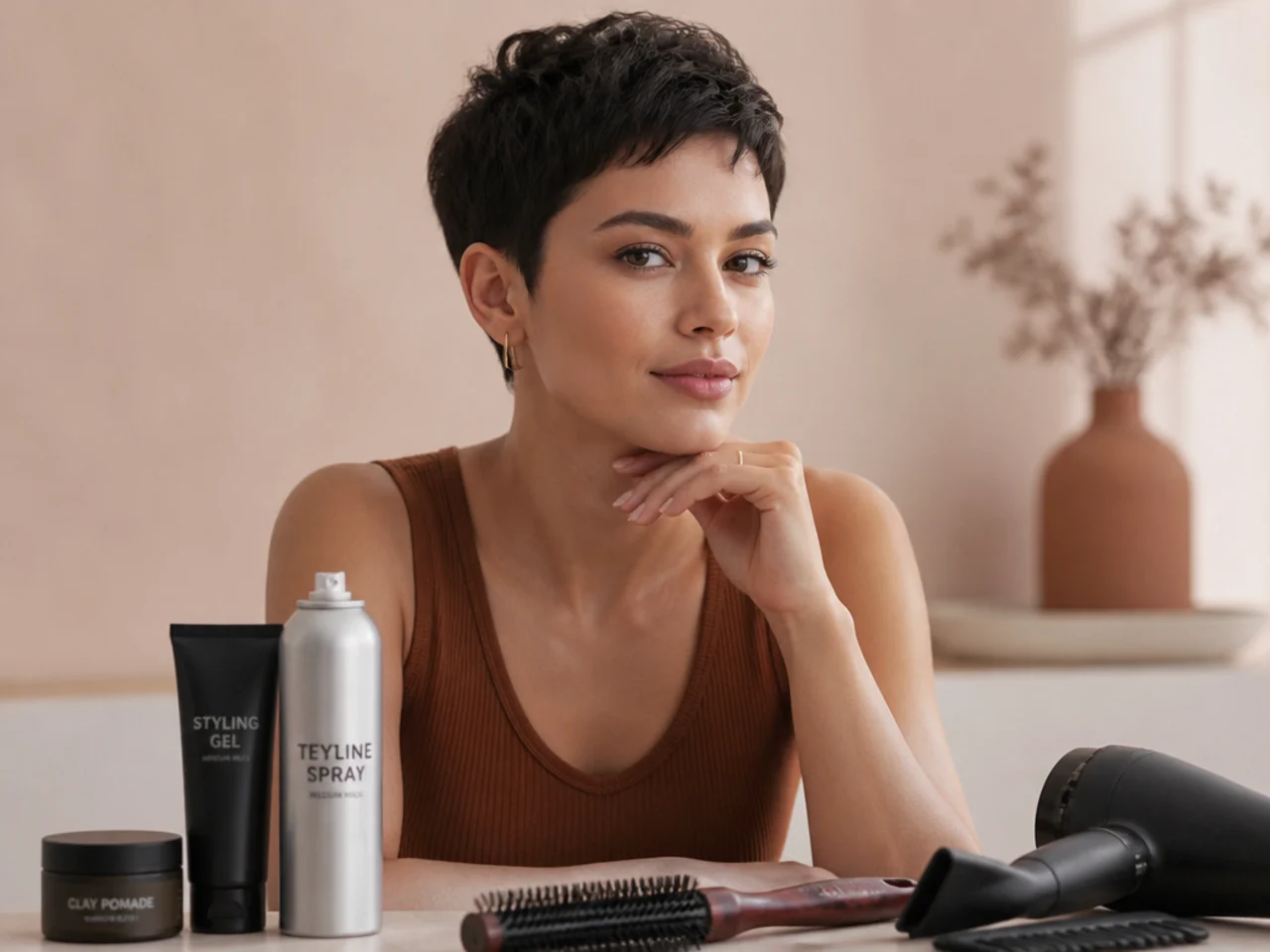
The pixie kit is small. You need a heat protectant spray, a texture cream or salt spray for damp hair, a matte paste or pomade for dry hair, and a light-hold hairspray or dry texture spray. Optional: a root-lift mousse if you are building volume for fine hair. A 1-inch round brush covers most blow-dry needs. A flat iron rarely comes out — pixie shapes rely on the cut, not the heat.
Special Occasion Styling
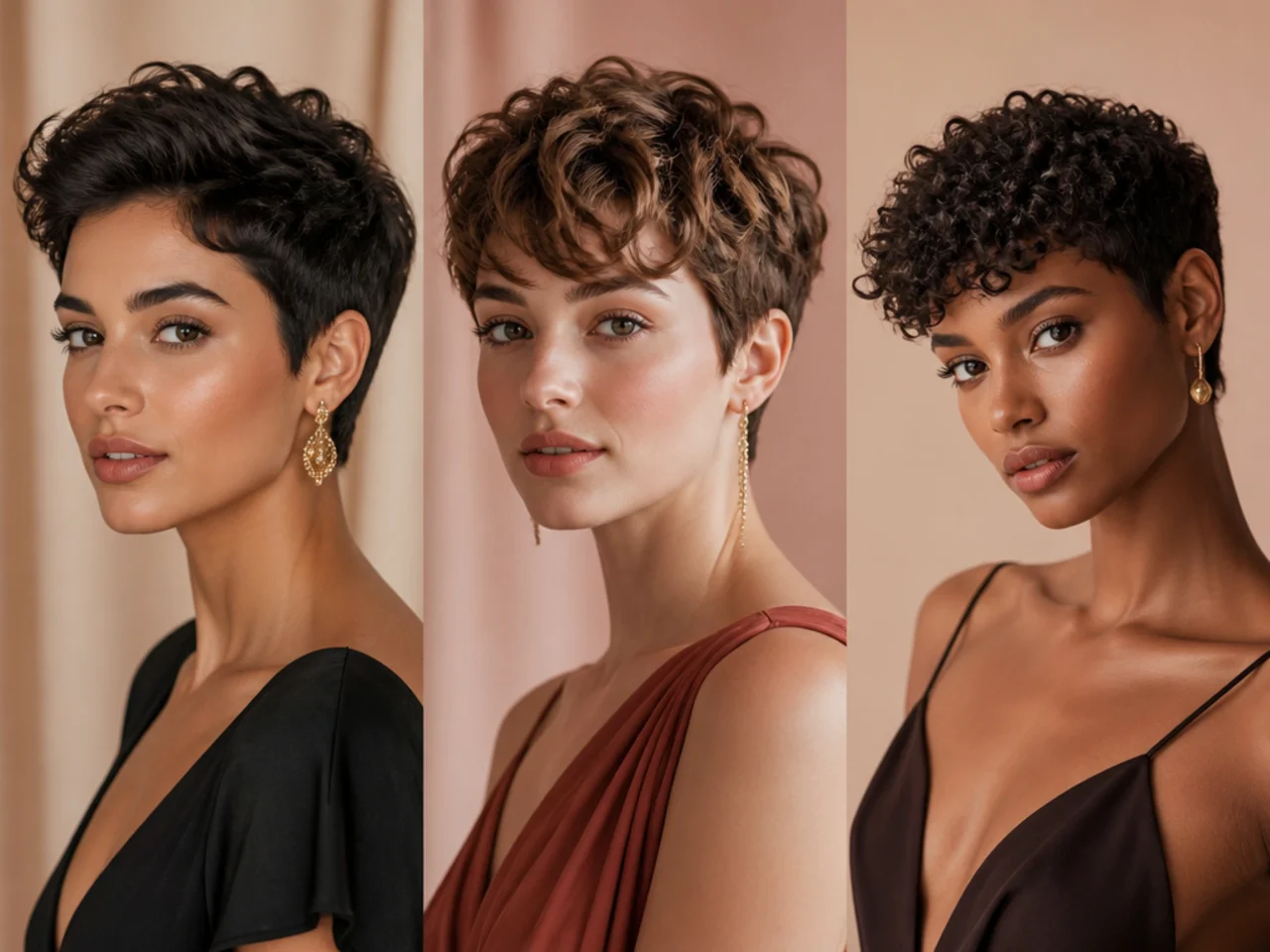
The pixie takes an event well because the shape is already there. Dress it up two ways. Sleeker finish: smoothing balm, round-brush blow-dry, drop of finishing oil. Textured finish: curl a few front pieces with a small barrel wand, then rough them out with your fingers. Accessories carry outsized weight on short hair — a jeweled clip at the temple, a headband, or a delicate ear cuff all read as a full styling change. A vintage set — pin-curls overnight, brushed out morning-of — turns a pixie into 1960s couture.
Maintenance and Care
Regular Trimming Schedule
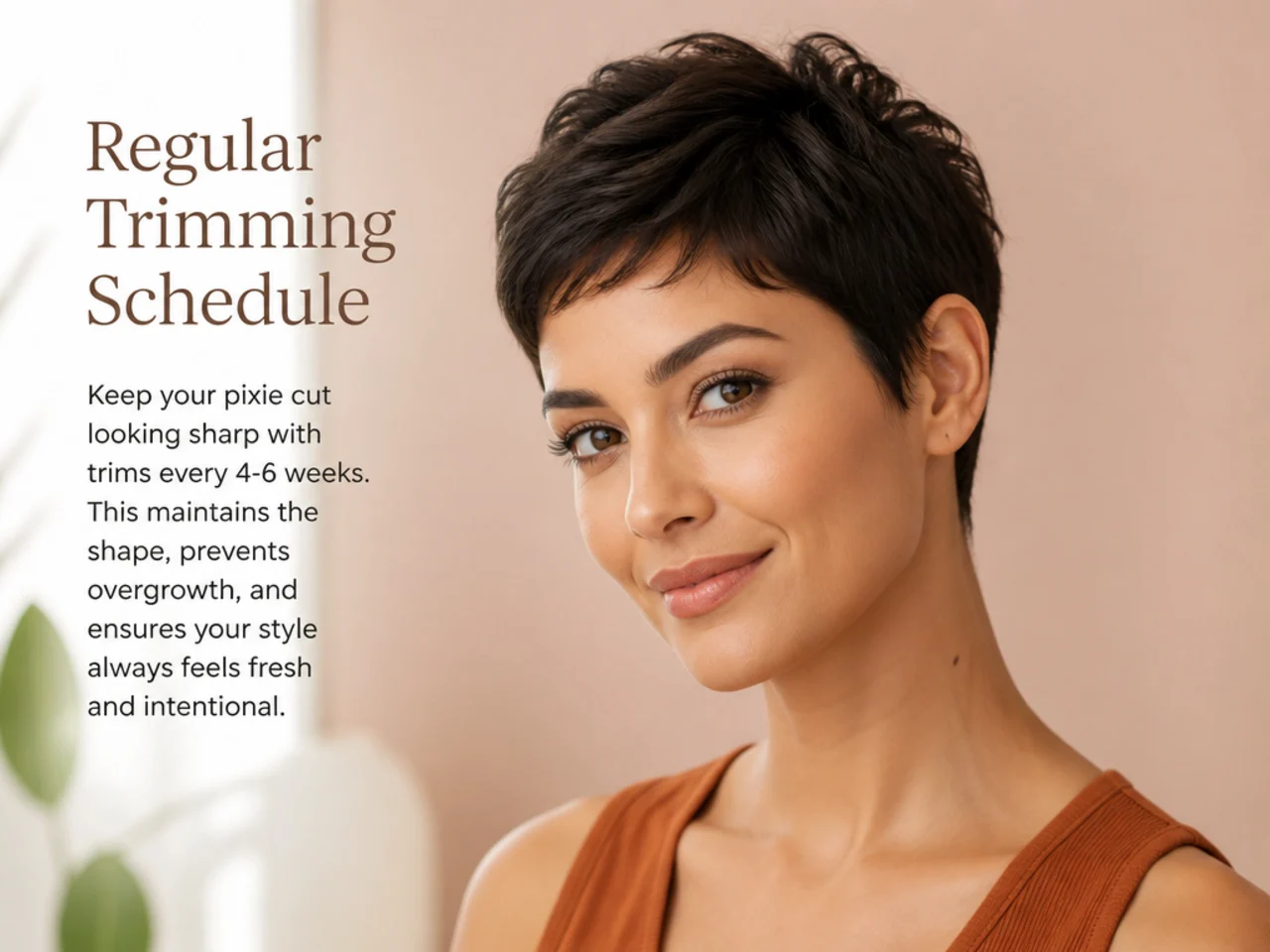
Pixies need a re-cut every 4–6 weeks. Miss that window and the neckline creeps down, the sides puff out, and the shape you paid for disappears. Ultra-short and undercut pixies want 3–4 weeks. Longer pixies and pixie bobs can stretch to 6–8. Book the next appointment before you leave the salon — the cadence is the whole game. If the budget is tight, ask your stylist about a neckline-and-around-the-ears touch-up between full cuts. Most salons offer it at a fraction of the full price.
Hair Care Routine
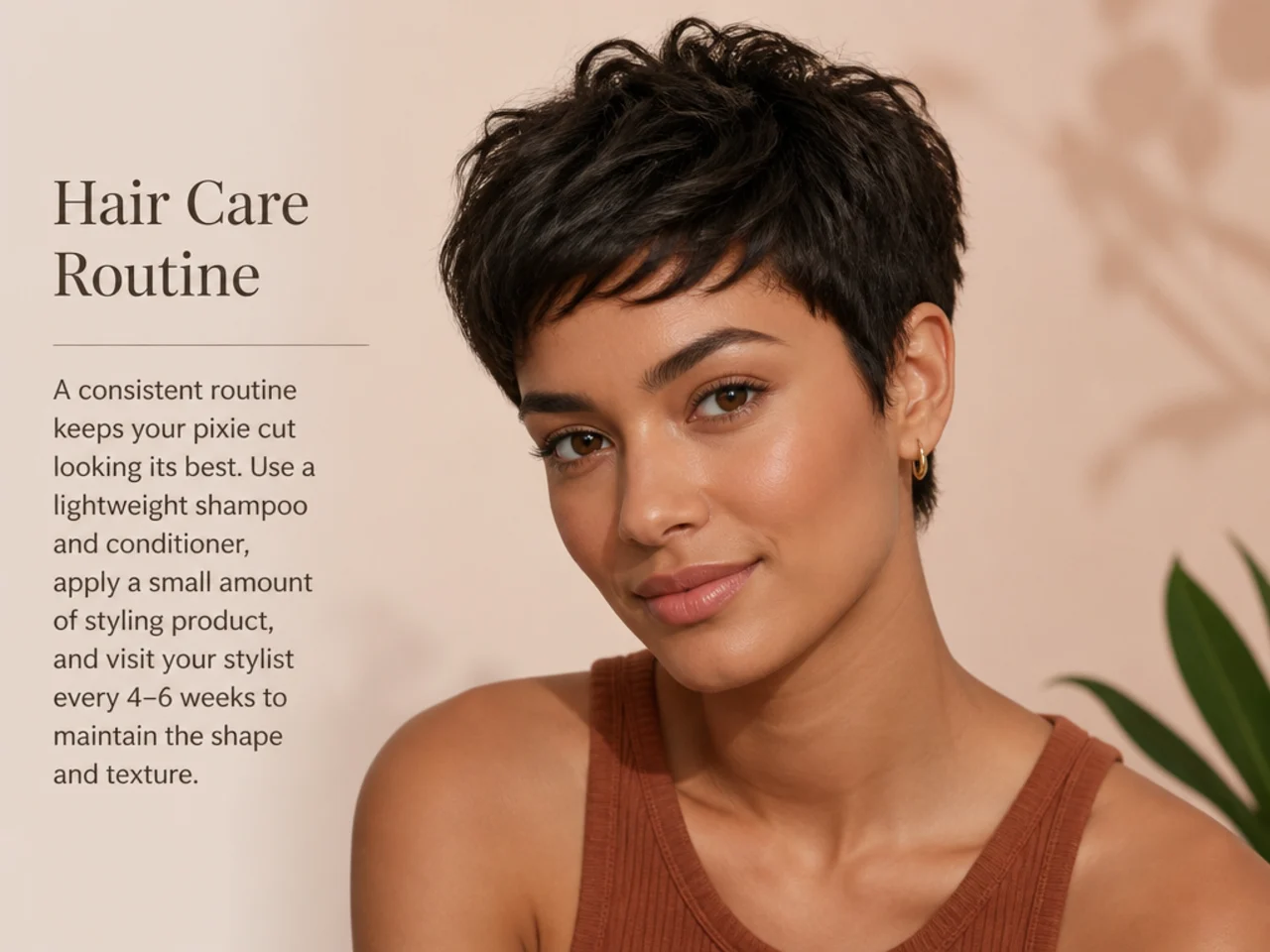
Short hair is easier to care for because you are washing less product through less hair. A gentle sulfate-free shampoo two to three times a week is plenty; a light conditioner on the ends only. Skip heavy masks that weigh the roots down. A weekly scalp exfoliation matters more on a pixie because more of your scalp is visible — cleaner scalp reads as denser hair. Heat protectant every time you use a dryer or iron. This is not the cut where you skip that step.
Growing Out Your Pixie Cut
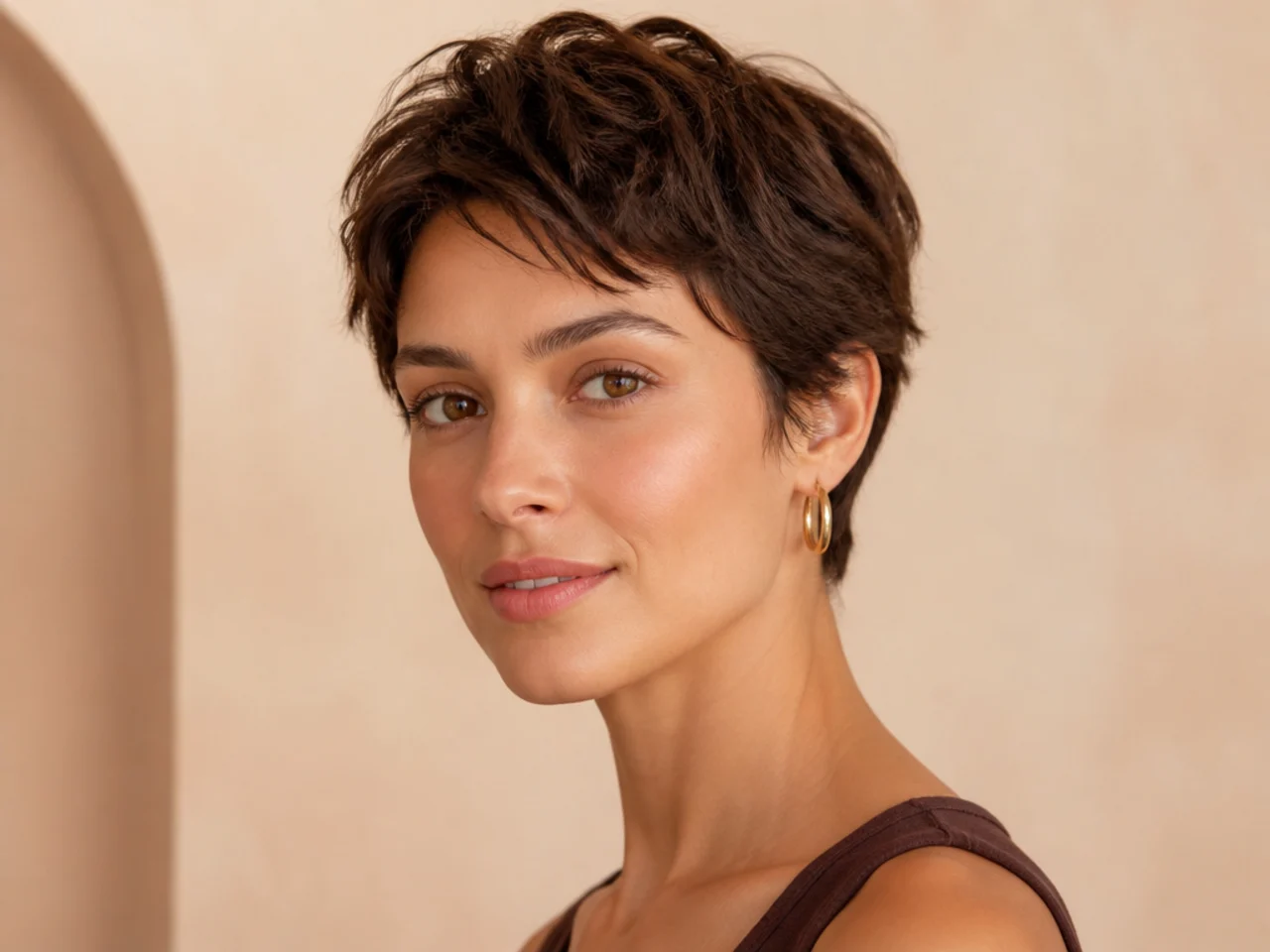
If you decide to grow it out, the middle stage is real but shorter than you fear. Plan on 6–12 months to reach a proper bob length, longer for anything past the collarbone. Keep trimming through the awkward months — the shape wants to grow into a pixie bob, then a long pixie, then a stacked bob. Skipping trims makes the grow-out worse, not faster. Bobby pins, headbands, and clips carry the visible-length months. Deep side-parts hide asymmetric growth. Many women, especially those exploring short hairstyles for women over 60, stop the grow-out early and stay short — it is often the most flattering choice for hair that is changing texture with age.
Conclusion
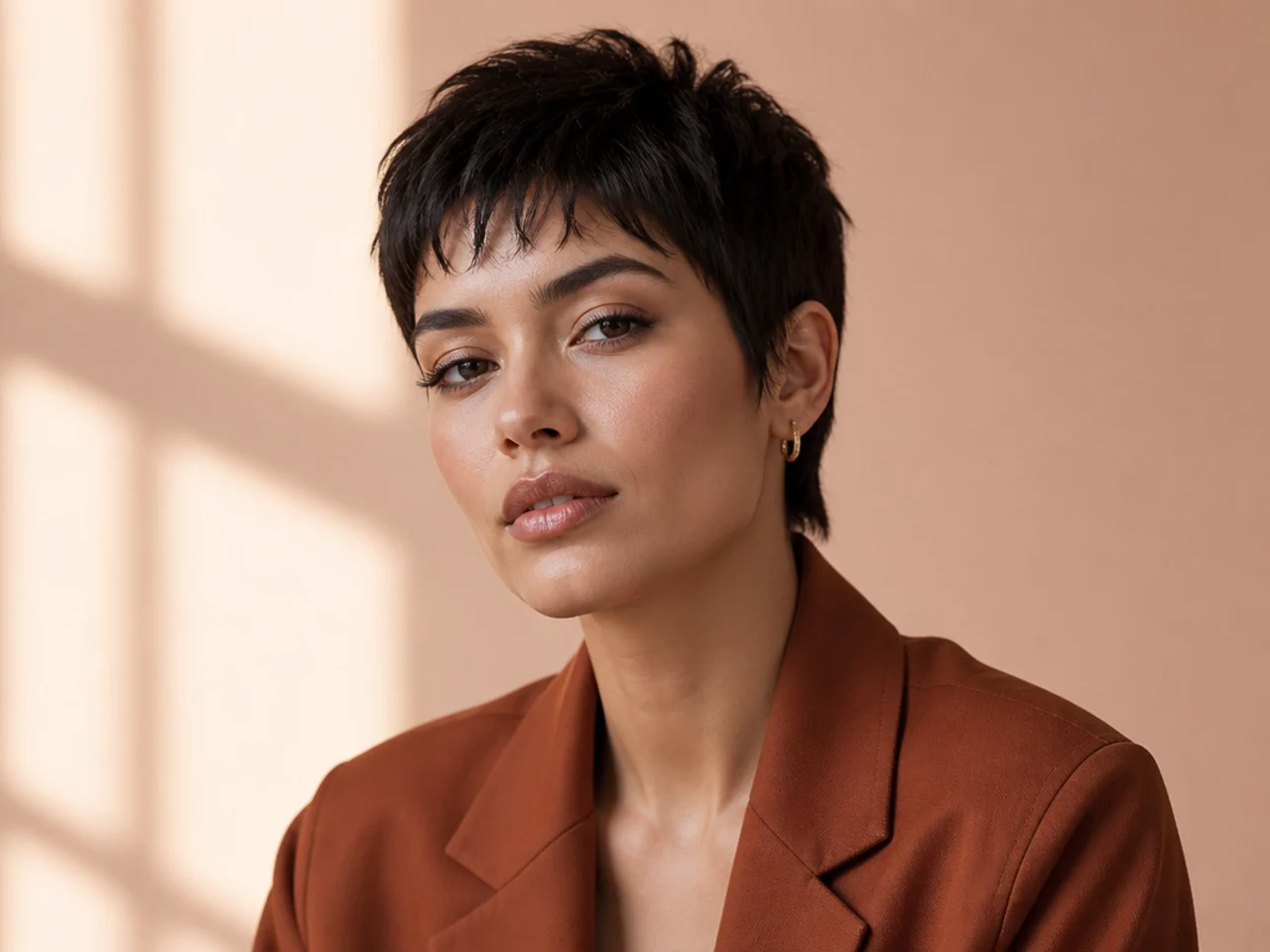
The pixie is a commitment — the salon cadence, the growing-out patience if you change your mind, the fresh face in the mirror. It is also more forgiving than the internet makes it sound, and once you land on the variation for your face and hair, it becomes the easiest cut of your life. Bring two or three reference photos to your stylist. Specify length in inches. Talk through your face shape and daily styling appetite. Everything else on this page is style — the boldness is yours.