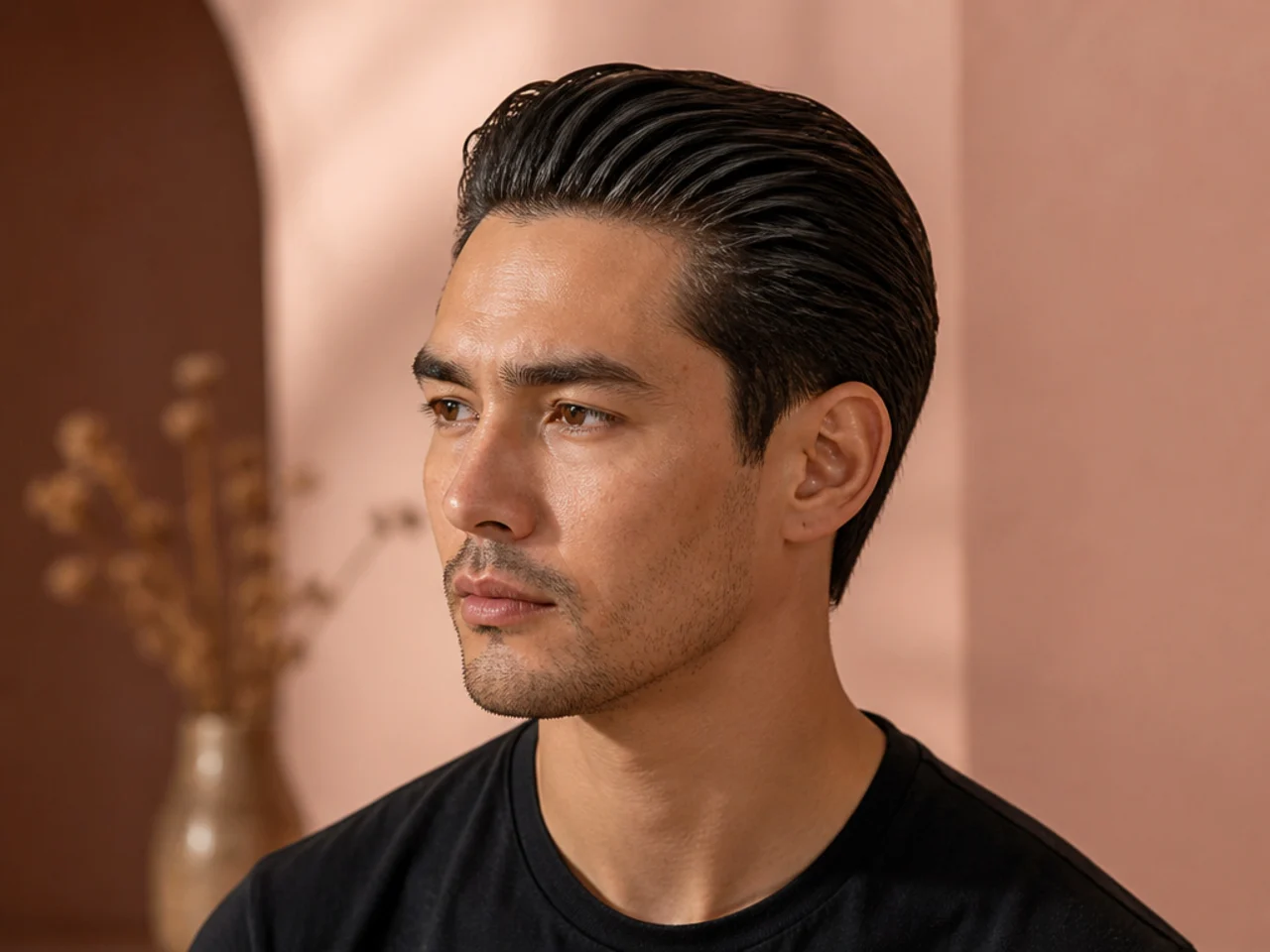
25 Best Comma Haircuts for Men
Explore 25 stylish comma haircuts for men in 2026. Get K-style hair tips, face shape advice, and product picks for a soft, trendy finish.
In this article · 54
- What Is a Comma Haircut?
- Trendy Comma Hair Styles for Men
- Two Block Comma Hair
- Comma Hair Taper
- Mullet Comma Hair
- Comma Hair Undercut
- Short Comma Hair
- Low Fade Comma Hair
- Comma Hair Korean
- Soft Comma Hair
- Comma Hair Curly
- Burst Fade Comma Hair
- Side Part Comma Hair
- Curtain Comma Hair
- Messy Comma Hair
- Long Comma Hair
- Wavy Comma Hair
- Textured Comma Hair
- French Crop Comma Hair
- Comma Hair Perm
- Classic Comma Hair
- Comma Hair Middle Part
- Comma Hair Wolf Cut
- Medium Comma Hair
- Mid Fade Comma Haircut
- Layered Comma Hair Cut
- Asian Comma Hairstyle
- Comma Haircut Male vs Other Hairstyles
- Comma Hair vs Two Block
- Comma Hair vs Curtain
- How to Choose the Right Comma Haircut
- By Hair Type
- By Face Shape
- How to Ask Your Barber for a Comma Haircut
- Use Simple Style Terms
- Show a Photo Example
- How to Style Comma Hair
- Wash and Prep Hair
- Add Volume and Direction
- Blow Dry with a Round Brush
- Define and Hold the Shape
- How to Maintain a Comma Haircut
- Best Hair Products for Comma Hair Styles
- FAQs about Comma Hair
- What is comma hair?
- Why is it called comma?
- Is comma hair trendy right now?
- Is comma hair a two block?
- Is comma hair high or low maintenance?
- How do you style comma hair?
- What face shape suits comma hair?
- What products should I use for comma hair?
- Can I get comma hair with wavy or curly hair?
- Conclusion
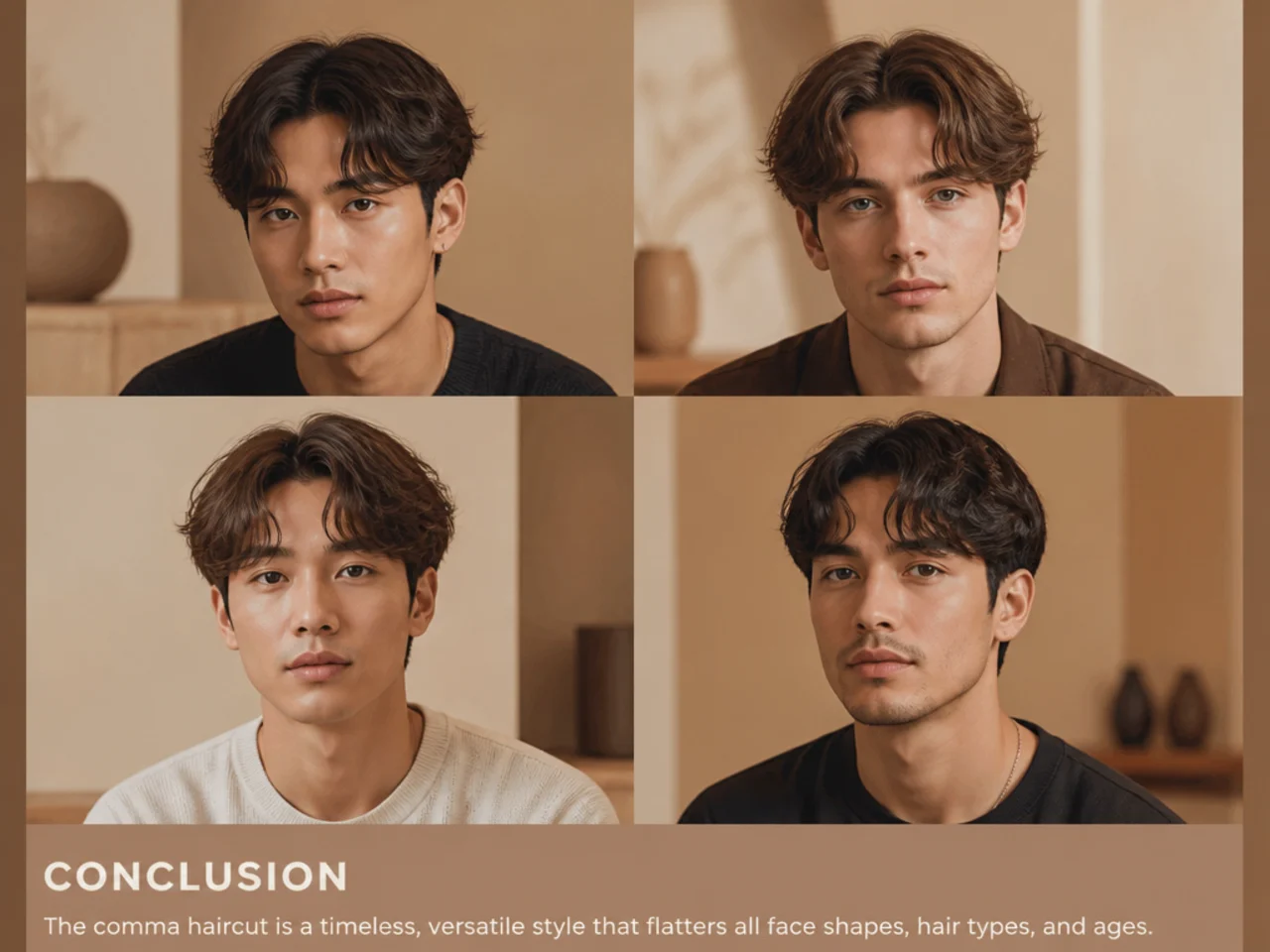
The comma haircut is a K-pop cut. A curled front lock forms the shape of a comma. Sometimes one hook. Sometimes twin commas mirroring each other. Reads soft, sharp, current. Here is what most guides miss: this is a 2-minute cut, not zero-minute. Your barber sets the shape. You set the curl with a round brush, a hairdryer, and a dab of cream.
What Is a Comma Haircut?
A comma haircut is a men's cut where the front section curls forward and inward, forming a punctuation comma against your forehead. The hook can sit as one bold curl, or split into twin commas across a middle part. Top length runs 3 to 5 inches — enough weight to hold the curve. Sides run short: fade, taper, or undercut. Short sides frame your face. The curled top does the talking.
The cut originated in South Korea in the late 2010s and spread worldwide through K-pop and K-drama. It sits naturally on straight-to-wavy hair. Tight curls need a light perm-relaxer on the front section to lie flat enough to hook. Book two minutes at the mirror after your shower and the comma sits right every day. Skip the styling and it flattens by lunch.
Trendy Comma Hair Styles for Men
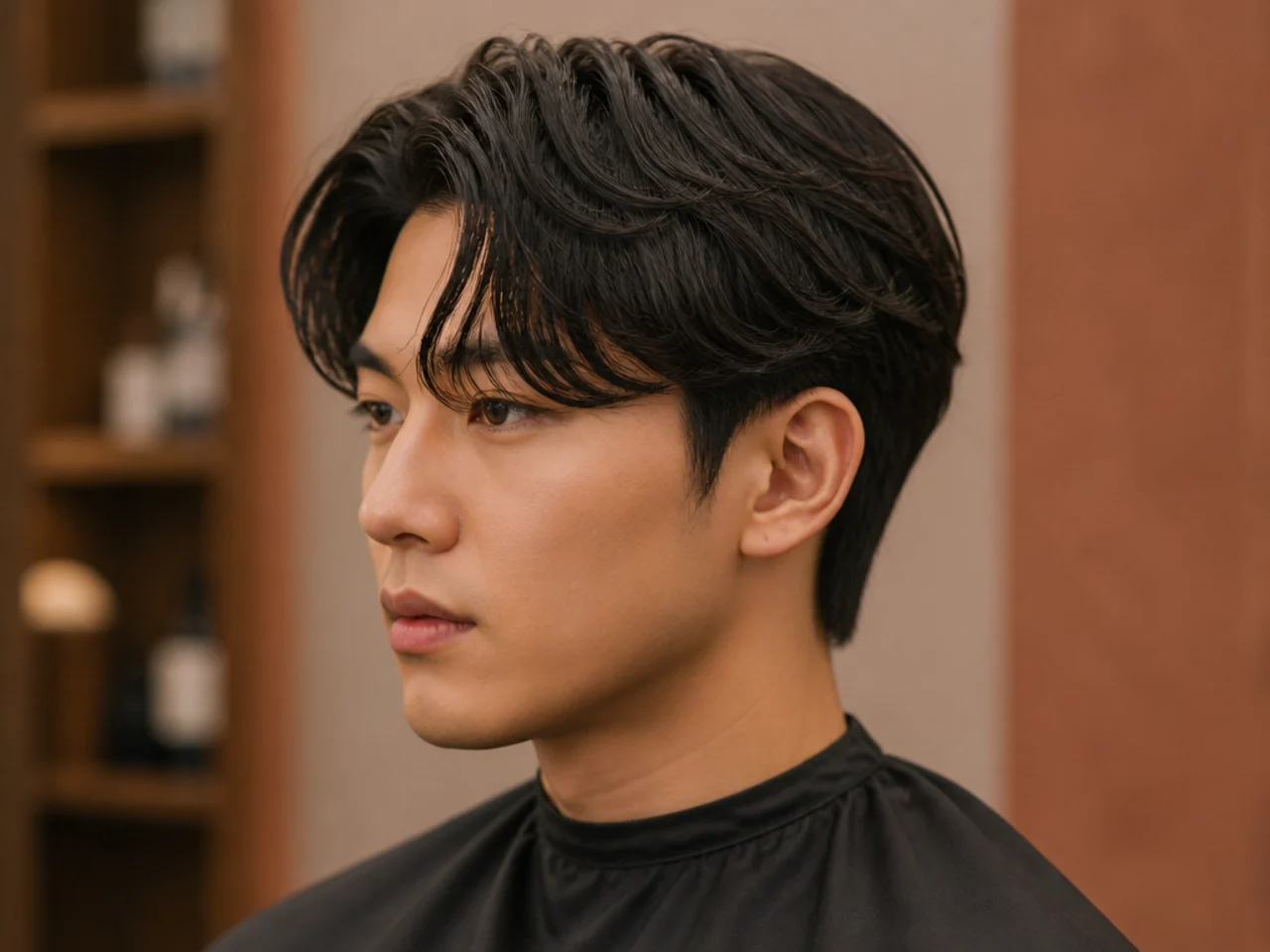
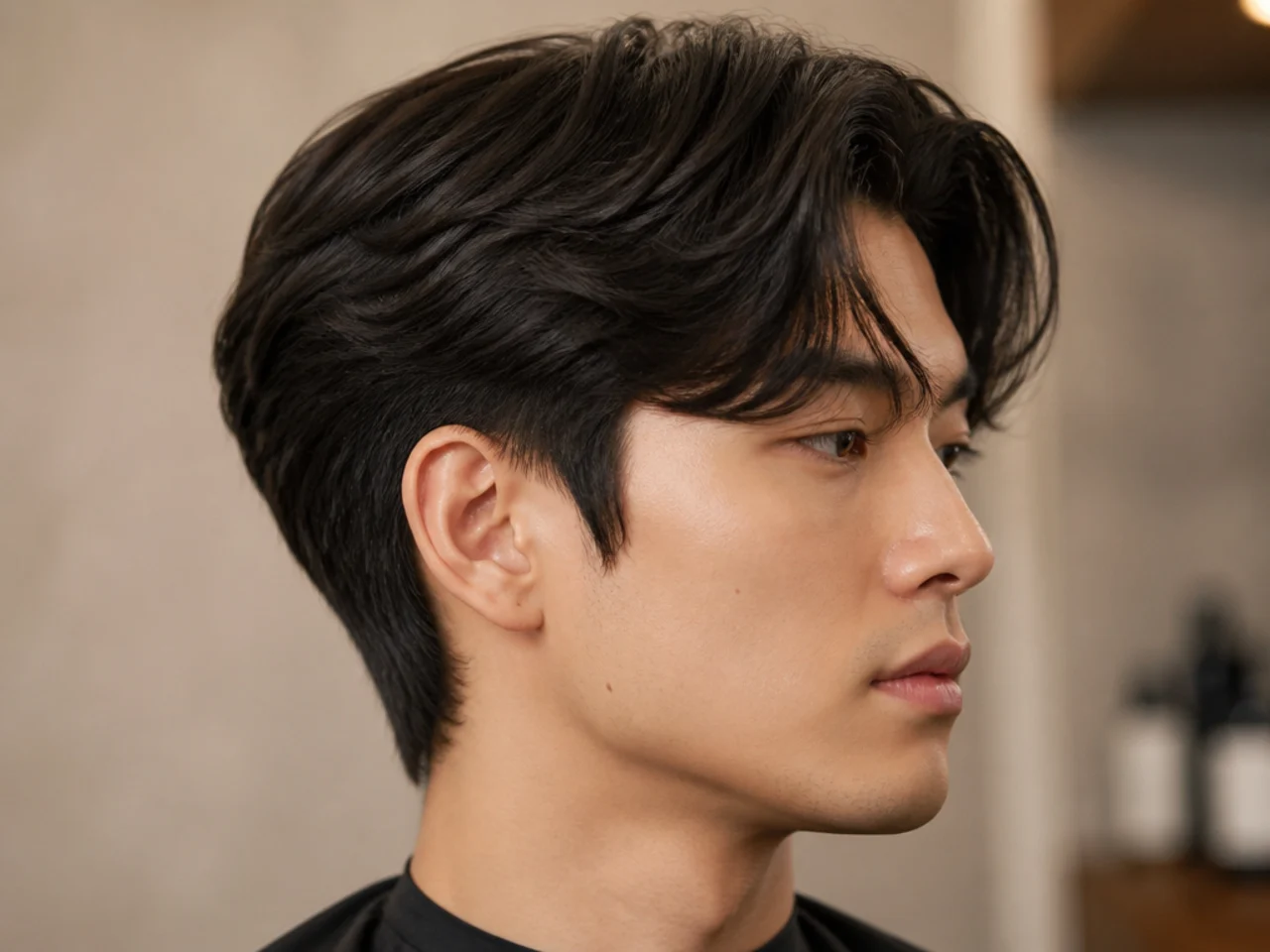
Every variation below plays with the same two levers: how much curl sits on top, and how the sides frame it. Some go clean and corporate. Others lean into texture, length, or hard contrast. Pick the version that matches your hair type, face shape, and patience for morning styling.
Two Block Comma Hair

This is the base template. Short back and sides run one clipper length. The top runs 3 to 5 inches longer — no fade, no gradient, a hard ledge where the two lengths meet. Drop a comma curl into that top and you get the sharpest, most Korean-reading version. Best on straight hair with medium density; the ledge collapses on thin hair. Ask for a 2 or 3 guard on the sides, a defined ledge at your temple, and 4 inches on top. Blow-dry the front with a round brush, hook the curl toward your dominant eye, and finish with a pea of curl cream. See the full two block haircut breakdown for the base shape.
Comma Hair Taper
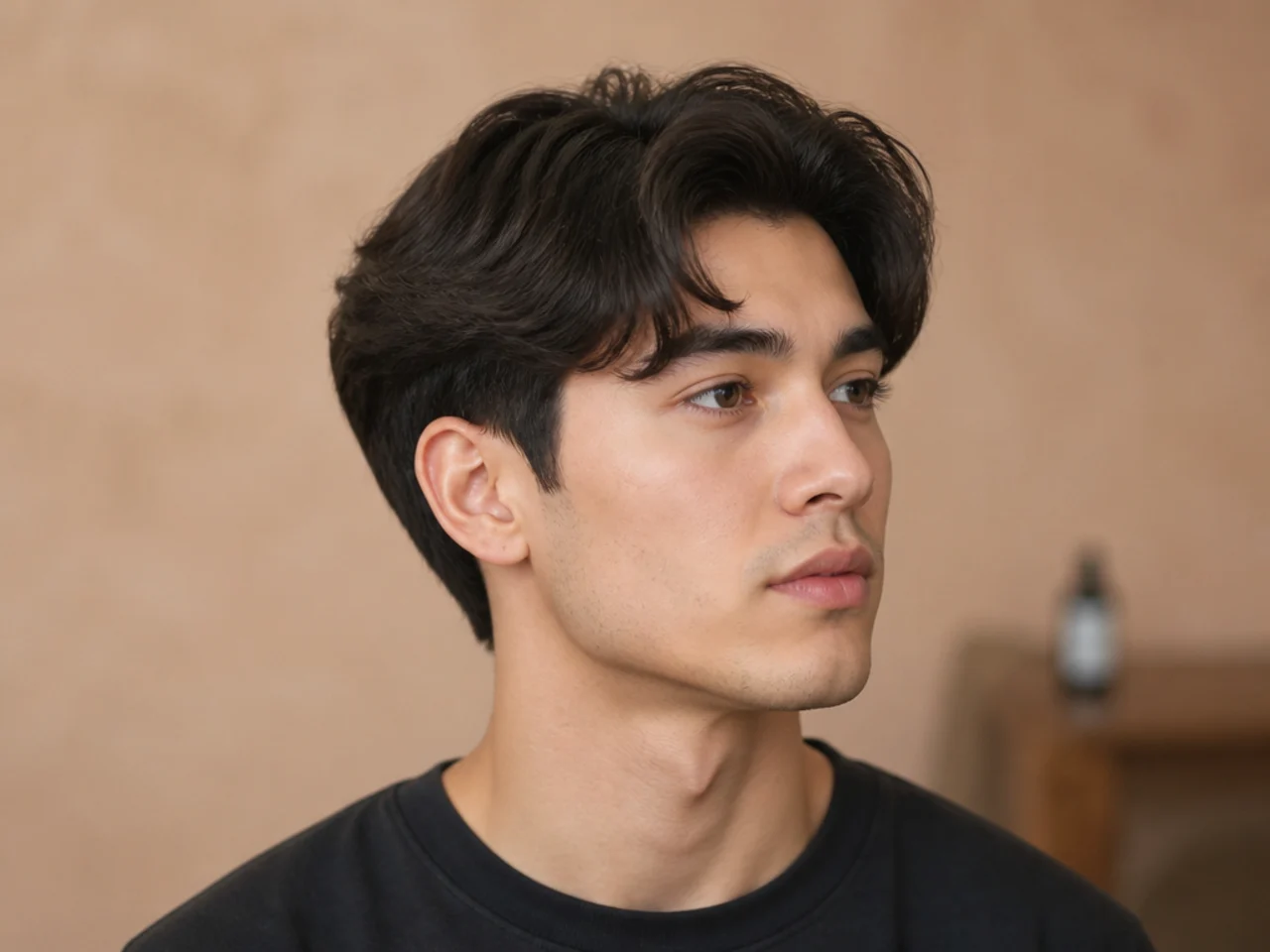
Taper trades the two-block ledge for a soft gradient. Sides fade shorter as they drop — longer at the parietal, tighter near the ears. The top keeps standard comma length. It reads dressier than the two block, better for offices or angular faces. Best on straight-to-wavy hair with medium density. Ask for a scissor taper ending around your temple, 3.5 inches on top, and demonstrate the curl direction by touching a finger to your temple and drawing the arc. Style with a dab of curl cream, then a round brush from underneath the front section. See low taper fade for the side spec on its own.
Mullet Comma Hair
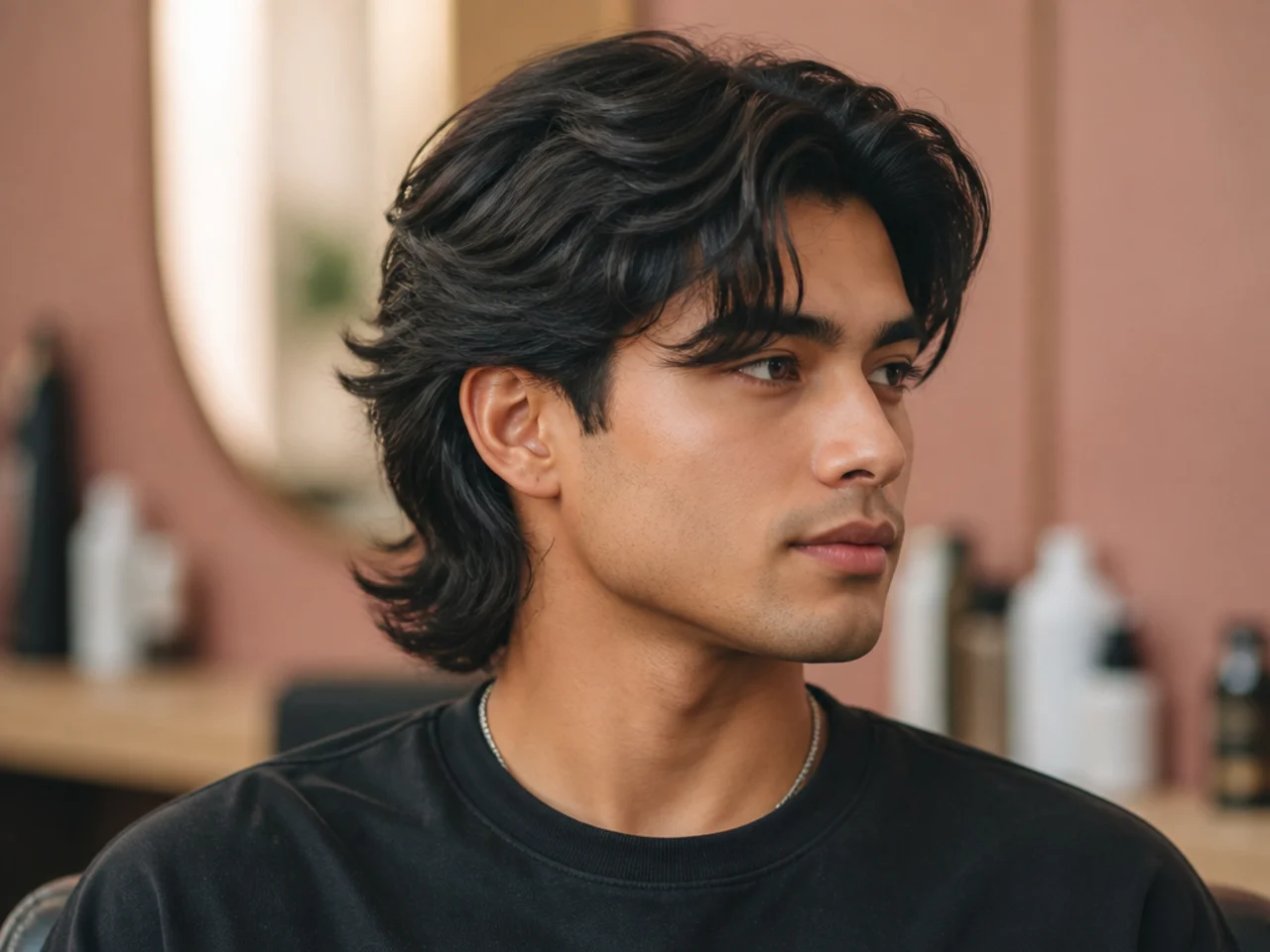
Mullet-comma keeps standard comma proportions up front — medium top, curled hook, faded sides — and adds length at the nape. The back sits 4 to 6 inches and flows to the collar. Bold pick. Best on straight or wavy hair with enough density to hold weight at the back. Ask for a low fade or soft taper on the sides, a defined comma up front, and length preserved at the nape only — no length in between. Style the front with a round brush and cream. Let the back air-dry. You want mess and movement in the tail, not polish.
Comma Hair Undercut
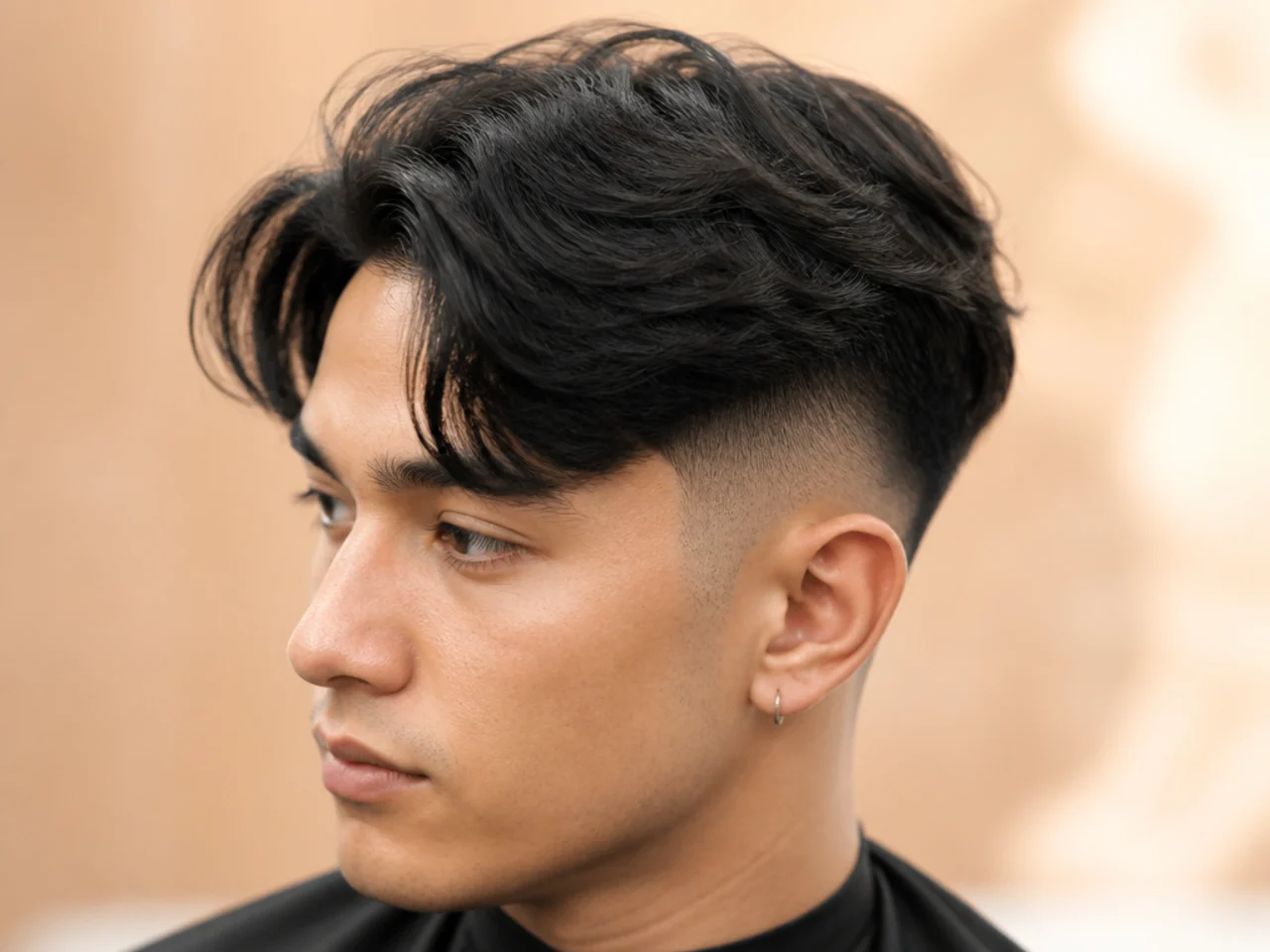
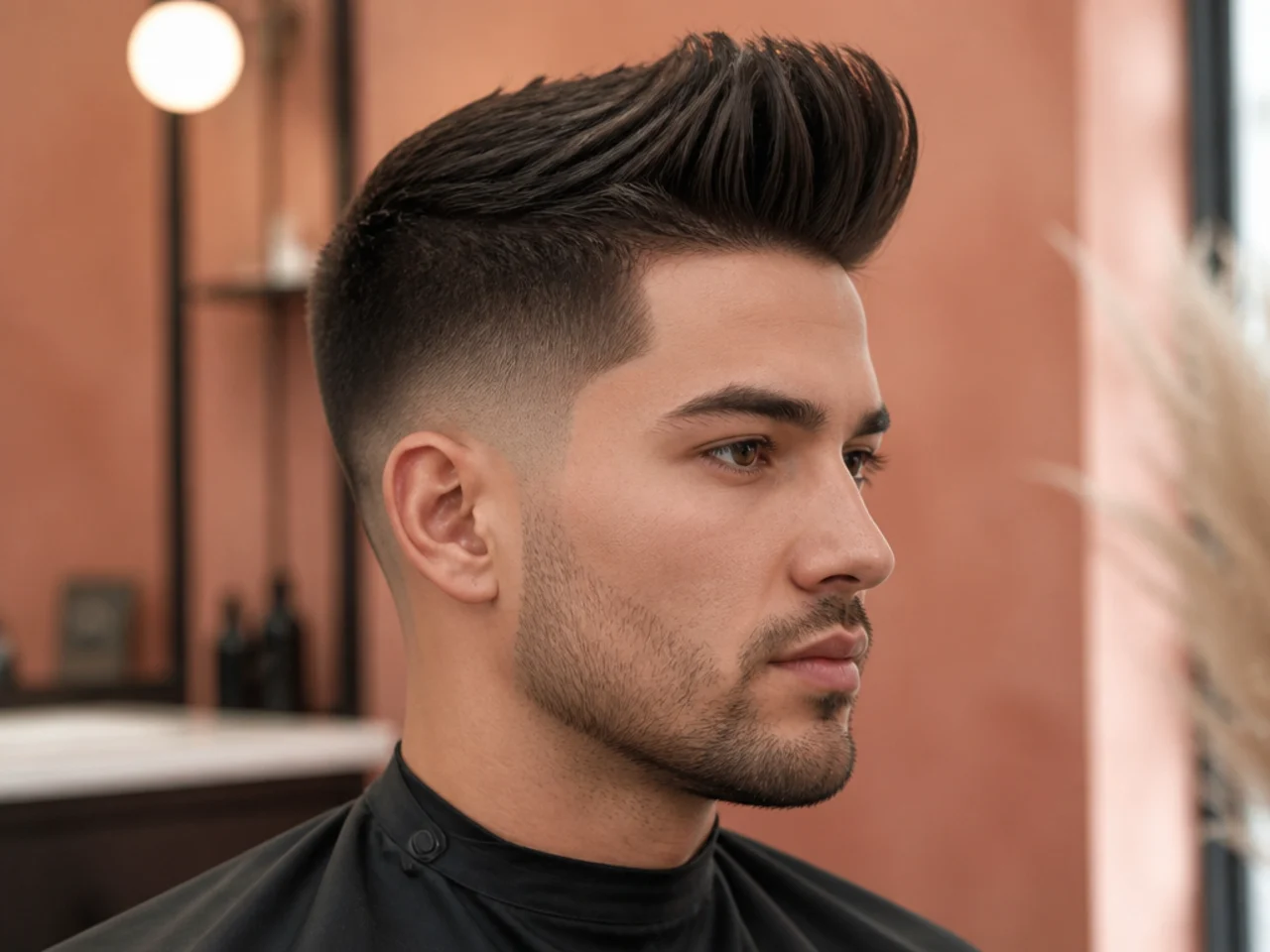
Undercut pushes the two-block idea further. Sides and back get clipped tight — a 1 or 0 guard — and stopped at a hard disconnect line. No fade, no blend. The top stays 3 to 5 inches, curled forward. Best on straight hair with strong density. Fine hair loses too much visual mass against skin-tight sides. Ask for a hard-line undercut at temple height, no blend into the top, and demonstrate the curl direction with a finger. Style with matte clay for grip, then curl cream and a round brush on the front. See the undercut fade to soften the disconnect.
Short Comma Hair
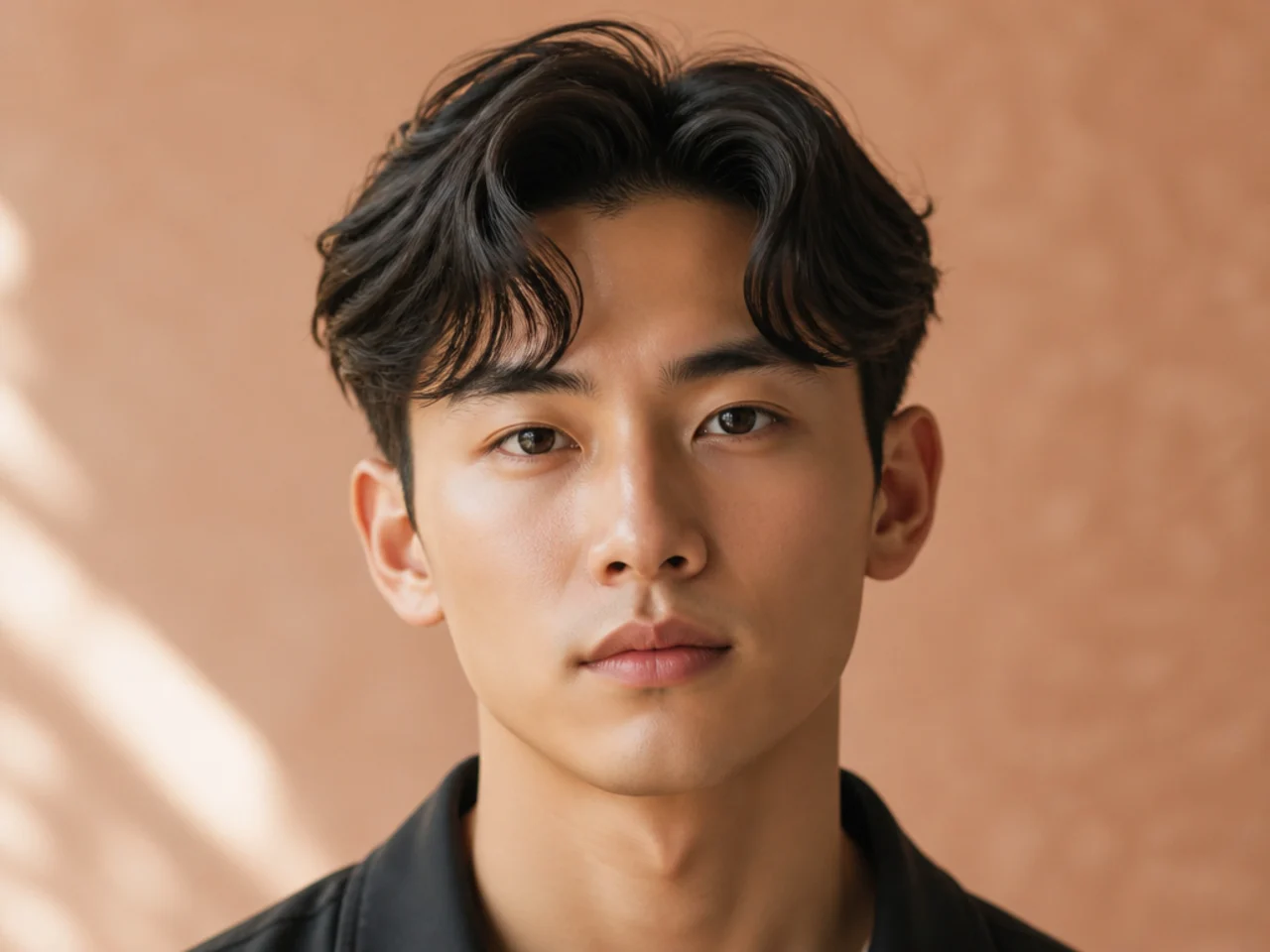
Short comma keeps every proportion tight. Top runs 2.5 to 3 inches — the minimum length that holds a curl without collapsing. Sides run short: scissor taper or low fade. The comma reads subtle here, more soft hook than sharp hook. Best on straight hair; wavy hair at this length turns into a shapeless swirl. Ask for a 2 or 3 guard on the sides, 3 inches on top, and the front cut a touch longer than the crown to hold weight for the curl. Style with lightweight curl cream, a 1-inch round brush, and low heat. Rushing the heat frizzes the ends.
Low Fade Comma Hair
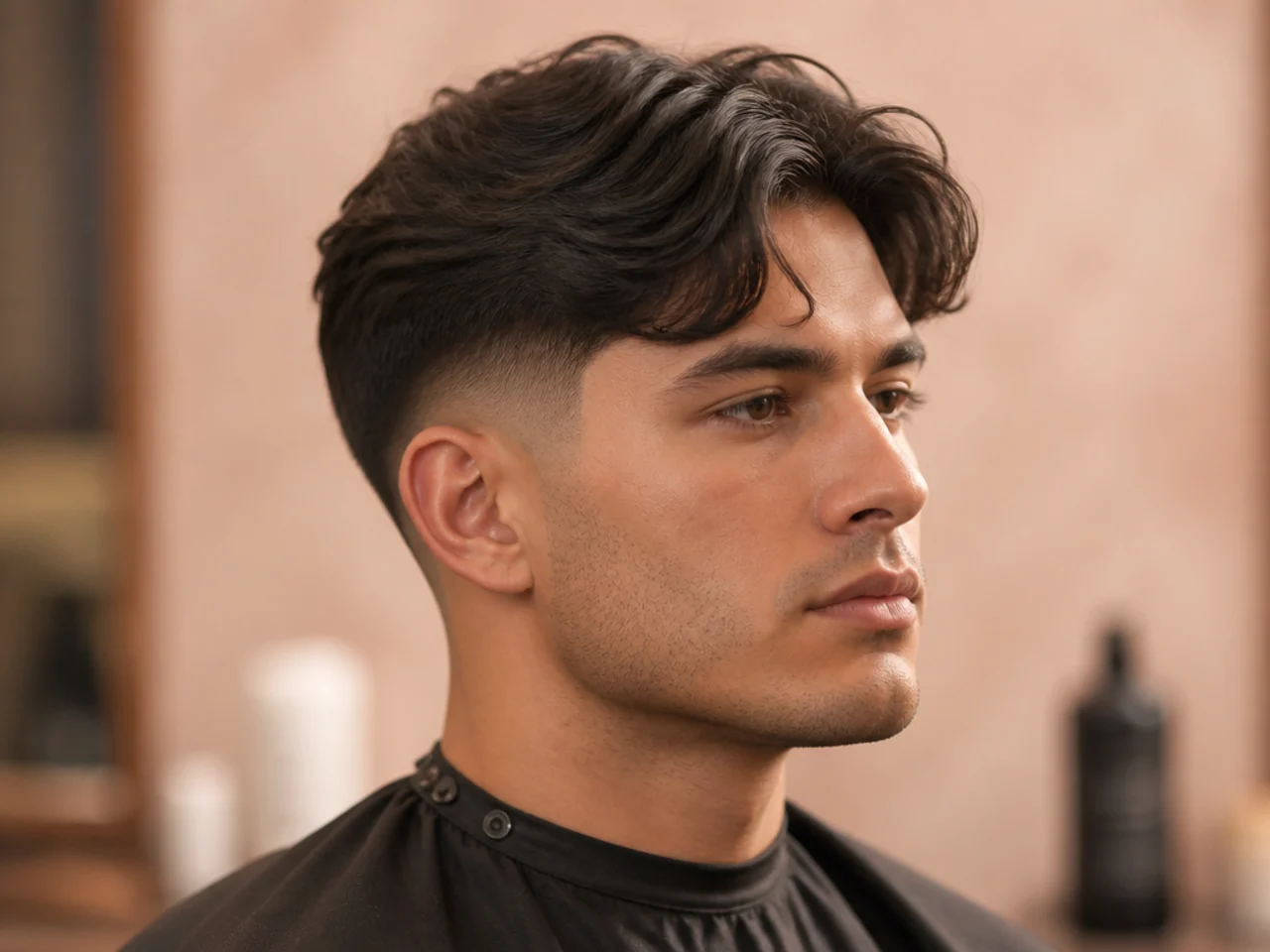
Low fade starts just above the ear and drops to skin near the neckline. The sides keep useful length that blends into the top. Most job-flexible variation in this lineup — clean enough for work, sharp enough for a night out. Best on straight-to-wavy hair, any density. Ask for a low fade to skin, 3 to 4 inches on top, and a soft blend where the top begins. Style with cream and a round brush, curling the front forward on your dominant side. Boyish haircut is very similar to this one. For the fade spec, see low fade haircut.
Comma Hair Korean

This is the original blueprint. Sides run short — usually a fade or soft taper. Top runs medium. The front curves into a single defined comma toward your dominant eye. Nothing extra. No mullet, no undercut, no messy texture. Best on straight hair that lies flat. Reads clean, young, camera-ready. Ask for a low taper on the sides, a 4-inch top, and demonstrate which eye the comma should point toward. Style with a leave-in cream for smoothness, then a round brush from underneath the front, rolling inward on medium heat. Check Korean haircuts for men for related silhouettes.
Soft Comma Hair
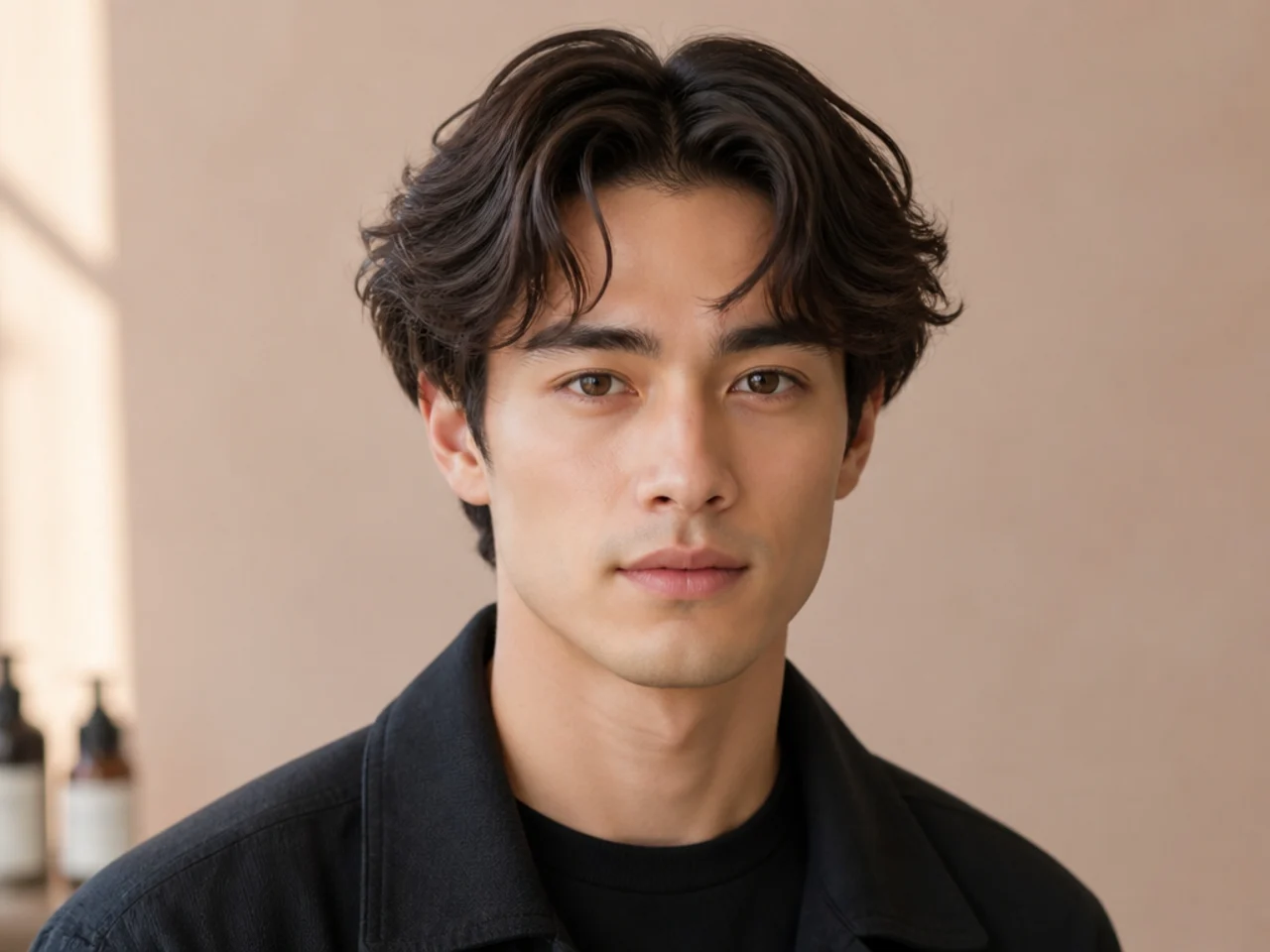
Soft comma turns the hook into a gentle bend instead of a defined curl. The front sweeps across your forehead with barely enough curvature to name. Sides run short, usually a taper. Try this if a full comma reads too styled for daily life. Best on straight-to-wavy hair with light density — fine hair holds this softer shape without collapsing. Ask for a scissor taper on the sides, 3.5 inches on top, and describe the front as "a gentle sweep, not a curl." Style with a leave-in mist and a wide round brush. One pass, no repeats.
Comma Hair Curly
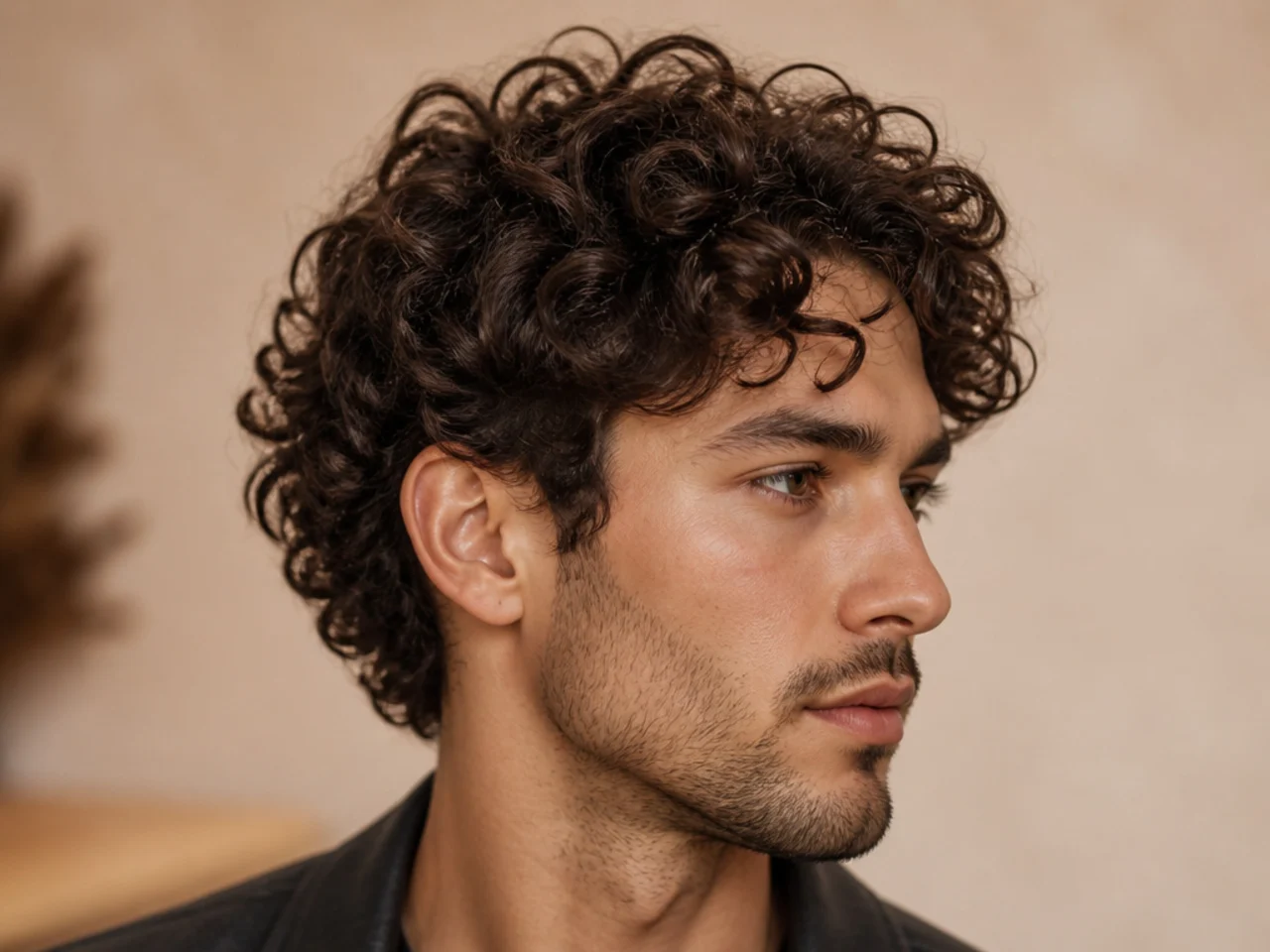
Curly hair does not want to curl inward — it wants to curl every direction at once. This version works with your existing pattern instead of fighting it. The front is layered longer than the crown, so gravity pulls the curls forward. Sides fade tight to control the silhouette. Best on 2C-3A curls. Tight coils need a light perm-relaxer on the front to sit in a directional curve. Ask for a low fade, 4 inches on top, and layers that concentrate weight at the front. Style with curl cream while damp, then finger-shape the front curls forward. If your curls run tighter, the broccoli haircut suits your texture better.
Burst Fade Comma Hair
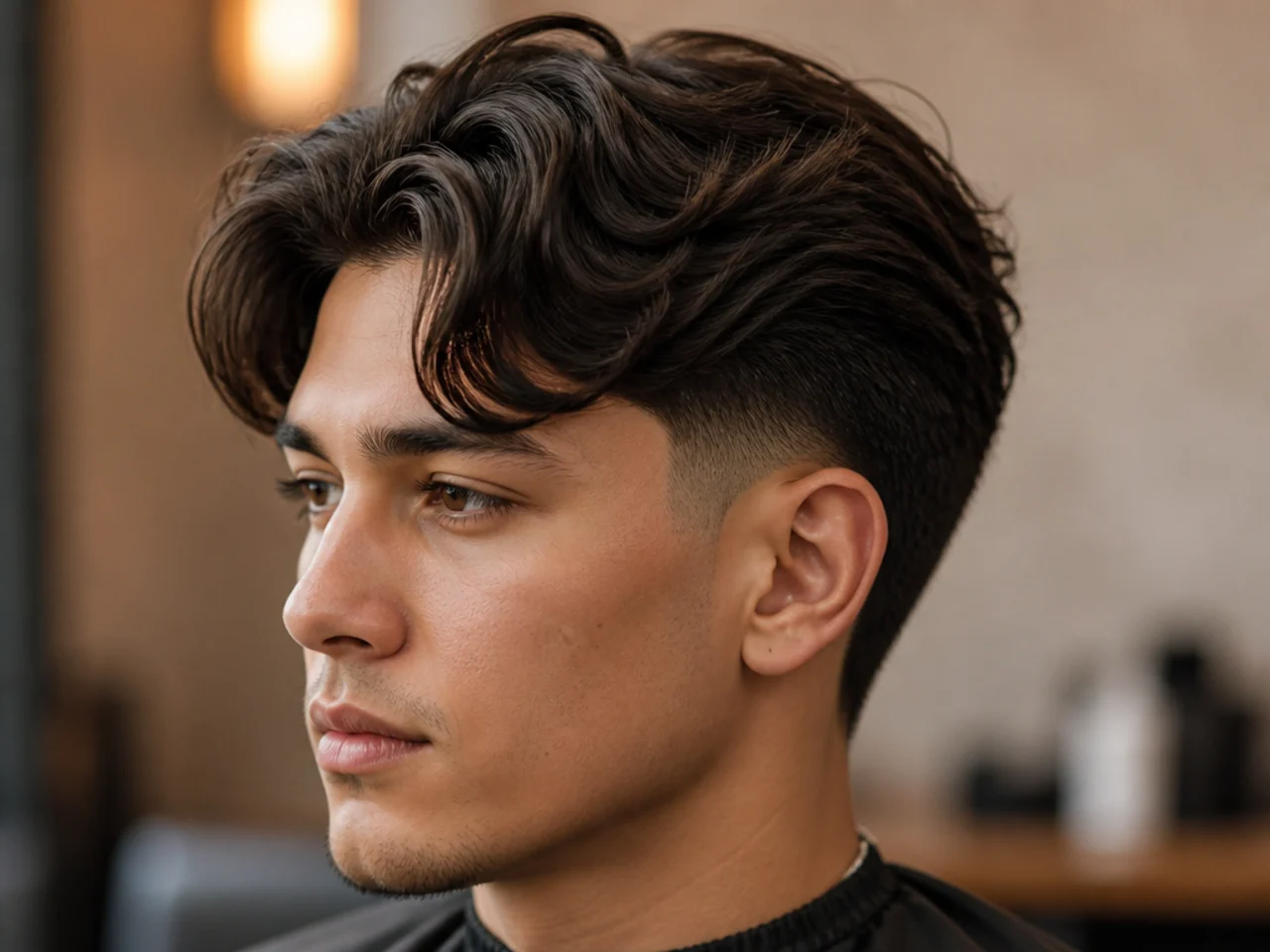
Burst fade rounds around your ear rather than dropping straight down the neckline. The fade radiates outward, leaving longer weight at the crown and back neckline. The comma sits on top the same way. Reads athletic and slightly edgier than a straight fade. Best on straight hair with medium-to-thick density. Ask for a burst fade around each ear, a scissor-blended top starting around 3.5 inches, and a defined comma toward your dominant side. Style with curl cream, a round brush, and a light setting mist to lock the hook. See the burst fade haircut guide for the side spec.
Side Part Comma Hair
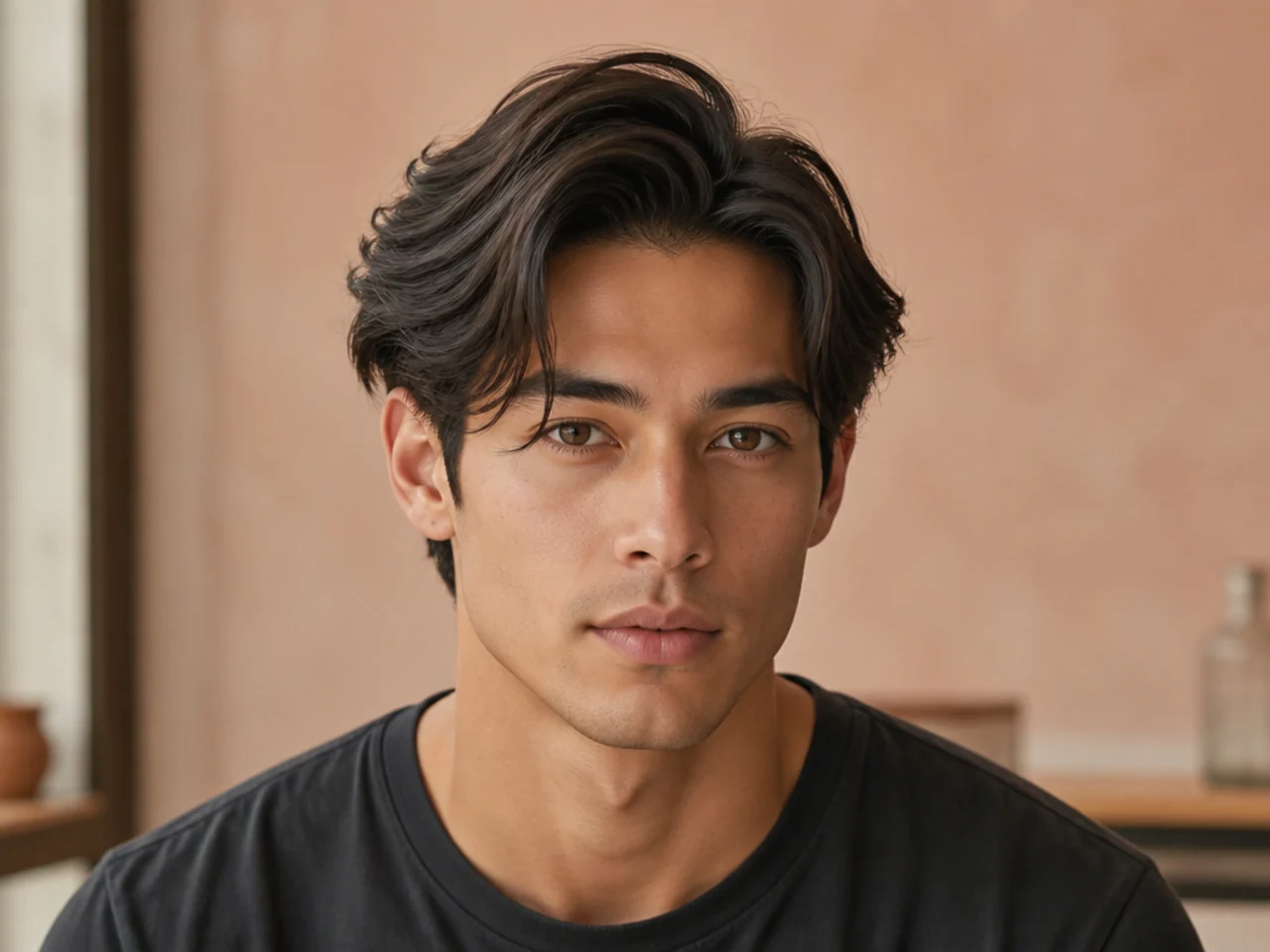
Side part comma combines a hard part — cut with clippers or set with a comb — and the curled comma front. The part sits at your natural break, roughly two finger widths from center. The comma curls from the heavier side. Best on straight hair; the hard part loses definition on wavy hair. Ask for a low fade or scissor taper on the sides, a scissor-cut part line at your natural break, and 3.5 to 4 inches on top. Style with a low-shine pomade to hold the part, then use a round brush to curl the front from underneath. Keep pomade off the front tip or the curl drops.
Curtain Comma Hair

Curtain comma is the twin-comma version. The front splits down a center part, and both sides curl inward toward each other. Two hooks. Two mirrored commas. The rest of the top stays medium and flows to either side. Best on straight-to-wavy hair with medium density. Fine hair loses the twin definition. Ask for a low fade or scissor taper on the sides, a center part, 4 to 5 inches on top, and both front sections cut with equal weight. Style with a lightweight cream, then a round brush from underneath on each side — one at a time — curling inward. Balance is everything; a lopsided twin reads wrong immediately.
Messy Comma Hair

Messy comma trades polish for movement. The comma is still there, but the rest of the top is broken up with texture — no smooth surface, no defined layers. Sides run short. Reads younger and more casual than a clean comma. Best on wavy hair; the natural wave adds mess for free. Straight hair needs sea salt spray to build the same texture. Ask for a low fade or taper on the sides, 4 inches on top with heavy point-cutting, and a comma front. Style with texture spray at the roots, air-dry to damp, then finish the front with a round brush and cream.
Long Comma Hair
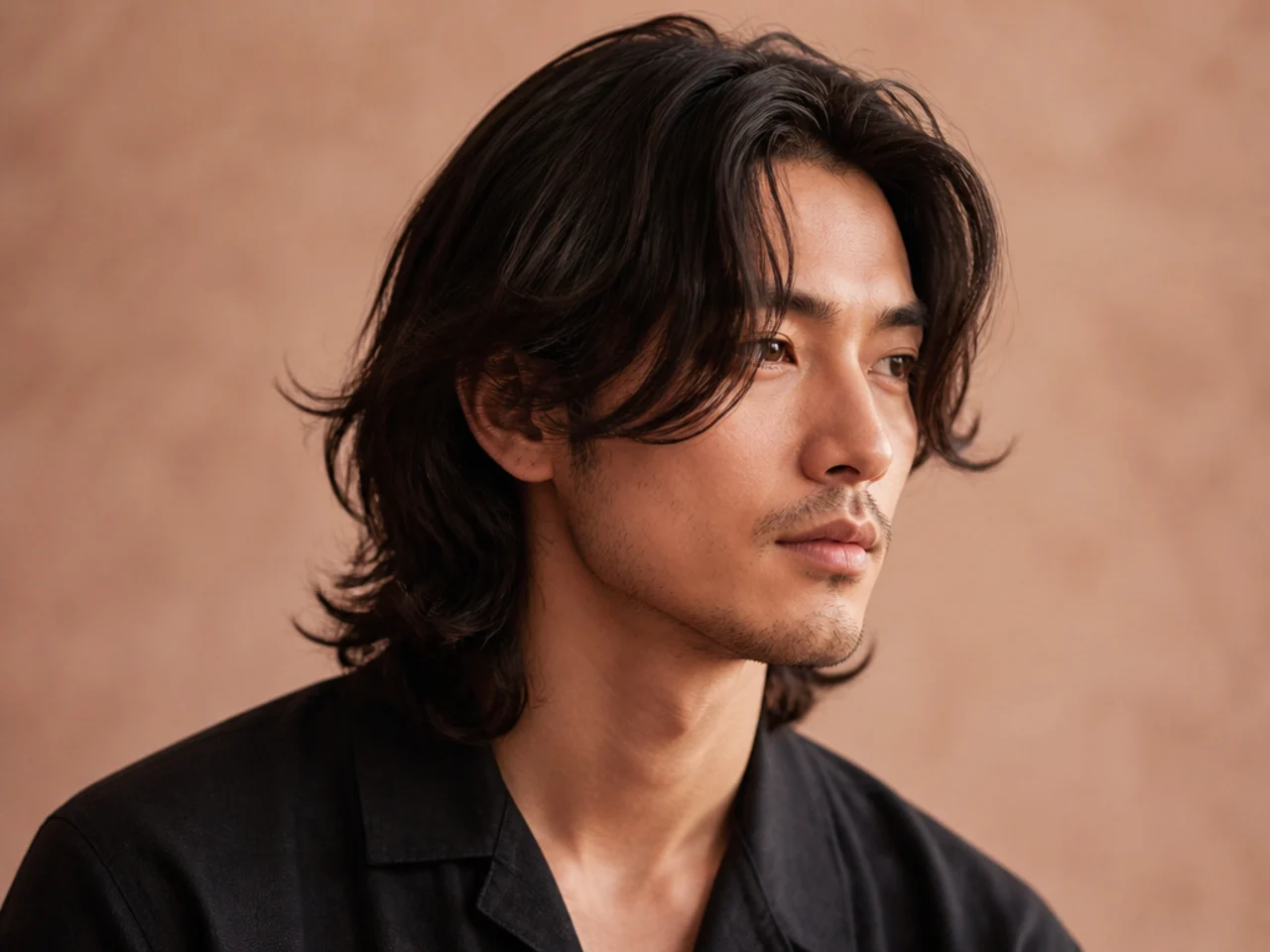
Long comma pushes the top past 5 inches, sometimes to 6 or 7. The hook is bigger, wider, more dramatic. Sides can run short for contrast or match the length for a full flowing look. Best on straight-to-wavy hair with strong density — long fine hair collapses on itself. Ask for a low fade or scissor-blended sides, 6 inches on top, and layers that keep the front heavier than the crown. Style with leave-in cream, a large round brush, and low heat. Rushing frizzes the ends. Take the full two minutes; long comma pays back the time with dramatic movement all day.
Wavy Comma Hair
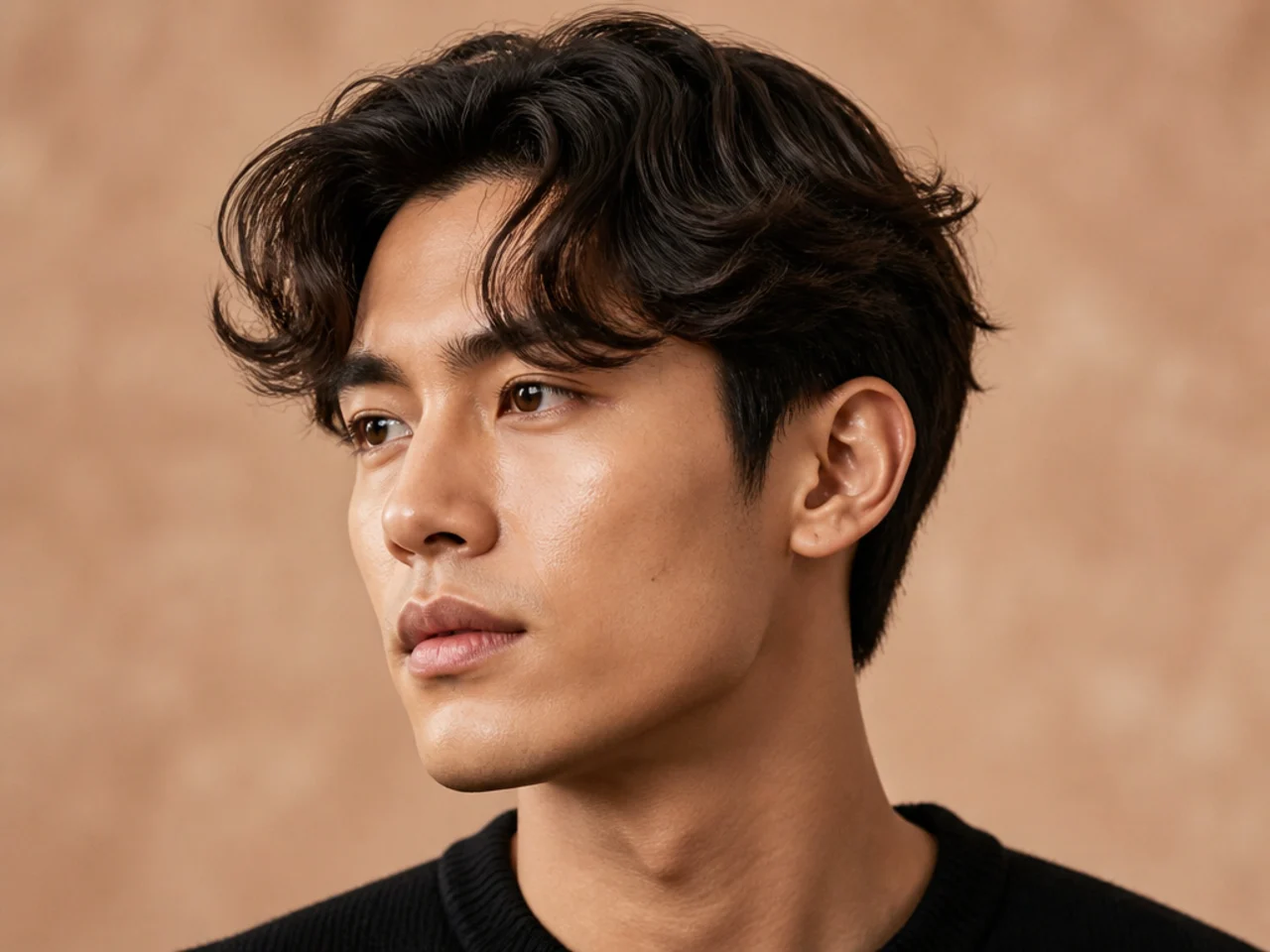
Wavy hair is the easiest texture for this cut. Your hair already wants to curve — you're just directing the curve into a comma. Top runs 3 to 5 inches. Sides run short. The comma emerges with less brush work than straight hair needs. Best on 2A-2C waves. Ask for a low fade or taper on the sides, 4 inches on top, and layers that support the natural wave. Style with leave-in cream while damp, then a round brush only on the front — the rest of the top can air-dry. Two passes, direct the curl inward, done. Under 90 seconds most mornings.
Textured Comma Hair
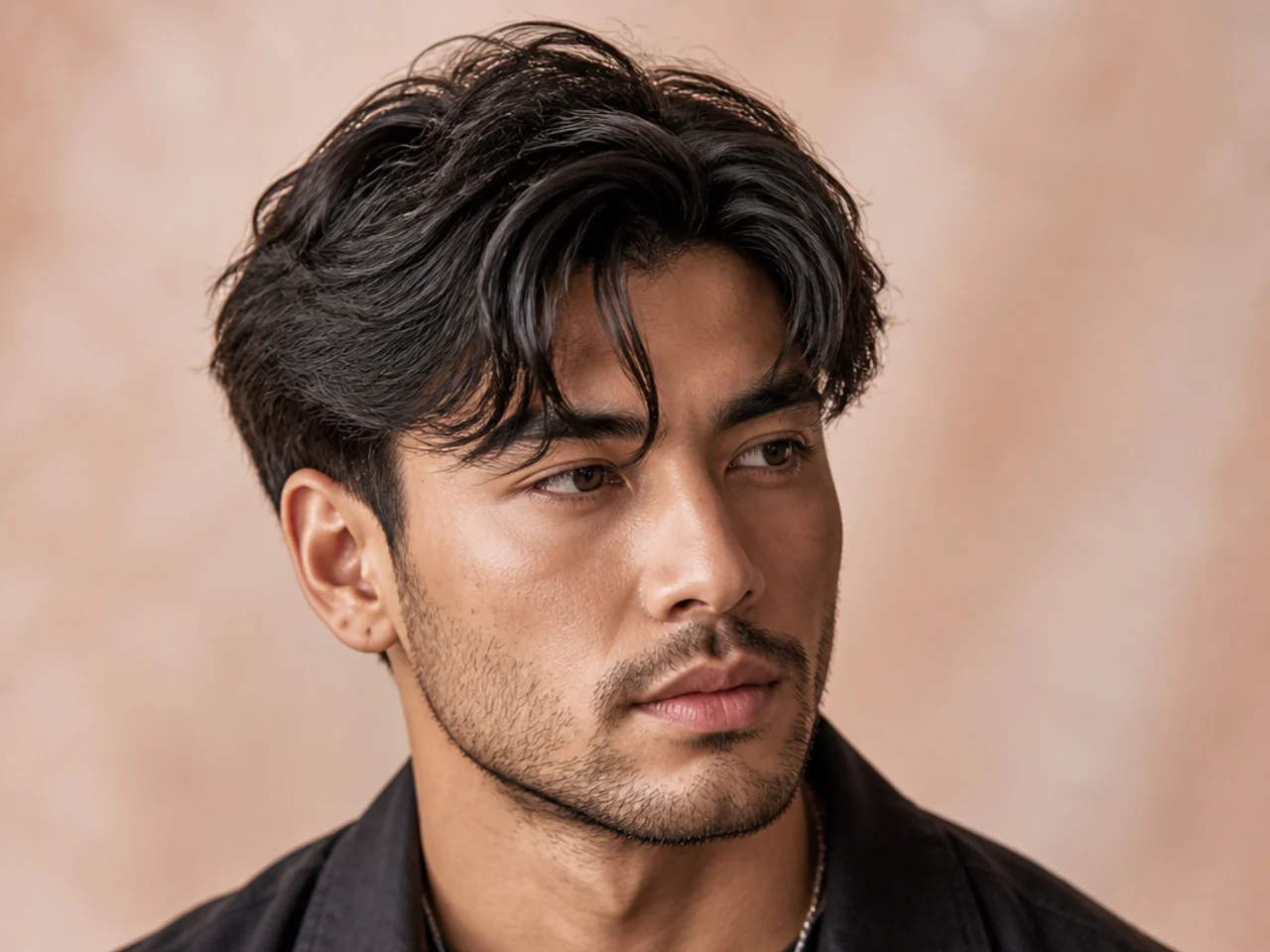
Textured comma adds visible layers and separation to the top. Instead of a smooth surface, you see individual pieces catching light. The comma still forms up front, but the crown and back read choppy. Sides run short. Best on straight-to-wavy hair with medium density. Fine hair looks scattered rather than textured; thick hair carries the layers naturally. Ask for a low fade on the sides, 3.5 to 4 inches on top with heavy point-cutting throughout, and a comma-length front. Style with matte clay for separation, then set the front comma with a round brush and cream. Two products, one shape.
French Crop Comma Hair
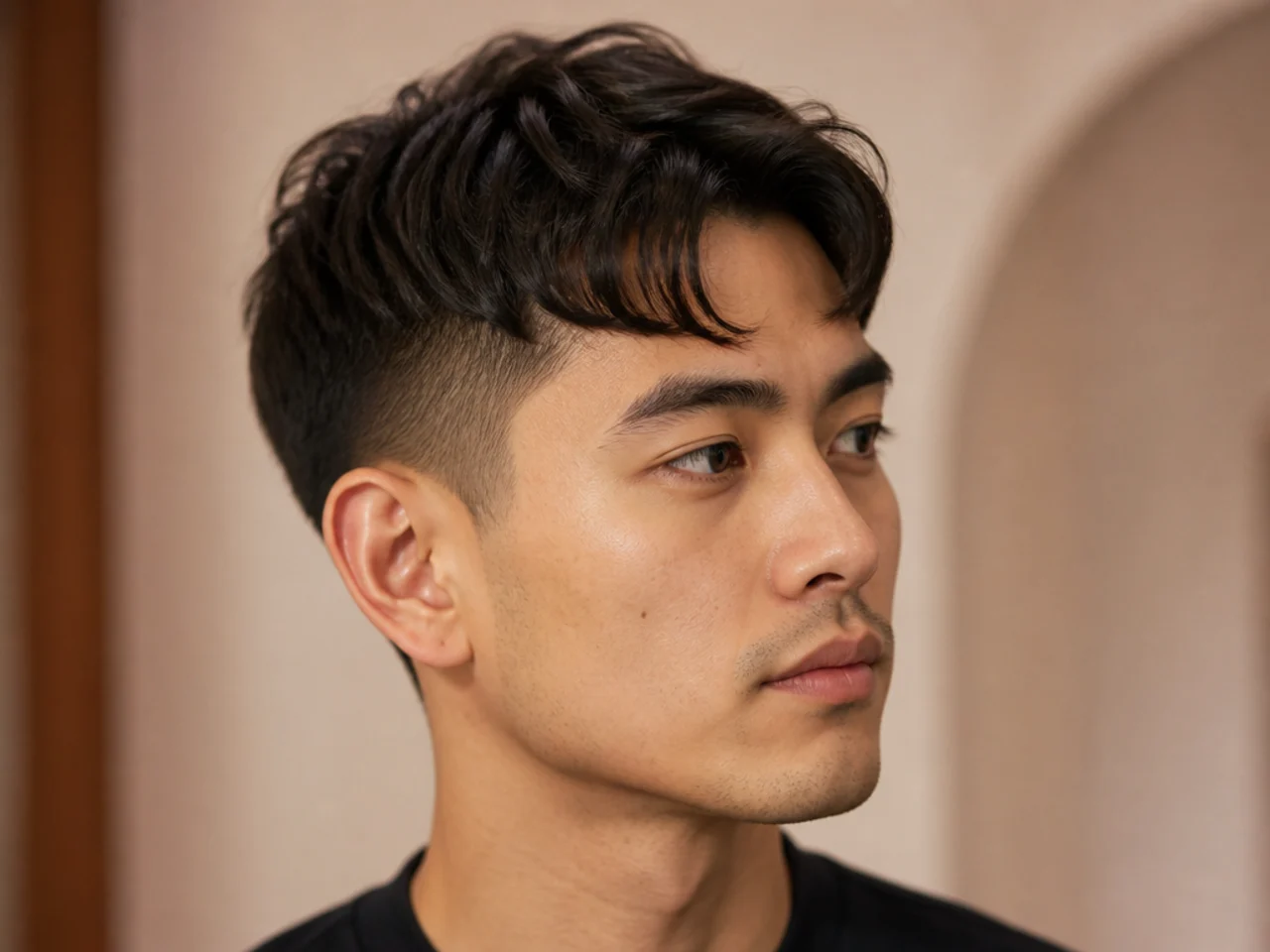
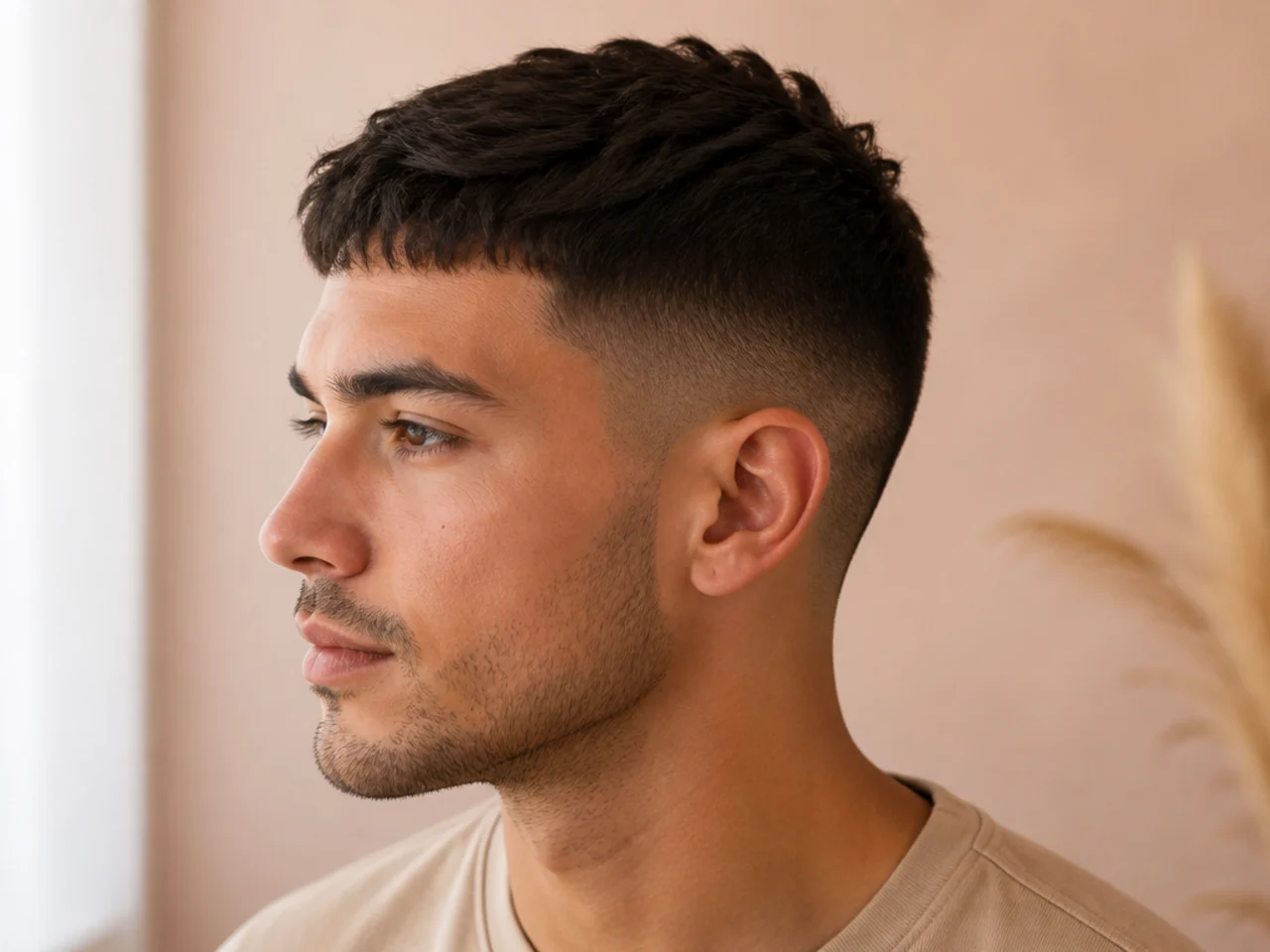
French crop is a short cut with a blunt fringe cut straight across the forehead. Add a comma and the fringe curls inward at the tips instead of sitting flat. Sides run very short with a fade or undercut. Best on straight hair; wavy hair fights the blunt fringe. Ask for a low or mid fade, 3 inches on top, a blunt fringe at your forehead's mid-point, and tips left long enough to curl inward. Style with matte clay through the crown for grip, then curl the fringe tips with a round brush and a dab of cream. The edgar haircut is a sharper straight-line cousin if the curl feels like too much work.
Comma Hair Perm
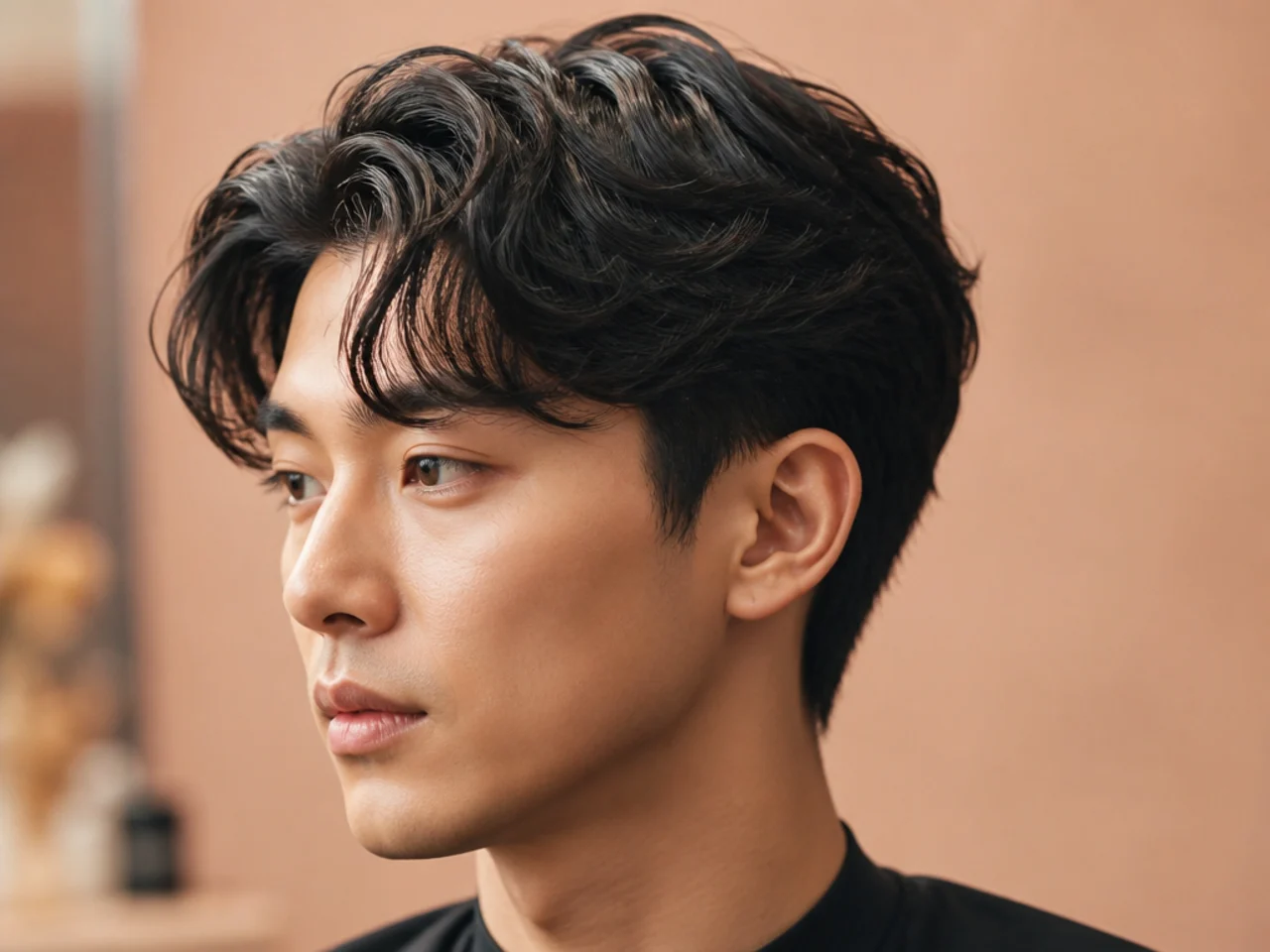
A perm is a chemical service that adds soft, permanent curls. The comma perm combines an S-wave on the top section with faded sides. Once permed, the top holds the comma shape with almost no daily styling — the curl is built into the hair. Low-maintenance route. Best on straight hair; perms don't work well on already-curly hair. Ask for a soft S-wave perm, size 20 or 25 rods on the front section only, and coordinate the cut with a fade or taper on the sides. Style by air-drying with curl cream, or hit the front with a round brush for 30 seconds if you want extra hook. Rebook every 4 to 6 months.
Classic Comma Hair
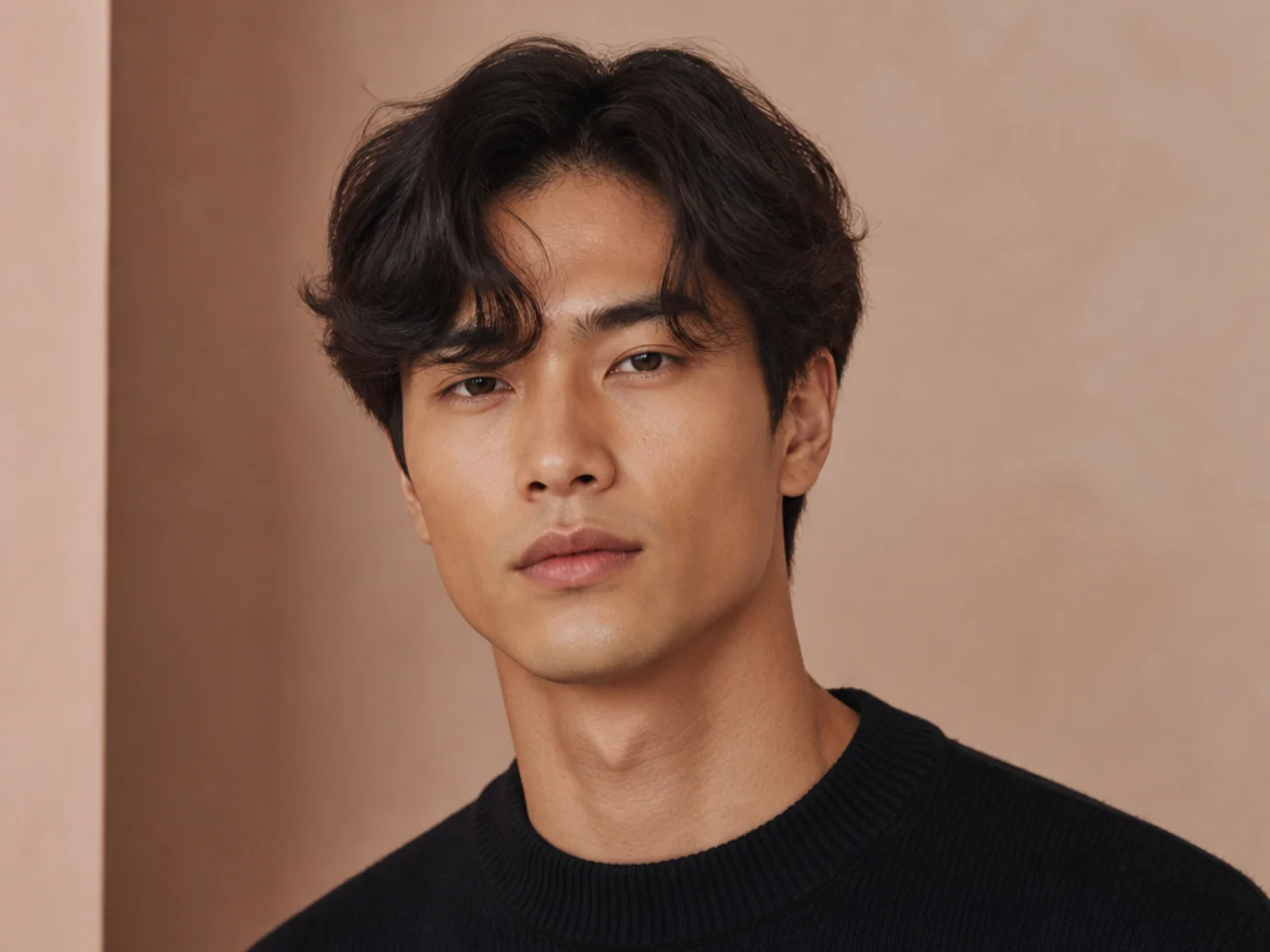
Classic comma is the timeless version — no mullet, no undercut, no perm, no extra texture. Medium top, faded sides, one clean comma curl toward your dominant side. If you're new to the cut, start here. Best on any straight-to-wavy hair type. Ask for a low fade or taper on the sides, 3.5 to 4 inches on top, and demonstrate the curl direction with a finger to your temple. Style with leave-in cream for smoothness, then a round brush from underneath the front, rolling inward on medium heat. Finish with a light setting mist.
Comma Hair Middle Part
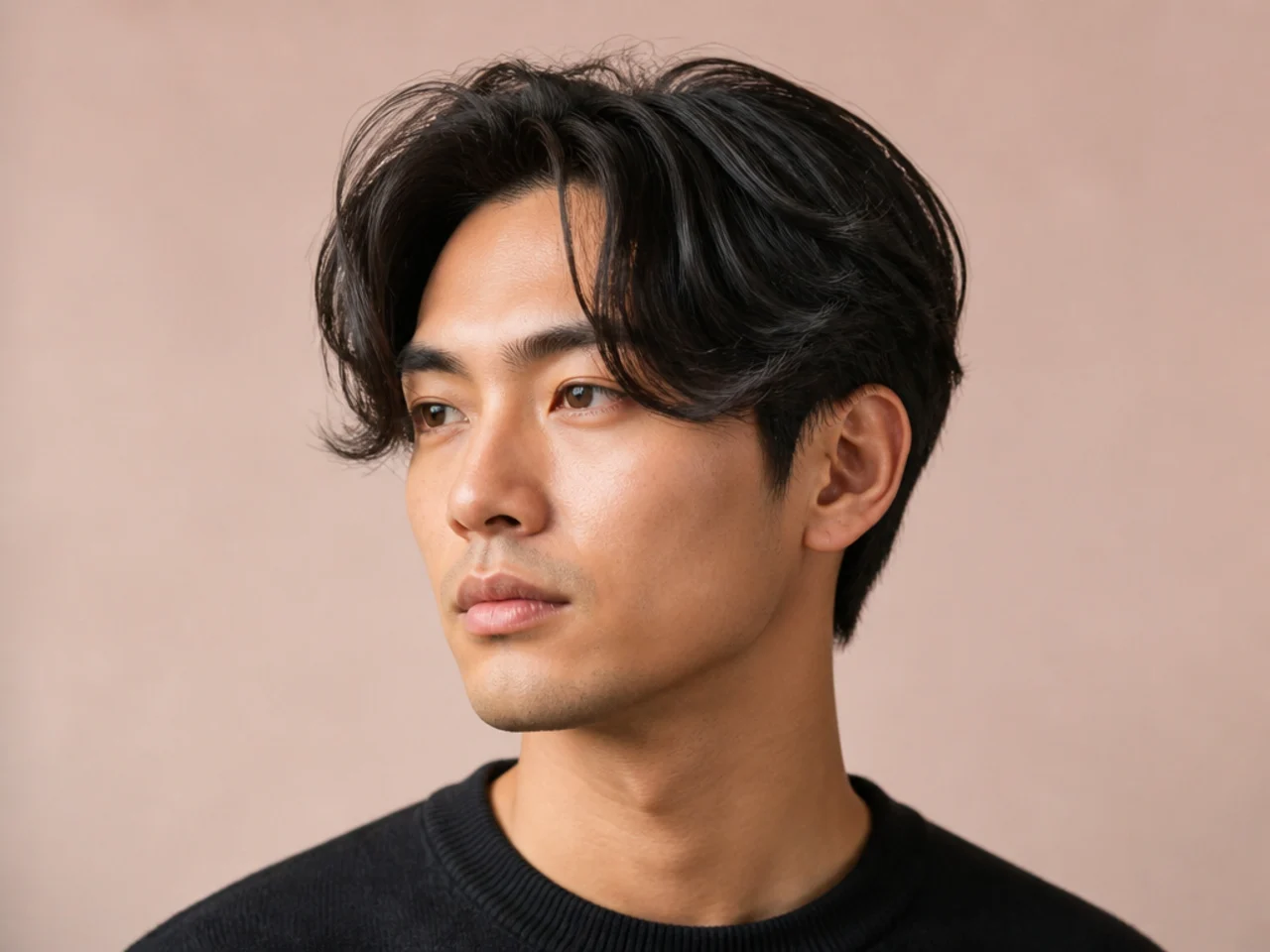
Middle-part comma splits the top down the center, then curls the front sections forward on either side. Similar to curtain comma, but the curl is tighter and more defined — real hooks, not soft flow. Best on straight hair with medium density. Ask for a low fade, 4 to 5 inches on top, a defined center part, and the front sections cut with equal weight for a symmetrical twin. Style with leave-in cream, then a round brush on each front section — one at a time — curling inward. See the middle part haircut for men for the base silhouette without curled tips.
Comma Hair Wolf Cut
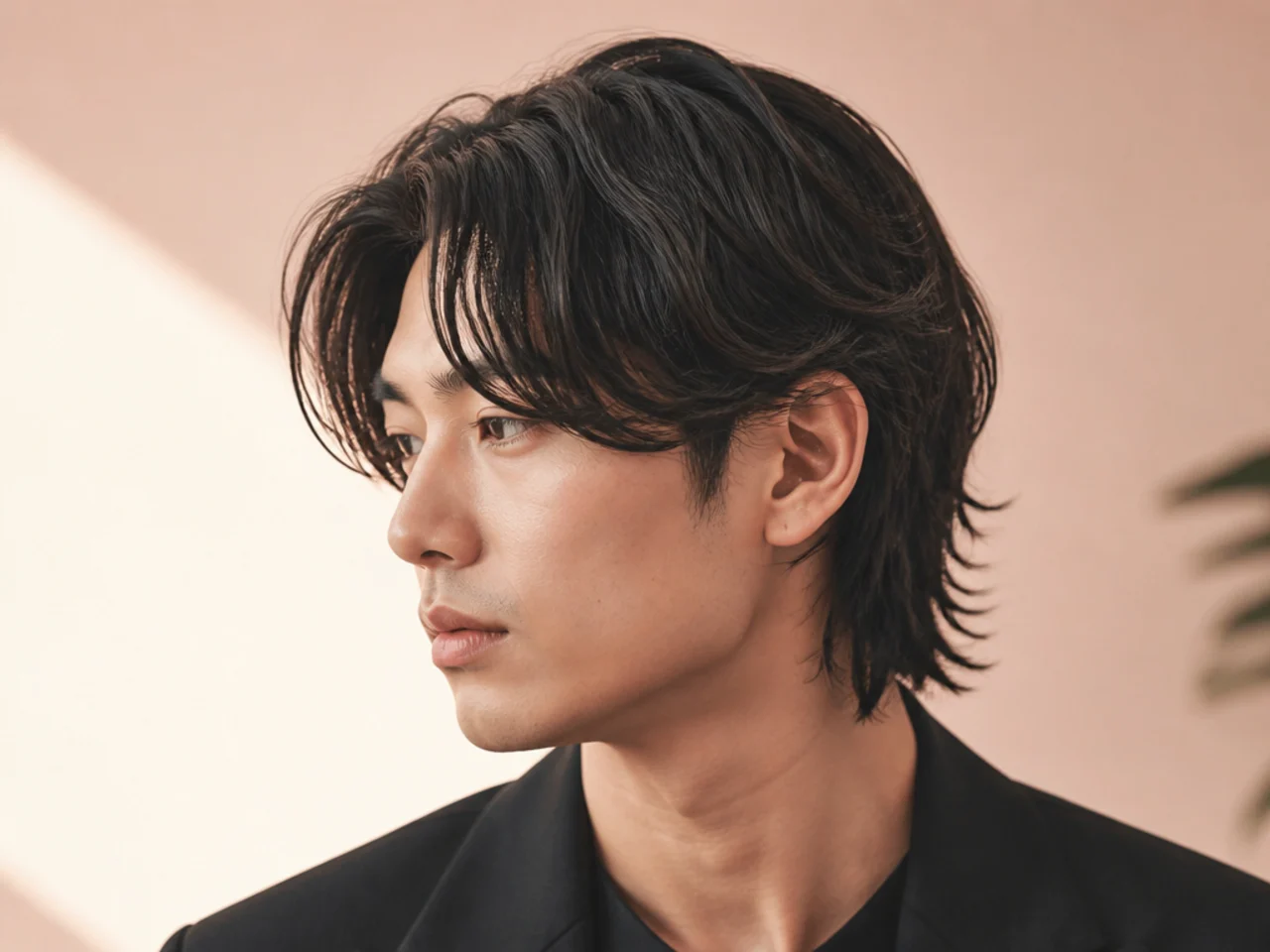
Wolf cut is a modern shag: choppy layers all over, longer at the nape, shorter at the crown. Add a comma and you get shag energy up top with a curled hook at the front. Sides can fade, taper, or stay disconnected. Best on straight-to-wavy hair with medium-to-thick density. Ask for a wolf-cut layering (short crown, long nape, choppy throughout), a low or mid fade haircut on the sides, and the front left long enough to curl into a comma. Style with texture spray through the shag, then a round brush and cream on the front only. The back reads intentional-messy, not neat.
Medium Comma Hair
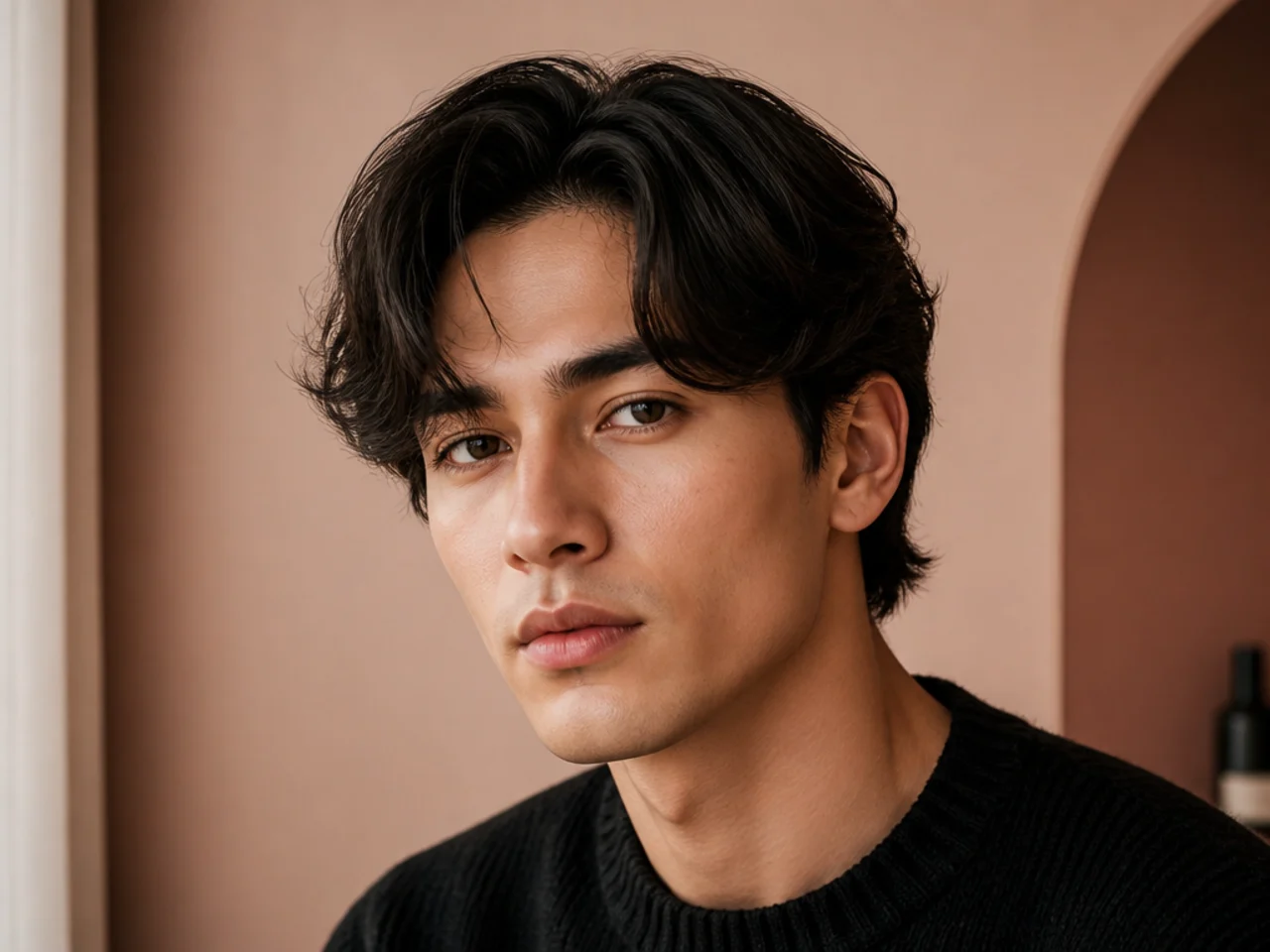
Medium comma sits between short and long. Top runs 4 to 5 inches — enough to hold a strong curl without going into full flow territory. Sides run short with a fade or taper. Sweet spot for most guys new to the cut, and the length most K-pop reference photos actually use. Best on any hair texture. Ask for a low fade, 4.5 inches on top, and one defined comma to your dominant side. Style with leave-in cream, a round brush from underneath the front, and a light setting mist. Forgiving — if your styling goes slightly off, the length carries you through the day.
Mid Fade Comma Haircut
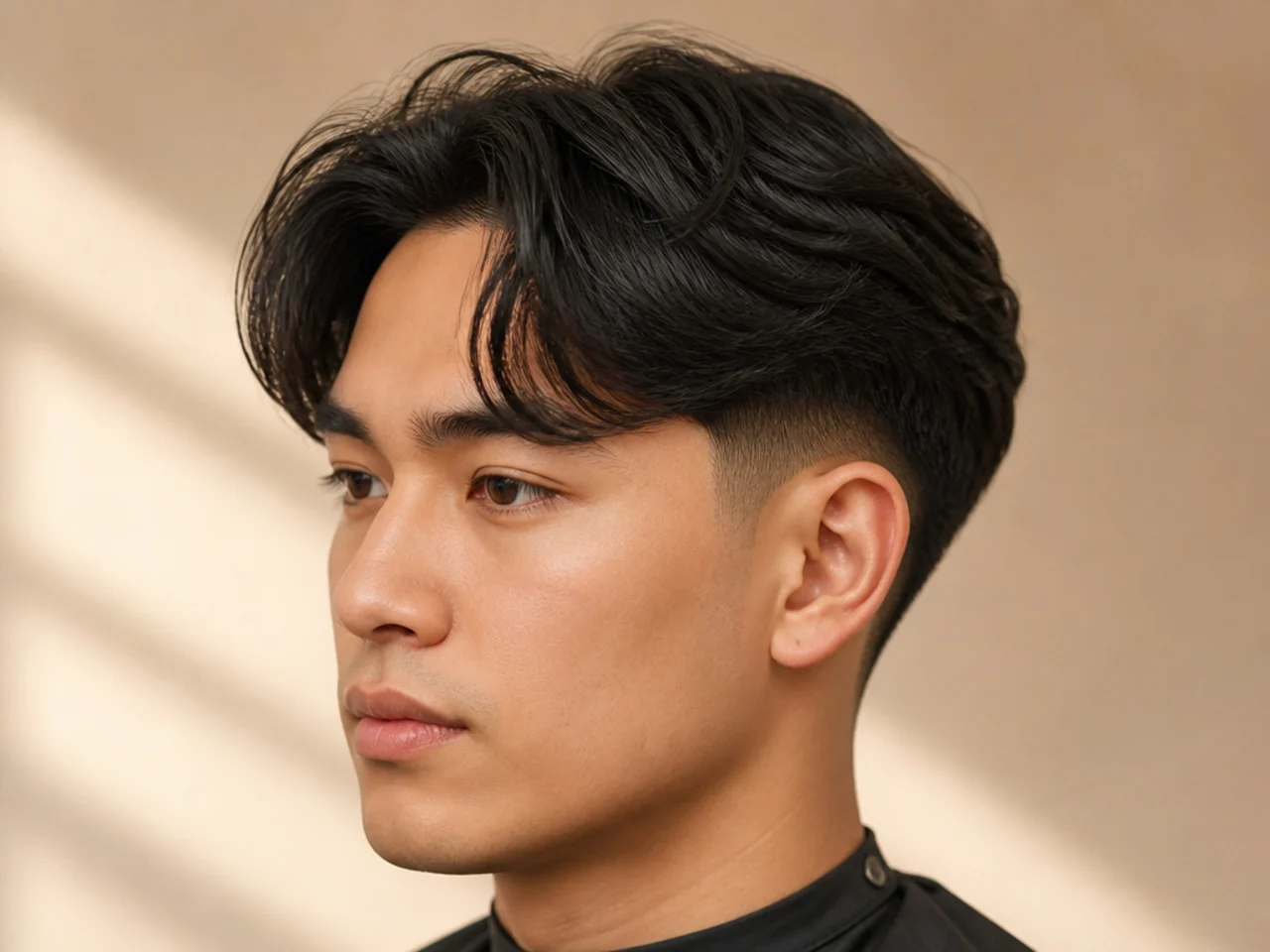
Mid fade starts around your temple and drops to skin near the ear. Higher than a low fade, lower than a high fade. Adds visual weight to the top of your head — perfect if the standard comma reads too flat against your face. Best on straight-to-wavy hair with medium density. Ask for a mid fade to skin, 3.5 to 4 inches on top, and a defined comma toward your dominant side. Style with curl cream, a round brush, and a light setting mist. A flat comma against a taller fade looks unfinished. See the full mid fade haircut breakdown for the fade spec.
Layered Comma Hair Cut
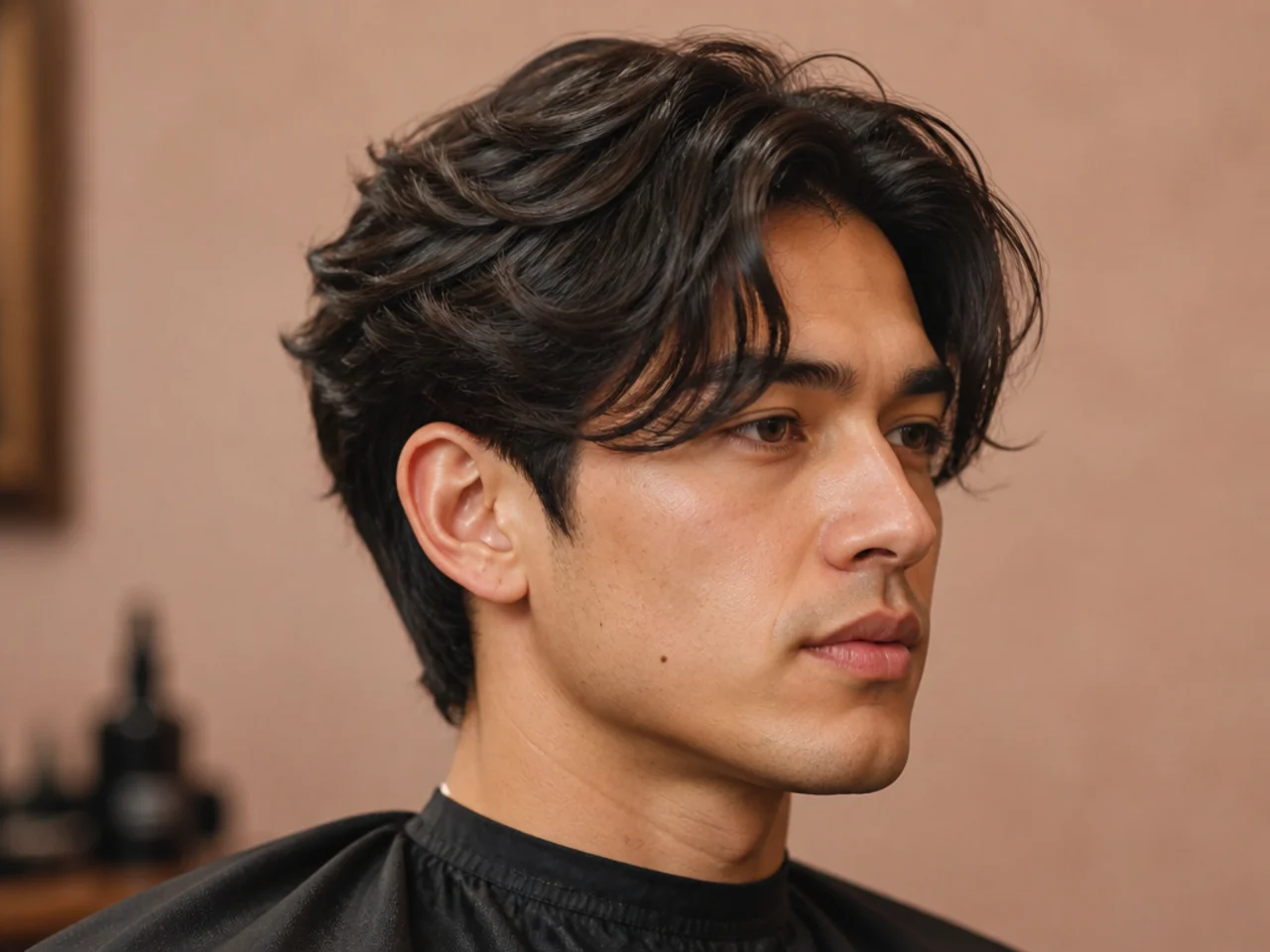
Layered comma adds internal layers throughout the top — different lengths stacked to create built-in volume and flow. The comma sits at the front, but the layers behind it move independently. Best on straight-to-wavy hair with medium density. Fine hair can look too airy; thick hair usually needs more layers than the barber's default. Ask for a low fade, 4 inches at the crown with layers dropping to 5 inches at the front, and a defined comma toward your dominant side. Style with leave-in cream, air-dry to damp, then finish the front with a round brush. Layers keep the shape moving even when you skip the brush.
Asian Comma Hairstyle
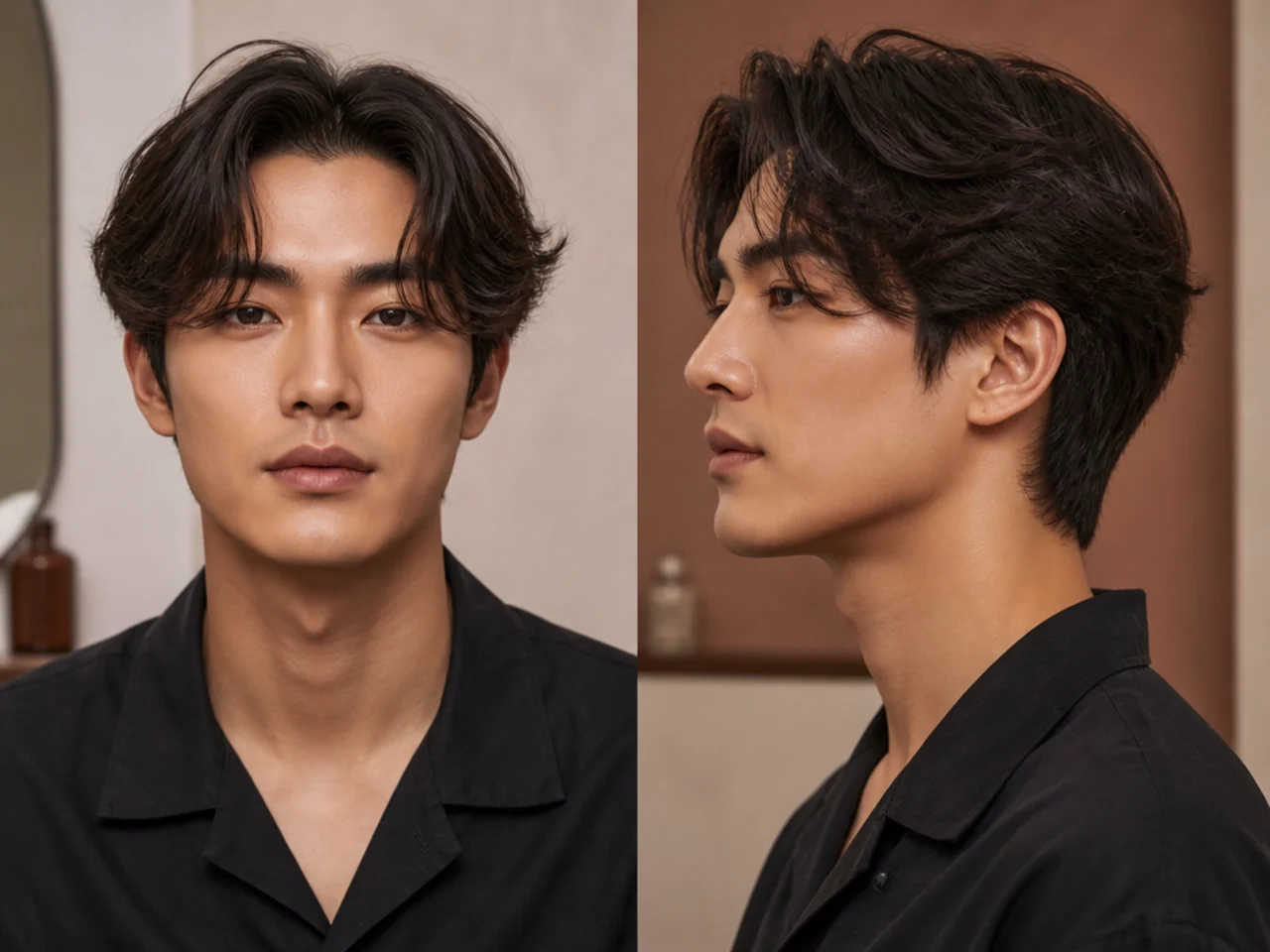
The Asian comma is the archetype — the version K-pop idols and Korean actors wear in editorial stills. Straight, glossy hair. Precisely faded or tapered sides. A single sharp comma curl pointing toward one eye. Nothing casual, nothing shaggy. Best on straight hair with medium-to-thick density. Ask for a low fade or scissor taper on the sides, 4 inches on top with sharp point-cutting to preserve straight ends, and a defined comma pointing to your dominant eye. Style with a lightweight leave-in, then a round brush from underneath the front, rolling inward on medium heat. Finish with shine spray and a light setting mist.
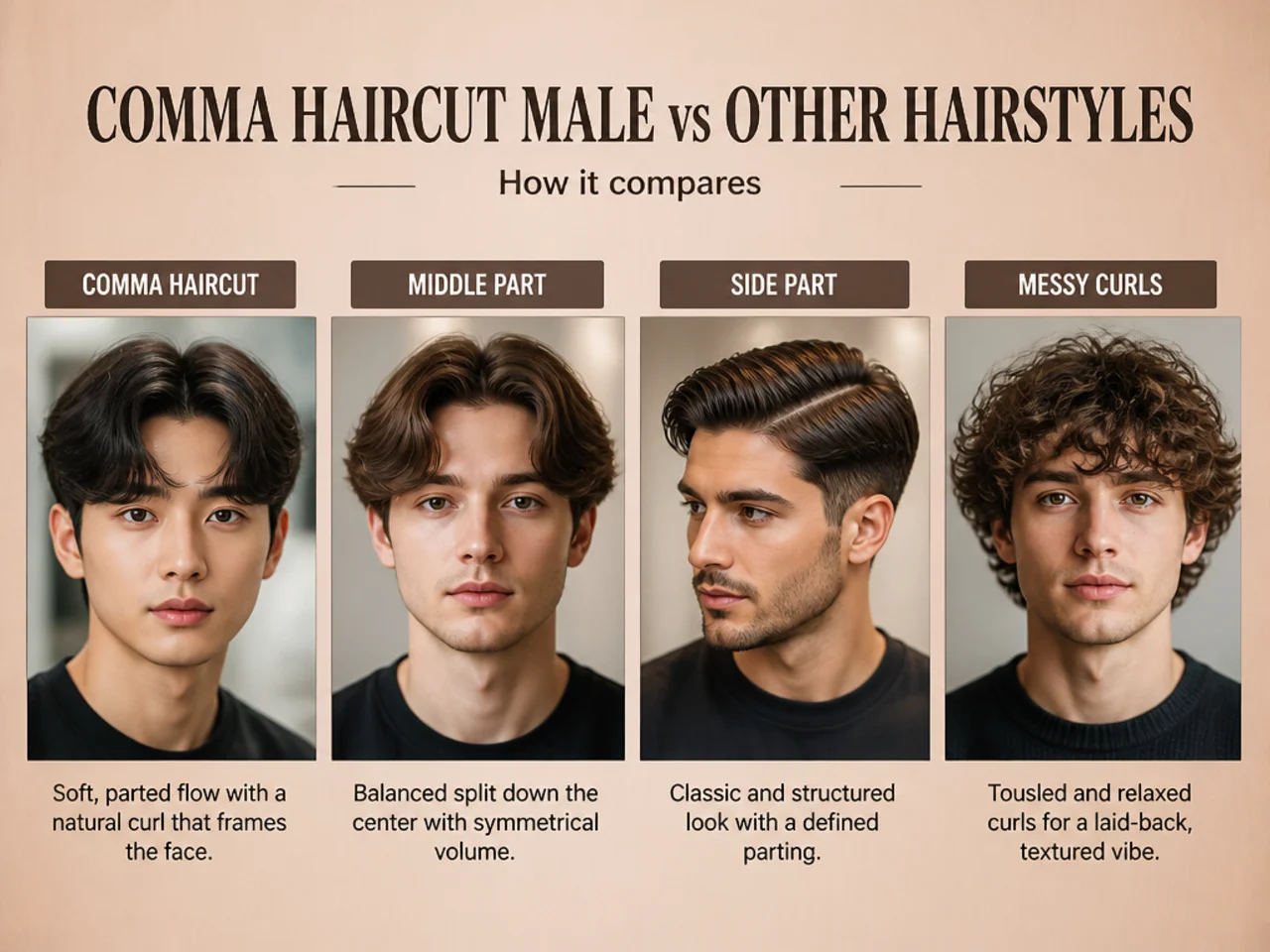
Comma Haircut Male vs Other Hairstyles
Comma Hair vs Two Block
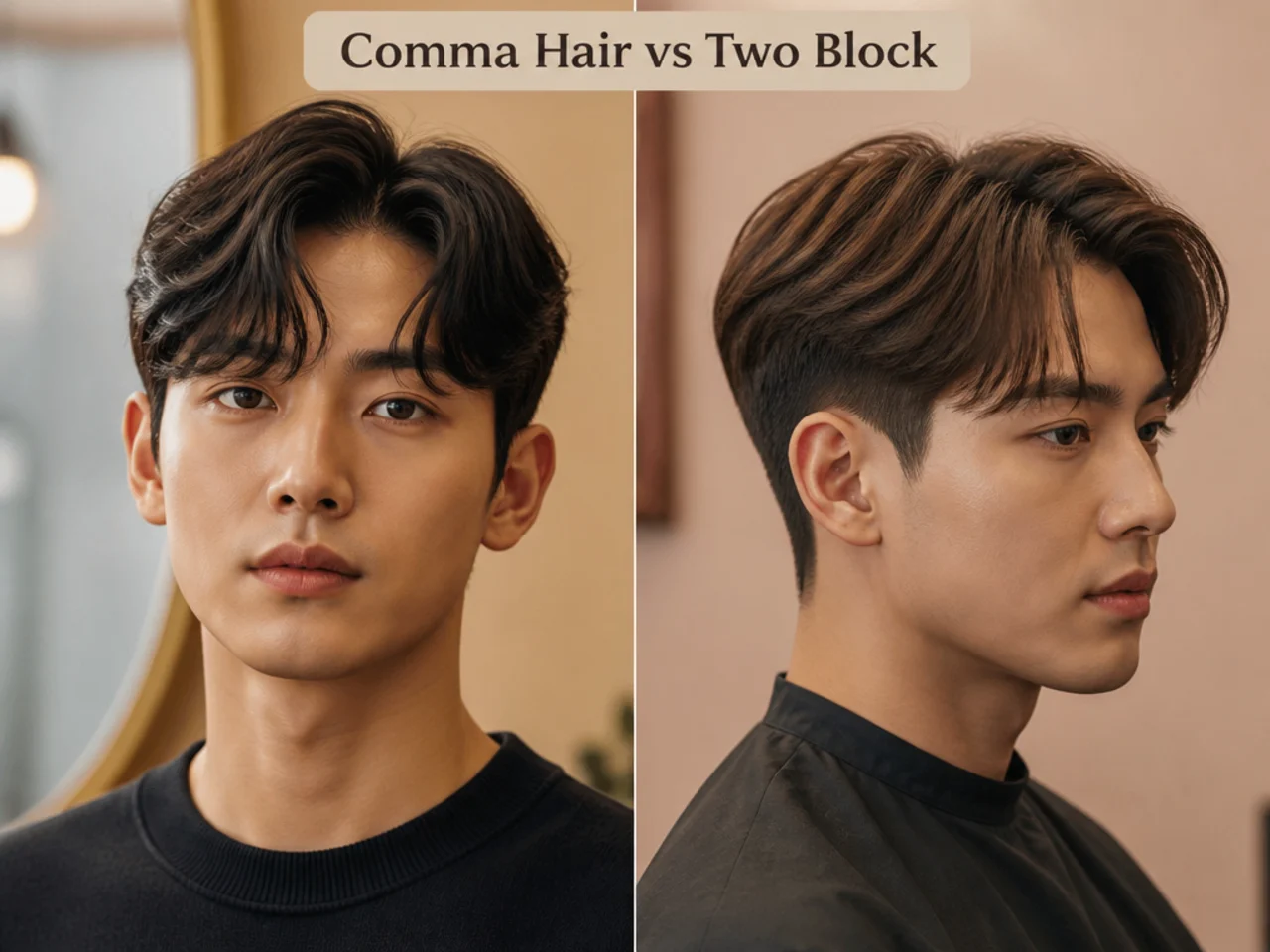
The two block is a shape. The comma is what you do on top of that shape. A two block has the short-sides-longer-top structure but no rule on how the top is styled — could be slicked back, worn forward flat, or curled into a comma. A comma needs curled front bangs but doesn't require the hard two-block ledge; a fade or taper works equally well. Many guys wear both together (that's the two-block comma), but you can wear either alone.
Comma Hair vs Curtain
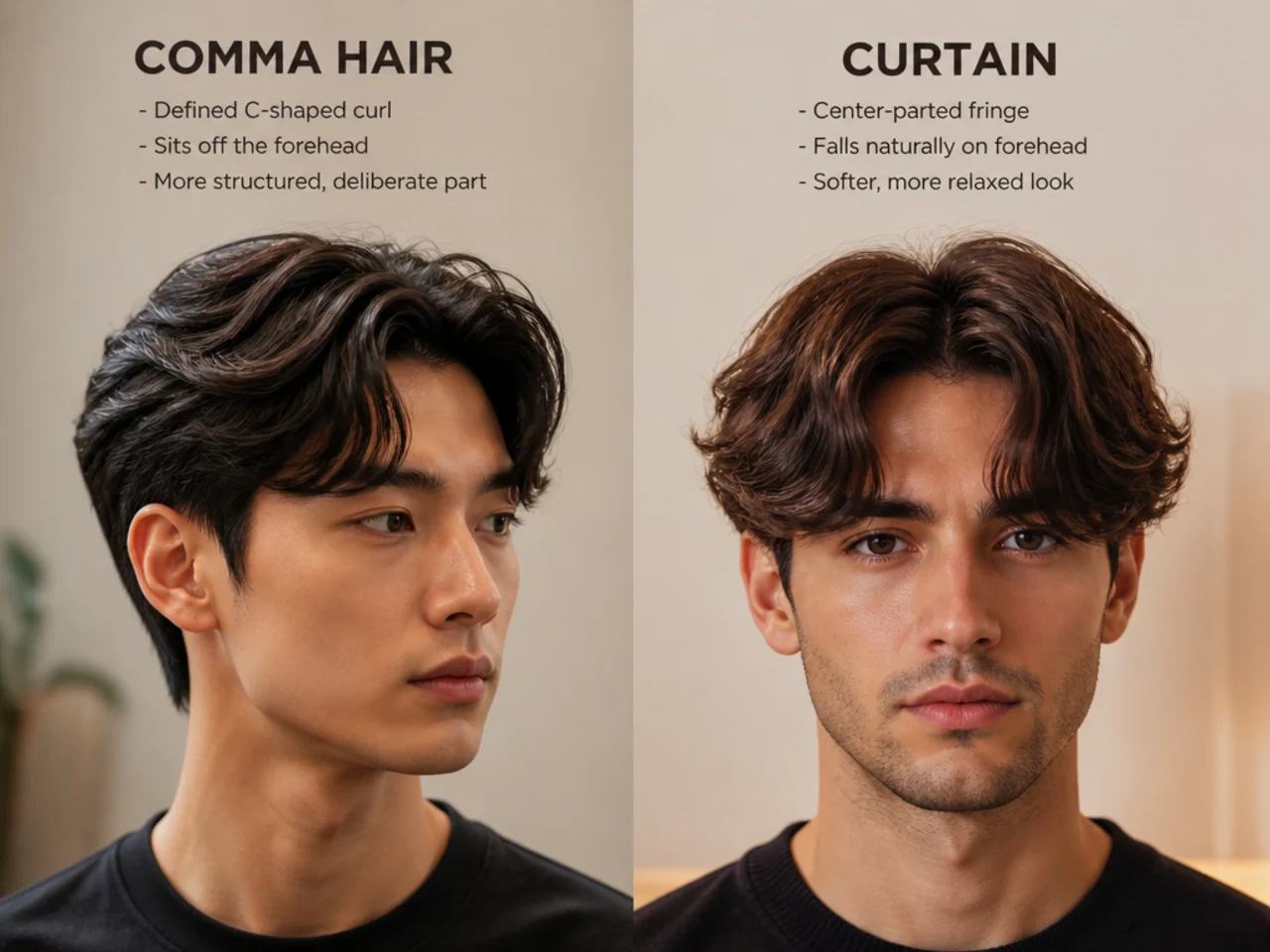
Curtains sweep. Commas curl. Curtain hair parts down the center and flows outward toward the ears in two smooth sheets — no curl at the ends, just direction. Comma hair curls the ends of the front section inward, forming a defined hook. You can combine them (curtain comma is exactly that pairing), but a plain curtain has no hook. See the middle part guide for the curtain flow. Want the flow with less styling time? Curtains win. Want the sharper Korean silhouette? Go comma.
How to Choose the Right Comma Haircut
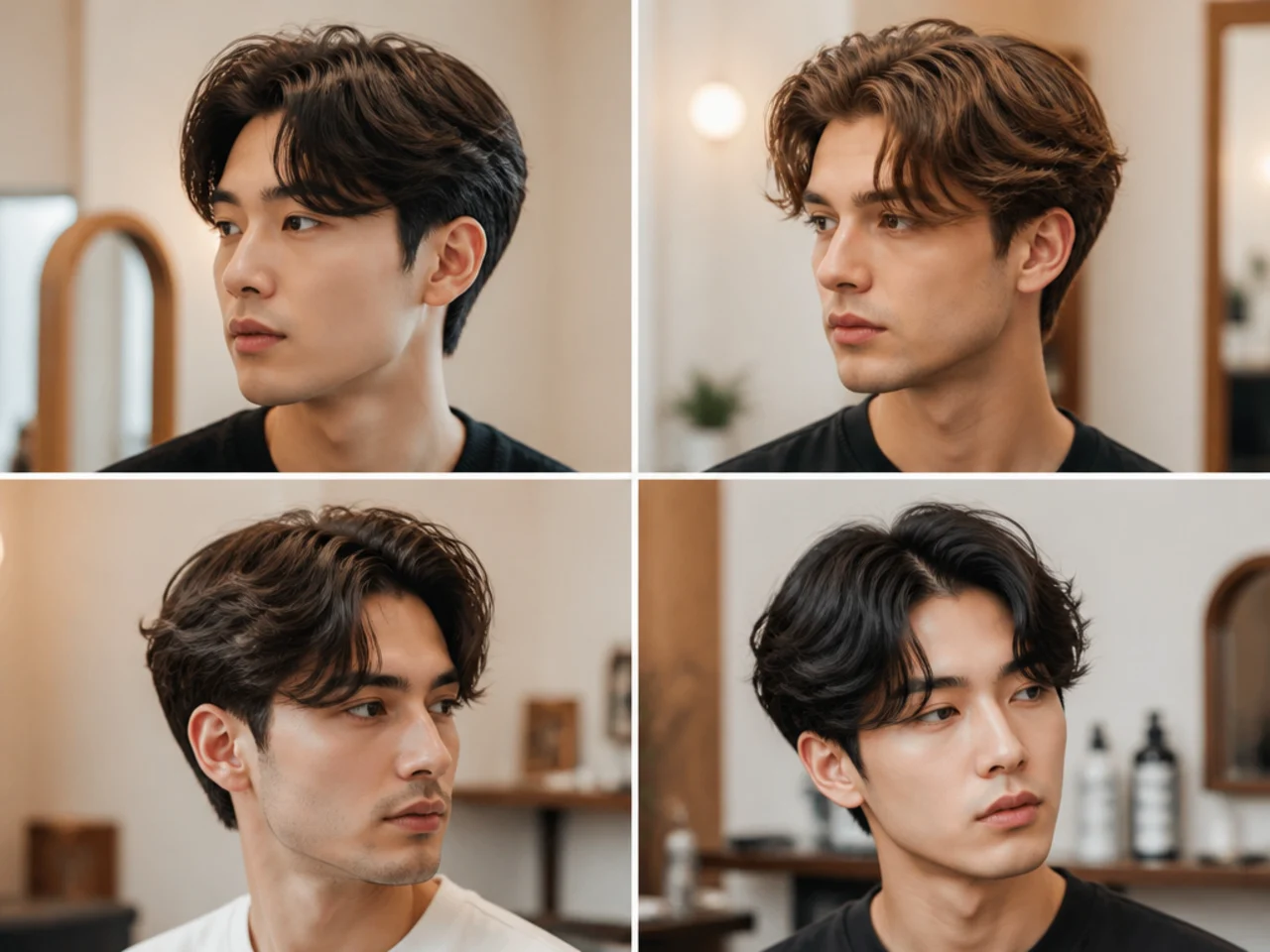
Two variables decide the right variation for you: hair type and face shape. Get both right and any version above will suit you.
By Hair Type
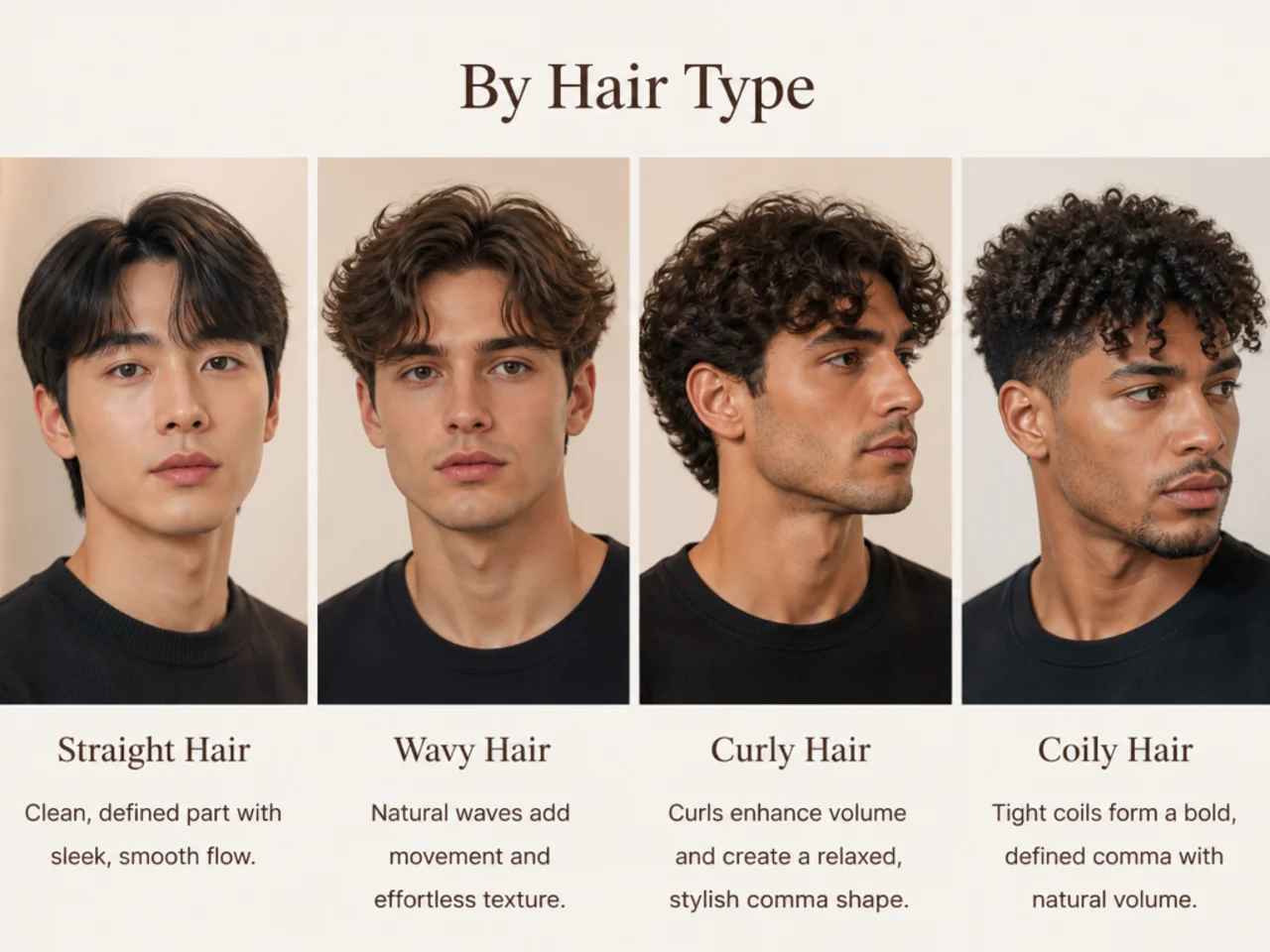
Straight hair is the ideal canvas — the curl you brush in stays where you put it. Wavy hair (2A-2C) is the easiest to style; your hair already wants to bend. Curly hair (3A-3C) needs longer front layers so gravity pulls the curl forward. Tight coils (4A-4C) usually need a light perm-relaxer on the front to sit flat enough to hook. Fine hair should stay medium length; extreme long-top variations lose shape. Thick hair carries any length but needs more product to stay controlled.
By Face Shape
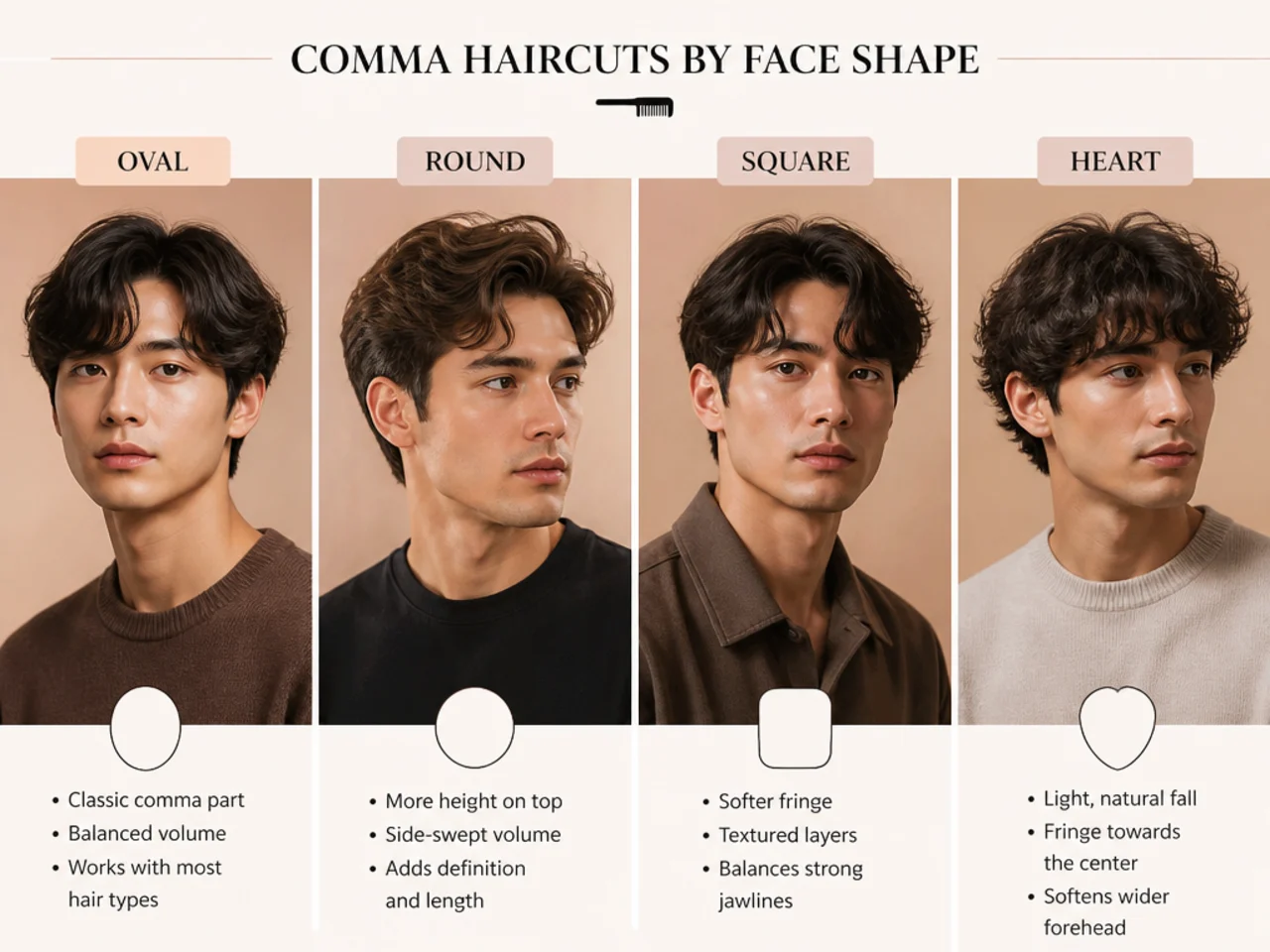
Oval faces suit any comma variation — you're the flexible one. Round faces do better with mid or high fades and a taller comma to add vertical length. Square faces soften with a longer, less-defined curl (soft comma or curtain comma) that breaks up straight jawlines. Long faces should keep top volume flat and lean toward wider or twin commas that add horizontal width. Heart-shaped faces balance with a defined single comma pointing across the forehead. Adjust the curl's direction and the fade's height until the cut frames your specific face.
How to Ask Your Barber for a Comma Haircut
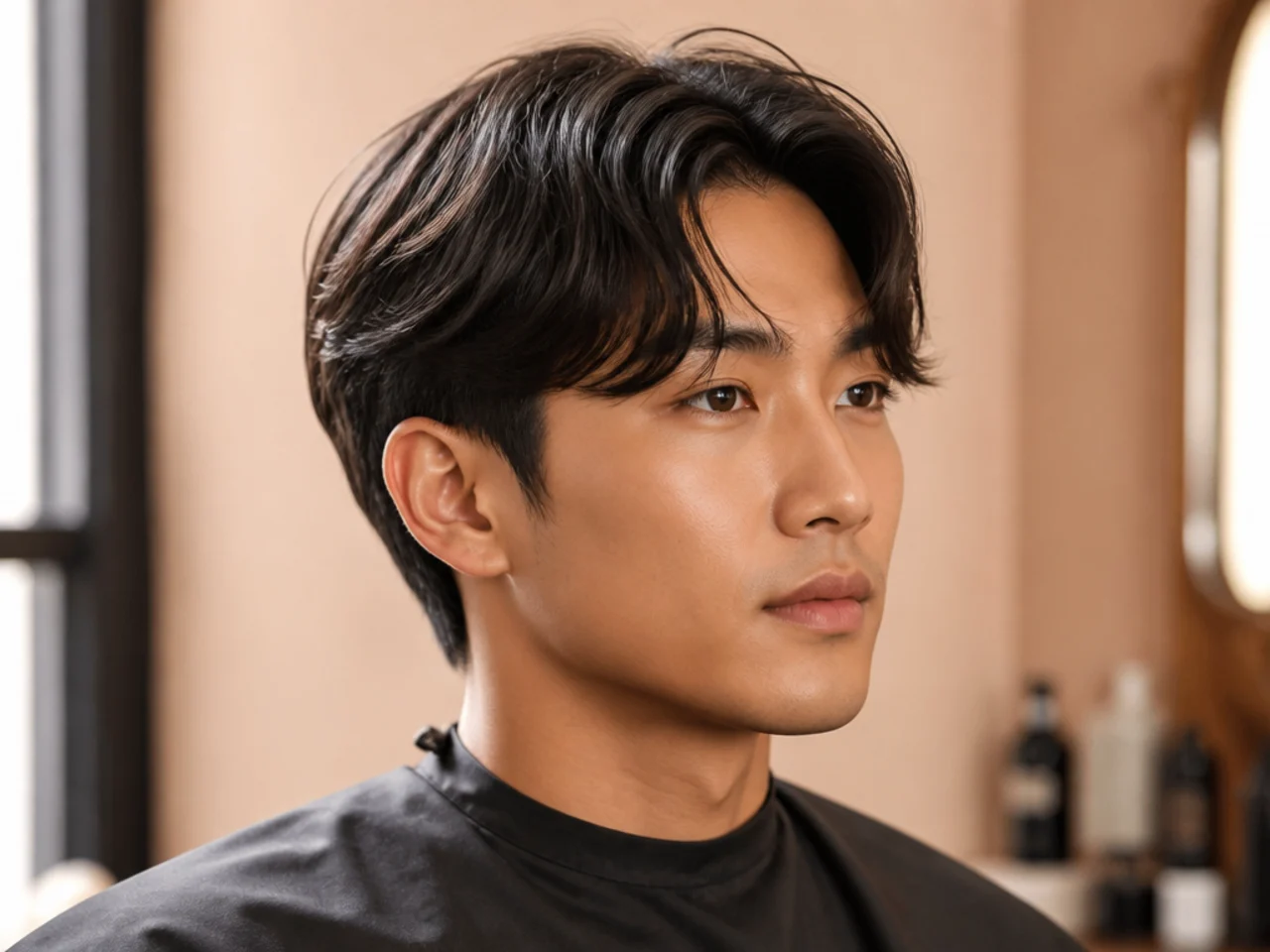
The right cut starts with the right ask. Vague words like "medium length" or "Korean style" mean different things to different barbers. Be specific.
Use Simple Style Terms
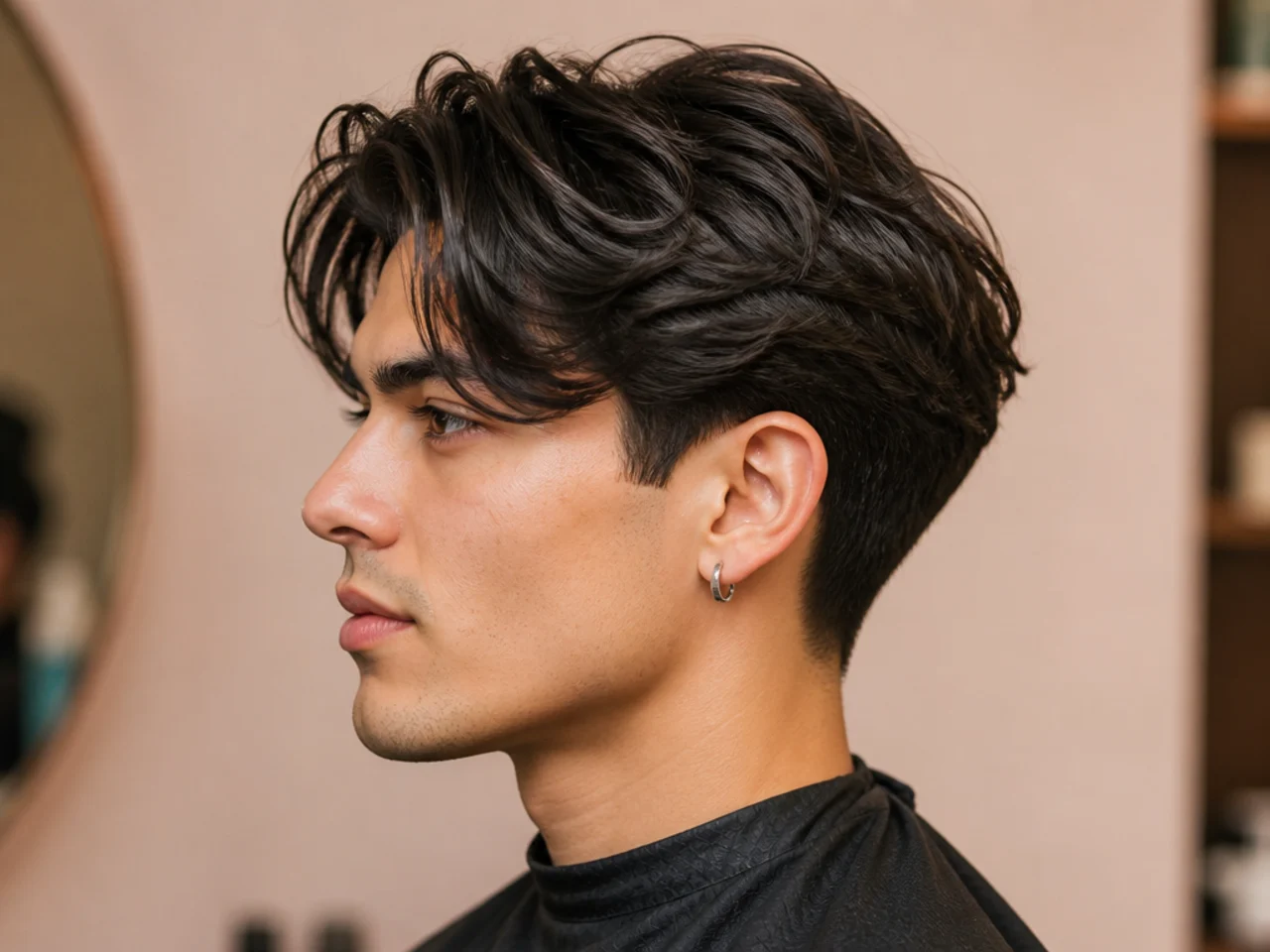
Give your barber three data points: top length in inches (3 to 5 for standard), side treatment (fade or taper, plus the height — low, mid, or high), and curl direction (single comma to your dominant side, or twin from a center part). Example: "I want 4 inches on top, a low taper on the sides, and a single comma curl to my right eye." That sentence tells your barber everything they need. Skip vague words like "textured" or "layered" unless you know the layer structure you're asking for.
Show a Photo Example
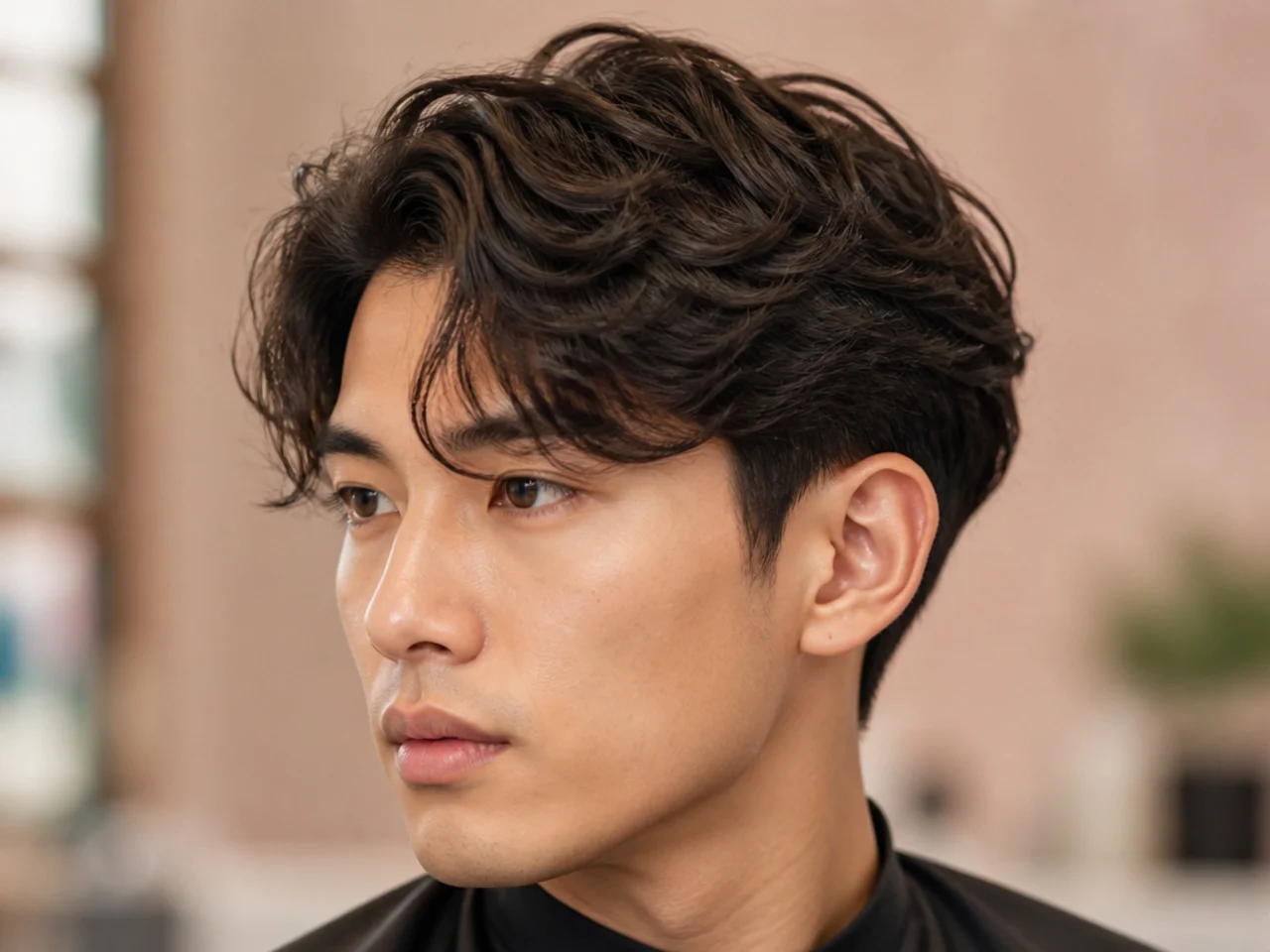
Photos beat words. Bring two or three shots of the exact variation you want, including one from the front and one from the side. If you can find a photo of your own face shape wearing the cut, even better. Show your barber the curl direction by touching a finger to your temple and drawing the arc. If you're going twin commas, confirm both sides mirror each other with equal weight before scissors touch hair.
How to Style Comma Hair

Wash and Prep Hair
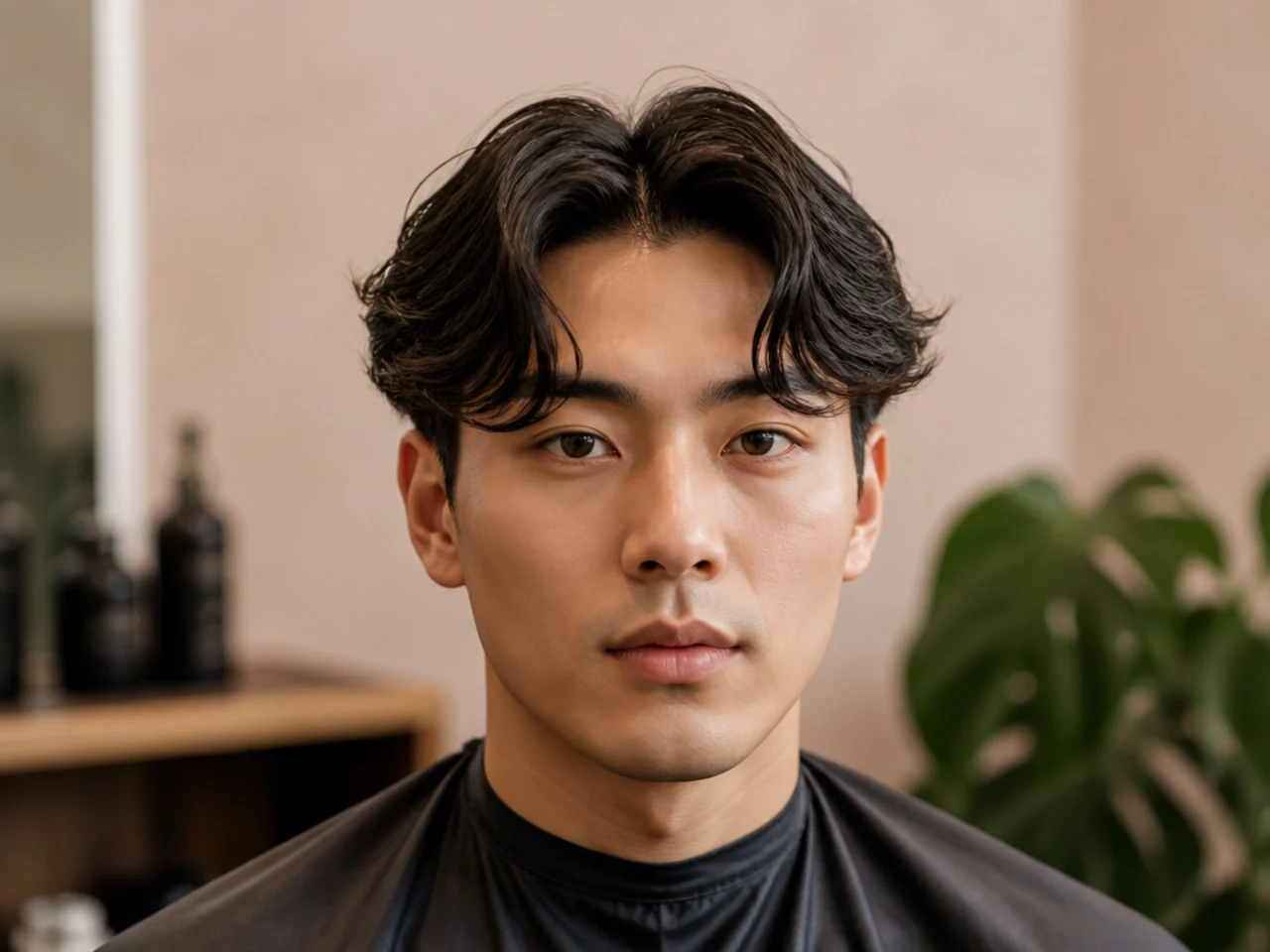
Start with clean, damp hair. Fully wet hair holds too much water; fully dry hair won't take shape. Towel-dry until uniformly damp — no drips, no dry patches. Skip the shampoo if you washed yesterday; over-washing dulls the shine that makes a good comma stand out. Blot with a microfiber towel to speed the drying.
Add Volume and Direction
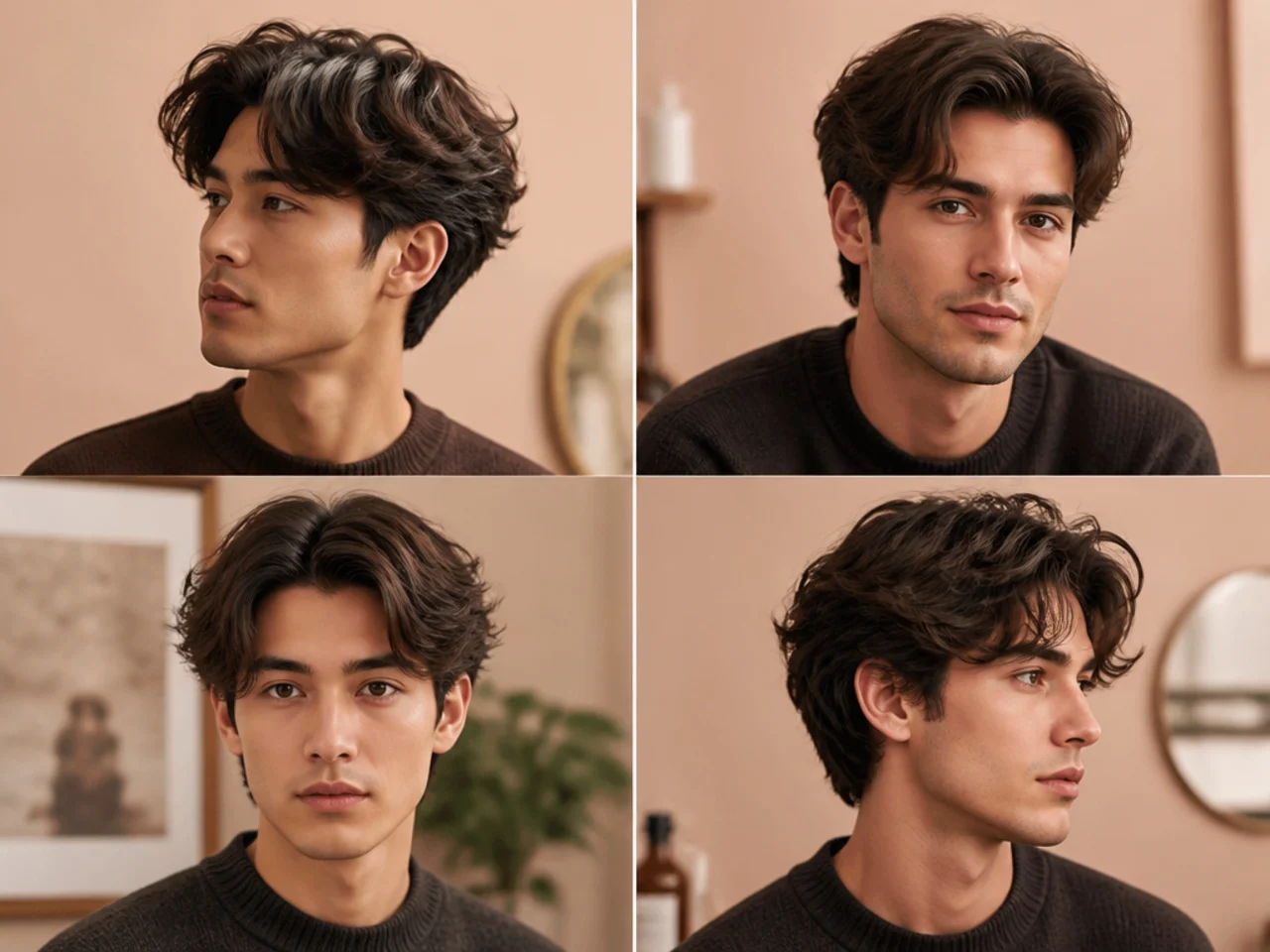
Spray a lightweight sea salt spray or volumizing mist through the top. Focus on the roots to build lift, then work outward. Comb the front forward in the direction you want the comma to curl. Setting the direction now saves you effort with the brush later. Use a wide-tooth comb — guide the hair, don't flatten it.
Blow Dry with a Round Brush
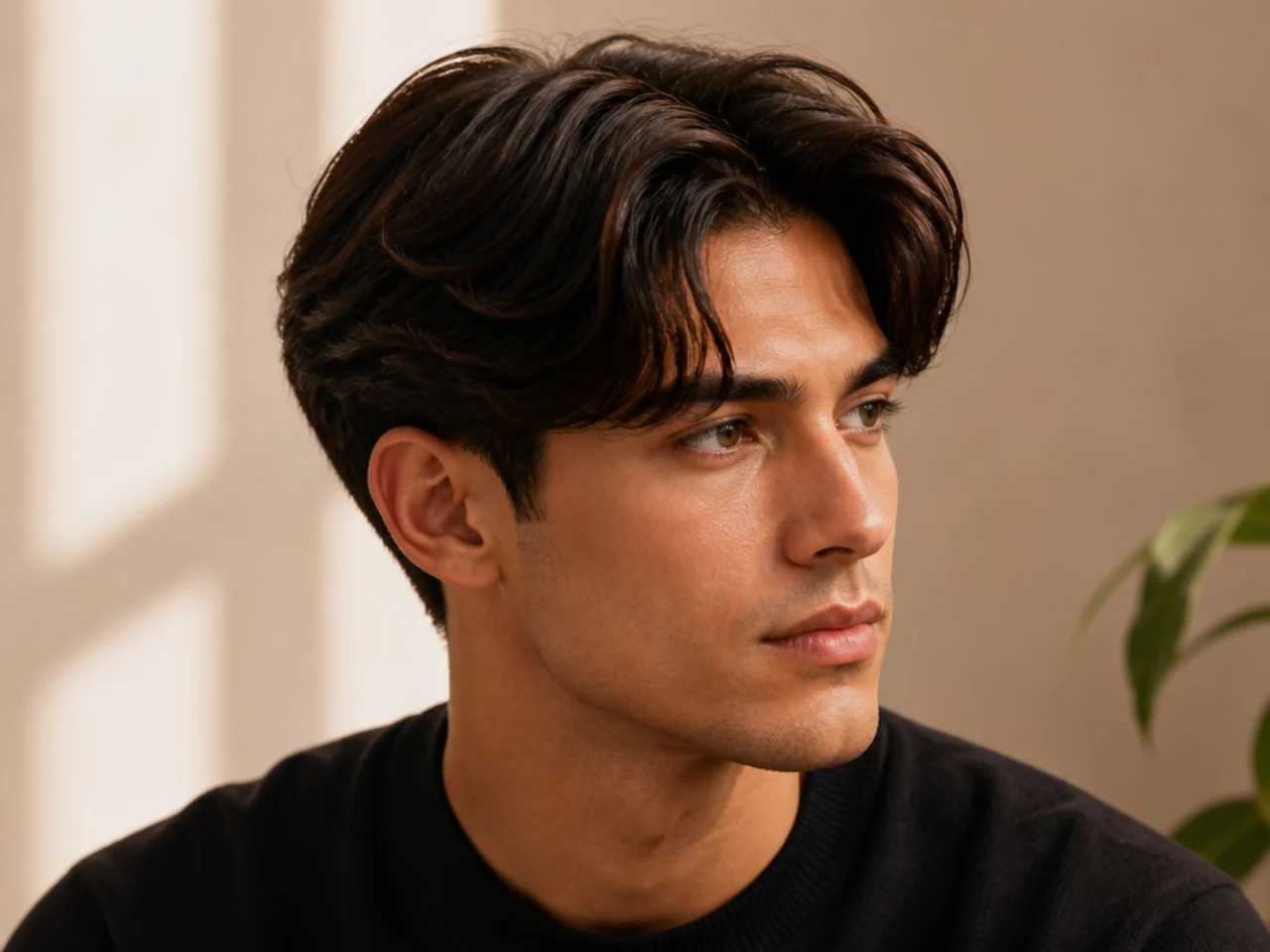
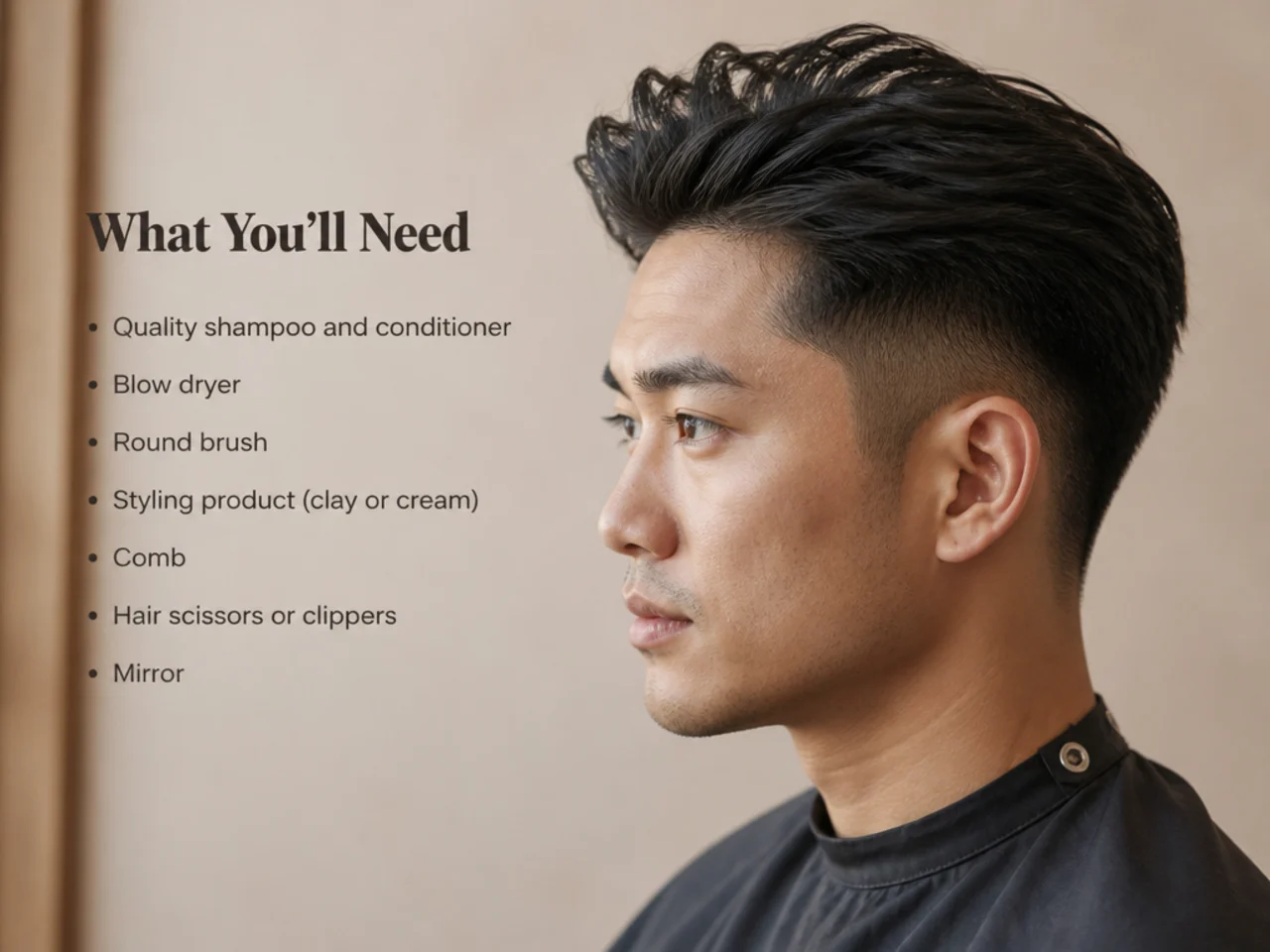
This is the critical step. Take a 1.5 to 2-inch round brush. Slide it under the front section, close to the roots. Aim the hairdryer at the brush on medium heat. Roll the brush inward — toward your face — slowly while directing air along its length. Hold at the end of the roll for two seconds. Release. That motion sets the comma. Repeat on the other side if you're going twin. Total time: 90 seconds max.
Define and Hold the Shape
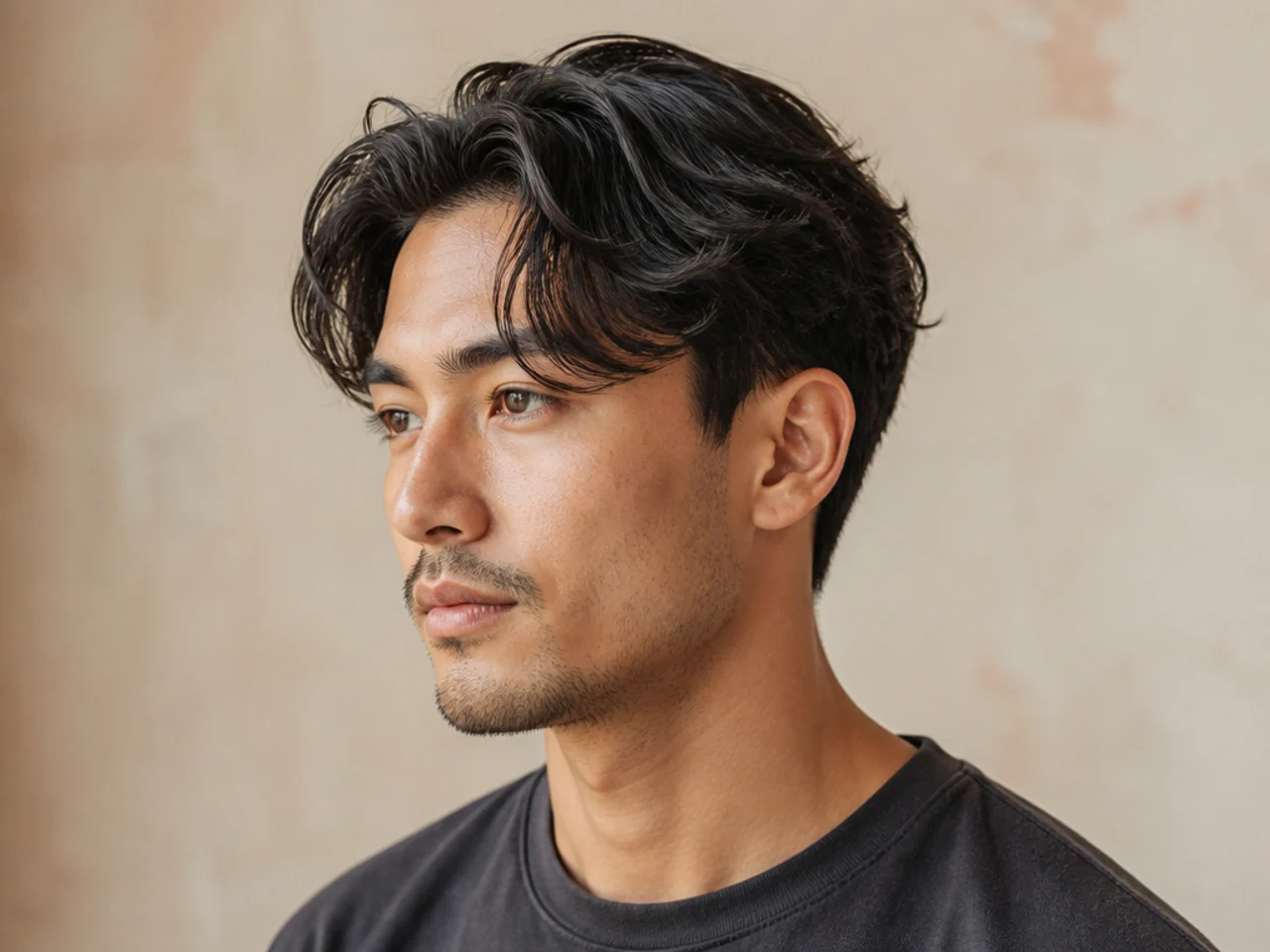
Warm a pea-sized amount of curl cream between your palms. Run your fingers through the front comma from top down, following the curl's direction — never against it. Add matte clay through the crown for extra grip on longer variations. Finish with a light setting mist held eight inches away. Heavy product weighs the hook down.
How to Maintain a Comma Haircut
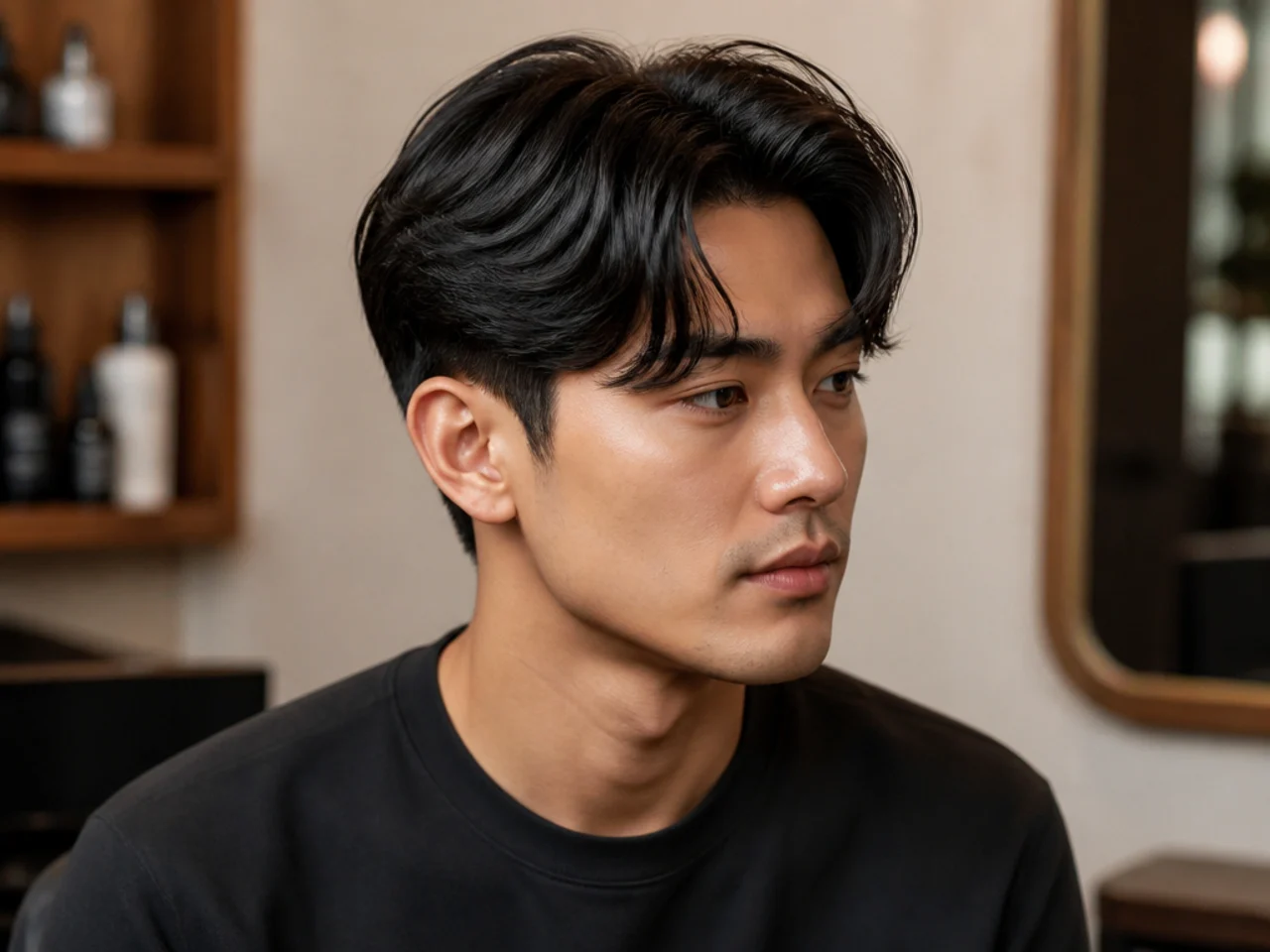
Book a trim every 3 to 4 weeks for short and medium variations, every 5 to 6 weeks for long comma or wolf-cut versions. The shape softens fast — the moment the sides lose their clean line or the top starts flopping, book. Waiting past that just makes the next cut harder to shape.
Between cuts, wash three or four times a week with a mild shampoo — daily washing strips the natural oils that give the comma its shine. Condition each wash. Once a week, clarify to remove buildup, then follow with a deep-conditioning mask. Sleep on a silk or satin pillowcase — cotton roughens the front and flattens your curl overnight. If you shower at night, blow-dry roughly first and re-style in the morning.
For permed variations, extend the interval between chemical services to every 4 to 6 months. Perms damage hair; more frequent processing weakens the front past the point of holding shape.
Best Hair Products for Comma Hair Styles
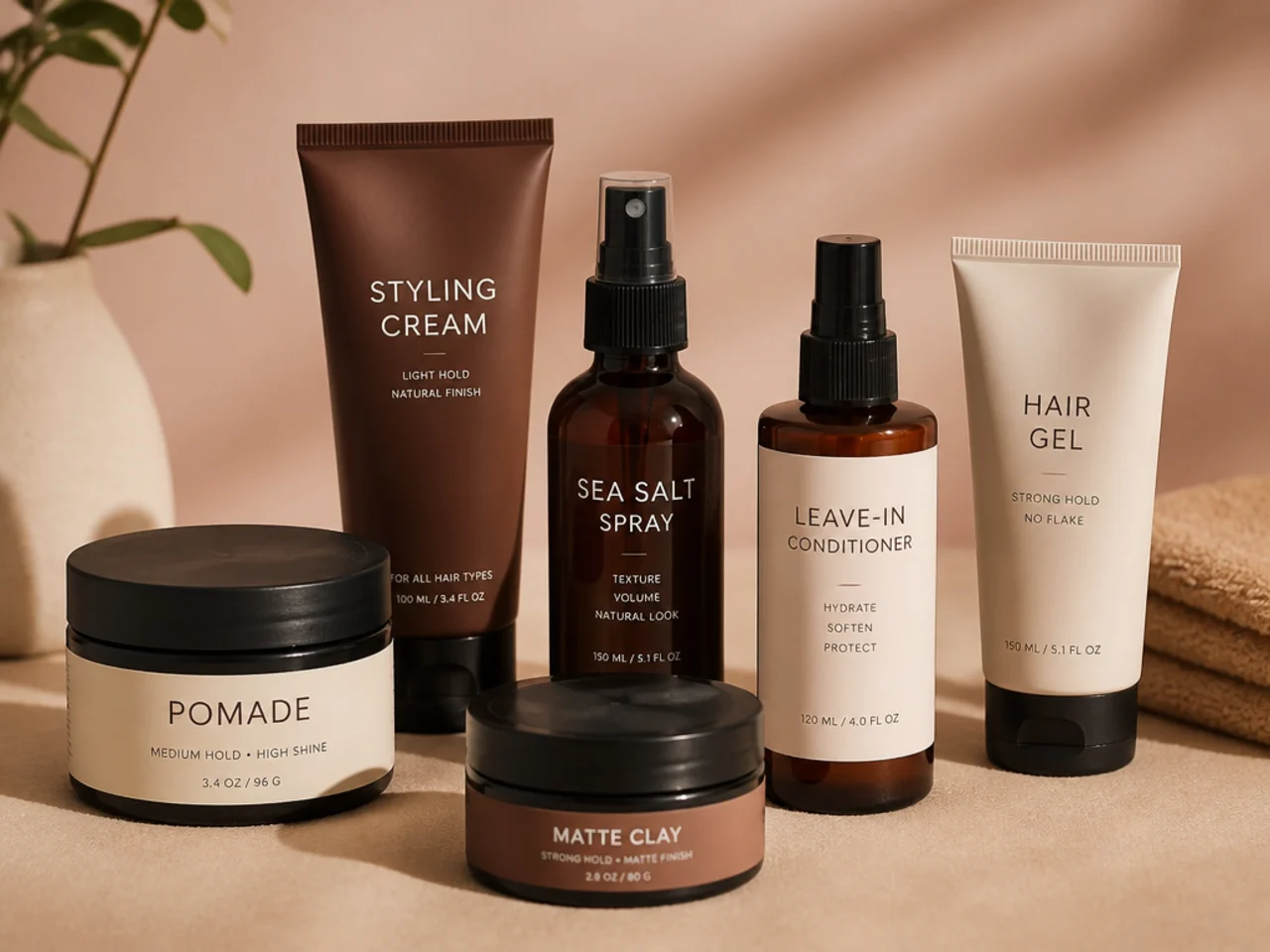
You need three products, maybe four. Skip the rest.
Curl cream is the primary product. Look for a lightweight formula with a soft, flexible hold — heavy curl creams built for actual curly hair weigh a comma down. Sea salt spray or volumizing mist preps the hair with lift and texture before you blow-dry; skip it and the roots sit flat. Matte clay is your grip product for longer, textured, or wolf-cut variations that need the crown broken up. A light setting mist locks the finished shape without the crunchy feel of hairspray. Pomade only enters for sleek side-part or Asian-comma variations that want visible shine.
Skip heavy waxes (too stiff, they kill movement) and daily dry shampoo (dulls the shine that makes a comma read as intentional). If your comma falls flat by afternoon, the fix is a lighter product, not more product.
FAQs about Comma Hair
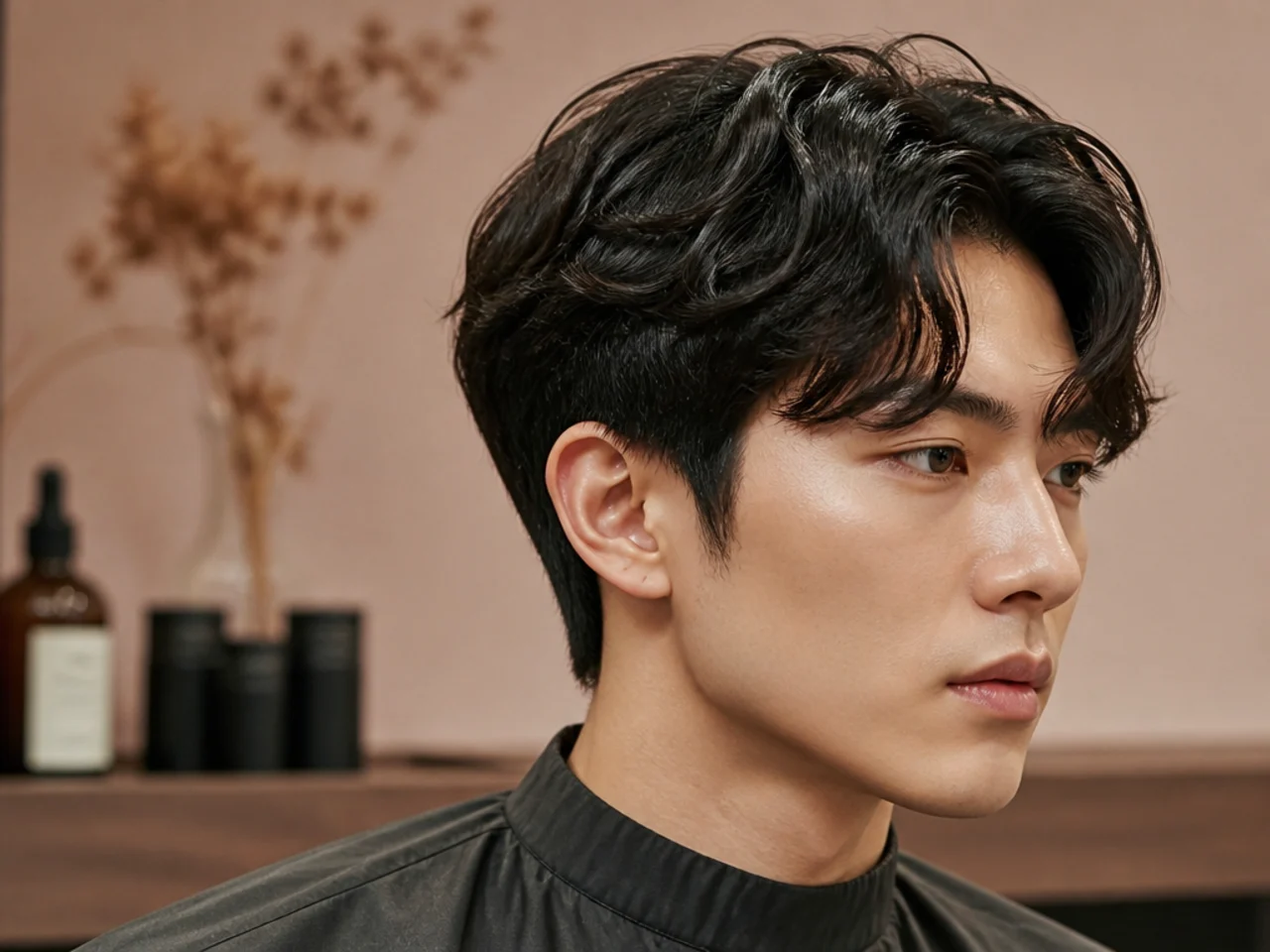
What is comma hair?

Comma hair is a men's cut where the front section is curled forward and inward, forming the shape of a punctuation comma against the forehead. The top runs medium (3 to 5 inches) to hold the curl. Sides run short — fade, taper, or undercut. The cut originated in South Korea and spread worldwide through K-pop and K-drama.
Why is it called comma?
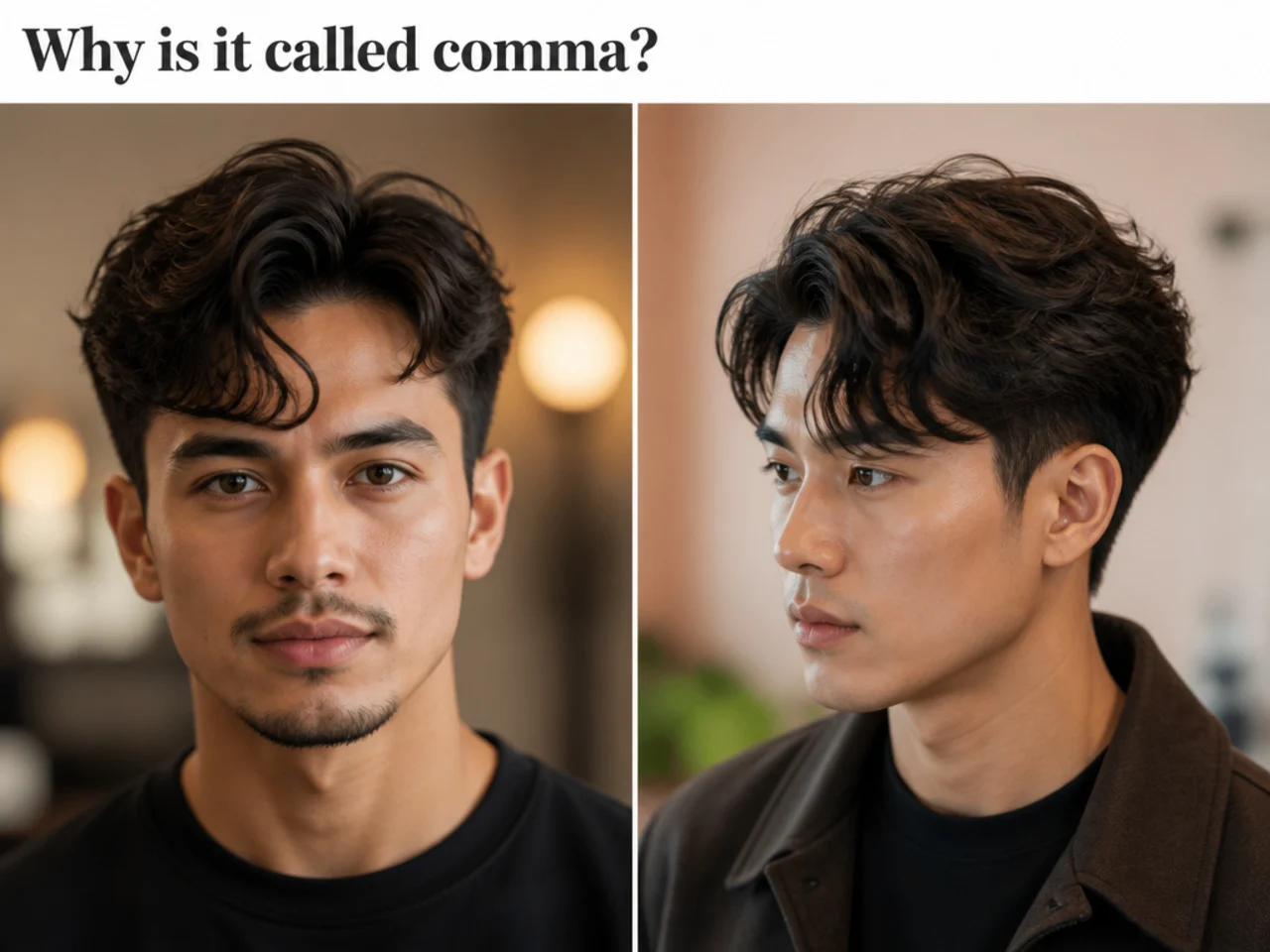
The curved front lock literally looks like a comma when styled. One curl forms a single hook; two curls (twin comma) mirror each other on either side of a center part. The name comes directly from the punctuation mark's shape.
Is comma hair trendy right now?
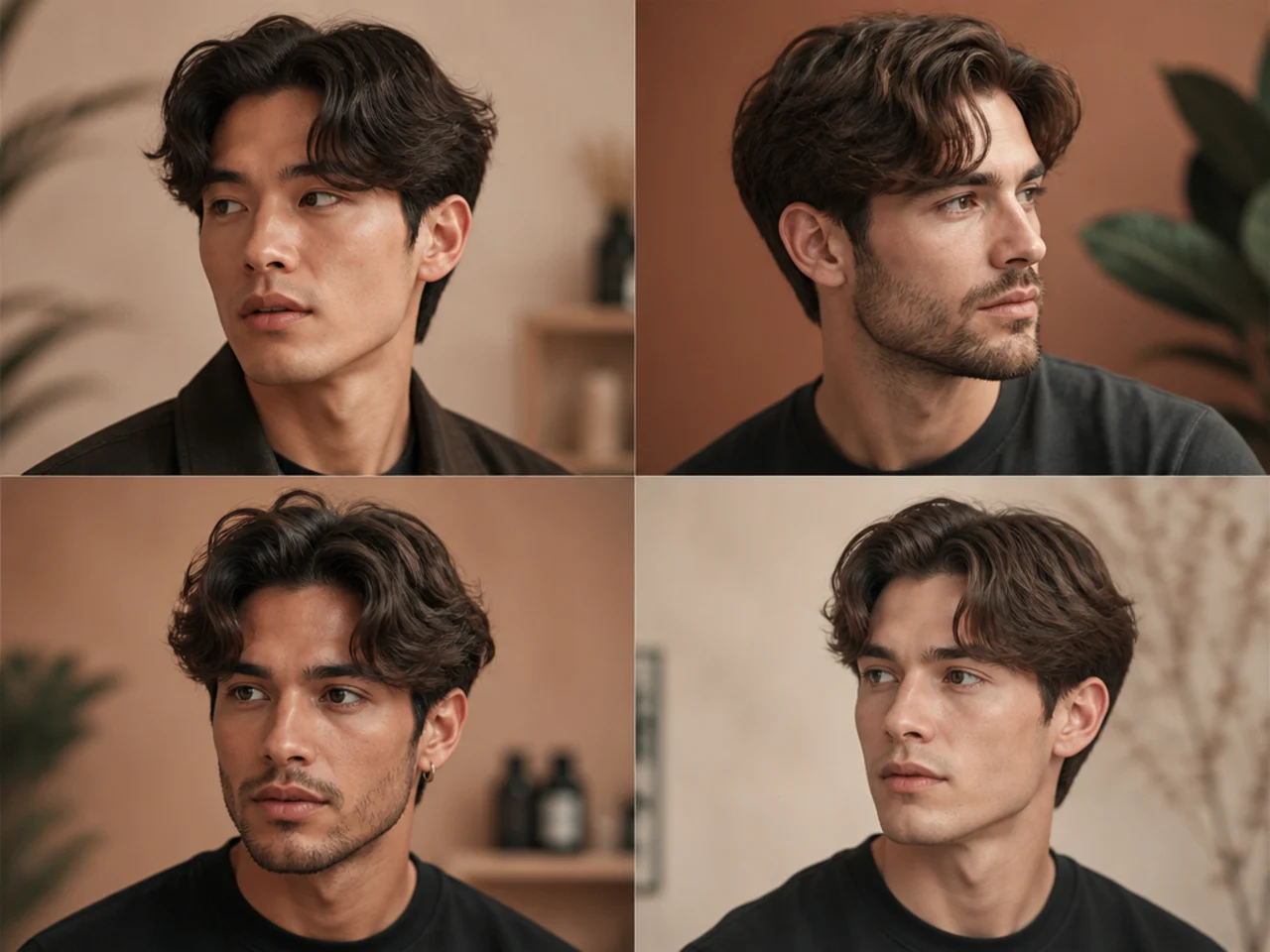
Yes. The comma has been a top-requested men's style since the late 2010s and shows no sign of slowing in 2026. K-pop and K-drama exposure keeps it visible, and the cut translates across face shapes and hair types, which extends its lifespan past a typical trend cycle.
Is comma hair a two block?
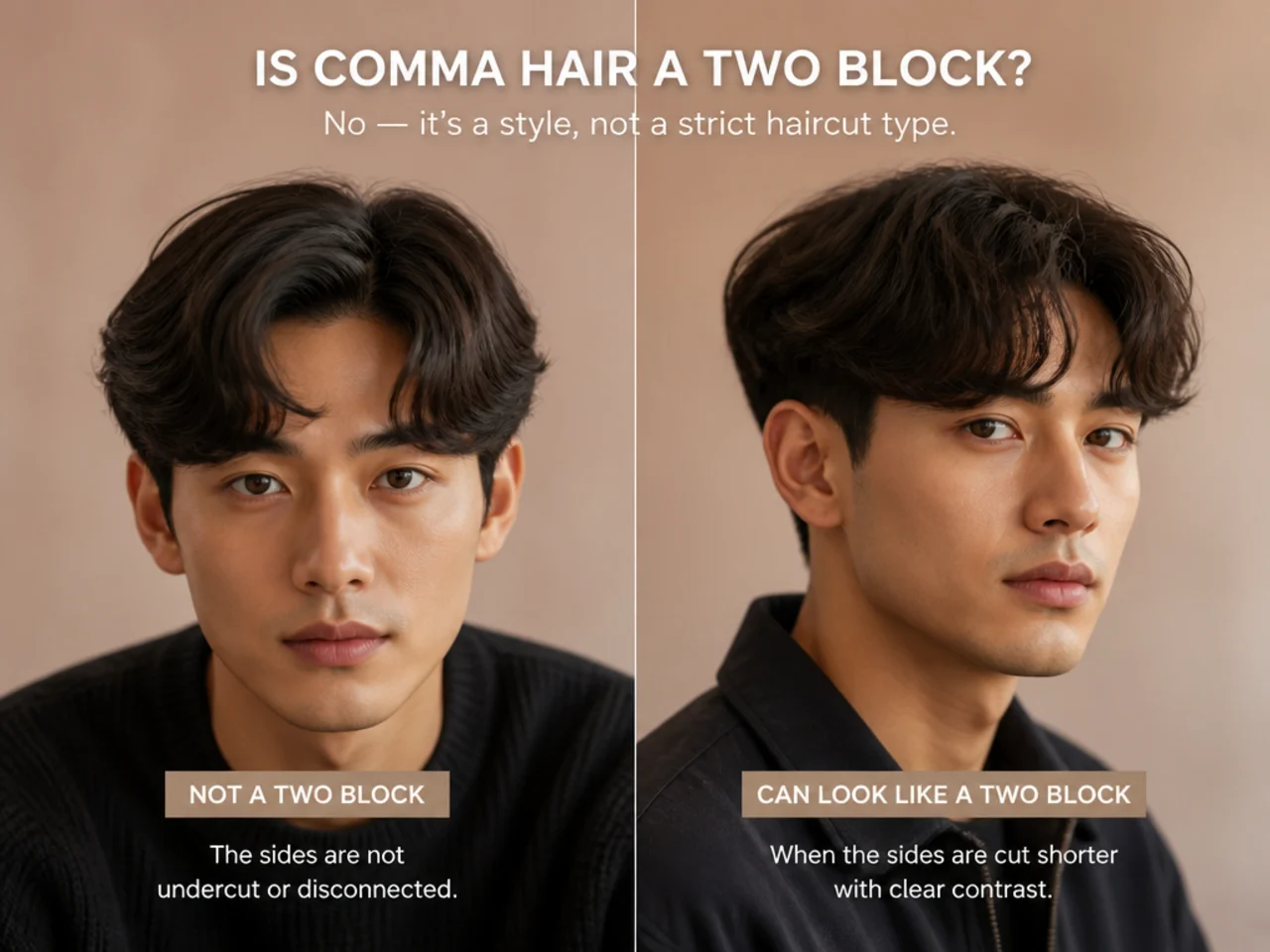
Not always. The two block is a hard-line silhouette (short sides, long top, no fade). The comma is a top-styling choice (curl the front inward). Many guys pair them — that's the two-block comma. But you can wear a comma over a fade or taper, and you can wear a two block without curling the top into a comma.
Is comma hair high or low maintenance?
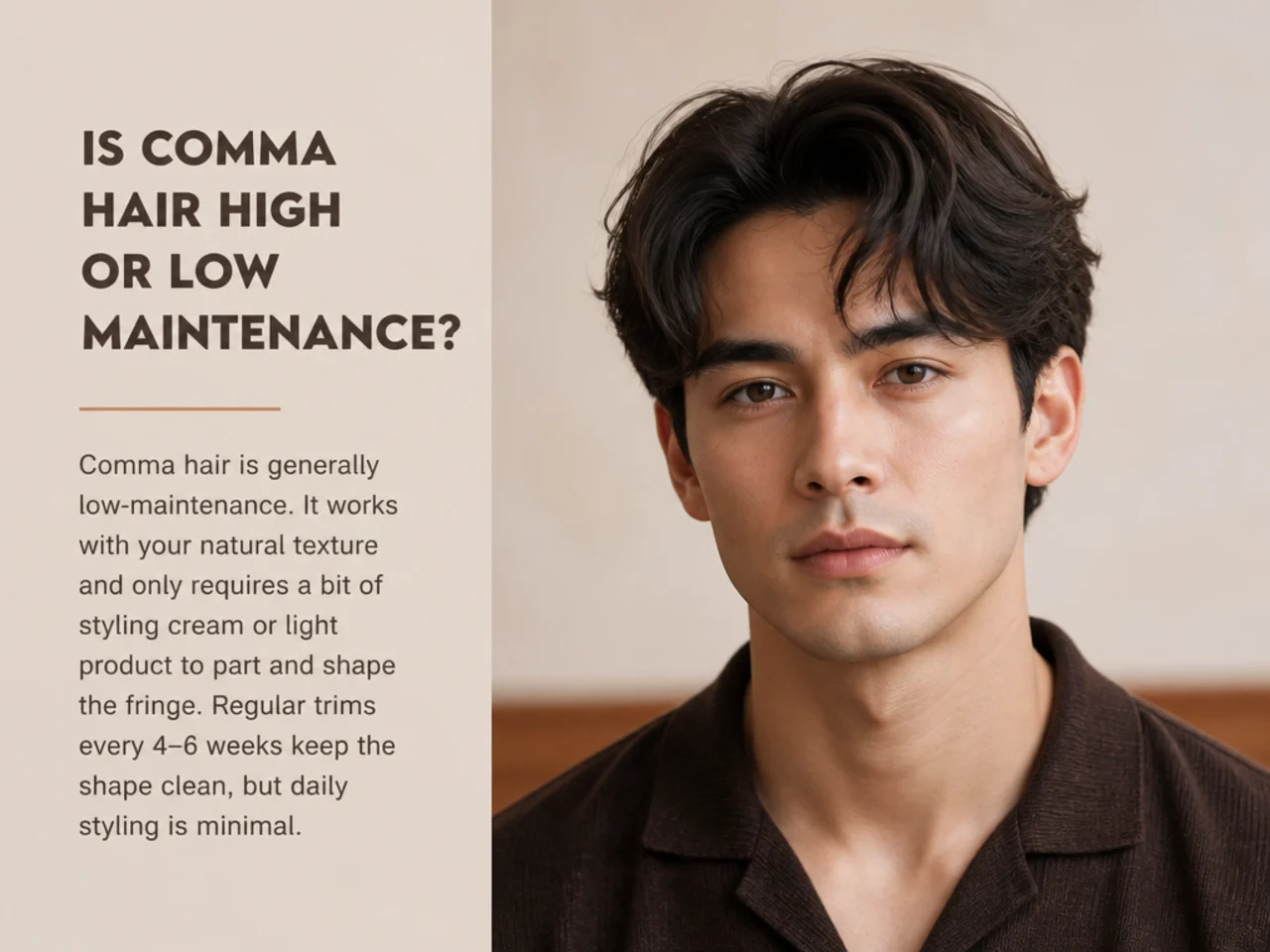
Moderate. The cut needs a trim every 3 to 4 weeks and two minutes of styling every morning. Not zero-effort, but nowhere near a full daily routine. A comma perm reduces daily styling to almost nothing at the cost of a chemical service every 4 to 6 months.
How do you style comma hair?
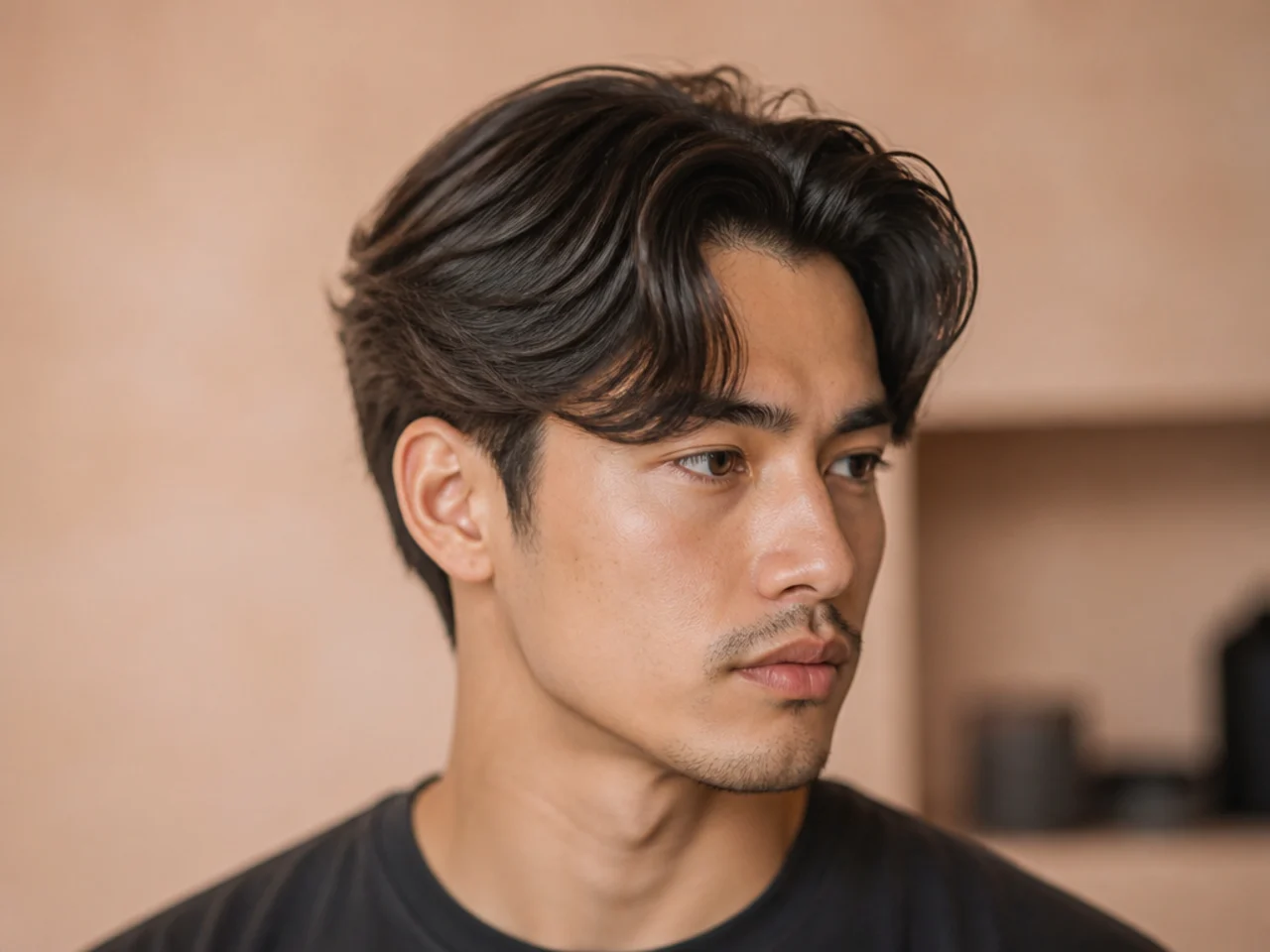
Wash and towel-dry. Spray sea salt spray for lift. Slide a medium round brush under the front section, roll inward while blow-drying on medium heat. Hold two seconds at the end. Release. Add a pea of curl cream through the hook. Finish with a light setting mist. Total time: 90 seconds.
What face shape suits comma hair?
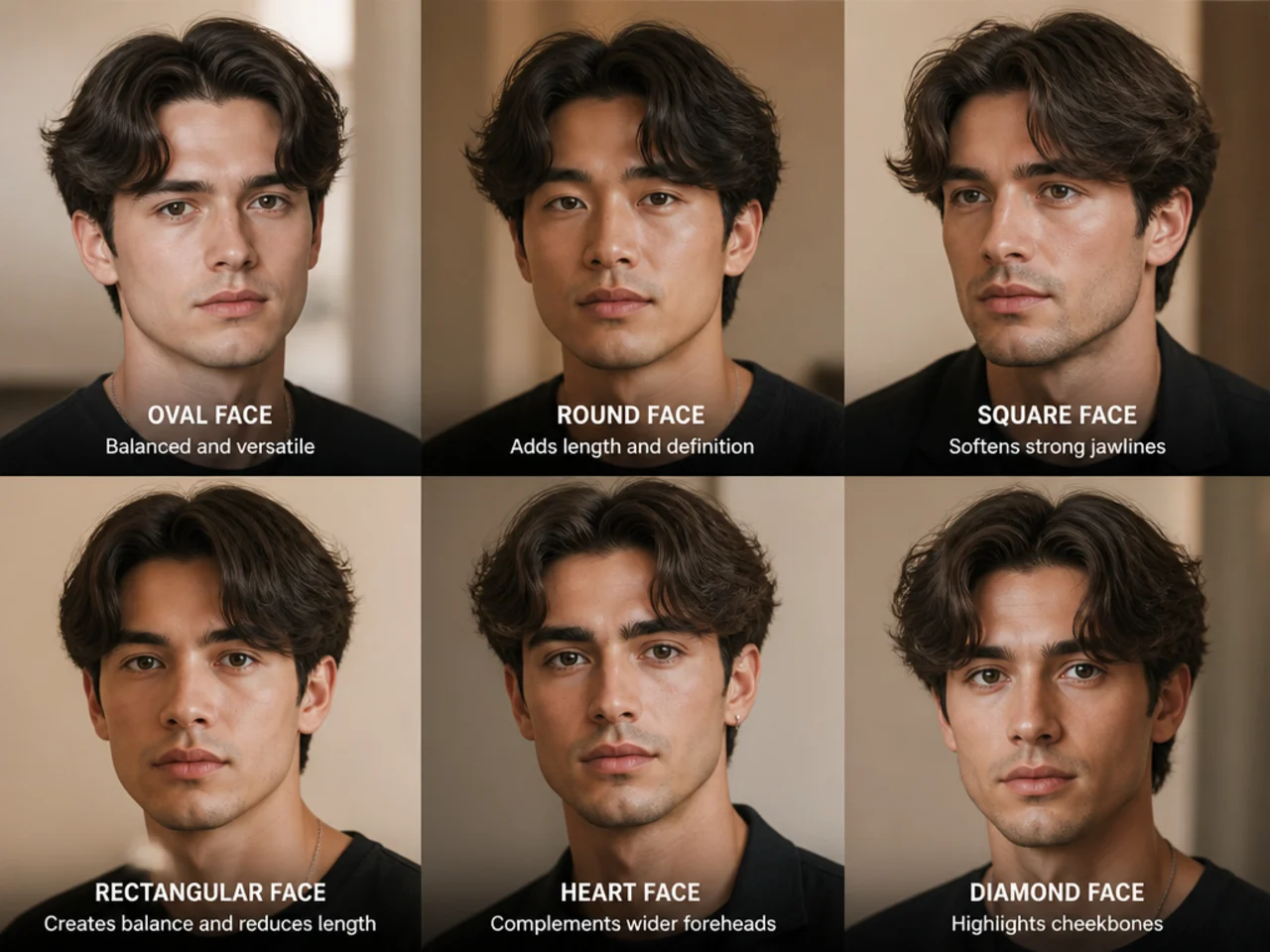
Oval faces suit every variation. Round faces do better with taller commas and mid-to-high fades. Square faces soften with a softer curl (soft comma or curtain comma). Long faces balance with wider or twin commas. Heart-shaped faces suit a defined single comma pointing across the forehead.
What products should I use for comma hair?
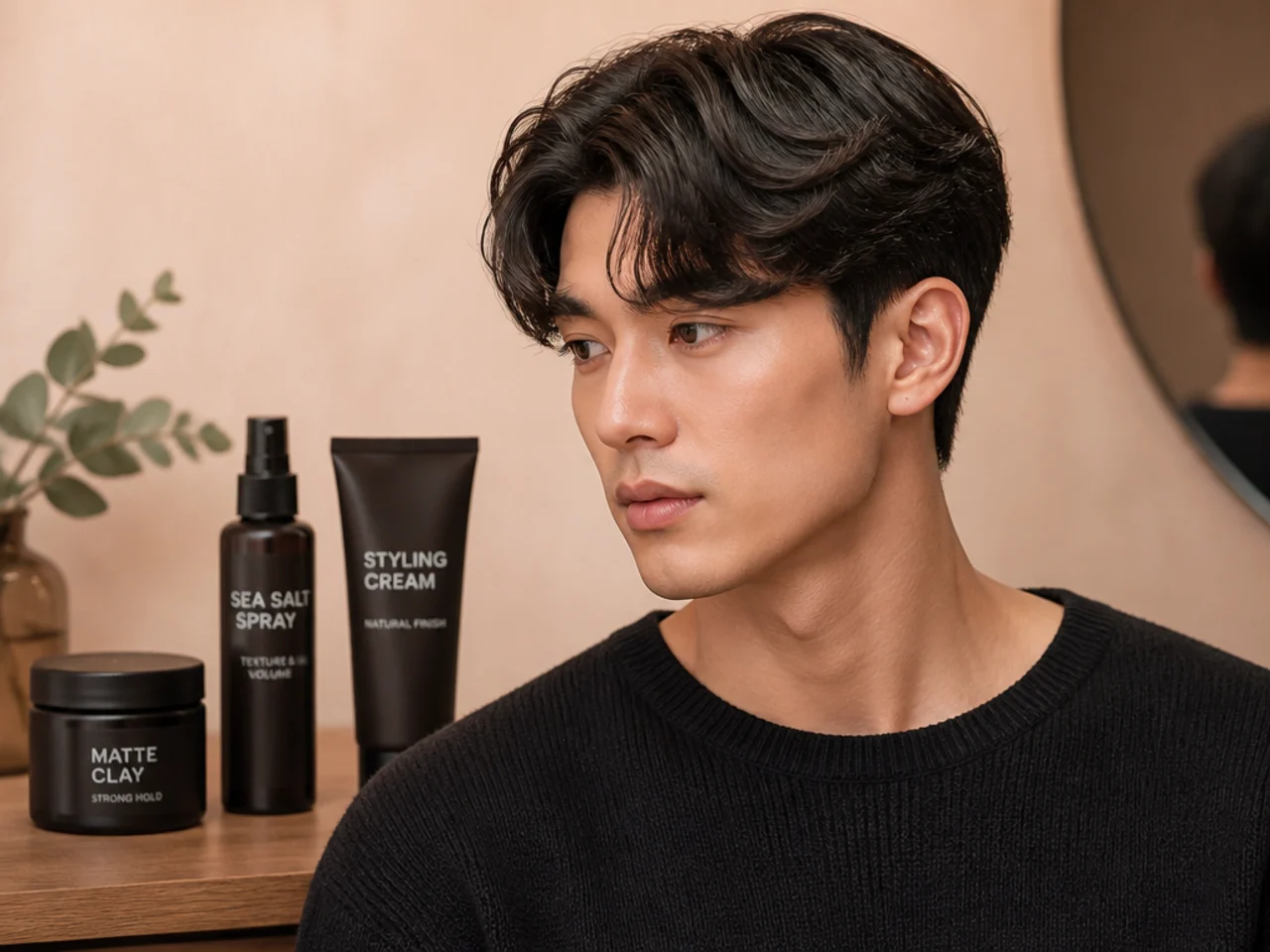
Sea salt spray or volumizing mist for prep. Curl cream for the hook. Matte clay for crown grip on longer variations. Light setting mist to lock the shape. Skip heavy waxes and daily dry shampoo — they flatten the comma and dull the shine.
Can I get comma hair with wavy or curly hair?
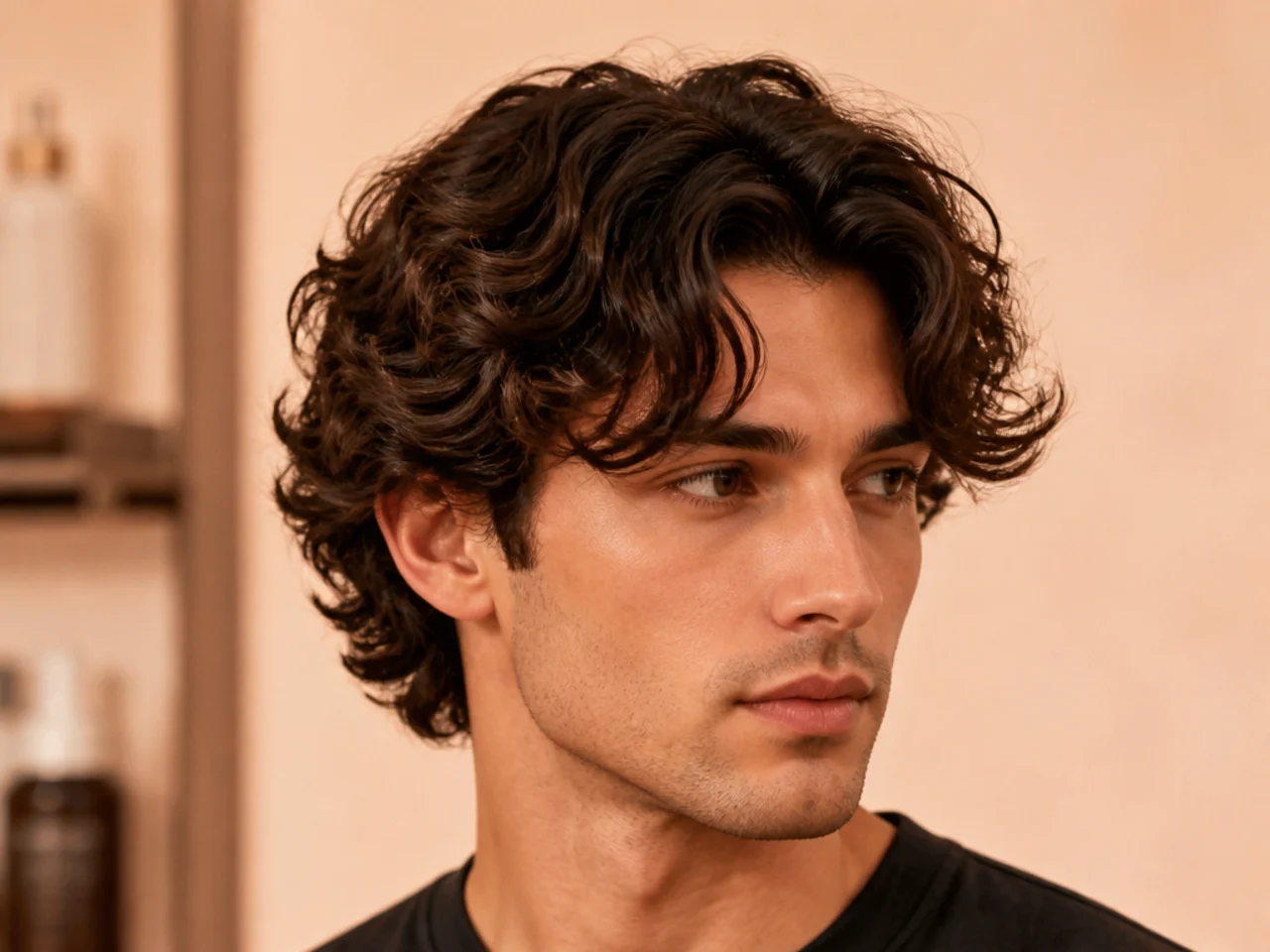
Wavy hair (2A-2C) is actually the easiest — your hair already curls, so directing that curl inward takes minimal brush work. Curly hair (3A-3C) needs longer front layers so gravity pulls the curl forward. Tight coils (4A-4C) usually need a light perm-relaxer on the front section to sit flat enough to form a directional hook. See the Reddit thread for real user experiences by hair type.
Conclusion
The comma haircut is worth learning to style. Two minutes at the mirror gets you a shape that reads sharp, current, and unmistakably intentional. The variations above cover every combination — corporate low fades, edgy undercuts, twin-comma curtains, mullet hybrids, permed low-effort options. Pick the one that matches your hair type and daily patience.
Ask with three specifics: top length in inches, side treatment, and curl direction. Show a photo. Buy a round brush, curl cream, and a light setting mist. Practice the curl motion a few times in the mirror. After a week, the two minutes become automatic and the comma lands right every morning.