23+ French Crop Haircut: Timeless Ideas & How To Style Look
A French crop haircut is a popular men's haircut that combines classic simplicity with modern texture to achieve a timeless, attractive look...
In this article · 28
- What Is A French Crop Haircut?
- Stylish French Crop Haircut Ideas
- Classic French Crop
- Textured French Crop
- French Crop Fade
- Straight French Crop
- Curly French Crop
- Thick, Messy Crop with Low Taper Fade
- Short French Crop
- Crop Top Curls
- French Crop Mullet
- Textured French Crop with Low Skin Fade
- Long French Crop
- Short Fringe with Mid Fade and Beard
- Blunt Fringe Crop
- Messy Crop Top
- Short, Textured French Crop Fade
- Short French Crop with Disconnected High Fade and Shaved Line
- Side-Swept French Crop with Low Fade
- High Fade French Crop
- Disconnected French Crop
- Layered Fringed Crop with Short Sides
- Crop Top Fade with Blunt Fringe
- Messy French Crop with Low Taper Fade
- Fluffy French Crop with Tapered Sides
- Wavy French Crop
- How To Style A French Crop
- French Crop Haircut Gallery
The French crop haircut is one of the shortest, sharpest cuts you can walk out of a barbershop wearing — and one of the lowest-maintenance to keep looking good. Short top, blunt fringe pushed forward across the forehead, faded or tapered sides. Five minutes of styling in the morning. Below, 23 variations broken down: what makes each different, who should ask for it, and exactly what to tell your barber.
What Is A French Crop Haircut?
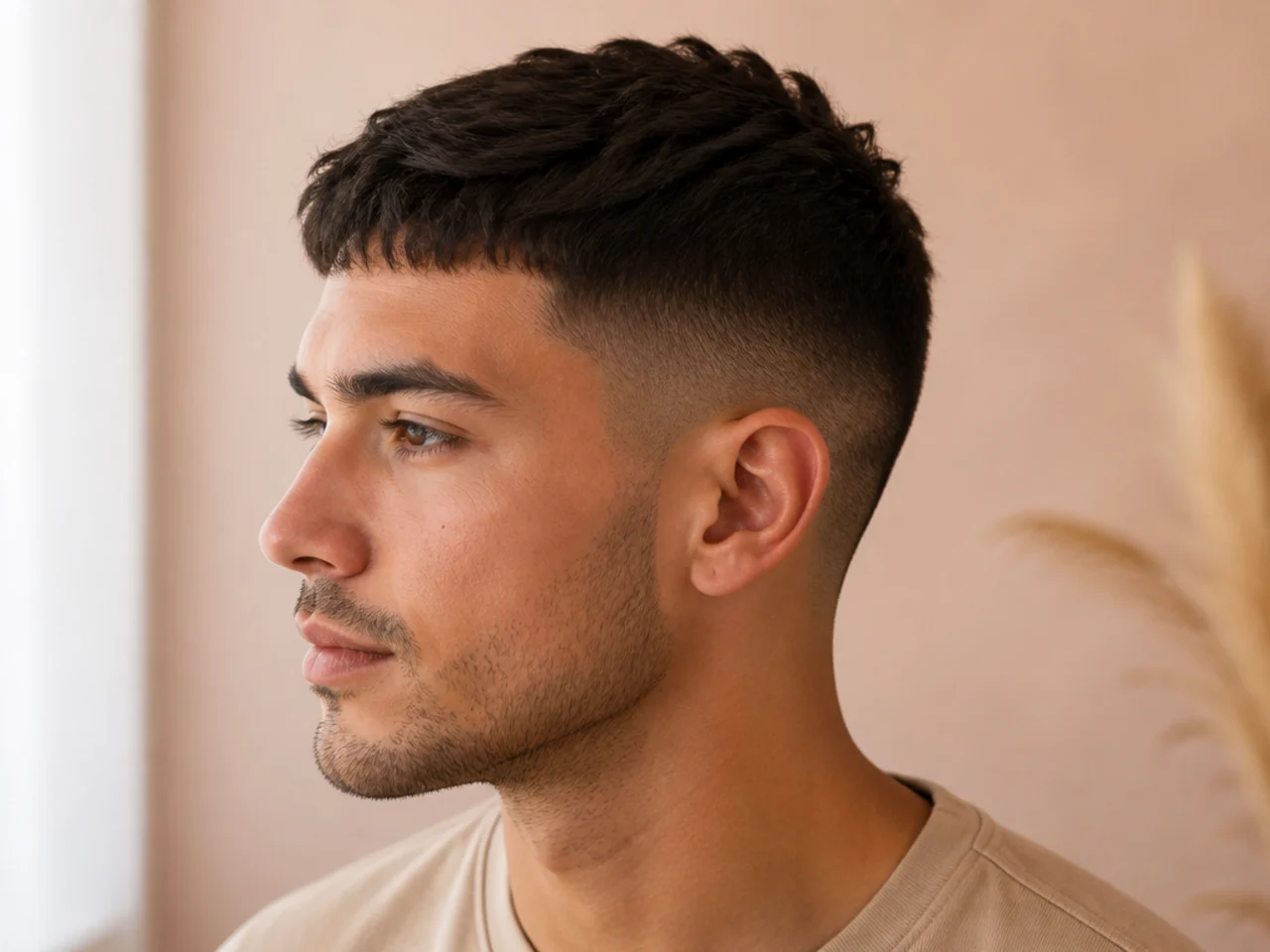
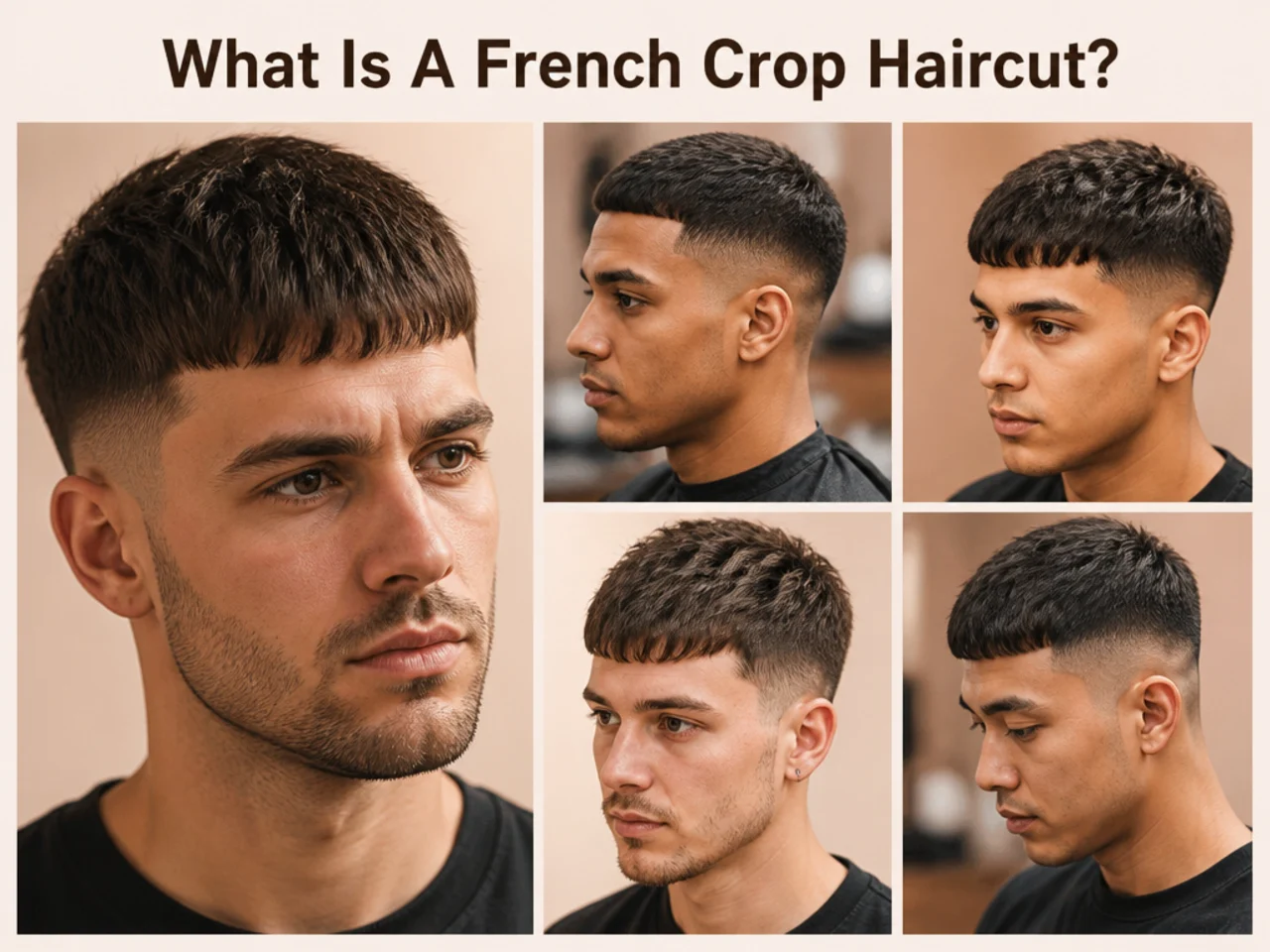
The French crop is a short-top, forward-fringe cut — one of the more versatile modern French crop shapes on the modern menu. Hair on top stays somewhere between three-quarters of an inch and two inches long. You pull the front down over the forehead into a soft fringe. The sides and back get a fade or a taper — clipper work that shortens the hair as it drops toward the ears and neck.
The look leans European. It reads clean without reading formal, and it works on straight, wavy, and curly hair. A textured French crop or a French crop with fade suits angular faces, high hairlines, and receding temples better than almost any other short cut on the menu — the forward fringe brings the hairline down and softens the top of the face. Ask for it by piece: fringe length (usually 1.5 to 2 inches), fade height (low, mid, or high), top length (1 to 2 inches), and finish (textured for a piecey look, or smooth for a cleaner one). The more specific you get, the closer the cut lands to the picture in your head.
Stylish French Crop Haircut Ideas
Classic French Crop
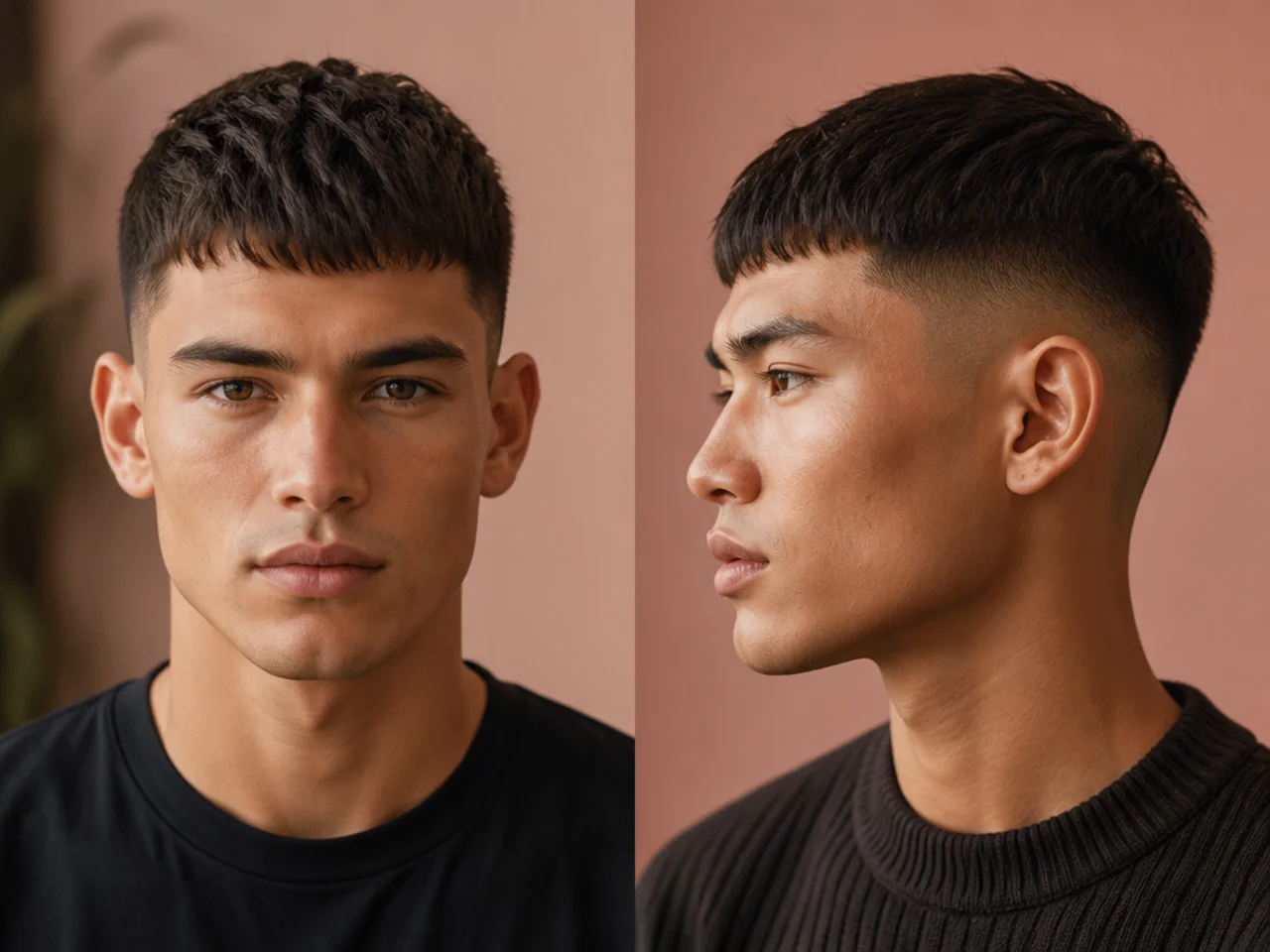
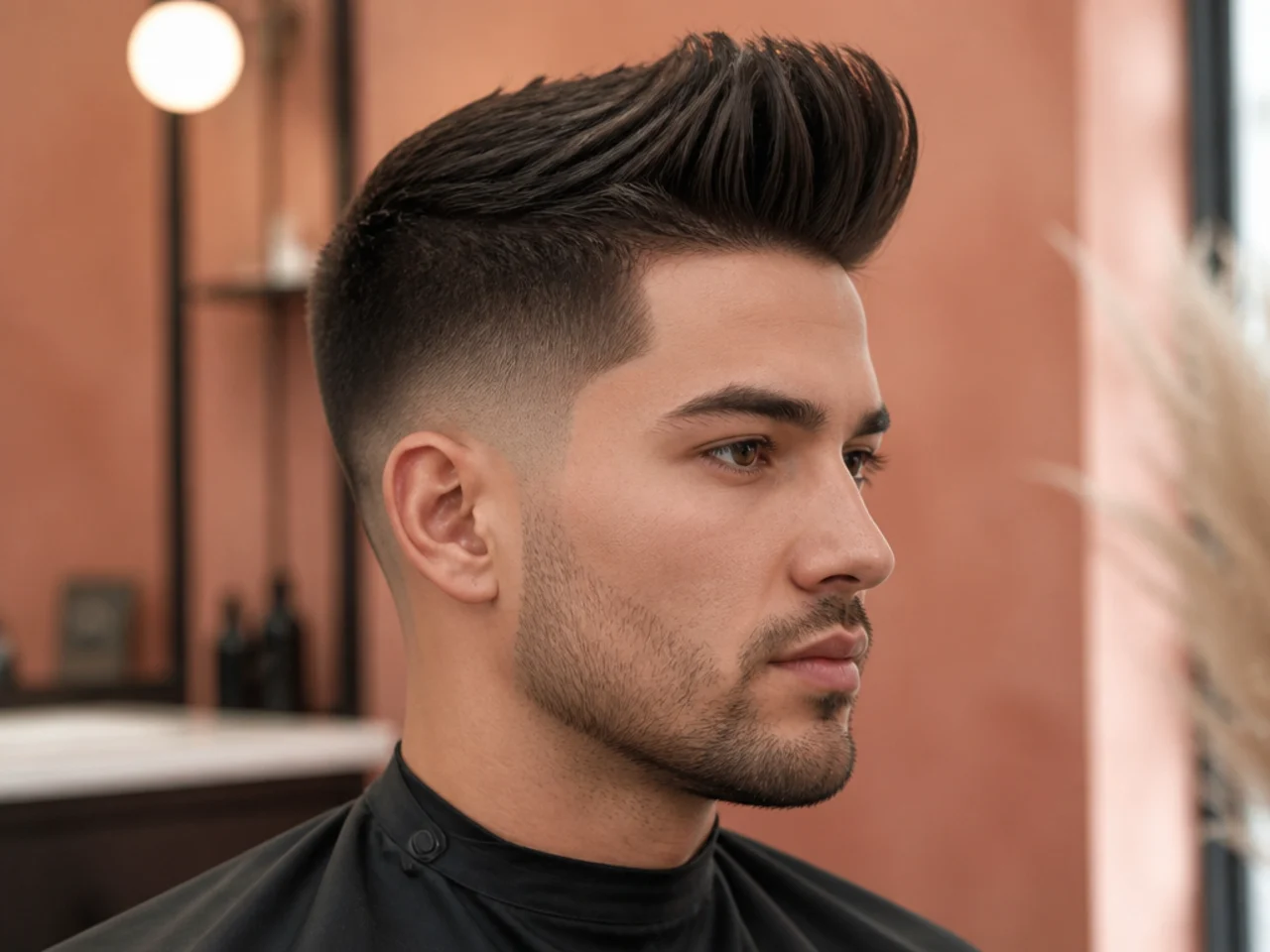
The classic French crop is the version to ask for if this is your first time in the chair for this cut. Top hair sits at about 1.5 inches. The fringe is soft — brought forward, not razor-blunt across the brow. Sides fade from a #2 down to a #1, or ask for a scissor-blended taper if you want less contrast. Best on oval and mildly angular faces because the shape sits close to the head and doesn't fight your features. Say: "Classic French crop, mid taper, one-and-a-half on top, soft blunt fringe about 1.75 inches." Style with matte clay — warm a nickel-size amount in your palms, push the fringe forward, done. It reads modern without trying, and it sits in the same family as the mullet haircut or any of these simple short men's cuts if you want something even more stripped back.
Textured French Crop
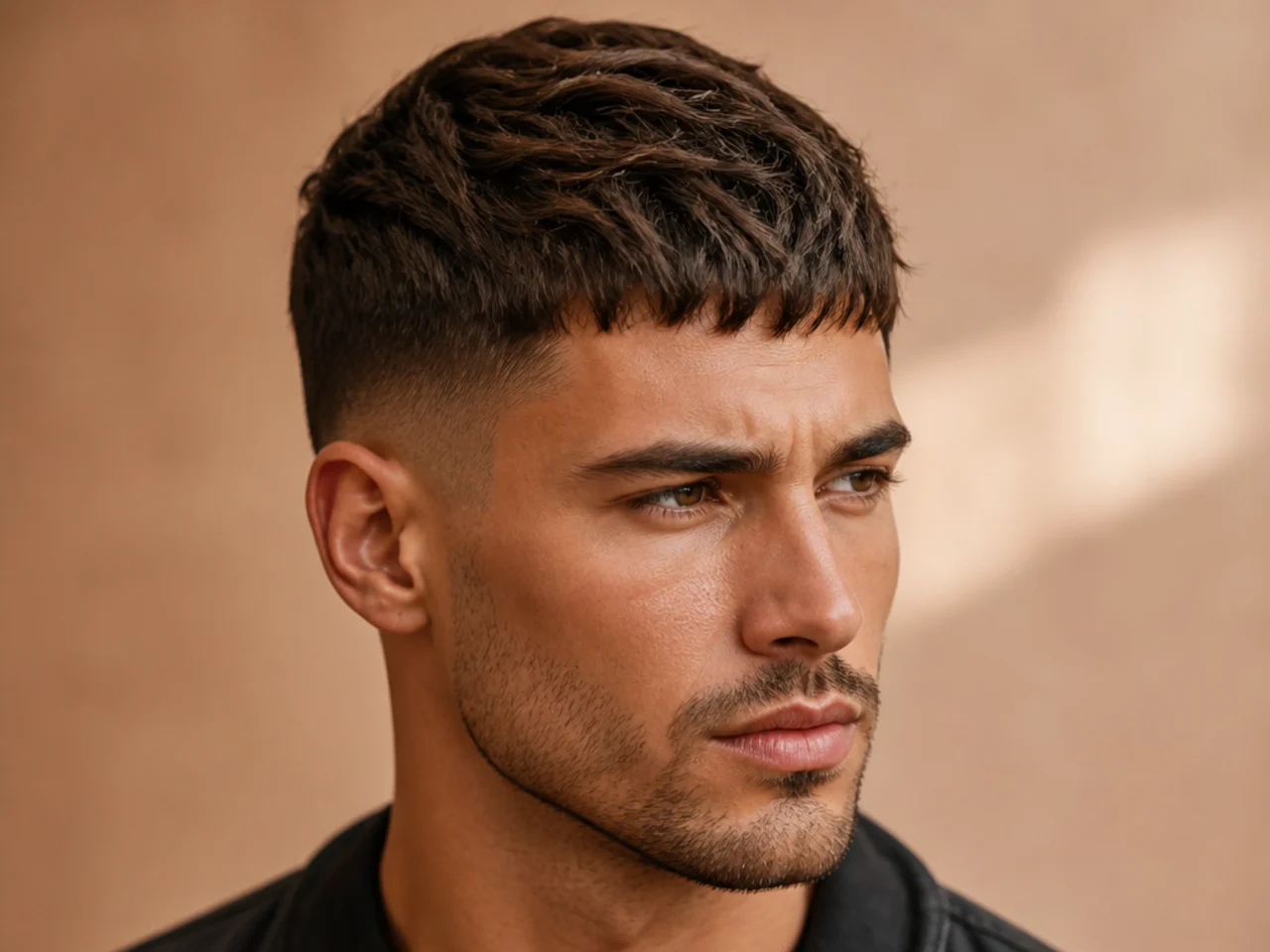
This is the variation that gives you movement without adding length. Your barber cuts the top with point-cutting or a razor to break up the ends, so instead of a solid block up top you get separated pieces. The fringe still comes forward, but it looks piecey — like you actually did something with it. You didn't. Suits fine to medium hair especially well; thick hair often has enough natural texture already. It's also a strong pick if your hairline is starting to recede — the broken edge disguises evenness in the front line. Ask for: "Two inches on top, texturized with point-cutting, low fade, textured fringe left forward at 1.75 inches." Sea salt spray on damp hair, blow dry with fingers, no product after. If the approach interests you, the guide to textured haircuts for men covers the technique across cut families.
French Crop Fade
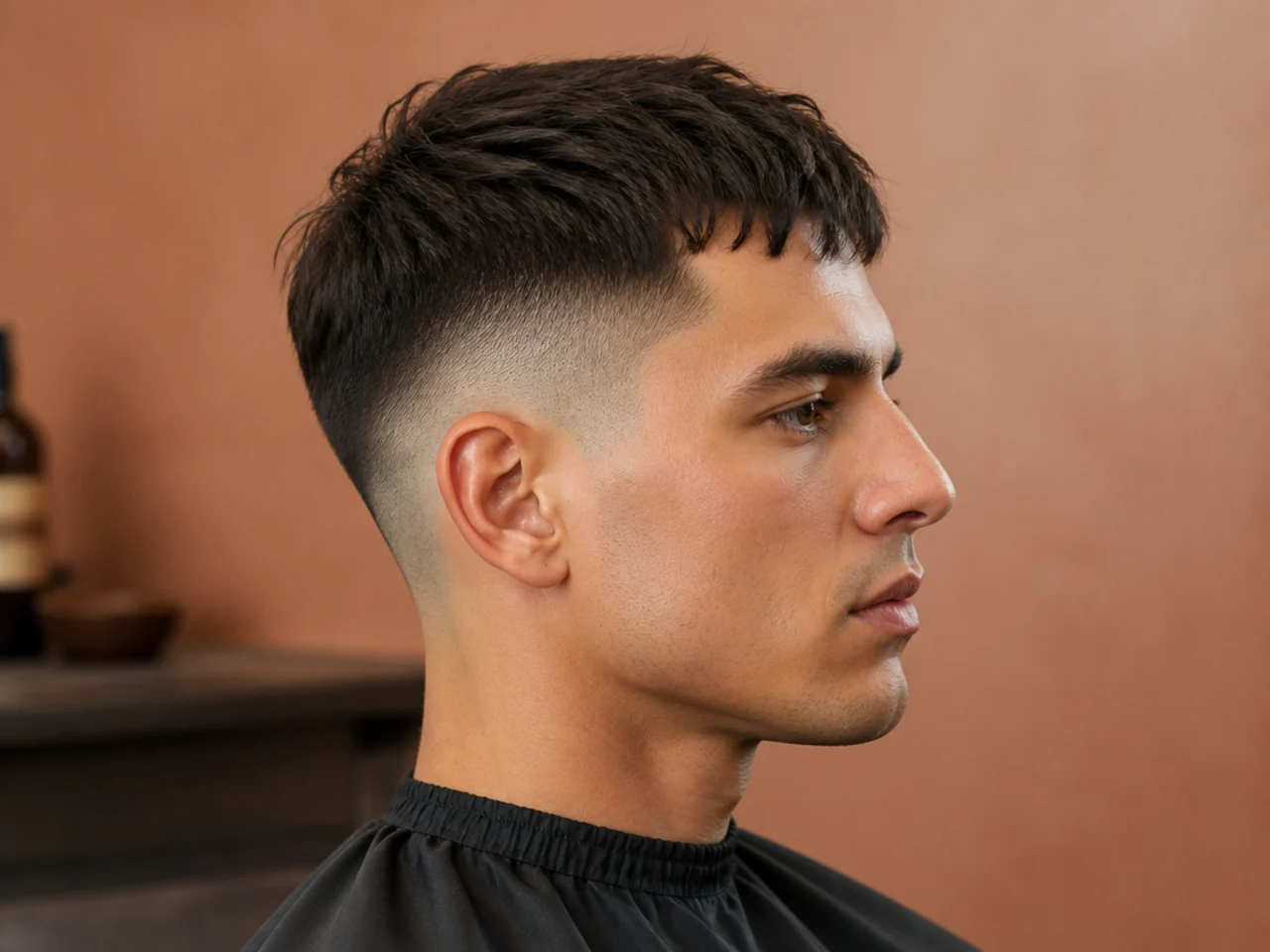
The classic French crop leaves the sides tapered. The French crop fade takes them shorter — a proper fade dropping to skin at the bottom. Contrast is the whole point: dark, textured top; clean, exposed skin at the neckline. Best on strong jaws and men who want the cut to read a little sharper than the classic. Say: "Mid fade to skin, one-and-three-quarters on top texturized, fringe left forward at two inches." A matte paste over the whole top, worked from roots to tips with fingers, keeps the texture visible. Skip anything shiny — gloss softens the contrast you just paid for. Book every three weeks; fades soften fast and the shape depends on the crispness of that transition.
Straight French Crop
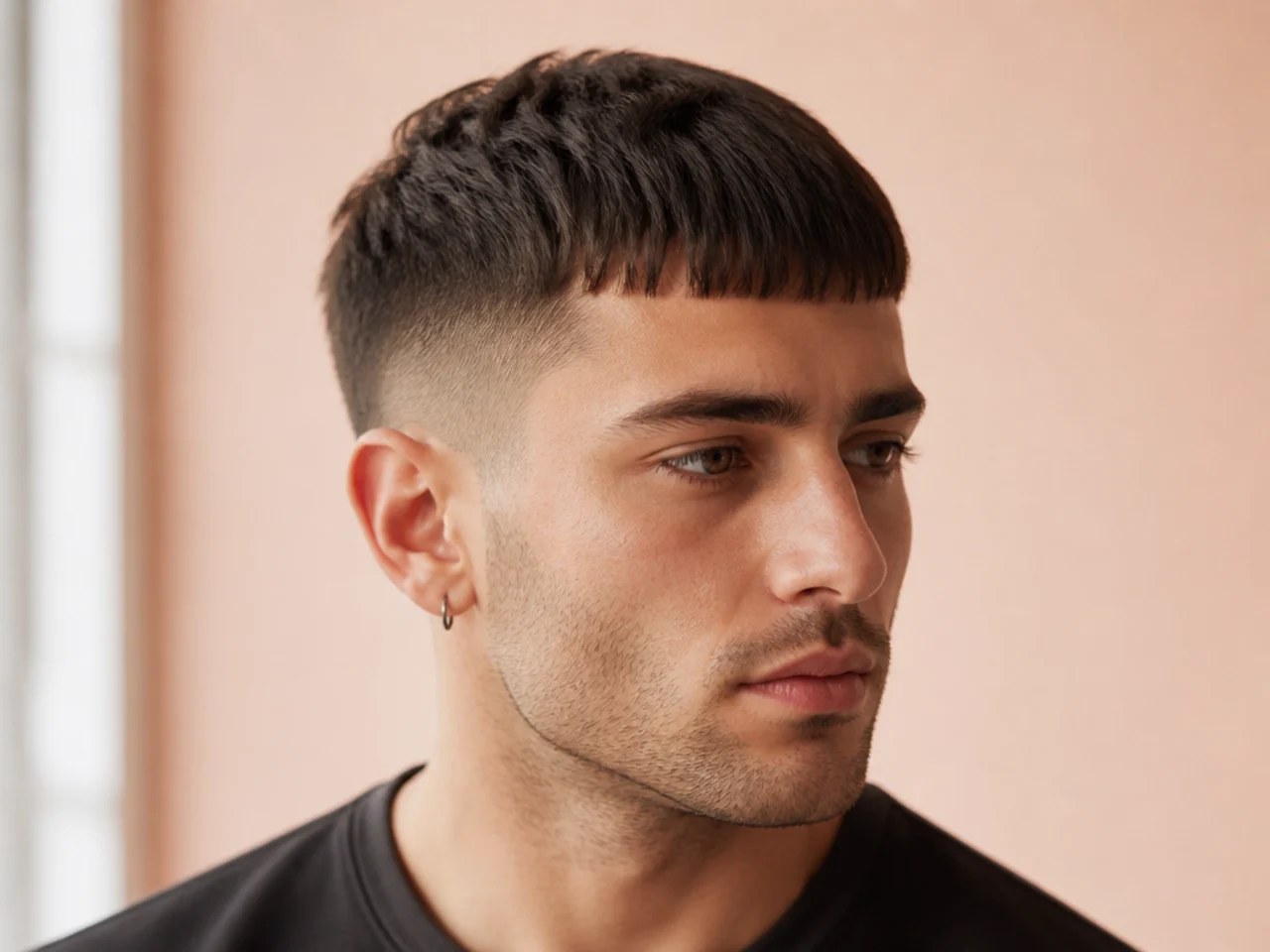
If your hair falls flat and refuses to hold texture, the straight French crop leans into that instead of fighting it. The top stays around 1.25 inches, cut with clean scissor work — no razoring, no texturizing. The fringe is combed straight forward and left with a soft blunt edge. Sides get a high razor fade to keep the whole shape sharp. Great on square and rectangular faces because the flat top adds no visual height and the fringe softens the forehead. Ask for: "One-and-a-quarter on top, scissor-cut, no texture, high razor fade, blunt fringe combed forward at 1.25 inches." Cream pomade in damp hair, comb through, air dry. A short, sculpted beard balances the graphic geometry if you want to add one.
Curly French Crop
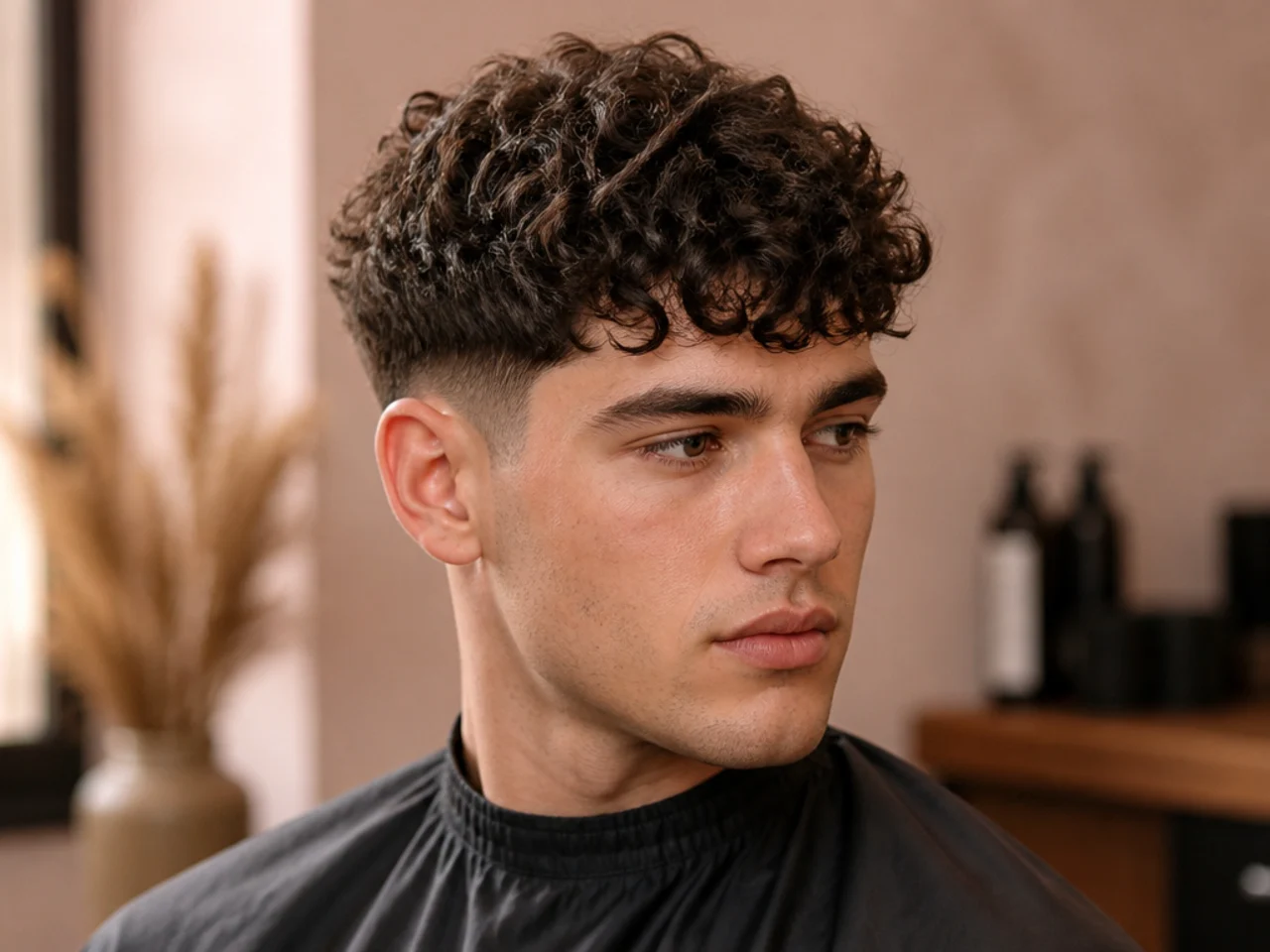
Curly hair does most of the work here — your barber's job is to keep the shape from ballooning. Top length runs longer, 2.5 to 3 inches, so the curls have room to fall forward instead of pushing out. Sides fade close to keep the silhouette in check. The fringe forms on its own from front curls landing on the forehead. Best on oval and long faces because the curl volume adds width where the face needs it. Say: "Two-and-a-half on top measured wet, low fade, no texturizing — leave the curl pattern intact." Curl cream in damp hair, scrunch upward and forward, no towel drying. If your curls are tight, ask about a shape-up every three weeks rather than a full recut every six.
Thick, Messy Crop with Low Taper Fade
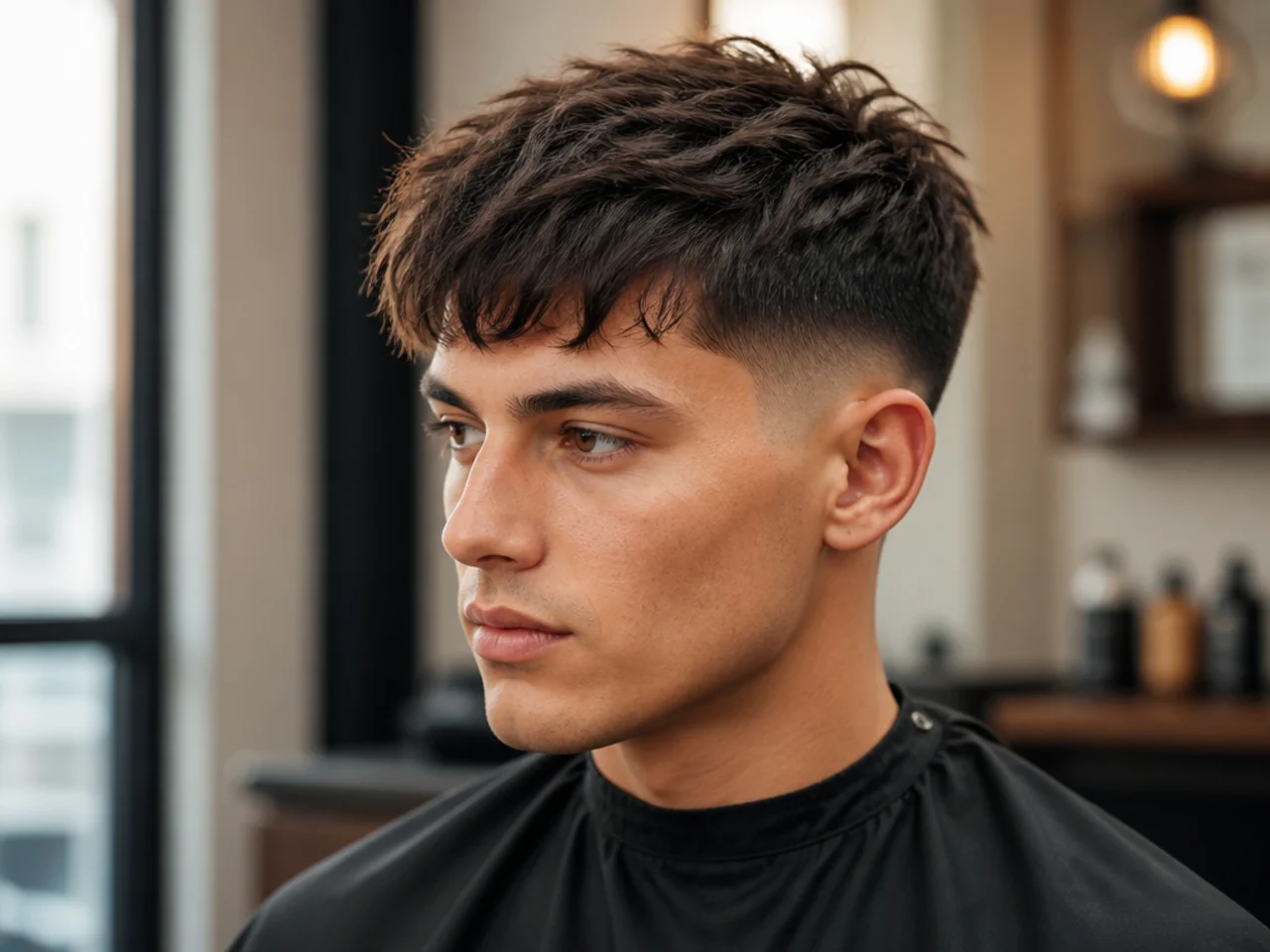
Thick hair, worn deliberately unruly. Top sits at 2 inches, cut with a razor to thin the density without losing the fullness. The fringe falls a little to one side rather than dead-center forward. A low taper fade — a short taper that only kicks in near the ears — keeps most of the head looking full. Suits square jaws and angular faces because the top-heavy shape wants some visible width. Pairs well with a full beard; the top-heavy top wants weight below the jaw. Ask: "Two on top, razored to thin the density, low taper starting at the ear, fringe left long and slightly side-swept." Matte wax rubbed between palms, pushed through dry hair with a slight sideways bias. Skip the comb — this is a finger-styled cut.
Short French Crop
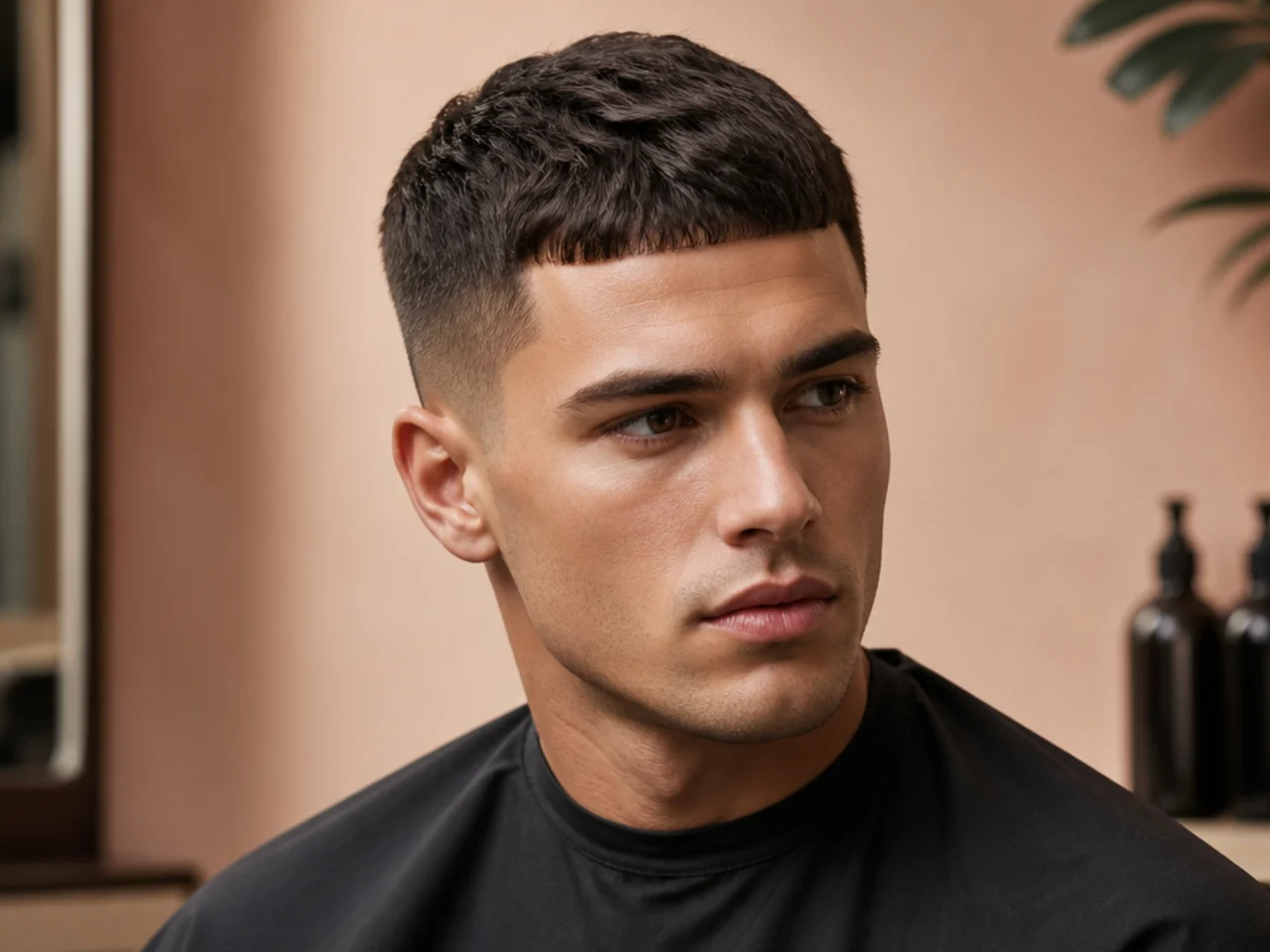
The barest bones of the cut. Top drops to about three-quarters of an inch — a #4 clipper guard passed against the grain. Fringe is short too, barely covering the top of the forehead. Sides get a low taper. Works on nearly every face shape because there isn't enough length up top to build a shape that fights your features. If your day-to-day is showers, a hat, and going, this is the cut. Ask for: "Number four on top cut against the grain, half-inch fringe left forward, low taper on the sides." No product needed — a leave-in conditioner spray keeps it healthy. A close cousin to the crew cut, just with more forward-projected fringe and a softer front edge.
Crop Top Curls
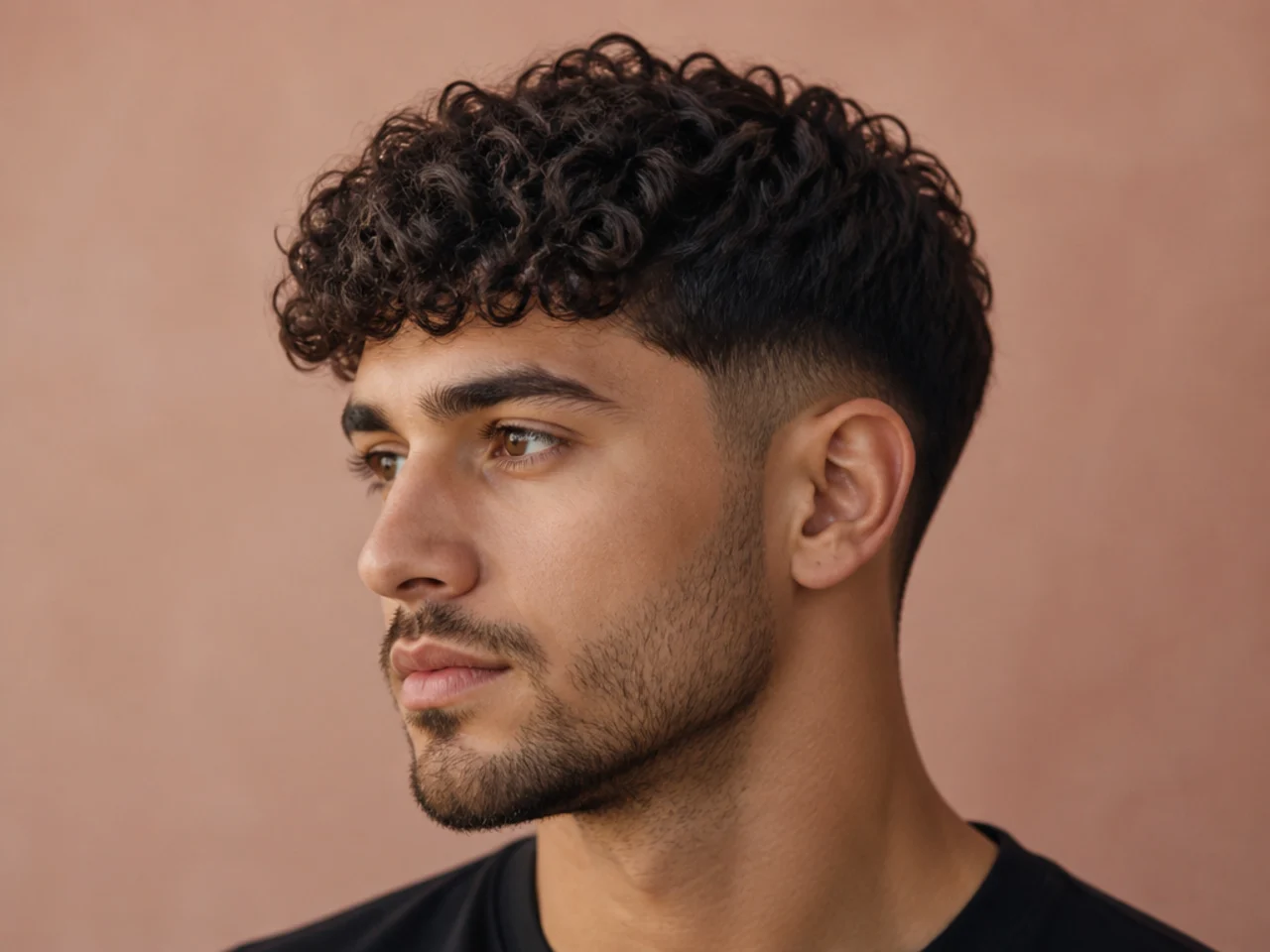
Similar territory to the curly French crop, but shorter on top. Curls sit around 2 inches, cut dry so your barber can see exactly how your pattern behaves. Sides fade close — usually mid-height — so the curl density up top reads as intentional volume rather than mess. Suits round and square faces because the fringe softens the top and the fade slims the sides. Ask: "Cut dry, two inches of curl on top measured stretched, mid fade, front curls falling forward on the forehead." Wet the top, curl cream, scrunch, air dry — do not touch it while drying or you'll frizz it. Trim every four weeks; curls hide split ends but the shape doesn't.
French Crop Mullet
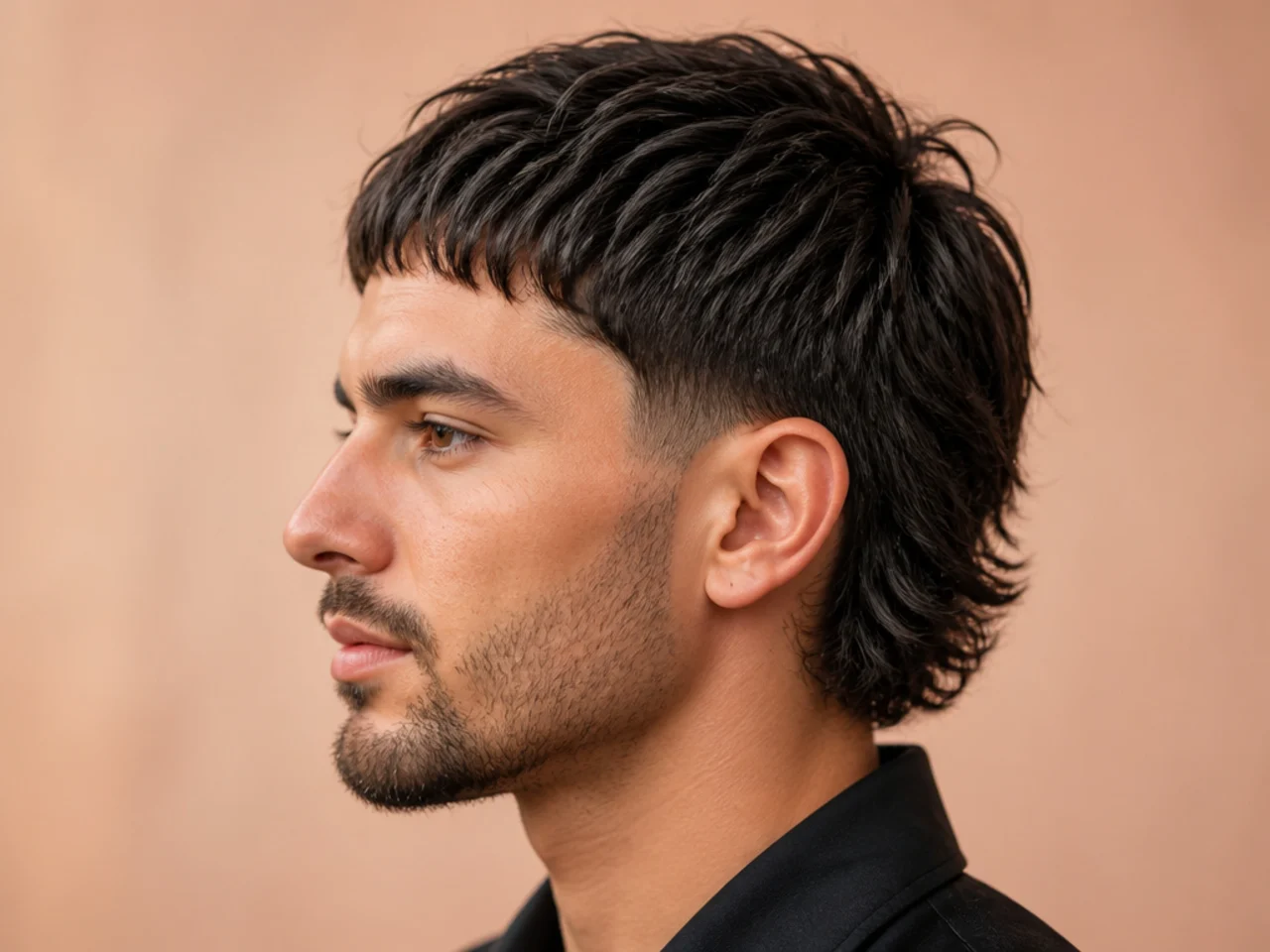
The most divisive variation on this list, and possibly the most fun. Front and top follow classic French crop rules: forward fringe, short-to-medium top. But the back gets left long — sometimes a lot longer — and often layered so it feathers rather than sits like a curtain. Sides still fade. Suits angular and long faces; the back length balances a tall forehead. Ask: "French crop on top and front, fringe forward at 1.75 inches, low skin fade on the sides, back left at four inches with soft feathered layers." Matte paste for the top and fringe. Leave the back to dry on its own. A daily comb-through prevents the tail from tangling. Not the cut to ask for the week before a wedding.
Textured French Crop with Low Skin Fade
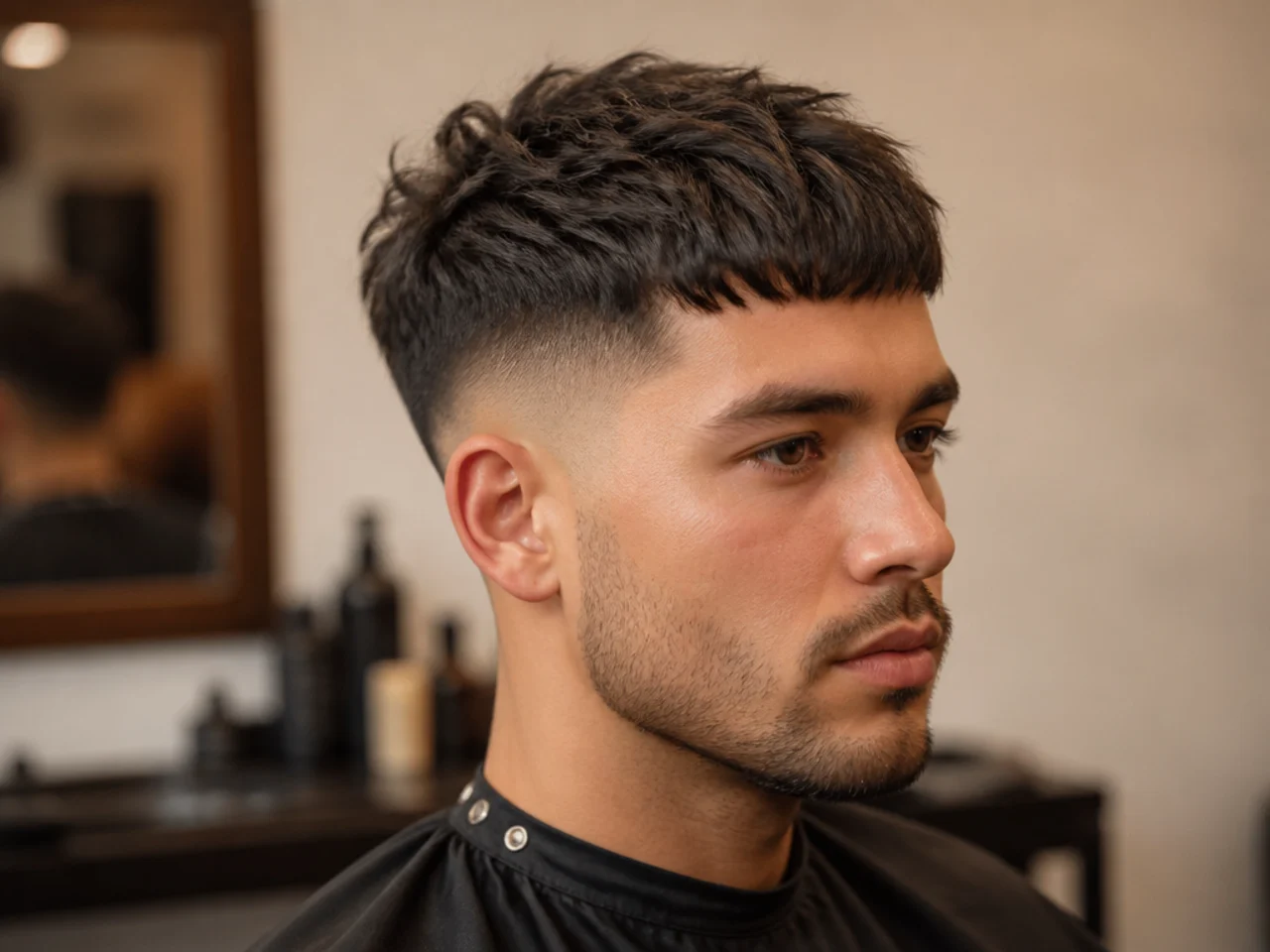
A textured top with a low fade that drops all the way to skin near the ears. The low placement keeps most of the head reading full-length while the skin exposure at the bottom gives you a hard graphic edge. Blond-tipped or highlighted tops sit especially well against the dark-to-skin gradient. Angular faces win here — the fringe softens the top of the face and the low skin exposure keeps the sides quiet. Say: "Two on top texturized with a razor, low skin fade, textured fringe left forward at 1.75 inches." A matte texture cream, roughed through with fingers, is all it needs. Book every two-and-a-half weeks — skin fades collapse the moment stubble grows in.
Long French Crop
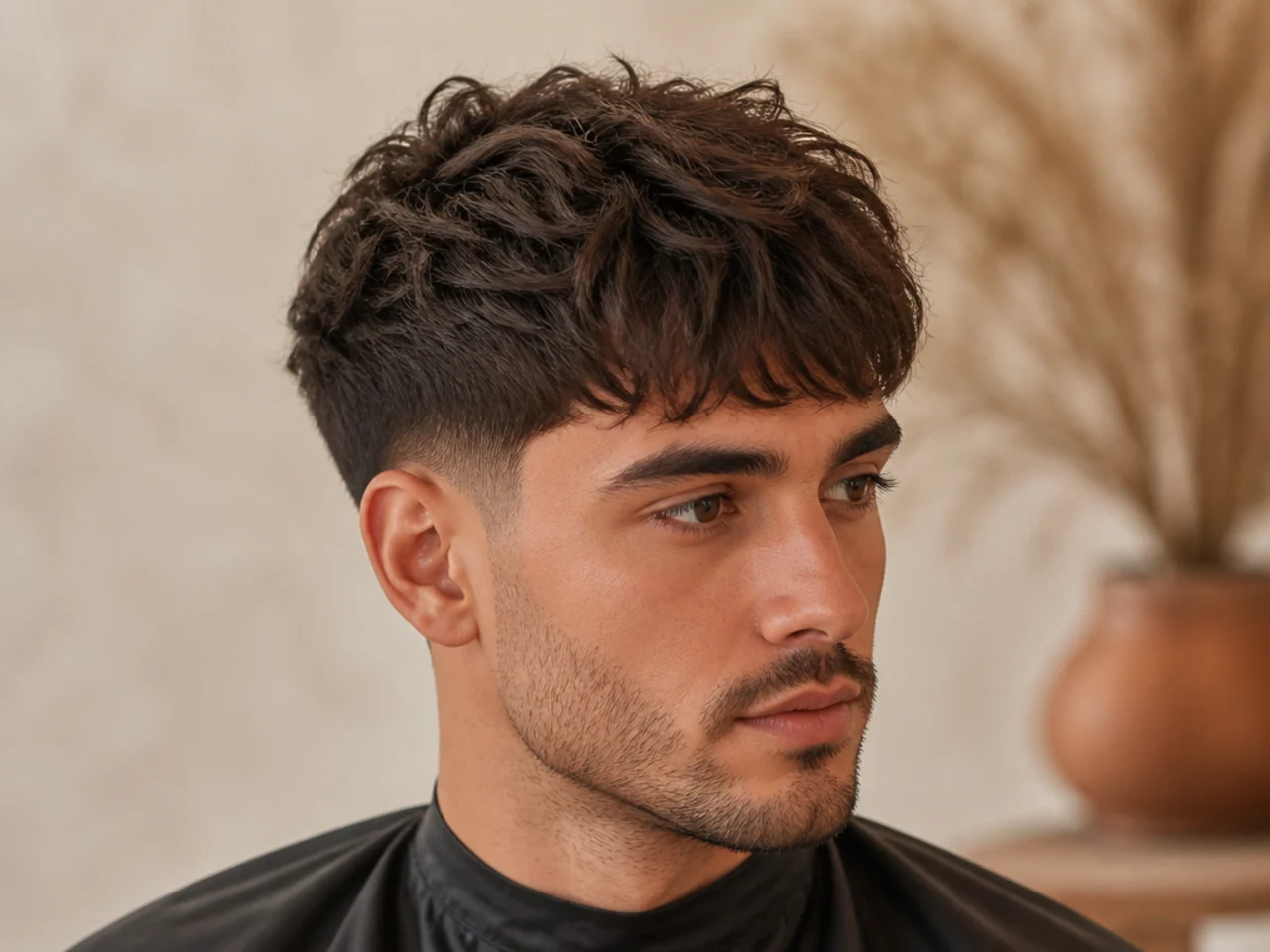
The French crop, stretched. Top runs 2.5 to 3 inches. The fringe is long enough to touch the eyebrows if you let it. Sides usually get a drop fade — one that follows the curve of the head down behind the ears rather than staying on a flat horizontal line. Works on faces that can support the added top weight: angular, oval, or long-if-you-add-a-beard. High foreheads gain the most from the extra fringe length. Ask: "Three inches on top left textured, drop fade around the ear, long fringe kept at eyebrow length." A cream pomade for hold with movement — comb the fringe forward, push the rest of the top back with fingers. Pairs beautifully with a groomed full beard.
Short Fringe with Mid Fade and Beard
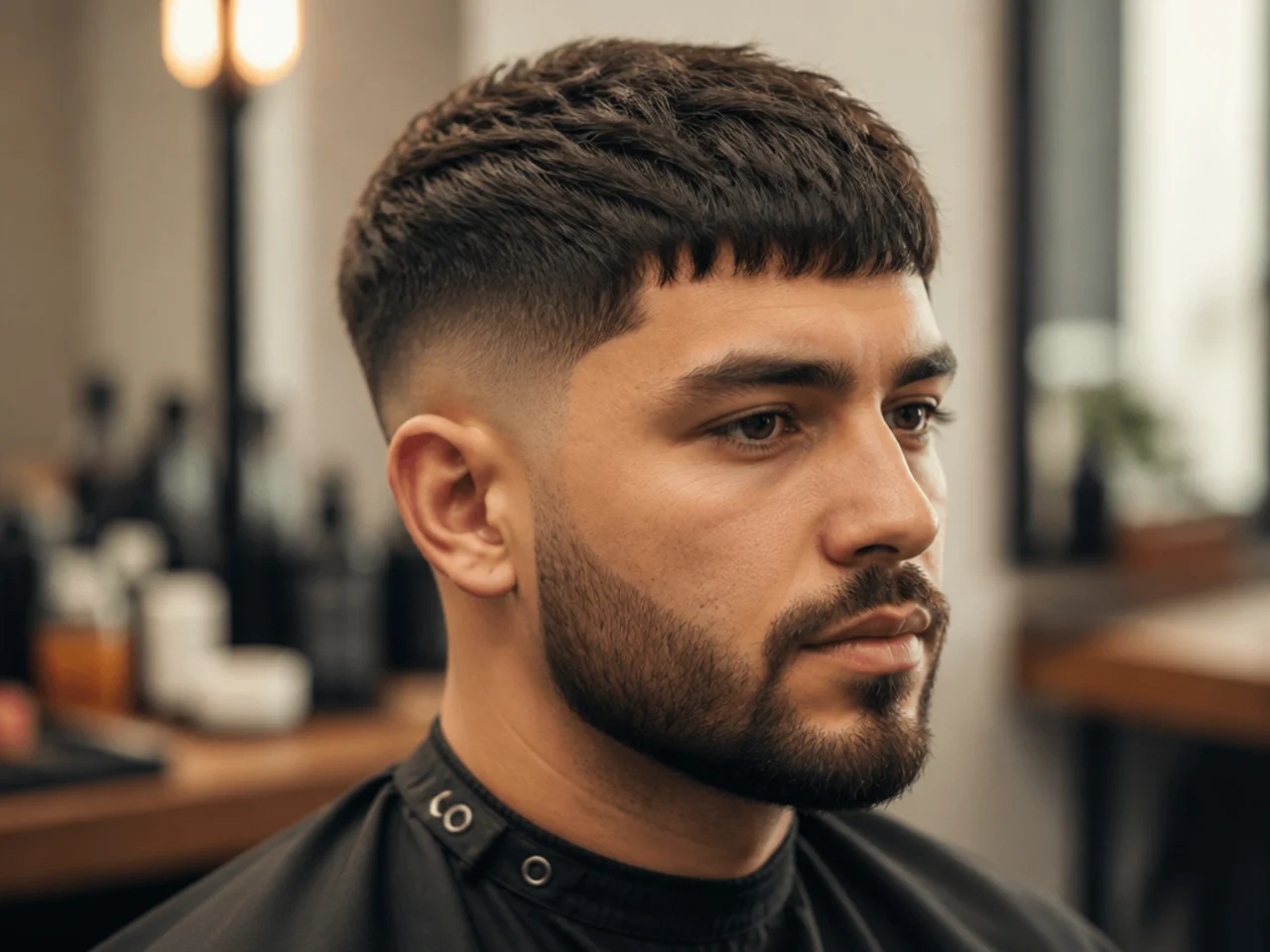
"Short fringe" here means a fringe you can barely see — maybe half an inch projecting onto the forehead. The top runs 1 to 1.25 inches, cut clean. A mid fade starts halfway between the ear and the temple and drops to skin. A short, sculpted beard finishes the picture. This variation is a favorite for professional settings — reads sharp, not casual. Best on longer face shapes because the horizontal weight of a good beard offsets the vertical face. Ask: "One-and-a-quarter on top, mid skin fade, half-inch fringe left forward, beard clean at the neck and cheek line." Fiber paste or a light pomade. Comb through, then break the fringe up with fingers so it doesn't look glued down.
Blunt Fringe Crop
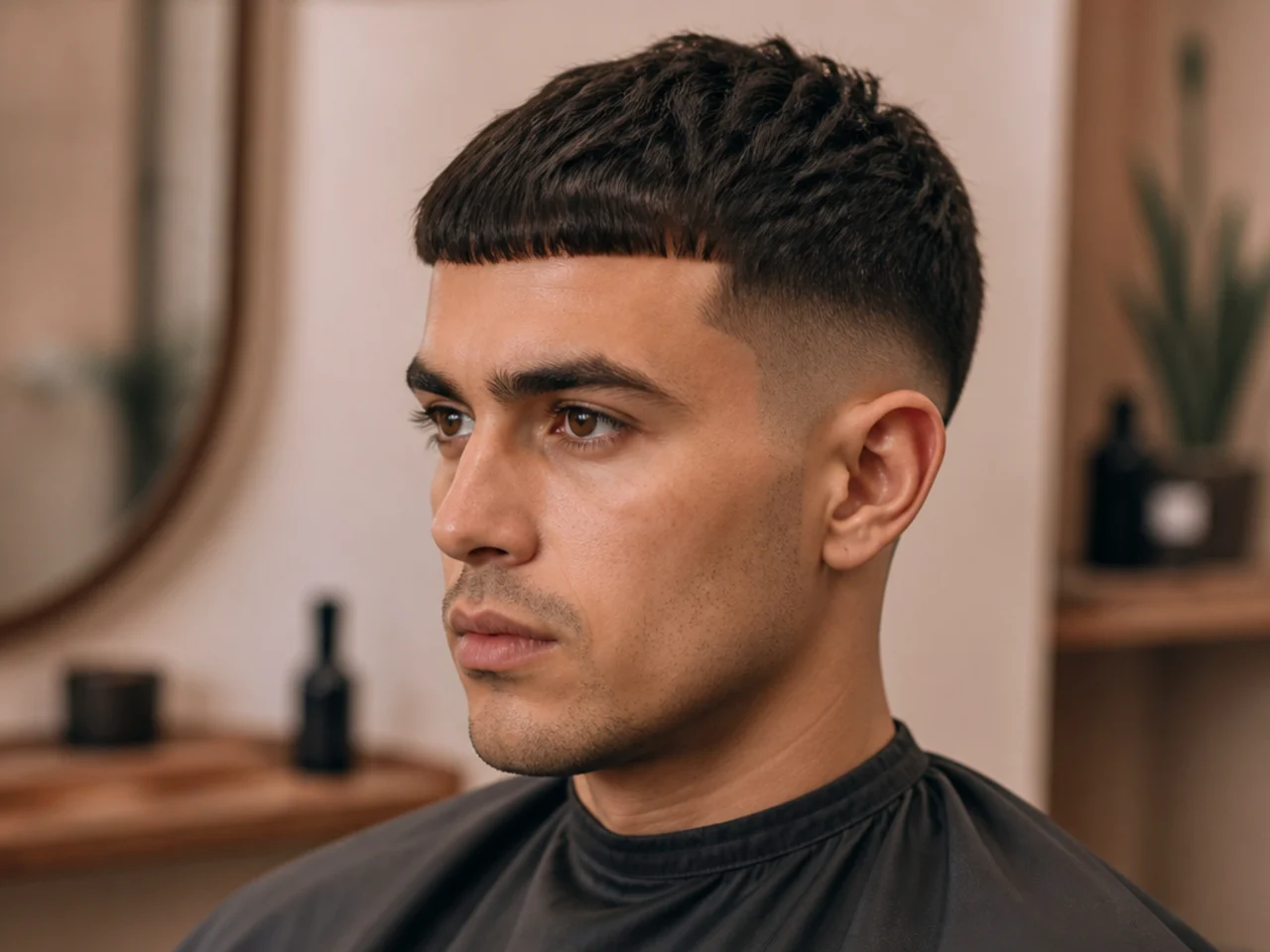
This is where the French crop starts to look like the Edgar — but softer. The fringe is cut in a straight line across the forehead, and the top runs fuller across the crown for a shape that reads bold. Difference from the Edgar haircut: the Edgar has a razor-sharp horizontal line that sits above the eyebrows and stays flat, cut with a straight razor for a hard edge. The blunt fringe crop is thicker, hangs a little lower, and reads softer at the edge — usually cut with shears rather than a razor. Angular and diamond-shaped faces suit it. Ask: "Blunt fringe French crop, fringe cut straight across at the brow line, two on top, mid fade sides." Matte clay for hold, comb the fringe down flat. Skip the blow dryer — heat lifts the fringe up.
Messy Crop Top
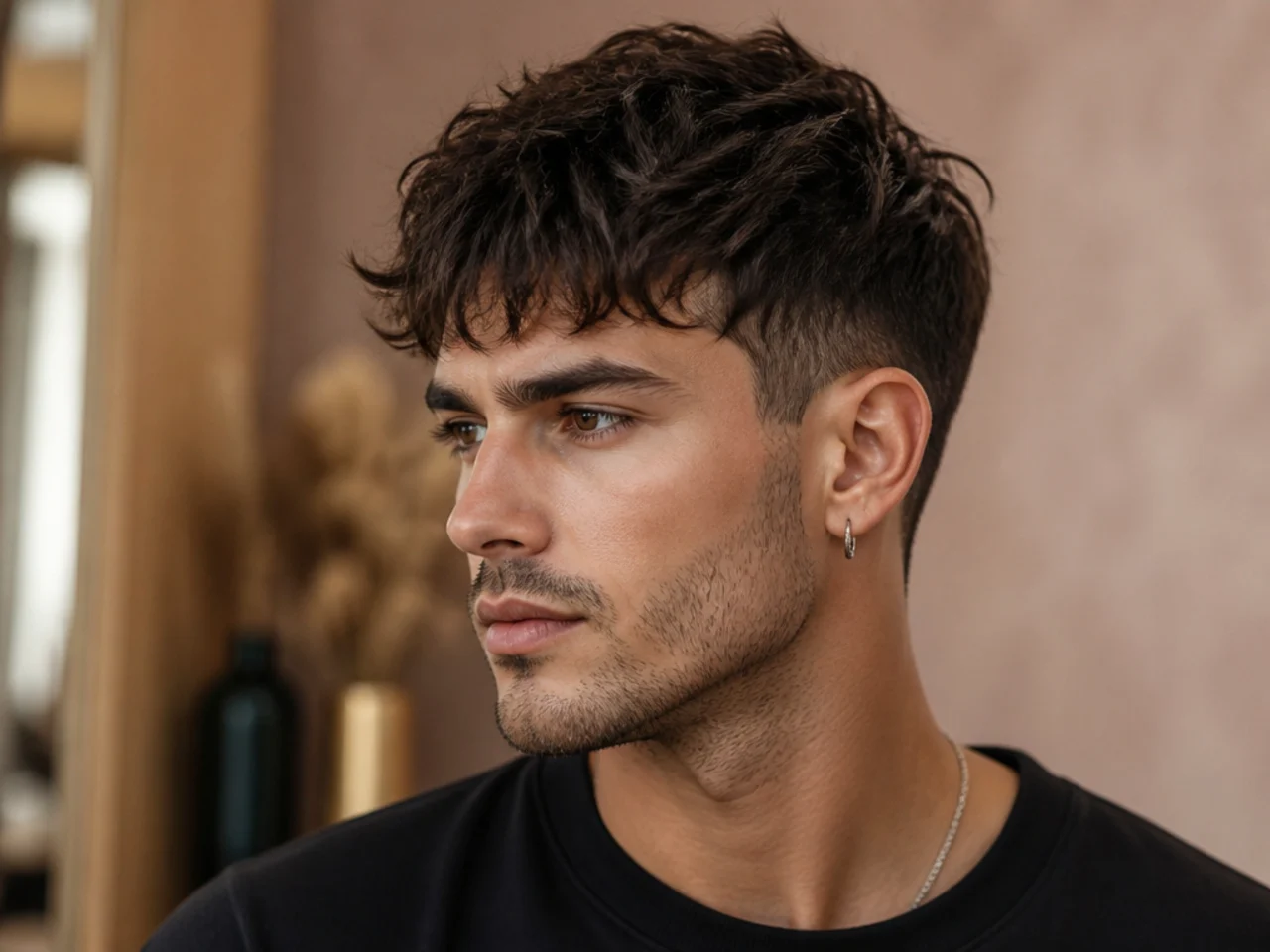
The messy crop top is the version to ask for when you can't — or won't — style your hair. Top is cut at one length, usually 1.5 to 2 inches, brushed roughly forward, and left. Sides fade or taper. The fringe falls where it falls. Works for essentially every face shape because "intentional mess" reads well on all of them. Ask: "One-and-a-half all across the top cut with the grain, low fade, no fringe shaping — let it fall natural." A dime of matte paste, rubbed once through dry hair, is your whole morning routine. Or skip product entirely — this is one of the more forgiving low-maintenance men's cuts you can commit to.
Short, Textured French Crop Fade
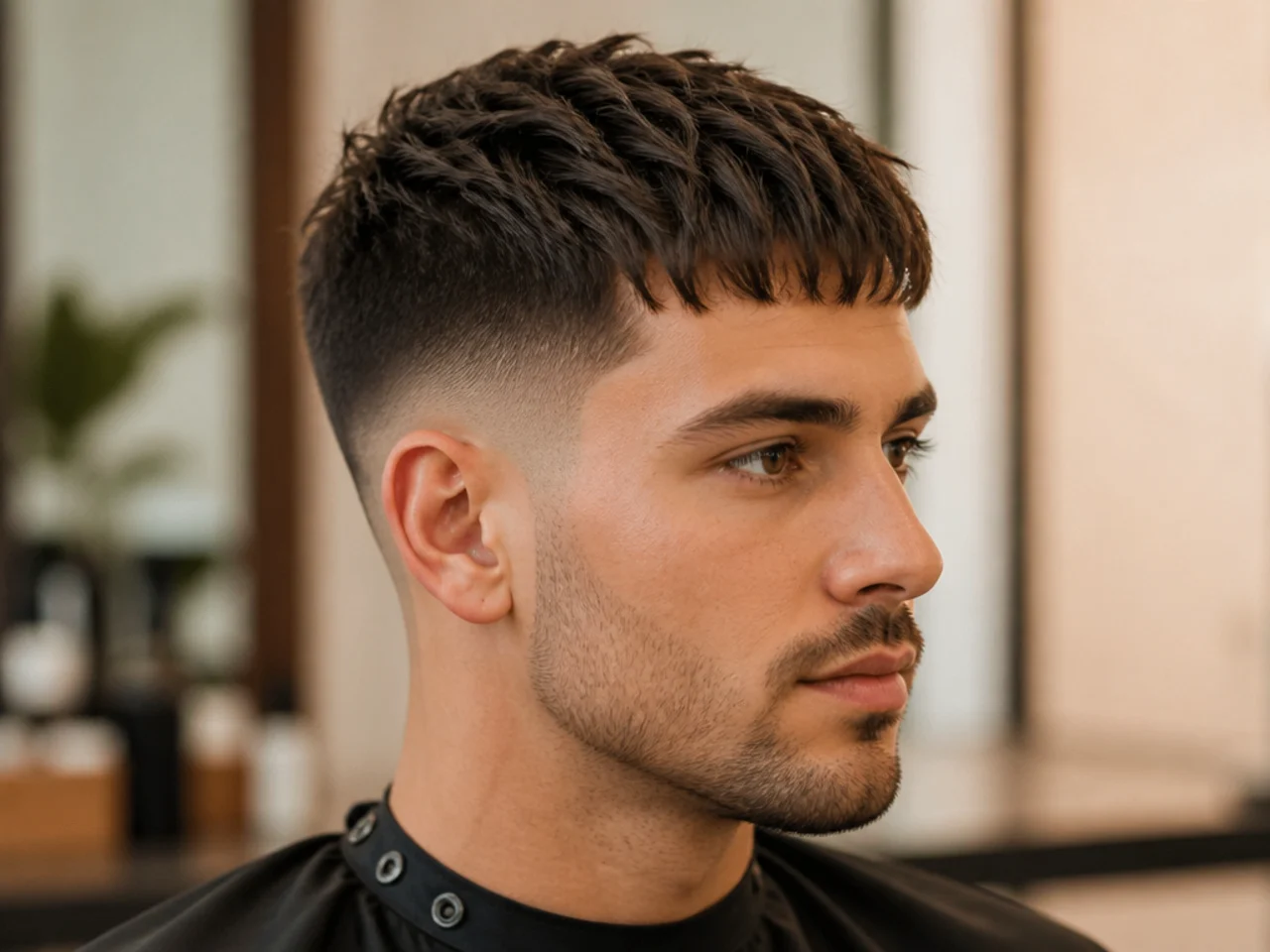
The short textured version with a proper fade rather than a taper. Top runs 1.25 inches, texturized with point-cutting so the fringe looks broken up rather than blocky. Sides fade from a #2 down to a #0 or skin. Best on thick, wavy hair — the natural movement plus the texturizing plus the length gives you a lot of shape from very little actual length. Angular faces and receding hairlines both benefit from the forward fringe. Say: "One-and-a-quarter on top, point-cut for texture, mid fade to skin, textured fringe forward at 1.25 inches." Light hold cream in damp hair; blow dry against the grain with fingers, then push forward. A short beard balances the density on top.
Short French Crop with Disconnected High Fade and Shaved Line
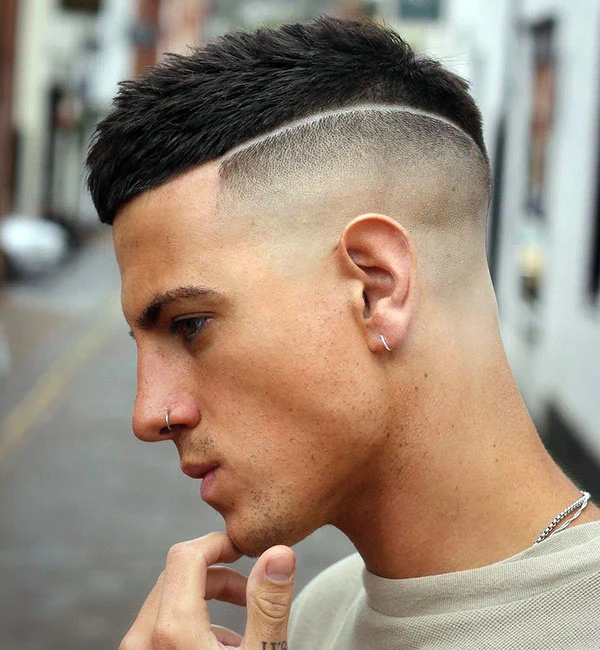
Three moves stacked on one cut. The top is short (about one inch), the fade jumps rather than blends — that's the "disconnected" part, and it creates a hard visual line where the top hair ends — and a shaved line adds a design element, usually at the temple angling down. Reads young and confident. Best on hair thick enough to hold the disconnect without looking sparse, and on faces where you want the eye pulled up rather than out. Say: "One on top textured, high skin fade with a hard disconnect at the parietal ridge, single shaved line at the temple angling down." Matte paste for the top. Book weekly for the shaved line; it grows in after seven days and looks unintentional after ten.
Side-Swept French Crop with Low Fade
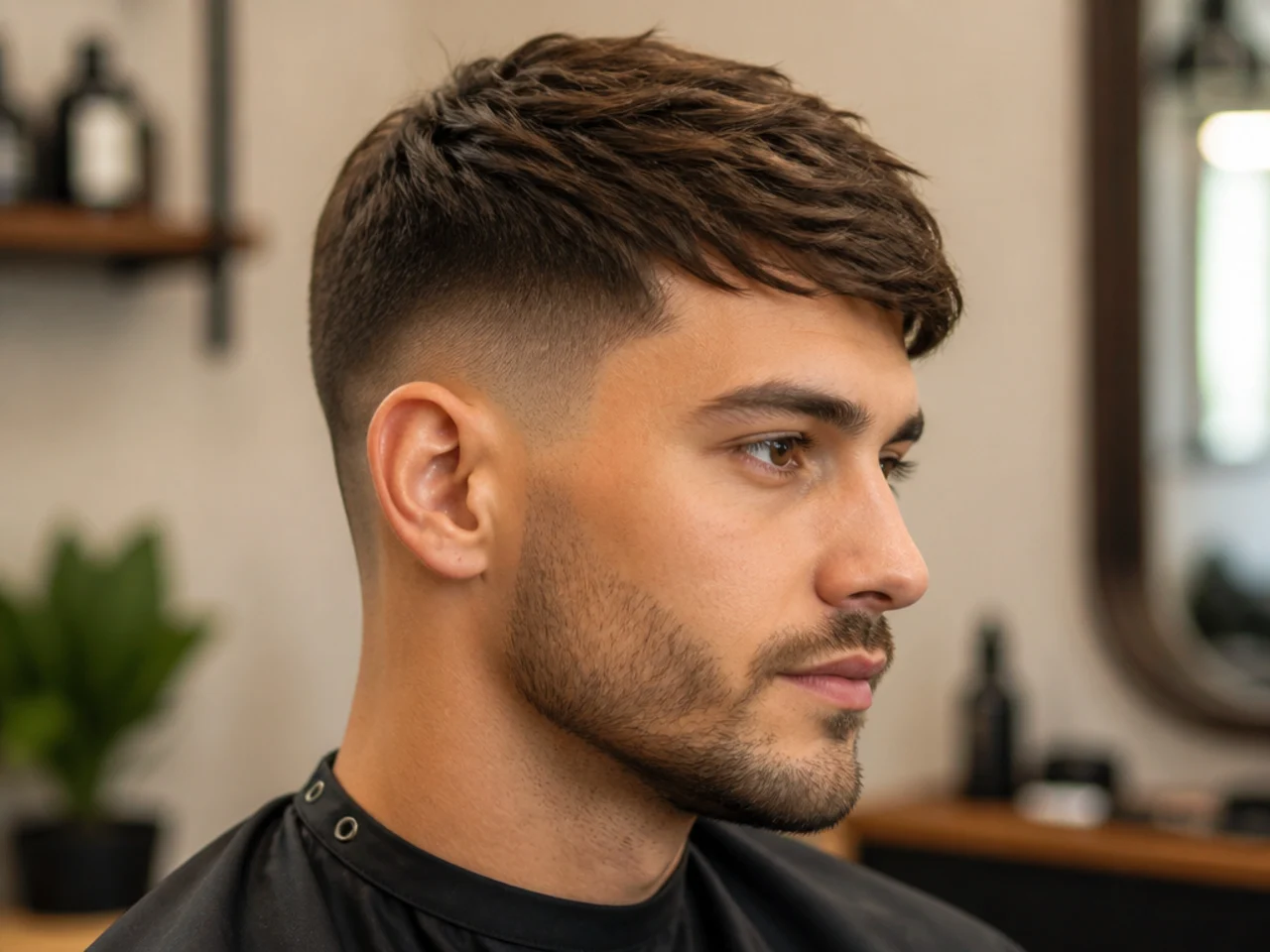
The rebel of the family. Instead of pulling the fringe straight forward, push it forward and slightly to one side, letting it sweep across the top of the forehead. Top sits at 2 inches. Sides get a low fade so most of the head still reads long. This shape has more in common with the Ivy League haircut than the classic French crop, which is what makes it useful — it looks less obviously "trendy." Best on soft or round faces because the diagonal fringe adds angle where the face doesn't have any. Ask: "Two on top, side-swept fringe pushed forward and slightly left, low fade to a #1." Blow dry the fringe in the direction you want it to fall, then set with a light cream pomade.
High Fade French Crop
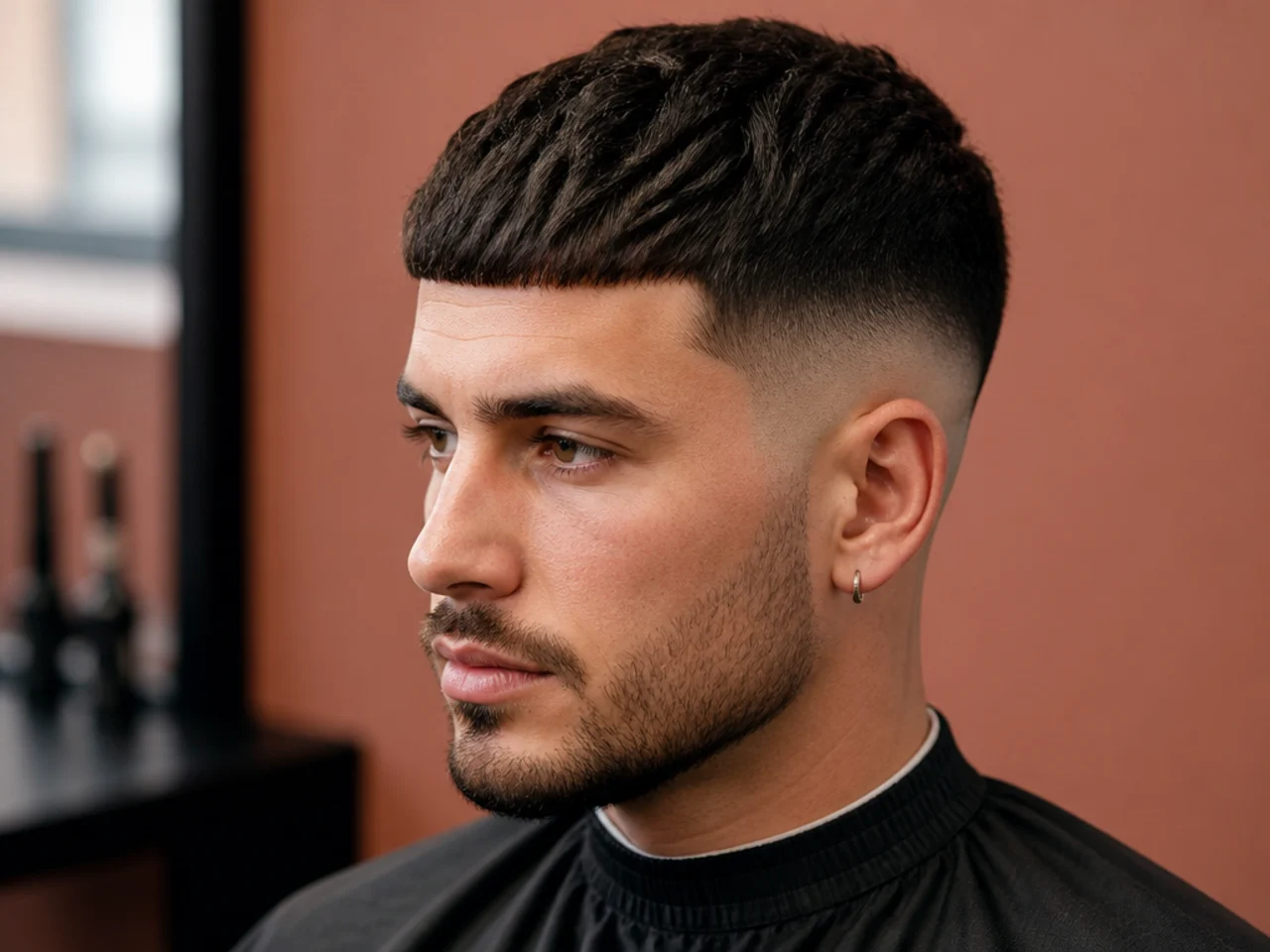
A high fade puts skin right up near the temple and parietal ridge — the sides go from long top to zero in a small vertical span, giving you maximum contrast. The top can be any length; the fade does the visual work. On this cut, the top usually runs textured and short (about 1.25 inches), and color often plays a role: dark roots, lighter tips. Suits confident dressers; the shape reads bold in every setting. Best on angular faces where you want to accentuate the jaw line by exposing the sides. Say: "One-and-a-quarter on top textured, high skin fade starting above the ear, fringe forward at 1.25 inches." Matte styling powder shaken into the roots gives lift and grit. Twice-monthly recut — high fades are the most visible when they grow.
Disconnected French Crop
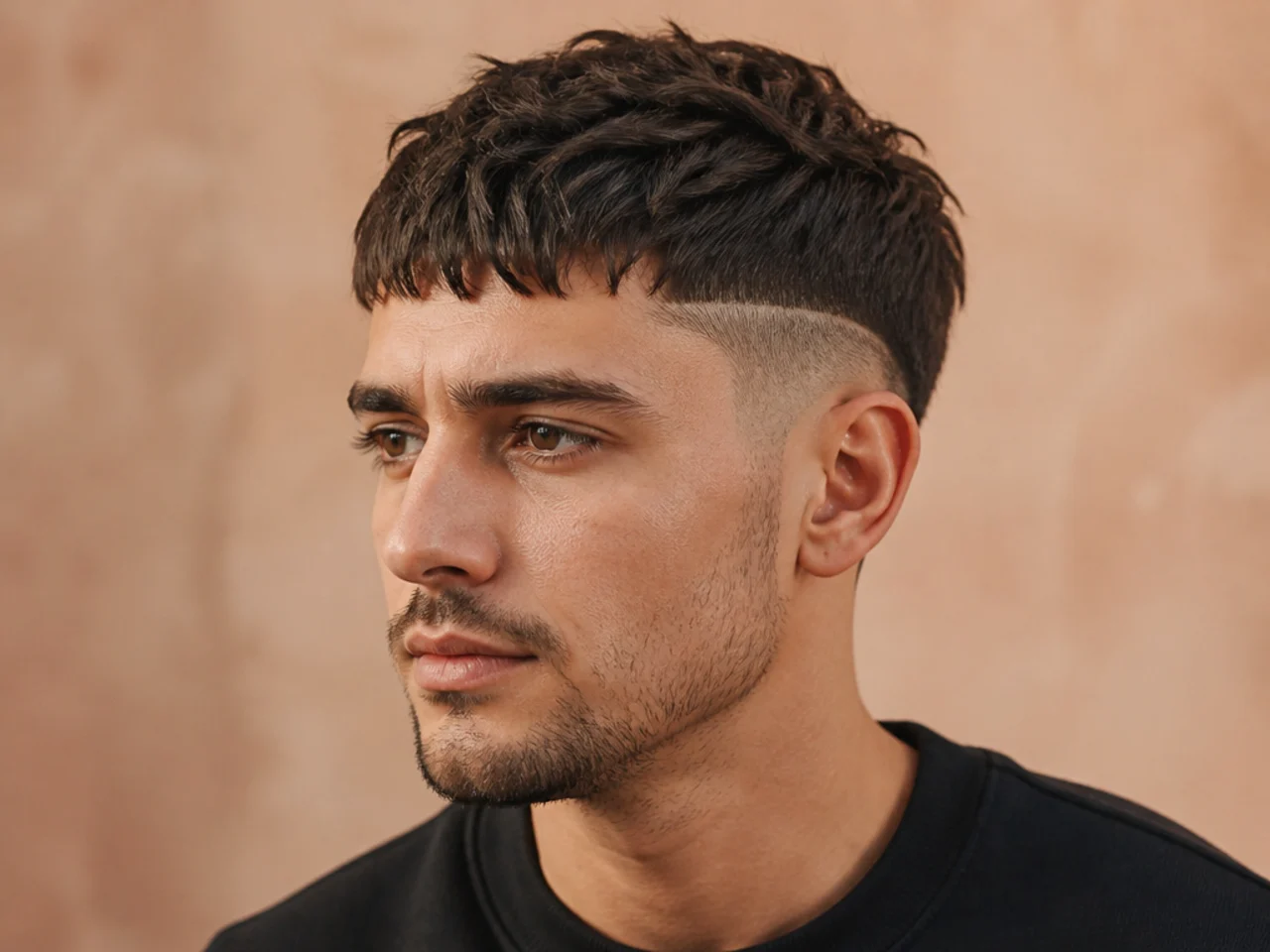
The whole top and the whole sides get treated as separate blocks. No graduated fade. Sides run one uniform length — usually a #1 or #2 — and stop. Top sits above at 2 inches with no blending in between. The effect is architectural. Suits round and square faces because the hard line pulls the eye upward and lengthens the face visually. Ask: "Two on top textured, one-length #2 sides, no fade — clean disconnect at the parietal ridge, forward fringe." A matte fiber for hold and definition. Push the top up and forward at the same time; the disconnect makes the top look fuller than it is. A precise, unforgiving cut — go to a barber you already trust, not one you're testing out.
Layered Fringed Crop with Short Sides
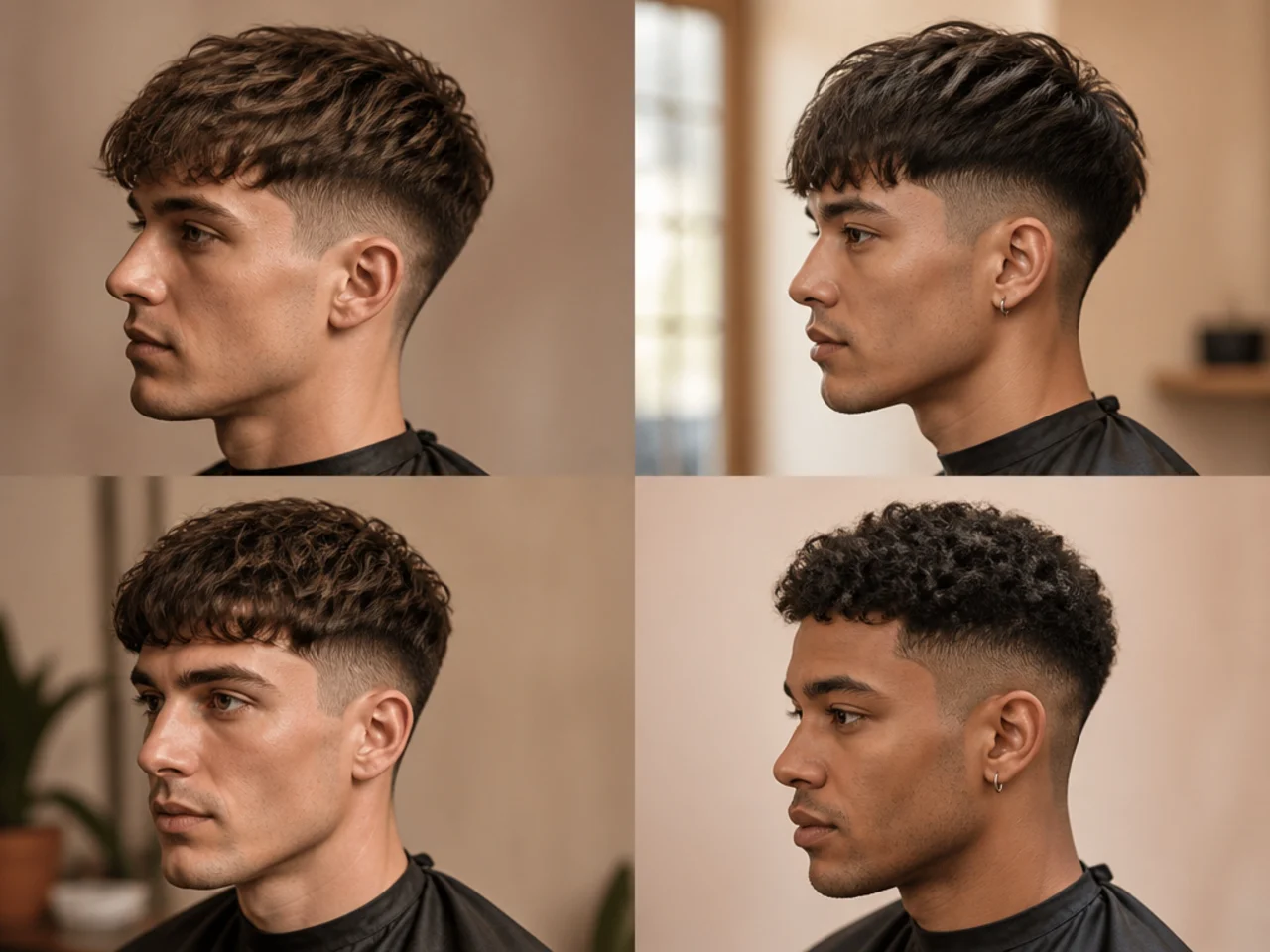
Not one length on top. Your barber cuts layers so the crown sits shorter and the front runs longer — the fringe naturally falls forward and slightly to one side, and the layers give it movement no single-length top can match. Sides drop to about a #1. Great for anyone whose hair goes flat with length; layering builds the structure your hair won't build on its own. Best on oval and heart-shaped faces because the movement in the front softens the forehead. Say: "Layered top, longer at the front — three inches — shorter at the crown at one-and-a-half, fringe swept forward, #1 sides." Light hold cream, blow dry with a round brush pulling the fringe down and toward the face. Trim every four weeks or the layers blur together.
Crop Top Fade with Blunt Fringe
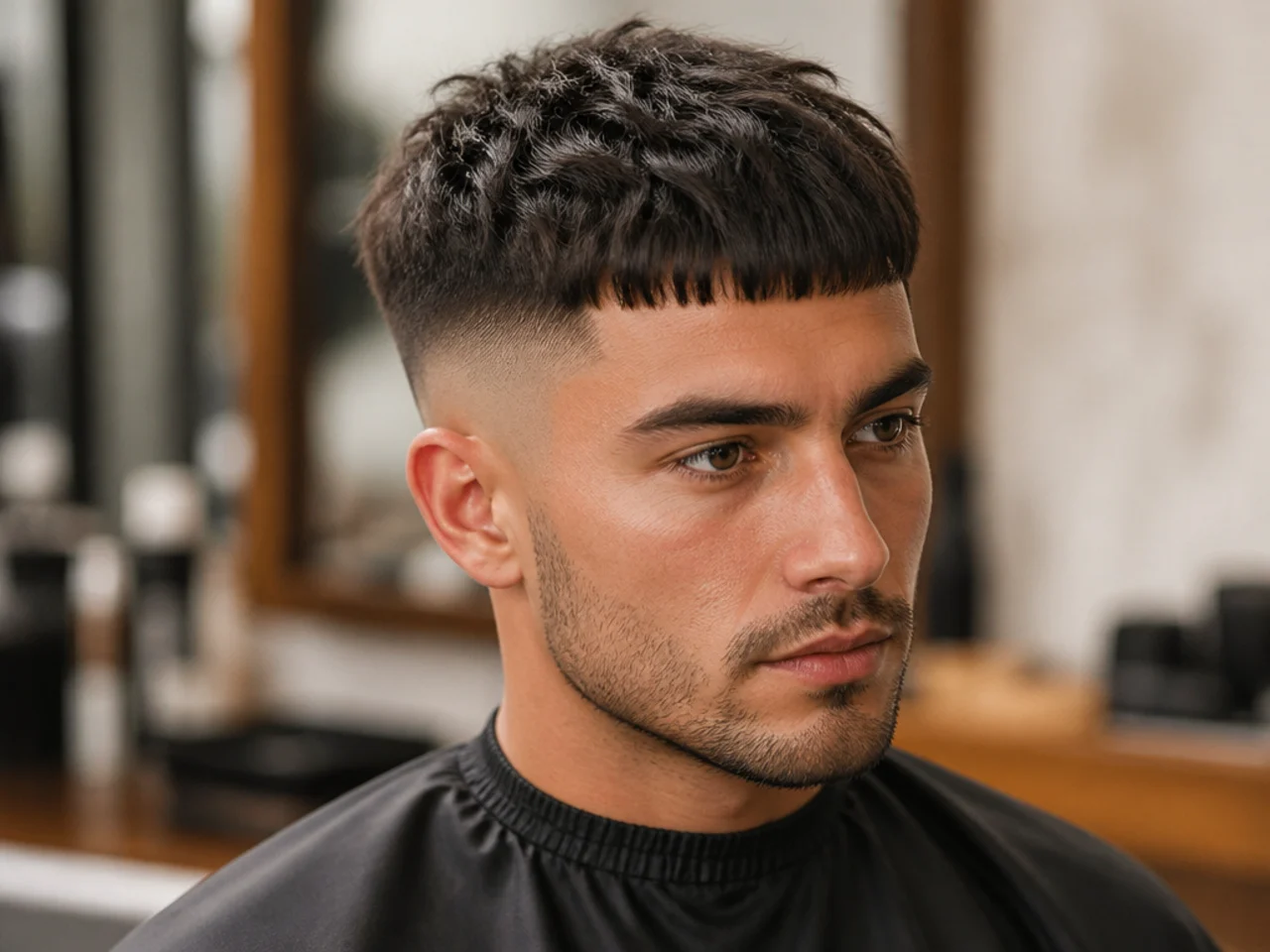
The Instagram version — clean lines, heavy fringe, high fade. Top is cut at one length, about 1.5 inches, with a fringe left straight across the forehead. Sides fade high and to skin. Suits angular faces and works especially well if your hairline is receding at the temples: the blunt fringe hides the recession and the fade reframes the face. Say: "One-and-a-half on top all one length, blunt fringe cut straight across at brow, high skin fade to a #0." Matte clay warmed in the palms, pressed down onto the top and fringe. No lift, no volume — this cut is about the horizontal line across the forehead, and any height fights it.
Messy French Crop with Low Taper Fade
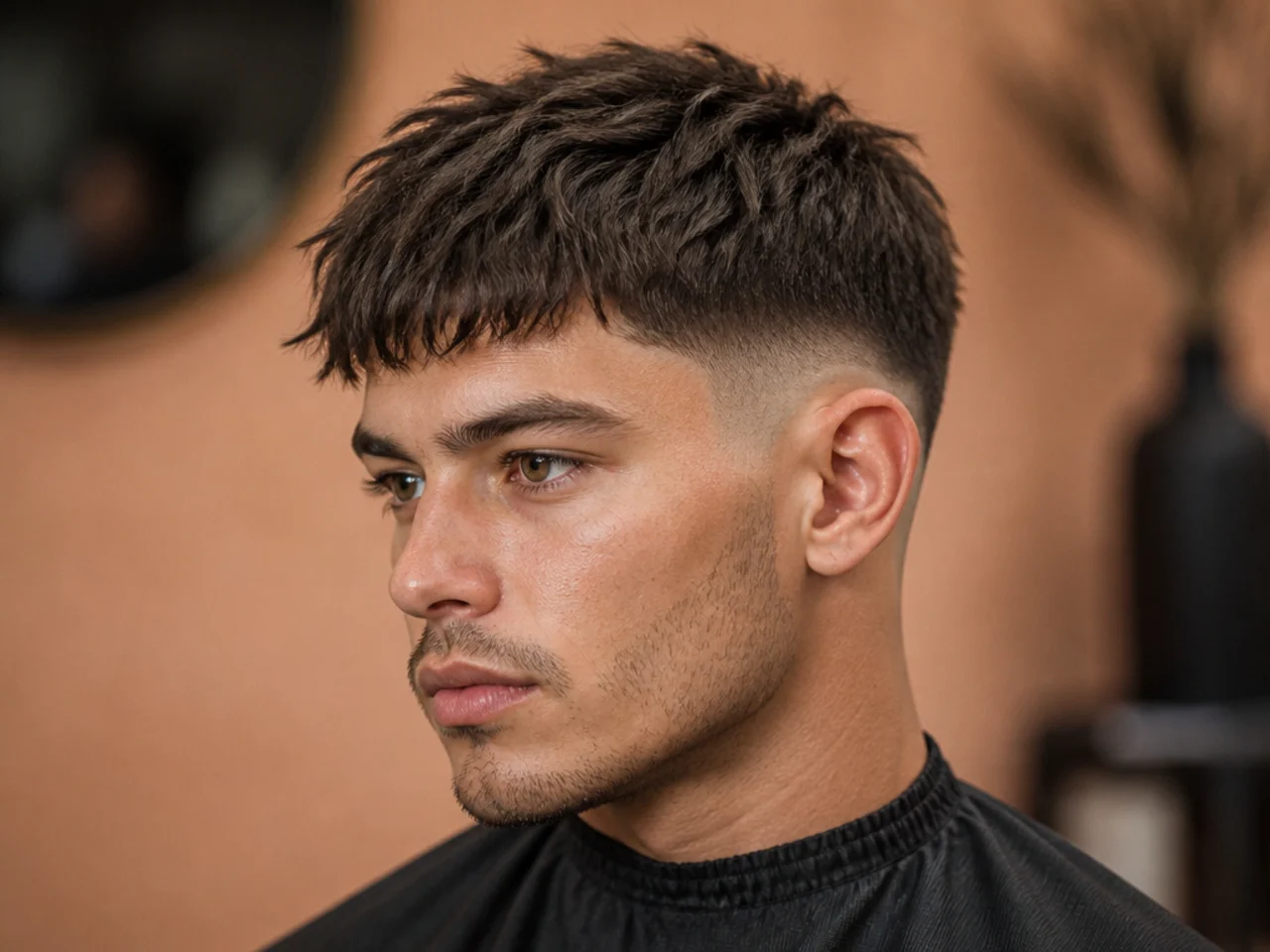
Same base as the classic French crop, but the top is left longer (2 inches) and cut with more texture, and the sides get a low taper rather than a full fade. The fringe is loose and falls slightly forward and to one side depending on how it dries. Best for guys with wavy hair — the waves supply the movement. Also a good pick for oval faces where you want a shape that reads relaxed rather than sharp. Ask: "Two on top textured with a razor, low taper starting behind the ear, fringe left loose at 1.75 inches." Sea salt spray in damp hair, tousled with fingers, air dried. If waves fight you, hit the top with a diffuser on low. Trim every five weeks — this shape holds through the growout better than most.
Fluffy French Crop with Tapered Sides
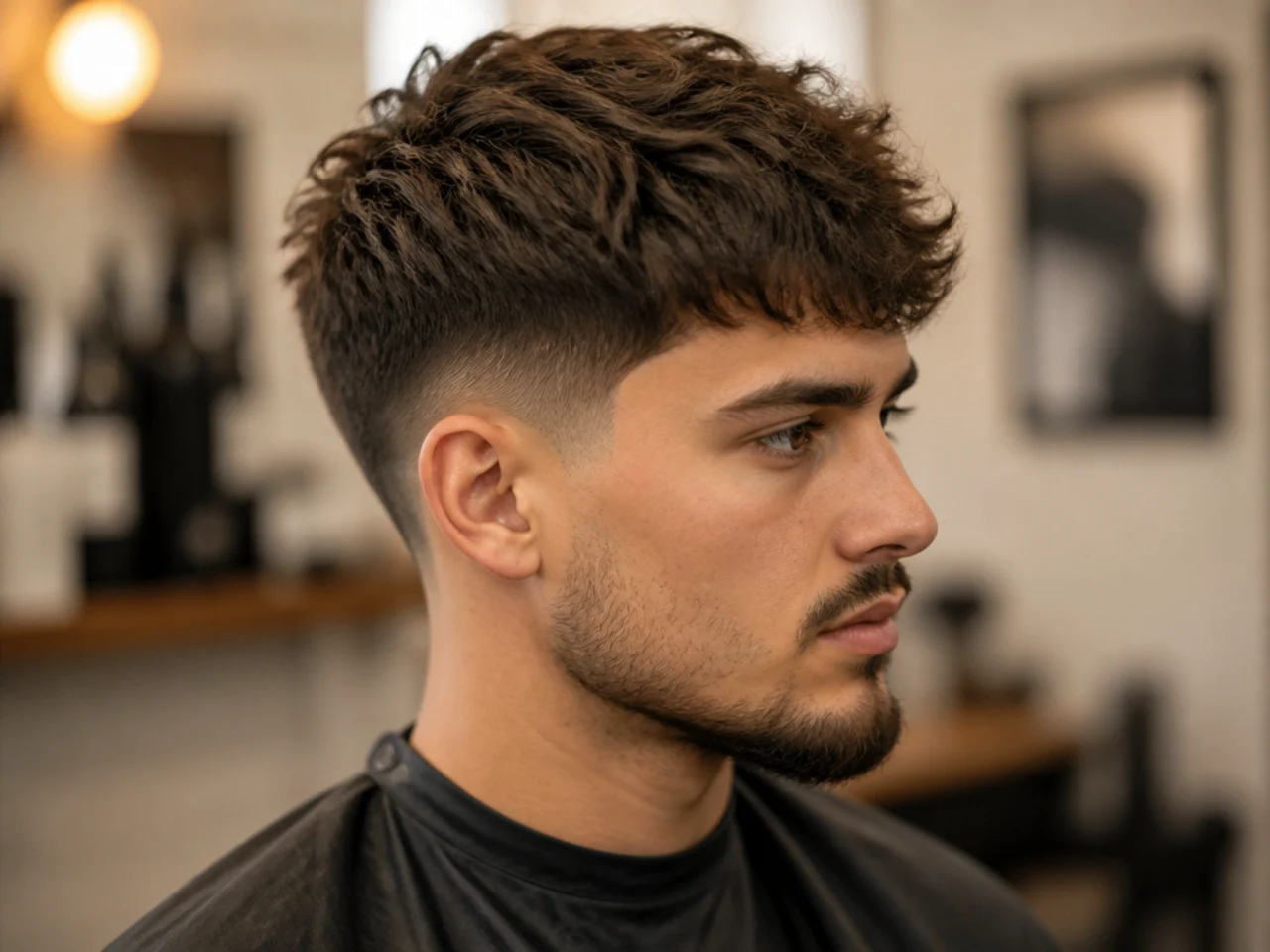
Fluff is deliberate on this one. Top runs 2.25 inches, cut clean with scissors and left un-texturized so it holds volume. Sides taper — no full fade — because the goal is fullness from top to sides to bottom. Fringe forward. Best on fine to medium hair that needs help looking dense, and on younger faces where the softer shape reads correct rather than fussy. Ask: "Two-and-a-quarter on top, scissor-cut no razoring, tapered sides not faded, full forward fringe at two inches." A volumizing mousse in damp hair, blow dry lifting from the roots with a round brush, no comb after. If the top ever collapses on you, a shake of texturizing powder into the roots resets it.
Wavy French Crop
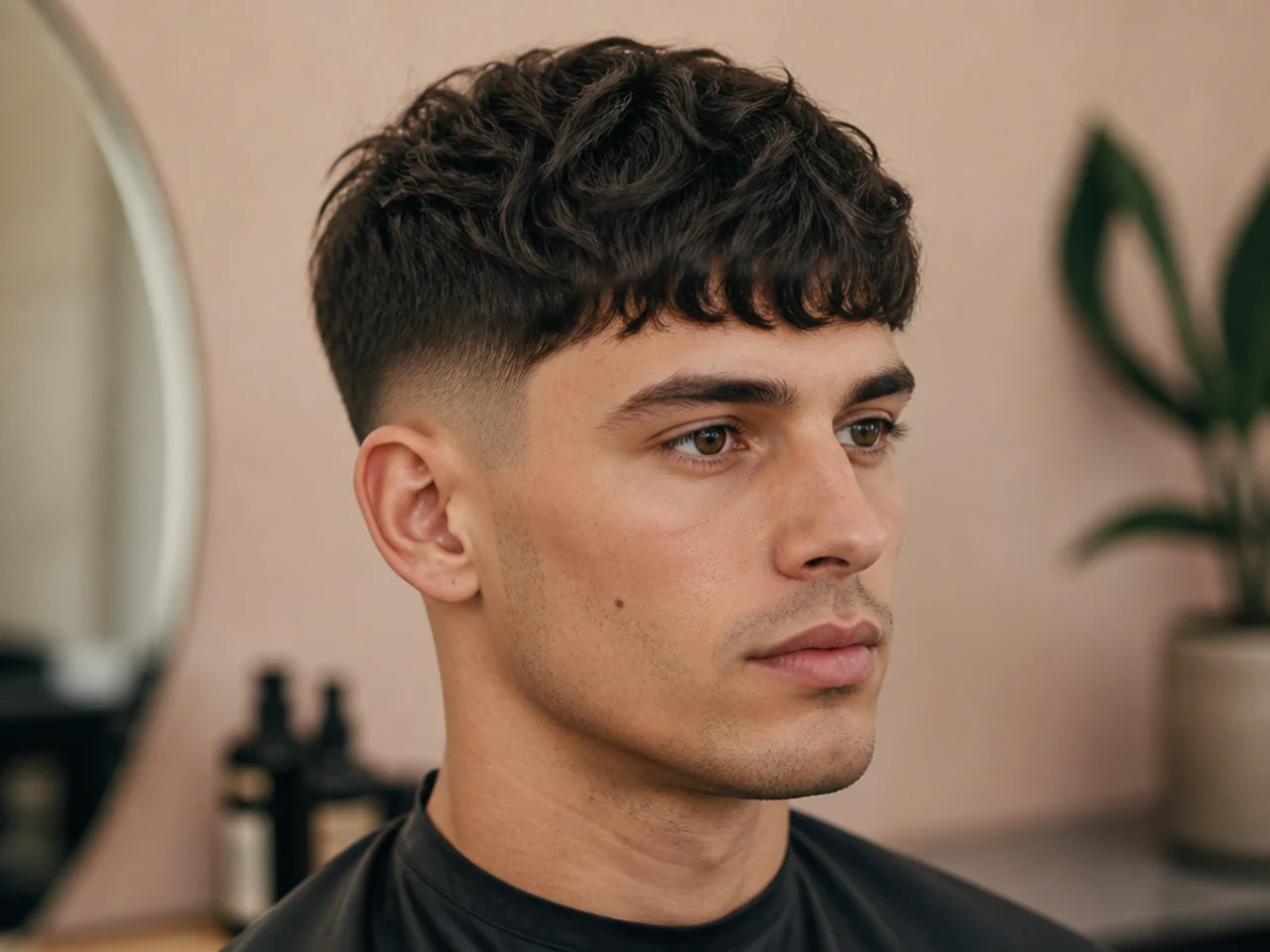
The variation that works with your hair pattern rather than against it. Top runs 2 to 2.5 inches — long enough for the wave to be visible, short enough for the shape to still register as a crop. Sides get a low fade. The fringe falls forward with natural bend from the wave. Best on medium-length faces because the wave adds shape at the top of the head without adding vertical height. Say: "Two-and-a-quarter on top, cut dry so you can see the wave, low fade, natural fringe left forward at two inches." Sea salt spray on damp hair, gently squeeze upward with fingers, air dry — never blow dry a wave straight, you'll lose it. A short beard adds visual weight below to balance the movement above.
How To Style A French Crop
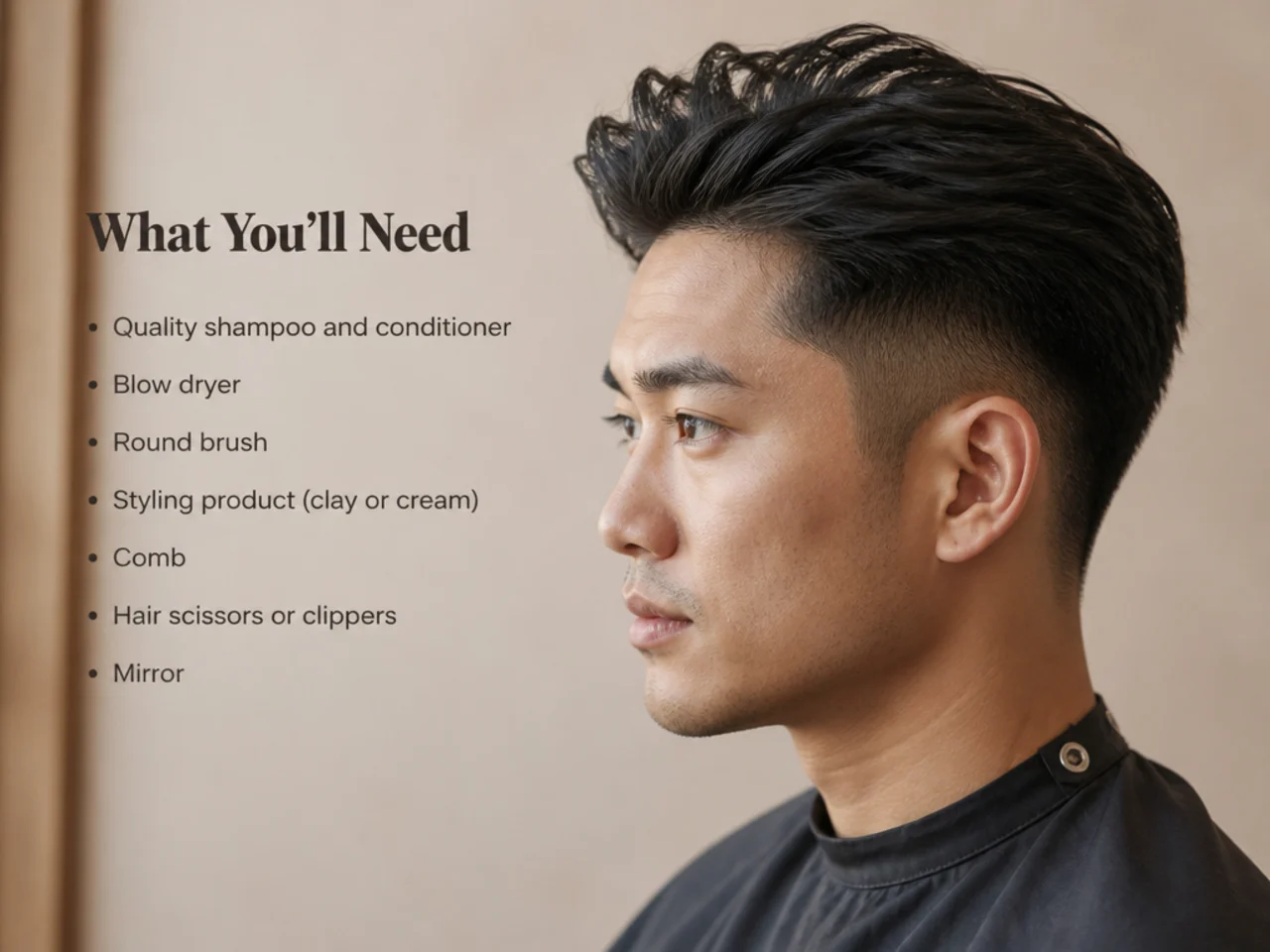
Styling this cut takes five minutes, tops. Here's the order.
- Start with damp, clean hair. Not soaking — towel until it stops dripping.
- Warm a nickel-size amount of matte clay, paste, or texturizing powder between your palms. Product choice depends on the finish: clay for hold with texture, paste for definition and grip, powder for grit and lift on fine hair.
- Push the fringe forward first while the hair is still damp. This locks the direction of the front piece — the most visible part of the cut.
- Work the rest of the top with fingers, either brushed forward for a neat finish or scrunched for a messier one. A comb makes it look styled; fingers keep it looking natural.
- Air dry for the softest finish, or hit it with a blow dryer on low if you want more volume. Direct the air forward with the fringe, not against it.
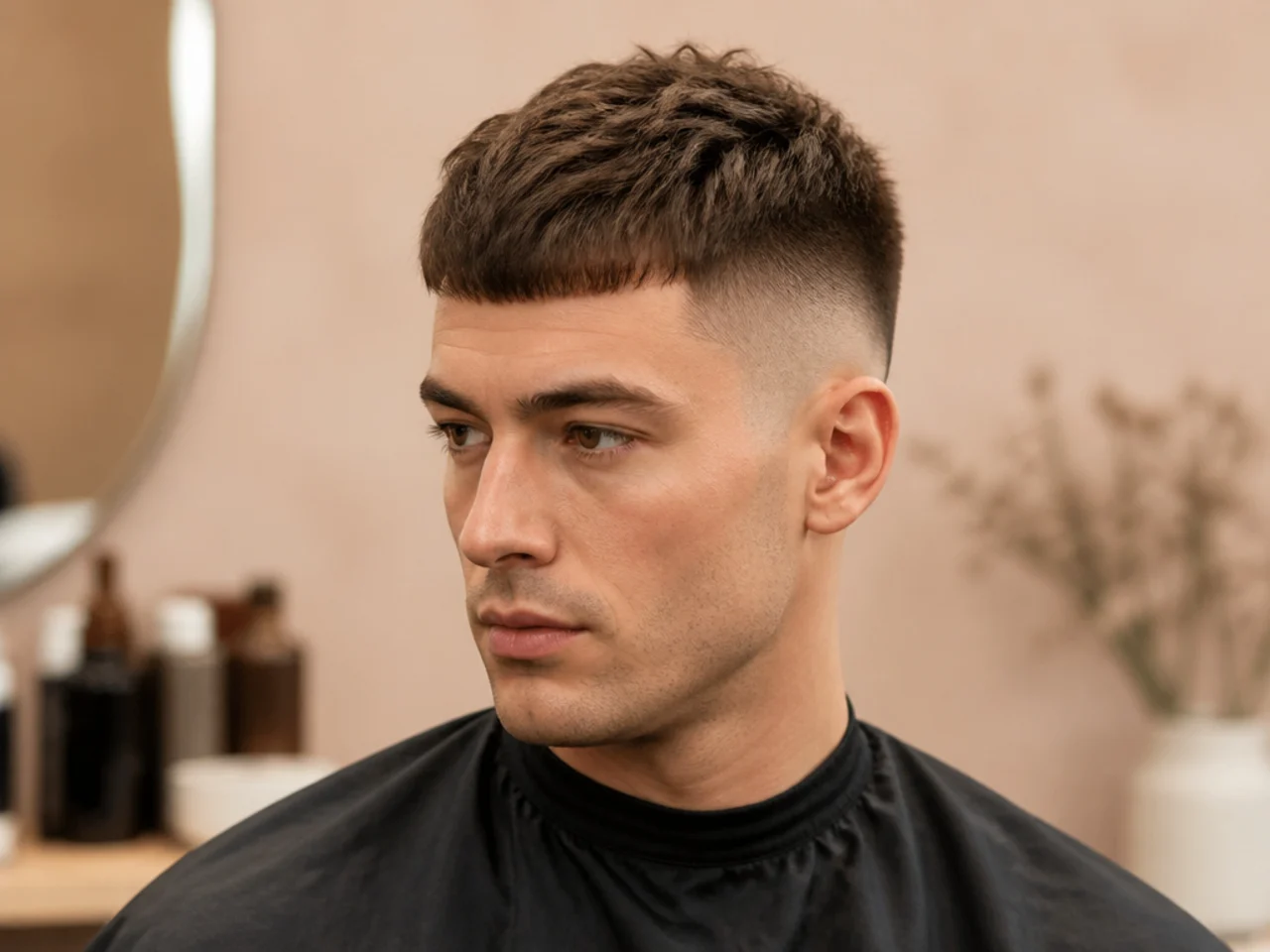
That's the whole routine. If it's taking longer than five minutes, you're overworking it. Every three weeks is the sweet spot for a recut on the short variations; every five for the longer ones. The moment the fringe stops holding its shape is the moment to book — the fringe is the cut, and once it's gone the cut is gone.
French Crop Haircut Gallery
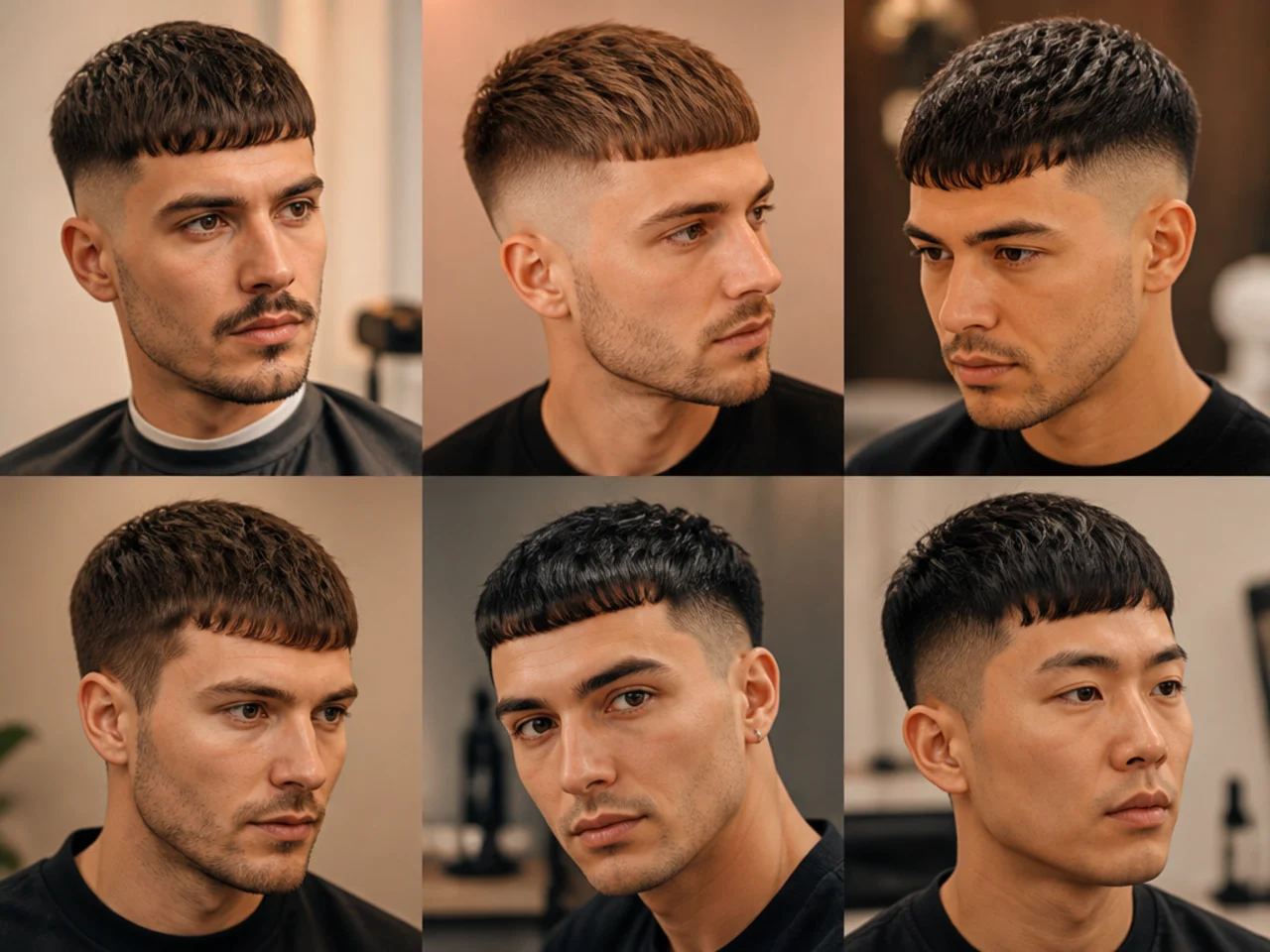
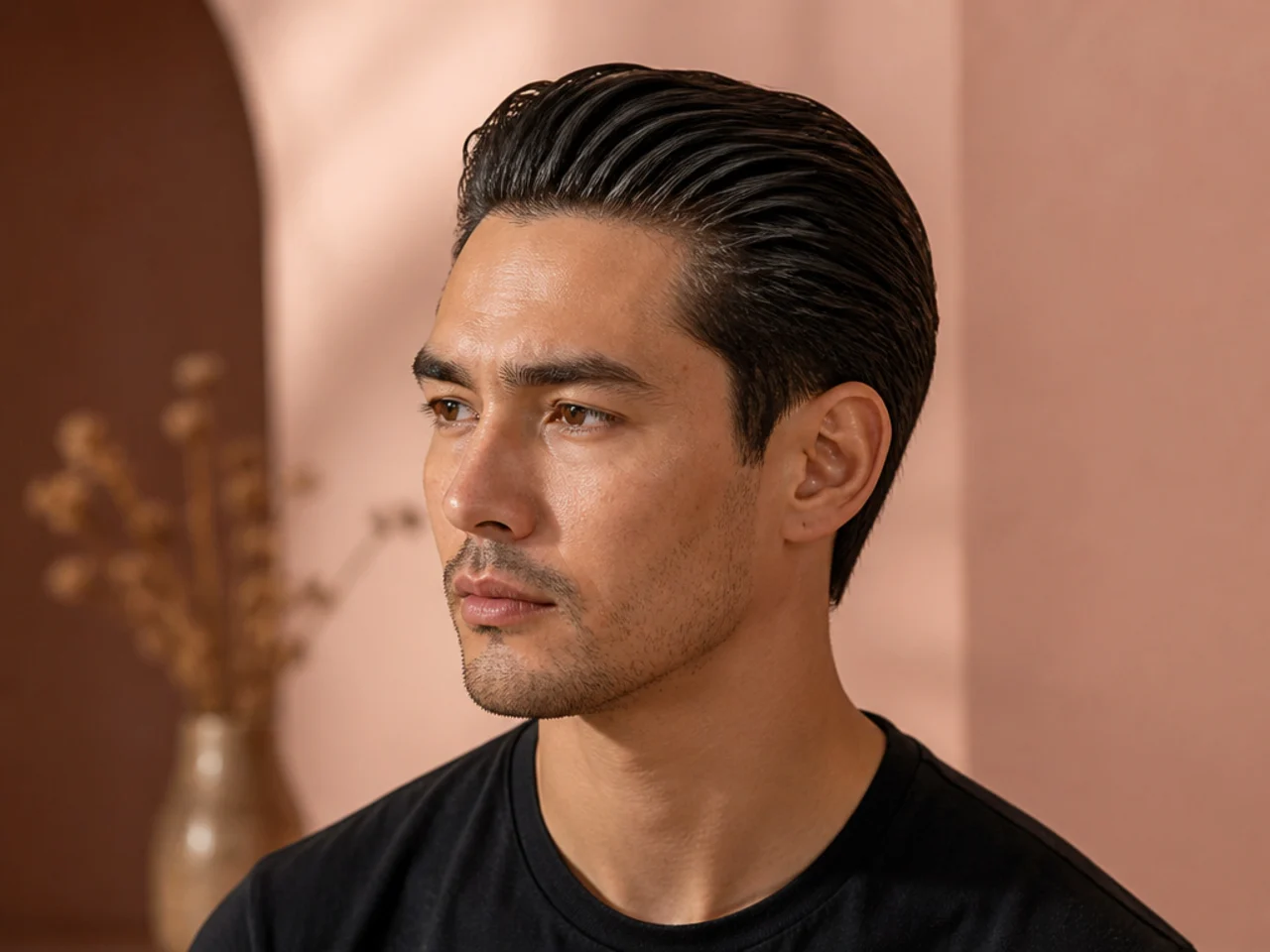
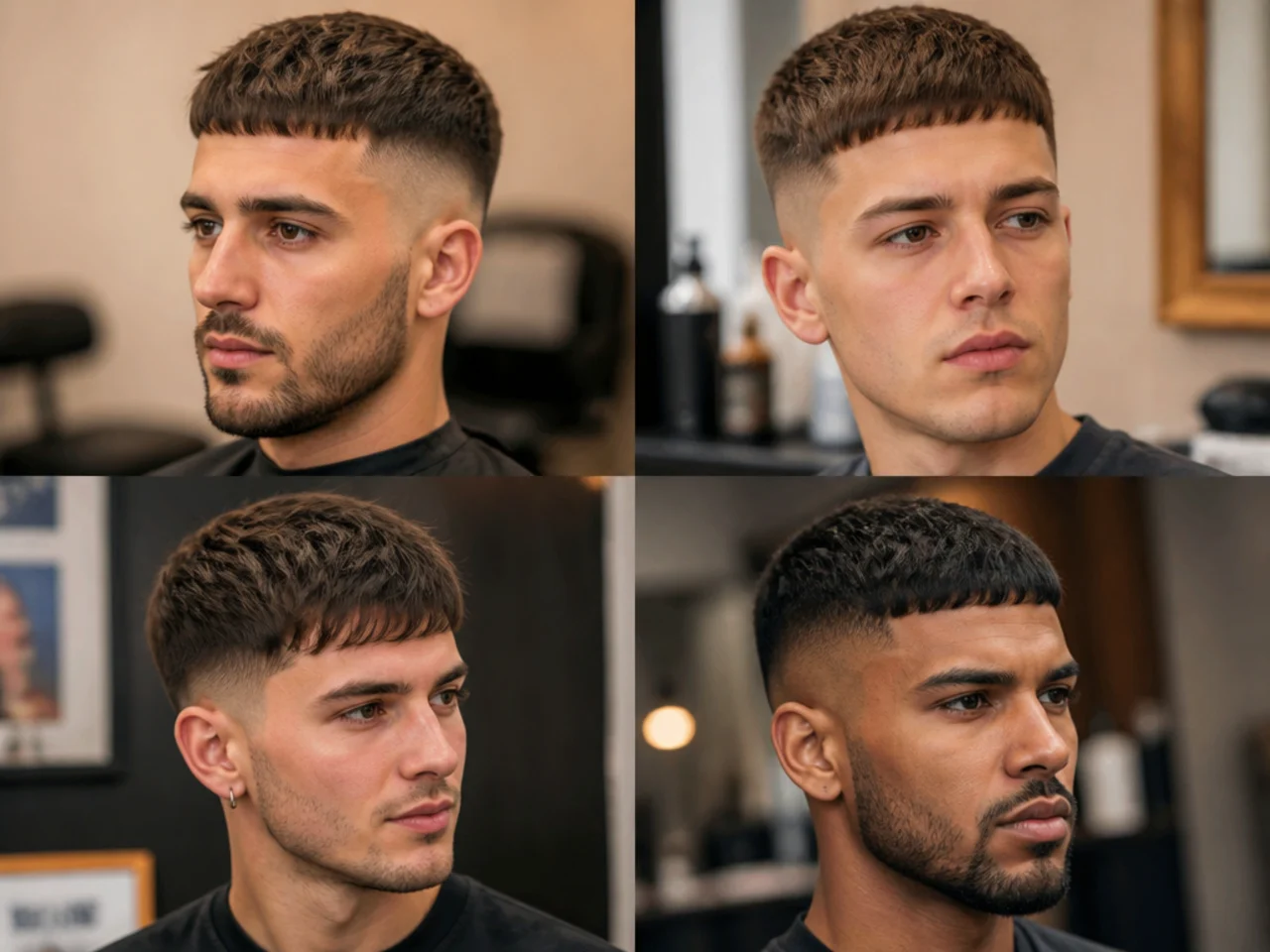
One last set of French crop shapes for reference. Screenshot what catches your eye, bring it into the shop with the specs from the variation that matches most closely, and you'll walk out with the cut you actually wanted — not the barber's best guess at it.