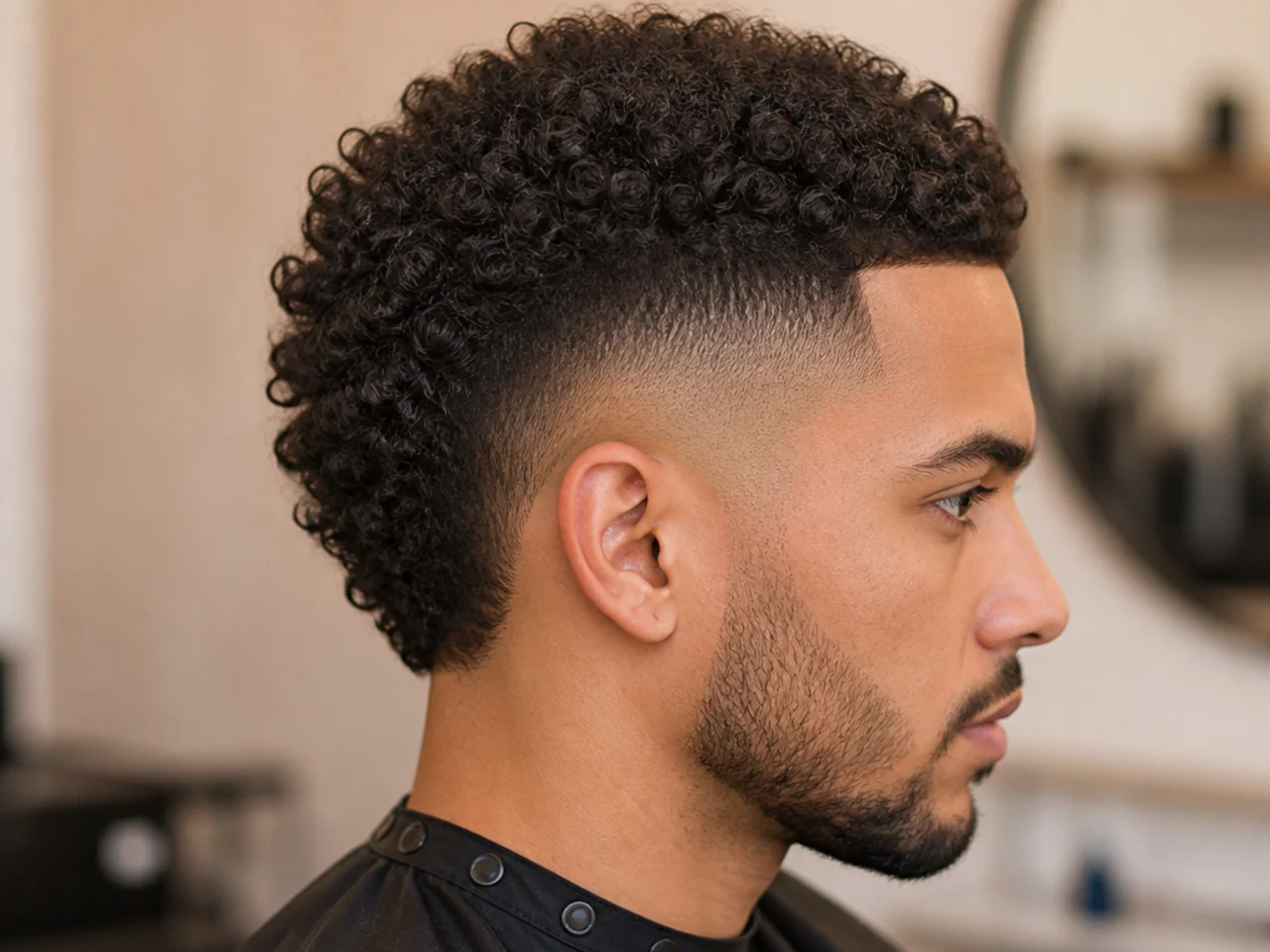
Top 32 Burst Fade Haircut Styles for Men
The burst fade's signature arc around the ear makes it the most-recognizable fade shape of the last five years. This guide covers 32 variations with photos and clear barber prompts.
In this article · 52
- What is a Burst Fade?
- Trending Burst Fade Haircuts
- Burst Fade Mullet
- Low Burst Fade
- Burst Fade Curly Hair
- Mid Burst Fade
- Burst Fade Design
- Burst Fade Straight Hair
- Taper Burst Fade
- Burst Fade Mohawk
- High Burst Fade
- Burst Fade Buzz Cut
- Burst Fade Black Men
- Burst Fade Short Hair
- Burst Fade Long Hair
- Low Taper Burst Fade
- Burst Fade Wavy Hair
- Burst Fade Middle Part
- Burst Fade Slick Back
- Burst Fade Textured Fringe
- Burst Fade Comb Over
- Burst Fade Edgar
- Mid Taper Burst Fade
- Textured Burst Fade
- Burst Fade with Beard
- Burst Fade Asian
- Burst Fade Blonde Hair
- Burst Fade Fringe
- Burst Fade Faux Hawk
- Drop Burst Fade
- Burst Fade Afro
- Burst Fade Perm
- Burst Fade with Highlights
- South of France
- Burst Fade vs Drop Fade: Key Differences
- How to Choose the Right Burst Fade for You
- How to Ask Your Barber for a Burst Fade
- Mistakes to Avoid
- How to Style a Burst Fade
- How to Maintain a Burst Fade
- Best Hair Products for a Burst Fade
- FAQs About Burst Fade Hairstyles
- What is a burst fade haircut?
- Is the burst fade still trending?
- What's the difference between a burst fade and a drop fade?
- How does a burst fade differ from a mullet haircut?
- What is the origin of the burst fade haircut?
- Who suits a burst fade haircut best?
- What are the best hairstyles to pair with a burst fade?
- Can you combine a buzz cut with a burst fade?
- Can kids get a burst fade haircut?
- How often should you get a burst fade retouched?
The burst fade is defined by one move: a clean arc that curves around your ear in a semicircle, dropping into a soft point at the nape. It suits guys who want texture up top with sharp edges below — mullets, mohawks, curly crops, and comma cuts all sit on the arc beautifully. This guide walks you through 32 variations, exactly how to describe each one to your barber, and how to style them at home.
What is a Burst Fade?
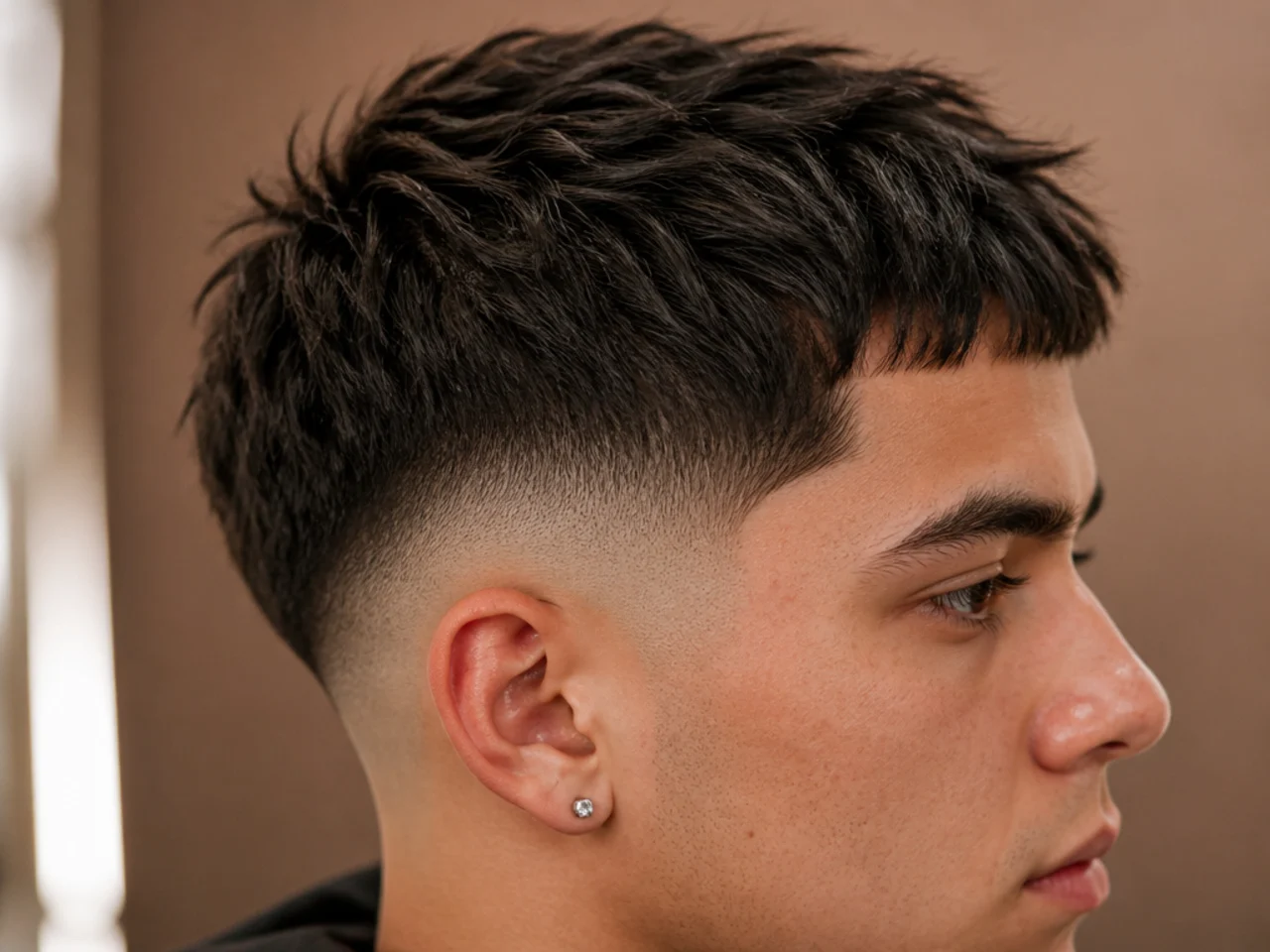
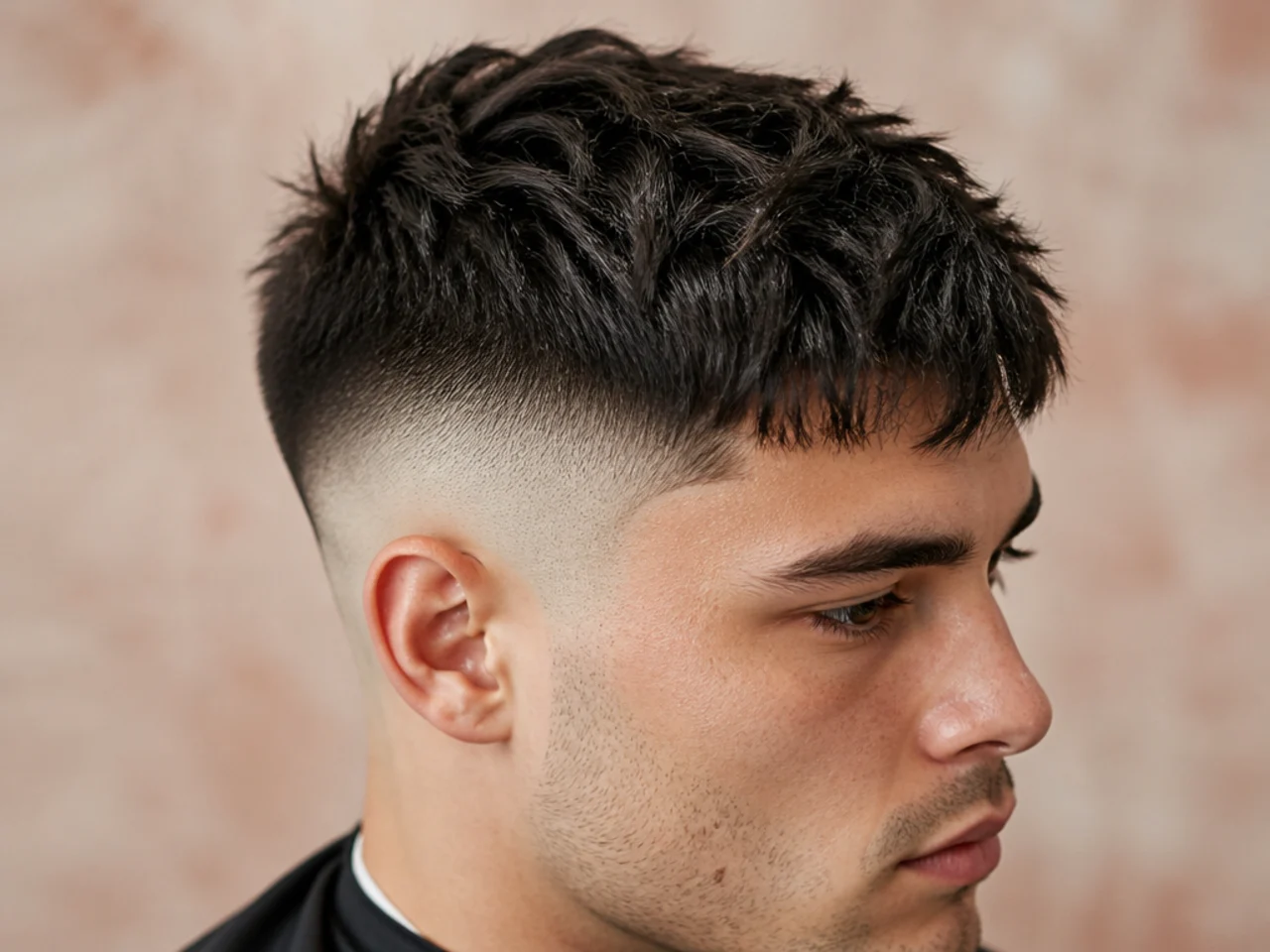
A burst fade is a fade with a specific shape. Instead of running in a straight vertical line up the side of your head like a standard fade haircut, the shortest point sits directly behind the ear, and length grows outward from there in every direction. The result is a semicircle — a burst — of clean skin or short guard that radiates around the ear like a halo.
The rest is up to you. The burst can be cut to skin (blade-to-scalp for maximum contrast), taken down with a guard 1 (short but visible), or softened with a guard 2 (cropped, less severe). The height of the arc, where it stops, and how you style the top are all separate decisions. That flexibility is why the burst pairs with almost every long-top style — mohawks, mullets, curls, comma bangs, textured fringes.
Two things stay constant. The arc curves around the ear. Length grows away from the ear in a smooth gradient. Nail those two, and you have a burst fade.
Trending Burst Fade Haircuts
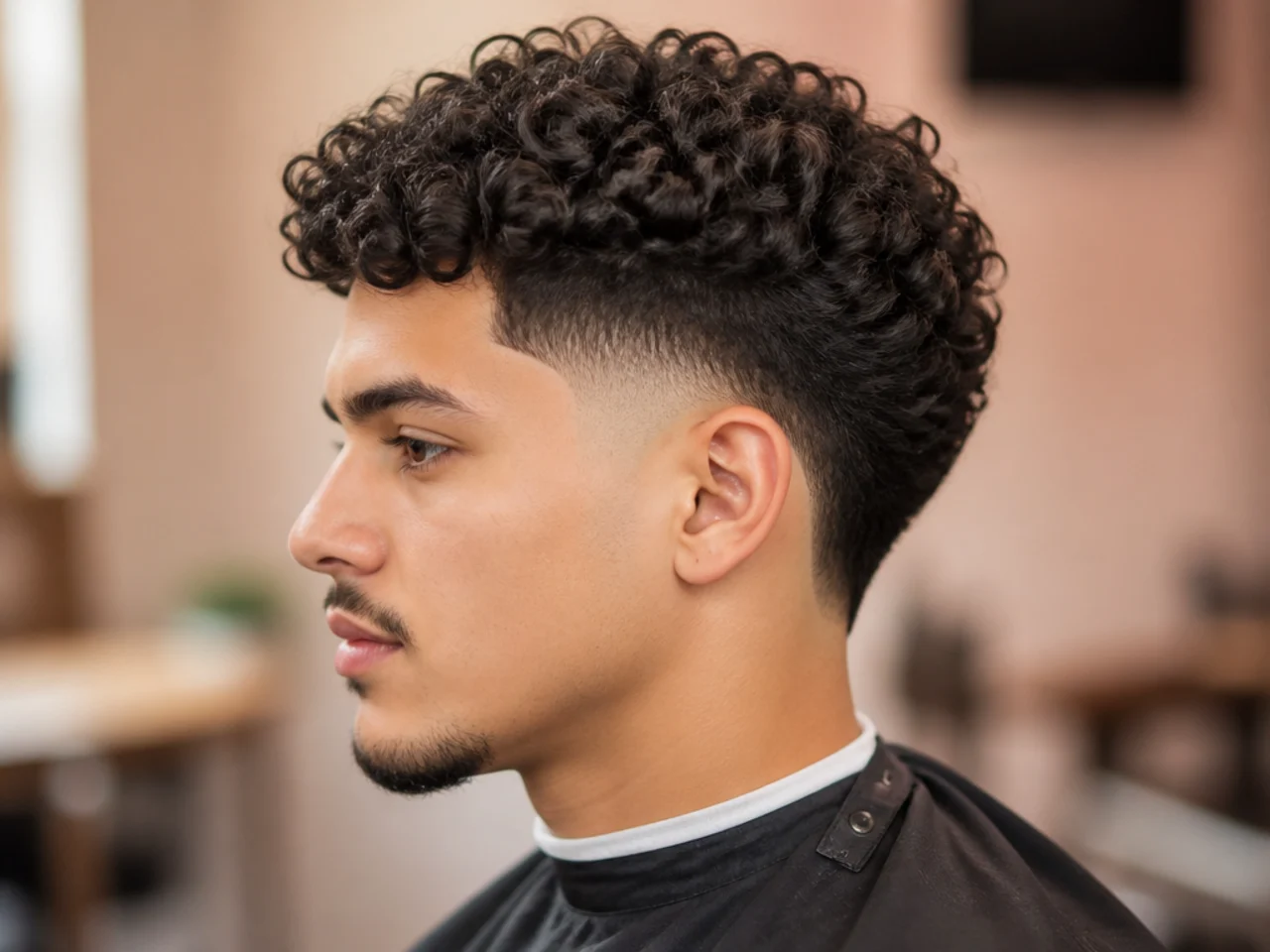
Burst Fade Mullet
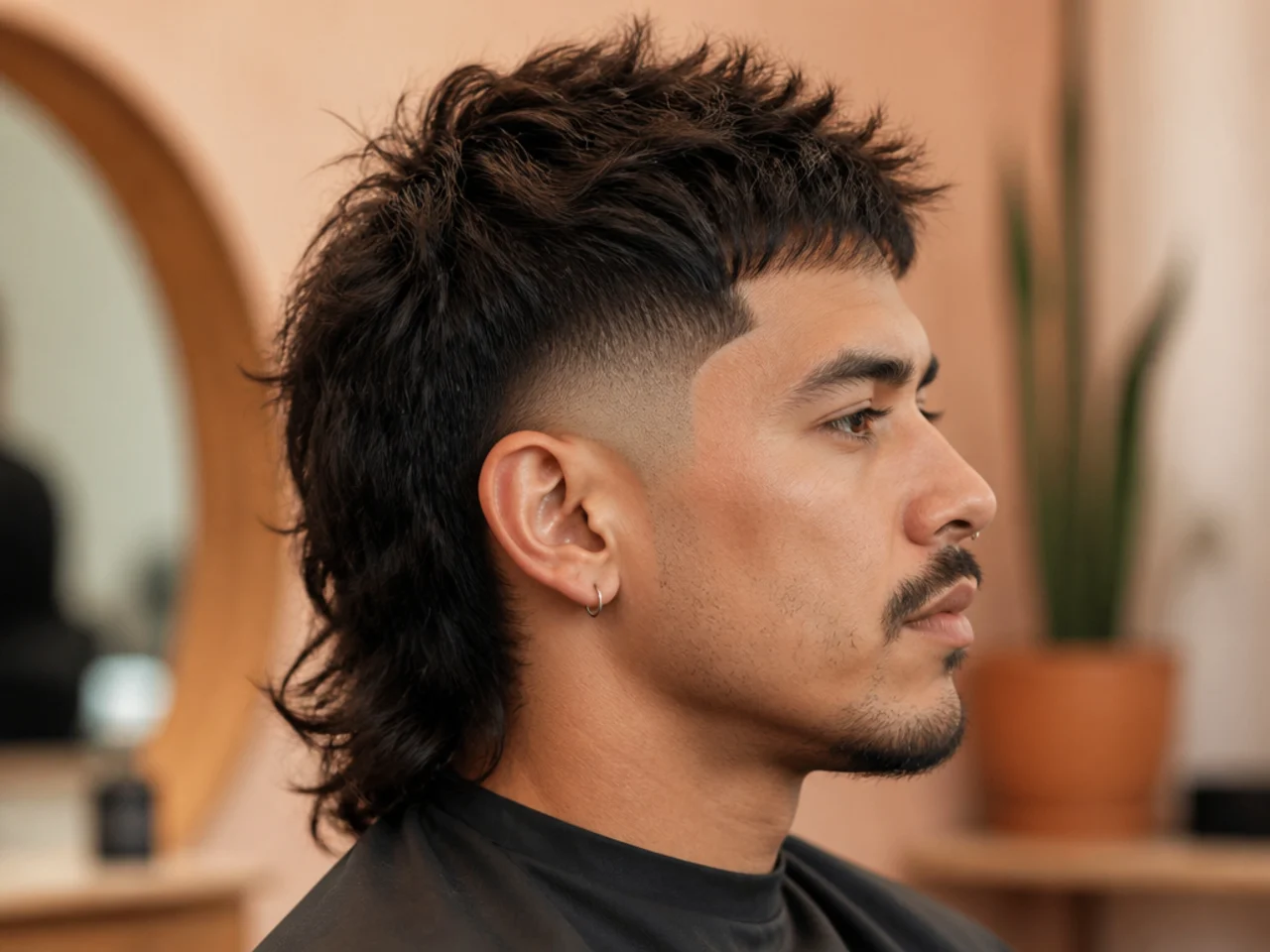
The mullet is the burst fade's most-requested pairing. The arc erases everything around the ear, so the length in back reads as deliberate instead of accidental. That disconnect between clean crescent and loose length sells the whole look. Suits oval, heart, and diamond faces where extra weight at the nape balances a narrower jaw. Ask for a burst around the ear taken to a 1, with the back kept past the collar. Blow-dry the mullet back with your fingers, then finish with a matte clay. For more variations, see our full modern mullet guide.
Low Burst Fade
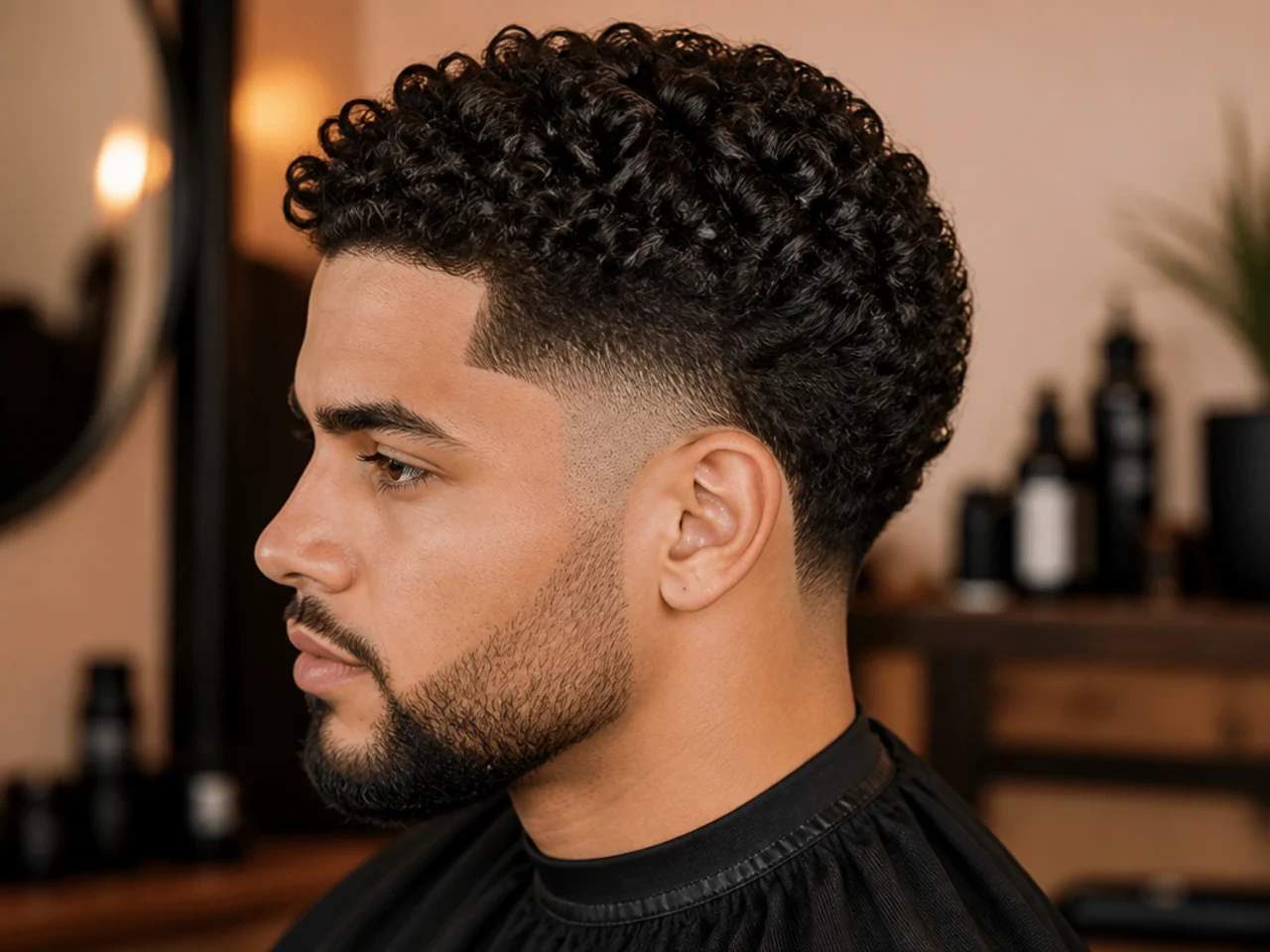
The low burst keeps the arc tight to the ear, starting just above the sideburn and dying out at the nape. Less exposed skin, more of a subtle curve — this is the office-friendly version. Works on nearly every face shape because the fade doesn't pull focus. Ask for a low burst starting at the temple line, taken to a 1 at the shortest point. Great for guys who want the shape without the drama of a standard low fade haircut running straight up the side. Blow-dry the top forward and finish with molding paste for a soft matte hold.
Burst Fade Curly Hair
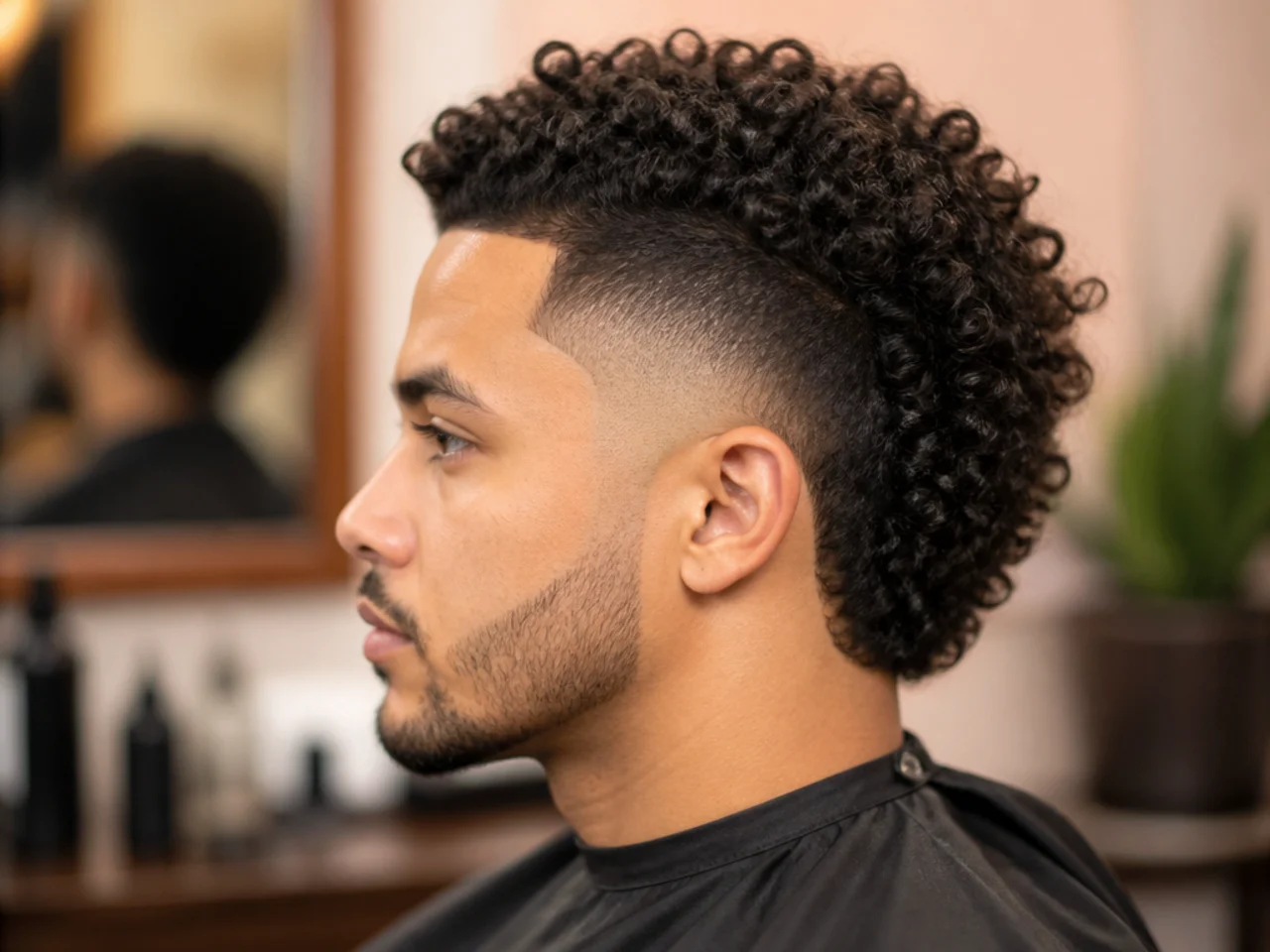
Curly hair and the burst fade share a shape — both are built on the arc. The semicircle at the ear echoes the curl on top, so the two speak the same visual language. Ask your barber to scissor-cut the top so the curl pattern is preserved, and to burst around the ear to skin for maximum contrast. Diffuse the curls dry, then finger-shape with a curl cream. Best on heart, round, and diamond faces where extra volume up top balances width. For more length and shape ideas, see our curly hairstyles for men guide.
Mid Burst Fade
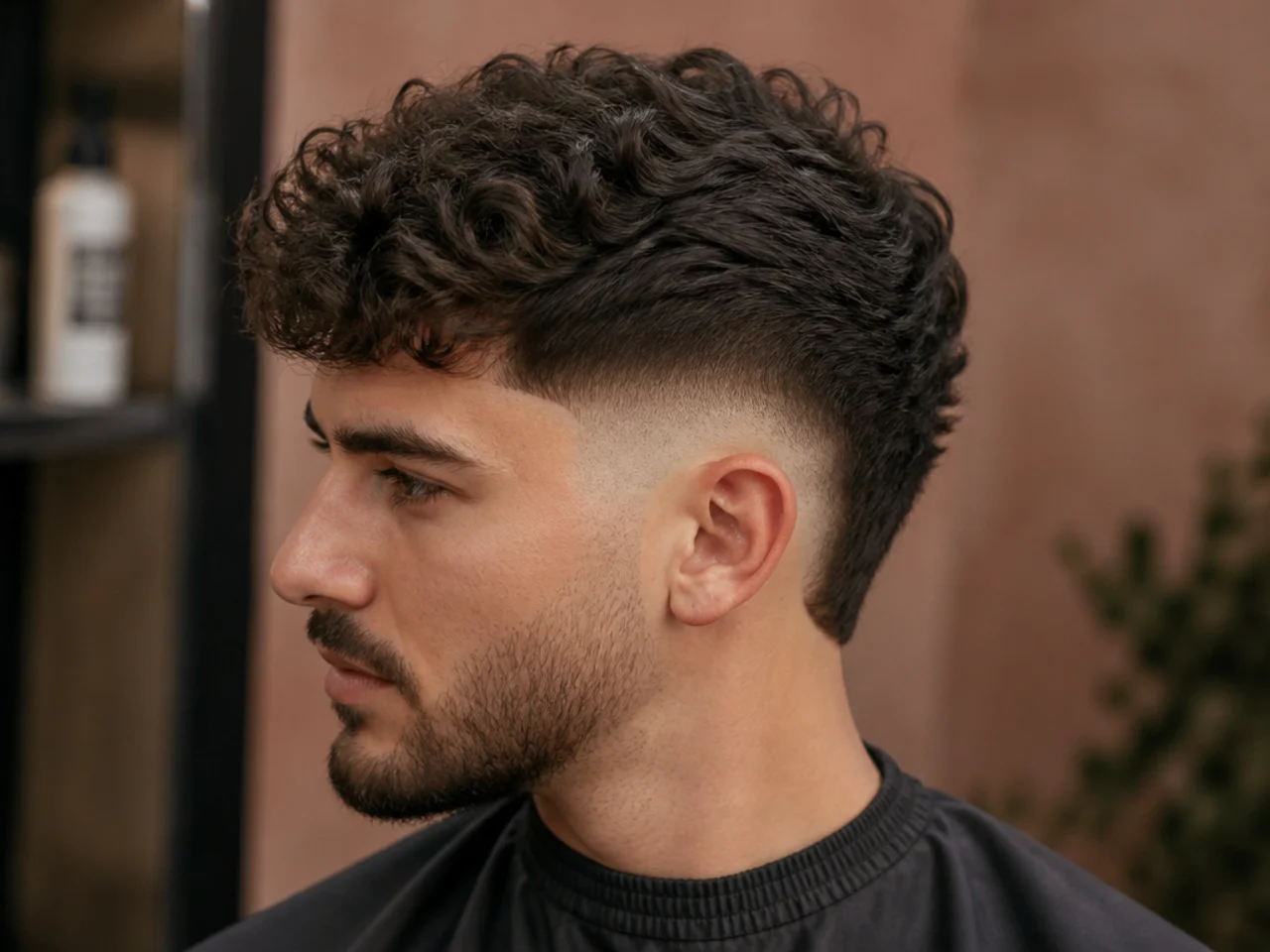
The mid burst puts the widest point of the arc right at the temple line — high enough to read as sharp, low enough to still curve. This is the neutral setting. Nothing extreme, nothing subtle. Suits square, oval, and heart faces because the mid position widens the visual weight of the face at exactly the right height. Ask for a mid burst taken to a 1, curving around the ear and dropping at the nape. Style the top forward with molding paste. If you want more height without the arc, look at a straight mid fade haircut instead.
Burst Fade Design
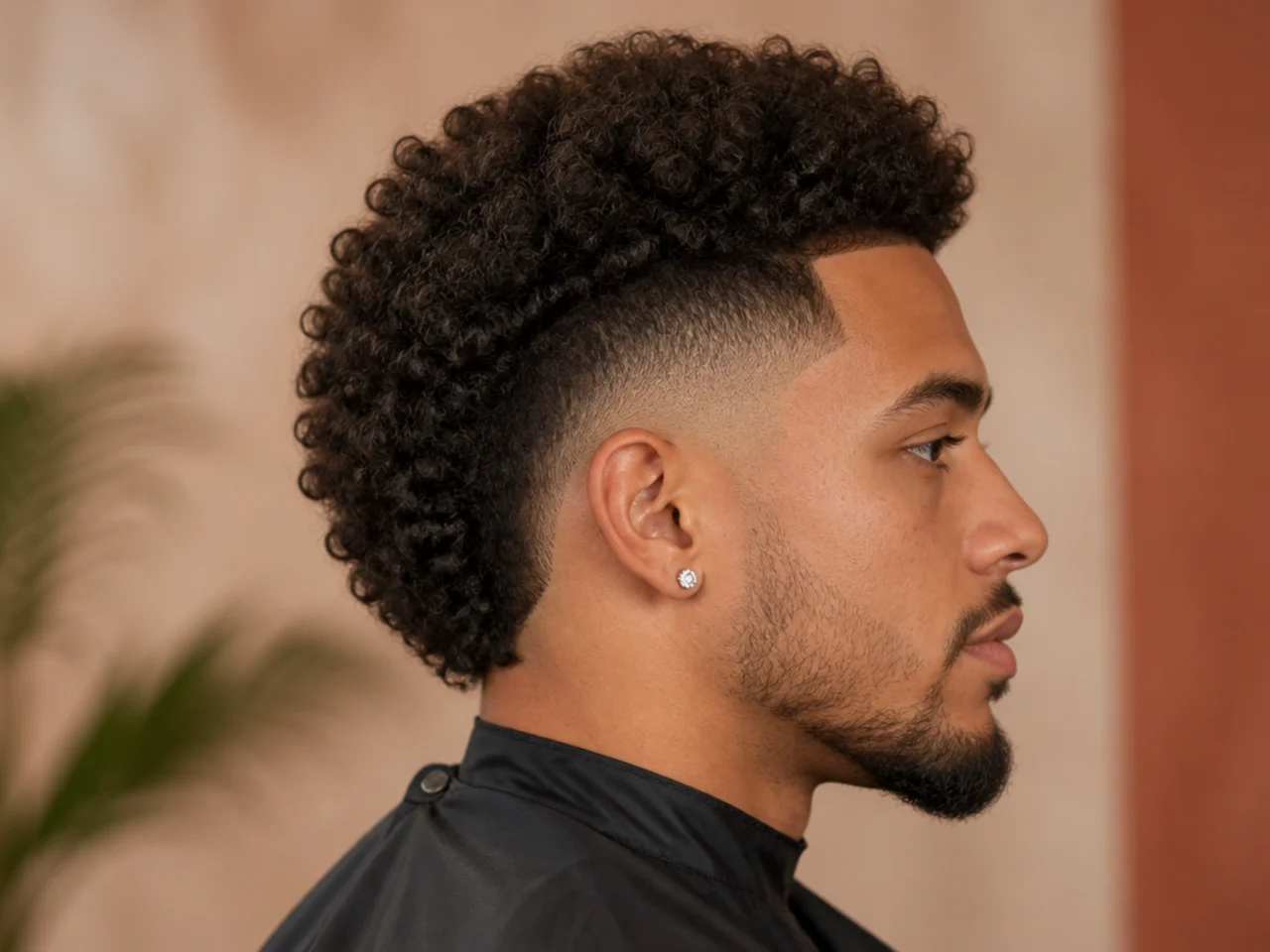
A design cut into a burst fade breaks the arc with a hard line — a shaved part, a lightning bolt, or a geometric pattern etched into the shortest section. The burst gives the design a clean canvas because the skin around the ear is already exposed. Ask for a burst to skin, then agree on the design placement before the barber picks up the trimmer. Suits oval and diamond faces where the extra visual detail flatters strong bone structure. Style the top with molding paste and let the design carry the personality.
Burst Fade Straight Hair
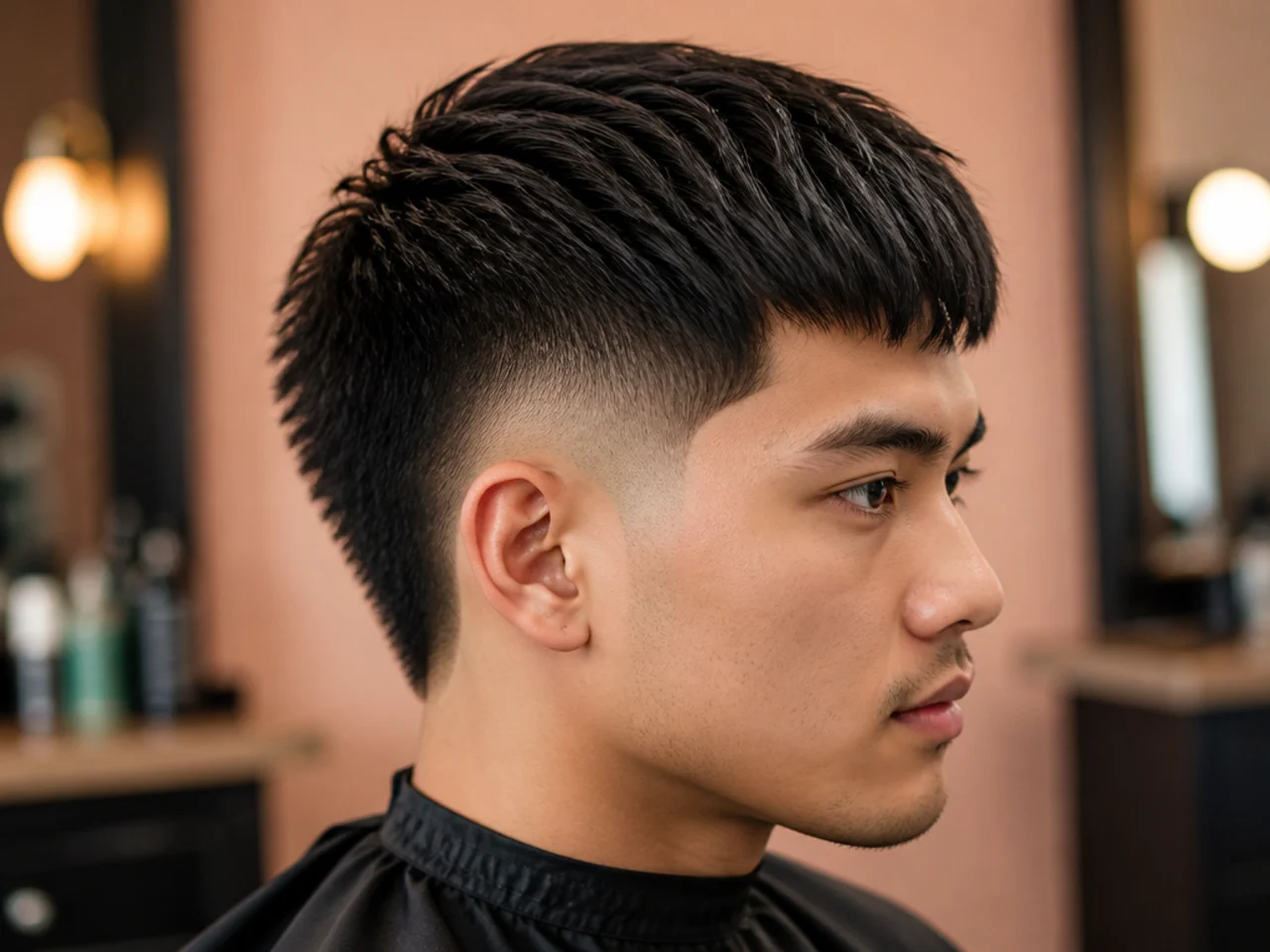
Straight hair holds the arc's contrast better than any other texture — the top falls in clean lines, so the semicircle at the ear reads as a sharp geometric shape. Ask for a burst taken to a 1 or skin, depending on how much contrast you want. Suits heart, square, and oval faces. Style the top with a light molding paste and a texture spray so straight lengths don't go flat. Because straight hair has no natural lift, take the burst higher when you want the shape to read from across the room.
Taper Burst Fade
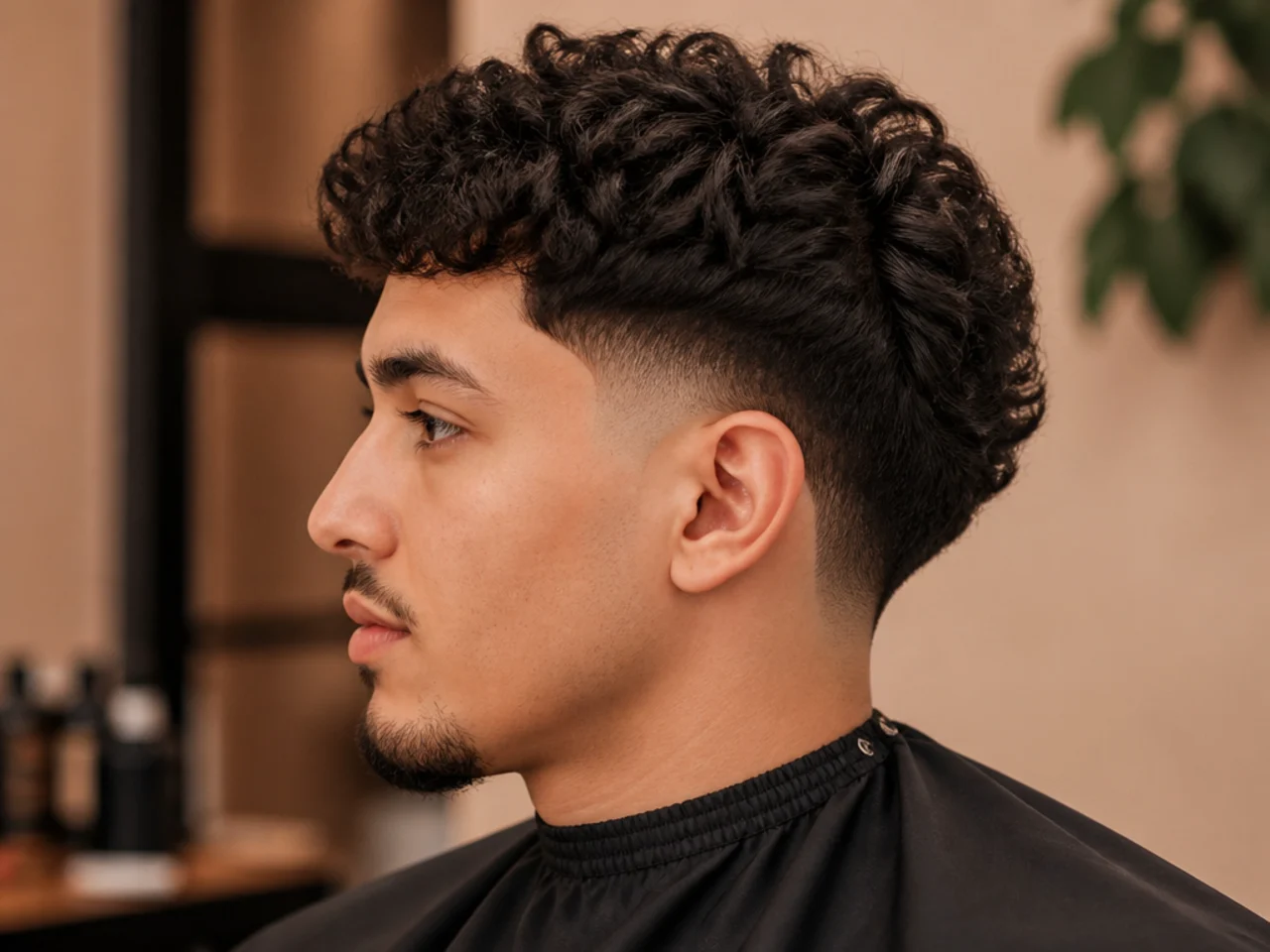
A taper burst fade combines two ideas: the arc around the ear, and a subtle taper that dies out at the neckline instead of a hard fade line. The taper softens the back so the burst becomes the focal point. Ask for a burst to skin around the ear and a taper down the neckline. Suits oval, heart, and diamond faces. Style the top with molding paste worked through damp hair, then finish with texture spray. Think of it as a burst up front and a high taper fade around the back.
Burst Fade Mohawk
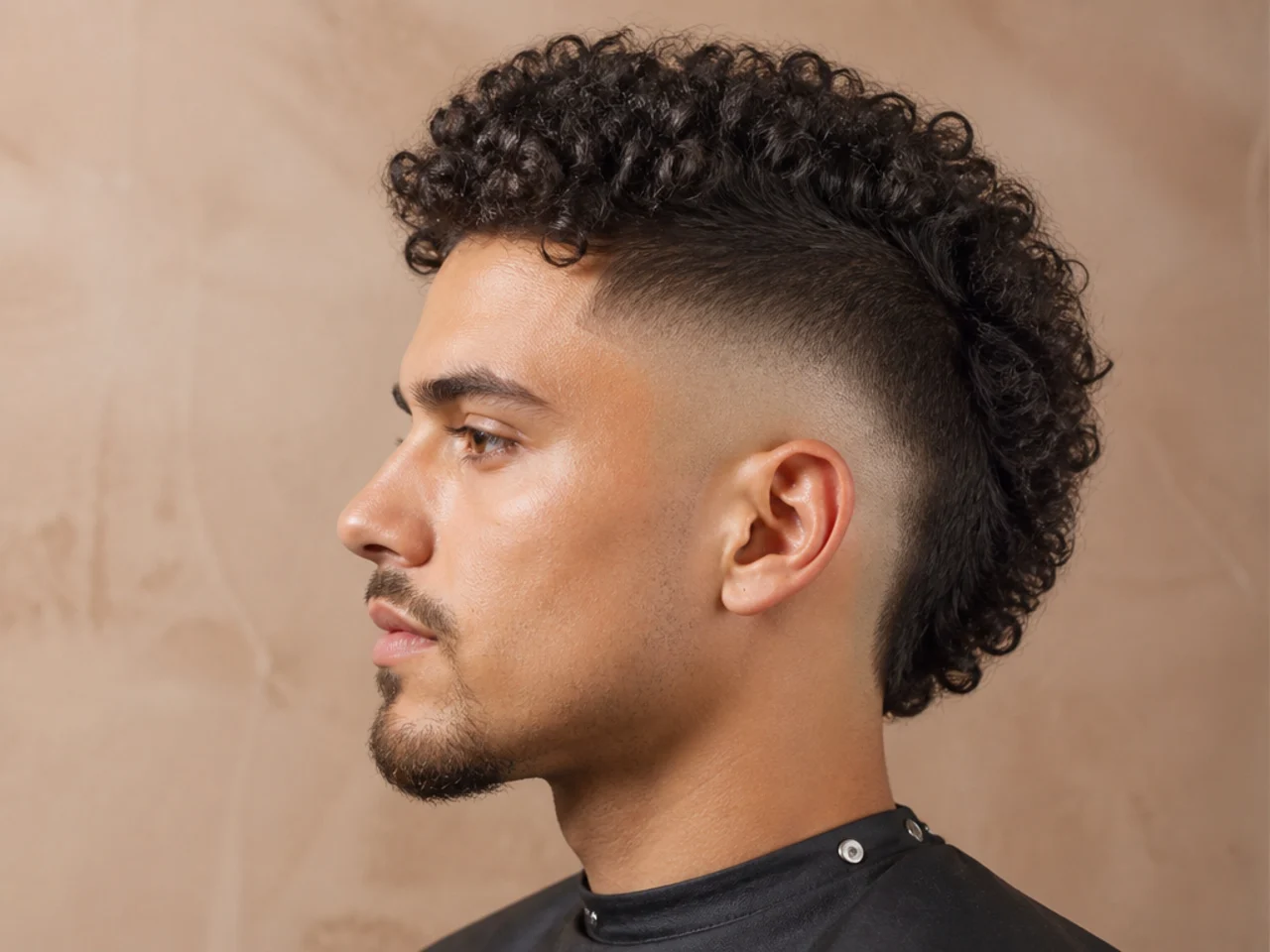
The burst fade mohawk keeps a strip of length running down the center while the arcs on both sides burn away to skin. The two bursts frame the strip like parentheses. Ideal on diamond, oval, and round faces where the vertical line adds length. Ask for double bursts to skin, with a mohawk strip left at your preferred width. Blow-dry the strip upward, then hold with a strong-hold clay or paste. This is the boldest burst variation — commit to the shape and the upkeep.
High Burst Fade
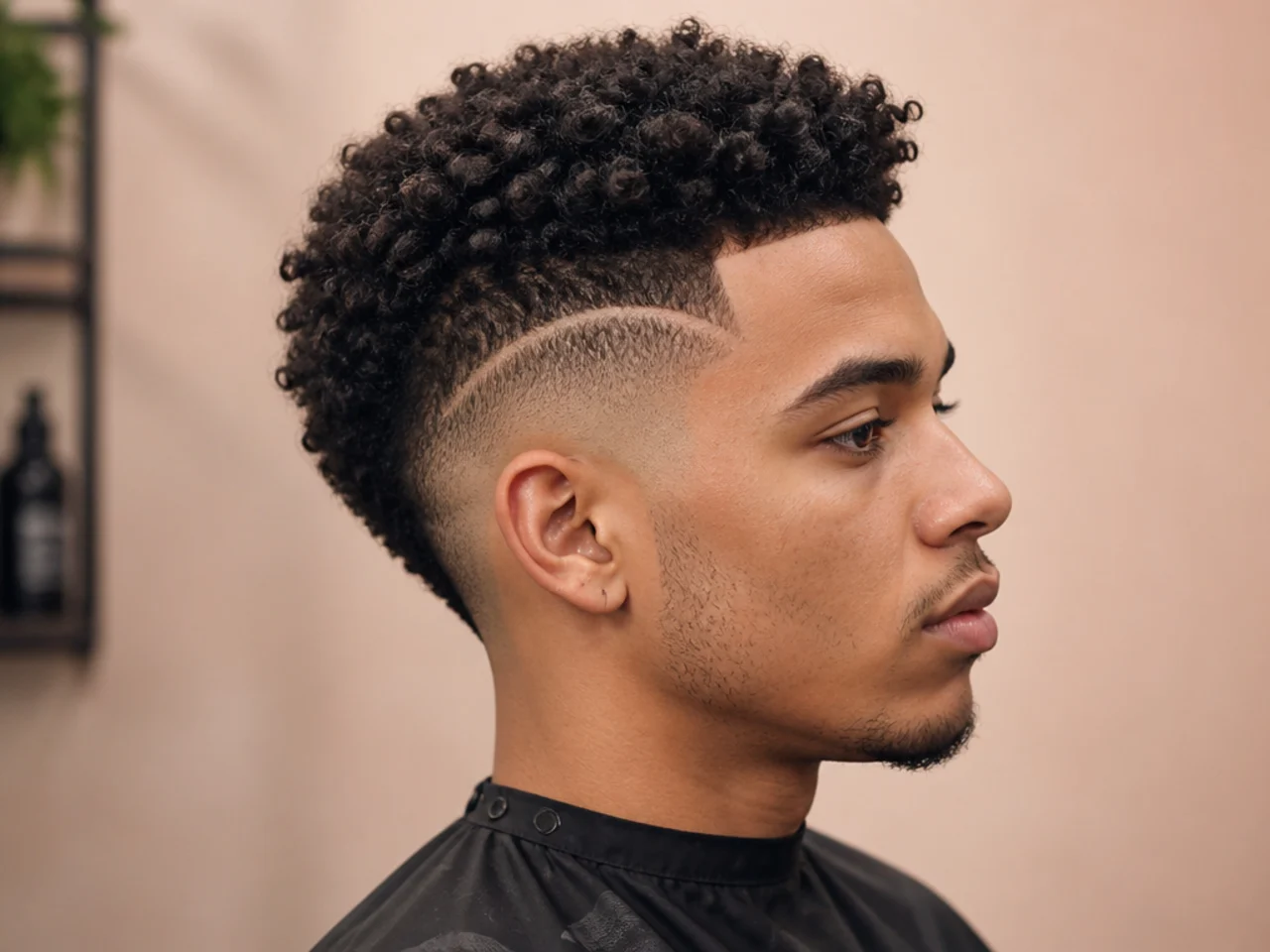
The high burst puts the widest point of the arc up near the temple, exposing more skin than any other version. Bold, angular, and hard to miss. Works on heart, oval, and round faces because the exposed side visually narrows a wider face. Ask for a high burst to skin, starting at the temple line and curving down past the ear. Style curly or coily tops with a curl-defining cream; style straight tops with molding paste for lift. This is the closest a burst gets to reading like an undercut fade.
Burst Fade Buzz Cut
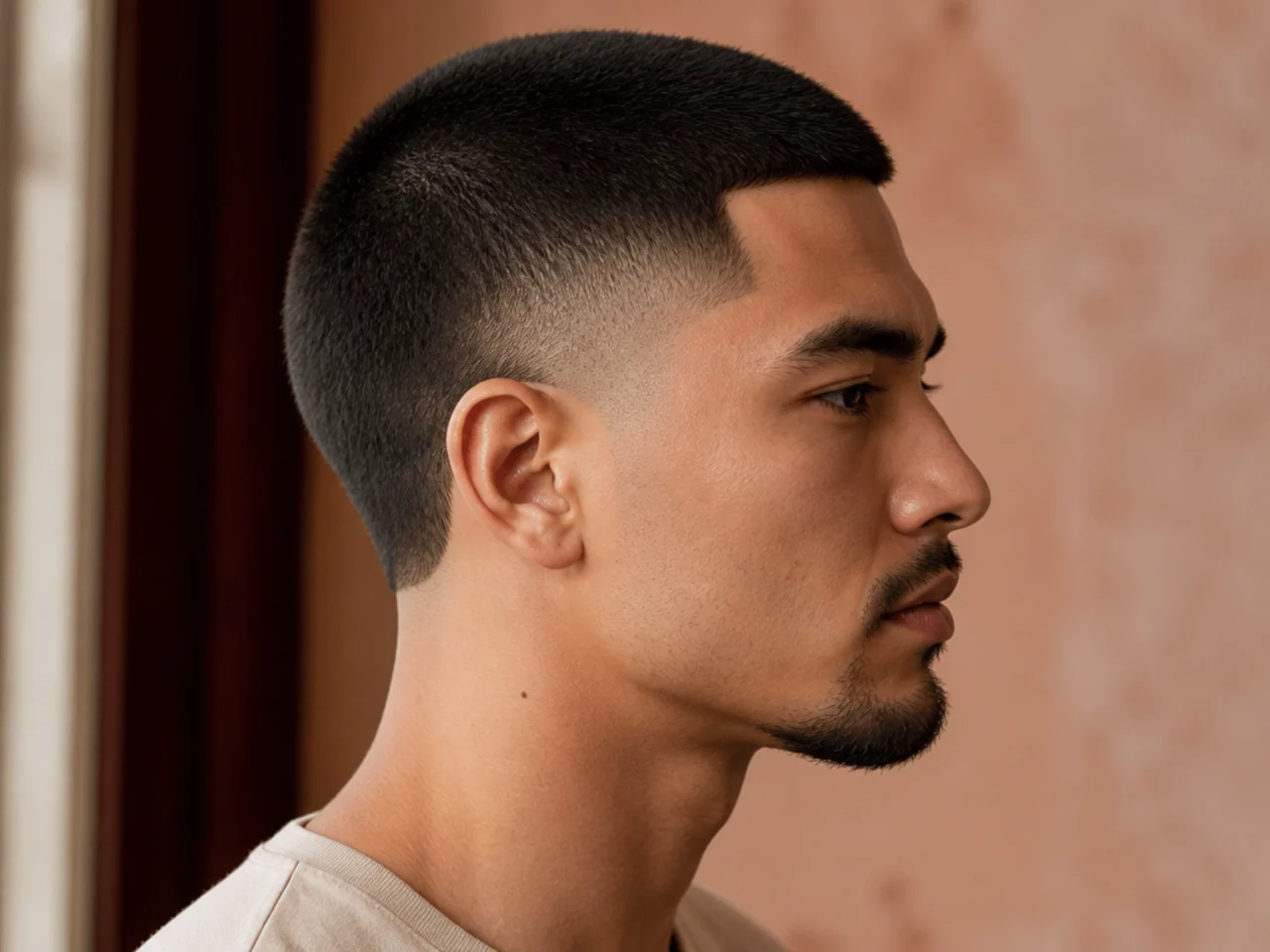
A buzz cut with a burst fade takes the same short guard across the top and adds the semicircle around the ear. Everything stays short, but the arc still reads. Low maintenance, zero styling, high impact. Ask for a burst to skin with a 1 or 2 guard across the top — one guard down from your top length. Suits oval and square faces where a short crop already flatters the bone structure. Rub styling cream through with your palms and you're done in ten seconds.
Burst Fade Black Men
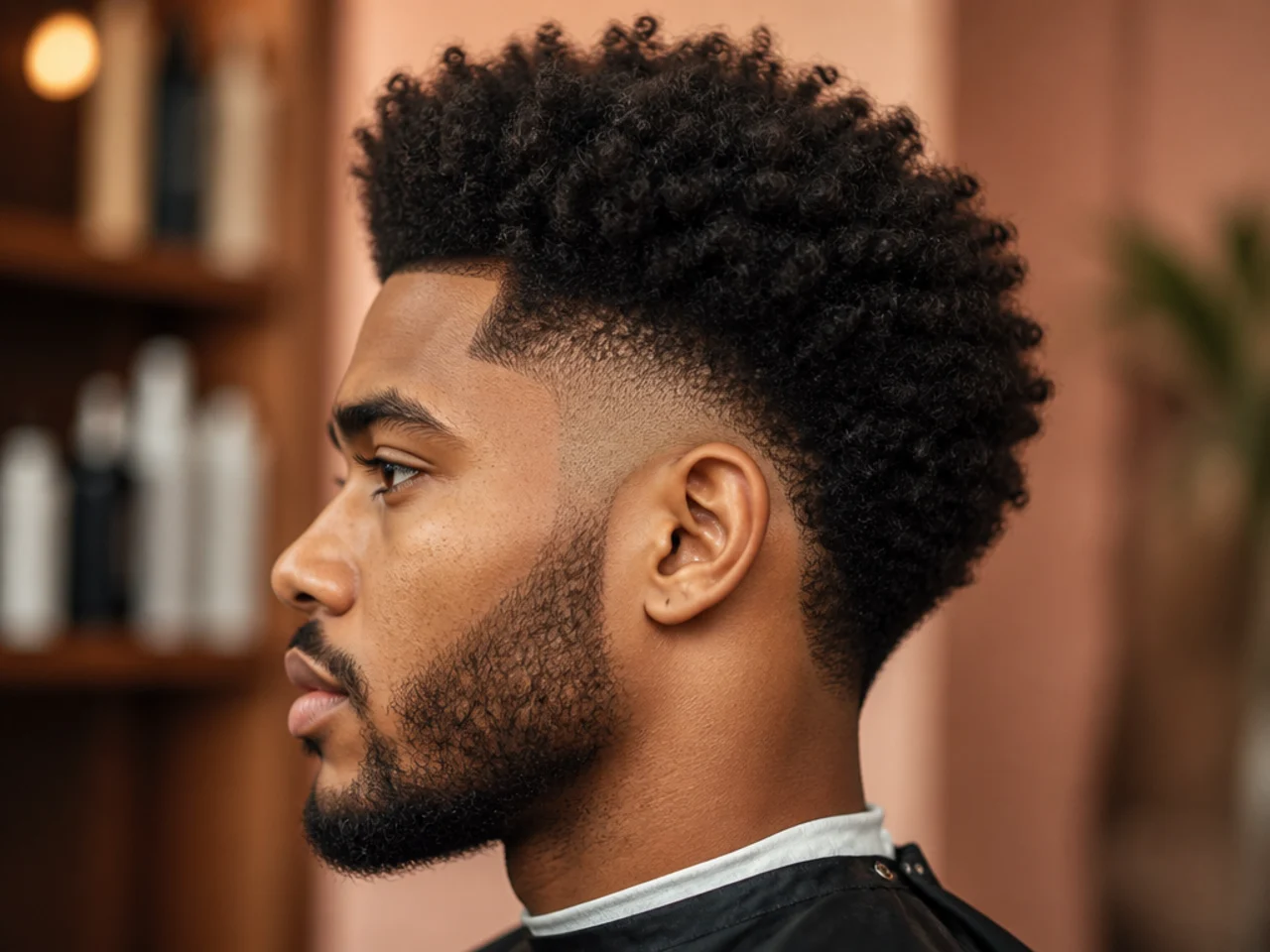
On Black hair, the burst fade highlights the natural coil pattern on top by keeping the shortest part of the fade tight to the head. The arc reads even cleaner against darker skin. Ask for a burst to skin around the ear, with the top scissor-cut so the coils keep their spring. Suits oval, round, and diamond faces. Style with a moisturizing pomade or texturizing cream and finger-coil any pieces that need extra definition. Book every two weeks — the shape blurs fast on tight textures.
Burst Fade Short Hair
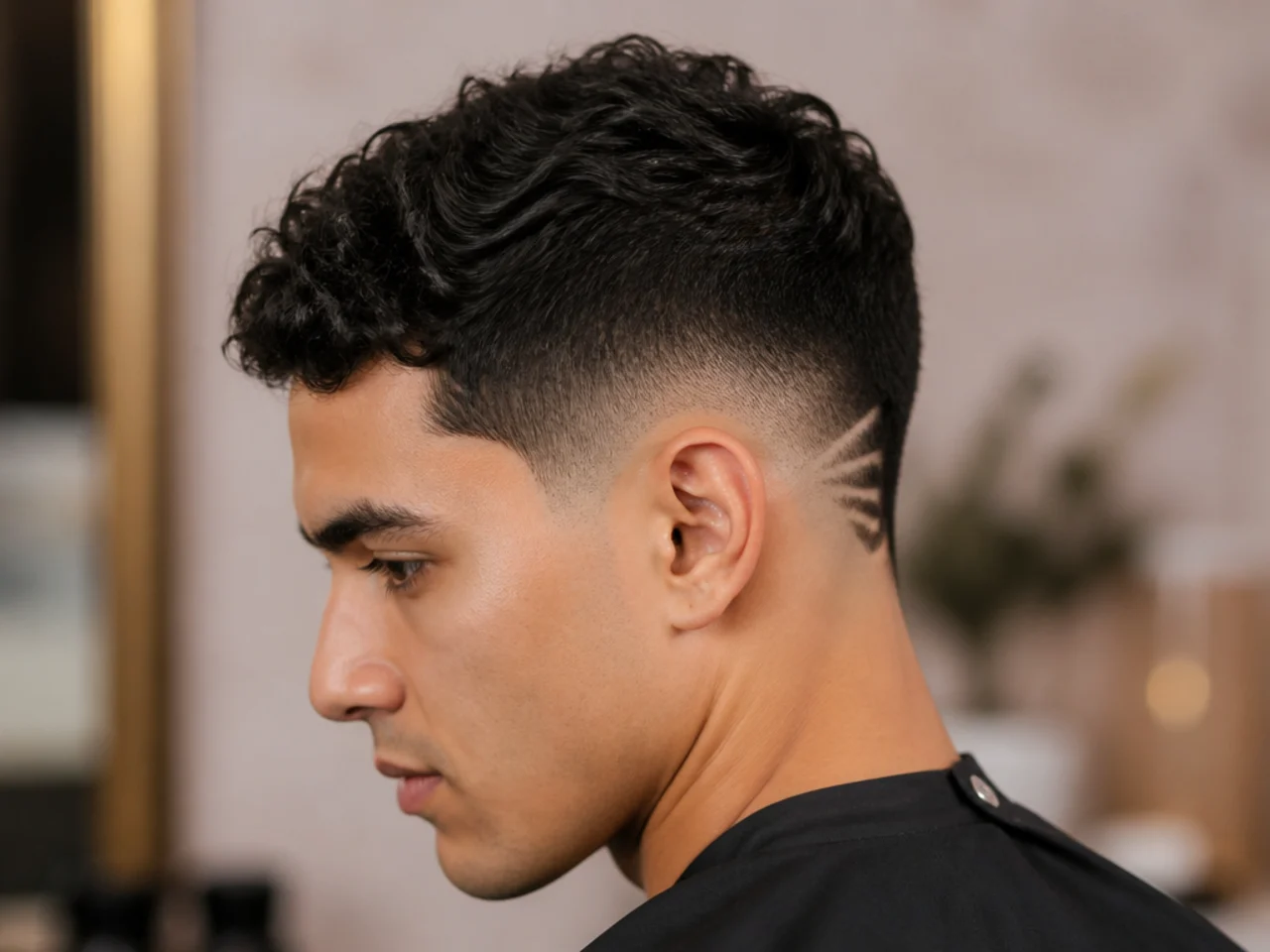
A burst fade on short hair takes a close skin fade around the ear and blends it into a short, textured crop up top. Everything stays under two inches. Clean, easy to maintain, and hard to mess up. Ask for a burst to skin with a 2 guard on top. Suits round, oval, and square faces. Rub styling cream through damp hair with your fingers and let it air-dry. No product, no problem — the cut does the work.
Burst Fade Long Hair
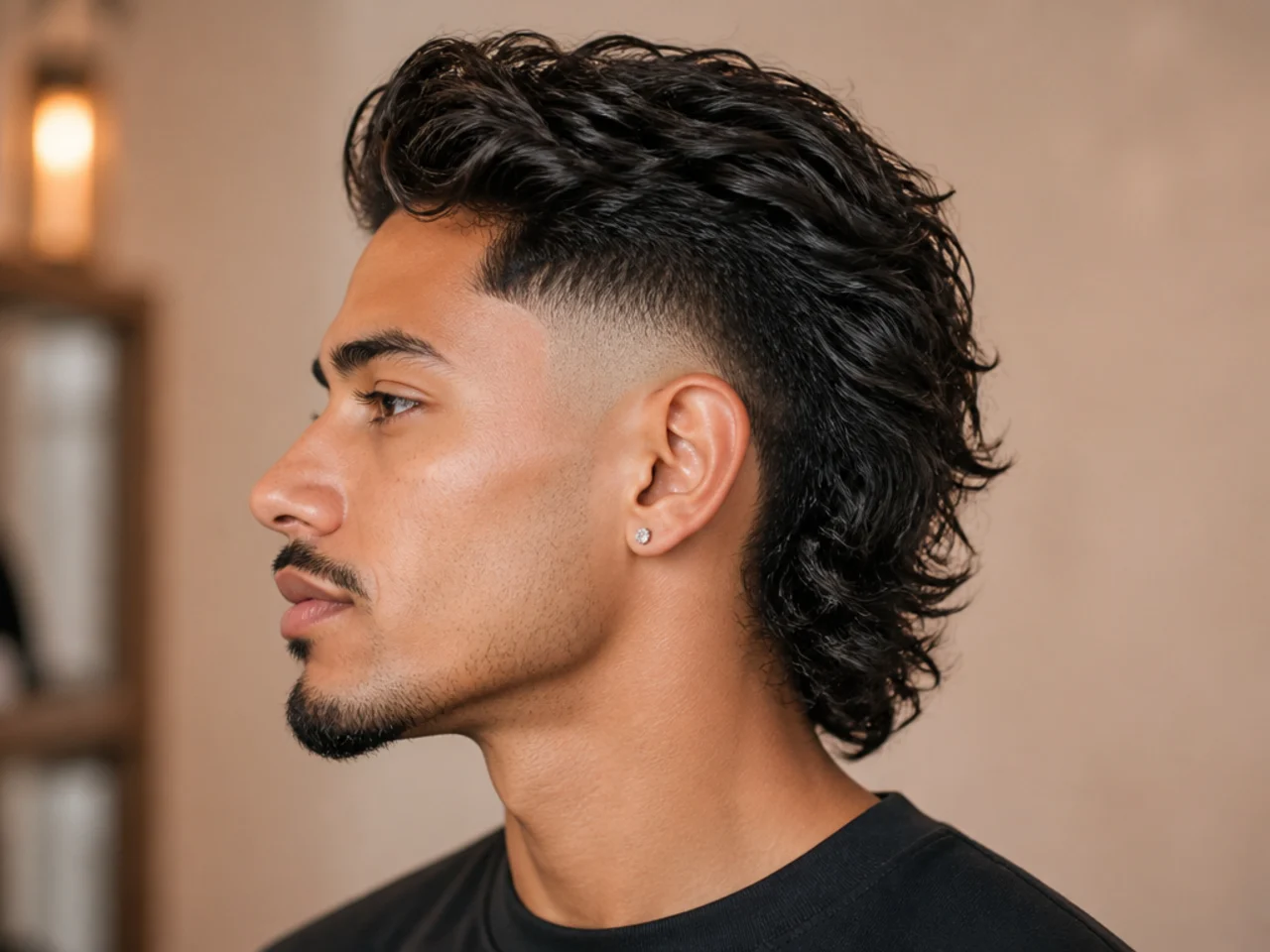
Long hair on top plus a burst on the sides is one of the boldest contrasts in barbering — the length flows freely while the ear stays exposed. Ask for a burst to a 1 or skin, with the top left three to five inches so it moves. Blow-dry with your fingers pointed up for volume, then work in a light clay. Popular with teens and younger guys who want maximum length without giving up structure. Browse our full medium length hairstyles for men guide for pairing ideas.
Low Taper Burst Fade
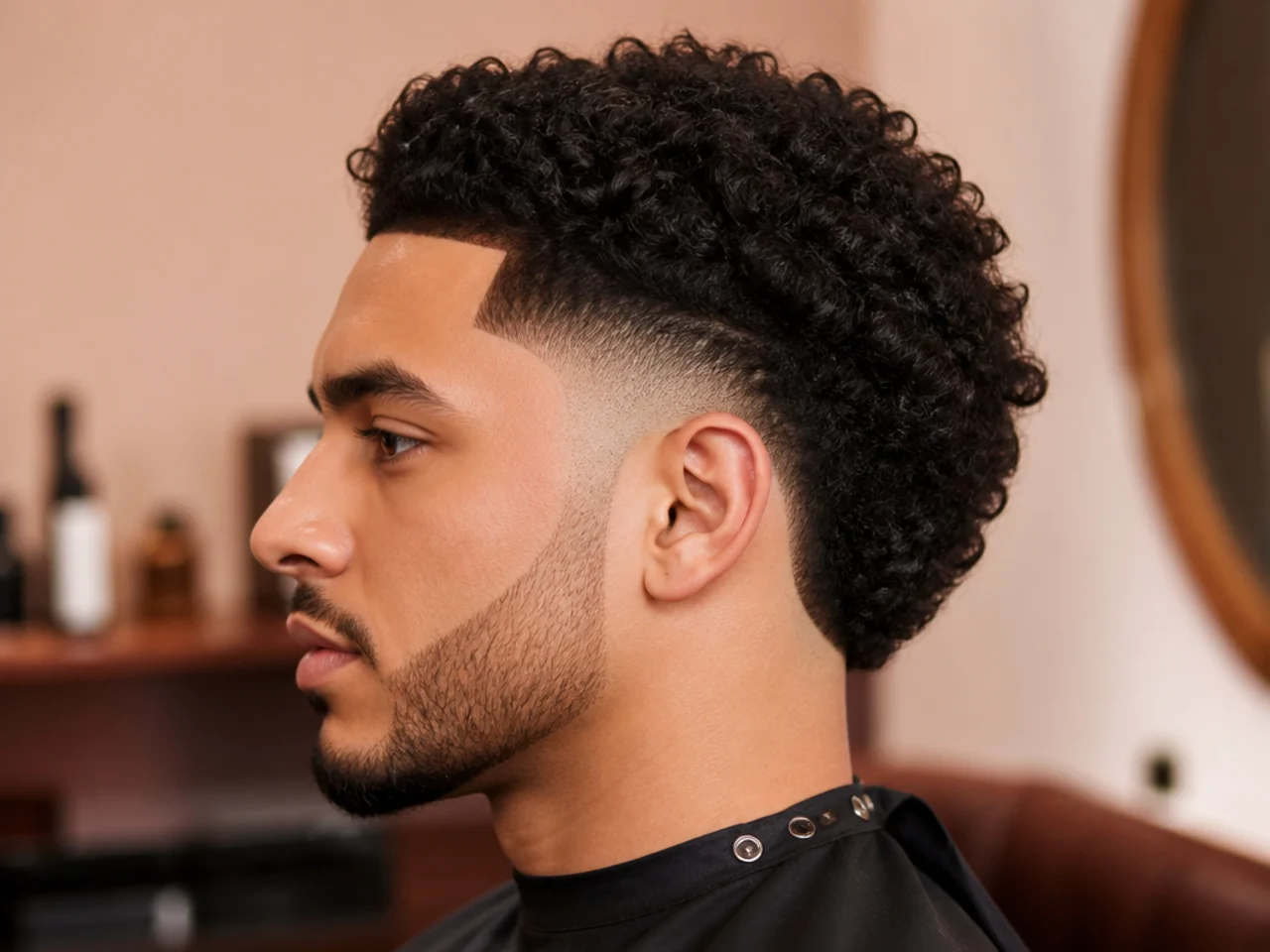
A low taper burst fade sits at the softest end of the spectrum. The arc curves low around the ear, the neckline tapers instead of fading, and the top stays full. It's a haircut you can wear anywhere — job interviews, weddings, weekends. Ask for a low burst to a 1 with a taper at the nape. Suits every face shape, which is why it's the safest burst on the list. Style with molding paste for a soft matte finish. This is the burst's answer to the traditional low taper fade.
Burst Fade Wavy Hair
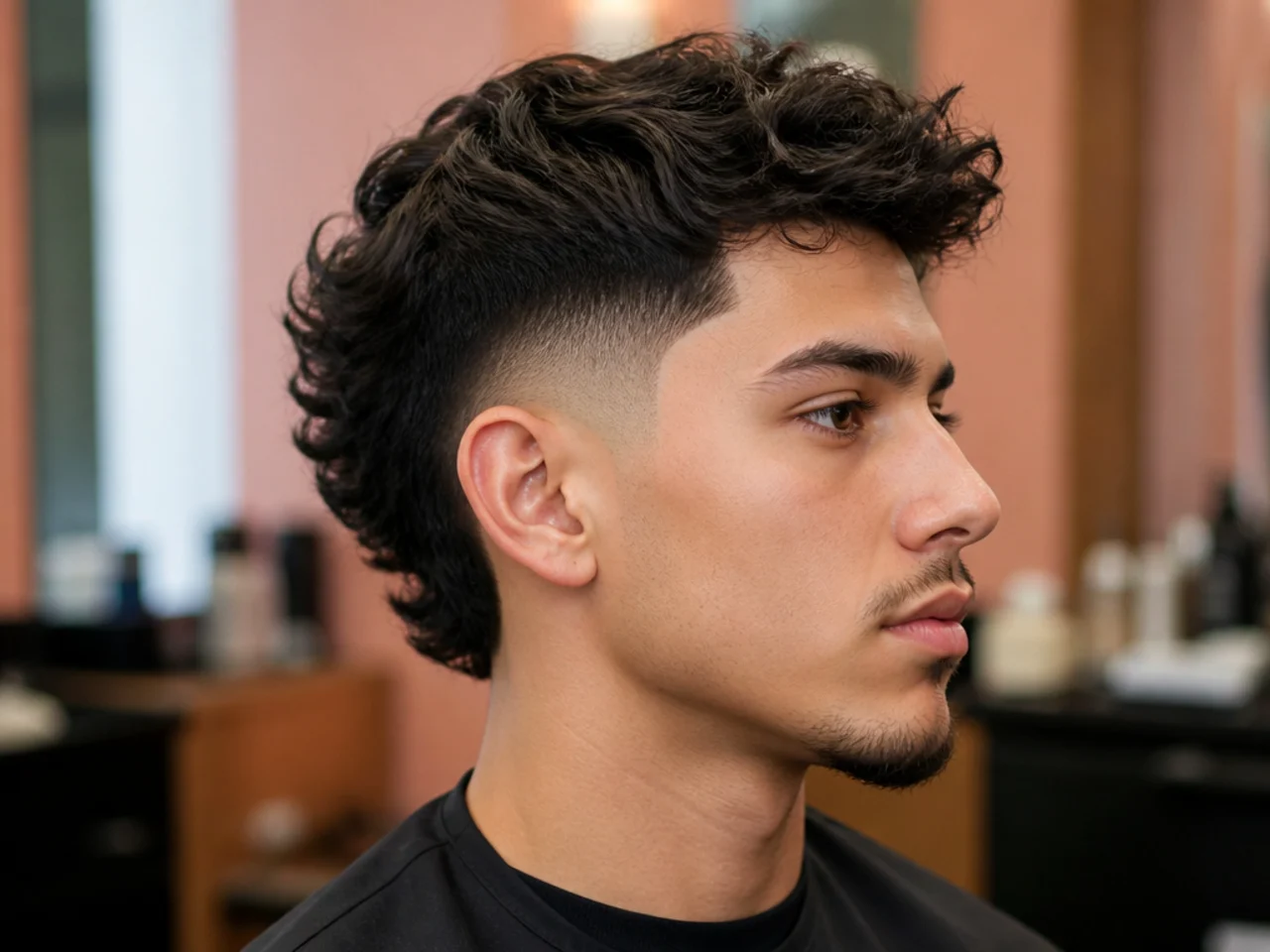
Wavy hair reads like curly hair's more casual cousin — enough movement to give the top life, enough weight to fall predictably. The burst fade compliments waves because the arc is itself a wave. Ask for a burst to a 1, with the top scissor-cut so the wave pattern stays intact. Suits oval, heart, and diamond faces. Blow-dry with your fingers pushing the waves in the direction they naturally fall, then finish with a texture clay for grip. Don't over-product — waves want air.
Burst Fade Middle Part
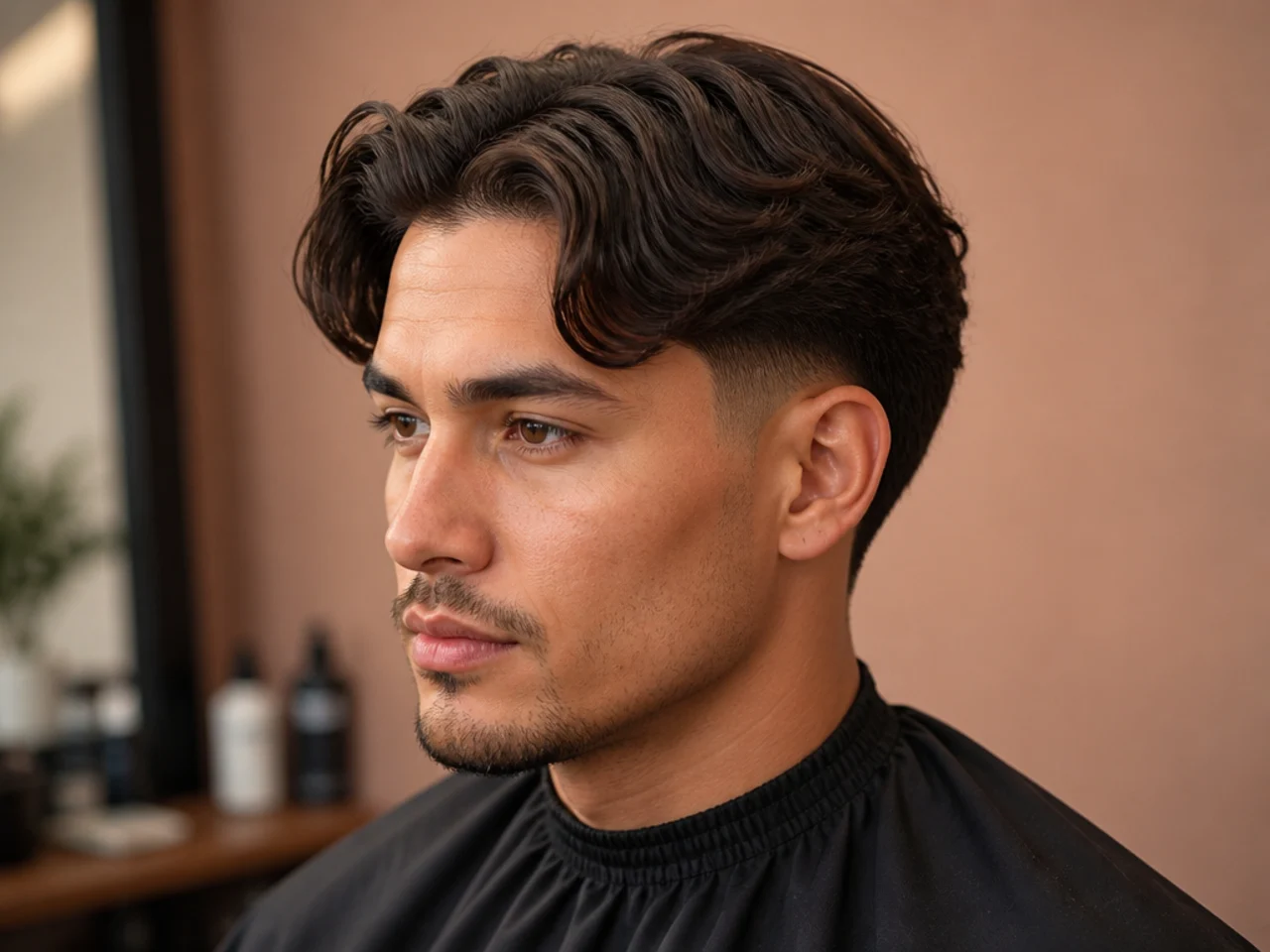
A middle part with a burst fade splits a longer top down the center, letting each side fall toward the ears. The arc mirrors the split — parted top, curved sides. Ask for a burst to a 1 with the top left long enough to part cleanly (usually three to four inches). Suits oval and heart faces. Blow-dry the top forward with a round brush, then create the part with a fine-tooth comb and finish with styling cream. Pairs beautifully with comma haircut styling for a modern K-drama read.
Burst Fade Slick Back
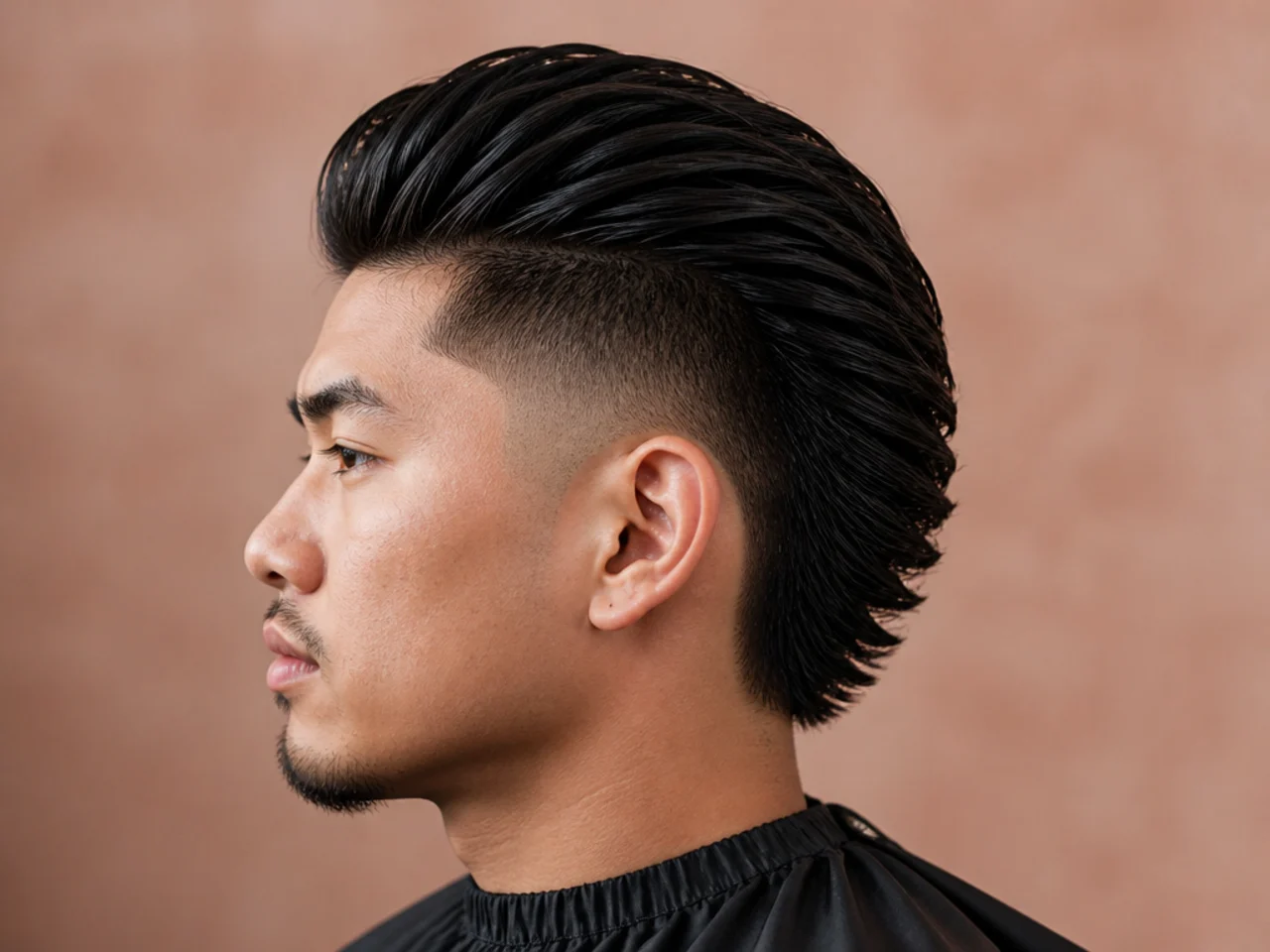
Slicking the top back over a burst fade turns a modern shape into a classic silhouette. The exposed ear reads as intentional; the slicked hair reads as polished. Ask for a burst to skin with the top left long enough to comb (three inches minimum). Suits oval, square, and diamond faces. Blow-dry the top back with a paddle brush, then apply strong-hold gel or pomade with a fine comb. Perfect for guys who want structure without a shaved head.
Burst Fade Textured Fringe
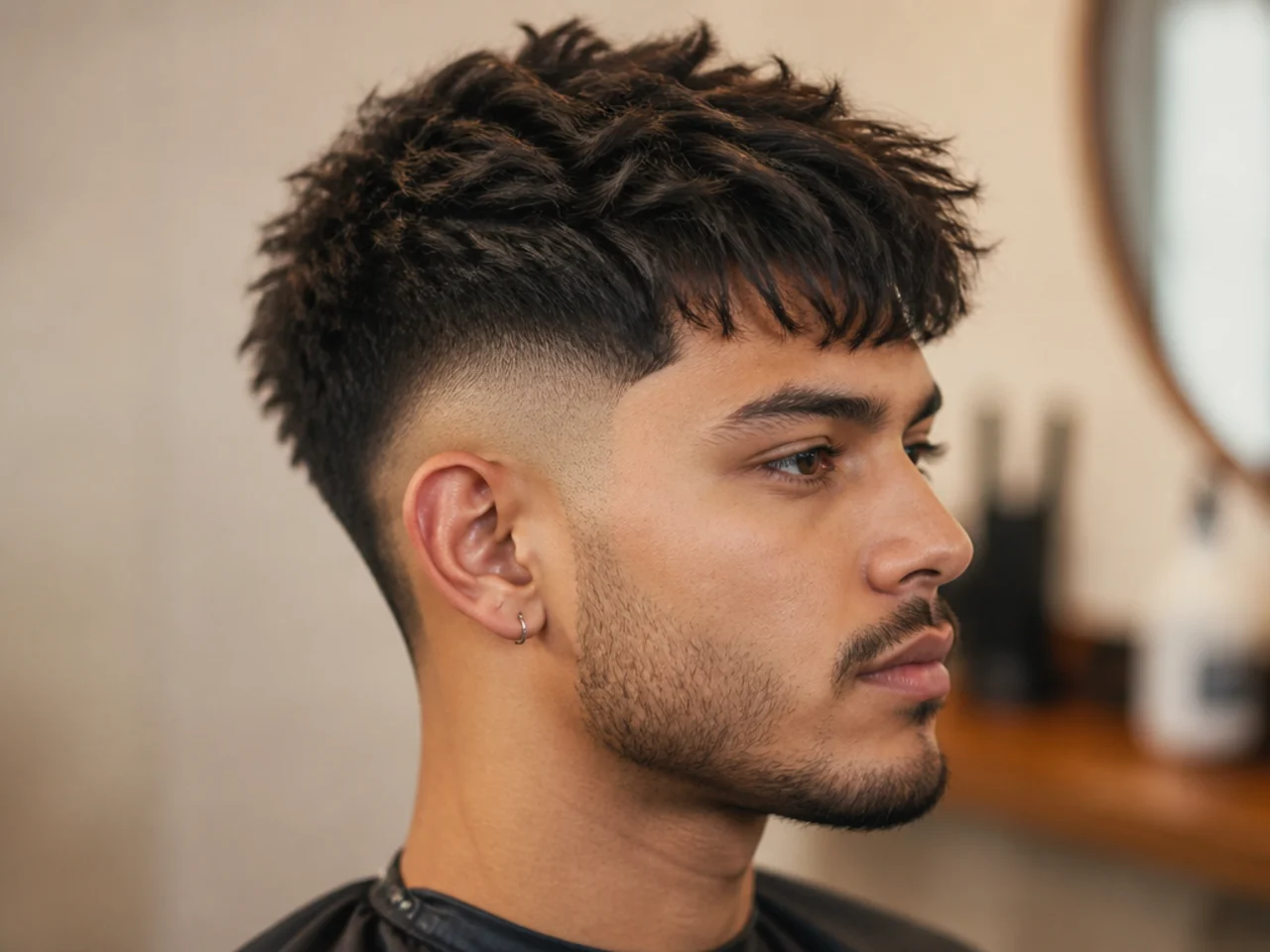
A textured fringe over a burst fade sends messy, choppy length forward onto the forehead while the sides sit clean. The contrast is the whole game. Ask for a burst to a 1 with the top left three inches and point-cut to build texture. Suits round, oval, and heart faces where the fringe softens the top of the face. Blow-dry forward, then work a texturizing clay through with your fingers. For more fringe direction, browse our textured haircuts collection.
Burst Fade Comb Over
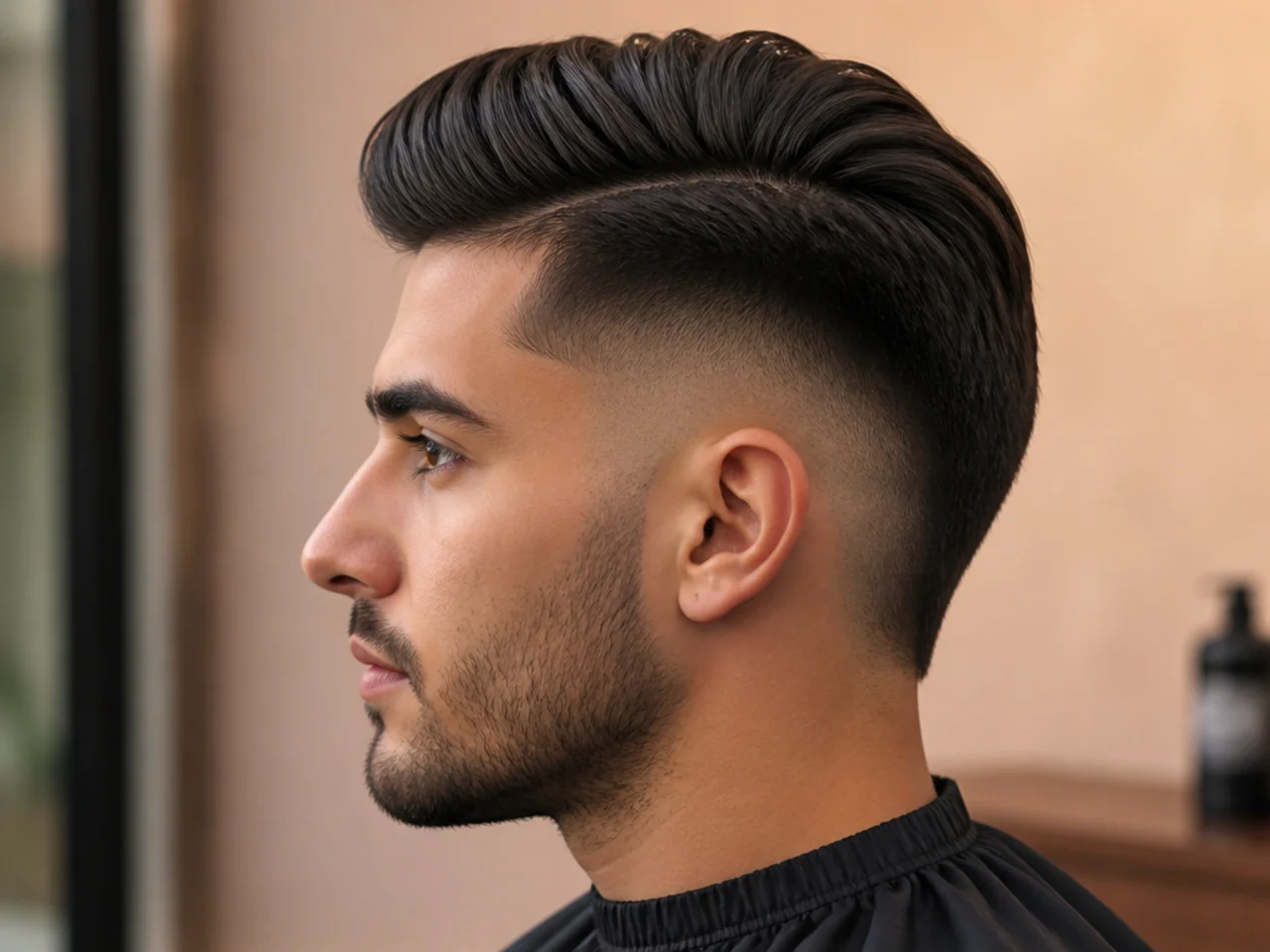
A comb over sends a longer top swept to one side while the burst holds the ear line clean. This is the barber's answer to a boardroom cut with edge. Ask for a burst to a 1 with the top left three inches, disconnected from the side. Suits oval and square faces. Blow-dry across with a paddle brush, then finish with molding paste and a comb for the part line. Reapply through the day if you want the polish to hold.
Burst Fade Edgar
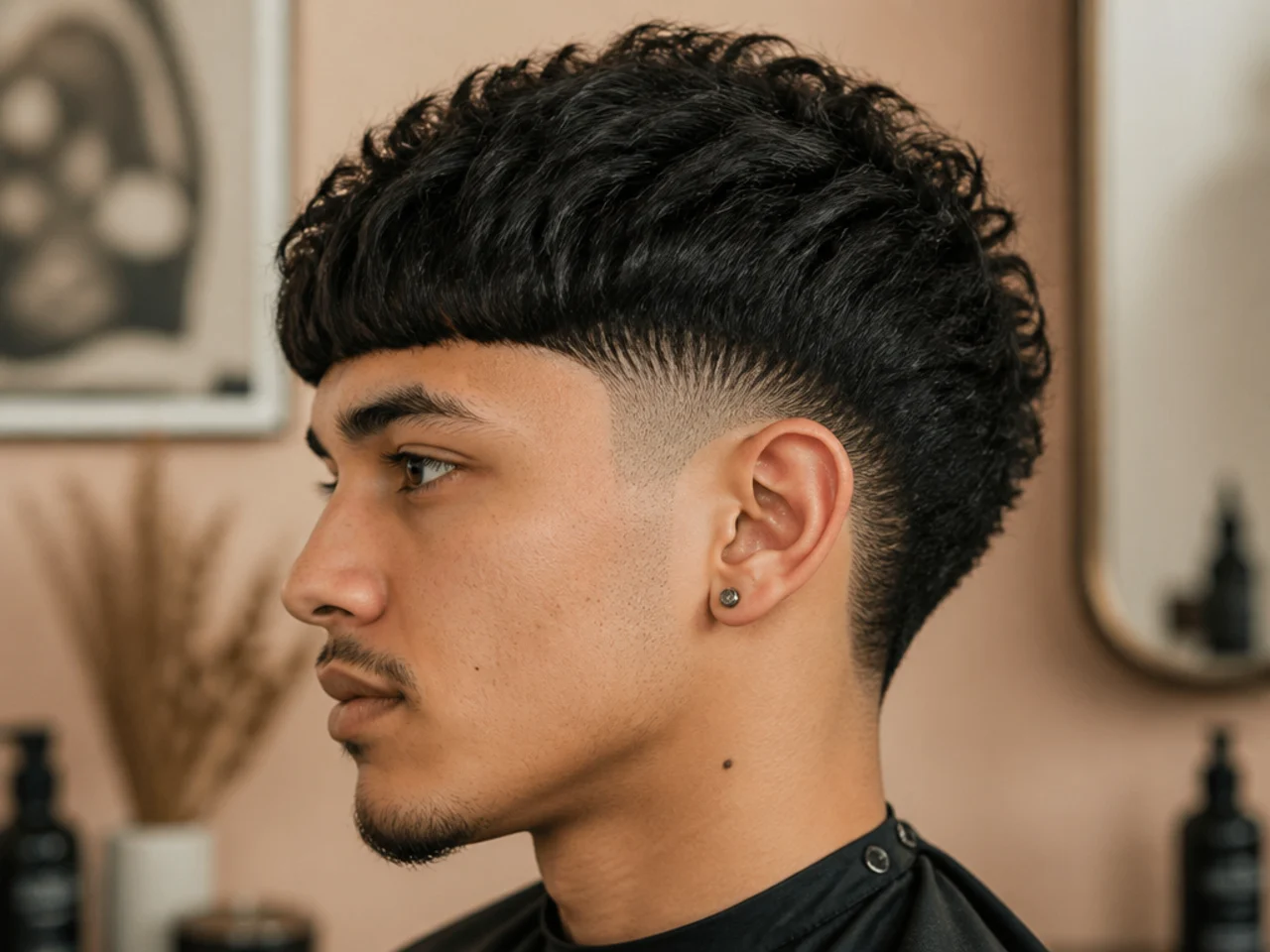
The Edgar drops a straight-across fringe onto the forehead, and the burst fade sharpens the sides so the fringe reads as the only piece with weight. Ask for a burst to a 1 or skin, with an Edgar cut on top left two to three inches. Suits round and oval faces where the flat fringe adds structure. Style with a light styling cream after a quick blow-dry forward. Fringe length is personal — bring a photo so the barber knows exactly where you want the front to sit.
Mid Taper Burst Fade
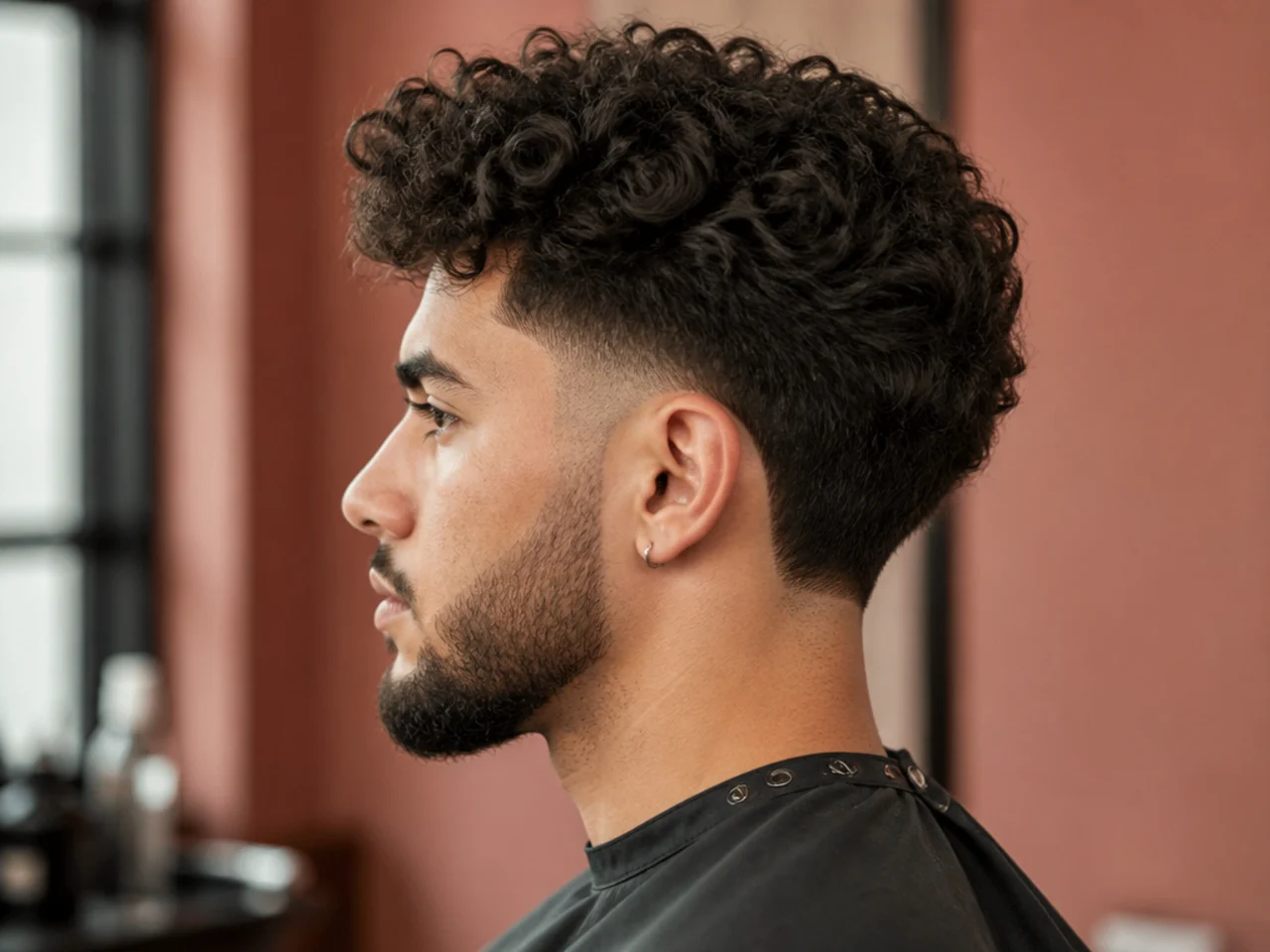
A mid taper burst fade mixes the mid burst position with a tapered neckline instead of a hard fade line at the back. Sharp at the ear, soft down the nape. Ask for a mid burst to a 1 with a taper at the neckline. Suits oval, heart, and diamond faces. Style the top with texture clay for grip and movement. It's the burst's most balanced form — half statement, half practicality.
Textured Burst Fade
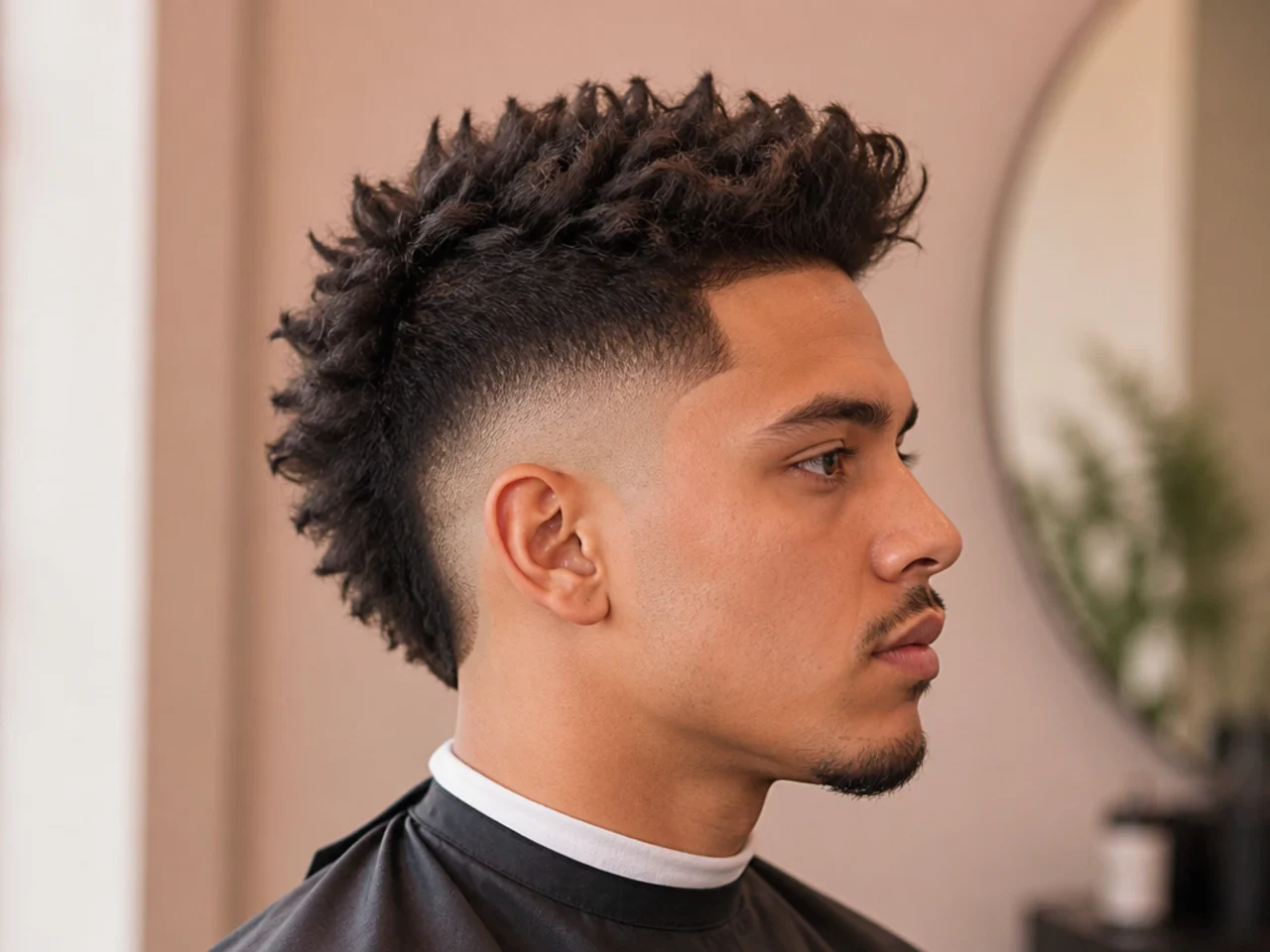
A textured burst fade puts movement over shape on top — the sides stay clean with the arc, and the top gets point-cut, piecey, and rough. Ask for a burst to a 1 with the top scissor-cut and heavily textured. Suits round, oval, and square faces. Blow-dry with your fingers and finish with styling cream for light hold. Think of the finish like a blowout taper, only bent around the arc.
Burst Fade with Beard
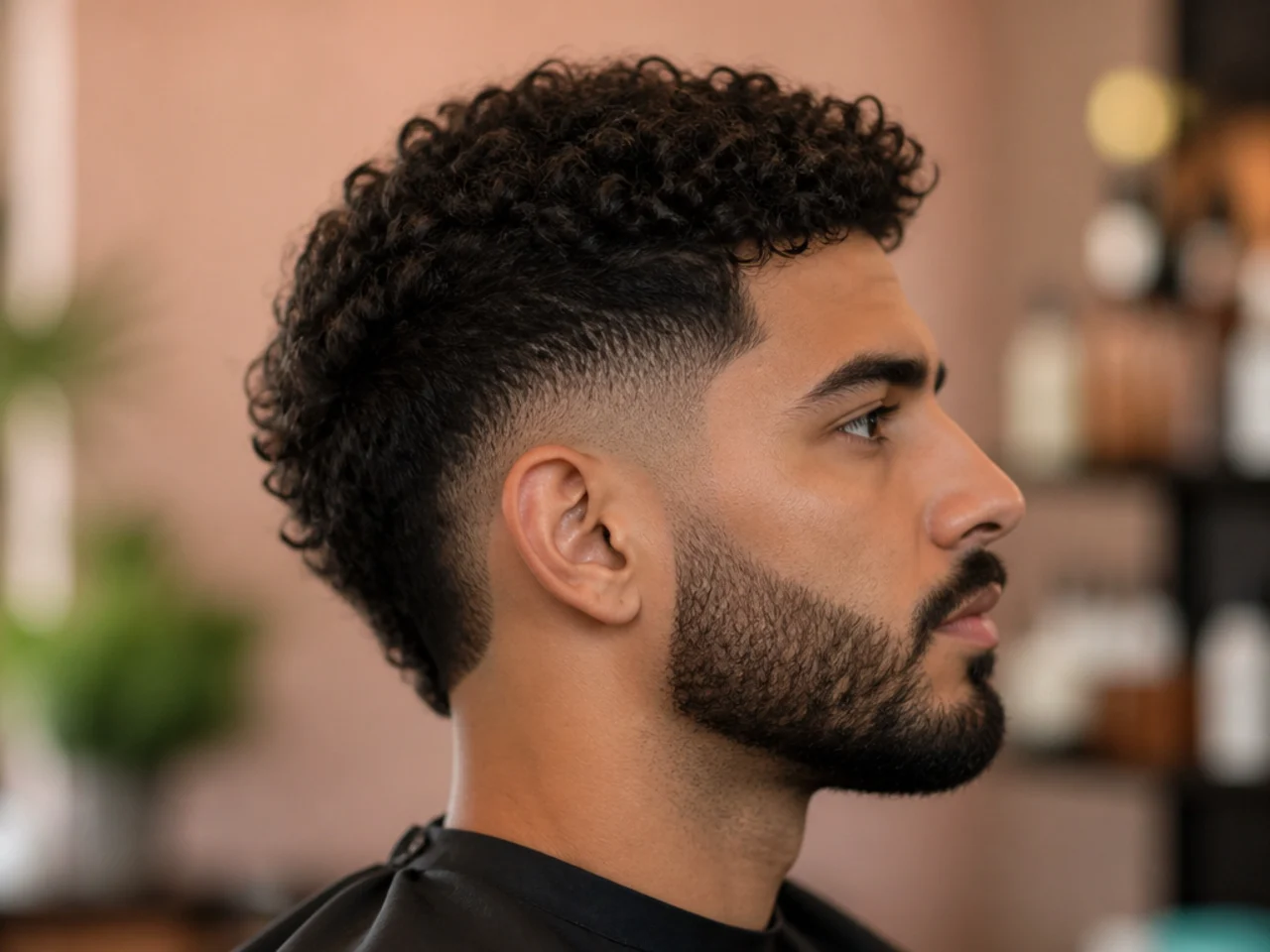
Connecting a burst fade to a beard is a barber's precision test. The arc curves around the ear and dies out just above the jawline, where the beard picks up the line and carries it forward. Ask for a burst to a 1 with a hard line into the beard at the sideburn. Suits diamond, oval, and square faces. Trim the beard yourself between visits to keep the transition sharp. Style the top with a texture clay. When it lands, the effect is unified — one shape from crown to chin.
Burst Fade Asian
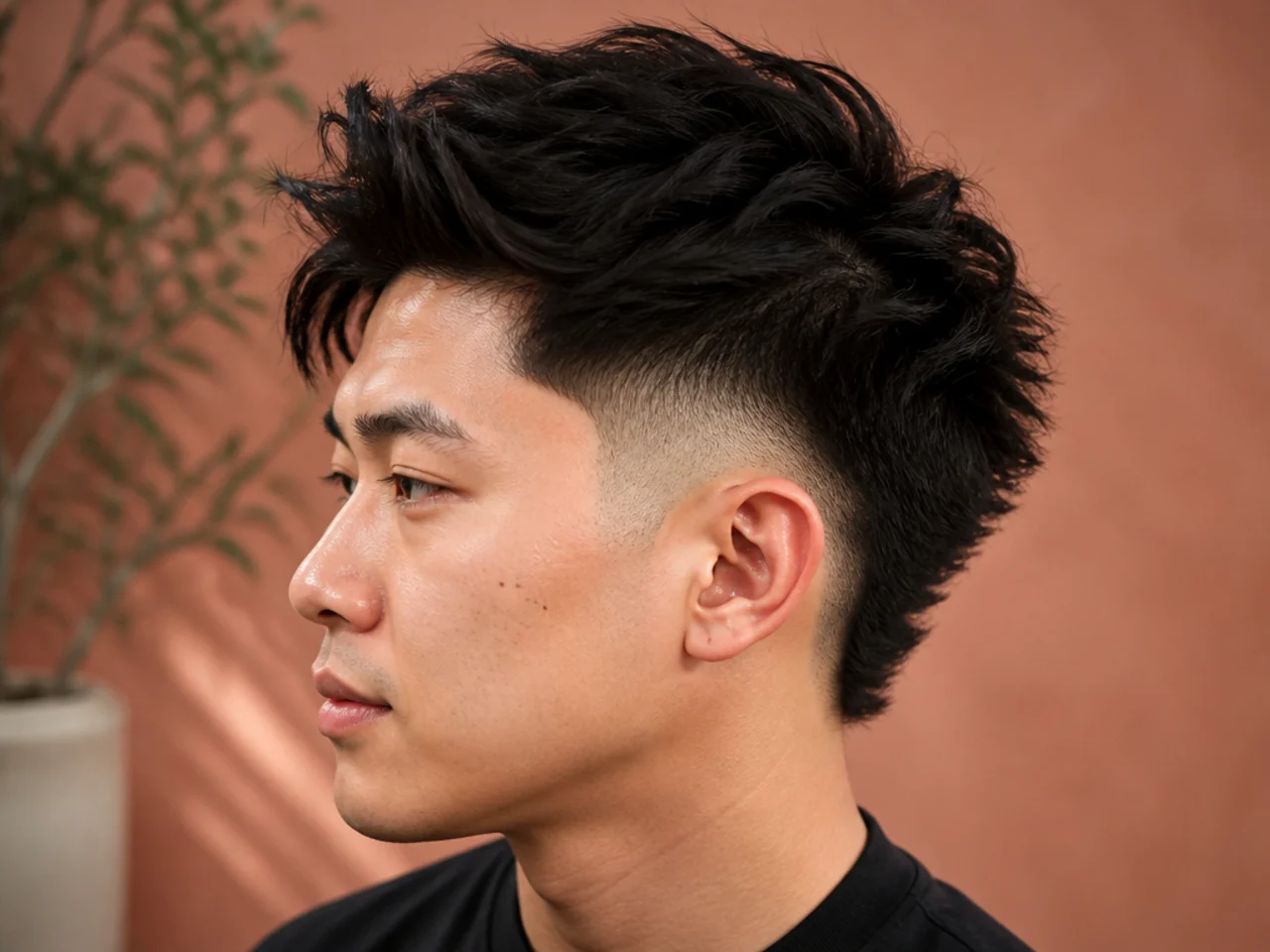
On Asian hair, the burst fade uses the natural weight and shine of the top hair as its counterpoint. Straight, sometimes coarse hair holds shape well and reads sharp against the arc. Ask for a burst to skin with the top left textured and layered. Suits heart, oval, and round faces. Style with styling cream for softness and airiness, or a matte clay for grip. Don't over-thin the top — the density is an asset.
Burst Fade Blonde Hair
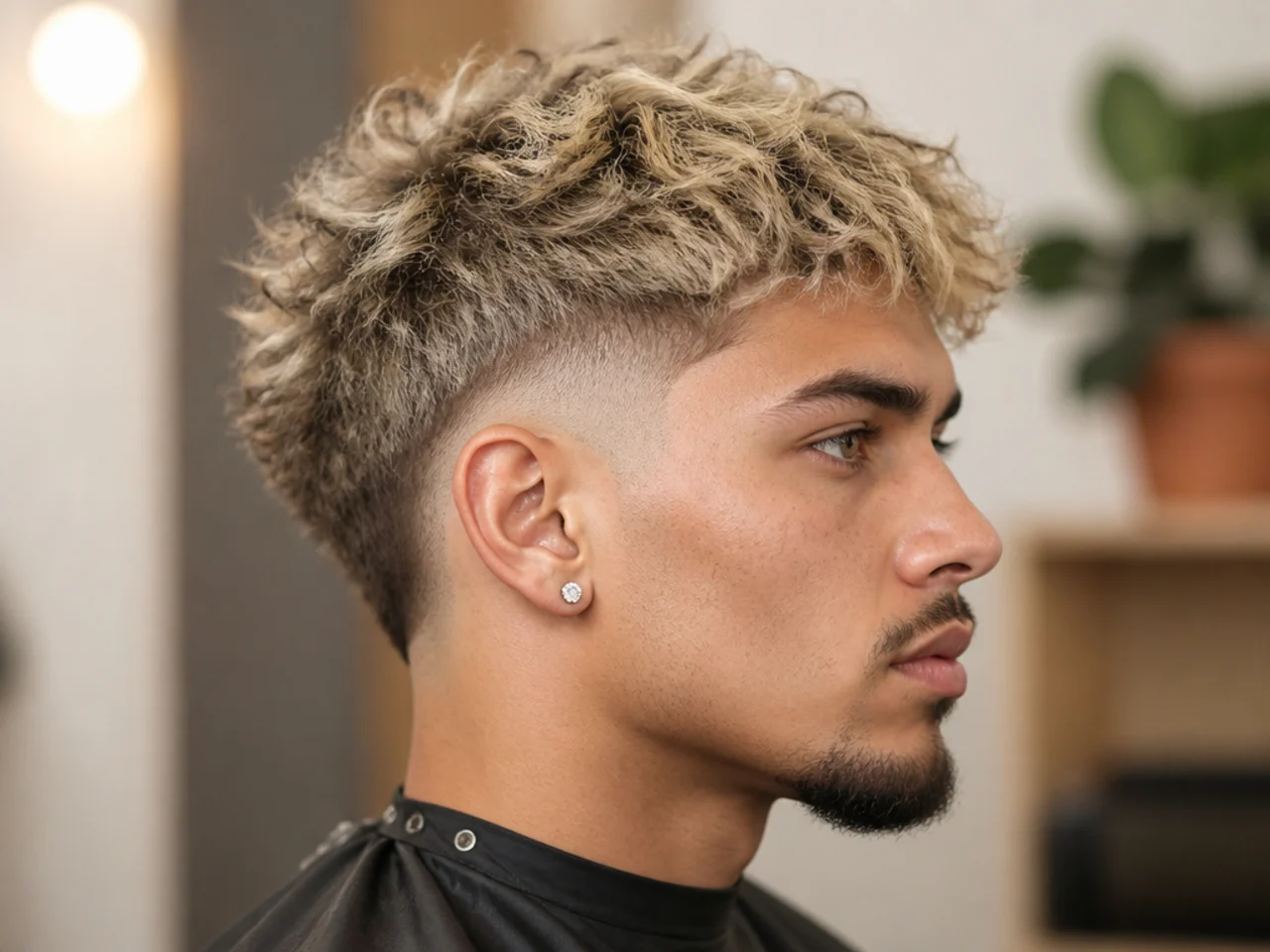
Blonde hair against a burst fade pushes the contrast even harder. The bright top glows against the exposed skin around the ear. Ask for a burst to skin so the contrast is maximum, with the top left two to four inches for movement. Suits square, oval, and heart faces. Blow-dry with your fingers and work in a texture clay for a tousled finish. Colored hair needs conditioner — don't skip the shower routine.
Burst Fade Fringe
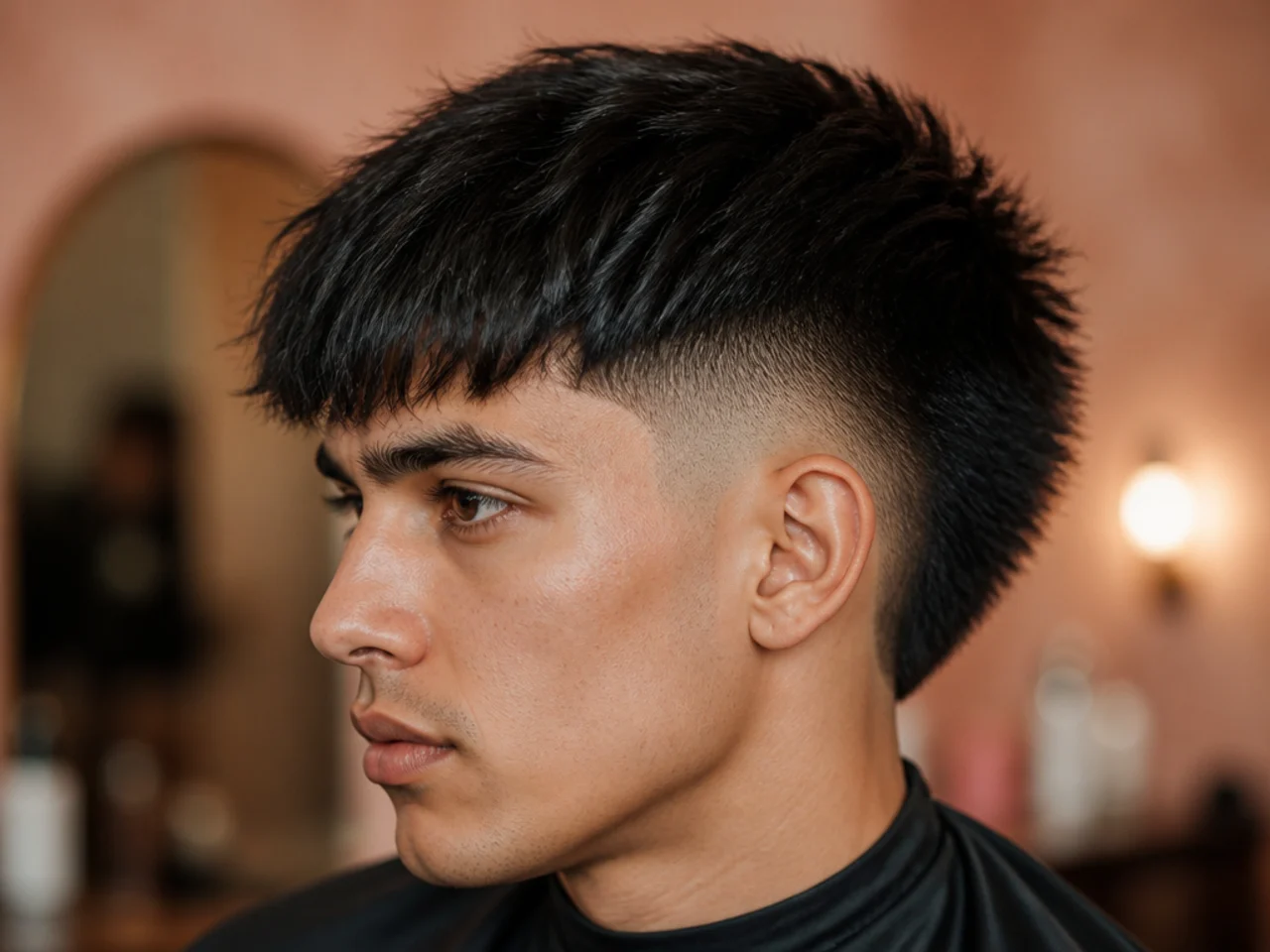
The burst fade fringe pushes a soft, choppy fringe forward over the forehead, letting the arcs on the sides frame the face. Different from the Edgar — softer, less flat, more organic. Ask for a burst to a 1 with a two-inch fringe cut with a slight angle. Suits round, oval, and diamond faces. Blow-dry forward with your fingers and finish with styling cream for pieces. Popular with teens and college guys.
Burst Fade Faux Hawk
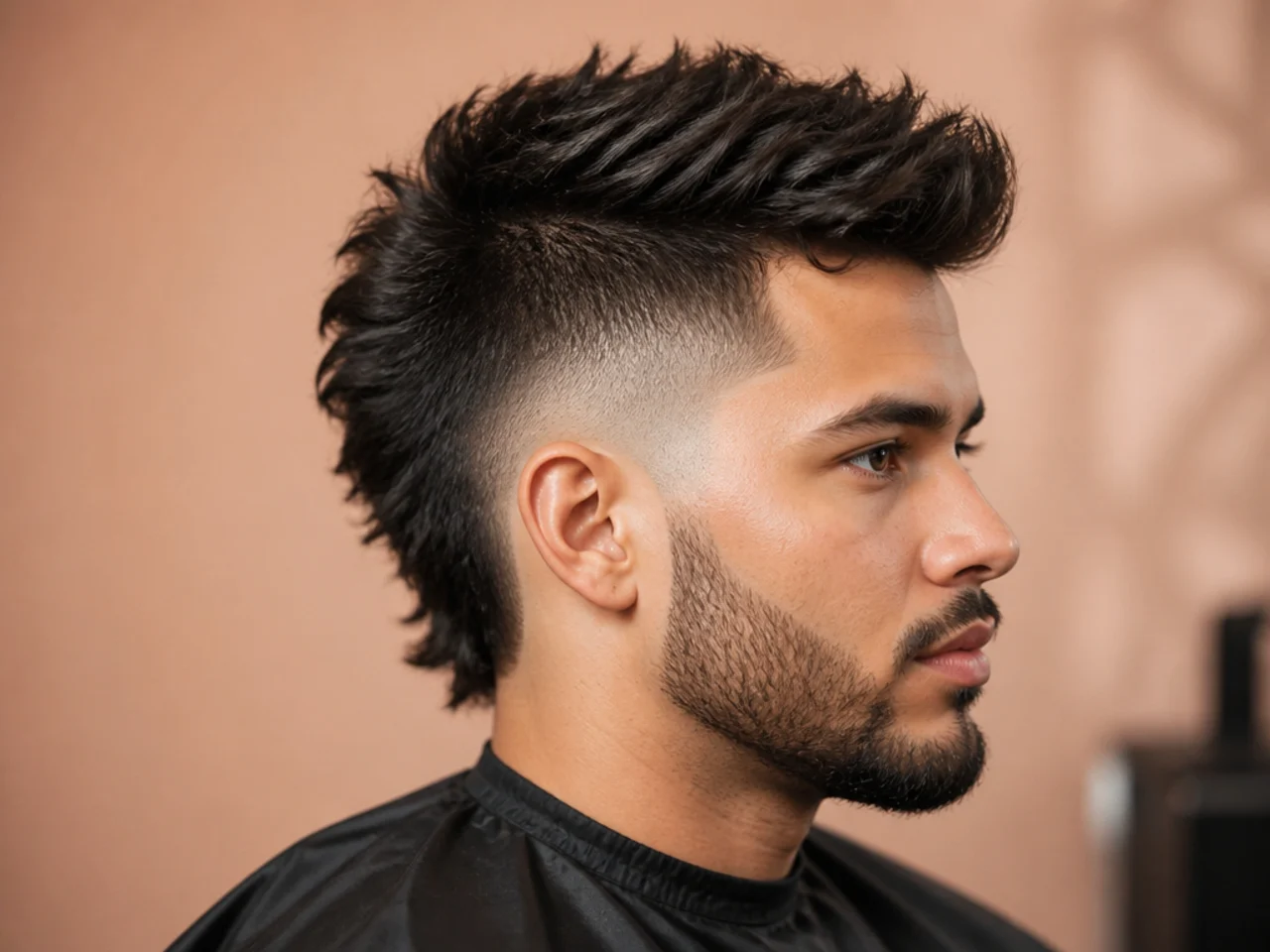
A faux hawk with a burst fade takes the mohawk's central spine but keeps some length on the sides — enough that they aren't shaved, just very short. The bursts still curve around the ear, but the top isn't disconnected. Ask for a burst to a 1 with the top styled upward and inward toward a center line. Suits square, oval, and heart faces. Blow-dry upward and hit with texture clay.
Drop Burst Fade
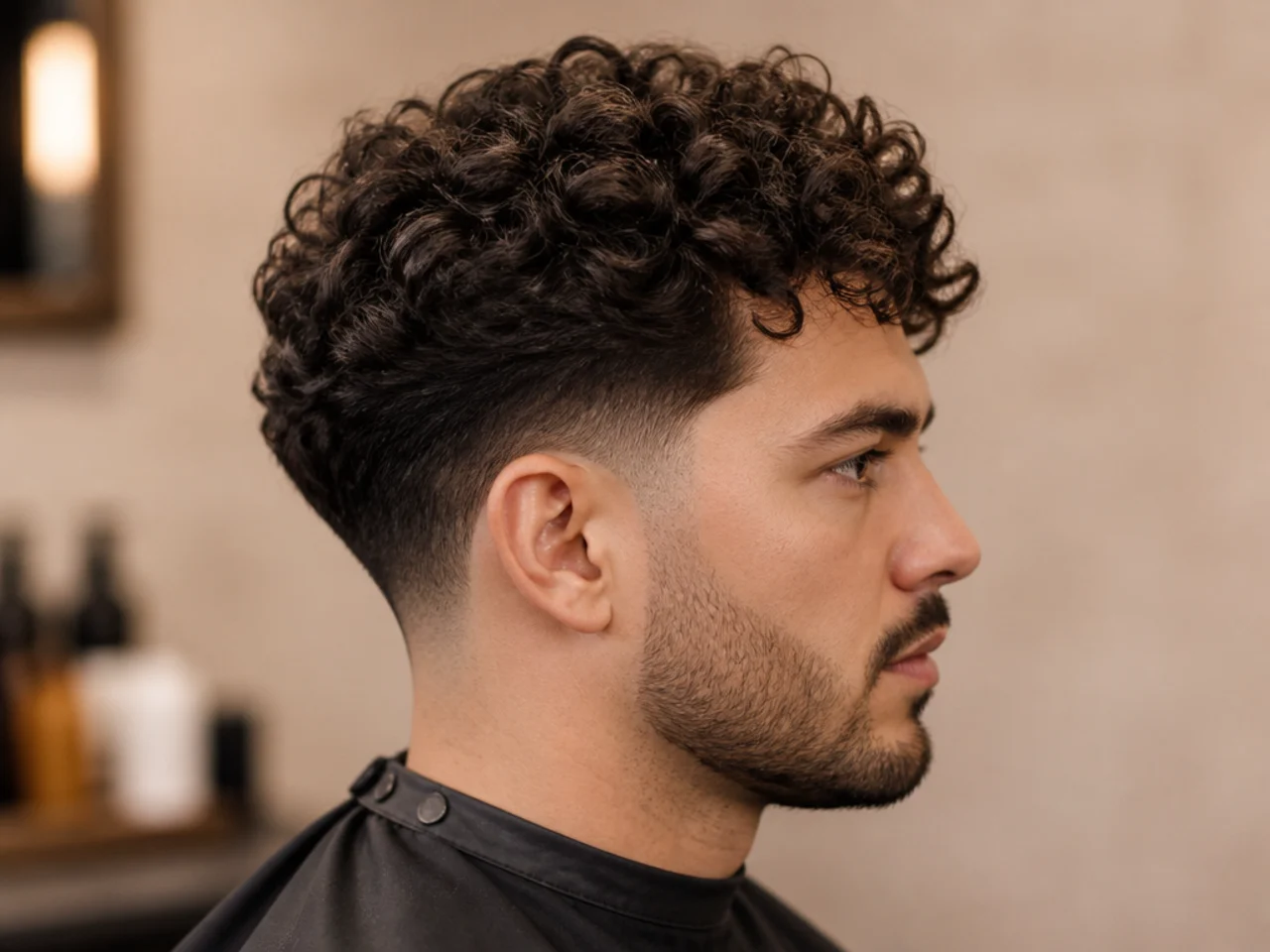
A drop burst fade lowers the tail end of the arc behind the ear — instead of the burst dying out level with the earlobe, it drops toward the base of the skull. The result is a longer curve. Ask for a drop burst to a 1, with the drop starting behind the ear. Suits oval and heart faces. Style the top textured and forward with styling cream.
Burst Fade Afro
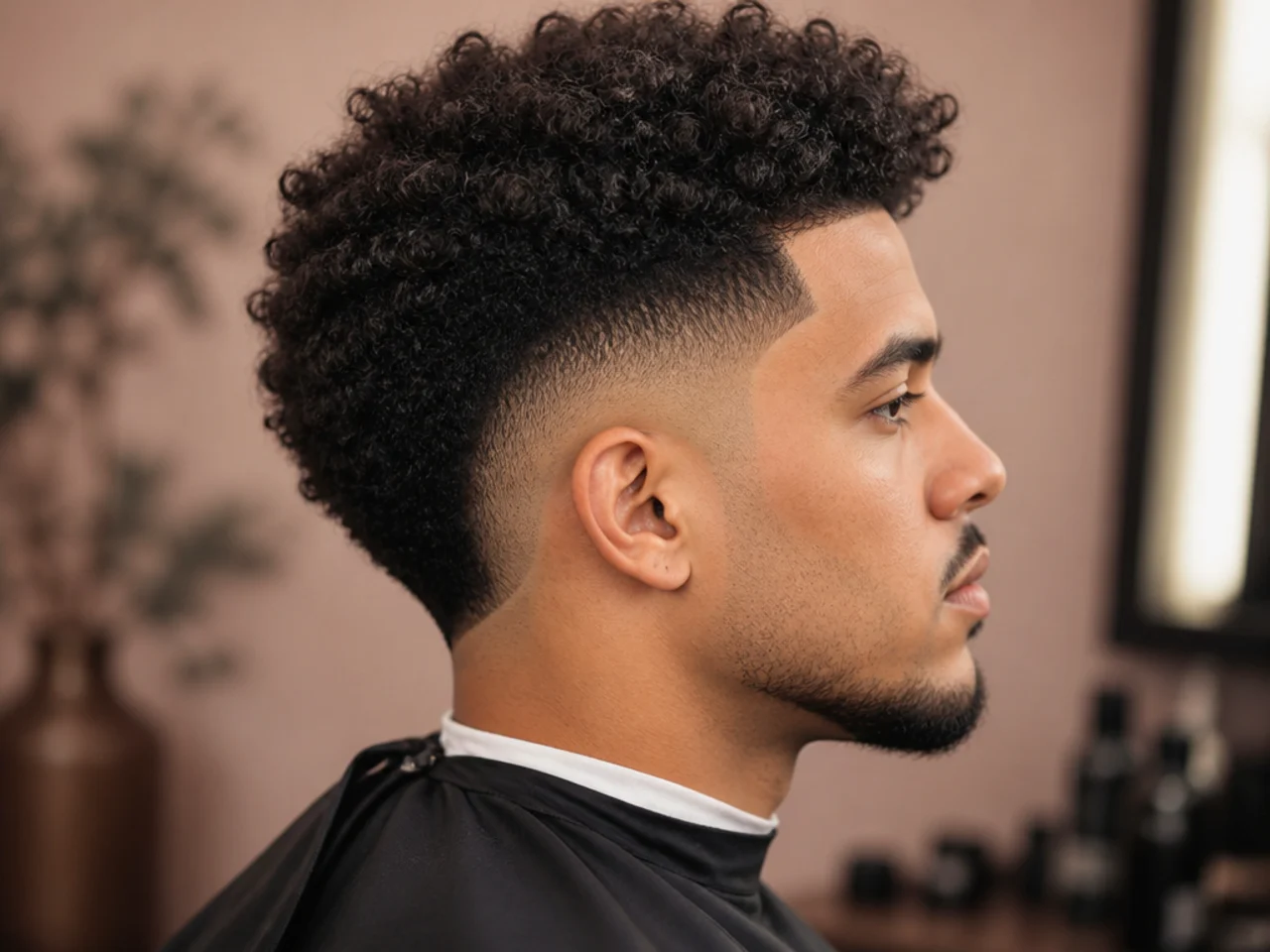
An afro over a burst fade is the shape's cleanest showcase. The round volume up top mirrors the round arc at the ear — two curves stacked on each other. Ask for a burst to skin with the afro shaped by hand from your natural growth. Suits round and square faces where the volume adds height. Pick out the afro with an afro comb, then set with a light molding paste. Regular deep conditioning keeps the coil pattern springy.
Burst Fade Perm
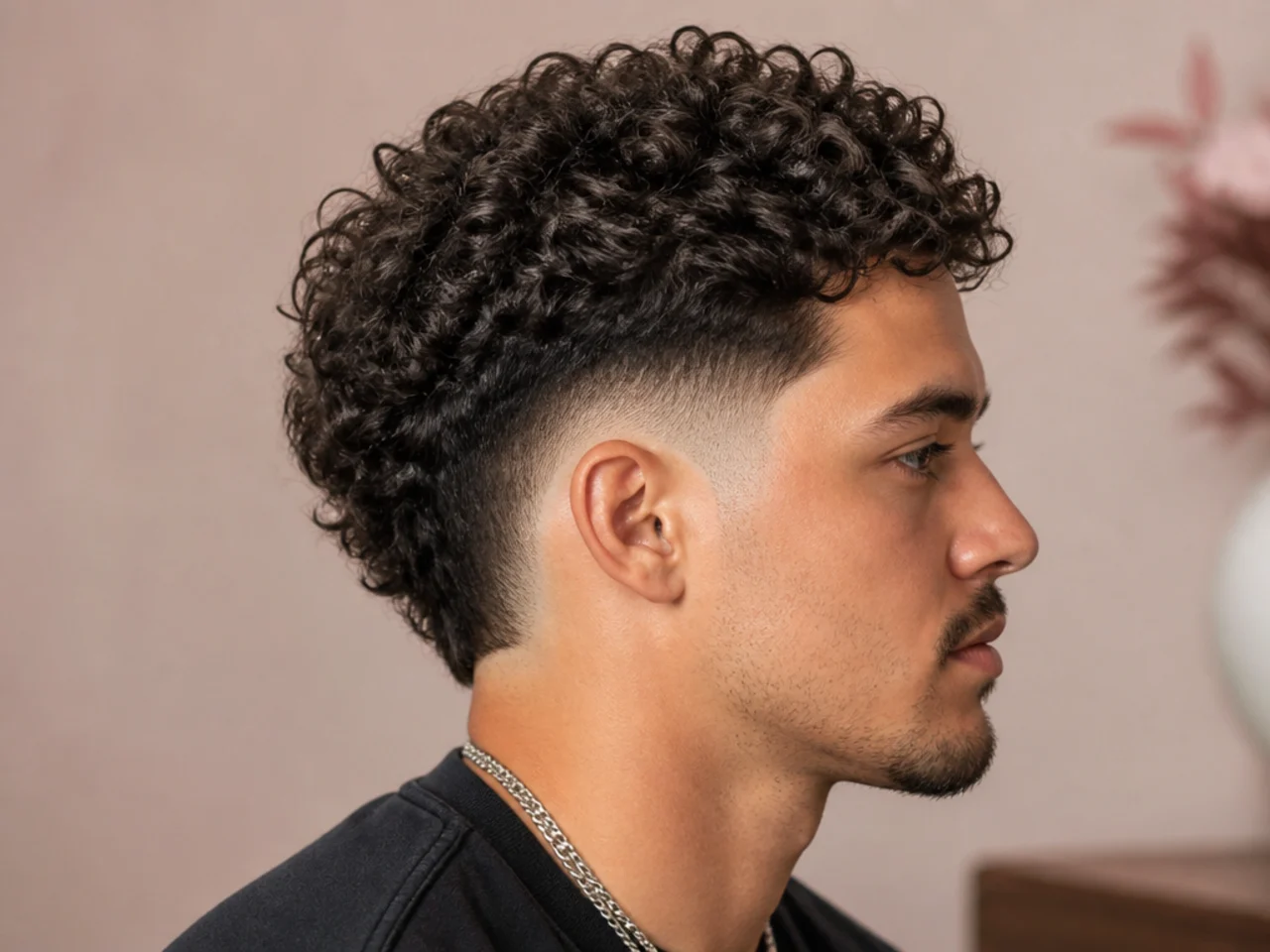
A perm on top of a burst fade adds engineered curls to a shape that already loves curves. Same visual logic as the natural curly version, just achieved chemically. Ask for a burst to skin with a loose perm applied to the top length before or after the cut. Suits diamond and oval faces. Diffuse dry, then shape with curl cream and light styling cream. Perms need extra moisture — deep condition once a week.
Burst Fade with Highlights
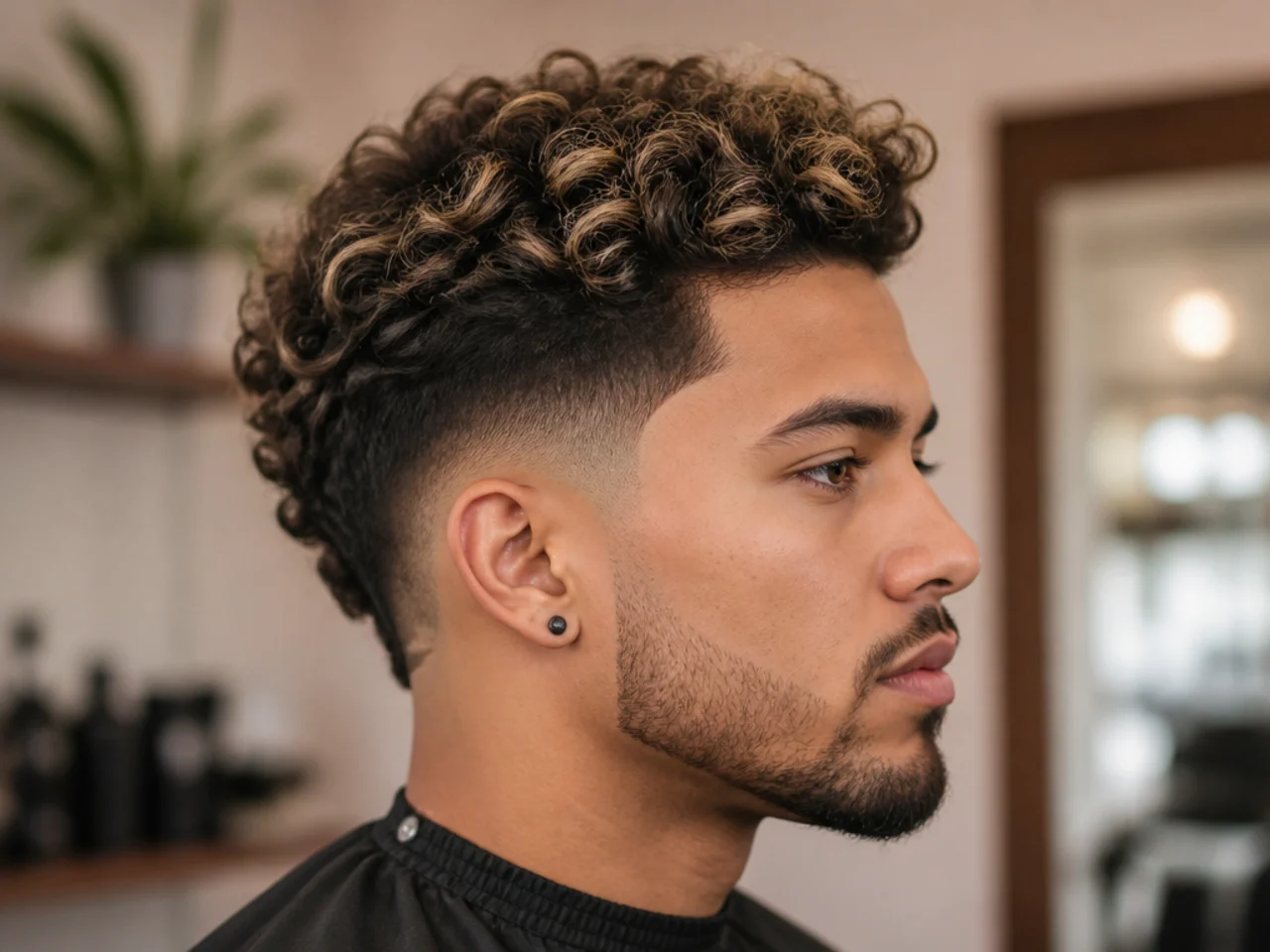
Highlights add color contrast to the burst fade's already sharp visual contrast. Face-framing pieces catch the light and pull the eye toward the arc. Ask for a burst to a 1 with hand-painted highlights placed through the top only. Suits every face shape — color is optional. Style with texture clay to break up the highlighted pieces. Bleach damages hair; use a purple shampoo and a leave-in treatment to keep the color clean and the ends healthy.
South of France
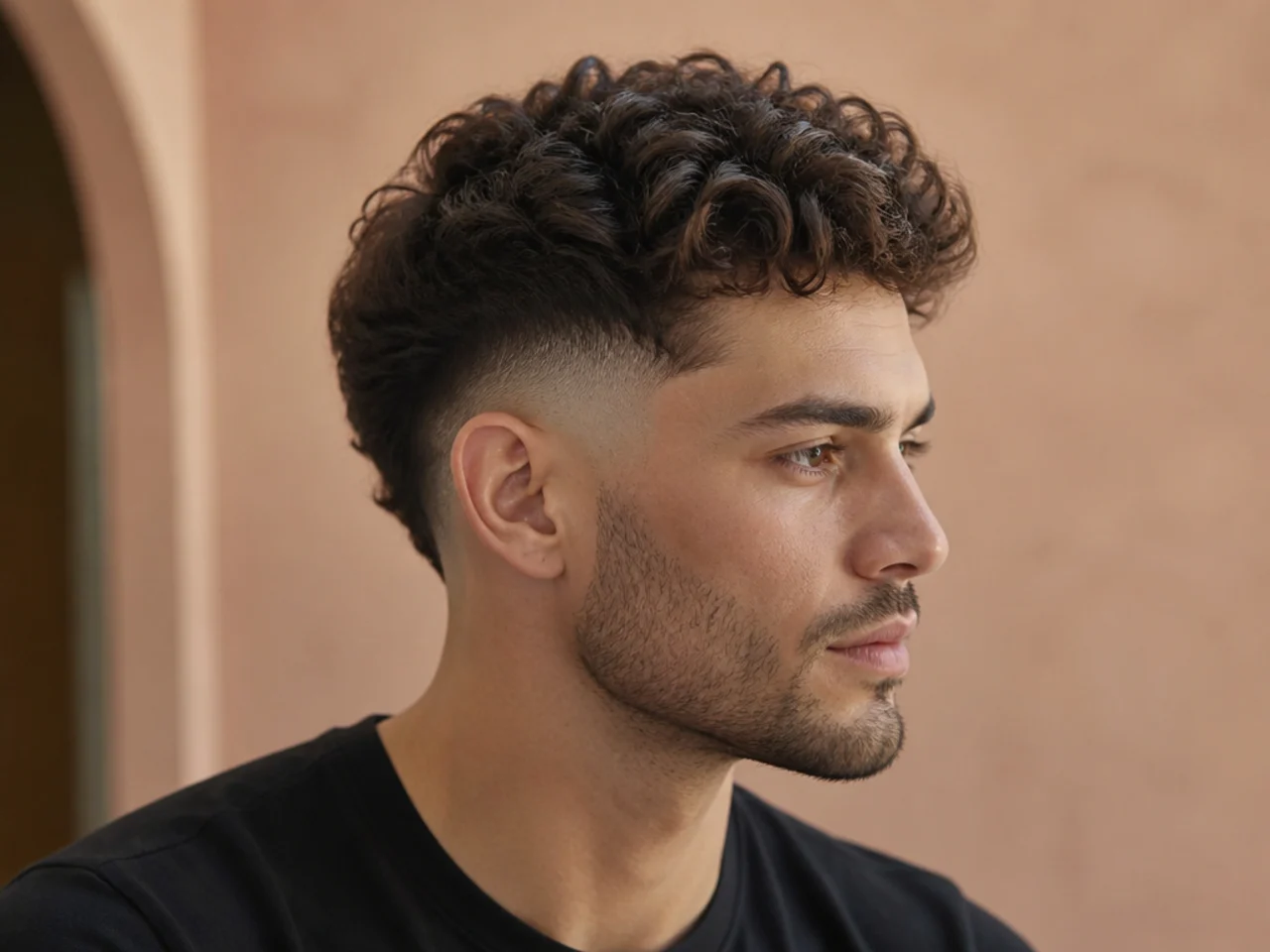
The South of France is a burst fade paired with a wide, sculpted mohawk that runs from the front hairline to the nape. Popularized in the early 2010s by Usher and still ordered by name today. Ask for a burst to skin on both sides with a wide mohawk strip left up top — closer to a fauxhawk width than a classic mohawk. Suits oval, diamond, and square faces. Style upward with strong-hold clay. High maintenance, high reward — this one wants a re-cut every two weeks.
Burst Fade vs Drop Fade: Key Differences
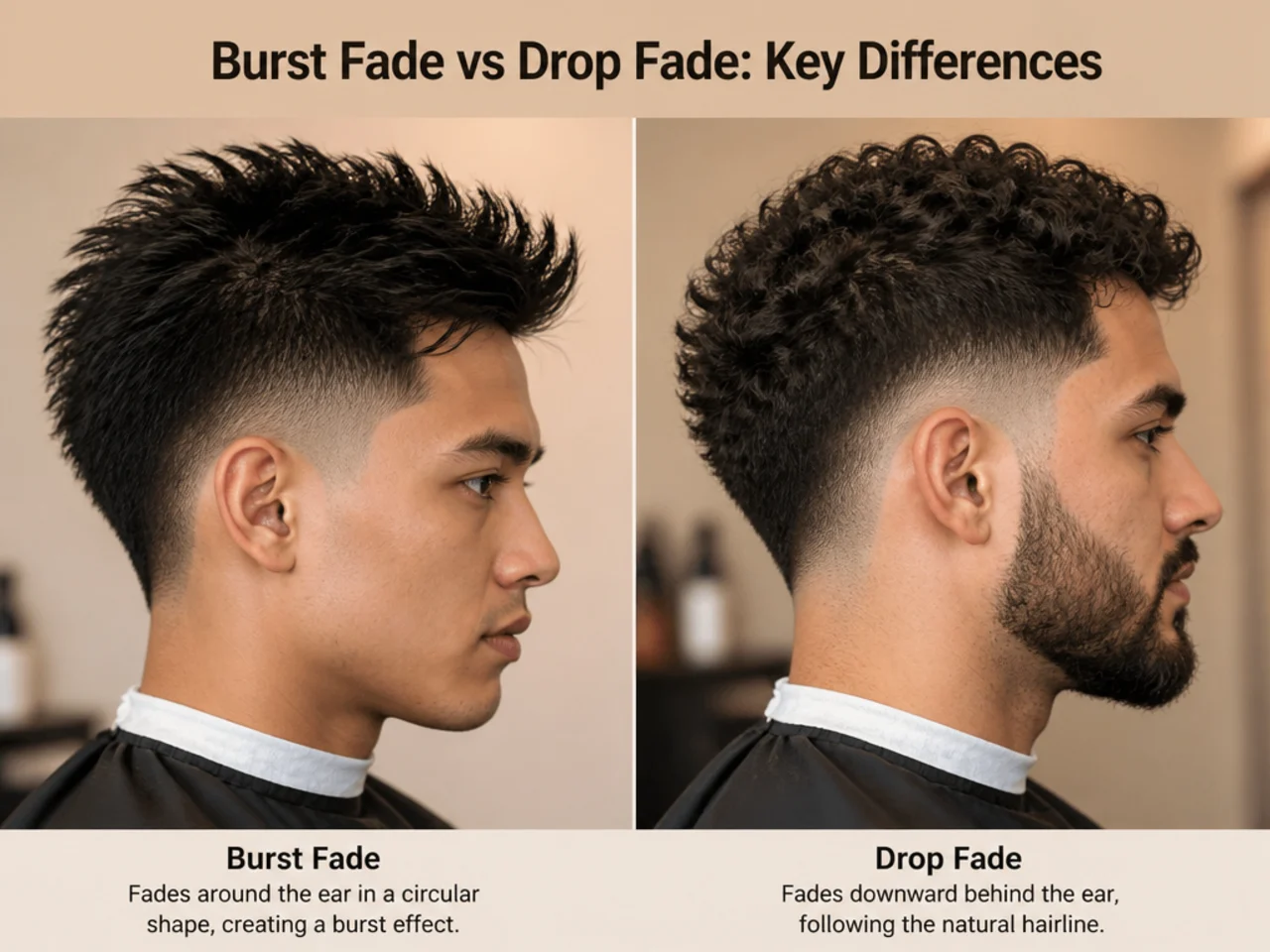
The burst and the drop are the two most-confused fades in the shop. Both curve, but they curve differently.
A burst fade curves around the ear in a semicircle. The shortest point sits directly behind the ear, and length grows outward in every direction. The result is a halo around the ear.
A drop fade drops down behind the ear along the hairline. The shortest point sits at the temple, and the fade line lowers as it moves back. The result is a curve that follows the hairline instead of the ear.
Choose the burst if you want the ear exposed and the shape to read from the side. Choose the drop if you want length preserved at the temples with a subtle curve at the back. Burst fades need re-cuts every two to three weeks; drop fades grow out with less visible drift.
How to Choose the Right Burst Fade for You
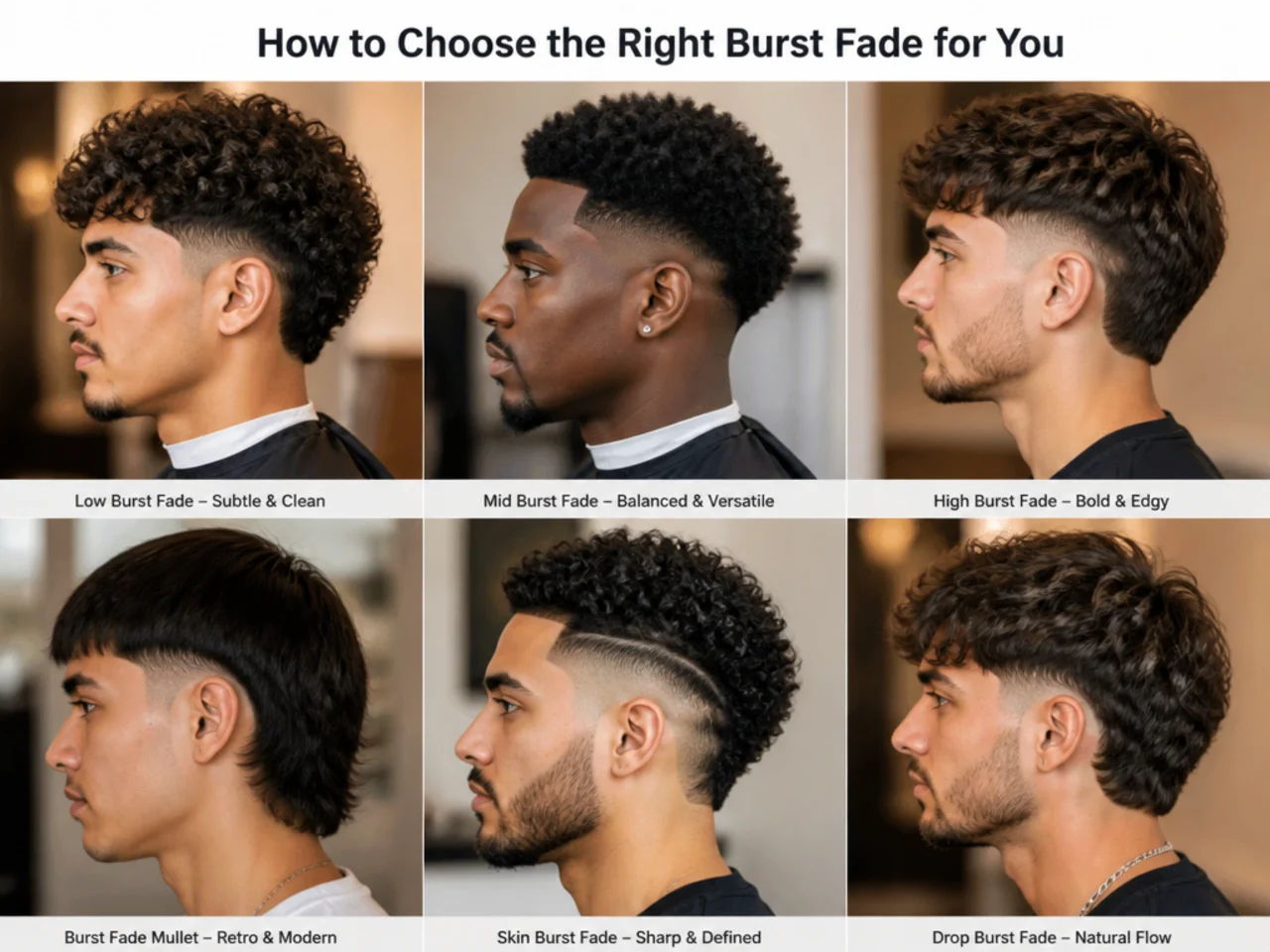
By hair type
- Curly: The arc's curve echoes the coil pattern. Take the burst to skin for maximum contrast.
- Straight: Straight tops read sharp against the arc's clean line. Ask for a mid or high burst.
- Wavy: Waves want a burst that doesn't compete — go low or mid with the top left textured.
- Coily: High bursts define the coil pattern and keep bulk manageable at the sides.
By face shape
- Round: Add height on top. Mid or high burst with textured length.
- Oval: Every burst height works. Choose based on lifestyle.
- Square: Soften the jaw with a textured top. Mid or low burst.
- Long: Keep the top medium and go with a low burst. Avoid tall styles.
- Heart: Widen the temples with a low or mid burst and volume through the sides of the top.
- Diamond: Play up the cheekbones with a mid burst and layered top.
How to Ask Your Barber for a Burst Fade
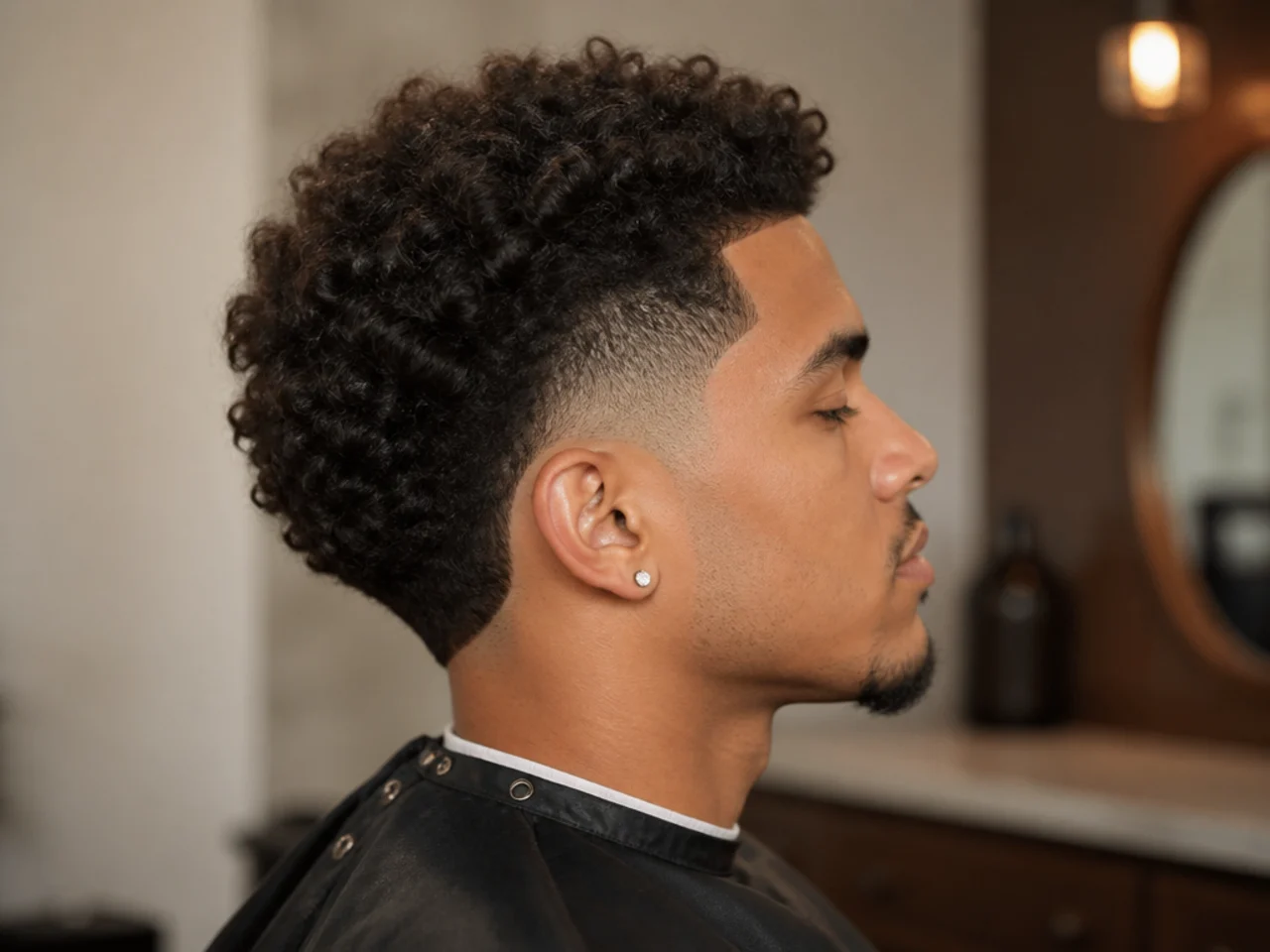
Bring a photo. That's rule one. Then use four numbers.
One — the burst position: low, mid, or high. Low sits tight to the ear; high climbs to the temple.
Two — the guard at the shortest point. Skin (0), guard 1 (very short), or guard 2 (short but visible).
Three — the top length in inches, or a guard number if you want it clippered.
Four — the neckline: tapered (soft) or blocked (sharp).
Once you have those four numbers, your barber has everything they need. Show the photo to confirm the shape, then let them work.
Mistakes to Avoid
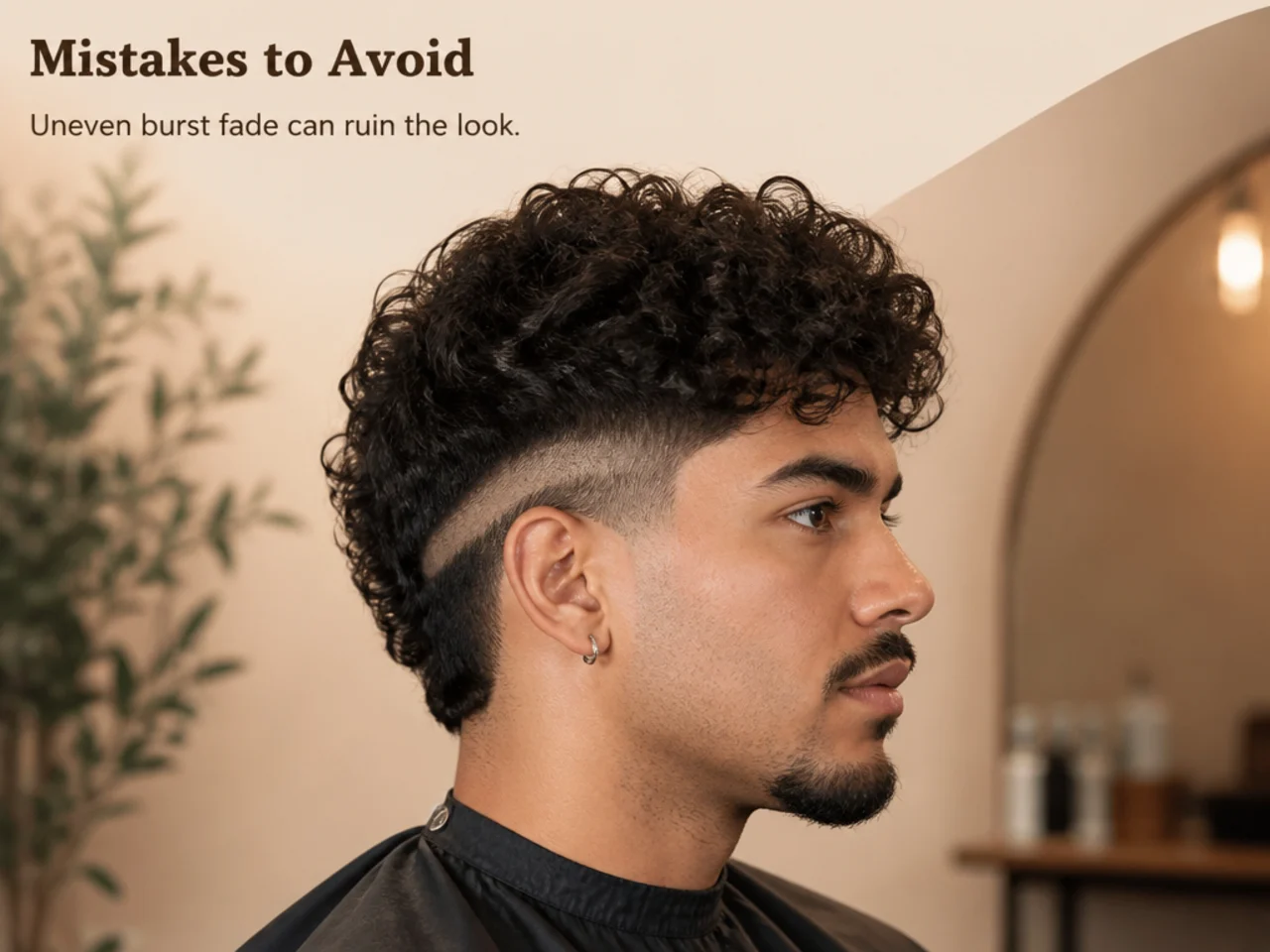
Don't say "just a fade" and expect a burst — the two are different shapes. Don't skip the photo; even barbers who nail fades interpret the arc differently. Don't confuse the burst with a low taper fade — the taper runs low along the nape; the burst wraps the ear. Don't ask for "a burst 1" — say "a burst to a 1" so the guard is clear.
How to Style a Burst Fade
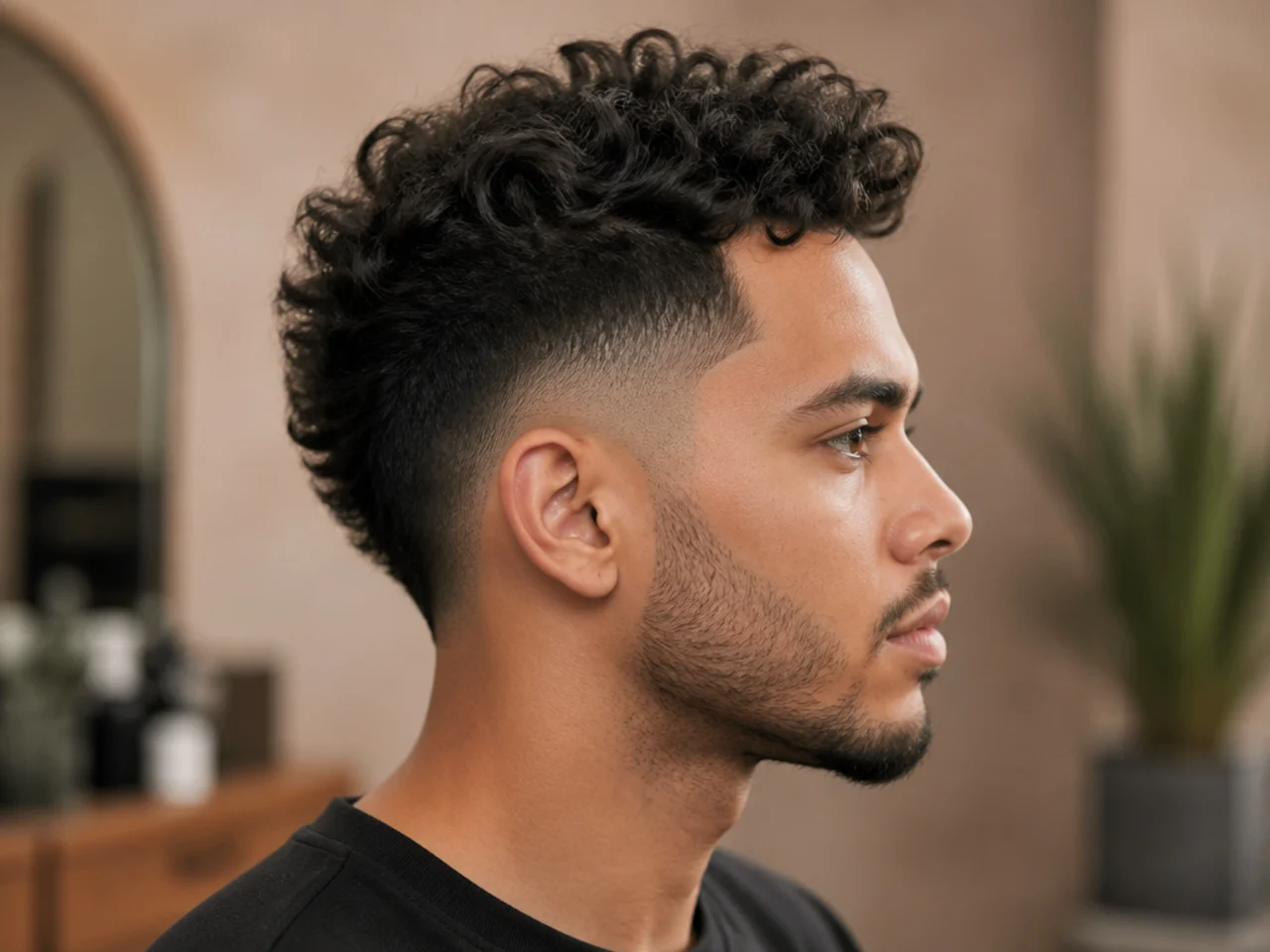
Style starts before you pick up a product.
- Wash and towel-dry. Hair should be damp, not wet. Wet hair holds product on the surface; damp hair absorbs it.
- Prime the top. Sea salt spray for grip, mousse for volume, or a leave-in for softness. Choose one.
- Blow-dry into shape. Fingers for texture, round brush for lift, paddle brush for slick. Direction of airflow builds the direction of the finish.
- Finish with a hold product. Matte clay for tousled, molding paste for medium hold, pomade for shine, gel for wet-look slicks.
- Set with texture spray. Optional, but it's the difference between a haircut and a hairstyle.
How to Maintain a Burst Fade
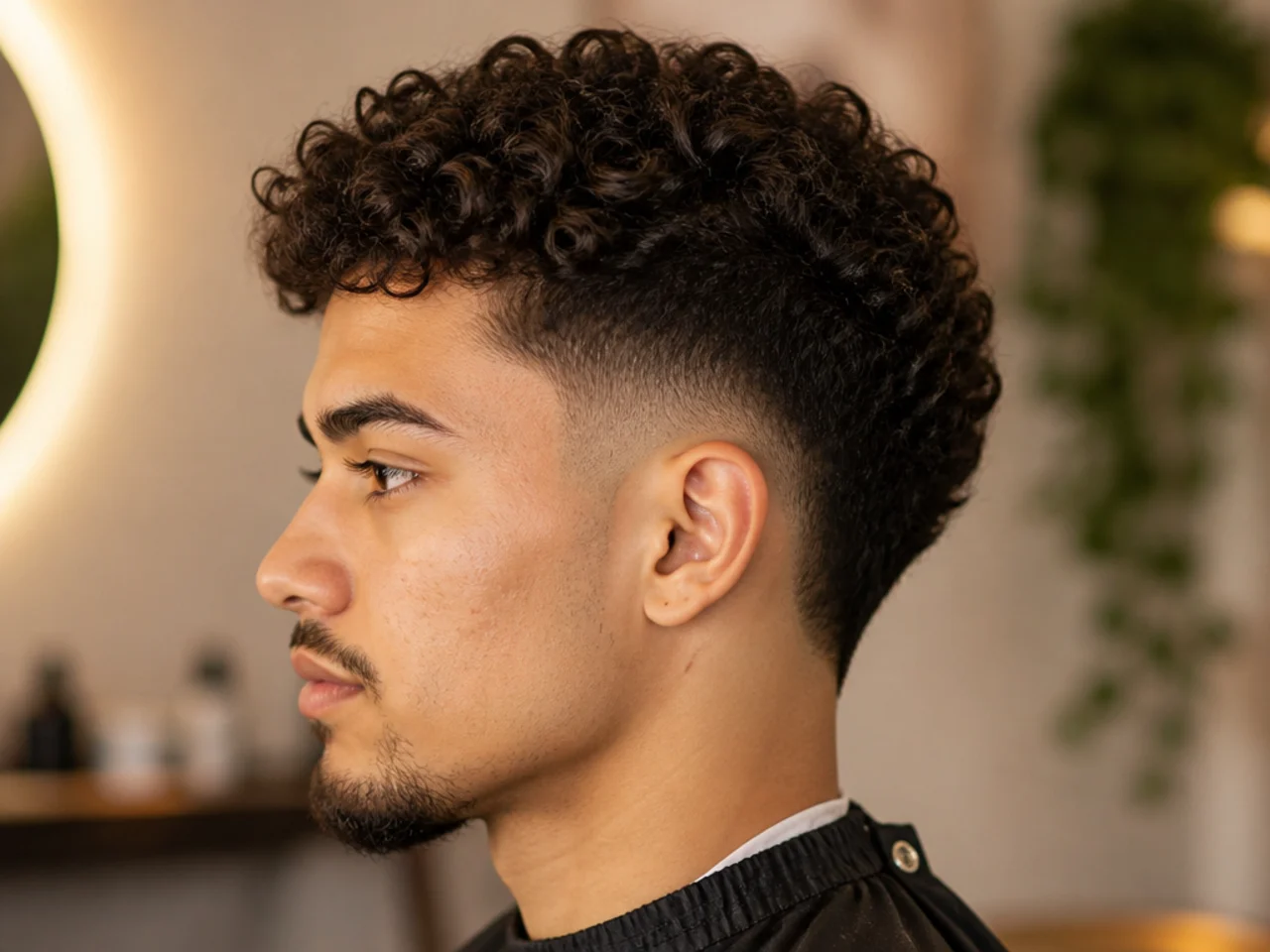
- Book the next cut before you leave. Bursts blur at the transition line by week three. Two-week intervals keep the arc sharp.
- Wash three or four times a week. Every day strips oils; two isn't enough for product-heavy styles.
- Condition every wash. The arc exposes skin — dry scalp shows more than under a longer cut.
- Trim the neckline yourself between visits. A quick pass with a beard trimmer on the fine hair at the nape adds a week to the shape.
- Sleep on silk or satin. Preserves the top's texture. Cotton pillowcases flatten waves and curls overnight.
Best Hair Products for a Burst Fade
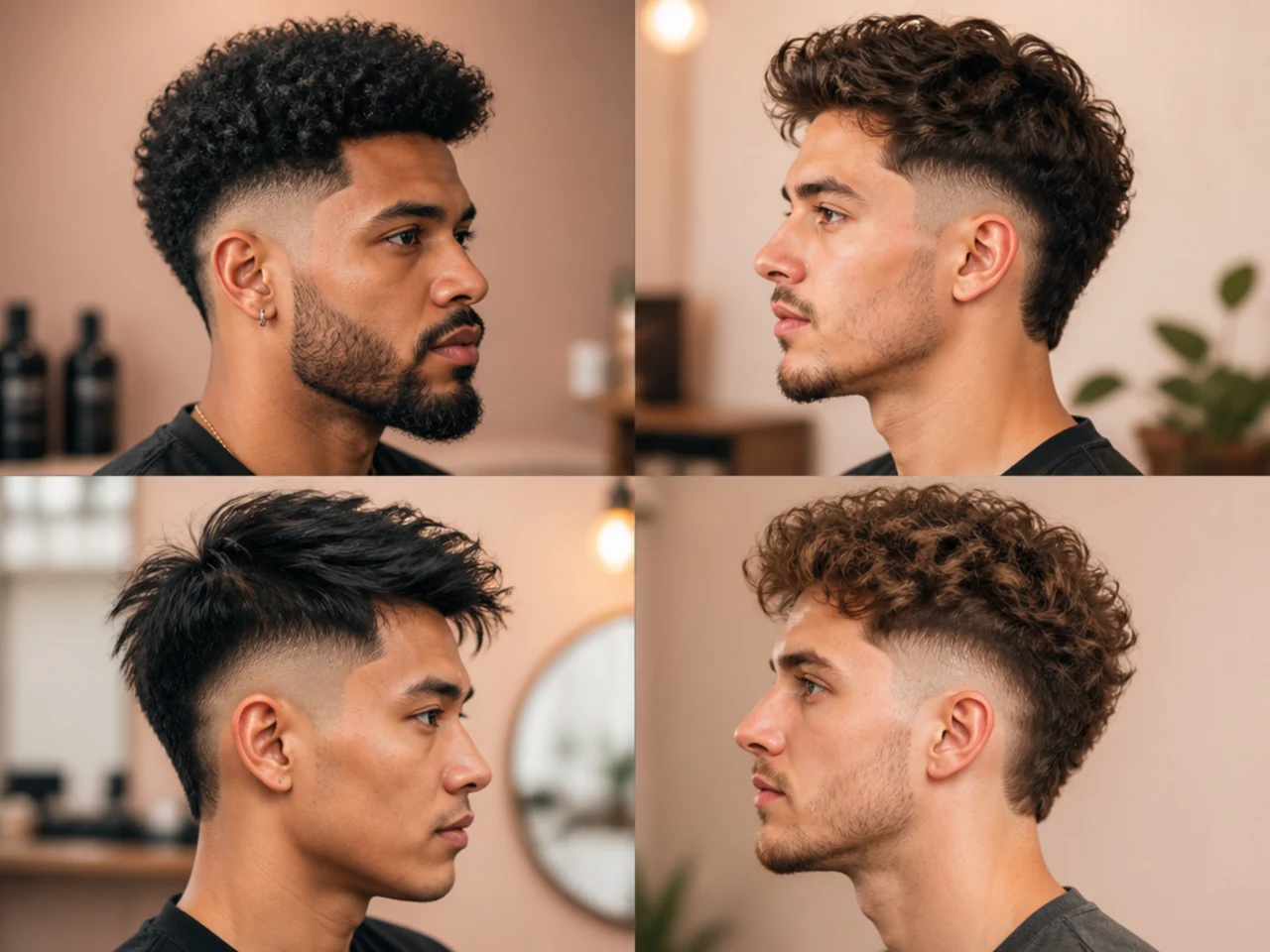
The right product depends on the top style, not the fade itself.
- Matte clay — for textured, tousled tops. Grips without shine. Best for buzz tops, fringes, messy pieces.
- Molding paste — for structured tops with light shine. Comb overs, textured mids.
- Pomade — for slick backs and side parts. Reworkable through the day.
- Strong-hold gel — for wet-look slicks and mohawks that need to stand up.
- Curl cream — for curly, wavy, and permed tops. Defines without crunch.
- Sea salt spray — a pre-styler for grip and volume before your finisher.
- Texture powder — a topper for extra lift when your top hair falls flat.
- Blow dryer with a diffuser attachment — a tool, not a product, but non-negotiable for curly tops.
FAQs About Burst Fade Hairstyles
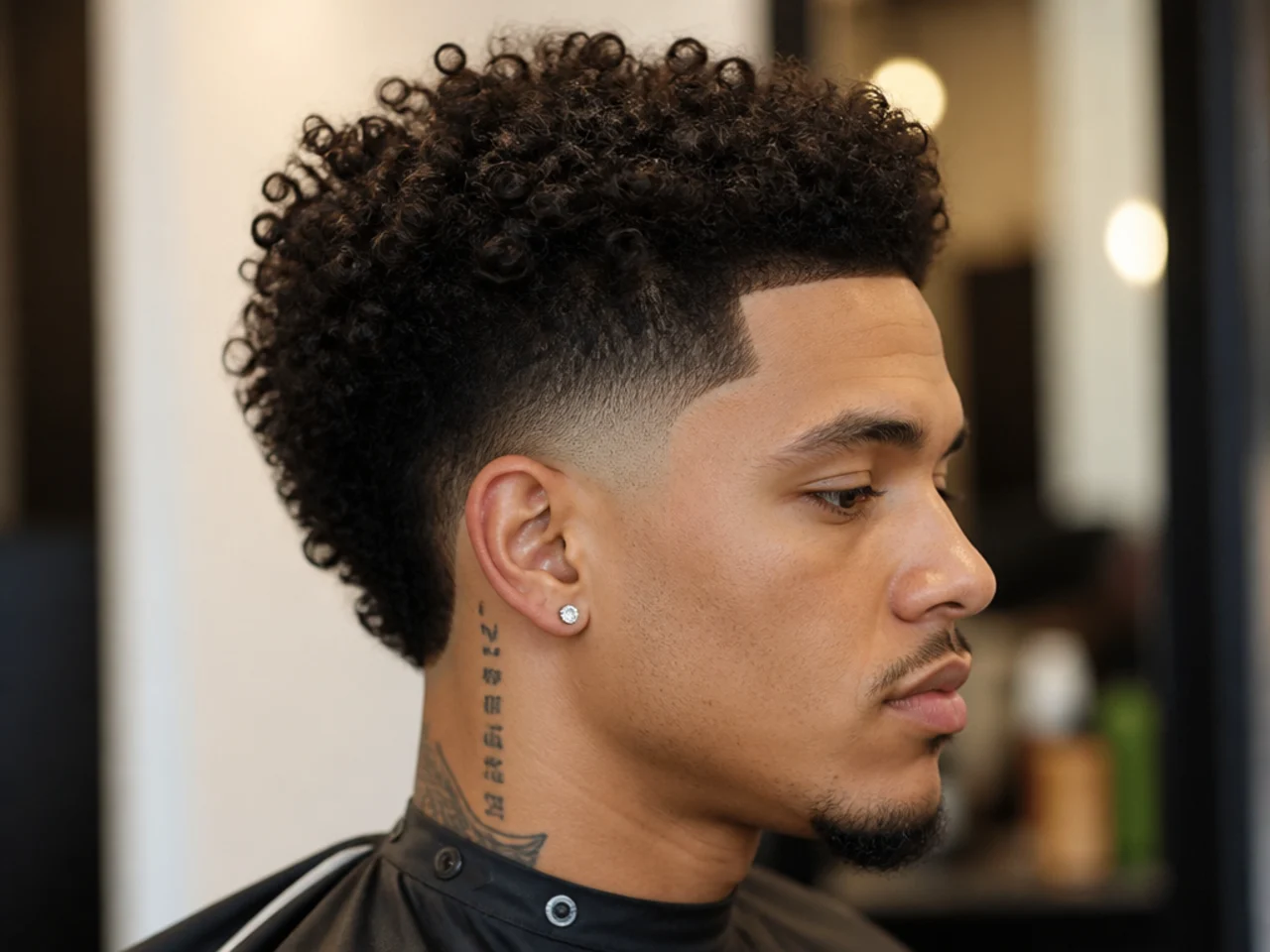
What is a burst fade haircut?
A burst fade is a fade shaped like a semicircle around the ear. The shortest point sits directly behind the ear, and length grows outward in every direction, creating a halo effect around the ear.
Is the burst fade still trending?
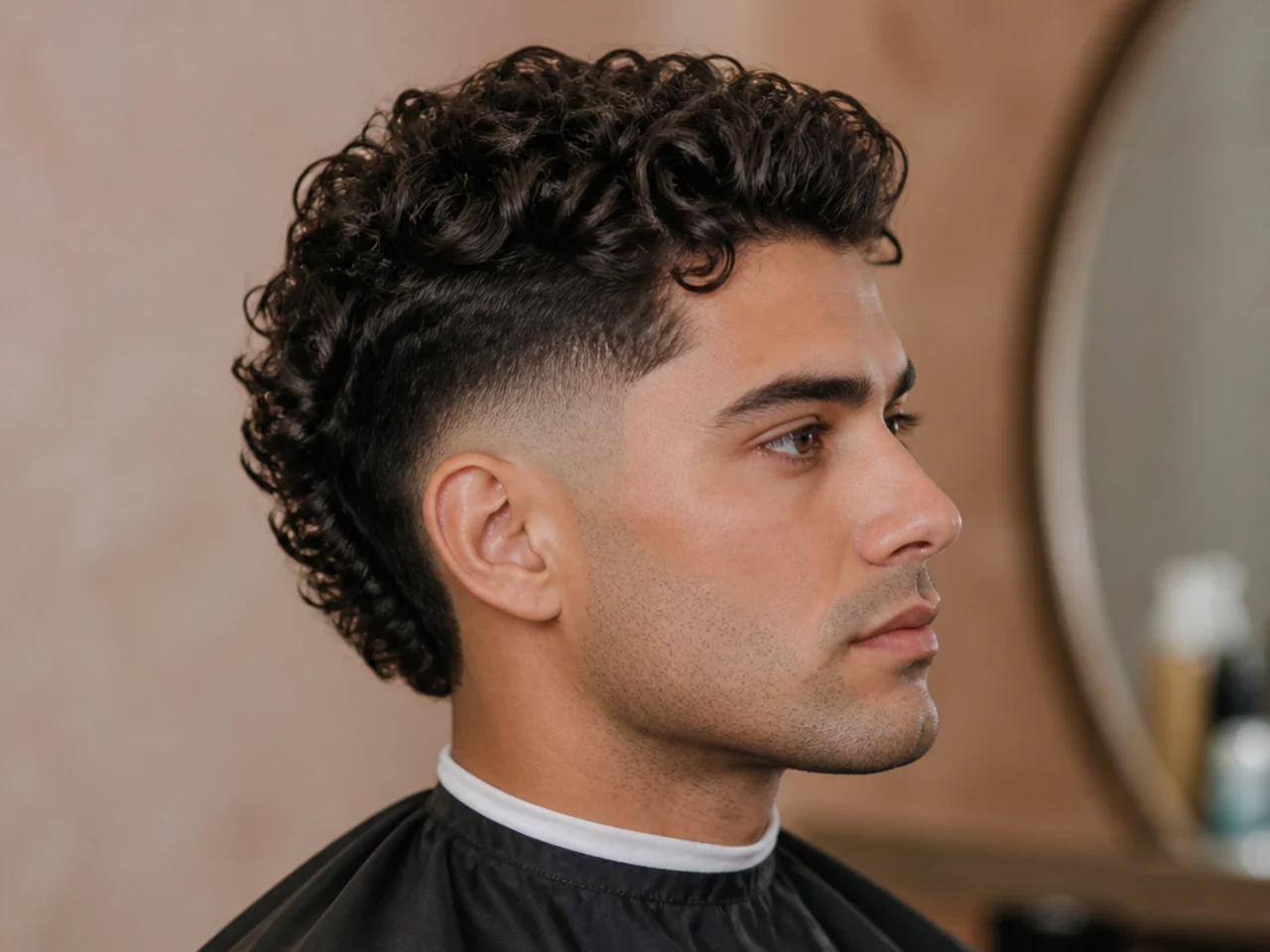
Yes. It's one of the most-requested fades in barbershops right now and shows no sign of slowing. Pinterest saves for the term have grown every year since 2020.
What's the difference between a burst fade and a drop fade?
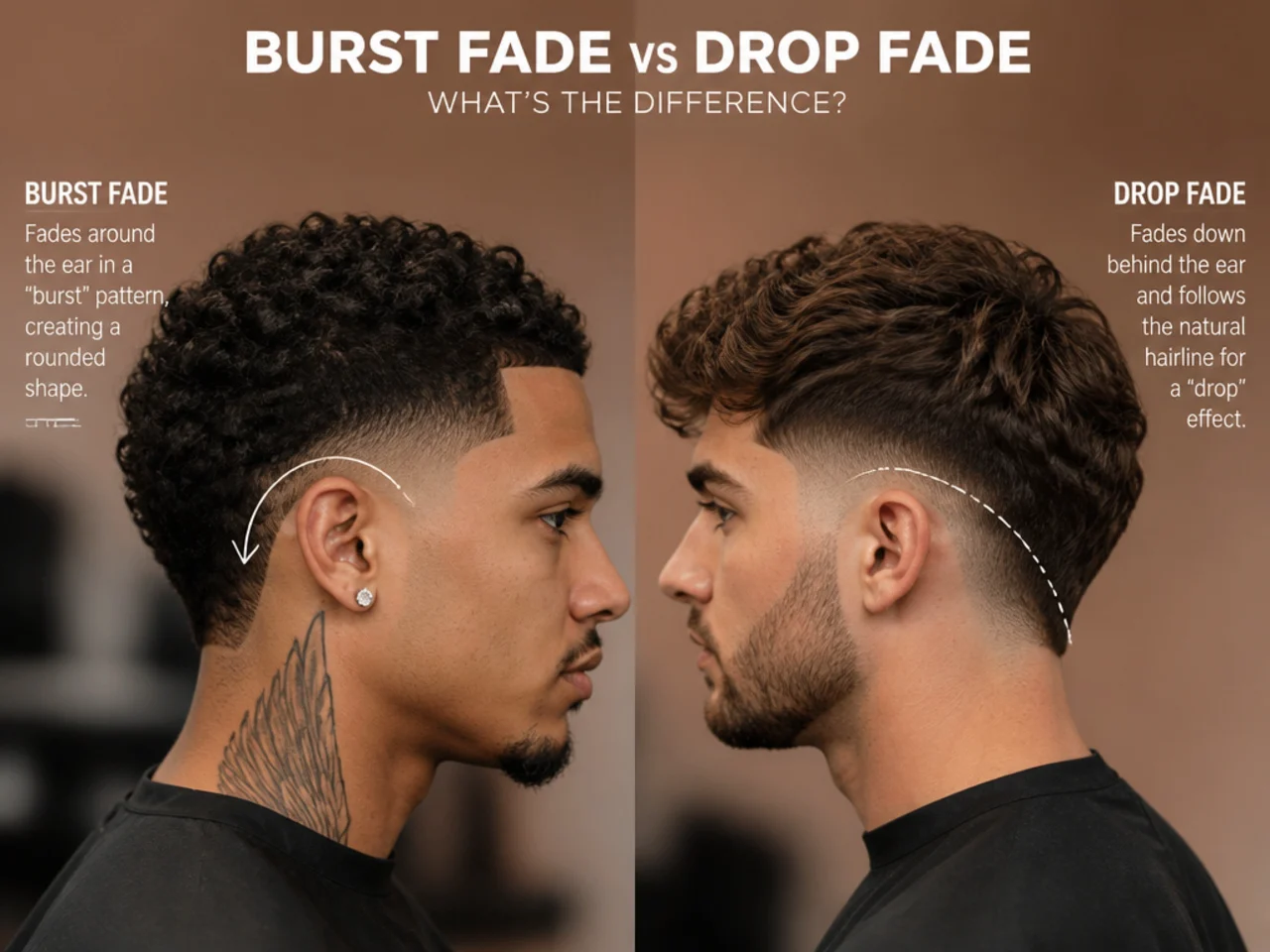
A burst fade curves around the ear in a full semicircle. A drop fade drops down behind the ear along the hairline. Different curves, different geometries.
How does a burst fade differ from a mullet haircut?
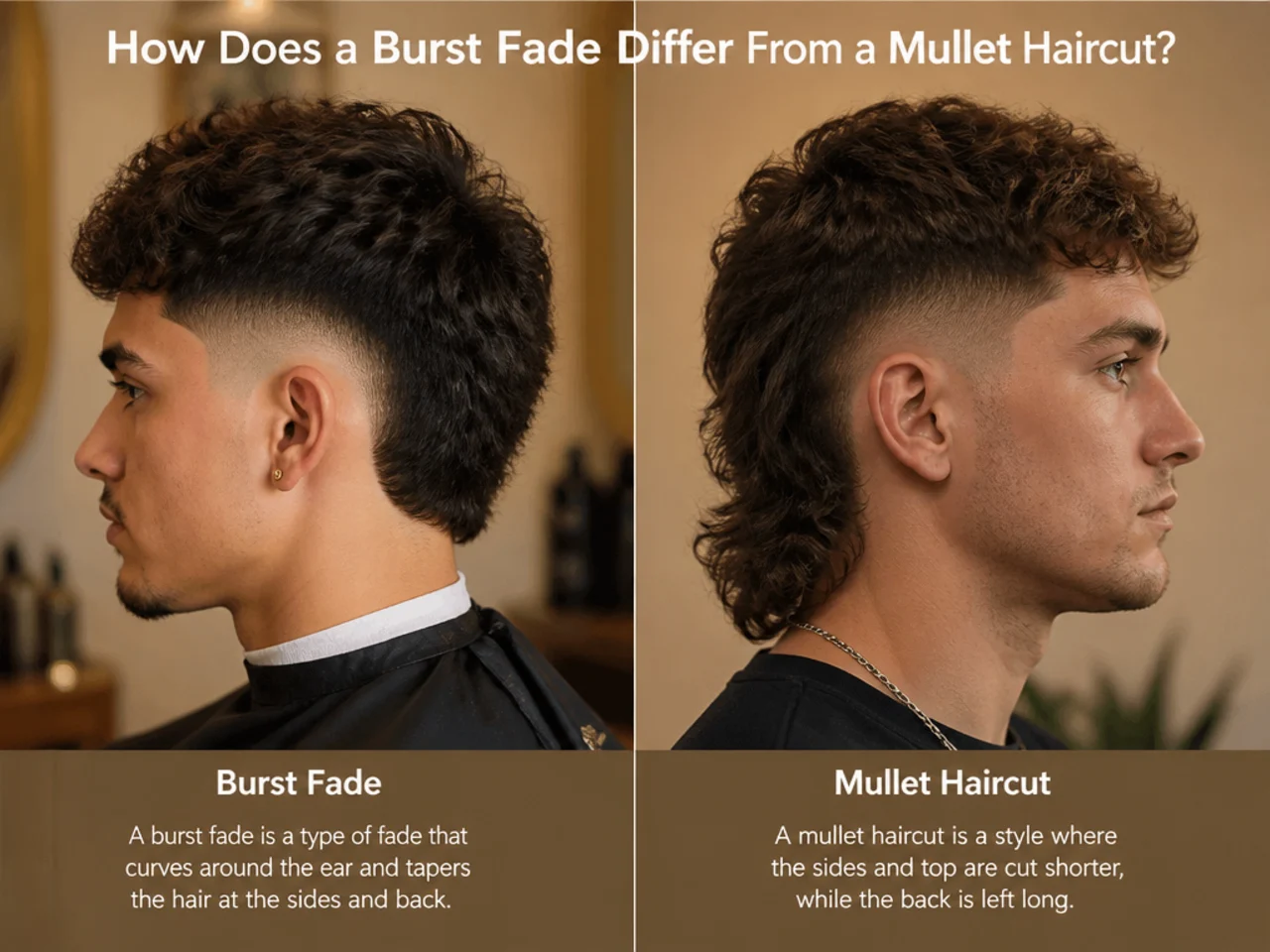
They're not opposites — they're a pairing. A mullet is a top shape (long in back). A burst fade is a side shape (arc around the ear). Combined, they're the burst fade mullet.
What is the origin of the burst fade haircut?
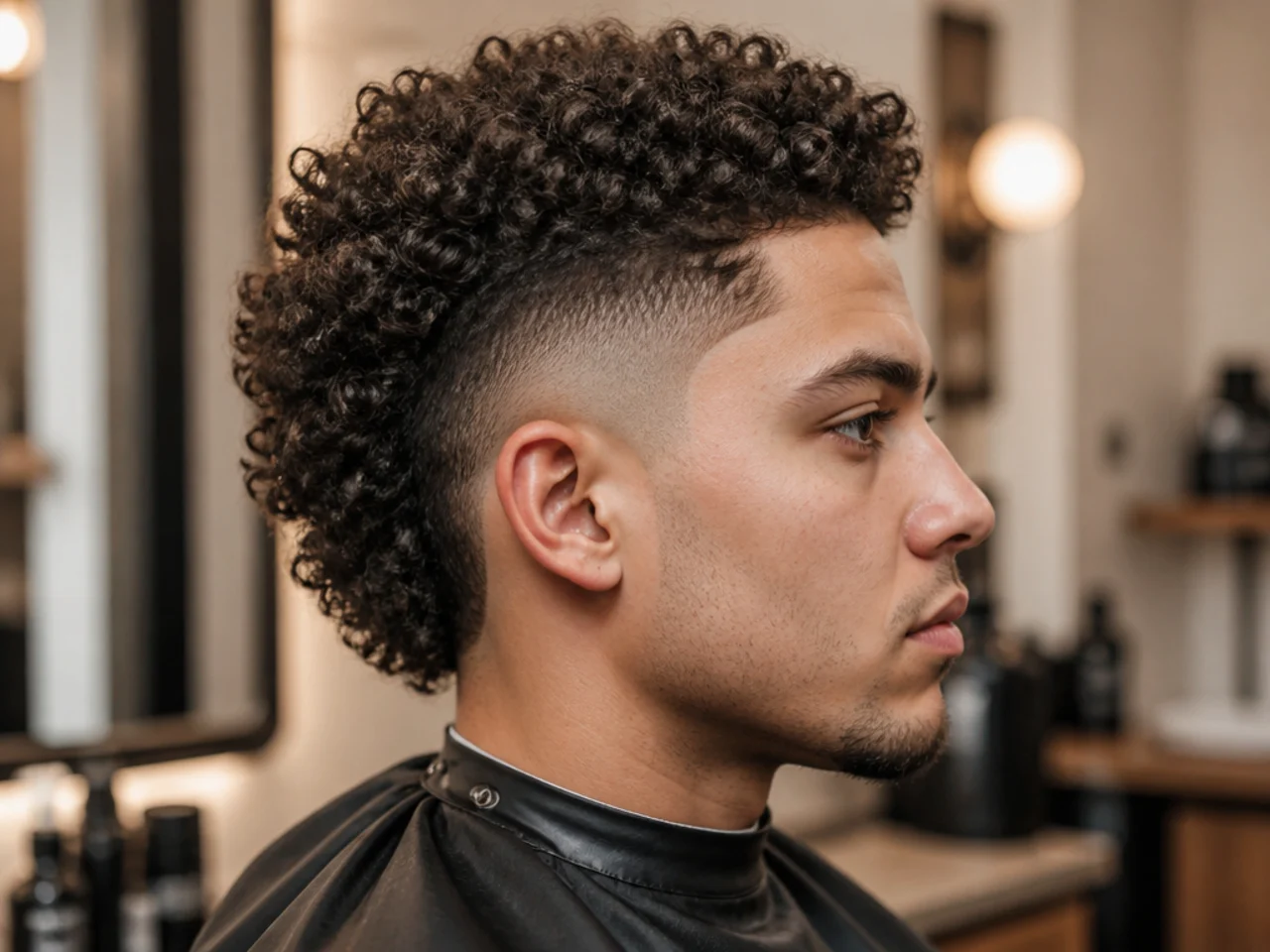
The burst rose out of Southern U.S. barbershops in the early 2000s and hit the mainstream in the mid-2010s alongside the mohawk revival. Usher, Zayn Malik, and Christian McCaffrey all wore versions that fed the trend.
Who suits a burst fade haircut best?
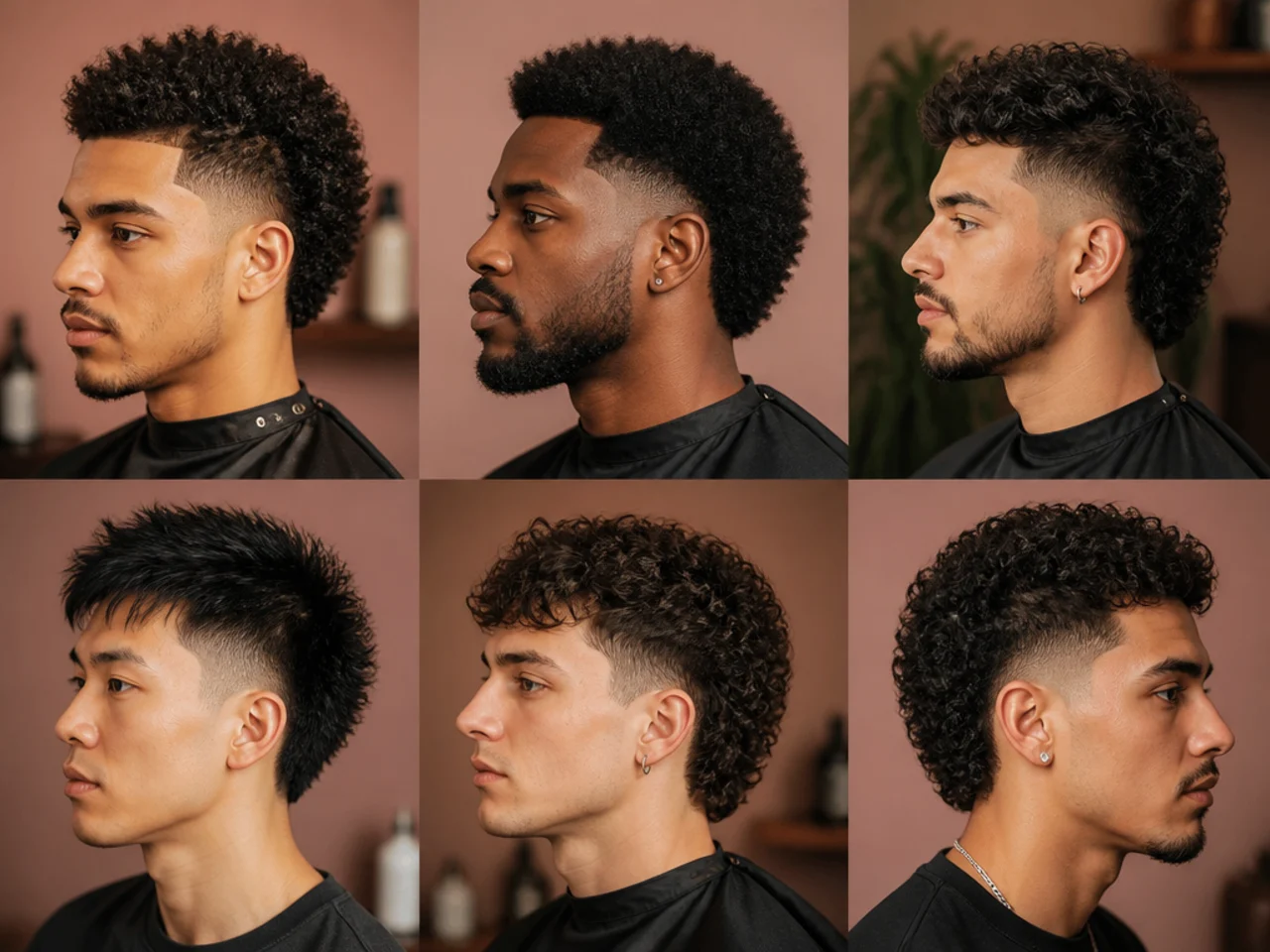
Guys with a top style that likes curved framing — mohawks, mullets, curly crops, comma cuts, textured fringes. Face shape matters less than top style.
What are the best hairstyles to pair with a burst fade?
Mullets, mohawks, faux hawks, curly tops, comma bangs, textured fringes, and Edgars. Anything with visual weight up top.
Can you combine a buzz cut with a burst fade?
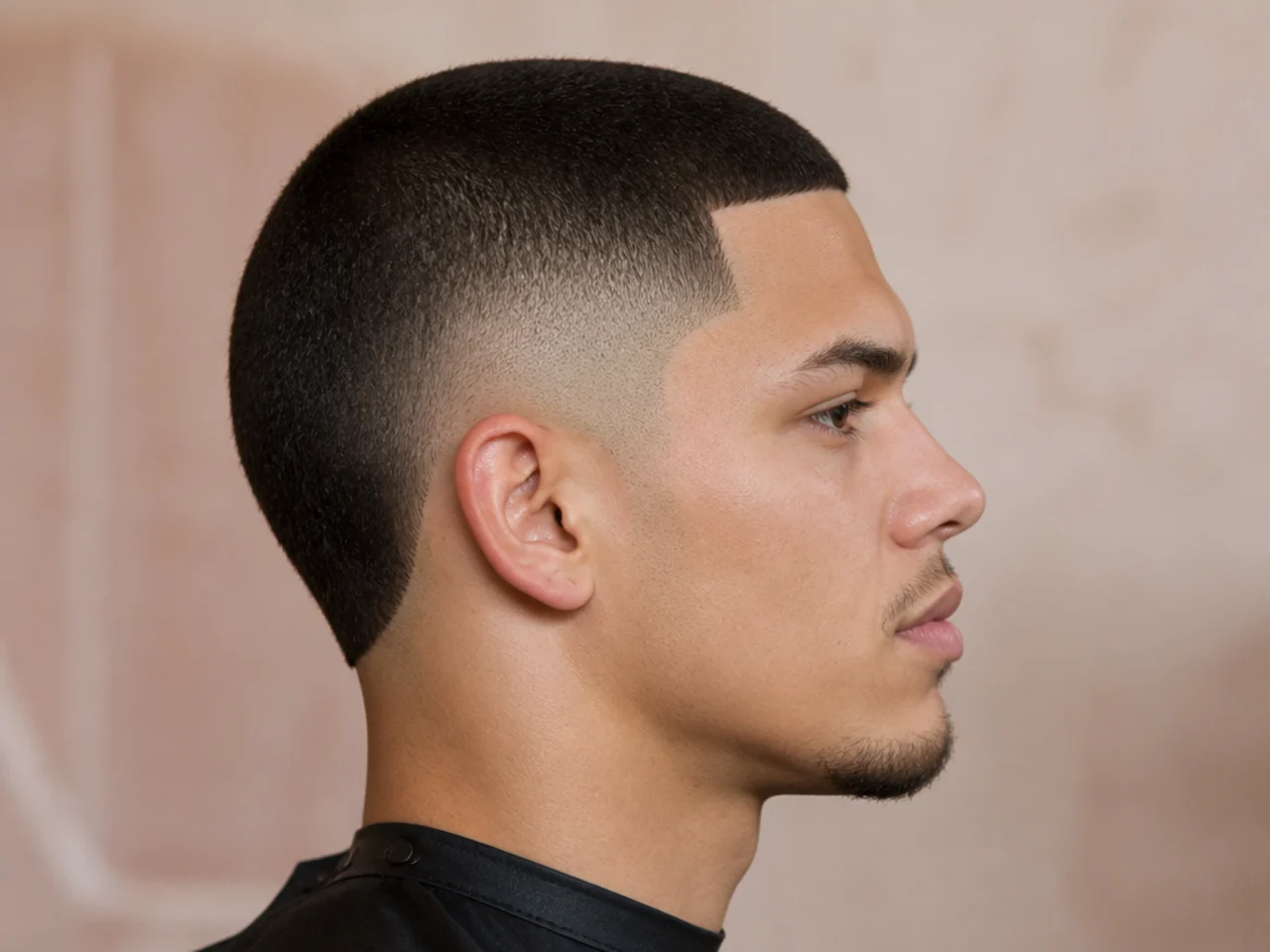
Yes. A buzz cut with a burst is a clean, low-maintenance option — same guard length across the top with the arc at the ear. Reads sharp with zero styling.
Can kids get a burst fade haircut?
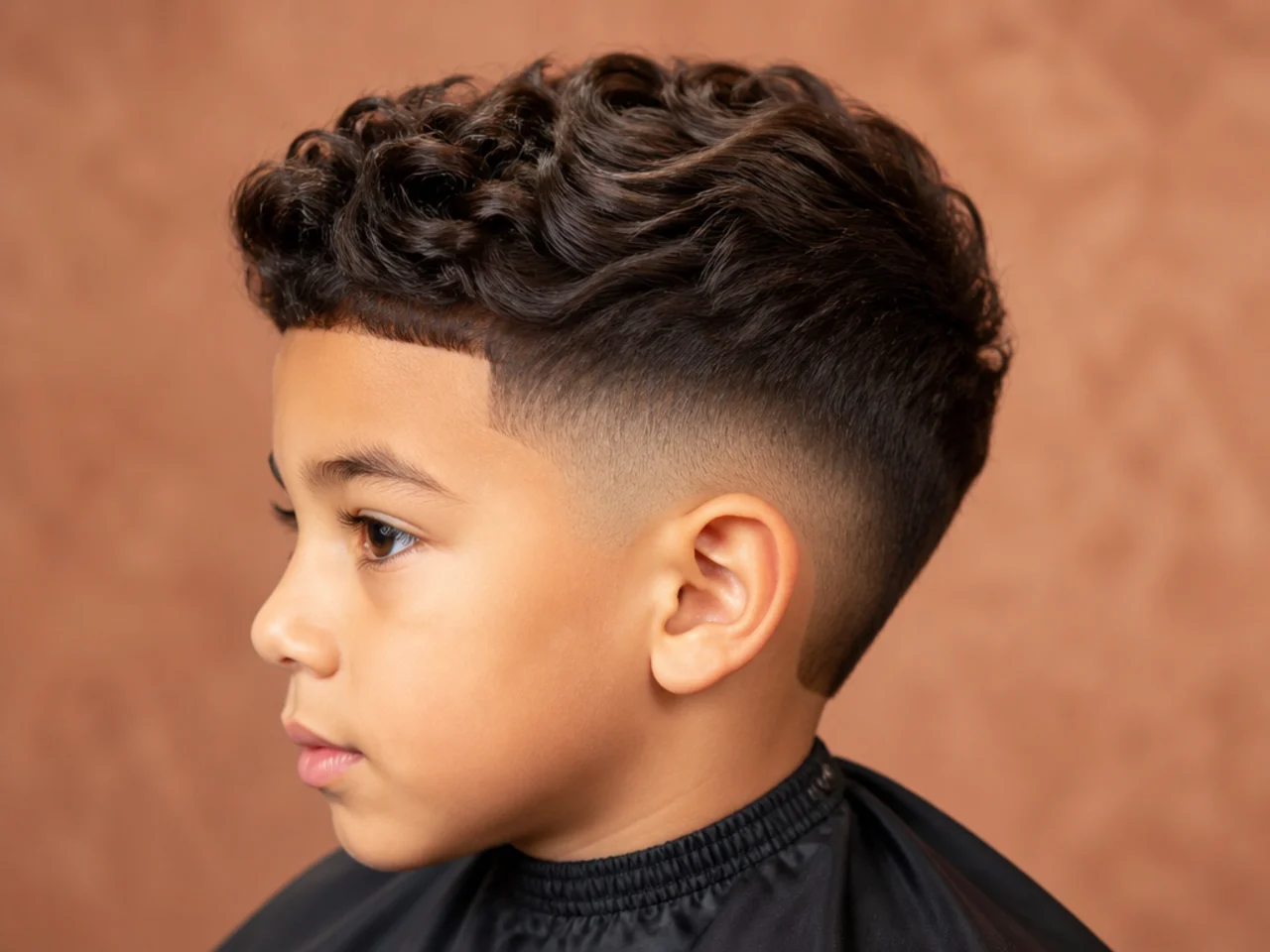
Yes. It's stylish, easy to maintain, and popular in kids' cuts. Most kids' barbers will do it if you show a photo.
How often should you get a burst fade retouched?
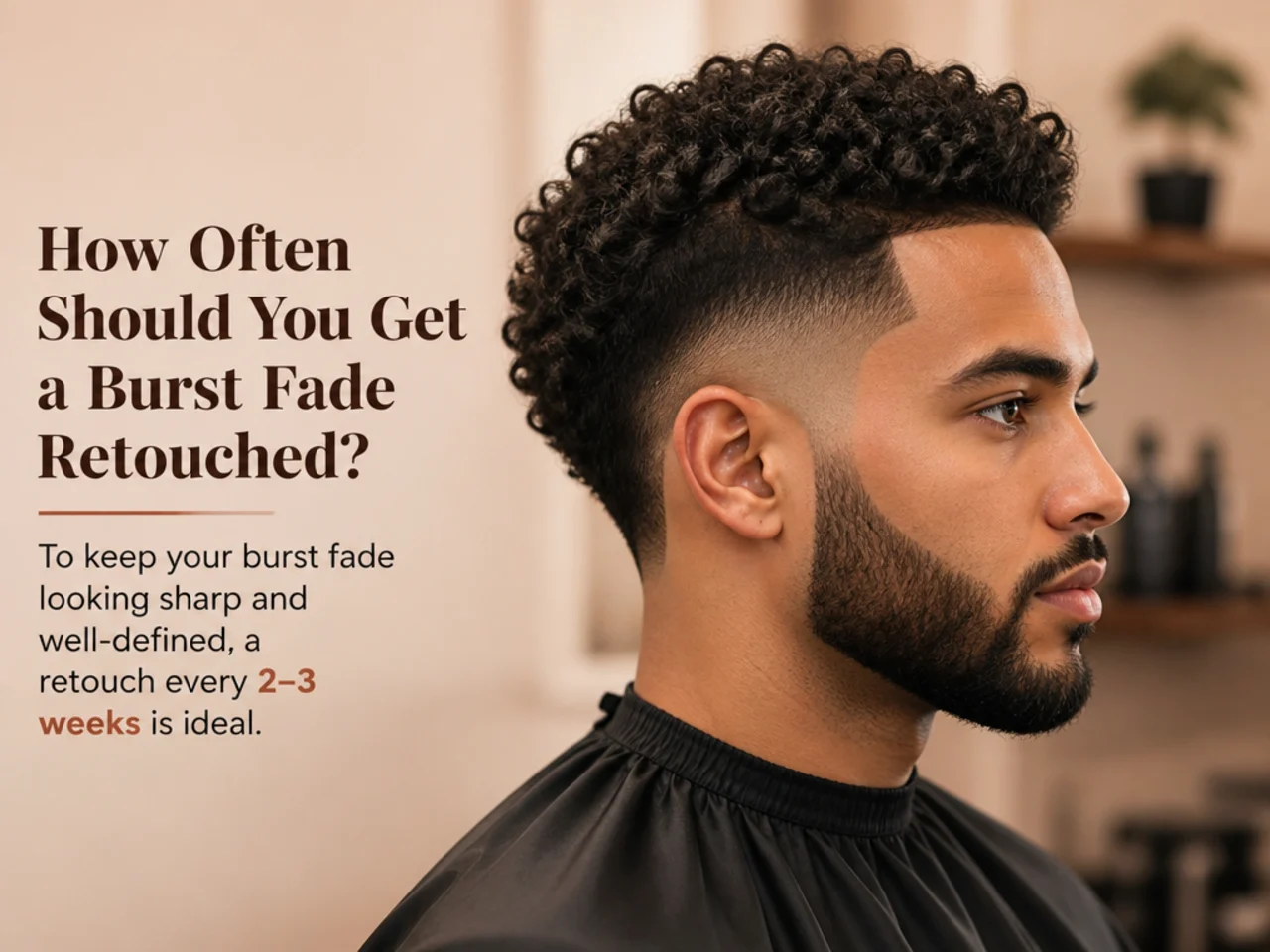
Every two to three weeks. The arc blurs faster than a straight fade because the shape depends on precise transitions.