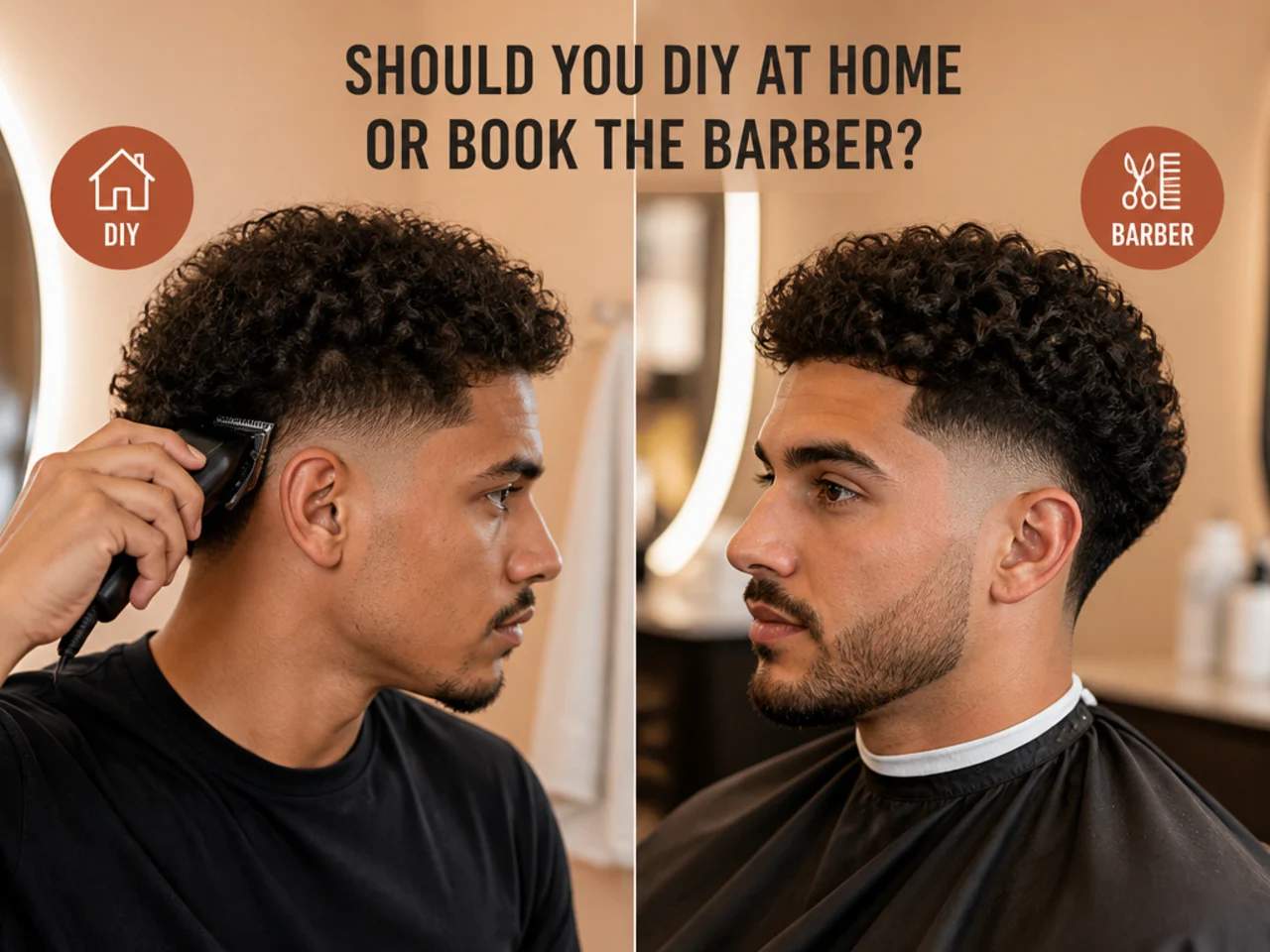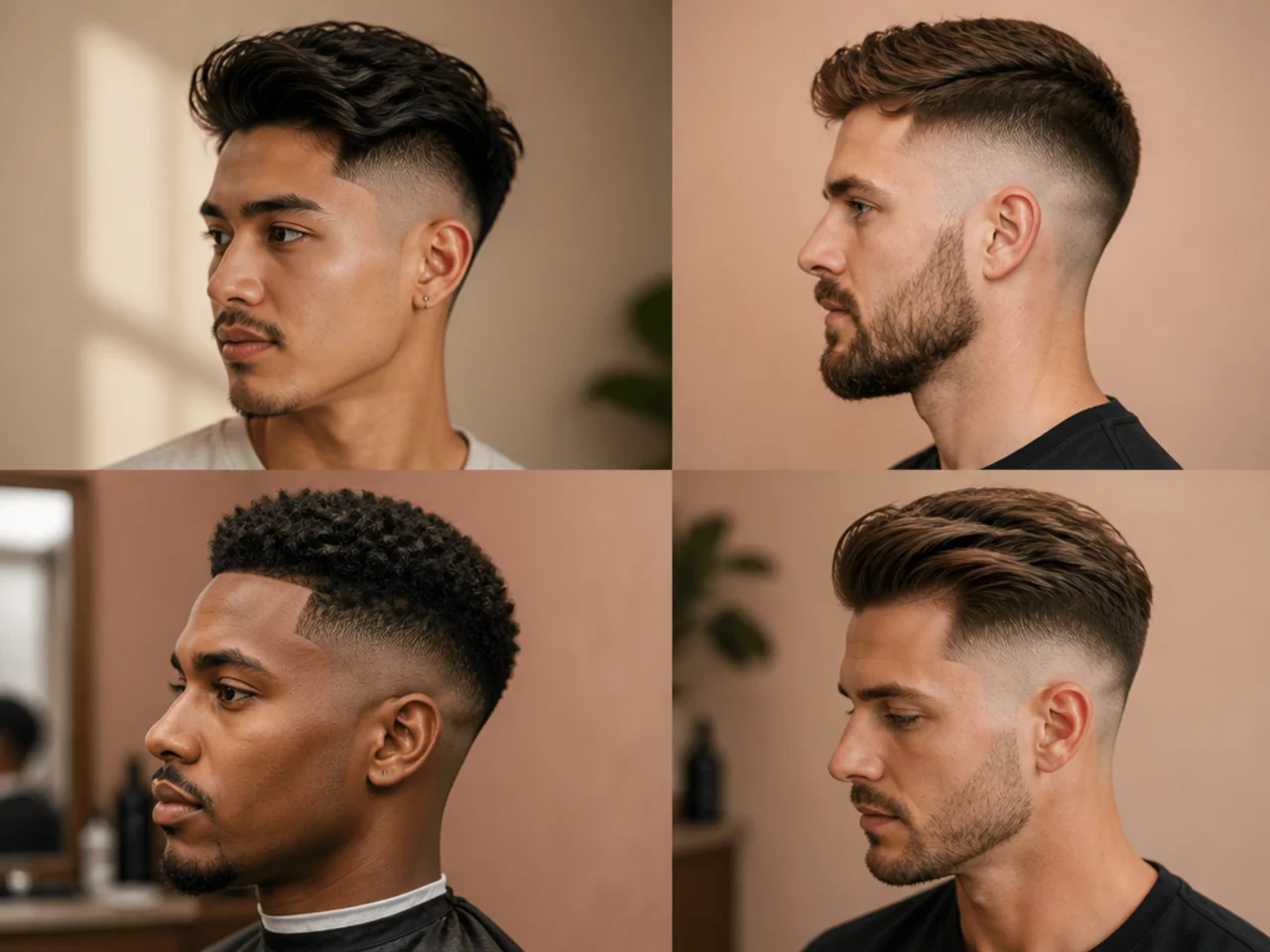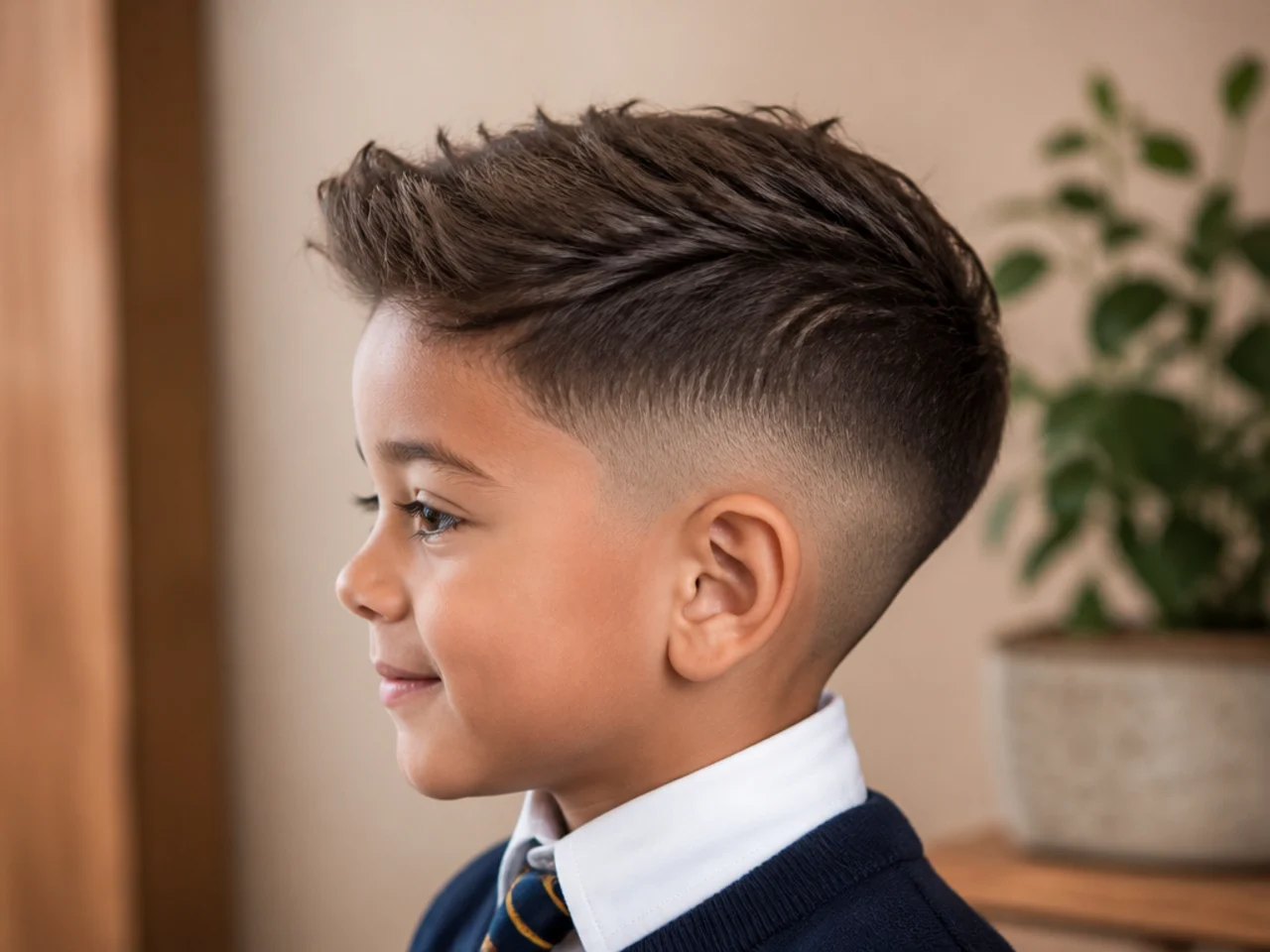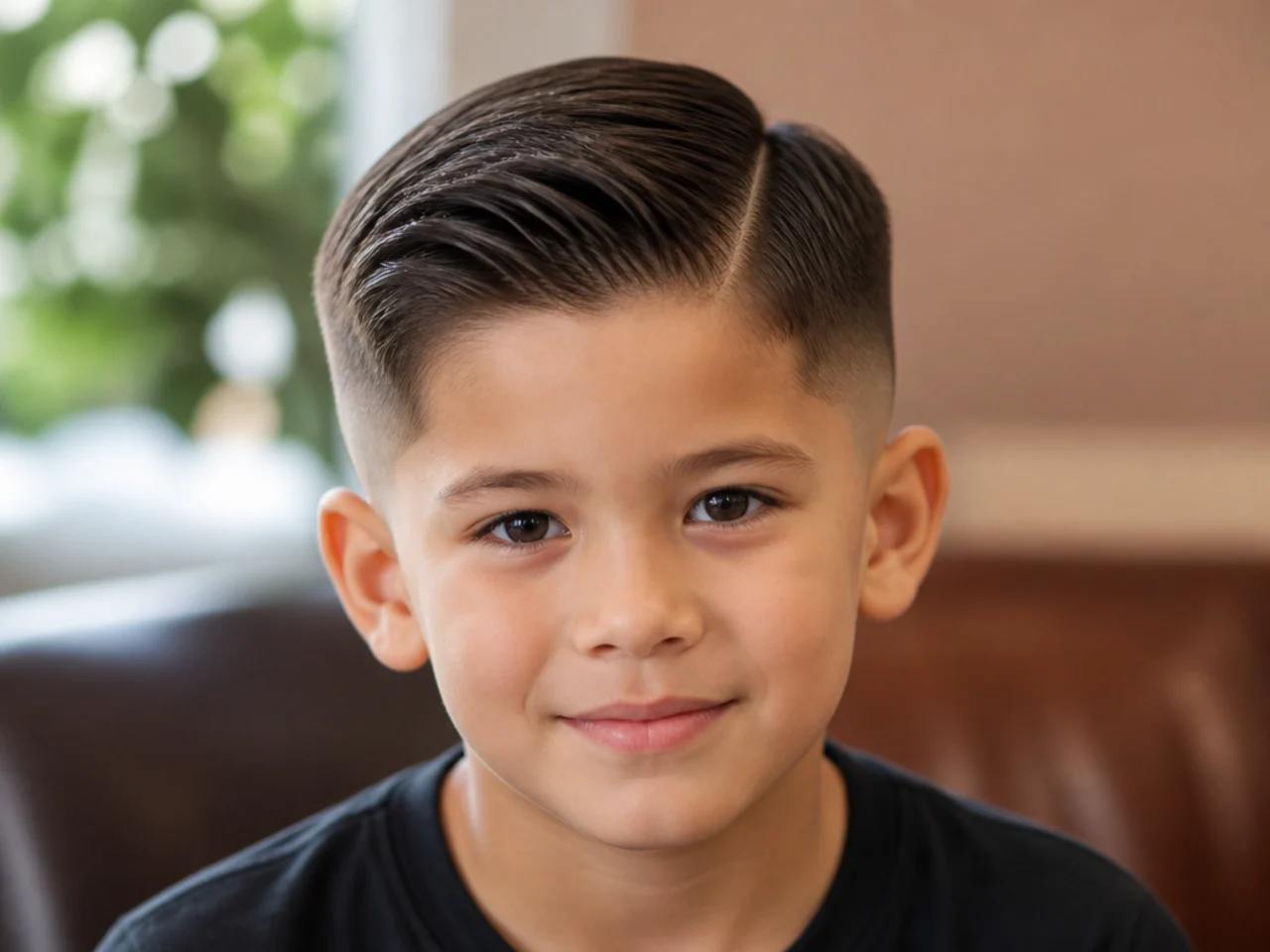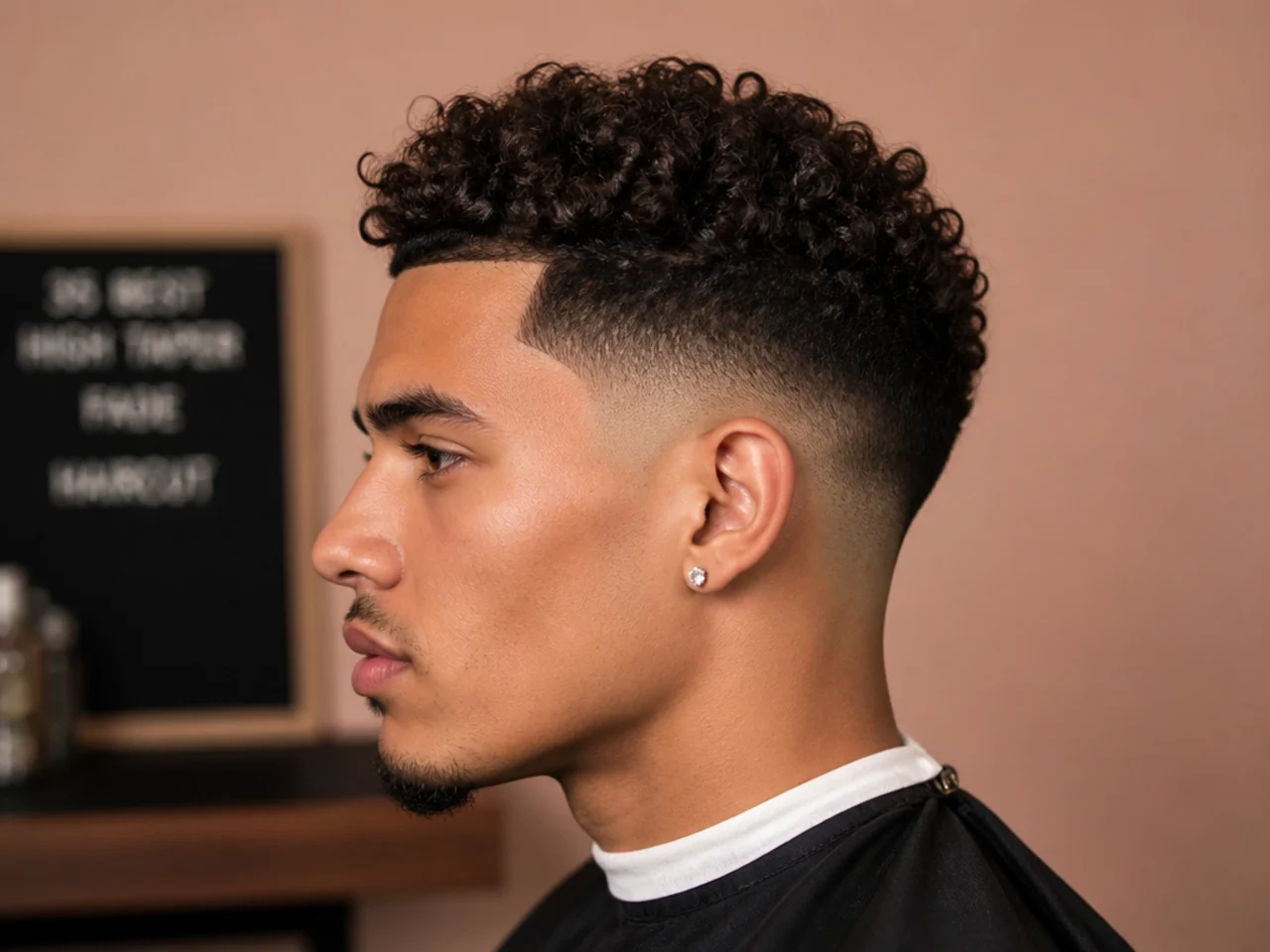
35 Best High Taper Fade Haircut: Ultimate Style Guide
The high taper fade is the boldest fade you can ask for while still keeping some length on the sides. This guide walks through 35 variations — from clean-cut office versions to dramatic curly-top statements — with photos and clear barber language.
In this article · 69
- What is a High Taper Fade? (Definition & Key Features)
- Anatomy of a High Taper Fade
- High Taper Fade vs Other Fade Types
- Classic High Taper Fade Haircut
- 1\. Classic High Taper Fade
- 2\. High Taper Fade Buzz Cut
- 3\. Short High Taper Fade
- 4\. High Taper Fade with Textured Crop
- 5\. High Taper Fade with Caesar Cut
- High Taper Fade for Textured & Curly Hair
- 6\. High Taper Fade Black Male (Natural Curls)
- 7\. High Taper Fade Curly Hair
- 8\. High Taper Fade Afro
- 9\. High Taper Fade Waves (360 Waves)
- 10\. High Taper Fade Dreads
- 11\. High Taper Fade with Braids
- 12\. Textured High Taper Fade
- 13\. High Taper Fade Fluffy Hair
- High Taper Fade for Straight & Fine Hair
- 14\. High Taper Fade Straight Hair
- 15\. High Taper Fade with Side-Swept Top
- 16\. High Taper Fade Slick Back
- 17\. High Taper Fade Comb Over
- Bold & Statement High Taper Fades
- 18\. High Taper Fade with Pompadour
- 19\. High Taper Fade with Quiff
- 20\. High Taper Fade Mullet
- 21\. High Taper Fade with Faux Hawk
- 22\. High Top Taper Fade
- 23\. High Taper Fade with Short Spikes
- Long Top High Taper Fades
- 24\. High Taper Fade Long Hair
- 25\. High Taper Fade with Textured Fringe
- 26\. High Taper Fade Fringe
- Specialized High Taper Fade Styles
- 27\. High Taper Fade Edgar (Edgar Cut)
- 28\. High Taper Fade with Design (Line Up)
- 29\. High Taper Fade with Hard Part
- 30\. High Taper Fade with Undercut
- 31\. High Taper Fade Blowout
- 32\. High Taper Fade Blonde
- 33\. High Taper Fade Asian
- 34\. High Taper Fade with Messy Texture
- 35\. High Taper Fade with Beard
- How to Choose the Right High Taper Fade for You
- Based on Hair Type
- Based on Face Shape
- Based on Lifestyle
- Based on Maintenance Commitment
- How to Ask Your Barber for a High Taper Fade
- Essential Information to Provide
- Questions to Ask Your Barber
- What to Avoid
- Building a Relationship with Your Barber
- How to Style a High Taper Fade (Step-by-Step Guide)
- Styling Tools You'll Need
- Step-by-Step Styling Process
- Styling Product Guide by Desired Look
- Common Styling Mistakes to Avoid
- How to Maintain Your High Taper Fade
- Trim Schedule & Frequency
- Daily Maintenance Routine
- Weekly Care Requirements
- Final Thoughts
- FAQ's
- What is a High Taper Fade Haircut?
- What is Better, High Taper or Low Taper?
- Is a Low Taper Fade Haram?
- What Is The Gen Z Haircut Called?
The high taper fade starts at or above your temple — two to three inches higher than a low or mid taper. That extra skin exposure creates hard contrast with whatever length you leave on top. It reads modern in photos. It flatters round and heart-shaped faces by adding vertical lift. This guide covers 35 variations, how to ask for each at the chair, and how to keep the line sharp between visits.
What is a High Taper Fade? (Definition & Key Features)
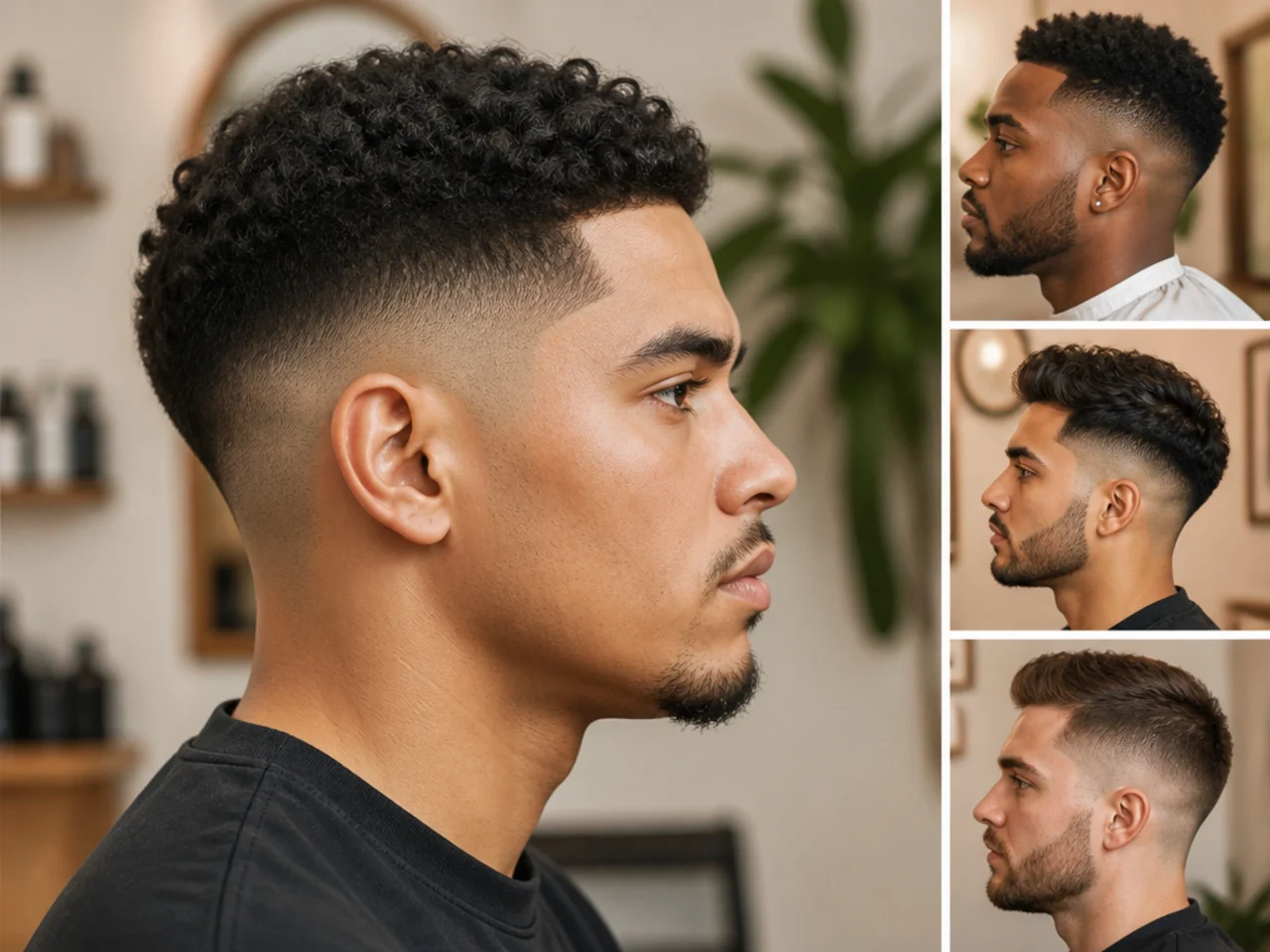
A high taper fade is a men's cut where the sides begin blending down high on the head — level with the temple bone or slightly above. Length transitions through several clipper guards until you hit a #0.5 or bare skin behind the ear. The top stays untouched. Think of it as a taper haircut stretched vertically, with the transition zone pushed north.
Anatomy of a High Taper Fade
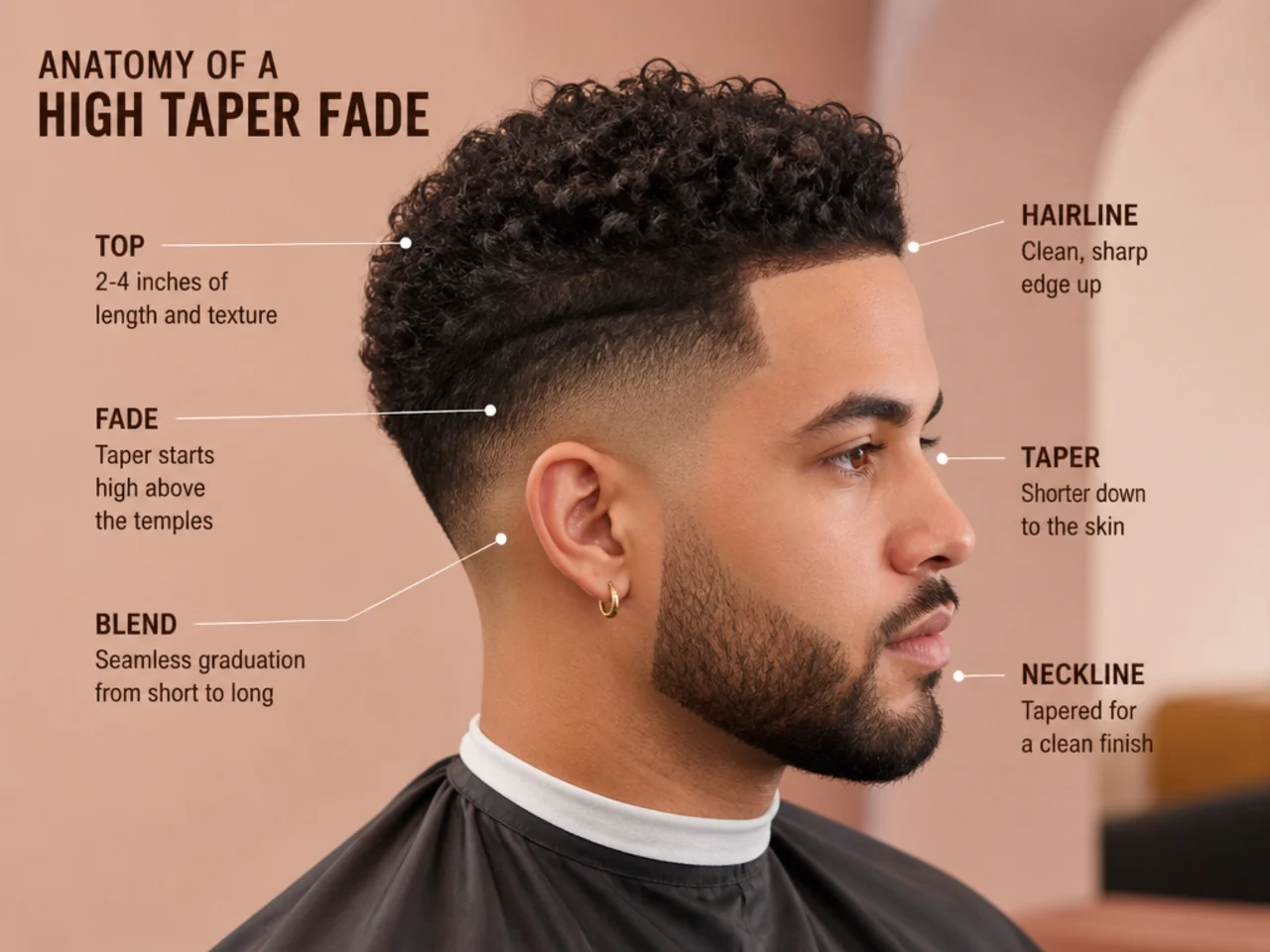
Fade start point sits two to three inches above the ear, roughly level with your temple. That placement is the whole definition — start lower and you're in mid or low taper fade territory.
Graduation runs through clipper guards in sequence. Most barbers open with a #2 or #3 at the transition line, drop to a #1, then a #0.5, then bald or skin depending on your request.
Top length stays wherever you want it — anywhere from a #4 buzz to eight inches. The whole point of the high taper is contrast, so leaving at least an inch on top pays off visually.
Neckline finishes either tapered (a soft blend down the nape) or blocked (squared corners). Tapered ages better between cuts.
Edge work along the hairline and sideburns defines the whole cut. A clean edge-up is what separates a fresh fade from a grown-out one at the two-week mark.
High Taper Fade vs Other Fade Types
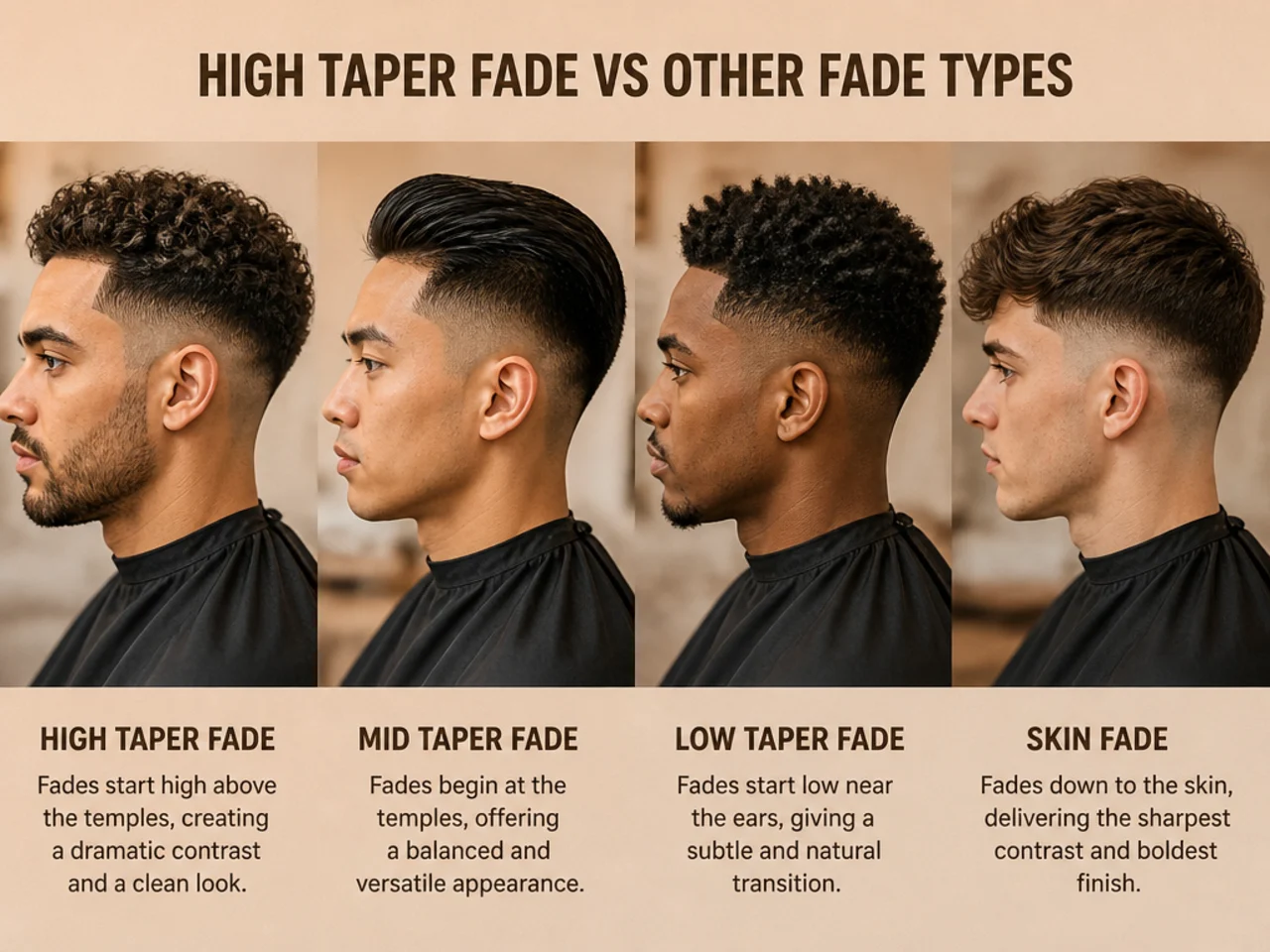
Height of the fade start is the only thing that changes across fade families. Everything else — top length, texture, styling — is independent.
High vs low. A low fade haircut begins right at or below the top of your ear. Subtle. Corporate-safe. Grows out slowly. The high taper starts three inches higher, exposes more skin, and reads bolder in every photo. Read the full low fade vs mid fade vs high fade breakdown if you're on the fence.
High vs mid. A mid fade haircut meets in the middle — starts at the top of the ear, hits mid-way up the side. Balanced. Versatile. If the high taper feels too aggressive, drop half an inch and you're in mid territory.
High taper vs high skin fade. A high taper reduces length gradually but can stop at a #0.5. A high skin fade goes to bare scalp. Most barbers execute a hybrid — taper the top portion, skin the bottom. Ask for "skin fade" if you want the fully bald look.
High taper vs a straight fade haircut. A fade is any graduated blend on the sides. A taper is a subset — specifically the neck and sideburn zone. High taper fade combines both: a taper style pushed high enough to qualify as a fade. Semantics matter less than showing your barber a photo.
Classic High Taper Fade Haircut
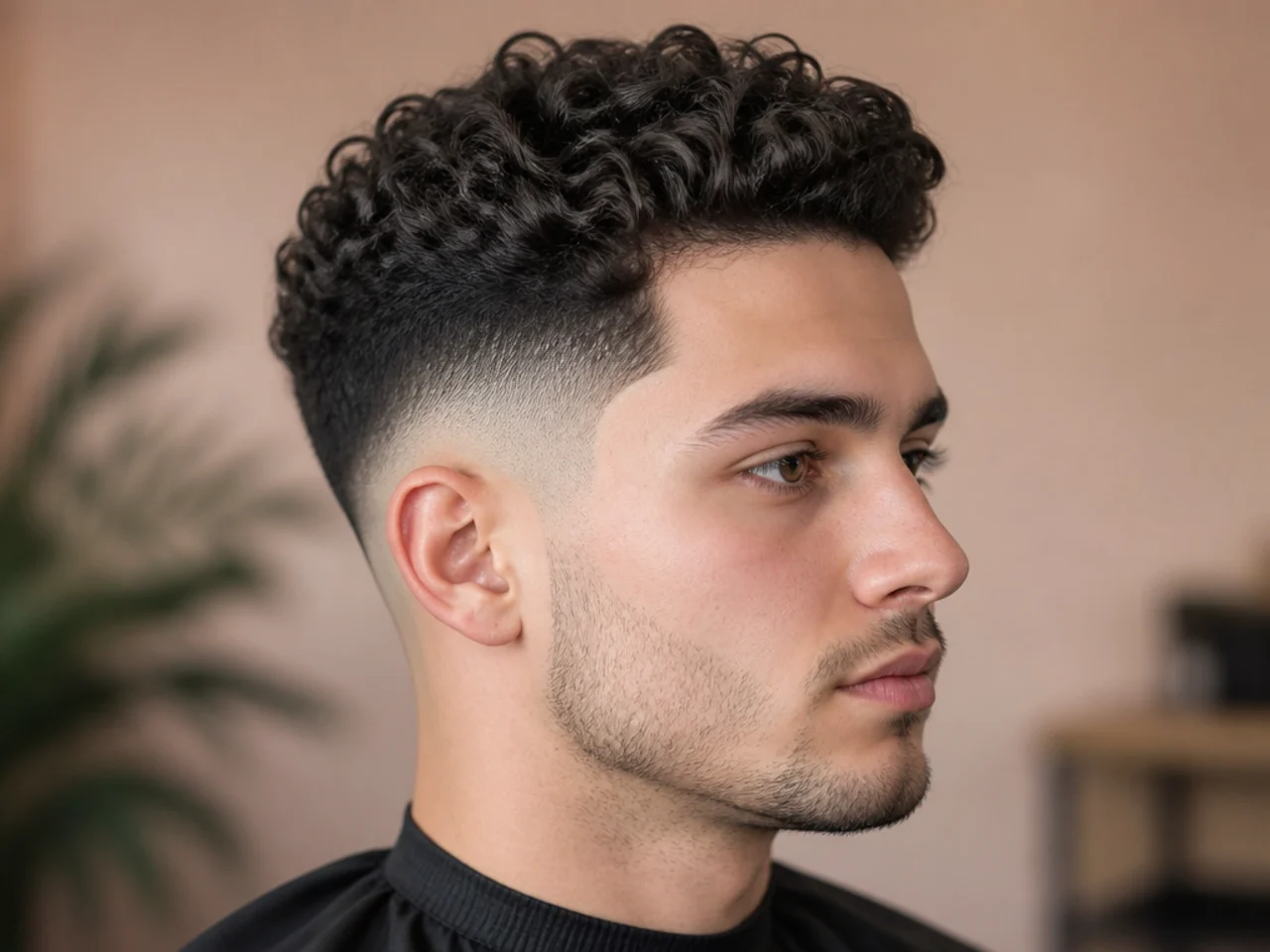
These five variations are the ones every barber can execute without a reference photo. Start here if it's your first high taper. Ask for tweaks once you've lived with the shape for a cycle.
1. Classic High Taper Fade
The default. Fade opens at the temple, tapers down to a #0.5, top left at three inches with soft texture. Works on straight, wavy, and loose curly hair. Suits oval and square faces best but forgives most shapes.
How to ask: "High taper fade, start at the temple, taper to a #0.5, three inches on top with natural texture, tapered neckline."
Styling tip: a nickel-sized scoop of matte clay worked from root to tip gives shape without shine. Skip the comb — fingers hold texture better.
2. High Taper Fade Buzz Cut
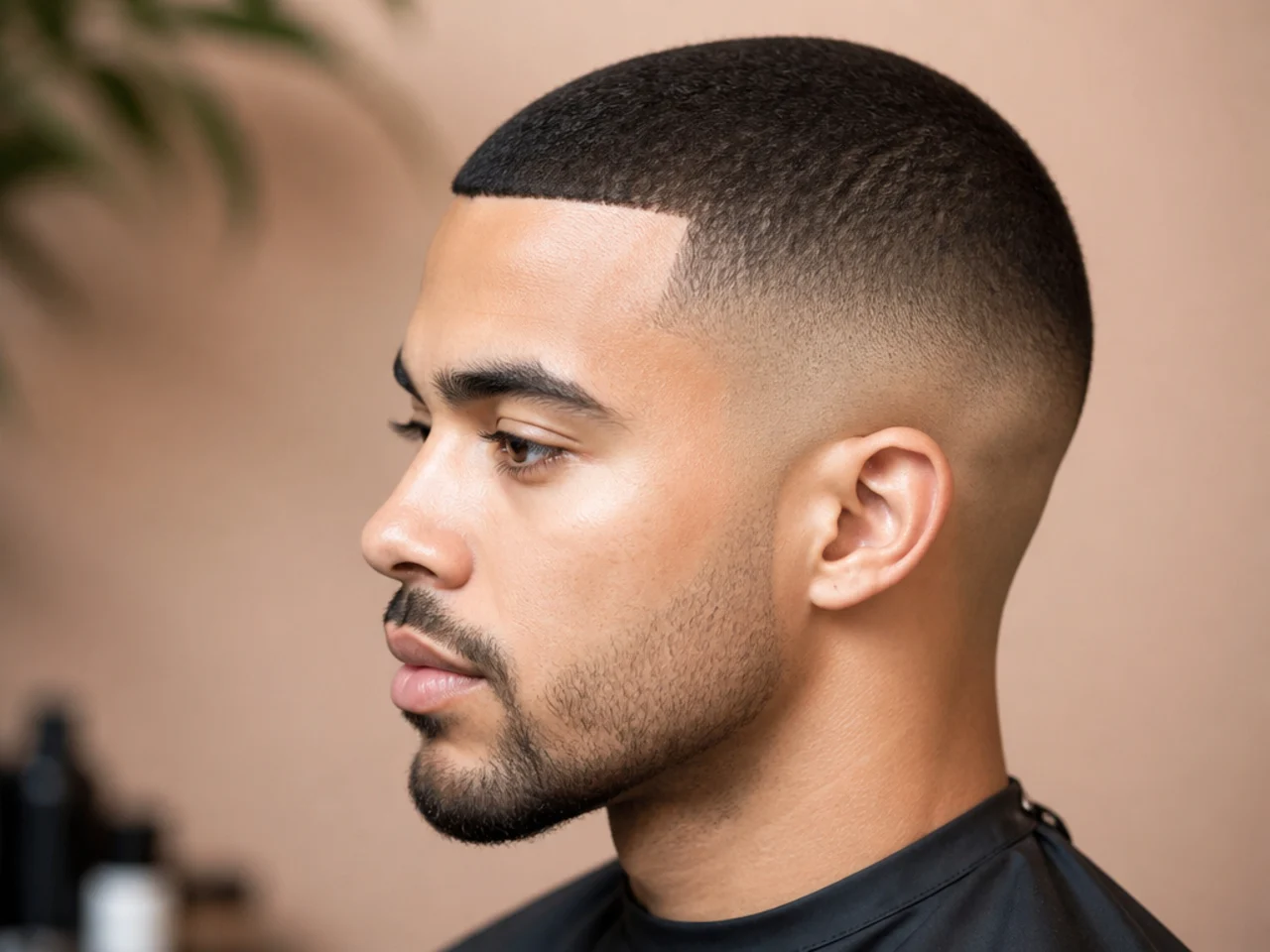
The lowest-effort variation. Top gets a #3 or #4 all over. Sides run high taper down to skin. Zero styling. Texture doesn't matter at that length, so any hair type works. Suits square, oval, and heart-shaped faces — strong jaws especially.
How to ask: "High taper down to skin, #3 all over on top."
Styling tip: a lightweight scalp moisturizer prevents the buzz from looking dry under office lighting. Skip pomade — there's nothing to hold.
3. Short High Taper Fade
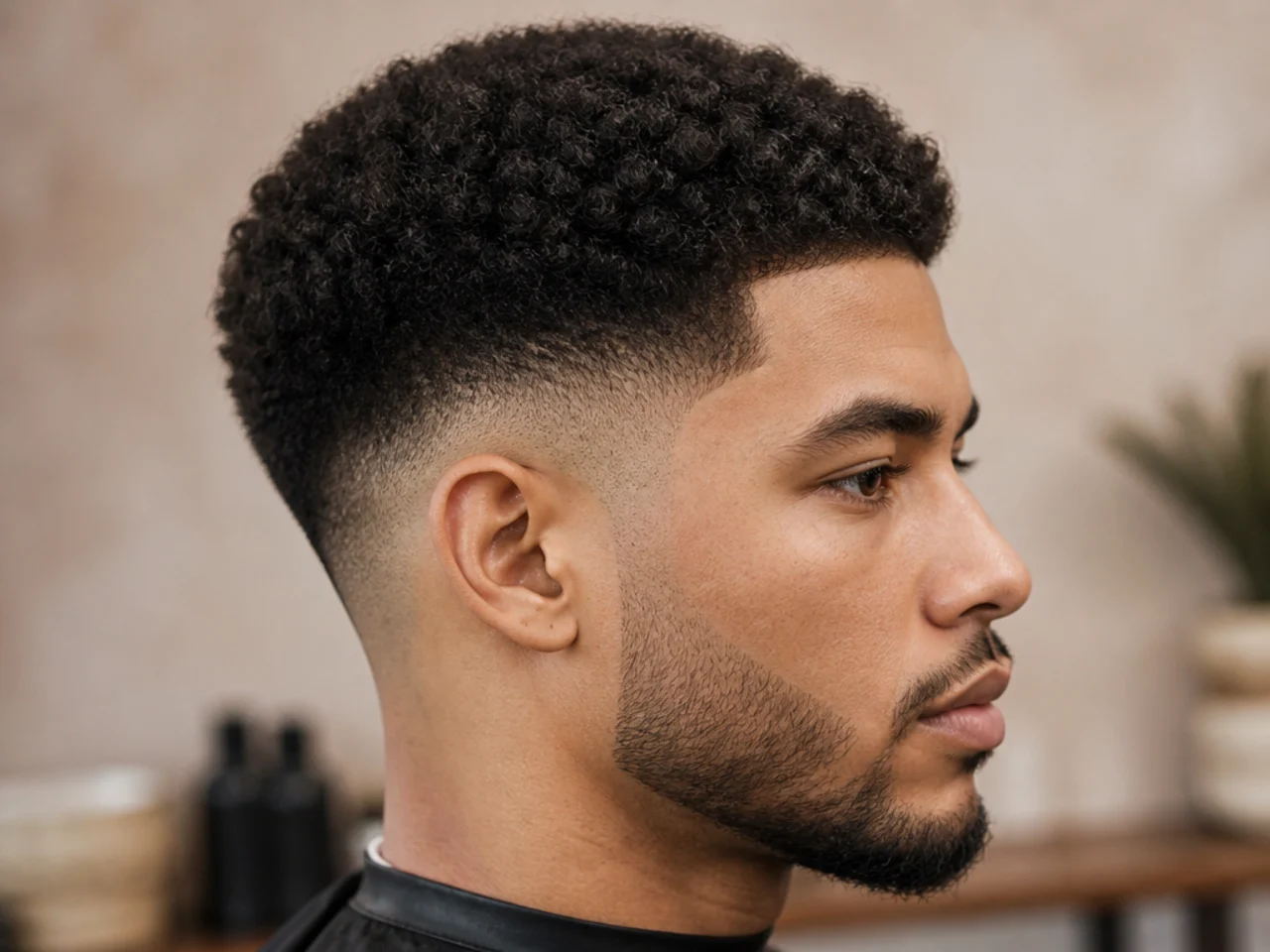
Steps up from a buzz. One to two inches on top, still faded high on the sides. Enough length for texture, nothing to comb. Suits straight or wavy hair. Round and diamond faces benefit from the vertical read this gives.
How to ask: "High taper fade, scissor the top down to about an inch and a half, keep it textured."
Styling tip: a pea-sized drop of texture paste rubbed between palms and pressed through the top adds separation. Twenty seconds, done.
4. High Taper Fade with Textured Crop
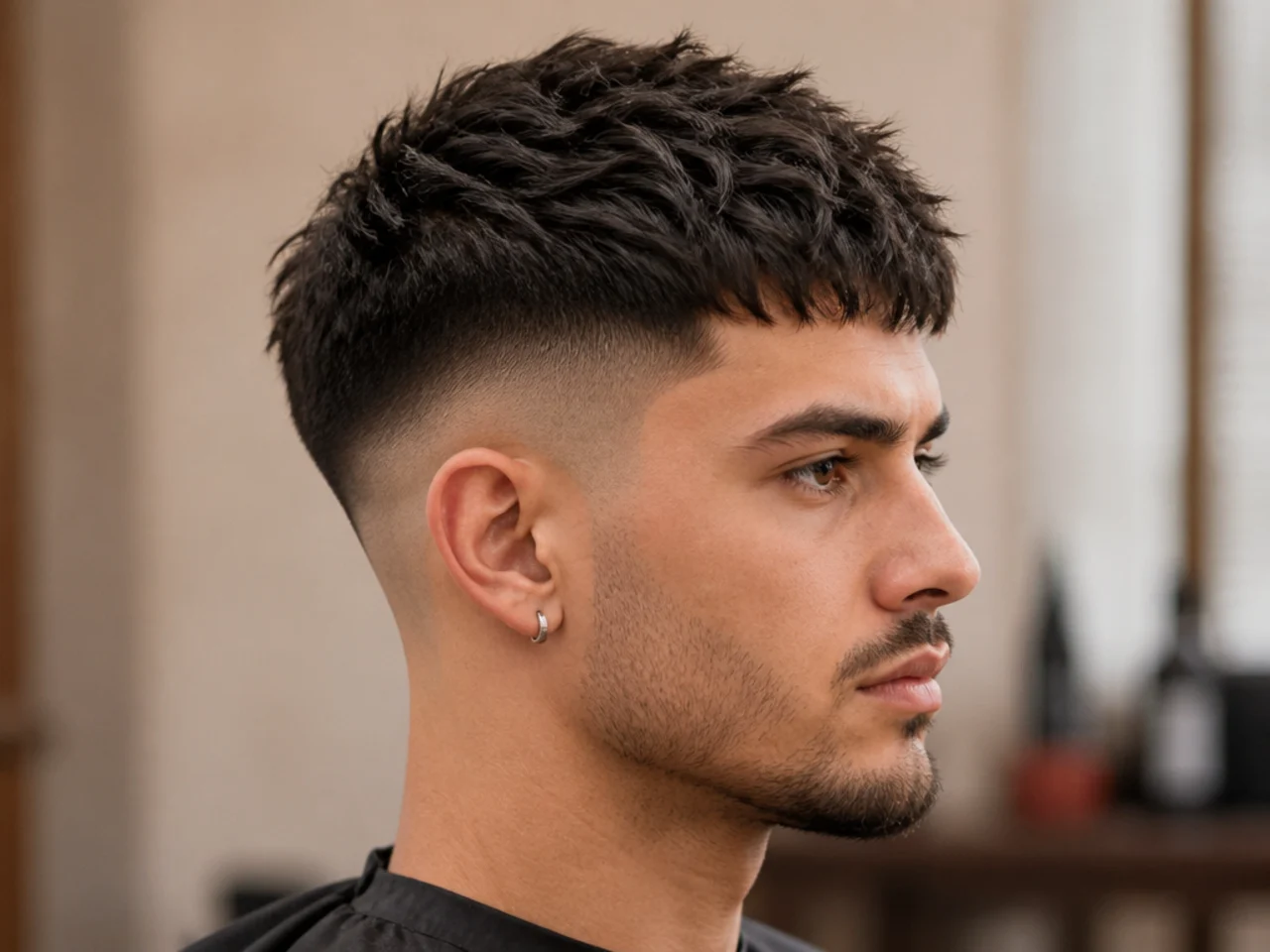
Choppy, layered top with a short forward fringe. Fade climbs to the temple, then it's all texture above. Works on straight to wavy hair with medium density. Best on round and oval faces because the fringe visually shortens the forehead.
How to ask: "High taper fade with a textured crop — scissor the top with visible layers, keep a short blunt fringe on the forehead."
Styling tip: matte paste on damp hair, blow-dry with fingers pushing forward, then break the fringe apart with your thumbs. Never brush.
5. High Taper Fade with Caesar Cut
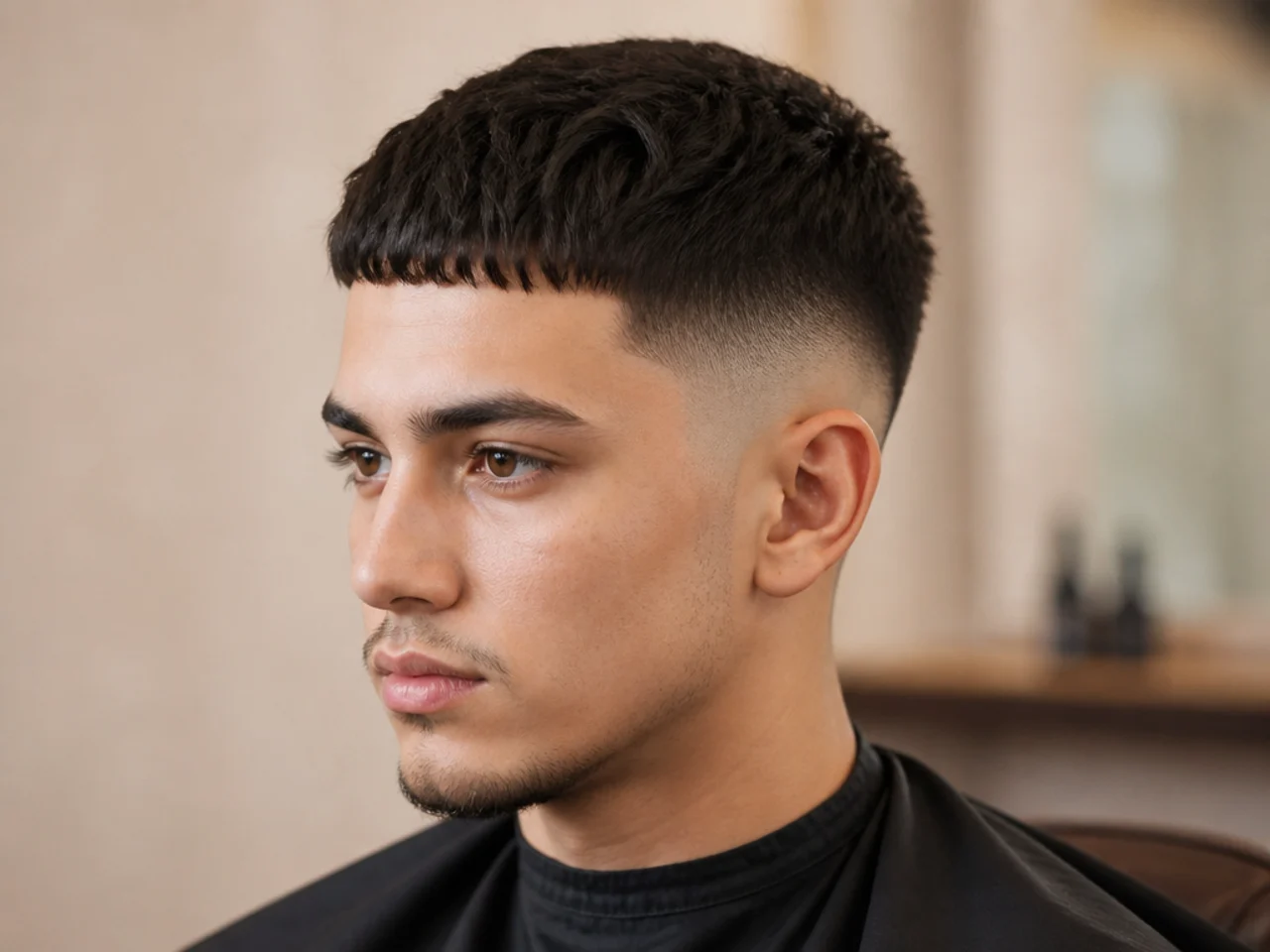
Roman-emperor fringe pulled forward across the forehead, tightly faded temples. Straight or slightly wavy hair holds this best. Oval and square faces. Solid choice if your hairline is receding — the forward fringe covers it without looking like it's covering anything.
How to ask: "High taper fade, one inch on top, straight fringe combed forward — Caesar style."
Styling tip: styling cream on damp hair, combed forward, air-dried. It should look flat and intentional, not styled.
High Taper Fade for Textured & Curly Hair
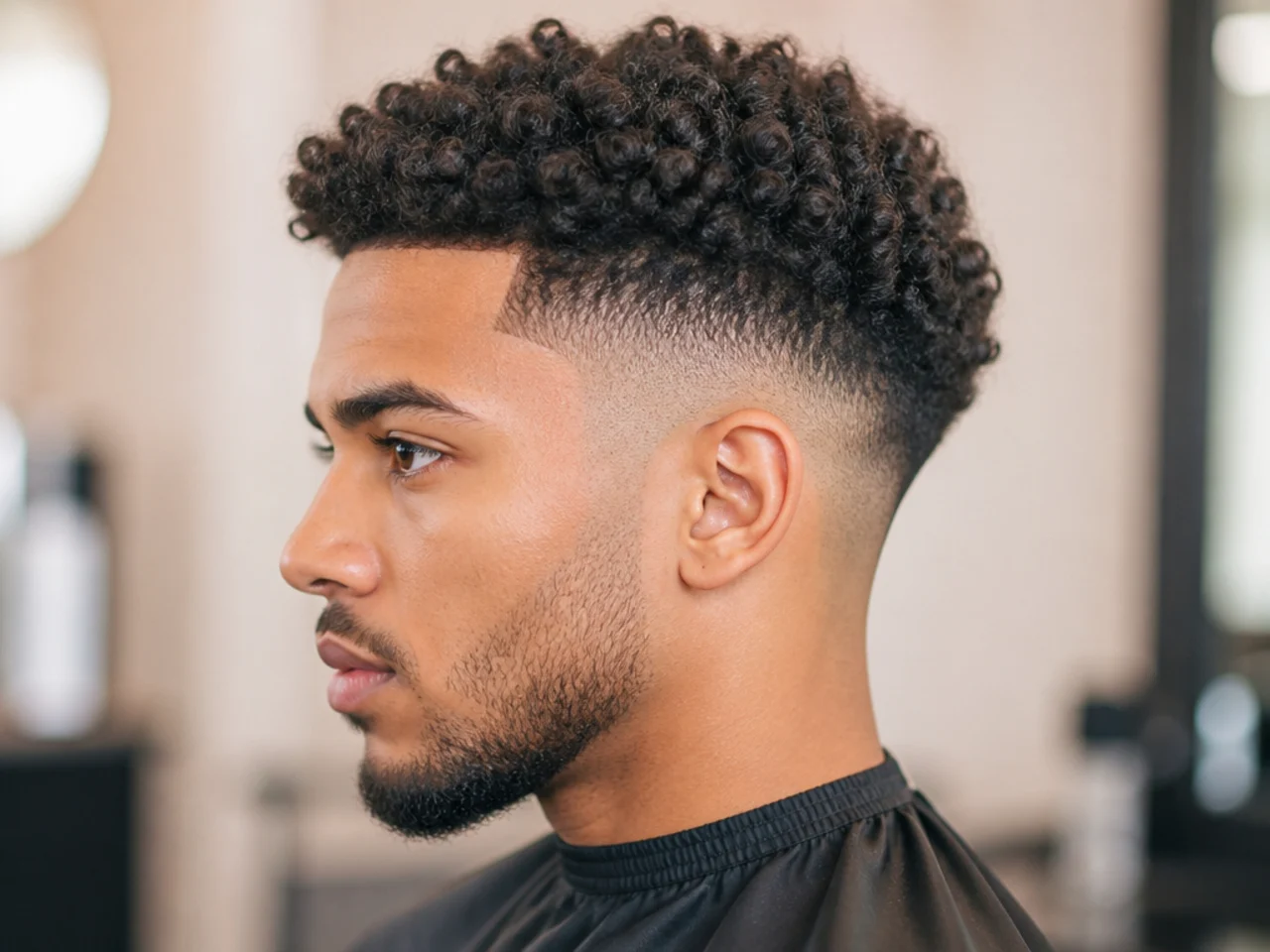
Curly, coily, and textured hair is where the high taper fade earns its reputation. The clean, exposed skin on the sides frames the volume up top. See the full curly hairstyles for men guide for cuts beyond the taper, and the fade haircuts for black men rundown for style-specific detail.
6. High Taper Fade Black Male (Natural Curls)
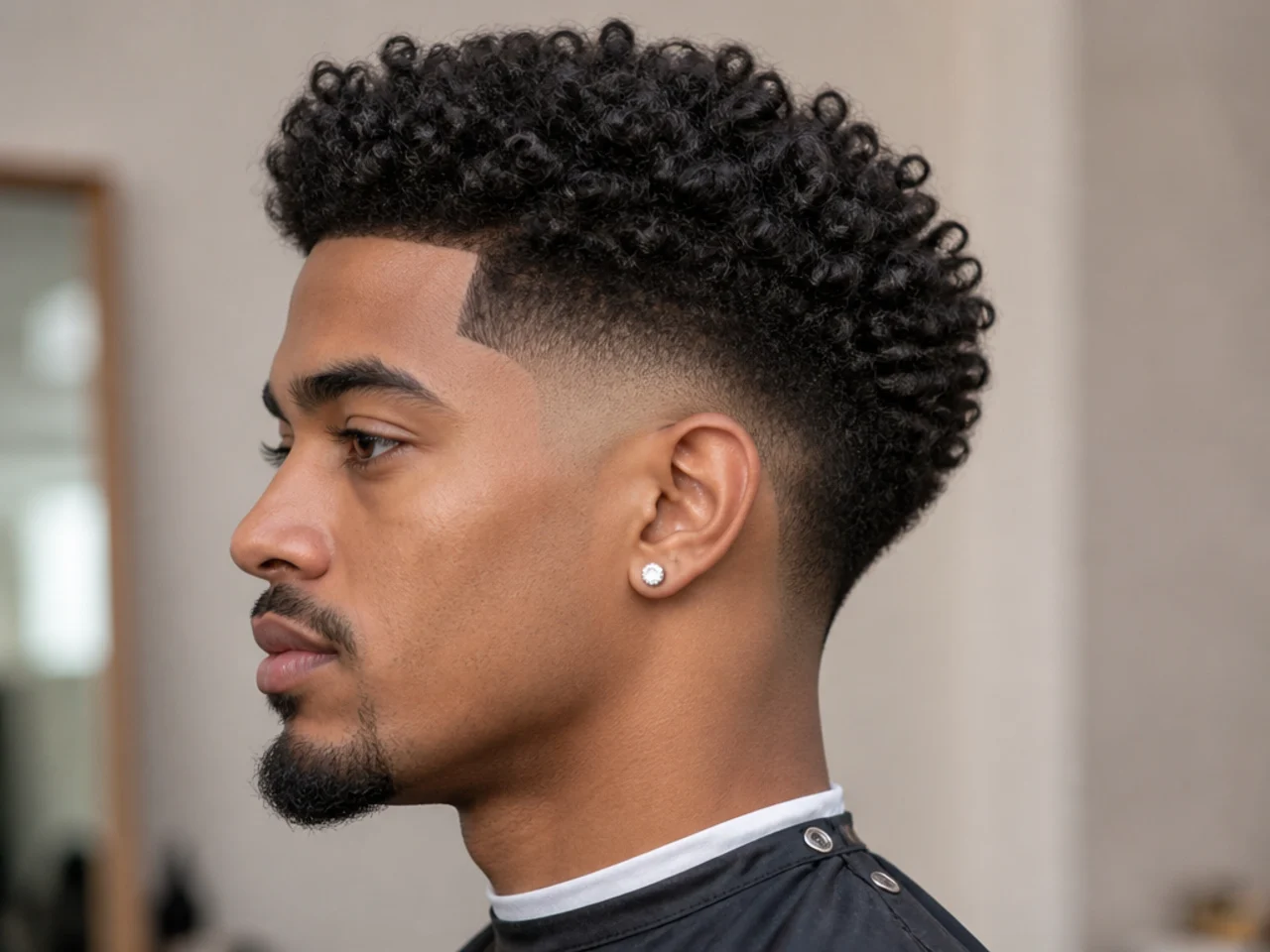
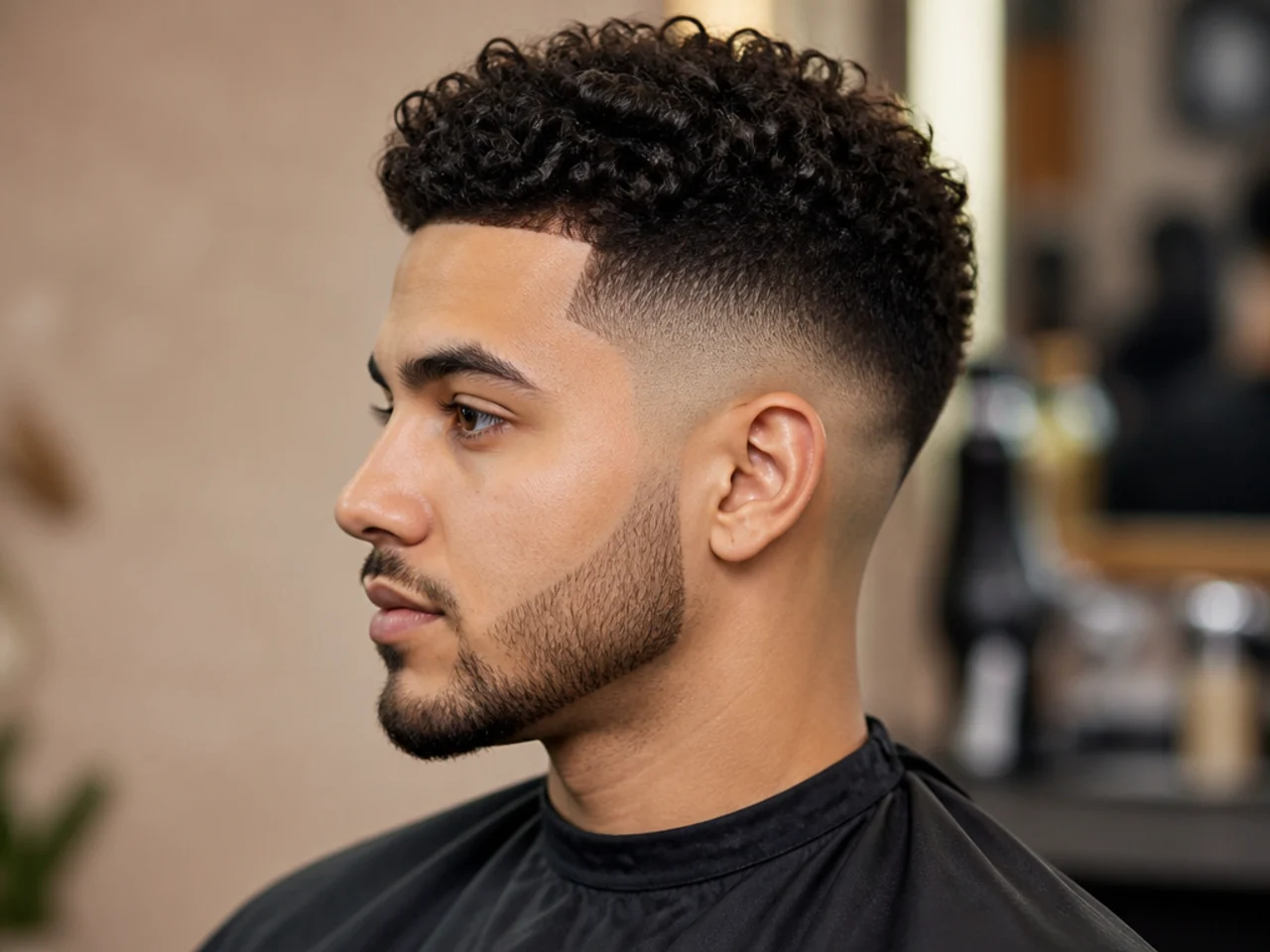
Tight coils left full on top, high fade dropping to skin at the temple. The signature contemporary Black male cut. Works across type 3c through 4c curl patterns. Every face shape — the volume adds height wherever you need it.
How to ask: "High taper skin fade, scissor the top to about two inches, leave the curls intact — no thinning shears."
Styling tip: leave-in conditioner on damp hair, pick from the roots outward, seal with a few drops of argan oil. Sleep on a satin pillowcase or the curl pattern flattens overnight.
7. High Taper Fade Curly Hair
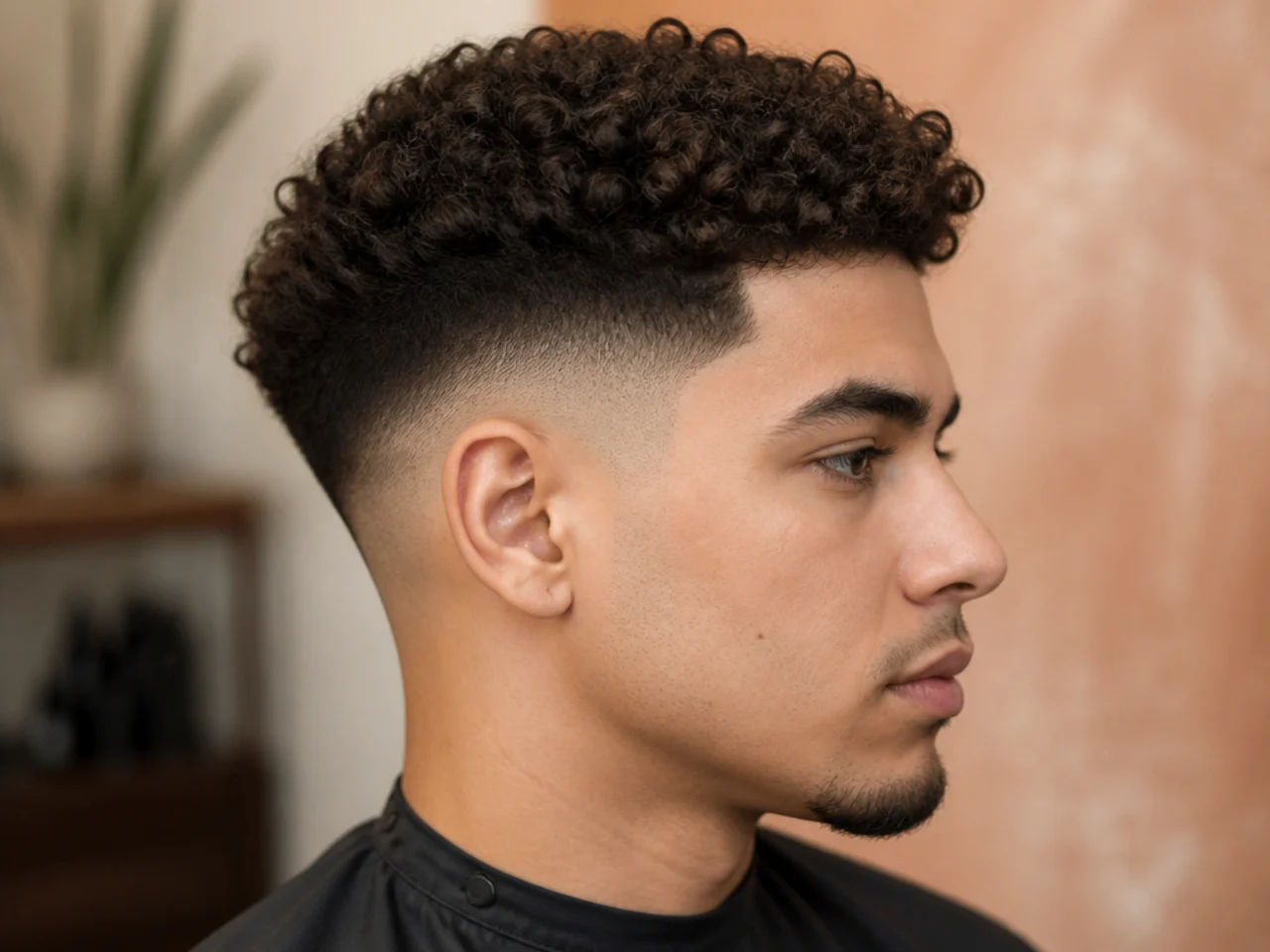
For 2b through 3b curls — looser pattern, more movement. The high fade removes the bulk that makes curly hair sit like a helmet. Top left at three to four inches to let the pattern show. Oval, square, and heart-shaped faces.
How to ask: "High taper fade, scissor the top — no thinning — leave three inches and let it curl."
Styling tip: curl cream on soaking wet hair, scrunch upward toward the scalp, diffuse on low heat. Break the cast with your fingers when dry.
8. High Taper Fade Afro
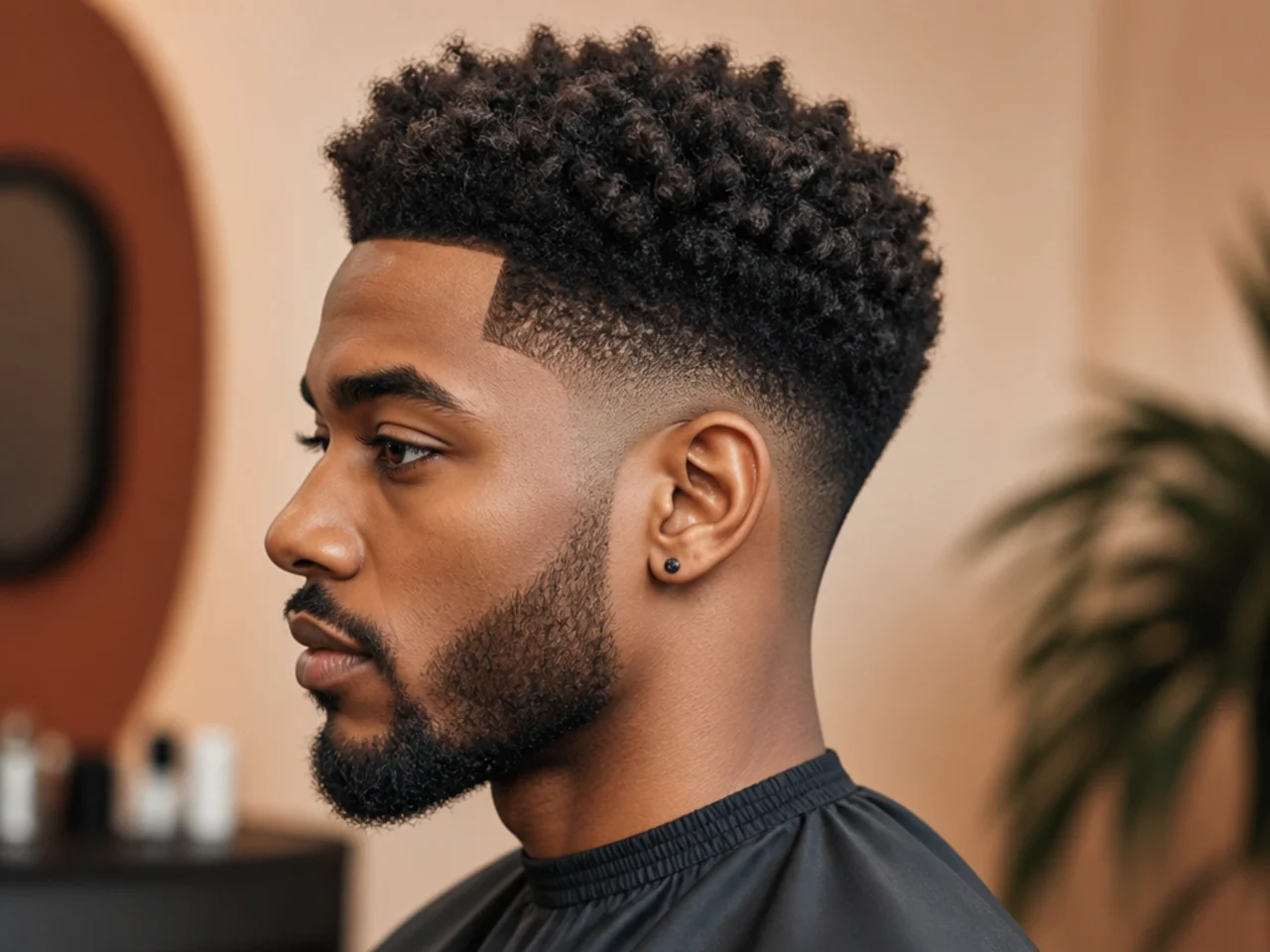
Rounded, full afro on top with the sides faded high to expose the neck and temple. Statement cut. Type 4a-4c coils with real density. Round, oval, and square faces all benefit — the afro adds visible vertical inches.
How to ask: "High taper fade to skin, scissor the top round — four to six inches — no thinning."
Styling tip: pick from the roots outward while hair is slightly damp. Edge control along the hairline keeps the perimeter sharp for photos.
9. High Taper Fade Waves (360 Waves)
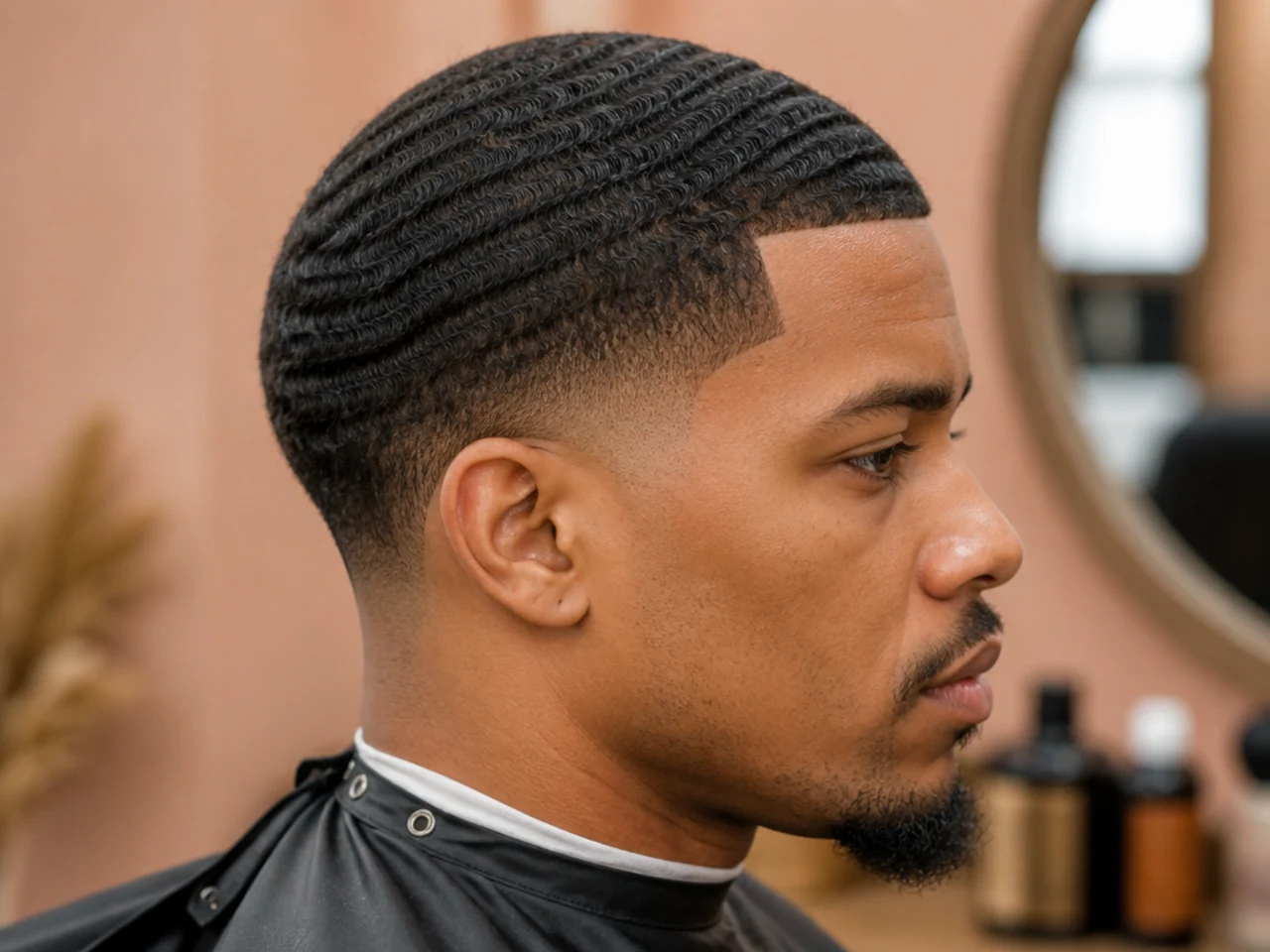
Deep wave pattern brushed into the top, exposed skin below the fade line. Type 3c to 4a hair. The pattern reads best in natural light — the fade is what makes it pop against clean sides.
How to ask: "High taper skin fade, keep the top at a #2 for waves."
Styling tip: brush twenty minutes a day in your wave direction, wave pomade after each session, durag overnight. The fade needs a touch-up every ten days to keep the contrast honest.
10. High Taper Fade Dreads
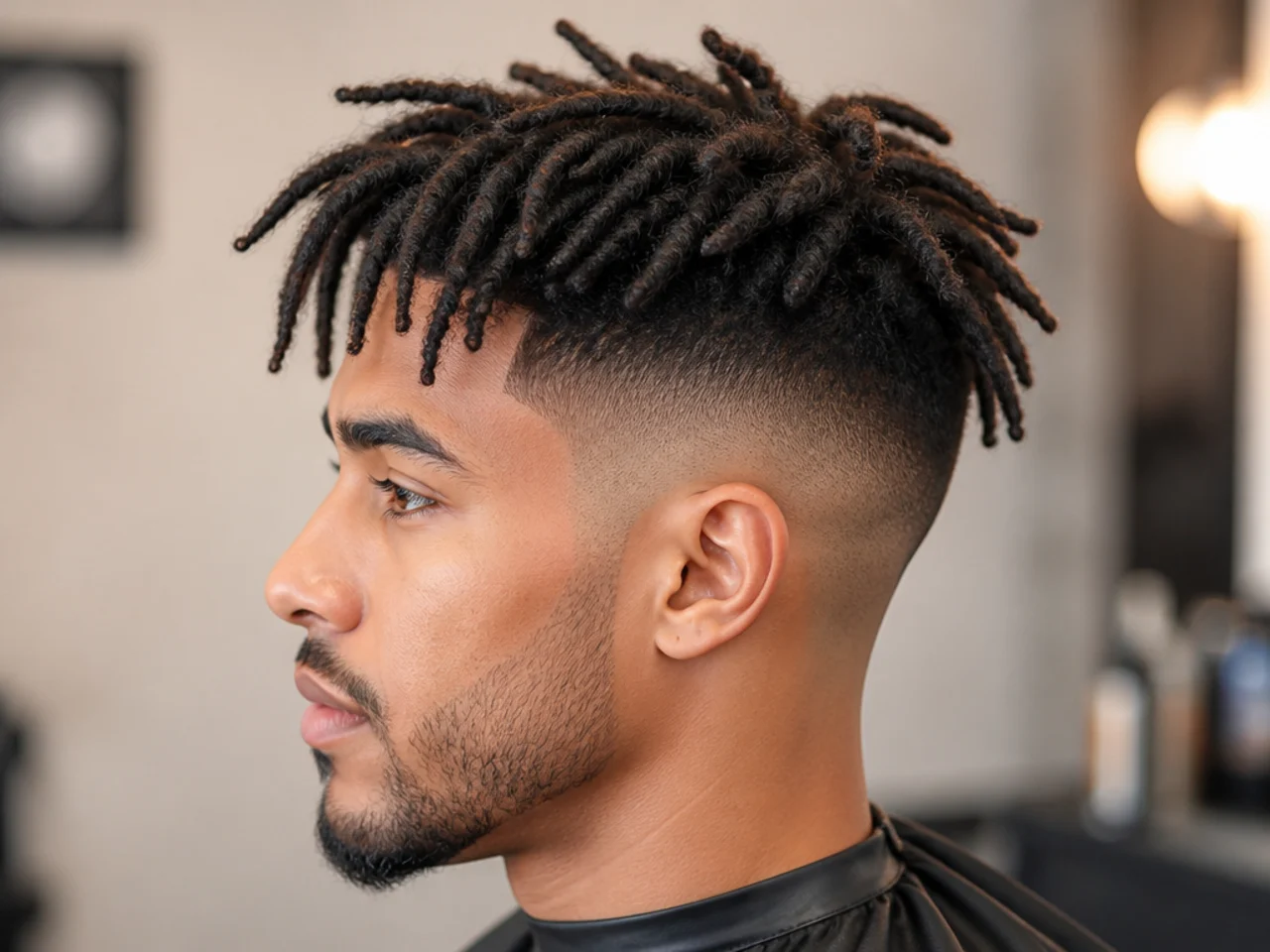
Locs on top, tight fade on the sides. Type 3b-4c hair. Oval, diamond, and square faces. Combines a bohemian silhouette with sharp barbering — the tension between them is what makes it work.
How to ask: "High taper fade to skin, don't touch the locs."
Styling tip: lightweight oils (jojoba, argan) on the roots only. Retwist every four to six weeks. The high fade needs re-cutting every two weeks — the dreads make grown-out sides look scruffy fast.
11. High Taper Fade with Braids
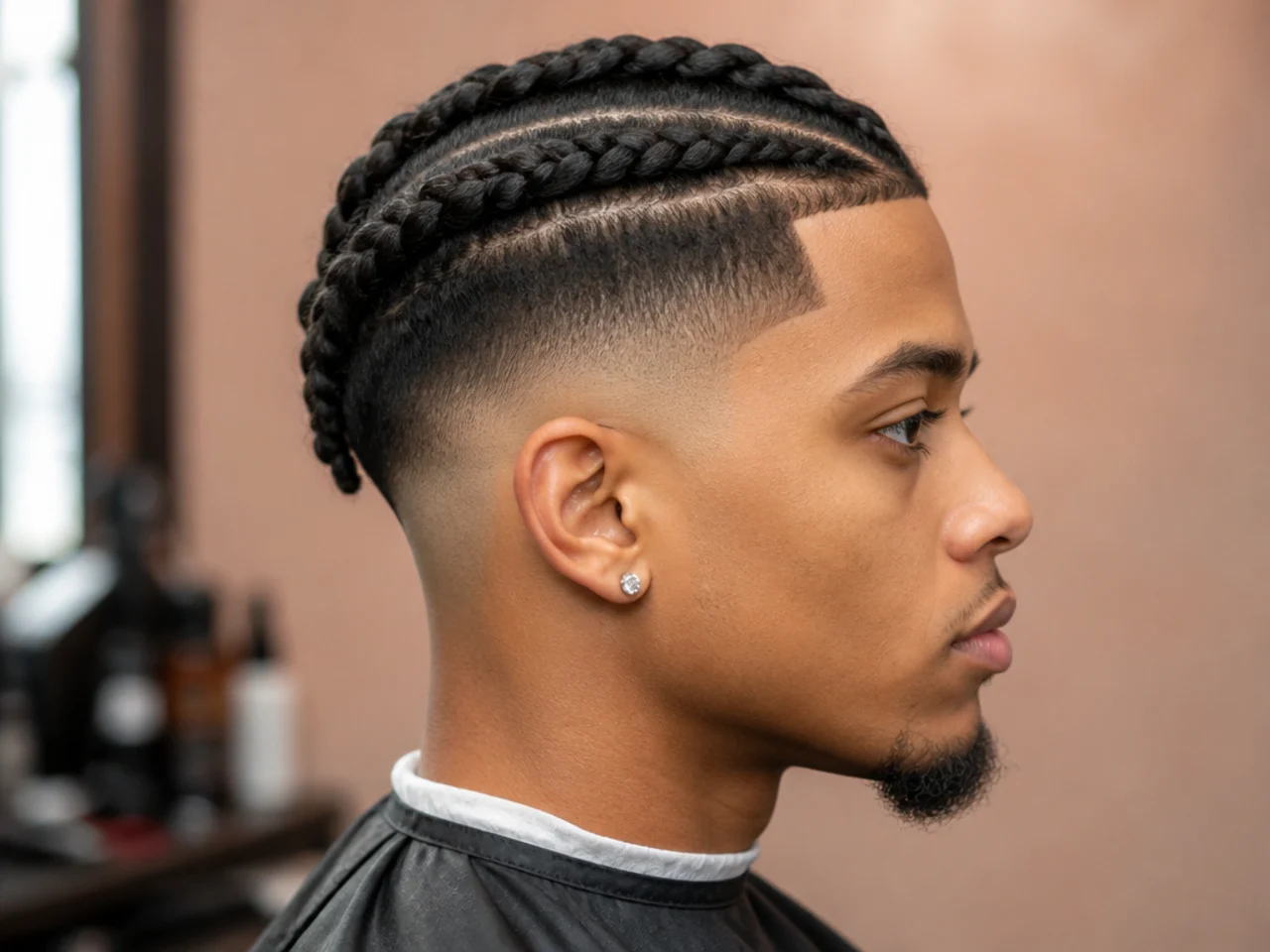
Cornrows, box braids, or twists on top with a high fade wrapping around them. Type 3c-4c hair. Square and oval faces. Protective style that stays sharp — the fade frames the braid pattern rather than competing with it.
How to ask: "High taper fade to skin — I'm getting braided on top after." Book braiding separately unless your barber does both.
Styling tip: mist the scalp with a diluted leave-in every morning between braids. The scalp shows more with a high fade, so keep it moisturized and clean.
12. Textured High Taper Fade
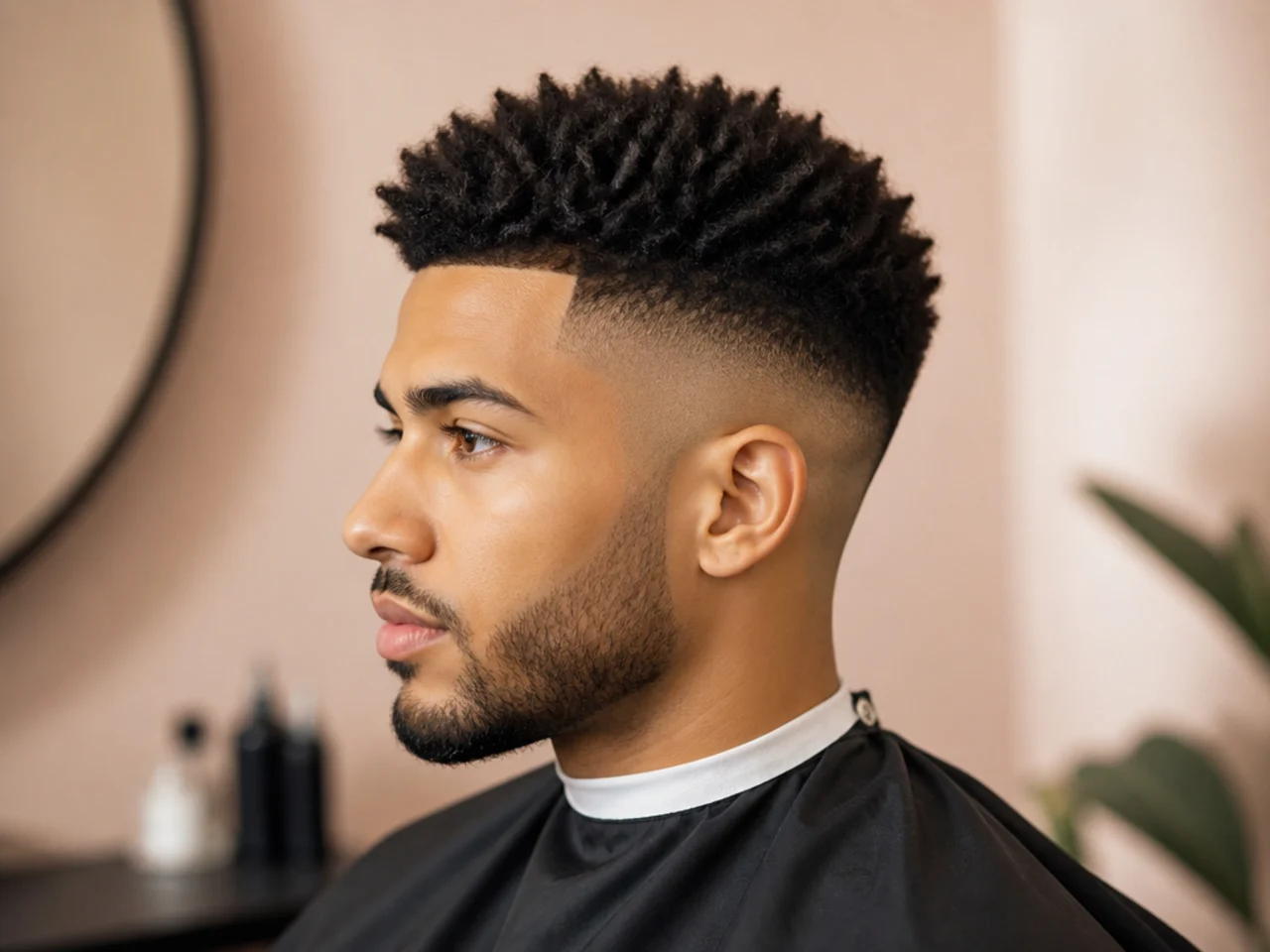
Deliberately tousled top with structured, tight sides. Two to three inches on top with piecey separation. Straight to wavy hair, medium density. Oval, round, and diamond faces.
How to ask: "High taper fade, texturize the top with point-cutting — I want it messy but shaped."
Styling tip: texture powder at the roots, matte clay through mid-length, finger-work to break sections apart. Undo your work slightly before leaving the mirror.
13. High Taper Fade Fluffy Hair
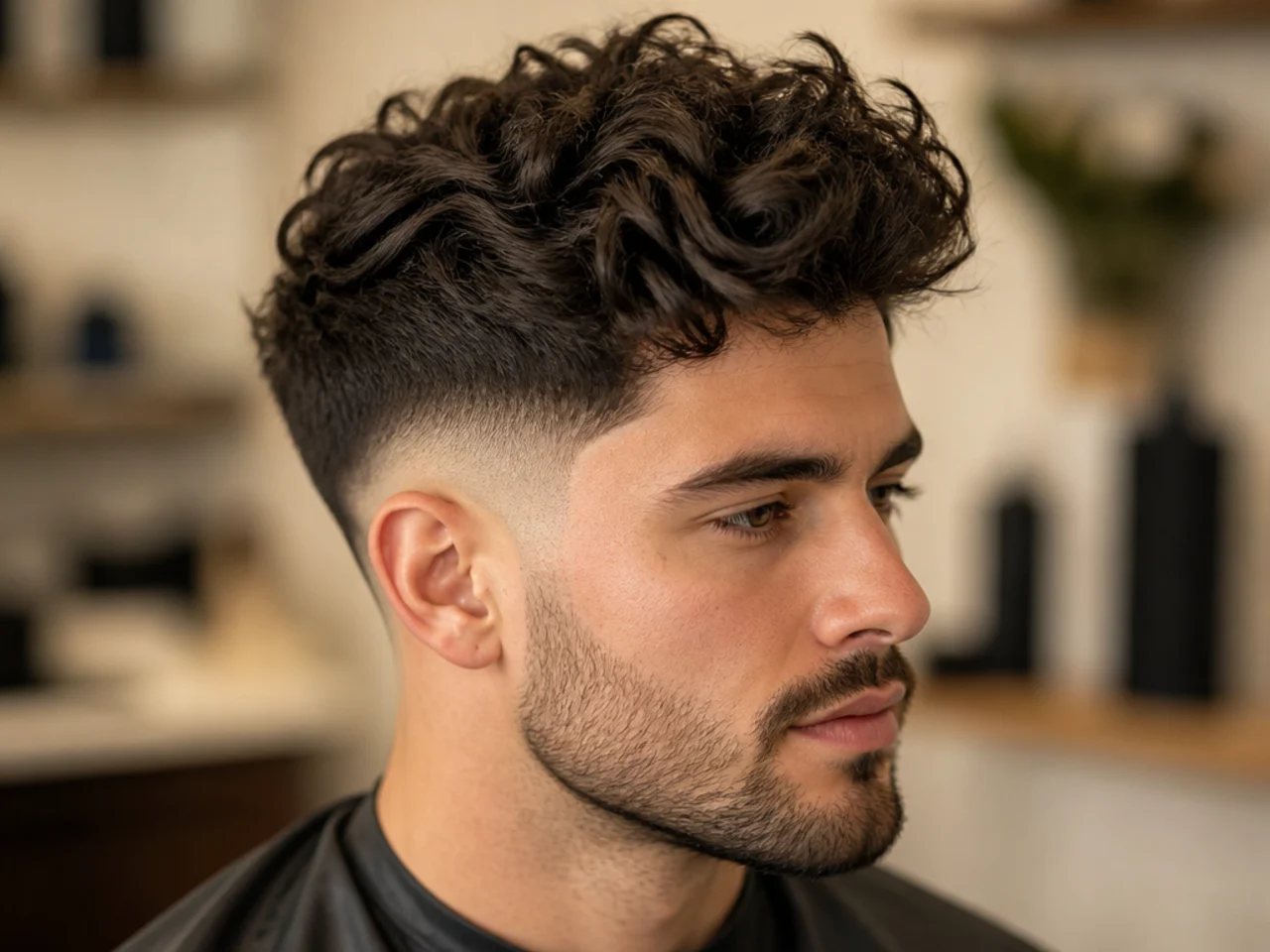
Cloud-like volume on top, high fade underneath. Thick curly or wavy hair — this style is impossible without density. Round, heart, and square faces. Adds vertical height to shorten wider face shapes.
How to ask: "High taper fade, leave four inches on top, no thinning — I want maximum fluff."
Styling tip: blow-dry upside down for lift, diffuse if you're curly, finish with a light texture spray. Avoid heavy creams — they'll collapse the volume by noon.
High Taper Fade for Straight & Fine Hair
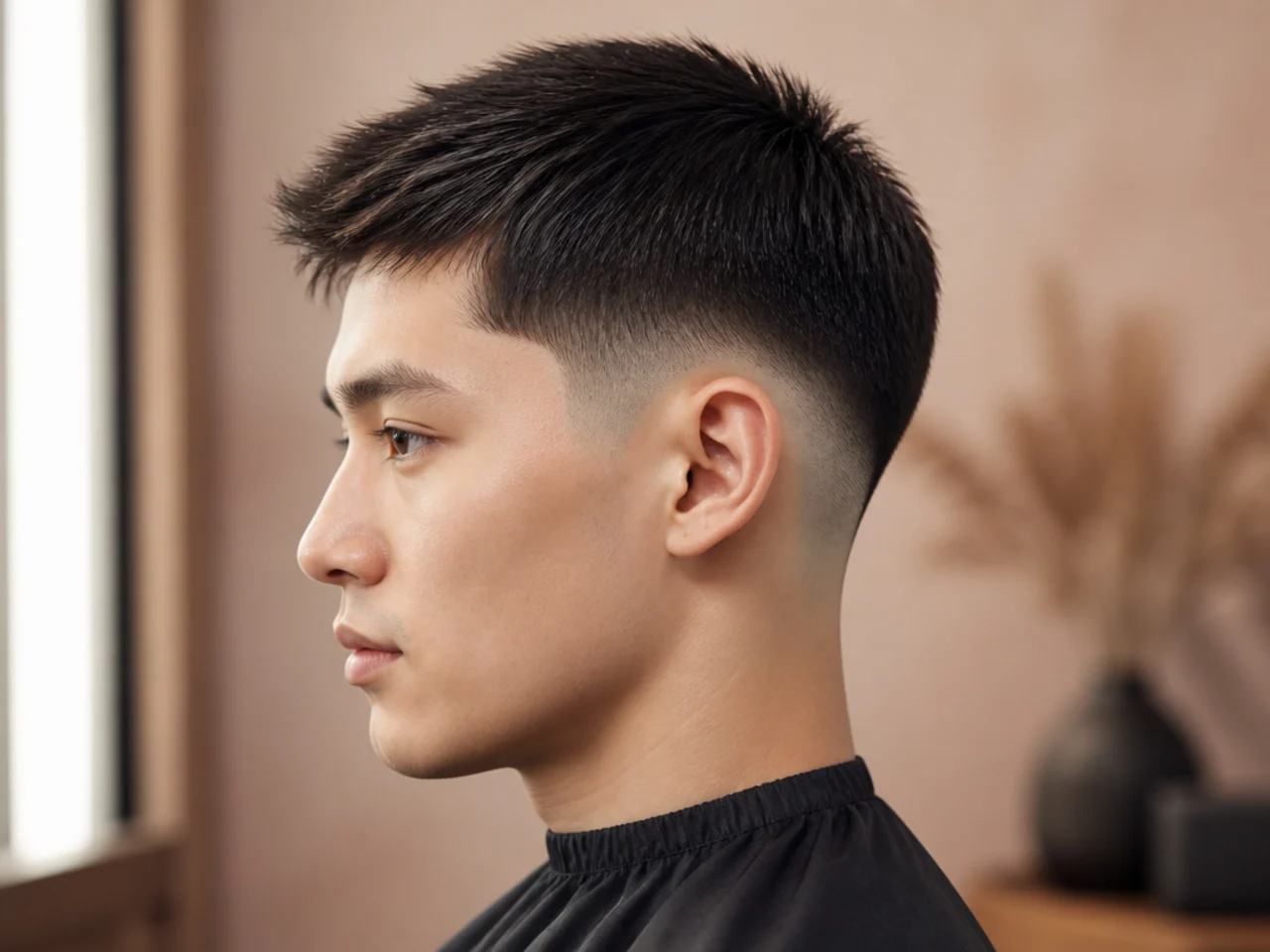
Straight hair can look flat with the wrong cut. The high taper solves it by removing sidewall bulk and directing all visual weight to the top, where you can build height with product and blow-drying.
14. High Taper Fade Straight Hair
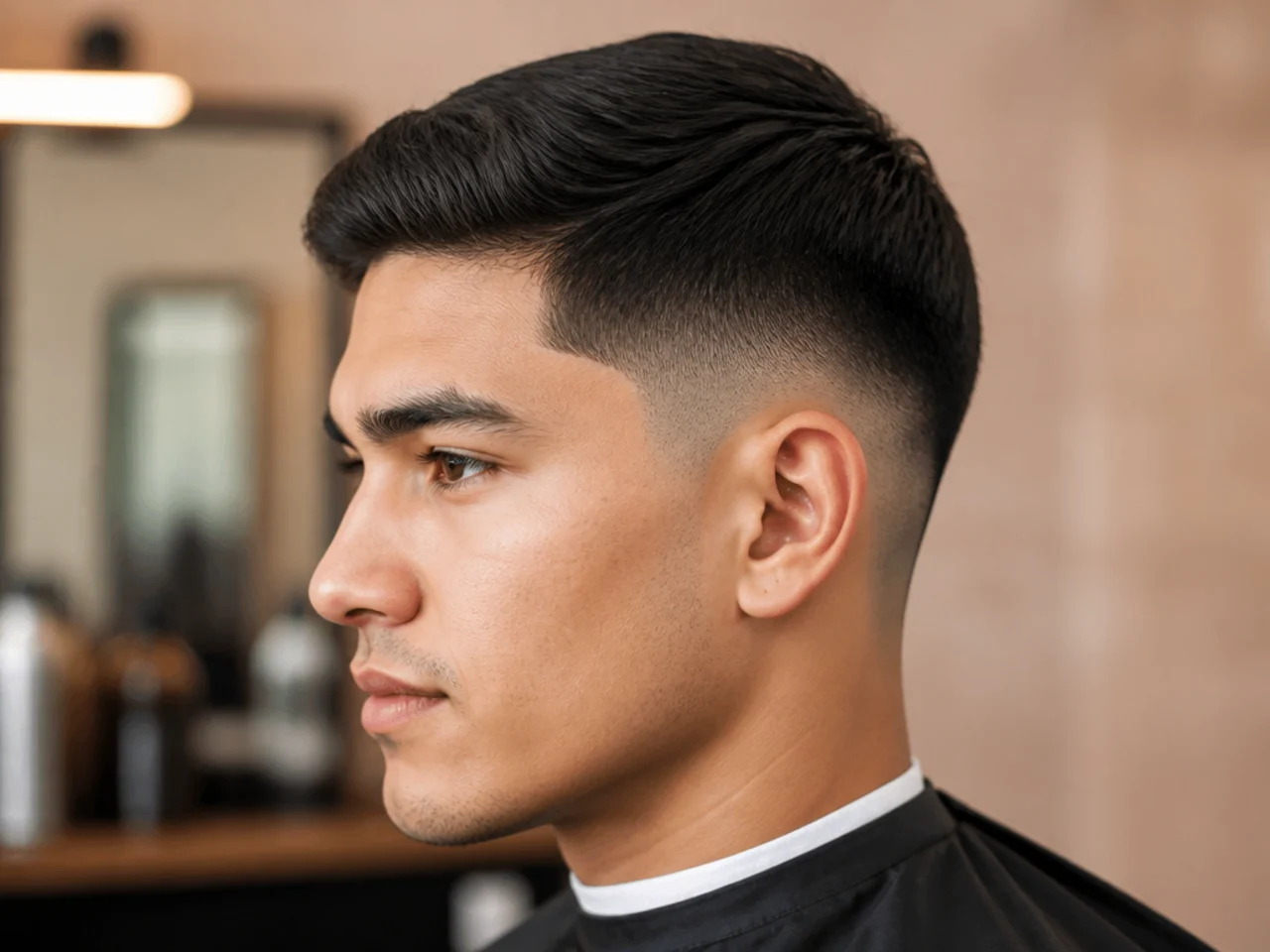
Sleek top, faded sides. Type 1 hair with medium density. Square, oval, and rectangular faces. The base for slick backs, side parts, and pompadours.
How to ask: "High taper fade, three inches on top, want to be able to slick it back."
Styling tip: sea salt spray on damp hair, blow-dry with a round brush for root lift, then medium-hold pomade for the finish. The pre-styler is the whole difference between flat and full.
15. High Taper Fade with Side-Swept Top
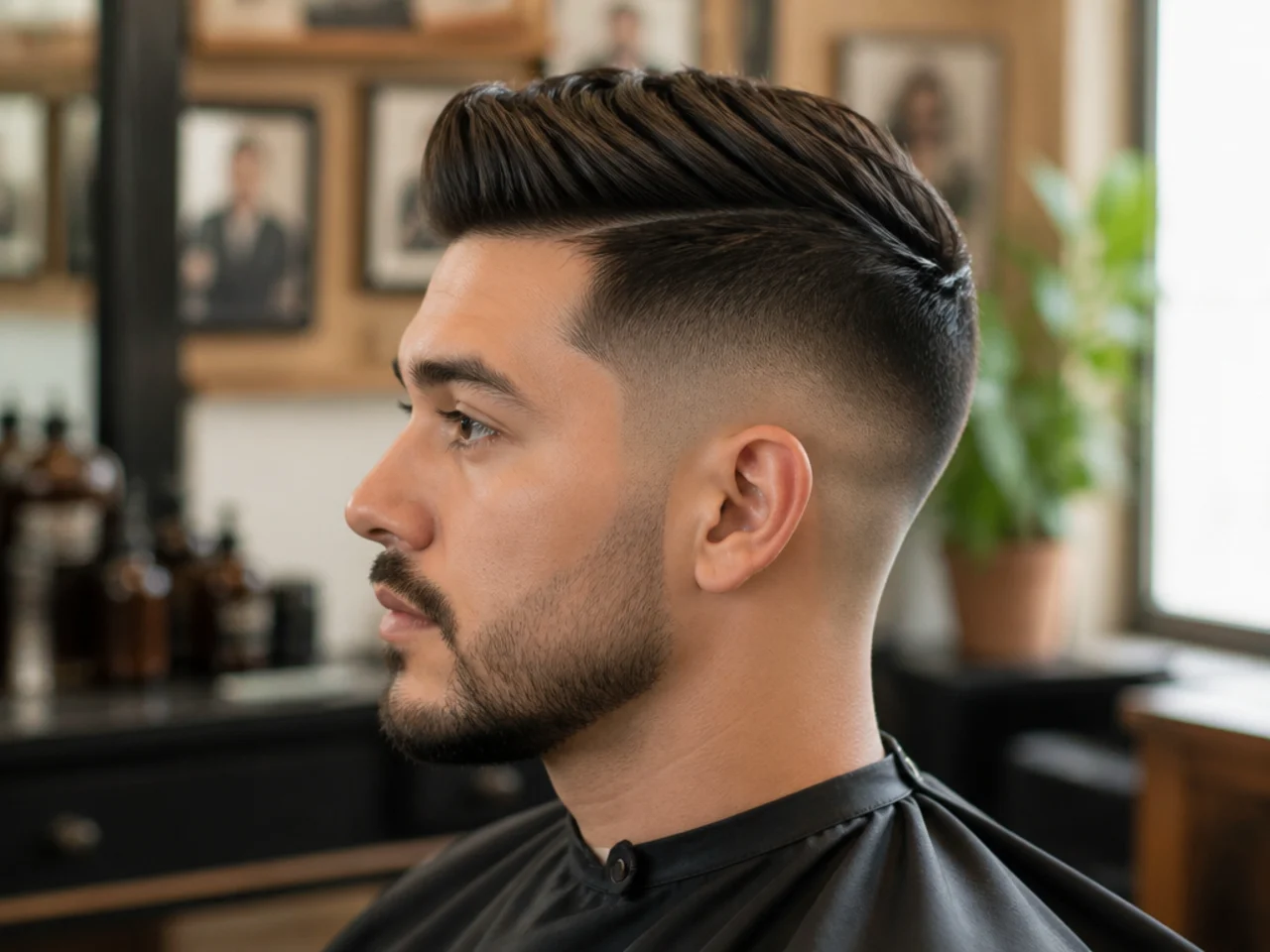
Top combed to one side, high fade underneath. Straight to wavy hair, medium density. Oval, square, and heart-shaped faces. Works in a boardroom and at a wedding.
How to ask: "High taper fade, four inches on top, want to sweep it to my [left/right]."
Styling tip: create the part with a comb, blow-dry across in your sweep direction, finish with a light pomade. Choose the side your hair naturally parts to — fighting the whorl leaves you fighting your hair all day.
16. High Taper Fade Slick Back
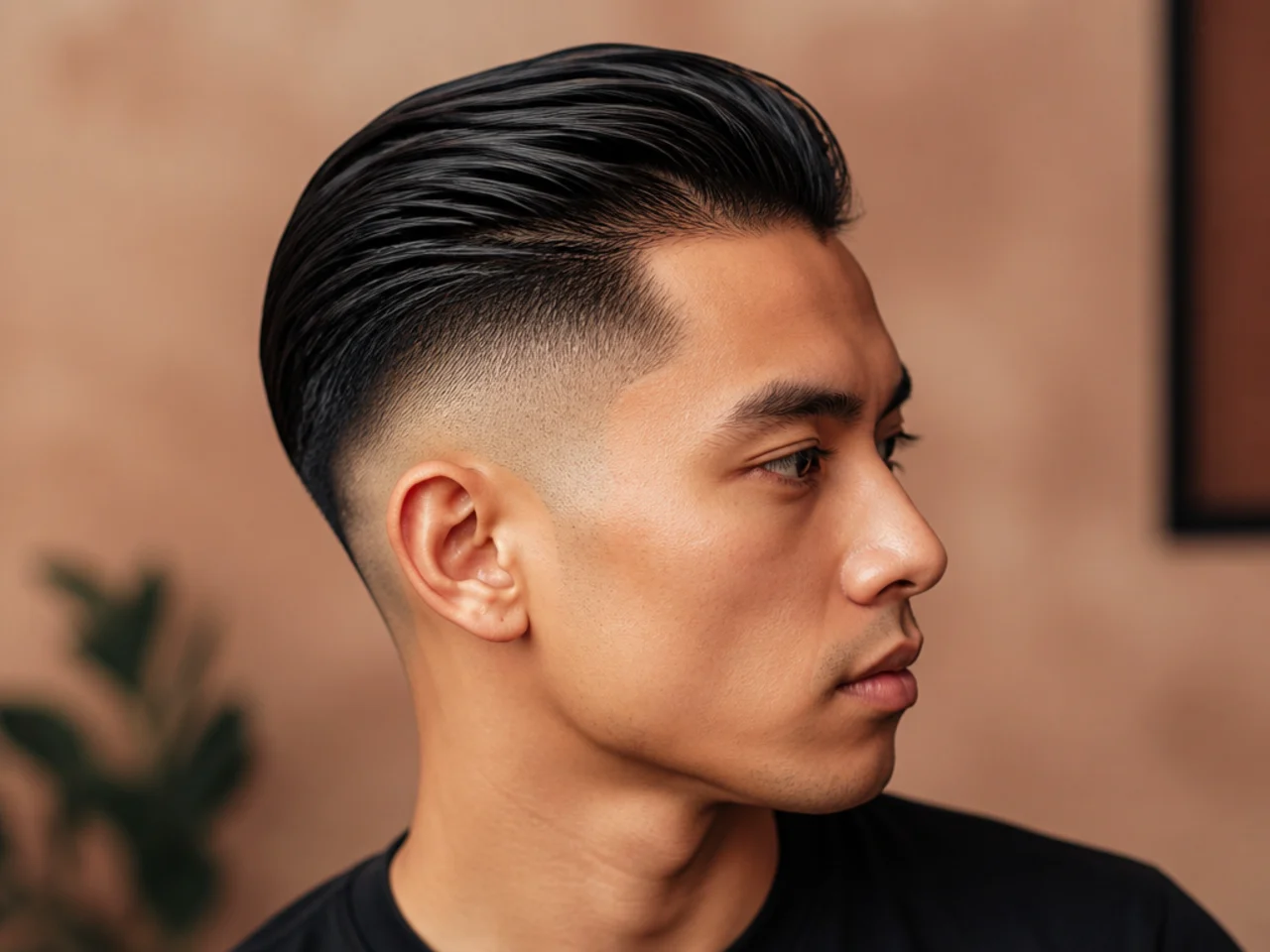
Combed straight back from the hairline, glossy finish, high fade underneath. Straight to wavy hair. Oval, diamond, and rectangular faces. Vintage silhouette with modern precision.
How to ask: "High taper fade, four inches on top, want to slick it back — leave enough for a full sweep."
Styling tip: oil-based pomade on damp hair for authentic shine, comb from front to back, blow-dry with lift at the crown. Set with a light hairspray if you're in weather.
17. High Taper Fade Comb Over
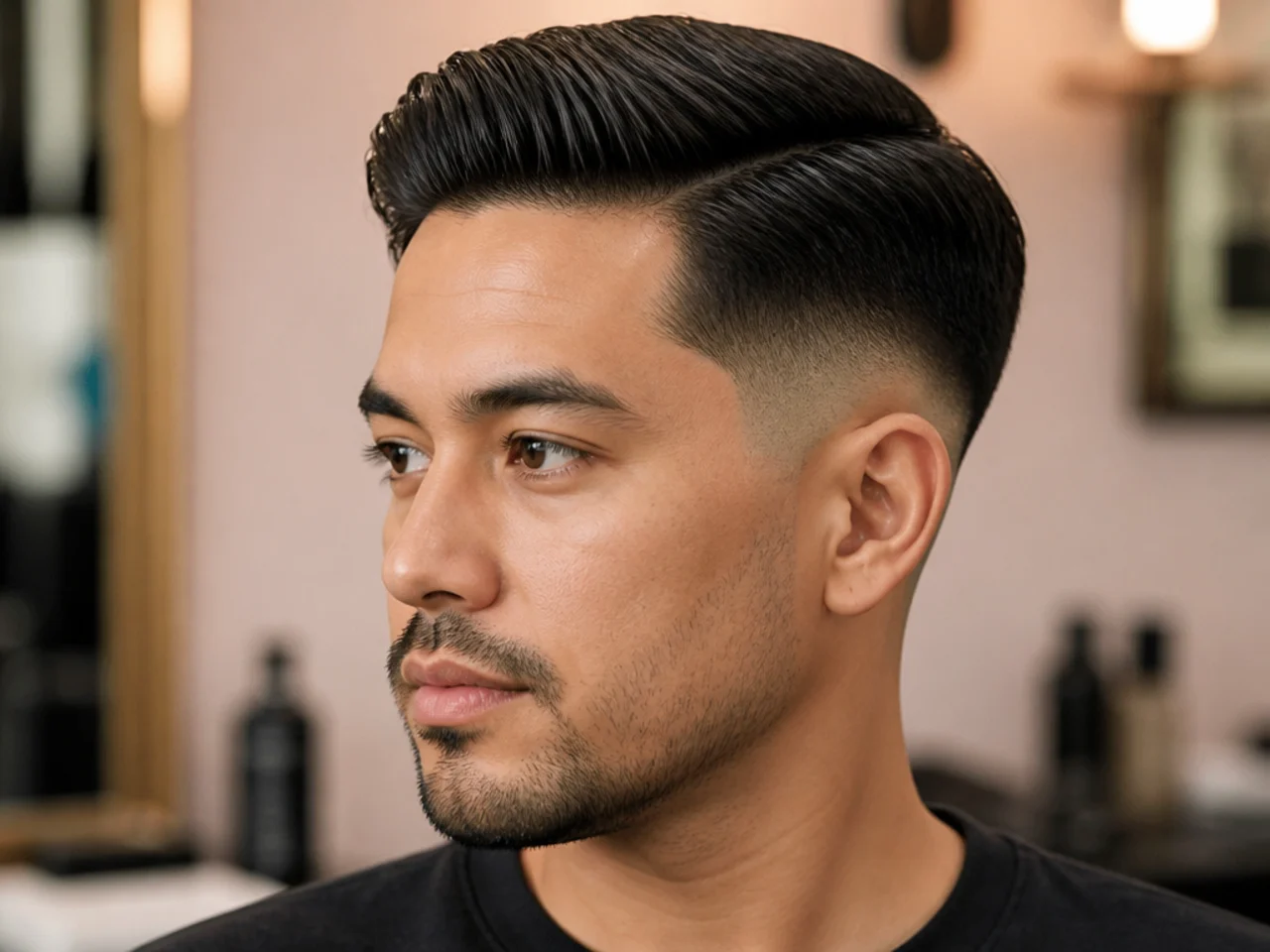
Defined side part with hair swept across. Not the coverup — the intentional modern one. Straight to wavy hair, medium density. Oval, square, and heart-shaped faces.
How to ask: "High taper fade, hard part on my [left/right], three inches on top for a comb over."
Styling tip: the hard part does the work. Round brush the top upward and over, then matte clay for flexible hold. Skip the shaved part if you want something that ages between visits — a natural part still reads clean.
Bold & Statement High Taper Fades
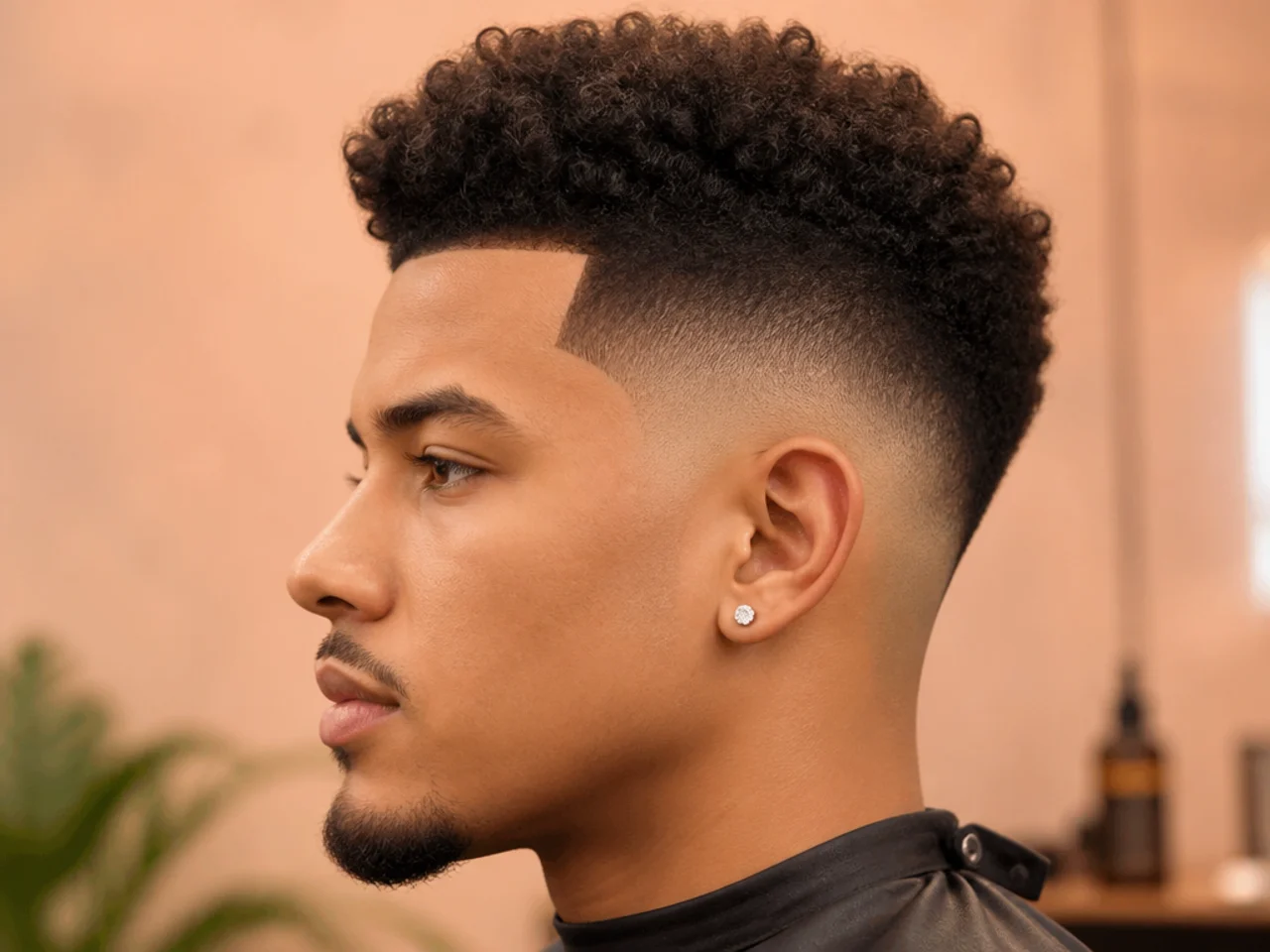
These variations trade subtlety for impact. Commit to more frequent touch-ups — the bolder the top, the more obvious a grown-out fade looks against it.
18. High Taper Fade with Pompadour
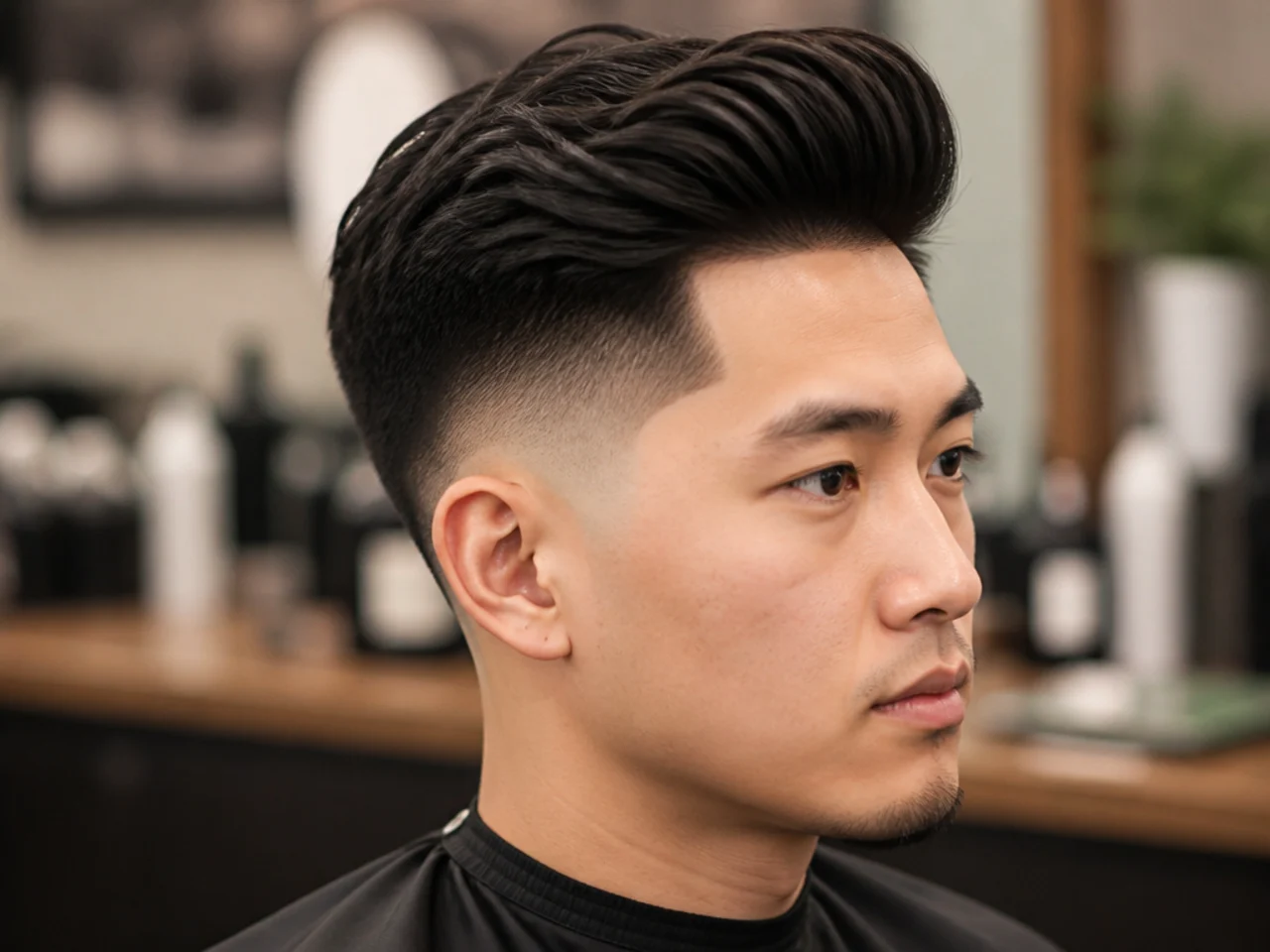
Maximum height at the front, sweeping back toward the crown, high fade below. Six-plus inches on top. Straight to wavy hair with body. Oval and square faces — the height elongates.
How to ask: "High taper fade, six inches on top, want a full pompadour with height at the front."
Styling tip: strong-hold mousse on damp hair, round brush blow-dry upward from front to back, strong pomade for the shape, hairspray to lock. It's a fifteen-minute style — plan your morning around it.
19. High Taper Fade with Quiff
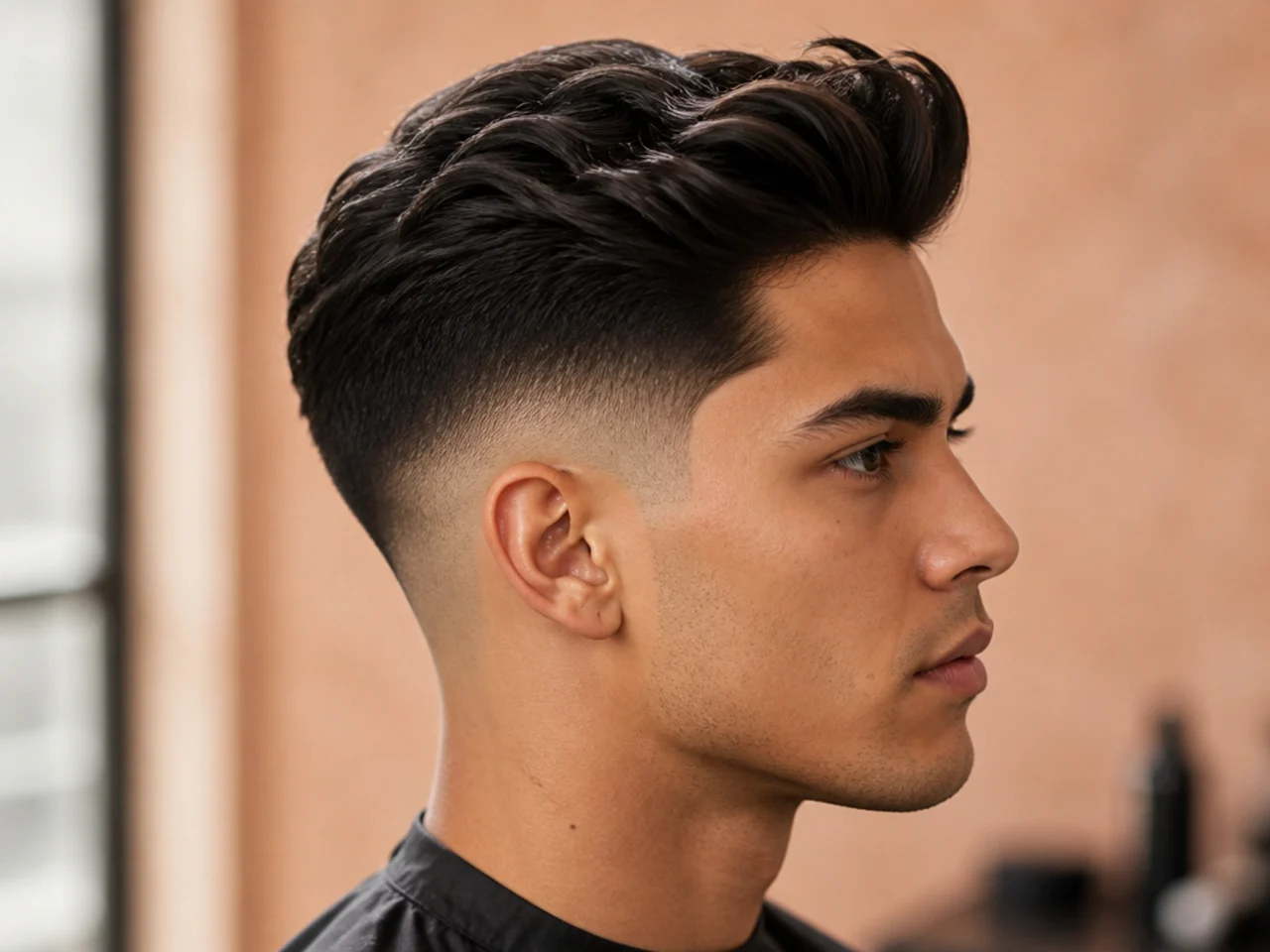
Front volume that slopes back rather than standing straight up. The pompadour's more forgiving cousin. Straight to wavy hair. Round and oval faces.
How to ask: "High taper fade, four inches on top, want a quiff — height at the front but not a full pomp."
Styling tip: volume mousse, blow-dry the front up and slightly back with fingers, medium-hold pomade, light hairspray. Height without the daily commitment.
20. High Taper Fade Mullet
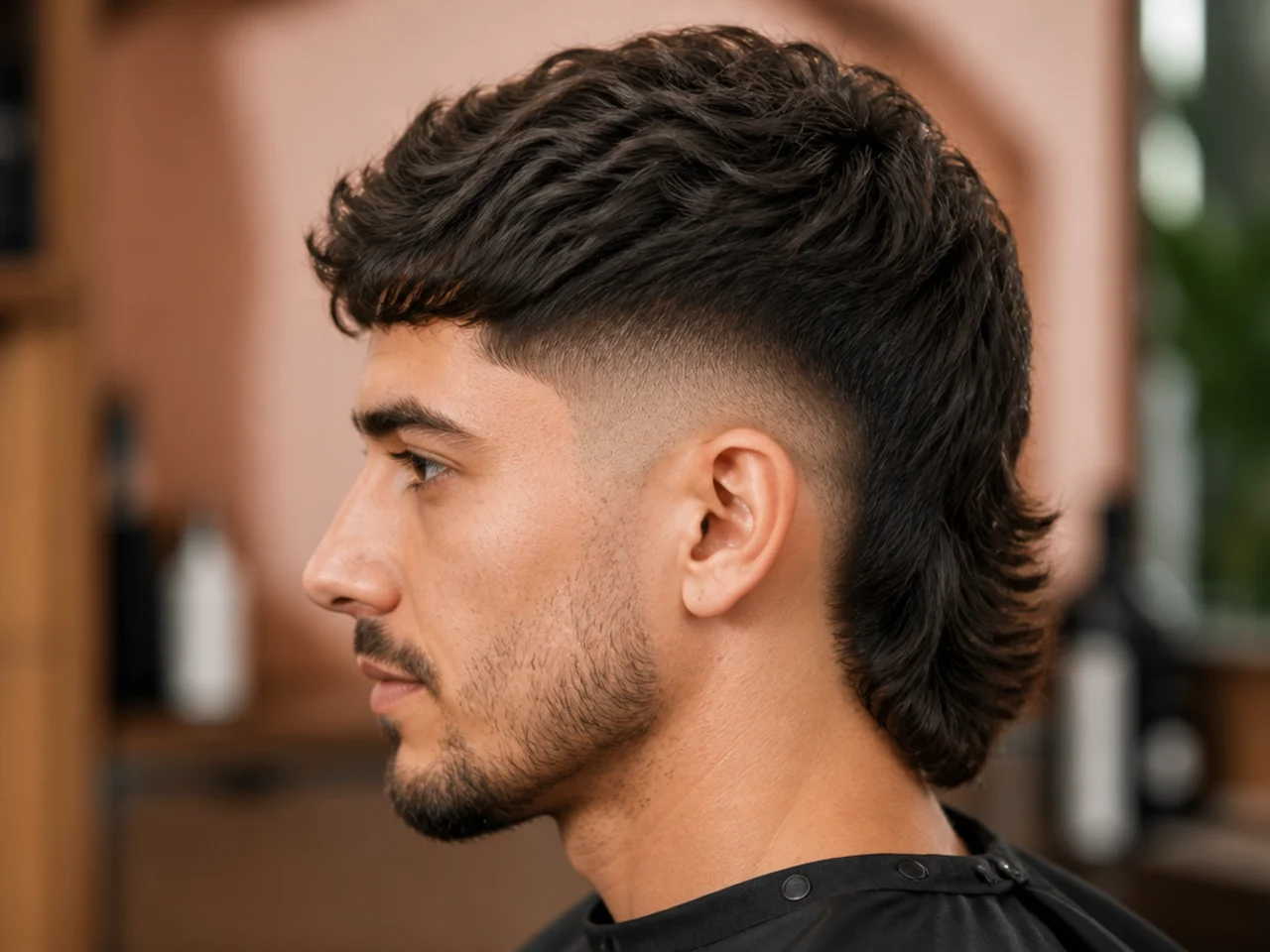
Short faded sides, longer back. The modern mullet is textured and shaped — not the '80s version. All hair types with real density. Oval and diamond faces.
How to ask: "High taper fade, keep three inches on top, leave the back long — modern mullet, textured not blocky."
Styling tip: sea salt spray through the back, matte clay on top, scrunch and finger-style. Keep the back shoulder-length or shorter or it starts reading costume.
21. High Taper Fade with Faux Hawk
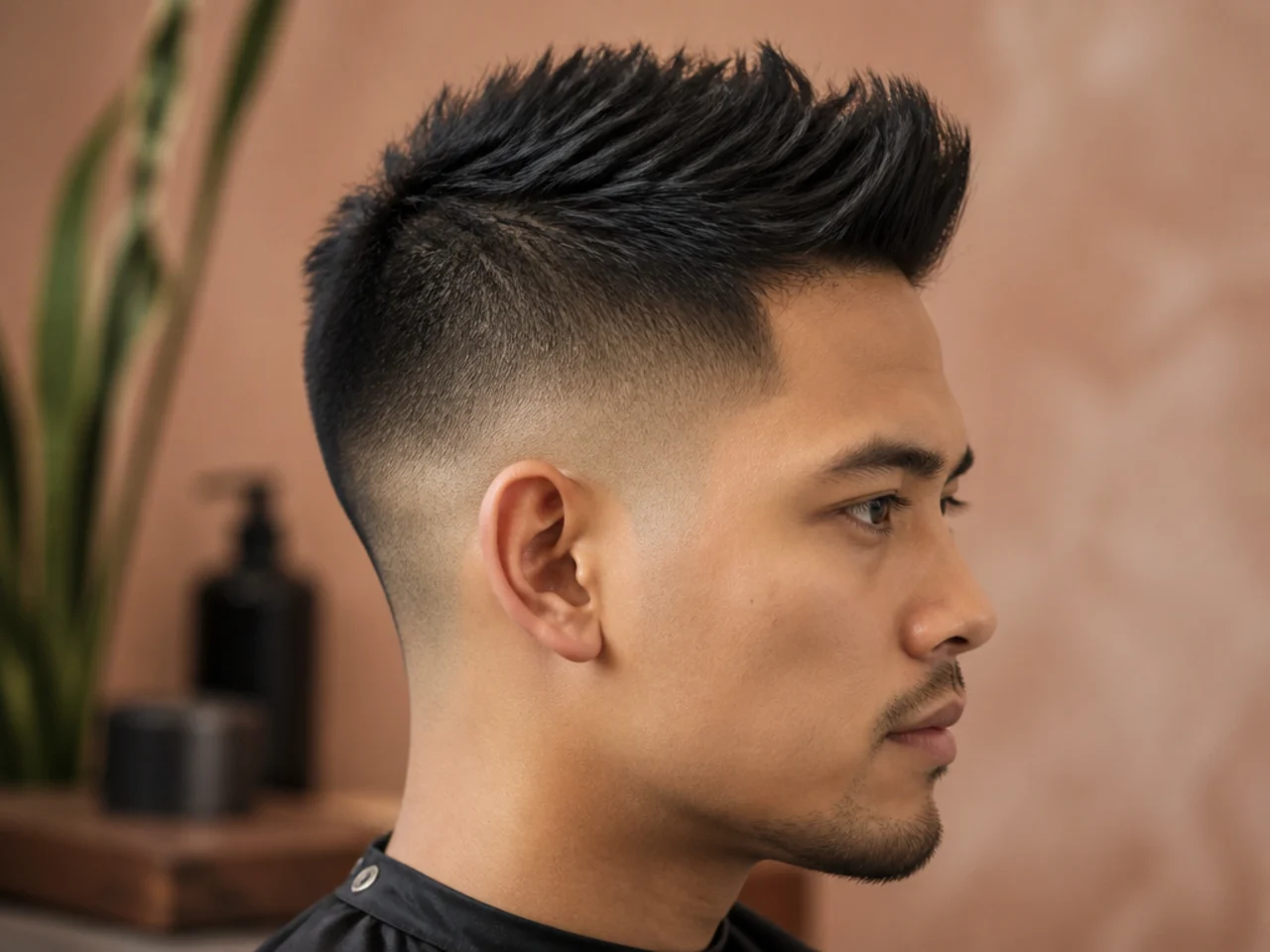
Central strip of longer hair with faded sides flanking it. No shaved patches — hence the "faux." Straight to wavy hair. Oval, square, and rectangular faces.
How to ask: "High taper fade, three inches through the middle of the top, style-ready for a fohawk."
Styling tip: strong-hold gel or paste, pull the center up and inward. Spike for a night out, smooth flat for the office — same cut, two looks.
22. High Top Taper Fade
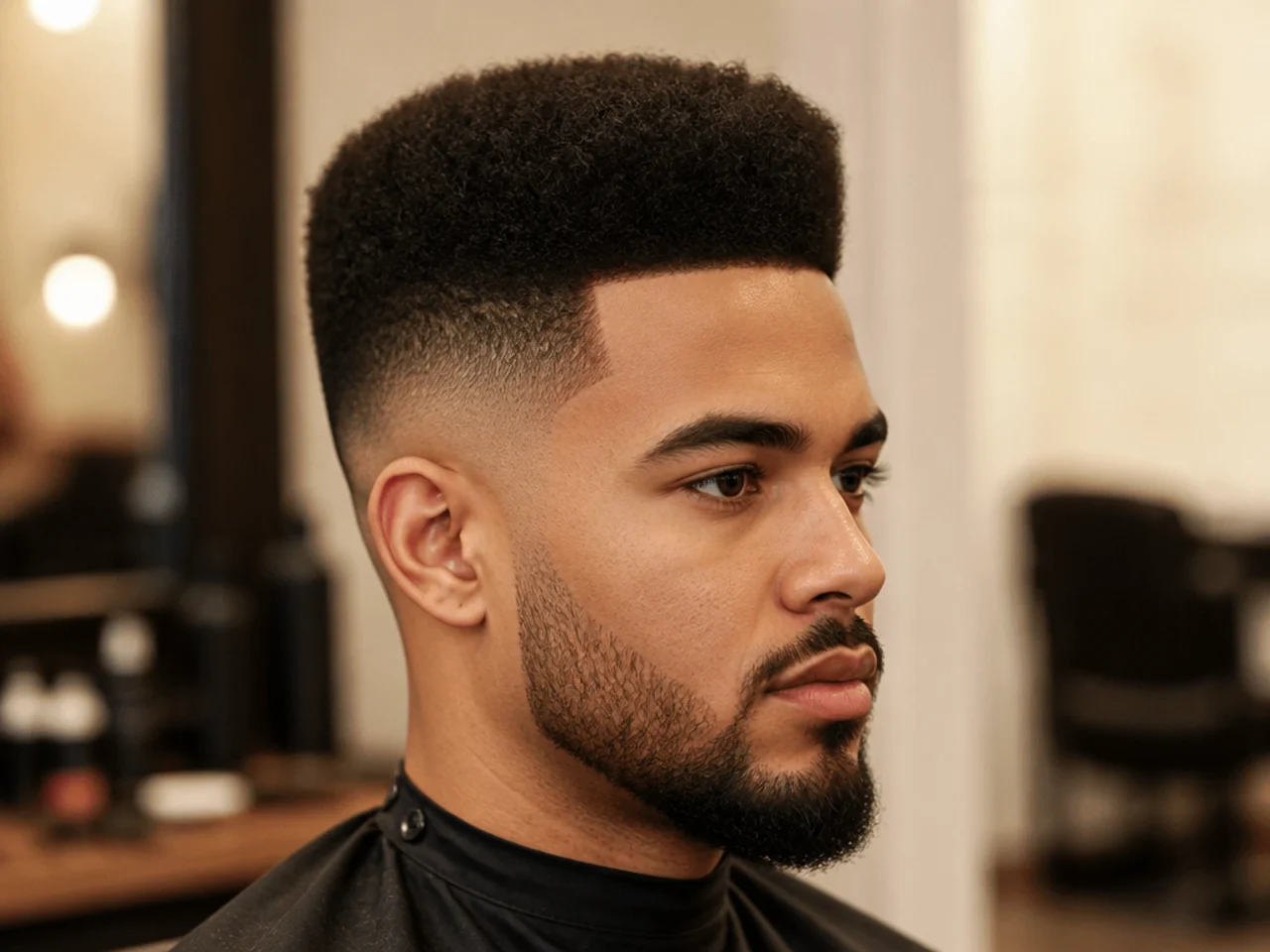
'80s and '90s throwback — flat, tall top with hard vertical sides. Type 3c-4c hair with density. Round, oval, and square faces. Requires professional shaping every visit — this is not a growth-friendly cut.
How to ask: "High top with a high taper fade — flat top, straight sides going up, sharp corners."
Styling tip: pick to full height from the roots, strong-hold spritz to keep the shape, edge control at the perimeter. Sleep on satin.
23. High Taper Fade with Short Spikes
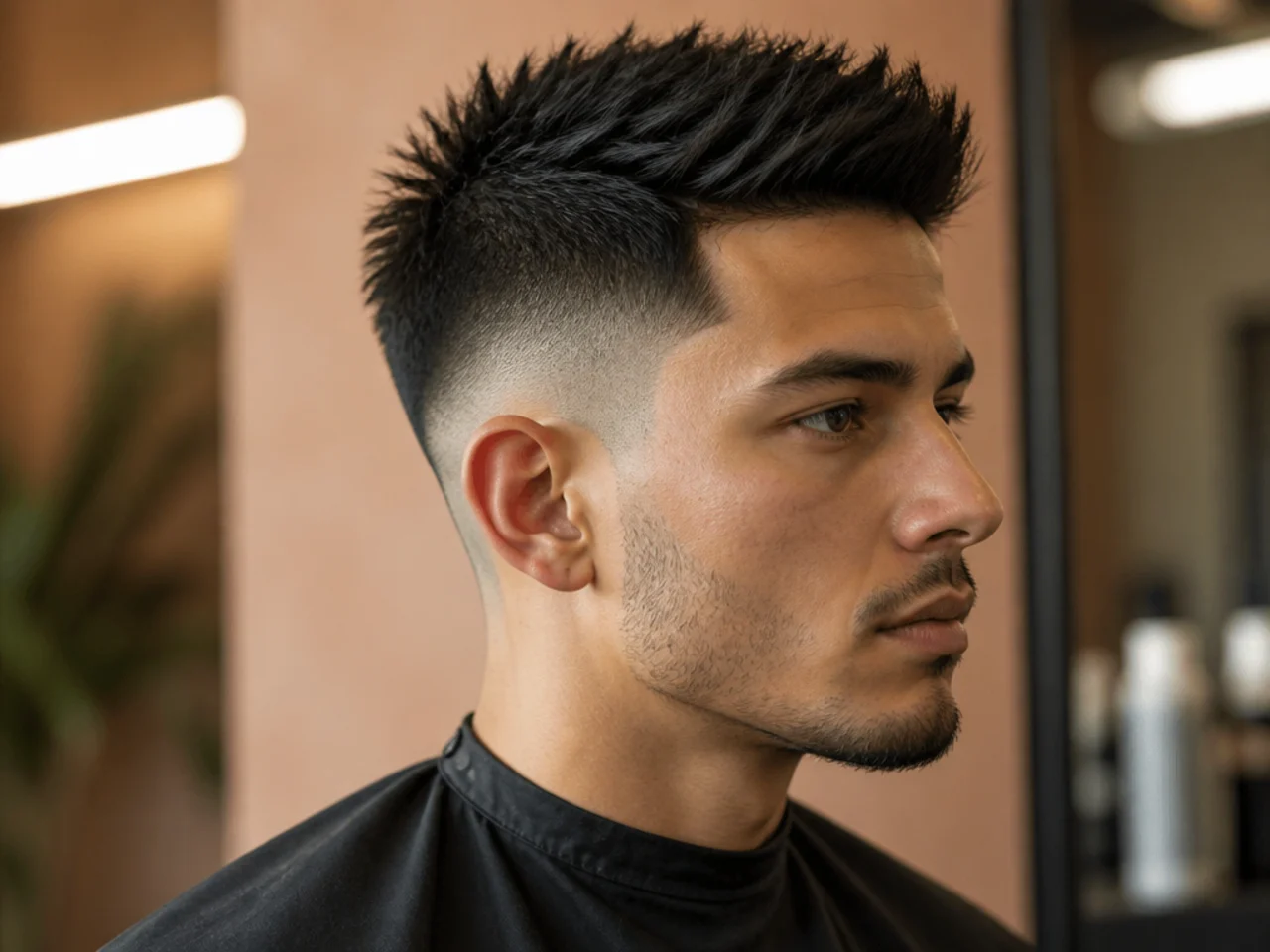
Textured spikes on top, faded sides. Straight to slightly wavy hair. Oval, square, and rectangular faces. Youthful energy without the extremity of a full mohawk.
How to ask: "High taper fade, two inches on top for spikes."
Styling tip: strong wax on dry hair, pull small sections up with fingertips, vary the direction so it looks accidental. Skip a comb entirely — matched spikes always look childish.
Long Top High Taper Fades
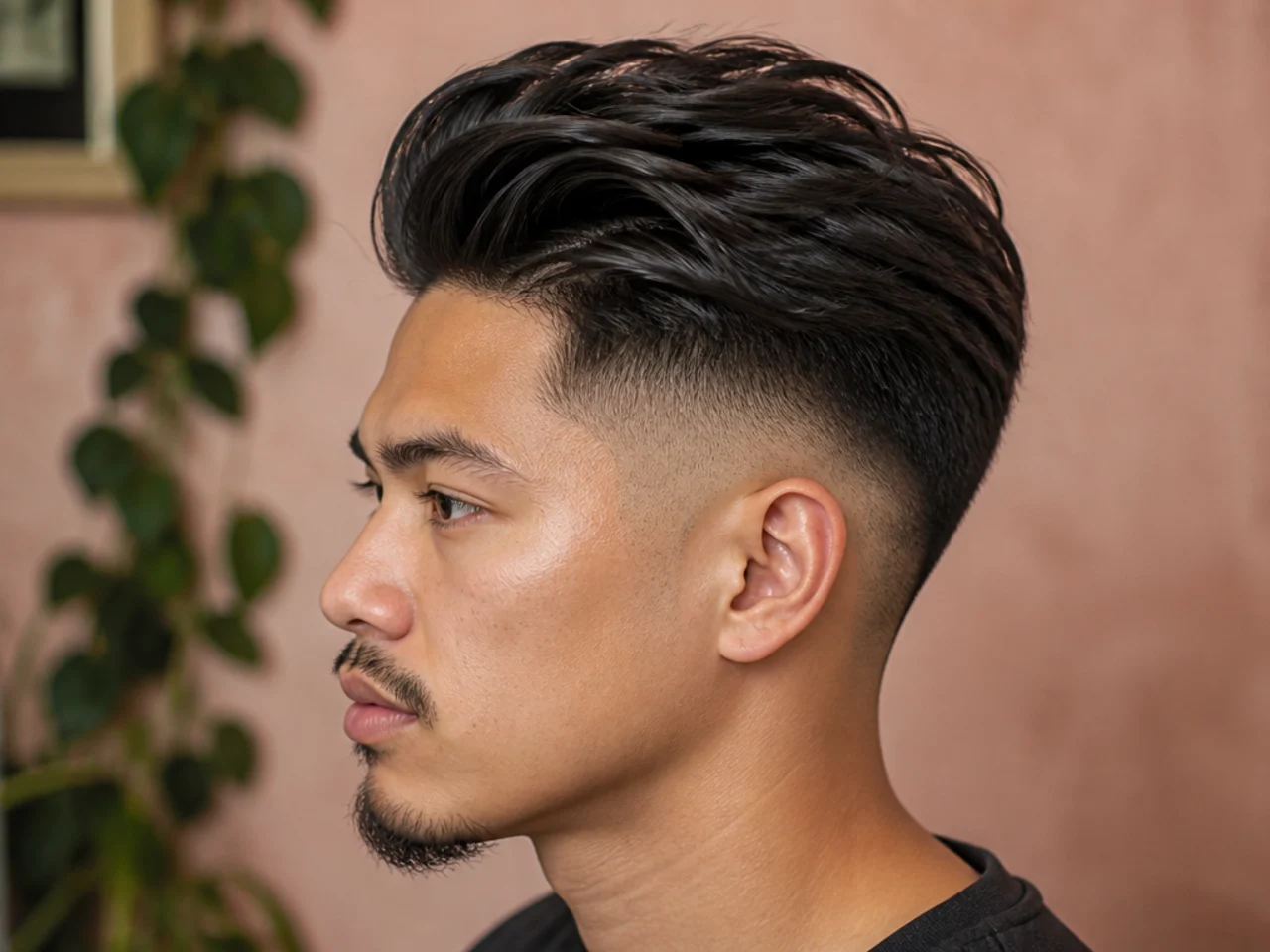
More length on top means more styling options and more maintenance. These three variations keep the sides tight while the top does the work.
24. High Taper Fade Long Hair
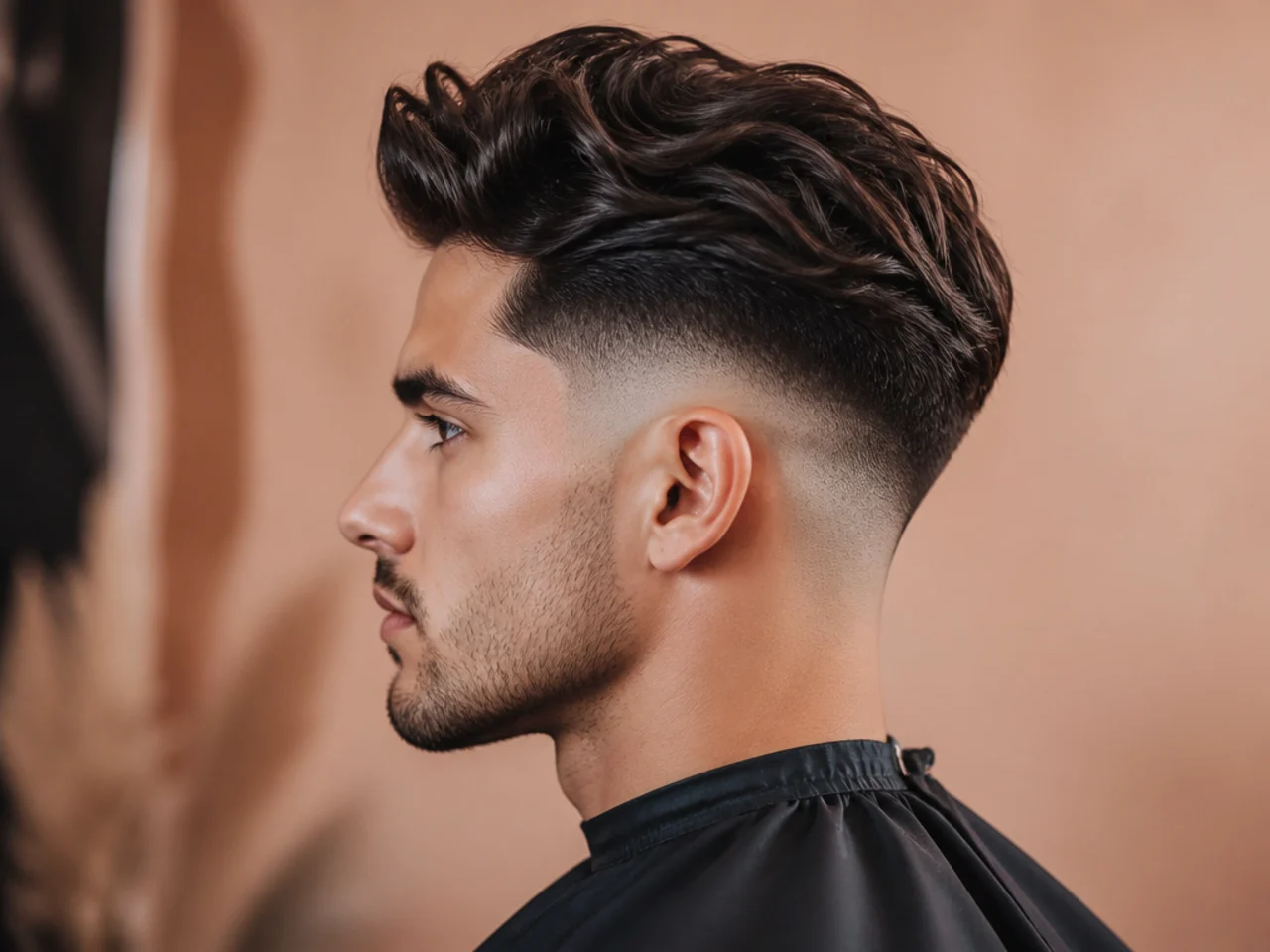
Six-plus inches on top with tightly faded sides. Wear it down, back, bunned, or half-up. All hair types with density. Oval and diamond faces.
How to ask: "High taper fade, keep the top long — six inches or more — just clean up the sides."
Styling tip: leave-in conditioner is non-negotiable. The disparity between long top and shaved sides makes any dryness on top obvious. Trim monthly, minimize heat.
25. High Taper Fade with Textured Fringe
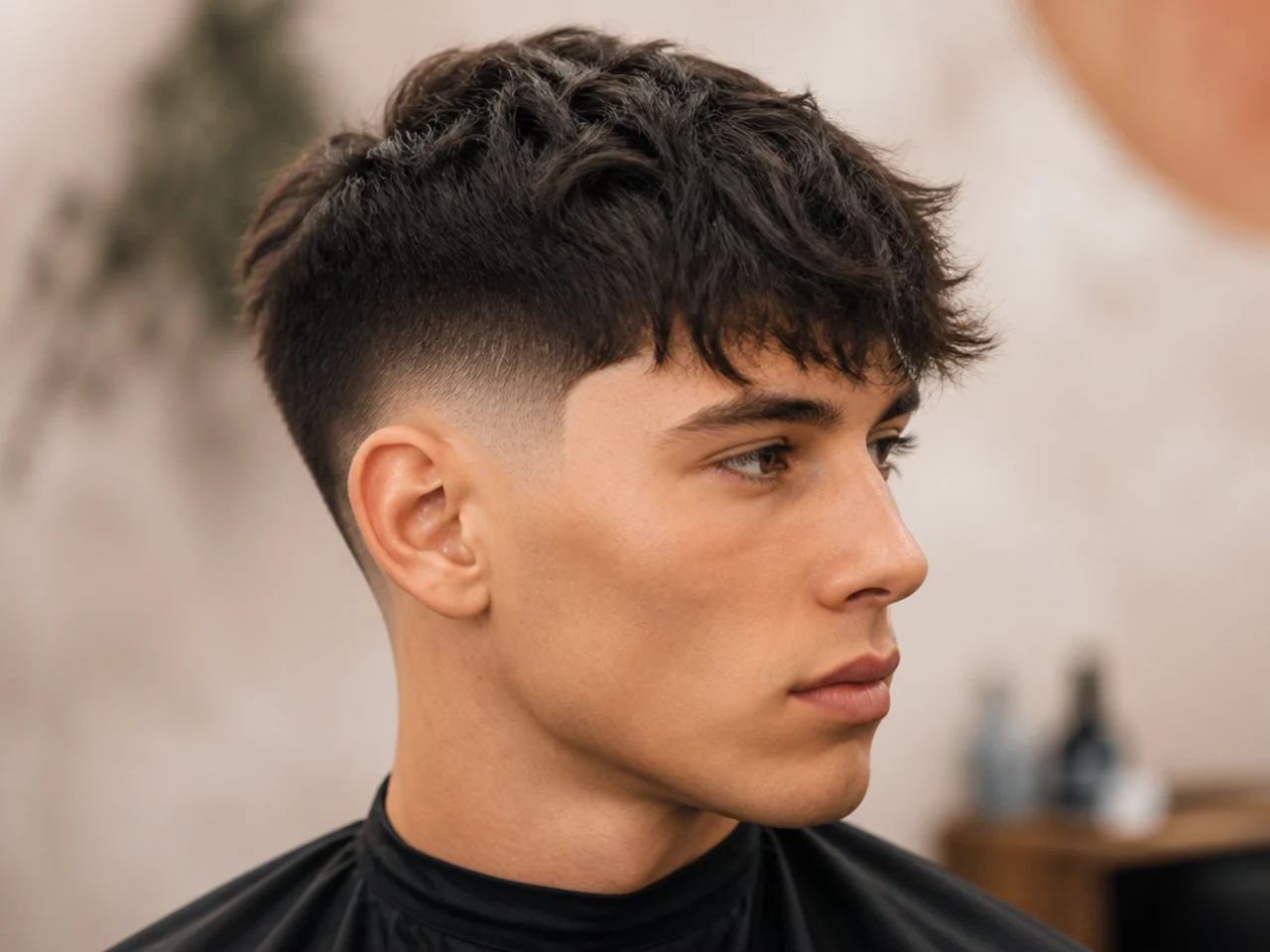
Choppy, layered fringe framing the face; sides high and tight. Straight to wavy hair, medium density. Round, oval, and heart-shaped faces.
How to ask: "High taper fade, textured fringe forward — point-cut the ends, don't blunt them."
Styling tip: matte clay through the fringe, twist small sections between fingertips for separation. Never straight across.
26. High Taper Fade Fringe
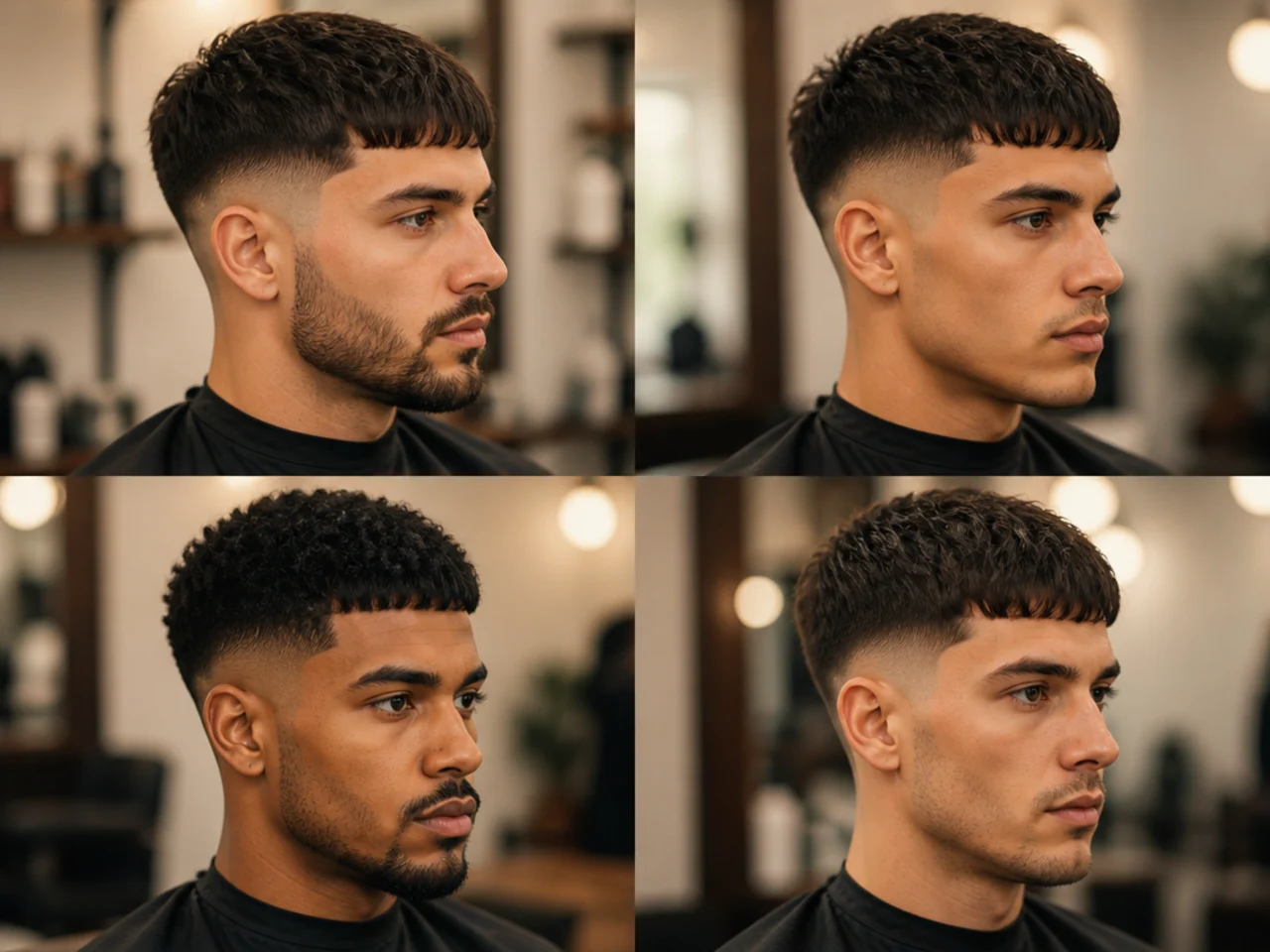
Cleaner fringe than the textured version — straight across or gently side-swept, but distinctly forward. Straight to wavy hair. Round and diamond faces.
How to ask: "High taper fade with a heavy fringe — I want it forward, blunt at the ends."
Styling tip: styling cream, blow-dry down, flat iron for the sleekest finish. Straight-across fringe reads modern; side-swept reads softer. Pick your mood.
Specialized High Taper Fade Styles
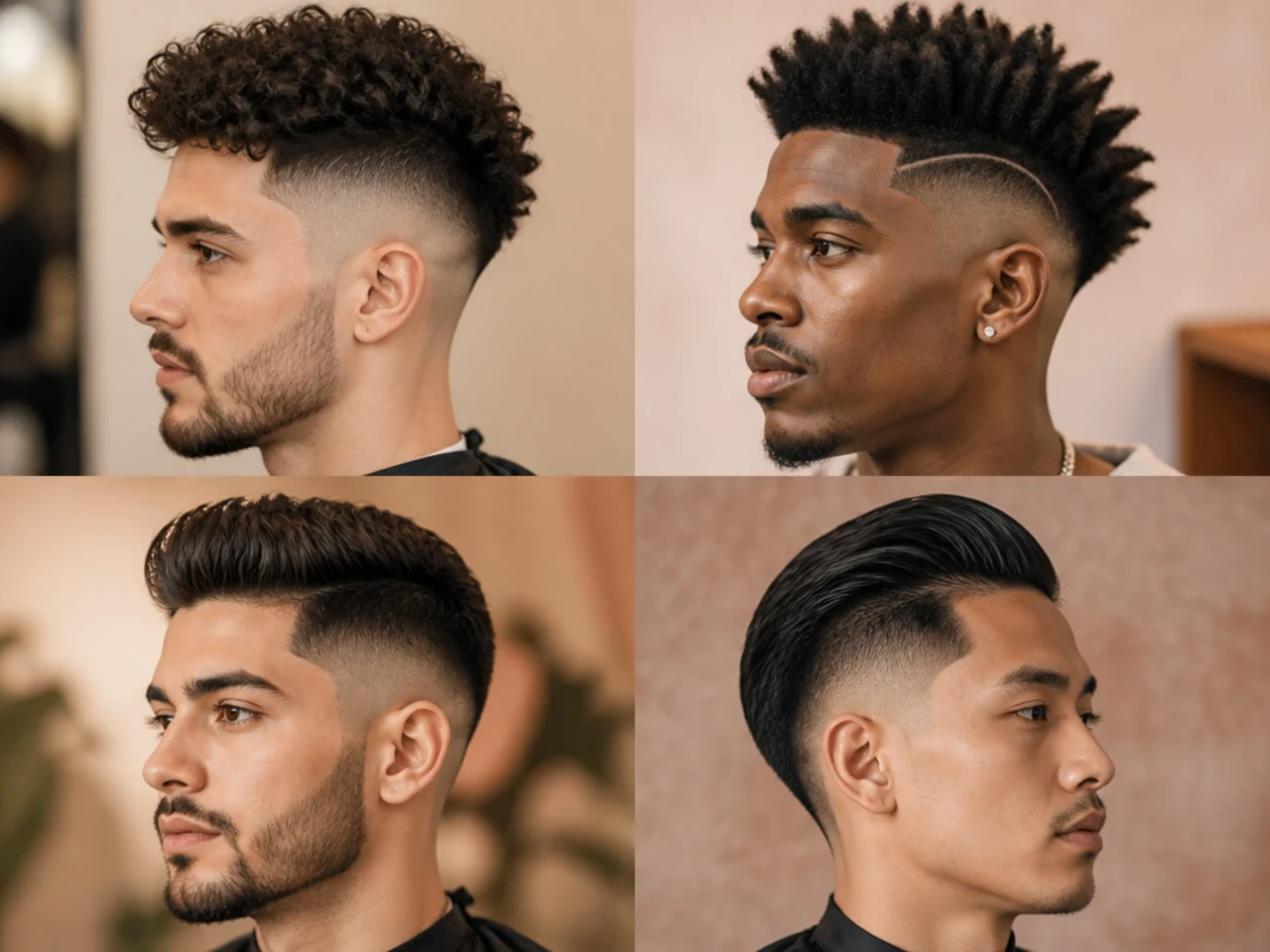
These variations layer specific techniques, color, or cultural references onto the base cut. Bring photos — verbal descriptions rarely land these correctly. If you want a curved fade around the ear instead of a straight vertical drop, look at a burst fade haircut as an alternative silhouette.
27. High Taper Fade Edgar (Edgar Cut)
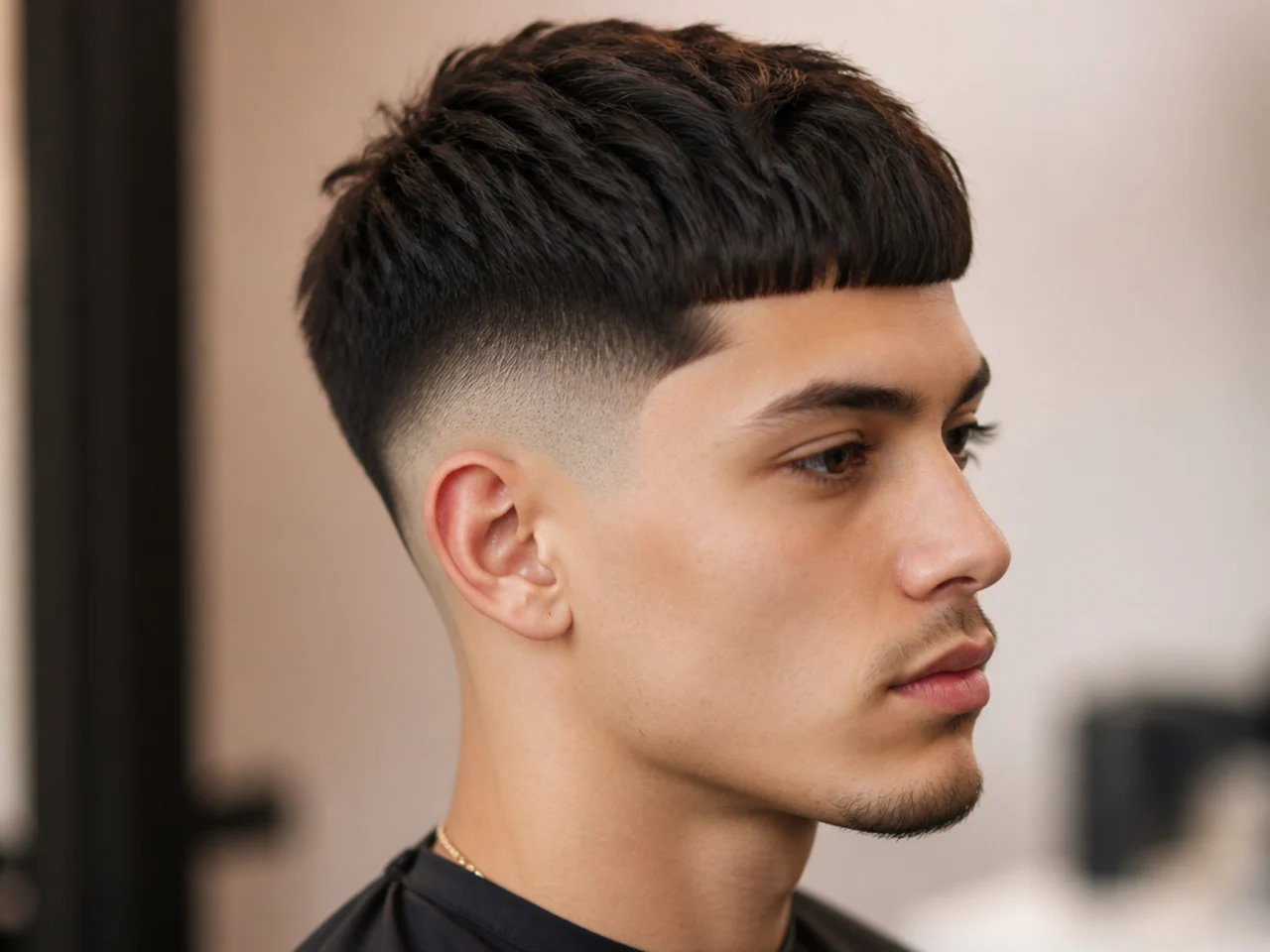
Blunt, straight horizontal fringe with sharp temple points and a high fade. Popular in Latino communities. Straight to wavy hair, medium to thick density. Oval and square faces.
How to ask: "High taper fade with an Edgar — straight blunt fringe across the forehead, sharp temple points."
Styling tip: the cut does the work. Light pomade to keep the fringe in position, edge control at the temples every couple days. Book fade touch-ups every two weeks — the temple points blur fast.
28. High Taper Fade with Design (Line Up)
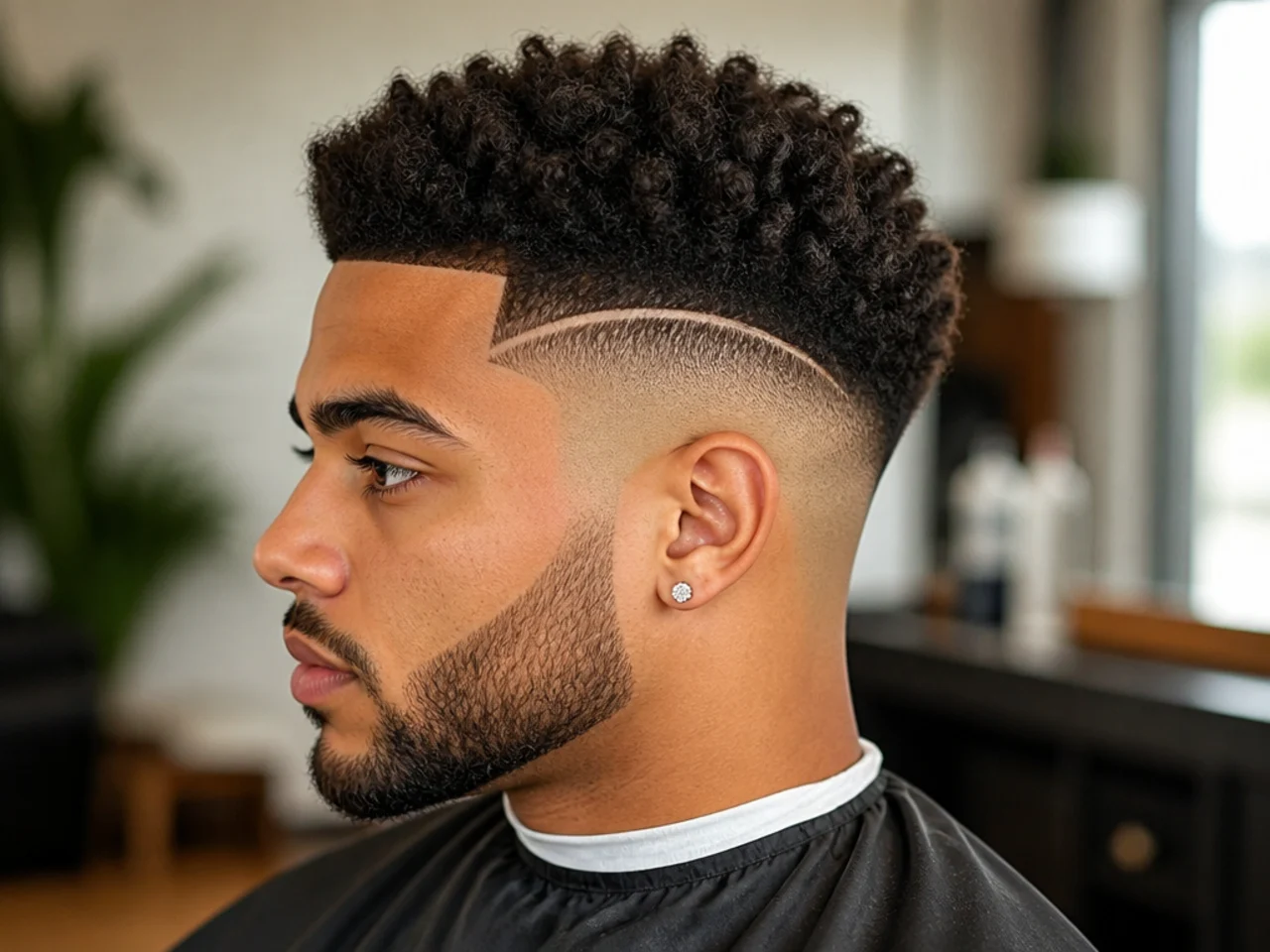
Razor lines, geometric patterns, or artwork shaved into the faded section. Every hair color, though darker hair shows the detail better. Every face shape.
How to ask: Bring a photo. Point to where you want the design. Ask "can you freehand this or do you need it drawn first?"
Styling tip: don't overwash the designed area — friction erases the crispness. Simple lines last seven to ten days; intricate work needs a re-do every week.
29. High Taper Fade with Hard Part
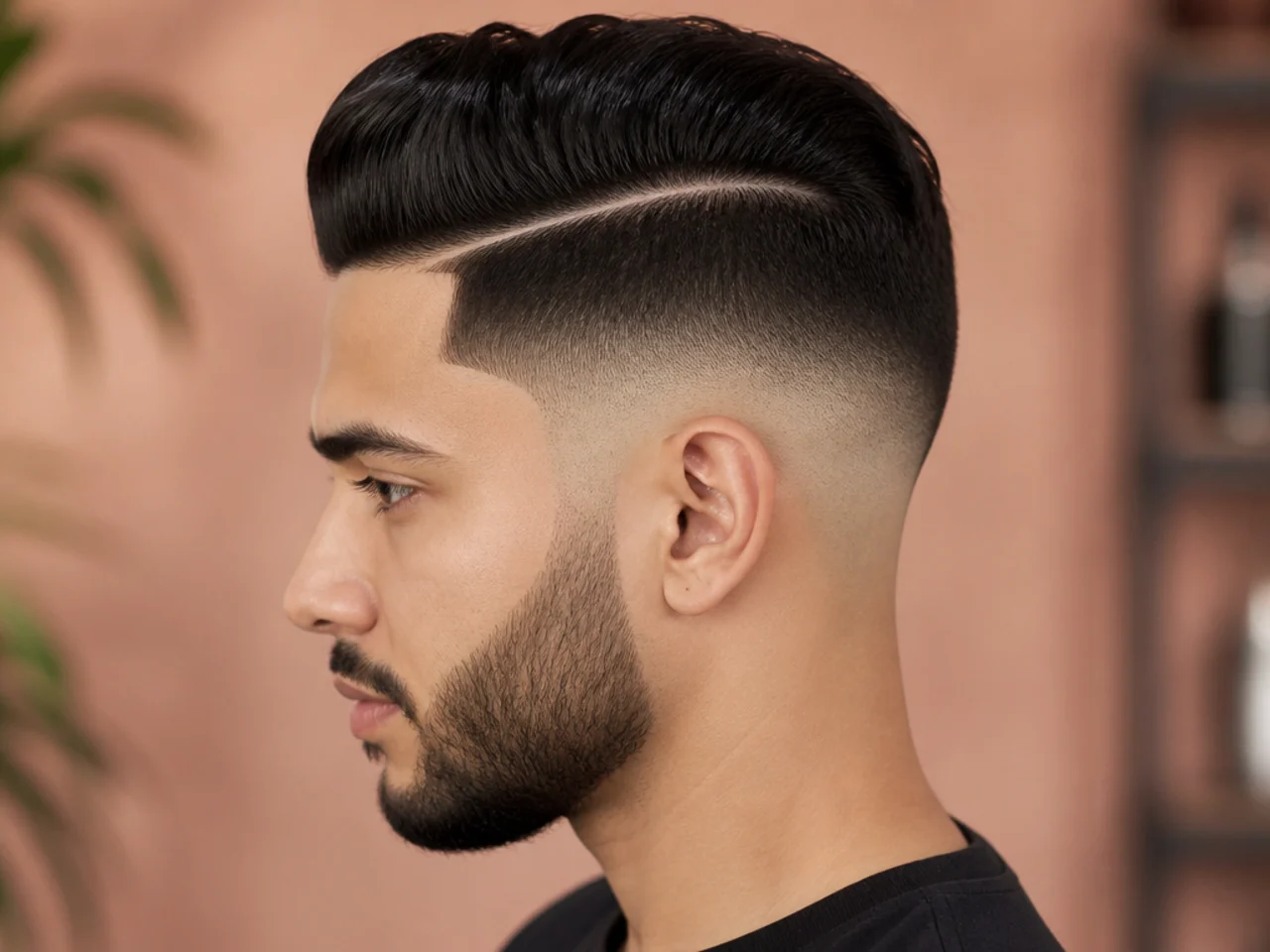
A shaved line separating the top from the faded side. Small detail, big visual impact. Straight or slightly wavy hair. Oval, square, and rectangular faces.
How to ask: "High taper fade with a hard part — on my [left/right], about an inch and a half from center."
Styling tip: the hard part is your styling guide. Comb across it, pomade to hold direction. The line needs a re-cut every two weeks or it grows in fuzzy.
30. High Taper Fade with Undercut
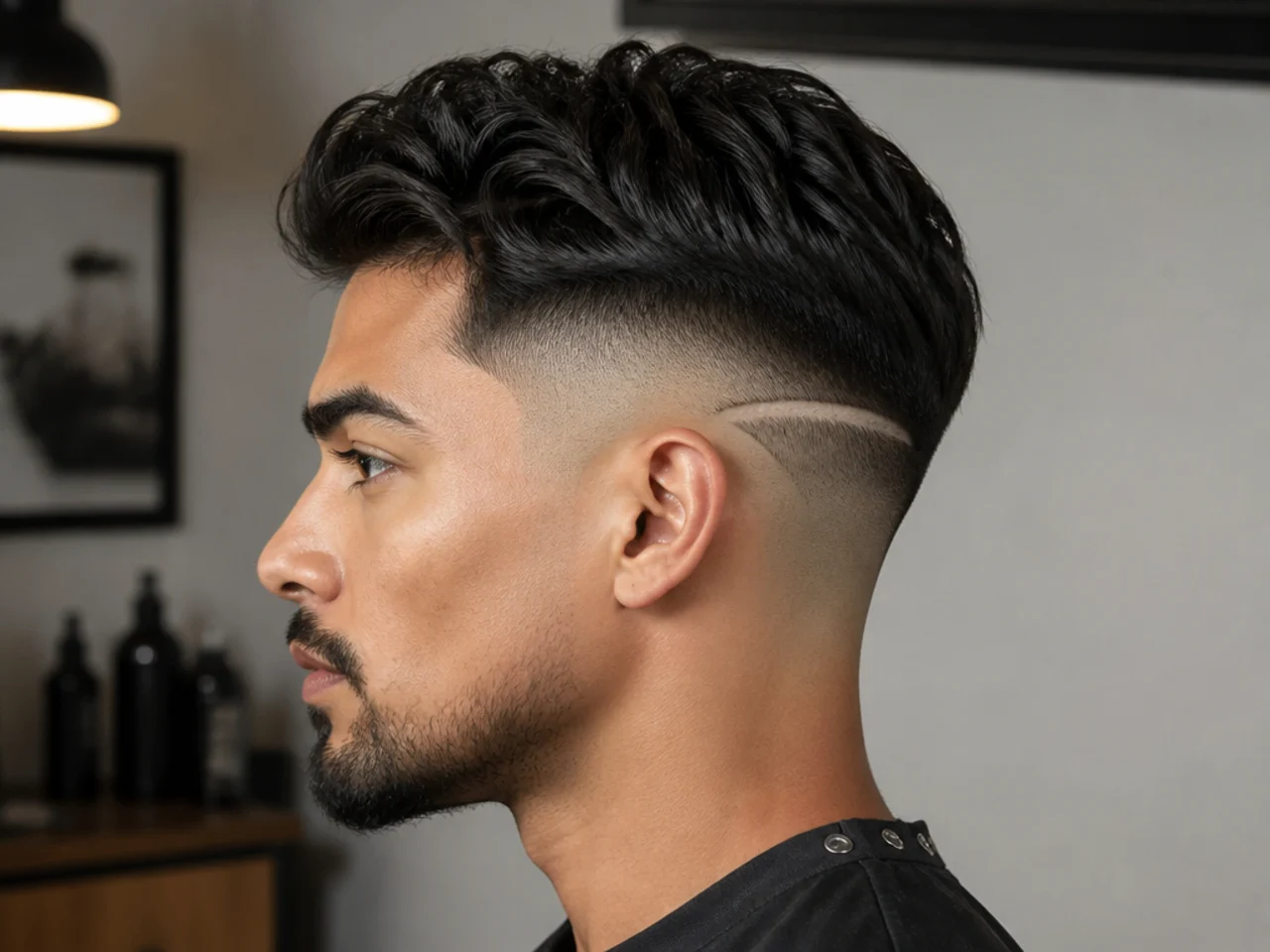
Longer top that sits distinctly separate from the sides — disconnected rather than blended. Straight or wavy hair with density. Oval, square, and rectangular faces.
How to ask: "High taper fade but I want a disconnect — no blending between the top and the fade."
Styling tip: strong-hold products maintain the visible separation. Slick back, pompadour, or messy texture all work — the disconnect is the constant.
31. High Taper Fade Blowout
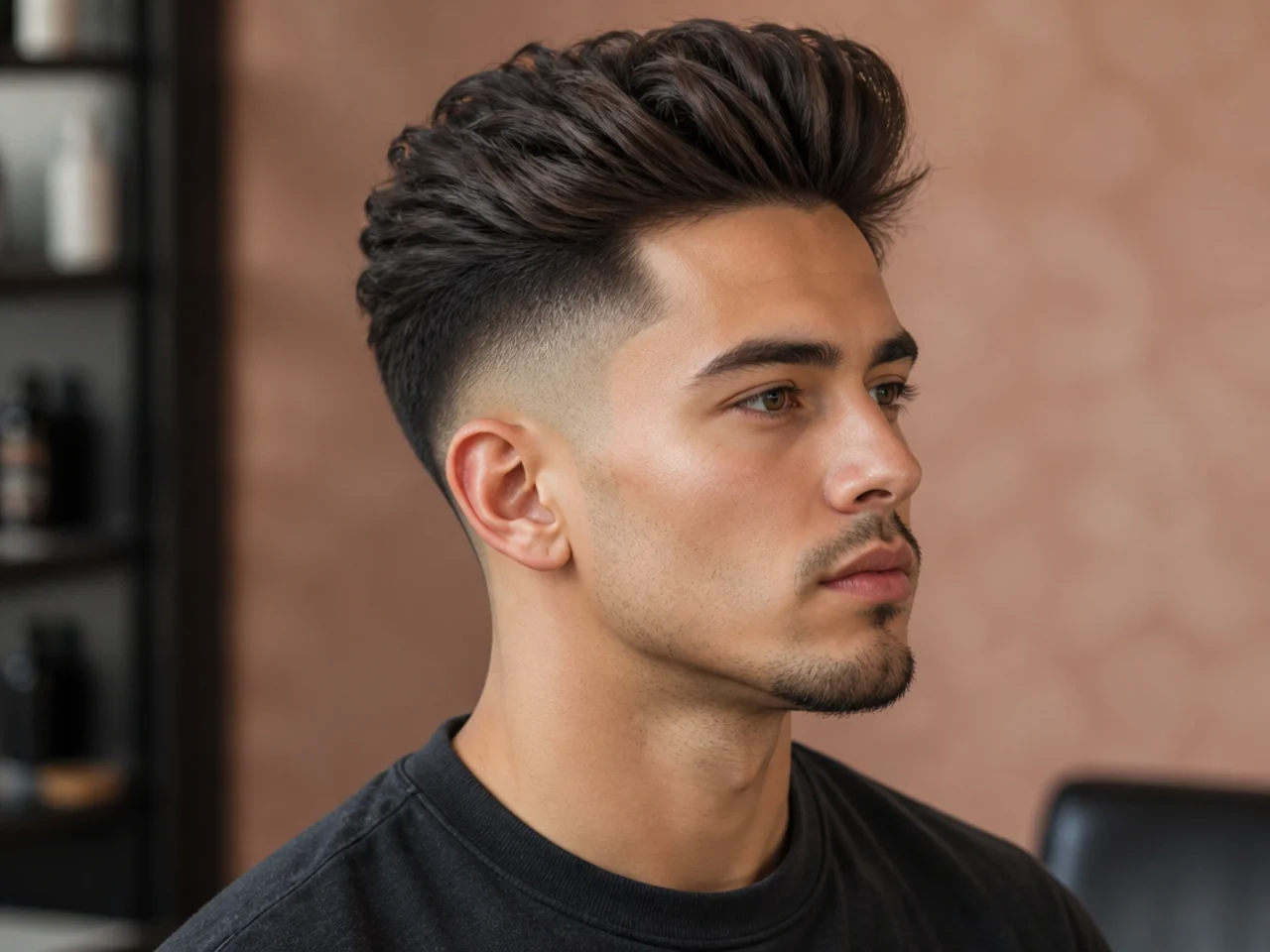
Explosive volume up top — curls or waves reaching for the ceiling — with a tight high fade underneath. Not to be confused with the blowout taper, which is a different silhouette starting lower. Curly hair (3a-4a) with density. Oval and round faces.
How to ask: "High taper skin fade, four inches of curl on top, want a full blowout."
Styling tip: curl cream on wet hair, diffuse in an upward lifting motion until 80% dry, texture clay to hold. Sleep in a bonnet or restyle daily — pick one.
32. High Taper Fade Blonde
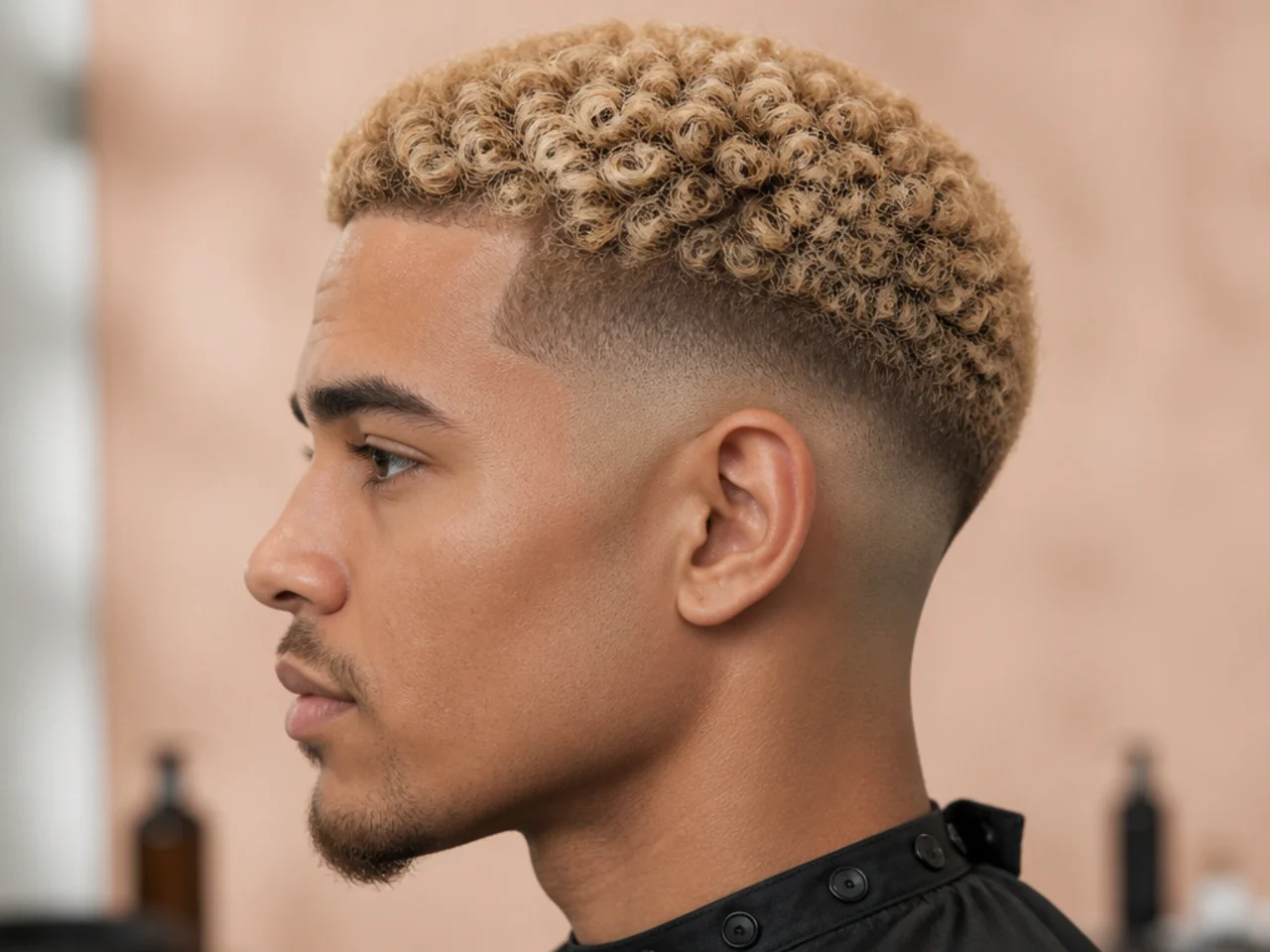
Any of the above variations, colored. Blonde makes the texture and fade contrast pop harder — light hair catches every clipper line. Every hair type, every face shape.
How to ask: Book the cut first. Book color separately unless the shop offers both. Bring a reference photo for the tone (platinum, ash, golden, highlighted).
Styling tip: purple shampoo weekly for brass, deep condition weekly for damage. Color-safe styling products only — sulfates strip the tone in three washes.
33. High Taper Fade Asian
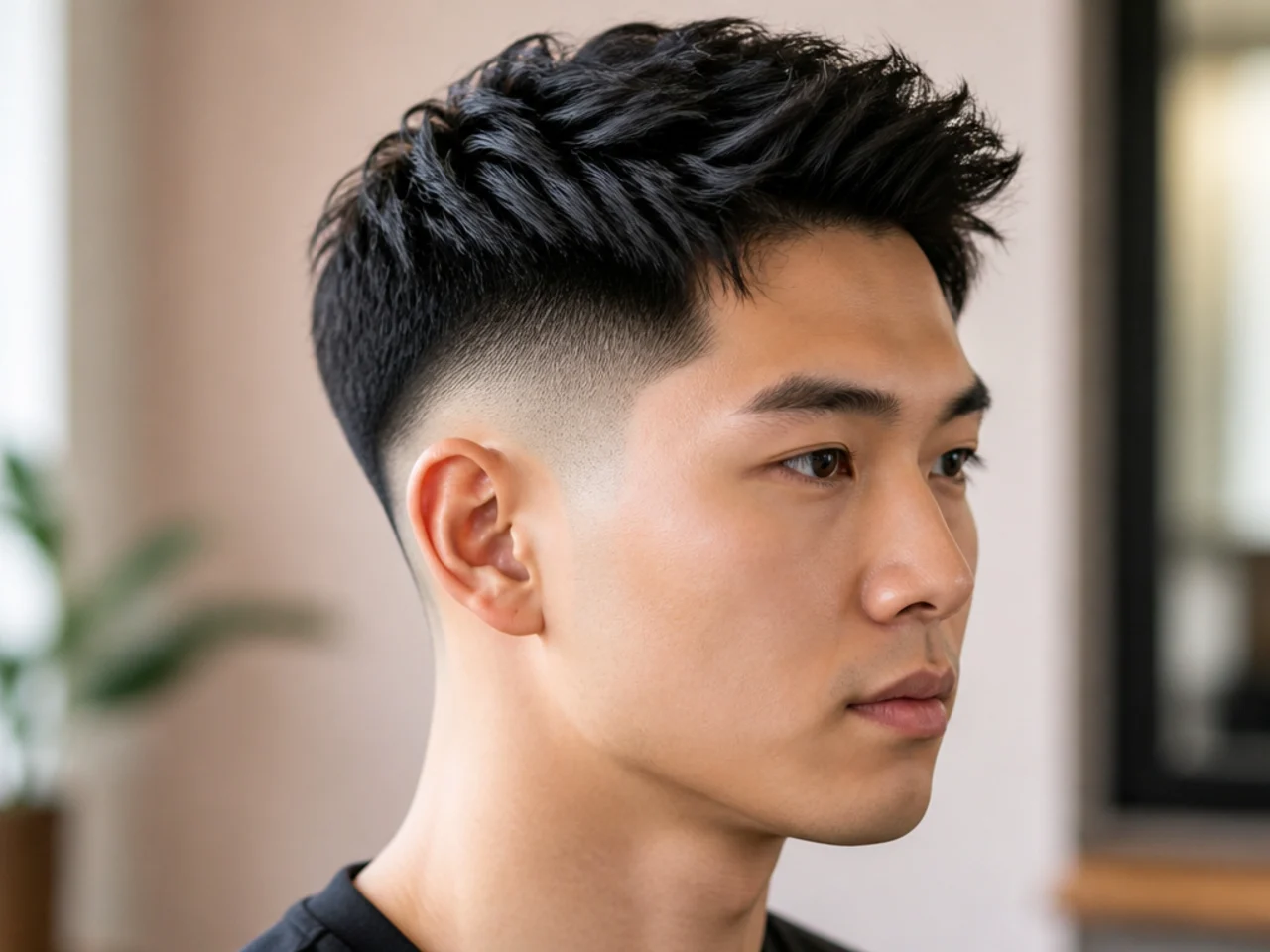
Cut adapted for straight, dense Asian hair — type 1b-1c. Natural thickness holds structured styles without much product. All face shapes, oval and square especially.
How to ask: "High taper fade, three inches on top — my hair is thick and straight, so texturize it enough to move."
Styling tip: texture powder is your friend. Asian hair holds height once you give it grip. Comma hair, textured crop, and side-swept all work exceptionally on this hair type.
34. High Taper Fade with Messy Texture
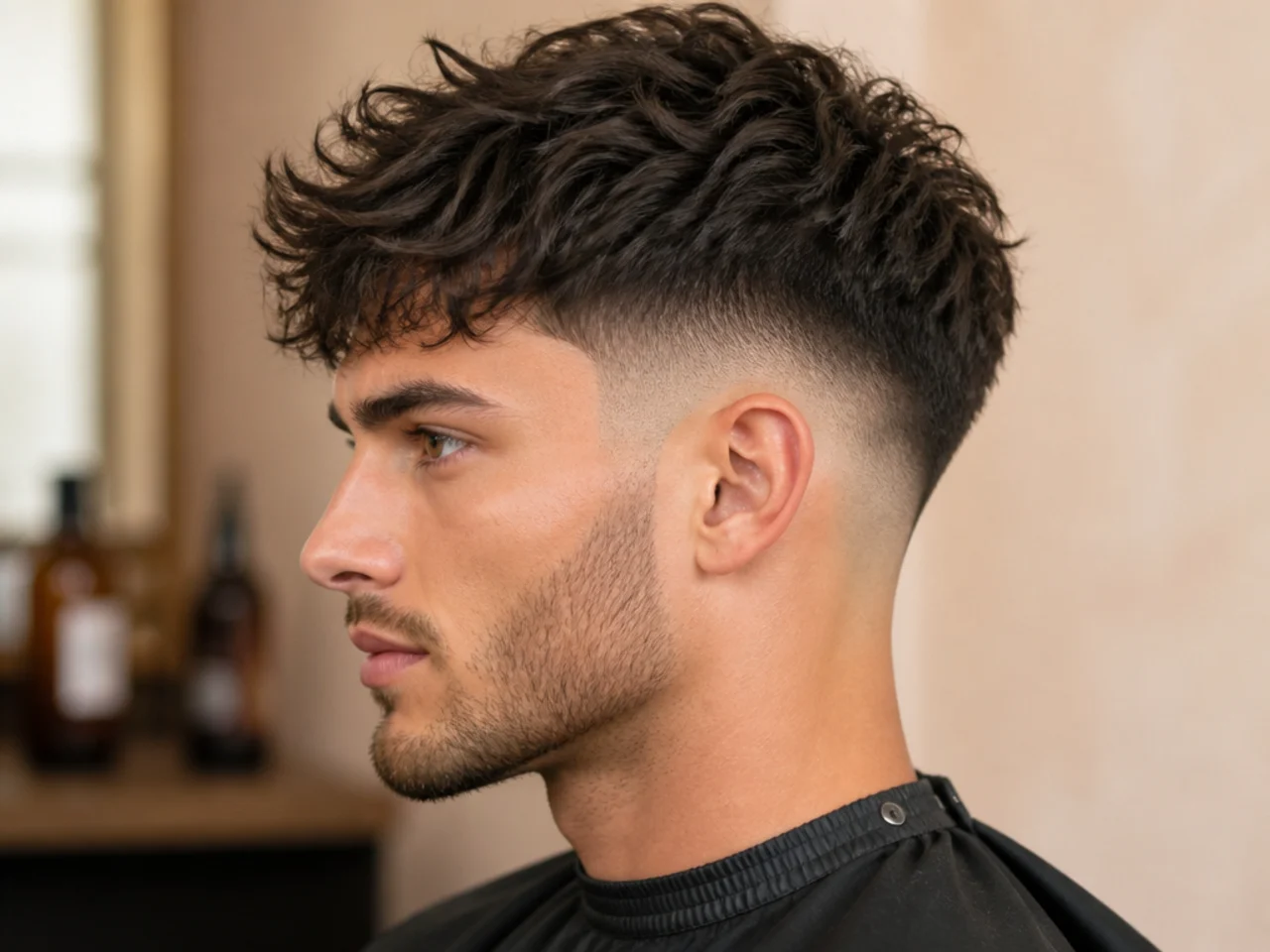
Intentionally undone top with structured, faded sides. The "I didn't try" look that takes ten minutes to build. Straight to wavy hair, medium density. Round, heart, and square faces.
How to ask: "High taper fade, texturize the top — I want it looking casual, not styled."
Styling tip: sea salt spray, blow-dry with fingers, matte paste. Then intentionally break the shape you built — pull sections in different directions, leave one piece out of place.
35. High Taper Fade with Beard
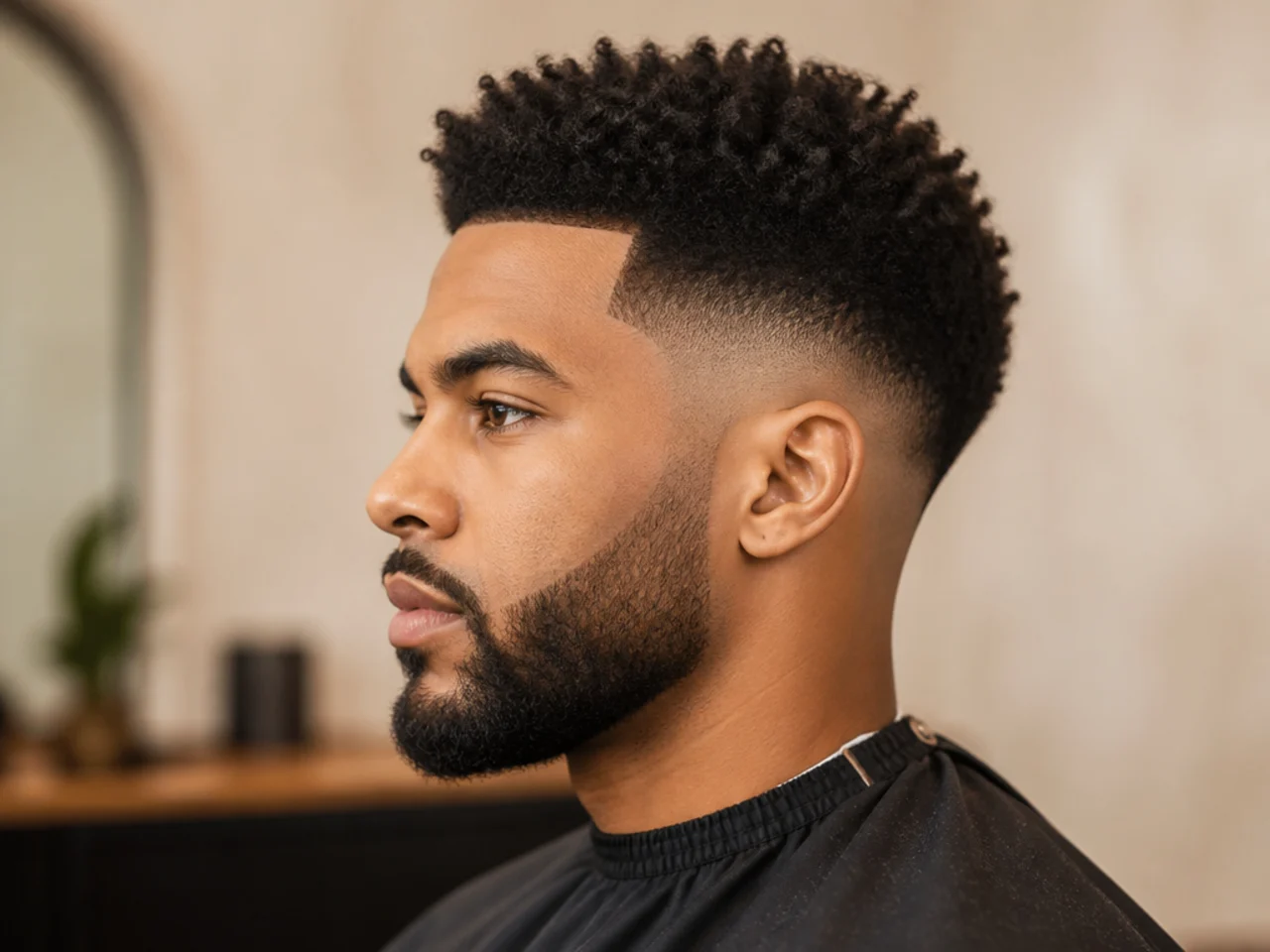
High taper fade with the sides continuing down into a shaped beard. Complete grooming statement. Every hair type. Square faces (beard softens the jaw), round faces (beard adds definition below the cheek).
How to ask: "High taper fade and blend it into the beard — I want a seamless connection." Or ask for defined separation if you'd rather have a clear break at the jawline.
Styling tip: beard oil on damp facial hair, trim weekly, brush downward. The line between fade and beard is where most cuts fail — a skilled barber charges more here for good reason.
How to Choose the Right High Taper Fade for You
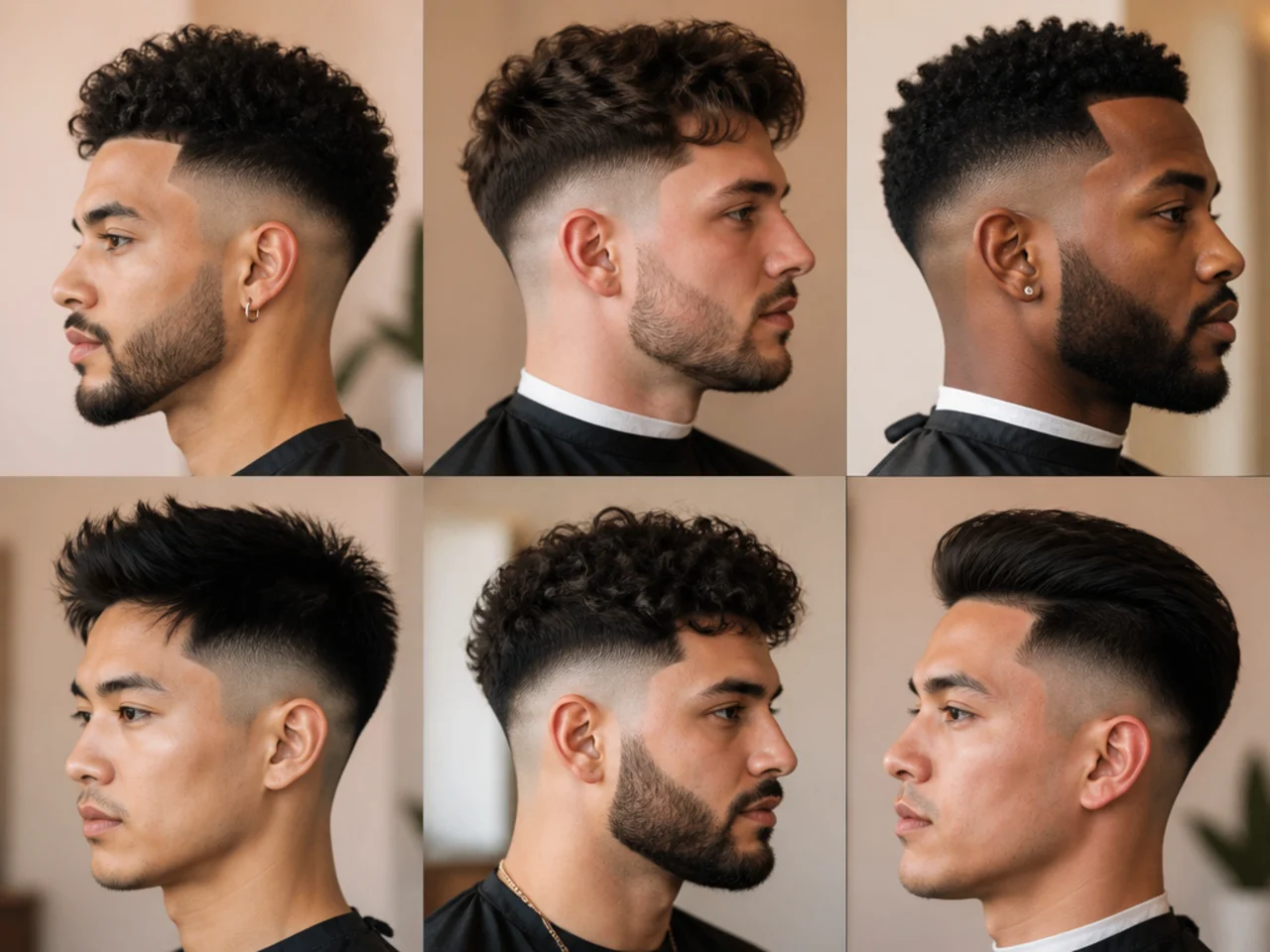
Four filters narrow 35 options to two or three real candidates: hair type, face shape, lifestyle, and how much maintenance you'll actually commit to.
Based on Hair Type
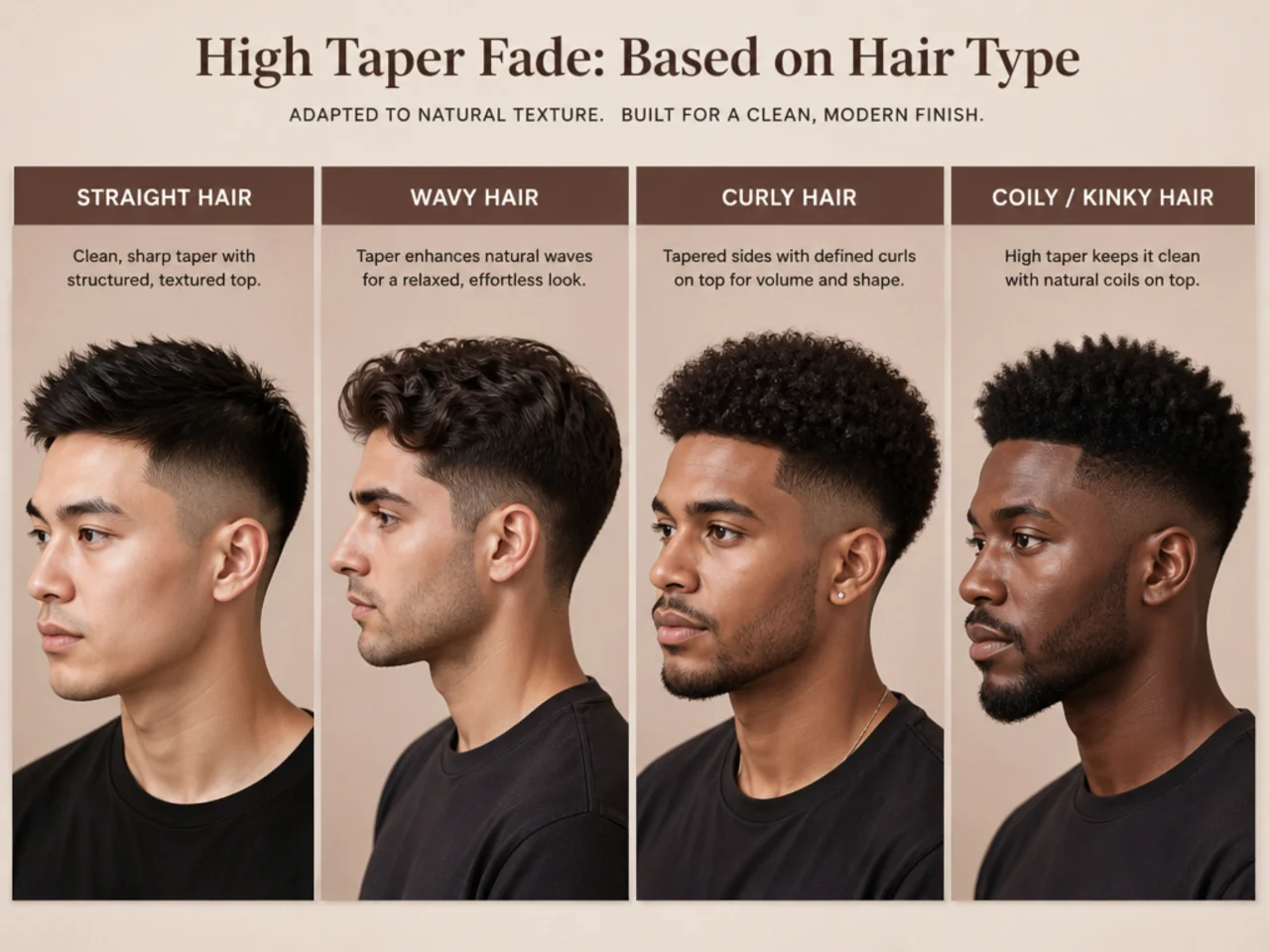
Thick hair supports every variation — the fade removes weight, the top holds shape. Pompadour, quiff, crop, slick back all work.
Curly or coily hair rewards the high taper especially well. Contrast is the whole point. Afro, curly top, waves, dreads, high top.
Straight hair needs a pre-styler to avoid looking flat. Side-swept, slick back, comb over, Caesar, crop.
Fine hair benefits from the fade because the sidewall bulk that competes with the top disappears. Short crop or textured styles with volume product.
Wavy hair is the utility infielder. Nearly every variation works.
Based on Face Shape
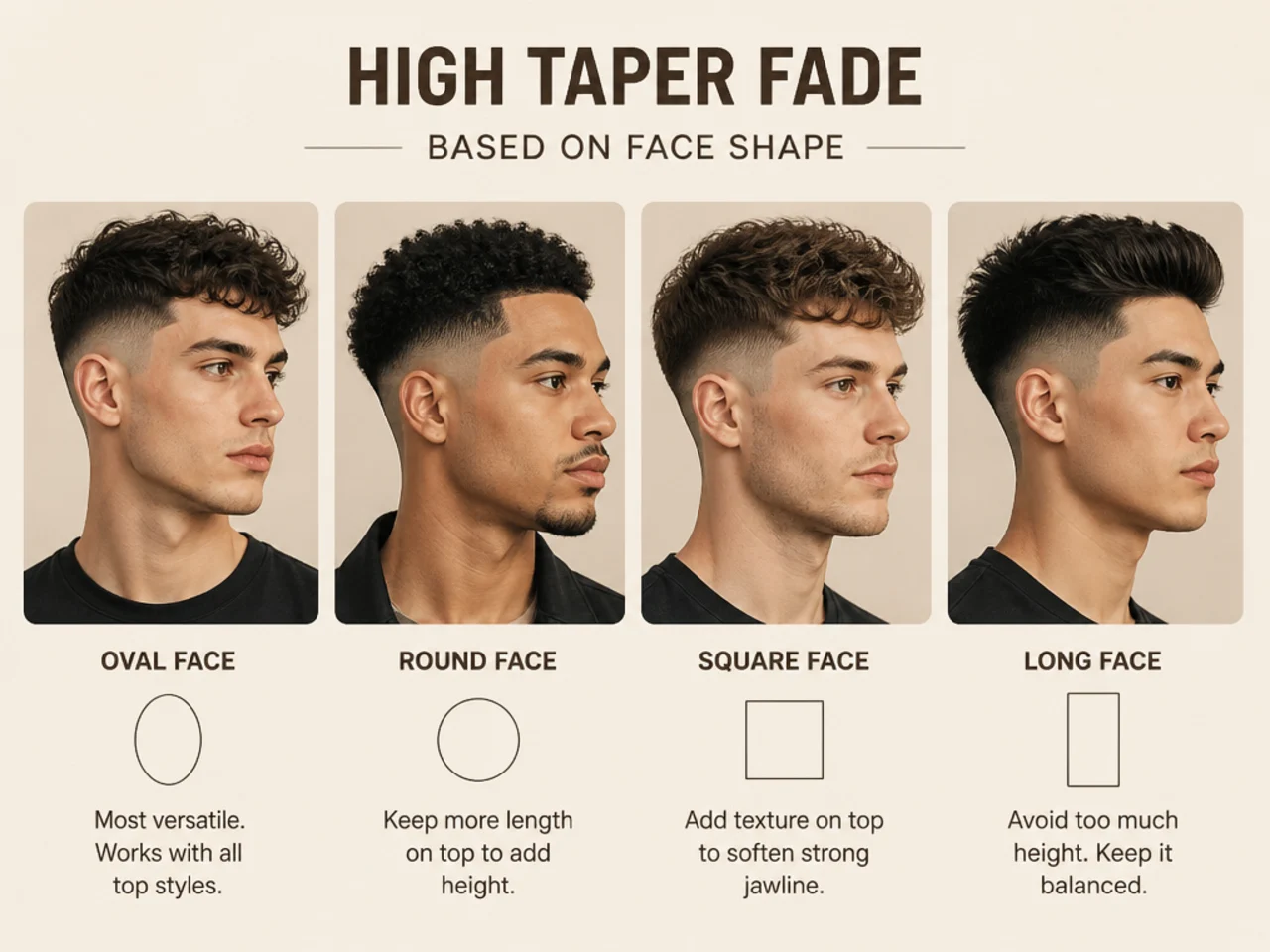
Round faces want vertical lift. Pompadour, quiff, high top, faux hawk — anything that adds height.
Square faces want the angular lines softened. Side-swept, textured styles, a full beard to counter the jaw.
Oval faces wear anything. That's the whole story.
Heart-shaped faces want the forehead balanced by width lower down. Fringes, textured crops, beards.
Diamond faces need width at forehead and chin, softness on the sides. Side-swept, textured, longer tops.
Rectangular faces avoid extreme height (elongates further) and lean into fringes and side-sweeps.
Based on Lifestyle
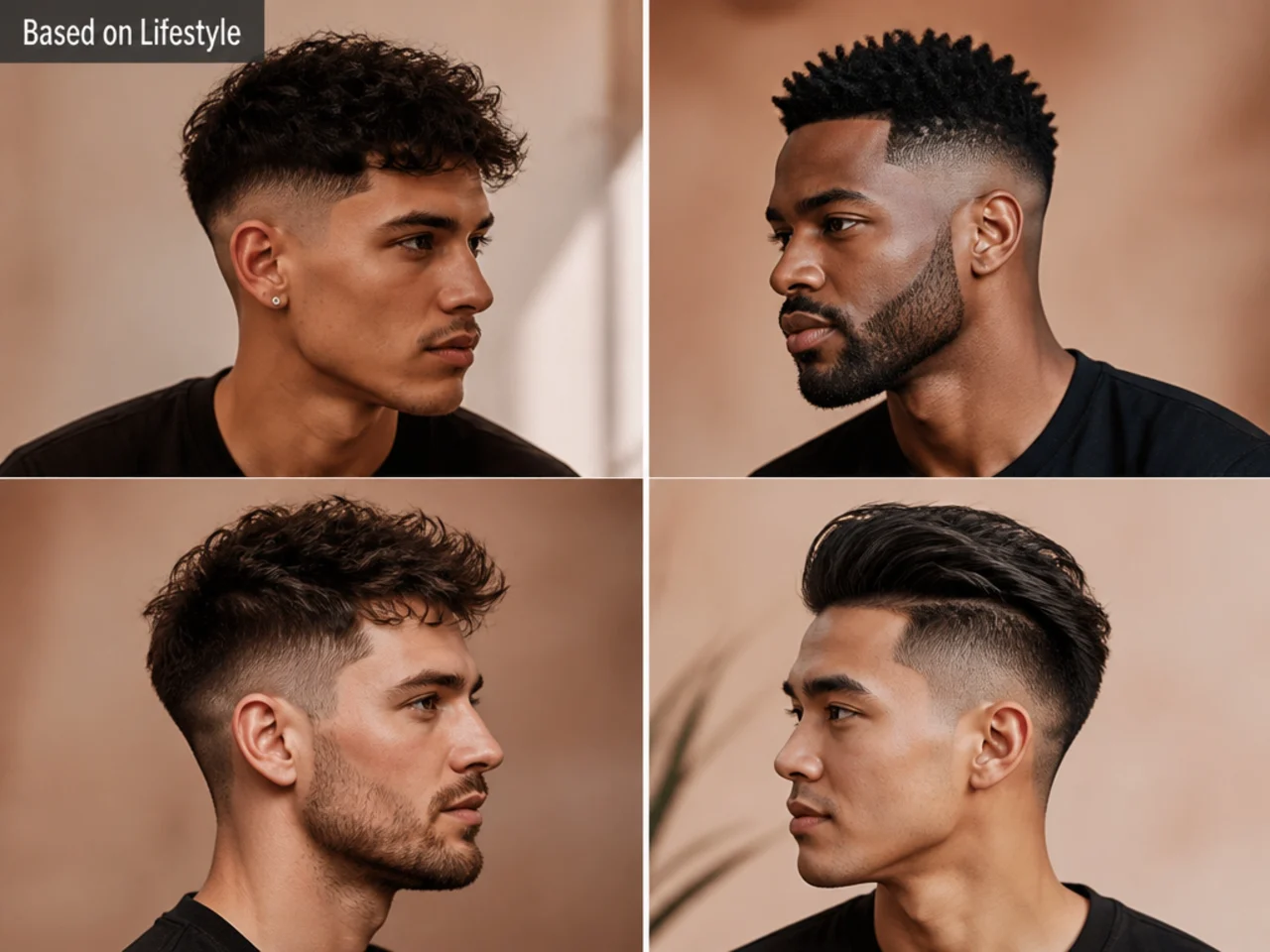
Corporate: classic taper, side-swept, comb over, slick back, short crop. Nothing that requires an explanation.
Creative fields: textured styles, colors, designs, mullets, quiffs. Room to experiment.
Athletic: buzz, short crop, low-styling variations. Sweat-tolerant, gym-bag-friendly.
Low-effort by preference: buzz, short crop, Caesar. Out the door in five minutes.
Based on Maintenance Commitment
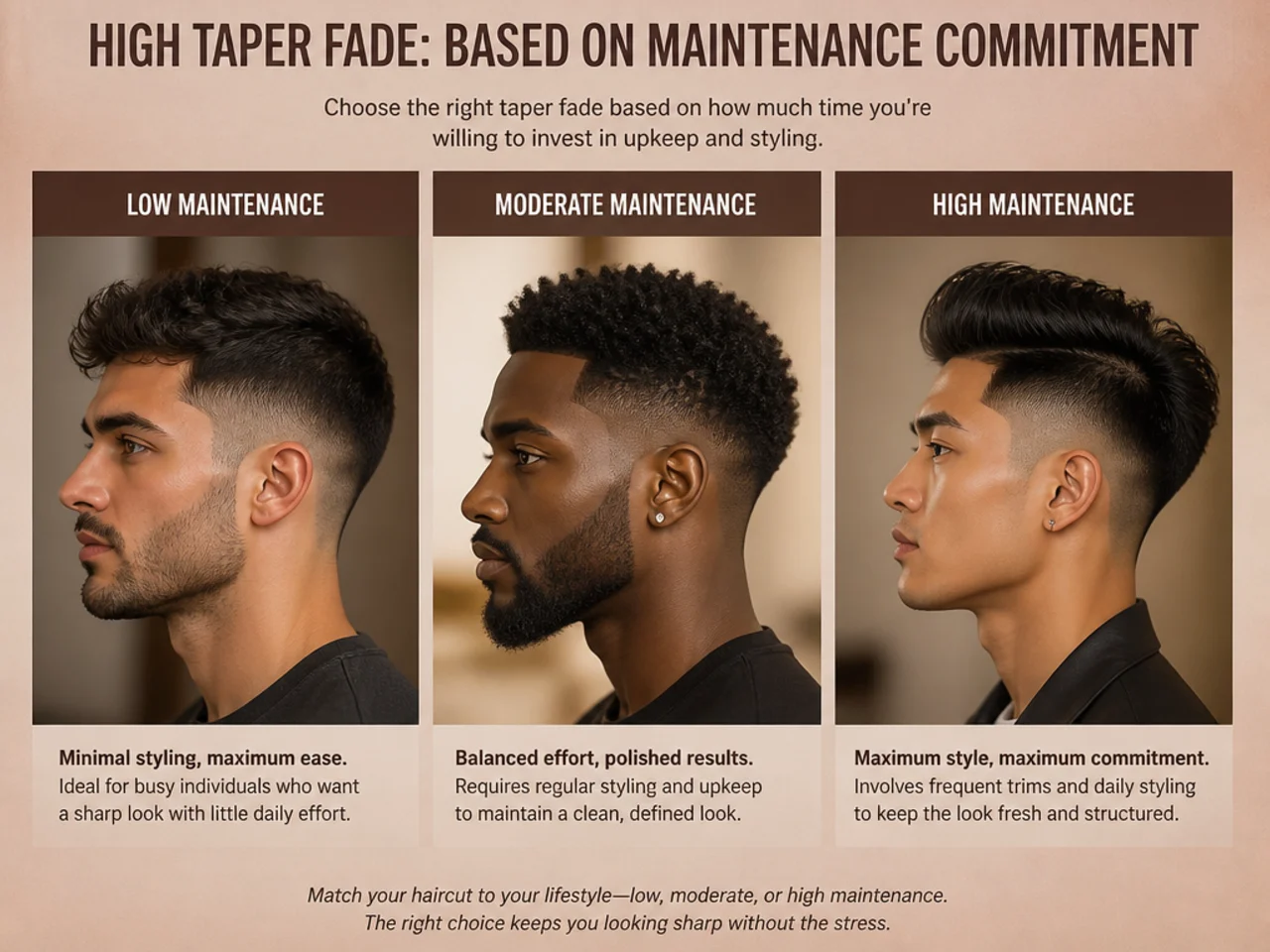
High maintenance means fade touch-ups every one to two weeks and ten-plus minutes daily. Pompadour, blowout, long-top styles, designs.
Moderate maintenance runs every two to three weeks with a five-to-ten-minute morning. Textured crop, side-swept, classic taper.
Low maintenance is every three weeks with a one-to-five-minute morning. Buzz, short crop, Caesar.
Be honest with yourself before the cut. A pompadour that grows out for a month reads worse than a buzz that's due for a trim.
How to Ask Your Barber for a High Taper Fade
Barbers work from four data points and a photo. Nail these and you'll walk out with what you asked for.
Essential Information to Provide
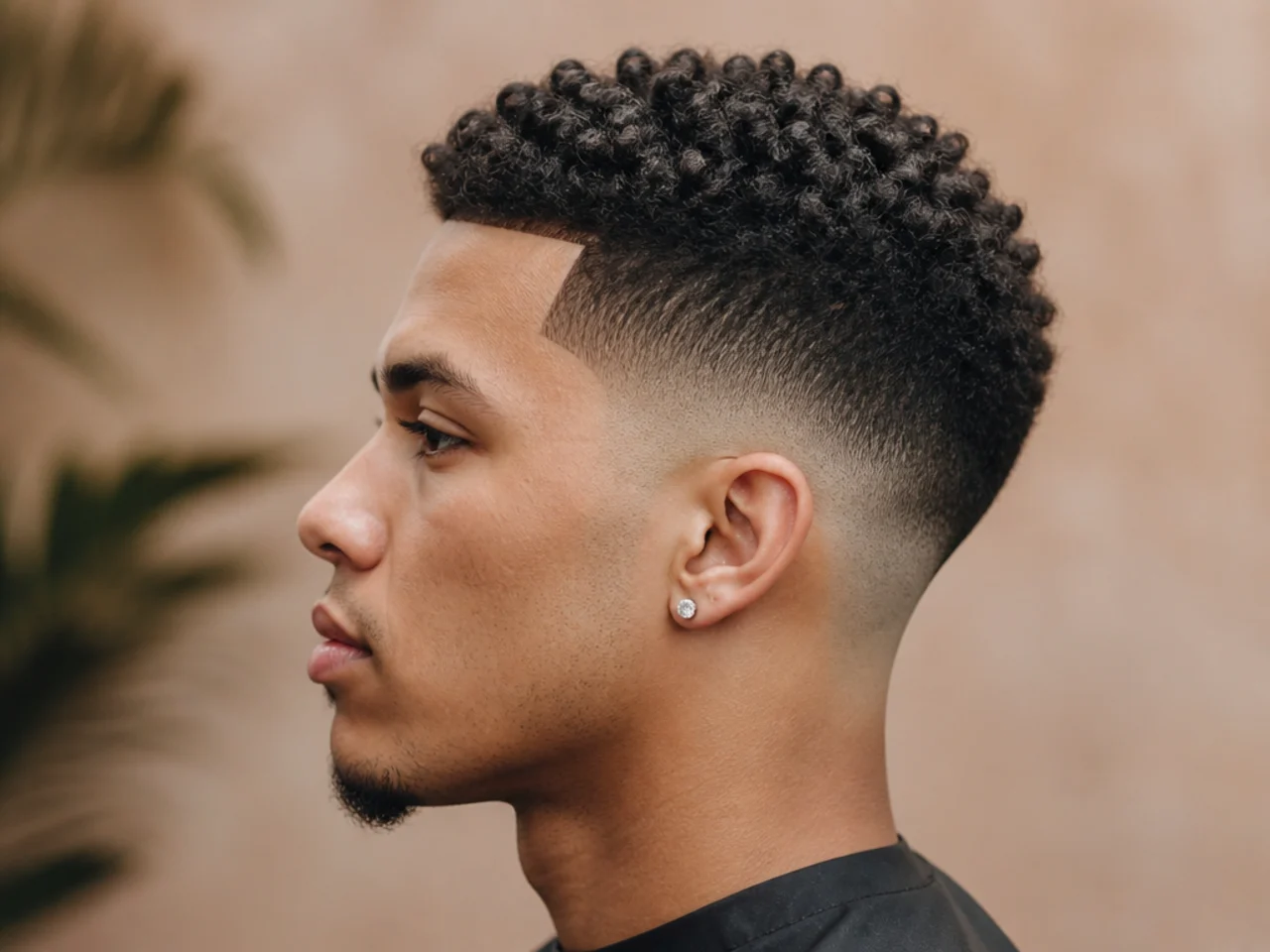
Reference photos. Two or three, showing front, side, and back if relevant. Choose photos of people whose hair type and face shape resemble yours — a curly top won't translate to straight hair, and no photo choice fixes that.
Fade height. "High taper fade, starting at the temple" or "starting two inches above the ear." Point to your own head if it helps.
Guard number at the shortest point. "Down to a #1," "to a #0.5," or "to skin." If you don't know guard numbers, describe the finish: "stubble short" or "bald." Check the best hair clippers guide if you're planning home touch-ups.
Top length. In inches. "Three inches on top," "two inches with texture," "six inches for a pomp." Never "medium" — that means nothing.
Finish. Matte and textured, or glossy and sleek. That decides whether they leave it choppy or scissor-smooth.
Neckline. Tapered (soft), blocked (squared), or natural (follow the hairline).
Questions to Ask Your Barber
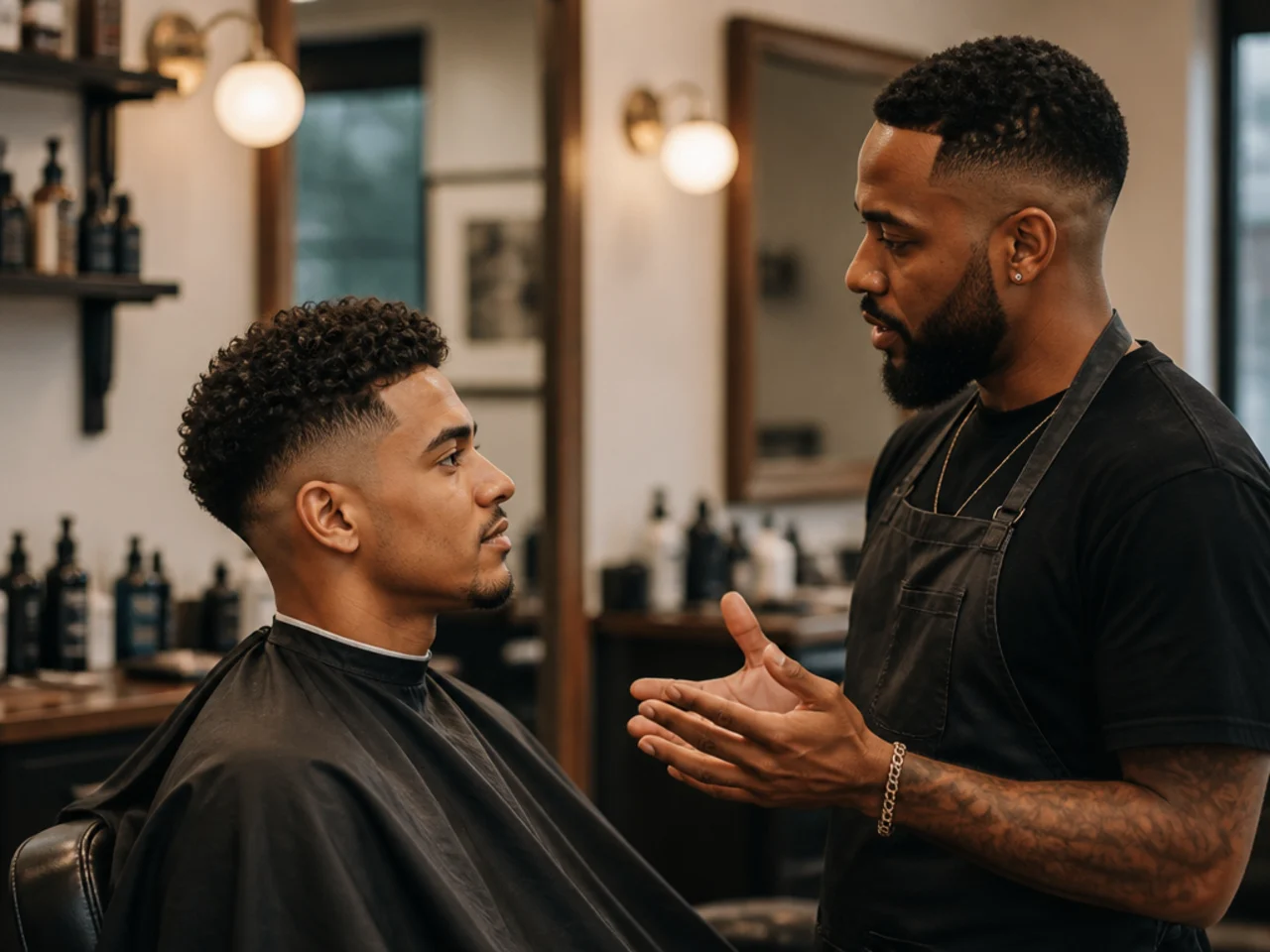
"Will this work with my hair type and face shape?" A good barber says no when the answer is no.
"How often should I come back?" Locks in your maintenance rhythm before you leave the chair.
"What should I use to style this at home?" Personalized product recommendations beat guessing at the drug store.
"Can you show me how to style it before I leave?" Watch the technique. Ask what tools they used.
What to Avoid
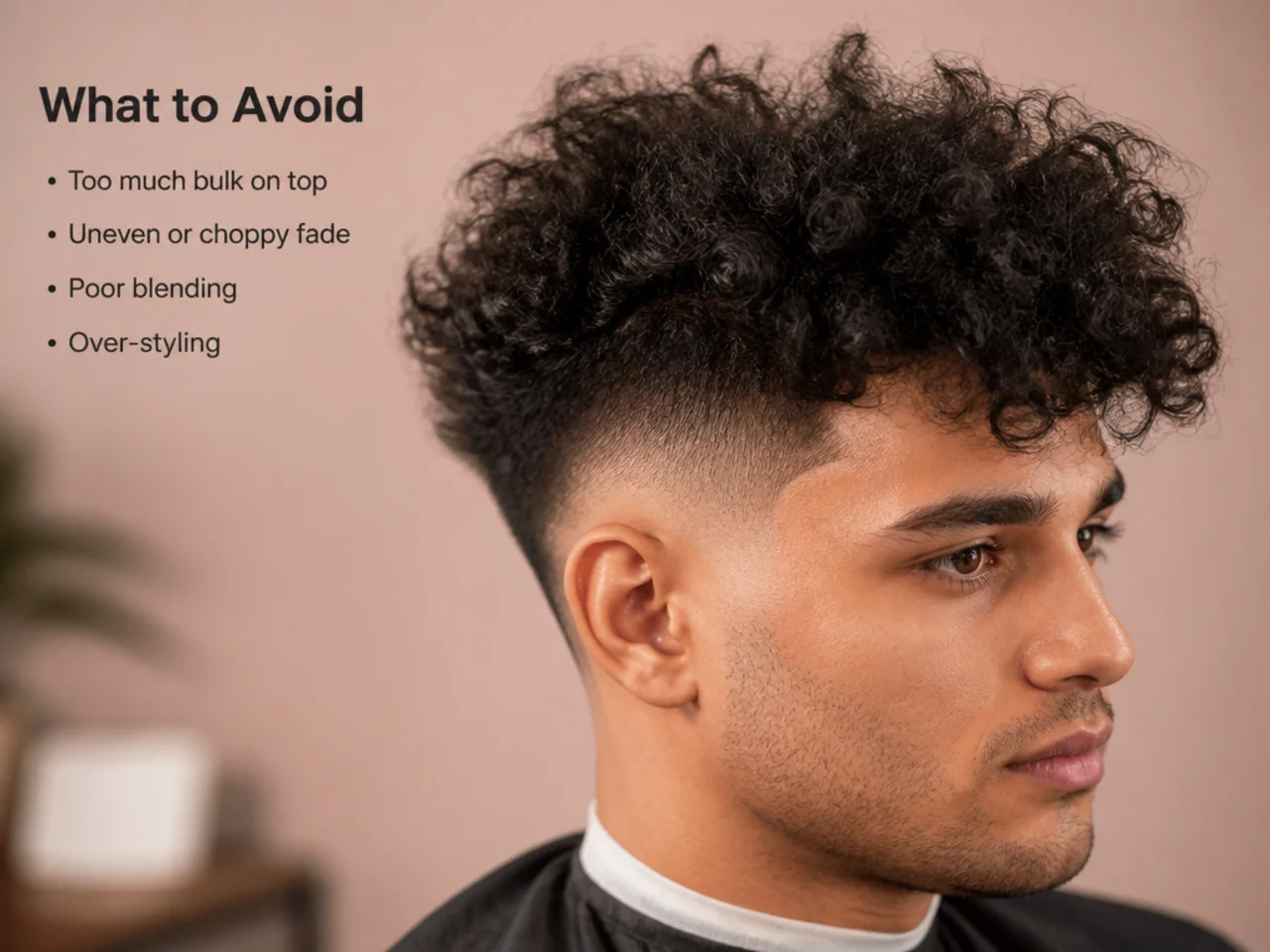
Don't say "just a normal fade" — that means nothing. Don't say "whatever you think" unless you truly don't care. Don't use technical terms you're not sure of — miscommunication is worse than plain language.
Do say: descriptive language, "like this photo," or "I don't know the term for this, can you explain?"
Building a Relationship with Your Barber
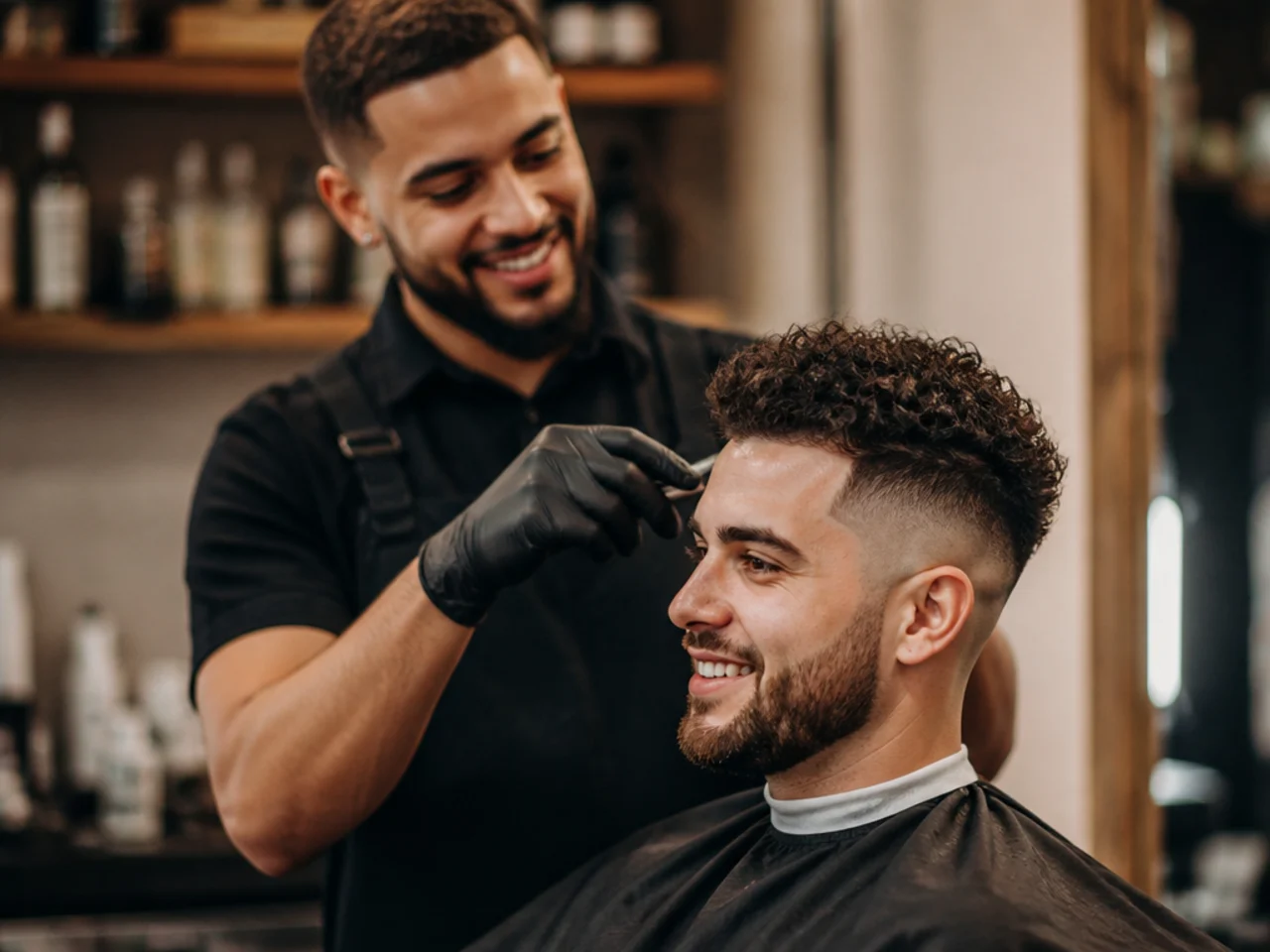
Find one who nails your cut, then stick. They learn your growth patterns, your styling preferences, the way your hair sits after a shower. Less explanation each visit, better results, priority booking when you're in a rush.
For inspiration between visits, browse my Pinterest profile.
How to Style a High Taper Fade (Step-by-Step Guide)
The cut sets the range. The styling decides where you land inside it. Here's the routine that works for most variations, adjusted at the product stage for your specific look.
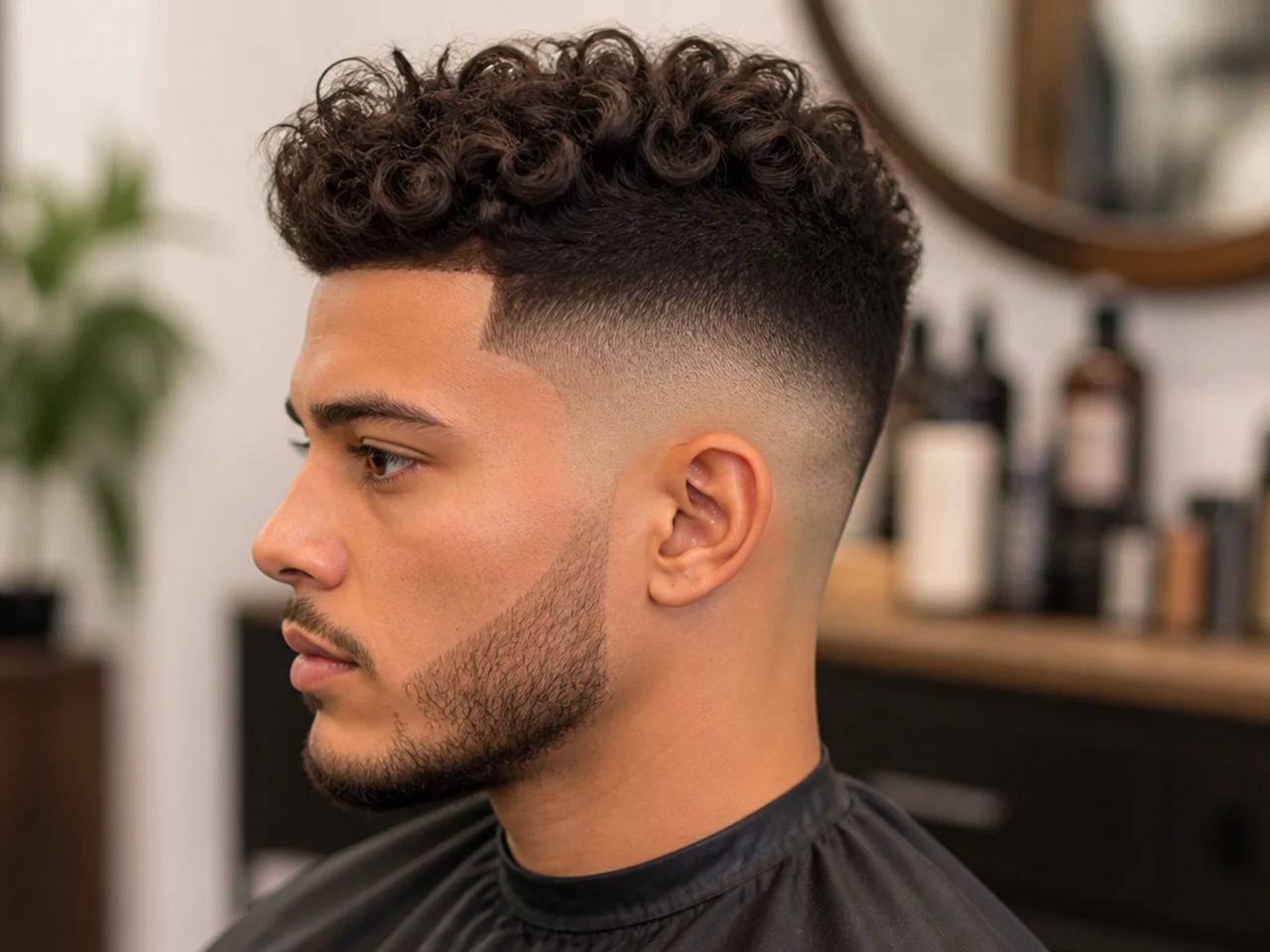
Styling Tools You'll Need
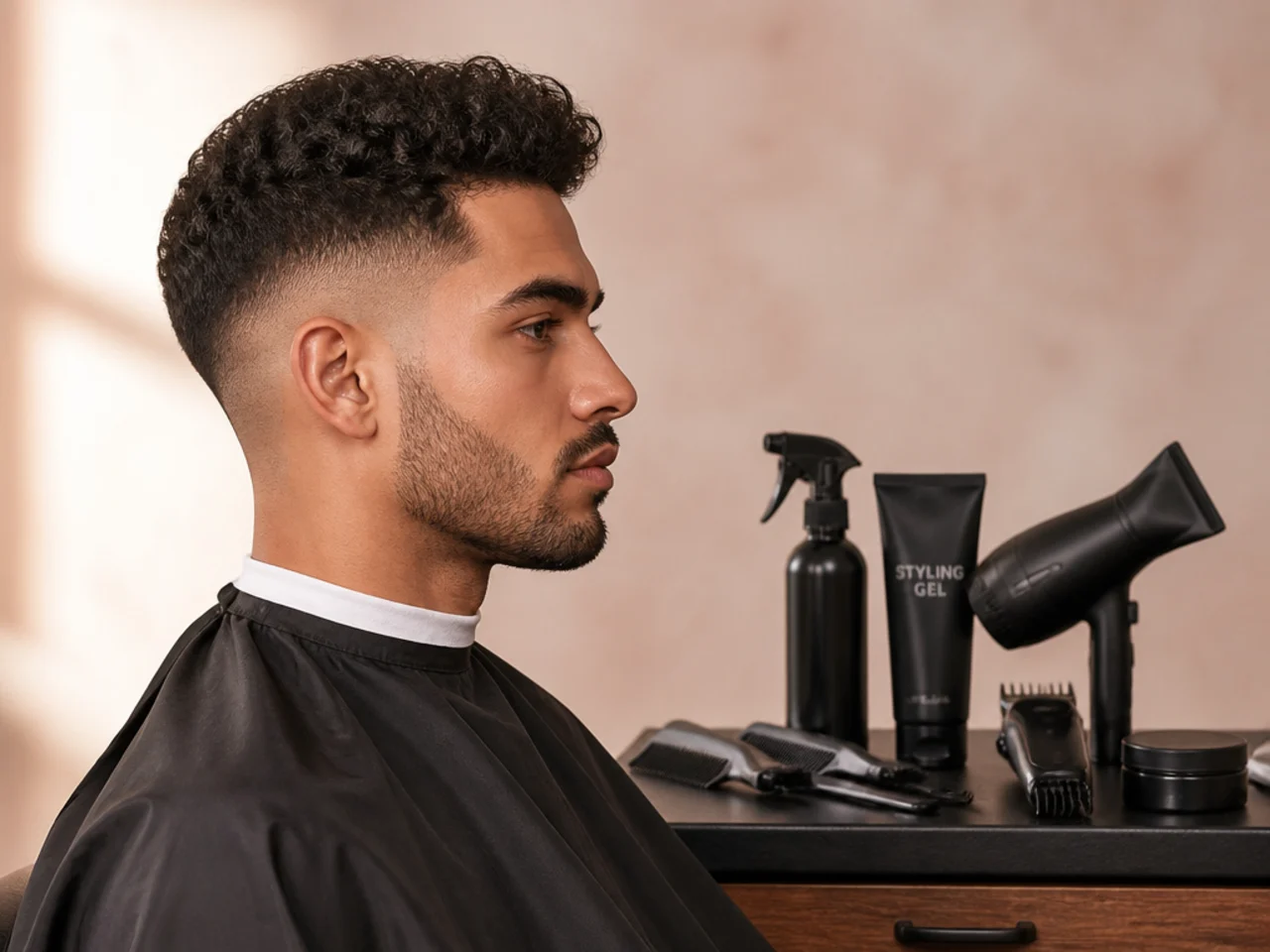
Blow dryer with variable heat and a concentrator nozzle. Fine-tooth comb for parts and sleek styles. Wide-tooth comb for curly or thick hair. Round brush for volume. That's your baseline kit.
Optional but worth owning: diffuser attachment for curls, flat iron for very sleek styles, hair dryer brush for combined blow-dry-and-brush efficiency in one step.
Step-by-Step Styling Process
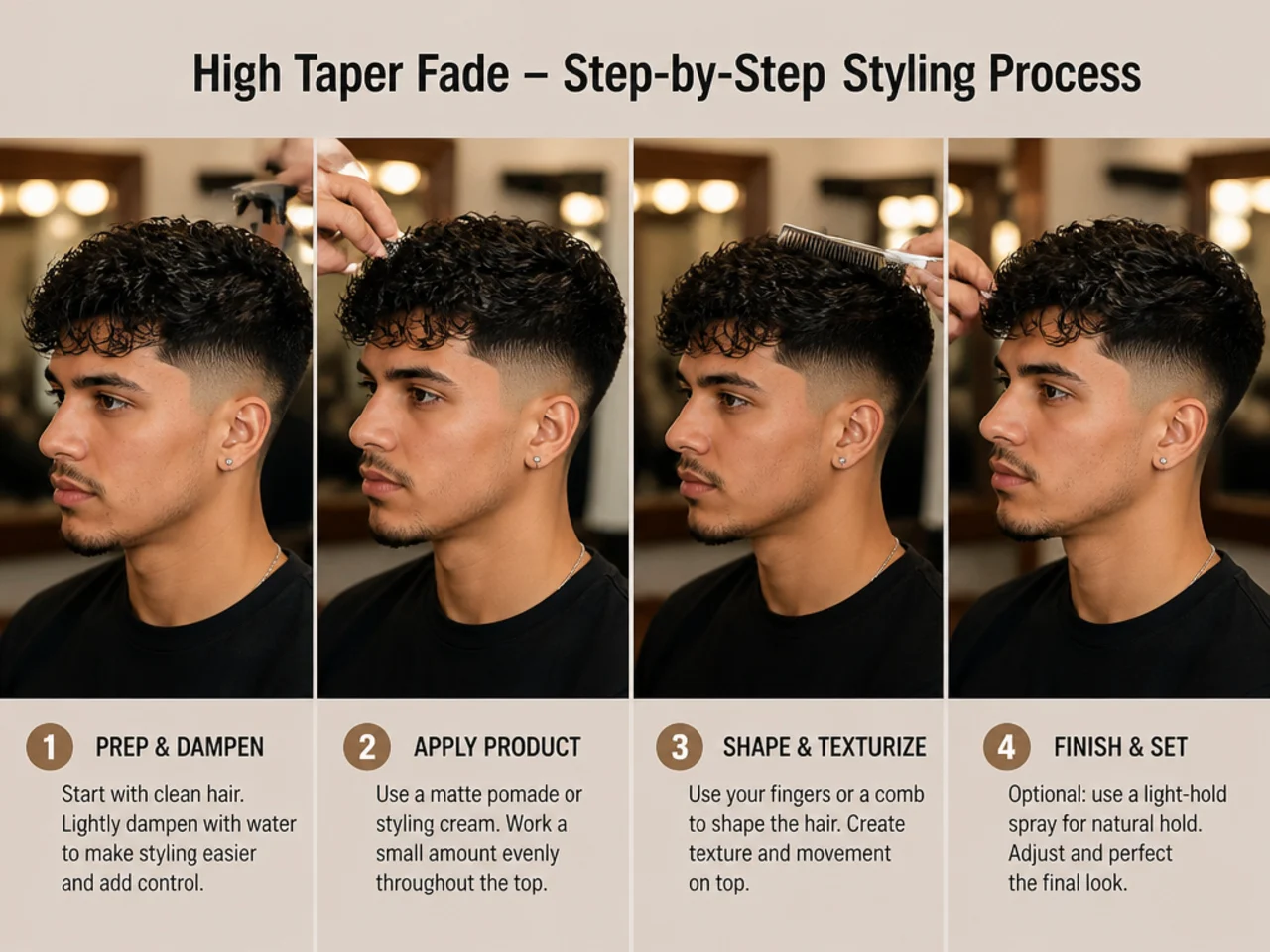
Prep. Wash with a shampoo that matches your hair type — moisturizing for curly, volumizing for fine, clarifying weekly to remove buildup. Condition mid-length to ends, skip the roots if you're fine-haired. Towel-dry to damp, not dripping.
Pre-style. Apply a pre-styler while damp: sea salt spray for texture, volumizing mousse for lift, leave-in conditioner for curls, heat protectant if hot tools are coming.
Blow-dry. For volume, flip upside down and lift at the roots with a round brush. For sleek, use the concentrator and keep airflow direction root-to-tip. For curls, diffuse on low. Finish every style with a cool shot to lock the cuticle.
Product. A pea-to-dime-sized amount for short hair, up to a quarter for longer. Warm it between palms first. Distribute from mid-length to ends before touching the roots. Style with fingers for texture, comb for polish.
Finish. Texture powder at the roots if you need extra lift. Edge control on stray hairs. Hairspray in short bursts from ten inches out if the style needs all-day hold.
Styling Product Guide by Desired Look
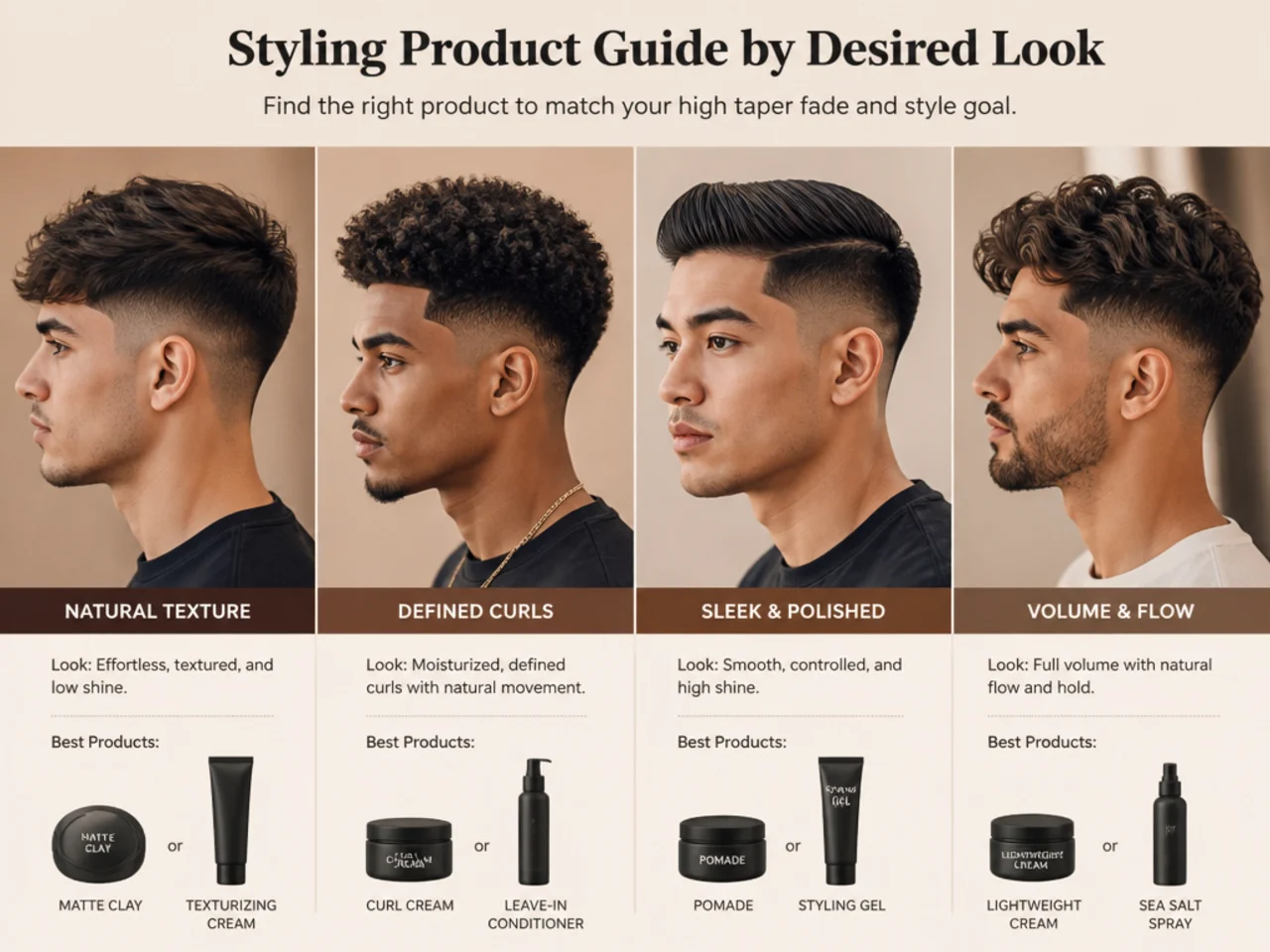
Matte and textured (clay, paste, fiber, powder): crop, messy, spikes, textured styles.
Glossy and sleek (water or oil pomade, gel): slick back, pompadour, comb over, Caesar.
Volume and texture (sea salt spray, mousse, texture spray): fine hair, natural styles, beachy looks.
Curl definition (curl cream, leave-in, curl gel, argan oil): natural curls, waves, coils.
Common Styling Mistakes to Avoid
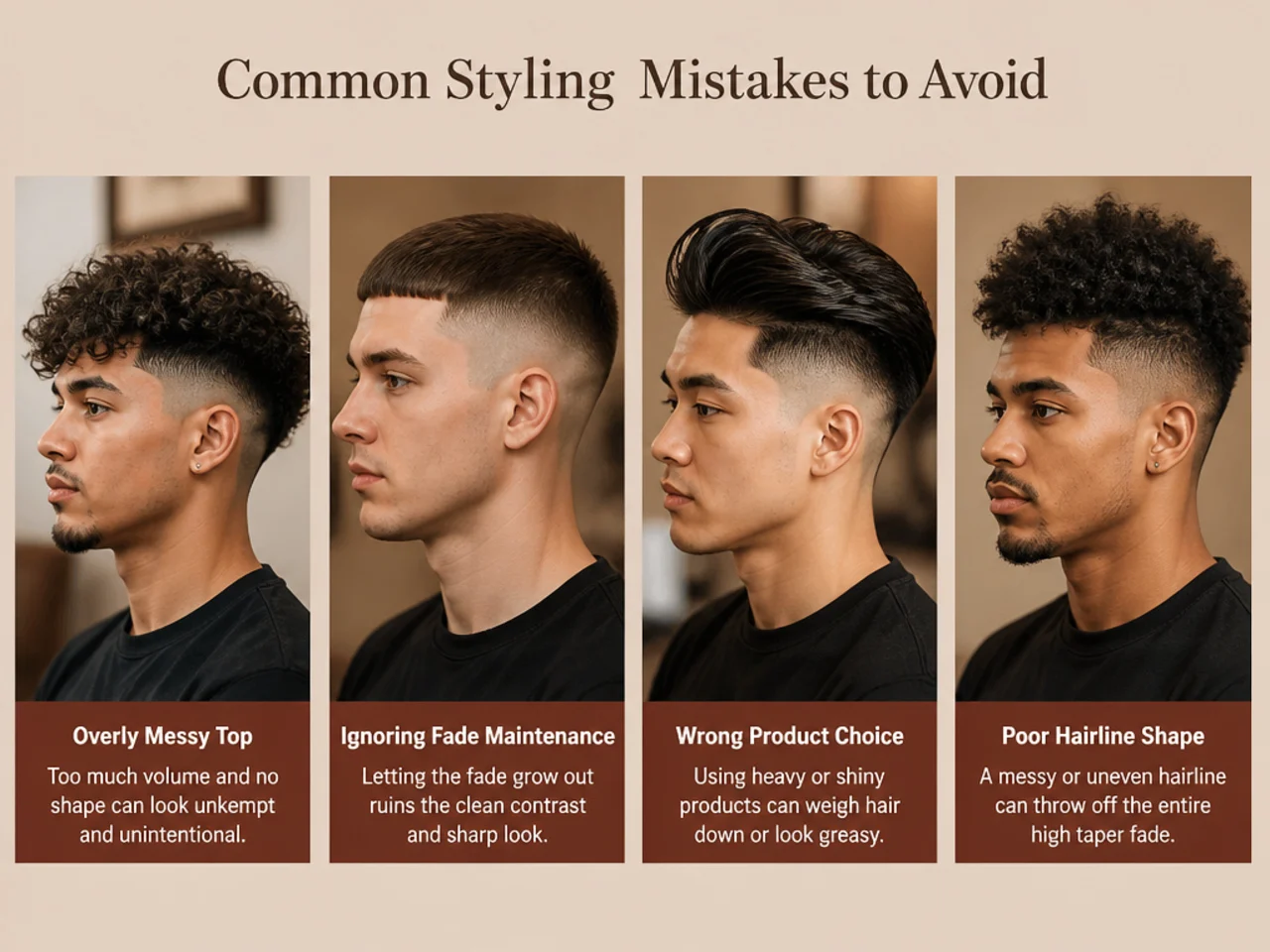
Too much product — the number one issue. Start small, add if needed.
Product on soaking wet hair dilutes it. Damp only, unless the label says otherwise.
Heavy cream on fine hair flattens it. Lightweight sprays on thick hair don't hold. Match the strength to the hair.
Blow-drying too close causes heat damage. Six to eight inches minimum.
Skipping heat protectant. Cumulative damage doesn't undo.
Styling day-old product buildup. Wash first.
Ignoring the back. Use a hand mirror.
Touching your hair constantly throughout the day. Style it once, leave it alone.
How to Maintain Your High Taper Fade
High contrast means visible growth fast. Plan around it or the cut stops looking like a cut.
Trim Schedule & Frequency
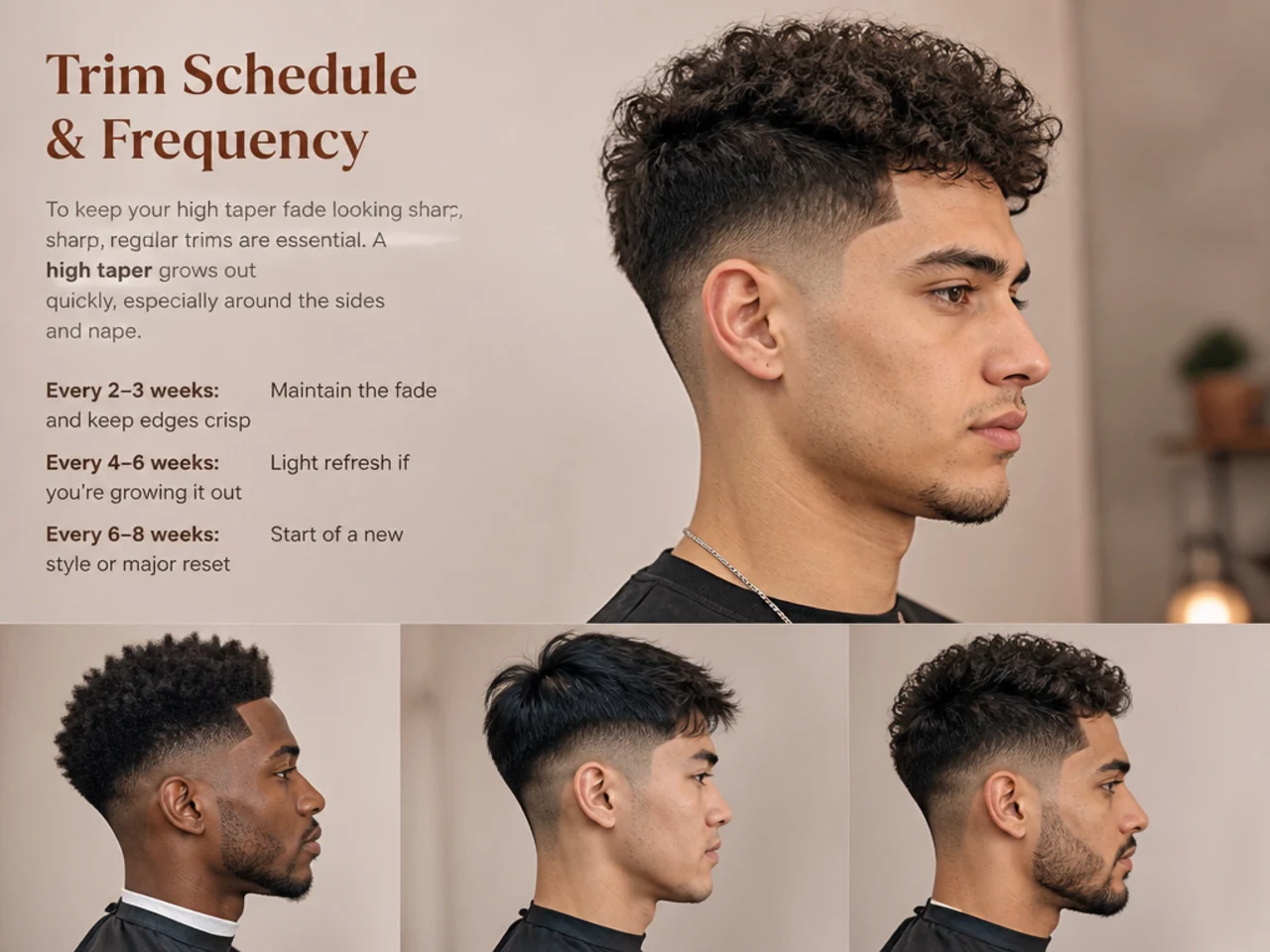
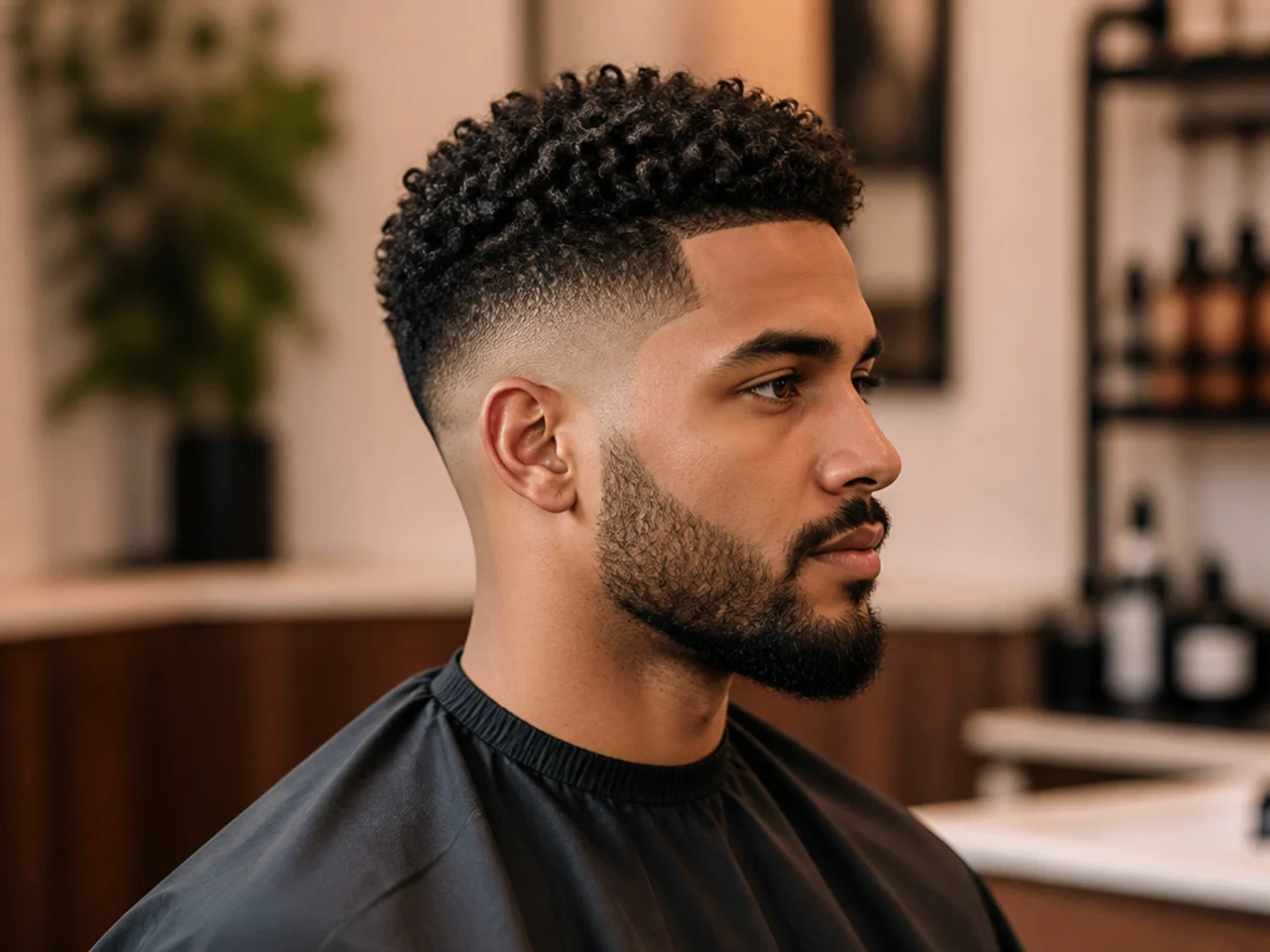
Every two to three weeks is standard. Every one to two weeks if you want the fade constantly sharp. Beyond three to four weeks it stops reading as a high taper — the gradient blurs into a shaggy overgrowth.
Home edge-ups on the neckline and sideburns can extend a fade by a week if you have the tools. Don't attempt the full fade at home — you'll butcher the blend.
Budget realistically. Two-week visits at $30 average $780 a year.
Daily Maintenance Routine
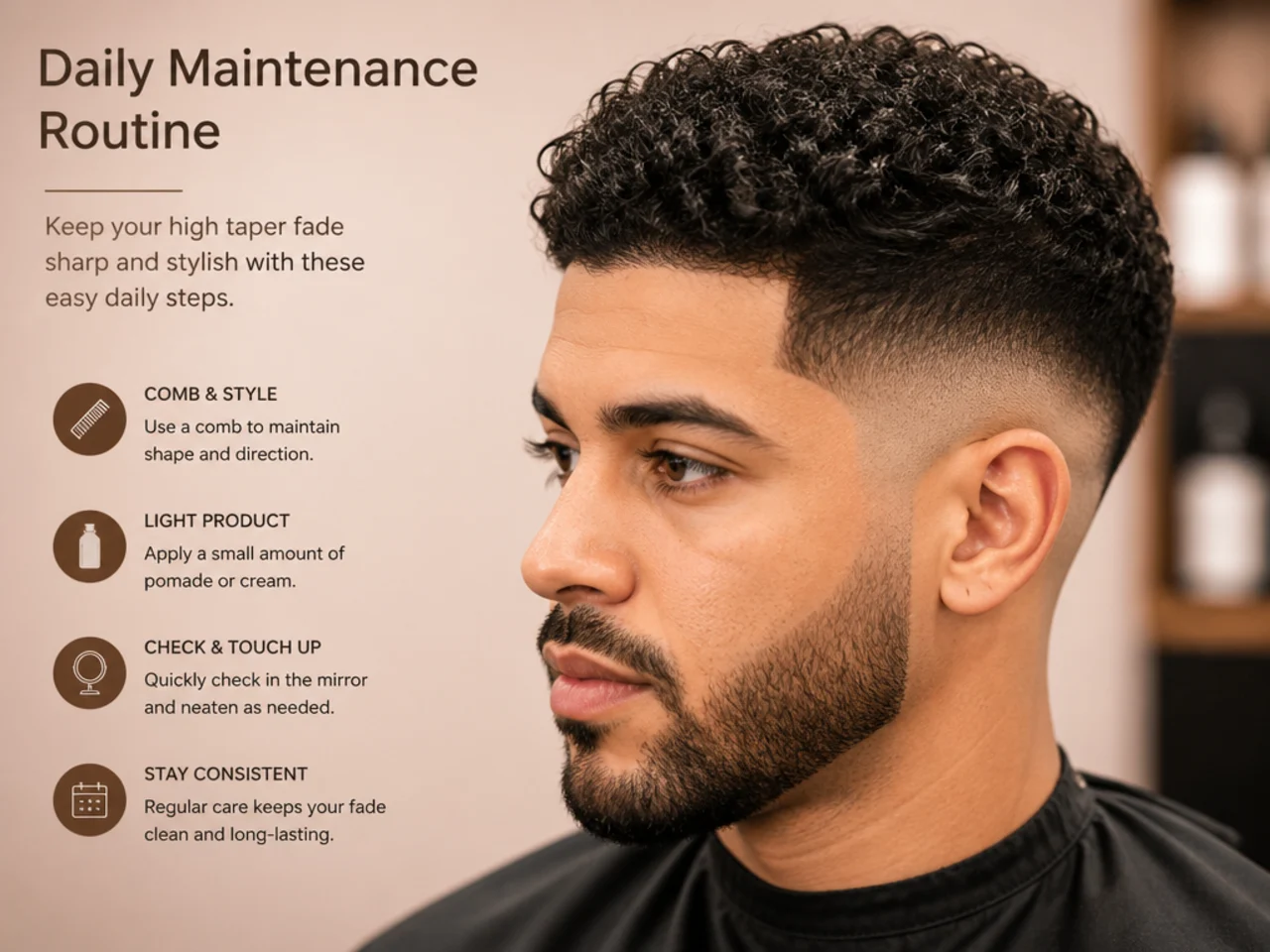
Morning: assess (full wash, quick refresh, or restyle), then product, then style. Five to fifteen minutes depending on the variation.
Midday refresh: pocket-sized product for touch-ups, dry shampoo for oil and volume, water bottle for water-based product restyles.
Evening: rinse heavy product before bed, apply an overnight leave-in if you're dry or curly, sleep on satin or wear a durag or bonnet.
Weekly Care Requirements
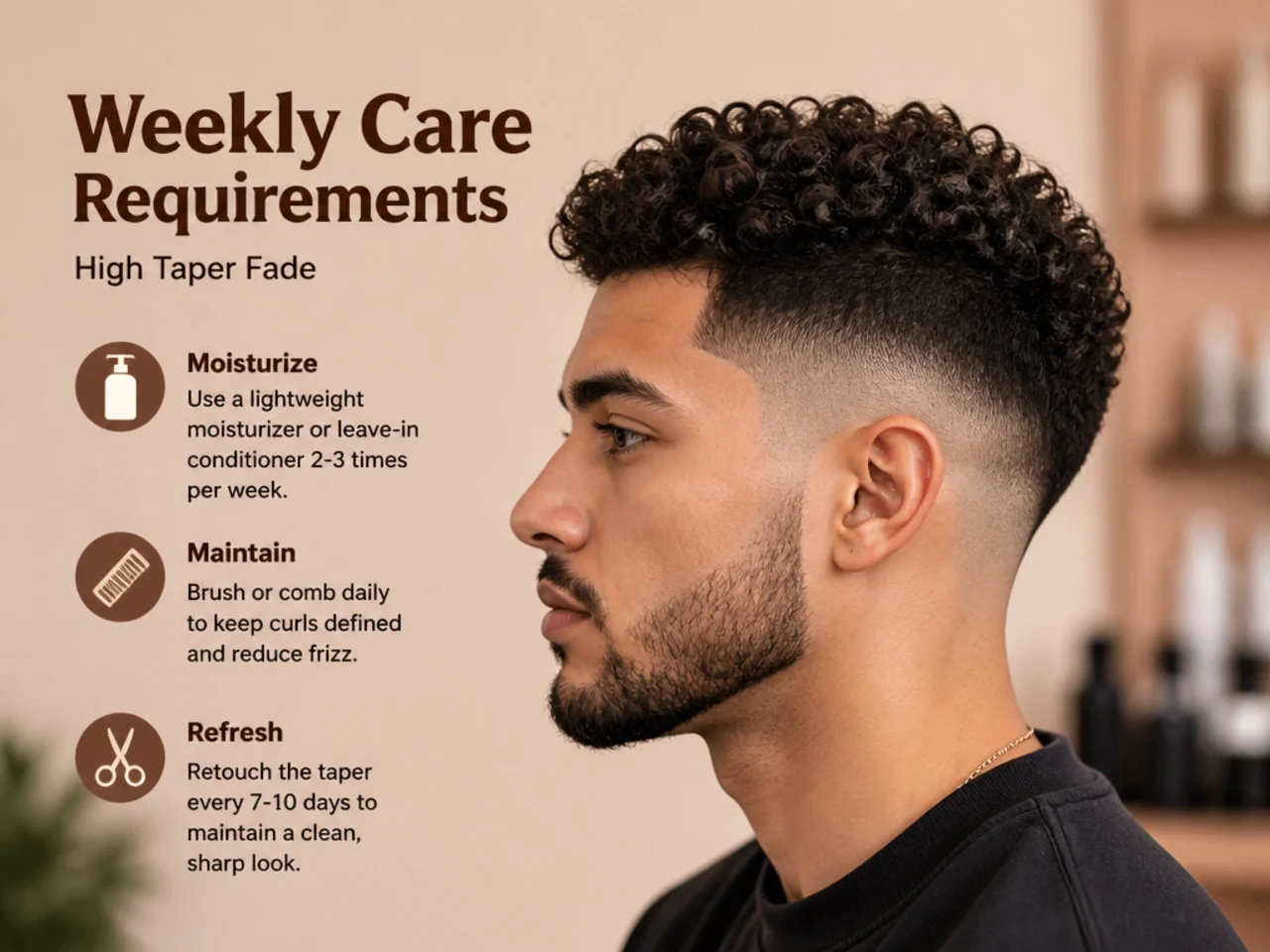
Shampoo frequency depends on hair type: oily daily, normal two to three times, curly one to two, coily once. Rinse-condition on off-days.
Deep condition once weekly. Mid-length to ends, ten to twenty minutes, rinse.
Scalp care: weekly exfoliation, regular massage, a lightweight oil if things get dry — especially where the fade exposes skin.
Clarify weekly or biweekly to remove product residue. Follow with deep conditioner.
Final Thoughts
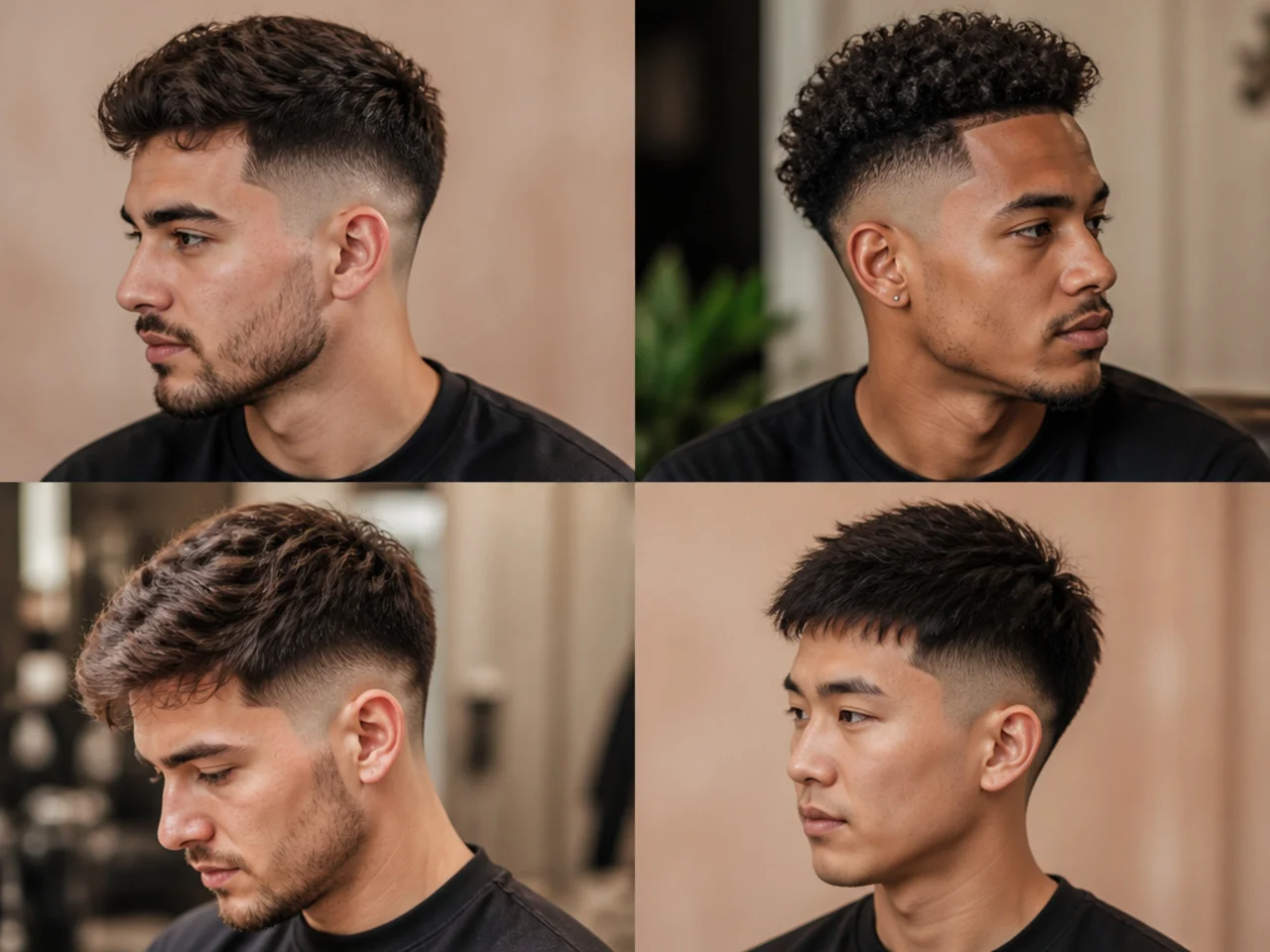
The high taper fade earns its Pinterest search volume. High contrast reads sharp in every photo, on every hair type, at every age. Pick your variation based on hair type and face shape, ask for it in barber language (fade height, guard number, top length, finish), and commit to the two-week touch-up cycle. That's the whole game.
Before you book, it is worth checking the height is right for your face — a high fade lengthens the head, which flatters a round face and works against a long one. Low vs high taper fade sets the two side by side across face shape, grow-out and upkeep, and 20 mid taper fade ideas covers the middle ground if you want contrast without the exposure.
For specific textures and finishes: curly taper fades explains why scissors on top matters, taper fades for Black men covers line-ups and neckline choices, and taper fade with a beard handles the connection point at the sideburn. If you are cutting it yourself, 20 steps to a taper fade at home walks through the guard ladder.
FAQ's
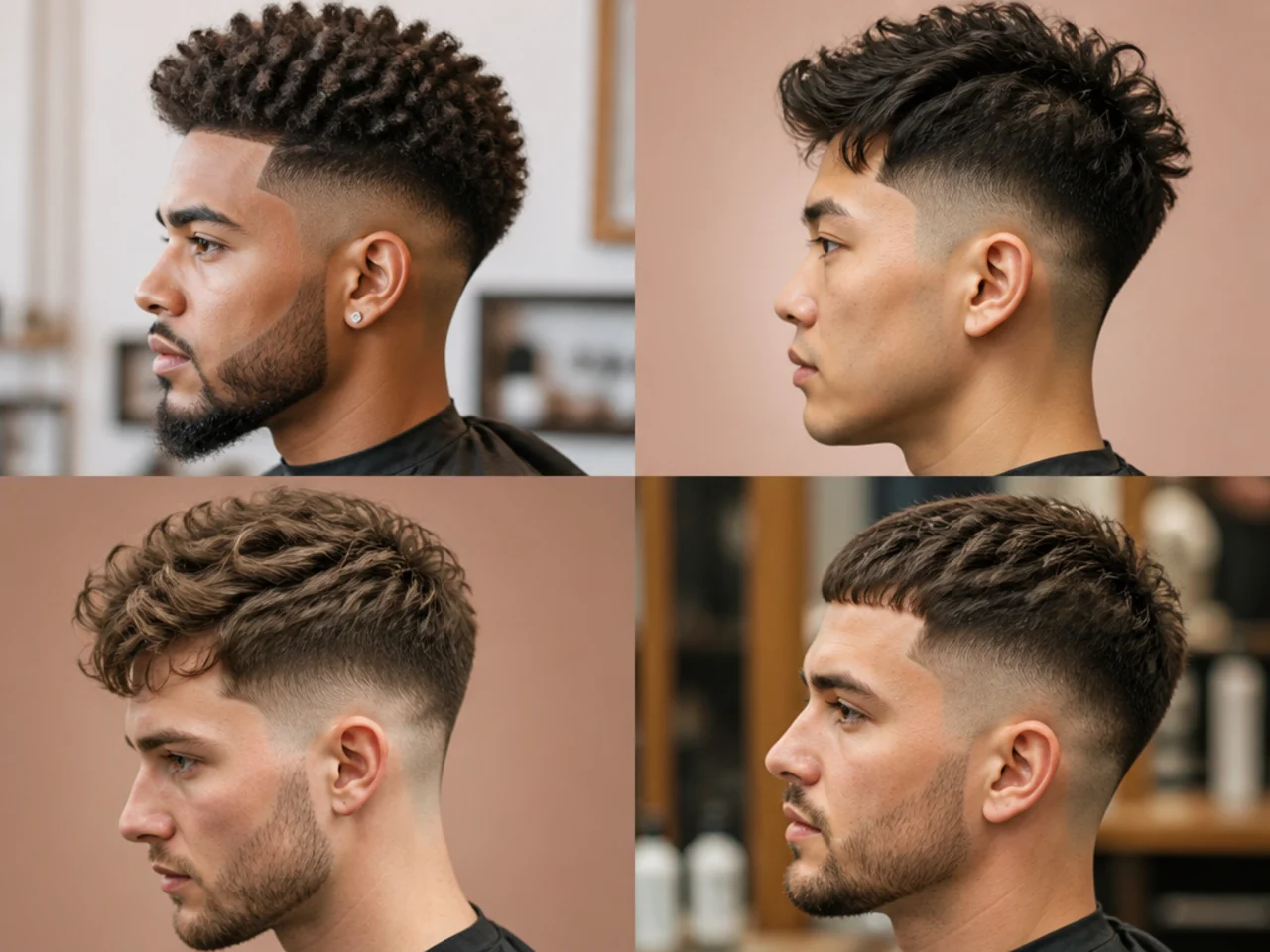
What is a High Taper Fade Haircut?
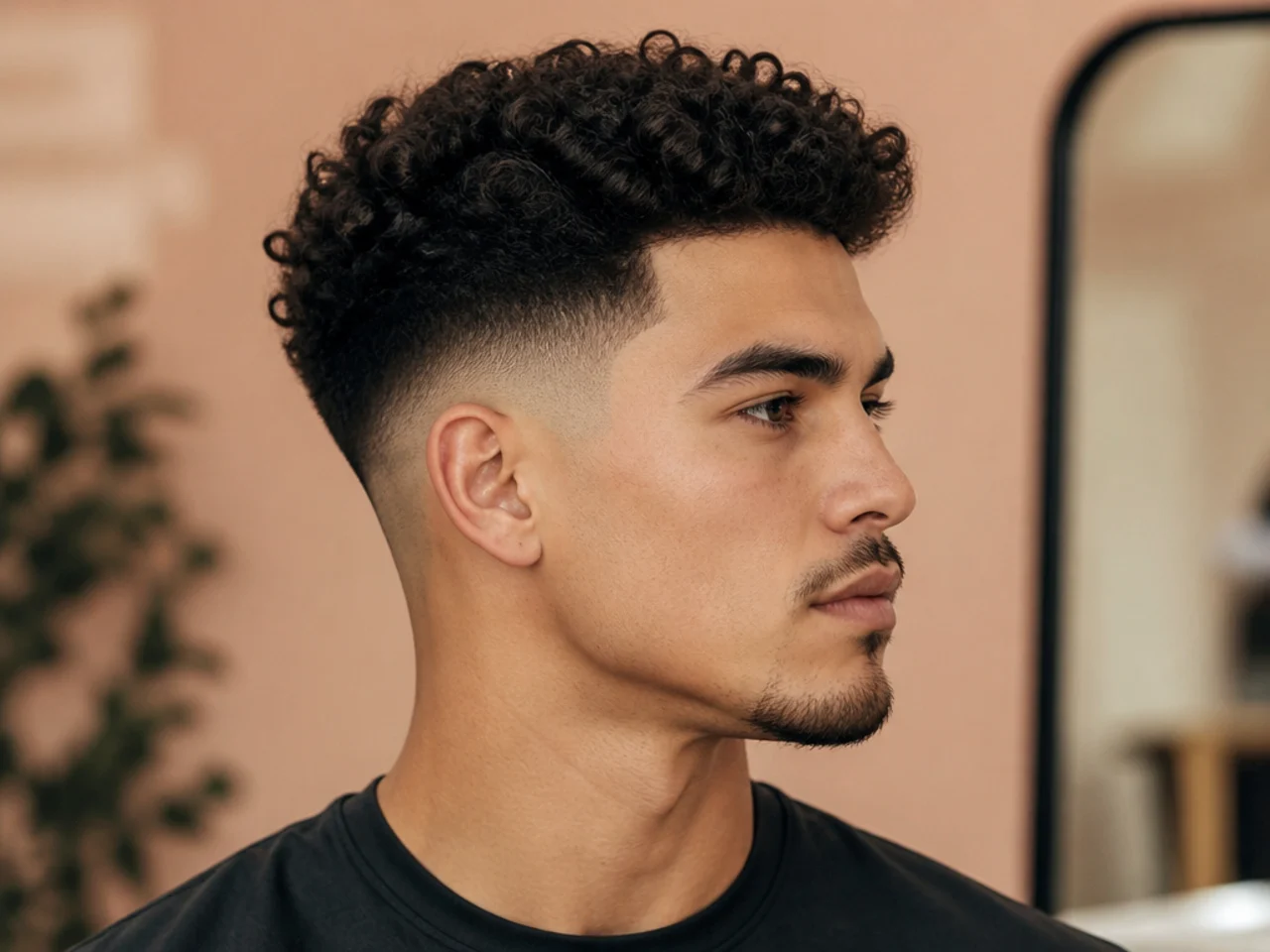
A high taper fade starts the transition high on the head — at the temple or two to three inches above the ear. The sides gradually shorten to a #0.5 or bare skin while the top stays whatever length you asked for. The high starting point is what separates it from a mid or low taper.
What is Better, High Taper or Low Taper?
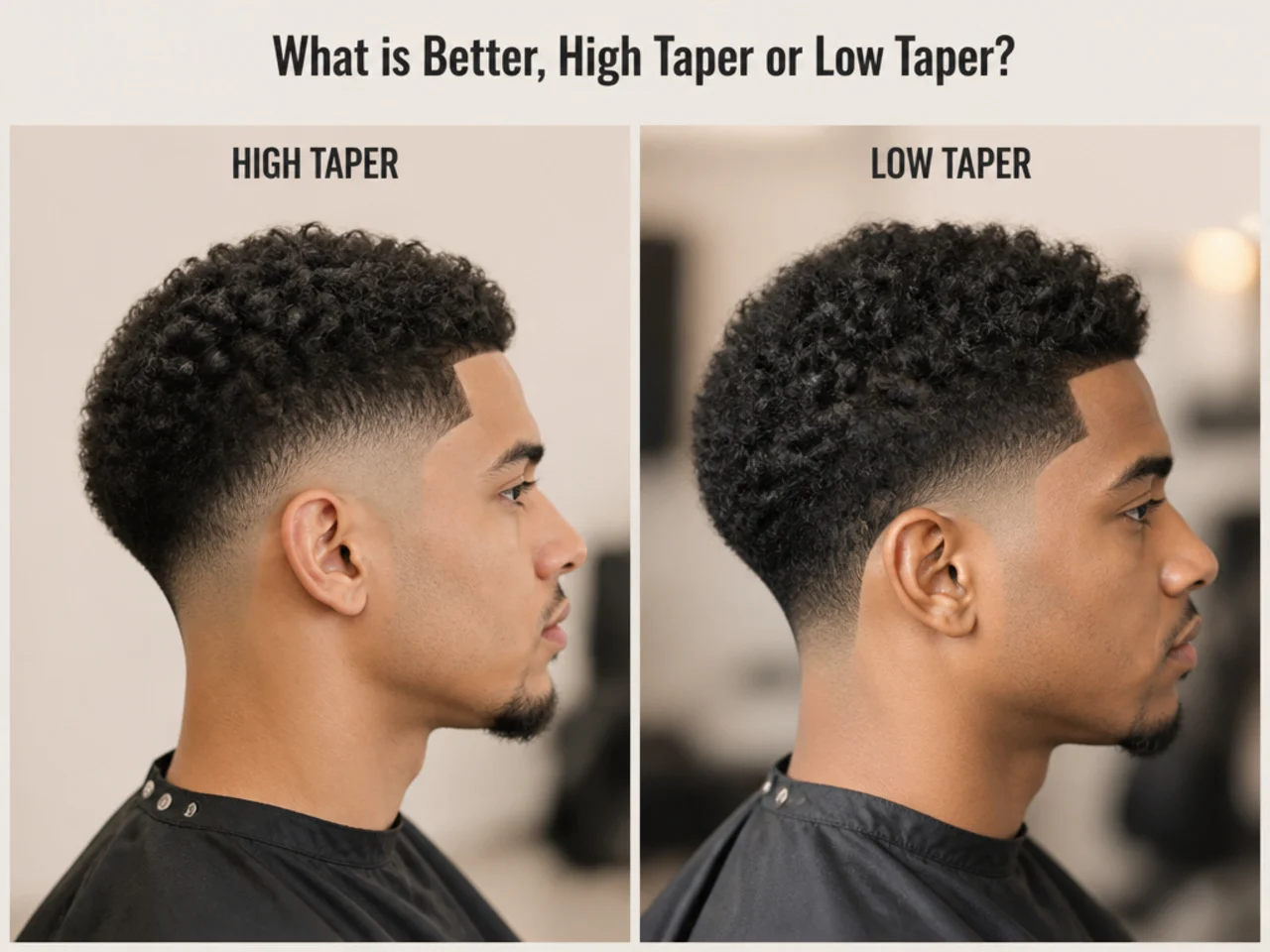
Depends on what you're going for. High taper reads bolder — more skin, sharper contrast, modern. Low taper reads subtler — more coverage, softer transition, corporate-safe. Neither is objectively better. If your work and lifestyle allow the boldness, high looks more current. If they don't, low still looks sharp and grows out slower between visits.
Is a Low Taper Fade Haram?
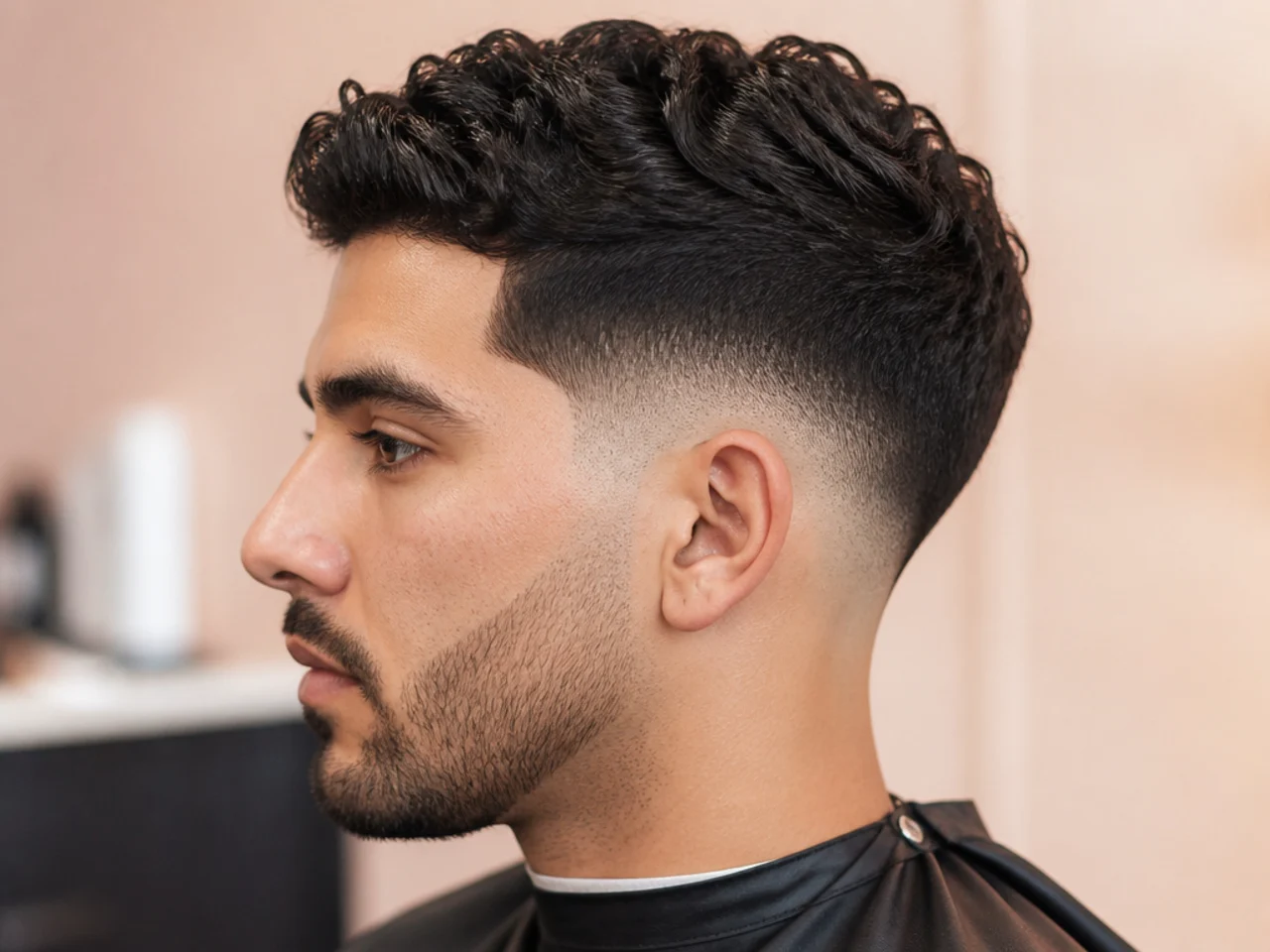
Haircuts are broadly permitted in Islam. Some communities avoid styles interpreted as imitating specific non-Muslim aesthetics, but a low taper fade itself isn't classified as forbidden. Consult a local scholar if you want a ruling specific to your community and school of thought.
What Is The Gen Z Haircut Called?
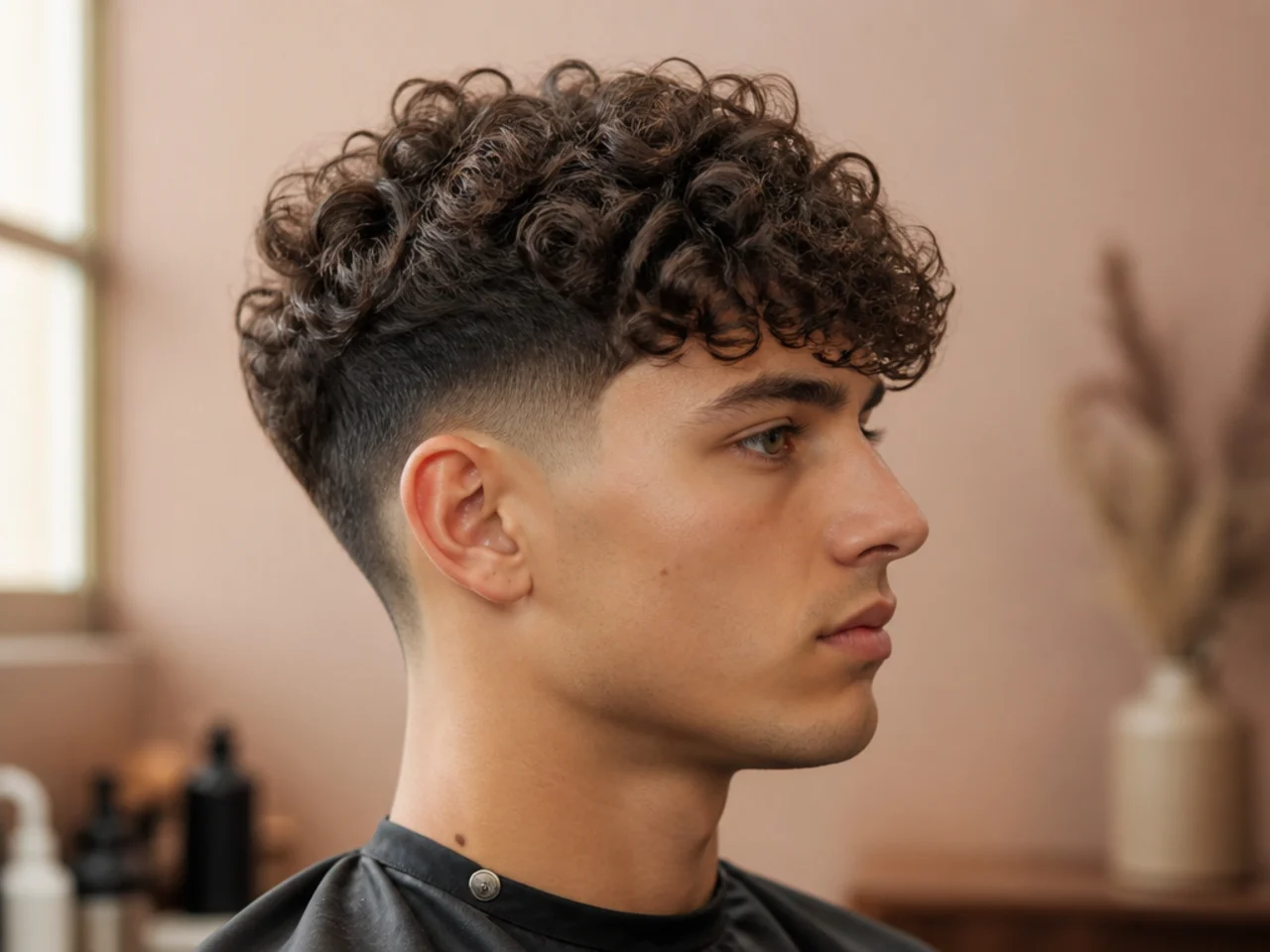
"Gen Z haircut" isn't one style. It usually refers to the wolf cut (layered, messy, mullet-adjacent) or the broccoli cut (short faded sides with a mass of curl on top). Both sit on a taper fade base.