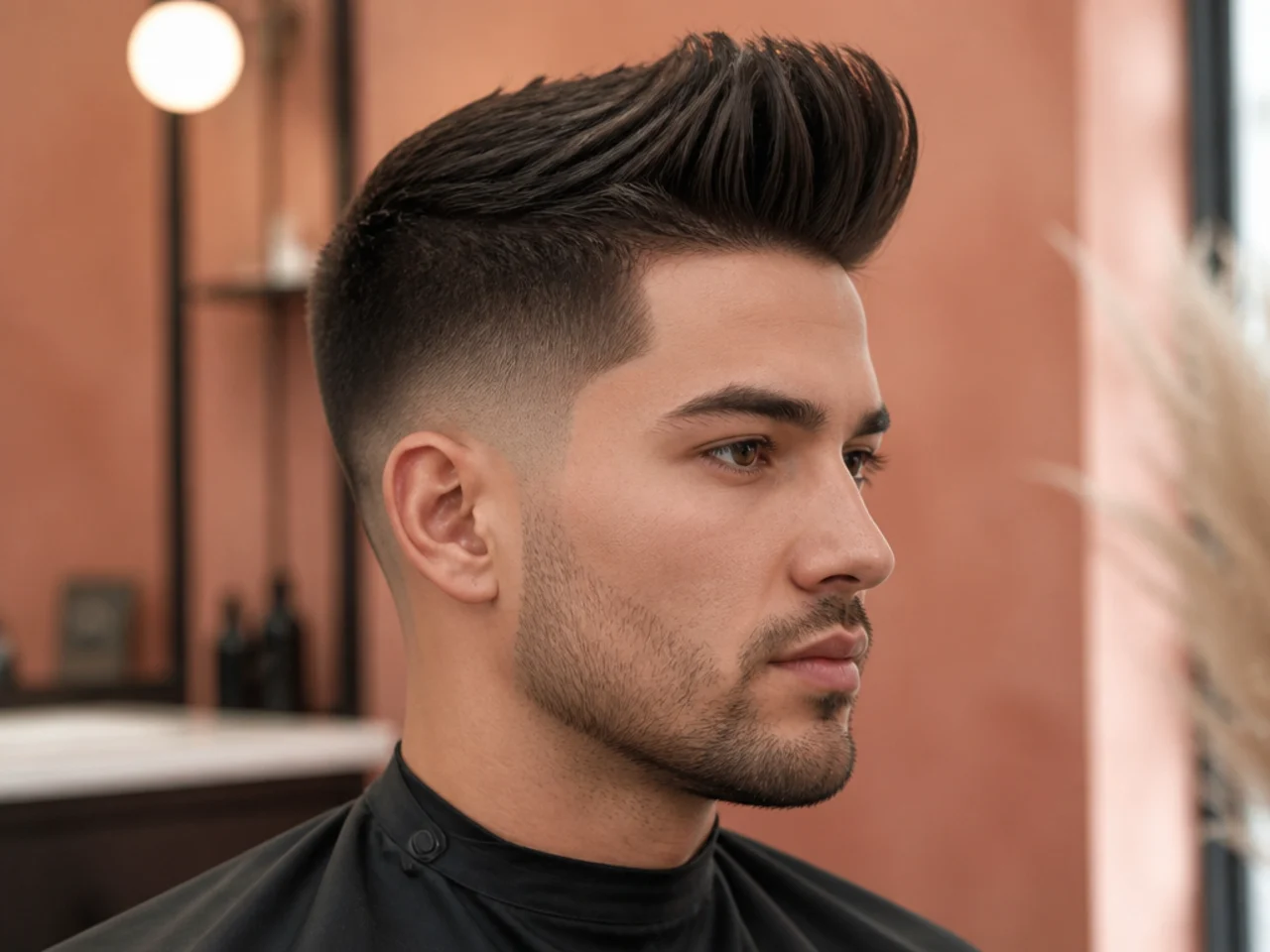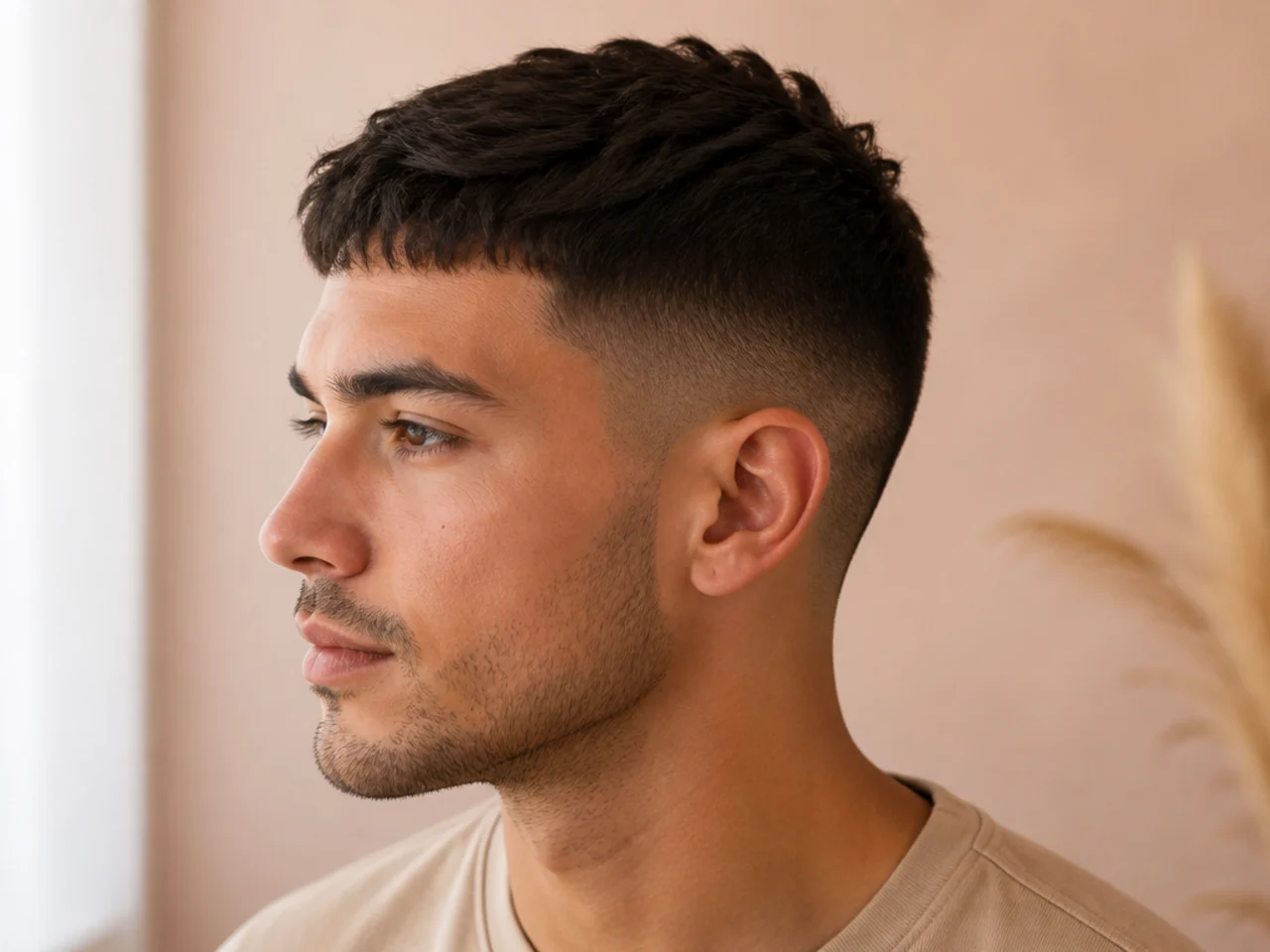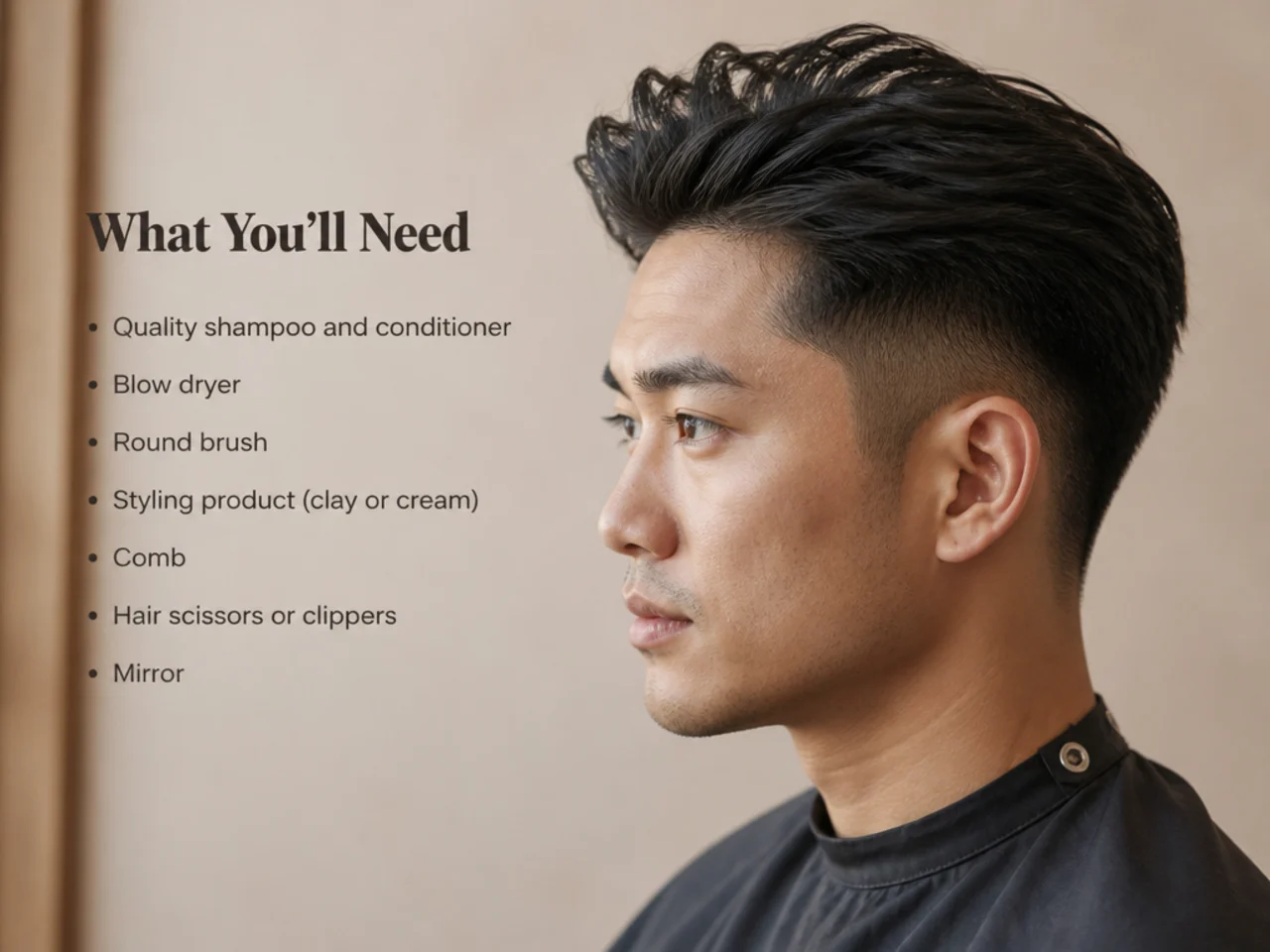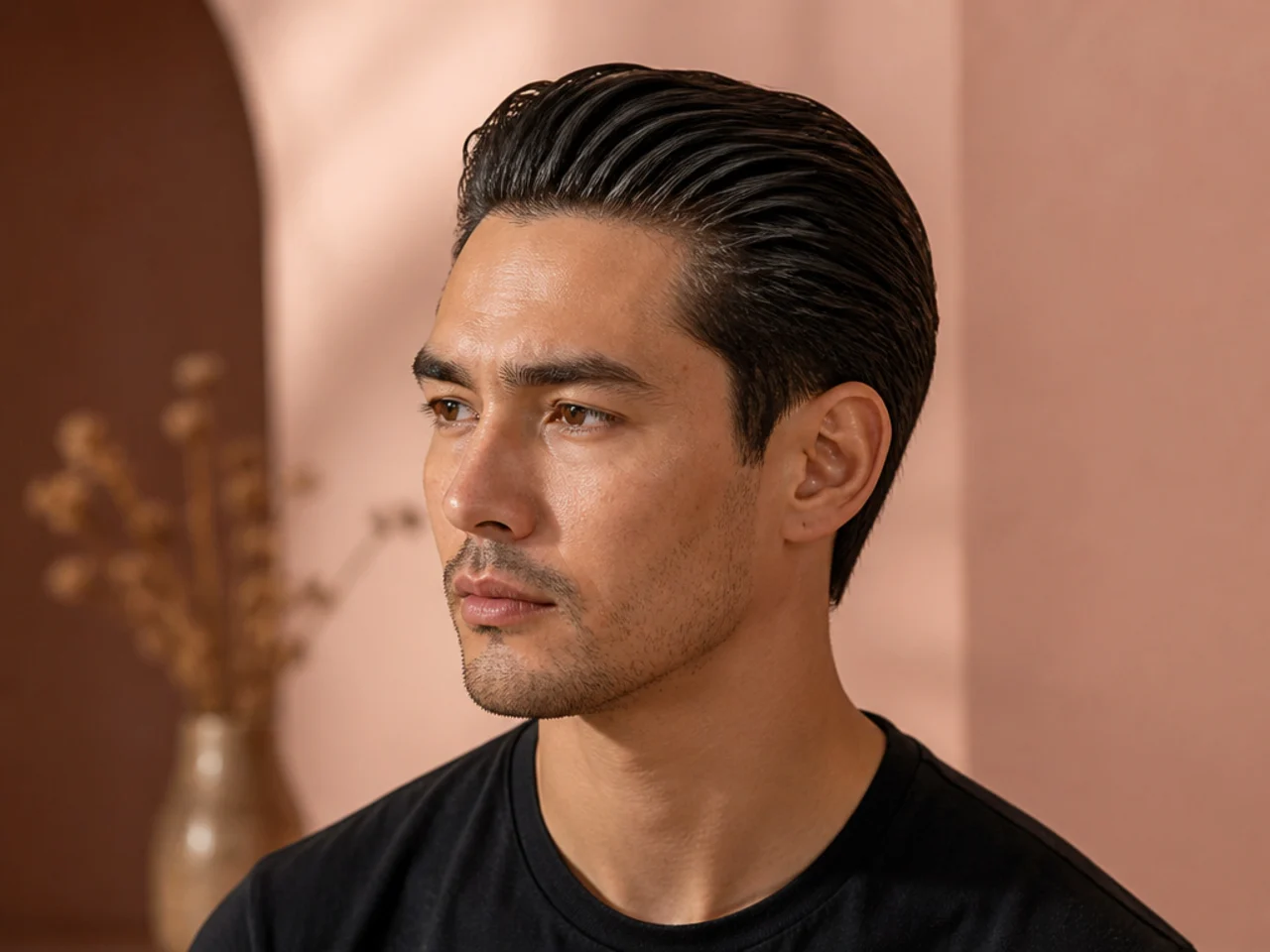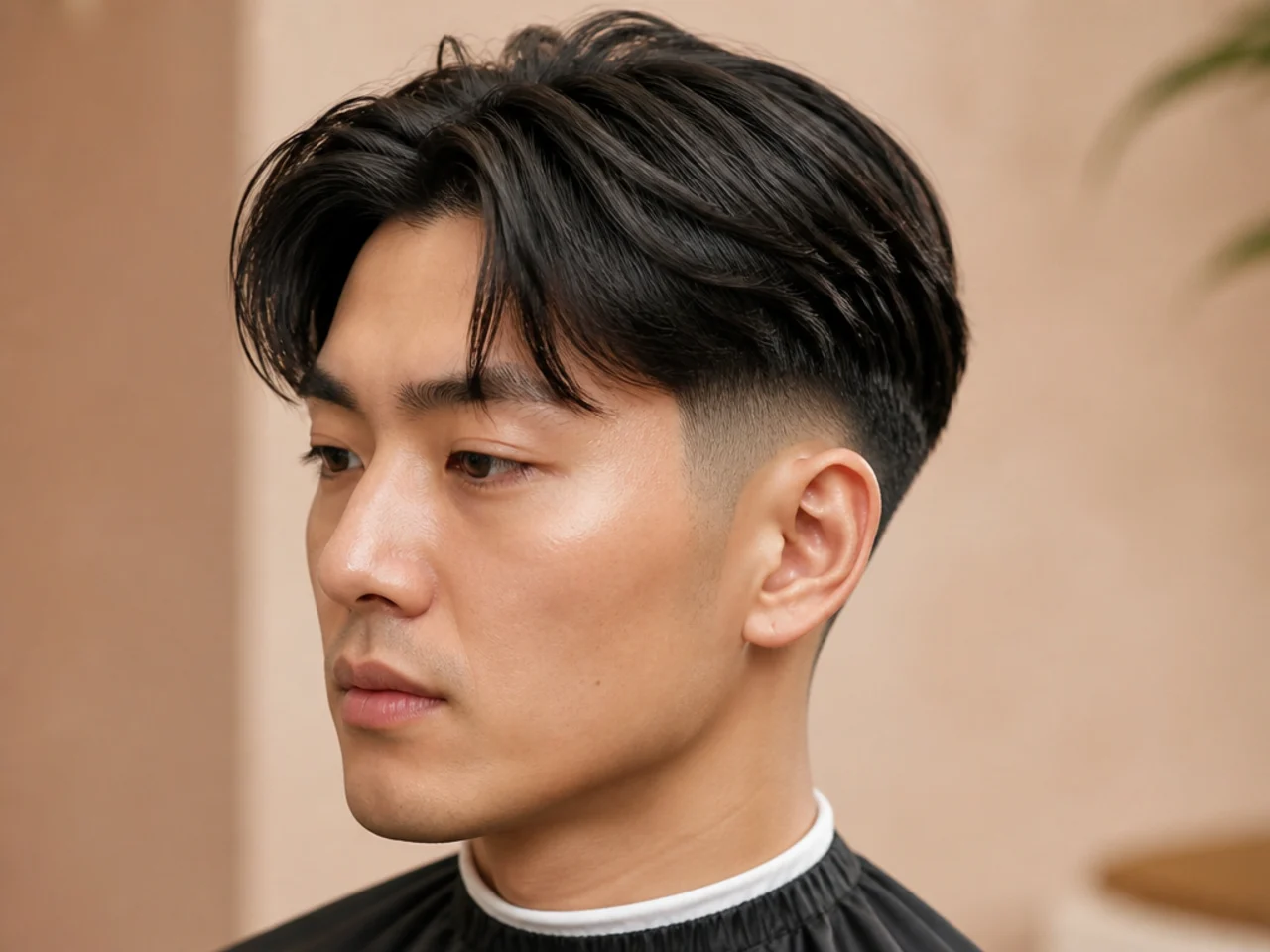
20 Curtain Fade Haircuts for Men
20 curtain fade haircut men ideas that pair a middle-part curtain with every fade — low taper, mid, skin, burst, drop — plus barber language and styling.
In this article · 27
- What Is a Curtain Fade Haircut?
- How to Choose Your Curtain Fade
- The 20 Curtain Fade Variations
- Classic Curtain Fade
- Low Taper Curtain Fade
- Mid Fade Curtain
- High Fade Curtain
- Skin Fade Curtain
- Drop Fade Curtain
- Burst Fade Curtain
- Blowout Taper Curtain
- Undercut Curtain Fade
- Textured Curtain Fade
- Wavy Curtain Fade
- Curly Curtain Fade
- Korean Curtain Fade
- Short Curtain Fade
- Long Curtain Fade
- Middle Part Curtain Fade
- Messy Curtain Fade
- Modern Curtain Fade
- Two-Block Curtain Fade
- Curtain Fade with Hard Part
- Curtain Fade with Beard
- How to Ask Your Barber
- Styling and Maintenance
- FAQ
The curtain fade is the compromise haircut of the 2020s — the front reads like a middle-part curtain, the sides read like a modern fade, and the two together let you dress up or down without changing product. Below are 20 curtain fade haircut men are asking for in 2026: every fade height, every top length, and every hair type covered, with the exact language to hand your barber so you leave the chair with the version you had in mind.
What Is a Curtain Fade Haircut?
A curtain fade haircut is a two-part cut. The top runs 3 to 5 inches, cut with a center part so the fringe falls forward in two soft panels, or "curtains," that frame the forehead. The sides and back get a fade — most often a low taper, but any fade height works — that blends from the perimeter down to a shorter guard or skin. The look is scissor-driven up top and clipper-driven at the sides.
The cut sits in the modern chapter of men's haircuts that lead with a middle part. It shares DNA with the curtain flow haircut men grow-out shape but keeps the sides clipper-cut instead of scissor-tucked, and it borrows the split from the middle part haircut men shape but adds fade contrast at the perimeter. Which fade you pair with the curtain — low, mid, high, skin, burst, drop, blowout, or undercut — is the single decision that changes the whole read of the haircut.
How to Choose Your Curtain Fade
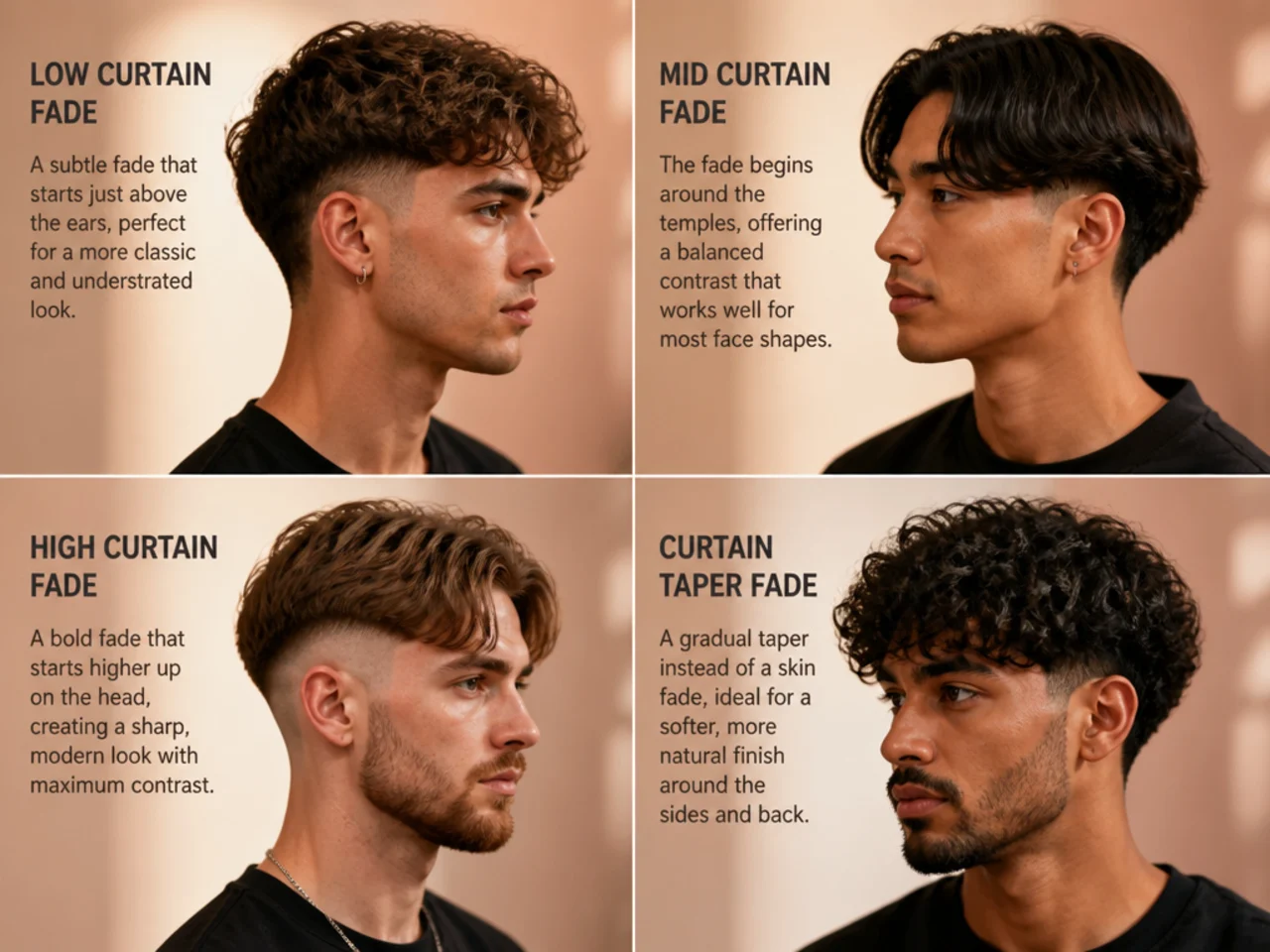
Three levers narrow the 20 versions below to yours.
Face shape decides the fade height. Oval faces suit any fade. Round faces want a mid, skin, or drop fade to add vertical lift and shorten the visual width at the temples. Square and diamond faces want lower, softer fades — low tapers or scissor-blends — plus a textured or feathered top so the jawline doesn't get sharpened further. Long or oblong faces want lower fades and shorter top lengths so the head doesn't stretch further. Heart faces suit low tapers, undercuts, and burst fades that keep bulk off the temples.
Hair type sets the top length and the layering. Straight to lightly wavy hair (1A-2B) drops into a clean center split with 4 inches on top and no help. Wave patterns 2C-3B need internal layers cut into the top and a curl cream to hold the panels forward. Coily 3C-4A hair builds outward, not curtain-forward — reach for the textured or Korean versions and let the fade do most of the shape work. If your hair is thick and wavy, the best wavy hair products breakdown lists the two products to buy first.
Workplace and styling appetite are the final filter. Low taper and drop fade versions read the most conservative and pass most office dress codes. Mid, high, and skin fade builds skew editorial and cost you three to four weeks between trims. Undercut and blowout versions demand two products and about five minutes of styling most mornings.
The 20 Curtain Fade Variations
Every version below is built on the same top: 3 to 5 inches of scissor-cut length, parted down the middle, layered so the fringe falls in two curtains. Fade height, fade style, top length, and texture are the four dials.
Classic Curtain Fade
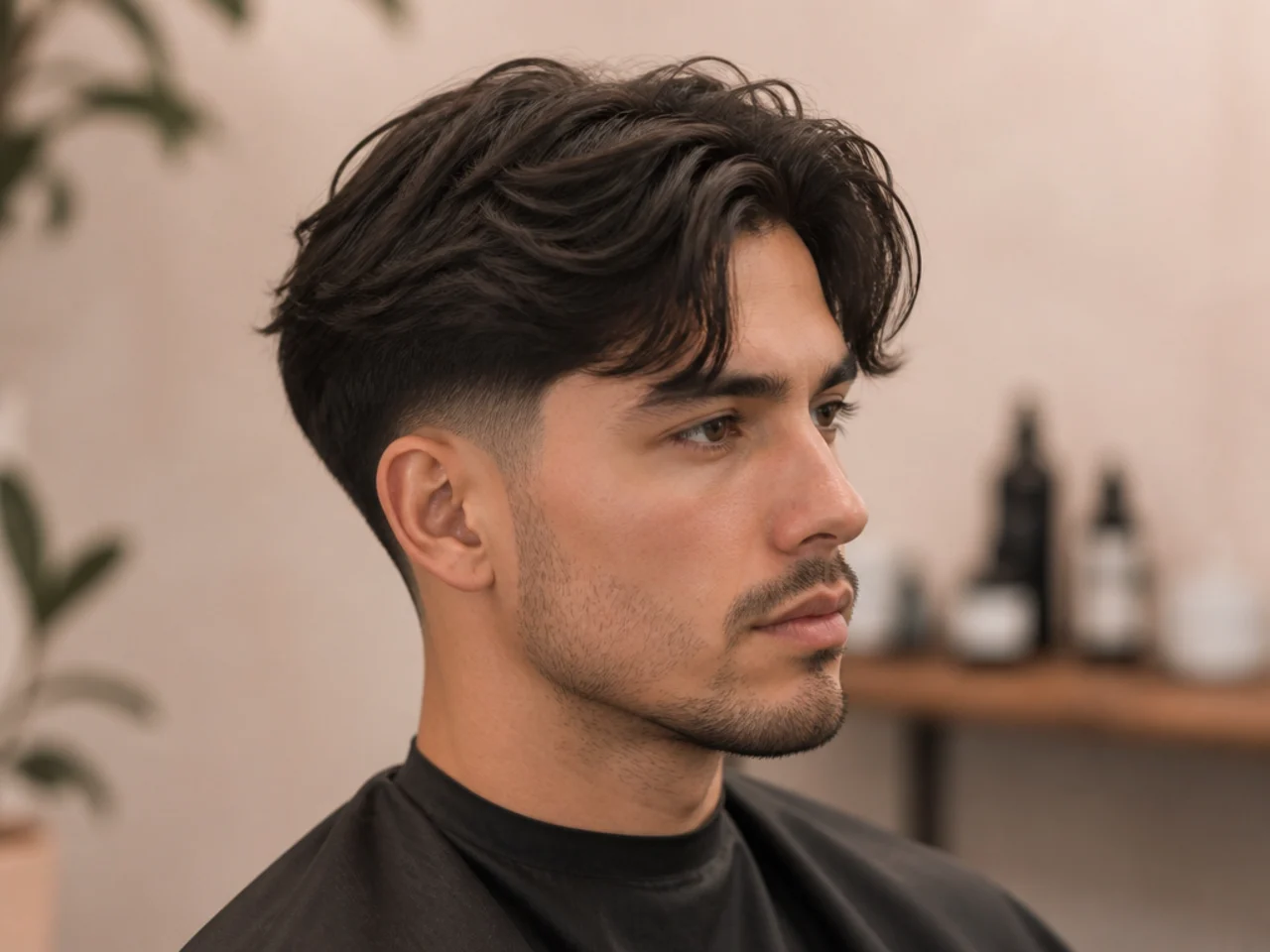
The template every other build borrows from. Four inches on top, a soft center part, and a low taper fade running from about a three-guard down to a one at the sideburn. Suits oval, long, and heart faces because the low fade keeps the visual center at the top. Straight to lightly wavy hair drops into it without help. Ask for "classic curtain fade — 4 inches on top, center part cut in, low taper fade from a three-guard to a one at the ear, natural neckline." Style with a nickel of matte cream through damp hair, split with a wide-tooth comb, air-dry. This is the version to book if you're testing the shape for the first time.
Low Taper Curtain Fade
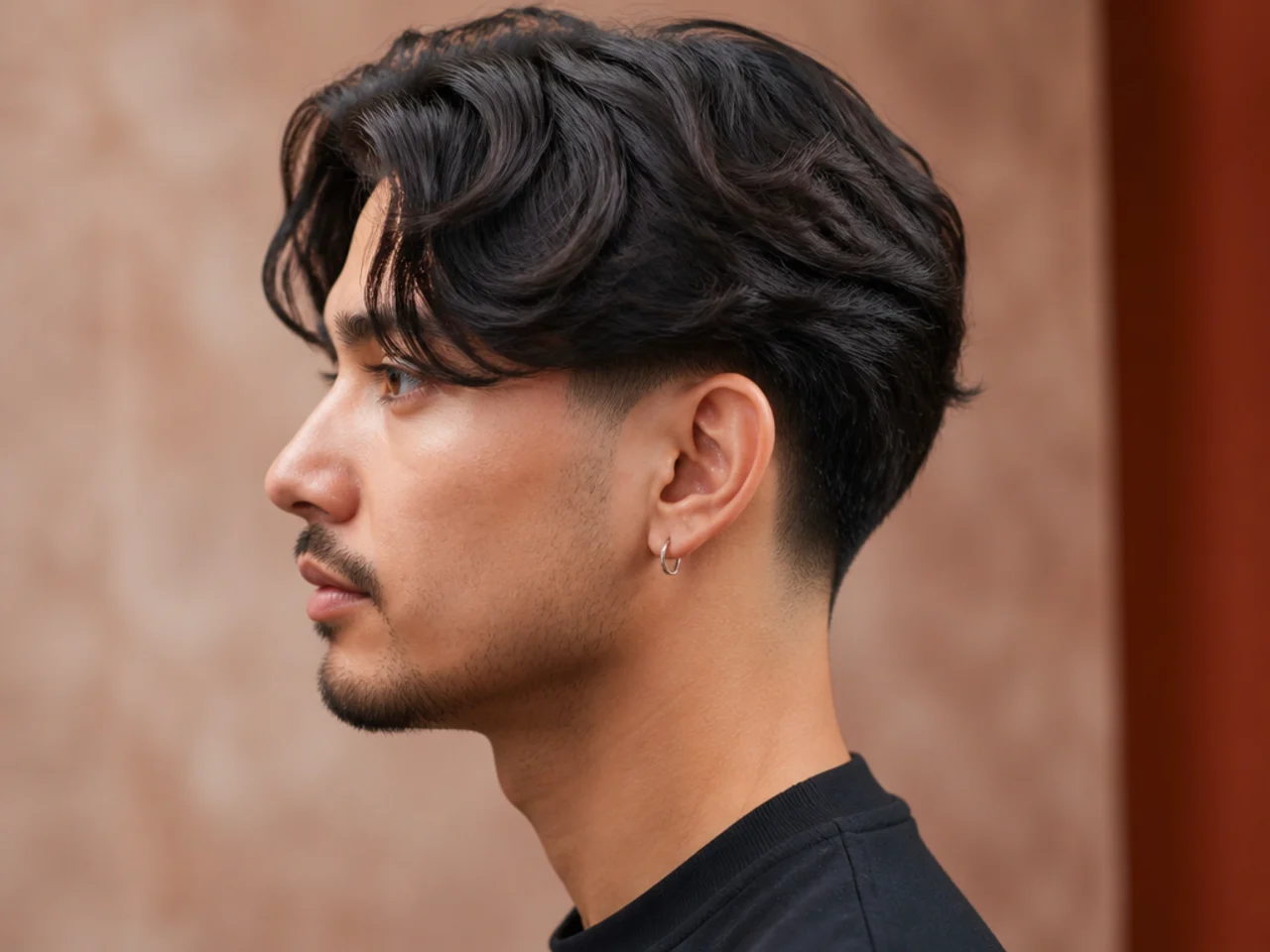
The most-requested build in the family. The taper hugs the perimeter — starting only a fingerbreadth above the ear — so the fade whispers rather than shouts. Suits every face shape. Any hair type. Ask for "curtain haircut with a low taper fade — 4 inches on top center-parted, taper starting just above the ear, blended to skin at the sideburn." Style with matte cream and a comb. The subtle fade lets you wear the cut through an interview on Monday and a weekend out on Friday without adjusting a thing. This is the safest first fade if your workplace is conservative.
Mid Fade Curtain
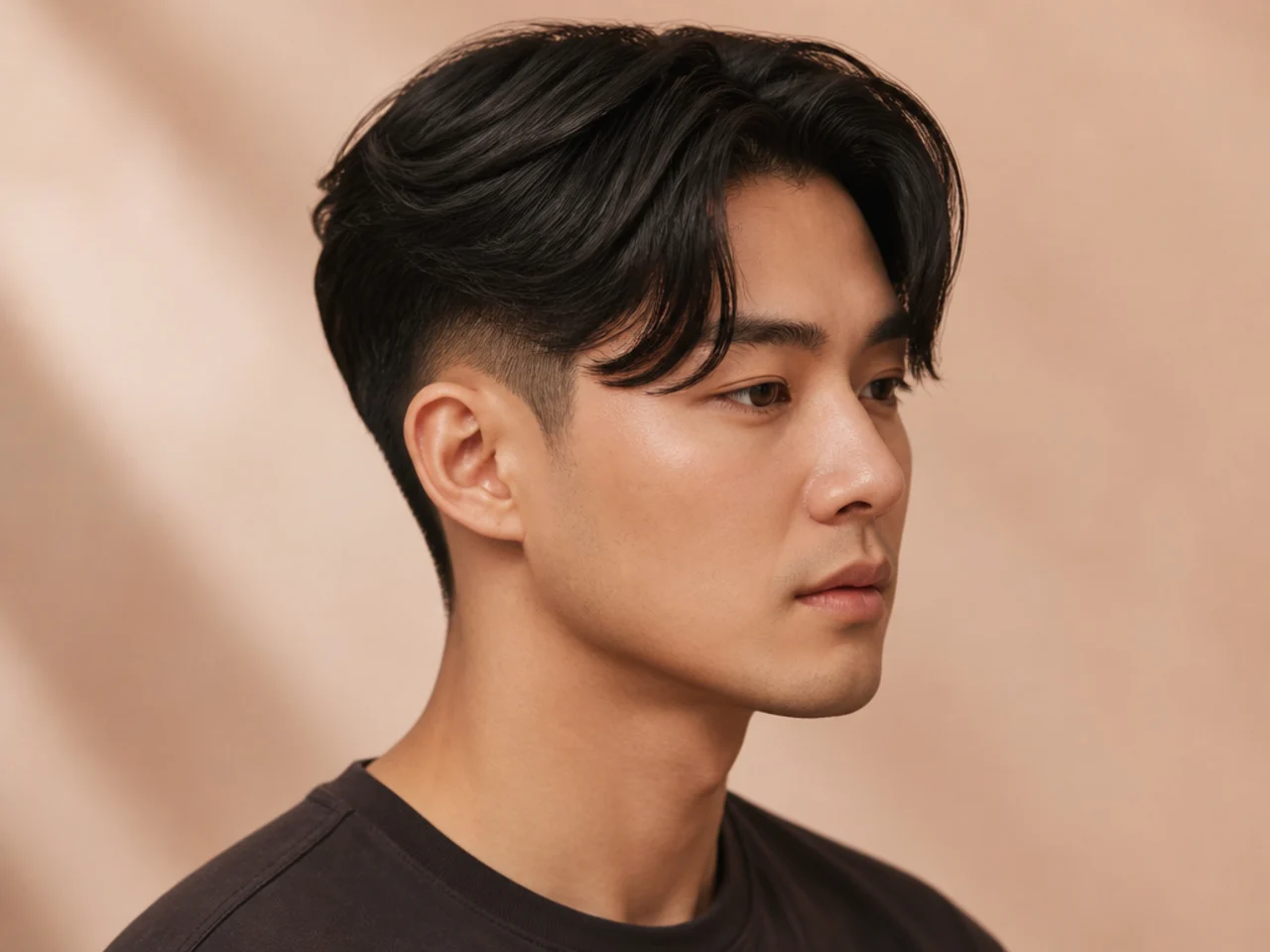
Sharper build. The fade begins at the temple, so the sides show more skin and the top reads taller than it is. Suits oval, long, and oblong faces where a shorter side visual is welcome. Skip on round faces — the horizontal fade line adds width. Straight to wavy hair. Ask for "curtain haircut with a mid fade — 4 inches on top with a center part, fade starting at the temple line, blended to zero at the ear." Blow-dry the fringe up briefly for the lift a mid fade demands from the top length. A flat curtain against a mid fade reads mismatched — the contrast wants a little volume.
High Fade Curtain
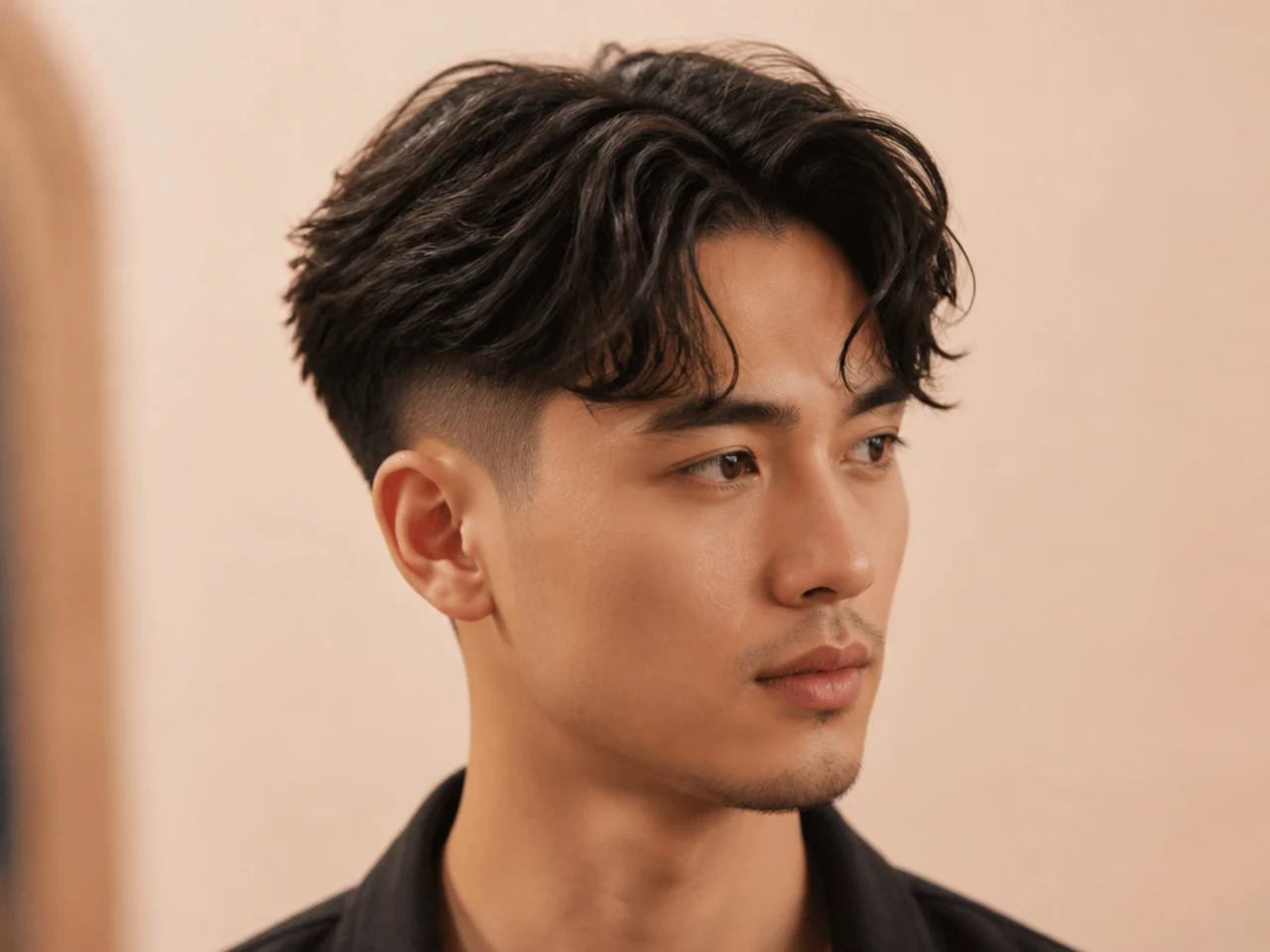
Maximum vertical build. The fade runs from the parietal ridge down — so most of the side of the head shows skin — and the top curtain sits like a crown on a clean canvas. Suits long, oval, and square faces. Not recommended for round or short faces where the extreme contrast reads costume. Best on straight and lightly wavy hair. Ask for "high fade curtain — 4 to 5 inches on top with a defined center part, fade blended from above the parietal ridge down to skin at the sideburn." Style with a matte paste and comb the split sharply. Blow-dry the fringe up and back for lift — a limp curtain over a high fade fights itself.
Skin Fade Curtain
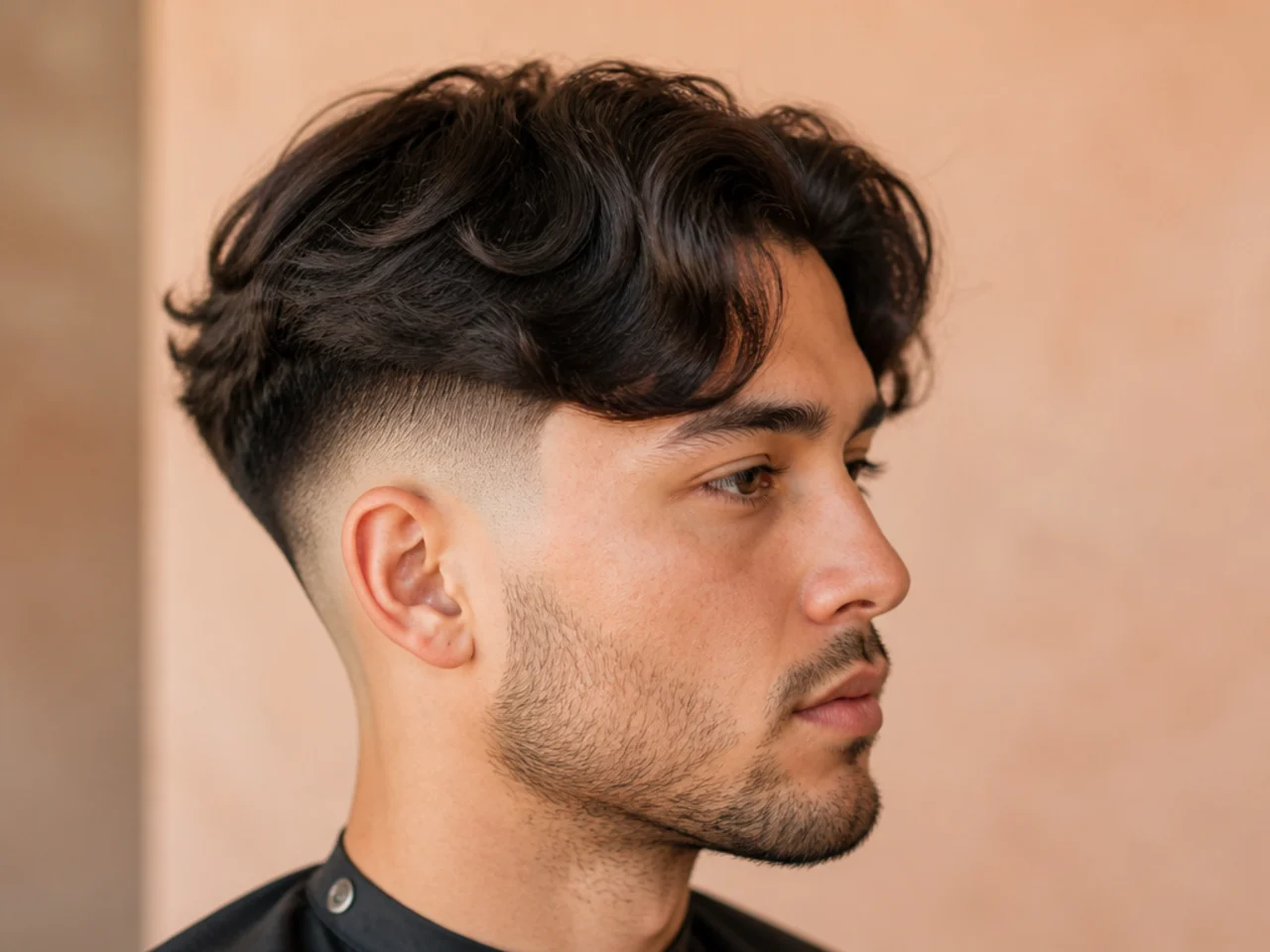
The bald-fade version. The clippers take the sides to skin at the perimeter and blend up through progressively longer guards until they hit the curtain length. Suits oval, square, and triangular faces because attention gets pulled up top. Straight to wavy hair only — coils lose the shape against bare skin. Ask for "skin fade curtain — 5 inches on top with a center part, skin fade at the sideburn blending up through the parietal, optional hard line at the temple." Finish with a matte paste, never a glossy pomade — shine fights the sharpness of a skin fade every time and turns the top into a helmet.
Drop Fade Curtain
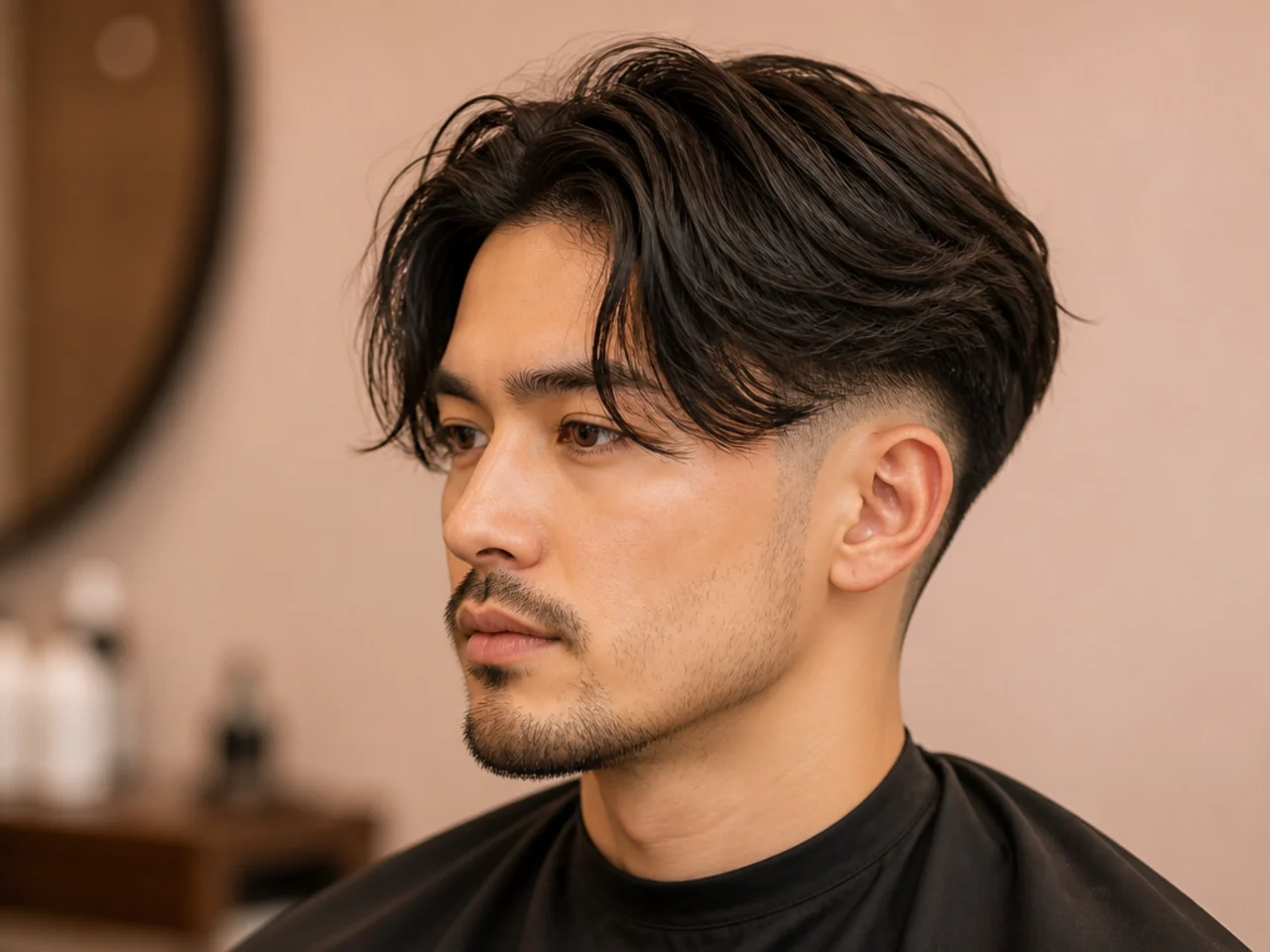
The fade dips down behind the ear instead of running in a straight line, so the perimeter curves with the natural shape of the head. Suits round, square, and diamond faces because the drop reduces perceived width at the temple. Any hair type. Ask for "curtain drop fade — 4 inches on top with a center part, fade dropping down behind the ear, blended to a one-guard at the low point." Style the top with a matte cream, comb the split, done. The drop reads modern and pairs particularly well with a beard because the fade's low point meets the beard's high point in a single continuous line.
Burst Fade Curtain
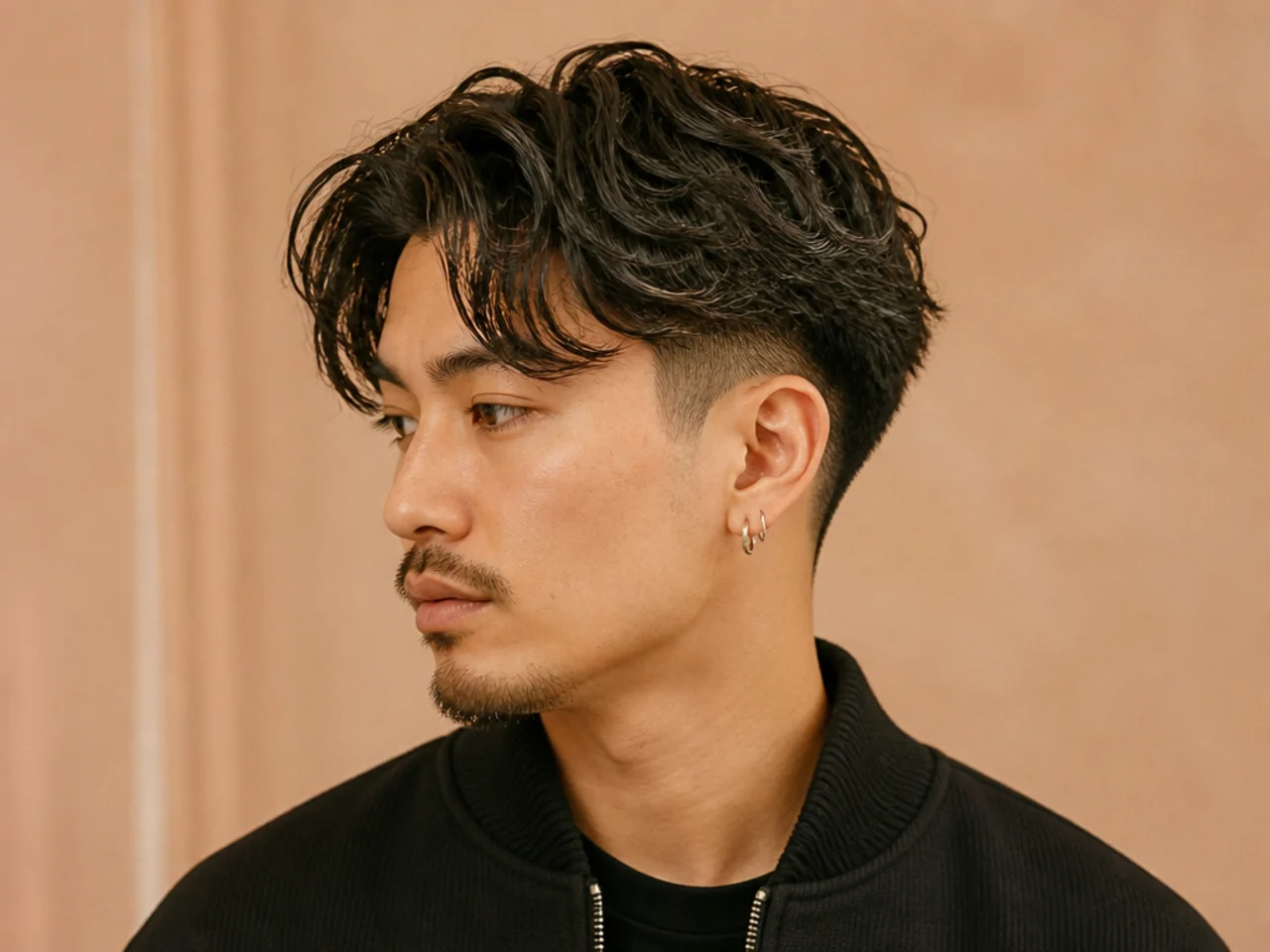
The fade bursts in a semicircle around the ear — short at the ear, longer as it radiates out — while the back neckline stays a little longer than a full fade would leave it. Suits oval, long, and heart faces. Wave patterns 2A-2C especially. Ask for "curtain burst fade — 4 inches on top with a center part, burst fade radiating from the ear, tapered back with a natural neckline." Style with sea-salt spray on damp hair and rake back with your fingers. The burst is loud, so the top can stay soft — combining a burst with a heavy blowout up top is too much for most faces to carry.
Blowout Taper Curtain
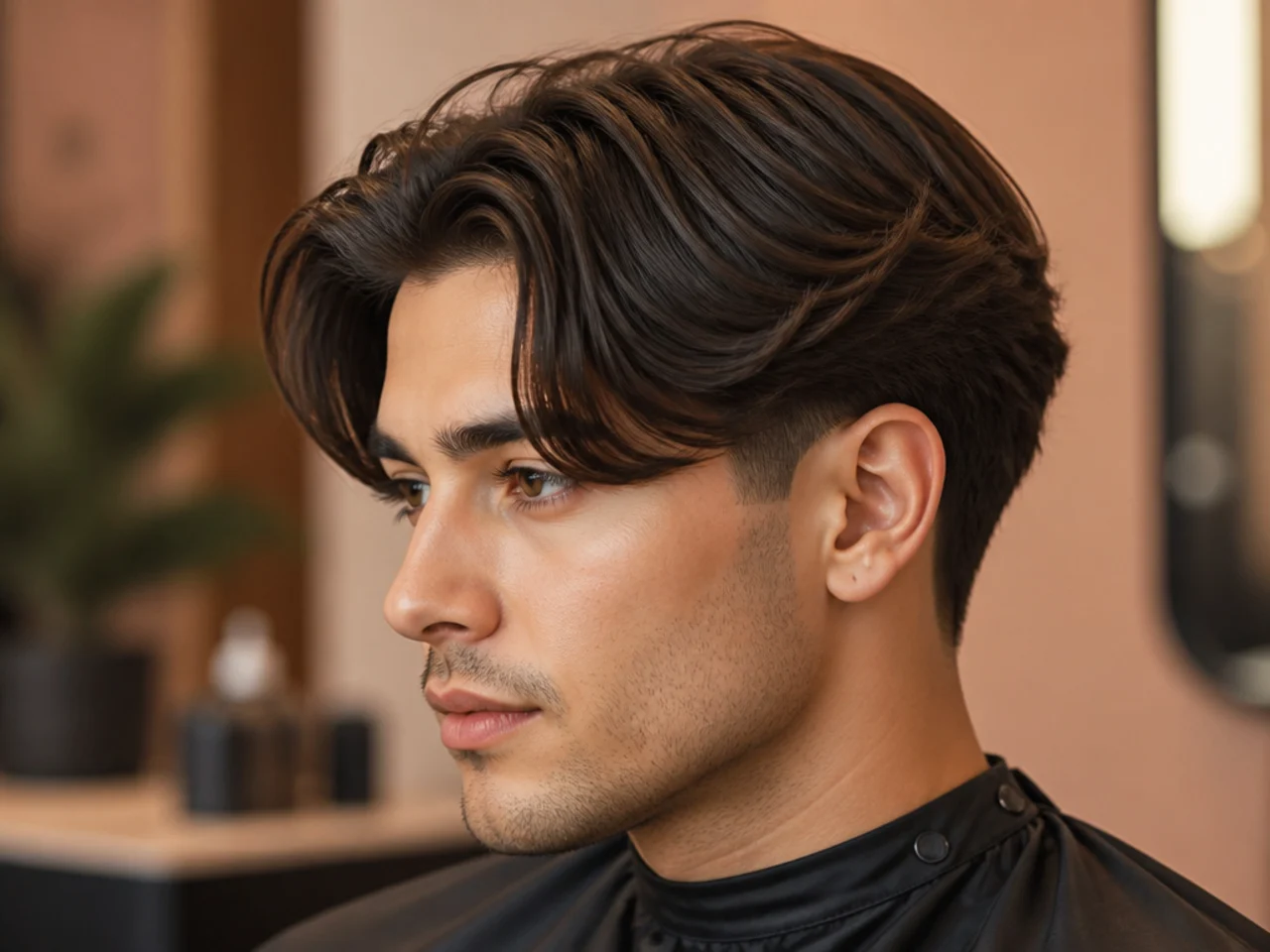
Volume-forward build. Your barber cuts a slight upward angle from crown to fringe so a blow-dry lifts the front off the forehead before it drops into the center split, while the sides get a blowout taper that leaves length at the top of the taper for the fullness to breathe. Suits oval, heart, and round faces because the lift stretches visible height. Straight to wavy hair. Ask for "blowout taper curtain — 5 inches on top angled up through the fringe for lift, blowout taper on the sides, no fade at the sideburn." Round-brush the front up and back with a dryer on medium, then split with a comb. Book this for the morning of a photo or event.
Undercut Curtain Fade
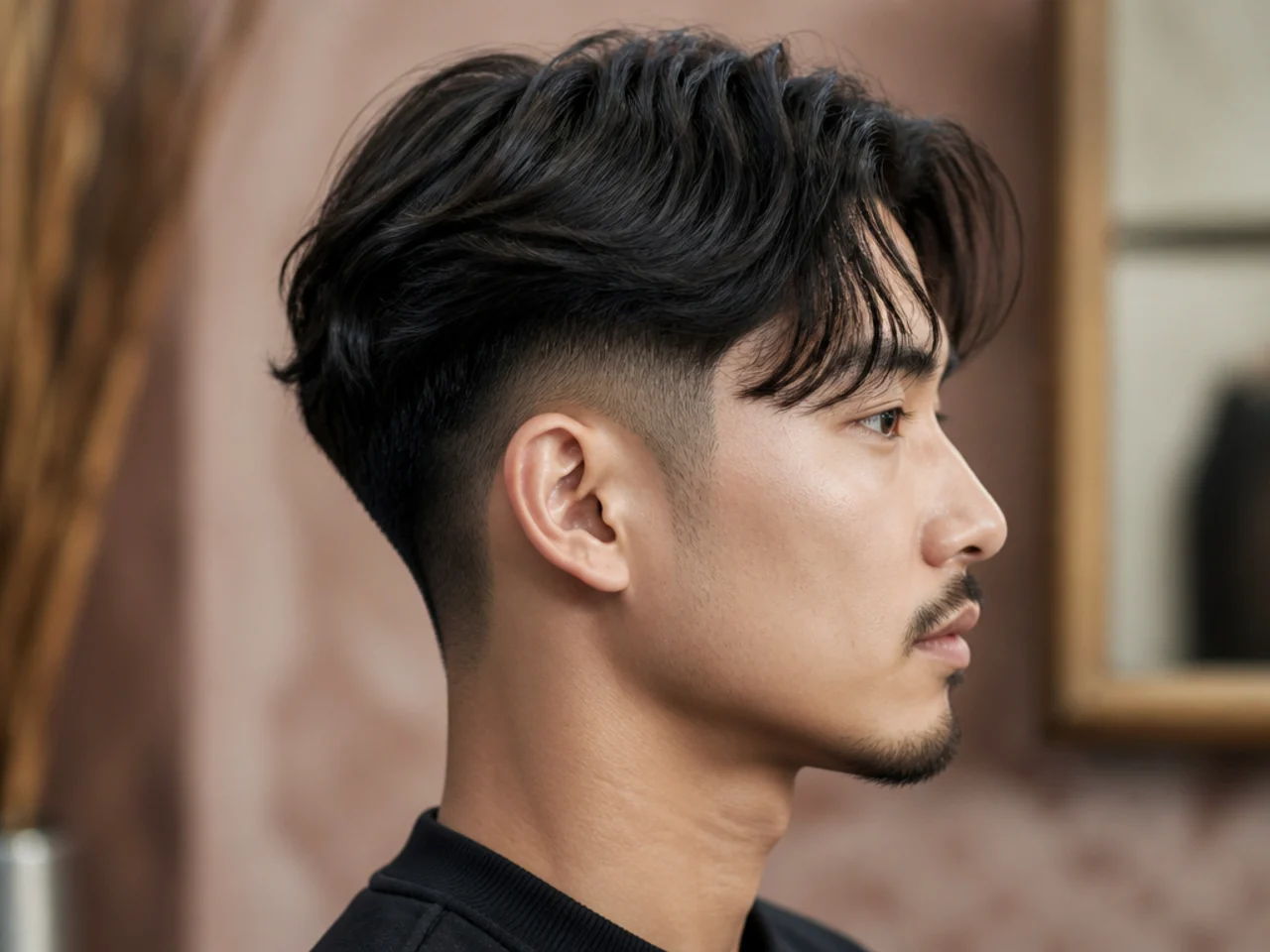
Sharp, one-length curtain on top dropping over buzzed sides with no blend. The undercut fade does zero blending — the length just ends at the perimeter — so the curtain sits like a lid on a clean canvas. Suits oval and square faces because the vertical drop narrows the head. Straight to wavy hair only; curls read unfinished against a disconnected line. Ask for "curtain undercut — 5 inches on top with a center part, disconnected undercut on the sides at a one-guard, no blend, no taper." Style with a lightweight cream and finger-comb — heavy product turns the crown into a helmet by lunch. Undercuts grow out cleaner than fades if you can't commit to a three-week trim cycle.
Textured Curtain Fade
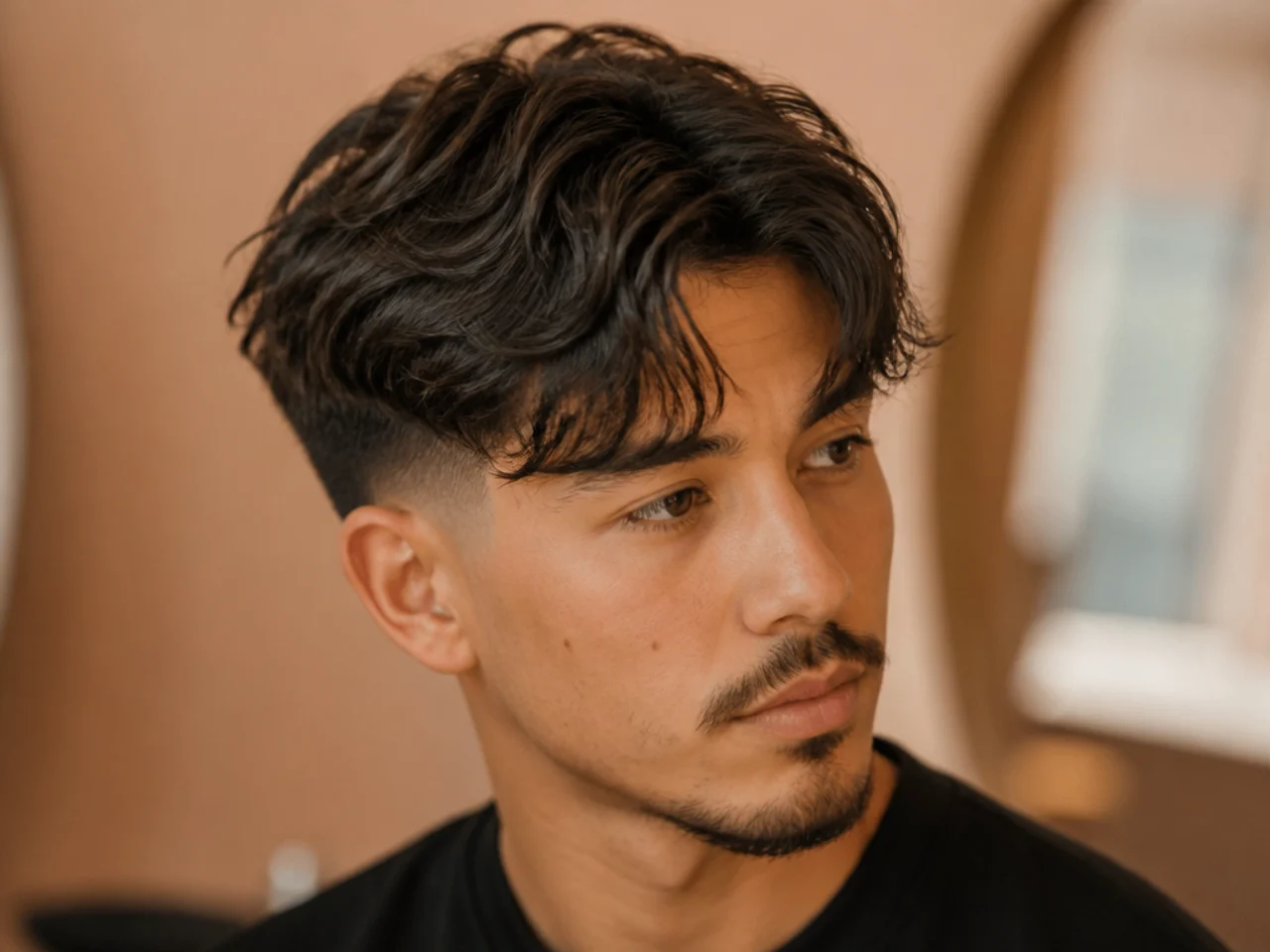
Same base as the classic, choppier finish. The barber point-cuts through the ends and threads hidden internal layers so the curtains fall in separate pieces instead of one solid drape. Sides get a low taper fade to keep the perimeter clean without competing with the top. Suits square and diamond faces because the broken-up texture softens angular jawlines. Any hair type — sea-salt spray is what pulls out the definition. Ask for "textured curtain fade — 4 inches on top with a center part, point-cut through the ends, hidden internal layers, low taper fade on the sides." Finish with sea-salt spray on damp hair, then a pea of matte clay for grip. Skip creams here — they mute the texture the point-cutting bought.
Wavy Curtain Fade
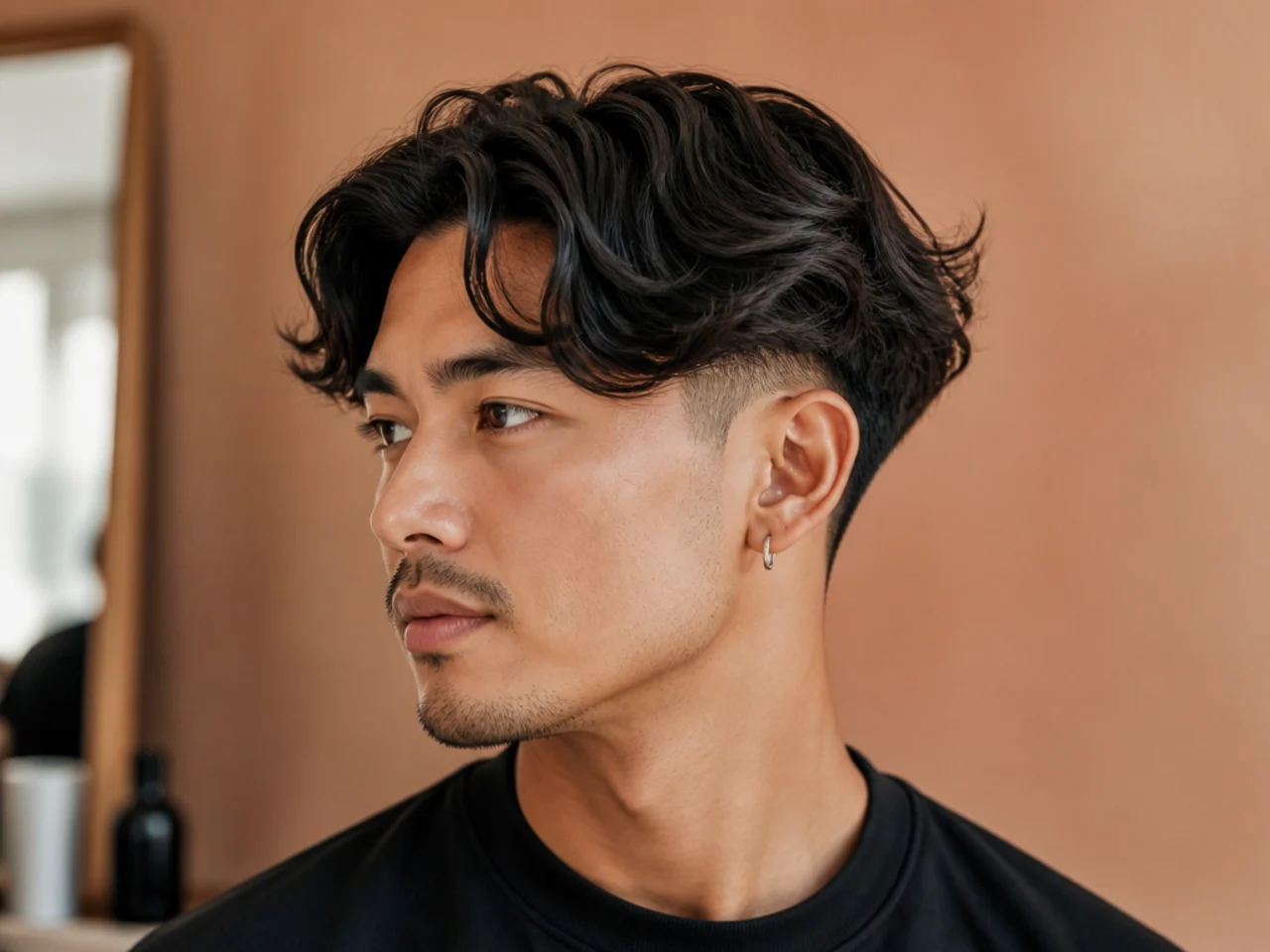
Built around your wave pattern. The barber cuts internal layers so the S-curve of the wave falls forward at the fringe instead of poofing at the mid-shaft. Sides get a low taper fade so the wave dominates the visible shape. Suits round and heart faces because wave breaks up the perimeter. Ideal for wave patterns 2A-2C. Ask for "wavy curtain fade — 5 inches on top with a center part, internal layers to control the mid-shaft, low taper fade at the sides, fringe past the eyebrow." Finish with a leave-in on wet hair, diffuse upside-down for root lift, then split with your fingers. Wavy guys who overproduct kill the movement they paid for — a leave-in and a diffuser is the whole kit.
Curly Curtain Fade
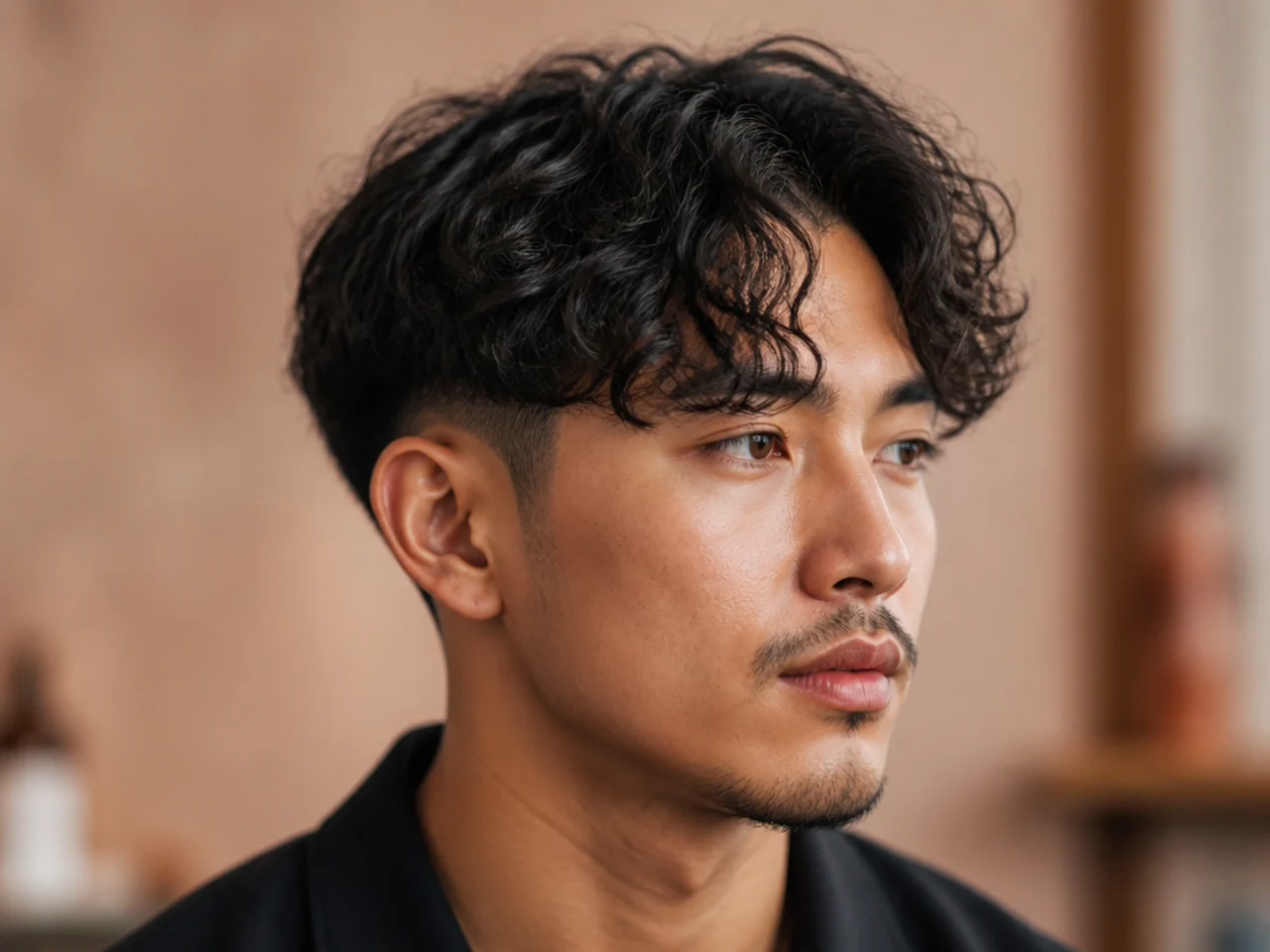
The overlooked cousin. Curls need extra length — five inches minimum — to part and fall in panels rather than build outward. The barber curl-cuts each spring individually while hair is dry, one at a time. Sides get a taper or low fade that gives the perimeter a shape without cutting into the volume. Suits oval and long faces. Curl types 3A-3B; 3C moves into afro-shape territory. Ask for "curly curtain fade — 5 inches on top dry-cut spring by spring, center part, low taper fade at the sides." Finish with a curl cream and a diffuser on low airflow. If curl density is heavy, the curly hair haircuts playbook lists the styling shortcuts that work with a fade.
Korean Curtain Fade
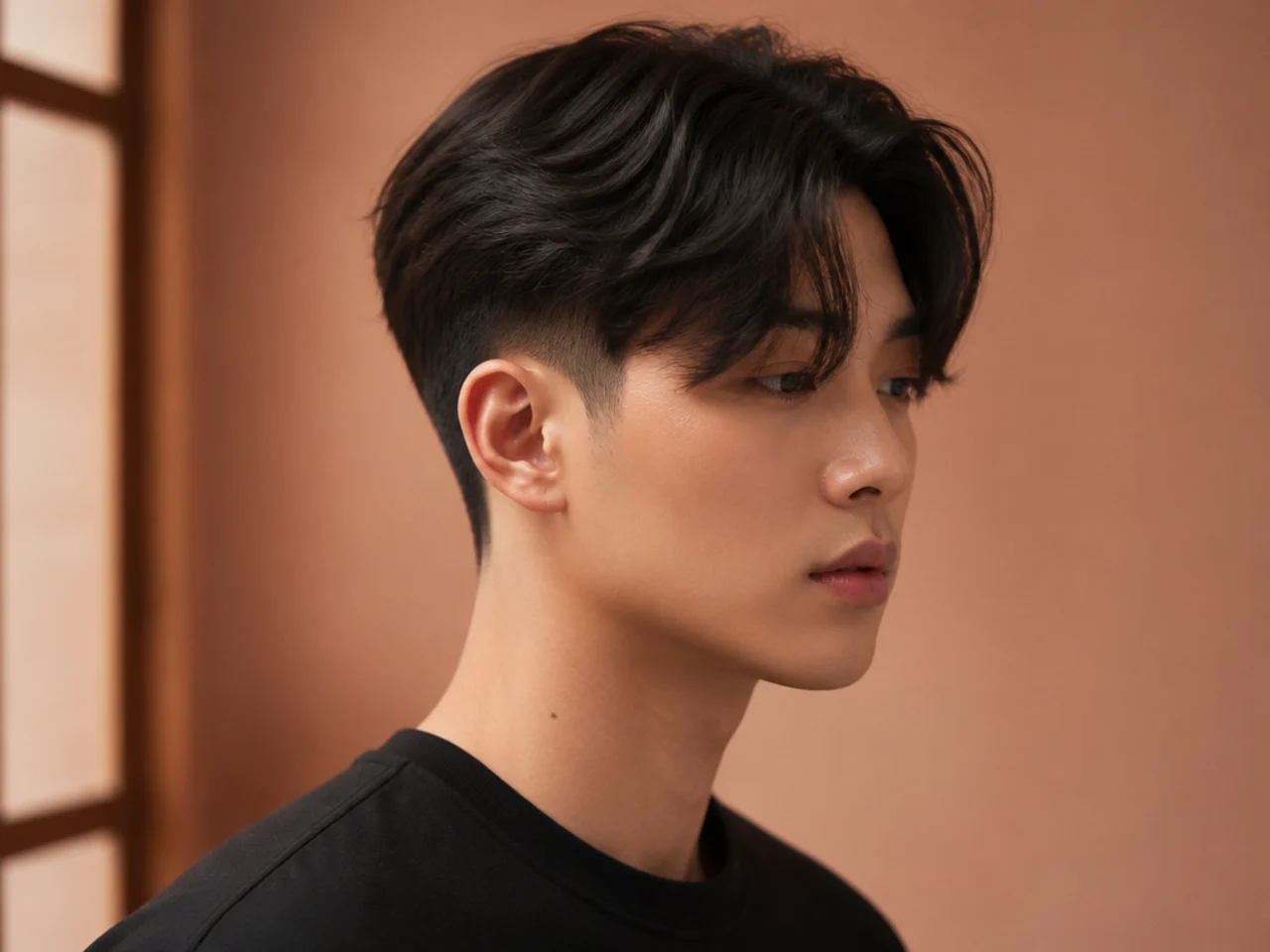
The softest curtain fade. Top runs 4 to 5 inches, the fringe is feathered instead of blunt, and the sides get a low taper fade that keeps the perimeter clean without breaking the feathered softness on top. Suits every face shape because the feathering scales. Best on straight to light-wave hair. Ask for "Korean-style curtain haircut with a low taper fade — 5 inches on top, feathered fringe past the eyebrow, low taper starting just above the ear." Finish with a light matte cream or a keratin smoothing serum through the front. This version dominates Pinterest search from South Korea outward, and the editorial cleanness is why.
Short Curtain Fade
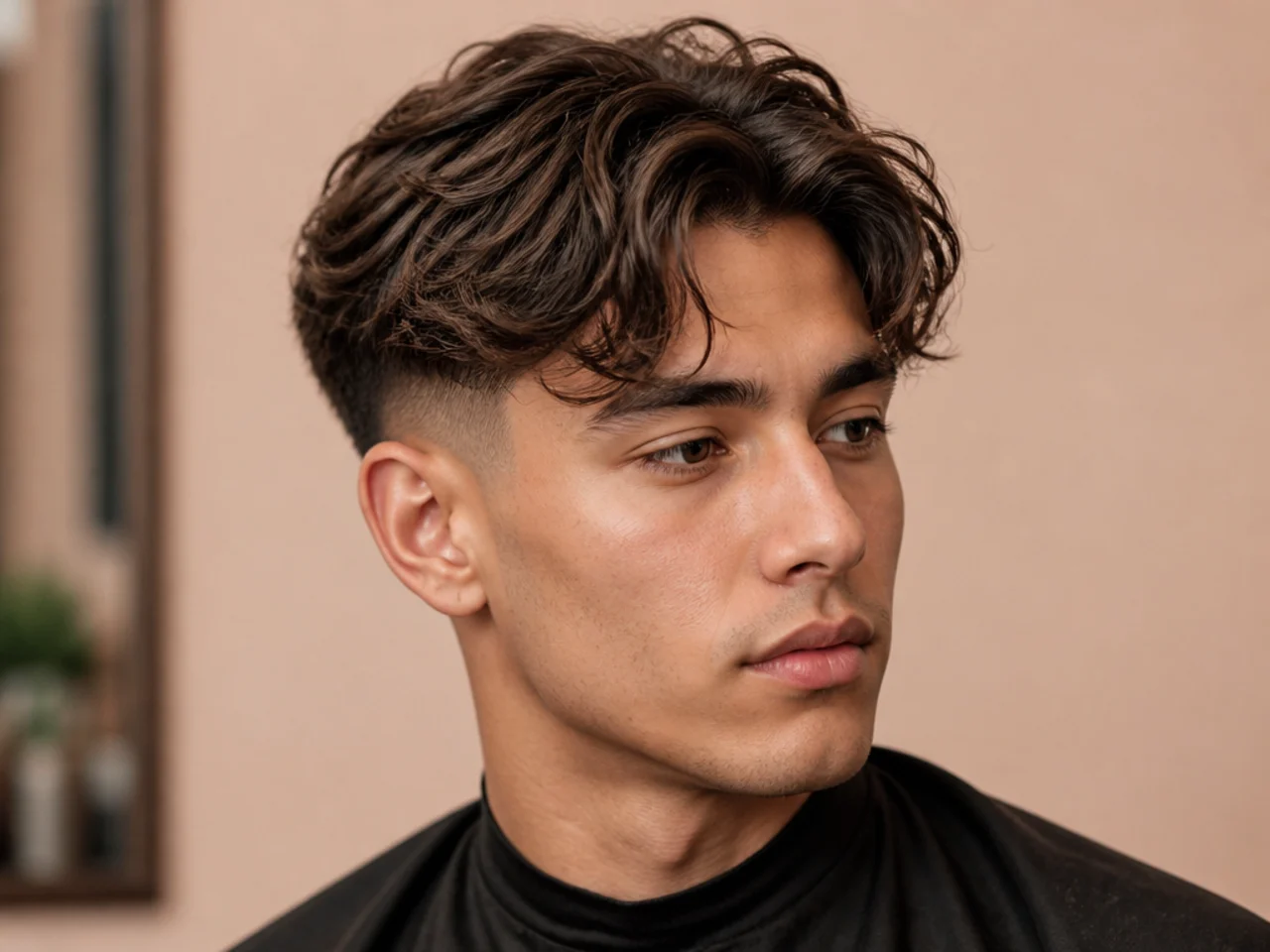
The office-friendly build. Top runs 3 inches, fringe just clears the brow, and the sides get a subtle low taper fade above the ear. Suits round and heart faces because the shorter top length balances a wider forehead. Works on any hair type. Ask for "short curtain fade — 3 inches on top, fringe grazing the brow, center part cut in, low taper fade above the ear." Style with a light-hold matte cream and a comb. Total morning time under 90 seconds. This is the version to book if you like the middle part but need the whole cut to disappear into a video call.
Long Curtain Fade
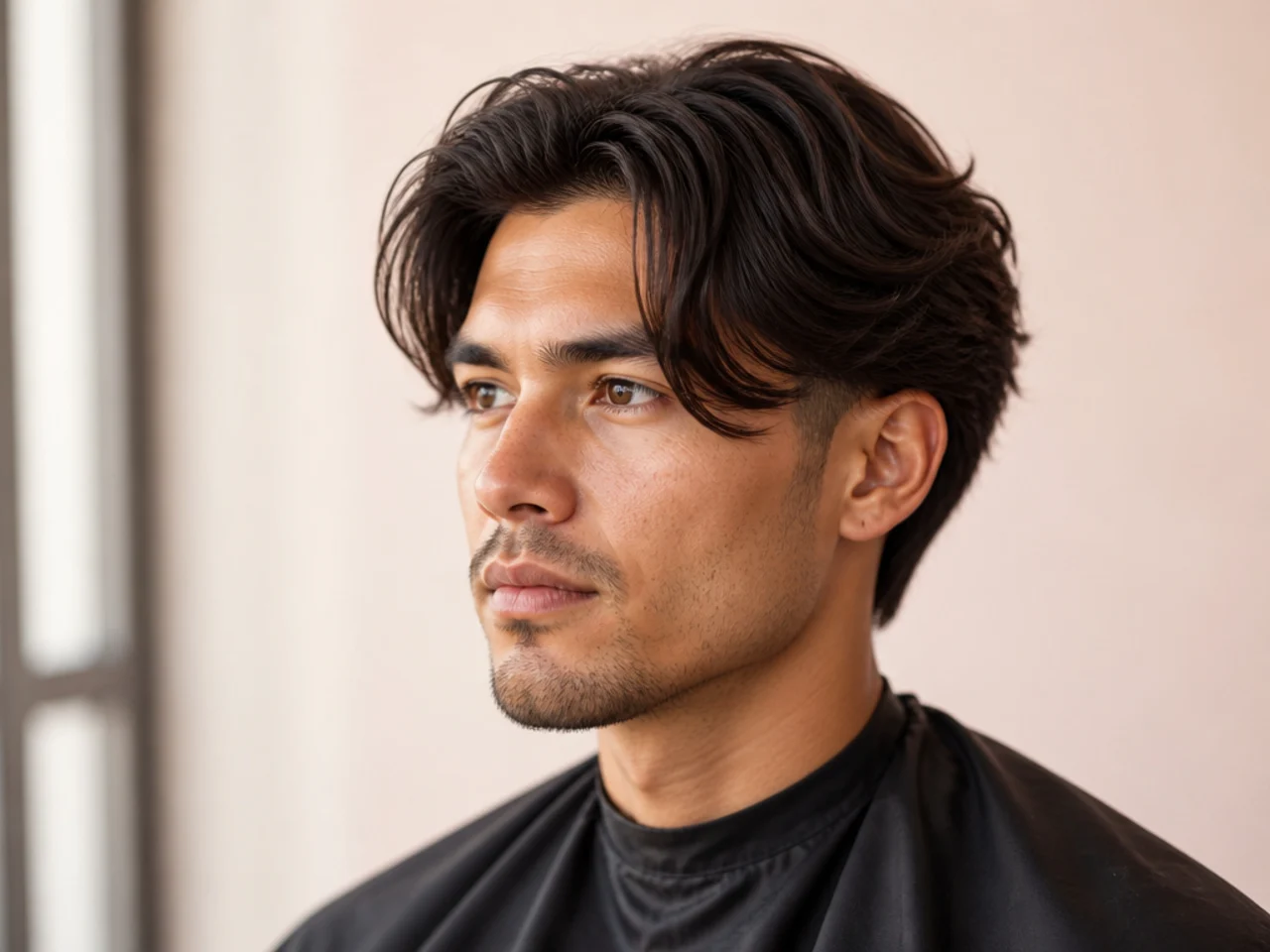
Full-length version. Six inches or more on top, ends reaching the cheekbones when forward, sides sitting long enough at the top of the fade to sweep back over the ear. Suits oval and long faces best. Straight to wavy hair — coarse or coily hair loses the flow at this length. Ask for "long curtain fade — 6 inches on top with a center part, ends grazing the cheekbones, internal layers through the last two inches for movement, low taper fade at the perimeter." Style with a leave-in on wet hair, sea-salt spray as it dries, matte cream to finish. This is the medium length men's cut taken to its natural ceiling and paired with a fade.
Middle Part Curtain Fade
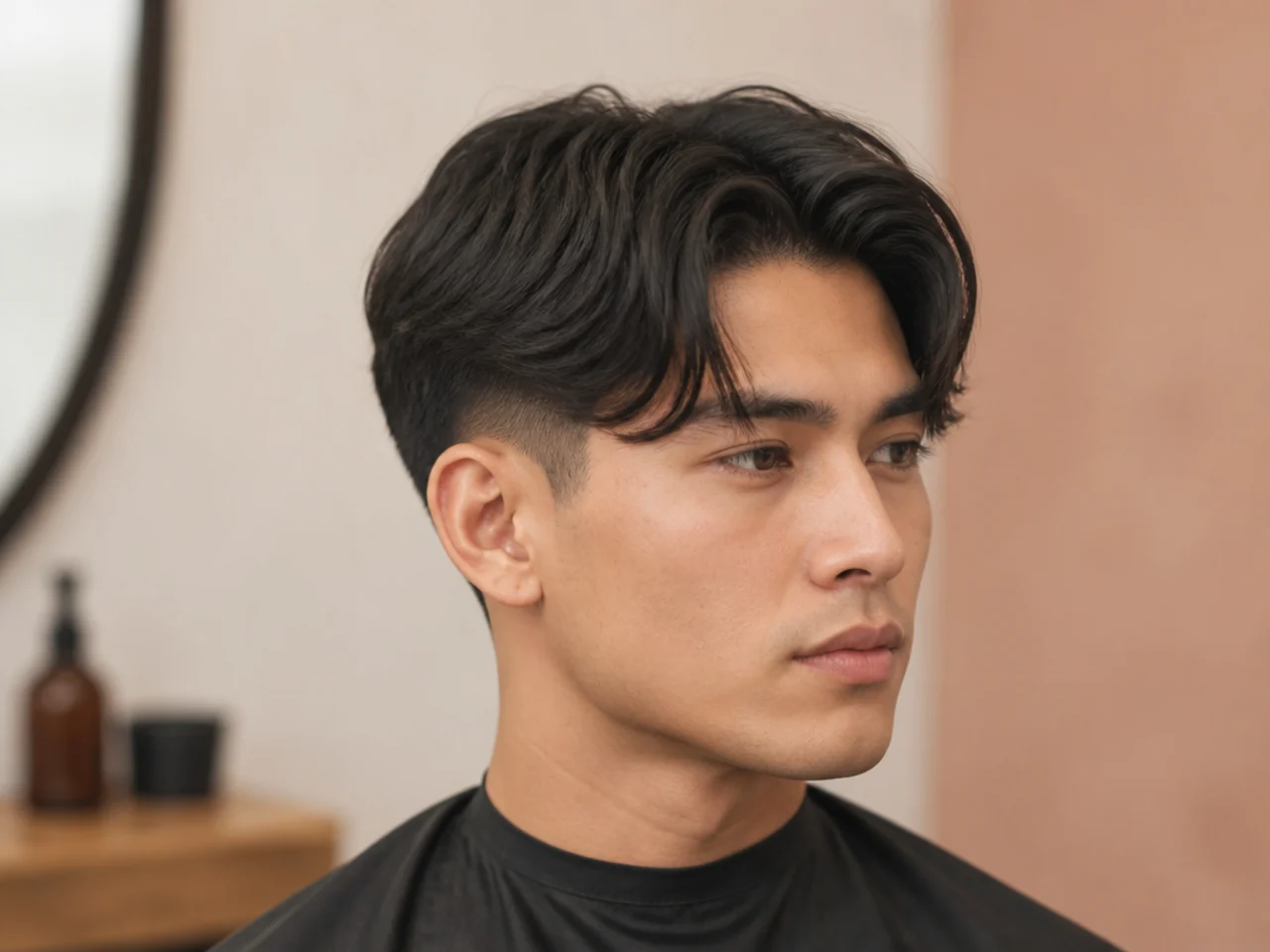
The most deliberate build. The center part is razor-defined, the two panels are combed back and away rather than falling forward, and the sides get a low or mid taper fade. Suits every face shape. Straight hair only — waves and curls fight the razor-sharp split. Ask for "middle part curtain fade — 4 inches on top with a razor-defined center part, panels combed back off the forehead, low taper fade at the sides." Comb the split while damp, then set with a light hold cream. This version photographs well from every angle and reads more polished than the softer classic. Direct sibling of the broader middle part haircut men family.
Messy Curtain Fade
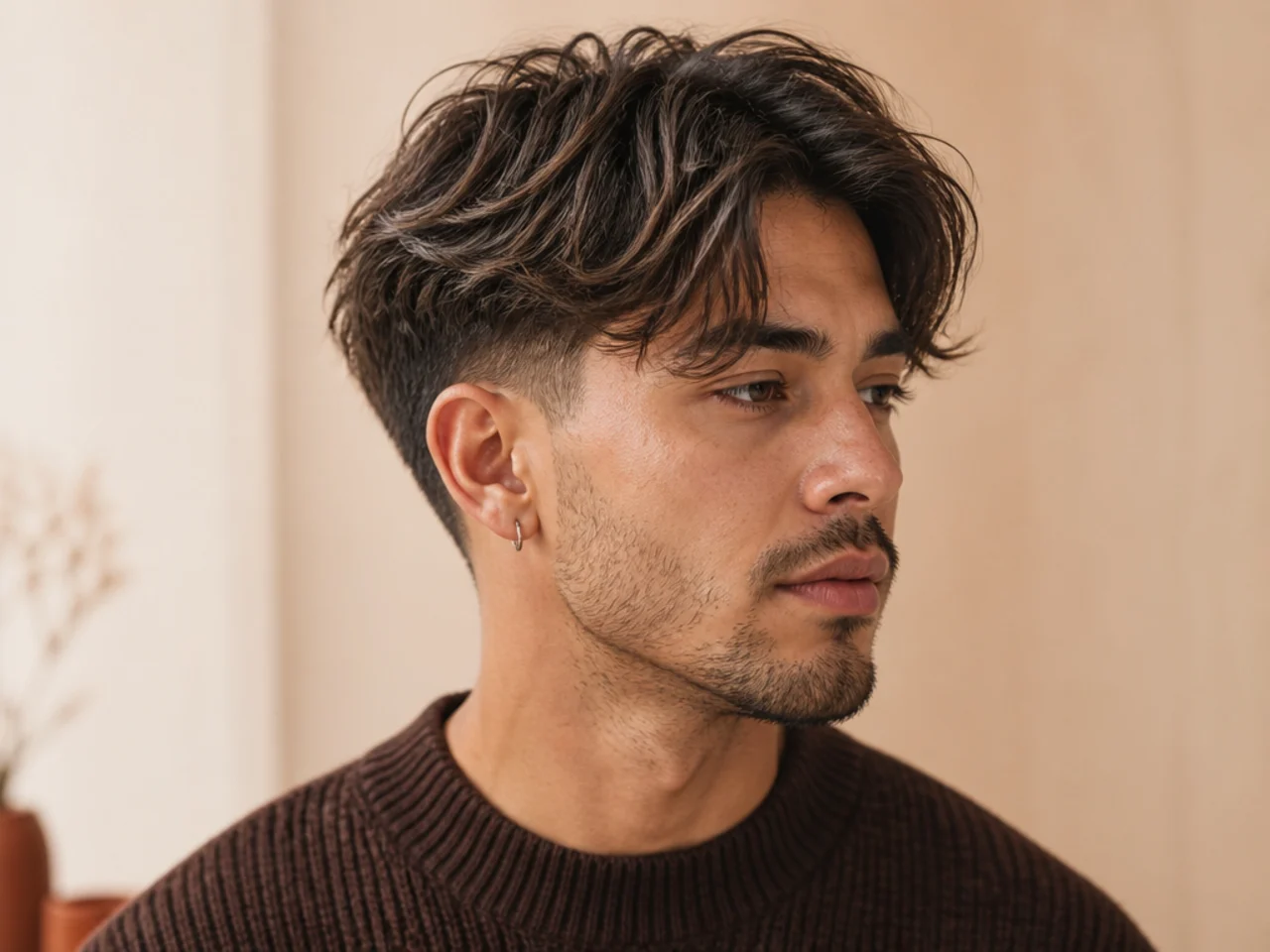
The deliberately unpolished version. The barber point-cuts the ends heavily and leaves the top wild, and you cheat the center split with your fingers instead of a comb. Sides get a low taper fade so the perimeter still reads intentional even if the top doesn't. Suits oval and long faces. Wavy and curly hair love this build; straight hair needs sea-salt spray to keep up. Ask for "messy curtain fade — 5 inches on top heavily point-cut through the ends, center part cut in loosely, low taper fade at the perimeter." Style with sea-salt spray only — no cream, no clay, no comb. This is the version to bring to your barber when you love the split but hate spending five minutes on it.
Modern Curtain Fade
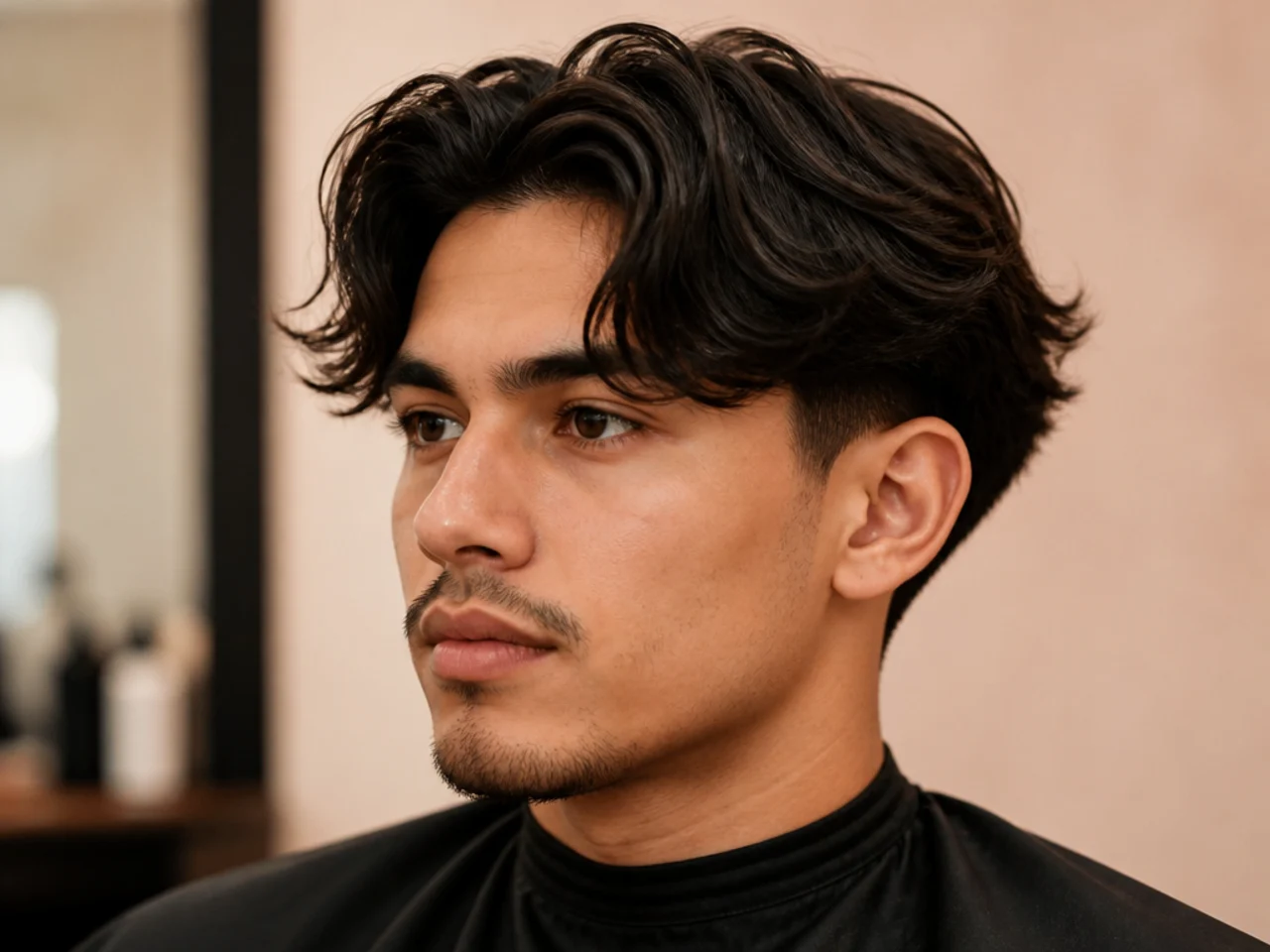
The 2026 refresh — cleaner lines, softer feathered fringe, a low mid fade that lands between a classic low taper and a full mid. Suits every face shape. Any hair type. Ask for "modern curtain fade — 4 to 5 inches on top with a soft feathered fringe grazing the brow, low mid fade starting between the ear and the temple, blended to skin at the sideburn." Finish with a matte cream and a natural split from your fingers. This is the version to hand your barber when you can't choose between the classic low taper and the mid fade — it splits the difference and photographs sharpest.
Two-Block Curtain Fade
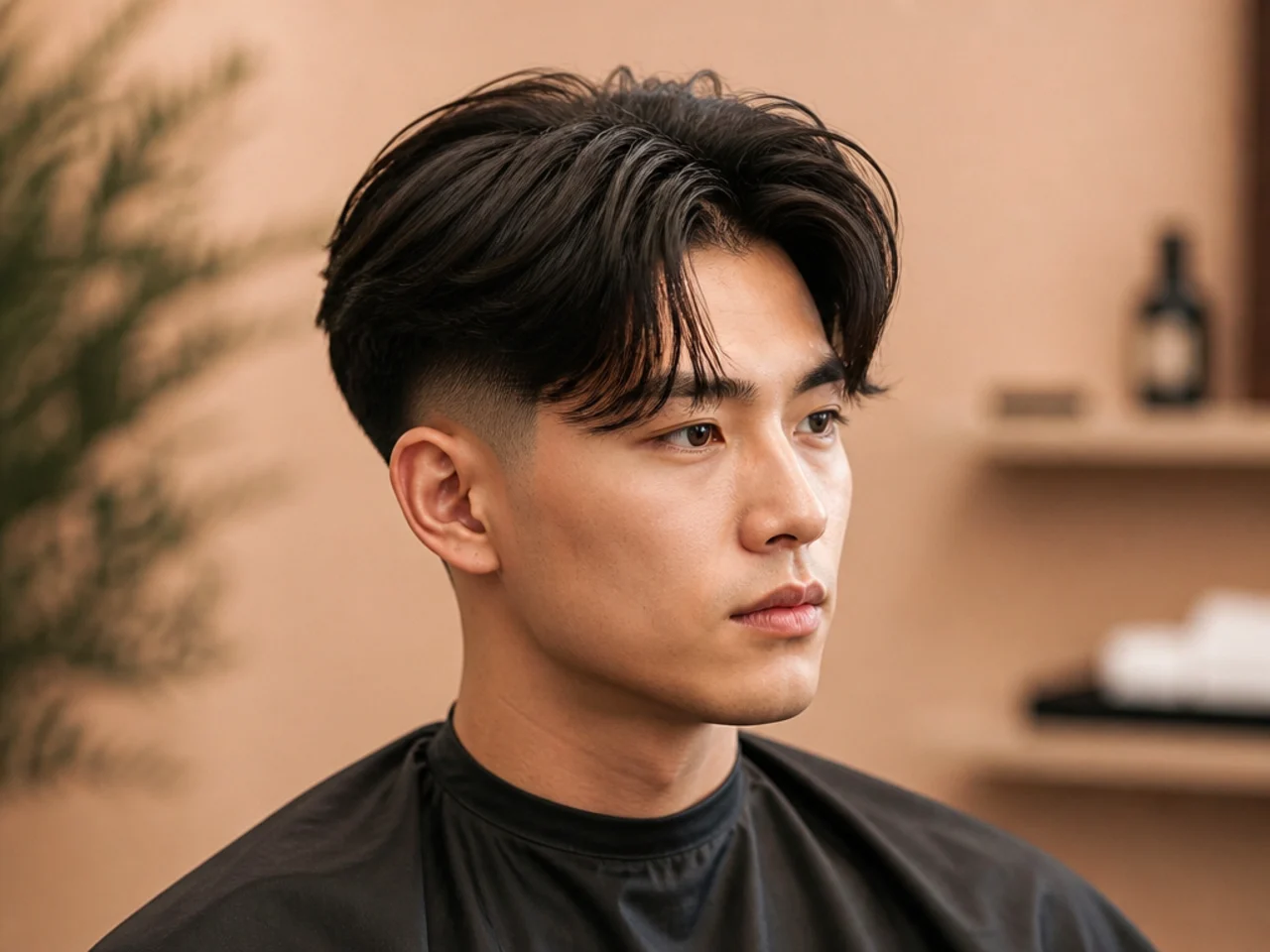
Korean-inspired hybrid. The top is a scissor-cut curtain; the sides are buzzed short underneath with a longer scissor layer that hides the buzz; the perimeter drops into a low taper fade. Suits round and heart faces because the volume up top balances narrow sides. Straight and light-wave hair. Ask for "curtain fade with a two-block cut — three-guard buzz underneath, longer scissor layer over it, 5 inches on top with a center part, low taper fade at the sideburn." Style with a light matte cream and a wide-tooth comb. The buzz stays hidden until you tuck the sides back behind the ear — the fade at the sideburn is what keeps the whole cut modern instead of pure K-pop.
Curtain Fade with Hard Part
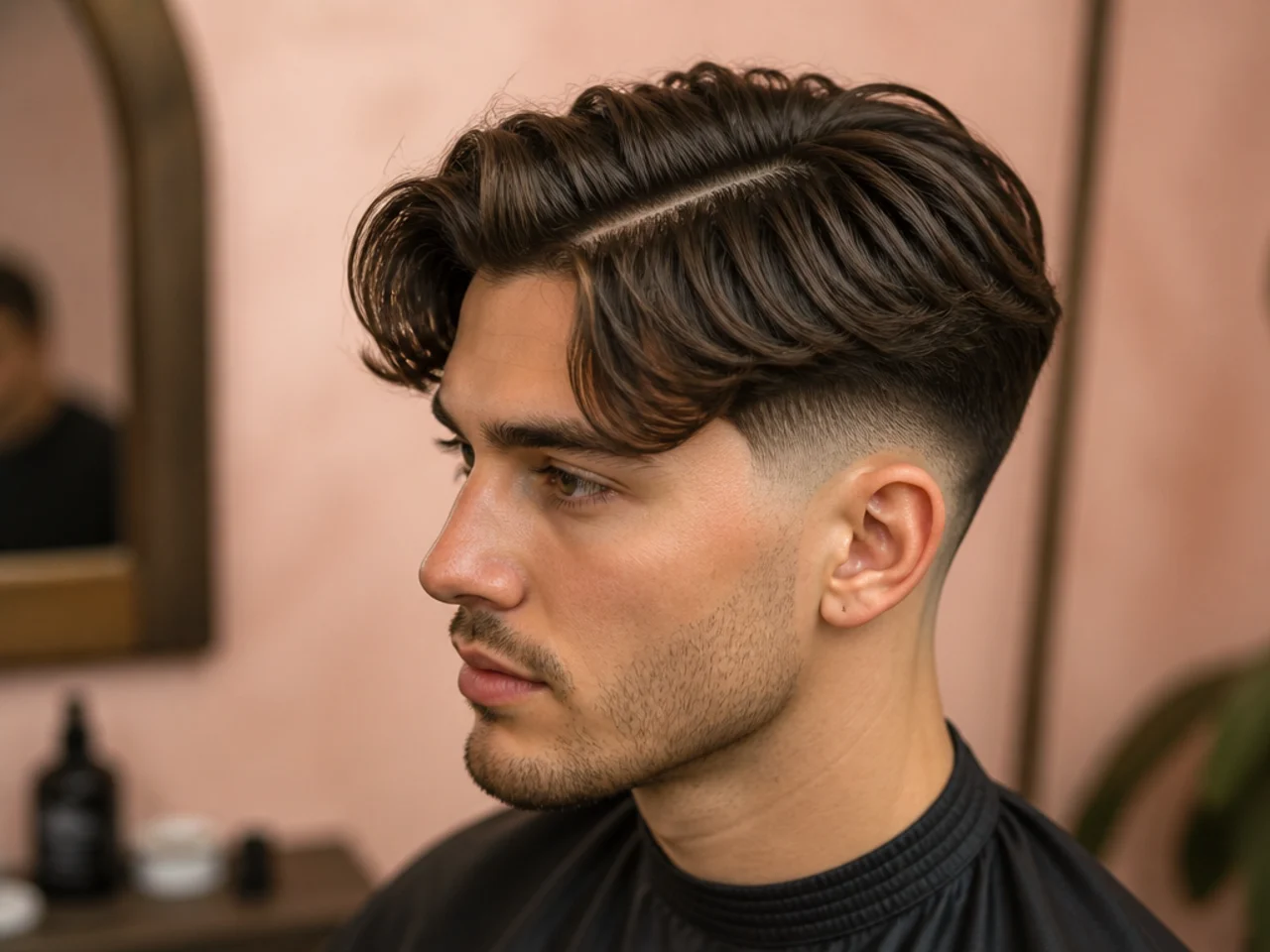
The clipper-line version. Your barber cuts a hard part with a straight razor — a shaved line, usually on the left side of the head — where the curtain meets the fade. Sides get a mid or skin fade so the line has room to read. Suits oval, long, and square faces where sharp lines register cleanly. Straight to wavy hair. Ask for "curtain fade with a hard part — 4 inches on top with a center-parted curtain, mid fade at the sides, hard part razored an inch back from the temple on the left side." Style the top with a matte paste and let the line do the drama. Book a two-week touch-up on the line specifically — it fades faster than the fade itself.
Curtain Fade with Beard
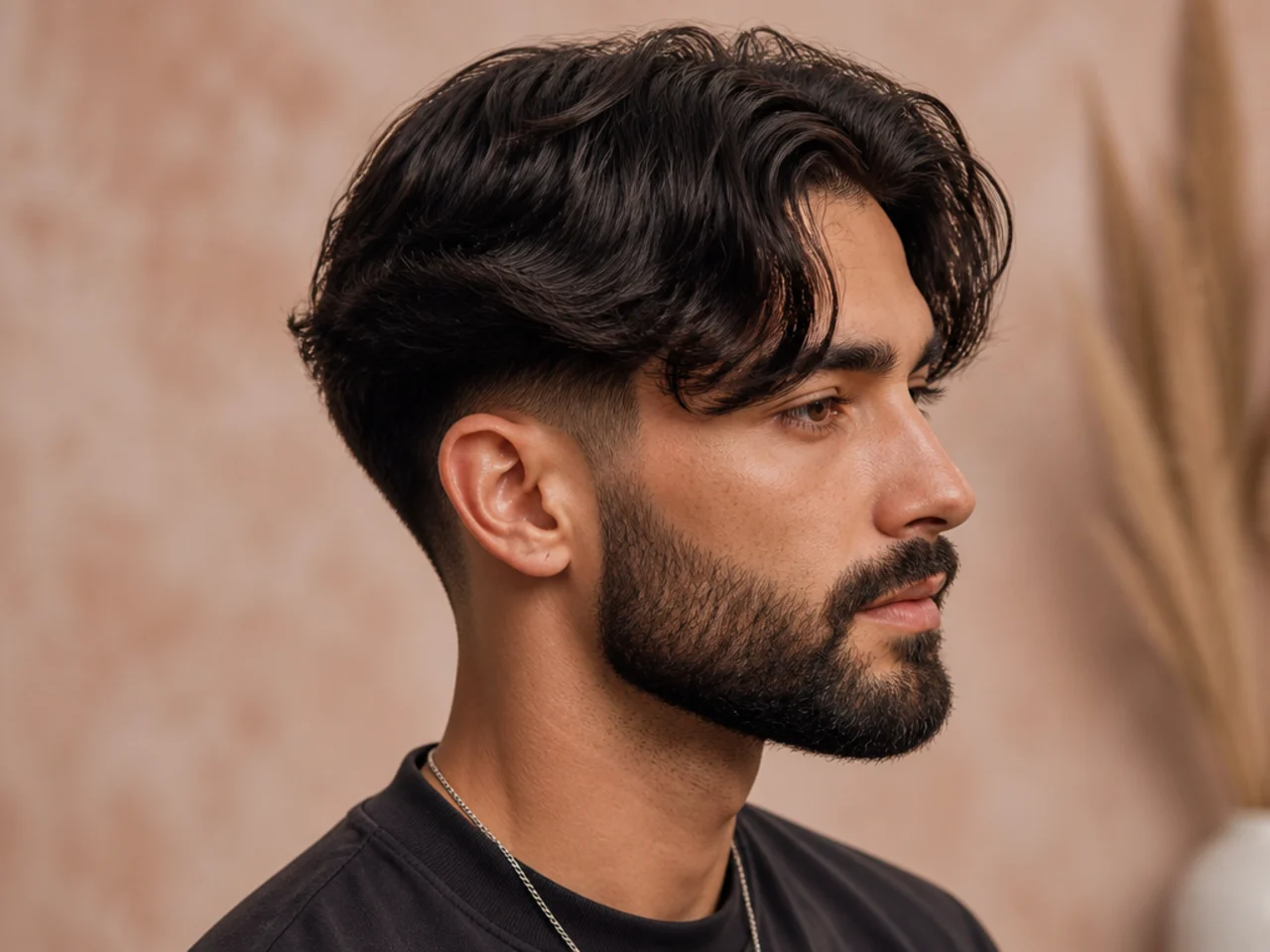
Face-framing combo. The curtain drops onto the temples, the drop or low fade blends into the sideburn, and the beard picks up where the fade ends so the whole face is framed by one continuous oval. Suits square, round, and diamond faces because the beard rebalances a wide top. Beard length sits between a two and a three guard. Ask for "curtain fade with a beard blend — 4 inches on top center-parted, low drop fade at the sideburn blending directly into a three-guard beard, connected fade line from ear to jaw." Trim the beard the same day as the haircut. A fresh beard against a three-week-old fade reads mismatched every time — the shape only works when both perimeters are one week old or younger.
How to Ask Your Barber
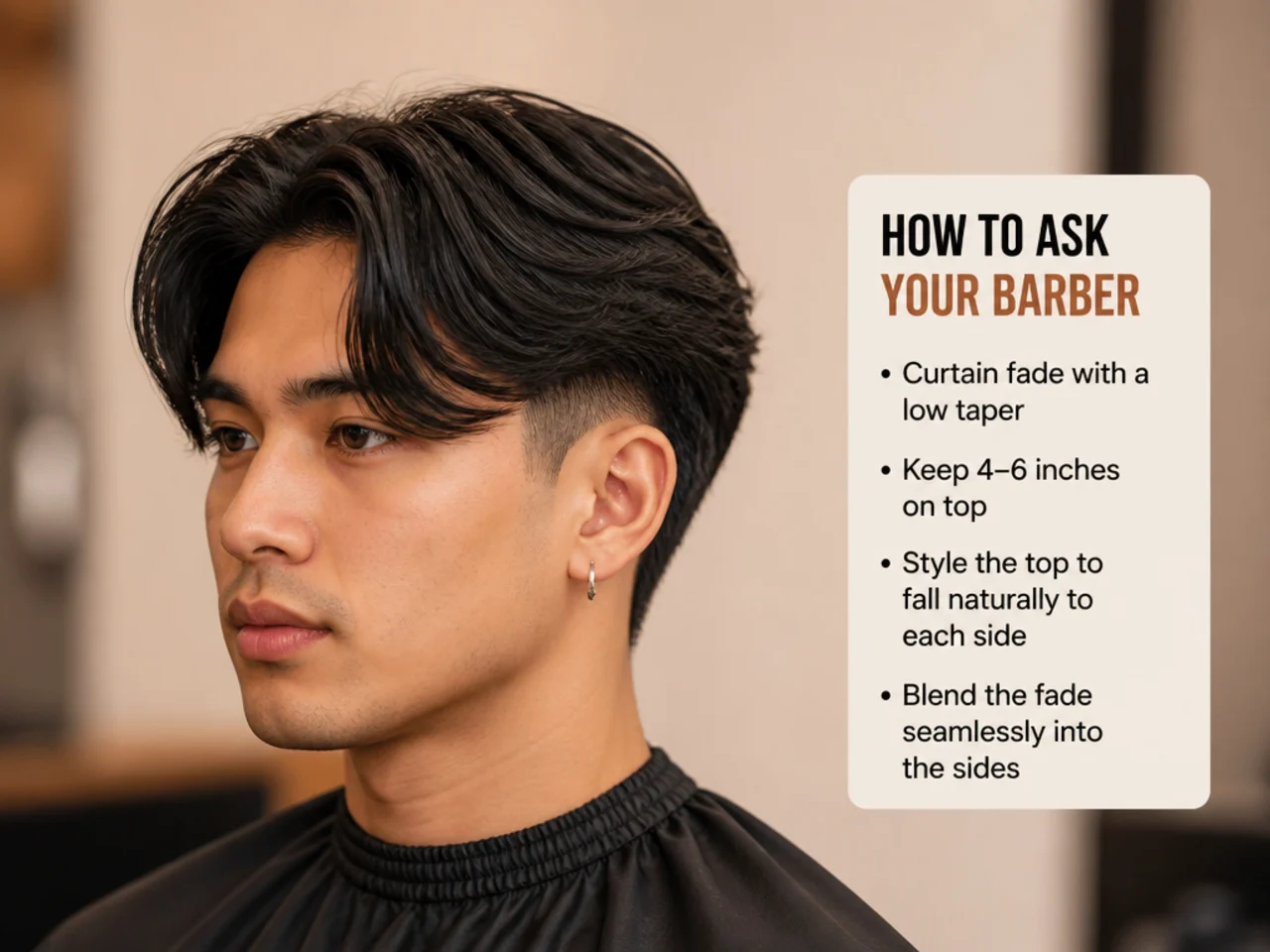
"Curtain fade" is not one haircut — it's a family. Hand your barber all six decisions below before the cape goes on.
- Show the exact variation. Screenshot the one from this guide that matches your face and hair type. A single photo cuts the negotiation from ten minutes to thirty seconds.
- Set the top length in inches. Three inches for the short version; four for the classic and most fade combos; five for wavy, curly, Korean, and long; six for the full long version. Say the number.
- Name the fade height and style. Low taper, mid, high, skin, drop, burst, blowout taper, or disconnected undercut. Match the exact phrase from the variation you picked — barbers hear "fade" a hundred times a day, they need the modifier.
- Cut the part in. Ask outright: "cut a center part while it's damp so it falls naturally when dry." Don't let the barber skip this — a curtain fade without a cut-in part fights you every morning for three weeks.
- Ask for internal layers. Two words most barbers wait for: "internal layers." Without them, the top drops flat, the two curtains merge into one heavy drape, and the swept-back move dies before you leave the shop.
- Confirm the finish. Matte, not shiny. Say it before your barber reaches for product — matte cream, matte paste, or nothing. Traditional glossy pomades finish a modern curtain fade wrong every time.
Styling and Maintenance
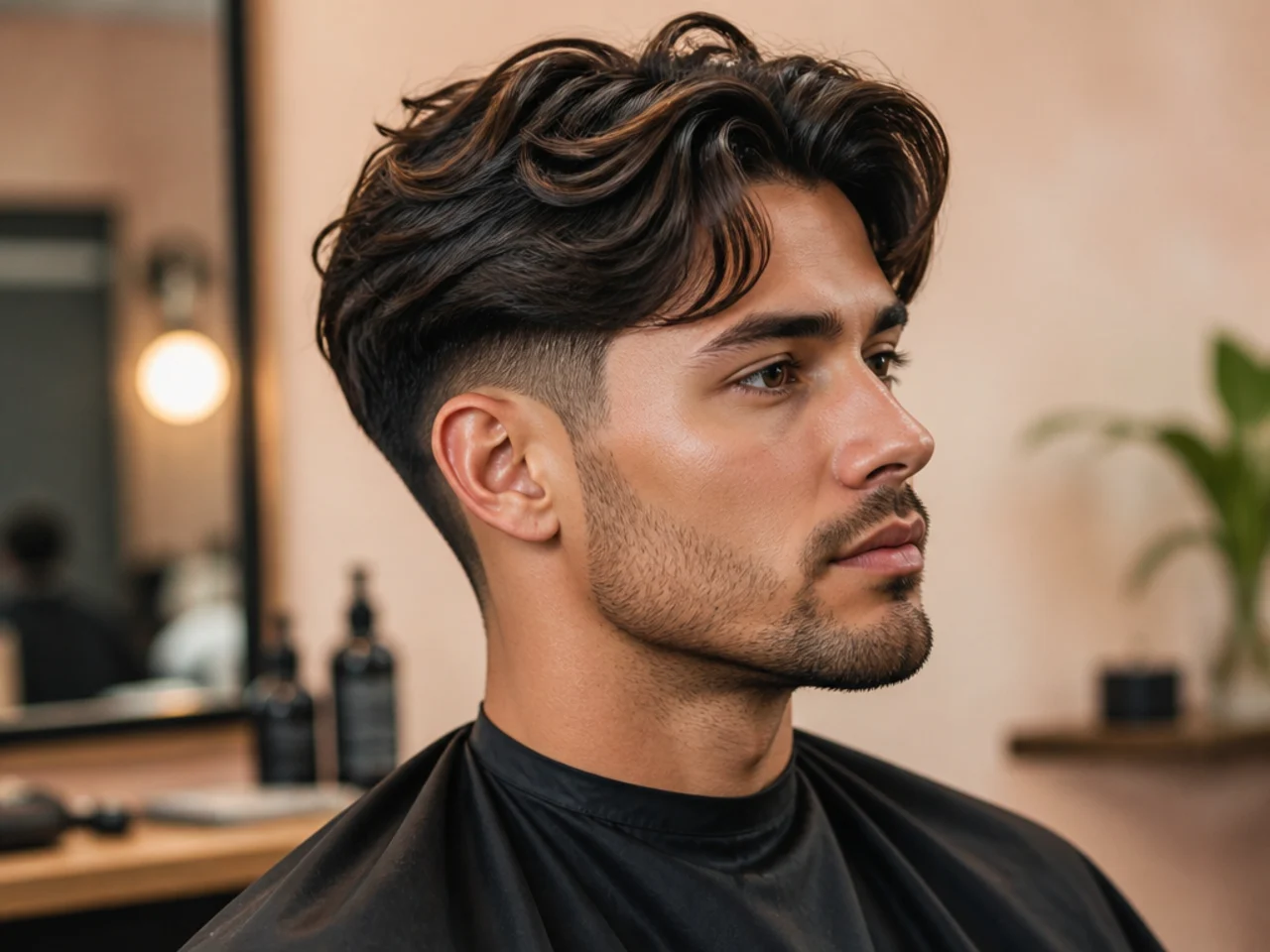
A curtain fade styles wet, sets dry, and lives on two products on any given day.
Wash with a sulfate-free shampoo every two to three days and condition mid-lengths to ends only. Towel-dry with a microfiber cloth or an old cotton T-shirt — terry towels rough up the cuticle and cause the frizz that kills a clean curtain fall. While hair is still damp, mist sea-salt spray from four inches away, focused on mid-lengths and roots. Comb once with a wide-tooth comb straight back to set the part. Let it air-dry ten minutes. When it's 80% dry, work a nickel of matte cream between your palms until it disappears and rake back from the crown with your fingers. Split the two curtains with a wide-tooth comb before it fully dries.
Product line-up: matte cream or light paste is the daily driver; sea-salt spray adds the texture that lets the top hold shape; a curl cream handles the wavy and curly versions; a leave-in and lightweight oil are for anything past 5 inches on top. Skip gel — it locks the fall too rigidly and cancels the movement the layering paid for. Skip shiny pomade — it fights every version of a modern fade.
Fade cadence is what separates a great curtain fade from a scruffy one. Book every three to four weeks — the fade is the calendar, not the top. Once the perimeter loses the crisp week-one line, the whole cut reads unfinished even if the curtains are perfect. If you paired the fade with a hard part or a burst, tighten the cycle to two to three weeks — designed lines fade faster than tapers. For guys with sharper cheekbones or a wider jaw, the softer textured, wavy, and Korean versions layer well into the broader haircuts for square faces rotation. If you're growing this cut out of a shorter fade like a short simple men's haircut, book a shaping cut the day you decide — a fade regrowth without a plan turns fluffy within six weeks.
FAQ
Is the curtain fade still trending in 2026? Yes. The curtain fade has been top-three on men's Pinterest since 2022 and shows no sign of slowing. What is shifting is the fade choice — mid and drop fades are outpacing skin fades this year because they read softer.
Curtain fade vs. curtain flow — same thing? Nearly. The curtain flow haircut men shape keeps the sides long and scissor-cut so they tuck behind the ear; a curtain fade replaces those long scissor sides with a clipper fade. Same top, different perimeter.
Can I grow a curtain fade out of a buzz? Yes, but expect a four to five month awkward stretch while the top catches up. Book a shaping cut every four weeks during the grow-out to keep the fade fresh — the top length hides regrowth chaos better than the perimeter does.
Does a curtain fade work at a formal office? The classic, low taper, short, drop fade, and modern versions all pass most office dress codes. Skin fade, undercut, blowout, and hard-part versions skew editorial — save them for creative workplaces or weekends.
Do I need a blow-dryer? No for the classic, short, low taper, Korean, wavy, curly, and messy versions — they air-dry into shape. Yes for the blowout taper, high fade, and long versions where lift or a glass-smooth fall is the point.
How much should a curtain fade cost? Anywhere from $30 at a walk-in to $85 at a specialist barber. Pay for the scissor work up top — the internal layering and the point-cutting through the fringe — plus the precision on the fade line. Those separate a great curtain fade from a mediocre one, not the guard number itself.