7 Steps to Grow Out a Flow Haircut the Right Way
Grow out a flow haircut for men in 7 steps — from baseline trim through the awkward months to a polished back-swept sweep. Products, timing, styling.
In this article · 10
- What the Finished Flow Looks Like
- What You'll Need
- Step 1: Get Your Baseline Shape
- Step 2: Build Your Flow Product Routine
- Step 3: Master the Daily Styling Move
- Step 4: Survive the Awkward Stage
- Step 5: Trim Without Losing Length
- Step 6: Upgrade Products as Length Builds
- Step 7: Know When Your Flow Is Fully There
- Troubleshooting Your Flow Grow-Out
You want that back-swept, hockey-player, wind-through-it look — but the six months between "short haircut" and "real flow" is where most guys quit. This is the seven-step playbook for growing out a flow haircut men actually pull off. Baseline shape, product routine, styling technique, awkward-stage triage, trim discipline, texture products for length, and the signs that tell you when you're finally there.
What the Finished Flow Looks Like
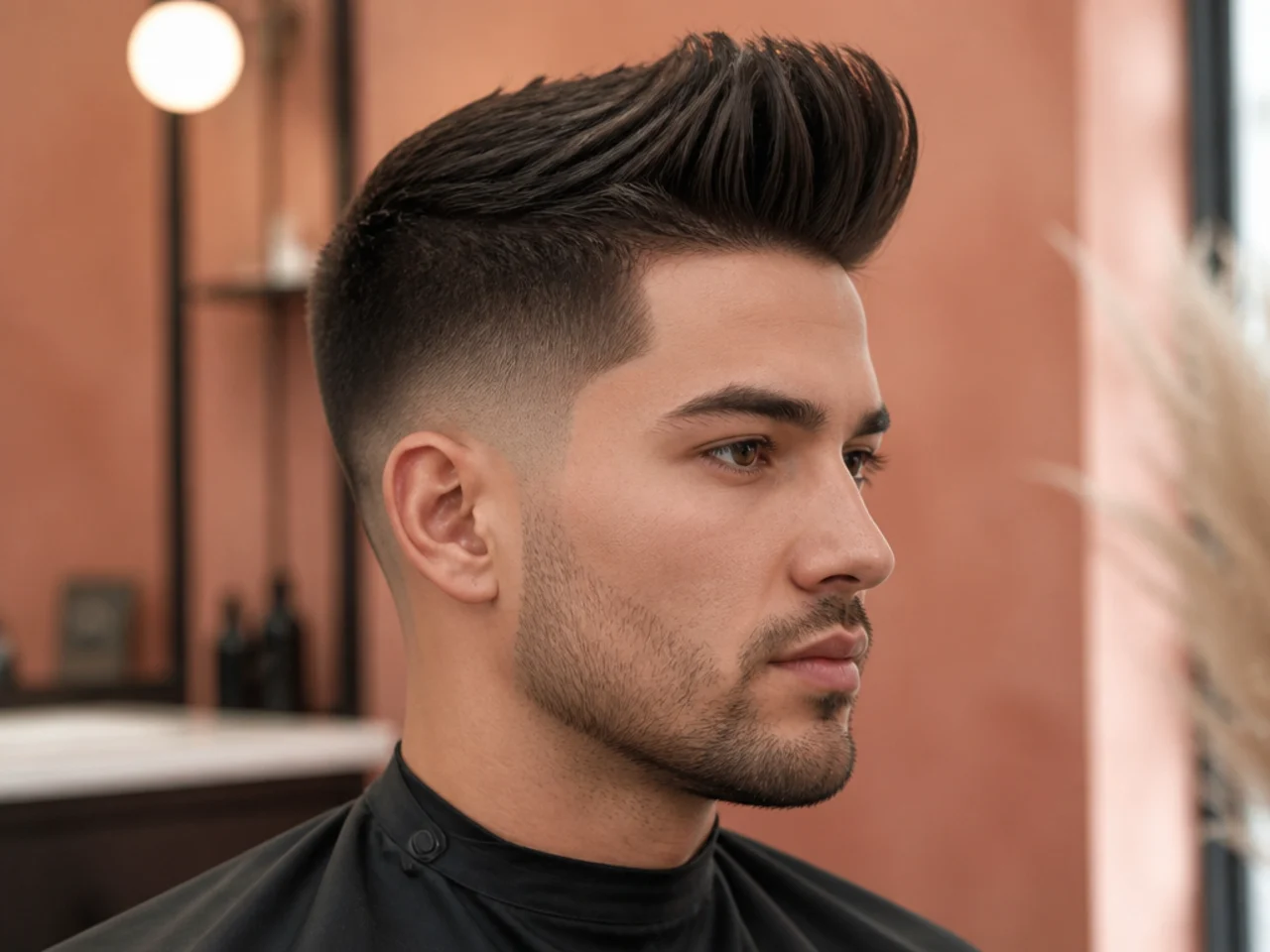
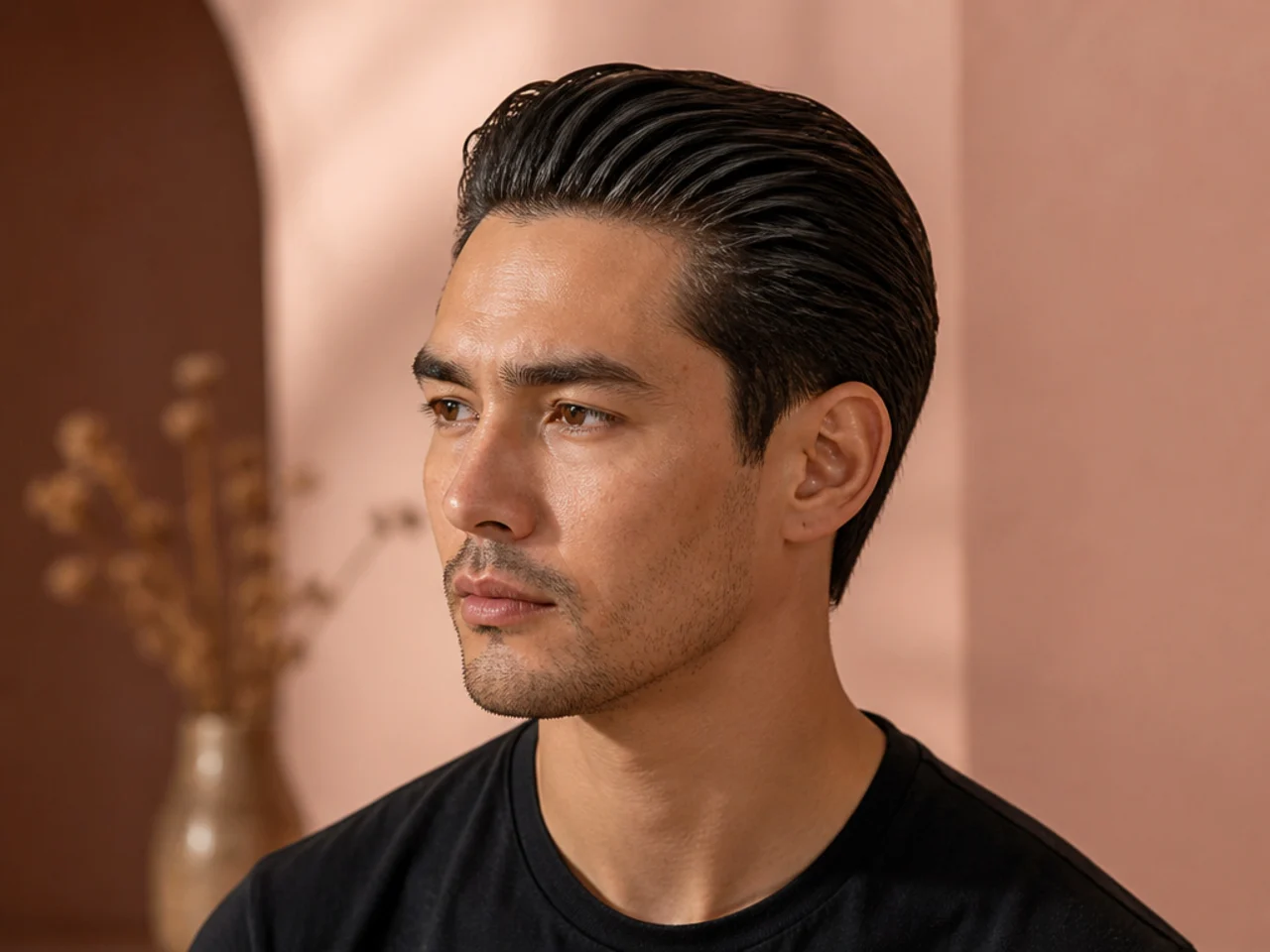
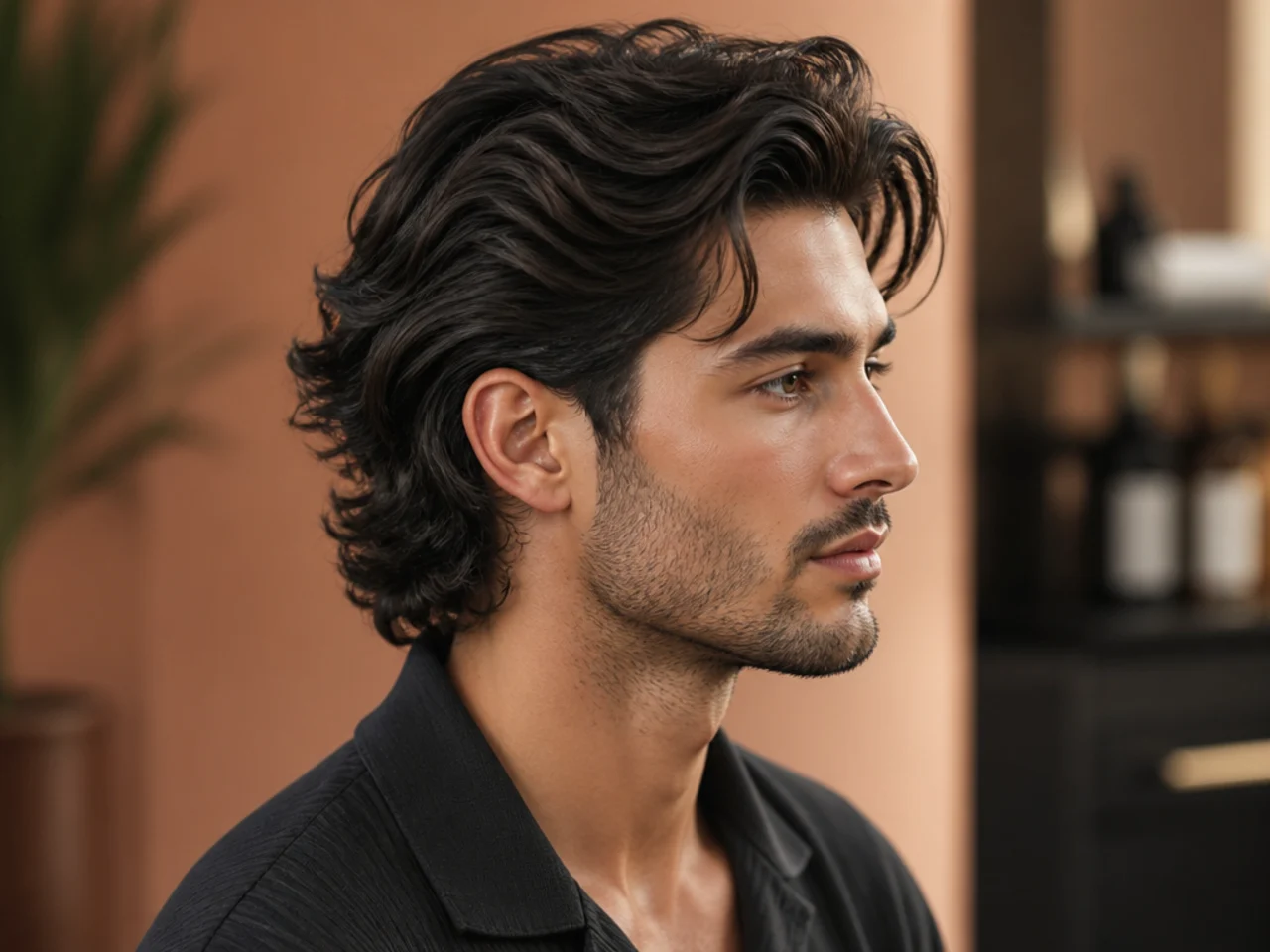
A flow is a medium-to-long men's cut styled backward off the face. On top you want 4 to 6 inches. On the sides, enough length to reach behind the ear when brushed back — usually 3 to 4 inches by the time you get there. No hard fade, no clipper guards. Scissor work only. The perimeter is soft, the ends move, and the whole shape reads more surf-house than boardroom.
The flow haircut men have been asking for since 2020 comes from hockey culture — it's the length that fits under a helmet and shakes out clean on the bench. It's also the same silhouette surfer hairstyle guys wear, just styled backward instead of forward. Genetics decides part of your ceiling. Fine, straight hair grows into a lighter, wispier flow. Thick or wavy hair fills out into the fuller version. Coarse coily hair doesn't grow into a flow at all — that texture builds volume up and out, not back and down.
What You'll Need

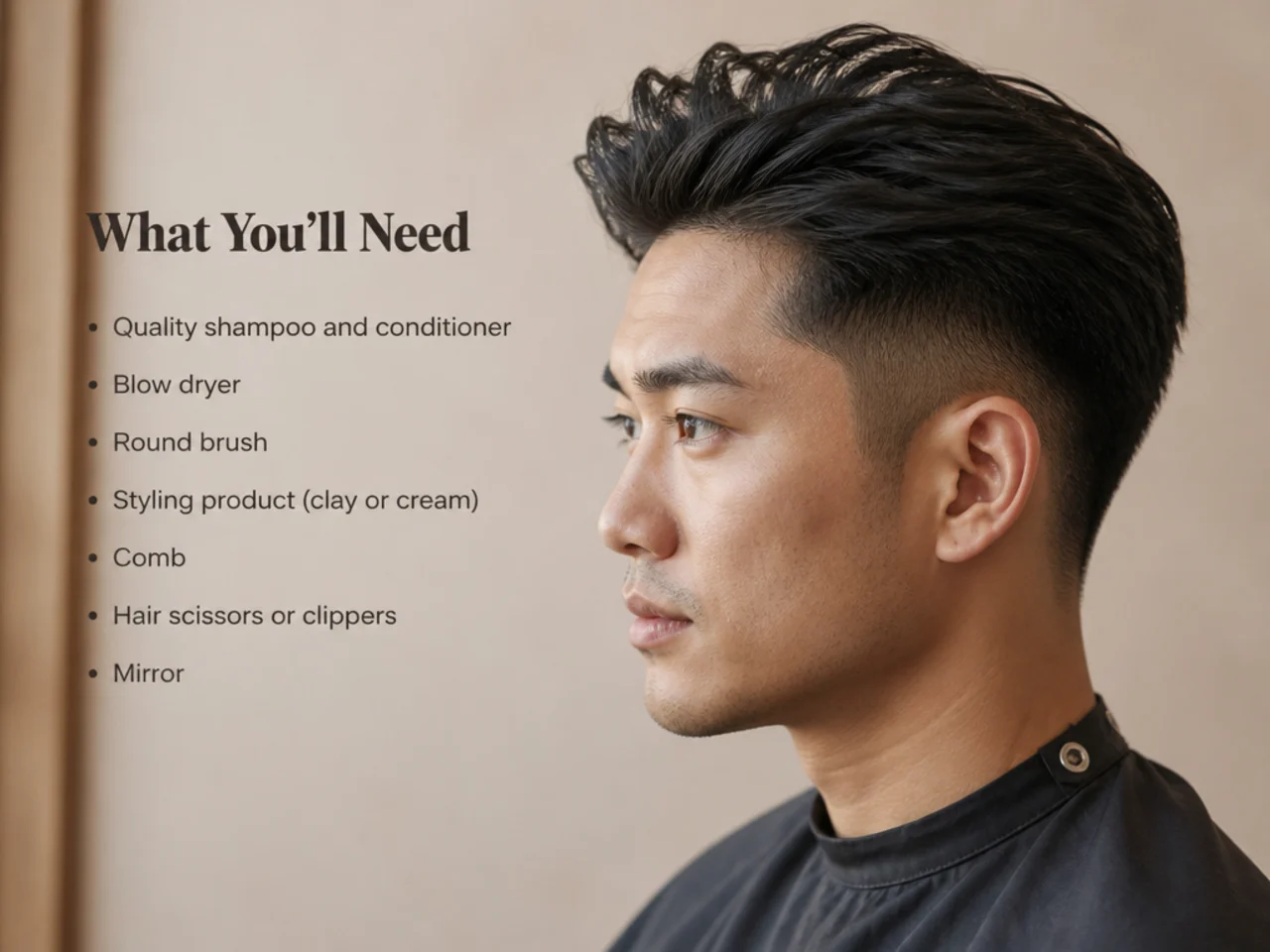
Six to nine months is a long project. Buy the tools once and stop thinking about the kit.
- Sulfate-free shampoo — Every third day, no more. Sulfates strip the oils that make longer hair fall in one piece instead of frizzing at the ends. Any drugstore bottle labeled sulfate-free works.
- Lightweight conditioner — Mid-lengths to ends only. Keep it off the scalp so your roots don't go flat by lunch.
- Sea-salt spray — The grit that gives flow its beach-swept texture. Buy one labeled "flexible hold" or "medium hold." Skip anything with heavy silicones — they weigh damp hair down and cancel the volume you're trying to build.
- Matte cream or light paste — The finishing product that keeps the sweep-back in place without looking wet. Matte is the whole point — pomades and gels read shellac on flow-length hair.
- Wide-tooth comb — For detangling wet hair. Fine combs snap the mid-lengths.
- Microfiber towel or an old cotton T-shirt — Terry-cloth towels rough up the cuticle and give you frizz before you've touched a product.
- Two thin fabric headbands or a beanie — Bridge equipment for weeks 6 through 12, when the fringe hangs in your eyes but nothing sweeps back yet.
Total spend on products: under $60 if you buy drugstore. The best wavy hair products guide has our specific picks if you want to skip the aisle stare.
Step 1: Get Your Baseline Shape
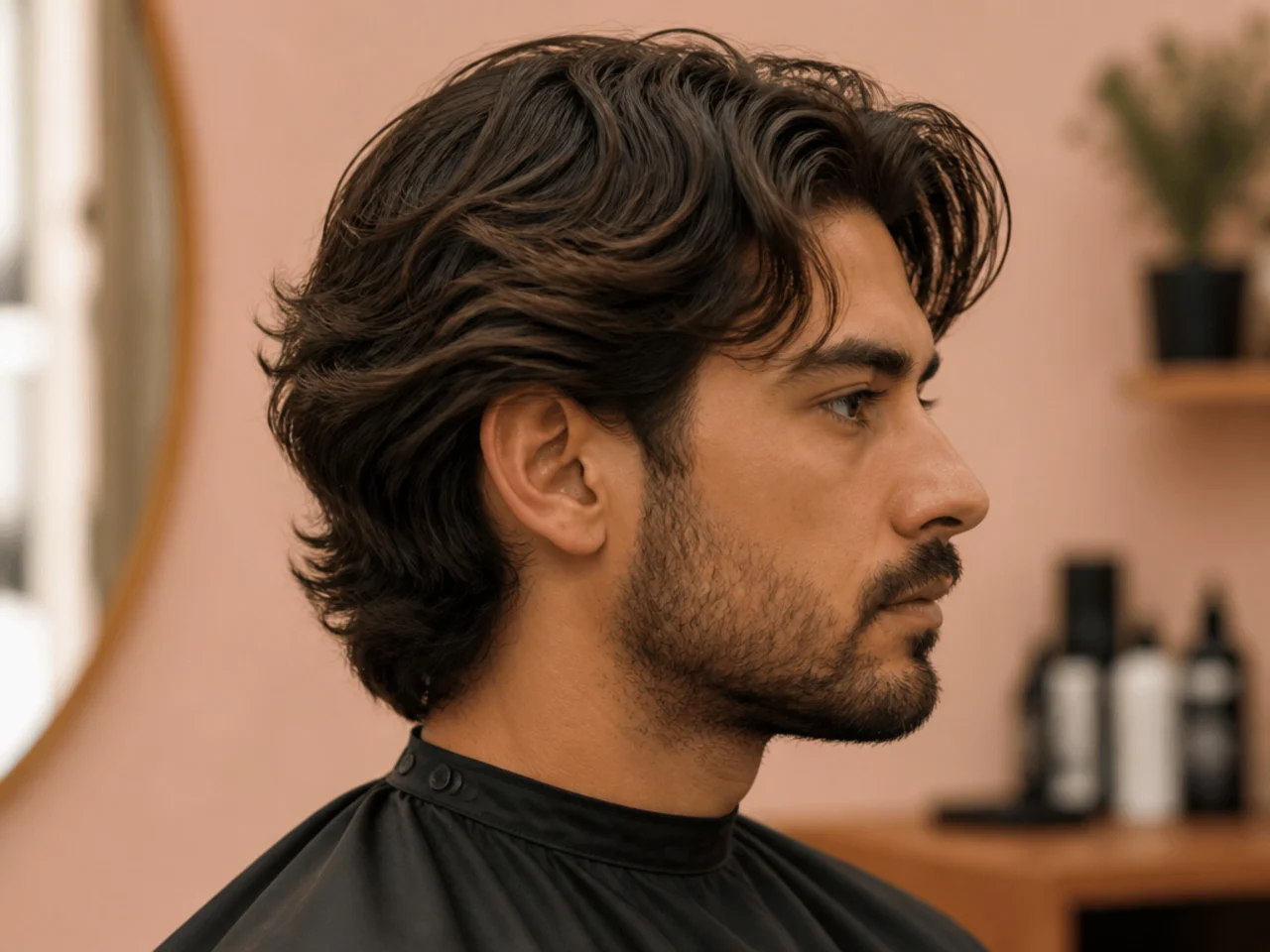
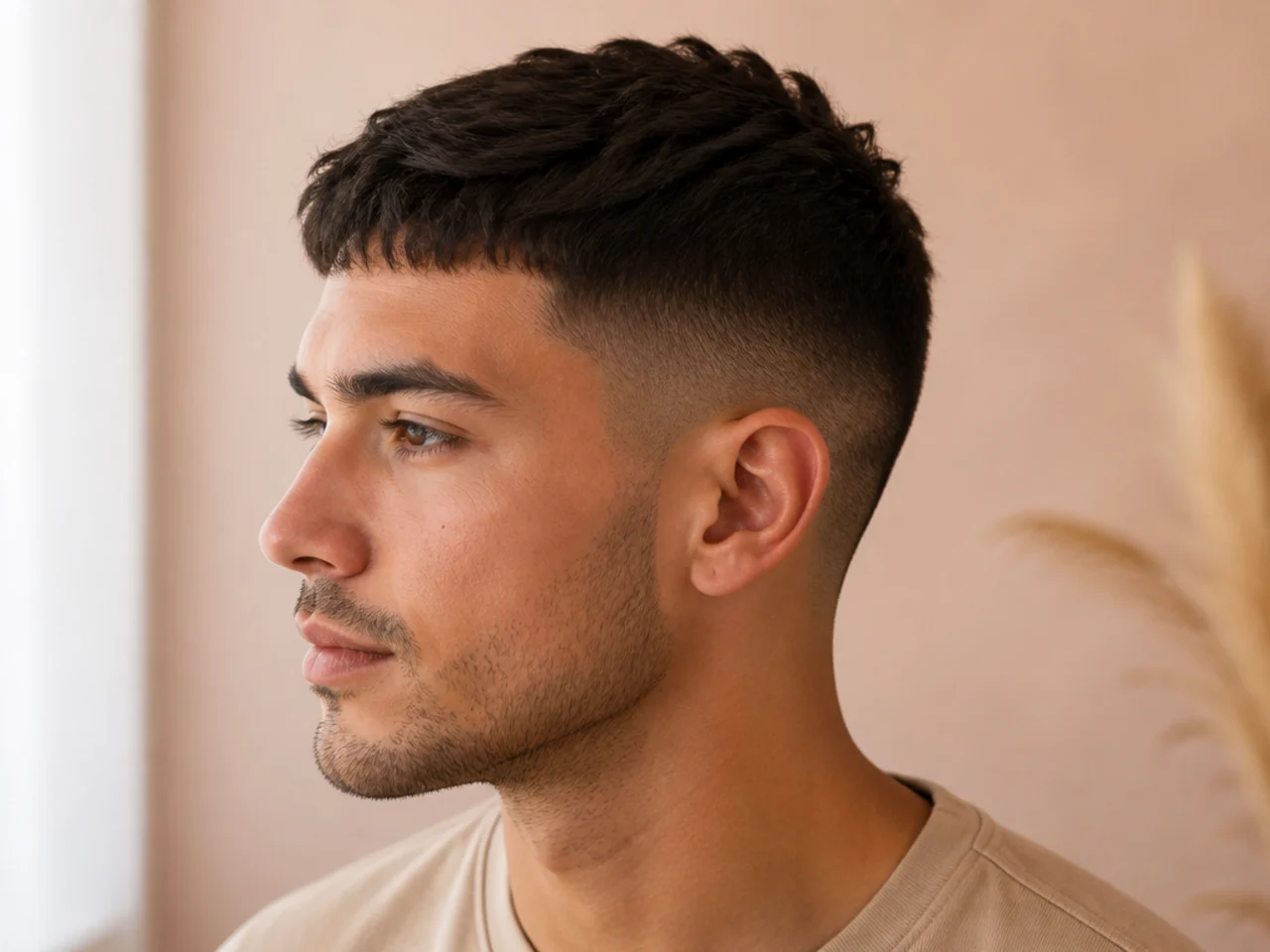
The single biggest mistake guys make is trying to grow a flow out of the wrong starting cut. If you're sitting on a fade with two inches on top, the sides need to catch up by four inches while the top catches up by two — and during that entire stretch the cut reads mullet, then shag, then mop, before it ever reads flow. Book a shaping session before you commit.
Ask your barber for three things. First, remove the fade completely — take the sides down to a scissor length that matches or nearly matches your current top. Second, point-cut the ends everywhere so nothing sits blunt. Third, keep the perimeter uniform — no undercutting, no hidden layers, no razor work at the neckline. What you want is a soft, all-scissor "growing-out cut" that already flows in one direction the day you leave the chair.
Bring a photo. The word "flow" means fifteen different cuts to fifteen different barbers. A hockey-flow reference is the clearest — Auston Matthews or a 90s Jaromir Jagr photo — but any picture of the finished silhouette you want does the job. Tell your barber outright: "This is the target, and I want a starting cut that grows into it." A good barber will cut half an inch off what you have to reset the shape, blend the perimeter, and send you home with a look that's playable for the next three weeks while it grows.
If you were already at a medium length men's cut, the shaping visit takes ten minutes and costs almost nothing. If you're growing out from short, it's a proper cut. Either way, this is week zero — every day after it counts.
Step 2: Build Your Flow Product Routine
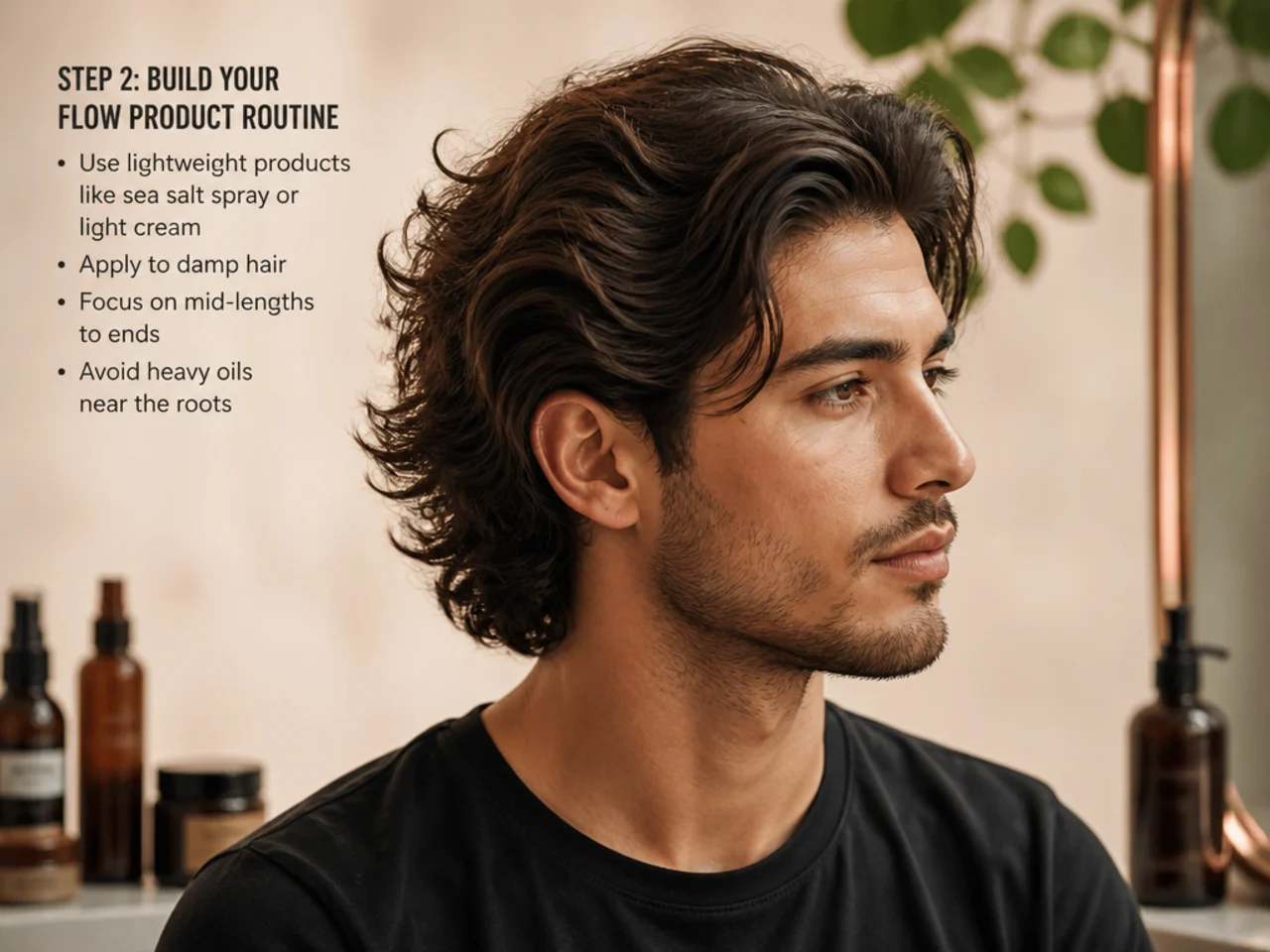
The routine is the same six days a week. Repetition builds the muscle memory that keeps styling under four minutes on rushed mornings.
Wash your hair every three days with sulfate-free shampoo. On the other two shower days, rinse with water only and condition the mid-lengths to ends. Squeeze the water out with a microfiber towel — press, don't rub. While your hair is still damp (not soaking), mist sea-salt spray from four inches away, focusing on the mid-lengths and roots. Comb it through once with a wide-tooth comb, running back from the hairline. Then let it air-dry for ten minutes while you get dressed.
When it's about 80% dry, work a nickel-sized amount of matte cream between your palms until it disappears, then rake it through from the front hairline back with your fingers. Don't use a brush — brushes flatten the volume you just built. If your hair is still fighting the direction you want, blow-dry the last 20% on medium heat, aiming the nozzle down the shaft from the crown toward the ends. That trains the cuticle and locks in the sweep.
Skip gel entirely. Skip pomade until you're past month five. Skip hairspray unless it's a headshot day. The whole trick to a natural-looking flow is under-doing product — hair that moves reads flow, hair that's locked in place reads slick-back. That's why matte cream is the workhorse: it holds a shape without turning shiny or stiff.
Step 3: Master the Daily Styling Move
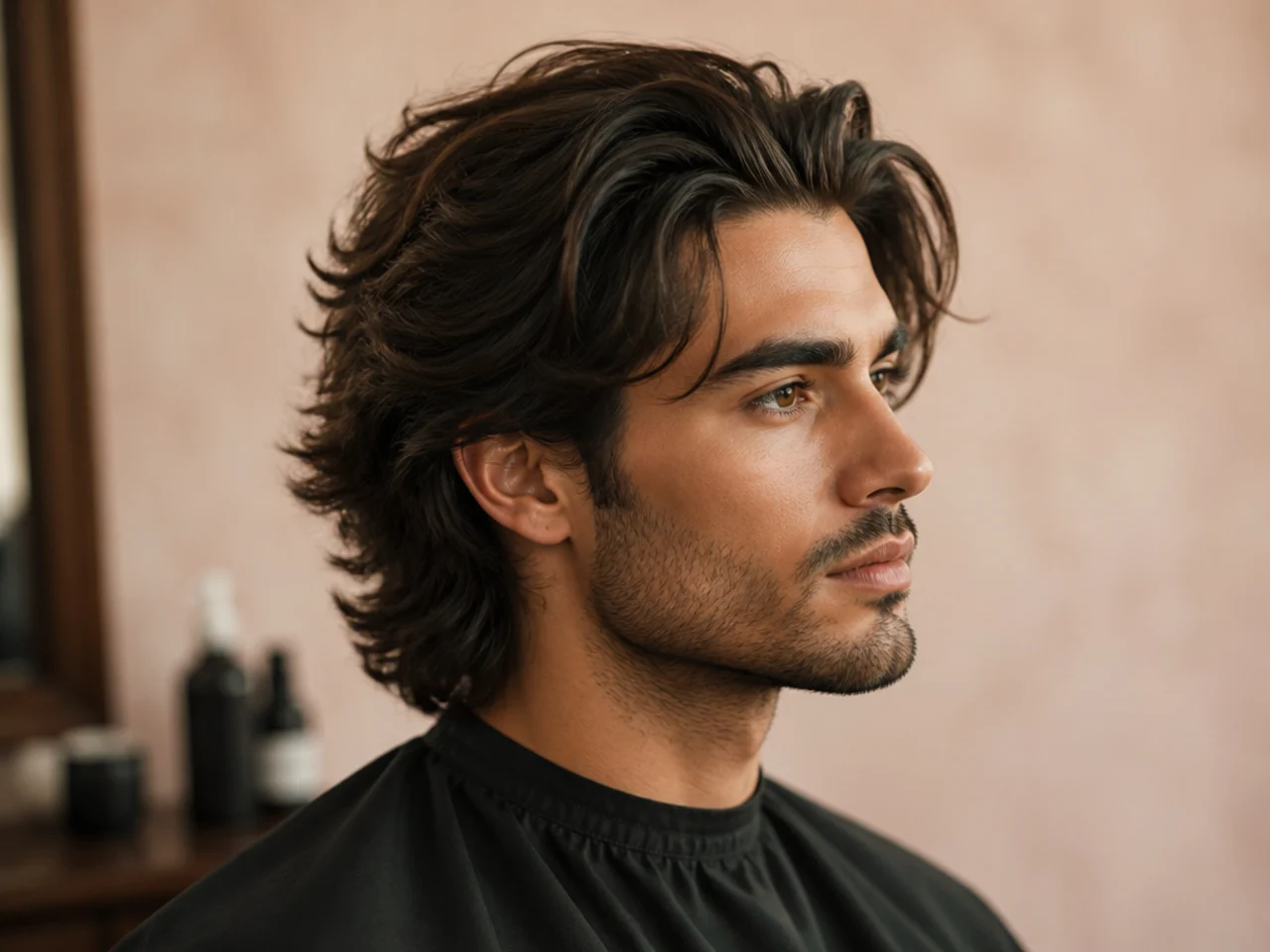
Styling a flow is one move: fingers from the front hairline straight back to the crown, over and over, until the hair remembers where you want it. The whole thing takes 90 seconds once your hair is the right length. Getting there means practicing on hair that isn't quite there yet.
Start with damp hair, not wet. Soaking hair is too heavy to hold a shape — you're just moving water around. Damp hair takes the direction you push it and keeps it once it dries. Tilt your head slightly forward, drag your fingers from the front hairline to the crown four or five times, then tilt back and let the hair fall naturally into place. If you have wave or curl, the tilt-forward-then-back move gives you lift at the root that a straight back-comb kills.
The temples are where most guys lose the shape. Hair at the temples wants to fall forward toward the ear, not backward. Take an extra 20 seconds to press that hair back with your palm and hold it for five seconds while it sets. This is what separates "hair styled backward" from "hair that stays there past 10 a.m."
A pro move — one your barber probably won't mention: rough-dry your hair upside down for 30 seconds before you style. Flipping your head lifts the roots and gives you the volume at the crown that makes a flow look full instead of flat. Then flip back up and do your regular back-sweep. This is the same trick guys with a layered men's cut use to keep length looking lush instead of dragged down.
Step 4: Survive the Awkward Stage
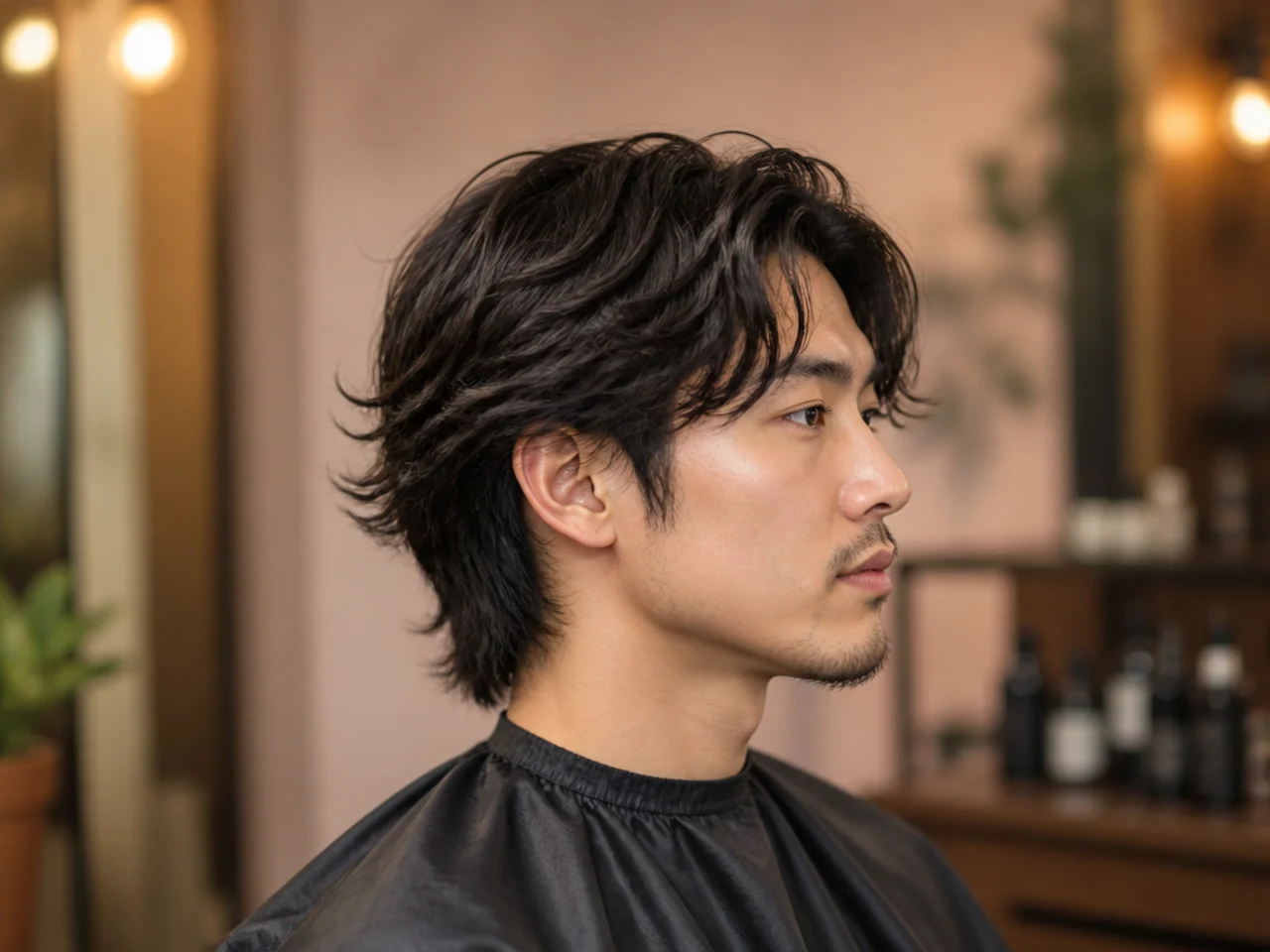
Every guy growing a flow hits the same wall between weeks six and twelve. Hair on top has grown past styleable but hasn't reached sweep-back length. The sides tuck behind the ears one hour and flip forward the next. The fringe drops into your eyes every time you look down. This stage is why 70% of grow-out attempts get buzzed off in the mirror at 11 p.m.
Three tools bridge it. First — a thin fabric headband worn just behind the hairline during the workday. It's not a fashion statement, it's a construction hard hat while the foundation cures. Second — a light beanie for outdoor time. Any hat that flattens the hair backward trains it to sit that direction. Third — sea-salt spray applied twice a day instead of once. The added texture gives the mid-lengths grip on themselves so they stay swept back longer.
The specific mid-stage move: tuck the sides behind your ears while the hair is damp, then let it air-dry there. The hair keeps that shape for the rest of the day even after it falls out from behind the ear. Six weeks of this and the sides "remember" to sit back on their own. Guys skip this step and end up with sides that flare forward for the entire nine months.
If the mirror is winning, remember what the six-week point looks like on the other side. A messy men's hairstyle is a legitimate holding pattern here — the same product routine works, the hair reads intentional instead of unfinished, and you buy yourself another month toward the target length without hating your reflection. This is also the stage where guys who wanted a flow discover they actually prefer a modern mullet or a wolf cut — the layered cousin cuts that don't need the sides to catch up.
Step 5: Trim Without Losing Length
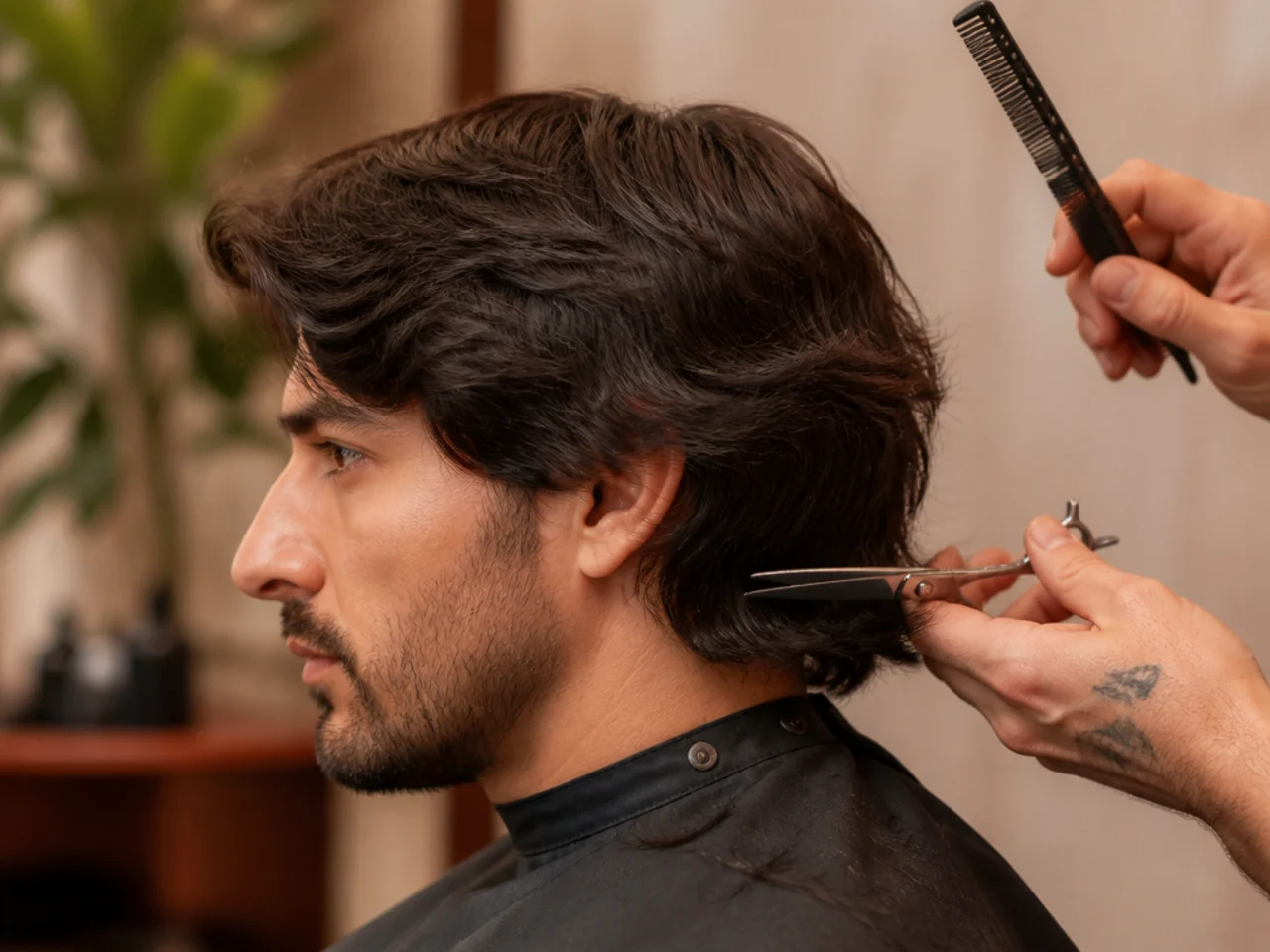
The counterintuitive rule of growing hair: cut it. Not much, and not often, but do it. Split ends travel up the shaft if you ignore them, and the ends that split at month four turn into three-inch losses at month seven when your barber finally has to cut above the damage.
Book a trim every 8 to 10 weeks. Tell your barber the exact words: "I'm growing this out for a flow. Take a quarter inch off the ends only. Reshape the perimeter — no length off the top, no length off the length." A quarter inch is the target — that's slightly less than one month of growth. You're keeping the perimeter clean and the ends healthy while the overall length keeps climbing.
Watch two spots specifically. The neckline creeps down into your collar every three weeks and needs a light clean-up so it doesn't read unkempt. And the hair over the tops of your ears wants to bulk up and stick out — a gentle scissor blend keeps that flat and flowing. Neither cut removes any length you can see. Both fixes make the growing-out cut look intentional instead of neglected.
If the barber reaches for clippers, stop them. Clippers put a line in your grow-out. You'll wear that line for the next 12 weeks while it blends out. Scissors only, all-over. If you can't find a barber who cuts this way, look for shops that specialize in longer men's cuts — the layered shaggy men's hairstyle crowd knows how to trim without resetting your progress.
Step 6: Upgrade Products as Length Builds
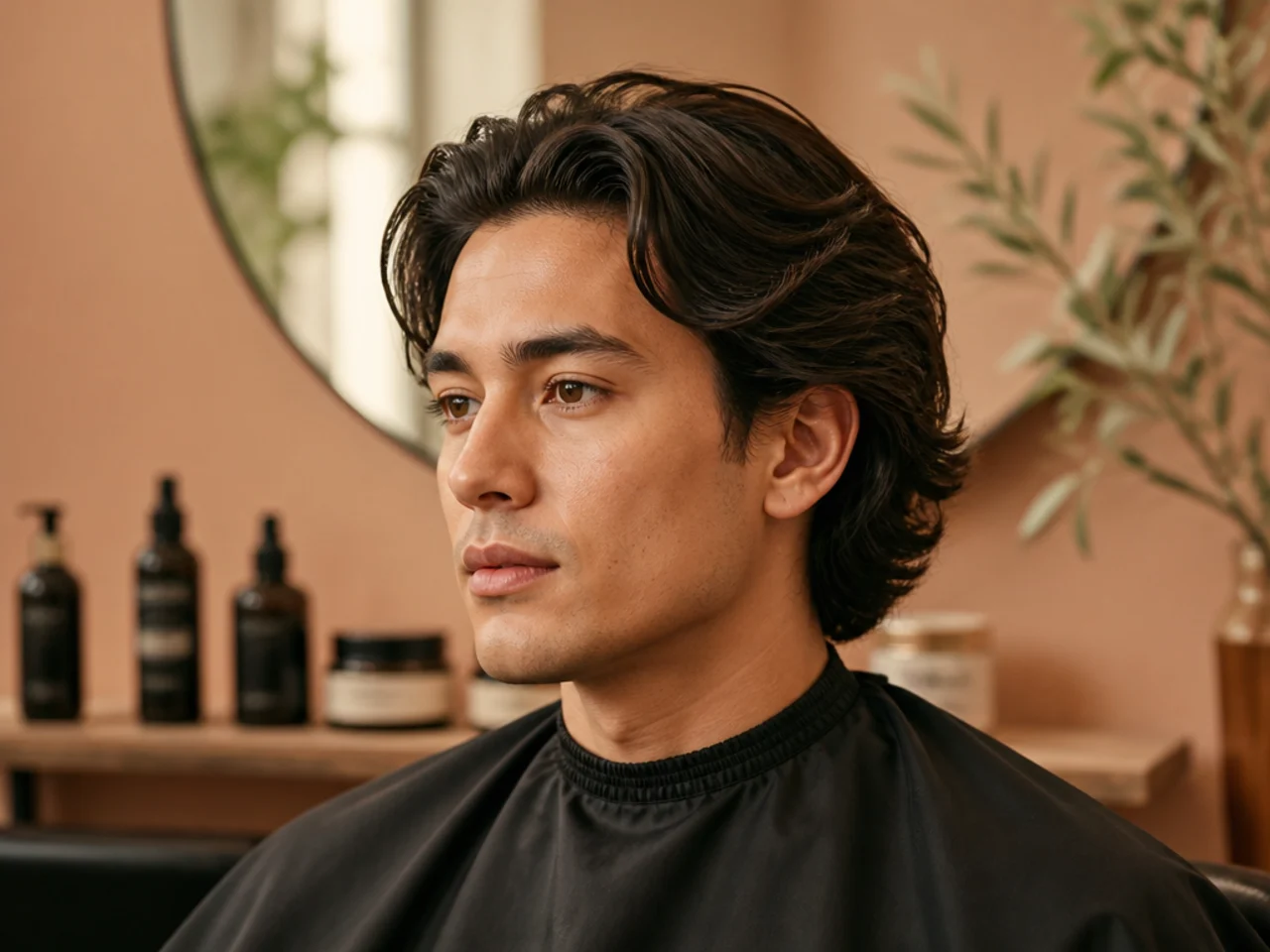
Around month four, hair on top passes three inches and the routine that carried you through the awkward stage starts falling short. Sea-salt spray alone leaves the ends dry. Matte cream alone doesn't tame the mid-length frizz that appears when hair is long enough to catch wind. Add two products in this order.
First — a lightweight leave-in conditioner. Rake it through soaking-wet hair before you towel-dry, once every two washes. It sits on the ends all day and prevents the dryness that turns "flow" into "hay." Look for water-based formulas; anything cream-based on shorter mid-length hair goes greasy fast. This one product single-handedly gets most guys through months four to six with the length they actually grew.
Second, around month six — a lightweight hair oil, applied only to the last inch of the ends after styling. Two drops in your palms, rubbed together, pressed only onto the tips. Never up to the roots, never on the mid-length. This is the finishing product that adds shine without weight and turns mid-brown ends from matte-dry back to healthy-looking under bathroom lighting.
Wavy-haired guys benefit most here. The same category of products built for curly men's cuts — hydrating leave-ins and light finishing oils — is exactly what medium-wavy flow-length hair needs. If your hair pattern is 2B or 2C, borrow the routine wholesale.
Step 7: Know When Your Flow Is Fully There
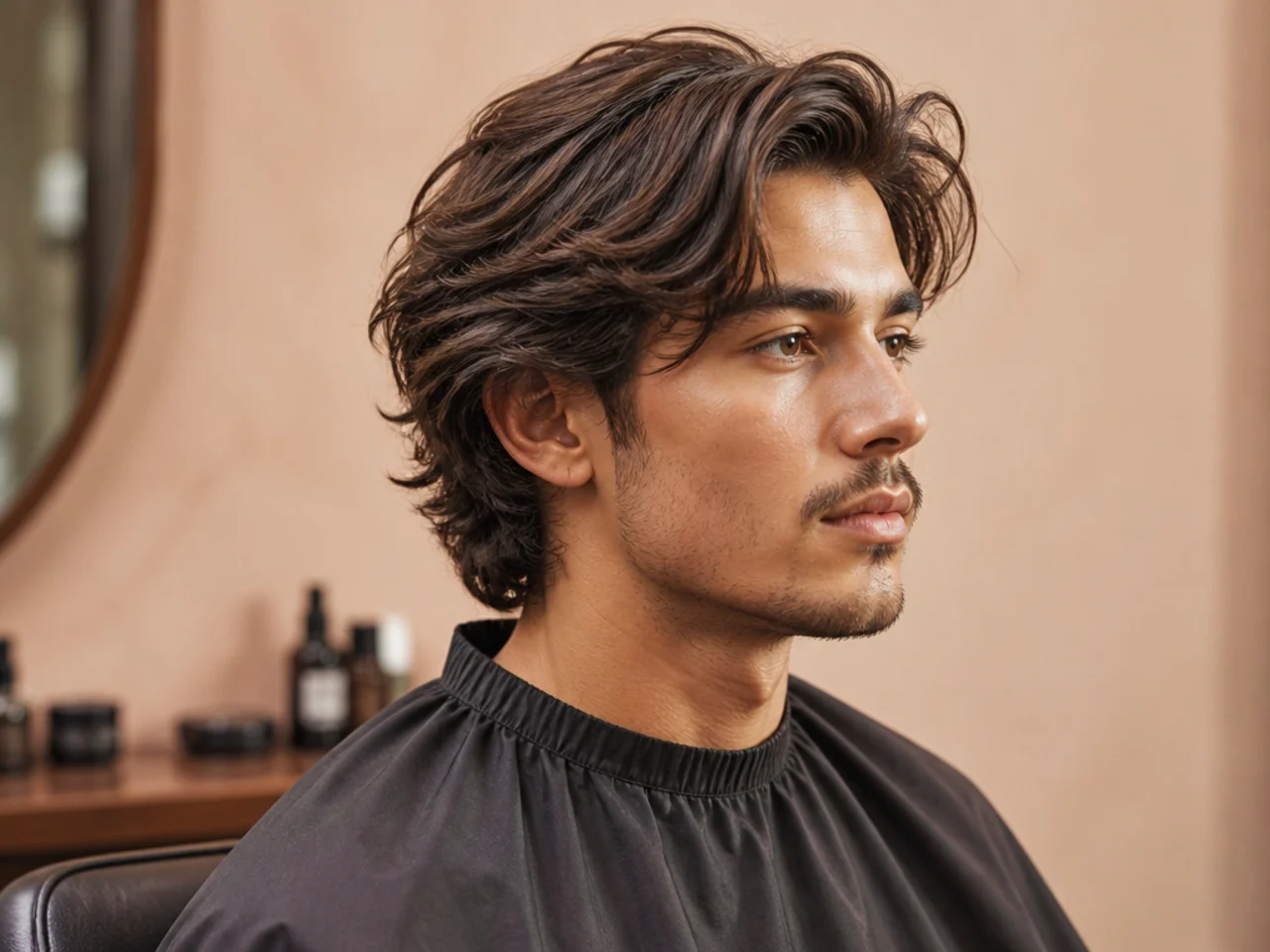
You're done growing when three things happen at once. First — the front hairline reaches your eyebrows when you pull it forward. That's about 5 inches of length on top and gives you enough hair to sweep back with real weight. Second — the sides tuck behind your ears and stay there without a headband, all day. That's usually 3 to 4 inches at the temples. Third — when you turn your head or walk into wind, the hair moves as one piece and then settles back into shape.
Once you're there, the maintenance rhythm changes. Trim every 6 to 8 weeks instead of every 10. Ask for the same quarter-inch dusting plus a light thinning through the crown if the shape starts feeling heavy on top. Your product kit shrinks — sea-salt spray and matte cream become the only two things you reach for on styling days. And on the second-day-hair days, a spritz of water and a quick finger rake resets the shape without a shower.
This is also the point where you can wear the flow forward as a full surfer hairstyle some days and backward as a proper flow other days — same cut, opposite directions. That flexibility is the whole payoff for the six-to-nine-month wait.
Troubleshooting Your Flow Grow-Out
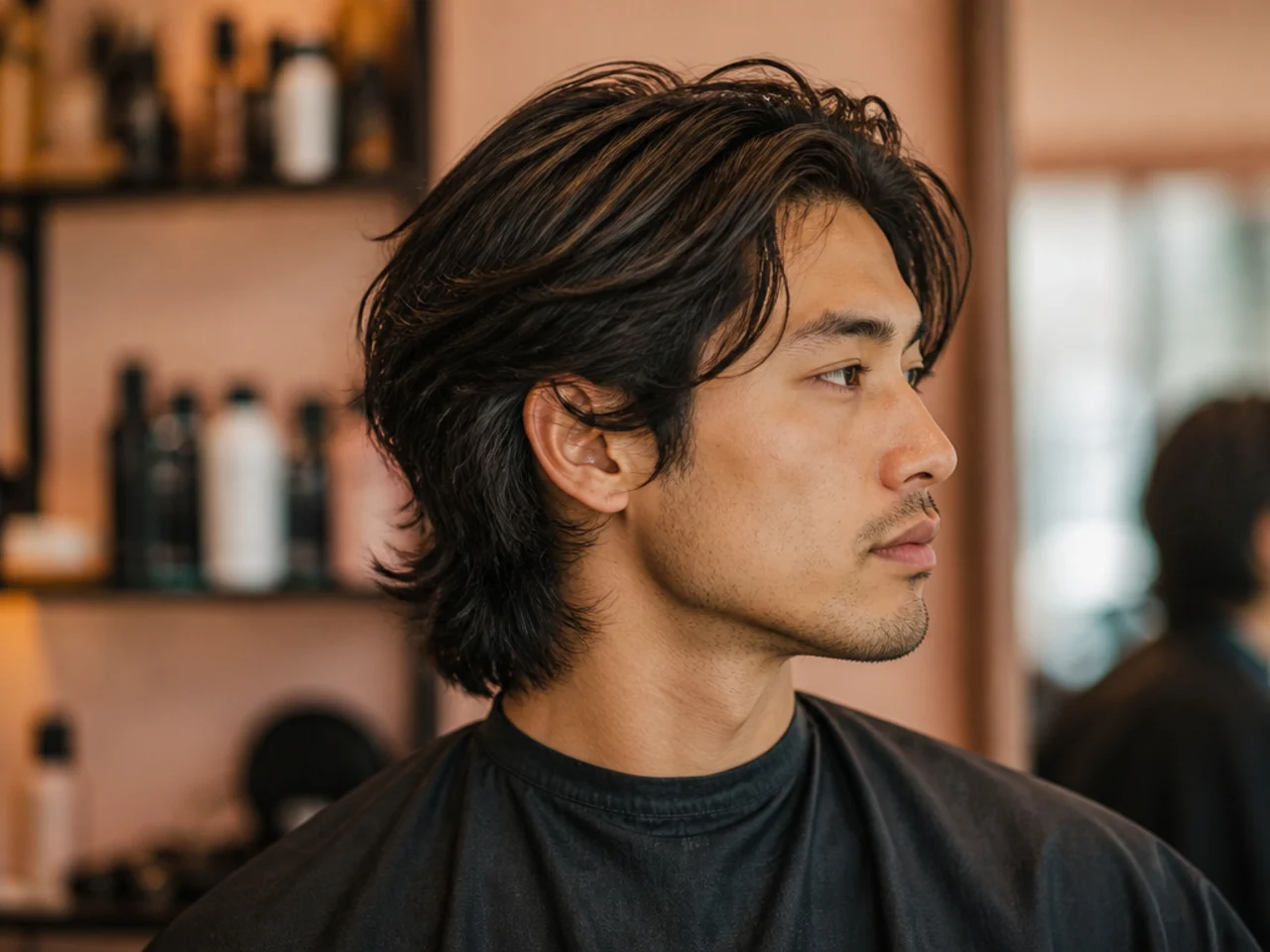
The problems below cover the five failures that make guys throw in the towel. Each one is fixable inside a week.
- Flat crown, no volume up top: you're skipping the tilt-and-flip rough-dry. Flip your head forward for 30 seconds after showering, blast the roots with your fingers, then flip back and style. If that doesn't do it, cut back on conditioner at the roots — you're weighing the crown down.
- Sides that flop forward instead of tucking back: the temple hair hasn't been trained yet. Damp-tuck it behind the ears every morning for two weeks. If it still won't stay, apply a nickel of matte cream at the temples specifically and hold the hair back with your palm for 30 seconds while it sets.
- Frizzy, dry ends after month four: you're skipping the leave-in step. Add a water-based leave-in on wet hair every wash. If frizz persists, book the trim early — the ends may already be splitting.
- Fringe that hangs in your eyes: you're in the awkward stage, and you need a headband for the workday and a damp back-sweep every morning. Do not cut the fringe — you'll add three more months to your timeline.
- Hair looks greasy by 3 p.m.: you're overproducing matte cream, or the cream you're using has silicones. Switch to a lighter cream and use half the amount. Dry shampoo at the roots on off-shower days fixes the rest.
Most of these come back to the same three variables — product amount, drying technique, and patience. Fix one at a time and give each fix a week to prove out before you change something else.