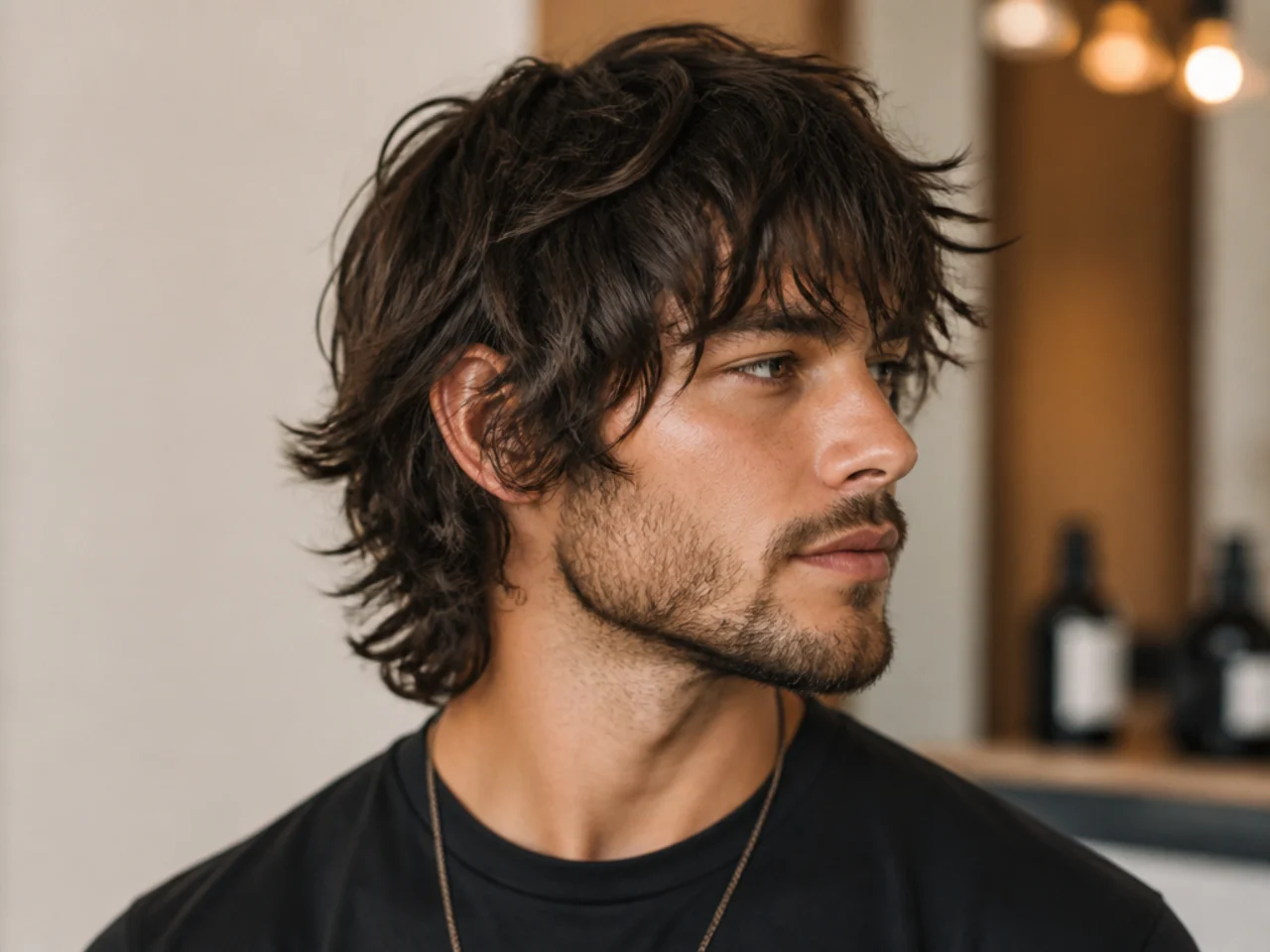
Layered Mens Shaggy Hairstyles: 26 Cool & Attractive Examples
Layered mens shaggy hairstyles are in! Explore fresh, dynamic options that elevate your style and add a youthful vibe. Find your perfect look now...
In this article · 33
- Layered Mens Shaggy Hairstyles
- Long Shaggy Haircut
- Short Shaggy Haircut
- Classic Shaggy Hair
- Textured Shaggy Haircut
- Shaggy Mullet
- Layered Shaggy Haircut
- Medium Shaggy Haircut
- Shaggy Hair with Beard
- Shaggy Hair with Fringe
- Modern Shaggy Fade Haircut
- Shaggy Mod Cut
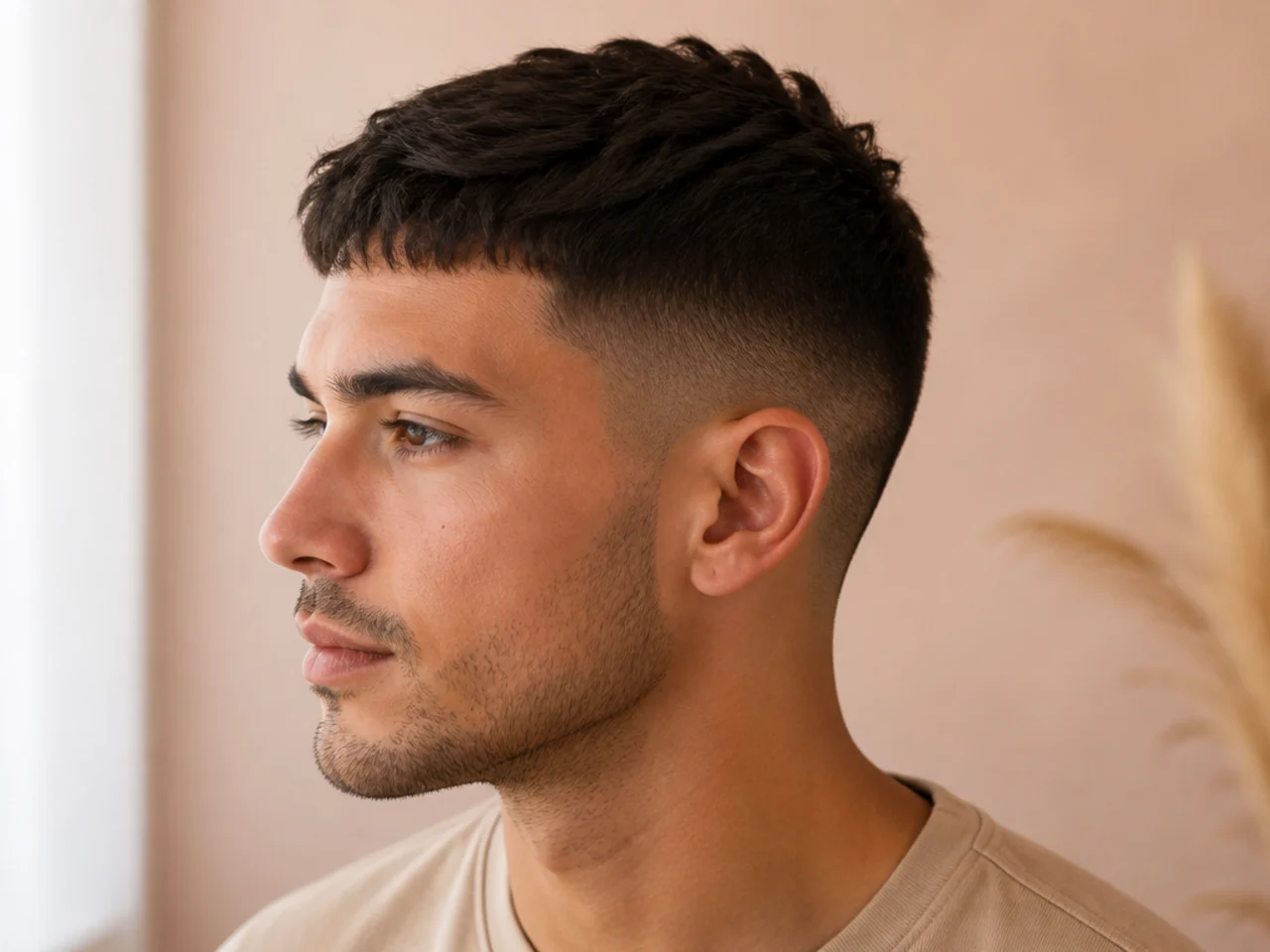
- Edgy Short Shaggy Hair with Faded Sides
- Tousled Shag
- Long 70s Shaggy Style
- Curly Shaggy Haircut
- Shaggy Flow
- Thick Shag with Long Fringe
- Long Textured Shaggy Hair with Short Sides
- Short Shaggy Curls
- Parted, Long Shaggy Hair
- Fully Shaggy Style with Low Fade
- Long Mullet Shag
- Shaggy Surfer Haircut
- Textured, Wavy Shaggy Style
- Short Shaggy Hair with Taper Fade Sides
- Messy, Medium Shag
- Shaggy Haircuts for Straight Hair
- Conclusion
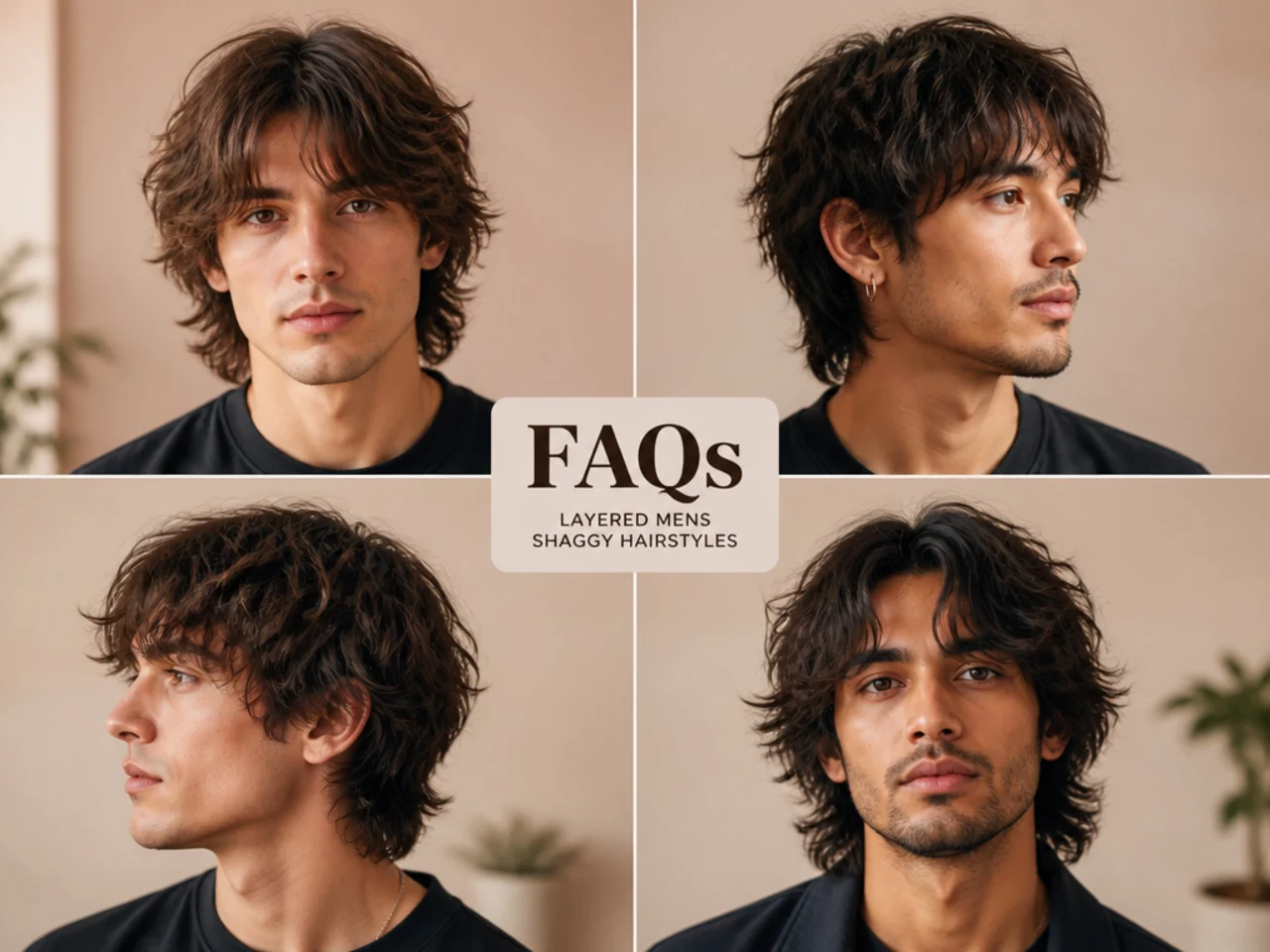
- FAQs
- Is Layered Hair Good for Men?
- Are Shags in Style for Men?
- What is the Difference Between Layers and Shags?
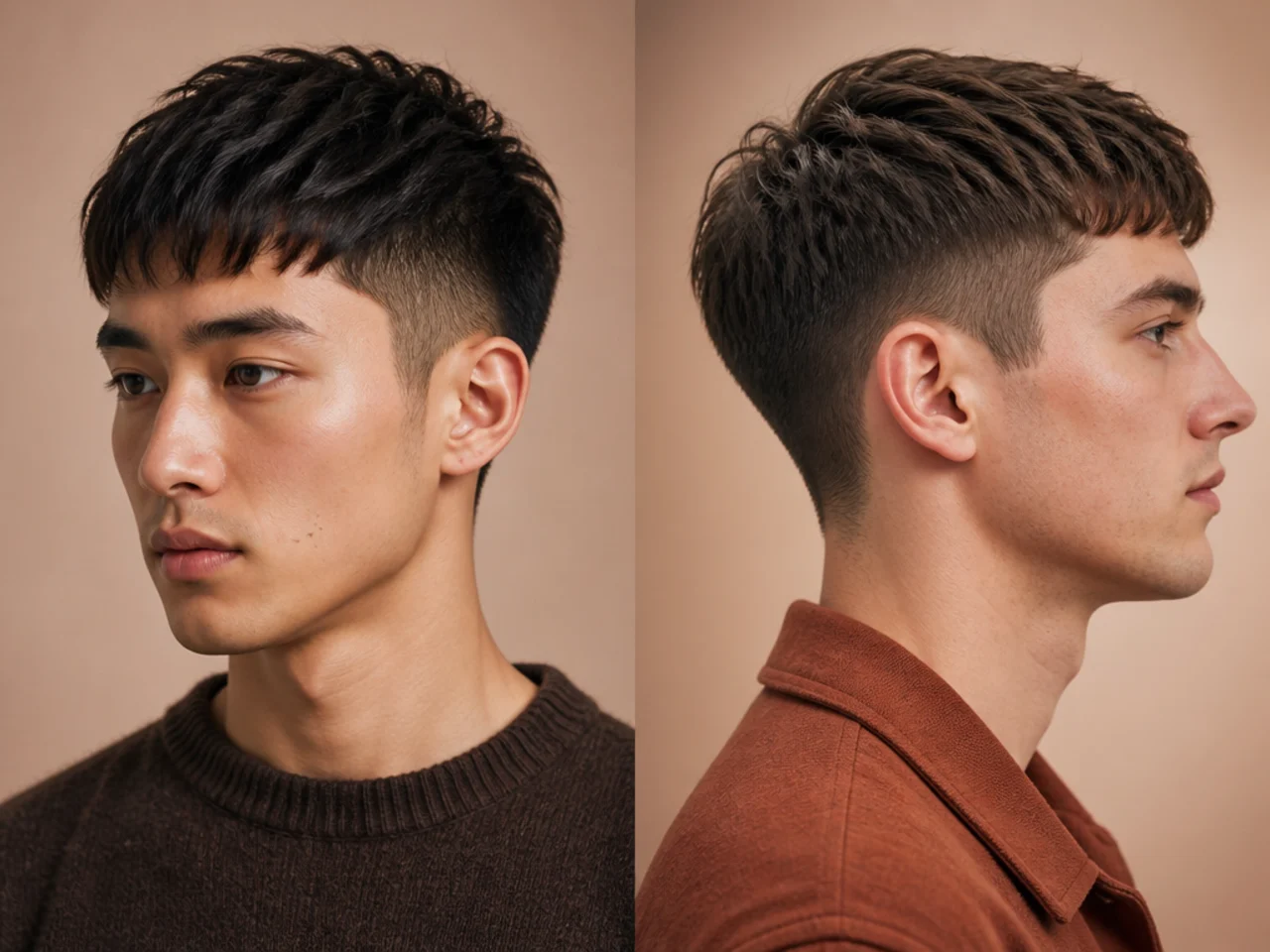
Layered shaggy hairstyles for men live in the shaggy middle — long enough for movement, short enough that you can still throw on a hat. The shag is a heavily layered cut with wispy ends and volume built through the crown. This guide runs through 26 variations, from curly shags to fade-blended shags to full 70s revivals. Each one tells you what makes it different, who it suits, and how to ask for it.
Layered Mens Shaggy Hairstyles
The shag is a layered cut, not a shape cut. Your barber cuts internal layers into the length to build volume, then breaks up the ends so they sit wispy instead of blunt. That's what gives the men's shag its lived-in, air-dried finish. Length usually runs 3 to 6 inches on top, with the crown a hair longer so it sits tall. It's a cousin of the mullet family and a close relative of the wolf cut — but the shag doesn't stack length at the back the way a wolf does. Product-wise, one pump of sea-salt spray on damp hair and an air-dry does 90% of the work. For the wider family, see the full shag haircuts guide.
Long Shaggy Haircut
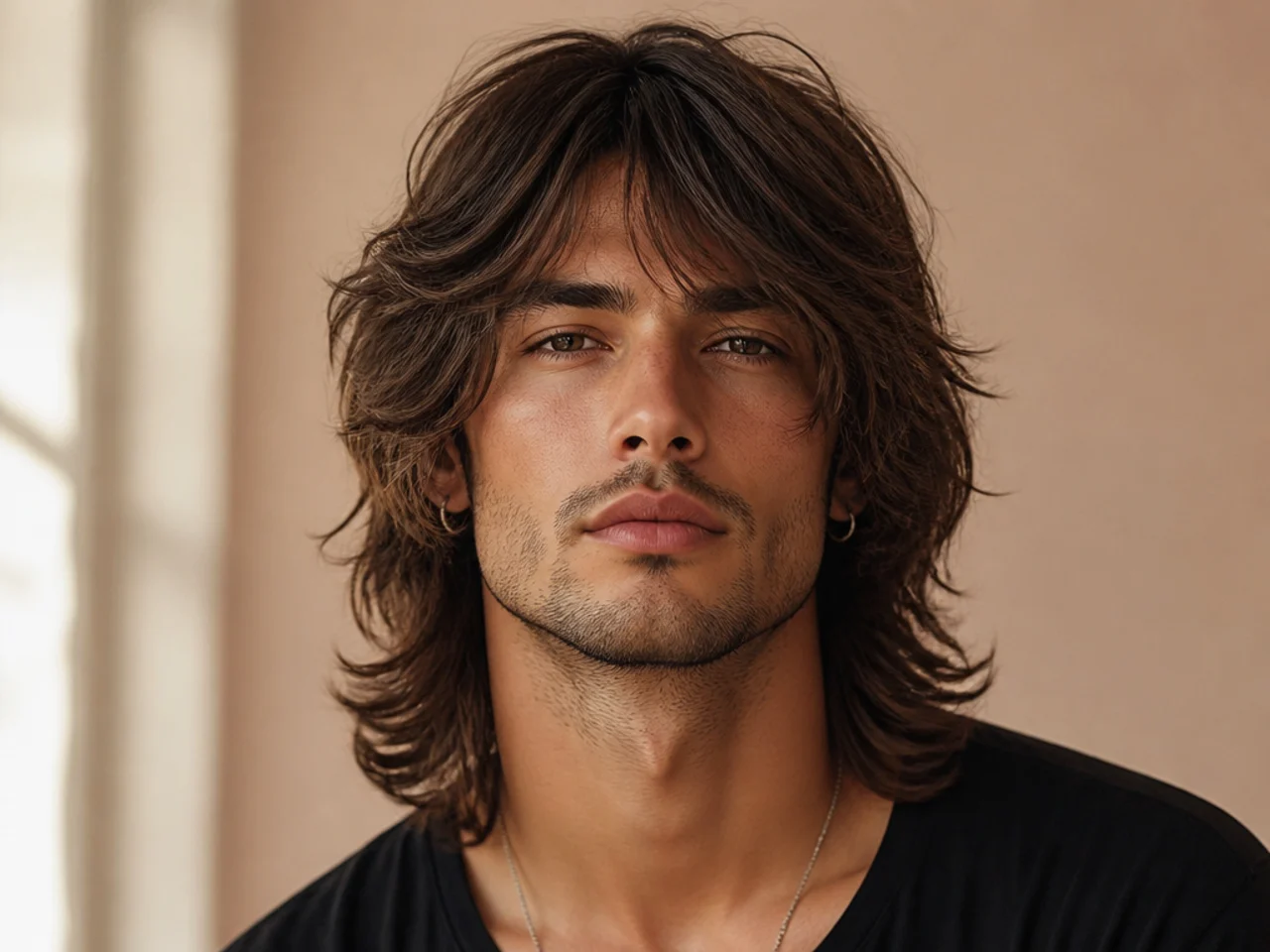
This is the shag pushed to length — 5 to 7 inches on top, layers running past the ears, ends breaking on the shoulder line. Volume sits in the crown and cascades from there. Long shag men styles like this one suit medium-to-thick hair best. They work on every face shape except very round. Ask for "internal layers for volume through the crown, wispy point-cut ends, keep the perimeter soft — no blunt line at the bottom." Skip the razor if your hair is fine; scissors only. Styling: mist damp hair with sea-salt spray, scrunch, then air-dry face down for the first three minutes to lift the roots.
Short Shaggy Haircut
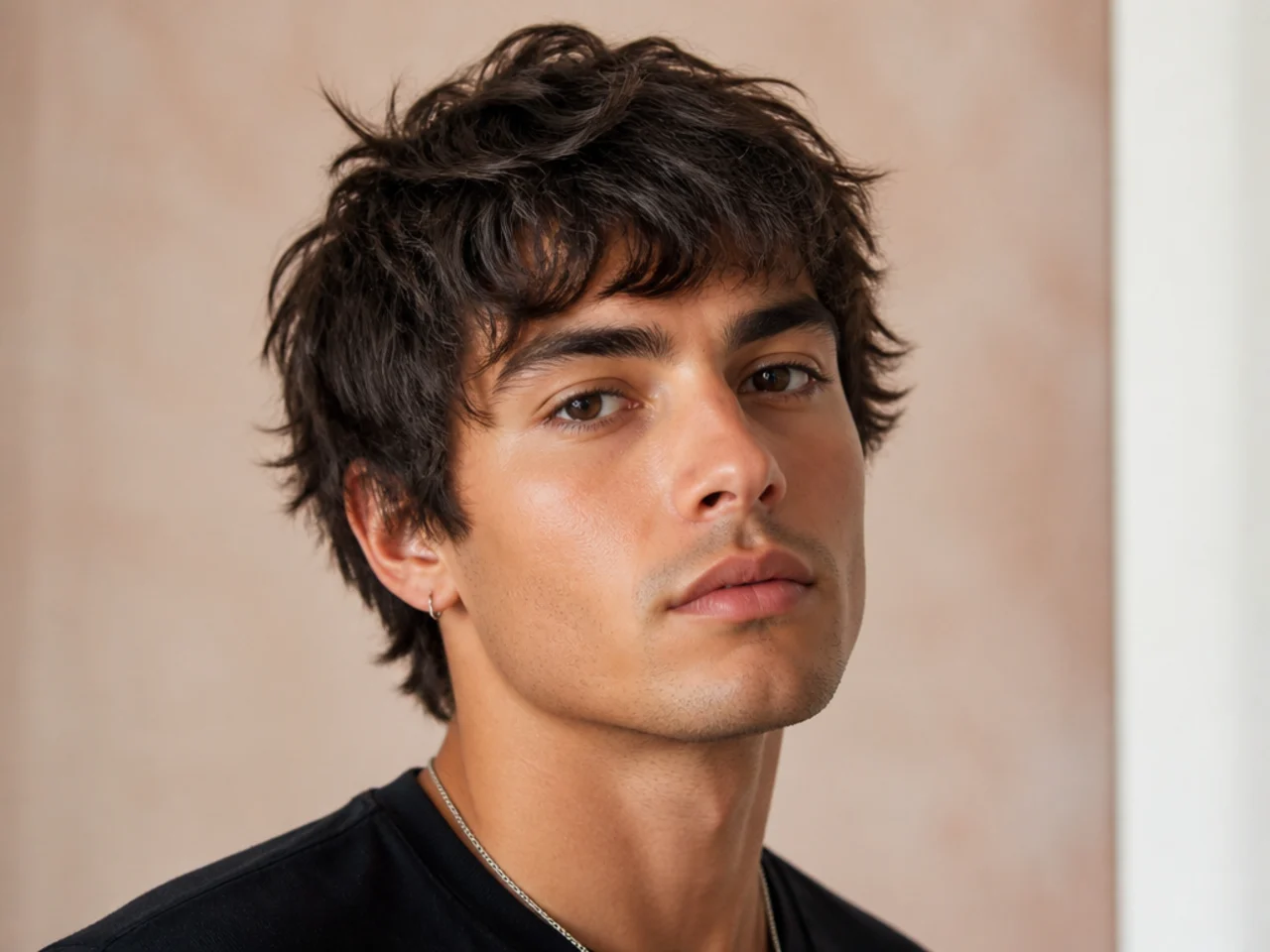
Same recipe on a shorter canvas. Runs 2 to 3.5 inches on top, layered close enough to sit on the head but still fluffed up. Good for fine hair — the layers add visual density without collapsing. Also good if you don't want the commitment of the longer versions. Ask for "a short shag, 2 to 3 inches on top, heavily layered with wispy ends, sides scissor-blended into the length." Rebook every 4 weeks; this one loses shape quickly. Style with a pea of matte clay worked through dry hair with your fingers, no comb, and finish with a burst of sea-salt spray for grit.
Classic Shaggy Hair
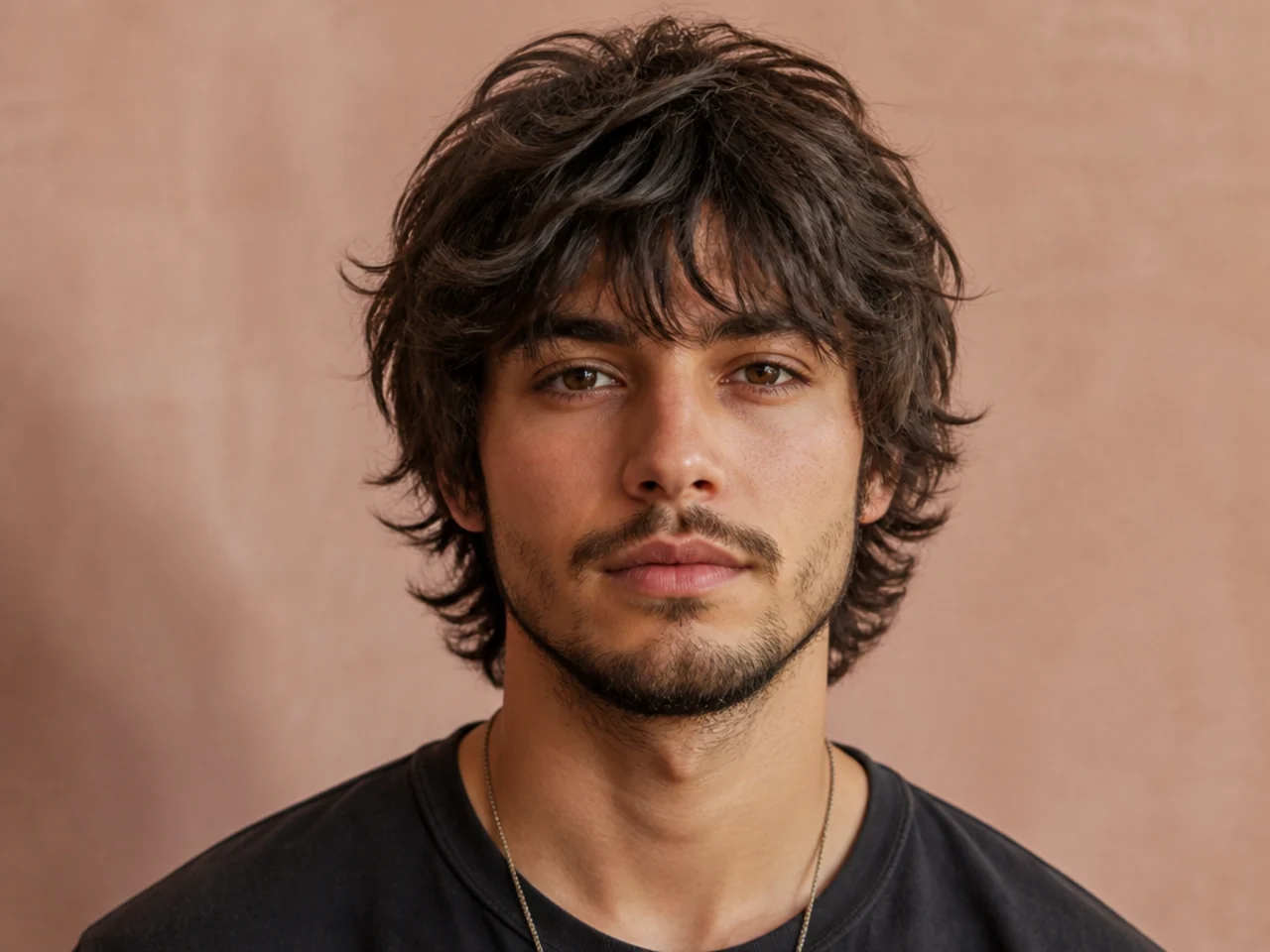
The straight-out-of-the-70s original — think Rod Stewart, McCartney era. Length runs 4 to 5 inches, feathered around the ears, with a soft curtain-style fringe that parts naturally in the middle. Suits oval and long faces best. Ask for "a classic 70s shag, 4 to 5 inches on top, feathered layers around the ears, curtain fringe grazing the brows, no razor." Then let it grow — this one gets better between cuts, not worse. Styling: sea-salt spray on damp hair, rough-dry with your fingers, then let the parting fall where it wants. Don't overthink it.
Textured Shaggy Haircut
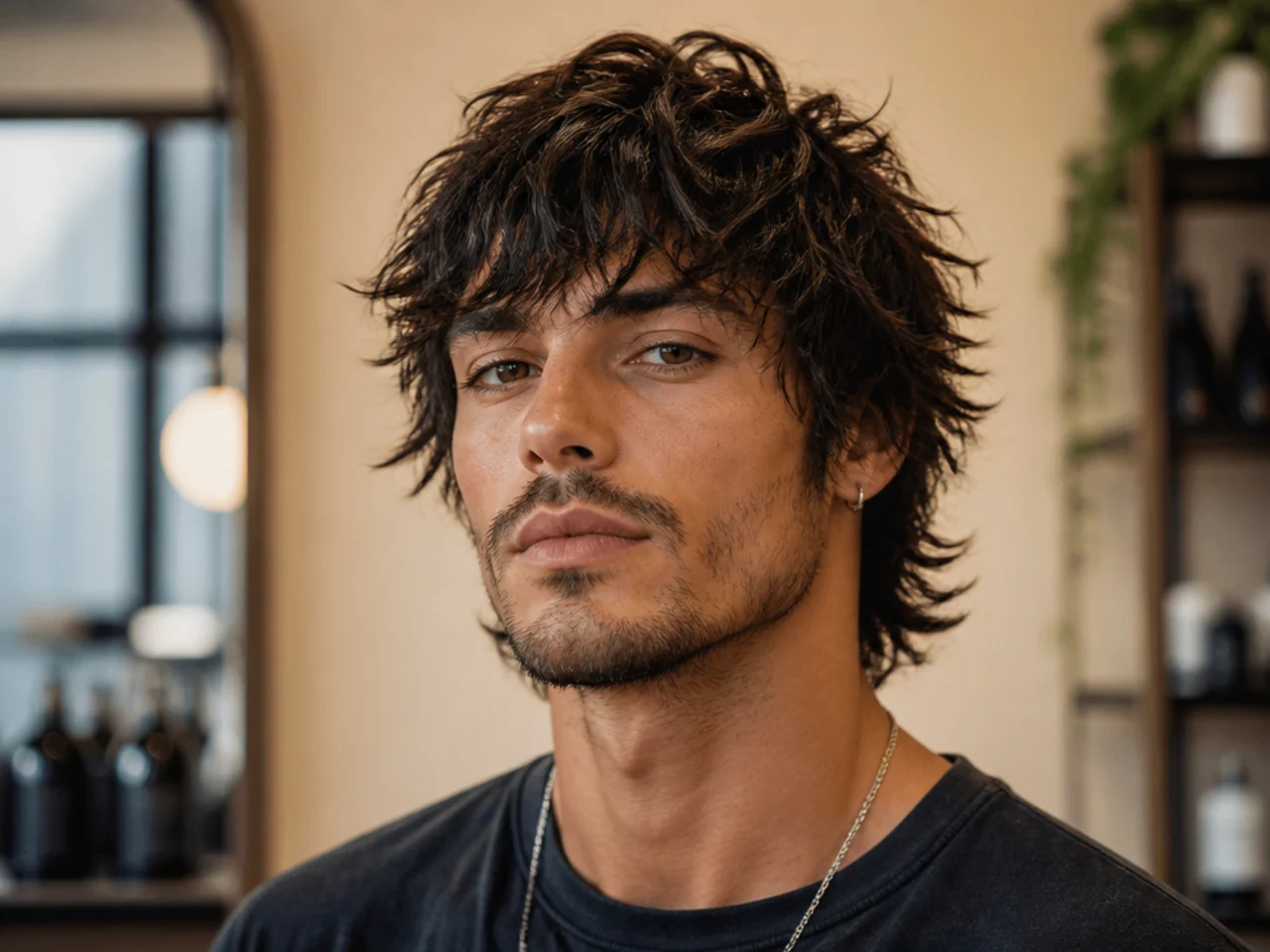
Same length as the classic but with more aggressive layer separation. Your stylist point-cuts (or razor-cuts if your hair is coarse) to break every layer into visible pieces. The result is chunky, deliberate texture that reads more modern than the classic. Great for medium-density straight hair that reads flat on its own. Ask for "aggressive point-cut layers throughout, keep the ends wispy, no bluntness anywhere." Skip the razor on fine hair — it'll shred the ends. Styling: a fingertip of texture paste warmed in your palms, then pressed through mid-lengths and ends. Matte only, never shiny.
Shaggy Mullet
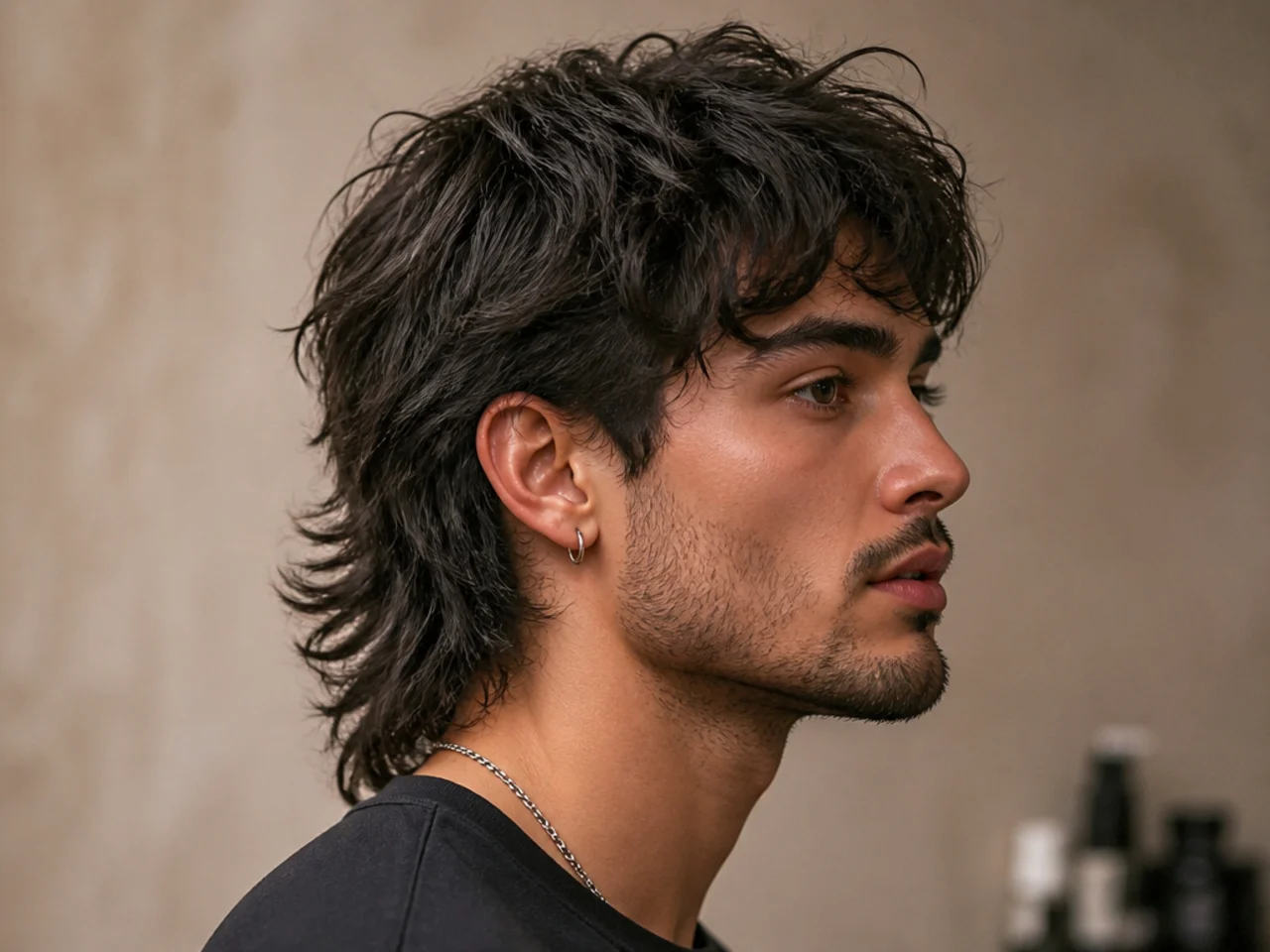
The mullet cousin. Front sits shorter (3 to 4 inches), sides are cropped or taper-faded, and the back is left longer for that classic mullet drop. Different from a standard mullet because the top is layered shag rather than slicked or flat. Suits guys who want the mullet silhouette without the party-in-the-back drama. Ask for a modern mullet haircut with heavy shag layering on top, short sides, and 4 to 5 inches at the back. Style with sea-salt spray on damp hair and a rough air-dry. Rebook every 5 weeks or the back overpowers everything.
Layered Shaggy Haircut
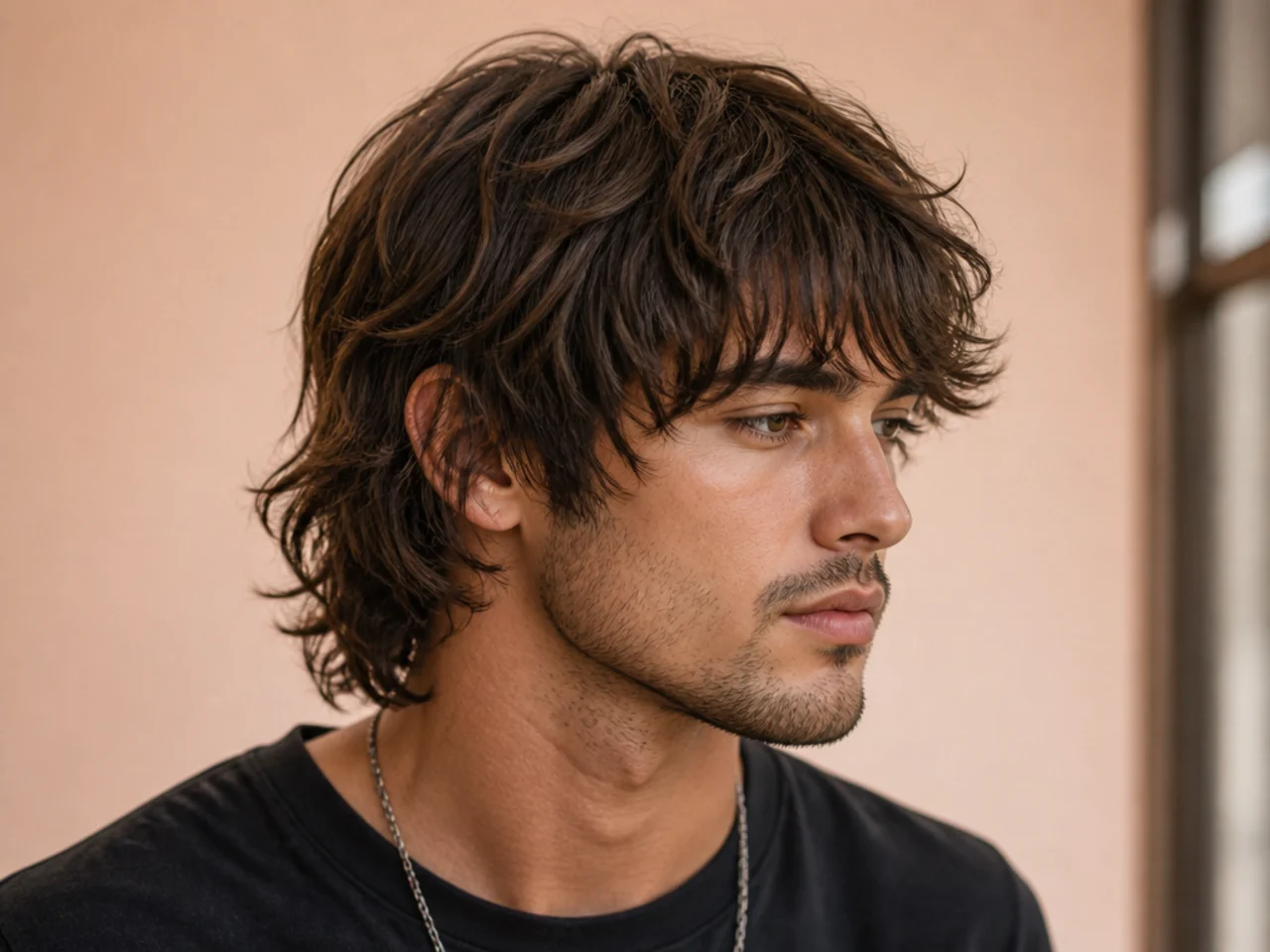
The blueprint version — no fade, no fringe callout, just clean shaggy layered cut work top to bottom. Length is medium (3 to 5 inches), layers stacked short-to-long from crown to nape. This is the one to ask for if you want the shag look without any additional twist. If you're still deciding between shag and something smoother, compare against the wider layered haircuts for men category. Ask for "medium shag, internal layers for volume, wispy point-cut ends throughout, no blunt perimeter." Style: sea-salt spray on damp hair, air-dry, done. This is the lowest-effort version in the guide.
Medium Shaggy Haircut
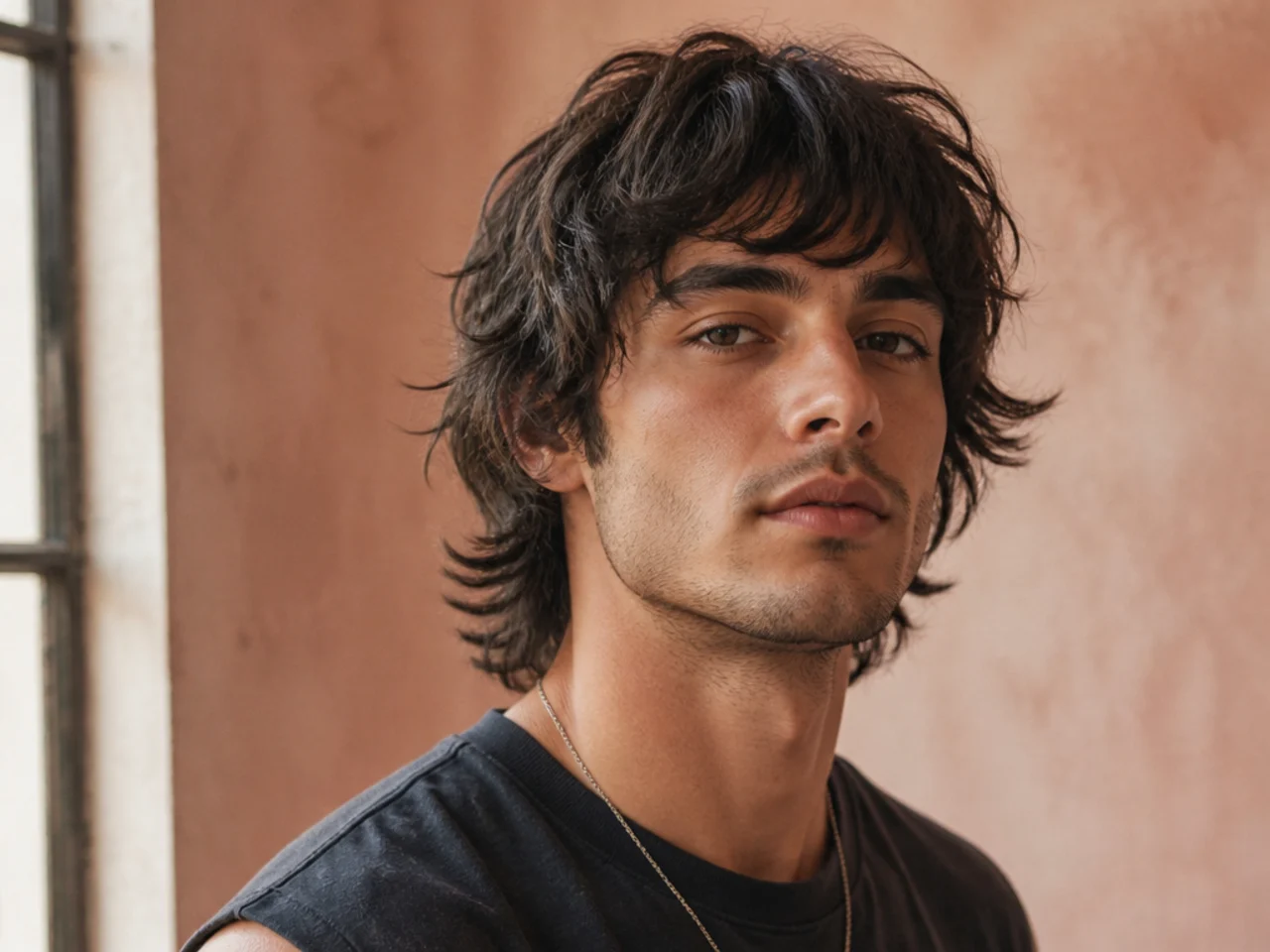
The sweet spot — 4 inches on top, layers falling around the ears and grazing the collar at the back. Best entry point if you're growing out a short cut and want structure while it happens. Medium shaggy hair like this works on almost every hair type and face shape. It sits comfortably inside the broader medium-length hairstyles for men family, so it's an easy pivot if you're not sure about full shag. Ask for "a medium shag, 4 inches on top, layers to the earlobe, keep ends soft and point-cut." Style with mousse at the roots and cream through the ends.
Shaggy Hair with Beard
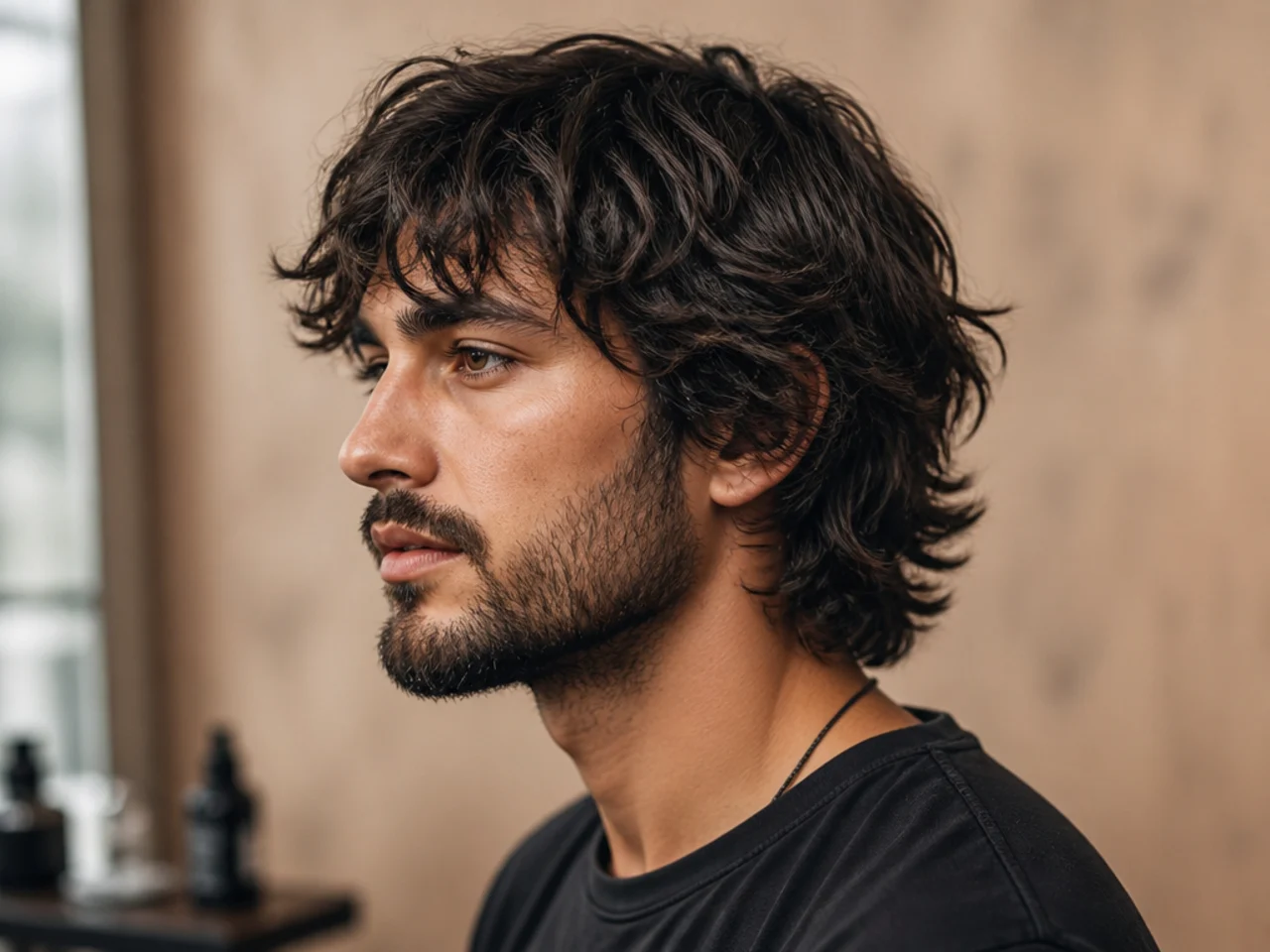
Not a different cut — a pairing note. Any shag reads more masculine and grounded with a beard because the beard weight balances the volume up top. Best beard length is medium (half an inch to an inch), scissor-shaped rather than clipper-lined so it echoes the hand-cut feel of the shag itself. Suits guys with rounder or softer face shapes because the beard adds angle. Ask your barber to match the beard length to your sideburn taper for a clean handoff between hair and beard. Style hair as you would any shag — salt spray on damp, air-dry, hands only.
Shaggy Hair with Fringe
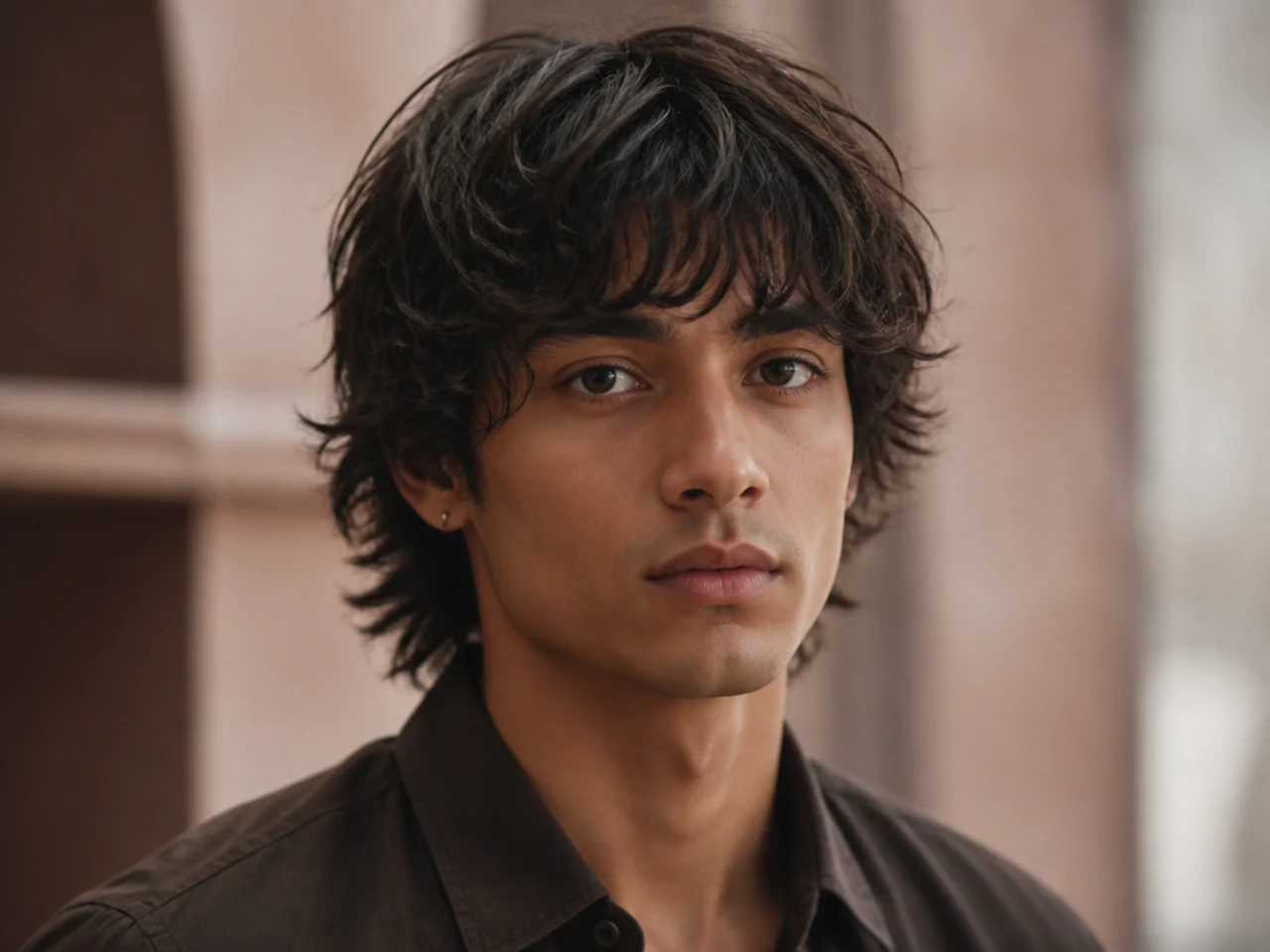
Adds a proper fringe to the front instead of the natural curtain the shag falls into on its own. Fringe length runs from brow-grazing to below the eyes if you want a heavier statement. Great for framing a longer forehead. Suits oval, square, and diamond faces; skip if your forehead is short. Ask for "a medium shag with a soft, point-cut fringe grazing the brows — nothing blunt, nothing straight across." Style the fringe wet: comb it forward, spray with sea-salt, and press it flat with a towel for two minutes. Don't blow-dry — you want it to look air-dried, not shaped.
Modern Shaggy Fade Haircut
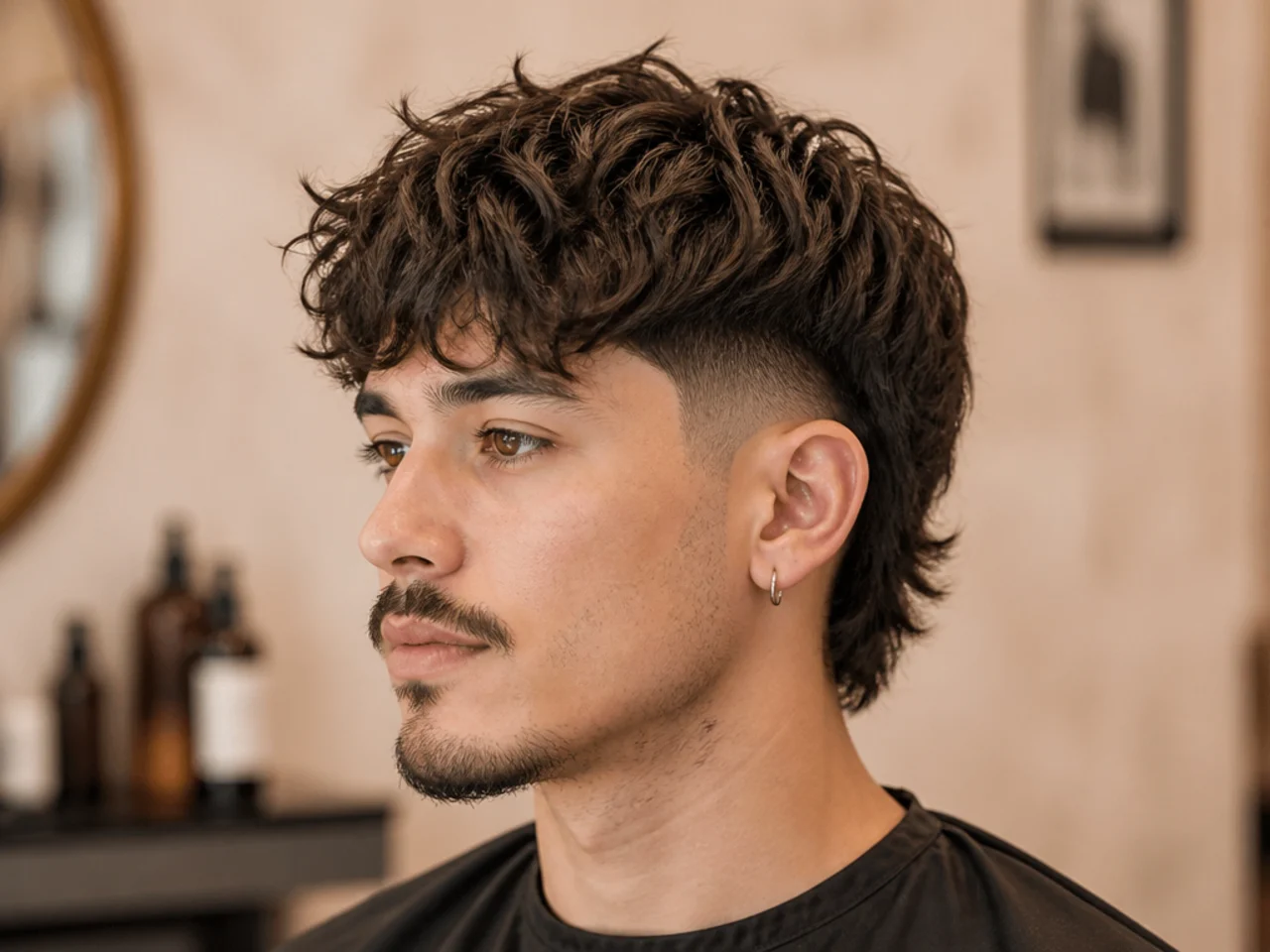
Shag on top, fade on the sides. A fade haircut sharpens the perimeter so the messy top reads intentional rather than unkempt. Length on top: 4 to 5 inches, fully layered shag. Suits guys in more corporate settings who can't run full shag all the way around the head. Ask for "a mid or high fade on the sides with a heavily layered shag on top, and keep two inches of blend at the top of the fade so it transitions softly." Style: sea-salt spray, air-dry, no comb. The fade does the tidying — the top stays wild.
Shaggy Mod Cut
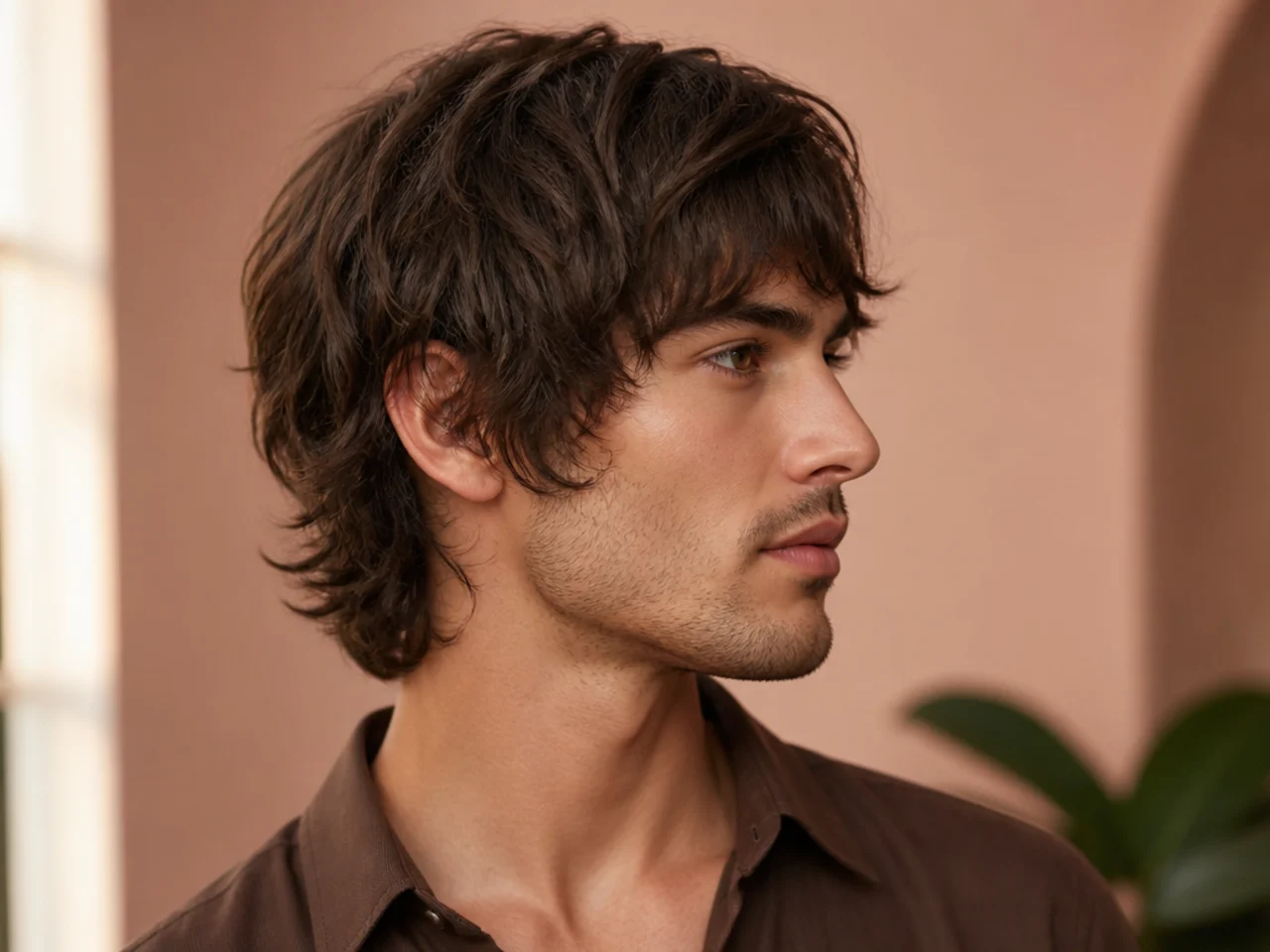
A shorter shag with a rounder shape — Beatles-era mod meeting modern shag texture. Length runs 3 to 4 inches, layered but kept close, with a soft rounded silhouette rather than the flatter classic 70s drop. Suits oval and square faces; the round shape softens strong jaws. Not the pick for very fine hair — it needs a little density to hold the round shape. Ask for "a mod shag, 3 inches all around, layered for texture but keep the outline rounded." Style with a pea of cream on damp hair, finger-comb forward, then air-dry. This one skips the sea-salt.
Edgy Short Shaggy Hair with Faded Sides
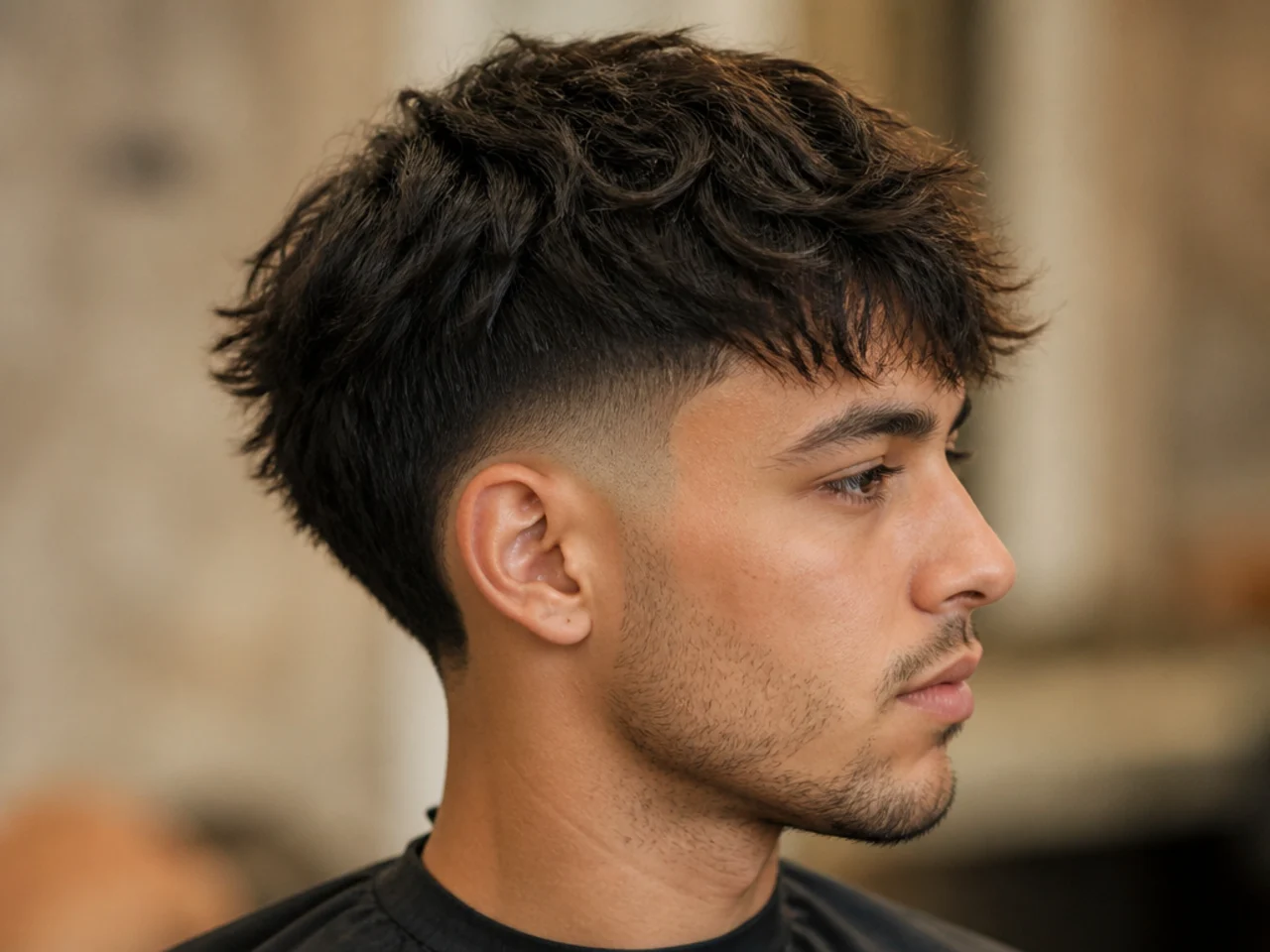
The short-shag brother of the modern fade version above. Top runs 2 to 3 inches, chopped and layered, paired with a hard mid fade on the sides. The contrast is the whole point — messy up top, precision on the sides. Suits guys with thick or coarse hair that needs weight removed. Not the pick for round faces; the hard fade emphasizes width. Ask for "a short choppy shag, 2 to 3 inches, with a mid fade on the sides and a razor line at the temples if you want it sharper." Style with matte clay worked through with your fingers, no product on the fade.
Tousled Shag
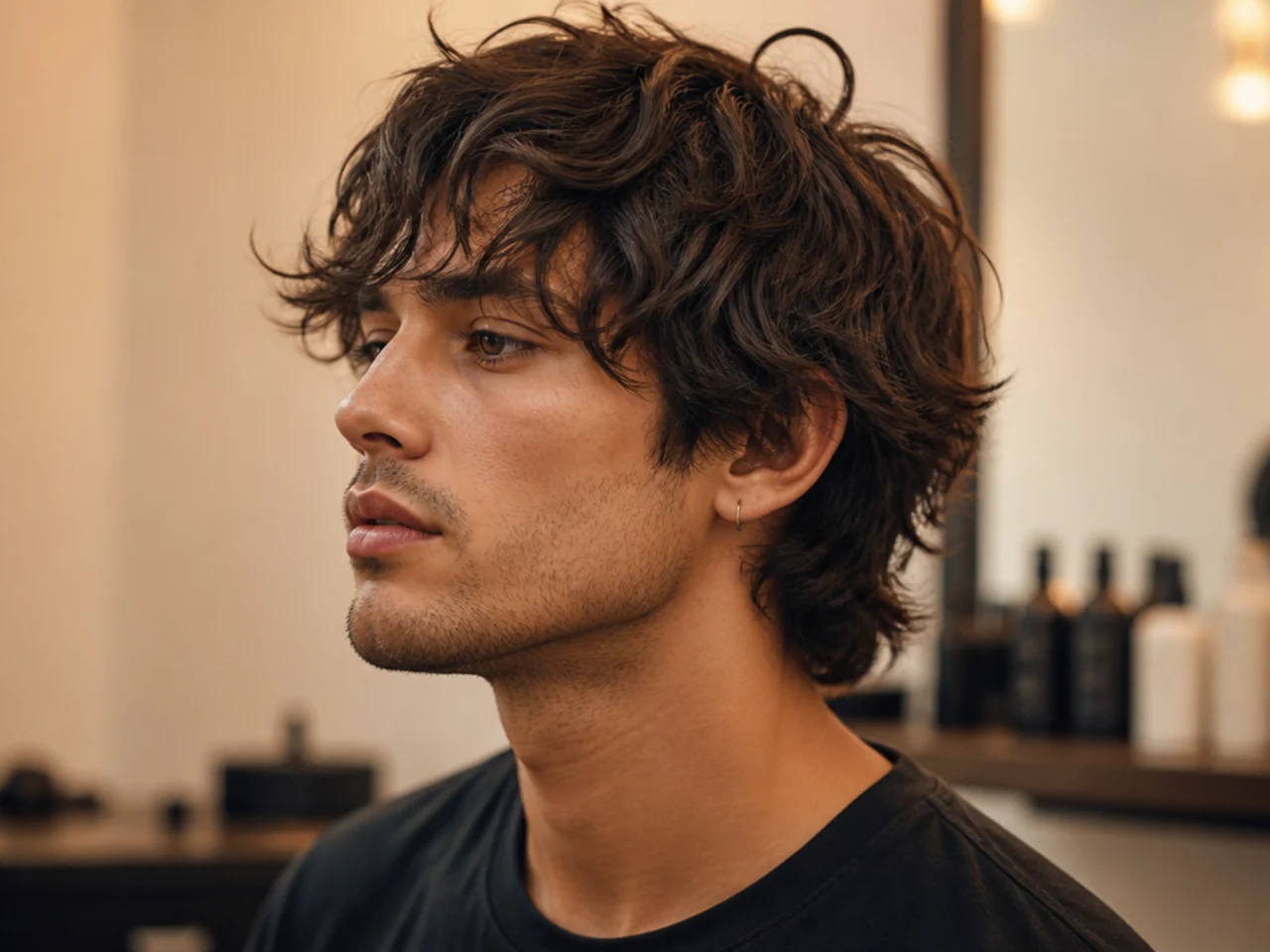
Same as a standard medium shag but styled looser — more messy, less structured. Same 3 to 5 inch length range with wispy layered ends. The difference is entirely styling technique, not cut. Suits everyone the medium shag suits, which is most people. Ask for the medium shag and tell your barber up front that you plan to wear it fully undone so they don't over-shape the perimeter. Style: sea-salt spray on soaking-wet hair, flip your head upside down, rough-dry with your fingers to 80%, then air-dry the last 20%. No product after — the salt spray is the only thing holding it.
Long 70s Shaggy Style
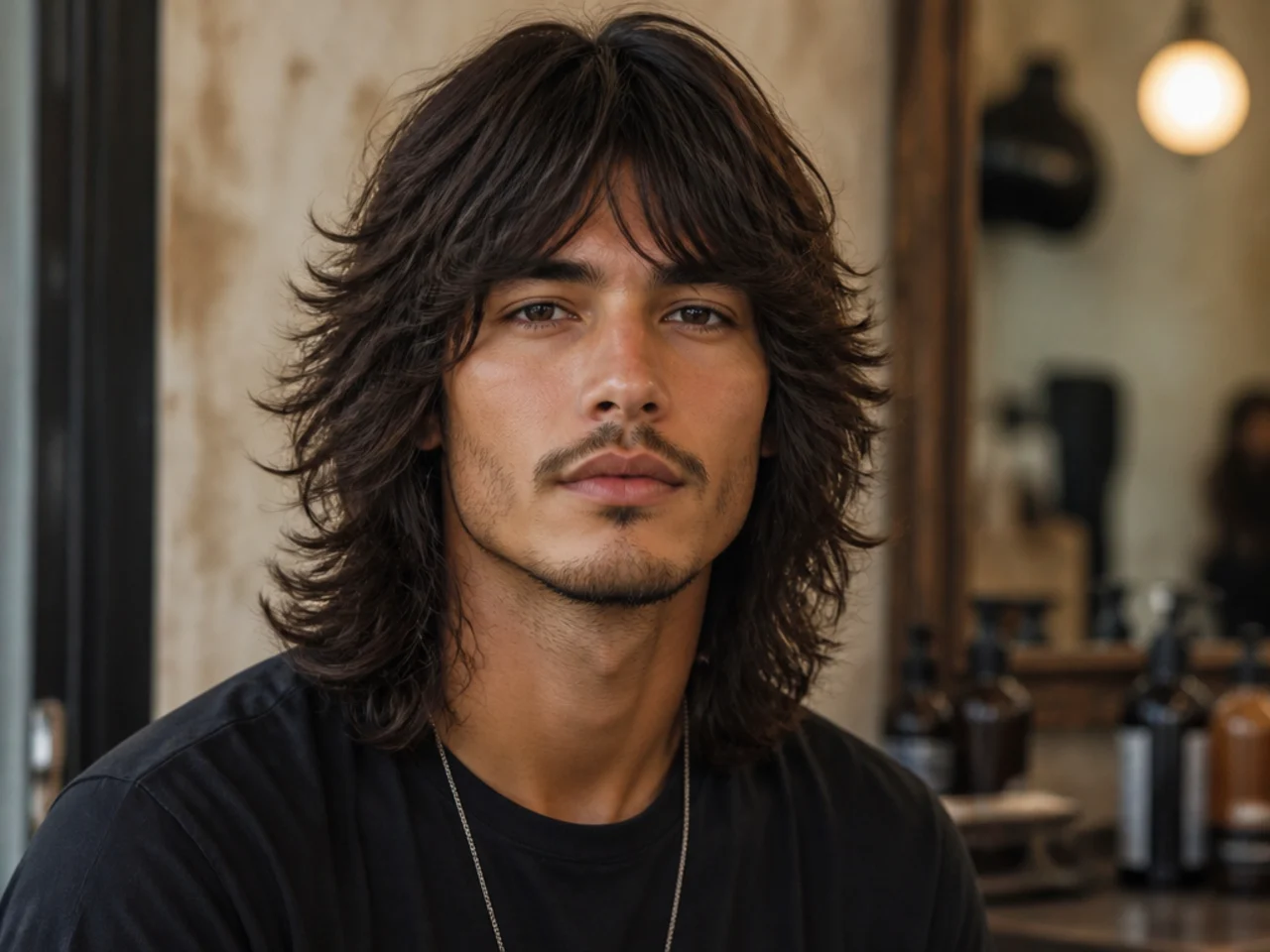
The full commit — length 6 to 8 inches, layered heavily, styled with a center part and feathered wings on either side of the face. Straight or wavy hair only; too much curl fights the silhouette here. Suits long, oval, and heart-shaped faces. Ask for "a 70s shag with feathered face-framing layers and a curtain fringe I can wear parted in the middle, keep the internal layers heavy for movement." Style: sea-salt spray, air-dry, then flip the parting back and forth with your hand until it sits right. Trim every 6 weeks to keep the shape from drooping.
Curly Shaggy Haircut
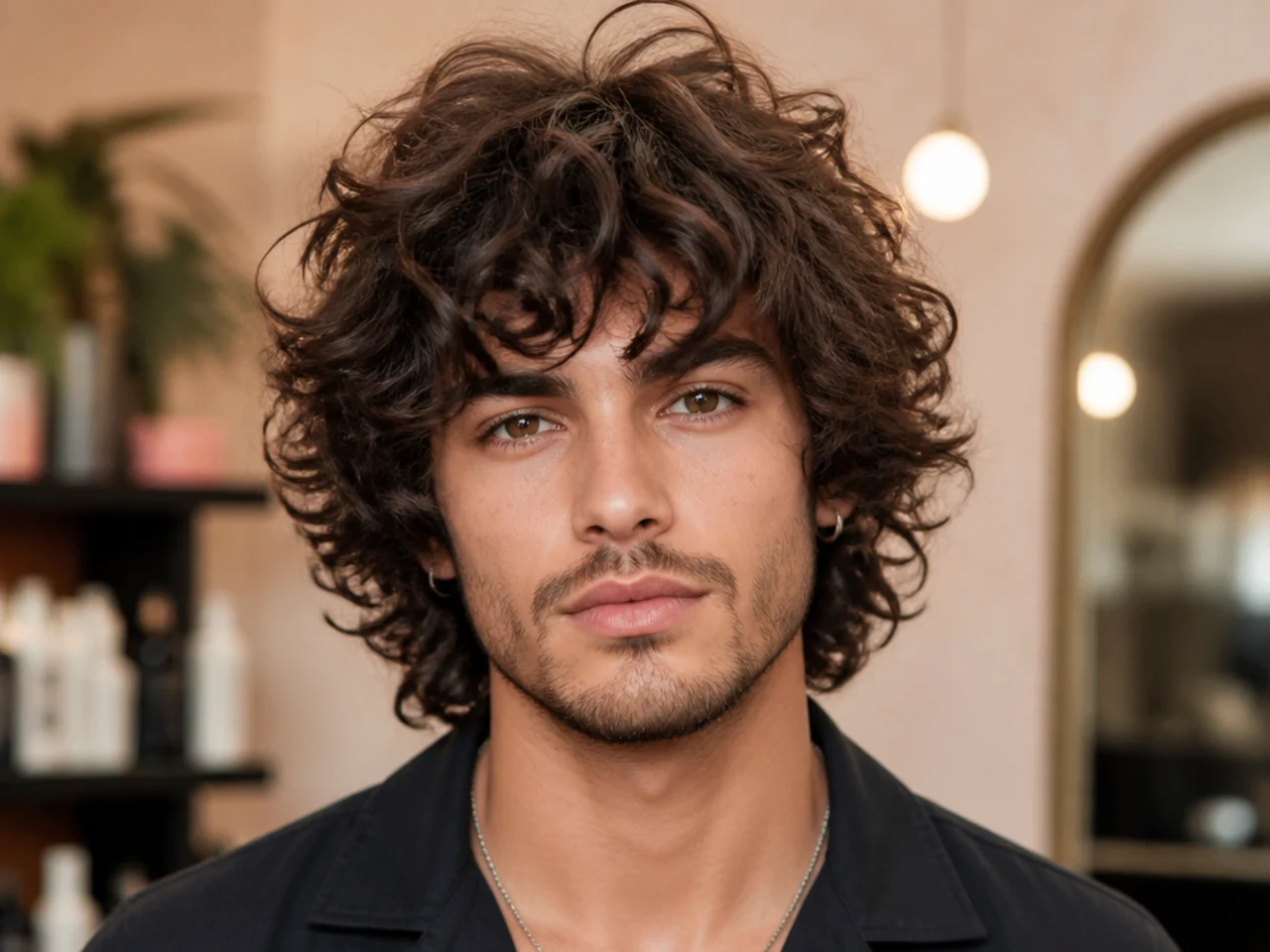
The shag translated for curls. Layers here are cut dry (never wet — you can't see the shape on curls when they're weighed down with water) with your stylist snipping curl by curl. Length runs 4 to 6 inches, layered short-to-long. Suits type 2B through 3B curls best; tighter coils need a different approach because the shrinkage throws off the layer math. Ask for "a curly shag, cut dry, internal layers for shape, wispy ends." Style: soaking-wet hair, apply a curl cream, scrunch upward toward the roots, and air-dry face down. Sea-salt spray after if you want more definition.
Shaggy Flow
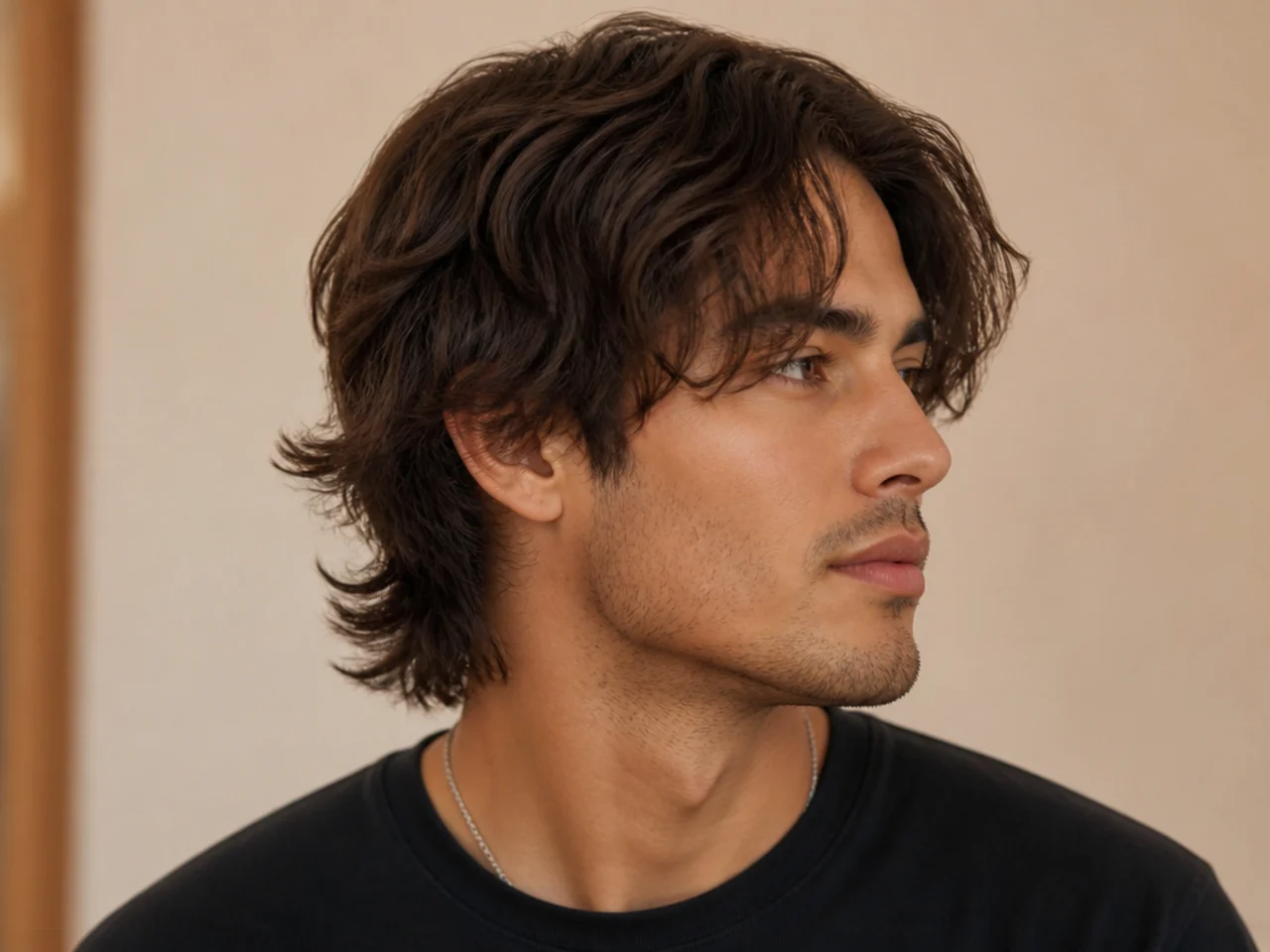
Flow is shag stretched even longer, hair swept back off the face and falling behind the ears. Length runs 6 to 8 inches on top, layers still there but subtler than a full shag. Different from a long shag because the styling direction is back, not down. Suits oval and diamond faces. Skip if your hairline is receding at the temples — the back-swept direction shows it. Ask for "medium-long flow with internal shag layering for movement and wispy ends, keep the length even top to back." Style: sea-salt spray on damp hair, comb straight back, and air-dry with your head tilted back for the first five minutes.
Thick Shag with Long Fringe
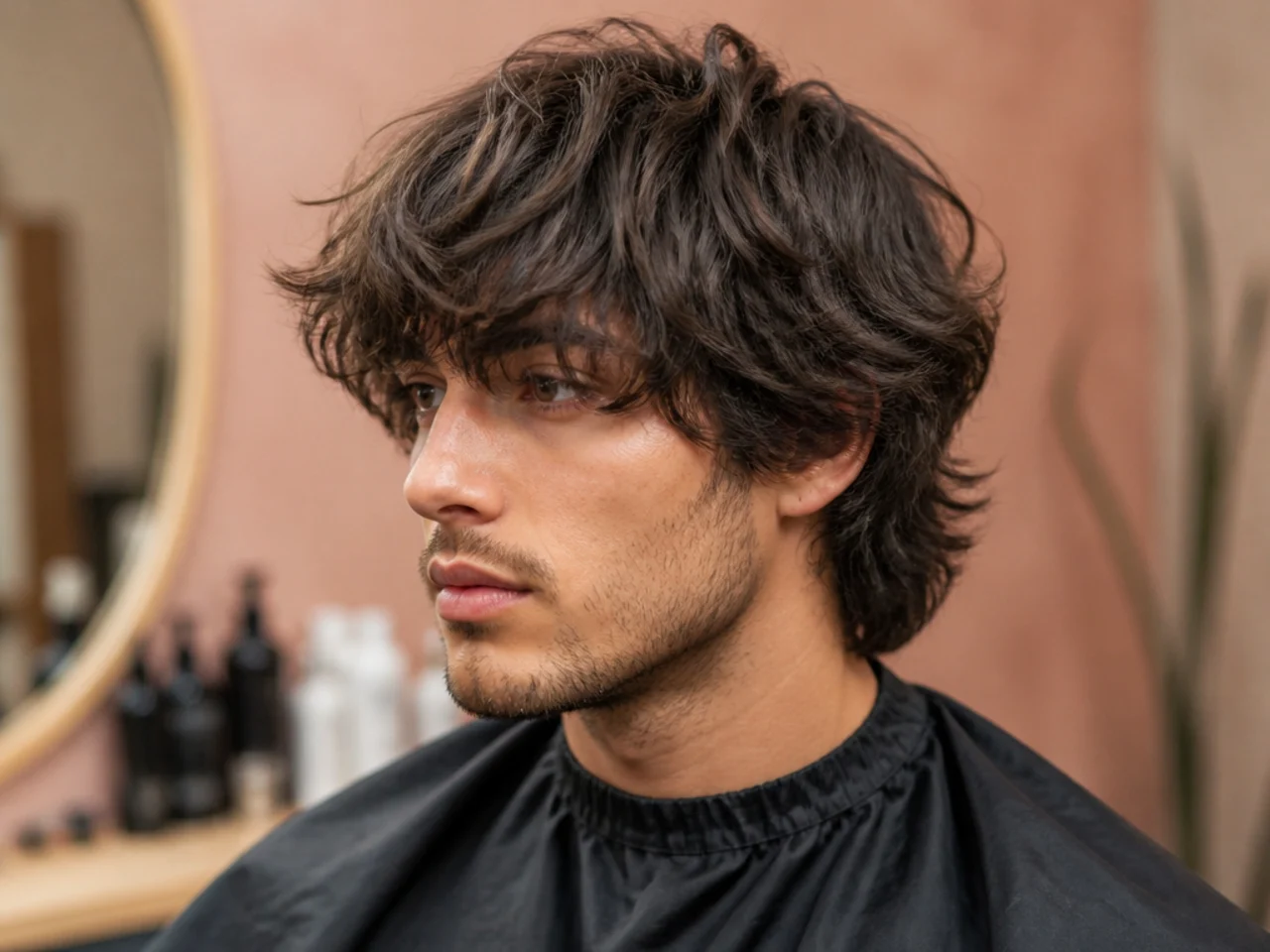
Built specifically for coarse or dense hair. Layers here do double duty — they add shape and remove weight so the shag doesn't turn into a helmet at length. Length runs 4 to 5 inches, with a longer fringe (below the brows) as the focal point. This is genuinely low maintenance because the density does the styling for you — the hair holds its shape without product. Ask for "a thick shag with heavy internal layering to remove weight, wispy ends, fringe past the brows." Style: sea-salt spray on damp hair, air-dry, and you're set for the day.
Long Textured Shaggy Hair with Short Sides
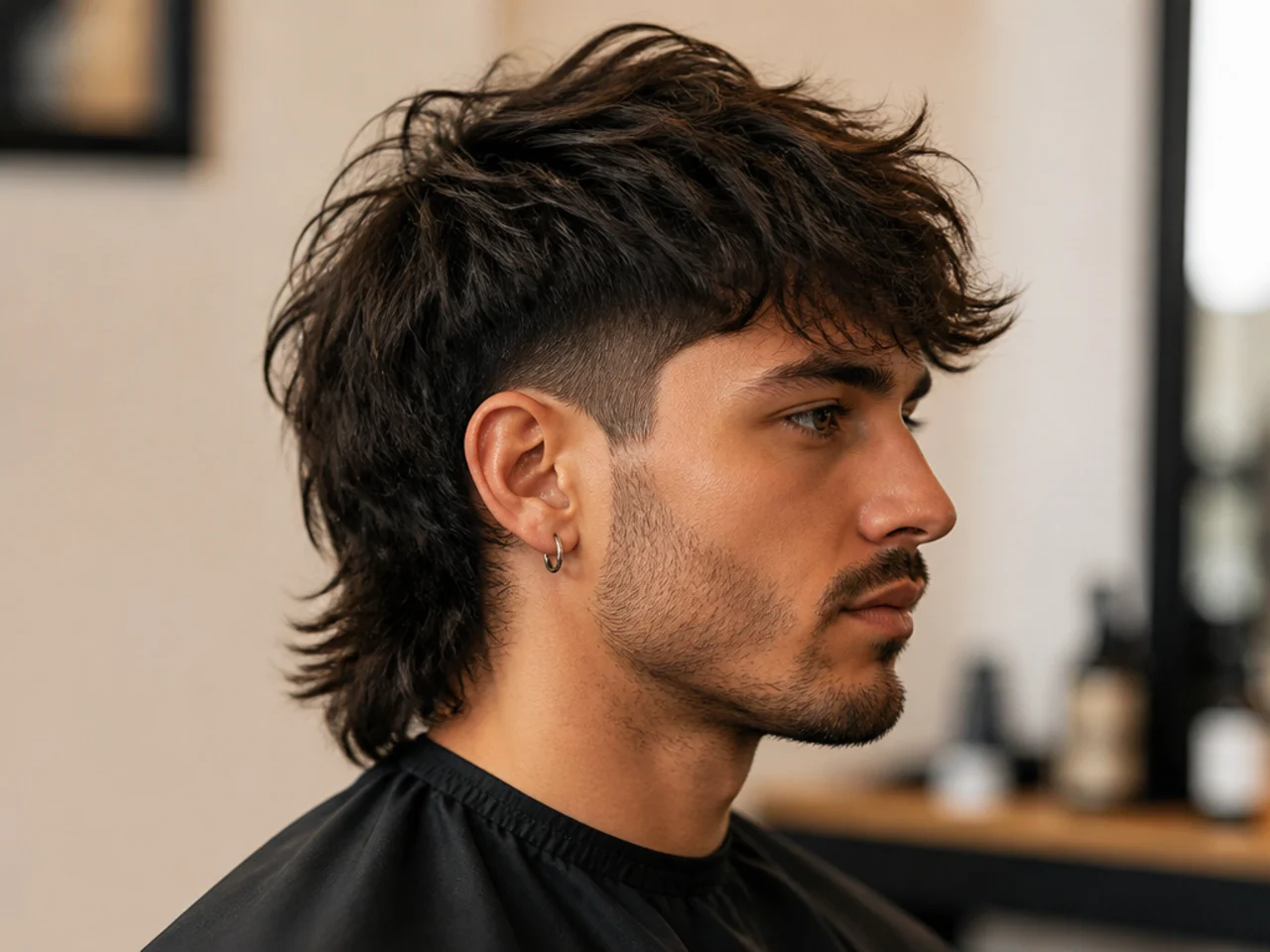
Length concentrated on top and back (5 to 6 inches), sides brought short with a taper or scissor-blend. Reads bolder than the modern fade version above because the length disparity is dramatic. Different from a wolf cut — there's no stacked mane at the back on this one, length runs even from top through back. Suits oval, square, and diamond faces. Ask for "long textured shag on top with short scissor-blended sides, keep the ends heavily point-cut for visible separation." Style with sea-salt spray on damp hair and a rough finger-dry, no product needed.
Short Shaggy Curls
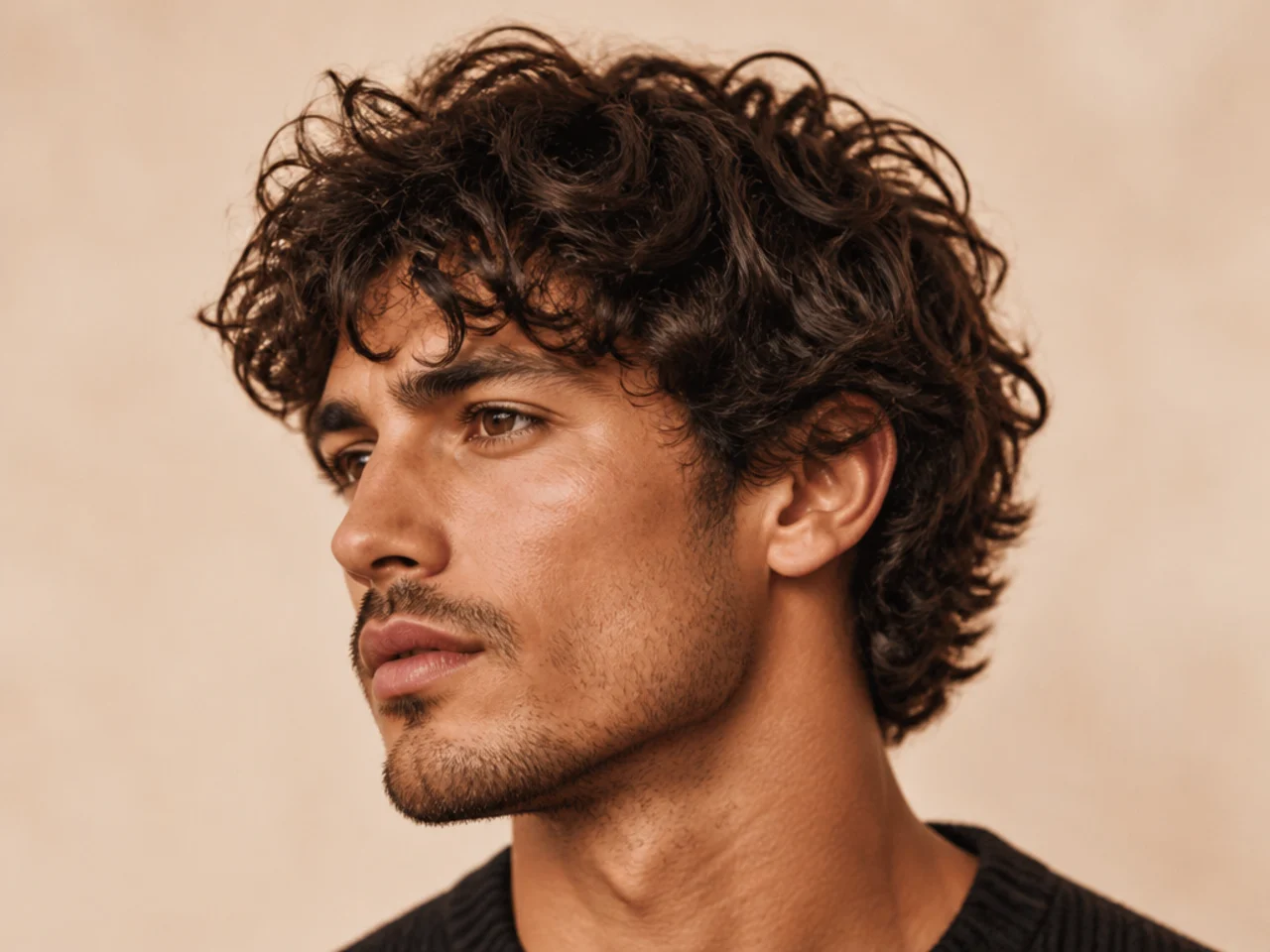
The short version of the curly shag. Length runs 2 to 4 inches, layered dry, kept short enough that the curls stack close to the head instead of falling. Ideal for guys who want curl shape without the maintenance of longer curls. Suits type 2C through 3B curls best. Ask for "a short curly shag, cut dry, layered to enhance the curl shape without stripping length off the ends." Style: soaking-wet hair, a dime of curl cream, scrunch upward, air-dry face down for the first two minutes. Skip sea-salt spray on very short curls — it can dry them out and cause frizz at length.
Parted, Long Shaggy Hair
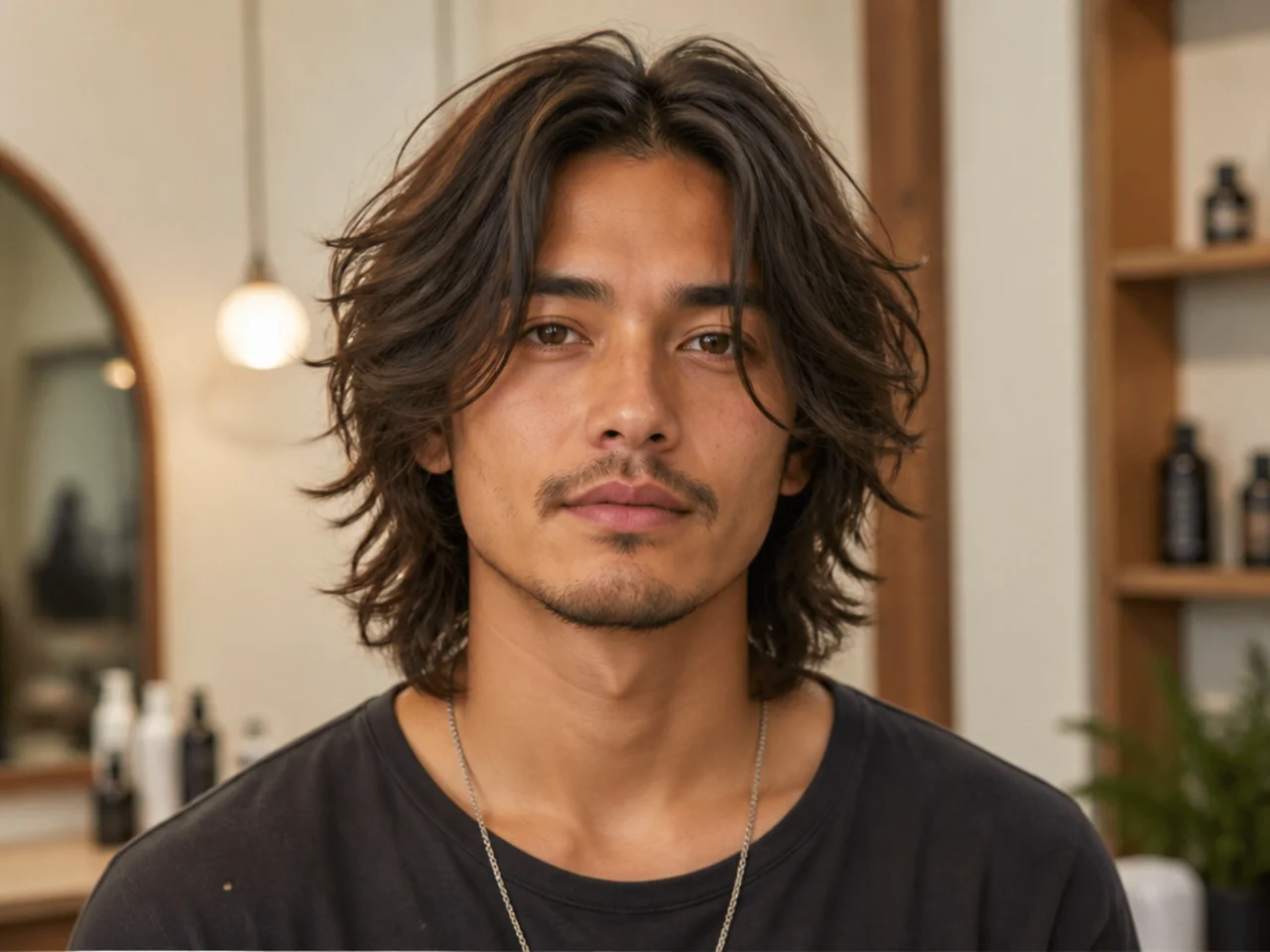
A long shag with a defined part (middle or side, your call) rather than an undirected wave. Length runs 5 to 7 inches on top. The part is what makes this different — it gives structure to what would otherwise be a free-flowing shag. Suits oval and long faces best. Middle part flatters symmetrical features; side part flatters everything else. Ask for "a long shag layered evenly for a middle or side part with wispy point-cut ends." Style: comb the parting in wet, sea-salt spray, then air-dry without touching it. The wet-set holds the part all day.
Fully Shaggy Style with Low Fade
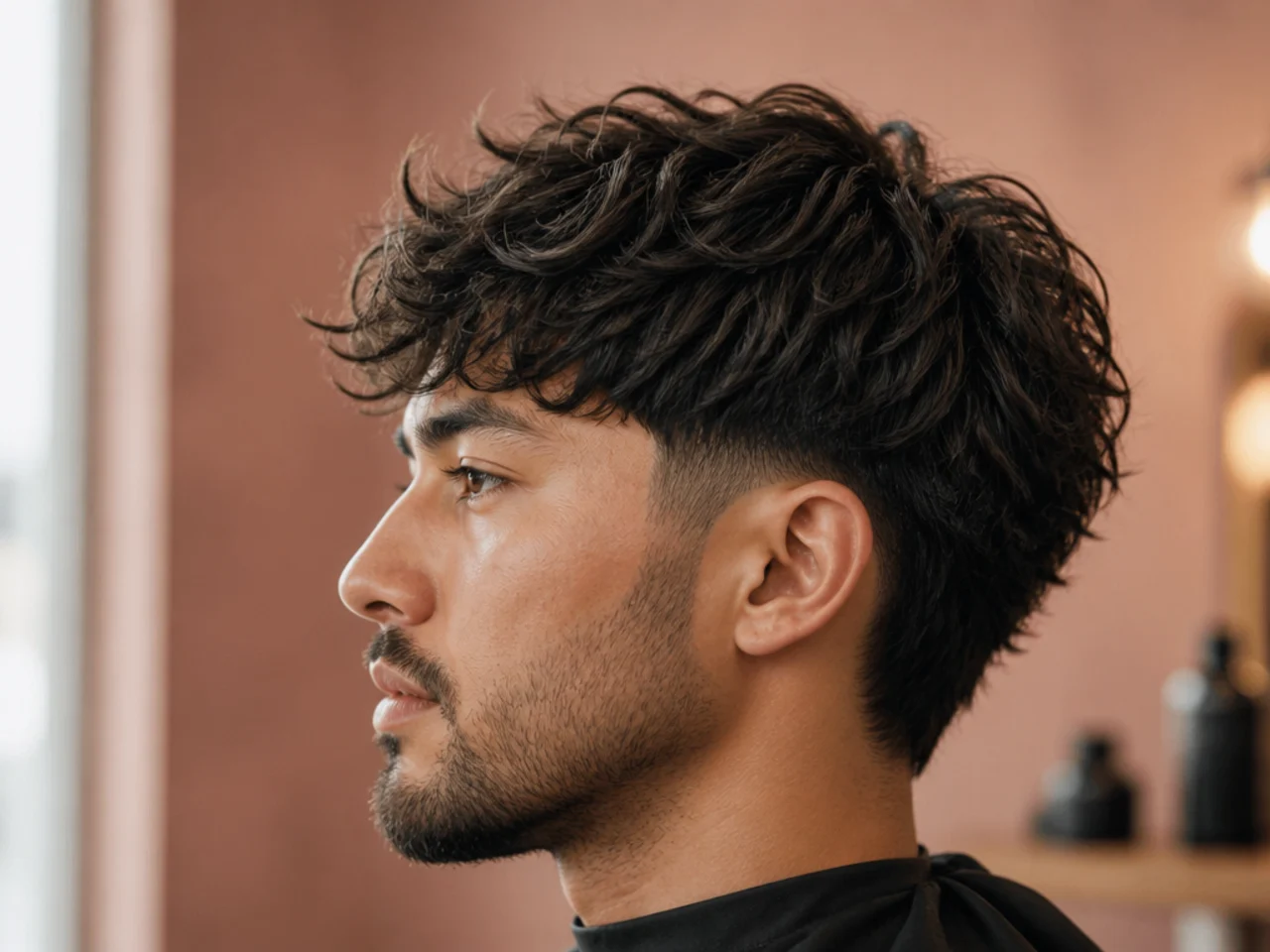
Shag on top with a smooth low fade starting just above the ear on the sides. The subtlest of the shag-fade combinations — the fade sits so low it barely shows unless you tuck your hair behind your ear. Great for guys who want the option to wear the shag messy or brushed clean depending on the day. If you want it even softer at the sides, ask for a low taper fade instead of a straight low fade. Ask for "a low fade, 4 to 5 inches of shag on top, keep the blend soft." Style: sea-salt spray, air-dry.
Long Mullet Shag
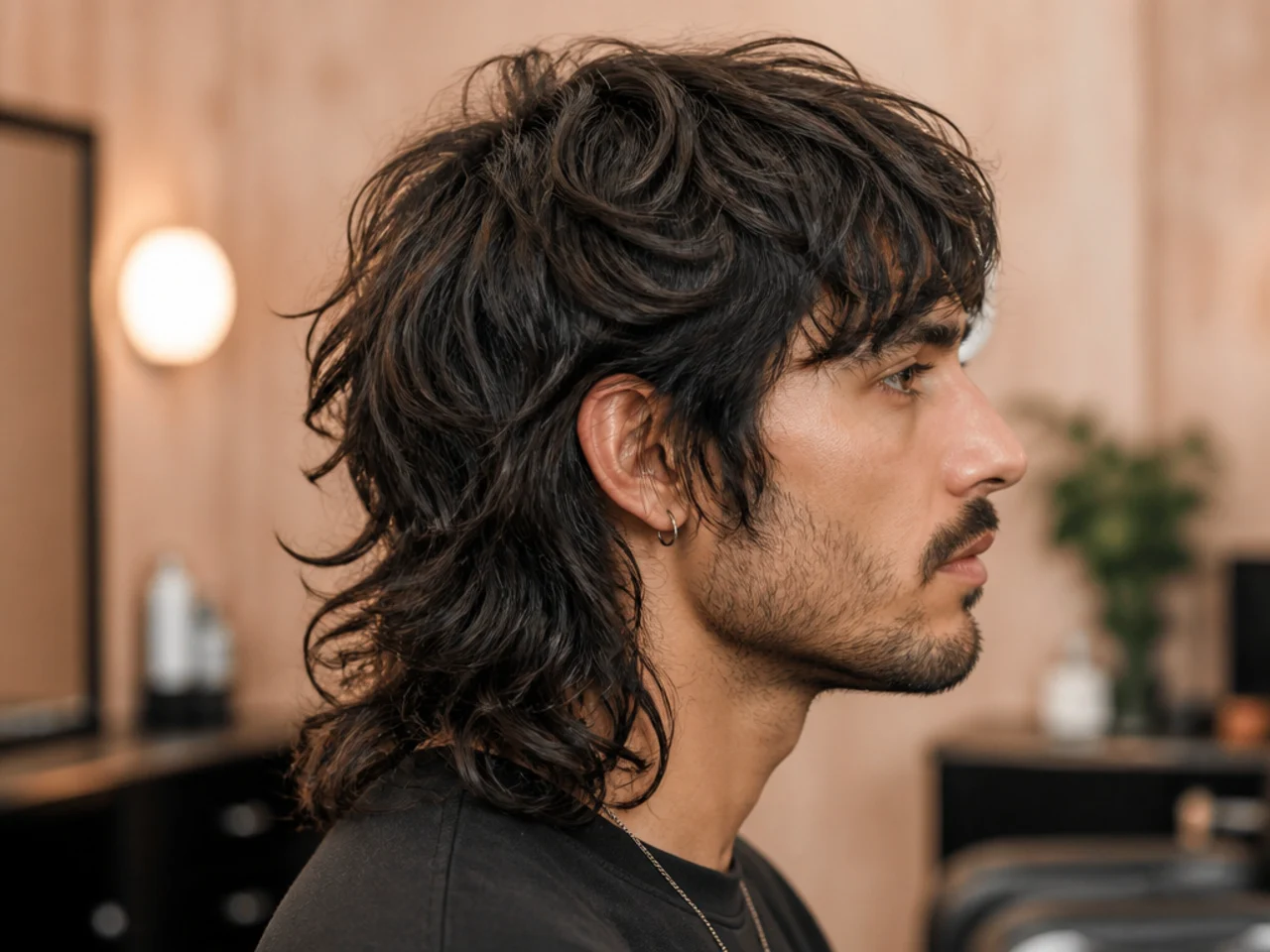
The mullet cousin, in its longer version. Length up front runs 3 to 4 inches, sides taper down, and the back runs 6 to 8 inches for a proper drop. Different from the shaggy mullet earlier in this guide because the length disparity is much bigger — the back is a real statement here. Not the pick if your workplace has any kind of dress code. Ask for "a long mullet shag with heavy shag layering up top, tapered sides, 6 to 8 inches at the back with wispy ends." Style: sea-salt spray on damp hair, air-dry, no product at the back. Gravity does the shaping.
Shaggy Surfer Haircut

The surfer hairstyle crossed with shag layering. Length runs 4 to 6 inches on top, layered for movement, styled to look like it dried in the wind. Suits wavy or straight hair; not curly. Best on longer, oval, or square face shapes. Ask for "a mid-length surfer shag, internal layers for volume through the crown, keep the ends wispy and unfinished — a little rough at the perimeter is fine." Style: mist heavily with sea-salt spray on damp hair, tousle with your fingers, then air-dry face down. If you actually surf, the ocean does the salt-spray work for free.
Textured, Wavy Shaggy Style
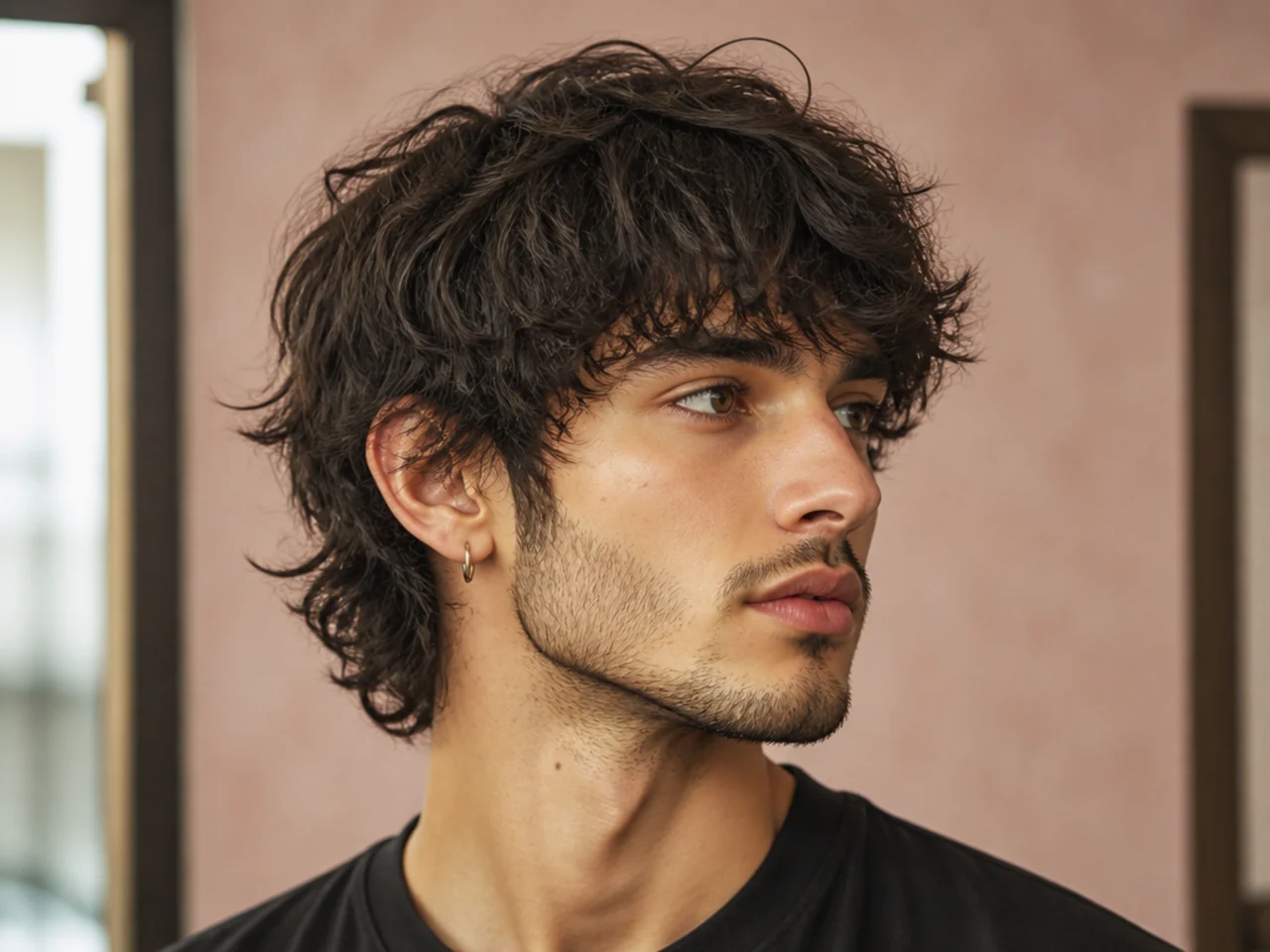
Written specifically for wavy hair. Layers here are cut with the wave in mind — your stylist works with your natural wave pattern rather than fighting it, which means the layer placement changes depending on where your waves want to sit. Length runs 4 to 5 inches, ends heavily point-cut. Suits type 2A through 2C waves. Ask for "a wavy shag, layered to enhance the wave shape, wispy ends throughout." Style: curl-defining cream on damp hair, scrunch upward, air-dry face down for three minutes. Sea-salt spray on top after for extra grit if the waves are on the loose side.
Short Shaggy Hair with Taper Fade Sides
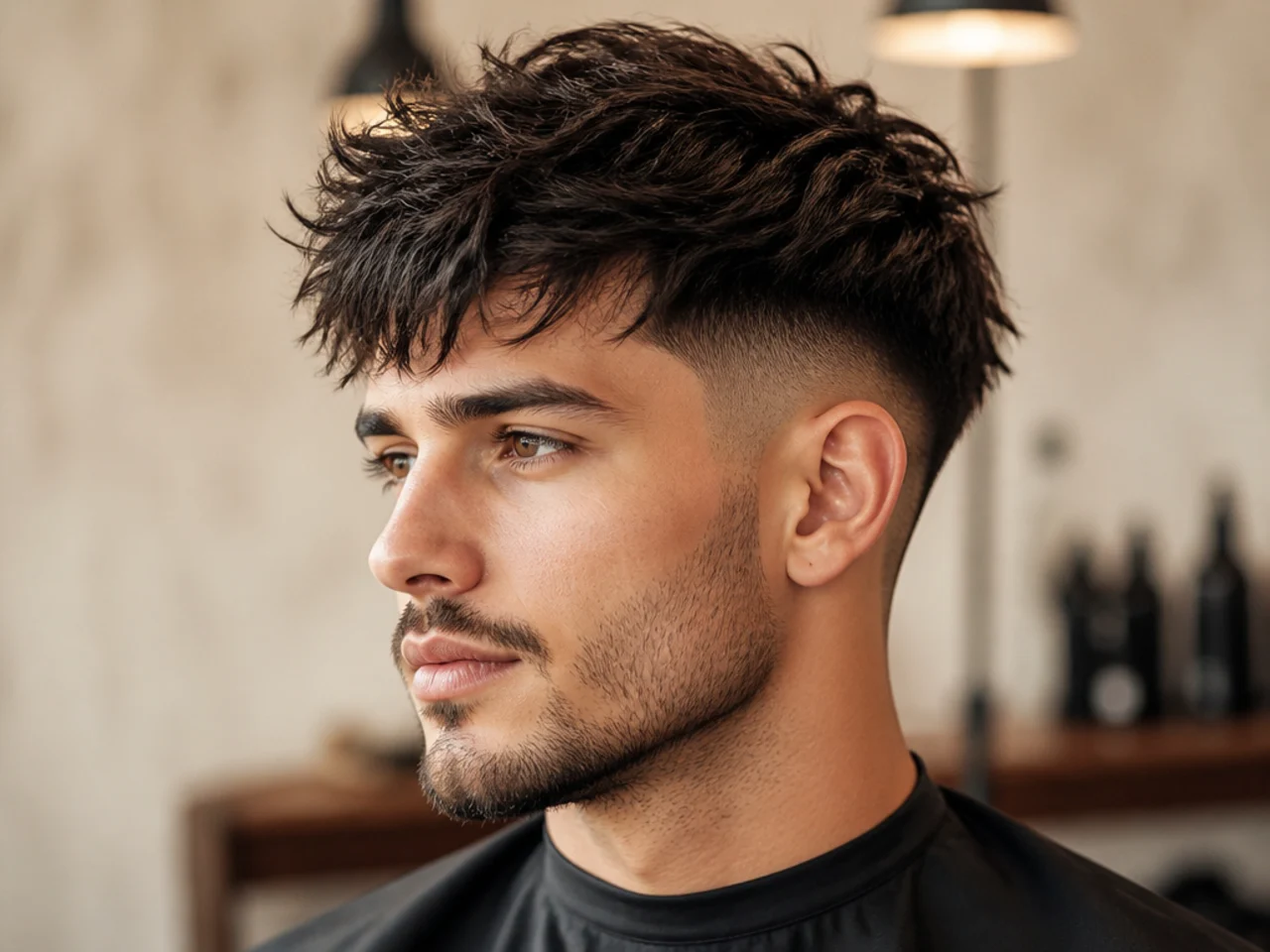
Short shag on top (2 to 3 inches) with a clean taper-fade side. Cleaner than the "faded sides" version above because a taper is softer than a full fade — the transition is more gradual. A low taper fade is the go-to here. Suits guys in offices where a hard fade reads too much. Best on square, oval, and diamond faces. Ask for "a short shag on top with a low taper fade on the sides, keep the top messy and layered with visible point-cut ends." Style: matte clay, fingers only, no comb. Rebook every 3 to 4 weeks — the taper grows out fast.
Messy, Medium Shag
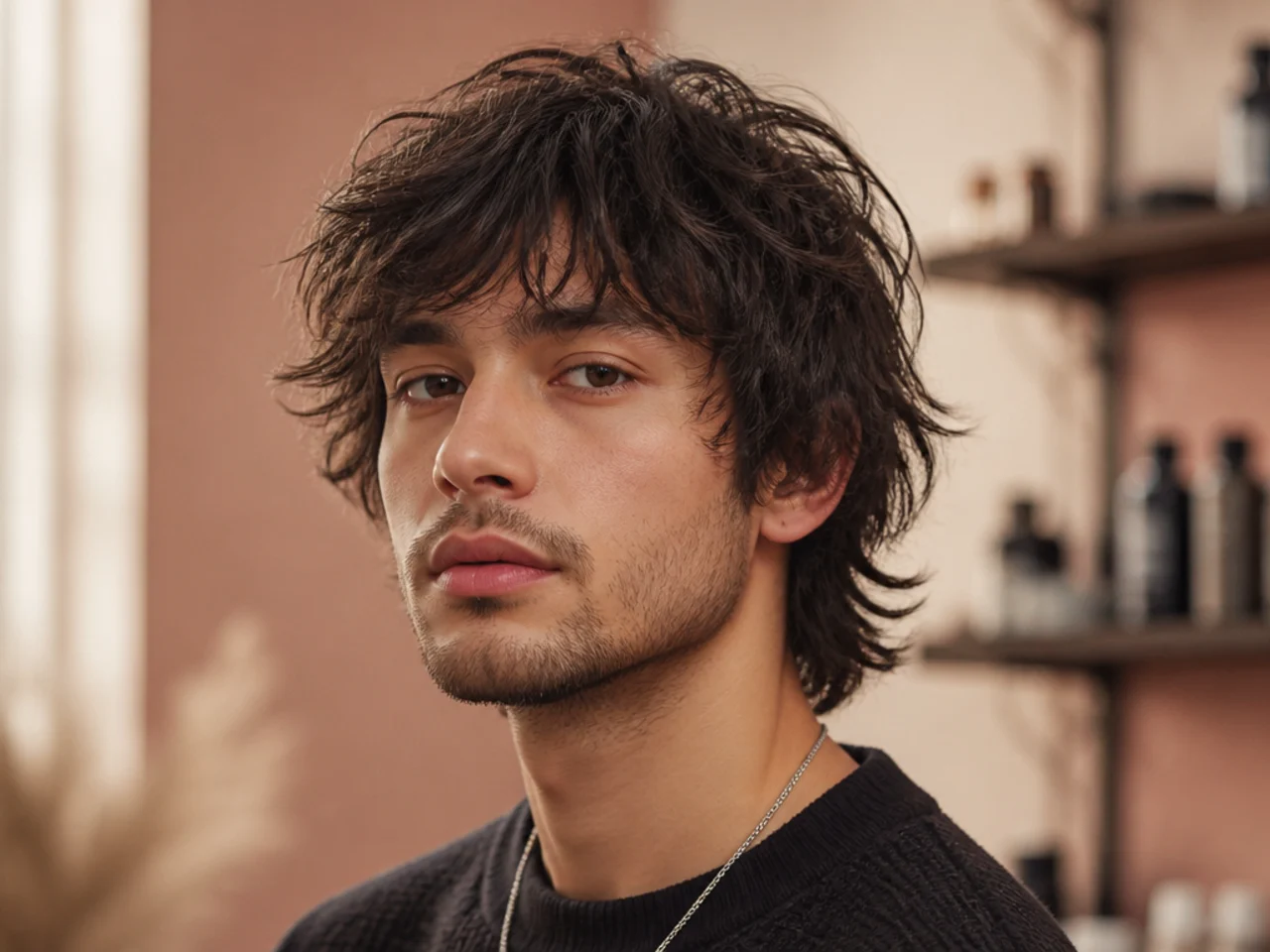
The medium shag styled fully undone. The difference between this and a "tidy" medium shag is entirely in the finish — same cut, different intent. Length is 4 inches, layered as standard. Also sits inside the broader medium-length hairstyles for men category if you're still weighing your options. Suits everyone the standard medium shag suits. Ask for "a medium shag, 4 inches, heavy internal layers, extra-wispy ends I can wear messy." Style: sea-salt spray on wet hair, rough-dry with your fingers, then break up the ends with a fingertip of paste. That's the whole routine.
Shaggy Haircuts for Straight Hair
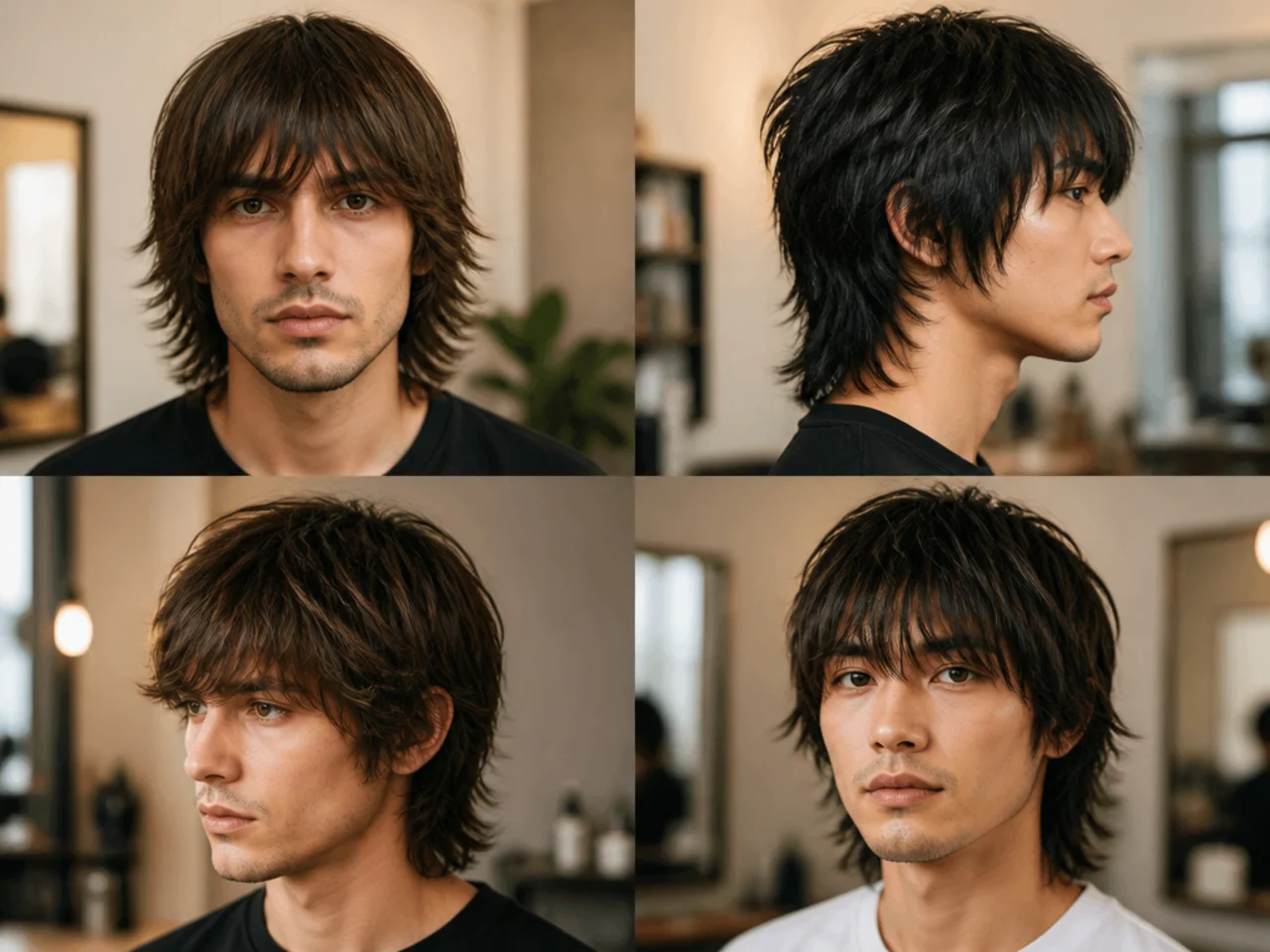
A note on straight hair specifically. The shag is where straight hair thrives because the layers create the movement your hair type doesn't have naturally on its own. Any length works — 3 to 7 inches — but 4 to 5 inches is the sweet spot for most guys. Ask for "heavy internal layering, no blunt lines anywhere, wispy point-cut ends throughout, and a razor-cut perimeter if my hair is thick." The non-negotiable: sea-salt spray. Straight hair without product reads flat, and salt spray builds the grit that makes a shaggy layered cut look the way it should. Apply on damp hair, scrunch, and air-dry.
Conclusion
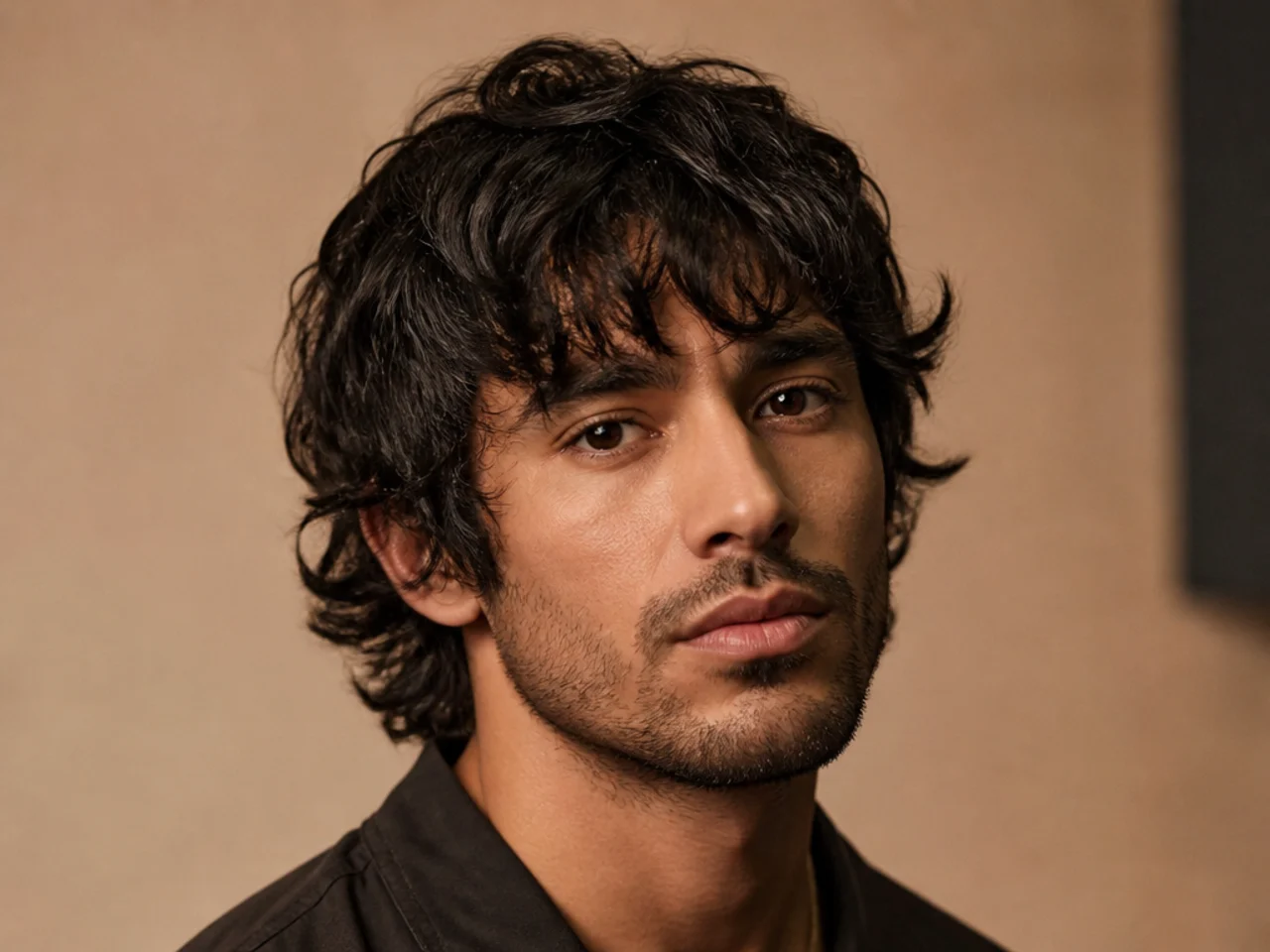
The shag works on nearly every hair type because you can dial the layers, length, and finish to whatever suits you. Fine hair benefits from short shag layers stacked tight for visual density. Thick hair benefits from long shag layers cut to remove weight. Curly and wavy hair benefit from dry-cut layering that respects the pattern instead of fighting it. Straight hair benefits from aggressive layering that builds movement it doesn't have on its own.
Whatever version you pick, the ask stays the same: internal layers for volume, wispy point-cut ends, no bluntness anywhere. The styling stays the same too: sea-salt spray on damp hair, air-dry, and one small dab of matte product only if you need it. That's the whole system. Rebook every 5 to 6 weeks for medium and long versions, every 3 to 4 for the short ones, and the shape holds between cuts.
FAQs
Is Layered Hair Good for Men?
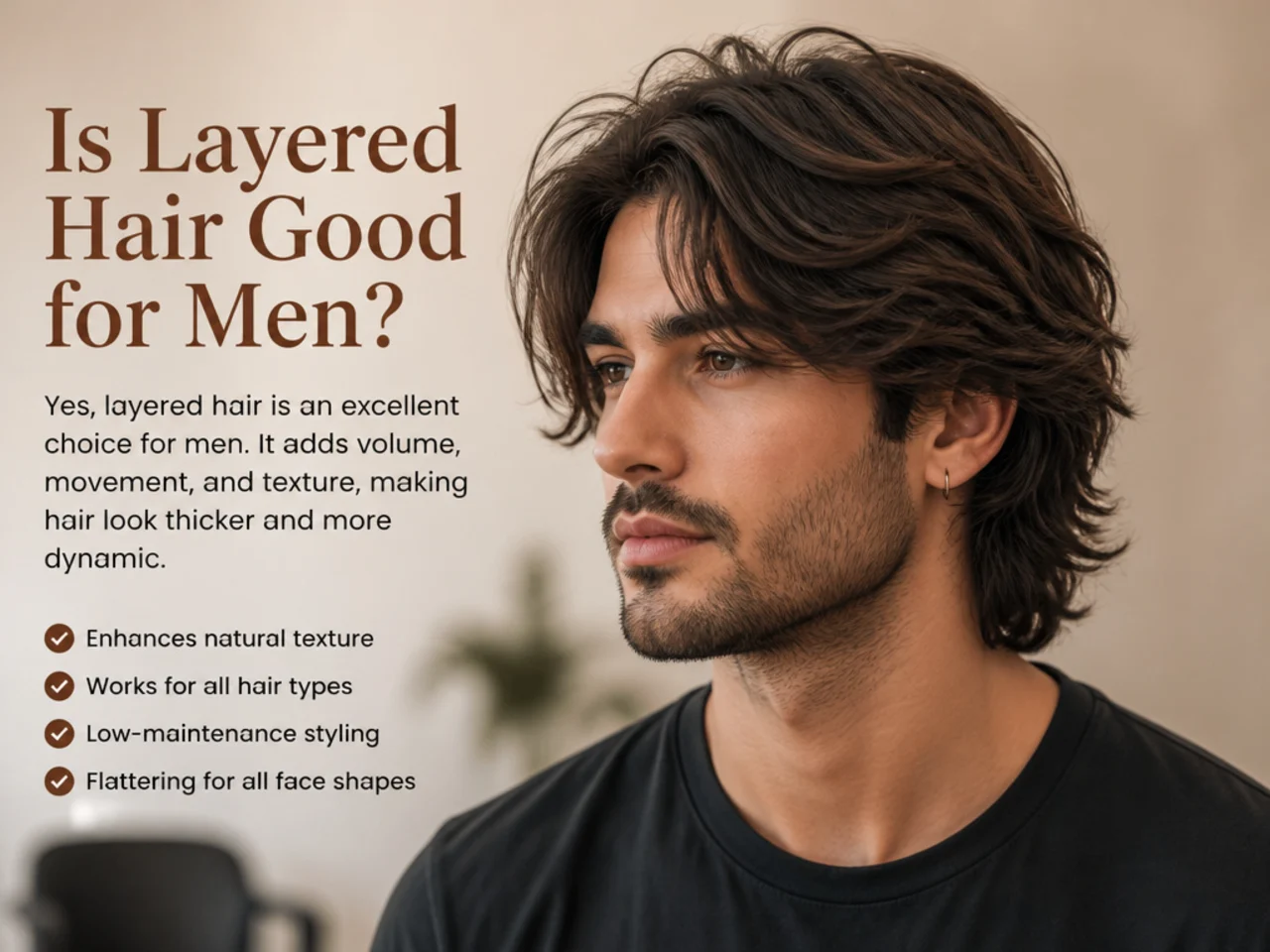
Yes. Layering is what turns hair from a shape into a texture. It removes weight, adds movement, and lets straight or fine hair carry volume it wouldn't have naturally. Almost every modern men's cut uses some form of layering, from short crops to long styles. The shag is the most heavily layered of the popular options — the layering is the whole point of the look, not a finishing detail. Any face shape and any hair type works with the right layer placement.
Are Shags in Style for Men?
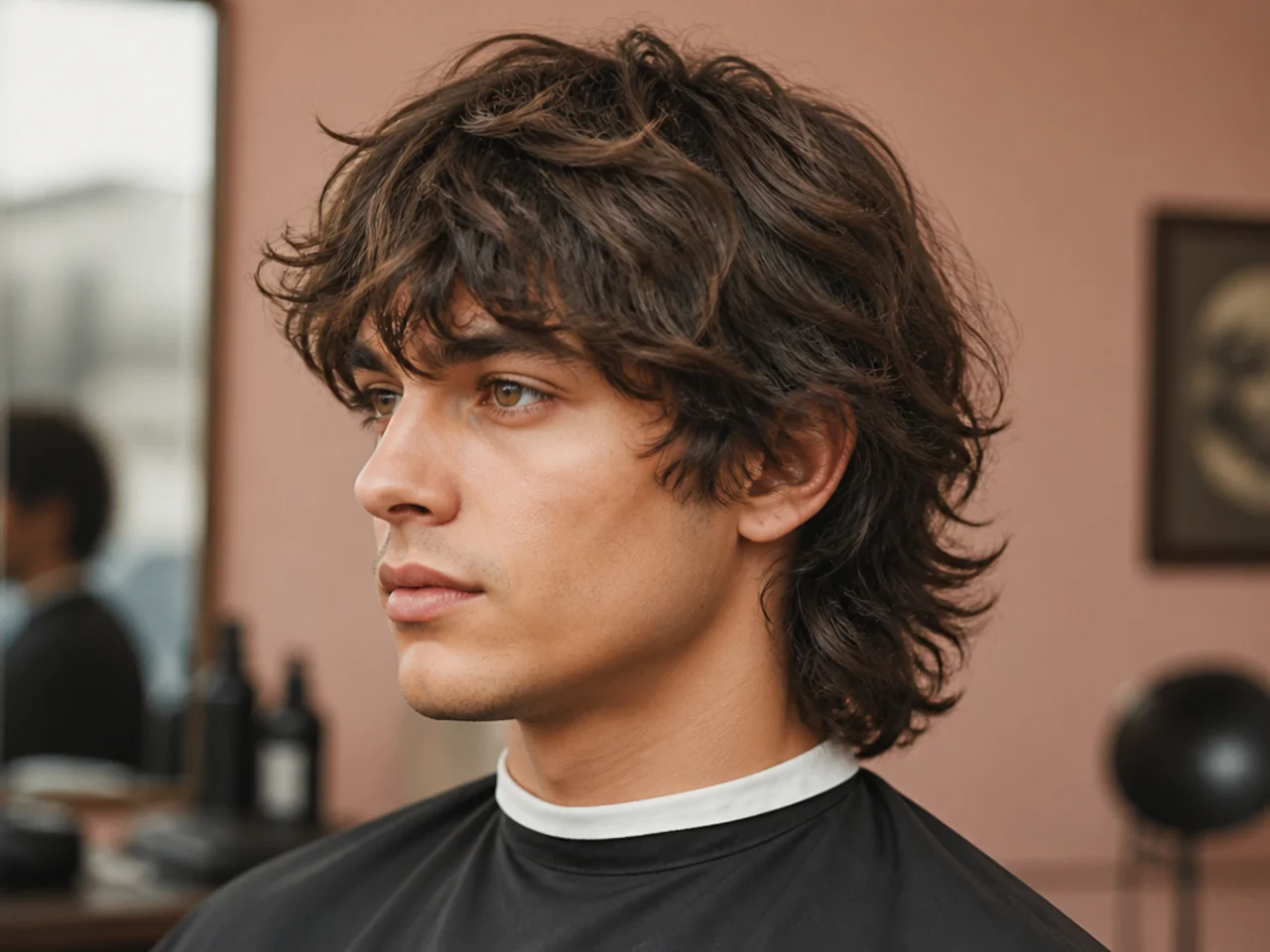
Yes. The men's shag has been climbing steadily for years and is now one of the top-requested men's cuts across barbershops. It reads modern, works on nearly every hair type, and pairs with fades or clean sides if you need a more conservative silhouette. It's not a passing trend — think of it as the current go-to alternative to a standard mid-length cut, especially if you want texture and movement over polish. The variations in this guide cover office-friendly through statement-making, so there's a version for most workplaces.
What is the Difference Between Layers and Shags?
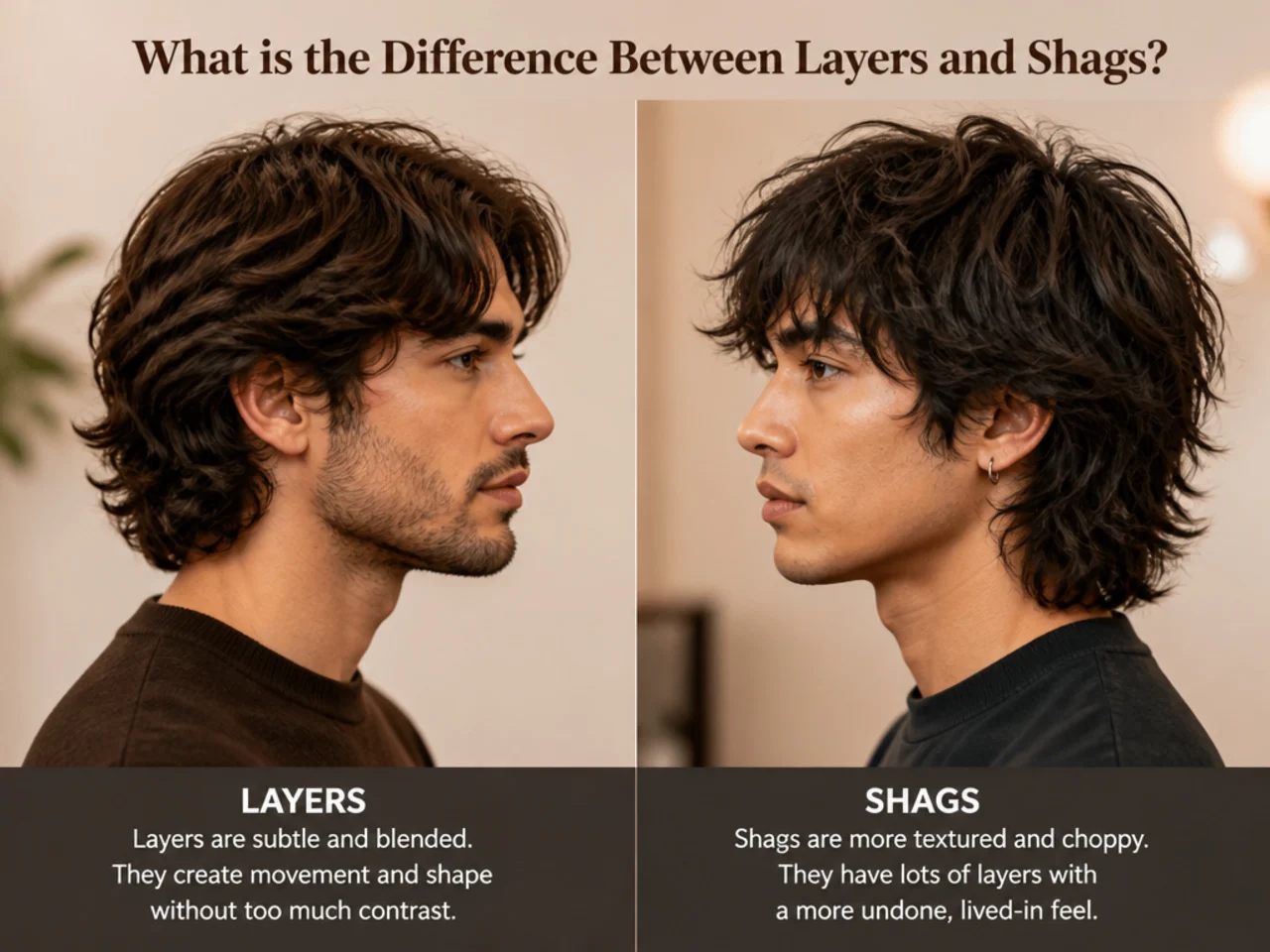
Layers are a technique — cutting hair to different lengths so it stacks with volume. A shag is a specific style that uses heavy layering as its defining feature, combined with wispy point-cut ends and a lived-in finish. Every shag is layered, but not every layered cut is a shag. A standard layered cut can be smooth, blow-dried, and polished; a shaggy layered cut is intentionally textured, with visible layer separation, softer edges, and an air-dried finish. The difference shows up most in how the ends are cut and how you style it.