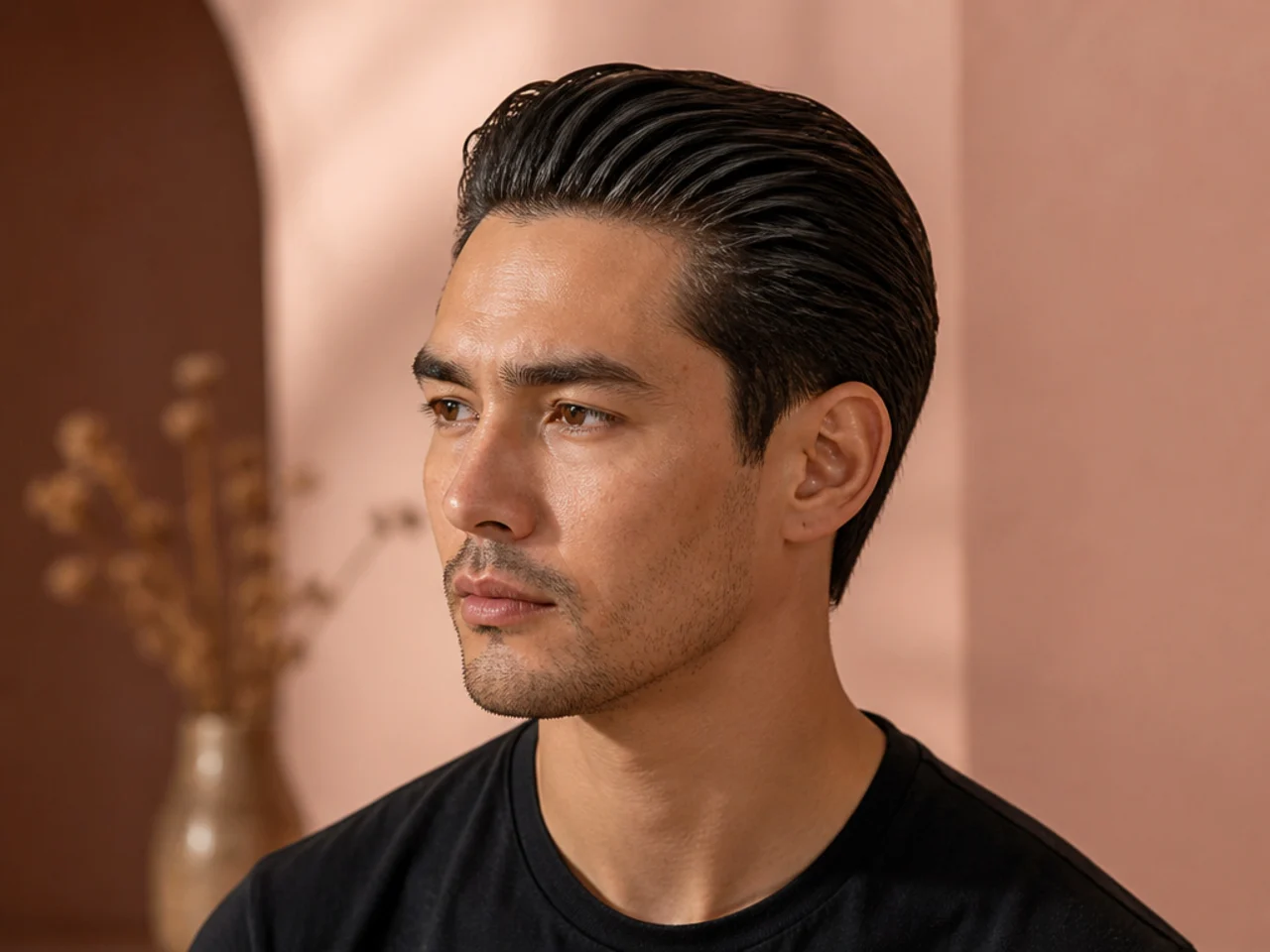
6 Slick Back Styles Guys Get Complimented On
A working barber picks the six slick back styles that get real slick back compliments men repeat back in the chair — the cut, the client, and the ask.
In this article · 18
- What Makes a Slick Back Get Compliments
- What Compliments Actually Sound Like
- The Six Slick Back Styles That Get Compliments
- 1. The Modern Matte Slick Back
- 2. The Executive Low Taper Slick Back
- 3. The Wavy Textured Slick Back
- 4. The Slick Back with Mid Fade
- 5. The Long Flow Slick Back
- 6. The Curly Brush Back
- What All Six Have in Common
- Styling That Keeps the Compliments Coming
- FAQ
- How do I know if a slick back suits my face shape?
- Can I get a slick back if my hair is thin or fine?
- What if my hair grows uneven — can a slick back still work?
- Do slick backs need a blow-dryer?
- What are the best tools for at-home slick back trims?
- How is a slick back different from a comb over or a side part?
I keep a mental note of every compliment my regulars bring back to the chair. Not for the ego — for the pattern. Six slick back styles on my board get compliments repeated back to me month after month. Below are those six styles, the clients behind each one, and the exact ask that would land you the same cut.
What Makes a Slick Back Get Compliments
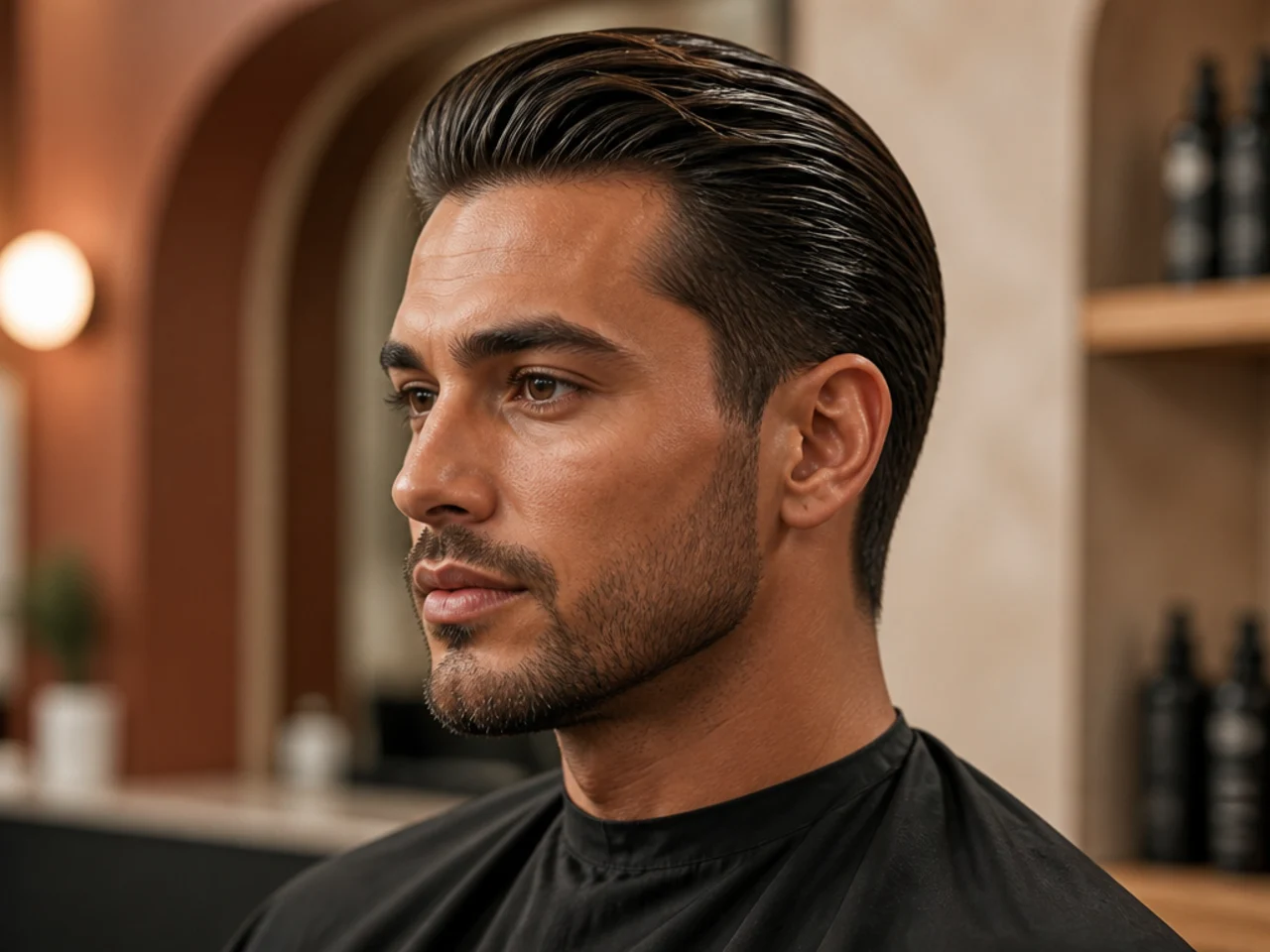
Three variables decide whether a slick back gets noticed or just sits on your head. Fit — face shape, hair type, and length balance. Finish — matte versus shine, and whether the product weight matches your density. Fade line — where the transition sits on your side profile and whether it flatters your bone structure.
Nail all three and compliments roll in by day two. Miss one and the cut reads flat, no matter how good the barber. Every version below is a combination I've watched pull compliments off the same client week after week. If you want the family map first, the slick back haircut pillar covers the full history and every finish in one place.
The rule under all three variables is length. Four inches on top minimum. Five is the sweet spot. Six gives you flow. Anything shorter and the hair flips up at the temples the first time you turn your head — no product saves it, and no compliment survives the shape break.
What Compliments Actually Sound Like
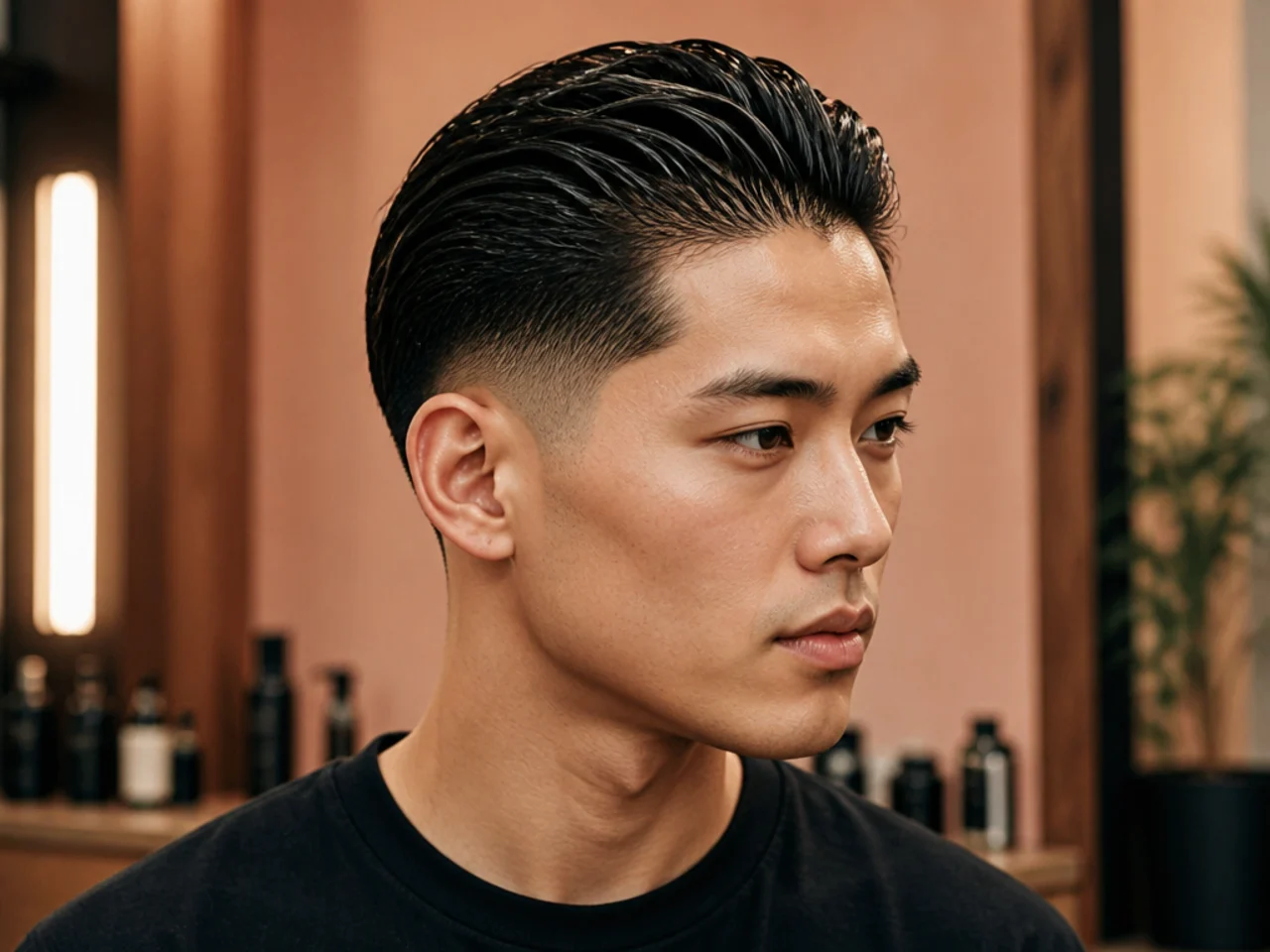
Guys tell me the compliments cluster around three phrases. First: "who cuts your hair" — usually from another man, usually within the first week. Second: "you look sharp today" — from partners, coworkers, family. Third: the silent one — a stranger holding eye contact a beat longer at the elevator.
Track those three signals for two weeks after your next cut. If you get none of them, something about the fit, the finish, or the fade line needs adjusting. The six styles below have hit that three-signal threshold on my clients over the last year — not the trendiest slick backs on Pinterest, the ones that survive the compliment test in real life.
The Six Slick Back Styles That Get Compliments
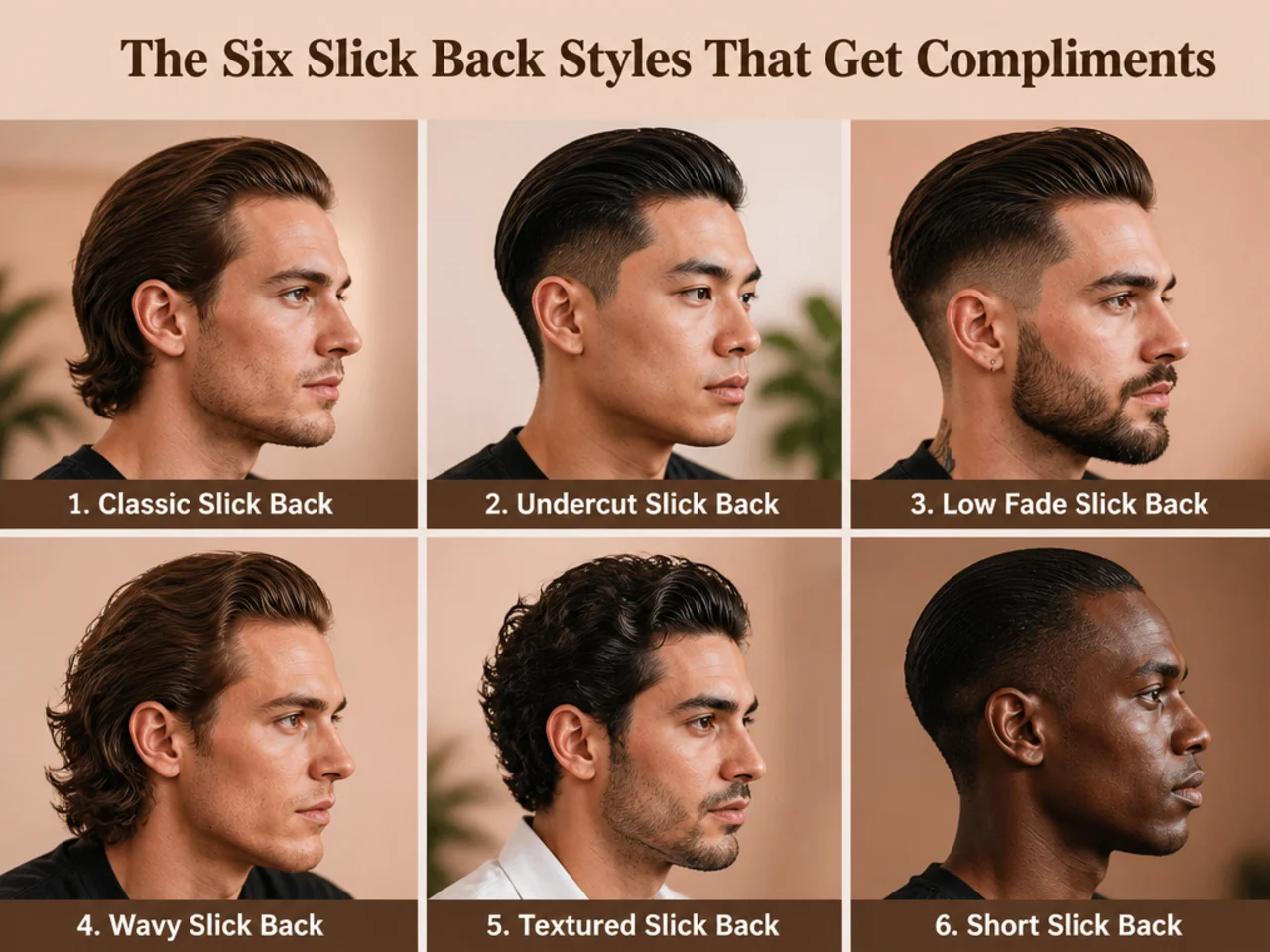
Read the one closest to your hair type and lifestyle first, then borrow the ask line for your next appointment. Every entry names the client, the top length, the side treatment, the finish, and the exact sentence I would hand your barber.
1. The Modern Matte Slick Back
David is a 31-year-old product manager with medium-brown wavy hair and an oval face. He came to me two years ago after growing out a French crop that had stopped working. His ask that first visit was vague — "something sharper, but not corporate." We landed on the modern matte slick back and he has booked it every five weeks since.
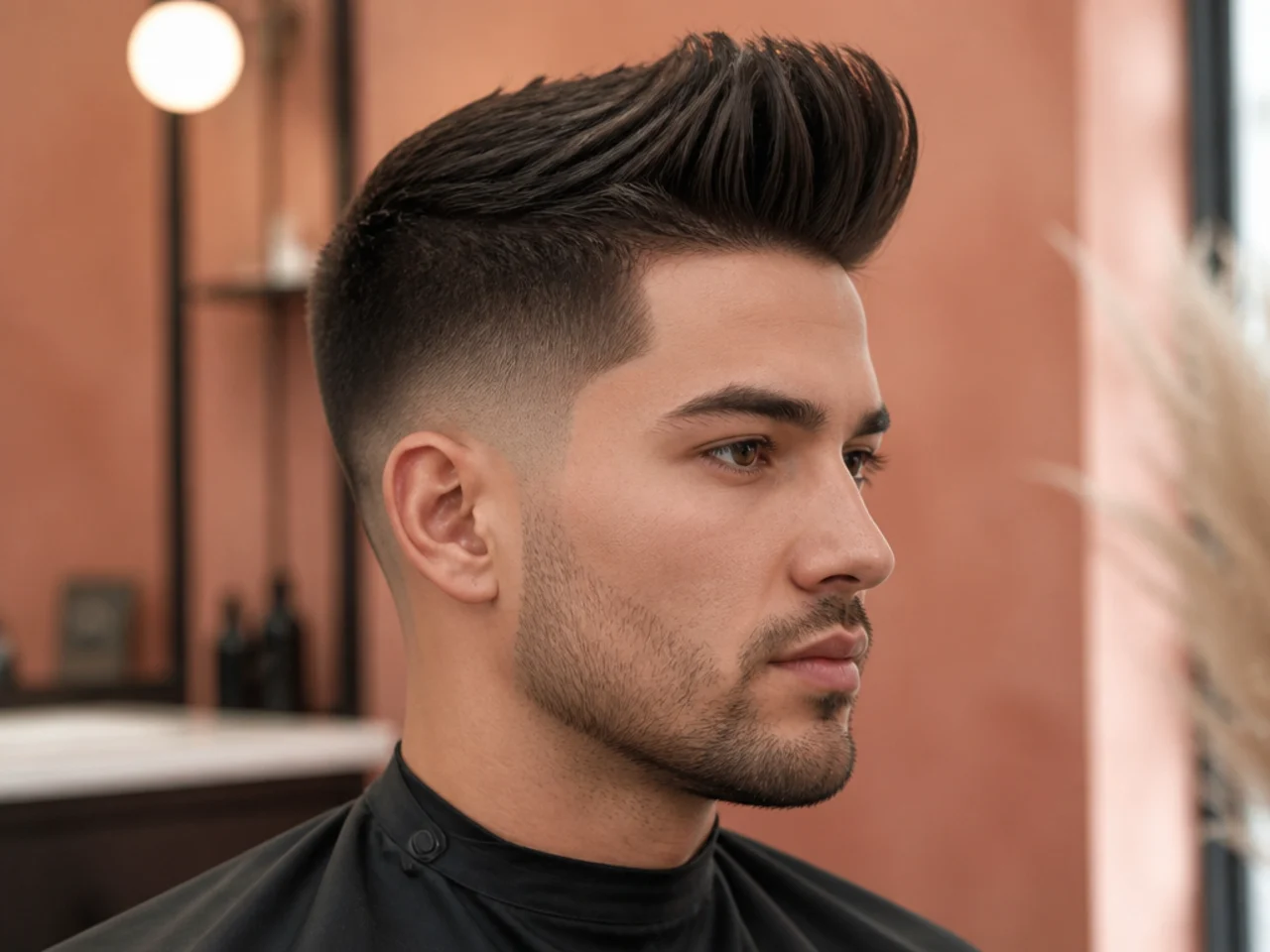
Five inches on top, scissor-blended sides an inch and a half long, no fade line. The finish is what earns this cut its reputation. A matte cream instead of pomade. A boar-bristle brush instead of a fine-tooth comb. The direction is still slick back — hair swept off the forehead, back through the crown — but the finish reads lived-in instead of glossed.
David reports the same three compliments after every cut. His girlfriend touches the front of it the day he comes home. His coworker in the next pod asks who cuts his hair every second month. An older client in a meeting told him "you look like a grown-up" — which he took as the highest compliment of his career.
Ask for: "five inches on top, scissor-blended sides an inch and a half long, soft natural neckline, modern matte slick back — brushed back with texture, not combed flat."
Style with: a nickel of matte cream on damp hair, brushed back with a boar-bristle brush, air-dried the last twenty percent. Skip pomade entirely — the shine kills the modern read.
For the wider family of matte cuts that pair well with this direction, the textured haircuts for men family covers the same brushed-back finish across shorter builds.
2. The Executive Low Taper Slick Back
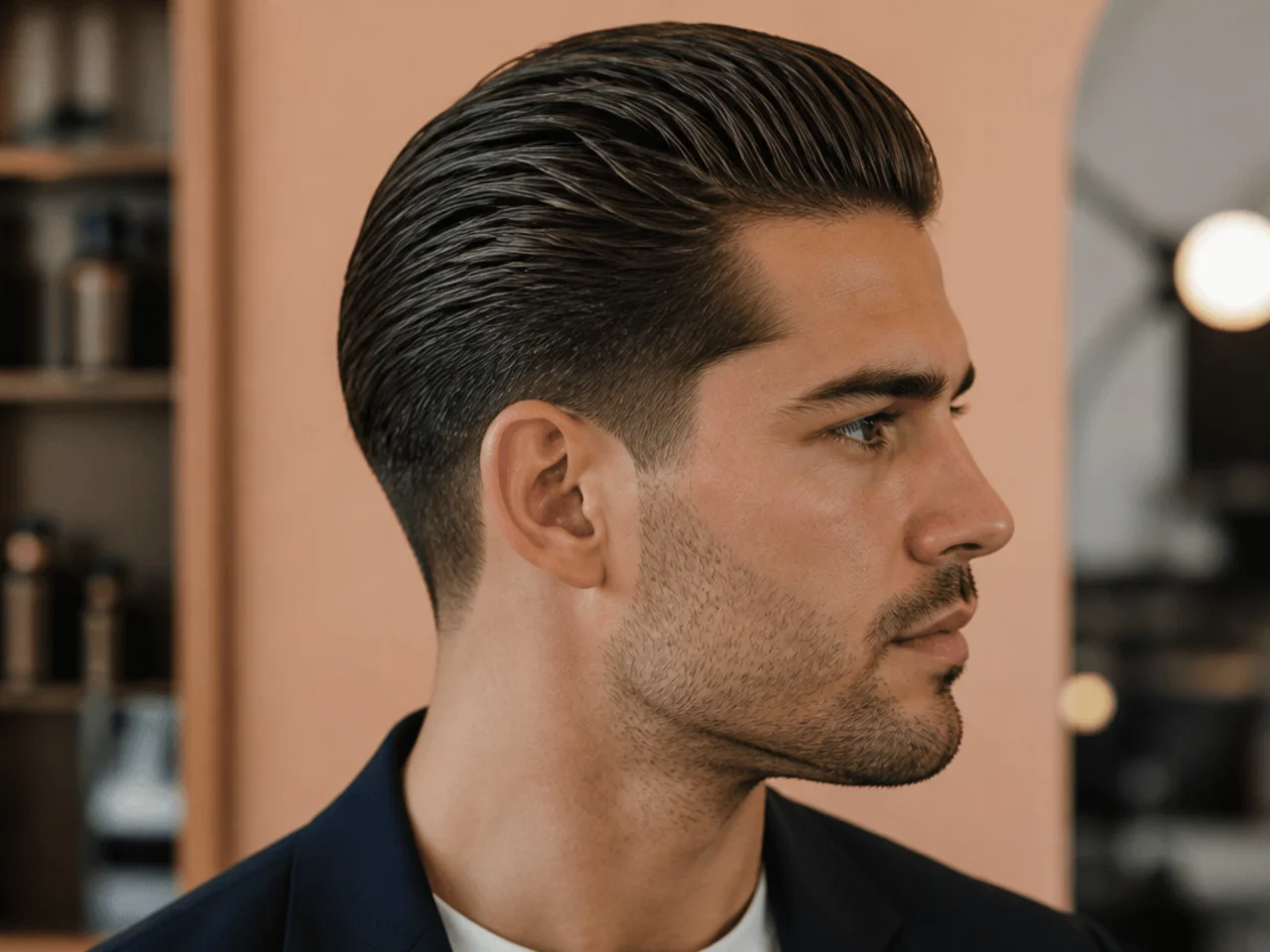
Marcus is a 38-year-old regional sales director who used to come in with photos of vintage Gordon Gekko slick backs and leave frustrated. The wet-look version aged him ten years in every mirror. We switched him to what I call the executive low taper — same direction as the Gekko cut, tenth of the shine, twice the compliments.
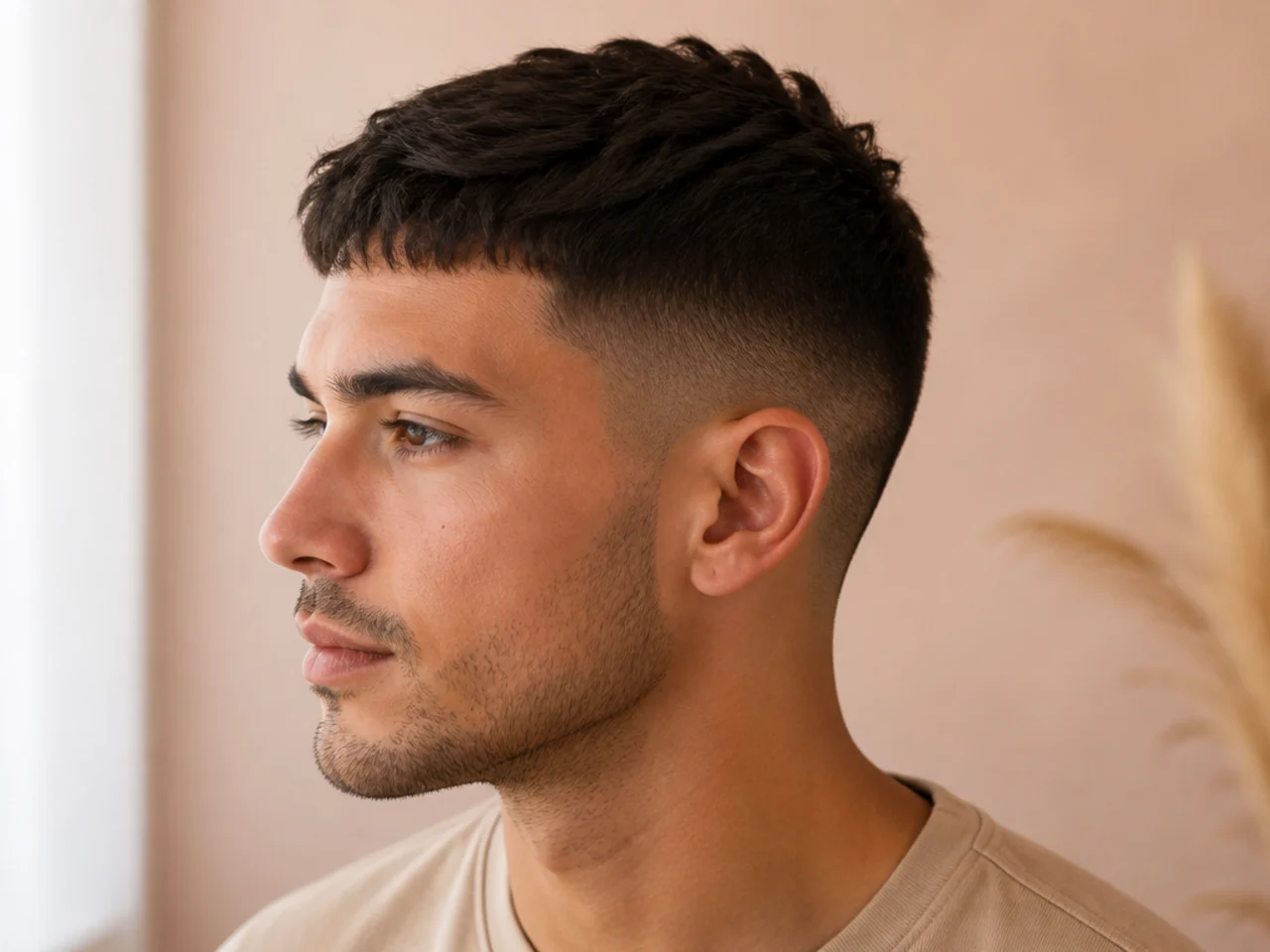
Four inches on top. Sides scissor-cut short. A low taper fade at the sideburn and neckline only — not a full fade line running around the head. The finish is a lightweight matte cream that reads polished without gleaming.
Marcus travels for work three weeks out of four and books me the Friday before he flies. His last three trips he came back with the same story — a client, a hotel bartender, and a stranger at a conference all worked in some version of "you look sharp" inside the first day. The cut passes every dress code and rebooks cleanly every four to five weeks.
Ask for: "low taper at the sideburn and neckline, scissor-blended everywhere else, four inches on top, executive slick back — matte finish, not shine."
Style with: a pea of lightweight matte cream on towel-dried hair. One pass with a fine-tooth comb straight back, then a fingertip pass to break up any hard lines. Under ninety seconds.
If your workplace runs conservative and you want the same shape without any fade line at all, the professional hairstyles for men roundup covers the fully scissor-cut alternatives.
3. The Wavy Textured Slick Back
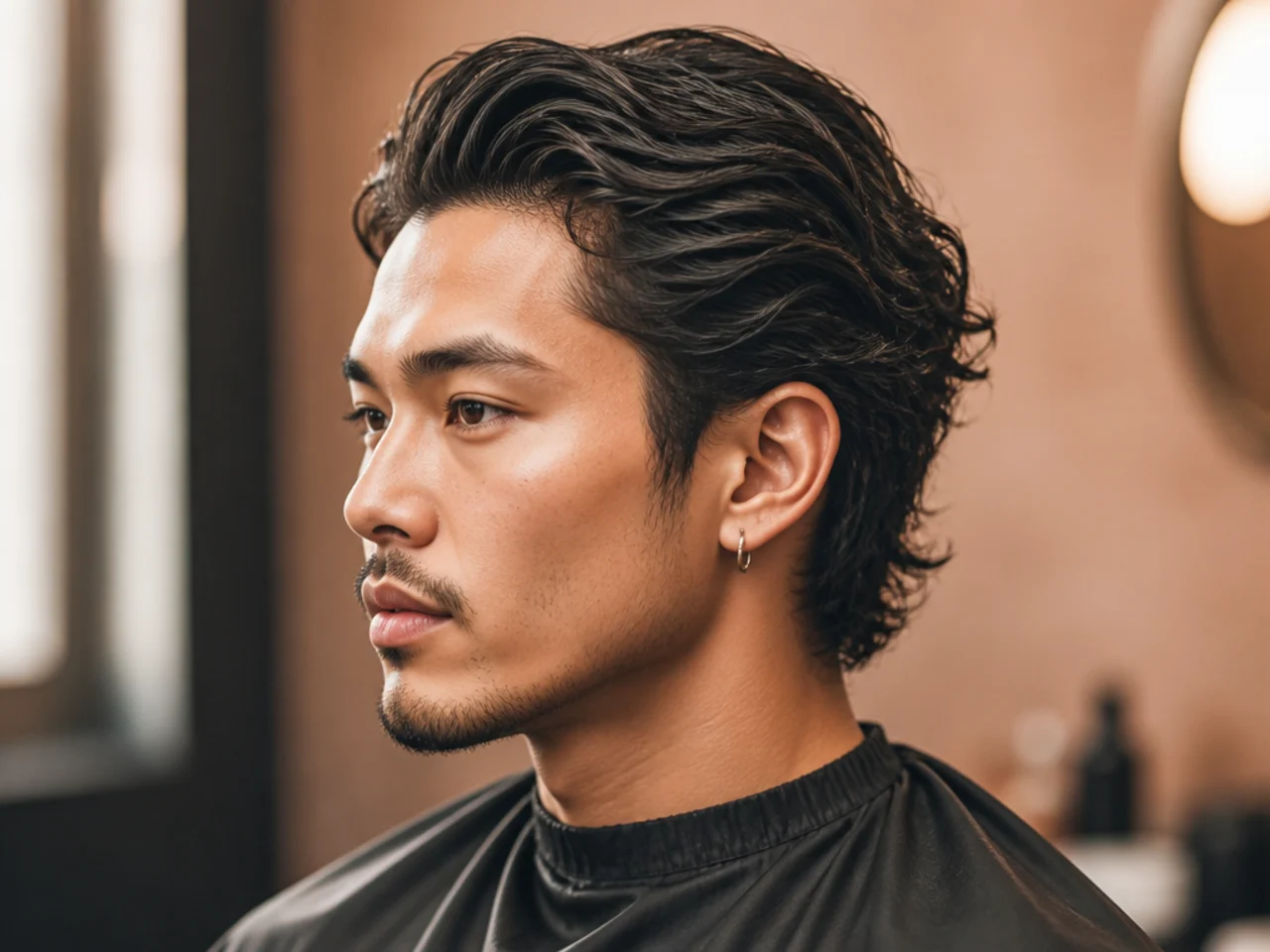
Ben is a 27-year-old graphic designer with type 2B waves and thick density. Every barber before me had tried to blow-dry his waves straight before combing them back — the result always fought his hair. Now his cut is built around the waves, not against them.
Six inches on top with subtle internal thinning to keep the density workable. Scissor-cut sides an inch and a half long, tapered at the neckline. The S-wave pattern stays visible. Reads intentional, artistic, current.
Ben's compliment count on this cut is the highest of the six. His partner only compliments this one now. Two coworkers copied the cut inside three months. The design director at his agency told him it "looks like your hair actually has an opinion" — which is exactly what a wavy slick back should read as.
Ask for: "six inches on top preserving my natural wave pattern, light internal thinning to reduce bulk, scissor-cut sides an inch and a half, wavy textured slick back — do not blow-dry straight."
Style with: a spritz of sea-salt spray on damp hair, pushed back with fingers or a wide-tooth comb, then air-dried. A drop of light pomade on the front once dry to lock the direction. Never a fine-tooth comb — it pulls the wave flat.
For the wider product category that supports this cut, the best wavy hair products roundup covers sea-salt sprays and light creams that keep the pattern alive.
4. The Slick Back with Mid Fade
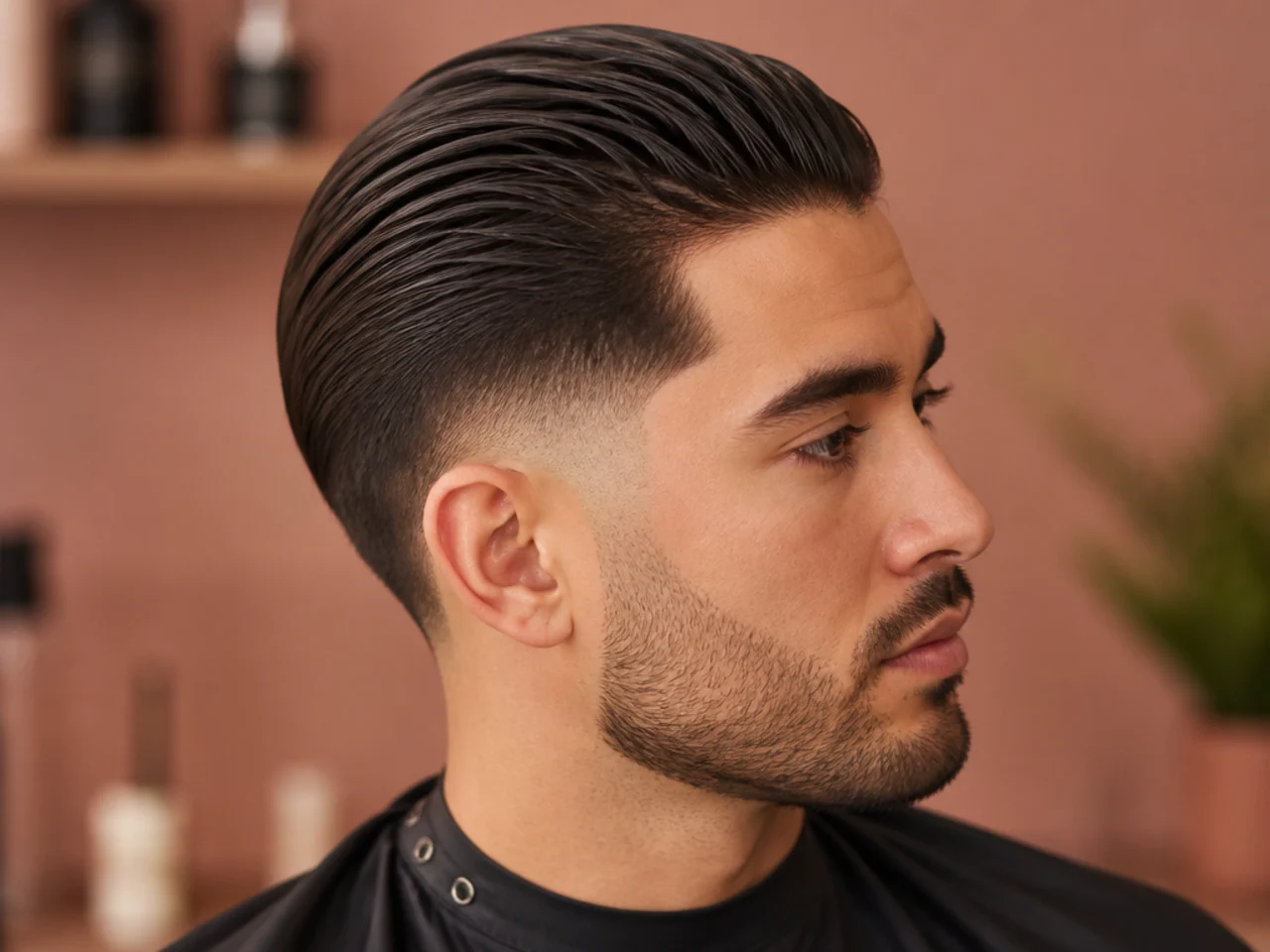
Kenji is a 29-year-old East Asian client with dense poker-straight hair, an oval face, and a job at a startup that pays him to wear a T-shirt. The mid fade slick back is the most-requested slick back on my board in 2026 for good reason. The mid fade lands the transition at the temple — the visual midpoint of the side of the head — enough contrast to read modern without dominating the top.
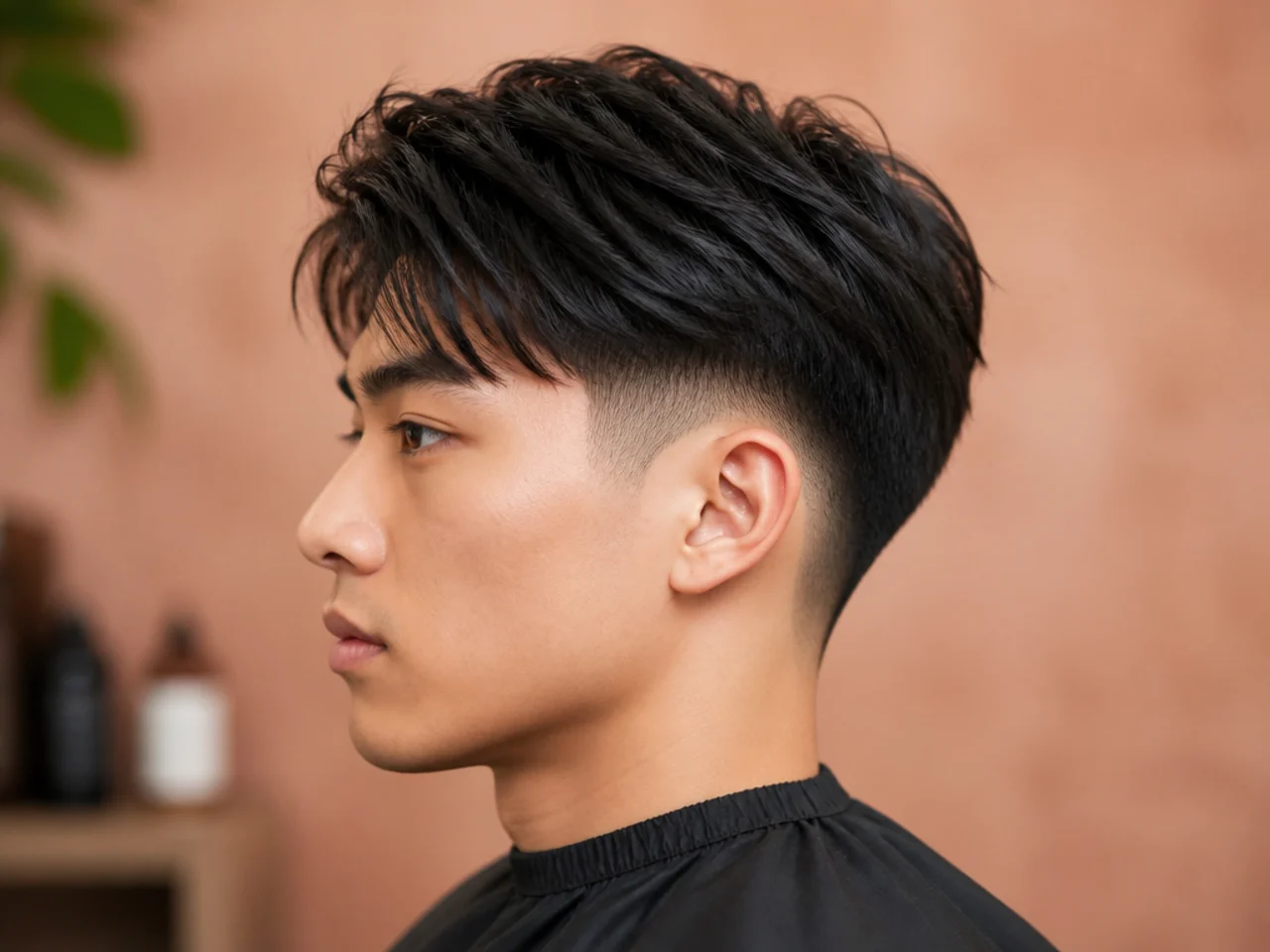
Five inches on top, mid fade at the temple line dropping to a #0.5 at the shortest point, hard blend at the transition. Finish is a lightweight matte cream. Kenji's dense straight hair holds every strand pointing back without a fight — the density is the styling tool.
Compliments cluster around the sharpness. His girlfriend told him it makes his jaw look "carved," which she had never said about a haircut before. His younger brother texted him the day after the cut asking for the same barber. Compliments accelerate week one to week two, then stop hard the day the fade line softens — which is why I book Kenji every three weeks on the dot.
Ask for: "mid fade at the temple line, #0.5 at the shortest point blending up to a #2 at the parietal ridge, hard blend at the transition, five inches on top, slick back finish."
Style with: a pea of matte cream or a light water-based pomade on damp hair. One fine-tooth comb pass straight back. The fade does most of the visual work — the top just needs to point in one direction.
5. The Long Flow Slick Back
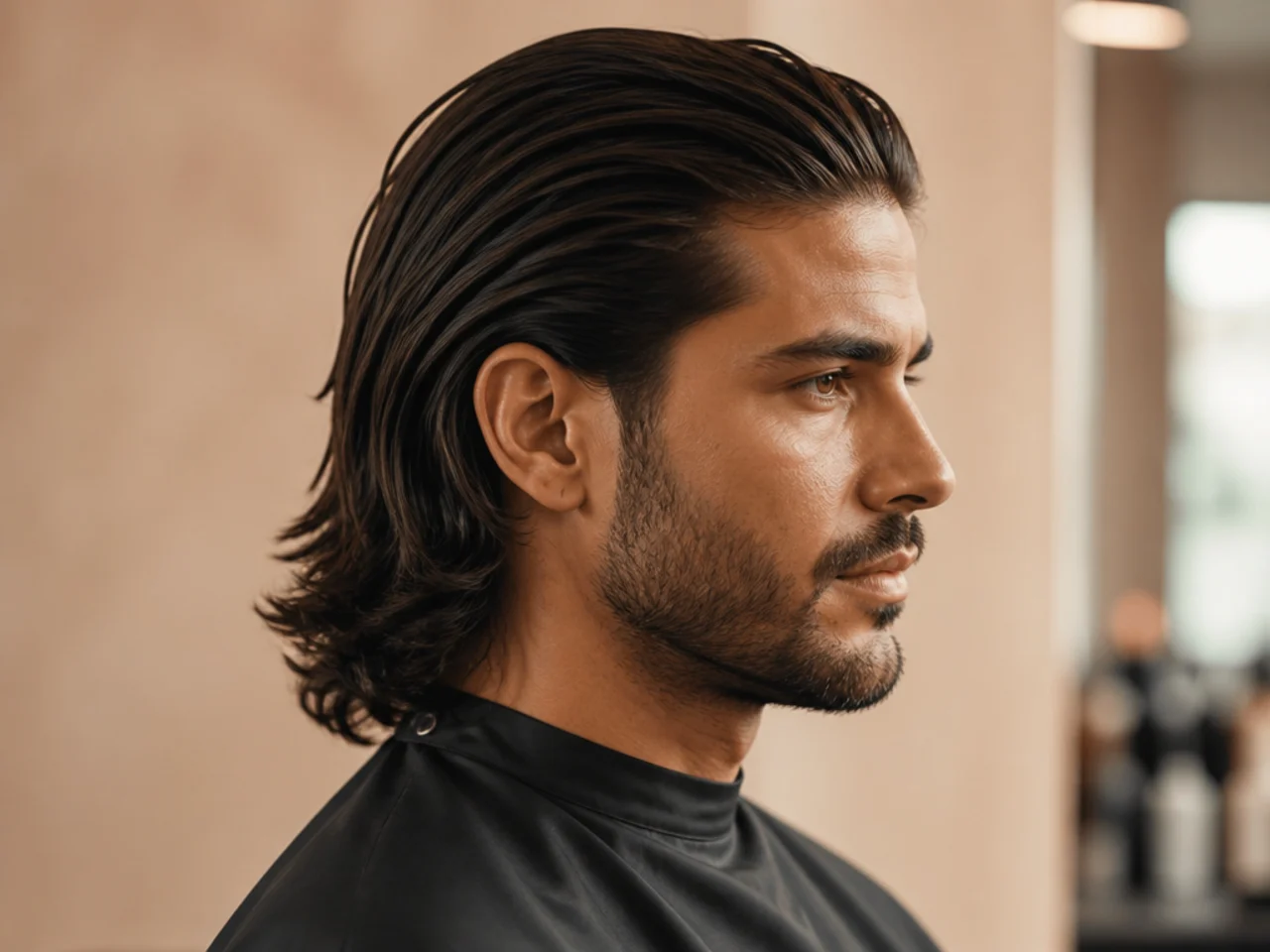
Alessandro is a 34-year-old wine importer with loose-wave hair, a strong jawline, and Italian tailoring in his closet. He grew his hair out over eighteen months to land the long flow slick back — seven inches on top, layered ends, a soft taper at the neckline. Think Christian Bale in American Psycho, or every second Milan campaign of the last decade.
The cut works because it does not try to be subtle. The length is the compliment. The direction lets the jawline carry the frame. A short groomed beard balances the mass on top. Every visit is a scissor trim — three-quarters of an inch off the ends plus light internal thinning.
The compliments Alessandro brings back are different from the shorter versions. Fewer "you look sharp" comments, more "your hair looks incredible" — usually from women, usually with an implied second sentence. He books me every six weeks; the long flow forgives grow-out because a quarter inch on seven inches barely shows.
Ask for: "low taper at the neckline and ears, seven inches on top with layered ends and light internal thinning, long slick back with natural flow."
Style with: a medium-hold pomade root to tip on damp hair. Blow-dry back with a round brush lifting at the front for structure, then brush through with a boar-bristle for polish. Book a groomed beard to match — the length up top needs the visual counterweight.
For the wider category of grown-out styles with this energy, the flow haircut for men family covers the shorter and medium versions.
6. The Curly Brush Back
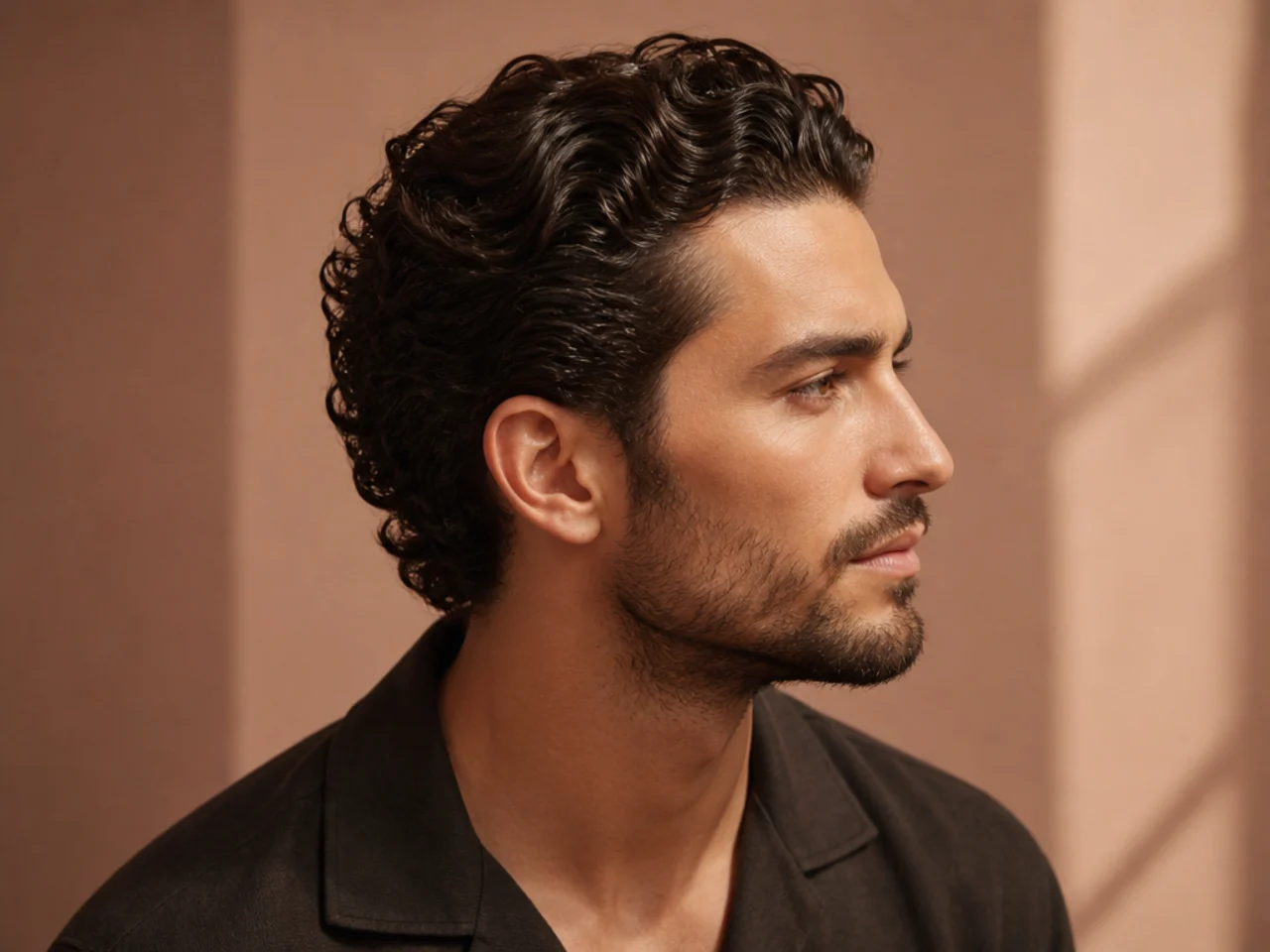
Andre is a 26-year-old with type 3B curls, a heart-shaped face, and a job that lets him wear whatever he wants. Most barbers before me had tried to comb his curls flat, which killed the pattern and killed the shape. We rebuilt his cut around the curl — brushed back, never combed. That change alone doubled the compliments he was getting.
Four inches of coily length on top. Low taper at the neckline and sideburn — not a full fade — so the curl density carries the visual weight up top. The direction is still slick back, but the styling tool is a curl sponge or a soft-bristle brush. The pattern stays visible and the shape reads intentional.
Andre reports the highest compliment ratio from women on this cut — specifically from women who compliment the curl pattern rather than the shape. That is the tell that the cut is landing. When a stranger compliments how your hair does what it does, the cut is working with your texture instead of fighting it. The curly hair haircuts pillar covers the wider category — a curly slick back is one of the highest-return cuts in that family.
Ask for: "low taper at the neckline and sideburn, four inches of coily length on top, brushed back with a curl sponge or soft brush — do not comb flat, do not thin the top."
Style with: a leave-in curl cream to define the pattern, then a pea of light pomade or curl butter brushed back with a curl sponge or a soft boar-bristle brush. Skip flat combs — they distort the coil.
What All Six Have in Common
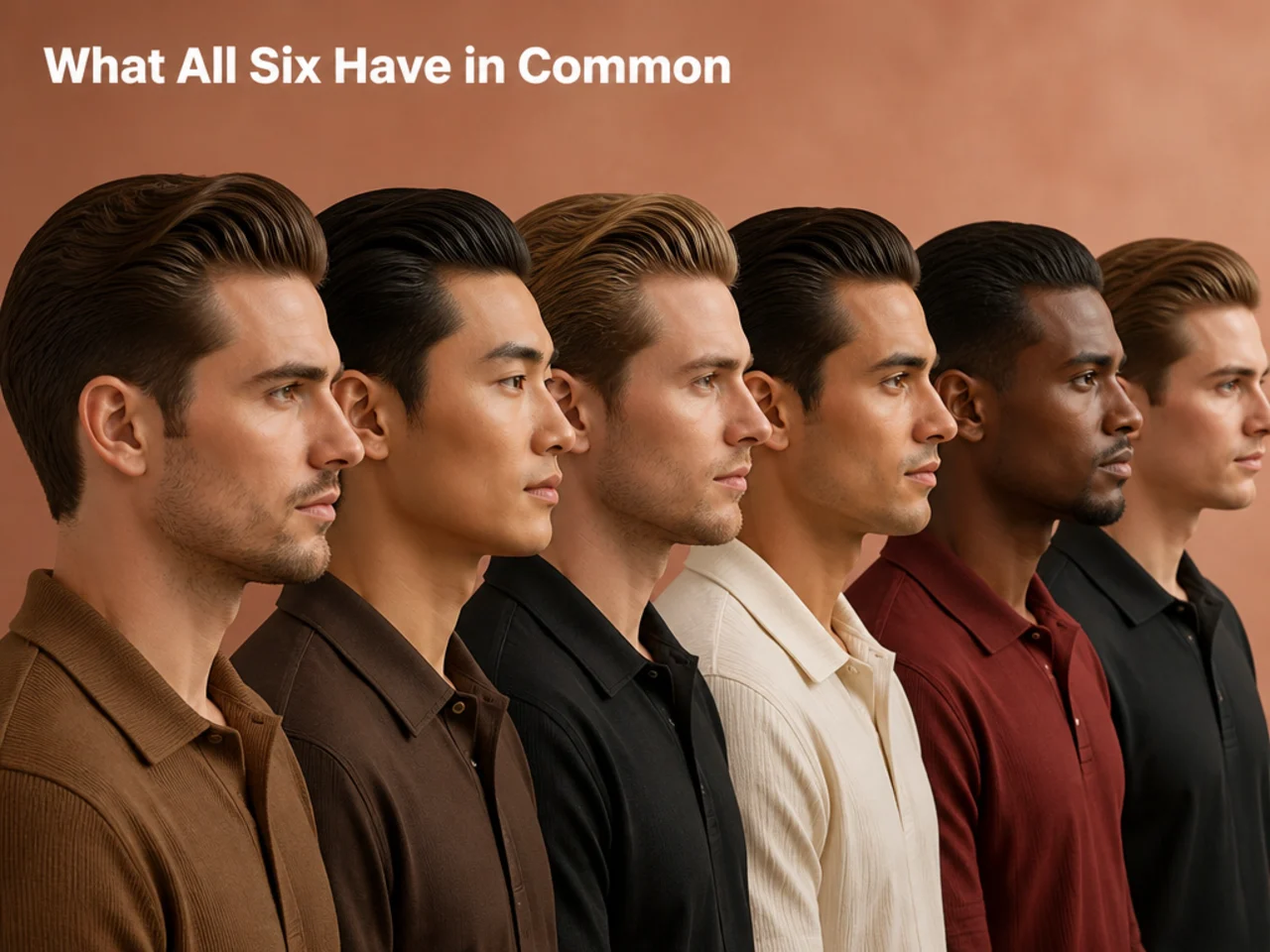
Six different clients, six different builds, three shared rules. If you take nothing else from the six stories above, hold onto these.
Length matches face and hair density. Four inches for the taper-heavy versions, five for the modern matte and mid fade, six for the wavy, seven for the flow. Length is not a preference — it balances face shape and carries hair type. Go shorter and the shape breaks; go longer and the cut fights itself.
Finish matches lifestyle. Matte cream for casual and creative work. Light water-based pomade for office wear. Medium-hold pomade for flow and long versions. Zero of these cuts use a heavy oil pomade — the wet-look ages the cut ten years in most modern settings. If your reference photo shows shine, ask whether you actually want it or the photographer did.
Fade line matches face shape. Round faces gain from the vertical line of a mid or high fade. Long or oblong faces flatter under a low taper. Square jaws hold every option. Diamond and heart faces suit the taper. Match it right and the compliments start immediately.
Styling That Keeps the Compliments Coming
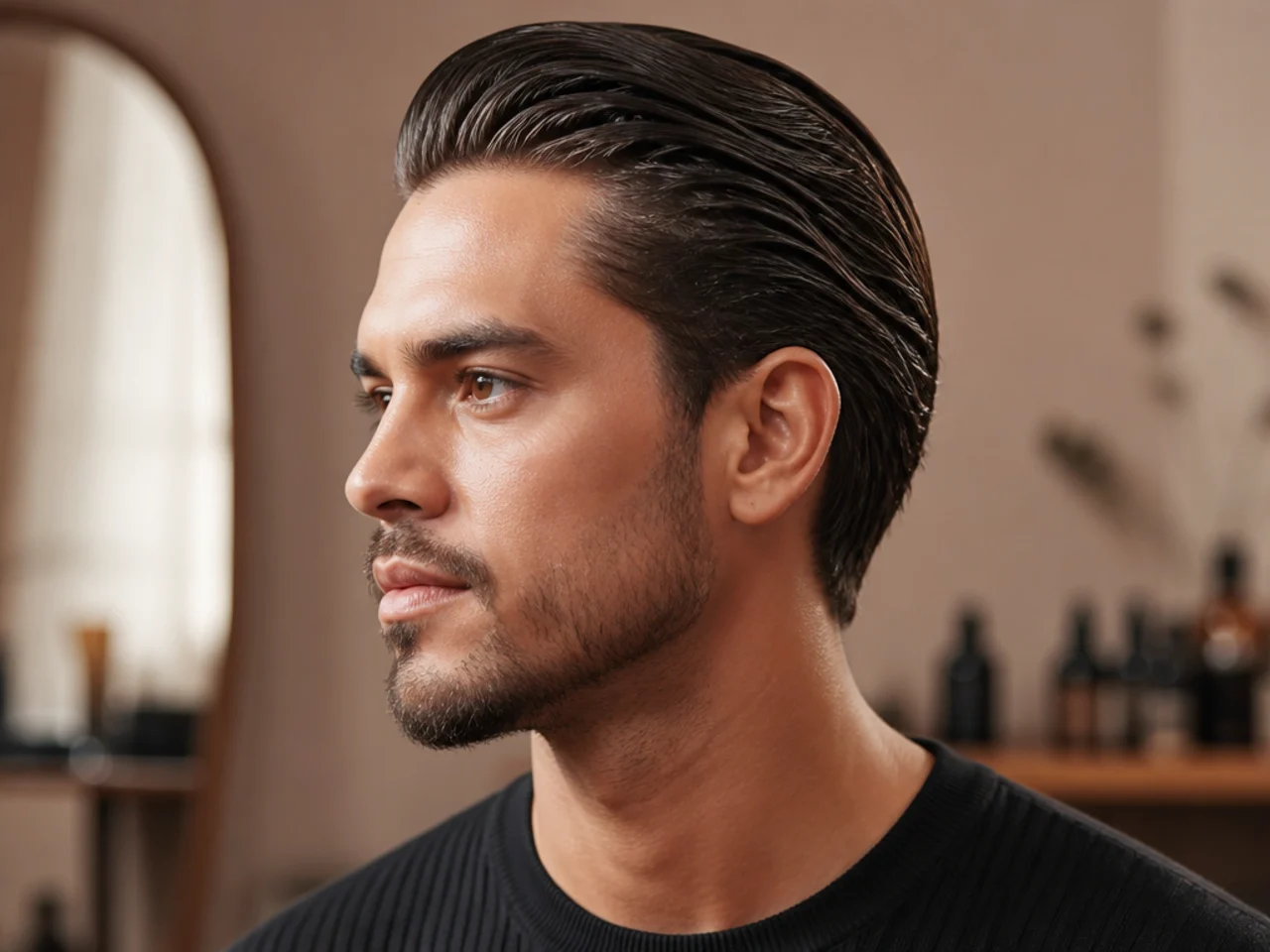
The cut only lasts as long as the styling holds up. Guys who get compliments consistently share three habits at home.
Damp-style, not dry-style. Every one of the six cuts above is styled on towel-damp hair — not soaking, not fully dry. Product distributes evenly on damp hair and holds shape for a full day. On dry hair, product sits on the surface and the shape collapses by lunch.
One product, not three. A single nickel-sized scoop of the right product beats a layered stack. Matte cream and pomade fight each other. Sea-salt spray and heavy oil cancel out. Pick one product per cut based on the finish you want.
Wash smart. Sulfate-free shampoo on product days. A clarifying rinse once a week to strip buildup — buildup flattens the top and dulls the finish. Cold water on the final rinse to close the cuticle and keep the shine versions shining.
The right cadence keeps the shape alive between visits. Every three weeks for the mid fade. Four to five weeks for the executive low taper and modern matte. Five weeks for the wavy. Six for the long flow. The how often should men get a haircut guide breaks down the rebook rhythm by cut type. For thirty variations of the shorter builds in this article, see the mens slick back haircut roundup; if the fade is the part you want to lead with, the slick back fade haircut for men guide goes deeper.
FAQ
How do I know if a slick back suits my face shape?
Round and oval faces work with almost every version above. Square jaws suit the mid fade and modern matte versions — the sharp lines echo the jaw. Long or oblong faces should stay under five inches on top and stick to low taper or scissor-cut sides. Diamond and heart faces flatter under the low taper and wavy versions. If you are unsure, bring two reference photos — one front, one three-quarter side — and let the barber read your bone structure at the mirror.
Can I get a slick back if my hair is thin or fine?
Yes, on the shorter versions. Fine hair looks best on the executive low taper and short slick back builds — under five inches, matte finish, no heavy oil pomades. The lighter product weight prevents scalp show-through. Skip the wet-look and the long flow — both expose fine hair rather than working with it. The layered haircuts for men family covers density-building cuts that can grow into a slick back over time.
What if my hair grows uneven — can a slick back still work?
Yes — uneven growth hides better under a slick back than under a side part or comb over. The back-swept direction pulls every strand into the same line and masks a slower-growing side. Book slightly shorter on top so the mismatch is less visible mid-cycle, and point the pattern out at the consult. A good scissor blend at the sides neutralizes most visual asymmetry.
Do slick backs need a blow-dryer?
The modern matte and executive versions do not — a fine-tooth comb pass on damp hair is enough. The long flow version wants a blow-dryer for front lift. The wavy version needs air-drying, never heat — heat kills the wave pattern. Match the tool to the finish you want and skip height-driven builds if you refuse to reach for a dryer.
What are the best tools for at-home slick back trims?
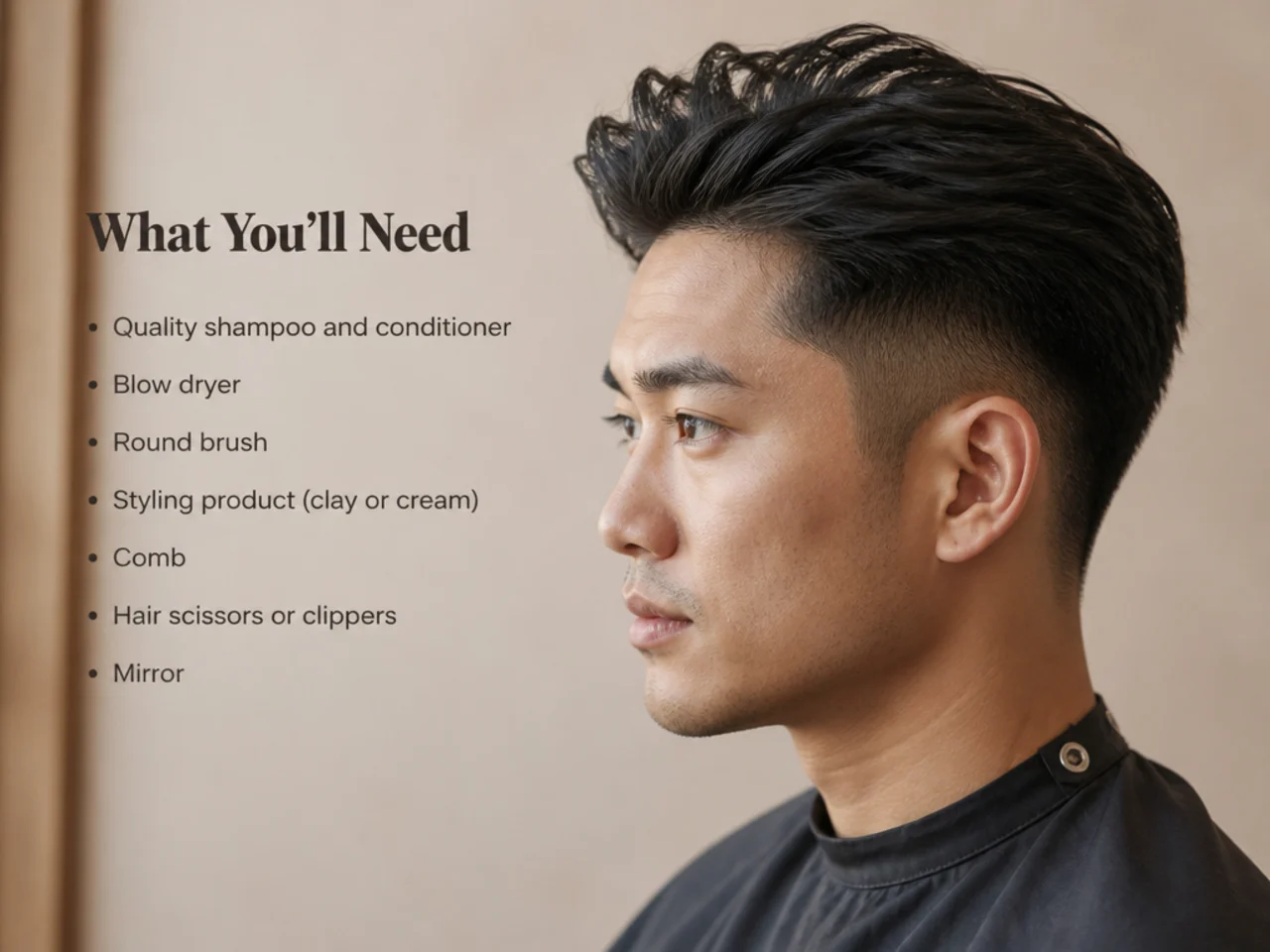
A pair of sharp barber scissors for the top and a set of adjustable clippers for the sides and neckline. The best hair clippers for men roundup covers the shop-tested models. Add a fine-tooth comb, a wide-tooth comb, and a boar-bristle brush. That kit handles at-home neckline touch-ups between full cuts. Do not cut the fade line at home unless you know the guard progression cold — the fade is where the cut lives or dies.
How is a slick back different from a comb over or a side part?
Direction. A slick back combs the whole top straight back off the forehead — no part, no side sweep. A comb over combs from a defined part across to the opposite side. A side part leaves a natural part with hair falling both ways. All three share a similar length range and product routine — the sweep direction is what tells the eye which cut you are wearing. The slick back reads most confident. The side part reads most classic. Pick by the tone you want to set.