How Often Should Men Get A Haircut? - 2026
How often should men get A haircut? A good haircut can lift your confidence and clear your mind to chase your goals, whether you’re a young...
In this article · 18
- how often should Men get a haircut?
- Fade Haircuts: Every 2 to 3 Weeks
- Short Haircuts: Every 2 to 4 Weeks
- Medium-Length Hairstyles: Every 3 to 6 Weeks
- Long Hairstyles: Every 6 to 8 Weeks
- What Affects How Often You Need a Haircut?
- How Fast Your Hair Grows
- Lifestyle, Diet, and Exercise
- Hair Type
- How Long Does a Men’s Haircut Take?
- How Long Does a Haircut Last?
- Does Cutting Hair Regularly Make It Healthier?
- Does Cutting Hair More Often Make It Grow Faster?
- Conclusion
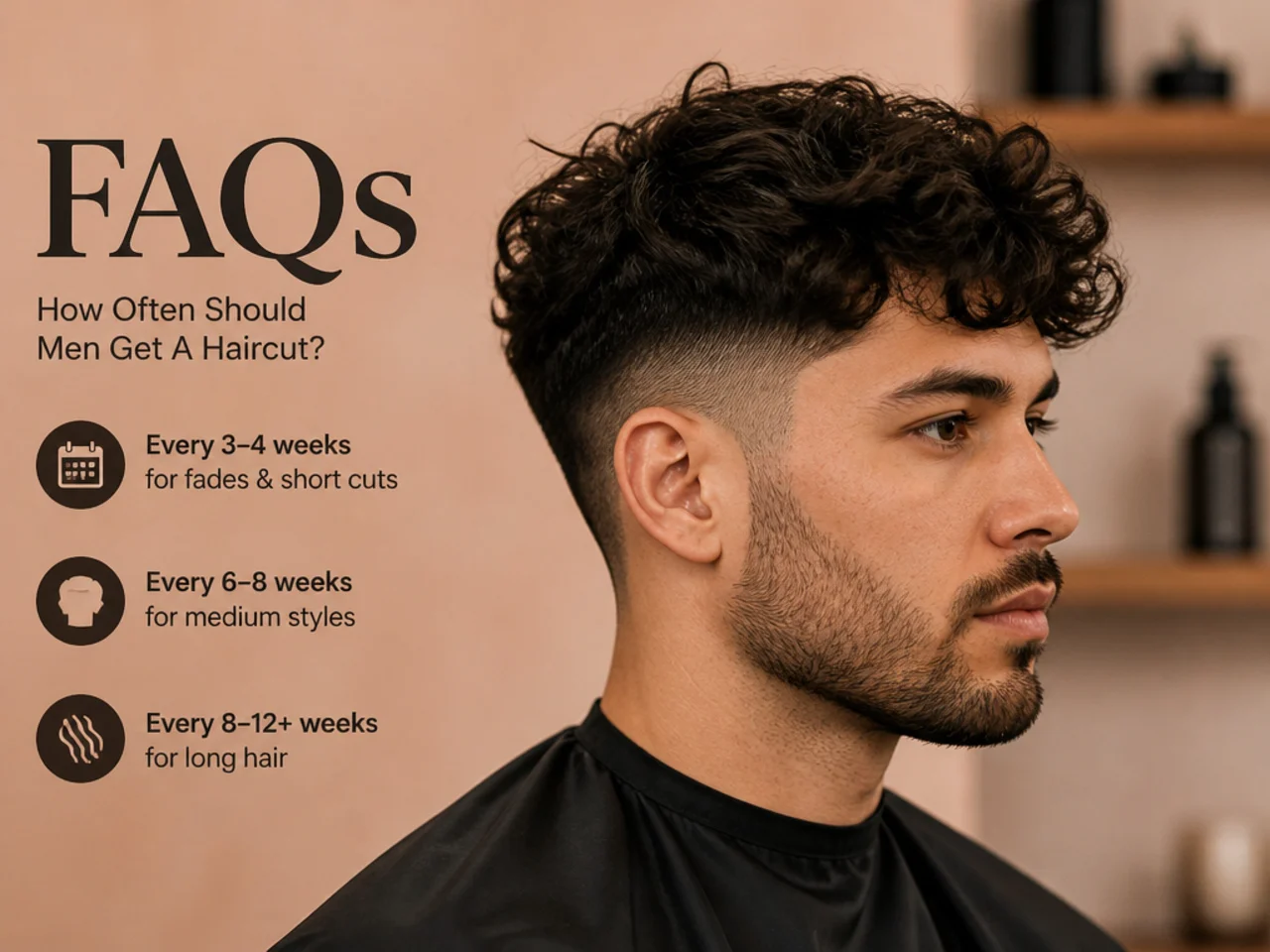
- FAQs
- What is the 7 day Haircut Rule?
- What is the 2.25 Hair Rule?
- What is the 3 2 1 Rule for Haircuts?
You want the honest answer, not the marketing one. How often you sit in the chair depends on the cut you wear. Fades need a shape-up every two weeks. Short cuts hold for three or four. Medium styles stretch to six. Long hair can wait eight. Hair grows about half an inch a month, and that half inch destroys some shapes while barely touching others. Below, the real cadence for each style you might wear.
how often should Men get a haircut?
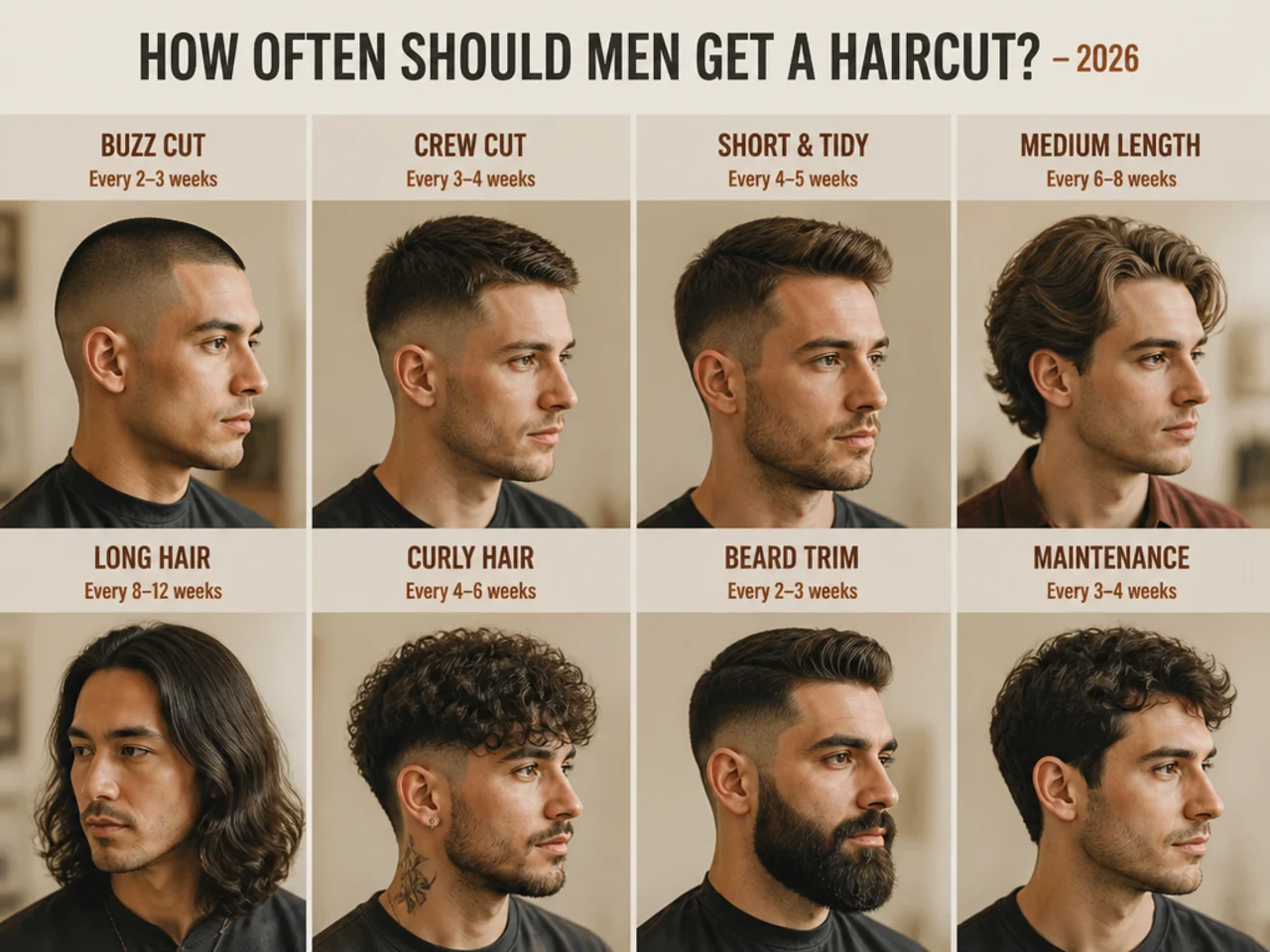
Most men land somewhere between two and six weeks. The specific number is set by your cut, not your calendar. A tight fade breaks down in fourteen days. A grown-out flow can hold its line for six weeks with basic care. Your hair grows around half an inch every month — 0.5 inches or 1.25 cm, give or take genetics. That growth doesn’t hurt every style equally. A quarter inch on top of a scissor-cut medium style is invisible. A quarter inch on a skin fade turns the whole transition line into a fuzzy stripe. Match your booking rhythm to the cut you actually wear, not a generic six-week rule someone once told you.
Fade Haircuts: Every 2 to 3 Weeks
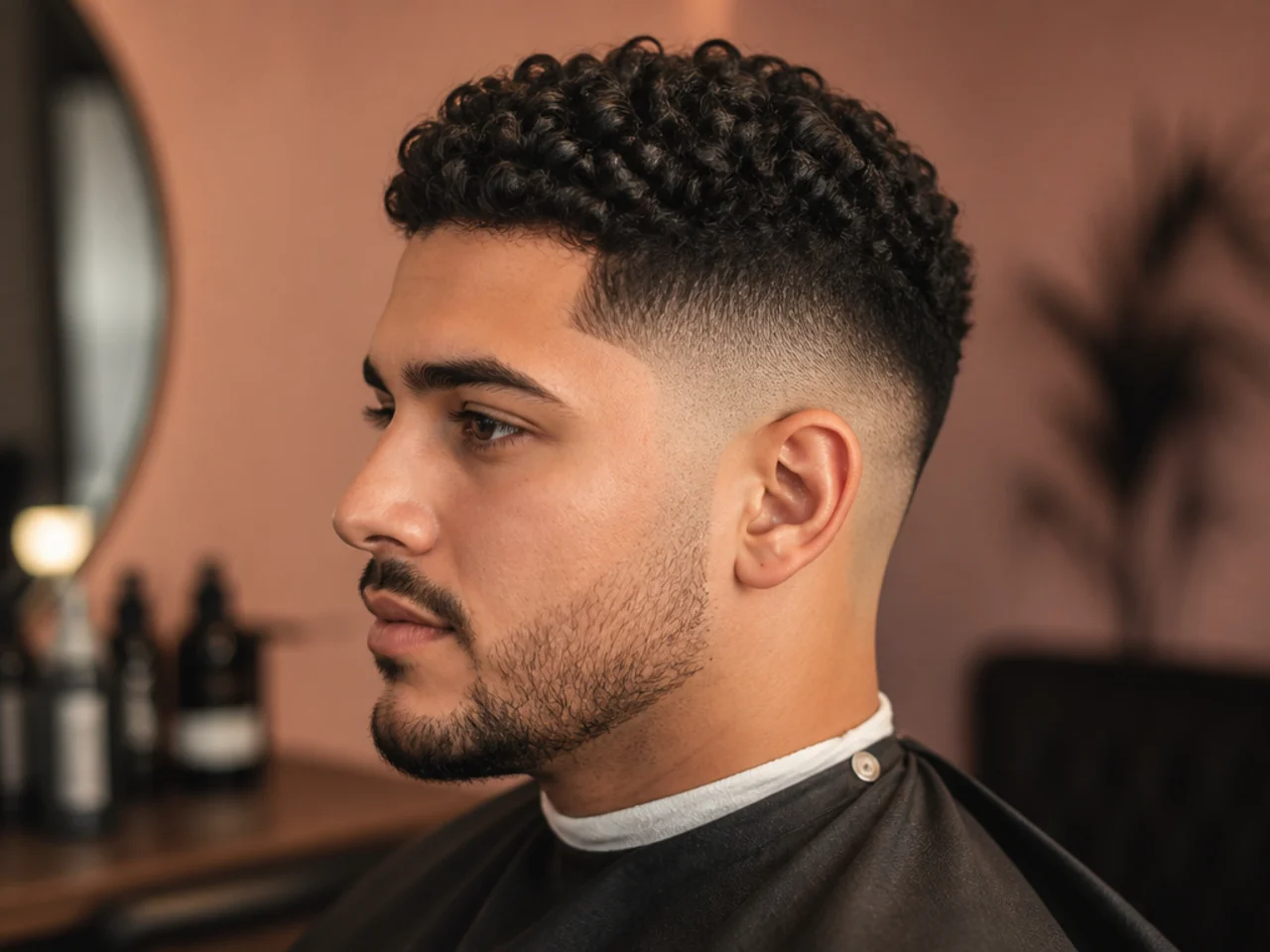
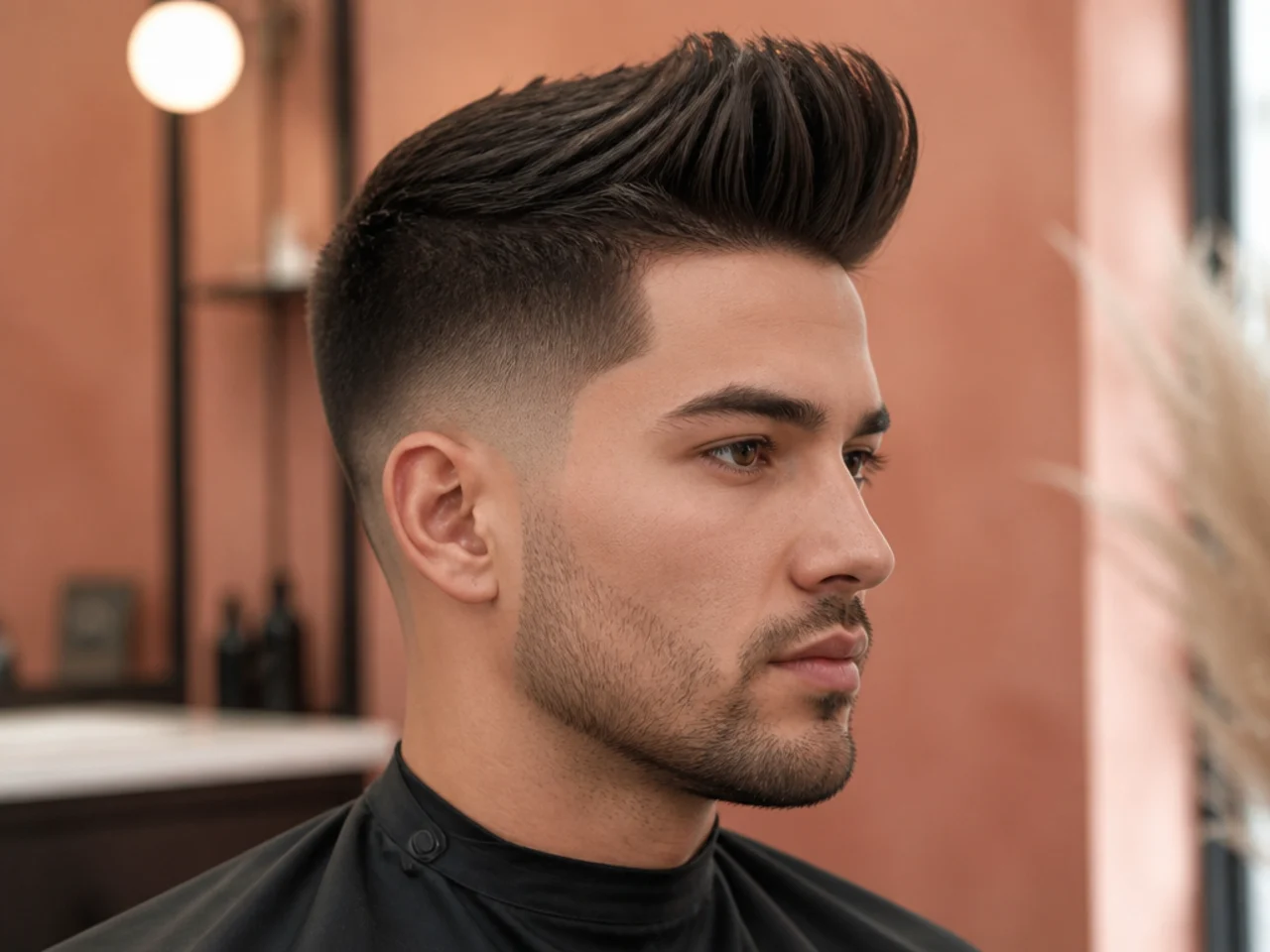
A fade haircut is graded on one thing: the transition line. That line only stays crisp for about two weeks. Push it to three and you’re already carrying blur where clean grade jumps used to sit. Push it to four and the fade reads as short back and sides — not a fade at all.
The cadence tightens as the fade climbs the head. A low fade haircut forgives more because the grow-out sits near the ears and hides under the hair on top. A mid fade haircut is stricter — the transition sits at eye level in every meeting you take, and a soft blend at week three reads sloppy on camera. A high or skin fade needs a shape-up at two weeks, no exceptions, if you want the barbershop finish that made you book the style in the first place.
Stretched out, a fade looks like a helmet. The sides thicken. The guidelines soften. The top no longer floats above the taper — it flops onto it. When you catch yourself smoothing the sides down with your hand more than once a day, you’re overdue. Book the two-week shape-up. Most shops will run just the sides, back, and lineup for a fraction of the full-cut price and half the chair time. Call it a fade cleanup and your barber will know exactly what you mean.
Short Haircuts: Every 2 to 4 Weeks
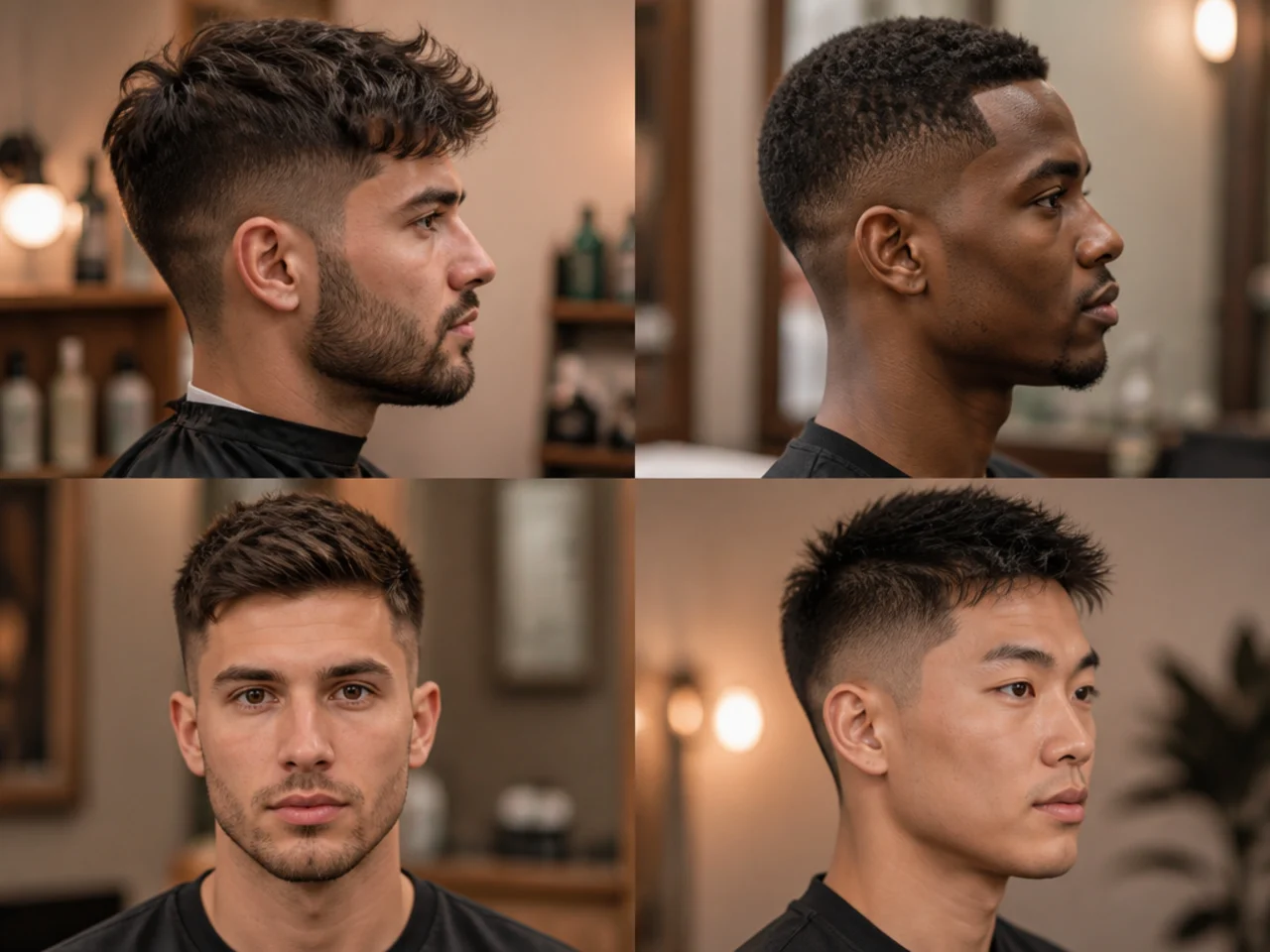
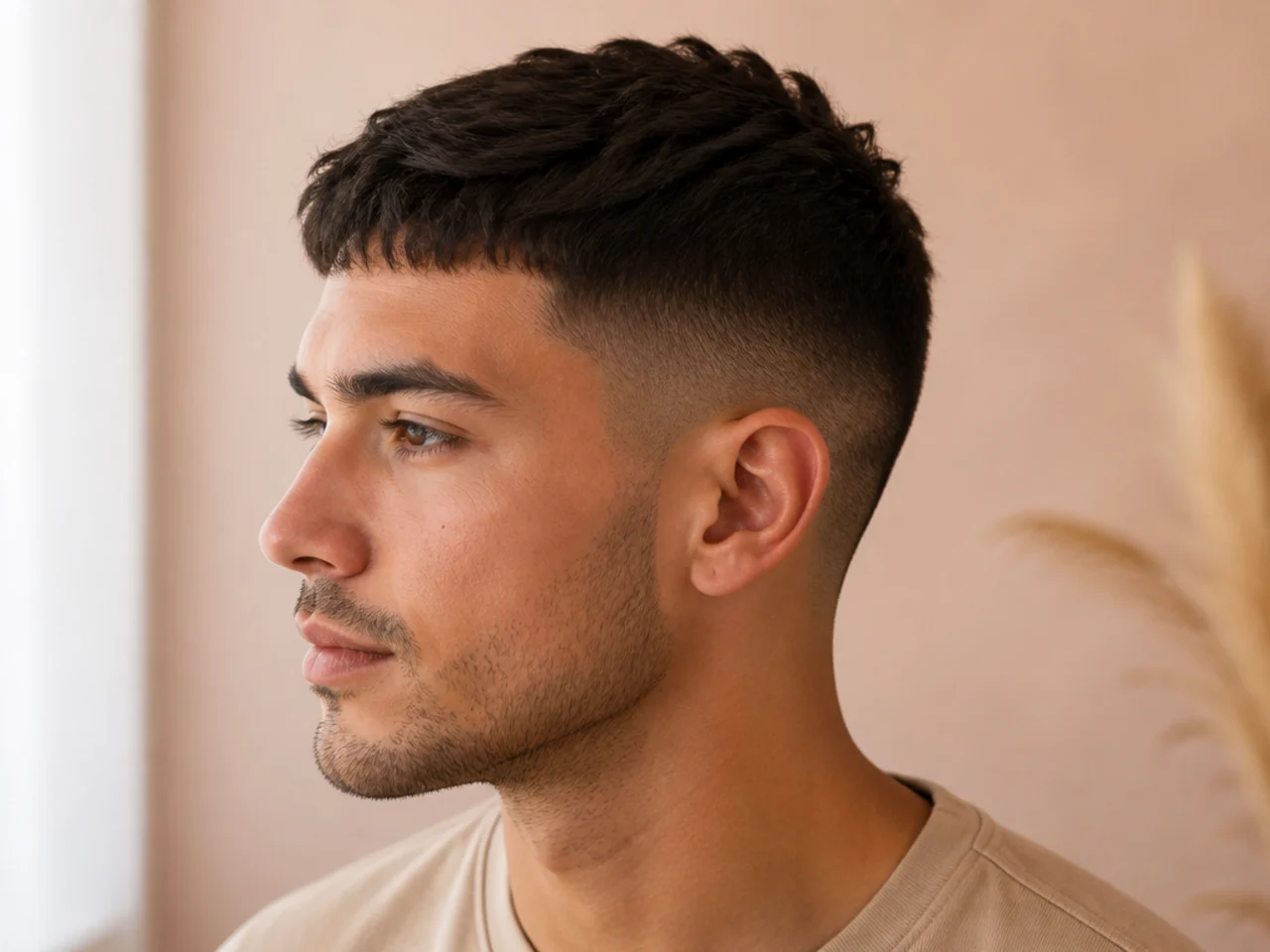
Short cuts without a fade — a classic crew cut, a French crop, an undercut, or a scissor-cut short back and sides — hold for three to four weeks. The rule is different from a fade because there’s no transition to protect. What you’re protecting is the length ratio between the top and the sides. Once that ratio slides by a quarter inch, the whole cut reads mushy.
A true buzz cut sits on the short end of that window. Once your buzz doubles in length — say a #2 guard grows toward a #4 — the cut loses its point. Buzz owners either recut every two weeks with clippers at home or book every three at the shop. A taper haircut around the ears and neckline sits in the same range. The sideburns and nape lose their clean edge fast, and unlike a full fade you can usually get away with just a neckline and ear touch-up between full cuts.
You’ll know it’s time when styling starts fighting you. Product that used to grip your top now slides. The neckline creeps past your collar. Your barber’s parting line has vanished. The hair over your ears folds down instead of tucking behind. Get in before you start pulling a hat on to hide it — once you’re hat-adjacent, you’ve already been overdue for a week.
Medium-Length Hairstyles: Every 3 to 6 Weeks
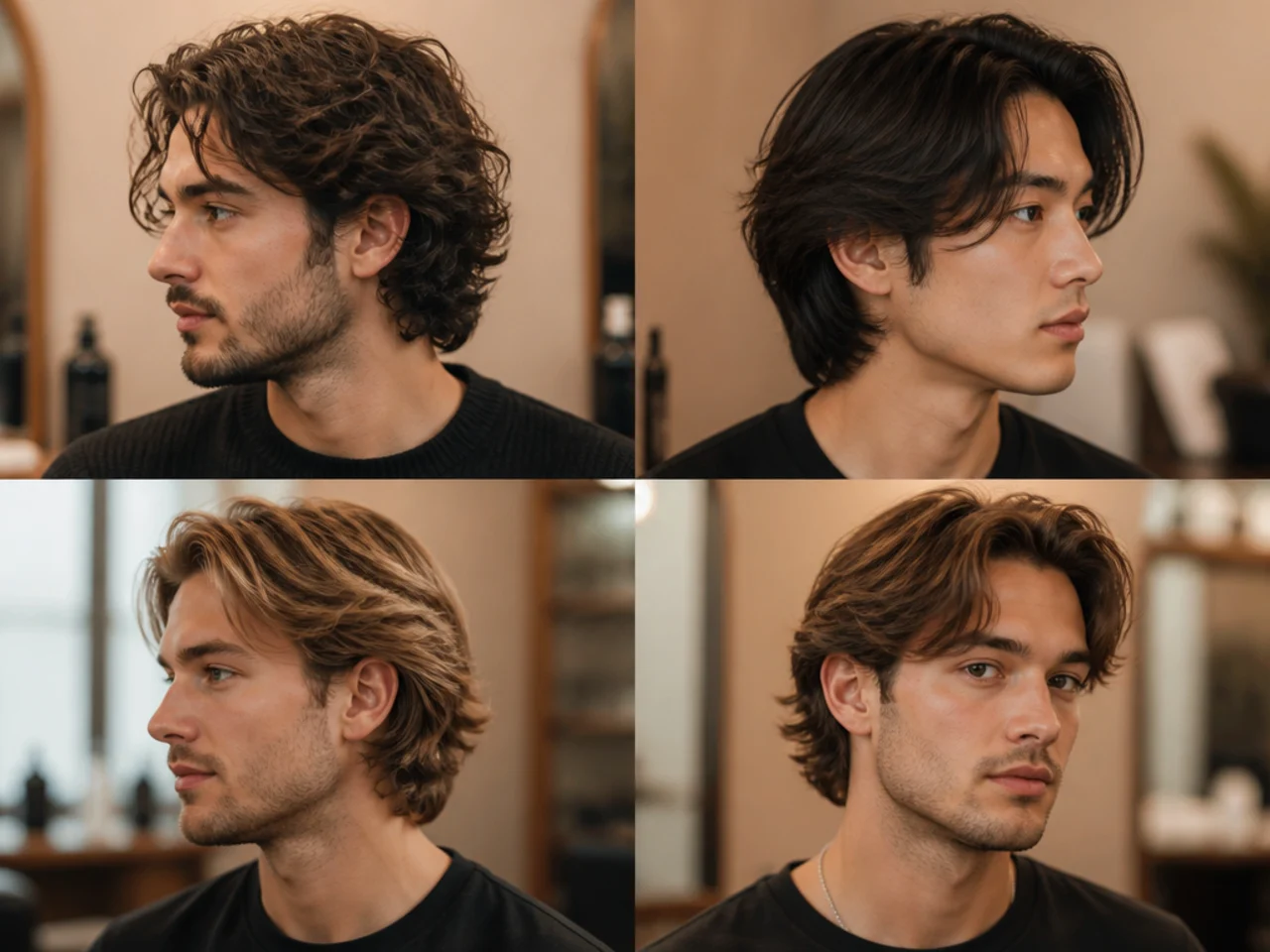
The medium-length men’s cut — mid-length flow, textured mop, French crop grown into a crop-flow hybrid, side part with length, mid-length curls — runs on a longer clock. Five to six weeks is the honest window for most guys. If your medium style pairs with a fade or an undercut, treat the sides on the fade schedule (two to three weeks) and let the top ride until the full cut at week six. That combined cadence is why medium-with-a-fade guys often end up in the chair every three weeks even though the top itself would happily wait longer.
The variable that pushes the cadence shorter is layering. A heavily layered medium cut — the kind that gives you movement and separation — collapses when the layers grow out uneven. Once the shortest layers catch up to the longest, the cut goes shapeless. That’s usually the five-week mark for guys with average density. Guys with thick hair get pushed off shape sooner because the extra weight drags the ends down.
Stretched-out medium hair looks flat at the crown and heavy at the ends. Your part won’t hold. Your morning routine gets longer because the cut isn’t doing the work anymore — you’re doing it with product. That’s the signal. Book before you start hating the reflection in the elevator.
Long Hairstyles: Every 6 to 8 Weeks
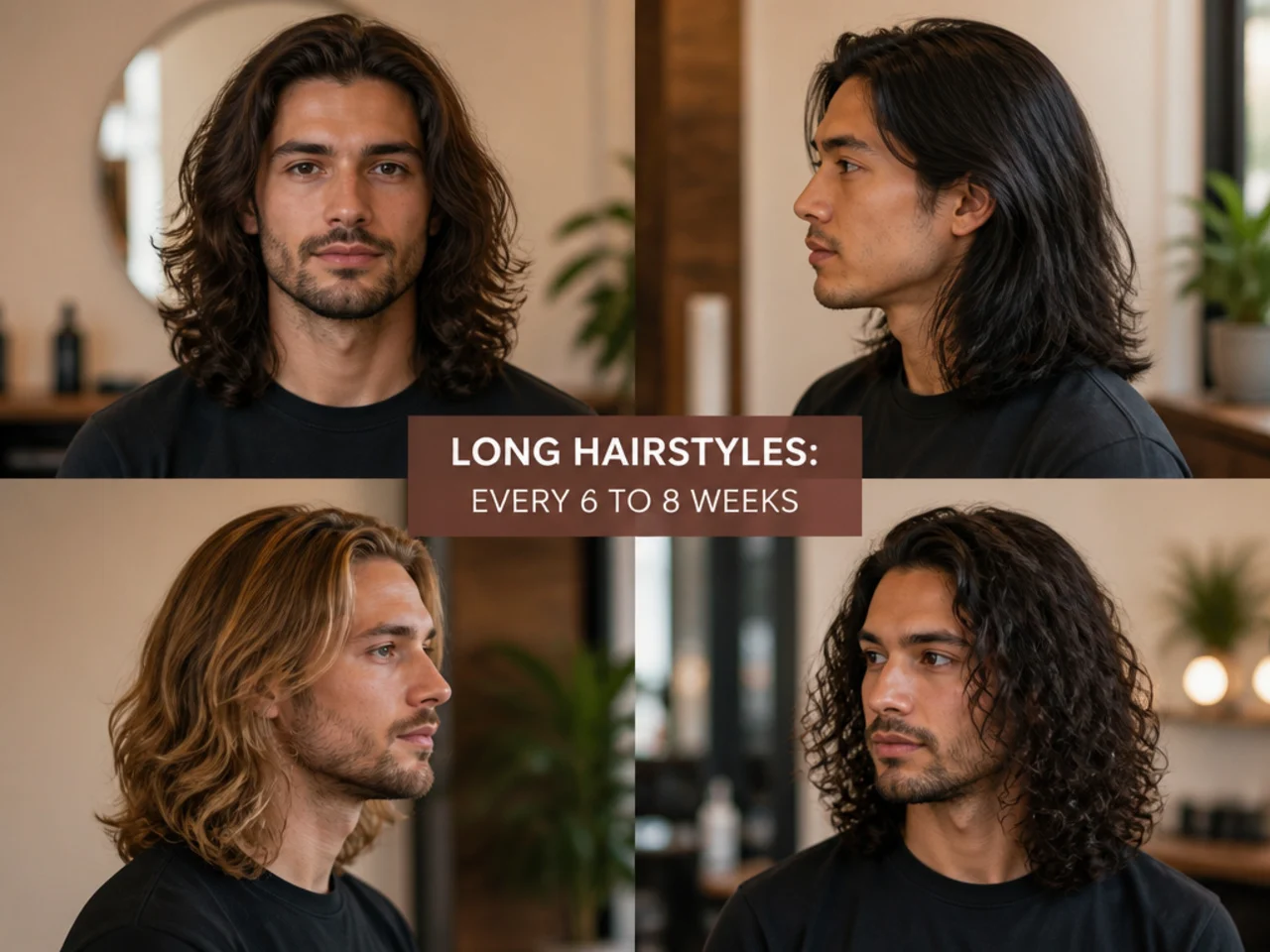
Long hair — anything past the collar, or long enough to tie back — needs a trim every six to eight weeks. You’re not resetting the shape here. You’re maintaining ends. Cutting more often actually slows the grow-out phase, because you’re spending the trim keeping the shape versus adding length.
The trim itself should be a light dusting on the ends plus any interior weight removal your stylist recommends to keep the shape from getting too dense. If you’re actively growing your hair from short to long, six weeks is a floor. Skip trims entirely and split ends will travel up the shaft, forcing a bigger cut later. That’s how guys who claim they “haven’t cut their hair in two years” end up losing three inches when they finally sit down.
You’ll know it’s time when the bottom inch looks stringy compared to the rest, when the ends won’t lie flat after conditioning, or when you can pull a strand and see a translucent, wispy point at the tip instead of a blunt end. Long-hair guys can usually go the full eight weeks in winter and pull back to six in summer, when sun, salt, and chlorine chew through the ends faster.
What Affects How Often You Need a Haircut?
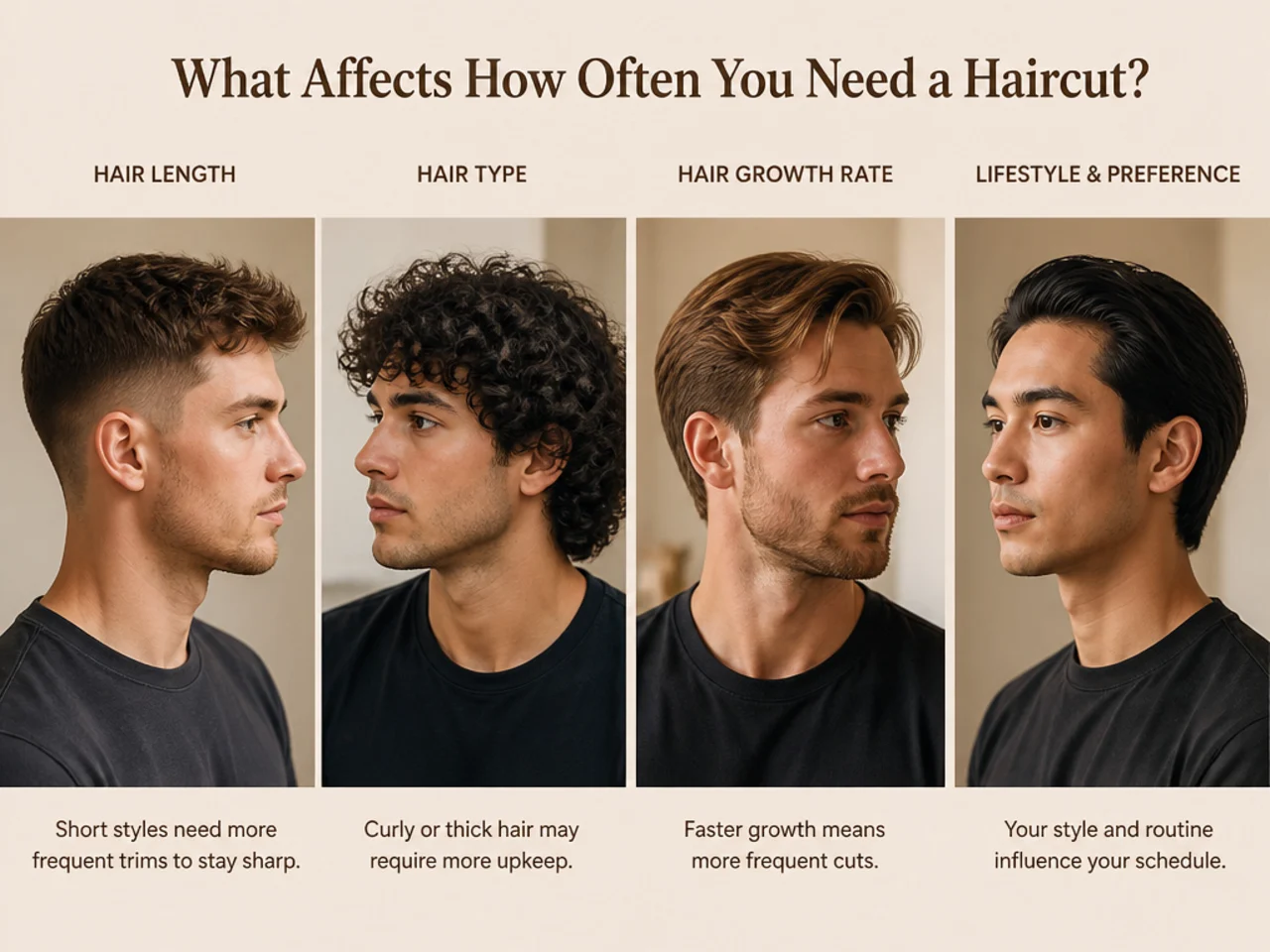
The number your barber quotes you is a starting point, not a rule. Three variables move it up or down, and once you know your own numbers you can predict your next booking within a few days.
How Fast Your Hair Grows
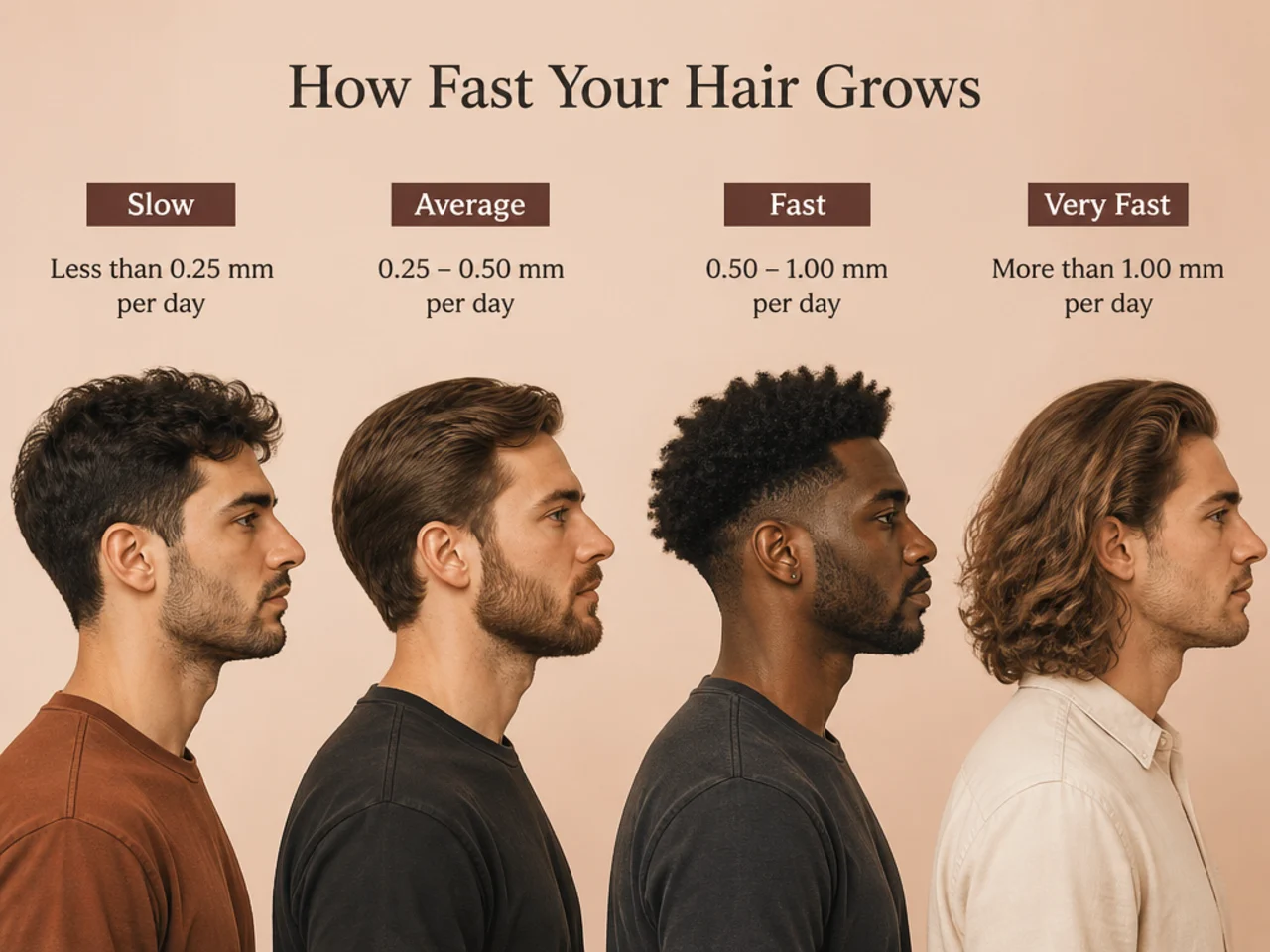
Average male hair growth is roughly 0.5 inches per month — about 1.25 cm. Some guys clock closer to 0.75 inches and need shorter intervals. Some clock closer to 0.35 and get away with longer ones. You can figure out your own rate by measuring the distance from your scalp to the same reference point (a scar, a mole, a haircut line) four weeks apart. Divide by four and you have your weekly growth number.
Age matters here. Growth rate peaks in your twenties and thirties and slows measurably by your fifties. Testosterone, thyroid function, iron levels, and stress all move the number. If your hair suddenly grew half as fast this quarter and you didn’t change your cut, something else has shifted — worth flagging to a doctor rather than blaming the barber.
Lifestyle, Diet, and Exercise

Protein intake, sleep, and cardiovascular health all correlate with faster, thicker growth. A guy eating enough protein, sleeping seven hours, and lifting three times a week will typically need shorter intervals than a guy who’s underslept and underfed. Alcohol, chronic stress, and smoking do the reverse. They don’t just slow growth. They thin the shaft, and thinner hair reads as “in need of a cut” sooner because the shape softens faster.
If you’ve recently started or stopped a medication — accutane, finasteride, testosterone therapy, SSRIs — expect your growth rate to shift within two or three months. Move your booking cadence to match what you see, not what you were used to.
Hair Type
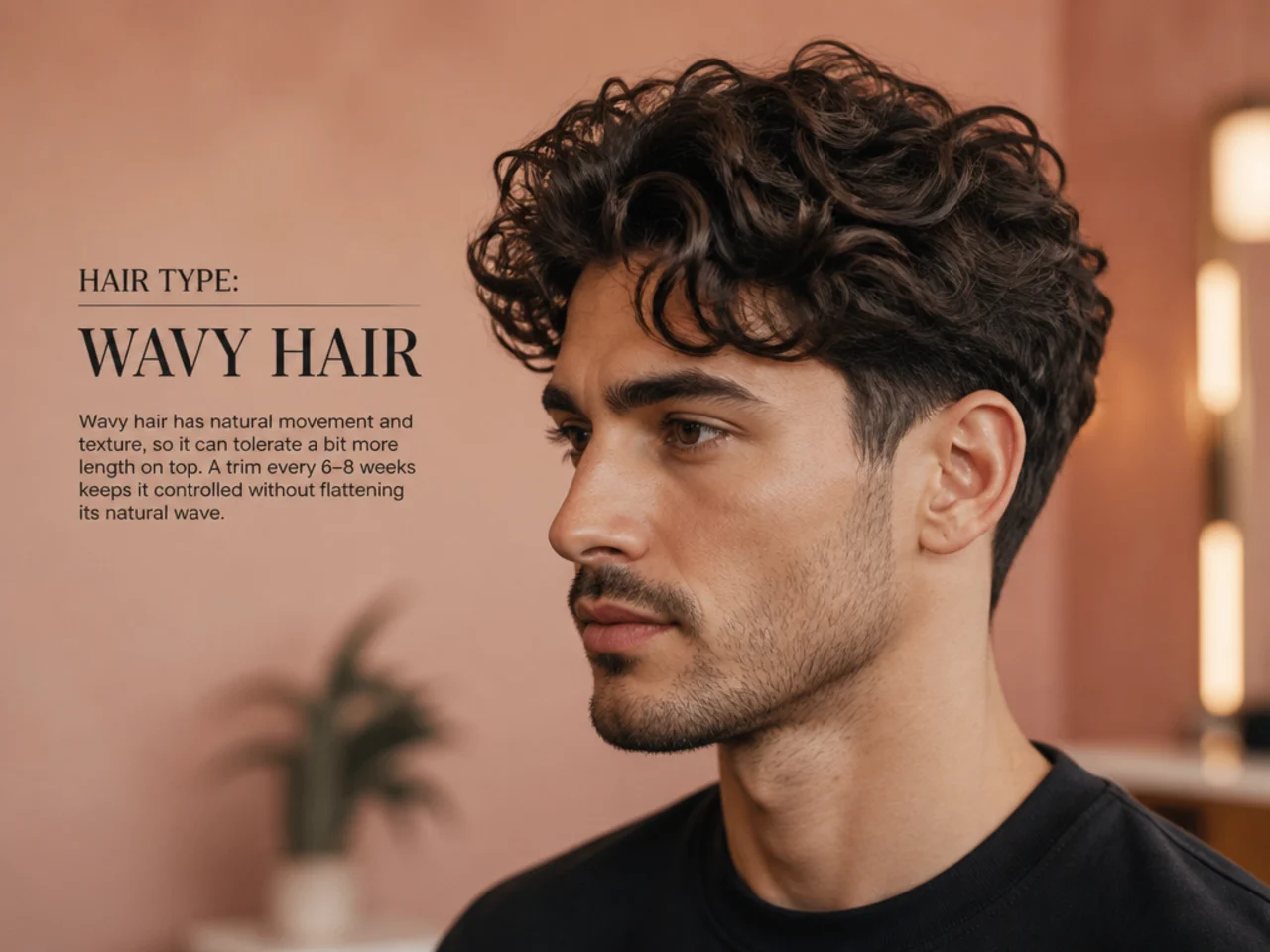
Hair type sets the tolerance for grow-out. Straight, thick hair loses shape fastest because every extra millimeter is visible. That’s why guys with dense, straight hair on a flow, faux hawk, or slick back usually book every three to four weeks. The shape depends on precise weight distribution, and precise weight distribution moves with every growth cycle.
Curly and coily hair hides length differently. Curl pattern compresses the visible length by 40 to 60 percent, so what looks like a half inch of grow-out is actually closer to an inch. Curly guys can push medium and long styles to the far end of every window. But curly fades are the exception — the shrinkage means the transition line reads even blurrier when it grows, so the two-week rule tightens rather than relaxes.
Fine hair sits between. It shows shape loss quickly at short lengths but hides it well at medium and long lengths because the softer weight doesn’t sag as visibly. Fine-haired guys often extend medium and long cadences by a week without anyone noticing.
How Long Does a Men’s Haircut Take?
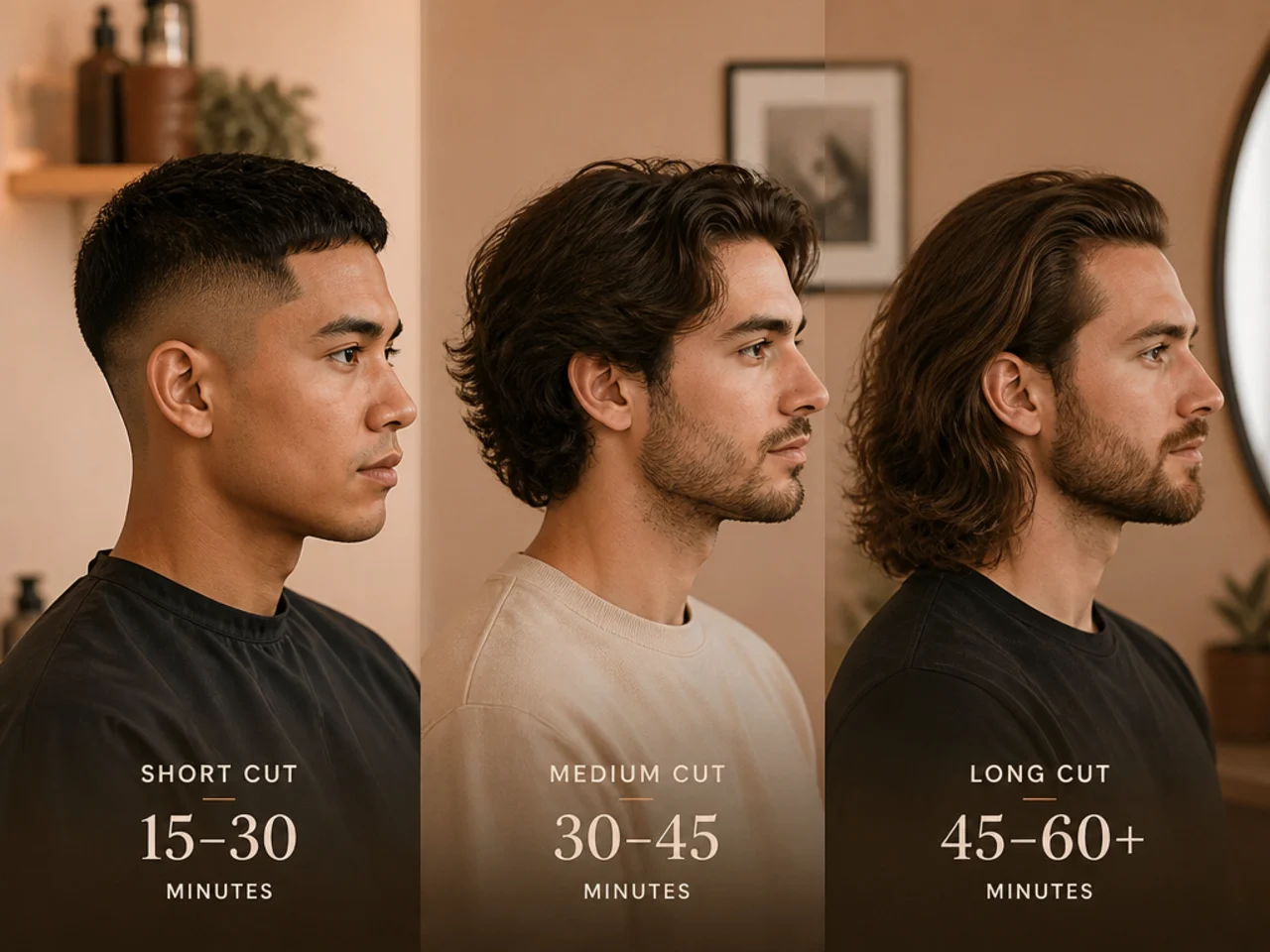
A buzz cut runs 15 to 20 minutes if you’re just clipping a single guard, closer to 30 with a taper and lineup. A standard men’s cut — scissor top, faded sides, lineup — sits at 45 minutes with a good barber. A skin fade with a scissor-cut top and a full straight-razor finish takes closer to an hour.
The fade itself is where the time goes. Expect your barber to spend 20 to 30 minutes on a clean, blended fade — longer for skin, shorter for a low taper. Medium and long scissor cuts run 40 to 60 minutes because layering, weight-removal, and dry-cutting for shape all add steps that clippers skip.
If your appointment consistently finishes in under 20 minutes and you’re paying full-cut price, you’re not getting the detail work you paid for. If it consistently runs over 75, the shop is under-booking chairs and running behind — expect longer waits every time you show up.
How Long Does a Haircut Last?
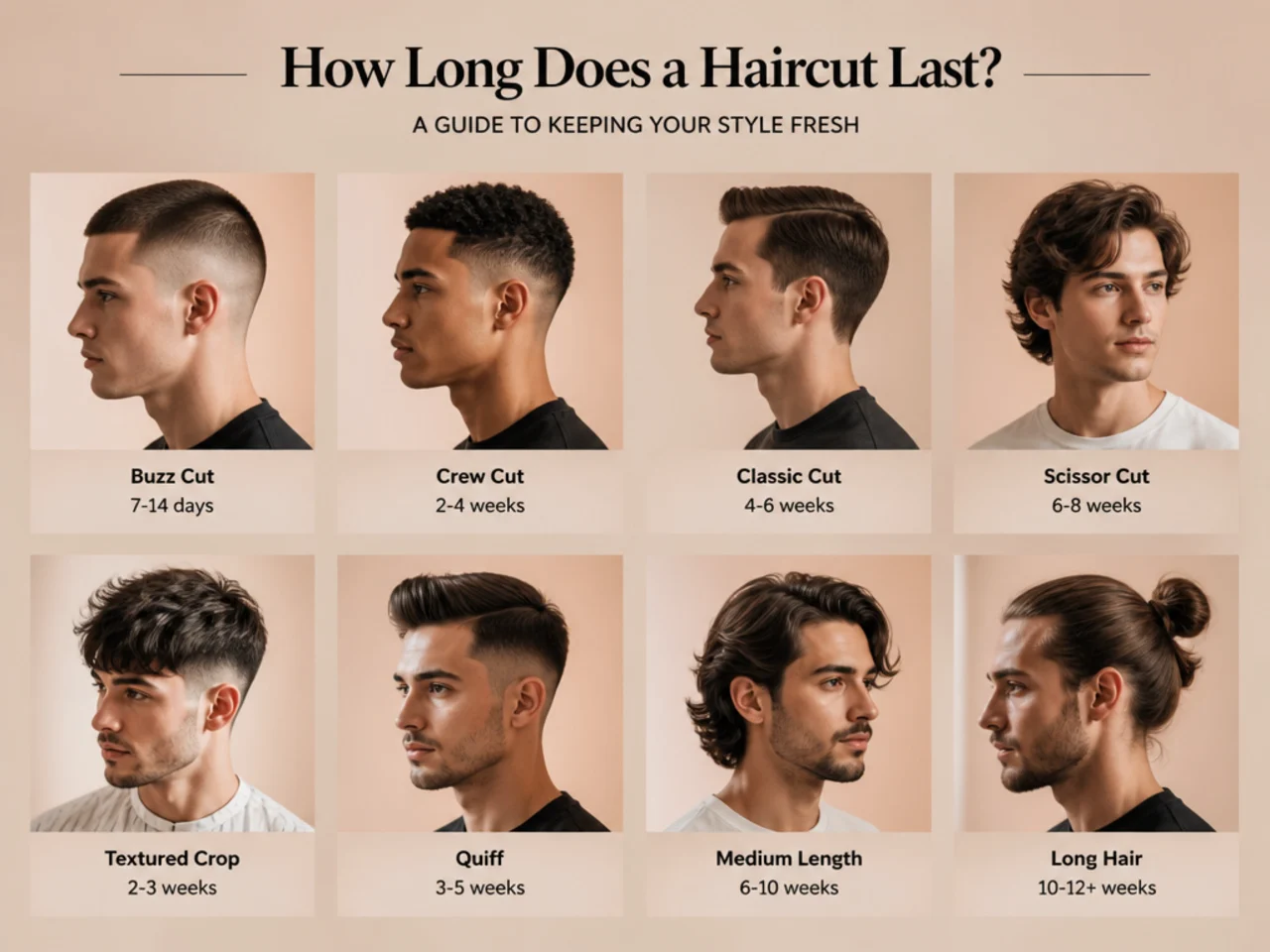
A men’s haircut lasts anywhere from two to eight weeks, defined by when the cut stops doing its job — not when the hair passes some arbitrary length. Fades last two weeks looking sharp, three weeks looking passable, four weeks looking grown out. Short scissor cuts hold four to five. Medium cuts hold five to six. Long cuts hold six to eight.
Thick, fast-growing hair sits on the shorter end of the range. Fine, slow-growing hair on the longer end. Guys in client-facing jobs — sales, hospitality, law, presenting on camera — should shave a week off whatever the range says, because a cut that reads “in transition” to you reads “past due” to a client.
A useful rule: the moment you find yourself styling around the shape rather than with it, the cut is dead. Book the next appointment before you leave the house that morning. Waiting doesn’t make the cut recover — it just makes the next appointment harder, because your barber now has to correct a grown-out shape instead of refining a live one.
Does Cutting Hair Regularly Make It Healthier?
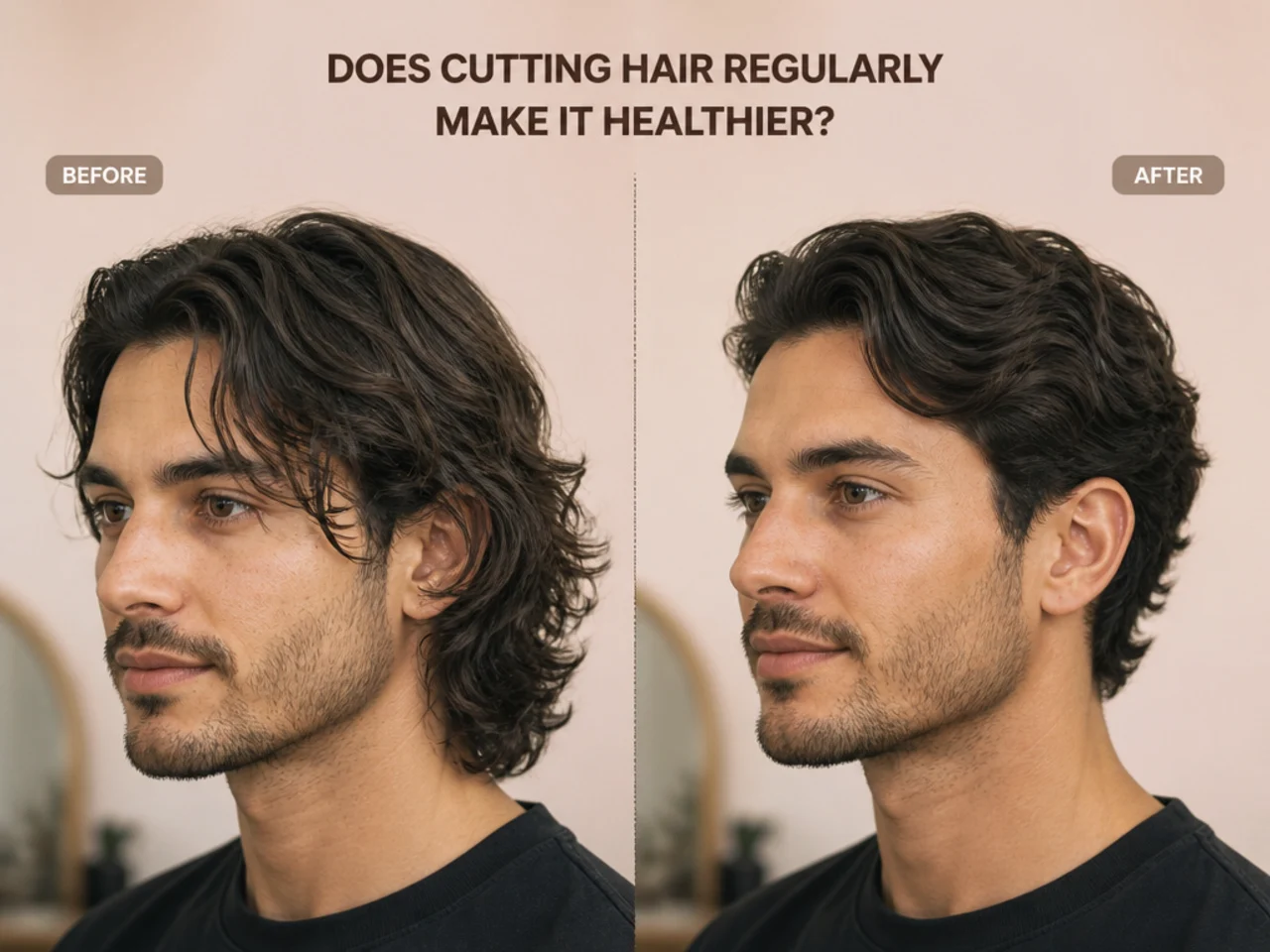
Regular cuts don’t make hair grow from the root — they can’t; growth happens at the follicle — but they do keep the ends healthy, and healthy ends make the whole head look thicker. Split ends travel. A split at the tip works its way up the shaft over weeks, and once it does, that section of hair is weakened along its entire length. Trim the split off and you’ve stopped the travel.
Beyond that, hair health depends on what happens between cuts. Wash frequency, water temperature, product residue, brushing pressure, sleeping surface, and heat-tool use all move the needle more than trim frequency does. If you want a low-maintenance men’s haircut that also protects hair health, ask your barber for a shape that hides grow-out well and doesn’t require heat styling — a textured crop, a longer buzz, or a soft scissor cut without a fade.
Does Cutting Hair More Often Make It Grow Faster?
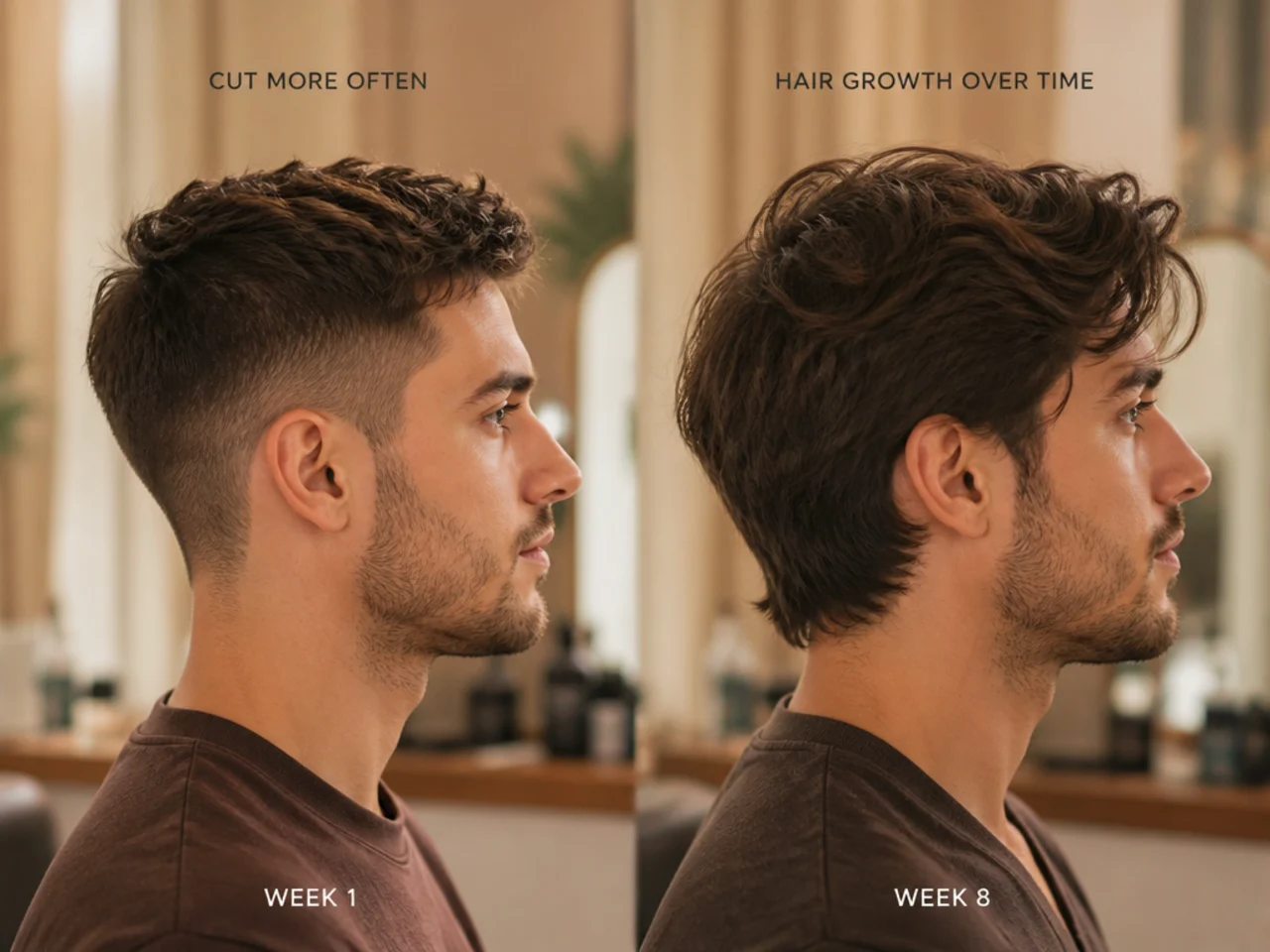
No. This one gets asked in the chair every week and the answer hasn’t changed. Growth speed is set at the follicle by genetics, hormones, and health. What happens above the scalp — the length that’s already grown out — cannot signal back to the follicle. Cutting the hair at the tip has zero effect on the root.
What regular cuts do is make growth look faster. When you trim damaged ends, the remaining hair looks fuller, thicker, and healthier. That improved appearance is often confused with faster growth. It’s not — it’s the same growth, presented better.
If you genuinely want faster growth, the levers are internal: adequate protein and iron, seven-plus hours of sleep, reduced chronic stress, and (in guys with a family history of male pattern hair loss) sometimes finasteride or minoxidil under a doctor’s supervision. Scissors do none of that, no matter how often you sit down.
Conclusion
The right cadence for you is the cadence that matches your cut. Two weeks for a low taper fade or any tight high fade. Three to four weeks for a short scissor cut, buzz, or crew. Five to six for a medium style. Six to eight for long hair. Adjust by half a week either way for your growth rate, hair type, and how visible the cut is in your work.
Book on cadence, not on how the hair looks in the mirror on a Monday morning. By the time it looks wrong to you, it looked wrong to everyone else a week ago. The guys who always look fresh aren’t the ones with the best barbers. They’re the ones who book their next appointment before they leave the current one.
FAQs
What is the 7 day Haircut Rule?
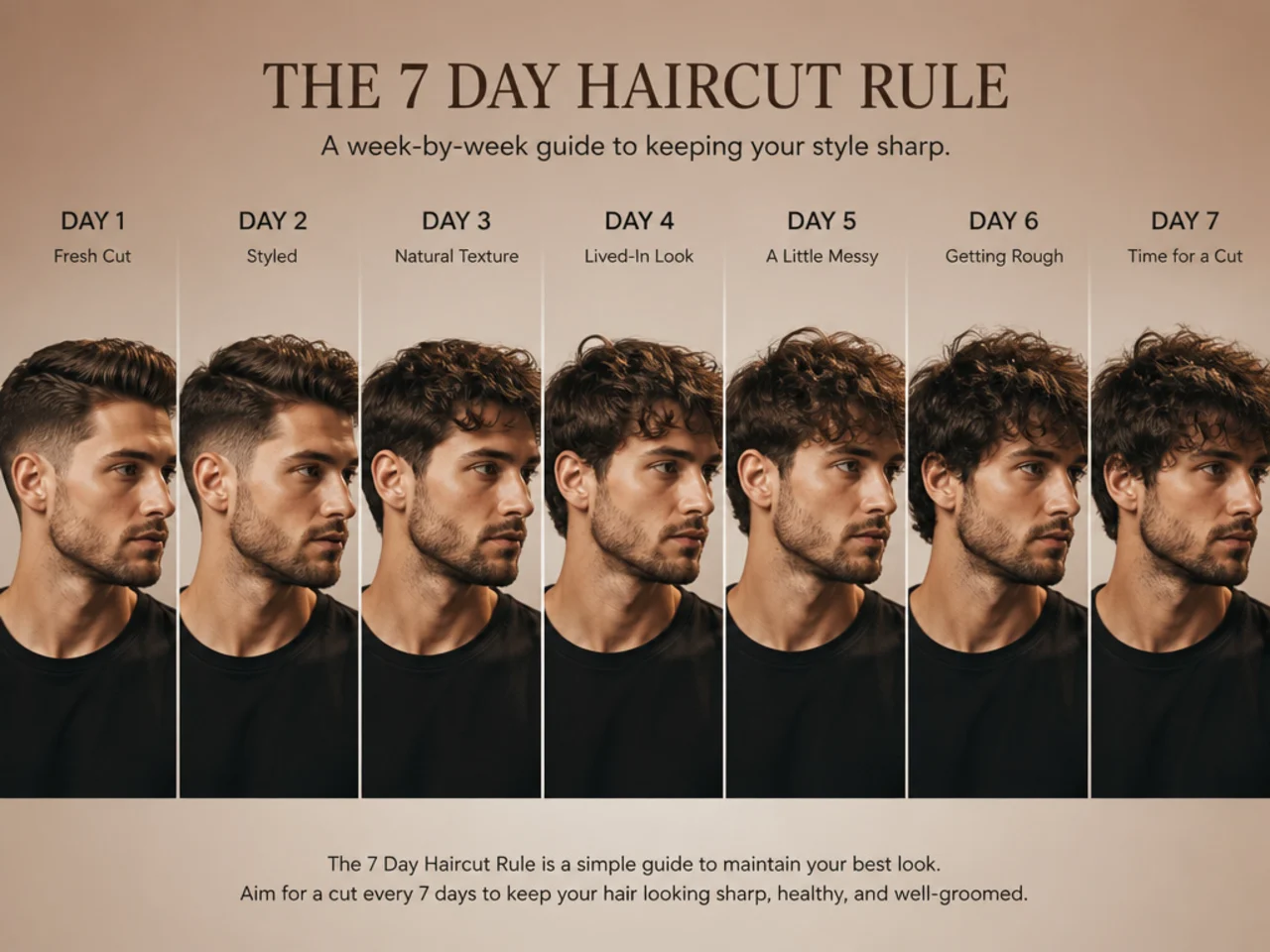
The 7-day rule says you shouldn’t judge a new cut for a full week. Fresh cuts sit stiff from cutting tension and product residue. After seven days of normal washing, sleeping, and styling, the hair settles into the shape your barber actually built. If you still hate it at day eight, book a fix — most shops will re-do a cut inside two weeks at no charge, provided you flag it early rather than wait a month and blame the grow-out.
What is the 2.25 Hair Rule?
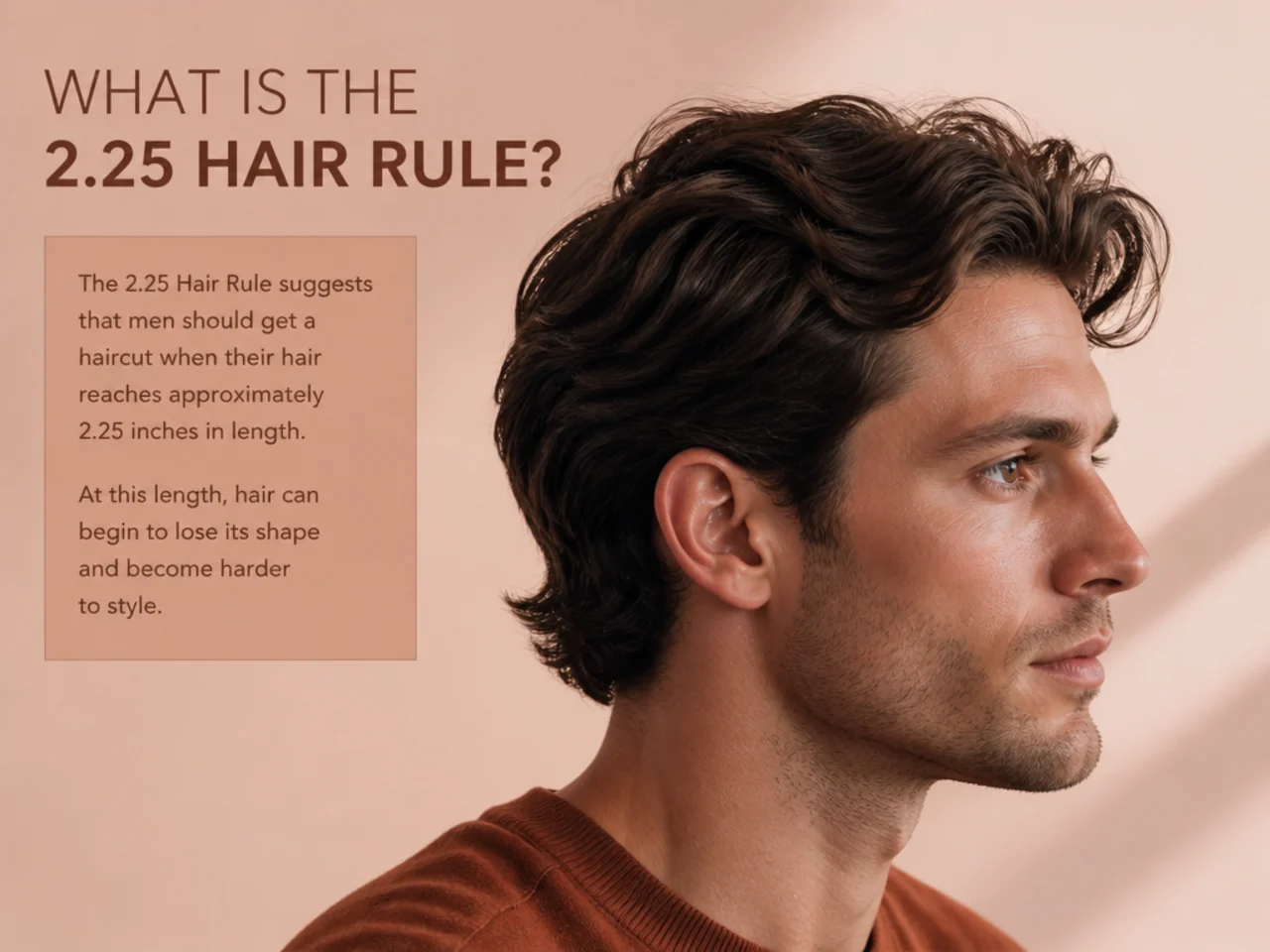
The 2.25 rule uses a pencil held horizontally at the corner of your jaw and a ruler measuring straight down to your earlobe. If that distance is under 2.25 inches, short cuts flatter your face shape best. Over 2.25 inches and longer styles proportion better. It’s a rough guide, not a mandate — face shape, hairline, and neck length all interact with the rule, and a good barber will read your face in three seconds without needing the tape measure.
What is the 3 2 1 Rule for Haircuts?
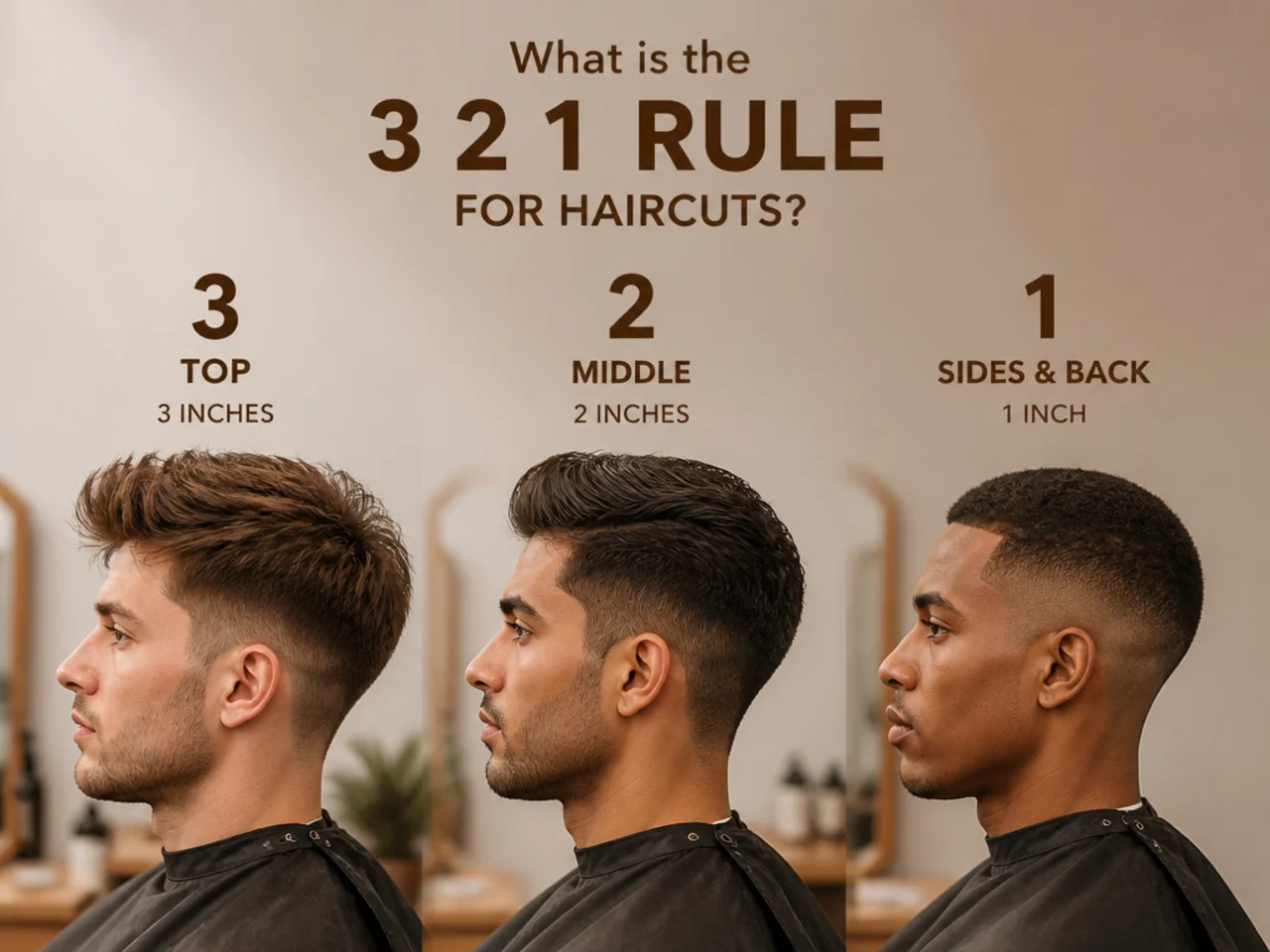
The 3-2-1 rule is a memory aid for clipper guard math. Each guard number adds an eighth of an inch of length. A #1 leaves 1/8 inch, a #2 leaves 1/4 inch, a #3 leaves 3/8 inch, and so on up to a #8 at one full inch. When you’re asking your barber for a specific length on the sides or top, use guard numbers — the language every shop understands.