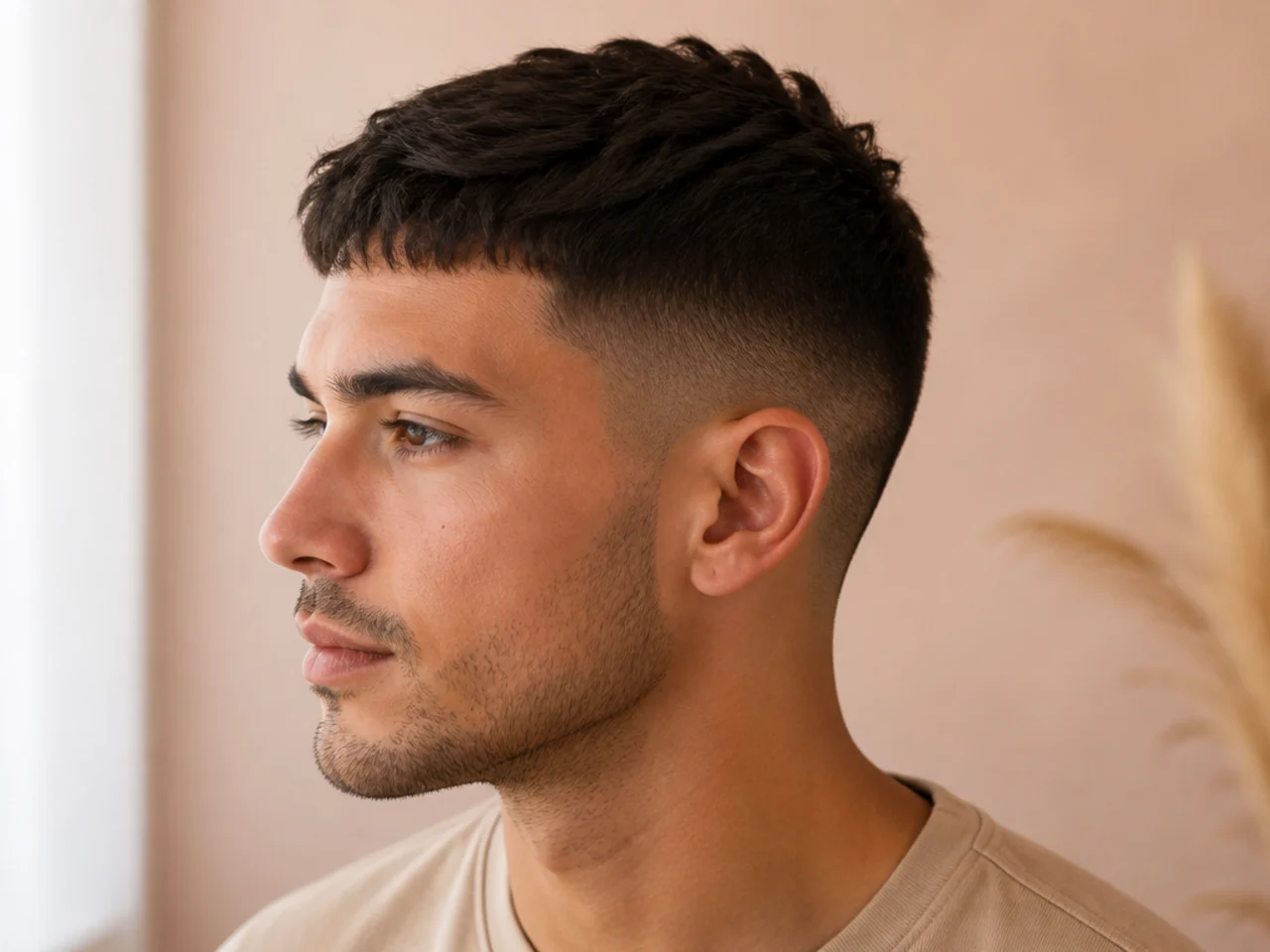
5 Reasons Short Haircuts Are Easiest to Style
Popular short haircuts men keep asking for share one advantage — they style themselves. Here are the five reasons short cuts read sharp in five minutes flat.
In this article · 10
- The Short Answer
- Reason 1: They Air-Dry to a Finished Look
- Reason 2: One Product Is the Whole Kit
- Reason 3: Small Mistakes Hide Themselves
- Reason 4: The Barber Does the Styling Work
- Reason 5: Grow-Out and Restyling Are Cheap
- Short vs Medium vs Long, Side-by-Side
- Which Popular Short Haircuts Should You Pick?
- How to Ask Your Barber
- FAQ
Popular short haircuts men keep asking for share one honest advantage — they style themselves. You wake up, run a fingertip of clay through, and you're done. No round brush, no blow-dryer, no fight with the crown. This guide explains why short cuts win the morning and how to pick the version that fits your face, hair type, and workplace. Read this before you book your next chair.
The Short Answer
Short haircuts are easier to style because the barber does most of the styling in the chair. The shape is cut in, not built in. Length under two inches on top air-dries fast, holds its form without heat, and forgives the mornings you skip a step. You get five minutes back at the sink and one less product on the shelf — every day, for as long as you keep the cut.
That's why the short simple men's haircuts family dominates barbershop request lists. Buzz cuts, crew cuts, French crops, textured crops, and Ivy Leagues all trade a longer top for a lower-effort morning. Below are the five reasons that trade pays off — and one honest catch worth knowing.
Reason 1: They Air-Dry to a Finished Look
Long hair needs shape imposed on it after the shower. Short hair already has the shape — the barber built it in. Anything under two inches on top dries in the time it takes to brush your teeth, and it dries into the silhouette the cut was designed to hold. Skip the blow-dryer entirely. That's ten minutes back on your morning, every single day.
The reason is physics, not opinion. Water weight bends longer strands and drags them out of position while they dry — which is why medium and long styles need a round brush and heat to set the shape as they lose moisture. Short strands don't hold enough water to fight the cut. They dry where the scissors placed them.
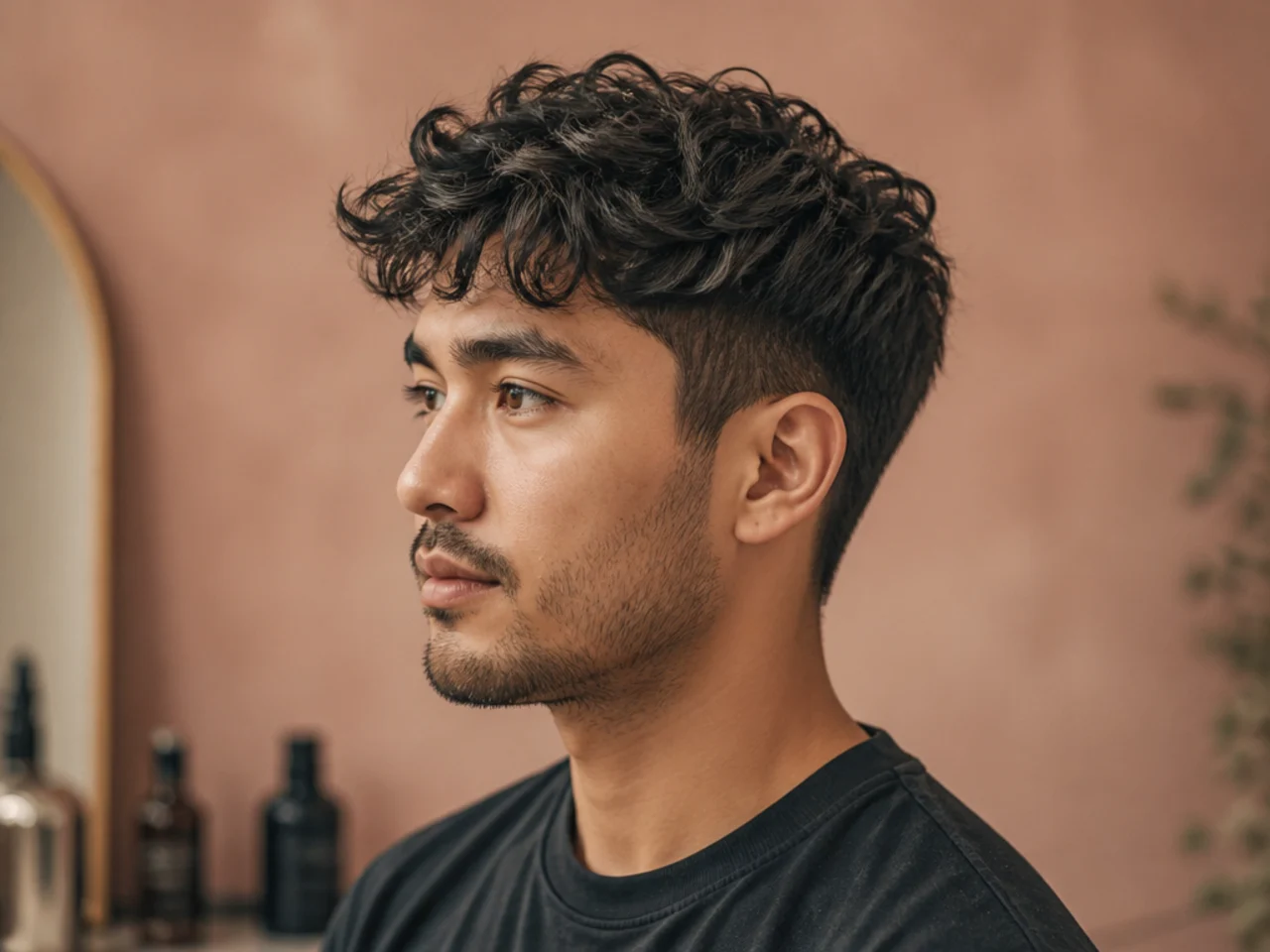
Air-drying works best with a slight structural bias — a French crop, a textured crop, a short brush-up, a scissor-cut curly top. Anything with an intentional direction cut into it. It works less well with dead-flat military buzzes if you have a cowlick, because the cowlick has nothing to lean against. In that case, run your fingers front-to-back once while the hair is still damp and you've set the direction — the whole styling routine, done.
If you have very fine hair, spritz a light sea-salt spray at the roots before you towel-dry. It adds grit that helps short strands stand up on their own. If you have wavy or curly hair, work leave-in through the top before you leave the shower and diffuse for two minutes — the cut takes care of the outline, the leave-in defines the pattern.
Reason 2: One Product Is the Whole Kit
The bathroom shelf gets shorter with a short haircut. Most short cuts finish with a single fingertip of one product — usually a matte clay for texture, or a light pomade for sleek styles. That's it. No pre-styler, no blow-out foam, no finishing spray, no separate curl cream. One tube, one motion, one minute.
Longer styles stack products because each one solves a different problem. Volume needs a mousse. Direction needs a blow-out cream. Hold needs a paste. Shine or matte finish needs a topcoat. Frizz control needs a serum. Every product is another minute of application, another shelf slot, another $22 tube in the cycle. Short cuts cut the chain at the source — the cut itself is the shape, so product only exists to give it a finish.
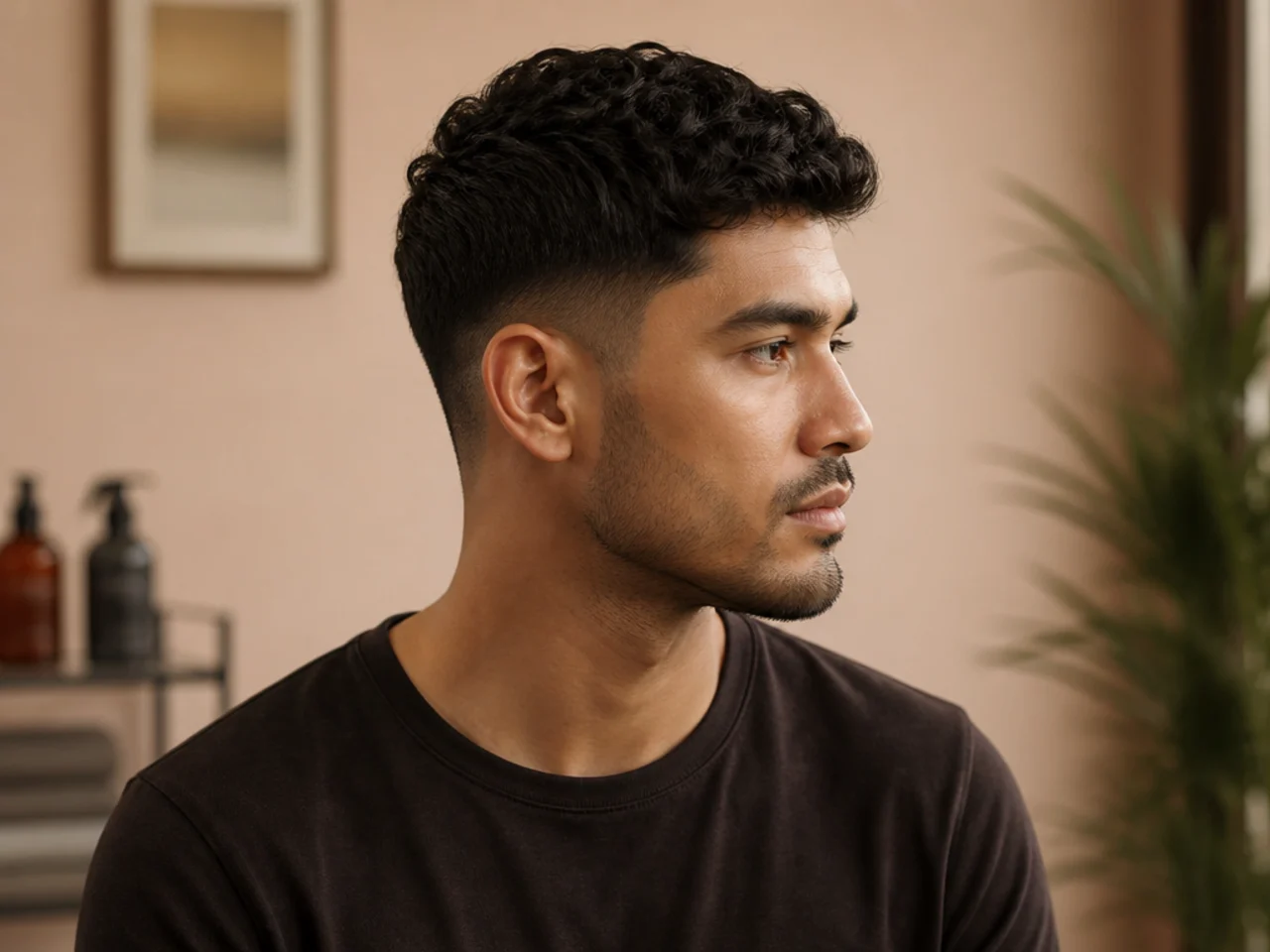
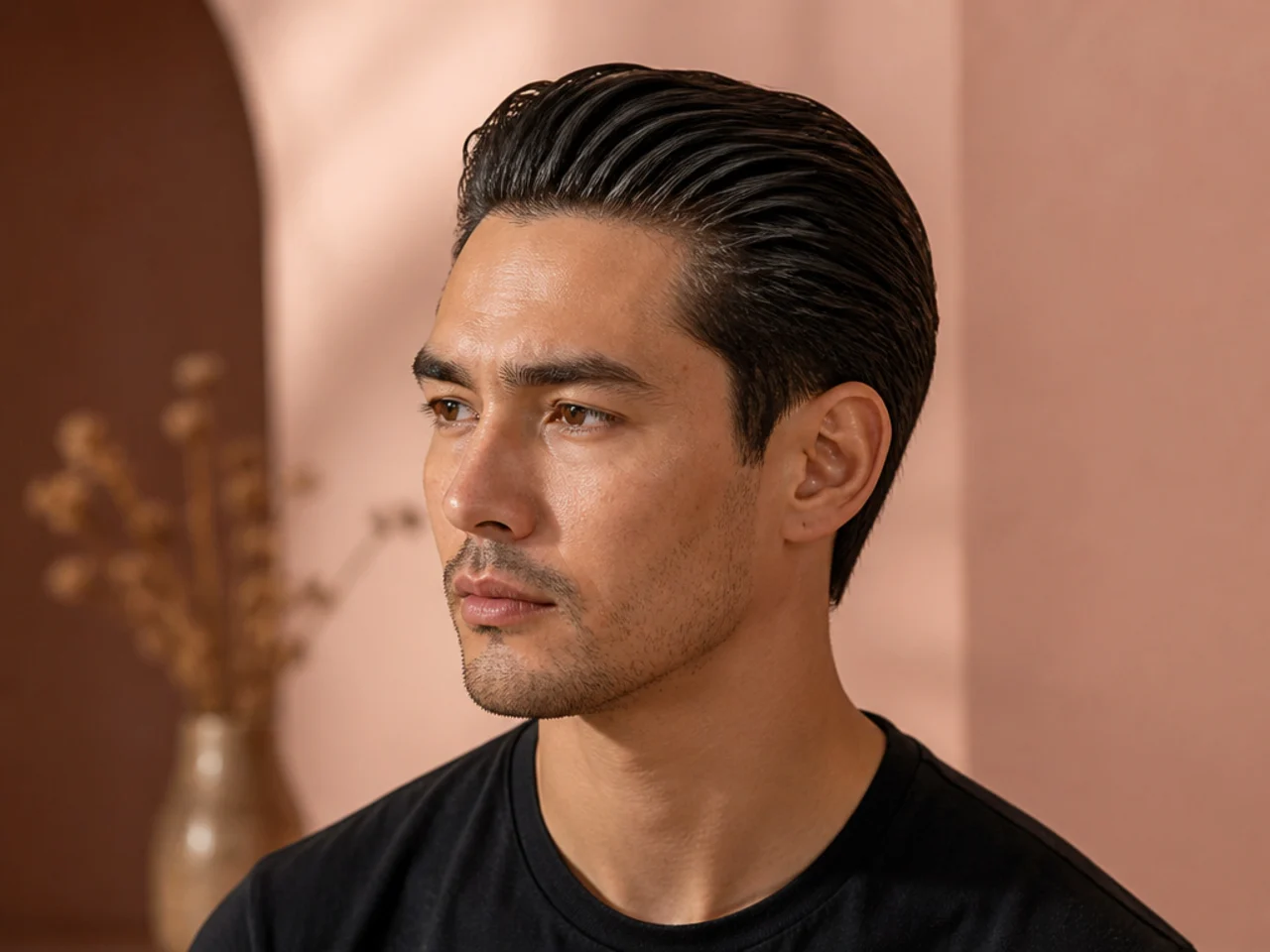
Match the product to the cut. Textured or messy short styles want a matte clay — medium hold, no shine, forgives a rushed application. Sleek short styles (Ivy League, classic side part, slick-back crew) want a light pomade or cream — thin film, subtle shine, comb-friendly. Curly short cuts want a leave-in cream and nothing else on dry hair. Buzzes want zero product and maybe a splash of aftershave along the hairline.
A single-tube system also removes the decision fatigue that sinks morning routines. You never open the cabinet and think about what to use. You reach, you apply, you leave. Guys who report "always looking put together" almost always run a one-product setup — the consistency is what reads polished, not the layering.
Reason 3: Small Mistakes Hide Themselves
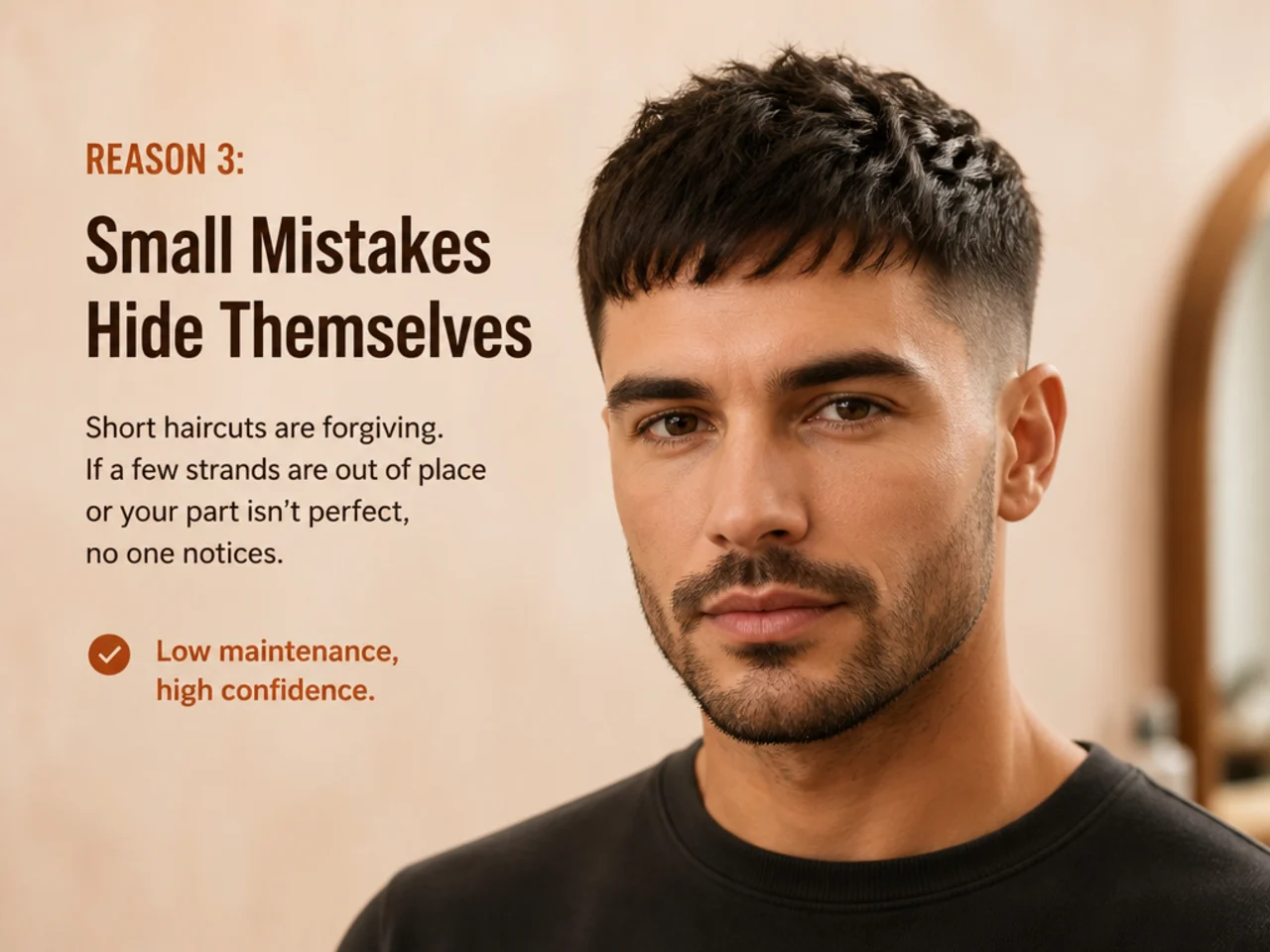
Every long style has a tell — a piece that should have fallen the other way, a section that dried flat, a part line that walked while you weren't looking. Short cuts don't have room for tells. There isn't enough length for a mistake to travel. You can walk out of the house with your hair sixty percent styled and it still reads as intentional.
That forgiveness is what makes short cuts the safest pick for a busy schedule. Missed an alarm and skipped the mirror? A crew cut and a French crop both survive that morning. Slept on wet hair? A buzz doesn't care. Caught in rain between the office and lunch? Ivy Leagues look almost identical wet and dry. The failure states are quiet.
Longer styles have loud failure states. A quiff that lost its lift looks flat. A slick-back that missed the pomade shows every uncombed strand. A shoulder-length shag needs the fringe placed just so or the whole silhouette collapses. When those cuts go wrong, they go visibly wrong — everyone can see the plan you didn't follow.
Short cuts pay that forgiveness back in workplace flexibility too. You can go from gym to office to dinner without touching your hair between locations. A rinse under the tap, a fingertip of clay, and you're re-styled in thirty seconds. Longer cuts need a mirror, a comb, and a re-blow every time you break a sweat.
The exception is anything that leans on a hard part or a sharp edge — a hard-parted comb over, a classic slick-back, a razor-line side part. Those short cuts do have tells, because the line is the whole point. If you want fully mistake-proof, stay with rounded silhouettes: crop, crew, buzz, Ivy League.
Reason 4: The Barber Does the Styling Work
This is the most under-appreciated reason and probably the most important one. When your barber cuts a short style, they're building the shape into the hair itself. Point-cutting for movement. Weight lines for lift. Guard steps for the taper. When you walk out, ninety percent of the styling is already done, permanently, until it grows out.
Long cuts don't work that way. The barber roughs in an outline and hands you the responsibility of styling the shape every day at home — with heat, product, and technique you have to learn. That's why guys with long hair own more tools and get worse results than guys with short hair. The complexity moved from the salon to the bathroom.
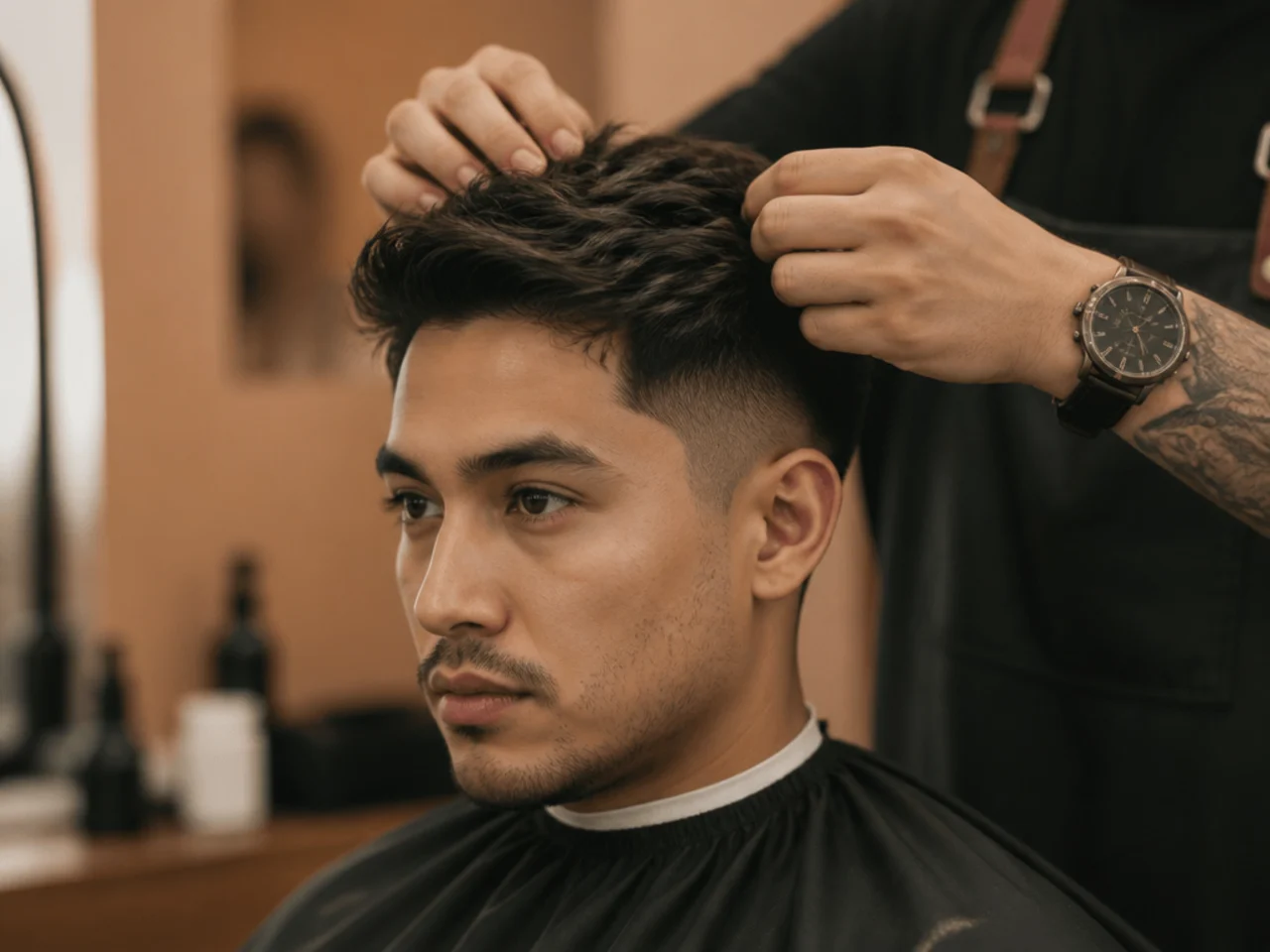
Ask any working barber and they'll confirm it. A well-cut French crop styles itself because the layers are point-cut to flow forward. A well-cut Ivy League parts cleanly because the length gradient is built to fall to one side. A well-cut crew cut sits round because the top is scissor-shaped to match the head. You're not styling in the morning — you're just activating what was cut in the chair.
That also means the barber matters more than the product. A great matte clay on a mediocre short cut still looks mediocre. A mediocre clay on a great short cut looks great. When you're shopping for short-cut relief, spend your money on the chair, not the shelf. The $80 haircut that lasts six weeks and styles itself is cheaper per morning than the $30 haircut you spend fifteen minutes fixing every day.
Bring reference photos of the exact shape you want — not just the length. Point at the fringe density, the sidewall length, the neckline. The shape decisions are the styling decisions. Get those right in the chair and you're set for the whole run.
Reason 5: Grow-Out and Restyling Are Cheap
Short cuts don't lock you in. If you get bored with a French crop, you're one visit away from a crew cut. If a buzz doesn't suit your face shape, six weeks and it's back to something else. The commitment cost of trying a new short style is a single haircut and a month of hair. That's the whole risk.
Long styles are the opposite. Growing a low-maintenance men's haircut into medium-length flow is a six-month project — and the awkward-stage months in the middle look scrappy on almost everyone. Going the other way is faster but psychologically harder; a lot of guys don't like the shock of shearing off a year of growth. Short cuts stay revisable.
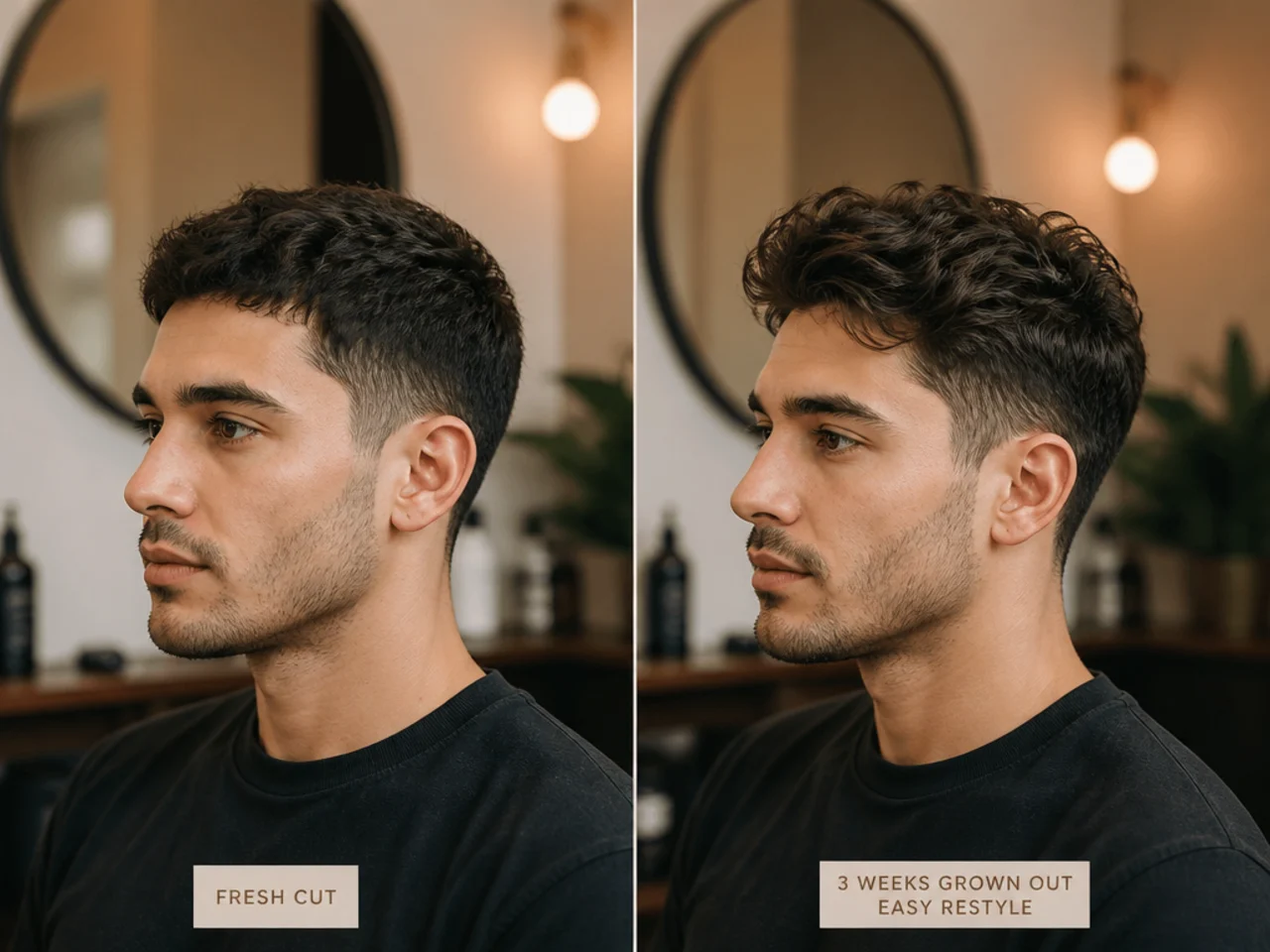
The cost math backs it up. A low fade or a low taper fade carries the sides across almost every short style — meaning the same fade you have today can carry a buzz, a crew, a crop, or an Ivy League next month depending on what you cut on top. That flexibility comes free because the fade shape is the constant. You're only choosing the top.
Short cuts also open the door to home maintenance between visits. A $40 clipper set (see our roundup of the best hair clippers for men) lets you clean up the neckline and knock down the sides in the middle week — stretching a four-week haircut to five or six weeks without visible drift. That's another cost-saver you can't apply to a longer style, because longer cuts want scissor work, not clippers.
Short vs Medium vs Long, Side-by-Side
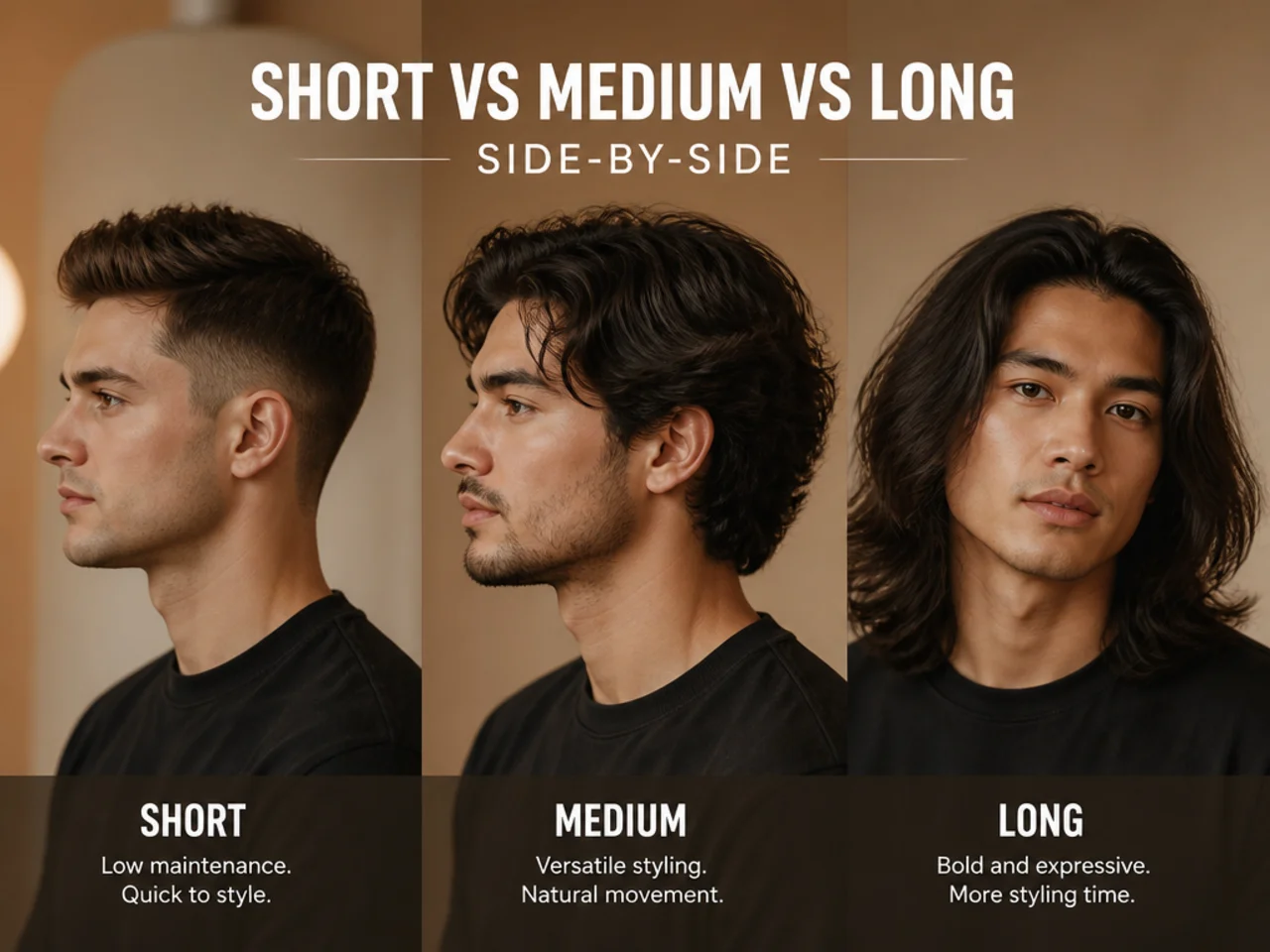
The five reasons above land differently across length categories. Here's the honest breakdown so you can see where short really wins and where medium or long earns its keep.
Short wins on daily load. Long wins on chair frequency. Medium sits in the middle on almost every axis and is the honest compromise if you want more length to work with but can't accept a ten-minute morning routine.
The right pick depends on which end of that trade you value more. If your mornings are the bottleneck, short. If your barber appointments are the bottleneck, medium or long. Very few guys should split the difference — a "medium short" cut usually gives you the worst of both worlds (still needs styling, still needs frequent visits).
Which Popular Short Haircuts Should You Pick?
Start with your workplace, then your face shape, then your hair type. In that order. The five popular short haircuts men actually keep asking for cover most of the request list:
Buzz cut. Pick this if you want zero morning routine, have a strong hairline, and work anywhere from a job site to a boardroom. Best on oval, square, and round faces with a well-shaped head. Skip it if your scalp has scars or unevenness — the buzz shows everything.
Crew cut. The universal short cut. Inch and a half on top, tapered sides, works on every face shape and every hair type. If you don't know what to ask for, this is the safest answer. Also the easiest cut for a new barber to nail on the first try.
French crop. The right pick if you have a high or receding hairline — the short forward fringe covers the temples honestly. Also the right pick for straight-to-wavy hair that wants a bit of texture without a big styling routine. Skip it on very coarse hair; the fringe won't lie flat.
Ivy League. The dressy short cut. Two to three inches on top with a defined side part, tapered sides. Best on oval and square faces with straight-to-wavy hair. This is the cut that works under a suit without reading corporate — it's polished, not stiff.
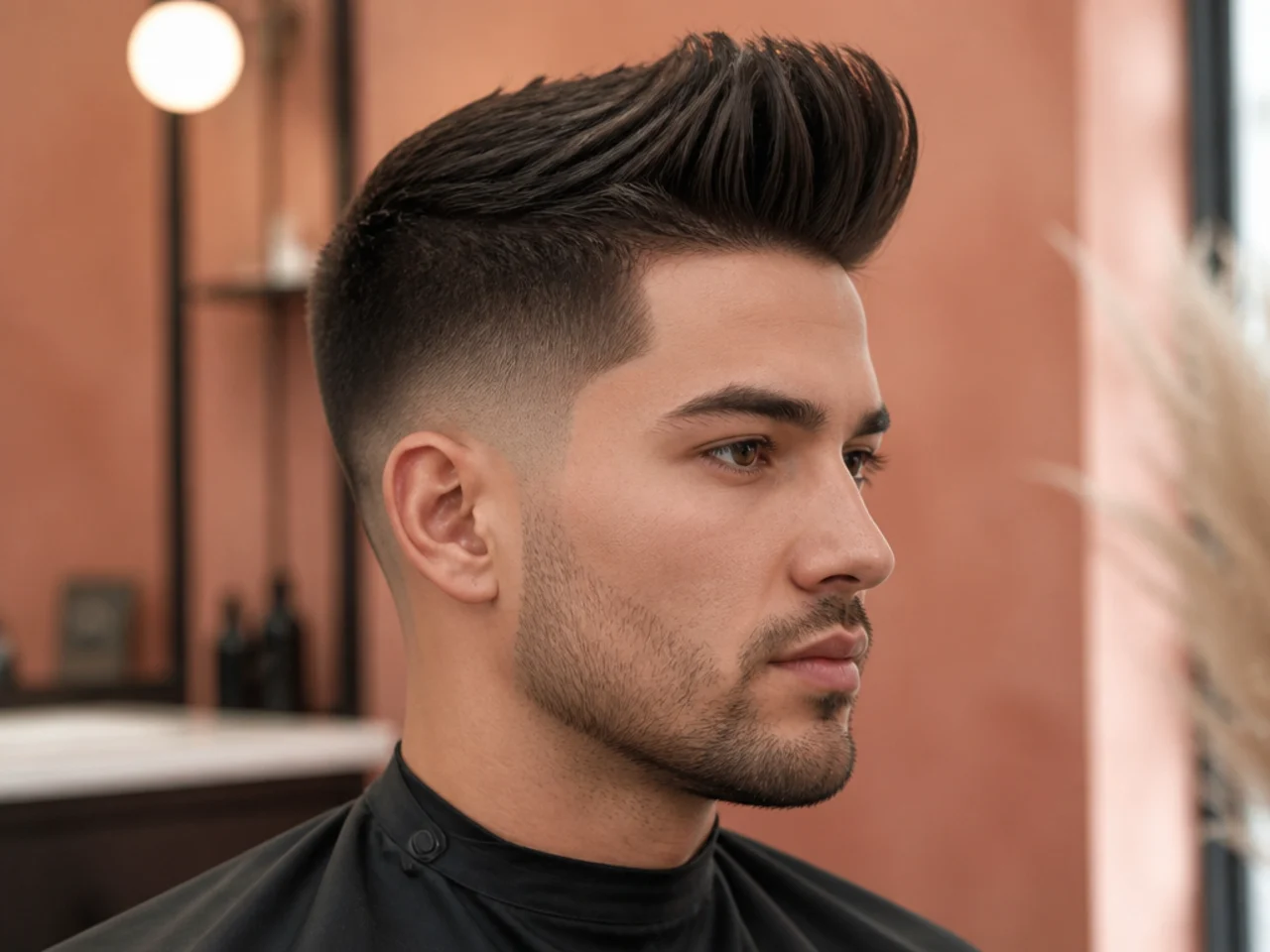
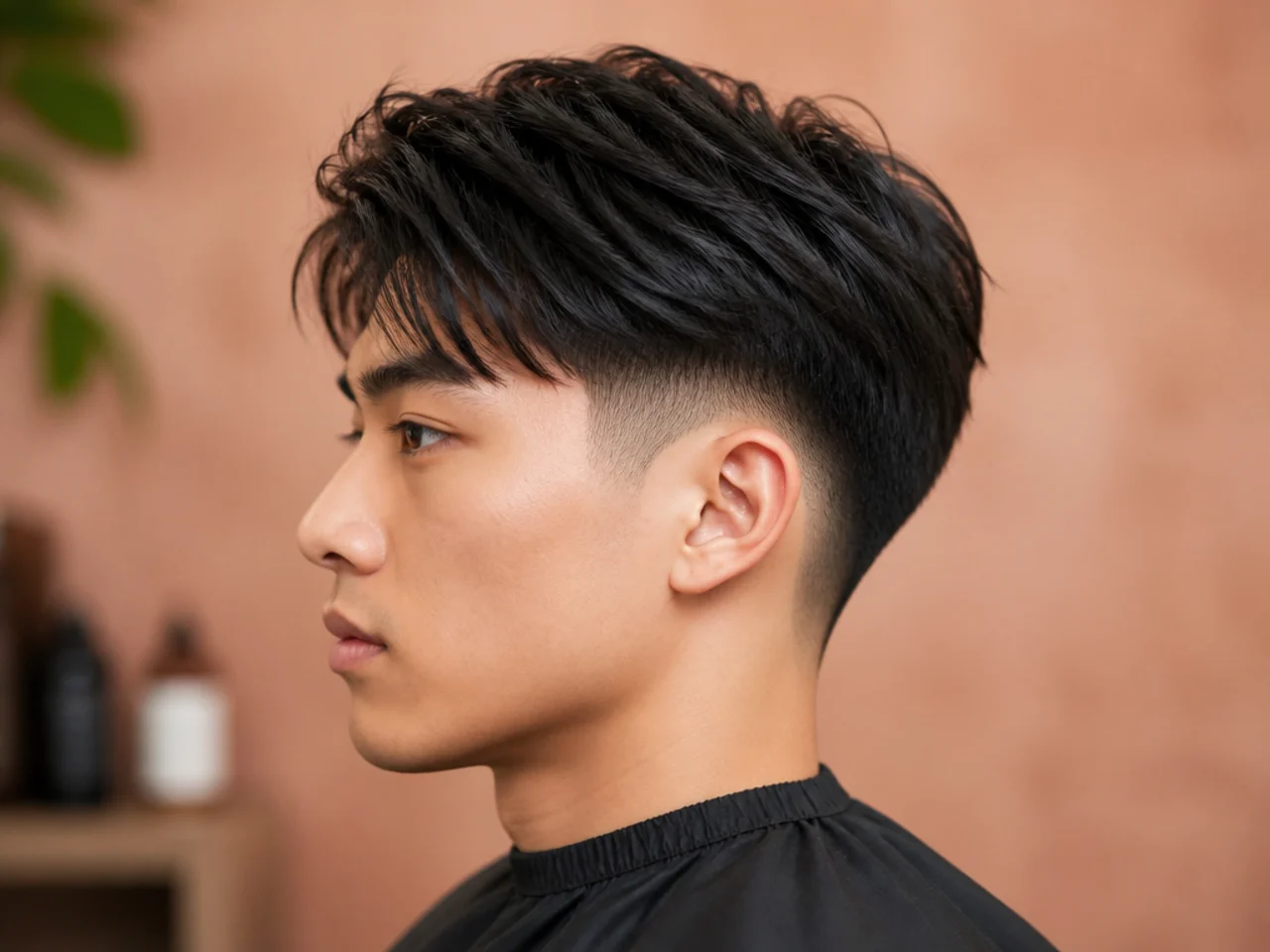
Textured crop. The modern default. Two inches on top with heavy point-cutting for movement, a mid fade or low fade at the sides, a soft fringe. Suits creative and business-casual offices, straight-to-wavy hair, and most face shapes. Ninety seconds of styling.
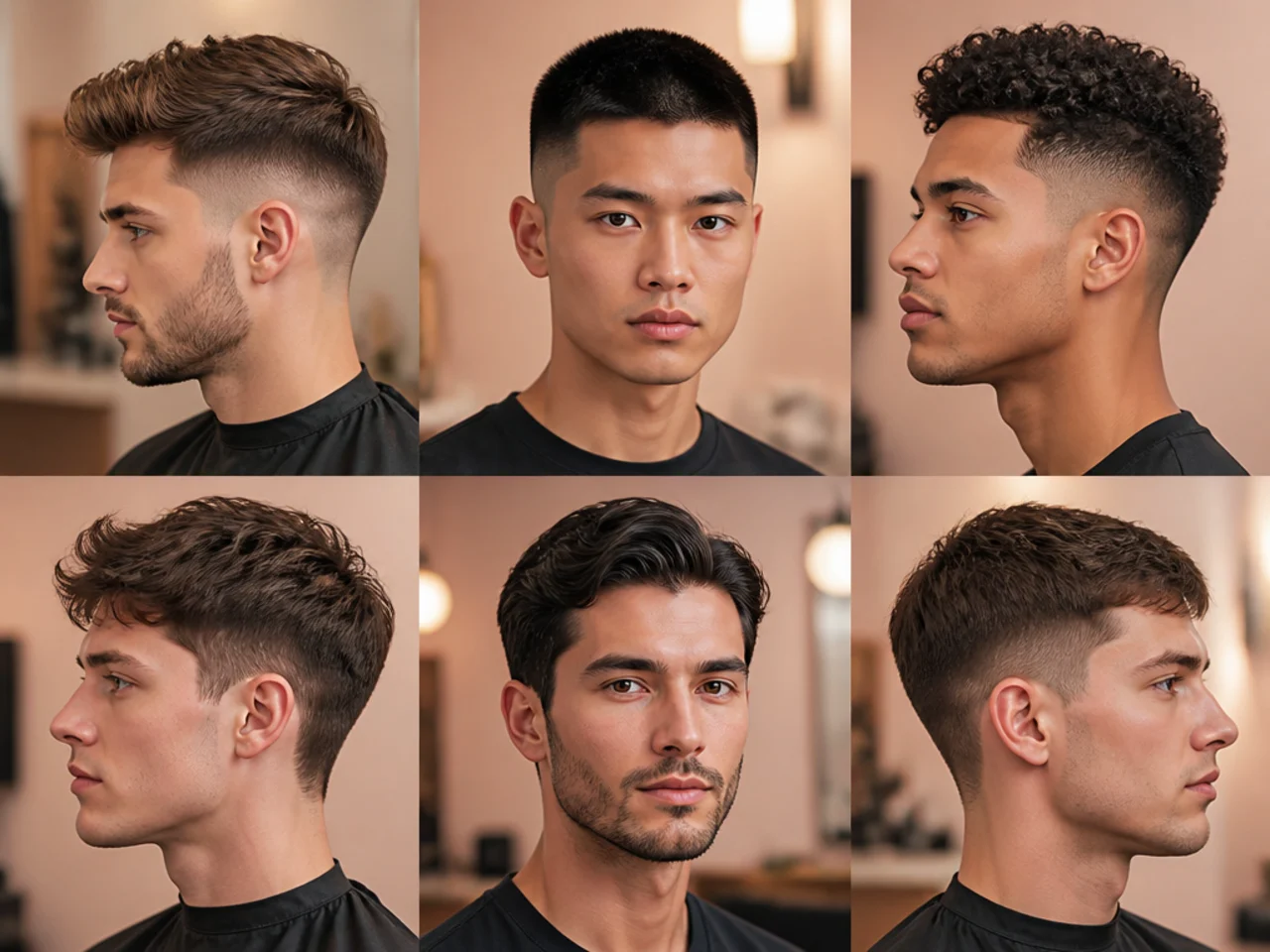
If you want the whole roundup with alternatives for every scenario, our guides to cool men's short haircuts and low-maintenance short cuts cover the shortlist in depth. For the traditional side of the family, the classic men's haircut roundup covers the timeless shapes that never fall out of rotation.
Face-shape shortcuts, if you're still stuck:
- Round face — textured crop or short brush-up. Add vertical.
- Oval face — anything on the list.
- Square face — crew cut, Ivy League, or buzz. Match the strength of the jaw.
- Long face — French crop or Ivy League. Avoid extra height on top.
- Heart-shaped face — textured crop with a soft fringe. Widen the top.
How to Ask Your Barber
The ask is more specific for a short cut than a long one because the numbers do most of the work. Print or save one reference photo of the exact style you want, and hand your barber the following in this order:
- The name of the cut. "French crop," "Ivy League," "textured crew." A named style anchors the conversation.
- The length on top in inches. One and a half inches, two inches, three inches. Not "a little longer than last time." Numbers.
- The fringe or front detail. Length, blunt or soft, forward-sweep or brush-up.
- The sidewall length. Clipper guard number at the shortest point (#0, #1, #2, #3) and where the fade or taper starts.
- The neckline finish. Square, rounded, or tapered natural.
- The finish you want. Matte and textured, or sleek and shiny. This tells the barber how to point-cut and which product to demo at the mirror.
- Your maintenance schedule. Say "I want to stretch this to five weeks" or "I'll be back in three." The barber will adjust the fade height and taper depth to match.
That's a 45-second brief that removes ninety percent of the guessing. The one thing you don't want to say is "just clean it up." Barbers hate that phrase because it puts every decision on them — and their version of clean-up is almost never yours.
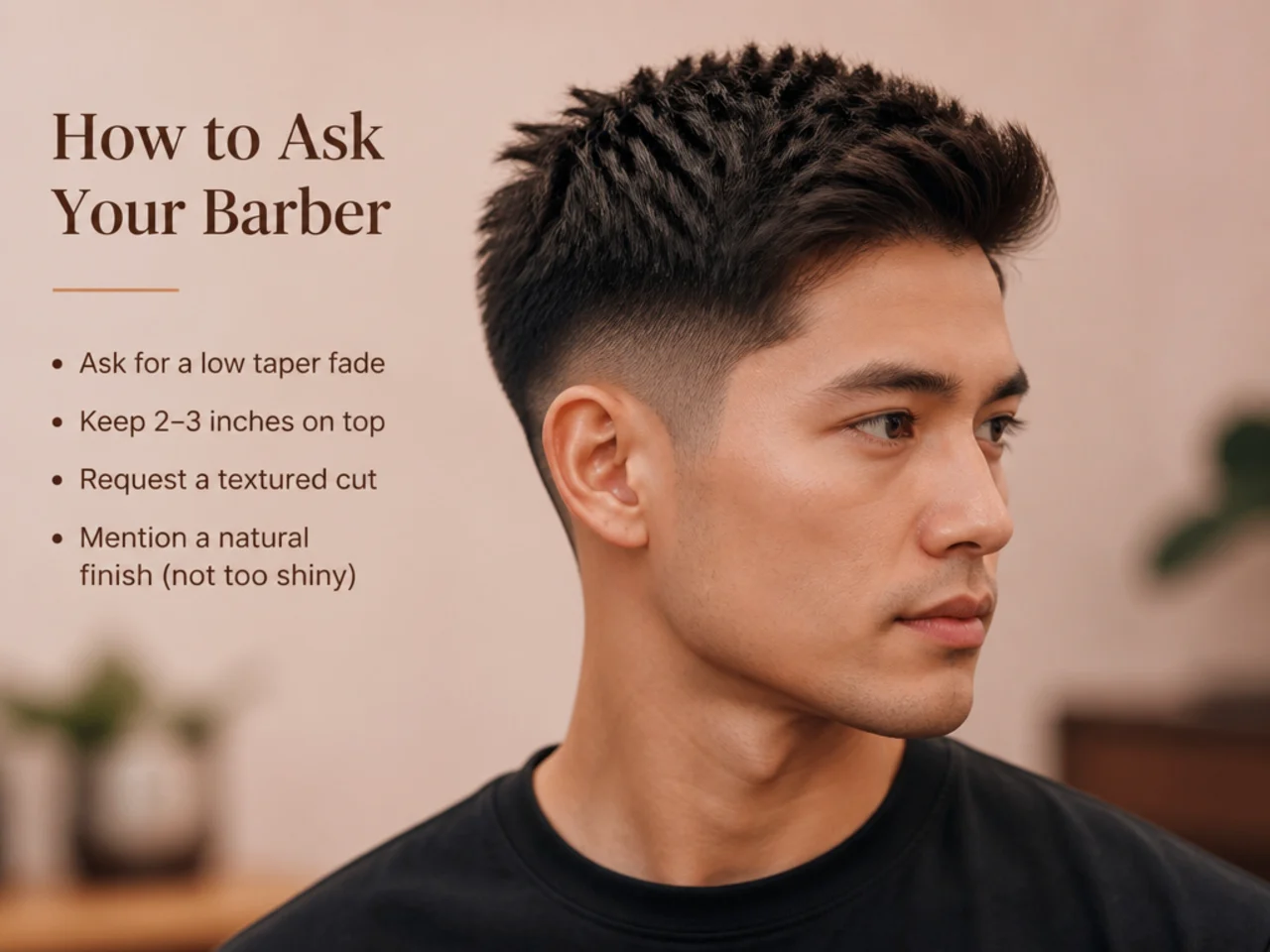
Ask them to point-cut the top, not blunt-cut it. Point-cutting is when the scissors go into the hair vertically at the ends — it creates movement and softness that make short cuts style themselves at home. A blunt cut on a short style looks helmeted the moment it dries.
If you're going for a fade at the sides, our guide to how often men should get a haircut breaks down the cadence honestly by cut type. Short-with-a-fade is the highest-frequency combo — plan on three weeks between visits for the fade to stay crisp, or step down to a taper if you want to stretch it further.
FAQ
Do short haircuts work on thick or coarse hair? Yes — often better than long cuts do. Coarse hair holds a short shape aggressively and doesn't need heat or product to keep the silhouette. A crew cut or buzz on coarse hair is one of the sharpest looks in the barbershop.
Are short haircuts okay if I'm going bald or thinning? Very much yes. Short cuts (especially the buzz, butch, and French crop) work with thinning hair instead of against it. The French crop's forward fringe was literally designed for receding hairlines. Long styles that try to hide thinning tend to draw attention to it — short cuts stop the fight.
Which popular short haircut is the trendiest right now? The textured crop with a mid fade continues to lead barbershop request lists in 2026. Second is a modern take on the Ivy League — a bit shorter, cleaner fade, softer part. Both work in almost every workplace and cost about the same in styling time.
Can I cut a short style myself at home? The sides and back, yes — a $40 clipper set gets you there. The top wants a barber's scissors and eye, especially for anything with point-cutting or a defined shape. A good middle path is barber every four weeks, home clean-up on the sides in the middle week.
Do short cuts age well? Better than any other length. Crew cuts, buzz cuts, and Ivy Leagues have looked good on men in every decade since 1950 and will look good in every decade to come. They don't date because the shape is the shape — no trend-attached styling technique locks them to a moment.
Is a short cut better for gym-heavy or outdoor lifestyles? By a wide margin. Sweat and short hair don't argue — you rinse, towel-dry, and you're done. Longer cuts turn a workout into a mid-day restyle. Same logic for hats, helmets, and hoods: short cuts survive the pressure and pop back into shape when you take the hat off.