Fade Haircut: Ultimate Guide To Stylish Hair Trend For Men | 2026
The fade is the single most-requested cut in modern men's hair — and also the most-mis-asked-for. This guide covers every fade variation with photos, the face shape and hair type each one suits, and the exact wording that gets you the cut you actually wanted the first time.
In this article · 28
- What Is Fade Haircut?
- Fade Haircut vs. Taper: Quick Difference
- Popular Types of Fade Haircuts
- Low Fade Haircut
- Mid Fade Haircut
- High Fade Haircut
- Skin Fade Haircut (Bald Fade)
- Taper Fade Haircut
- Fade Haircut With Different Hairstyles
- Fade With Quiff
- Fade With Pompadour
- Fade With Curly Hair
- Fade With Dreads or Braids
- Fade With Buzz Cut
- Choosing Right Fade for Your Face Shape
- Round Face
- Oval Face
- Square Face
- Heart-Shaped Face
- Diamond Face
- How to Ask for a Fade Haircut at the Barber
- Fade Haircut Maintenance Tips
- Frequent Trims
- Use the Right Products
- Brush and Style Daily
- Fade Haircuts for Every Occasion
- Celebrities Who Rock Fade Haircuts
- Conclusion
A fade is the cleanest way to sharpen your look without changing everything on top. This guide walks you through every fade worth asking for at the chair — low, mid, high, skin, taper — plus the pairings, face-shape rules, and maintenance that keep it fresh. Get the details right, and you walk out with a haircut that fits your bone structure, matches your styling routine, and stays crisp for a solid three weeks.
What Is Fade Haircut?
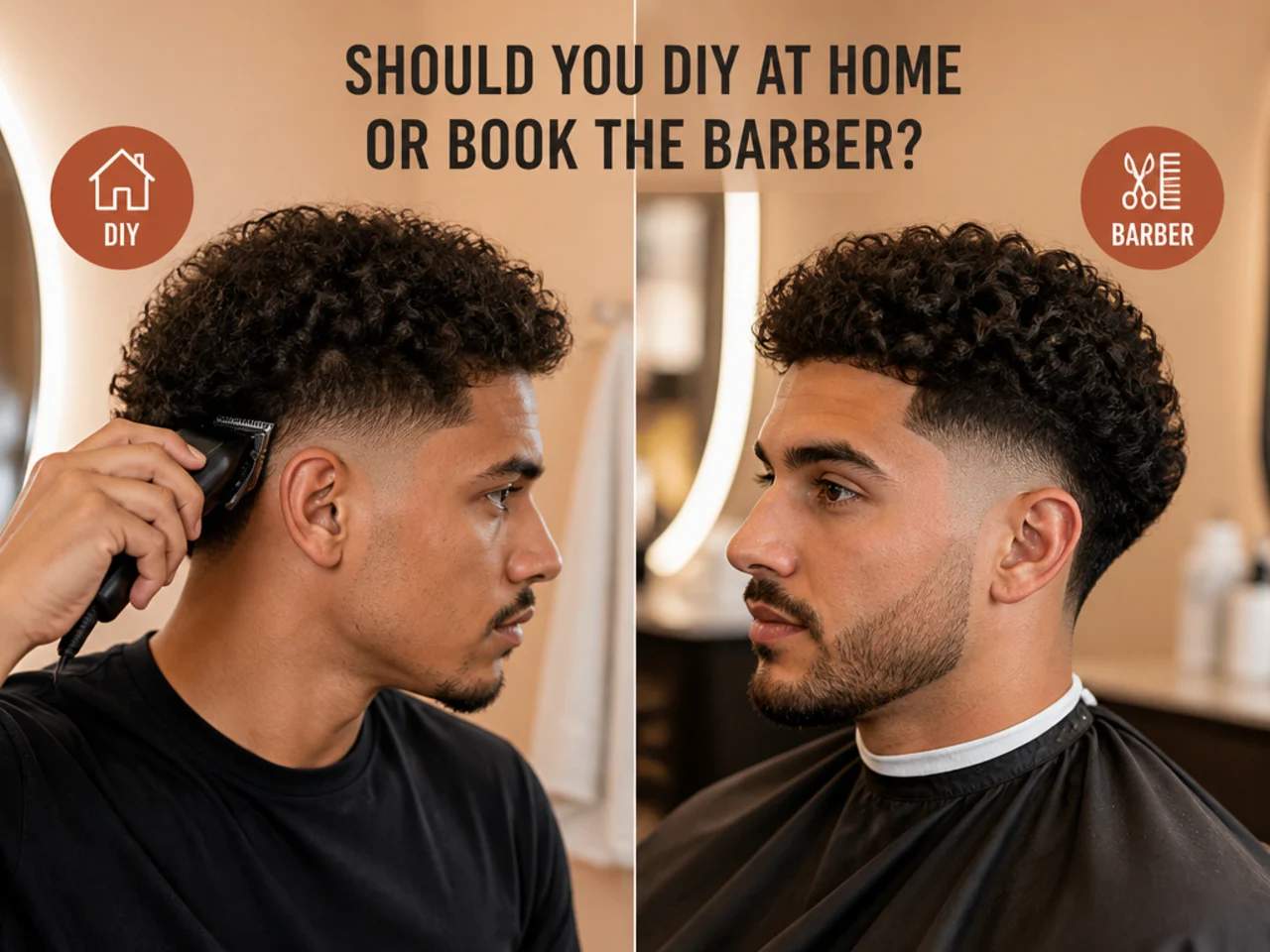
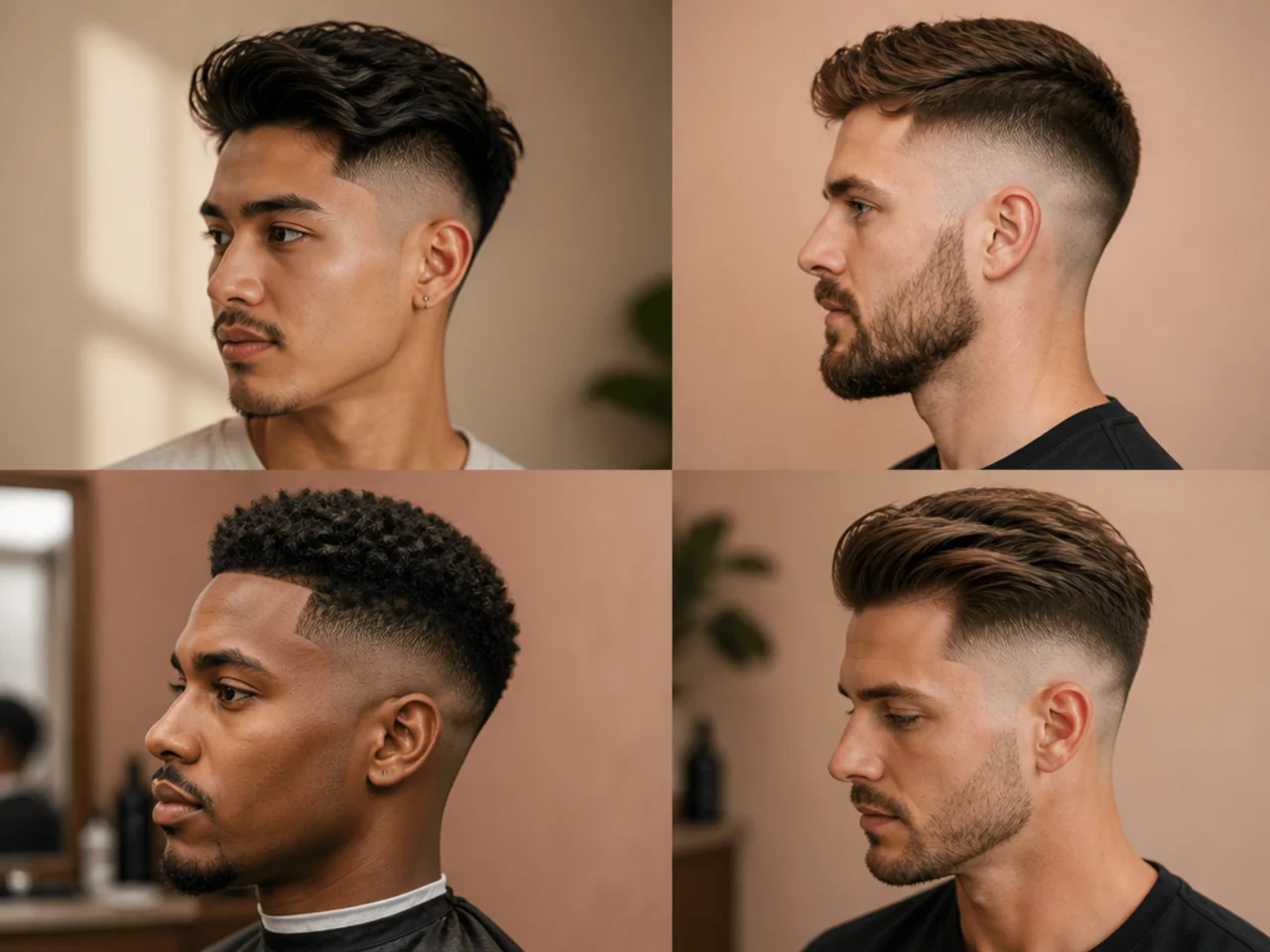
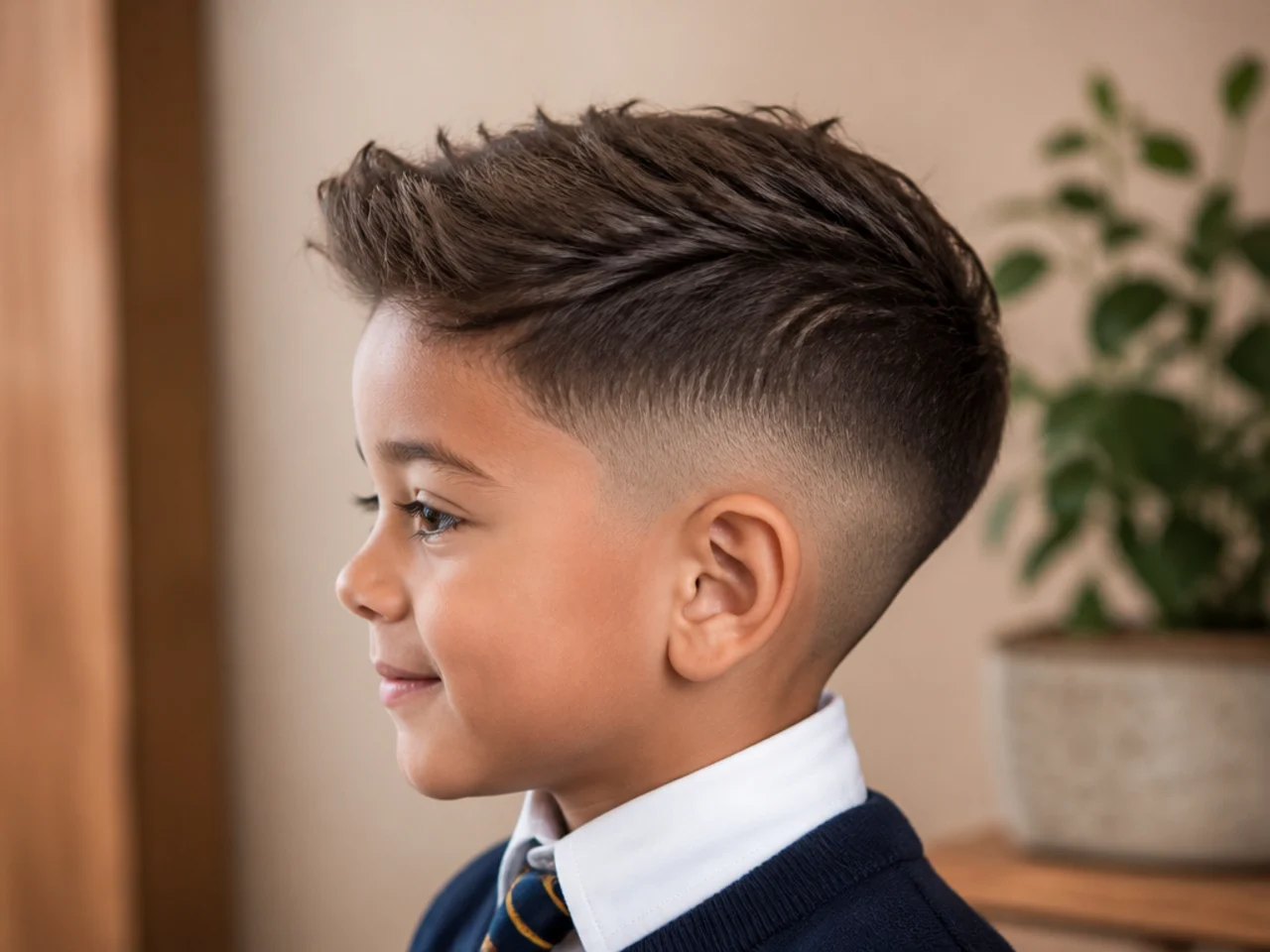
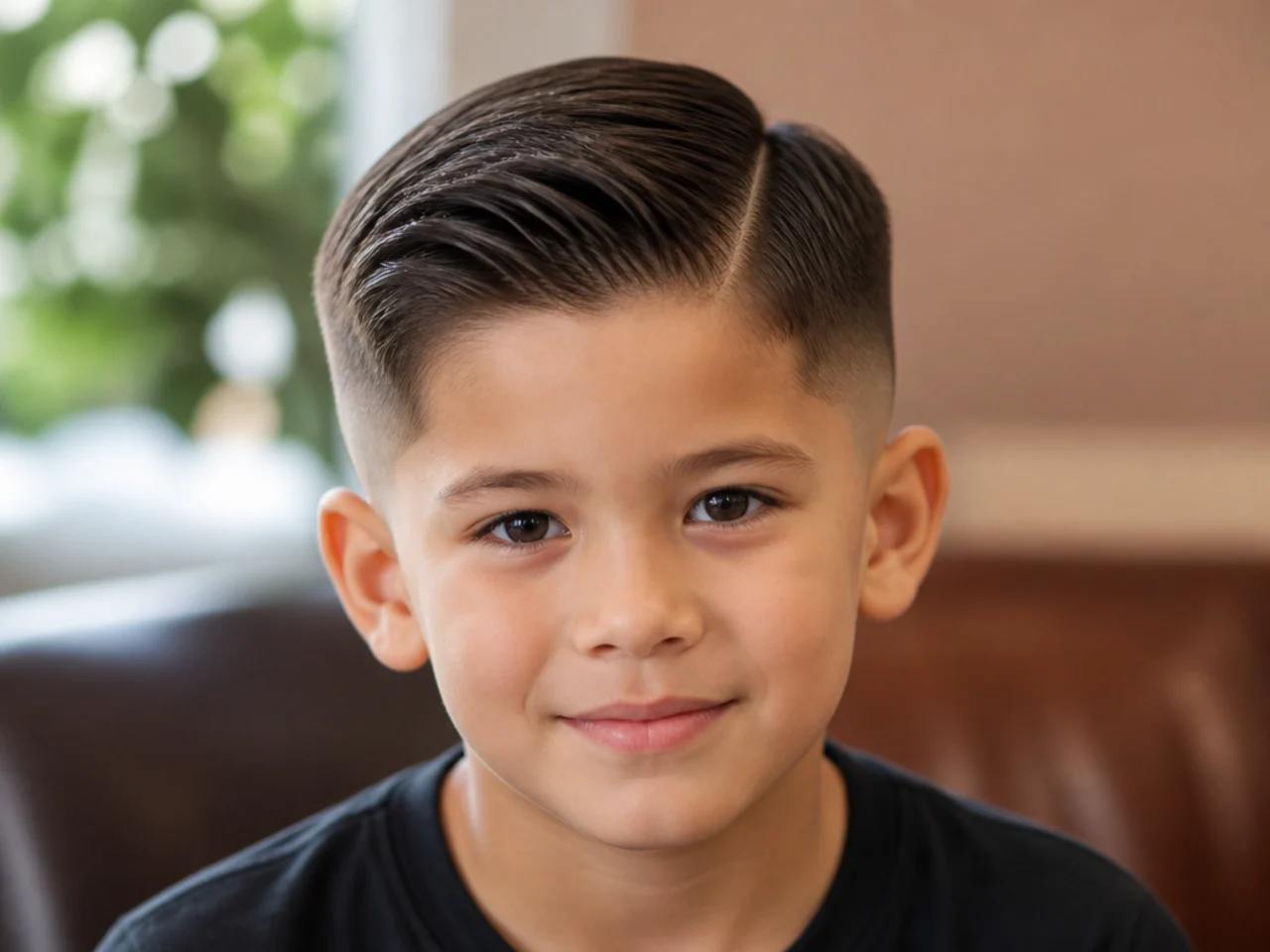
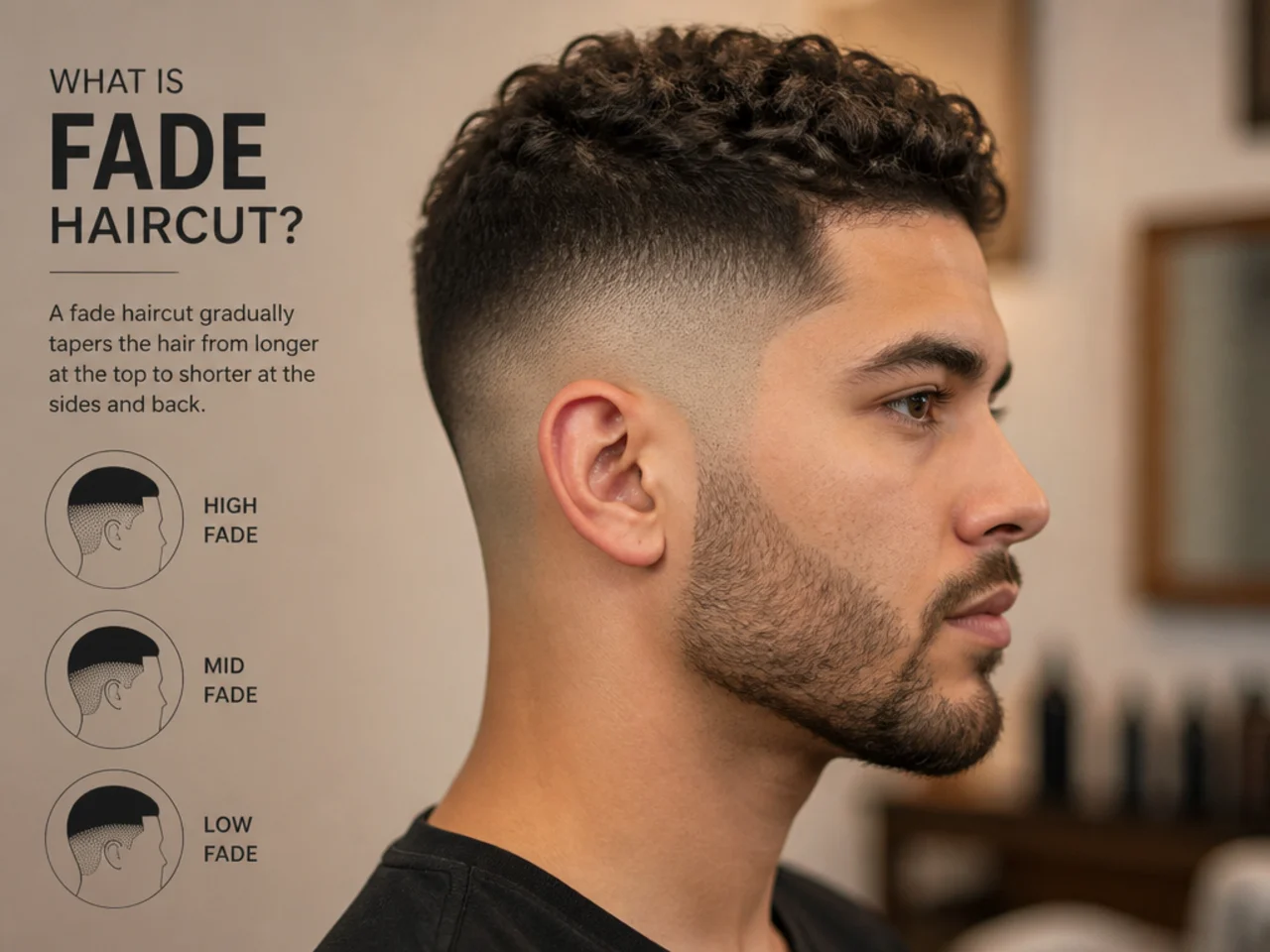
A fade tapers the hair on your sides and back from longer at the top down to shorter — often bare skin — at the bottom. That gradient runs cleanly around your ears and nape, so the transition between your top length and your sides feels seamless instead of stepped. The top can stay long, medium, or nearly buzzed; the cut is defined by the blend, not by what you leave on top.
The technique itself is patient work. Your barber moves through guard sizes — say a #3, then #2, then #1, then a lever drop — and finishes the seam with clippers-over-comb or a foil trimmer. When it's done right, you can't point to where one length ends and the next begins.
Fade Haircut vs. Taper: Quick Difference
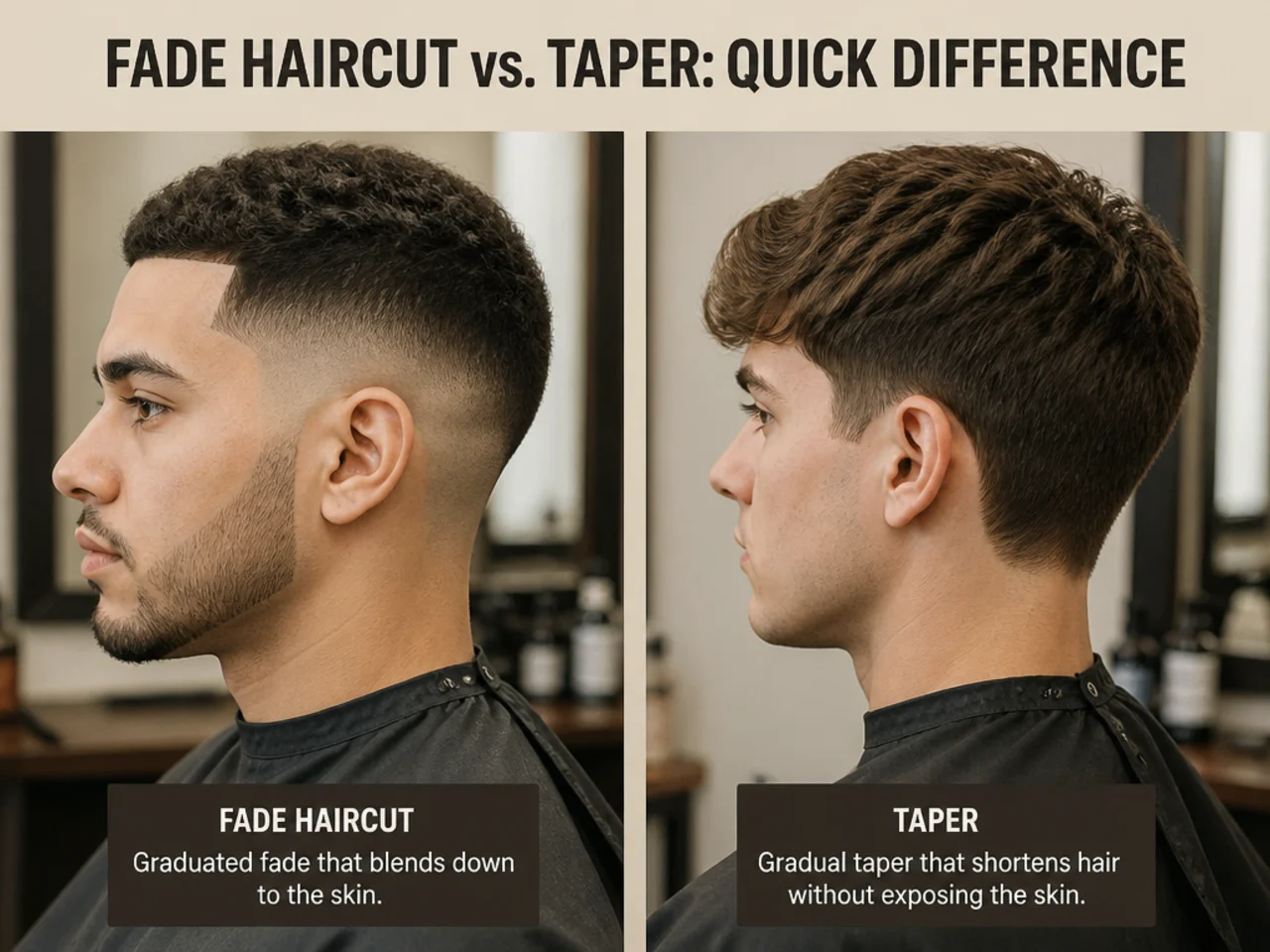
A taper only touches the perimeter — the sideburns and the hairline at the nape. Everything above that stays roughly the same length. A fade goes further and shortens hair across the whole side panel, so the contrast between top and bottom reads dramatic. If you want a subtle, office-friendly finish, ask for a taper haircut. If you want a real gradient with visible contrast, ask for a fade.
Popular Types of Fade Haircuts
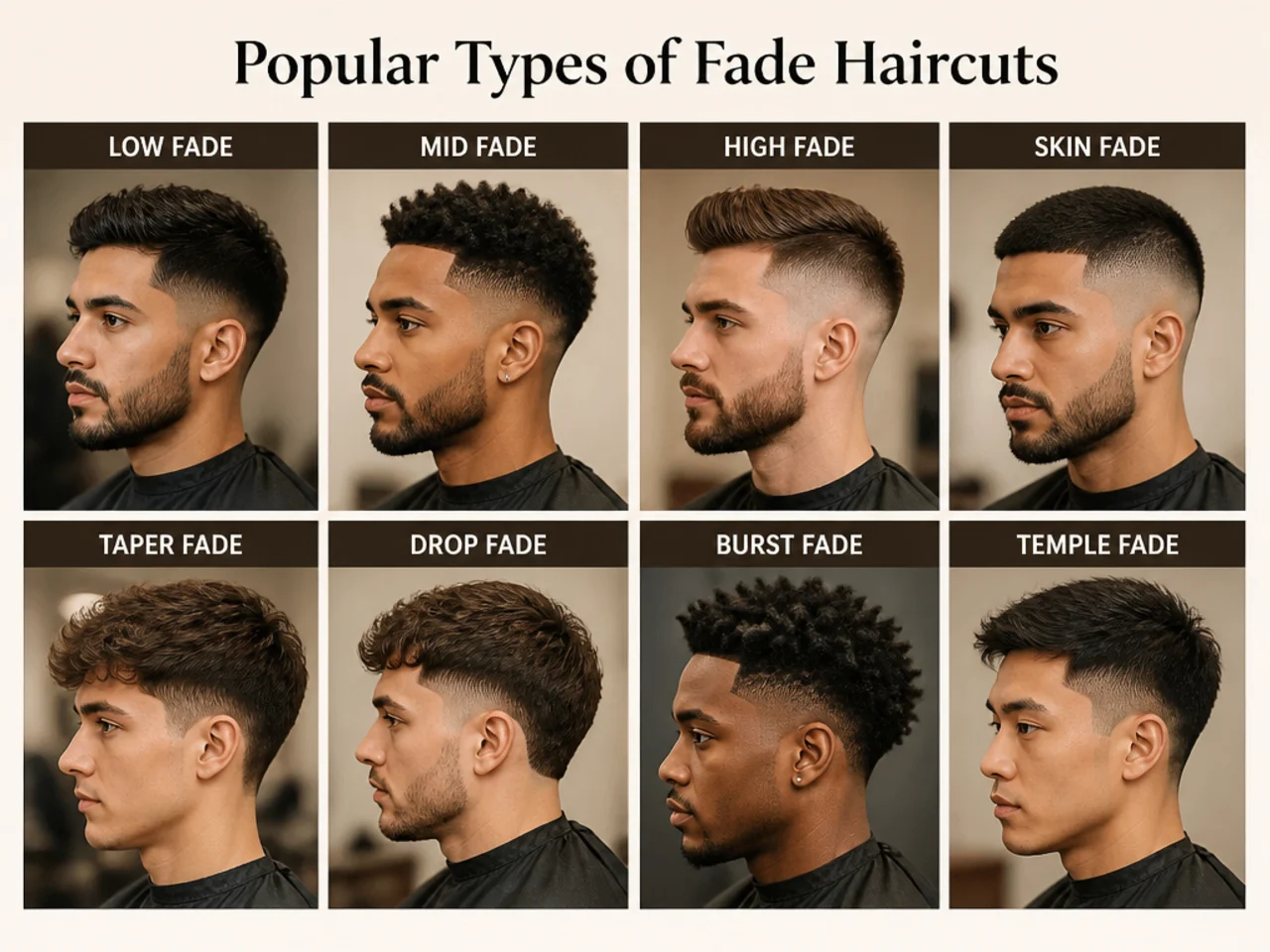
Low Fade Haircut
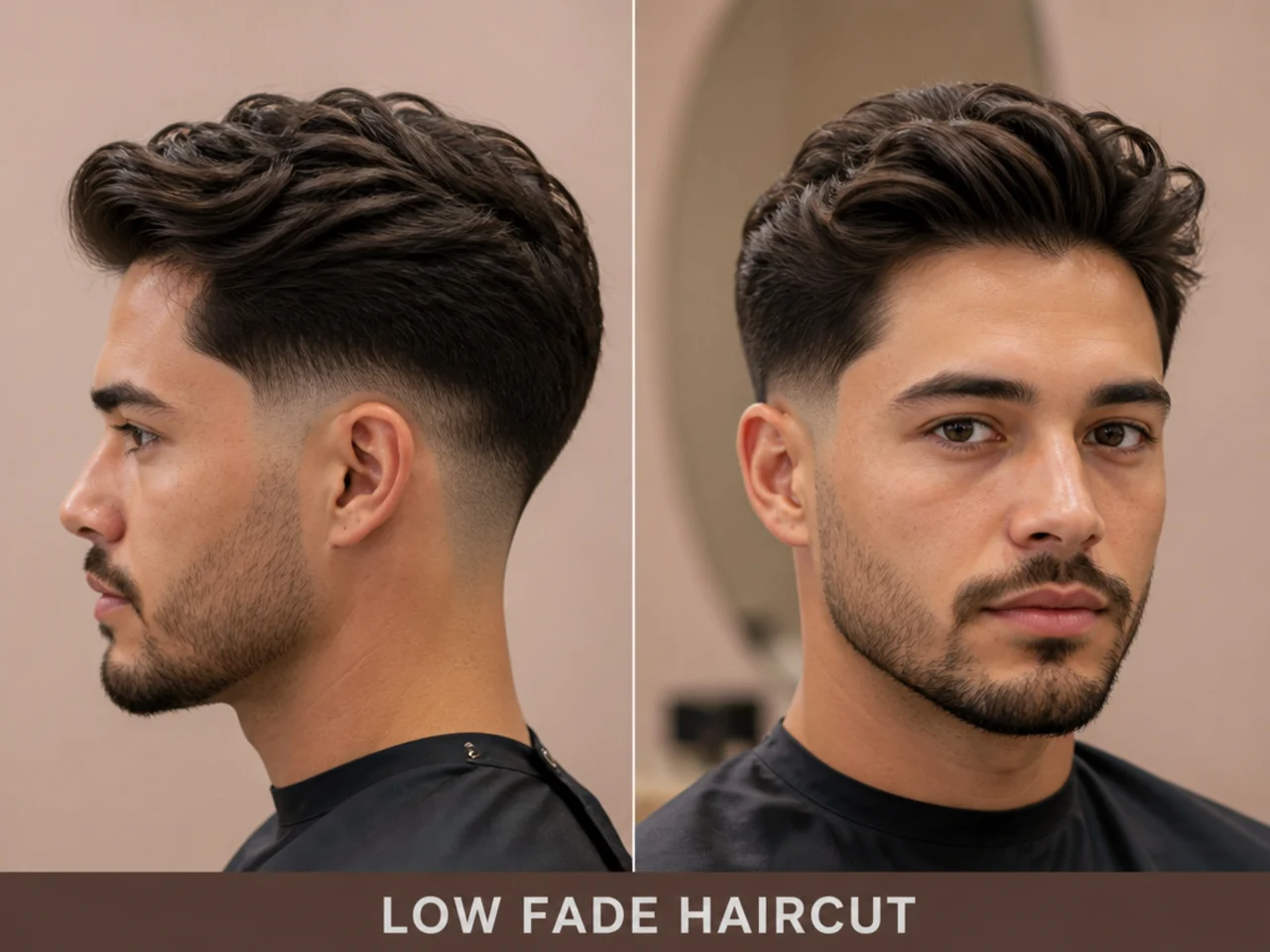
A low fade starts just above the ear and arcs around your hairline. The blend lives close to your neckline, so most of the side length stays and only the last inch or so tapers down. It's understated — the right call when you want your top style to be the story, not the sides.
Who it suits: professional settings, older gents, and anyone whose employer bristles at heavy contrast. Straight, wavy, and thicker hair all read well with it.
How to ask: "Give me a low fade starting just above the ears, dropping to a #1 at the shortest, blended into a #3 up top. Keep about two inches of length on top, matte finish." A close cousin: the low taper fade sits even closer to the neckline for an even softer drop.
Styling tip: A dime of matte clay, warmed between your palms and raked back-to-front, gives you a natural finish without shine.
Mid Fade Haircut
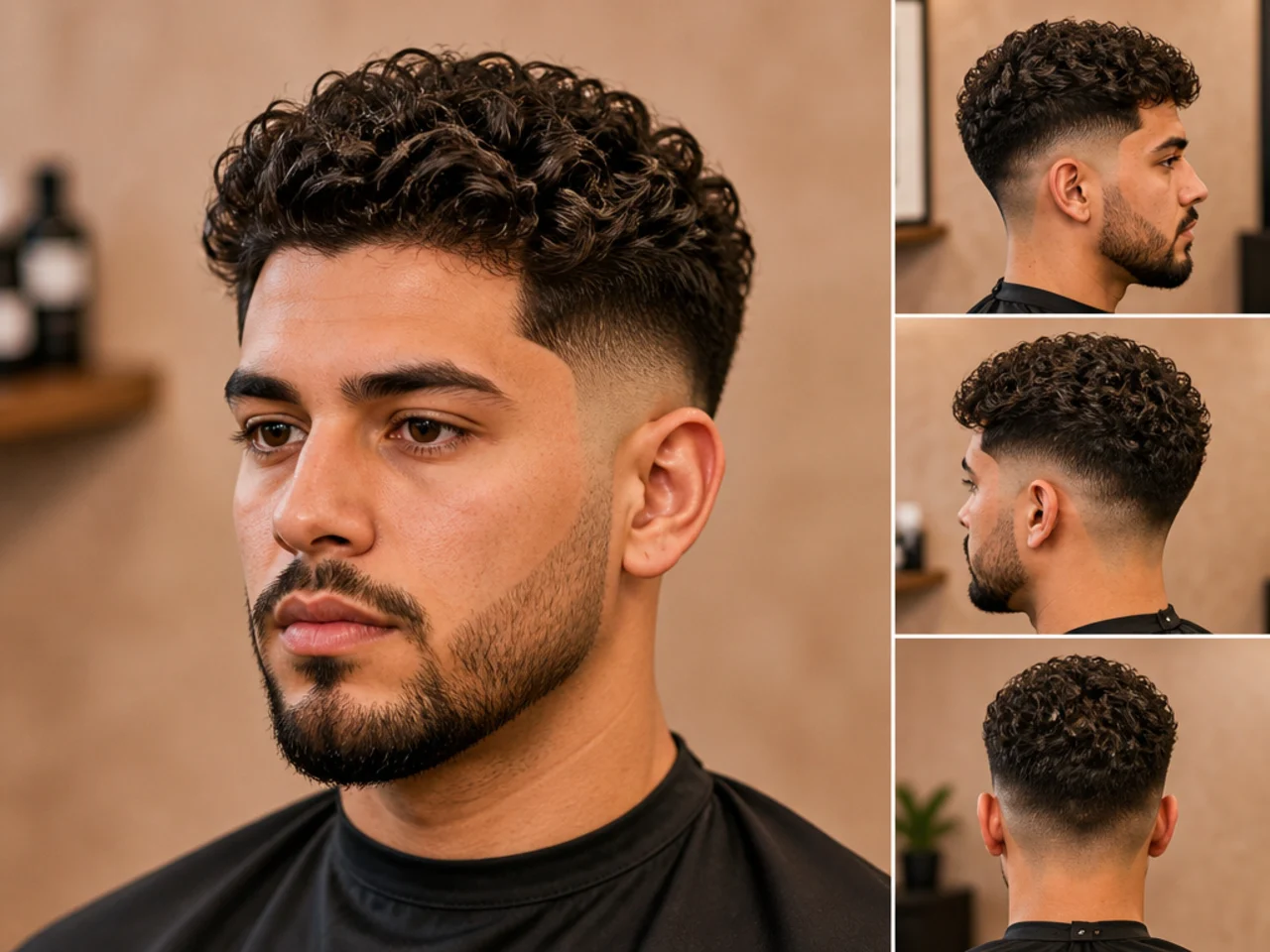
The mid fade starts around the temples — roughly halfway between your ear and the crown. It's the crowd-pleaser for a reason: enough contrast to look intentional, not so much that it feels aggressive. It plays well with textured crops, quiffs, and pompadours because the temple line frames whatever volume sits above it.
Who it suits: oval, oblong, and diamond face shapes. Every hair type. If you can't decide between low and high, this is the default answer.
How to ask: "Mid fade at the temple, #0.5 at the bottom, blended up to a #2. Leave the top at three inches with texture on the ends." Bring a photo of the exact height you want — "mid" is subjective.
Styling tip: Spritz sea-salt spray on damp hair, blast with a dryer for two minutes, finish with a pea-sized amount of texture cream.
High Fade Haircut
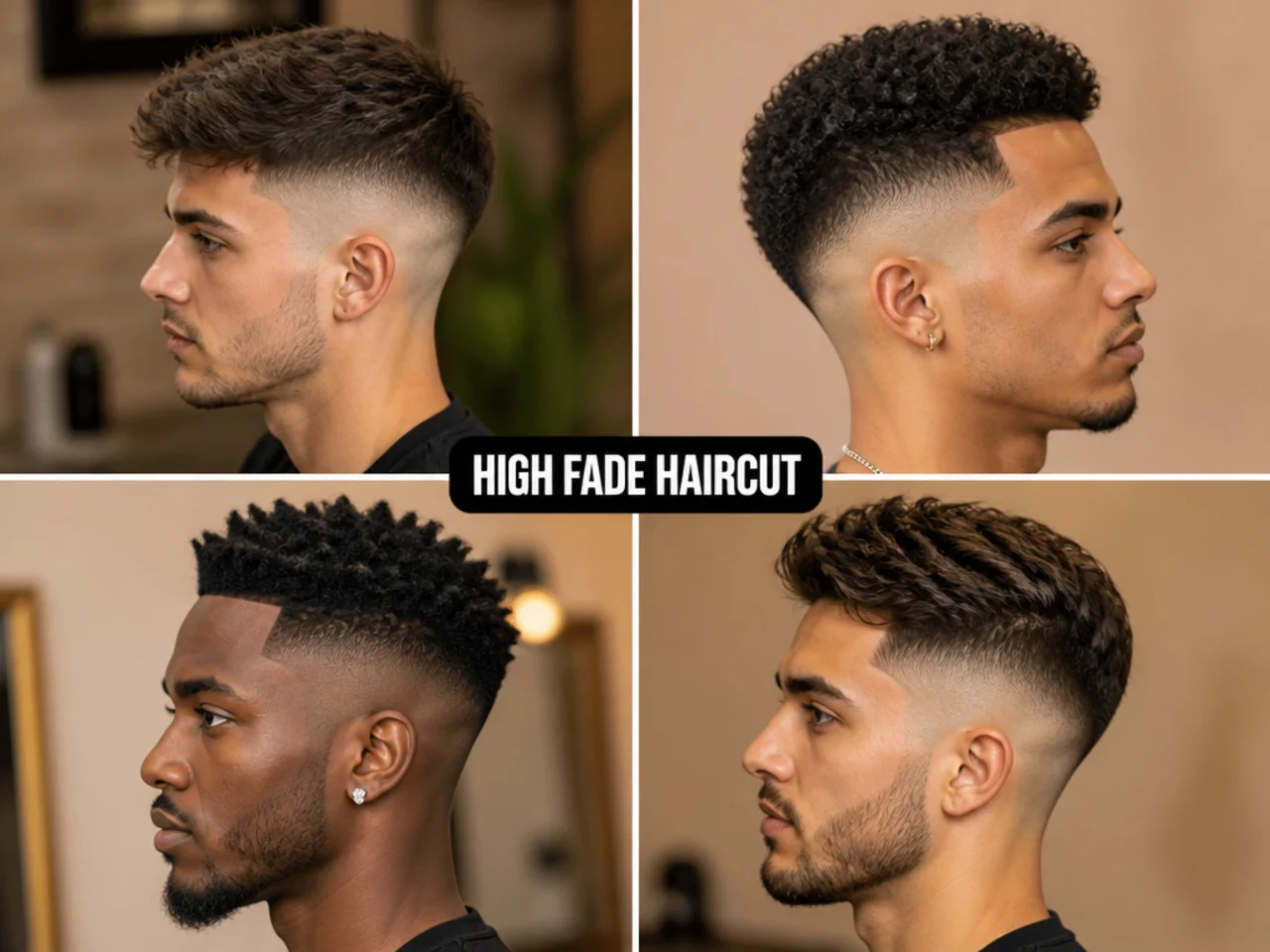
A high fade begins at or above the temples and can climb toward the parietal ridge. The contrast is dramatic — almost no hair on the sides for a large portion of the head, and all your length lives up top. This is the cut for people who want the barber's work to speak first. It pairs cleanly with a spiky quiff, a mohawk-adjacent shape, or a curly Afro.
Who it suits: round faces (the vertical lift lengthens the frame), strong jawlines, and anyone comfortable with a fresh cut every two weeks. If you want the temples even more precise, ask about the high taper fade — a hybrid worth knowing.
How to ask: "High fade starting an inch above the temple, taken down to skin, blended into a #2 at the top of the fade. Leave the top four inches for styling."
Styling tip: For a spiky finish, use a fiber paste — it grips without slicking flat. Work it in on dry hair.
Skin Fade Haircut (Bald Fade)
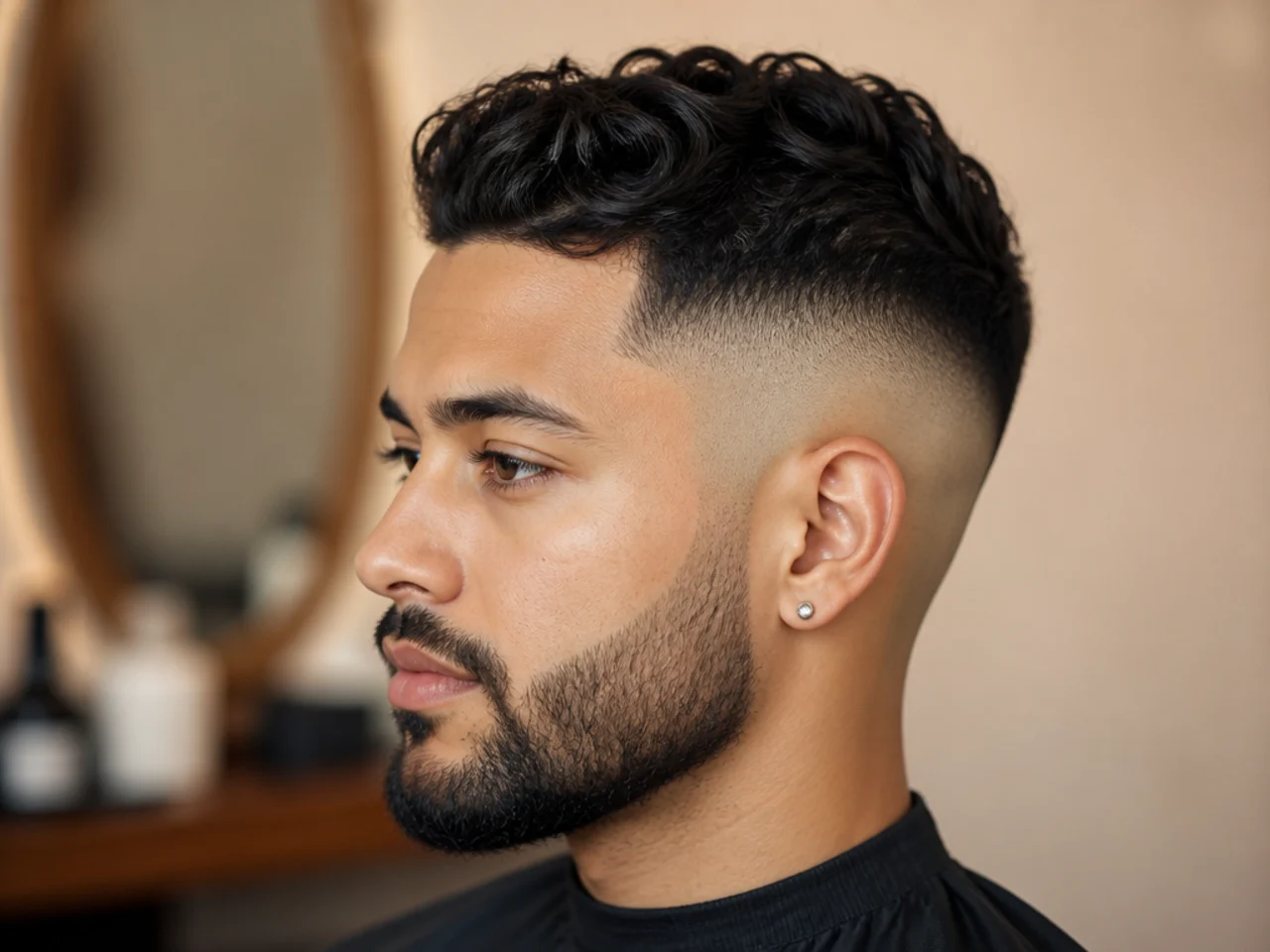
A skin fade takes the shortest point of the blend all the way down to bare scalp. You can pair it with any starting height — low, mid, or high — so the fade begins there and disappears entirely at the bottom. The effect is stark and sharp; the sides look almost polished. One stylistic variation you'll see everywhere on modern cuts: the burst fade, which rounds the fade around your ear like a starburst instead of running it in a straight arc.
Who it suits: square jawlines, athletic silhouettes, and anyone whose hair thickness makes a #0 blend still look too soft. Related territory: the undercut fade uses the same bald-sides effect but disconnects the top length instead of blending it.
How to ask: "Skin fade starting mid, foil-trimmer finish at the bottom for a bald look. Blend up to a #2 at the top of the fade." Confirm the foil work — that's what makes the shaved zone read glassy instead of shadowed.
Styling tip: Bare skin needs care. Rub a drop of jojoba oil or an unscented moisturizer over the shaved area every morning for the first week — it heads off flaking and razor bumps before they start.
Taper Fade Haircut
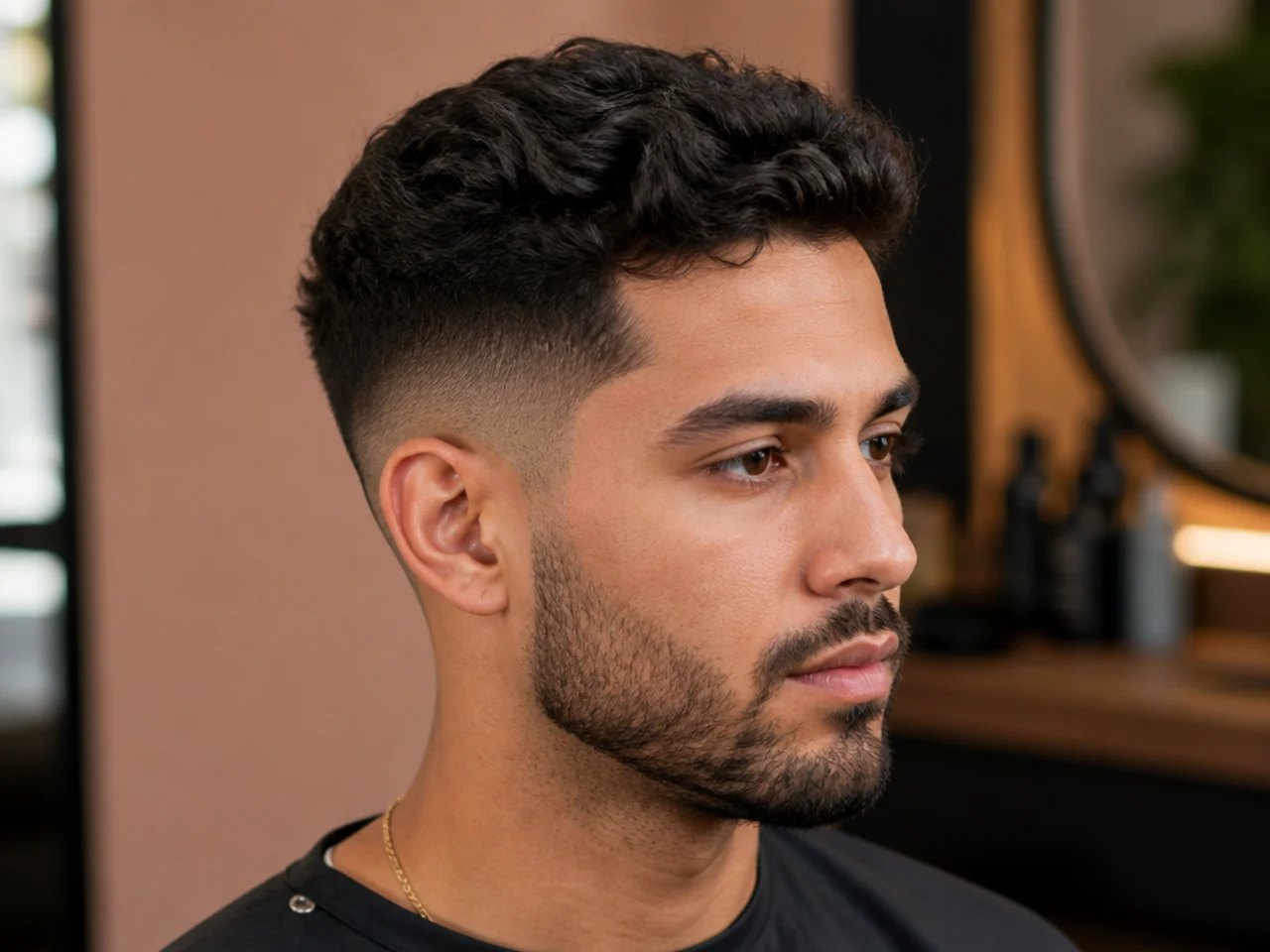
A taper fade is a lighter touch. Instead of blending the whole side, it fades only the perimeter — a slim band around the ears and along the nape — and leaves the bulk of the side panel at its original length. It's the go-to for professional environments and older men who want structure without drama.
Who it suits: business settings, first-time fade clients, and guys growing hair out who need a clean neckline in the meantime.
How to ask: "Taper fade around the ears and neckline, drop to a #0.5, keep the rest of the sides at scissor length." A cousin worth naming: the blowout taper leaves more volume at the crown while tightening the perimeter — good if you want the top to stand up.
Styling tip: You can skip product some days and still look sharp — the shape does the work.
Fade Haircut With Different Hairstyles
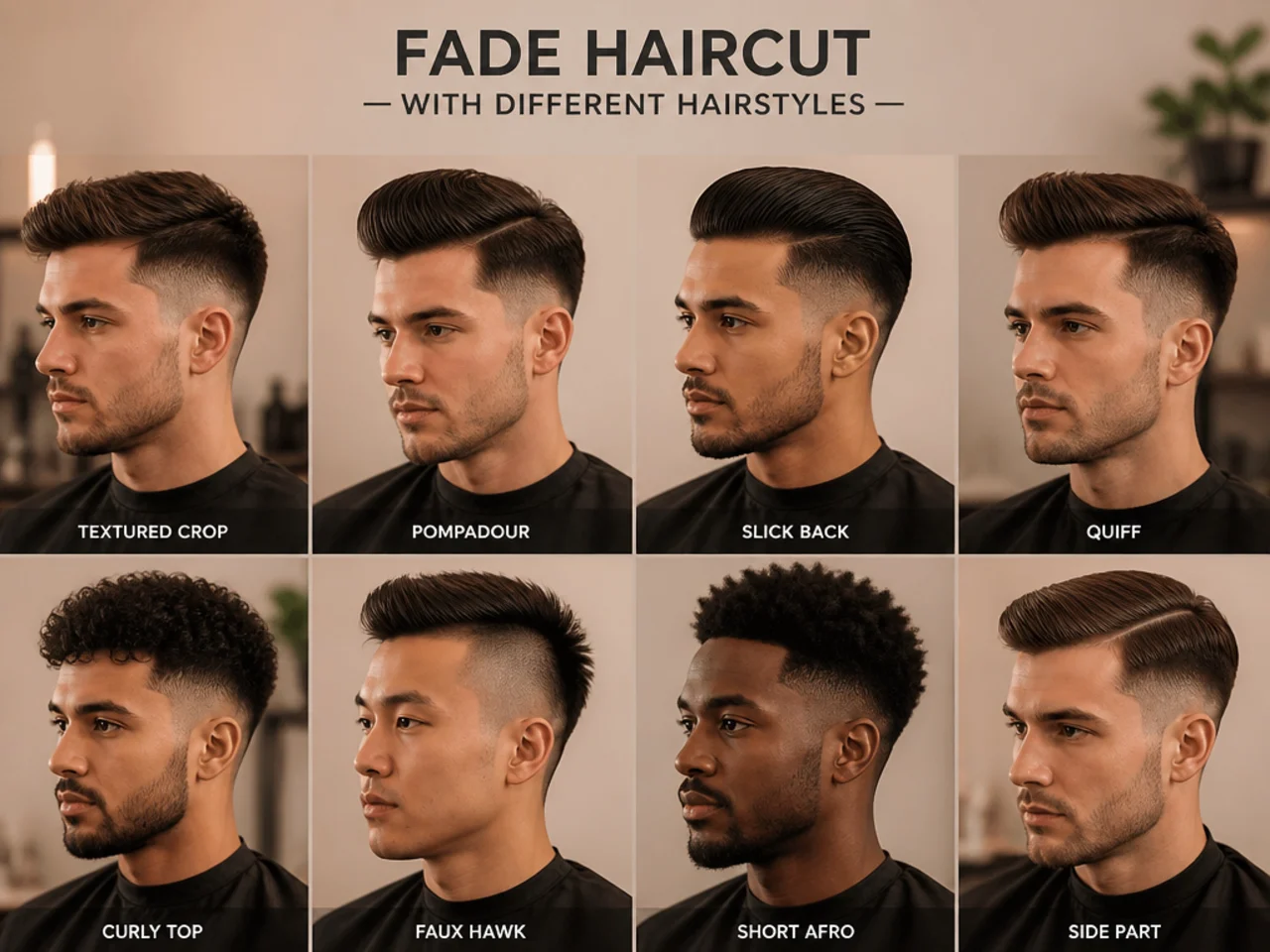
Fade With Quiff
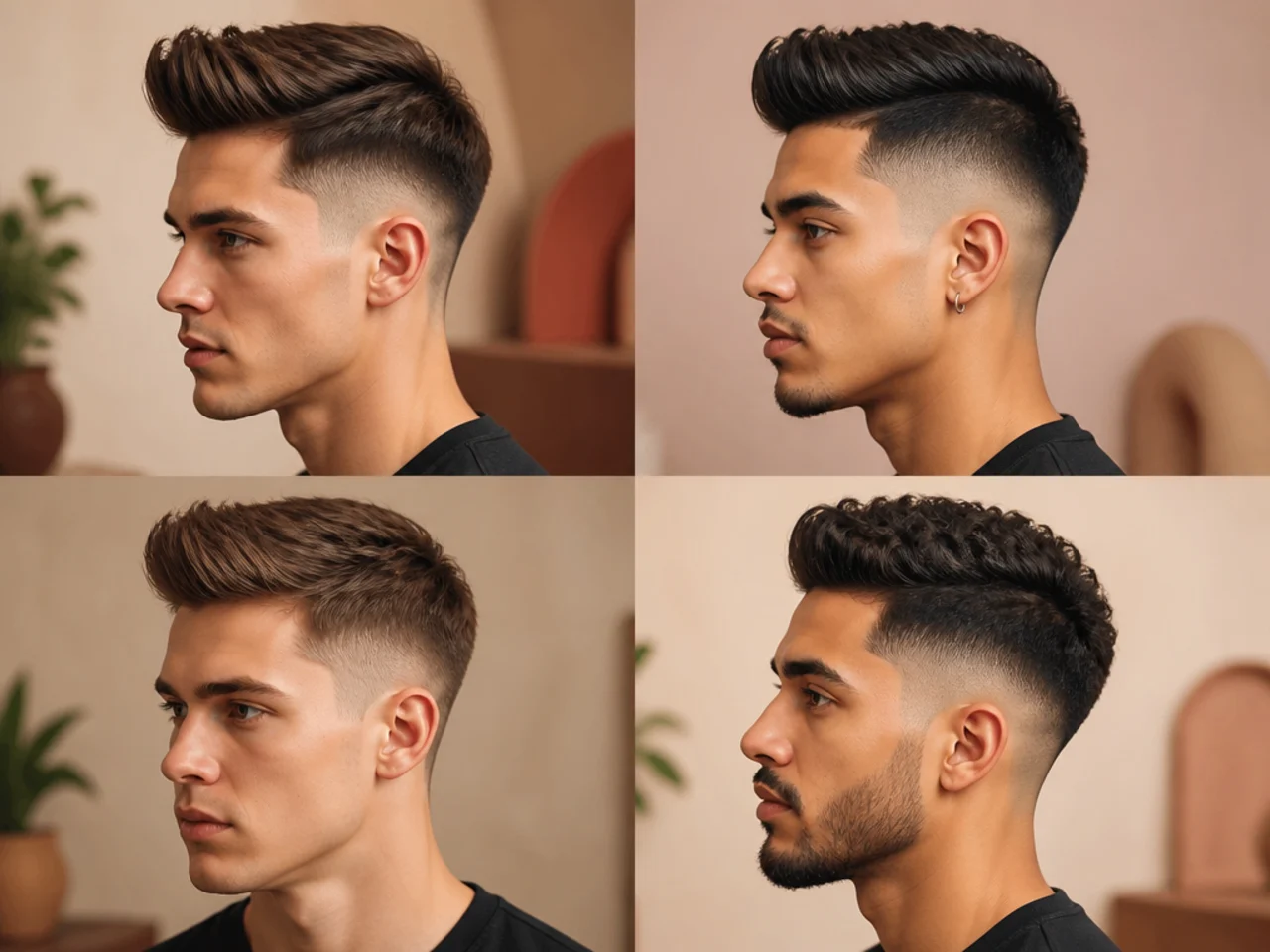
A quiff fade lifts the front hair up and back with volume while the sides sit clean and tapered. Medium-to-thick hair holds the shape best, and you want at least three inches on top to have something to work with.
How to ask: "Mid fade, four inches on top with the front left at two inches for a quiff." Style with mousse at the roots when damp, blow-dry lifting the front up and back, finish with a light pomade for hold.
Fade With Pompadour
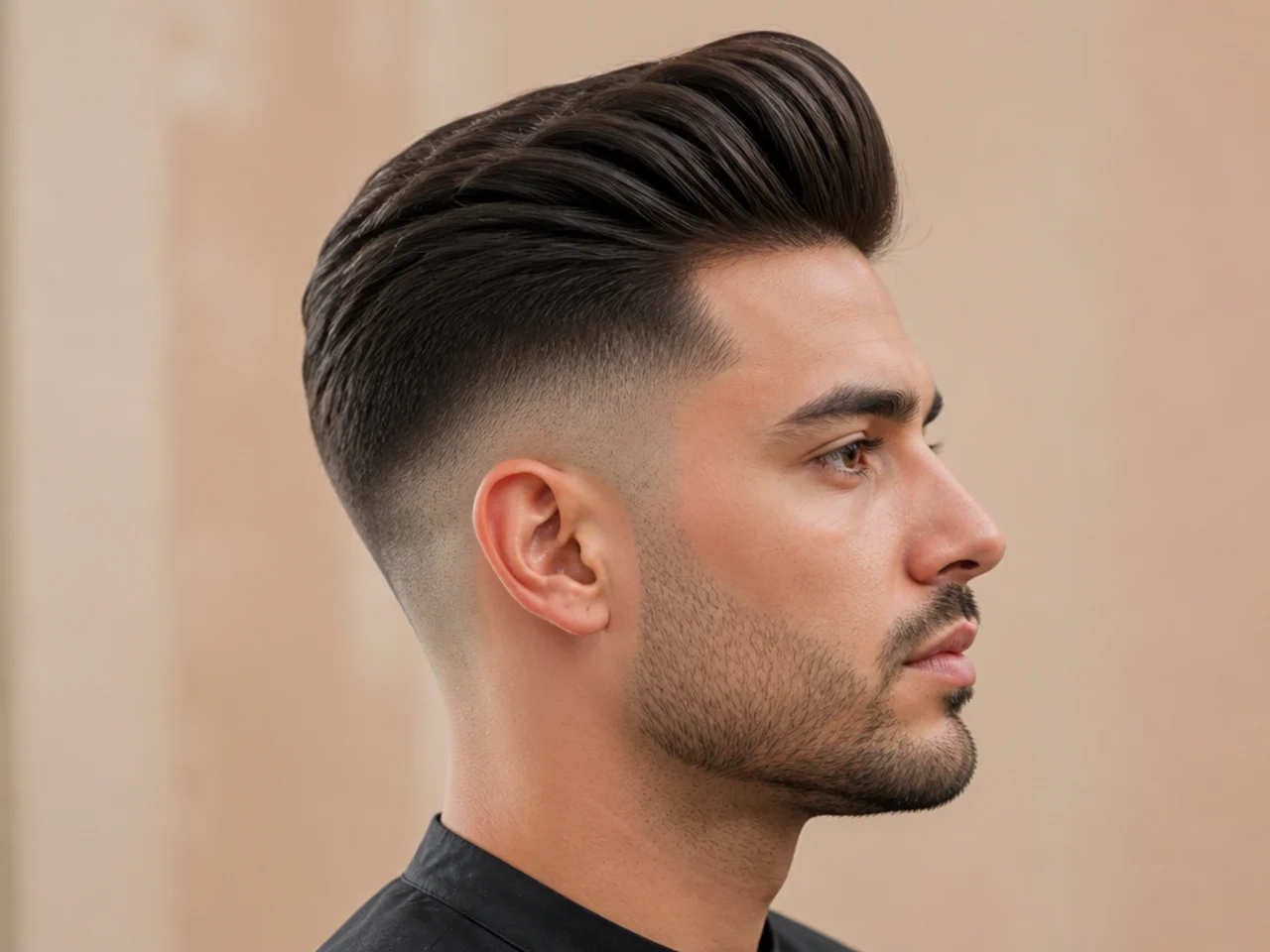
The pompadour is the quiff's older, more polished cousin. The top hair is swept back and up with a subtle side sweep and often a glossy finish. A mid or high fade underneath makes the volume pop. Old-school barbershops love this one because it photographs beautifully in the mirror.
How to ask: "Mid to high fade, five inches on top for pompadour styling, shine finish." Use a water-based shine pomade — the sheen is part of the look.
Fade With Curly Hair
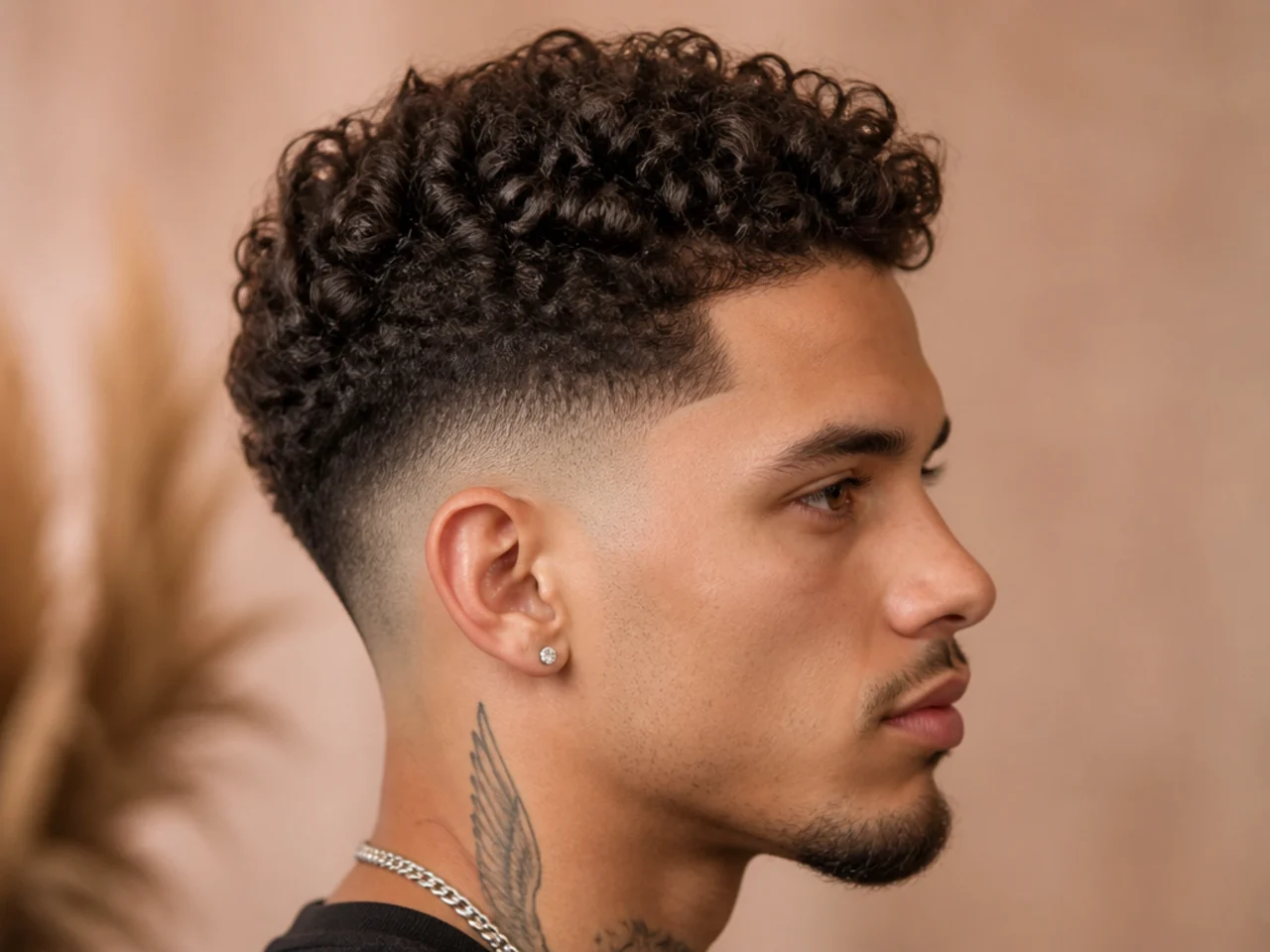
Fades and curls are a natural match. Cleaning up the sides removes visual weight and lets the curl pattern on top read as intentional shape rather than volume that got away from you. The tapered sides define the top's outline.
Who it suits: 2C through 4B curl patterns. Ask your barber to scissor-cut the top so the curl pattern isn't blunt-ended or thinned — thinning shears break curls at the tip.
How to ask: "Mid skin fade, scissor-cut the top to shape, leave three inches so my curls have movement." For deeper guidance on coily and Type 4 textures, our full breakdown of fade haircuts for Black men covers the variations that flatter tighter curl patterns.
Styling tip: Apply a leave-in curl cream to damp hair, scrunch, then air-dry or diffuse on low heat.
Fade With Dreads or Braids
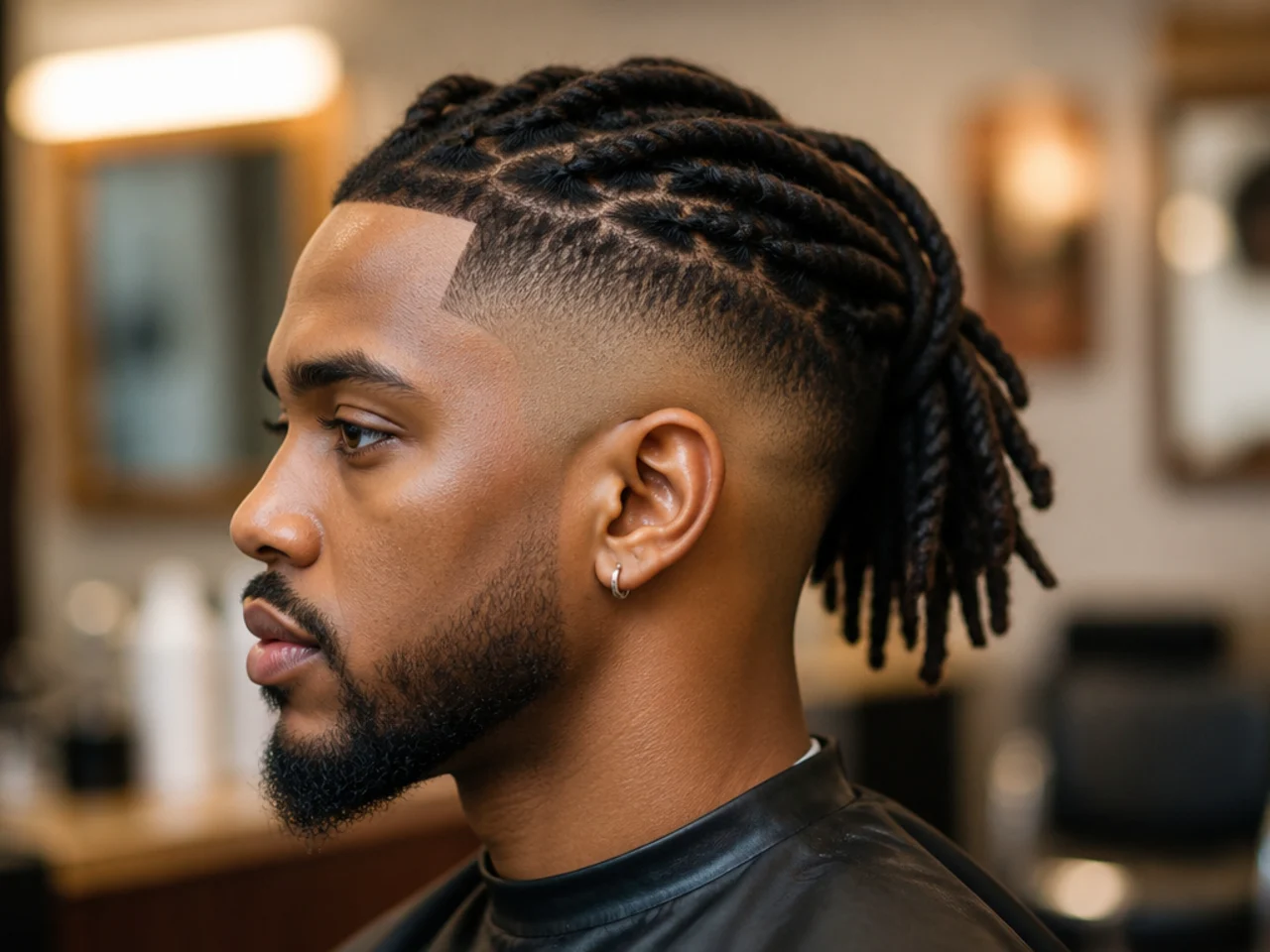
A high or mid skin fade under locs or braids gives the top style its stage. The fade cuts visual competition, so the eye tracks straight to your protective style. You see this on athletes, musicians, and anyone who wants a clean silhouette without shortening their length.
How to ask: "High skin fade, follow the natural line of my braids or locs at the top of the fade." Book maintenance for the fade every two weeks — the top style stays put much longer, but the fade is what pulls the whole look forward.
Fade With Buzz Cut
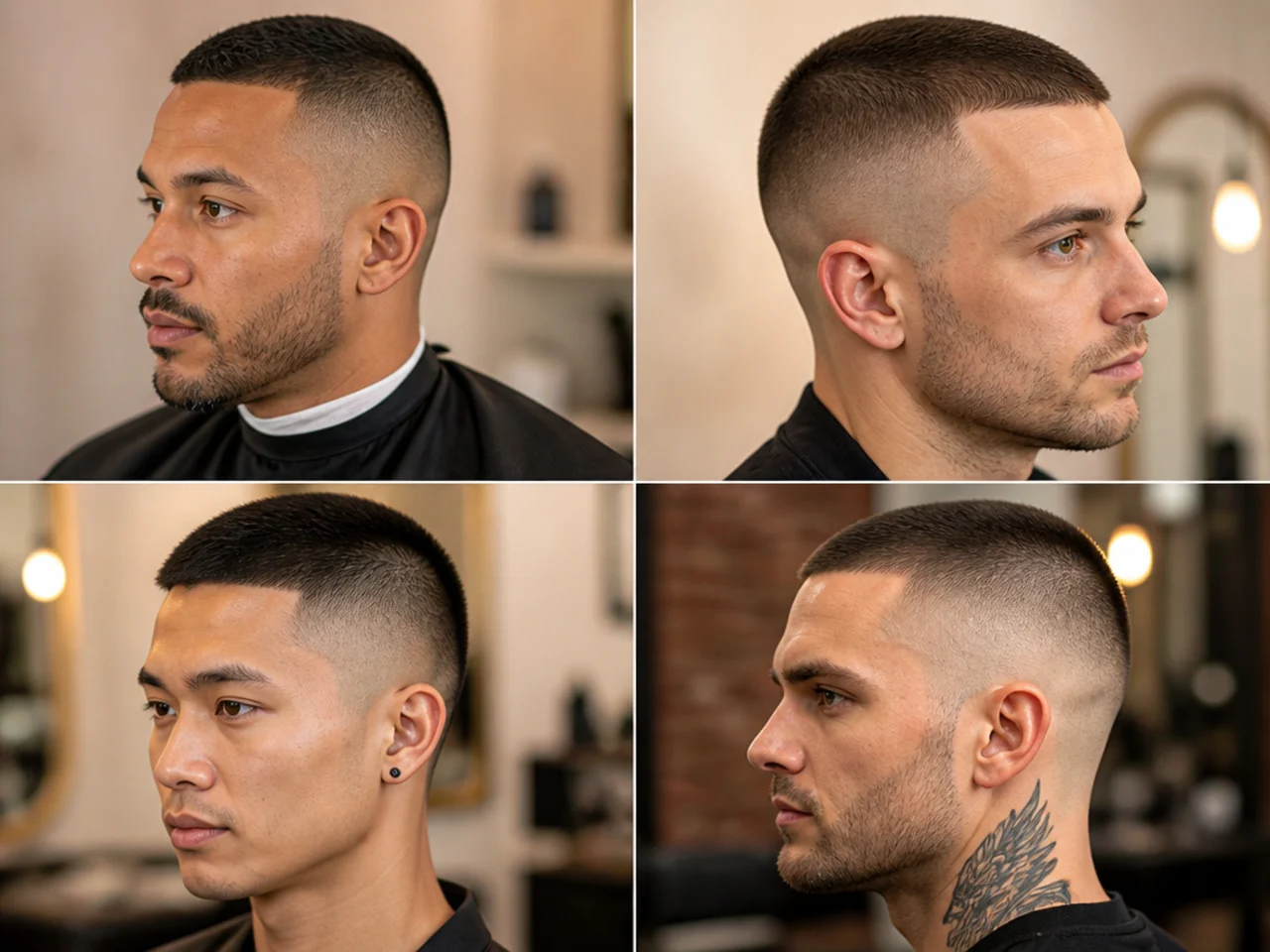
The buzz cut with fade is the lowest-maintenance version you can wear. The top stays at a uniform short length — usually a #2, #3, or #4 — and the fade tapers below it. Because the top isn't dramatic, the fade does all the shaping work.
How to ask: "Number 3 on top, mid skin fade, blended clean." Great for hot climates, hats-and-helmets lifestyles, and thinning hair — the buzz-plus-fade combo minimizes visible density loss.
Choosing Right Fade for Your Face Shape
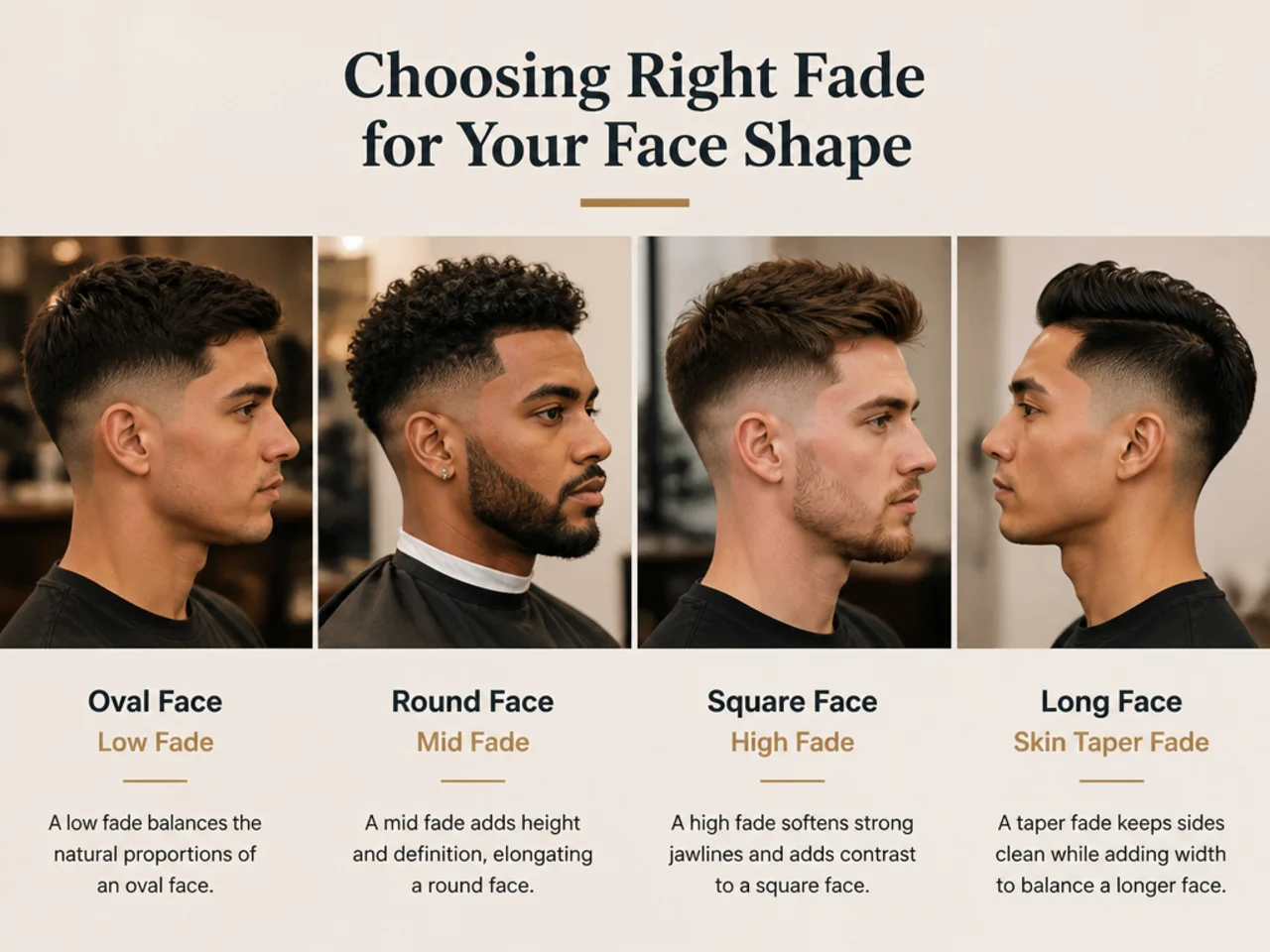
Different fade heights and top lengths flatter different bone structures. Here's the shortcut. For a side-by-side breakdown of the three main heights, see our low fade vs mid fade vs high fade comparison.
Round Face
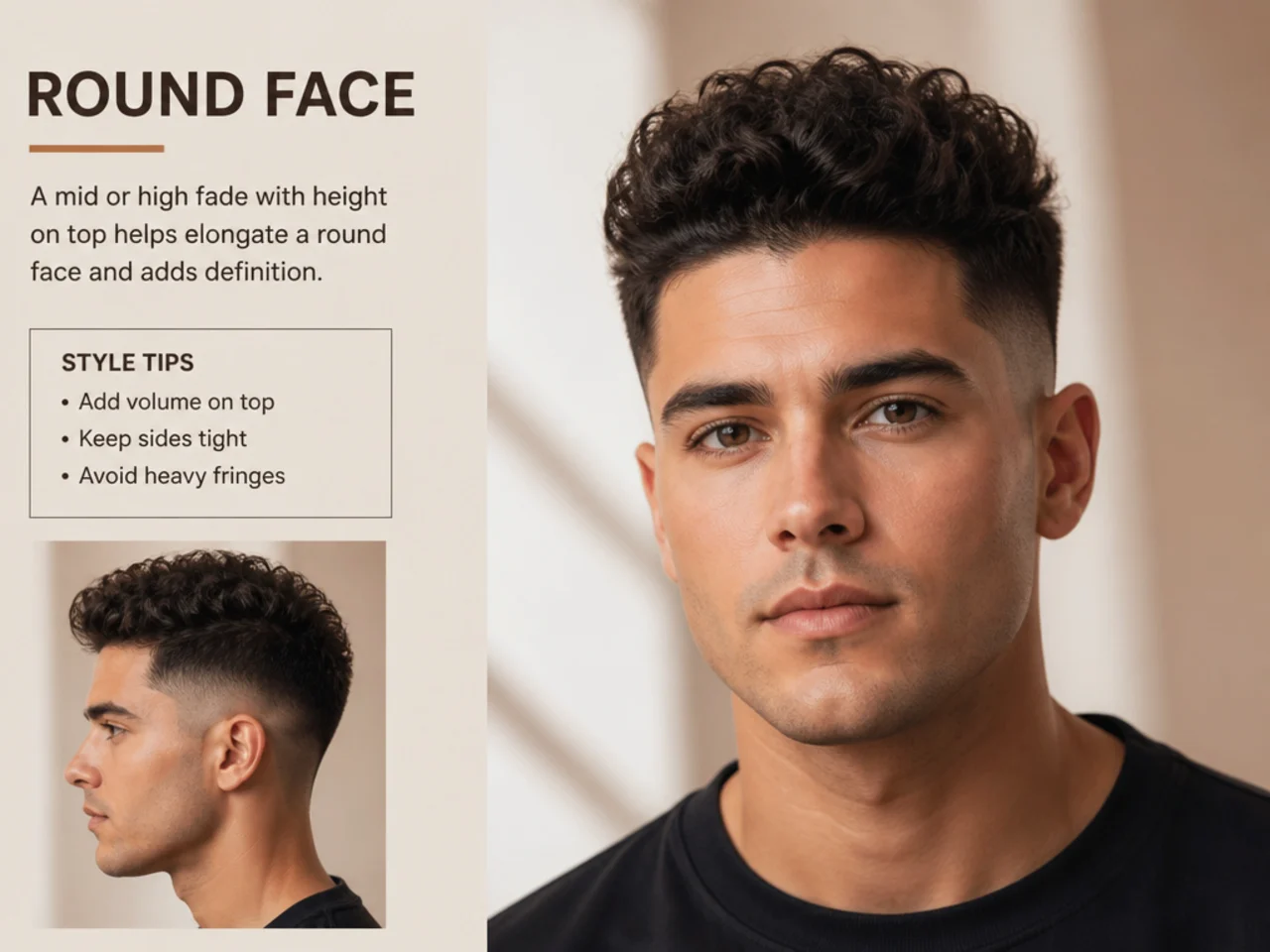
Add height on top and keep the sides tight to lengthen the visual line of your face. A high fade with a pompadour, quiff, or spiky top pulls the eye vertically. Skip volume that sits low on the sides — it widens the frame.
Oval Face
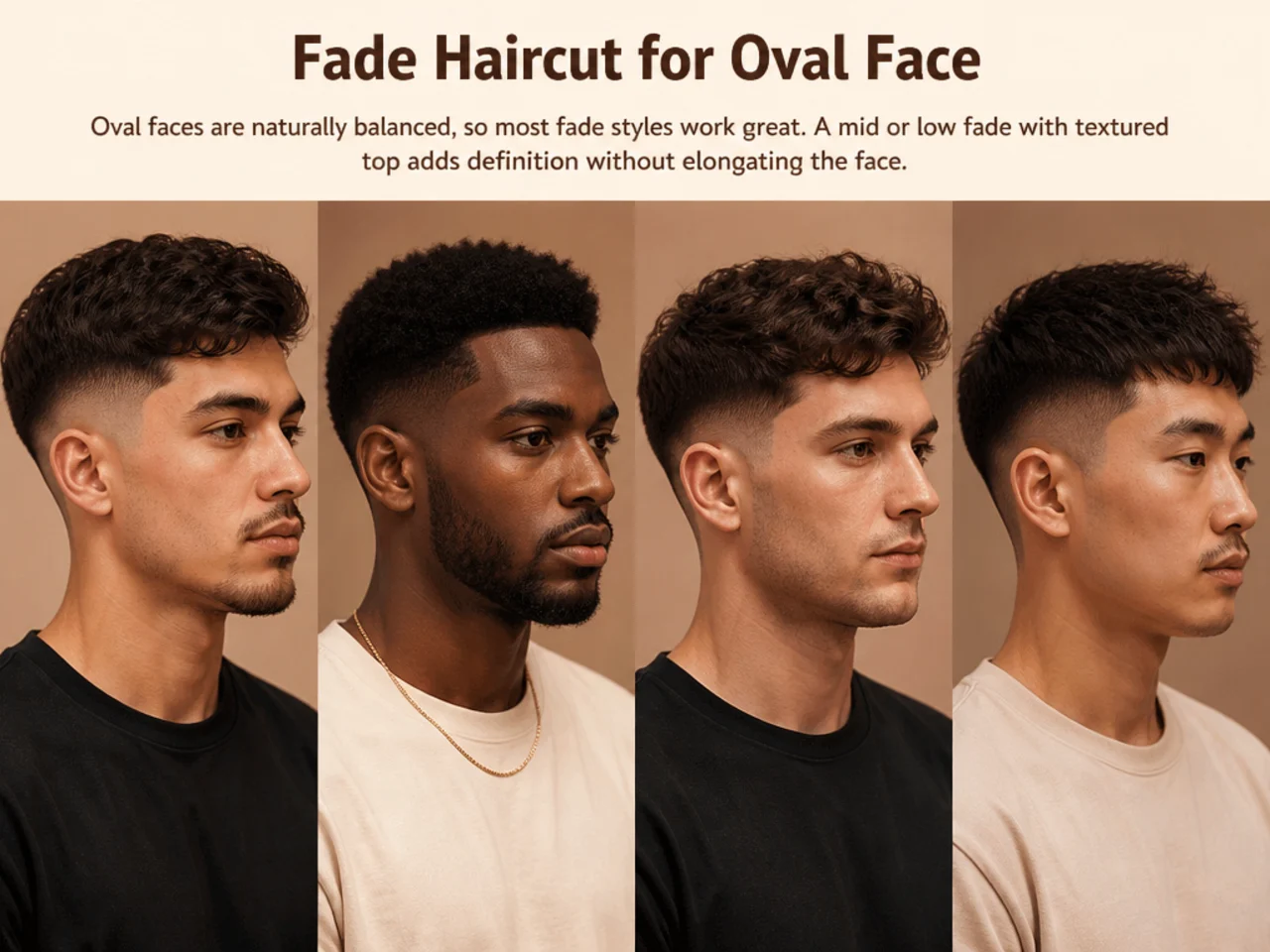
The most flexible shape. Any fade height works. A mid fade with a textured crop or a slicked-back top is a solid default. Play with what suits your styling routine, not with fixing a proportion problem you don't have.
Square Face
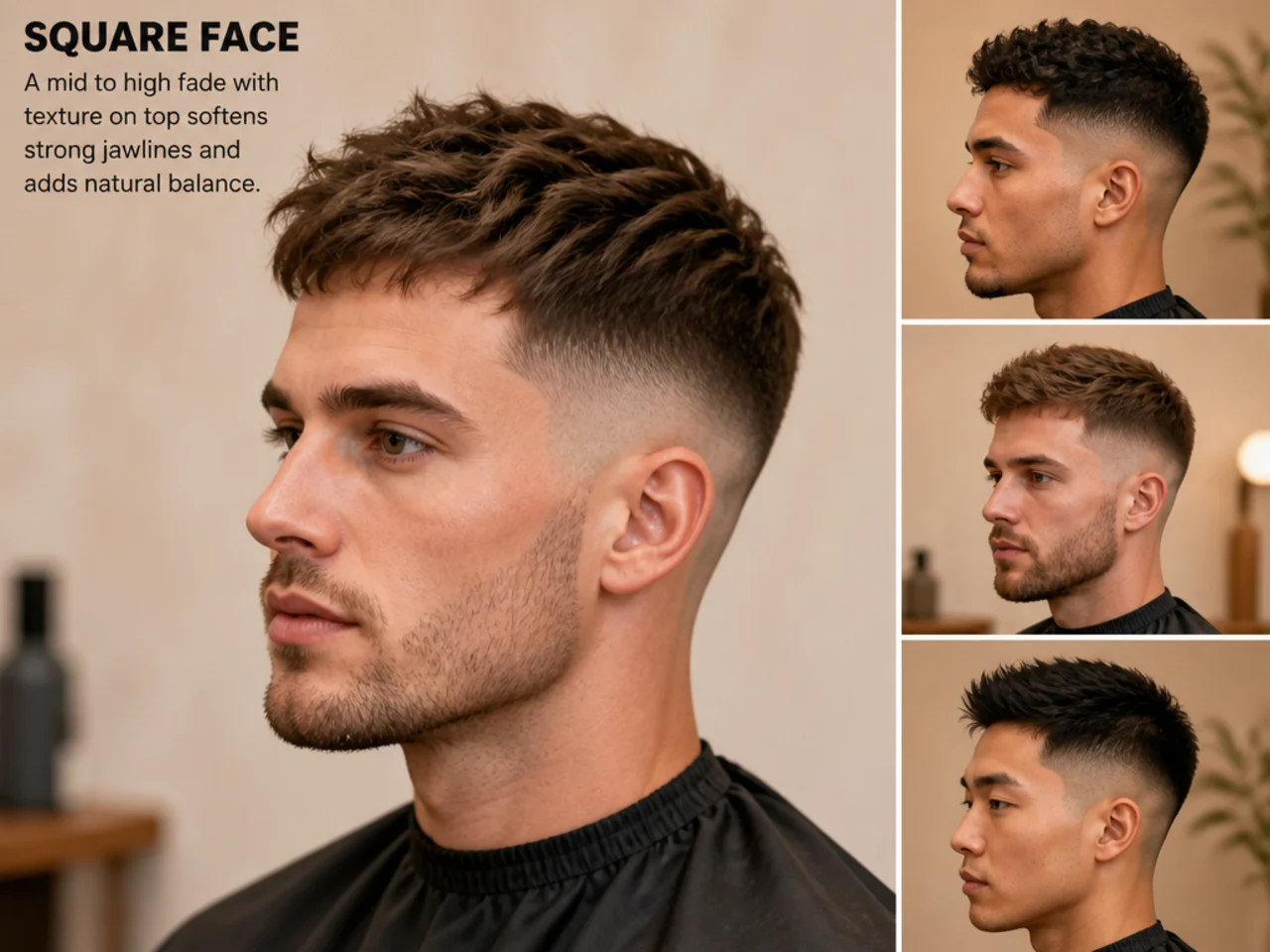
You want to soften the jaw without hiding it. A skin fade with a slightly textured top emphasizes strong bone structure while adding movement above it. Avoid heavy, square-cut fringes — they compete with your jaw for attention.
Heart-Shaped Face
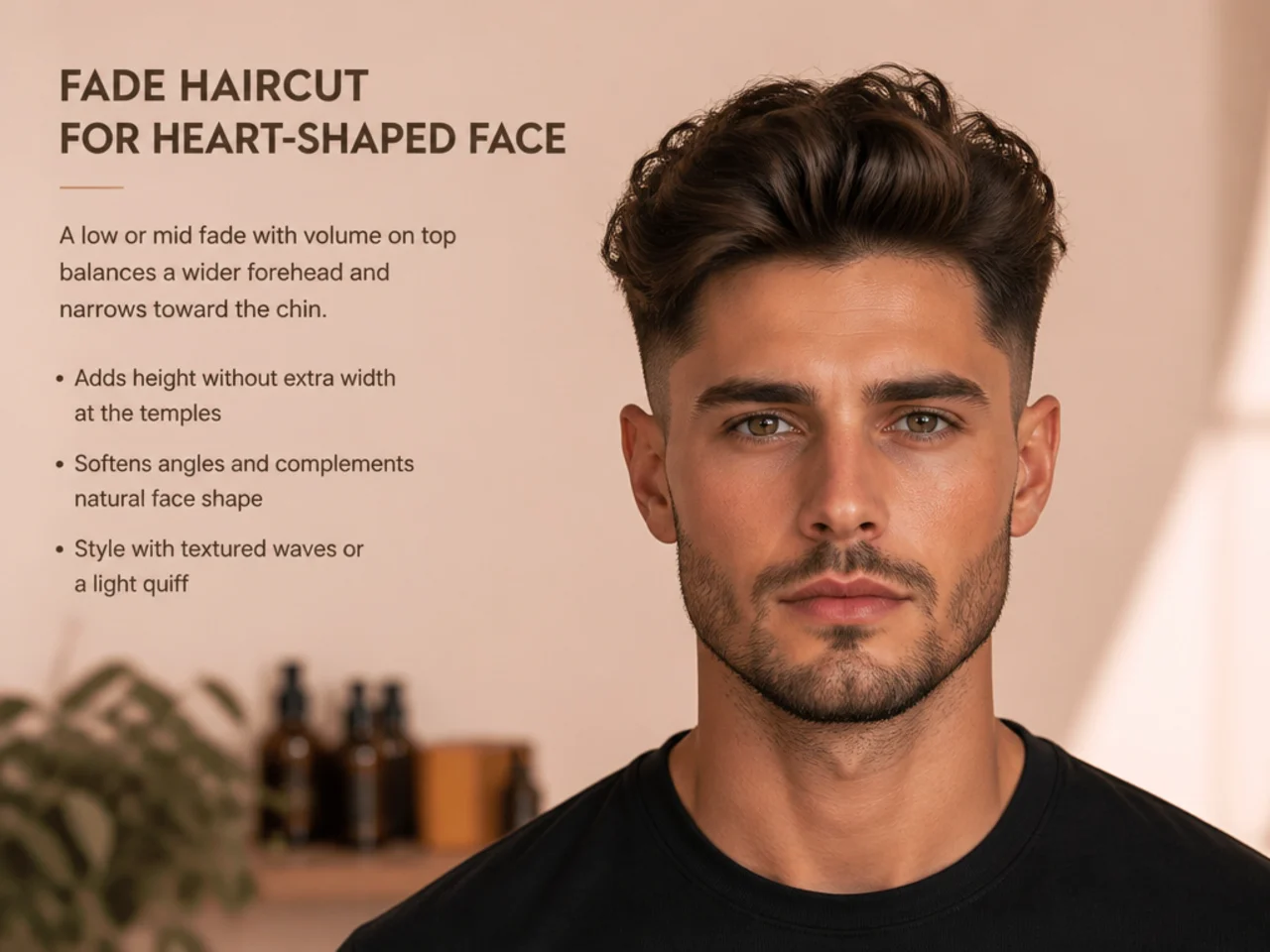
Wider forehead, narrower chin. Use a low or taper fade to keep visual weight around the perimeter of your head, and skip tall styles on top — height exaggerates the width of the forehead. A textured crop with a side sweep balances things out.
Diamond Face
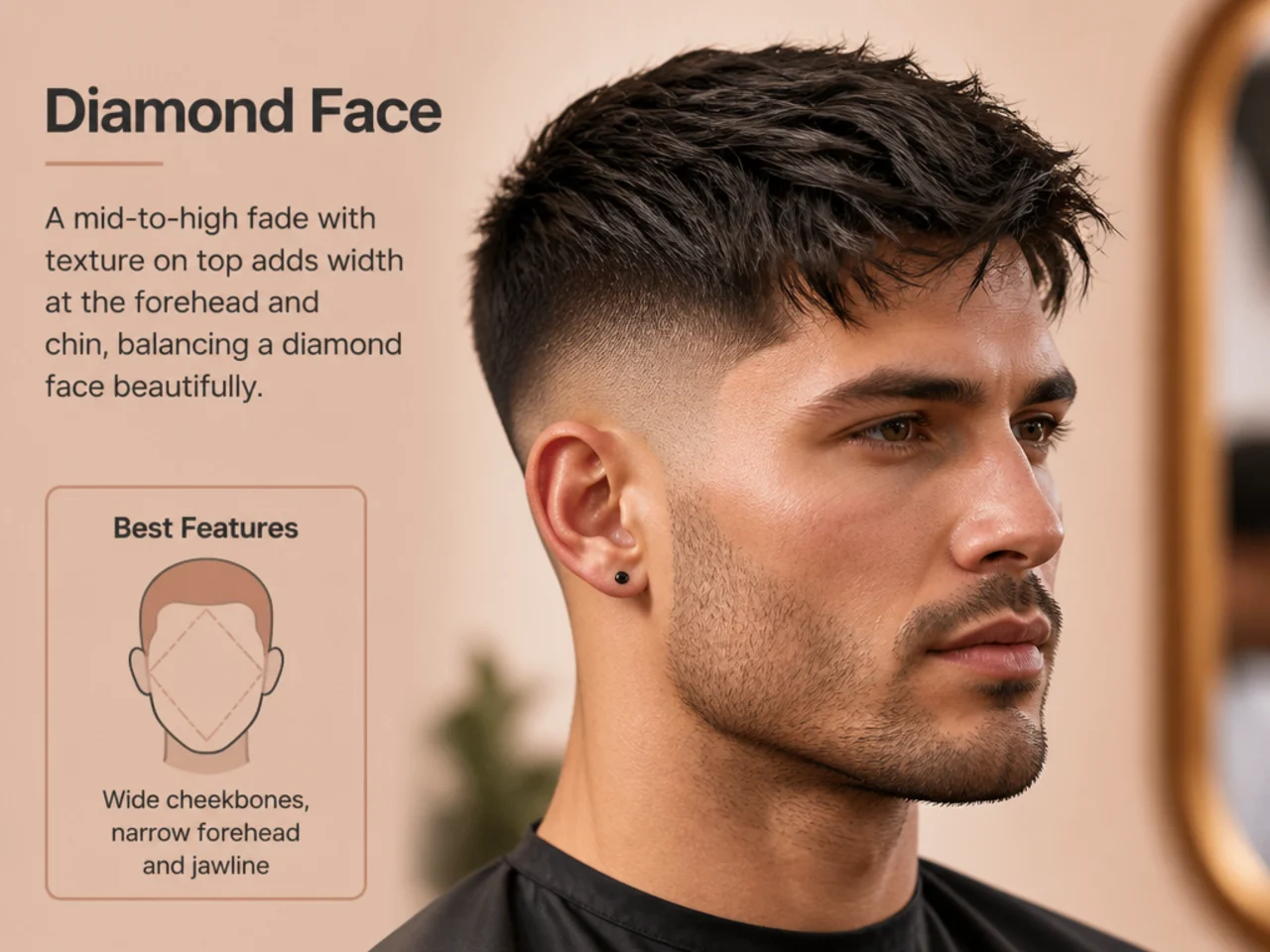
Prominent cheekbones with a narrower forehead and chin. A mid or high fade with a medium-length top adds structure at the temples where you're narrowest, balancing the middle of your face.
How to Ask for a Fade Haircut at the Barber
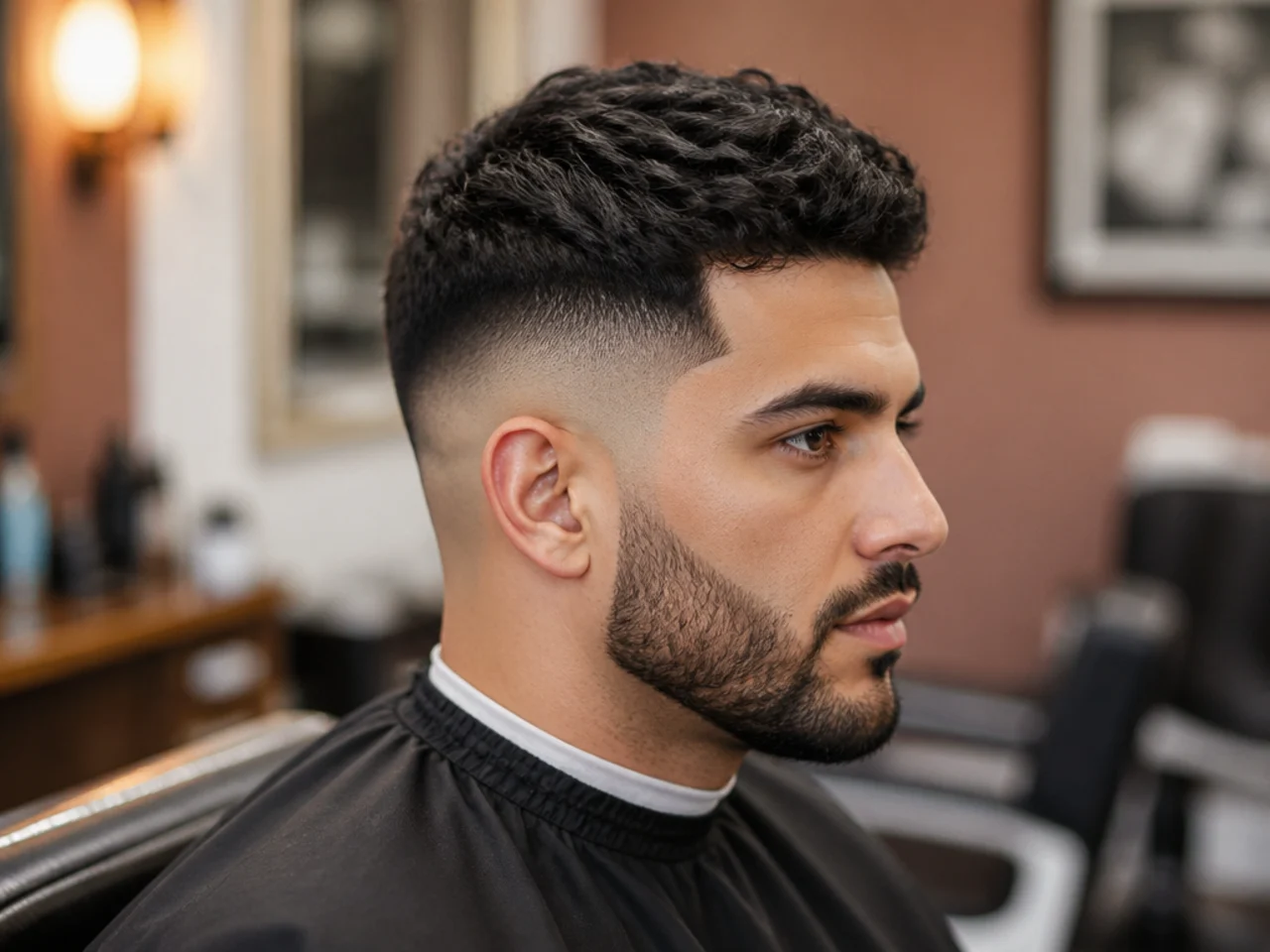
Walking in and saying "just give me a fade" is a coin flip. Give your barber four numbers and a photo, and you get the cut you actually want.
- Bring a reference photo. One clear image from the front and one from the side. Even skilled barbers interpret "high fade" differently — the photo removes the guesswork.
- Name the fade height. Low, mid, high, or skin (bald). This tells your barber where the shortest point of the blend sits on your head.
- Give the guard number at the shortest point. #0 for a skin finish, #0.5 for a shadow, #1 for a very short blend. This is where the fade bottoms out.
- Give the guard number at the top of the fade. Usually #2, #3, or #4. This is where the fade meets your top length.
- State the length on top in inches or centimeters. "Leave three inches" is clearer than "medium length." If you use metric, say so.
- Describe the finish. Matte and textured, sleek and shiny, or natural and air-dried. Your styling routine at home should match this call.
- Confirm the timeline before you leave. Most fades want a re-cut every 14 to 21 days. Book the next appointment while you're still in the chair.
Fade Haircut Maintenance Tips
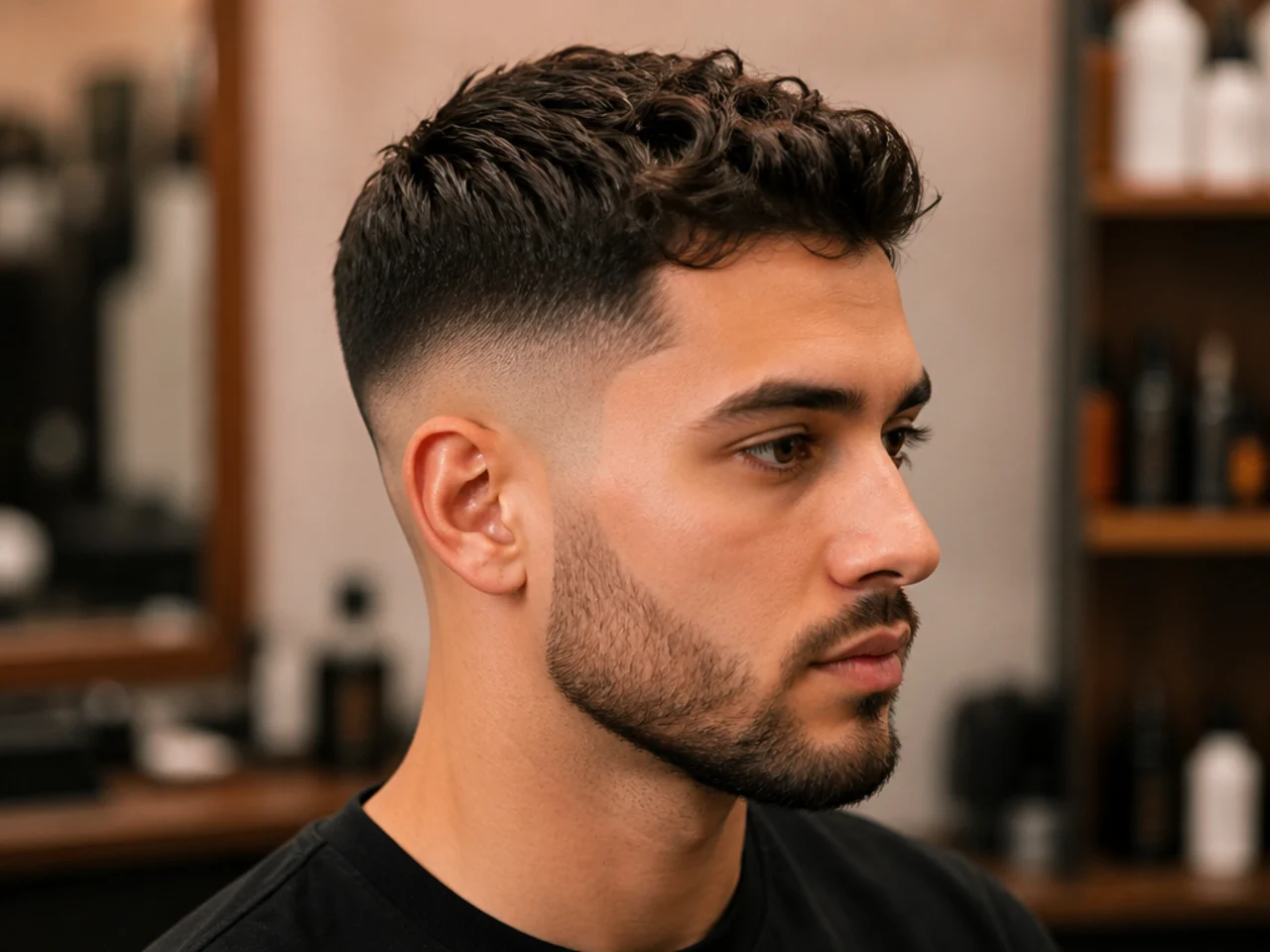
A fade looks its sharpest for about two weeks, then starts to blur at the transition line. Here's how to stretch every cut.
Frequent Trims
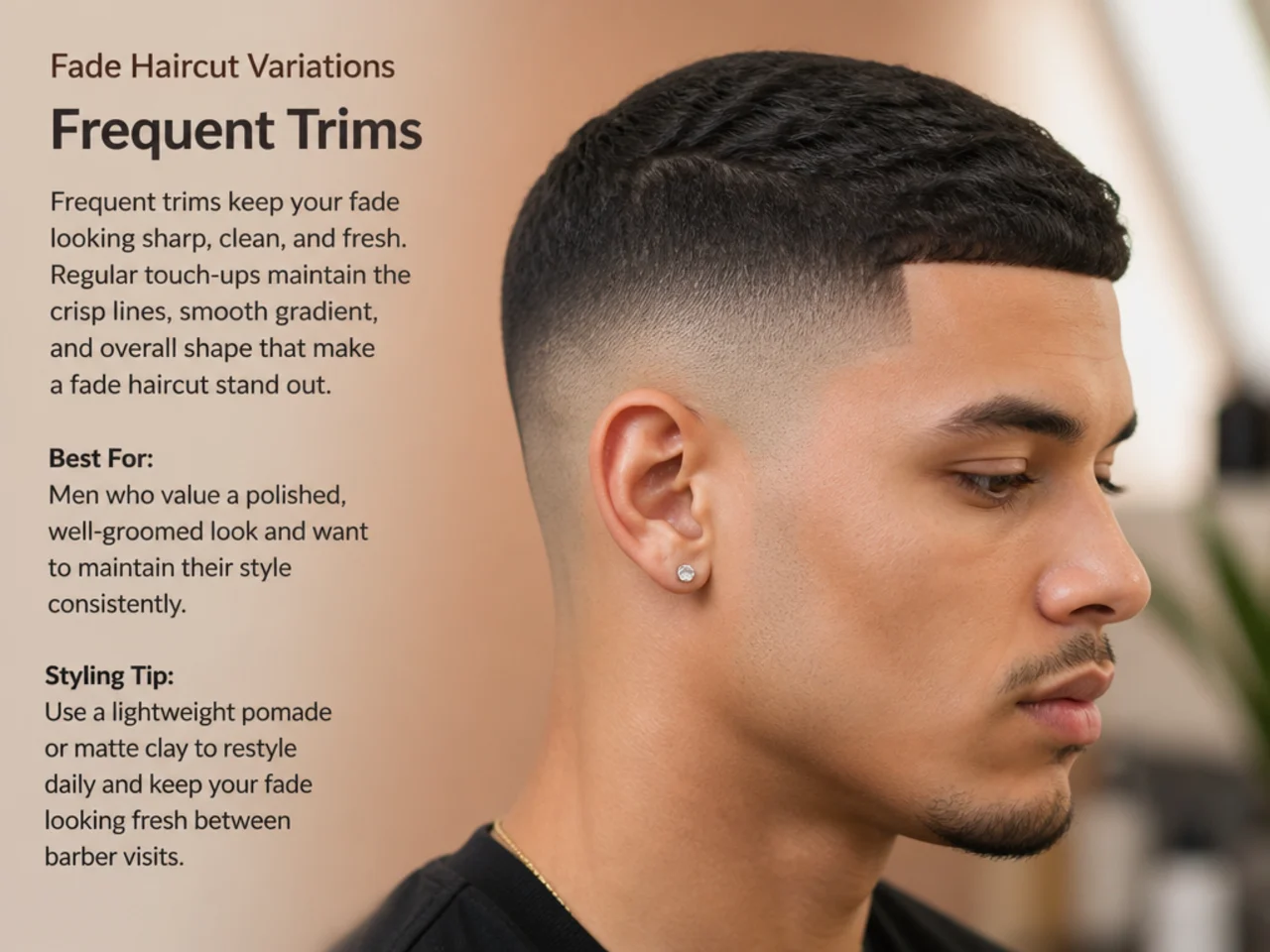
Book every 2 to 3 weeks. The shorter the bottom of your fade — skin fades bottom out at zero — the faster it grows out visibly. A #0 turns into a #0.5 in about five days. If you can't get to the chair, a line-up on the neckline and around the ears buys you another week of sharpness.
Use the Right Products
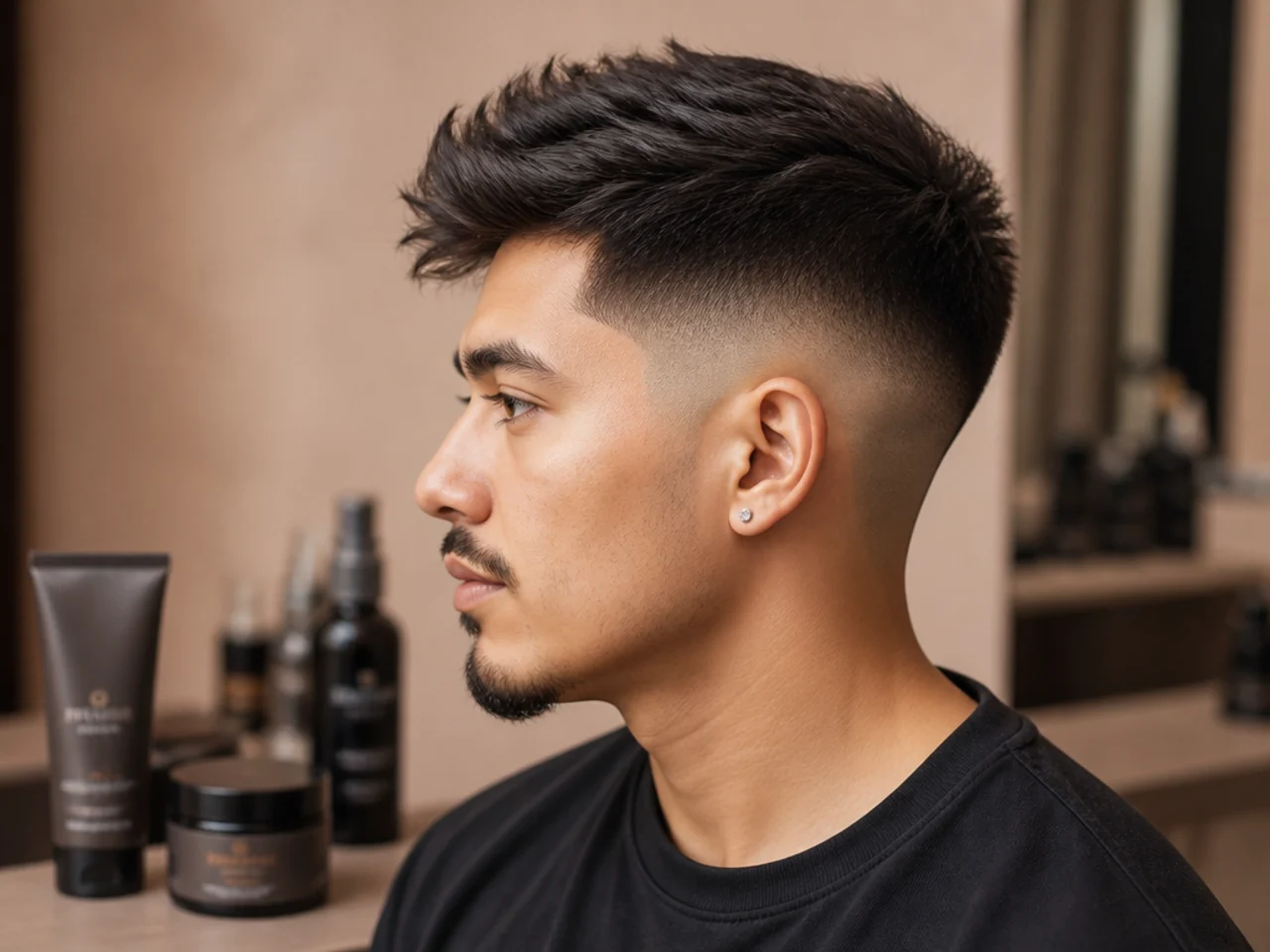
- Matte clay for a natural, textured finish with no shine.
- Fiber paste if you want hold with a slight sheen and separation between strands.
- Water-based pomade for a slicked pompadour or side part with visible shine.
- Sea-salt spray on damp hair for beachy texture — great with a quiff or a longer top.
- Texture cream for curly and coily hair; scrunched in, it defines the pattern without crunch.
- Jojoba oil or an unscented moisturizer for skin fades — apply to the bald zone daily to prevent flaking and razor bumps.
Skip anything with heavy silicones on a skin fade — it builds up quickly and reads greasy on bare scalp.
Brush and Style Daily
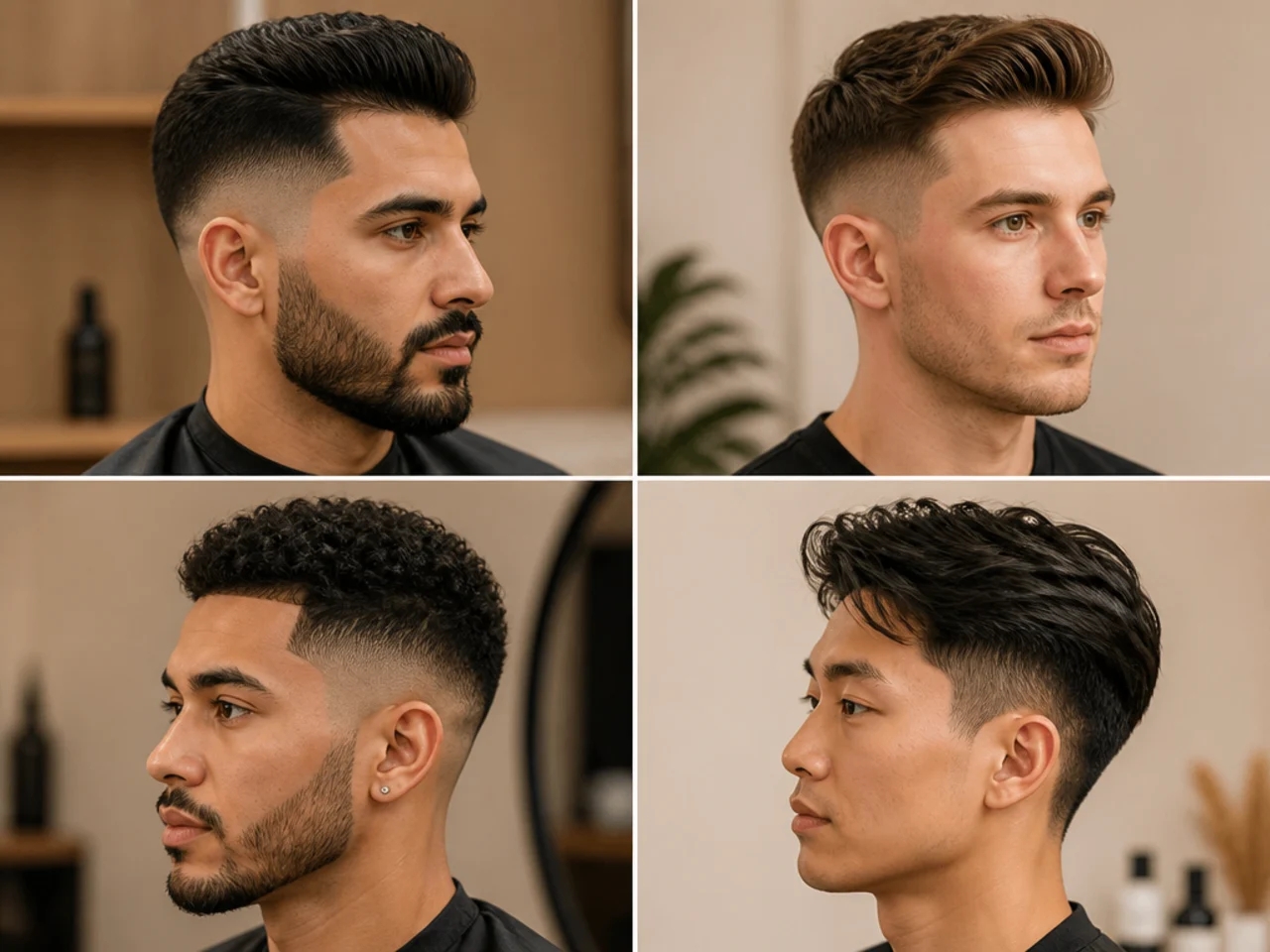
Brush your top length every morning to redistribute your scalp's natural oils and keep the shape aligned. For curls and coils, use a wide-tooth comb, a pick, or a curl sponge — not a bristle brush, which flattens the pattern. If you're growing your top out, brush toward the direction you want it to fall so it trains that way.
Fade Haircuts for Every Occasion
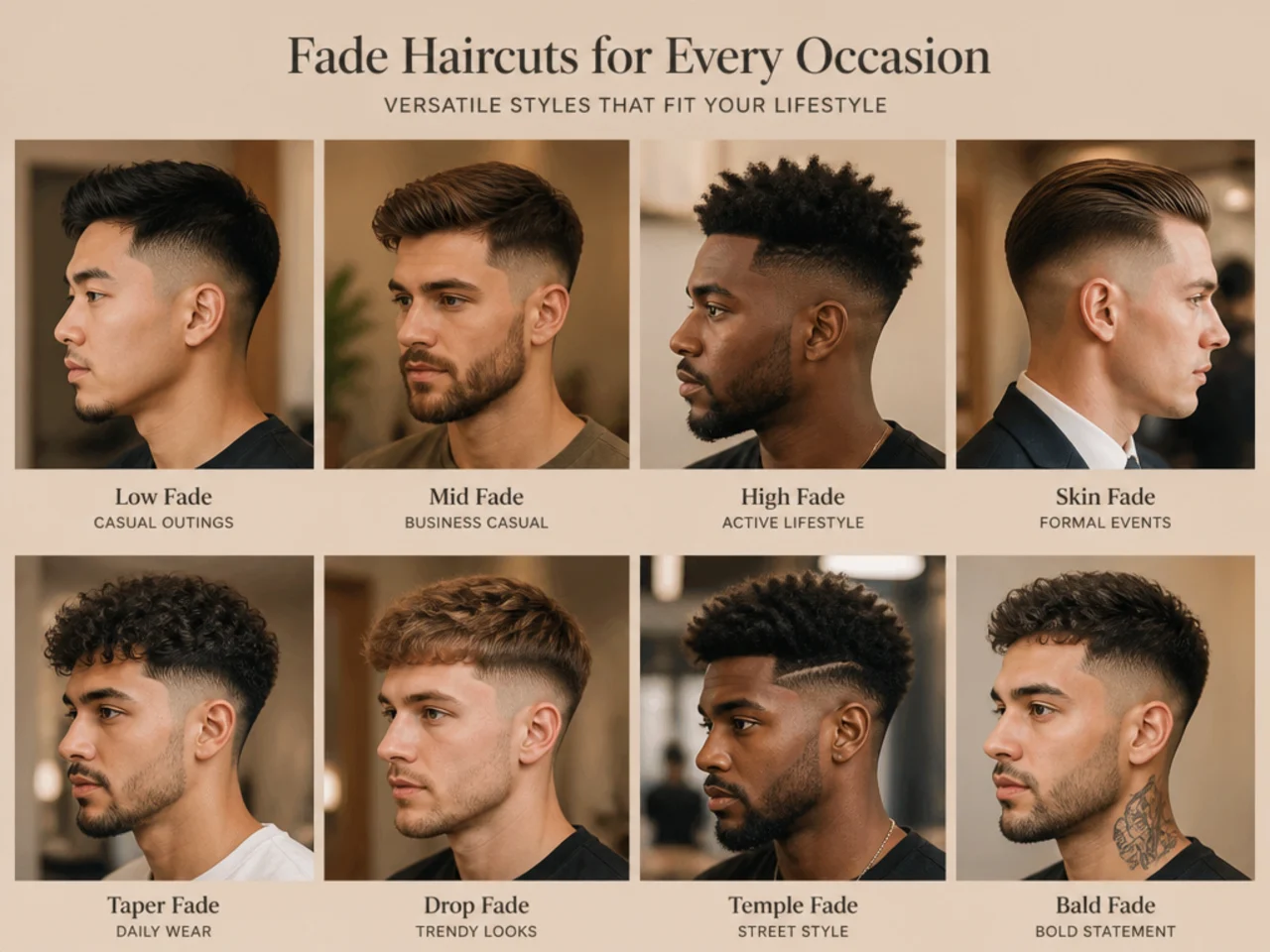
- Professional Look: Low taper fade with a comb-over. Reads sharp in every dress code.
- Trendy Look: High skin fade with a textured fringe. Photograph-ready.
- Minimalist Look: Buzz cut with a mid fade. Ten seconds of styling, maximum.
- Creative Look: Fade with hair designs — a razor line, a hard part, or a shaved pattern above the ear.
- Sporty Look: Skin fade with a crew cut. Nothing to catch on a helmet or a headband.
Celebrities Who Rock Fade Haircuts
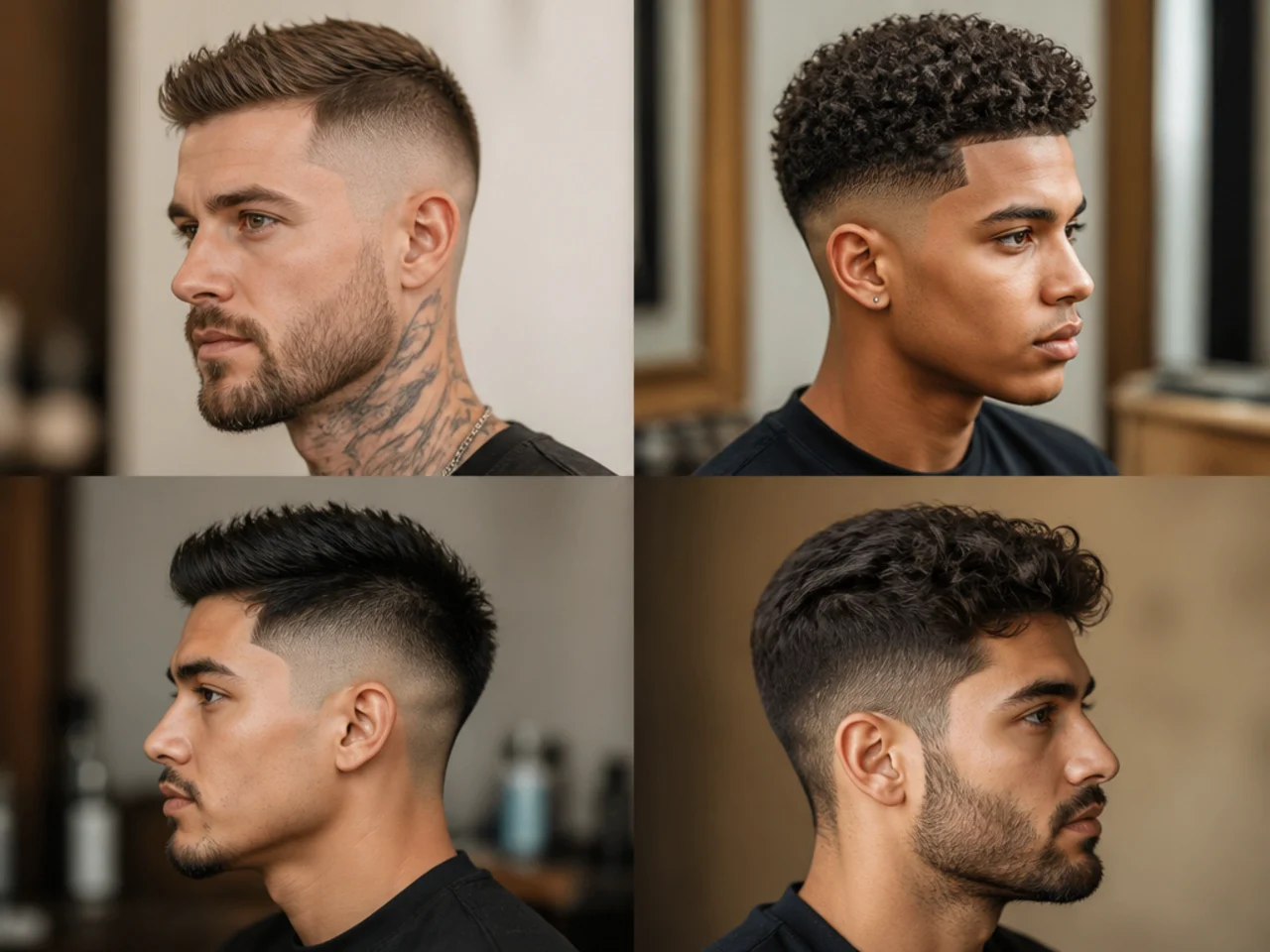
- Zayn Malik – Wears a mid-to-high skin fade with a longer, textured top he pushes forward or up. The dramatic fade balances his sharp cheekbones and lets the top's volume do the styling work.
- Drake – Sticks with a low skin fade over his 360 waves. The subtle fade keeps focus on the wave pattern instead of stealing the show.
- David Beckham – Popularized the mid fade with a comb-over. It flatters his square jaw and works in every setting from a boardroom to the stands at a match.
- Michael B. Jordan – Rotates between low taper fades and buzz-cut fades with a razor-sharp lineup. The precise edge work at the temples emphasizes his facial structure.
- Chris Hemsworth – Pairs a high fade with a longer, tousled top. The height on top adds proportion to his broad frame; the fade keeps it from reading shaggy.
Conclusion
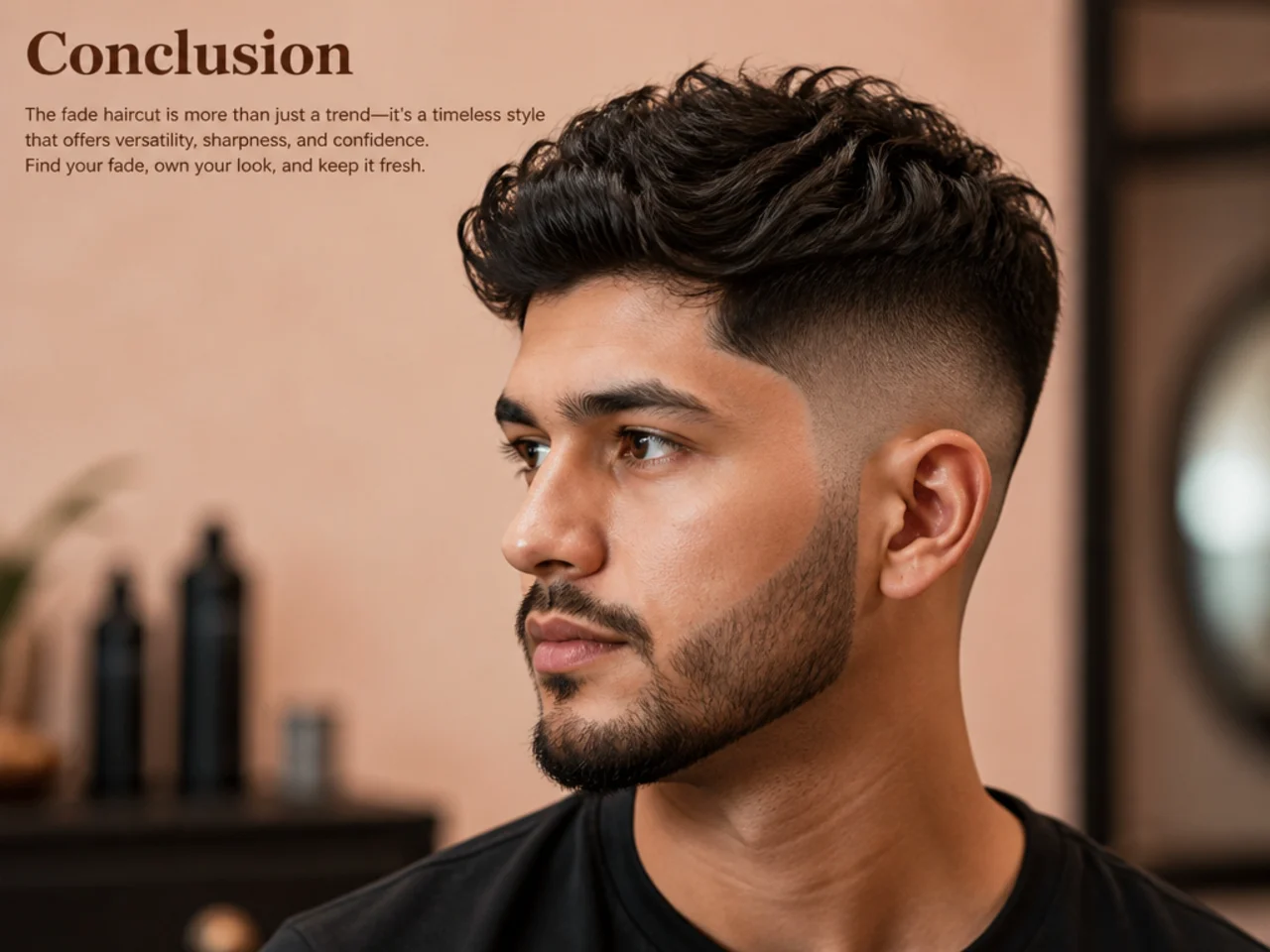
A fade is worth asking for because it works — for every hair type, face shape, and daily routine, there's a height and pairing that fits. Walk in with the four numbers and a photo, book your next appointment before you leave, and keep the right product on the shelf at home. That's how you get months of great cuts out of one good conversation with your barber. You can see all fade variations from our Pinterest @haicutvibe.