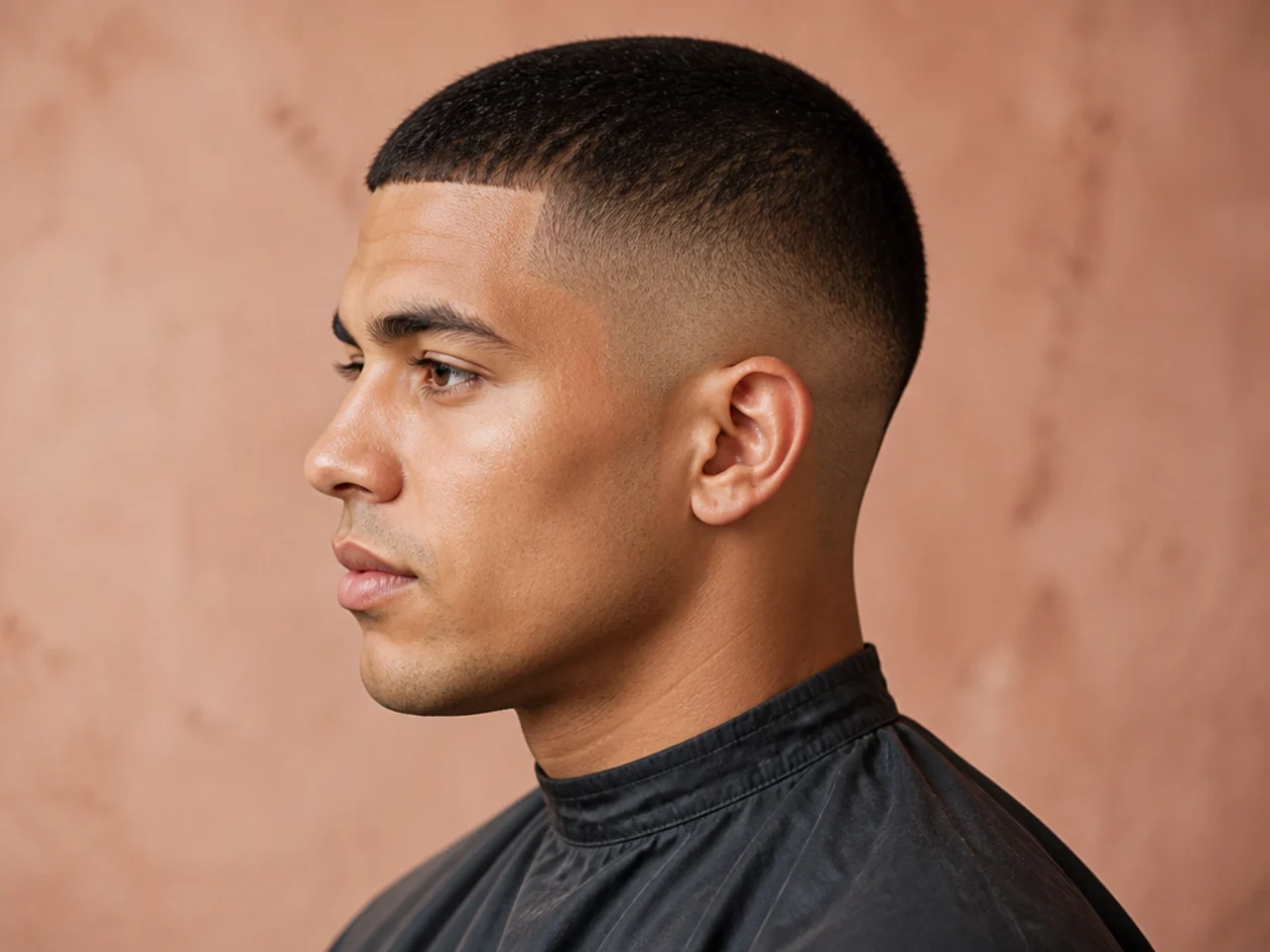
20 Short Fade Haircuts for Men
Twenty short fade haircuts men are asking for now — buzz, crew, Caesar, crop, quiff, and slick-back tops paired with the right fade, plus the exact words for your barber.
In this article · 32
- What Is a Short Fade Haircut?
- How to Choose Your Short Fade
- The 20 Short Fade Variations
- 1. Classic Buzz Cut with Low Fade
- 2. Induction Buzz with Skin Fade
- 3. Short Crew Cut with Mid Fade
- 4. Textured Crew Cut with Low Taper
- 5. Classic Caesar with Low Fade
- 6. Modern Textured Caesar with Mid Fade
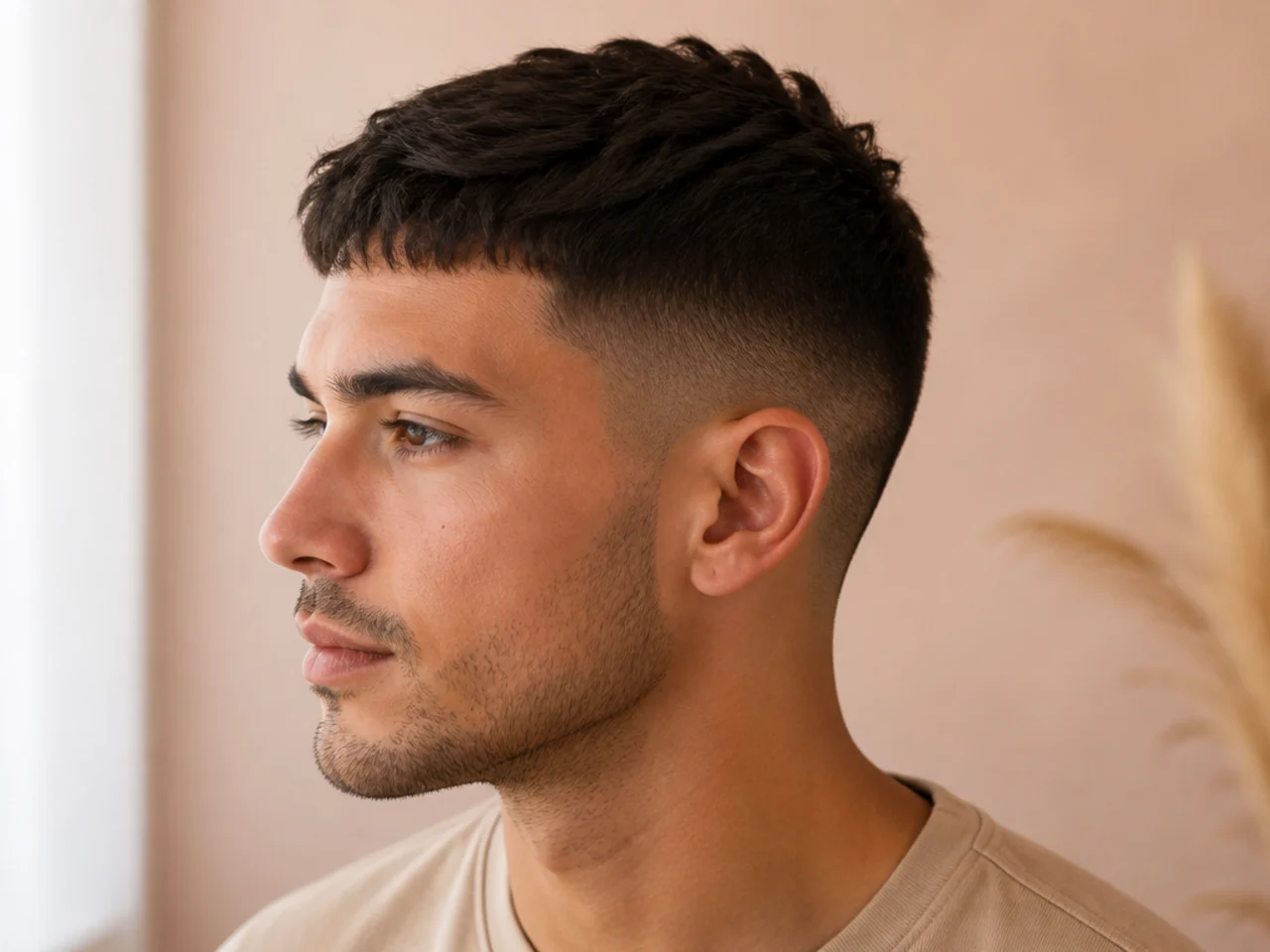
- 7. Short French Crop with High Fade
- 8. Textured French Crop with Drop Fade
- 9. Short Ivy League with Low Fade
- 10. Short Side Part with Mid Fade
- 11. Short Comb Over with Low Fade
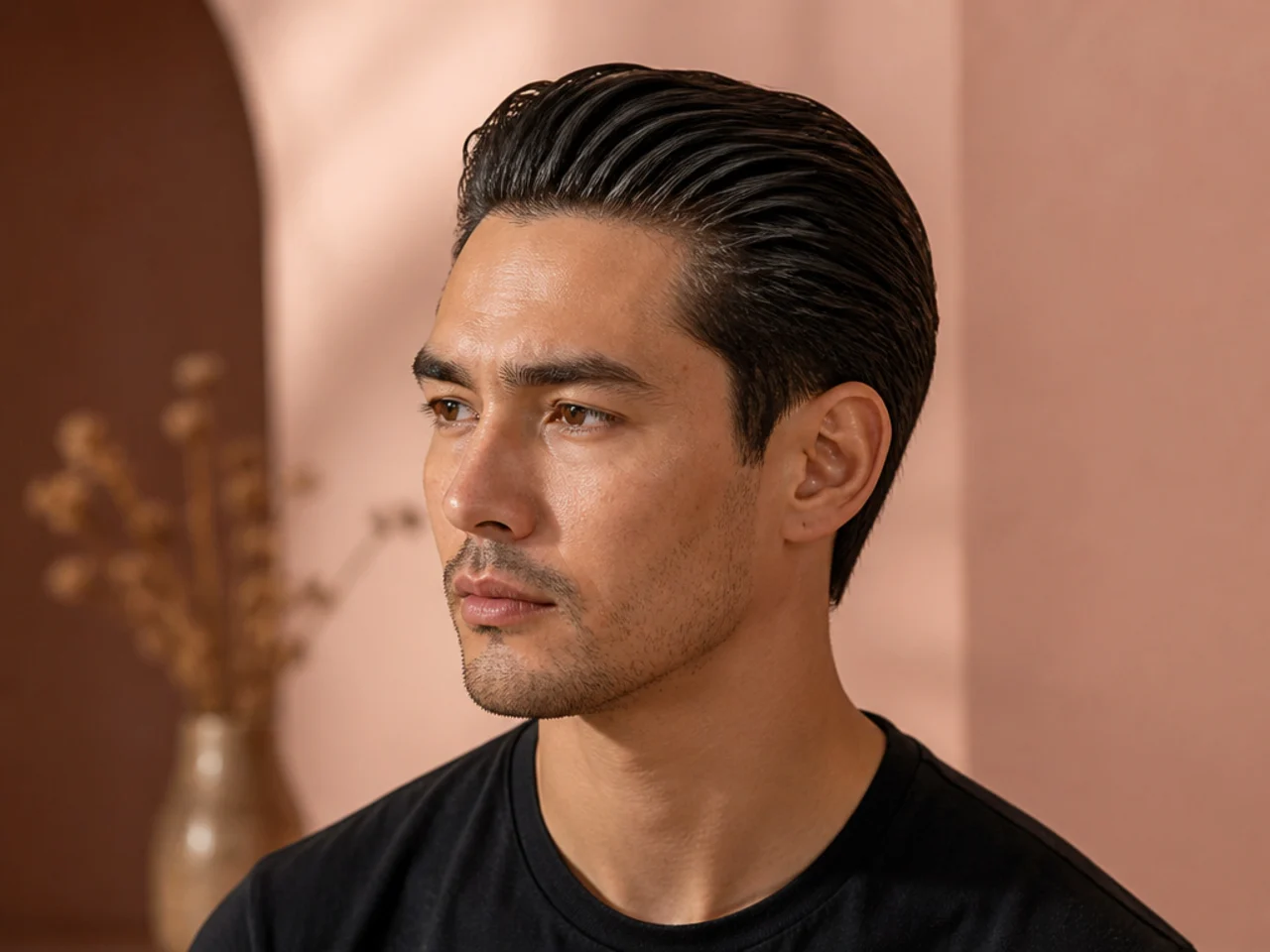
- 12. Short Slick Back with High Skin Fade
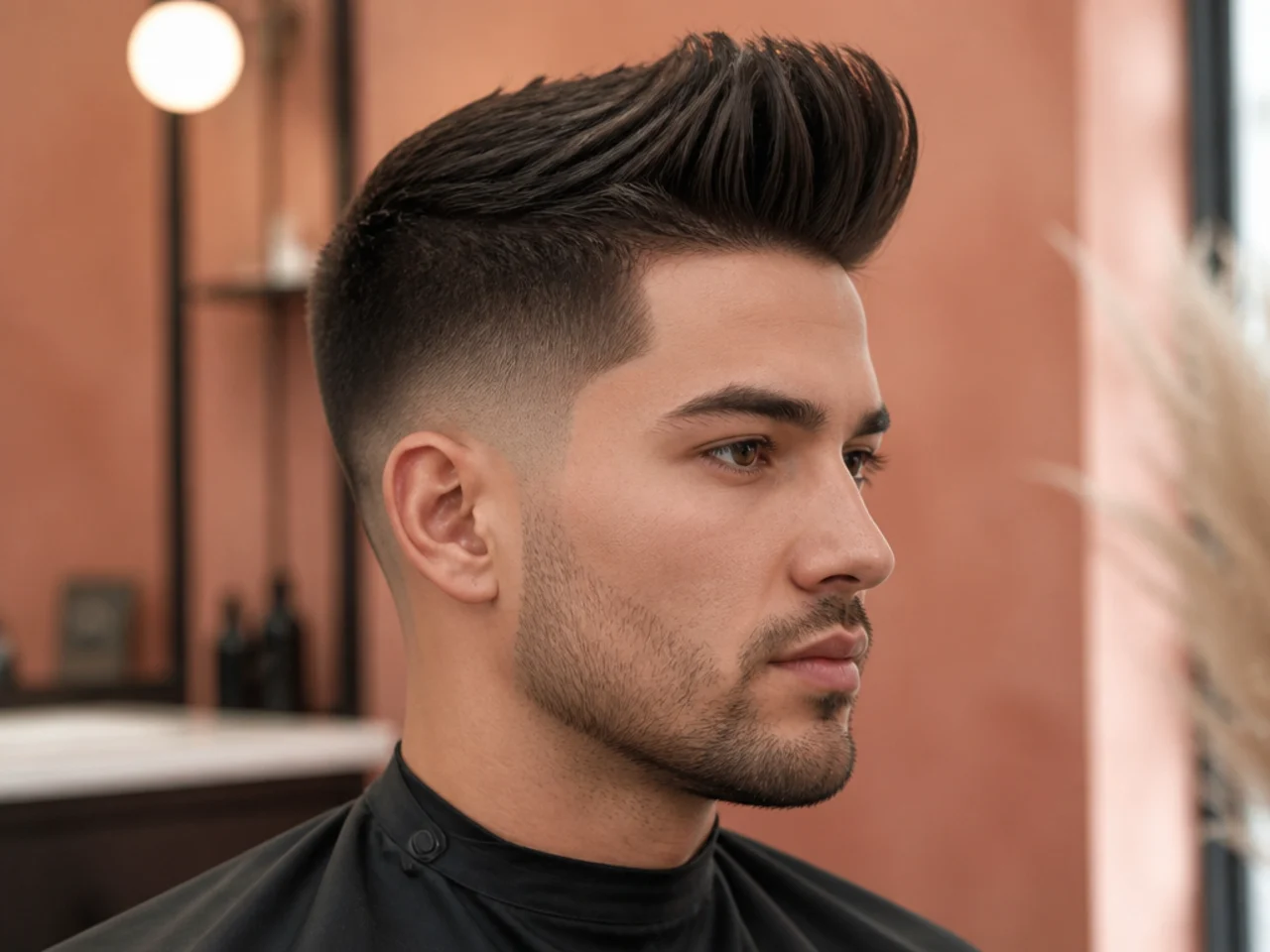
- 13. Short Quiff with Mid Fade
- 14. Short Pomp with Low Fade
- 15. Short Faux Hawk with Burst Fade
- 16. Short Textured Crop with Low Taper
- 17. Short Spiky Top with Mid Fade
- 18. Short Messy Top with Low Fade
- 19. Short Edgar with Low Fade
- 20. Short Curly Top with Low Skin Fade
- How to Ask Your Barber for a Short Fade
- Styling and Maintenance for Short Fades
- FAQ
- What's the shortest top length that still counts as a short fade rather than a bald fade?
- Do I need a barber or can a regular chain salon cut a short fade?
- How long does a short fade take in the chair?
- Is a short fade a good pick for thin or receding hair?
- Which short fade suits an office job with a strict dress code?
- Can I keep a short fade tidy at home between visits?
A short top with a clean fade is the most bookable men's cut on the board right now — barbers cut more of these in a week than any other silhouette. The fade does the sharpening. The top handles itself. Nothing above the temple asks for a comb, a blow-dryer, or a Sunday-night product decision. This guide covers the twenty short fade haircut combinations men are asking for in 2026, with face-shape notes, styling cues, and the exact wording to hand your barber so you leave with the version you had in your head.
Everything below sits inside the Men's Haircuts silo hub. For a broader read on shorter cuts across the whole spectrum, start with the short simple men's haircuts pillar or the wider fade haircut taxonomy across every height and style.
What Is a Short Fade Haircut?
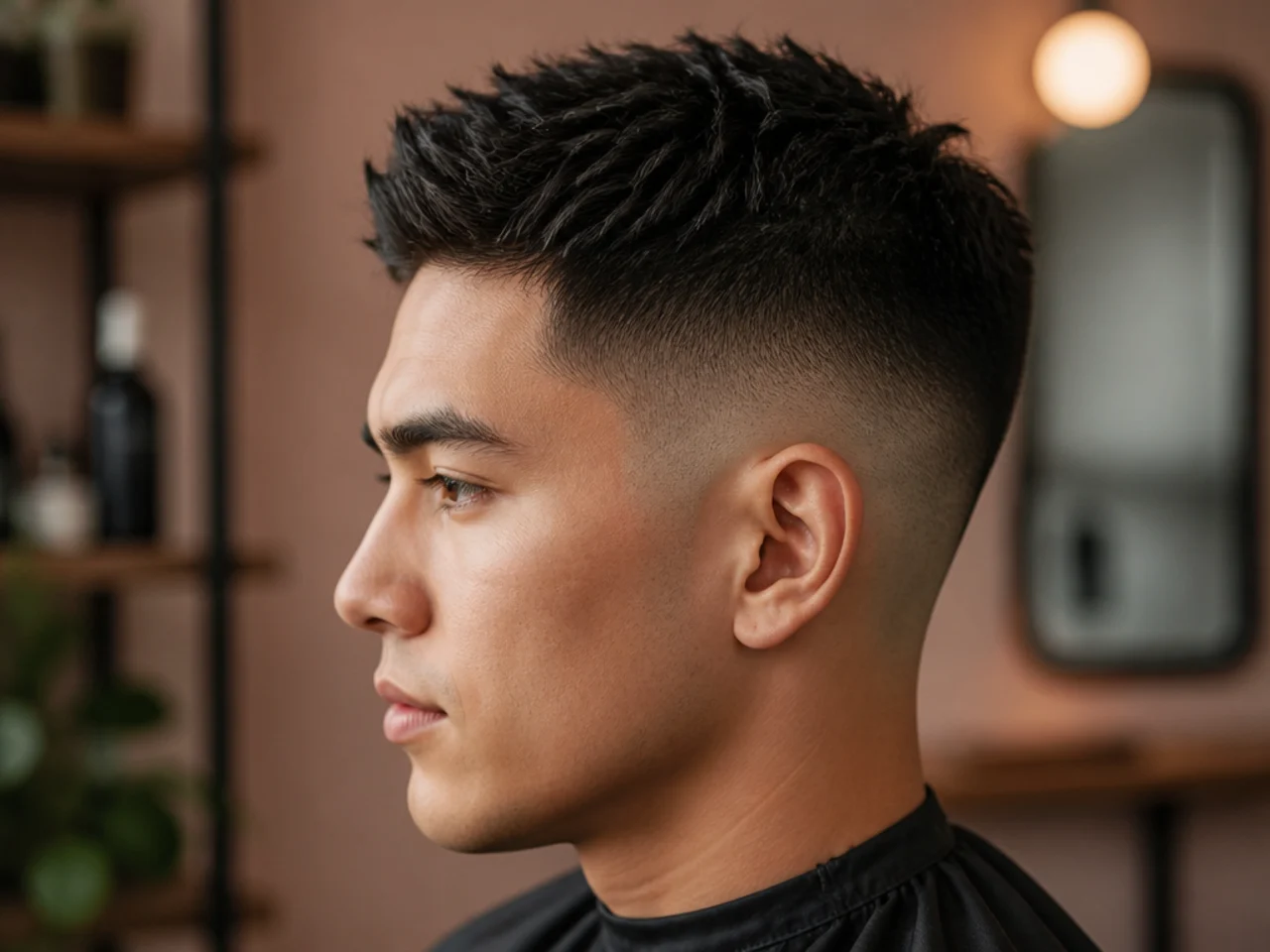
A short fade haircut has two rules. The sides taper from a longer guard down to a very short finish — usually a #0.5, #1, or skin at the shortest point. The top is kept under two inches long, which puts a #1 buzz, half-inch crew, one-inch Caesar, and 1.5-inch crop or quiff all inside the family.
The fade itself can start at any height. Low fades sit below the temple for the most conservative read. Mid fades hit at the temple and add contrast for crops and quiffs. High and skin fades push the sharpest edit and read modern in every direction. Which fade height you choose is a personality decision more than a face-shape one — but the short-top constraint keeps the whole silhouette polished no matter which fade you pick.
Compared with a medium or long fade, the short-top version stretches the workplace fit wider and pushes the low-effort morning routine further. Most cuts on this list take under sixty seconds to style. Several take none at all.
How to Choose Your Short Fade
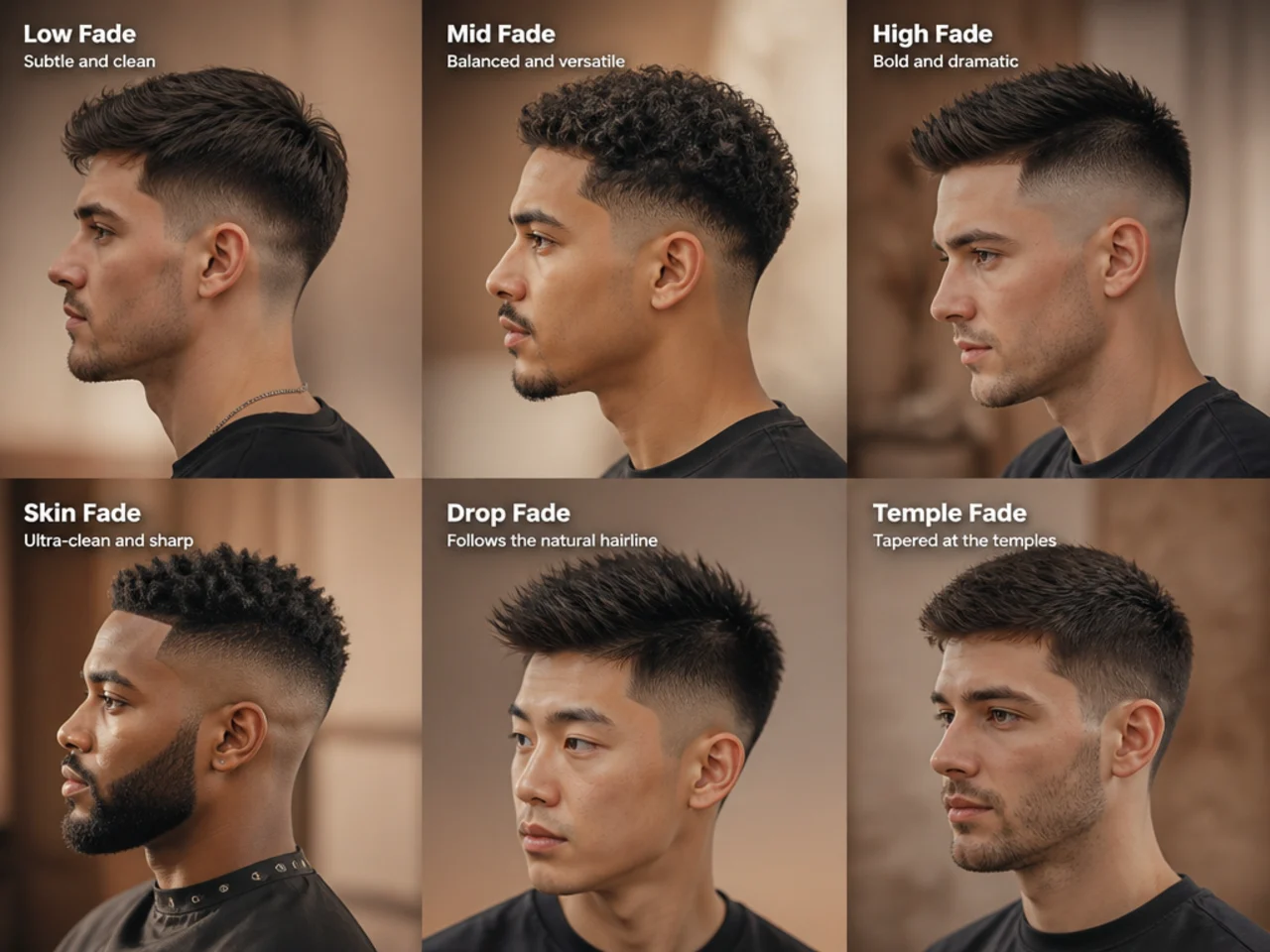
Three filters cut twenty options down to the two or three that will actually look best on you.
Face shape. Oval faces suit every entry — pick on personality. Round faces need vertical lift on top: a short quiff, a mini pomp, a French crop with front weight, or a short faux hawk. Square jaws soften with textured crops and Caesars. Long or oblong faces should stay under an inch on top and skip anything with pronounced front lift. Heart and diamond faces balance well with a short side part, French crop, or short comb over.
Hair texture. Straight hair holds a Caesar, side part, or slick back cleanest. Wavy hair suits a textured crop or short quiff without much product. Curly and coily hair pop against a mid or skin fade — the smooth wall makes the pattern the centerpiece.
Time and cadence. A skin fade with a buzz top holds its sharpest look for two weeks. A #0.5 mid fade with a short crew stretches to three. A low taper with a 1.5-inch quiff or side part holds four. Match the variation to your barbershop calendar before you commit at the chair, not after.
The 20 Short Fade Variations
Twenty combinations, sorted from the shortest, lowest-effort buzzes through the classic short-top standards and into the textured, sculpted, and modern shapes. Each block covers what makes it different, who it suits, the exact wording for your barber, and one styling move.
1. Classic Buzz Cut with Low Fade
The default short fade. A #2 buzz across the entire top drops into a low fade that steps through a #1 to a #0.5 at the ear. Suits every face shape except very long. Zero styling, zero product, two clean weeks between visits. For length variations on the top itself, see the buzz cuts haircuts guide.
Ask for: "Low fade to a #0.5, #2 buzz across the top, clean transition at the crown."
Styling: A palm rub after the shower is the whole routine.
2. Induction Buzz with Skin Fade
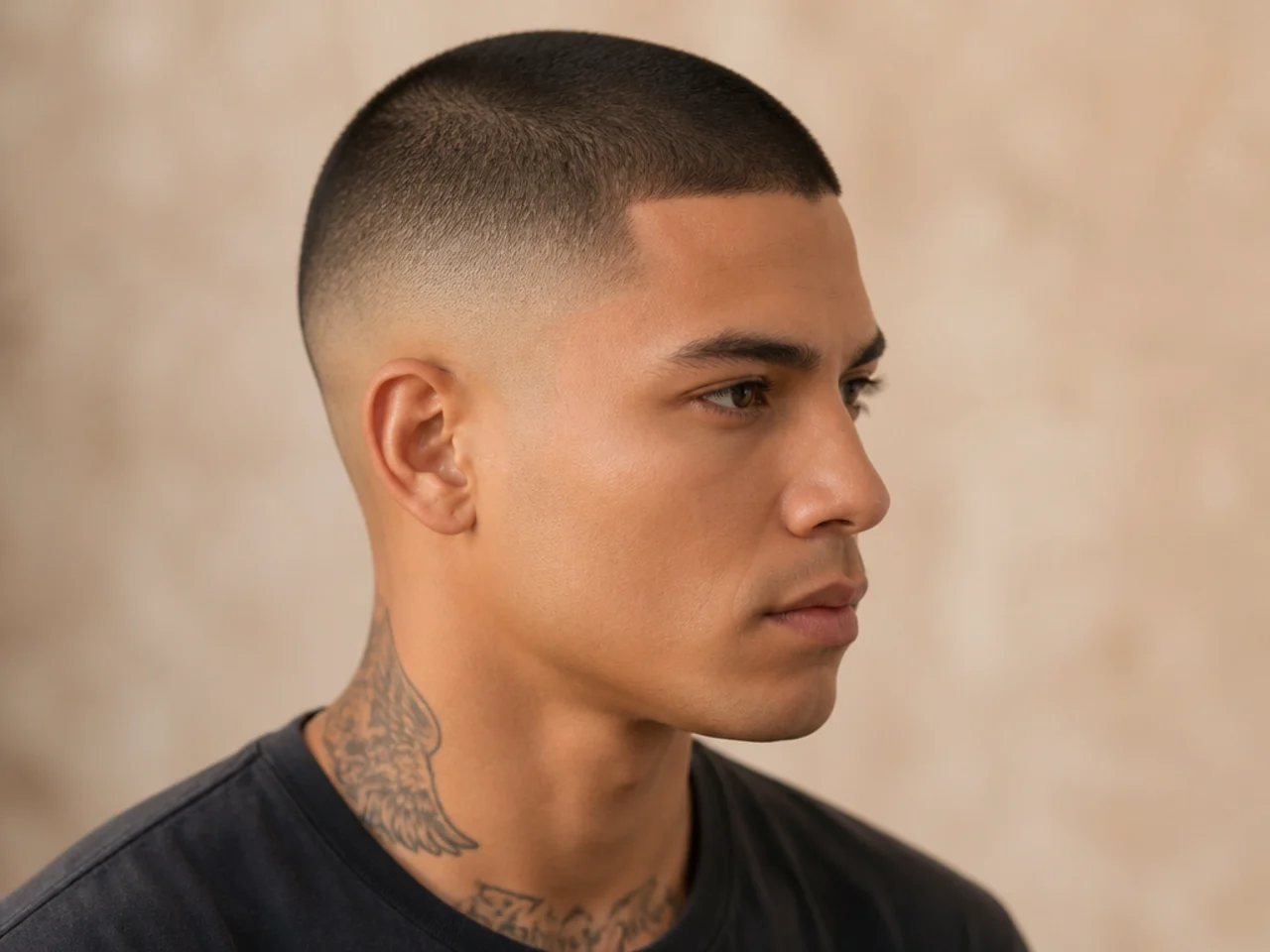
The sharpest short fade you can order. A #1 buzz across the top blends into a skin fade at the sides through every guard between them. Reads military-clean and modern at the same time. Suits oval, square, and diamond faces. Skip if you burn easily — there's no cover.
Ask for: "Low skin fade, #1 buzz across the top, clean line at the temples."
Styling: None. The cut carries itself.
3. Short Crew Cut with Mid Fade
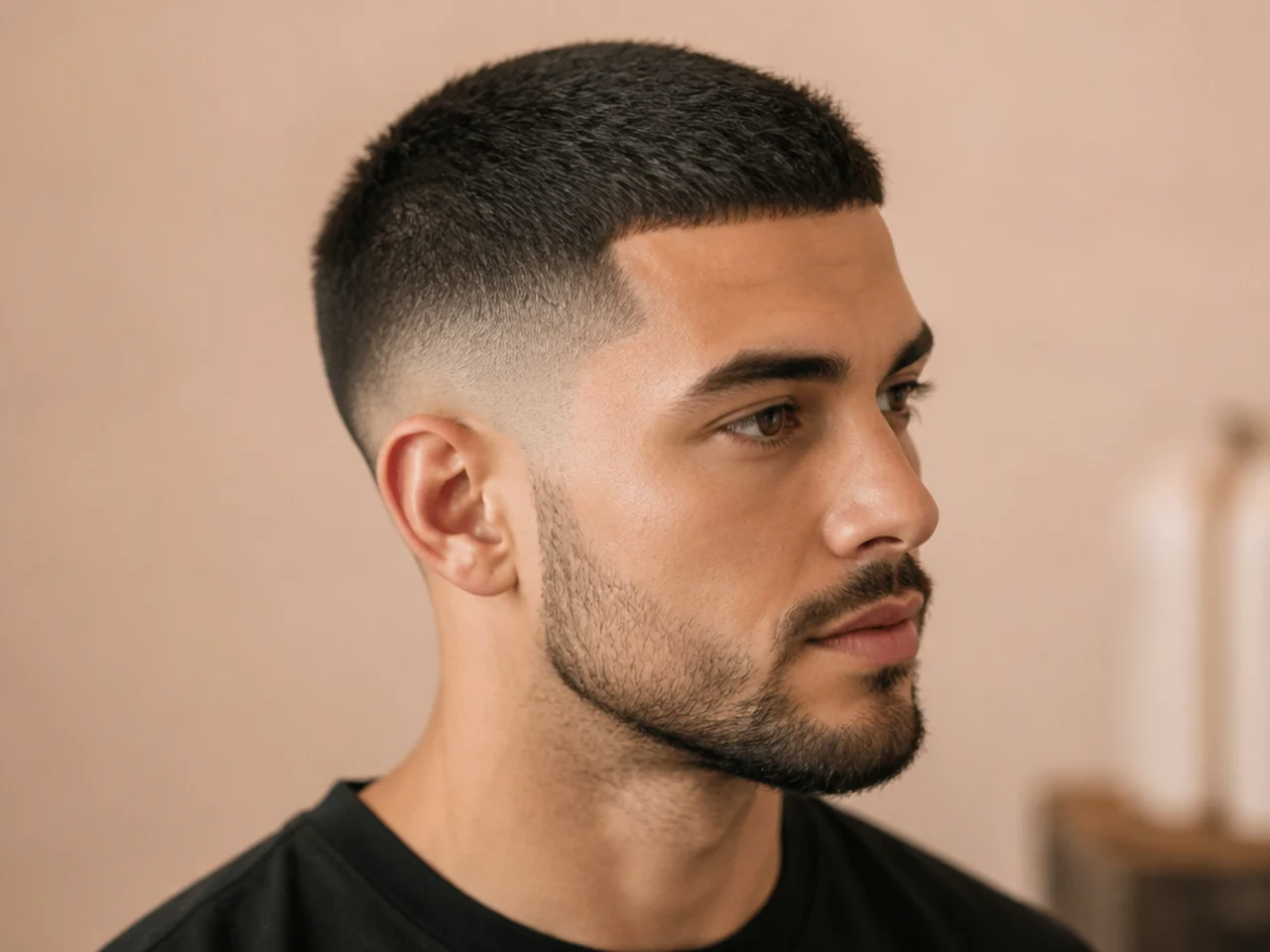
The polished short standard with a bit more contrast. Half an inch of scissor-cut length across the top with a slight taper toward the crown, dropped into a mid fade at a #0.5. The mid fade adds visual weight the low version doesn't, sharpening the whole silhouette. Full length variations in the crew cut hairstyles guide.
Ask for: "Mid fade to a #0.5, half-inch crew on top scissor-cut, slight taper to the crown."
Styling: Pea of matte paste rubbed into dry hair, finger-combed forward. Sixty seconds.
4. Textured Crew Cut with Low Taper
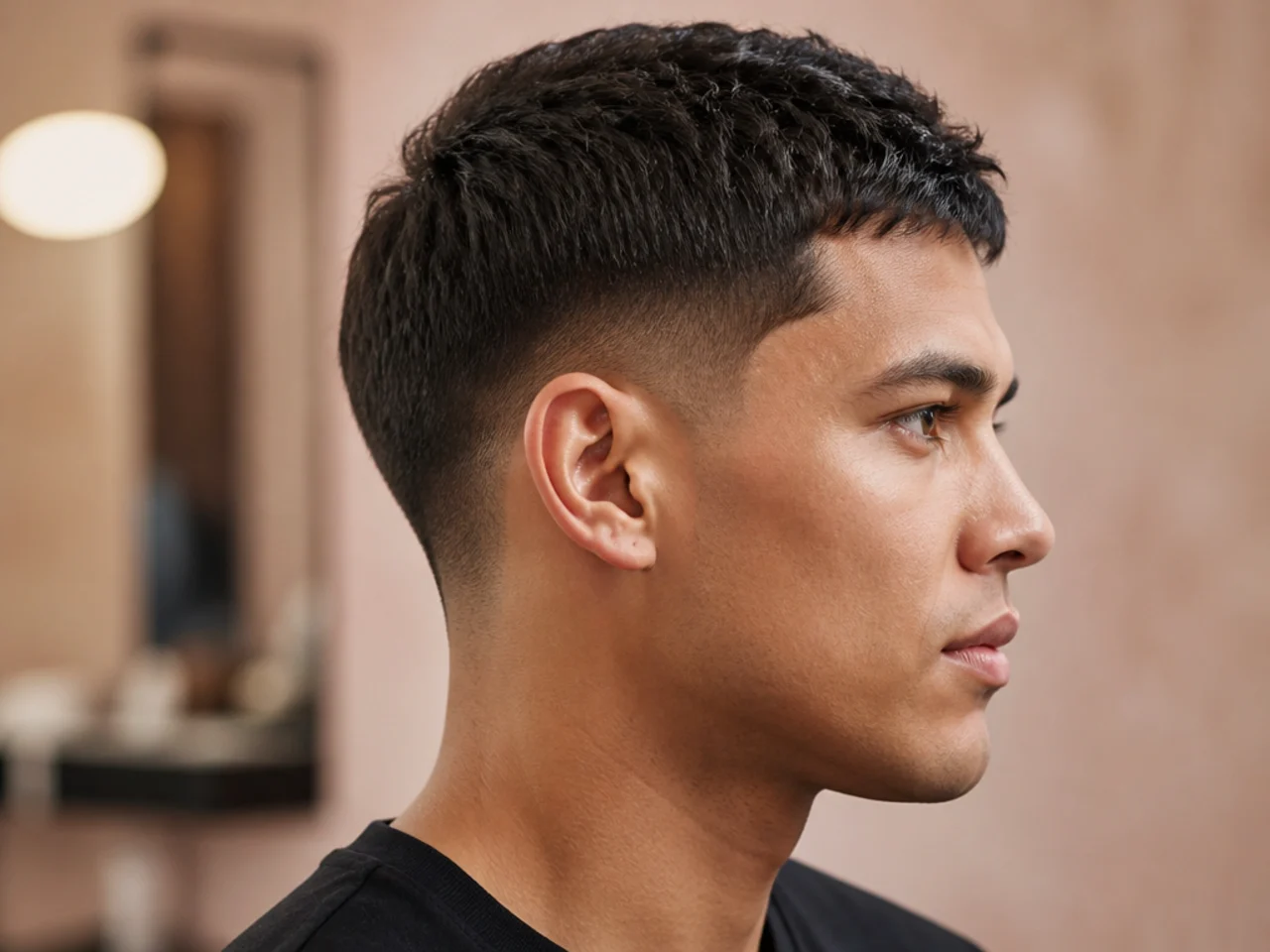
The relaxed everyday short fade. Three-quarters of an inch on top point-cut for movement instead of a uniform buzz, with a low taper that dies into the neckline rather than fading up the side. Suits oval, square, and heart faces. Best on straight to wavy hair.
Ask for: "Low taper to a #0.5, three-quarter-inch crew on top, point-cut for texture."
Styling: Matte cream on damp hair, finger-shape, walk out.
5. Classic Caesar with Low Fade
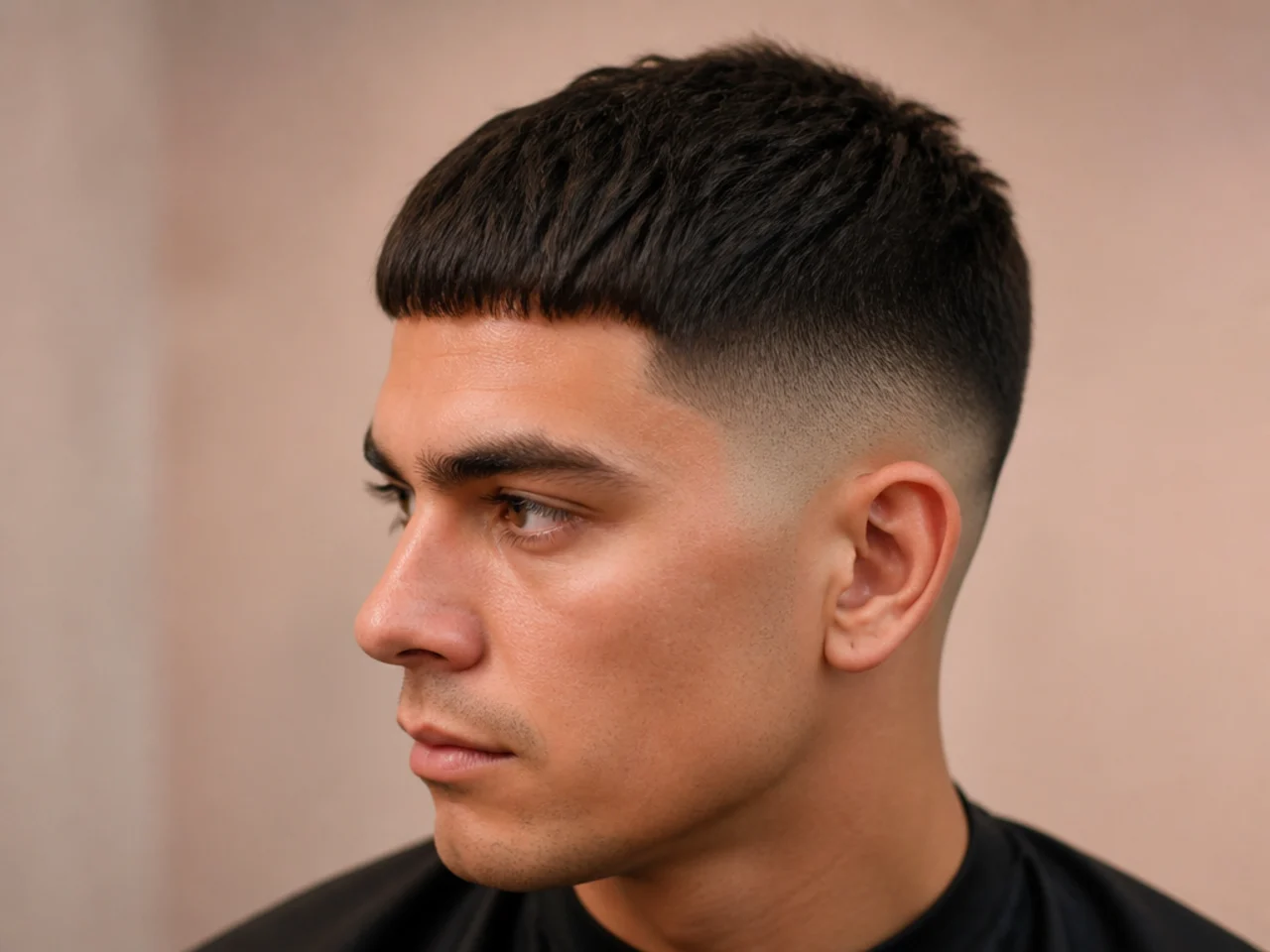
The Roman-inspired short-fringe standard. One inch of uniform length across the top with a blunt fringe combed straight forward, over a low fade so the fringe becomes the visual focal point. Frames wide foreheads especially well. Suits every face shape and every hair texture.
Ask for: "Low fade to a #0.5, one-inch Caesar on top, blunt fringe combed forward."
Styling: Towel dry, run a bit of matte cream through with your fingers, walk out.
6. Modern Textured Caesar with Mid Fade
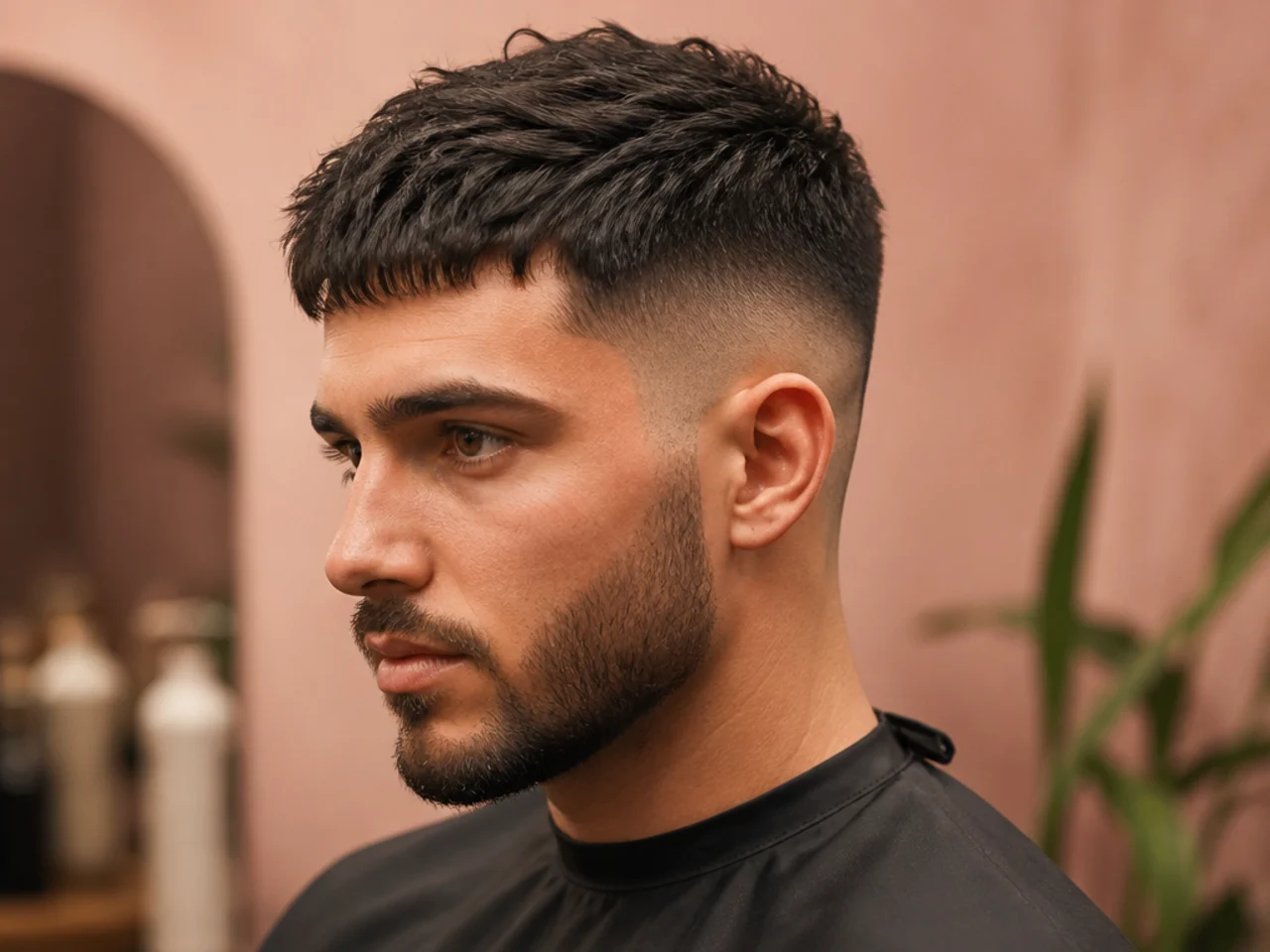
The updated Caesar with texture where the classic was blunt. One inch on top point-cut so the fringe breaks into pieces, a mid fade to sharpen the whole side profile. Suits round, oval, and square faces. Best on straight-to-wavy hair with medium density — very fine hair reads flat, and very thick hair loses the piecey read.
Ask for: "Mid fade to a #0.5, one-inch Caesar on top, point-cut fringe for texture."
Styling: Matte cream on damp hair, finger-comb forward, break the fringe apart with the thumbs.
7. Short French Crop with High Fade
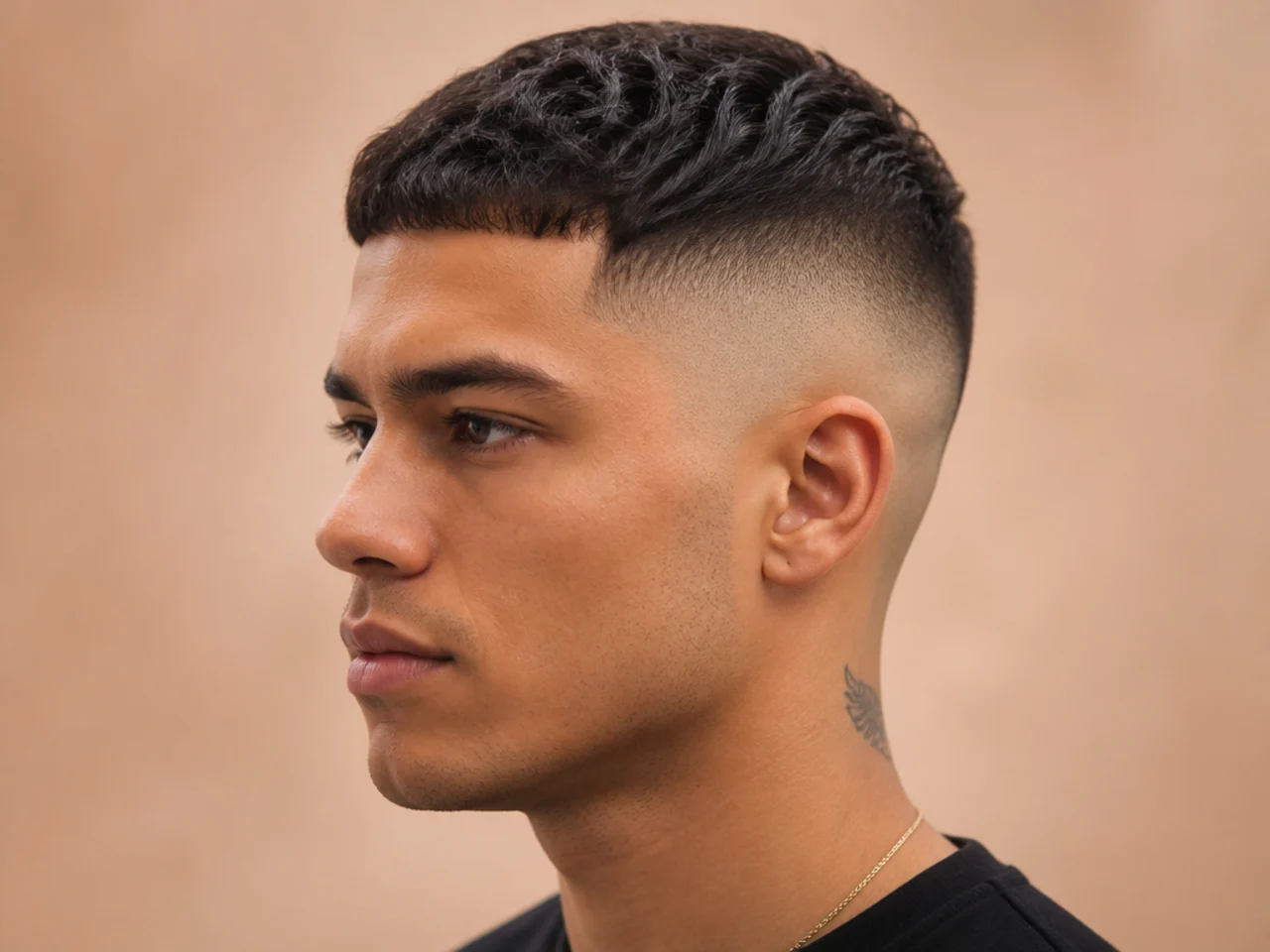
The European short crop with maximum contrast. One inch on top with a short blunt fringe pushed forward, a high fade that starts above the temple for a sharper geometric read than a low version. Best on straight and lightly wavy hair. Suits round, oval, and square faces because the fringe adds horizontal balance. More styling in the French crop haircut guide.
Ask for: "High fade to a #0.5, one-inch French crop on top, blunt fringe to mid-forehead."
Styling: Sea-salt spray on damp hair, blow-dry forward with the fingers, finish with a small amount of matte paste.
8. Textured French Crop with Drop Fade
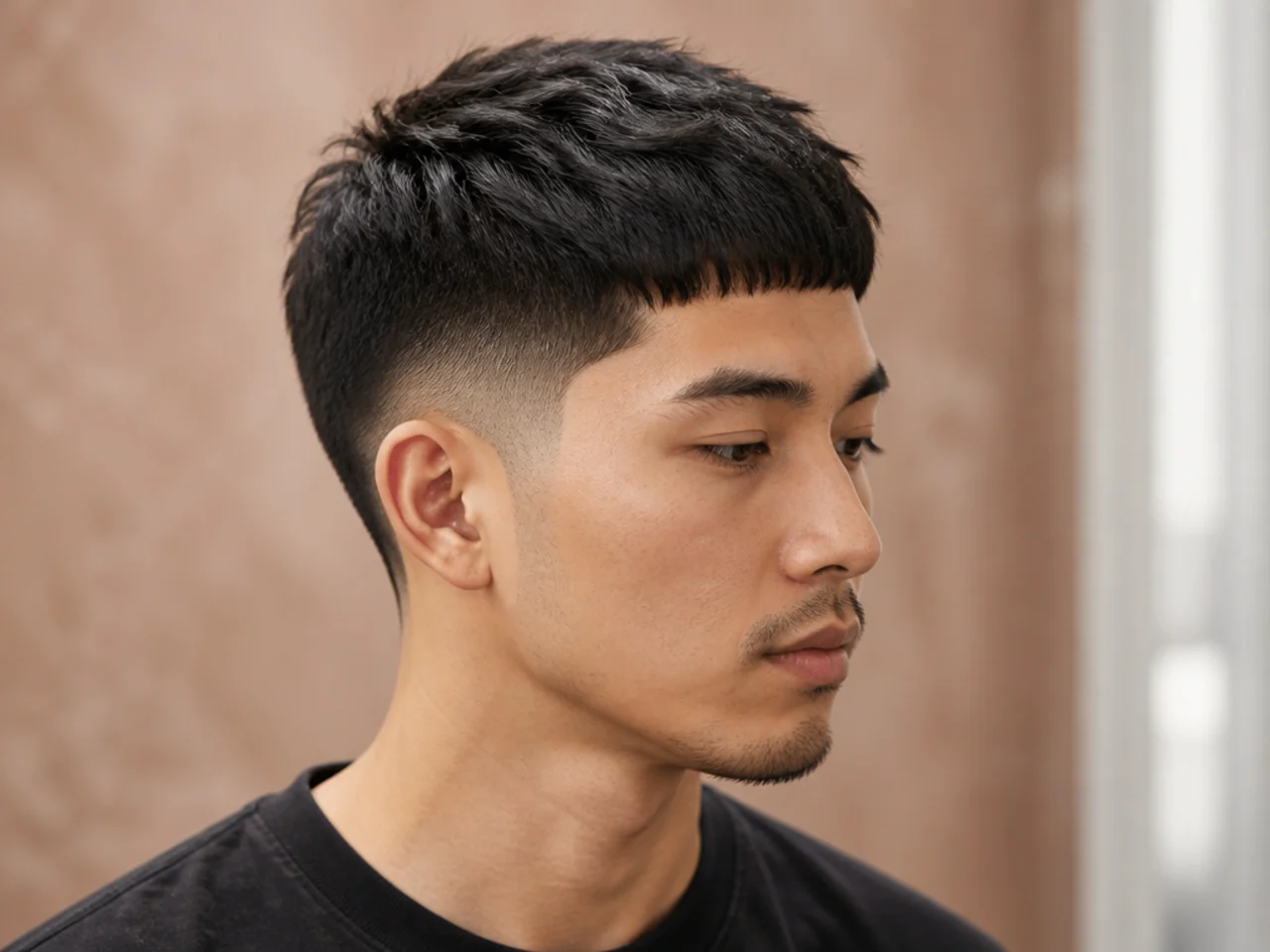
The messier crop for wavy and coarse hair. One and a quarter inches on top, point-cut for chunky texture through the fringe, a drop fade that arcs down behind the ear to sculpt the side profile. Suits oval, round, and square faces. Reads current in every workplace short of a strict boardroom.
Ask for: "Drop fade to a #0.5, 1.25-inch French crop, point-cut fringe for messy texture."
Styling: Matte clay pressed through damp hair with the palms, fringe pulled forward and broken up with the thumbs.
9. Short Ivy League with Low Fade
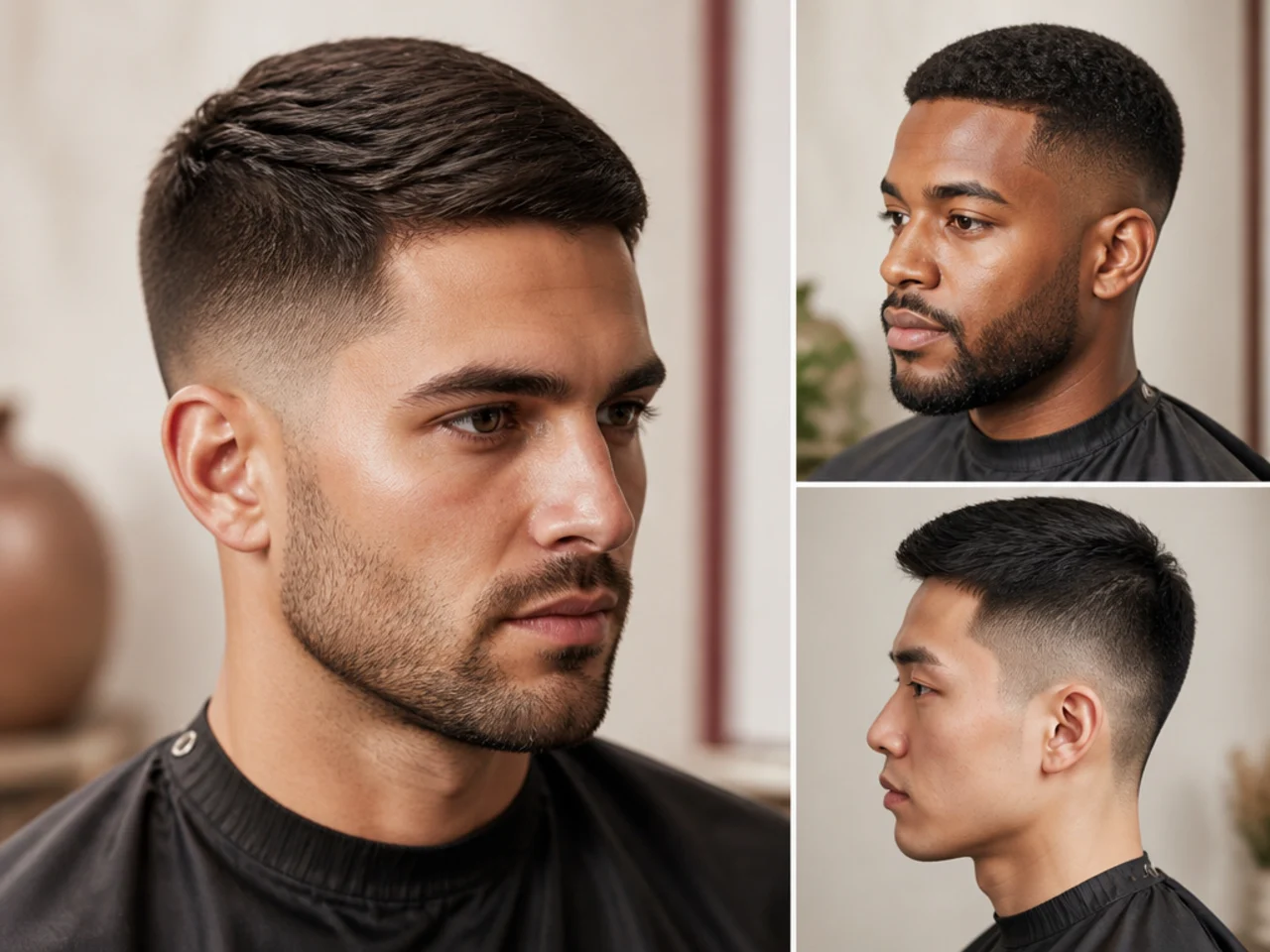
The collegiate short pick. Three-quarters of an inch to an inch on top, long enough to comb into a natural side part but short enough to skip a blow-dry, over a low fade. Suits oval, square, and long faces best. Passes every dress code in the country. Full styling in the Ivy League haircut guide.
Ask for: "Low fade to a #0.5, short Ivy League at three-quarters of an inch, natural side part on the left."
Styling: Damp comb across the part, a pea of cream pomade, done in under a minute.
10. Short Side Part with Mid Fade
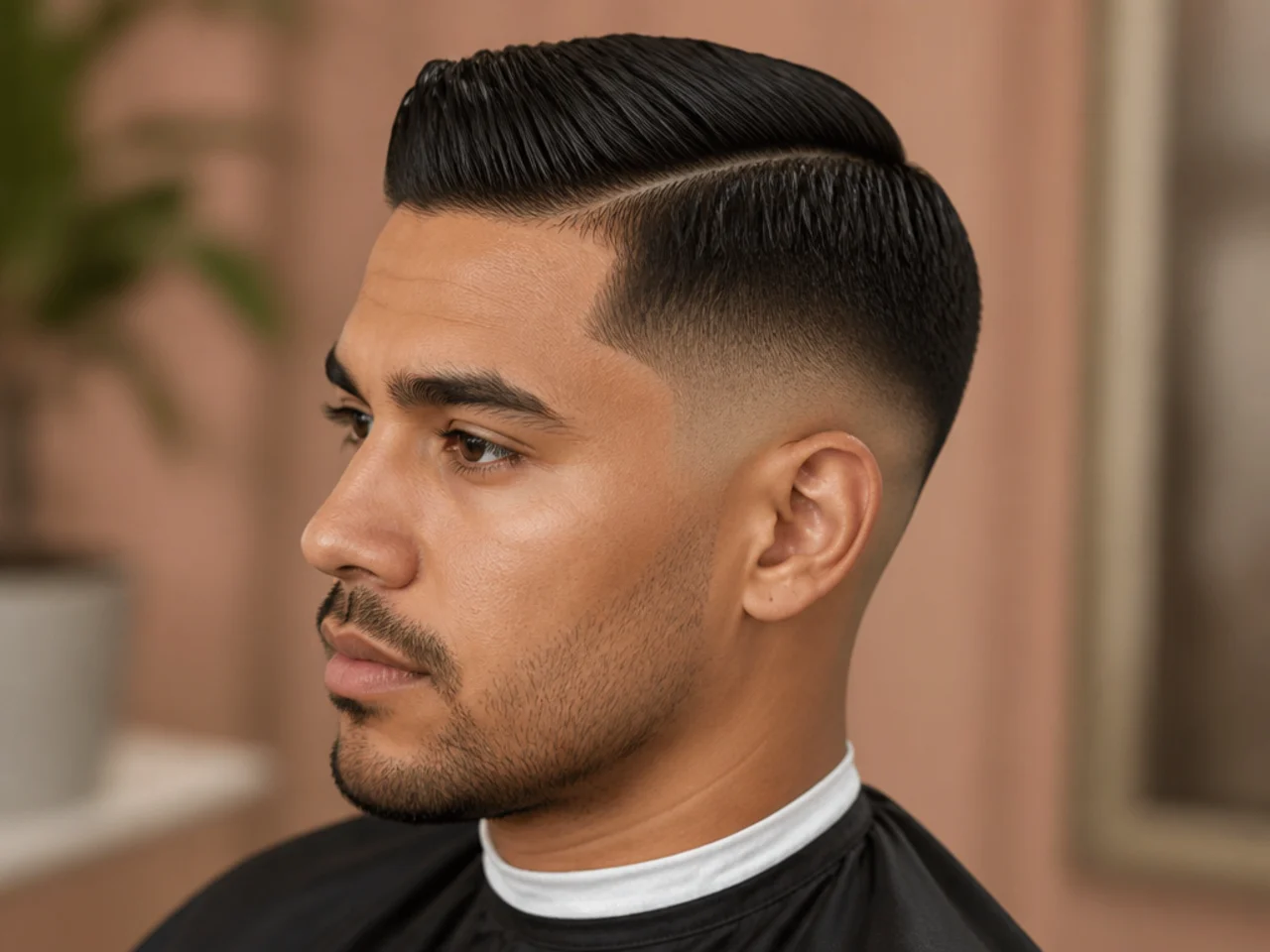
The short executive read with more edge than the Ivy. One inch on top combed from a natural part into a soft sweep across the crown, a mid fade below so nothing above the temple competes for attention. Best on straight to lightly wavy hair. Suits oval, square, and diamond faces.
Ask for: "Mid fade to a #0.5, one inch on top with a natural side part on the left, soft hold."
Styling: Damp comb across the part, cream pomade, one clean pass with the comb.
11. Short Comb Over with Low Fade
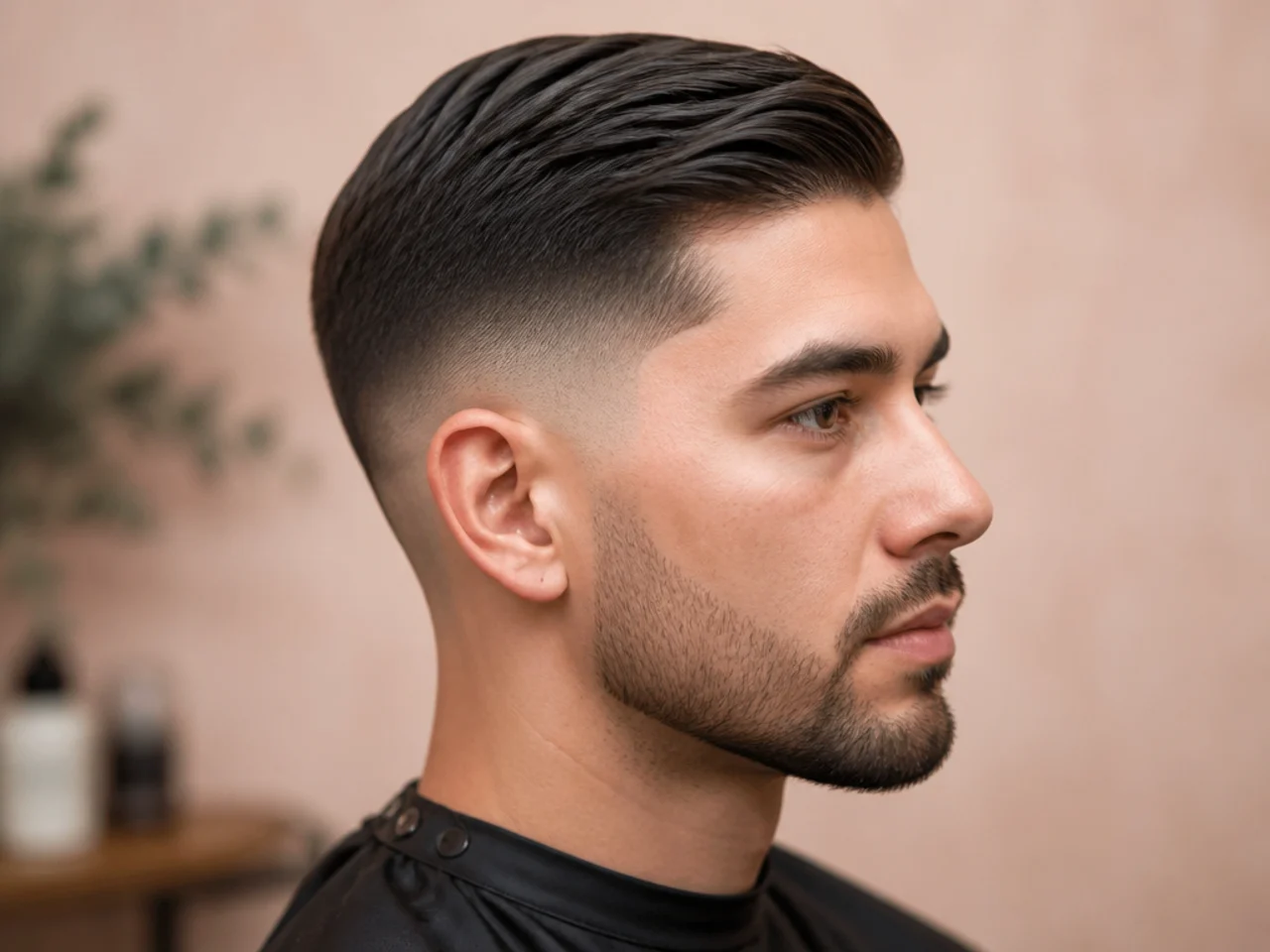
The tailored short version of a comb over. One and a quarter inches on top combed from a low side part across to the opposite side, low fade below to hide the transition line under a collar. Suits oval, square, and diamond faces. Best on straight to lightly wavy hair with any density.
Ask for: "Low fade to a #0.5, 1.25 inches on top, low side part combed across, soft hold."
Styling: Comb the part while damp, apply a cream pomade, finish with a light dusting of hairspray for hold without shine.
12. Short Slick Back with High Skin Fade
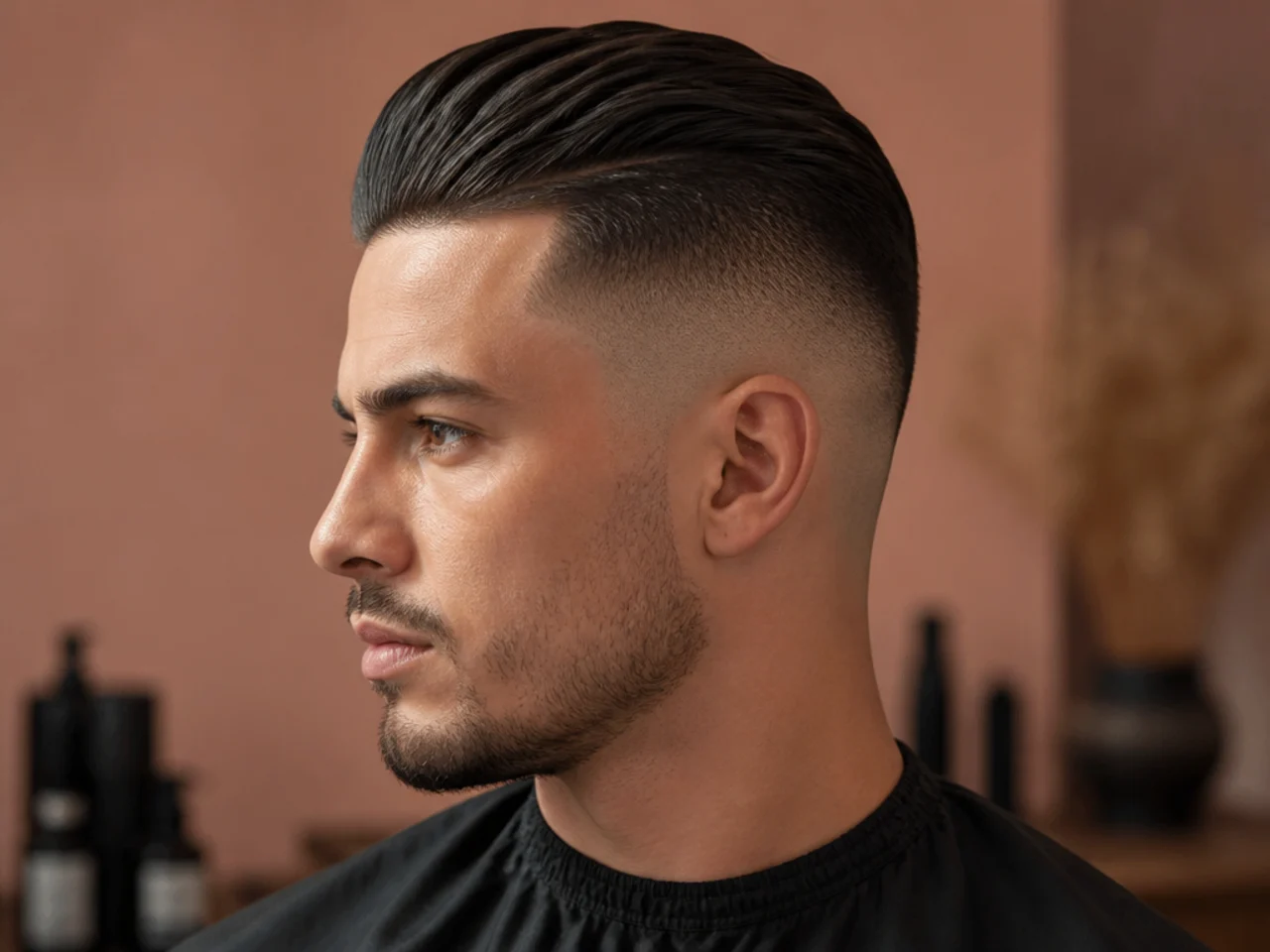
The sharpest short slick-back you can wear. One and a half inches on top combed straight back from the hairline with medium shine, a high skin fade at the sides so the transition never breaks the clean line. Best on straight to lightly wavy hair — very curly hair fights the shape. Suits oval and square faces best.
Ask for: "High skin fade, 1.5 inches on top cut for a short slick back."
Styling: Shine pomade on damp hair, comb straight back in one pass from the hairline, don't touch it again.
13. Short Quiff with Mid Fade
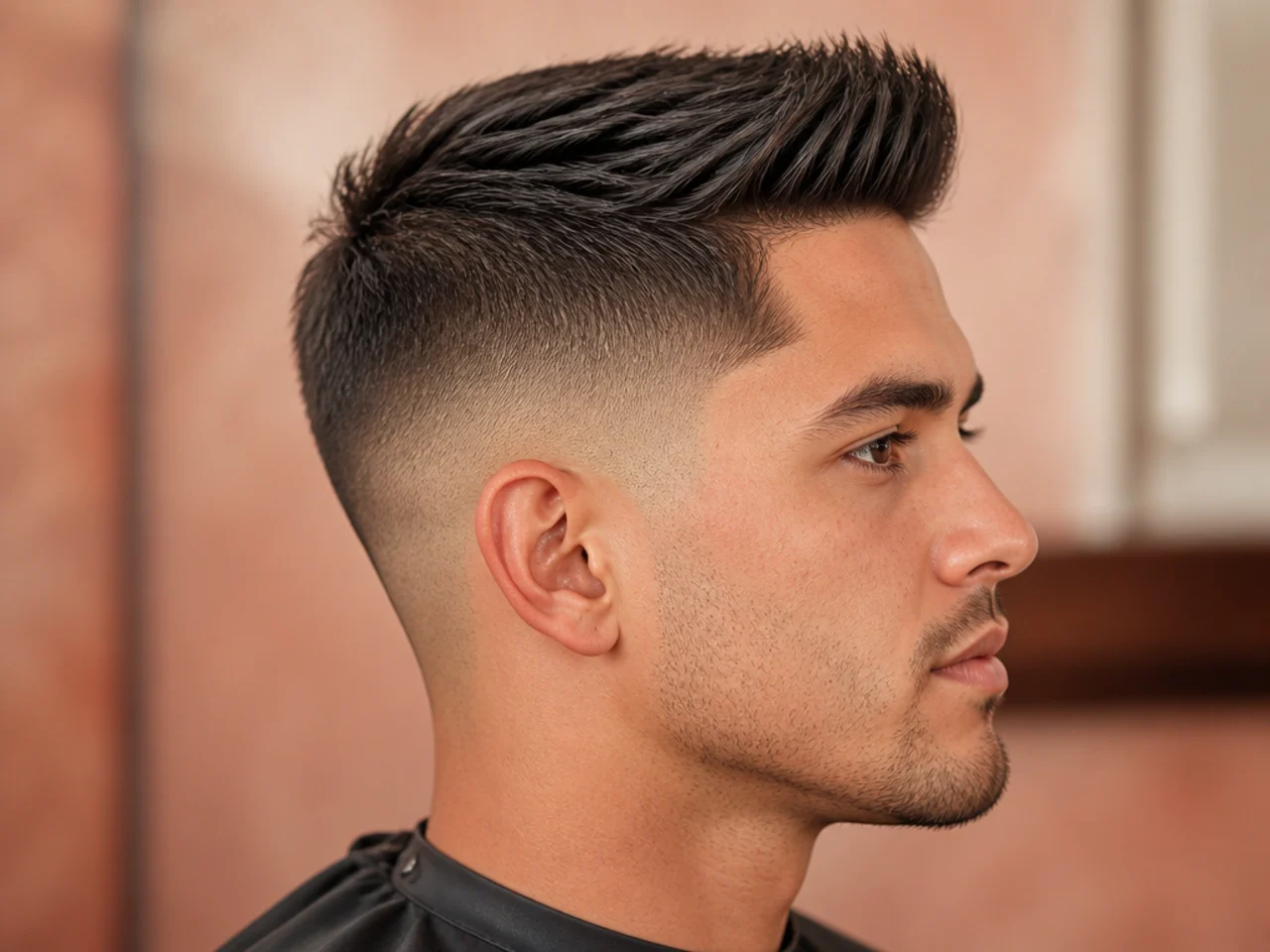
The short lift without the pompadour commitment. One and a half inches on top swept forward and up at the front with a bit of texture through the crown, mid fade at the sides. Suits round, oval, and square faces because the front lift adds vertical line to balance width. See the quiff hairstyles men guide for more front-lift ideas.
Ask for: "Mid fade to a #0.5, 1.5 inches on top cut for a short quiff, front weight kept for lift."
Styling: Blow-dry forward and up with a round brush or the fingers, finish with a medium-hold matte cream.
14. Short Pomp with Low Fade
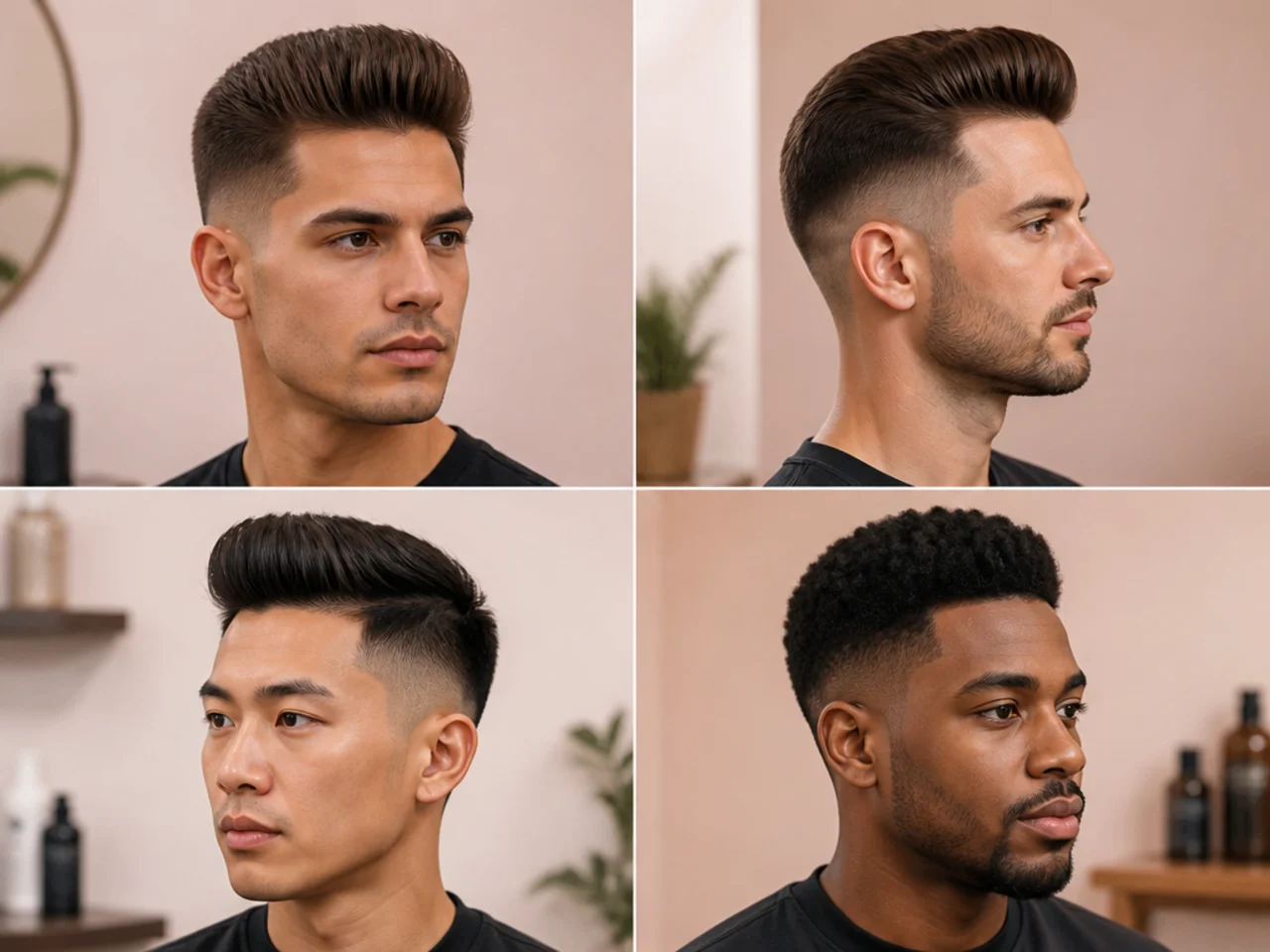
The mini pompadour for modern short-top wearers. Two inches on top swept up and back with real height at the front, low fade at the sides so the shape stays sharp rather than retro-messy. Suits oval, square, and diamond faces best. Needs straight or lightly wavy hair to hold the sweep — very curly hair collapses the height.
Ask for: "Low fade to a #0.5, two inches on top cut for a short pomp, height at the front."
Styling: Blow-dry with a round brush up and back, set with a firm cream pomade and a light mist of hairspray.
15. Short Faux Hawk with Burst Fade
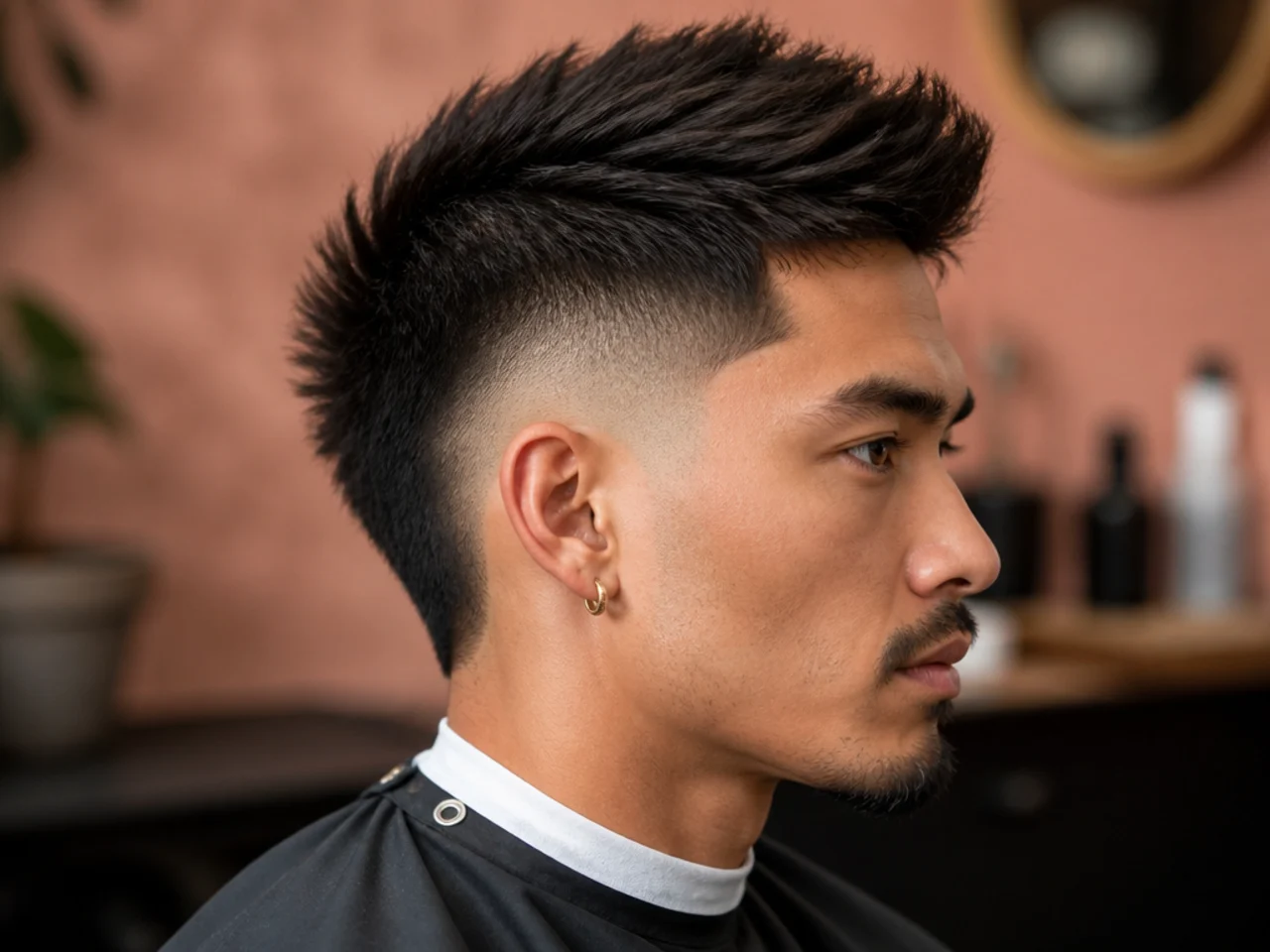
The most sculpted short fade on the list. One and a quarter inches through the crown, tapered a hair shorter toward the temples, a burst fade that curves around the ear instead of running straight. Reads modern and sharp instead of punk. Suits oval, square, and diamond faces. Best on straight to wavy hair.
Ask for: "Burst fade around the ear to a #0.5, short faux hawk shape on top — 1.25 inches at the crown, tapered shorter at the temples."
Styling: Blow-dry the crown up, finish with a firm matte paste to lock the shape.
16. Short Textured Crop with Low Taper
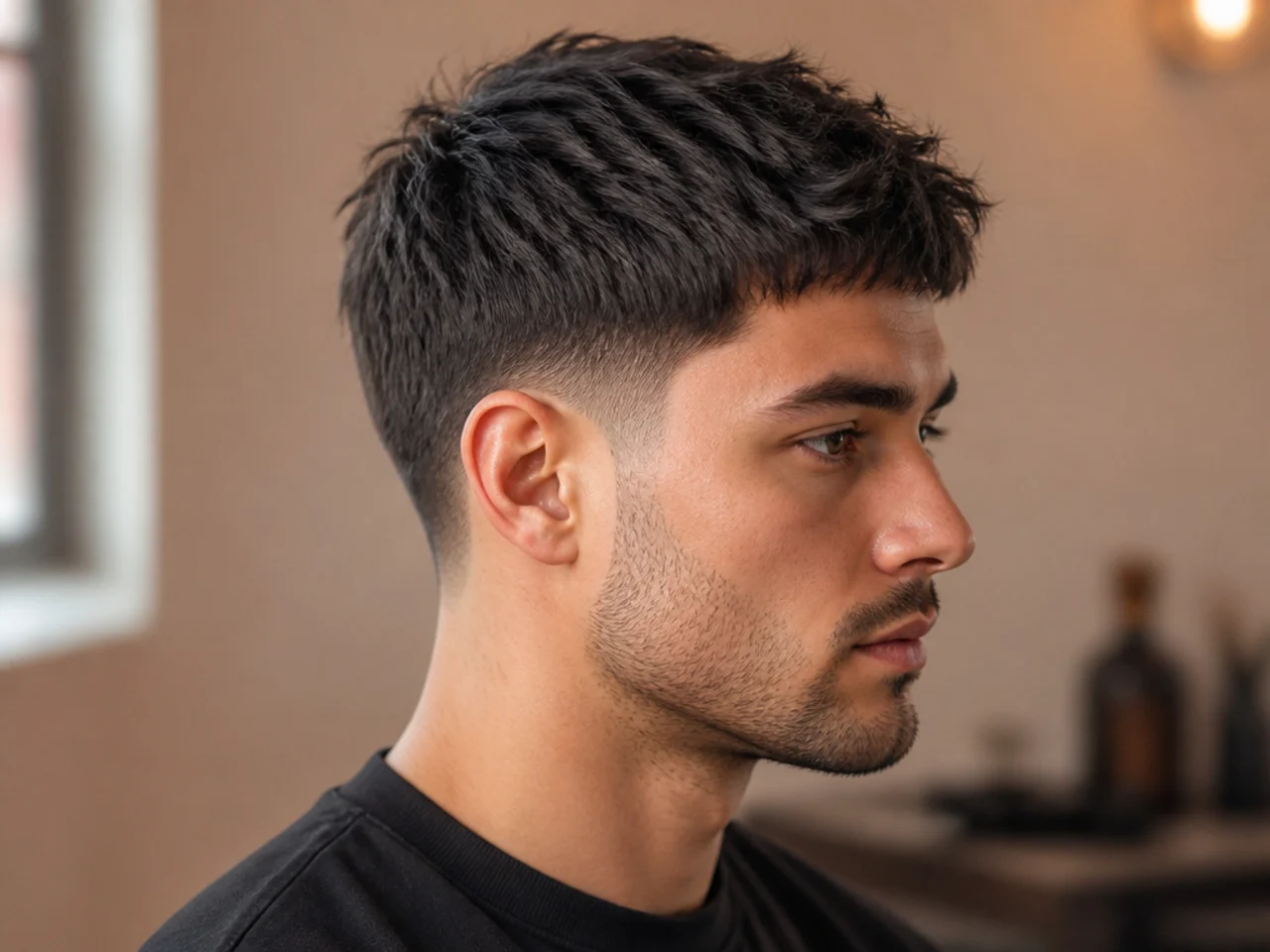
The crop without the forward fringe. One and a half inches of point-cut length across the top for movement, no blunt line at the front, low taper below to keep the sides clean and the whole cut relaxed. Suits square, oval, and round faces.
Ask for: "Low taper to a #0.5, 1.5-inch textured crop on top, point-cut ends, matte finish."
Styling: Matte clay warmed between the palms and pressed through damp hair, no comb needed.
17. Short Spiky Top with Mid Fade
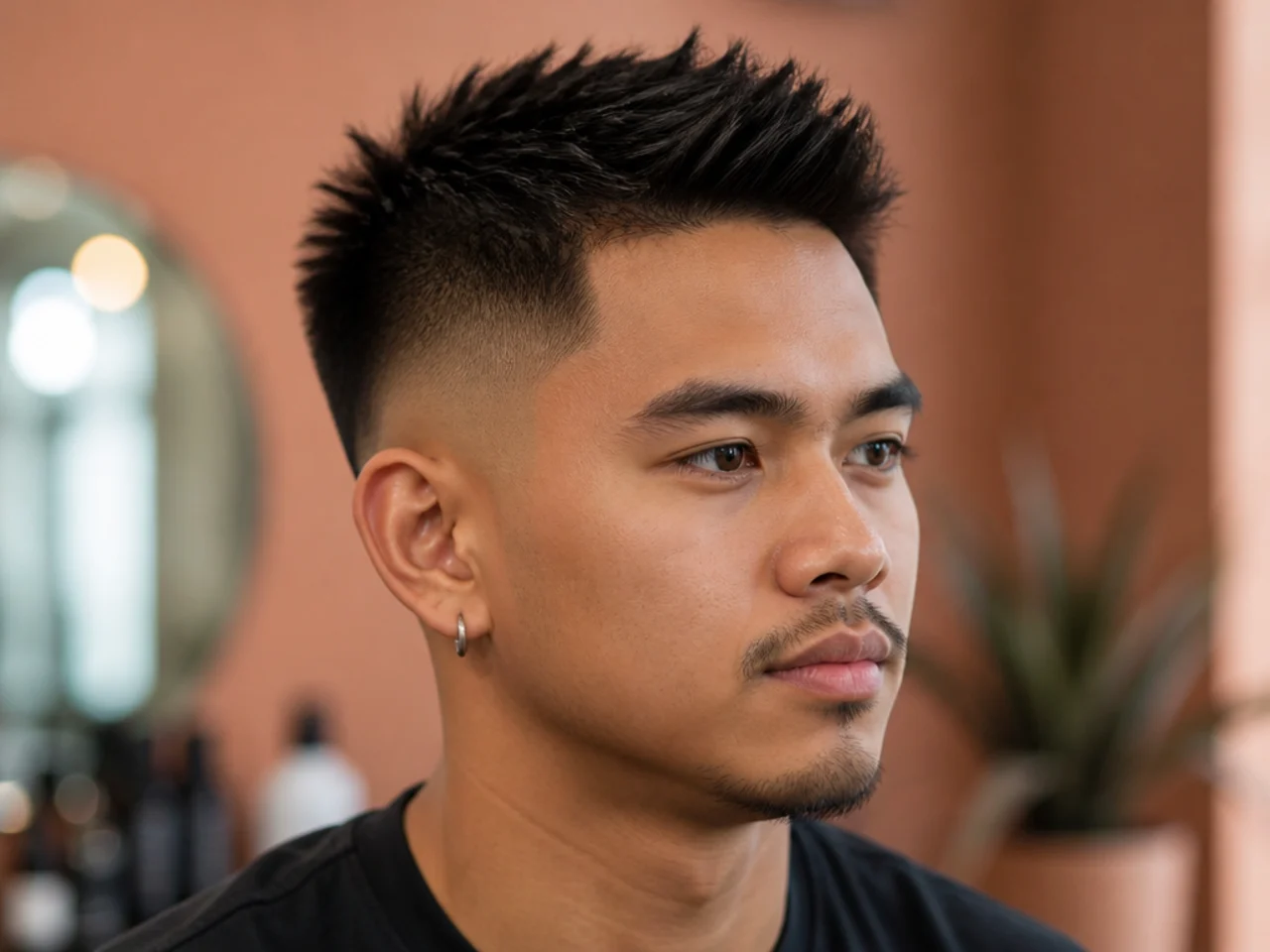
The lift-and-texture take on a short fade. One inch on top point-cut for chunky ends, a mid fade at the sides, enough styling to lift the ends into short, defined spikes. Suits oval, square, and round faces. Best on straight to wavy hair with medium density — thin hair struggles to hold the spike shape and looks sparse.
Ask for: "Mid fade to a #0.5, one inch on top point-cut for spikes."
Styling: Firm matte paste on damp hair, work in with the fingers, twist the ends upward.
18. Short Messy Top with Low Fade
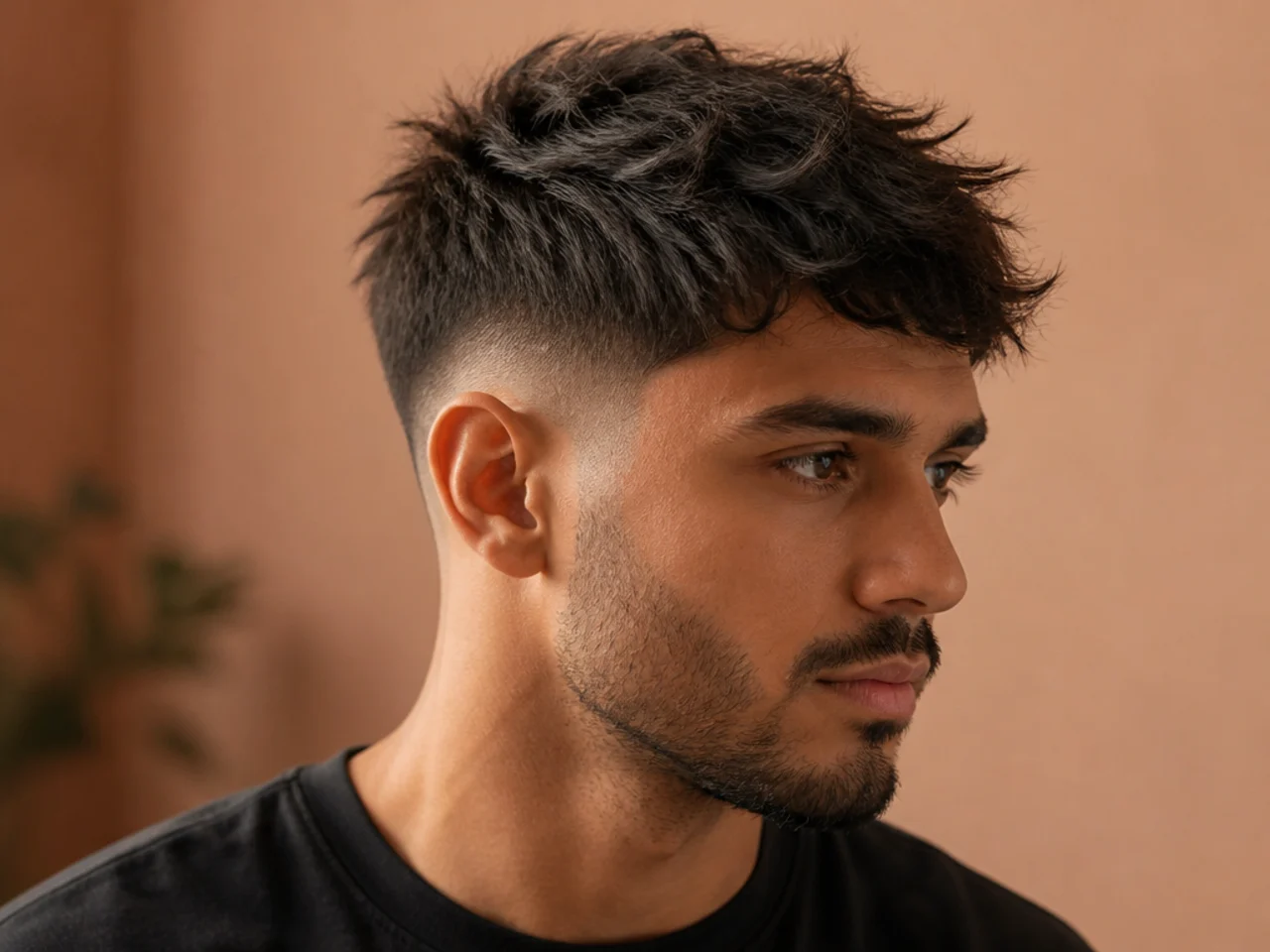
The bedhead-looks-intentional cut. One and a half inches on top point-cut and pushed in different directions for a controlled-messy read, low fade at the sides. Suits oval, square, and round faces. Best on wavy and slightly coarse hair — fine hair reads flat instead of messy at this length.
Ask for: "Low fade to a #0.5, 1.5 inches on top point-cut for messy texture."
Styling: Sea-salt spray on damp hair, air dry or blow-dry with the fingers, tousle in a matte paste.
19. Short Edgar with Low Fade
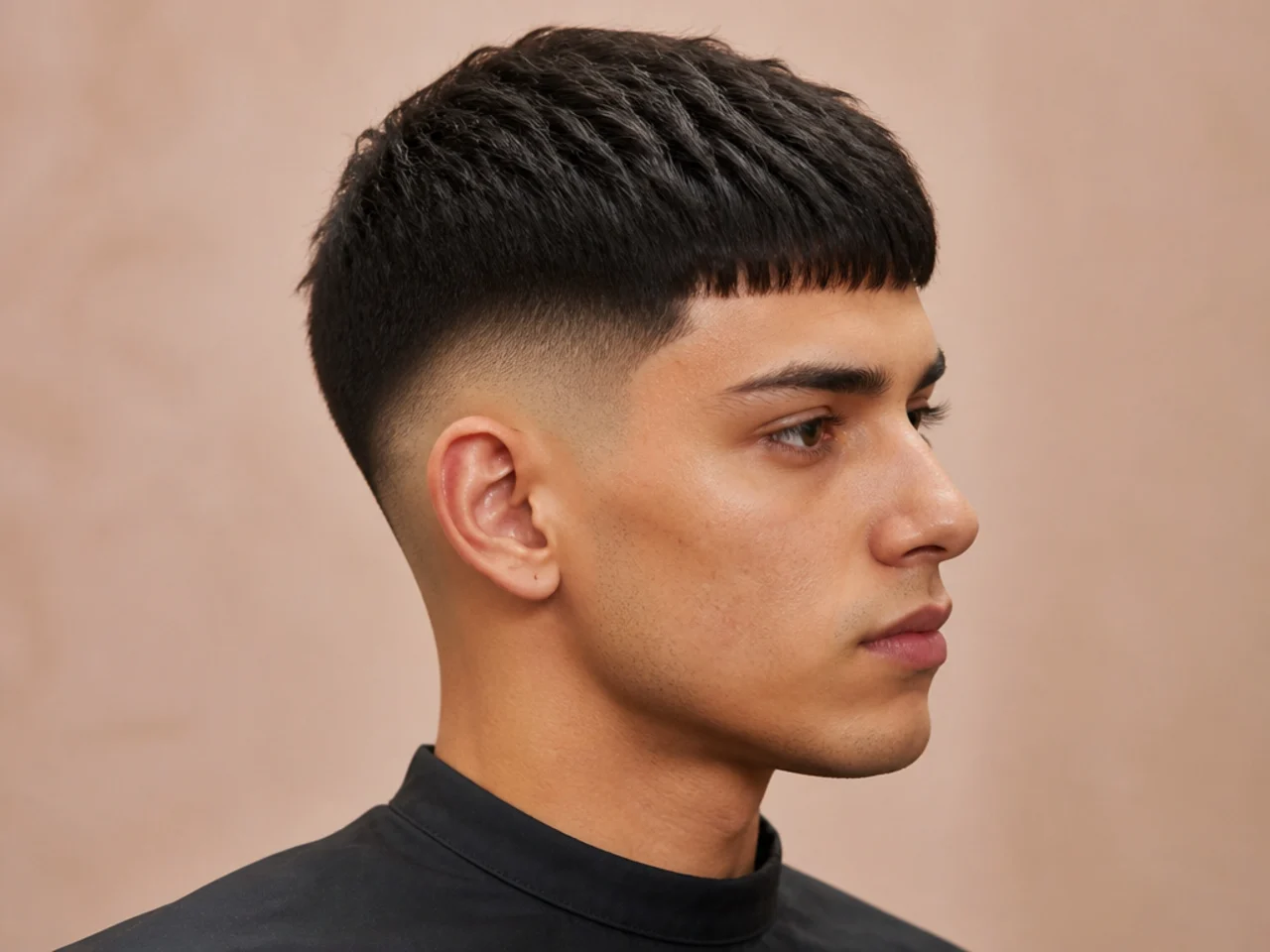
The modern short crop with a very defined blunt fringe. Three-quarters of an inch to one inch on top cut to a sharp, straight-across line at the forehead — no piecey break, no taper into the temple — with a low fade below to sharpen the whole rectangle. Suits oval, square, and round faces. Best on straight to slightly wavy hair.
Ask for: "Low fade to a #0.5, one-inch Edgar on top, blunt straight fringe across the forehead."
Styling: Damp comb the fringe forward, a small amount of cream to keep the line sharp, no product on the sides.
20. Short Curly Top with Low Skin Fade
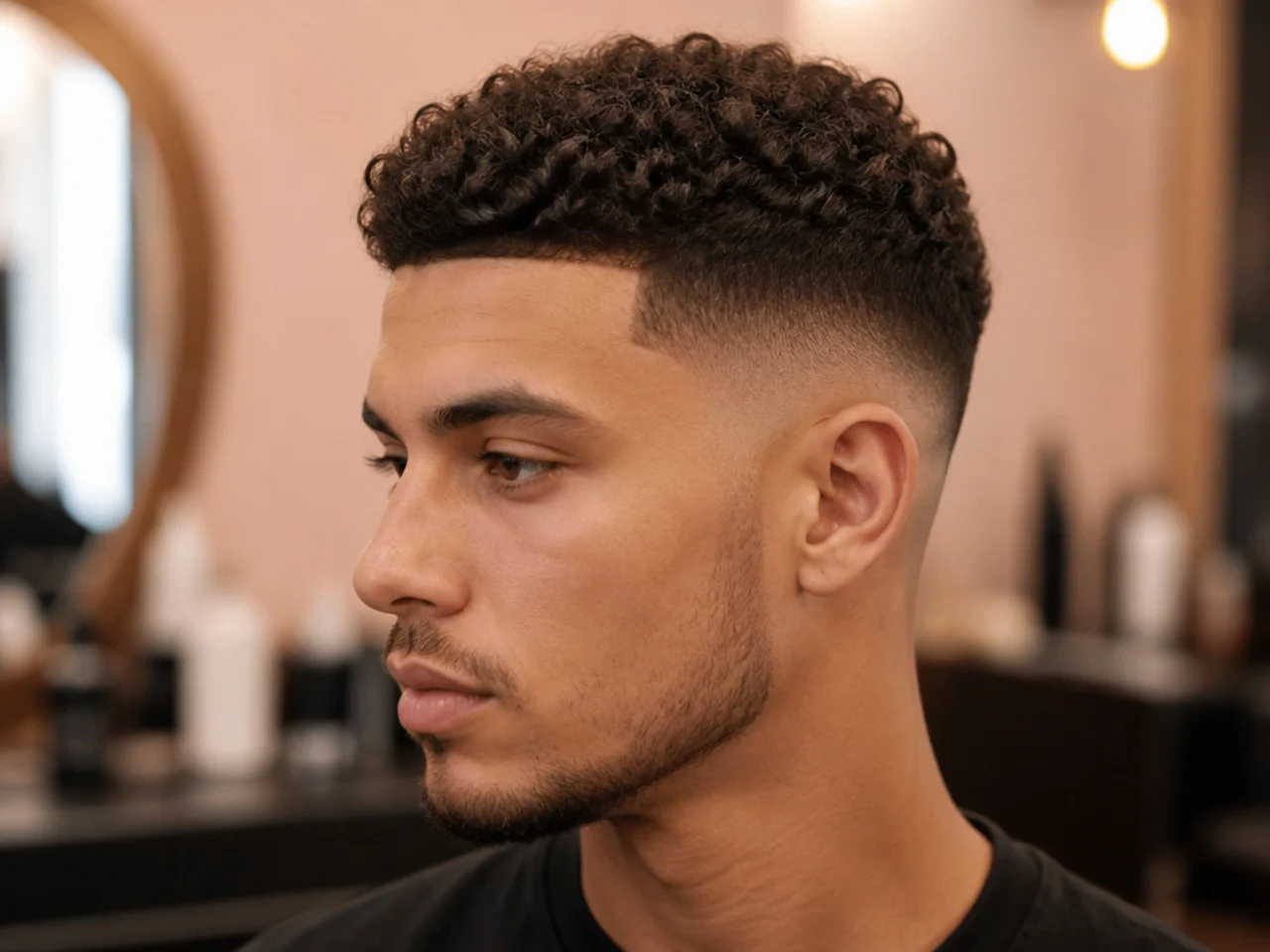
The polished short pick for curly and coily hair. A low skin fade at the sides paired with a razor-shaved line-up along the forehead and temples that defines every edge, plus a short curly or coily top left at half an inch to one inch. Suits every face shape. The fade and line-up carry the sharpness — the top does no work at all.
Ask for: "Low skin fade, line-up on the forehead and temples, half-inch to one-inch curly top."
Styling: Curl cream on damp hair after every wash, air-dry, finger-shape once.
How to Ask Your Barber for a Short Fade
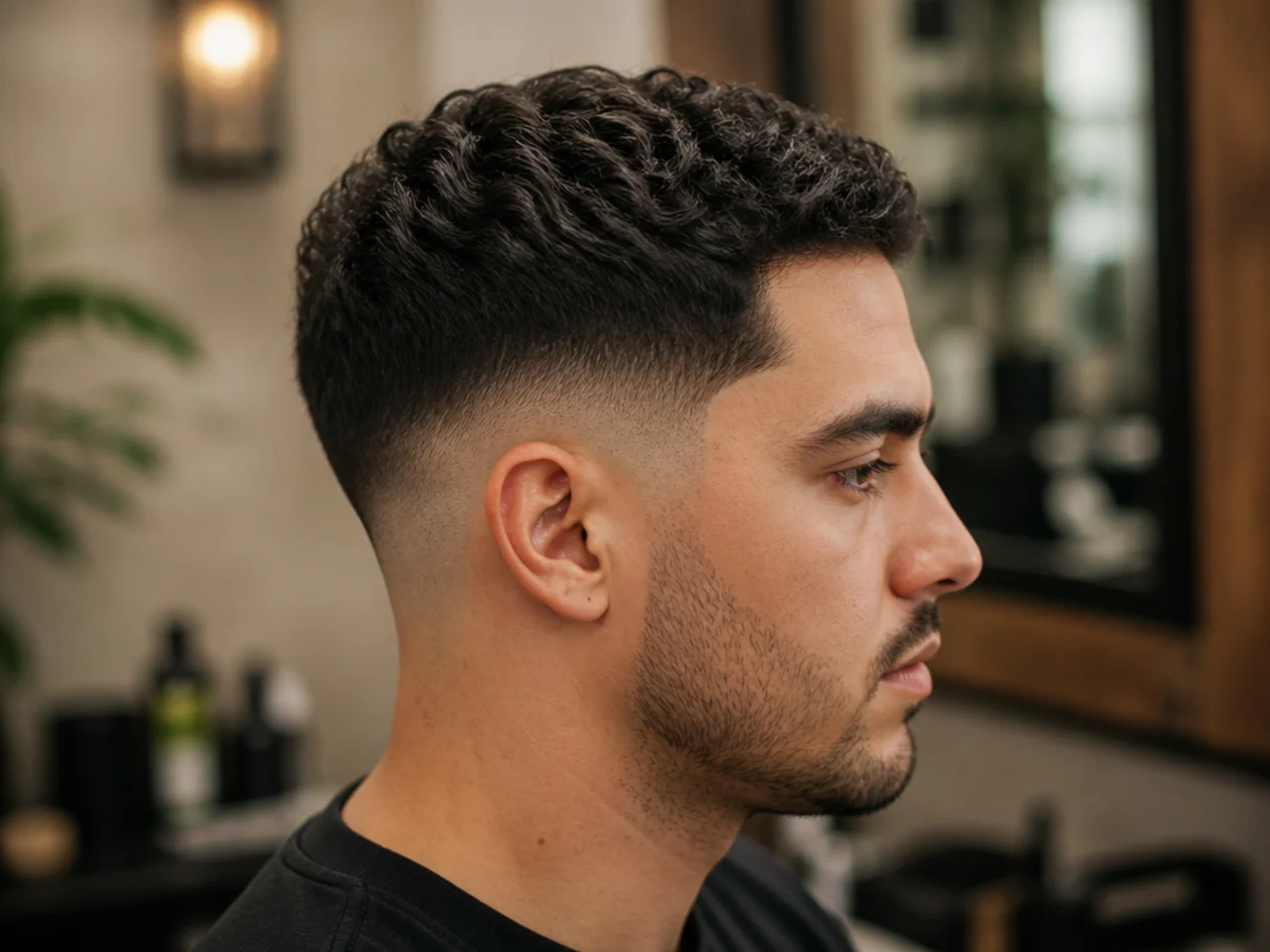
Barbers cut off numbers, not vibes. Walk in with these six items and you'll leave with the exact cut you had in your head.
- A reference photo. Save one of the images above and pull it up at the chair. Pictures kill 90% of the misunderstanding.
- The fade height. Say low, mid, high, drop, or burst. That single word rules out three or four wrong directions before the clippers even come out.
- The finish at the shortest point. Skin, a #0.5, or a #1. This decides how sharp the cut reads on day one and how often you'll come back.
- The top length in inches or guard size. Not "short" — a number. A #1 buzz, a half-inch crew, a one-inch Caesar, a 1.5-inch quiff. Barbers work off measurements.
- The top shape. Buzz, crew, Caesar, crop, side part, quiff, slick back. Name the shape so the barber cuts for that finish, not just to a length.
- The finish. Matte or shine. Textured or clean. Two words at the end lock the styling brief.
If you're deciding between fade heights before you commit, the high taper fade haircut guide breaks down the sharpest end of the family in depth.
Styling and Maintenance for Short Fades
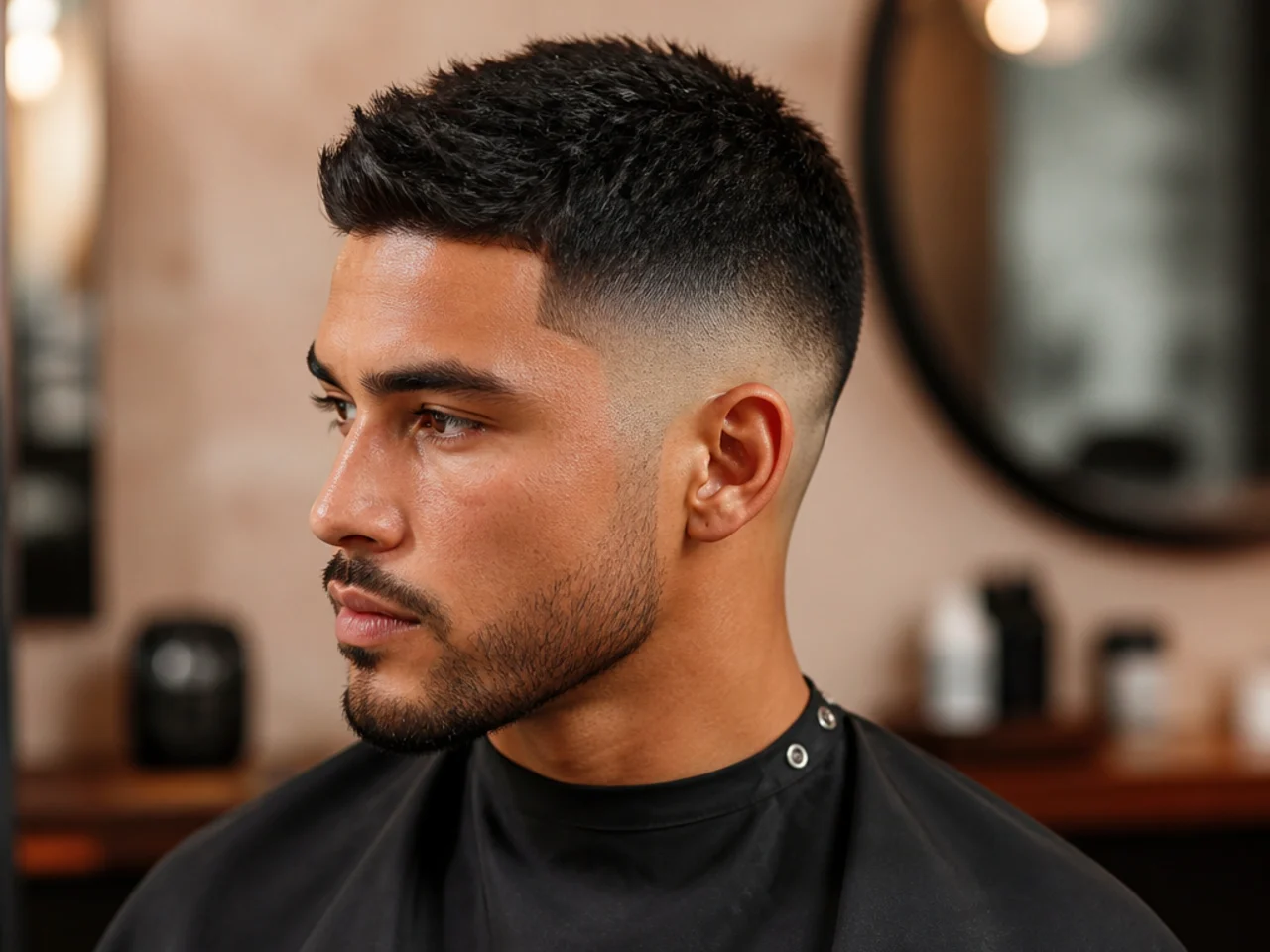
Short tops need almost nothing in the morning. The real maintenance work happens between visits, and it's what separates a two-week-old cut that still looks fresh from one that already reads overgrown by day ten.
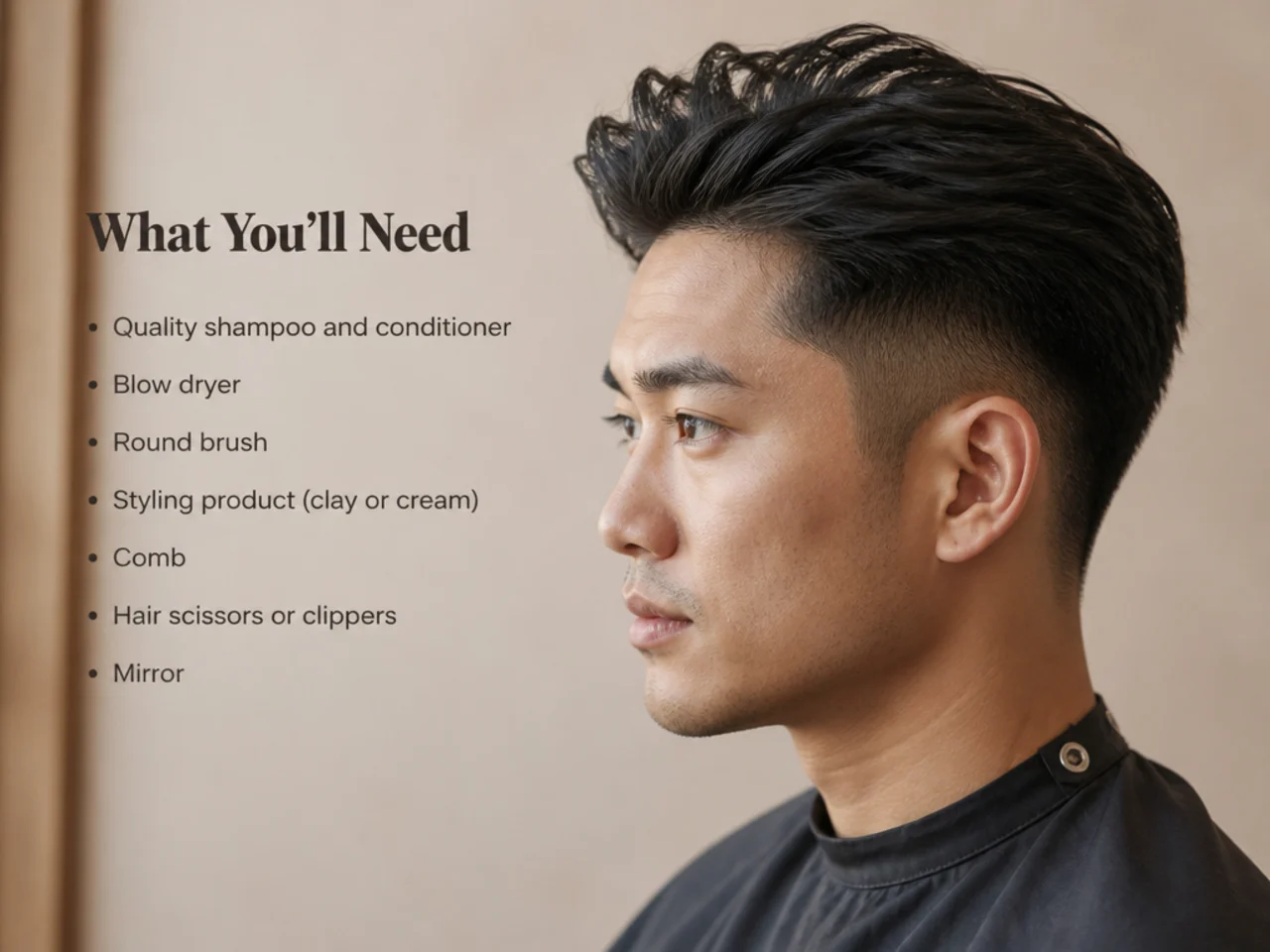
Product picks by top shape. A matte paste or clay for anything textured — crops, spikes, messy tops, faux hawks. A cream pomade for anything combed — side parts, comb overs, Ivy Leagues, Caesars, Edgars. A firmer shine pomade only for short slick backs and short pomps. Sea-salt spray on damp hair before the fingers-and-air-dry routine adds grip in fine hair. Anything under a one-inch top length needs no product at all.
Daily routine. Sixty seconds is enough for any variation on this list. Damp hair holds product better than dry — a light towel dry, a pea of your chosen product warmed between the palms, applied through the top, shaped in one clean pass. Overworking dries the finish out and makes it look tired before lunch.
Between-visit maintenance. A small pair of over-ear trimmers and a straight-edge razor handle the ear line and neckline every three or four days. That two-minute touch-up doubles the visual life of the fade. Do not touch the fade transition itself — that's your barber's job, and one small guard slip erases the blend in a single pass. If you're building an at-home kit, the best hair clippers for men guide covers what to buy and what to skip.
Re-cut cadence. Every 10 to 14 days for a high or skin fade with a buzz top. Every 2 to 3 weeks for a #0.5 mid fade with a short crew or Caesar. Every 3 to 4 weeks for a low taper with a 1.5-inch quiff or side part. Book the next appointment on the way out — the moment you decide to wait until it "looks bad", it already does.
FAQ
What's the shortest top length that still counts as a short fade rather than a bald fade?
A #0.5 on top. Below that you're essentially shaving the head, and the cut becomes a bald fade rather than a short fade with a top. The sweet spot for the family on this list sits between a #1 buzz and a 1.5-inch crop, quiff, or side part — long enough to have a shape, short enough to skip a comb most mornings.
Do I need a barber or can a regular chain salon cut a short fade?
Book a barber. A short fade lives or dies on the sub-half-inch blend, and that specific skill is what barbershops train for. Chain salons cut hair well; barbershops fade well. If the person cutting your hair spends most of the day on women's cuts, they won't have the reps on a tight fade blend, and you'll see it in the transition.
How long does a short fade take in the chair?
Between 20 and 40 minutes for a walk-in with clean references. A skin fade with a buzz top sits at the shorter end; a hard part with a shaved line adds ten minutes; a burst fade with sculpted crown work adds another five. Bring a photo plus the numbered specs above and you'll shave ten minutes off whatever the average is at your shop.
Is a short fade a good pick for thin or receding hair?
Yes — often the smartest cut on the list for it. A short top removes the visual cue of "trying to hide something", and the fade concentrates the visual weight down low instead of drawing the eye up to the crown. A Caesar, French crop, or short forward-swept top over a low fade is a strong pairing for thinning hair specifically.
Which short fade suits an office job with a strict dress code?
The short Ivy League with a low fade, the short side part with a low or mid fade, the short comb over with a low fade, or the classic short crew with a mid fade. All four read polished and conservative, hold up under office lighting, and pass every dress code short of white-shoe law firms — where you might want to keep the fade low and skip the skin finish.
Can I keep a short fade tidy at home between visits?
Partially — a set of over-ear trimmers and a straight-edge razor handle the ear line and neckline every three or four days. That two-minute touch-up is what keeps a two-week-old fade looking one week old. Leave the transition itself alone though — even a small guard slip erases a barber's blend in one pass, and you'll spend the next month growing it out.