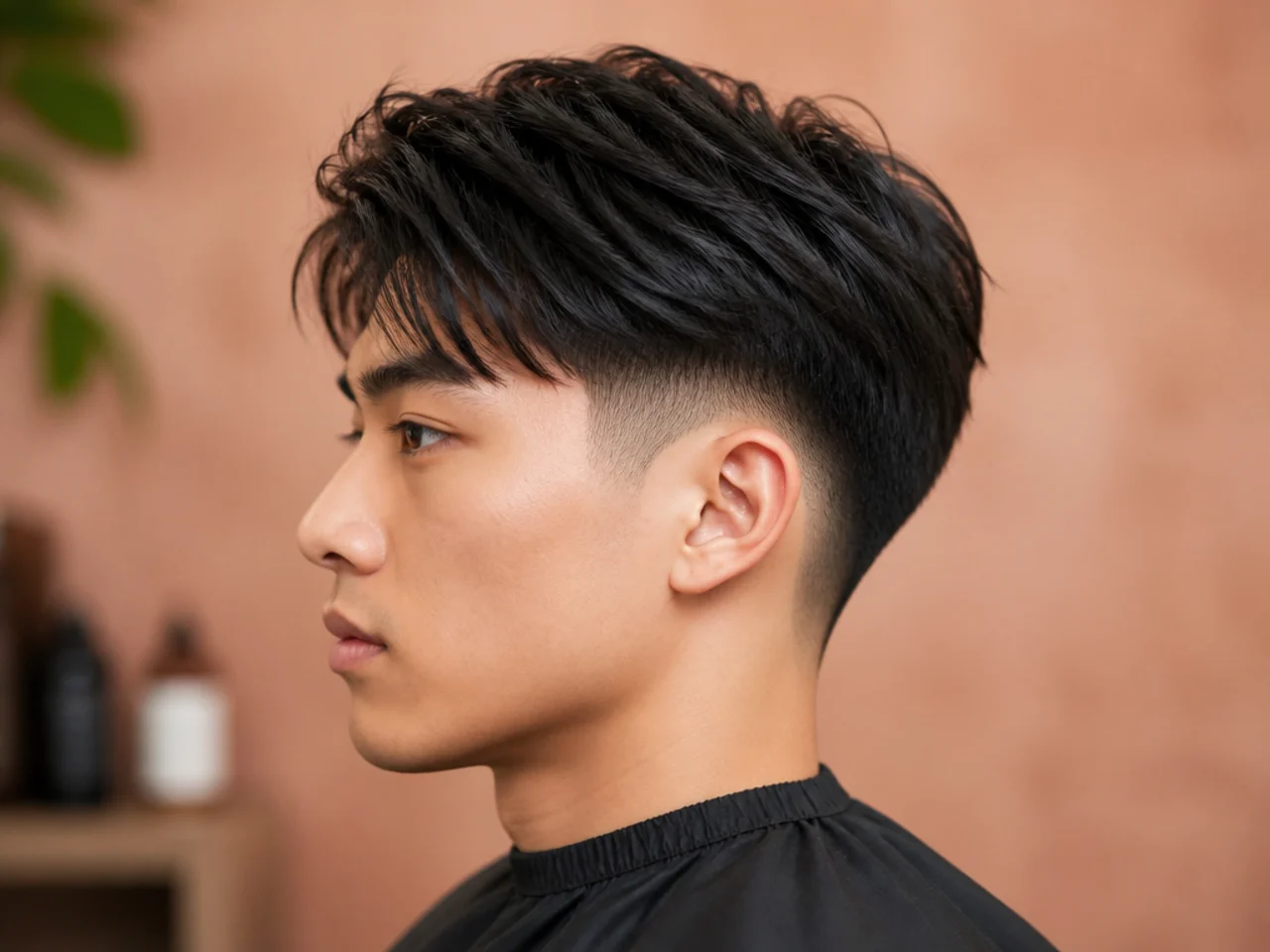
20 Two Block Taper Fade Haircuts for Men
The two block taper fade is the K-pop cut with barbershop discipline — 20 variations, who each one suits, and the exact words to tell your barber.
In this article · 31
- What Is a Two Block Taper Fade?
- How to Choose Your Two Block Taper Fade
- Classic Two Block Taper Fade
- Korean Two Block with Low Taper Fade
- Short Two Block Taper Fade
- Long Two Block Taper Fade
- Textured Two Block Taper Fade
- Middle Part Two Block Taper Fade
- Side Part Two Block Taper Fade
- Two Block Taper Fade with Fringe
- Two Block Taper Fade with Curtain Bangs
- Curly Two Block Taper Fade
- Wavy Two Block Taper Fade
- Two Block Mid Taper Fade
- Two Block High Taper Fade
- Two Block Drop Taper Fade
- Two Block Burst Taper Fade
- Messy Two Block Taper Fade
- Two Block Taper Fade with Hard Part
- Two Block Taper Fade with Undercut Contrast
- Two Block Taper Fade with Layers
- Two Block Taper Fade Mullet
- How to Ask Your Barber
- Styling and Maintenance
- FAQ
- What is a two block taper fade?
- Is the two block taper fade good for round faces?
- How is it different from a regular two block?
- How often should I get it re-cut?
- What length should I ask for on top?
- Does it work with curly or wavy hair?
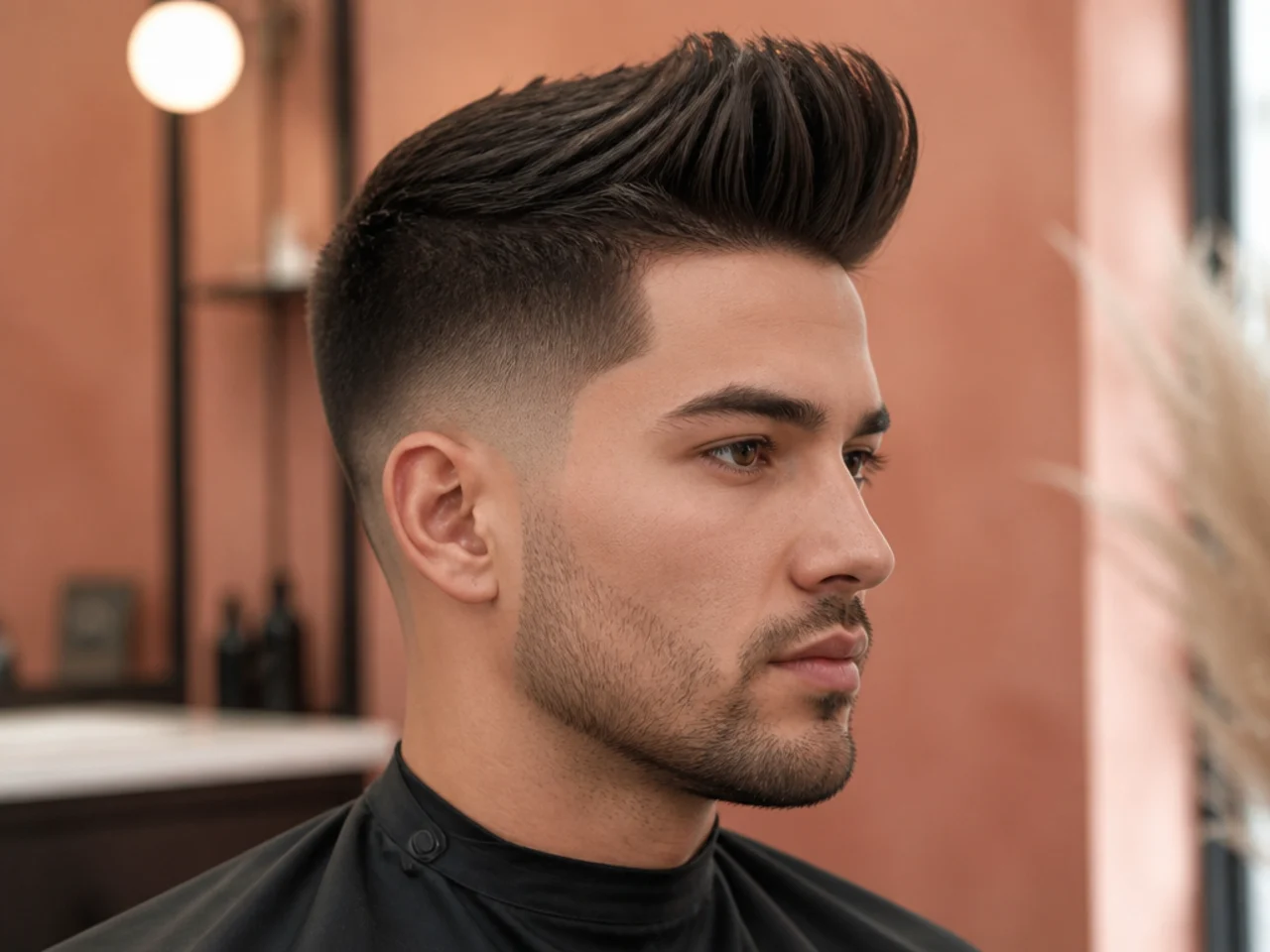
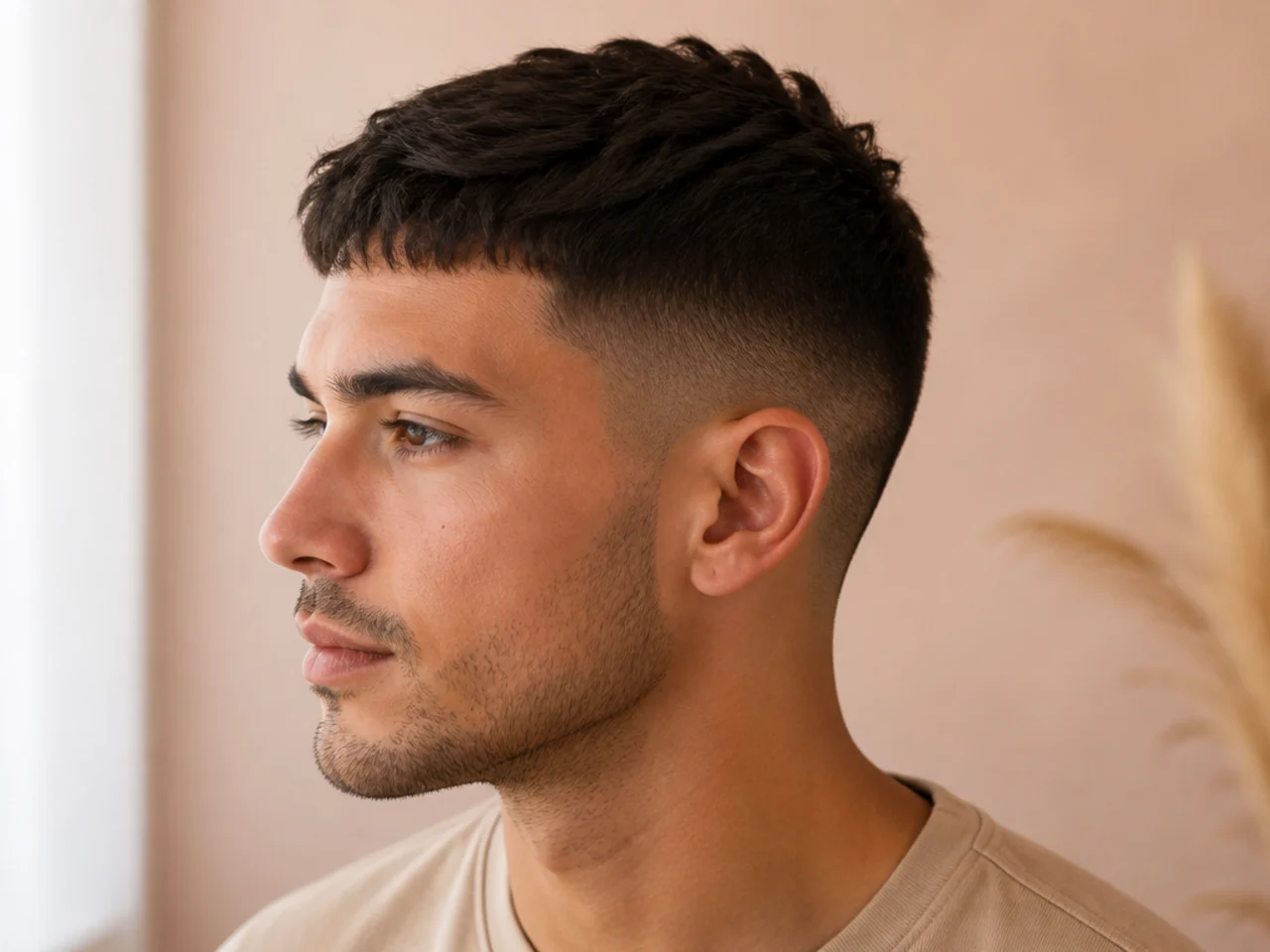
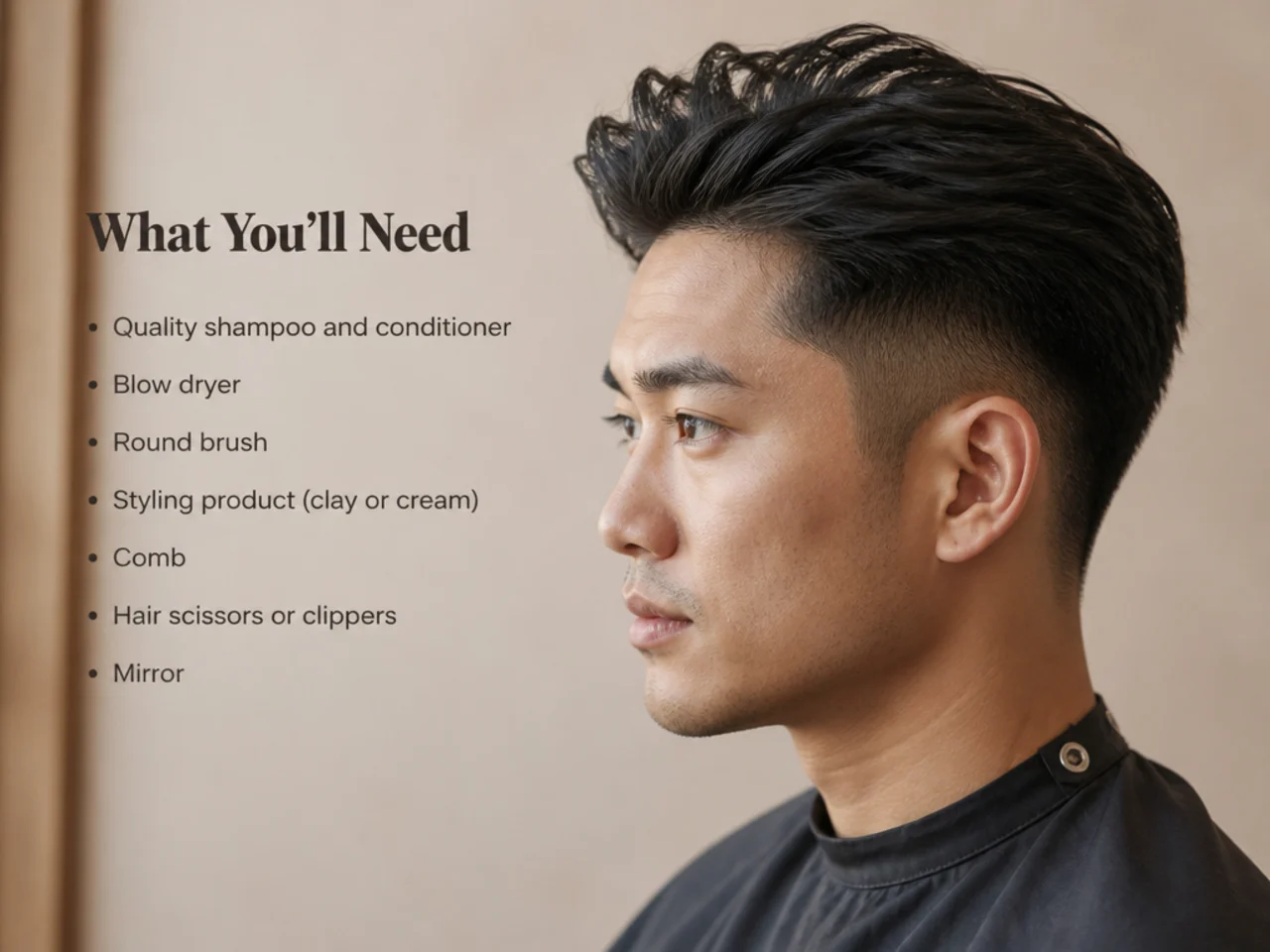
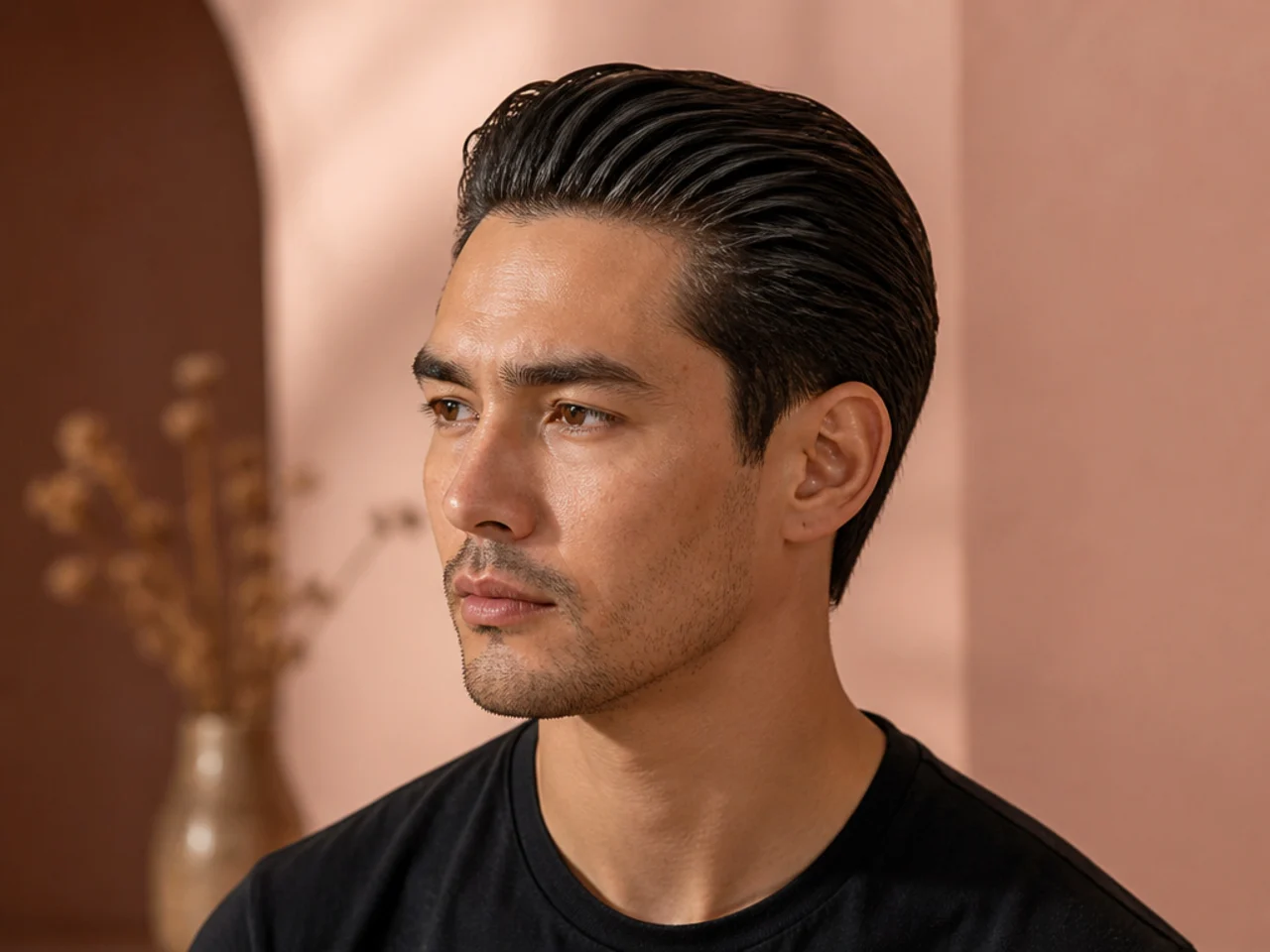
The two block taper fade takes Korea's most exportable men's haircut and gives it a barbershop-clean perimeter. You keep the long draping top that hides a shorter layer underneath, but instead of a single blunt clipper line, the sides taper down toward the ears and nape. Below are 20 variations men are asking for, who each one suits, and the exact language to hand your barber so you leave the chair with the version you had in mind.
What Is a Two Block Taper Fade?
The cut has two moving parts. The upper block — everything above a horseshoe line that runs from ear to ear across the crown — stays long, usually two to five inches. The lower block is clippered short and blended into a taper fade that finishes cleanly around your ears and neckline.
At rest, the covering piece falls past the horseshoe line and hides the taper. Move the top and you see the fade. That reveal-on-motion is what separates a two block taper fade from a straight two block haircut — the taper gives you a finished perimeter that reads sharp even when the hidden layer is showing.
Where the classic two block leans K-pop, the taper fade version pulls in the discipline of a modern barbershop cut. Think of it as the Korean shape with a Western fade — cleaner around the ears, more grown-up around a collar, still soft in front.
How to Choose Your Two Block Taper Fade
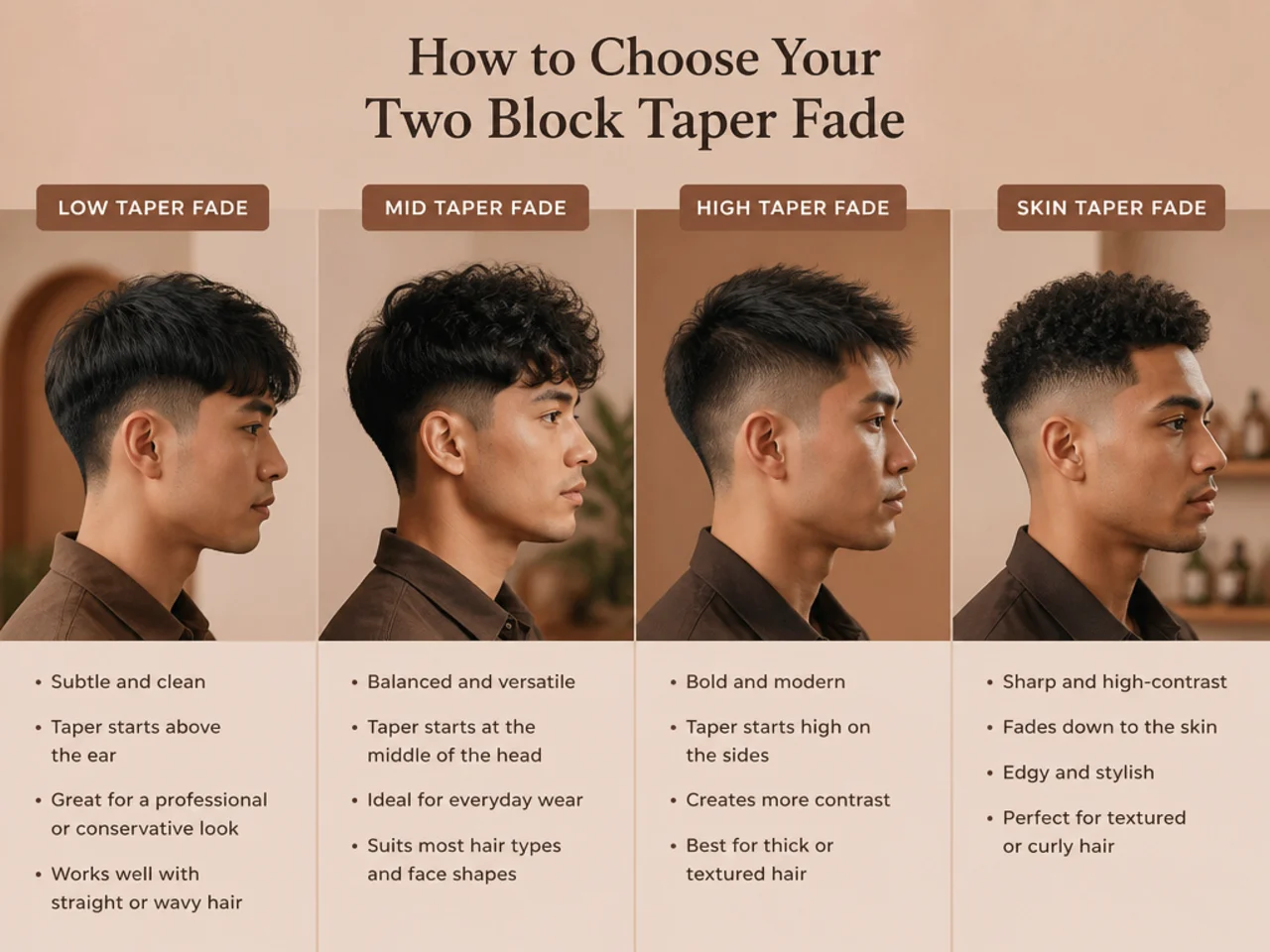
Three questions decide the version that suits you.
Face shape. Round and square faces benefit from added height on top — go three to four inches with a middle part or brush-up. Long and oval faces can handle either a lower top or a longer drape, but avoid tall styling that stretches the face further. Heart shapes read well with a fringe-forward variation.
Hair type. Straight hair drapes cleanly at any length — pick freely. Wavy hair needs the top an inch longer than you think so the wave weight pulls the covering piece flat. Curly hair needs even more length plus internal thinning from underneath, or the drape lifts instead of falls. Thin hair looks fullest with textured, layered variations.
Workplace and lifestyle. A low taper stays conservative — good for offices, weddings, and dress codes. A mid taper reads modern without being loud. A high taper or drop taper pushes into statement territory and needs the confidence to carry it. Match the taper height to the room you spend most of your day in.
Classic Two Block Taper Fade
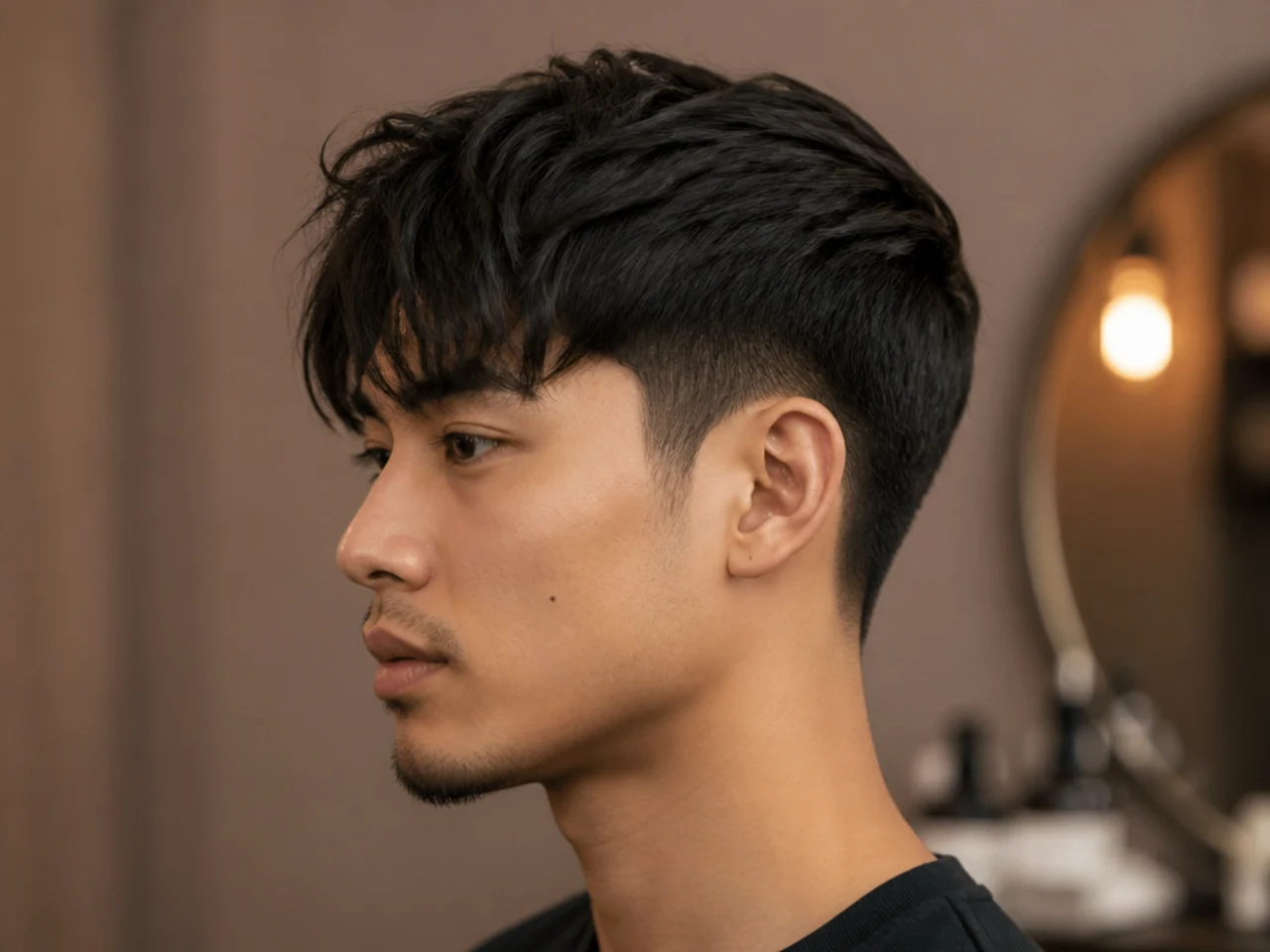
The base template — three inches on top cut in a soft rounded shape, hidden layer on a two guard, low taper blending the last inch to skin at the ears and neckline. Reads modern-professional from the front and quietly K-pop from the side. Suits every face shape and works on straight, wavy, and lightly curly hair.
Ask for: "Two block with a low taper fade, three inches on top, two guard on the hidden layer, taper the last inch to skin at the ears and nape."
Styling tip: cream through damp hair, blow-dry with fingers pushing forward, done. If your hair fights the drape, one pass of a matte clay through the ends locks it in place.
Korean Two Block with Low Taper Fade
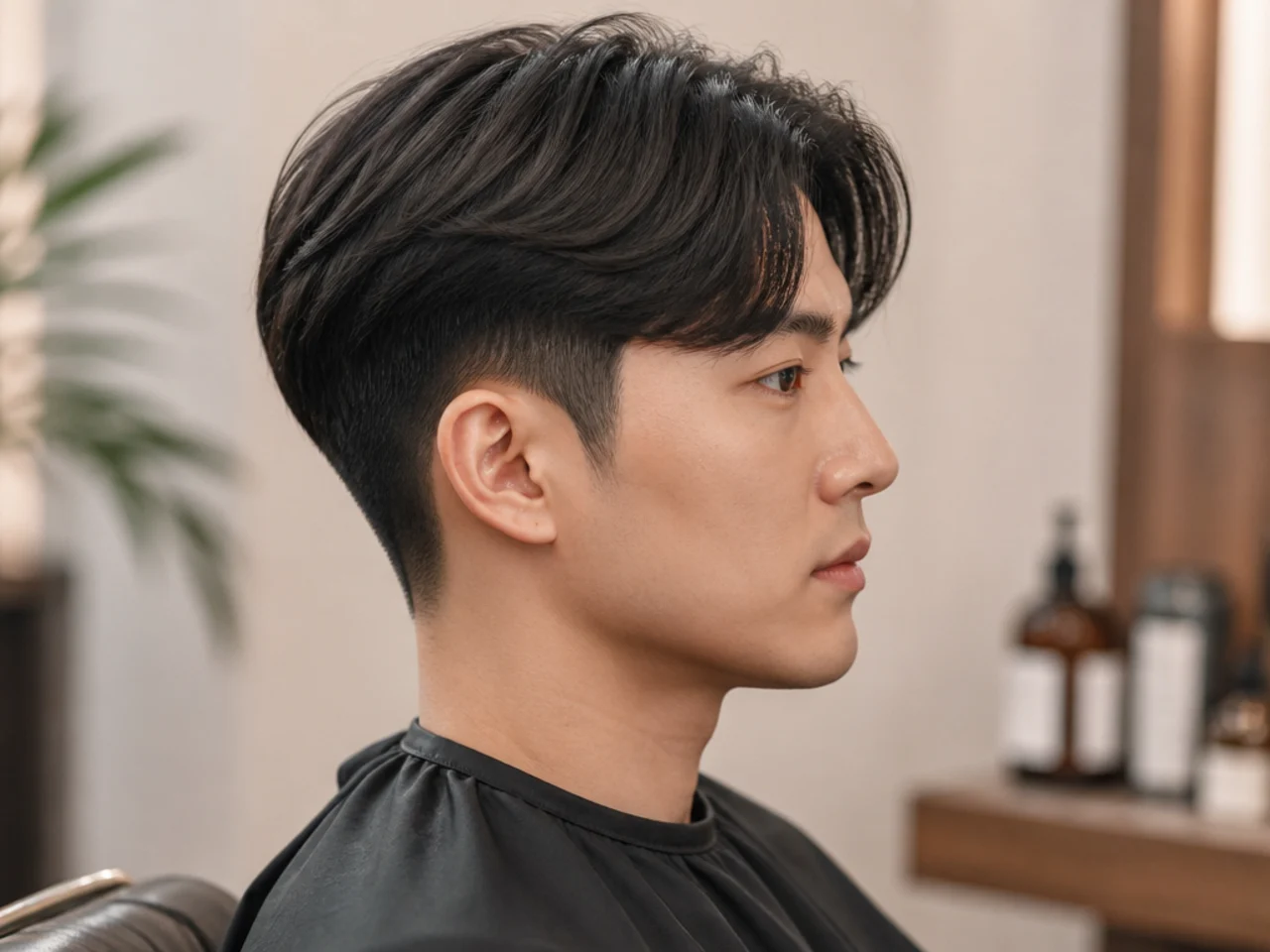
The idol group signature. Top is four inches minimum so it falls in two soft curtains from a center part, and the low taper keeps the sides sharp without exposing much skin. Reads intentional in every photograph, and it is the version most guys bring to the chair as a photo reference. If you want the deeper cultural context, read the Korean two block haircut guide.
Ask for: "Korean-style two block with a low taper, four inches on top for center-part length, one guard on the hidden layer, soft taper to skin only at the ears."
Styling tip: blow-dry with a round brush pulling each side outward from the part, then a light hairspray to hold. Skip pomade — Korean styling stays matte.
Short Two Block Taper Fade
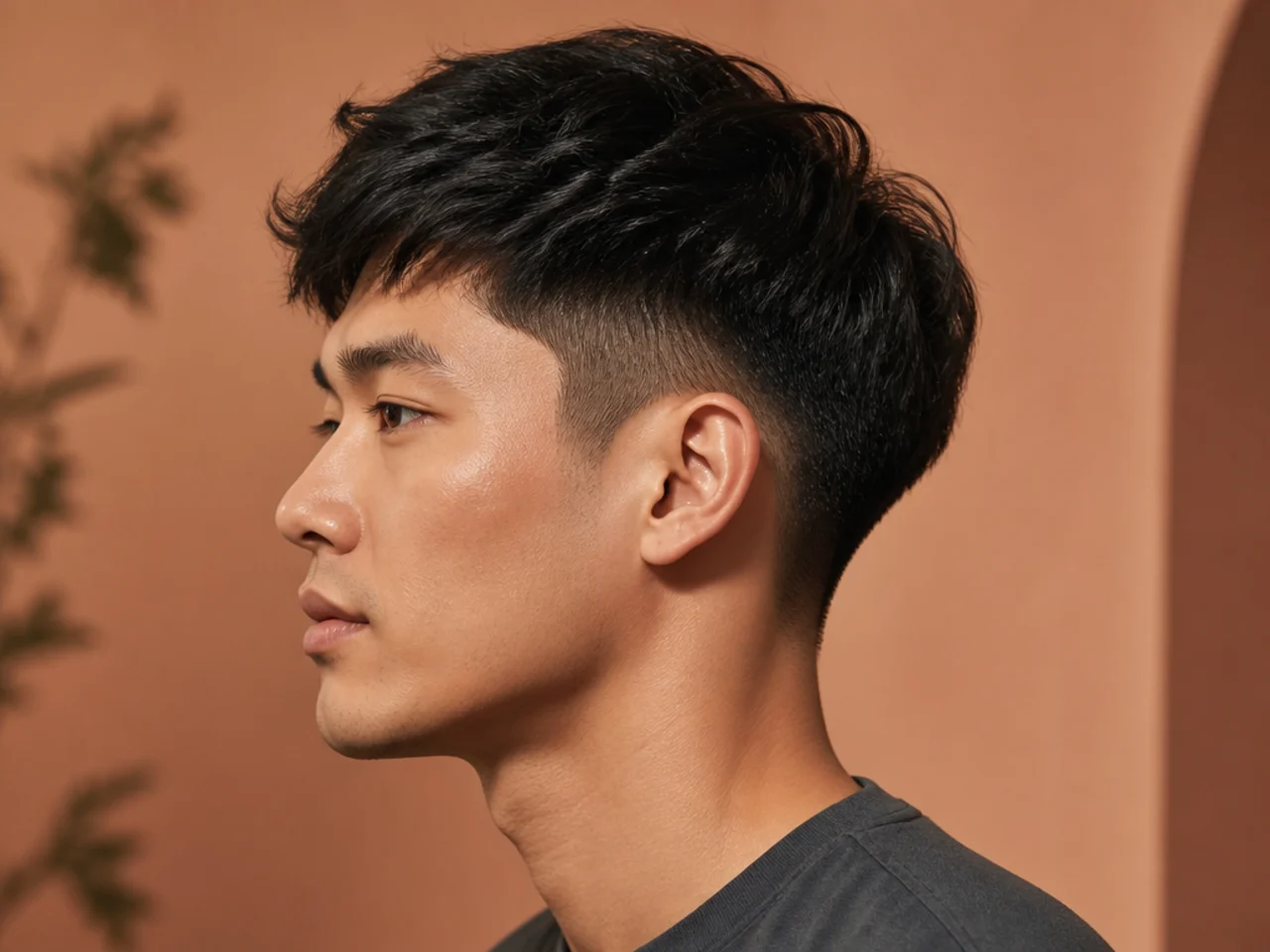
The shortest version that still qualifies. Top layer is one to one-and-a-half inches — just long enough to fall past the horseshoe line and cover the taper at rest. Reads office-safe from the front and only shows its K-pop side under motion or wind. Best pick if you like a short two block but want a cleaner perimeter than the classic hidden line.
Ask for: "Short two block with a low taper, one inch on top, one guard on the hidden layer, taper the last half-inch to a 0.5 guard at the perimeter."
Styling tip: a fingertip of cream, front to back, no product at the crown. Anything heavier weighs down the covering piece.
Long Two Block Taper Fade
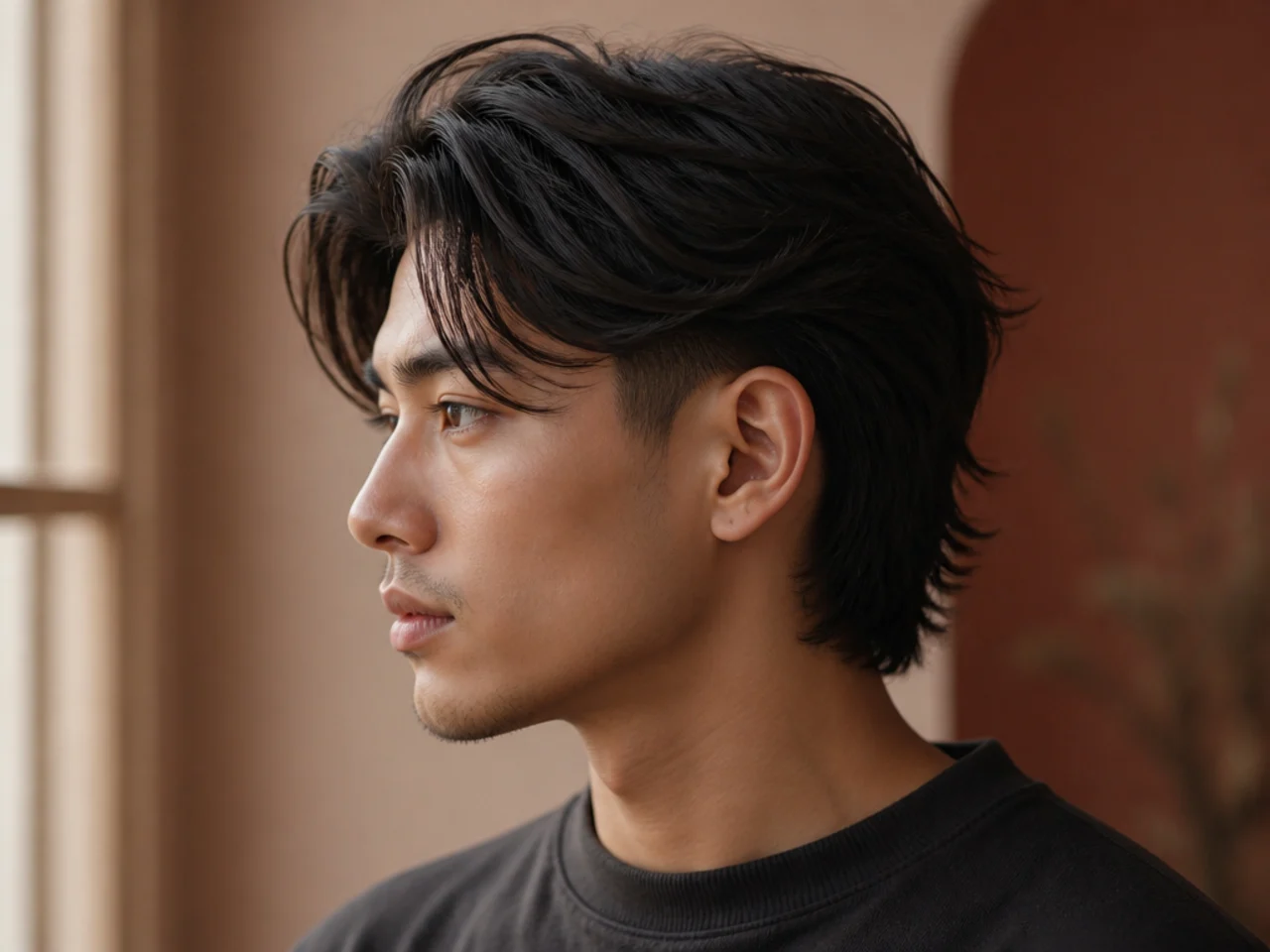
Top is five inches or longer — past the eyebrows in front, past the collar at the back. The taper fade stays low so the length has somewhere to fall against a clean line rather than a blunt buzz. Suits straight and slightly wavy hair; tight curls at this length need a different plan. The long two block haircut guide covers the growout timeline in detail.
Ask for: "Long two block with a low taper, five inches minimum on top, one guard on the hidden layer, taper the last inch to skin at the ears and nape."
Styling tip: leave-in conditioner on damp hair, air-dry, no product. Styling product weighs the length down and kills the movement.
Textured Two Block Taper Fade
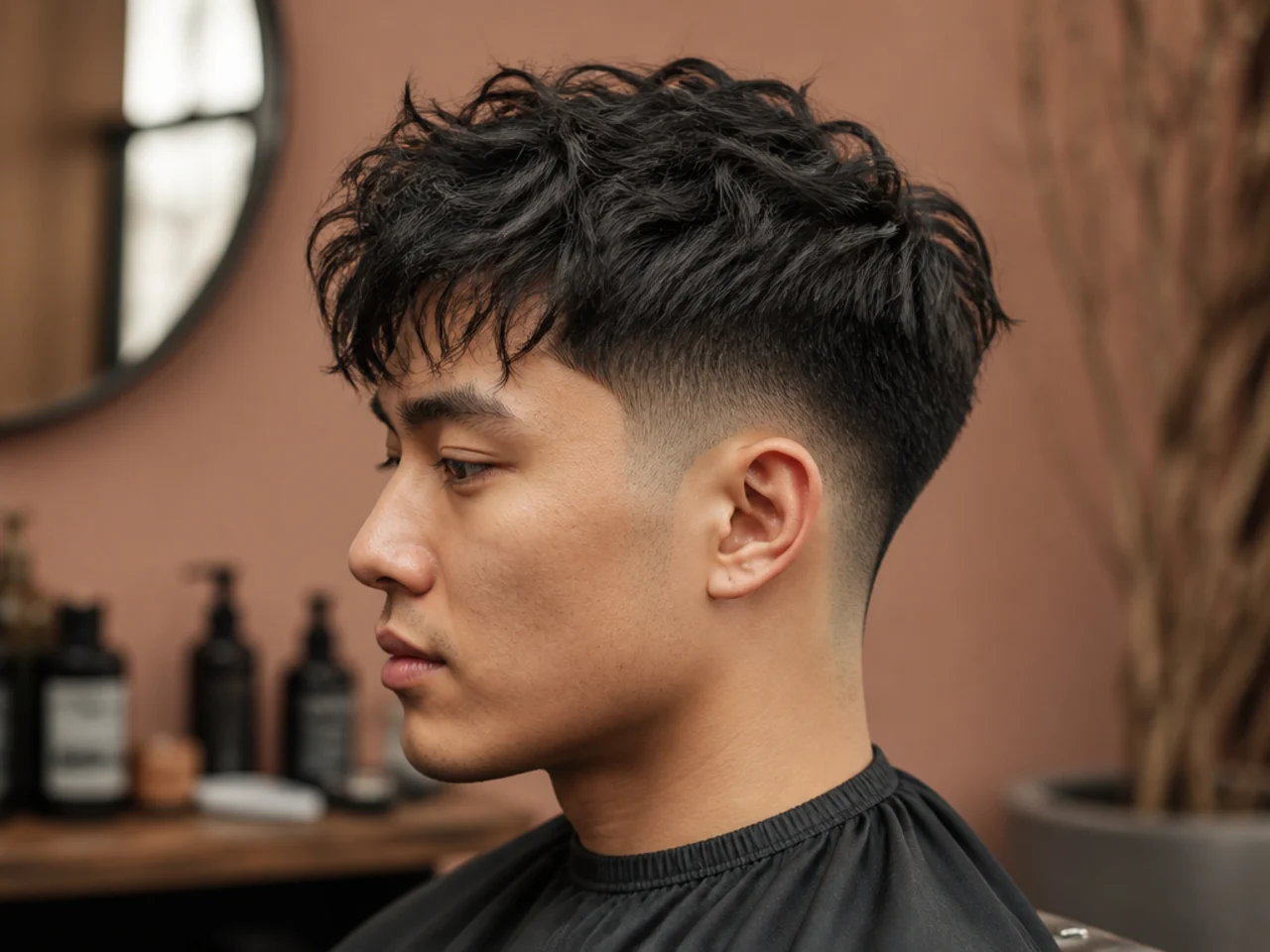
Point-cut ends across the top layer break up the flat, helmet look you get when a two block is cut blunt. The taper on the sides gives you a clean line to contrast the loose, piece-y ends. Suits straight, medium-to-thick hair, and it is the version to ask for if the classic feels too round or too soft. See the textured two block haircut breakdown for more on the internal cut technique.
Ask for: "Textured two block with a low taper fade, three inches on top with heavy texture through the ends, two guard on the hidden layer, taper to skin at the perimeter."
Styling tip: matte clay through damp hair, blow-dry with the nozzle aimed down each strand, finger-style at the front. Do not comb — you want the texture to move.
Middle Part Two Block Taper Fade
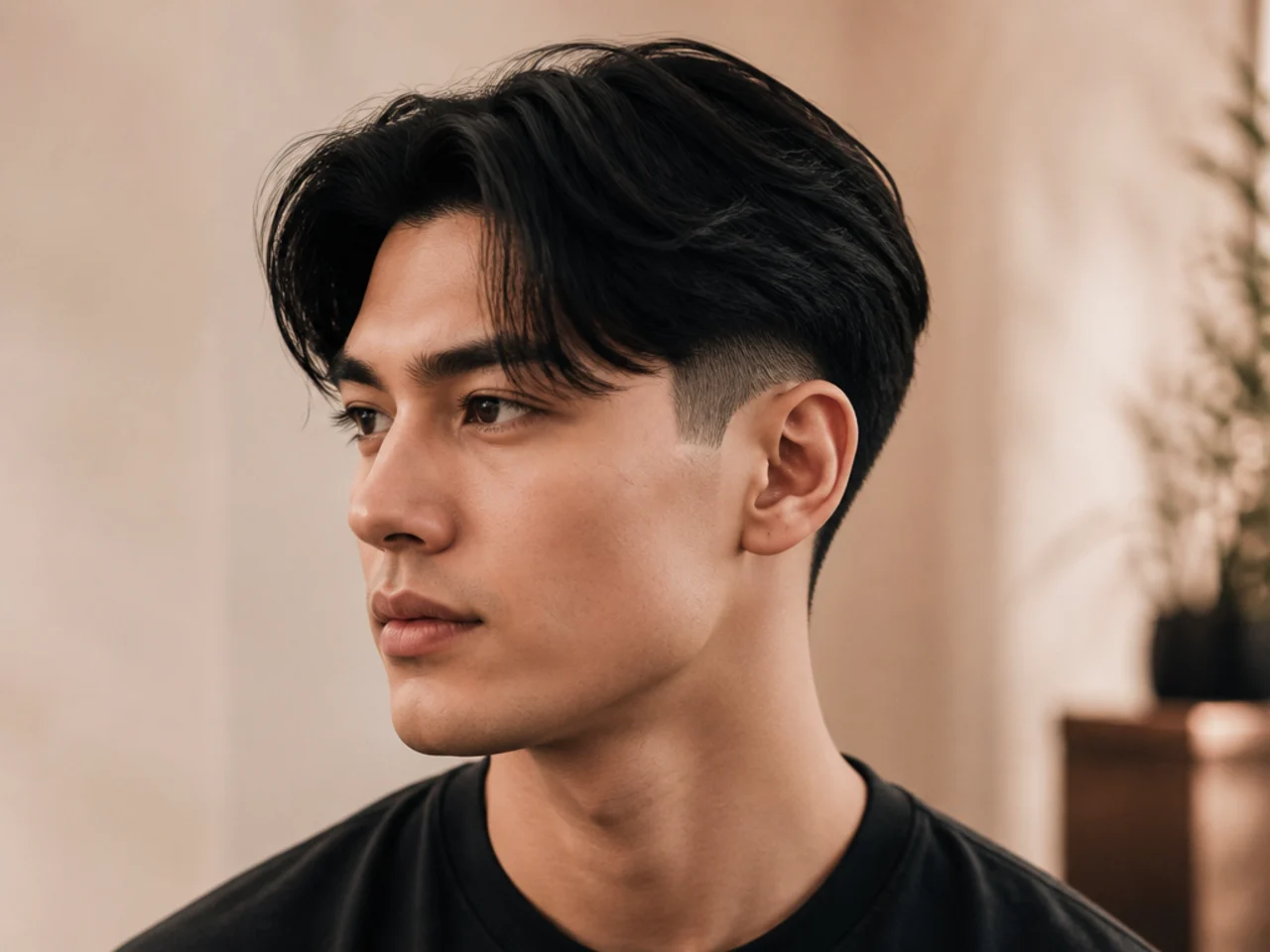
The center part is built into the cut — the top is scissor-cut with weight at the front so the two curtains fall naturally from the middle. Suits oval, long, and heart-shaped faces, and it is the two block variation that photographs best. Pairs cleanly with the wider middle part haircut for men family.
Ask for: "Middle-part two block with a low taper fade, four inches on top with weight at the front, one guard on the hidden layer, taper to skin at the perimeter."
Styling tip: blow-dry from the roots outward on each side, then set with a fingertip of light cream. Hairspray only if your hair fights the part.
Side Part Two Block Taper Fade
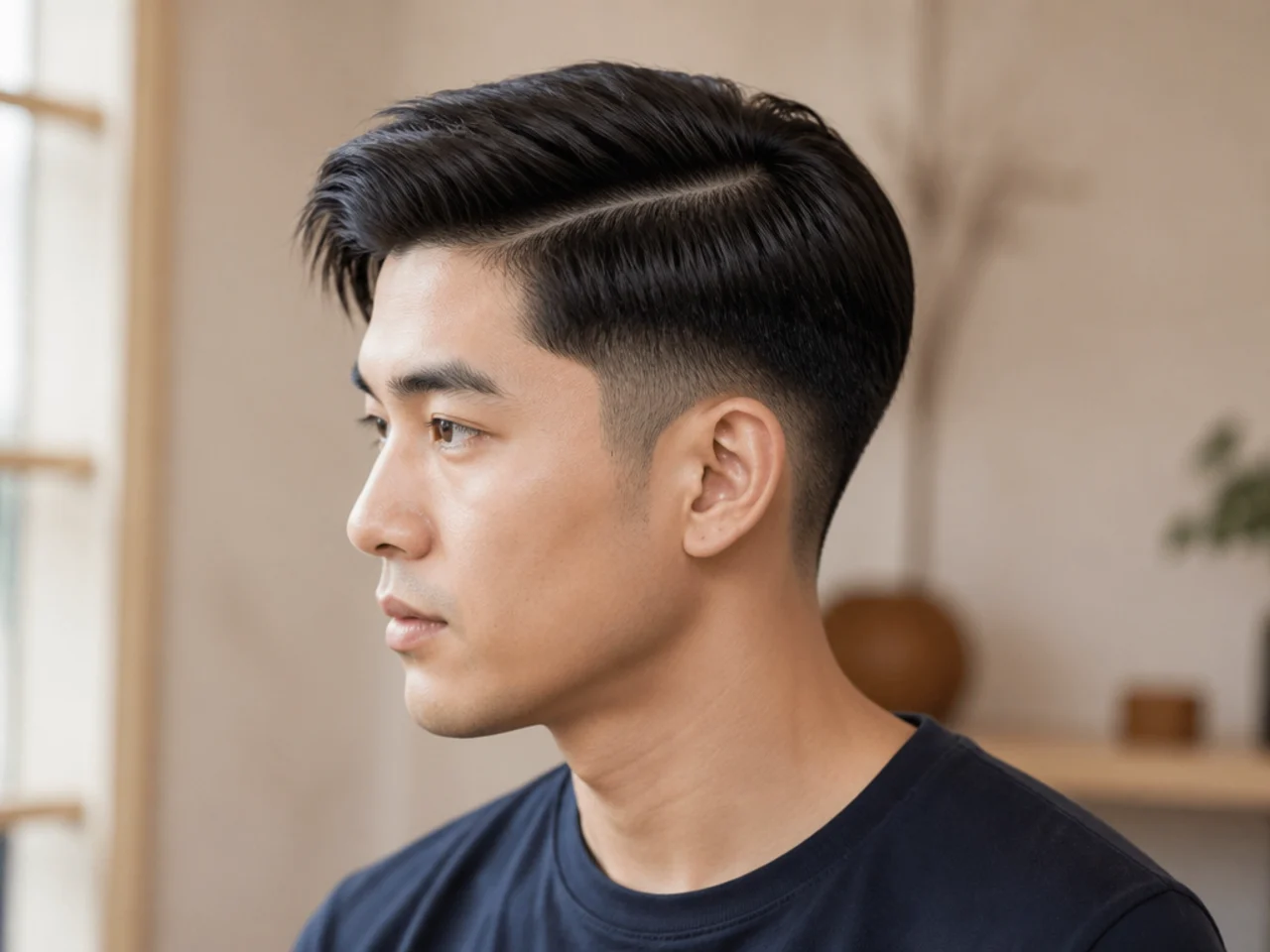
The top is cut asymmetrically — heavier on one side, lighter on the other — so the side part sits by default without daily persuasion. Cleanest, most polished version of the two block taper fade. Reads business-formal at the front, K-pop only if someone looks closely at the taper line. Best pick if you already wear a side part and want a modern silhouette to match.
Ask for: "Two block with a hard side part on the left, low taper fade, three inches on the heavy side and two inches on the lighter side, one guard hidden layer."
Styling tip: pomade combed strictly to shape. Fingers ruin the polish here — a fine-tooth comb is worth the extra thirty seconds.
Two Block Taper Fade with Fringe
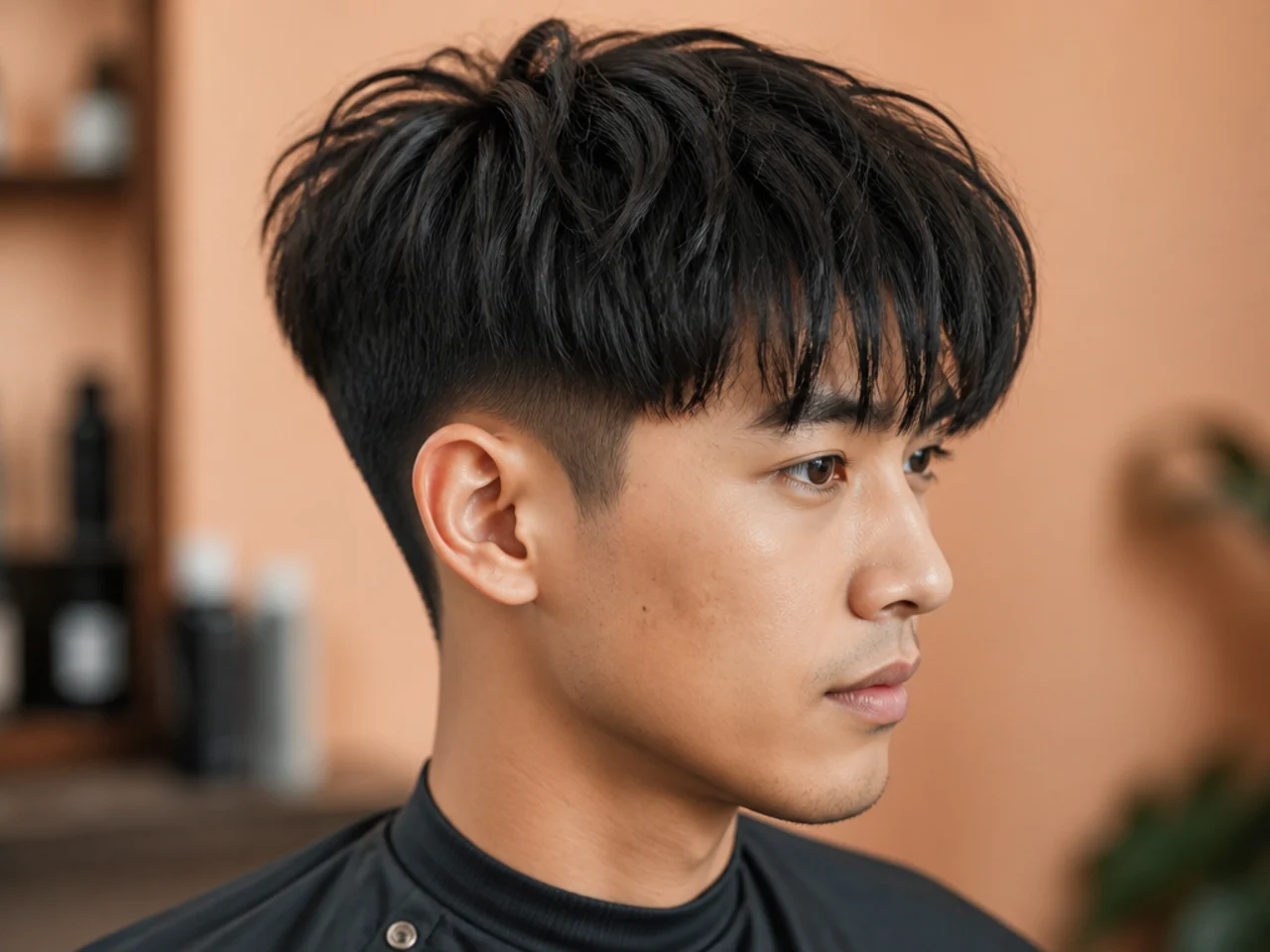
The front section stays longer than the rest of the top layer — a fringe that falls past the eyebrows while the crown steps shorter behind it. The taper on the sides keeps the shape from feeling shaggy. Suits high or wide foreheads, and it is the version to try if you like a heavy front but want a K-pop silhouette on the sides.
Ask for: "Two block with a heavy fringe and a low taper, front at the eyebrows and the top stepped shorter behind, one guard on the hidden layer, taper to skin."
Styling tip: blow-dry the fringe forward and down with your hand shaping the ends. A pea of matte cream on the tips only — never at the roots or the fringe collapses.
Two Block Taper Fade with Curtain Bangs
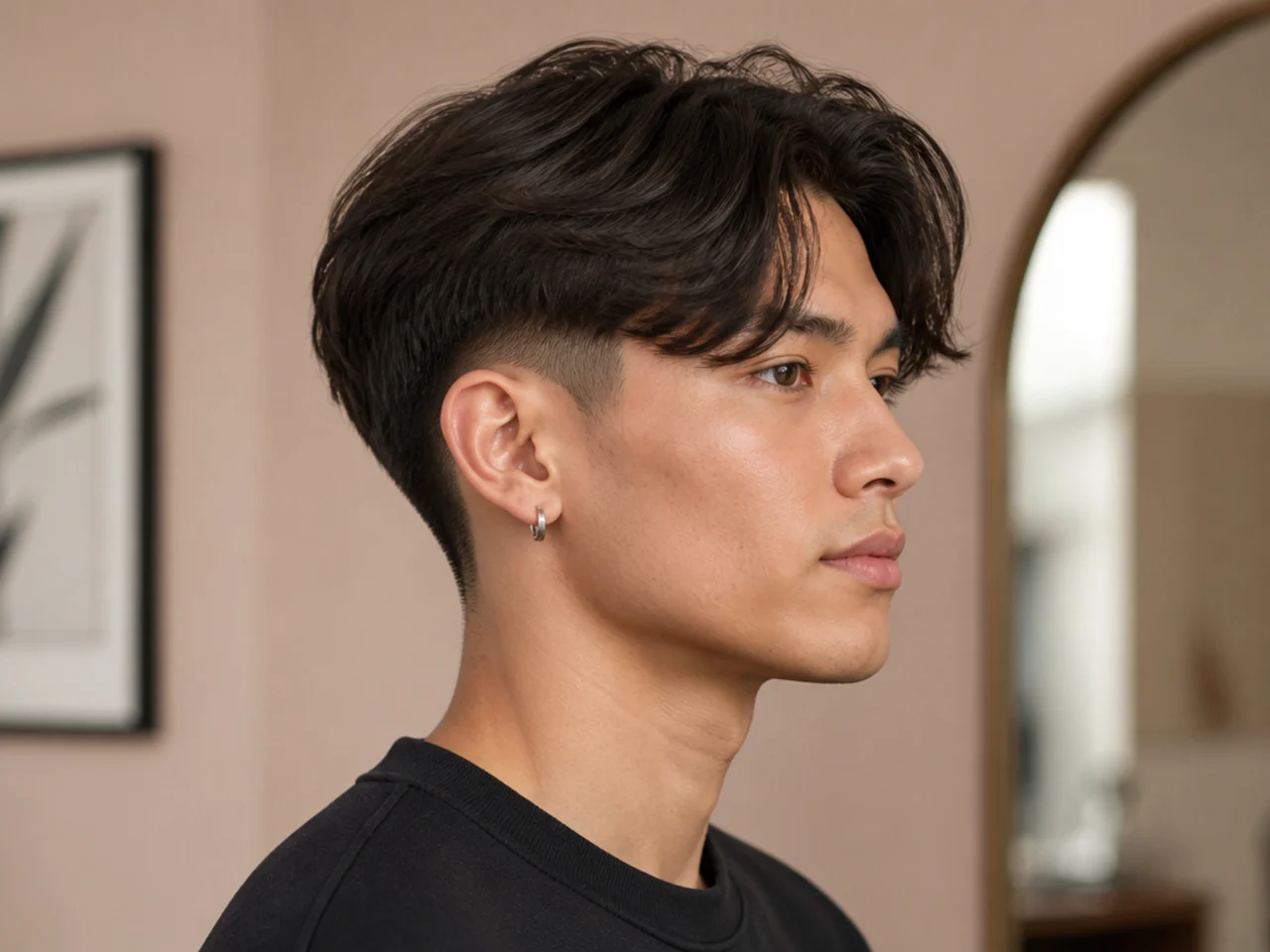
The front splits into two curtain pieces that frame the face rather than one flat fringe. The taper fade cleans up around the ears so the curtains have somewhere polished to fall against. Suits oval, square, and heart-shaped faces. Straight hair works effortlessly here; wavy hair needs one extra minute with a round brush.
Ask for: "Two block with curtain bangs and a low taper fade, four inches at the front split into two curtains, one guard on the hidden layer, taper to skin at the ears."
Styling tip: blow-dry each curtain outward from the center with a round brush, then finish with a light hairspray to hold the split.
Curly Two Block Taper Fade
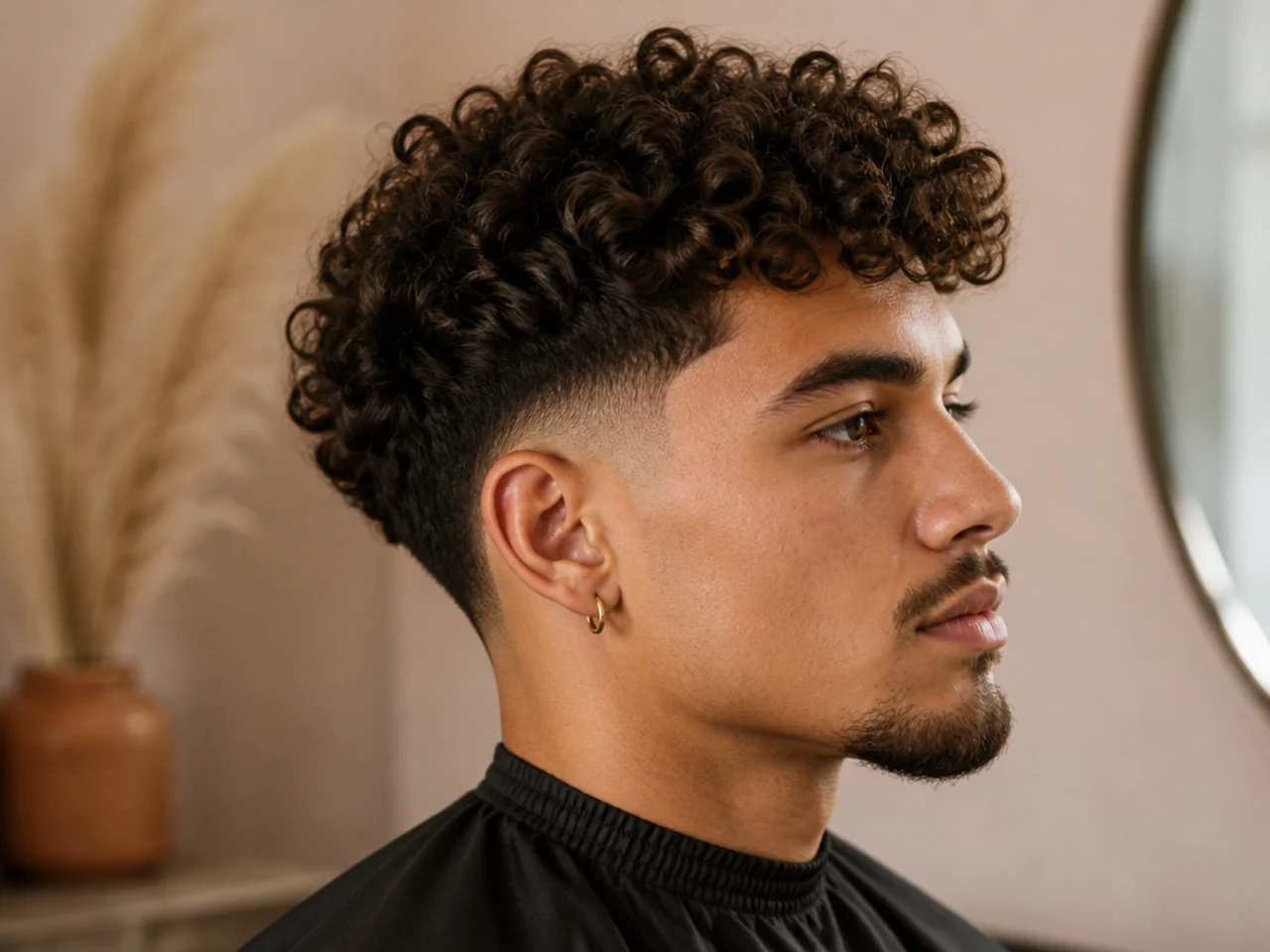
Curls fight the covering mechanic because they lift instead of drape. The fix is two-part: leave the top long enough that gravity wins (four inches minimum), and go shorter on the taper so the buzzed layer stays hidden between the coils. The taper fade cleans up around the ears where curls would otherwise puff outward.
Ask for: "Two block for curly hair, four inches on top scissor-cut with the curl pattern, half-guard on the hidden layer, taper to skin at the perimeter."
Styling tip: curl cream on soaking-wet hair, scrunch, plop in a T-shirt for ten minutes, air-dry. Skip the diffuser — you want the drape, not the volume.
Wavy Two Block Taper Fade
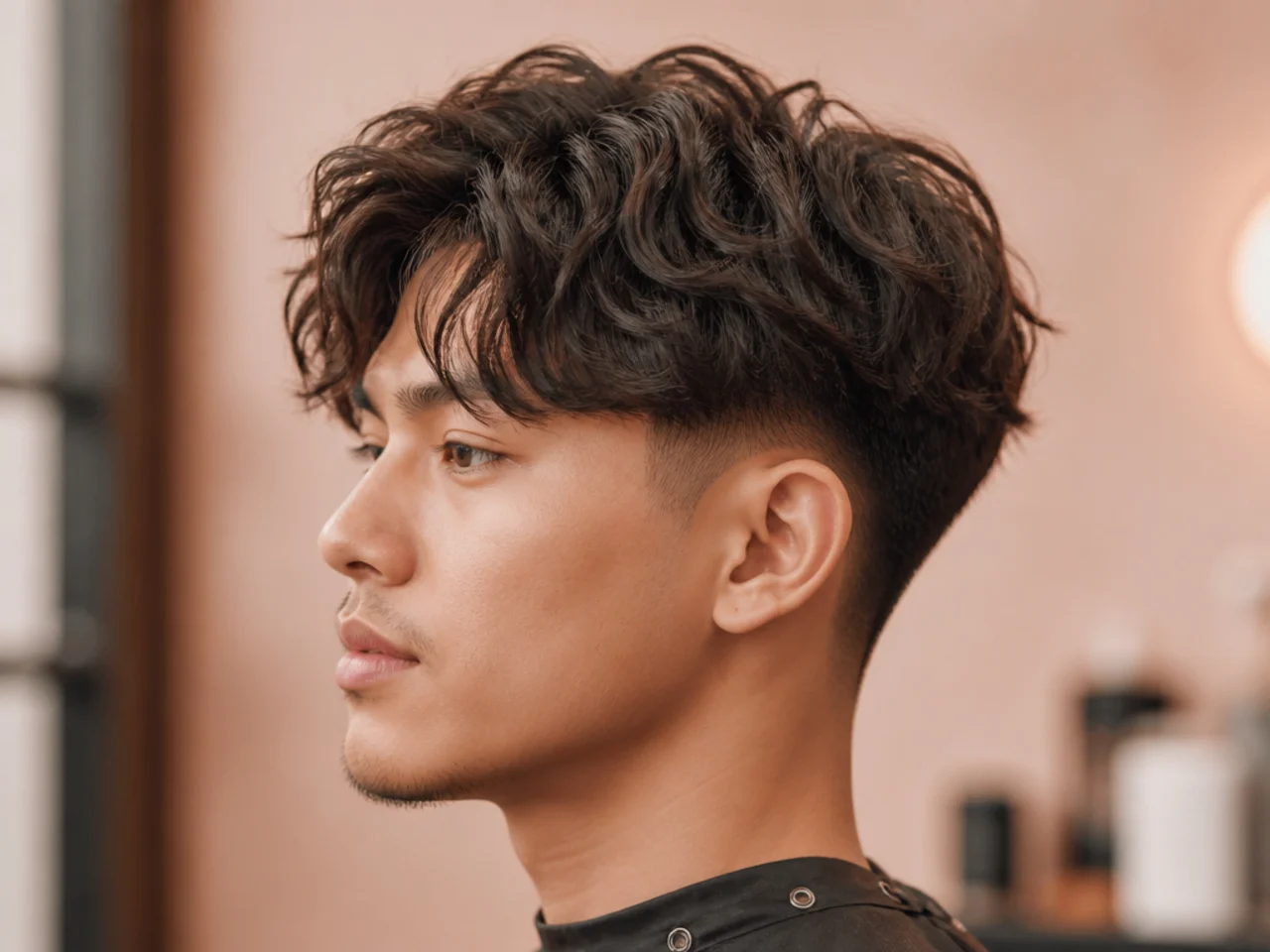
Best version of the cut for type 2A through 2C hair. The barber cuts the top with the wave direction in mind — longer where the wave falls, shorter where it flips up — so the finished shape reads intentional. The taper stays low and soft, matching the loose energy of the top.
Ask for: "Wavy two block with a low taper, four inches at the longest point of the wave, one guard on the hidden layer, soft taper to skin at the perimeter."
Styling tip: sea-salt spray on damp hair, scrunch by hand, air-dry. A brush kills the wave definition here — use fingers only.
Two Block Mid Taper Fade
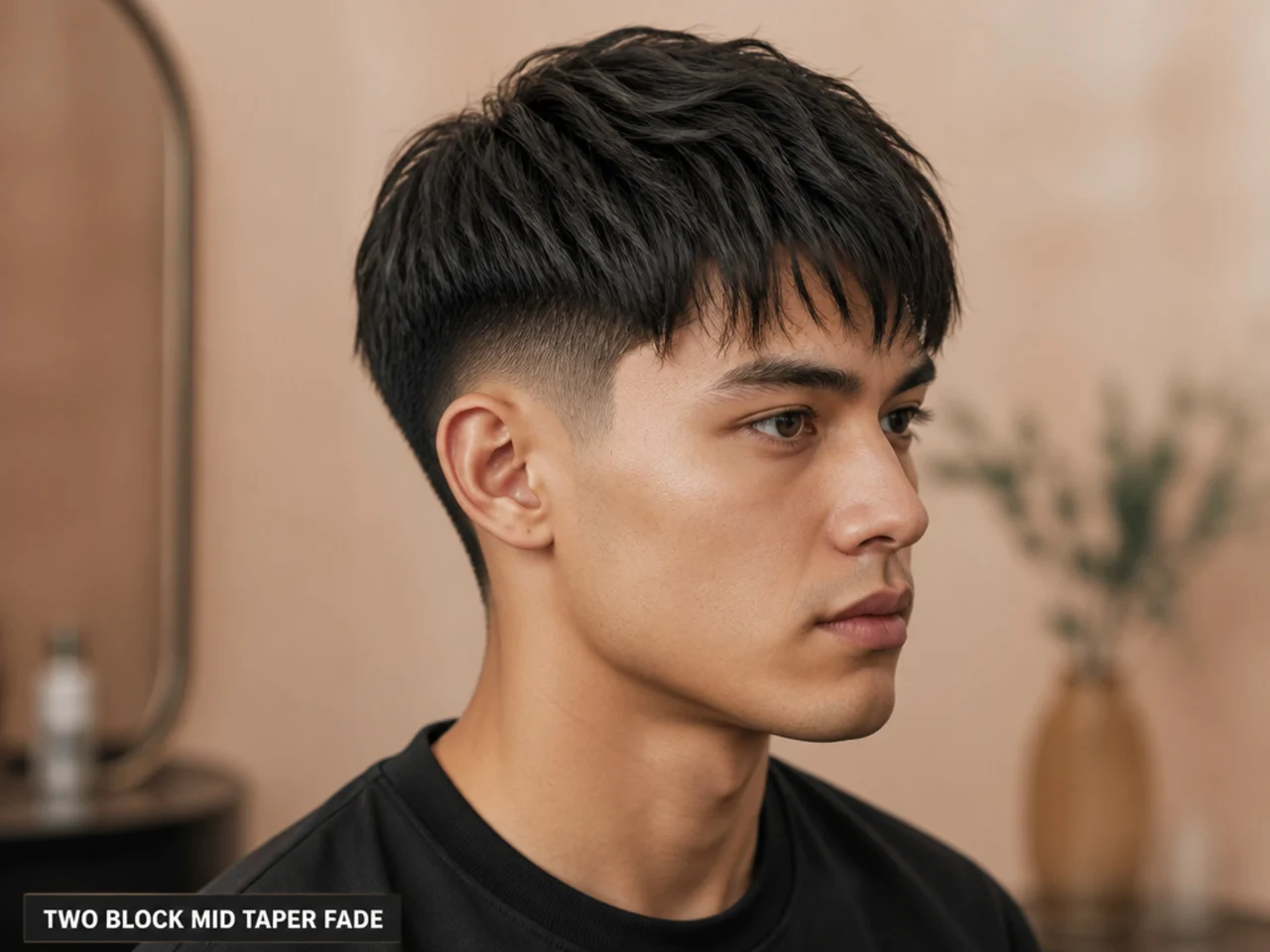
The taper starts at the temple instead of just above the ear. That mid placement removes visual weight from the middle of the head, which is the smartest choice for thick or dense hair that would otherwise fan sideways. See the mid fade haircut guide for the fade line in more detail.
Ask for: "Two block with a mid taper fade, three inches on top, two guard on the hidden layer, taper starting at the temple and blending to skin at the perimeter."
Styling tip: cream and pomade in equal parts through damp hair. Cream controls, pomade adds shine, and together they beat the puff you get from thick hair alone.
Two Block High Taper Fade
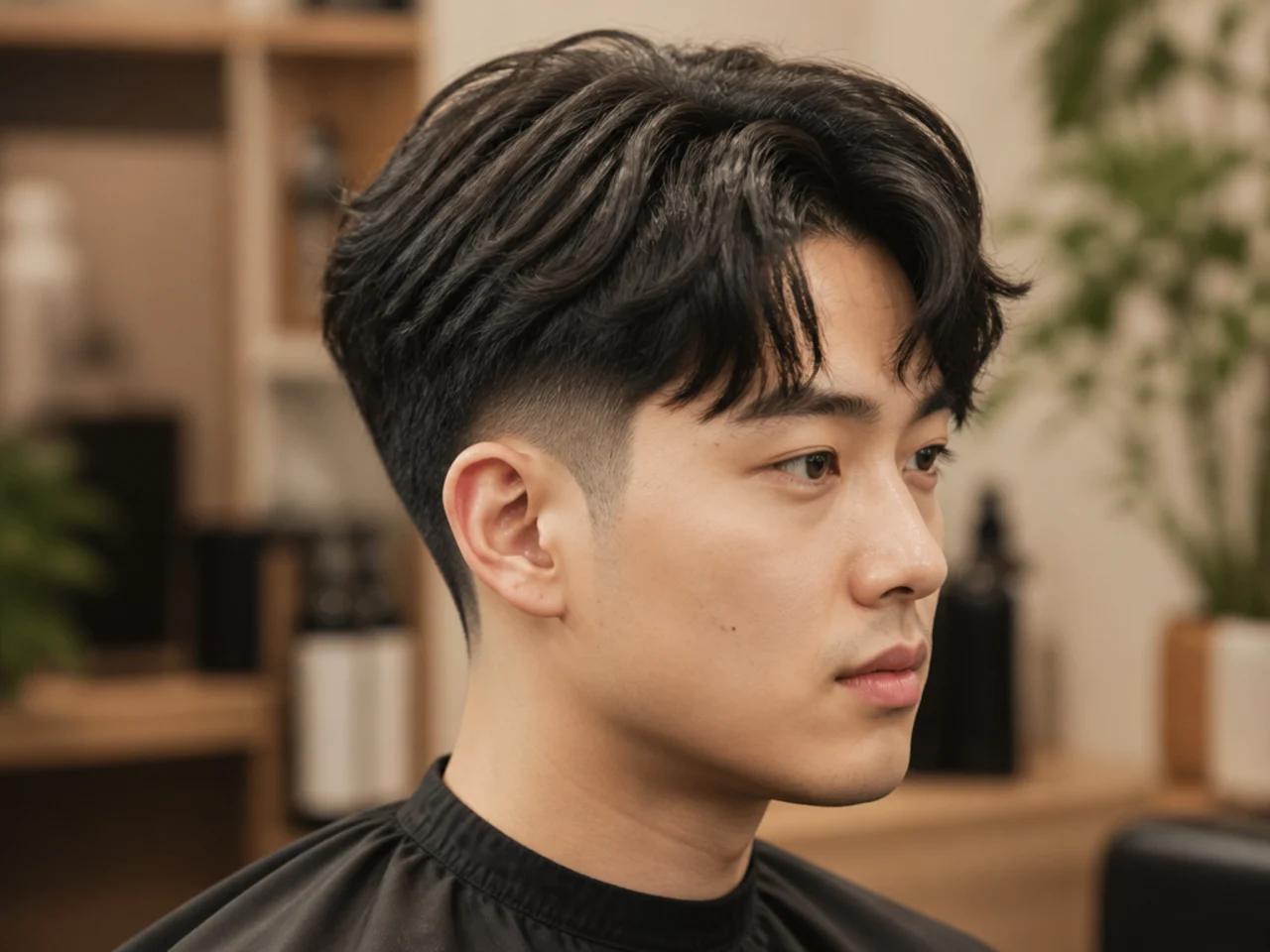
The taper starts high on the head — around the recession point of the hairline. Most dramatic contrast on this list. The hidden layer becomes visible even when the top is at rest, which pushes the cut into statement territory. Reads bold and modern. Compare against the base geometry in the high taper fade haircut guide.
Ask for: "Two block with a high taper fade, three inches on top, one guard on the hidden layer, taper starting high above the temple and blending to skin."
Styling tip: keep the top matte and controlled. The taper is loud enough; the top should not compete.
Two Block Drop Taper Fade
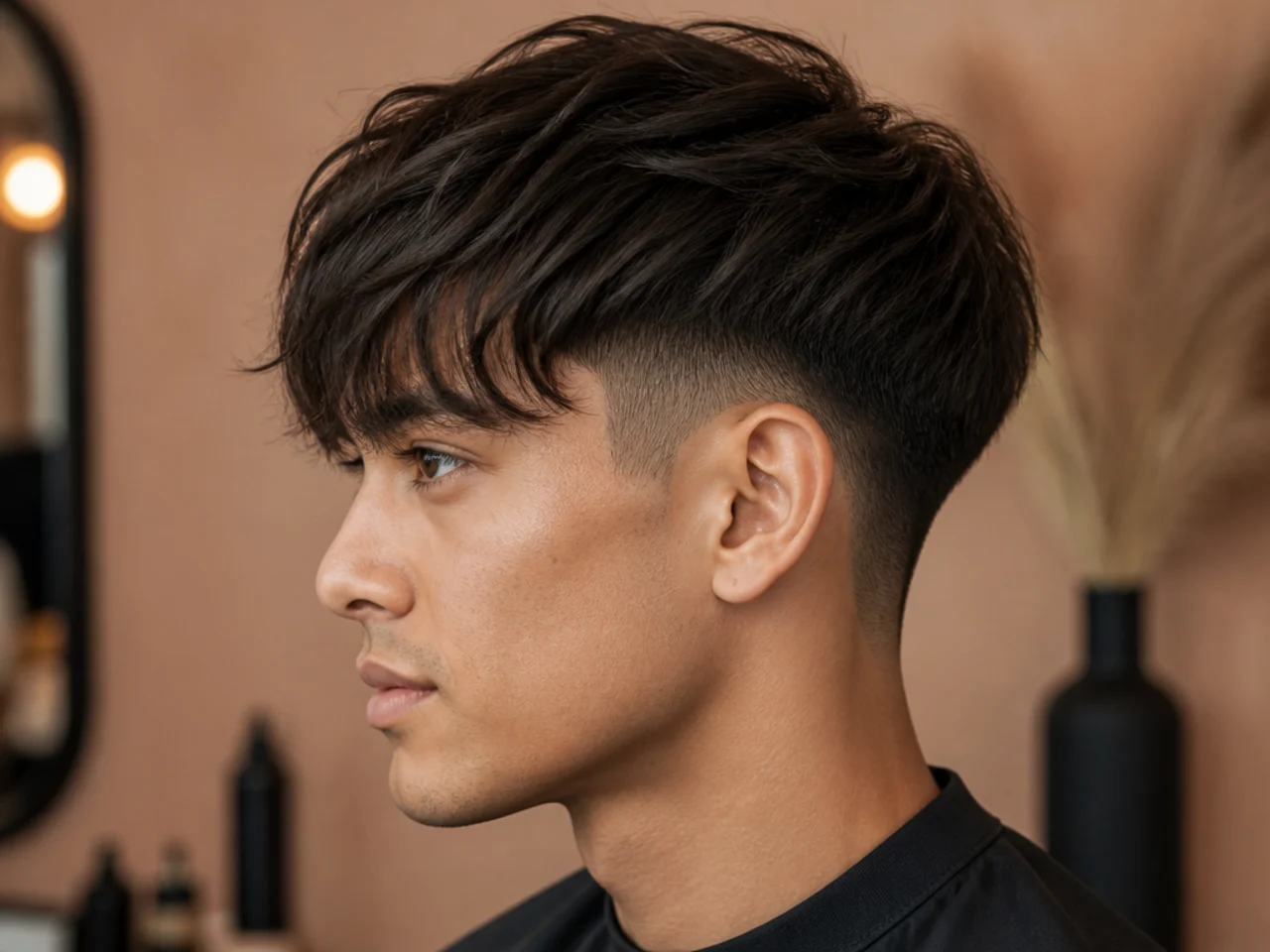
The taper curves down behind the ear instead of running straight across. That curve follows your skull shape and adds architectural cleanness to the perimeter. Pairs especially well with a slightly messy top — the polished drop line balances the loose front.
Ask for: "Two block with a drop taper fade, three inches on top styled loose, one guard on the hidden layer, drop the taper line behind the ear and blend to skin at the nape."
Styling tip: rough-dry with your fingers, no comb. Finish with matte paste twisted into two or three random front sections.
Two Block Burst Taper Fade
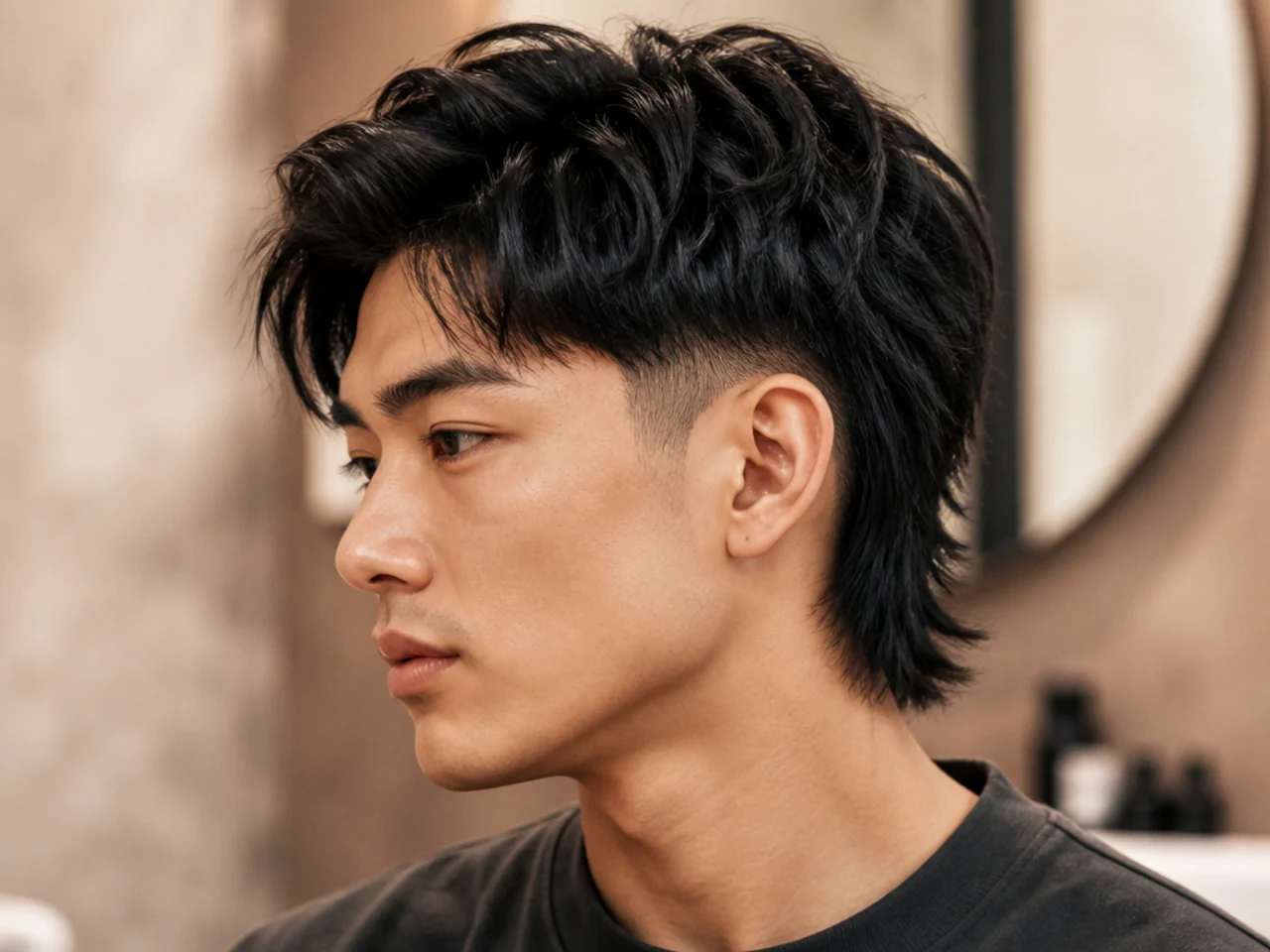
The burst fade radiates out from behind the ear in a semicircle, then reconnects at the back. Instead of a straight taper line, you get a curved shape that shows off the shorter layer only around the ear. Reads athletic and modern — a favorite for guys who want the two block silhouette with a barbershop signature at the side.
Ask for: "Two block with a burst taper fade, three inches on top, one guard on the hidden layer, burst the fade around the ear only and blend to skin."
Styling tip: matte clay through damp hair, finger-style forward. The burst carries the visual interest — the top should stay effortless.
Messy Two Block Taper Fade
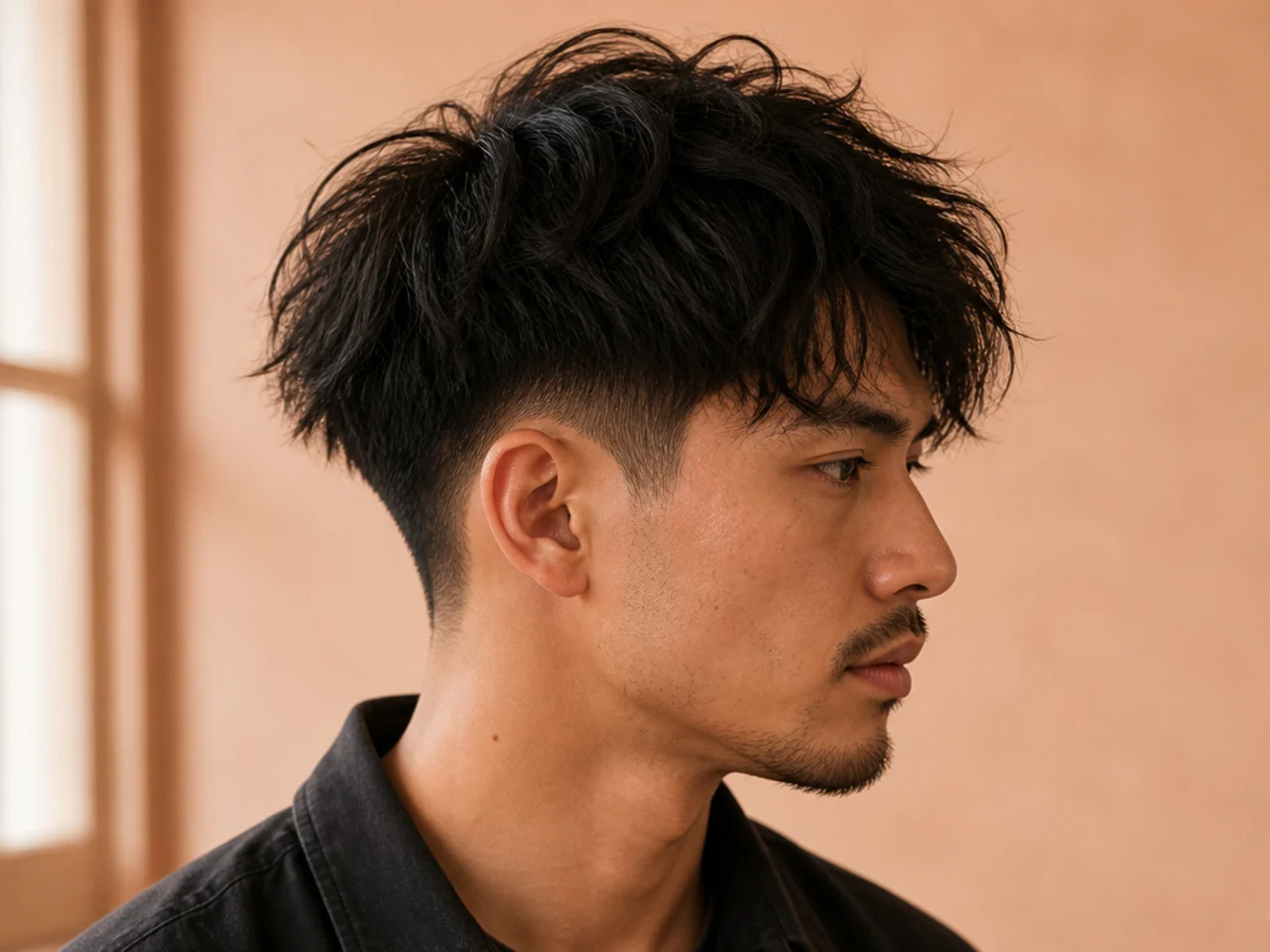
The top is hand-styled instead of combed — pieces going different directions, no strict shape. The taper fade underneath keeps the mess from tipping into scruffy. This is the version to ask for if you hate spending time on your hair and want something that looks intentional after thirty seconds of finger-styling.
Ask for: "Messy two block with a low taper fade, three inches on top with texture, two guard on the hidden layer, taper to skin at the perimeter."
Styling tip: rough-dry with fingers, no product, then a light matte spray from twelve inches away. The point is movement, not hold.
Two Block Taper Fade with Hard Part
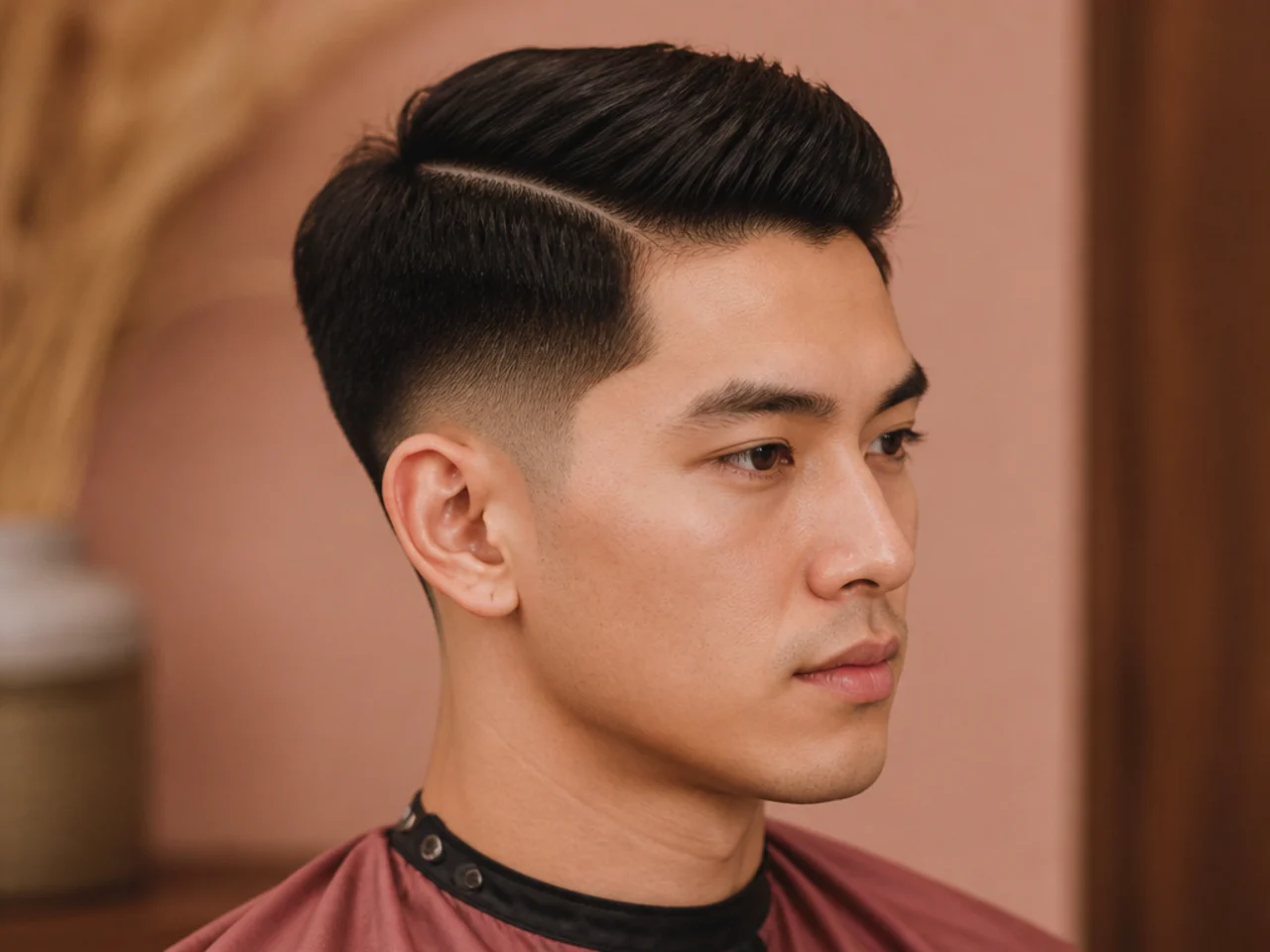
A razor-cut line shaved between the top and the taper, marking a firm boundary. The hard part removes any guesswork about where your part sits and adds a barbershop-detail signature. Suits guys with dense or thick hair — thinner hair can lose the line as it grows in.
Ask for: "Two block with a low taper fade and a hard part on the left, three inches on top, one guard on the hidden layer, razor a clean line between them, taper to skin at the perimeter."
Styling tip: pomade combed with the part direction. The line does half the work; you only need to guide the top into shape.
Two Block Taper Fade with Undercut Contrast
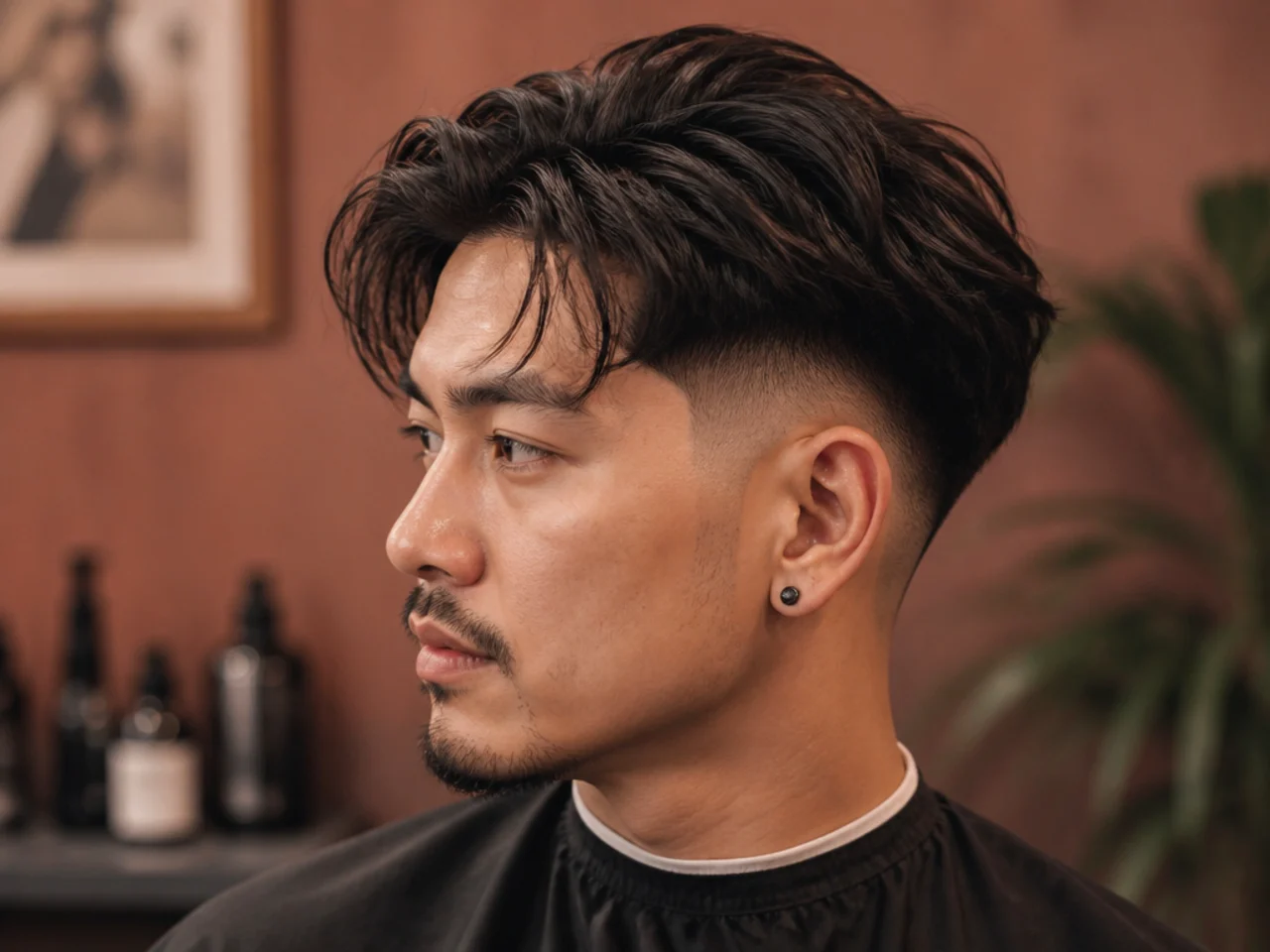
A hybrid — the sides above the ears are cut with a hard disconnect (like an undercut), but the taper still finishes clean around the nape. You get the visible edge of a classic undercut with the perimeter polish of a taper. Best for guys who want the drama without the full disconnection everywhere.
Ask for: "Two block with an undercut on the sides and a low taper at the nape, three inches on top, one guard hard-cut on the sides, taper to skin at the neckline only."
Styling tip: blow-dry the top forward and slightly to one side so the undercut edge shows when you move. Matte paste through the ends holds it there.
Two Block Taper Fade with Layers
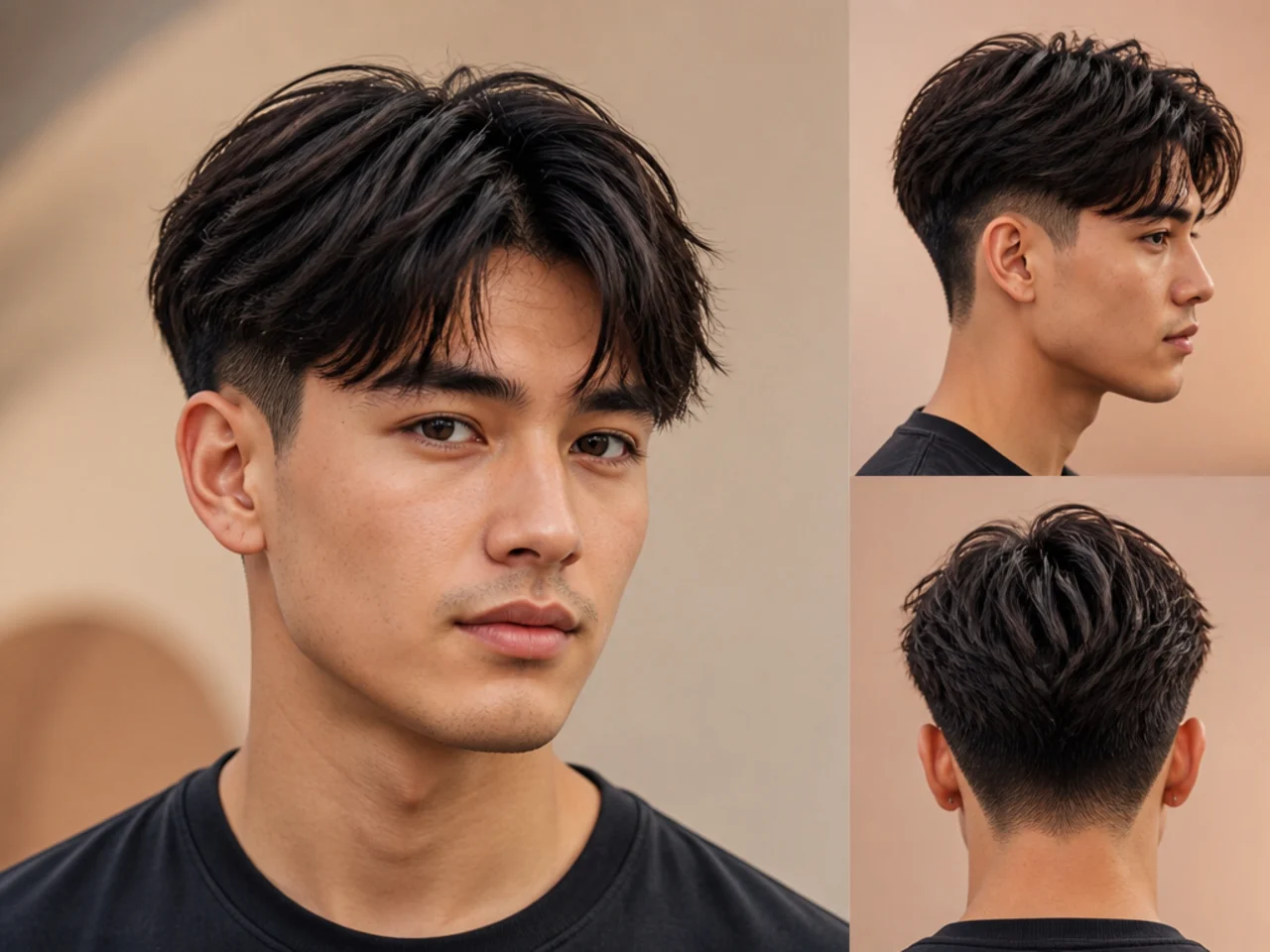
Instead of one flat top length, the top is cut in stacked layers — shorter at the crown, longer at the front. Adds movement and depth to hair that would otherwise sit like a helmet. Suits medium-to-thick straight or wavy hair, and it is the two block variation that grows out best between cuts.
Ask for: "Two block with layers on top and a low taper fade, four inches at the front stepping down to two inches at the crown, one guard on the hidden layer, taper to skin at the perimeter."
Styling tip: blow-dry with a round brush lifting from the roots. Finish with pomade worked through the ends only, keeping the roots clean.
Two Block Taper Fade Mullet
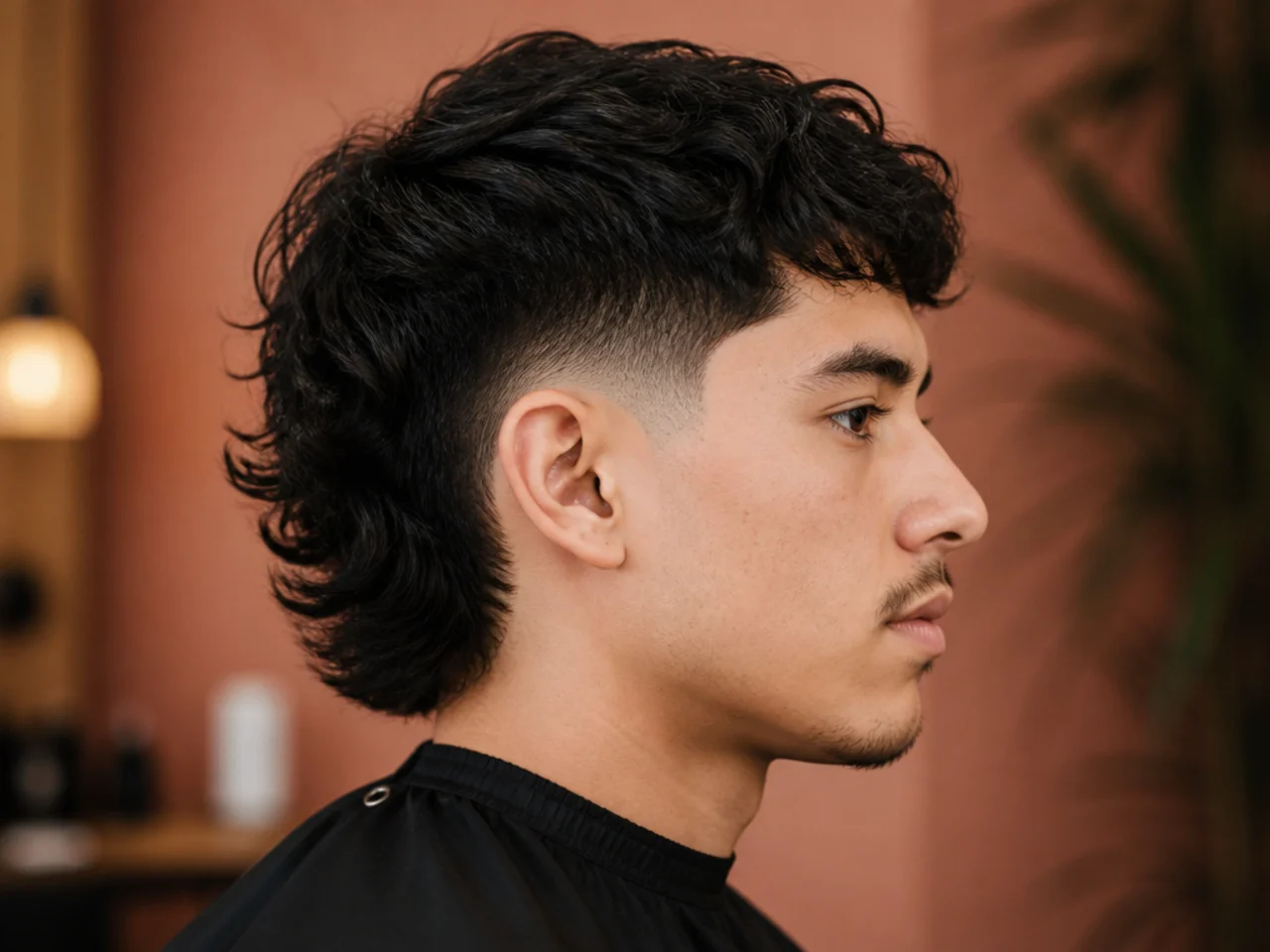
Two block up top, mullet down the back. The taper wraps around the sides only, then the length in the back grows past the collar into a proper mullet tail. Reads bold — statement cut, not safe. Best for straight or slightly wavy hair; curls make the tail hard to shape.
Ask for: "Two block with a low taper on the sides only, three inches on top, two guard where the sides taper to skin, keep the back long past the collar as a mullet."
Styling tip: sea-salt spray on the length, scrunch by hand, air-dry. Do not blow-dry the tail — it goes fluffy and loses the shape.
How to Ask Your Barber
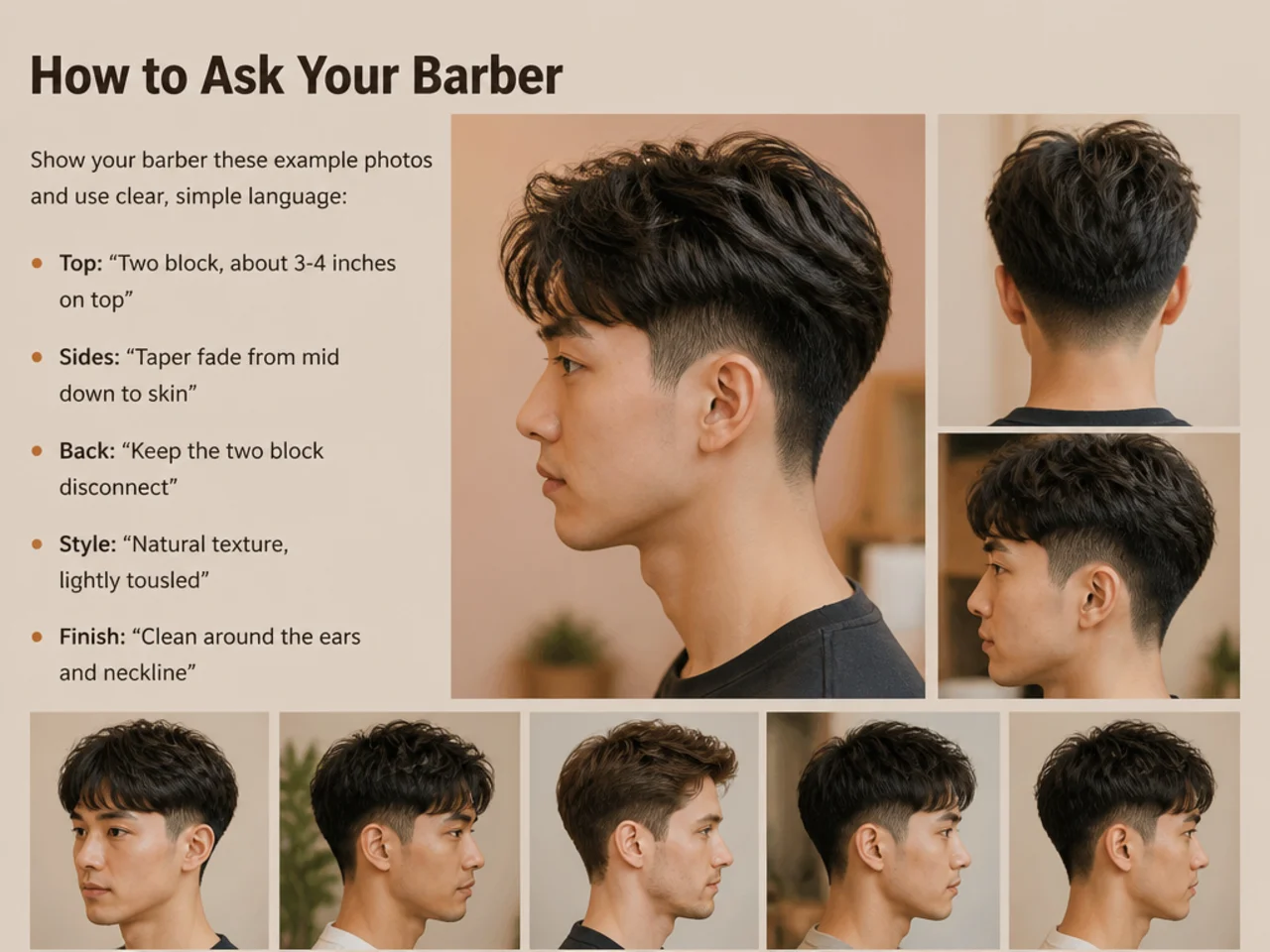
Nail the two block taper fade with five specifics. Skip any of these and you get someone else's version of the cut.
- Bring a photo. Pinterest, this article, an idol group screenshot — pick one and hand it over. Words alone lose too much detail on a cut this specific.
- State the top length in inches. "Three inches on top" is unambiguous. "Medium" is not.
- State the hidden layer guard. One guard is standard, two guard for a softer contrast, half-guard if you want the hidden layer close to skin.
- State the taper height. Low taper (only the last inch fades to skin), mid taper (starts at the temple), high taper (starts above the temple), or drop taper (curves behind the ear).
- State the taper endpoint. Skin for maximum contrast, half-guard for a softer finish, one-guard for the most conservative version.
- State the styling direction. Center part, side part, forward-drape, or brushed back. The cut lines change based on how you plan to wear it.
- Book the next appointment before you leave. Three to four weeks. Fades soften fast — the shape you paid for lives on the calendar as much as in the chair.
Styling and Maintenance
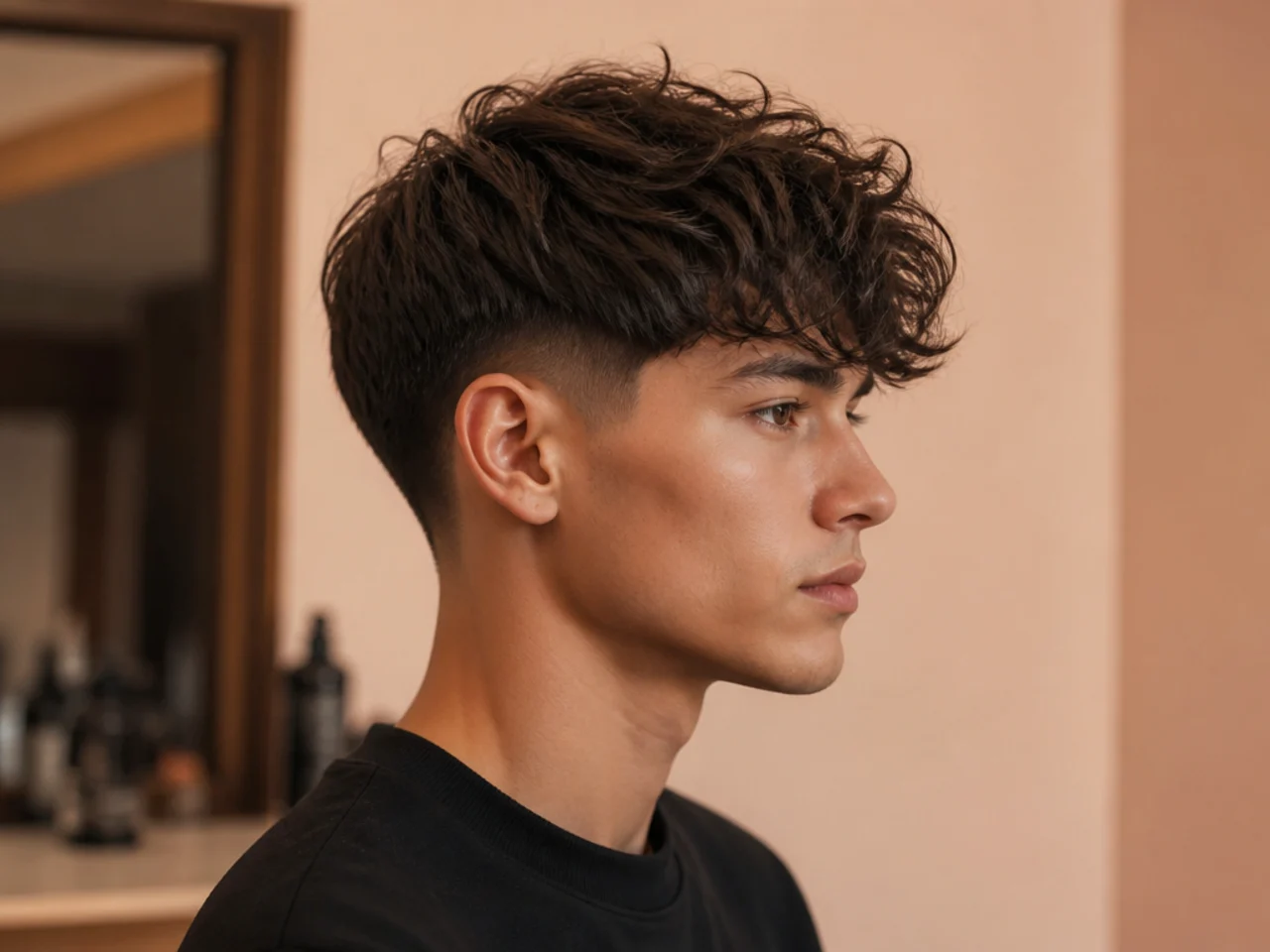
The two block taper fade does most of its work at the barber's. Home styling should be short and repeatable.
Wash and towel-dry. Rough-dry until your hair is damp, not wet. Product goes in damp — soaking wet dilutes it, dry hair fights it.
Blow-dry the direction you want it to sit. Nozzle pointing down the shaft. Push the top forward, sideways, center-parted, or straight back. This step is eighty percent of the finish, product or no product.
Pick one product for the finish you want. Matte clay for texture. Cream for control. Pomade for shine and hold. Sea-salt spray for wave definition. Warm it in your palms first, then apply back to front — ends first, roots last.
Set the shape with fingers. Use a comb only when you want a strict part or a formal look. Fingers keep the two block silhouette reading natural.
Maintain the taper on a calendar. Book every three weeks for a fade touch-up, every six weeks for a full cut. The moment the taper line goes soft is the moment the whole cut starts to look grown-out — and the next cut is twice the work.
For hair that behaves specifically like yours, the Korean haircuts for men guide covers the full family of Korean-informed cuts and their styling nuances. If you want to see the pillar template this variation is built on, start with the main two block haircut guide.
FAQ
What is a two block taper fade?
It is a two block haircut — long top layer that drapes over a shorter hidden layer — paired with a taper fade on the perimeter instead of a single clipper guard. The taper cleans up the ears and neckline while the covering piece keeps the two block silhouette from the front.
Is the two block taper fade good for round faces?
Yes, if you keep the top a little taller or wear a center part. The hidden lower block removes side bulk, and a low or mid taper lifts the visual weight upward — both effects lengthen a round face.
How is it different from a regular two block?
A regular two block uses one clipper guard on the hidden section and stops with a straight line. The taper fade version blends that hidden section down to a shorter length (or skin) at the ears and neckline, giving a polished perimeter you can see when the top moves.
How often should I get it re-cut?
Every 3-4 weeks. The taper fade goes soft at the two-week mark and loses its shape by week five. If you want the fade to stay crisp, book a mini touch-up at three weeks and a full cut at six.
What length should I ask for on top?
For a classic drape, three to four inches. Shorter than two inches and the top won't fall past the hidden layer; longer than five and it stops reading as a two block and starts reading as long hair with faded sides. Match the length to your styling appetite.
Does it work with curly or wavy hair?
Yes — go longer on top so gravity wins the drape, and ask the barber to scissor-cut the top instead of thinning it. Curly hair on a two block taper fade reads modern and effortless once the length is right. The low taper fade guide covers the taper geometry for textured hair in more detail.