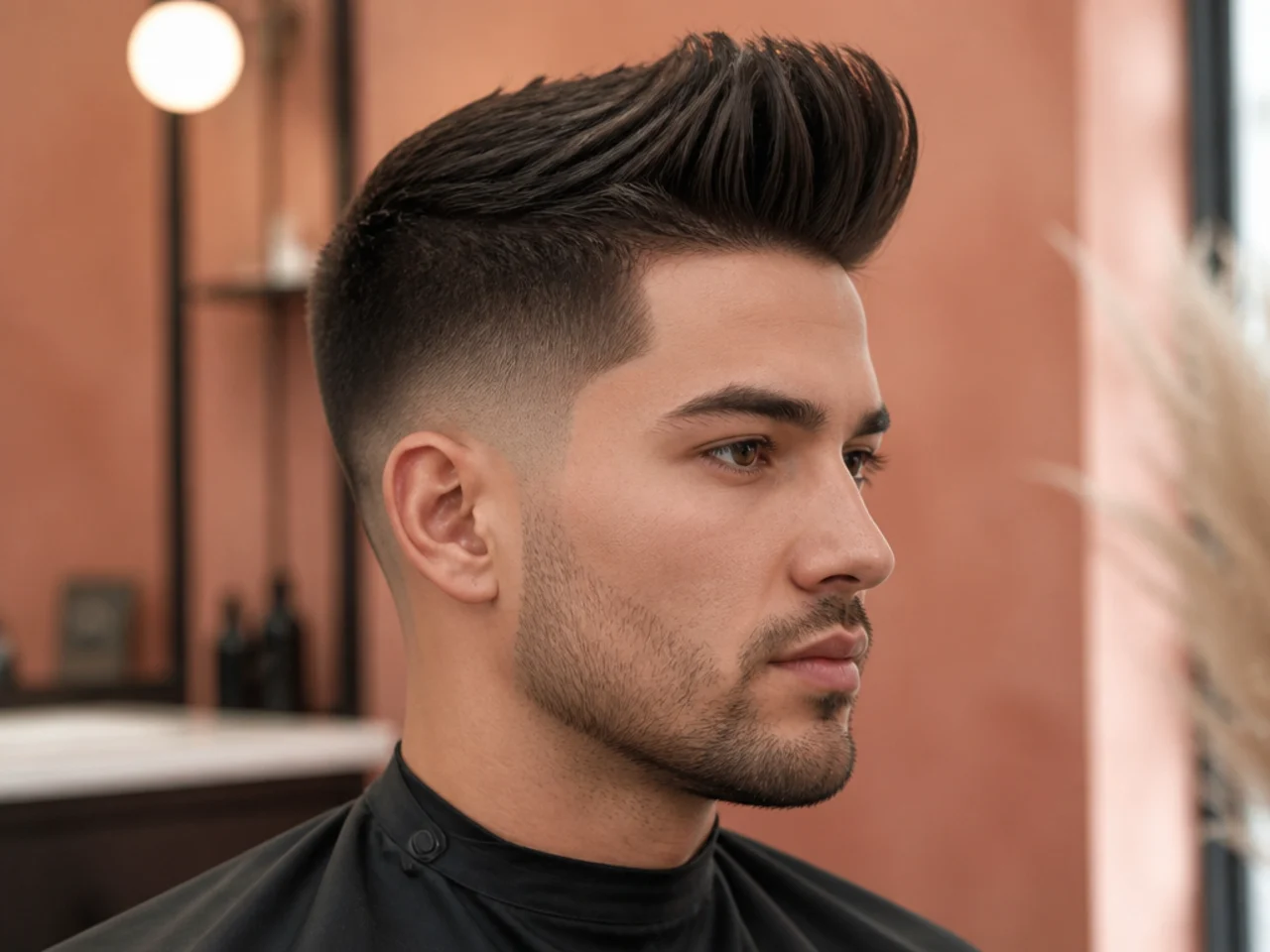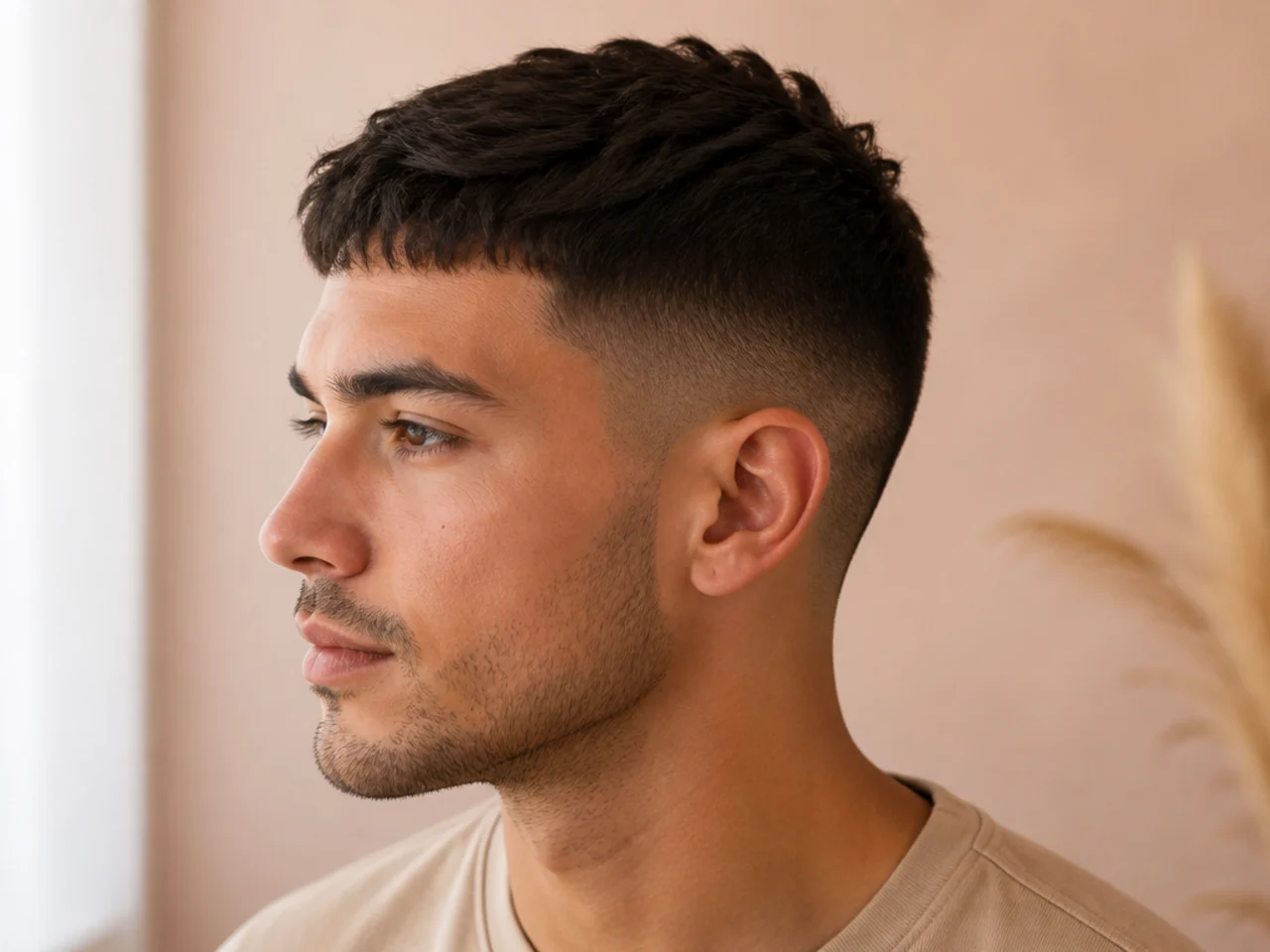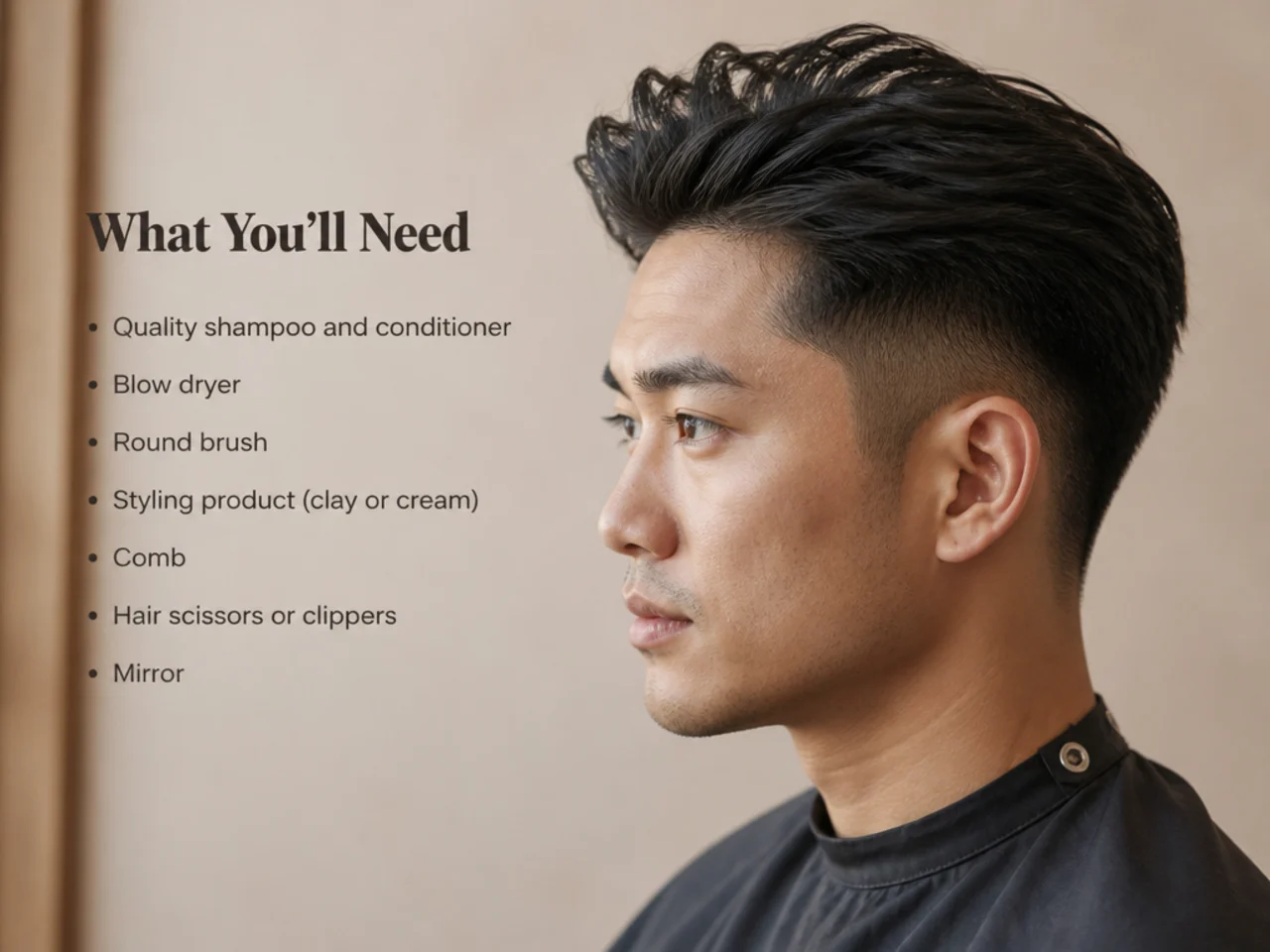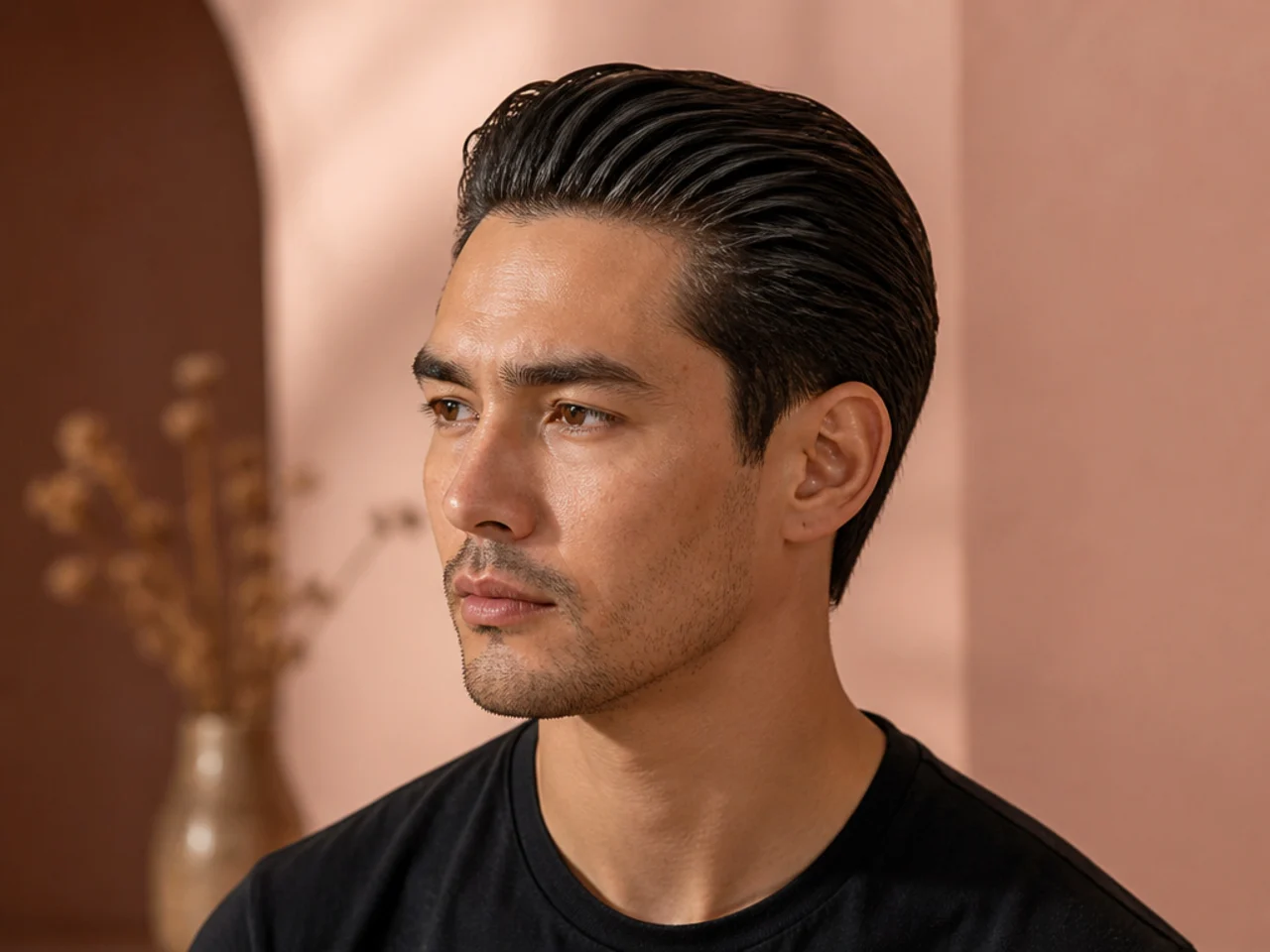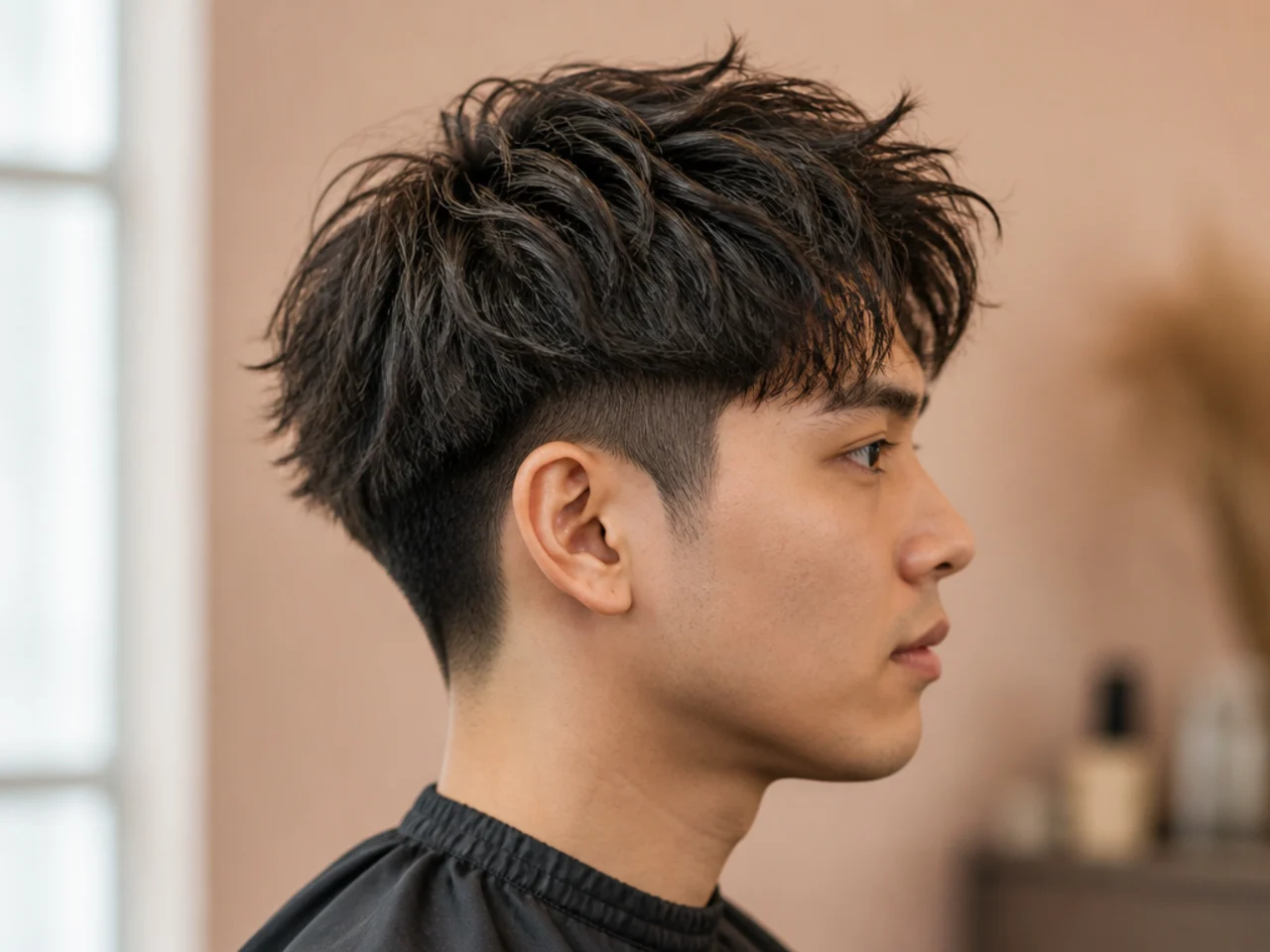
20 Textured Two Block Haircuts for Men
Twenty textured two block haircut ideas for men — point-cut tops, hidden sides, and every fringe direction. Photos, hair-type notes, and the exact ask for your barber.
In this article · 32
- What Is a Textured Two Block Haircut?
- How to Choose Your Textured Two Block
- The 20 Textured Two Block Variations to Know
- 1. Classic Textured Two Block
- 2. Short Textured Two Block
- 3. Medium-Length Textured Two Block
- 4. Long Textured Two Block
- 5. Textured Two Block with Middle Part
- 6. Textured Two Block with Side Part
- 7. Textured Two Block with Curtain Fringe
- 8. Textured Two Block with Forward Fringe
- 9. Textured Two Block with Low Fade
- 10. Textured Two Block with Mid Fade
- 11. Textured Two Block with High Skin Fade
- 12. Textured Two Block with Low Taper
- 13. Textured Two Block with Drop Fade
- 14. Textured Two Block with Undercut
- 15. Wavy Textured Two Block
- 16. Curly Textured Two Block
- 17. Messy Textured Two Block
- 18. Piecey Point-Cut Two Block
- 19. Razored Textured Two Block
- 20. Textured Two Block with Line-Up
- How to Ask Your Barber
- Styling and Maintenance
- FAQ
- What is a textured two block haircut for men?
- Which face shape suits a textured two block best?
- How do I ask my barber for a textured two block?
- Is the textured two block good for thick hair?
- What's the difference between a textured two block and a regular two block?
- How often should I re-cut a textured two block?
The textured two block is what happens when a barber stops treating the two block as a flat helmet and starts treating it as a shape that should move. Same hidden sides, same long covering piece — the top gets point-cut, razored, or thinned so the ends break up and drape instead of sitting like a lid. Below, twenty variations, who each suits, and the exact language to hand your barber. For the wider family, start with our two block haircut guide.
What Is a Textured Two Block Haircut?
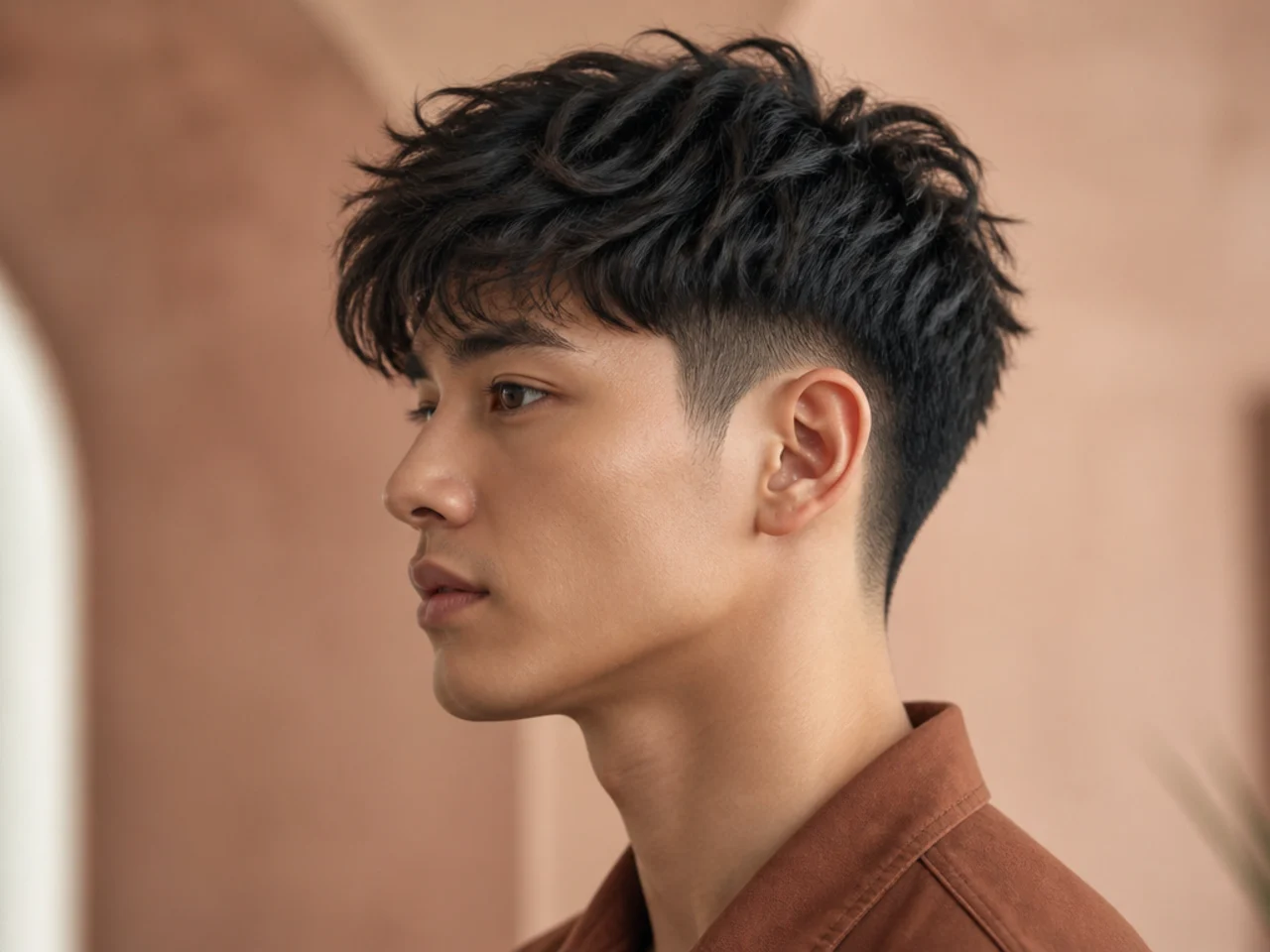
A textured two block keeps the two block's two-layer rule — long top, hidden buzzed sides beneath a horseshoe line — and layers a texturizing technique into the top itself. Your barber point-cuts (scissors angled vertically into the ends), razors (a straight blade sliding down each section), or thins from underneath with shears. The result is a covering piece with visible separation. Ends break instead of sitting blunt.
The trick that separates the two block from an undercut still applies: the top is cut long enough to fall past the hidden line and drape over it at rest. Texture doesn't change that mechanic — it just makes the drape read piecey and modern instead of flat. If the base shape is new to you, our Korean haircuts for men guide covers the whole family, and the textured haircuts for men overview explains the techniques in more depth.
Ask for "a textured two block." Then give four numbers — top length in inches, side guard number, texturizing technique, and fringe direction. That is the whole consultation.
How to Choose Your Textured Two Block
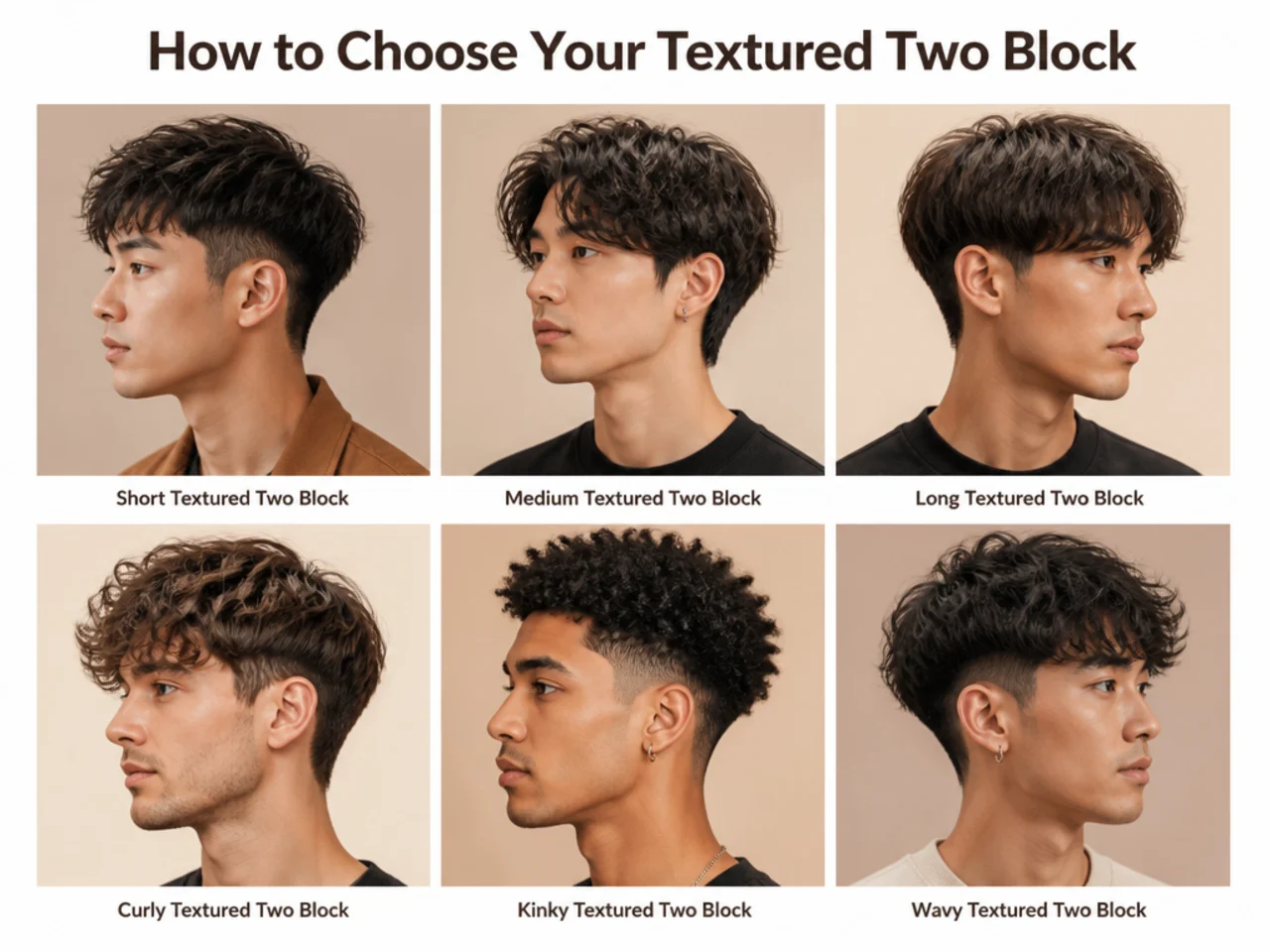
Face shape narrows the fringe. Round and square faces want a middle part or curtain — anything that adds vertical line to break up the width. Long and oval faces suit a side-swept or forward-fringe version that shortens the vertical read. Angular jaws pair with a mid or high fade for graphic contrast. Softer face shapes wear hidden sides or a low taper for a gentler frame.
Hair type sets the technique. Fine hair wants heavier internal thinning so the texture builds density visually. Medium and thick straight hair take point-cutting best — the broken ends stop the cover piece from reading heavy. Wavy hair drapes almost effortlessly into a razored version. Curly hair needs extra top length (four inches minimum) and a dry-cut so the pattern stays intact.
Styling appetite decides the last piece. A short point-cut top with hidden sides air-dries in place with a fingertip of clay. A longer razored version with a curtain fringe wants a blow-dryer most mornings. Pick the variation that matches how much time you actually want at the mirror.
The 20 Textured Two Block Variations to Know
Twenty versions your barber will recognize by name. Each entry covers the shape, the face and hair type it flatters, the exact ask, and one styling move that gets the finish right.
1. Classic Textured Two Block
The classic version is where every conversation about this cut starts. Top runs three inches, point-cut throughout so the ends sit piecey instead of blunt. Sides stay hidden on a two guard under the horseshoe line. Cover piece drapes forward at rest and reveals the buzz only when it moves. Reads modern without pushing into statement territory.
Suits every face shape. Fine to medium-thick straight or wavy hair takes it best.
Ask for a "classic textured two block, three inches on top with point-cut throughout, two guard hidden on the sides."
Style with a pea of matte clay pressed forward through damp hair. Blow-dry on low with the nozzle pointed down the shaft.
2. Short Textured Two Block
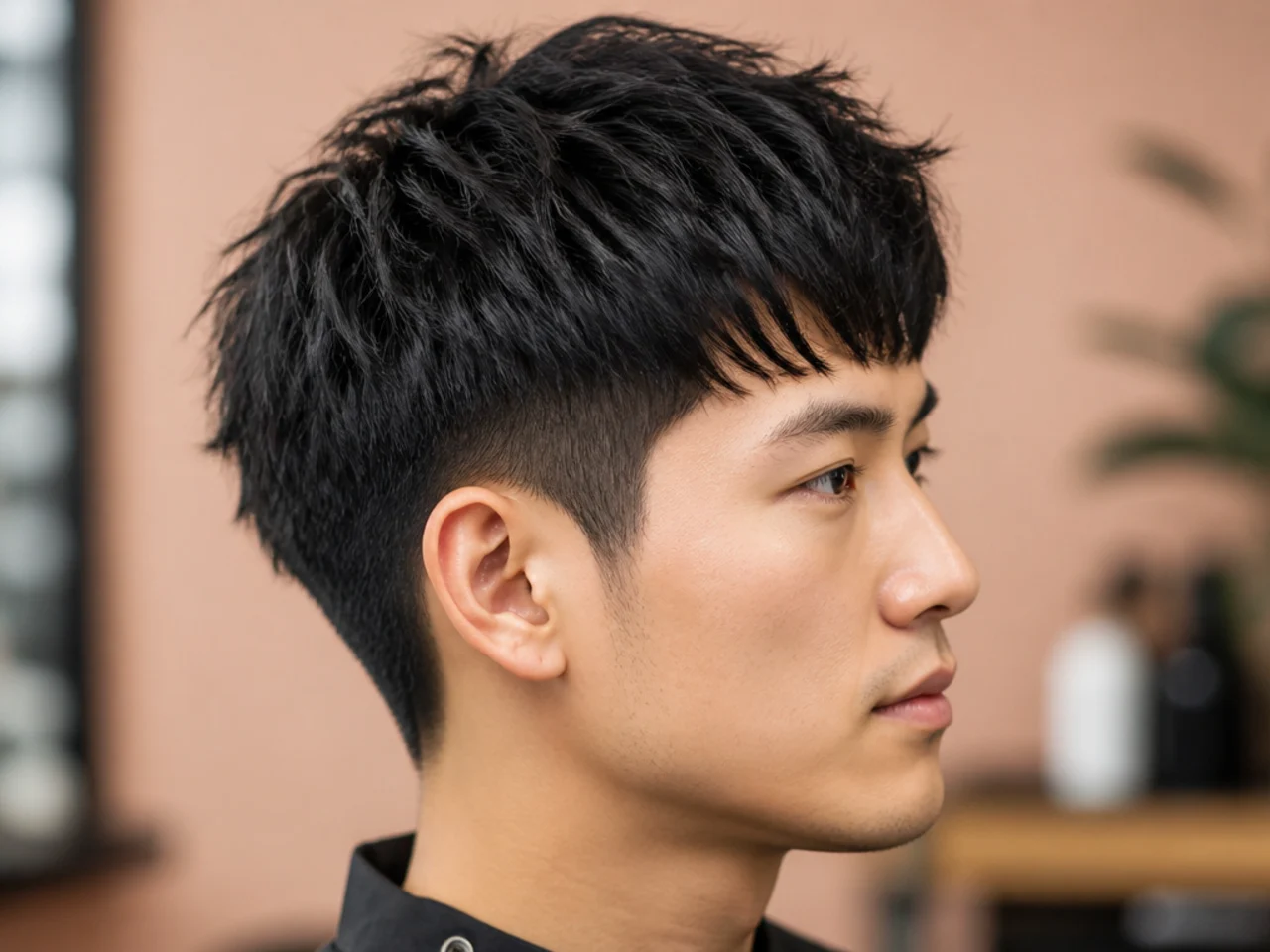
The shortest version that still qualifies as a two block. Top drops to about 1.5 inches — just long enough for the point-cut ends to fall past the hidden line and cover it. Sides sit close on a one guard. Reads corporate-safe from the front, K-pop from the side. For the full range, see the short two block guide.
Best on round or square faces because the low top height keeps the head shape balanced. Fine and medium-thick straight hair holds it cleanly.
Ask for a "short textured two block, 1.5 inches on top point-cut, one guard hidden on the sides, blended so nothing peeks through under the top."
Style with a fingertip of cream run front-to-back. Anything more weighs down the covering piece.
3. Medium-Length Textured Two Block
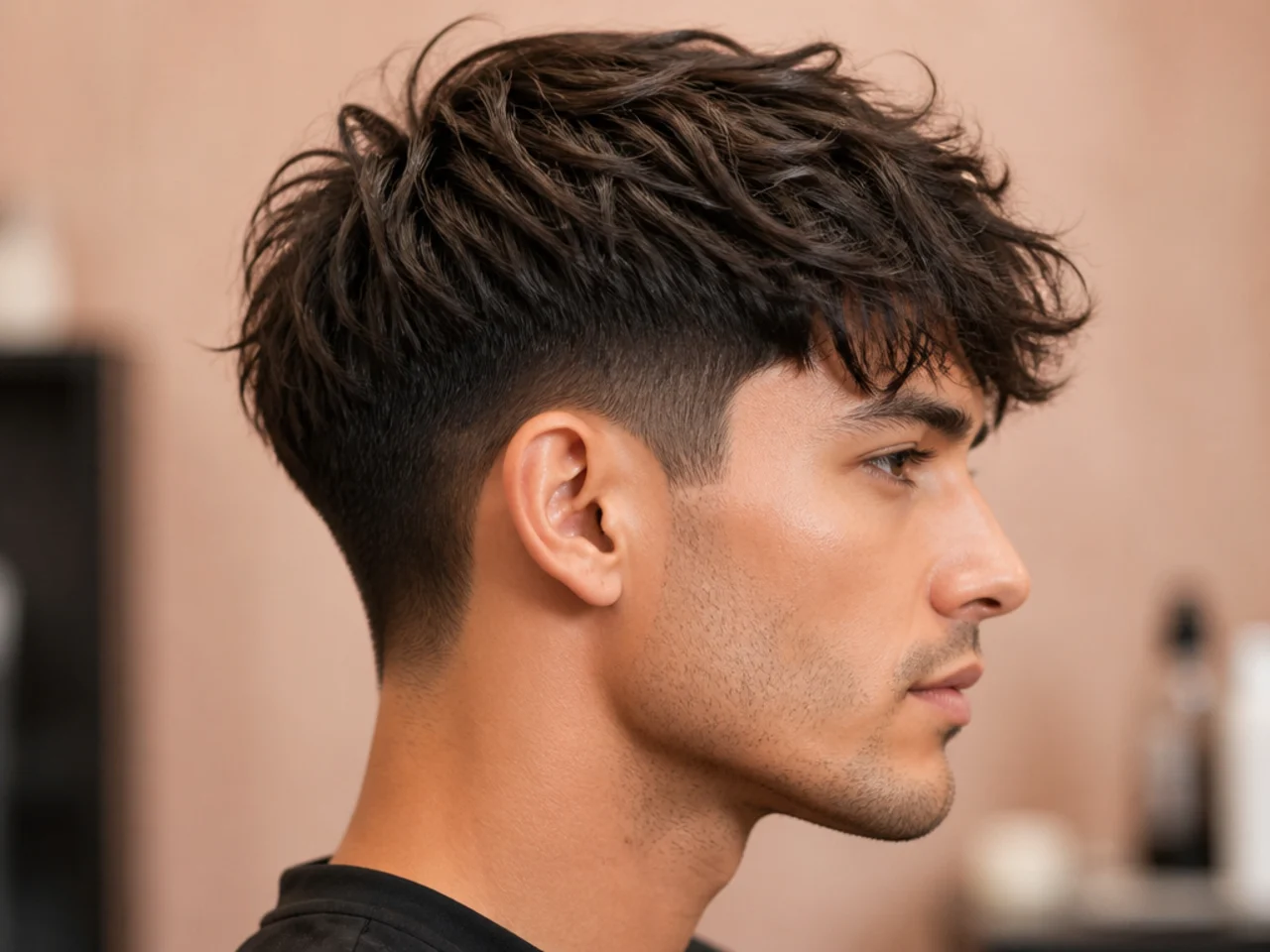
The middle of the range — top runs 3 to 3.5 inches with heavier razoring than the classic. Cover piece feathers past the ears and sits with visible movement. Sides stay hidden on a one or two guard. This is the version most guys land on after they've worn the short version for six months and want more length to play with.
Best on oval, long, and diamond face shapes because the added top weight balances vertical face length. Straight, wavy, and lightly curly hair all hold it.
Ask for a "medium textured two block, 3.5 inches on top razored throughout, one guard hidden on the sides."
Style with a light cream through damp hair, blow-dry with fingers pushing the top in the direction you want it to fall.
4. Long Textured Two Block
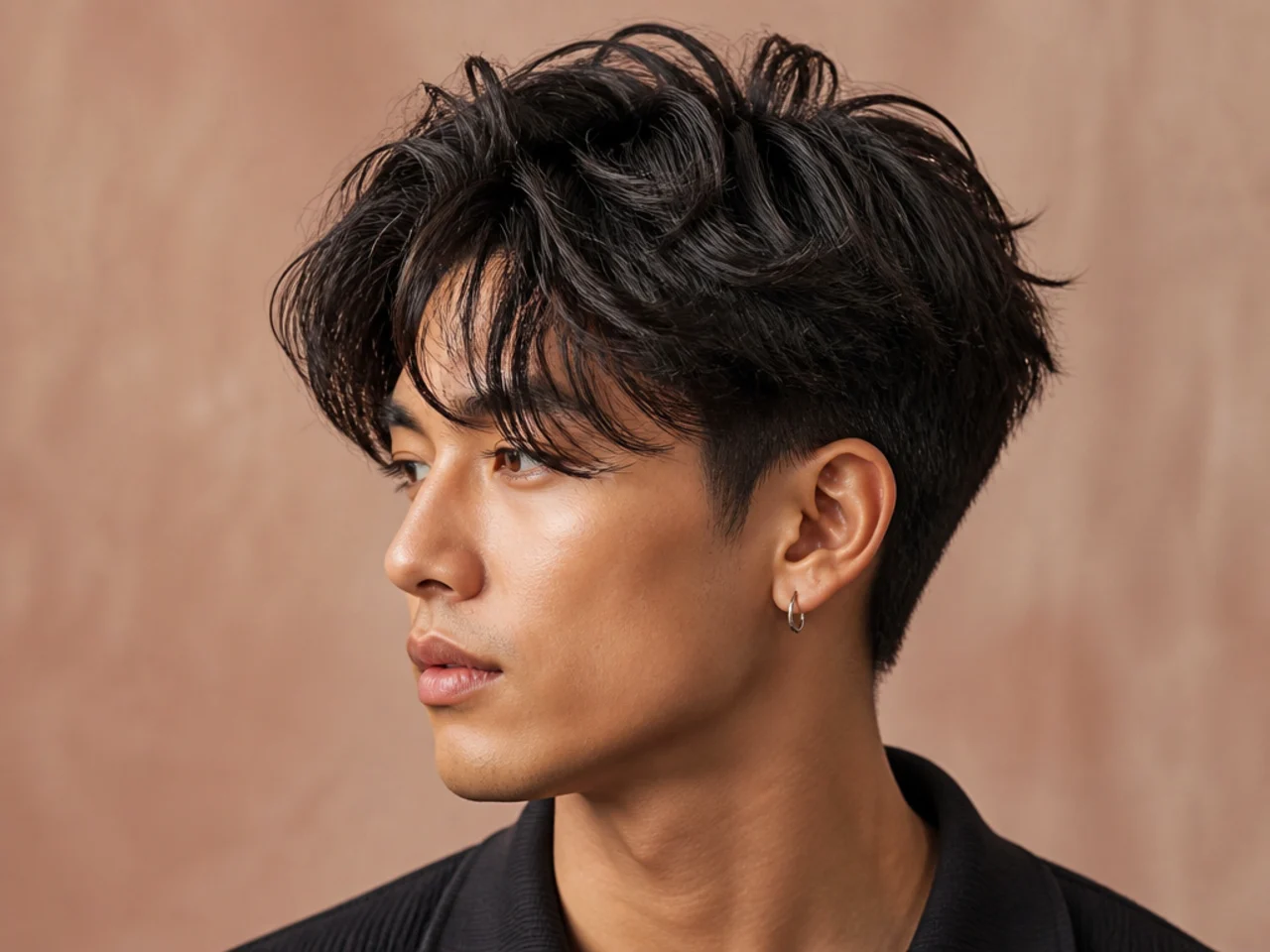
Top layer runs five inches or longer — past the eyebrows at the front, past the collar at the back. Heavy internal texture keeps all that length from sitting like a curtain of hair. The hidden buzz on the sides stops the shape from puffing outward. If length is what you're after, the long two block guide has the full deep-dive.
Best on straight and slightly wavy hair. Tight curls at this length need a different plan. Suits oval and long faces.
Ask for a "long textured two block, five inches minimum on top with razoring throughout, one guard hidden on the sides, keep the front weight."
Style with leave-in conditioner on damp hair, then air-dry. Styling product weighs the length down and kills the movement.
5. Textured Two Block with Middle Part
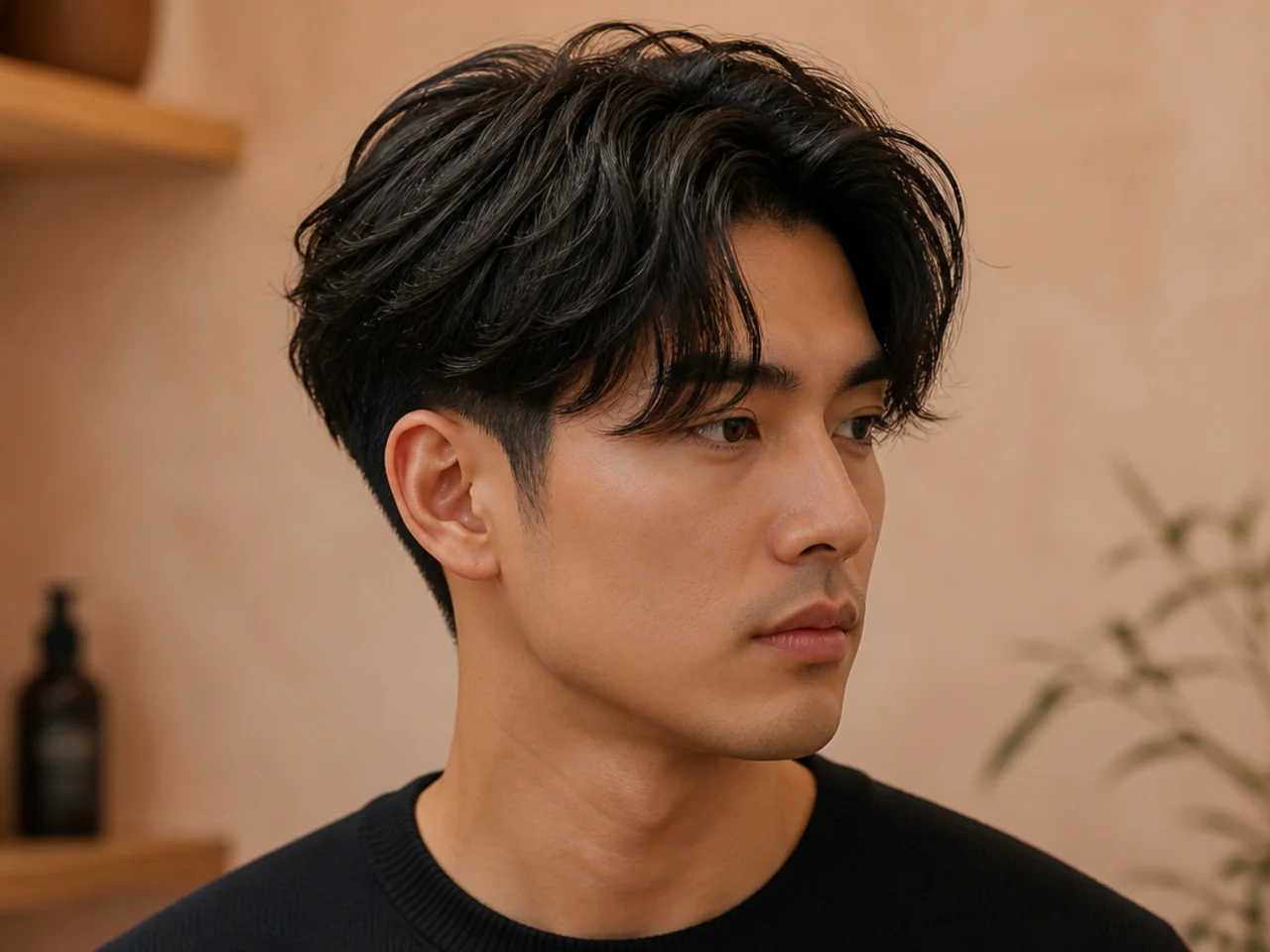
The K-pop idol default with texture layered in. Top is cut long enough to fall in two curtains from a center part, and the razoring lets each curtain move independently instead of flopping as a plate. Sides stay hidden on a one guard so the shape frames the face without adding width.
Suits oval and long face shapes best. Fine to medium straight or wavy hair drapes cleanest.
Ask for a "textured two block with a center part, four inches on top razored throughout, one guard hidden, weight left in the front so the curtains fall."
Blow-dry with a round brush pulling each side outward from the part, then set with a light hairspray for hold that still moves.
6. Textured Two Block with Side Part
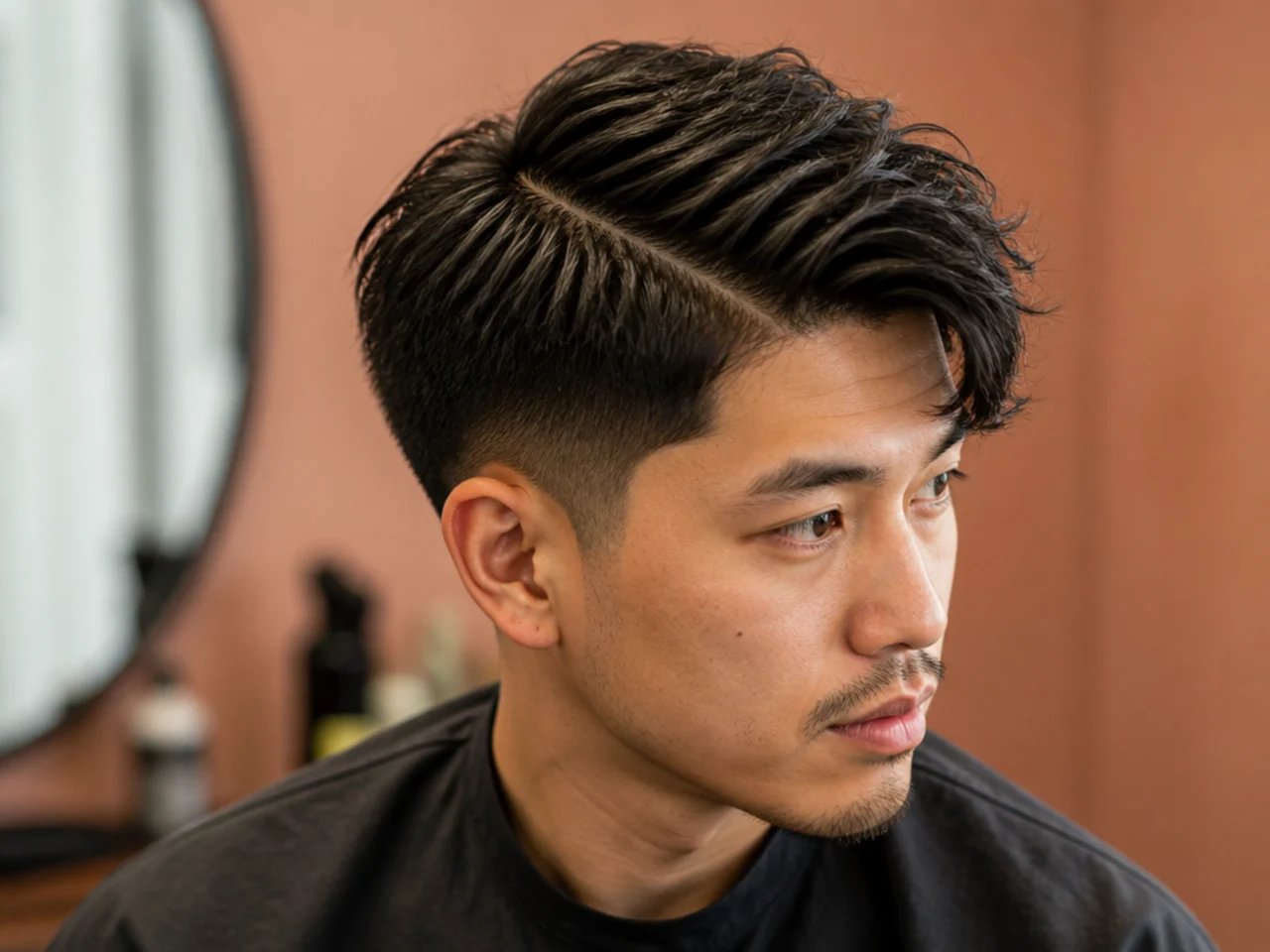
Instead of a center part, the top is cut asymmetrically — heavier on one side, lighter on the other — so a soft side part sits by default. The texturizing keeps the heavy side from reading blocky as it sweeps across the forehead. Sides stay hidden underneath. Cleanest, most polished version on the list.
Suits every face shape. Straight and lightly wavy hair holds direction best.
Ask for a "textured two block with a soft side part, 3.5 inches on the heavy side and 2.5 inches on the lighter side, one guard hidden on the sides."
Style with a pea of light pomade combed to shape, then broken up at the ends with fingertips.
7. Textured Two Block with Curtain Fringe
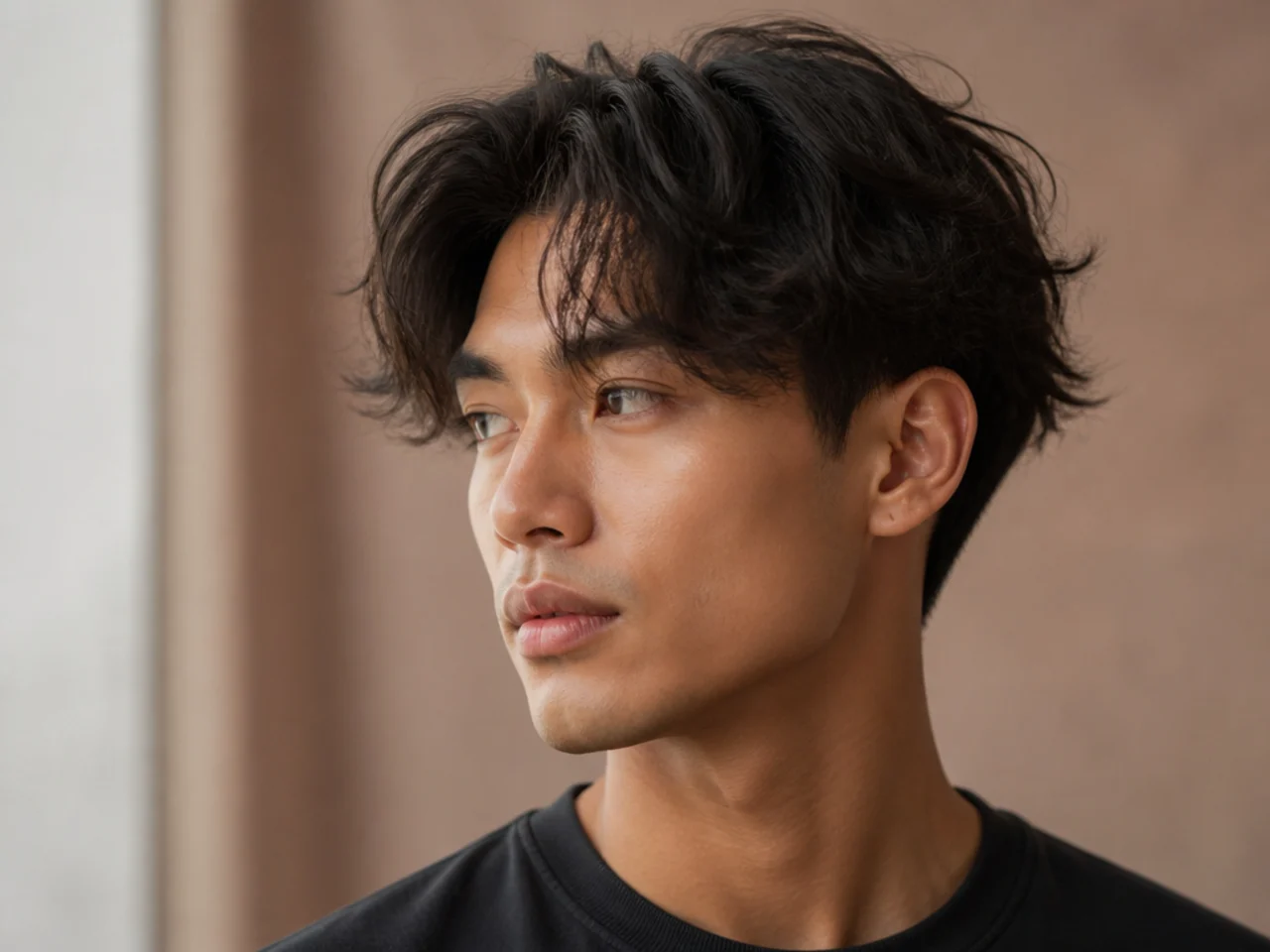
The fringe runs long enough to split naturally into two curtain-adjacent panels at the front while the rest of the top layer sits shorter behind it. Razored ends let each panel drop softly instead of sitting stiff. Sides stay hidden. For the base shape without the texture, see our two block curtain haircut breakdown.
Best on long, oval, and heart-shaped faces because the horizontal spread of the curtain adds width across the forehead. Straight and wavy hair carries it best.
Ask for a "textured two block with a curtain fringe, four inches at the front and three across the top, razored throughout, one guard hidden on the sides."
Blow-dry with a paddle brush pulling each curtain outward, then finger-set with a fingertip of matte cream.
8. Textured Two Block with Forward Fringe
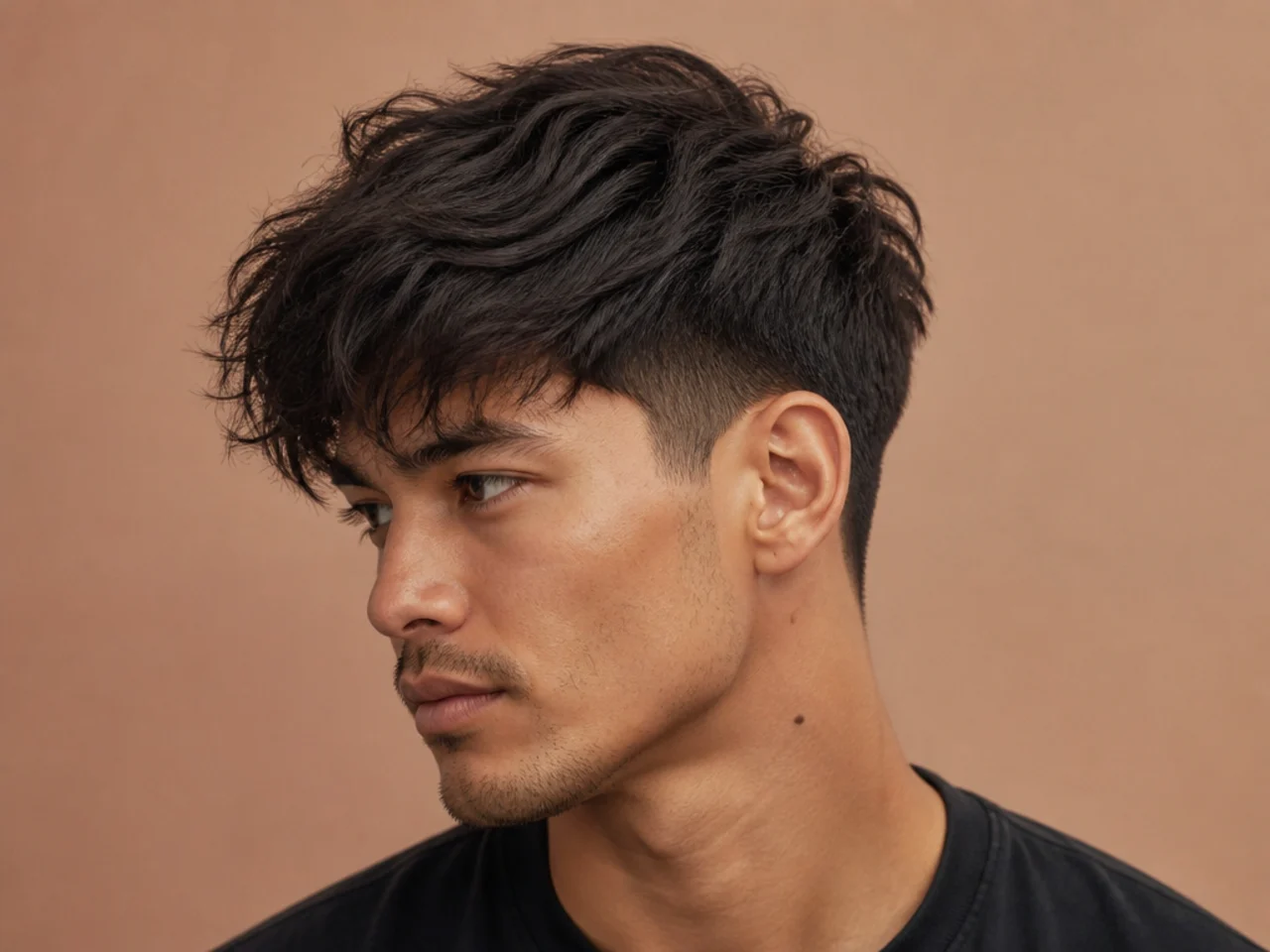
Instead of parting, the fringe is pushed forward and down toward the brow. Point-cut ends give it the piecey drop that separates it from a heavier bowl-cut adjacent look. The rest of the top stays shorter than the fringe, sloping back toward the crown. Sides stay hidden.
Best on high or wide foreheads because the forward fringe covers exactly what you don't want to show. Straight to medium-wavy hair holds direction cleanest.
Ask for a "textured two block with a forward fringe, front at the brow point-cut and the top layer stepped shorter behind it, two guard hidden on the sides."
Blow-dry the fringe forward and down with your hand shaping the ends. Light cream, no shine.
9. Textured Two Block with Low Fade
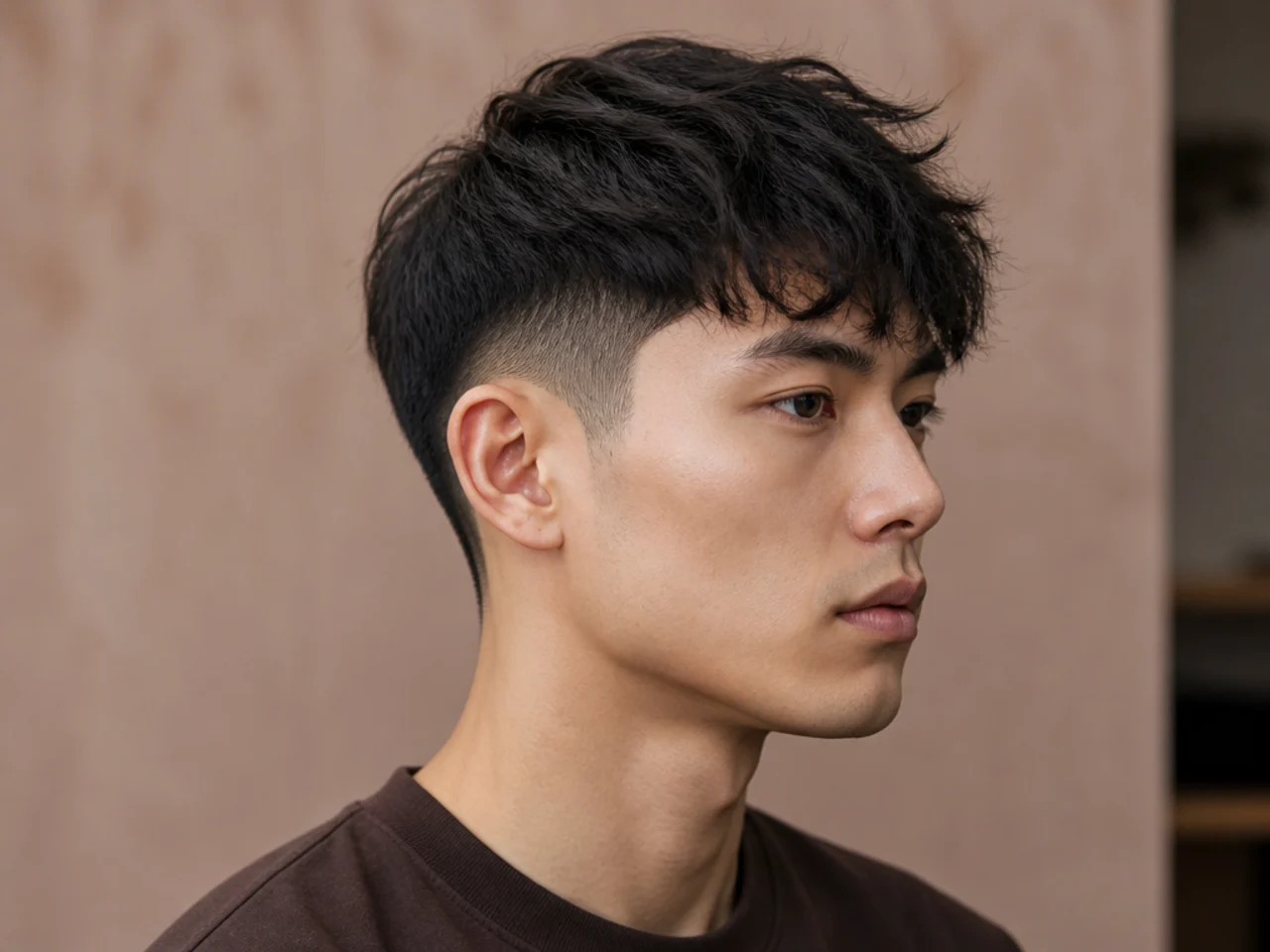
The classic two block hides its sides. This version reveals them with a low fade that starts just above the ears and blends the short sides down to skin at the neckline. Reads more grown-up than the hidden version. Top runs three inches, point-cut. Workplace-safe under most dress codes because the fade sits low.
Suits every face shape. Any hair type. The safest fade pairing.
Ask for a "textured two block with a low fade, three inches on top point-cut, low fade starting just above the ears down to skin at the neck."
Style with matte clay through damp hair, pushed slightly forward and to one side so the fade stays visible at the temple.
10. Textured Two Block with Mid Fade
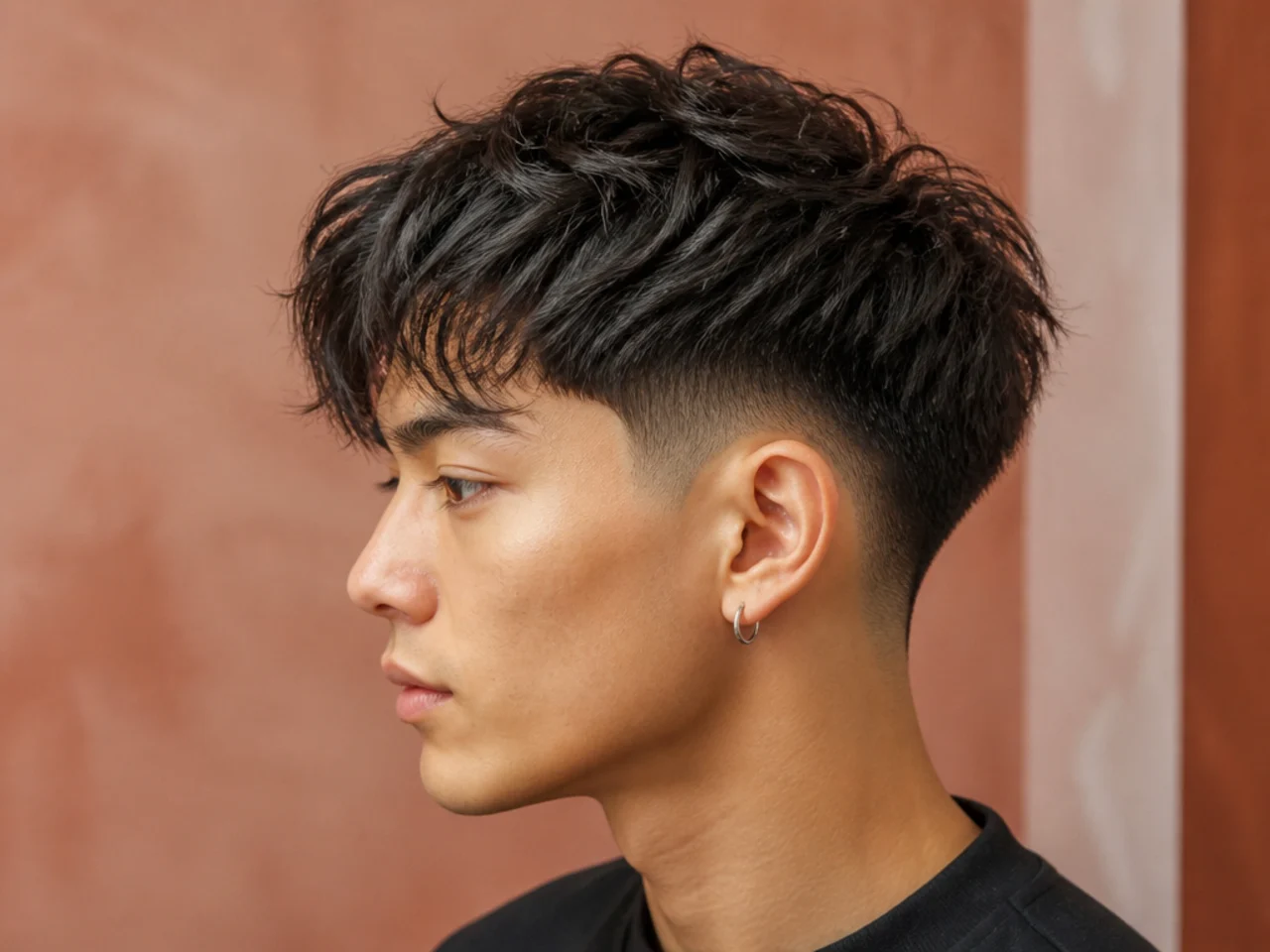
The mid fade starts at the temple, splitting the head visually in half. Paired with a textured two block, the contrast is graphic without being loud — the piecey top floats above a clean transition to skin. Most-requested fade for this cut in 2026 barbershops.
Suits square, oval, and slightly round faces. Straight and wavy hair all take it.
Ask for a "textured two block with a mid fade, three inches on top point-cut, mid fade starting at the temple with a defined line-up."
Style with matte paste pressed forward through the top. Book every 3 weeks to keep the fade sharp.
11. Textured Two Block with High Skin Fade
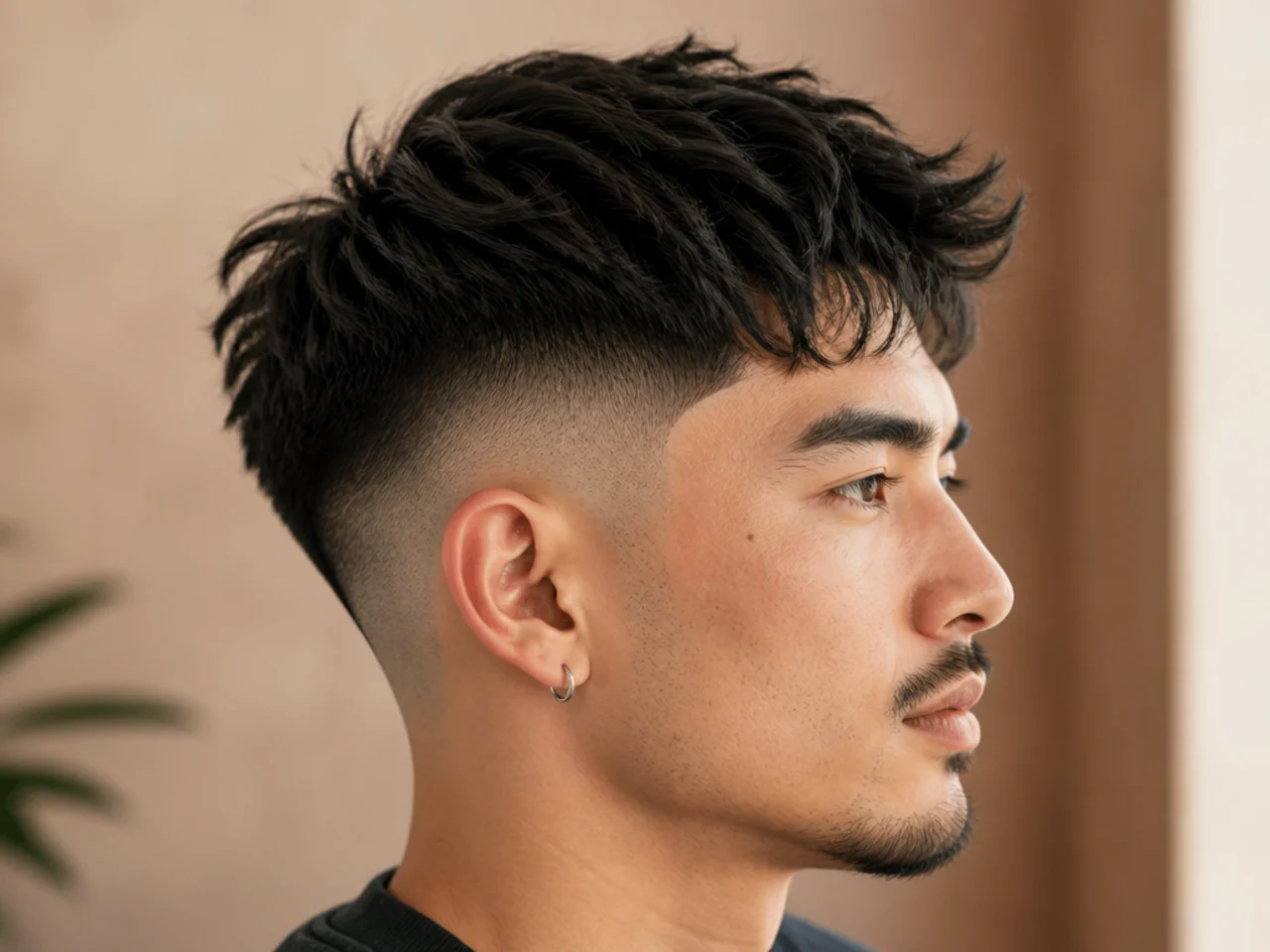
The high skin fade drops skin near the parietal ridge — the sides run from long top to zero in a small vertical span. Maximum graphic contrast on the list. The point-cut top layer floats visually above a wide band of faded skin. Reads bold in every setting; best on guys who want the cut to be the visual focus.
Suits angular jaws where you want to accentuate the jawline. Long and oval faces also wear it well.
Ask for a "textured two block with a high skin fade, three inches on top point-cut, high skin fade starting above the ear with a defined line-up."
Style with matte clay for dry, dense hold. Book every 2 to 3 weeks — high fades soften fastest and the collapse shows.
12. Textured Two Block with Low Taper
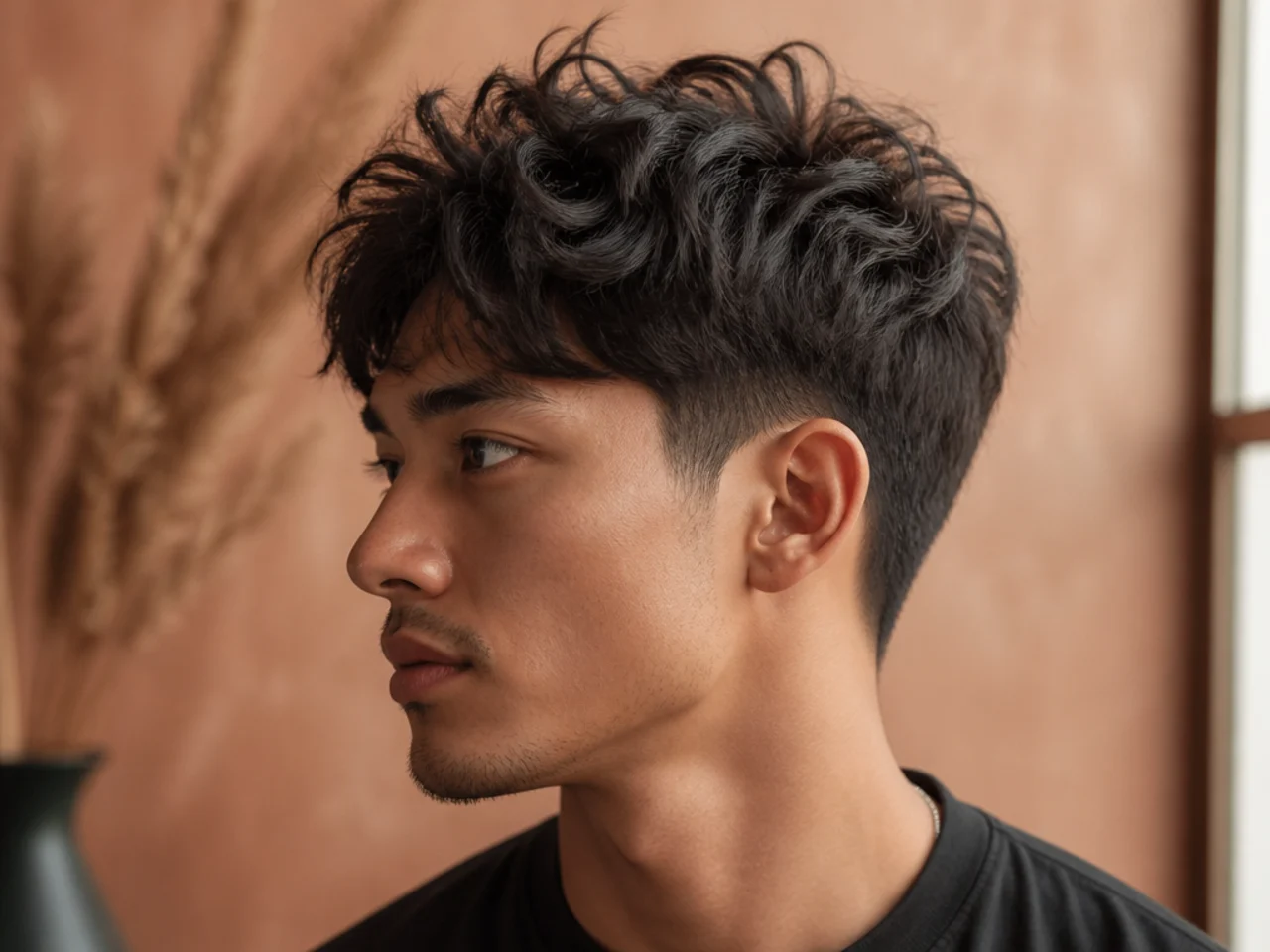
The low taper tapers only around the ears and neckline, keeping most of the side length. Softest fade option on the list — grows out cleanly, so this is the pick if you can't get back to the chair every three weeks. Top stays hidden most of the way; the taper just cleans the perimeter.
Suits every face shape. Any hair type. Great on softer face shapes that don't want full-fade contrast.
Ask for a "textured two block with a low taper, three inches on top point-cut, two guard on the sides tapering to skin only at the ears and neckline."
Style with matte cream through damp hair, air-dry with fingers directing the top. Book every 5 to 6 weeks.
13. Textured Two Block with Drop Fade
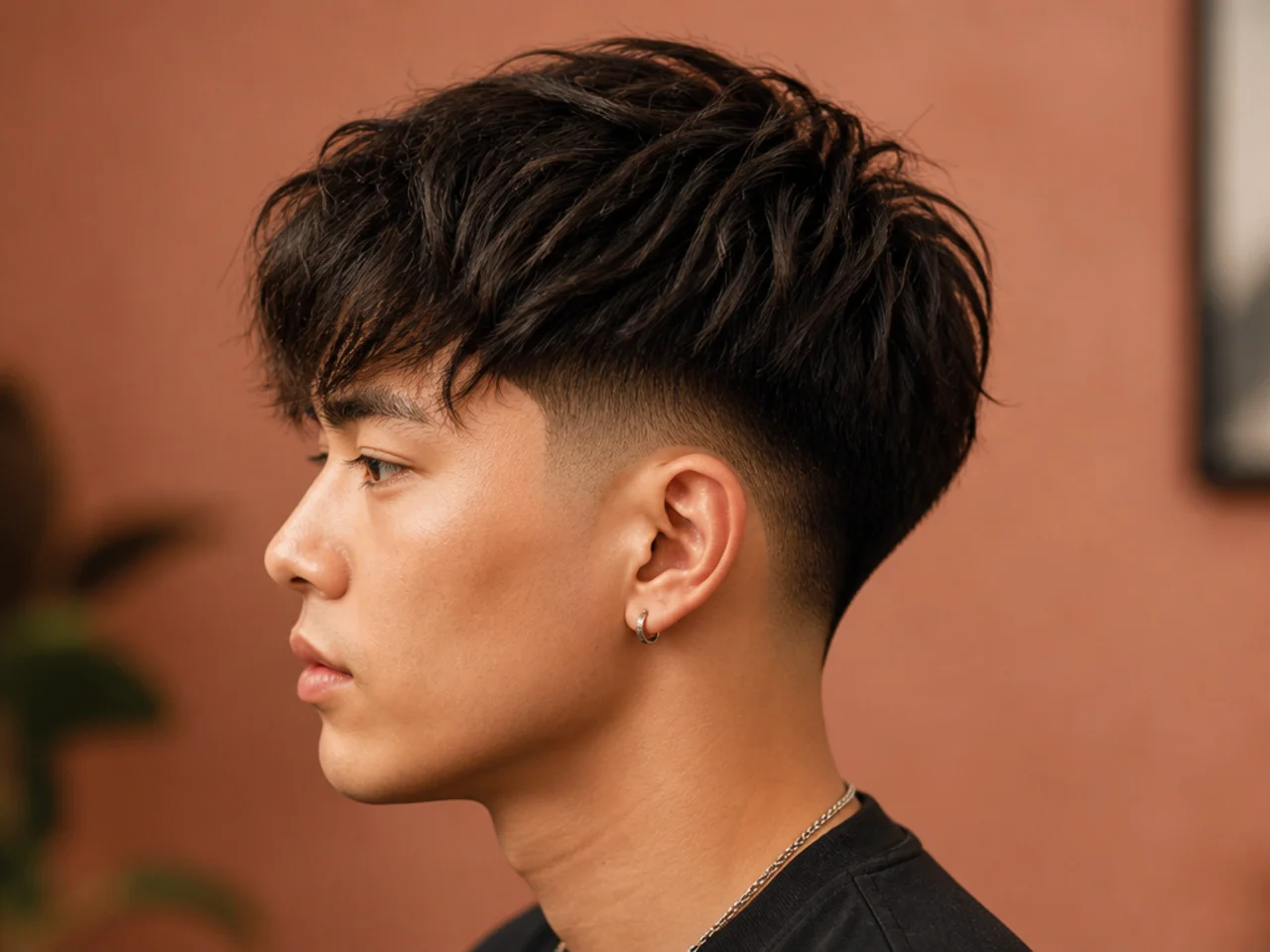
A drop fade curves down behind the ear instead of running straight across the head. Paired with a textured top, the curve softens the graphic edge every other fade version pushes. Reads modern and hugs the skull better on round or wide-set head shapes. Top runs three inches, point-cut.
Suits diamond and heart-shaped faces best because the curved line frames the temples without adding width. Straight to wavy hair carries it.
Ask for a "textured two block with a drop fade, three inches on top point-cut, drop fade curving down behind the ear."
Rough-dry with fingers, no comb. Finish with matte paste twisted into random sections at the front.
14. Textured Two Block with Undercut
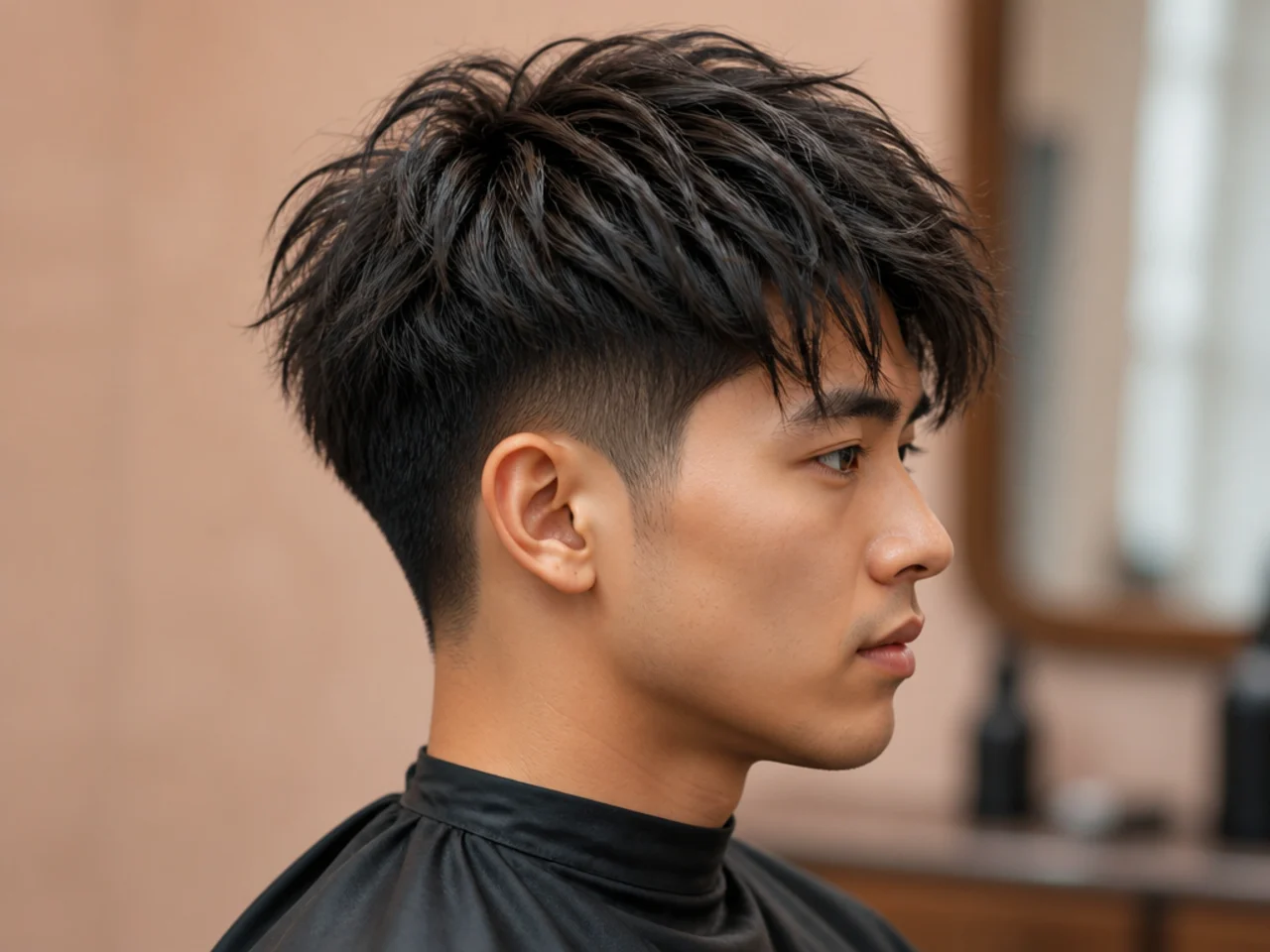
The line between the two blocks is sharp and disconnected — no blend, no taper. A single clipper guard runs straight down from the horseshoe line to the skin. The point-cut top still covers at rest, but when it moves you see a hard visible edge. If you like the shape but not the disconnection, an undercut fade covers the softer alternative.
Best on angular and oval faces where the graphic edge complements strong bone structure. Straight and medium-thick hair holds the disconnection cleanest.
Ask for a "textured two block undercut, three inches on top point-cut, hard line at the horseshoe, one guard straight down all the way around."
Keep the top polished — the disconnection already carries the edge, don't fight it with messy product.
15. Wavy Textured Two Block
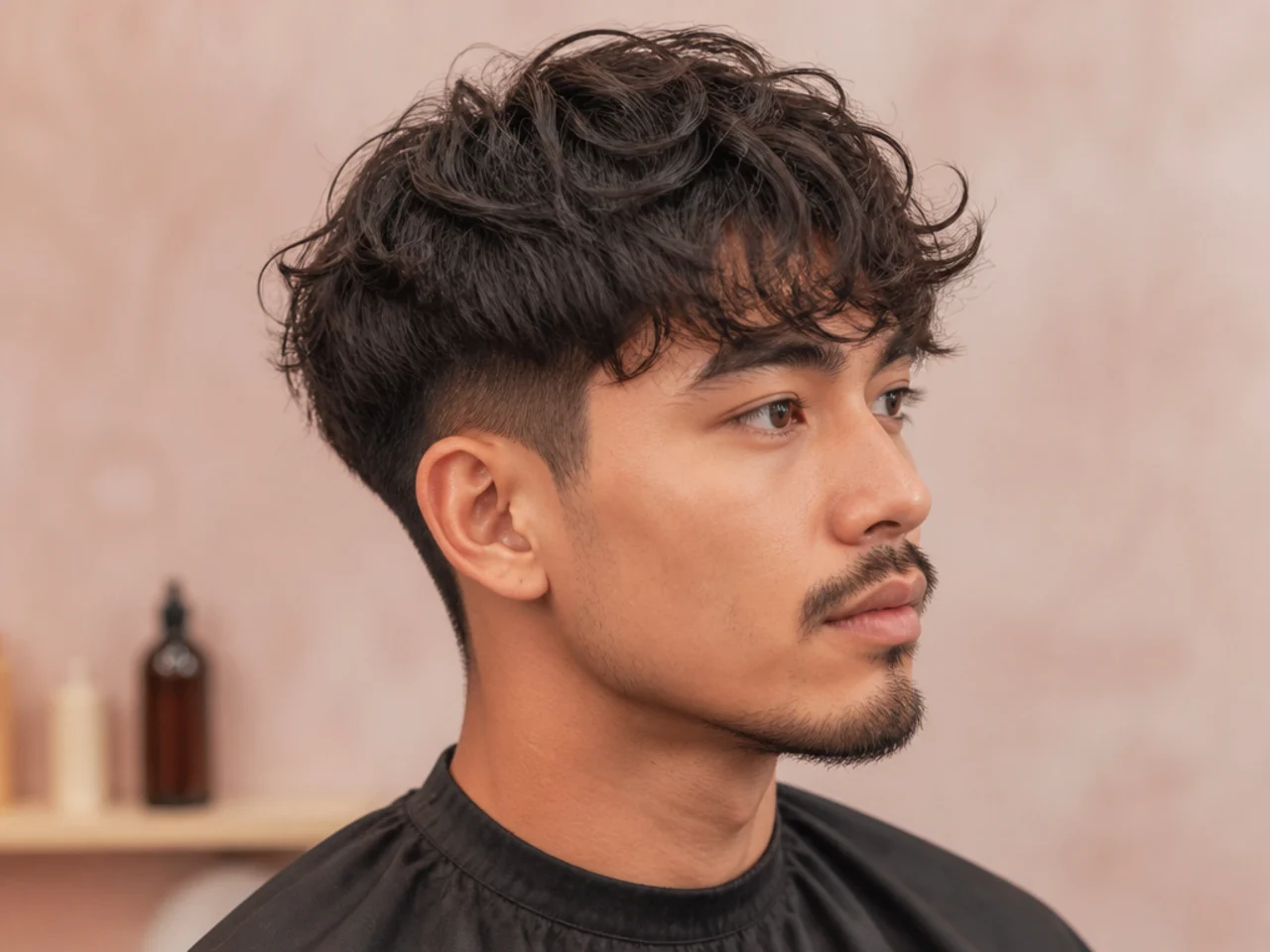
For hair with a natural bend. Your barber cuts the top with the wave pattern in mind — longer where the wave falls, shorter where it flips up — so the finished shape reads intentional instead of scruffy. Point-cutting stops the wave from clumping at the ends. Sides go hidden as usual.
Best on Type 2A through 2C hair. Suits oval and slightly rectangular faces because the wave adds soft horizontal spread.
Ask for a "wavy textured two block, four inches at the longest point cut with my wave direction, point-cut throughout, one guard hidden underneath."
Style with sea-salt spray on damp hair, scrunch, air-dry. Never brush a dry wave — you'll lose it.
16. Curly Textured Two Block
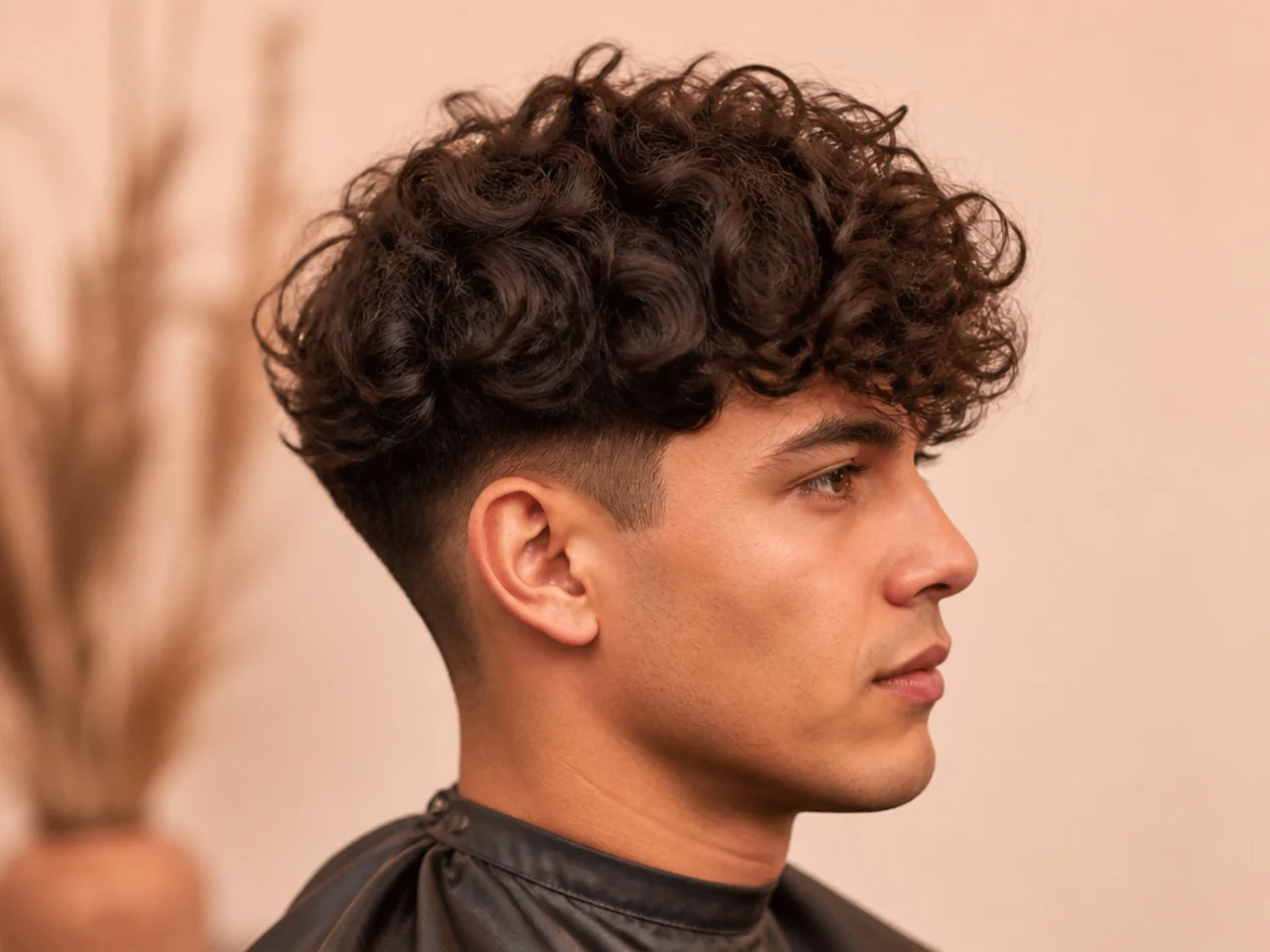
Curls fight the covering mechanic because they lift instead of drape. The fix is two-part: leave the top long enough that gravity wins, and go shorter on the hidden layer than you would with straight hair. Half a guard on the sides keeps the buzz from peeking through the spirals when the top moves. Dry-cut only — wet-cutting curls kills the shape. For more curl-specific guidance, see our curly hair haircuts guide.
Best on Type 3A through 3C curl patterns. Oval, round, and heart-shaped faces suit the forward volume.
Ask for a "textured two block for curls, four inches on top dry-cut with the pattern intact, half-guard hidden on the sides."
Curl cream on soaking-wet hair, scrunch, plop in a T-shirt for ten minutes, then air-dry.
17. Messy Textured Two Block
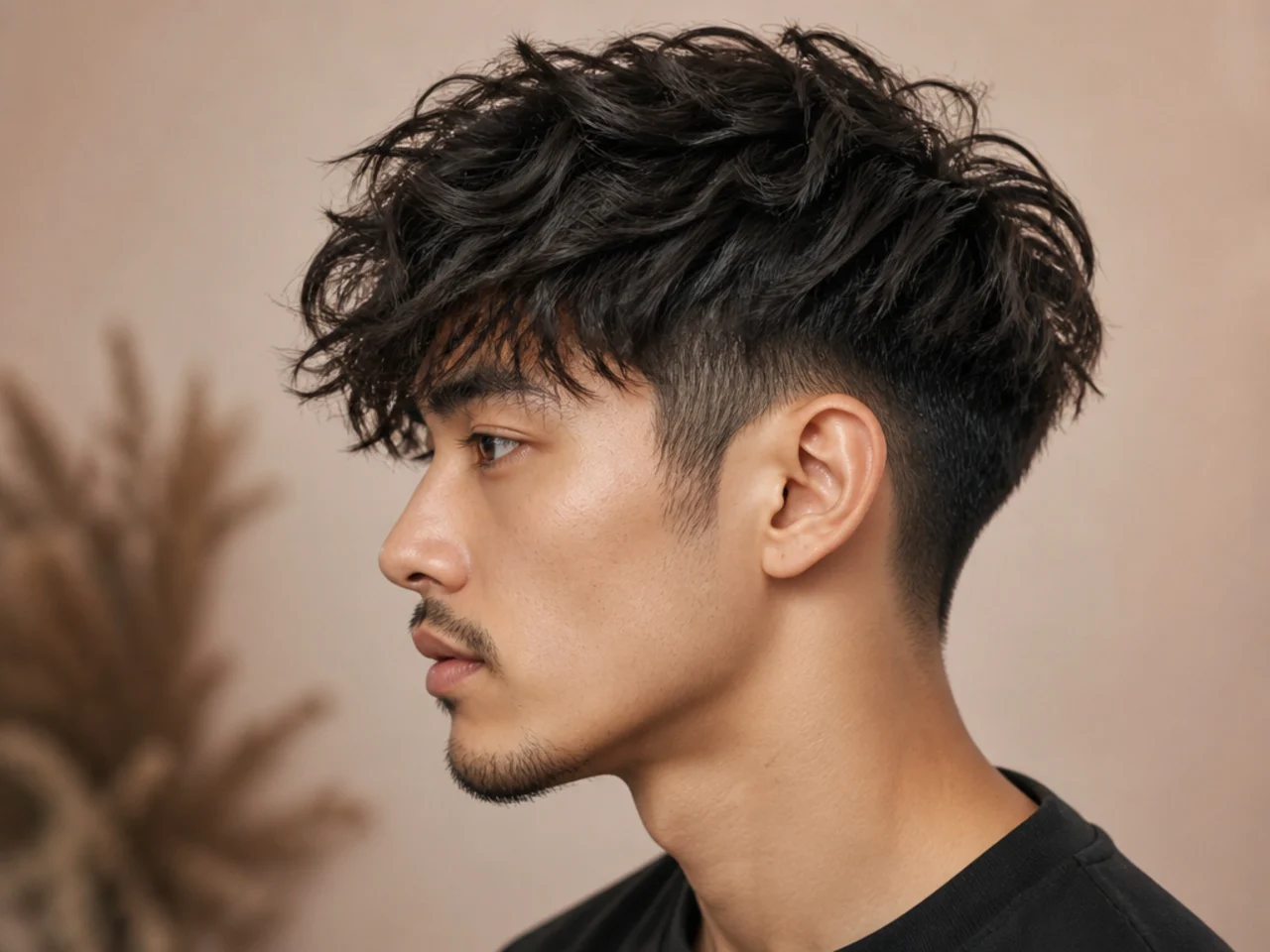
The messy version leans into the point-cut ends. Your barber cuts the top with heavier point-cutting and thinning, then hand-styles it into deliberate disorder. Cover piece sits with visible separation between pieces instead of a smooth drape. Sides stay hidden. Best for guys who don't want to blow-dry — this variation is styled with fingers and product only.
Suits every face shape. Straight to lightly wavy hair with medium density holds messy shapes best.
Ask for a "messy textured two block, three inches on top with heavy point-cutting and thinning, one guard hidden on the sides."
Style with matte paste worked back to front through dry hair, ends first, roots barely touched.
18. Piecey Point-Cut Two Block
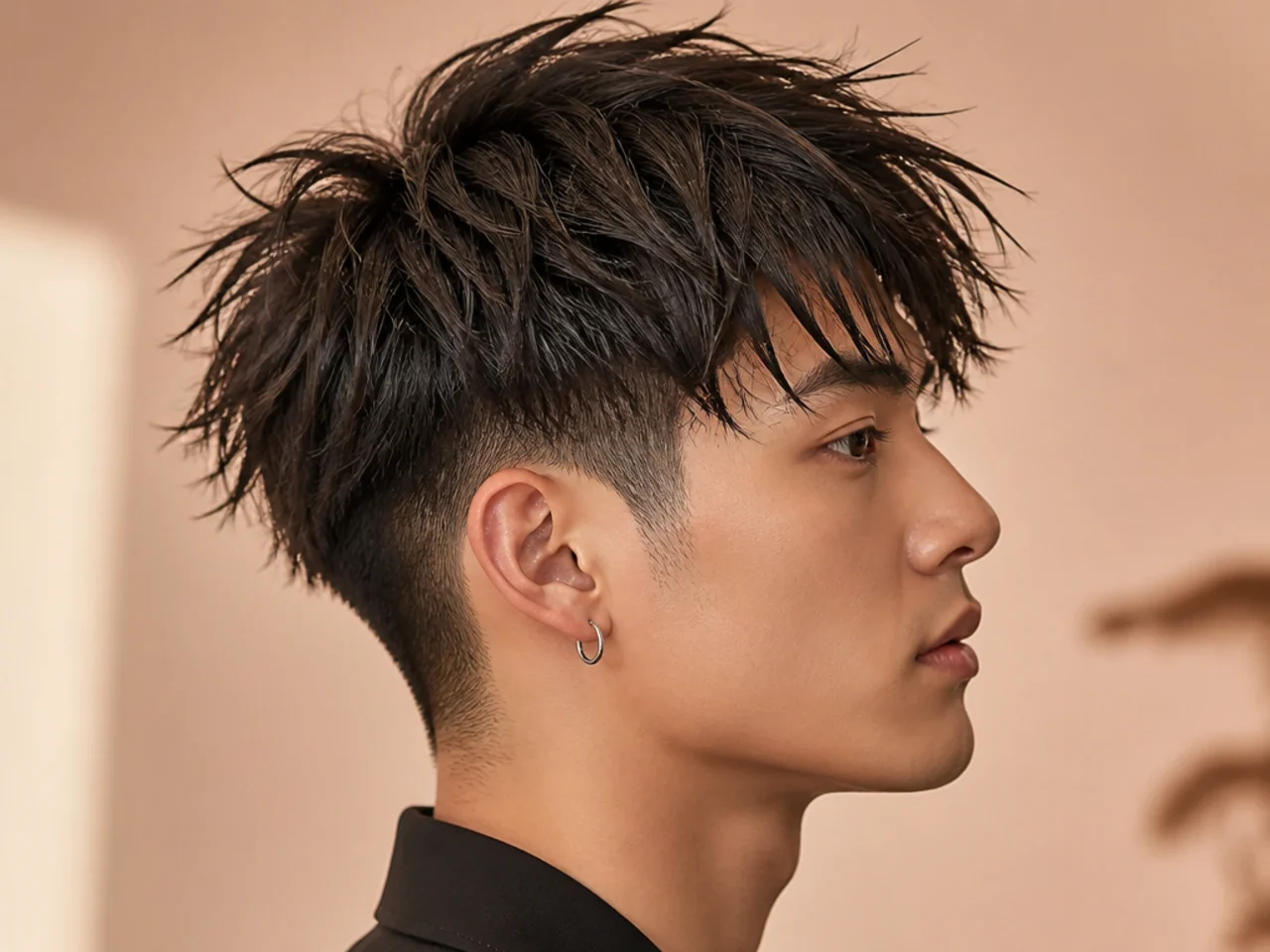
The maximalist version of the technique. Every section on the top layer gets point-cut aggressively so the ends stand out from each other with clear gaps between pieces. Reads editorial — the shape is the same as the classic but the finish is louder. Sides stay hidden or drop to a low taper.
Best on straight, fine-to-medium hair where the individual pieces don't clump together. Oval, long, and diamond faces suit the added visual interest.
Ask for a "piecey point-cut two block, three inches on top with heavy point-cutting on every section, one guard hidden on the sides."
Style with matte clay pressed piece by piece with fingertips. No comb, no brush — this version lives on hand styling.
19. Razored Textured Two Block
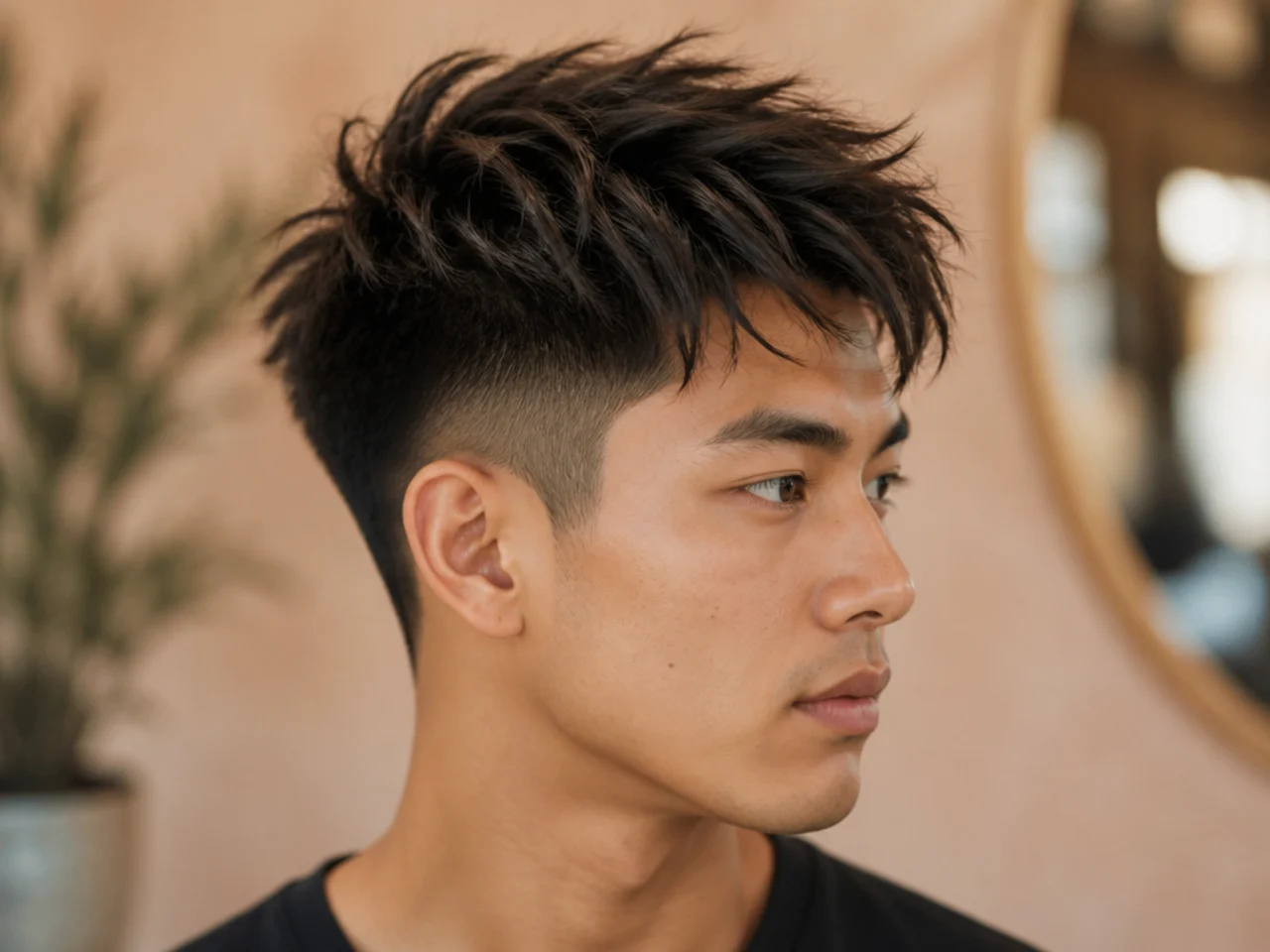
Instead of point-cutting with scissors, the top gets finished with a straight razor sliding down each section. The result is softer — feathered ends rather than snapped pieces. Cover piece drapes with a smoother read than the piecey version but still moves and breaks light. Sides stay hidden or take a low taper.
Suits softer face shapes because the razored finish reads gentler than point-cutting. Fine to medium hair with slight wave carries it best; thick coarse hair fights the razor and frays.
Ask for a "razored textured two block, 3.5 inches on top razored throughout, one guard hidden on the sides."
Style with light cream on damp hair, blow-dry with fingers, finish with a matte spray for hold that doesn't lock the drape.
20. Textured Two Block with Line-Up
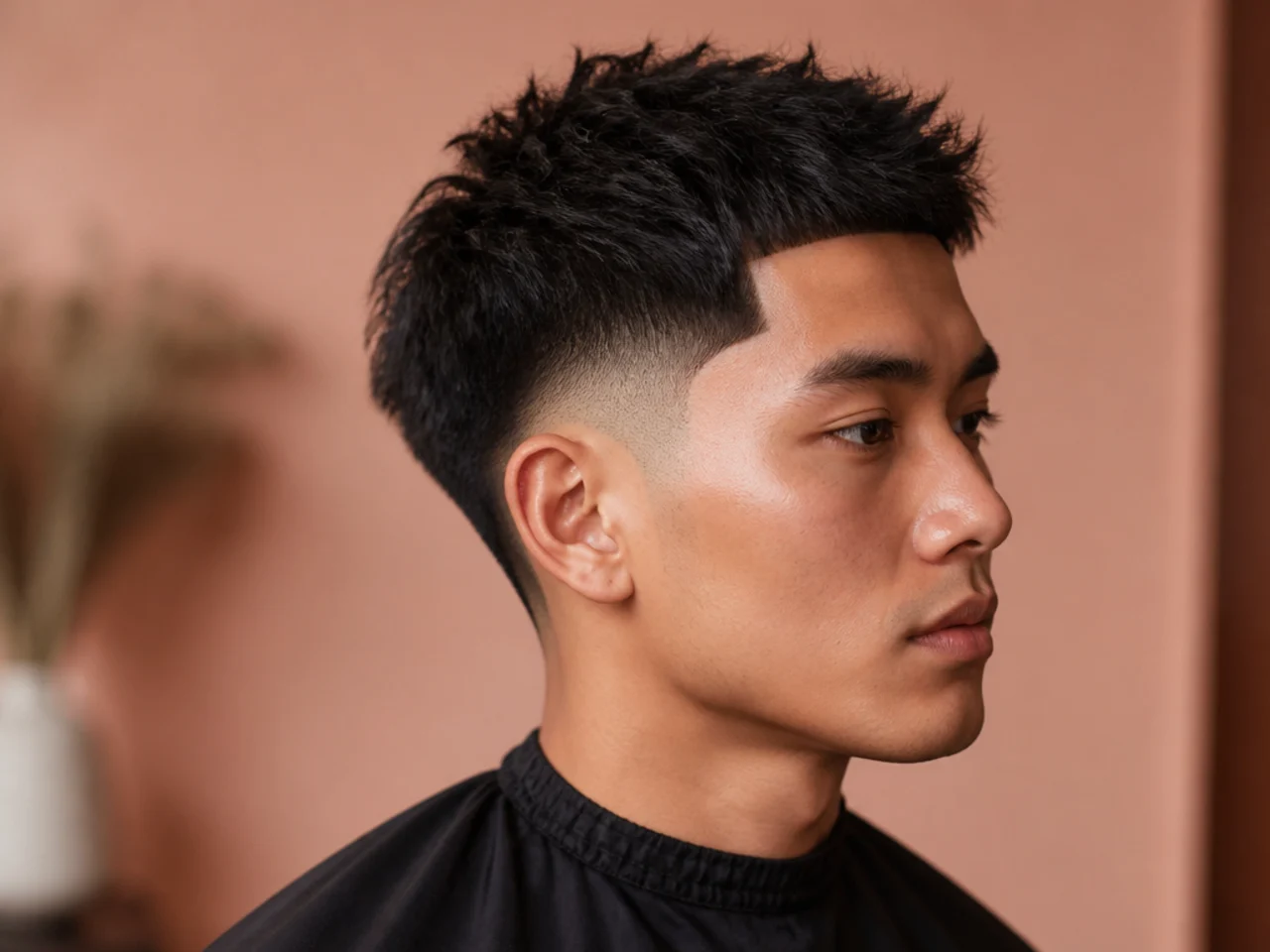
A line-up is a razored edge along the hairline — your barber uses a straight razor to define the front hairline, temples, and around the ears with a hard graphic line. Pairs sharply with a textured two block because the crisp perimeter plays off the piecey top. Sides usually take a mid or high fade. Common on K-influenced modern cuts across the board.
Suits round, oval, and heart-shaped faces where the sharper geometry adds definition. Any hair type that holds a fringe.
Ask for a "textured two block with a razor line-up along the hairline, temples, and around the ears, three inches on top point-cut, mid fade on the sides."
Style with matte clay pressed forward. Book weekly for the line-up — it blurs after seven days and reads unintentional past ten.
How to Ask Your Barber
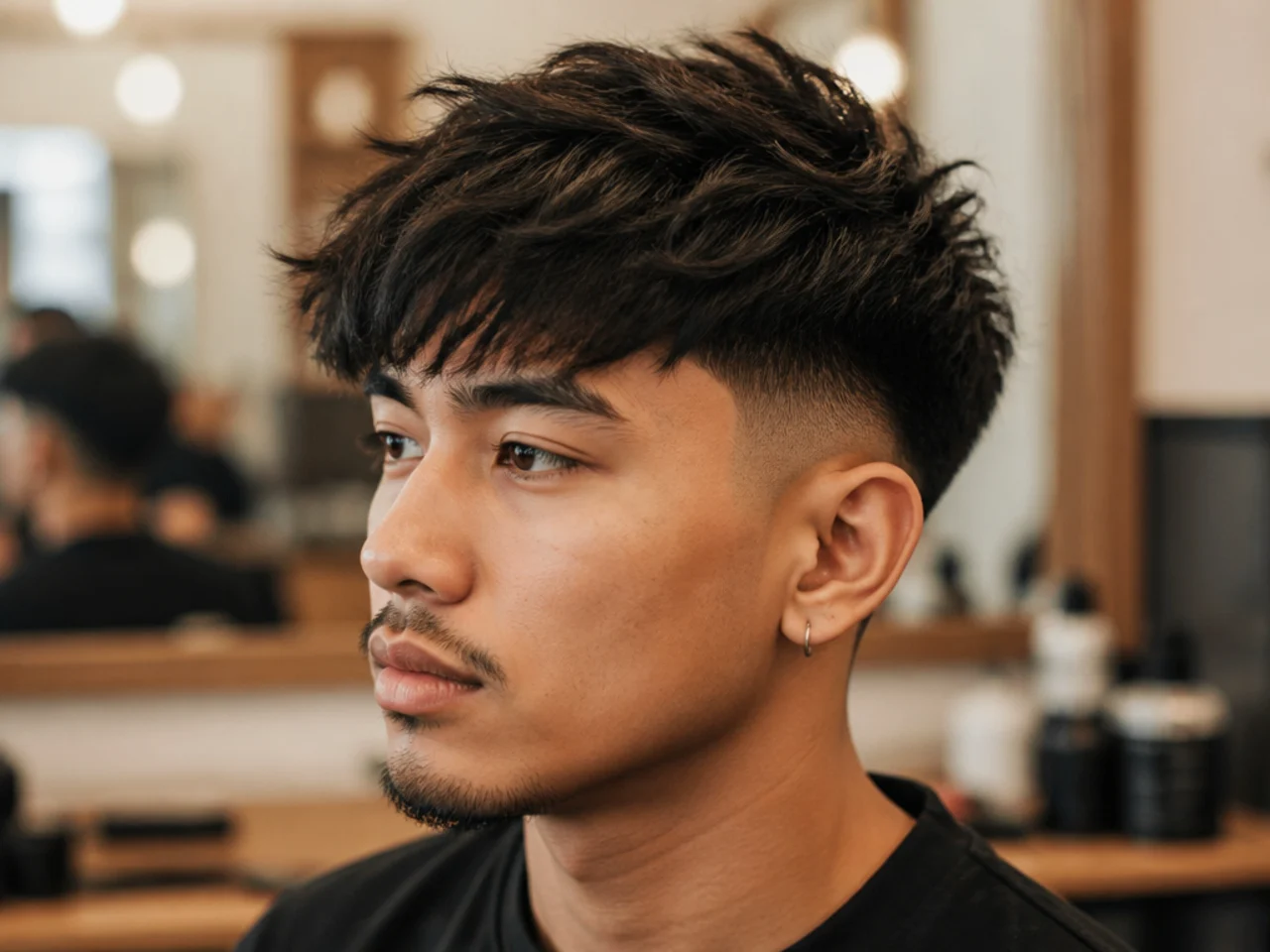
Walk in with a photo and a plan. Barbers read a picture faster than a paragraph, and the specifics below are the difference between the cut you asked for and the cut you got.
- Show the photo first. Screenshot the exact variation from this guide or a Pinterest save. Point specifically to the fringe direction and the side finish.
- State the top length in inches. "Three inches on top" is unambiguous. "A little long on top" is not.
- Name the texturizing technique. Say "point-cut," "razored," or "thinned from underneath." Each finishes differently — point-cut reads piecey, razored reads soft, thinned reads flat with hidden volume.
- Call the side finish. Hidden buzz on a one or two guard, low taper, low fade, mid fade, high skin fade, or hard undercut. Be specific about the guard number if you're going hidden.
- State the fringe direction. Forward, side-swept, middle-parted, curtain, or brushed back. This decides the shape from the front.
- Confirm the finish. Matte and textured, or sleek and smooth. This decides the product you'll style with at home.
- Ask about the growth-out. If you can't book every 3 to 4 weeks, tell them — they'll leave the top a touch longer and pick a lower fade or hidden sides so the shape holds.
Styling and Maintenance
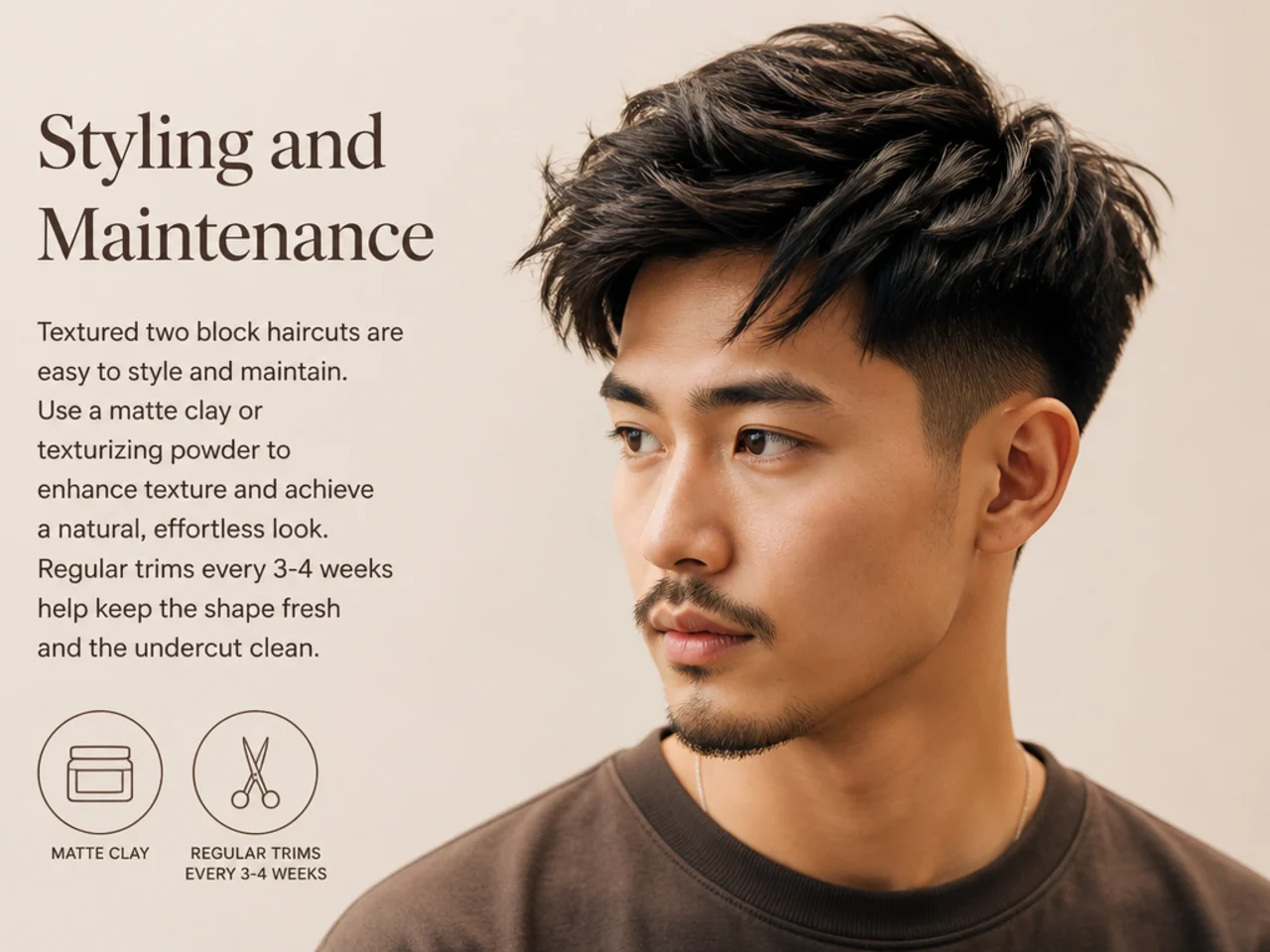
The textured two block wants matte products almost exclusively. Shine fills the gaps between pieces and collapses the point-cut texture the cut works to build. Save the pomades for the classic slick-back and the middle-part looks where a smoother drape is the finish.
Matte clay is the workhorse. A pea-size amount rubbed between the palms, then pressed back to front through the top — ends first, roots barely touched. Enough hold, dry finish, no build-up on the covering piece. Matte paste sits a touch heavier — pick it for piecey and messy variations. Sea-salt spray on damp hair adds grip and separation before styling, especially for straight or wavy hair. Curly variations want curl cream and a diffuser instead.
One product is usually enough. Layering paste over spray over cream cancels the finish and turns everything heavy.
Cadence depends on the finish. Hidden-side versions stretch to 5 or 6 weeks — the covered buzz doesn't reveal growth until it lifts up past the top layer. Add a mid or high fade and the window drops to 3 weeks — fades collapse fastest. High skin fades want every 2 to 3 weeks. Line-ups need weekly touch-ups. Long variations can stretch to 6 weeks if you don't mind a slightly softer perimeter.
Wash the hair every second or third day, not daily. Over-washing strips the oils that give textured hair its bite. When you do wash, follow with a light conditioner through the mid-lengths only — never on the roots, or the top sits flat by lunch. A blow-dryer with a nozzle attachment is worth the shelf space — pointing air down the shaft is what turns a good textured two block into a great one.
FAQ
What is a textured two block haircut for men?
A textured two block is a two block cut — long top layer draping over hidden buzzed sides — with the top layer broken up by point-cutting, razoring, or thinning shears so the cover piece moves with visible separation instead of sitting like a solid helmet. The technique is what turns the base K-pop shape into a modern, moving cut. Same underlying structure, softer and piecier finish.
Which face shape suits a textured two block best?
All of them — the variation is what does the work. Round and square faces want a middle part or curtain fringe that adds vertical line to break width. Long and oval faces suit a forward-fringe or side-swept version that shortens vertical read. Angular jaws pair with a mid or high fade for graphic contrast. Softer face shapes wear hidden sides or a low taper for a gentler frame.
How do I ask my barber for a textured two block?
State four things — top length in inches (usually 2 to 4), side treatment (hidden buzz with guard number, low taper, or fade height), texturizing technique (point-cut, razored, or thinned), and fringe direction (forward, middle-parted, side-swept, or curtain). A photo of the exact variation seals it. Unsure which side to pair? Ask for a hidden two guard on the sides — it's the safest across face shapes and dress codes.
Is the textured two block good for thick hair?
Yes — arguably the best two block variation for thick hair. Thinning shears from underneath remove the bulk that makes a standard two block fan out sideways at the horseshoe line. The point-cut ends stop the cover piece from reading like a heavy plate. Keep the top at 3 inches or longer so gravity helps the drape, and pair with hidden sides or a low taper for the cleanest shape.
What's the difference between a textured two block and a regular two block?
A regular two block leaves the top layer with a mostly blunt edge — the cover piece falls in one heavy sheet. A textured two block breaks the ends up with point-cutting, razoring, or thinning so the cover piece drapes with movement instead of sitting flat. Same shape, softer and more modern finish. Most two blocks cut in 2026 are textured — the two terms often collapse into each other in practice.
How often should I re-cut a textured two block?
Every 4 to 5 weeks for medium-length versions with hidden sides. Every 3 to 4 weeks if you've paired it with a mid or high fade — fades collapse fastest. High skin fades want every 2 to 3 weeks. Long variations stretch to 6 weeks. The moment the cover piece stops lifting to reveal the hidden line, or the fade blurs, book — waiting past that gives the next cut more work to reset.