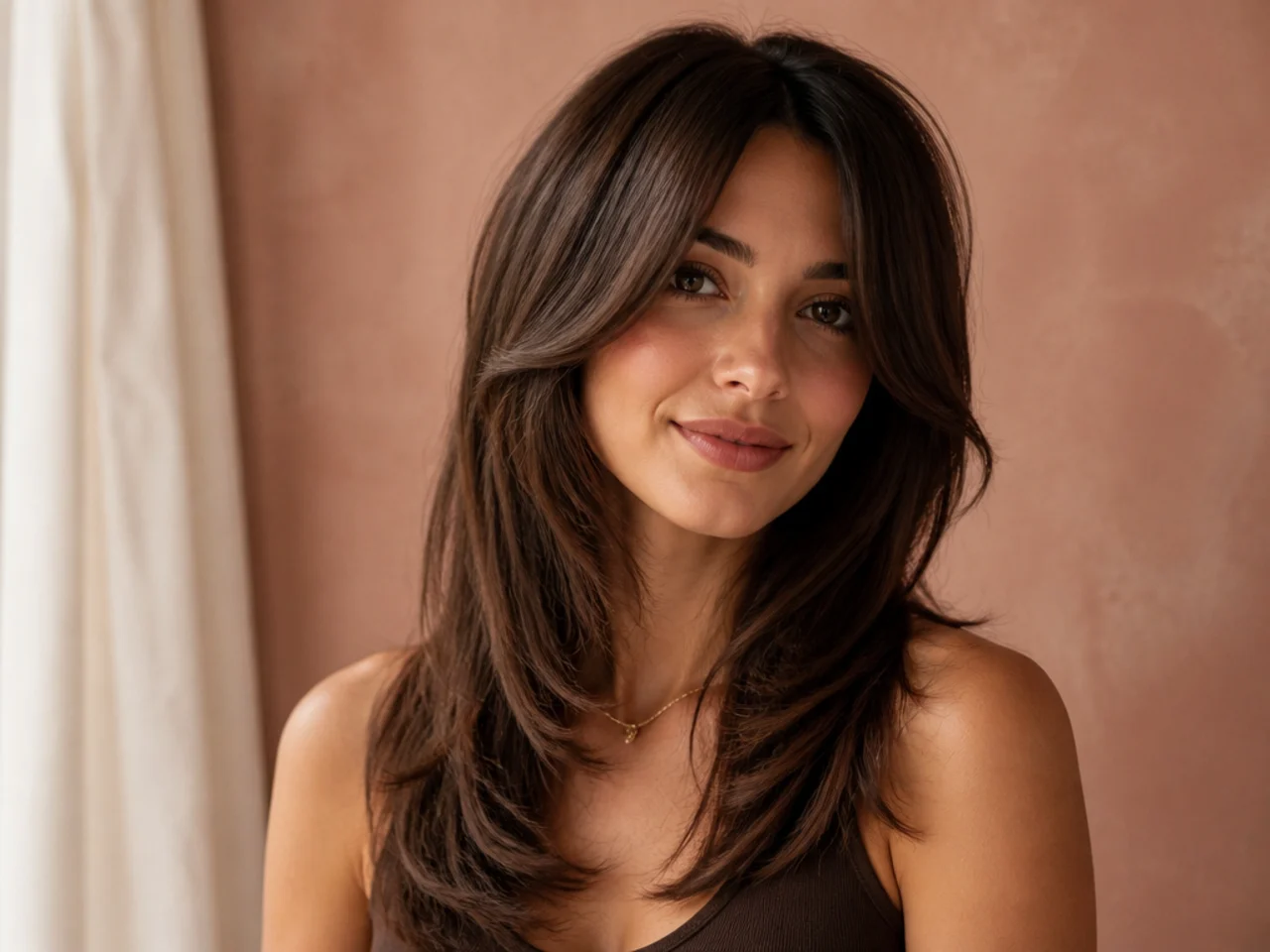
17 Best Curly Hair Haircuts for Ultimate Style in 2026
Curly hair haircuts that turn heads! Find inspiration for your next appointment and master your gorgeous curls today...
In this article · 23
- Curly Hair Haircuts
- Carefree Curls
- Curly Pixie
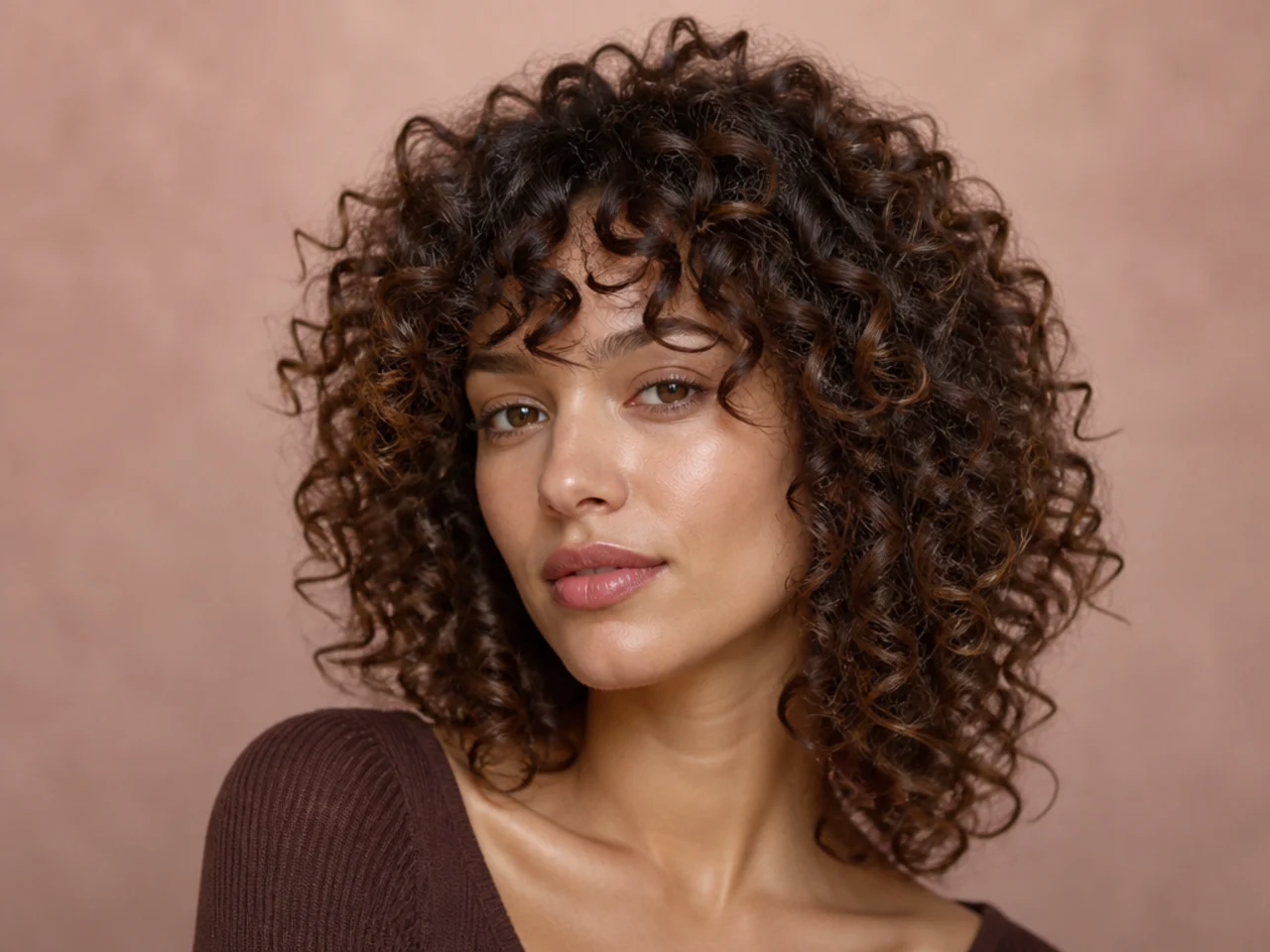
- Voluminous Curls With Bangs
- Curly Bangs
- Curly Shag
- Midlength With Major Texture
- Long Boho Curls
- Wavy Lob
- Natural Texture
- Bold Natural Curls
- Balayage Beauty
- Tousled Layers
- Glamorous Curls
- Fine Curly Hair
- Curly Bob
- Long Curly Hair
- Long Curls With Bangs
- Conclusion
- FAQs
- Which Cut is Best for Curly Hair?
- What is the 7'3" Hairstyle?
- Is Curly Hair in Style in 2025?
Curly hair breaks the rules of a standard scissor-over-comb cut. Wet, your curls stretch. Dry, they spring back. That gap is why so many curly cuts look boxy, flat, or triangle-shaped a week after the appointment. The fix is dry cutting, curl by curl, with internal layers matched to your curl type. Here are 17 curly hair haircuts that actually behave — plus how to ask for each and how to style it.
Curly Hair Haircuts
The best haircuts for curly hair share three moves. Your stylist cuts dry, so they can see where each curl actually lands. They add internal layers to remove weight from underneath — that kills the triangle silhouette. And the shape matches your curl pattern, from soft 2A waves through tight 4C coils.
Check your curl types before you book. Numbers describe curl diameter — 2s are waves, 3s are curls, 4s are coils. Letters describe tightness — A is looser, C is springier. Every haircut below lists the range it fits.
The product order stays the same throughout this page. Rake a nickel of leave-in through soaking wet hair. Smooth a quarter of curl cream on top. Finish with gel or mousse using the praying-hands method, then scrunch upward. Air-dry or diffuse on low. See our best wavy hair products breakdown for specific picks, and our curly hairstyles for men guide if you're looking for the male-cut equivalents.
Carefree Curls
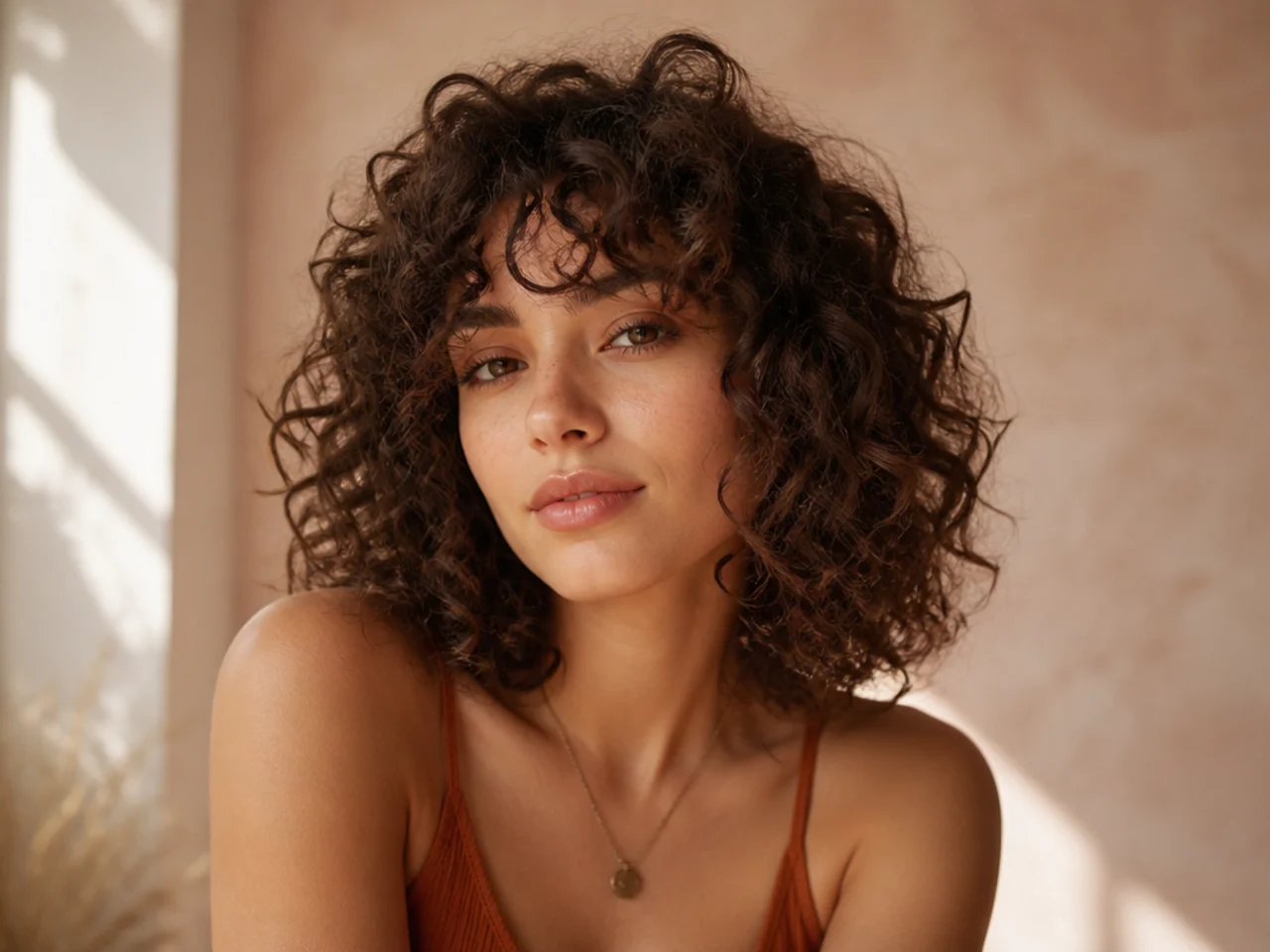
Carefree curls keep length at the perimeter and move weight up through the interior. Long, sweeping layers start below the cheekbone and cascade to collarbone or bra strap. Because the layers are internal, the outline stays round — no wedge, no pyramid, no growing-it-out regret.
It suits 2B through 3B best. Looser 2s get bounce they don't naturally have. Tighter 3s finally show their pattern instead of reading as one solid mass.
Ask for a dry cut, curl by curl, with internal layers only. Keep the perimeter one length at collarbone or below. Add face-framing pieces starting at the jaw.
Styling tip: on soaking wet hair, apply leave-in first, then curl cream, then a quarter of mousse. Cup each curl in your palm and squeeze upward — that's the scrunch that locks the shape. Diffuse on low with your head tipped forward.
Curly Pixie
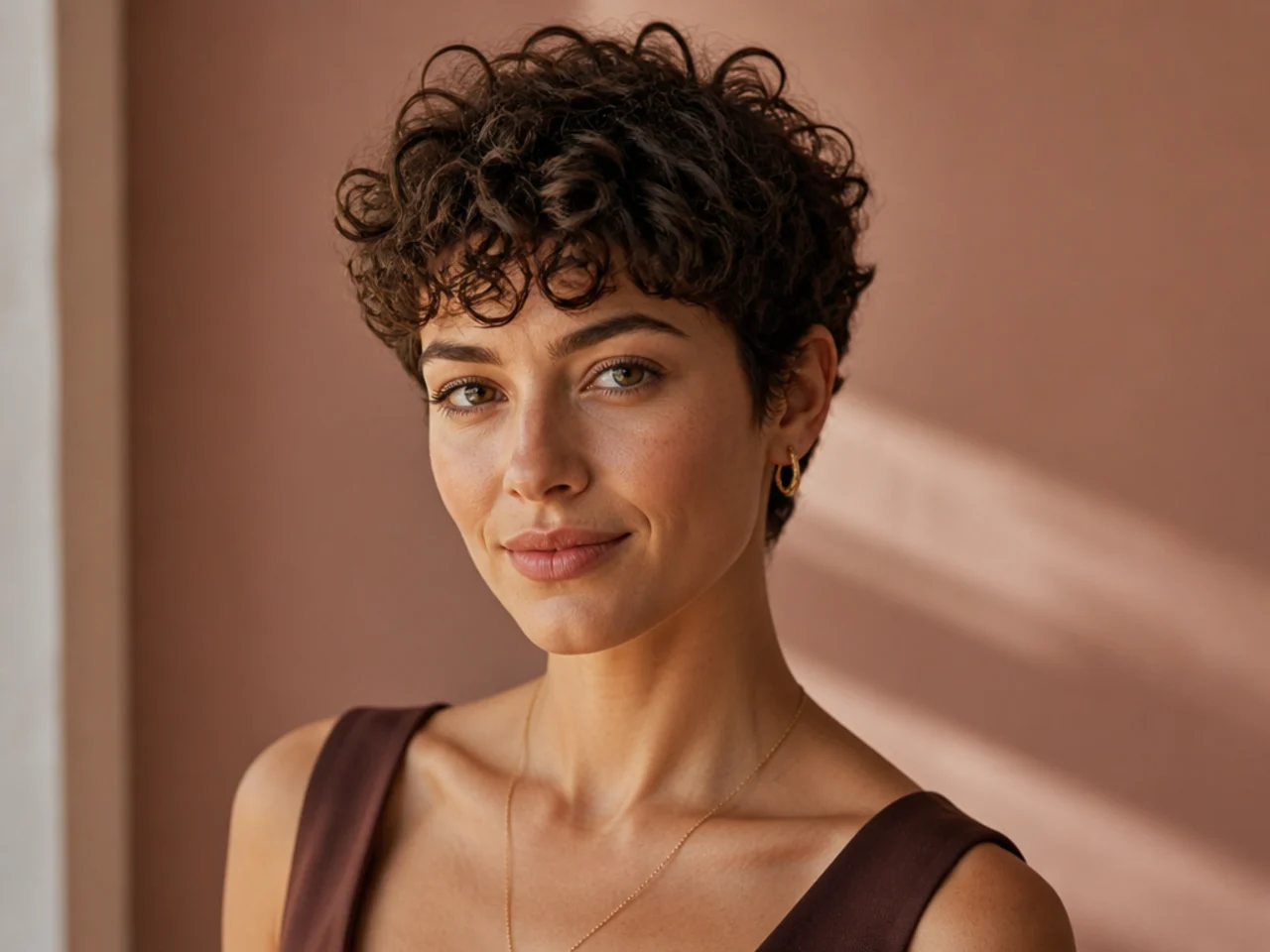
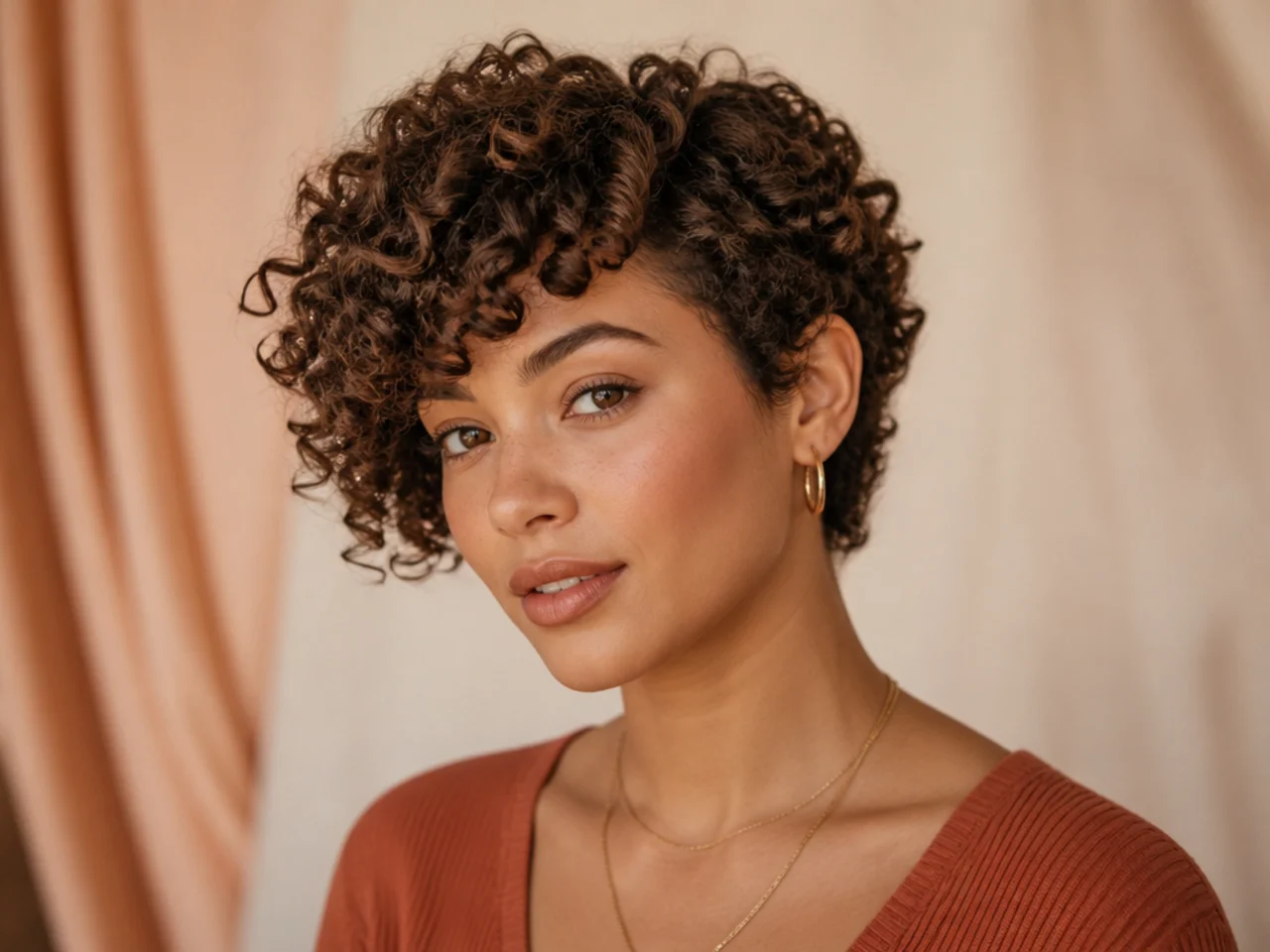
The trick with a curly pixie is length distribution. You want two to three inches of springable curl on top and a graduated nape — never a straight buzz. That length lets the curl form without collapsing into a helmet shape.
It works best on 3A through 4A, where curl density carries the shape. If you're 2A or 2B, the top reads as messy waves rather than defined curls — a longer cut suits you better. Related read: our full guide to pixie cuts.
Ask for a dry-cut curly pixie, internal layering on top, blended graduation from the ear down to a soft nape. Keep the sideburns rounded, not squared.
Styling tip: leave-in on damp hair, dime of curl cream fingered through the top, then a small amount of gel. Diffuse from underneath to push the crown up, then break any cast with your fingertips to soften the finish.
Voluminous Curls With Bangs
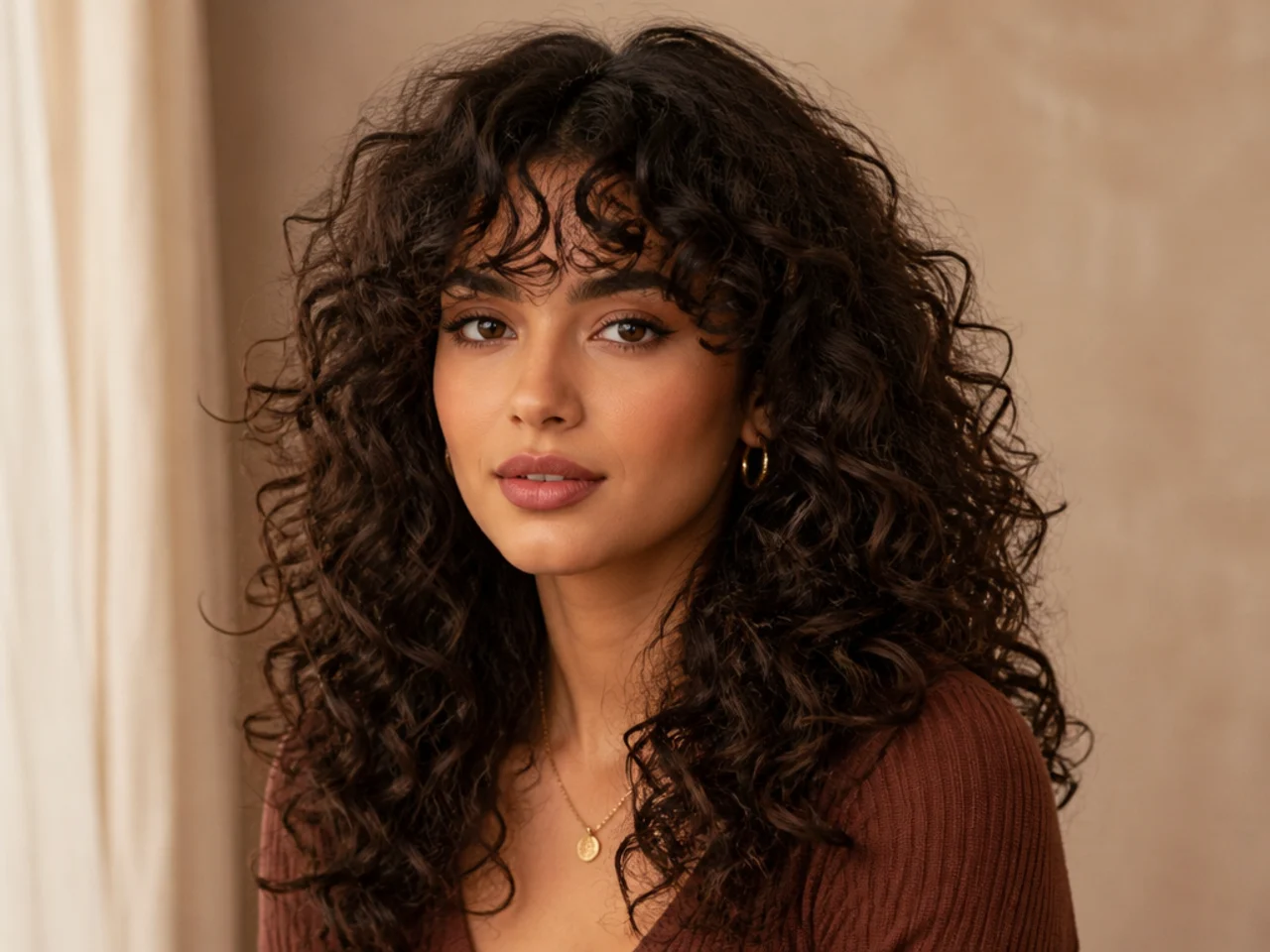
Height at the roots plus a bang that curls with the hair — that's the formula. Long internal layers open up the crown while a curly fringe drops just below the brow. The bang is cut dry, one curl at a time, so it doesn't shrink up into a shelf overnight.
Best on 2C through 3B. The curl pattern needs enough spring to hold the fringe off the forehead, but not so tight that the bang eats the eyes when it dries.
Ask for internal layers with a curl-friendly fringe starting three inches back from the hairline. Cut the fringe dry, curl by curl, ending at eyebrow length.
Styling tip: leave-in, curl cream, then a light mousse. Clip the roots at the crown with duckbill clips while diffusing — that bakes in the lift. Twist the fringe pieces around a finger to reshape them once dry.
Curly Bangs
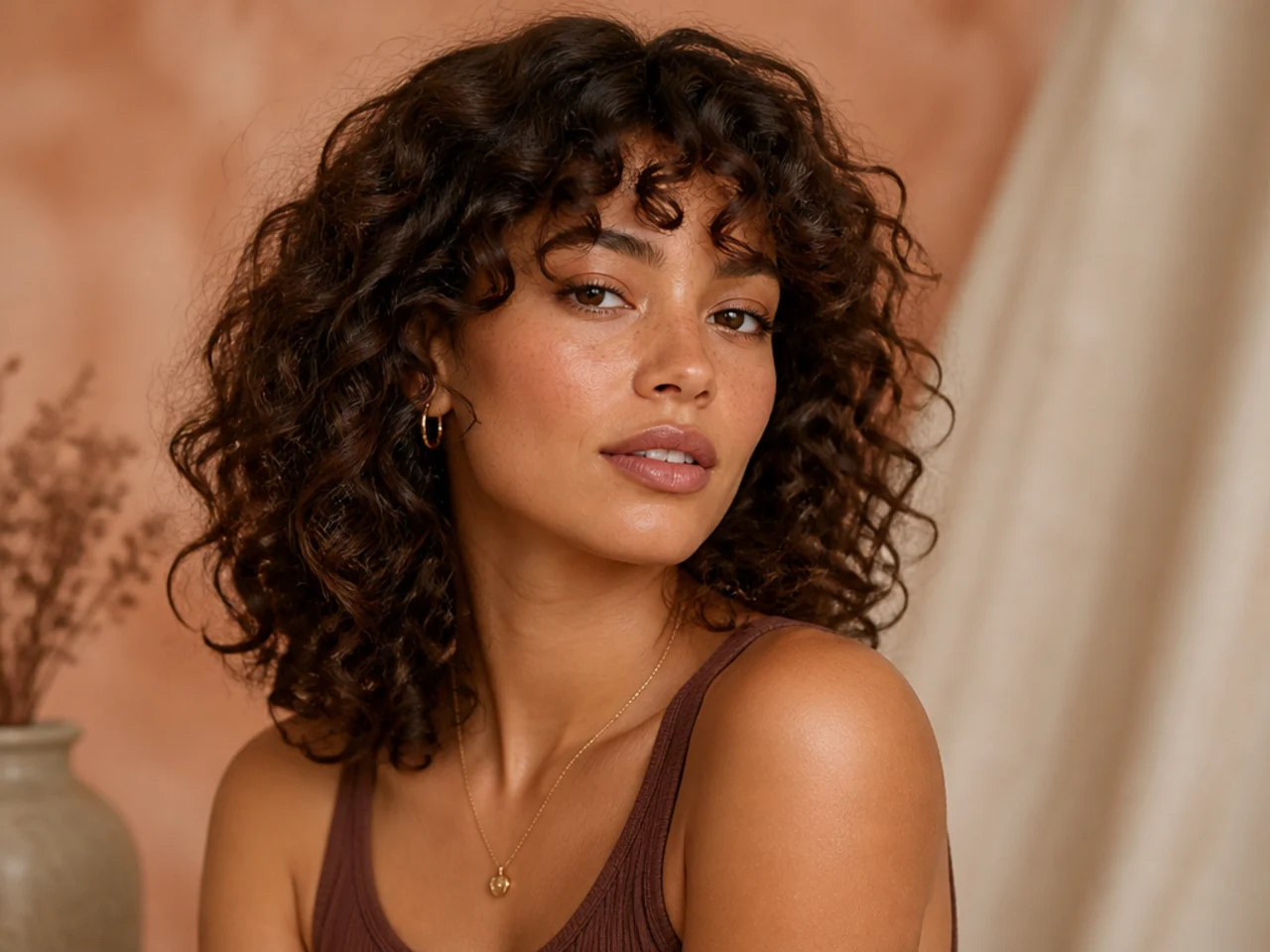
Curly bangs shrink up to 50% from wet to dry. If your stylist cuts them wet, you'll walk out with an inch of forehead you weren't expecting. Dry cutting solves that problem before it happens — this is the single most important rule for a curly fringe.
The style suits 2C through 3C at any length behind. Tighter 4s can wear them too, but need extra length allowance for the shrinkage. Learn your pattern first at our curl types guide.
Ask for a curly fringe, dry-cut, curl by curl, finished length hitting mid-brow. Point-cut the ends so they nest into each other rather than sitting in a hard line.
Styling tip: on the bang alone, use a pea of leave-in and a pea of curl cream, then twirl each curl around your index finger. Diffuse the fringe last, upside down, then flip and settle it into place.
Curly Shag
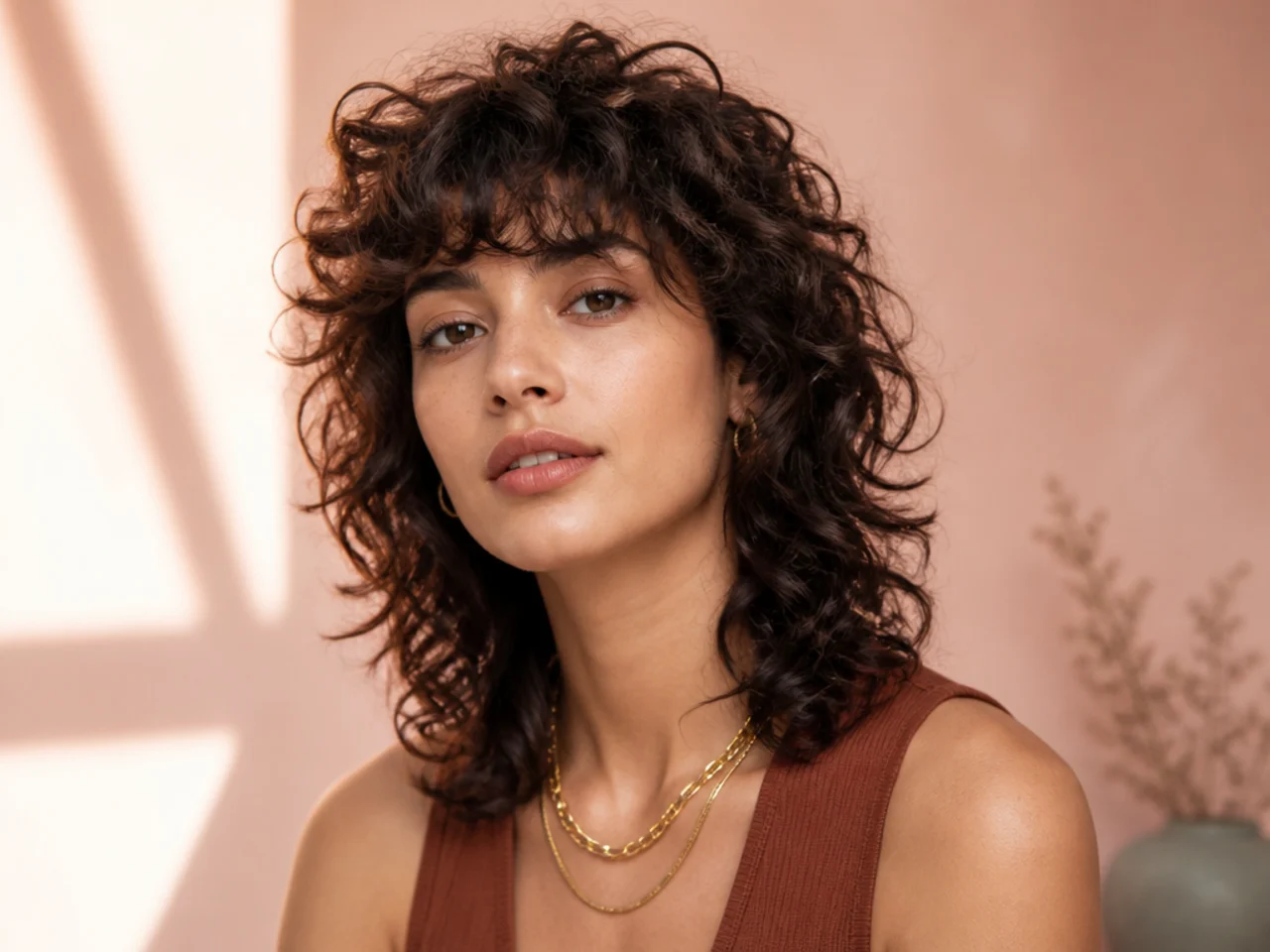
The shag was built for texture. On curly hair, its heavy internal layering removes bulk from the middle while keeping length in the back — the exact opposite of what a wet blunt cut does. You get separation without stringiness.
It shines on 2A through 3A. Very tight curl patterns lose the layer definition and read as a lion's mane rather than a shag.
Ask for a curly shag, dry-cut, disconnected internal layers with a curtain or wispy fringe. Keep the perimeter untouched so you don't lose length. See our layered haircuts breakdown for related shapes.
Styling tip: leave-in first, then a mousse-forward finish rather than heavy cream — mousse keeps the shag airy. Scrunch with a microfiber towel, then diffuse in short bursts, breaking up the pieces at the crown by hand once dry.
Midlength With Major Texture
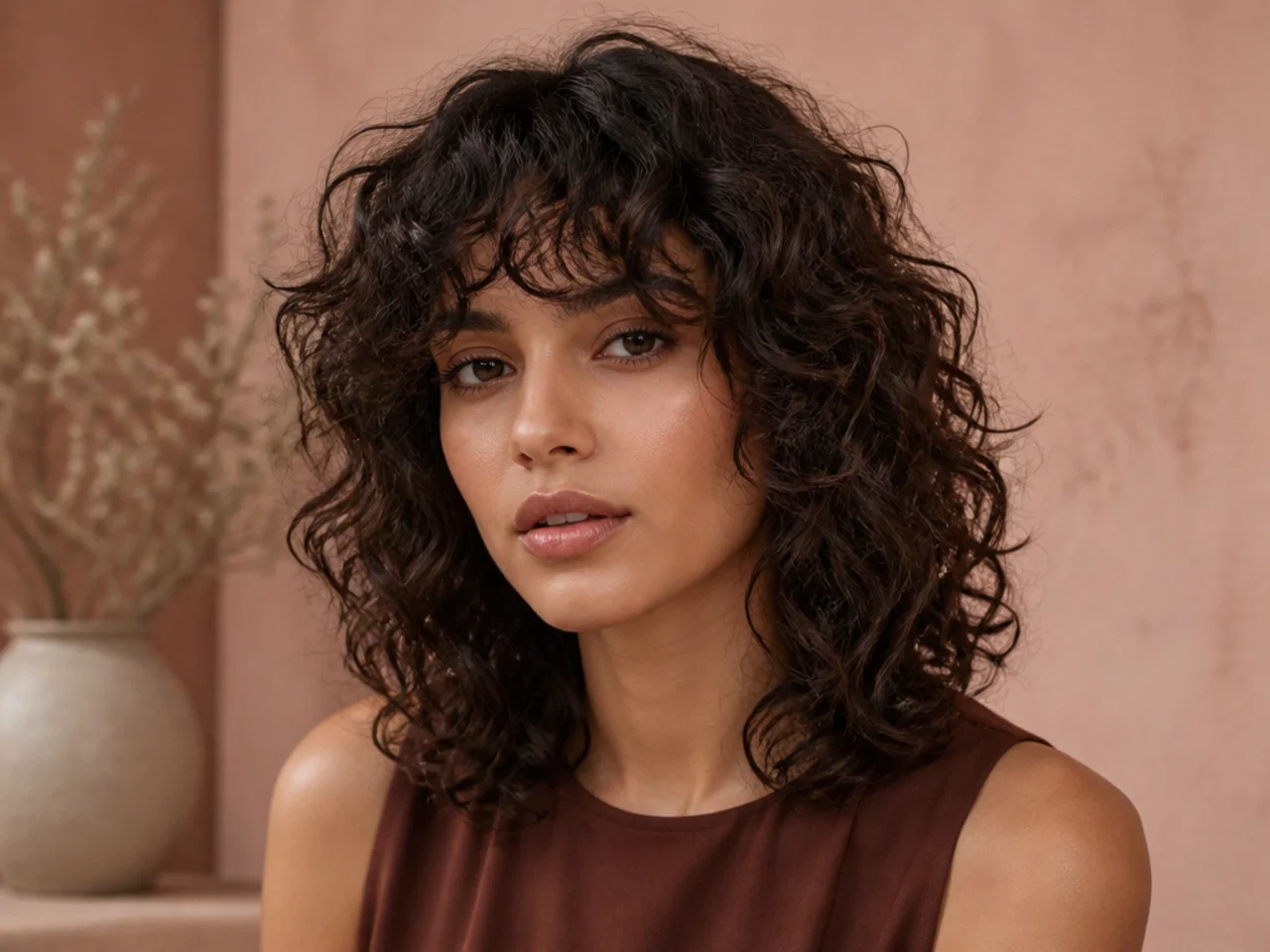
Collarbone to armpit length is the goldilocks zone for most curls. There's enough weight to elongate the pattern, but not so much that the ends drag your curls flat. Aggressive internal layering keeps it all moving.
Fits 3A through 3B best. Loose 2s can wear it too if you accept softer definition. Tight 4s should sit shorter or much longer — this length can look boxy on coils.
Ask for a dry cut at collarbone with heavy internal layering starting two inches from the scalp. Point-cut the ends of each curl to remove any blunt weight.
Styling tip: leave-in on soaking hair, curl cream raked through, gel scrunched in until it forms a hard cast, then air-dry or diffuse. Scrunch the cast out with a drop of light oil once fully dry — the curl memory stays locked in.
Long Boho Curls
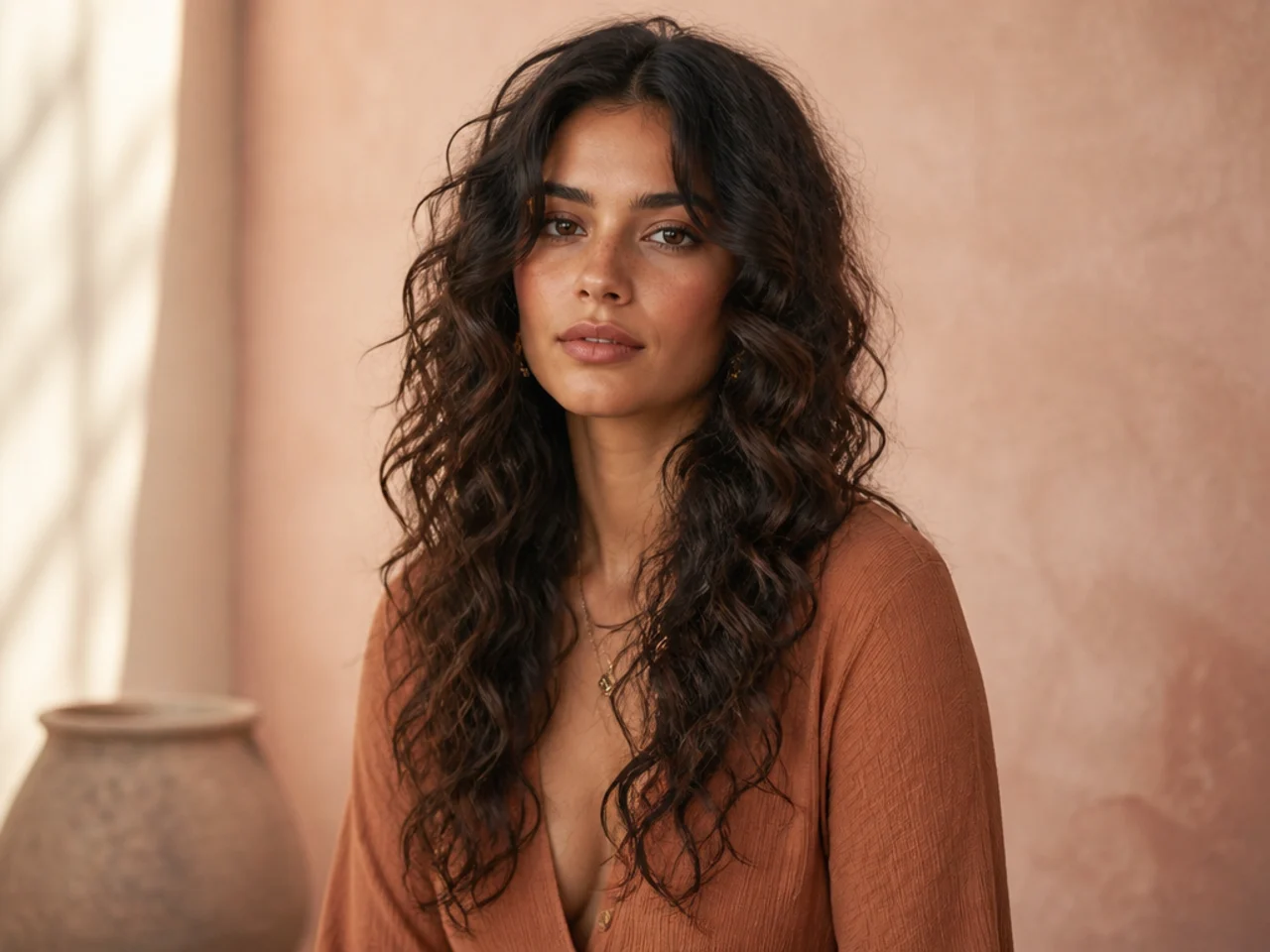
Long boho curls need thoughtful weight removal or the whole shape sits like a curtain. The play here is long, disconnected internal layers plus curtain fringe or soft face-framing. The perimeter stays long — mid-back or below.
Suits 2B through 3B. Longer than mid-back on 3C or 4A pulls the pattern out; the weight overwhelms the spring and you lose the curl.
Ask for boho-style long curls, dry-cut, deep internal layers throughout, softest face-framing starting at collarbone. Do not touch the perimeter.
Styling tip: this length needs deep hydration to hold shape. Layer leave-in, curl cream, and gel in that order, section by section. Diffuse on low from underneath to build root volume, then let the length hang and dry naturally the rest of the way.
Wavy Lob
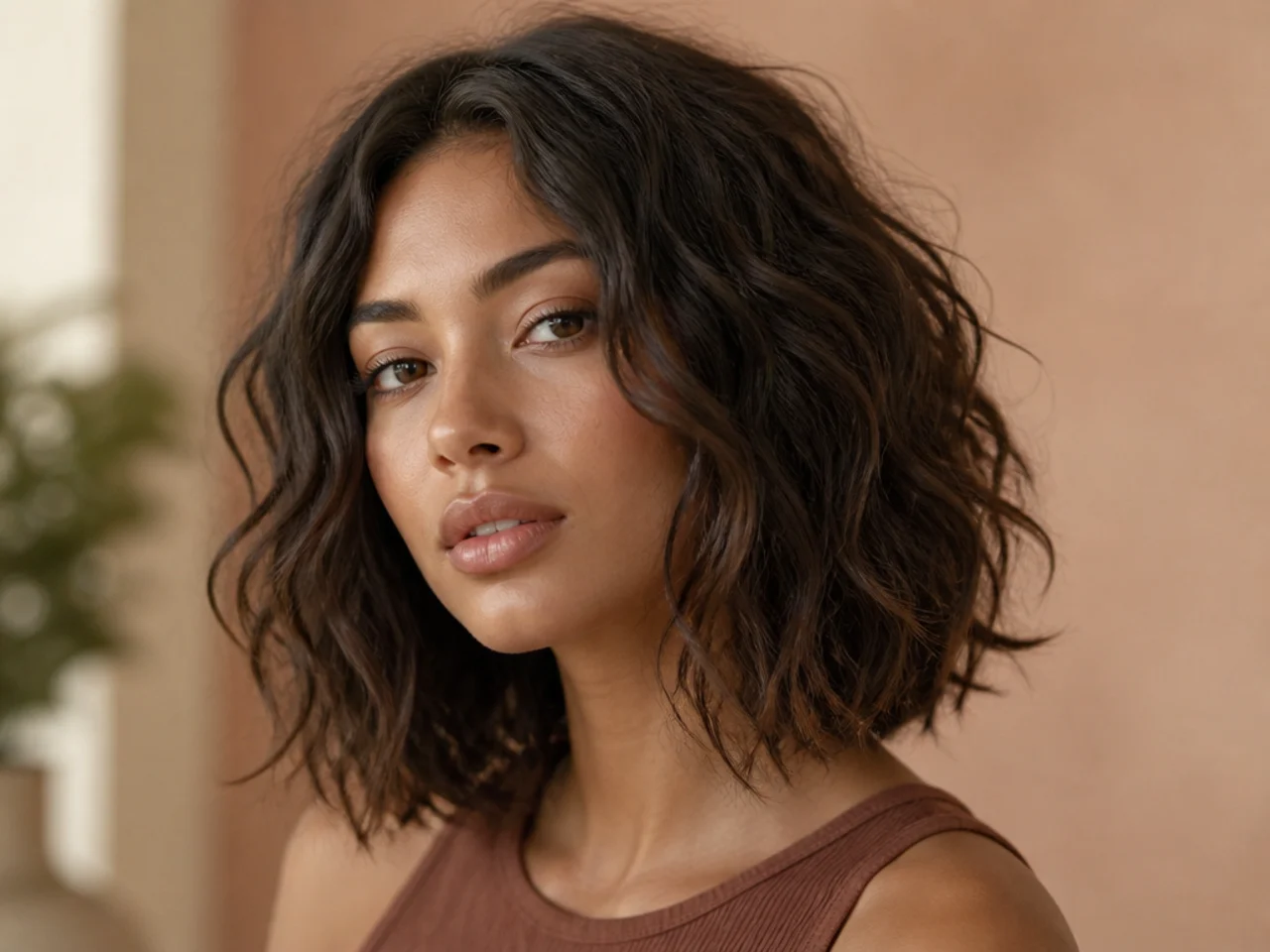
The lob for curls sits between collarbone and shoulder — long enough to fall past the shoulder plateau where curls flip out weirdly. Internal layers give it swing. A one-length wet blunt-cut lob on wavy hair is why so many 2s think they have "annoying" hair.
Ideal for 2A through 2C waves. Loose 3s work if you accept a rounder shape. Related read: our full bob haircut guide for the shorter version of this shape.
Ask for a dry-cut lob just above collarbone, with soft internal layers to remove interior weight. No blunt line at the perimeter — point-cut it.
Styling tip: leave-in, curl cream, then a texture spray or light mousse — heavy gel casts weigh waves down. Scrunch upward, plop into a t-shirt for 20 minutes, then air-dry the rest of the way.
Natural Texture
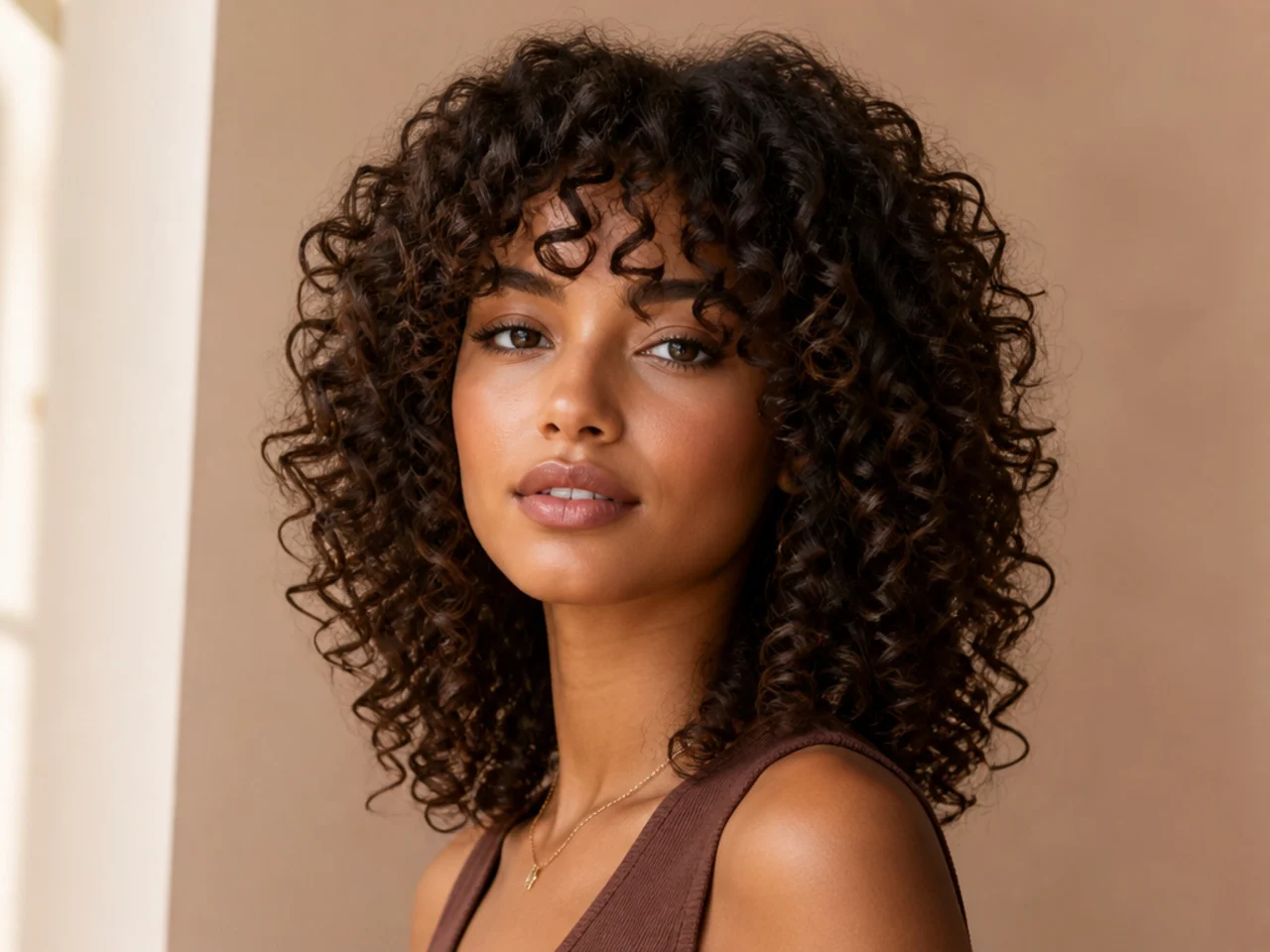
"Natural texture" as a haircut philosophy means the shape is designed around your curl pattern, not against it. No thinning shears. No razor. No wet chop. Just dry, curl-by-curl scissor work that recognizes where each spiral actually lives on your head.
This approach fits every type, from 2A to 4C. It's the base of every cut on this page.
Ask for a curl-by-curl dry cut with internal layering scaled to your density. Bring photos of curl patterns similar to yours so your stylist has a benchmark to shape around.
Styling tip: build your product routine in this order every time — leave-in, curl cream, gel or mousse. Use fingers, not brushes, once product is in. Scrunch, plop, diffuse or air-dry. Consistency in method beats any single product on the shelf.
Bold Natural Curls
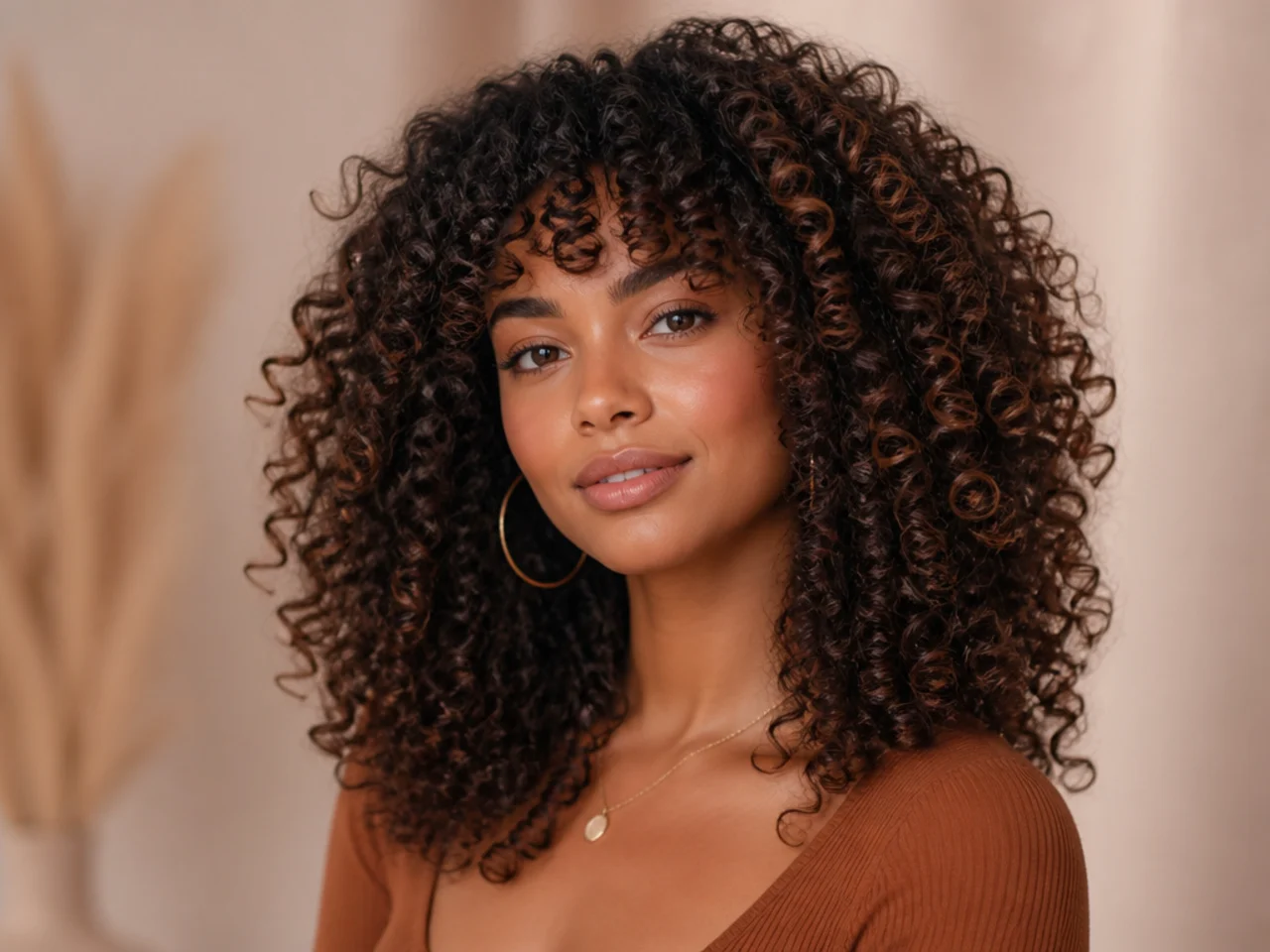
Bold natural curls read as a full, rounded silhouette with soft face-framing. It's not about length — it's about density showcase. The cut removes just enough weight to let curls stack instead of drape.
Perfect for 3B through 4B, where the pattern has enough density to hold the shape. This is also the ideal cut for growing out a big chop or transitioning back to natural texture.
Ask for a dry-cut round shape with light internal layering to keep density high. No slicing or thinning shears — those techniques strip volume from coilier textures.
Styling tip: work in small sections, no bigger than the width of two fingers. Leave-in first, then a rich curl cream on the length, then a gel finish at the roots to lift. Diffuse with a hover method — don't touch the curls until they're at least 90% dry.
Balayage Beauty
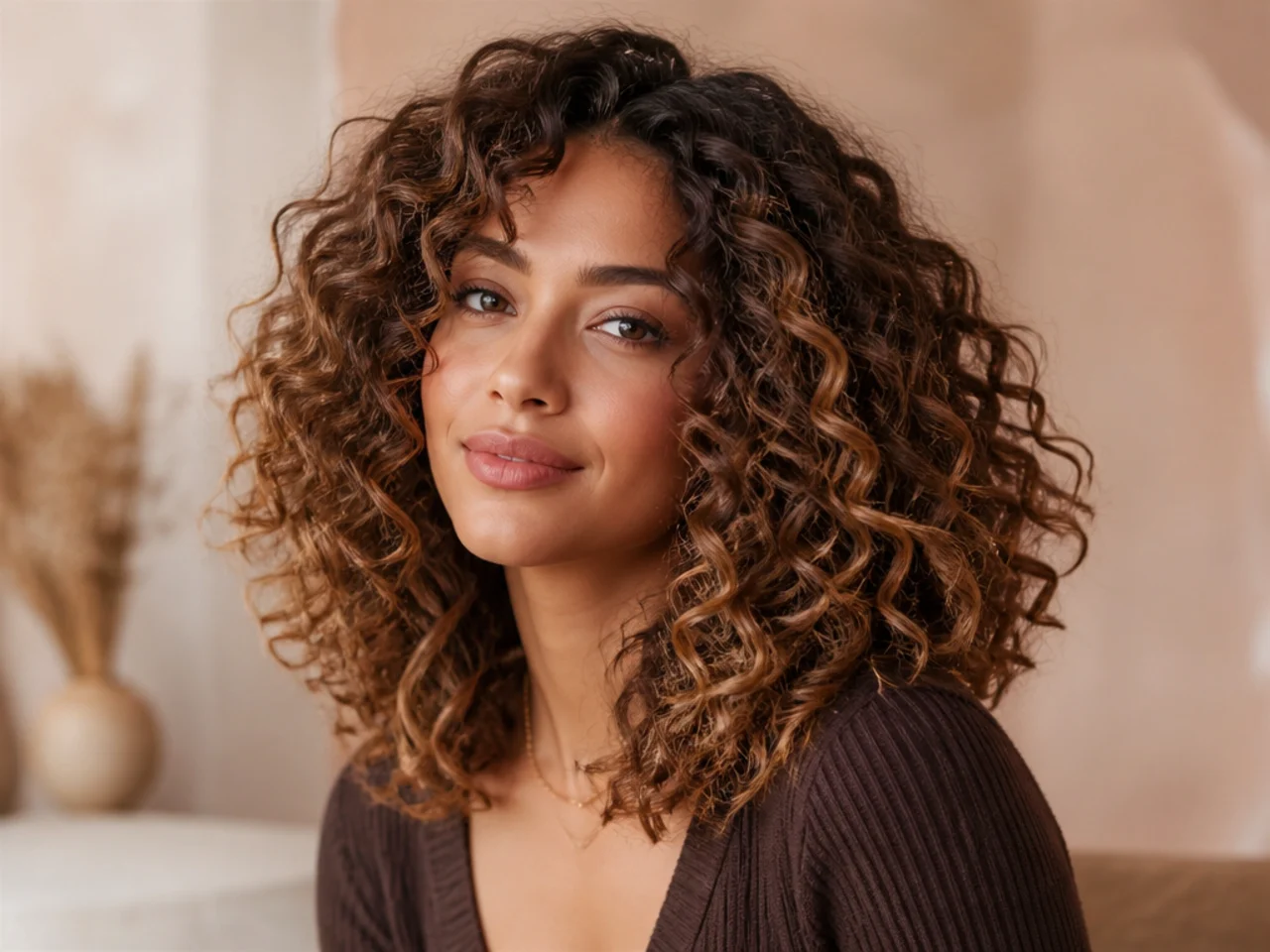
Cut and color are one conversation on curly hair. Balayage placed on stretched sections looks totally different once curls spring back — brighter pieces should sit where curls naturally show their outer coil face, not on the underside where color hides.
The technique works on 2A through 3C. Very tight 4s benefit from freehand placement rather than traditional balayage — the coil geometry hides linear painting under other coils.
Ask for a dry-cut shape first, then balayage placed with your curl pattern in mind. Painting should follow the spiral, not the section clip.
Styling tip: after color, add a bond-builder step to your routine — bond builder, then leave-in, then curl cream, then gel. Color-treated curls dry out faster, so mist with water and refresh mid-day if you need to.
Tousled Layers
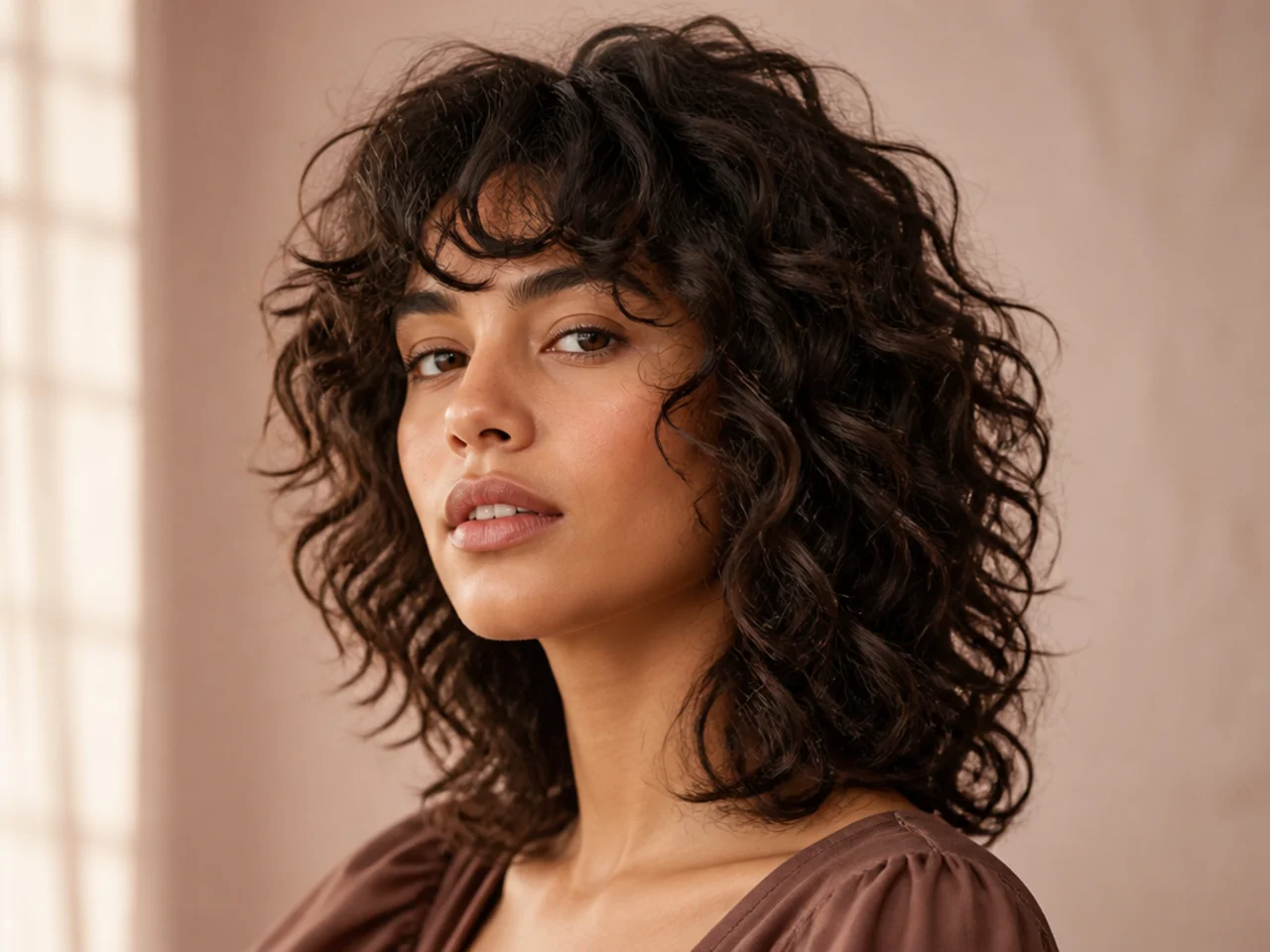
Tousled layers keep the shape loose and lived-in. It's a lighter version of the shag — less disconnection, more blend. Ideal if you want movement without an obvious layer line calling out where the cut starts.
Best on 2A through 3A. Any tighter and "tousled" turns into "puffy" without harder layering to shape it.
Ask for softly connected internal layers, dry-cut, longest layer at collarbone, shortest at cheekbone. No blunt perimeter — everything point-cut. Related: our layered haircuts reference guide.
Styling tip: apply leave-in, skip the cream, and go straight to a light mousse. Scrunch upward, then rake fingers through once dry to loosen the layers. This is the one cut where a little "un-styling" reads better than perfect definition.
Glamorous Curls
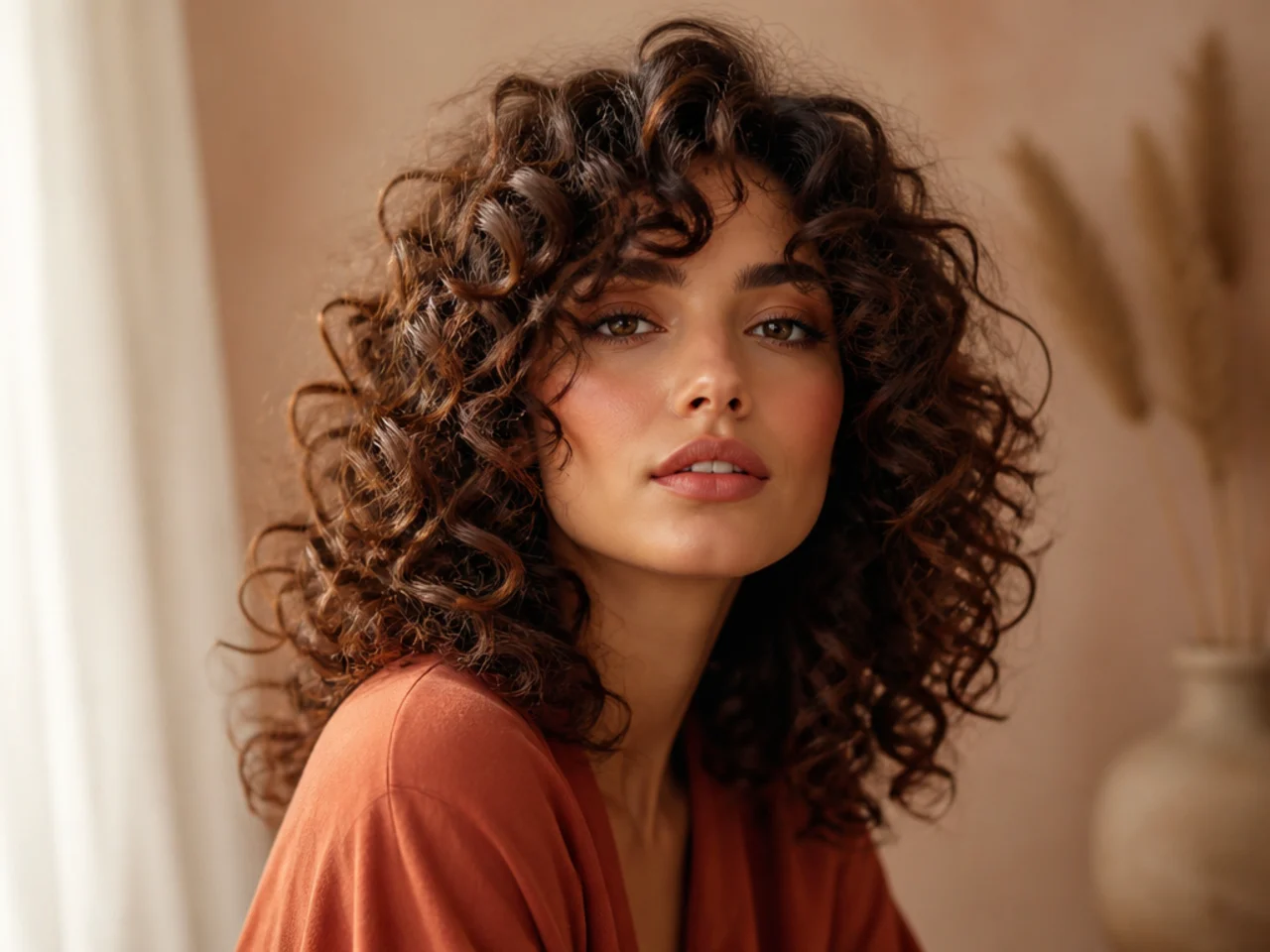
Glamorous means defined. Every curl is separate, shiny, and holds shape from morning to midnight. The cut supports that by keeping the perimeter uniform and internal layers subtle — you want the curl to sing, not the layering.
Best on 3A through 3B, where the pattern is naturally defined. Loose 2s need to be diffused with a brush attachment to fake this look.
Ask for a dry cut with minimal internal layering, perimeter kept even at collarbone or below. Point-cut the ends to soften the line without breaking the shape.
Styling tip: leave-in, curl cream, then a strong-hold gel — really work the gel in for a hard cast. Once fully dry, break the cast with two drops of argan oil rubbed between your palms and scrunched through. That's how you get shine plus hold in the same style.
Fine Curly Hair
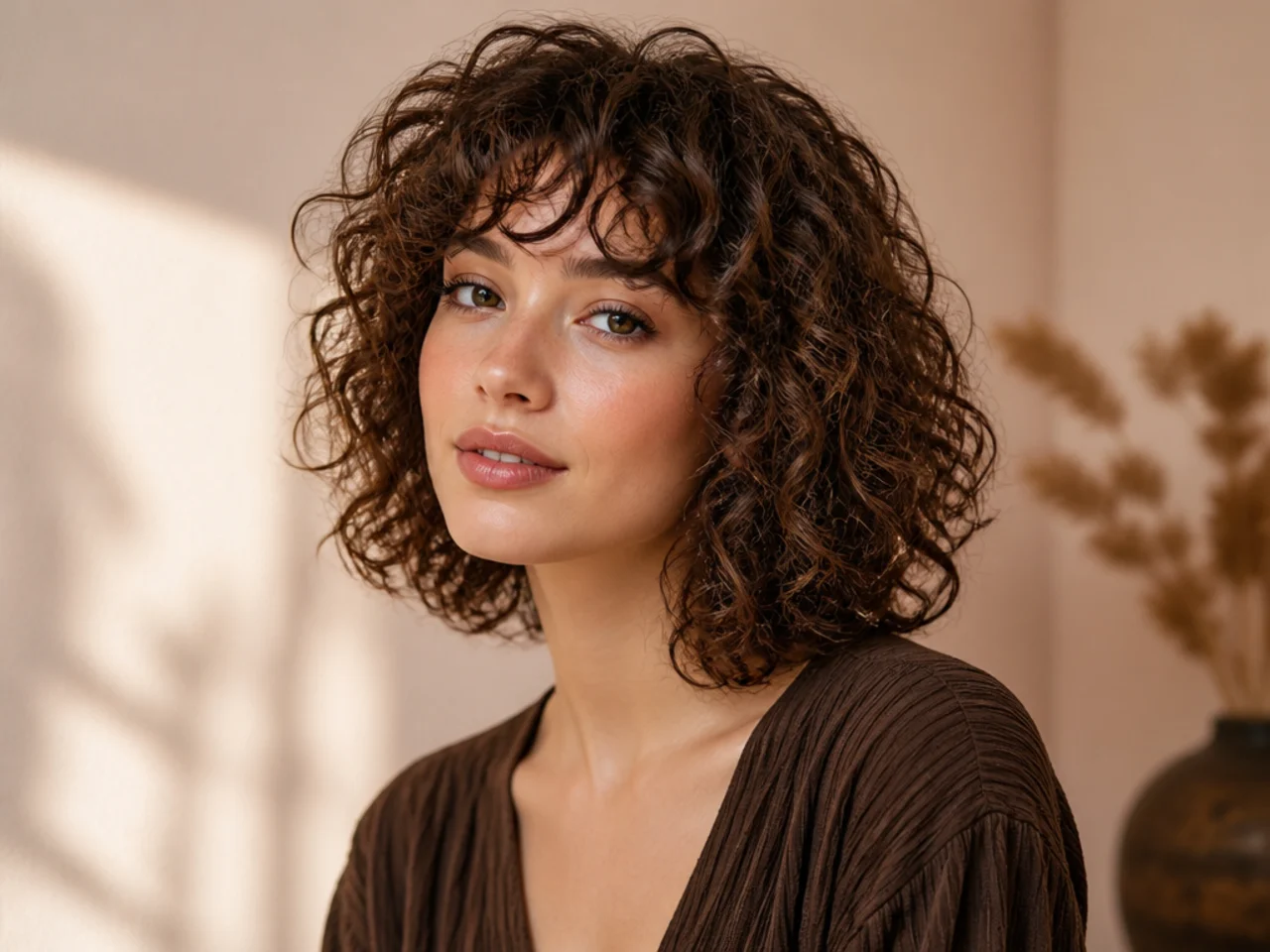
Fine curly hair has two enemies: over-layering (kills volume) and heavy product (weighs curls flat). The cut solution is short, blunt-friendly perimeters with only light internal weight removal near the crown.
Fits any curl pattern, but especially 2A through 3A on the fine end of density. Coarse curls behave differently — this is a density call, not a pattern call.
Ask for a dry cut with a blunt or barely point-cut perimeter, jaw to collarbone length. Add only crown-level internal layers to fake volume where it counts.
Styling tip: skip the cream entirely. Use a whip mousse with a light leave-in mist only. Diffuse on medium heat with your head fully upside down to build root lift. Fine hair holds heat memory better than you'd expect, so don't over-touch it after diffusing.
Curly Bob
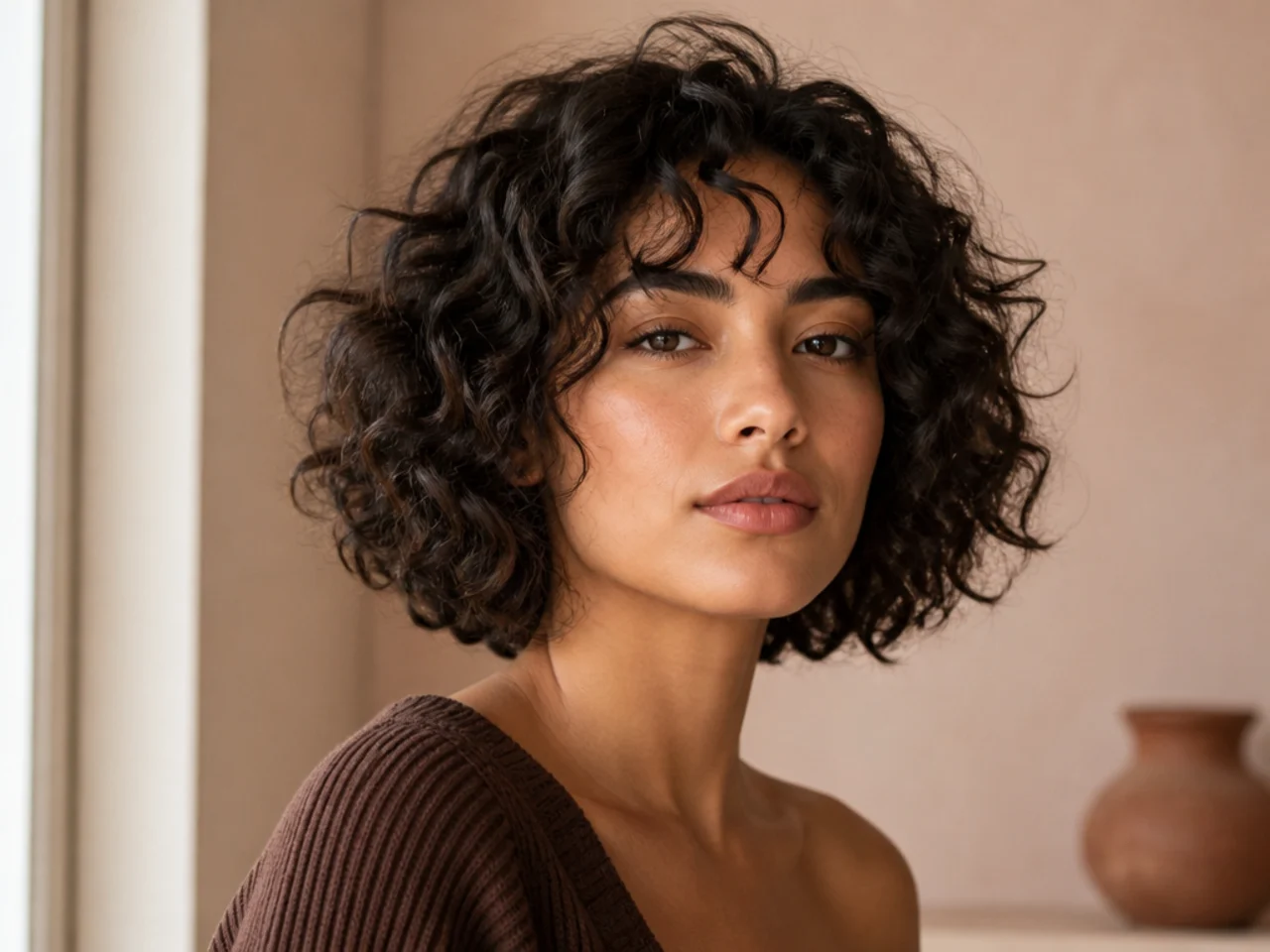
The curly bob works because it sits at jaw or chin length — right in the sweet spot where curls stack instead of hang. Anything longer, and two inches of shrinkage puts you at shoulder, where curls flip and flare outward.
Ideal for 2C through 3C. Tighter 4s can wear a bob but need extra length allowance for the shrink factor. Our short curly hair guide covers the range in more detail.
Ask for a curly bob dry-cut at chin length, curl by curl, with internal layers only in the top third. Keep the perimeter round, not angled.
Styling tip: leave-in, curl cream, mousse — mousse gives a curly bob the springiness it needs at that length. Diffuse upward from the ends to the roots, cupping the curls up into your head shape. A curly bob styled downward reads flat every single time.
Long Curly Hair
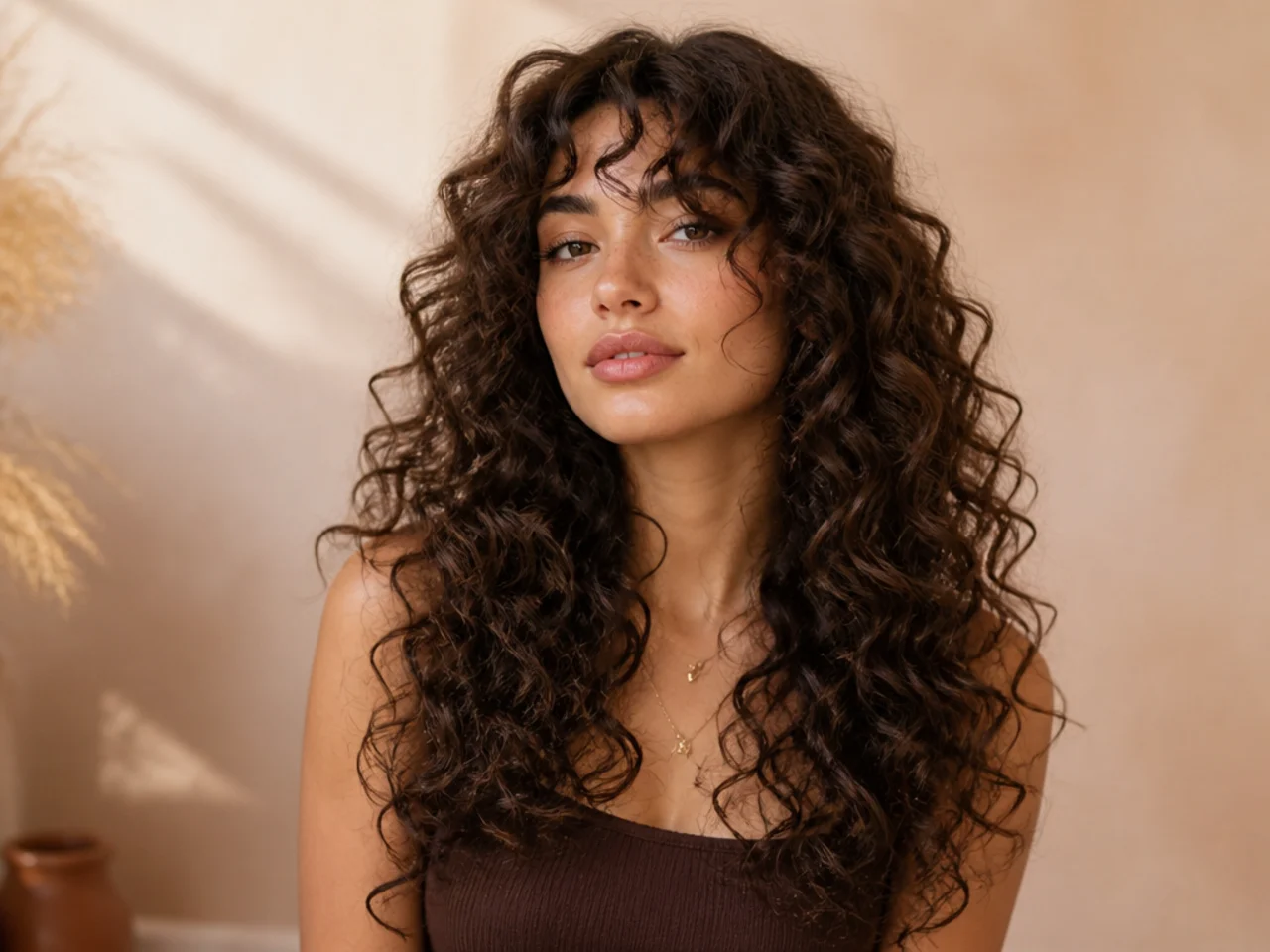
Long doesn't mean untouched. Long curly hair without internal layering acts like a curtain — heavy, flat, curl-free at the roots. Long done right means a bra-strap perimeter with aggressive internal weight removal starting at the ear.
Best on 3A through 4A. 4B and 4C usually thrive at medium length; long lengths on tight coils need constant hydration to hold the shape without stretching straight from gravity.
Ask for long curly hair dry-cut at bra strap, with deep internal layers to remove interior weight. Do not touch the perimeter length. If you want a pop of dimension, ask about balayage placement — see our hair color reference for options.
Styling tip: use twice the product you'd use on shorter curls. Section your hair into four before applying anything — root volume dies at long lengths without section clipping while diffusing. Sleep on a satin pillowcase or in a loose pineapple to preserve the shape overnight.
Long Curls With Bangs
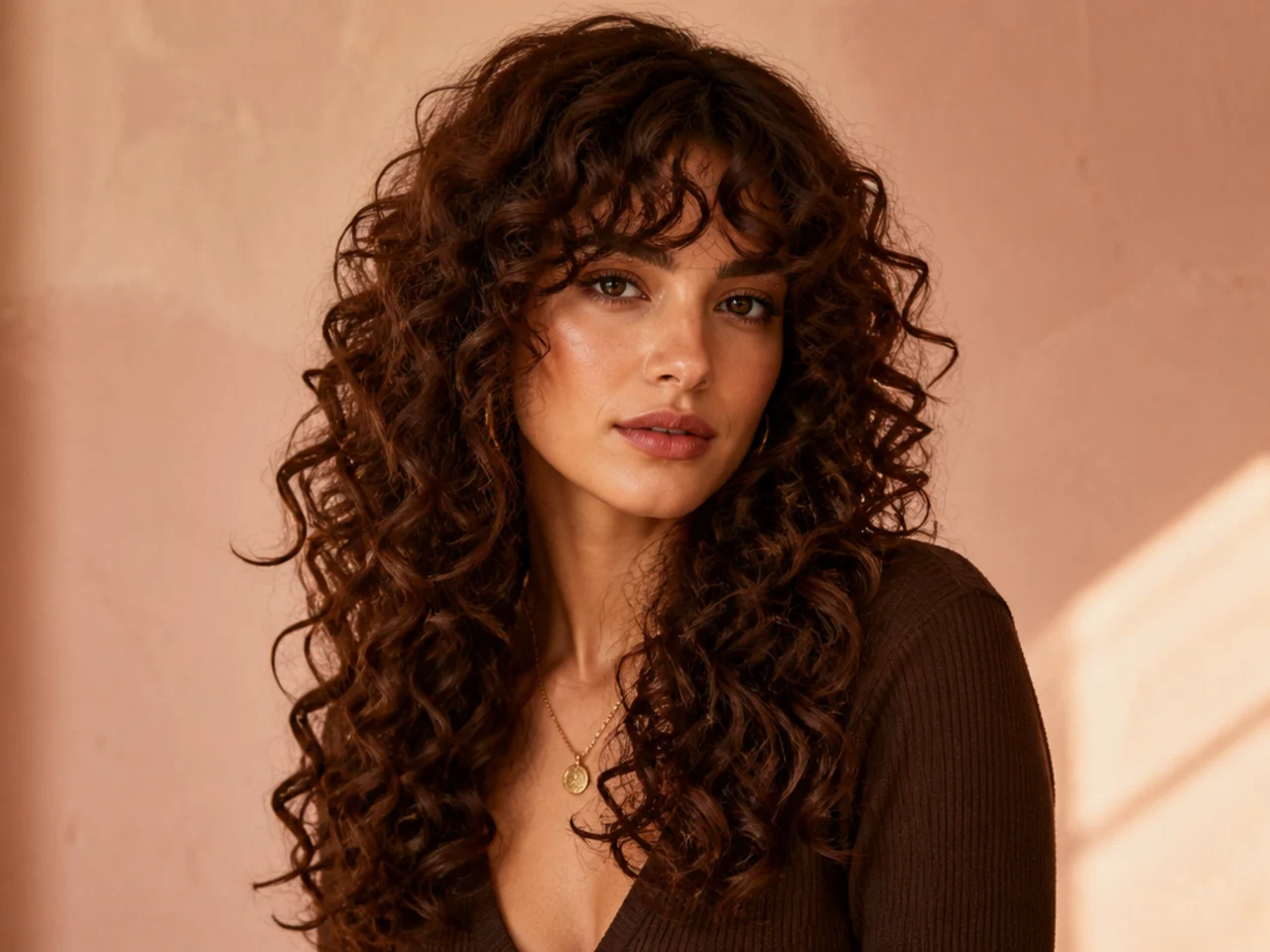
The long-plus-bang combination puts weight on the perimeter and drama at the face. The fringe frames the eyes and cheeks while the length brings back movement. Internal layers throughout keep the curls stacking rather than sagging under gravity. For a heavier layered variant of this shape, check our butterfly haircut breakdown.
Suits 2C through 3B most flatteringly. 4A can wear this too with a shorter fringe and more length allowance for shrinkage.
Ask for long curls at bra strap, dry-cut with internal layering, plus a curly curtain fringe starting mid-forehead and dropping to jaw at the outer pieces.
Styling tip: style the fringe separately from the rest. Do the length first — leave-in, cream, gel — then apply lighter product just to the bang so it doesn't crunch. Twirl each fringe curl on a finger to set the final shape.
Conclusion
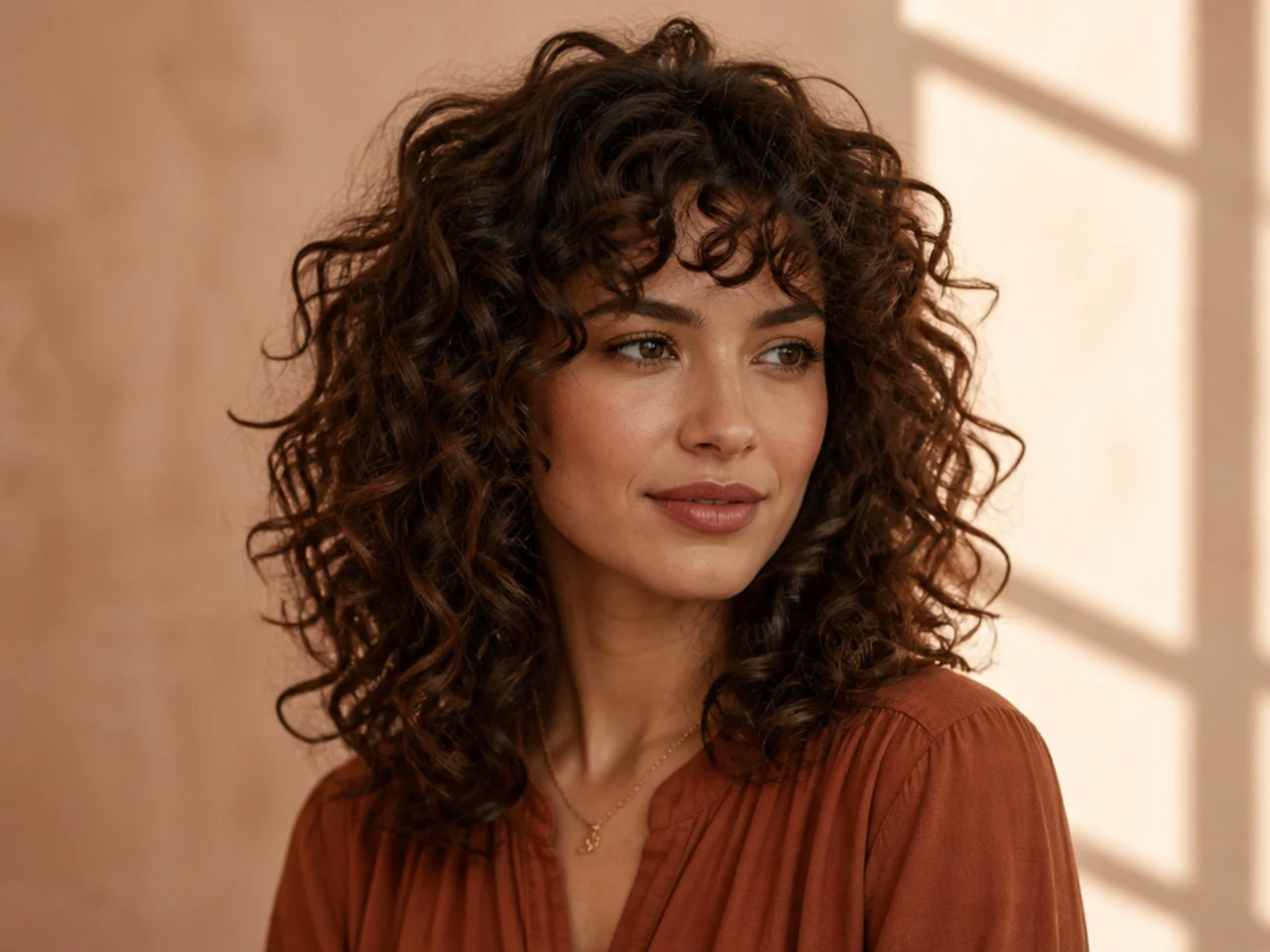
Every curly cut on this page starts the same way: dry, curl by curl, with internal layers. The variables are length, fringe, and how much weight comes out. Match those to your curl type and density, and your curls do most of the styling for you. If your current stylist reaches for the water bottle before the shears, book somewhere else — that's the single biggest tell that a cut will fight your texture instead of shaping it.
FAQs
Which Cut is Best for Curly Hair?
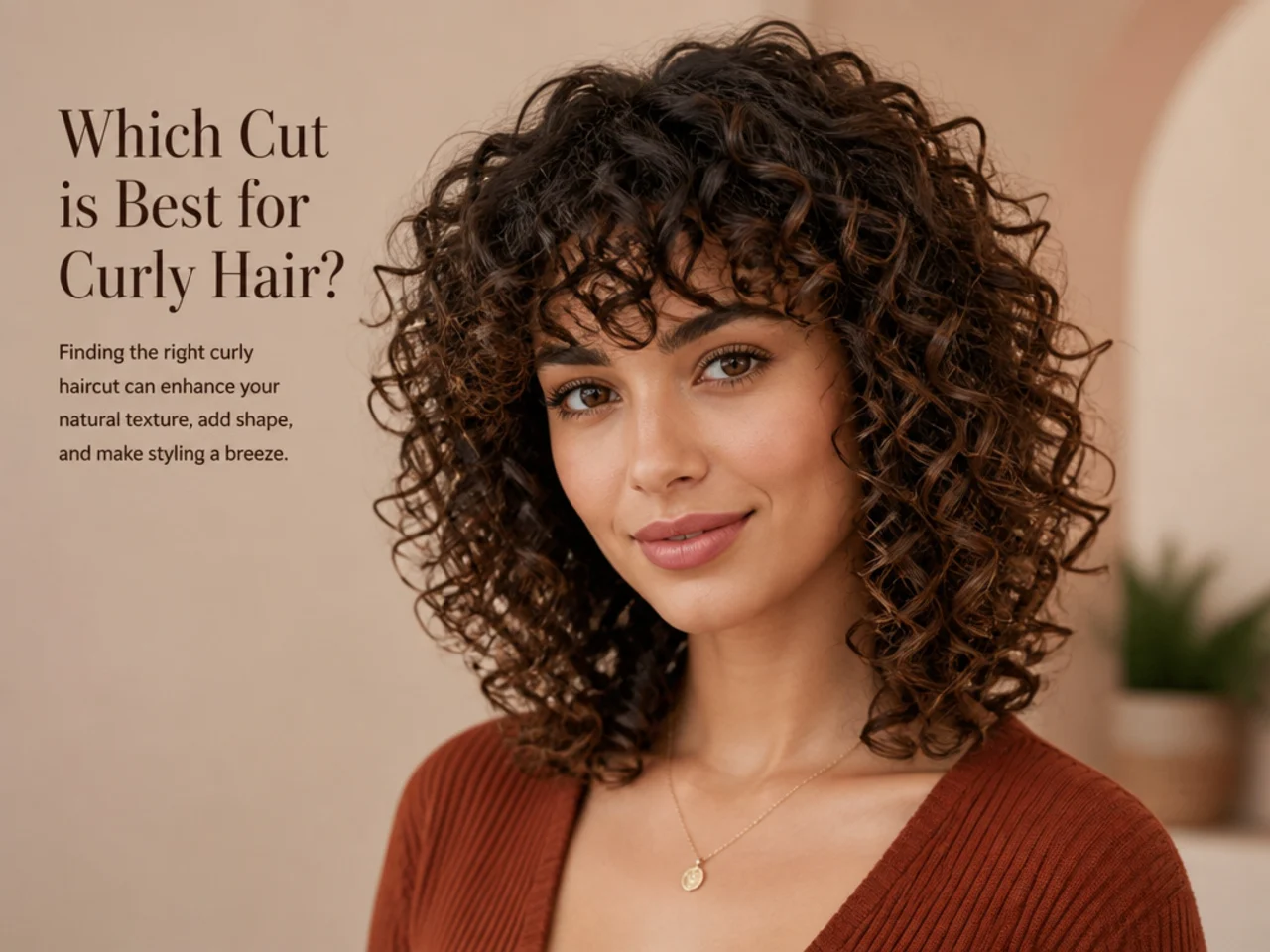
The best cut is one shaped around your curl pattern. For 2A through 2C, a lob with soft internal layers moves best. For 3A through 3B, a midlength shag or long boho cut showcases the spring. For 3C through 4C, a rounded shape with light internal layering keeps density intact without sacrificing volume. Every version above starts with a dry, curl-by-curl cut.
What is the 7'3" Hairstyle?
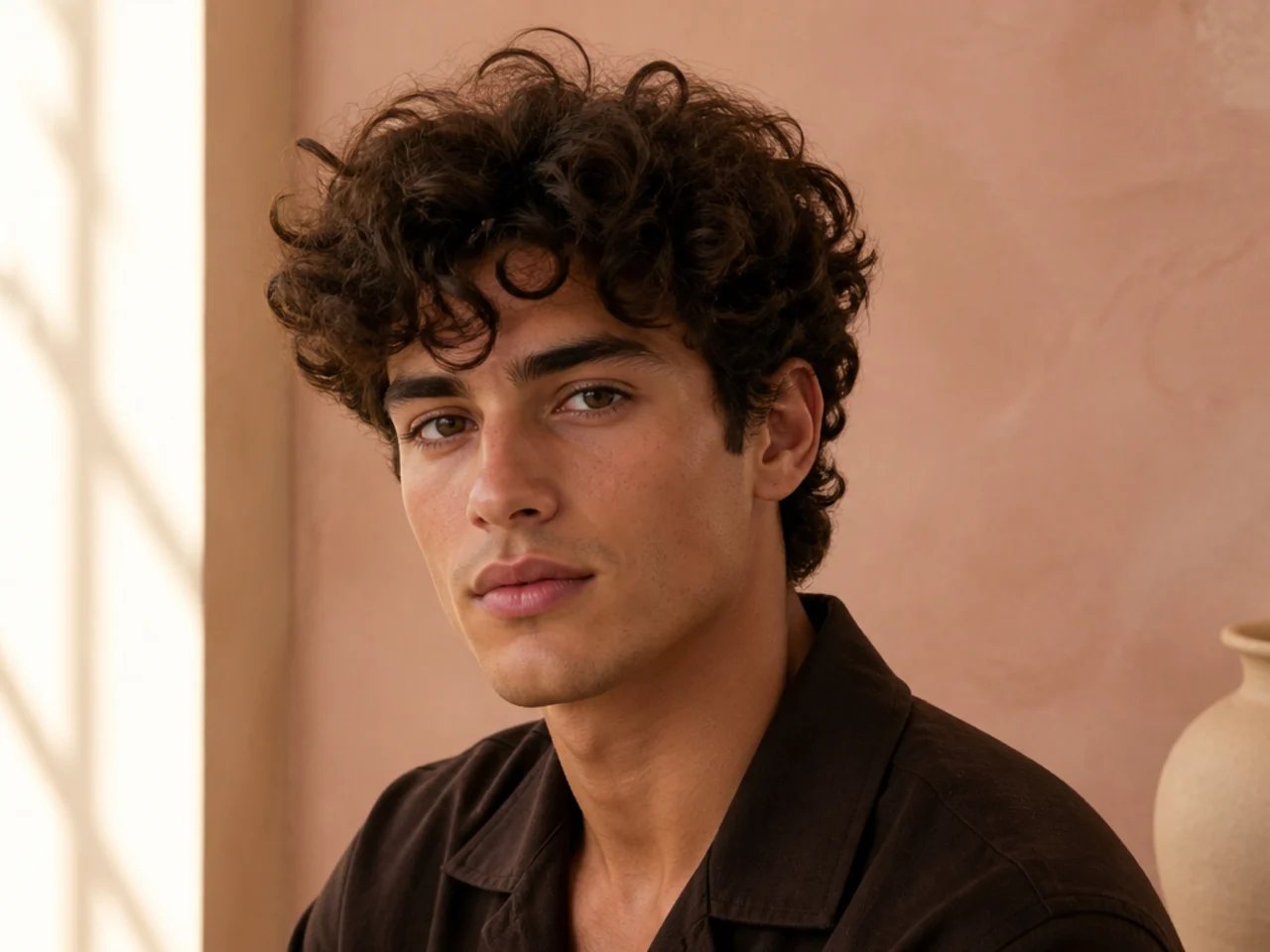
The term isn't standard stylist language, but if you've seen it on social media, it usually refers to any tall, sculpted top shape — pushed-up curls, a high pineapple, or elongated crown volume created by diffusing upward. On curly hair, achieve the look with a curly pixie or shag cut, then clip the roots while diffusing head-down to build height at the crown.
Is Curly Hair in Style in 2025?
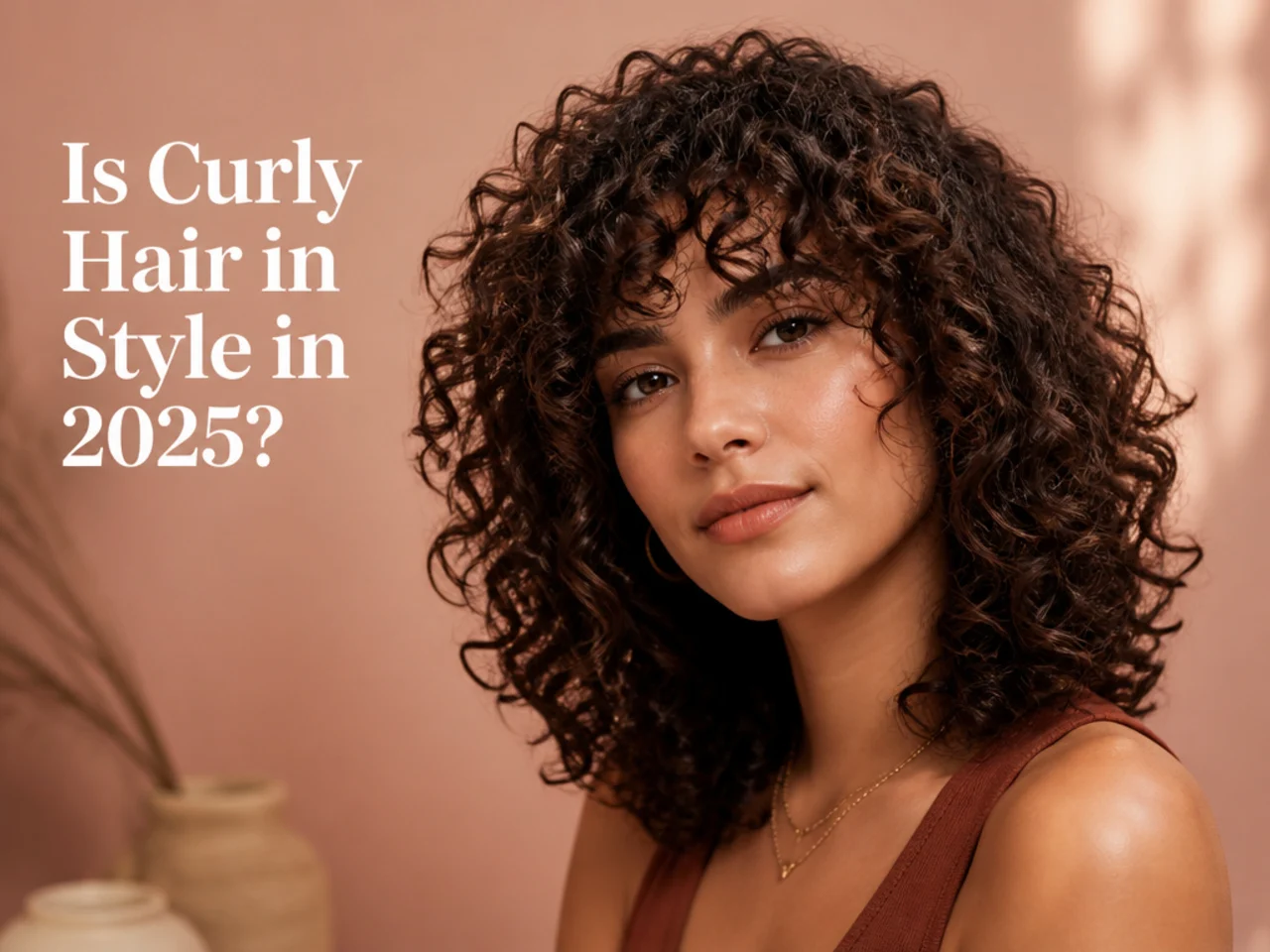
Curly hair is a permanent style category, not a trend cycle. What's shifted is technique — dry cutting, curl-by-curl layering, and product routines built around leave-in, curl cream, and gel are now the industry default. If your stylist still cuts your curls wet with a comb like it's a straight haircut, they're using a method from a different era. Book with someone trained in curly-specific technique.
Frequently asked questions
Related posts
See all posts
20 Layered Haircuts That Add Volume to Thin Hair
Read more
25 Best Haircuts for Square Faces Rounding the Angles
Read more
This Is the Simplest Way to Figure Out Your Curl Types: 2026
Read more