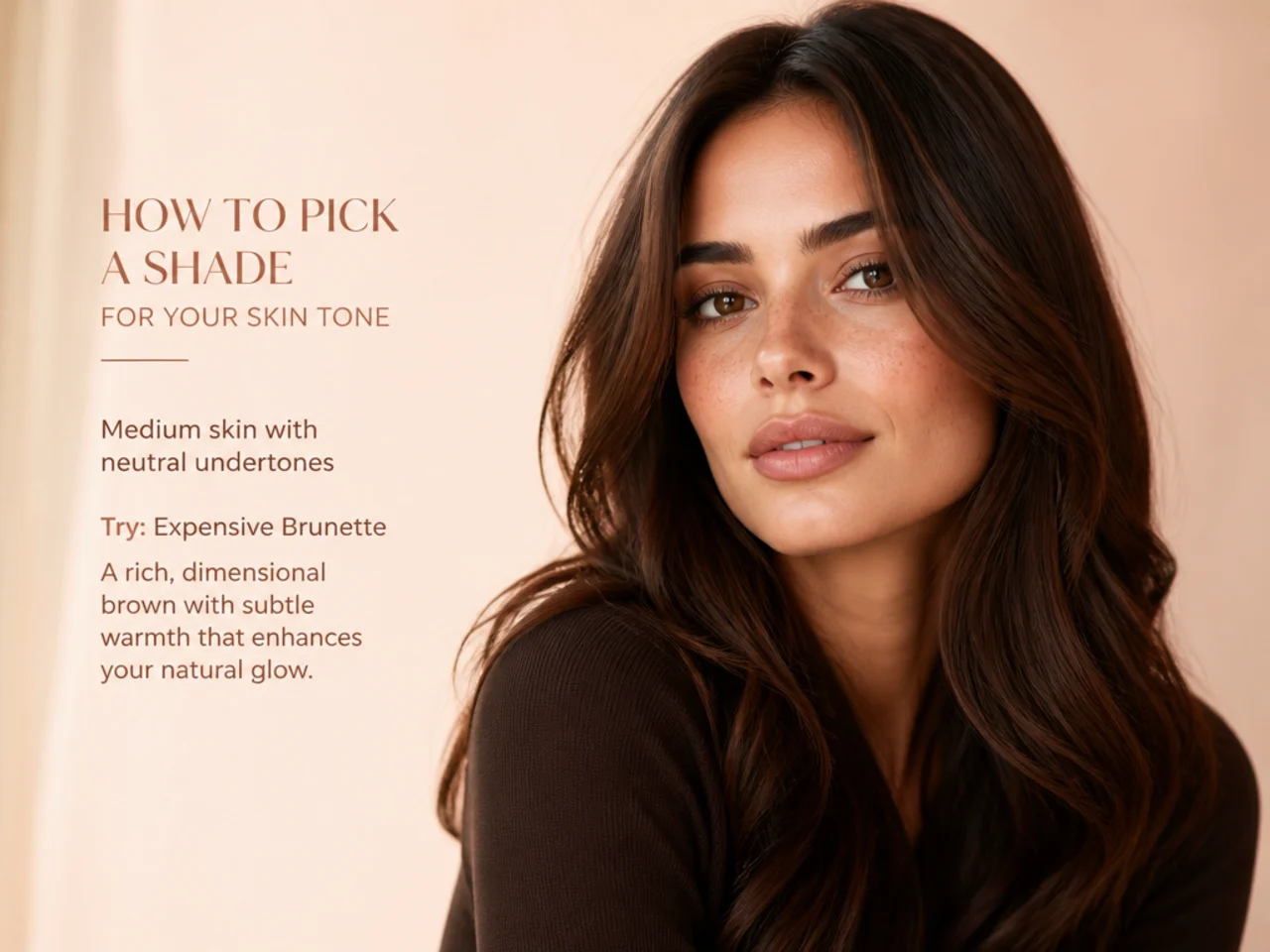
These 9 Hair Color Trends Are Taking Over 2026
Hair color moves fast — the ashy tones that owned 2023 are now dated, and warm, glossy brunettes have taken their place. This guide covers the 9 hair color trends actually being requested in salons right now, who each one suits, and how to describe the shade you want to a colorist.
In this article · 12
Warm brunettes have taken over 2026. Cool ashy tones stepped back, and glossy chocolate, mocha, and espresso are what colorists are actually mixing in the bowl. Warmth reads healthier, catches more light, and flatters more skin tones than a matte finish ever could. This guide covers the nine shades leading the year — plus how to ask for each one, which undertone it suits, and how to keep the color rich at home between visits.
How to pick a shade for your skin tone
Every color decision has two dials. Depth is how light or dark the shade sits, from level 3 espresso to level 10 platinum. Tone is the underlying pigment — warm (gold, copper, red), cool (ash, beige, violet), or neutral.
Start with your skin's undertone. The fastest read is the jewelry test. Hold a gold chain and a silver chain against your bare wrist in natural light. Gold looks better on warm undertones. Silver looks better on cool. If both look fine, you're neutral.
Warm undertones (peachy, golden, olive skin) glow with honey, caramel, walnut, chocolate, copper, and mahogany. Cool undertones (pink, ruddy, blue-veined) suit ash, beige-blonde, cool brown, and black-cherry. Neutrals get to pull from either side, which is why colorists lean neutral-warm when in doubt — it flatters more faces than a hard cool.
For depth, stay within two levels of your natural for the softest grow-out and lowest maintenance. Going lighter than that in one session is a salon job, not a box-dye job.
Hair Color Trends 2026
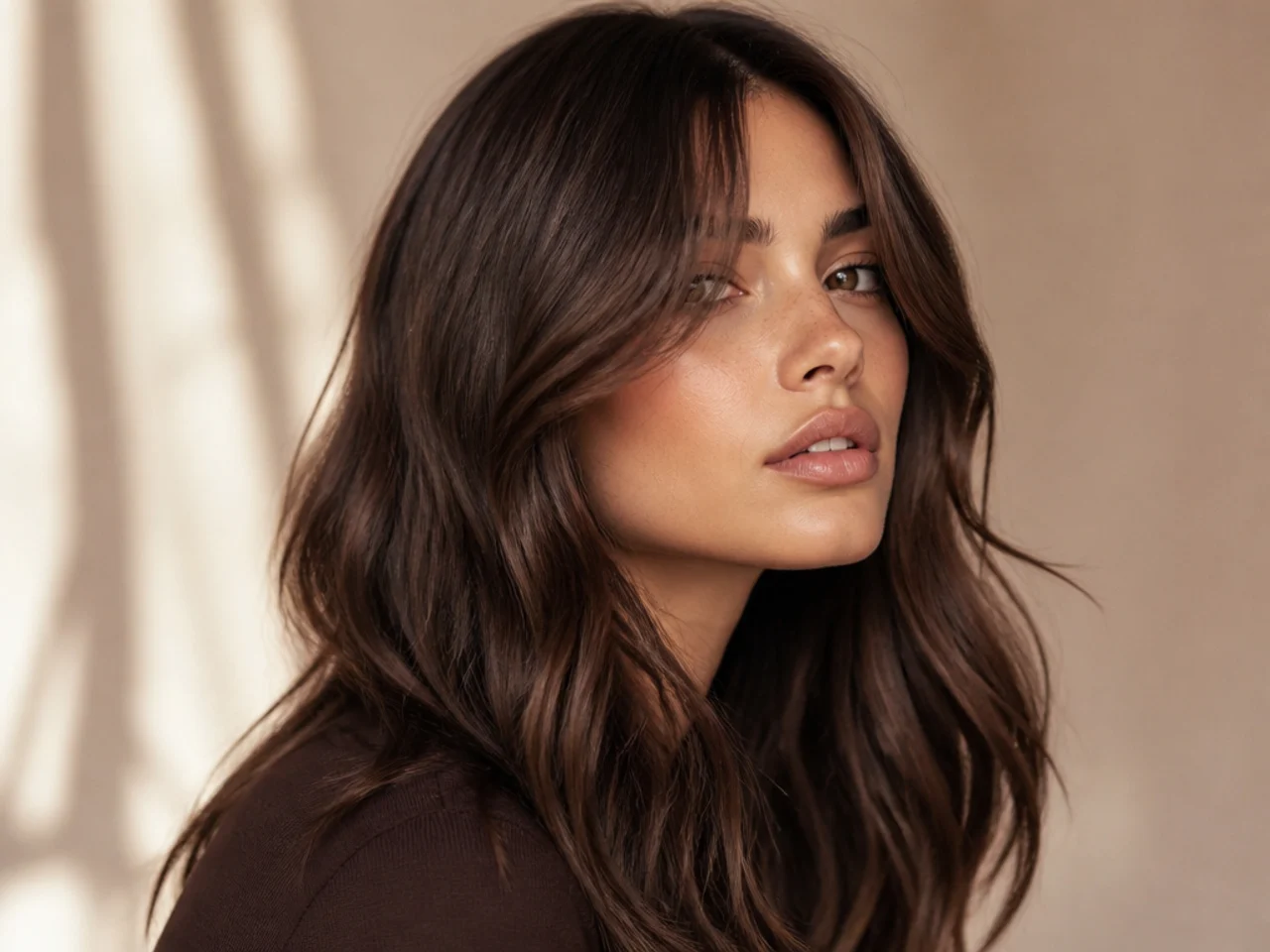
The nine shades your colorist is already booking for:
- Ice Beige Blonde
- Champagne Brunette
- Inky Black
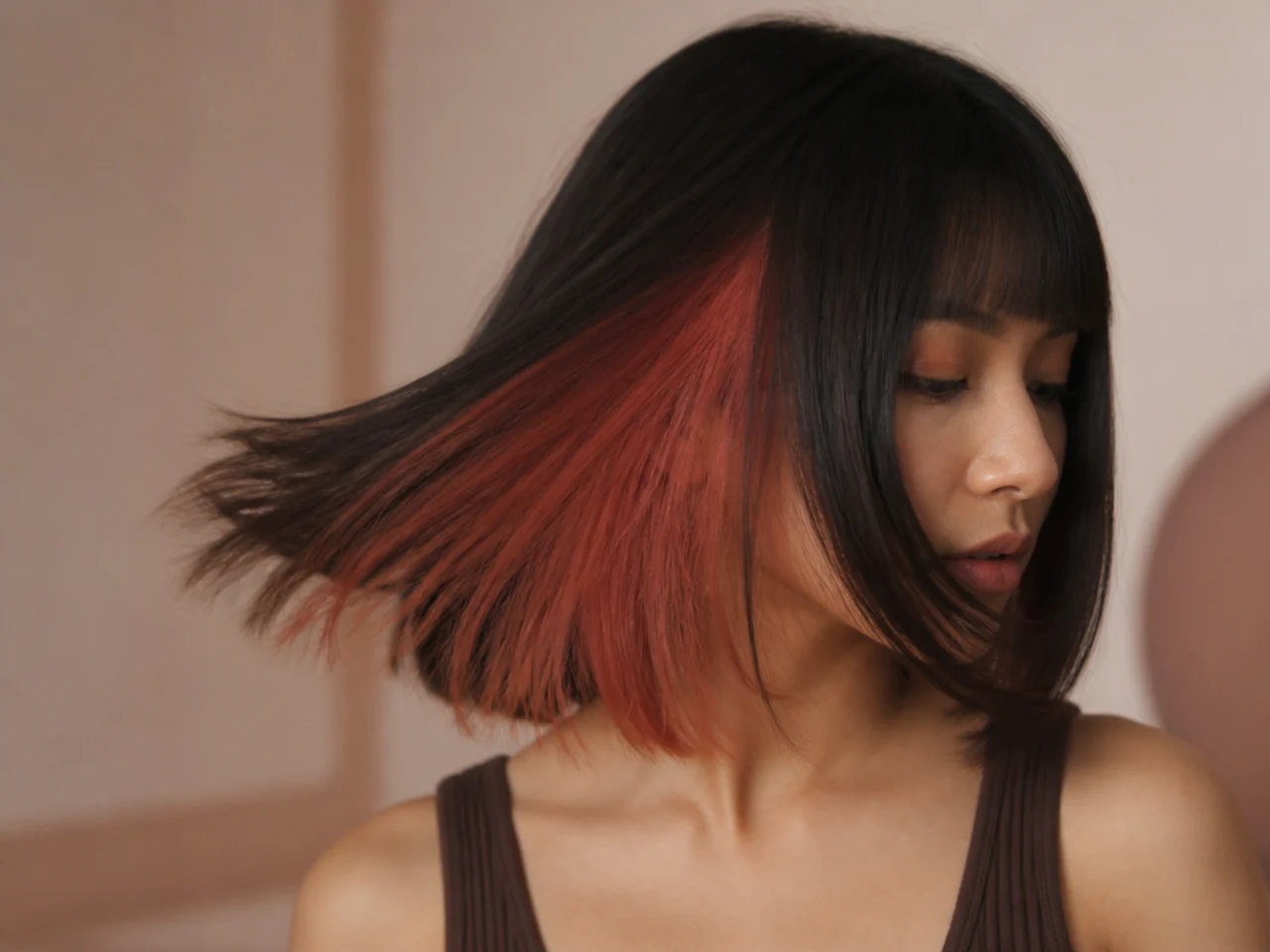
- Cherry Mocha
- Red Velvet
- Burnt Copper
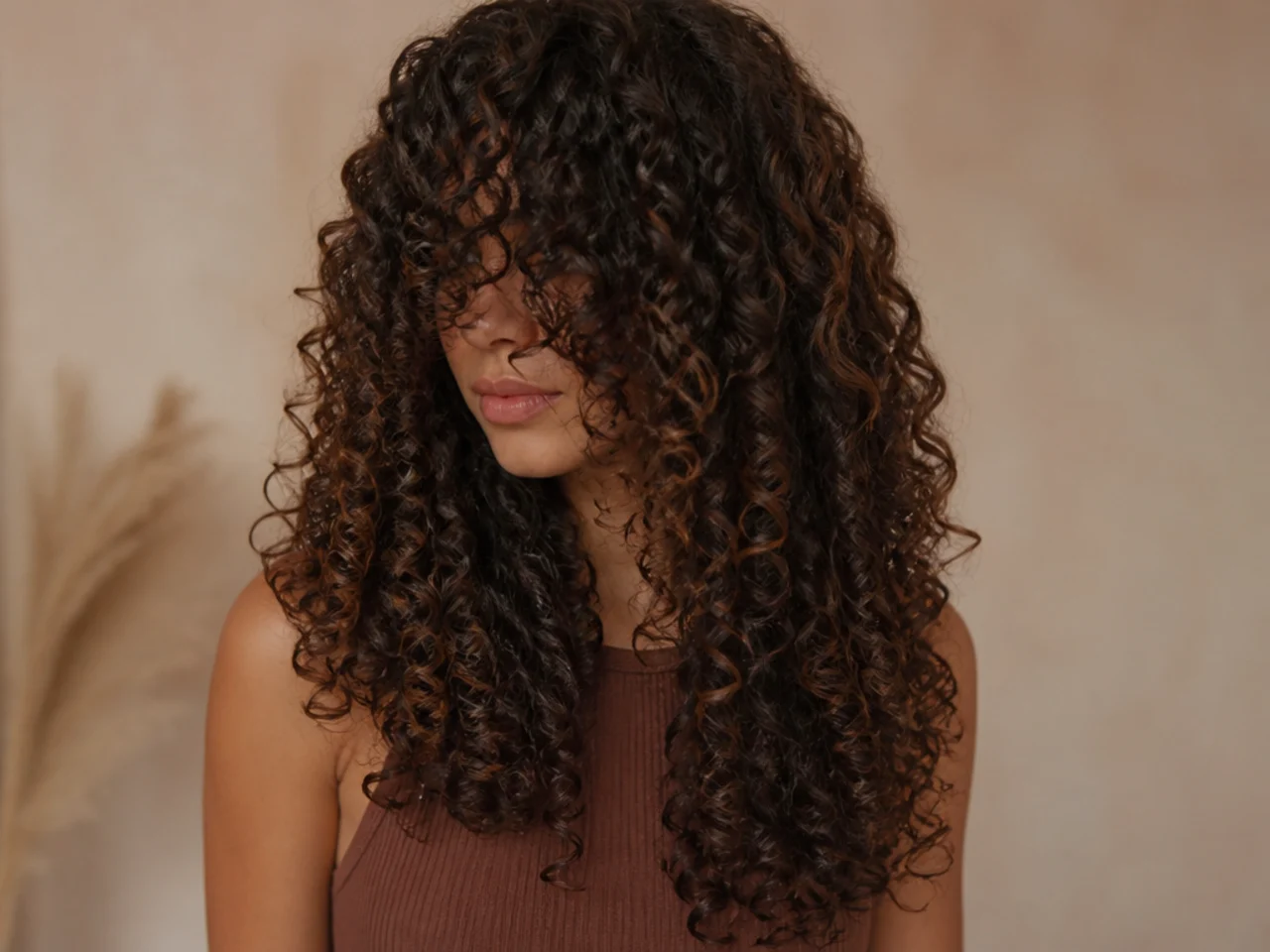
- Tuscan Leather
- Wine Brunette
- Amber Glow
Ice Beige Blonde
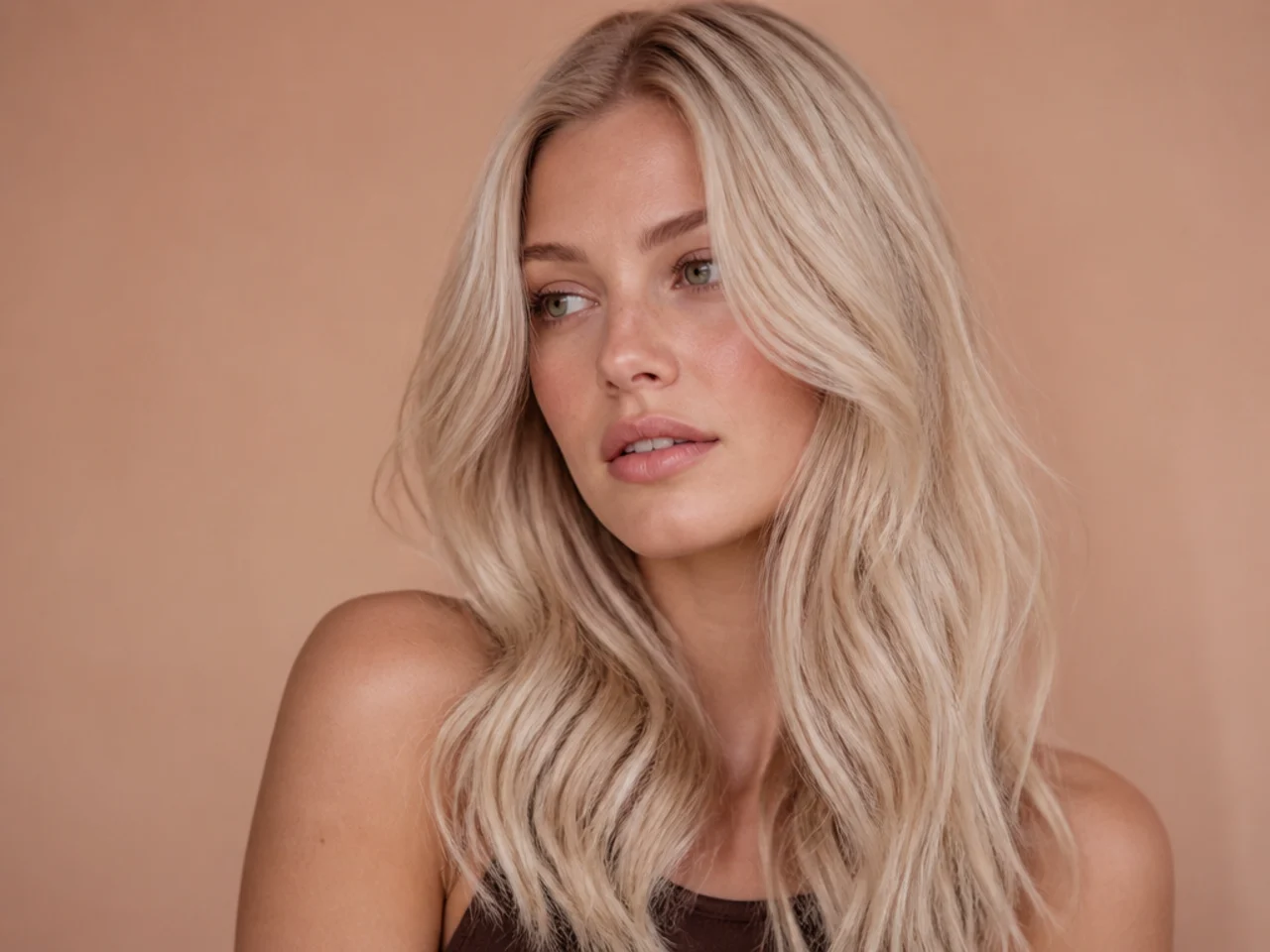
The cool contrarian in a warm year. Ice beige sits between vanilla and champagne — a pale, softly neutral blonde with just enough beige warmth to avoid the flat, washed-out ash look that dominated 2023. Think diluted honey, not platinum.
Best on: cool and neutral undertones. If silver jewelry wins the jewelry test, this shade will read expensive on you. Warm undertones can pull it off with a beige-forward mix rather than pure icy tones.
Maintenance: high. Blonde is the highest-upkeep category, full stop. Root shadow or teasylights every 8-10 weeks, a toning gloss every 4-5 weeks to kill brass. Balayage regrows more forgivingly than foils here.
How to ask: bring two photos labeled "ice beige blonde, root shadow, teasylights" and tell your colorist your natural level, your undertone, and whether you've box-dyed before. Any of those changes the game plan.
At-home: sulfate-free purple shampoo once a week (Fanola No Yellow is the drugstore pick, Kerastase Blond Absolu the splurge), a weekly bond mask (Olaplex No. 8 or K18), and heat protectant every time. Chlorine and sun turn blonde green — cover it in the pool. Ice beige is a low-maintenance styling look but a high-maintenance color; go in with that expectation.
Salon-only for the lift. Do not box-dye your way to ice beige.
Champagne Brunette
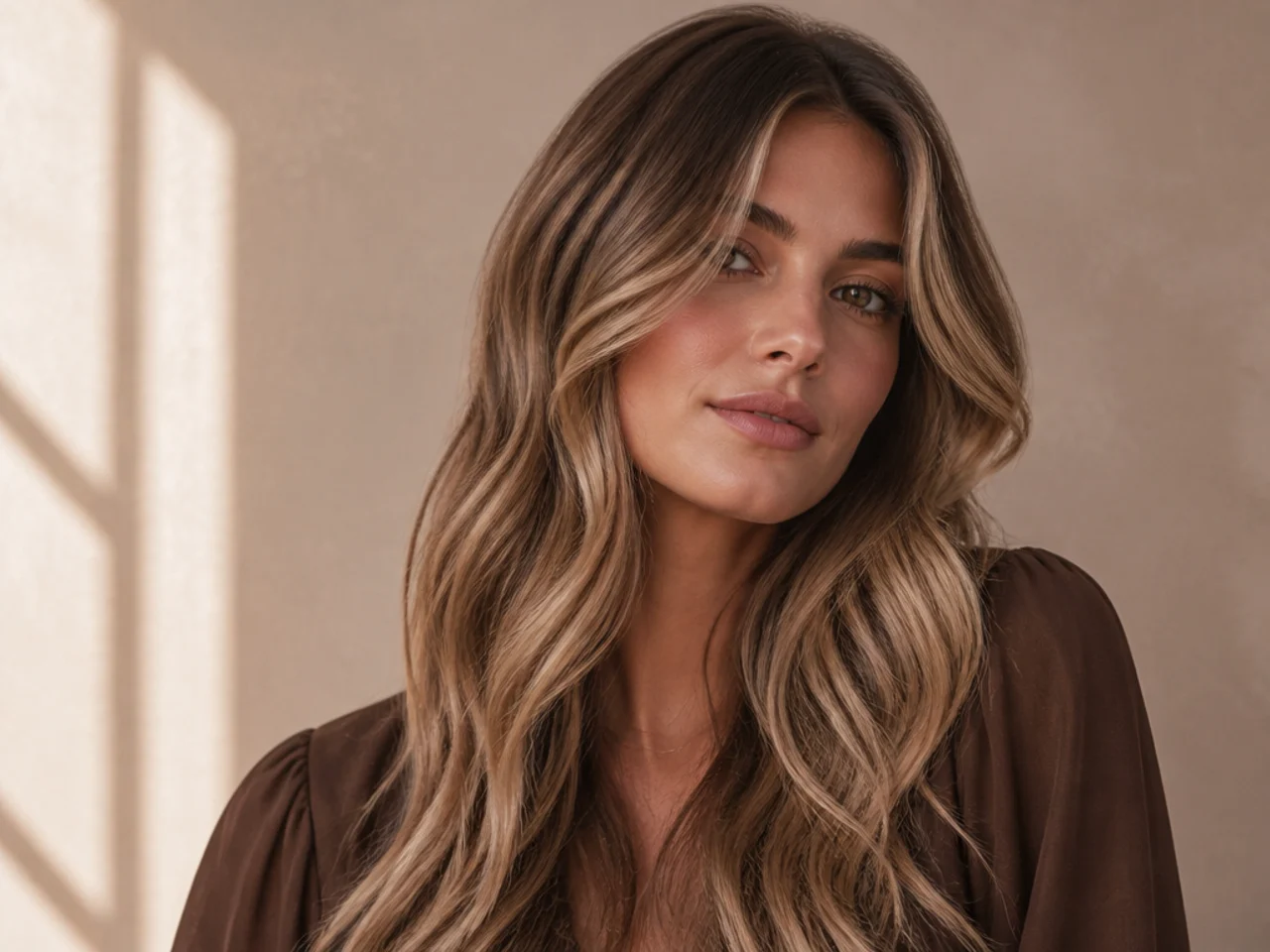
The money-piece brunette. A soft, medium-brown base with subtle champagne-gold woven through the front, around the face, and along the ends. It's the expensive brunette your feed keeps showing you — not blonde, not caramel, more like brut champagne poured over a walnut base.
Best on: neutral and warm undertones. If gold jewelry wins, you're in. Cool skin can still wear it as long as the highlights lean beige rather than gold.
Maintenance: moderate. The base is close to natural for most brunettes, so roots blend for 8-12 weeks. The champagne pieces need a gloss every 6-8 weeks to stay clean. Book balayage over foils — it grows out softer and reads more editorial.
How to ask: "Money-piece balayage on a walnut base, champagne tone, no orange." Bring two photos — one that shows the money-piece intensity, one that shows overall dimension — and mention your undertone so your colorist can pull the tone accordingly.
At-home: sulfate-free color-safe shampoo (Redken Color Extend Magnetics is a solid drugstore-adjacent pick), a weekly conditioning mask, and a lukewarm final rinse. Hot water opens the cuticle and pulls tone. This shade pairs beautifully with a layered haircut — the dimension actually shows.
Salon-only for the initial lift. Toning glosses between visits can be at-home with a demi kit if you're careful.
Inky Black
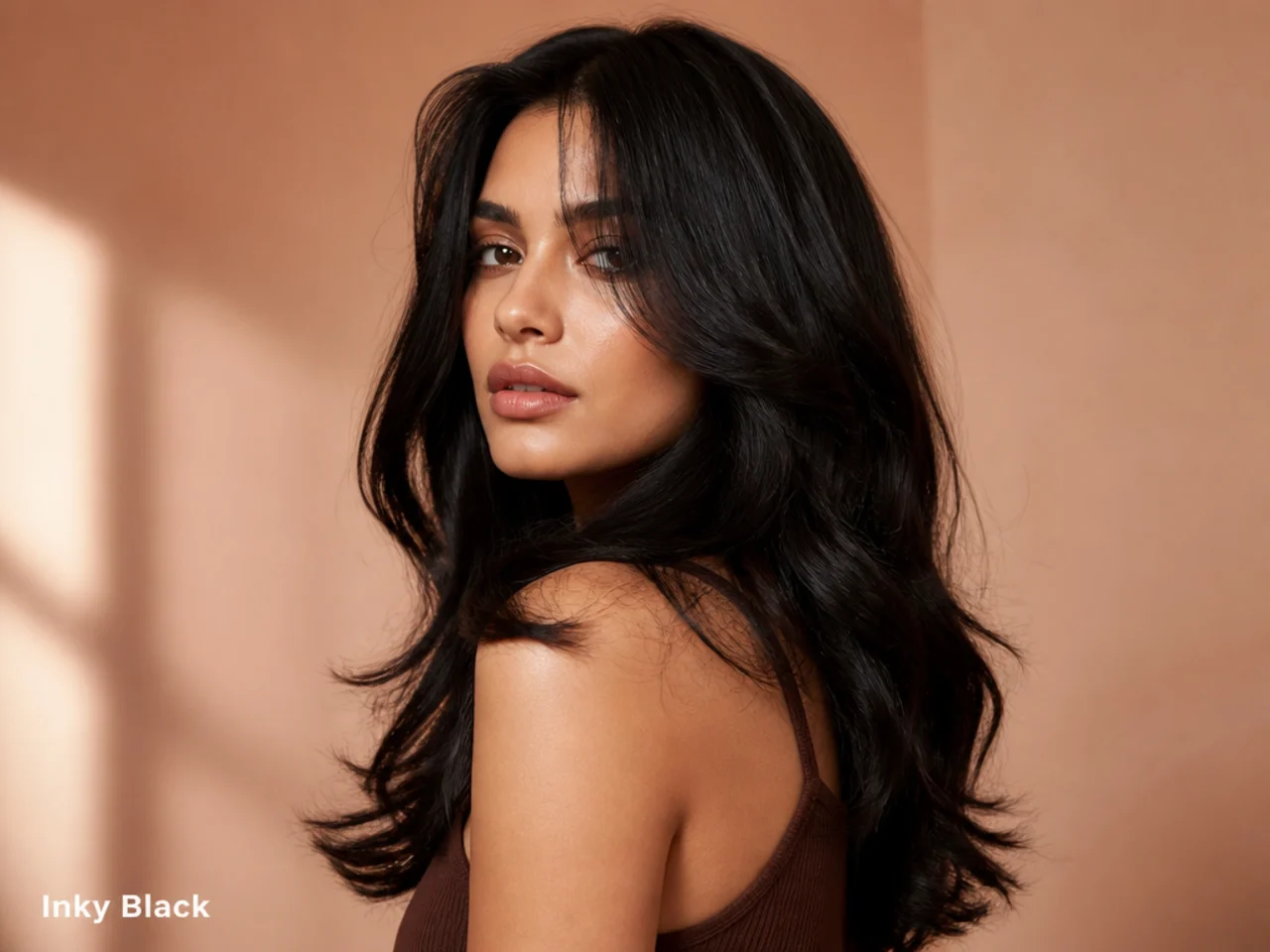
Not just black — inky black. Glossy, blue-black under light, almost patent-leather, zero warmth. This is the trend that flipped from Y2K raven to soft matte black, and now back to full high-shine.
Best on: cool and cool-neutral undertones, plus deeper skin tones across all undertones. On very fair, warm skin it can wash you out — try espresso or soft-black-brown instead.
Maintenance: low base, moderate shine work. Roots blend easily because most of the world reads any dark hair as "black." Full re-color every 8-12 weeks; a clear or blue-based gloss every 4-6 weeks keeps the reflect.
How to ask: "Inky, blue-black, glossy — not matte, not warm." Bring two photos in different lighting (one indoor, one natural) so your colorist can see exactly how much blue reflect you want, and mention your undertone so they can adjust the base.
At-home: sulfate-free shampoo is mandatory — regular shampoo strips the blue reflect within a week. Add a weekly clear gloss or hair oil (rosemary or argan), and finish rinses with cold water for shine. Keep the flat iron under 350°F to avoid heat-cast red tones. Inky black shows off shape work like a butterfly haircut beautifully — the dimension of the cut reads on solid dark color.
At-home dye is fine if you're going dark on virgin or previously-black hair. Never box over previously lightened hair — you'll get patches.
Cherry Mocha
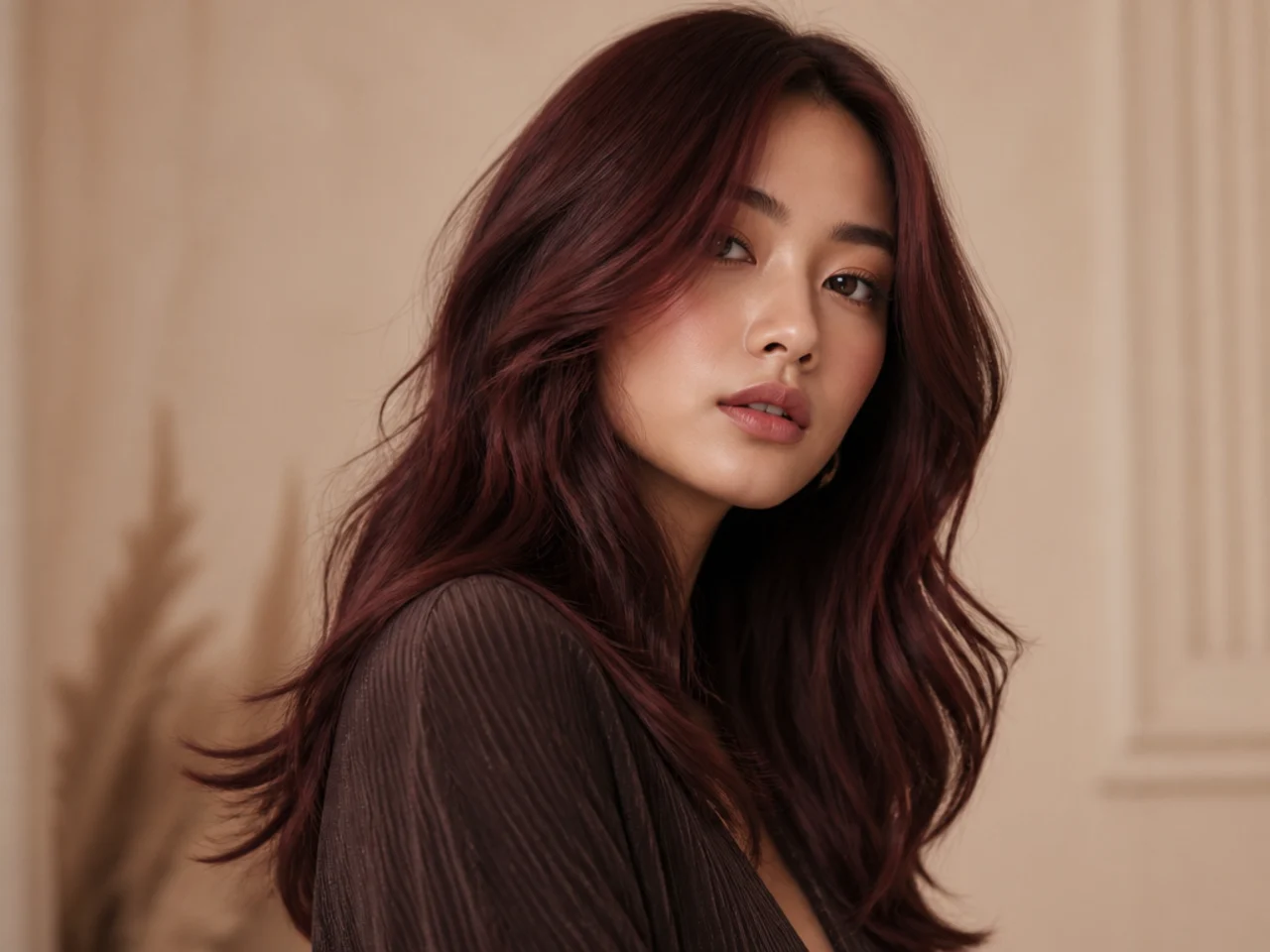
The gateway shade for anyone considering red. Cherry mocha is a rich chocolate-brown base with cherry-red translucence — visible in the sun, subtle indoors. Less "I dyed my hair red" and more "was your hair always this rich?"
Best on: warm and neutral undertones with medium-to-deep skin. The red undercurrent flatters olive and golden skin especially well. Very cool, pink-toned skin can look flushed against it.
Maintenance: moderate. Red pigment is the smallest molecule in hair color, which means it fades first. Plan a color-refreshing gloss every 4-5 weeks. Roots blend to natural brunette easily; full color every 8-10 weeks.
How to ask: "Cherry mocha — chocolate base with cherry red gloss on top, dimensional, not flat." Bring two photos, one under warm indoor light and one in sun, and tell your colorist your undertone so they can push the cherry cooler or warmer.
At-home: a color-depositing conditioner in "red" or "cherry" once a week (dpHUE Gloss+, Overtone Cherry), sulfate-free shampoo, cool-water final rinse, and UV protectant in summer — red oxidizes fast in sun.
Best in-salon for the initial application. If you love the depth without the cherry gloss, look at chocolate brown hair color — same espresso-mocha family, no red reflect. At-home color-depositing masks between visits are safe and encouraged either way.
Red Velvet
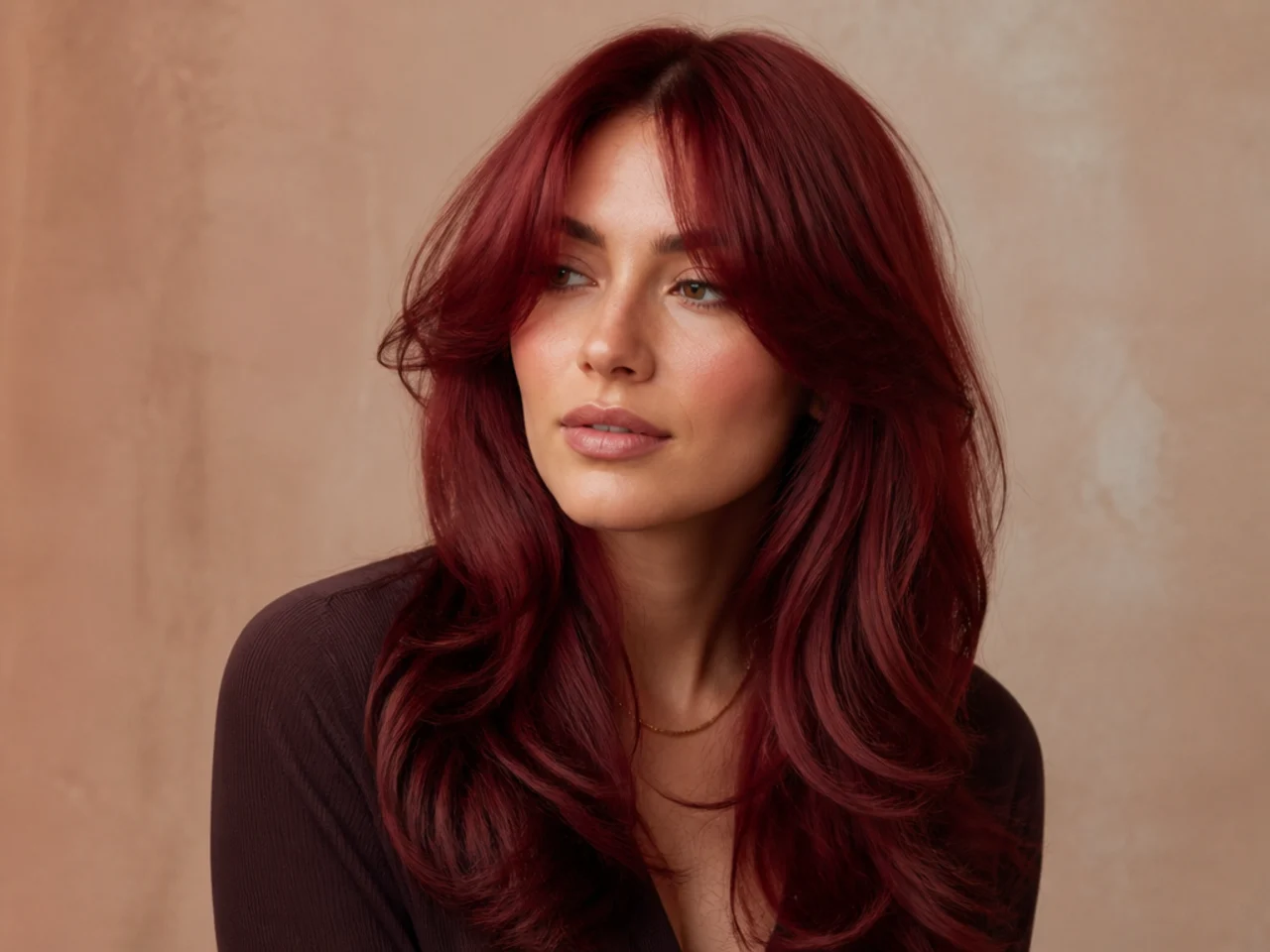
Deeper, moodier, more dramatic than cherry mocha. Red velvet is a saturated wine-red with brown depth — mahogany, garnet, black cherry. It's the "I know what I want and I'm not asking permission" shade.
Best on: cool, cool-neutral, and neutral undertones. The blue undercurrent in wine-red flatters porcelain and pink-toned skin. Warm undertones can wear it if the shade leans slightly more copper-mahogany than pure wine.
Maintenance: high. Wine reds fade fastest of any red. Expect visible fade at week three and a full re-color every 6-8 weeks if you want it to stay vivid. Between visits, a red-depositing gloss every other wash.
How to ask: "Red velvet — deep wine, high shine, no orange tones." Bring two photos and be specific about how vivid you want it. Tell your colorist your undertone — they'll pull the shade slightly cooler if you say "no orange" and confirm cool skin.
At-home: sulfate-free everything, cool water rinses, and a color-depositing conditioner in "red" or "burgundy" weekly. Skip hot tools when you can — heat pulls red pigment faster than anything else.
Salon-only for the initial dye and any lift. Red is the hardest color to correct at home — do not try to fix a fade with box dye or you'll end up magenta.
Burnt Copper
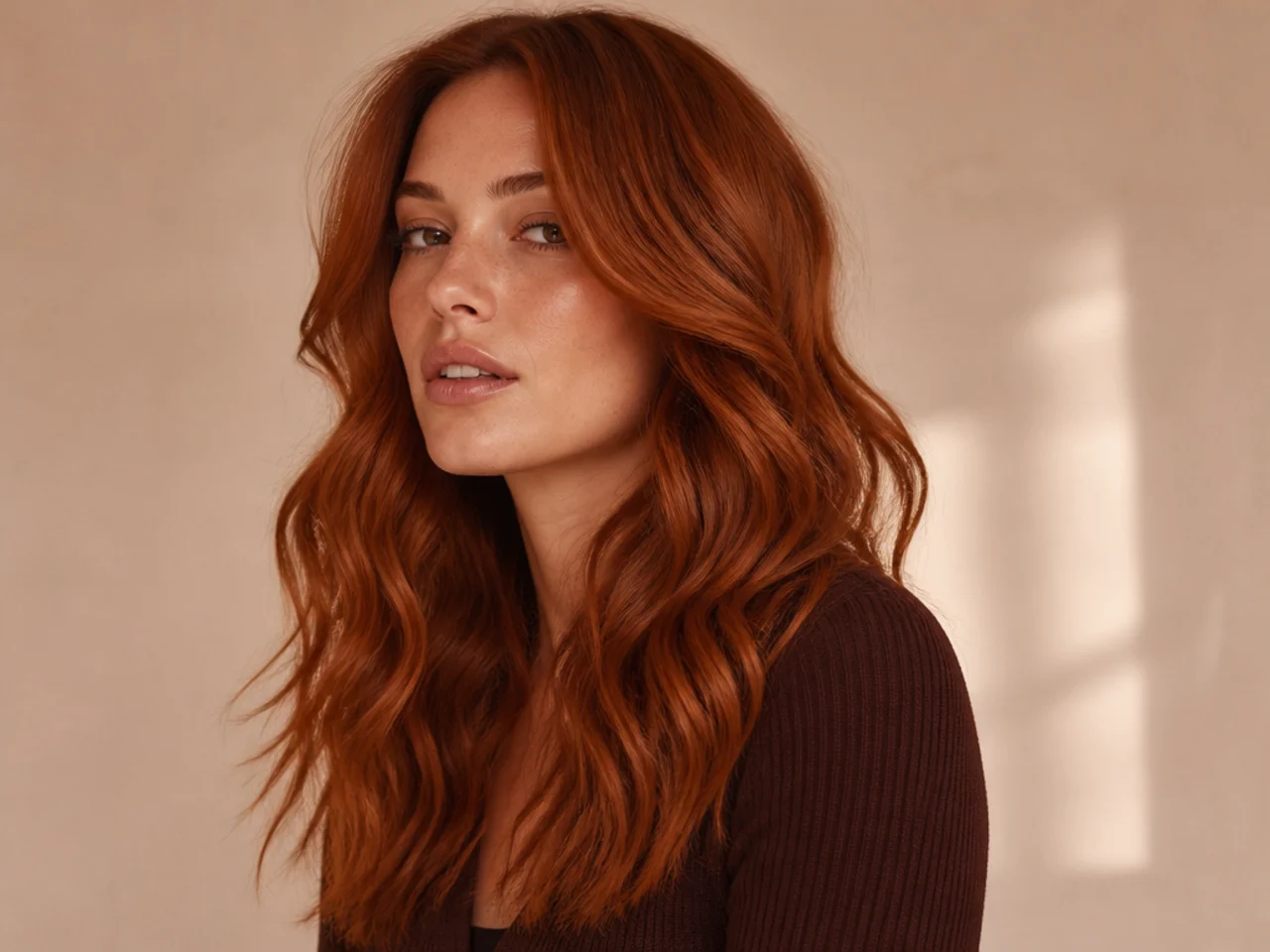
Pure fire. Burnt copper is a saturated, orange-forward red with warm gold undertones — the shade you see on models in fall campaigns. Bolder than any brunette, softer than a true red, sitting in the sweet spot between the two.
Best on: warm undertones across all depths. If gold jewelry wins, copper flatters you. Fair, freckled skin with warm undertones is the classic pairing, but deeper warm skin (olive, golden-brown) glows equally.
Maintenance: high. Copper fades fast, and it fades ugly — plan a gloss every 4-6 weeks and full color every 8. The tone shift as it drops is obvious (copper drifts pink-orange, then washes out).
How to ask: "Burnt copper — warm, saturated, autumn-leaf orange with gold reflect." Bring two photos in natural daylight so your colorist can match the exact hue, and share your undertone up front so they know how much gold to layer in.
At-home: copper-depositing conditioner weekly, sulfate-free color-safe shampoo, and UV protection all summer. Copper oxidizes into pinkish-orange under sun exposure. A leave-in with UV filter (Kerastase Soleil, Bumble and Bumble Hairdresser's Invisible Oil Primer) makes a real difference.
Salon-only for the initial transformation. At-home copper glosses (dpHUE Gloss+ in Copper, Overtone Vibrant Copper) extend your color between visits.
Tuscan Leather
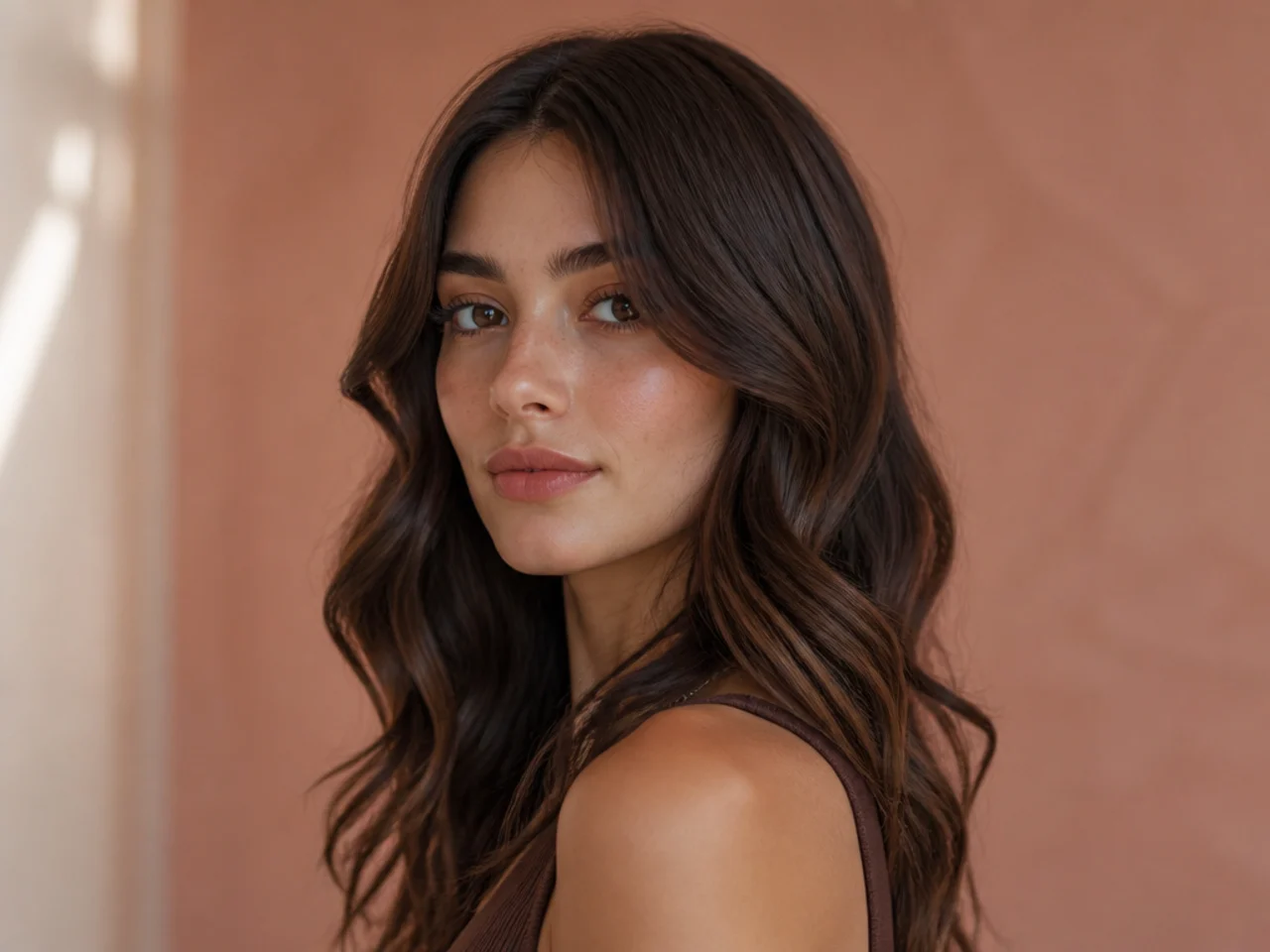
The luxe warm-brunette anchoring 2026. Deep chocolate-brown with soft cognac and cocoa dimension throughout. Not a highlight look, not a flat single-process — it's dimensional, low-contrast, and reads expensive. If Champagne Brunette is the money piece, Tuscan Leather is the whole head.
Best on: warm, neutral, and warm-neutral undertones. Especially flattering on medium-to-deep skin. The cognac undertones give life to warm complexions and add depth without the harshness of jet black.
Maintenance: low to moderate. The dimensional approach means roots grow out beautifully — 10-14 weeks between salon visits is realistic. A tone-refreshing gloss every 6-8 weeks keeps the cocoa notes rich.
How to ask: "Tuscan Leather — deep chocolate base, cognac and cocoa dimension, no orange, no red." Bring two photos in different lighting, name your undertone, and ask specifically for balayage or teasylights over foils for the softest grow-out.
At-home: sulfate-free shampoo, a rich weekly mask, hair oil on ends to keep the sheen, cool-water rinses. If your hair is wavy or curly, layer in dedicated wavy-hair products — the definition amplifies the dimension colorists paint in. This shade also looks stunning on a chin-length bob haircut; the concentration of color at that length reads glossy and expensive.
Best in-salon for the initial dimensional work. Between-visit glosses can be done at home with a demi-permanent kit if you have the touch.
Wine Brunette
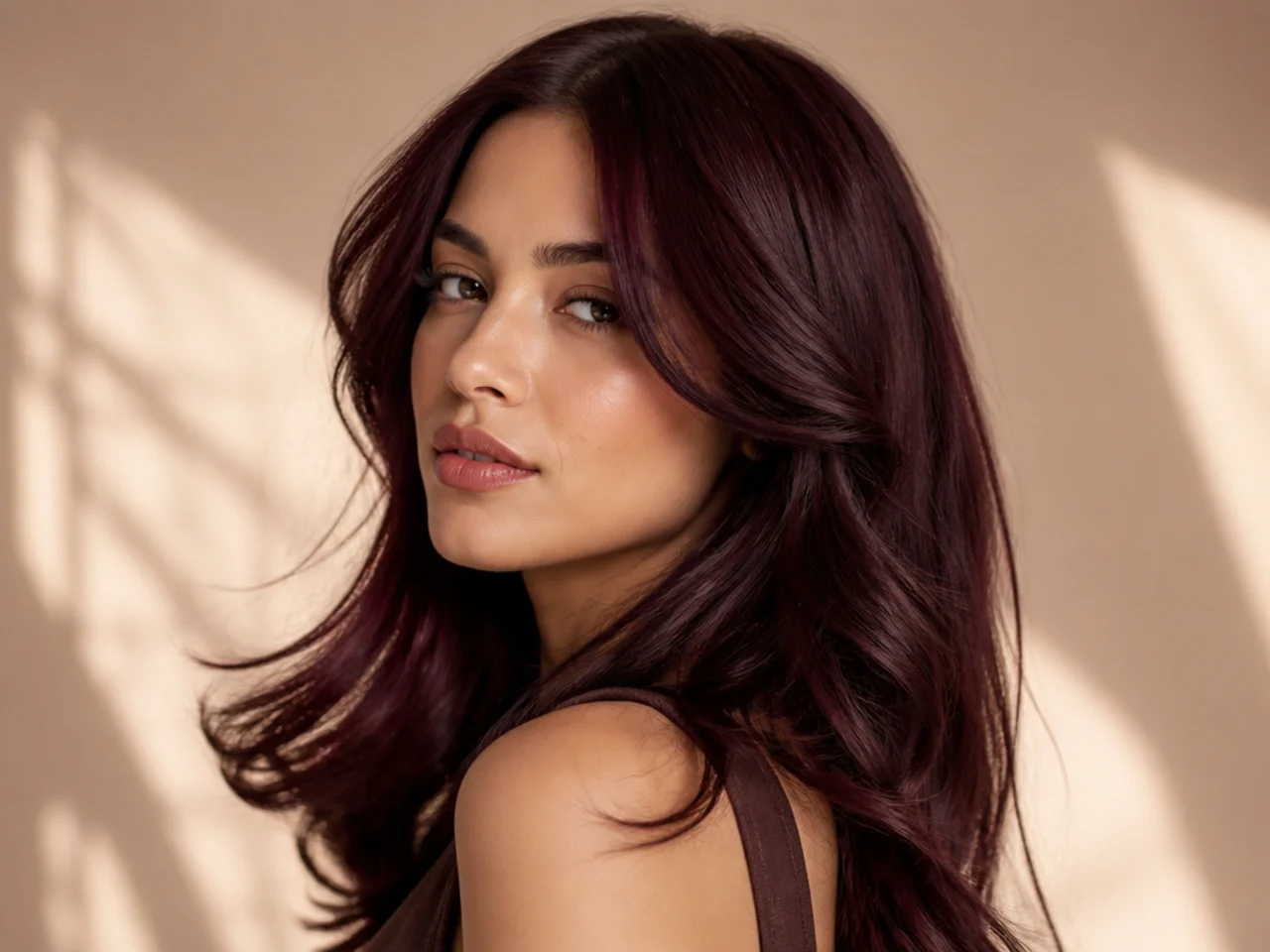
Somewhere between Cherry Mocha and Red Velvet — a deep brunette base with wine-red undertones woven through. Less obvious red than cherry mocha, more depth than plain brown. The wine catches the light and reveals itself only at certain angles.
Best on: cool and cool-neutral undertones, plus warm-neutral. The wine undercurrent flatters skin with pink or cool warmth, and the brown base grounds it enough for anyone with medium contrast in their features.
Maintenance: moderate. The brunette base holds for 8-10 weeks. The wine layer needs a color-refreshing gloss every 5-6 weeks, in-salon or at home.
How to ask: "Wine brunette — chocolate base with wine reflect, dimensional but soft. No copper, no orange." Bring two photos (one sun, one indoor) and share your undertone so the wine can be pulled cooler if needed.
At-home: sulfate-free color-safe shampoo, a red-depositing gloss mask weekly (dpHUE Gloss+ in Cherry or Ruby Red works), cool rinses. Skip clarifying shampoo entirely — it strips the wine notes on contact. Dry shampoo between washes instead.
Best in-salon for the initial base. Between-visit refresh masks are safe and encouraged at home.
Amber Glow
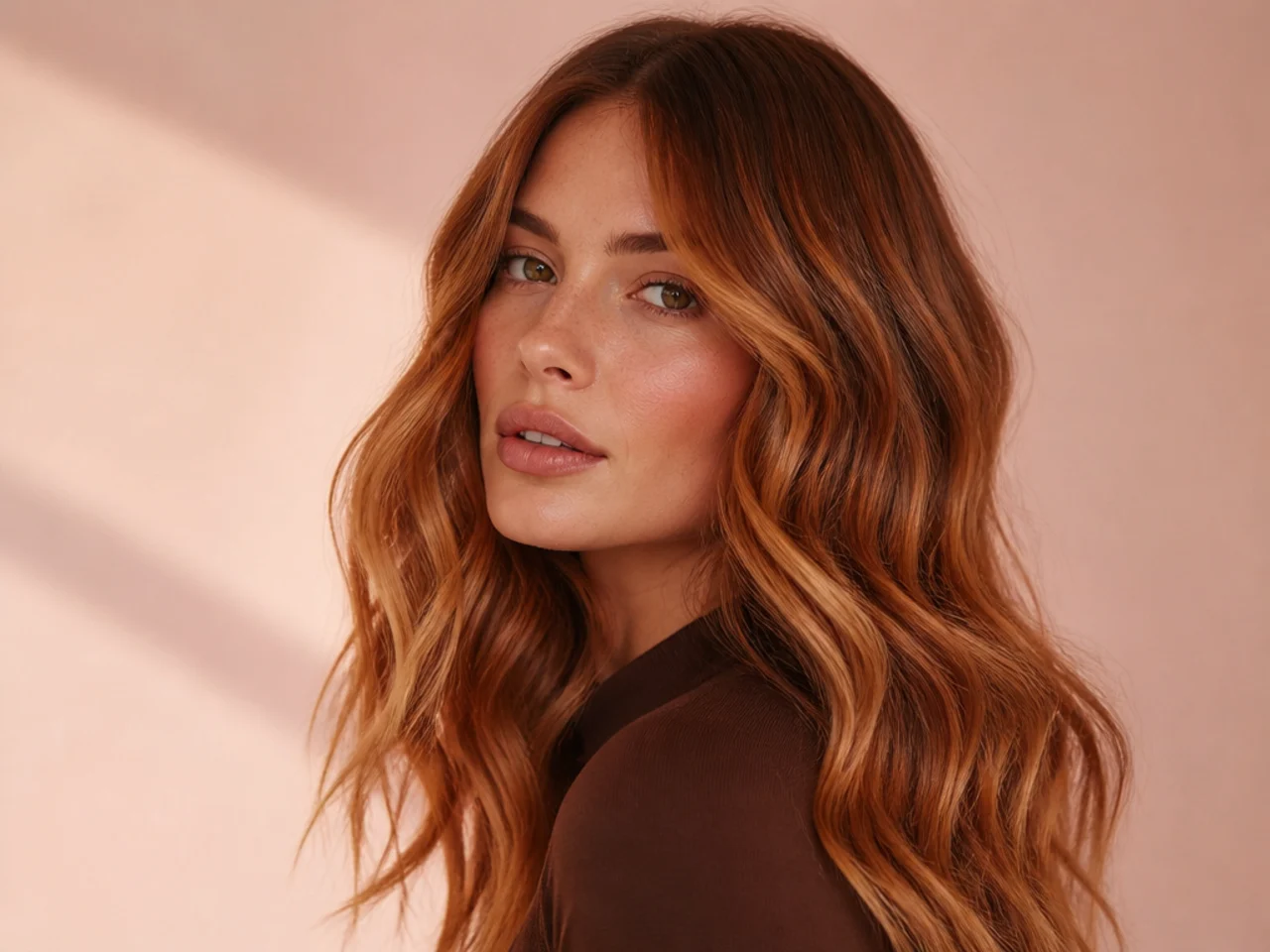
A warm, honey-caramel blonde with golden warmth throughout — the "buttery blonde" or "expensive honey" shade all over your feed. Not platinum, not baby-blonde, definitely not ash. Sun-kissed, glossy, forgiving.
Best on: warm and warm-neutral undertones. If your skin has golden or peachy warmth and gold jewelry flatters you, amber glow was made for you. Cool undertones may find it clashes — try a beige-honey mix instead.
Maintenance: moderate. Because the warmth is the point (not something to tone out), roots blend well and grow out softer than cool blondes. Balayage or teasylights every 10-12 weeks; a gloss every 6 weeks keeps it buttery.
How to ask: "Amber glow — warm honey balayage on a natural base, buttery not brassy." Bring two photos, name your undertone, and ask your colorist to tone with a warm gold gloss, not a purple one. Purple kills the warmth you're paying for.
At-home: sulfate-free color-safe shampoo (yellow-based if you want to push warmth, clear for maintenance), a rich weekly mask, and heat protectant every time. Skip purple shampoo entirely — save it for cool blondes.
Salon-only for the lift. At-home glosses and warm-toned refresher masks between visits keep the color glowing.
Salon or at home?
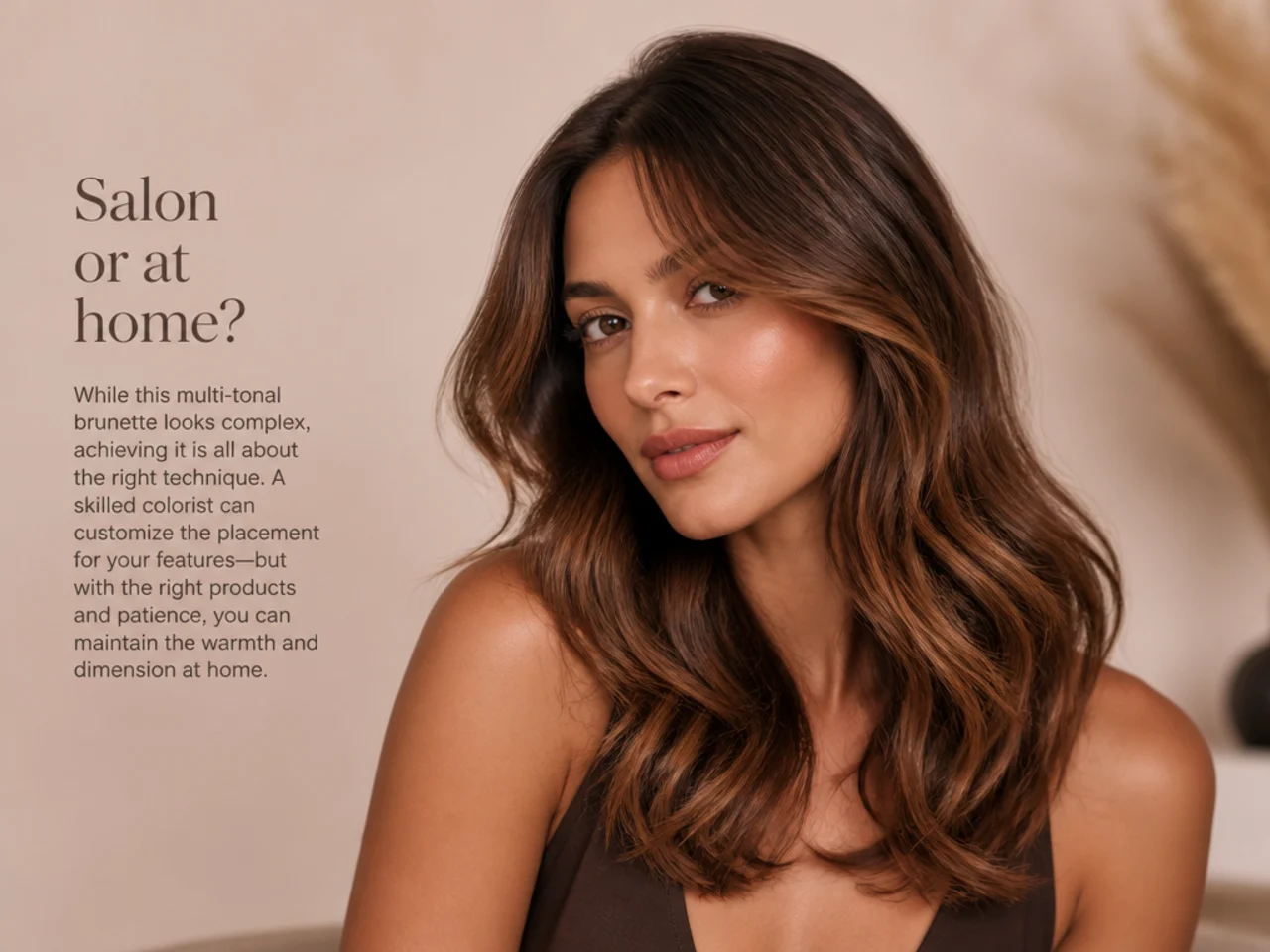
Here's the truth colorists don't say enough. Anything that requires lightening — going more than two levels blonder, adding face-framing pieces to a dark base, transforming inky black to buttery blonde — is a salon job. Full stop. Box lightener is unpredictable, and the color correction it usually requires costs more than the salon appointment would have in the first place.
What is safe at home: color-refreshing glosses, color-depositing conditioners and masks (Overtone, dpHUE, Kristin Ess Signature), root touch-ups that stay within a level of your current shade using a demi-permanent kit, and bond treatments (Olaplex No. 3, K18) between visits. These stretch your color and keep it vivid weeks longer than shampoo and hope.
If you're chasing any of the warm brunette shades in this guide — Tuscan Leather, Champagne Brunette, Cherry Mocha, Wine Brunette — book the salon appointment. The dimensional work is what makes them read expensive, and dimension is exactly what boxes can't deliver.