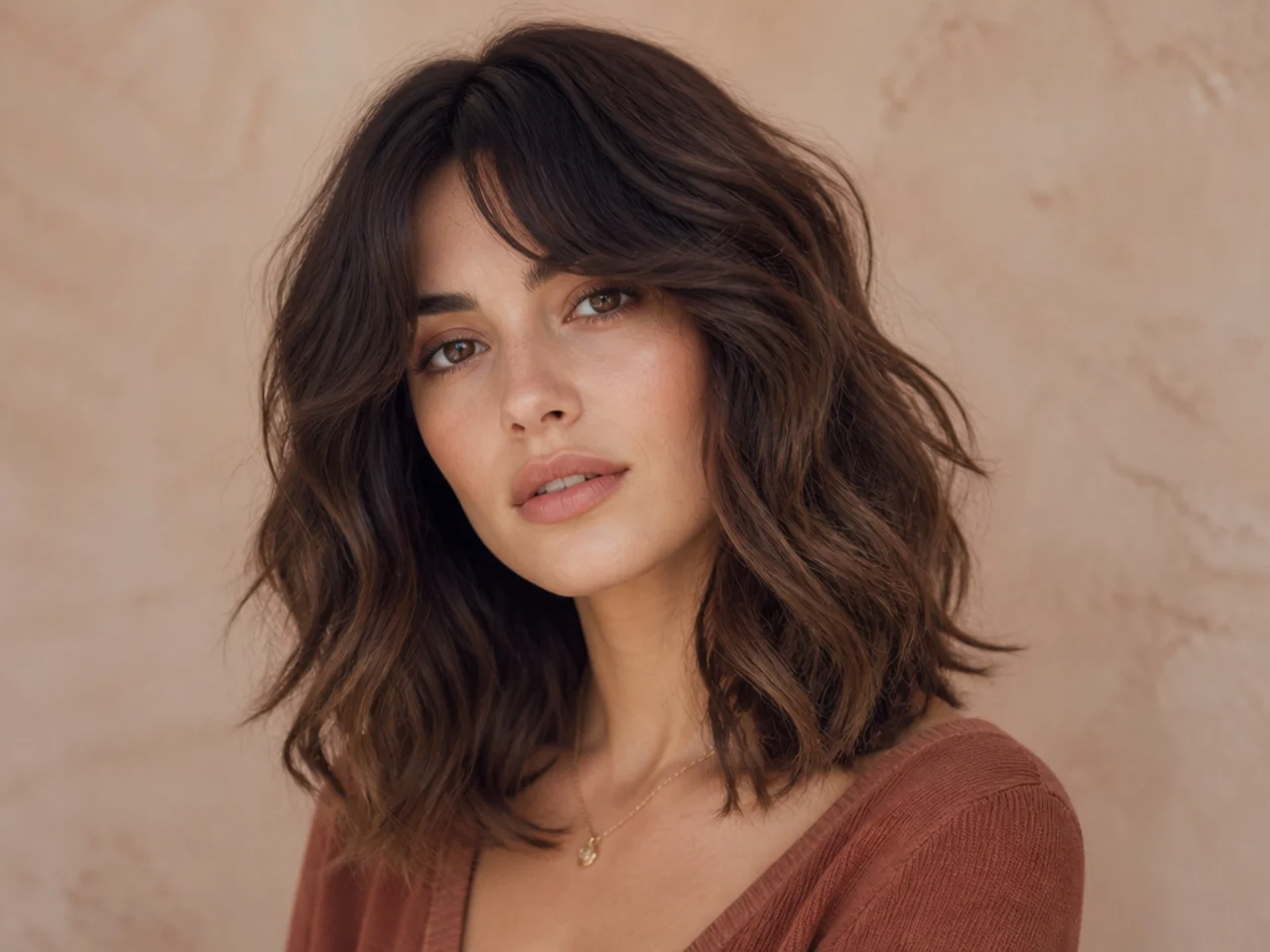
20 Stunning Short Hairstyles for Thick Hair You’ll Love
Discover stunning short hairstyles for thick hair that add shape, volume, and style. Find trendy, easy, and flattering haircut ideas.
In this article · 21
- 1\. Textured Bob with Side-Swept Bangs for Oval Faces
- 2\. Disconnected Pixie Cut with Long Layers for Round Faces
- 3\. Blunt Lob with Face-Framing Highlights for Square Faces
- 4\. Shaggy Bob with Curtain Bangs for Heart-Shaped Faces
- 5\. A-Line Bob with Subtle Undercut for Oblong Faces
- 6\. Layered Pixie Cut with Textured Fringes for Triangular Faces
- 7\. Textured Crop with Wispy Ends for Diamond Faces
- 8\. Blunt Cut with Tapered Nape for Pear-Shaped Faces
- 9\. Rugged Bob with Chunky Highlights for Rectangular Faces
- 10\. Curly Lob with Defined Layers for Wavy Hair
- 11\. Sleek Bob with Deep Side Part for Angular Faces
- 12\. Wavy Pixie Cut with Long Layers for Thin Hair
- 13\. Back Length Bob with Subtle Layers for Thick Hair
- 14\. Messy Textured Cut for Casual Vibes
- 15\. Bold Undercut Bob with Color for Edgy Style
- 16\. Beachy Waves with Long Bangs for Softness
- 17\. Modern Shag with Choppy Layers for Bold Looks
- 18\. Curly Short Cut with Defined Curls for Volume
- 19\. Sleek Buzz Cut for Confident Women
- 20\. Side-Parted Classic Bob for Timeless Style
- Choosing Your Perfect Short Hairstyle
Thick hair going short changes the game. Cut it wrong and it stacks like a helmet on the crown, flares at the ends, and refuses to sit flat. The fix is internal thinning inside a blunt exterior — remove weight where nobody sees it, keep the perimeter clean. Every short hairstyle for thick hair below uses that formula. Pixies, bobs, textured crops, undercuts. Each entry tells you what to say at the chair.
1. Textured Bob with Side-Swept Bangs for Oval Faces
The bob is the safest home for thick hair going short. Keep the perimeter blunt at the jaw, then slice out density through the mid-lengths so the shape doesn't balloon. Side-swept bangs soften the frame without crowding an oval face — ovals can take almost any length, so use bangs as a styling choice, not a corrective. Ask for a blunt chin-to-jaw bob with internal thinning through the interior, plus long side-swept bangs starting at the outer eyebrow. Tell your stylist the perimeter stays sharp — no razoring the ends. Styling tip: mist texturizing spray on damp hair, rough-dry with fingers, then flat-iron soft bends into the mid-lengths only. Start with the classic bob haircut playbook if you want to see how this shape sits on different textures.
2. Disconnected Pixie Cut with Long Layers for Round Faces
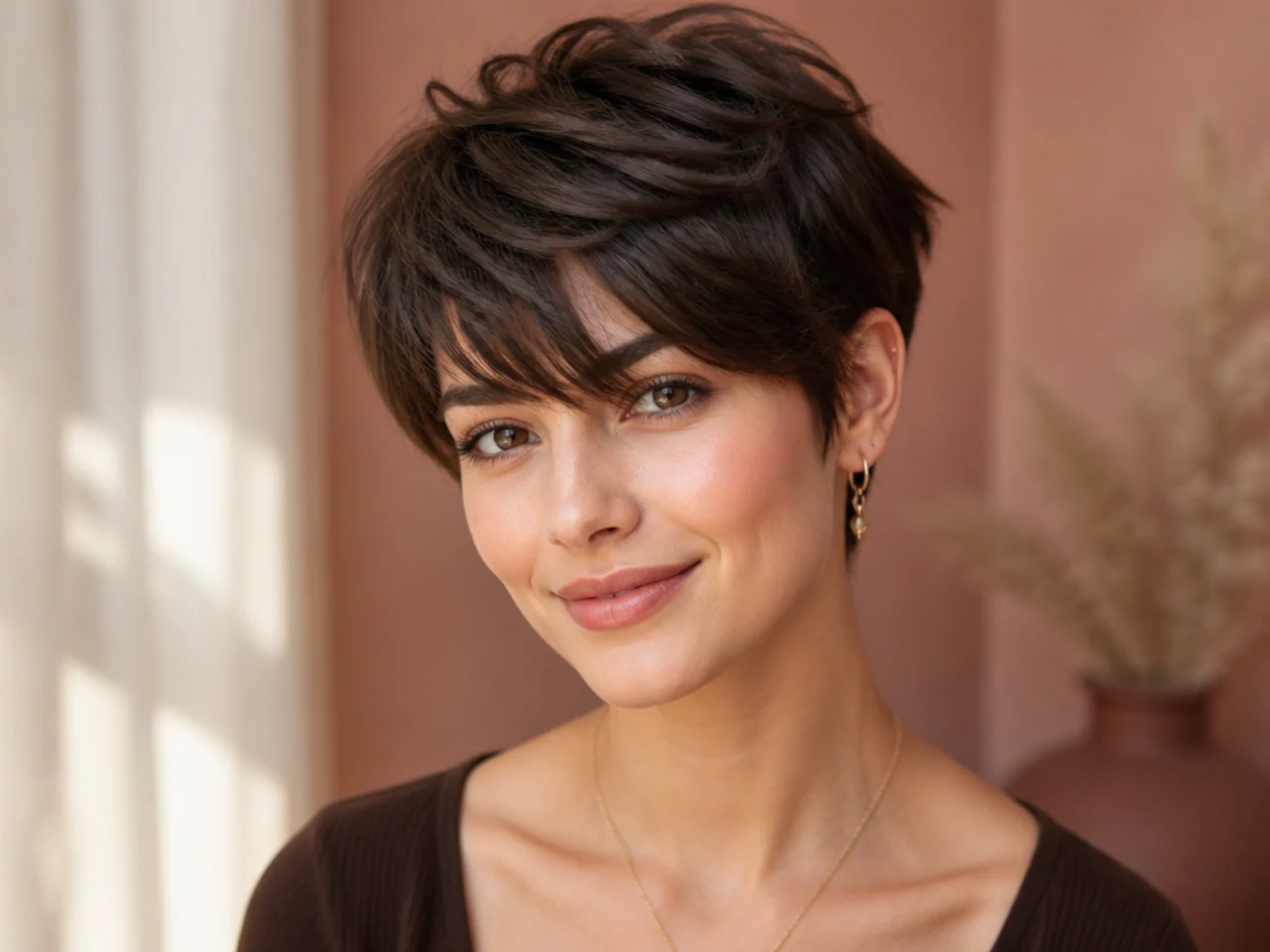
Round faces need height and a vertical line. A disconnected pixie delivers both — short at the sides and back, longer on top, with a hard visual break between them. Thick hair carries the height on top without collapsing, which is exactly what this shape wants. Ask for a tight nape and sides done with clipper work, then scissor-cut length on top that reaches at least three inches from crown to fringe. Request internal point-cutting through the top section so it moves instead of sitting like a slab. Styling tip: work a matte paste into dry roots, push everything up and slightly forward, and leave the piecing intentional. Our full guide to pixie cuts for women covers the range this shape can take.
3. Blunt Lob with Face-Framing Highlights for Square Faces
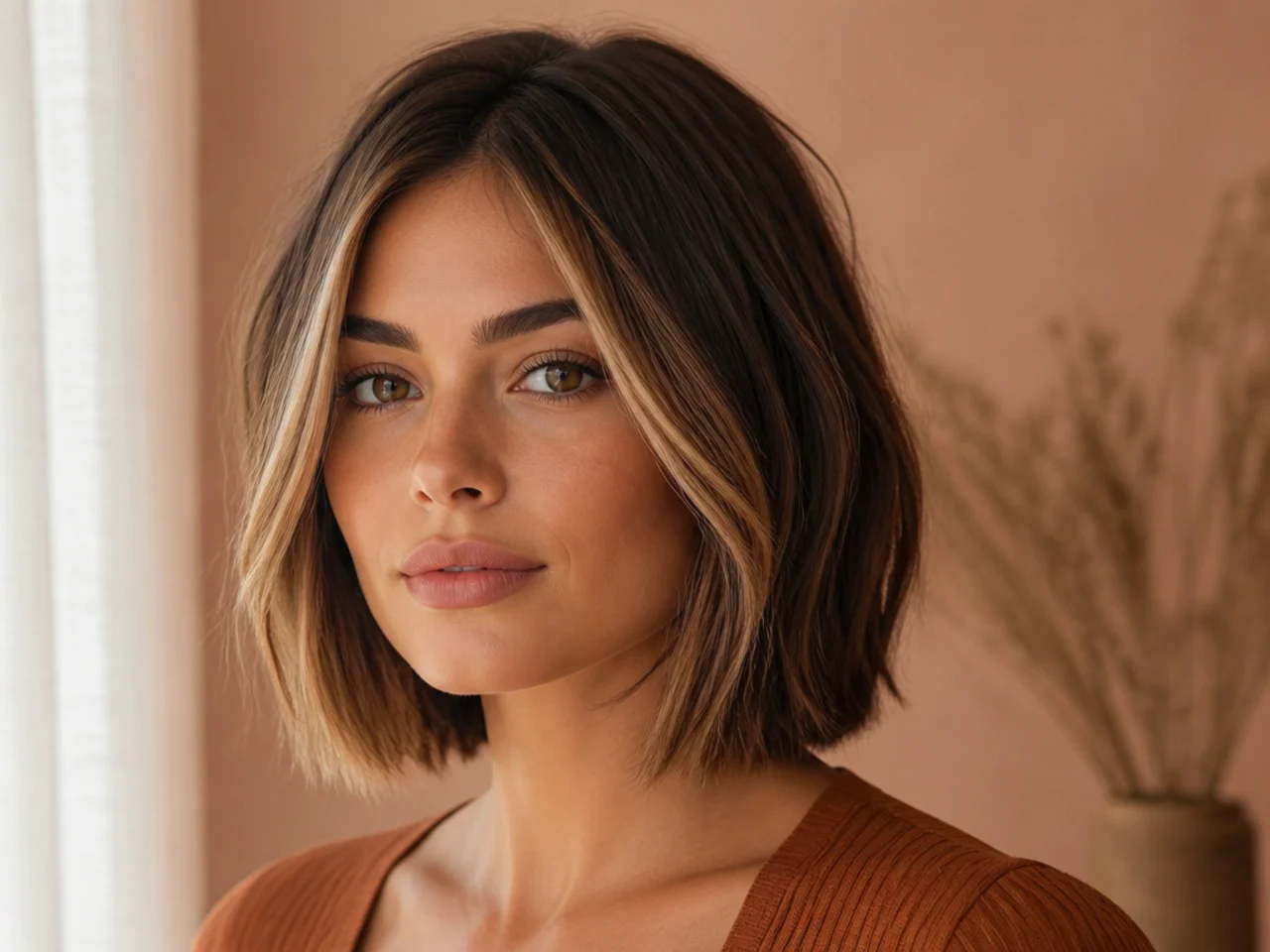
Square faces want softness at the jaw, not sharper lines that mirror the angle. A blunt lob solves that when the length lands one to two inches below the jaw — long enough to soften, short enough to feel intentional. Highlights around the face pull light off the widest part. Ask for a blunt one-length lob two inches under the jaw with internal thinning through the crown and mid-lengths — no visible layers on the surface, just density removed from underneath. Add fine face-frame highlights on the two panels around the cheekbones. Styling tip: blow-dry with a large round brush pulling down and slightly under, then hit the perimeter with a flat iron to keep the edge crisp. Same weight logic drives a blunt haircut with layers — solid outside, movement inside.
4. Shaggy Bob with Curtain Bangs for Heart-Shaped Faces

Heart-shaped faces are wider at the forehead and narrower at the chin. Curtain bangs split the forehead and add visual width to the lower third, and a shaggy bob builds fullness where the jaw needs it. The shag gives thick hair room to breathe without collapsing under its own weight. Ask for a jaw-length bob with heavy internal layering starting an inch below the crown, plus curtain bangs that split from a middle part and sweep to each cheekbone. Keep the exterior blunt so the ends still read as a line. Styling tip: mist salt spray on damp hair, diffuse upside-down for volume, and finger-comb the bangs into place — never brush. The full layered haircuts guide walks through how layer placement changes a shape.
5. A-Line Bob with Subtle Undercut for Oblong Faces
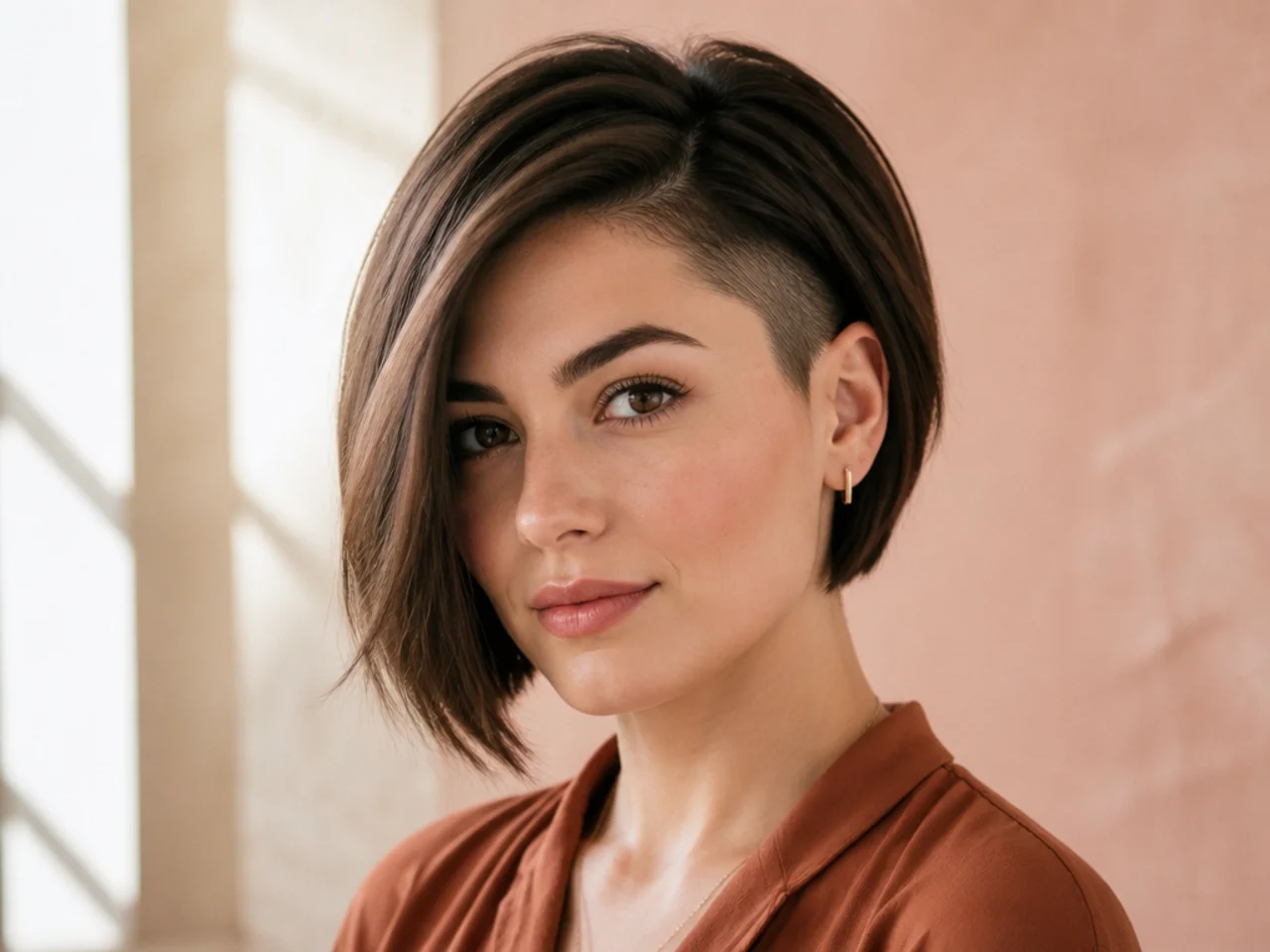
Oblong faces read long and narrow, so you want width at the sides and softness at the length. An A-line bob — longer in front, shorter at the back — builds that width when the front reaches below the chin. The subtle undercut hides bulk at the occipital, which thick hair loves to stack up in. Ask for an A-line running from below the chin at the front to just under the ear at the back, with a hidden undercut through the nape and internal thinning above it. Perimeter stays blunt. Styling tip: use a medium round brush to bend the front pieces inward toward the jaw, then smooth a serum onto the ends only. For more shape variations at this length, layered bob haircuts shows how the A-line reads with different fringe choices.
6. Layered Pixie Cut with Textured Fringes for Triangular Faces
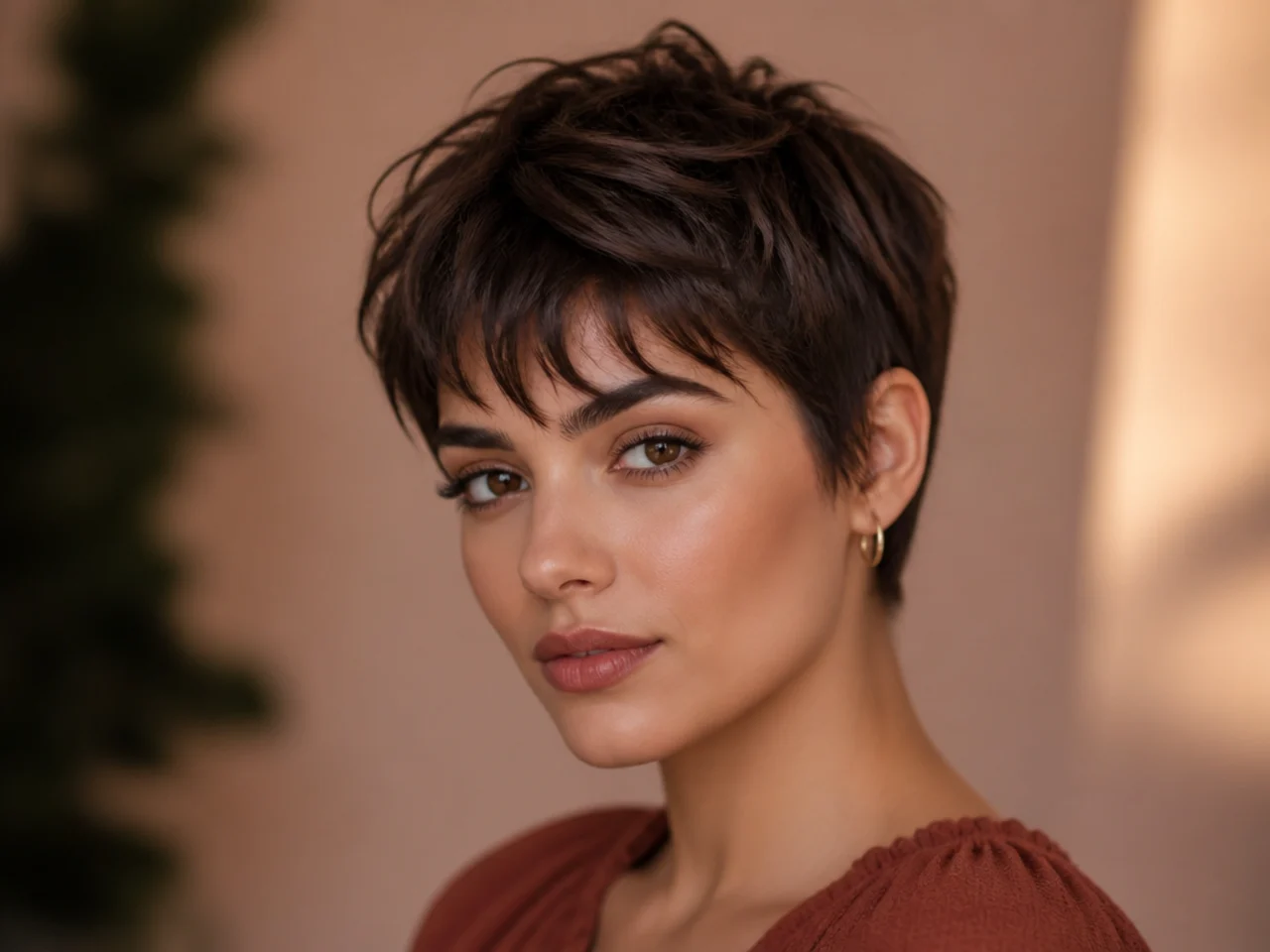
Triangular faces — wider jaw, narrower forehead — need volume up top to balance the lower third. A layered pixie with a textured fringe delivers both. Height on the crown, softness across the forehead. Thick hair holds this shape better than fine hair, because there's real density to point-cut into. Ask for a pixie with graduated layers on top that peak at the crown, tapered sides, and a fringe cut to sit just above the brow with heavy point-cutting for texture. Internal thinning through the sides stops any flare above the ear. Styling tip: rub a pea-sized amount of texture cream between your palms, press it into dry hair from the roots up, and leave the fringe pieces slightly separated for that lived-in look.
7. Textured Crop with Wispy Ends for Diamond Faces
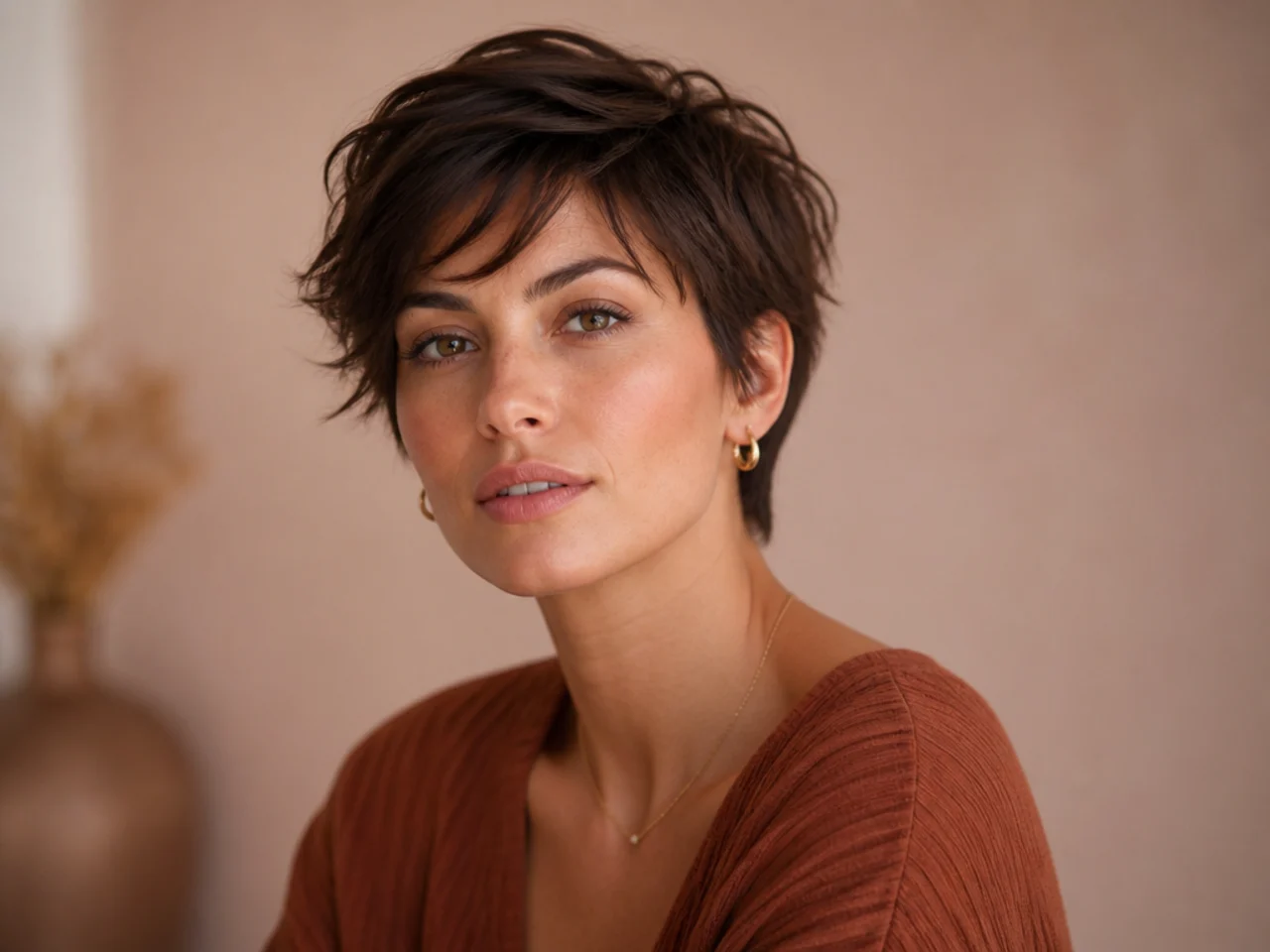
Diamond faces — narrow forehead and jaw, wide cheekbones — need softness at the temples and a length that doesn't compete with the cheekbones. A textured crop with wispy ends sits above the ear and finishes light on the forehead. No heavy fringe, no hard sideburn line. Thick hair reads sharp in this shape when the interior is thoroughly thinned. Ask for a crop that stops mid-ear on the sides with heavy internal slicing throughout, a fringe cut on the diagonal from brow to temple, and wispy pieces around the ears. Styling tip: work a matte clay through damp hair, blow-dry with fingers pushing forward, and leave the ends purposely uneven — no combing after.
8. Blunt Cut with Tapered Nape for Pear-Shaped Faces
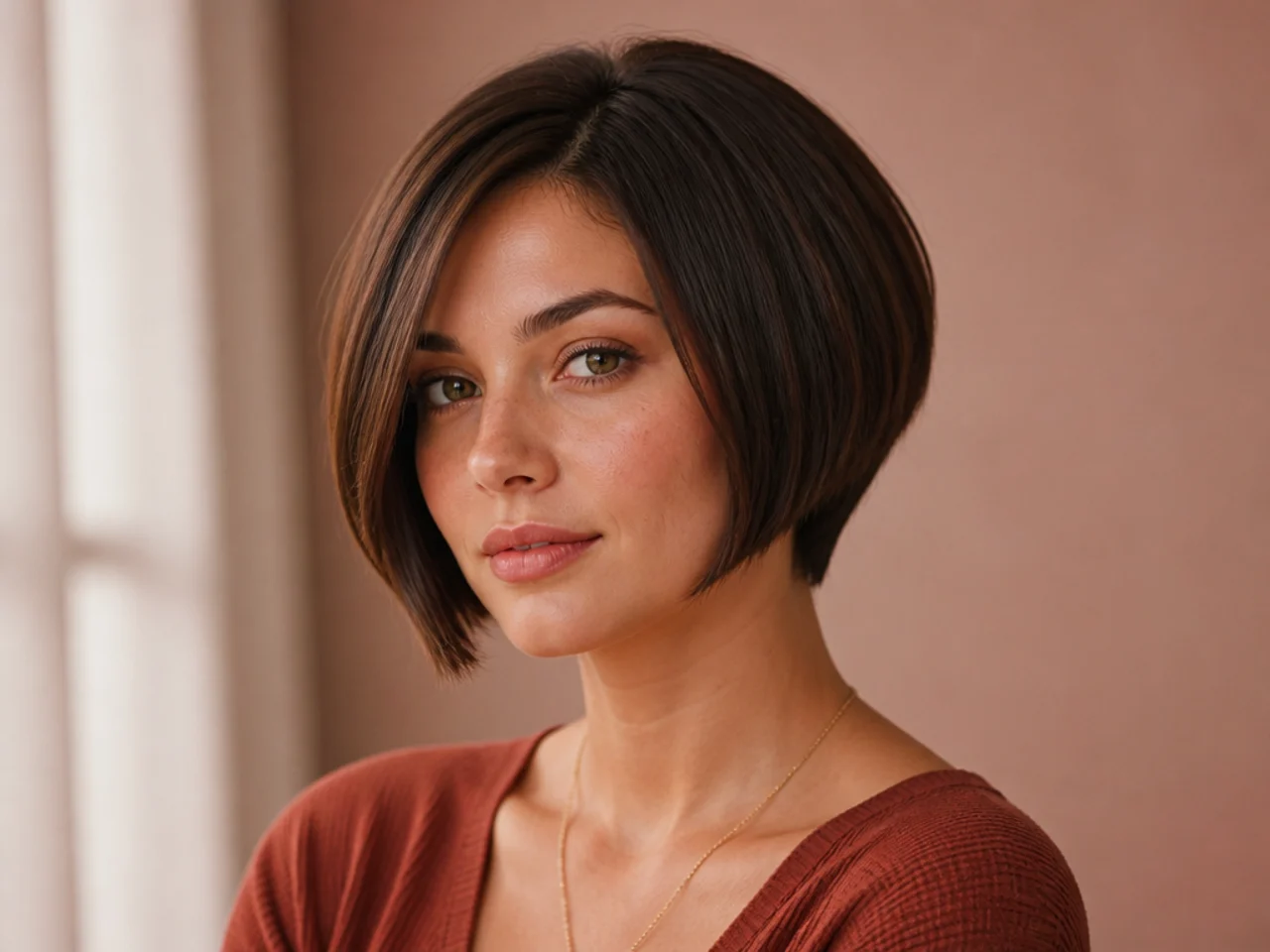
Pear-shaped faces — narrow forehead, wider jaw — need volume above the ears and a clean, elongated line through the neck. A blunt cut with a tapered nape gives you both. Density stays through the mid-lengths, and the taper lifts the jawline off the neck visually. Ask for a chin-length blunt cut with heavy internal thinning at the occipital, and a graduated taper from mid-ear to nape. Keep the fringe area longer so it can sweep across the forehead. Styling tip: blow-dry with a paddle brush pulling down and under, then use a flat iron on the perimeter to hold the blunt line. Skip curling — the shape does the work. Trim every six weeks or the taper grows into a bulge.
9. Rugged Bob with Chunky Highlights for Rectangular Faces
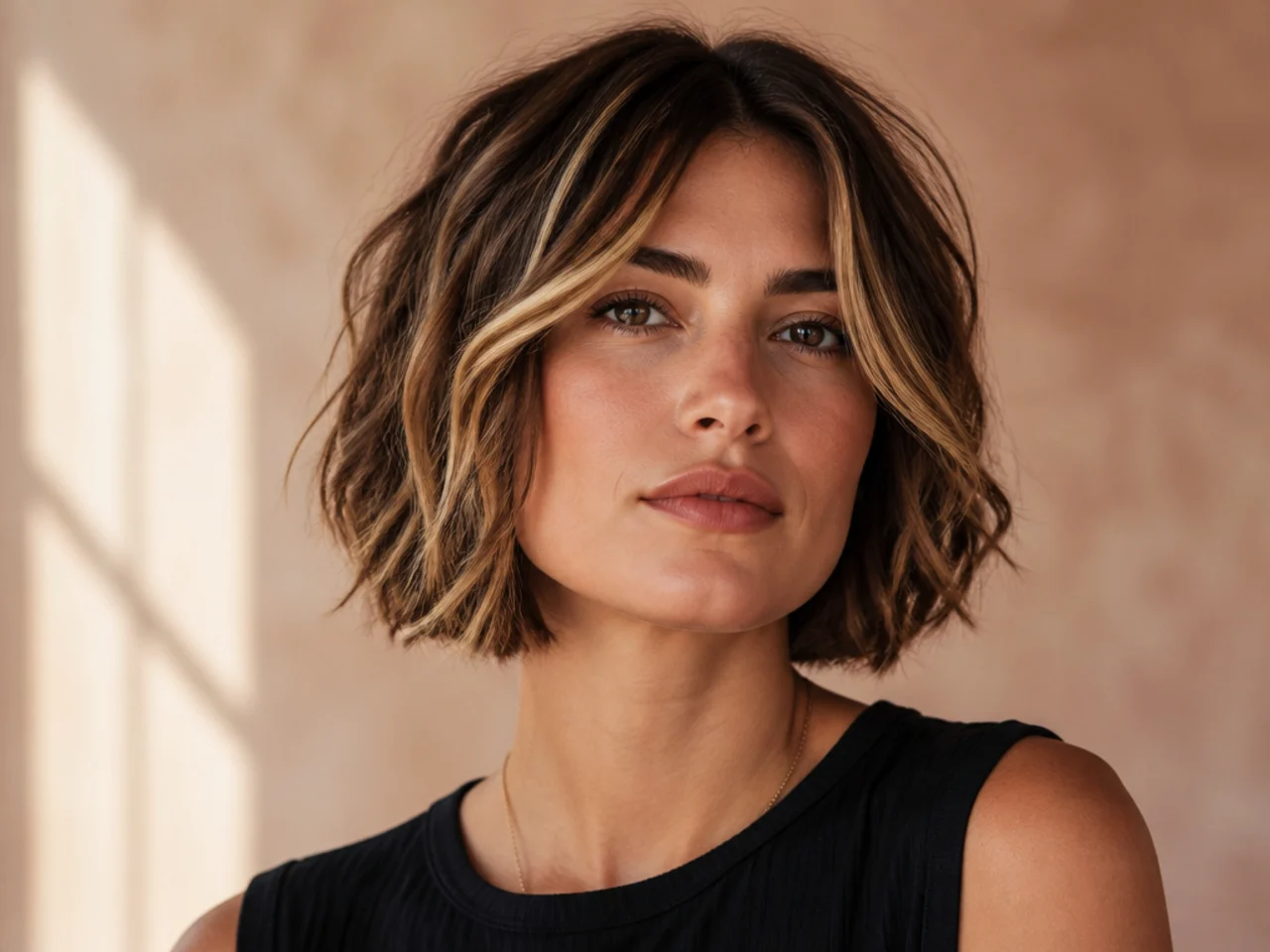
Rectangular faces (long with straight sides) want horizontal break — width at the cheekbones, softness at the corners. A rugged, lived-in bob with chunky highlights delivers both. Piece-y layers create visual width, and the color breaks up the vertical read. Ask for a jaw-length bob with aggressive internal point-cutting, a heavier surface layer that falls just past the chin, and hand-painted chunky highlights concentrated around the cheekbones. Perimeter reads lived-in but not shredded. Styling tip: work a salt spray through damp hair, twist small sections randomly, air-dry until 80% dry, then finish with a diffuser on low. The messier the styling, the better this shape reads.
10. Curly Lob with Defined Layers for Wavy Hair
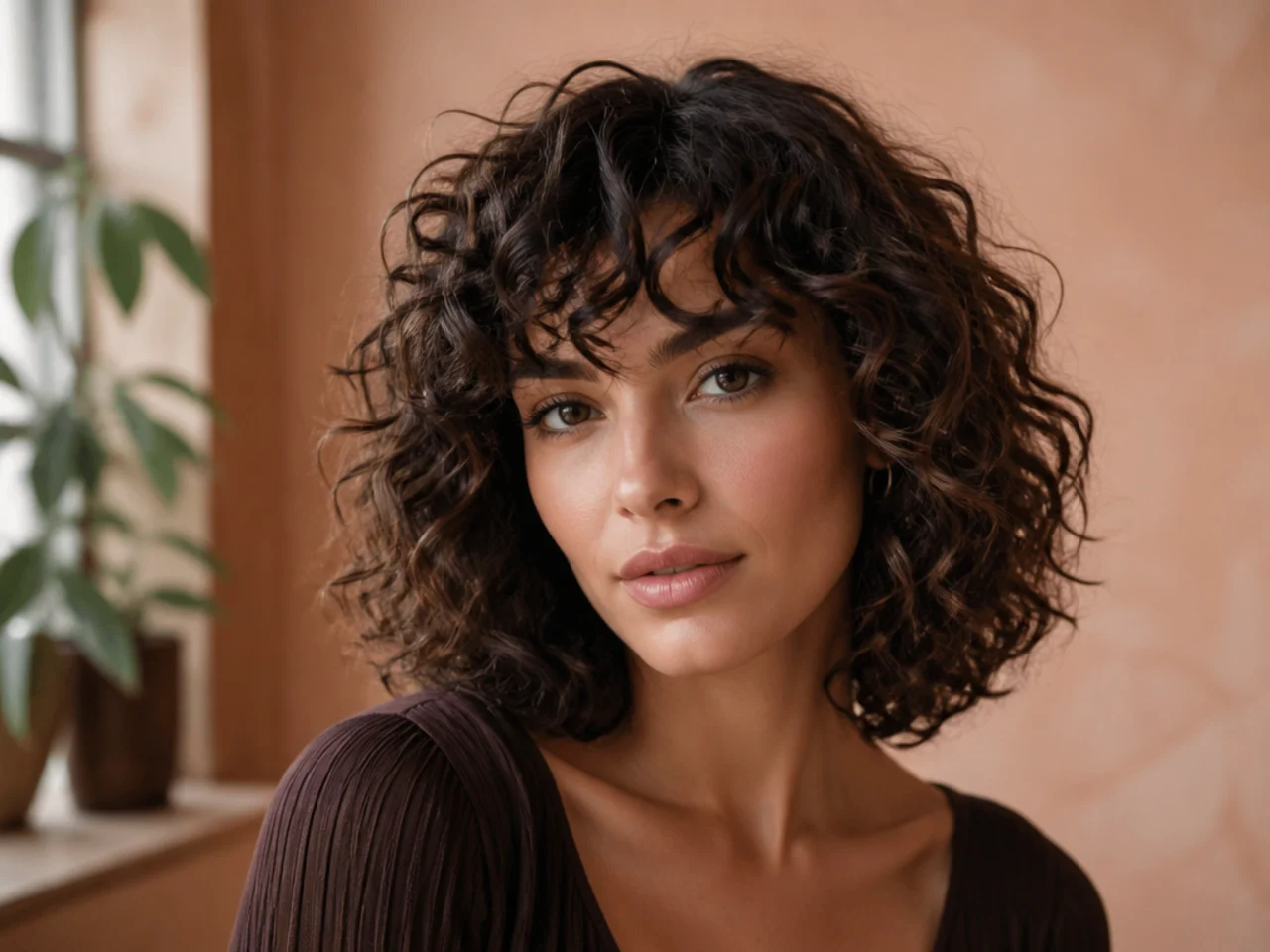
Wavy or curly thick hair works differently than straight thick hair — you cut for curl pattern, not for bulk. A curly lob keeps length at collarbone level with internal layers cut dry, curl by curl. That removes weight without amputating the curl itself. Ask for a collarbone-length lob cut on dry hair with internal layers placed under existing curls, no layering visible on the surface. Never thin curly hair with straight-blade thinning shears — you want carved layers instead. Styling tip: apply curl cream to soaking-wet hair, scrunch upward, and diffuse on low heat with your head tilted to each side. For more shape ideas at this texture, see the trendy haircuts for thick wavy hair guide.
11. Sleek Bob with Deep Side Part for Angular Faces
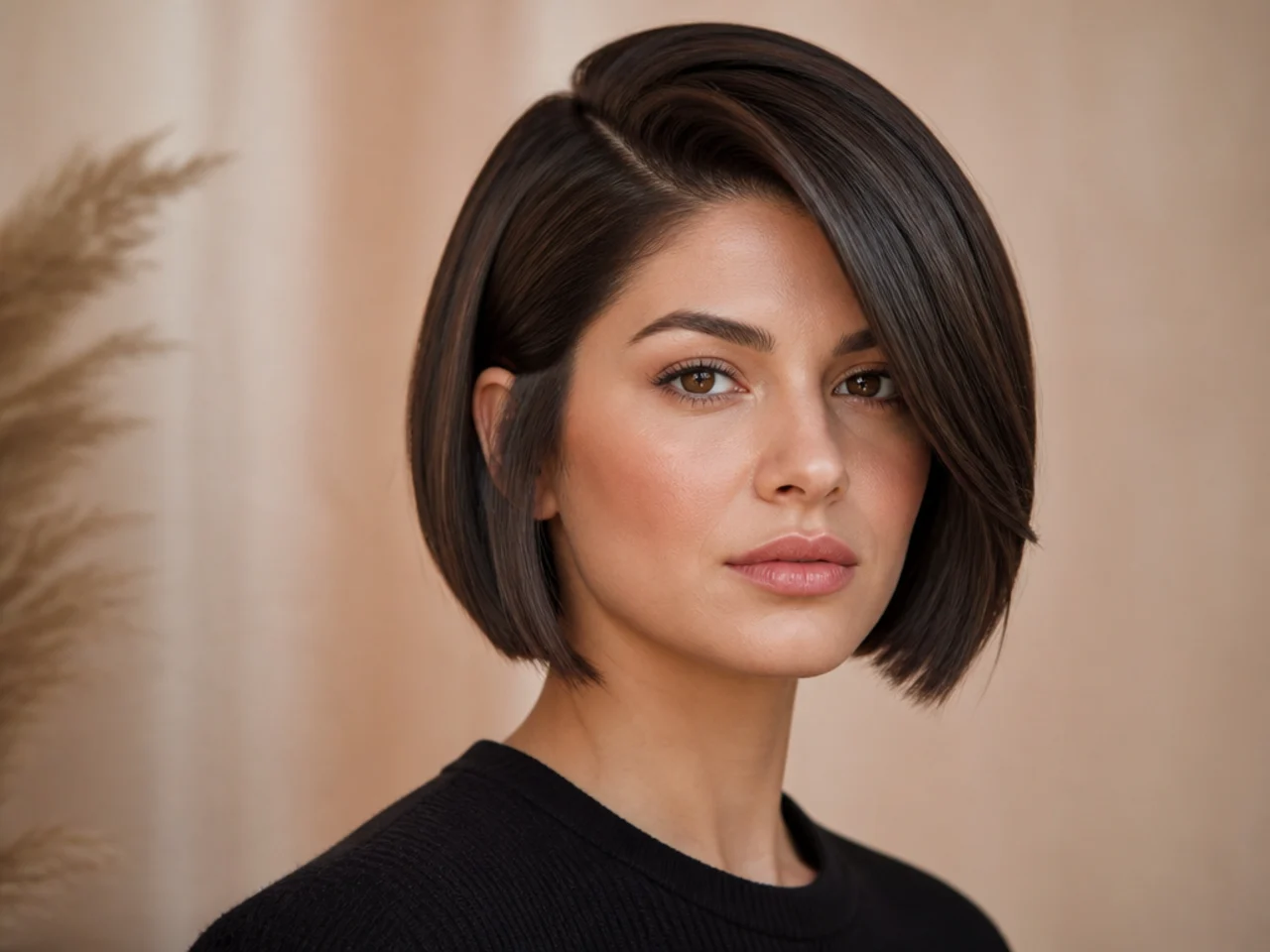
Angular faces already have strong lines. A sleek bob with a deep side part respects that architecture — no competing angles, no distracting layers. The deep part shifts asymmetry across the face and softens whichever side you sweep across. Ask for a one-length blunt bob that hits the jaw, with heavy internal thinning below the crown to stop it sitting bulky. The part lives about two inches from your natural part line. Styling tip: rough-dry until damp, then blow-dry section by section with a large round brush, pulling down and slightly forward. Finish with a shine spray, not a serum — you want gloss without weight pulling the shape flat.
12. Wavy Pixie Cut with Long Layers for Thin Hair

Ignore the "for thin hair" label — this cut works on thick hair when you flip the philosophy. Instead of building density, you're removing it strategically so the wave can move. Long layers on top give the wave room to travel; short sides keep the perimeter tidy. Ask for a pixie with three to four inches of length on top, tapered sides, and heavy internal thinning throughout the top section. Perimeter stays clean. Styling tip: mist wave spray on damp hair, then bend sections with a curling wand held vertically — no clamping, just wrap and release. This shape borrows density tricks from cuts built for the opposite problem — the short bob for fine hair breakdown shows how blunt lines create the illusion of thickness, which is exactly the tool you'll use here in reverse.
13. Back Length Bob with Subtle Layers for Thick Hair

When you're not ready to go truly short, a back-length bob with subtle layers is the entry point. Length sits at the base of the neck, layers stay hidden inside the shape, and the exterior reads as one length. Ask for a bob cut to nape length in the back, angled slightly longer toward the front, with internal thinning through the mid-lengths and a completely blunt perimeter. No visible surface layers. The trick with any length above the nape is committing to the thinning — half-hearted density removal here means the shape flares at the ends within a week of cutting. Tell your stylist to be aggressive with the internal shears. You can add weight back with product, but you can't put density back on the head. Styling tip: blow-dry with a large round brush pulling down and under at the ends, and skip the curling iron. The shape should look effortless, not styled.
14. Messy Textured Cut for Casual Vibes

This is the "I don't want to think about it" cut. Length falls anywhere from ear to jaw, layers are heavy and visible on purpose, and the perimeter is intentionally uneven. Thick hair carries this well — the density gives the mess structure, where fine hair would just look flat. Works on any face shape because there's no hard line to fight against. Ask for a jaw-length cut with visible surface layering, aggressive internal thinning, and a piece-y, deliberately uneven perimeter cut with point-cutting technique. Styling tip: mist salt spray on towel-dried hair, scrunch with your hands, air-dry, then finish with a matte pomade rubbed between your palms and pressed into the mid-lengths. Skip the roots — root product weighs the shape down.
15. Bold Undercut Bob with Color for Edgy Style
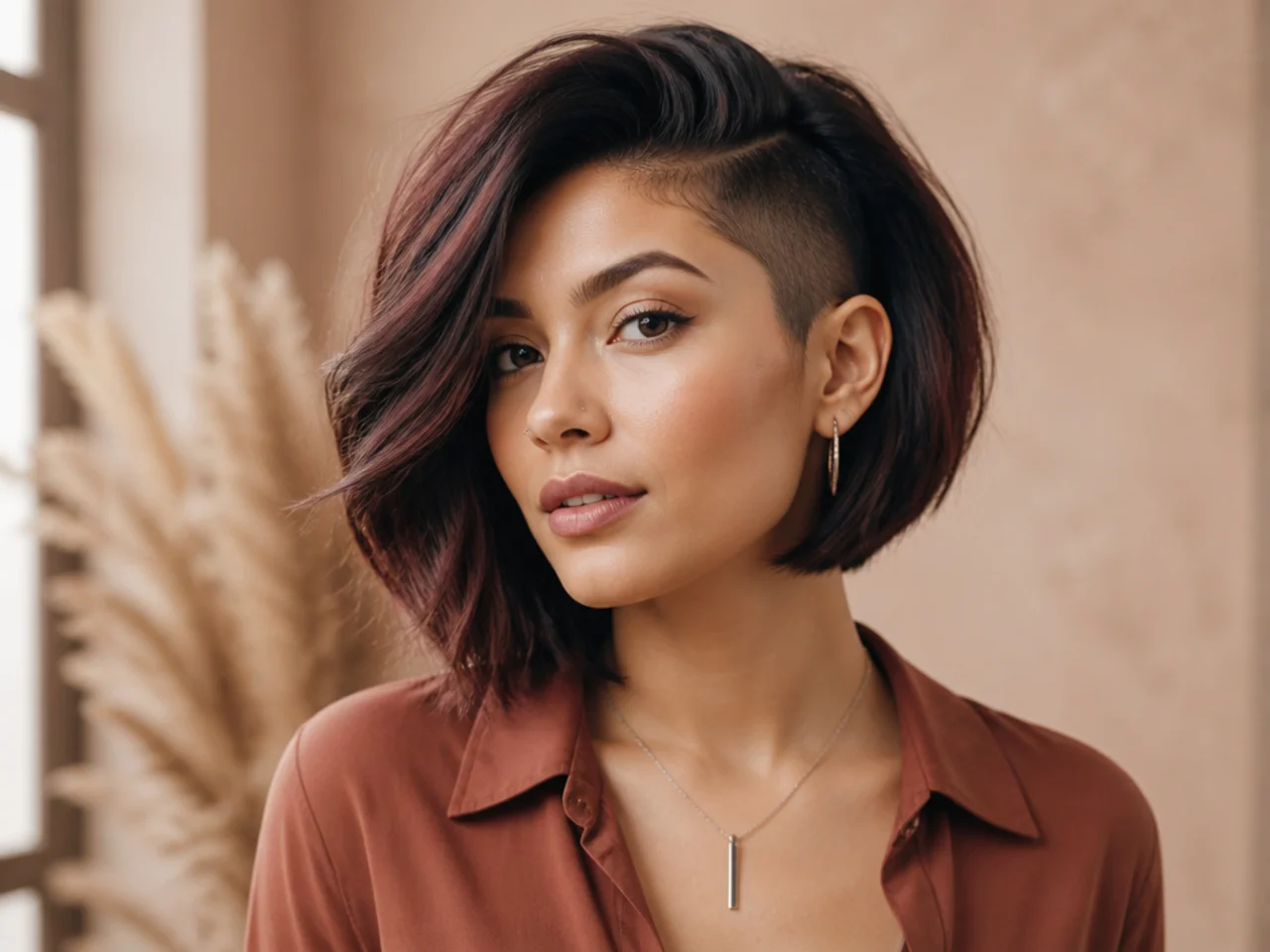
An undercut bob hides serious density under the surface while keeping the top strong and blunt. Vibrant color exposed at the undercut adds a graphic element without touching the rest of the shape. Best on strong bone structure — square, angular, or heart faces — where the shape can hold its own against the color contrast. Ask for a chin-length bob on top with a shaved or short-clipper undercut through the entire nape and behind the ears, and a color pop dyed only into the undercut section. The interior of the top gets thinned so it lays flat over the undercut. Styling tip: blow-dry the top section forward with a paddle brush, then flip it into a deep side part to expose the undercut on one side. Book maintenance every three weeks — the undercut grows fast.
16. Beachy Waves with Long Bangs for Softness

This is your festival-photo hair. Chin-to-collarbone length, soft waves, long bangs that sweep to the sides. Thick hair holds a wave all day without falling, which is the whole appeal. Works on most face shapes because the softness at the perimeter takes the edge off any strong angle. Ask for a collarbone-length cut with hidden internal layering, curtain-style bangs that reach the cheekbone, and a blunt-ish perimeter with slight point-cutting for movement. Styling tip: use a 1.25-inch curling iron, wrap sections away from the face without clamping the ends, and finger-rake through once the curls have cooled. Finish with a light hairspray and one pump of oil on the ends — never at the roots.
17. Modern Shag with Choppy Layers for Bold Looks
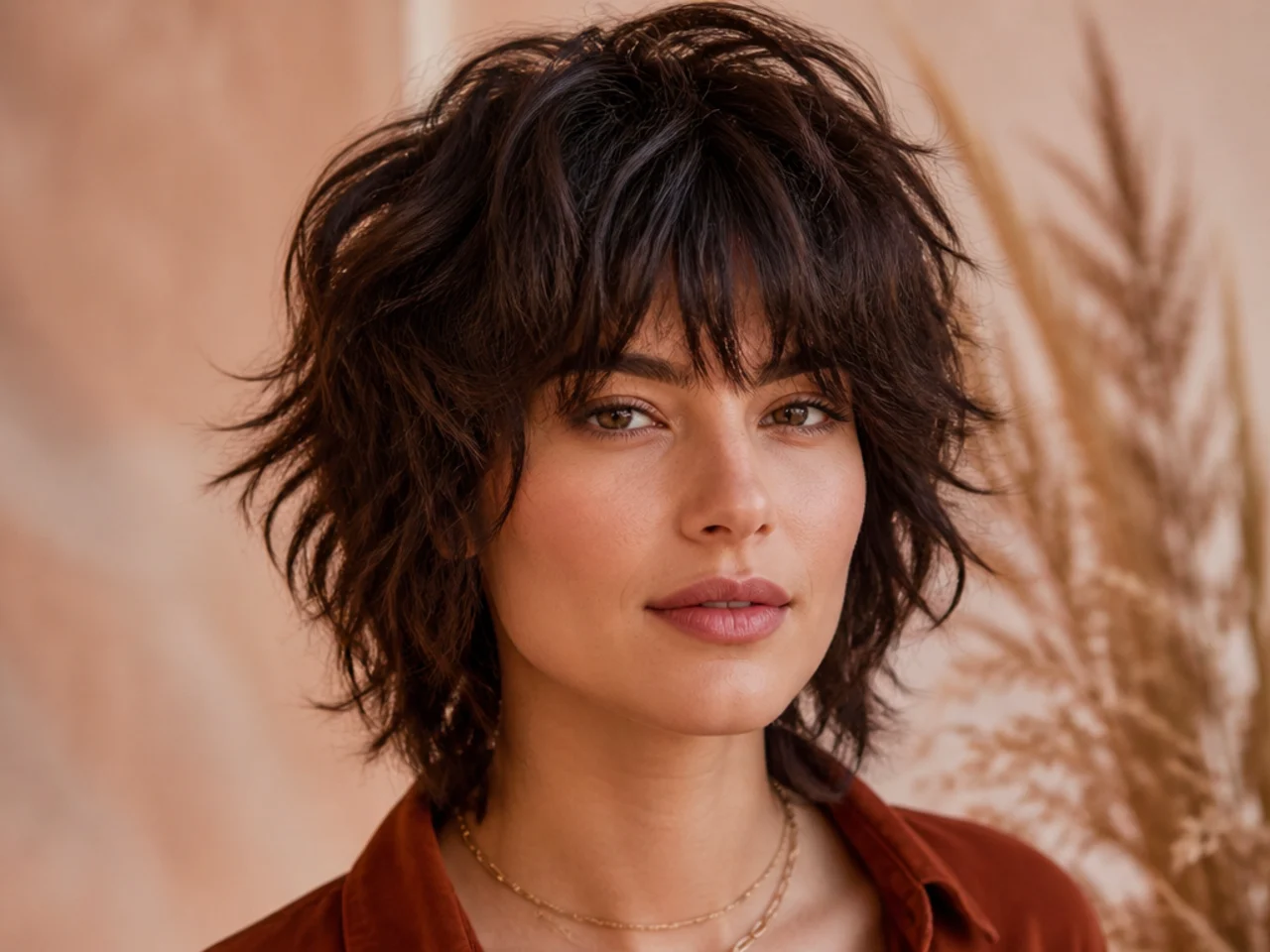
The modern shag is engineered for thick hair. Heavy internal layering, exposed choppy layers on the surface, and a wispy fringe — the whole cut removes weight everywhere so the shape moves. Great for anyone tired of a bob feeling too heavy. Suits most face shapes when you customize the fringe to balance the forehead width. Ask for a jaw-to-collarbone shag with layers starting at the cheekbone, heavy internal thinning through every layer, choppy piece-cut ends, and a fringe cut to your preferred length. Styling tip: work mousse through damp hair, rough-dry with fingers upside-down, then use a large-barrel wand on one or two random pieces just for shape. See the broader short layered women's hairstyles guide for how shag construction changes by length.
18. Curly Short Cut with Defined Curls for Volume
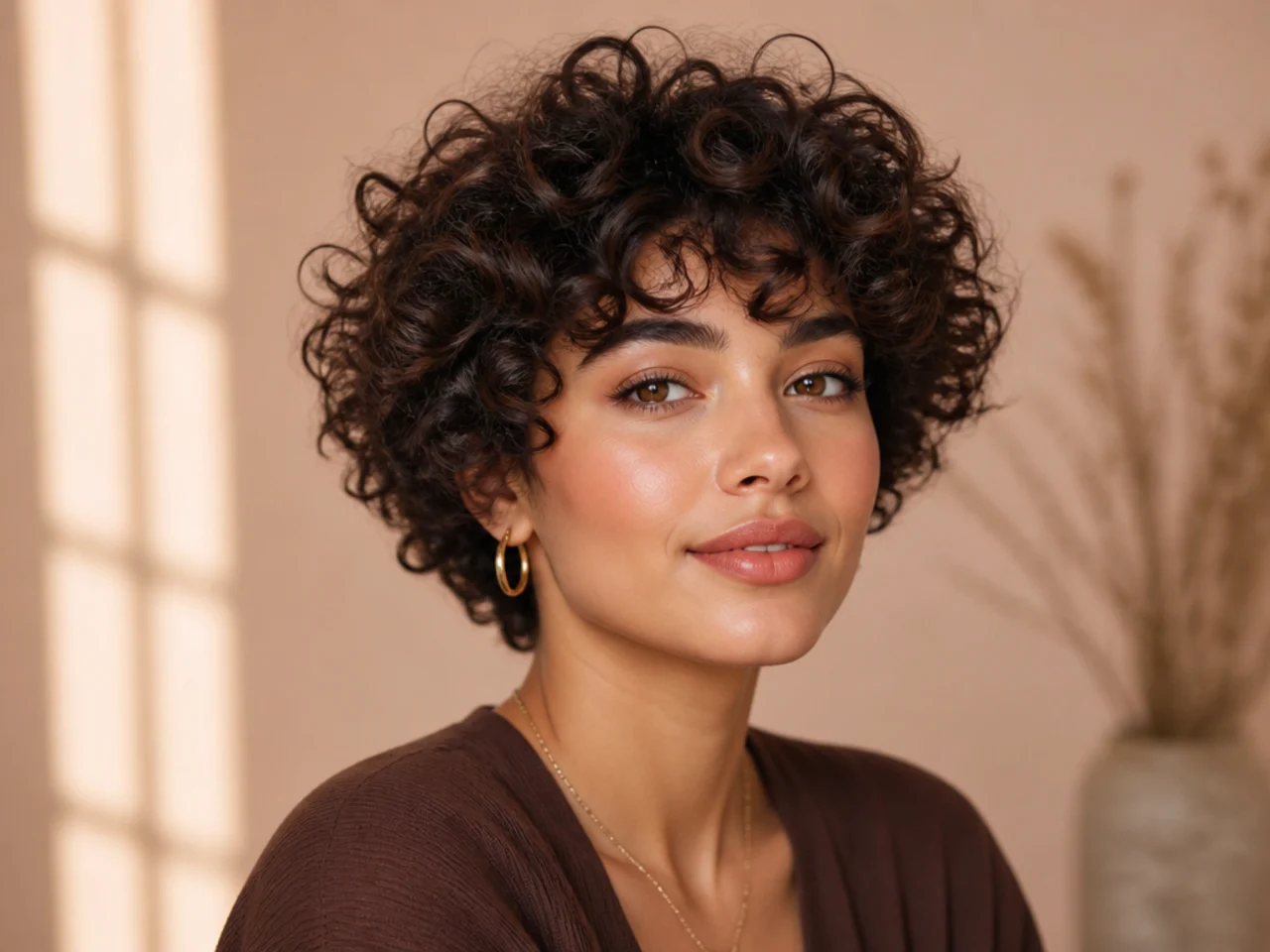
Short cuts on curly thick hair follow different rules. Length gets measured by curl diameter, not ruler inches — the same "short" cut looks completely different on tight coils versus loose spirals. Interior thinning has to be carved with the curl, never against it. Ask for a dry cut done curl by curl, sitting anywhere from the ear to the jaw depending on curl pattern, with internal weight removed only from underneath the top layer. Never thin the ends of curls — that's what causes the frizz halo. Styling tip: on soaking-wet hair, rake curl cream through with your fingers, cup sections in your palm and press upward toward the scalp, then air-dry or diffuse on low. Refresh day two with a spray bottle of water mixed with a small amount of leave-in.
19. Sleek Buzz Cut for Confident Women
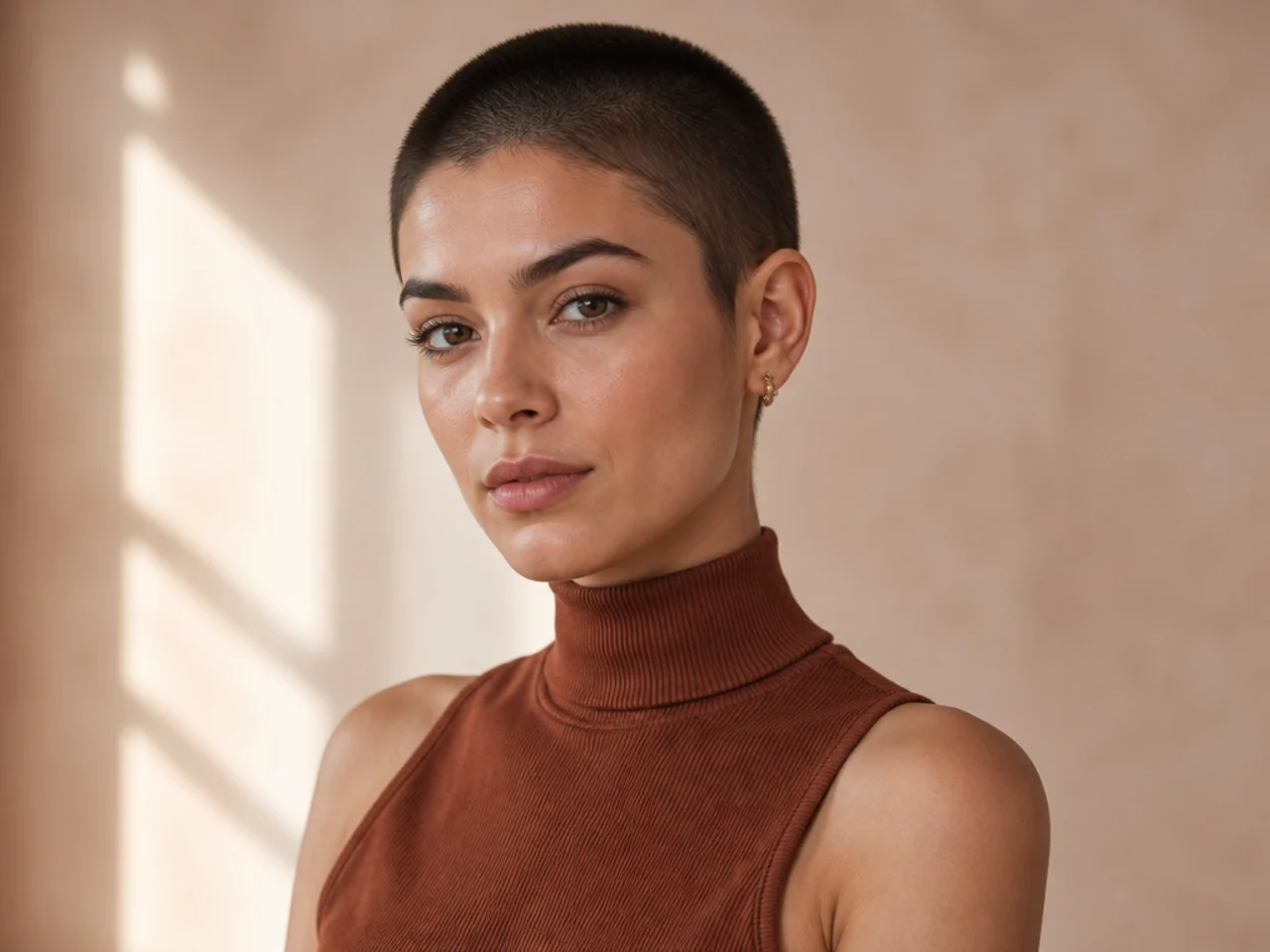
A buzz cut on thick hair sits differently than on fine hair — the density gives every millimeter of length real visual weight. Choose your guard number based on how much scalp you want to show. A #2 reads as full velvet, a #4 reads almost like a crew cut. Best on strong bone structure and clear skin, because there's nothing between your face and the world. Ask for a specific clipper guard number all over — usually between #2 and #6 — with clean scissor detailing around the ears and hairline. No fade unless you want one. Styling tip: there isn't one. Wash, towel-dry, done. If you want a subtle finish, a tiny amount of matte pomade rubbed over the top adds a hint of texture. Trim every three to four weeks — this shape has no forgiveness on grow-out.
20. Side-Parted Classic Bob for Timeless Style

The classic side-parted bob is the safest, most flattering short cut for thick hair when it's built right. Length sits between the jaw and the collarbone, the perimeter stays blunt, and the interior is quietly thinned so the shape falls without fighting you. Suits every face shape when the length is dialed to your proportions — longer for round or oval, shorter for square or angular. Ask for a blunt one-length bob at your preferred length between jaw and collarbone, with a deep side part, internal thinning through the mid-lengths and crown, and no visible layers on the surface. Styling tip: rough-dry until 80%, then blow out section by section with a large round brush, pulling down and slightly under. Finish with a shine cream smoothed onto the ends only — nothing on the roots.
Choosing Your Perfect Short Hairstyle
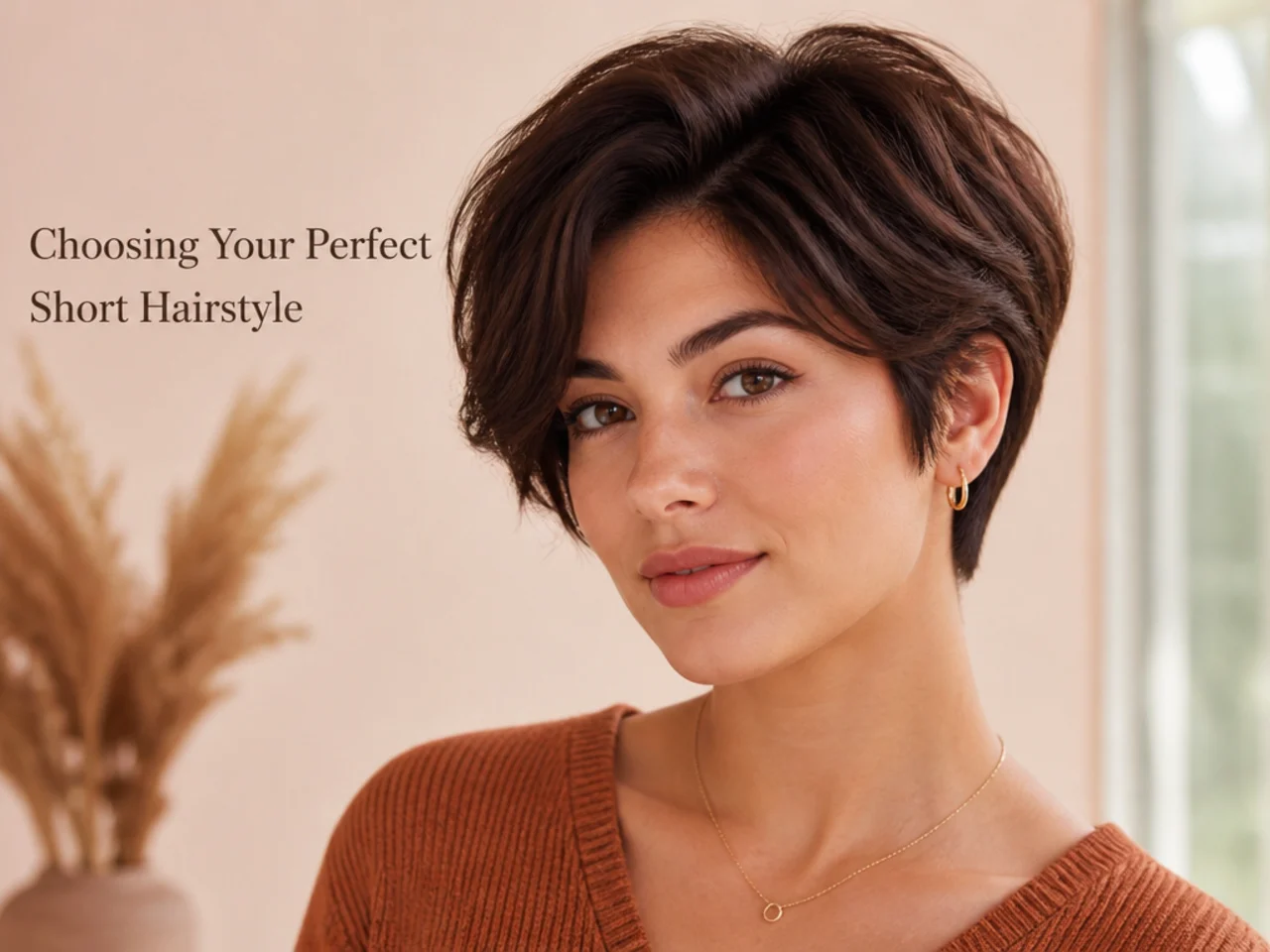
Every cut on this list follows the same rule: blunt on the outside, thinned on the inside. Skip the interior work and thick hair will always sit like a helmet. Ask about internal thinning at your consultation — if your stylist can walk you through how they'll remove weight without touching the perimeter, you're in the right chair. Face shape narrows the choice. Hair texture and lifestyle finalize it. Take reference photos of both the length you want and the movement you want, because those are two different conversations. Book a trim every four to eight weeks depending on the shape — pixies and crops need frequent shaping, bobs can go longer. Trendy buzz cut styles for thick hair shows what happens when you take density all the way down. Whatever you pick, know the words that got you there: internal thinning, blunt exterior.
Frequently asked questions
Related posts
See all posts
17 Best Curly Hair Haircuts for Ultimate Style in 2026
Read more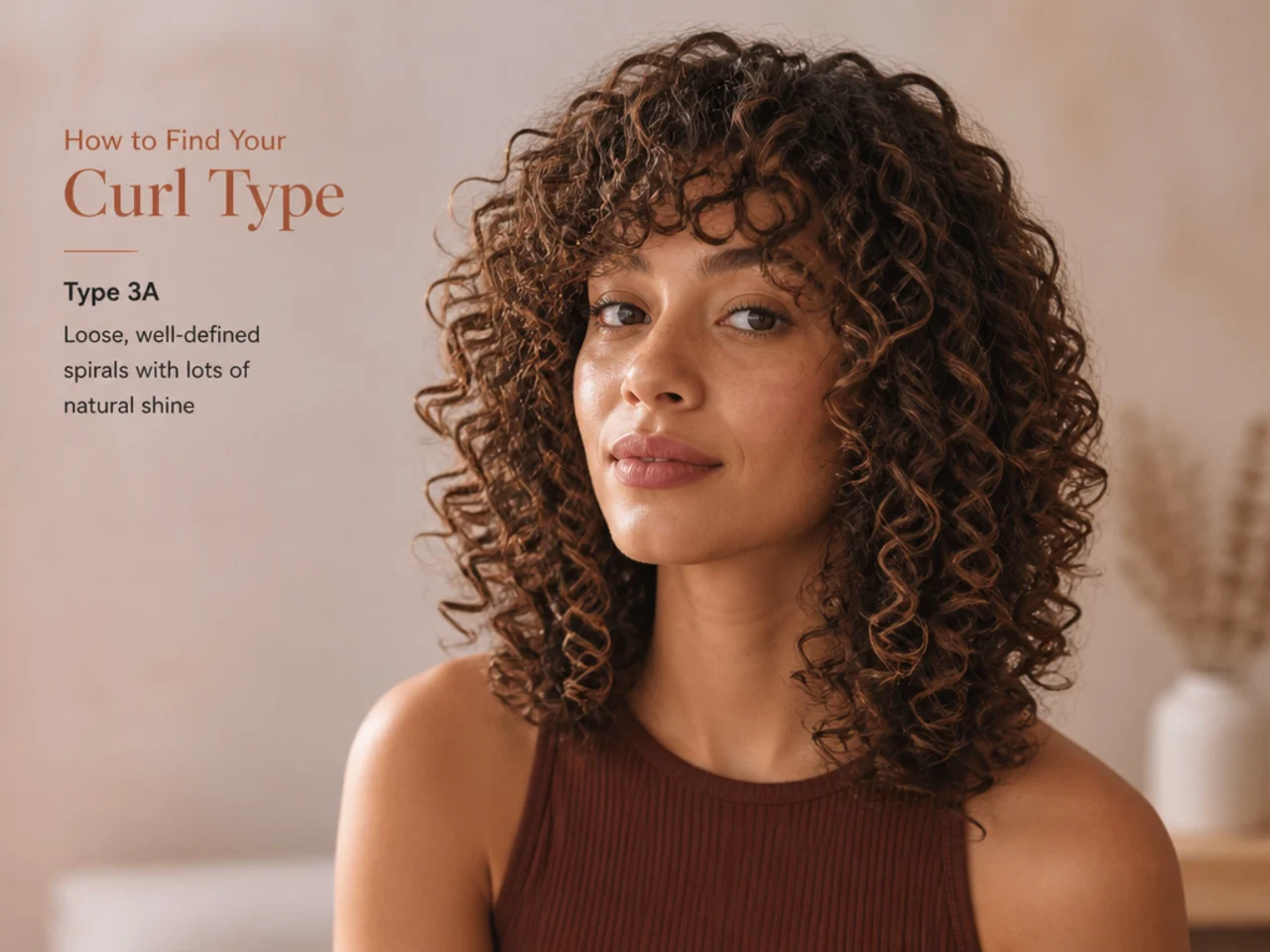
This Is the Simplest Way to Figure Out Your Curl Types: 2026
Read more
15 Stunning Layered Haircuts for Every Face Shape
Read more