25 Best Haircuts for Square Faces Rounding the Angles
A square face shape is often considered the "gold standard" of masculine aesthetics. Characterized by a strong, broad forehead and a sharp, chiseled jawline, it radiates stren
In this article · 31
- Why Choosing Right Cut Matters
- Best Haircuts for Square Faces Men
- 1\. Side-Slicked Short Style
- 2\. Full Shave / Bald Look
- 3\. High-Volume Pompadour
- 4\. Bare-Guard Buzz Cut
- 5\. Line-Up Buzz Cut
- 6\. Tapered Receded Buzz
- 7\. Buzz Cut With Full Beard
- 8\. Close-Cropped Curls
- 9\. Modern Flat Top
- 10\. Brushed-Back Undercut
- 11\. Classic Gentleman's Cut
- 12\. Angular Quiff
- 13\. Modern Caesar / Textured Crop
- 14\. Rounded Curl Top
- 15\. Curly Pompadour
- 16\. Modern Combover
- 17\. Curly Gentleman's Cut
- 18\. Disconnected Height Cut
- 19\. Braided Style with Rounded Edges
- 20\. Grown-Out Combover
- 21\. Long Wavy Blowout
- 22\. High Curly Quiff
- 23\. Grown-Out Gentleman's Cut
- 24\. Short Quiff With Full Beard
- 25\. Soft Swept-Up Style
- Picking Right Cut for Your Hair Type
- Celebrity-Inspired Haircuts for Square Faces
- How to Talk to Your Barber for the Best Results
- Closing Note
Square faces carry weight in the jaw. Forehead, cheekbones, and jaw sit at roughly equal widths, with corners that read sharp and structured. Your cut should soften those angles, not amplify them. Add height on top. Break the line with a side part and wispy fringe. Skip heavy blunt cuts that land right at the jaw. This guide breaks down 25 haircuts for square faces and the small styling moves that make each one work.
Why Choosing Right Cut Matters

Geometry does the heavy lifting. When your face reads square, the eye picks up on symmetry first. Every horizontal line in your cut reinforces the jaw. Every vertical line pulls the eye up and lengthens the face. Your best cuts add asymmetry, height, and soft edges. That means textured layered haircuts, a side or off-center part, and length that either stays well above the jaw or falls comfortably below it.
- Balance: sharp jawlines want volume on top to elongate the face.
- Softening: textured layers break the straight line of the forehead.
- Proportion: very short sides can over-emphasize jaw width, so pick your fade or taper carefully.
Best Haircuts for Square Faces Men
1. Side-Slicked Short Style
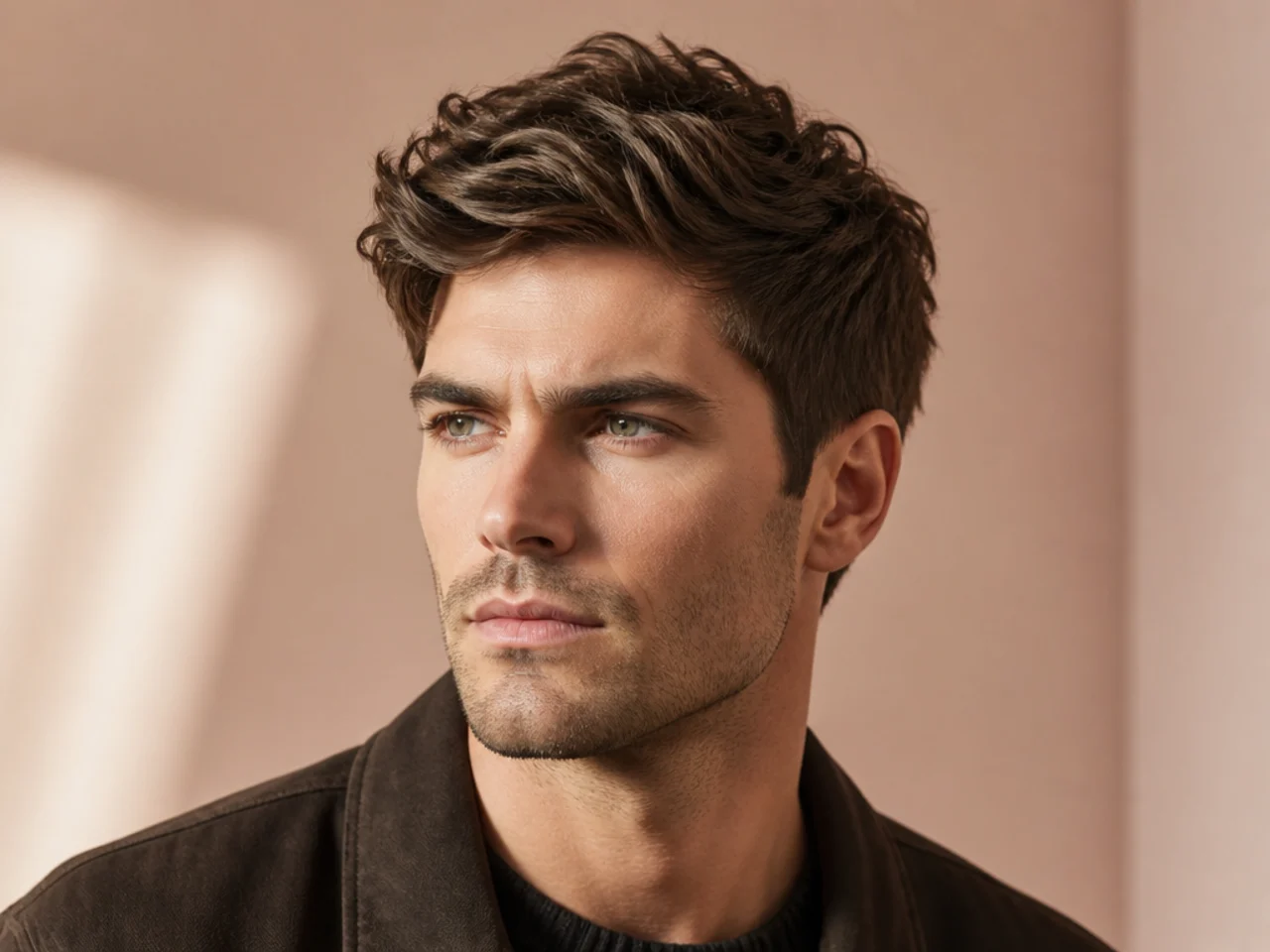
Slicking to one side draws a diagonal across your forehead. That single line breaks the square symmetry and pulls the eye off the jaw. Best on fine to medium straight or lightly wavy hair — thick strands fight the part and pop back up. Ask for 2 to 3 inches on top with tapered sides (skip the skin fade), a deep side part at the arch of your brow, and a soft point-cut edge so the finish looks lived-in, not helmet-flat. Styling tip: work a walnut of medium-hold pomade through damp hair, then blow-dry across the part with a round brush to lock the direction.
2. Full Shave / Bald Look
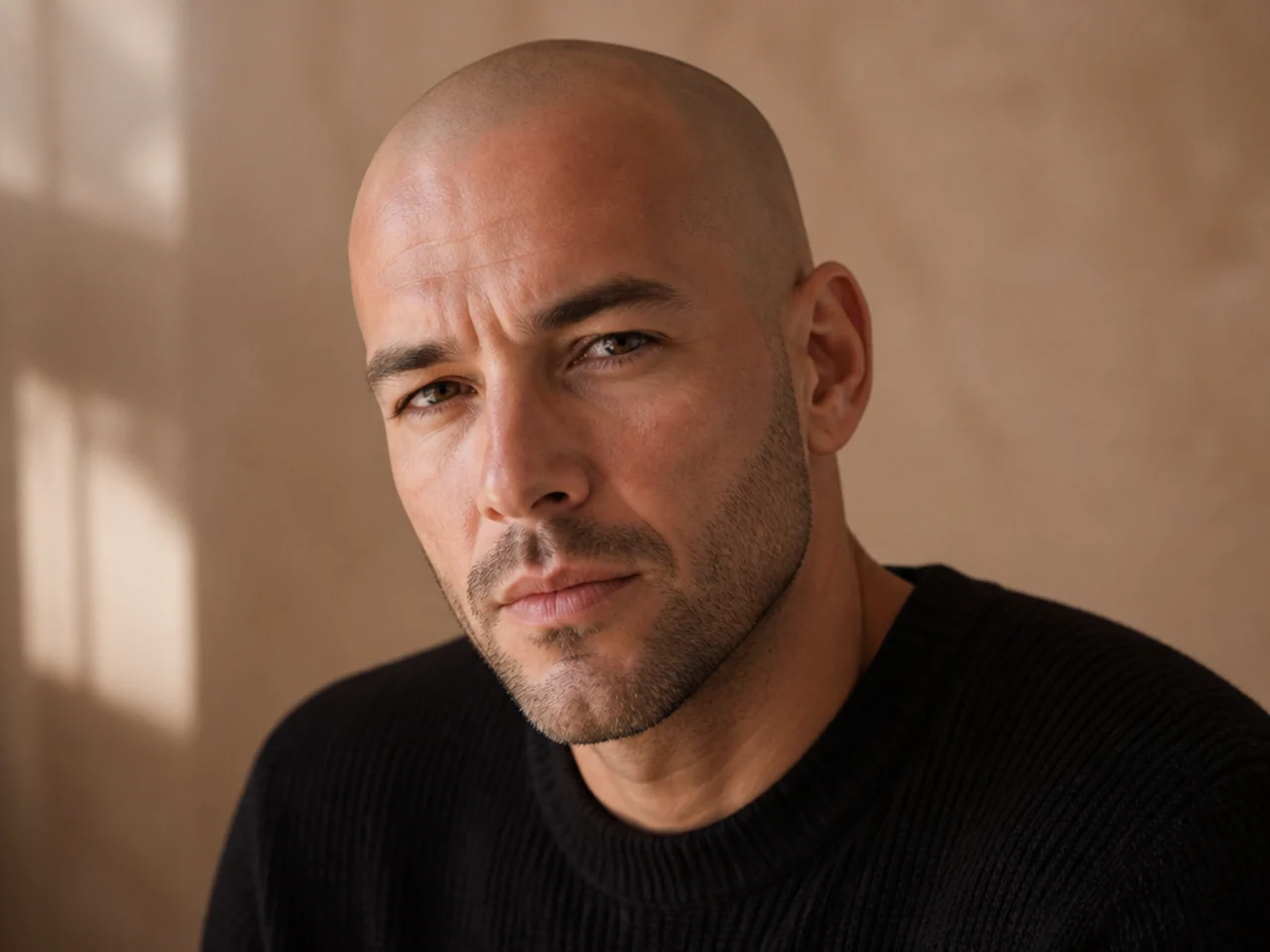
A clean shave stops fighting your bone structure and lets it speak. There's no top-heavy volume to worry about because there's no top. Best for men with thinning crowns, receding temples, or anyone tired of hiding a strong skull shape. Ask your barber for a razor finish or zero-guard pass in the direction of growth, then clean the nape into a subtle taper rather than a hard block — a rounded nape softens the back-of-head silhouette. Styling tip: keep a matte moisturizer on the scalp morning and night. Shine reads greasy on bald heads, so avoid oils, and add SPF 30+ during daylight.
3. High-Volume Pompadour
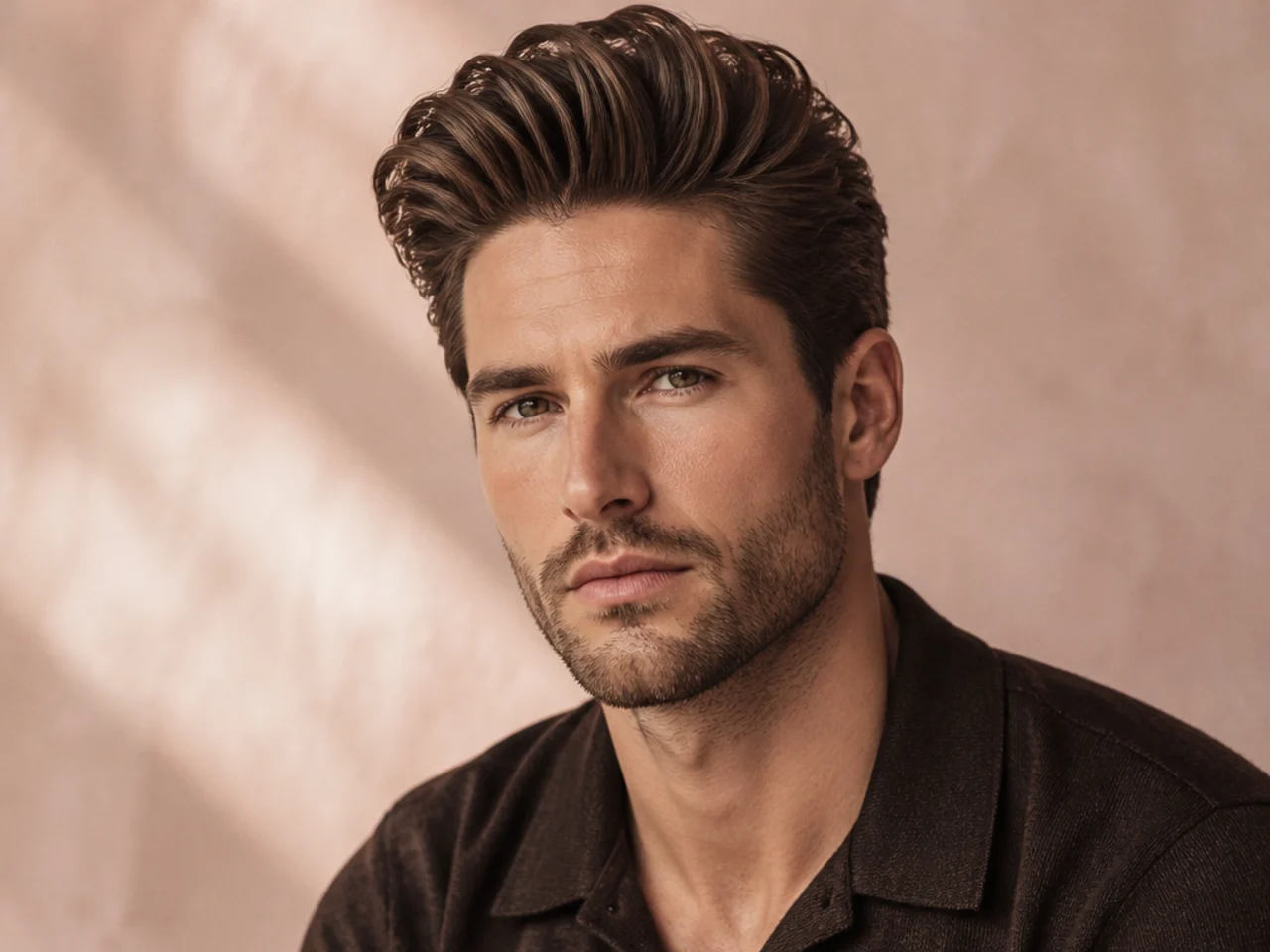
Height is your best friend when your jaw runs wide. A pompadour lifts the eye up and out, so the face reads longer than broad. Best on medium to thick straight or wavy hair with the density to hold volume without pinning. Ask for 4 to 5 inches on top graded down to 1 to 1.5 inches at the temples, with a low taper (not a skin fade) to keep the sides from looking too narrow against the jaw. Styling tip: blow-dry up and back from damp hair with a paddle brush, finish with a matte clay, and skip the gel — the wet look flattens the volume.
4. Bare-Guard Buzz Cut
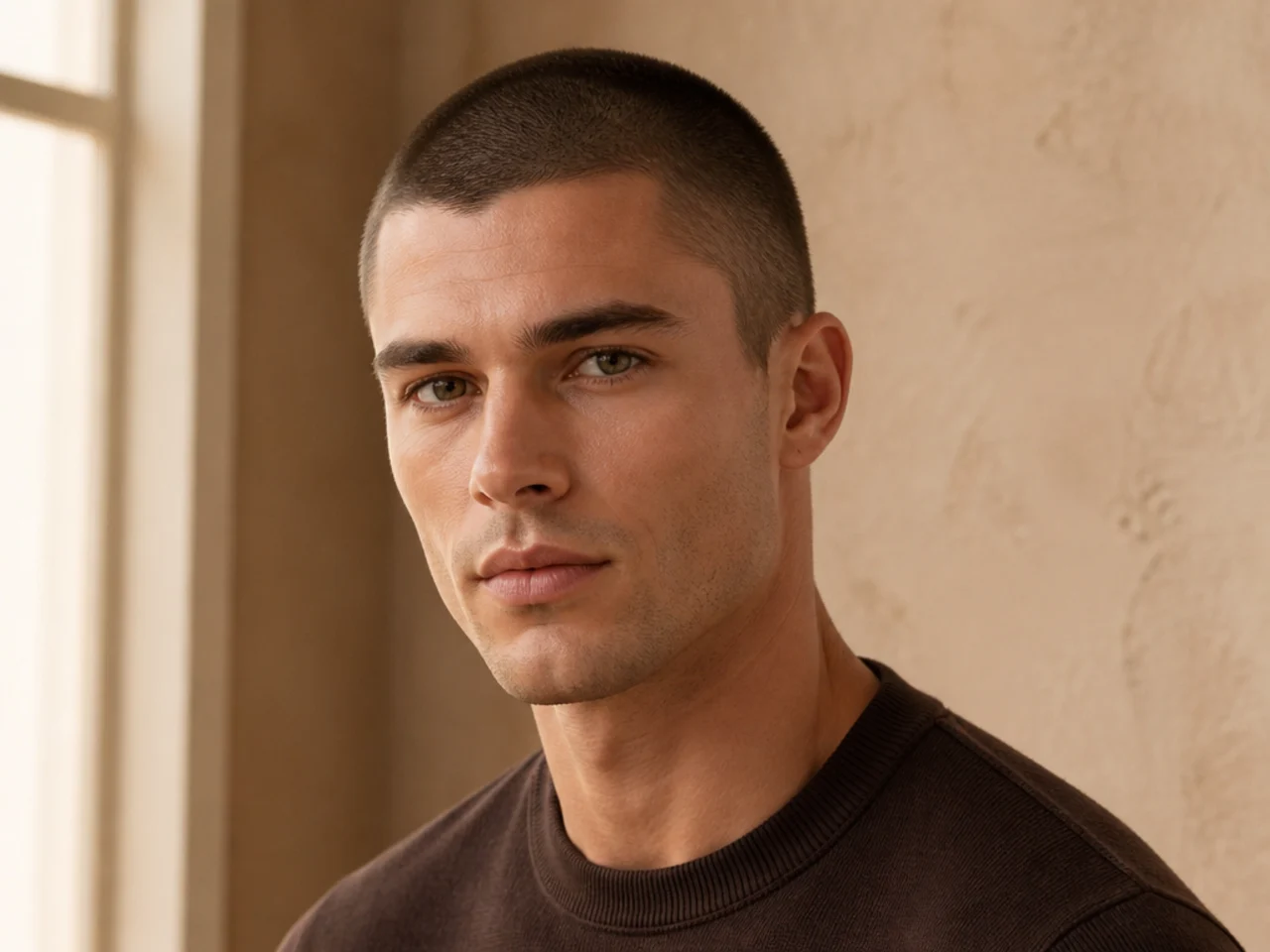
A uniform bare-guard sits close to the scalp and shows off strong bone structure. It works because there's no bulk to add width at the temples. Best on straight or coily hair (curls read bumpy at this length) and men with even hairlines. Ask for a #1 or #2 guard all over with the same length top and sides, and a subtle horseshoe blend around the crown so the head doesn't look flat-topped. Add a rounded nape — never a block — so the back of the head softens the square profile. Styling tip: run a pea-sized drop of scalp serum through the buzz after a shower to catch light and keep the scalp from looking dry.
5. Line-Up Buzz Cut
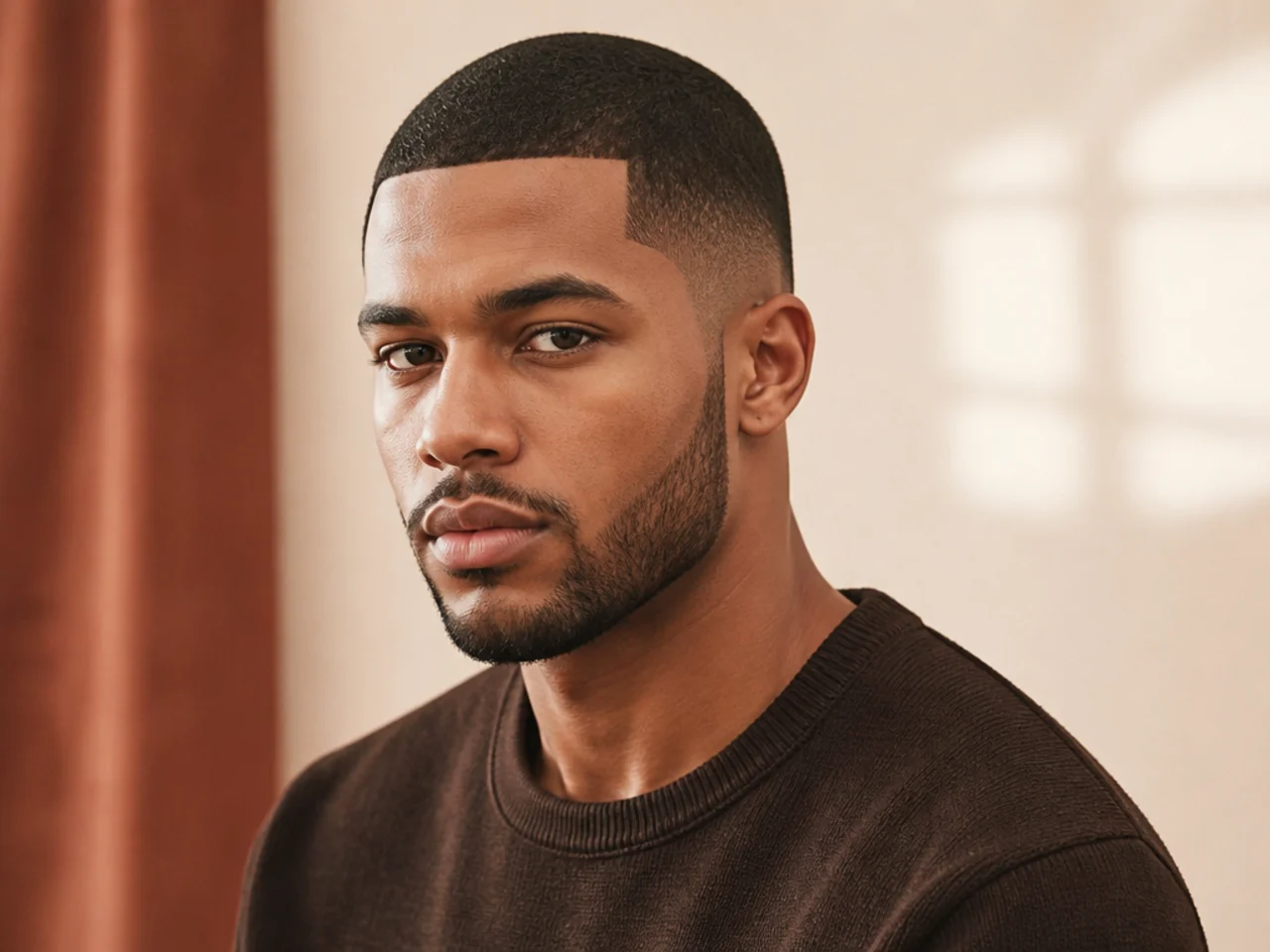
A crisp line-up frames the forehead with a clean edge instead of a shaggy one, which reads groomed rather than boxy. The trick for square faces is to soften the corner where the line-up turns down toward the sideburn — ask for a rounded arc there, not a 90-degree angle. Best on Type 3 and Type 4 hair with a defined hairline and density to hold a sharp perimeter. Ask for a #1 or #2 guard on top, a low taper into the sides, and a razor-defined edge from temple to sideburn. Styling tip: book a touch-up every 10 to 14 days — a fuzzy line-up loses the whole effect.
6. Tapered Receded Buzz
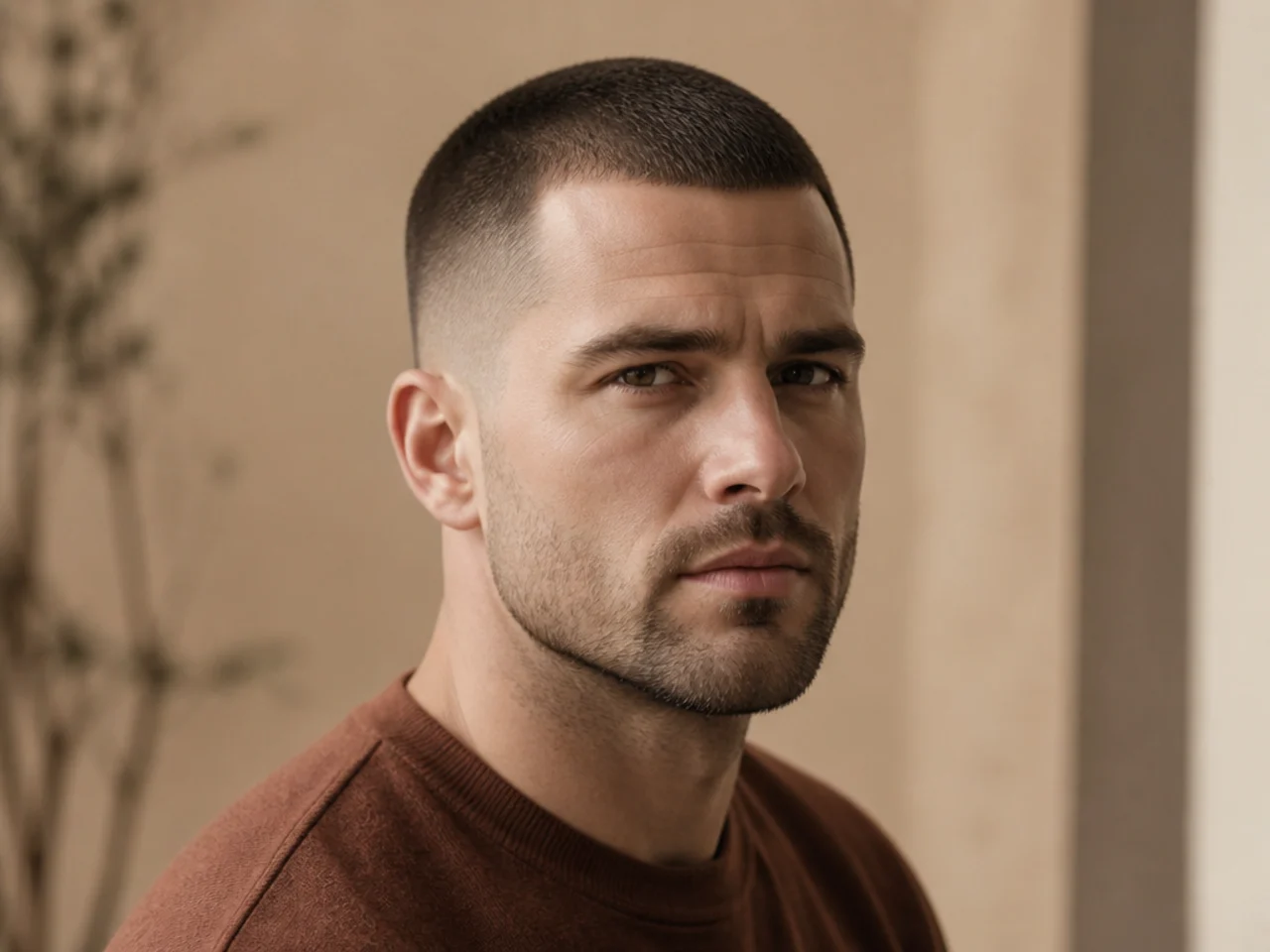
A tapered buzz blends the temples into the top without pretending the hairline isn't moving back. Fighting recession with volume always draws more attention to it. Best for men whose hairline has receded past the corners of the forehead. Ask for a #2 guard on top, a #1 at the temples fading to skin behind the ear, and a soft blend across the front so there's no clear boundary. That gradient rounds the top of your head visually, keeping the forehead from reading too wide. Styling tip: pair with a well-trimmed beard — short stubble to full beard adds the vertical length your top used to provide.
7. Buzz Cut With Full Beard
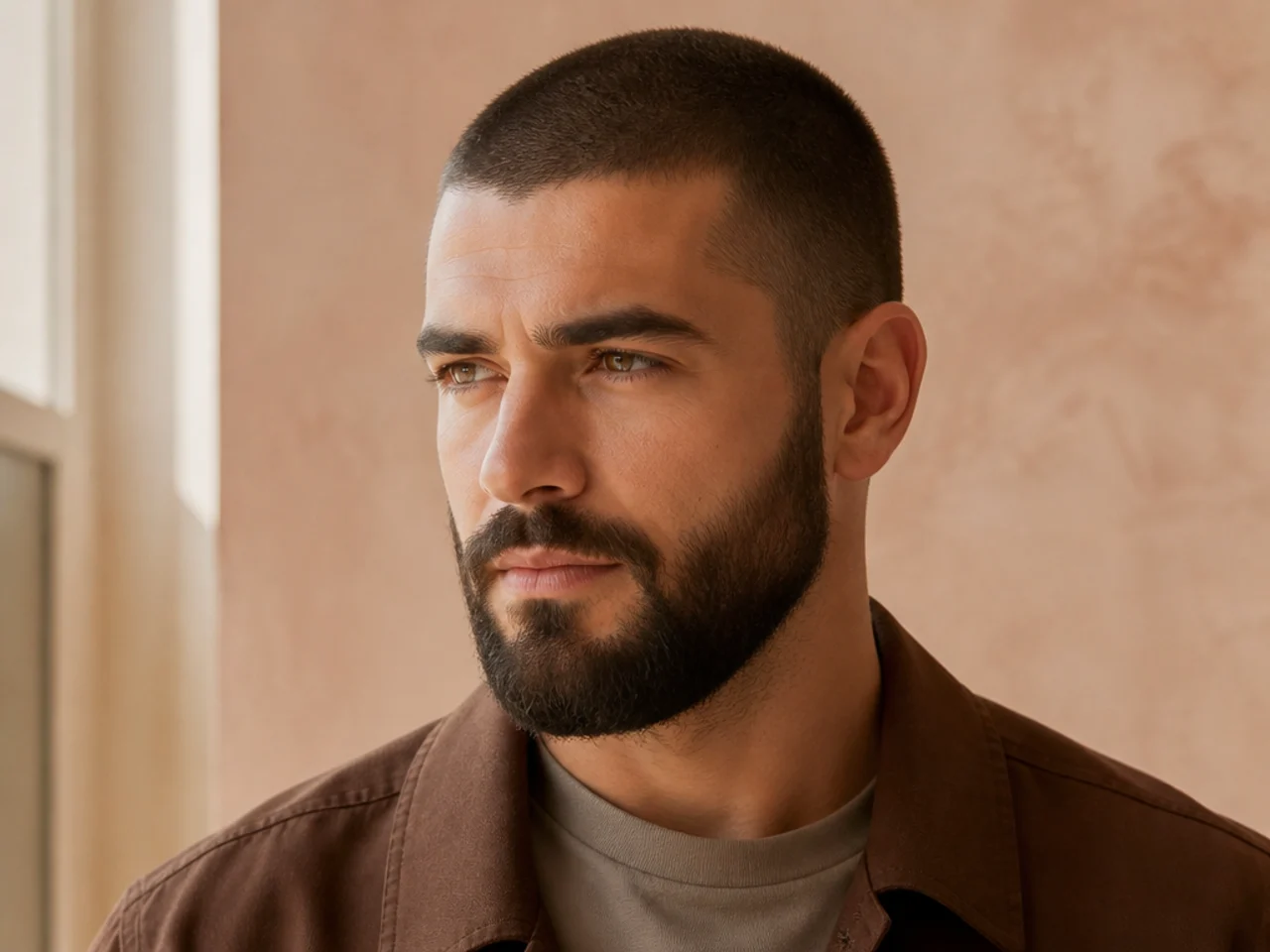
This is the classic square-face equalizer. The buzz keeps the top and sides clean and narrow; the beard lengthens the chin into a rounded oval. Best on straight, wavy, or coily hair with a beard that grows full at the chin and jaw. Patchy cheeks can work with a shorter length. Ask for a #1 or #2 buzz and a beard shape that stays fuller at the chin than the cheeks — that's what pulls the face into an oval. Round the corner where the beard meets the sideburn. Styling tip: use beard oil daily. A stiff, dry beard looks square; a soft one drapes and rounds.
8. Close-Cropped Curls
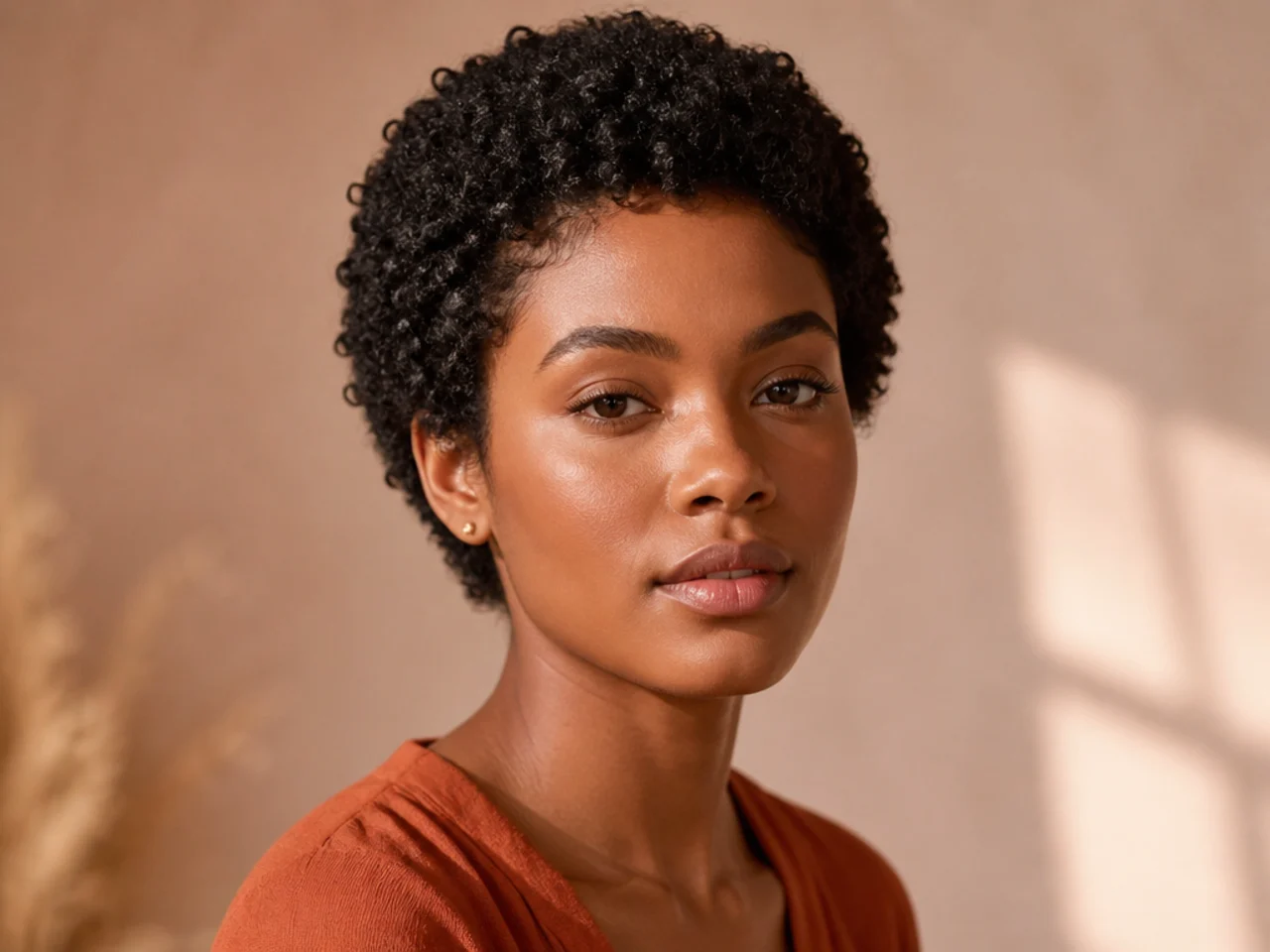
Coily and tight-curly hair has built-in softness — every coil breaks a straight line. A close crop keeps the sides tight and the top just long enough for curl definition. It's the closest thing men have to a short curly pixie cut — short, textural, jaw-softening. Best on Type 4 hair with enough density to hold a defined shape. Ask for 1 to 2 inches on top left long enough to show pattern, a skin or low fade on the sides, and a soft sponge or freshly picked finish rather than a sharp line-up. Styling tip: apply a leave-in cream and a light gel on damp hair, then twist small sections with your fingers for two minutes to lock the pattern in.
9. Modern Flat Top
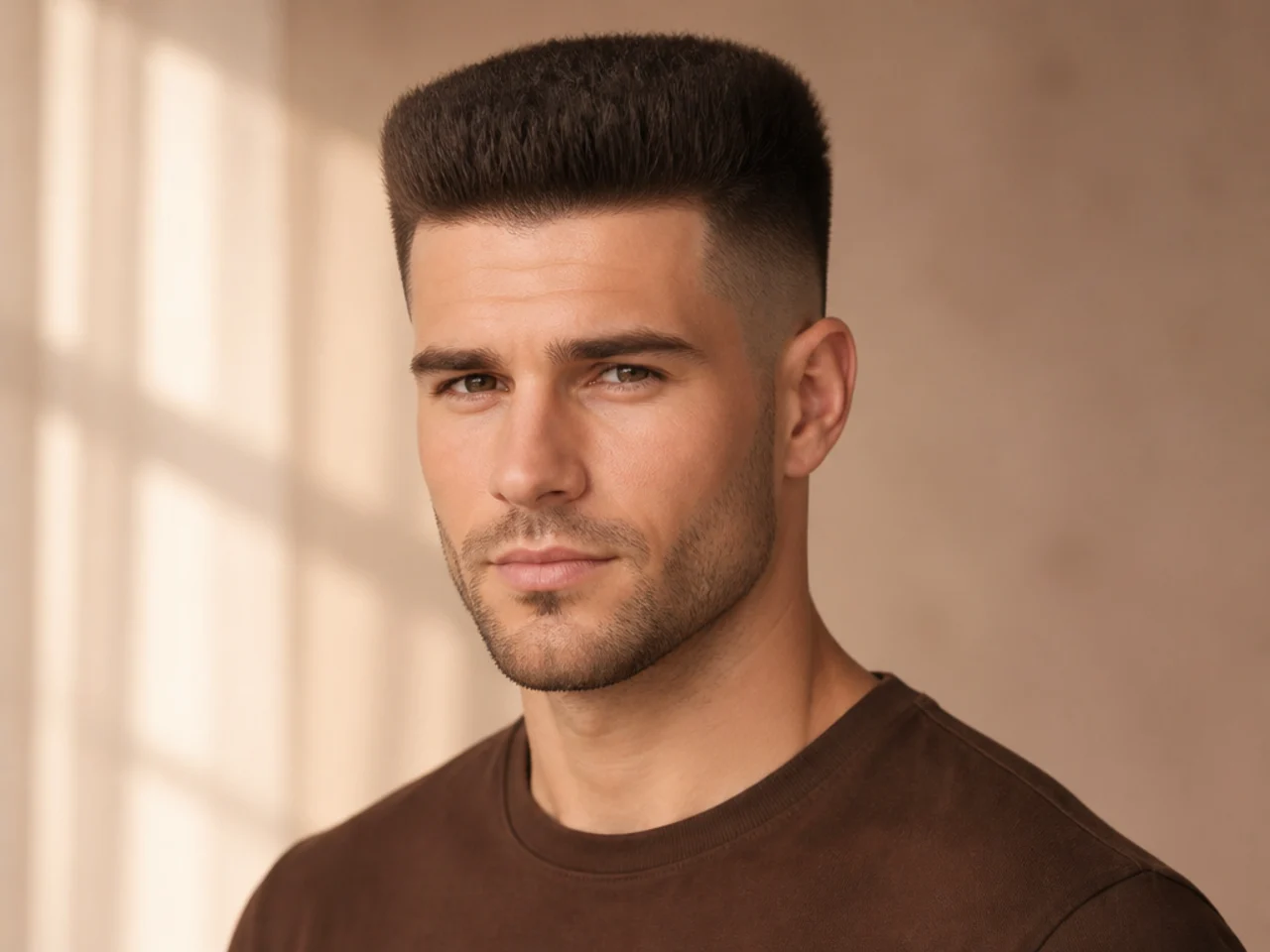
The modern flat top isn't the boxy 90s version. It rounds the corners just enough to keep the crown from reading square-on-square. Best on thick, dense, coily or coarse straight hair — you need the density to hold a flat plane without flopping. Ask for 3 to 4 inches on top cut level (via comb-over-scissor or a specialty flat-top comb), a fade from skin to short on the sides, and soft rounding at the front-side corners. That rounding is the whole game. Styling tip: use a strong-hold pomade, brush the top straight up with a boar-bristle brush, then dry with the head tilted forward so the top lifts and stays.
10. Brushed-Back Undercut
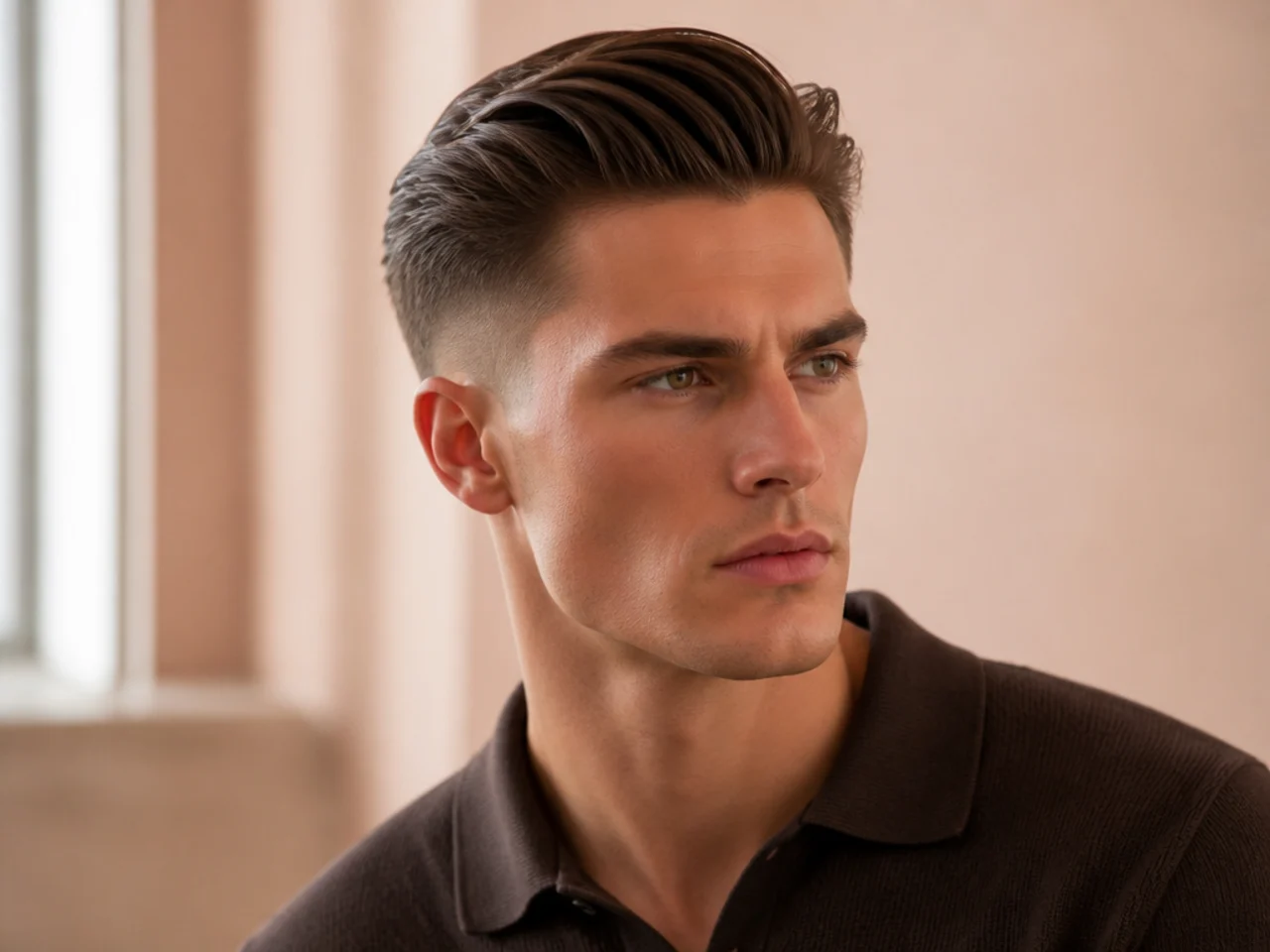
An undercut strips weight from the sides where a square face doesn't need any, then pushes all the volume north. Brushing back is the softest way to wear it — no hard part, no aggressive lift. Best on medium-density straight or wavy hair, 4 to 6 inches on top, undercut length 0 to 3 depending on how sharp you want the disconnect. Ask for a hidden shorter section at the parietal ridge for extra lift. Styling tip: mist sea-salt spray on damp roots, blow-dry up and back with your fingers, then finish with a nickel of matte paste through the mids and ends.
11. Classic Gentleman's Cut
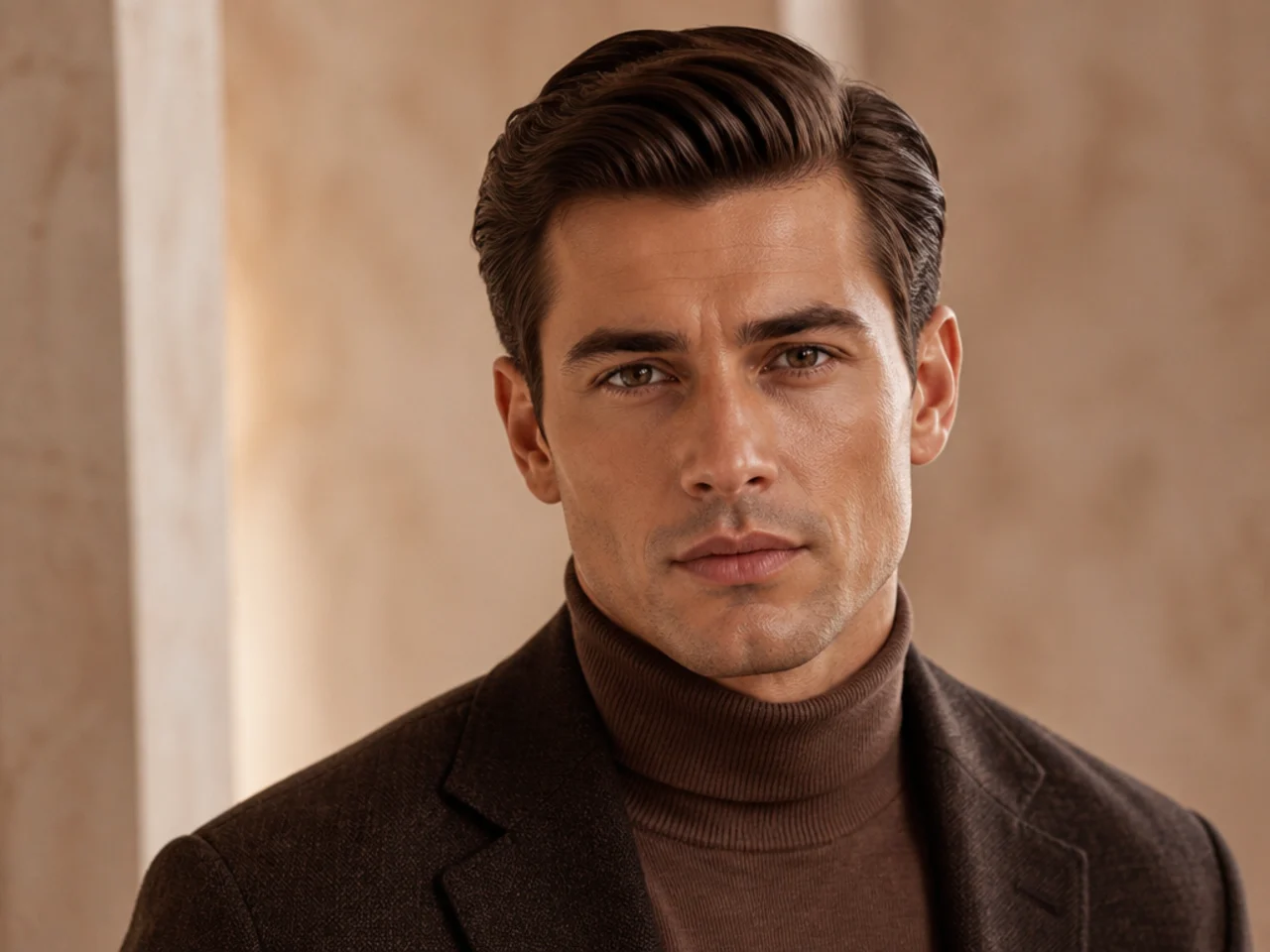
Think old-Hollywood. A soft side part with a gentle wave up front reads as controlled but never severe. That wave is the softness — you're building a curve where your jaw makes a corner. Best on fine to medium straight hair, though light wavy textures give the wave for free. Ask for 3 inches on top, 1 to 1.5 inches on the sides tapered (not faded) into a rounded nape, and a natural side part just off center. Styling tip: mist water through the hair, comb in a dime of cream pomade, then round-brush a soft C-shape into the fringe as you dry. That single curl does more work than any fade will.
12. Angular Quiff
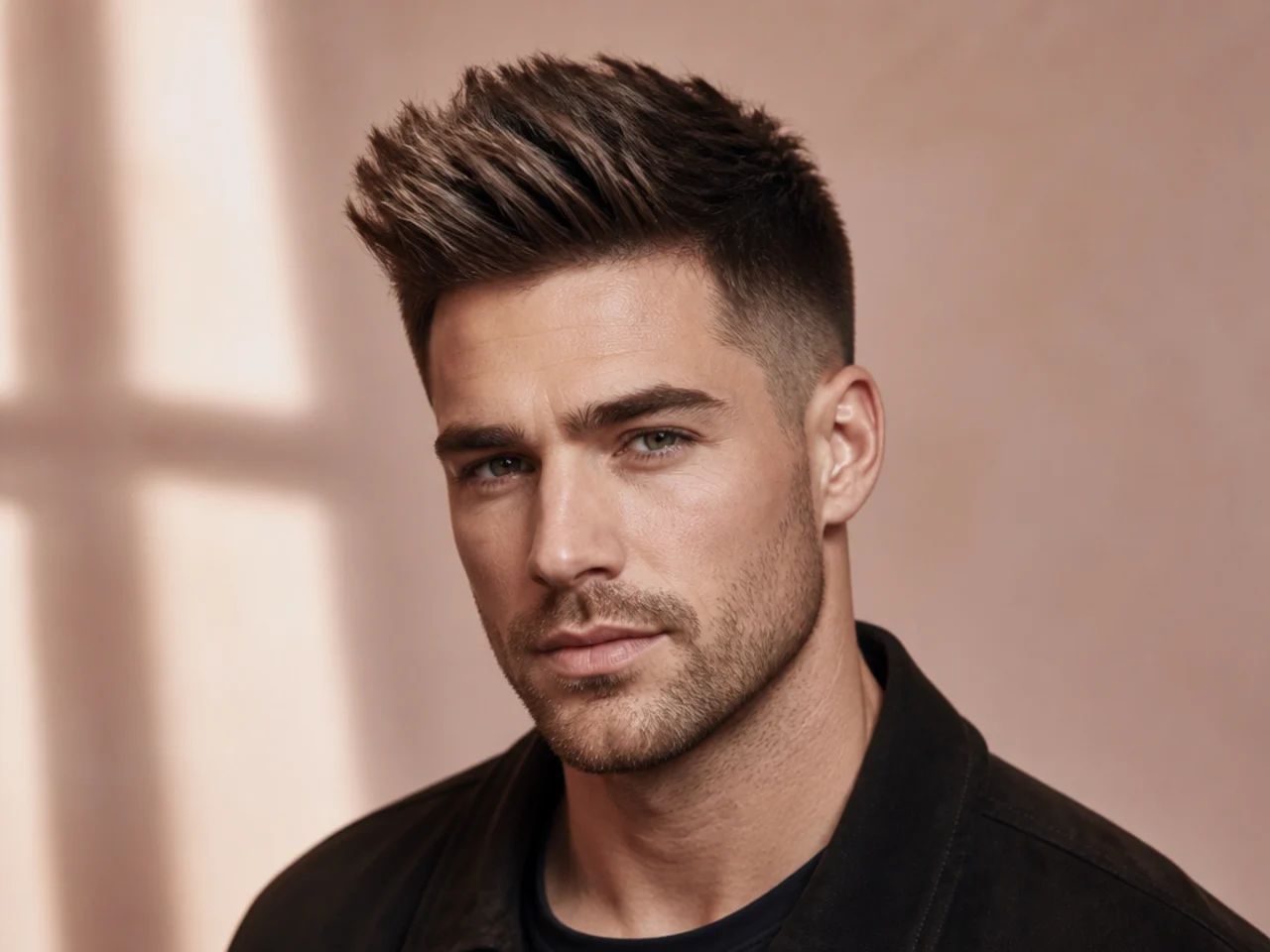
An asymmetrical quiff sends the top sweeping across the face rather than straight up, and the diagonal cuts against the vertical lines of a square jaw. Best on medium-thick straight or wavy hair with enough length to sweep — coily textures can adapt but the shape reads different. Ask for 3 to 4 inches on top with the longest length concentrated at the front, a low fade on the sides, and a hard part cut with a straight razor on your naturally weaker side. Styling tip: apply mousse to damp roots, blow-dry with a paddle brush pulling the top up and to the strong side, then break the finish with your fingers so it doesn't set too rigid.
13. Modern Caesar / Textured Crop
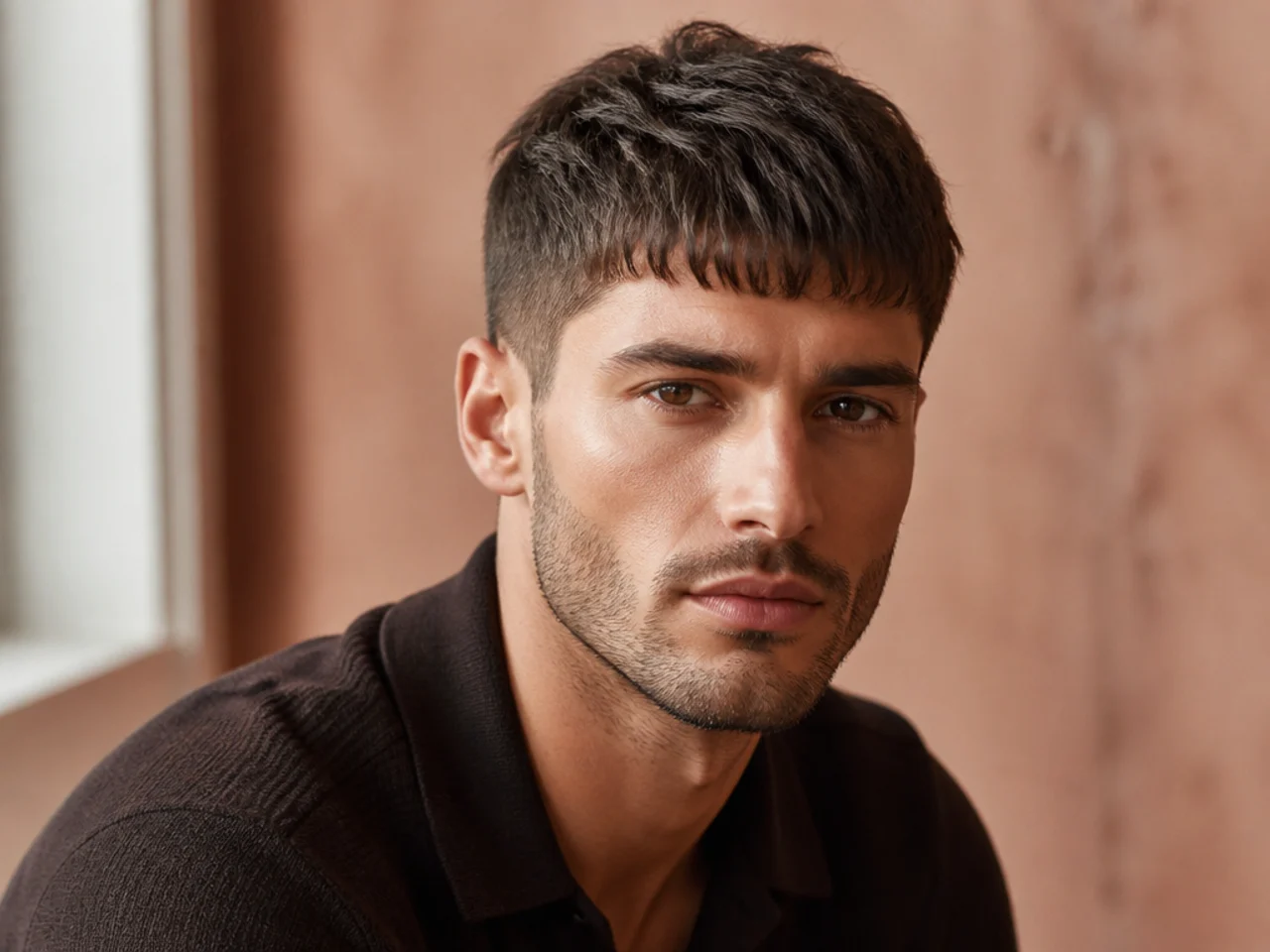
A short forward fringe covers a wide forehead — the number one square-face concern above the brow. The textured version keeps the fringe wispy and broken instead of blunt, which is critical: blunt fringes redraw the horizontal line you're trying to soften. Best on fine to medium hair with a straight-across natural hairline; cowlicks make the fringe fight you. Ask for 2 inches on top textured with a razor or point-cut scissors, 1-inch sides tapered soft, and a fringe that lands mid-forehead with irregular ends. Styling tip: dry the fringe forward with your fingers, then break the ends apart with a pea of clay. You can also try low updo hairstyle.
14. Rounded Curl Top
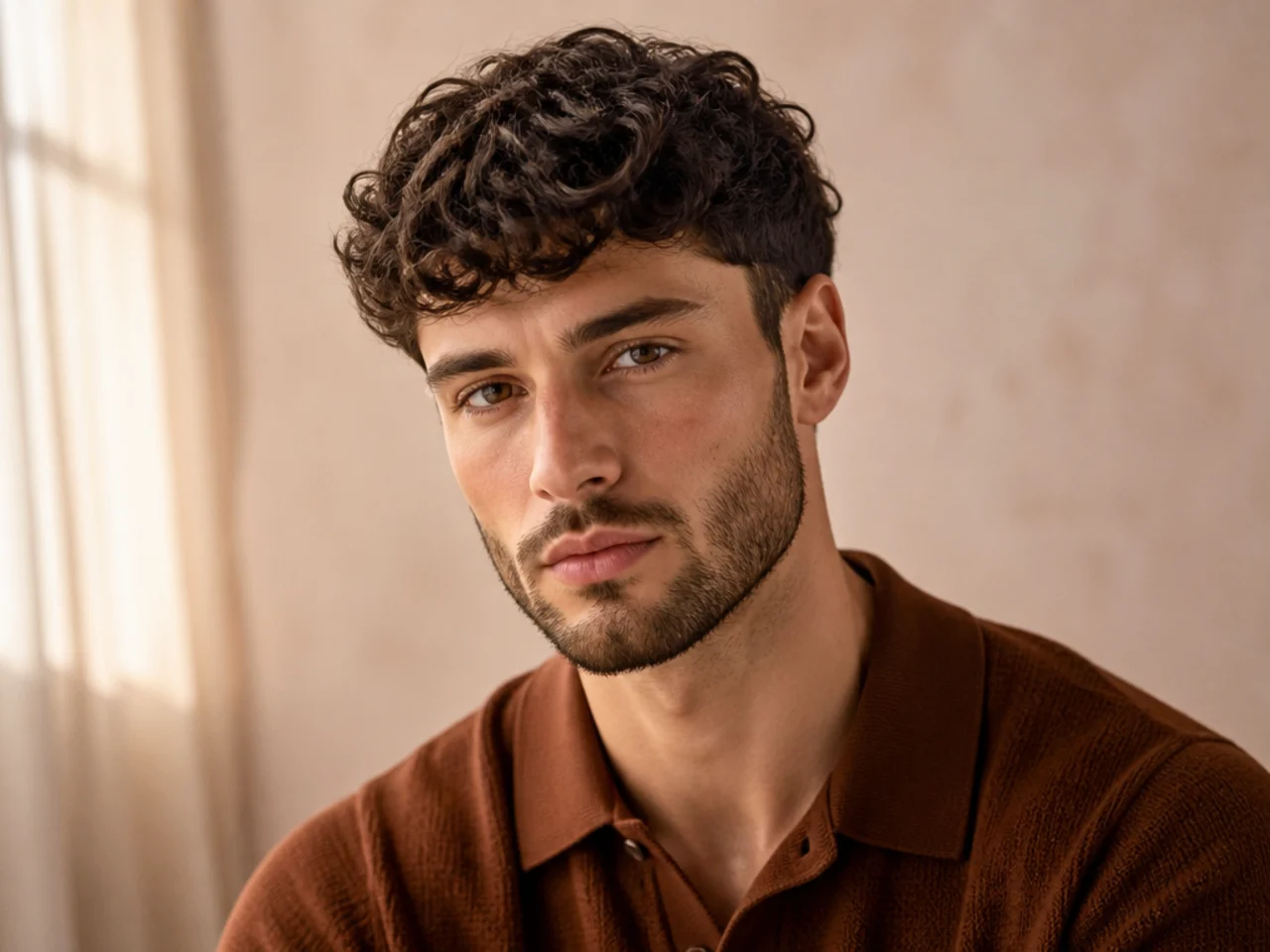
A rounded curl top puts a literal circle on top of a square — the geometry is direct, and it works. The curls handle the softening on their own; your barber's job is to shape the perimeter. Best on Type 3 to Type 4 curls with enough density to hold a defined dome. Ask for 3 to 4 inches on top cut with the curl pattern in mind (a curly-hair specialist cuts dry, curl by curl), a low fade on the sides, and a rounded silhouette rather than a squared-off top. Styling tip: after washing, apply a curl cream and a light gel to soaking-wet hair, then diffuse on low heat with the diffuser cupped upward to encourage volume at the root.
15. Curly Pompadour
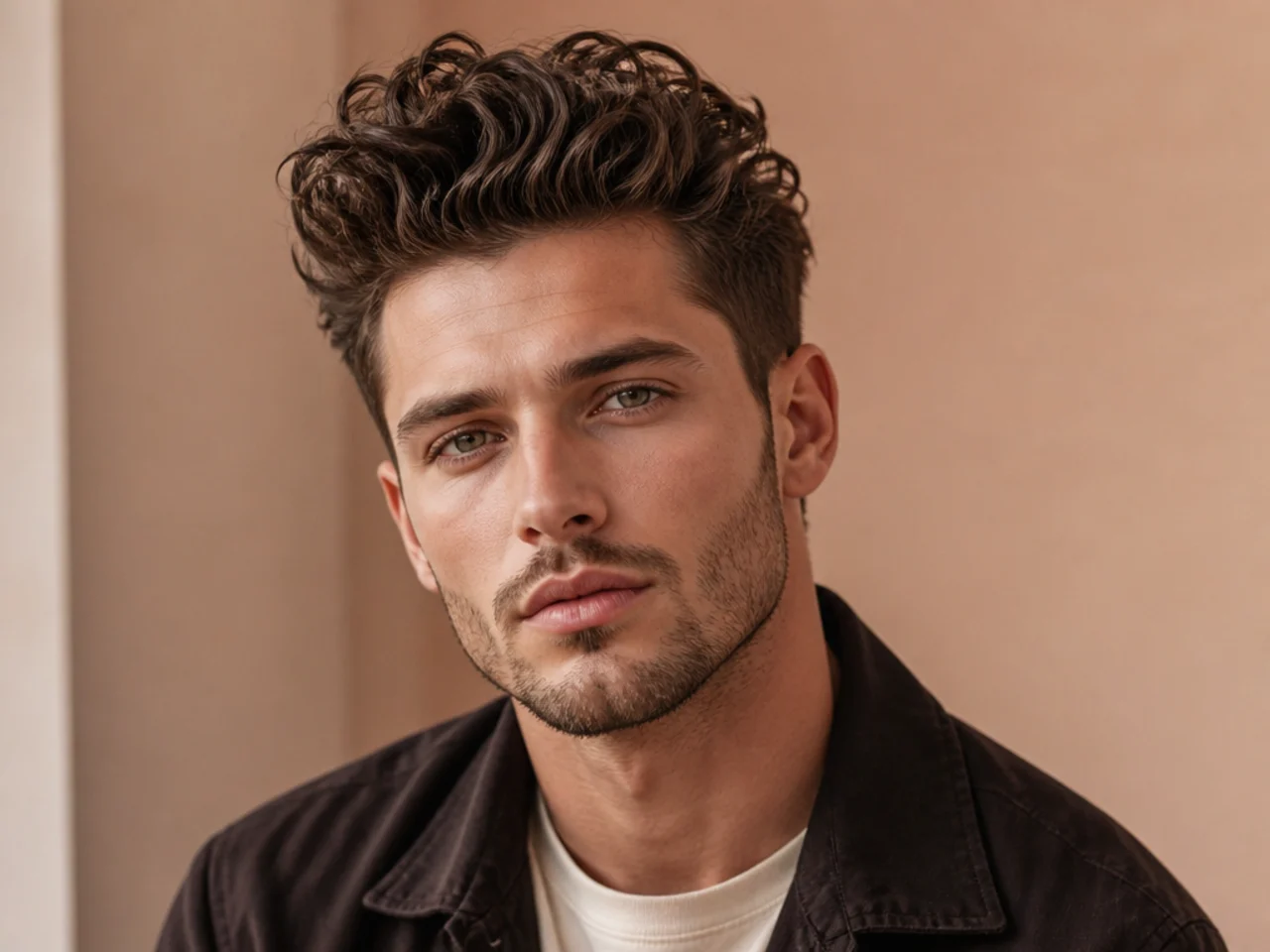
Curls do the softening; the pompadour does the lifting. Together, you get organic, imperfect volume that pulls the eye up without the rigid comb tracks of a wet slick-back. Best on Type 2C to Type 3B waves and curls with enough density to hold height on their own. Ask for 4 to 5 inches on top with internal layering to prevent a triangle shape, a low taper on the sides (not a skin fade, which reads too stark against the pomp), and a soft undercut hidden behind the parietal ridge for extra lift. Styling tip: apply curl mousse to damp hair, pin-curl the front section forward while the rest dries, then release and finger-style up and back for maximum height.
16. Modern Combover
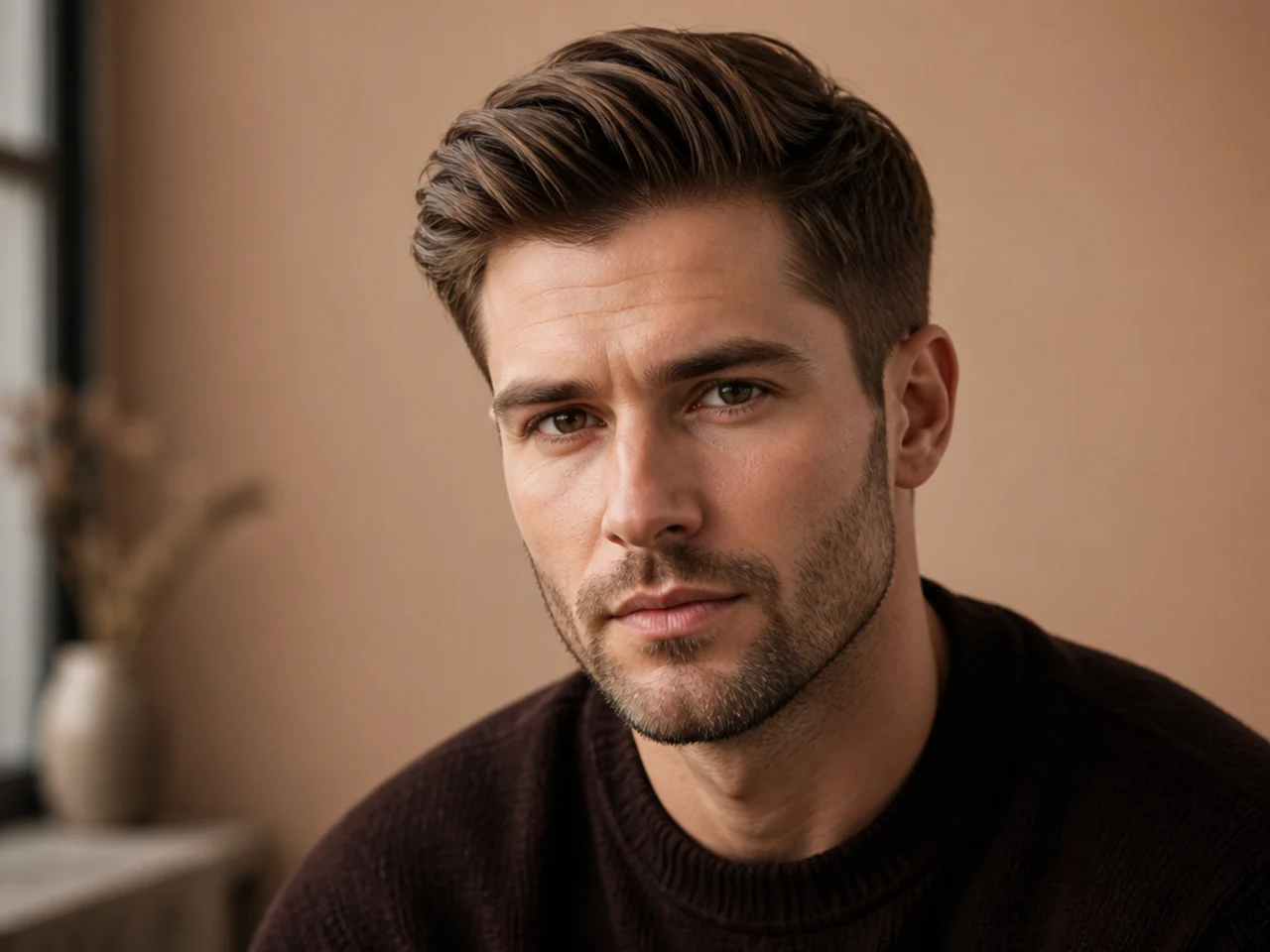
Not the "hide the bald spot" version — the modern combover uses a hard part and heavy volume to sweep a diagonal wave across the top. That diagonal is the whole reason it works on square faces. Best on medium-thick straight or wavy hair, minimum 3 inches on top. Ask for a hard part shaved on your weaker side, 3 to 5 inches on top graduated shorter at the back, and a mid-fade on the sides. Styling tip: blow-dry damp hair against the direction of the part first (this trains the root), then flip it back into place. Finish with a firm-hold pomade run through with a wide-tooth comb.
17. Curly Gentleman's Cut
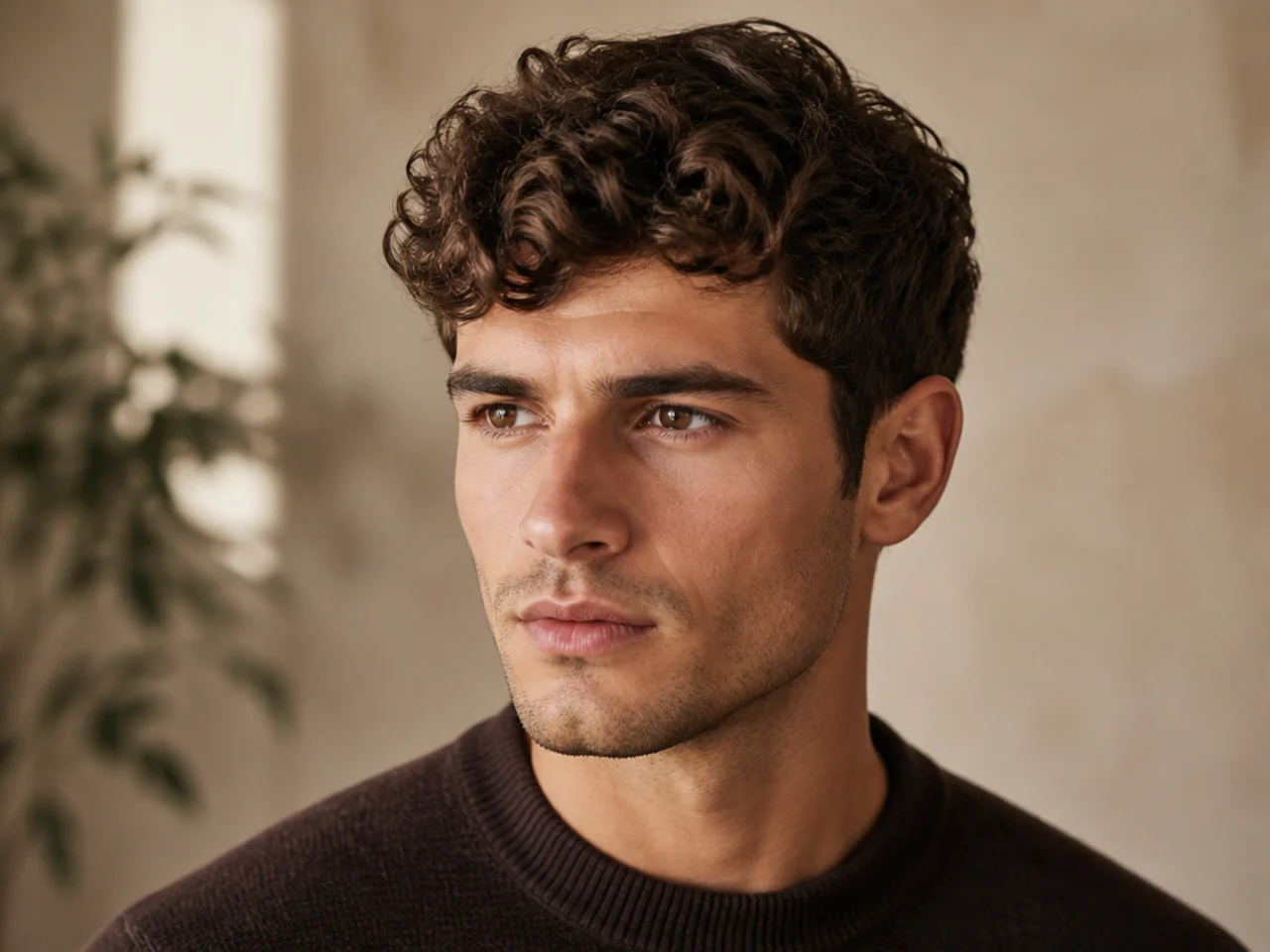
Waves and loose curls do the softening a straight gentleman's cut can only fake. The natural S-shape counters every horizontal line in your face. This borrows the styling logic of women's layered haircuts — internal layers give curls somewhere to spring. Best on Type 2B to Type 3A wavy and lightly curly hair. Ask for 2 to 3 inches on top with internal layers cut into the curl (dry cutting preferred), 1.5-inch sides tapered soft, and a natural side part that follows your growth pattern. Styling tip: rake a leave-in through damp hair with your fingers, scrunch upward from the ends, then let air-dry or diffuse on low. Skip the brush after the first shake-out.
18. Disconnected Height Cut
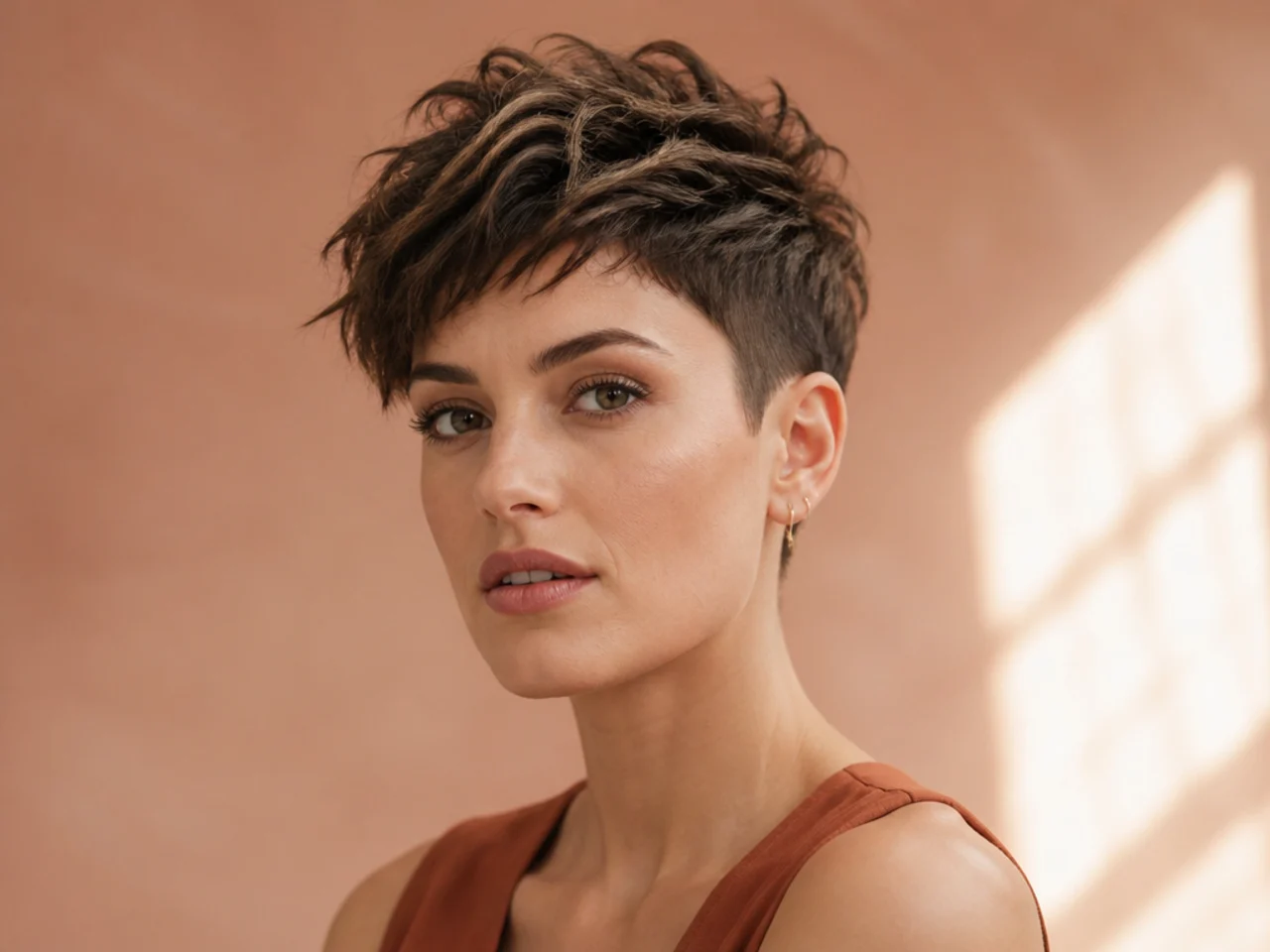
A hard disconnect between shaved sides and a long top narrows the visual width of the head. When the head reads narrower, the jaw reads less wide by comparison. Best on medium-density straight or wavy hair with a strong crown; fine hair can flop and lose the effect. Ask for a skin fade or #0 guard on the sides that runs straight up to the parietal ridge — no gradient — then 5 to 6 inches on top with layers cut into the length to prevent block-shape. Styling tip: blow-dry the top up and back with a round brush, then finish with a matte fiber worked from mid-length to root. Avoid shine products; the finish should look worked-in, not glassy.
19. Braided Style with Rounded Edges
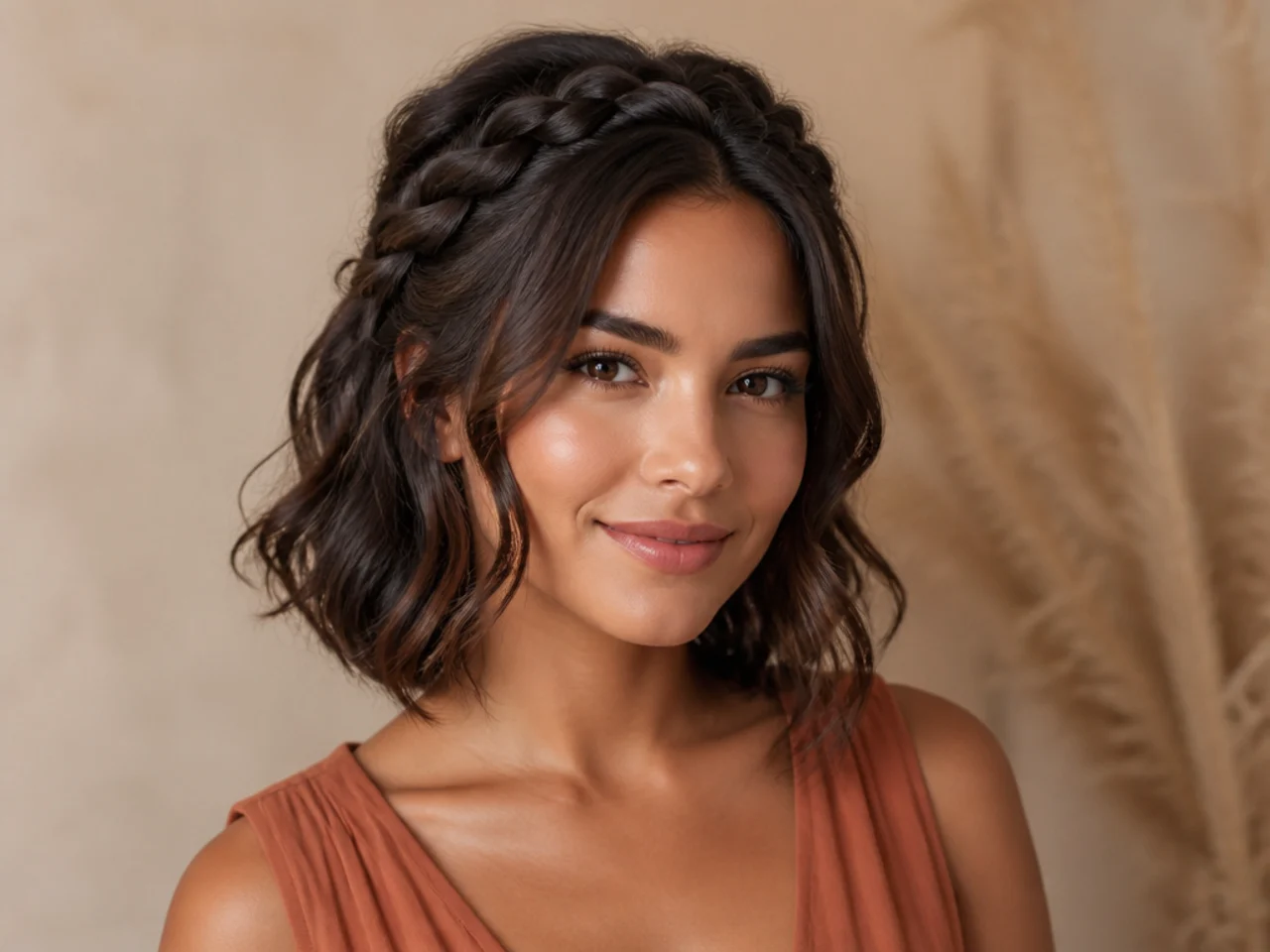
Braids give you geometry you can plot on purpose. Cornrows or box braids curve toward the back of the head, which visually rounds the flat sides and back planes that a strong jaw sits on. Best on Type 4 hair with enough length for the braider to work with — usually 3 inches or more. Ask for a pattern that starts wide at the front and narrows toward the crown, or curved diagonal rows that meet at the nape, rather than parallel straight-back rows that emphasize the flat plane. Styling tip: refresh the front hairline with edge control after two weeks and mist the scalp with a diluted rosewater spray daily to keep tension from drying it out.
20. Grown-Out Combover
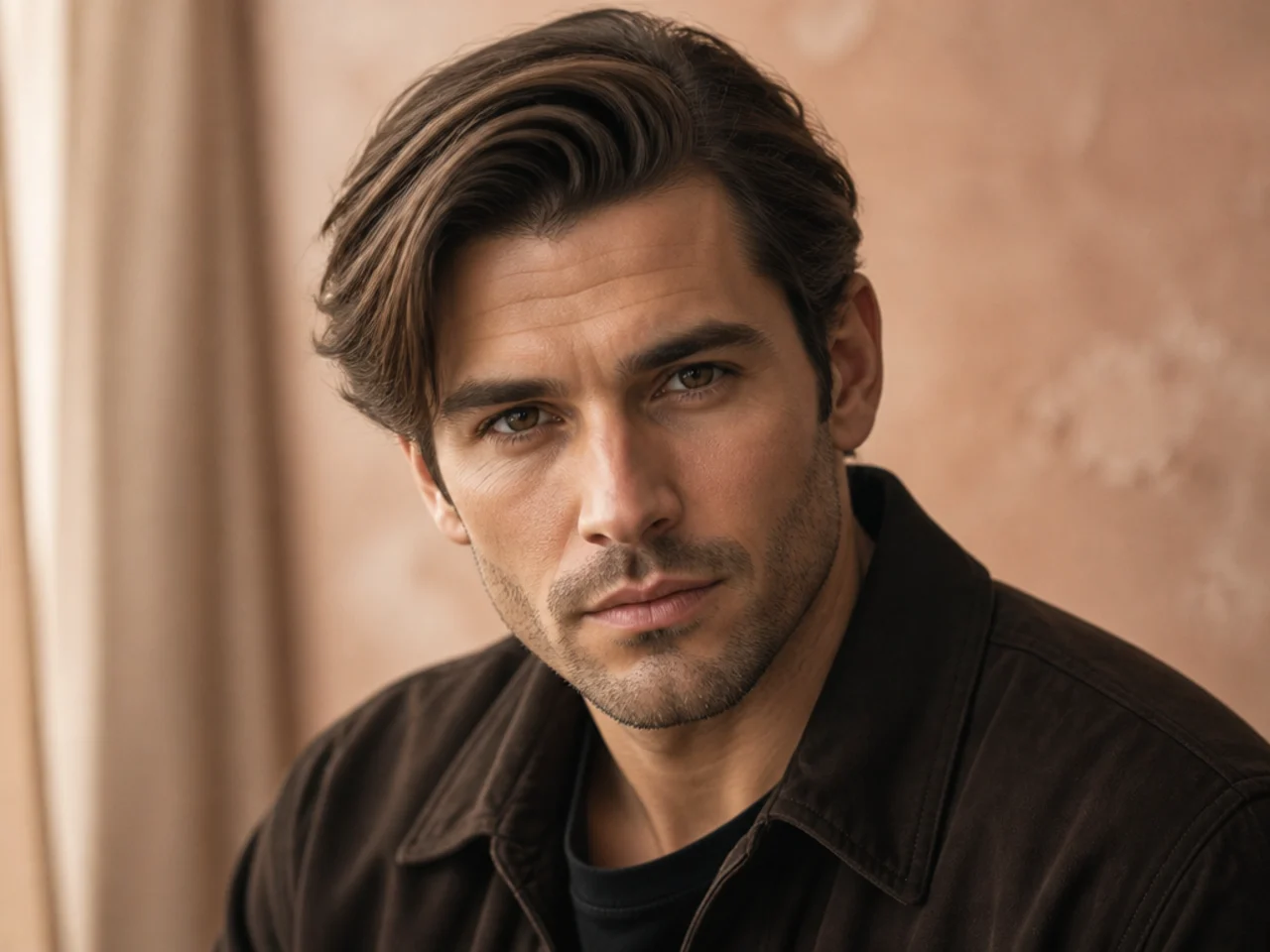
A grown-out combover trades the crispness of the modern version for shag-style softness. The extra length breaks over the corners of your forehead and drapes past your temples, which rounds the top half of the face. If you like this loose, layered energy, look at how shag haircuts build texture across the ears and nape — same principle, longer version. Best on medium to thick straight or wavy hair with 4 to 6 inches on top. Ask for a soft side part, choppy layers cut into the fringe, and sides long enough to tuck behind the ear. Styling tip: apply sea-salt spray plus a lightweight cream on damp hair, air-dry, then pull the fringe across the forehead with your fingers.
21. Long Wavy Blowout
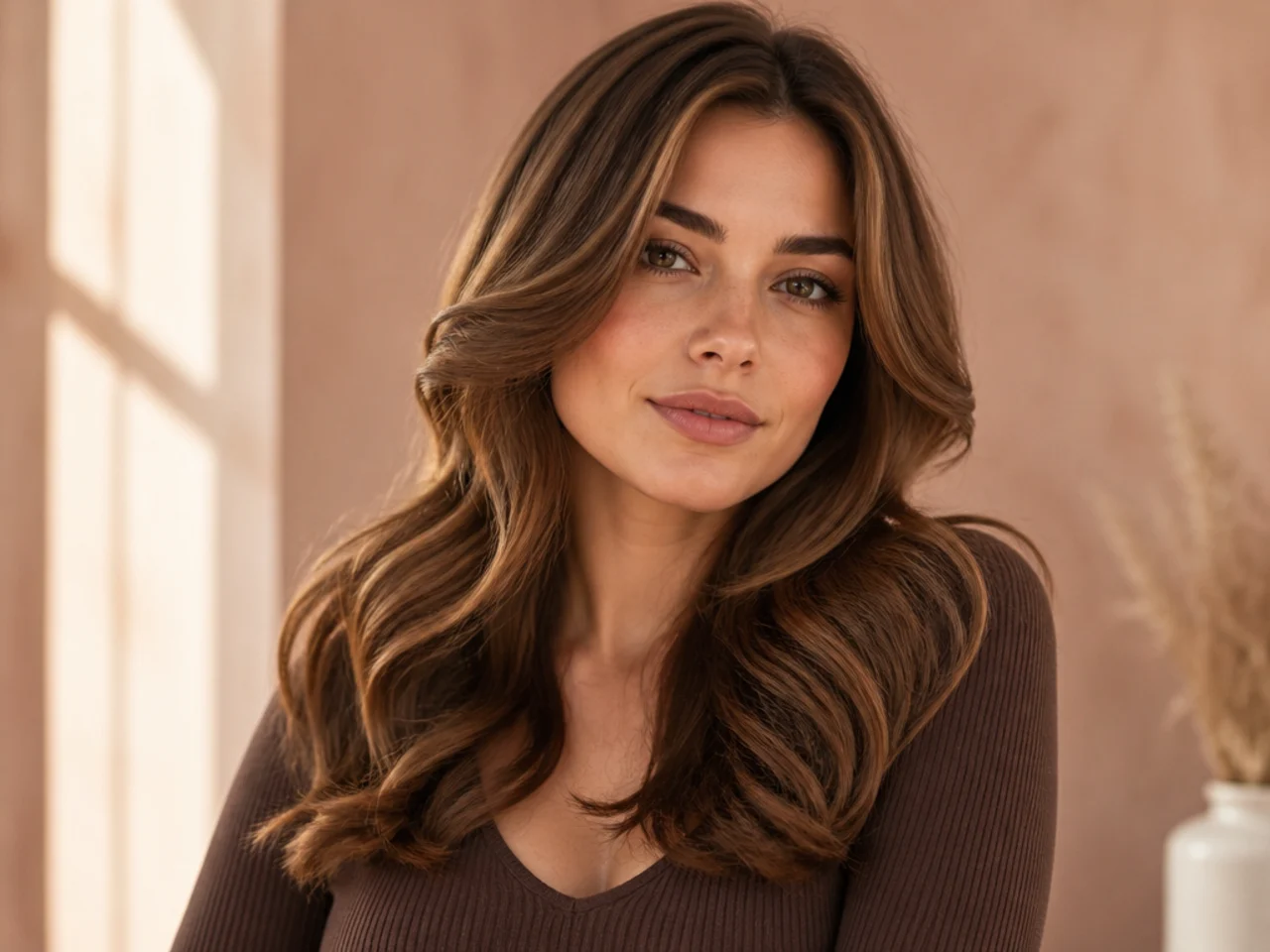
A wavy blowout builds volume on the top and back of the head, so the face reads centered instead of jaw-heavy. Length off the face is critical — anything at cheek or jaw level draws a horizontal line right through your widest point. This is the men's cousin of the butterfly haircut, where lift at the top does the shape-softening work. Best on medium to thick wavy hair, 5 to 7 inches on top and back. Ask for long layers throughout to prevent a triangle shape and a soft face-frame that sweeps away from the jaw. Styling tip: apply a volumizing mousse at the roots, flip your head upside down to blow-dry with a round brush, then set with a light hairspray.
22. High Curly Quiff
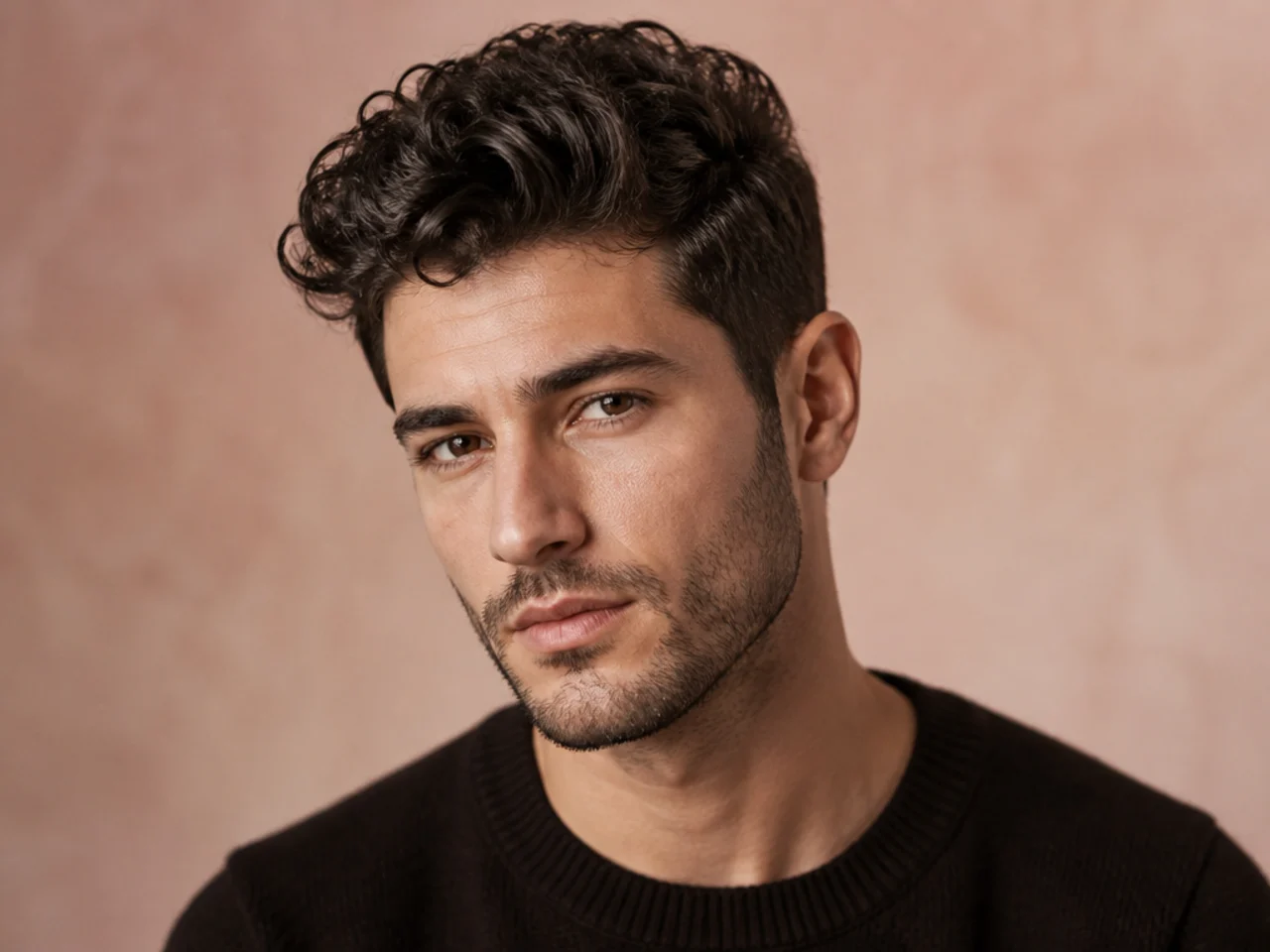
A high quiff made of curls delivers both height and softness in one shape, which is exactly what a heavy jaw needs balancing it. The curls prevent the harsh perimeter you'd get with a straight-hair quiff of the same size. Best on Type 3A to Type 3C curls with dense root support. Ask for 5 to 6 inches on top with internal layers to shape the dome, a mid to high fade on the sides (a low fade reads too soft under this much height), and a soft transition zone above the ear. Styling tip: apply curl cream to damp hair, pin the front section up and back with clips while the rest dries, then release and shape with your fingers for maximum lift.
23. Grown-Out Gentleman's Cut
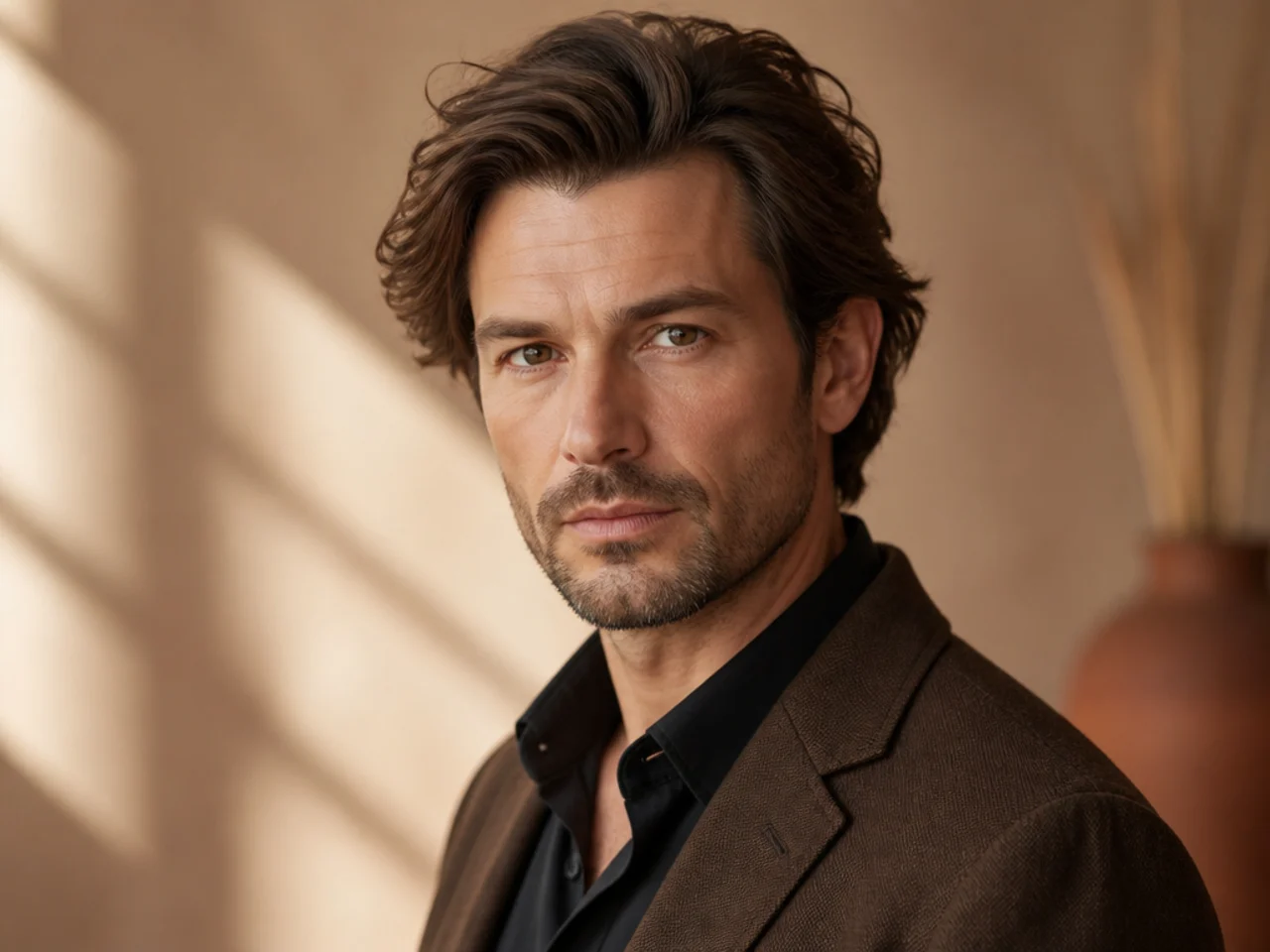
Medium-length hair tucked behind the ears or falling in soft waves is the direct opposite of a hard jaw. Softness at length always wins over stiff shortness. If you want the same balance in a shorter shape, our take on the bob haircut explains why length and layering matter for angular jaws regardless of gender. Best on medium-thick straight or wavy hair, 4 to 6 inches all around. Ask for long layers through the sides and back, a soft side part, and a fringe that grazes the eyebrow. Styling tip: mist the hair with water and a leave-in each morning, then rough-dry with your fingers to keep the finish loose. Skip the pomade — you want movement, not hold.
24. Short Quiff With Full Beard
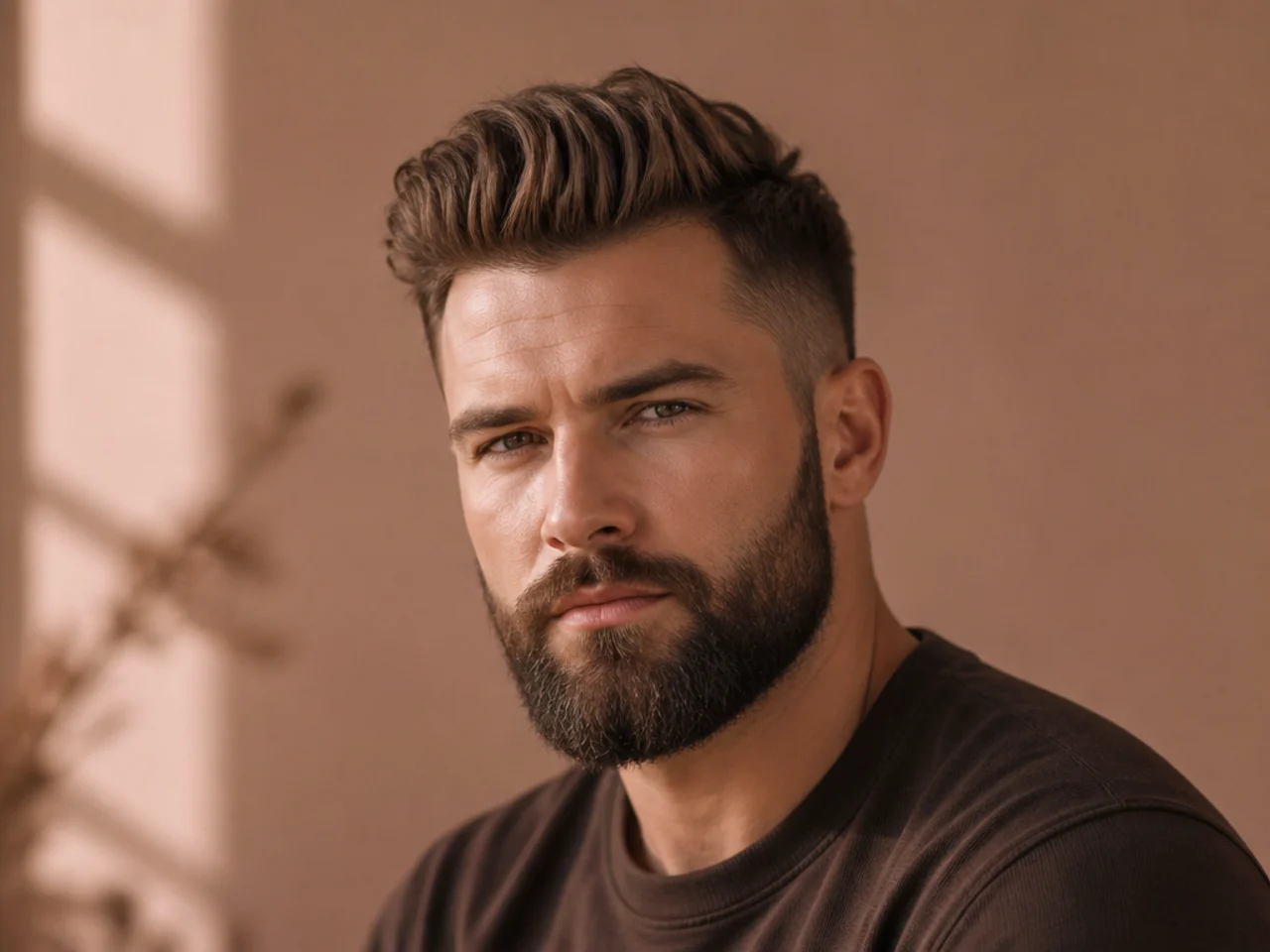
A short quiff lifts the forehead and a full beard lengthens the chin. The pair converts a square silhouette into a vertical oval — the shape most cuts are actually trying to fake. Best on medium-density straight or wavy hair with a beard that grows in full below the cheekbone. Ask for 3 to 4 inches on top with the length loaded at the front, a low taper on the sides, and a beard trimmed longer at the chin than the cheeks. Round the beard's corner where it meets the sideburn. Styling tip: work a small amount of medium-hold clay through the top for the quiff, then run beard oil through the chin section to keep the perimeter soft rather than blocky.
25. Soft Swept-Up Style
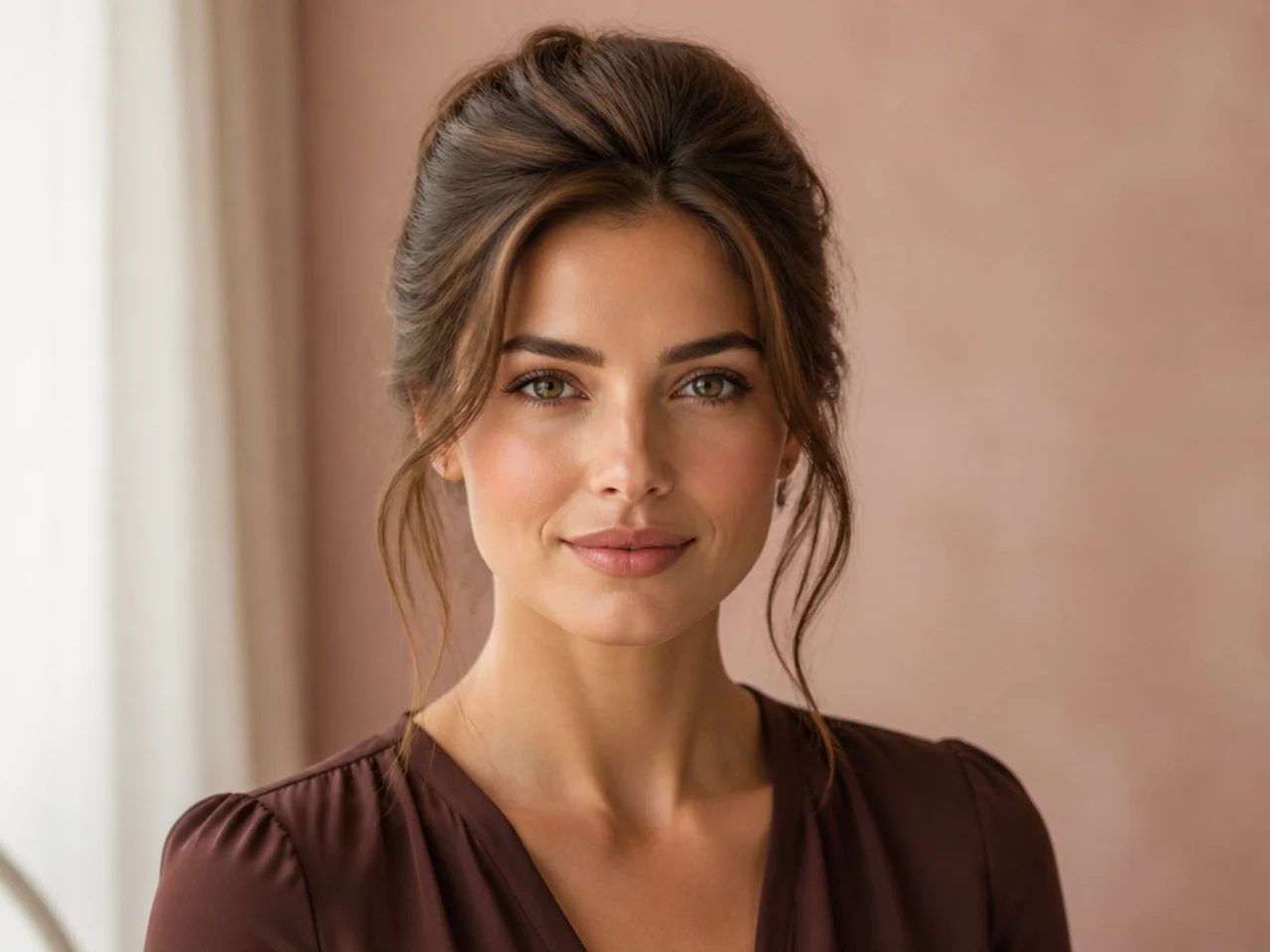
Product choice is doing the work here. Matte clay reads as touchable and lived-in; shiny gel reads as engineered and stiff. On a square face, that's the difference between softness and severity. Best on any length from 2 inches up on straight or wavy hair. Ask for 2 to 4 inches on top with soft point-cut ends, sides tapered rather than faded, and a natural side or forward direction (no hard part). Styling tip: emulsify a nickel of matte clay in your palms until it disappears, work through damp-but-not-wet hair root to end, then finger-style up and slightly to the side.
Picking Right Cut for Your Hair Type
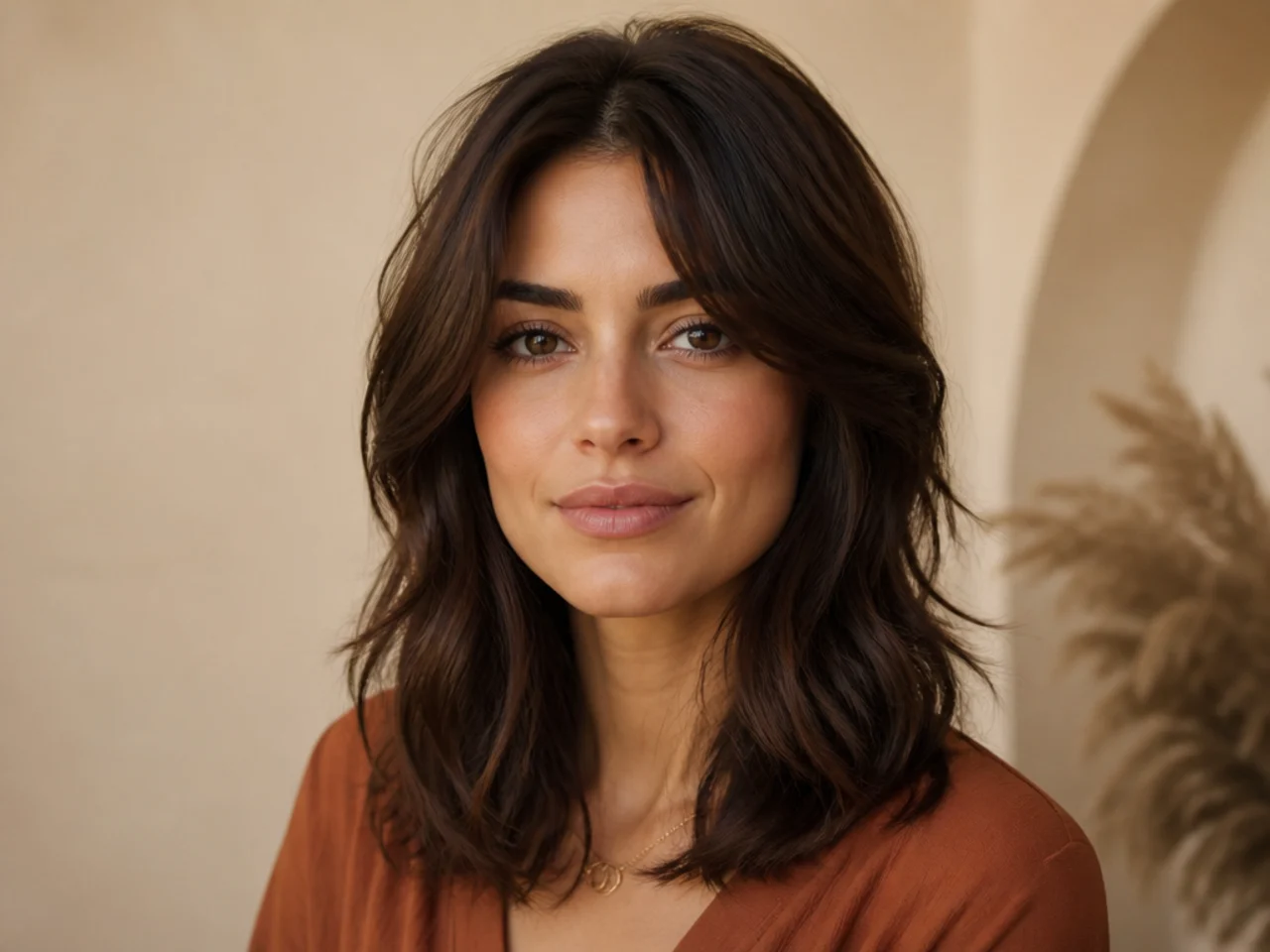
Not every square-faced man can pull off every cut. Match the shape to your texture and you'll get twice the mileage between visits.
- Fine Hair: stick to shorter, textured looks like the Textured Crop or Side-Slicked Short Style. Use a volume-boosting powder at the roots to prevent your hair from lying flat, and skip heavy pomades — they weigh fine strands down within an hour.
- Thick or Coarse Hair: the Pompadour, Modern Combover, or Brushed-Back Undercut is your lane. You have the natural density to hold high styles upright all day. Ask your barber for internal thinning at the crown so the top doesn't read too dense against your jaw.
- Curly or Wavy Hair: you have a natural advantage. Any style that lets the pattern show — Rounded Curl Top, Curly Pompadour, Curly Gentleman's Cut — softens your angles for free. See our full breakdown of layered haircuts for how internal layering keeps curls springing instead of stacking.
Celebrity-Inspired Haircuts for Square Faces
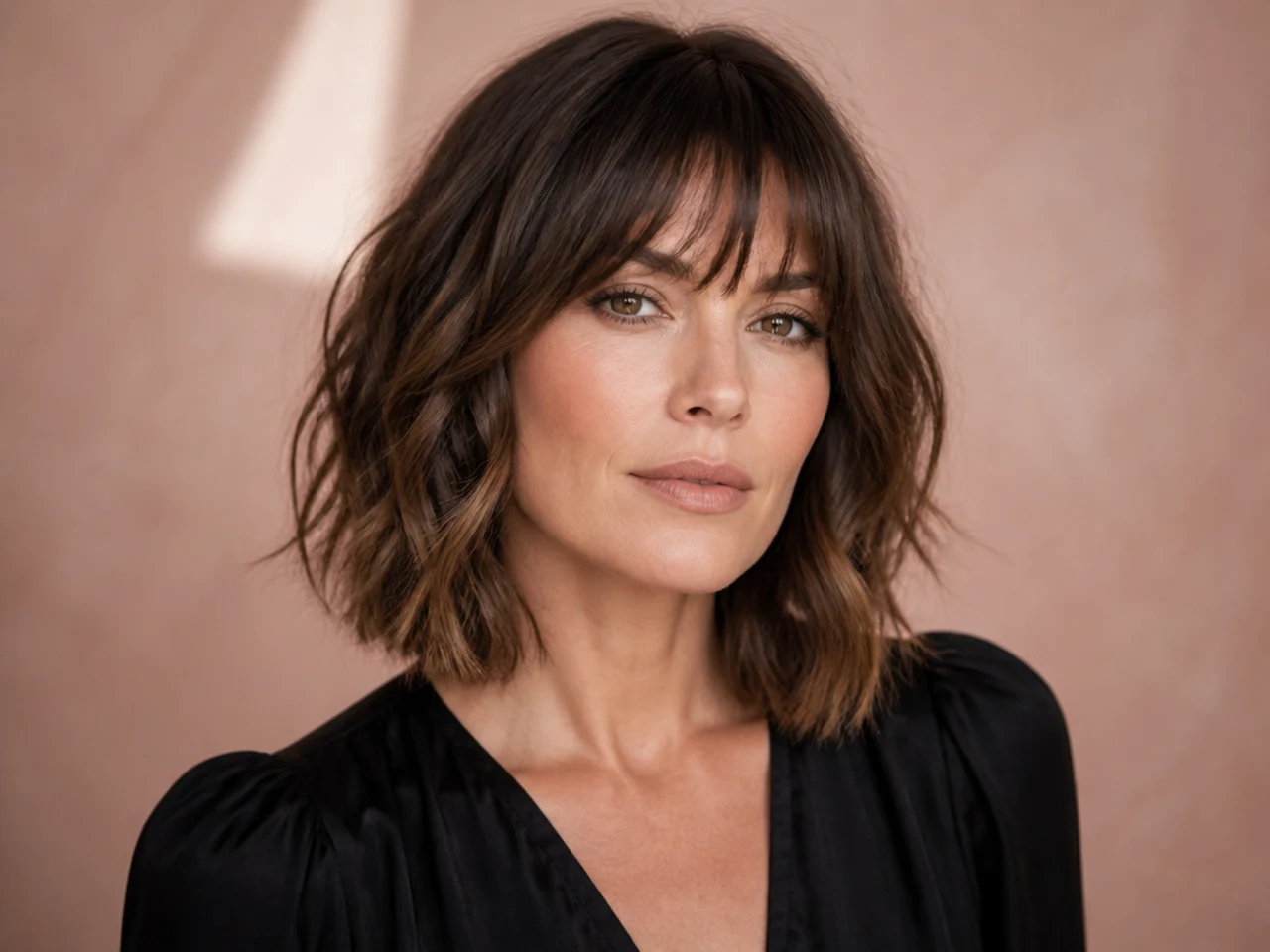
If you want a reference photo for your barber, these three men do the assignment on repeat.
- Henry Cavill: almost always wearing a Classic Gentleman's Cut or a slightly messy quiff. He uses that front wave to soften his Superman jaw — the softness is the whole trick.
- Brad Pitt: has cycled through everything from a bare buzz cut to grown-out wavy styles, which proves square faces are more versatile than most guides pretend. Study his longer eras for how a face-framing length reads on a wide jaw.
- David Beckham: the king of the Quiff and Pompadour, and a case study in how much height changes a face shape. Even his shorter cuts keep some lift at the front.
For readers with jaw-length or longer hair, the same principles show up across women's cuts too — our roundup of chic bob haircuts for round face shapes and the wider survey of trendy bobs for every face shape walk through the same length-and-layer logic on the other side.
How to Talk to Your Barber for the Best Results
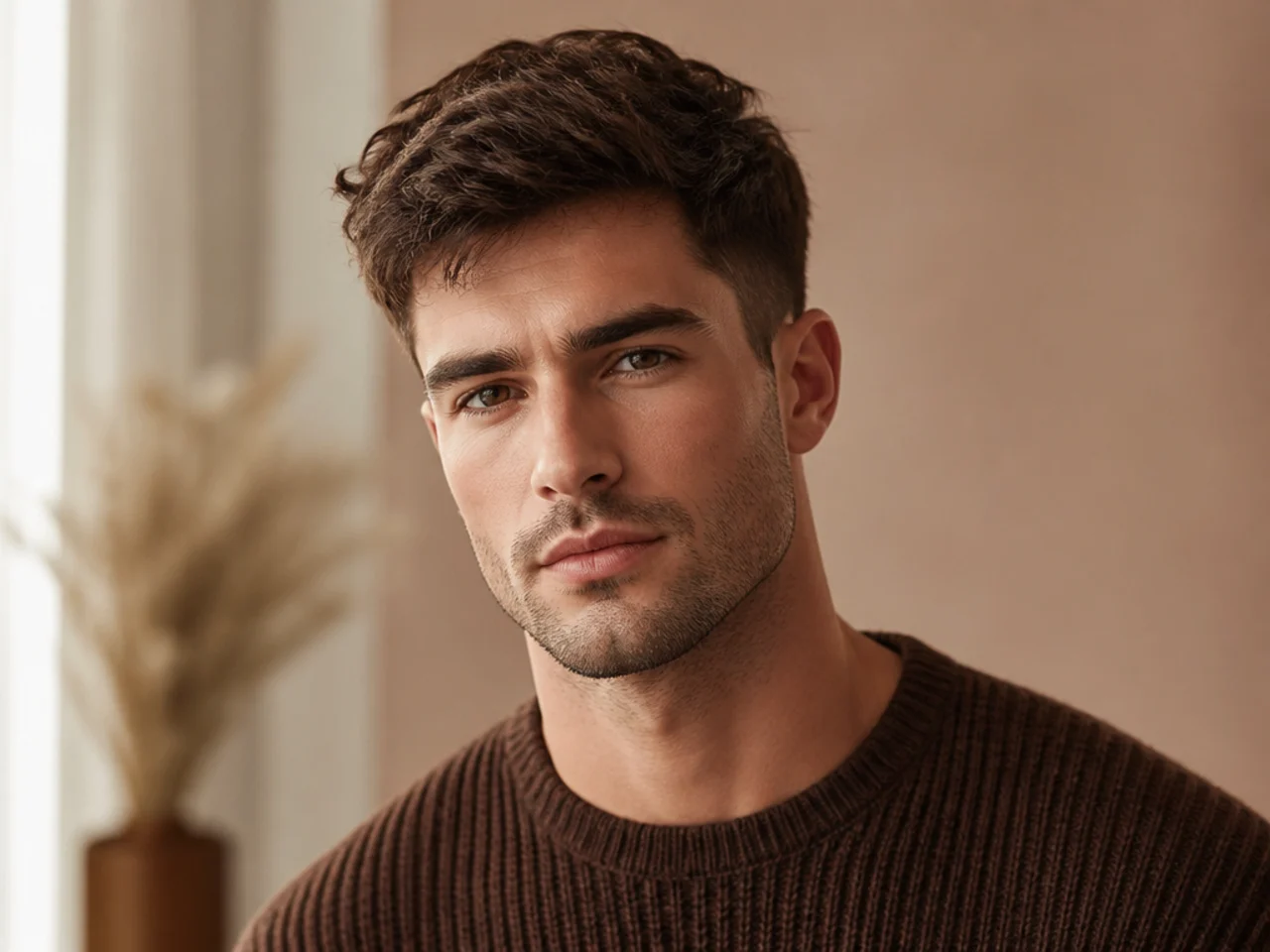
To get the perfect cut, you need to use the right language. Don't just say "short on the sides."
- Name the softness: tell your barber, "I have a square jaw, so I want texture or height to soften the look, not a cut that squares off my head." That single sentence gets the shape decisions right before the clippers turn on.
- Ask for a taper: instead of a "block" nape (the hair at the back of your neck squared off), ask for a tapered nape. A square block at the back only emphasizes the squareness of your head. This is the single most-skipped detail on square faces.
- Point out the forehead: if you feel your forehead is too wide, ask for a "textured fringe" or "side-swept" styling — never a blunt one.
- Bring 2 to 3 photos: one from the front, one three-quarter angle, one from the back. Photos beat words every time. If you're not sure where to start, browse our layered bob haircuts guide for reference on how internal layering translates across cuts.
- Rebook the interval: short cuts want a re-shape every 4 to 6 weeks. Anything with a fade or line-up loses its effect within 10 to 14 days.
Closing Note
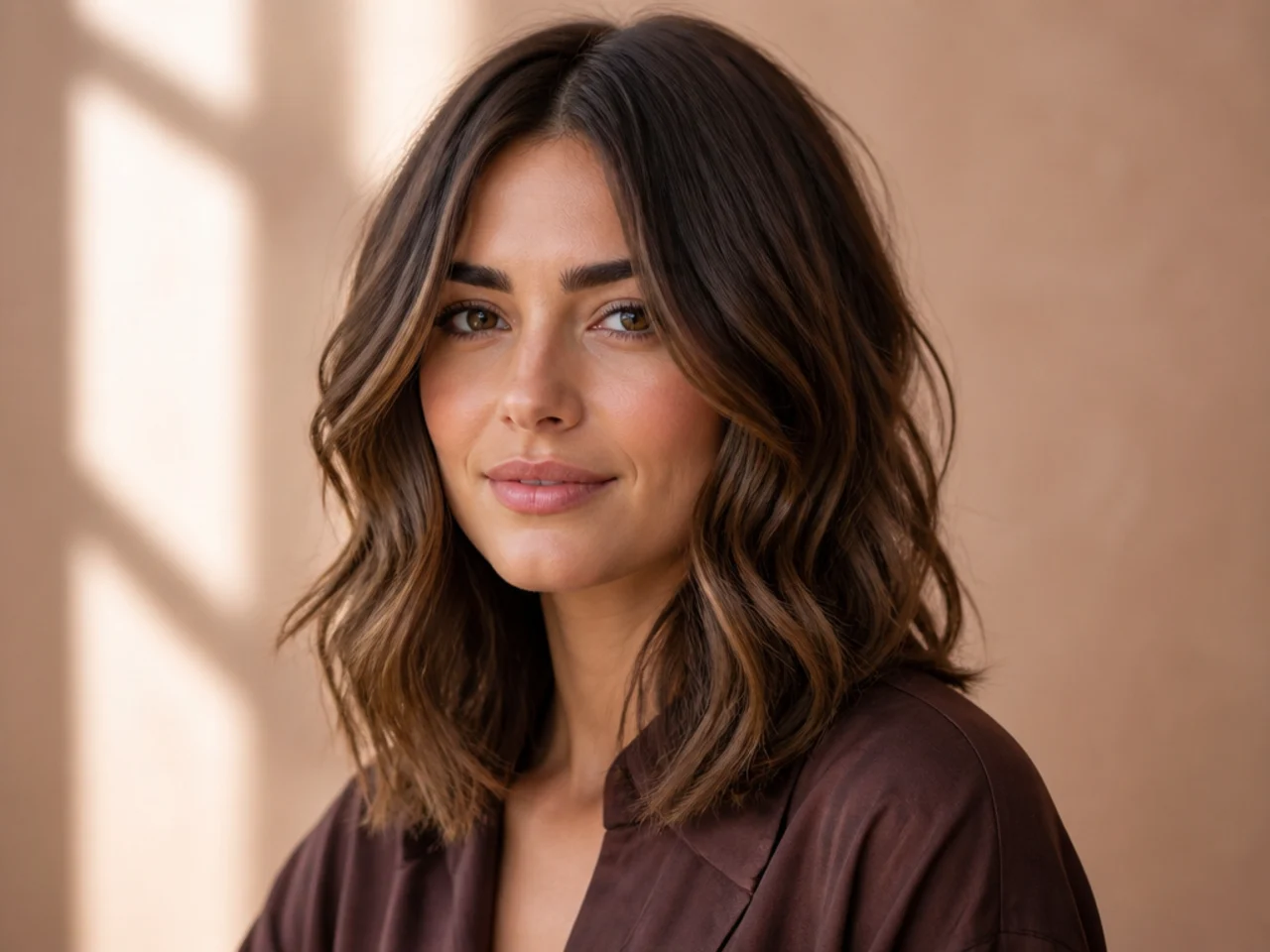
A square face is a gift of genetics — a masculine, timeless look. The key to the best haircut isn't hiding your face; it's framing it. Whether you go for an aggressive Buzz Cut or a voluminous Pompadour, remember that balance is everything. Use your hair to add the curves your bone structure lacks, and you'll land on a look that reads both rugged and refined. For more haircut ideas visit our Pinterest @haircutvibe.
Frequently asked questions
Related posts
See all posts
20 Layered Haircuts That Add Volume to Thin Hair
Read more
17 Best Curly Hair Haircuts for Ultimate Style in 2026
Read more
15 Stunning Layered Haircuts for Every Face Shape
Read more