15 Trendy Skin Fade Haircuts for a Fresh Look
This classic skin fade creates a sharp contrast between the short sides and the longer top. The hair is faded down to the skin, gradually blending for a clean look. This style
In this article · 16
- 1\. Classic Skin Fade with Comb-Over for a Sharp Look
- 2\. Low Skin Fade with Textured Crop for Effortless Style
- 3\. High Skin Fade with Pompadour for a Bold Statement
- 4\. Taper Fade with Side Part for a Professional Appearance
- 5\. Fade with Fringe for a Trendy Touch
- 6\. Skin Fade with Quiff for a Retro Vibe
- 7\. Undercut Fade with Long Top for a Distinctive Edge
- 8\. Skin Fade with Crew Cut for Maintenance-Free Style
- 9\. High Bald Fade with Short Curls for a Unique Twist
- 10\. Skin Fade with Ivy League Cut for a Sharp and Chic Look
- 11\. Skin Fade with Upward Highlights for a Fun Edge
- 12\. Skin Fade with Side-Swept Bangs for a Youthful Look
- 13\. Skin Fade with Caesar Cut for Simplicity and Style
- 14\. Skin Fade with Long, Flowing Hair for a Striking Contrast
- 15\. Skin Fade with Man Bun for a Cool Contrast
- Choosing Your Next Skin Fade Haircut
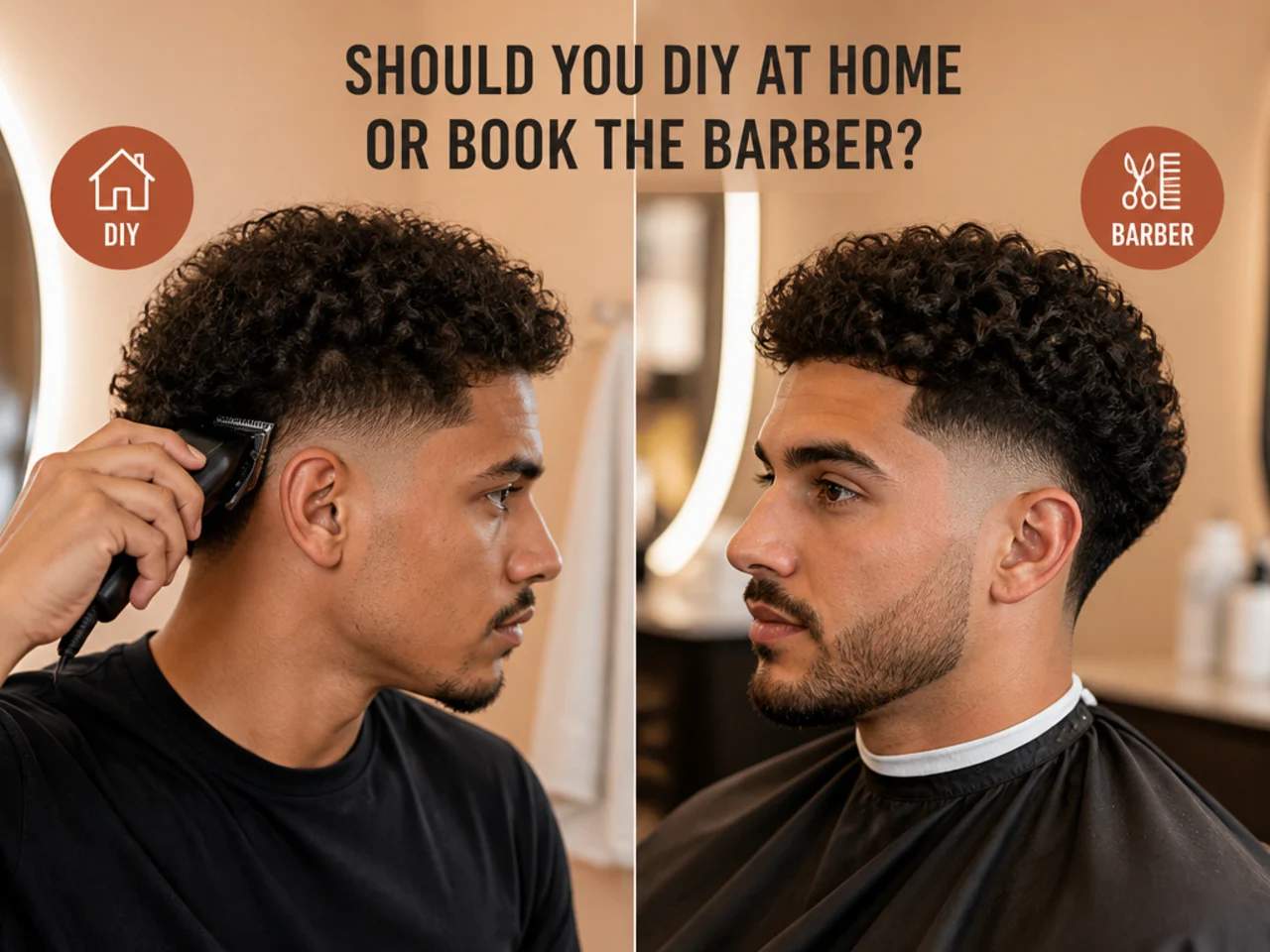
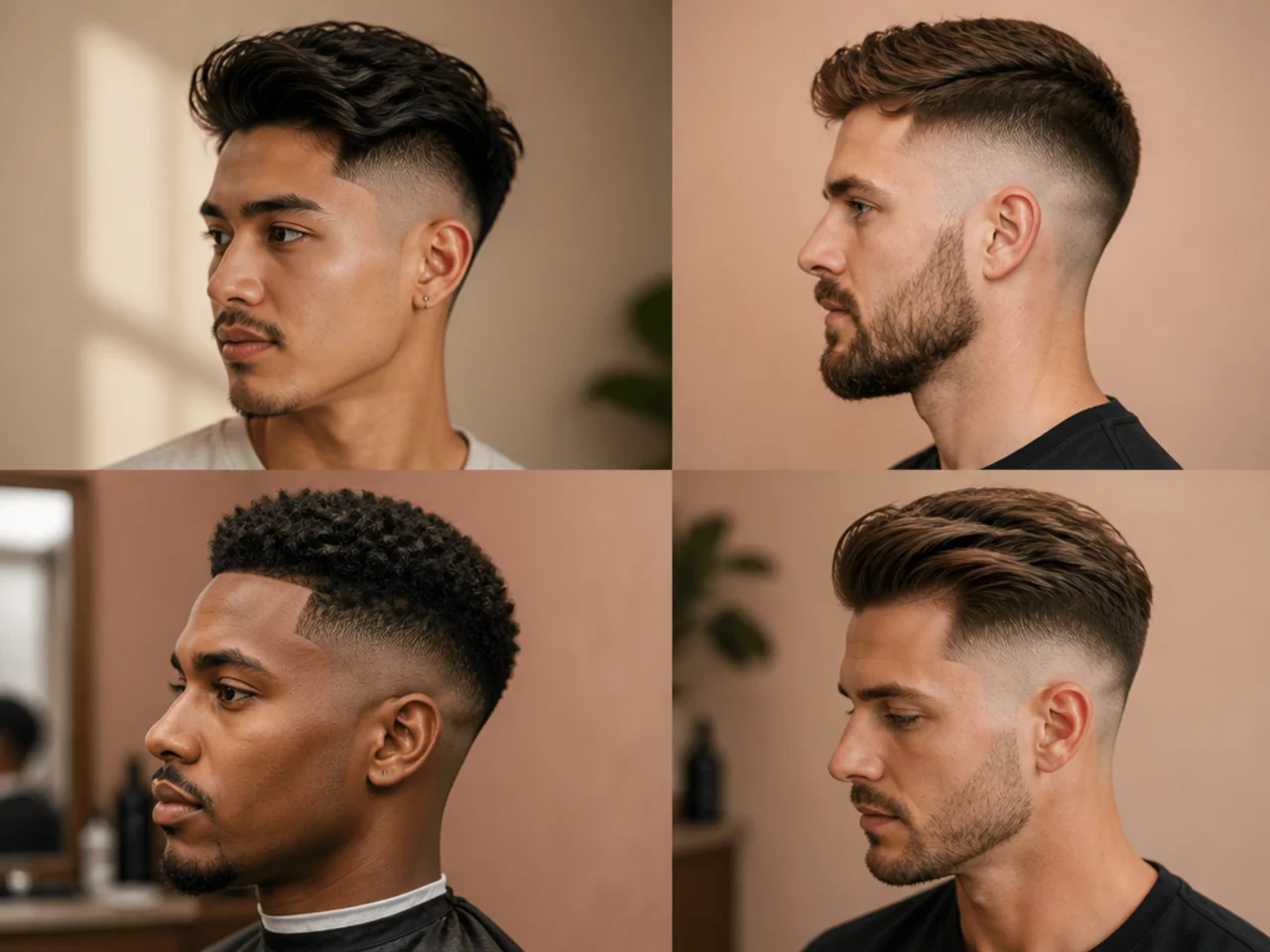
The skin fade is the cleanest fade you can wear. The sides drop all the way to visible scalp, so contrast against the top hits its max — no gradient softens the edge. The tradeoff is honest: skin grows out fast. If you want it to stay razor-clean, plan a touch-up every 10 days. Below are 15 skin fade variations and how to ask your barber for each one.
1. Classic Skin Fade with Comb-Over for a Sharp Look
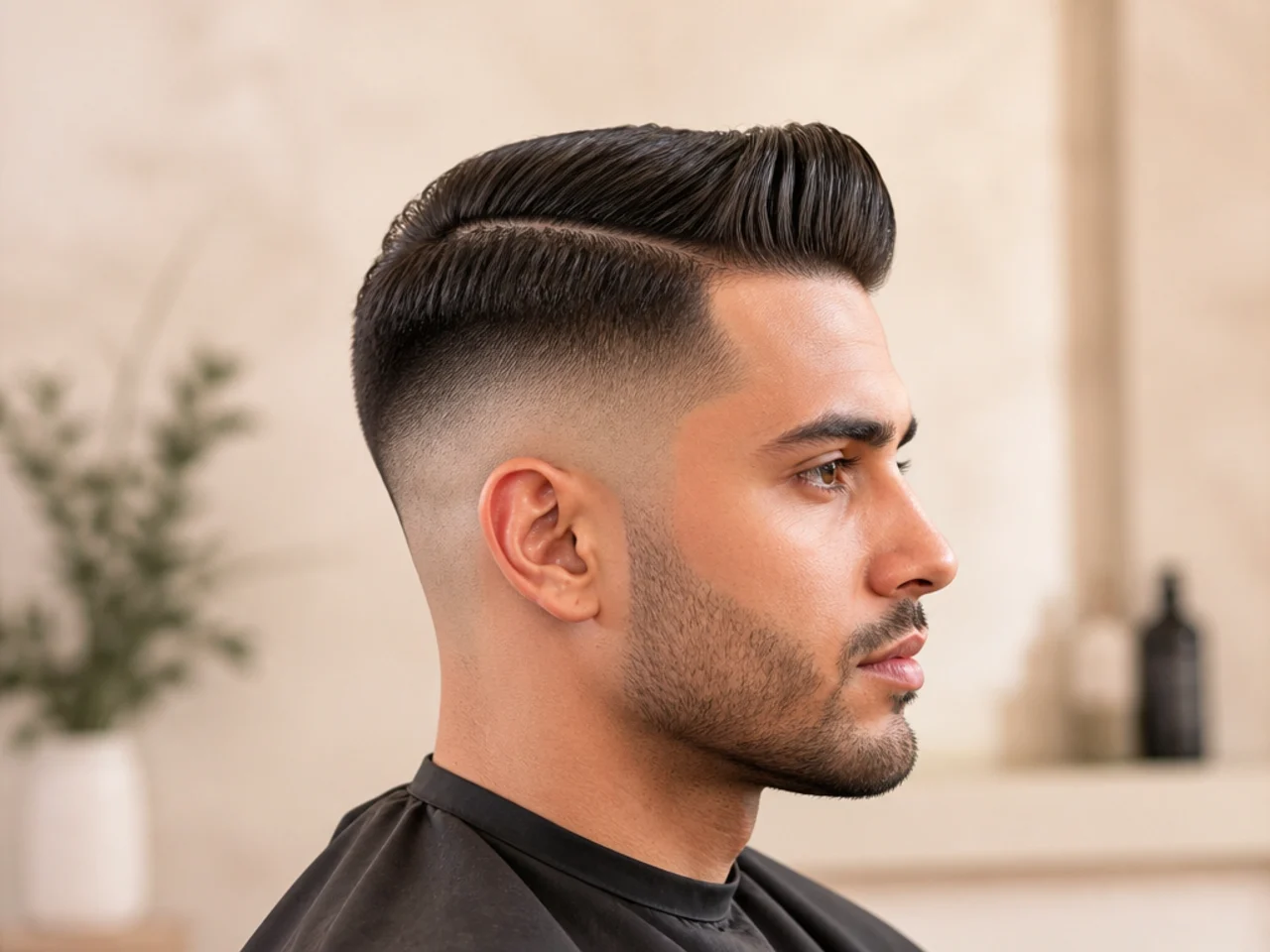
The classic skin fade sits at mid-height. It starts around the temple, drops cleanly to bare scalp at the shortest point, then blends back up into the length on top. This is the anchor version of the fade haircut family — not aggressive like a high fade, not restrained like a low one. That mid-line reads formal-adjacent while keeping the shape sharp enough for a Friday night.
Who it suits: oval and square face shapes. A comb-over pulls length across the crown, which adds vertical for an oval face and softens the corners on a square jawline.
How to ask: "Mid skin fade. Start at the temple, take it down to bare skin at the shortest, blend into three inches on top for a comb-over. Matte finish." Say "skin fade" specifically — "fade" alone leaves your barber guessing which guard number to bail out at.
Styling tip: work a light pomade or matte styling cream into towel-dry hair. Comb from the deep-side part across to the opposite side while blow-drying with a round brush. The sharp line comes from the direction of the dry, not the product.
2. Low Skin Fade with Textured Crop for Effortless Style
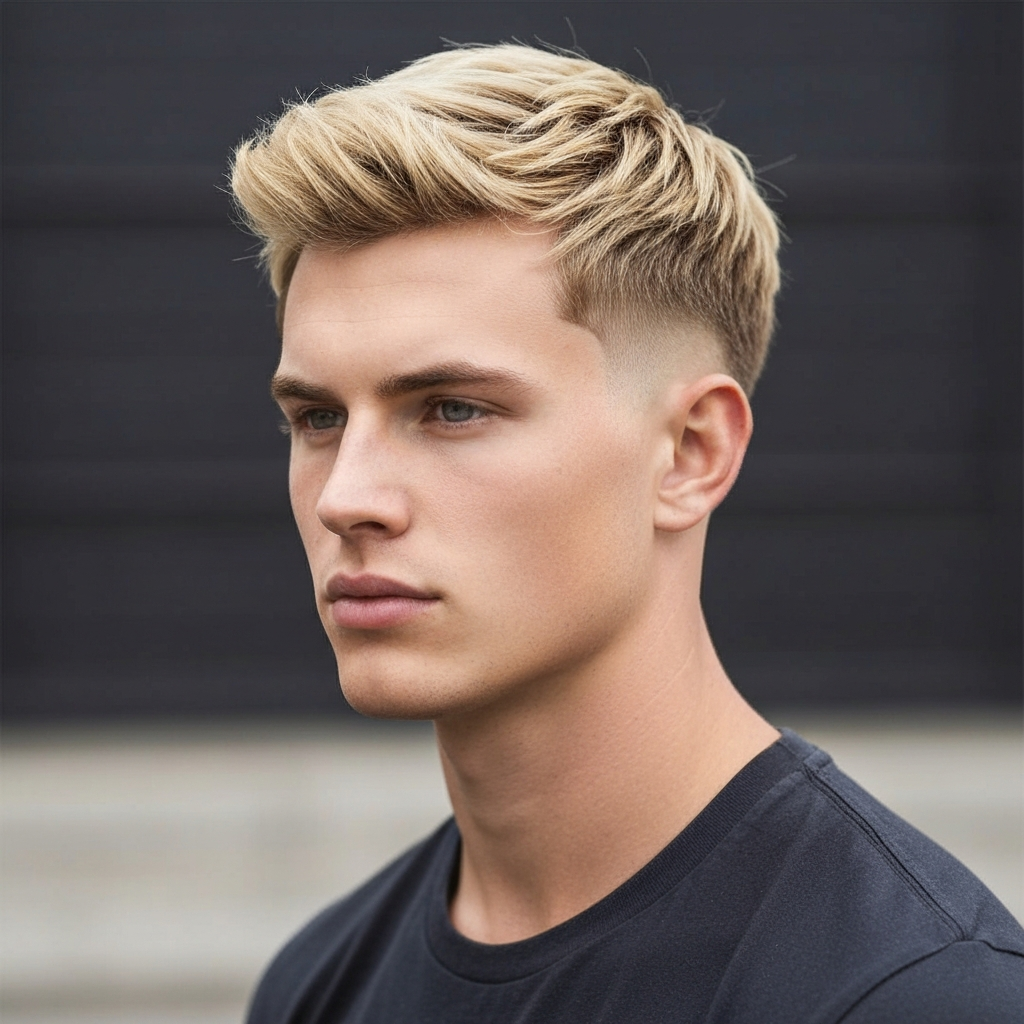
The low skin fade keeps the shortest point close to your neckline. It starts just above the ears and around the perimeter, with bare skin sitting only at the base of the head. It's the softest commitment to the skin look because most of the side length stays intact. If you like the sharpness of skin but want a longer touch-up window, this is the version to ask for. A close cousin is the standard low fade haircut, which stops at a guard number rather than taking it all the way down.
Who it suits: round and triangle face shapes. The low skin element defines the perimeter without adding visual width to full sides, and the textured crop on top adds height that lengthens the frame.
How to ask: "Low skin fade. Bare skin just above the ear, blend up quickly into scissor length. Textured crop on top around an inch and a half, short messy fringe."
Styling tip: work sea salt spray through damp hair, rough-dry with your fingers, then press a matte clay through the ends. Don't comb it — a comb flattens the exact texture the whole cut is built around.
3. High Skin Fade with Pompadour for a Bold Statement
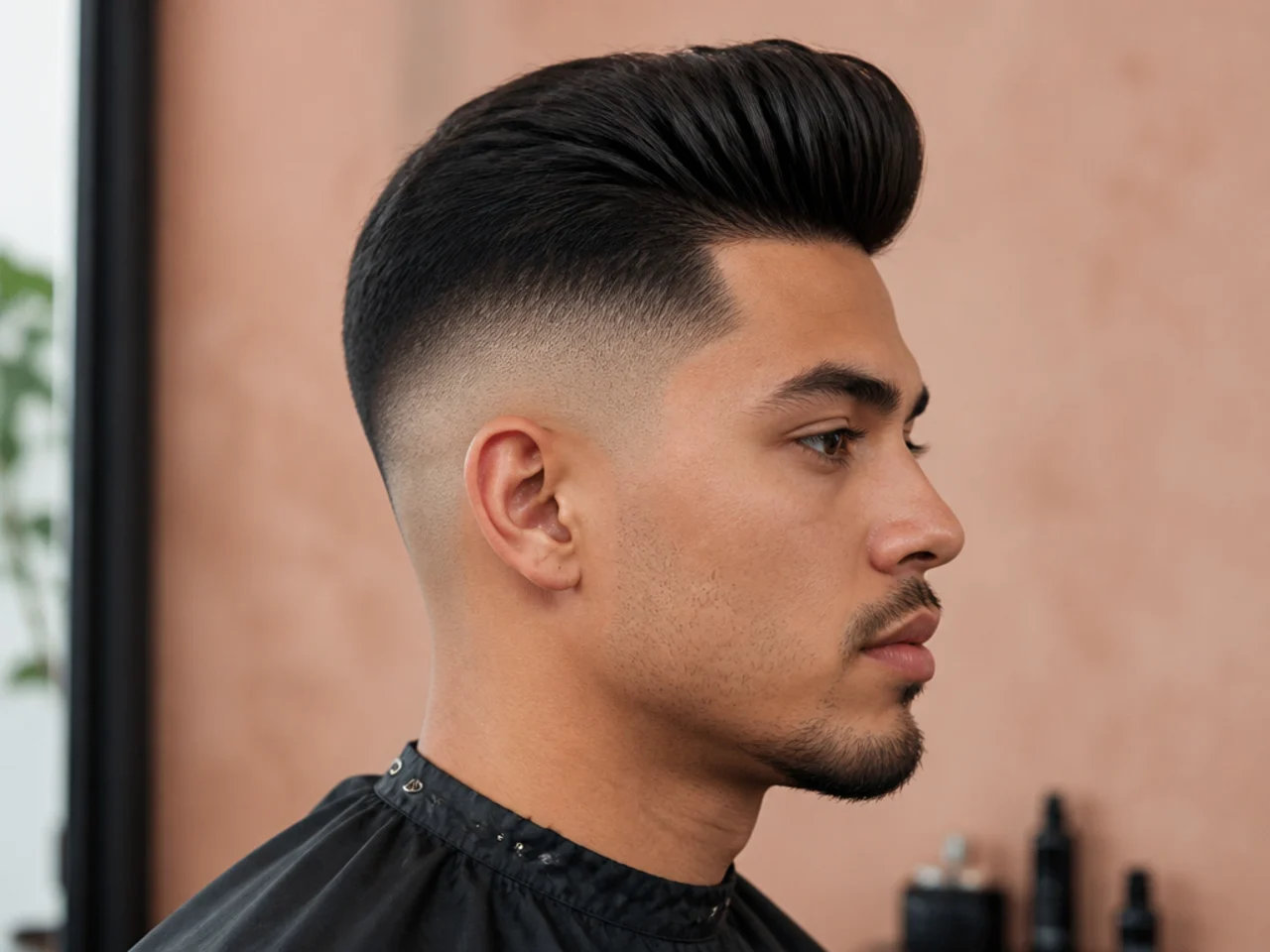
The high skin fade takes the transition line all the way up to the parietal ridge — the corner where the top of your head meets the side. Bare scalp covers the entire side panel, from the ear up to that ridge, before the length explodes on top. This is the boldest read in the skin fade family. Contrast is at its absolute maximum, which is exactly what a pompadour needs to look intentional rather than accidental. For a similar height with a softer landing, look at the high taper fade instead.
Who it suits: rectangular and heart-shaped faces. The height on top adds a vertical line that flatters a broader forehead and pulls attention up rather than out.
How to ask: "High skin fade taken to the parietal ridge, bare skin from the ear up. Five inches on top for a full pompadour. Leave enough length in the front to roll back."
Styling tip: blow-dry with a round brush, rolling from the front hairline back and up. Finish with a firm-hold pomade or a hair paste. Water-based products won't hold that height through a workday.
4. Taper Fade with Side Part for a Professional Appearance
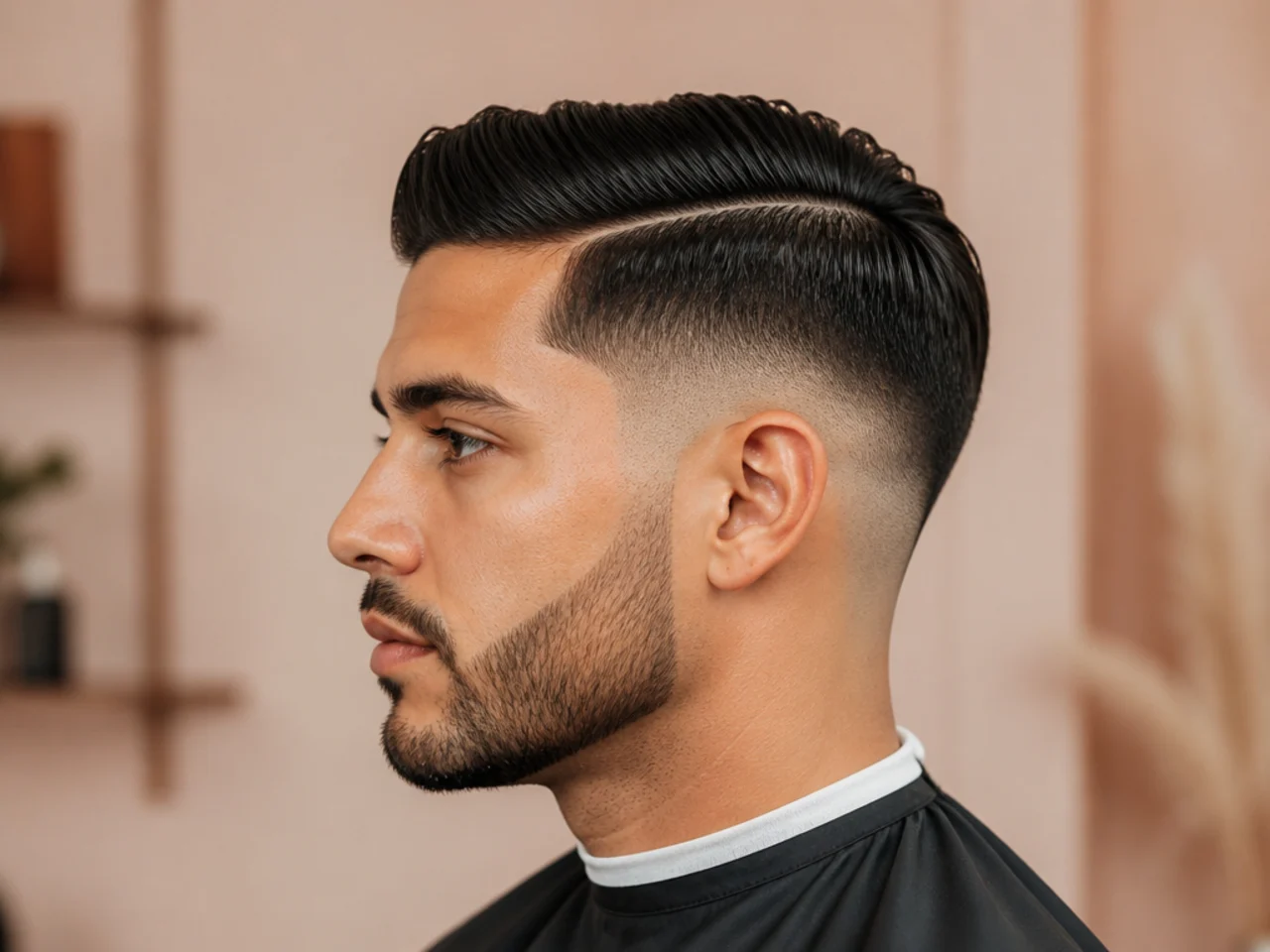
This one is a taper that runs to skin instead of a full skin fade across the whole side. Only the sideburns and the neckline drop to bare scalp — everything above stays at scissor length or a longer guard. That's what makes it the professional-appropriate cousin of a full skin fade. The skin element sits quietly where the perimeter meets your face, so the overall shape reads clean rather than aggressive. A closely related silhouette is the low taper fade — same footprint, guard number instead of skin at the shortest point.
Who it suits: oval and diamond face shapes. A hard side part pulls attention to the widest point of the head, which flatters strong cheekbones.
How to ask: "Skin taper. Sideburns and neckline dropped to bare skin at the corners, everything above stays at scissor length. Hard side part cut in with the razor."
Styling tip: shine pomade and a fine-tooth comb. Work the pomade in from the roots, part deep along the razor line, then comb the length flat and toward the opposite side. Set with a quick blast of cool air.
5. Fade with Fringe for a Trendy Touch
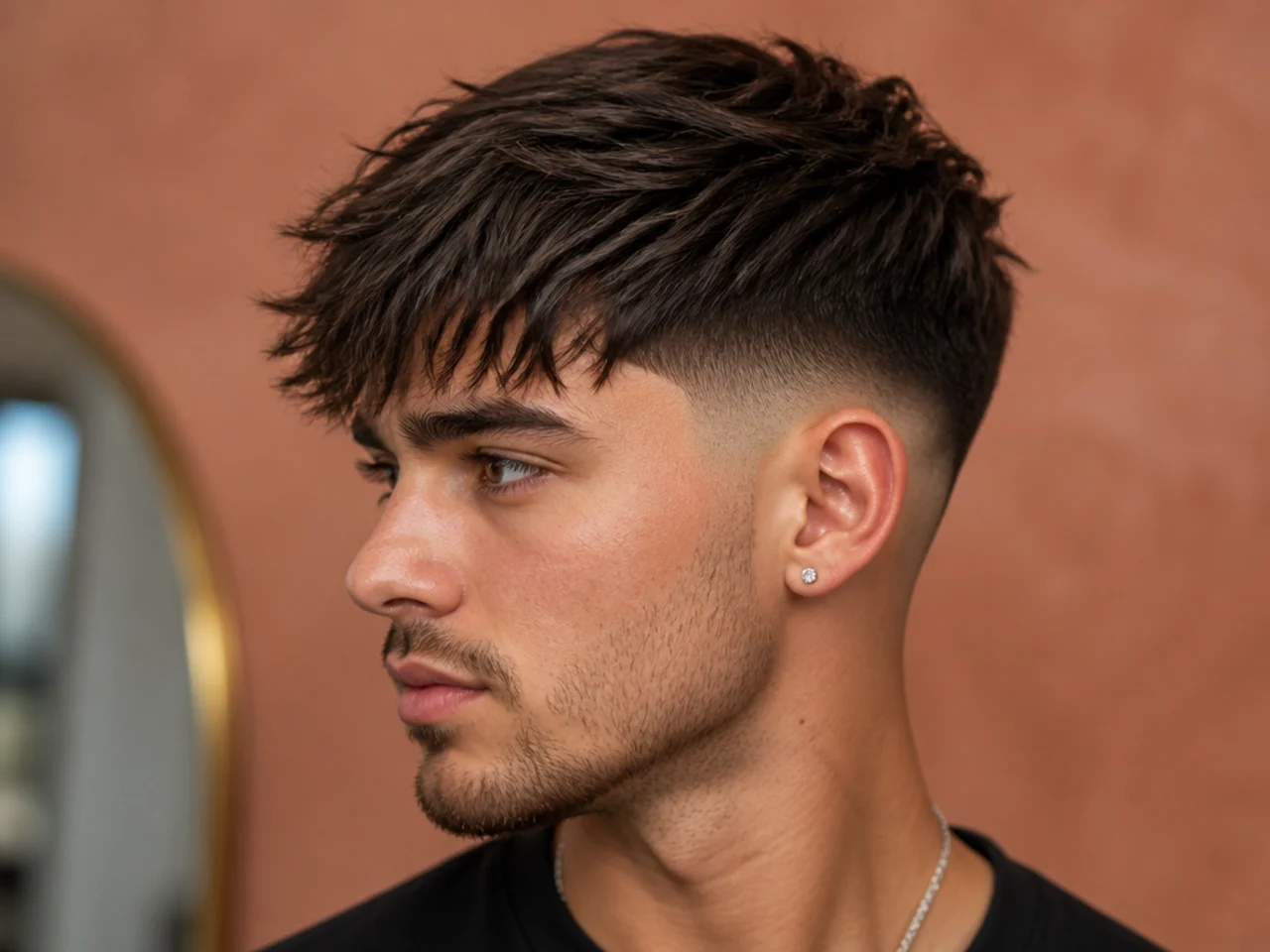
This variation pairs a mid skin fade with a forward-swept fringe. The length falls onto the forehead instead of being pulled back, which throws the softness of the fringe into relief against the clean sides. It's the counterweight to a slick side-parted cut — same skin structure, opposite mood. If you want a more measured starting height for a fringe like this, the mid fade haircut walkthrough covers the standard placement.
Who it suits: oval and square face shapes. A drop-forward fringe softens a strong hairline and covers a high forehead without looking like a costume.
How to ask: "Mid skin fade to bare scalp. Keep three to four inches on top with the length weighted to the front for a fringe. Point-cut the ends so it falls in pieces, not a slab."
Styling tip: matte cream on damp hair, rough-dried forward with your fingers. Piece the ends out with a dab more product on your fingertips. Avoid gel — a gelled fringe reads flat.
6. Skin Fade with Quiff for a Retro Vibe
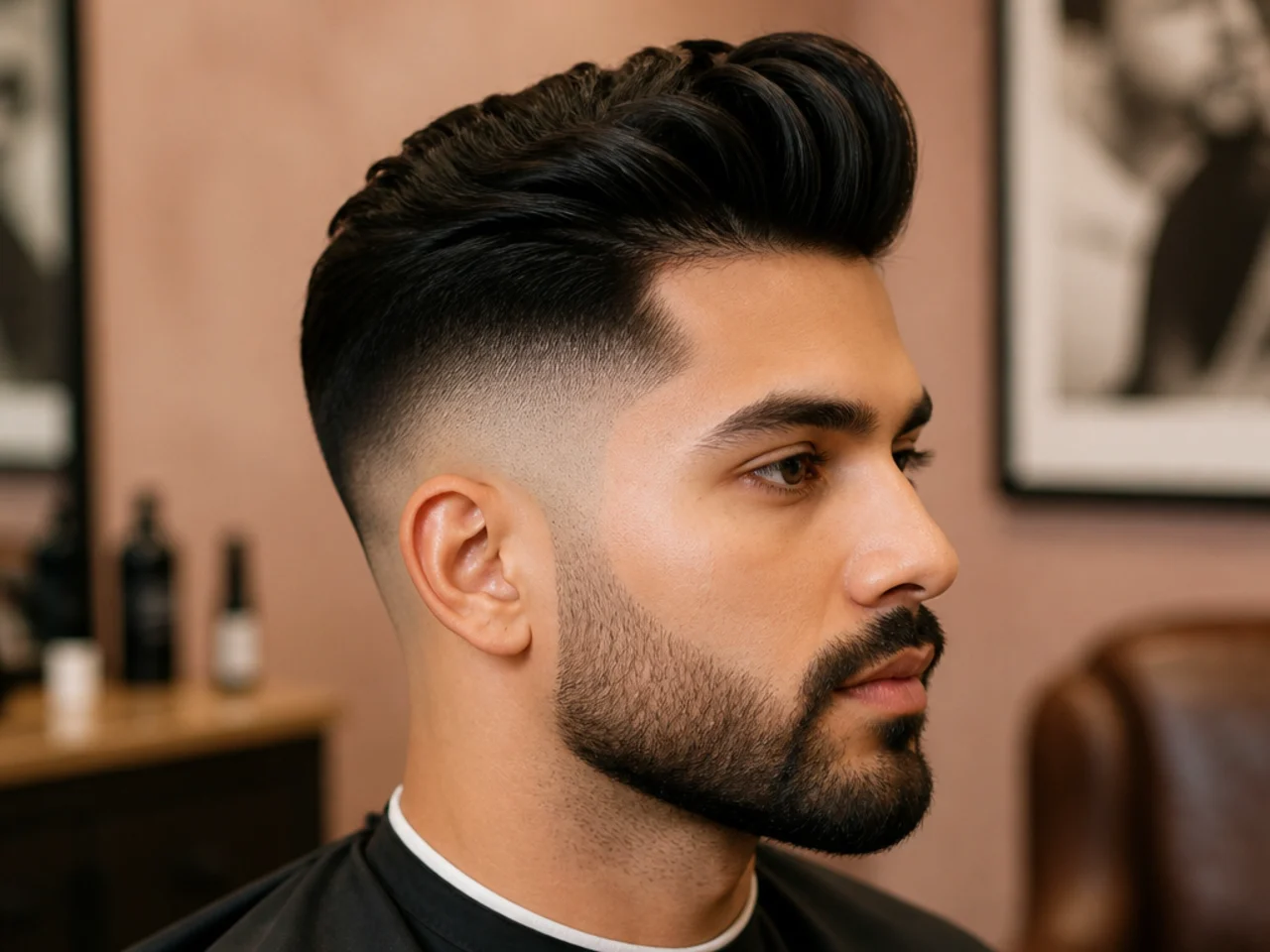
The skin-fade-and-quiff pairing takes a mid-to-high skin fade and swaps the pompadour for a shorter, textured lift at the front. A pompadour needs 5+ inches; a quiff works with 3 to 4. That makes it easier to build in the morning and easier to keep looking sharp through the day. The skin fade underneath isolates the volume so the quiff reads sculpted, not shaggy.
Who it suits: triangle and heart-shaped face shapes. Vertical on top balances a wider forehead and pulls the eye upward rather than sideways.
How to ask: "Mid-to-high skin fade. Three and a half inches on top with the front left slightly longer for a quiff. Bare skin at the shortest point."
Styling tip: mousse into damp hair for hold without stiffness, then blow-dry with a round brush. Lift the front section up and back at the end. A drop of medium-hold cream at the crown locks the shape without freezing it.
7. Undercut Fade with Long Top for a Distinctive Edge
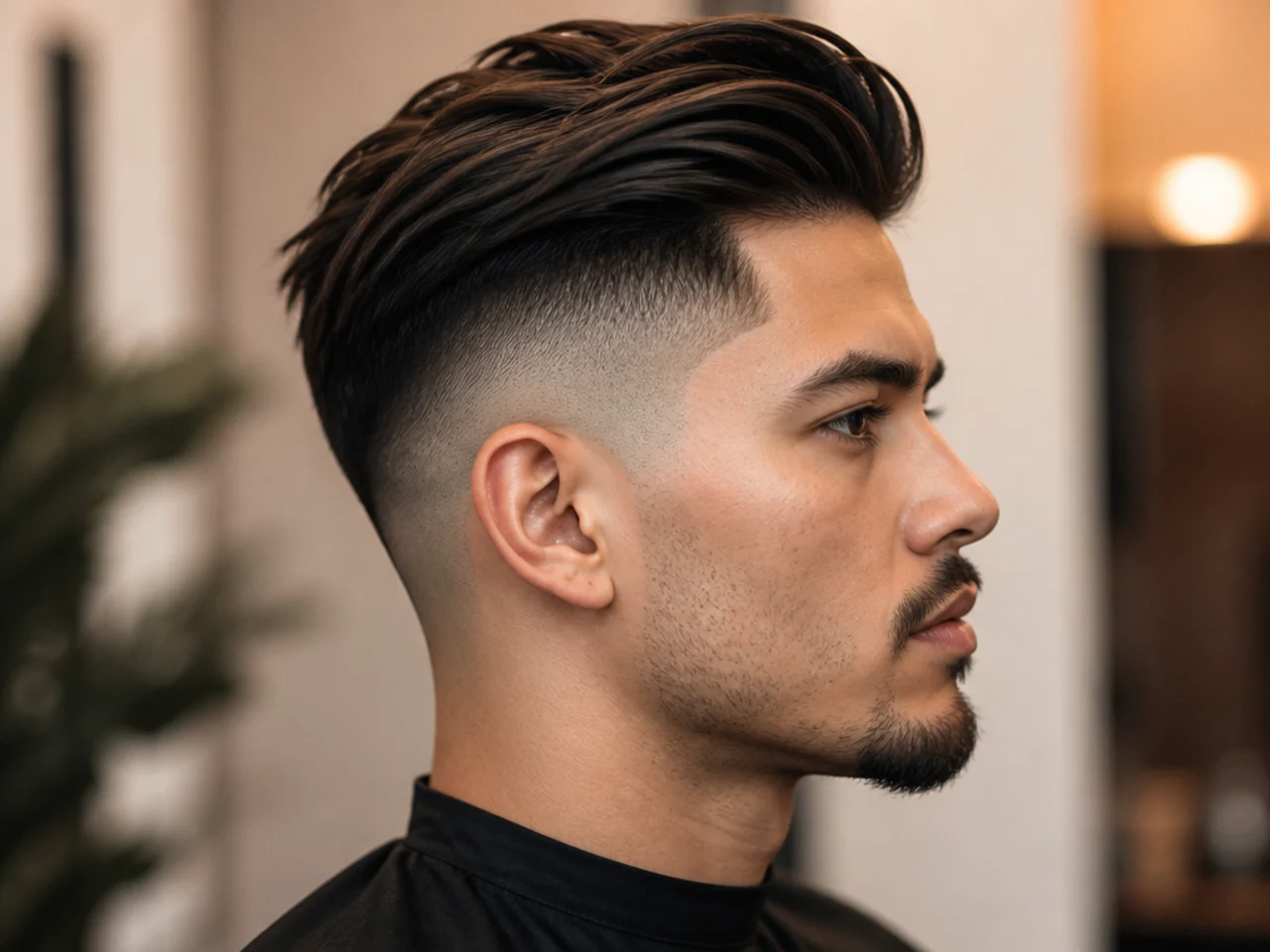
The undercut fade breaks the skin-fade rulebook by design. Instead of blending the top length into the sides, it disconnects them. The sides go bare and stay bare from the ear all the way up to a hard line, and the top length sits above that line as its own separate shape. The undercut fade is one of the sharpest ways to wear a skin fade because the disconnect is what makes it read edgy — no soft transition, no compromise.
Who it suits: rectangular face shapes. The horizontal disconnect line breaks up a long face and adds visual width where the length sits.
How to ask: "Disconnected undercut with skin sides. Take the sides to bare scalp from the ear up to a hard line at the parietal ridge. Don't blend into the top. Keep six inches up top."
Styling tip: matte clay or a fiber paste, worked through dry hair with your fingers. Push the length back and to one side, or sweep it forward for a modern read. The top does whatever you want — the sides do all the talking.
8. Skin Fade with Crew Cut for Maintenance-Free Style
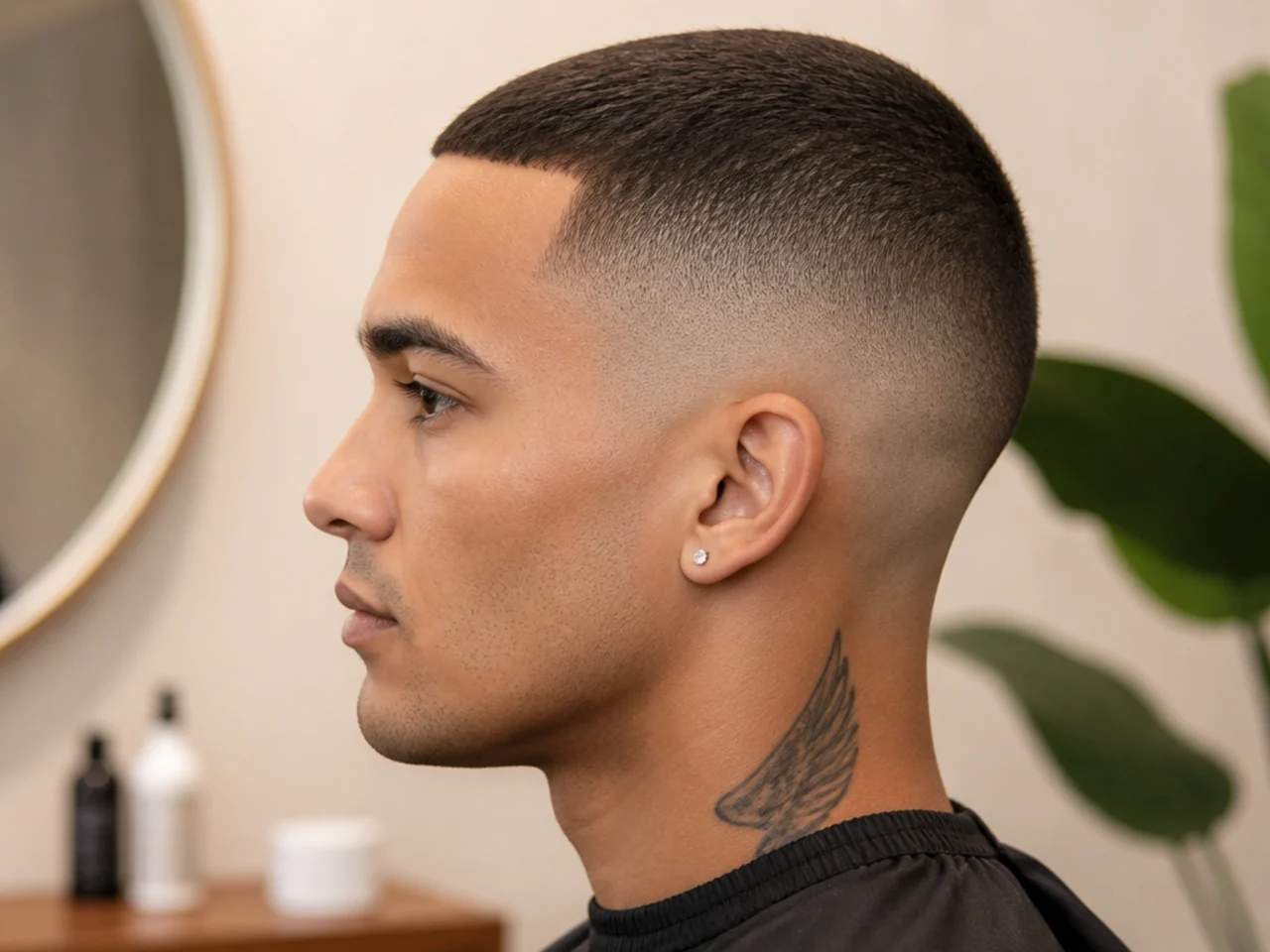
This is the utility version of the skin fade. A low or mid skin blend runs into a uniform-length crew on top. No styling shape, no product routine, no morning mirror time. The skin element is what keeps it from looking like a straight buzz — it adds enough gradient near the top to give the head a shape as the top length grows in.
Who it suits: every face shape. Because the top is uniform, the fade does all the sculpting. Pick your height by your bone structure — round faces benefit from a mid, long faces from a low, angular faces from a high.
How to ask: "Low or mid skin fade — barber's call based on my face shape — into a #3 crew on top, uniform length across."
Styling tip: none required. Rub a pinch of matte paste between your palms and press it through the top if you want a hint of texture. Otherwise walk out the door.
9. High Bald Fade with Short Curls for a Unique Twist
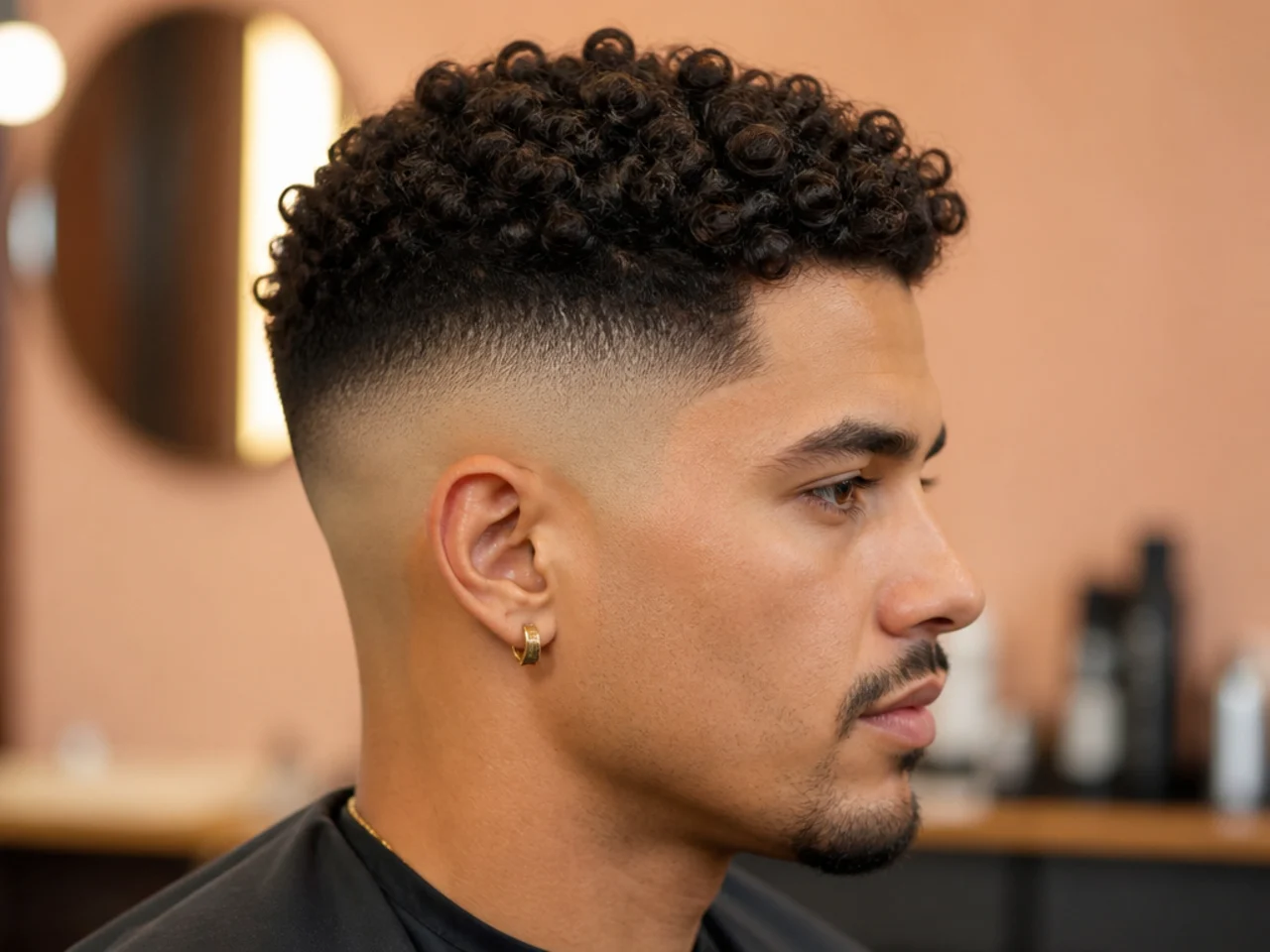
"Bald fade" and "skin fade" describe the same thing — hair taken down to visible scalp at the shortest point. The bald fade label shows up more often in the context of textured and coily hair, where the contrast between smooth skin and defined curl reads especially sharp. Our full guide to fade haircuts for Black men walks through the variations that flatter Type 3 and Type 4 patterns in more depth. One edge treatment worth naming here: the burst fade curves the fade around the ear instead of running it straight across, which frames tighter curl patterns cleanly.
Who it suits: round and oval face shapes, and any curl or coil pattern. The high placement adds vertical, and tight curl on top defines the crown.
How to ask: "High bald fade taken to the parietal ridge, bare scalp all the way up. Scissor-cut the top to one and a half inches so the curl pattern stays intact — don't thin it with a razor."
Styling tip: curl cream or a leave-in on damp hair, then diffuse on low heat with your head tipped forward. Don't brush — a brush pulls the definition out.
10. Skin Fade with Ivy League Cut for a Sharp and Chic Look
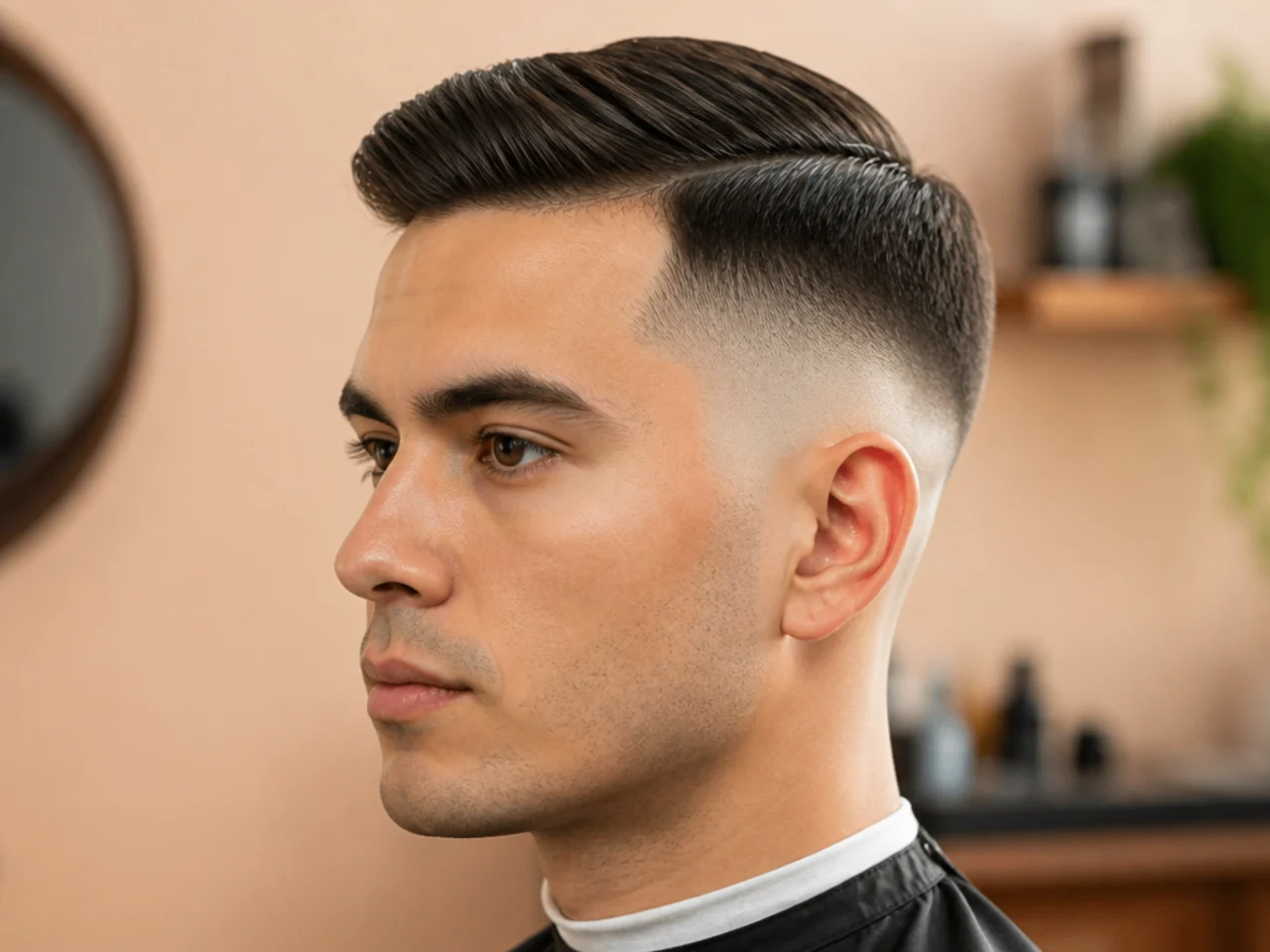
The Ivy League is the longer-front sibling of the crew cut — enough length across the top to comb into a defined part. Pair it with a mid skin fade and you get the sharpest boardroom-friendly cut in this list. Skin at the shortest point reads polished rather than plain; the length up top handles anything from a wet side part to a soft brush-back.
Who it suits: oval and square face shapes. The clean part draws a strong vertical line that flatters symmetrical bone structure and gives the cut a photographable focal point.
How to ask: "Mid skin fade. Bare skin at the shortest, blended into two to three inches on top. Cut a soft part on my natural line."
Styling tip: shine pomade or a light gel worked through damp hair with a fine comb. Part it, comb it flat, then set it with a two-second blast of cool air. Reapply a fingertip in the afternoon if the part starts drifting.
11. Skin Fade with Upward Highlights for a Fun Edge
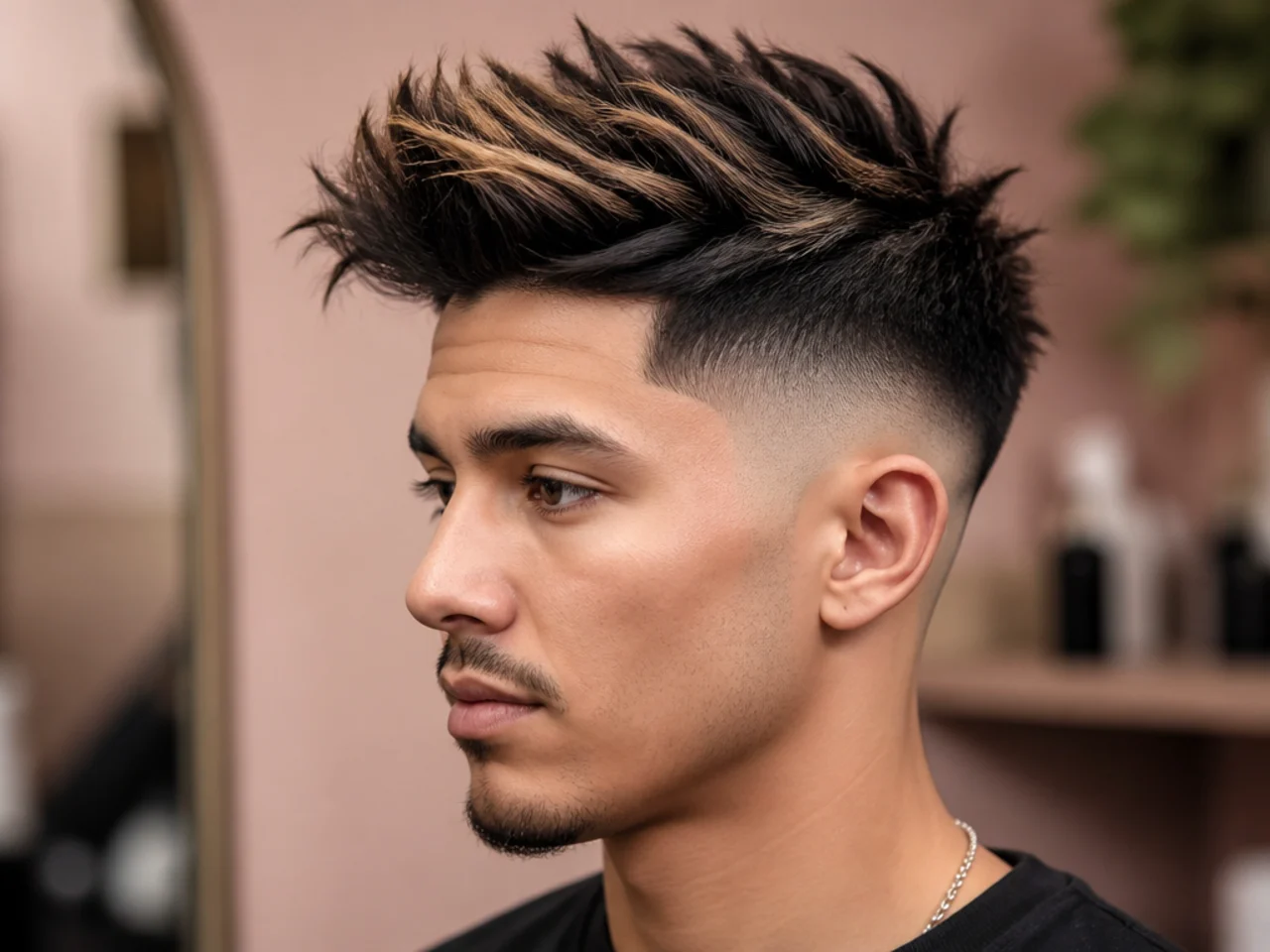
Color and a skin fade cooperate better than most pairings because the fade does the framing. The clean scalp on the sides puts the top in a spotlight, so any highlight or dyed piece up there gets seen. Upward highlights — lighter pieces running from mid-length to the tips, brushed up and forward — read as movement and volume. That's why this version pops on straighter, thicker hair rather than fine or curly.
Who it suits: round and square face shapes. The vertical color direction lengthens the frame; the skin sides trim visual width off the jawline.
How to ask: "Mid skin fade, three inches on top left long enough to place highlights. Foil or balayage, direction pointing up and forward."
Styling tip: use a texturizing paste — matte, not shiny — to break the length into pieces. Shine flattens color; texture makes it dance under overhead light.
12. Skin Fade with Side-Swept Bangs for a Youthful Look
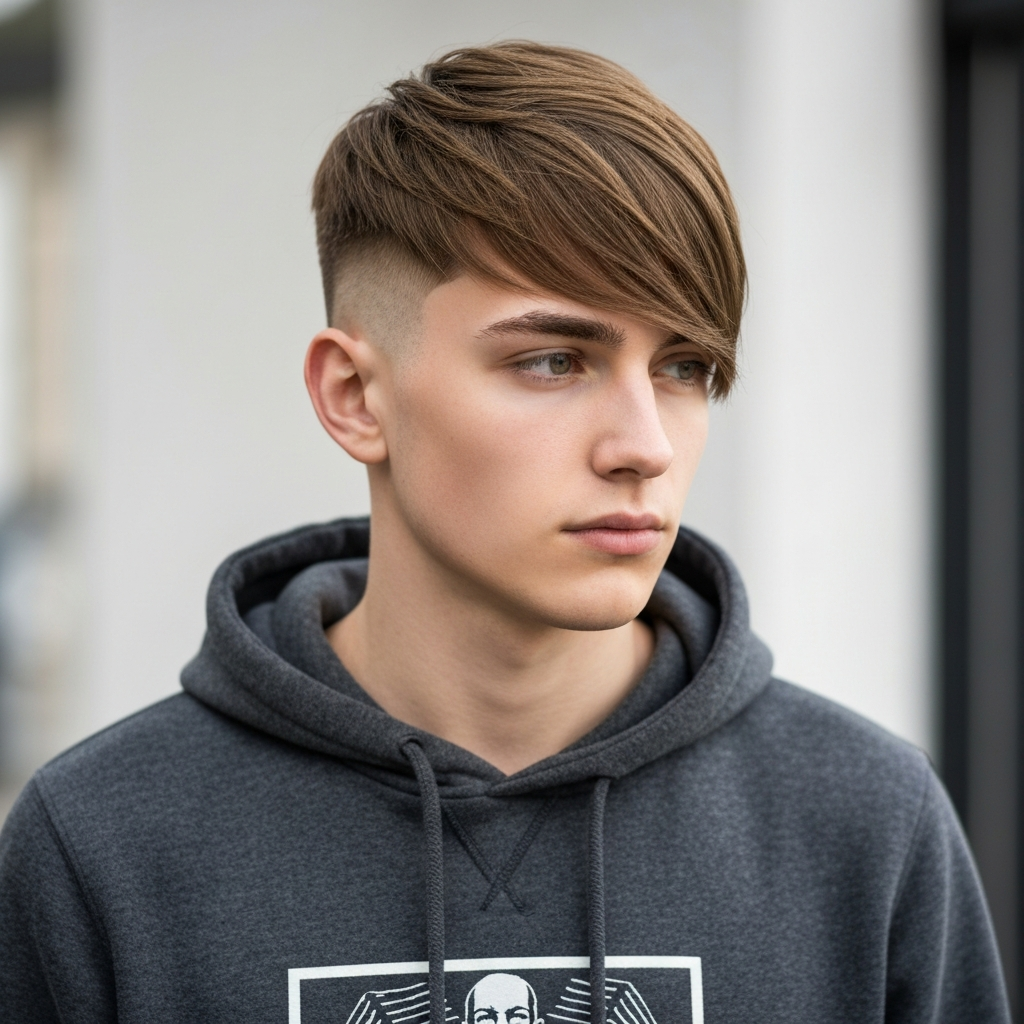
Side-swept bangs sit lighter and softer than a full fringe. The length falls across the forehead instead of straight down, so the face reads open. Pair with a mid or low skin fade and you get a cut that reads relaxed on Friday and put-together on Monday. The bangs give the top a diagonal line that mirrors the fade's curve, and the two halves lock into each other visually.
Who it suits: triangle and oval face shapes. A diagonal fringe balances a narrower chin and softens strong horizontal lines like a wide forehead.
How to ask: "Mid skin fade. Four inches on top with the front swept to one side. Point-cut the fringe so it falls in wisps."
Styling tip: light styling cream on damp hair. Blow-dry with your fingers in the direction the fringe should fall, then a mist of flexible-hold hairspray to hold the sweep without freezing it.
13. Skin Fade with Caesar Cut for Simplicity and Style
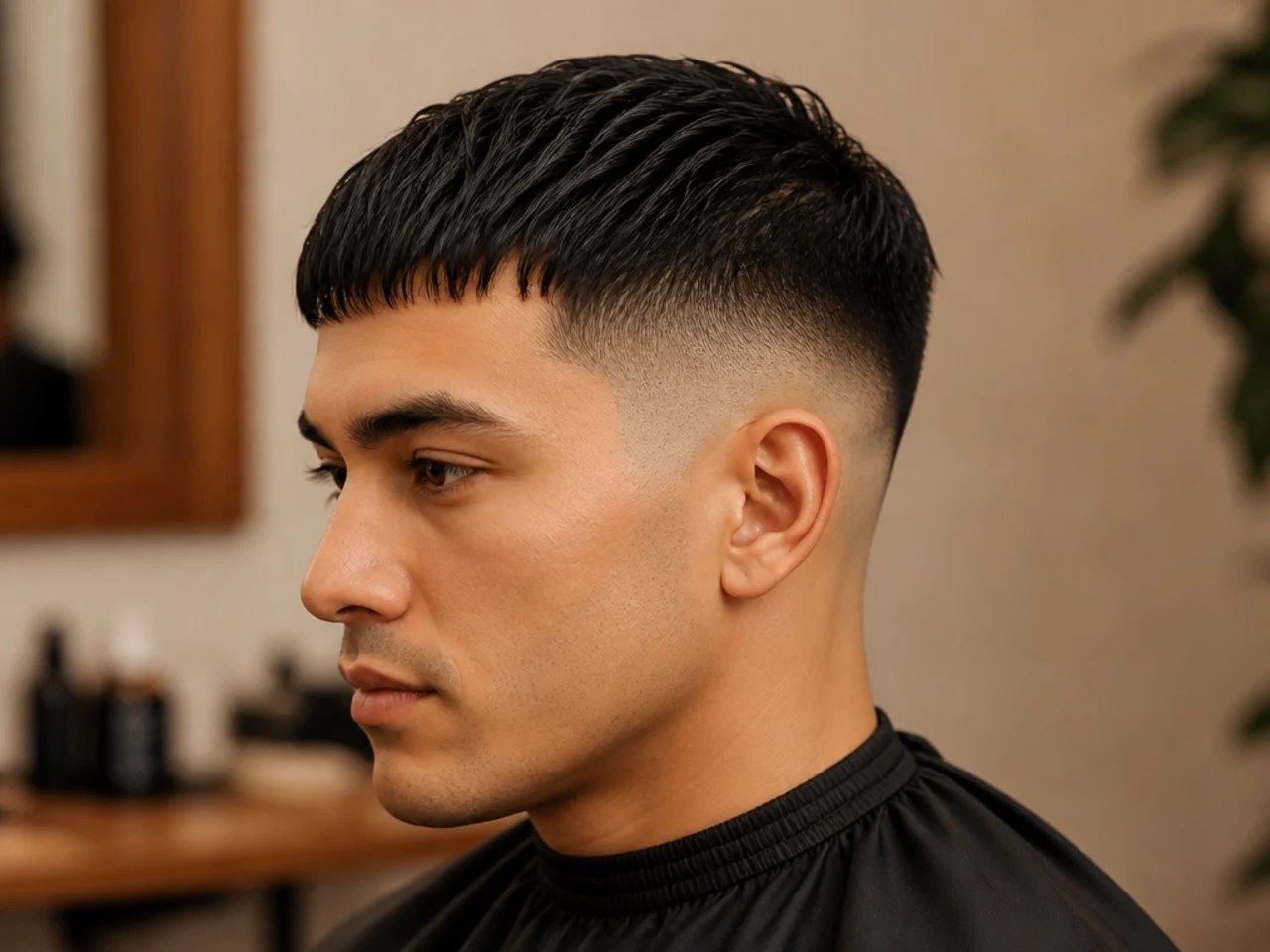
The Caesar sits short, uniform, and pushed forward — a straight fringe at the hairline that stops before your eyebrows. Combined with a low skin fade, it's one of the lowest-effort cuts in this list. Product optional; styling almost automatic; sharpness inherited entirely from the skin blend at the perimeter. The look plays especially well with a receding hairline because the forward fringe covers what would otherwise be exposed.
Who it suits: every face shape, but especially those with a wider forehead or a receding hairline. It flatters both.
How to ask: "Low skin fade — bare scalp at the base only, quick blend up — Caesar on top around an inch, straight fringe pushed forward."
Styling tip: rub a pearl of styling cream between your palms and press it forward through the top. That's it. If you want more definition at the fringe, work a fingertip of matte pomade into just the front pieces.
14. Skin Fade with Long, Flowing Hair for a Striking Contrast
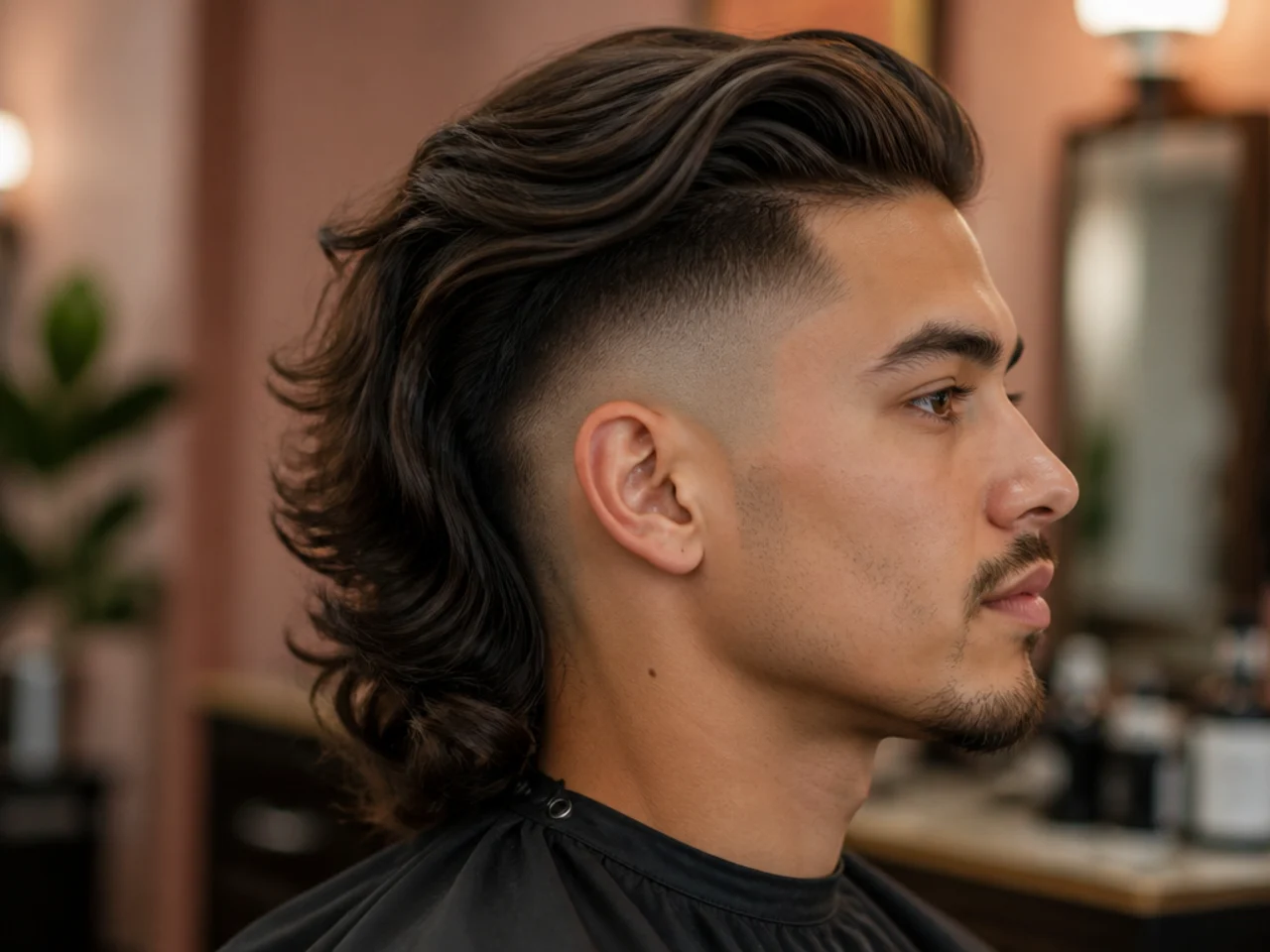
This is the drop skin fade wearing long-hair clothing. The transition line curves downward behind the ear instead of running straight across, and the top is left long enough to move. The drop shape follows the natural line of the head, so the long hair on top doesn't sit on a shelf — it flows into the fade organically. Contrast stays intense because of the length difference, but the drop shape softens the border. If you're drawn to that dramatic-but-soft profile, the closely related blowout taper uses a similar drop line with more crown volume built in.
Who it suits: oval and rectangle face shapes. The weight of the length grounds a longer face and adds a horizontal counterweight to strong vertical bone structure.
How to ask: "Drop skin fade. Take the fade line down behind the ear, bare skin at the shortest point. Leave six to eight inches on top, scissor-cut so it moves."
Styling tip: leave-in conditioner on damp hair. Air-dry if you have wave to work with, or use a diffuser on low. Skip heavy product — long length looks best when it's moving, not glued.
15. Skin Fade with Man Bun for a Cool Contrast
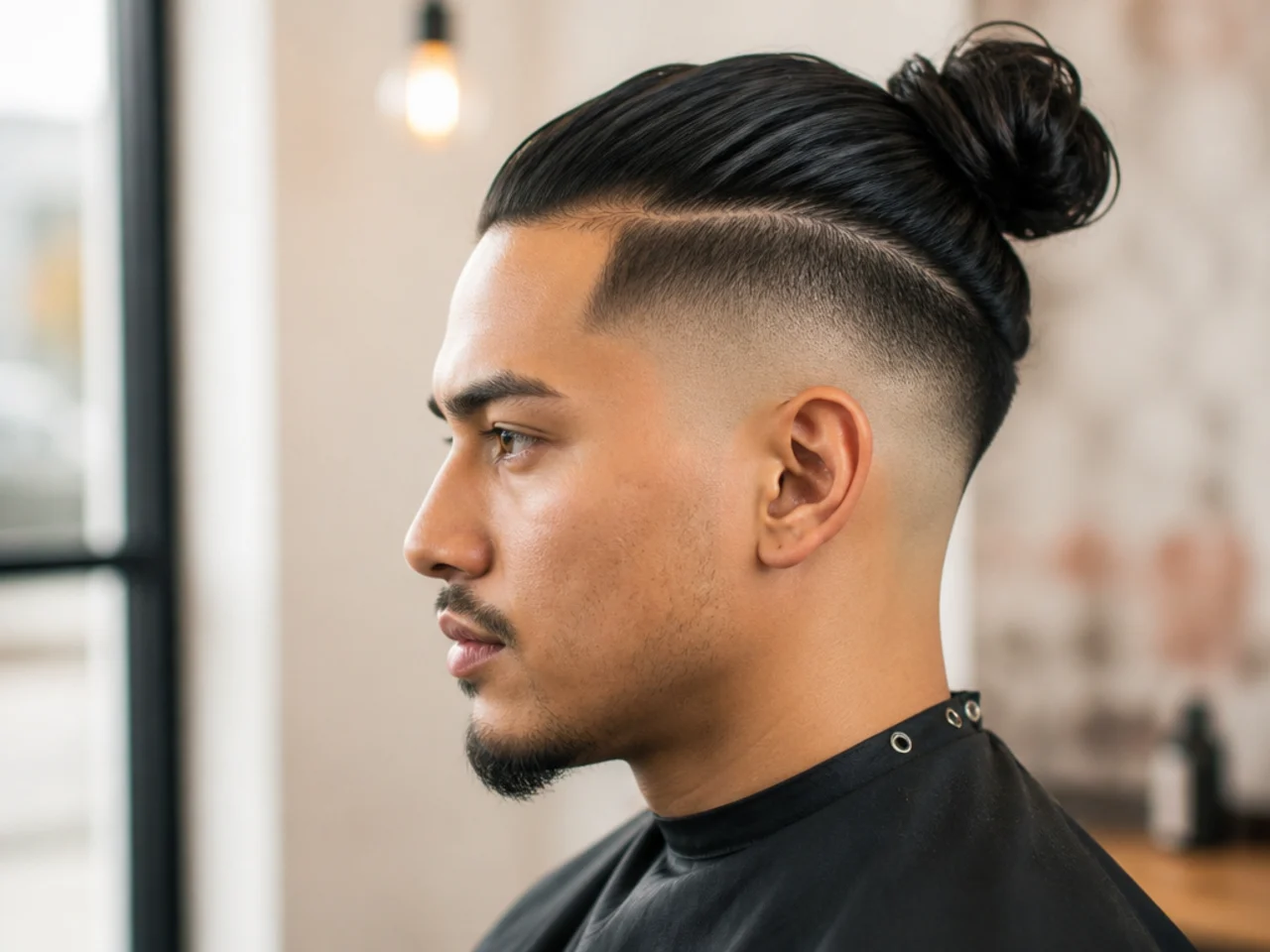
A man bun on a skin fade is the biggest contrast pairing you can wear: bare scalp on the sides, five to seven inches of gathered length on top. A burst skin fade works especially well here — the fade wraps in a semi-circle around the ear, which gives the base of the bun a rounded frame instead of a hard horizontal line. That curve is what keeps the profile from looking top-heavy.
Who it suits: oval and square face shapes. The vertical of the bun elongates a wider face; the skin sides sharpen a rounder one.
How to ask: "High skin fade with a burst shape around the ears, bare skin at the shortest point. Keep the top long enough to tie into a bun — six inches minimum, no layering."
Styling tip: work a lightweight cream through damp hair, tie the bun where it feels natural on your crown, and leave the shorter pieces around the fade line to fall where they want. Don't gel the sides. The skin does the work for you.
Choosing Your Next Skin Fade Haircut
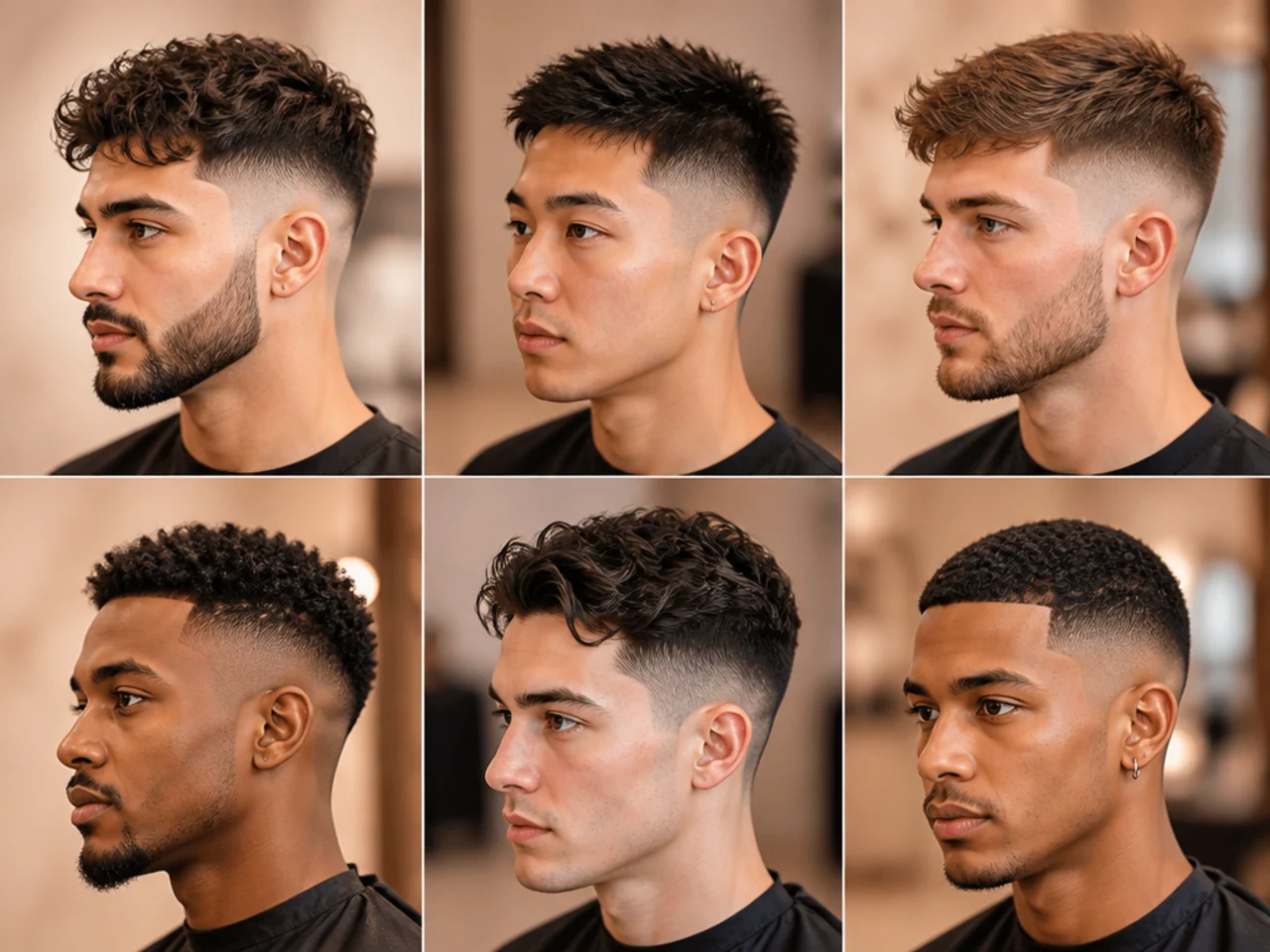
Every skin fade in this list starts from the same place: bare scalp at the shortest point, contrast at its maximum. What changes is where that shortest point sits, how the transition curves, and what happens on top.
Pick your height first. A low skin fade sits above the ear, softens the commitment, and grows out cleanest. A mid skin fade starts at the temple, is the crowd-pleaser, and works with almost every top style. A high skin fade climbs to the parietal ridge, throws the top into total relief, and needs the most upkeep. Drop and burst variations shape the transition line — drop follows the head down behind the ear, burst wraps around it like a starburst.
Pick your top second. Short and uniform (crew, Caesar, buzz) is maintenance-free. Medium and structured (Ivy League, side part, textured crop) is versatile. Long and disconnected (undercut, man bun, flowing) is the boldest read.
Then commit to the 10-day cycle. A skin fade grows out faster than any other fade because the shortest point is scalp — as soon as stubble comes back, the contrast blurs. Book your next appointment before you leave the chair. Then describe what you want in the four numbers your barber cares about: fade height, shortest length (say "skin" or "bald" and mean it), top length in inches, and finish. That's the whole conversation.