20 Bold Mullet Mohawk Styles That Turn Heads Fast
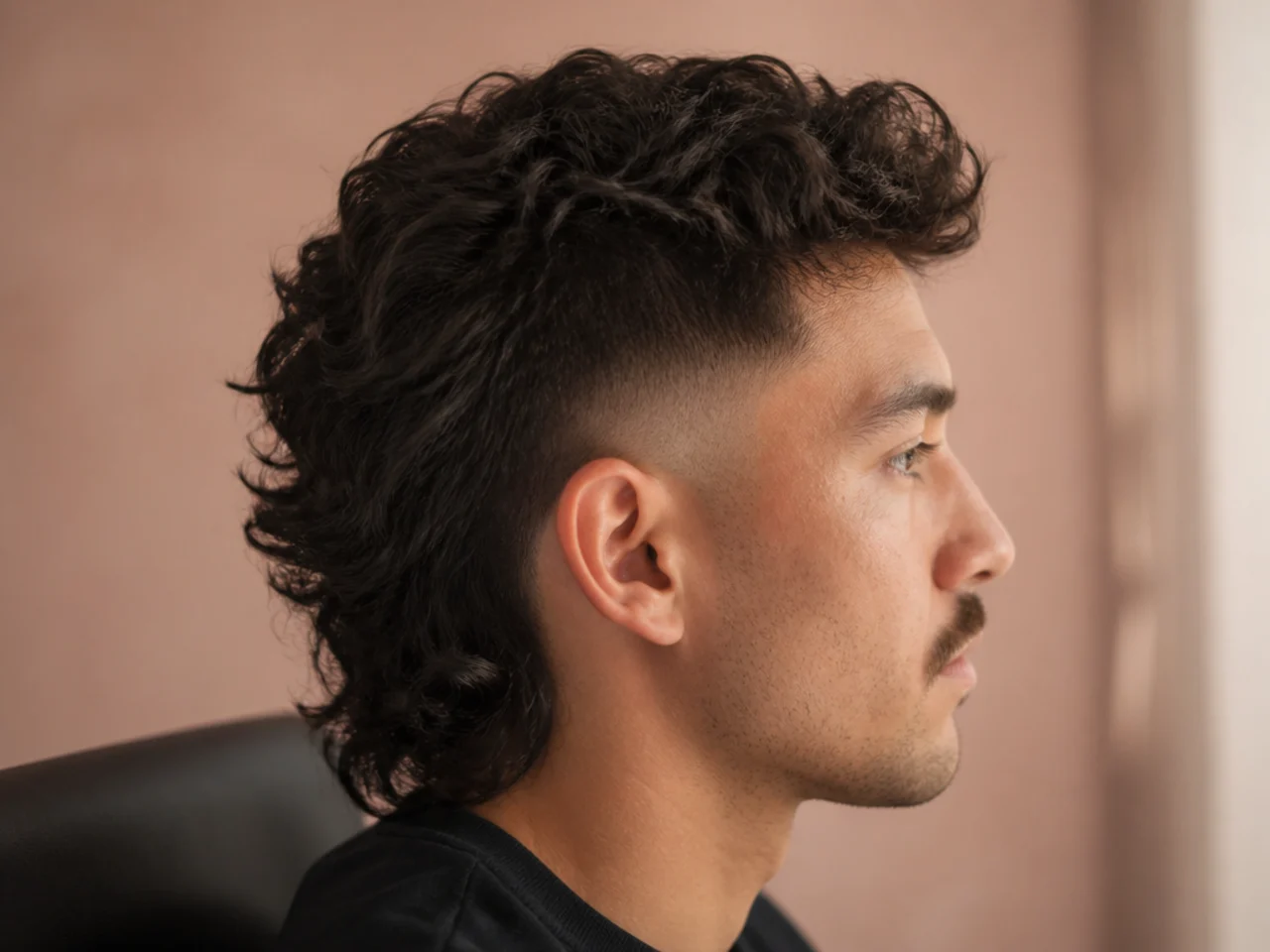
A mullet mohawk is a strip of length running front to back that carries on into a tail instead of stopping at the crown. Twenty versions, and the two measurements that decide all of them — how wide the strip is and how high the sides come up to meet it.
In this article · 27
- What a Mullet Mohawk Actually Is
- Choosing Your Strip Width and Fade
- The 20 Mullet Mohawk Styles
- 1. Burst Fade Mullet Mohawk
- 2. Skin Faded Mullet Mohawk
- 3. Disconnected Mullet Mohawk
- 4. Blended Mullet Mohawk
- 5. Narrow Strip Mullet Mohawk
- 6. Wide Strip Mullet Mohawk
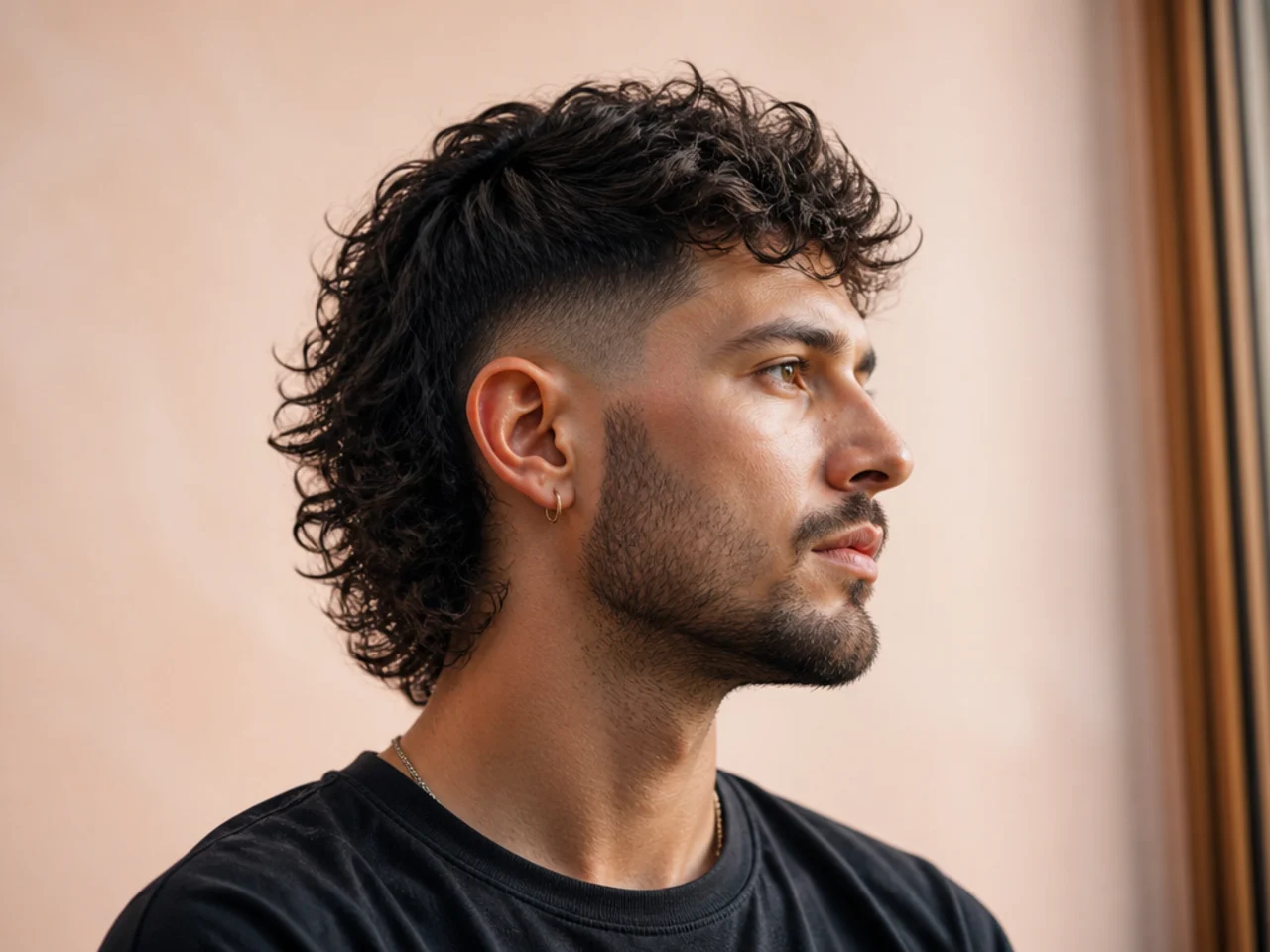
- 7. Curly Mullet Mohawk
- 8. Spiked Mullet Mohawk
- 9. Coily Mullet Mohawk
- 10. Bleached Strip Mullet Mohawk
- 11. Hard Part Mullet Mohawk
- 12. Low Fade Mullet Mohawk
- 13. Mid Fade Mullet Mohawk
- 14. High Fade Mullet Mohawk
- 15. Tapered Mullet Mohawk
- 16. Long Tail Mullet Mohawk
- 17. Short Tail Mullet Mohawk
- 18. Choppy Top Mullet Mohawk
- 19. Slick Back Mullet Mohawk
- 20. Grown Out Mullet Mohawk
- Styling and Upkeep
- Mistakes to Avoid
- FAQ
- Final Thoughts
A mullet mohawk is not a mohawk with long hair at the back, it is a single strip of length that never stops at the crown.
The strip runs from the front hairline to the nape. It crosses the occipital bone and continues into a tail, so there is one unbroken line rather than a patch on top and a separate tail behind.
Two measurements decide the whole cut. How wide the strip is, and how high the sides come up to meet it.
What a Mullet Mohawk Actually Is
A mohawk stops at the crown. The back of the head is cut with the sides, which is why a standard mohawk reads as a shape sitting on a shaved head.
A mullet mohawk keeps going. The strip crosses the crown and drops down the back, so the outline reads as one long line in profile.
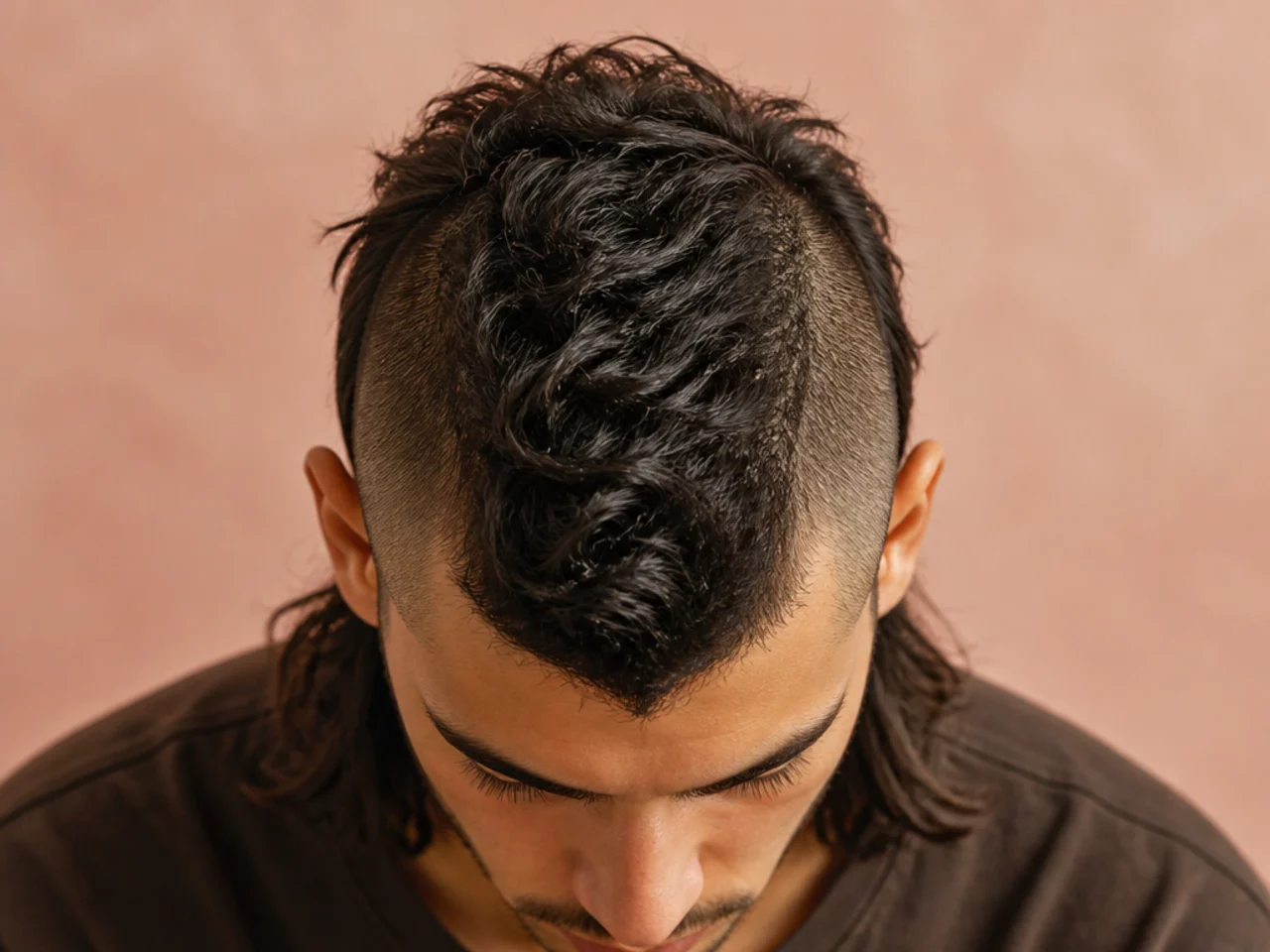
Strip width controls how extreme it looks. Three centimetres is severe, six is closer to a wide top with short sides. The change happens in a couple of centimetres.
The sides can be skin or a guard. Skin gives maximum contrast and needs cutting every two to three weeks. A number two, six millimetres, softens the jump and holds for three to four.
Choosing Your Strip Width and Fade
Measure the strip in fingers, not in words. Three fingers across the top is a repeatable instruction. The word narrow is not, and it comes back different every visit.
Narrow strips need thick hair. A thin strip has to hold itself upright, and fine hair at that width simply falls over to one side.
Decide whether the sides connect or not. A blend takes the strip gradually down to the sides. A disconnection cuts straight from long to short with no gradient at all, and there is no middle ground once the line is cut.
Pick the fade height by face width. A high fade narrows the head and makes a long face longer. A low fade keeps width above the ear and balances a narrow face.
The 20 Mullet Mohawk Styles
1. Burst Fade Mullet Mohawk
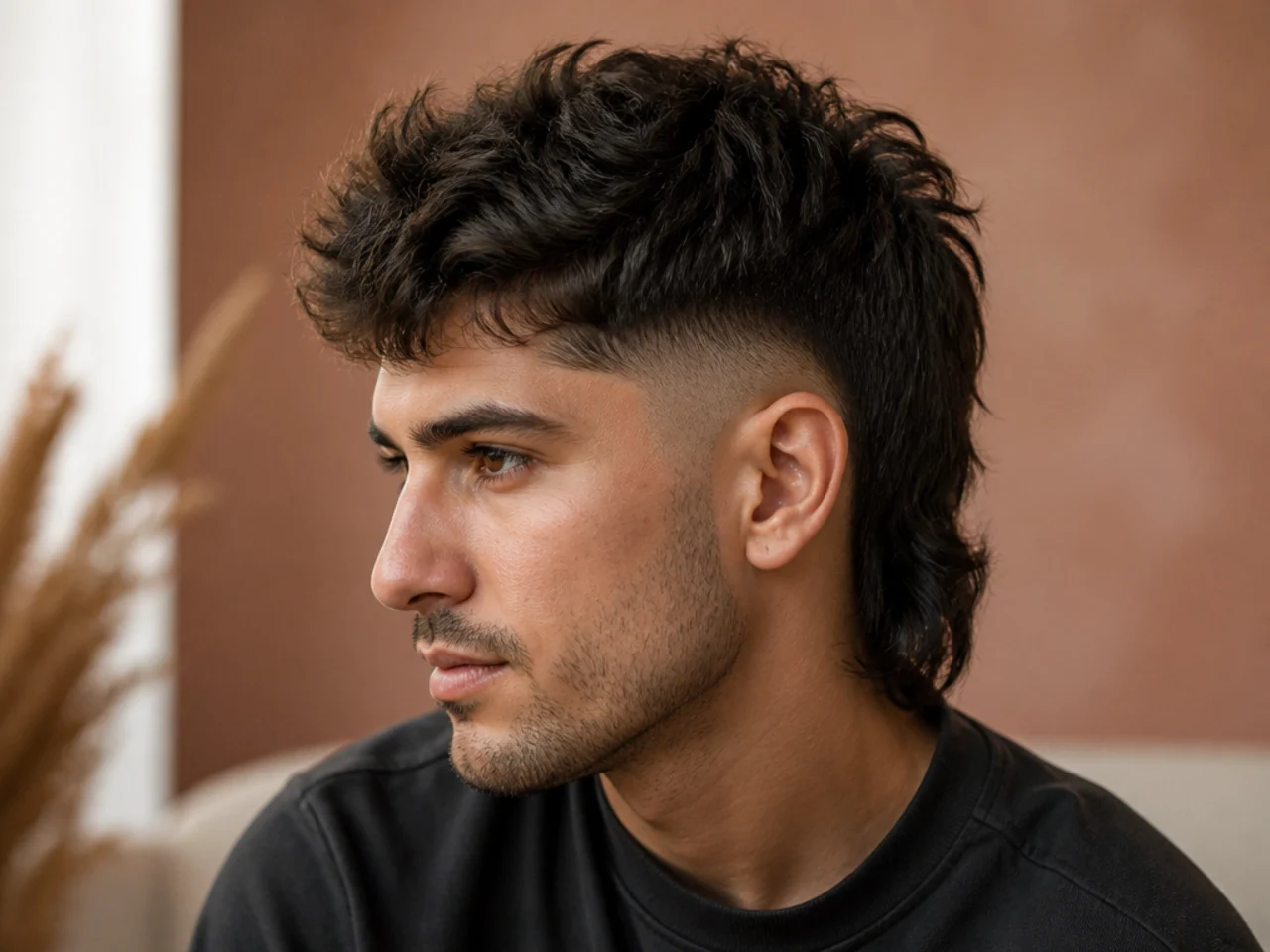
The fade arcs in a semicircle around the ear and leaves the back untouched, so the tail keeps its full length while the sides go short. It is the pairing built for this cut, because it is the only fade shape that shortens the sides without cutting into the strip.
2. Skin Faded Mullet Mohawk
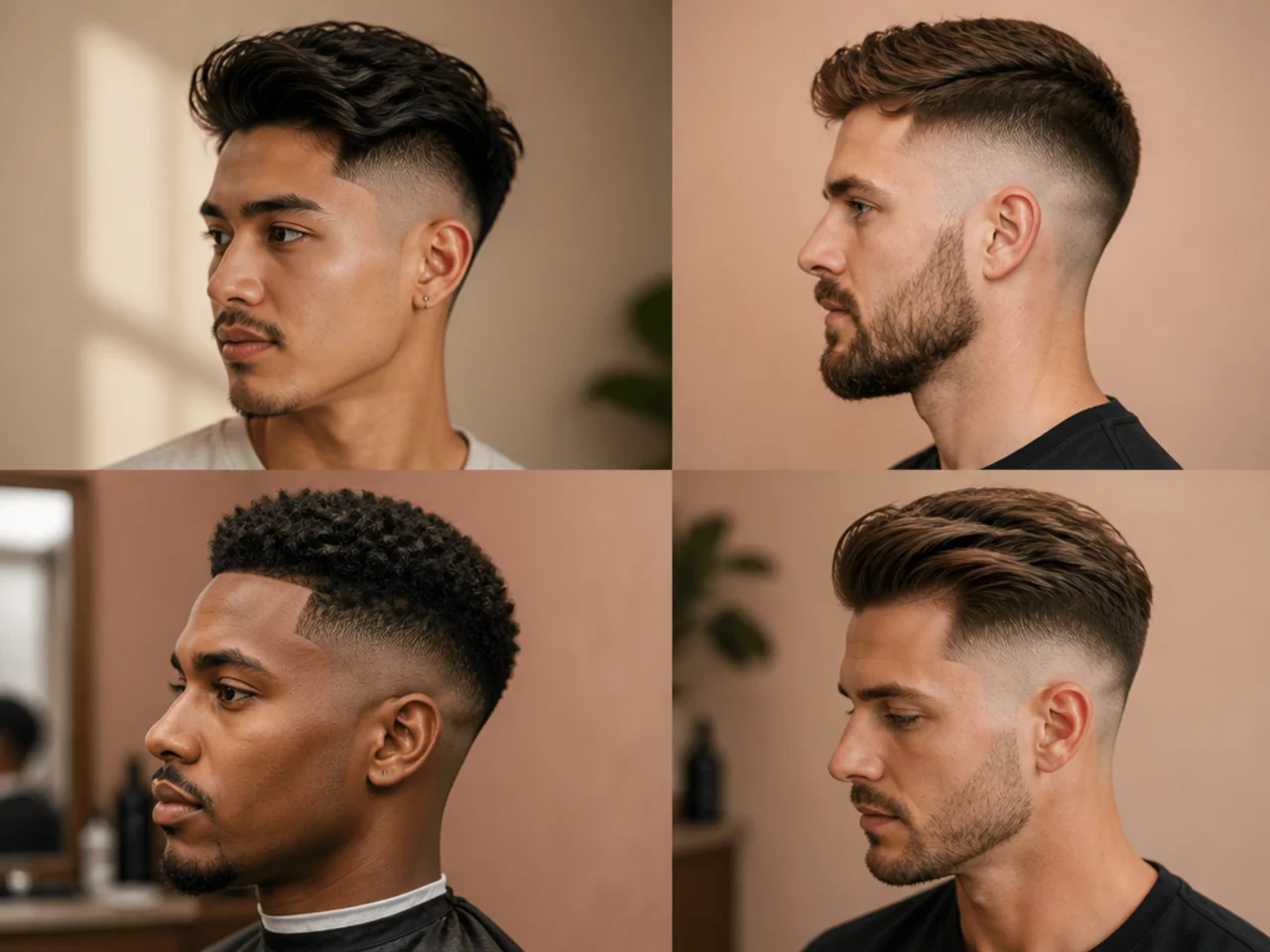
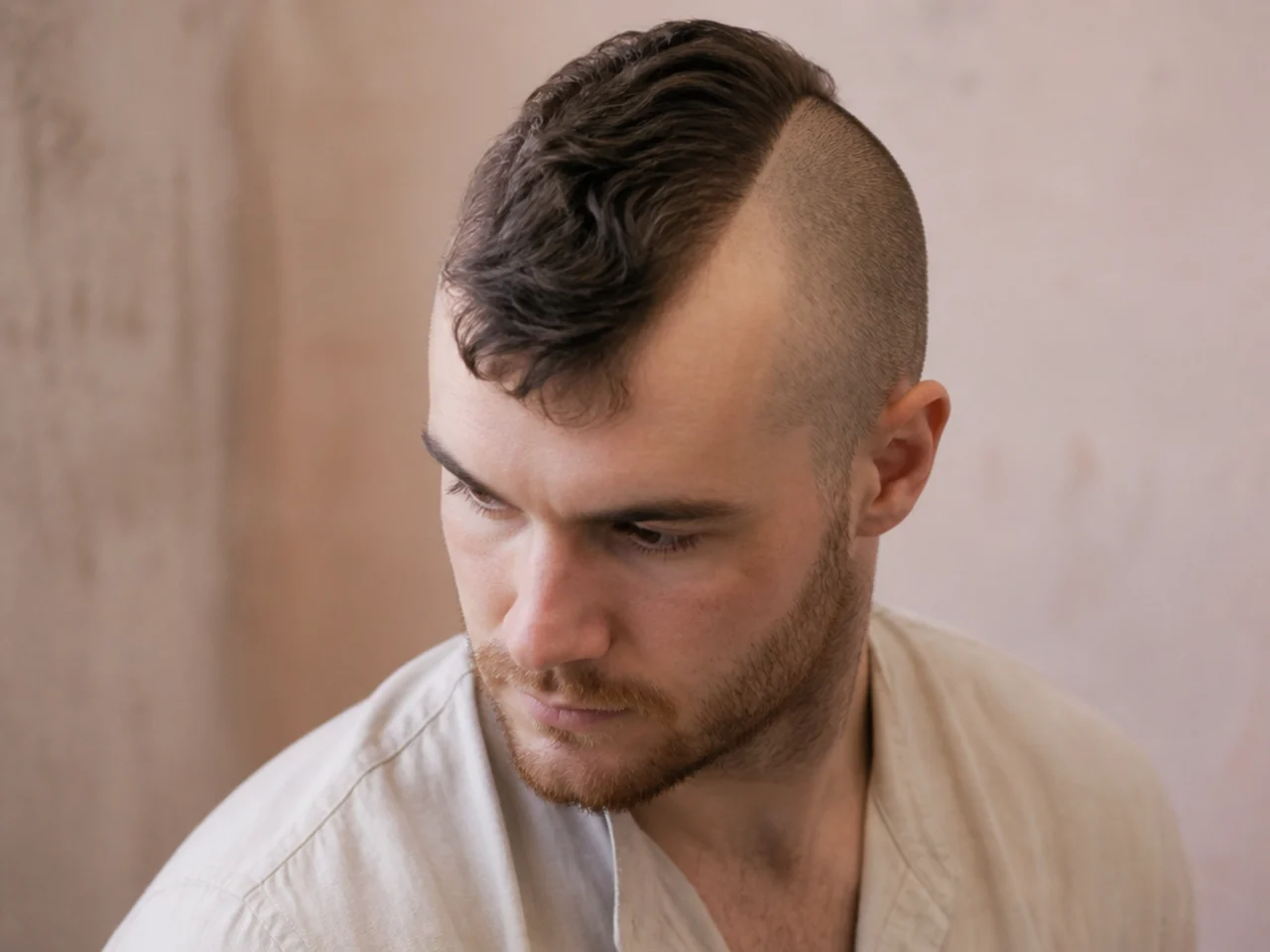
The sides taken to bare skin. Skin reflects light where hair absorbs it, so the strip appears to sit higher off the head than it does. The cost is the schedule, because stubble is visible within one to two weeks and the contrast collapses with it.
3. Disconnected Mullet Mohawk
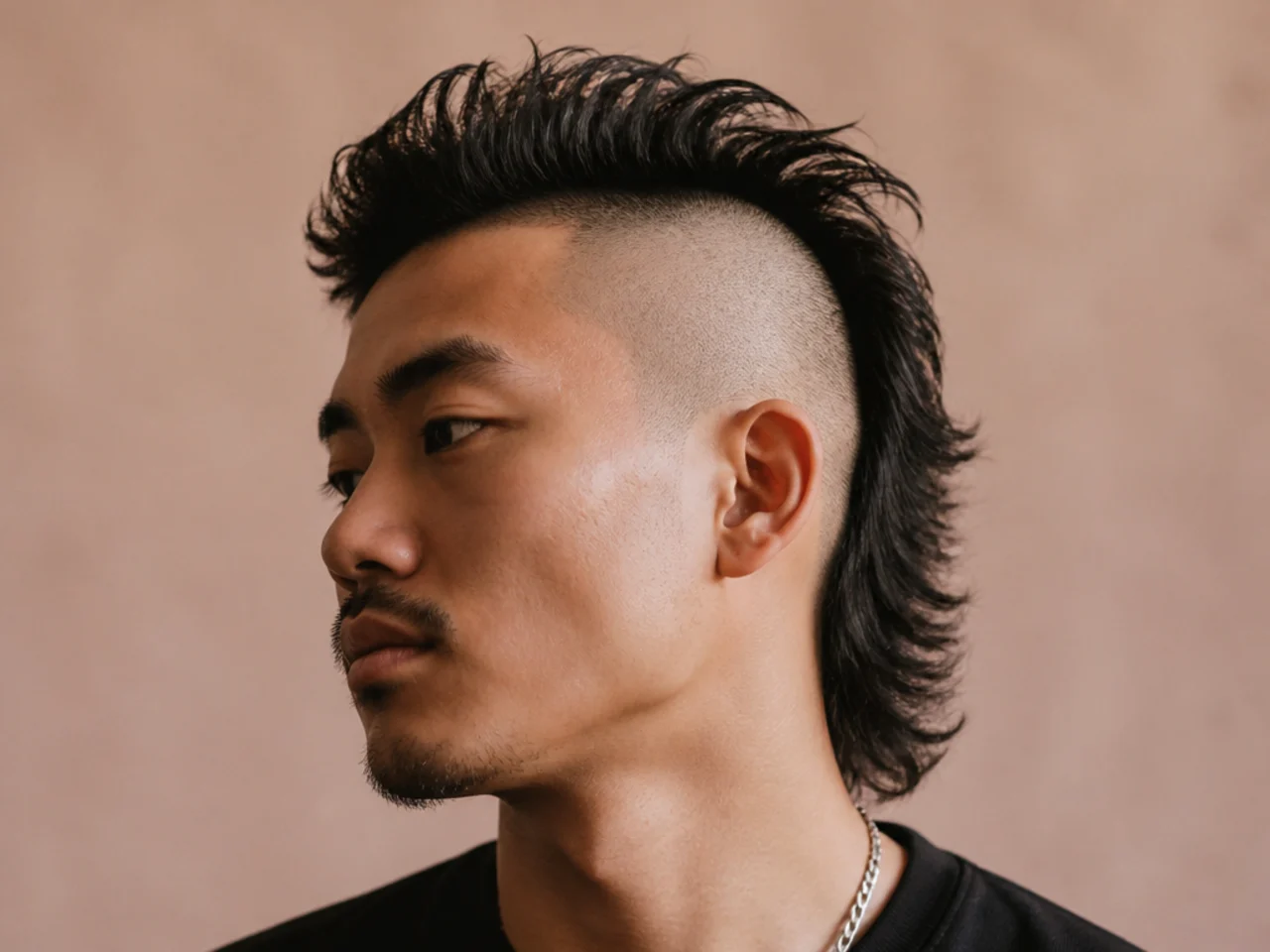
Long straight to short with no gradient, so there is a hard line running the length of the head. The line is the entire effect, and it is also permanent for the length of the grow out, since a disconnection cannot be blended away without losing the strip.
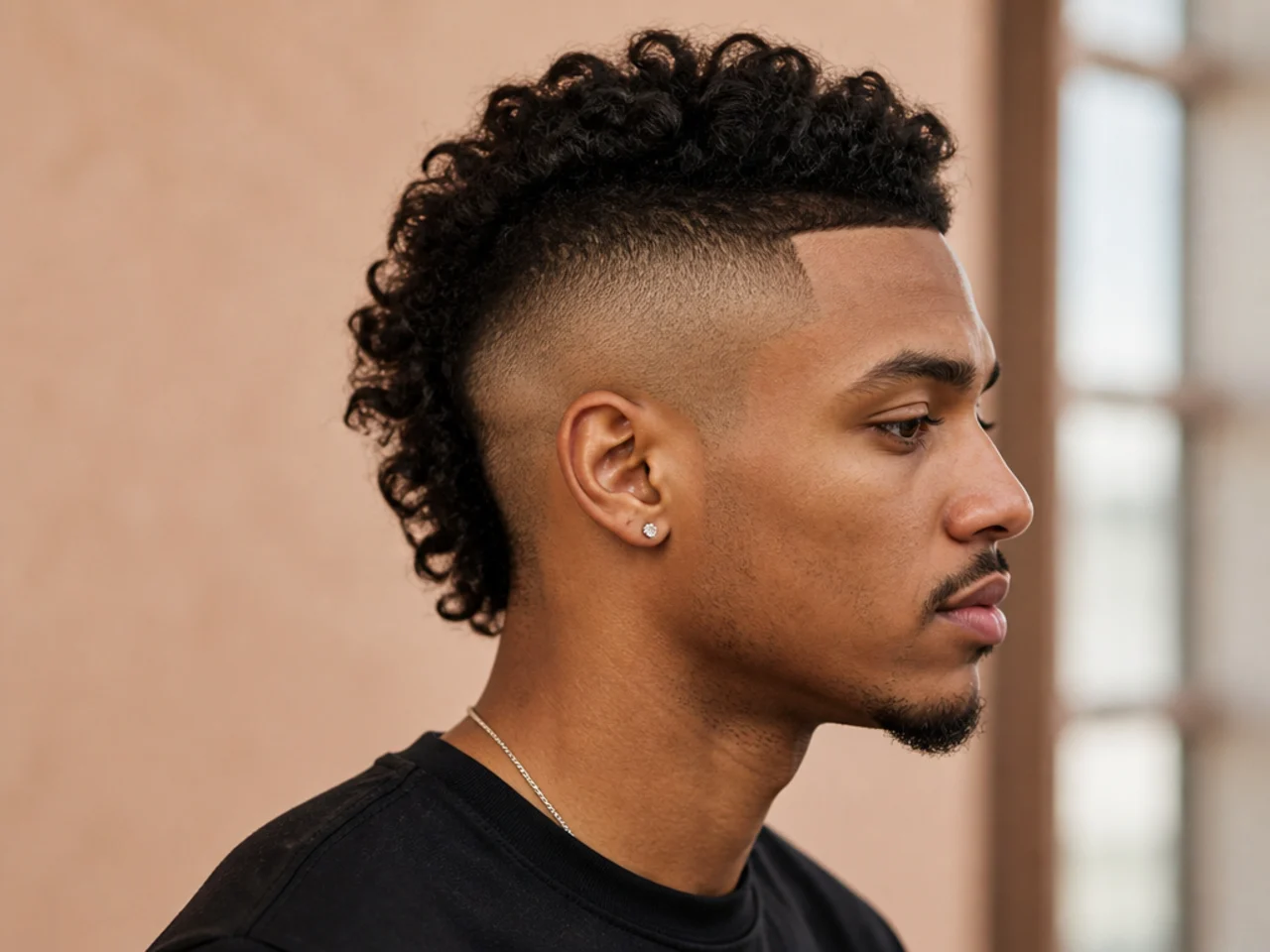
4. Blended Mullet Mohawk
The strip taken gradually down into the sides so there is no visible edge. It reads far softer from the front and grows out without a stage where the line sits at the wrong height, which is what makes it the version that survives a missed appointment.
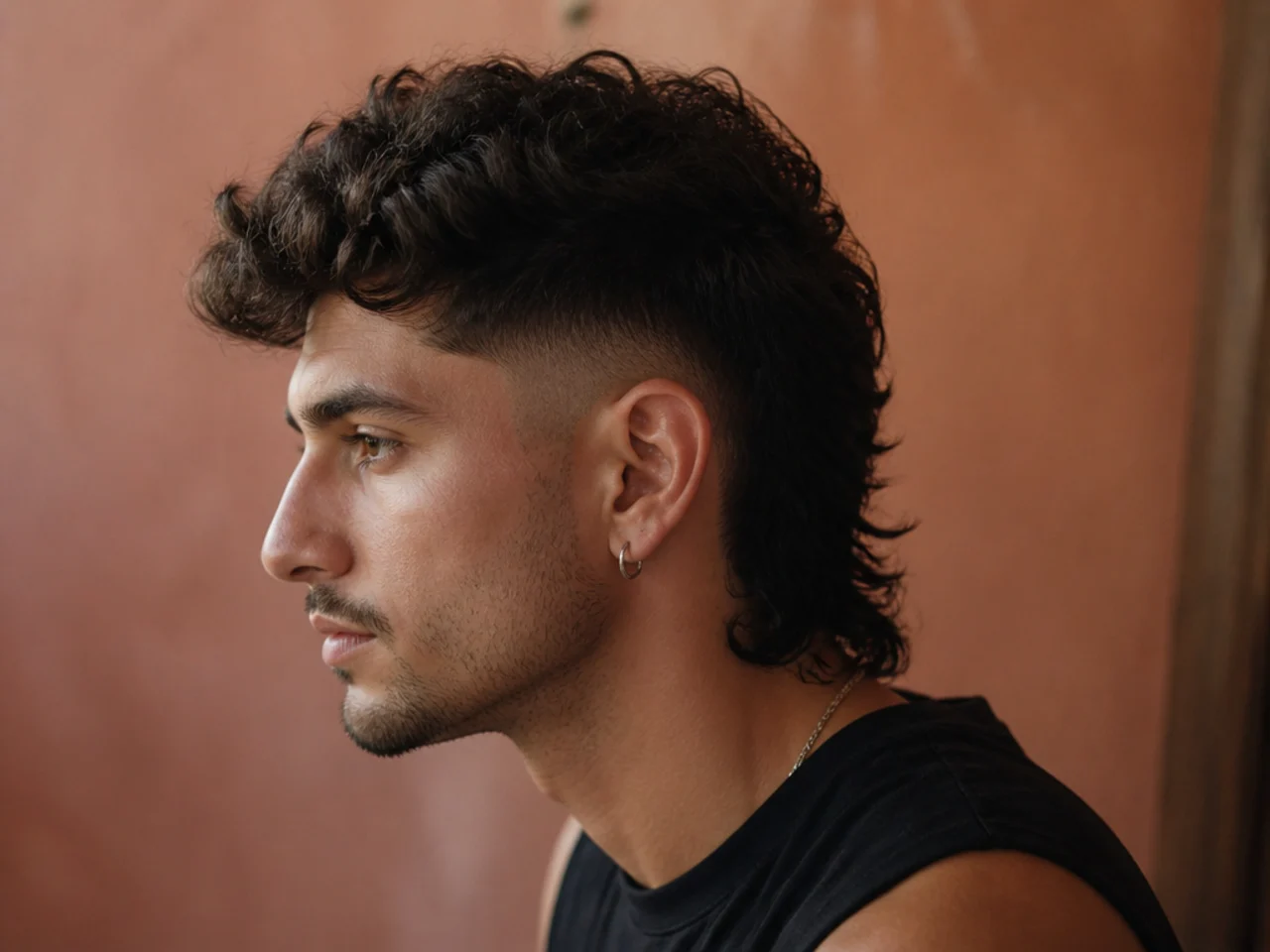
5. Narrow Strip Mullet Mohawk
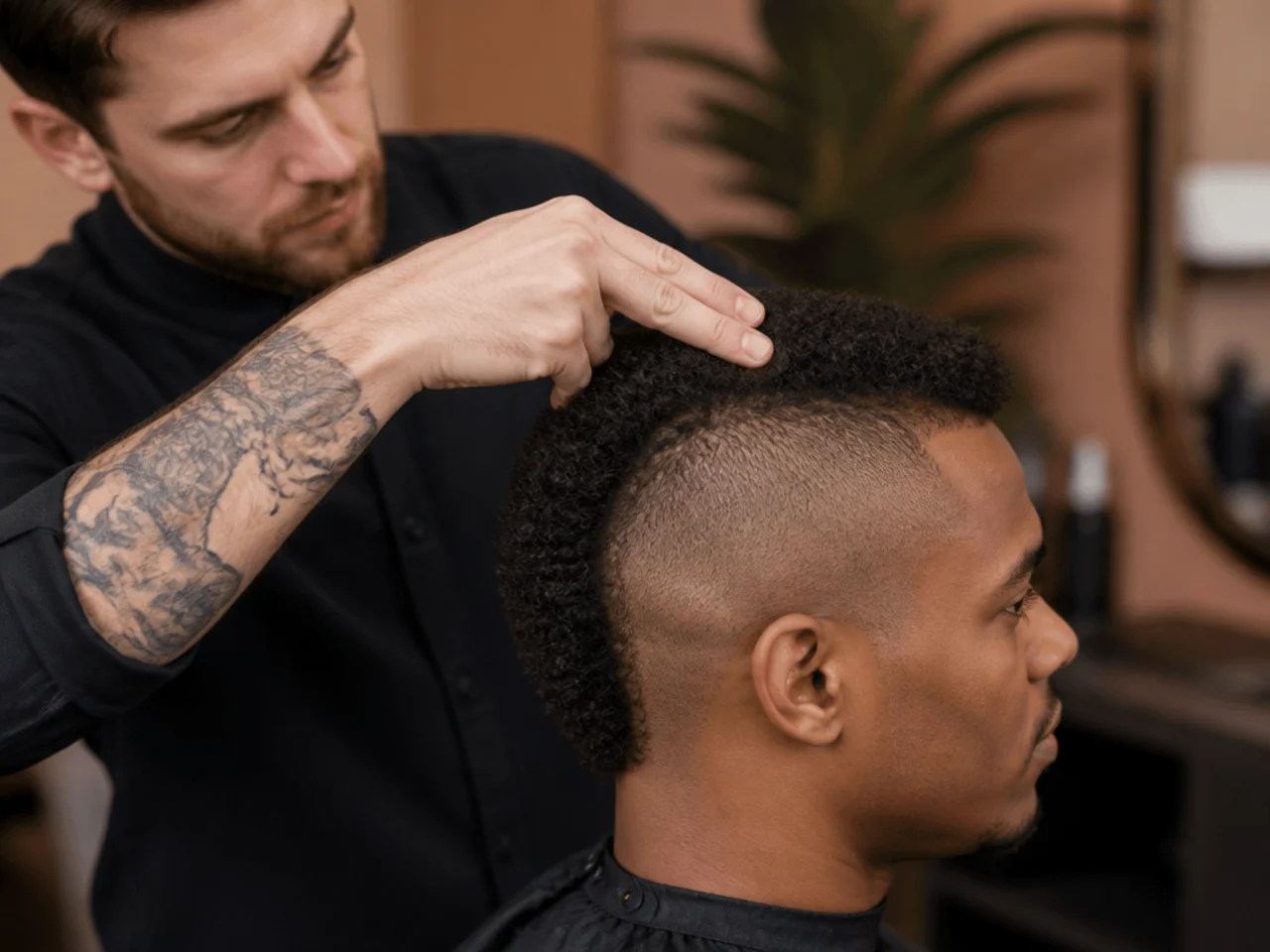
Around three centimetres across. The strip needs enough density to hold itself upright at that width, so this belongs on thick or coily hair. On fine hair the strip lies over to one side and the shape disappears entirely.
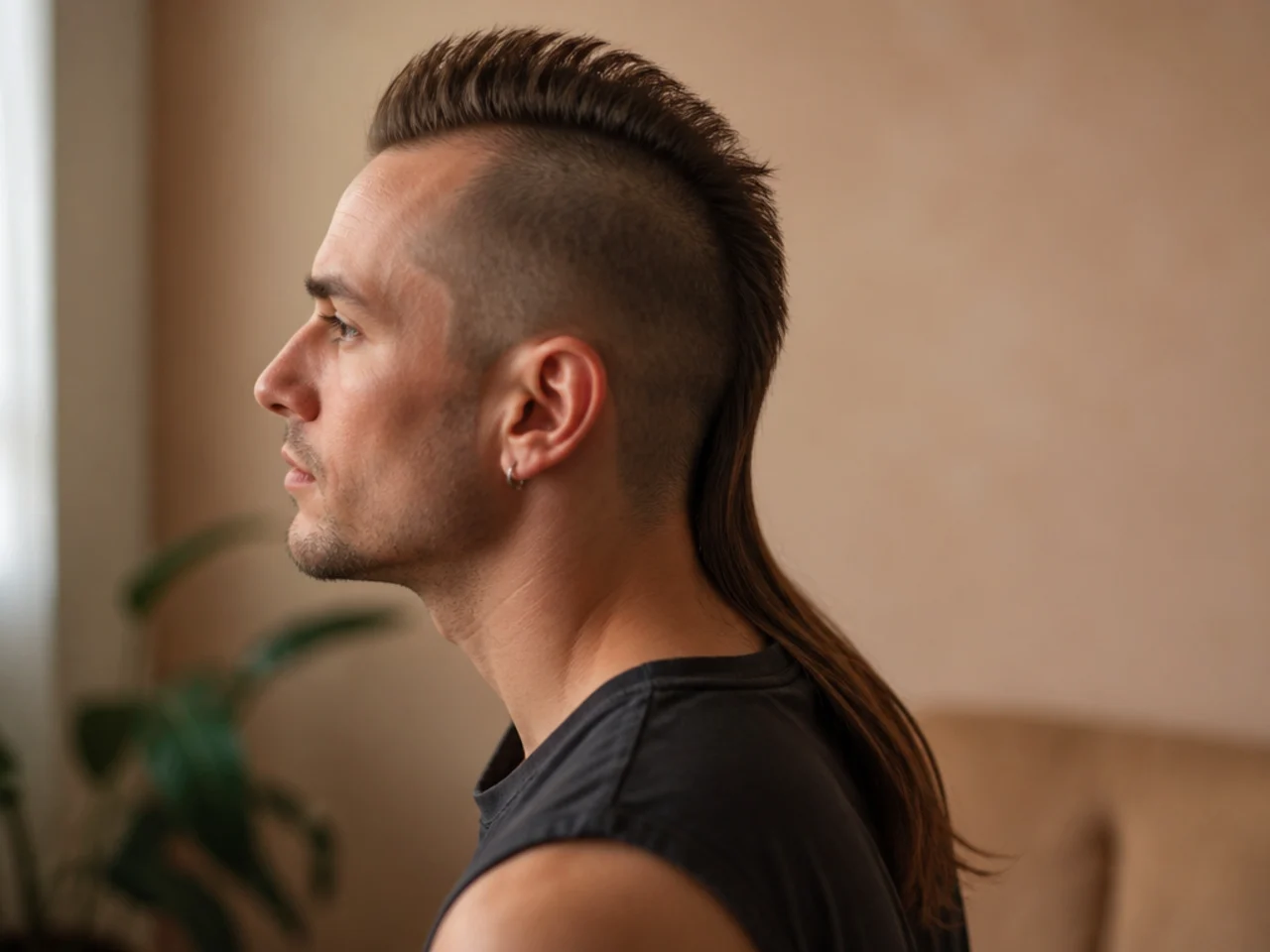
6. Wide Strip Mullet Mohawk
Six centimetres or more. The extra width means the strip lies down rather than standing, so it reads as a long top section with short sides. This is the wearable end of the cut and the version that survives an office.
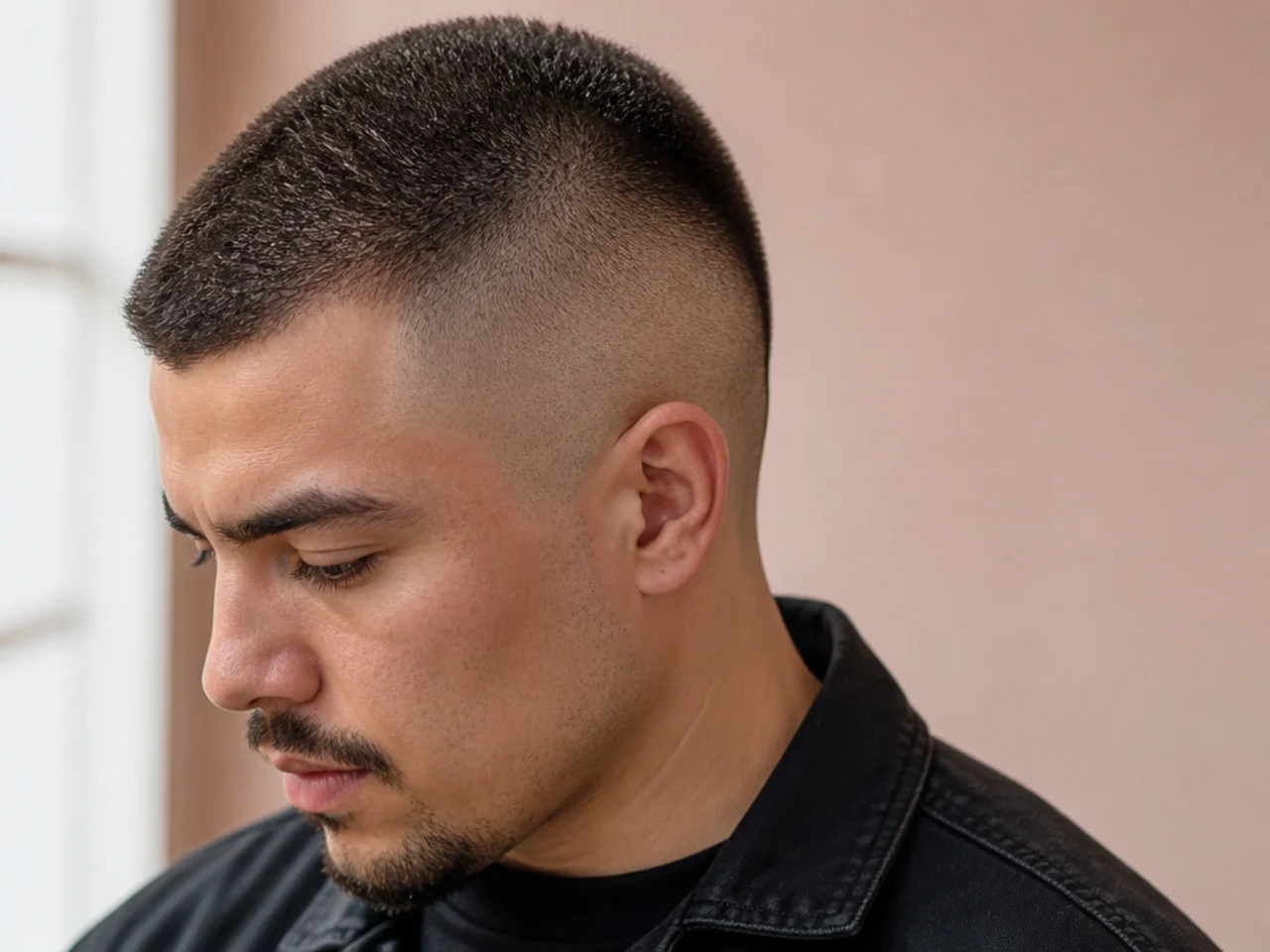
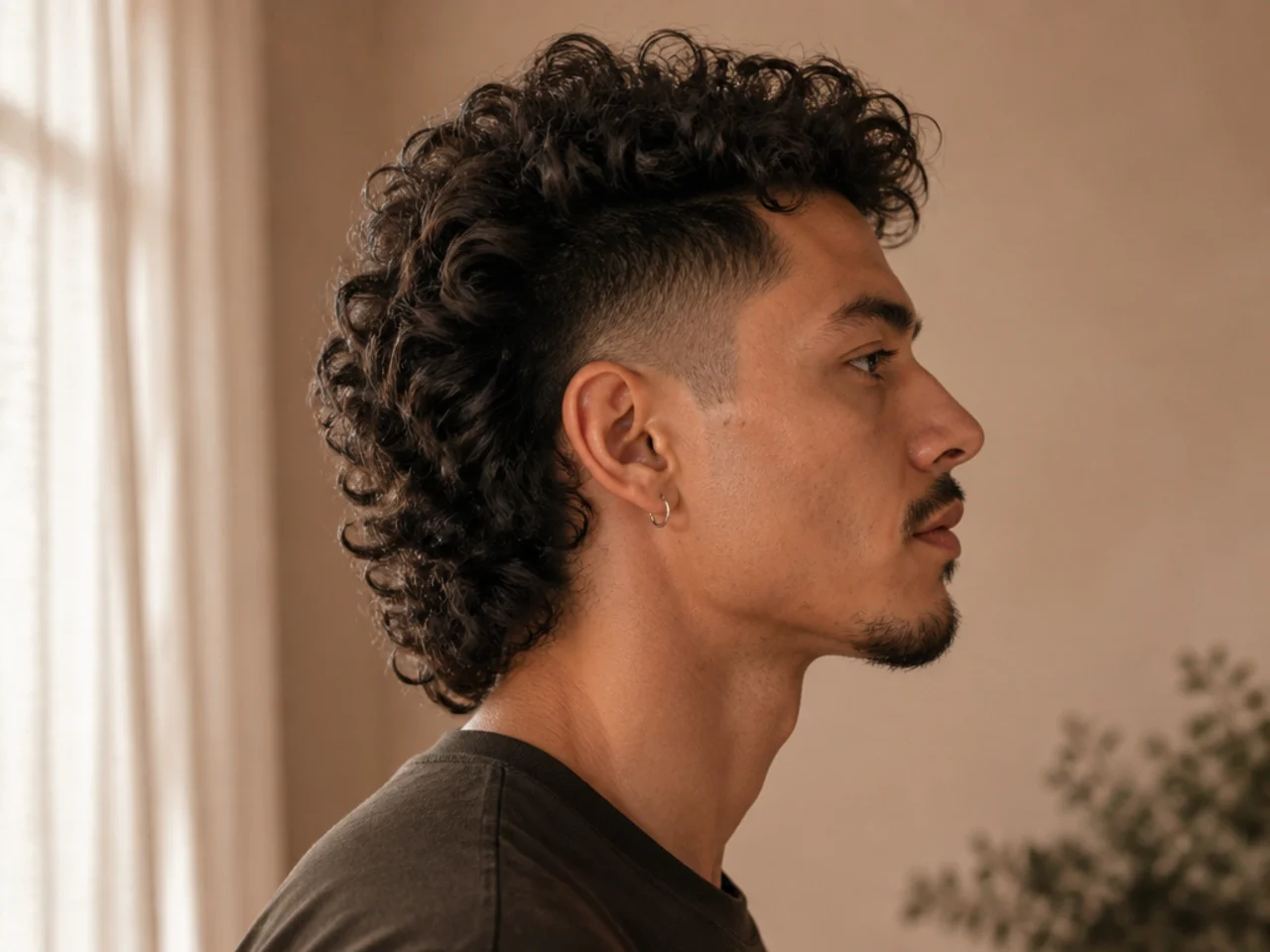
7. Curly Mullet Mohawk
Curl gives the strip height without any product, because each curl props up the ones around it. It also hides an imperfect edge along the strip, since the bend scatters light and blurs the line before the eye can find it.
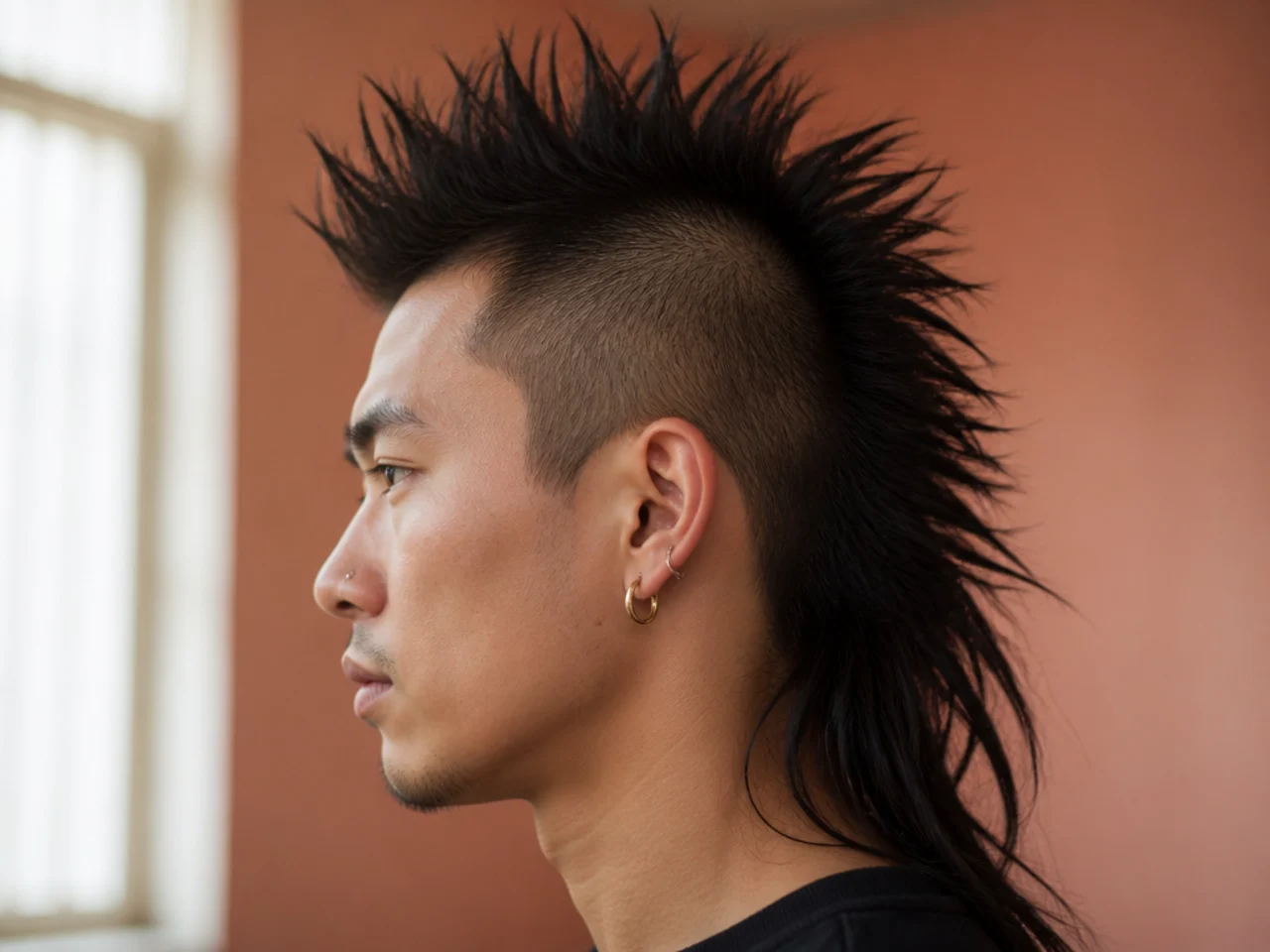
8. Spiked Mullet Mohawk
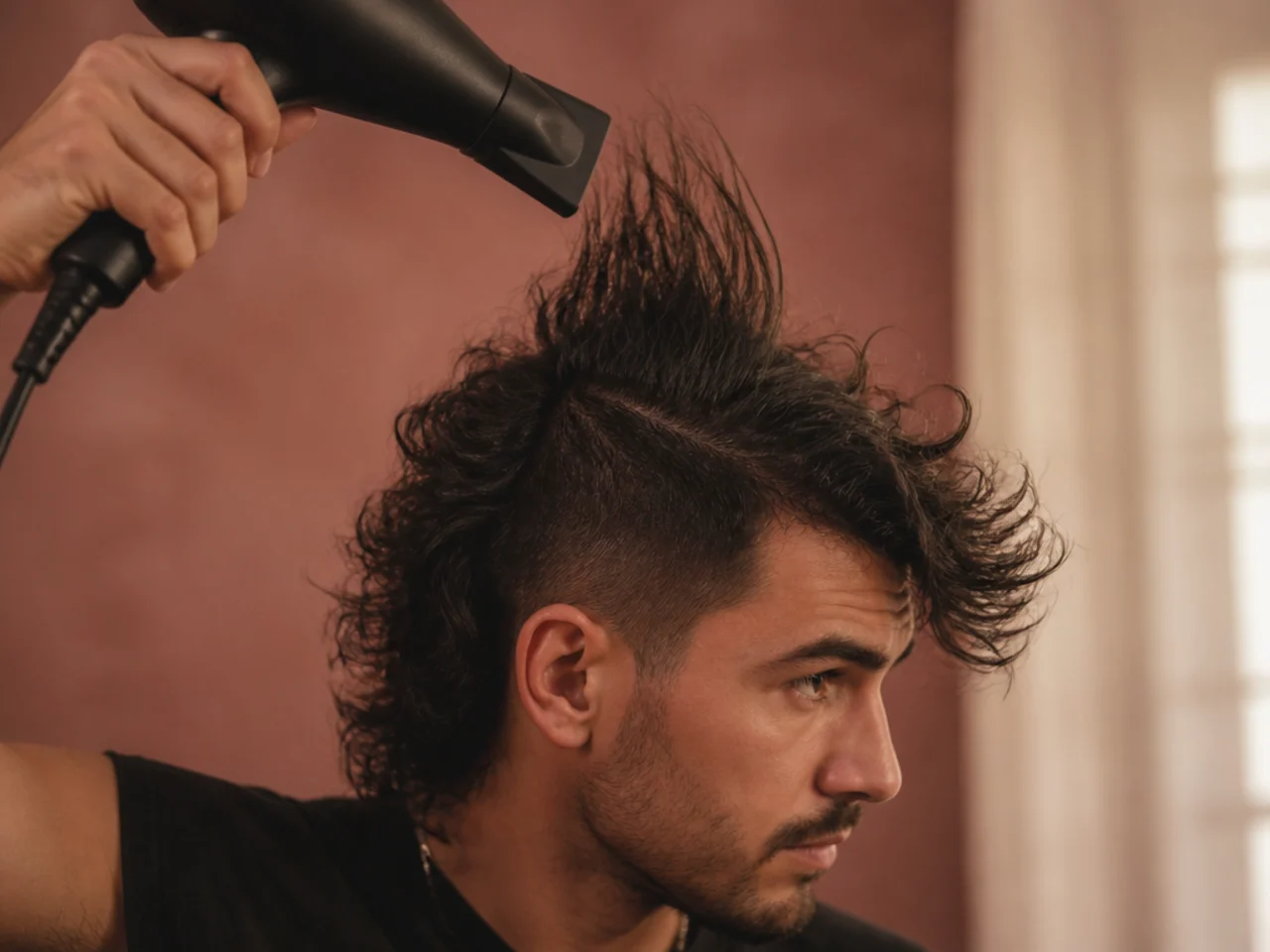
The strip set upright with product. Straight hair has no bend to hold height, so every millimetre of lift is doing work against gravity, and the strip has to be cut with the shortest pieces at the front so the whole thing leans backward rather than folding.
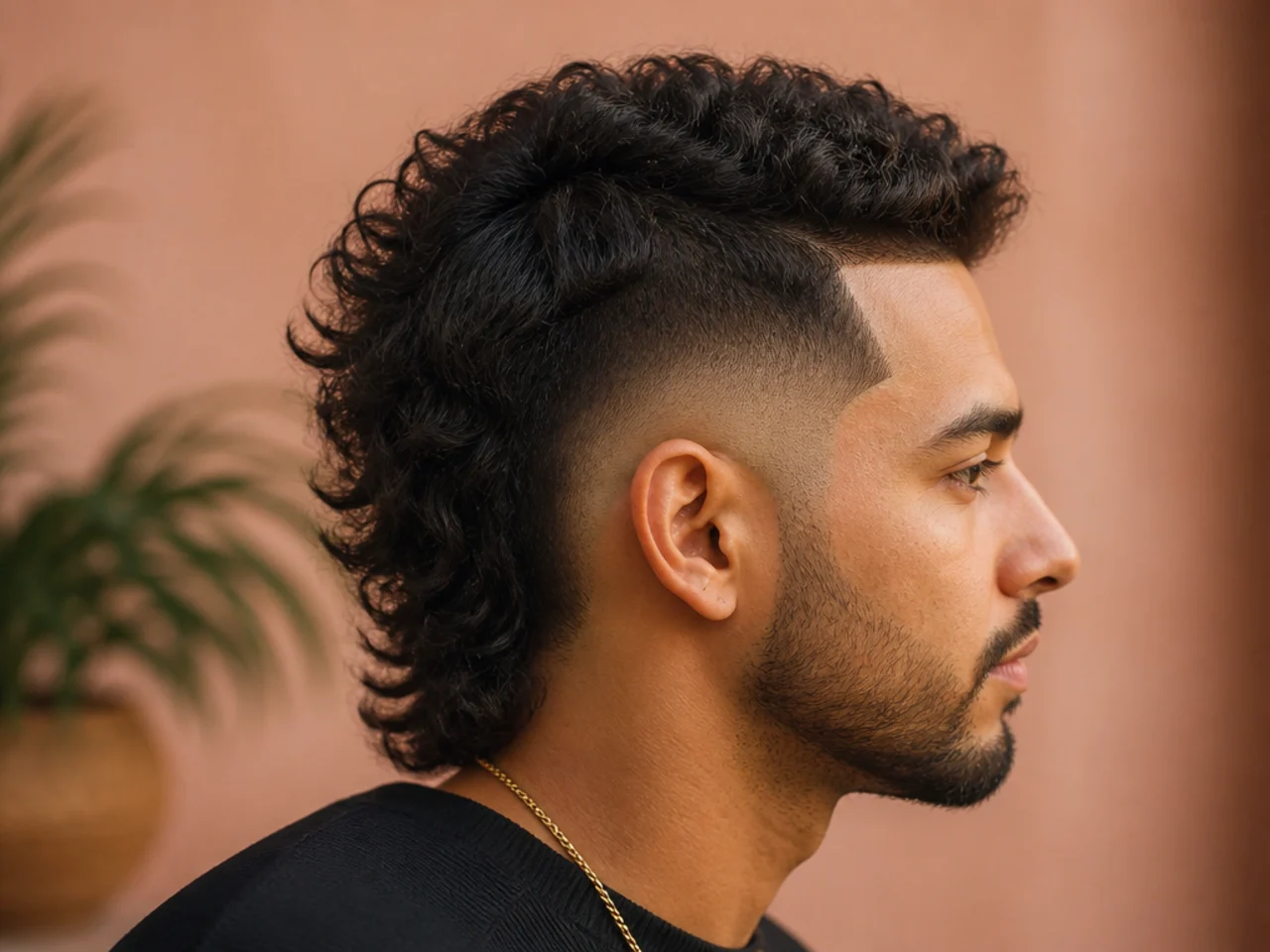
9. Coily Mullet Mohawk
Coily hair grows outward before it grows down, so the strip stands on its own at any width. The tail also sits away from the neck rather than hanging against it, which keeps the profile from flattening at the back.

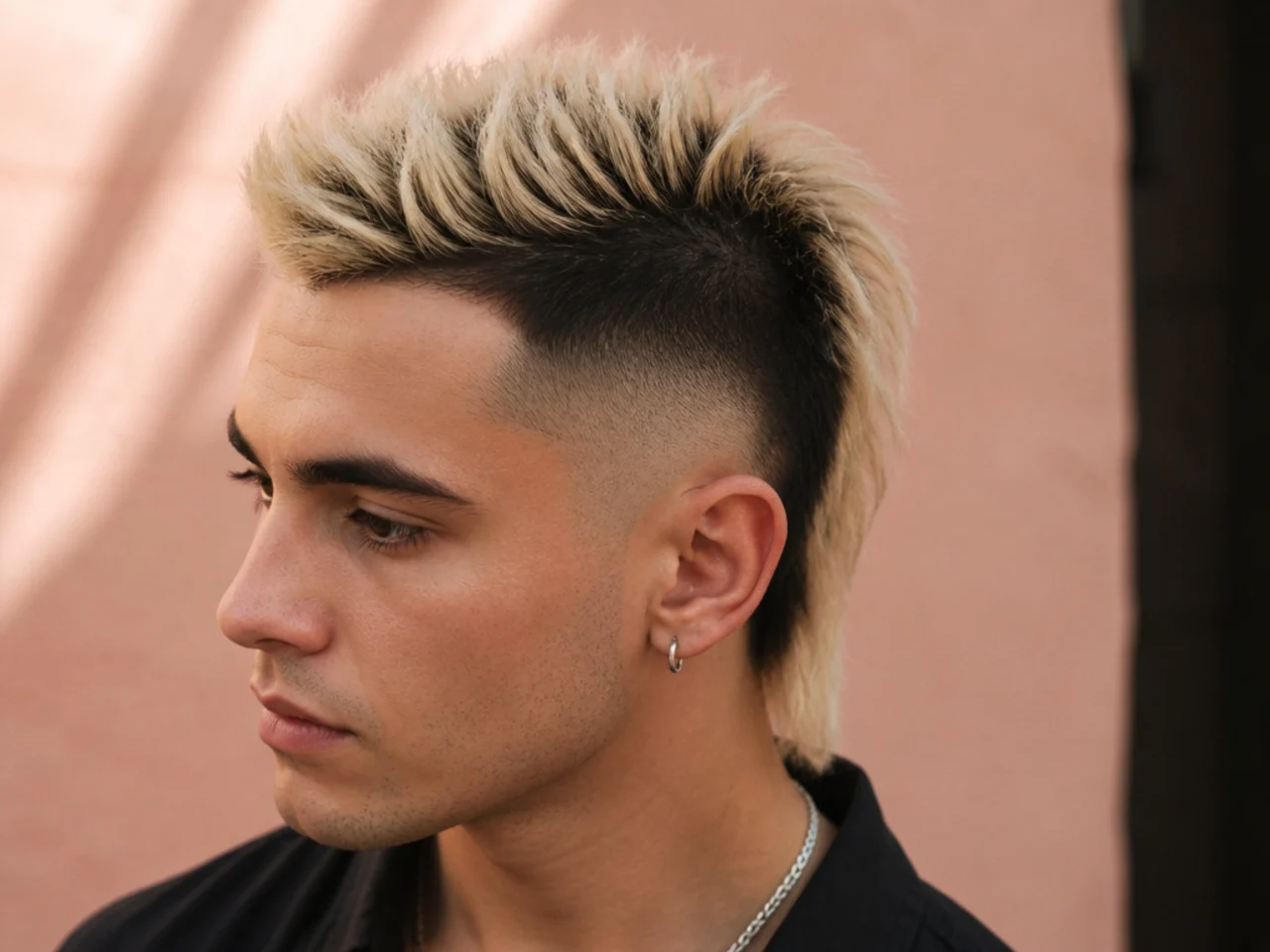
10. Bleached Strip Mullet Mohawk
The strip lifted and the sides left dark. Colour does the same job as length, since the eye separates two tones instantly, and it means the sides can be left longer while the strip still reads as separate.
11. Hard Part Mullet Mohawk
A trimmer line cut along the edge of the strip. It gives the boundary a defined width in a cut where the boundary is the point, and it keeps reading for about a week before the regrowth closes it.
12. Low Fade Mullet Mohawk
The shortening starts around the top of the ear and leaves the widest part of the head with hair on it. The strip then reads wider than it measures, because there is no bare skin beside it to make the comparison.
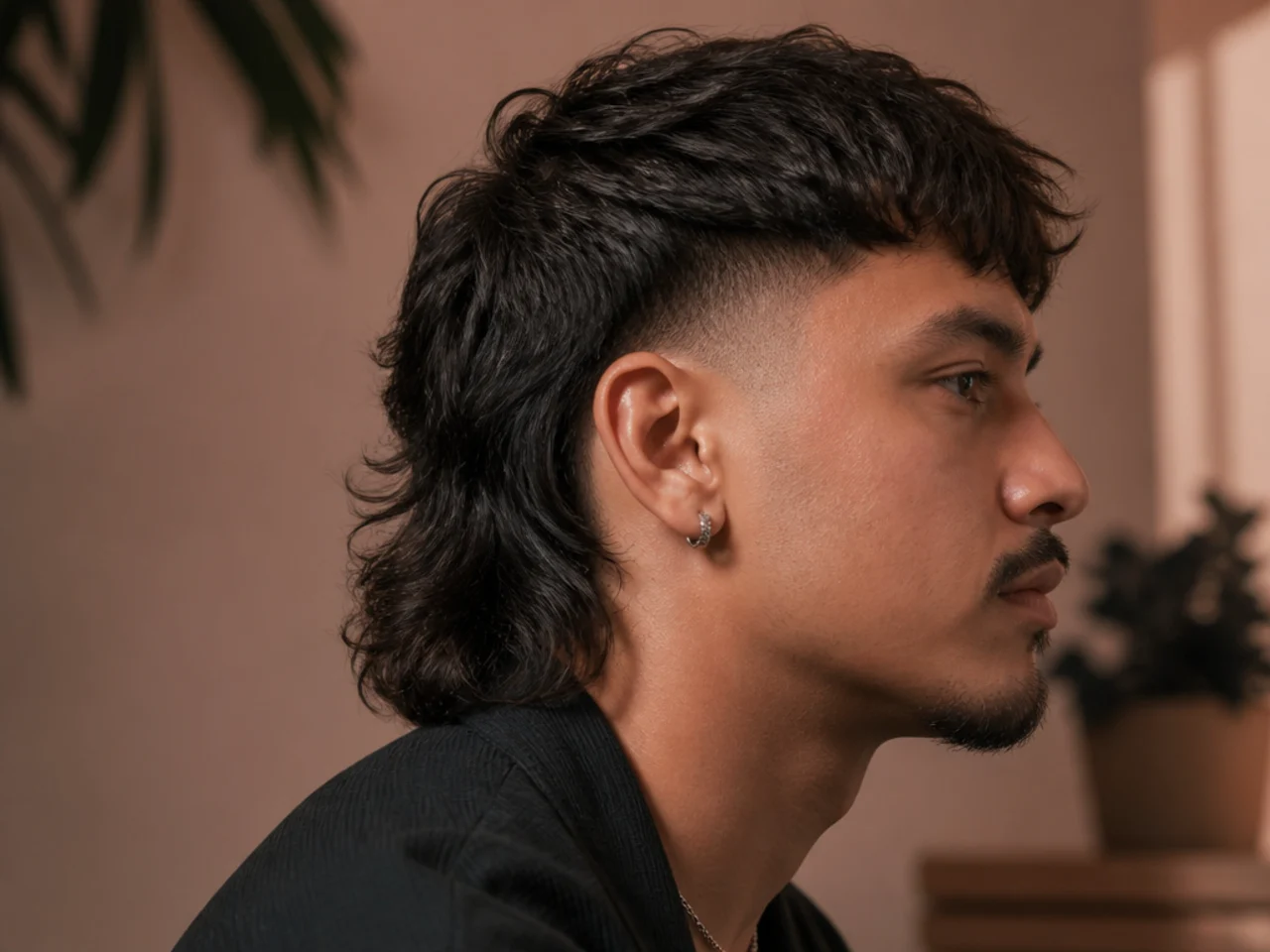
13. Mid Fade Mullet Mohawk
The line begins between the ear and the parietal ridge. The strip now has a shaved band beside it for the eye to compare against, so the same width appears narrower and the whole head reads taller.
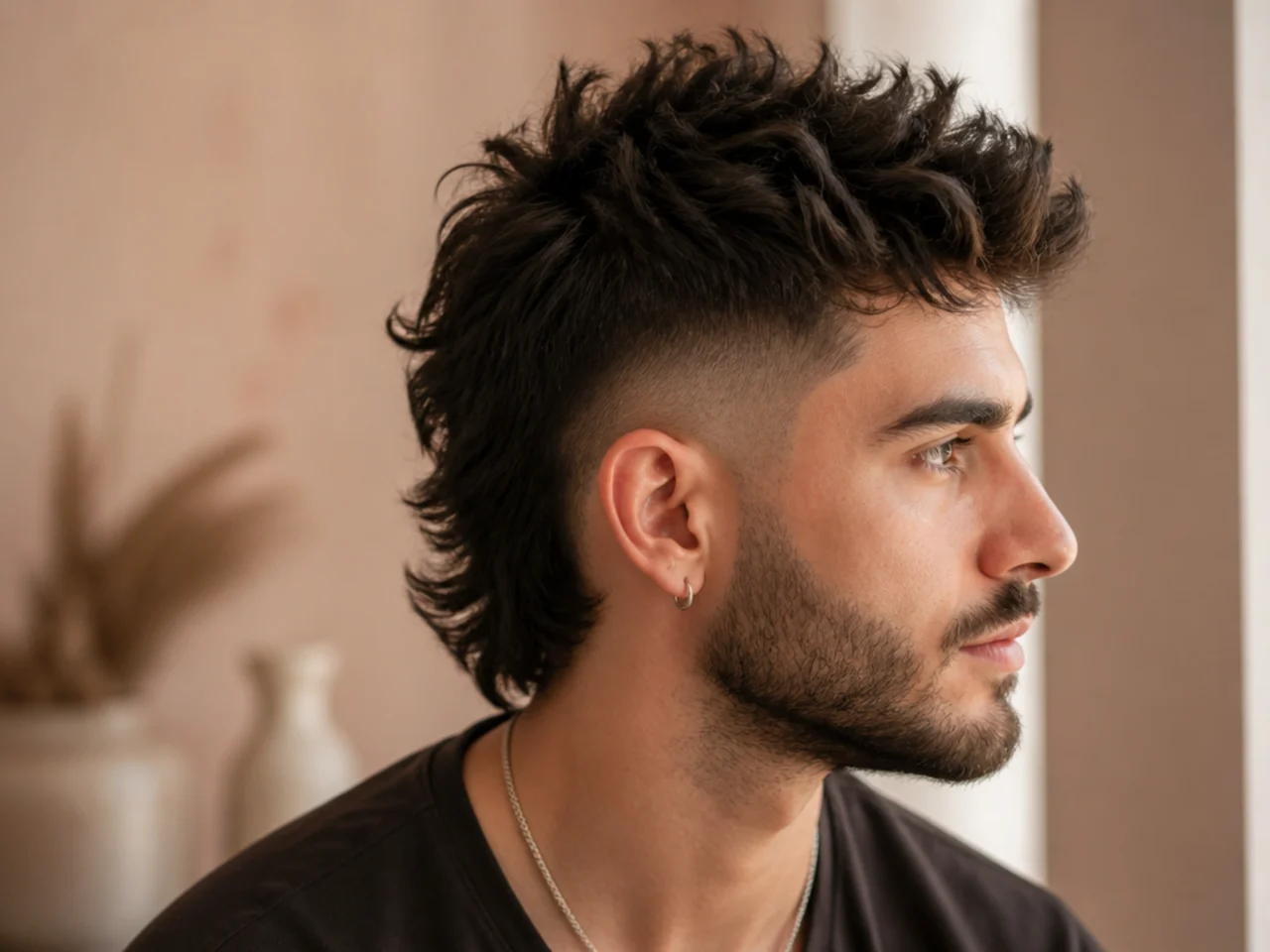
14. High Fade Mullet Mohawk
The shortening starts at or above the parietal ridge, which is the widest point of the skull. Taking width out there narrows the whole silhouette, so this suits a broad face and stretches a long one further than it wants to go.
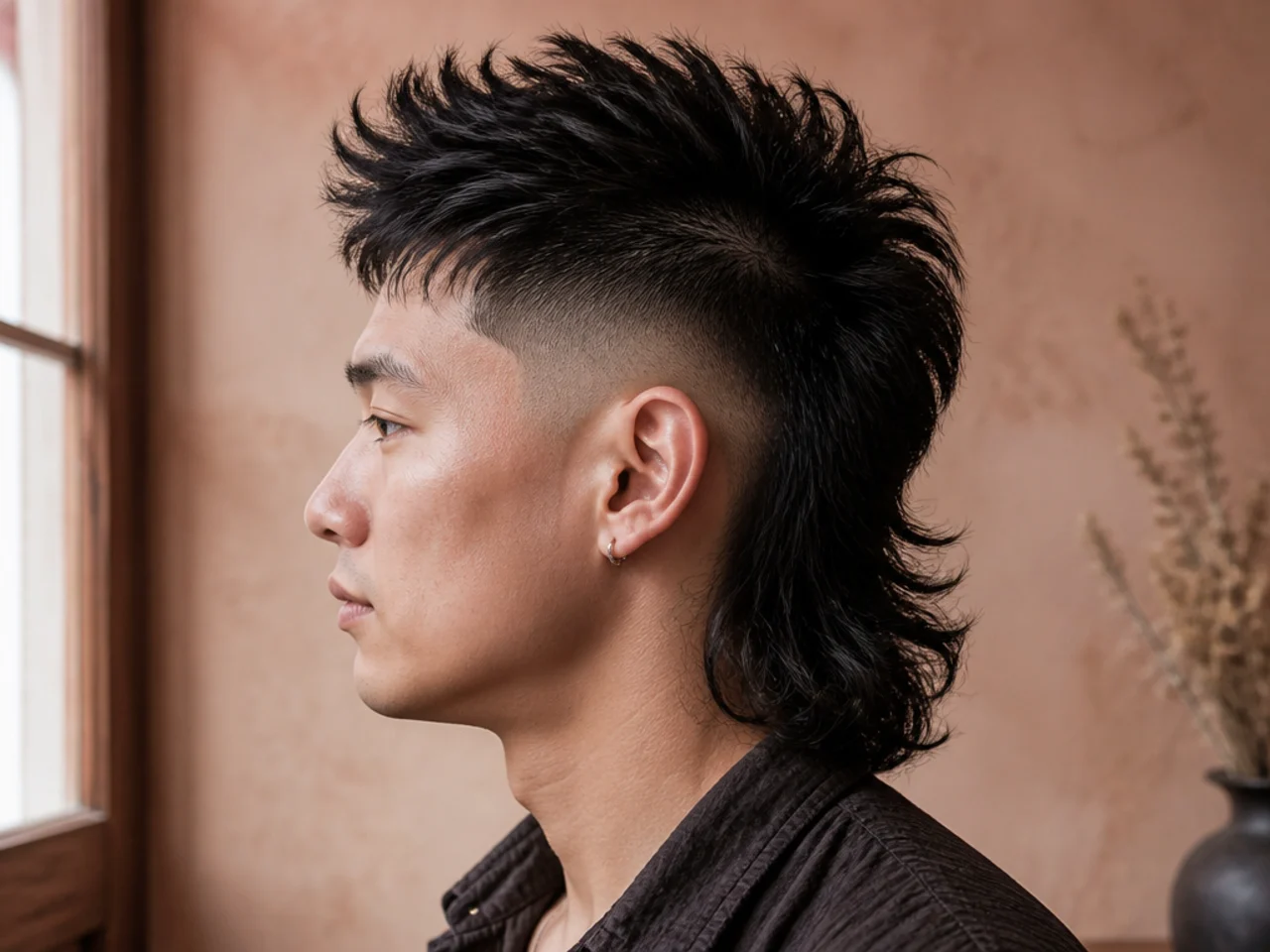
15. Tapered Mullet Mohawk
The sides shortened gradually but never taken to skin, finishing around a number one at three millimetres. Because there is always hair left, the regrowth blurs rather than appearing as stubble, and the cut still reads correctly at three to four weeks.
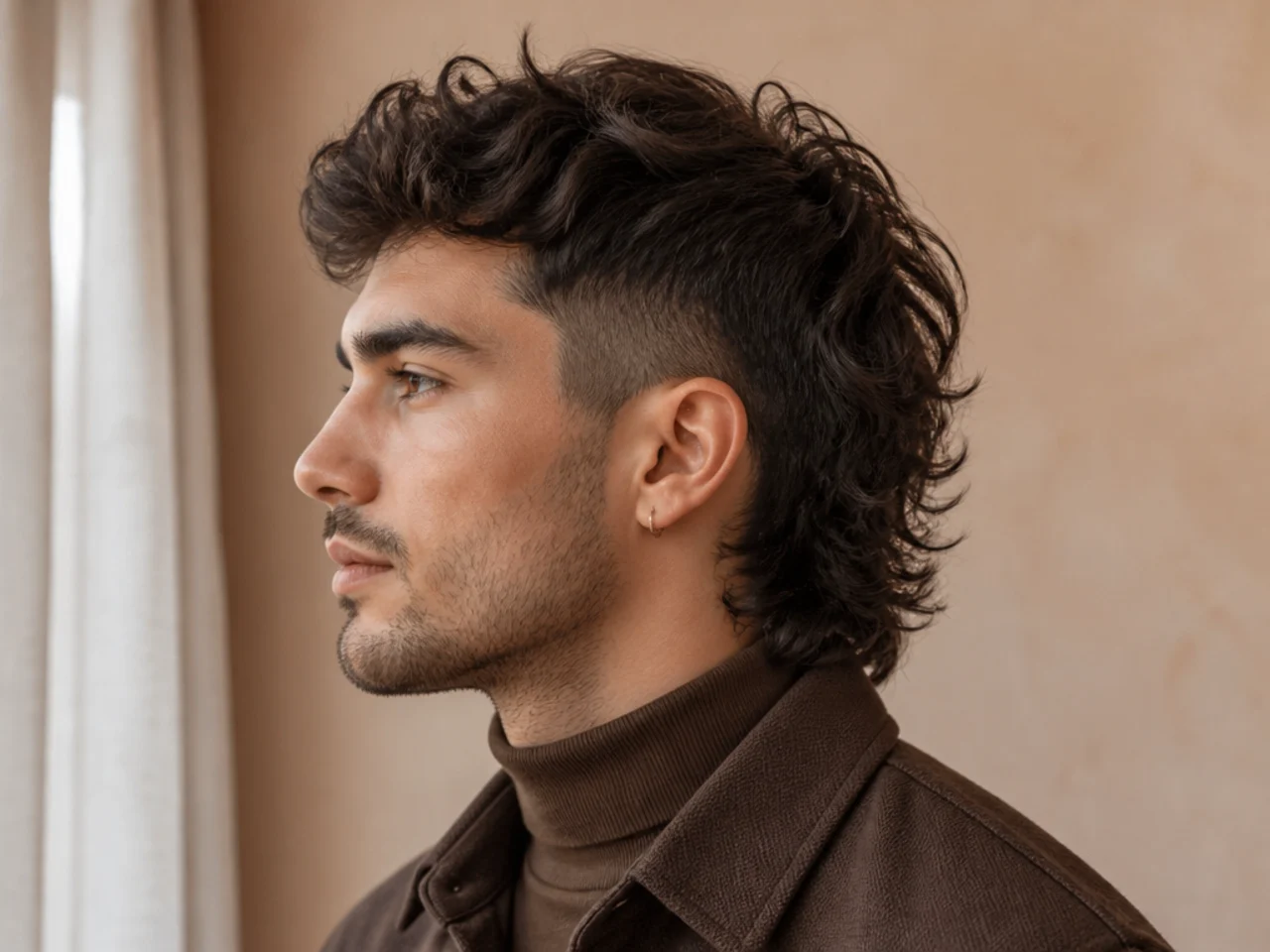
16. Long Tail Mullet Mohawk
The tail carried well past the collar. Length that far down hangs from its own weight rather than following the head, so the profile becomes a straight line from the crown to the ends instead of a curve.
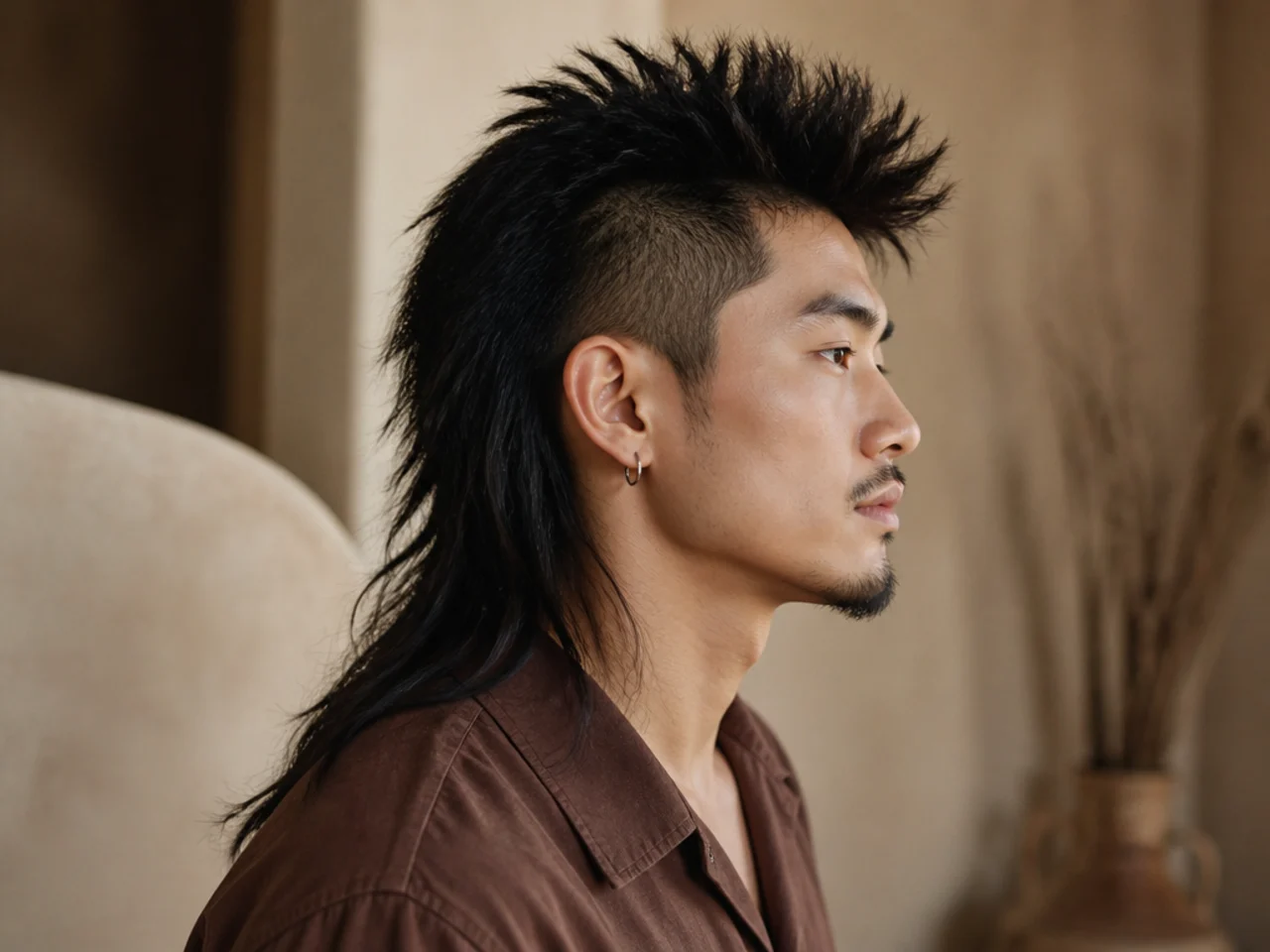
17. Short Tail Mullet Mohawk
The tail stopping at the top of the neck. It keeps the continuous line that separates this from a plain mohawk while staying short enough to sit under a collar, and it is the version that grows into a normal cut fastest.
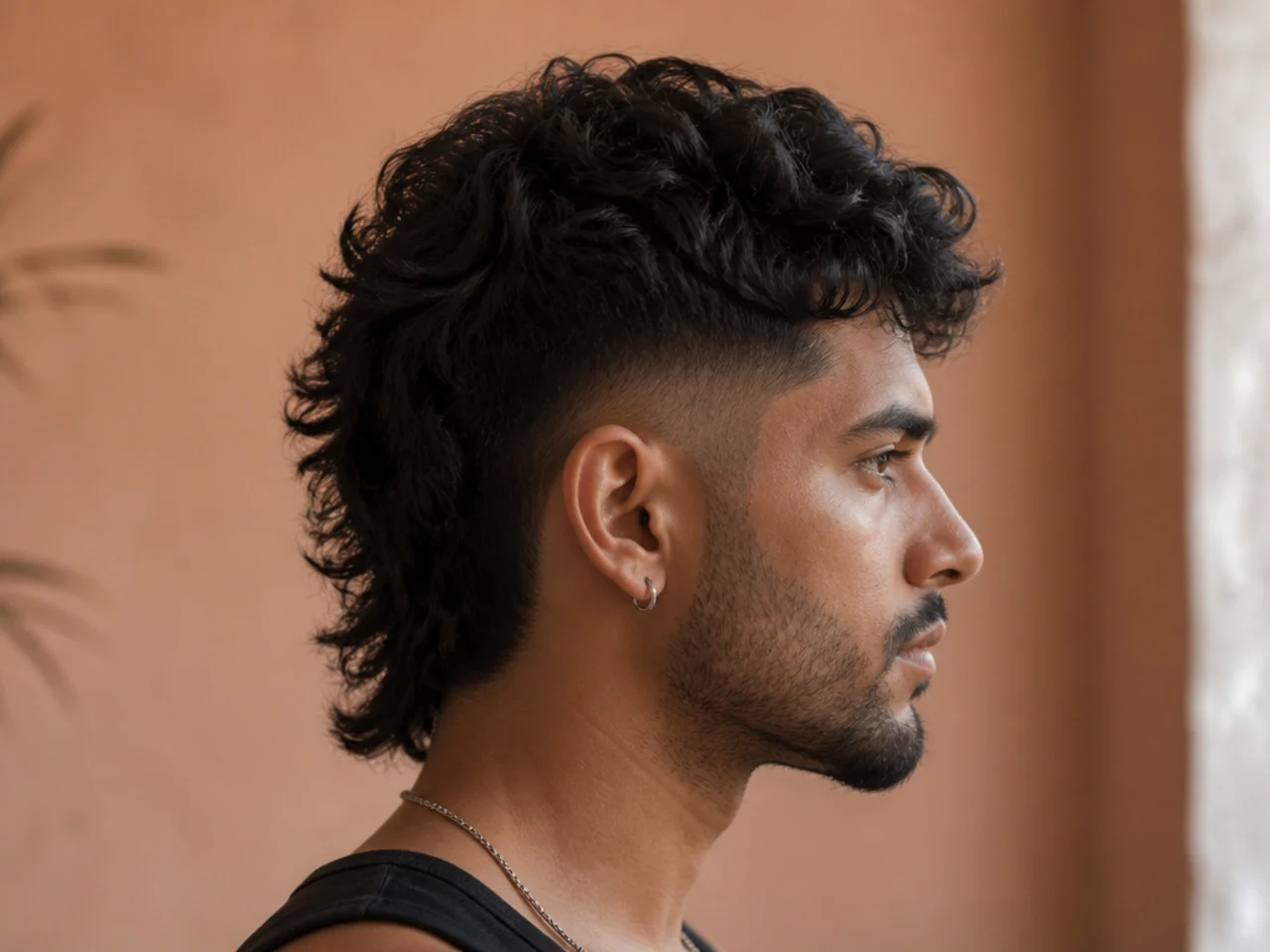
18. Choppy Top Mullet Mohawk
The strip point cut into uneven lengths. The short pieces sit on the longer ones and hold them apart, which builds height without product, and the broken edge means no single line across the top has to be cut perfectly.
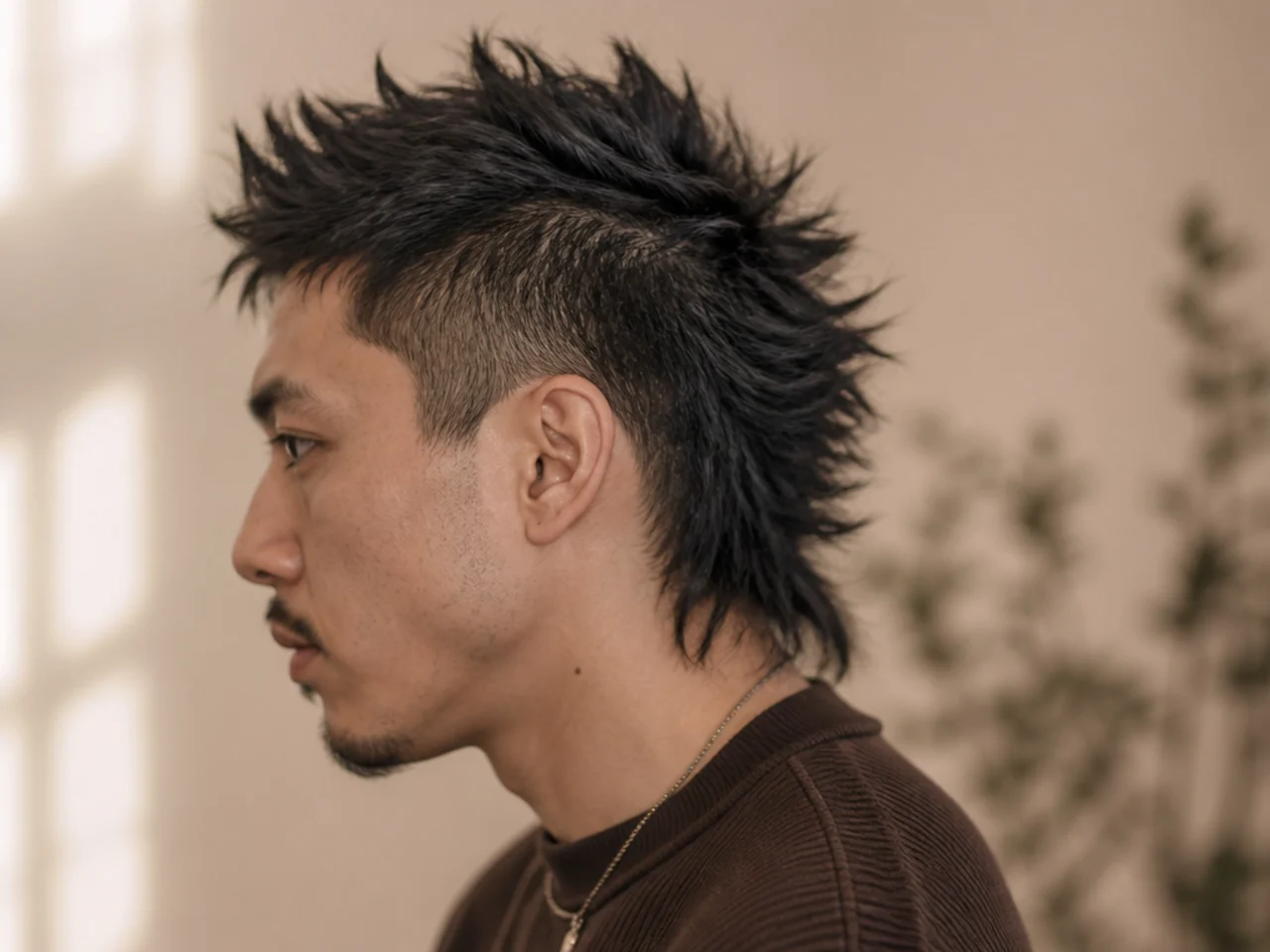
19. Slick Back Mullet Mohawk
The strip combed backward into the tail so the two become one surface. It is the flattest version of the cut and the one that makes the length obvious, since nothing is stacked up and every centimetre is on show in profile.
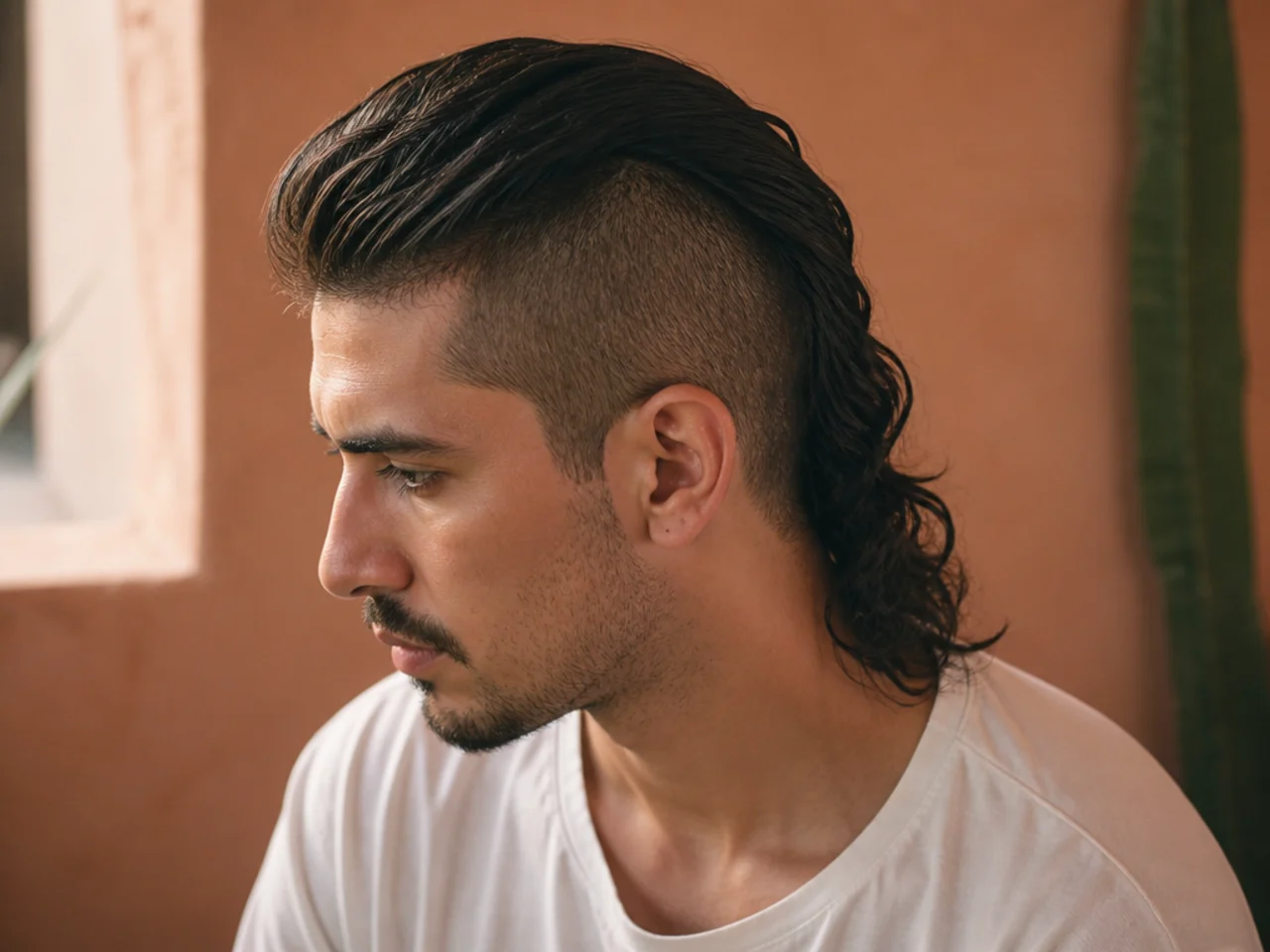
20. Grown Out Mullet Mohawk
At four weeks the sides have gained about a centimetre and the strip edges have softened, so the cut sits somewhere between a mohawk and a wide top. A disconnection survives this stage far better than a blend, because the hard line is still visible under the regrowth.
Styling and Upkeep
Give the strip width in fingers at every appointment. It is the one measurement that changes the cut most and gets remembered least.
Book by the sides, not the top. Skin every two to three weeks, a taper every three to four. The strip itself can go months.
Dry the strip upward from the root. Height is set at the root, and product applied to the ends only adds weight where it works against you.
Trim the tail separately. It grows at the same rate as everything else but is the only part where the ends split, because scalp oil never travels that far down.
Check the back in a hand mirror. The transition from strip to tail is the part of the cut you never see and everyone behind you does.
Mistakes to Avoid
A narrow strip on fine hair. There is not enough density to stand up, so it lies over sideways and the cut stops reading as a mohawk.
Taking the sides to skin without checking the schedule. Bare skin is stubble inside a fortnight, and the contrast the cut depends on goes with it.
Cutting a disconnection you are unsure about. A blend can be taken to a disconnection at any point. Going back the other way means growing the sides out.
Letting the tail dictate the strip width. They are seen in different views, so scaling one to the other achieves nothing.
A high fade on a long face. It removes width at the widest point of the skull and stretches the head further.
FAQ
How wide should the strip be? Three to six centimetres, measured in fingers across the top.
Skin or guard on the sides? Skin for contrast every two to three weeks, a guard for a three to four week schedule.
Blended or disconnected? Blended grows out cleanly, disconnected reads harder and cannot be undone.
Final Thoughts
Bring two numbers to the appointment. The strip width in fingers and the guard on the sides describe this cut completely, and they are the two things that come back different every time they are left to words like narrow or short.
More fade heights, burst fades and grow out timings in Fade Haircuts. See also mullet fade and mullet modern.