20 Stylish Mullet Taper Fade Cuts For Thick Hair
Twenty mullet taper fade variations built for dense hair, and the distinction that decides your trim schedule — a taper leaves length at the bottom and a fade takes the same area to skin.
In this article · 27
- Taper Versus Fade on a Mullet
- Choosing Your Version on Thick Hair
- The 20 Mullet Taper Fade Cuts
- 1. Low Taper Fade Mullet
- 2. Mid Taper Fade Mullet
- 3. High Taper Fade Mullet
- 4. Burst Fade Mullet
- 5. Drop Fade Mullet
- 6. Skin Taper Fade Mullet
- 7. Taper Fade Mullet With a Hard Part
- 8. Taper Fade Mullet With a Fringe
- 9. Curly Taper Fade Mullet
- 10. Wavy Taper Fade Mullet
- 11. Straight Hair Taper Fade Mullet
- 12. Textured Taper Fade Mullet
- 13. Taper Fade Mullet With a Narrow Nape
- 14. Taper Fade Mullet With a Wide Nape
- 15. Disconnected Taper Fade Mullet
- 16. Blended Taper Fade Mullet
- 17. Taper Fade Mullet With a Beard Connection
- 18. Taper Fade Mullet With Layers on Top
- 19. Taper Fade Mullet at Week One
- 20. Taper Fade Mullet at Week Four
- Styling and Upkeep
- Mistakes to Avoid
- FAQ
- Final Thoughts
A mullet on thick hair goes wrong at the sides, not the back, because density at ear height makes the whole silhouette read wide.
A taper leaves length. A fade goes to skin. The taper finishes around a number one guard at three millimetres. The fade finishes at nothing.
The taper is a weight tool on dense hair. Shortening the sides moves the widest point of the head upward, which is what makes the back length look deliberate.
Taper Versus Fade on a Mullet
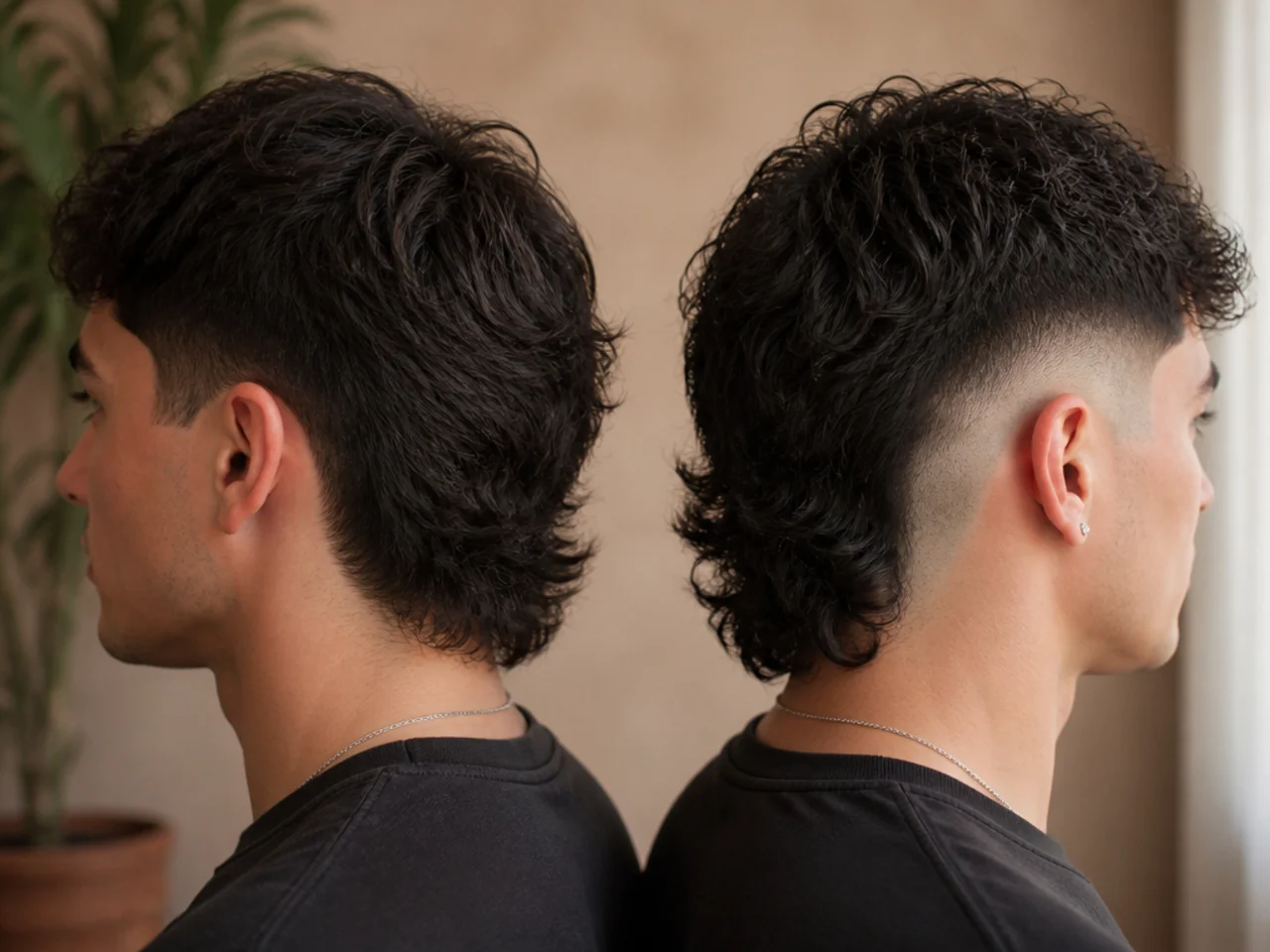
A taper finishes with hair still there. Usually a number one at three millimetres, never bare, so the contrast against the back stays moderate.
A fade finishes at skin. Skin reflects light where hair absorbs it, which is why the jump to the nape length reads so much harder.
The taper buys two extra weeks. Bare scalp shows stubble within days. Three millimetres blurs slowly and still reads correctly at four.
Both are correct cuts. The failure is asking for one word and picturing the other, then blaming the barber for what you described.
Choosing Your Version on Thick Hair
Start low if the hair is very dense. A low line leaves more hair to blend through, and dense hair needs that room to avoid a visible step.
Say where the nape strip starts and how wide it is. That strip is what makes it a mullet rather than a taper with long hair behind it.
Ask for bulk removed under the top, not off it. Thinning the interior lets the surface lie flat while the length keeps its shape.
Pick by your trim schedule, not the photograph. A taper wants three to four weeks, a skin fade wants two, and the cut looks wrong the moment you miss it.
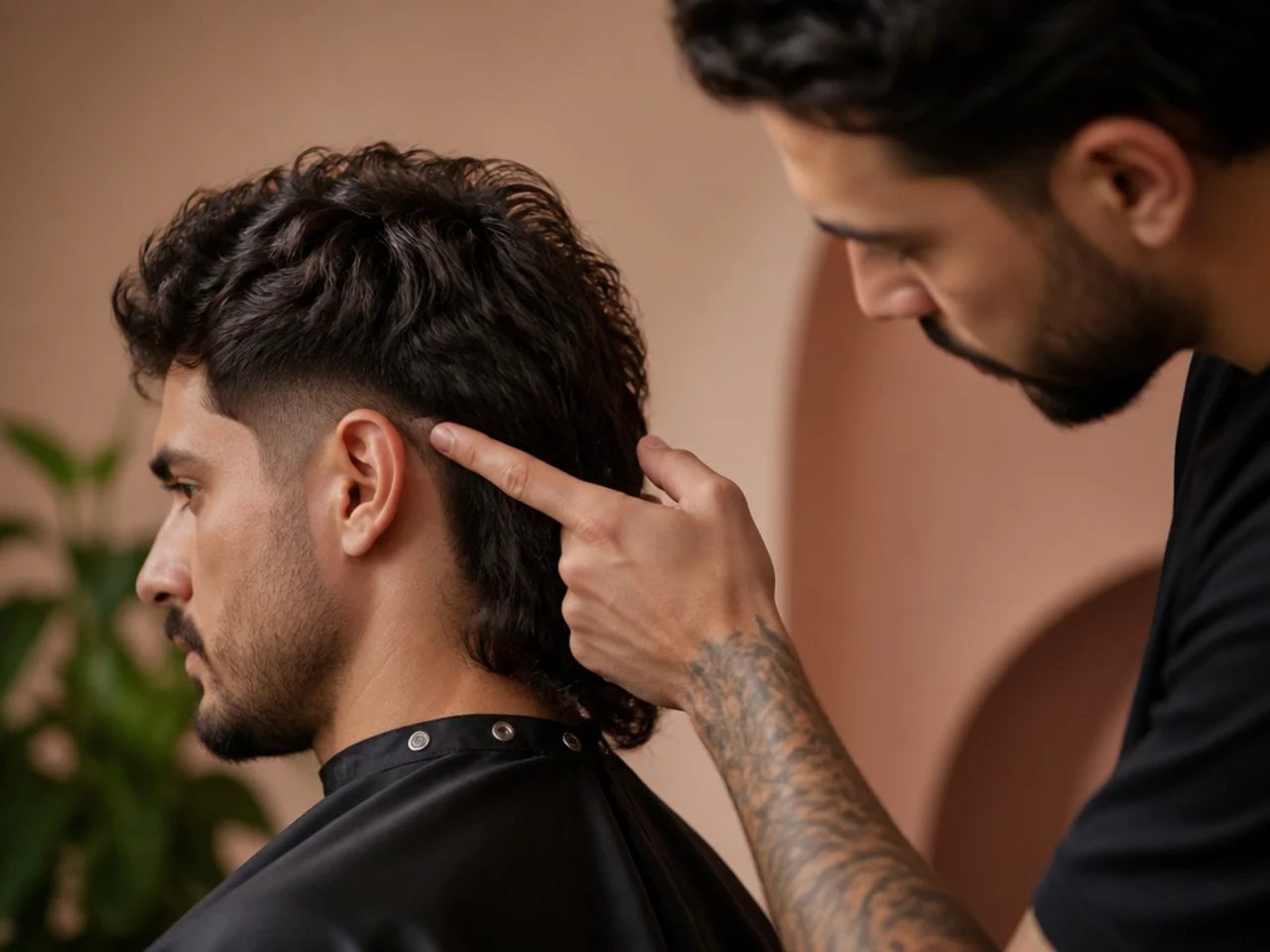
The 20 Mullet Taper Fade Cuts
1. Low Taper Fade Mullet
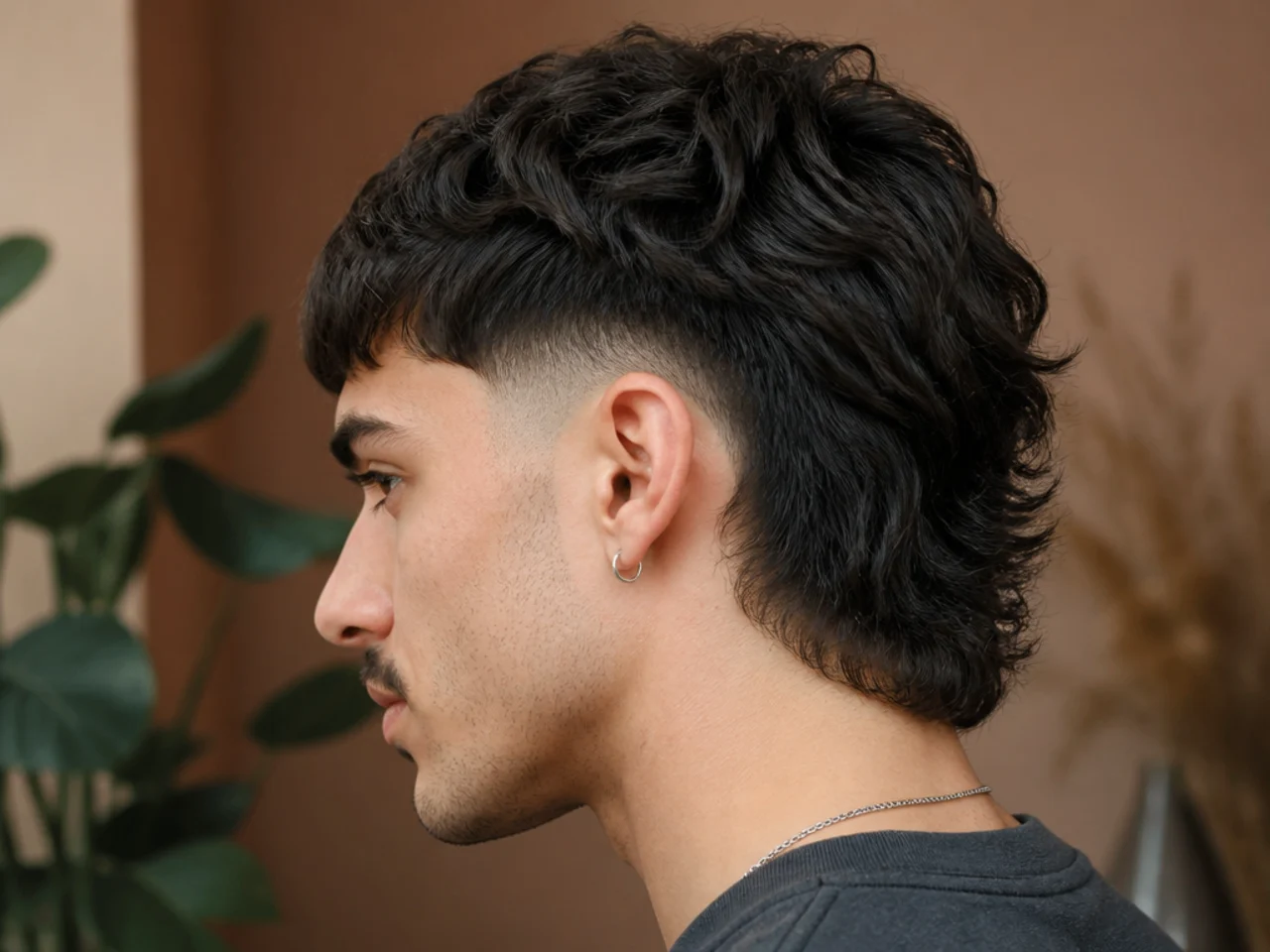
The line starts at the top of the ear and finishes at a number one. It is the most conservative pairing available, because the short section stays below eye level and the back length carries the whole statement. The low taper fade mullet is where to start if you have never worn one.
2. Mid Taper Fade Mullet
The line begins between the ear and the parietal ridge. More contrast against the nape length, still no skin exposed, and because the gradient has further to travel it takes more passes to keep smooth on thick hair.

3. High Taper Fade Mullet
The shortening starts at or above the parietal ridge, which strips almost all the width from the sides. On very dense hair this is the version that most clearly separates the top and back mass from the head shape underneath it.
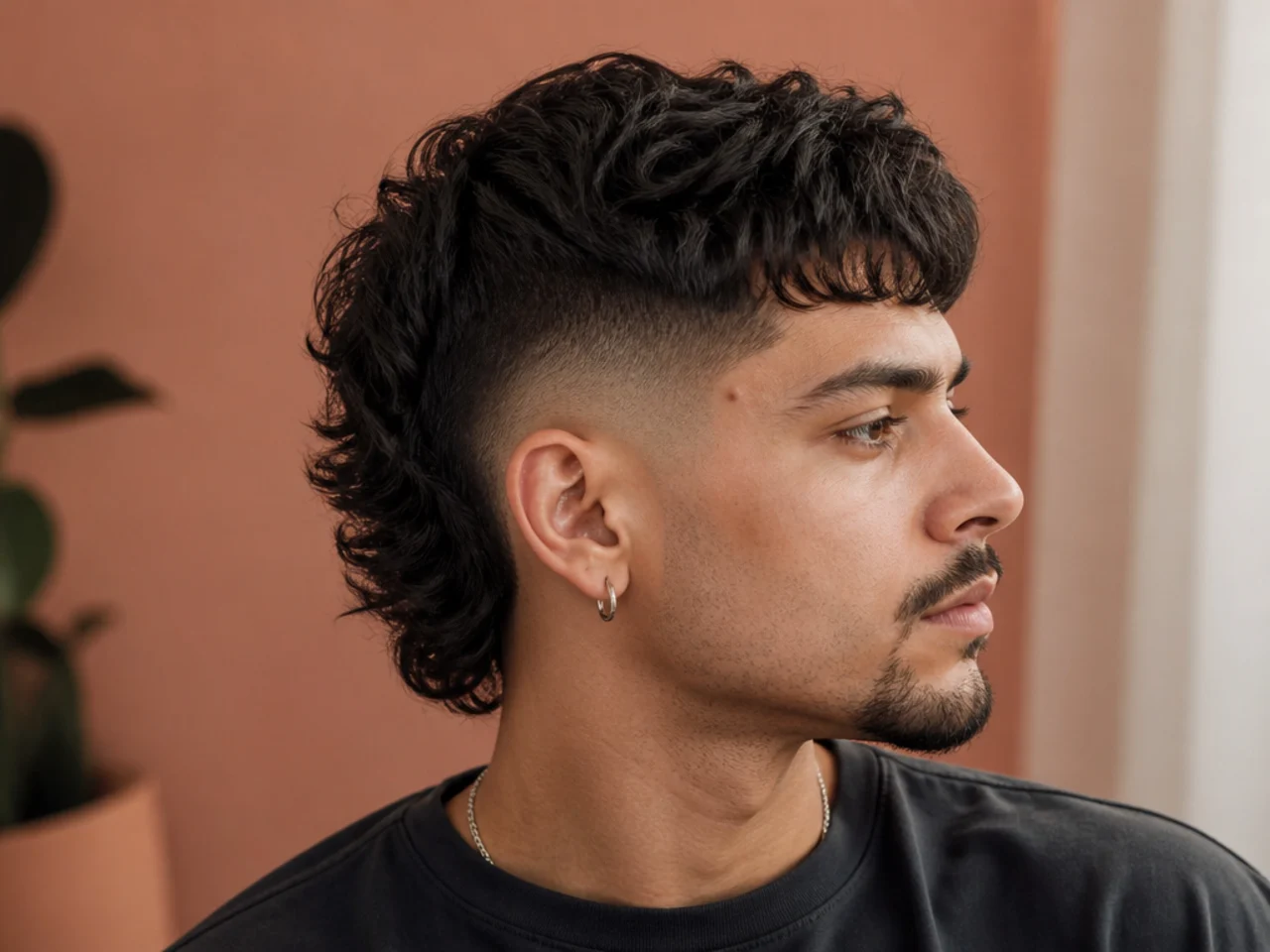
4. Burst Fade Mullet
The short section curves around the ear in a semicircle and stops, leaving the nape strip untouched. That shape is the natural partner for a mullet because it removes side bulk without cutting into the length at the back at any point. See the burst fade mullet for the full range.
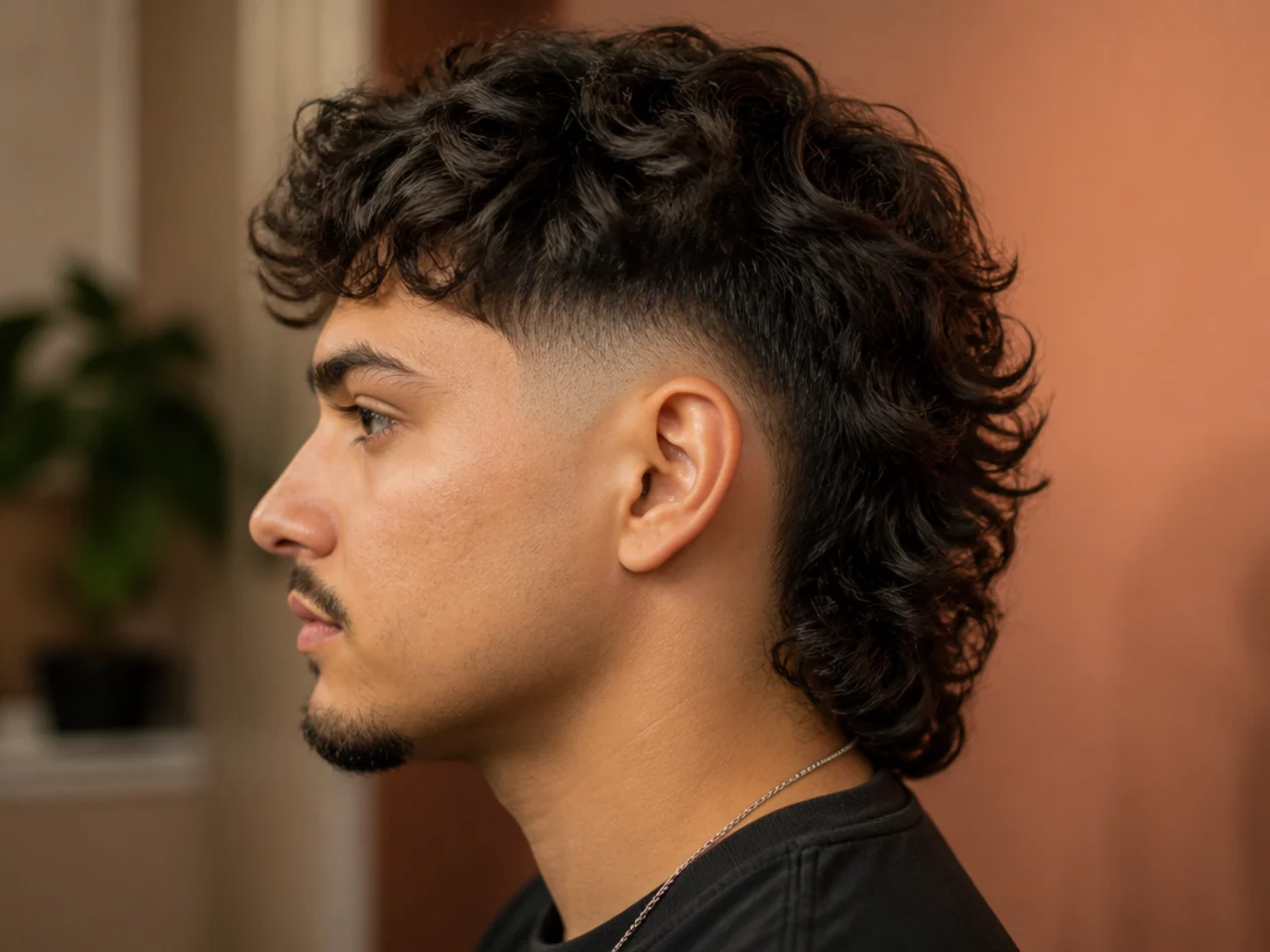
5. Drop Fade Mullet
The fade line dips behind the ear rather than running straight across. Following the curve of the skull instead of cutting a horizontal through it keeps the back of the head looking rounded, which matters more on a dense head than a thin one.
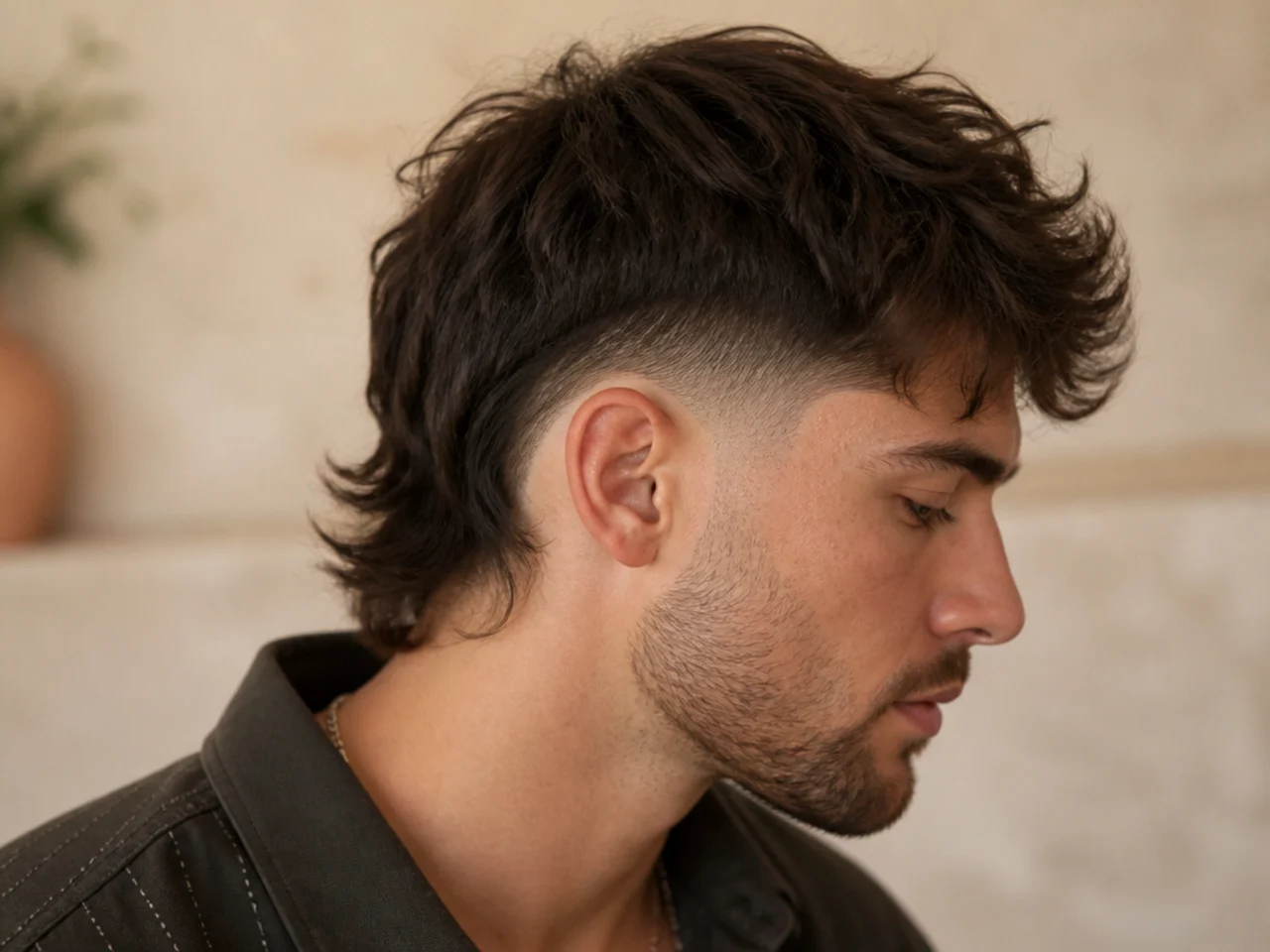
6. Skin Taper Fade Mullet
Tapered through the middle but taken to bare at the very bottom edge. It gives the sharpest possible outline for about five days, then the bare strip fills with stubble and the crispness goes, which is the price of the contrast.
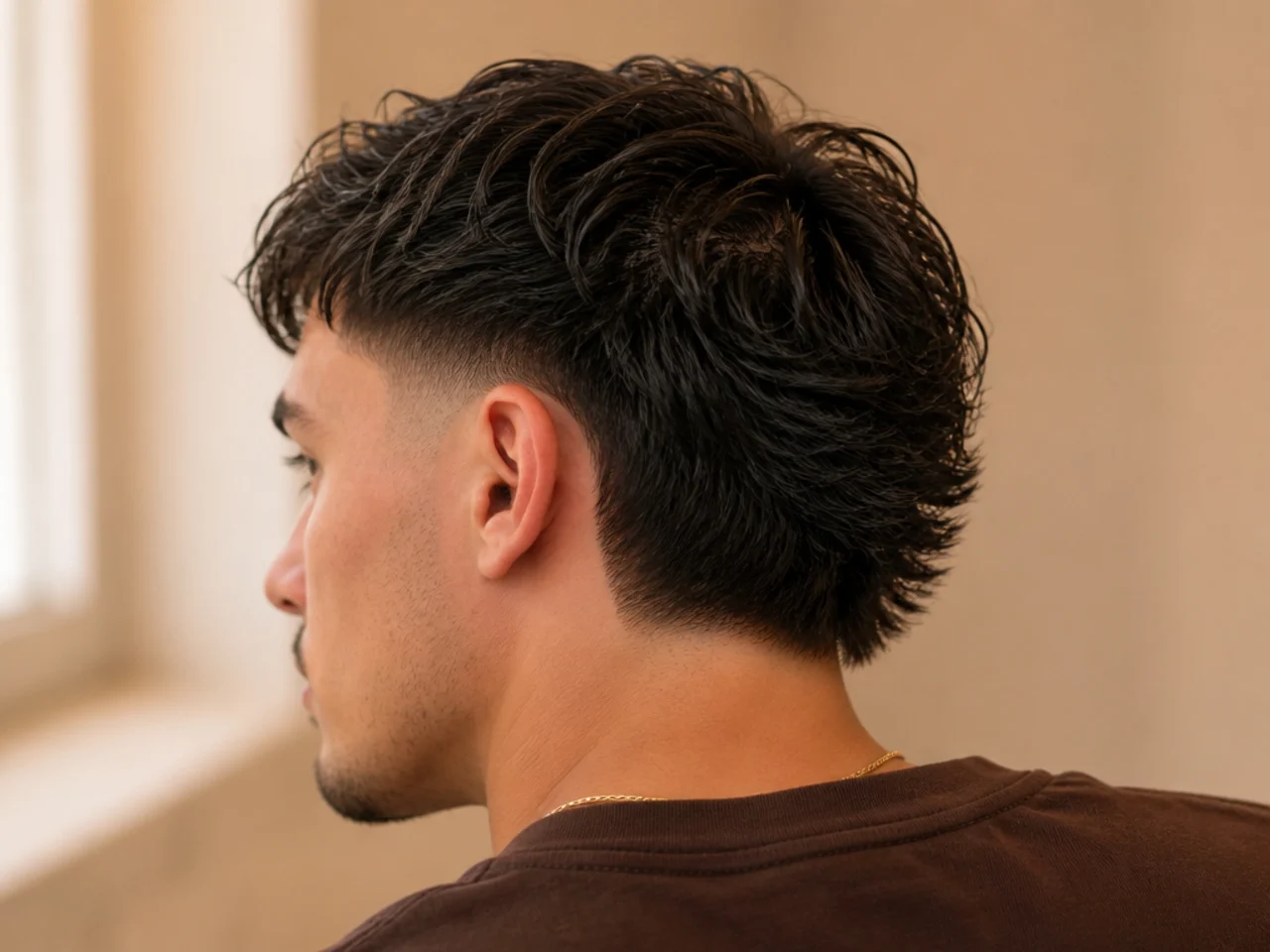
7. Taper Fade Mullet With a Hard Part
A trimmer line cut along the parting. It gives the eye a vertical to read against the taper's horizontal and the nape's mass, and on thick hair it also creates a clean split where the density would otherwise fight the parting.
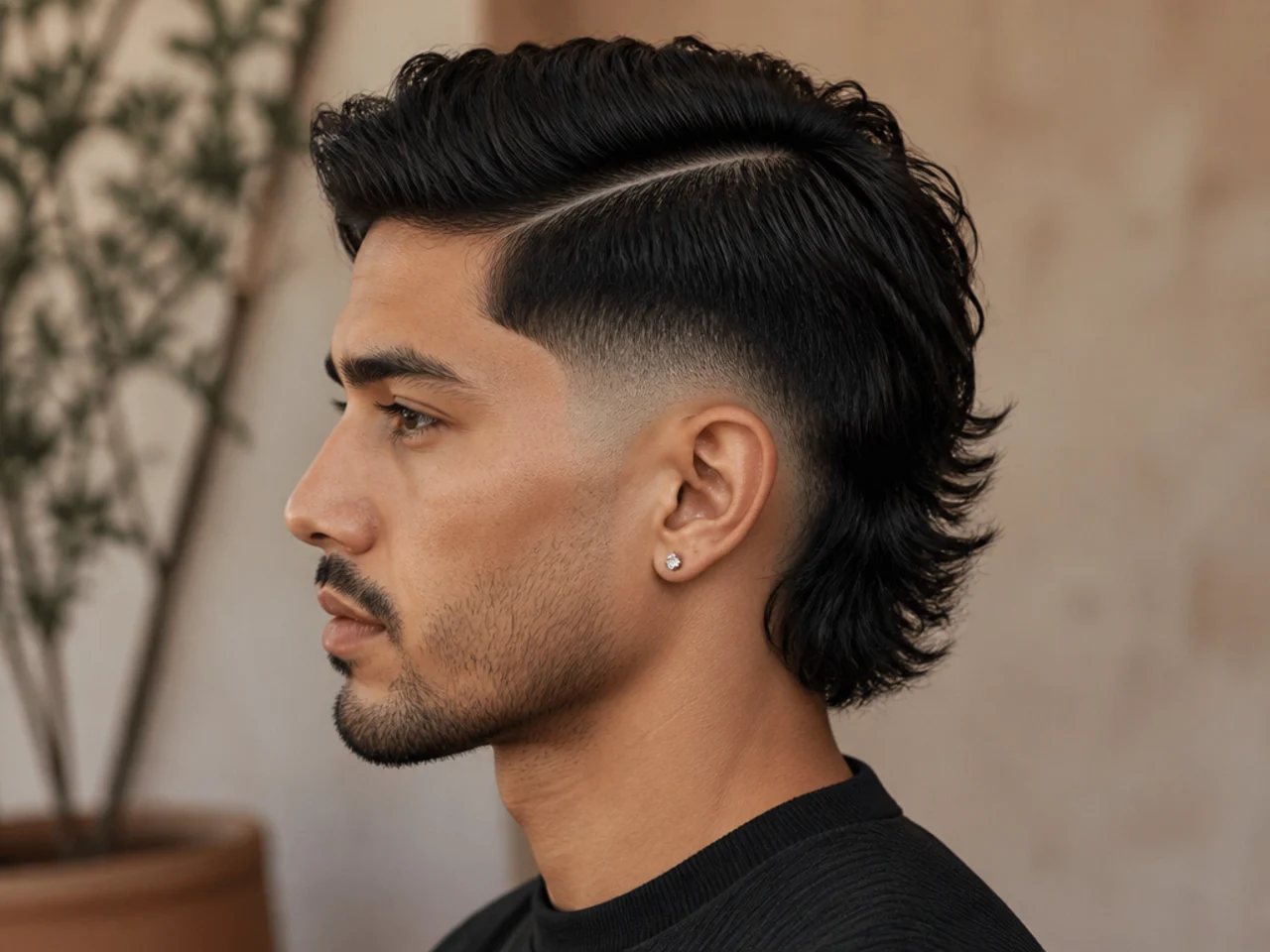
8. Taper Fade Mullet With a Fringe
Length left forward over the forehead to balance the length at the back. Without it a mullet on thick hair puts all its mass behind the ears, which tips the silhouette backward and makes the head read like it is leaning.
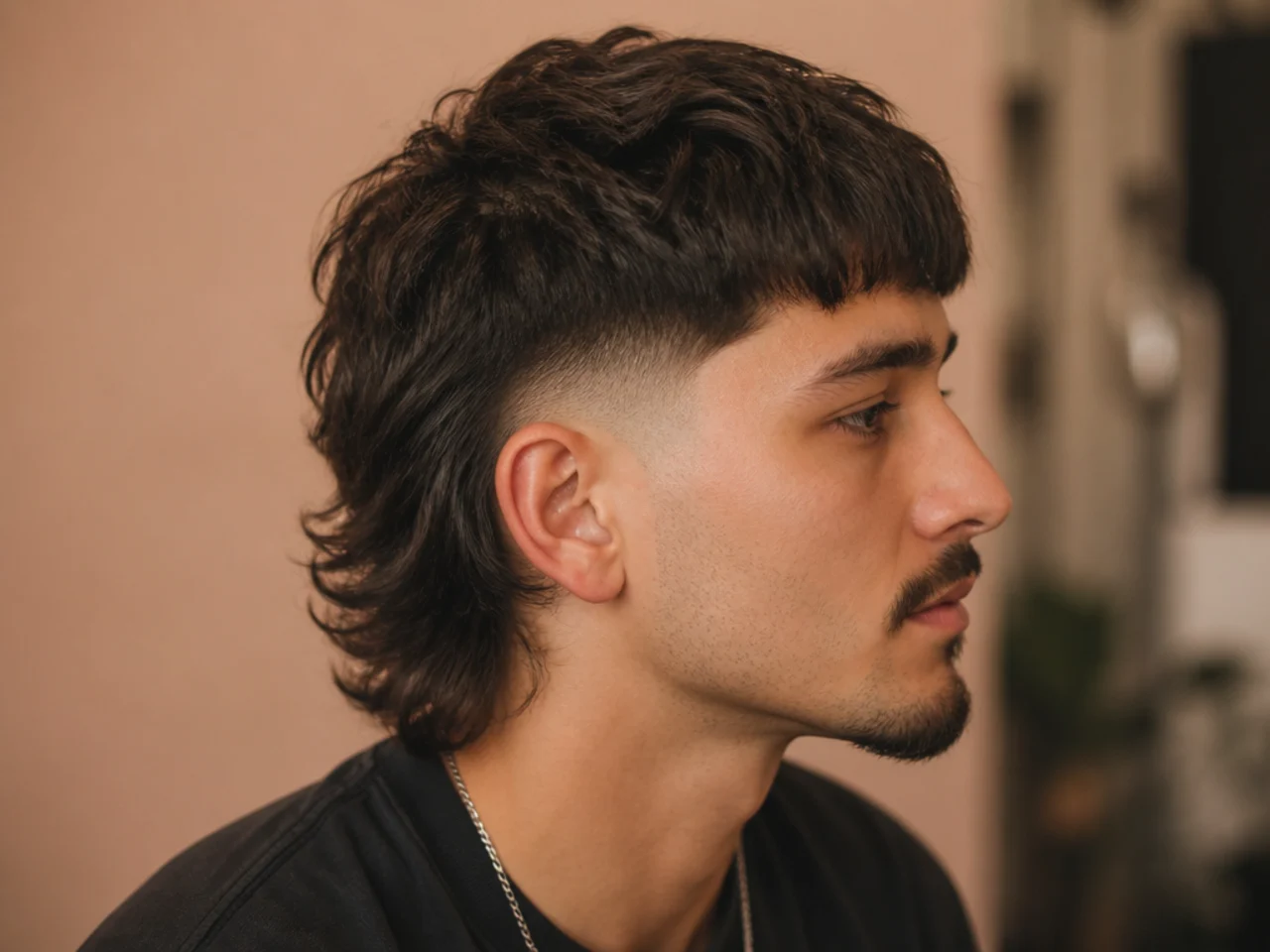
9. Curly Taper Fade Mullet
Curls shrink by up to a third as they dry, so the nape length has to be cut dry or it lands well above the target. The taper itself is more forgiving on curls, because the coil scatters light and hides small steps in the gradient.
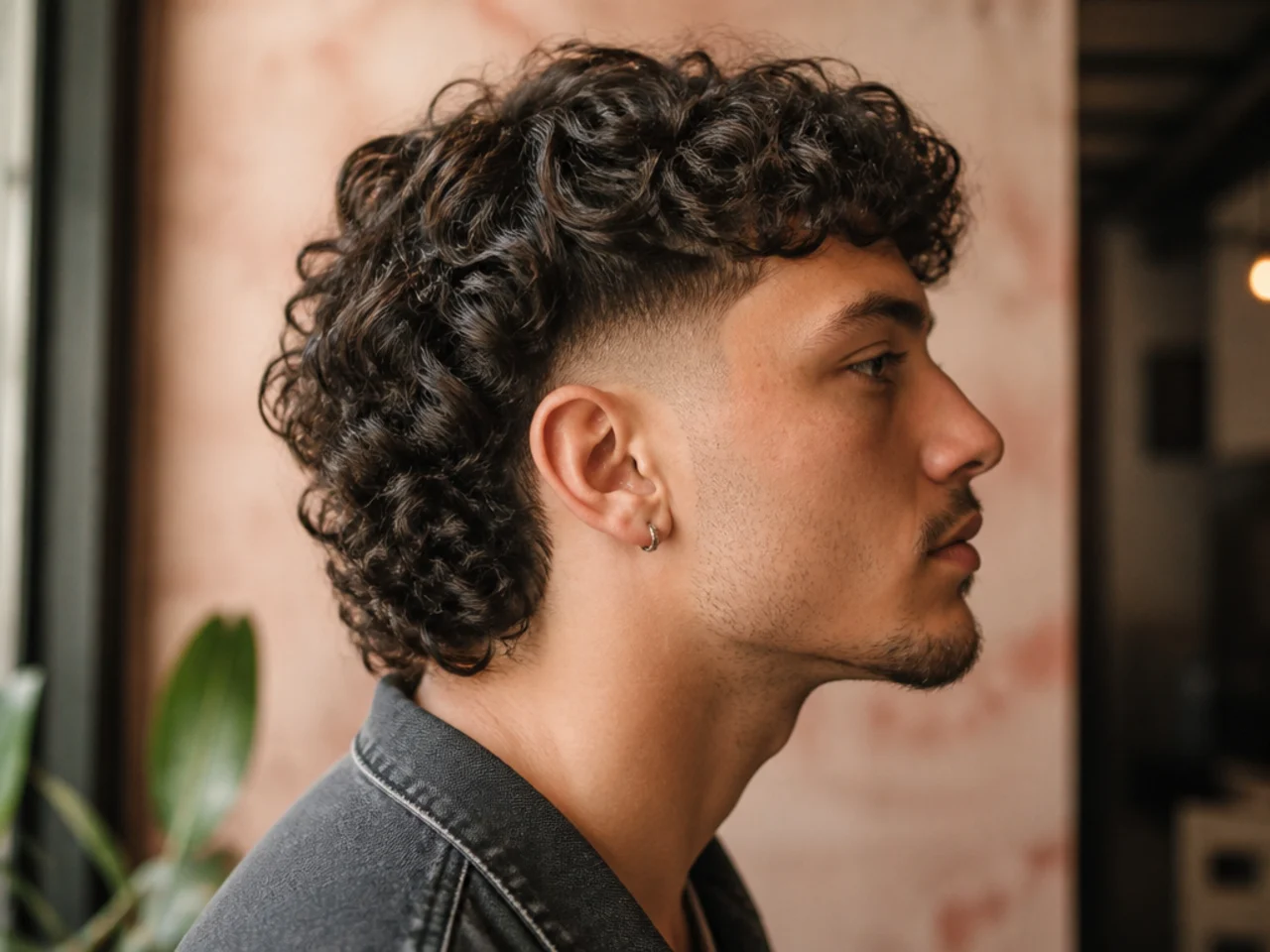
10. Wavy Taper Fade Mullet
The bend in each strand breaks up the gradient naturally, so an imperfect blend disappears. That same bend adds apparent bulk at the sides, which is why a wavy head usually wants the taper started a little higher than a straight one.
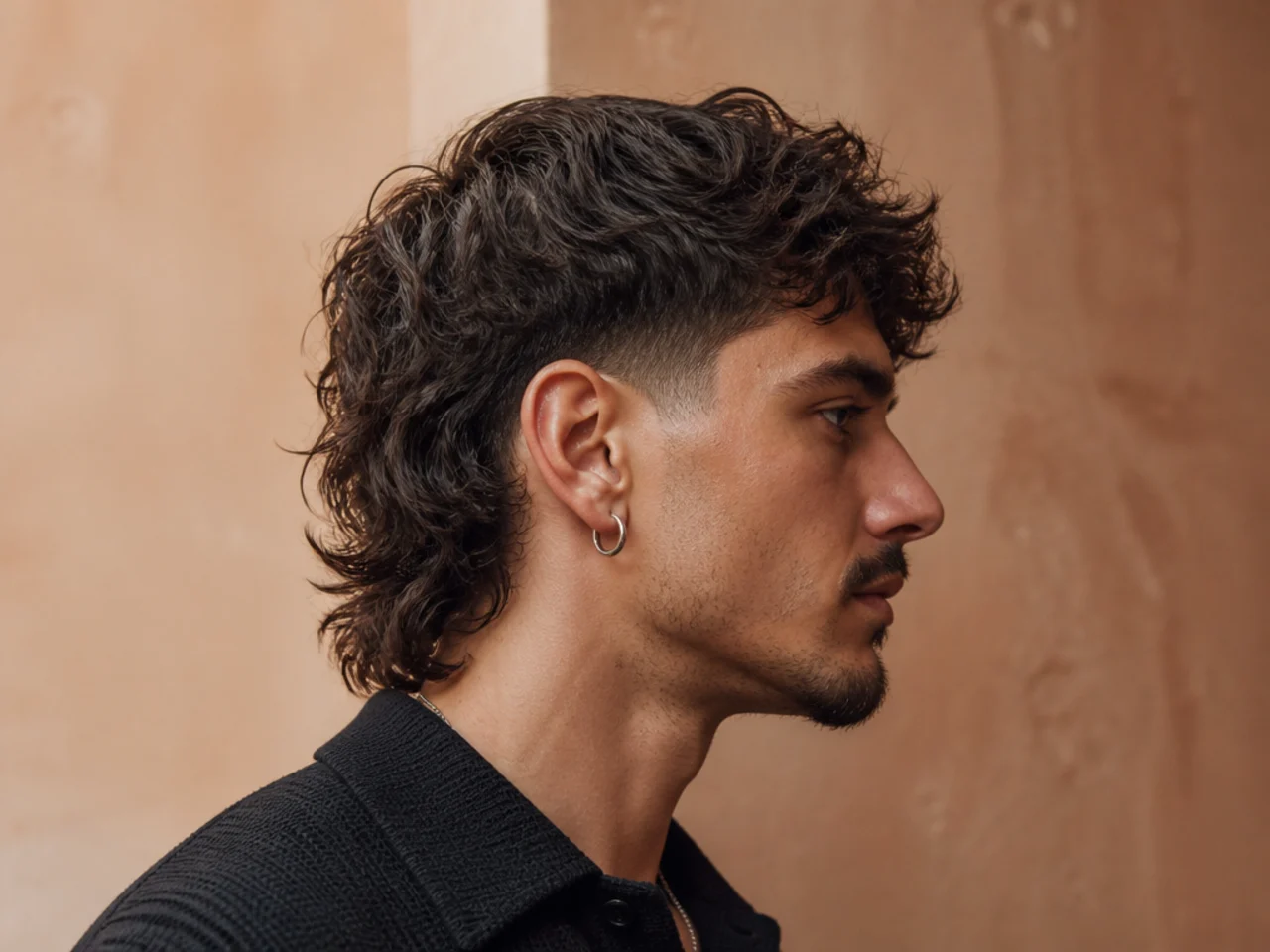
11. Straight Hair Taper Fade Mullet
The least forgiving texture, because a straight strand sits in a single line with no bend to scatter light, so every uneven pass reads as a step. Thick straight hair also holds a hard line, which means the gradient needs several more passes to sit smooth.

12. Textured Taper Fade Mullet
Point cutting through the top and nape breaks the ends into separate pieces instead of one solid edge. On thick hair this is what stops the length reading as a slab, since dense hair cut bluntly holds together as a single mass.
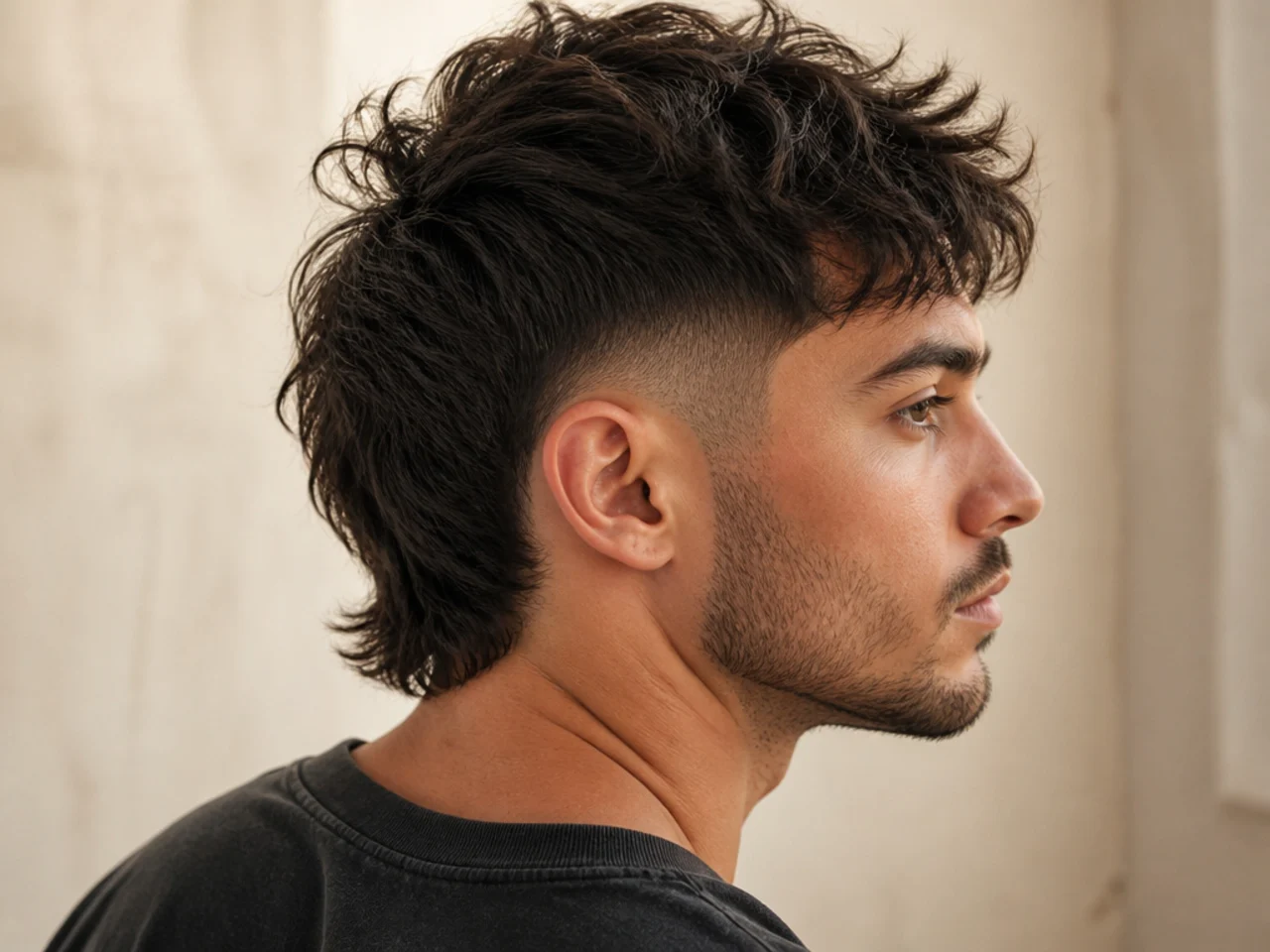
13. Taper Fade Mullet With a Narrow Nape
The strip of length at the back kept two or three inches wide. Narrow reads as deliberate and modern, and on thick hair it also removes a lot of bulk from behind the ears where the head is already at its widest.

14. Taper Fade Mullet With a Wide Nape
The length carried across the full width of the neck. It needs dense hair to hold together, which is why this version belongs on thick heads, but it also puts the maximum weight at the back so the top has to be styled with height to balance it.

15. Disconnected Taper Fade Mullet
No blending between the short sides and the long top, just a hard edge. It reads sharper and grows out faster, because the gap between the two lengths widens visibly every week rather than closing up the way a blend does.
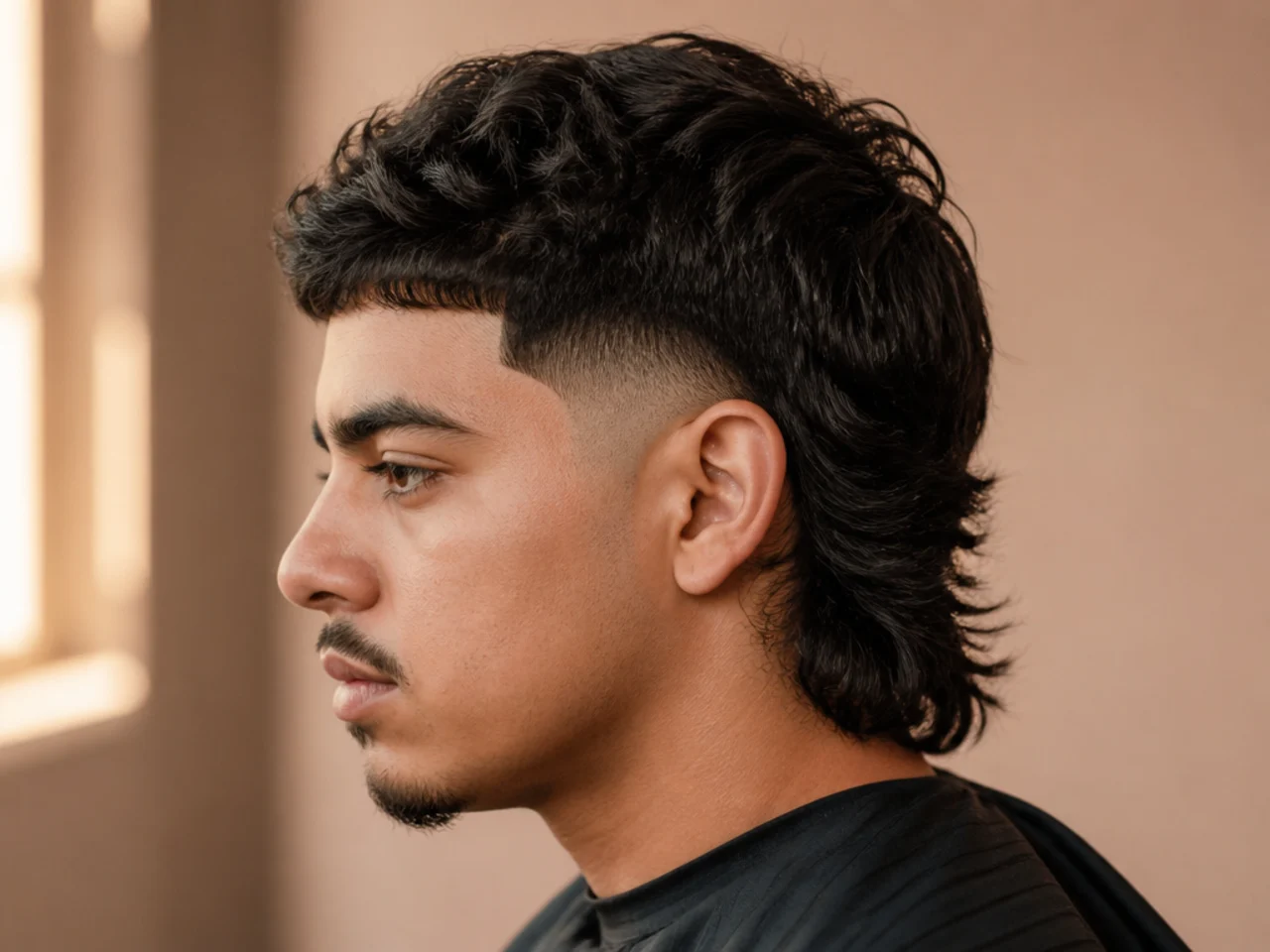
16. Blended Taper Fade Mullet
The taper carried up into the top length so there is no visible boundary. It takes longer in the chair on thick hair, and the payoff is a cut that keeps working at four weeks because there is no edge to go soft.
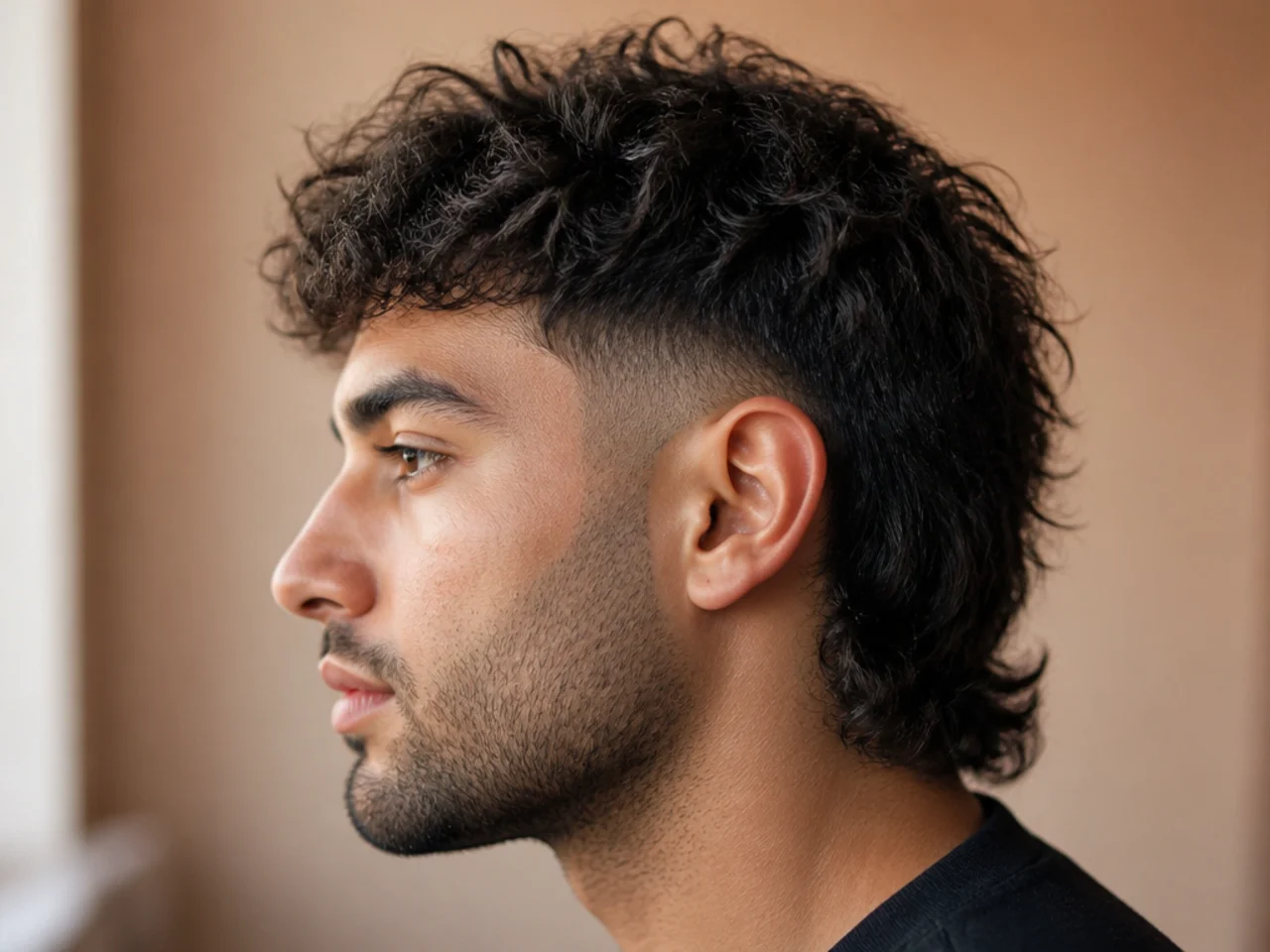
17. Taper Fade Mullet With a Beard Connection
The taper runs down into the beard as one continuous gradient, which removes the second horizontal across the jaw. The join has to land where beard density genuinely starts, usually just below the earlobe, or the blend runs out of hair partway down.
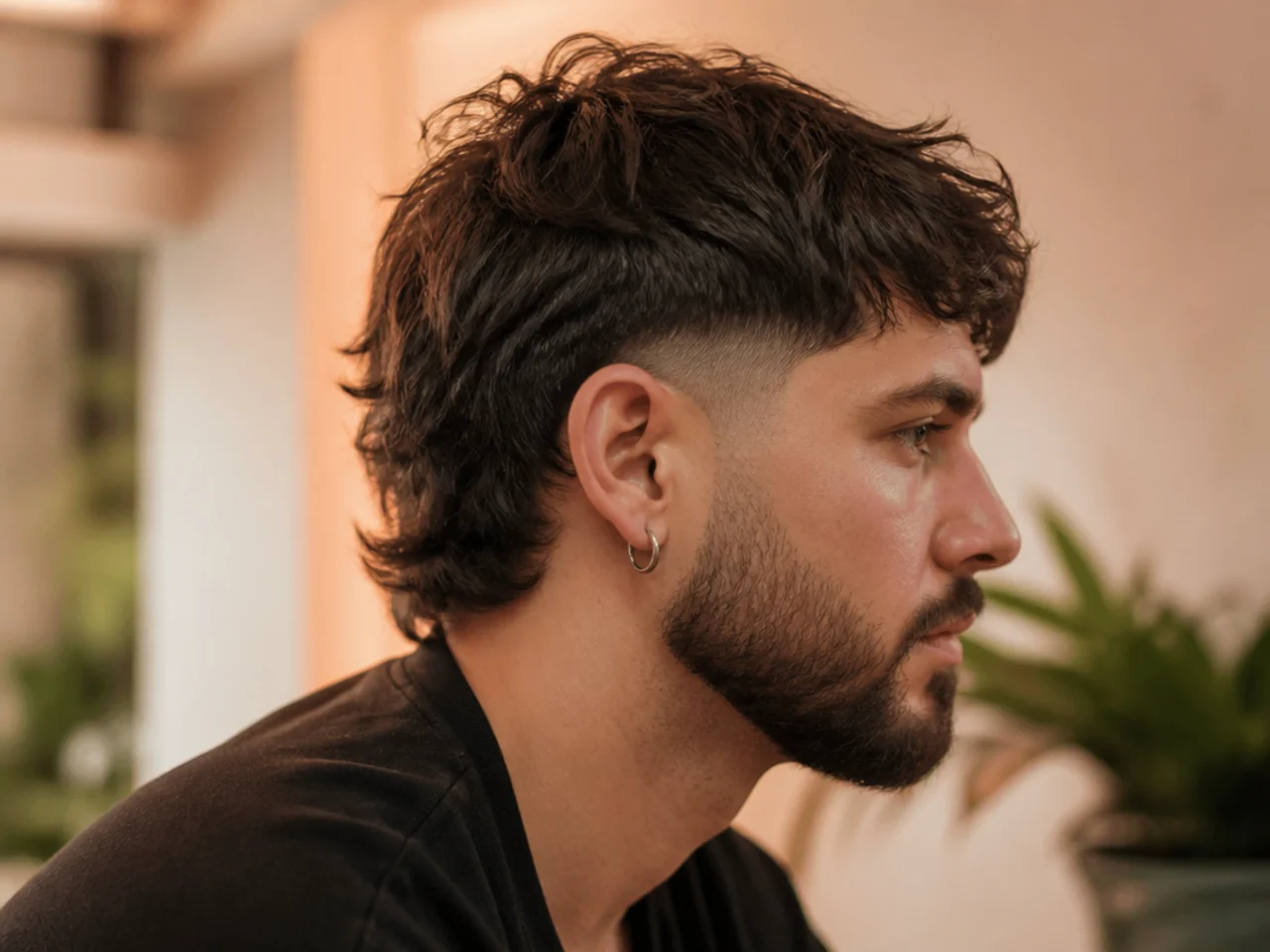
18. Taper Fade Mullet With Layers on Top
Interior layers cut into the top section so the surface lies flat while the crown keeps height. On thick hair the mass pushes outward rather than upward, and removing weight from underneath is the only way to change that.

19. Taper Fade Mullet at Week One
Both the taper line and the nape outline at their sharpest. Worth photographing, because a taper holds that definition for about five days and a photo taken later already shows a softer cut than the one you agreed.
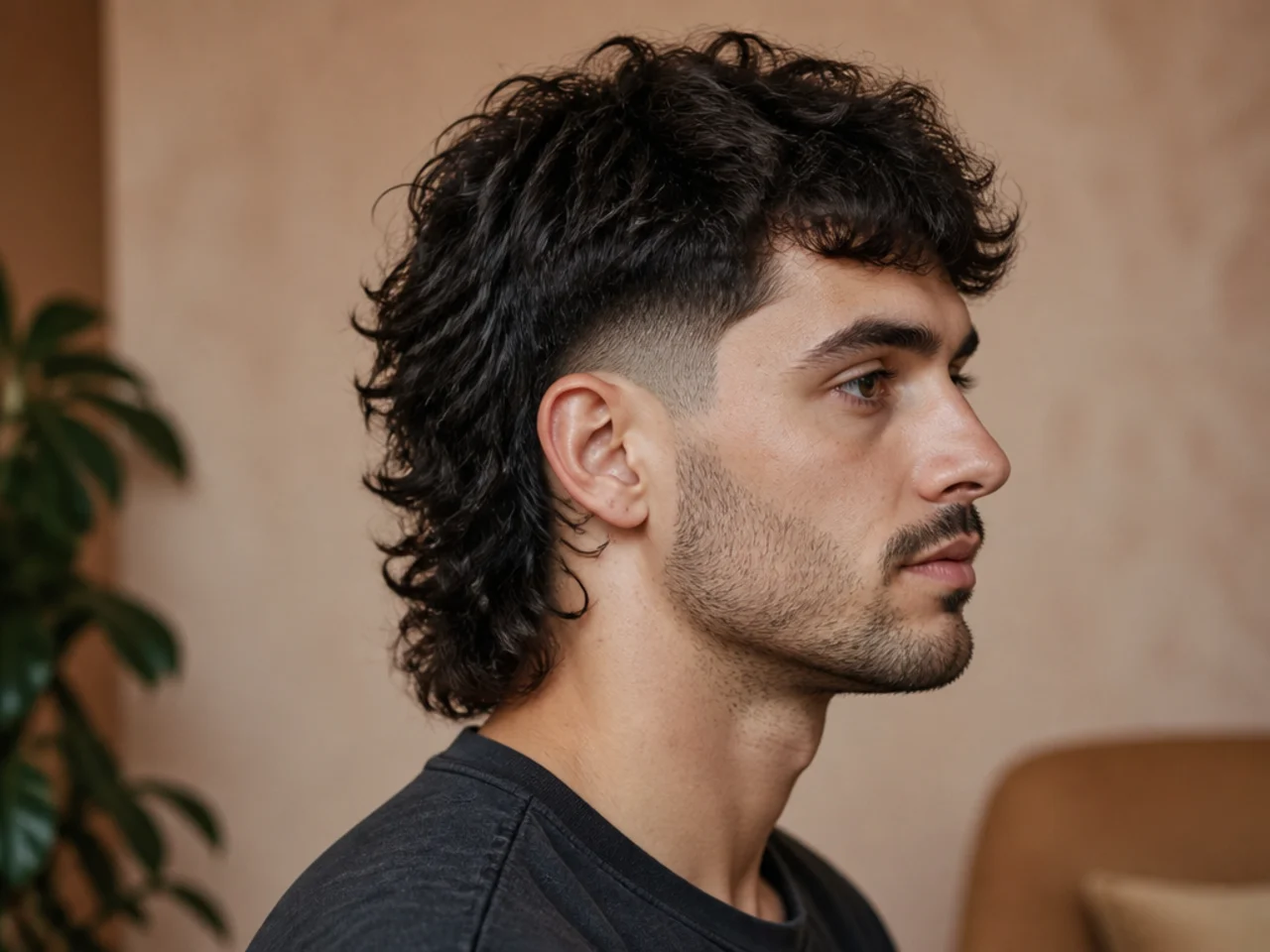
20. Taper Fade Mullet at Week Four
Softened but still correct, which is the entire argument for a taper over a skin fade on this cut. Four weeks in the gradient has blurred rather than grown out, and the nape length has gained about a centimetre without changing the shape.

Styling and Upkeep
Say "taper, not to skin" every visit. The two words get used interchangeably and the results are not.
Give the taper height in guard numbers. Where it starts and where it finishes, said out loud, is the only reliable record.
Book at three to four weeks. That is the taper window, and it is where the saving over a skin fade is.
Ask for bulk out from underneath on thick hair. Surface thinning leaves short ends standing up through the length.
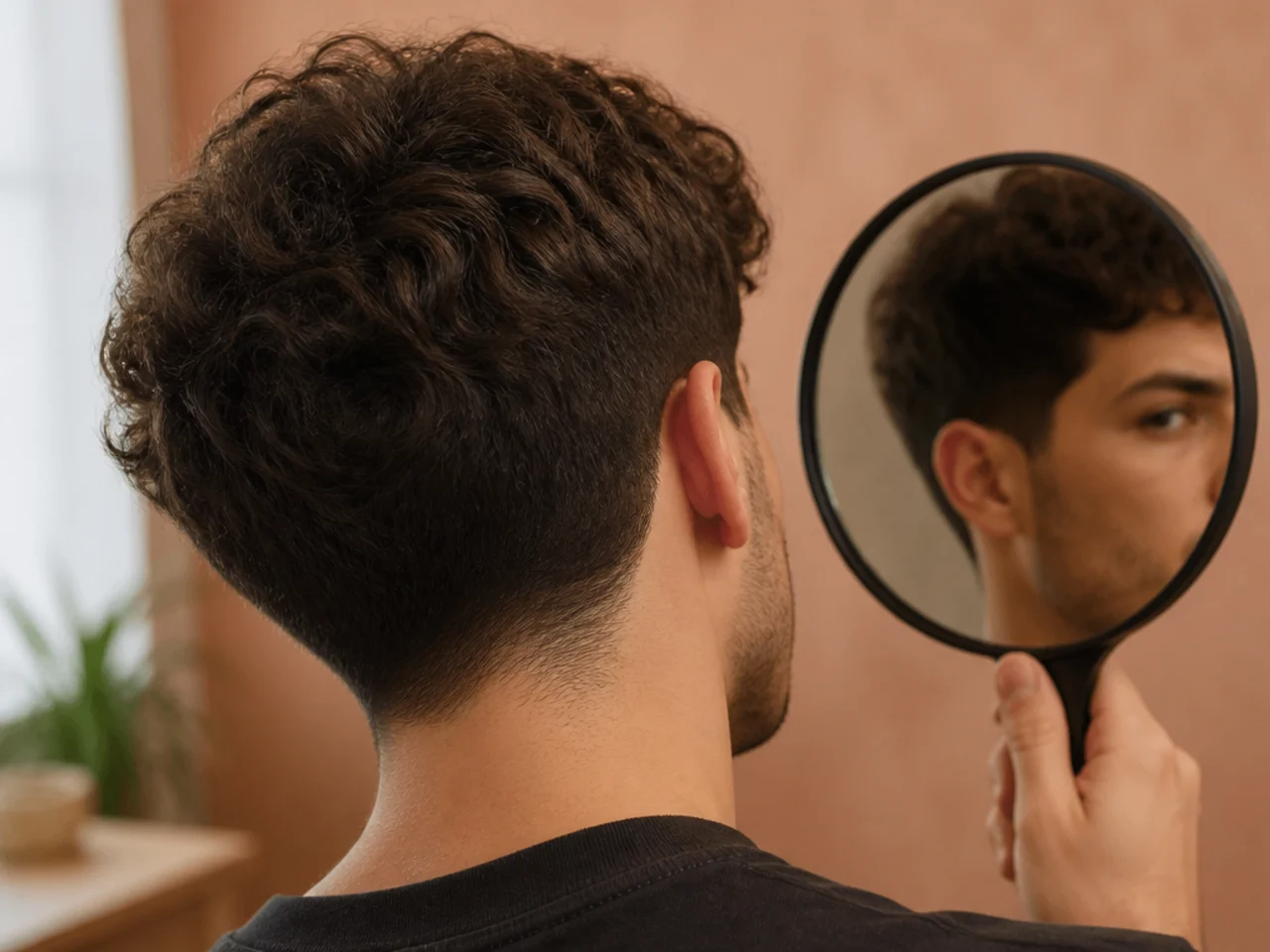
Check the nape strip width in a hand mirror. It is the part of the cut you never see and the part that defines it.
Mistakes to Avoid
Saying taper and meaning skin fade. Name the finish in guard numbers rather than trusting the word.
Taking the bottom to a number zero. A zero is bare skin by definition, and it halves the useful window to a fortnight.
Leaving the sides at full density. On thick hair the widest point stays at ear height and the back length reads as neglect.
Thinning the top from the surface. The short ends stand up through the length instead of disappearing under it.
Changing the taper height every visit. It is the one variable that makes the same cut look different each time.
FAQ
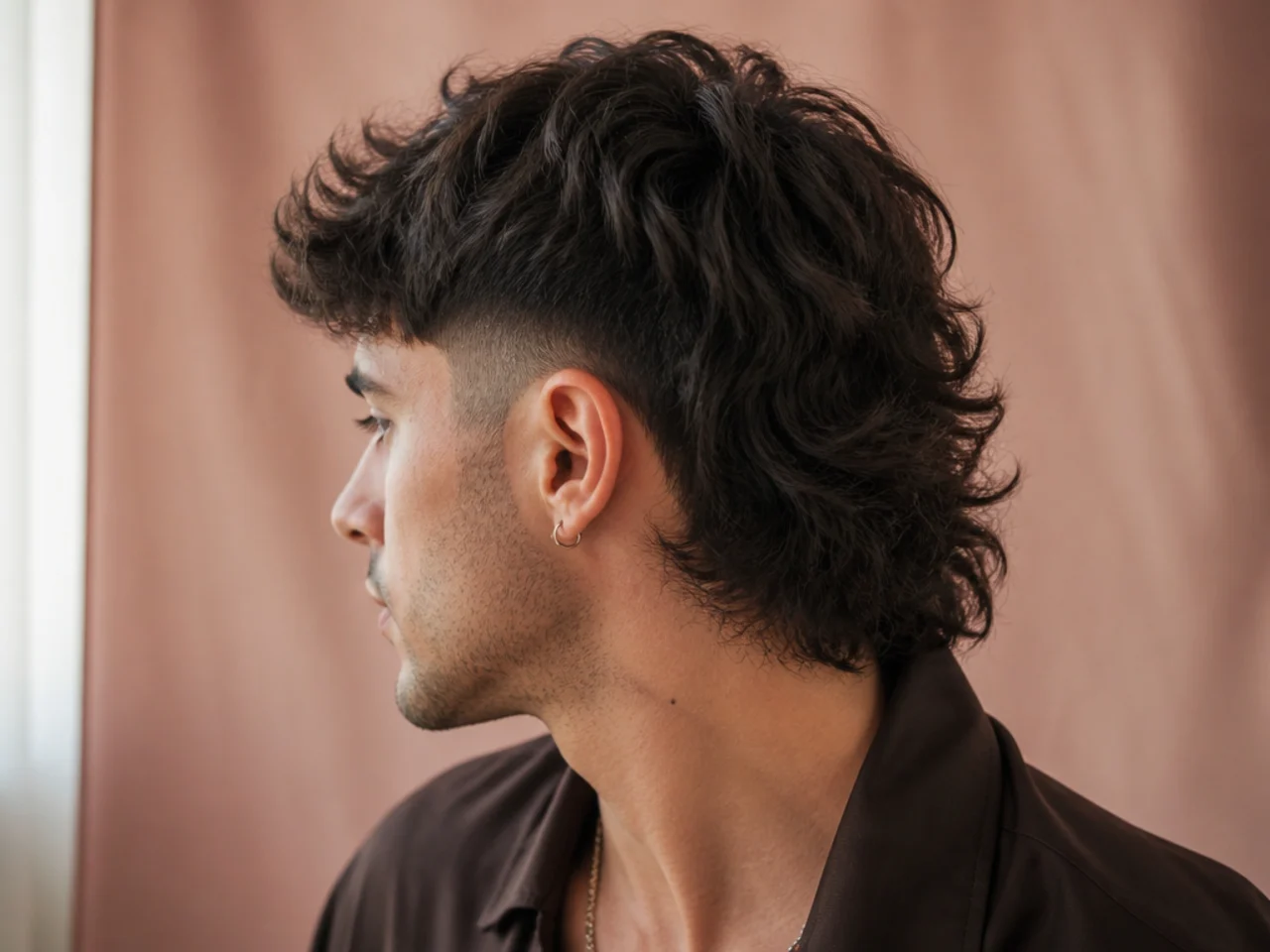
Taper or fade? A taper leaves three millimetres, a fade goes to bare skin.
Where should it start? Top of the ear on very dense hair, higher for more contrast.
How often? Three to four weeks for a taper, two for anything taken to skin.
Final Thoughts
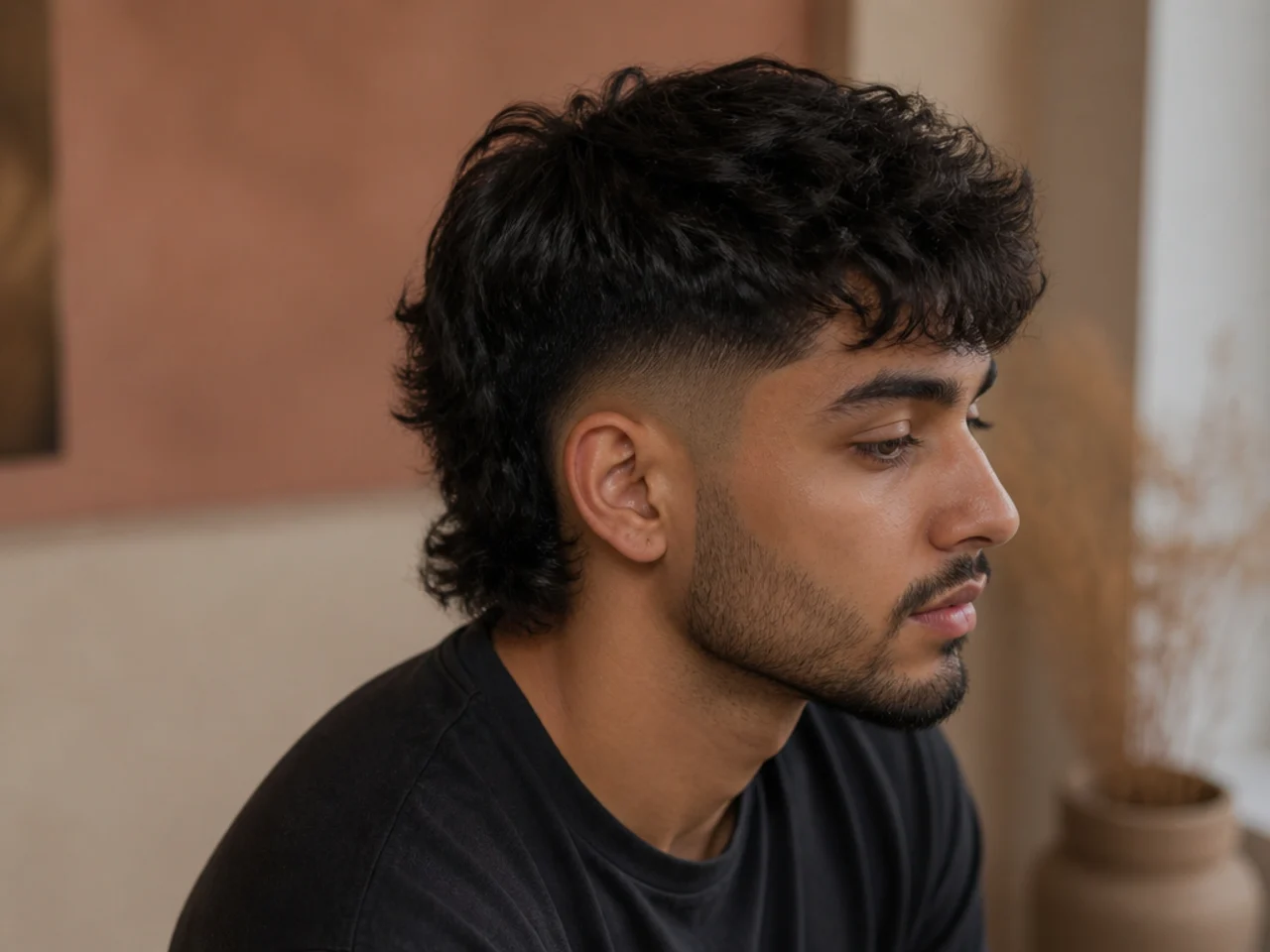
Describe the finish and the strip. "Low taper starting at the top of the ear, finishing at a number one, nape strip three inches wide" is a cut a barber can deliver twice.
For the height options in detail see the low taper fade, and for the curved alternative see the burst taper fade. More in Fade Haircuts.