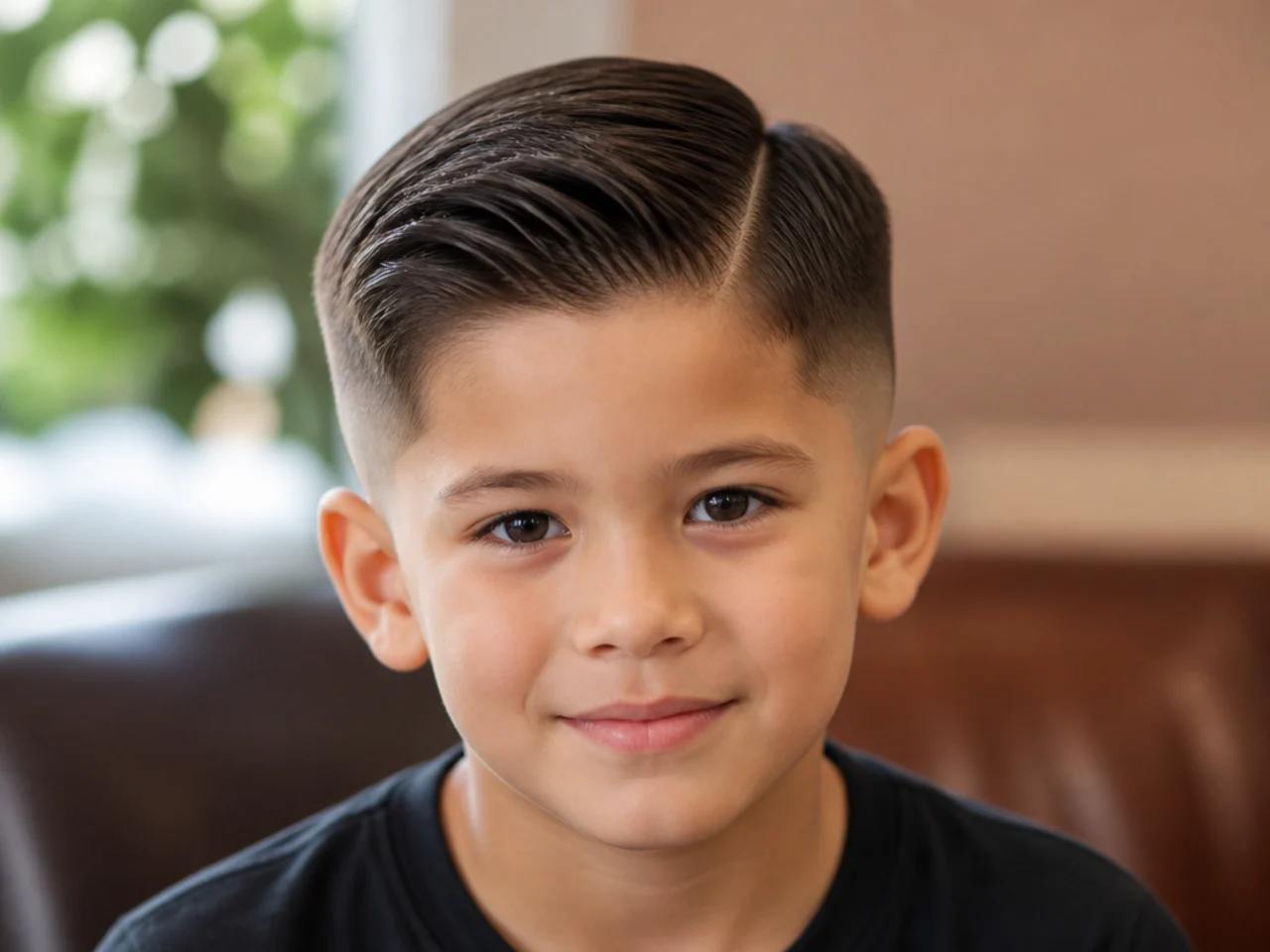
20 Trendy Boys Haircut Ideas With a Fade
Two things decide how long a boy's fade survives, how high the line sits and what guard is left underneath it. School decides the third thing, because most grooming rules name a minimum length rather than a style.
In this article · 27
- Fade Height and Guard Both Buy You Weeks
- How to Choose Yours
- The 20 Fades and What Each One Buys You
- 1. Mid Taper Over a Number Two
- 2. Low Taper Kept at a Number One
- 3. High Taper With a Long Top
- 4. Burst Fade Around the Ear Only
- 5. Drop Fade Behind a Fringe
- 6. Skin Fade at a Number Zero and What It Costs You
- 7. Low Taper Over a Number Three
- 8. Mid Taper Under a Textured Crop
- 9. High Skin Fade Under a Broccoli Top
- 10. Mid Skin Fade With a Fringe
- 11. Low Skin Fade at the Sideburn Only
- 12. Taper With the Neckline Left Natural
- 13. Mid Taper Over a Number Four
- 14. High Taper Over a Number Two
- 15. Burst Fade Stopped at a Number Two
- 16. Drop Fade Over a Number One
- 17. Mid Taper With a Blunt Fringe
- 18. Low Taper Under a Middle Part
- 19. A Taper With No Line-Up at the Hairline
- 20. The Two-Guard Fade You Can Do at Home
- Styling and Upkeep
- Mistakes to Avoid
- FAQ
- Final Thoughts
A fade on a boy is not one decision, it is two. How high the shortest line sits, and what guard is left underneath it at the bottom.
Those two choices decide how many weeks the cut survives. A higher line takes longer to blur because it sits where the surrounding hair is already longer, so growth has a smaller gap to close. A longer bottom guard blurs gracefully because the difference between six and eight millimetres is invisible, while the difference between skin and two millimetres is not.
Put them together and a mid taper over a number two outlives a low skin fade by two weeks. School settles the rest, because most grooming rules name a minimum length rather than a style, and a skin fade fails a minimum by definition.
Fade Height and Guard Both Buy You Weeks
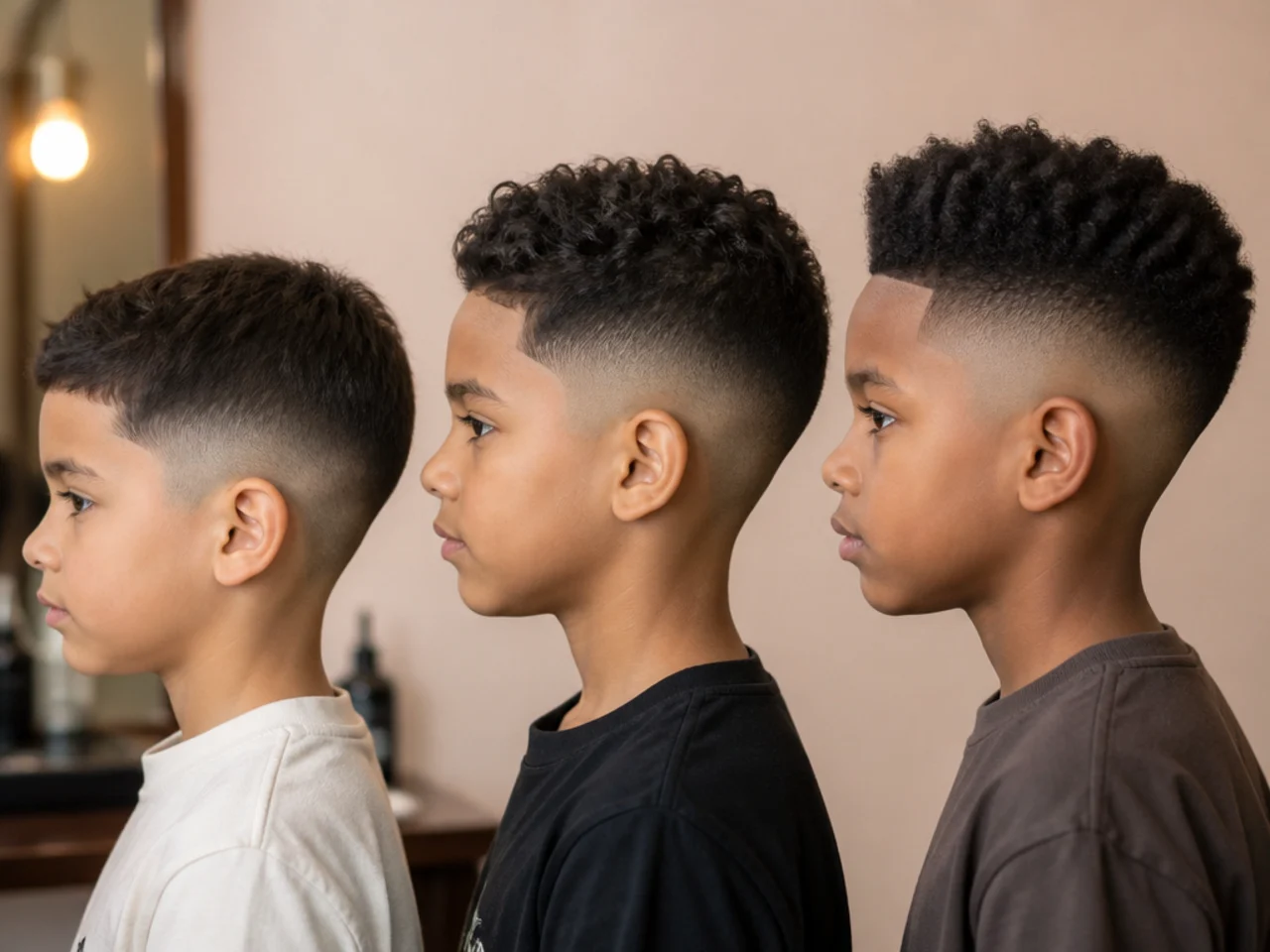
Height is measured against the head, not the ear. Low sits at or below the temple, mid sits between the temple and the parietal ridge, high sits at or above the parietal ridge.
Skin blurs in one to two weeks, a taper holds three to four. On a child, subtract roughly a week from both, because faster growth crosses the same gap sooner.
The bottom guard matters more than the name of the cut. Skin to two millimetres is a visible change, six to eight is not, so the guard at the neckline sets the failure date.
School policy names a number, not a style. Nothing shorter than a number two is the common wording, which permits any taper and forbids every fade that reaches skin.
How to Choose Yours
Check the grooming policy before you pick a height. If it names a minimum guard, every skin option below is already off the table and the choice is between tapers.
Set the bottom guard first, then the height. The guard sets how the cut fails and the height sets how long until it starts.
Match the height to the rebooking interval. Two-week intervals can carry a low fade. Four-week intervals need a mid or high taper over a number two or three.
Add top length if you want the line to disappear. Weight on top hangs over the corner and covers where the sides start, which buys a week no clipper choice can.
The 20 Fades and What Each One Buys You
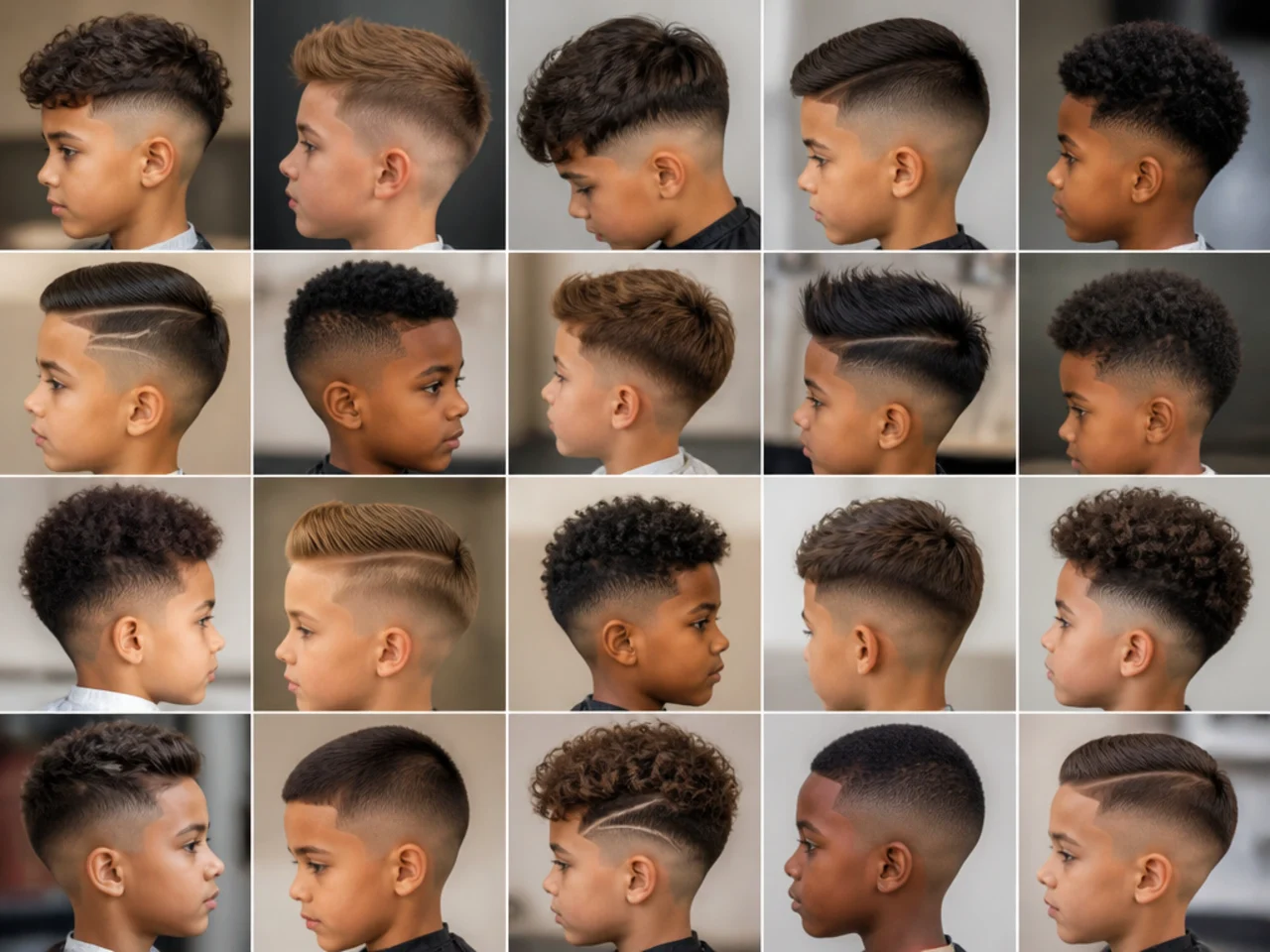
1. Mid Taper Over a Number Two
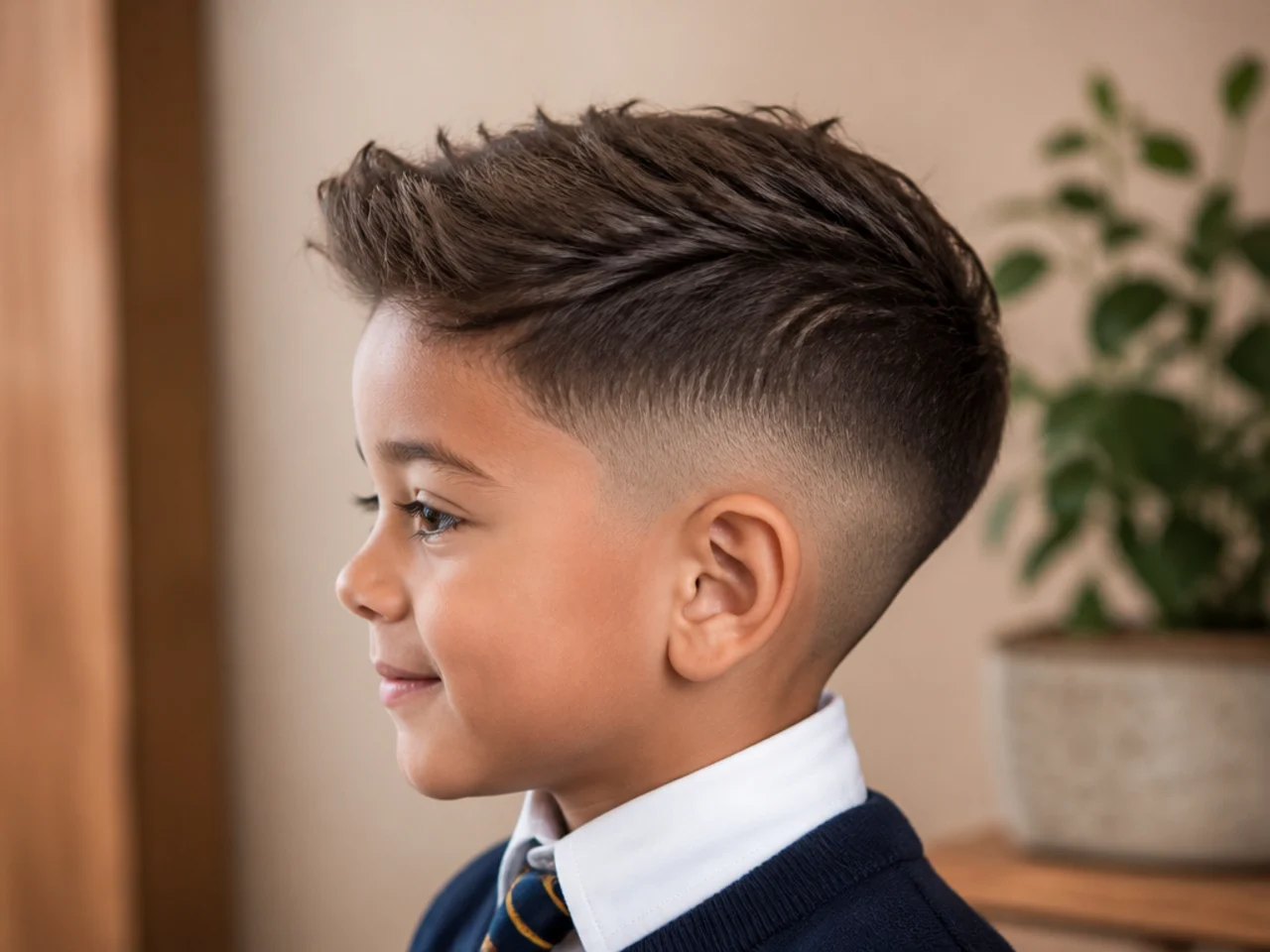
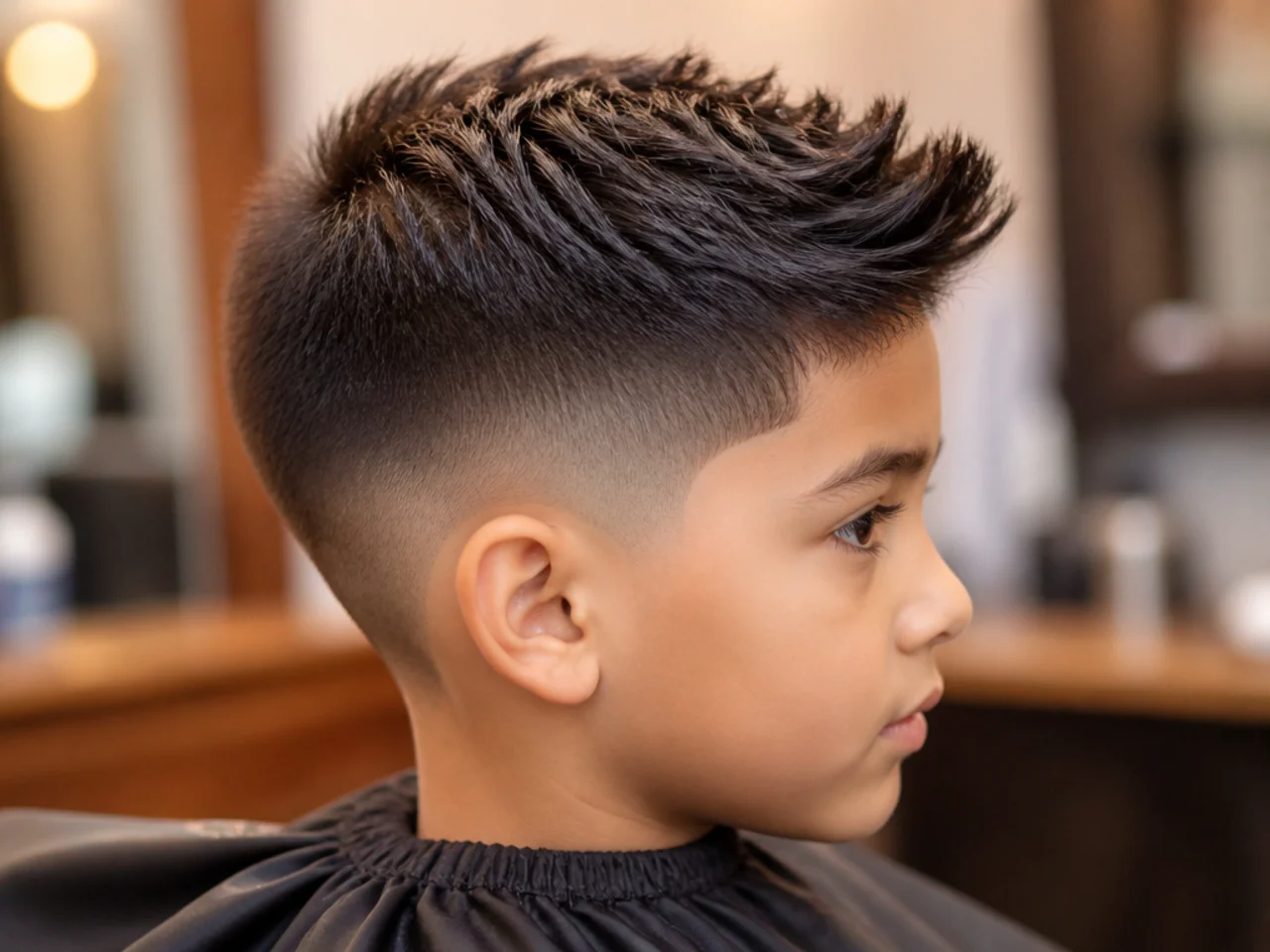
The benchmark for a boy in school. The line sits between temple and parietal ridge where surrounding hair is longer, and six millimetres at the bottom means growth crosses an invisible gap, so it holds a genuine four weeks and satisfies a minimum-length rule.
2. Low Taper Kept at a Number One
Three millimetres at the neckline instead of skin, which alone is worth about a fortnight over the bare version. The low placement is what caps it at three weeks, because a line at the temple sits where the hair around it is short too.
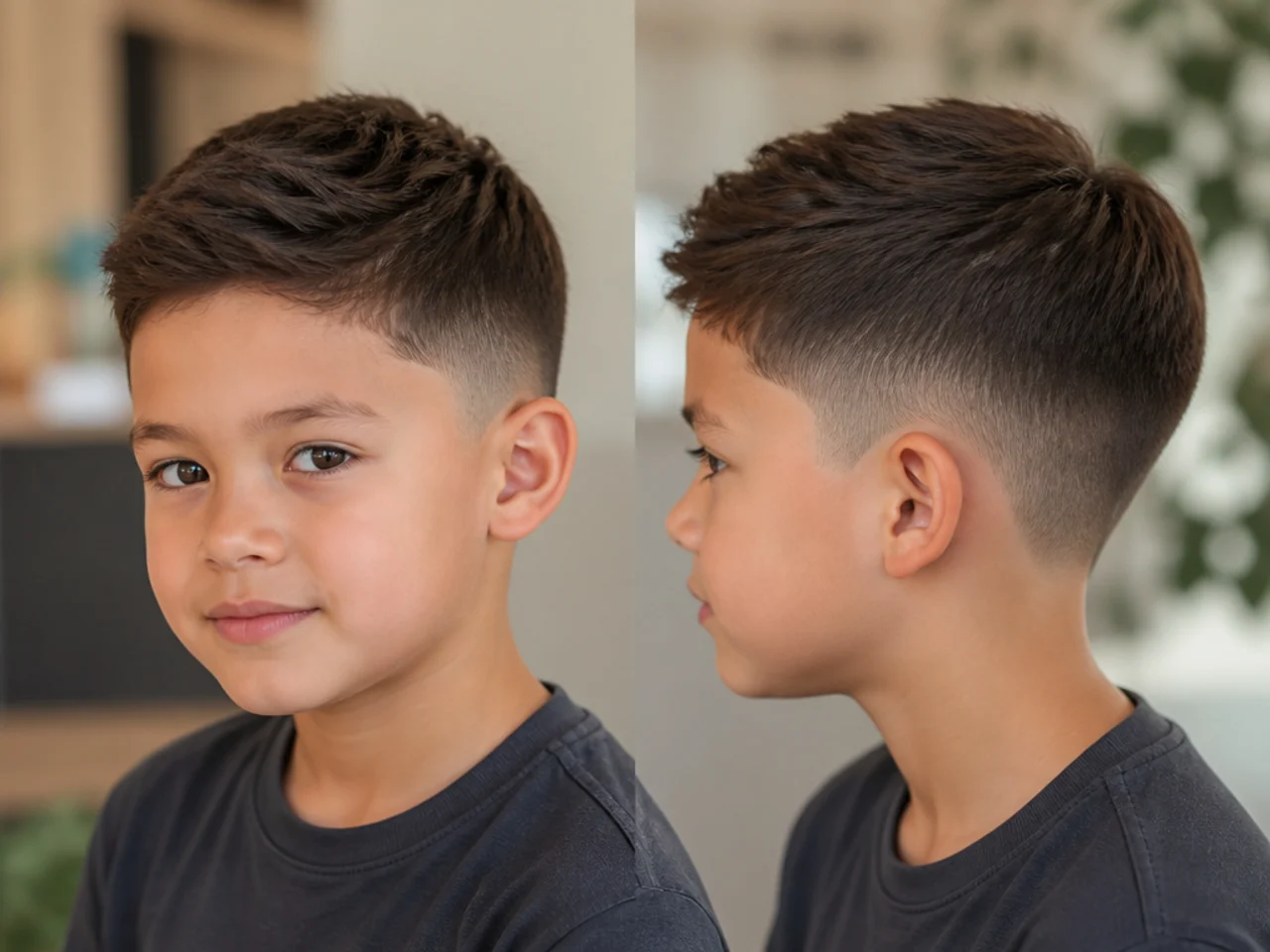
3. High Taper With a Long Top
Both mechanisms at maximum. The line sits at the parietal ridge where the hair immediately above it is long, and the top hangs over the corner and hides the join entirely, which is why this reaches five weeks on a child.
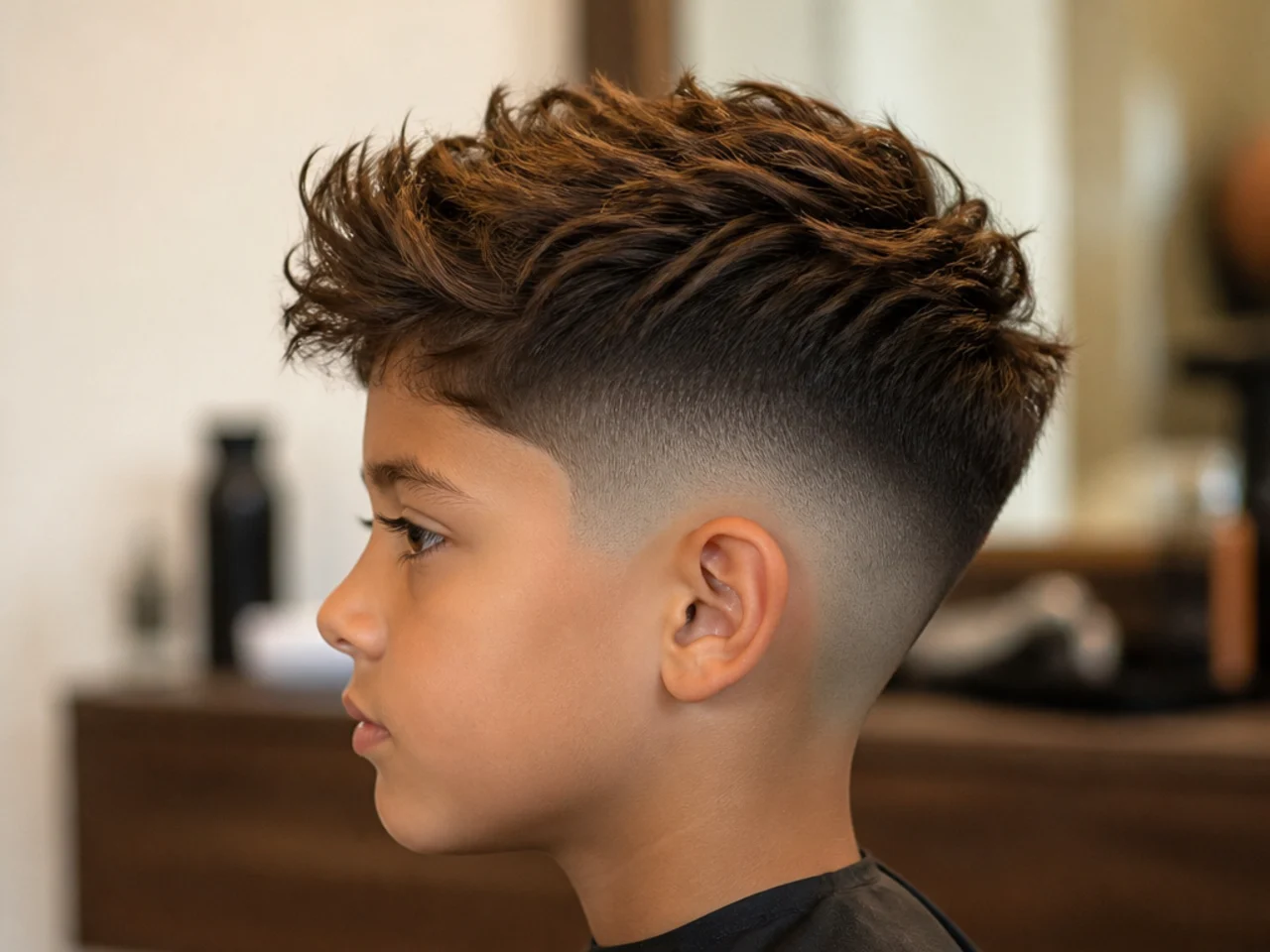
4. Burst Fade Around the Ear Only
Skin in a curve behind the ear with the rest of the side left long. It is a small area, which makes it quick to redo, but a curved line blurs unevenly and it is finished in about two weeks.
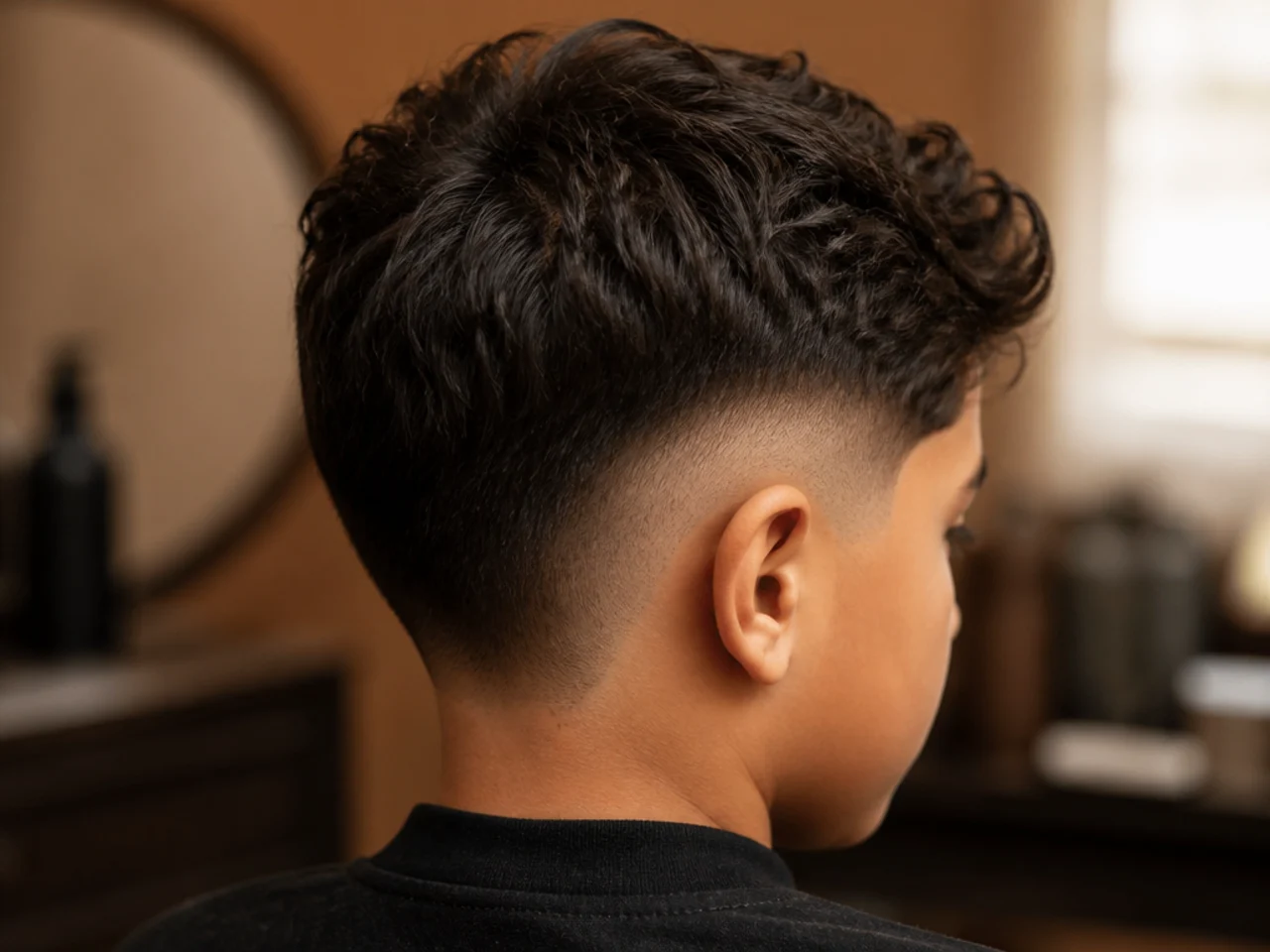
5. Drop Fade Behind a Fringe
The line drops as it travels back, so the lowest point of the fade sits at the back of the head where nothing longer covers it. That section closes first, at around two weeks, while the front still looks perfectly fine.
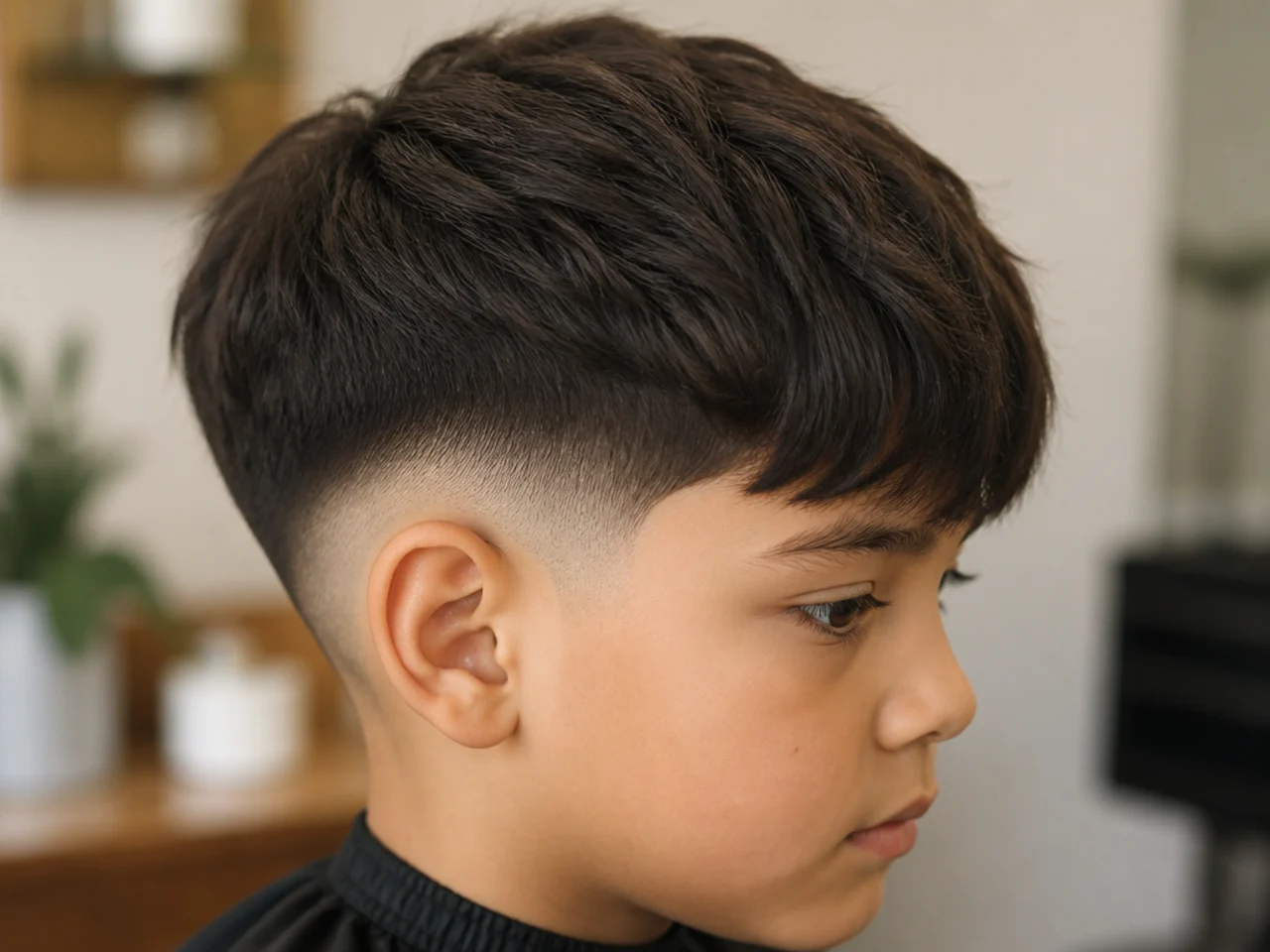
6. Skin Fade at a Number Zero and What It Costs You
It is the sharpest version on day one and the shortest-lived by a distance. Bare skin can only change in one direction, so a child gets about seven days, and it is the exact cut a minimum-length policy is written to catch.
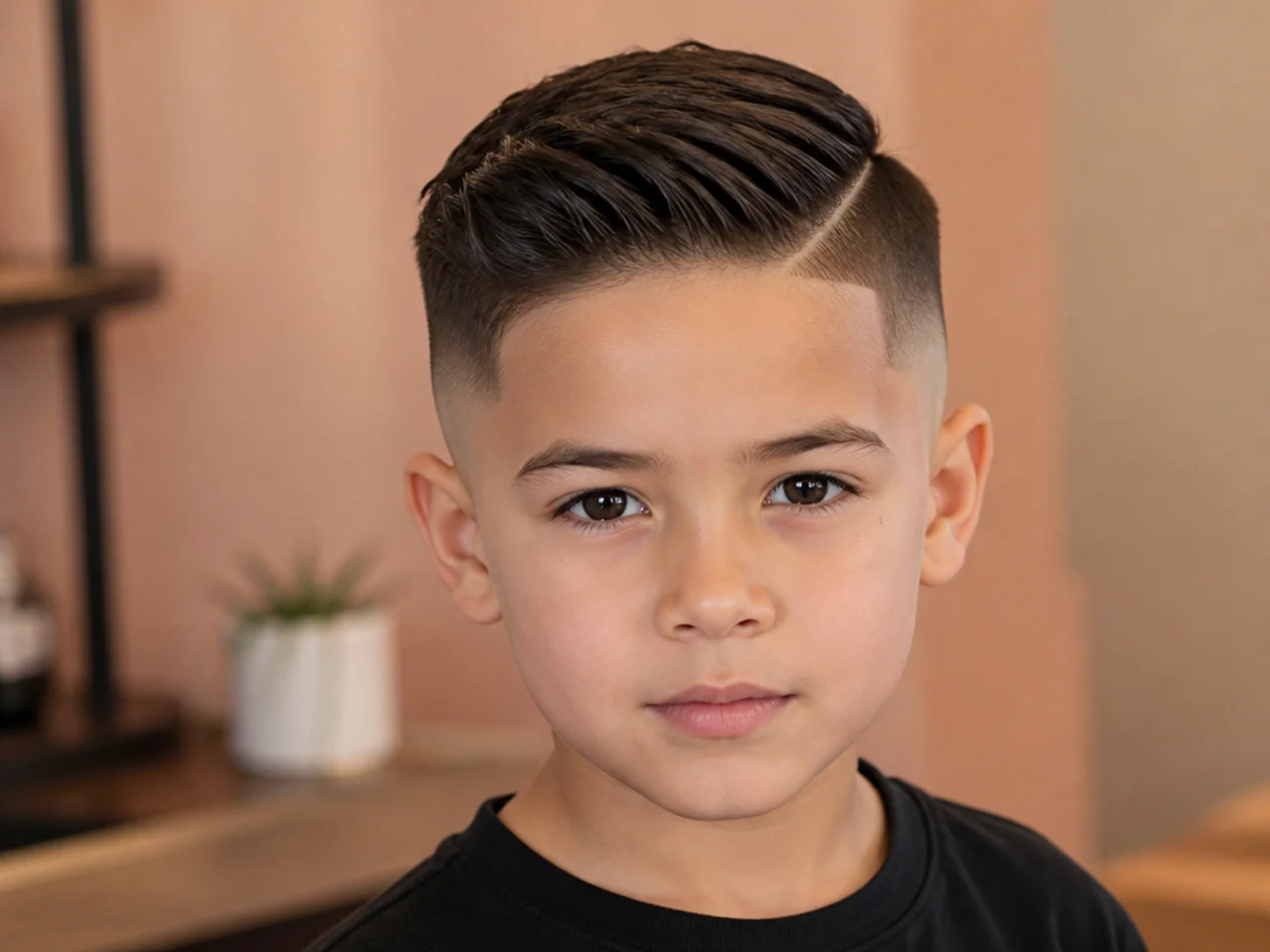
7. Low Taper Over a Number Three
Ten millimetres at the bottom makes the taper read as a change of length rather than a line, so the low placement costs almost nothing. Four weeks, and it is the easiest version to keep even if you are cutting it yourself.
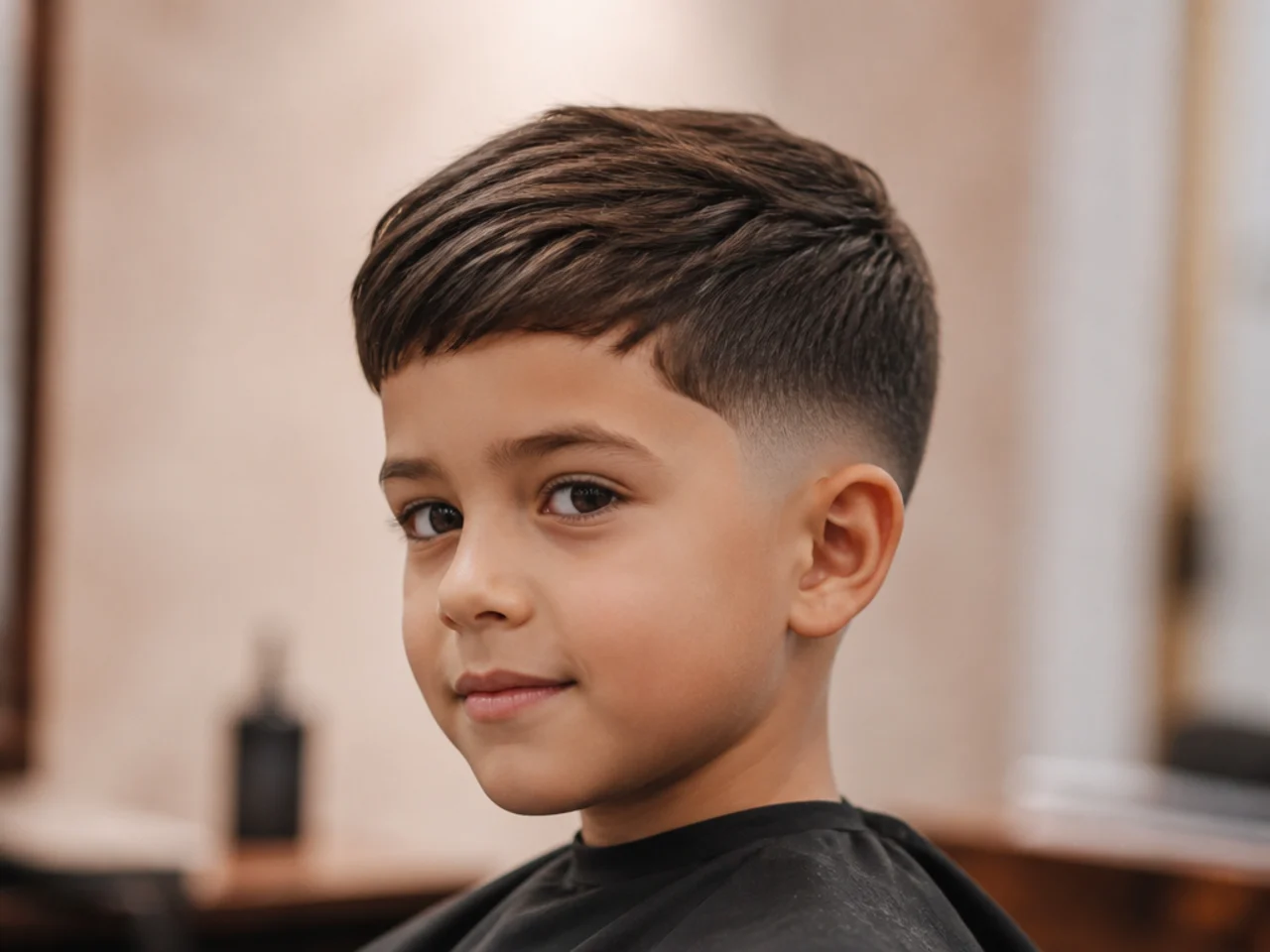
8. Mid Taper Under a Textured Crop
The crop's weight covers the top of the taper line and the number two underneath keeps the bottom from stepping. Four weeks, and when it does go it goes soft rather than becoming a visible band.
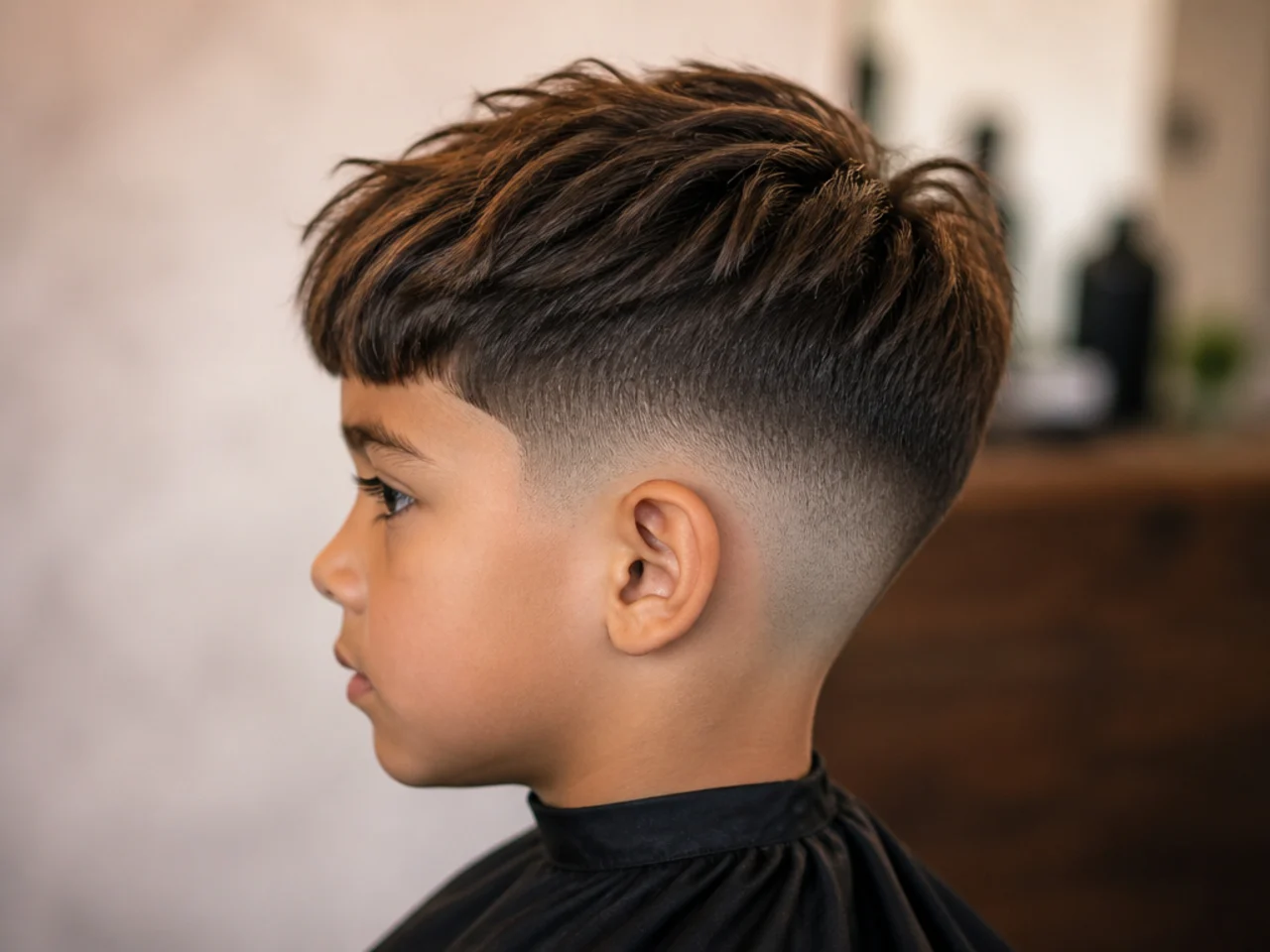
9. High Skin Fade Under a Broccoli Top
Height buys the fade a few extra days, so this outlasts a low skin fade despite being far more dramatic. It still bottoms out at skin, though, so two weeks is the honest number and the round top is doing most of the work by week three.
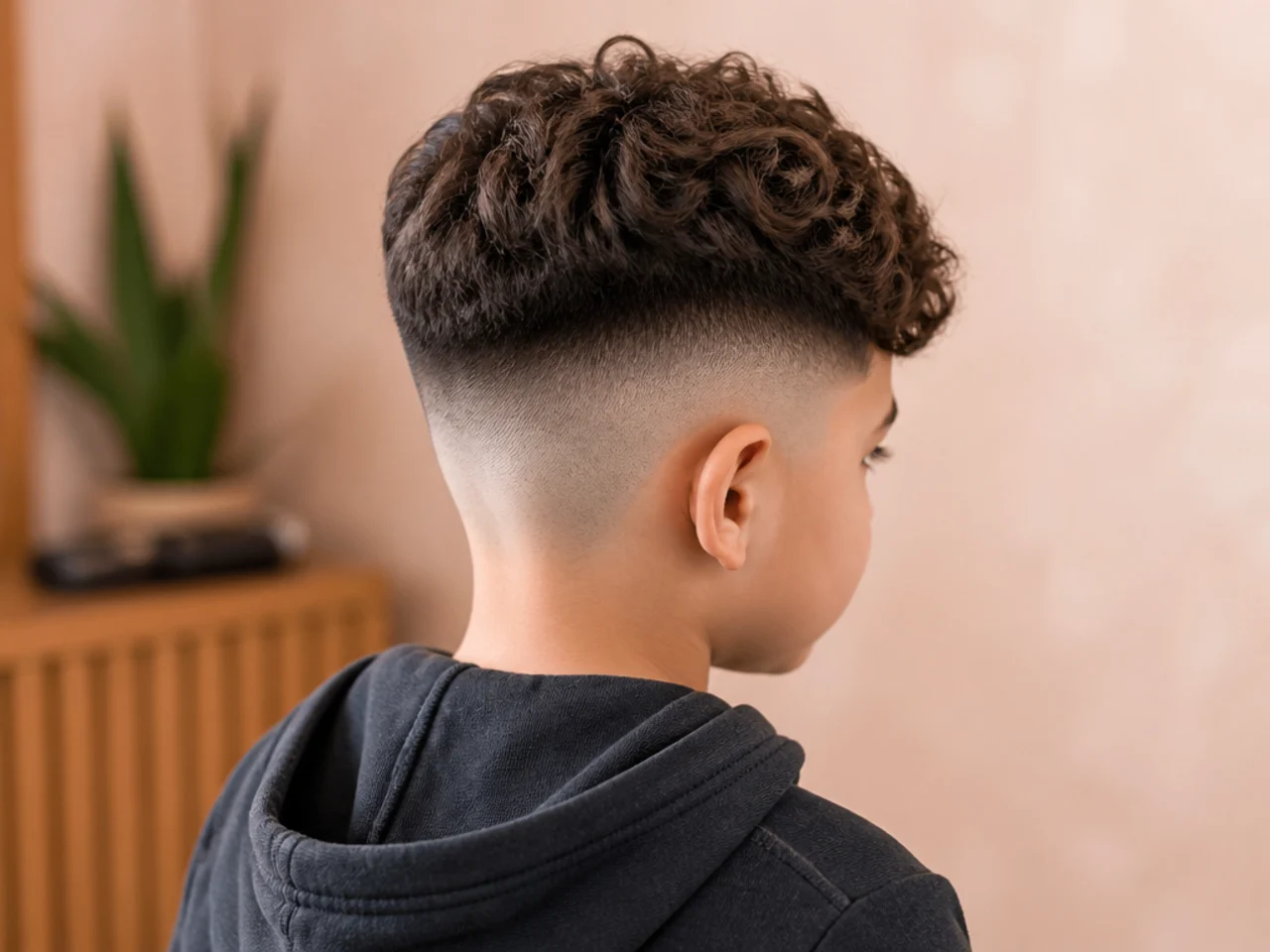
10. Mid Skin Fade With a Fringe
Middle of the road on both counts, a line halfway up and skin at the bottom. The fringe hides the front of the join, which is why it reads better at day twelve than the same fade under a buzz.
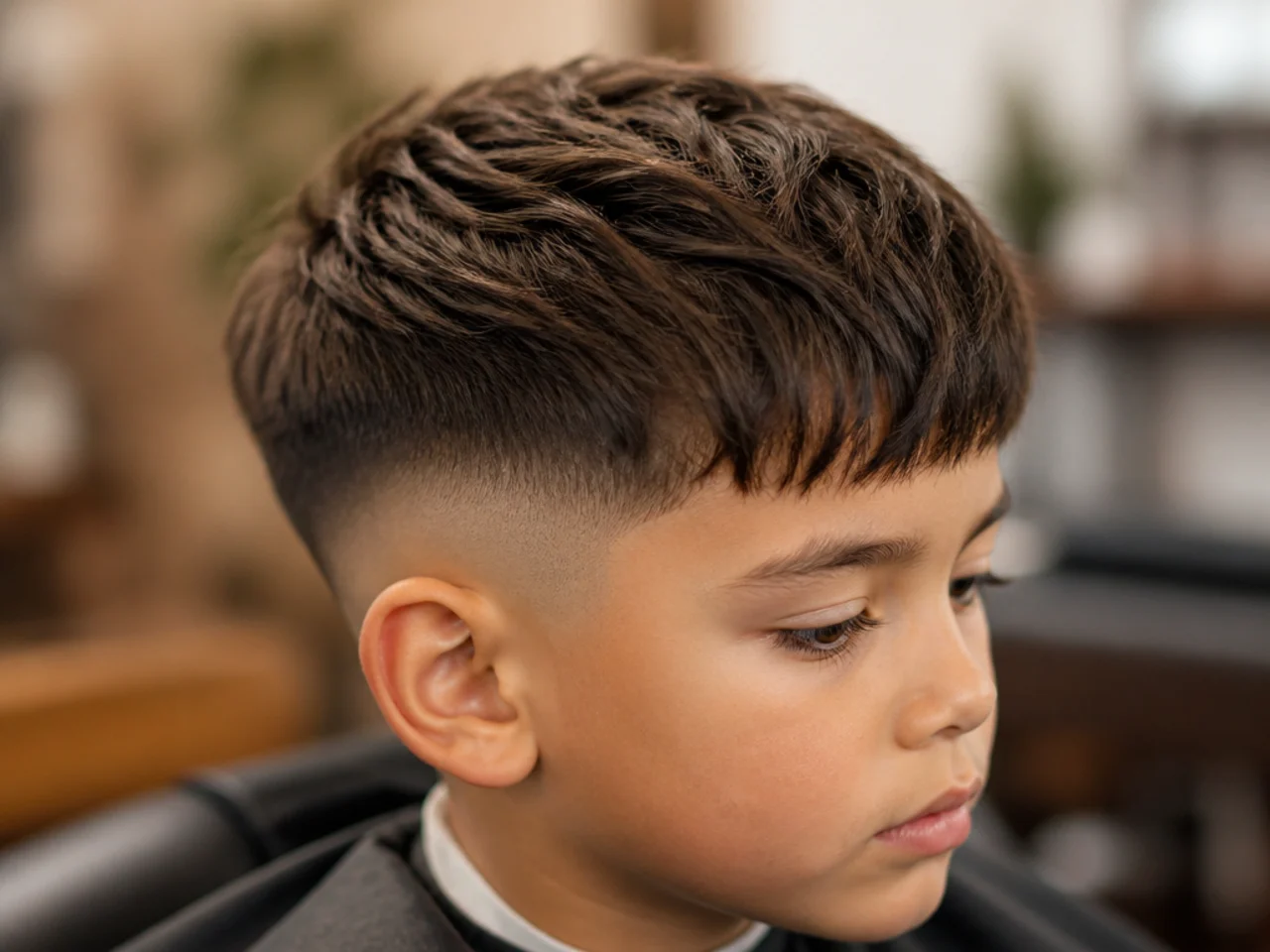
11. Low Skin Fade at the Sideburn Only
The shortest-lived arrangement on this page. Skin at the lowest possible point means the surrounding hair is short too, so there is nothing anywhere to disguise the regrowth and it is done in ten days.
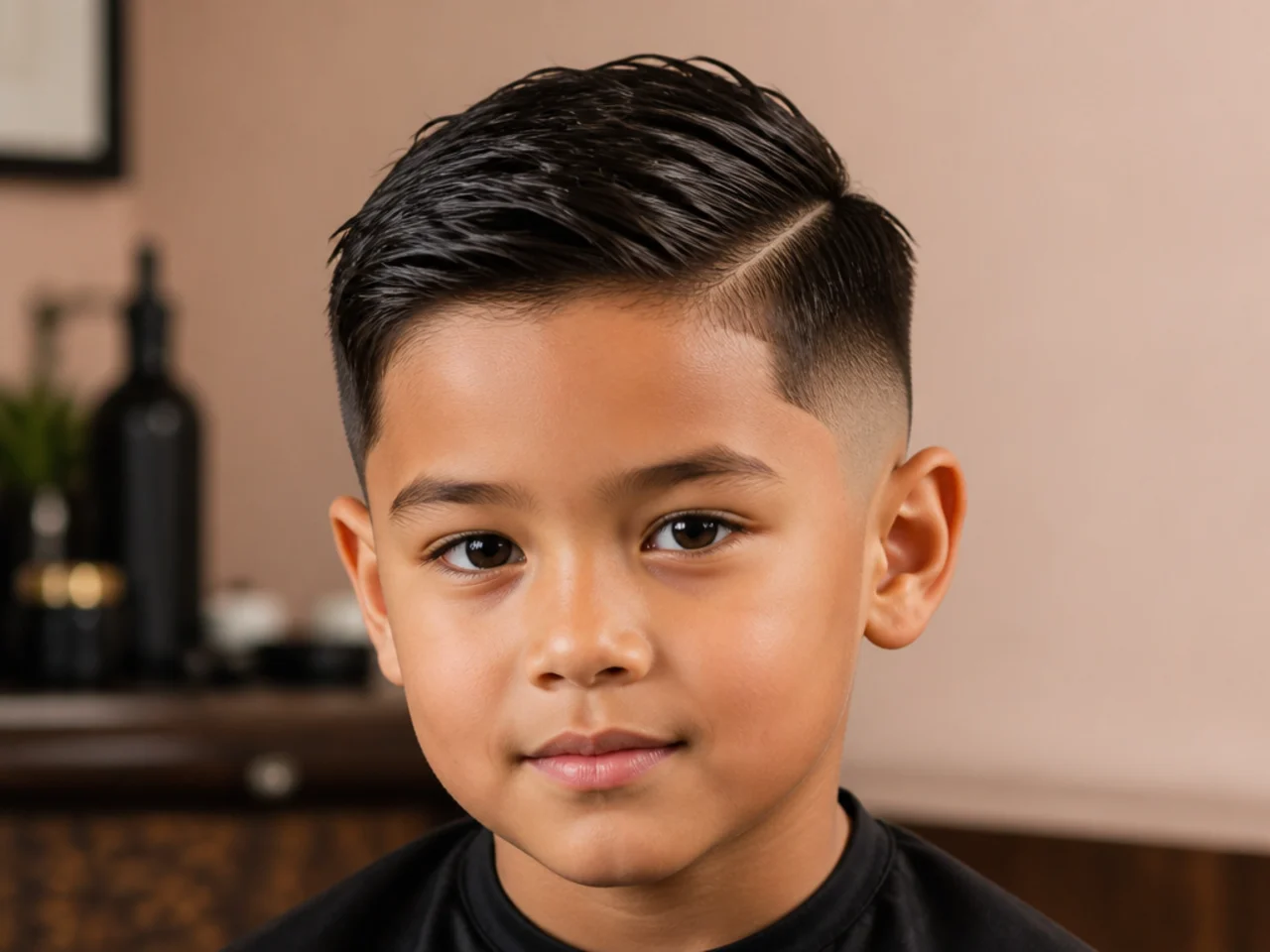
12. Taper With the Neckline Left Natural
Leaving the natural neckline rather than blocking or tapering it removes the one line that goes crooked first as it grows. Five weeks, and it is the single easiest change to ask for if you want a longer interval.
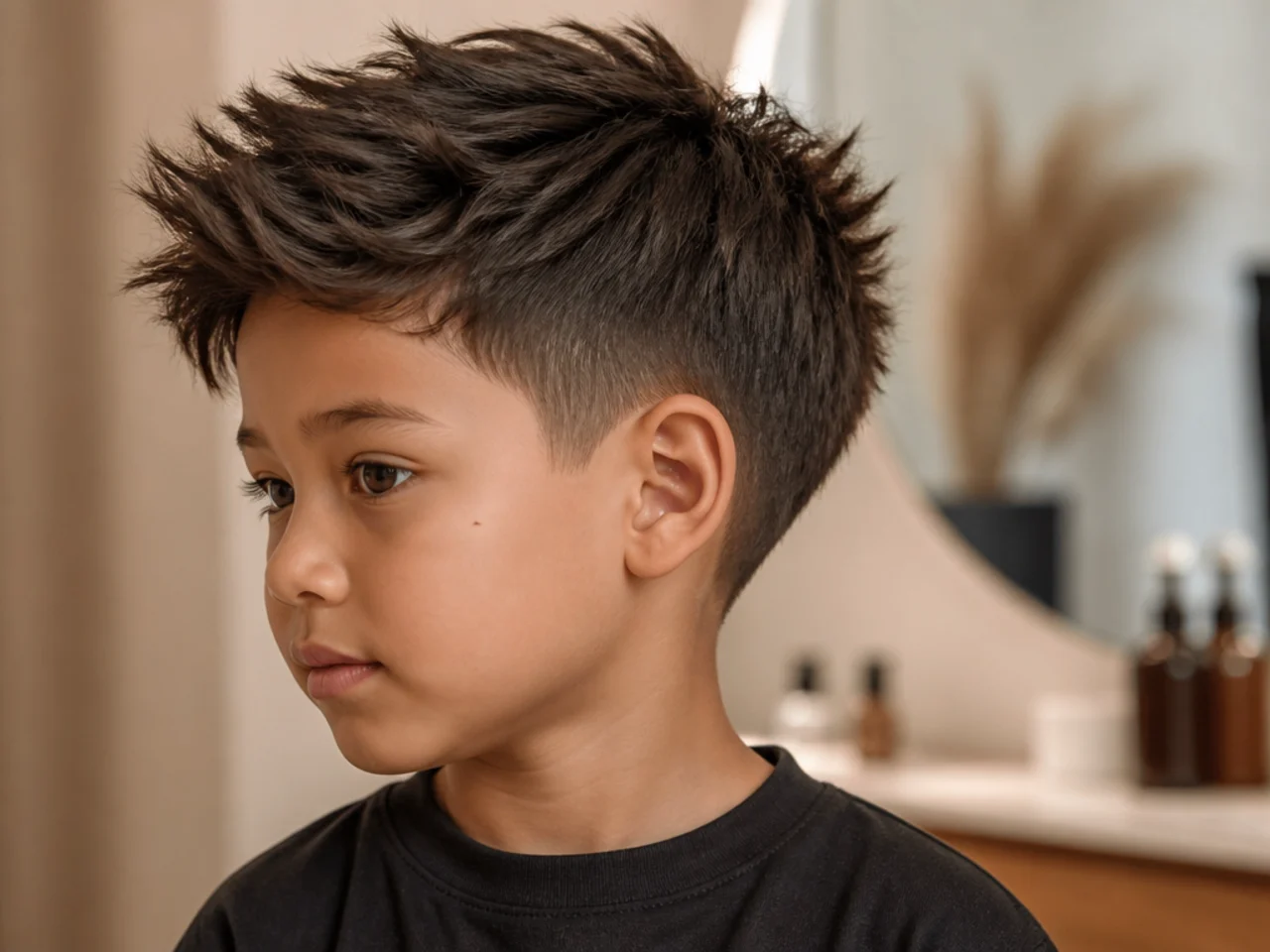
13. Mid Taper Over a Number Four
Thirteen millimetres at the bottom is the longest guard that still reads as a taper rather than as untouched hair. Growth from thirteen to fifteen is a 15 percent change, which is why this is a five-week cut.
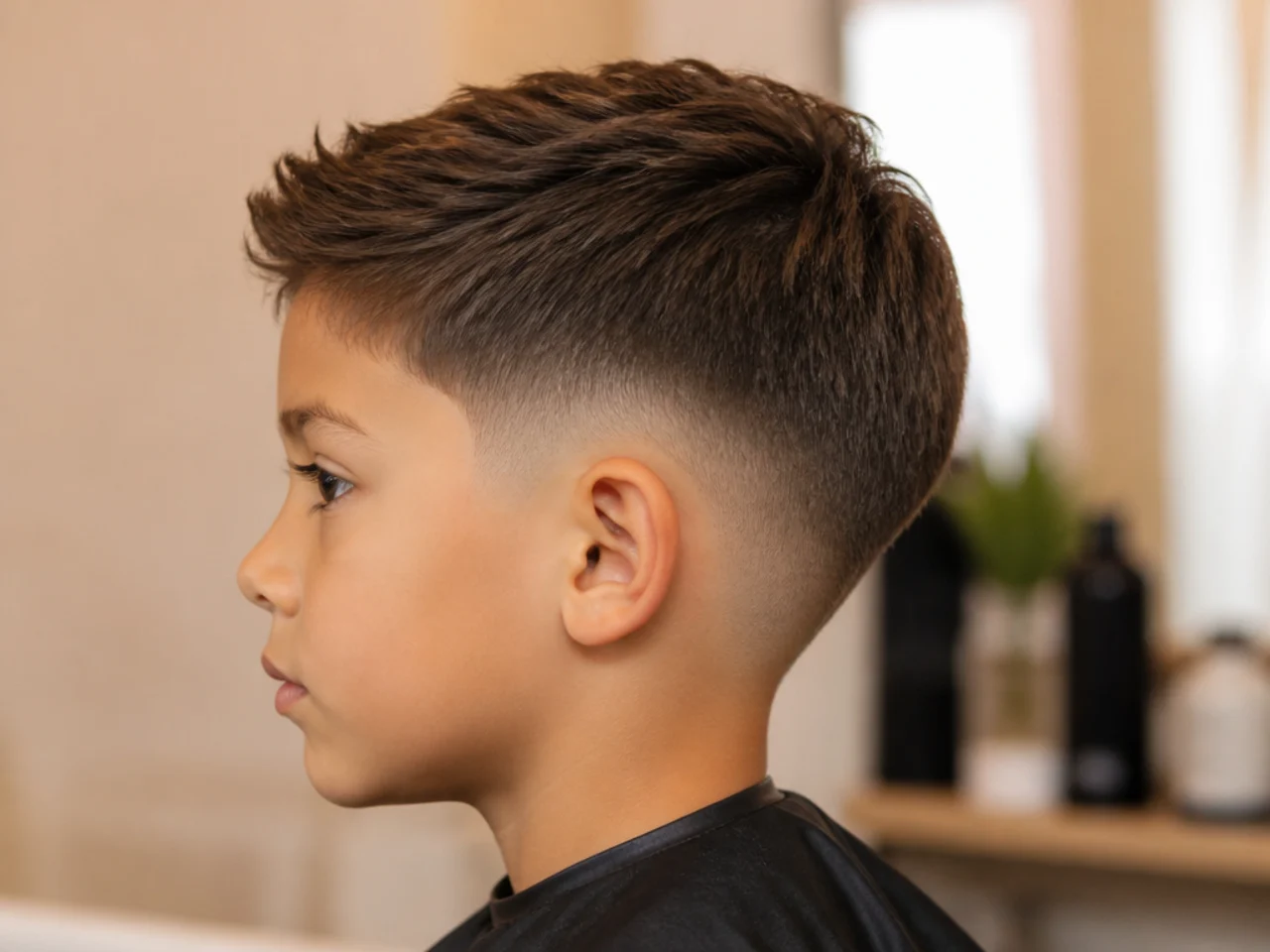
14. High Taper Over a Number Two
The highest line that is still a taper, with six millimetres underneath. Five weeks, and it gives most of the contrast of a high skin fade while clearing a minimum-length rule without an argument.
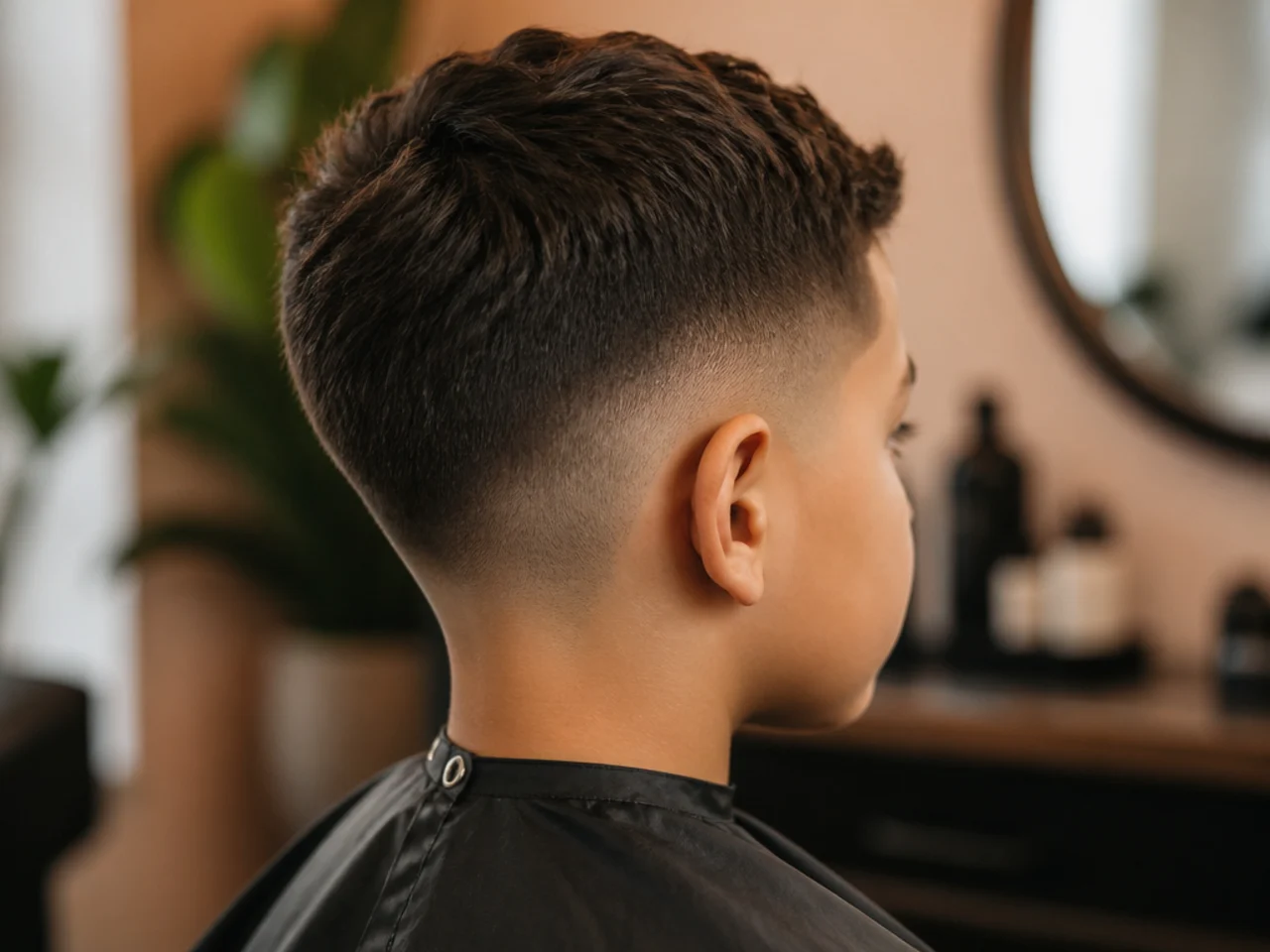
15. Burst Fade Stopped at a Number Two
The same curve as the skin burst with six millimetres left in it, and the difference is three weeks against two. It is the clearest demonstration on this page that the guard matters more than the shape of the line.
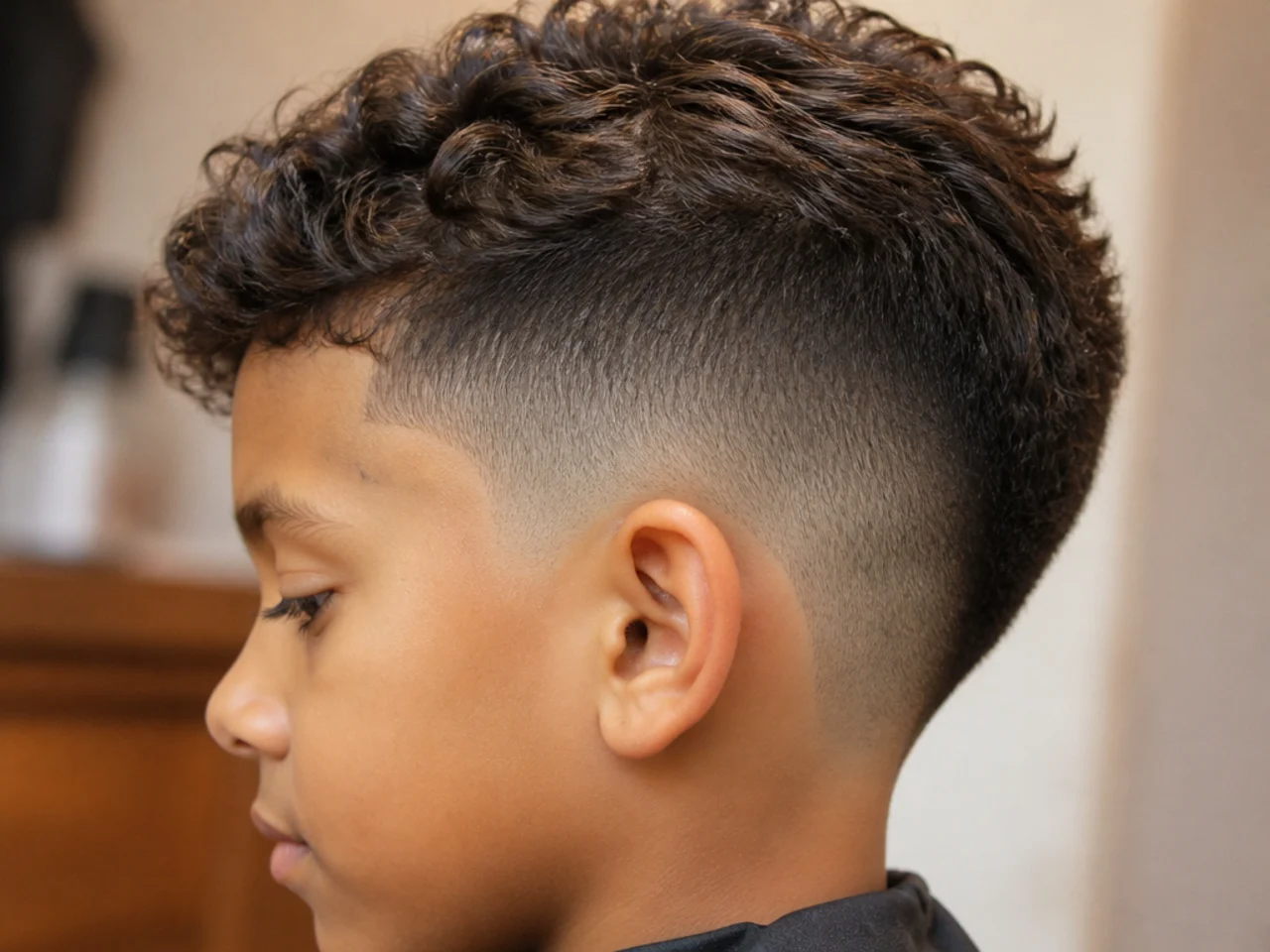
16. Drop Fade Over a Number One
Keeping three millimetres in the dropped section stops the back of the head being the first thing to fail. Three weeks, and it fixes the specific weakness of the skin version without changing what it looks like from the front.
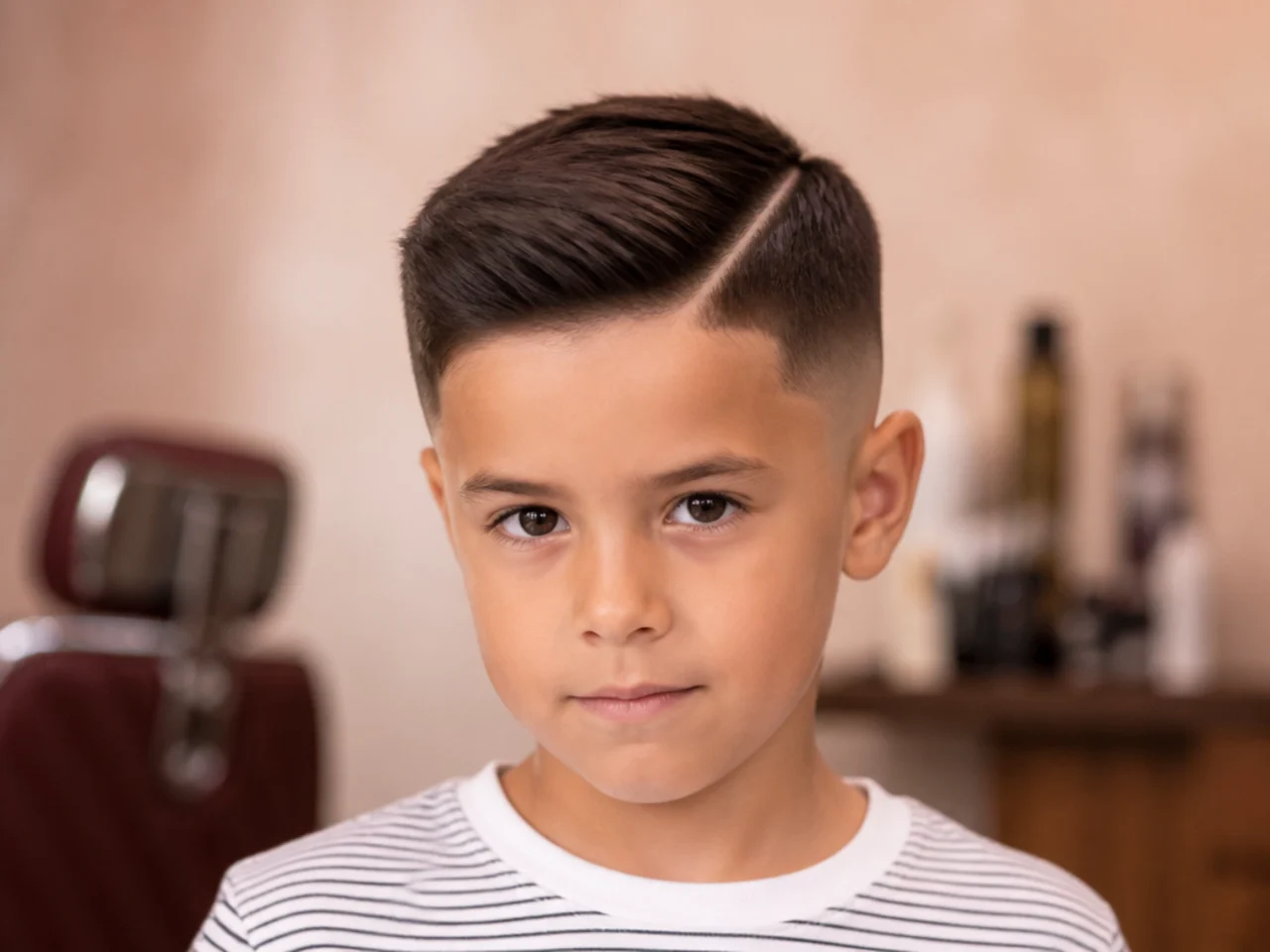
17. Mid Taper With a Blunt Fringe
The taper here will outlive the fringe. A straight cut edge across the forehead loses its line in about three weeks, so on this cut the front sets the appointment date rather than the sides.

18. Low Taper Under a Middle Part
The part sends the top length down over the temples, which is exactly where a low taper line sits. That coverage compensates for the low placement and takes it to four weeks.
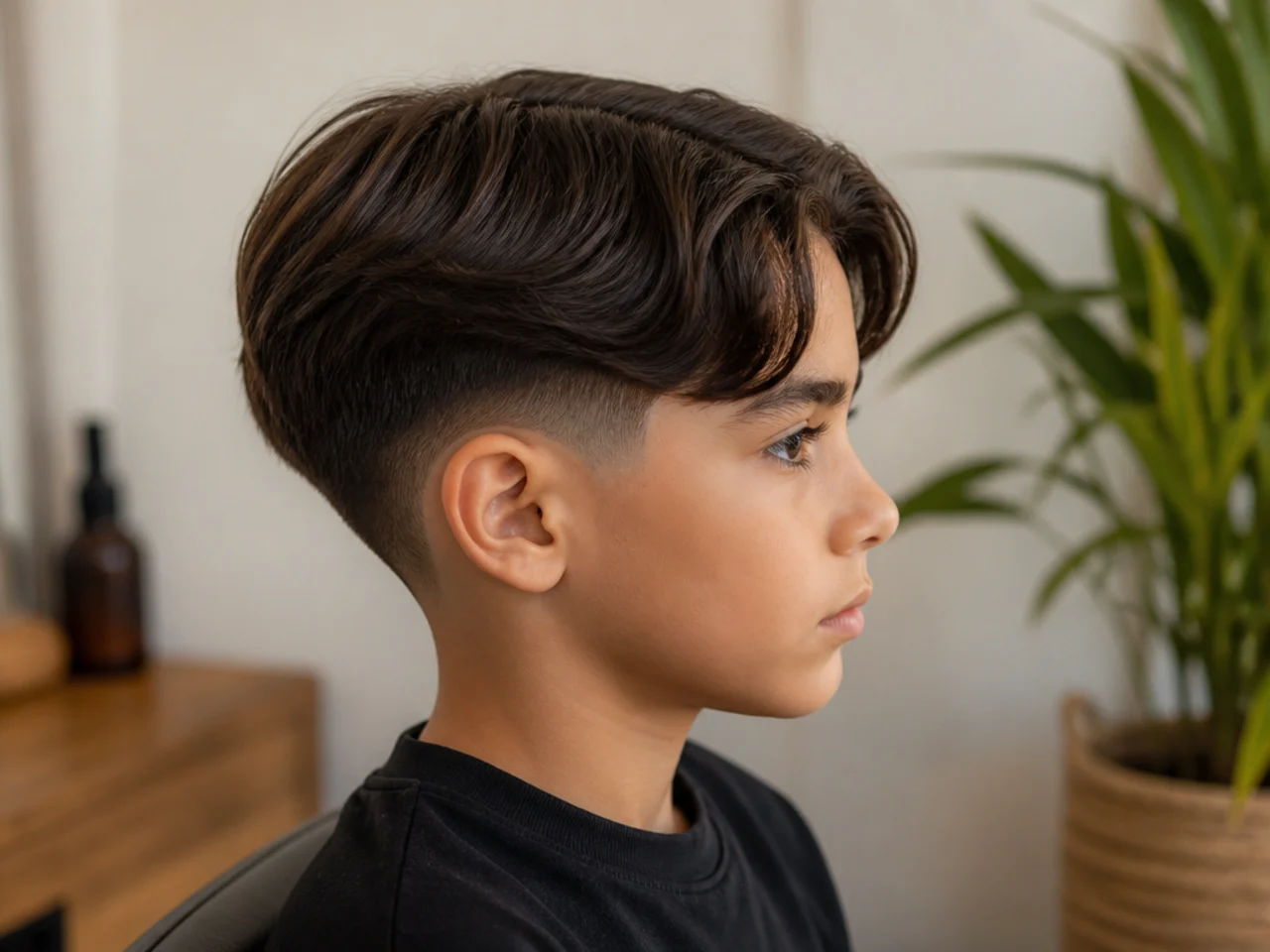
19. A Taper With No Line-Up at the Hairline
Skipping the outlined hairline removes the detail that fails soonest, because a squared edge on a child's fine front hairline is soft again within a week. Leave it natural and the cut still reads clean at five weeks.
20. The Two-Guard Fade You Can Do at Home
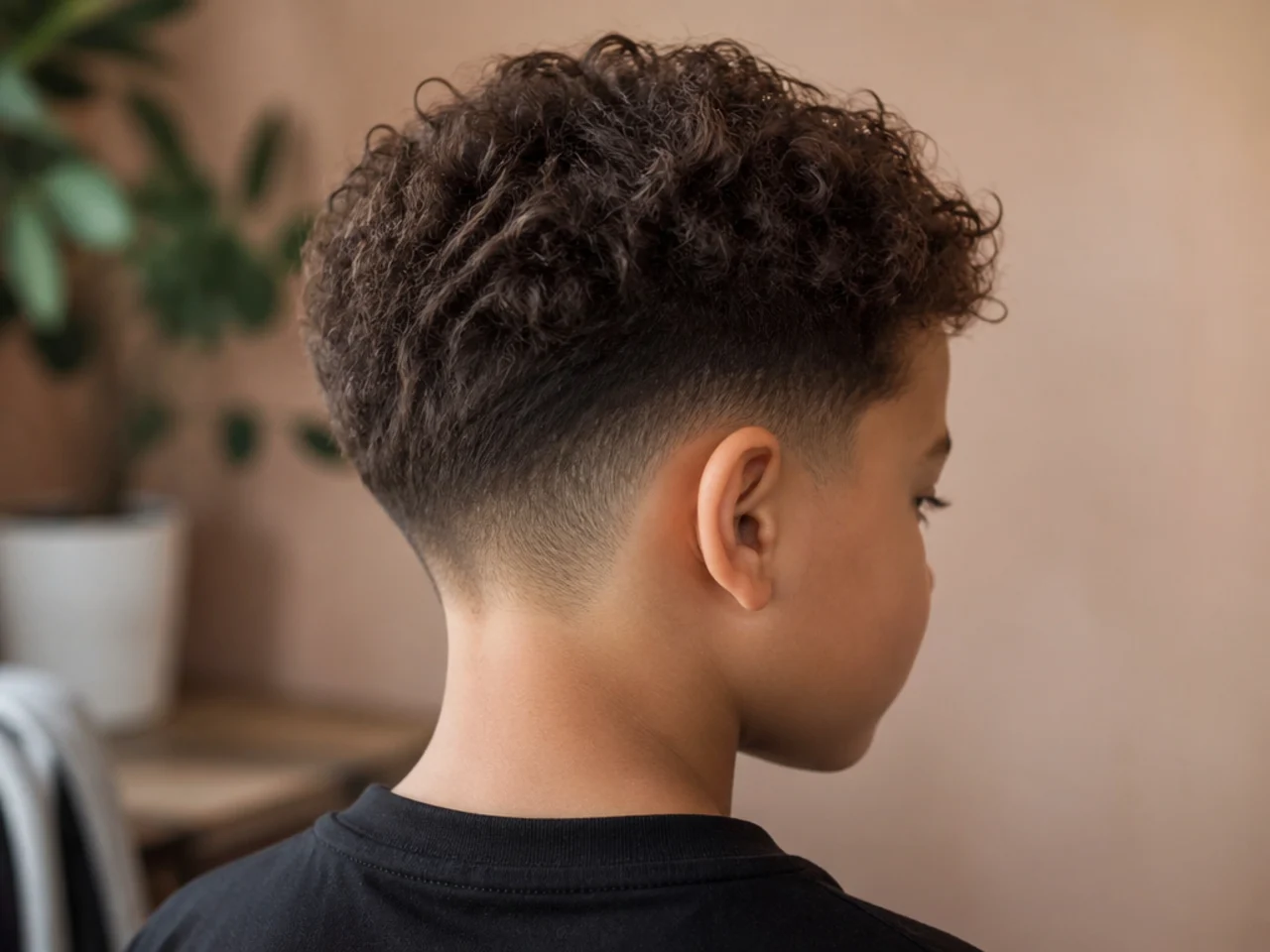
A number two on the sides, a number four on top, and the join softened with the clipper lever half open. It is not a barber blend, but with only a two-guard gap to cross there is very little to get wrong, and it holds three weeks.
Styling and Upkeep
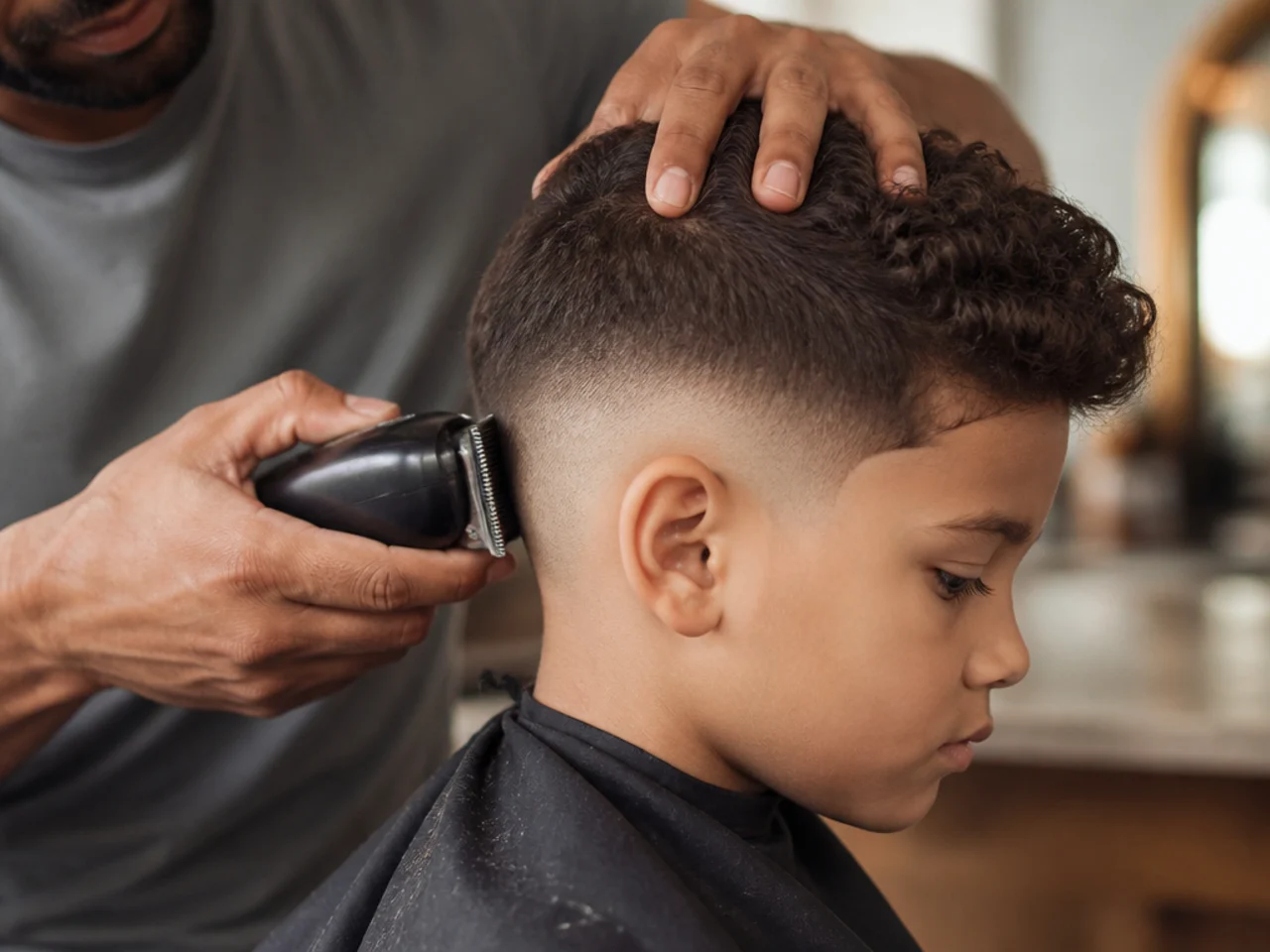
Redo the fade on a fixed date, not on inspection. Set the interval from the bottom guard, because the guard is what decides when the blur becomes a step.
Move the bottom guard up before you move the appointment. Going from a number one to a number two adds a week and changes almost nothing about how the cut looks.
Leave the neckline alone between cuts. Chasing a growing neckline at home lifts it higher each time until the taper has nowhere left to land.
Keep the top long enough to cover the corner. Two centimetres of weight on top means the line is hidden from most angles even once it has softened.
Photograph the side at week one. The fade lives where nobody looks in a mirror, and that photo is what tells the barber where the line was.
Mistakes to Avoid
Asking for a skin fade on a four-week cycle. It is a fresh cut for one of those weeks and a grown-out one for three.
Choosing the height from a photo of an adult. The same line sits proportionally higher on a smaller head, so a mid fade in the picture lands high on a child.
Ignoring the minimum guard in the grooming policy. Policies name a number, and a fade to skin fails a number no matter how neat it is.
Fading low because it looks more conservative. Low is the shortest-lived placement, so the cautious-looking option is the one that ages fastest.
Blocking the neckline square. A squared neckline grows into a visible ledge, while a natural or tapered one grows into nothing.
FAQ
How long does a boy's fade last? About a week to skin, three to four weeks for a taper, minus a week compared with an adult.
Is higher better? Usually, because a higher line sits in longer hair and growth has a smaller gap to close.
What passes a school rule? Any taper that stops at a number two or longer, which is also the version that lasts.
Final Thoughts
Name the bottom guard and the height in the same sentence at the consultation, in that order, and the cut will do what you expect for as long as you expect. A number two at a mid height is the answer for most boys most of the year, and it happens to be the version that never has to be defended to a school office.
For the height comparison in full see low fade versus mid fade versus high fade, and for the taper-specific version of the same question see low versus high taper fade. More in Fade Haircuts.