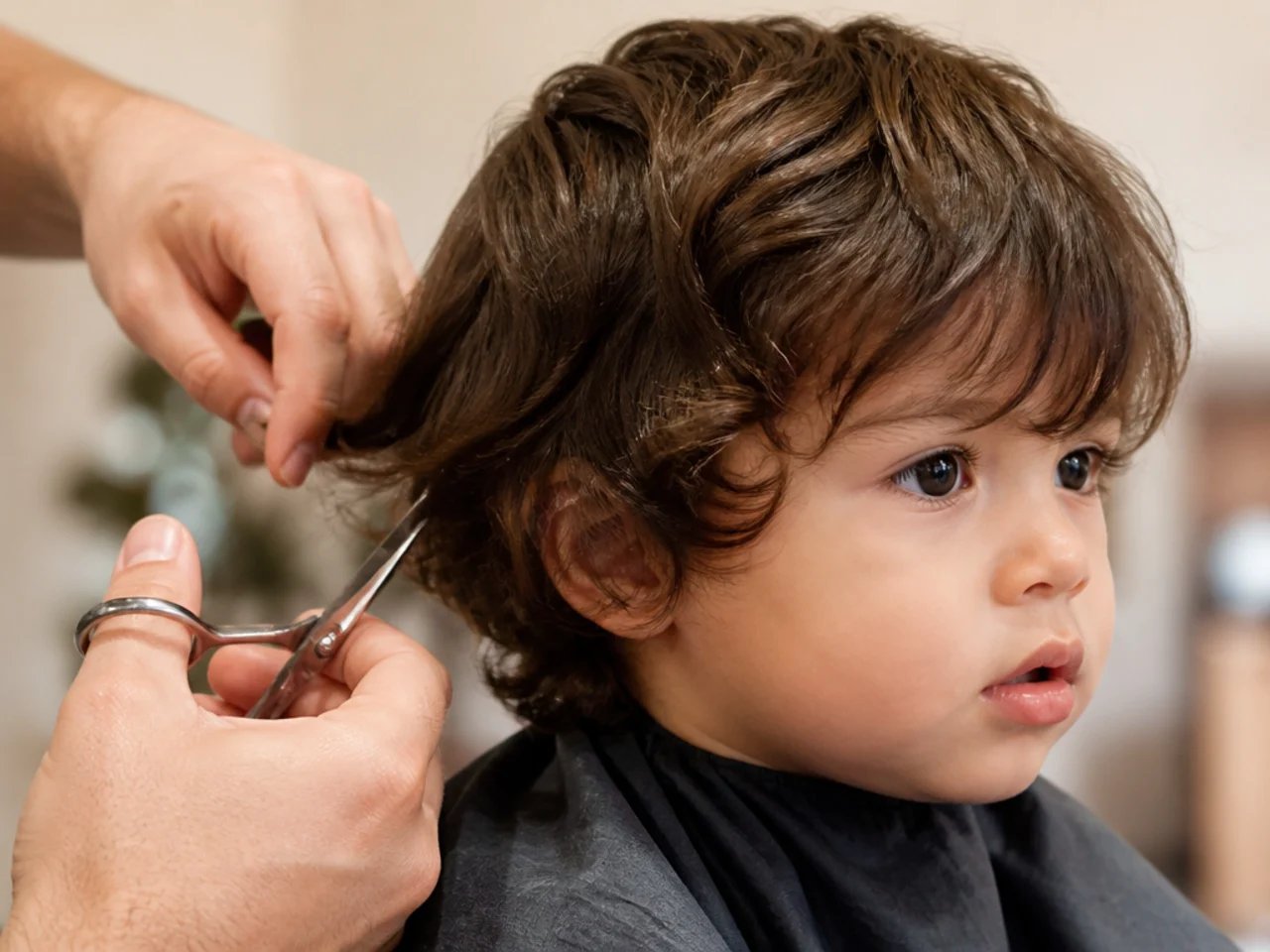
15 Toddler Boy Fade vs Long Haircut Ideas
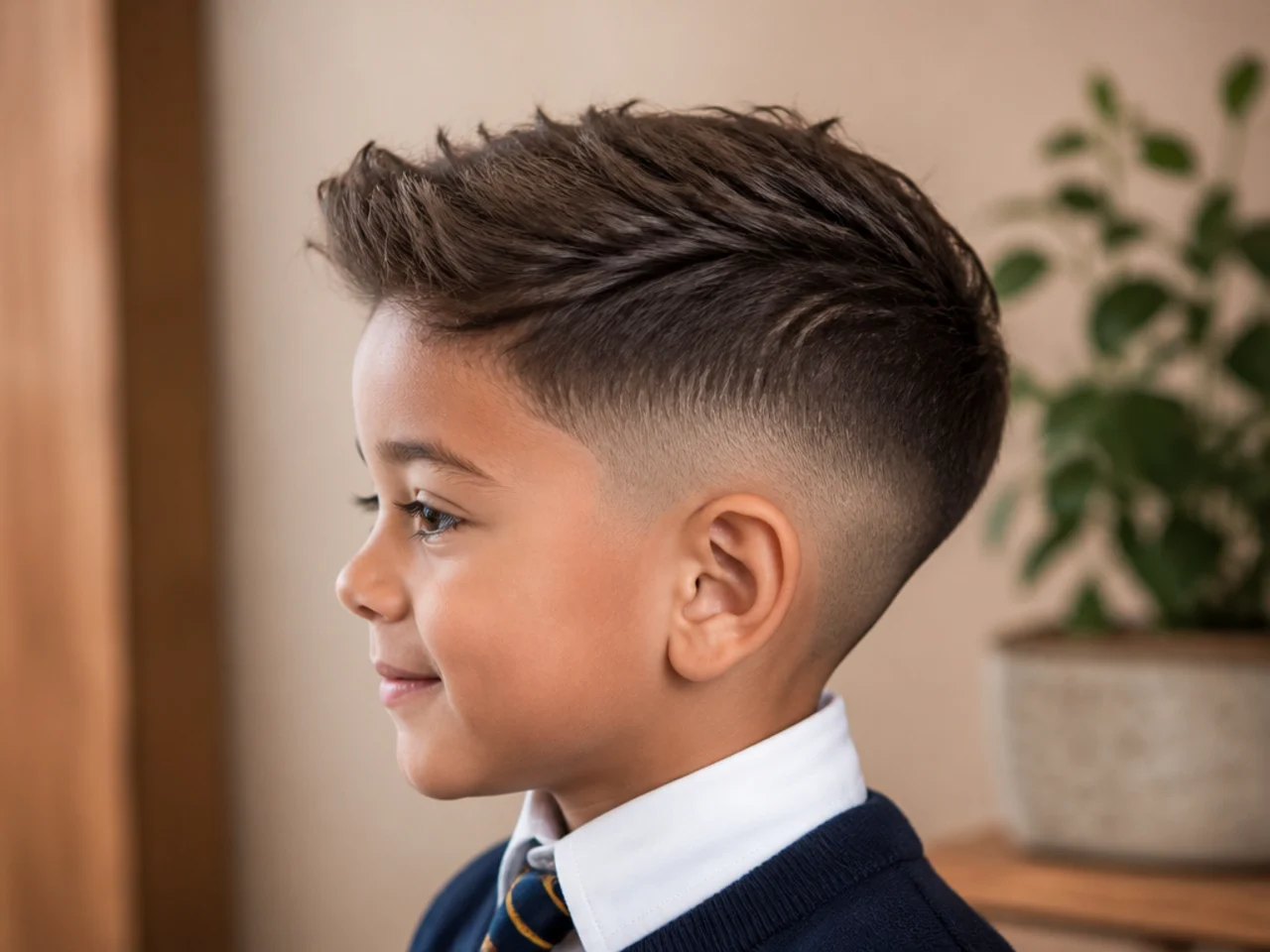
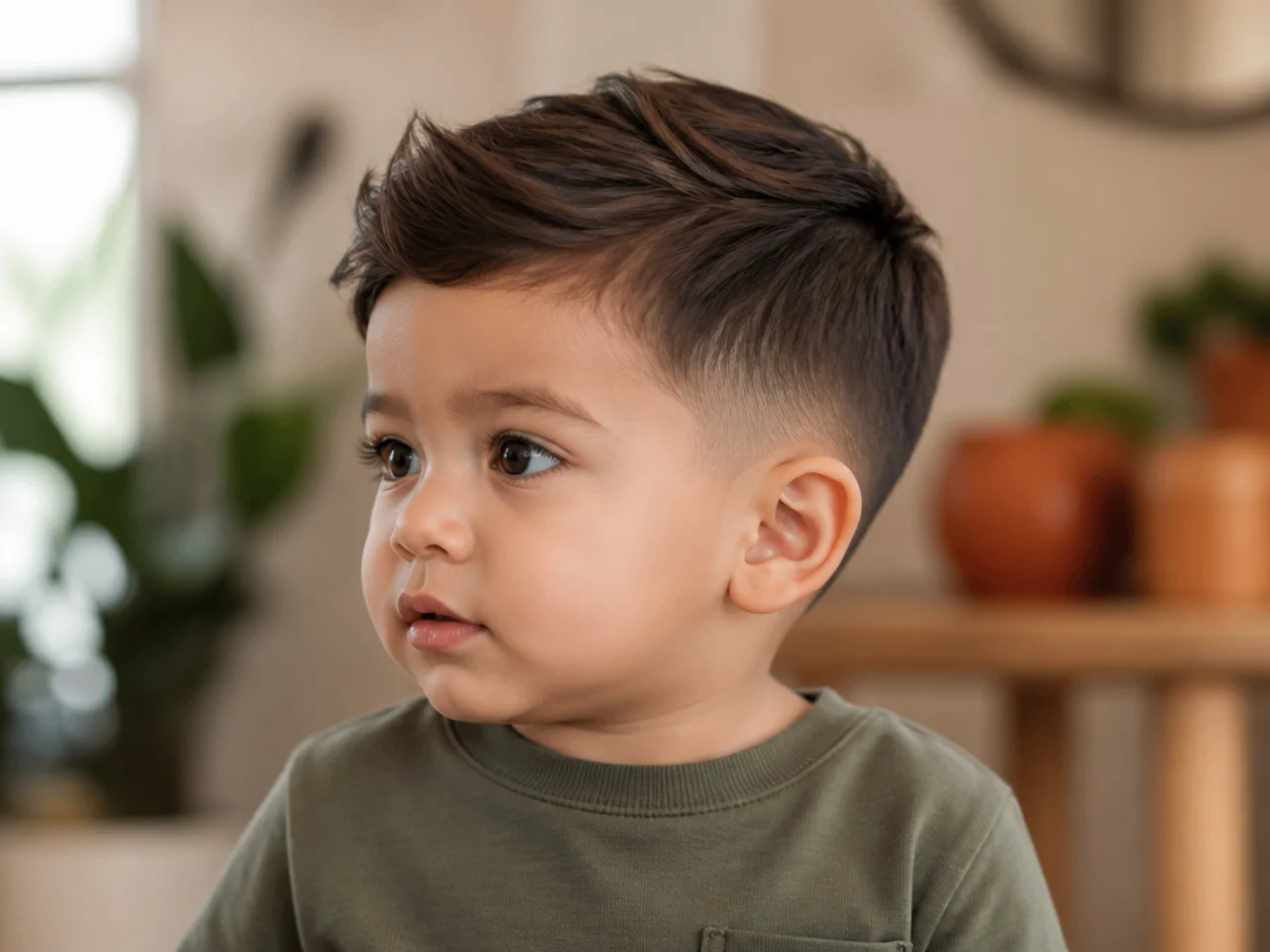
A faded toddler cut is a short session you have to repeat every three or four weeks, and every repeat puts a motor next to his ear. Long hair is two or three sessions a year and a daily fight with a brush instead.
In this article · 22
- Session Count Against Daily Friction
- How to Choose Yours
- The 15 Scenarios and Which Side Wins
- 1. He Screams at the Clipper — Long Wins
- 2. He Hates the Brush — Fade Wins
- 3. Hair Constantly in His Eyes
- 4. A Wedding in Two Weeks
- 5. Summer and He Overheats
- 6. You Cut It Yourself and Own No Clippers
- 7. He Sleeps on One Side and It Flattens
- 8. Very Fine Low-Density Hair
- 9. Tight Curls That Tangle
- 10. A Nursery Photo Day
- 11. He Sits Still for Two Minutes and No More
- 12. Bath Time Is Already a Fight
- 13. It Has Gone Stringy Rather Than Shaggy
- 14. There Is a Newborn in the House
- 15. Food Ends Up in the Fringe Every Meal
- Styling and Upkeep
- Mistakes to Avoid
- FAQ
- Final Thoughts
The fade-or-grow-it-out argument usually gets settled on how the child looks. That is the wrong question, because both options work fine on a two-year-old and the difference shows up in your week, not in the photo.
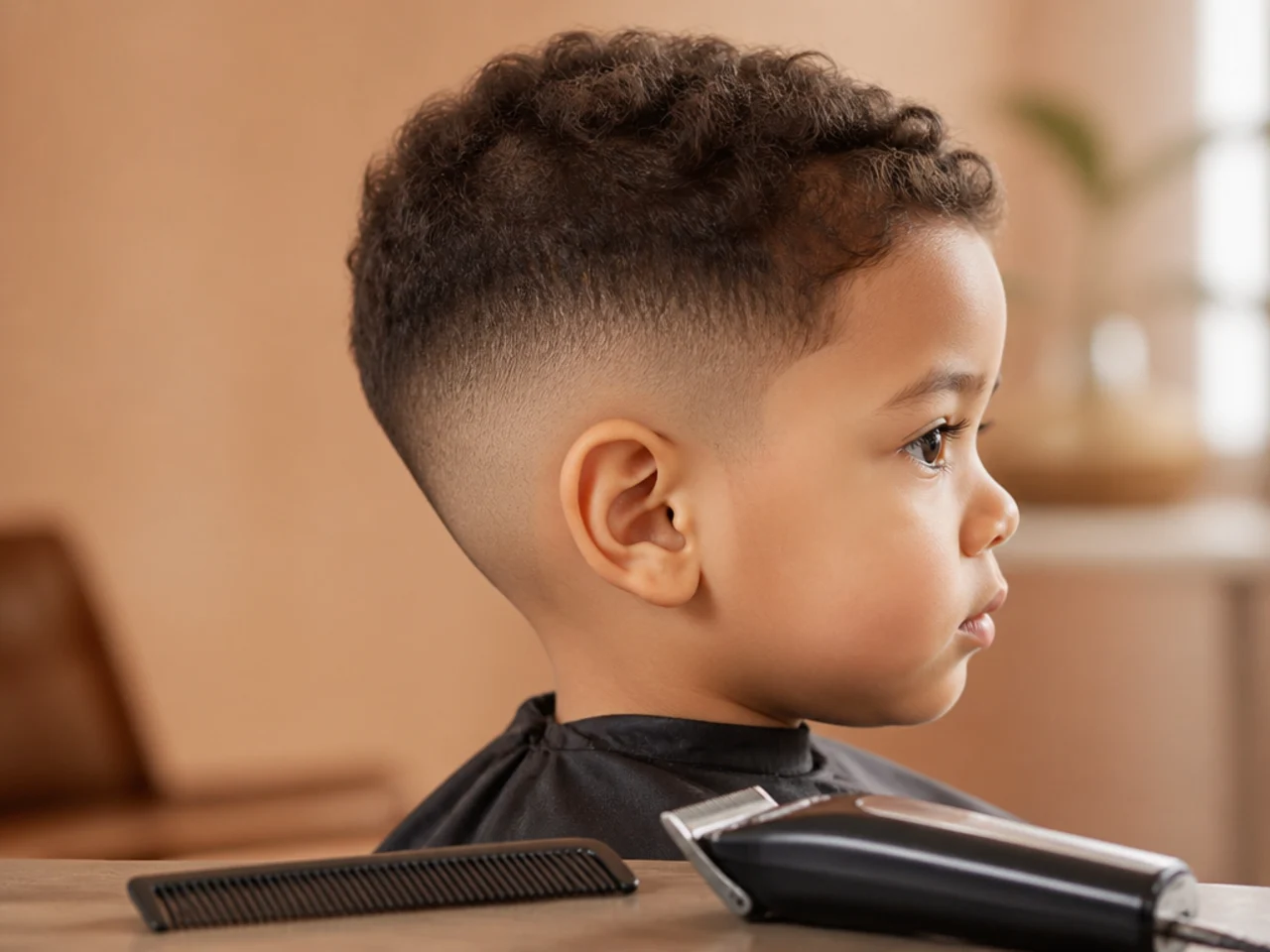
The real trade is session count against daily friction. A faded or tapered cut is a short session, but you need one every three or four weeks and every single one involves a motor next to his ear.
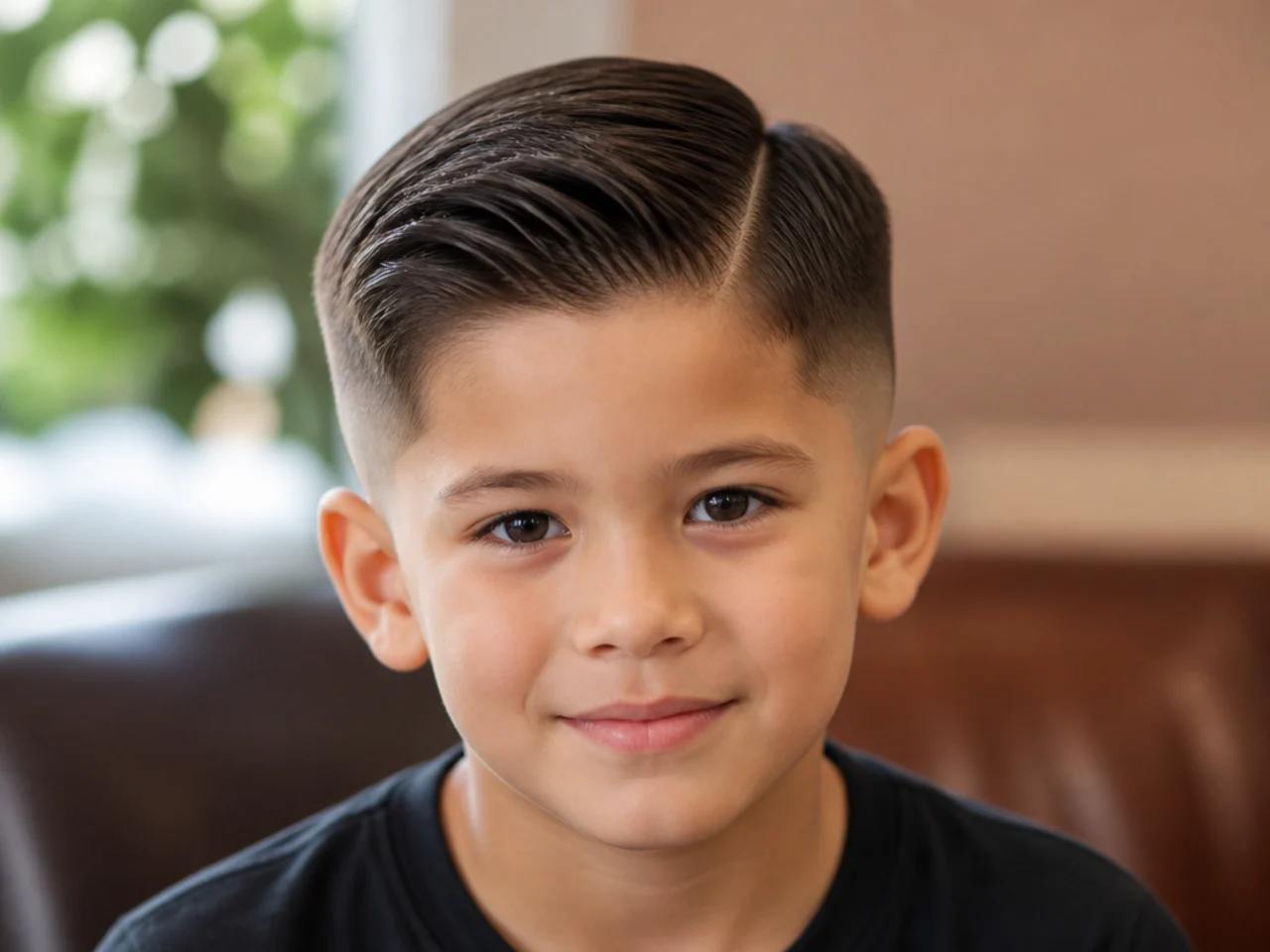
Long hair is two or three sessions a year with no clipper at all, and a daily fight with a brush instead. Hair will be in his eyes by month two. Neither option is easier — they move the effort to a different place.
Session Count Against Daily Friction
A taper on a toddler holds three weeks, a skin fade closer to two. Children's hair grows faster than adults', so subtract roughly a week from any schedule written for a man.
Every one of those sessions costs a clipper introduction. The machine has to be handed over, started at arm's length and tolerated again, because the fear resets between cuts.
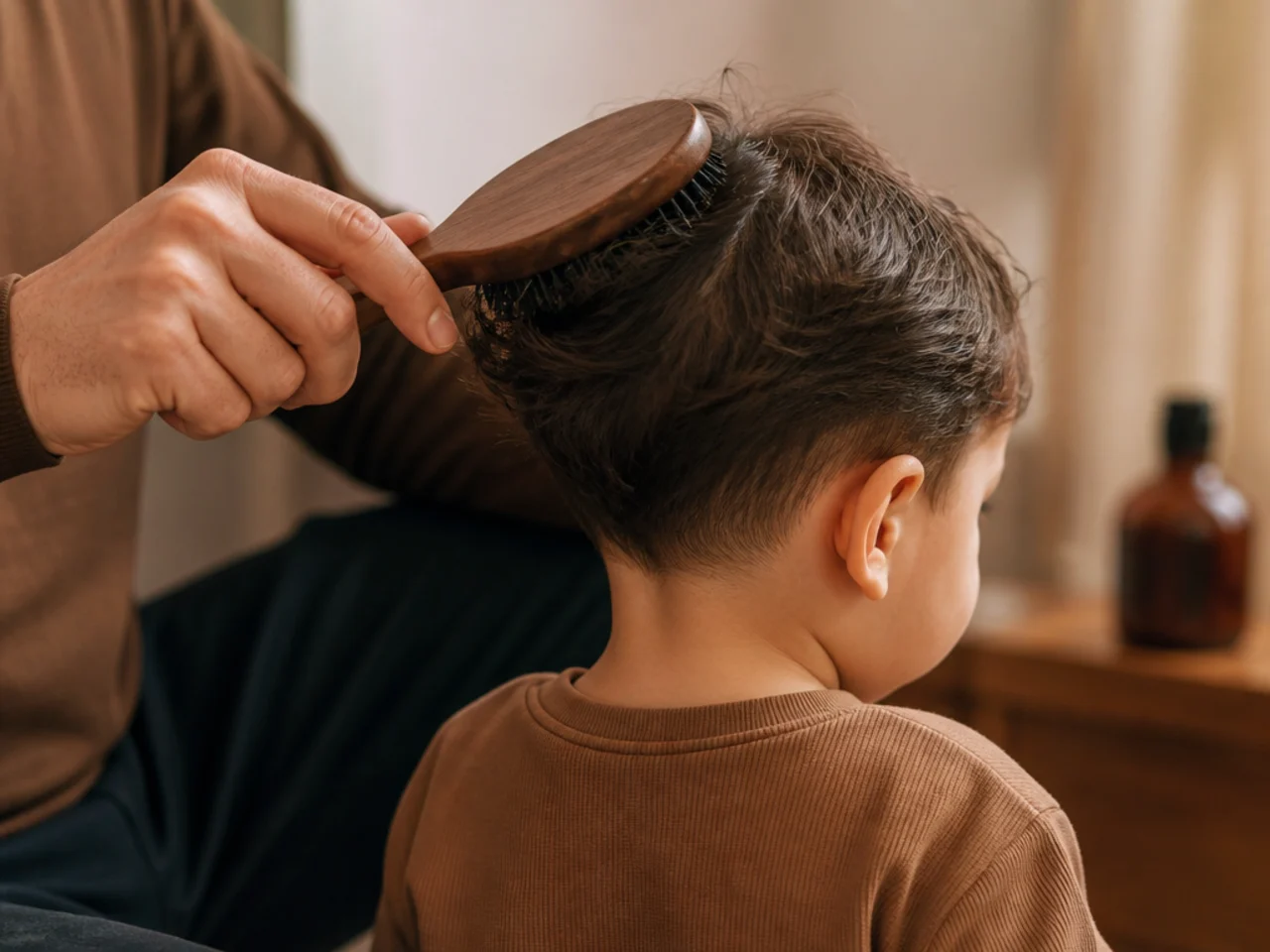
Long hair costs you every morning instead. Fine baby hair tangles at the nape where he sleeps on it, and brushing it is a daily negotiation rather than a monthly one.
The fringe is the only genuinely urgent cut either way. Hair in the eyes is a real daily problem, so even a grow-it-out plan needs the front trimmed every four to six weeks.
How to Choose Yours
Count the sessions you can realistically get through in a year. Twelve to seventeen short ones or three long ones — pick the number that matches how the last few cuts actually went.
Ask which he objects to more, the motor or the brush. He has already told you, and that answer decides this more reliably than any picture.
Check the density before you commit to short. Fine baby hair shows scalp under a #2, so a genuine fade on a low-density head reads bare rather than sharp.
Remember you can stop tapering and start growing at any time. The reverse takes half a year, so the fade is the reversible choice and long hair is the commitment.
The 15 Scenarios and Which Side Wins
1. He Screams at the Clipper — Long Wins
Every faded cut needs a motor near his ear twelve to seventeen times a year, and a child who has already learned to scream at it will not unlearn that on a schedule that tight. Long hair removes the machine from the equation entirely. Trim the fringe with scissors and leave the rest alone.
2. He Hates the Brush — Fade Wins
Brushing is a daily event and a clipper is a monthly one, so a child who fights the brush is fighting it roughly thirty times for every haircut you avoid. A taper moves that whole cost into one short session. He gets four bad minutes a month instead of two bad minutes a day.
3. Hair Constantly in His Eyes
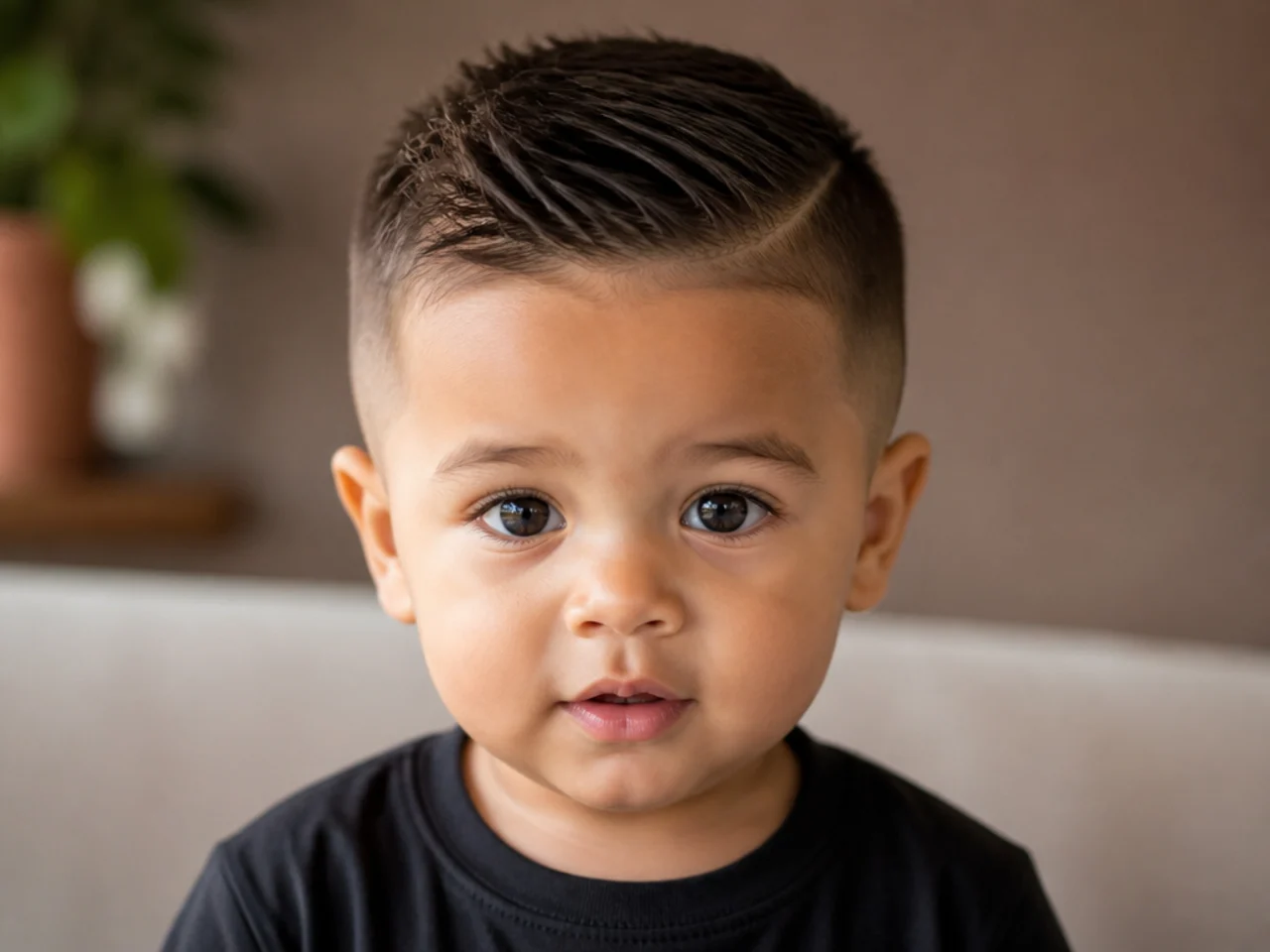
This is a fringe problem, not a length problem, and both sides fix it identically with one cut across the front. Cutting the sides short changes nothing about what falls into his eyes. Trim the fringe and then decide the rest of the question on something else.
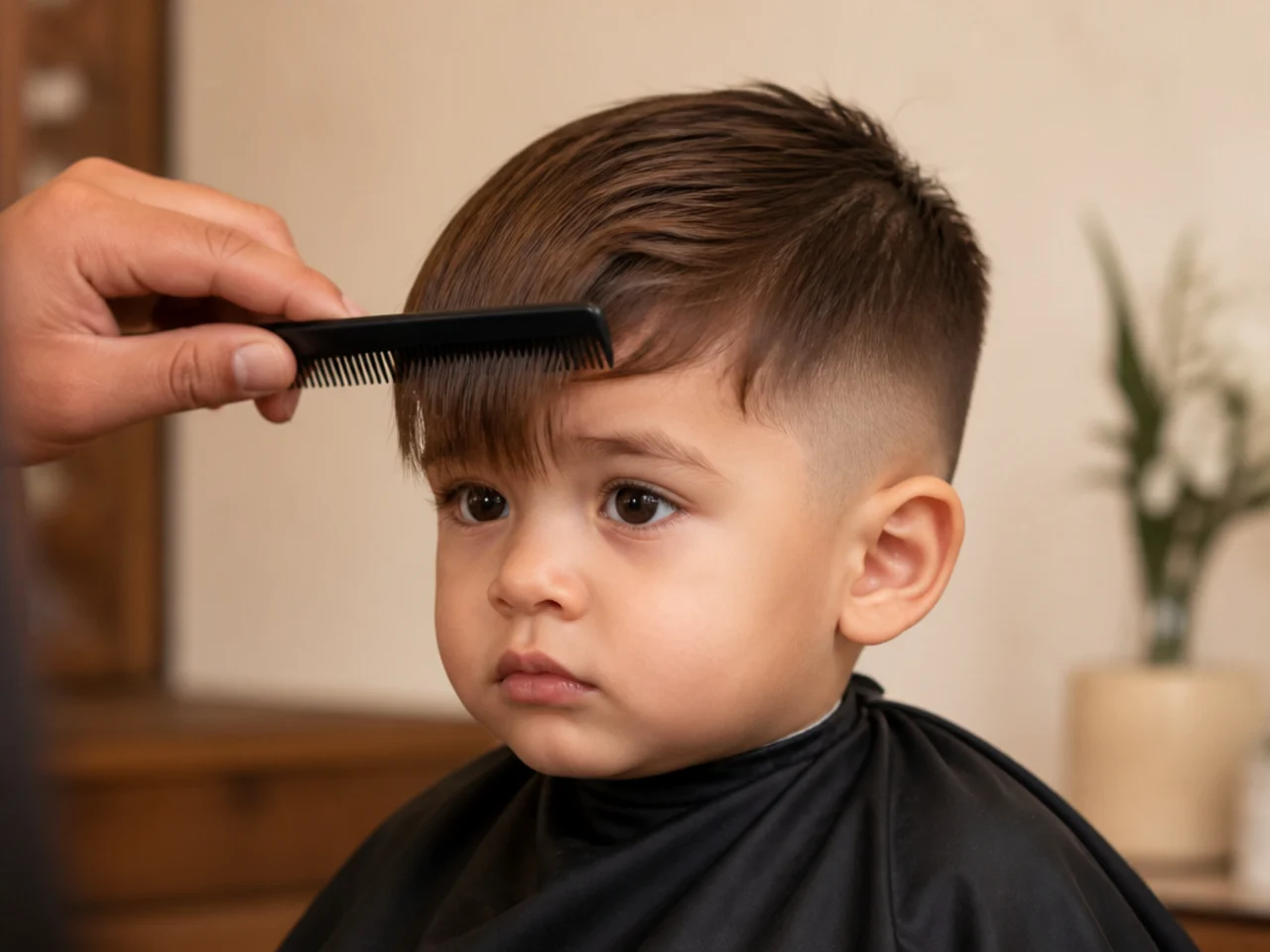
4. A Wedding in Two Weeks
Fade wins, but do it now rather than the day before, because a fresh taper on a toddler looks its best around day five once the softest hairs have settled. Two weeks also leaves room for a second sitting if the first one ends early. A long cut has no such recovery window.
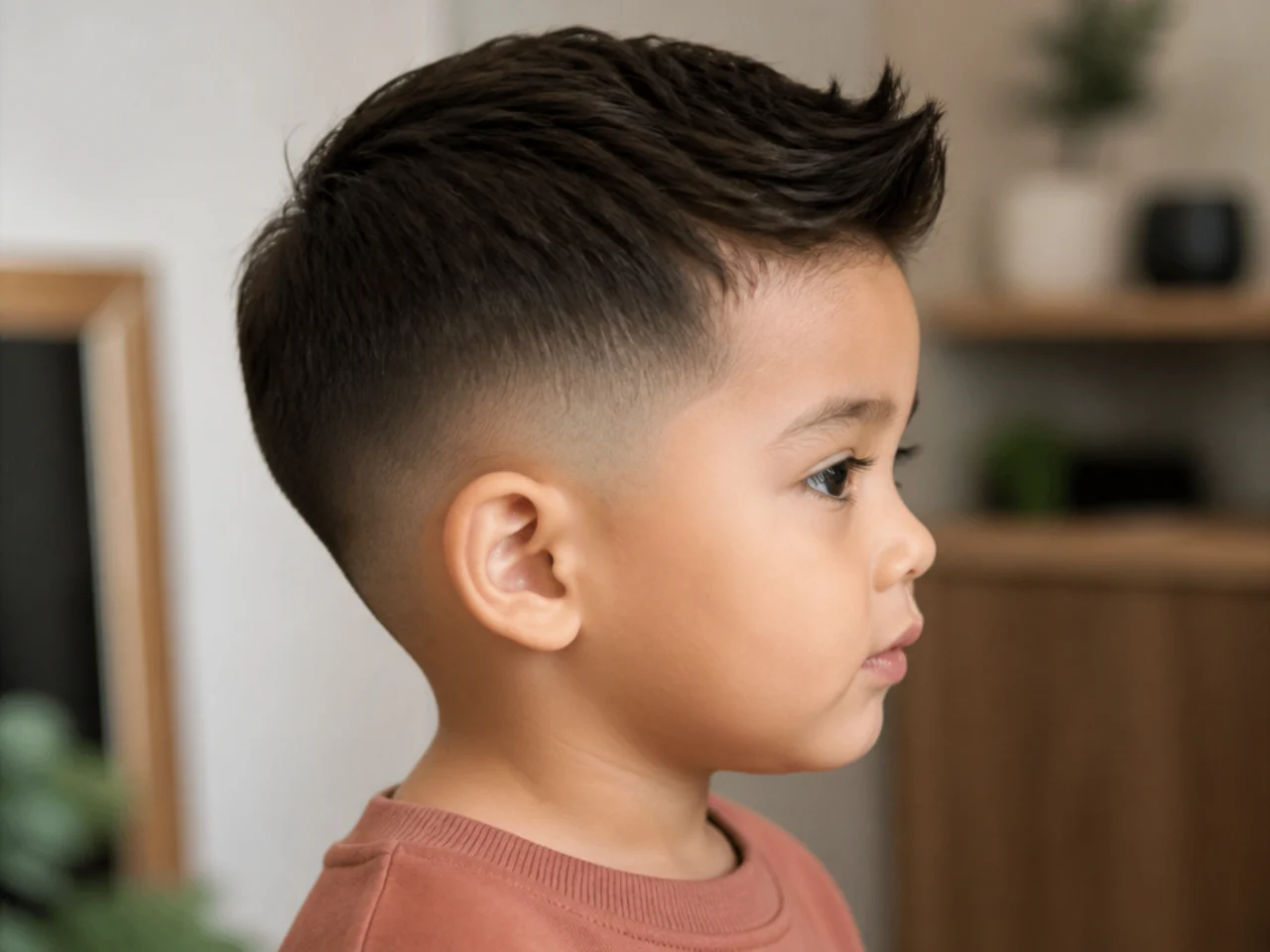
5. Summer and He Overheats
Fade wins on mechanism rather than fashion, because the heat leaves through the scalp and a #3 or #4 all round stops hair sitting damp against the neck. Long hair at the nape stays wet after every nap. Keep the top longer than the sides so there is still cover on his crown outdoors.
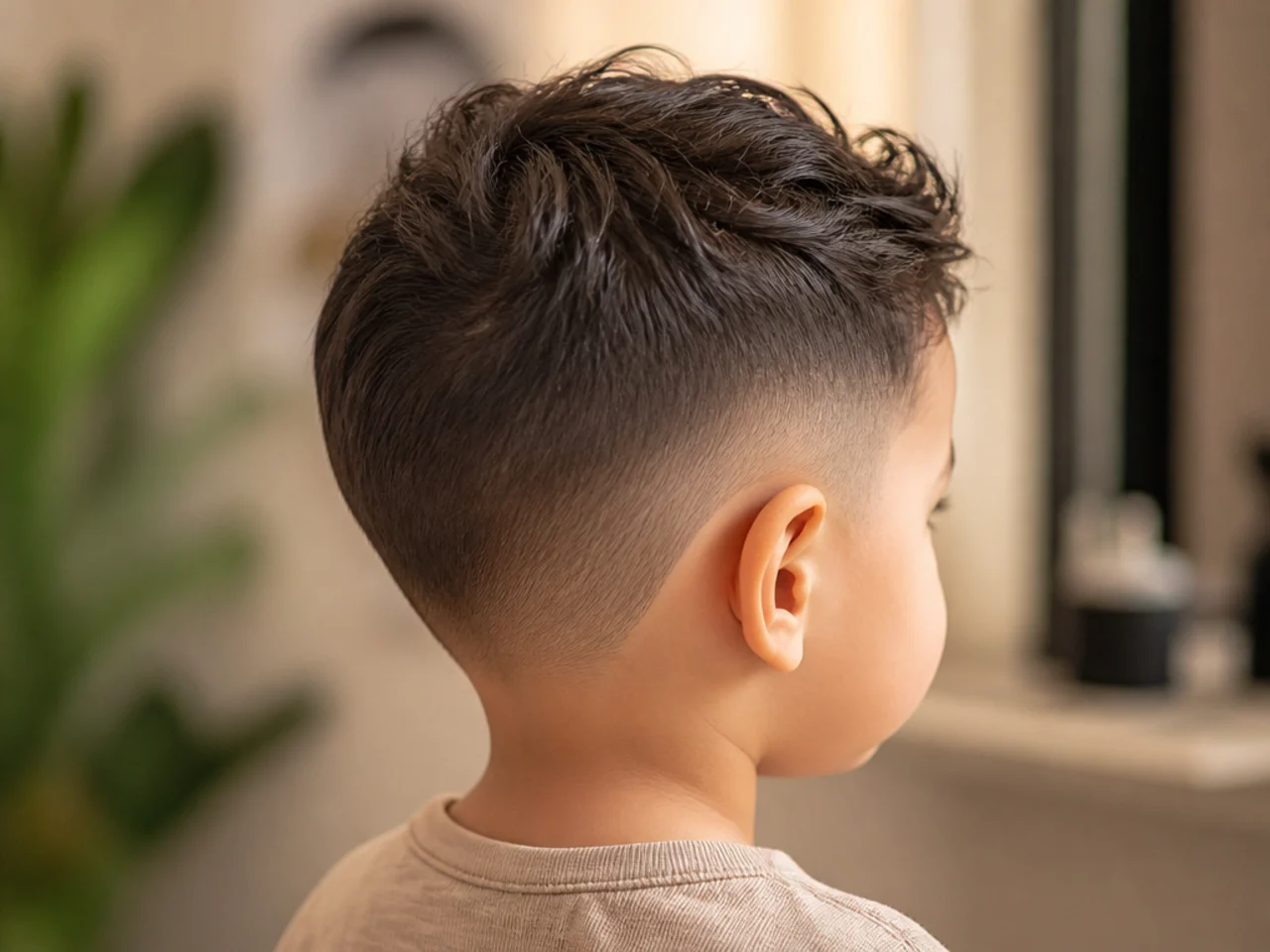
6. You Cut It Yourself and Own No Clippers
Long wins by default, since a fade cannot be done with scissors and a scissor crop can, and the home setups worth using are mostly scissor setups anyway. Buying a machine to learn blending on a child who moves is the worst possible place to start. Keep it long, cut the fringe, and revisit the question when he can sit for five minutes.
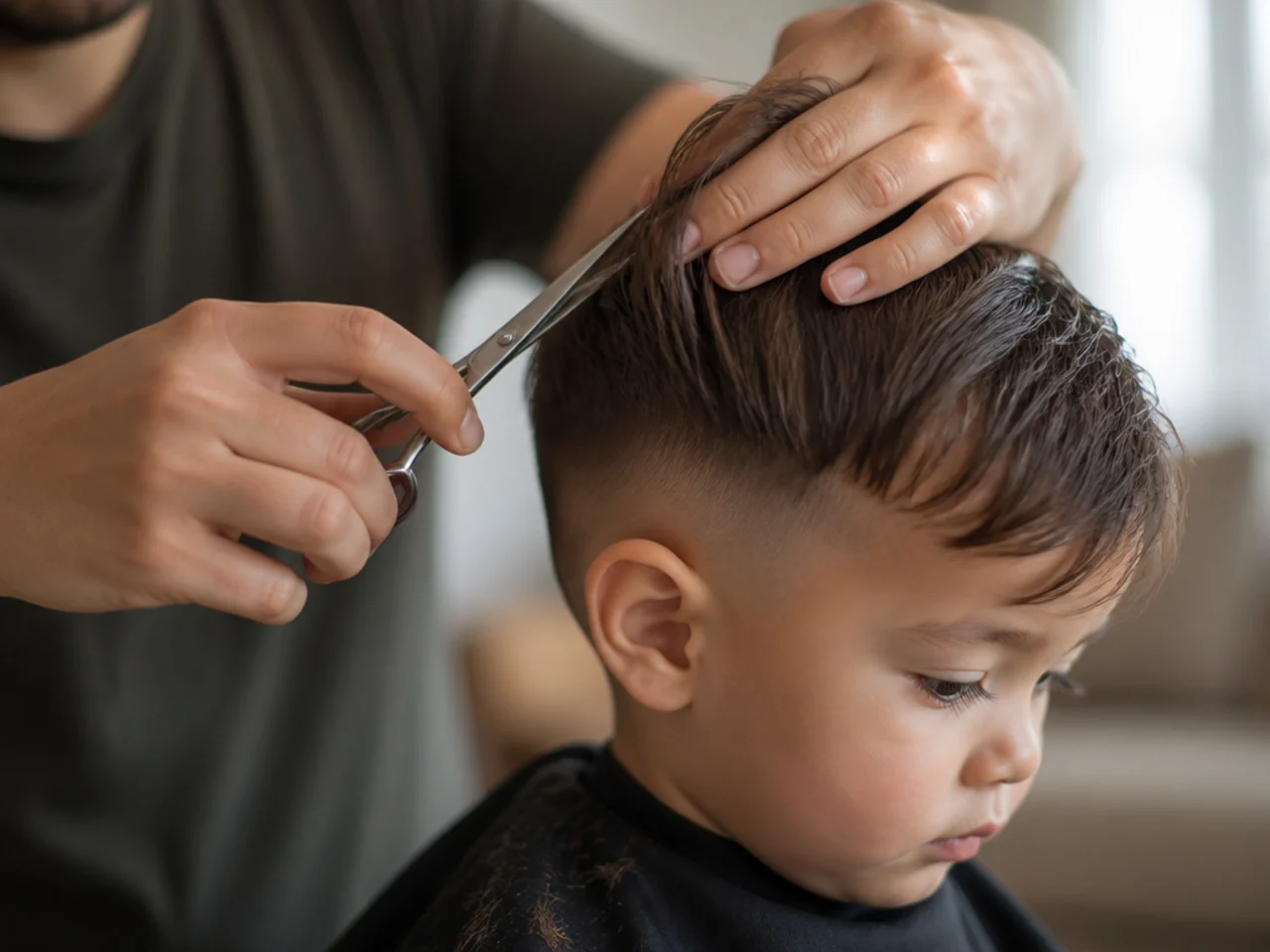
7. He Sleeps on One Side and It Flattens
Fade wins, because the flattening happens where hair is long enough to be pressed and fine enough to stay pressed. Short sides have nothing to crush, so the shape survives a nap unchanged. On long hair the same spot also tangles, which turns one problem into two.

8. Very Fine Low-Density Hair
Long wins, and it is not close. Fine hair shows scalp at short guards, so a proper fade on a low-density head reads thin rather than sharp, whereas length lets the hair overlap itself and look like more of it. If you must go short, stop at a #4.

9. Tight Curls That Tangle
Split verdict, decided by who is doing the detangling. Curl hides a growing-out line beautifully because the volume bridges the gap, which makes a taper unusually forgiving on a curly toddler, but coiled toddler hair also tangles daily if it is left long. Take a taper if the brush is the fight and keep the length if the clipper is.
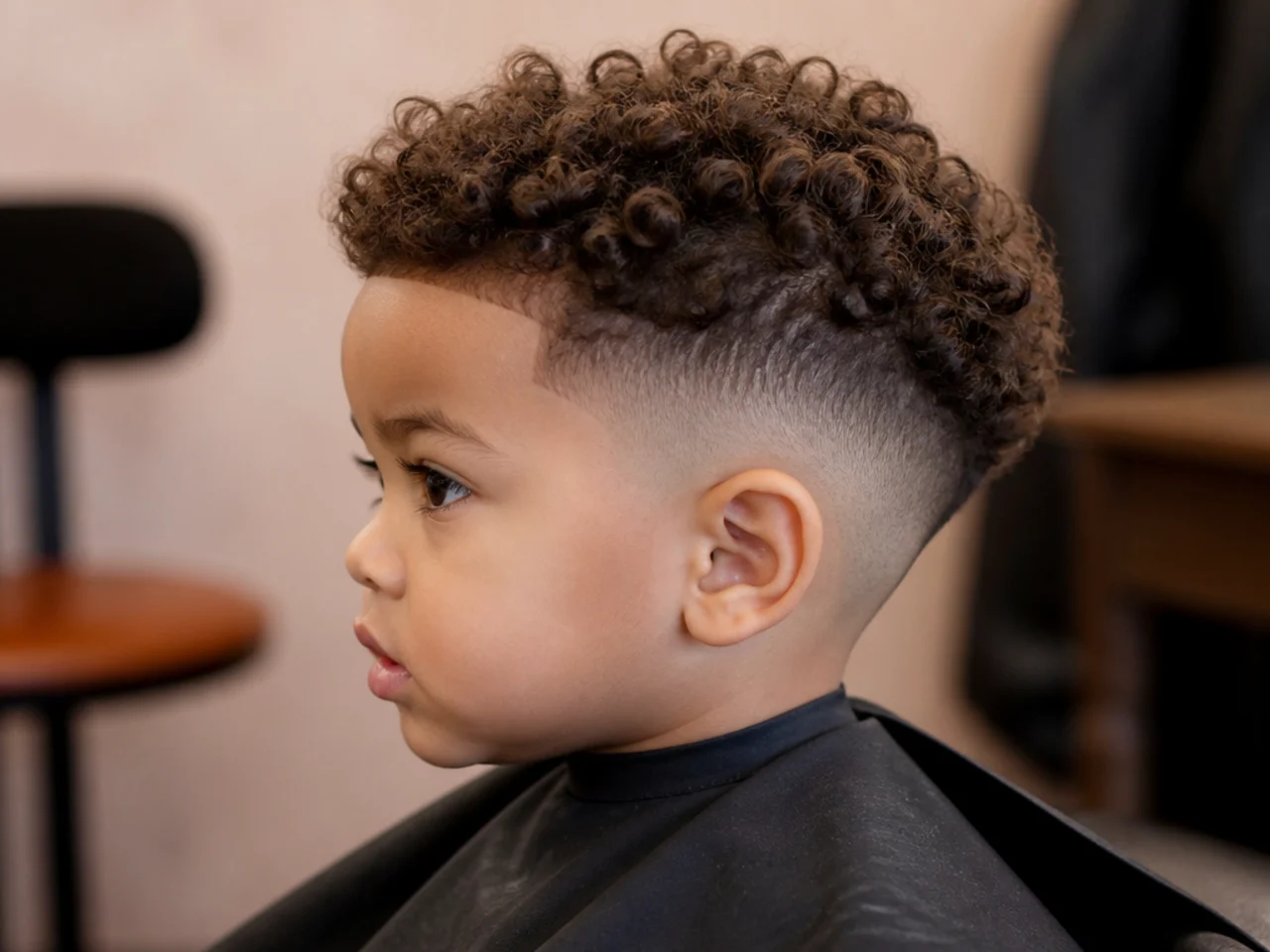
10. A Nursery Photo Day
Long wins on risk. A taper cut close to the date can end half-finished and leave a visible step, whereas long hair only needs a fringe trim and a comb on the morning. If you do want it short, cut it a week early so there is time for a second attempt.
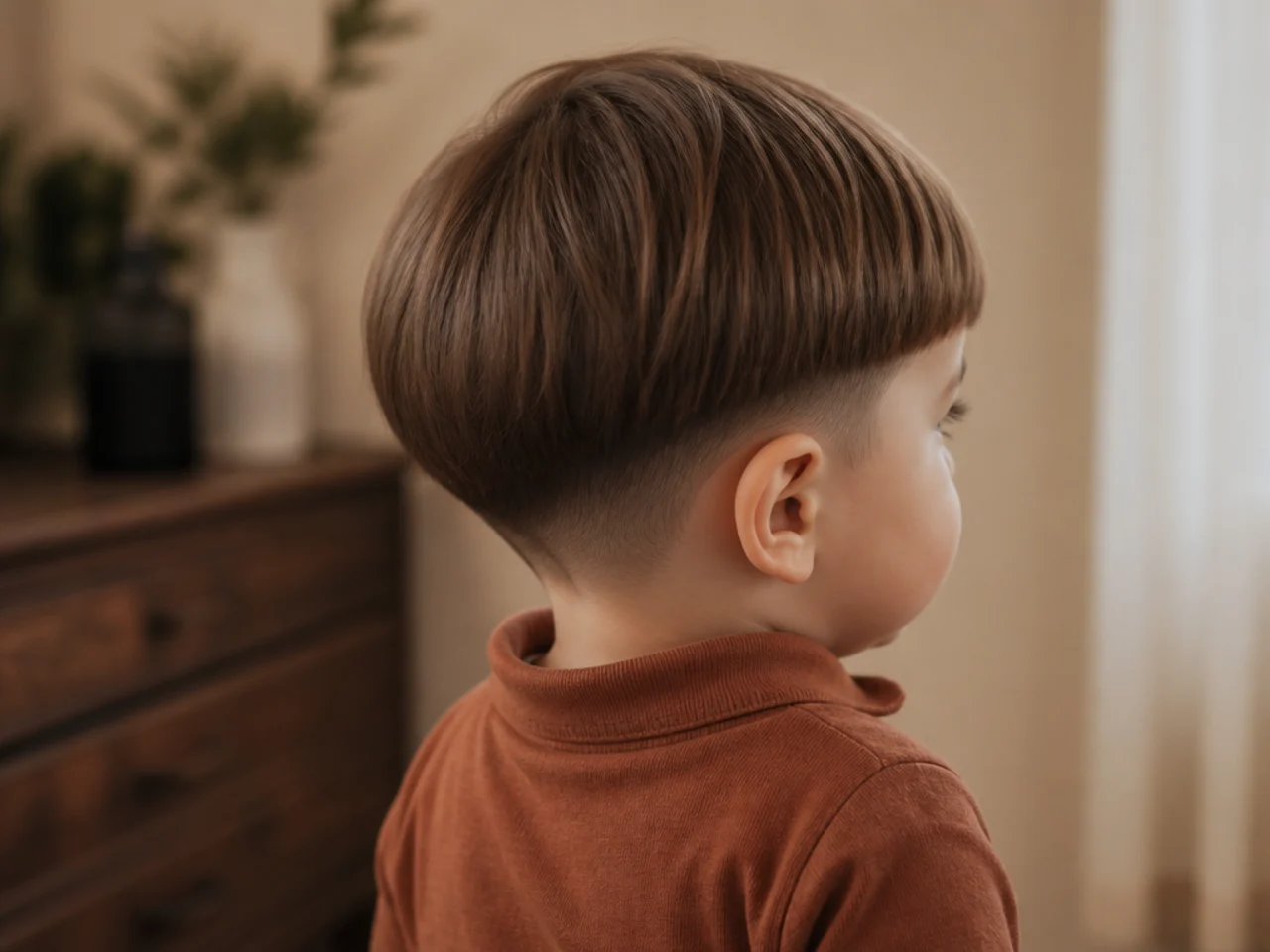
11. He Sits Still for Two Minutes and No More
Long wins, because a blend needs several consecutive passes over the same area and two minutes buys you one. A scissor crop can be taken in unrelated bursts and still look deliberate. A fade abandoned halfway is the one outcome that reads as damage rather than as a haircut.
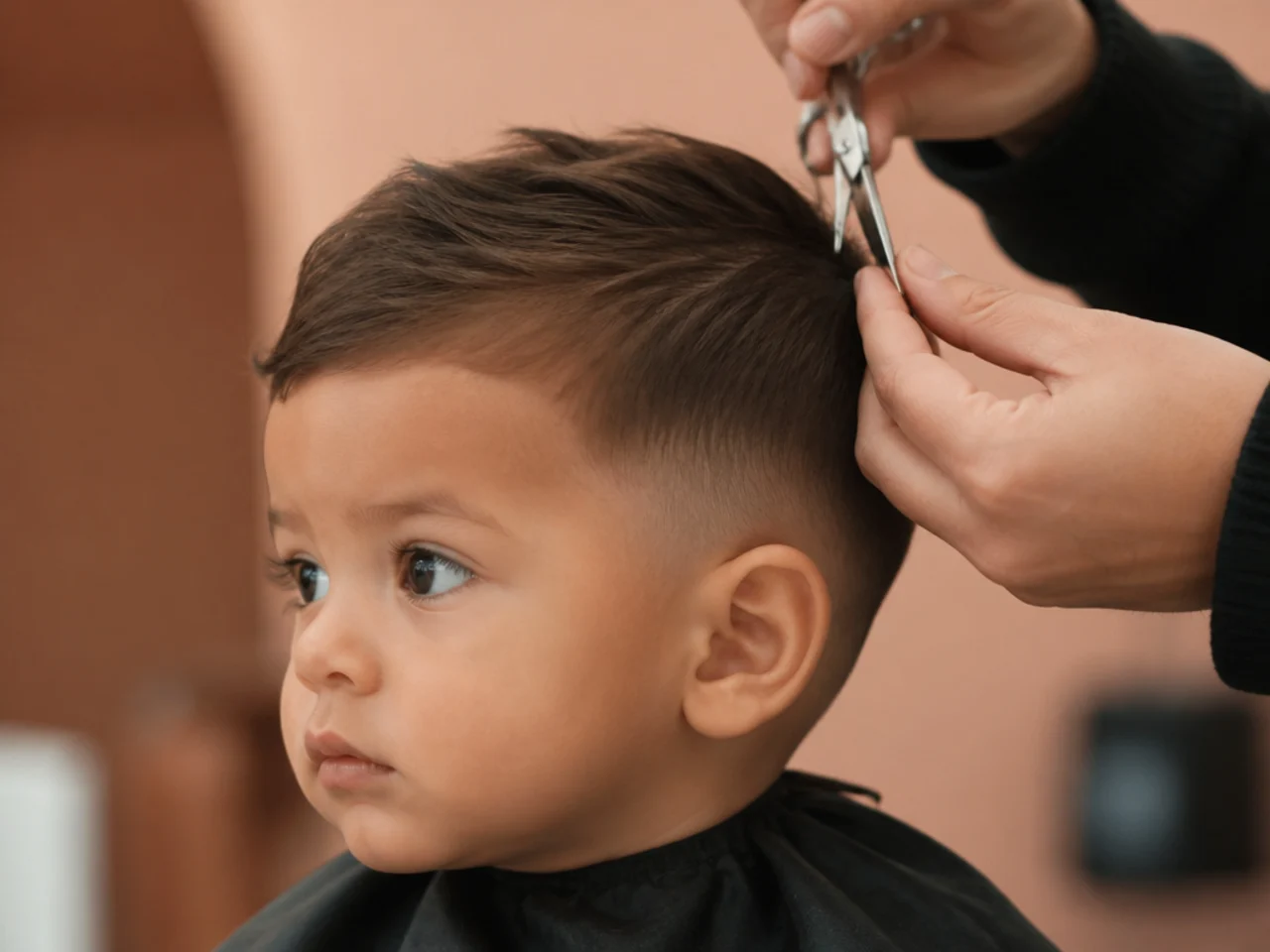
12. Bath Time Is Already a Fight
Fade wins. Short hair rinses in seconds and dries before he is out of the towel, while long fine hair holds water at the nape and needs combing while wet, which is the least tolerated moment of the day. Cutting the sides short takes a whole step out of every bath.
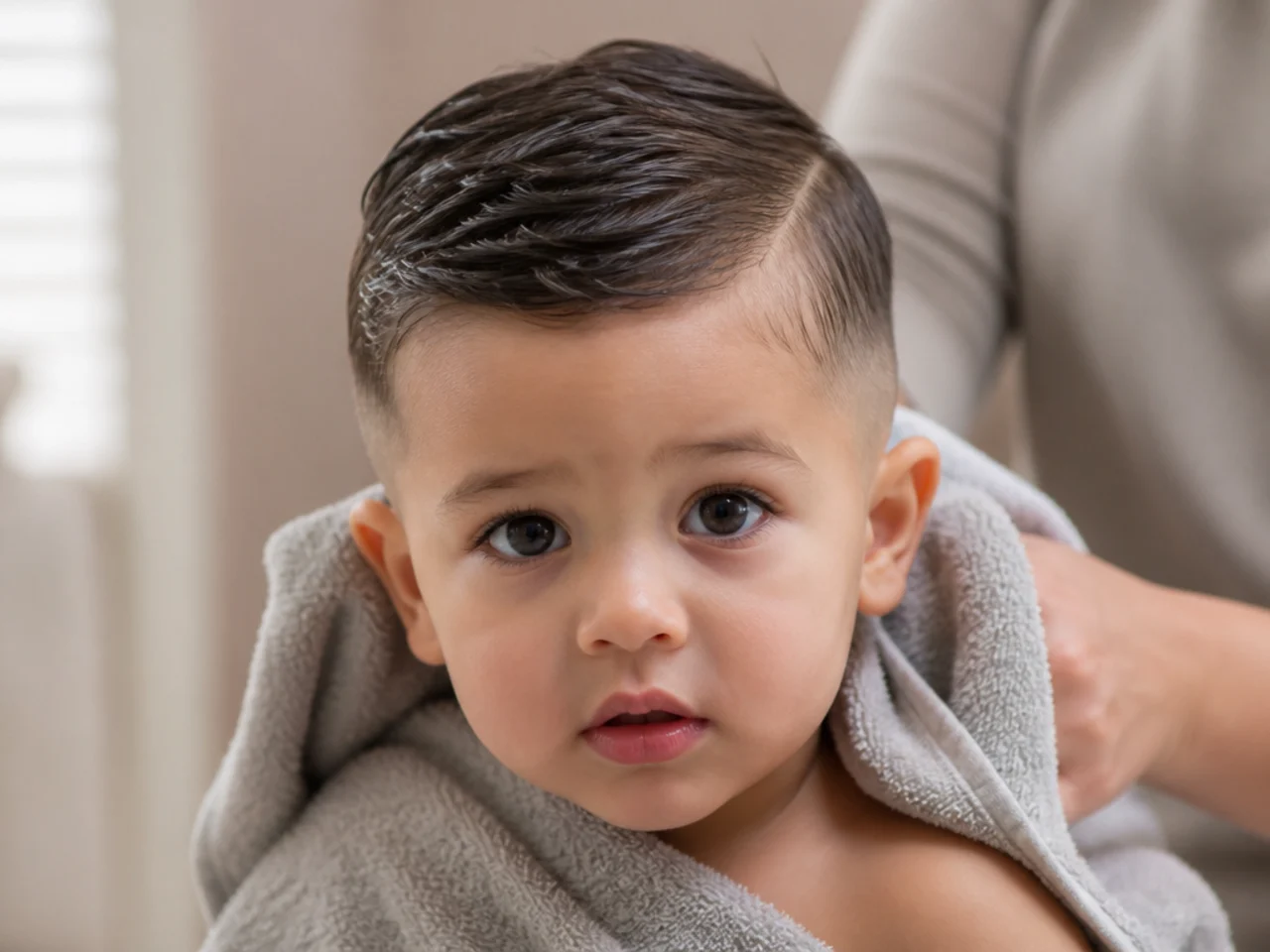
13. It Has Gone Stringy Rather Than Shaggy
Fade wins, because this is what fine baby hair does past a certain length — it separates into strands instead of building body. No amount of brushing fixes it and no product will get used on a toddler. A #4 on the sides restores the density illusion immediately.

14. There Is a Newborn in the House
Long wins on total time. Three sessions a year with no equipment beats seventeen, even though each of those seventeen is short, and none of them can be scheduled around a feed. Keep the fringe trimmed and accept the brushing, which happens during a nappy change anyway.
15. Food Ends Up in the Fringe Every Meal
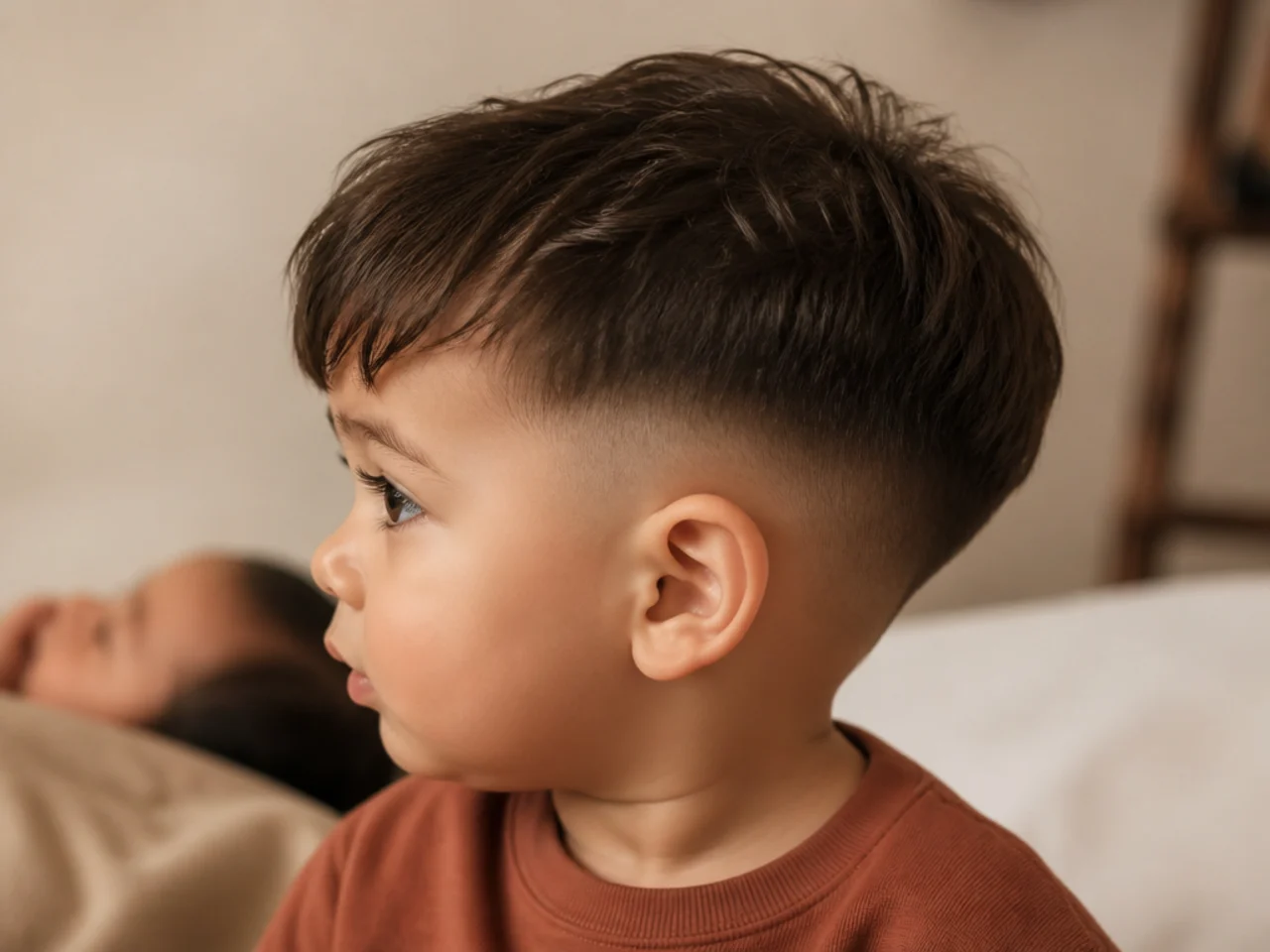
Fade wins on the front and the rest is irrelevant. A blunt fringe cut above the brow stops hanging into a bowl, and short sides mean the whole head can be wiped rather than washed. This is the one case where cutting solves a problem that happens three times a day.
Styling and Upkeep
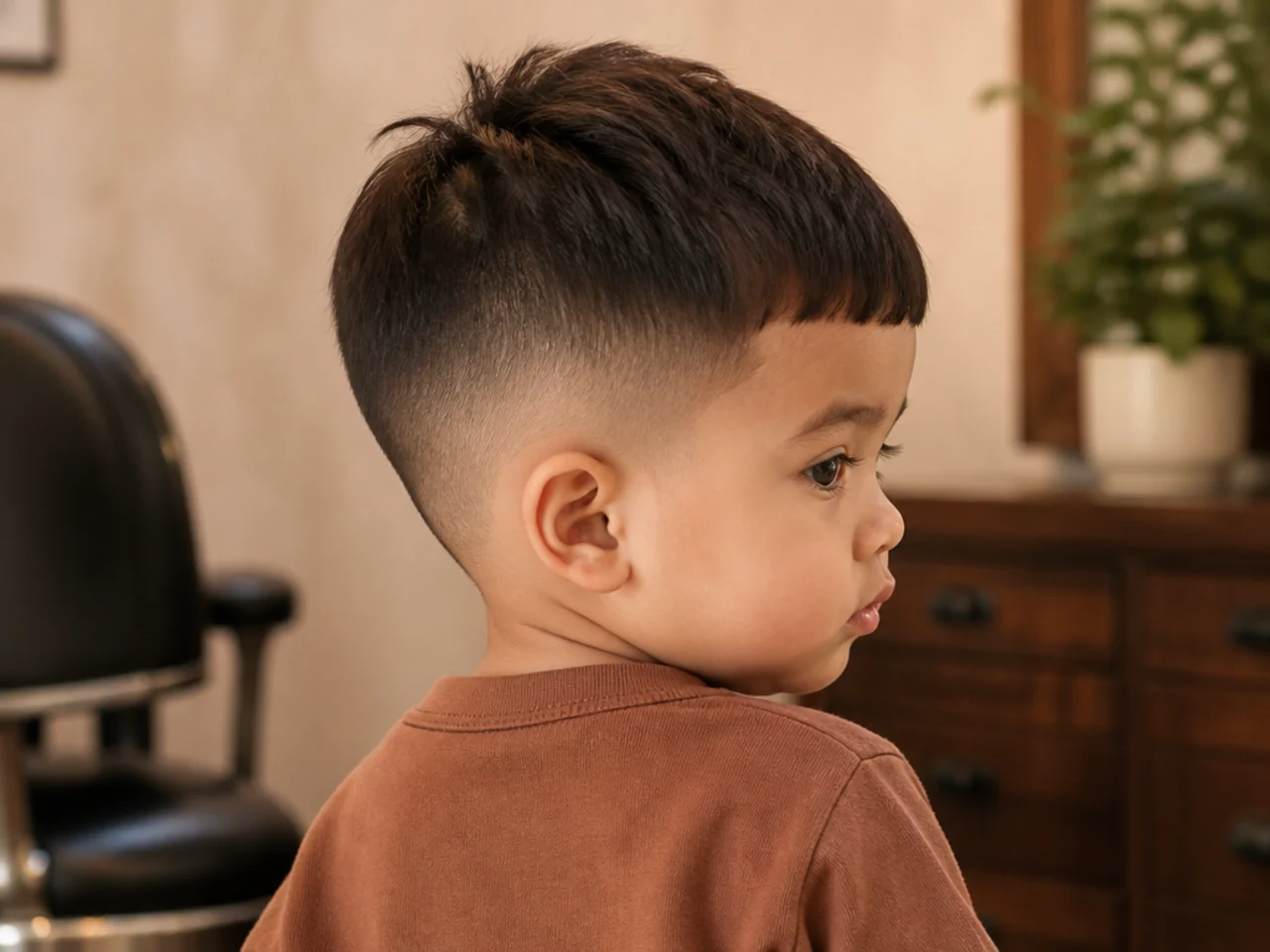
Book or plan the next taper at three weeks, not four. A child's growth rate blurs the line about a week earlier than an adult's.
Brush long toddler hair at the nape first. That is where sleeping tangles it, and starting at the worst spot while he is still patient is the only way it gets done.
Keep a taper rather than a fade if you are unsure. A taper leaves length at the neckline and grows out invisibly, whereas skin has nowhere to go.
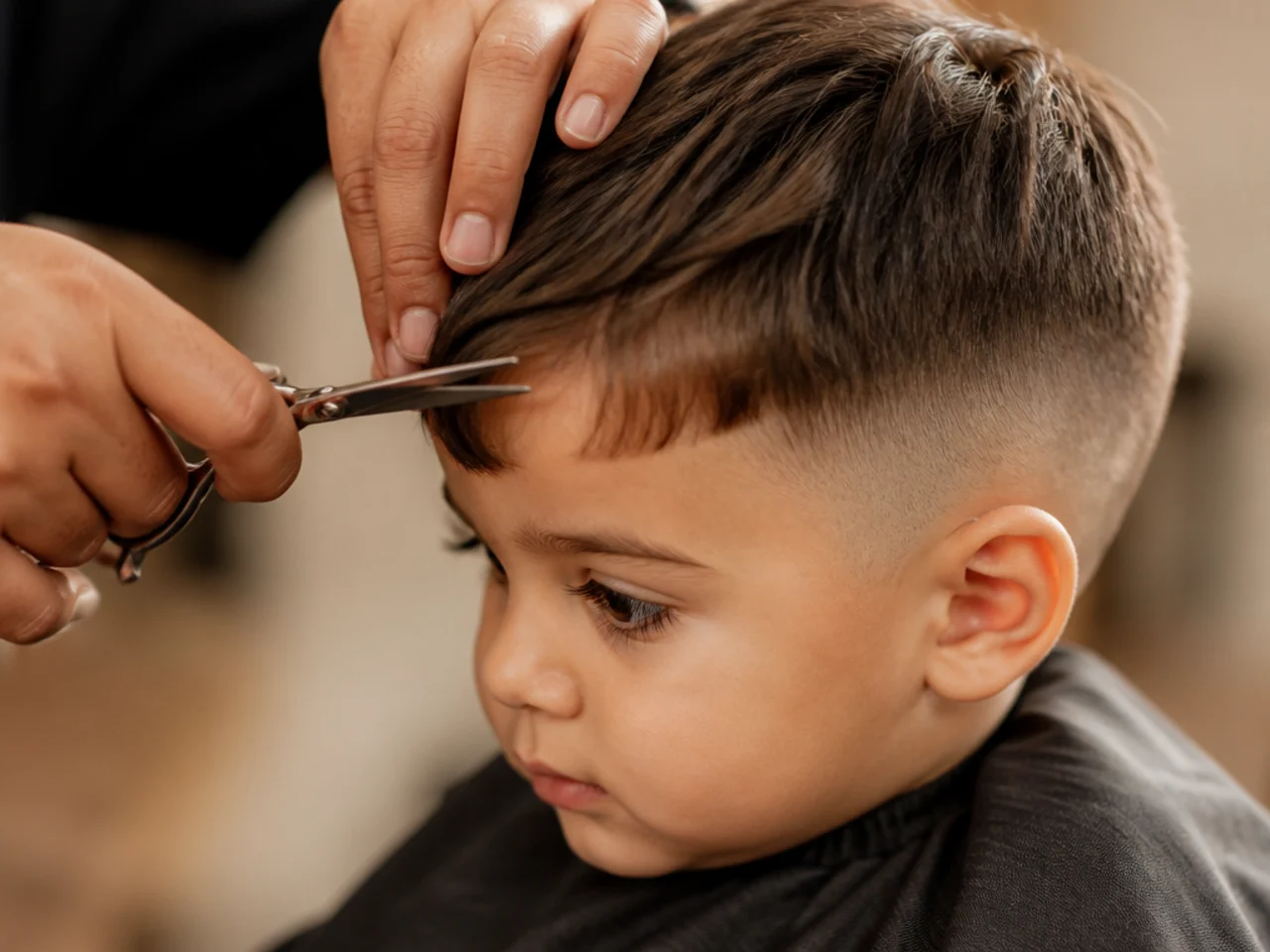
Trim the fringe on both options at the same interval. It is the only cut with an actual deadline, so it should not wait for the rest of the head.
Do not add product to make long hair behave. It will not get reapplied daily on a toddler, so any shape that depends on it fails by the second morning.
Mistakes to Avoid
Choosing on the photo rather than on the week. Both look fine on day one, which is exactly why the picture cannot answer this.
Taking a skin fade on fine baby hair. There is not enough density to cover the scalp, so it reads bare and blurs within two weeks anyway.
Growing it out without trimming the fringe. Long is a decision about the sides and the back, never about the front.
Starting a fade the week of an event. If the session ends early there is no time left for a second sitting.
Assuming long hair means no maintenance. It swaps seventeen short sessions for around three hundred and sixty brushings.
FAQ
Which is genuinely less work? Neither — a fade costs sessions, long hair costs mornings.
How long does a toddler taper hold? About three weeks, since children's hair grows faster than an adult's.
Does long hair still need cutting? Only the fringe, every four to six weeks.
Final Thoughts
Answer one question before you look at another photo — is the brush the fight in your house, or is the clipper. Everything on this page follows from that, because the choice is not about how short the hair is but about whether you would rather spend the effort monthly in one room or daily in another.
For a short shape that tolerates an interrupted session see the toddler burst fade guide, and for keeping the length see curly haircuts for boys. More in Fade Haircuts.