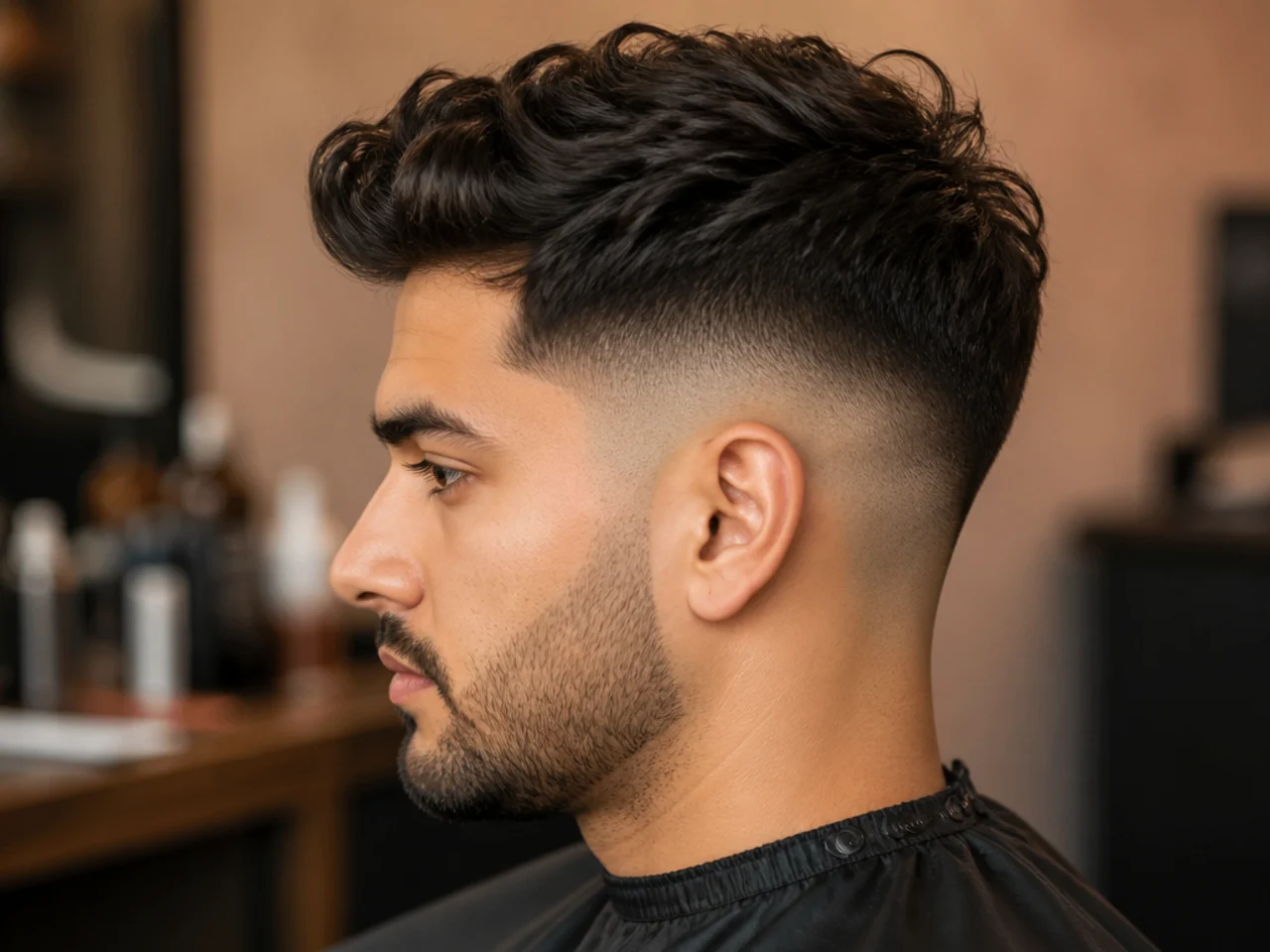
Mid Fade Haircut: 33 Stylish, Popular Variations with A Barber’s Guide
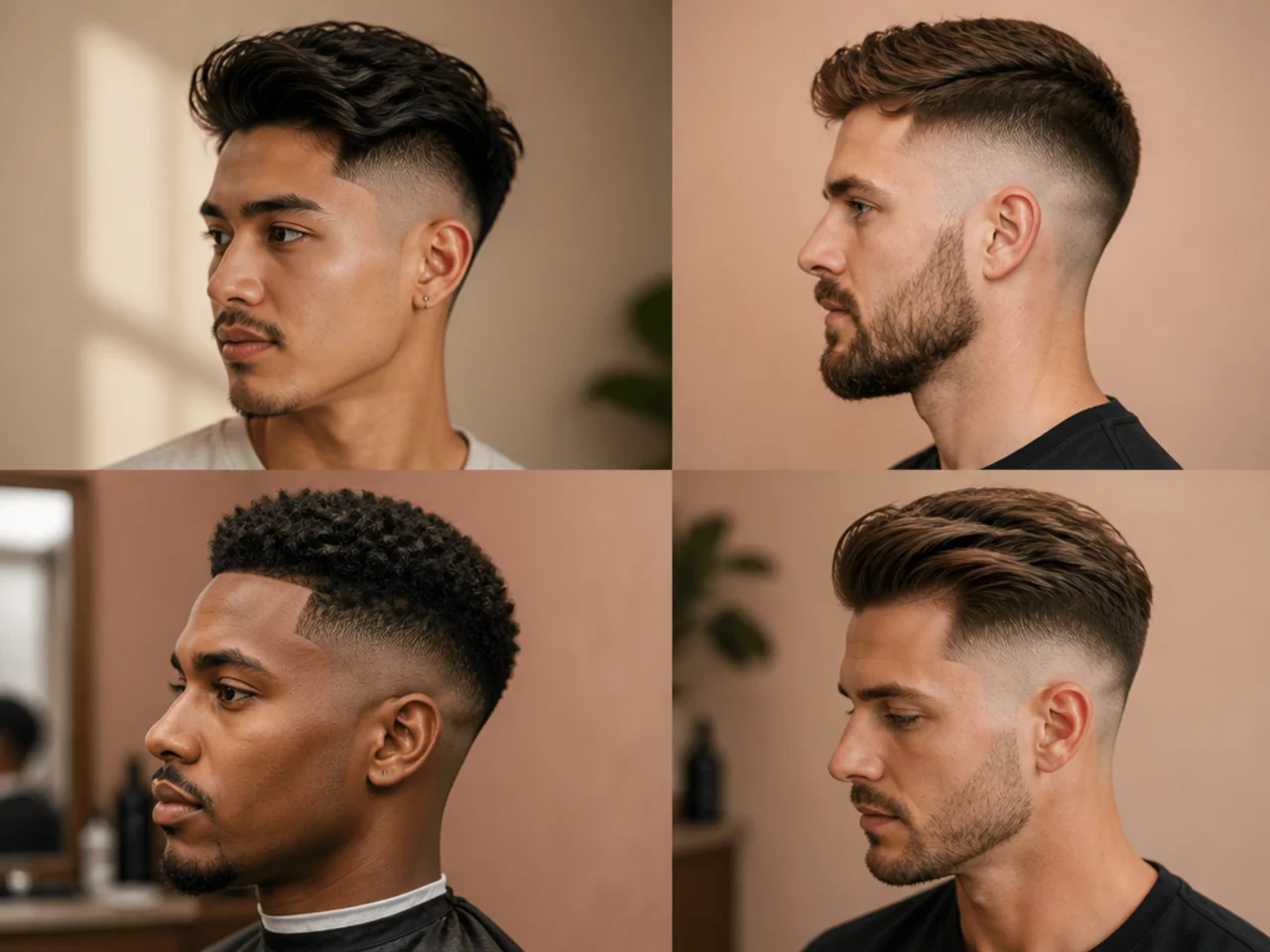
The mid fade is the most-requested fade in barbershops right now — and for good reason. It sits in the sweet spot between conservative (low fade) and dramatic (high fade), suits almost every face shape, and pairs with any length on top. This guide covers 33 mid fade variations with photos, plus the exact words that get you the version you had in mind.
In this article · 62
- What Is A Mid Fade?
- Why the Starting Position Matters
- The Most Requested Barbershop Cut
- Who A Mid Fade Works Best For
- Popular Mid Fade Haircuts
- Side Part with Mid Fade
- Long Curly Hair with Mid Skin Fade
- Mid Drop Fade
- Mid Skin Fade
- Mid Fade with Design
- Mid Temp Fade
- High Volume Brush Back with Mid Skin Fade and Beard
- Spiky Hair with Mid Taper Fade
- Mohawk with Burst Mid Fade
- Mid Burst Fade
- Short Hair with Mid Fade
- Buzz Cut with Mid Fade and Beard
- Modern Mullet with Mid Fade
- Trendy Parted Style with Mid Fade
- Mid Fade with Brushed Forward Waves
- Long Textured Fringe with Mid Fade
- Short Slick Back with Mid Fade and Beard
- Types of Mid Fade Haircuts
- Mid vs Low vs High Fade
- Where Each Fade Starts
- Mid Taper vs Mid Skin Fade
- The Best Mid Fades by Hair Texture
- Straight Hair
- Curly Hair
- Wavy Hair
- Coily Hair
- Thick Hair
- Fine or Thin Hair
- How To Ask Your Barber For A Mid Fade
- Decide Skin or Taper First
- Pick Your Variation
- Discuss What's Happening on Top
- Be Honest About Your Maintenance
- Don't Use Barber Talk
- How Often To Get A Mid Fade
- Cut Cadence by Variation
- The Math Most Guys Get Wrong
- Touch-Up Visits
- Schedule Around Events
- How To Style A Mid Fade
- The Everyday Routine
- Product by Top Style
- Keep the Faded Skin Clean
- Match the Beard
- Common Mid Fade Mistakes to Avoid
- Letting a Mid Skin Fade Grow Too Long
- Skipping the Line Up
- Pairing the Wrong Top with the Fade
- Trying Touch-Ups at Home
- Using the Wrong Reference Photo
- Asking for a Shorter Cut
- Ignoring Your Beard
- Conclusion
- FAQs
- Is a Skin Fade Haram?
- What's Better, Mid-Fade or Taper?
- How Does an Army Cut Look?
Ask any barber which fade to try first — the answer is the mid fade. It sits at the temple, halfway between the low fade's quiet finish and the high fade's dramatic reveal, which makes it the most universally flattering height on almost any face shape. It pairs with any top length, from a buzz to shoulder curls, and reads sharp for work and clean for the weekend. Below: 33 variations, plus how to ask for each one at the chair.
You can pair a mid fade haircut with almost any top style — buzz cut, edgar haircut, mullet, or a long textured fringe. For the wider category, see the fade haircut overview.
What Is A Mid Fade?
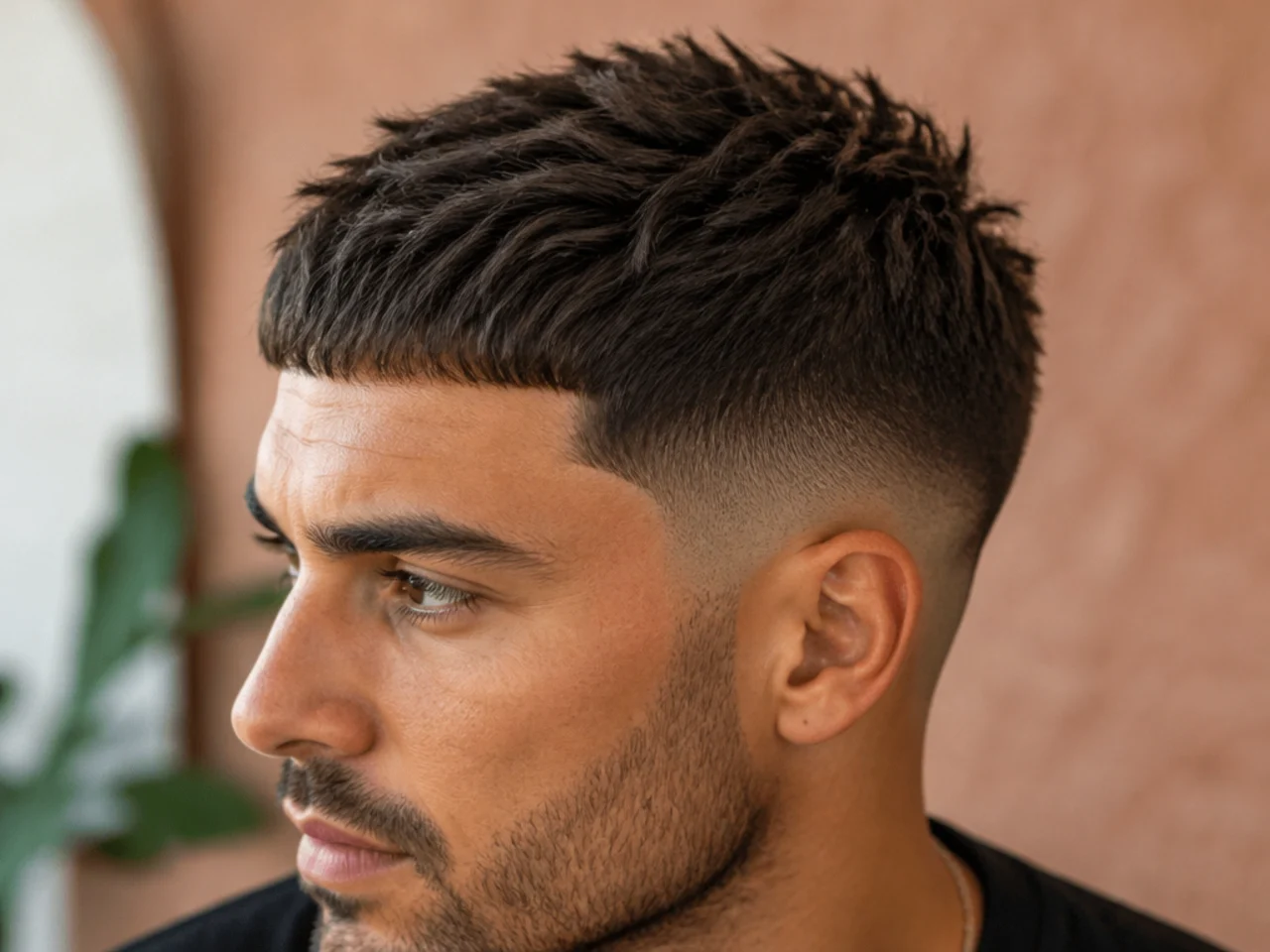
A mid fade is a graduated cut where the sides taper from short to shorter to bare or near-bare skin, with the fade beginning at the temple line. That midway starting point is what separates it from a low fade haircut (which starts above the ear) or a high fade (which starts above the temple). Barbers also call it a medium fade.
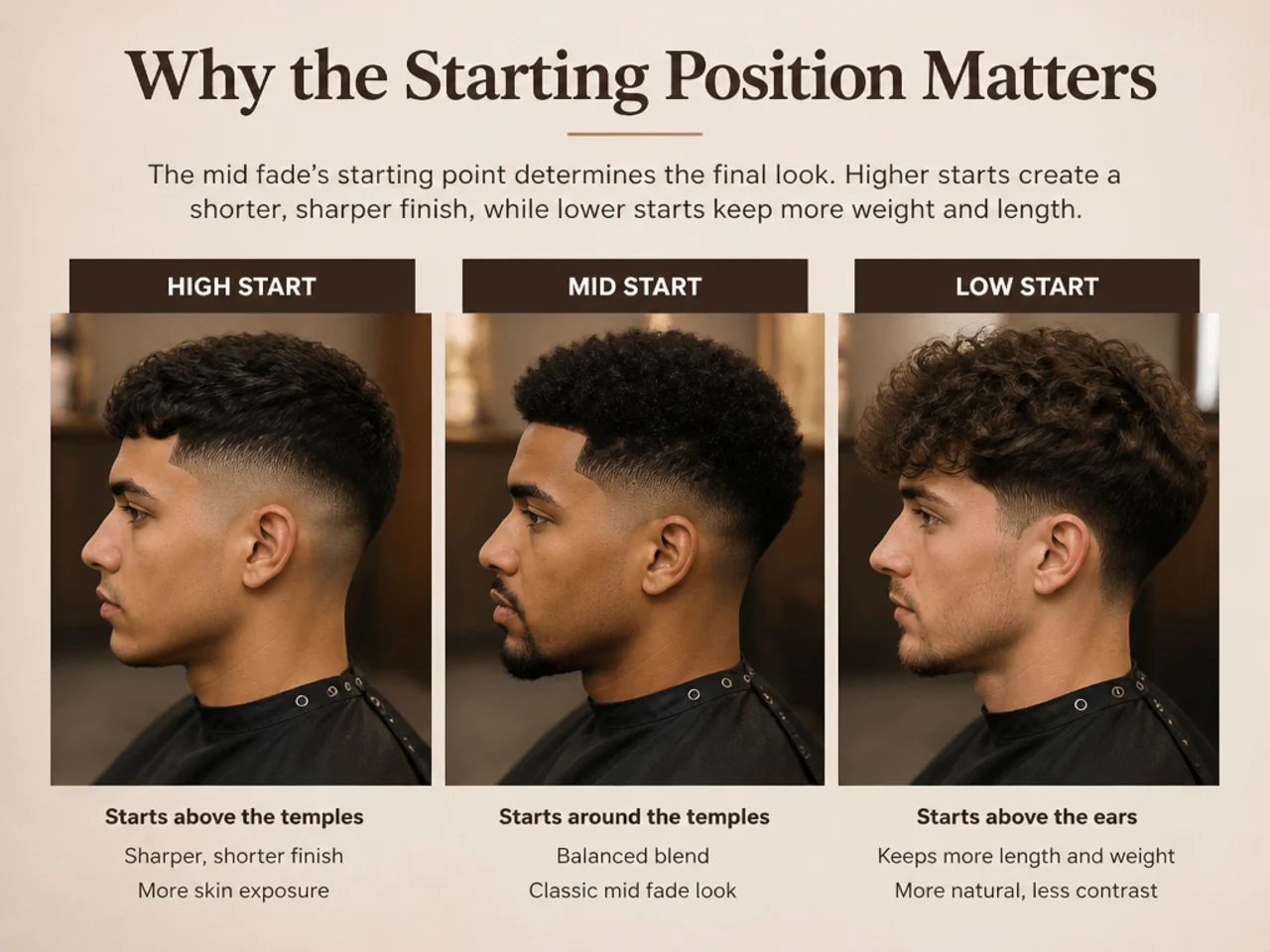
Why the Starting Position Matters
Where a fade starts controls how the whole cut reads. Start it low and the sides look conservative — nobody notices the fade until they're a foot away. Start it high and the eye jumps straight to the exposed skin above the ear. The mid fade lands in between: enough contrast to look intentional, not so much that it dominates your head. It also grows out more forgivingly than a high fade, since the transition line has room to soften before it looks fuzzy.
The Most Requested Barbershop Cut
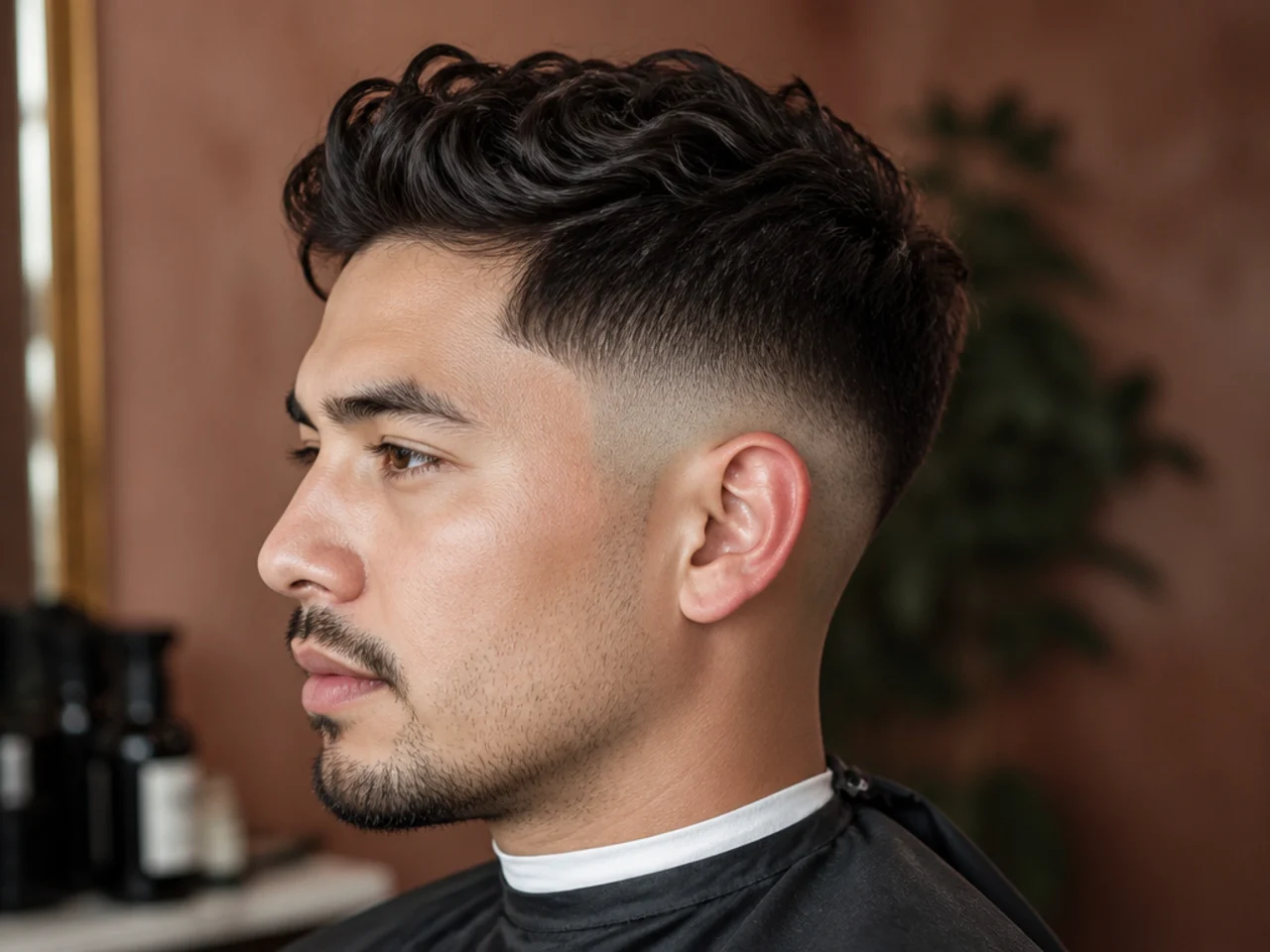
If you polled barbers on the single most-cut style in any given week, the mid fade would win. It suits round, square, oval, and heart-shaped faces without adjustment. It sits comfortably in a corporate office and a Friday-night bar. It looks best around days five through fourteen — the sweet spot most guys spend most of their time in.
The reason it's the go-to first fade: you can dial the intensity up or down without changing the underlying cut. Want it sharper next visit? Ask for skin at the bottom. Want it softer? Ask your barber to leave a half-guard. Same shape, different mood.
Who A Mid Fade Works Best For
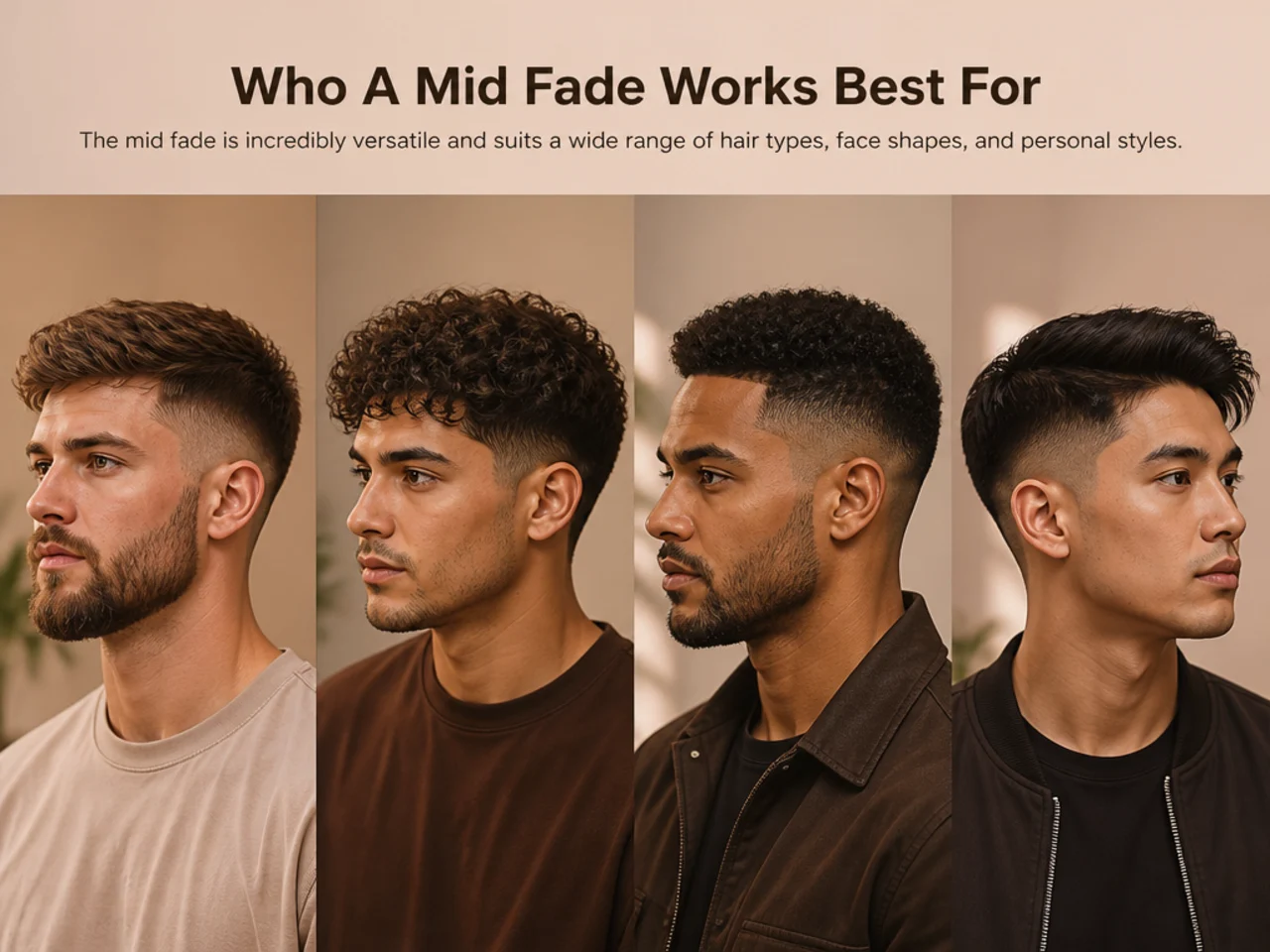
The short answer: almost everyone. Thick hair benefits because the fade strips bulk from the sides so the top sits neatly. Thin hair benefits because the contrast makes the top look denser than it is. Curly and coily hair benefits because a clean fade defines a rounded top instead of letting it drift into a mushroom. Straight hair benefits because the fade sharpens classic side parts and slick backs.
The only guys I'd steer elsewhere: anyone whose scalp reacts to clippers on skin (try a taper instead) and anyone who can only sit down for a haircut every eight weeks (try a low taper fade that grows out slower).
Popular Mid Fade Haircuts
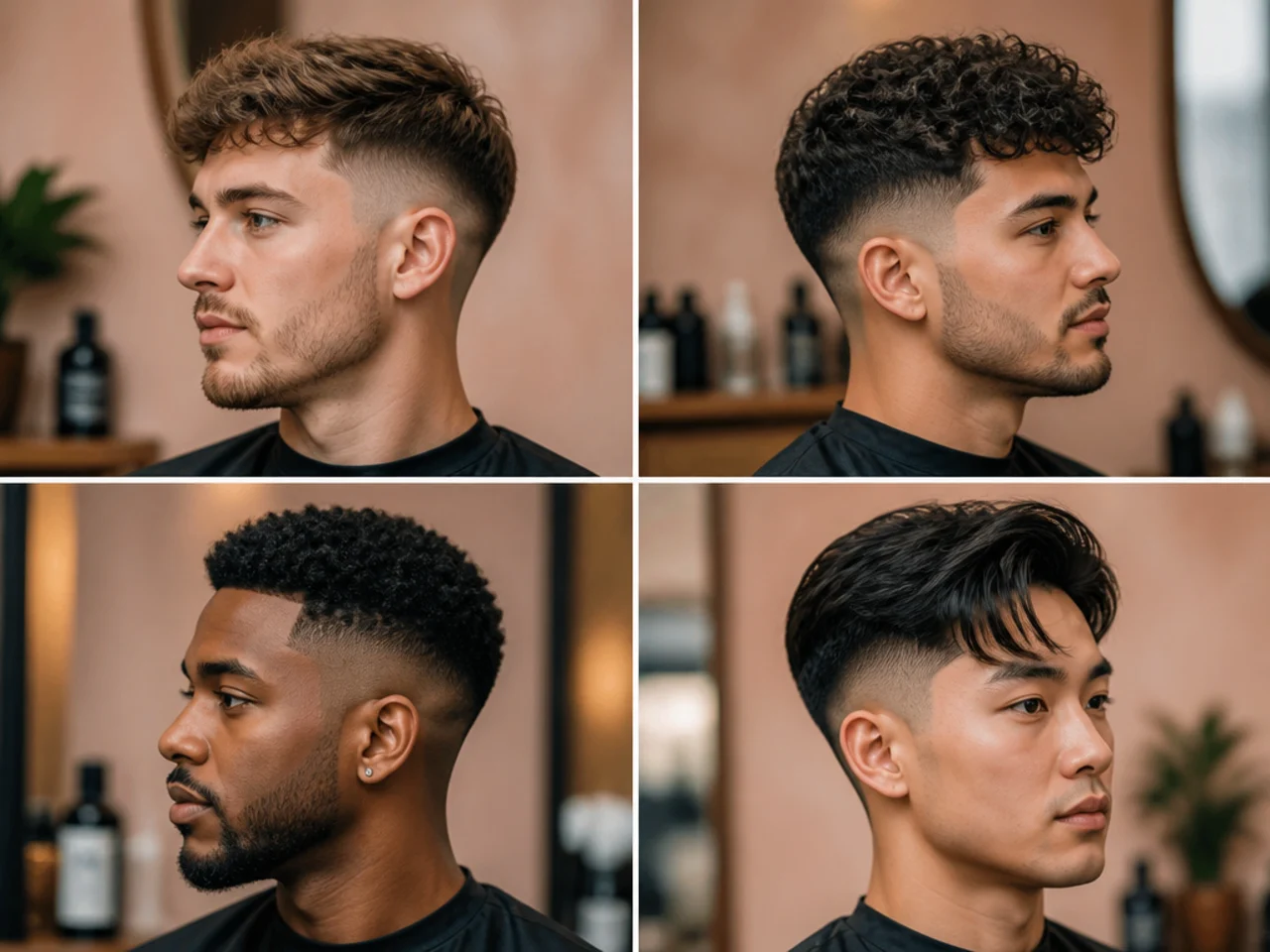
The variations below cover the requests I get most often. Each note includes what makes it different, who it suits, and the exact language to use at the chair.
Side Part with Mid Fade
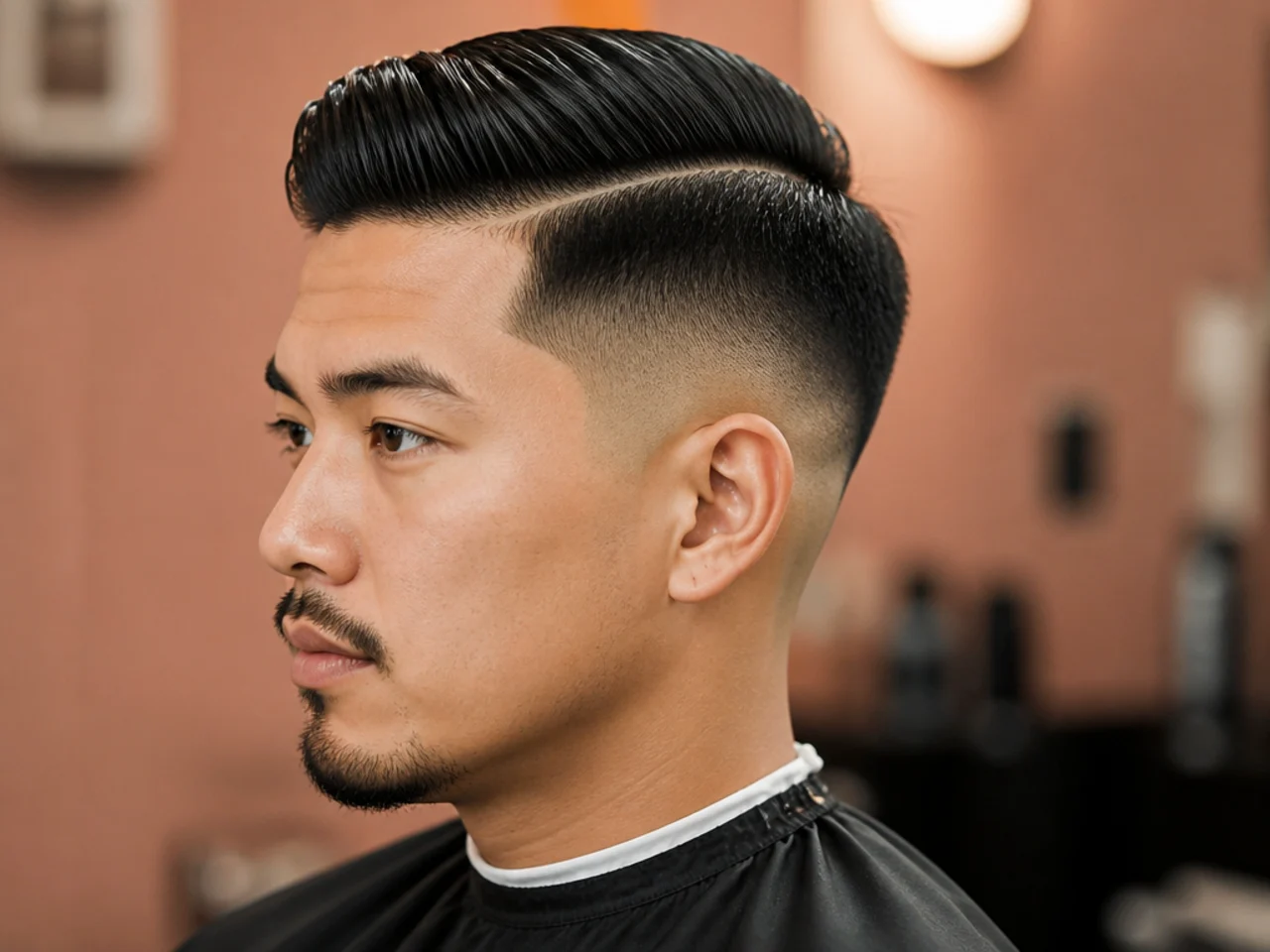
The side part is the mid fade's oldest partner — Don Draper energy with a modern edge. The hard part gets razored in, the top gets combed over with pomade, and the sides fade from a #2 down to a #0 at the temple. Suits oval and square faces best; works on straight or lightly wavy hair. Ask for "a mid fade, #0 to #2, hard part on the left, top left at three inches for a comb-over." Finish with a shine pomade for the classic wet look.
Long Curly Hair with Mid Skin Fade
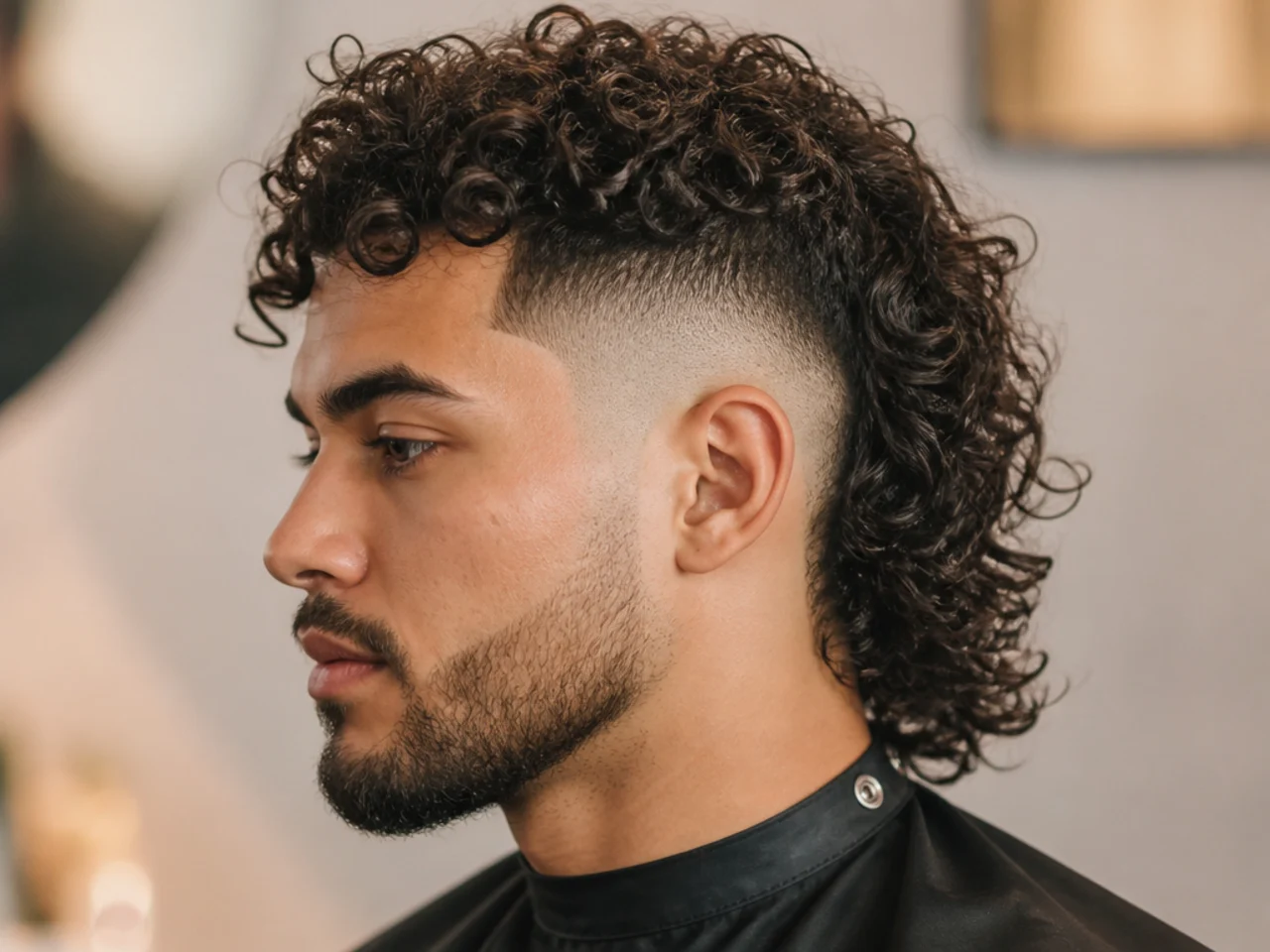
Long curls up top and bare skin at the temple is the loudest version of this cut. The clean side wall makes the curl pattern pop instead of getting lost in a mass of hair — a move that works especially well for guys with dense 3A–3C texture. Ask for "a mid skin fade at the temple, blend up to scissor-cut on top, leave four to six inches of curl." Style with a leave-in and let it air dry.
Mid Drop Fade
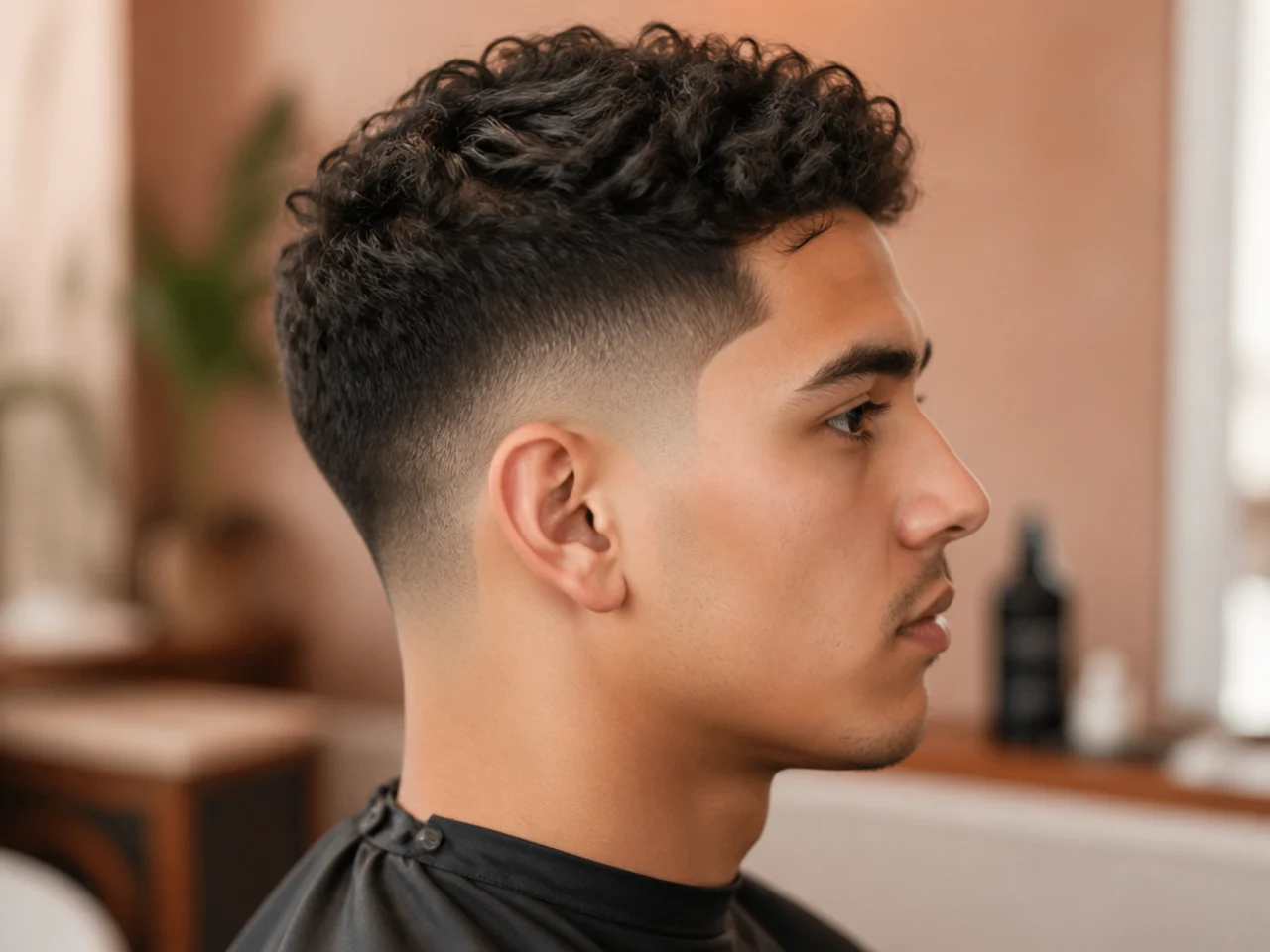
What makes the drop different: the fade line arcs downward behind the ear instead of running level around the head. It follows the skull shape, which flatters guys with a flatter occipital bone at the back. Especially forgiving on round faces because the drop breaks up visual bulk at the sides. Ask for "a mid drop fade, #0 to #1.5, dropped behind the ear." Any top length works — buzz to long.
Mid Skin Fade
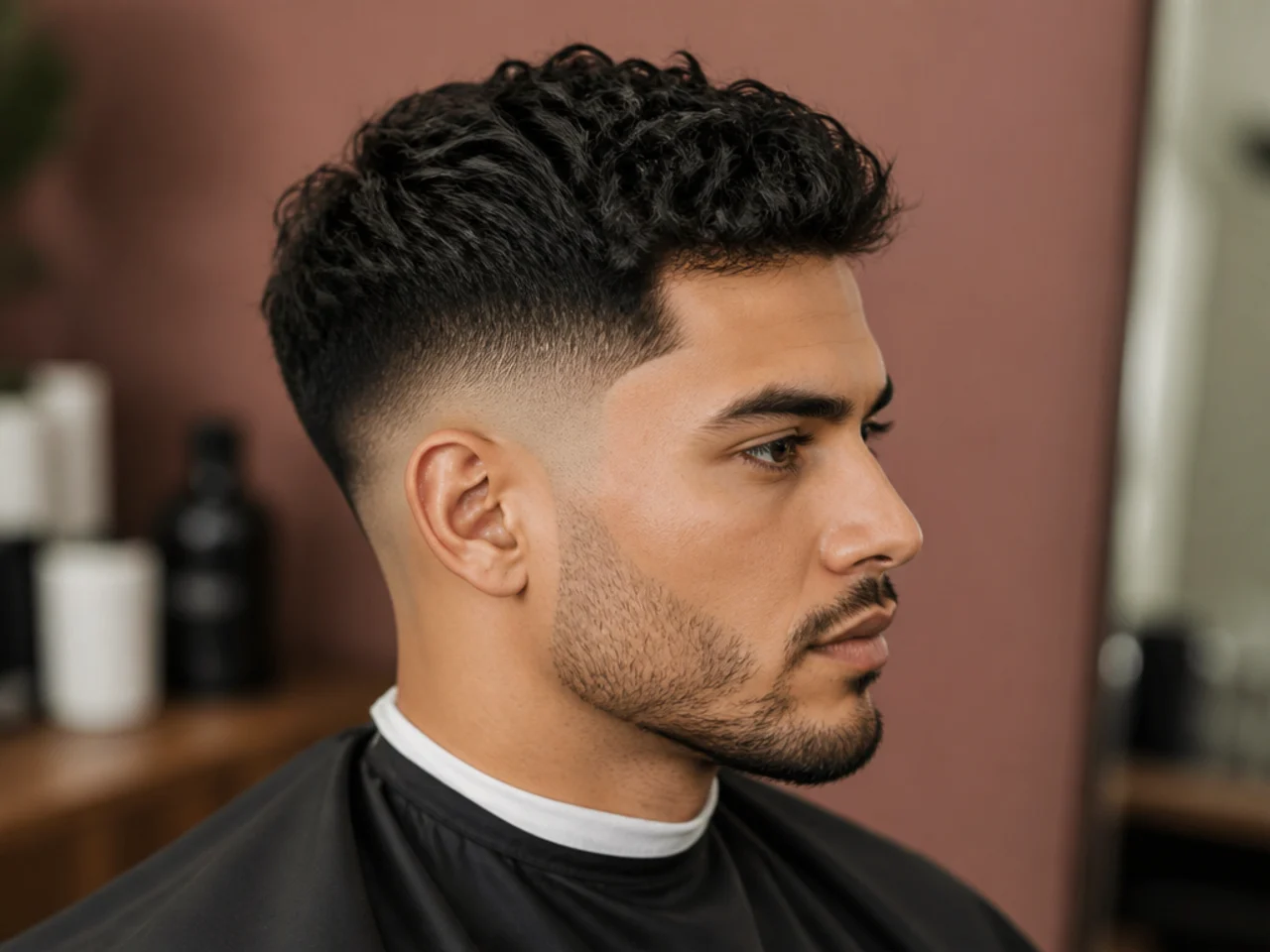
This is the sharpest version — hair goes from your top length down to bare scalp at the shortest point. The contrast is dramatic, the line-up looks razor-precise, and the whole cut telegraphs care. Suits square and oval faces best; round faces should keep the top taller to elongate the line. Ask for "a mid skin fade, bald at the shortest point, tight blend." Book your next appointment before you leave — this one needs a touch-up in ten days.
Mid Fade with Design
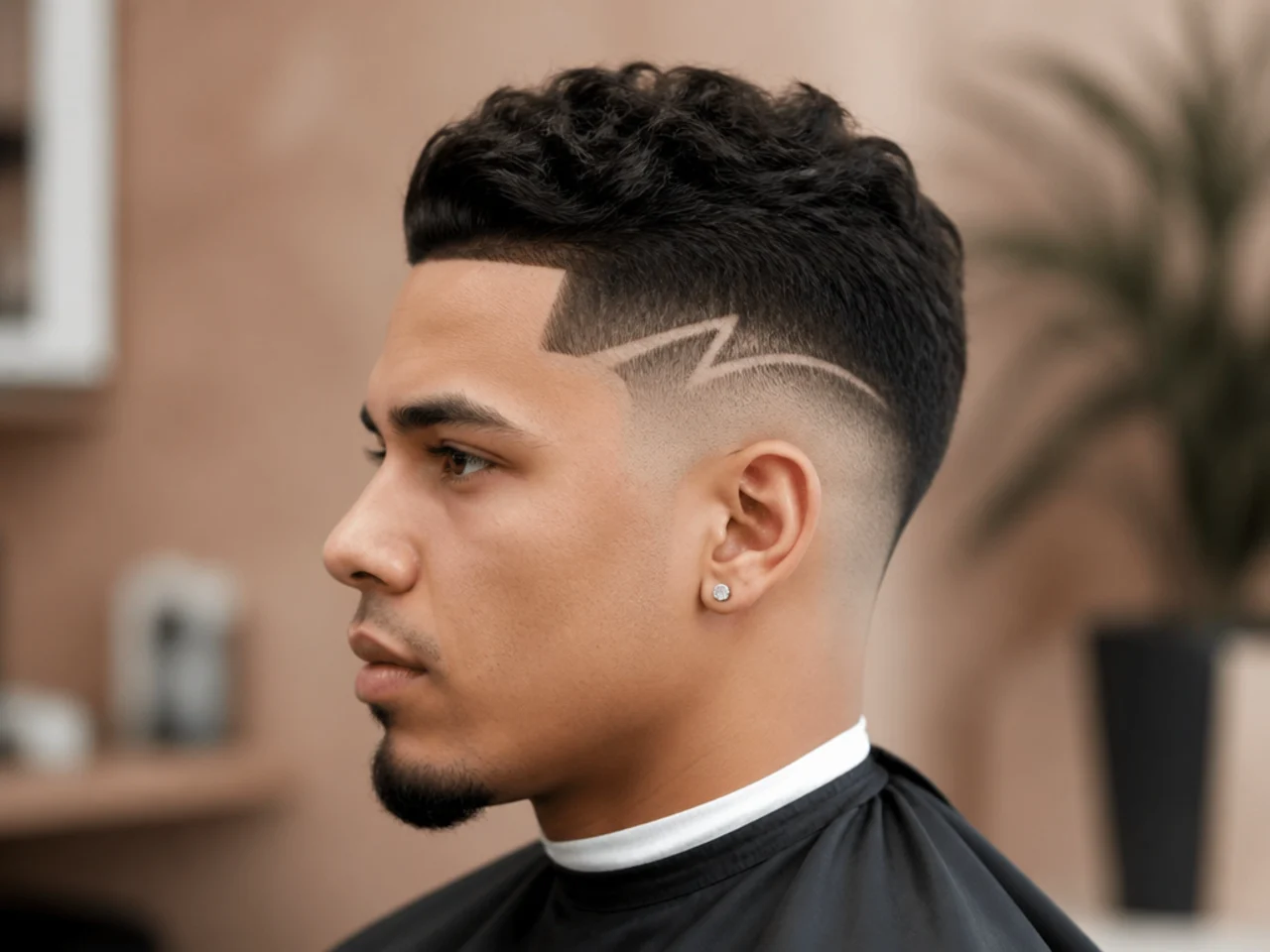
Adding lines, arrows, or shapes into the faded panel turns a haircut into a signature. The mid height gives your barber the biggest canvas — enough real estate for a design without covering your top. Simple hard lines suit almost anyone; more complex designs read best on shorter tops so the artwork isn't hidden. Ask for "mid skin fade, one hard line above the ear" as a starting point. Designs grow out fastest — plan on a touch-up every ten to twelve days.
Mid Temp Fade
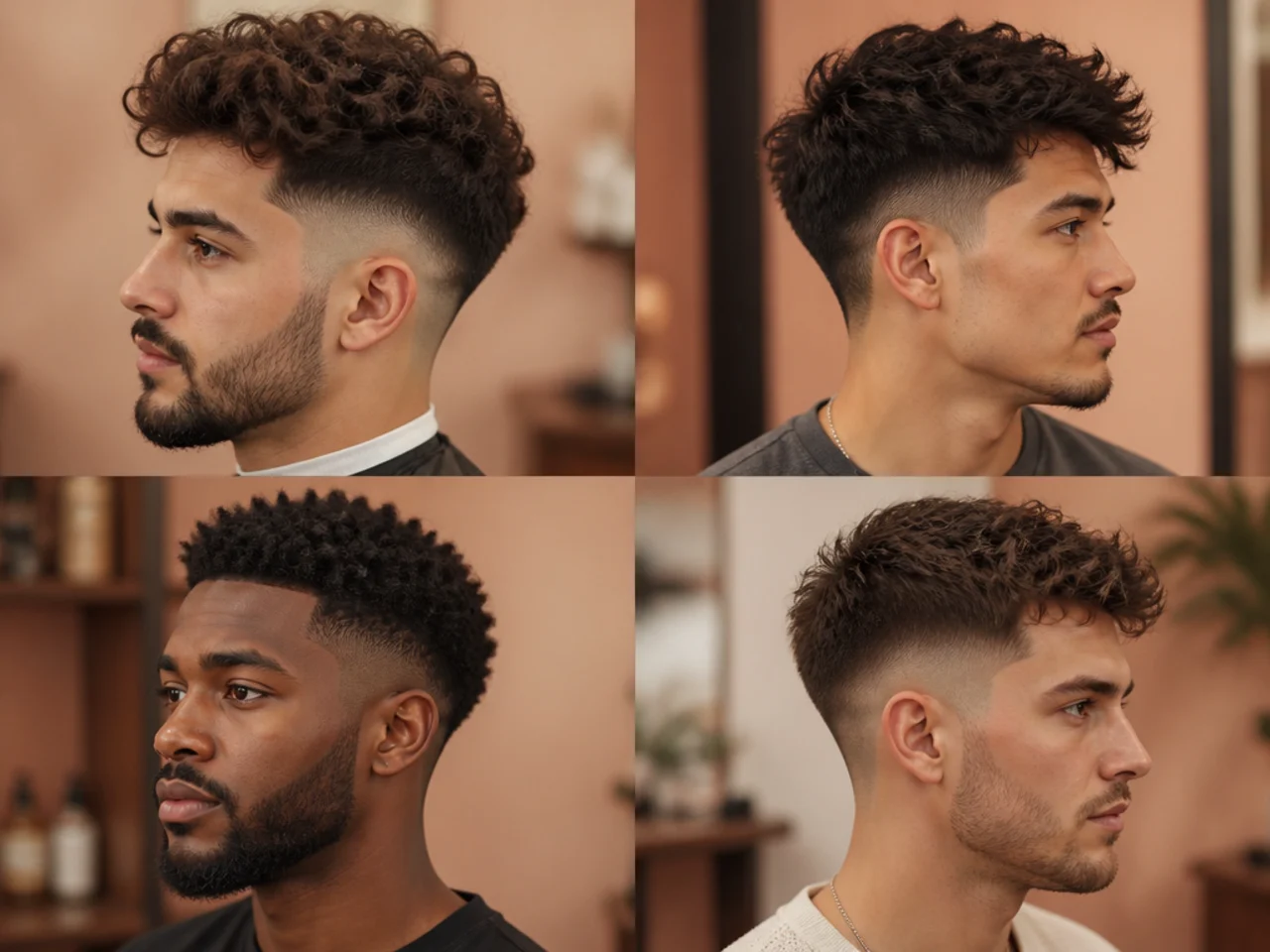
The temp fade only tapers the front of the sides — the temple area — while the back stays longer. It's a subtler request than a full fade, which makes it the corporate-safe pick when you want detail near the face without shaving the whole side of your head. Pairs beautifully with slick backs and pompadours. Ask for "a mid temp fade, #0 to #1 at the temple, blended out into length in the back."
High Volume Brush Back with Mid Skin Fade and Beard
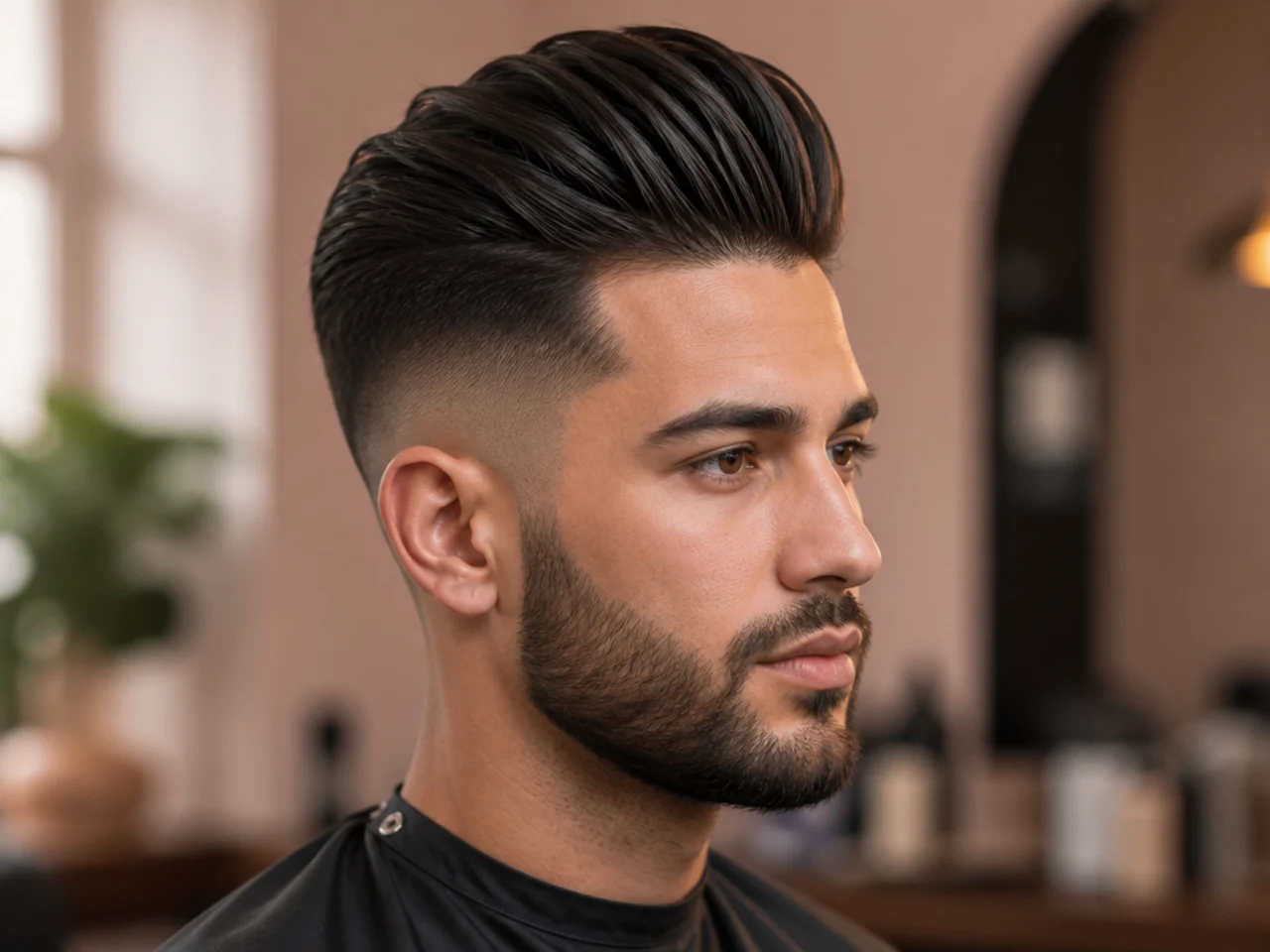
Height on top plus skin at the temple plus a full connected beard: the tall-and-sharp look. The skin fade keeps the sides quiet so the volume and beard do the shouting. Flatters square jaws most; less good on long faces since the height can lengthen the visual line further. Ask for "mid skin fade, five inches on top brushed back, beard blended into the fade line."
Spiky Hair with Mid Taper Fade
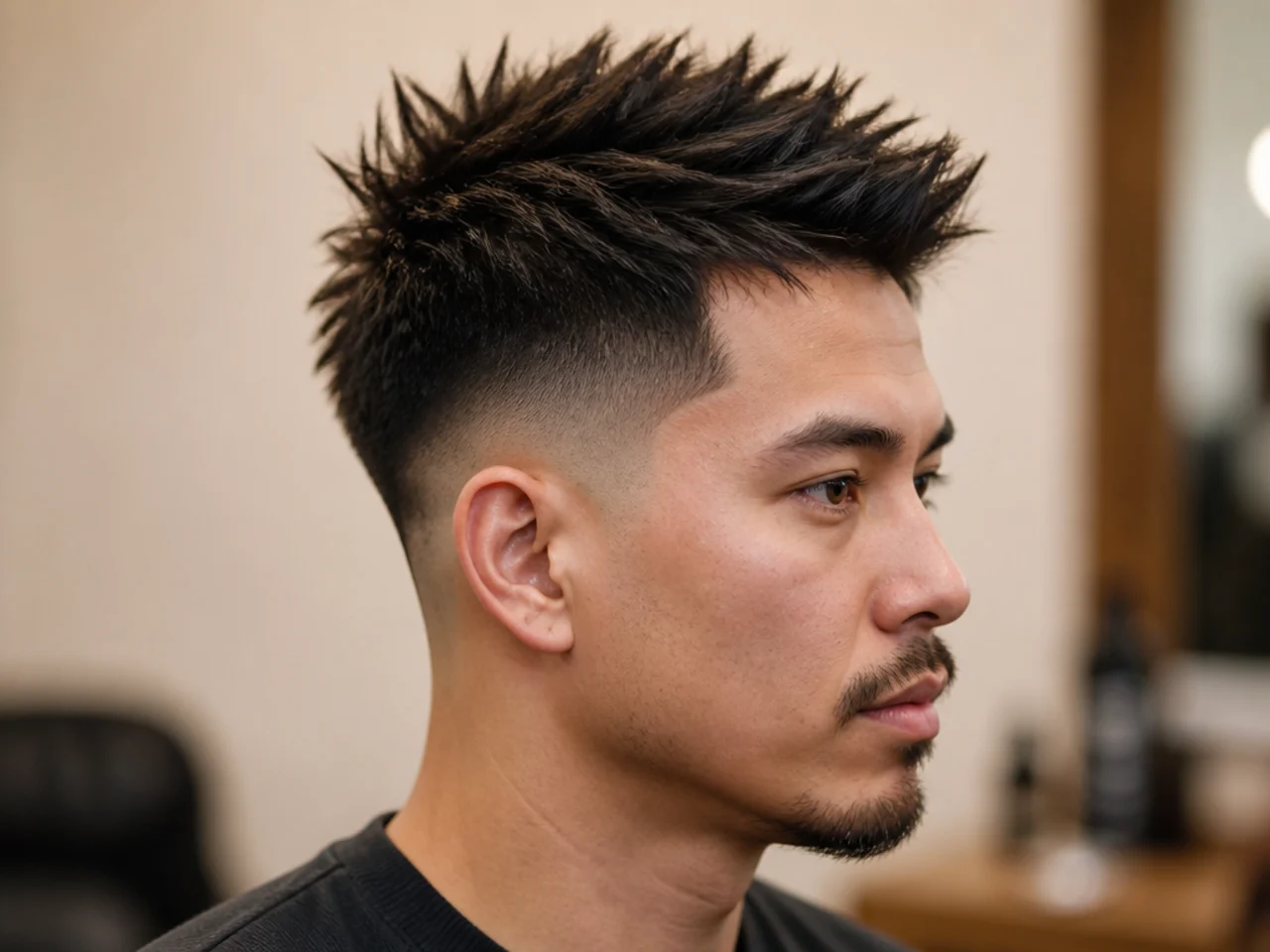
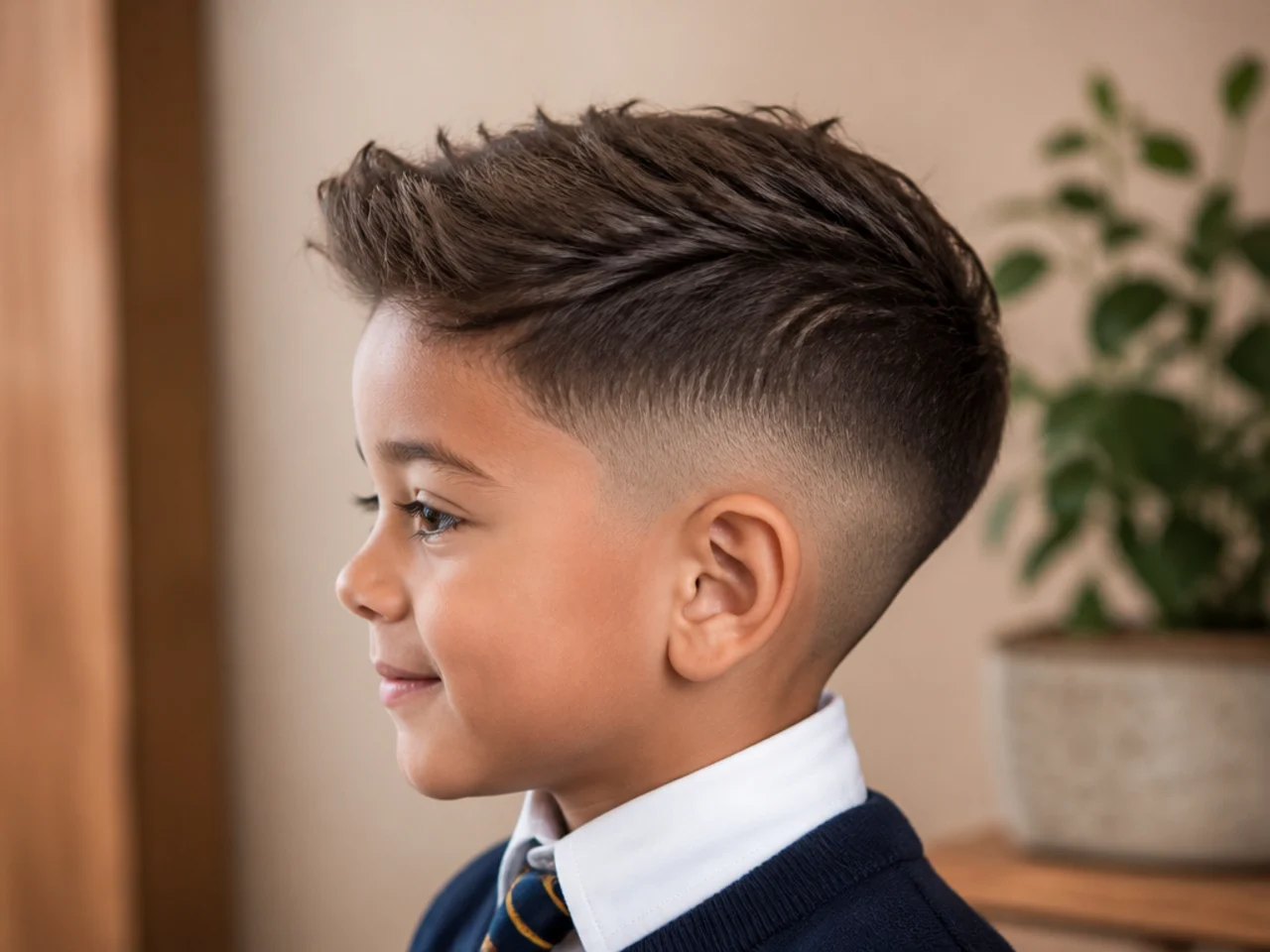
Textured spikes need a softer side to balance the top's chaos, so pair them with a taper rather than a skin fade. The taper leaves a half-guard at the shortest point, which reads gentler on younger faces. Great for men in their twenties with medium-density straight or wavy hair. Ask for "mid taper fade, #0.5 at the shortest, two inches on top for spikes." Style with matte clay, no shine.
Mohawk with Burst Mid Fade
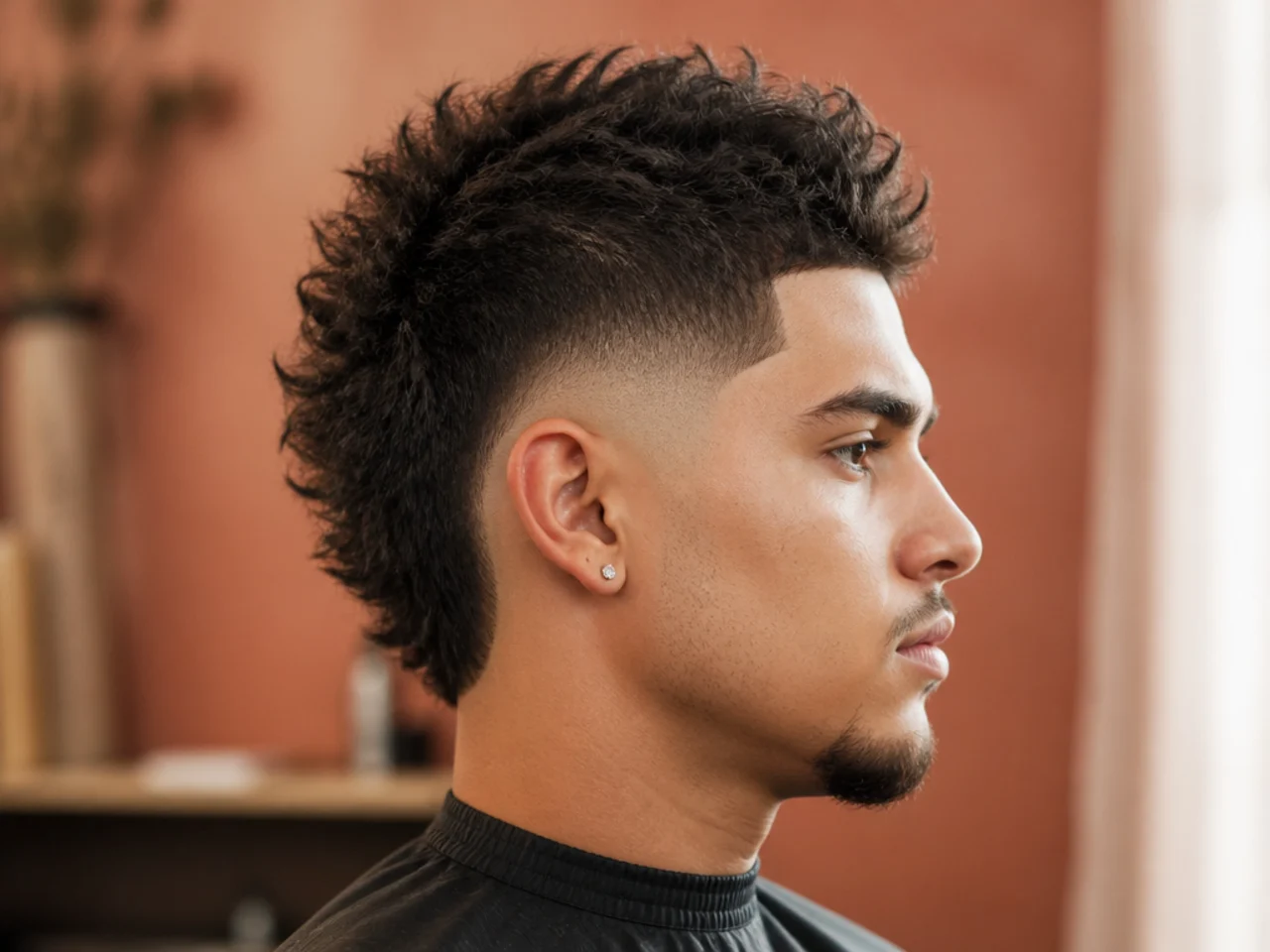
The burst fade arcs around the ear in a half-circle, and pairing it with a mohawk gives the length strip on top a clear frame. It's a bold look that suits guys with strong facial features and thick hair that holds height. Ask for "mid burst fade around the ear, mohawk strip left at four inches down the middle." Style with strong-hold gel or pomade — this cut has no room for droop.
Mid Burst Fade
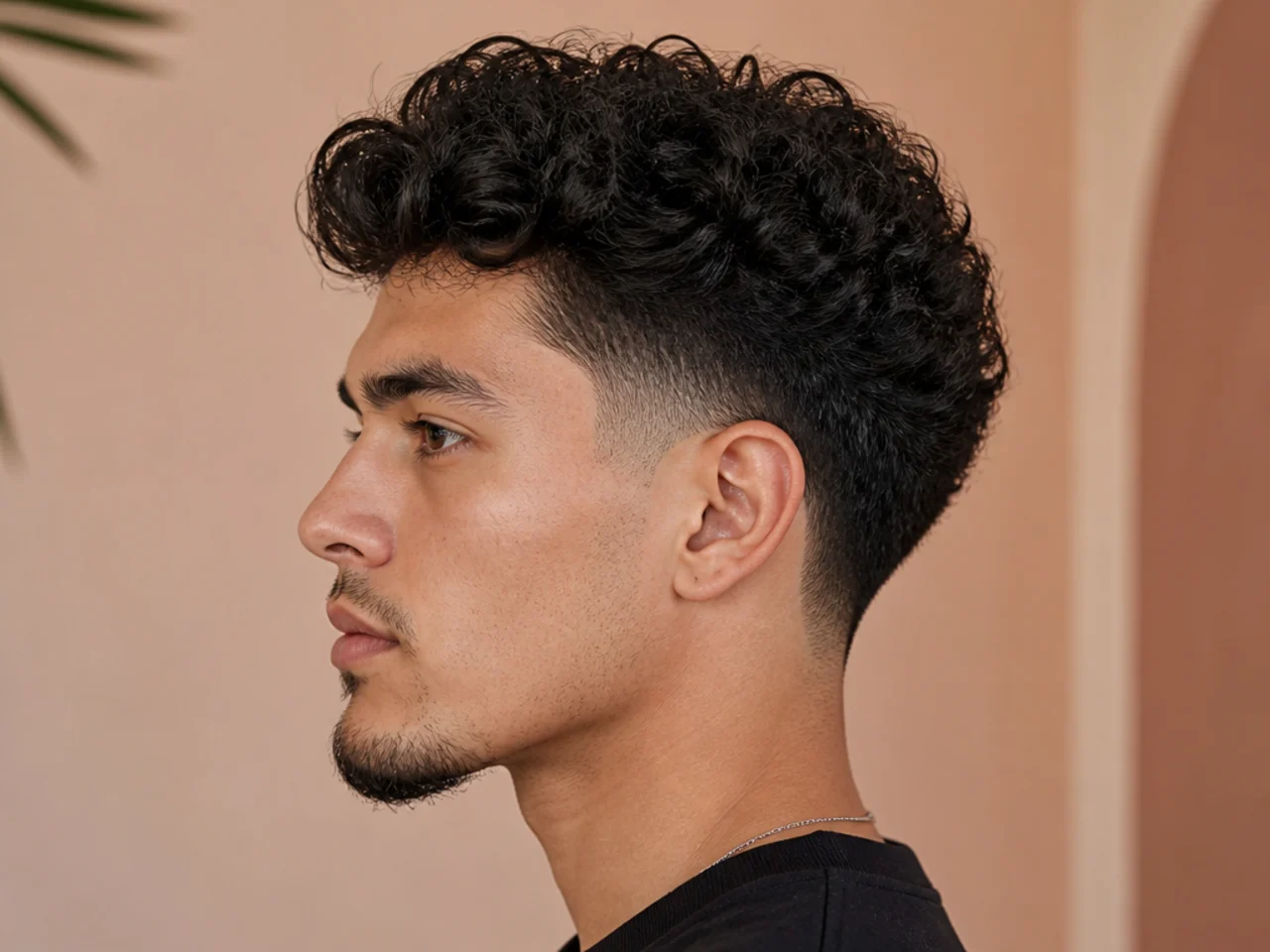
Same burst technique — the fade arcs around the ear rather than running level — but with a normal top instead of a mohawk. The curved fade line is soft and modern, which pairs cleanly with longer, textured tops. Suits oval faces best. Ask for "mid burst fade, #0 at the shortest, blends up around the ear." Any top style works — the burst is doing the visual work at the sides.
Short Hair with Mid Fade
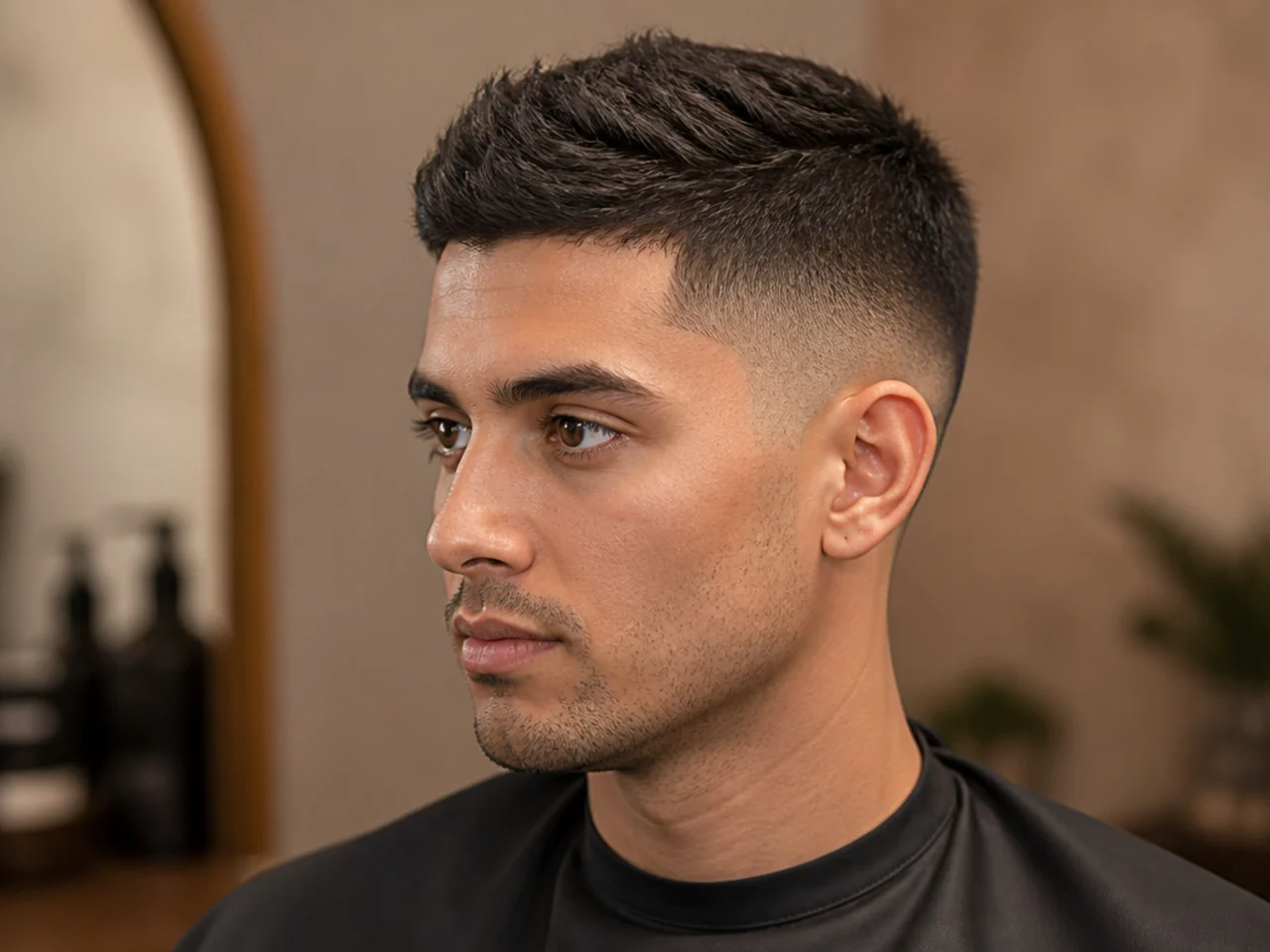
The lowest-maintenance version: a half-inch to an inch of length on top with a clean mid fade at the sides. Wash, towel, walk out. It's the cut I recommend to guys who work physical jobs — construction, kitchens, gym floors — because there's nothing to fuss with midday. Ask for "mid fade, #0 to #2, top scissor-cut to half an inch." No product required.
Buzz Cut with Mid Fade and Beard
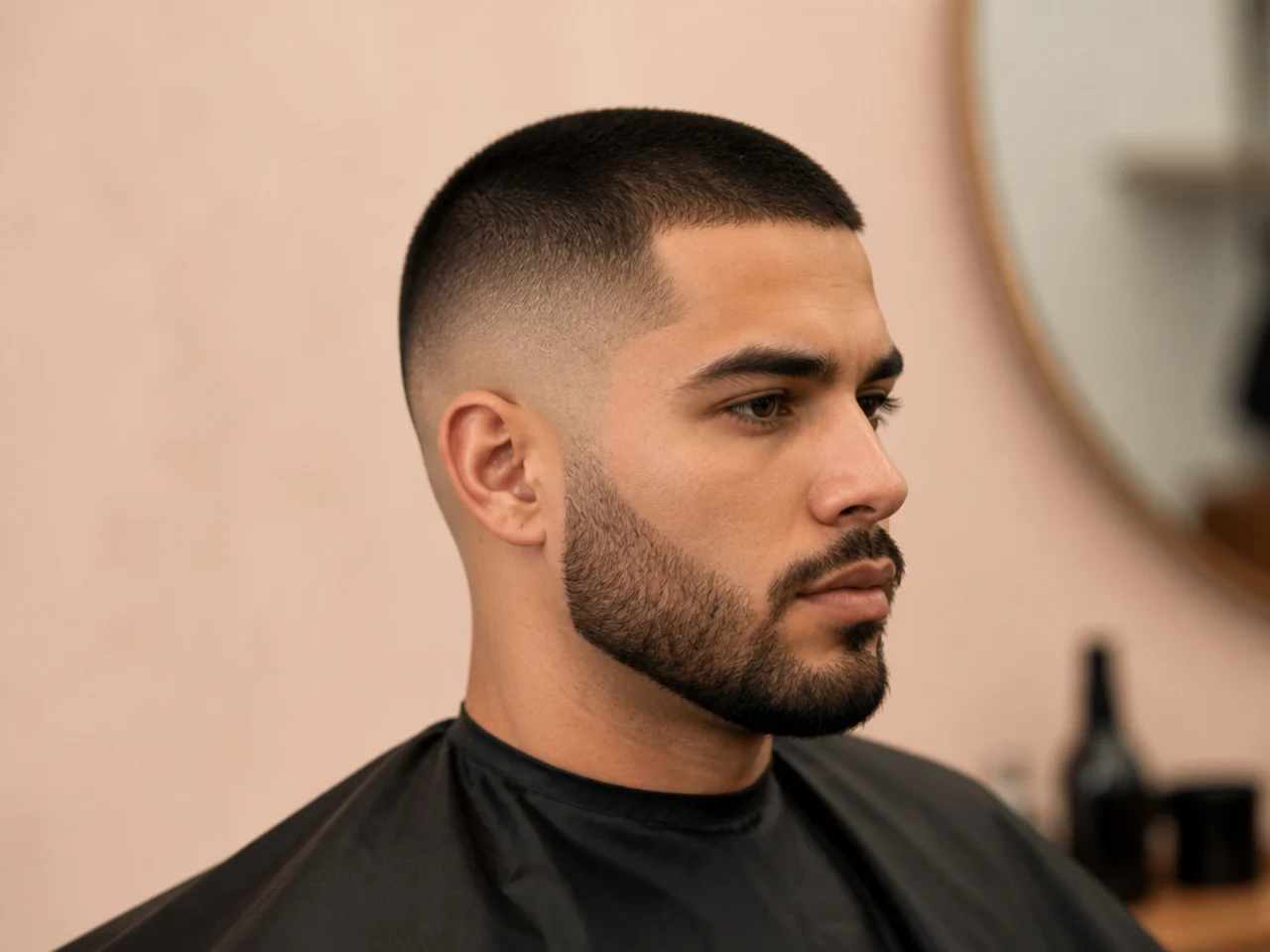
Straight-up utilitarian: a buzz cut on top, mid fade at the sides, and a full beard below to frame the jaw. The fade adds the shape a plain buzz lacks; the beard adds the warmth a bare head loses. Suits square and oval faces best. Ask for "mid skin fade, #1 all over the top, beard connected into the sideburns and blended into the fade."
Modern Mullet with Mid Fade
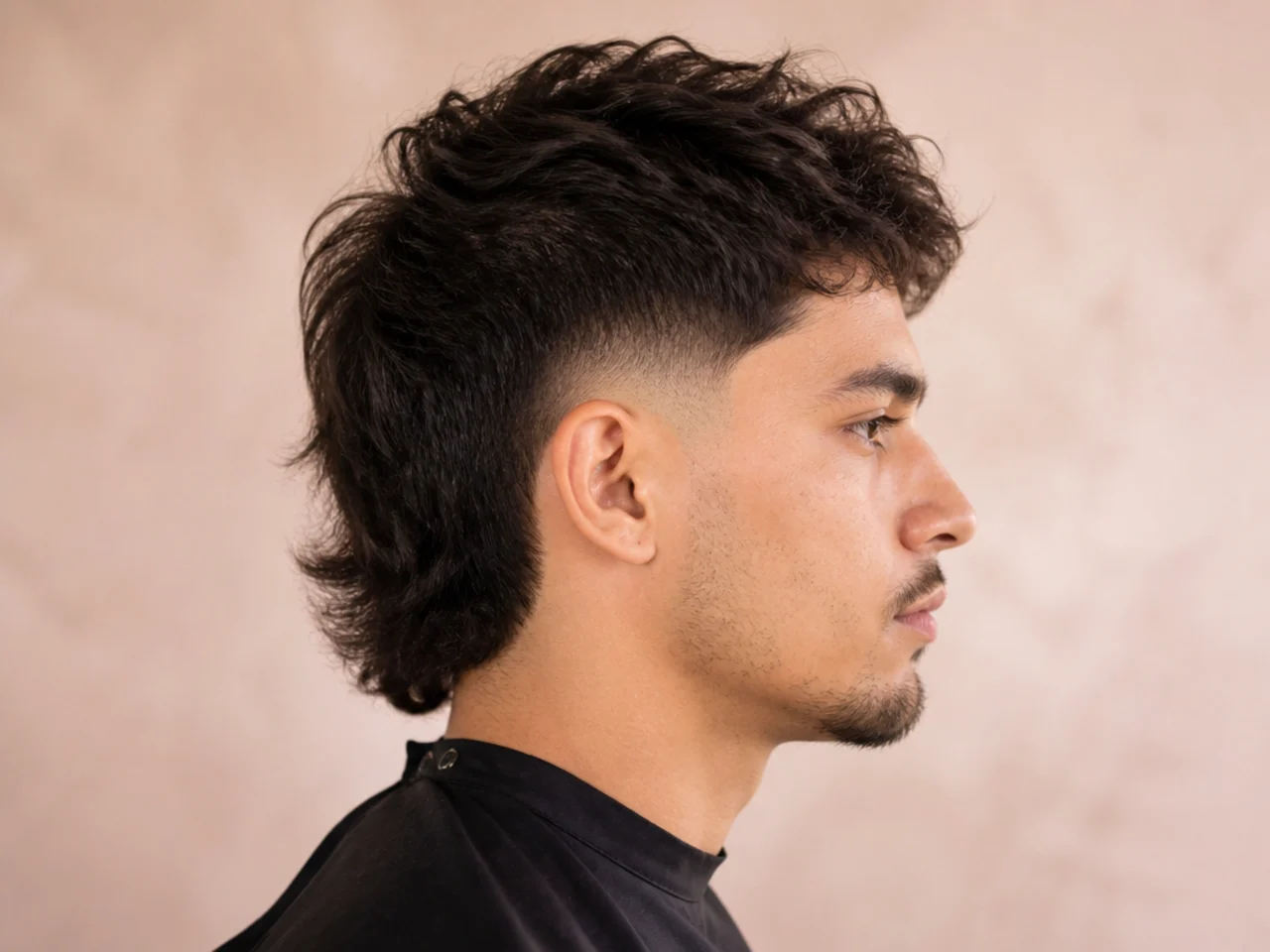
The modern mullet gets the length in back that a plain fade lacks. The mid fade at the sides keeps the front clean so the back length reads intentional, not overgrown. Suits thick or wavy hair better than fine hair, which can go stringy at the neck. Ask for "mid fade sides, length kept from the crown to the nape, textured throughout."
Trendy Parted Style with Mid Fade
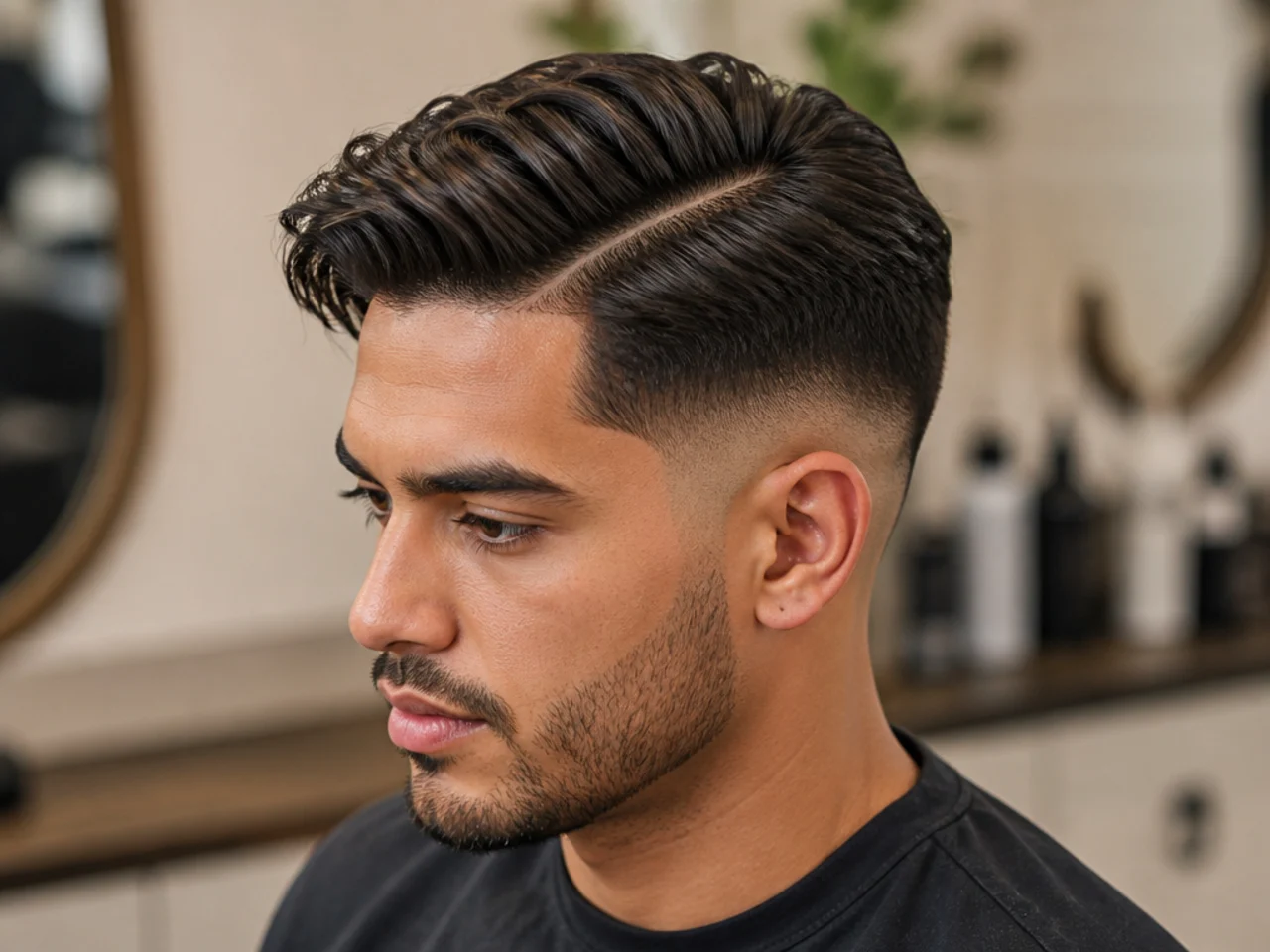
A soft part combed rather than razored in, paired with a mid fade — the tidy option for guys who want the side-part look without the corporate rigidity. Works with almost any face shape and hair type. Ask for "mid fade, natural part on the left, three inches on top for a soft comb-over." Finish with a low-shine cream so the part looks casual, not rehearsed.
Mid Fade with Brushed Forward Waves
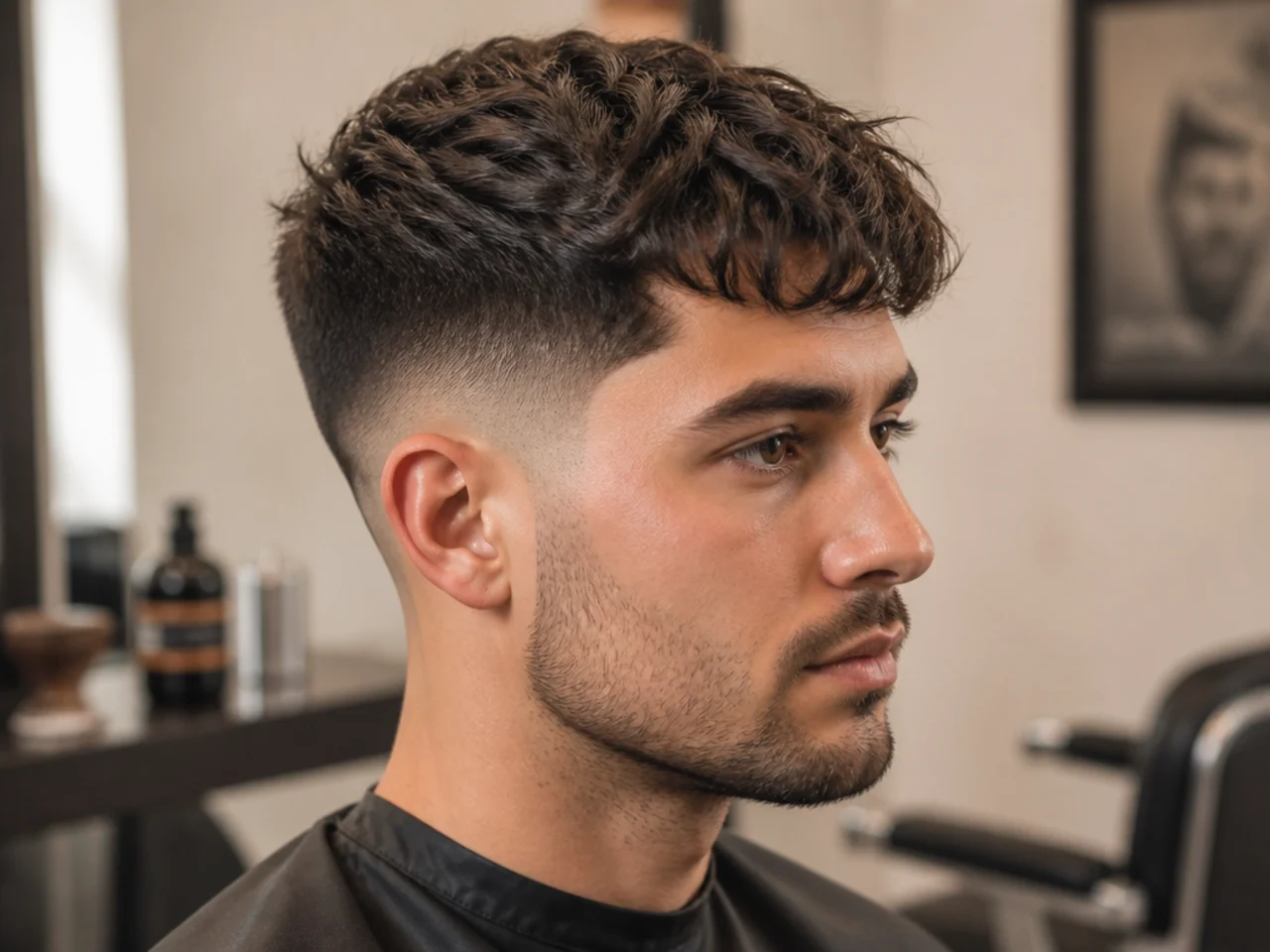
Waves brushed forward at the crown into a soft fringe give the front of your head a bit of drama while the mid fade stays quiet at the temple. Works best on natural waves — 2A to 2C texture — and suits guys with taller foreheads because the fringe covers real estate. Ask for "mid fade, three to four inches on top scissor-cut with texture, styled forward."
Long Textured Fringe with Mid Fade
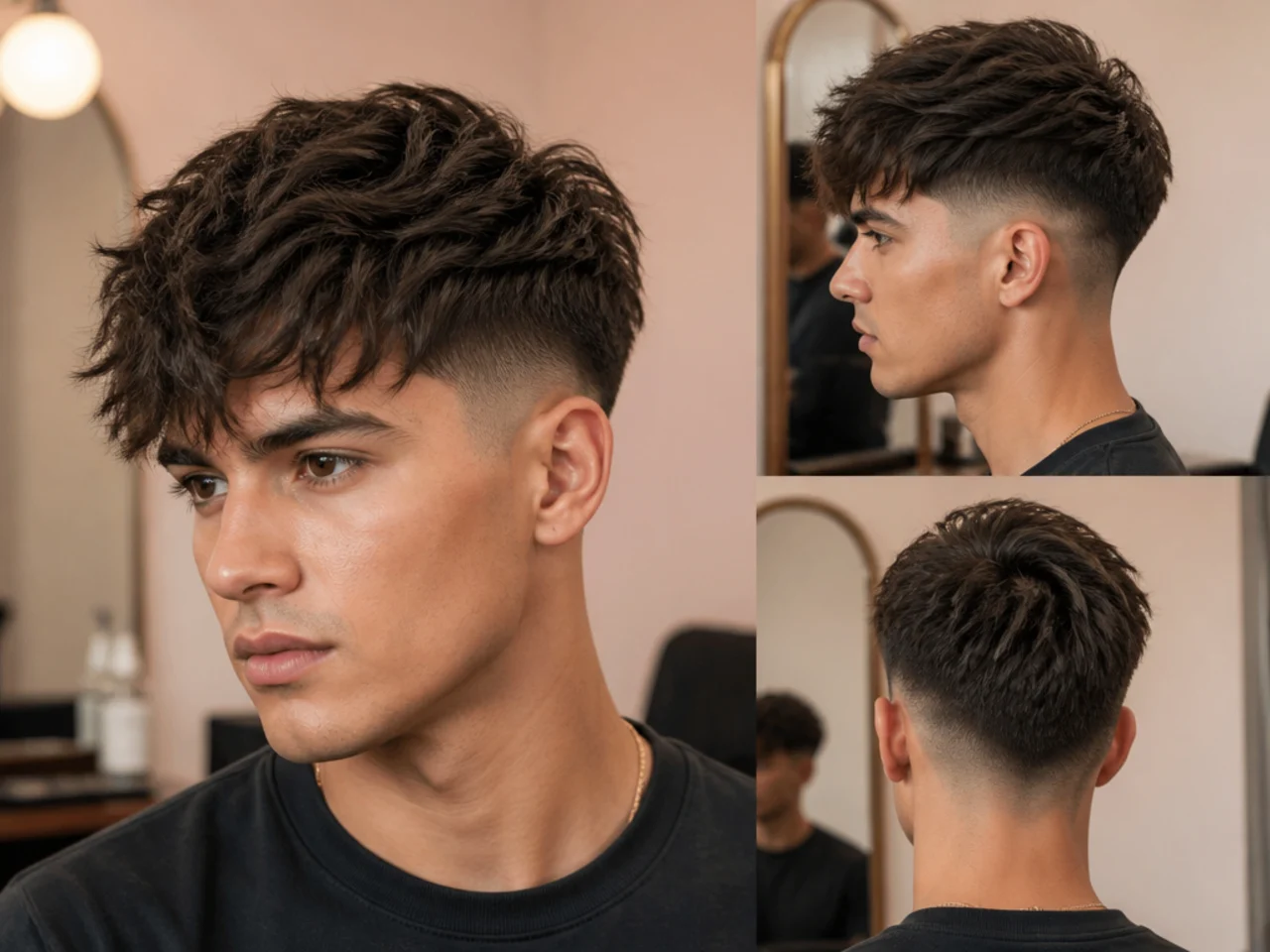
Long across the top, heavier at the fringe, faded clean at the sides. It's the current default for guys under thirty and suits round faces because the length up front elongates the visual line. Ask for "mid fade, #0 to #1.5, four inches on top with a longer front, point-cut throughout for texture." Style with a matte cream and finger-comb forward.
Short Slick Back with Mid Fade and Beard
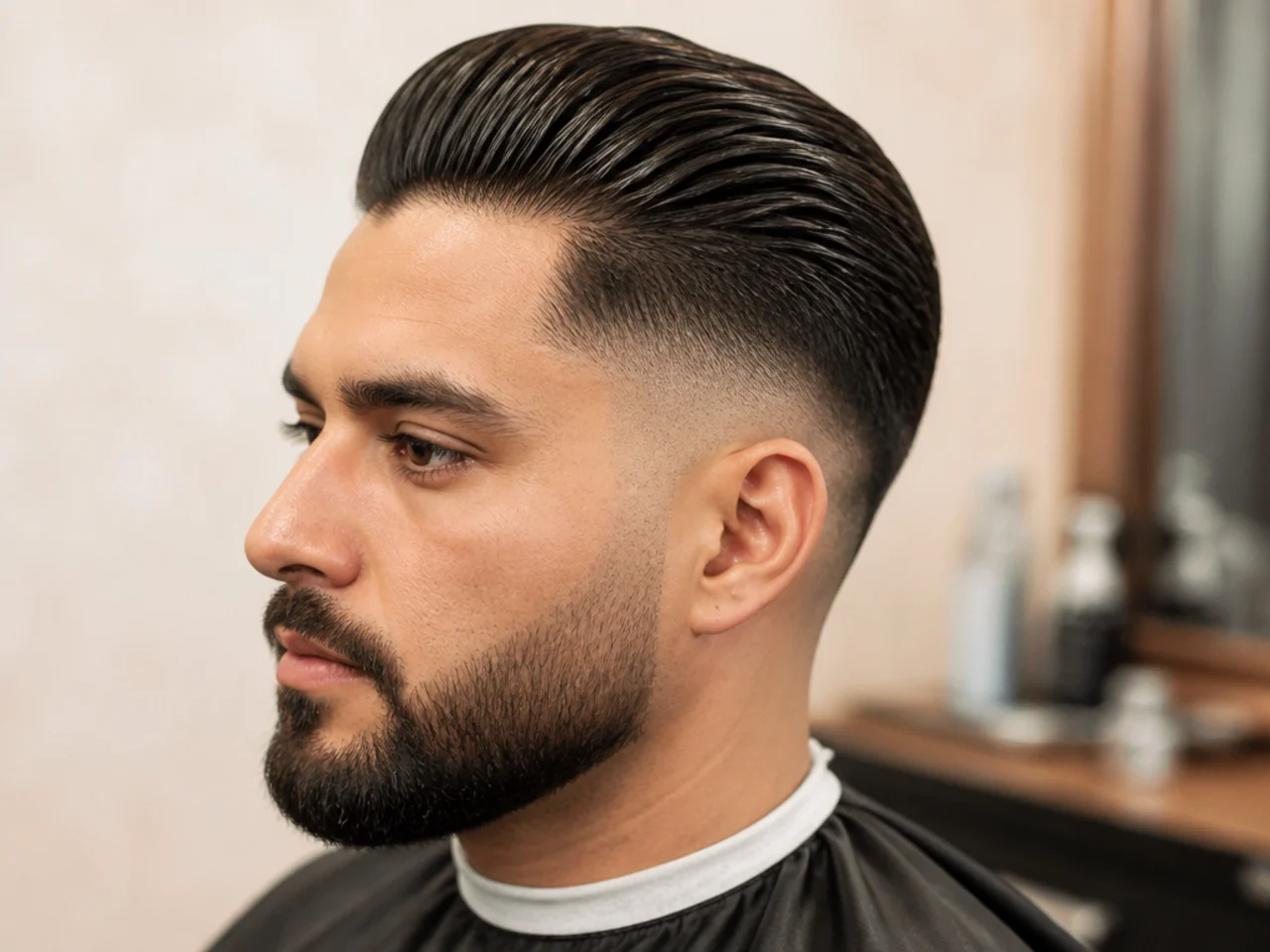
Two inches on top, slicked straight back with pomade, mid fade at the sides, beard trimmed to match. Grown-up, polished, easy — the cut for a guy who wants to look pulled together in three minutes. Ask for "mid fade, two inches on top scissor-cut, slicked back with pomade, beard blended into the fade at the sideburns."
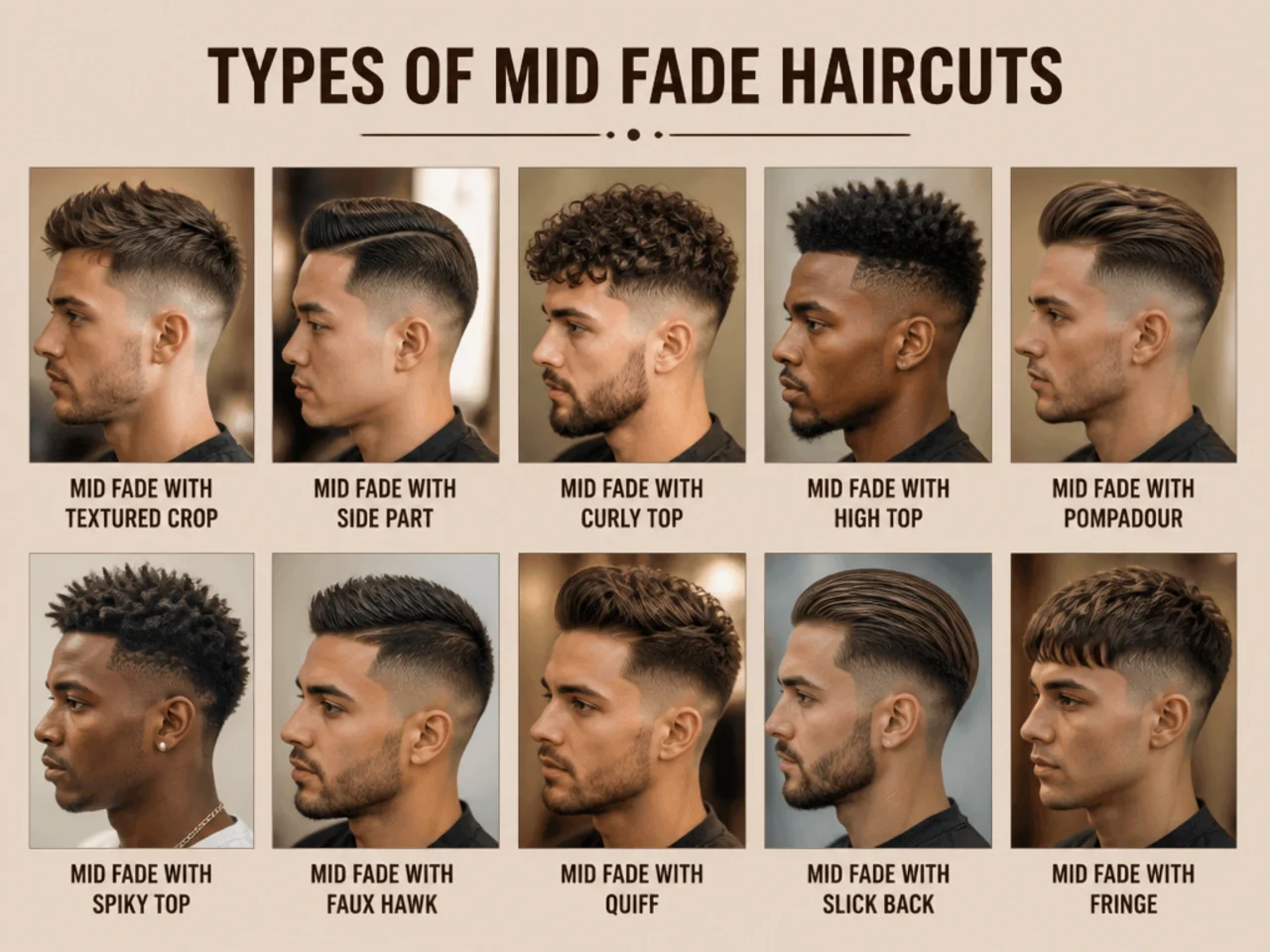
Types of Mid Fade Haircuts
Four core mid fade techniques. The one you pick controls the look more than any styling choice up top.
- Mid Skin Fade — hair tapers all the way to bare scalp at the shortest point. Sharpest contrast, cleanest line, shortest lifespan. Book every 10 to 14 days.
- Mid Drop Fade — the fade line drops in an arc behind the ear rather than running level. Softer on the back of the head; forgiving on rounder skulls.
- Mid Burst Fade — the fade arcs around the ear in a half-circle. Curved rather than horizontal; especially good with mohawks and longer tops.
- Mid Temp Fade — only the front of the sides gets faded, leaving the back at length. Subtle and face-framing; pairs with slick backs and pompadours.
Add "taper" to any of these — mid taper, mid drop taper, mid burst taper — and you're asking your barber to leave a half-guard at the shortest point instead of shaving to skin. Softer edges, longer time between visits, easier grow-out.
Mid vs Low vs High Fade
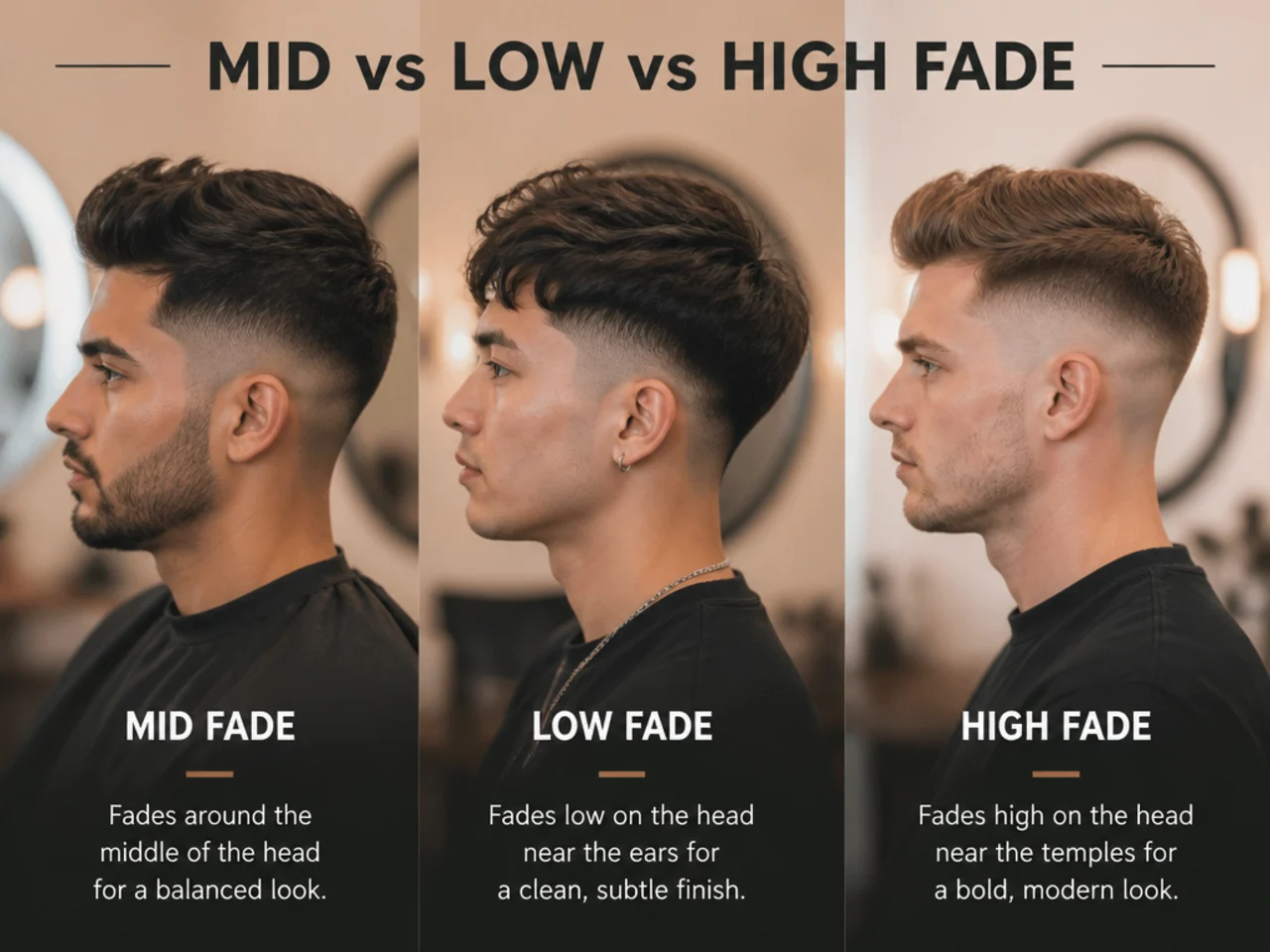
All three fades use the same clipper-to-scissor blending technique. The only difference is where the fade line starts on your head — and that one variable changes the entire personality of the cut. For a side-by-side, see the low fade vs mid fade vs high fade comparison.
Where Each Fade Starts
- Low Fade — starts just above the ear. Barely-visible contrast, corporate-safe, grows out gracefully. Book every 4 to 6 weeks.
- Mid Fade — starts at the temple line. Even contrast, universally flattering, sweet spot between casual and sharp. Book every 2 to 3 weeks.
- High Fade — starts above the temple, sometimes as high as the crown. Loudest contrast, most modern, needs the most upkeep. Book every 10 to 14 days. The high taper fade is the softer high-fade cousin.
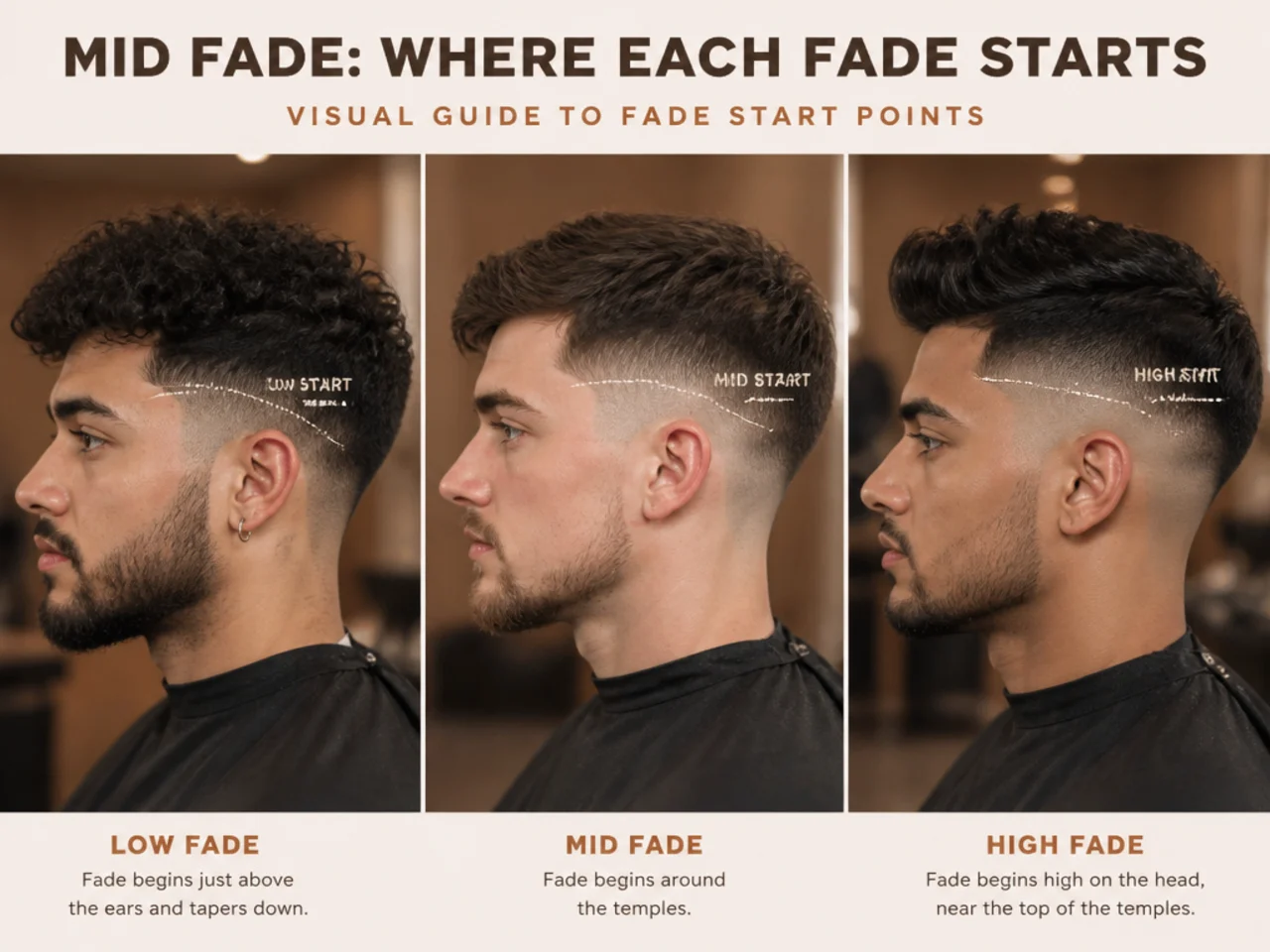
If you've never had a fade before, start mid. If you love it, step up next visit. If it felt too dramatic, drop to a low taper fade or a blowout taper for a softer next round. Guys who want zero fade visibility at the neckline can look at an undercut fade instead.
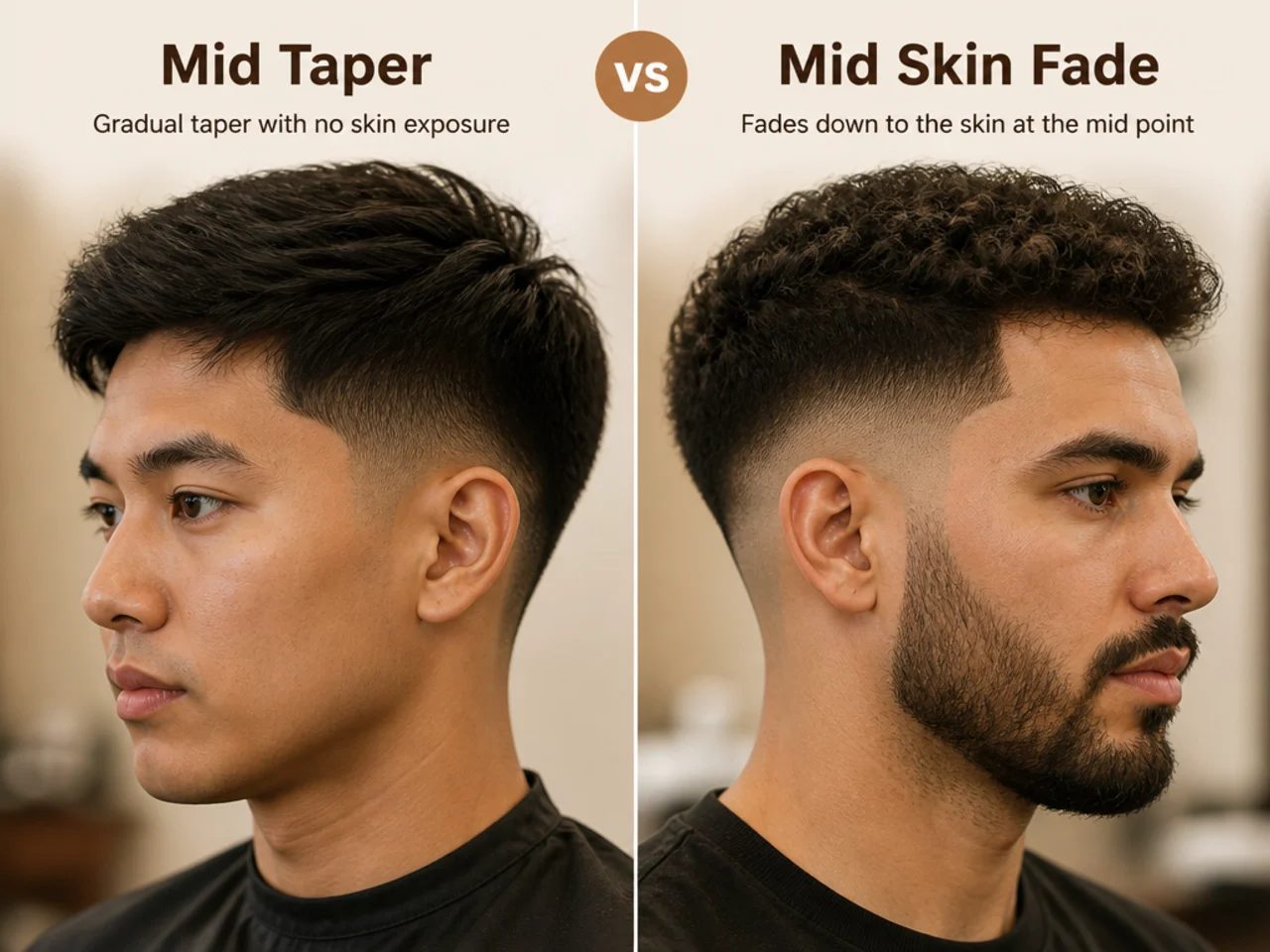
Mid Taper vs Mid Skin Fade
The choice inside the choice: once you've picked mid, you still have to decide what happens at the shortest point of the fade.
- Mid Taper — the clippers stop at a half-guard (0.5) or a #1. Some hair is left at the shortest point, so the transition reads soft and the cut grows out for a month before it looks messy. Best for corporate offices, first-time fades, and anyone whose scalp reacts to skin-close clipping.
- Mid Skin Fade — the clippers finish at zero, then the barber goes over the shortest patch with a straight razor or foil shaver to lift every last hair. Contrast is at its maximum. Best for date-night sharpness, event-ready cuts, and anyone happy to sit in the chair every ten days.
Most guys start with a taper on their first fade, then step up to skin once they know the maintenance rhythm. There's no wrong answer — pick the one that fits how often you actually book haircuts.
The Best Mid Fades by Hair Texture
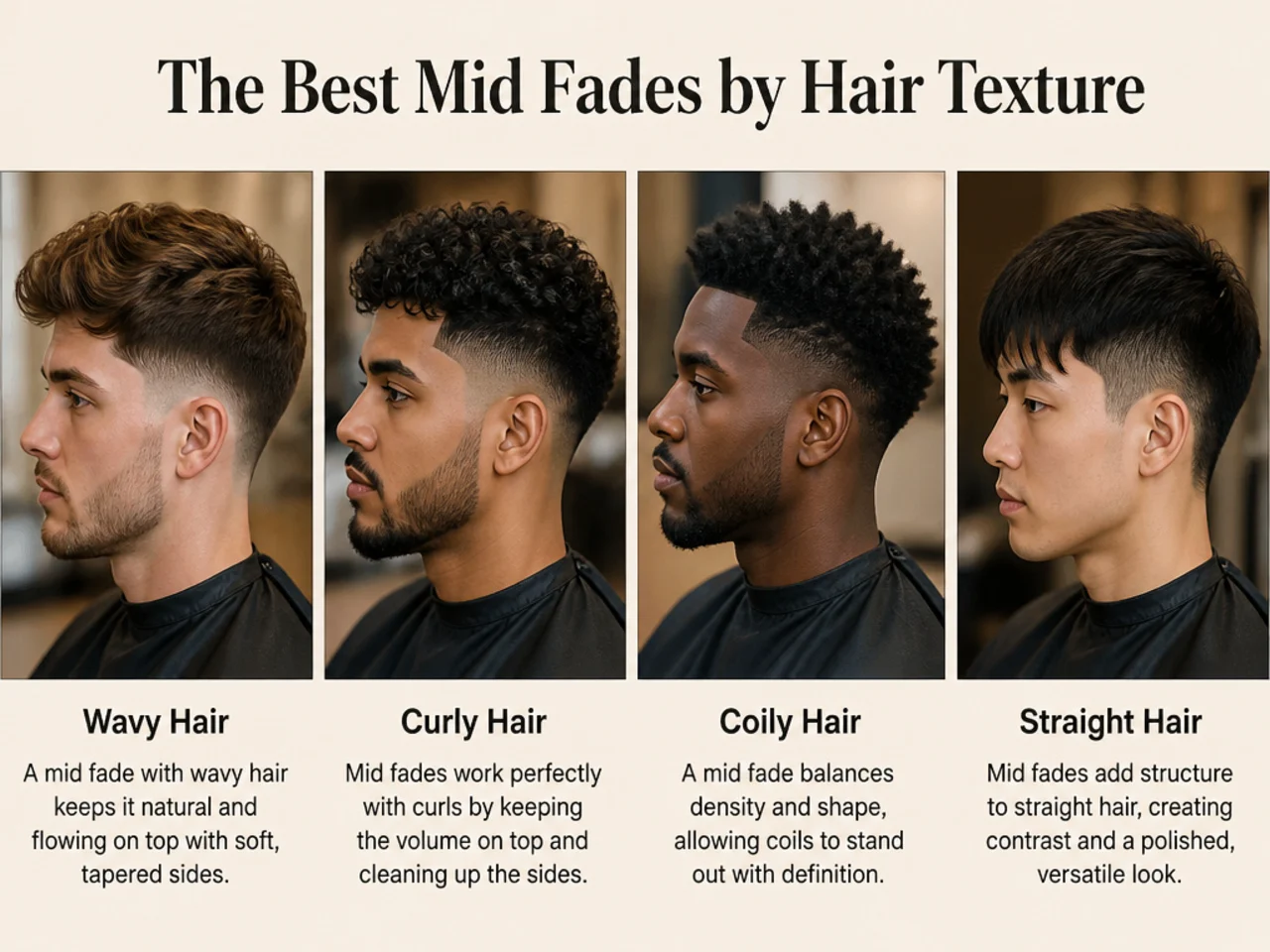
The mid fade adapts to every hair type — but the styling and top choice should shift with the texture.
Straight Hair
Straight hair shows the fade line most clearly, which is a compliment to your barber and a warning to you: any unevenness will be visible. Pair with a side part, comb-over, or short slick back. Use matte clay for hold. If your hair is straight and fine, blow-dry back-to-front for lift before styling.
Curly Hair
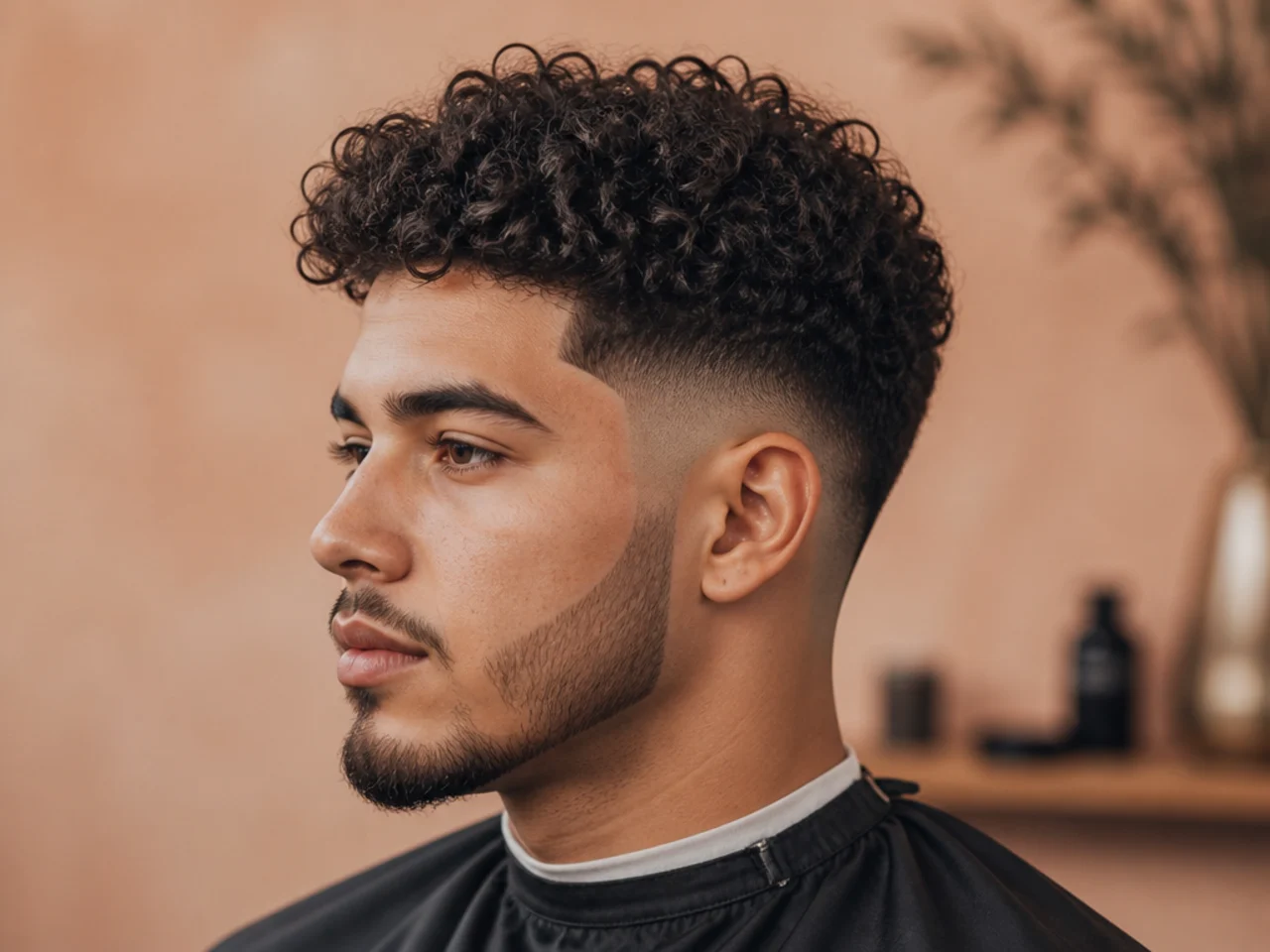
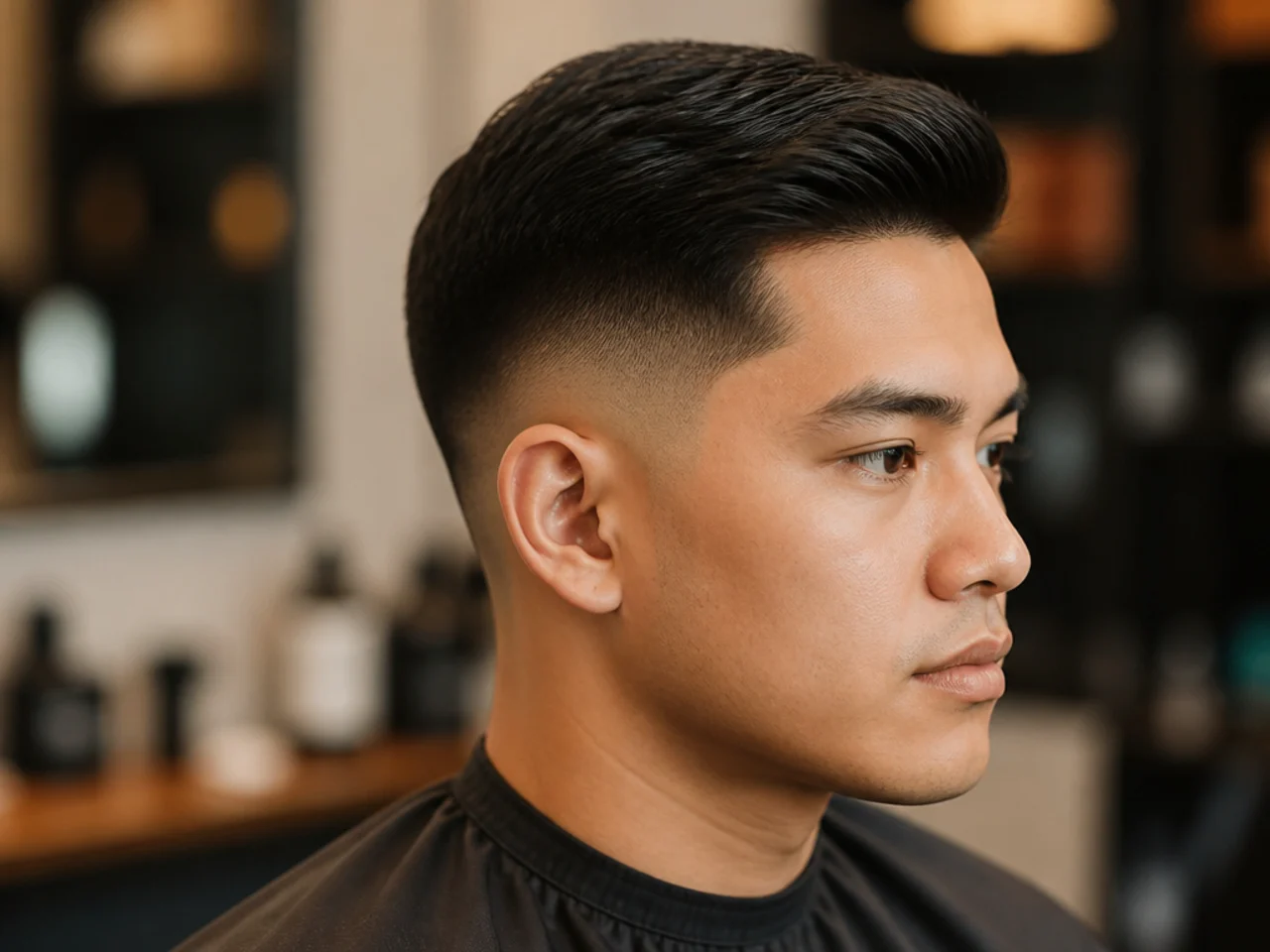
Curly hair looks its best against a skin or near-skin mid fade — the smooth wall makes the curls pop. Ask your barber to scissor-cut the top rather than clip it, so the curl pattern stays intact. Apply curl cream to soaking-wet hair, then diffuse or air-dry. For more inspiration, see the guide on curly hairstyles for men.
Wavy Hair
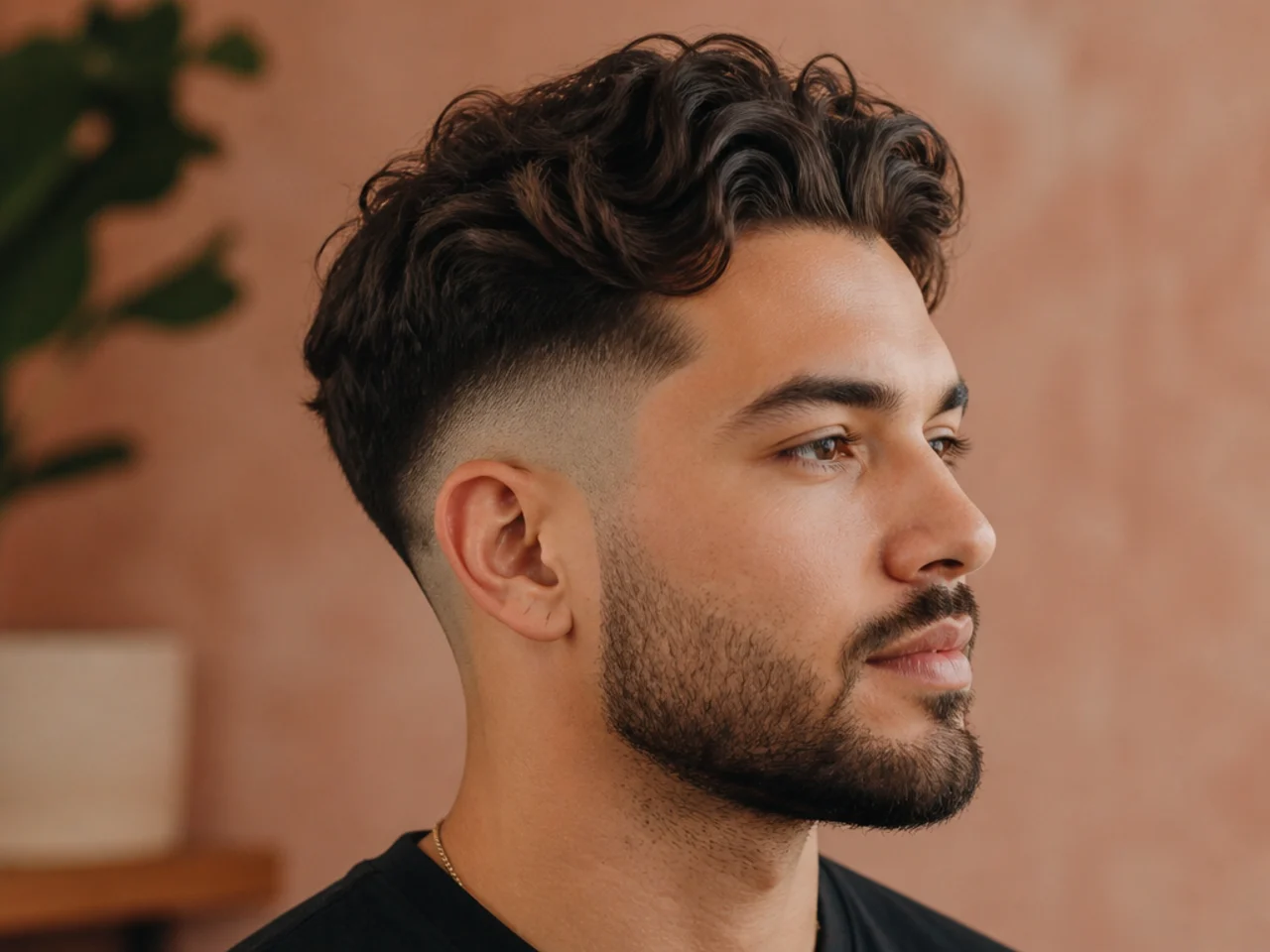
Wavy hair sits between straight and curly — enough natural texture to look styled without much product. A mid fade with a brushed-forward top or a long fringe is the sweet spot. Apply sea salt spray to damp hair, scrunch, and let it air dry. Skip heavy pomade; it flattens the wave.
Coily Hair
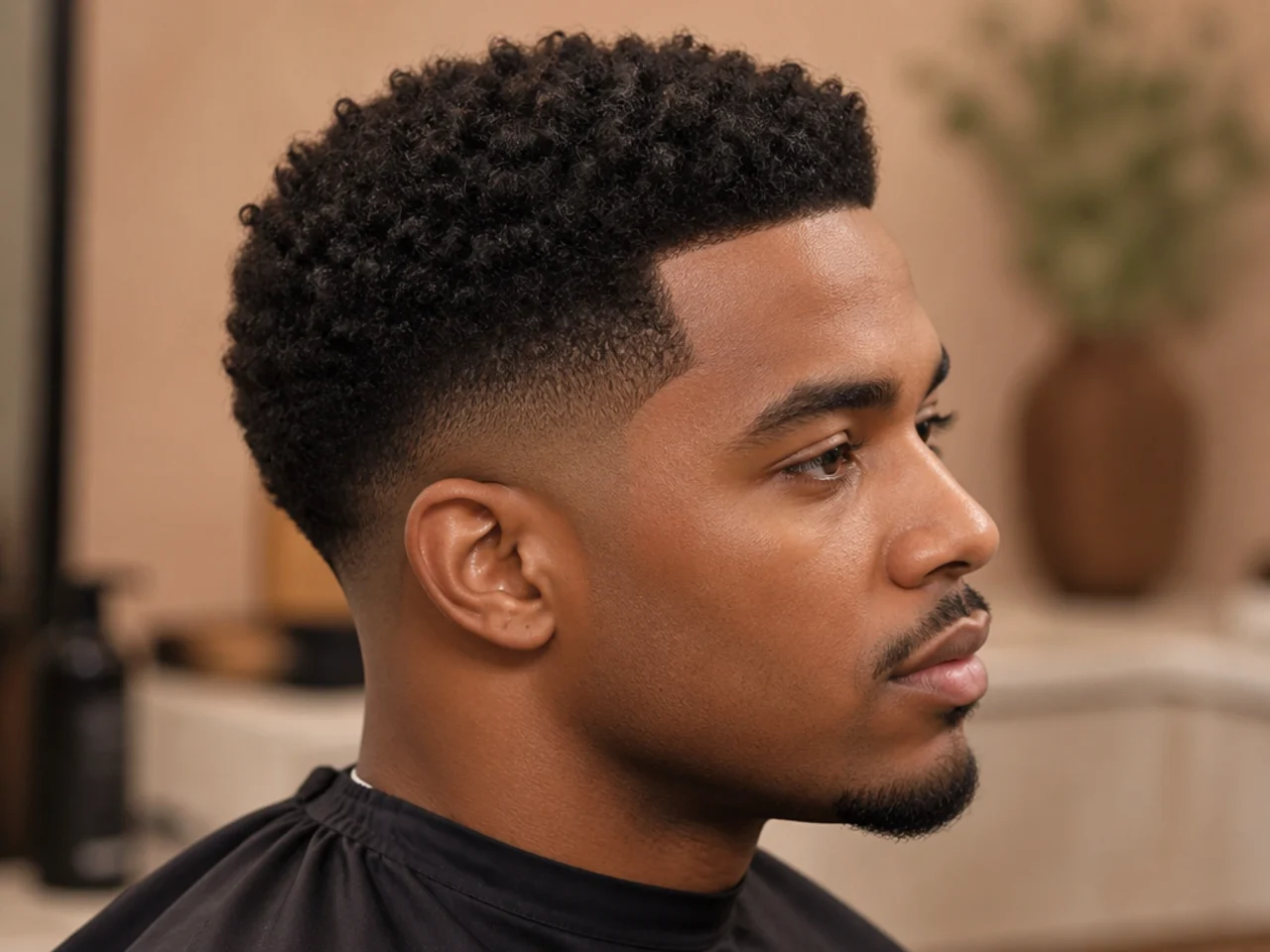
Coily hair (4A–4C) reads best with a defined mid fade — often a mid skin fade — that lets the dense texture on top stand as the visual centerpiece. Ask for scissors on top, never thinning shears. Hydration is the whole game: leave-in daily, shea butter or curl cream to seal, satin bonnet at night. For deeper coverage, see fade haircuts for black men.
Thick Hair
Thick hair turns into a helmet if the top isn't managed. Ask your barber for point-cutting or a razor pass to strip bulk from the length rather than the perimeter. Pompadours, textured quiffs, and modern mullets carry thick hair well. Use a strong-hold matte paste so the volume stays where you put it.
Fine or Thin Hair
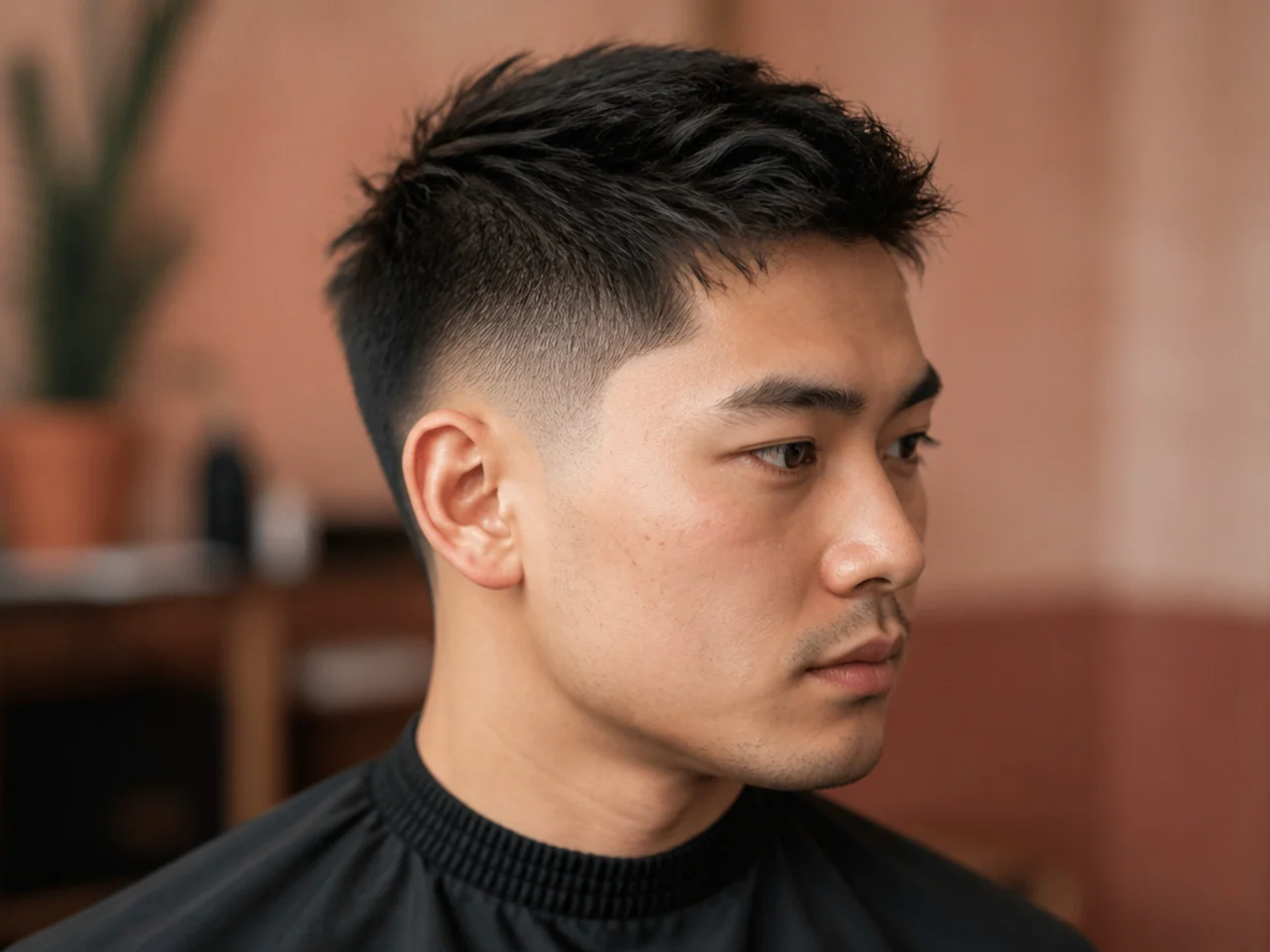
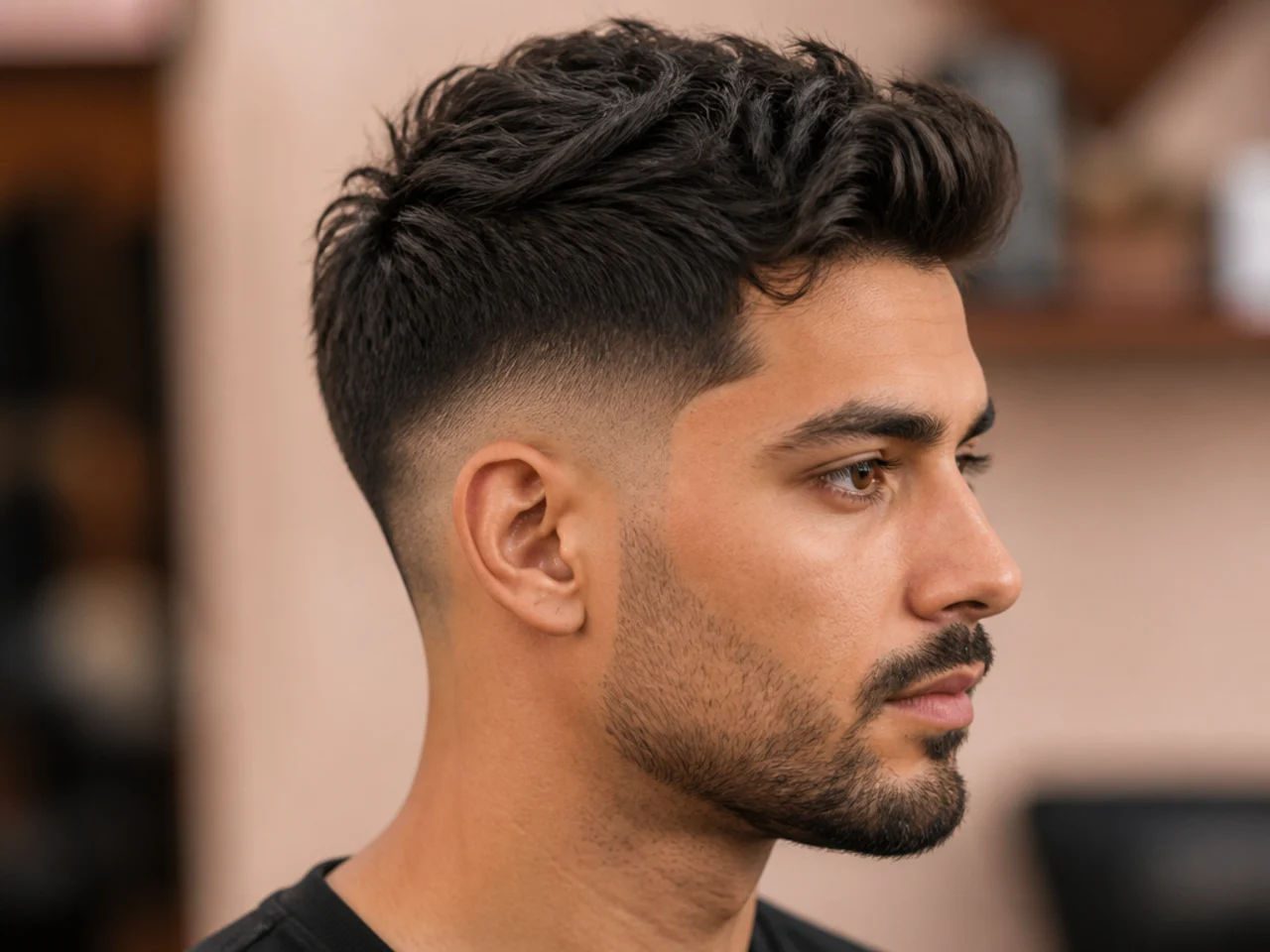
A mid fade is your friend if your hair is fine — the contrast at the sides makes the top look denser than it is. Keep the top short: Caesar cuts, textured French crops, and short buzz-with-fringe cuts all work. Add root-lift with a texturizing powder before applying a matte clay for hold. Skip slick backs; product weight makes fine hair look thinner.
How To Ask Your Barber For A Mid Fade
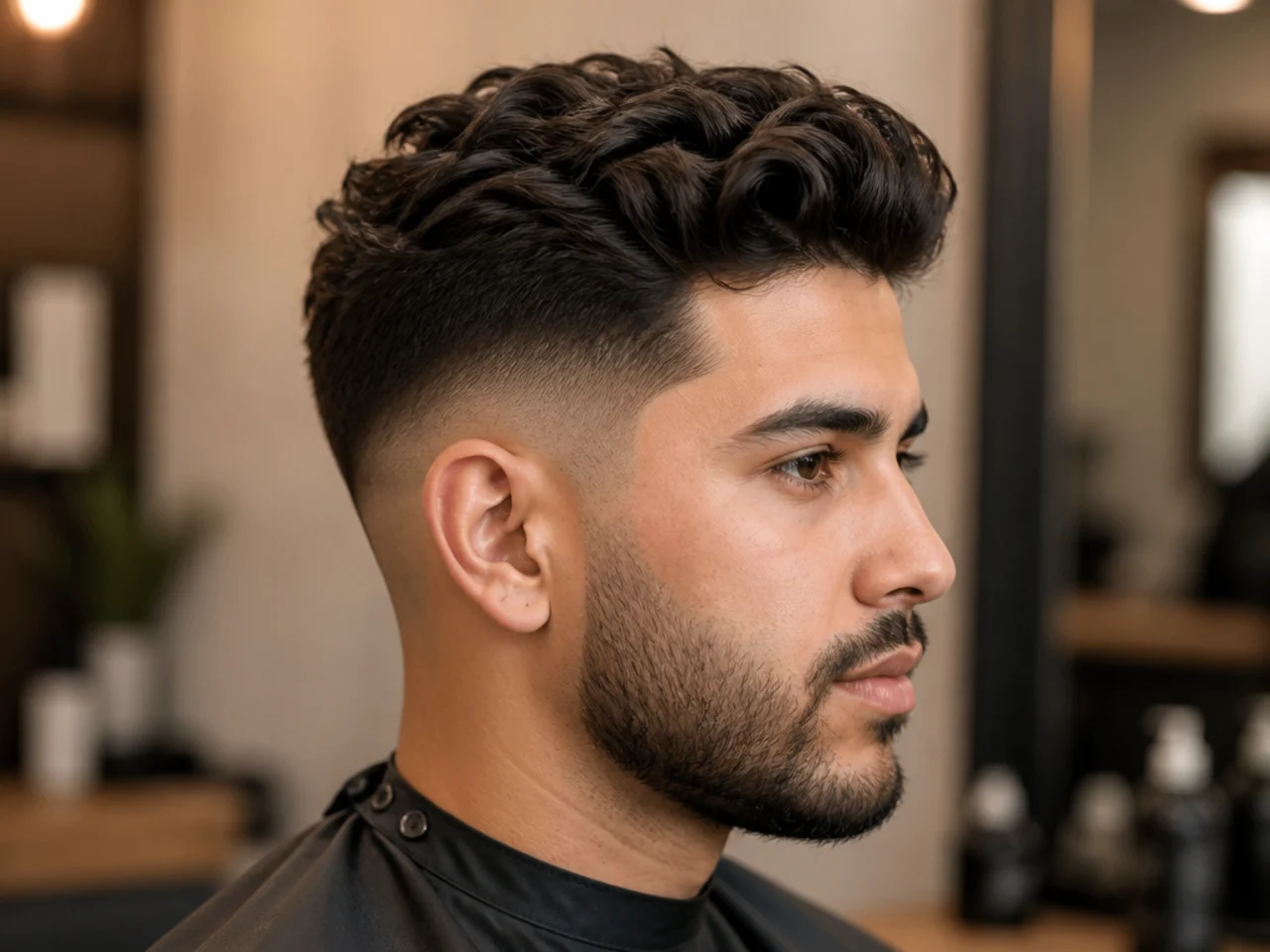
Five things your barber needs to know. Cover these and you'll leave with the cut you asked for.
Decide Skin or Taper First
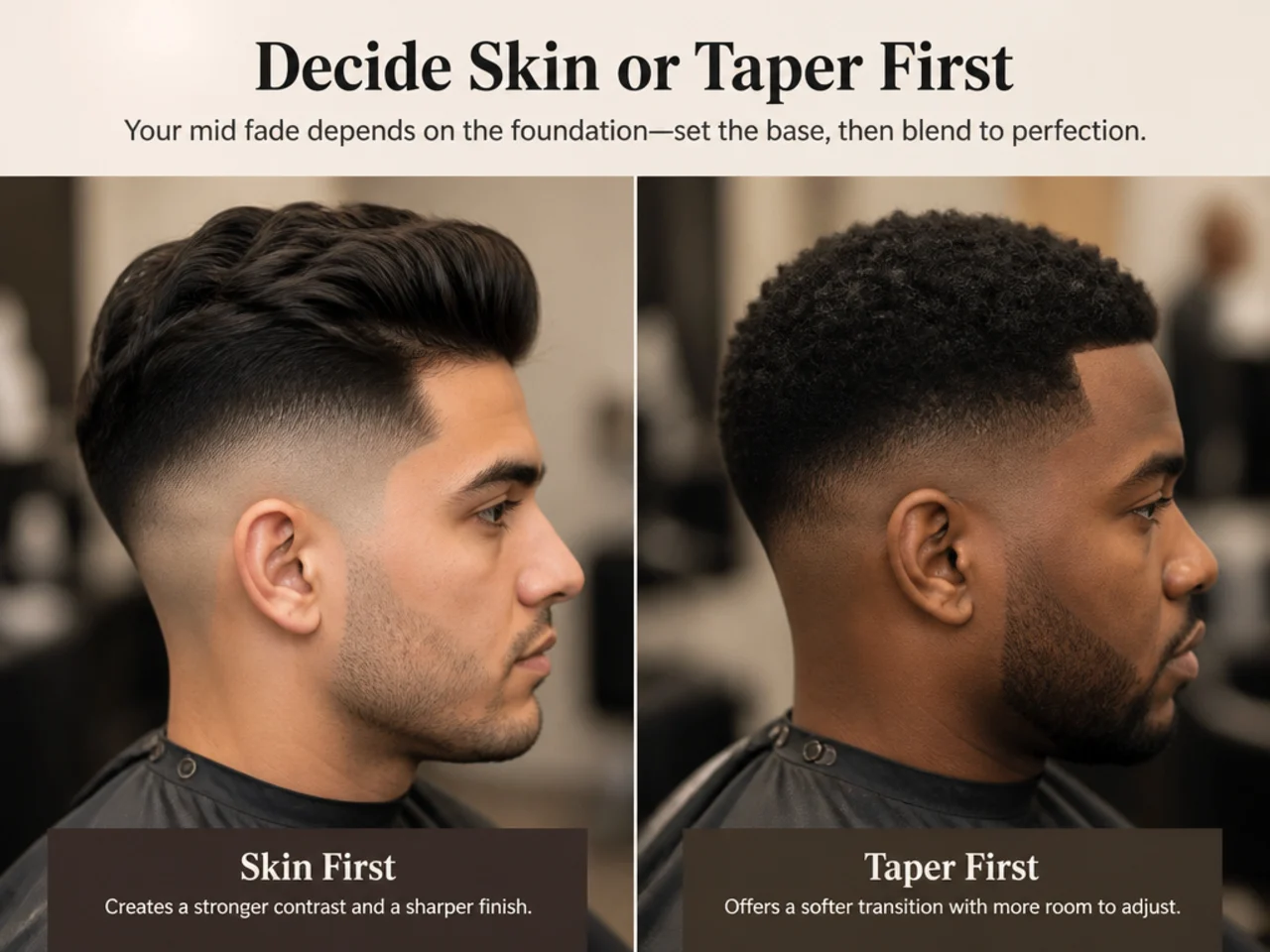
This is the single most important choice. Skin means bare scalp at the shortest point; taper means a half-guard is left. Skin looks its sharpest for ten days; taper stays acceptable for a month. Decide based on how often you'll actually sit down for a haircut — not how often you plan to in theory.
Pick Your Variation
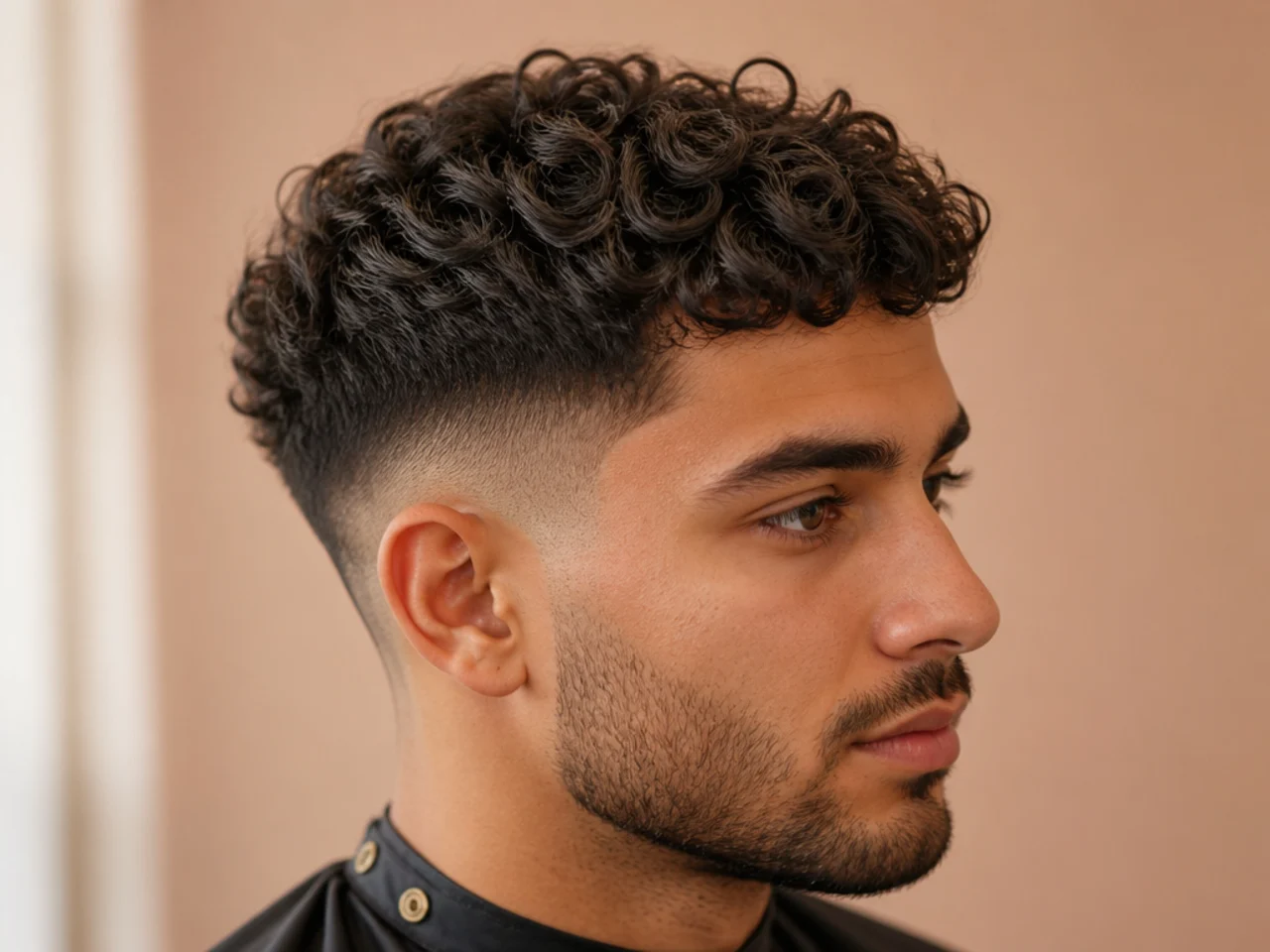
Straight, drop, burst, or temp. If you're unsure, describe the vibe (conservative, modern, edgy, low-key) and let your barber steer. Straight is the safe default. Drop is more flattering on rounder heads. Burst is for guys who want something noticeable. Temp is the corporate-safe pick.
Discuss What's Happening on Top
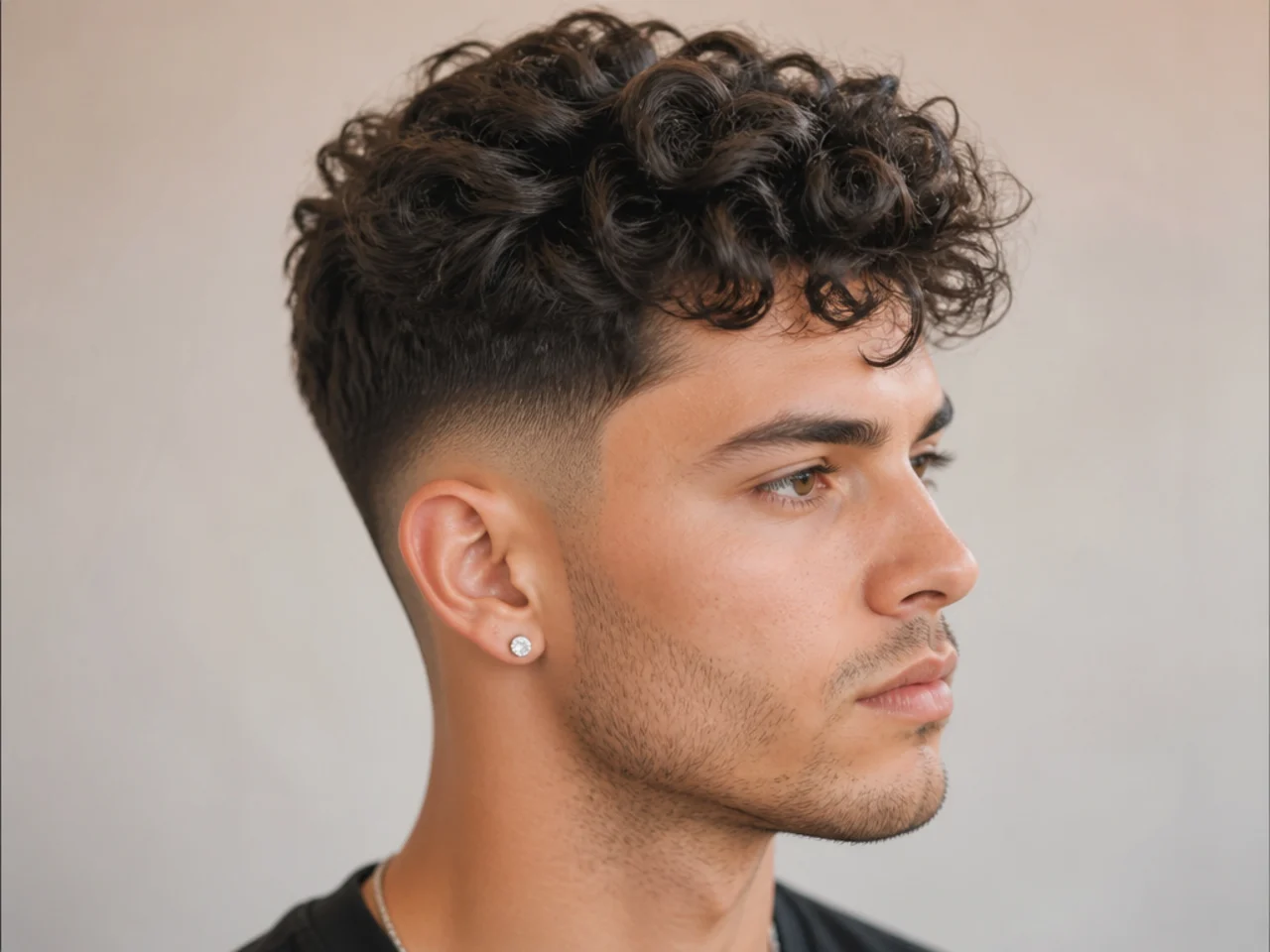
A mid skin fade with a textured crop is a different cut than a mid skin fade with a slick back. Tell your barber the top plan before the clippers come out — otherwise the fade might be sized for a look you're not going for. Bring a photo whose hair type matches yours, not just one you like.
Be Honest About Your Maintenance
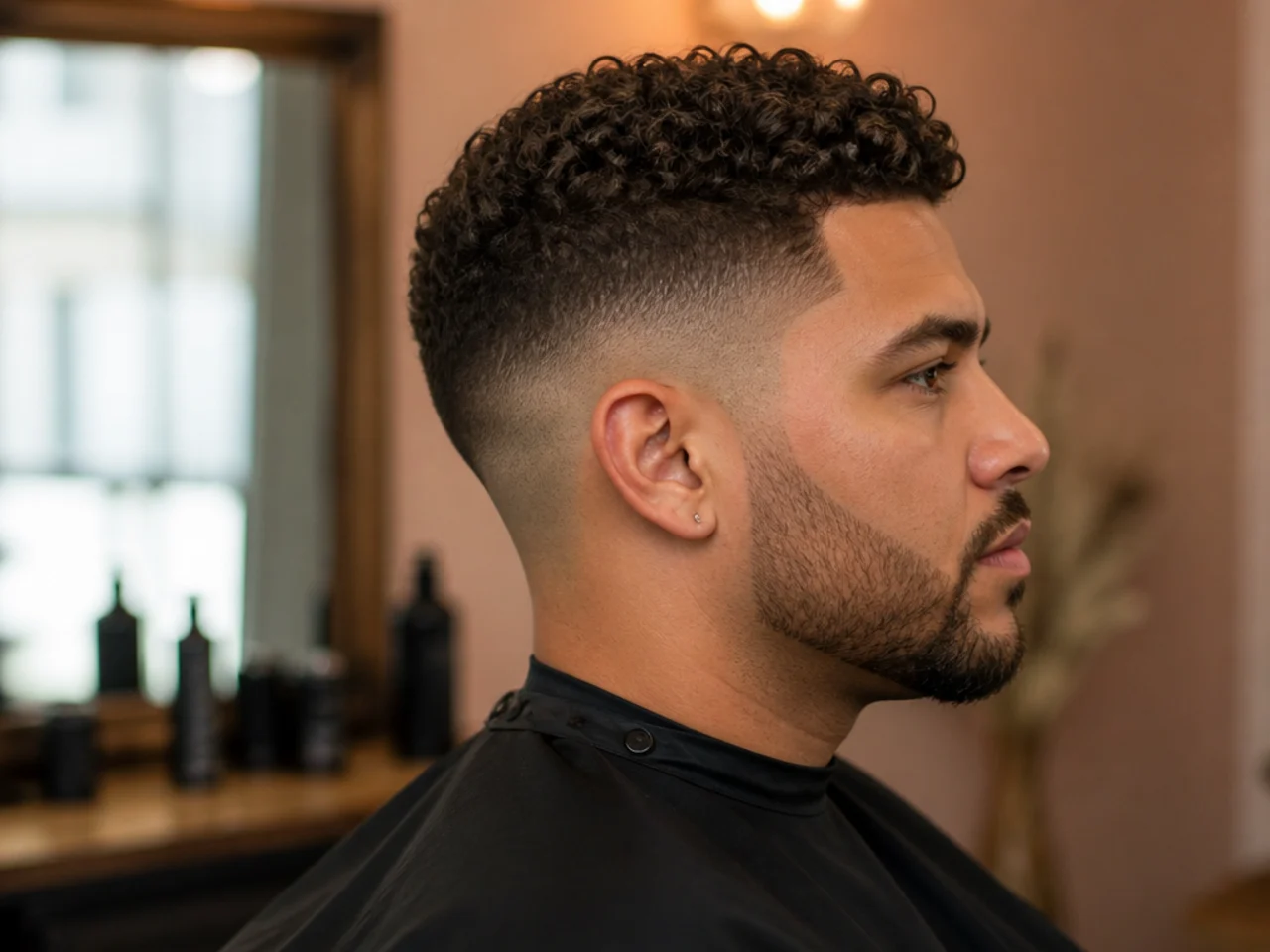
If you book haircuts every six weeks, don't ask for a mid skin fade — you'll spend four of those weeks looking overgrown. Match the cut to your rhythm. Every 10 to 14 days: skin fade. Every 2 to 3 weeks: drop or burst. Every 4 to 5 weeks: taper. Every six weeks or more: low fade or undercut fade.
Don't Use Barber Talk
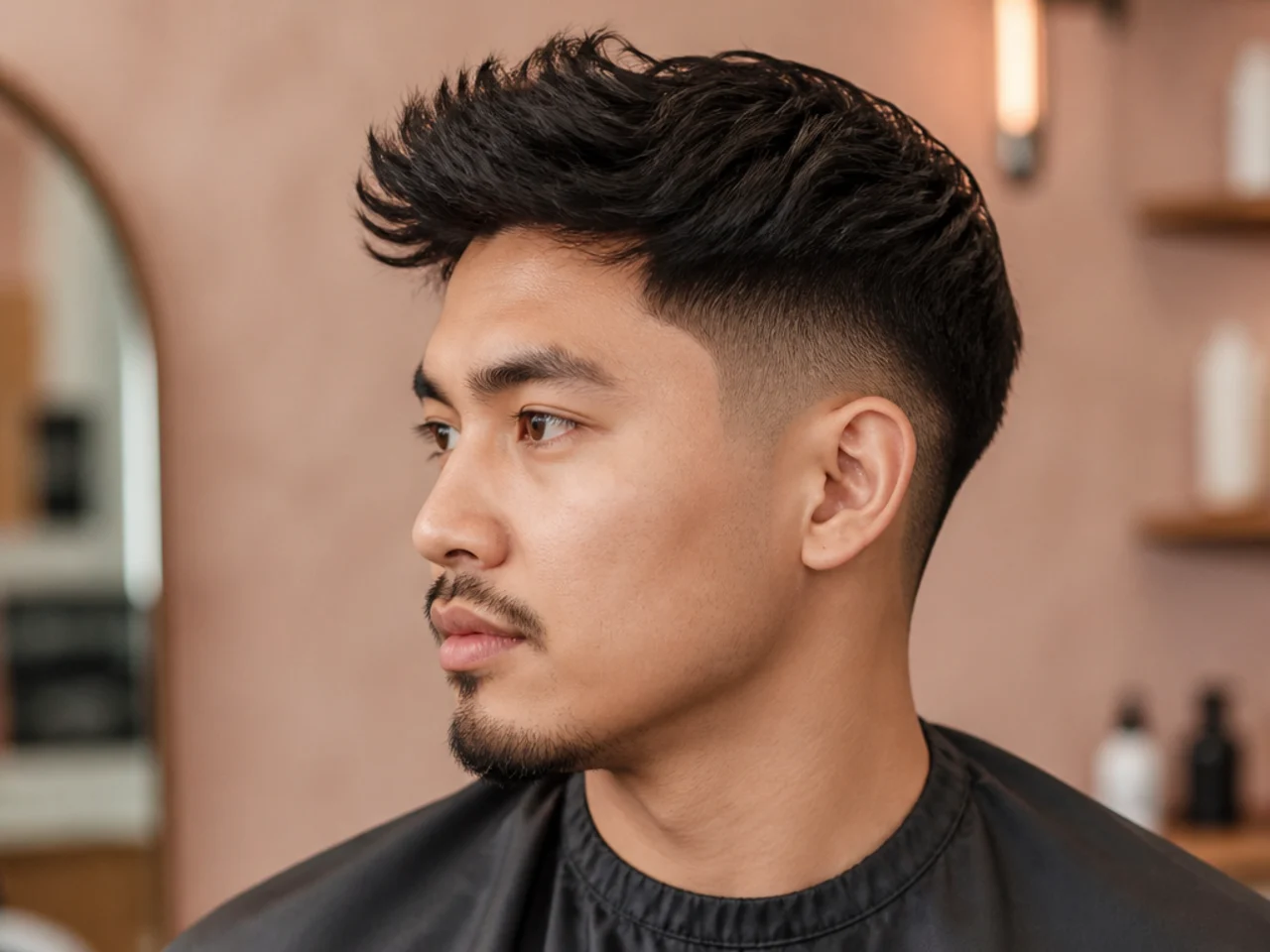
The guys who get the worst haircuts are the ones who use jargon they don't fully understand. Skip the terminology. Say the height (mid), the finish (skin or taper), the top length (in inches), and the vibe you're after. Let the barber translate that into technique.
How Often To Get A Mid Fade
Fades grow out at the same rate as any other cut — about half an inch a month — but the clean transition line is the first thing to blur. What looked razor-sharp on day one reads fuzzy by day fifteen. Timing your visits matters more than for any other men's haircut.
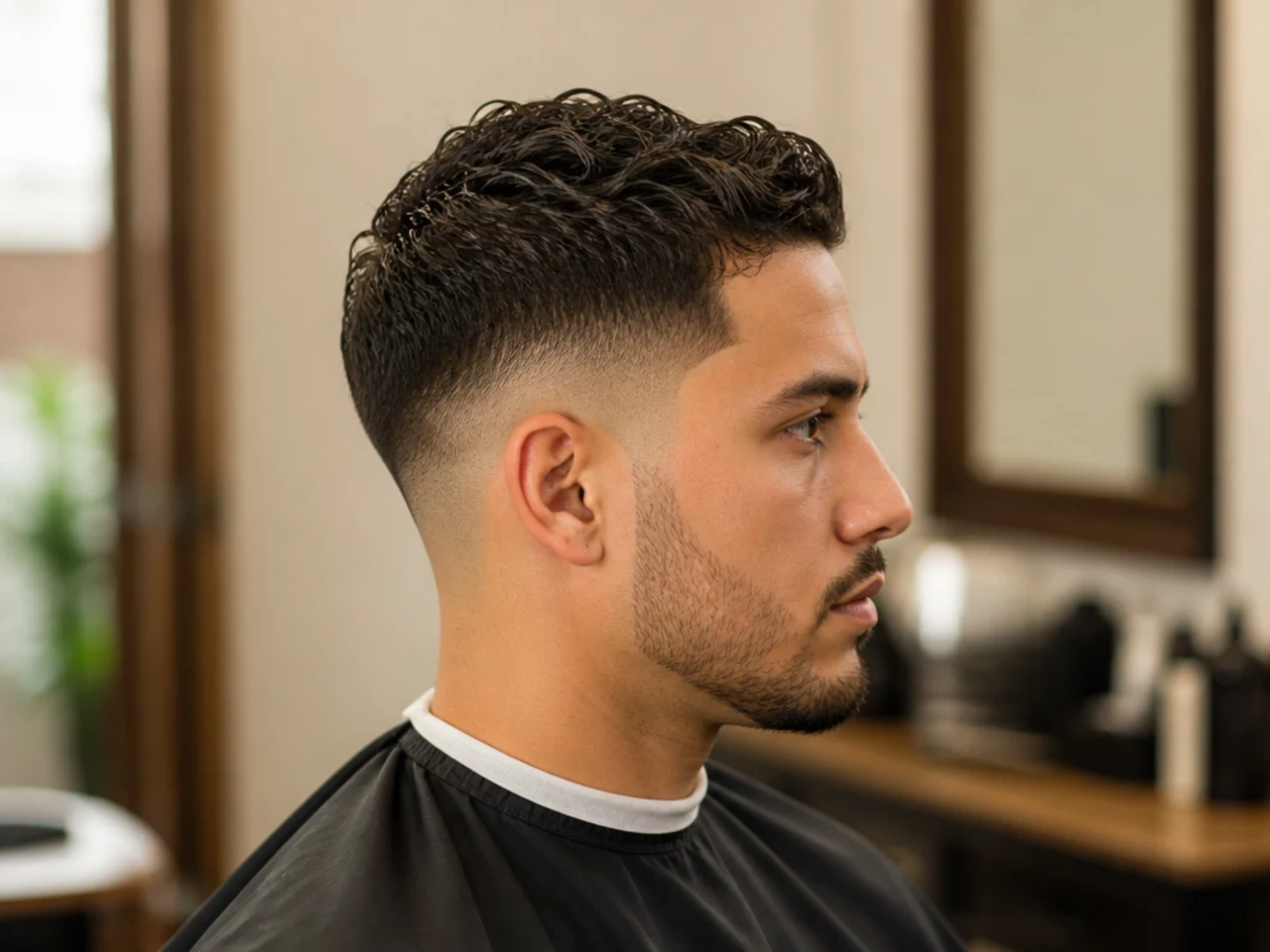
Cut Cadence by Variation
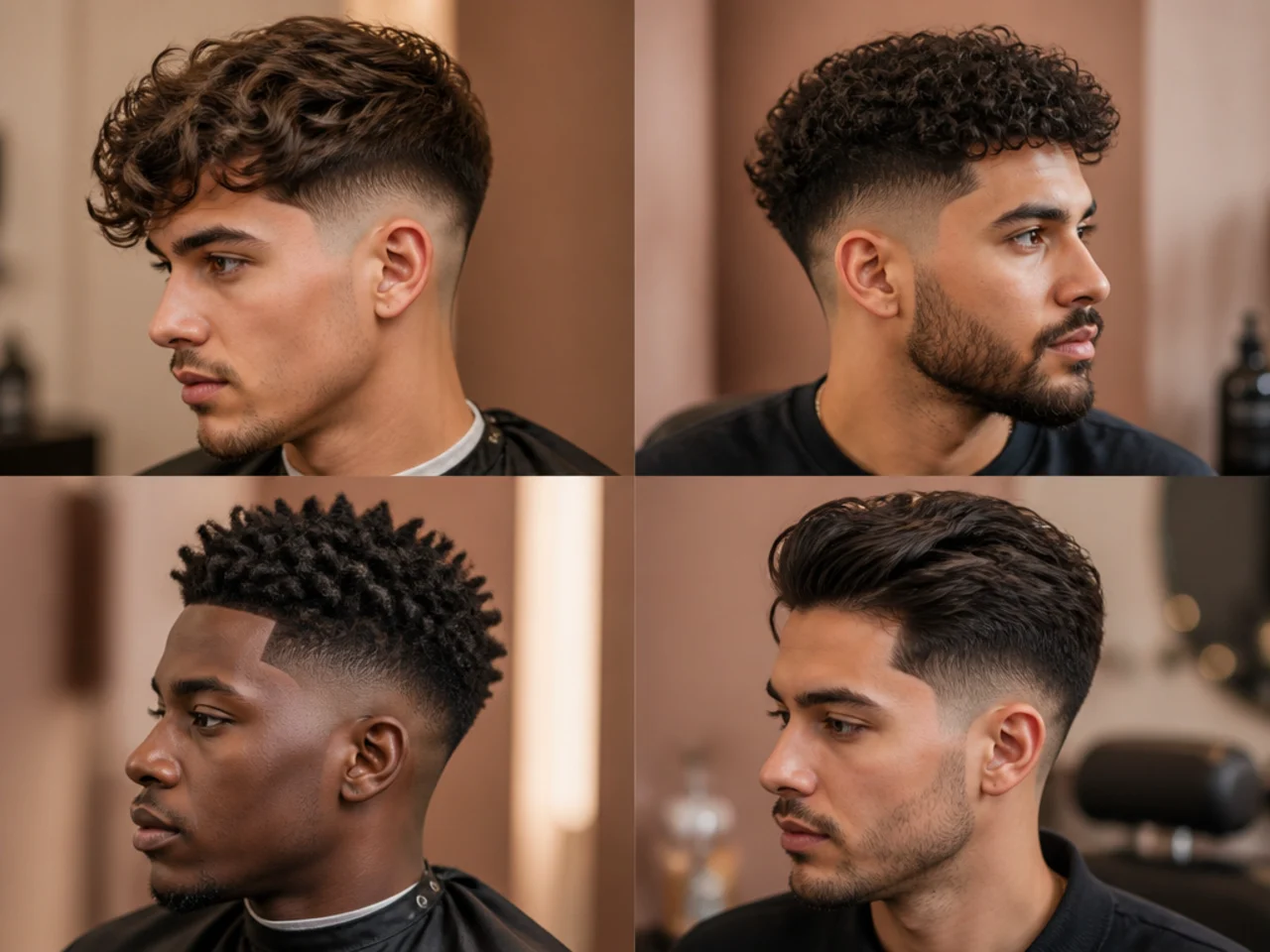
- Mid Skin Fade — every 10 to 14 days.
- Mid Drop or Burst Fade — every 2 to 3 weeks.
- Mid Taper (not skin) — every 4 to 5 weeks.
- Mid Fade with Buzz Top — every 2 to 3 weeks for the whole cut.
- Mid Fade with Longer Top — the fade needs cleaning up before the top does; book a fade-only visit at week 3, full cut at week 6.
The Math Most Guys Get Wrong
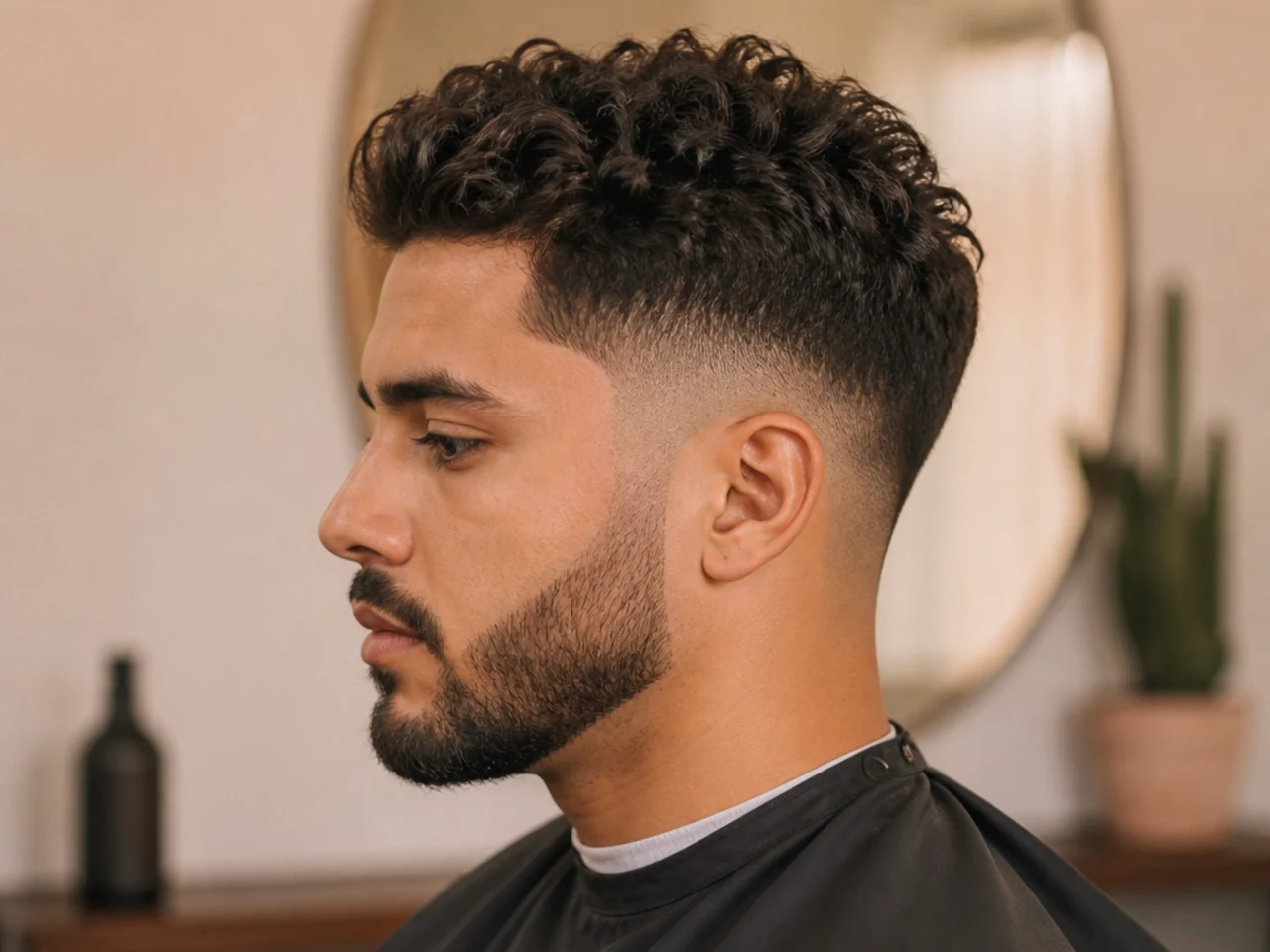
A mid skin fade is sharp for 10 days, acceptable for 14, and tired by 21. If your calendar only allows a haircut every six weeks, don't book a skin fade — you'll spend most of the time looking like you missed an appointment. Either match your calendar to the cut, or match the cut to your calendar. Splitting the difference doesn't work.
Touch-Up Visits
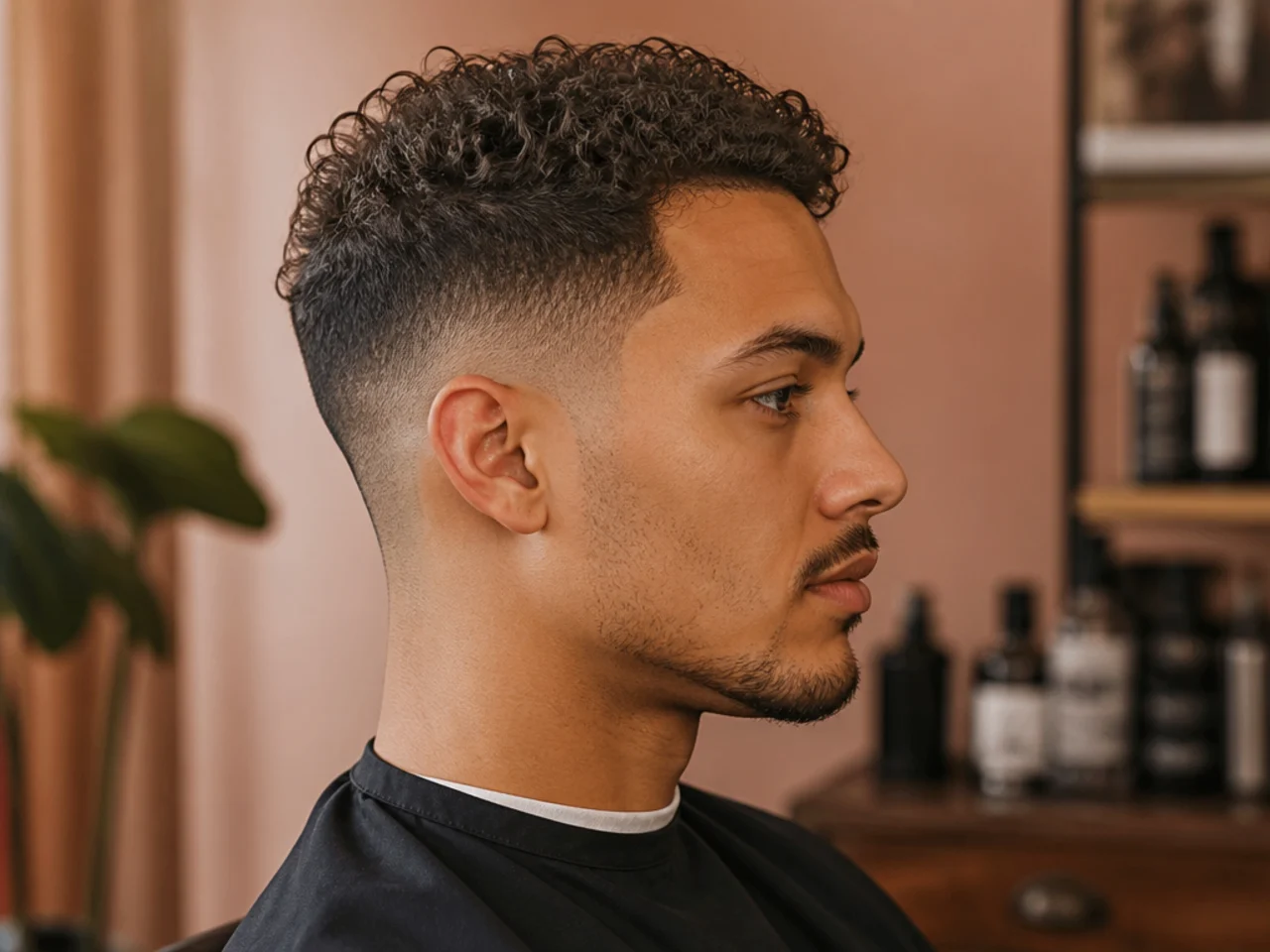
Most shops offer a fade-only touch-up between full cuts — usually $15 to $20 and 15 minutes in the chair. It cleans up the fade line and neckline without recutting the top. If you love a mid skin fade but can't afford a full cut every two weeks, book a full cut every four weeks and a touch-up in the middle.
Schedule Around Events
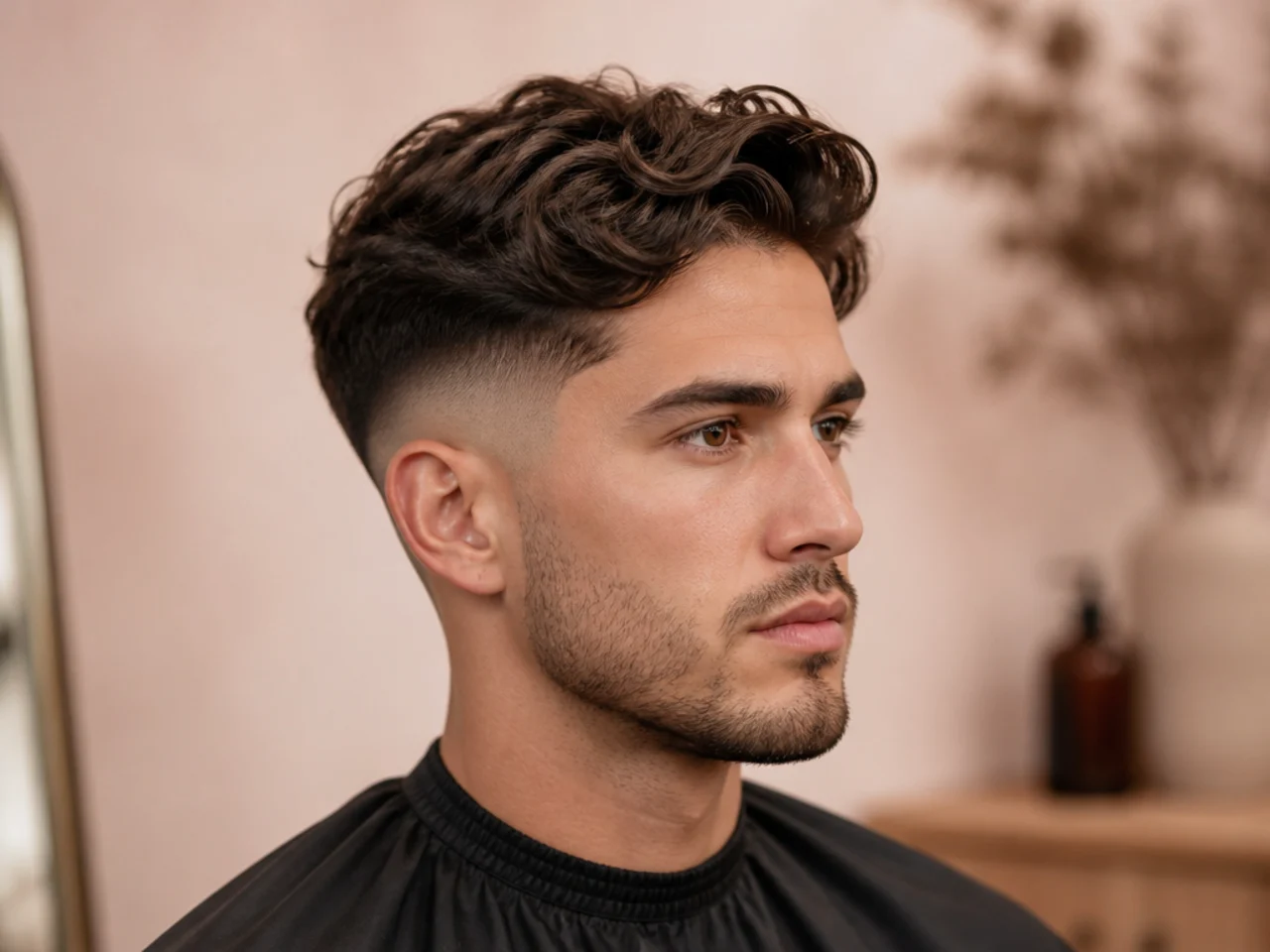
Weddings, interviews, headshots: book five to seven days before the event, not the day before. Fresh cuts look overly sharp; a five-day fade looks lived-in and photographs better. If the event is a milestone photo you'll look at forever, aim for that day-five window.
How To Style A Mid Fade
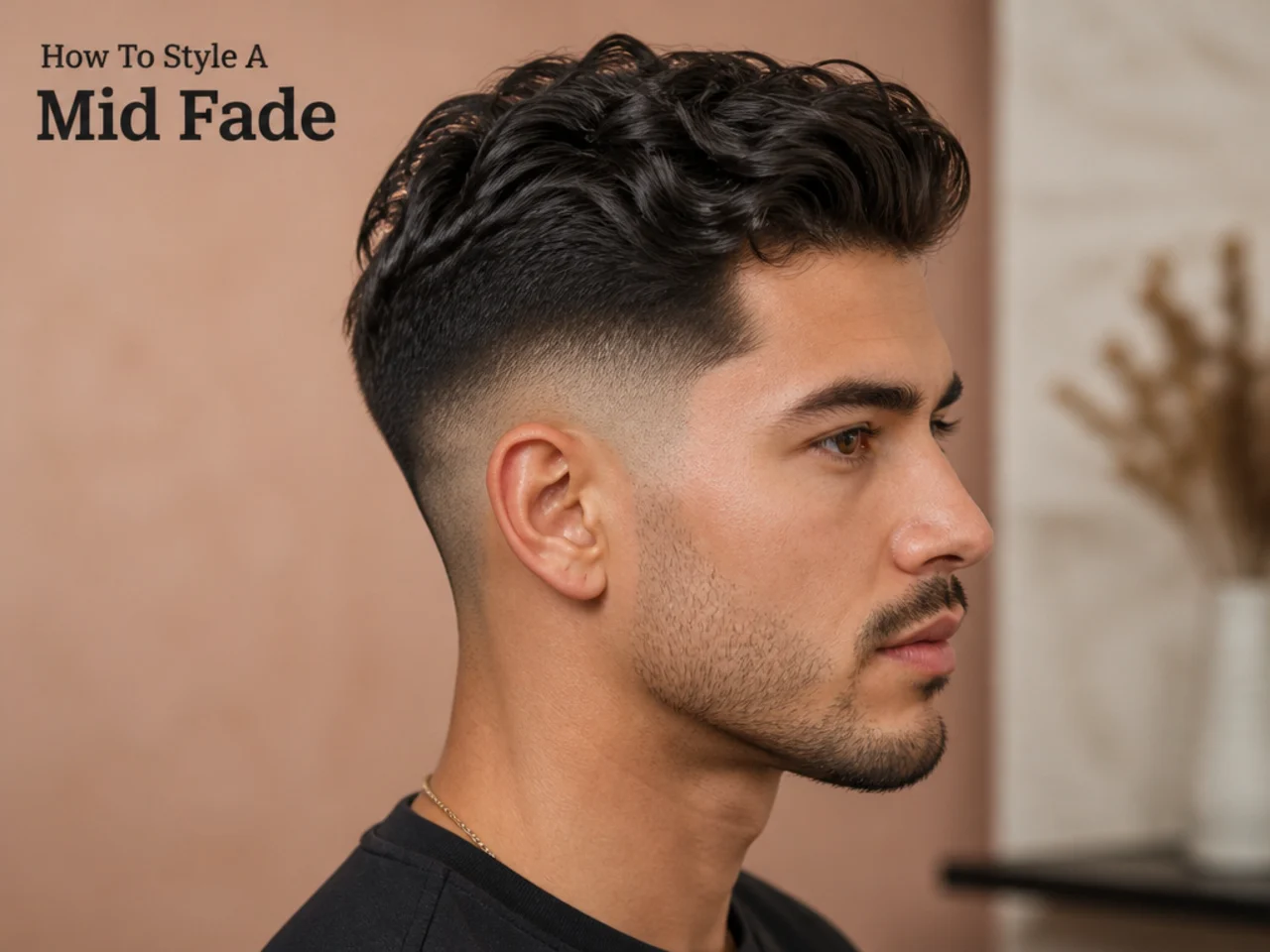
The Everyday Routine
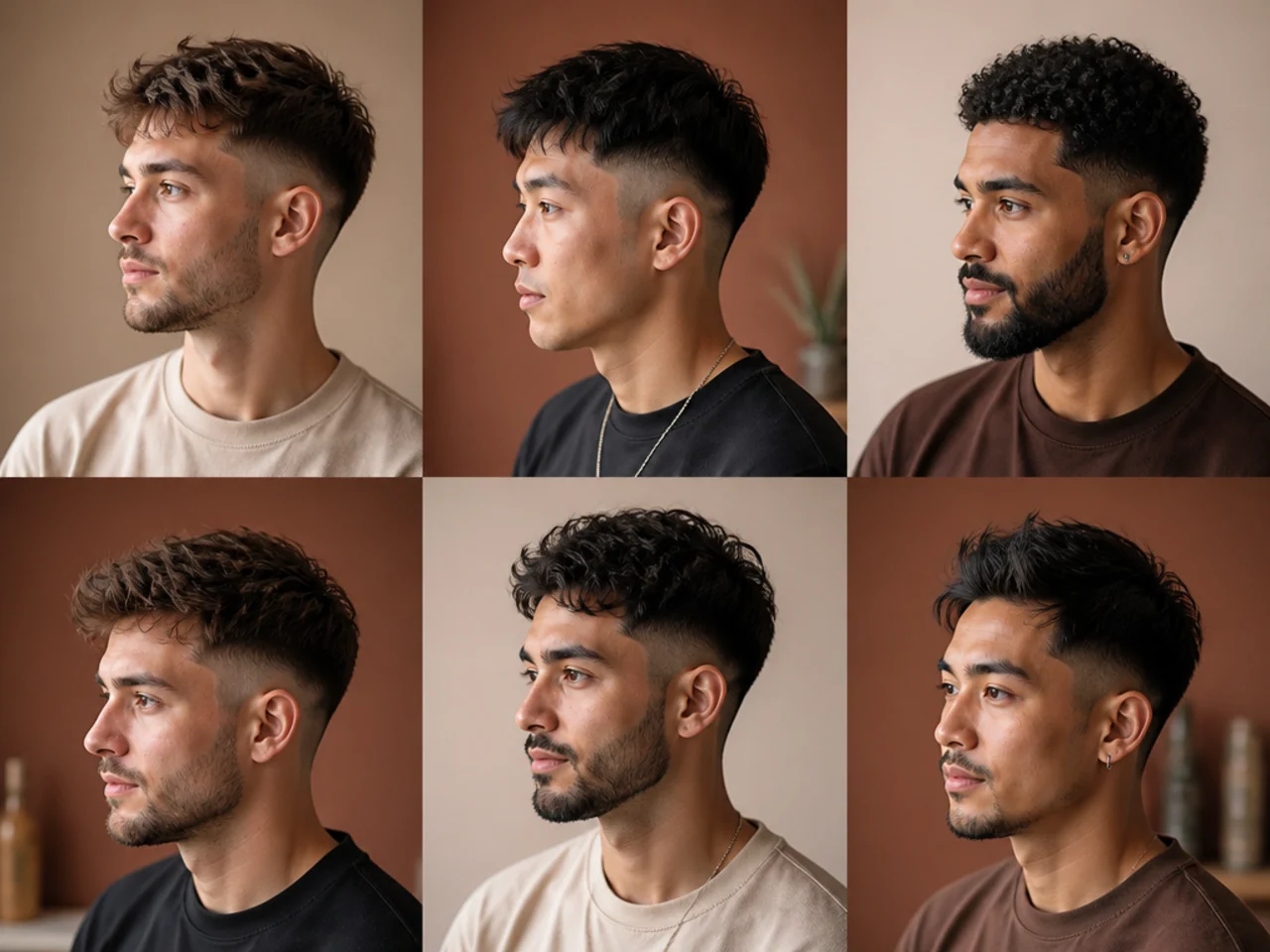
Wash. Towel-dry until just damp. Warm a nickel-sized amount of product between your palms. Work it through the top from roots to tips. Style with fingers, a comb, or a brush depending on the shape you want. Done — under three minutes for anything shorter than a comb-over.
Product by Top Style
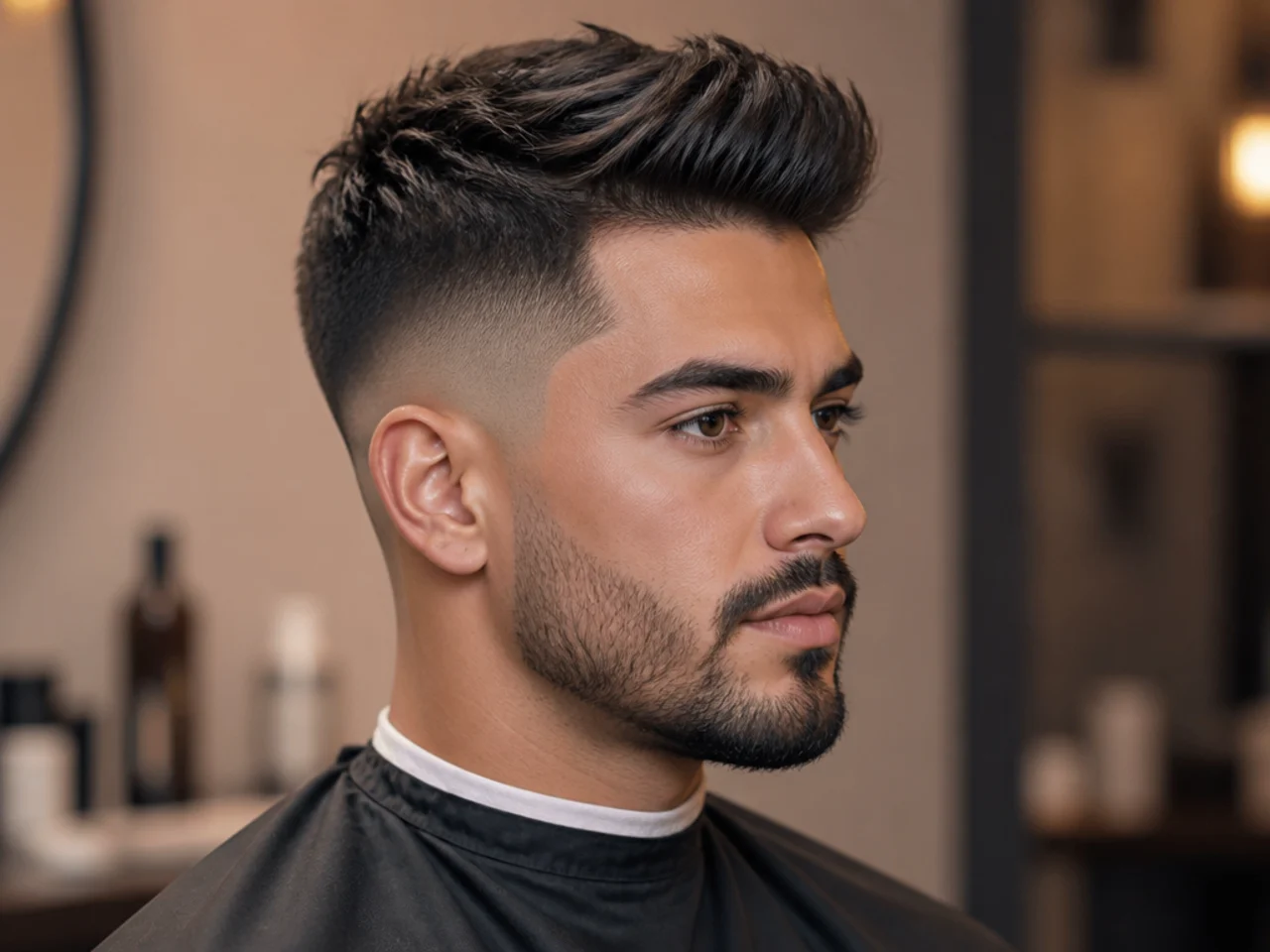
- Short cuts (buzz, crew, Caesar) — matte clay, pea-sized amount, fingers only. Very short buzz cuts often need no product at all.
- Medium cuts (textured crop, brushed back, comb-over) — matte clay or paste. Blow-dry first for extra height.
- Curly cuts (broccoli, curly fringe) — curl cream on soaking-wet hair. Diffuse or air-dry. Never brush dry.
- Slicked cuts (slick back, side part) — pomade with shine, applied to damp hair, combed with a fine-toothed comb.
Keep the Faded Skin Clean
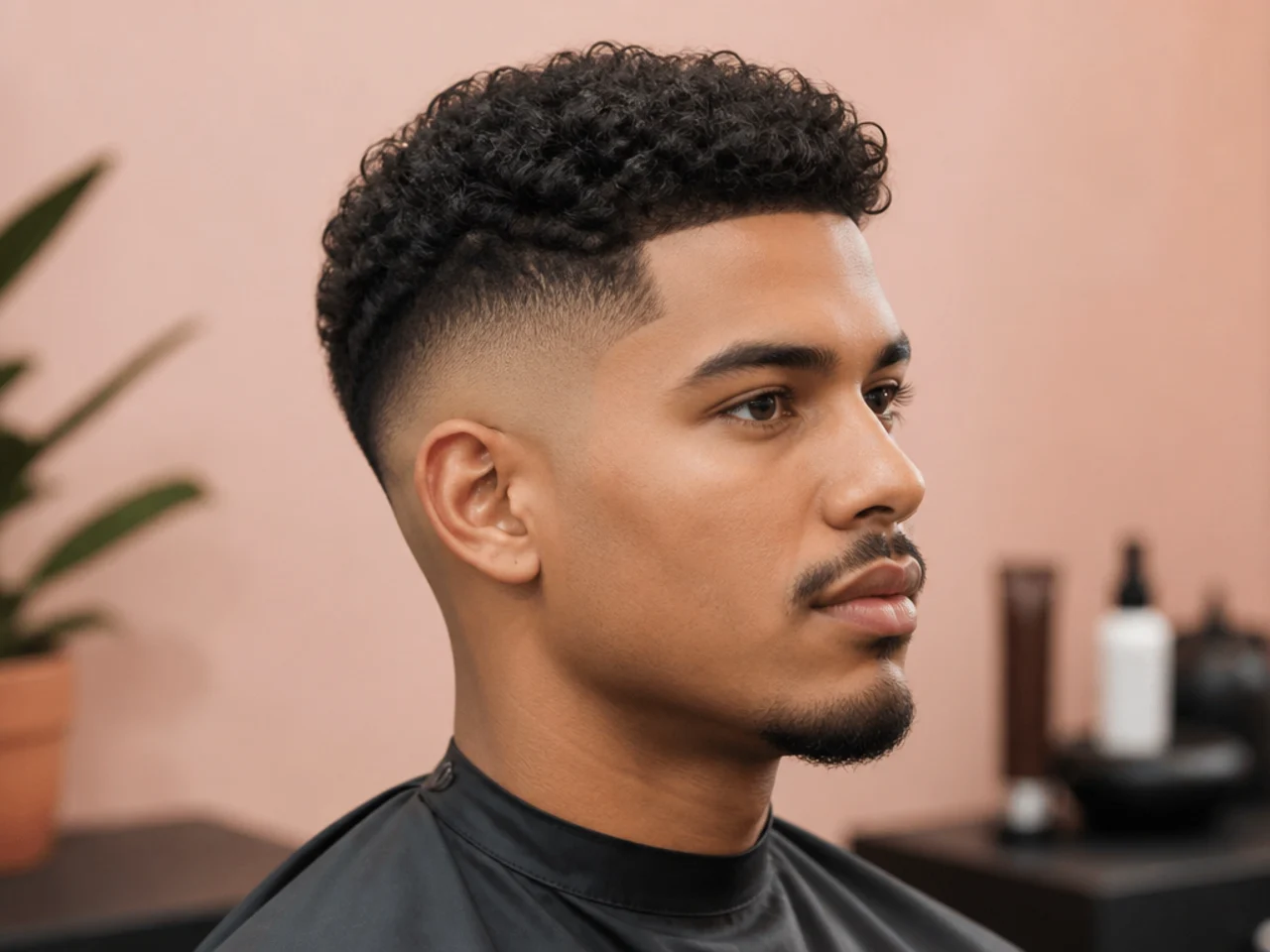
If you have a mid skin fade, rinse the faded panels daily in the shower and pat dry with a clean towel — this prevents the ingrown hairs and razor bumps that make a fresh fade itchy by day four. Takes thirty seconds. Big difference.
Match the Beard
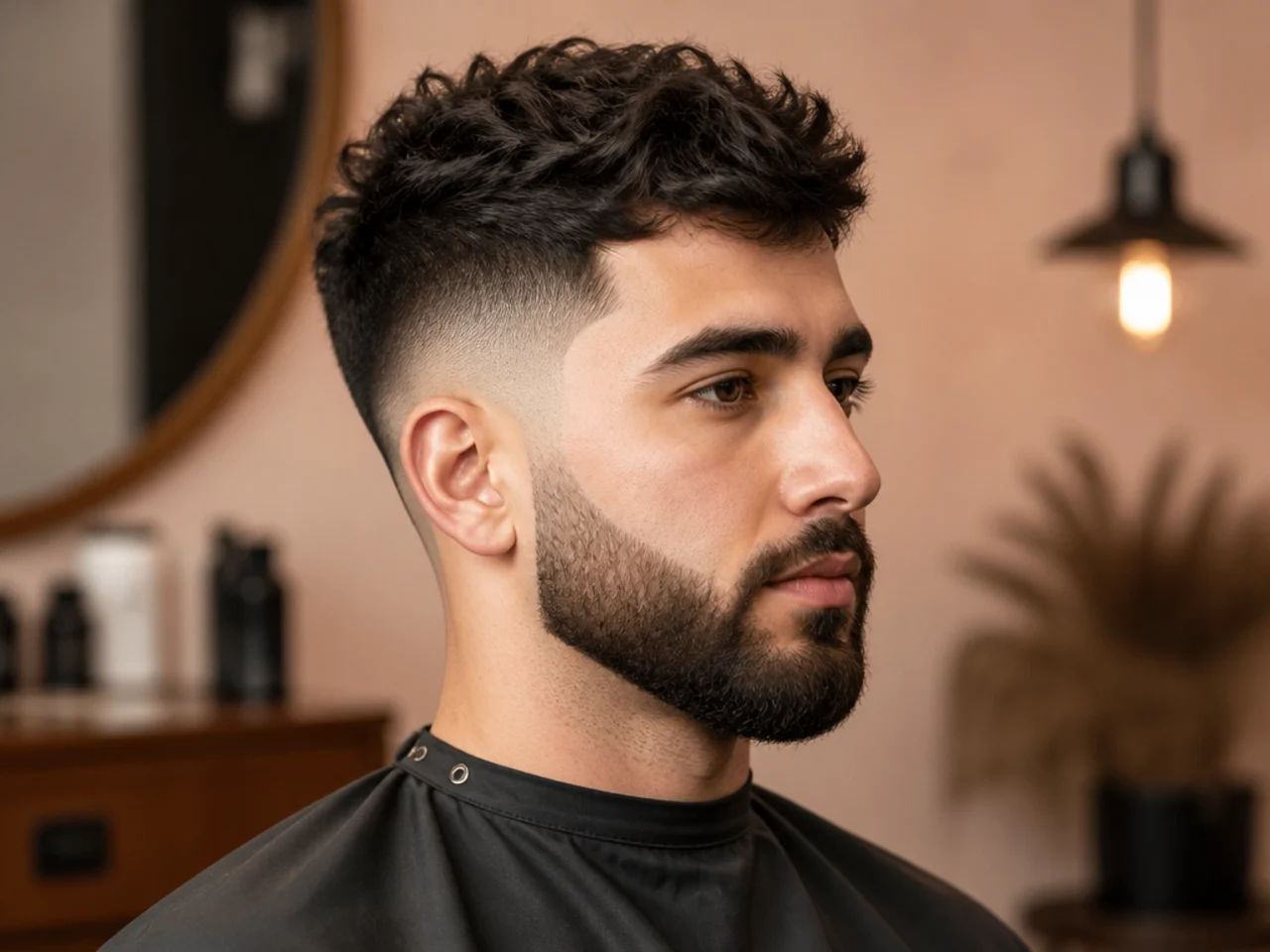
The beard is part of the haircut. A crisp mid fade with an overgrown beard looks accidental; a crisp fade with a matched beard looks intentional. Ask your barber to trim both in the same visit and to blend the sideburn into the fade line so the transition is seamless.
Common Mid Fade Mistakes to Avoid
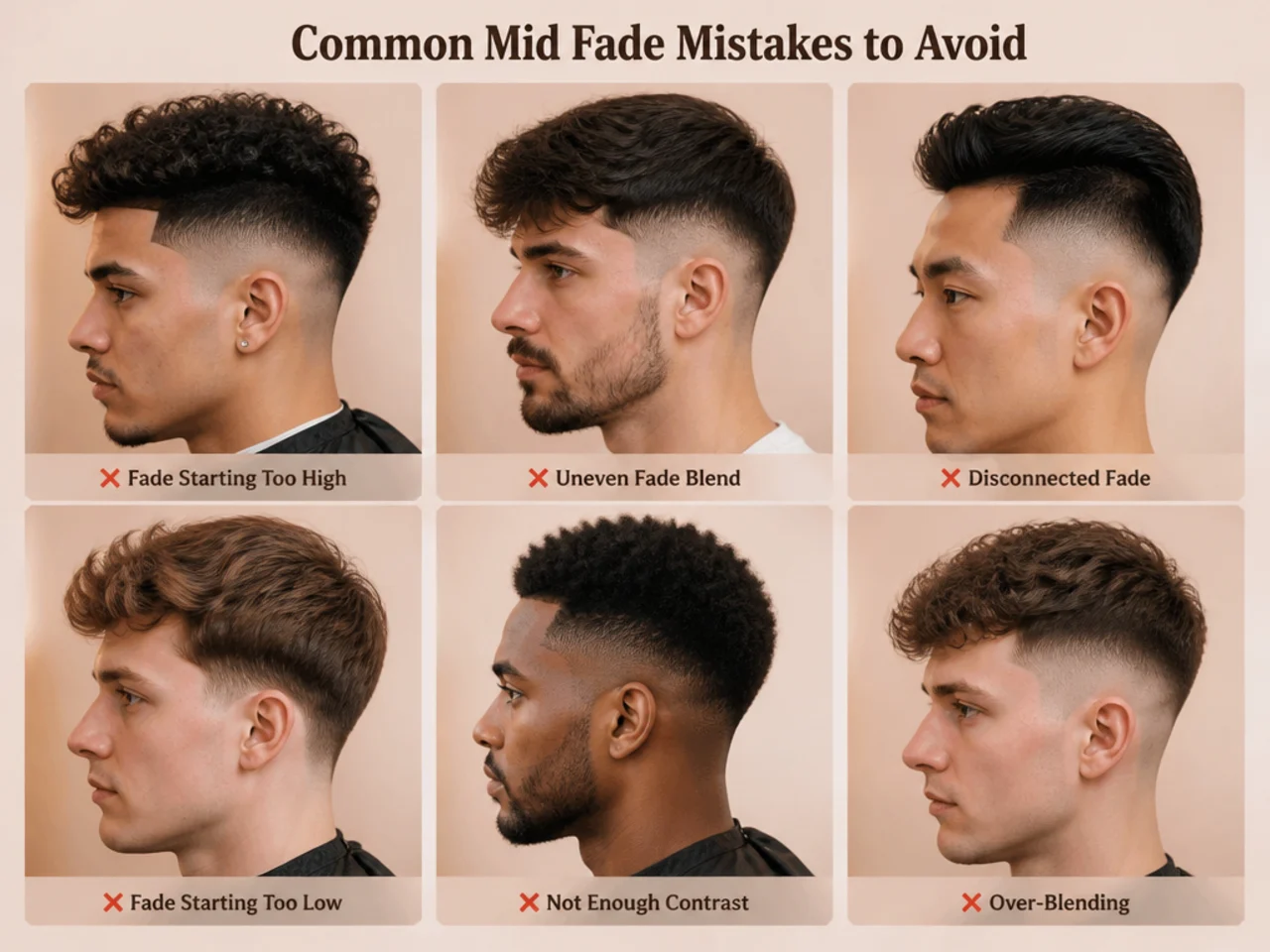
Seven mistakes I see over and over. All easy to prevent.
Letting a Mid Skin Fade Grow Too Long
The whole point of a skin fade is contrast. By week four the contrast is gone and you're wearing an unmemorable short cut. Either book on time or ask for a taper instead.
Skipping the Line Up
The clean line at the forehead and temples is what makes a fade look designed rather than clipped. Skipping it saves five minutes and costs you the sharpness of a fresh cut. Always ask for it if the barber doesn't do it automatically.
Pairing the Wrong Top with the Fade
A sharp mid skin fade with messy, unstyled hair on top looks half-finished. If you're not willing to style the top, ask for a taper instead — it forgives a messier finish.
Trying Touch-Ups at Home
Fading is a learned skill that takes barbers years to master. A home touch-up almost always creates a divot or a hard line that then needs to be cut around for the next six weeks. Rinse the panels clean; leave the blending to your barber.
Using the Wrong Reference Photo
A mid fade on a guy with 3C curls looks nothing like a mid fade on straight fine hair. Pick a reference photo whose hair texture and density match yours. Aspiration is fine for the vibe; it's not fine for the physics.
Asking for a Shorter Cut
"Just go a bit shorter" is how you end up growing out a mistake for six weeks. Hair grows about half an inch a month. If you want it a little shorter next time, ask for one guard down — not two.
Ignoring Your Beard
A fresh mid fade next to an unkempt beard is like a new suit with muddy shoes. Trim both in the same visit, keep them proportional, and treat the beard as part of the haircut budget.
Conclusion
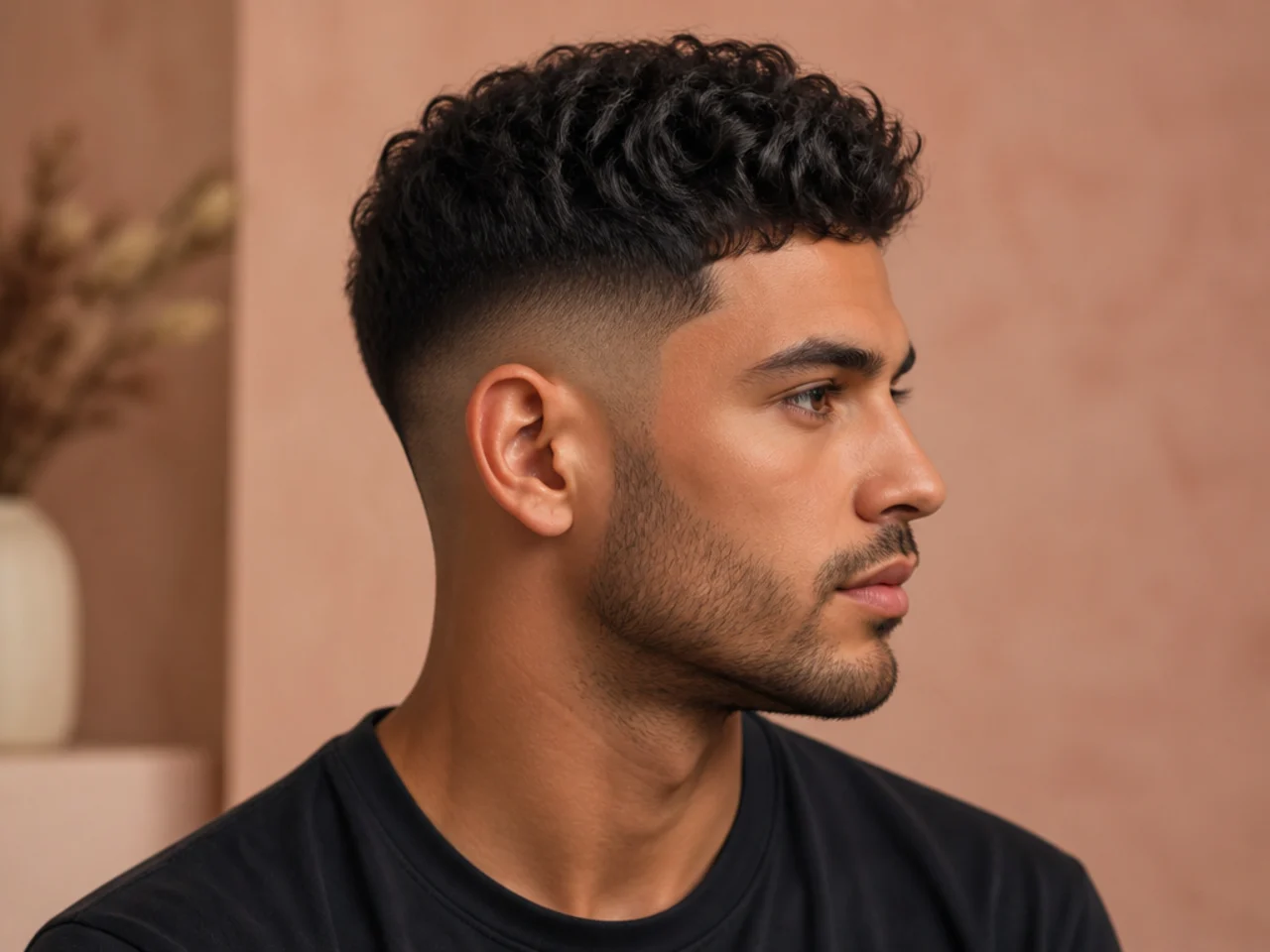
Pick your finish (taper or skin), pick your variation (straight, drop, burst, or temp), tell your barber what's happening on top, and book your next appointment before you leave the chair. That's the whole system. The mid fade is the most-requested cut in barbershops for a reason — it flatters almost everyone, adapts to almost any top style, and reads sharp without shouting. Show up with a photo, keep the beard in the mix, and rinse the skin daily. Done.
FAQs
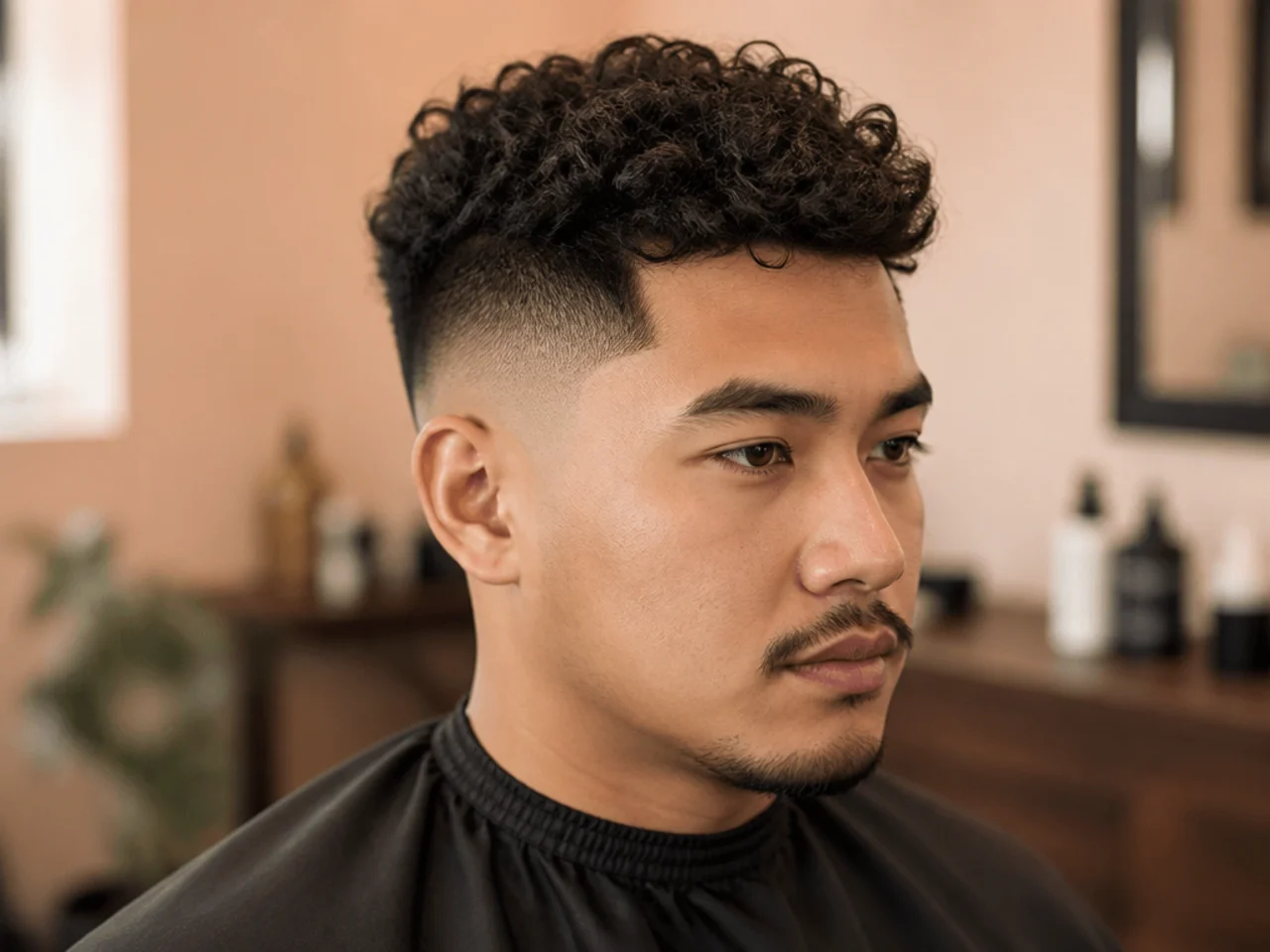
How often should I get a mid fade touched up? Mid skin fades need attention every 10 to 14 days. Mid taper or scissor-blended fades stretch to 4 to 5 weeks. The closer to skin, the shorter the cycle.
Can I get a mid fade with curly hair? Yes — it's one of the strongest pairings. Ask your barber to scissor-cut the top so the curl pattern is preserved. See the guide on curly hairstyles for men for more.
Is a mid fade professional? Yes. A mid fade with a comb-over, side part, or short slick back reads clean in any corporate setting, including finance and law. If you want the safest possible read, ask for a taper rather than skin.
What's a mid skin fade? A mid fade that finishes at bare skin at the shortest point rather than at a guard. Sharpest contrast, cleanest line, needs a touch-up every 10 to 14 days.
How long does a mid fade take to grow out? Noticeable growth by week 2 to 3, fully grown out by week 5 to 6. Skin fades appear to grow out fastest because the contrast fades first.
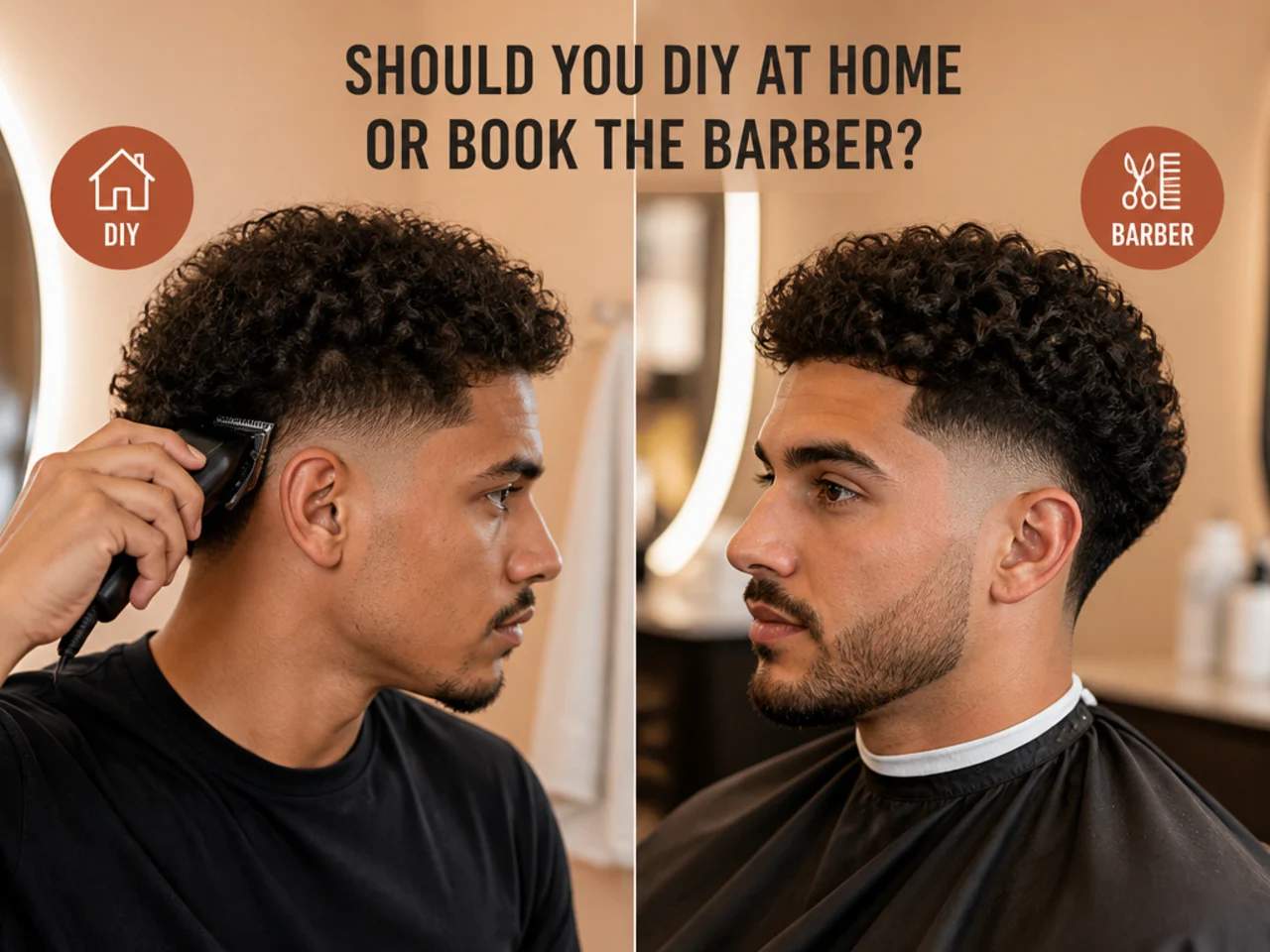
Can I cut a mid fade at home? No. Blending clipper guards is one of the hardest skills in barbering. Home attempts almost always leave a hard line that a barber then has to cut around at your next appointment.
Is a Skin Fade Haram?
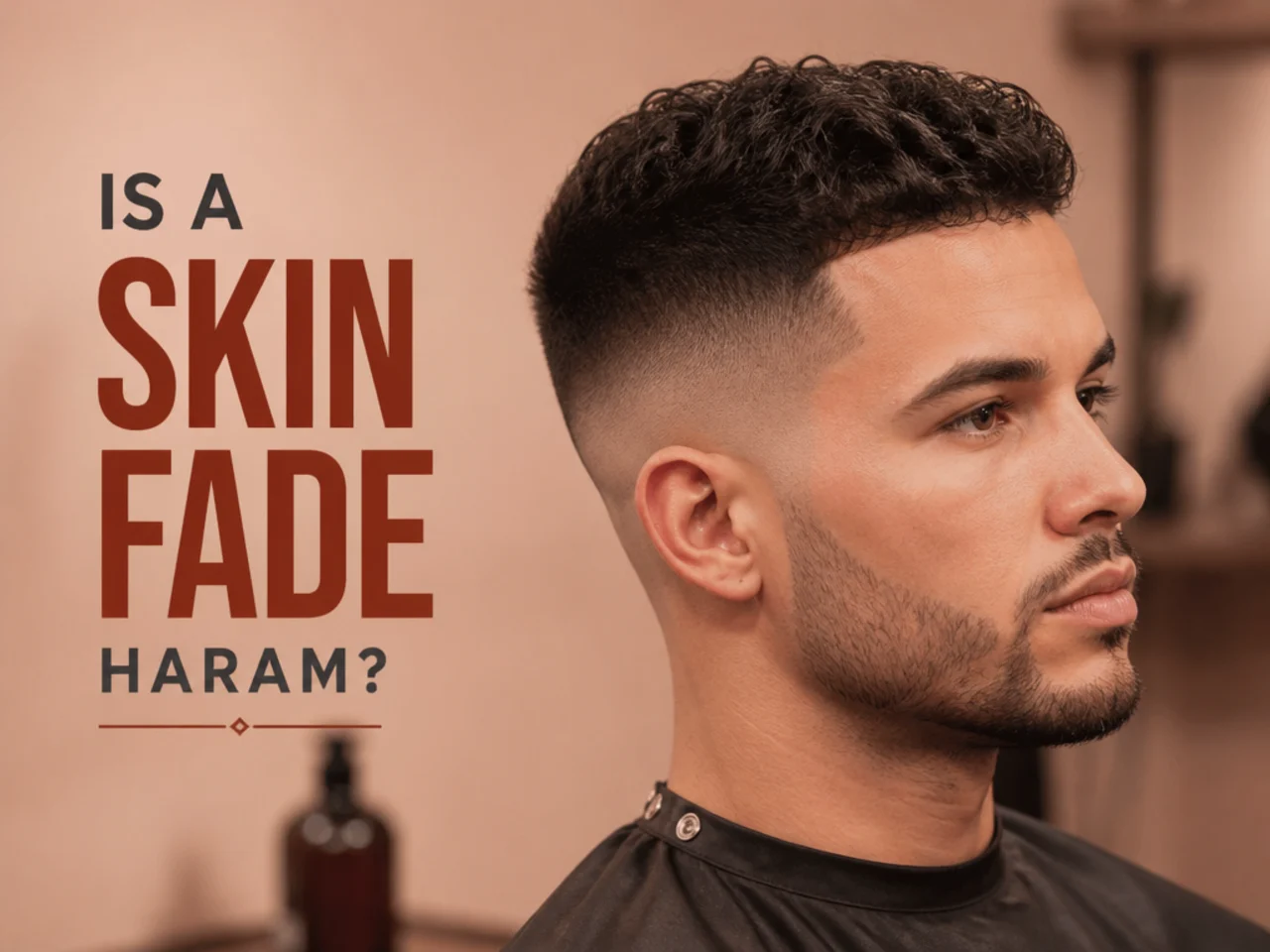
The haircut itself is not haram. Islamic guidance generally focuses on intent and whether a hairstyle imitates styles tied to sinful lifestyles or leads to arrogance. A clean mid skin fade paired with a neat top sits well within mainstream grooming norms.
What's Better, Mid-Fade or Taper?
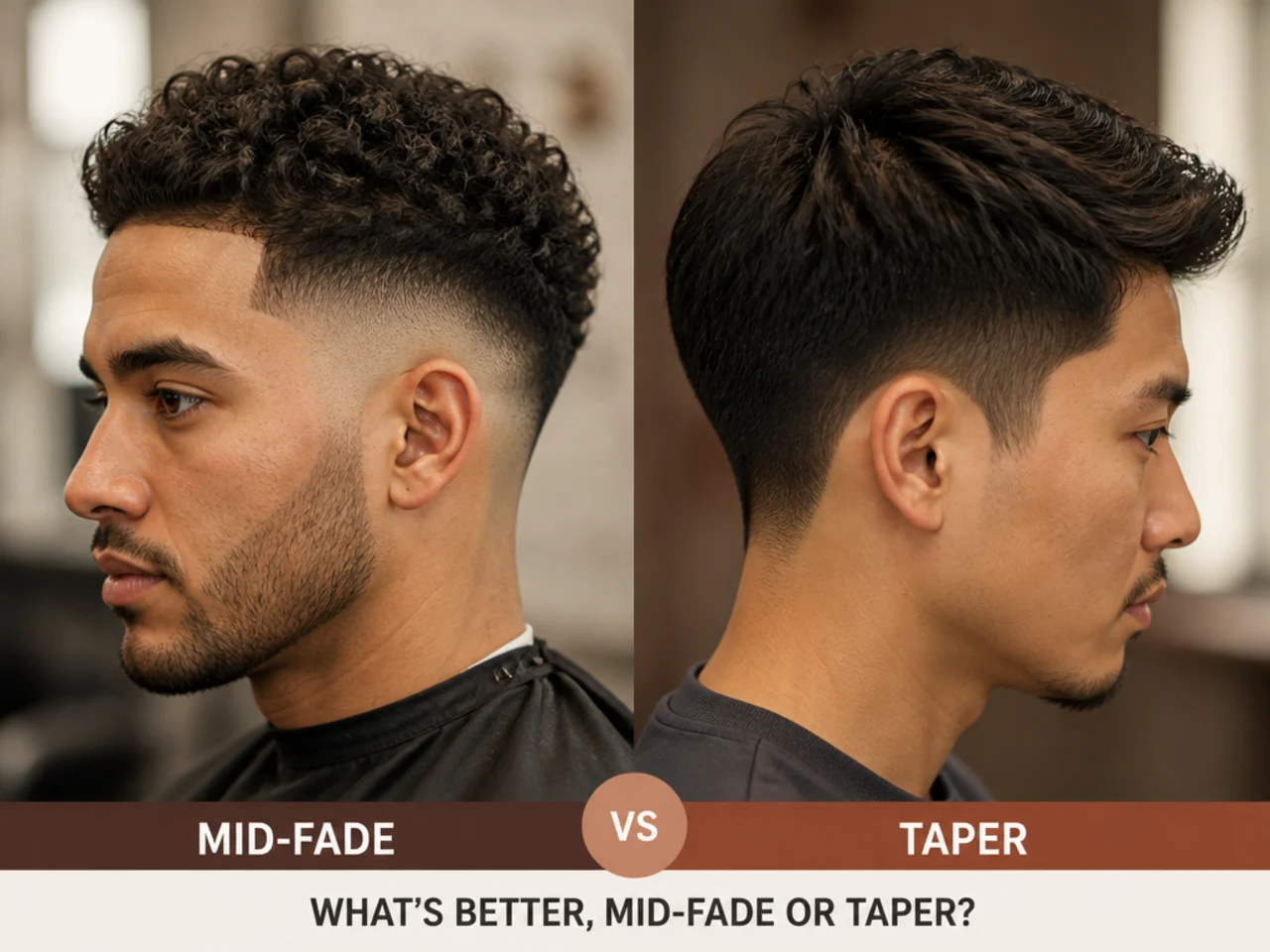
Neither is objectively better — it's a question of sharpness. A mid fade is more visible and modern; a taper is softer and more natural. If you want clean without loud, pick a mid taper. If you want the eye to notice the cut, go skin.
How Does an Army Cut Look?
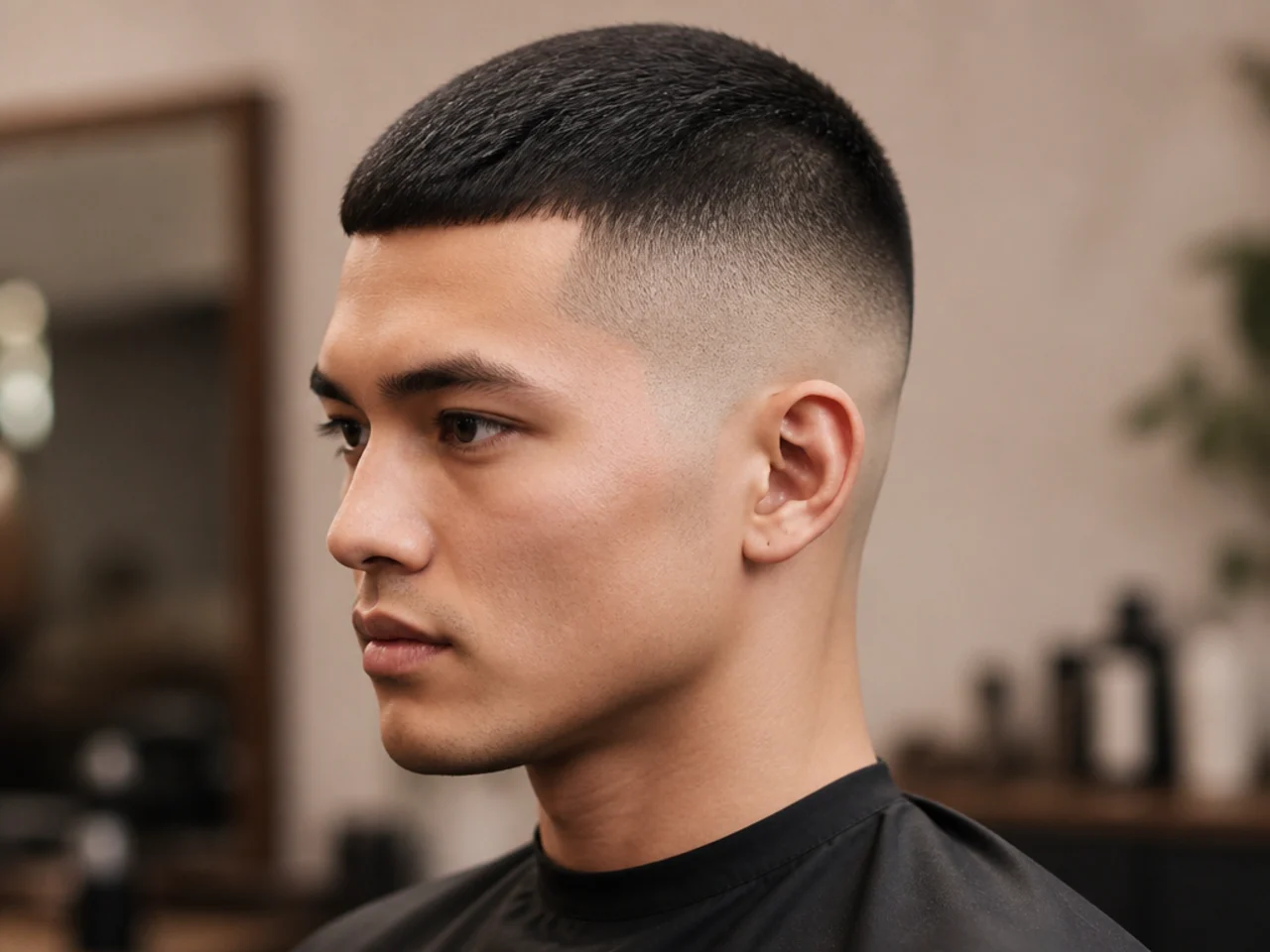
Clean, uniform, and easy — hair clipped to a single short length all over, sometimes with a faded transition at the sides. Reads as disciplined and professional. Good pick for guys who want zero styling time in the morning.