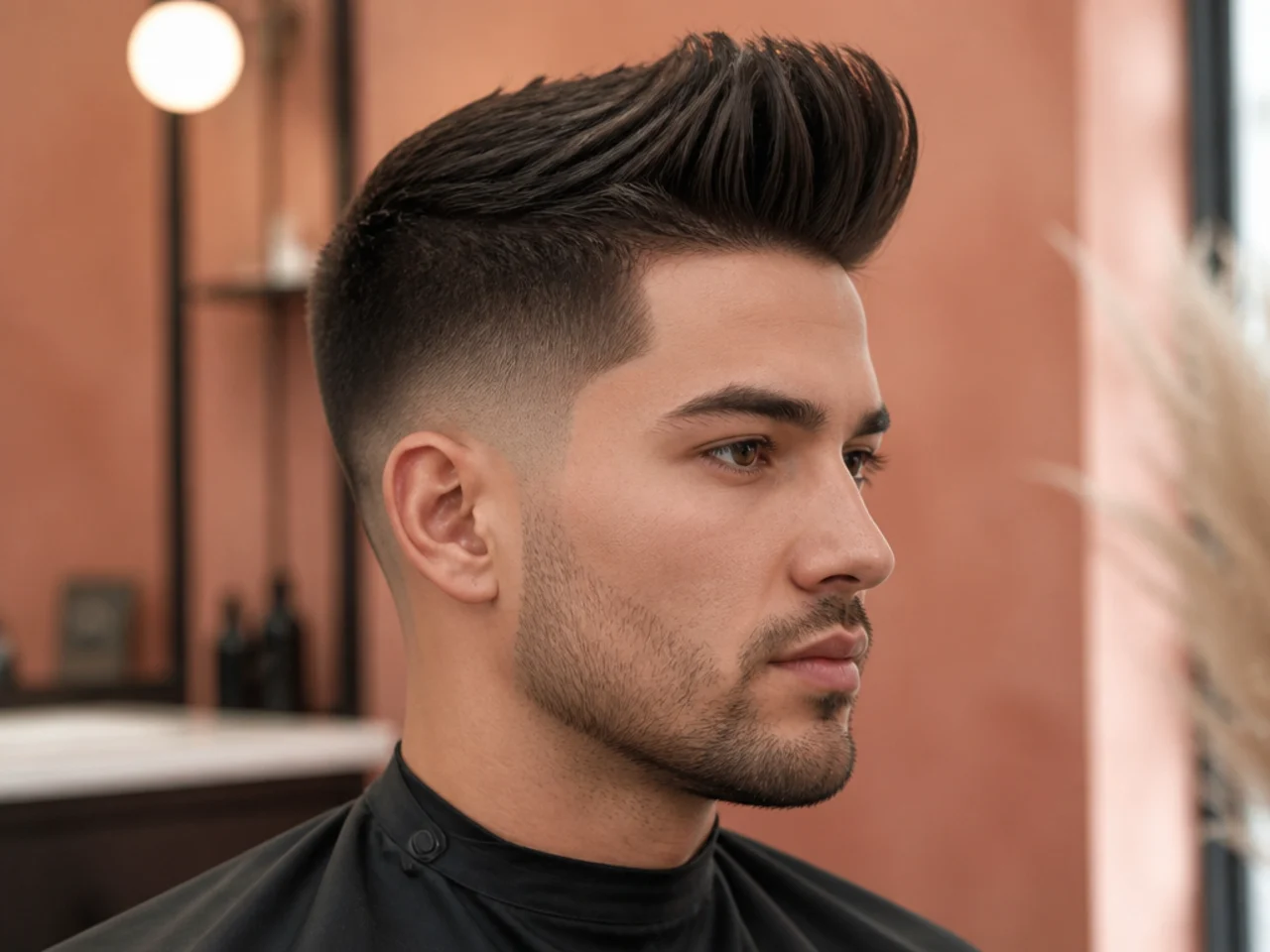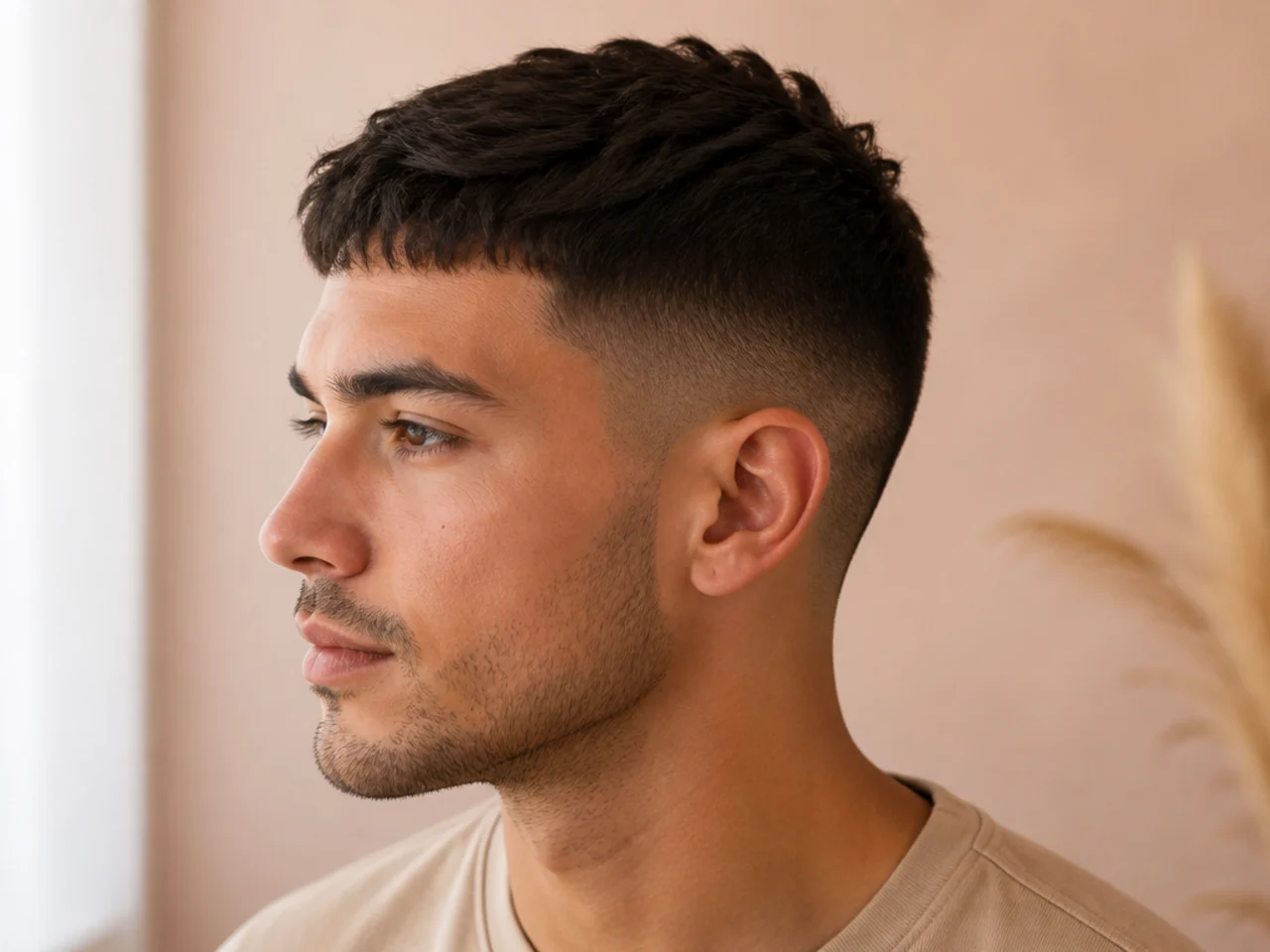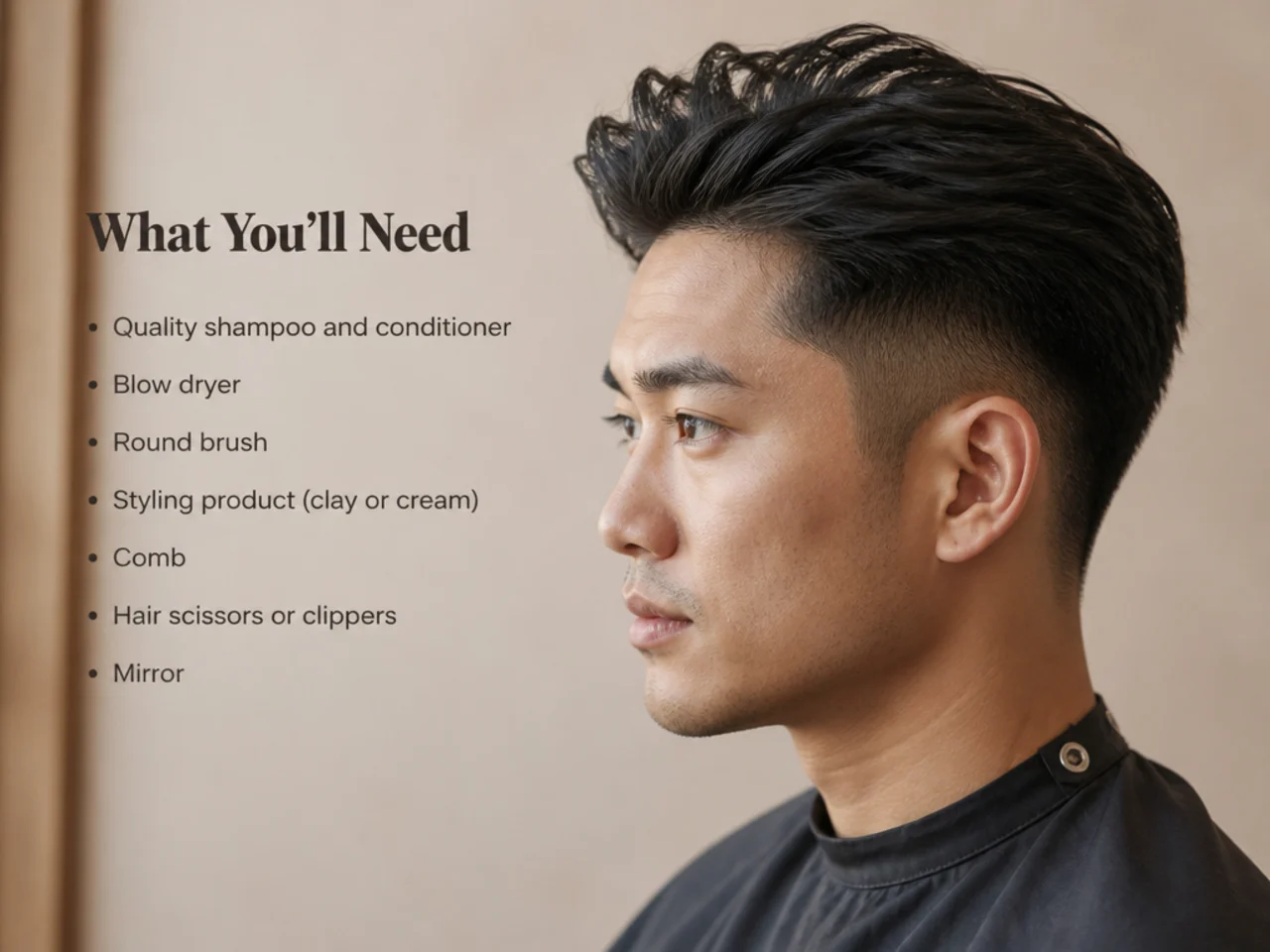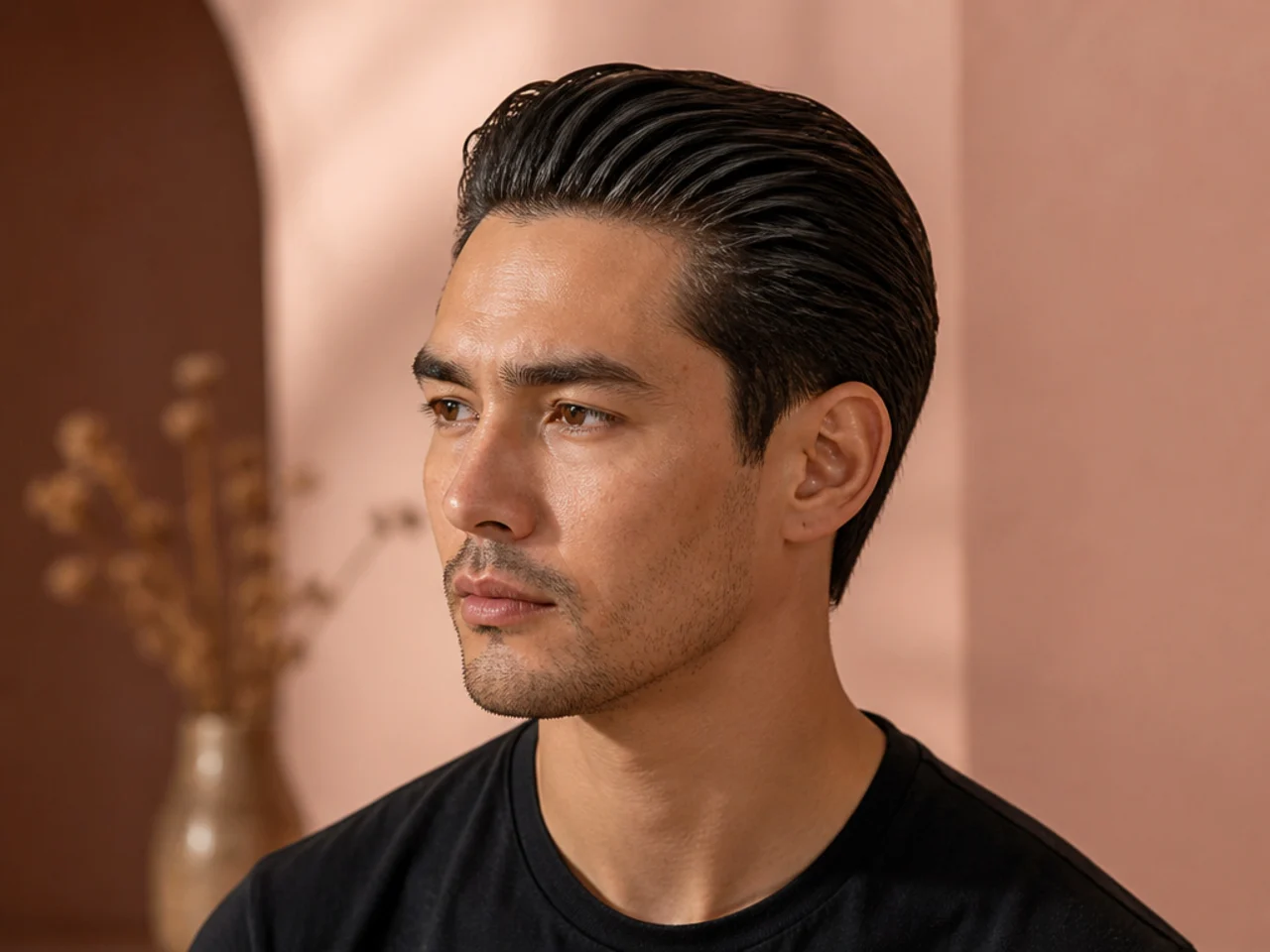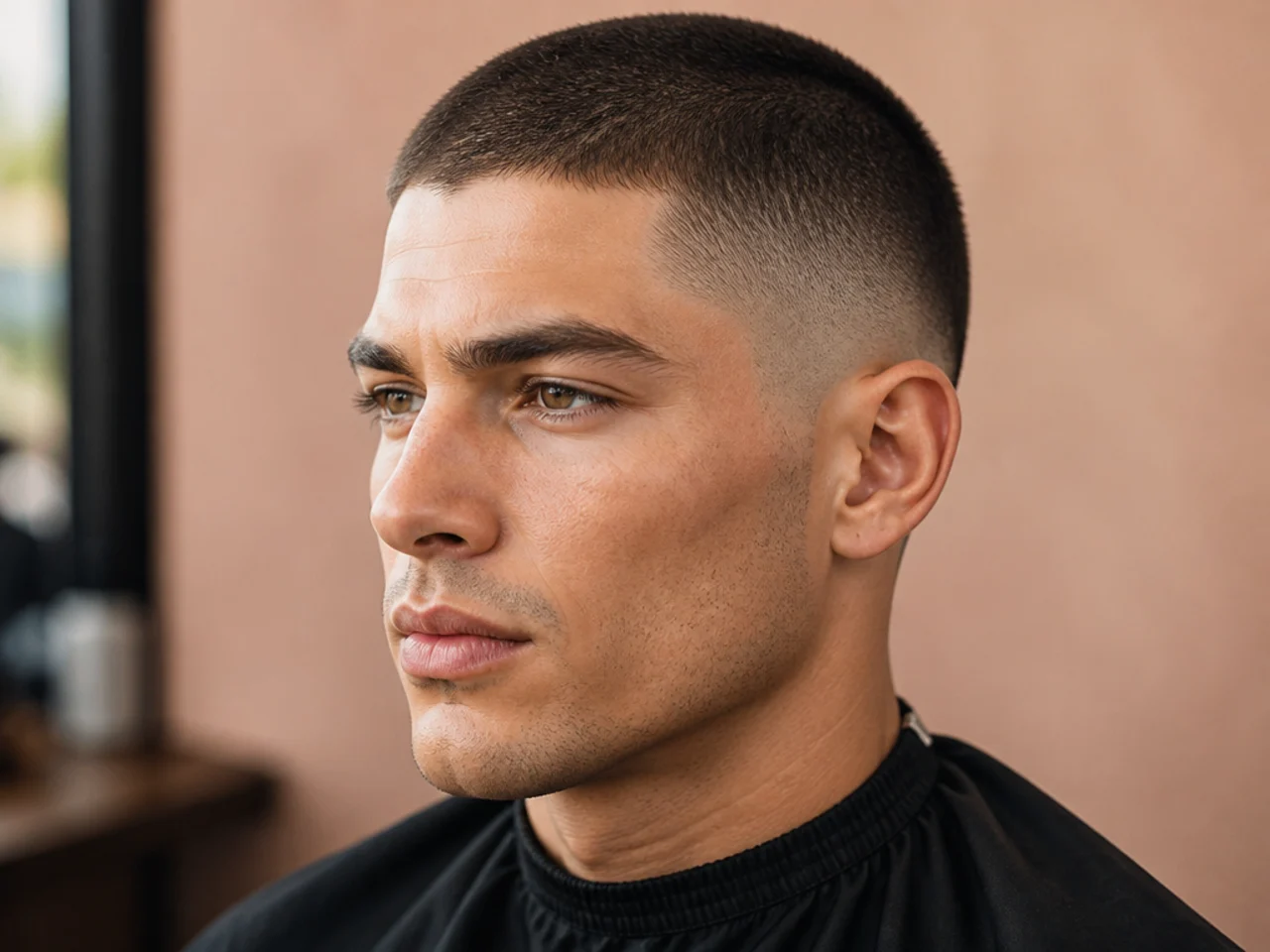
20 Short Sides Haircuts That Look Clean
A short sides haircut men can point at in the mirror — 20 clean side treatments with clipper numbers, top pairings, and the exact words for your barber.
In this article · 26
- What Counts as Short Sides
- How to Choose the Right Short Sides for You
- The 20 Short Sides Haircuts That Look Clean
- 1\. The Classic Buzzed Short Sides
- 2\. The Scissor-Blended Short Sides
- 3\. The Low Taper Fade Short Sides
- 4\. The Low Fade Short Sides
- 5\. The Mid Fade Short Sides
- 6\. The High Fade Short Sides
- 7\. The Drop Fade Short Sides
- 8\. The Burst Fade Short Sides
- 9\. The Skin Fade Short Sides
- 10\. The Shadow Fade Short Sides
- 11\. The Temple Fade Short Sides
- 12\. The Undercut Short Sides
- 13\. The High and Tight Short Sides
- 14\. The Line-Up Short Sides
- 15\. The Short Sides with a Textured Crop
- 16\. The Short Sides with a Classic Side Part
- 17\. The Short Sides with a Slick Back
- 18\. The Short Sides with a Quiff
- 19\. The Short Sides with a French Crop
- 20\. The Short Sides with a Crew Cut Top
- How to Ask Your Barber for Short Sides
- Styling and Maintenance for Short Sides
- FAQ
A short sides haircut is the modern default — the sides sit at a #2 guard or shorter, and the top does whatever suits your face and hair. This guide covers twenty short-sides variations that look clean the day you leave the chair and still hold shape a month later. Every entry names the fade or taper style, the exact clipper number, the top pairing that finishes the shape, and the sentence to hand your barber so you walk out with the cut you had in mind.
What Counts as Short Sides
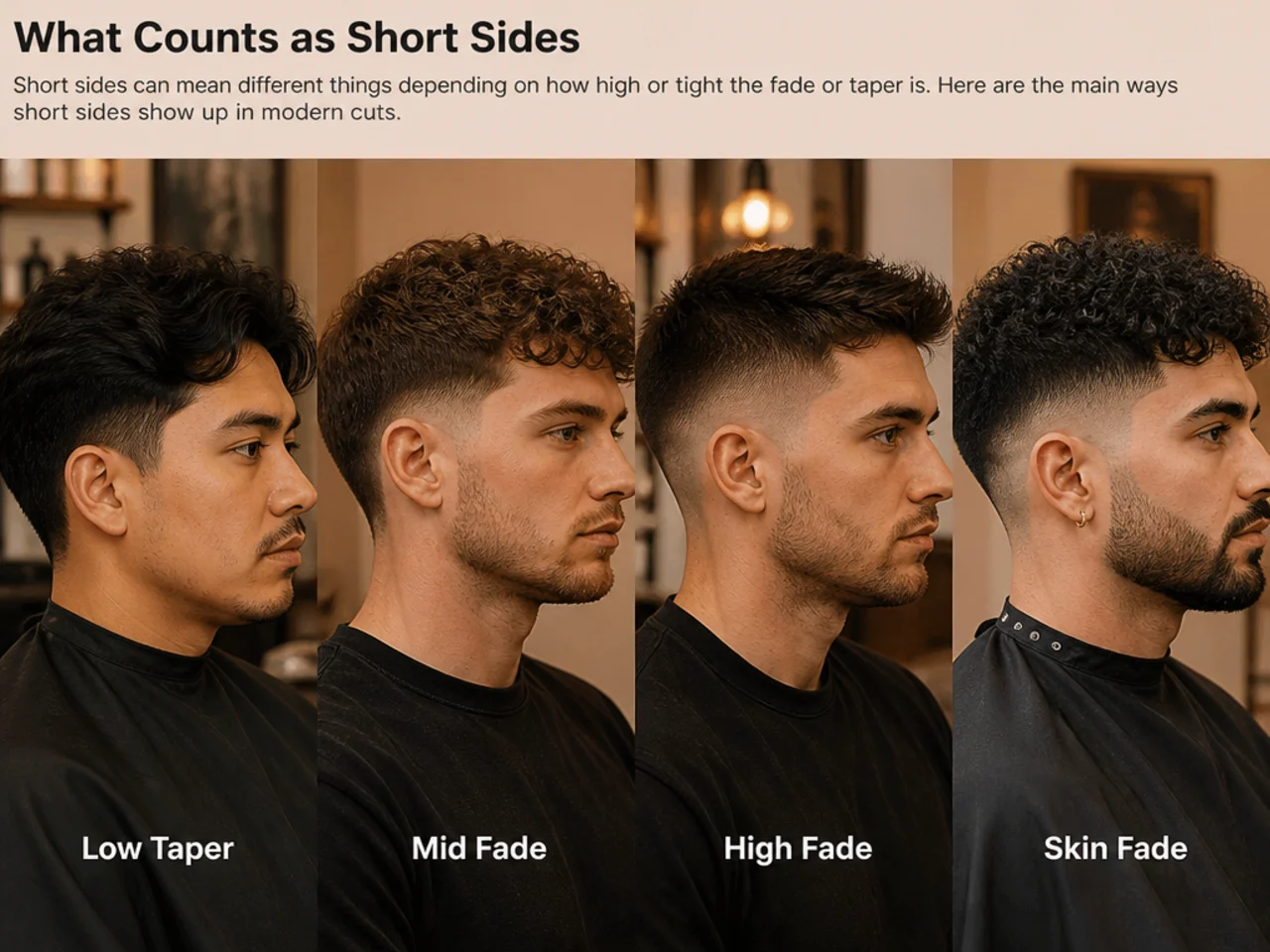
Short sides means the hair around the ears and along the back sits at a #2 guard or shorter — usually somewhere between a #0 (skin) and a #2 (about a quarter of an inch). It can be one flat clipper length, a graduated taper, a soft fade, or a hard undercut. The top can be any length at all.
The point of short sides is contrast and silhouette. Short around the perimeter narrows the head visually, lifts the eye up to the top, and reads sharp in every workplace from a job site to a boardroom. Long, thick sides do the opposite — they widen and weigh the shape down.
Every cut in this guide belongs to the short simple mens haircuts family and lives at the shorter, cleaner end of what barbers cut day to day. For a broader tour of short shapes overall — not just the sides — the companion short men's haircuts guide walks through twenty-five whole-head short options.
How to Choose the Right Short Sides for You
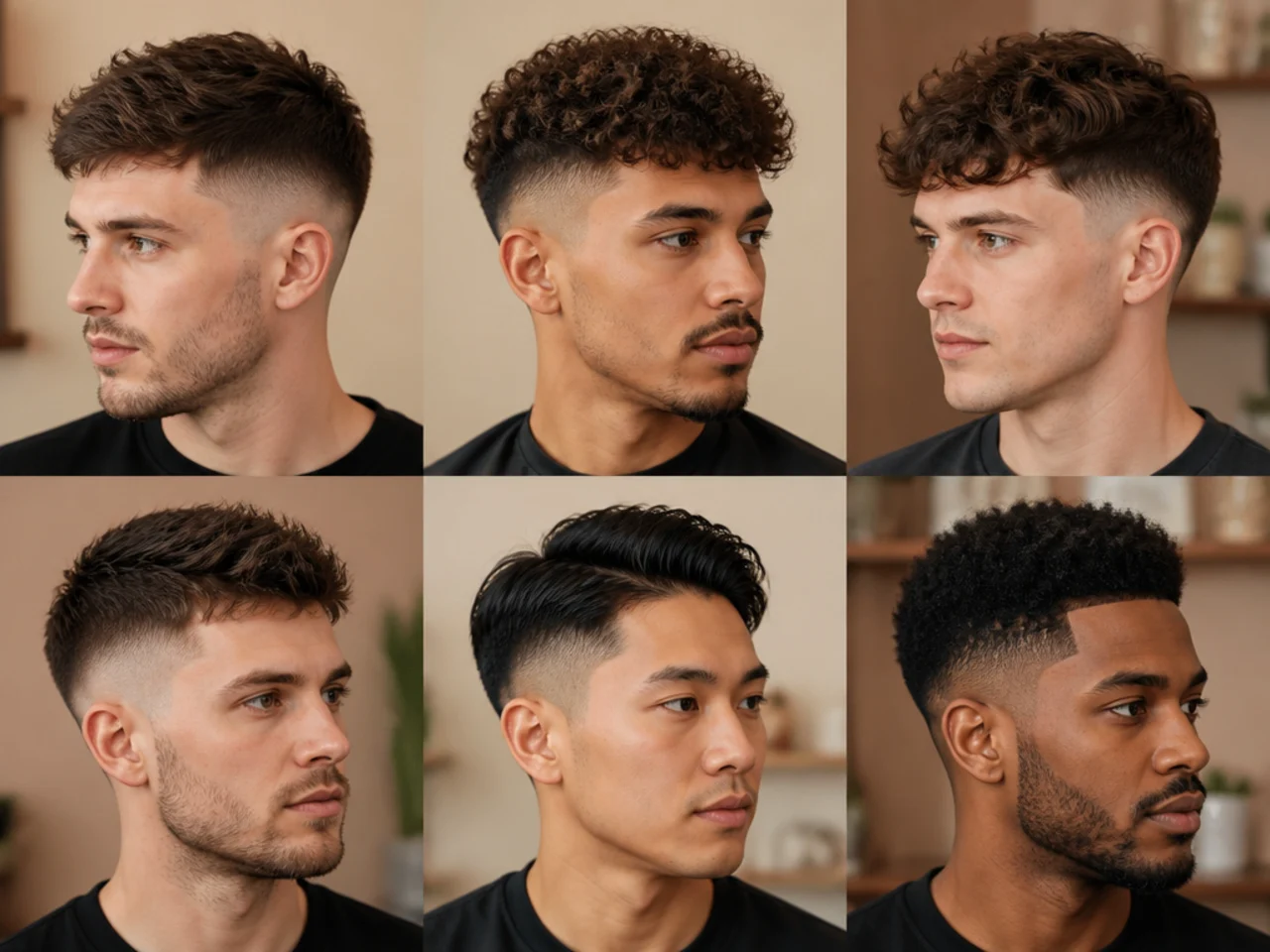
Three filters run the decision. Face shape sets the fade height. Hair type sets the top pairing. Workplace and rebook cadence set the finish.
Face shape. Round and square faces suit mid and high fades with vertical top styling — the height lengthens the read. Oval faces carry every option; pick on top texture instead. Heart-shaped faces want a low or mid fade with a forward fringe on top to balance a narrower chin. Long or oblong faces should stay with a low fade or low taper — a high fade stretches the head further.
Hair type. Straight hair carries the sharpest fades and the cleanest hard lines. Wavy hair rewards a softer taper — the top texture reads better against a graduated blend than a bald skin line. Curly and coily hair almost always wants a soft low taper fade with scissor work on top; a skin fade against dense curl can read severe.
Workplace and cadence. Trades and uniformed roles suit a buzzed short sides, high and tight, or a low fade. Corporate rewards a low fade or scissor-blend with a longer part on top. Creative offices carry the sharper reads — burst fades, drop fades, undercuts, and hard line-ups. If your rebook cadence is longer than four weeks, skip the skin fade — a low taper grows out cleaner and buys you a full extra week.
The 20 Short Sides Haircuts That Look Clean
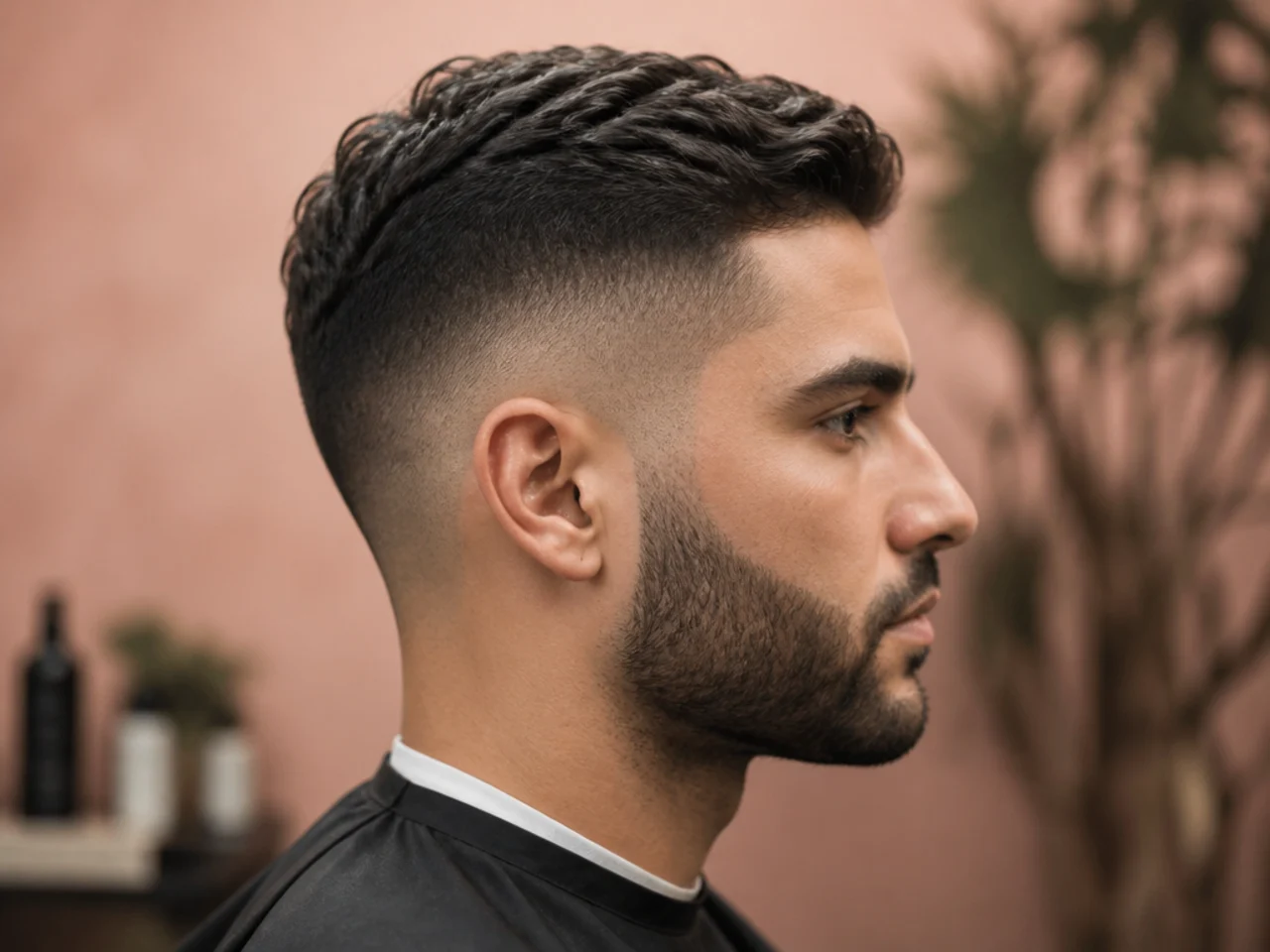
Sorted from the softest side treatment to the sharpest. Each entry names the guard number, the fade or taper style, the top length that finishes the shape, and the words to say in the chair.
1. The Classic Buzzed Short Sides
A single #1 or #2 guard from the top all the way down to the perimeter. No fade, no taper — just one flat clipper length across the whole head. The lowest-effort clean read on the menu and the shape most guys default to when they cut their own hair at home. Best on square jawlines and thinning tops; softens further with a low taper across the temples for shape. Ask for: "Number two all over, square the neckline, soft taper at the temples." Zero product; rebook every three to four weeks before the perimeter drifts.
2. The Scissor-Blended Short Sides
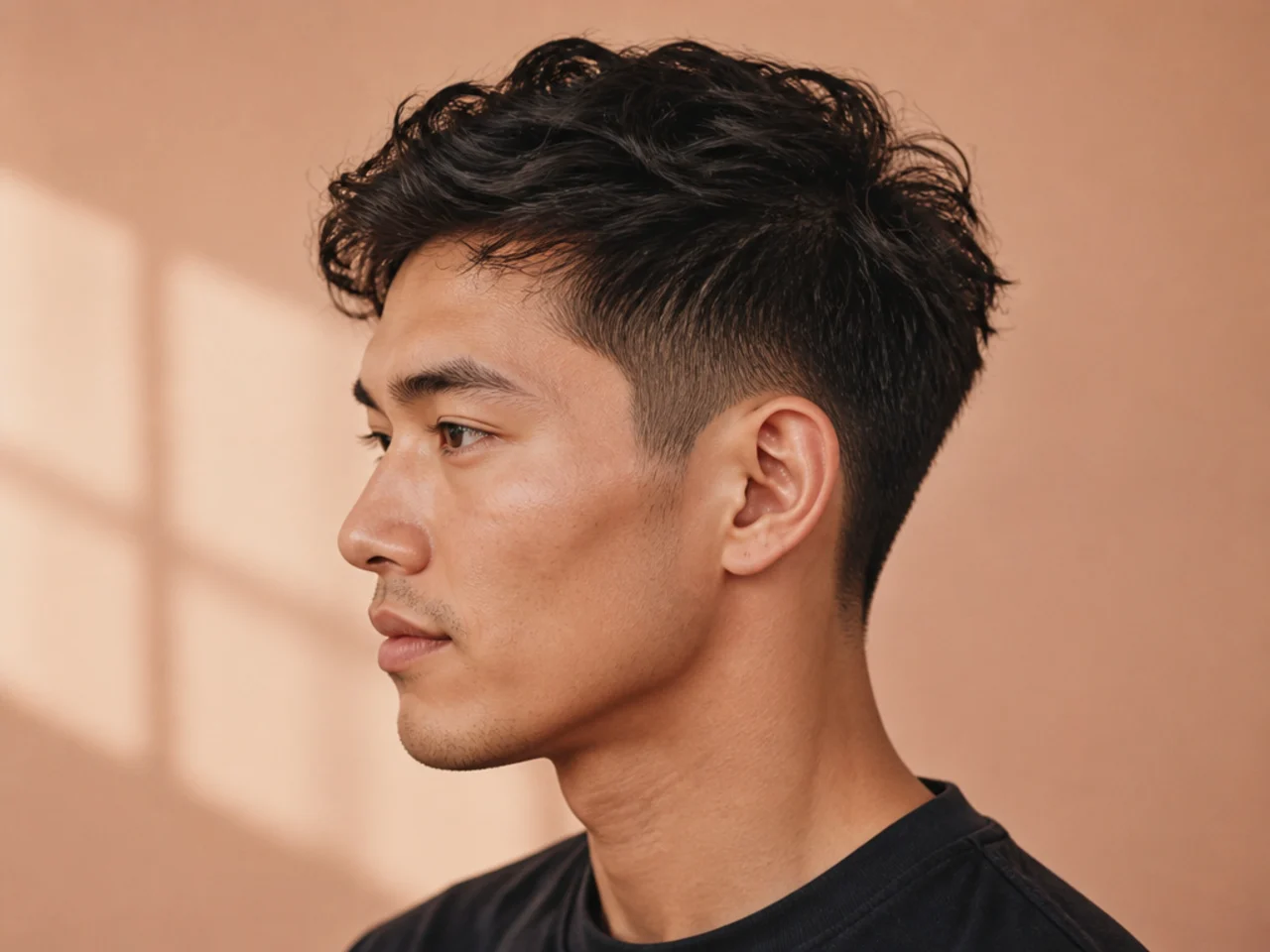
The sides drop from an inch at the top to about a quarter inch at the perimeter, cut entirely with scissors and a comb — no clipper lines anywhere. Reads soft, grown-up, and refined; the sides never look bare. Best on oval faces, straight-to-wavy hair, and any office where a fade would read too sharp. Ask for: "Scissor-blended short sides, taper from an inch down to a quarter inch, no clipper lines." Grows out the softest of any side treatment on the list — a comfortable five to six weeks between visits.
3. The Low Taper Fade Short Sides
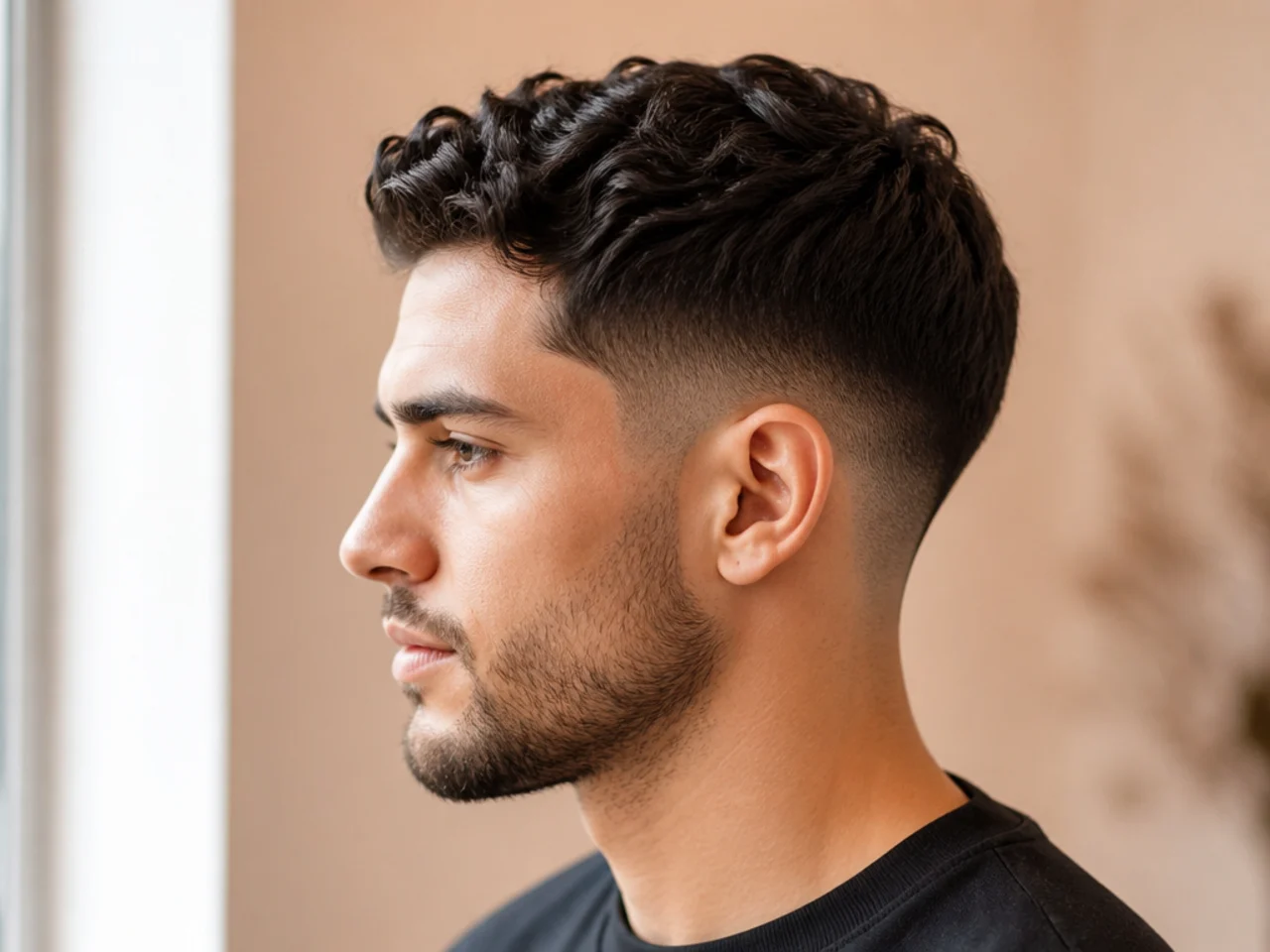
The bulk of the side stays at a #2 or #3, and only the perimeter — behind the ear, around the sideburn — softens into a subtle fade down to skin or a #0.5. The low taper fade is the barber's default recommendation for guys who want a fade but don't want their scalp to show. Best on every face shape and any hair type, including curls. Ask for: "Low taper fade, number three on the sides, fade dropping down to skin at the perimeter behind the ear." Rebooks well at four to five weeks.
4. The Low Fade Short Sides
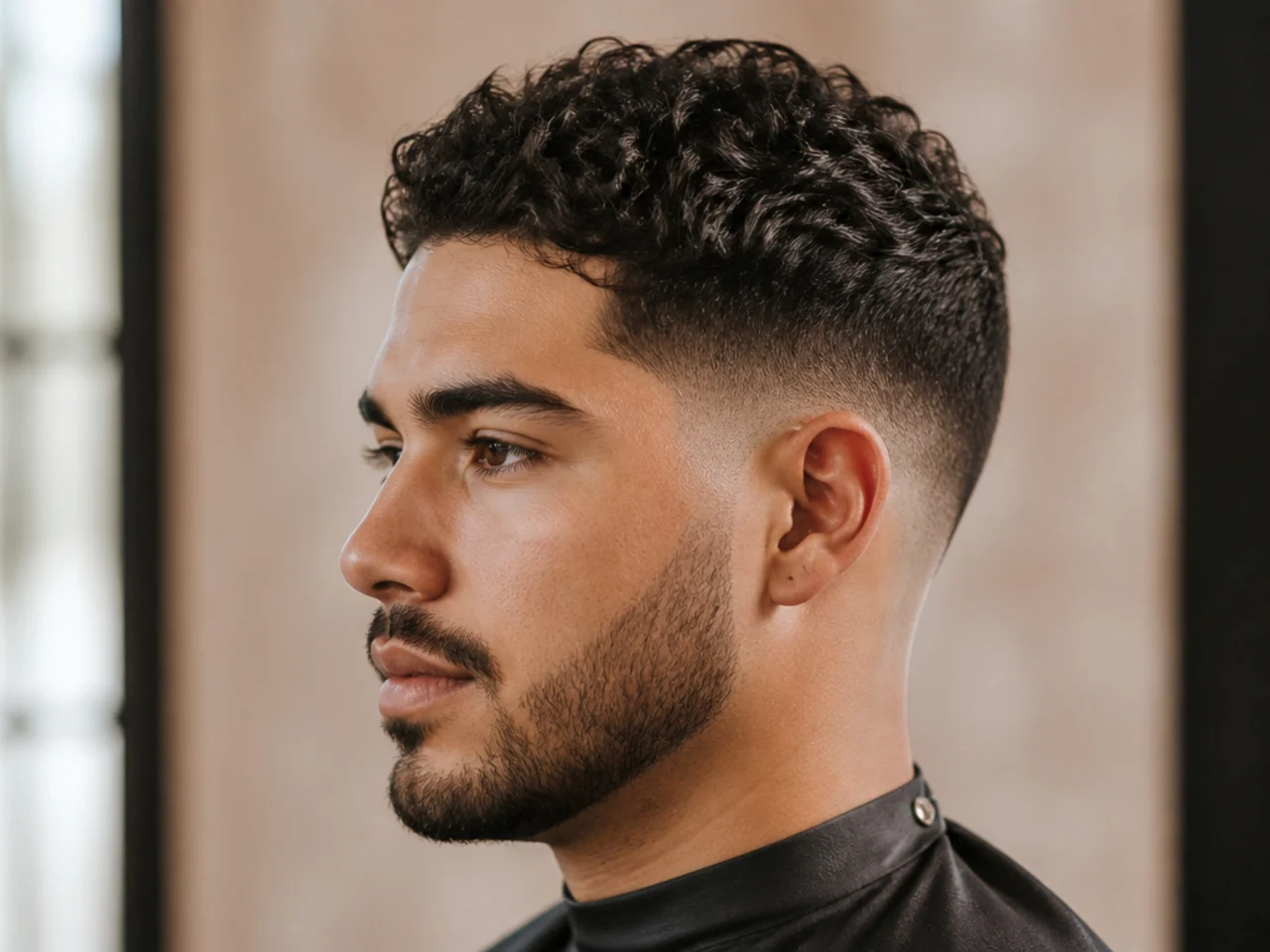
A low fade starts the blend just above the ear and drops to skin or near-skin at the perimeter. Slightly sharper than a low taper; the fade covers more real estate on the side of the head. Best on oval, long, and heart-shaped faces because the low start doesn't add width. Reads clean in every workplace. Ask for: "Low fade short sides, number two on the sides fading to skin, blend starting just above the ear." Rebook every three to four weeks.
5. The Mid Fade Short Sides
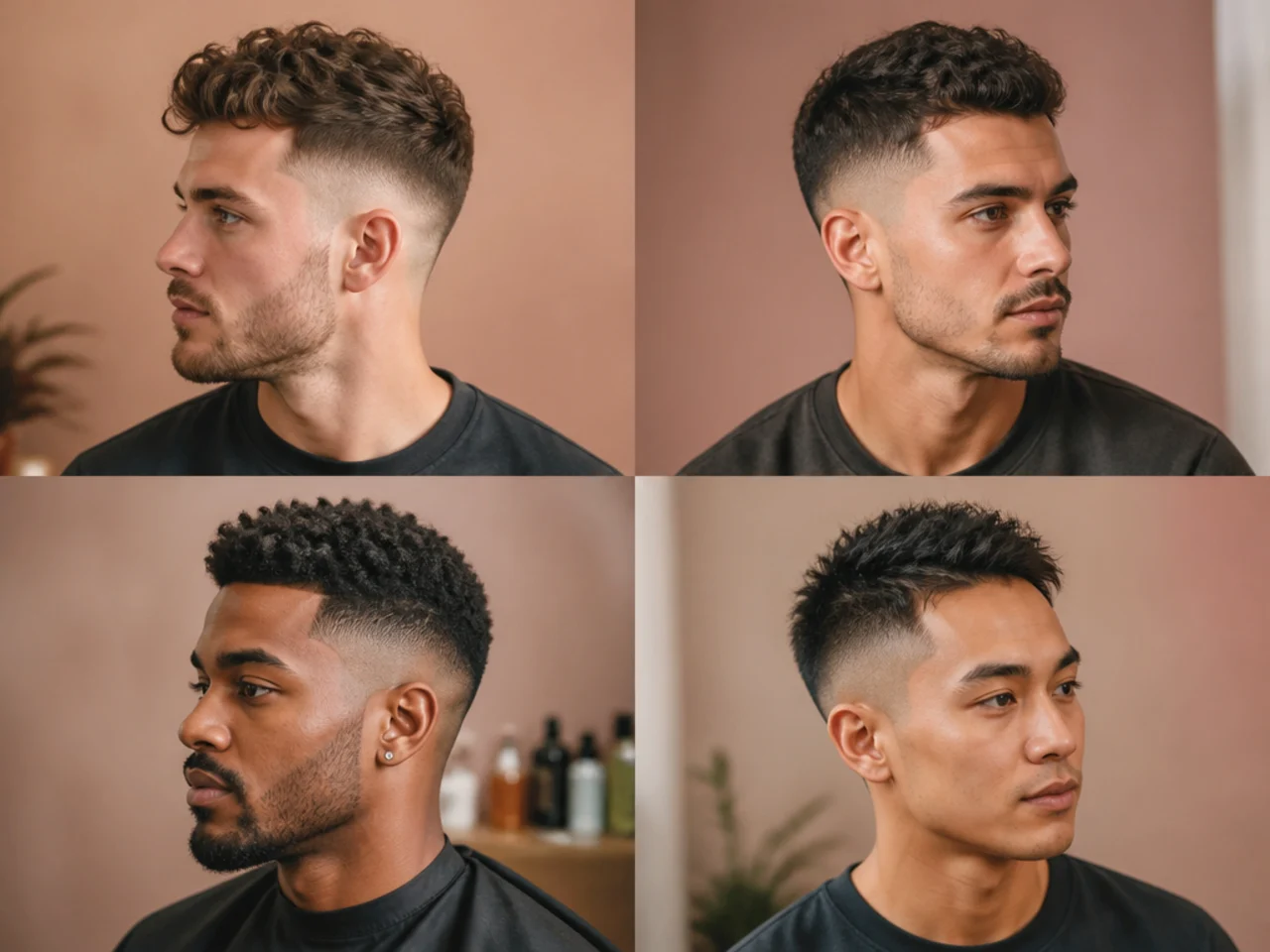
A mid fade jumps the blend line to the temple — right at the widest part of the head — and the sides go from a #2 or #3 down to skin. The most versatile fade height for pairing with a textured or lifted top, because the height matches the eye. Best on round and square faces; the vertical read balances the jaw. Ask for: "Mid fade short sides, blend starting at the temple, number two on the sides fading to skin." Rebook every three weeks.
6. The High Fade Short Sides
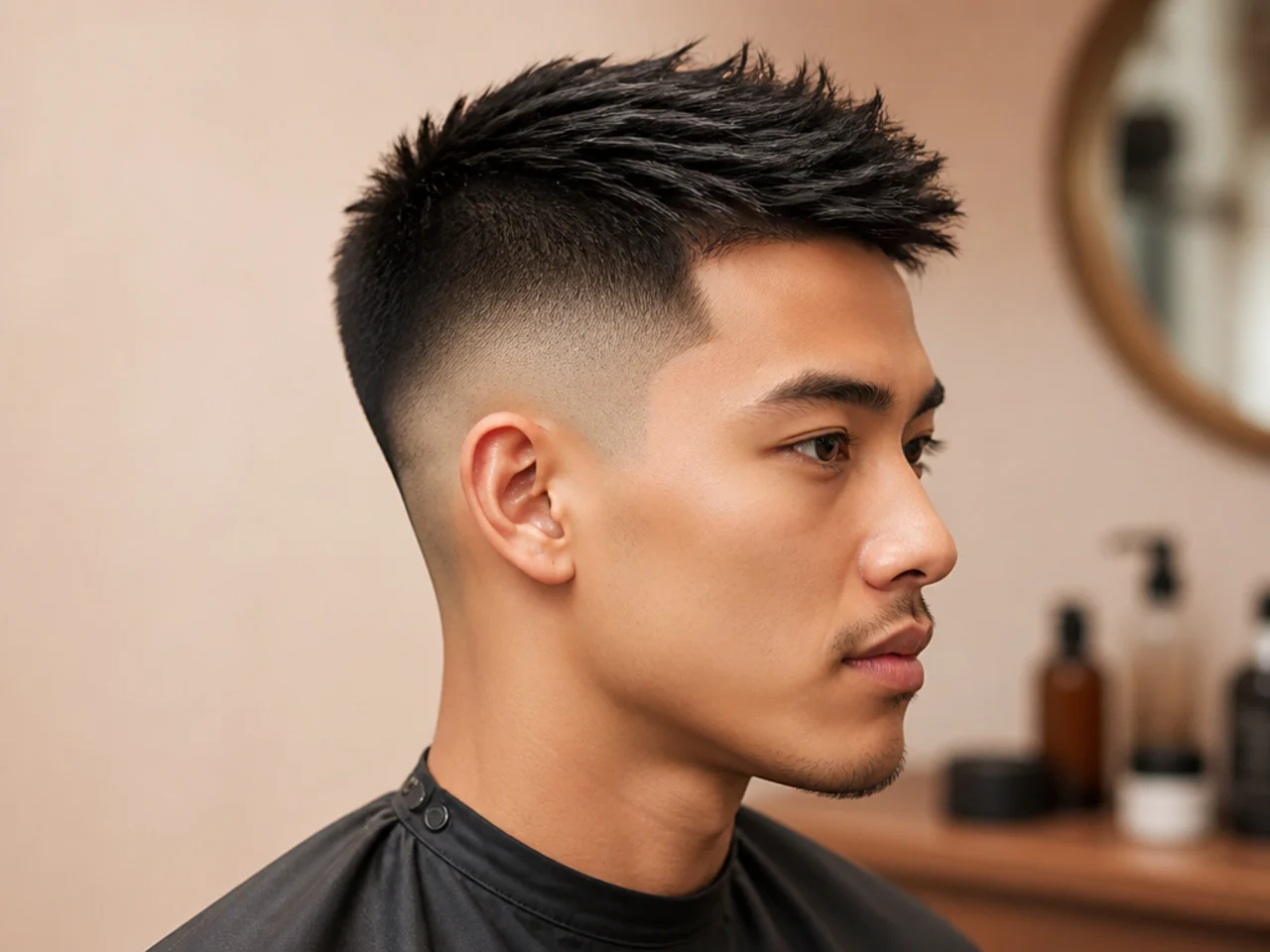
The high fade drops the blend line above the temple corner and takes almost the whole side down to skin, leaving a narrow strip of length on top. High contrast, modern, and photographs sharp from every angle. Best on strong bone structure, oval faces, and thick straight-to-wavy hair. Skip if your face is very round — the extreme contrast rounds it further. Ask for: "High fade short sides, blend starting above the temple, number two on the sides fading to skin." Rebook every two to three weeks; the high line drifts fast.
7. The Drop Fade Short Sides
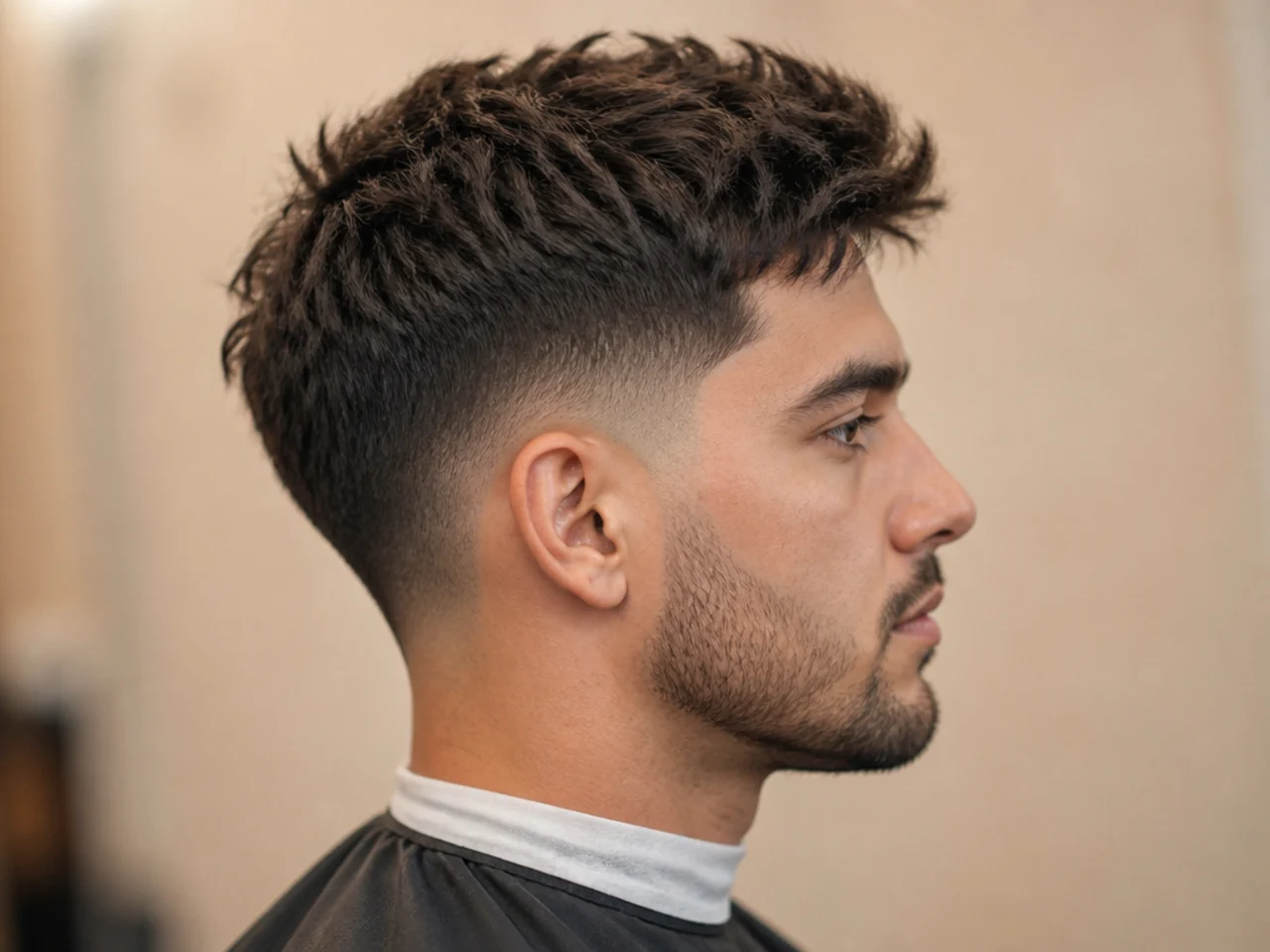
The fade line drops behind the ear instead of running straight — a shallow arc that follows the shape of the skull. Reads more modern and softer than a straight-line low fade, and flatters guys who wear glasses because the curve echoes the frame. Best on every face shape and hair type. Ask for: "Drop fade short sides, number two on the sides fading to skin, fade line dropping in an arc behind the ear." Pairs beautifully with a textured crop or a short quiff. Rebook every three weeks.
8. The Burst Fade Short Sides
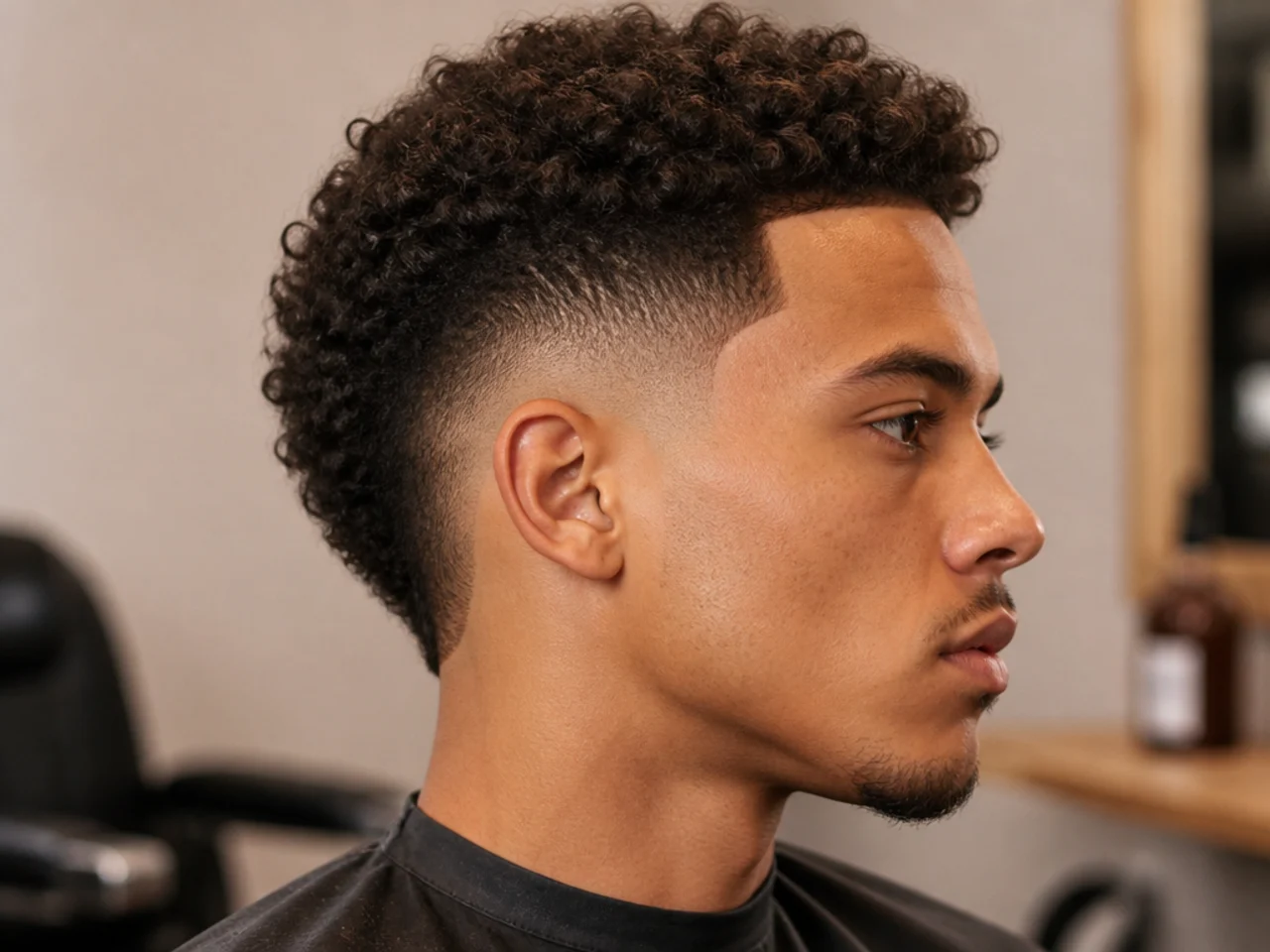
The burst fade fans out from the ear in a sunburst pattern — the fade line curves around and behind the ear rather than running horizontally. The signature short-sides shape of the K-pop and streetwear boards. Best on straight-to-wavy hair and oval or heart-shaped faces; pairs perfectly with a comma cut, mullet-adjacent top, or forward-styled fringe. Ask for: "Burst fade short sides, fade fanning out from the ear, skin at the darkest point, longer back panel left untouched." Rebook every two to three weeks.
9. The Skin Fade Short Sides
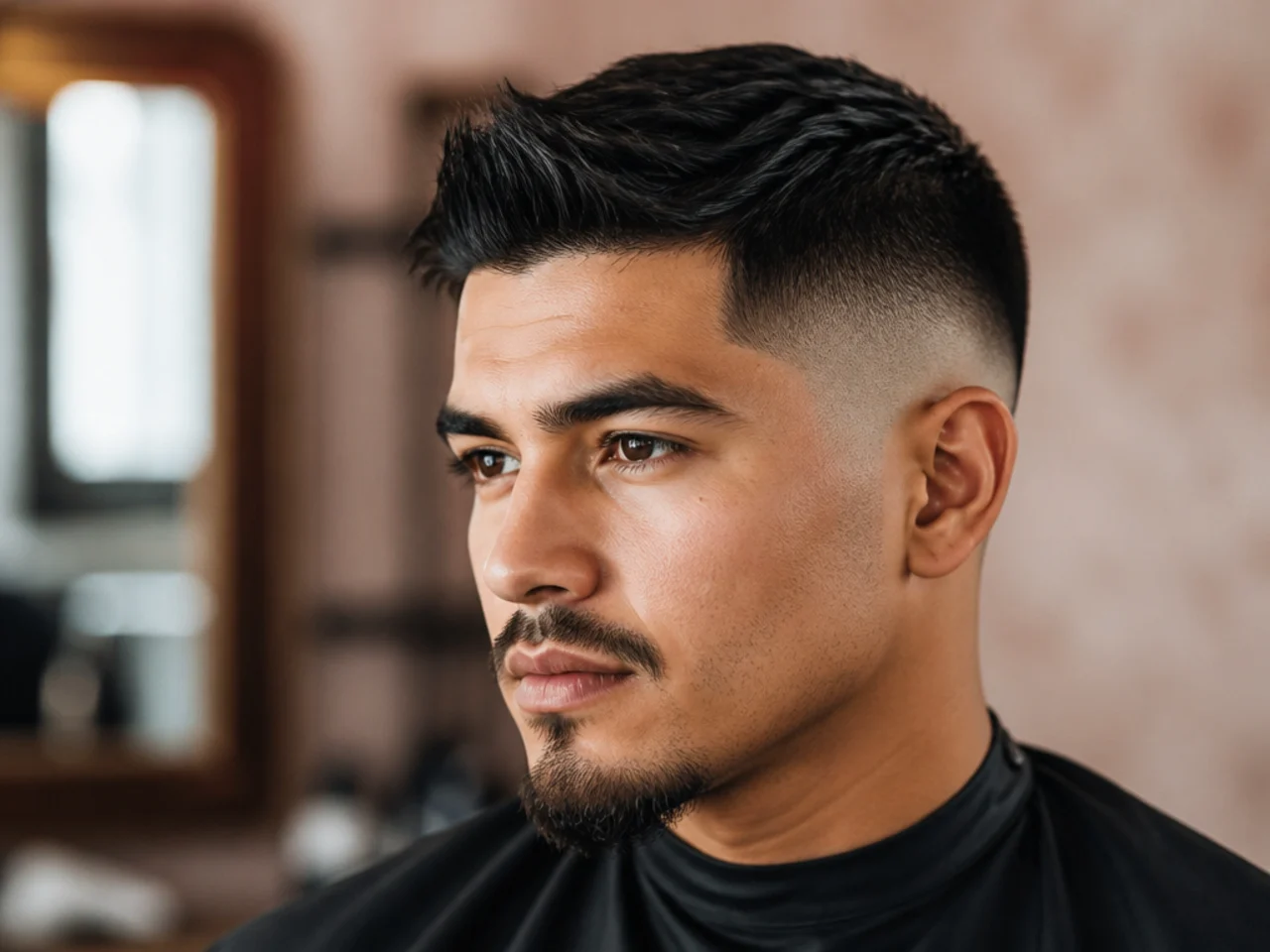
Every fade in this guide can go to skin, but the "skin fade short sides" is the classic — a low or mid fade line with a full bald finish at the perimeter, sharp temple lift, and a defined outline everywhere. The single most Pinterest-searched fade shape. Best on strong hairlines and any face shape; the bald contrast reads dramatic. Ask for: "Skin fade short sides, mid-height blend line, bald at the perimeter, defined temple line-up." Rebook every two weeks or the skin edge grows into visible fuzz.
10. The Shadow Fade Short Sides
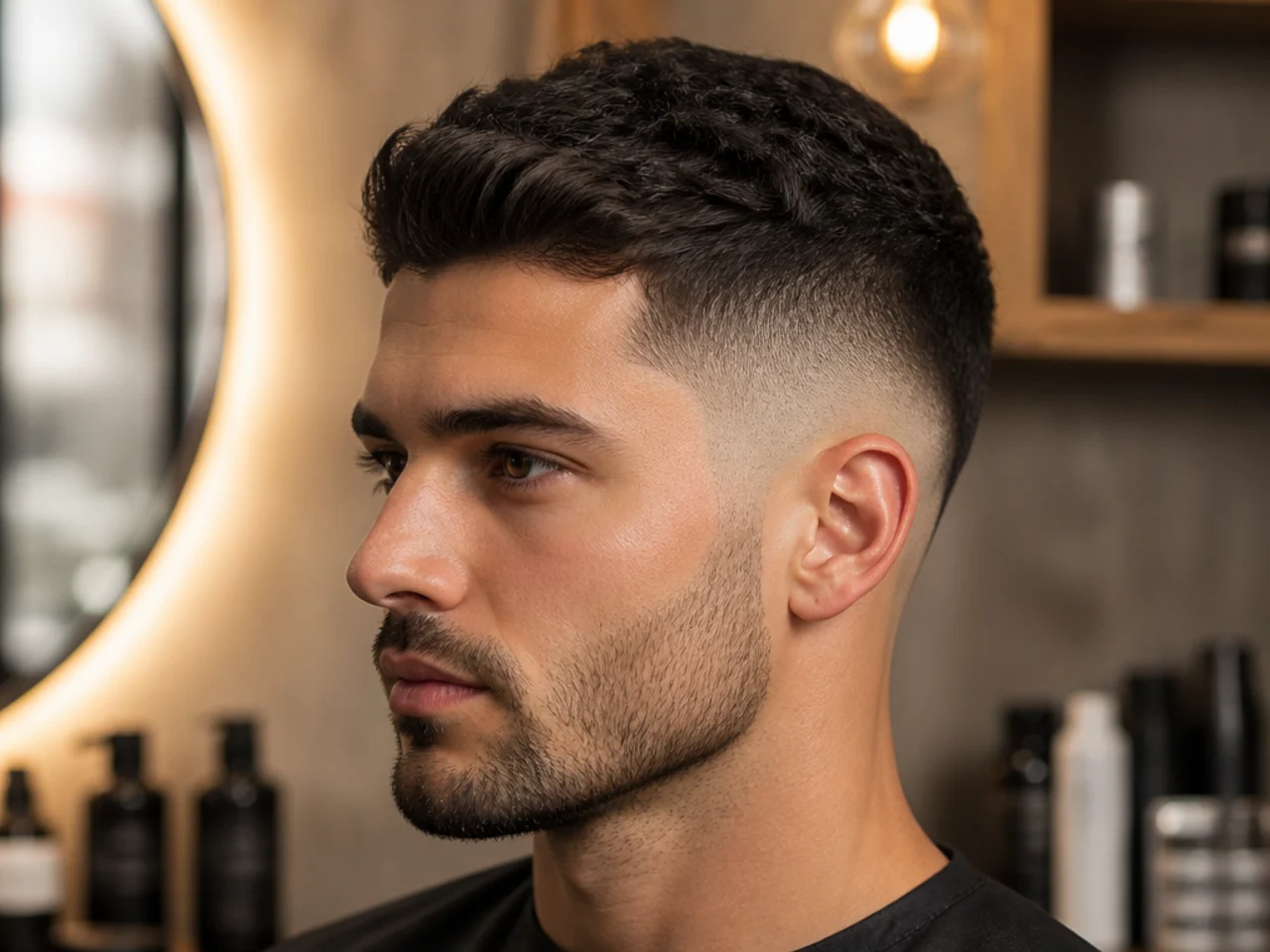
A skin fade that stops one guard short of bald — a #0.5 or a scissor-flick at the perimeter that leaves a whisper of shadow instead of clean skin. Reads slightly softer than a full skin fade and grows out with less obvious grid lines. Best on guys who want the skin-fade silhouette without the two-week rebook cadence. Ask for: "Shadow fade short sides, low or mid blend, finish at a number half instead of skin, keep the perimeter shadowed." Rebook every three to four weeks.
11. The Temple Fade Short Sides
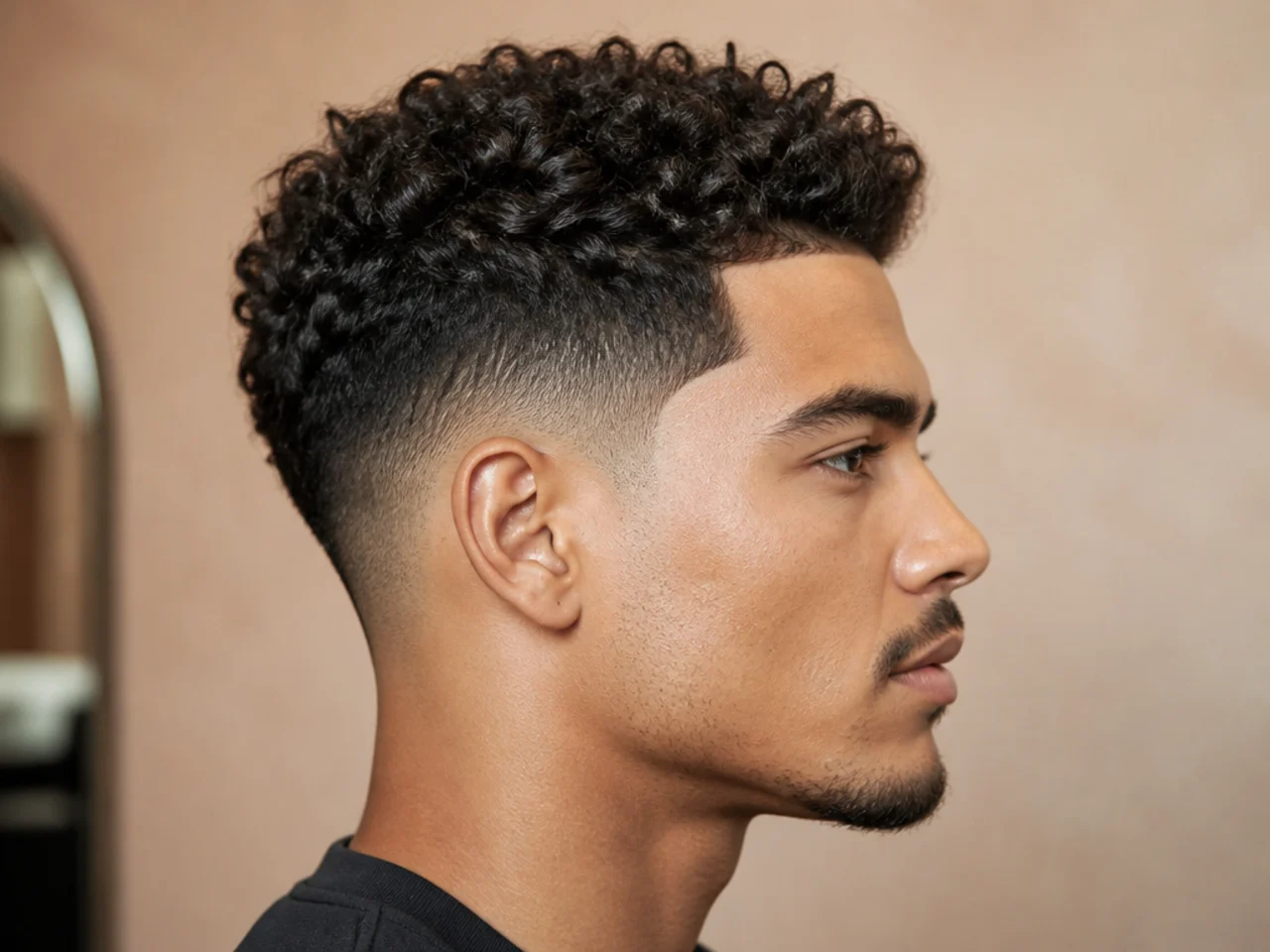
The fade is concentrated at the temple and sideburn — the rest of the side sits at a uniform #2 or #3. The most flattering short-sides move for curly and coily hair because it defines the outline without taking length off the pattern above the ear. Best on curly and coily hair and any face shape; especially good on receding temples because it draws attention to the line, not the recession. Ask for: "Temple fade, number two on the sides, skin at the temple and sideburn only." Rebook every three weeks.
12. The Undercut Short Sides
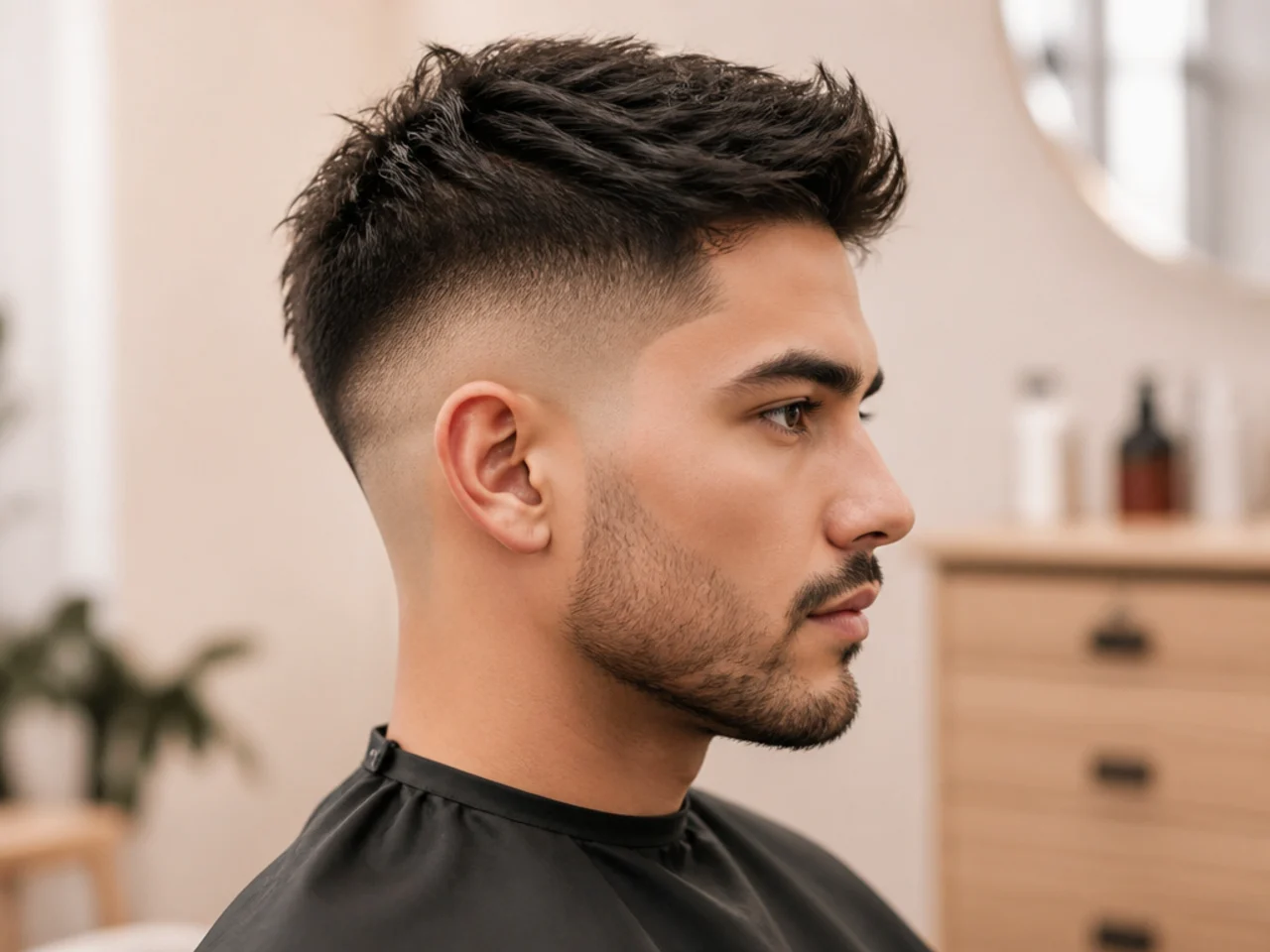
The undercut leaves the sides at a single short guard — usually #1 or #2 — with no fade, no blend, and no taper. The top hangs over the top of the short section, creating a hard visual break. Bold, modern, and best on straight and wavy hair with an oval or square face. Skip if your face is very round; the sharp contrast rounds you further. Ask for: "Disconnected undercut short sides, number one all around the sides and back, no blend, longer scissor-cut top." Rebook every three to four weeks.
13. The High and Tight Short Sides
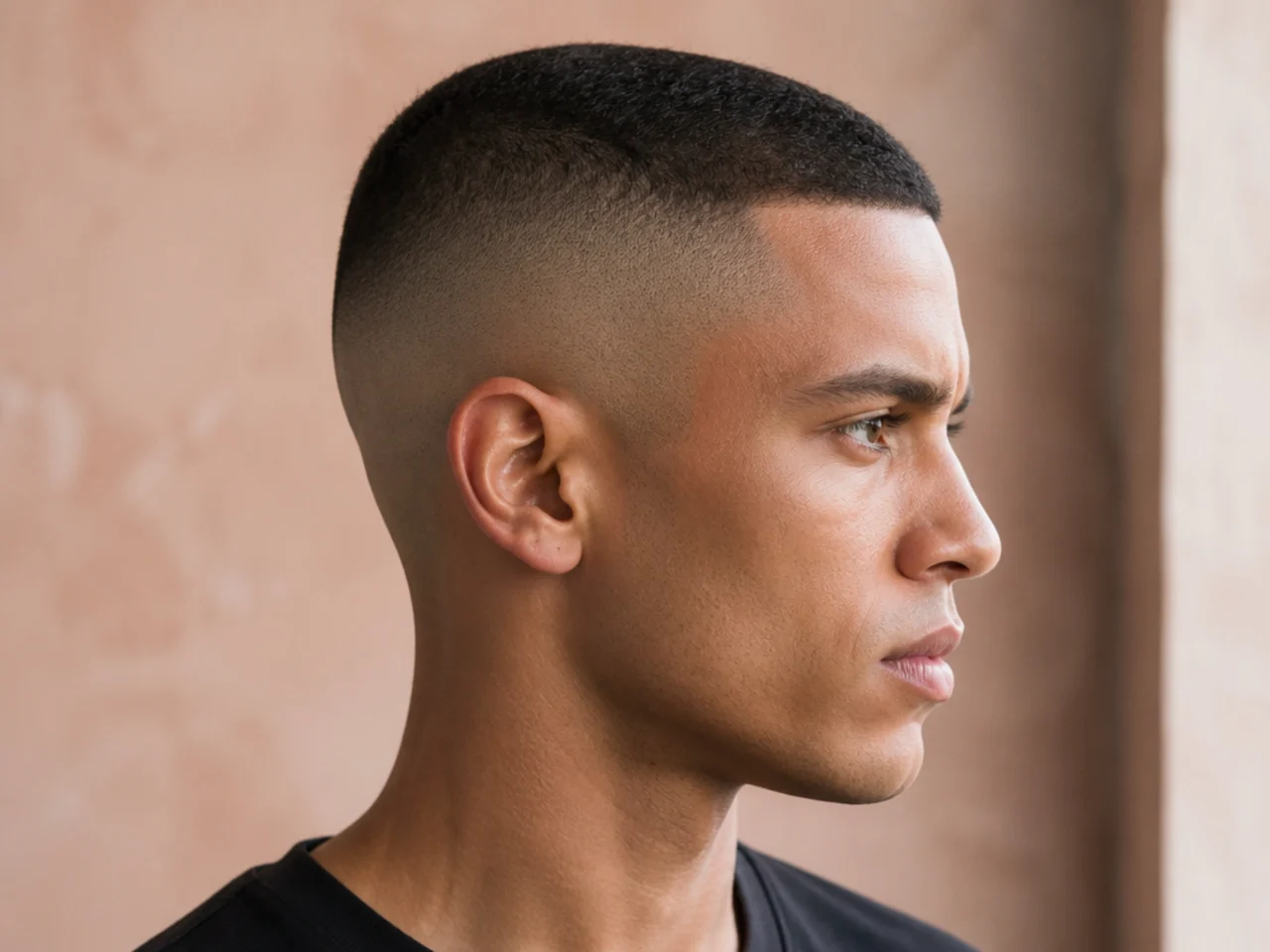
A skin or #0 fade that jumps in high — above the temple, sometimes as high as the crown — with just a #2 or #3 of length left on top. Military discipline, civilian polish. Best on strong bone structure, thick straight-to-wavy hair, and any face shape but especially oval and square. Ask for: "High and tight short sides, number three on top, skin fade jumping in high above the temple, square neckline." Rebook every two to three weeks; the high line drifts the fastest of any short-sides variation.
14. The Line-Up Short Sides
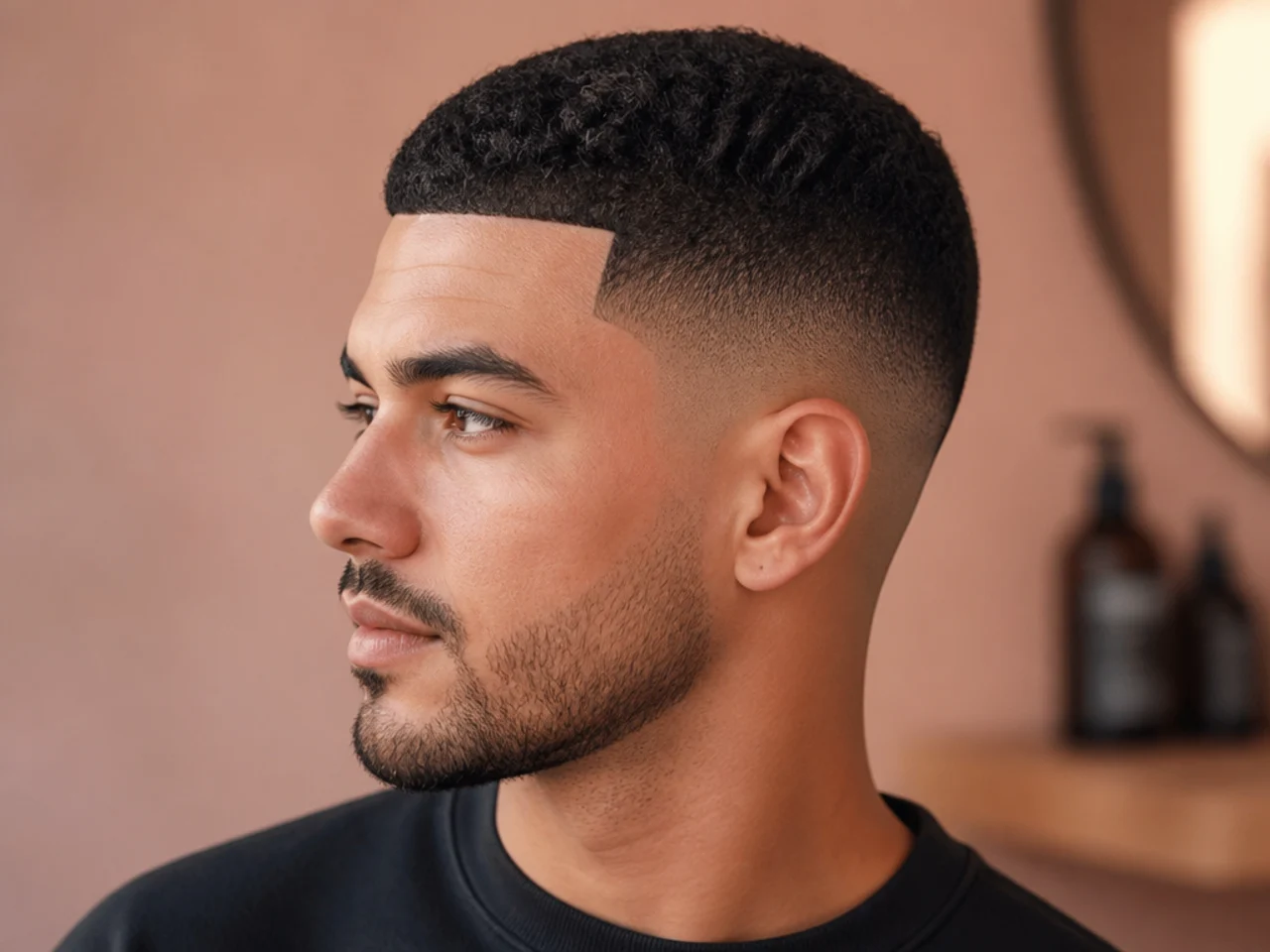
Any short-sides shape can be finished with a hard razored line-up along the hairline — forehead, temples, sideburns, and the back neck. The line-up sharpens the outline into a defined edge and is the single move that separates a "clean" fade from a "just fine" fade. Best on straight and wavy hairlines with a strong front temple line. Ask for: "Line-up on top of the fade — forehead, temples, sideburns, back of the neck." Rebook every two weeks to keep the line honest.
15. The Short Sides with a Textured Crop
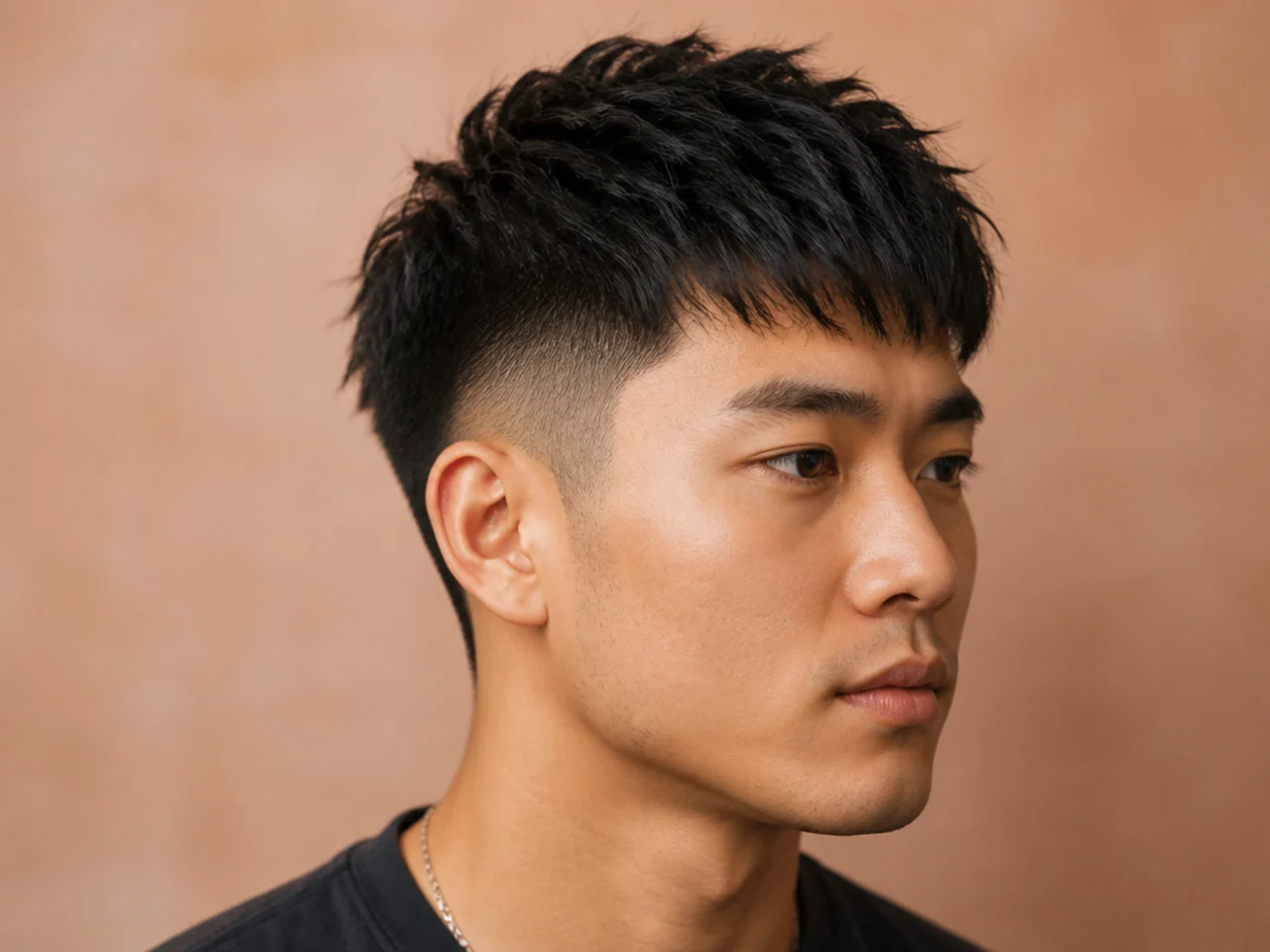
Short sides don't have to mean a short top. Pair a low fade or drop fade with an inch and a half of point-cut length on top — pushed forward into a piecey soft fringe. The most current pairing on Pinterest year after year, and the one to book if you want a shape that reads modern without commitment. Best on straight-to-wavy hair and every face shape. Ask for: "Textured crop with short sides, inch and a half on top point-cut for texture, low fade at the sides fading to skin." Style with a matte paste pushed forward.
16. The Short Sides with a Classic Side Part
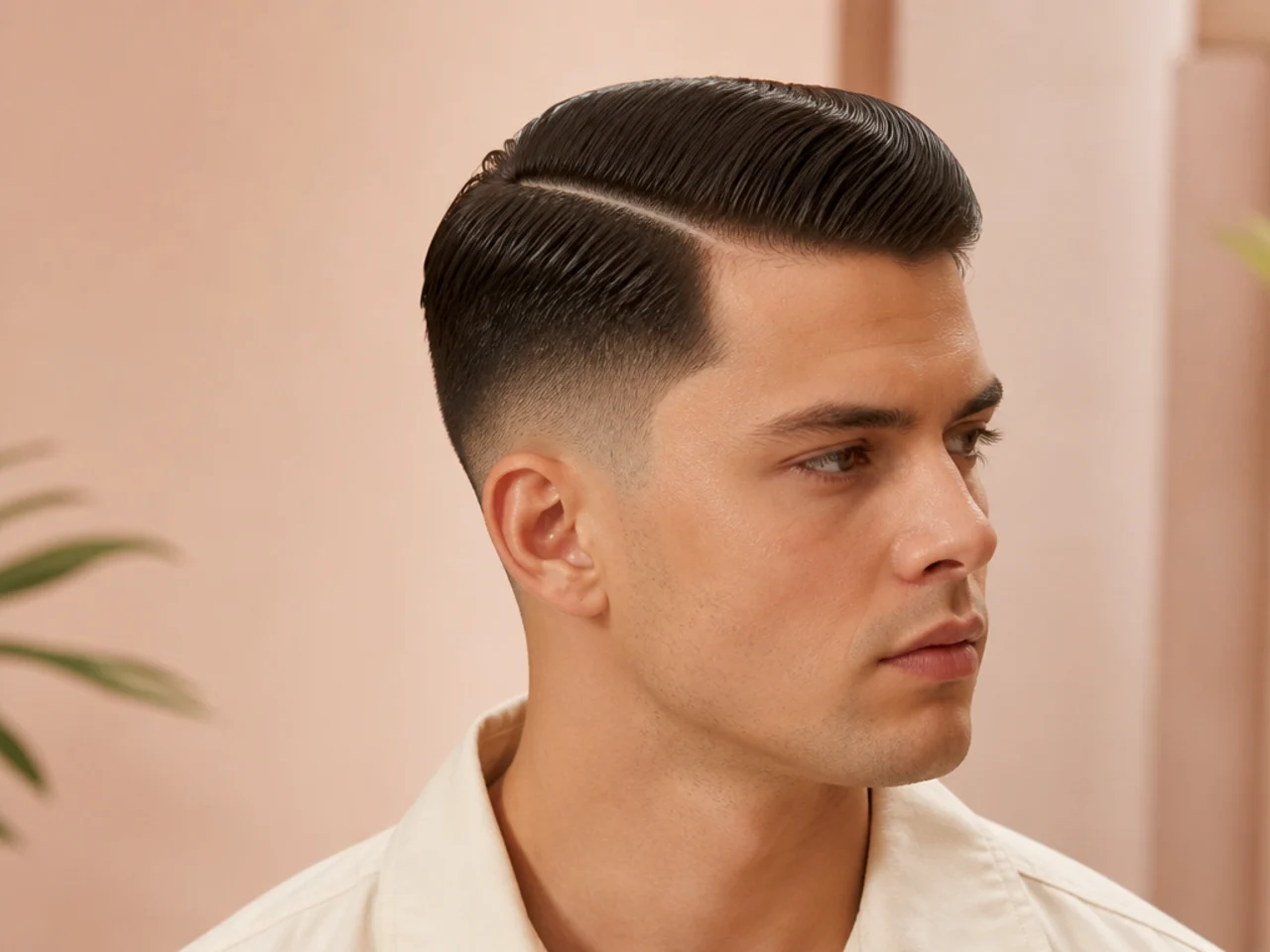
Two inches of length on top with a defined side part — natural or razored — sitting over a low fade or low taper at the sides. The boardroom-friendly short-sides shape. Best on straight-to-wavy hair, oval and square faces, and any workplace with a dress code. Ask for: "Side part short sides, two inches on top, razored part on the left [or right], low fade at the sides." Blow-dry to the part with a small brush, work a light-hold pomade through, comb once.
17. The Short Sides with a Slick Back
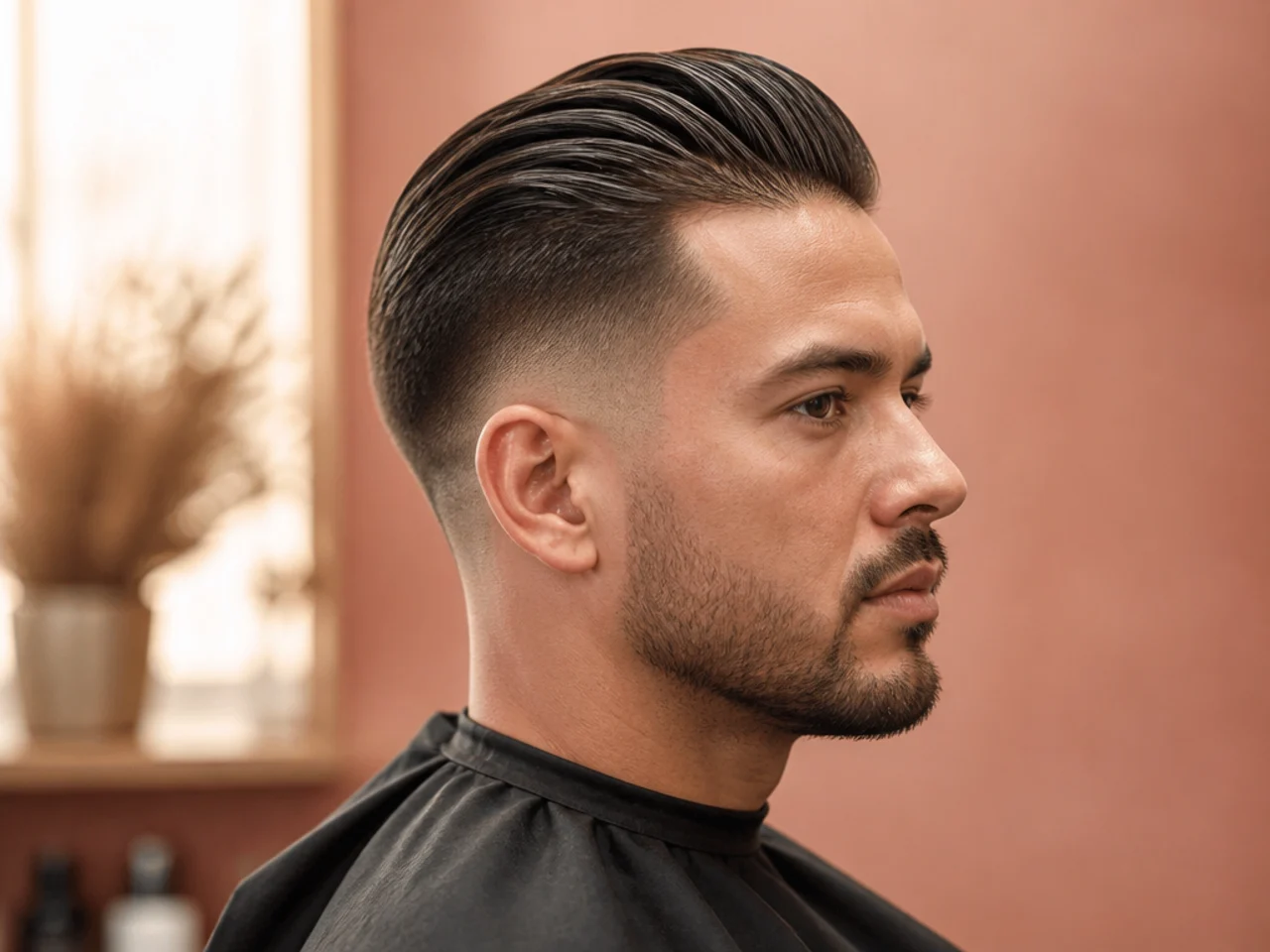
Two inches on top combed straight back off the forehead with a medium-shine pomade, sitting over a mid fade or high fade at the sides. Retro roots, modern silhouette. Best on oval faces and thick straight hair that holds volume back; skip if your hair is very fine or your forehead sits high. Ask for: "Slick back with short sides, two inches on top combed straight back, mid fade at the sides fading to skin." A pomp comb finishes it faster than a brush.
18. The Short Sides with a Quiff
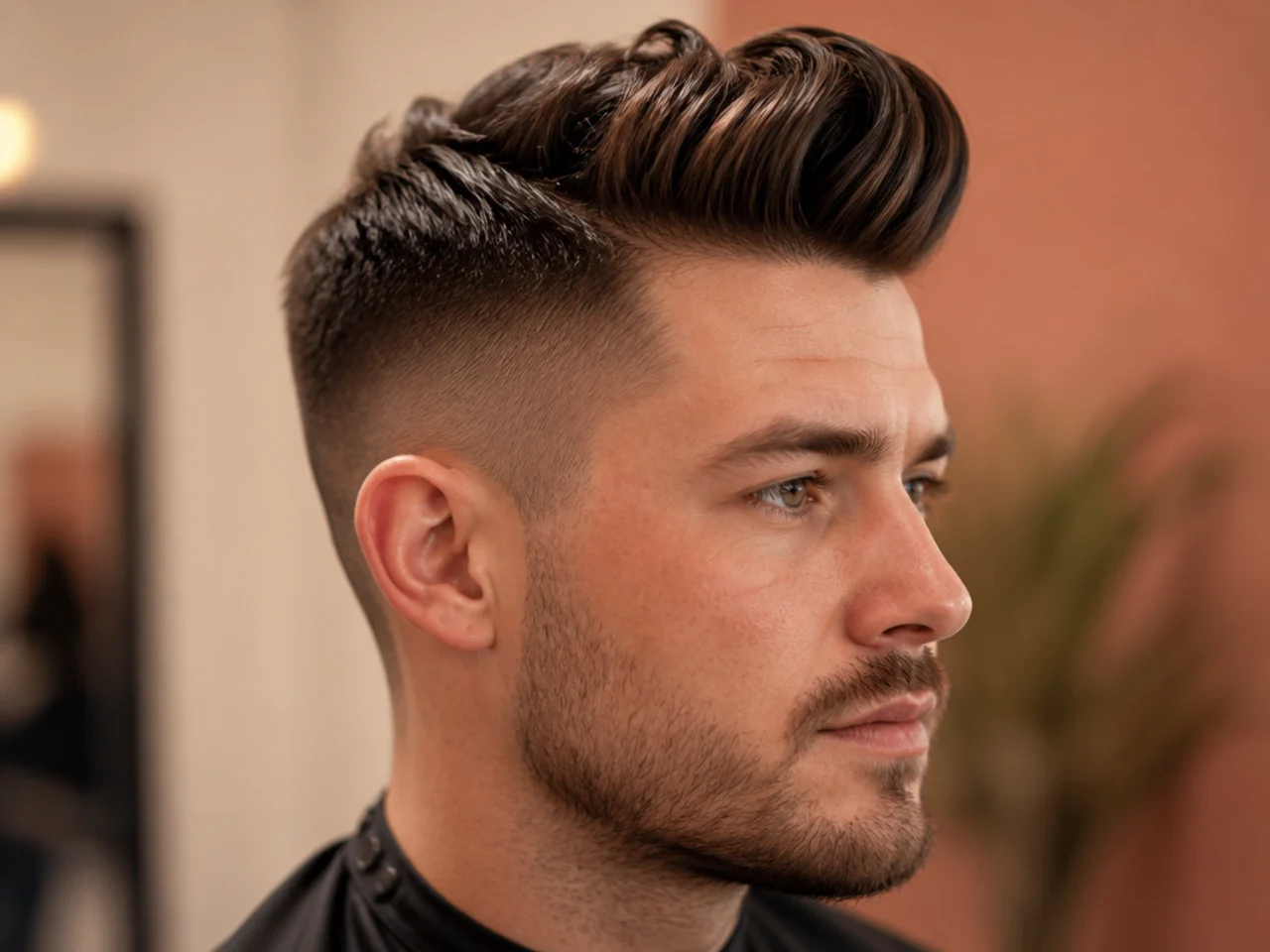
An inch and a half of top length lifted at the front into a small quiff, with a mid or high fade at the sides. The vertical lift lengthens round and heart-shaped faces, which is why the pairing dominates fade boards. Best on straight-to-wavy hair with body. Ask for: "Short sides with a quiff, inch and a half on top point-cut for texture and lifted at the front, mid fade at the sides." Blow-dry the front up with a vent brush, matte clay through the front, no comb. Our quiff hairstyles guide walks through every quiff height.
19. The Short Sides with a French Crop
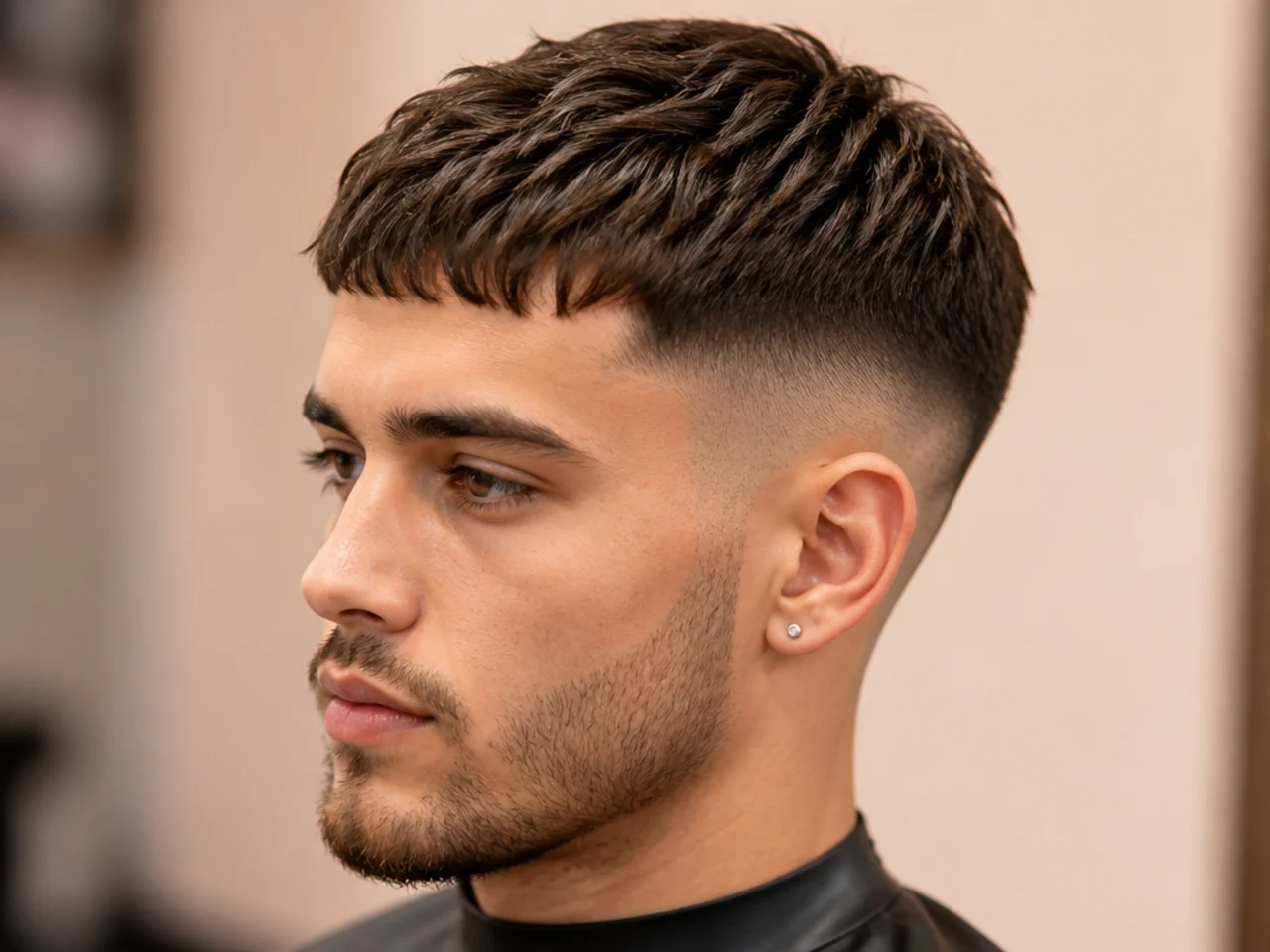
An inch and a half on top with a blunt fringe just above the brow, sitting over a low or mid fade at the sides. The French crop with short sides is the go-to shape for high foreheads and receding hairlines — the fringe covers what a slick back would expose, and the fade tightens the silhouette. Best on straight, wavy, and lightly curly hair. Ask for: "French crop with short sides, inch and a half on top, blunt fringe at the brow, mid fade at the sides." Style with a matte paste pushed forward.
20. The Short Sides with a Crew Cut Top
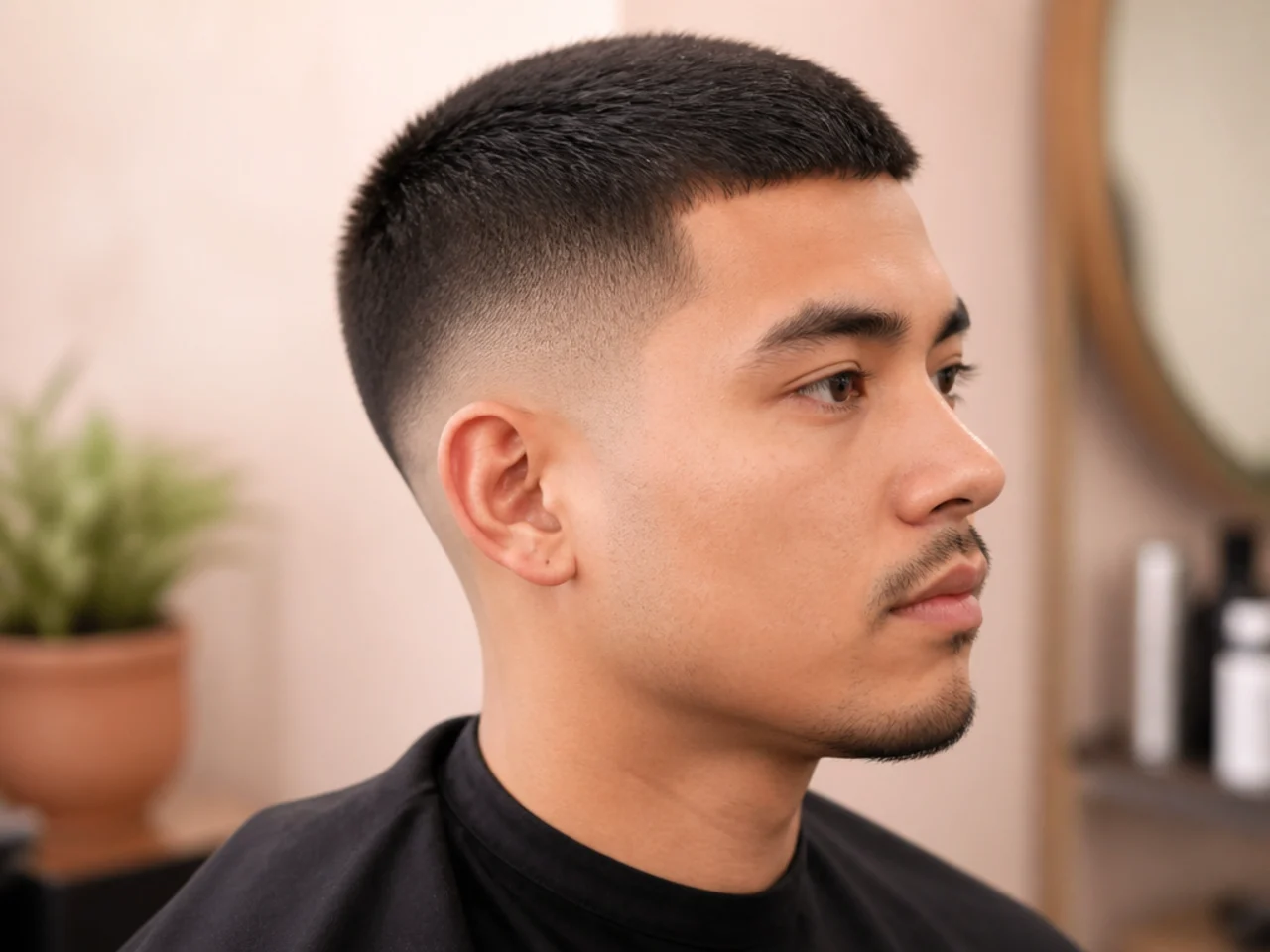
The crew cut with short sides is the safest, most universally flattering pairing on the list. About an inch on top scissor-graduated shorter to the back, with a low fade or low taper at the sides. Works in every office, on every hair type, and at every age. Best on every face shape. Ask for: "Crew cut with short sides, inch on top graduated shorter to the back, low fade at the sides fading to skin." A pea of matte clay finger-pushed forward finishes it in thirty seconds.
How to Ask Your Barber for Short Sides
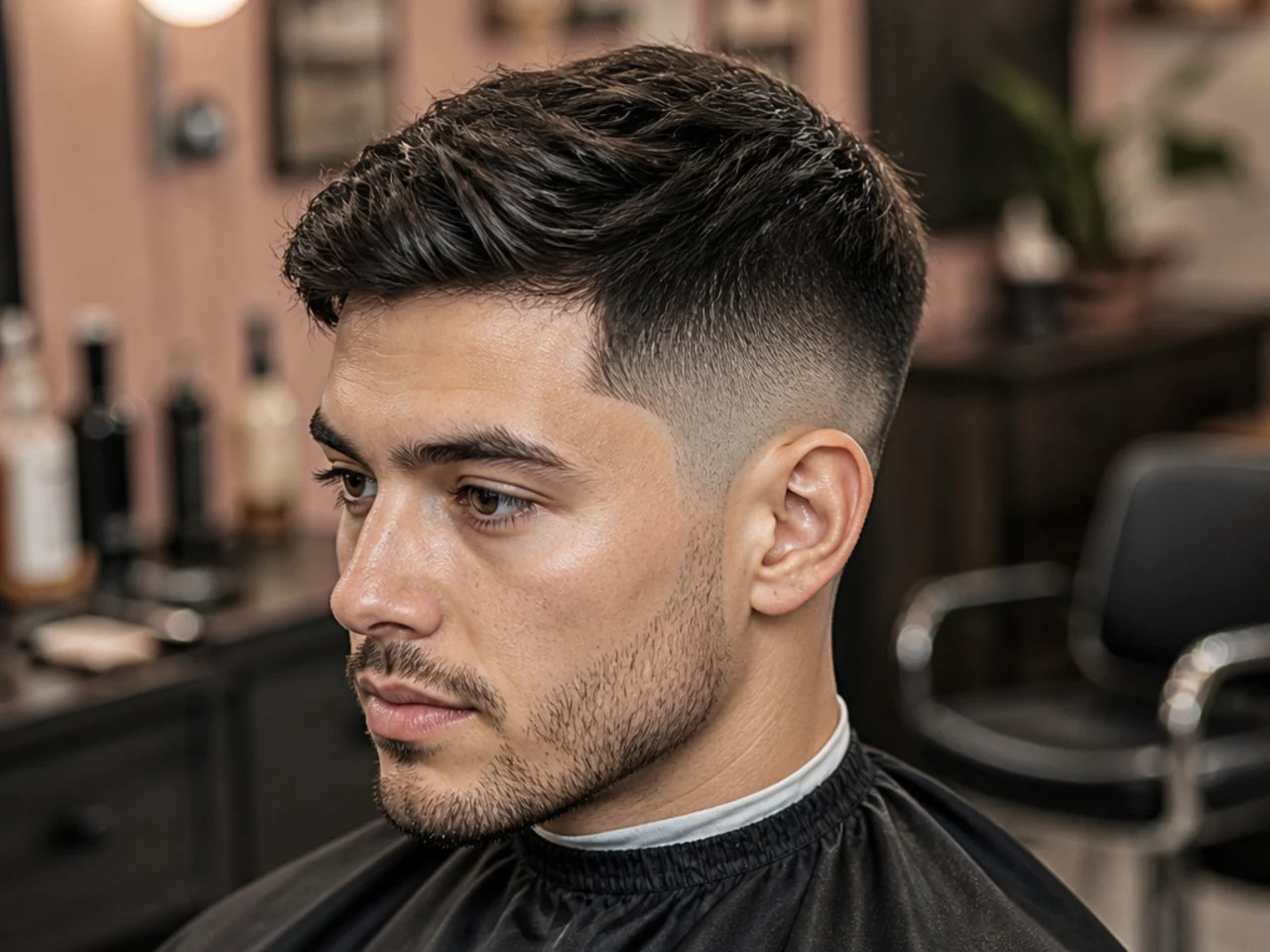
Short sides live or die by seven specifics. Name each one and you walk out with the exact shape in your head.
- Bring two reference photos. One from the front and one from the side. Words are slippery; photos aren't. The side shot is what tells your barber where the fade line sits.
- Name the fade or taper style. Low fade, mid fade, high fade, low taper, drop fade, burst fade, skin fade, shadow fade, or scissor-blended. Point at the height on your own head where the blend should start.
- Name the guard number at the top of the side. #1, #2, or #3. That's the darkest point of the fade, the color you actually see.
- Name the finish at the bottom. Skin, #0.5 shadow, or #1 tight. That's the lightest point.
- Name the top length in inches or guard numbers. "Inch and a half on top," "two inches," or "number four." Barbers cut to numbers, not vibes.
- Name the neckline. Square, round, or tapered. Square is sharpest with short sides; tapered is softest.
- Ask for a line-up or skip it. A hard razored line at the forehead and temples doubles the "clean" read but shortens the time until your next visit.
Styling and Maintenance for Short Sides
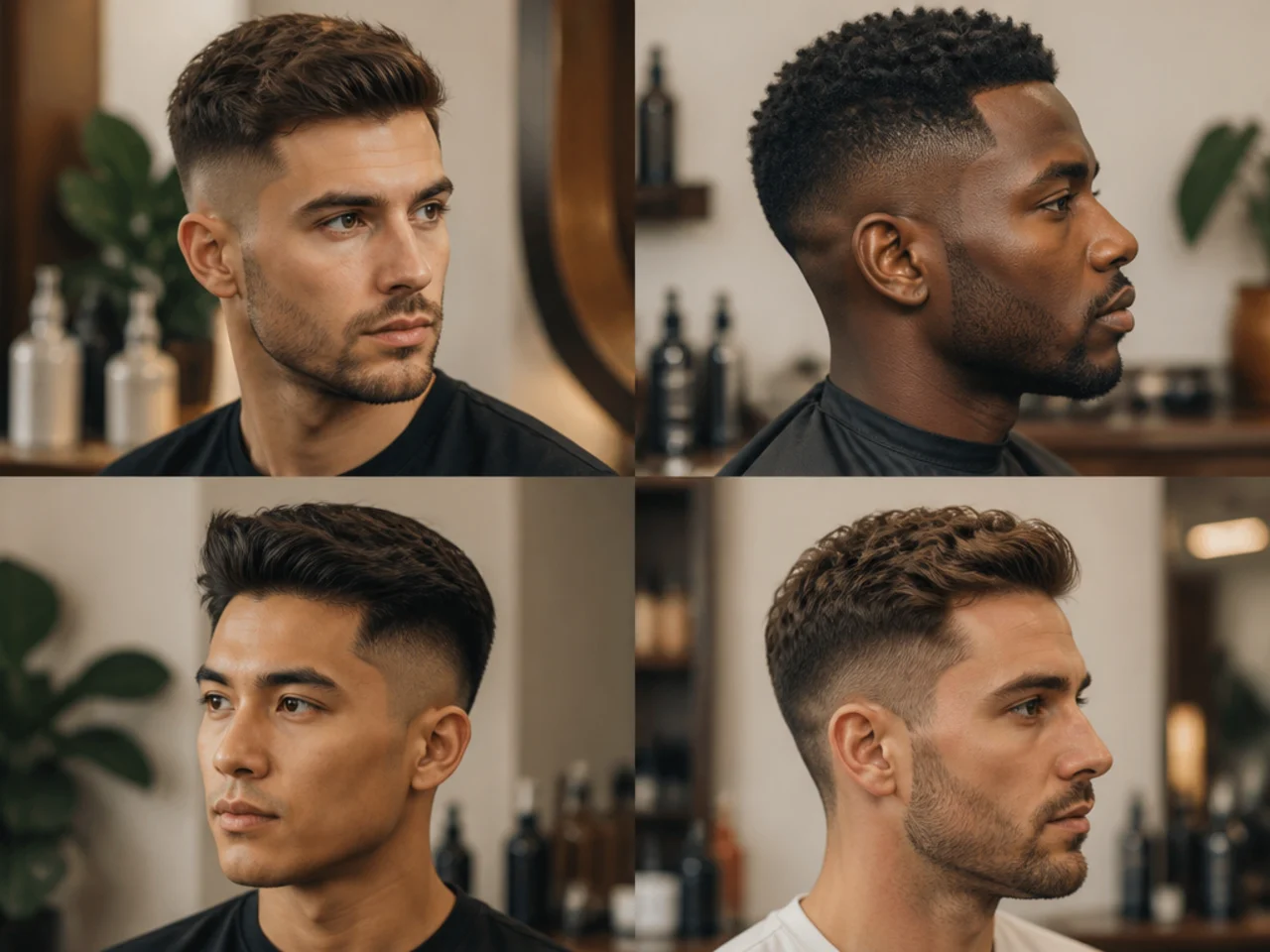
The sides need almost nothing — a hot rinse and a towel dry does it. The top runs the whole styling routine.
Match the product to your top pairing. Buzzed or high-and-tight tops need nothing; a drop of face lotion through damp hair adds a whisper of shine. Crew, side part, or comb over tops want a light-hold pomade or a medium-shine cream, worked through after a quick blow-dry to the part. Textured crop or French crop tops want a matte paste or matte cream, pushed forward through damp hair with your fingers. Quiff, brush up, or pompadour tops want a firm-hold matte clay with a sea-salt spray pre-styler for grip if your hair is fine. Slick back tops want a medium-hold shiny pomade combed through wet.
Wash cadence matters more with short sides than long. The sides sit close to the scalp and pick up oil fast, but daily shampoo strips the scalp and pushes it to overproduce. A sulfate-free shampoo two or three times a week is the sweet spot. Rinse with cool water on the final pass to close the cuticle and hold the fade line's clean read.
Rebook cadence sets the whole shape's honesty. Skin fades and high-and-tights want two to three weeks. Standard low or mid fades want three to four weeks. Low tapers and scissor-blended sides hold for four to six. The moment the fade line softens or the line-up fuzzes is the moment to book — a fade especially reads unkempt the second week past its rebook. For guys who prefer trimming between visits, our best hair clippers for men roundup covers what actually works on short sides at home.
FAQ
Fast answers to the questions barbers hear every week about short sides.
What counts as a "short sides" haircut? Short sides means the hair around the ears and at the back sits at a #2 guard or shorter — usually #0 to #2, blended into a taper, fade, or hard clipper line. The top can be any length; short sides is a description of the sides, not the whole cut.
Which short side treatment lasts the longest between visits? A scissor-blended short side or a low taper fade. Both grow out softly rather than jumping to a hard line, which buys you an extra week or two before the shape reads unkempt. Skin fades and high-and-tights want a rebook every two to three weeks.
Do short sides work with curly or coily hair? Yes — they're often the best move for curls because a fade or taper keeps the perimeter tight while the top pattern does the work. Ask for scissor-cutting on top and a soft low taper at the sides rather than a hard skin fade, which can look severe against dense curl.
Which short side treatment suits a round face? A mid or high fade pairs with vertical top styling — a mini quiff, brush up, or textured crop — to lengthen the silhouette. Skip the classic buzzed short sides with an equally short top; that combo widens rather than lengthens the face.
How often should I book a short sides haircut? Skin fades and high-and-tights every two to three weeks. Standard low or mid fades every three to four weeks. Low taper fades and scissor-blended short sides every four to six. The moment the fade line softens is the moment to rebook. For face-shape suitability across every short-sides shape, our haircuts for square faces guide breaks down which fades flatter which jawlines.
Can I do short sides at home with clippers? A one-guard uniform short-sides buzz is doable at home with a decent pair of clippers and a mirror setup. Fades, tapers, and any blended side treatment want a barber — the eye and the wrist that produce a clean gradient are hard-earned skills, not clipper features.