25 Short Men's Haircuts Worth Trying
Twenty-five short mens haircuts short worth trying — buzz, crew, French crop, quiff, side part, and more — with clipper numbers and barber-ready notes.
In this article · 31
- What Makes a Men's Haircut Count as Short
- How to Choose a Short Haircut Worth Trying
- The 25 Short Men's Haircuts Worth Trying
- 1\. The Classic Short Buzz
- 2\. The Butch Cut
- 3\. The Crew Cut
- 4\. The High and Tight
- 5\. The Ivy League
- 6\. The Prep Cut
- 7\. The French Crop
- 8\. The Textured Crop
- 9\. The Caesar Cut
- 10\. The Taper Crop
- 11\. The Short Side Part
- 12\. The Short Comb Over
- 13\. The Short Slick Back
- 14\. The Short Pompadour
- 15\. The Mini Quiff
- 16\. The Short Brush Up
- 17\. The Short Comma Cut
- 18\. The Disconnected Short
- 19\. The Short Faux Hawk
- 20\. The Korean Short Cut
- 21\. The Short Curtain Fringe
- 22\. The Short Two Block
- 23\. The Short Edgar
- 24\. The Low Fade Short Crop
- 25\. The Short Messy Crop
- How to Ask Your Barber for a Short Cut
- Styling and Maintenance for Short Haircuts
- FAQ
A short men's haircut is what the barber recommends when you want to stop thinking about your hair for a month. This guide covers twenty-five short cuts worth booking — buzz, crew, crop, quiff, side part, and every well-defined shape in between — with clipper numbers, inch marks, and the exact sentence to say in the chair. Every entry names the face shape it flatters, the styling move that finishes it in under a minute, and the rebook cadence that keeps it sharp.
What Makes a Men's Haircut Count as Short
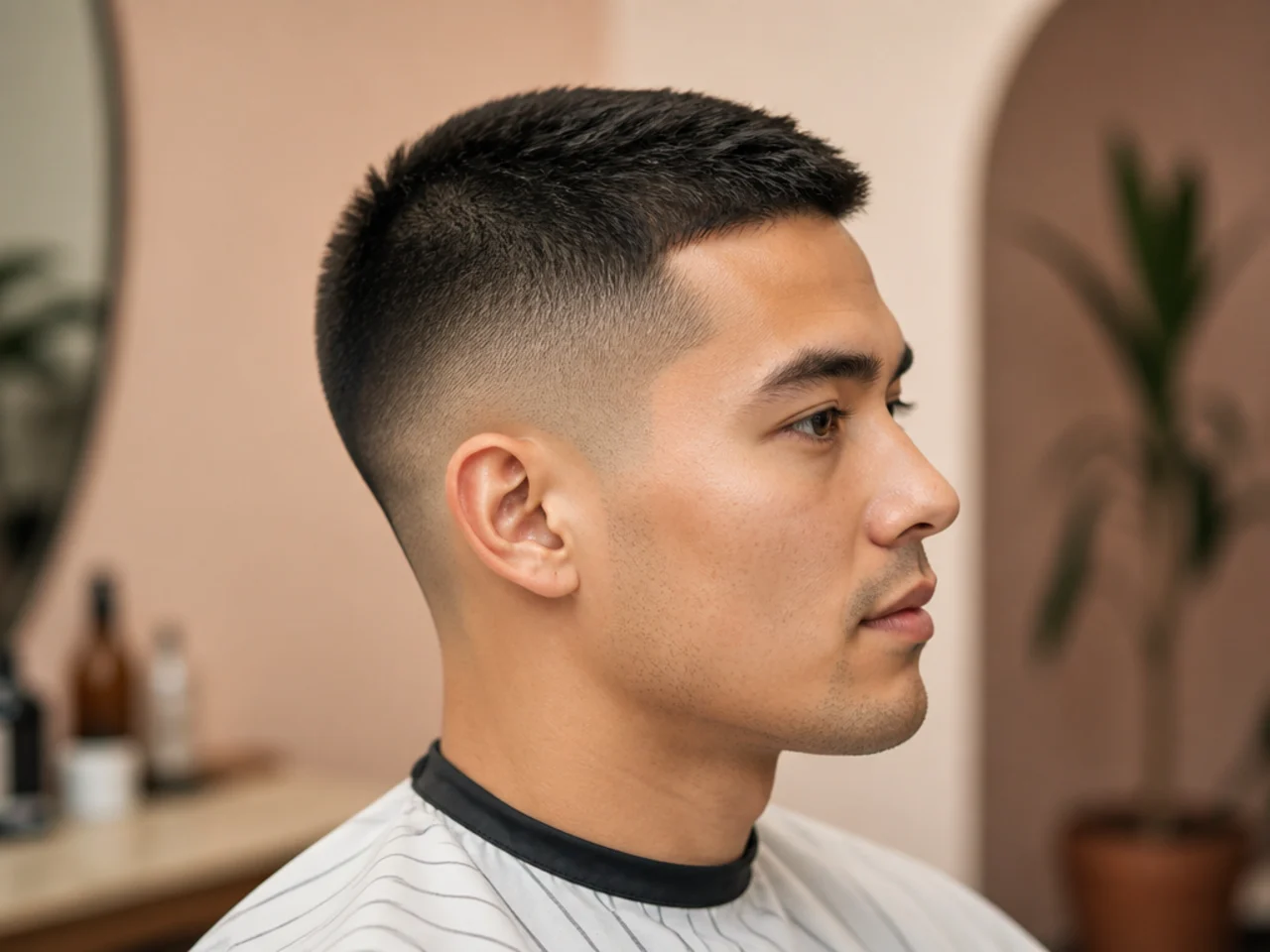
Short means one of two things. Either the top is clippered to a guard between #0 (skin) and #4 (about half an inch), or it's scissor-cut somewhere between three-quarters of an inch and two inches. The sides are always shorter than the top — tapered, faded, or clippered down to a #1 or #2.
Anything past two inches on top starts to drift into medium territory and asks for real styling. Short doesn't. That's the whole appeal. A pea of clay, thirty seconds with your fingers, and the shape holds until you shower it out.
Short reads clean in almost every workplace — office, trade, hospitality, uniform — and flatters receding hairlines and thinning crowns better than any long cut, because it stops trying to hide what's honest. For the full menu, our short simple mens haircuts pillar covers every low-lift shape in one place.
How to Choose a Short Haircut Worth Trying
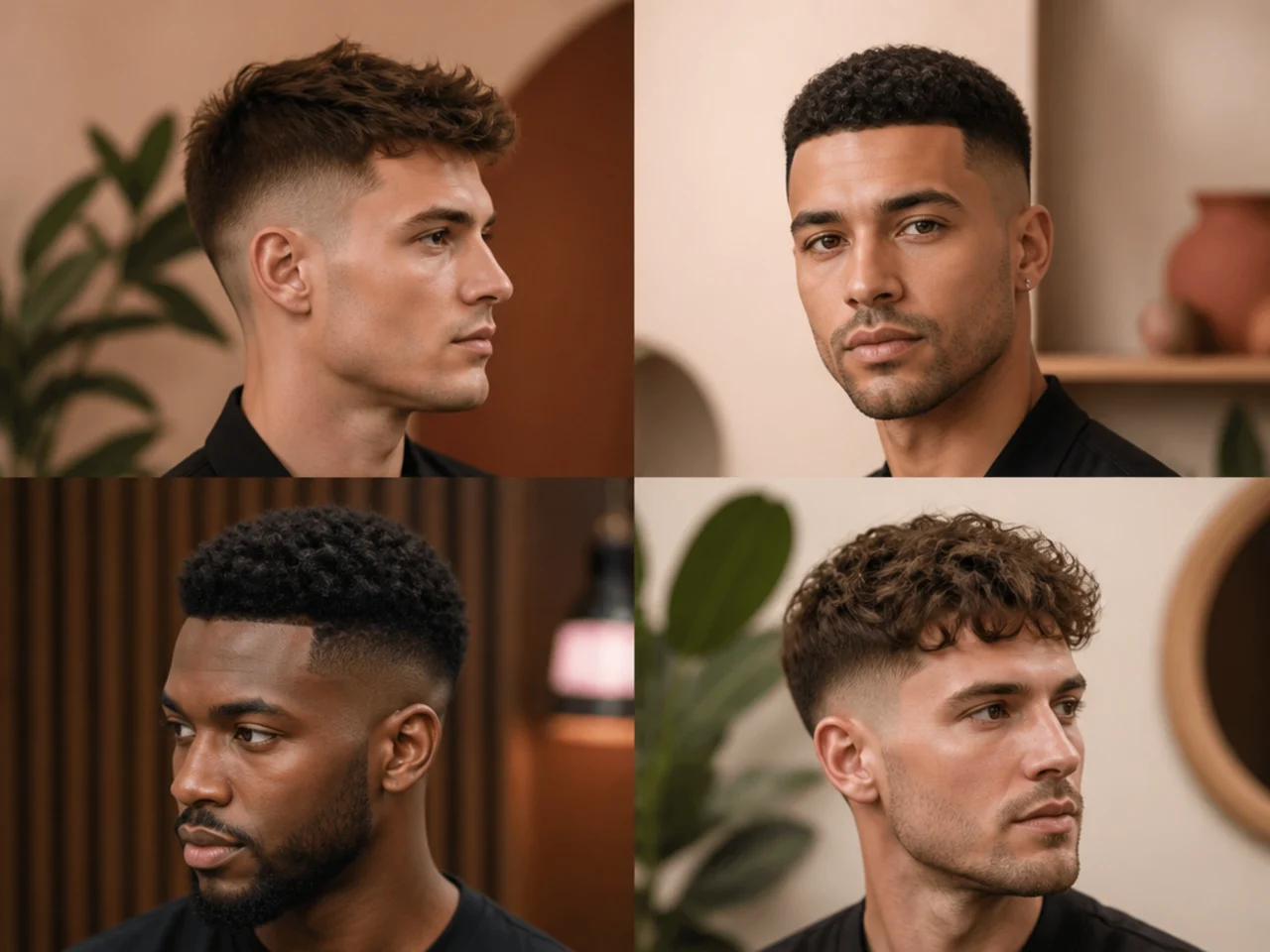
Face shape does most of the work. Round faces want vertical lift — a mini quiff, brush up, or textured crop with a fade lengthens the silhouette. Square faces carry almost every short cut — the strong jawline holds a buzz, crew, or Ivy League with equal ease. Oval faces are the easiest to dress; every cut on this list works, so pick on hair type and lifestyle instead. Heart-shaped faces want a forward fringe or textured top that balances a narrower chin. Long or oblong faces should reach for a French crop or Caesar — the forward fringe visibly shortens the forehead.
Hair type is the second filter. Fine, straight hair reads best short and neat — buzz, crew, or Ivy League. Thick, straight-to-wavy hair carries anything and rewards a textured crop, quiff, or comma cut. Coarse or coily hair wants scissor work on damp hair and a fade at the sides to keep the profile crisp.
Workplace is the tiebreaker. Trades and uniformed roles suit a buzz, high and tight, or crew. Corporate rewards an Ivy League, prep cut, or short comb over with a low fade. Creative offices carry every cut on the list, including the Edgar and the disconnected short. For a broader tour of short options across hair lengths, see our companion short haircuts for men guide.
The 25 Short Men's Haircuts Worth Trying
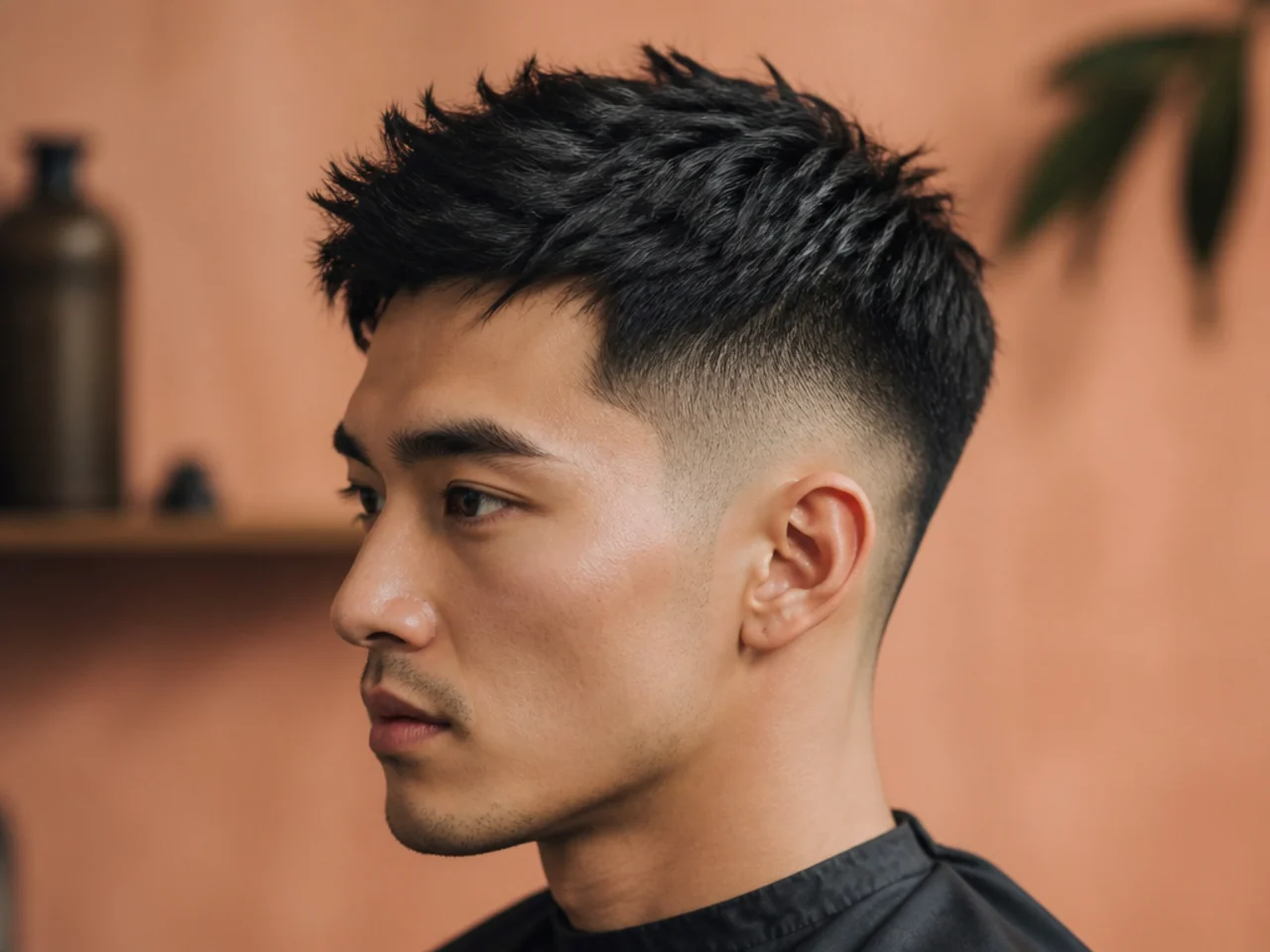
Sorted by shape, not by hair type. Each cut names the length on top, the sides treatment, the face shapes it flatters, and one styling move to finish it at home.
1. The Classic Short Buzz
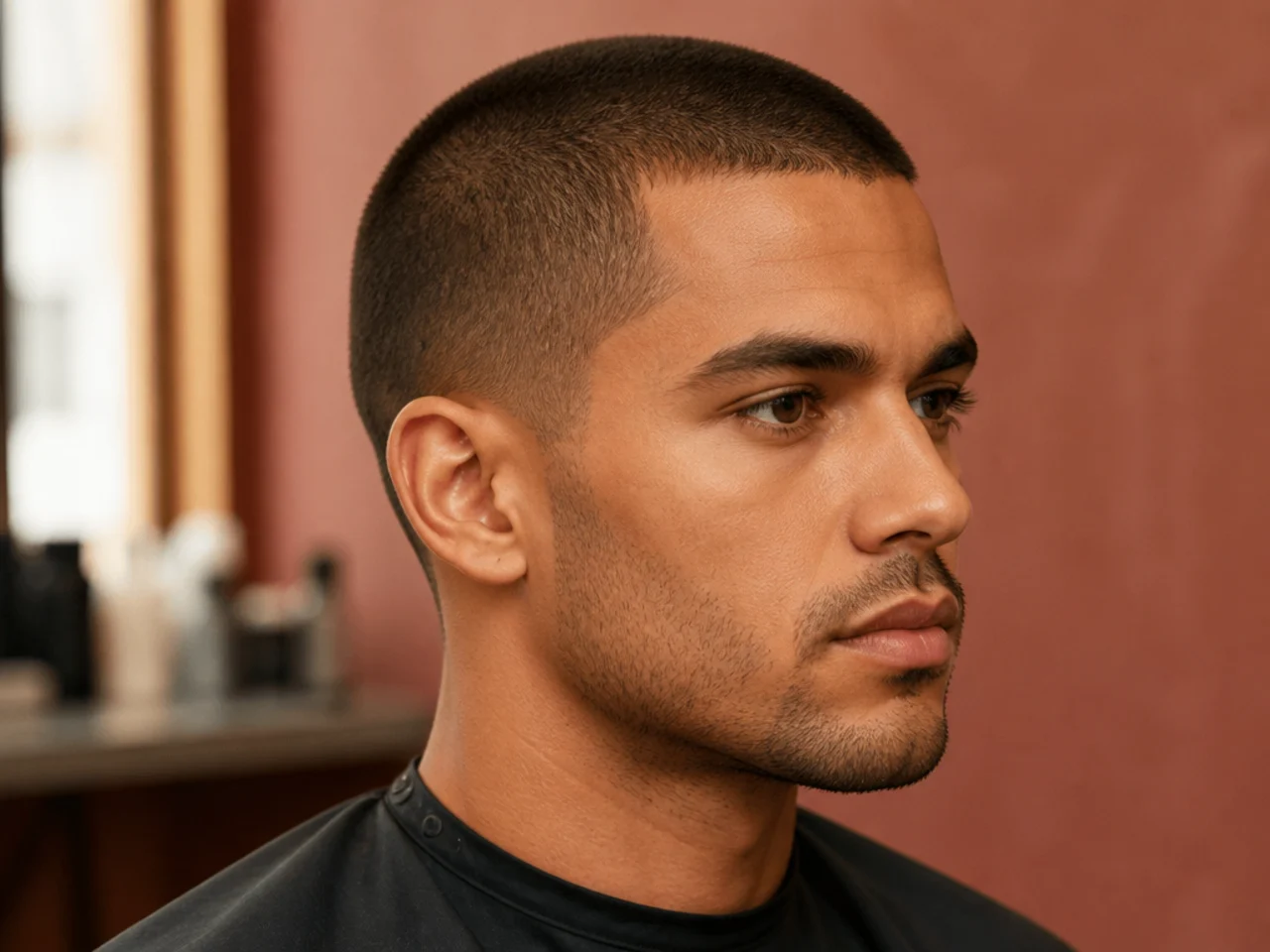
A #1 or #2 guard all over the head. The shortest cut on the menu that still counts as a haircut. Best on square jawlines, oval faces, and thick or thinning hair; softens further with a low taper at the temples. Ask for: "Number one on top, number one on the sides, square the neckline." Styling is nothing. A drop of face lotion through damp hair adds a whisper of shine. Rebook every three to four weeks or the shape drifts. Our full buzz cuts guide walks through every guard length.
2. The Butch Cut
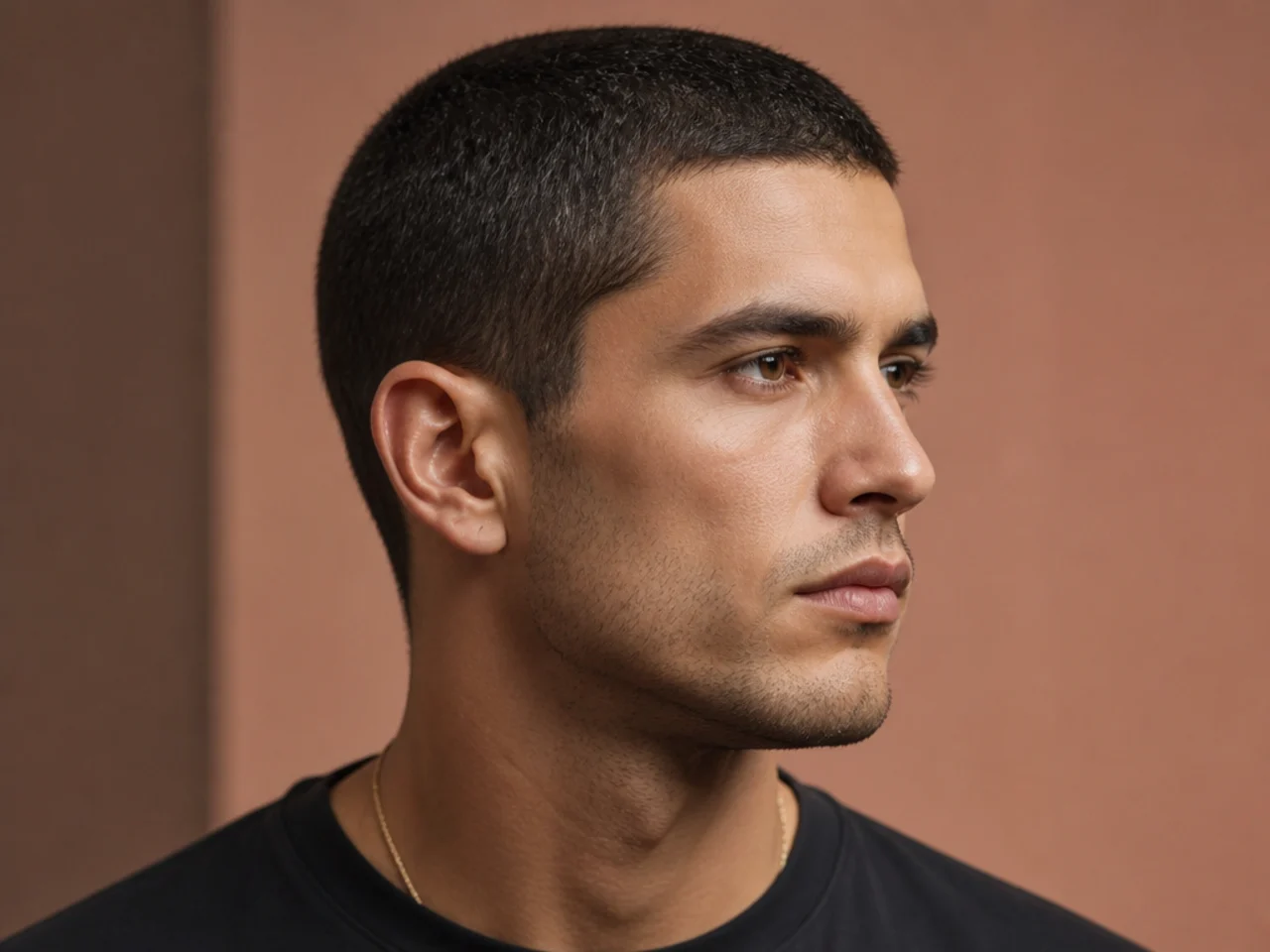
A #2 or #3 guard on top with clippered #1 sides. Half a step longer than a plain buzz, half a step shorter than a crew. Reads intentional without asking for a comb. Best on athletic lifestyles, thinning tops, and every face shape but especially oval and square. Ask for: "Butch cut, number three on top, number one on the sides, square neckline." Zero product. Rebook every four weeks — the outline holds a full month before it drifts.
3. The Crew Cut
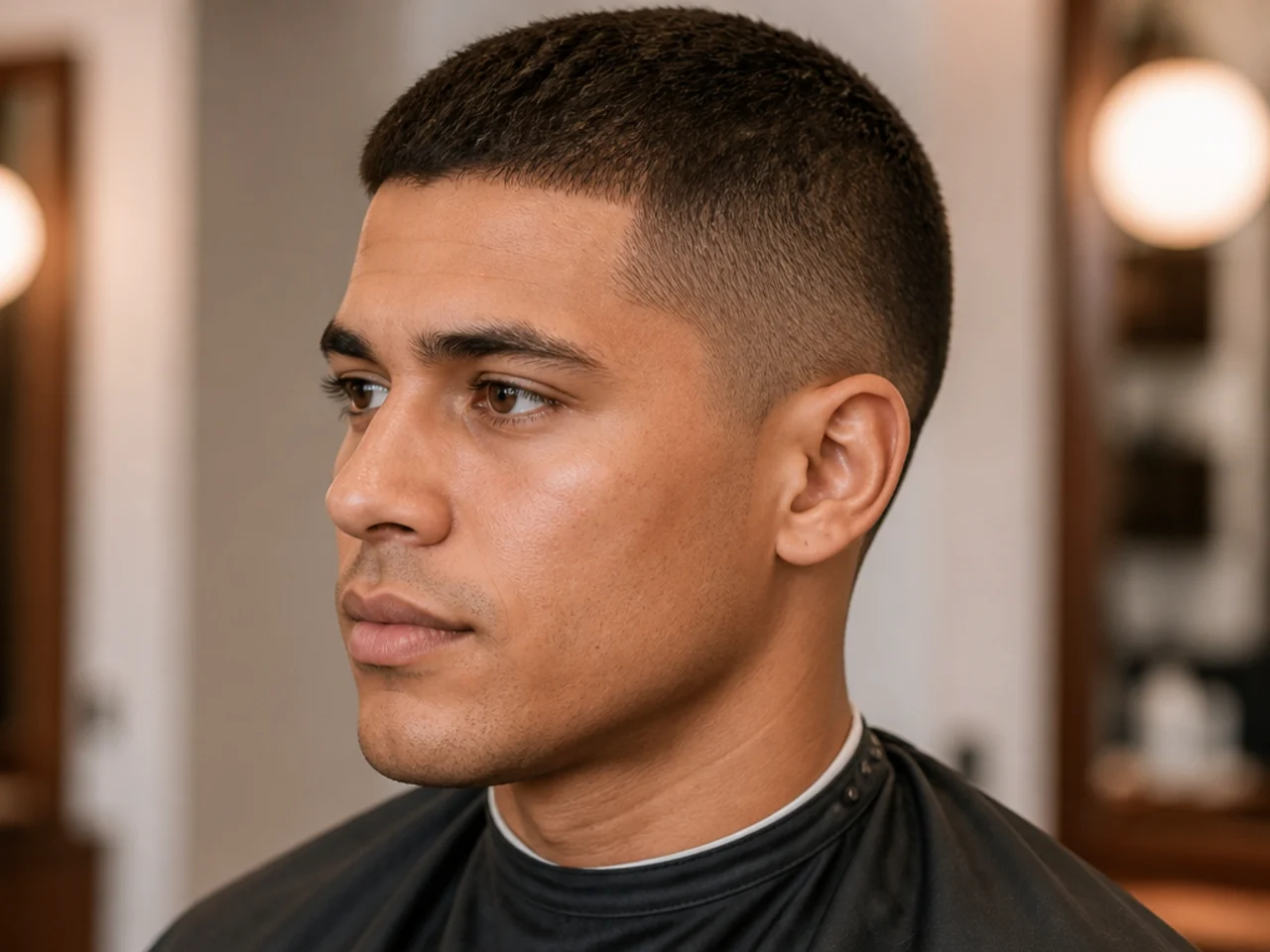
About an inch on top scissor-graduated shorter to the back, with sides tapered from a #2 down to a #1 at the perimeter. The default short cut for good reason. Best on every face shape and every hair type — a workhorse in offices, trades, and uniformed roles. Ask for: "Crew cut, inch on top graduated shorter to the back, number two tapered sides." A pea of matte clay finger-pushed forward finishes it in thirty seconds.
4. The High and Tight
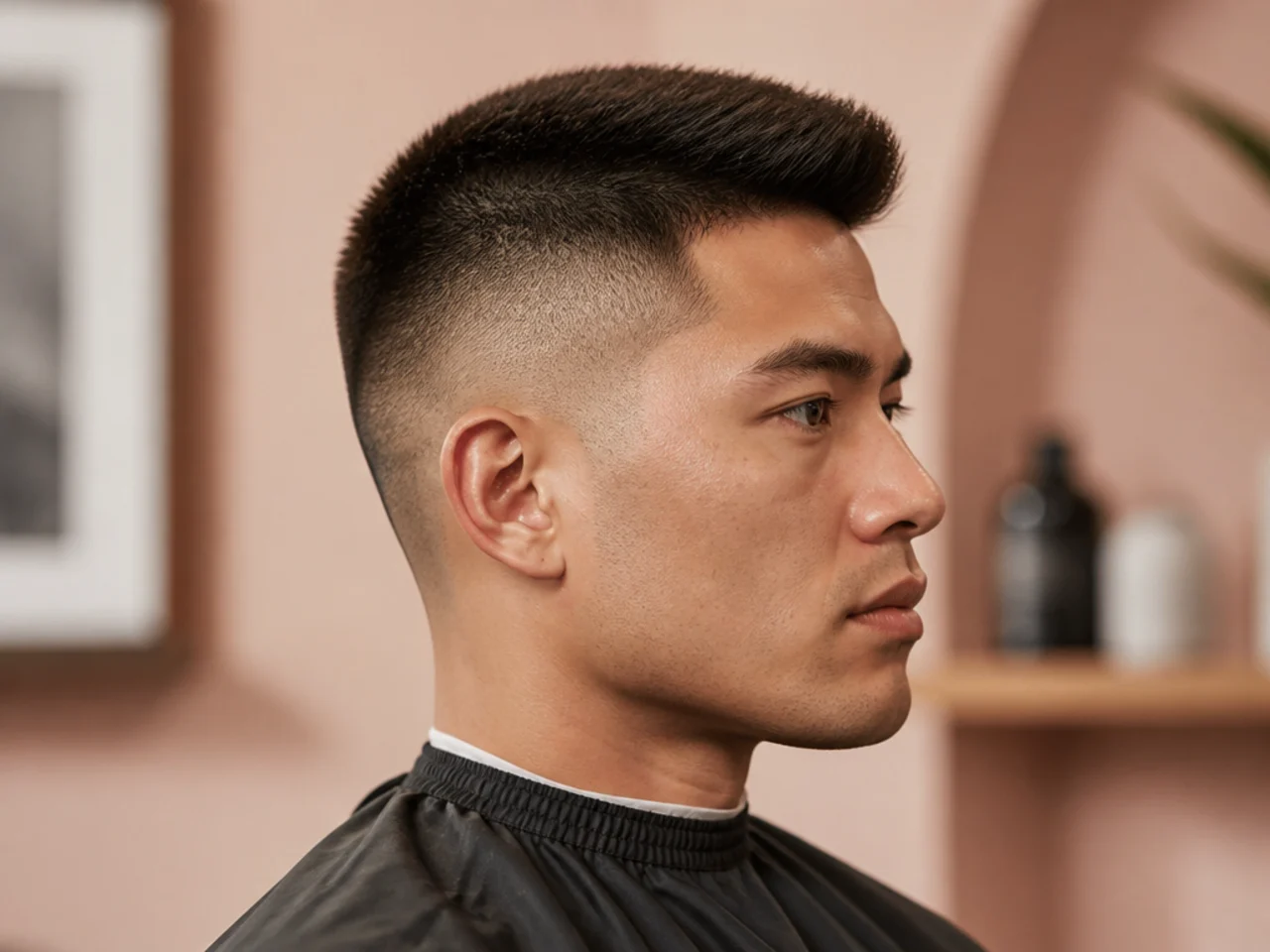
A #2 or #3 on top with a skin or #0 fade jumping in high — above the temple, sometimes as high as the crown. Military discipline, civilian polish. Best on strong bone structure and thick straight-to-wavy hair; a favorite in trades and uniformed roles. Ask for: "High and tight, number three on top, skin fade jumping in high above the temple, square neckline." Rebook every three weeks — the high fade line drifts fast and the whole read hinges on it.
5. The Ivy League
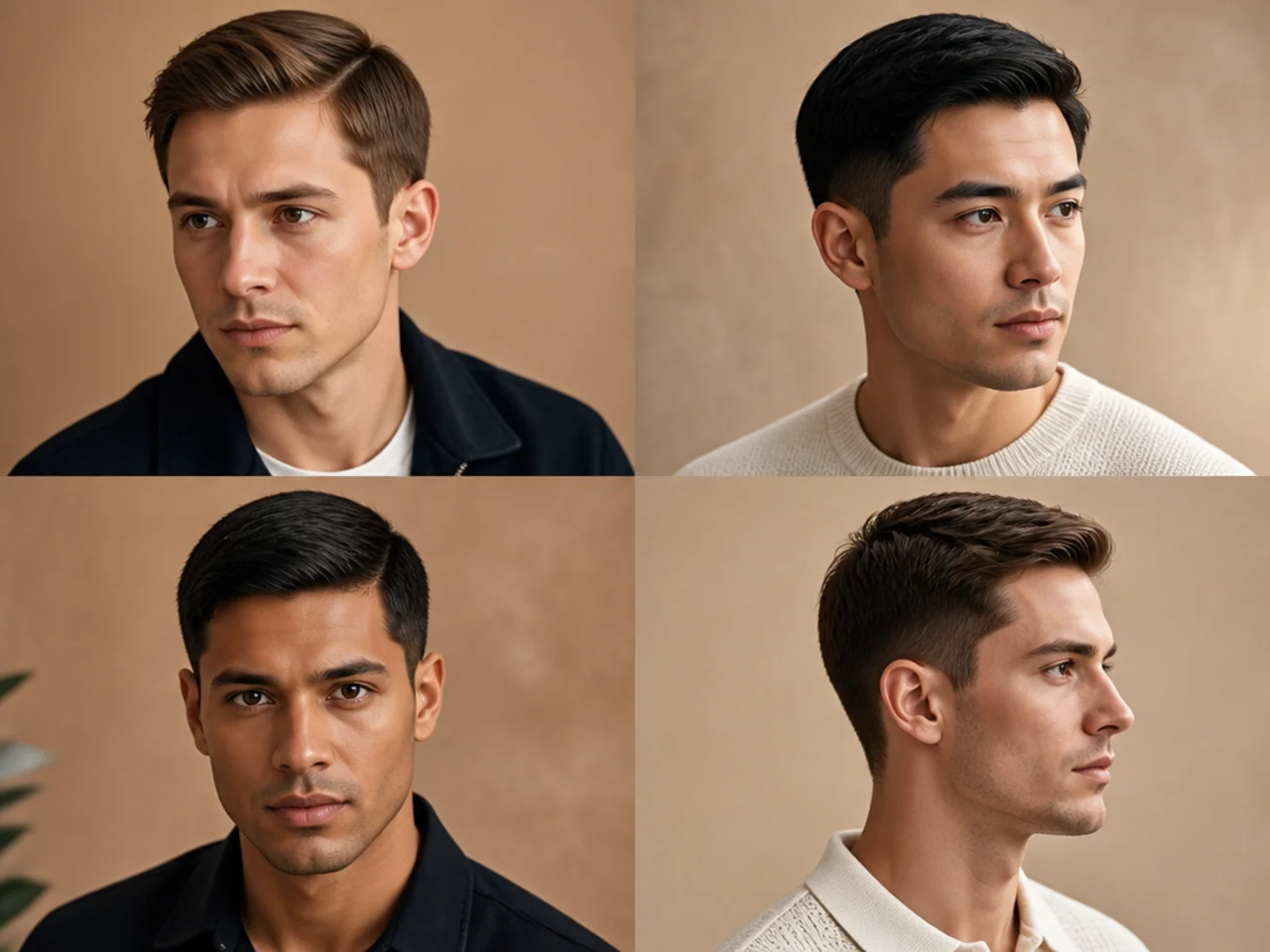
A crew cut with enough length on top — an inch and a half to two inches — to hold a defined side part. The Ivy League is the boardroom-friendly short cut, and the best entry point for guys stepping up from a buzz. Best on oval, square, and heart-shaped faces with straight-to-wavy hair. Ask for: "Ivy League, two inches on top, part on the left [or right], scissor-blended sides." Blow-dry to the part with a small brush, work a light-hold pomade through, comb once.
6. The Prep Cut
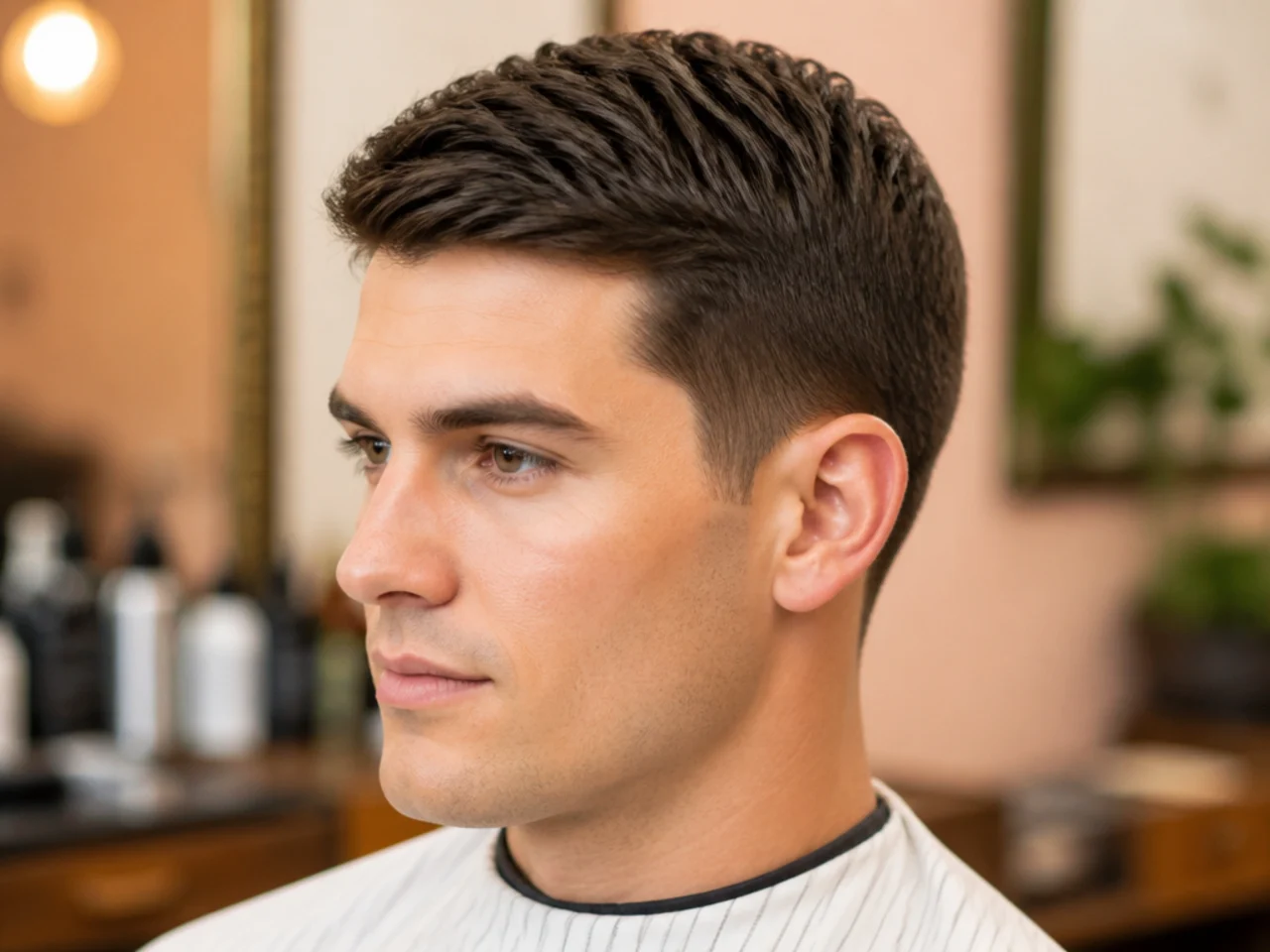
The Ivy League's slightly-longer sibling. Two inches on top with a natural part where the hair falls on its own, sides tapered low and clean. Reads younger and more casual than the Ivy while keeping the same polish. Best on oval and heart-shaped faces with fine-to-medium hair in any wave. Ask for: "Prep cut, two inches on top, natural part, low taper sides, square neckline." A pea of medium-shine cream keeps the shape moving without weight. Rebook every five weeks.
7. The French Crop
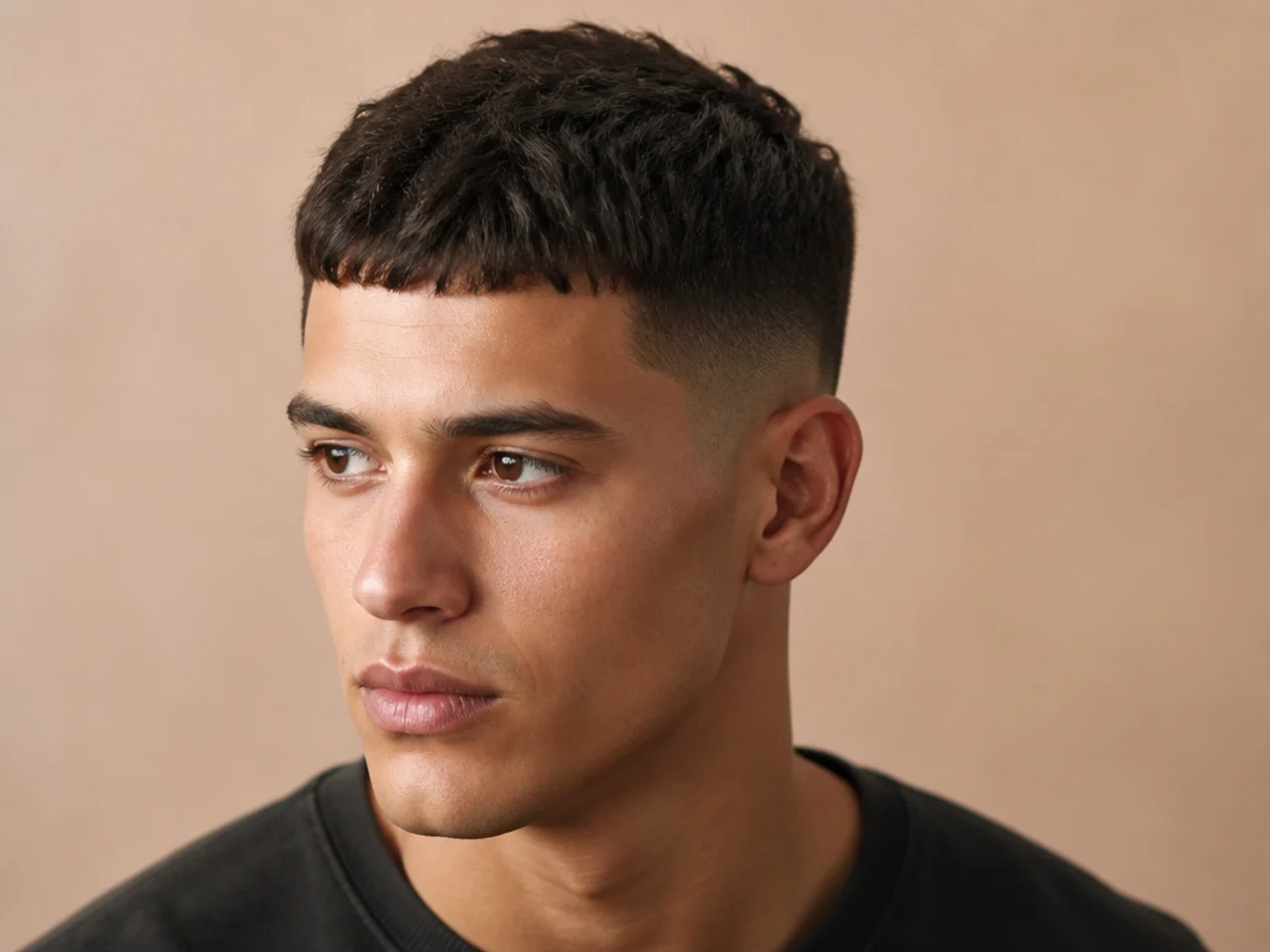
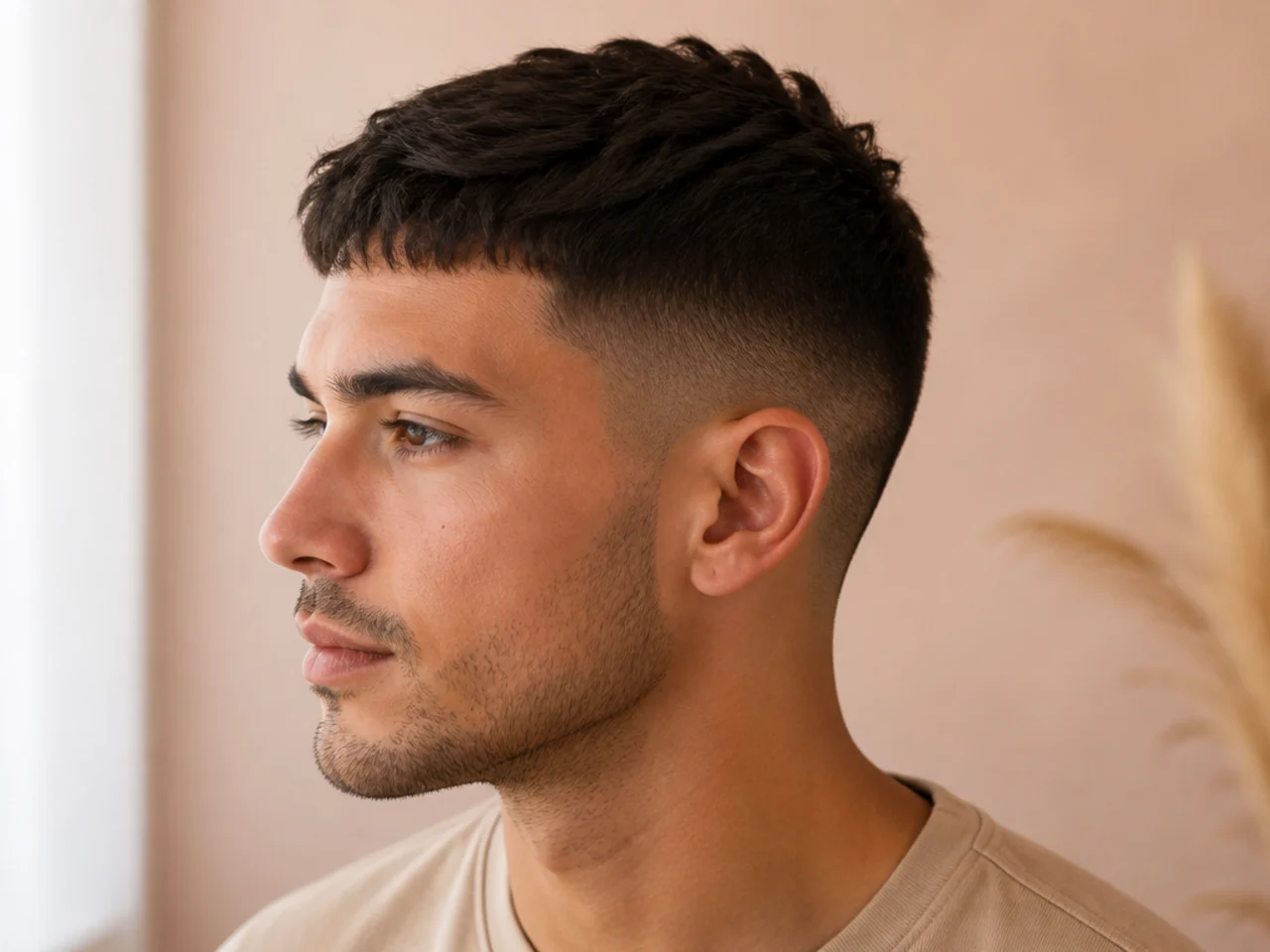
About an inch and a half on top with a blunt fringe just above the brow, plus a low or mid fade at the sides. The French crop is the go-to short cut for high foreheads and receding hairlines because the fringe covers what a slick back would expose. Best on straight, wavy, and lightly curly hair. Ask for: "French crop, inch and a half on top, blunt fringe at the brow, mid fade at the sides." Style with a matte paste pushed forward.
8. The Textured Crop
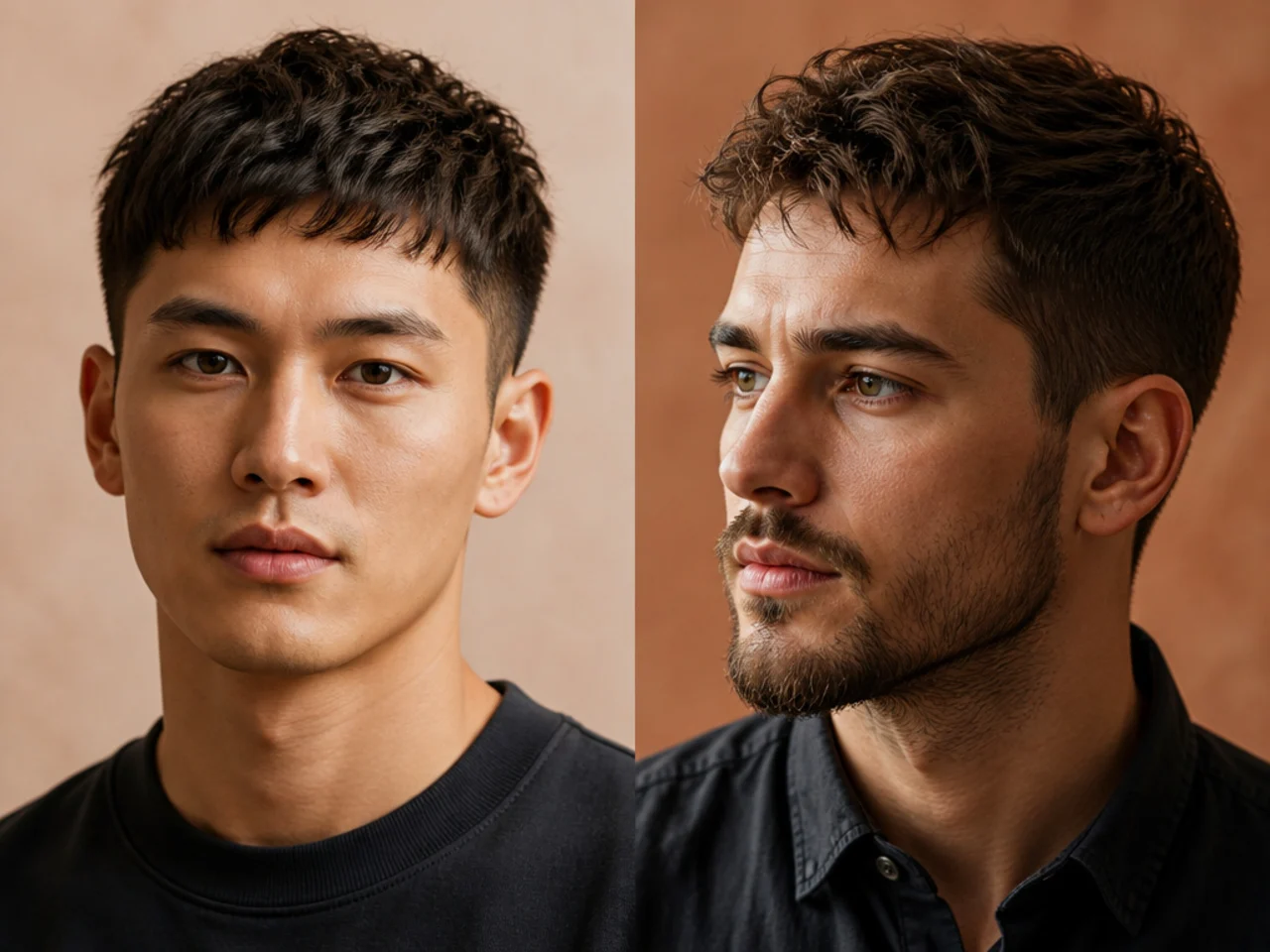
The French crop with the top point-cut for movement and the fringe softened into piecey ends. Reads more casual and a hair more current. Best on fine-to-medium straight or wavy hair; skip if your hair is very thick — the texture disappears under weight. Ask for: "Textured crop, inch and a half on top point-cut for texture, soft fringe at the brow, low fade at the sides." A dab of sea-salt spray under a matte cream gives grip.
9. The Caesar Cut
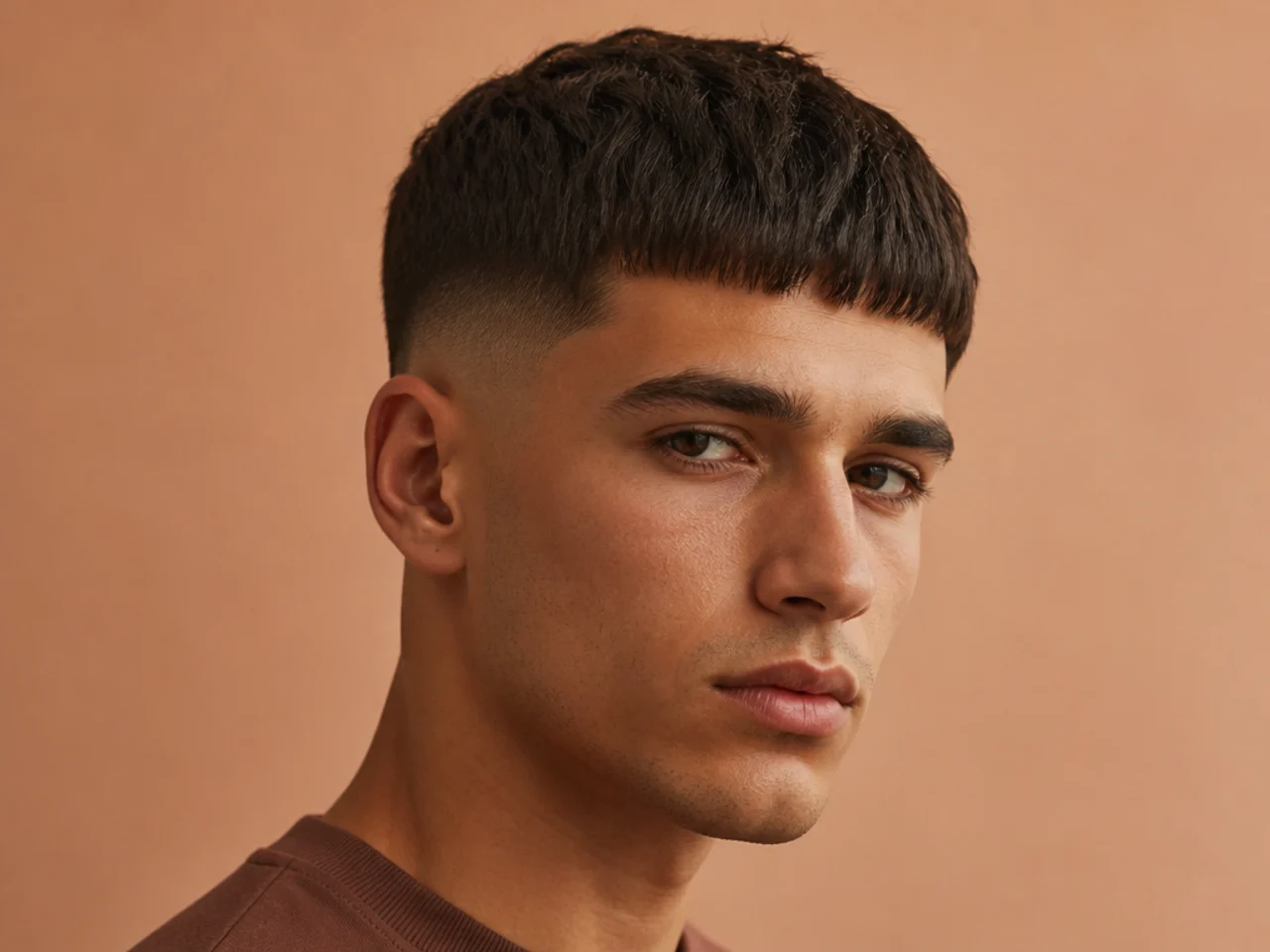
The Latin ancestor of the crop. About an inch on top, brushed forward, ending in a short even fringe across the brow. Modern versions pair it with a low or mid fade at the sides for contrast. Best on high foreheads, receding hairlines, and straight-to-wavy hair. Ask for: "Caesar cut, one inch on top brushed forward, straight fringe at the brow, low fade at the sides." Style with a matte pomade for a modern read; a shiny pomade dates it fast.
10. The Taper Crop
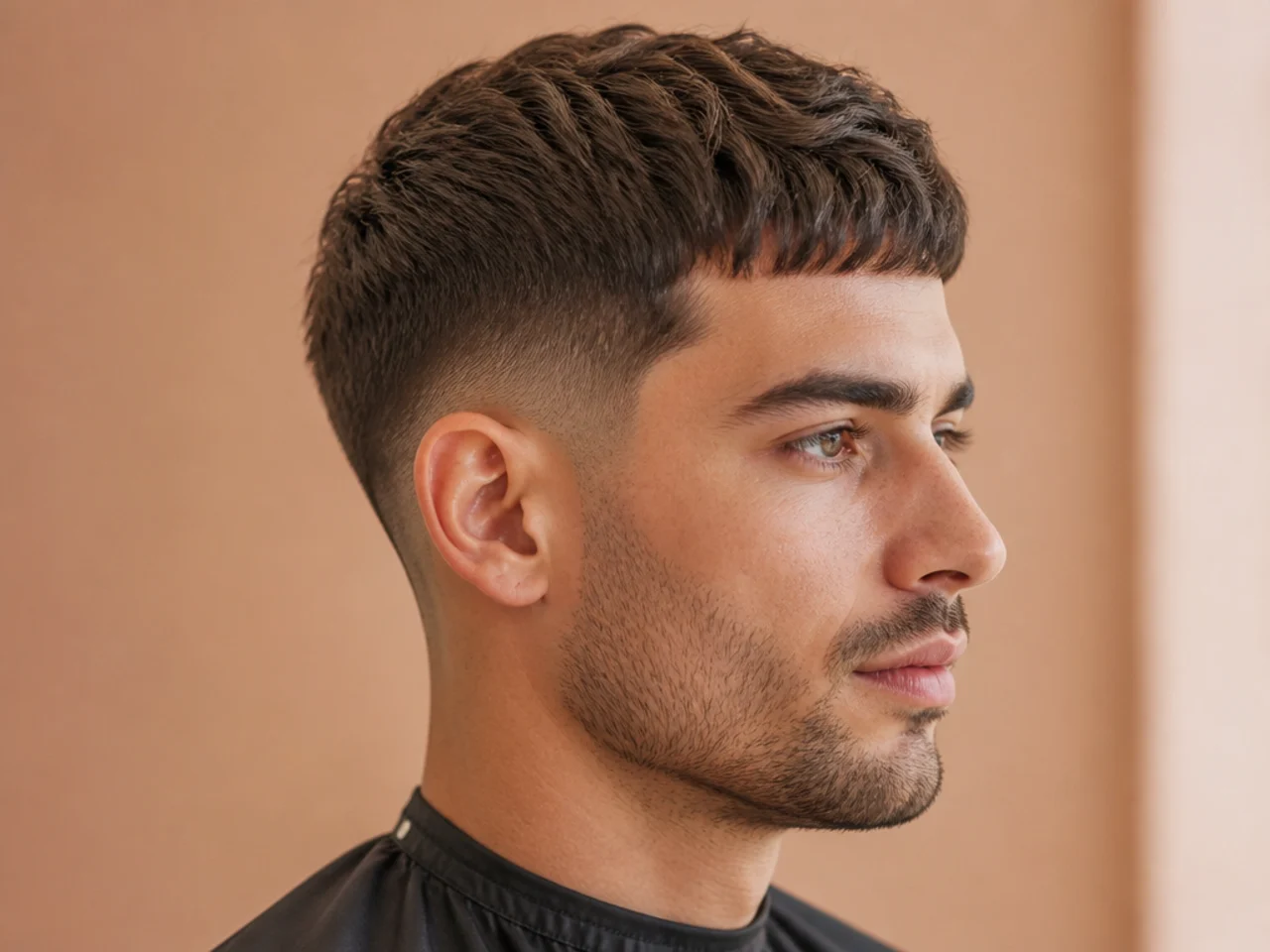
A short crop on top — three-quarters of an inch to an inch — with a soft low taper fade behind the ear rather than a hard fade line. The most forgiving short cut on the list for guys who can only book every five to six weeks. Best on every face shape and any hair type. Ask for: "Taper crop, three-quarter inch on top, low taper fade at the sides, square the neckline." Zero product needed; a matte cream tapped into the front adds softness.
11. The Short Side Part
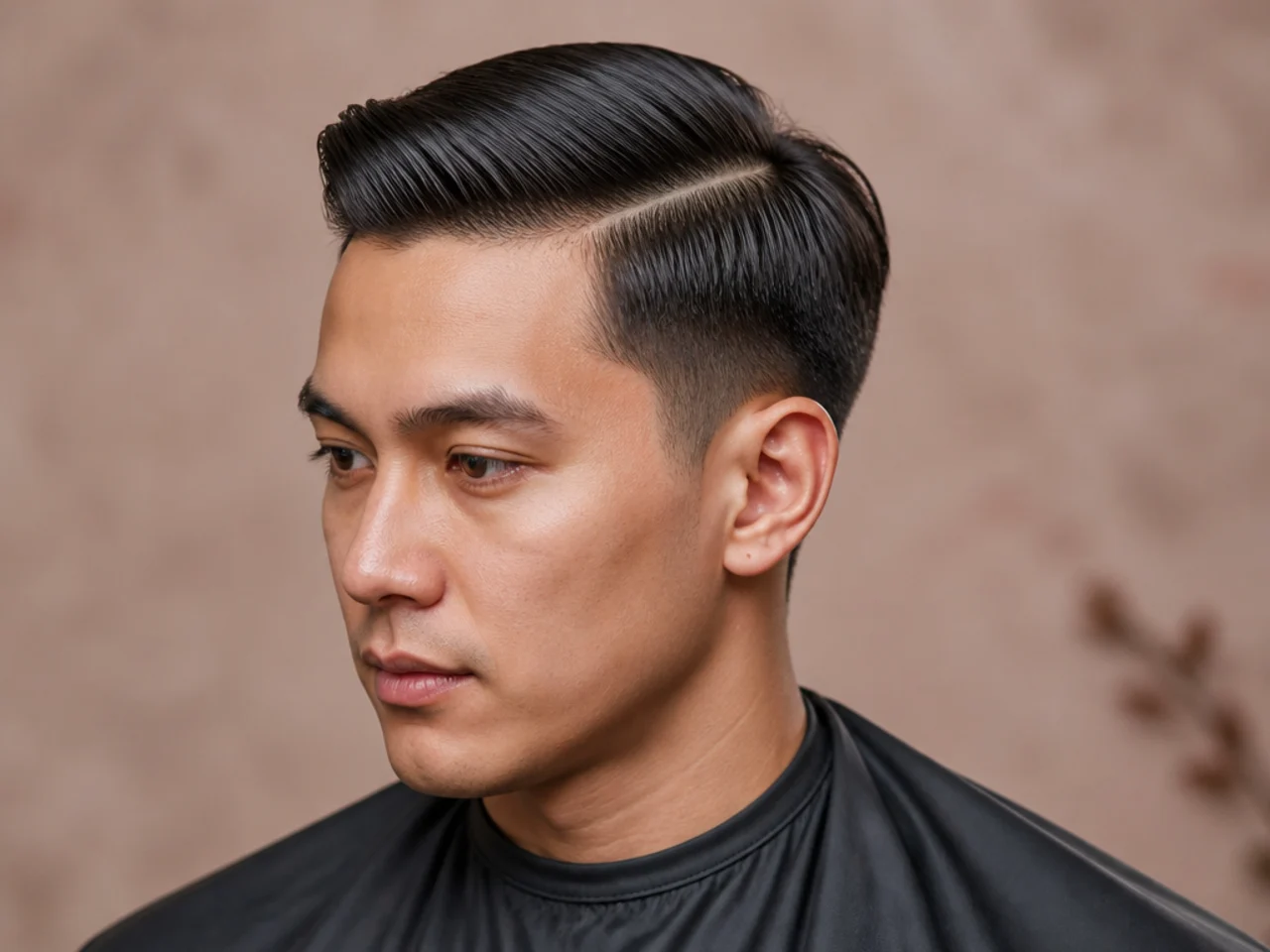
About an inch and a half on top with a defined side part — natural or razored — and a low fade or taper at the sides. Widens the crown and narrows the jaw at the same time, which is why it flatters almost every face shape. Best on straight-to-wavy hair. Ask for: "Short side part, inch and a half on top, part on the [left or right], low fade at the sides." Blow-dry to the part, light pomade, one comb pass — under a minute at the mirror.
12. The Short Comb Over
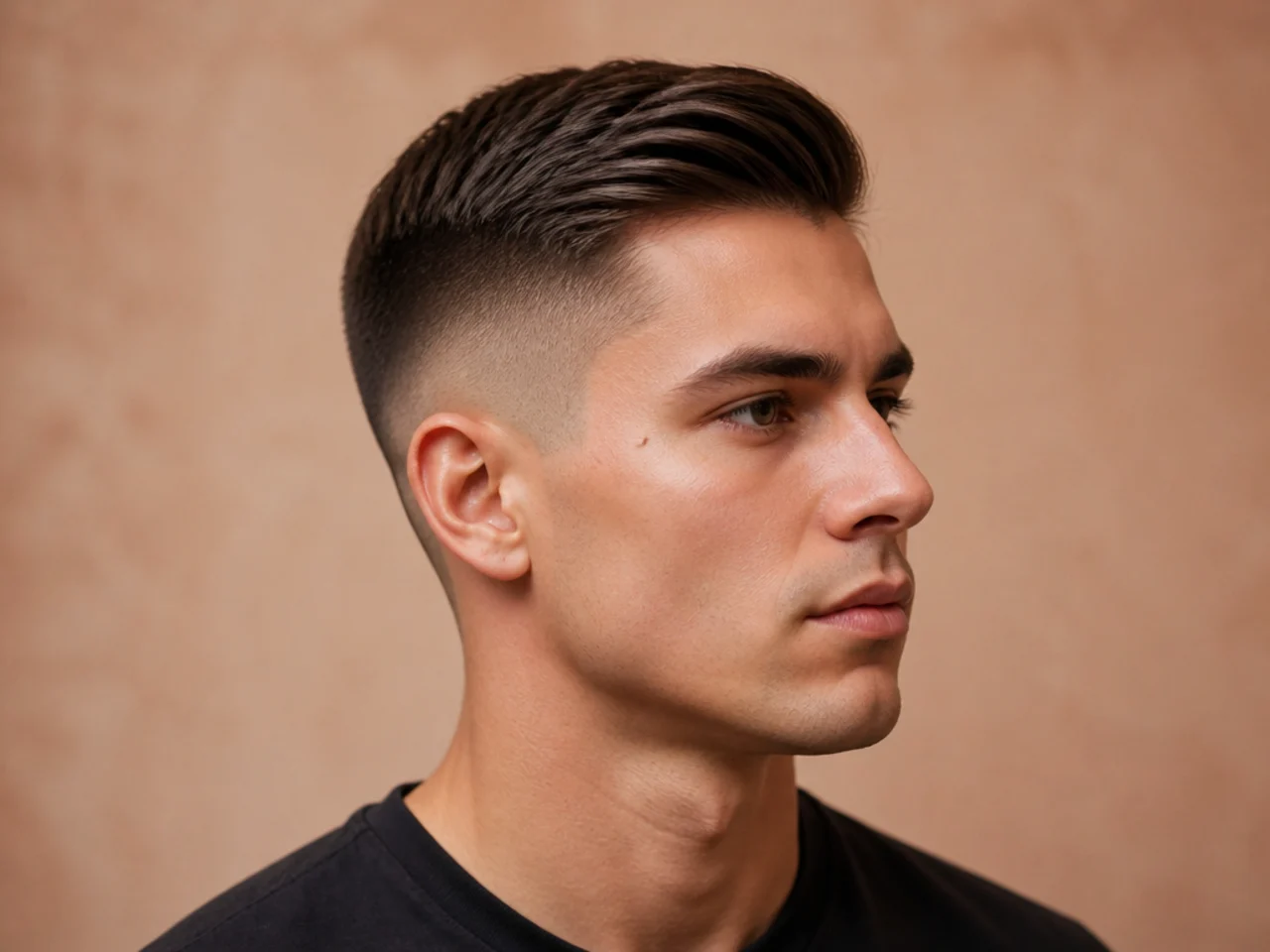
Two inches on top, brushed to one side across a razored or natural part, with a low or mid fade at the sides. Closest thing to a suit in haircut form. Best on oval and square faces with straight-to-wavy hair; reads clean at any age. Ask for: "Short comb over, two inches on top, razored part on the [left or right], low fade at the sides." Blow-dry with a round brush toward the part, medium-hold pomade, one comb pass.
13. The Short Slick Back
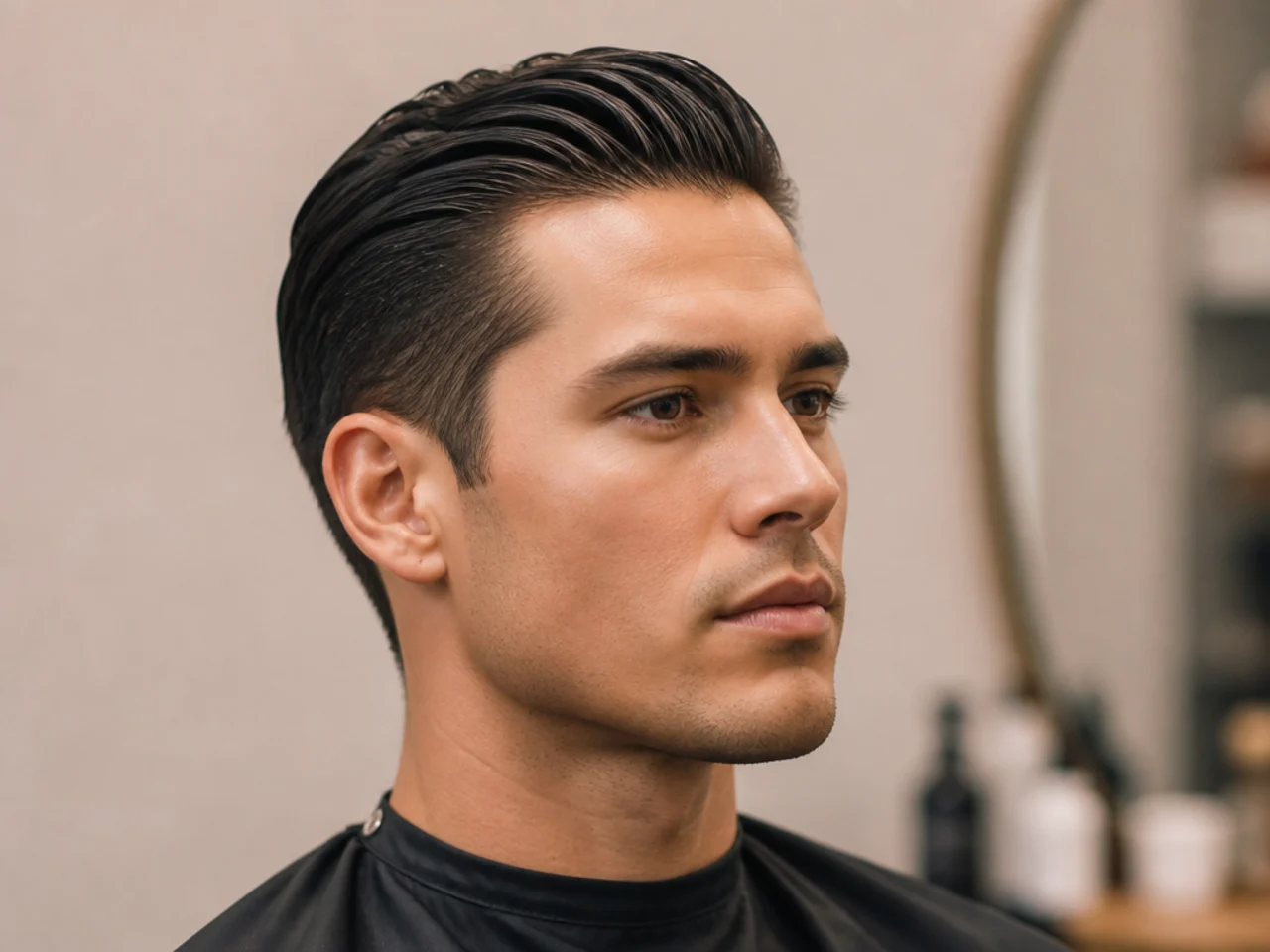
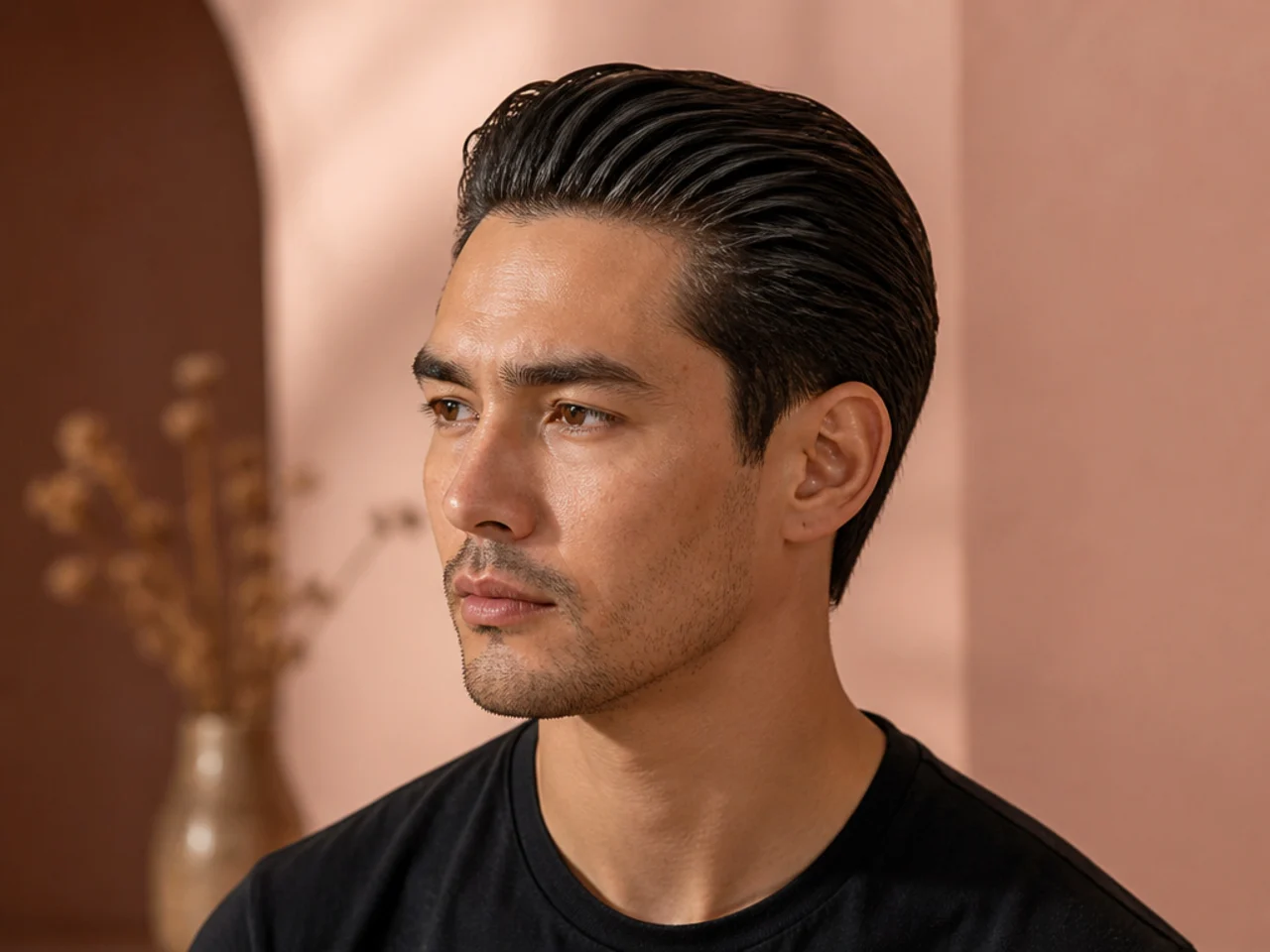
Two inches on top with no part at all — combed straight back off the forehead and held with a medium-shine pomade. Sides taper or low-fade to keep the silhouette clean. Best on oval faces and thick straight hair that can hold volume back. Skip if your hair is very fine or your forehead sits high. Ask for: "Short slick back, two inches on top, low fade at the sides, square neckline." A pomp comb finishes it faster than a brush.
14. The Short Pompadour
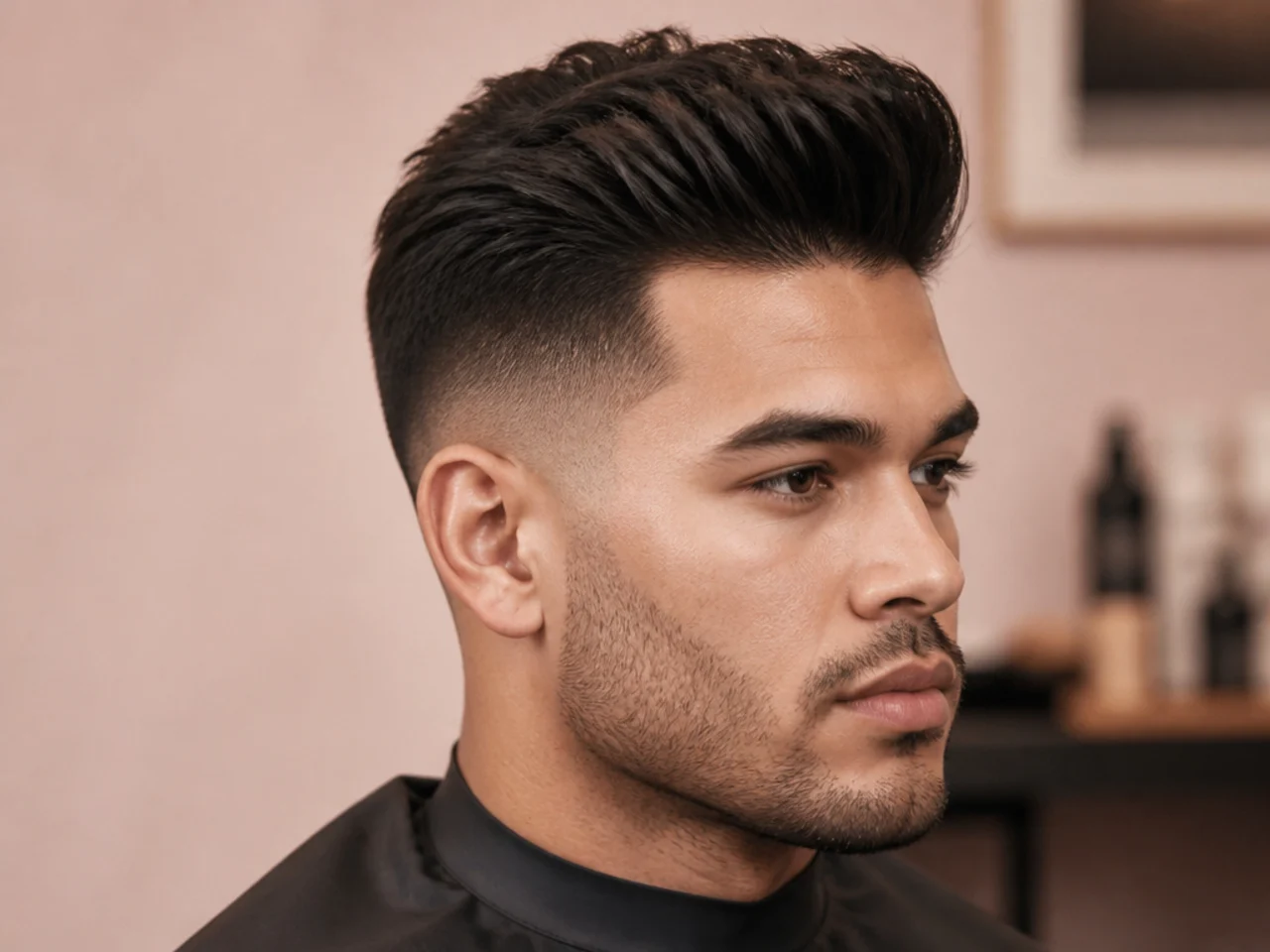
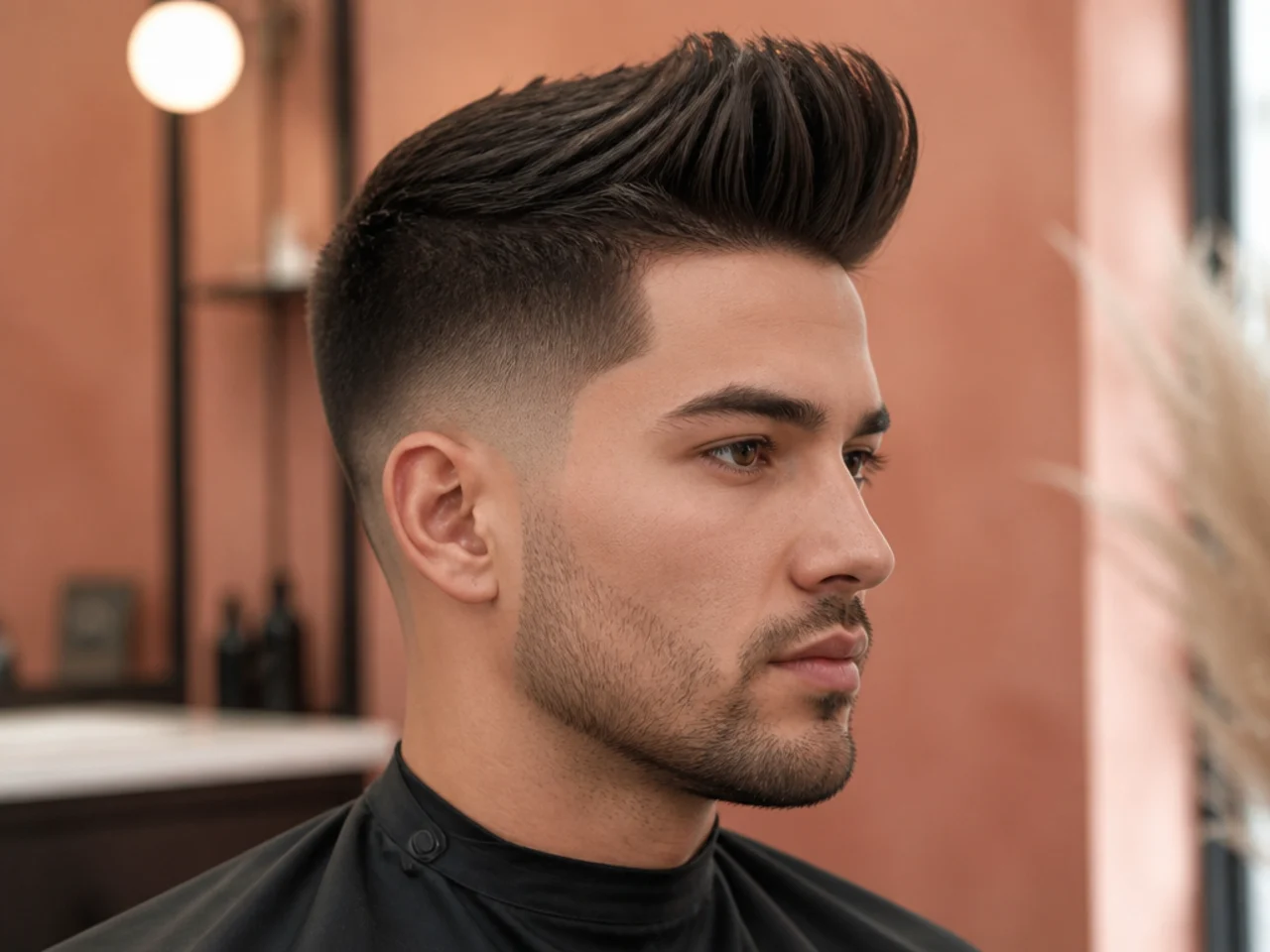
Two inches on top styled back and up with more sheen than a quiff, ending in an implied wave at the crown. Retro roots, modern silhouette when paired with a low taper fade or scissor-blended sides. Best on oval and square faces and straight-to-wavy hair with body. Ask for: "Short pompadour, two inches on top, low taper fade at the sides." Blow-dry back with a round brush, medium-shine pomade, comb once.
15. The Mini Quiff
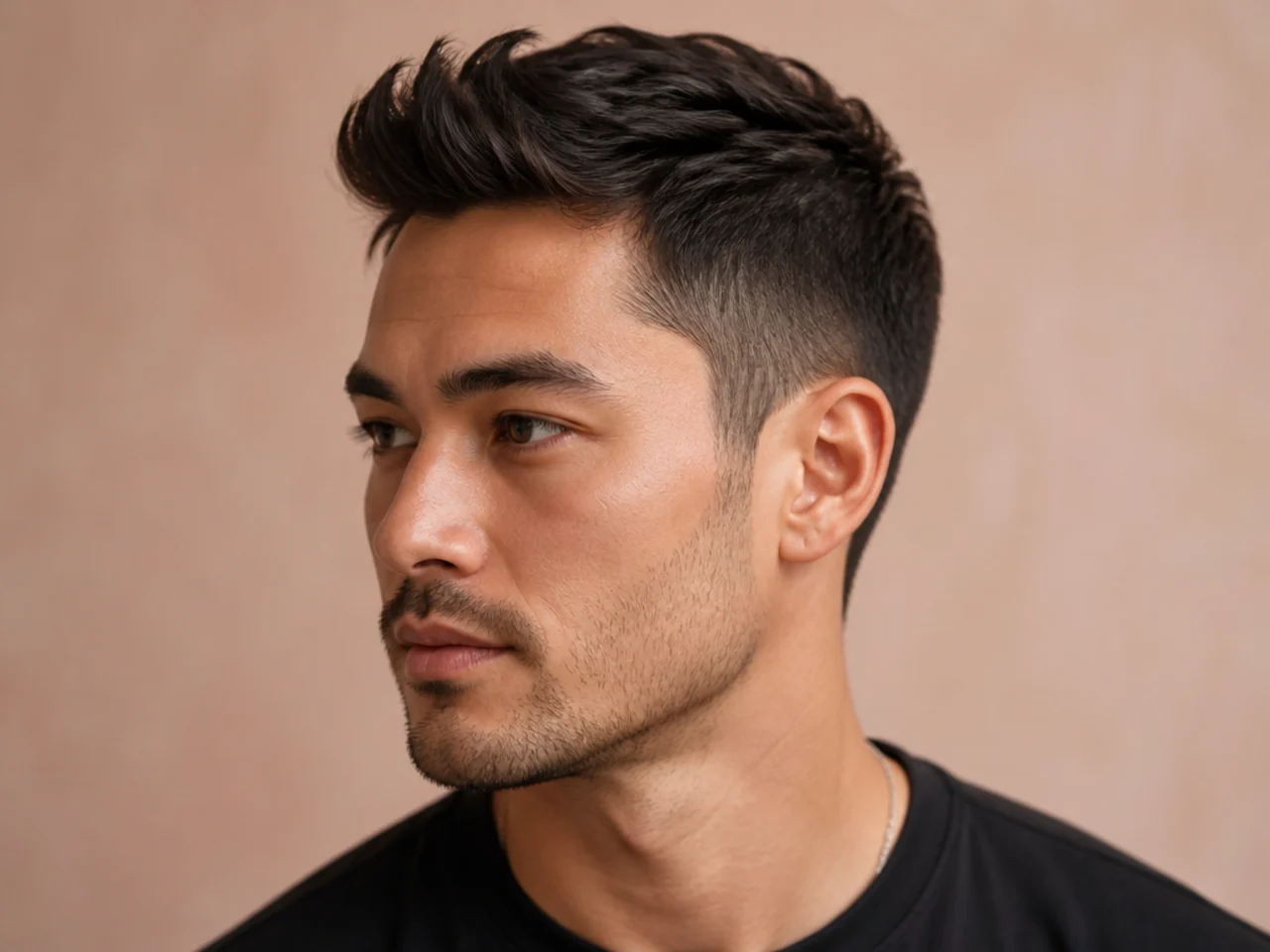
About an inch and a half on top point-cut for movement and lifted at the front — smaller and less committed than a full quiff. Sides low-fade or taper clean. Best on round, heart-shaped, and oval faces because the vertical lift adds length. Ask for: "Mini quiff, inch and a half on top point-cut for texture, low fade at the sides." Blow-dry the front up, work a matte clay through, tousle with your fingers.
16. The Short Brush Up
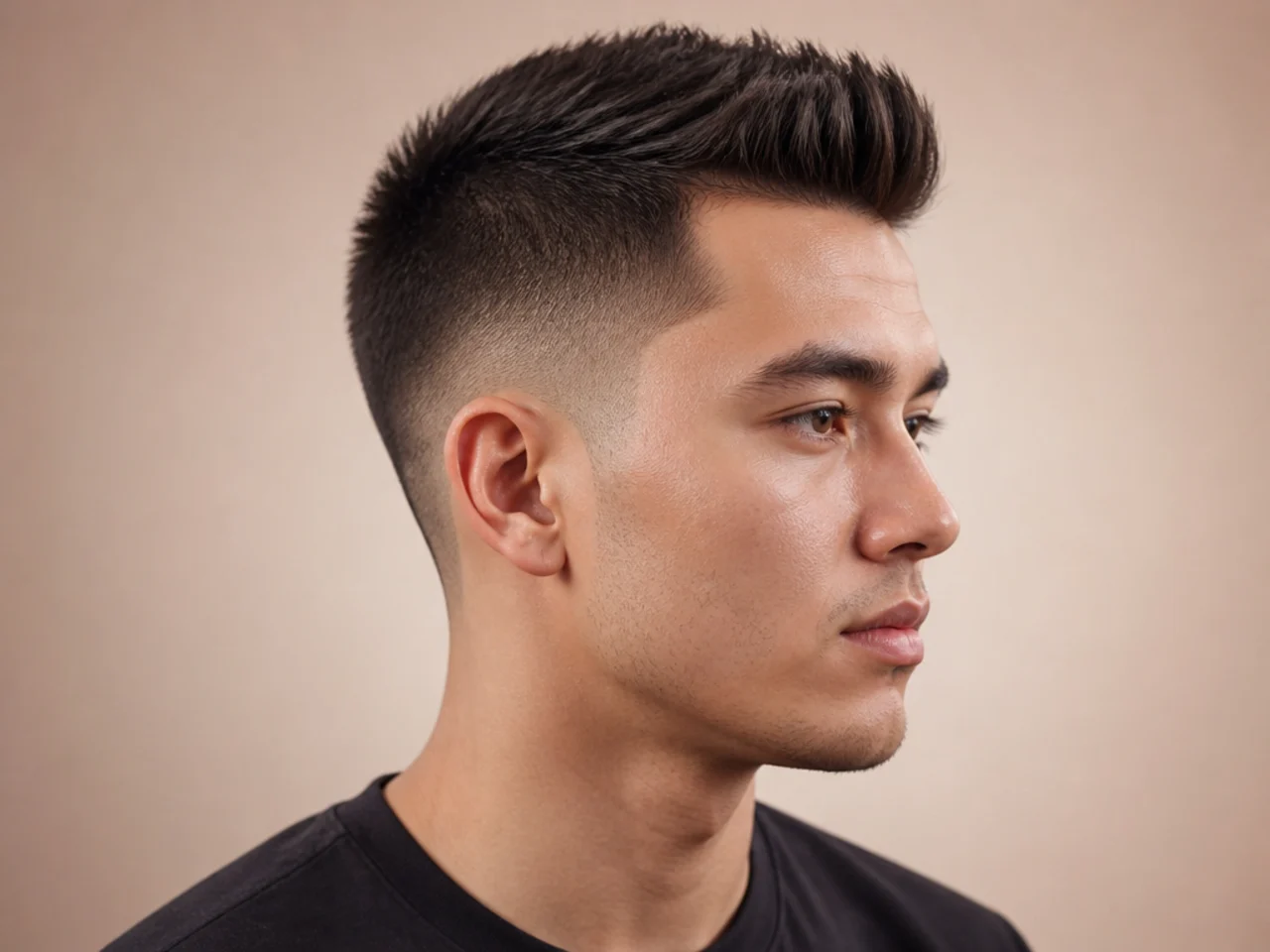
An inch and a half on top brushed straight up and forward, with sides that fade cleanly to draw the eye upward. Reads modern and photographs well from any angle, which makes it a Pinterest favorite year after year. Best on round and heart-shaped faces. Ask for: "Short brush up, inch and a half on top, low fade at the sides, square neckline." Blow-dry up with a vent brush, light-hold clay through the front, no comb.
17. The Short Comma Cut
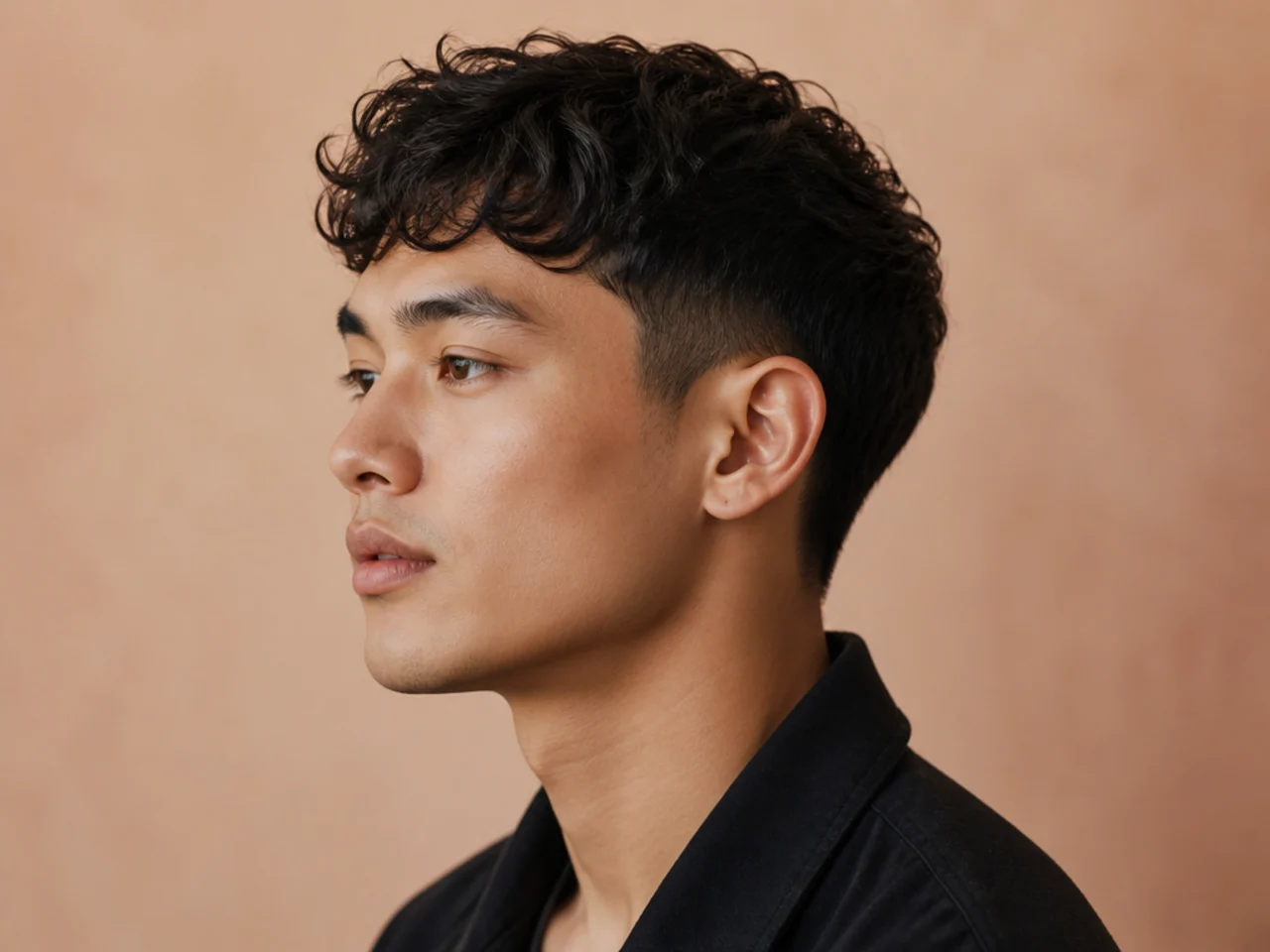
The K-pop-inspired short cut that ends in a soft comma-shaped curl at the temple. About an inch and a half on top with an ear-length forward-swept fringe cut with a slight curve. Best on straight-to-wavy hair and oval or heart-shaped faces. Ask for: "Short comma cut, inch and a half on top, forward-swept fringe with a comma curl at the temple, low taper sides." Blow-dry the fringe forward with a round brush, then flick the ends in with the barrel.
18. The Disconnected Short
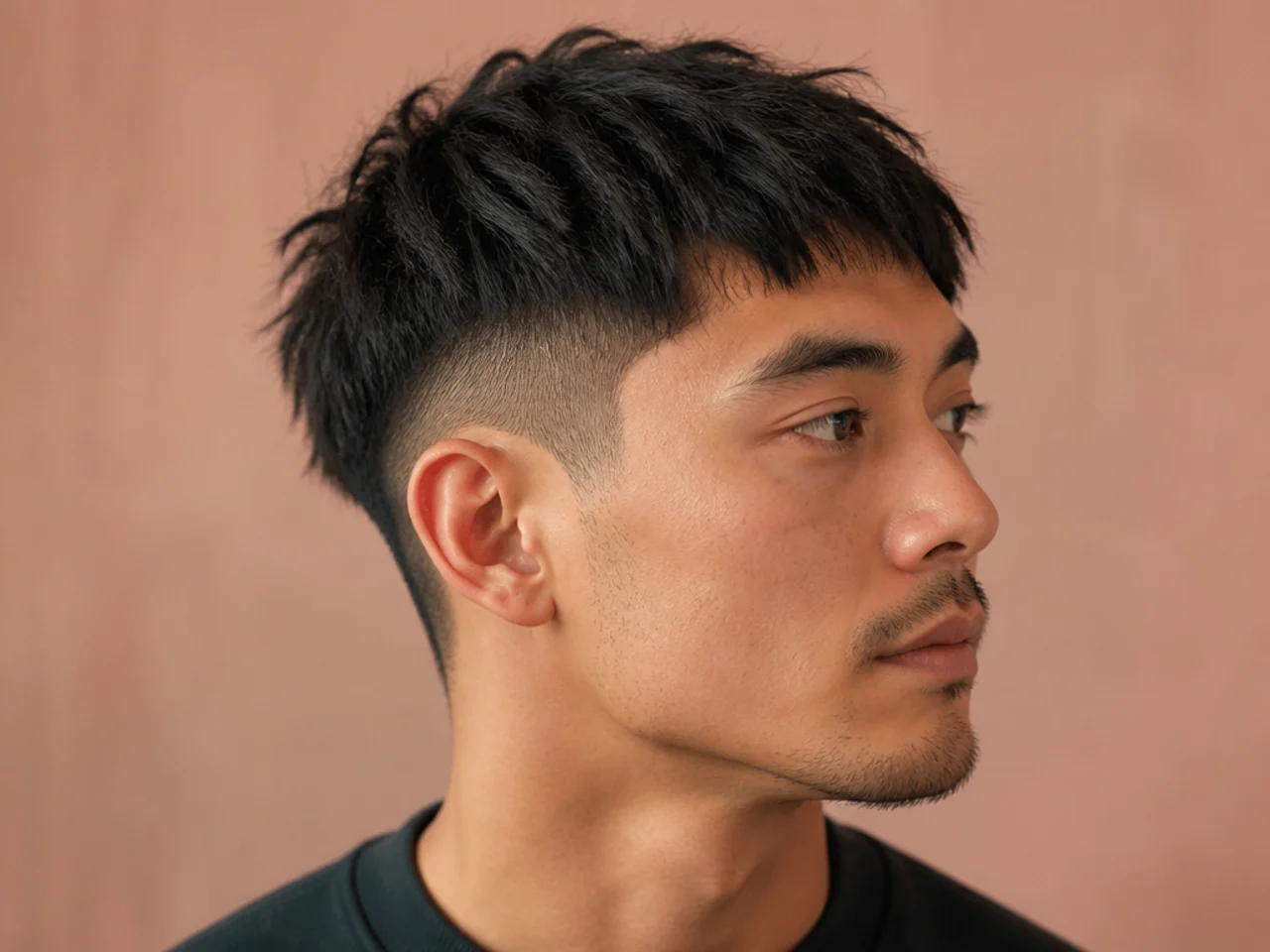
About an inch and a half of scissor-cut length on top with hard-clippered short sides — no fade or blend, just a clean visual break where the two sections meet. Bold, current, and best on strong bone structure. Ask for: "Disconnected short, inch and a half on top, number one sides, no blend between the two." Skip if your face is very round; the sharp contrast can round you further. Style with matte paste for grip and a defined edge.
19. The Short Faux Hawk
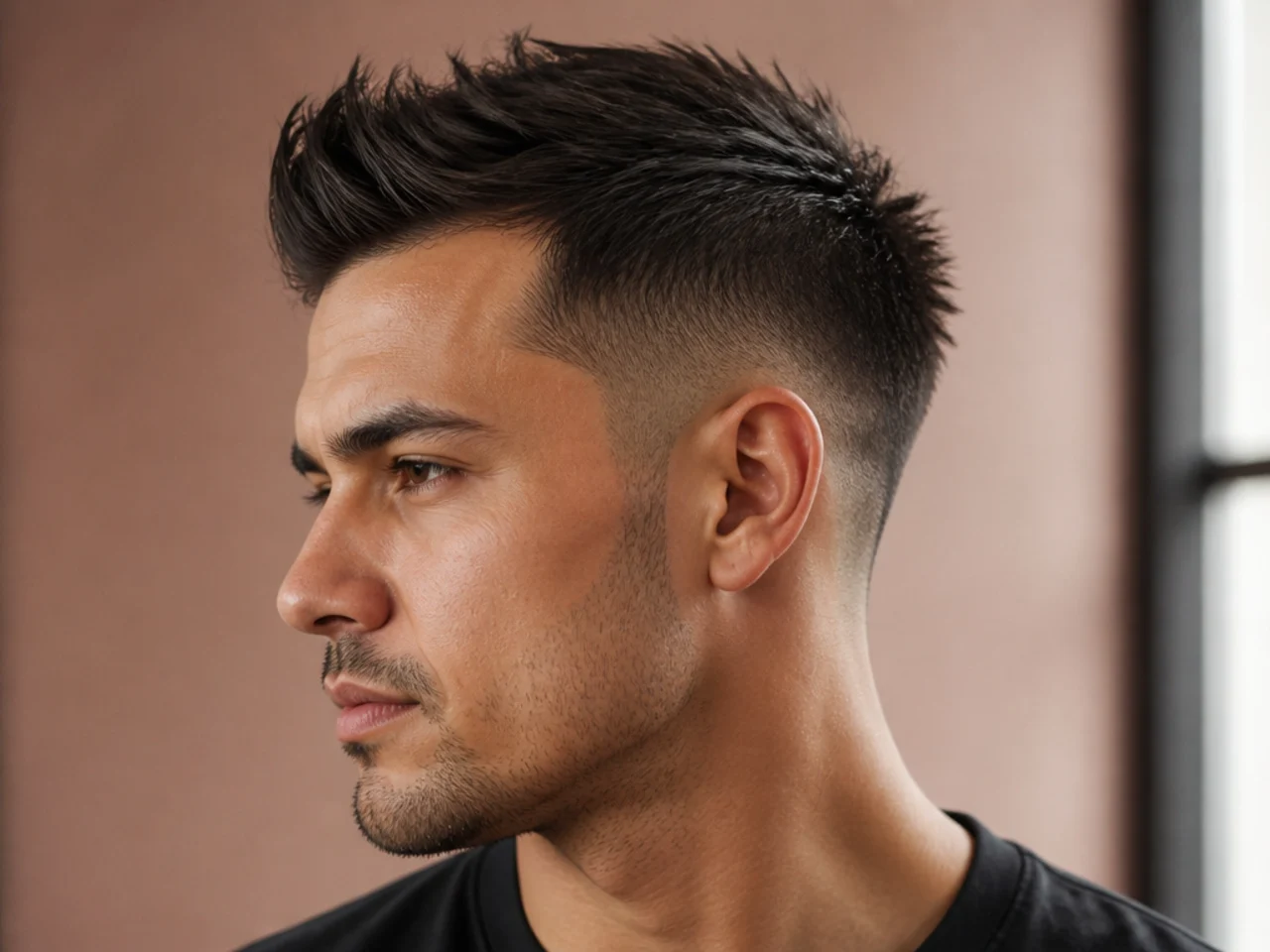
Sides fade to skin or a #0, and the top narrows from about an inch and a half in the middle to shorter at the sides — creating a soft mohawk shape without shaving anything. Best on oval and diamond faces and thick straight-to-wavy hair. Ask for: "Short faux hawk, inch and a half in the middle tapered shorter to the sides, skin fade at the temples." Style with a firm-hold matte clay pinched up the center with your fingertips.
20. The Korean Short Cut
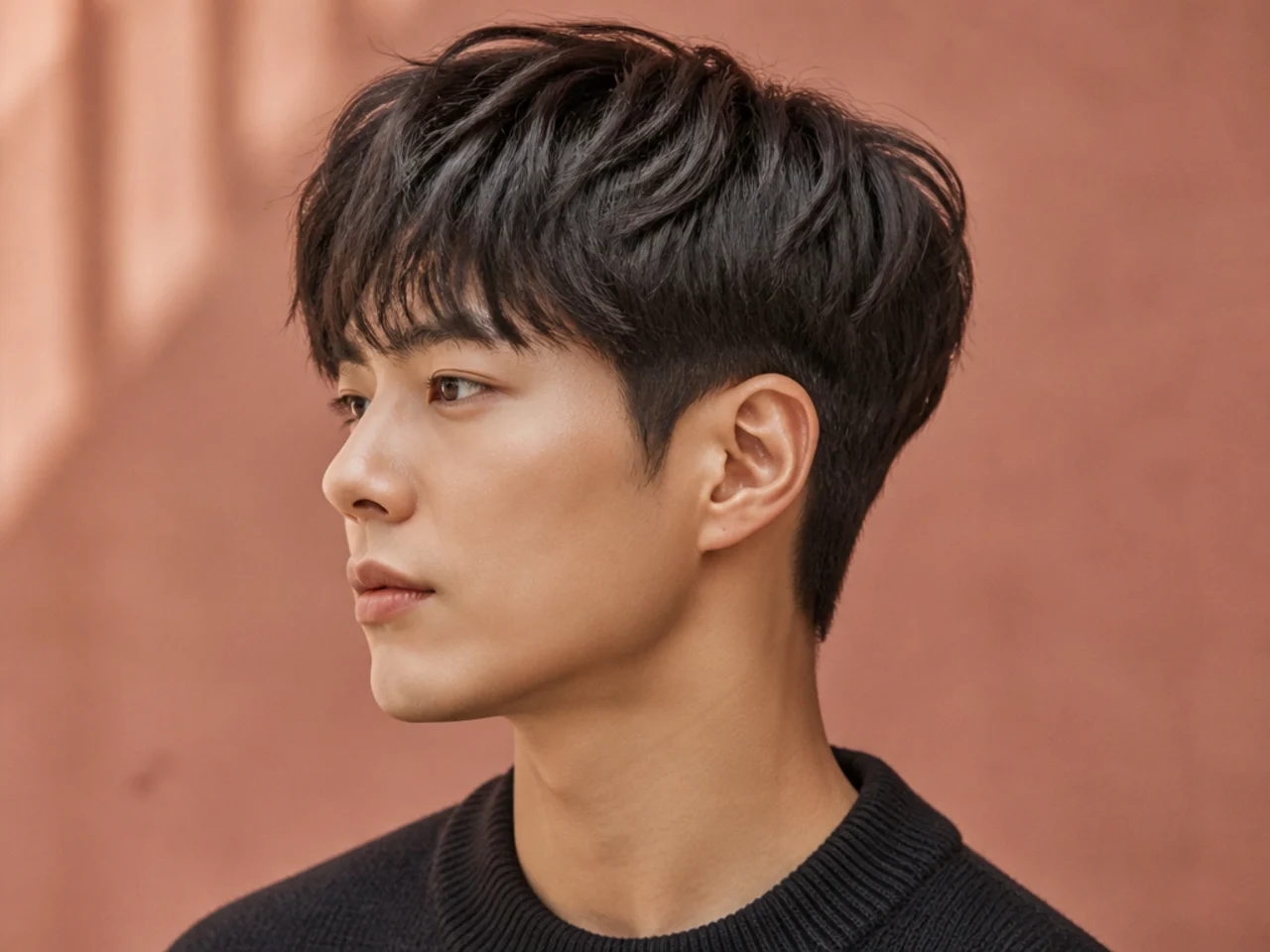
A short version of the Korean two block — about an inch and a half of soft, forward-styled top with a short undercut at the sides. Reads clean and quietly stylish, which is why it dominates streetwear boards. Best on straight hair with oval or heart-shaped faces. Ask for: "Korean short cut, inch and a half on top brushed forward, short undercut sides sitting under the top line." A dab of water-based cream keeps the top soft, never crunchy.
21. The Short Curtain Fringe
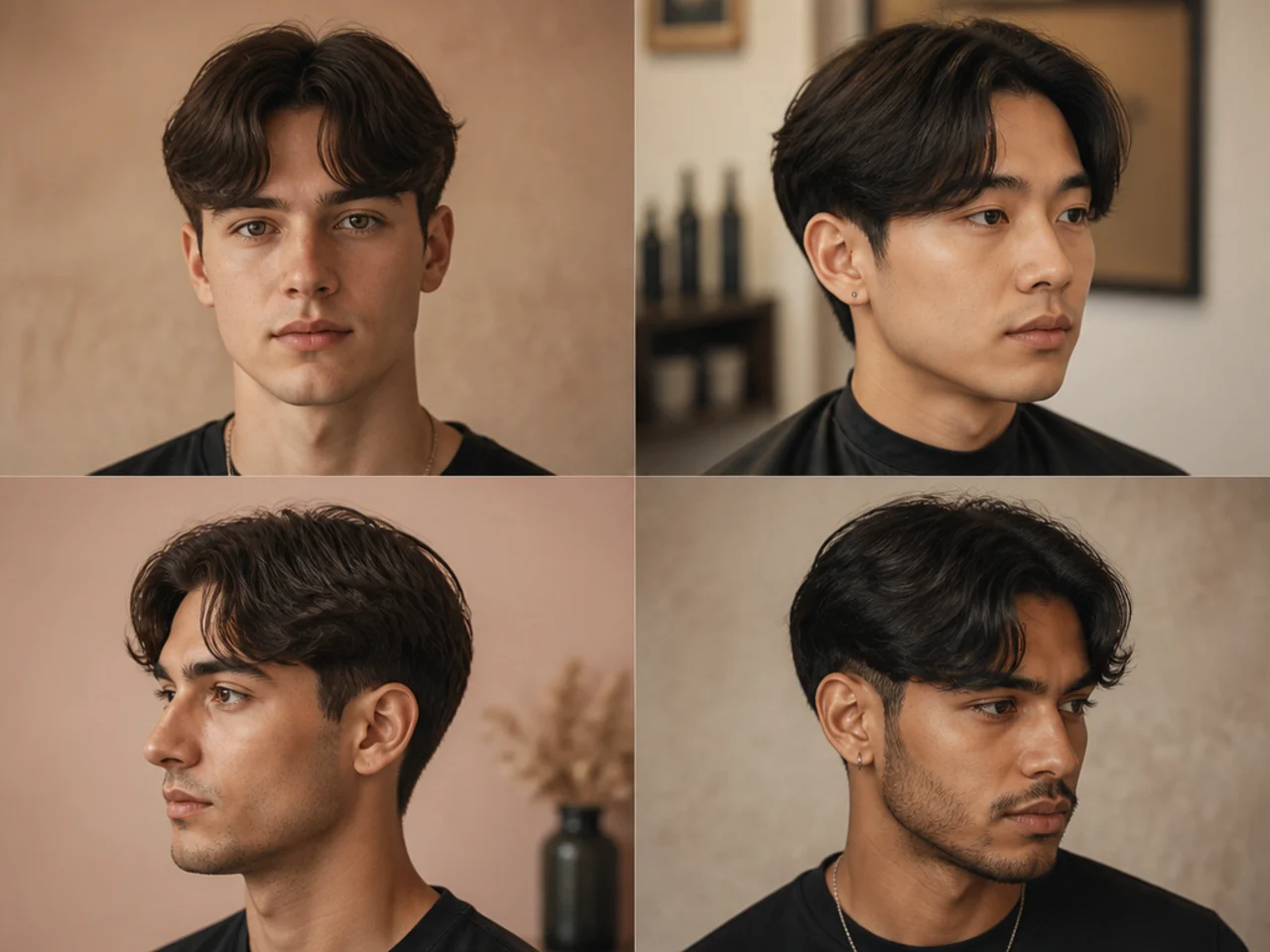
About an inch and a half on top with a light middle part and a short curtain fringe that just clears the eyebrows. The shortest cut you can wear with a fringe that still parts. Best on oval and heart-shaped faces and straight-to-wavy hair. Ask for: "Short curtain fringe, inch and a half on top with a soft middle part, curtain sweep at the brow, low taper sides." Blow-dry a small round brush outward from the part; a drop of sea-salt spray adds body.
22. The Short Two Block
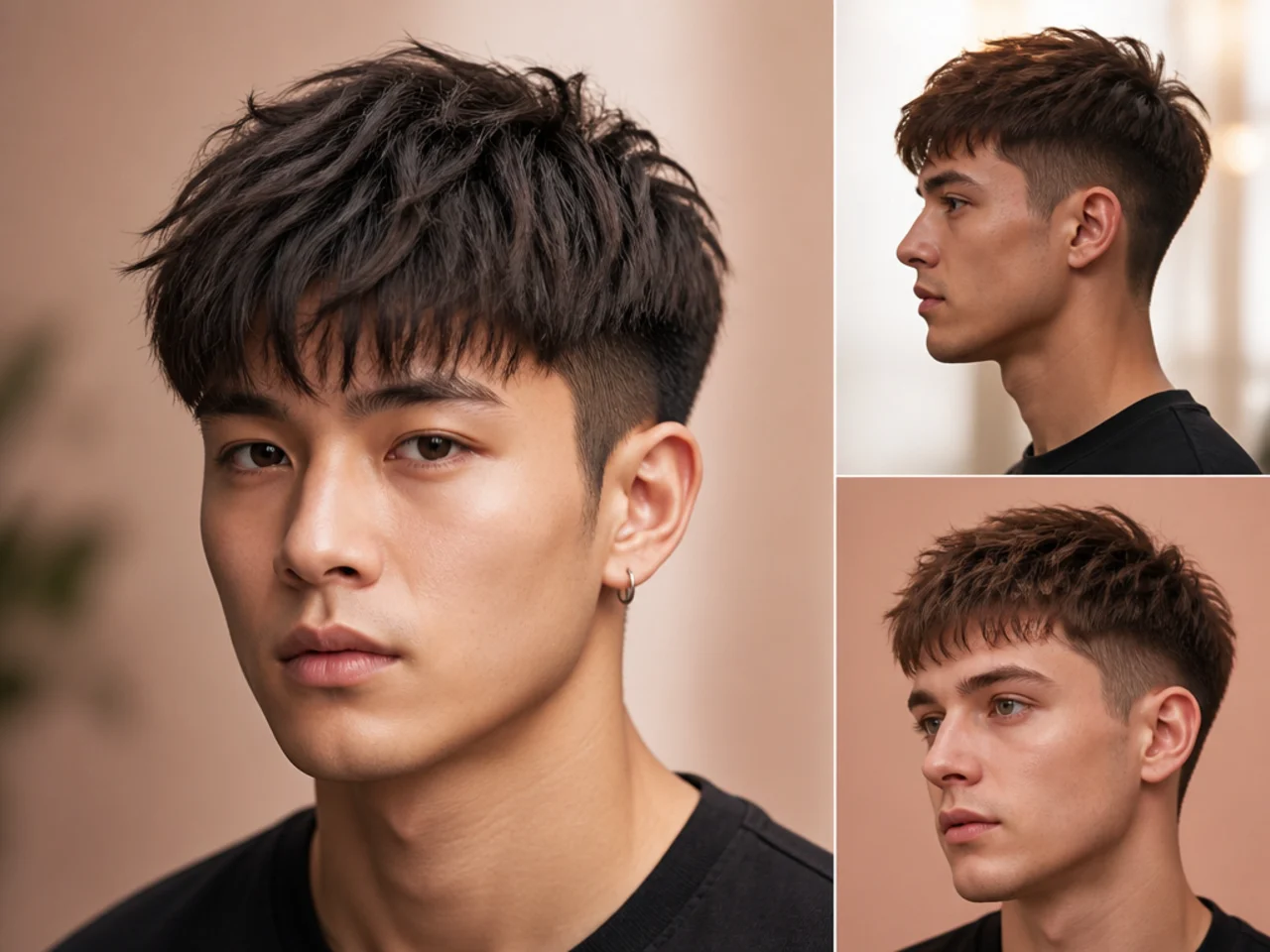
About an inch to an inch and a half of length on top layered slightly longer at the front, with clippered sides that sit hidden under the top layer — a visibly shorter, tighter version of the Korean two block. Best on straight hair and every face shape. Ask for: "Short two block, one to one and a half inches on top layered forward, number one sides that sit tucked under the top." Style with a light water-based cream through damp hair.
23. The Short Edgar
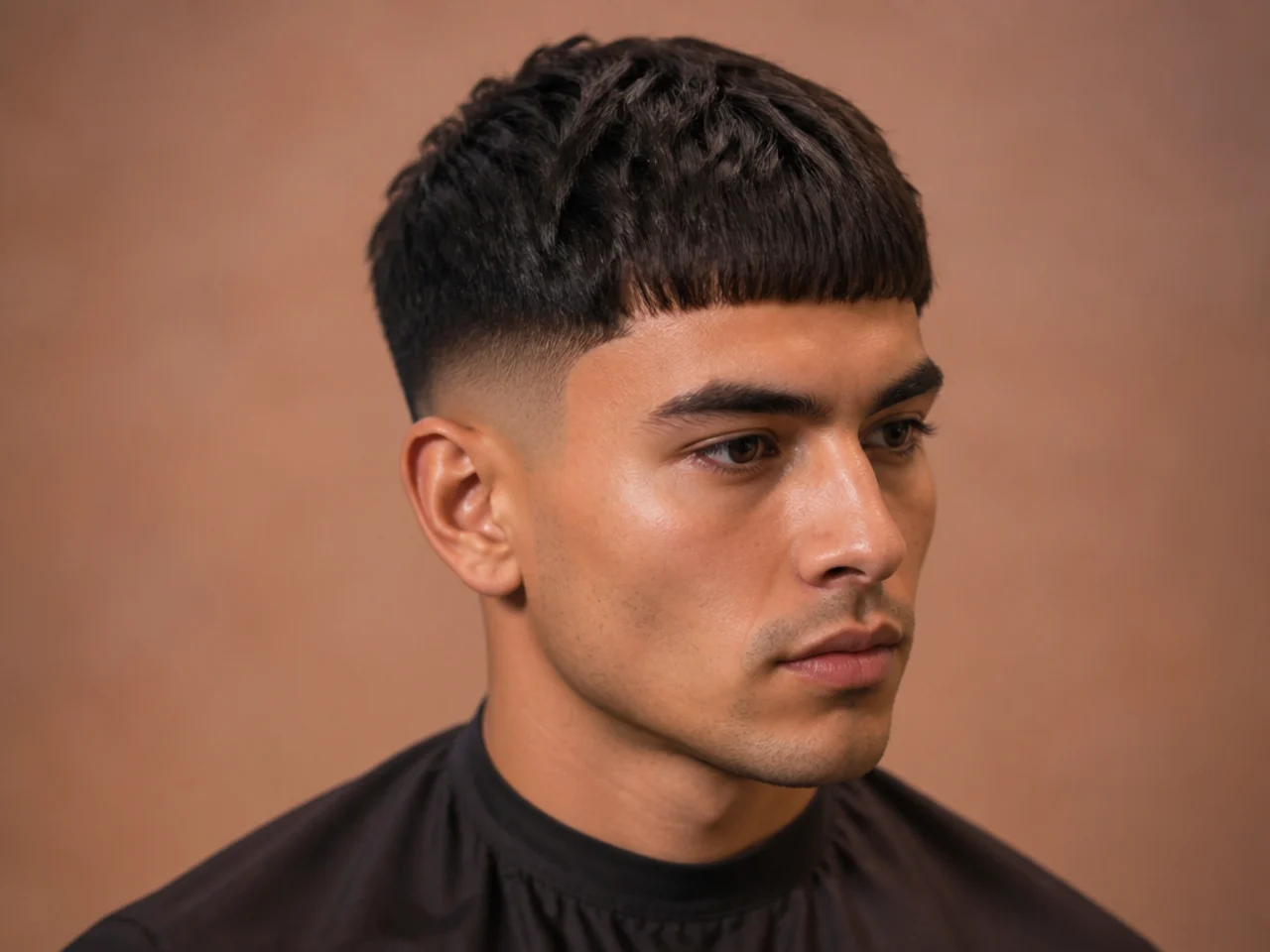
A short cut — three-quarters of an inch on top — with a razor-sharp straight fringe line and a skin fade at the sides. The Edgar at its cleanest, shortest read. Best on straight hair and round-to-oval faces. Ask for: "Short Edgar, three-quarter inch on top, hard straight fringe line, skin fade jumping in mid to high." Rebook every two to three weeks — the fringe line grows out visibly and the whole cut lives or dies by its edge.
24. The Low Fade Short Crop
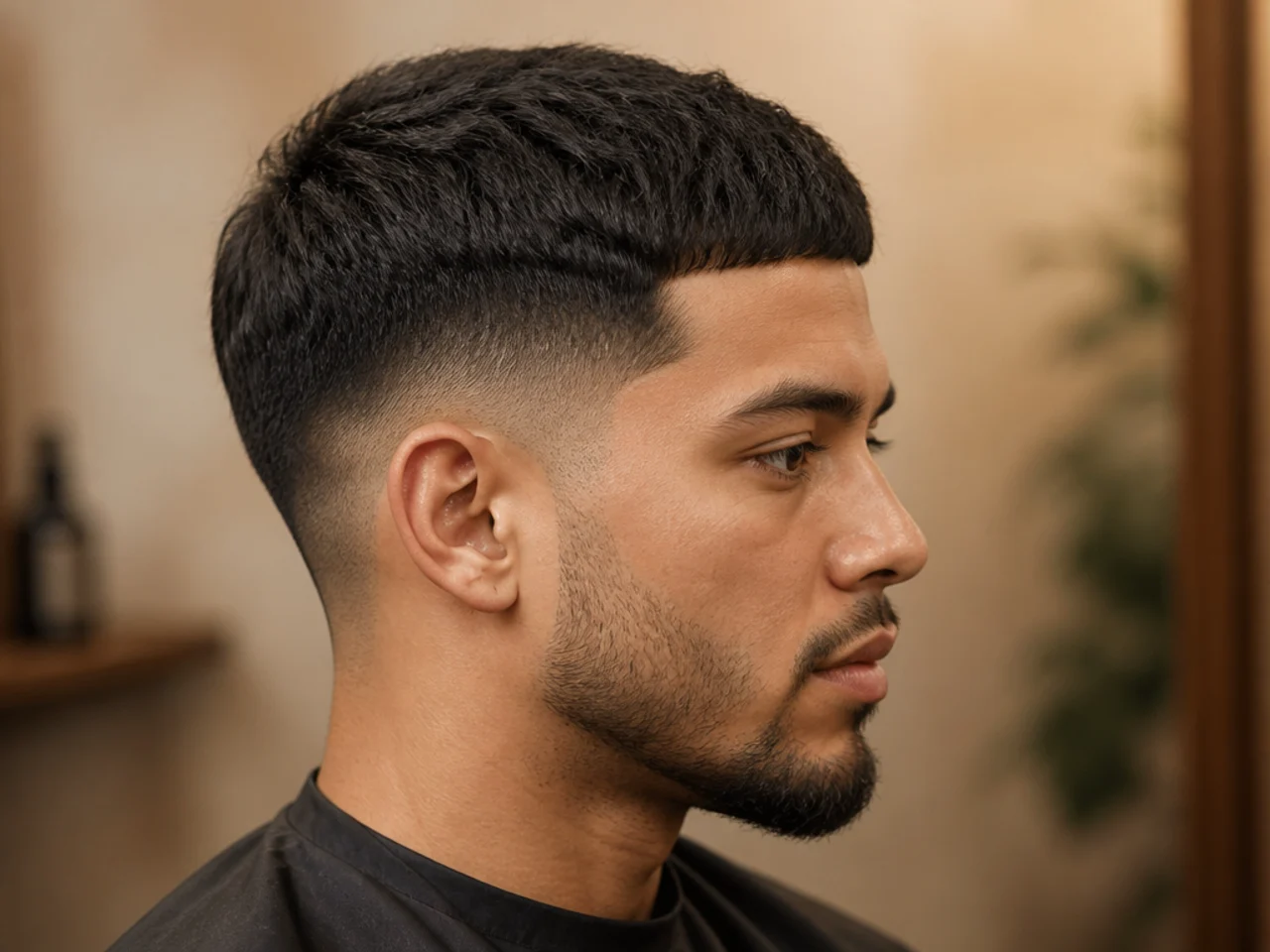
About an inch on top — a plain short crop — paired with a low fade at the sides that drops behind the ear. The most workplace-friendly short cut with a fade on the list. Best on every face shape and every hair type. Ask for: "Short crop, one inch on top, low fade at the sides, square the neckline." Zero product; a drop of matte cream tapped into the front if you want a whisper of warmth.
25. The Short Messy Crop
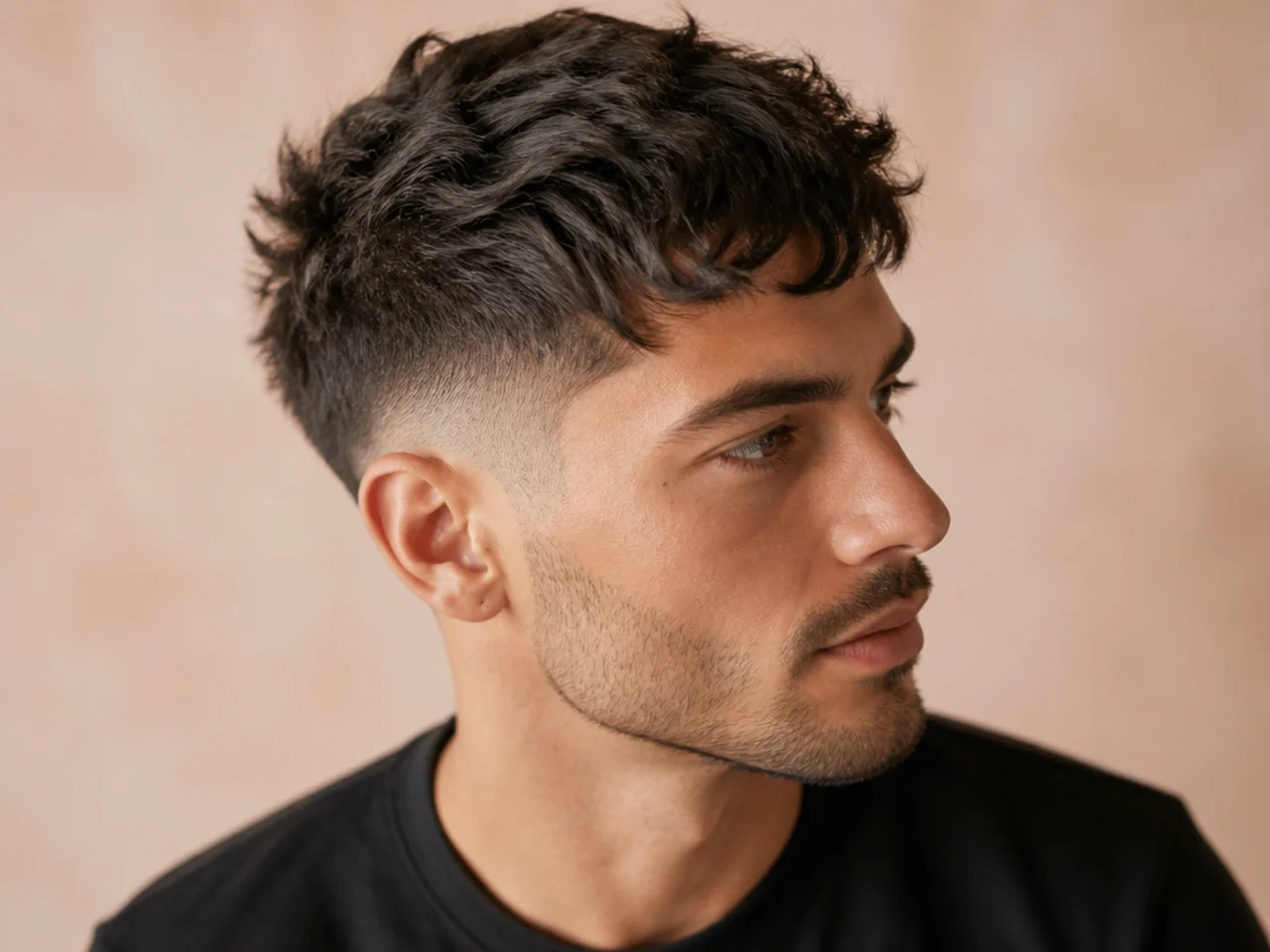
About an inch and a half on top point-cut into deliberately uneven ends, with a low or mid fade at the sides to keep the shape from looking accidental. Reads casual, current, and forgiving on a bad-hair day. Best on wavy hair and oval or square faces. Ask for: "Short messy crop, inch and a half on top point-cut heavily for texture, low or mid fade at the sides." Sea-salt spray, tousled with fingers, and you're done.
How to Ask Your Barber for a Short Cut
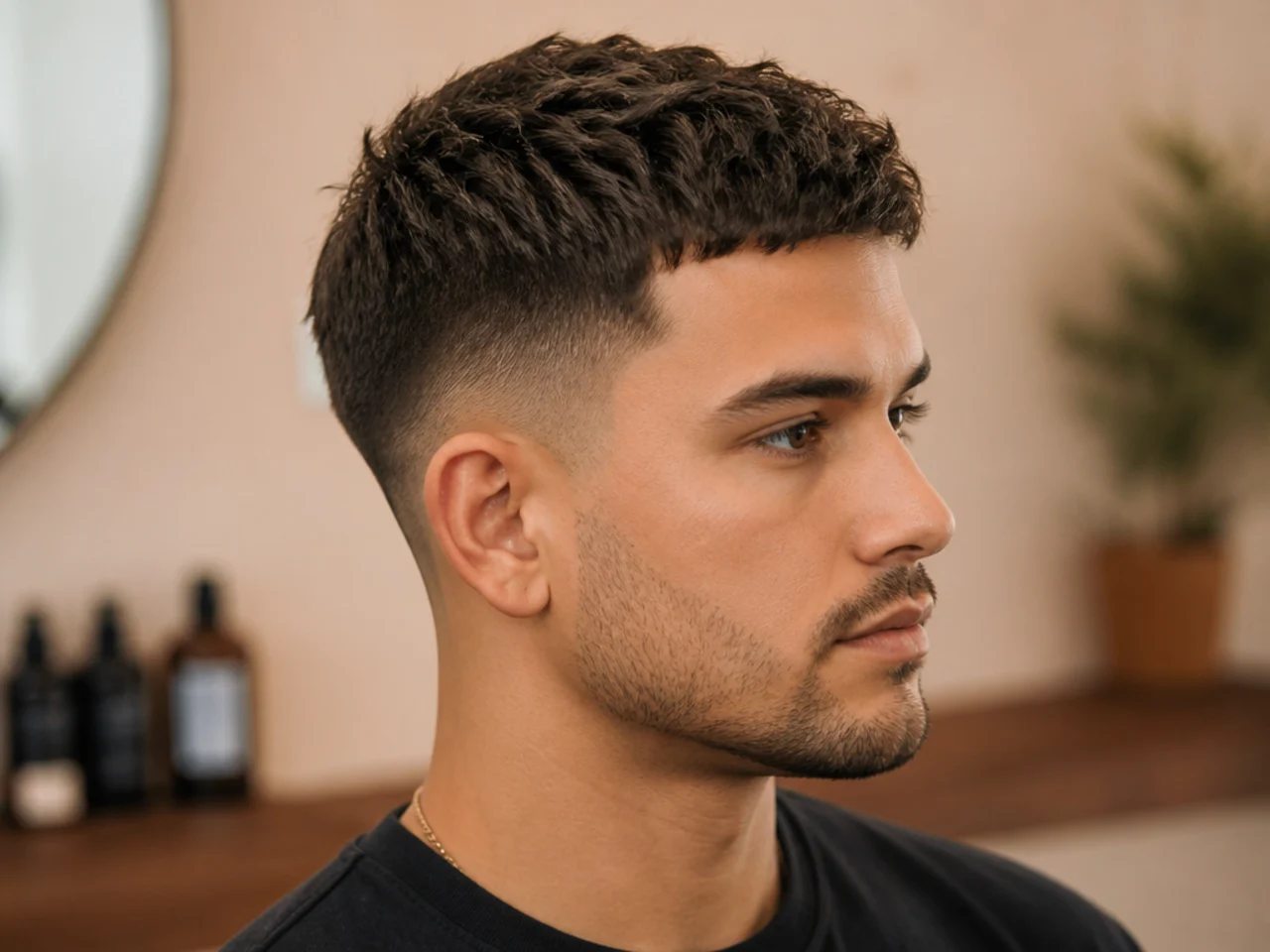
Every short haircut lives or dies by six specifics. Get them right and you walk out with the shape in your head.
- Bring a photo — two if you can. Words drift; photos don't. One reference from the front and one from the side beats any description.
- Name the top length in inches or guard numbers. "Inch on top" or "number three on top." Barbers cut to numbers, not vibes.
- Name the side treatment. Taper, low fade, mid fade, high fade, skin fade, undercut, or scissor-blend. Point at where you want the blend to start on your own head.
- Name the neckline. Square, round, or tapered. Square reads sharpest on short cuts. Round softens.
- Say the finish you want. Matte and textured, sleek and shiny, or somewhere in the middle. Your barber picks the product cue from that word.
- Say your rebook cadence. If you can only come every six weeks, ask for a taper or scissor-blend instead of a skin fade — it grows out cleaner and buys you a week.
- Ask for point-cutting on the top. Especially on crops, quiffs, and crews. Blunt-cut ends sit heavy; point-cut ends move.
Styling and Maintenance for Short Haircuts
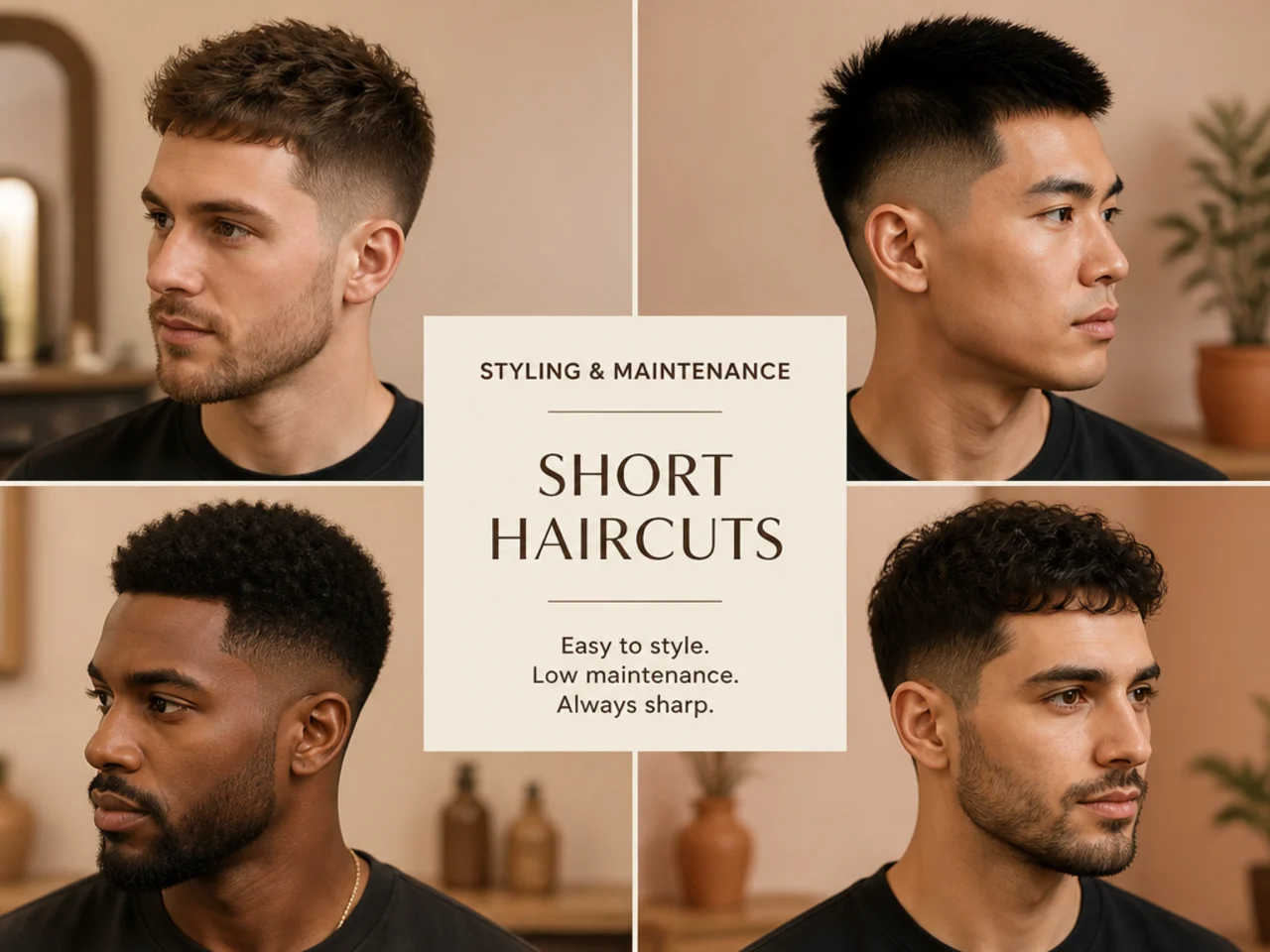
Short hair needs one product. That's the whole system. Match the product to the finish you asked for:
- Buzz, butch, and high-and-tight — nothing. A drop of face moisturizer through damp hair adds a whisper of shine if you want it.
- Crew, Ivy League, prep, side part, and comb over — light-hold pomade or a medium-shine cream. Blow-dry to the part first.
- French crop, textured crop, taper crop, Caesar, low fade short crop — matte paste or matte cream, worked forward through damp hair with your fingers.
- Mini quiff, brush up, pompadour, faux hawk, messy crop — firm-hold matte clay with a sea-salt spray pre-styler for grip if your hair is fine.
- Comma cut, Korean short, curtain fringe, two block — light water-based cream or a hair mist. Keep it soft and touchable, not crunchy.
- Slick back and short Edgar — medium-hold shiny pomade for the slick back; a light matte cream for the Edgar's fringe.
Wash cadence matters. Short hair sits close to the scalp, which picks up oil fast — but daily shampoo strips the scalp and pushes it to overproduce. Sulfate-free shampoo two or three times a week is the sweet spot. Rinse with cool water on the last pass to close the cuticle. Skip conditioner on buzz, butch, and high-and-tight lengths; use it on any scissor-cut length past an inch, and always on curls.
Rebook by cut type. Skin fades and hard line-ups want two to three weeks. Standard low or mid fades and buzz cuts want three to four weeks. Scissor-blended cuts like the Ivy League, prep, or mini quiff hold for five to six. The moment the outline softens is the moment to book — a fade especially reads messy the second week past its rebook.
FAQ
Fast answers to the questions barbers hear every week about short cuts.
What counts as a "short" men's haircut? Short means the top is either clippered to a guard between #0 and #4 or scissor-cut between three-quarters of an inch and two inches, and the sides are always shorter than the top. Anything longer than two inches on top belongs in medium territory.
Which short haircut is the easiest to grow out? The prep cut and the Ivy League. Both keep an inch and a half to two inches on top with scissor-blended sides, so the outline stays clean for weeks even when you skip a visit. Skin fades and hard-fringe cuts like the Edgar look messy the fastest.
Do short haircuts work with a receding hairline? Yes — better than any long cut. Buzz, butch, crew, French crop, and Caesar all flatter thinning temples and a high forehead. The French crop and Caesar cover the hairline outright with a forward fringe; the buzz and crew simply stop hiding it, which reads honest and mature.
Are short men's haircuts still in style for 2026? They never left. Buzz, crew, and crop searches climb every year on Pinterest, and every K-pop and streetwear moment of the last two years has pulled the trend shorter. The 2026 twist is texture — point-cut tops instead of blunt-cut, and softer taper fades instead of hard skin lines.
What's the shortest short haircut worth trying? The butch cut. A #2 or #3 guard on top with a low fade or clippered sides. Shorter than a crew, longer than an induction, and the lowest-effort shape on the list that still reads intentional.
Should I use scissors or clippers on top? Clippers for buzz, butch, high and tight, and any cut where you want a flat even plane. Scissors for crew, Ivy League, crop, quiff, side part, and anything with movement. Curly and coily hair always wants scissors on top — clippers flatten the pattern and cost you weeks of coaxing it back.