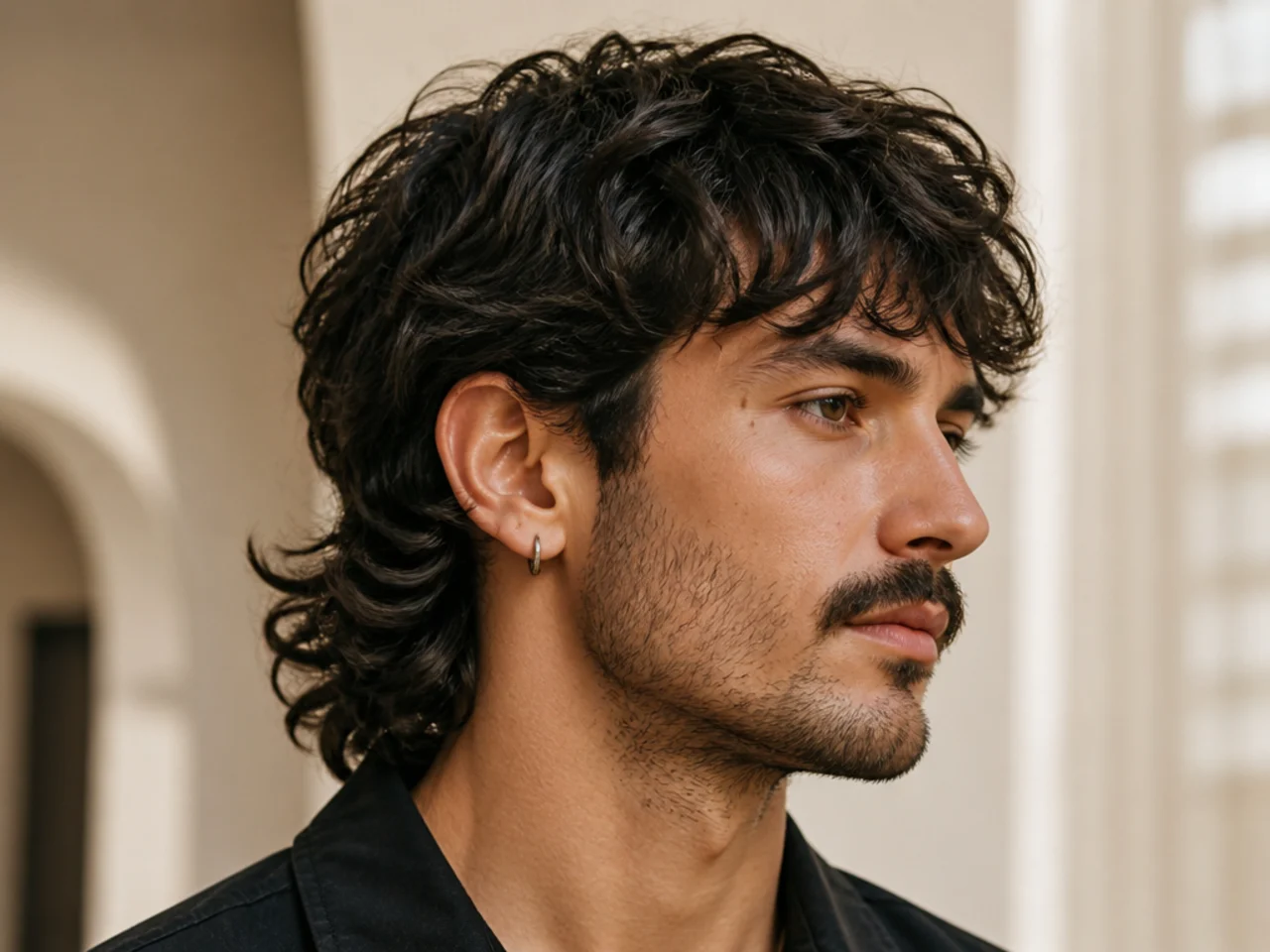
25 Modern Mullet Haircut Men and How To Get The Look
The modern mullet is nothing like the 80s version — it's a cleaner, shorter, more textured take that has been trending consistently for five years now. This guide covers 25 variations worth asking for in 2026, plus the exact words to hand your barber so you leave with a mullet that reads intentional, not accidental.
In this article · 33
- What is Mullet Haircut?
- Origin
- Trending Mullet Haircuts
- Modern Mullet Haircut
- Long Mullet
- Mullet Taper Fade
- Mohawk Mullet
- Short Mullet
- Burst Fade Mullet
- Curly Mullet
- Mullet Fade
- Shaggy Mullet
- Two Block Mullet
- Trendy Short Mullet with Low Taper Fade
- Mullet Faux Hawk
- Temp Fade Mullet
- Faded Mullet with Fringe
- Fluffy Mullet
- Sexy, Modern Mullet From The Back
- Messy Mullet with Texture
- Edgy Mullet with Beard
- Classy Mullet
- Quiff Mullet Fade
- Permed Mullet Taper
- Medium Mullet
- Spiky Mullet
- Choppy Mullet Taper Fade
- Flowing Mullet
- Best Face Shapes
- How To Style A Mullet
- FAQs
- What Is A Mullet Haircut?
- Modern Mullet Haircut Men Gallery
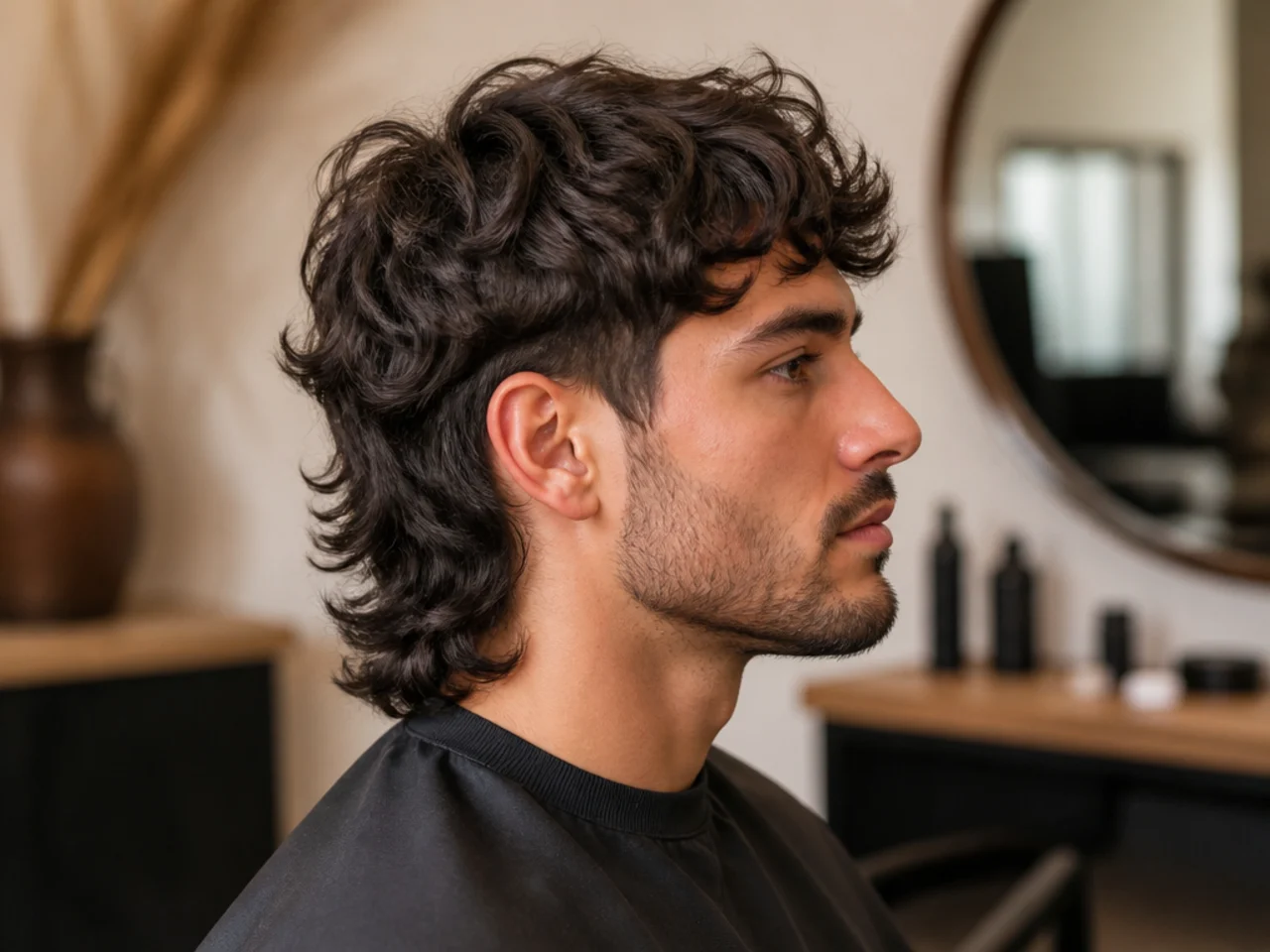
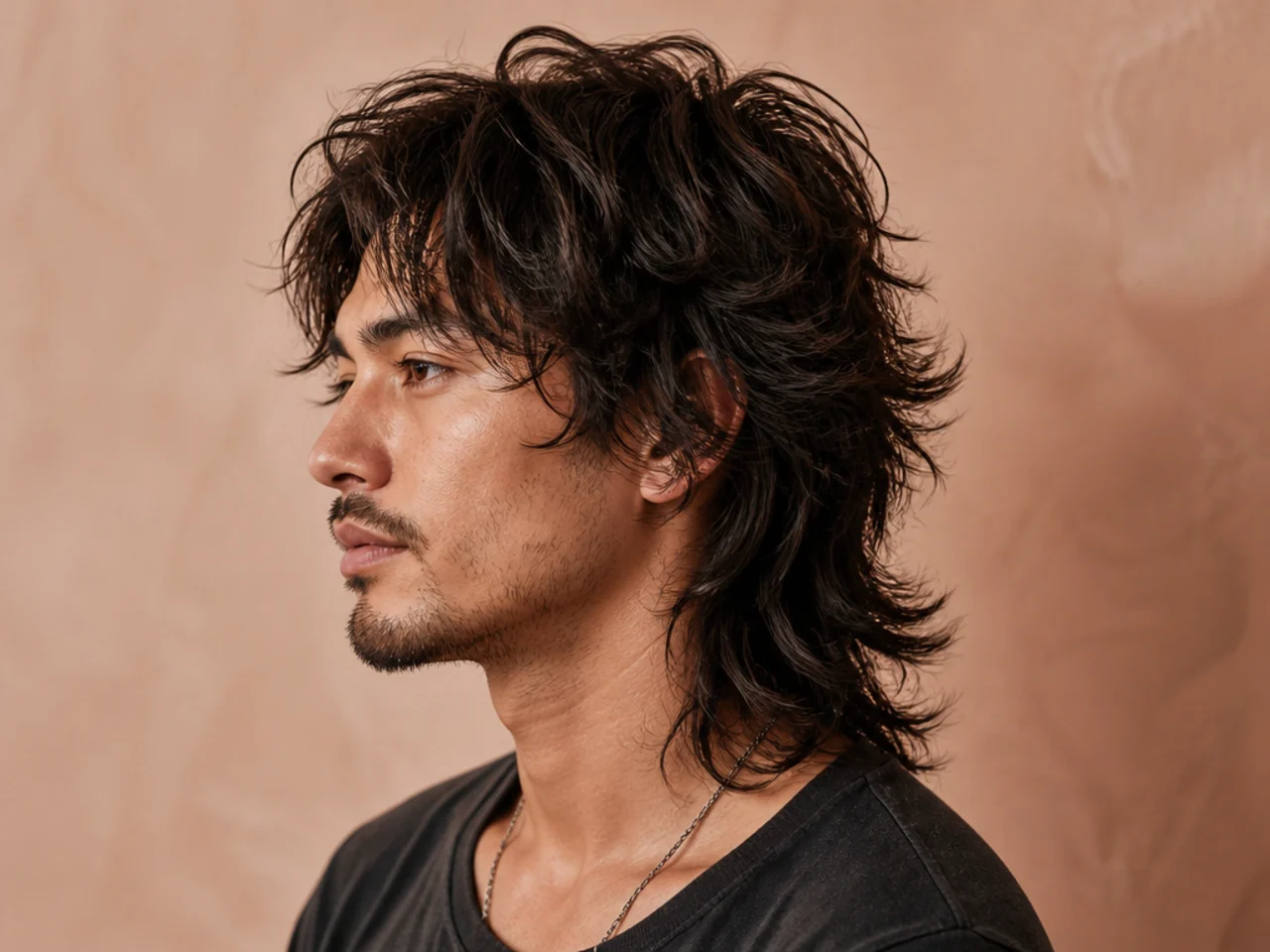
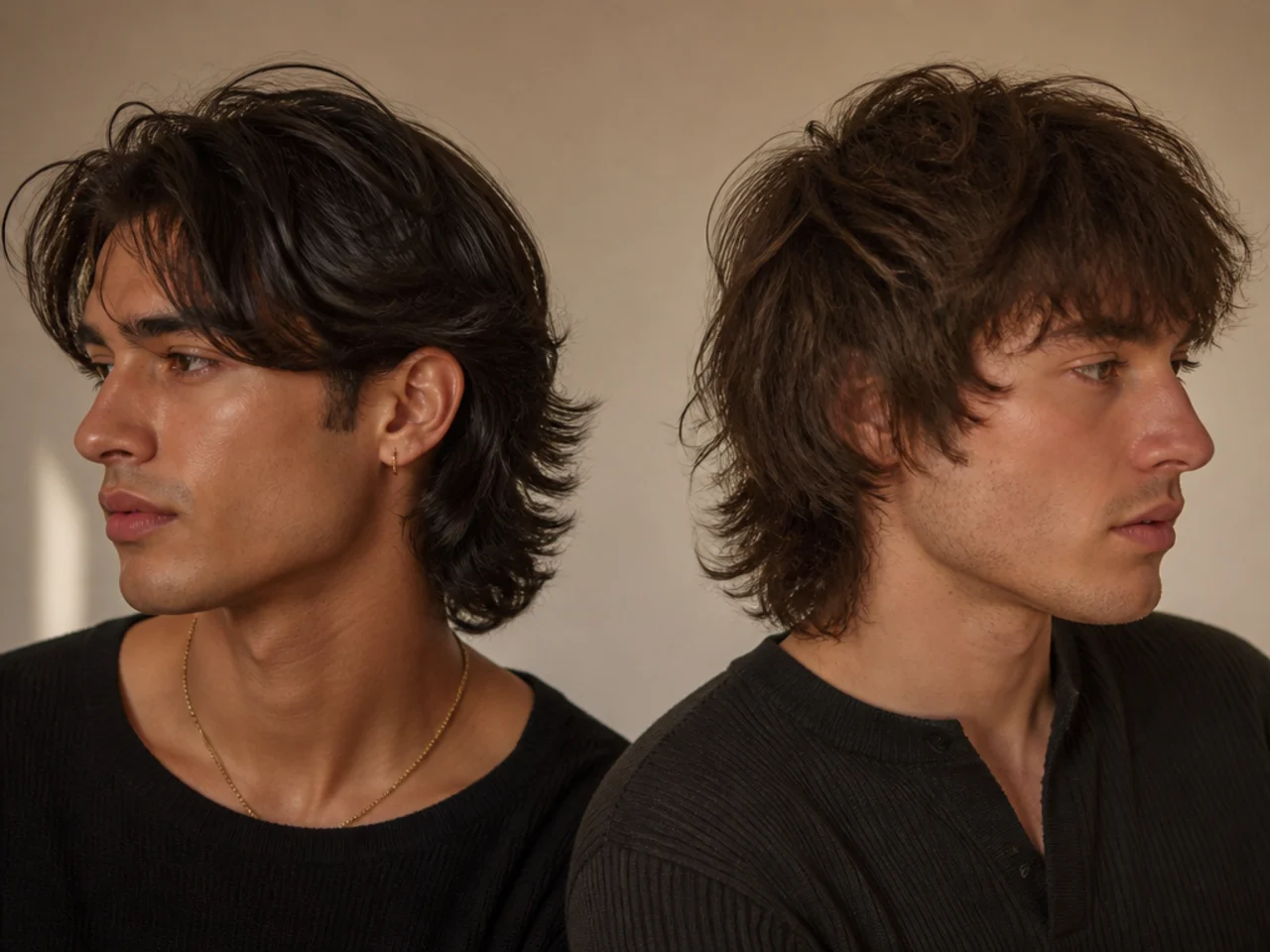
The modern mullet isn't the mullet you're picturing. The back stops at mid-neck, not the shoulders. Layers move — they don't hang. Sides fade or taper into the top, so nothing looks disconnected, and the whole shape reads intentional. Musicians, athletes, and off-duty guys with real style are all wearing it now. This guide covers 25 modern variations, who each one flatters, exactly how to ask for it in the chair, and how to style it in under five minutes.
What is Mullet Haircut?
A modern mullet is a two-length cut with the length concentrated at the back and softer, shorter hair through the sides and top. The back sits between two and four inches — long enough to move, short enough to feel deliberate. Sides get a fade, taper, or scissor-blend into the top, so nothing looks disconnected. Layers through the length keep the shape textured, not blunt. That's the whole update — the same silhouette as the 80s original, an entirely different attitude in the details. When your barber understands the difference, you get a cut that reads sharp in 2026, not stuck in a music video.
Origin
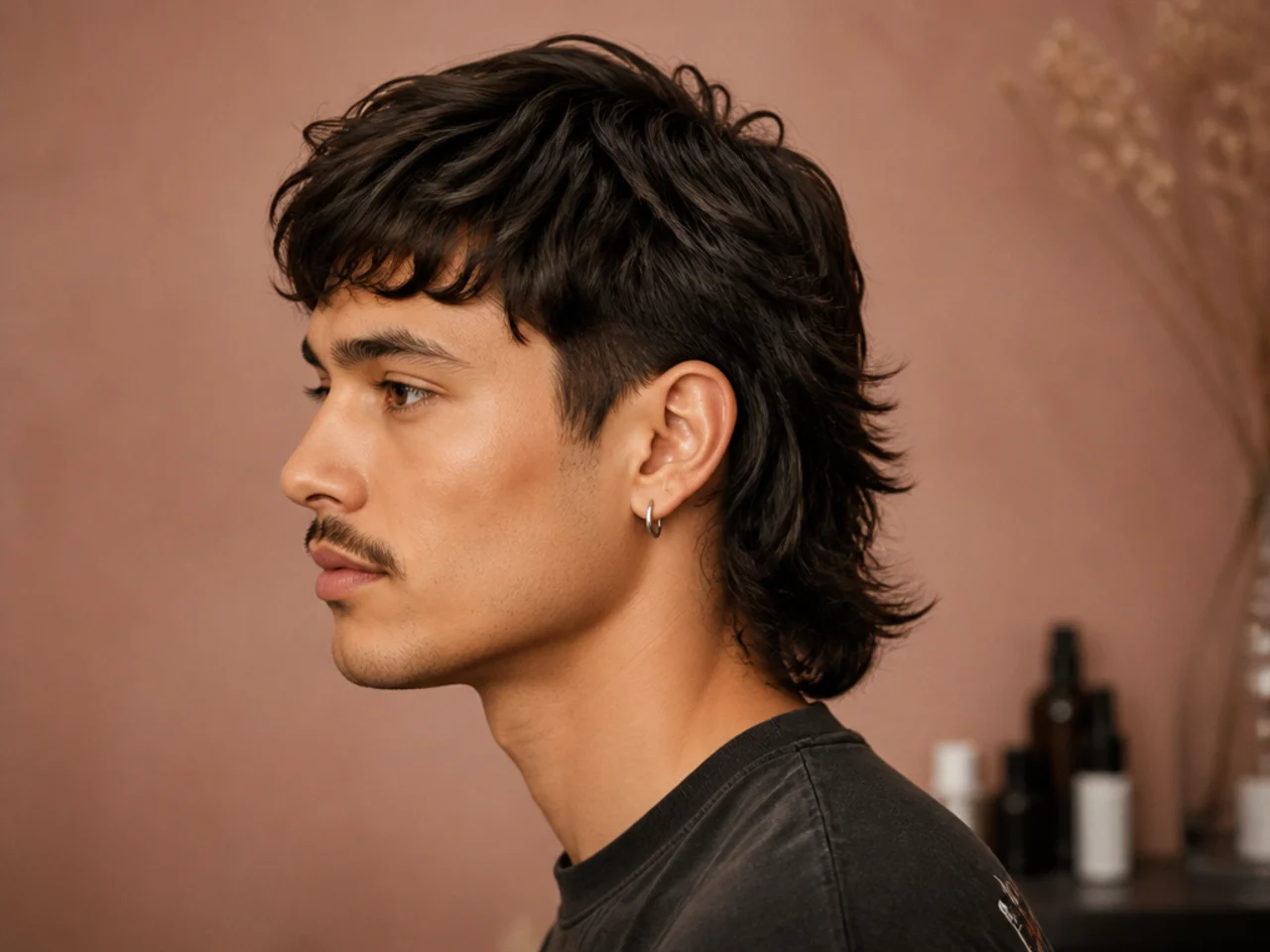
The mullet traces back centuries. Ancient Greek soldiers wore a version, and it appears in medieval European and Native American traditions. It exploded in the 1970s and 80s through rock, country, and pro sports — David Bowie's Ziggy Stardust era, Billy Ray Cyrus, most of country radio, and half the NHL. By the mid-90s, the shape had turned into a punchline. The current comeback started around 2020, driven by Gen Z, TikTok, and a wave of barbers who kept the silhouette but rebuilt every detail: shorter back, textured internal layers, blended or faded sides. Today's mullet references the past without repeating it. Rappers, indie musicians, footballers, and skate-culture guys all wear it, which is why you're seeing it at concerts, in tunnel walks, and on your own neighborhood barber's Instagram.
Trending Mullet Haircuts
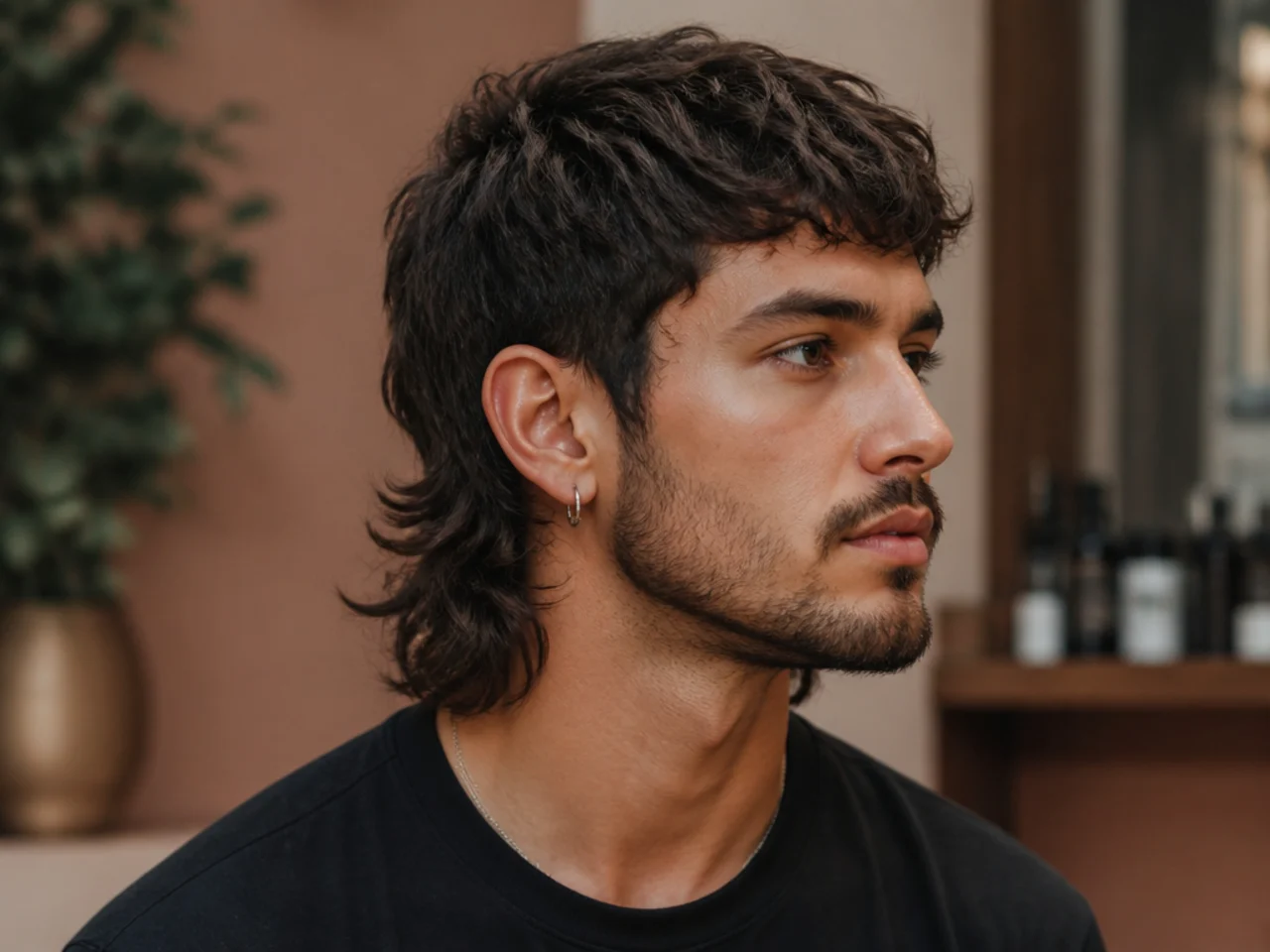
These 25 modern mullet variations run from clean and workplace-safe to fully committed. For each one, you get what sets it apart from a plain mullet, who it flatters, exactly what to say in the chair, and one styling move that keeps the shape holding. The mullet sits at the center of a family of textured cuts — expect crossover with shags, wolf cuts, and even the jellyfish haircut as the sections progress.
Modern Mullet Haircut
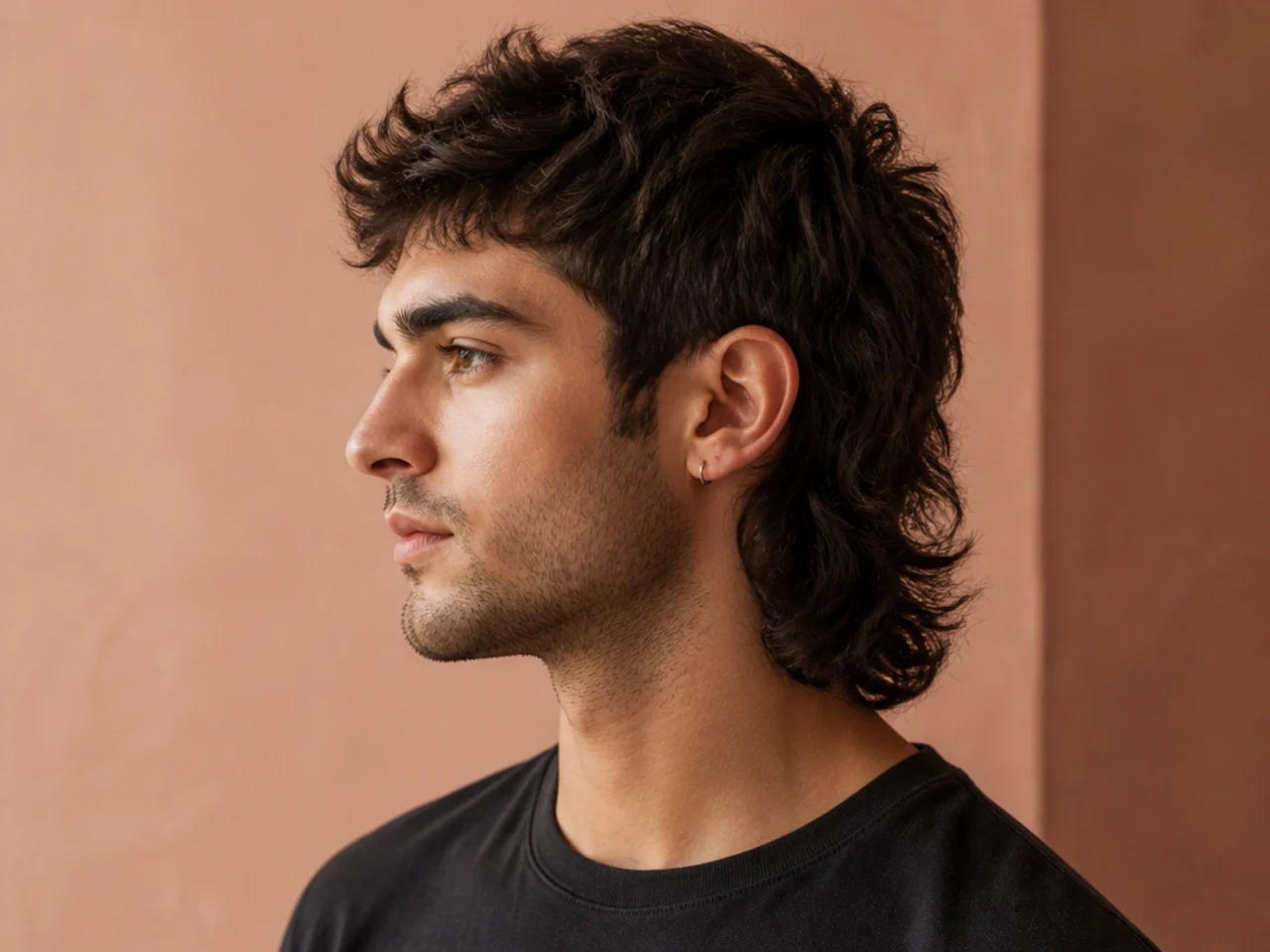
What sets it apart: this is the baseline modern version — soft, textured, and blended, with none of the harsh two-length divide of the 80s original. The back sits at the collar, and the sides taper cleanly into the top, so the shape flows without a hard break.
Who it suits: nearly everyone. Straight, wavy, curly, thick, or fine — the layered structure adapts. Oval and heart faces get the most straightforward result.
How to ask for it: "A modern mullet, two to three inches at the back, scissor-blended sides tapered short, soft internal layers through the top, no hard disconnection."
Styling tip: after towel-drying, run a matte cream through the top and back, then finger-comb everything backward before it dries.
Long Mullet
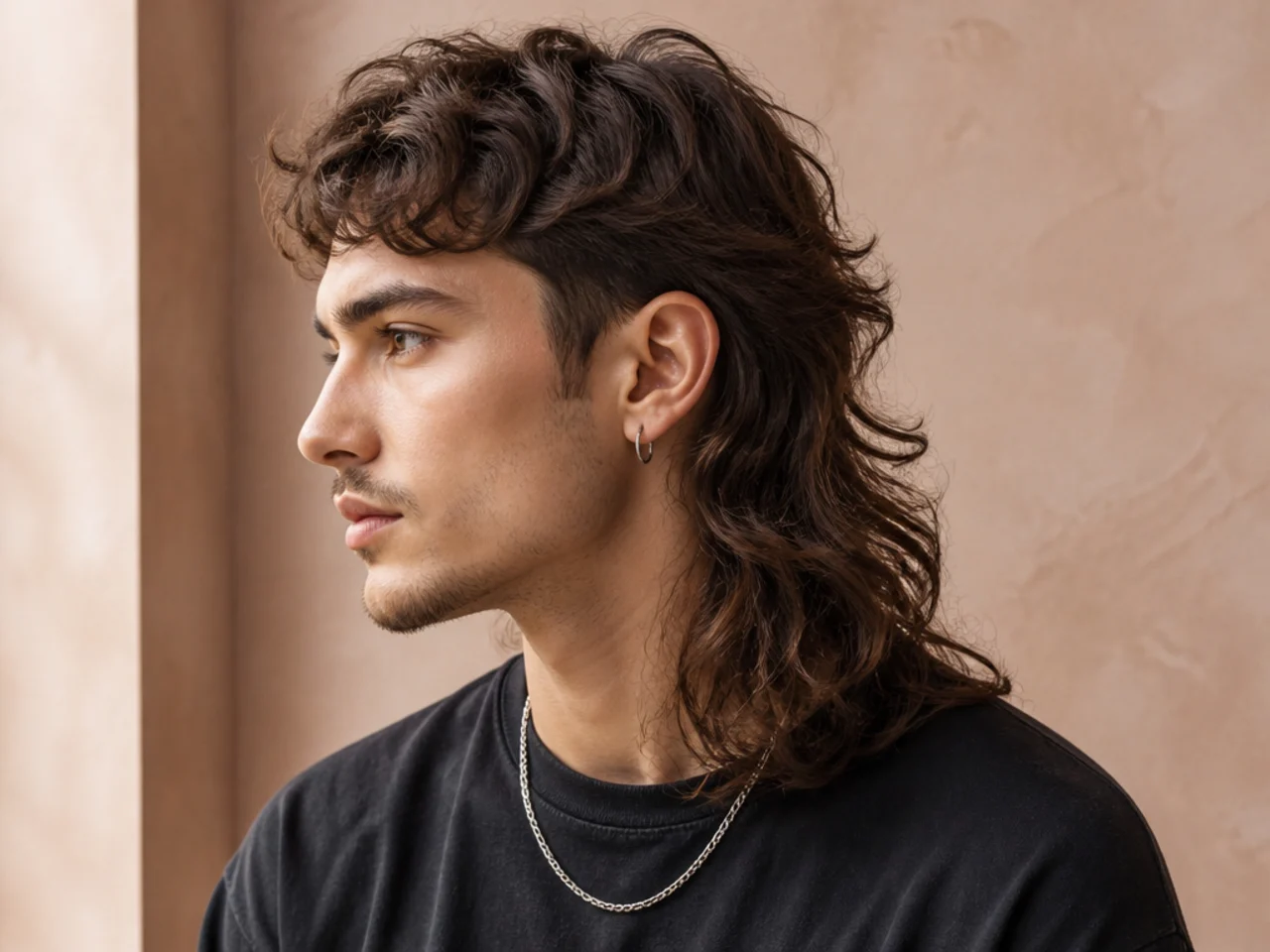
What sets it apart: length is the point. The back runs four to six inches, layered enough to swing rather than sit flat. The top stays voluminous, and tapered sides keep the silhouette from spreading wide.
Who it suits: guys with straight or wavy hair and enough patience to grow it out. Works especially well with oval, long, and heart face shapes.
How to ask for it: "Long mullet, four to five inches at the nape, tapered sides that soften into the top, choppy layers through the length, keep the perimeter feathered."
Styling tip: sea-salt spray on damp hair, air-dry, then scrunch the back once dry to break up any weight. For more length-focused looks in this family, see our guide to the men's wolf cut.
Mullet Taper Fade
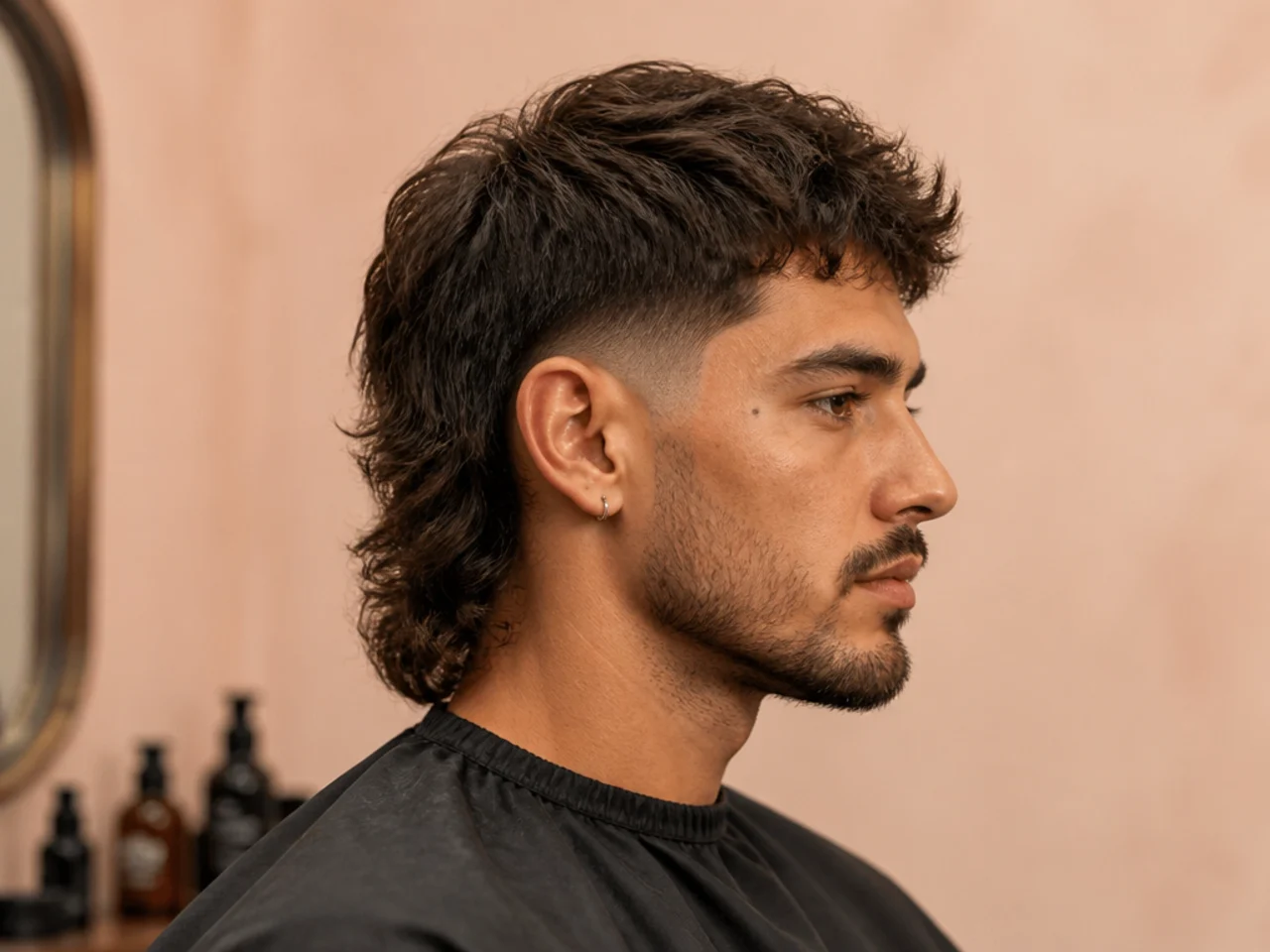
What sets it apart: the taper is what adds sharpness the classic mullet doesn't have. A gradual grade starts around the temple and drops into shorter length just above the ear, so the length up top pops harder against clean sides.
Who it suits: guys who want the mullet's movement but not a full shag look. Great for round or square faces — the vertical lift narrows the profile.
How to ask for it: "Mullet with a low or mid taper, one guard to skin at the sideburn, blended up, two-inch back with textured layers, brushed-up fringe."
Styling tip: pomade for the front lift, and a light-hold spray to lock the back into place through the day.
Mohawk Mullet
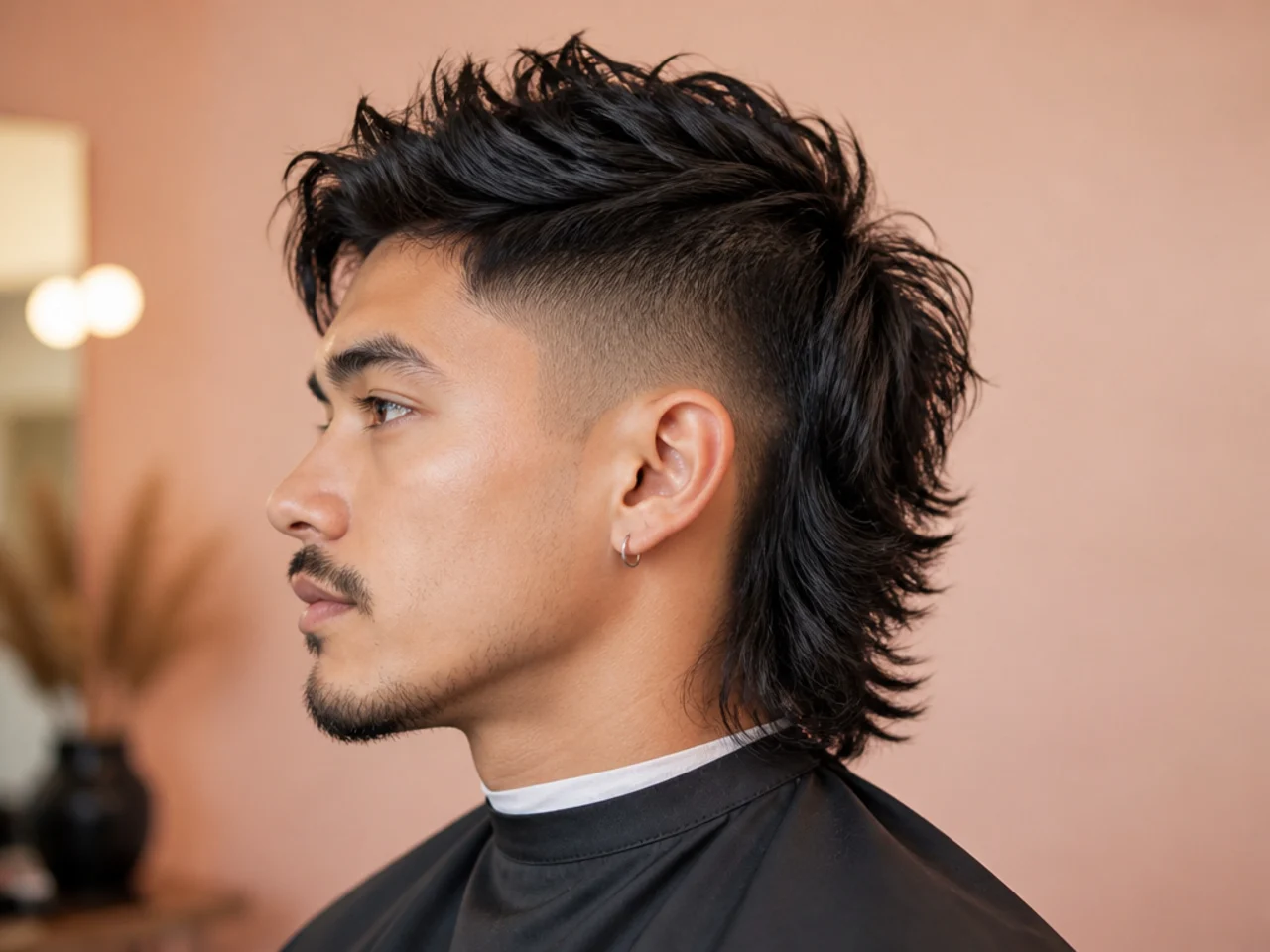
What sets it apart: the mohawk mullet keeps a wider strip of hair up the middle rather than the isolated top of a strict mullet. The back stays long, but the sides drop close to the scalp, so the crown reads as a soft ridge rather than a peak.
Who it suits: bold personalities and thicker hair that holds shape. Best on oval or square faces that can carry the added height.
How to ask for it: "Mohawk mullet, one-guard undercut on the sides, keep three inches through the center strip, two-inch back with textured layers, disconnected top."
Styling tip: strong pomade or clay worked through the ridge, tousle with fingers, and hit the perimeter with hairspray.
Short Mullet
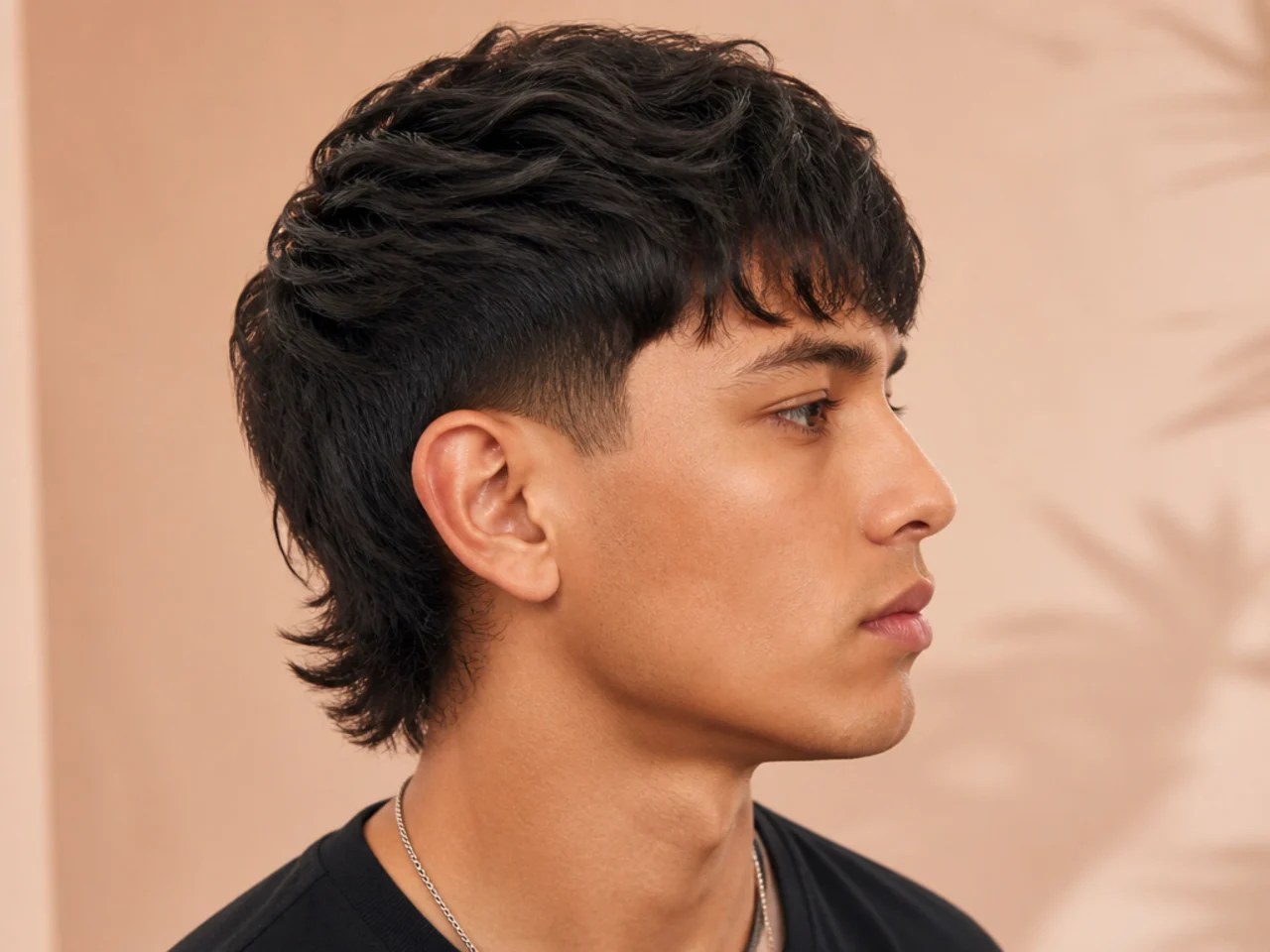
What sets it apart: this is the mullet at its most manageable. The back barely reaches the collar — 1.5 to 2 inches — and the whole cut sits close to the head. Because it's short, the shape depends on layering rather than length.
Who it suits: guys who want the reference without the commitment. Fine or thinning hair benefits from the layered texture. Round faces work best because the low profile keeps the head narrow.
How to ask for it: "Short mullet, low fade or taper on the sides, keep the back one-and-a-half to two inches, texturize the top with point cutting."
Styling tip: matte paste through damp hair, no product on the back — let it fall naturally.
Burst Fade Mullet
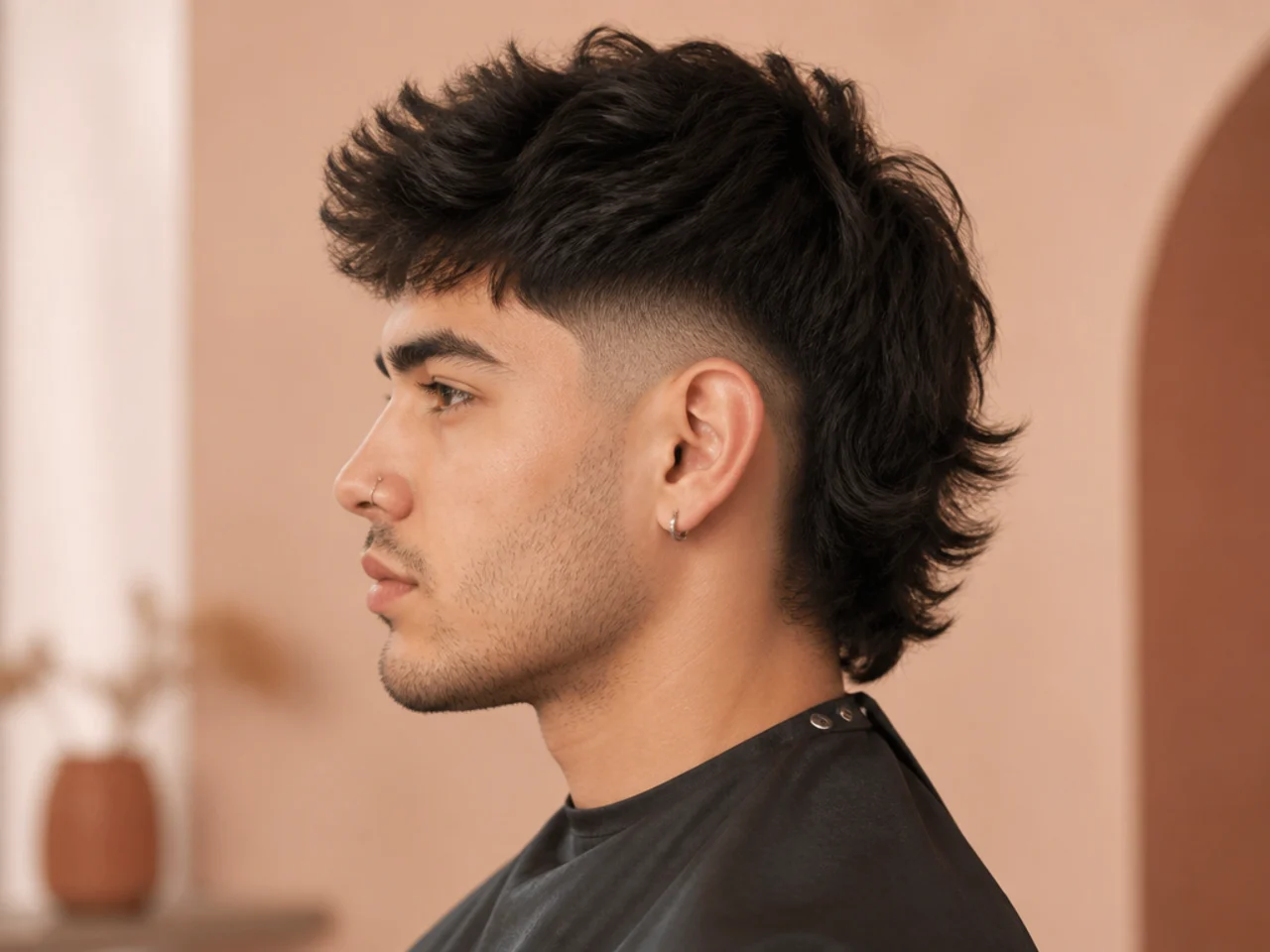
What sets it apart: the burst fade haircut curves around the ear in a semi-circle rather than dropping straight down. That leaves length behind the ear untouched, which flows into the mullet's back section for a signature you don't see everywhere.
Who it suits: guys who want a visual signature. Works with any hair type but shines with a bit of texture — waves or a slight curl. Suits oval, square, and diamond face shapes.
How to ask for it: "Burst fade around each ear, blend up to two inches through the top and back, textured layers, keep the nape line soft, not blunt."
Styling tip: work a lightweight cream through the top for hold, and leave the back to move on its own.
Curly Mullet
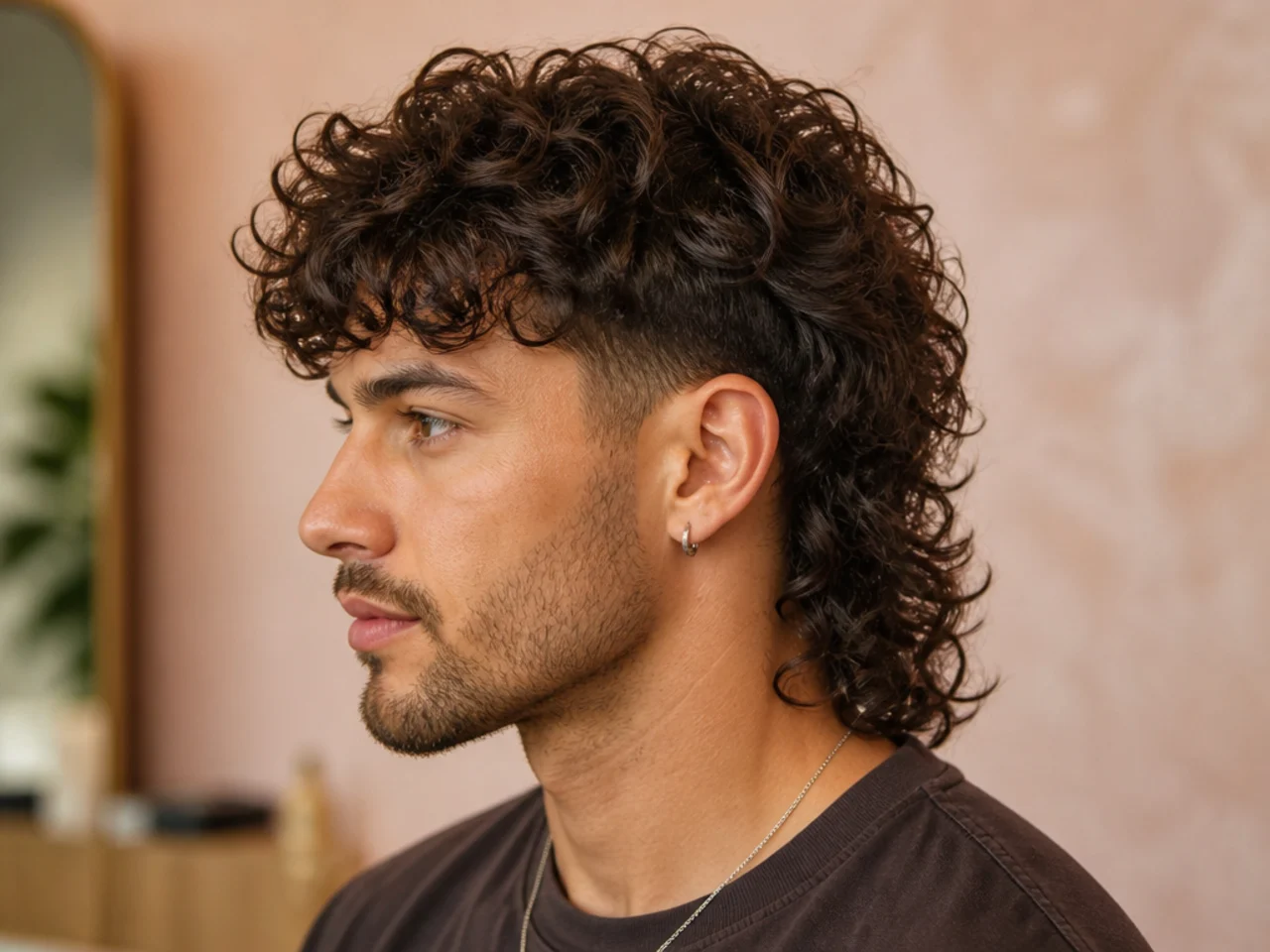
What sets it apart: the curls do the work. Natural texture builds the shape without any styling, so layering is about lightening weight rather than creating movement. The back can stay slightly shorter because coils give the illusion of length.
Who it suits: guys with type 3 curls or coily hair. Any face shape works, but the volume balances a long face particularly well.
How to ask for it: "Curly mullet, dry-cut if possible, internal layers to remove bulk, keep the perimeter intact, three-inch back, tapered sides that follow the curl pattern."
Styling tip: apply curl cream to soaking-wet hair, plop with a T-shirt for ten minutes, then diffuse on low heat.
Mullet Fade
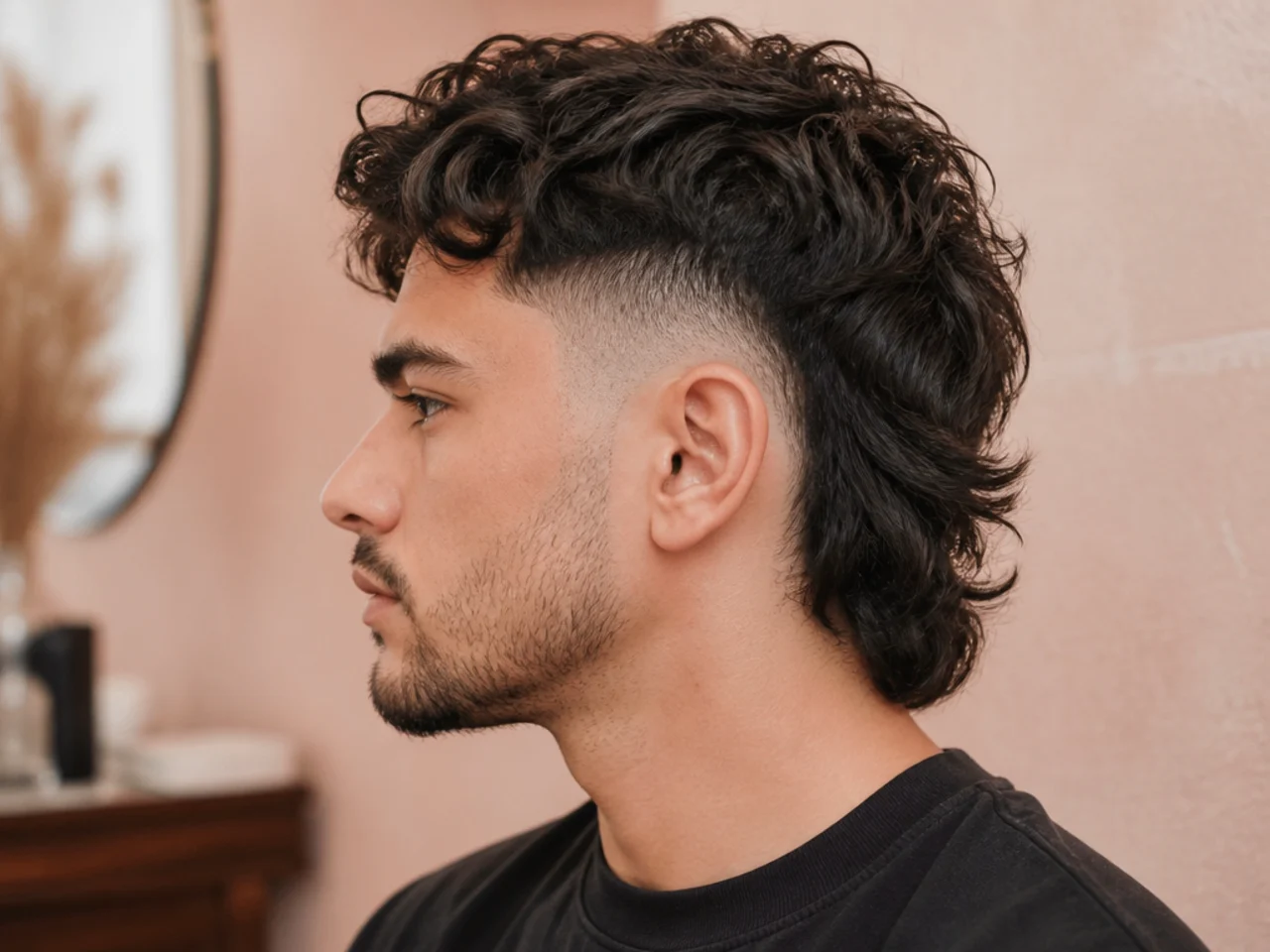
What sets it apart: this one leans harder into the fade than the taper version. The sides drop from short to skin quickly, sometimes with a hard line, which puts all the visual weight into the top and back. The fade is what makes it look sharp instead of shaggy.
Who it suits: guys who want the statement version. Suits square and oval faces best. Straight or slightly wavy hair holds the contrast cleanly.
How to ask for it: "Mid or high fade, skin at the temples, heavy fringe over the forehead, three-inch back with soft layers, sharp line-up at the hairline."
Styling tip: hair wax or fiber pushed forward and down for the fringe, then a shot of hairspray to lock it. Book fade touch-ups every two to three weeks — the taper grows out fast.
Shaggy Mullet
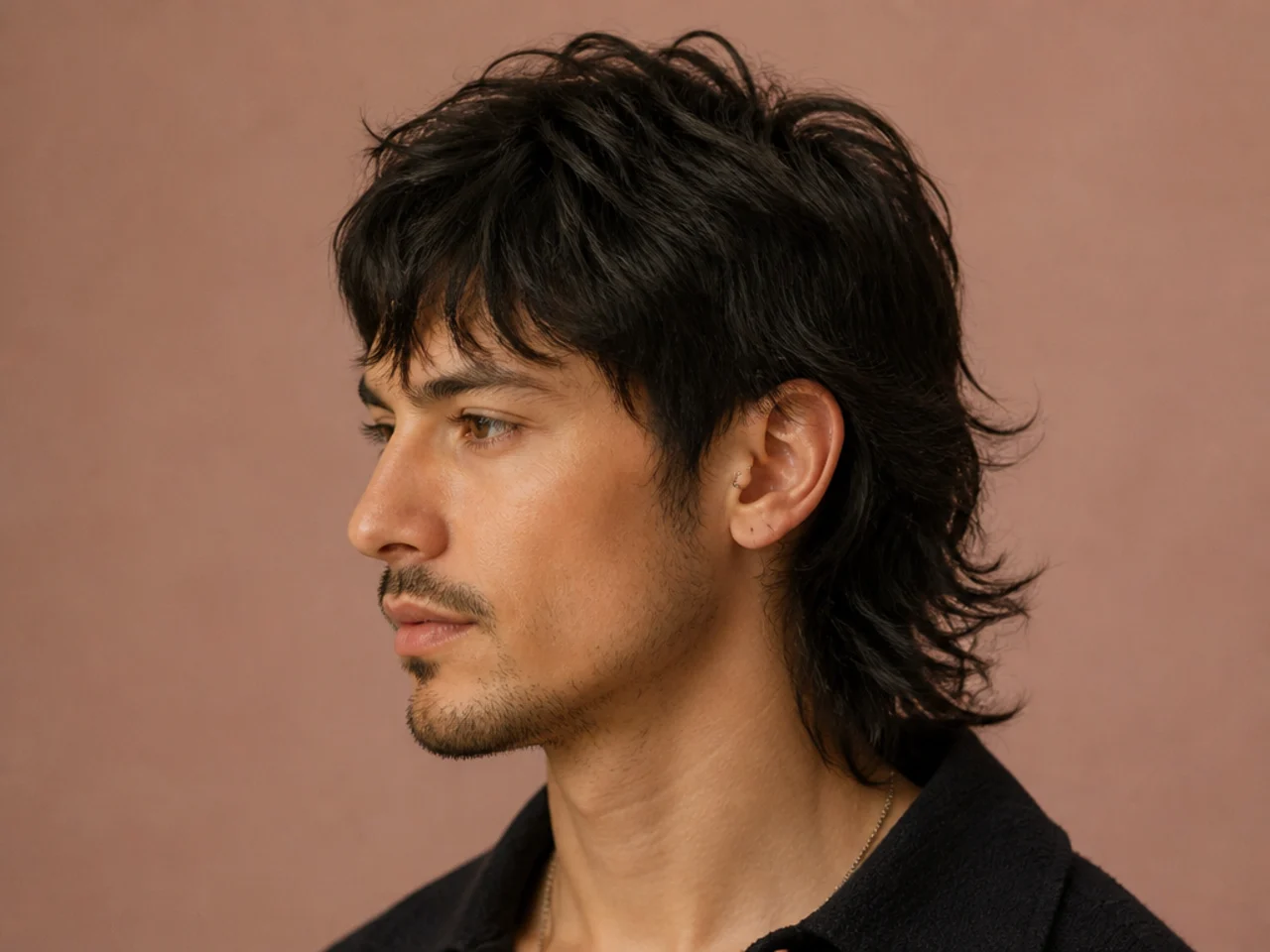
What sets it apart: it borrows from the messy hairstyle family — heavy face-framing layers and rounder texture through the crown. It's essentially a wolf-cut mullet hybrid: layers around the top blend into a shaggy back for one continuous mass of texture.
Who it suits: fine or medium hair that needs body. Guys who like a slightly disheveled look. Best on oval and heart faces.
How to ask for it: "Wolf-cut mullet, layers stacked around the crown and face, keep the perimeter feathered, three-inch back, blended sides — no hard fade."
Styling tip: texture spray, scrunch, air-dry. Skip the comb entirely. For more layered inspiration, browse our roundup of stunning wolf cut hairstyles.
Two Block Mullet
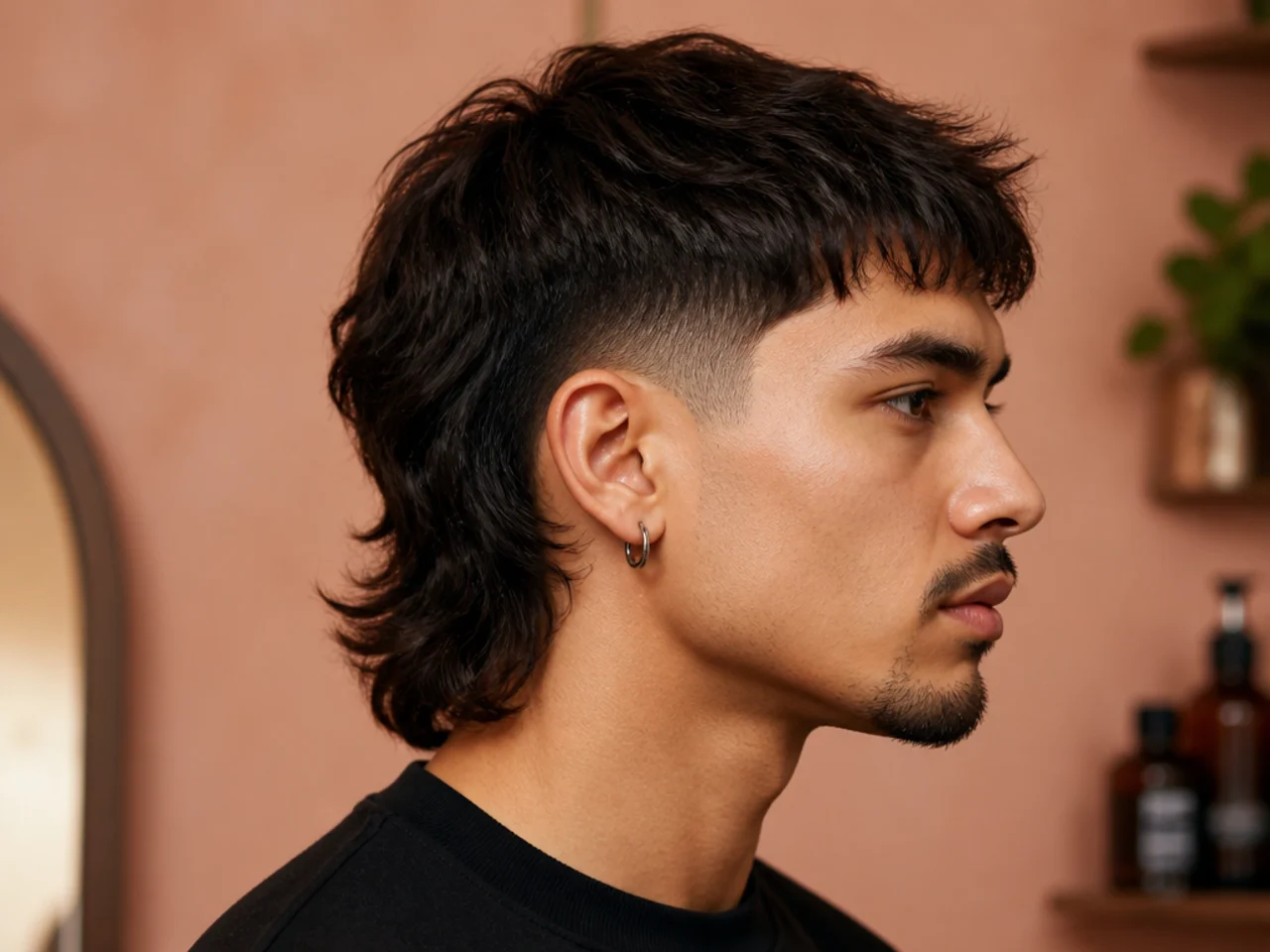
What sets it apart: the two-block silhouette — long top and back over a shaved undercut — is a K-pop staple, and paired with a mullet it creates a striking split. The top and back are one continuous mass of hair; the sides sit hidden underneath.
Who it suits: guys with dense, straight-to-wavy hair. Suits oval and long face shapes because the silhouette narrows the head.
How to ask for it: "Two-block mullet, undercut the sides and back-of-ear to about half an inch, leave three to four inches on top that connects into the back, keep the top blunt-cut."
Styling tip: blow-dry the top backward with a round brush, then pin down flyaways with a bit of pomade.
Trendy Short Mullet with Low Taper Fade
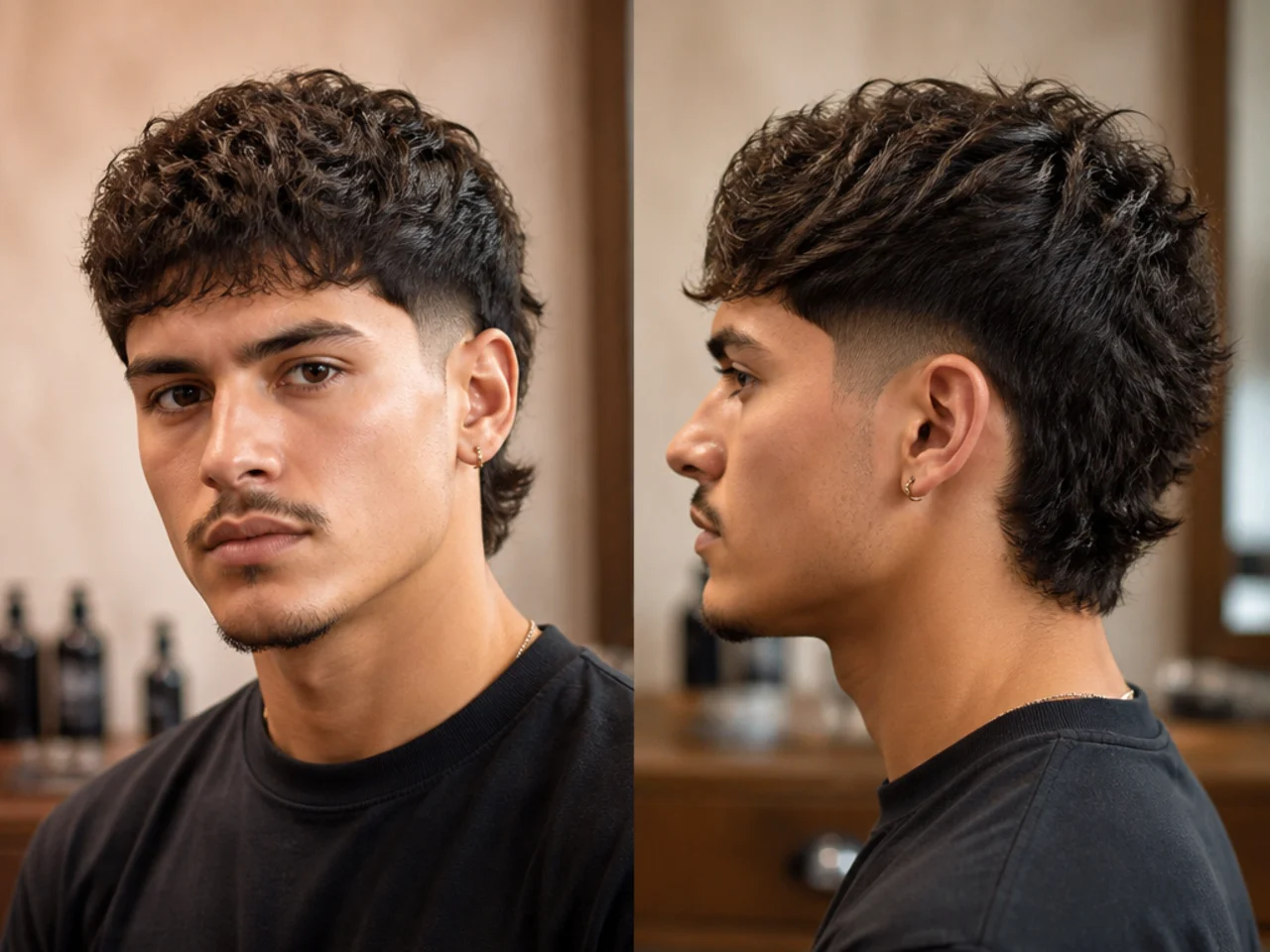
What sets it apart: this version pairs a spiked-up top with the mullet's flowing back and a low taper fade that keeps the ears clean. It's the most versatile mullet on this list — professional enough for most workplaces without sacrificing the shape.
Who it suits: thick, straight-to-slightly-wavy hair. Round and square faces get lift where they need it.
How to ask for it: "Short mullet with a low taper fade, one guard at the ear blending up, spiked top around two inches, back two to two-and-a-half inches, soft blended layers."
Styling tip: hair paste on damp roots, blow-dry upward, then finger-spike the top. Read more textured cuts in our guide to shag haircuts.
Mullet Faux Hawk
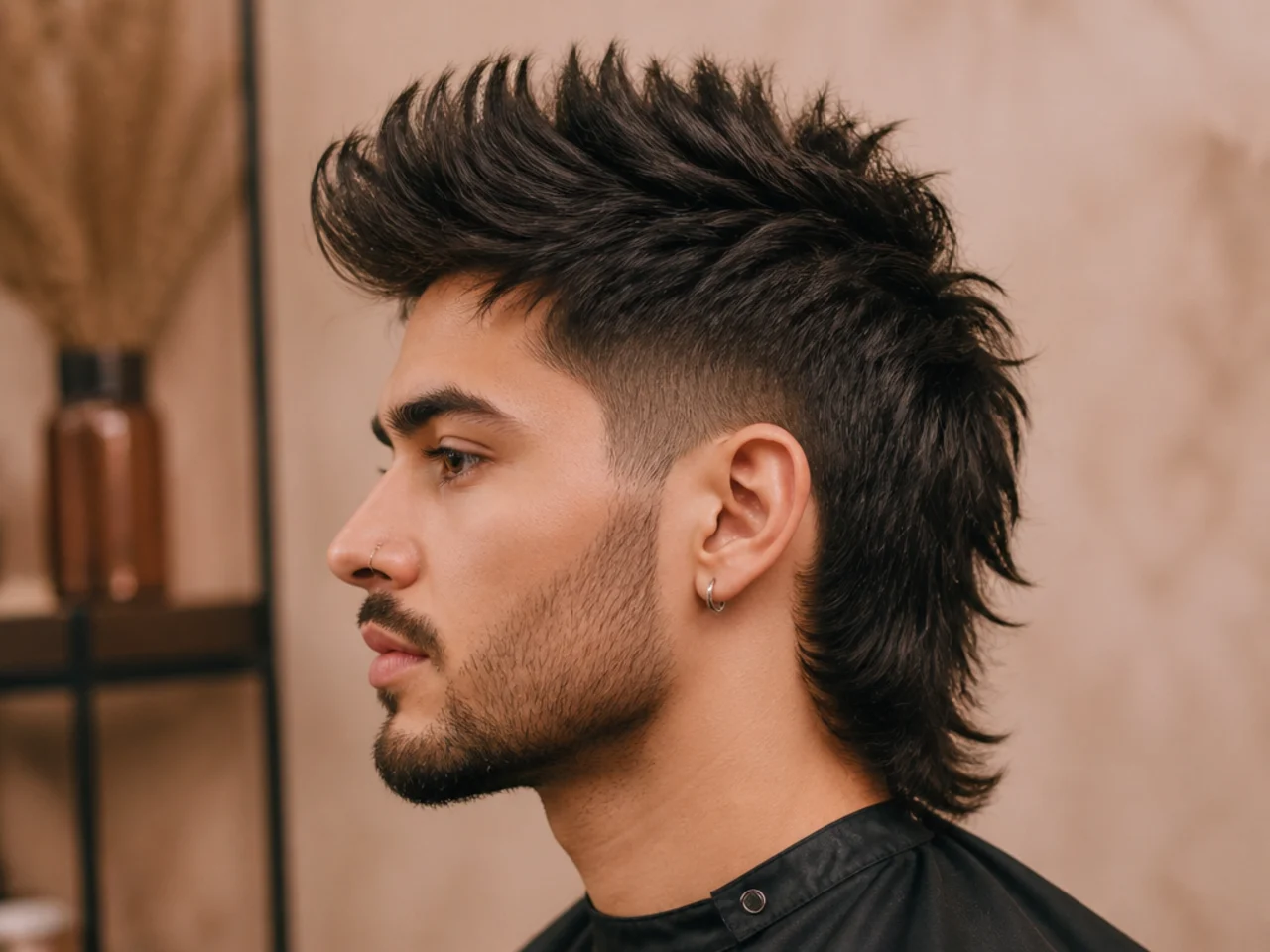
What sets it apart: it combines the mullet's back length with faux hawk height through the middle. Unlike a real mohawk, the sides aren't shaved — they're faded, so the shape can be flattened for a normal day when you don't want the peak.
Who it suits: guys who want optionality. Works with straight-to-wavy hair and oval or square face shapes.
How to ask for it: "Mullet faux hawk, high fade on the sides — number one at the bottom blending up — keep three inches through the middle strip, two-inch back, layers to reduce bulk."
Styling tip: sea-salt spray for volume, then pinch the middle upward with fiber pomade.
Temp Fade Mullet
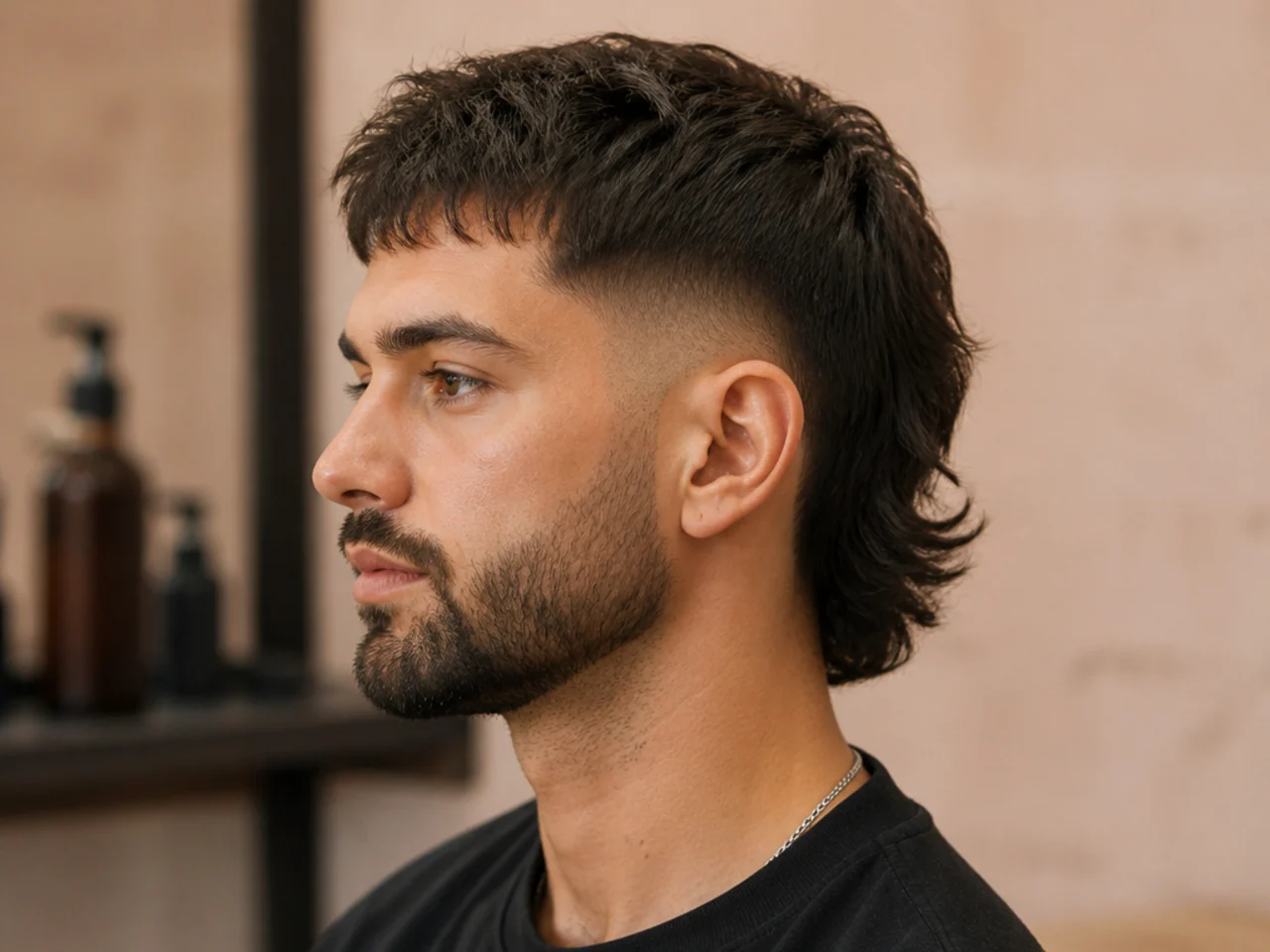
What sets it apart: the temp fade — a sharp line at the temple that curves back — frames the top and adds architecture. Combined with the mullet's back length, it reads intentional and razor-clean.
Who it suits: coily and tight-curl textures pair especially well. Round and square faces benefit from the vertical lines the temp fade creates.
How to ask for it: "High temp fade, straight line from temple to temple, skin fade underneath, blend up into three inches of length on top and back, define the hairline with a razor edge."
Styling tip: curl sponge or brush the curls into shape after applying a leave-in conditioner.
Faded Mullet with Fringe
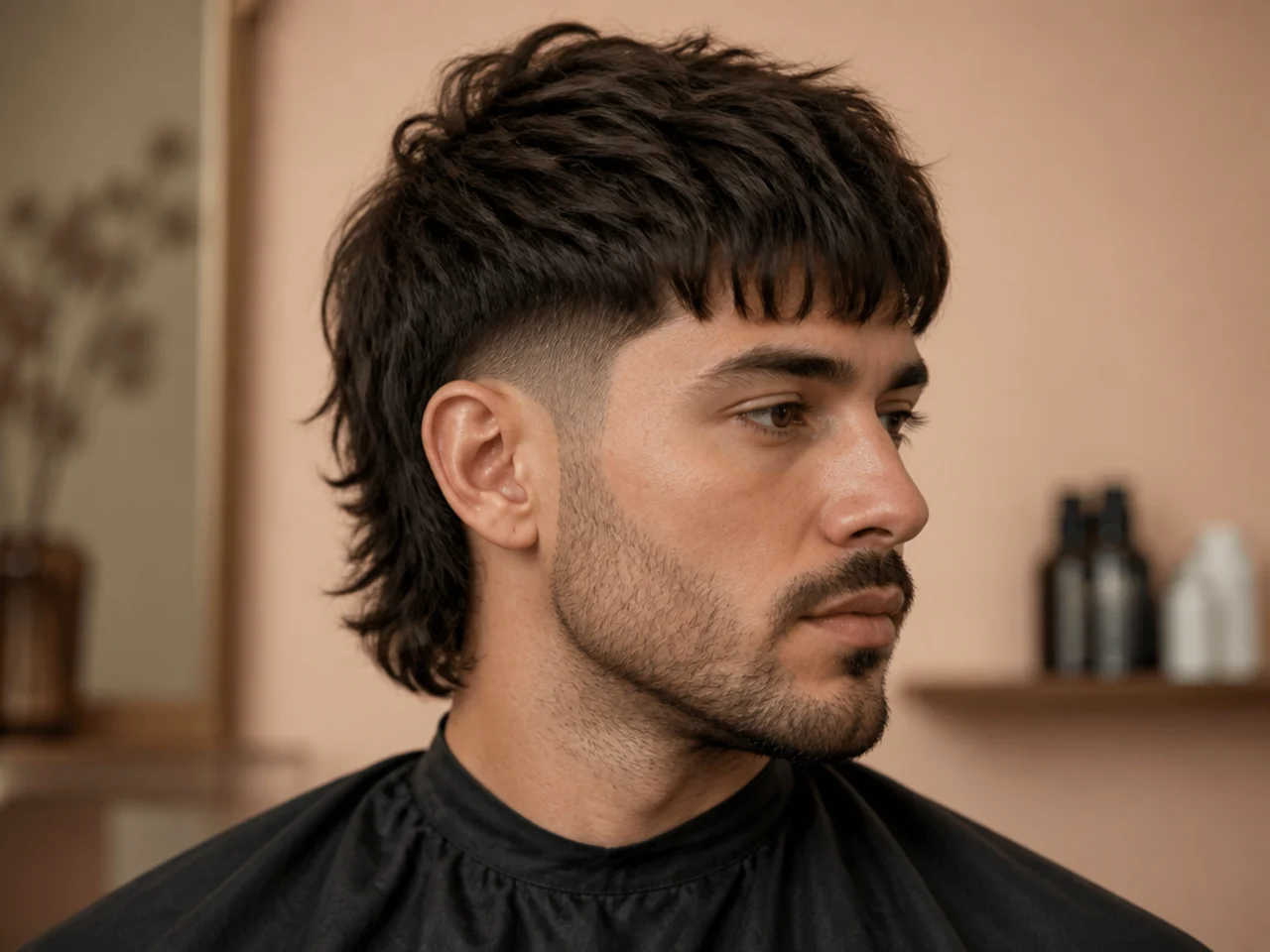
What sets it apart: the fringe is the focal point. A side-swept or curtain fringe drops down over the forehead, and a low fade haircut meets the fringe at the temple. It's an approachable, editorial-leaning look.
Who it suits: fine, straight hair that would otherwise fall flat. Long or narrow face shapes benefit — the fringe shortens the face visually.
How to ask for it: "Low fade sides, blended into a long fringe, three-inch back with soft layers, keep the fringe touching the eyebrows."
Styling tip: blow-dry the fringe down and forward, then push it slightly to the side with a wide-tooth comb. If you want contrast, look at our roundup of buzz cut styles.
Fluffy Mullet
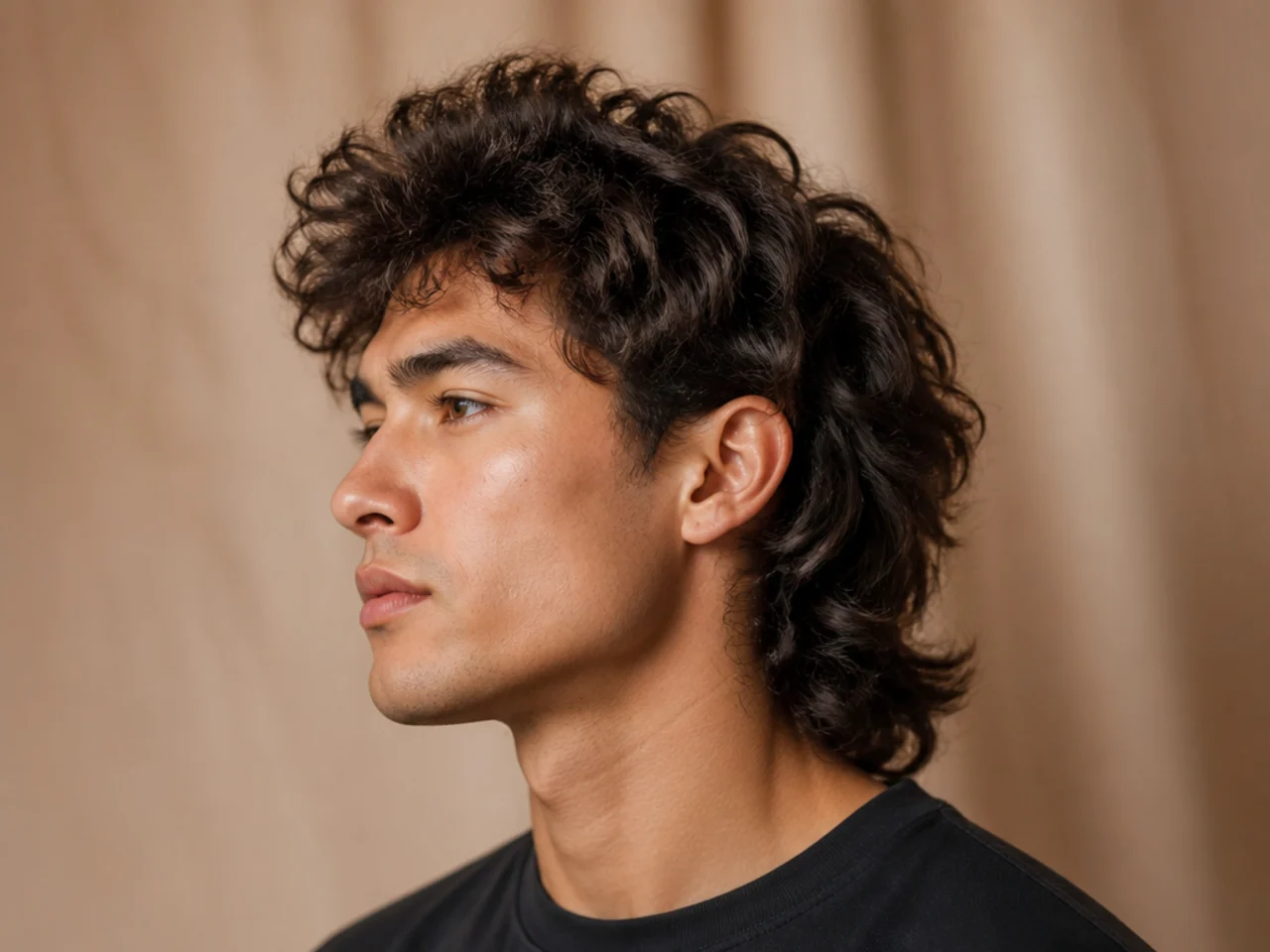
What sets it apart: volume takes center stage. The mid-section stays long and stands up, while the sides and back get gradually shorter. It's a mullet built around lift, not length.
Who it suits: thick, coarse, straight-to-wavy hair that holds height. Suits round and heart-shaped faces because the peak elongates the top of the face.
How to ask for it: "Fluffy mullet, four inches through the top, sharp mid fade on the sides, mid-length fringe, back two to three inches with texture."
Styling tip: mousse in damp hair, blow-dry upward with a round brush, then set with a strong-hold spray.
Sexy, Modern Mullet From The Back
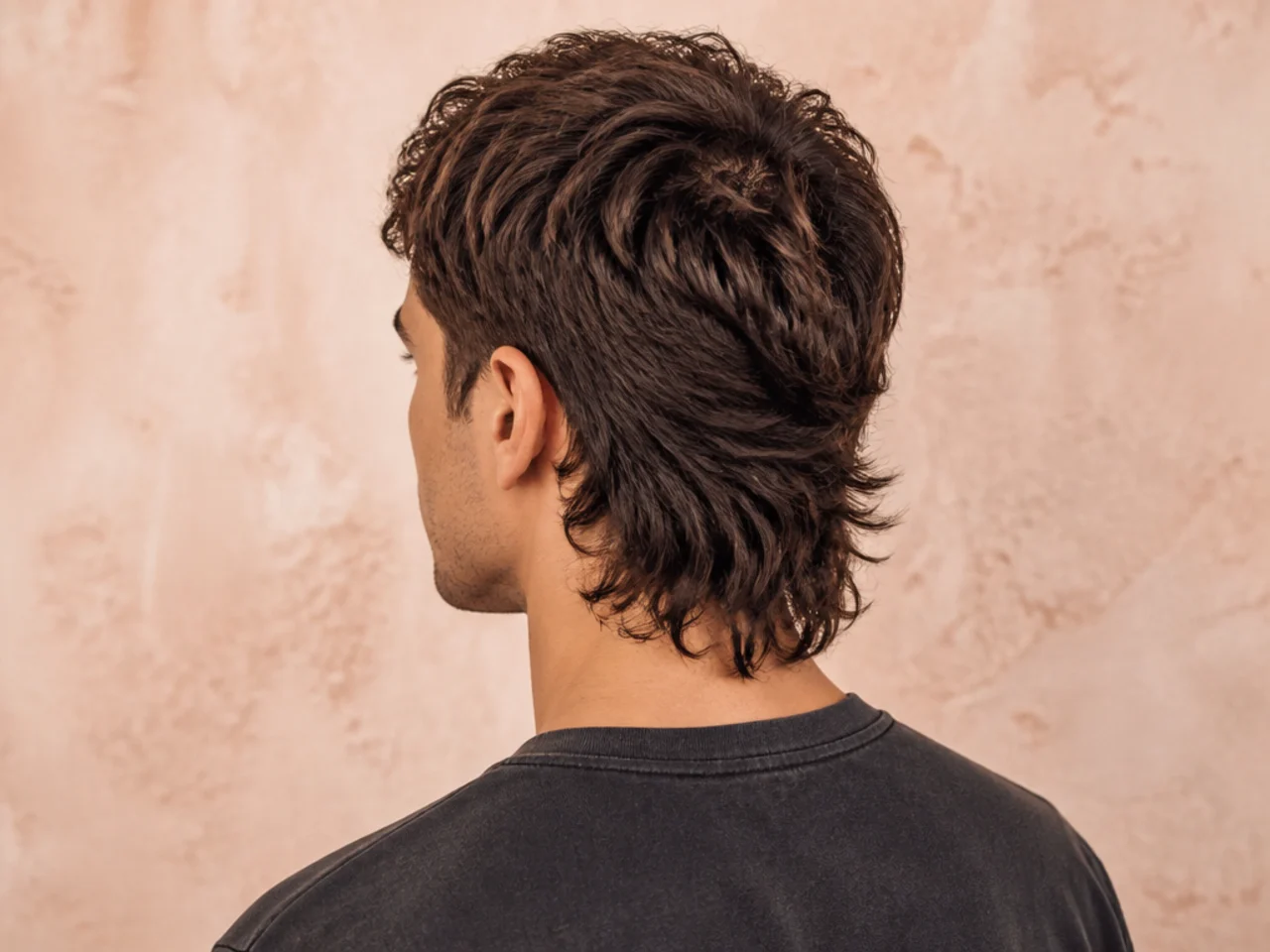
What sets it apart: from behind, this reads as a proper 50s greaser silhouette — length concentrated at the crown and nape, sides short and tight — but with modern layering that keeps the mass mobile instead of helmet-solid.
Who it suits: guys with medium-to-thick straight hair who want a retro reference. Works on oval and square faces.
How to ask for it: "Modern mullet with a sharp side part, three inches on top, tapered sides, longer through the crown and nape, use point cutting to break up the weight."
Styling tip: apply cream pomade with a wide-tooth comb, sweep back at an angle, and let it set.
Messy Mullet with Texture
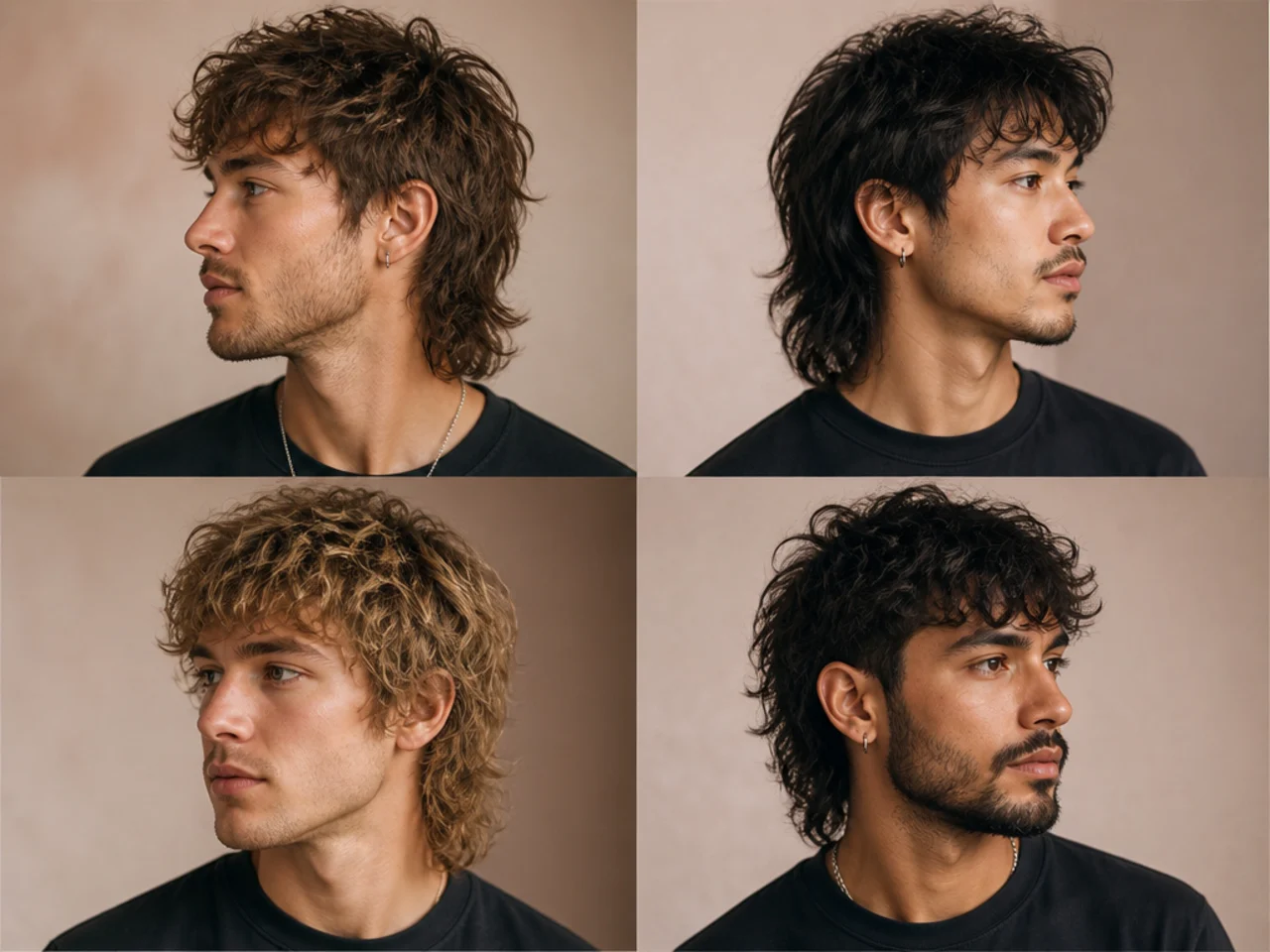
What sets it apart: this one leans fully into texture — no clean lines, everything moves. Wave and choppy internal layers make the shape feel lived-in rather than styled.
Who it suits: guys with natural wave or curl. Round and square faces get softened by the movement.
How to ask for it: "Messy mullet, mid taper fade, long wavy fringe to the brows, three-inch back gradually shortening, choppy internal layers."
Styling tip: texture cream and salt spray together on damp hair, air-dry, then twist random pieces for definition.
Edgy Mullet with Beard
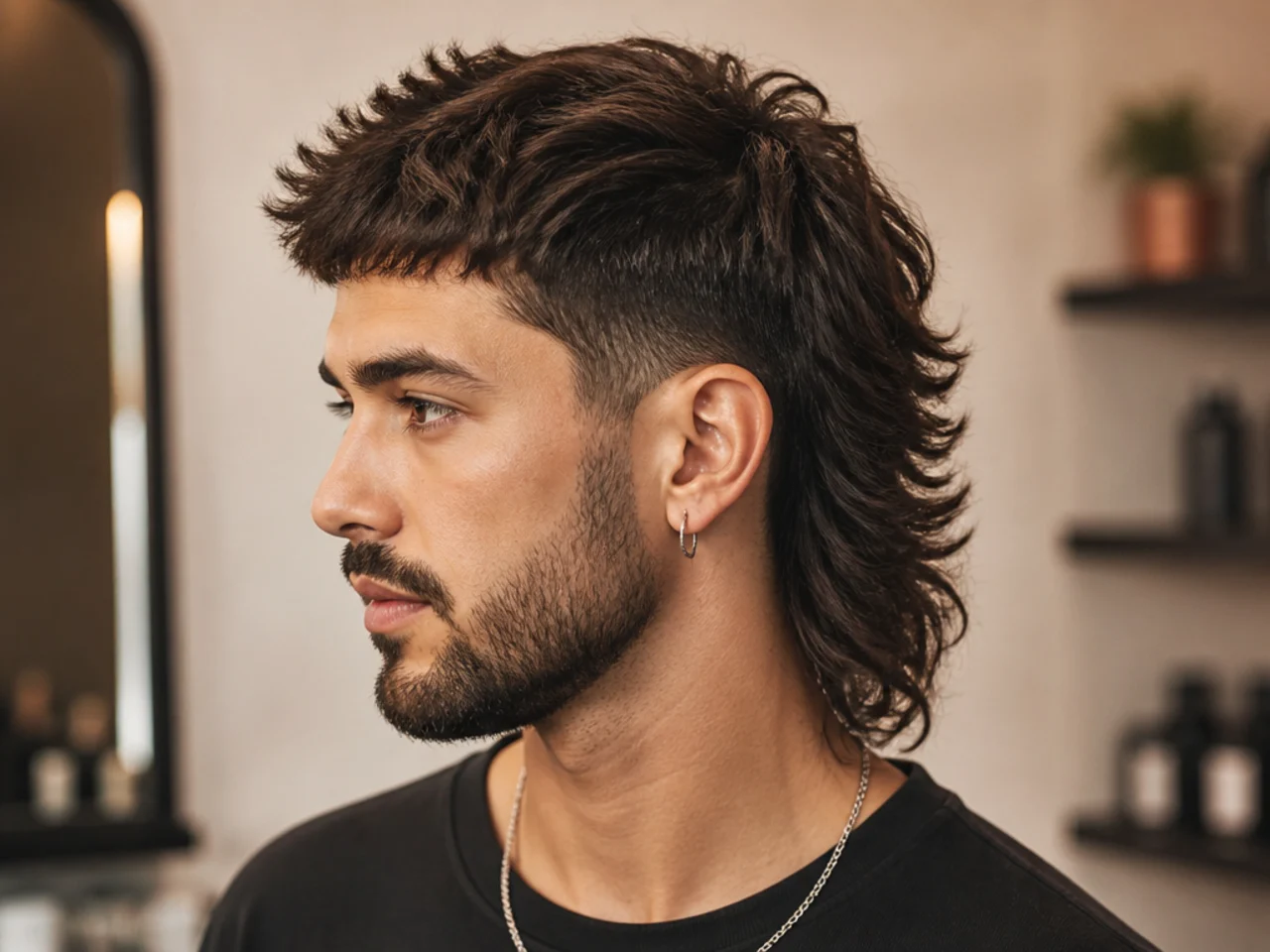
What sets it apart: the shape reads almost like a soft mohawk — hair sweeps from front to back in a single line — paired with a full beard for balance. The high fade widens the visual space for the top mass.
Who it suits: guys committed to a strong statement. Works with straight-to-wavy hair and oval or square faces.
How to ask for it: "High taper fade, keep four inches through the top and back, fringe that curls upward, define the nape line, blend into a full-length beard."
Styling tip: strong-hold clay pushed forward, then upward at the fringe with fingers. Trim the beard every four days to keep the line clean.
Classy Mullet
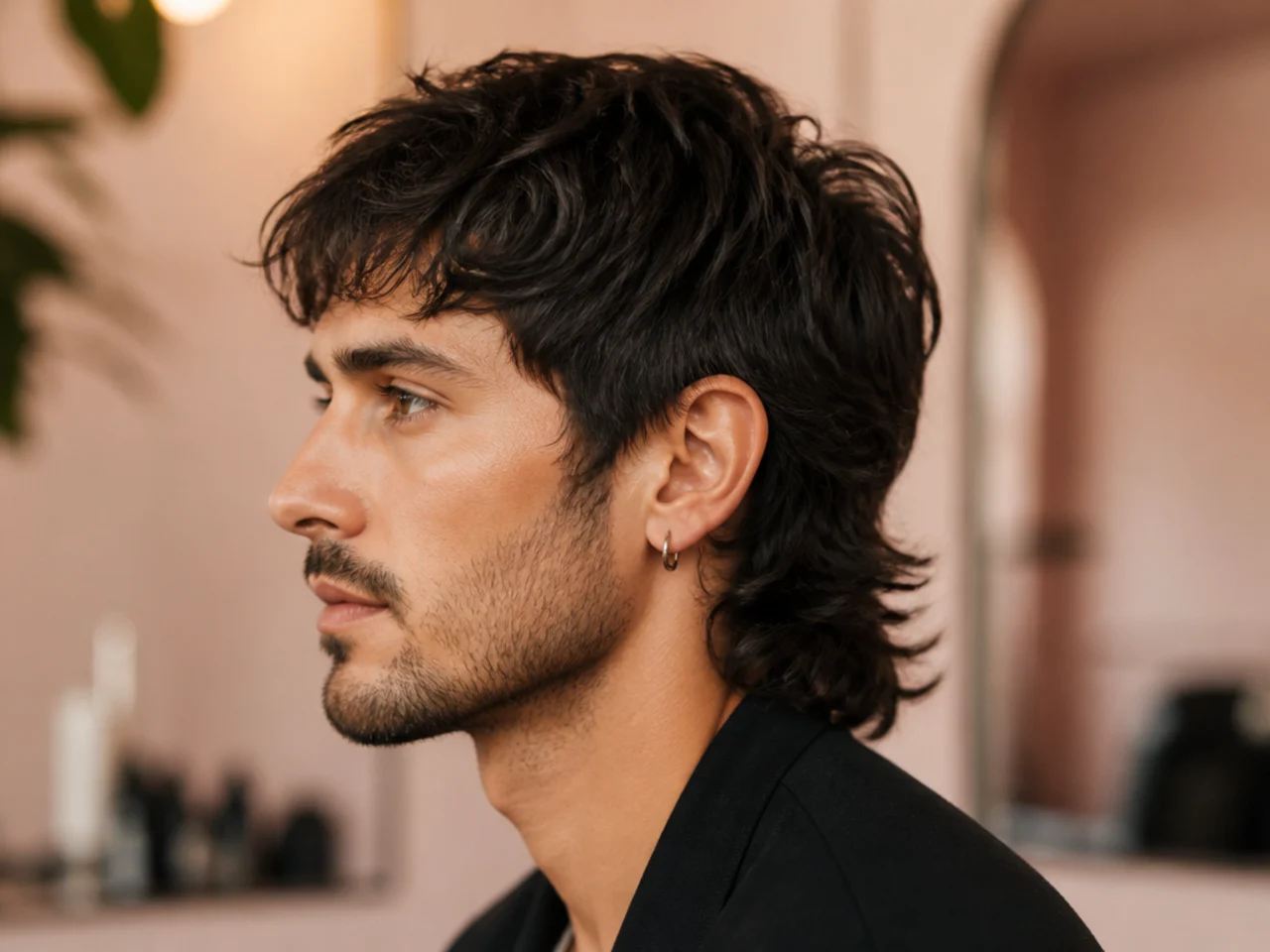
What sets it apart: this is the polished version — everything smoothed out. No spikes, no choppy edges. Curls or waves flow from the hairline to the nape, and a soft taper blends into a well-groomed beard.
Who it suits: professionals and guys who want the reference without the drama. Wavy or curly hair reads best. Works on oval and heart faces.
How to ask for it: "Classy mullet, blended sides — no fade line — three-inch back, keep the curls or waves intact with wide-tooth cutting, taper into the beard."
Styling tip: leave-in conditioner, comb through with a paddle brush, and let it air-dry.
Quiff Mullet Fade
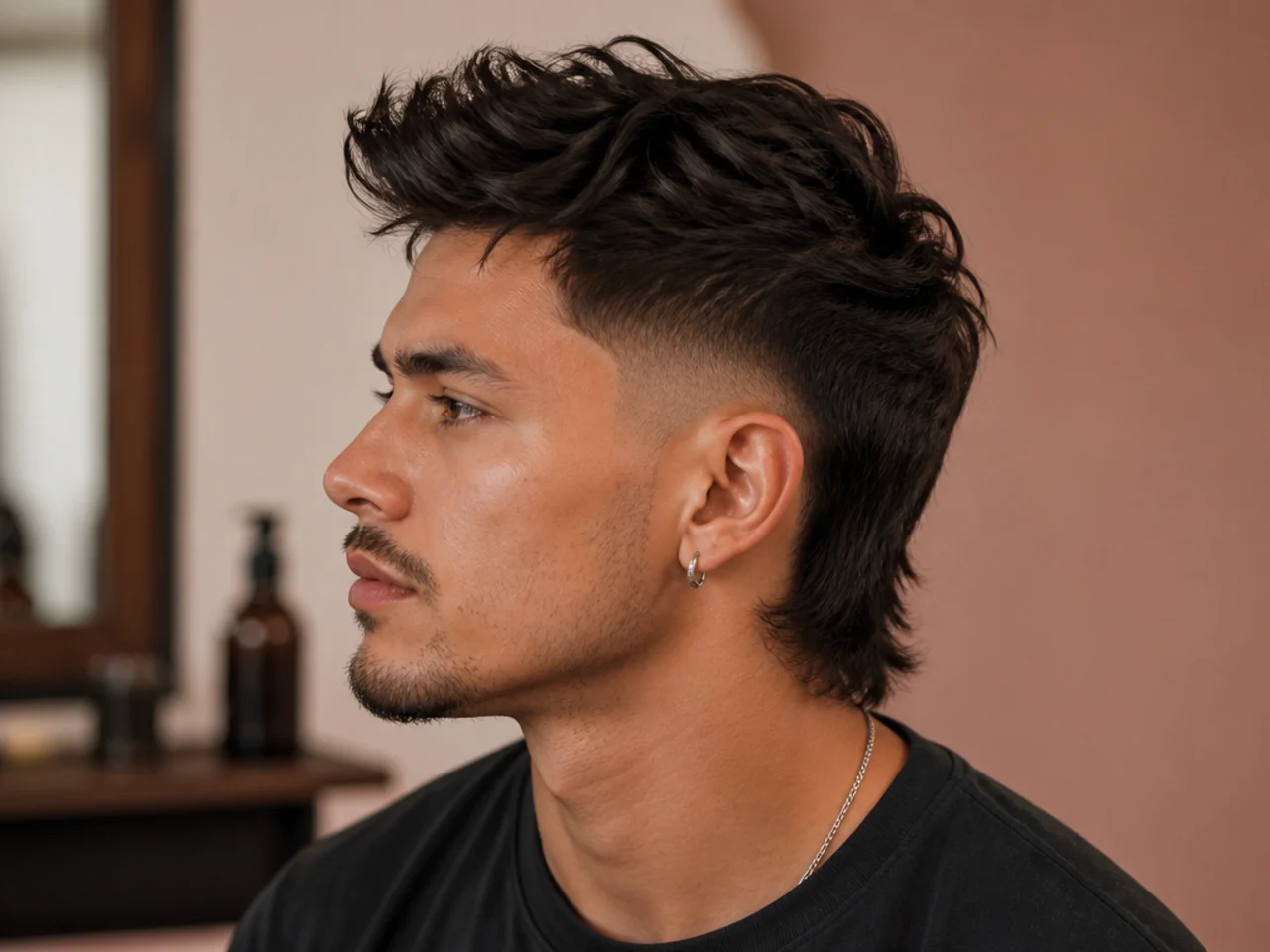
What sets it apart: the quiff — swept-up front volume — dominates the silhouette, then eases into shorter waves at the back. The fade underneath keeps the profile clean.
Who it suits: guys with thick, straight or wavy hair that can hold a quiff. Suits round and square faces because the quiff adds vertical line.
How to ask for it: "Quiff mullet, mid or high fade on the sides, keep four inches through the top for the quiff, two-inch back with soft layers, keep the fringe long enough to sweep back."
Styling tip: blow-dry the top backward with a round brush, matte pomade for hold, hairspray to finish.
Permed Mullet Taper
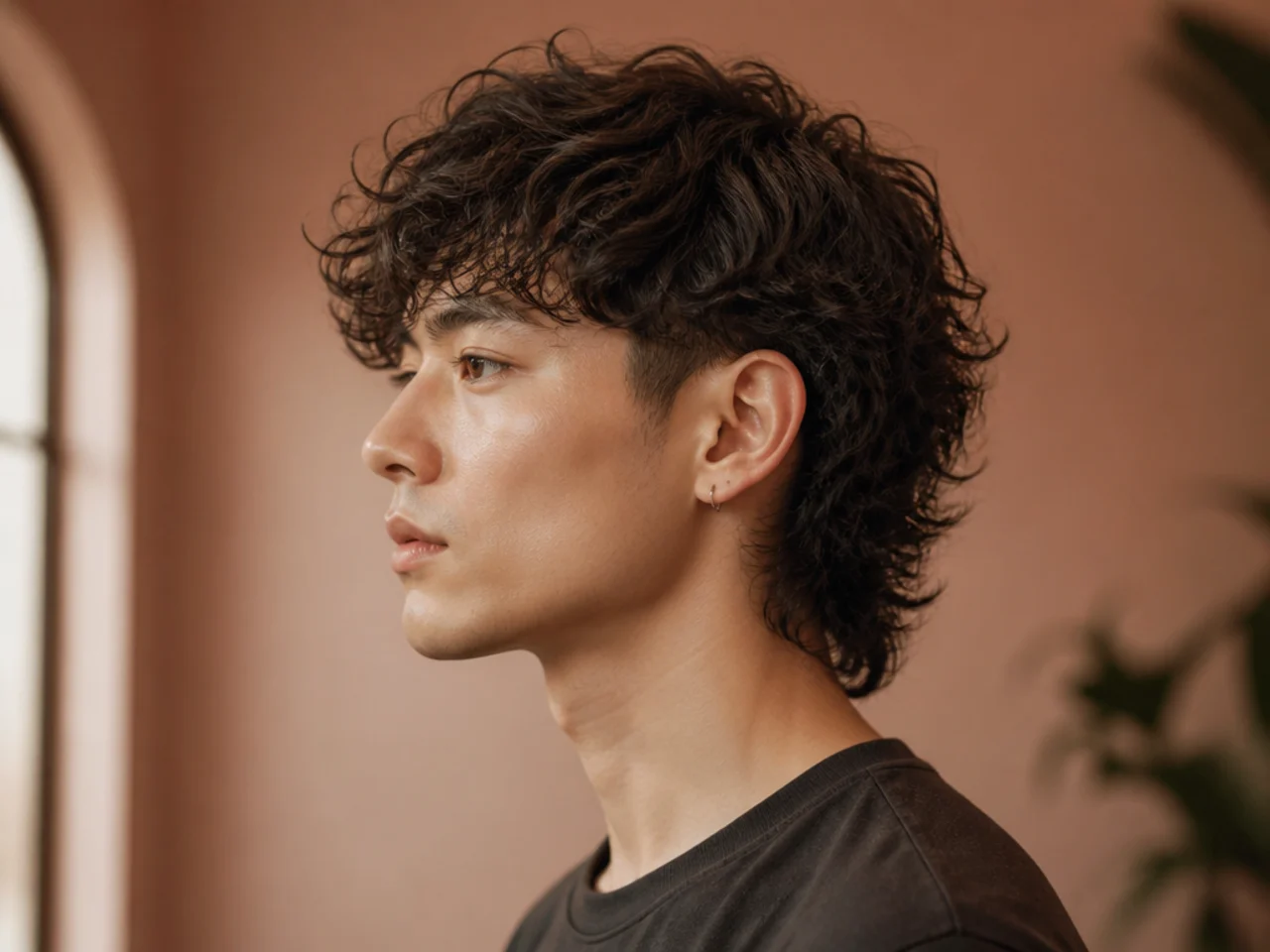
What sets it apart: a perm creates coil where none exists naturally, giving the mullet a bouncy, textured shape. The cut needs precision because permed hair reveals every layer line.
Who it suits: guys with straight-to-wavy hair who want curl texture. Works on oval, round, and heart face shapes because the volume balances proportions.
How to ask for it: "Permed mullet, low taper fade, keep three inches through the top and back, dry-cut the layers after the perm sets, leave the perimeter to move."
Styling tip: curl cream on damp hair, scrunch, diffuse on low. Refresh with a spray bottle of water and cream on non-wash days.
Medium Mullet
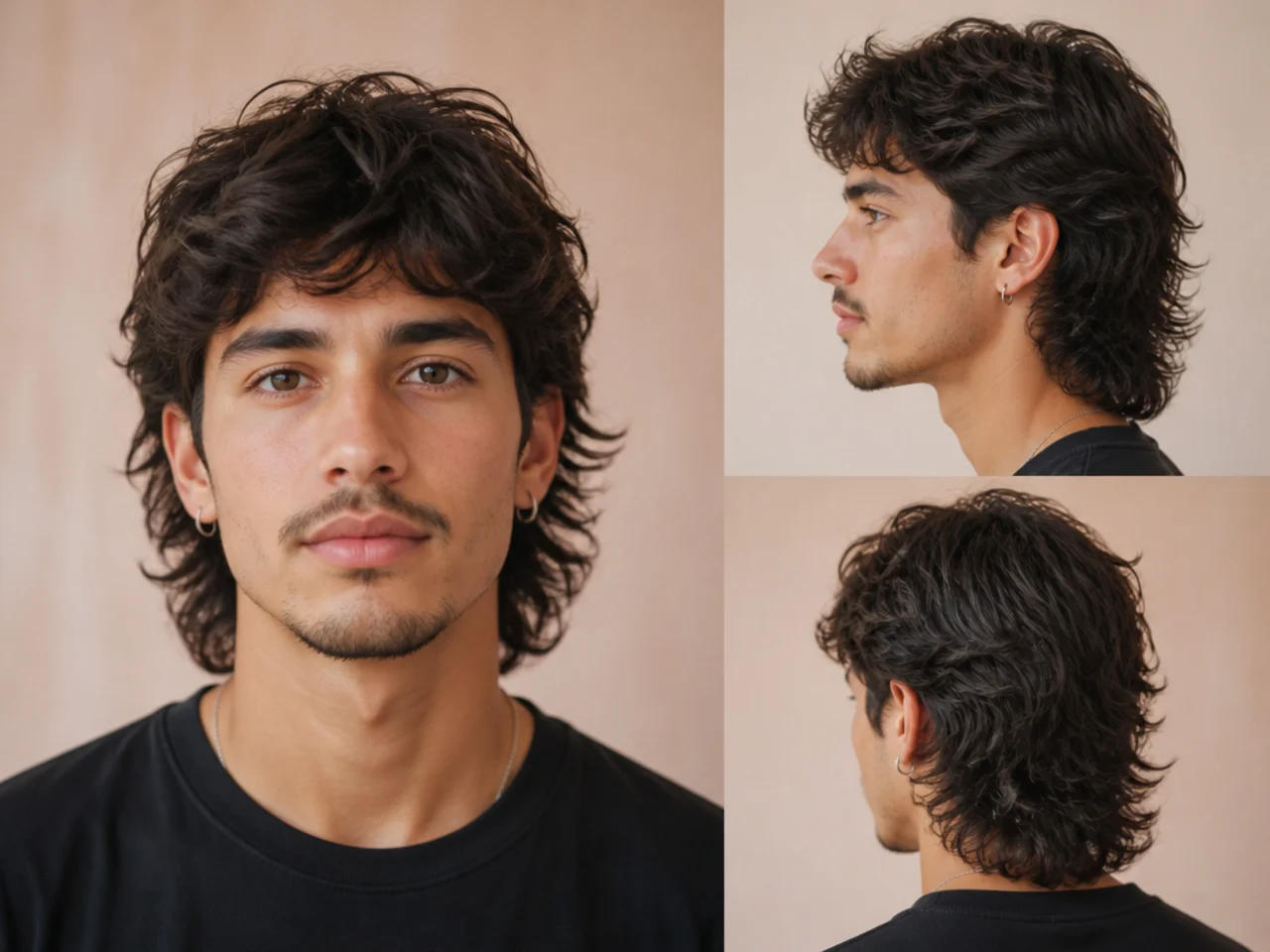
What sets it apart: it splits the difference between short and long. Enough length to feel intentional, not so much that daily styling becomes work. Side-swept layers give the shape direction.
Who it suits: guys new to the mullet who don't want to commit to length yet. Fine or medium hair. Any face shape.
How to ask for it: "Medium mullet, three inches through the back, side-swept layers on top, tapered sides — no hard fade — blend the perimeter softly."
Styling tip: texture cream on damp hair, side-sweep with fingers, air-dry.
Spiky Mullet
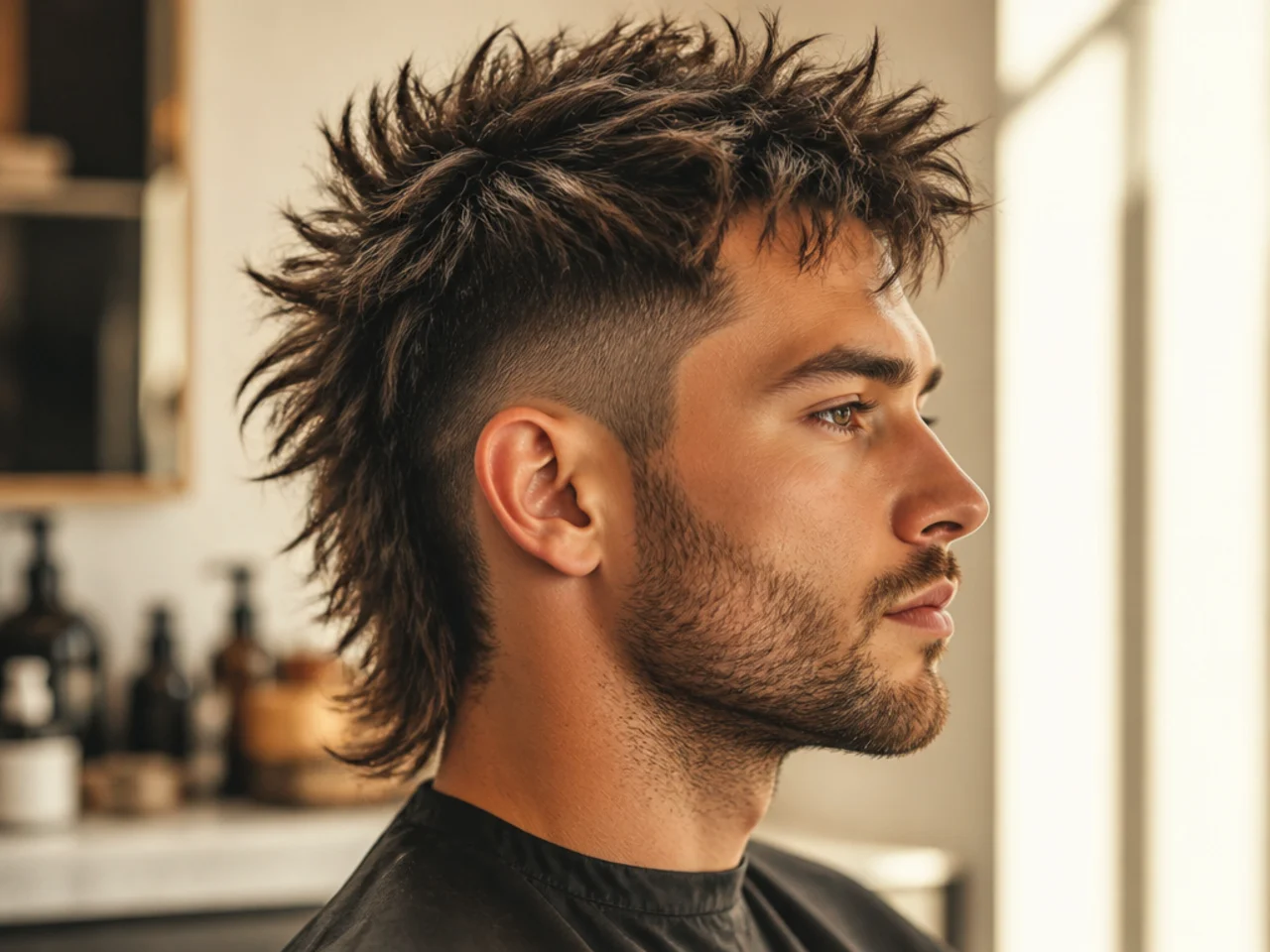
What sets it apart: the spikes turn the top into vertical texture, and the mullet extends that texture down the back. Shorter sides frame the spikes and keep the shape from spreading wide.
Who it suits: thick, straight hair that holds spike shapes. Best for square or diamond faces because the vertical texture elongates.
How to ask for it: "Spiky mullet, low or mid fade sides, three inches through the top for spikes, two-inch back with texture, point-cut for spike definition."
Styling tip: matte clay worked into damp roots, blow-dry upward, spike with fingertips, spray to hold.
Choppy Mullet Taper Fade
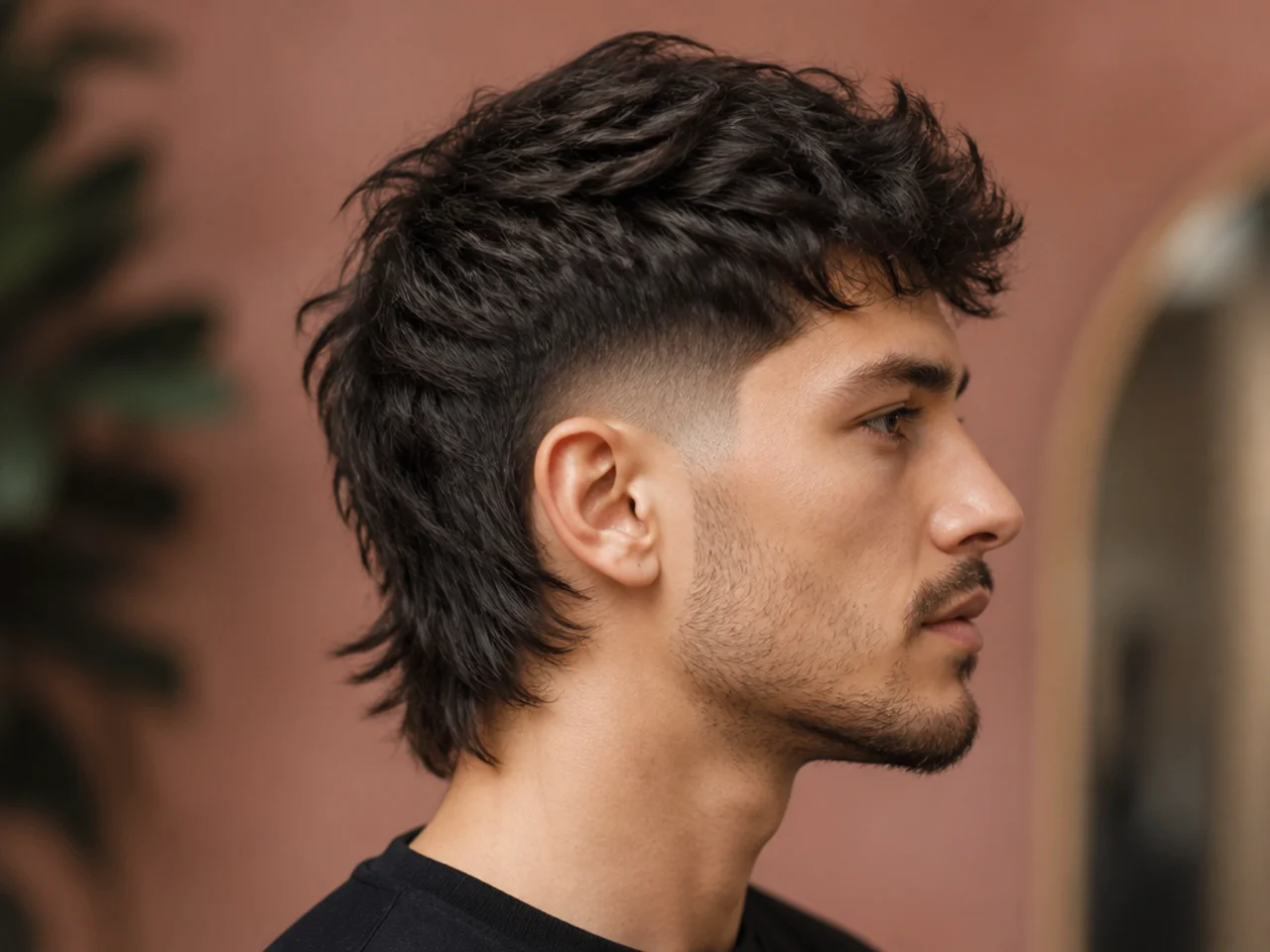
What sets it apart: choppy layers create visible movement — the shape doesn't sit smooth, it breaks in a dozen places. Combined with an angled taper fade, the whole cut reads editorial.
Who it suits: guys with medium-thick hair who want a fashion-forward look. Suits oval and heart face shapes.
How to ask for it: "Choppy mullet, angled taper fade, shaggy fringe over the brows, three-inch back with heavily point-cut layers, disconnect the sideburns slightly."
Styling tip: salt spray, twist damp sections, air-dry, then finger-comb to separate.
Flowing Mullet
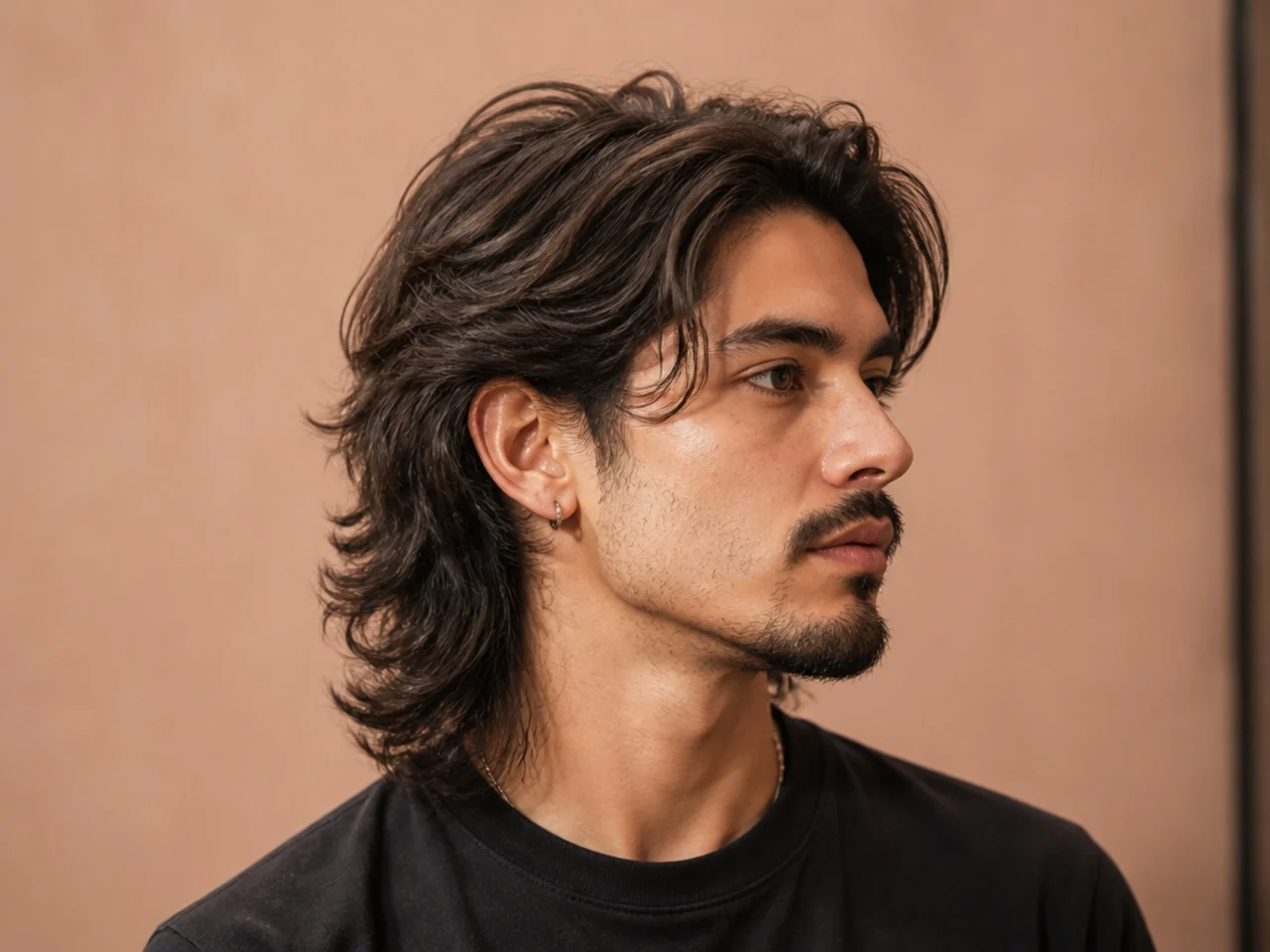
What sets it apart: this one flips the ratio. Length stays on top, back gets shorter and sweeps into the sides. The result feels more like a swept-back cut with a subtle mullet reference than a full mullet silhouette.
Who it suits: guys who want a subtle nod, not a full commitment. Wavy or straight hair. Works on oval, long, and square faces.
How to ask for it: "Flowing mullet, tapered sides, keep four inches through the top swept back, two-inch nape, subtle internal layers."
Styling tip: leave-in conditioner, blow-dry back with a round brush, small dab of pomade at the roots for hold.
Best Face Shapes
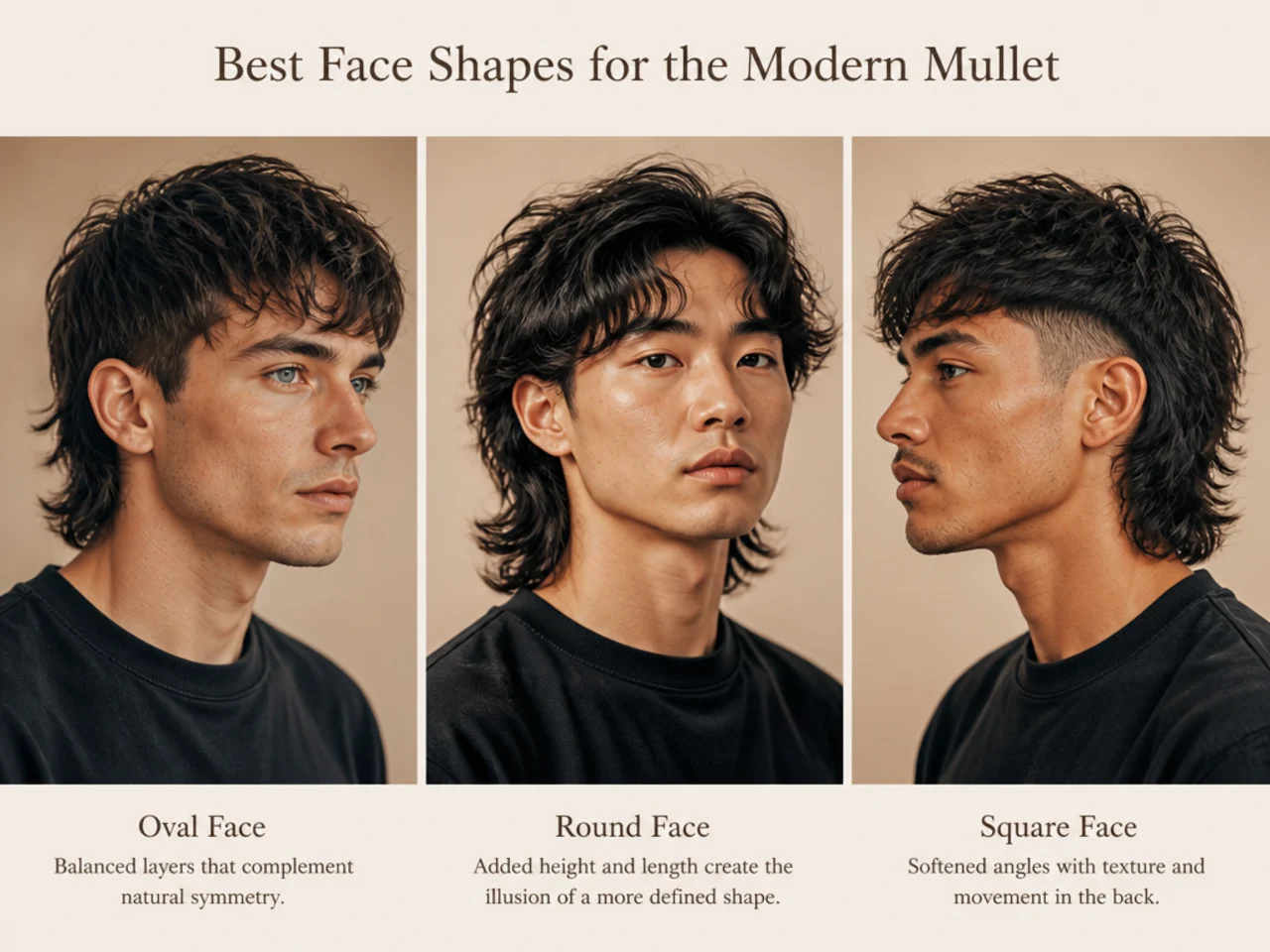
The modern mullet's flexibility comes from how easy it is to adjust for face shape. Every version can be dialed in — length, layering, side treatment — to flatter proportions. Ask your barber to consider your face shape before they start cutting.
- Round: ask for extra height at the crown and keep the sides tapered short. This adds vertical line and narrows the face.
- Oval: the neutral shape — almost any variation works. Choose based on hair type and personal style rather than balancing proportions.
- Square: softer layers and less-defined edges balance a strong jaw. Skip disconnected fades; favor blended tapers.
- Heart: longer back and fuller sides balance a wider forehead. The two-block mullet and shaggy mullet both work well.
- Long or oblong: avoid excess crown height. Choose a medium mullet or flowing mullet with soft, side-swept layers. A fringe helps break vertical length.
- Diamond: the mullet's crown volume balances a wider mid-face. Aim for layered length that keeps sides close to the head.
If your hair texture is curly or coily, layering matters more than length. See our guide to chic wolf cut hairstyles for every face for texture-specific inspiration you can bring straight to your barber.
How To Style A Mullet
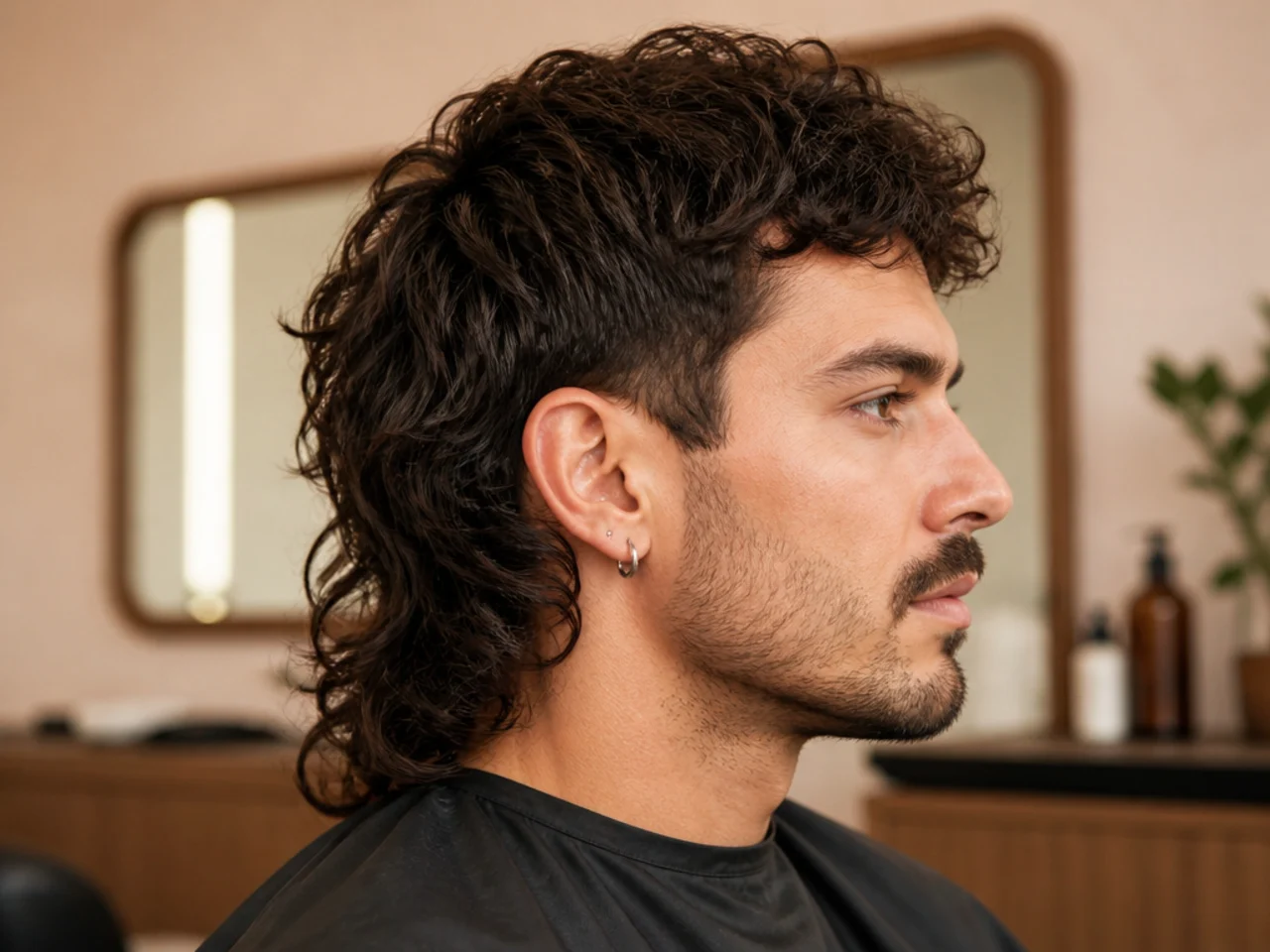
The modern mullet is engineered for low-effort styling — the cut does the work. Under five minutes daily is the standard once you know the sequence.
-
Rough-dry with fingers. After the shower, blot the hair with a towel, then rough-dry with a blow dryer on medium heat. Lift the roots at the crown and back with your fingers as you dry. This builds the volume everything else sits on.
-
Apply texture cream or sea-salt spray. A pea-sized amount of texture cream through the top and back, or a two-pump sea-salt spray on the mid-lengths. Distribute with your fingers, not a comb — a comb pulls the layered texture out.
-
Scrunch the back. Grab the back length and scrunch it upward toward the scalp. This encourages the layers to fall in defined pieces instead of one flat curtain.
-
Air-dry or diffuse. If your hair has any wave or curl, diffuse on low heat with the dryer held close to the scalp. Straight hair can air-dry from here — the shape is already set.
-
Finish with a light hairspray. A quick mist through the whole cut locks the shape for the day without stiffness. Focus on the fringe and crown, where drop happens first.
Two extras that pay off: matte pomade or clay for daytime touch-ups on the fringe, and a wide-tooth comb for reshaping without pulling the texture out. Regular trims are non-negotiable — getting a haircut on time every five to eight weeks keeps the shape sharp. Wait longer and the layers stack into a solid mass; the modern mullet loses its intentional edge fast.
FAQs
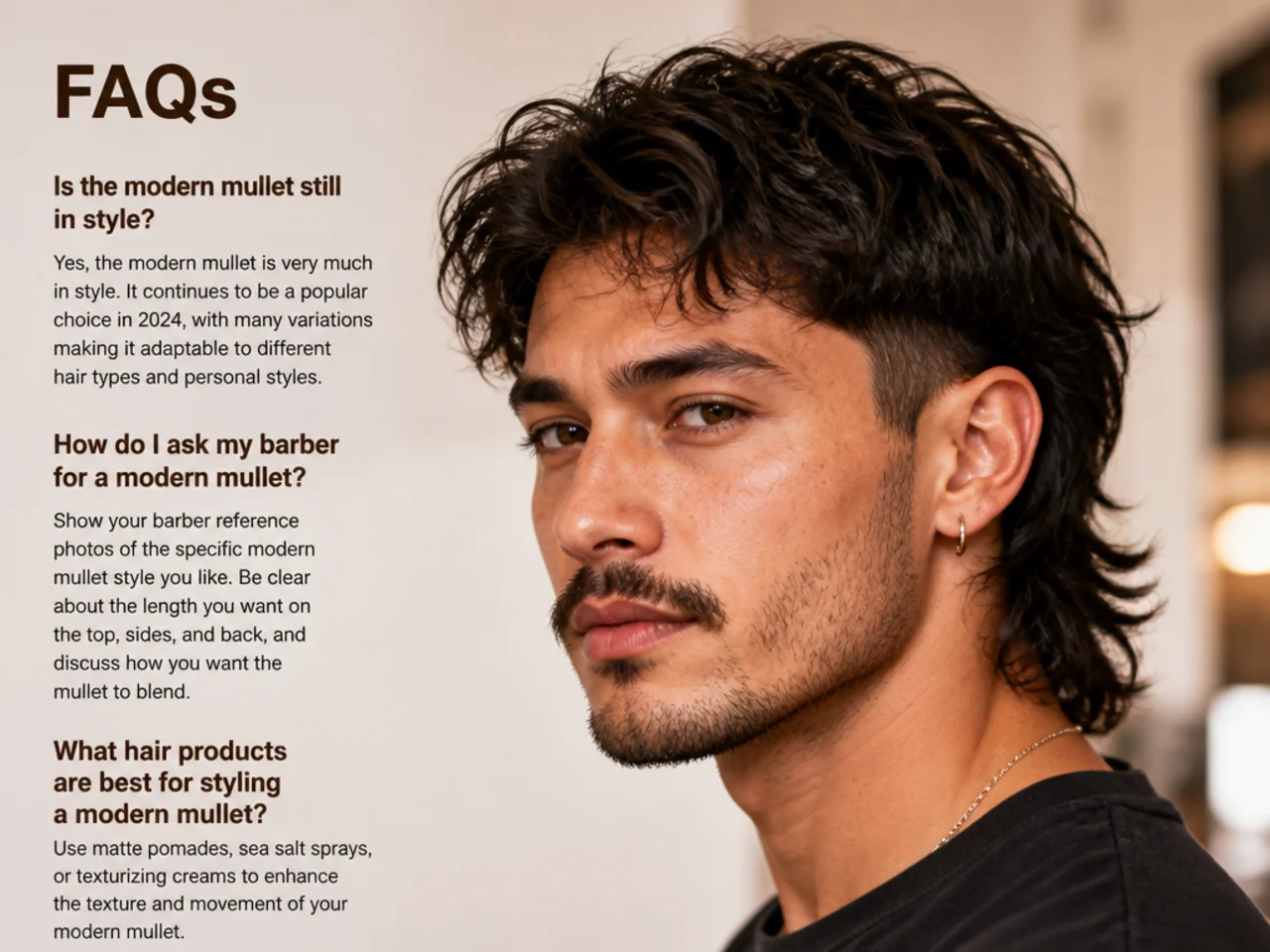
What Is A Mullet Haircut?
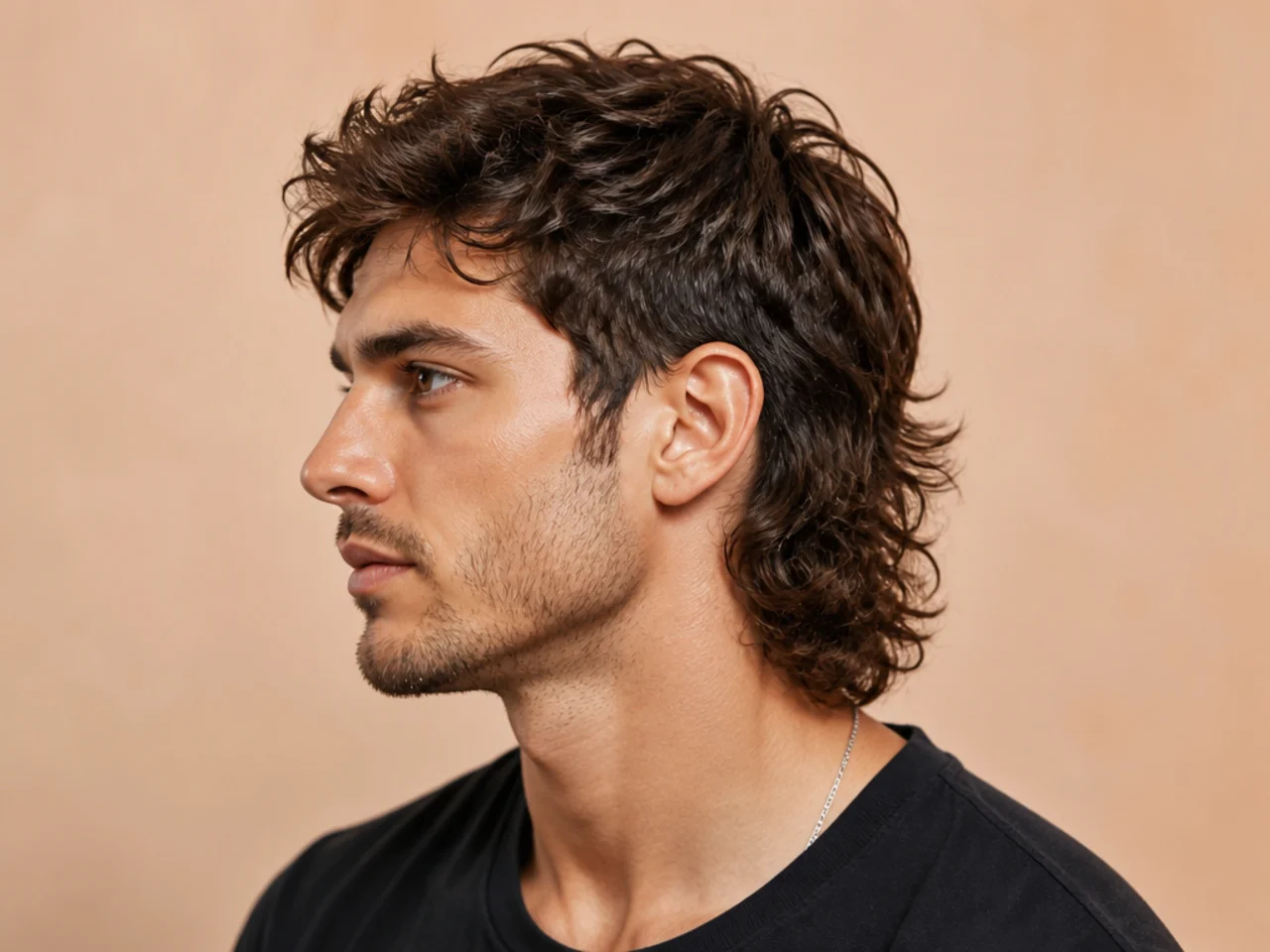
The mullet is a two-length men's cut with the length concentrated at the back and shorter hair through the sides and top. The 1970s and 80s made it famous — David Bowie's Ziggy Stardust era, Billy Ray Cyrus, hockey players, most of country music — and "business in the front, party in the back" became the shorthand.
The 2020s modern mullet keeps that silhouette but rebuilds every detail. The back is shorter, sitting between two and four inches instead of touching the shoulders. Internal layers create texture and movement instead of one blunt hangdown. Fades and tapers replace the hard disconnection between top and sides. That's why the modern version reads intentional — every element is a deliberate choice, not a happy accident of not-cutting-the-back for six months.
Modern Mullet Haircut Men Gallery
Twenty-five variations, one silhouette. The modern mullet works because the shape is inherently versatile — the length concentration reads the same on curly and straight hair, on faded and tapered sides, on classic and edgy interpretations. Pick the version that matches your hair type, face shape, and how much daily styling you're willing to do. Then take a screenshot to your barber and use the exact phrasing above when you ask for it.