20 Short Wolf Cuts With Bangs For Fine Hair
Twenty short wolf cuts with bangs, and the trade fine hair cannot avoid — a fringe is cut out of the front hairline, so every strand in it is a strand no longer covering the top. How deep that section goes decides everything.
In this article · 27
- Why Fine Hair Changes the Fringe
- Choosing Your Fringe Shape
- The 20 Short Wolf Cuts With Bangs
- 1. Curtain Bangs on a Chin Length Wolf
- 2. Wispy Fringe With a Blunt Perimeter
- 3. Micro Layered Crown With Soft Bangs
- 4. Choppy Bottleneck Bangs
- 5. Full Blunt Fringe on a Short Wolf
- 6. Side Swept Bangs With Face Framing
- 7. Baby Bangs With a Shaggy Nape
- 8. Brow Skimming Fringe on Straight Fine Hair
- 9. Textured Fringe With Piecey Ends
- 10. Shattered Bangs on a Bob Length Wolf
- 11. Long Curtain Bangs Past the Cheekbone
- 12. See Through Bangs With Crown Volume
- 13. Rounded Fringe on a Long Face
- 14. Wolf Cut With a Grown Out Fringe
- 15. Feathered Bangs Over Stacked Crown Layers
- 16. Bangs Cut Dry Around a Cowlick
- 17. Deep Side Part With a Swept Fringe
- 18. Fringe With a Money Piece
- 19. Wolf Cut With a Split Fringe
- 20. Longer Fringe for Fewer Trims
- Styling and Upkeep
- Mistakes to Avoid
- FAQ
- Final Thoughts
Most fine haired wolf cuts fail at the fringe, because the bangs were cut from a section deep enough for hair twice the density.
A fringe is borrowed density, not added hair. Everything in it comes out of the front hairline, and it stops covering the top of the head the moment it is cut.
Fine is not the same as sparse. Fine describes the width of one strand; density describes how many there are. Plenty of fine hair is dense enough for a full fringe.
Why Fine Hair Changes the Fringe
The section depth is the only real variable. Two centimetres back from the hairline gives a see through fringe. Six centimetres gives a solid one and takes the coverage with it.
Fine strands lie flat against each other. They do not hold each other apart the way coarse hair does, so a fringe that looks full in the mirror can go transparent under overhead light.
Layer length matters more than layer count. The shortest crown layer sets how high the volume sits. More layers at the same length just remove weight without changing the shape.
The perimeter is where the thickness reads. Fine hair has one visual asset, an unbroken bottom edge, so texture belongs in the fringe and the crown rather than the ends.
Choosing Your Fringe Shape
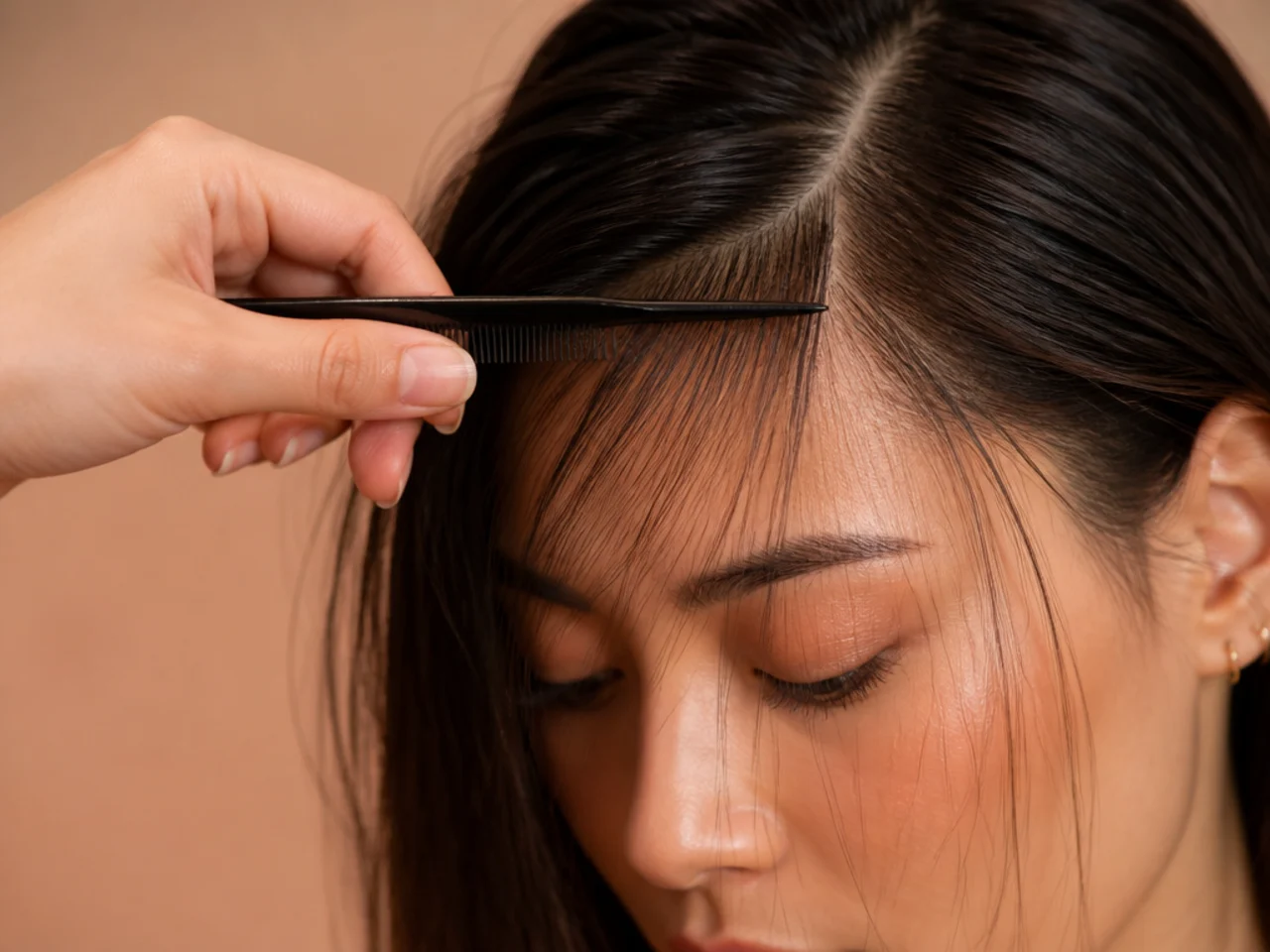
Ask for the section depth in centimetres. It is the one instruction a stylist can act on precisely, and the one most people never give.
Longer bangs need less density. The further the ends fall, the more the fringe overlaps the hair behind it, so a cheekbone length curtain reads full from a shallow section.
Match the shortest crown layer to the fringe. If the crown layer is much shorter, it sits above the fringe and creates a second visible step at the temple.
Choose by trim frequency, not by photograph. A brow skimming fringe needs cutting every three weeks. A curtain fringe stays wearable for eight because it has nowhere obvious to fall to.

The 20 Short Wolf Cuts With Bangs
1. Curtain Bangs on a Chin Length Wolf
Split at the centre and left longer at the outer edges, so the section taken from the hairline stays shallow. Fine hair keeps its coverage behind the parting, and the two halves land on the cheekbones where the shortest crown layers finish.
2. Wispy Fringe With a Blunt Perimeter
The fringe is thinned at the ends while the bottom edge of the cut is left uncut and solid. Weight at the perimeter is the only density signal fine hair has, so the texture goes into the fringe instead and the outline still reads thick.

3. Micro Layered Crown With Soft Bangs
The stack is compressed into the top four centimetres of the crown rather than spread down the head. Short layers prop up the ones beneath them, and keeping that lift high means the volume sits above the fringe instead of pushing it forward.

4. Choppy Bottleneck Bangs
Narrow at the centre and flared out at the temples, with the notch sitting level with the pupil. The flare hands the outer pieces to the face framing layer, which is why the fringe reads as part of the cut rather than a shape glued to the forehead.

5. Full Blunt Fringe on a Short Wolf
Only worth attempting if the density is there, whatever the strand width. The section has to run four to five centimetres back to look solid, and on a sparse head that depth leaves the crown visibly see through under any light from above.

6. Side Swept Bangs With Face Framing
Cut on a diagonal so the longest edge runs straight into the face framing layer with no join. Nothing has to be pinned or tucked, because the fringe never reaches a length where it falls into the eye and needs moving.

7. Baby Bangs With a Shaggy Nape
Cut well above the brow, which is a commitment rather than a compromise. A very short fringe stands away from the forehead because the strand is too short to bend under its own weight, and on fine hair that lift is the only volume the front gets.

8. Brow Skimming Fringe on Straight Fine Hair
Straight fine hair lies flat, so the fringe sits in a single plane with nothing to break up the light. That is what makes the scalp show through a shallow section, and the fix is depth at the section rather than more thinning at the ends.

9. Textured Fringe With Piecey Ends
The ends are point cut at a steep angle so each strand finishes at a different height. The eye reads a soft edge instead of a line, which hides the fact that a fine haired fringe has fewer strands to work with than the photograph did.

10. Shattered Bangs on a Bob Length Wolf
The fringe is cut in two passes at different lengths so the shorter pieces sit in front of the longer ones. That overlap doubles the apparent density at the forehead without taking the section any further back into the crown.

11. Long Curtain Bangs Past the Cheekbone
The longer the fringe, the more it overlaps the hair behind it, so a shallow section still looks full. This is the version that survives being grown out, since there is no obvious length at which it stops working.

12. See Through Bangs With Crown Volume
The deliberately sheer fringe of the Korean wolf cut, where the forehead is meant to show through. Because so little density is used at the front, all the weight stays behind it and the crown can carry the volume unaided.

13. Rounded Fringe on a Long Face
The bottom edge is cut with a shallow curve so it sits lower at the centre than at the corners. A horizontal line across the forehead interrupts the vertical run of a long face, which is why the same fringe cut straight can look severe.

14. Wolf Cut With a Grown Out Fringe
Around eight weeks the ends reach the cheekbone and the fringe becomes face framing on its own. Nothing needs cutting at that point except the perimeter, which is why this is the cheapest version of the cut to keep.

15. Feathered Bangs Over Stacked Crown Layers
The fringe is slide cut so it thins gradually from root to tip. That taper lets it sit flat under the stacked crown layers instead of fighting them, which is where the visible step at the temple usually comes from.

16. Bangs Cut Dry Around a Cowlick
A cowlick at the hairline drags the fringe sideways once it dries, and wet hair gives no warning of it. Cut dry, the stylist can see where each section actually falls and leave the affected pieces a centimetre longer to compensate.
17. Deep Side Part With a Swept Fringe
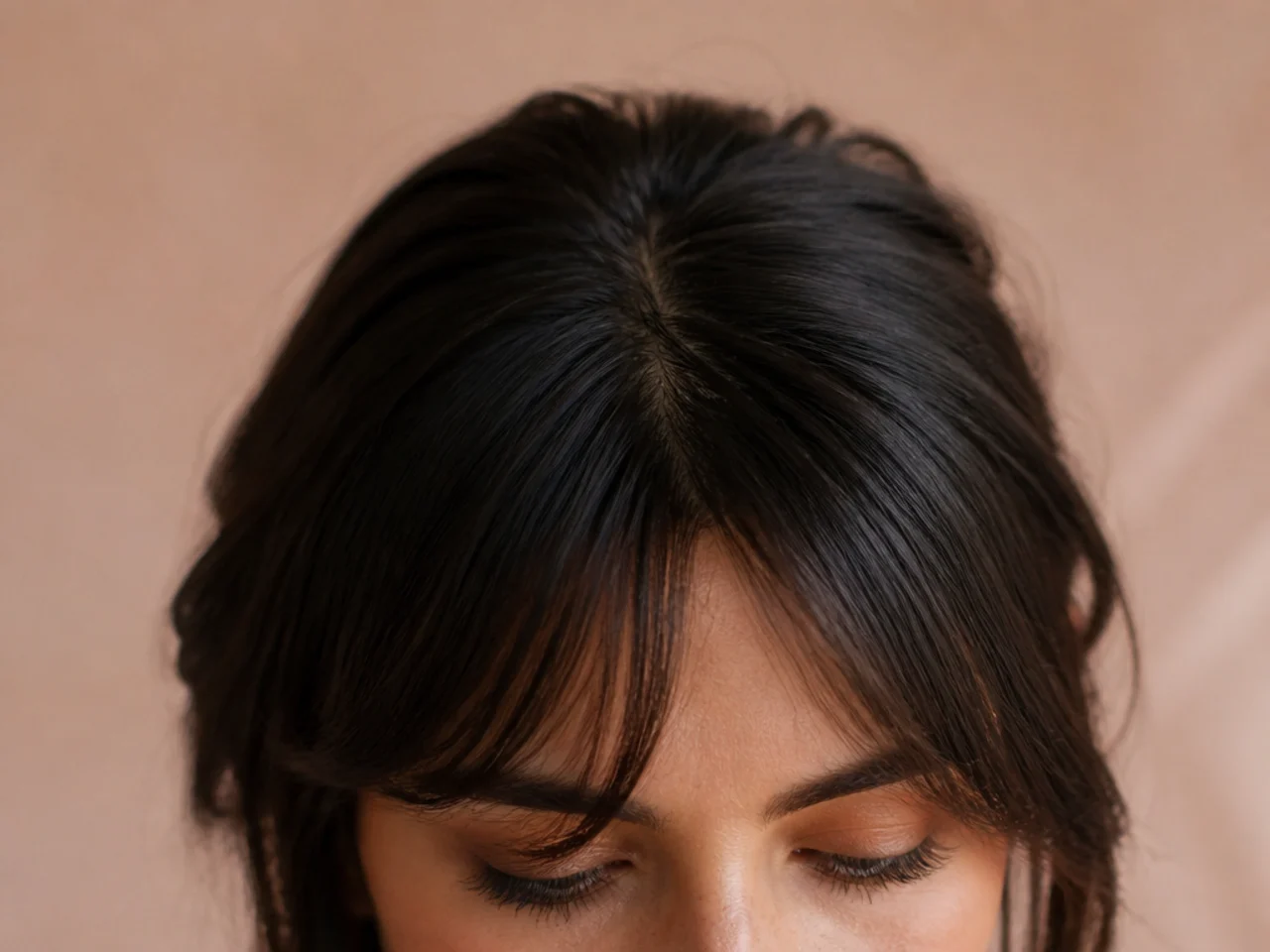
Parting further over sends more hair across the head, so the fringe carries extra density it did not have on a centre part. On fine hair this is the fastest way to add apparent thickness without cutting anything.

18. Fringe With a Money Piece
Two lightened sections at the inner edges of the fringe. Lighter hair reflects more light and reads as slightly thicker at the strand, so the brightest pieces sit where the fringe is thinnest and the contrast covers for it.

19. Wolf Cut With a Split Fringe
The fringe is cut long enough to part naturally down the middle and left to fall either side of a gap. It suits hair that already splits at the hairline, since forcing that hair flat only lasts until the first hour of humidity.

20. Longer Fringe for Fewer Trims
Cut to the outer corner of the eye, which buys six weeks instead of three. The rate of growth is the same, but the further the ends start from the eye, the more centimetres they can travel before anyone notices.

Styling and Upkeep
Dry the fringe first, within a minute of washing. Fine hair sets into whatever shape it dries in, and a fringe left to dry on its own sets flat.
Use mousse at the crown, nothing at the fringe. Product weight is the enemy of a fine haired fringe. Anything heavier than a dry texture spray drags it into strings.
Book the fringe trim separately. Three to four weeks for the bangs, eight to twelve for the rest. Most salons will do the fringe alone in ten minutes.
Wash the fringe more often than the length. It sits against skin all day and takes on oil at several times the rate the rest of the head does.
Blow the fringe left and right, not down. Drying it in one direction glues it to the forehead. Alternating sides lifts the roots and gives it a base to stand on.

Mistakes to Avoid
Taking the fringe section too far back. Past three centimetres on sparse hair and the crown behind it goes see through in daylight.
Cutting the fringe wet. Fine hair springs up as it dries, and a fringe cut to the brow wet finishes a centimetre above it.
Thinning the perimeter as well as the fringe. Texture in both places removes the last blunt edge the cut had, and the ends go wispy at the same time as the front.
Copying a fringe from thick hair. The same shape needs twice the section depth, and that depth is exactly what fine hair cannot spare.
Letting the crown layer go shorter than the fringe. It then sits above the fringe rather than behind it, and a visible step appears at the temple.

FAQ
How deep should the section be? Two to three centimetres on fine hair, more only if the density is genuinely there.
Wet or dry cut? Dry, always, so the shrinkage and any cowlick are visible before the scissors move.
How often trimmed? Three to four weeks for the fringe, eight to twelve for the shape.

Final Thoughts
Give the section depth in centimetres and the fringe length relative to a landmark on your face, and you have described the whole thing. Everything else in this cut is negotiable in the chair.
For where the perimeter can sit see the short wolf cut guide, and for the sheer fringe version see the Korean wolf cut. More in Mullet & Wolf Cut.