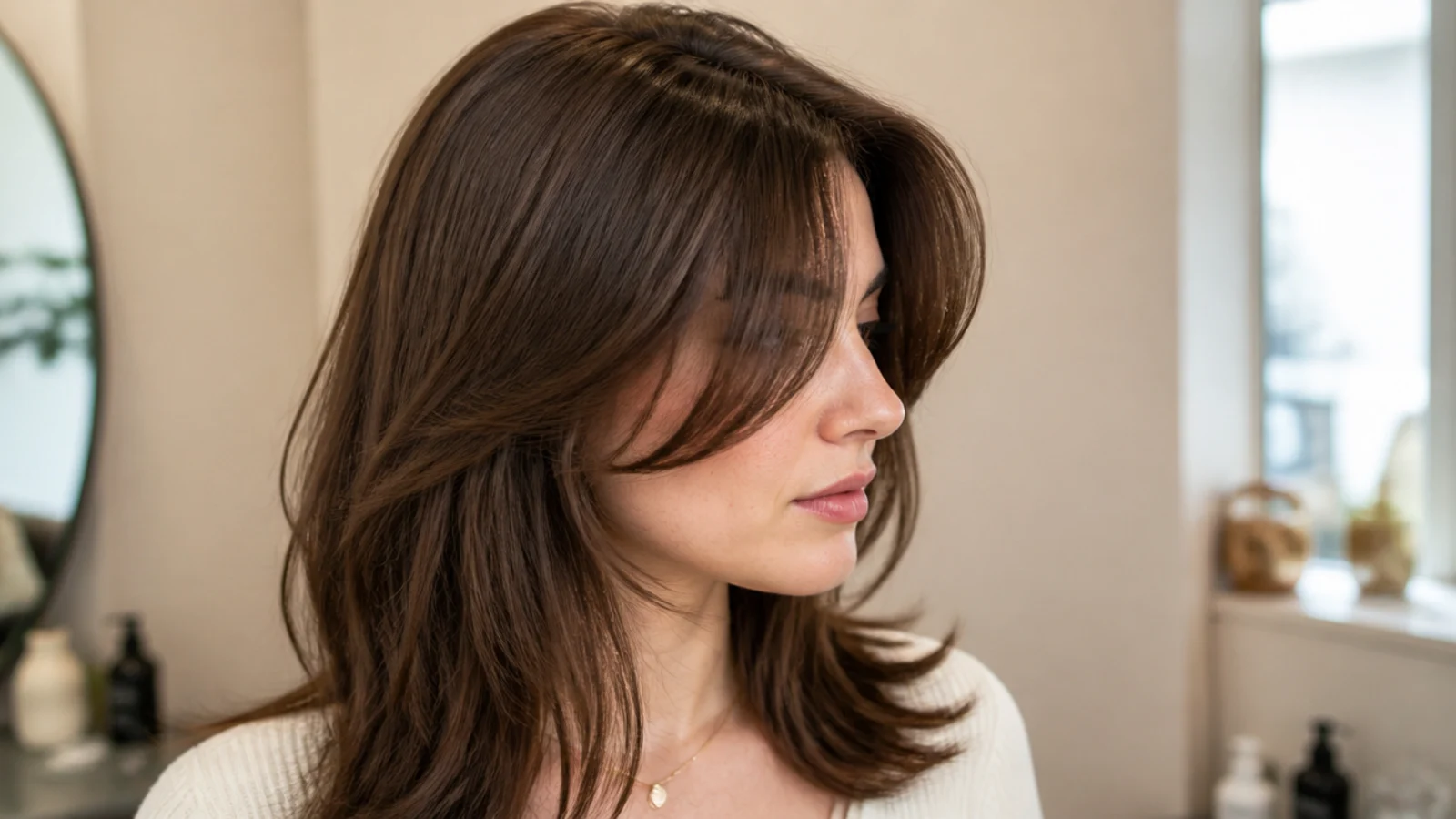
30 Wispy Curtain Bangs For Long Fine Hair
Thirty wispy curtain fringe ideas for long fine hair, and the correction that makes all of them work — wispiness comes from a shallow section, not from thinning shears. Shears take strands out of the middle and leave stubble that stands up as it grows back.
In this article · 37
- What Wispy Actually Means on Fine Hair
- How to Choose Your Depth and Length
- The 30 Wispy Curtain Bangs Ideas
- 1. Classic Wispy Curtain Bangs
- 2. See Through Curtain Bangs
- 3. Cheekbone Length Wispy Bangs
- 4. Brow Skimming Wispy Bangs
- 5. Jaw Length Wispy Bangs
- 6. Shallow Section Wispy Bangs
- 7. Point Cut Wispy Bangs
- 8. Wispy Bangs With Long Layers
- 9. Wispy Bangs Over a Blunt Perimeter
- 10. Wispy Bangs on Fine Straight Hair
- 11. Wispy Bangs on Fine Wavy Hair
- 12. Wispy Bangs With Root Lift
- 13. Air Dried Wispy Bangs
- 14. Round Brushed Wispy Bangs
- 15. Wispy Bangs With a Middle Part
- 16. Off Centre Wispy Bangs
- 17. Wispy Bangs With a Money Piece
- 18. Wispy Bangs With Face Framing Layers
- 19. Wispy Bangs Over a Cowlick
- 20. Wispy Bangs on a High Forehead
- 21. Wispy Bangs on a Low Forehead
- 22. Wispy Bangs With a Half Up Style
- 23. Wispy Bangs With a Low Ponytail
- 24. Wispy Bangs With a Braid
- 25. Wispy Bangs on a Wolf Cut
- 26. Wispy Bangs With Beach Waves
- 27. Wispy Bangs Straightened Flat
- 28. Wispy Bangs in Humidity
- 29. Second Day Wispy Bangs
- 30. Grown Out Wispy Bangs
- Styling and Upkeep
- Mistakes to Avoid
- FAQ
- Final Thoughts
Wispy is a section depth, not a finishing technique, and every fringe ruined by thinning shears started with that confusion.
Shallow gives see through. Shears give stubble. A fringe cut from two centimetres of hairline is light because there is less hair in it, and it stays light as it grows.
Fine is a strand diameter, not a quantity. Plenty of fine haired heads are dense. What fine hair actually lacks is the cortex to hold a set, which is why the shape has to be built into the cut.
What Wispy Actually Means on Fine Hair
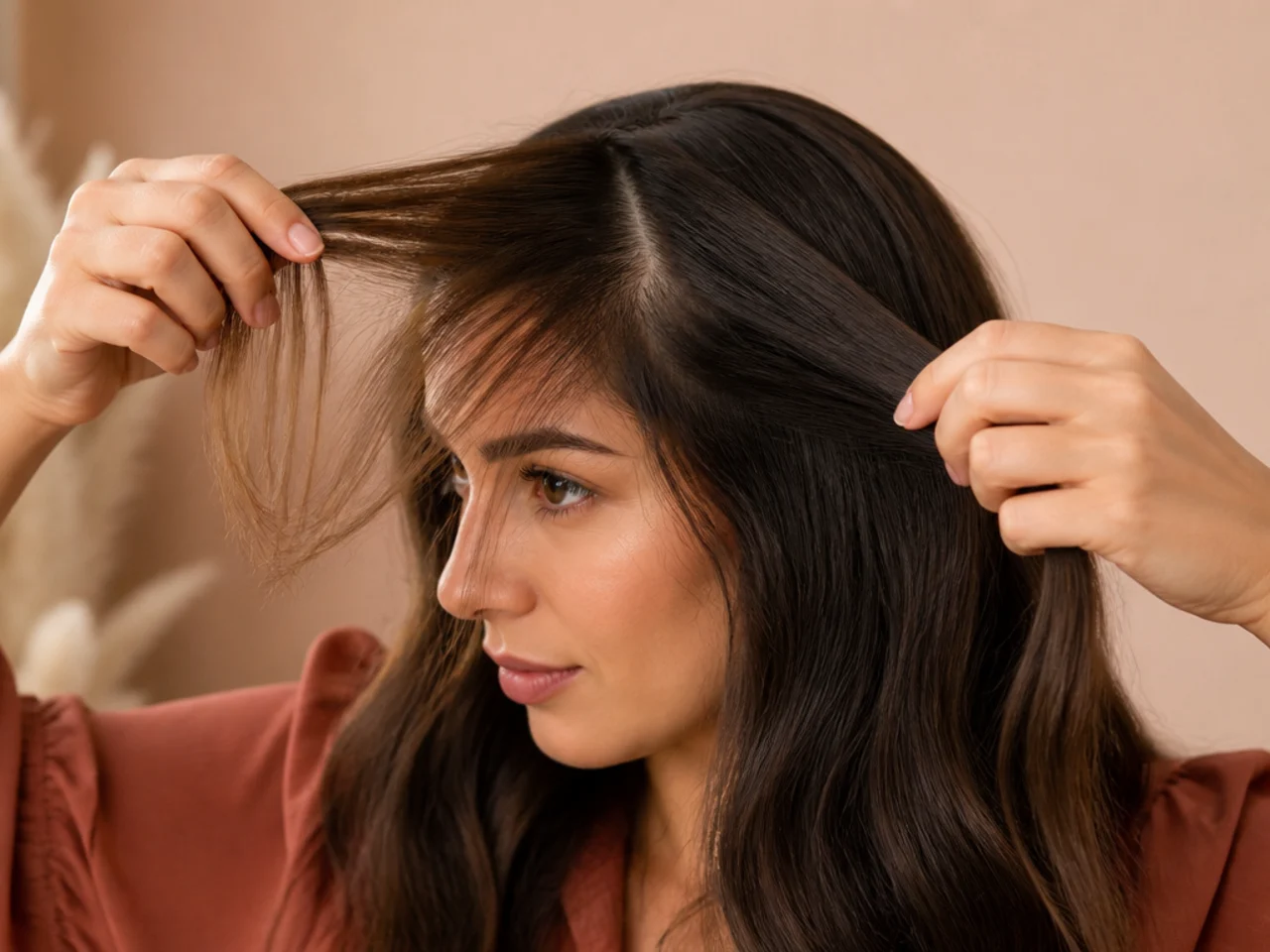
It is a shallow section. Two centimetres back from the hairline, so the forehead reads through the fringe rather than being covered by it.
It is tapered ends, not thinned middles. Point cutting notches into the tips so each strand ends at a slightly different place, which stops the fringe finishing as one visible line.
It is not a light fringe from a heavy section. Removing bulk from inside a deep section leaves short cut ends that grow back standing upright through the top of the fringe.
It relies on friction rather than product. Fine strands are smooth and slide past each other, so anything heavy enough to hold them apart is also heavy enough to pull them flat.
How to Choose Your Depth and Length
Two centimetres of depth is the working default. Past three and the crown starts showing scalp, because the fringe is borrowing from the only hair covering it.
Cheekbone is the shortest safe length. Below the brow there is enough weight for the halves to fall open on their own, which matters more on fine hair since it will not hold a forced split.
Keep the outer edge long. The diagonal has to reach the face framing layers, or the fringe ends in mid air and the gap makes fine hair look thinner than it is.
Set the iron low. Fine hair scorches at temperatures thick hair shrugs off, and a scorched fringe frizzes at exactly the length you can least afford to cut off.

The 30 Wispy Curtain Bangs Ideas
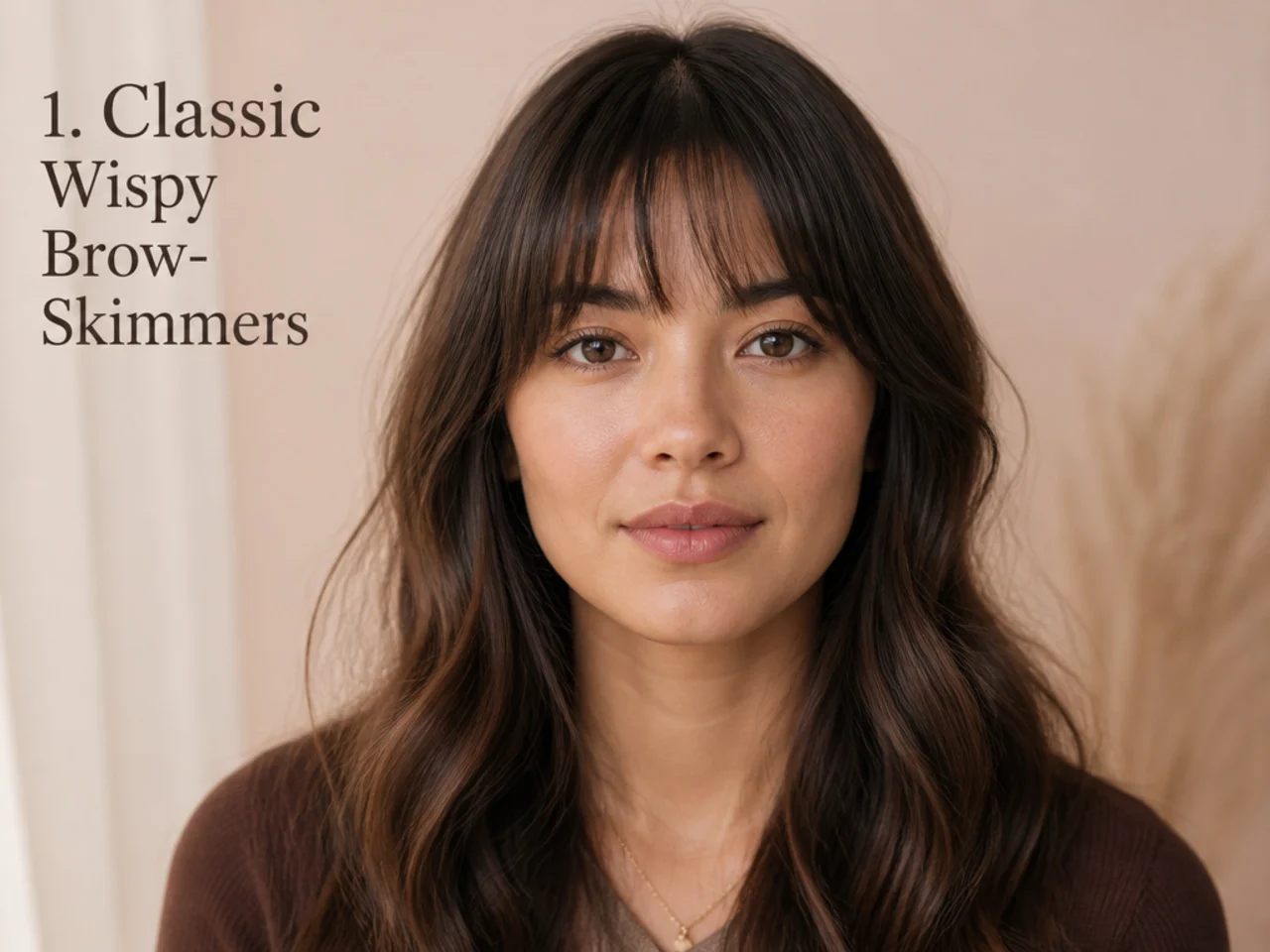
1. Classic Wispy Curtain Bangs
A two centimetre section, shortest at the centre around the cheekbone, lengthening outwards into the face framing. Everything about the lightness comes from that depth, so it stays consistent as the fringe grows rather than thickening up over a few weeks.
2. See Through Curtain Bangs
Cut deliberately sparse so the forehead reads through the fringe. It suits fine hair because it never pretends to be dense, and a fringe that admits its own weight looks intentional where a thin heavy one just looks like it is failing.
3. Cheekbone Length Wispy Bangs
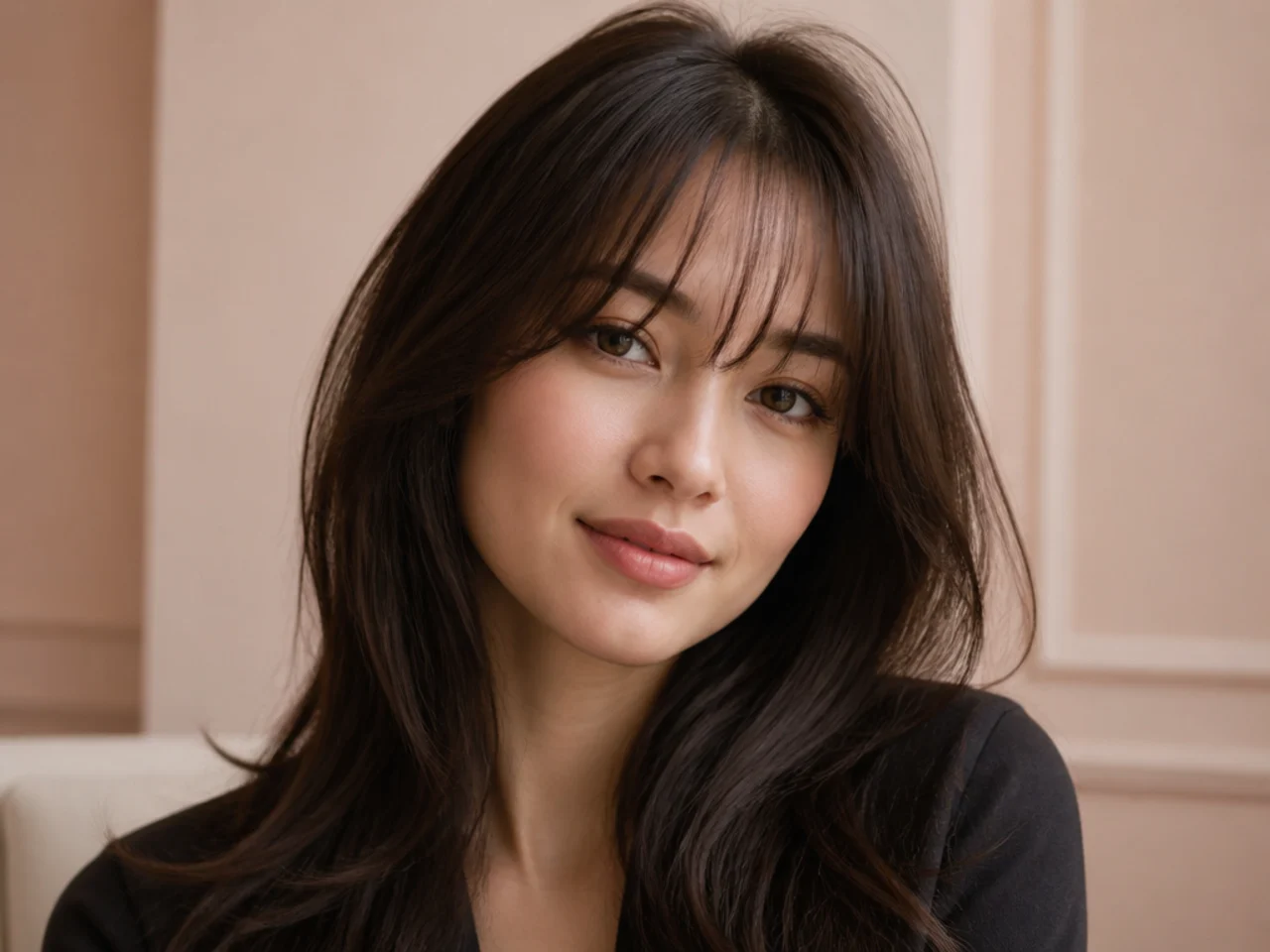
The shortest point level with the top of the cheekbone. At that length gravity opens the split by itself, which is what makes it the low maintenance option on hair that will not hold a set for long.

4. Brow Skimming Wispy Bangs
Cut to sit just above or at the brow. It is the most visible version and the most demanding, because a fringe this short has too little weight to fall open and has to be dried into position after every wash.

5. Jaw Length Wispy Bangs
The longest reading of the shape, with the shortest point near the mouth. On fine hair this is the safest length of all, since the extra weight keeps the halves down and there is no daily fight against lift.

6. Shallow Section Wispy Bangs
The version where the depth is the whole design. One centimetre of hairline gives a fringe that is barely there, and it is the only way to get real transparency without cutting into the density the top of the head needs.

7. Point Cut Wispy Bangs
The tips notched vertically rather than cut straight across. Each strand then ends at a slightly different height, so the fringe has no single edge for the eye to land on and it separates into pieces as it dries.

8. Wispy Bangs With Long Layers
Layers through the mid lengths give the fringe a place to blend into. Without them a light fringe stops dead against a heavy perimeter, and the contrast makes the fringe look sparser than it actually is.

9. Wispy Bangs Over a Blunt Perimeter
A hard bottom line under a soft fringe. On fine hair the blunt edge is doing real work, since keeping every strand the same length at the bottom is what makes the ends read as a mass rather than as separate hairs.

10. Wispy Bangs on Fine Straight Hair
Straight fine hair has nothing propping it up, so the shape has to come from root direction. Dry the first two centimetres of root away from the face and the fringe stands off the forehead; dry it flat and no amount of end styling recovers it.

11. Wispy Bangs on Fine Wavy Hair
The bend does most of the separating, which suits a wispy fringe perfectly. Cut it dry though, because even a loose wave takes back around a centimetre as it dries and fine hair has no length to spare.

12. Wispy Bangs With Root Lift
Dry the root against its growth direction for the first thirty seconds, then back into place. The root ends up standing rather than lying down, and a standing root is the only thing that keeps a fine fringe off the forehead all day.

13. Air Dried Wispy Bangs
Clipped into its parted position while damp and left alone. Hair sets as water leaves it, so the direction it dries in is the direction it holds, and on fine hair that costs nothing in heat damage.

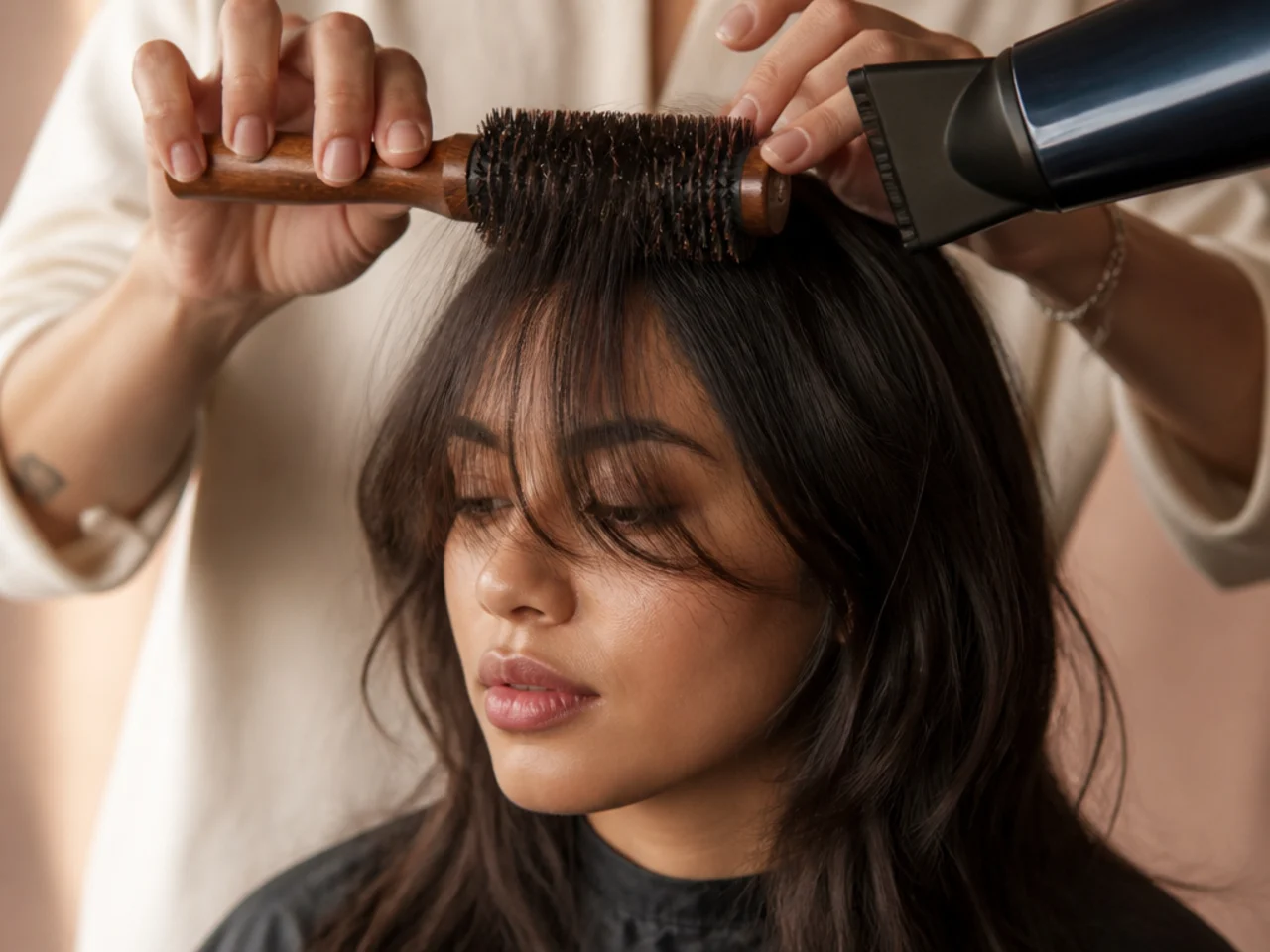
14. Round Brushed Wispy Bangs
A small round brush at the root, angled away from the face, held until the section is cool. The set happens as the hair cools rather than while it is hot, and releasing early is why most fine fringes drop before midday.
15. Wispy Bangs With a Middle Part
The parting the cut is built around, with the apex of the fringe triangle sitting on it. Both halves then fall away evenly, which is the least effort route to a split on hair that will not hold one artificially.

16. Off Centre Wispy Bangs
Shifting the split a few centimetres over leaves one heavier half sweeping across the forehead. It borrows from long side swept bangs while keeping the lighter half on the other side, and on fine hair the sweep covers more forehead than a centre part manages.

17. Wispy Bangs With a Money Piece
Lightening the fringe and the pieces just behind it puts a tonal edge along the split. It also helps fine hair specifically, because lightening swells the strand slightly and a swollen strand grips its neighbours better than a smooth one does.

18. Wispy Bangs With Face Framing Layers
Fringe and face framing cut as one continuous diagonal instead of two separate shapes. Split into two, there is a step at the cheek, and on fine hair a step reads as a gap rather than as a layer.

19. Wispy Bangs Over a Cowlick
A cowlick sets a fixed growth direction that cutting cannot remove, and fine hair has the least weight to resist it. Leave the shortest point at the cheekbone so the fringe can hold itself down by weight alone.

20. Wispy Bangs on a High Forehead
A slightly deeper section, around three centimetres, so the fringe covers more vertical without becoming solid. The transparency still reads because the section is shallow relative to the area it is covering, not because strands were removed from it.

21. Wispy Bangs on a Low Forehead
Keep the section shallow and the shortest point long, near the cheekbone. A short fringe on a low forehead compresses the space between brow and hairline further, and a longer diagonal opens it back up.

22. Wispy Bangs With a Half Up Style
Taking the top back exposes the whole fringe and gives fine hair visible bulk at the crown. Start the section behind the fringe apex, or the tie drags the fringe roots backwards and the lift disappears immediately.

23. Wispy Bangs With a Low Ponytail
The fringe softens the hairline that a ponytail exposes, which matters more on fine hair where the hairline is already visible. Keep the front loose, since tension at the root flattens the only lift the fringe has.

24. Wispy Bangs With a Braid
A braid takes the lengths out of the picture and leaves the fringe as the whole front outline. Start it behind the fringe section, because fine short pieces work loose within an hour and then stand up rather than lying back.

25. Wispy Bangs on a Wolf Cut
A wolf cut stacks short crown layers on longer ones so the short pieces prop the long ones up, and on fine hair that is the cheapest volume available. See the long wolf cut for where those layers sit, and let the fringe meet the shortest of them.

26. Wispy Bangs With Beach Waves
Texture through the lengths and a smoother fringe. Salt spray stiffens the strand by drawing water out of it, which is useful on the lengths and wrong on the fringe, where a stiff strand stops moving with the face.

27. Wispy Bangs Straightened Flat
Ironed smooth and left flat against the forehead. It only works if the ends were point cut, since a blunt fine fringe pressed flat reads as a single sheet of hair with a hard line across the brow.

28. Wispy Bangs in Humidity
Damp air lets hair re-form the bonds that hold its shape, and fine hair gives them up soonest. Shape the fringe while damp and let it dry in position, which survives humidity far better than a heat set that has to be defended.

29. Second Day Wispy Bangs
Sebum travels down a fine smooth strand quickly, so the fringe goes greasy a day or two before the rest of the head. Washing the fringe alone at the basin takes two minutes and saves stripping the lengths.

30. Grown Out Wispy Bangs
After three or four months the shortest point has dropped near the jaw and the fringe has become face framing. Because the cut was a diagonal from the start, it never passes through the blunt stage a straight fringe does.

Styling and Upkeep
Dry the fringe first and dry it from the root. It sets in the direction it dries, and once dry that direction holds until the next wash.
Let it cool before releasing the brush. Hair takes the shape it cools in, and fine hair loses a warm set almost instantly.
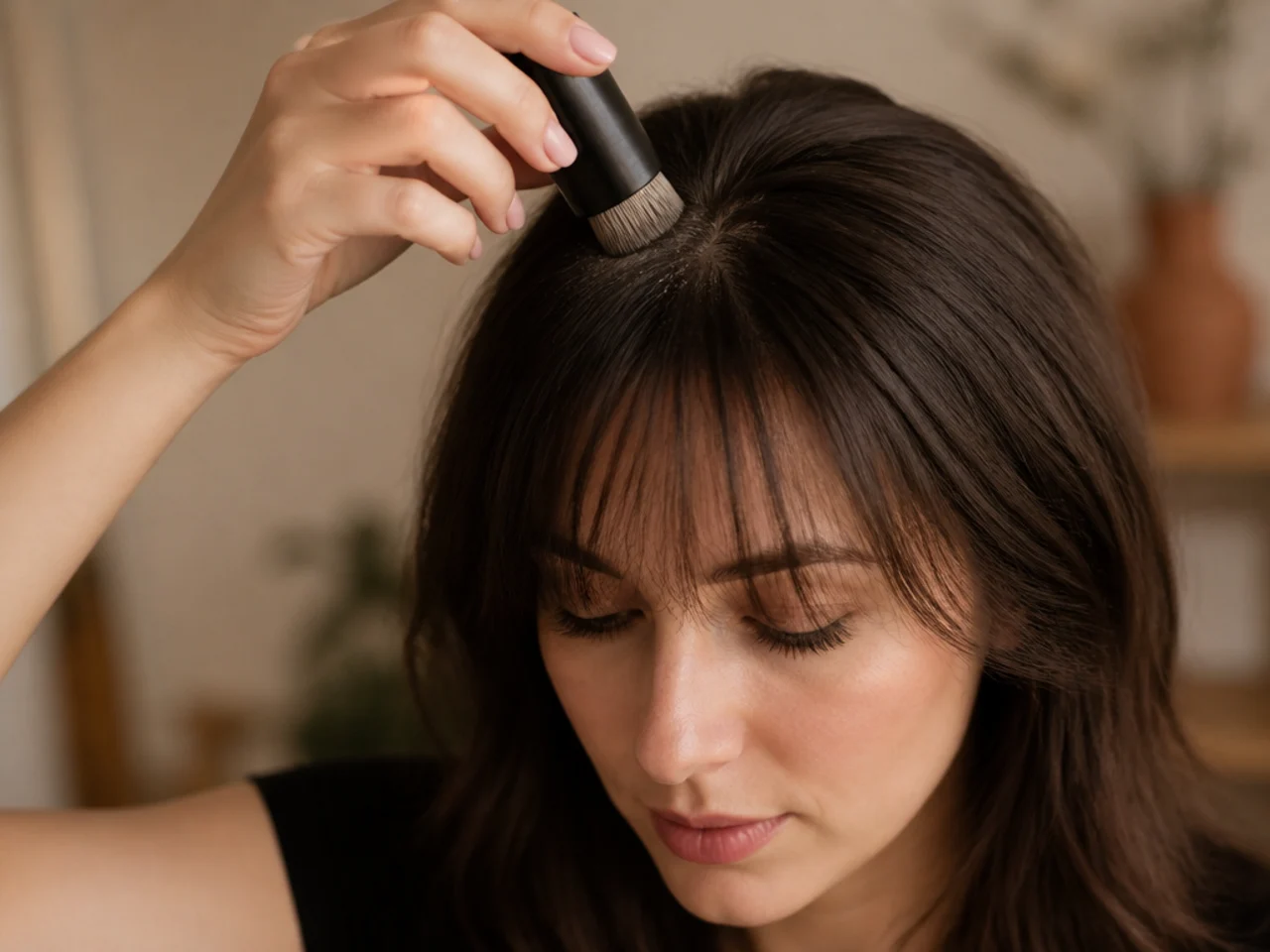
Add friction, not weight. A trace of texture powder at the root makes smooth strands grip each other, where cream and oil pull them flat.
Keep the iron low. Fine hair scorches at temperatures thick hair ignores, and the damage lands at the length you cannot afford to lose.
Wash the fringe on its own. Sebum reaches it first, so it needs a rinse two days before the rest of the head does.
Mistakes to Avoid
Using thinning shears to make it wispy. They cut strands off inside the section, and the stubs grow back standing upright through the fringe.
Taking the section deeper than three centimetres. The crown loses the hair covering it and the fringe gets heavy enough to lie flat.
Cutting the tips straight across. A blunt line on fine hair reads as a hard edge, not as a fringe. Notch the tips instead.
Loading conditioner into the fringe. Slip is the opposite of what fine hair needs at the root.
Cutting it wet if there is any wave. Even a loose bend takes back a centimetre, and there is nothing spare to give.

FAQ
How do I get it wispy? A shallower section, never thinning shears.
How deep? Two centimetres back from the hairline on fine hair.
Why does it drop? Fine hair loses a heat set fast. Add root friction instead of more heat.

Final Thoughts
Ask for the depth in centimetres and the length on dry hair. "Two centimetres deep, shortest point at the cheekbone, tips point cut" is a fringe the stylist can reproduce, and it is the difference between wispy and thin.
For the other lengths of the same shape see curtain bangs on long hair, and for the softer French version see wispy french bangs. More in Bangs & Fringe.