20 Wispy Side Swept Bangs Ideas to Save
Twenty wispy side swept bangs ideas, and the limit nobody mentions — wisping softens the end of the diagonal, and the end of the diagonal is the part telling the fringe which way to go.
In this article · 27
- What Makes Wispy Side Swept Bangs Work
- How to Choose Yours
- The 20 Wispy Ideas
- 1. Lightly Wisped Cheekbone Sweep
- 2. Wispy Brow-Length Sweep
- 3. Wispy Long Sweep
- 4. Wispy Sweep with a Deep Part
- 5. Wispy Sweep with Long Layers
- 6. Wispy Sweep with a Bob
- 7. Wispy Sweep with a Lob
- 8. Wispy Sweep on Thick Hair
- 9. Wispy Sweep on Medium Density
- 10. Wispy Sweep on Wavy Hair
- 11. Wispy Sweep with Face-Framing Length
- 12. Wispy Sweep Tucked Behind One Ear
- 13. Wispy Sweep with an Updo
- 14. Wispy Sweep with a Ponytail
- 15. Wispy Sweep with Highlights
- 16. Barely-There Wisp
- 17. Textured Wispy Sweep
- 18. Wispy Sweep with a Blunt Body
- 19. Wispy Sweep Grown Out a Fortnight
- 20. An Over-Wisped Sweep
- Styling and Upkeep
- Mistakes to Avoid
- FAQ
- Final Thoughts
Wispy is a finish, not a cut, and on a side swept fringe it works against the thing that makes the cut work.
The end of the diagonal is what tells the fringe which way to go. Wisping softens exactly that. A little softening reads as effortless; too much and the line stops being legible, so the fringe reads as shapeless rather than soft.
Wisp the last inch, not the whole fringe.
What Makes Wispy Side Swept Bangs Work
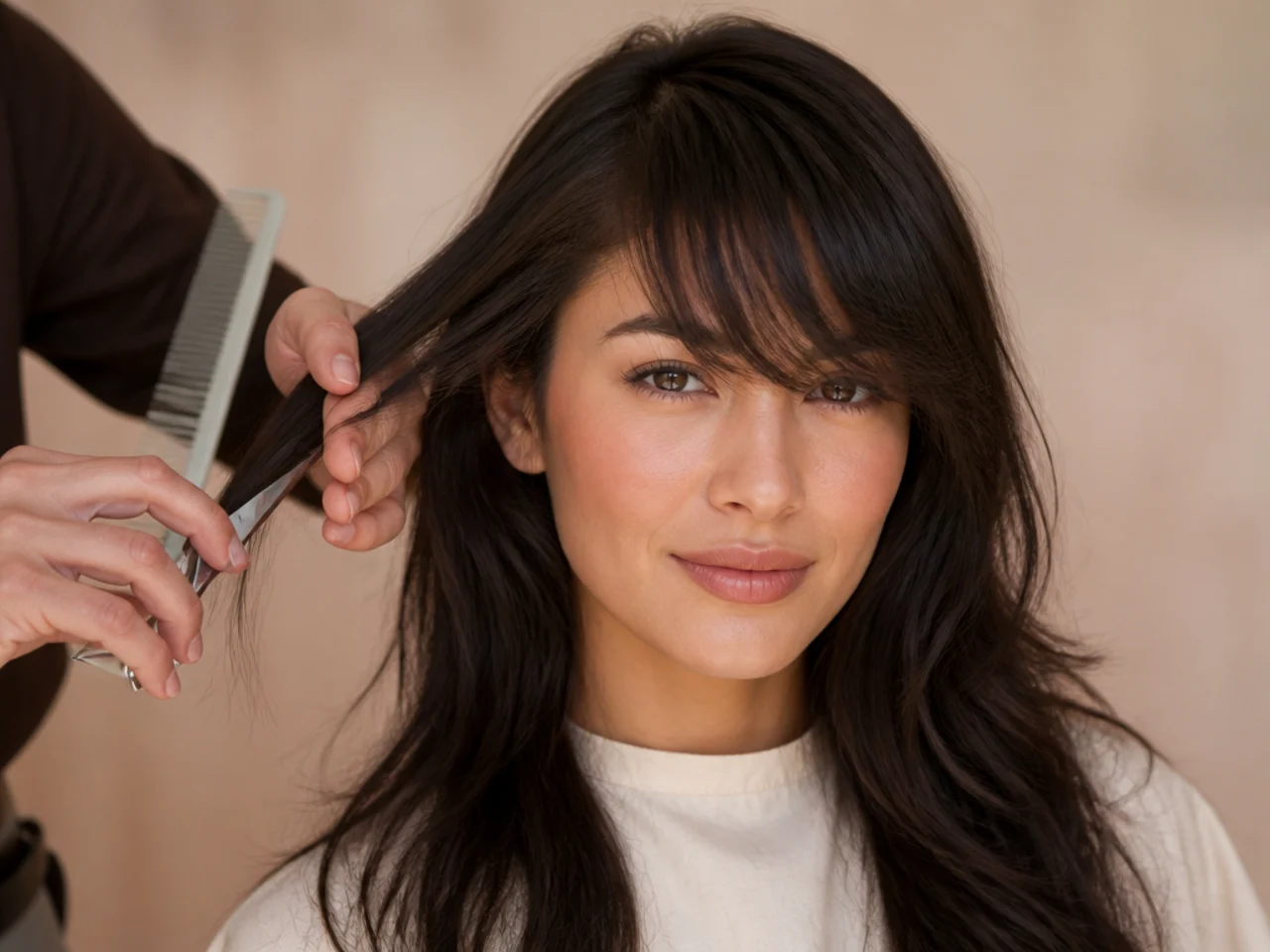
Wisping is subtraction at the edge only. Point-cutting into the last inch breaks the hard line without touching the body of the fringe.
The diagonal has to survive it. Everything above that last inch stays solid, because that is the part carrying the direction.
Cut along the diagonal, not across it. Point-cutting perpendicular to the sweep leaves small steps down the edge. Cutting in the same direction keeps the line continuous.
It suits medium and thick hair best. Wisping fine hair that is already sparse removes what little density the fringe had.
How to Choose Yours
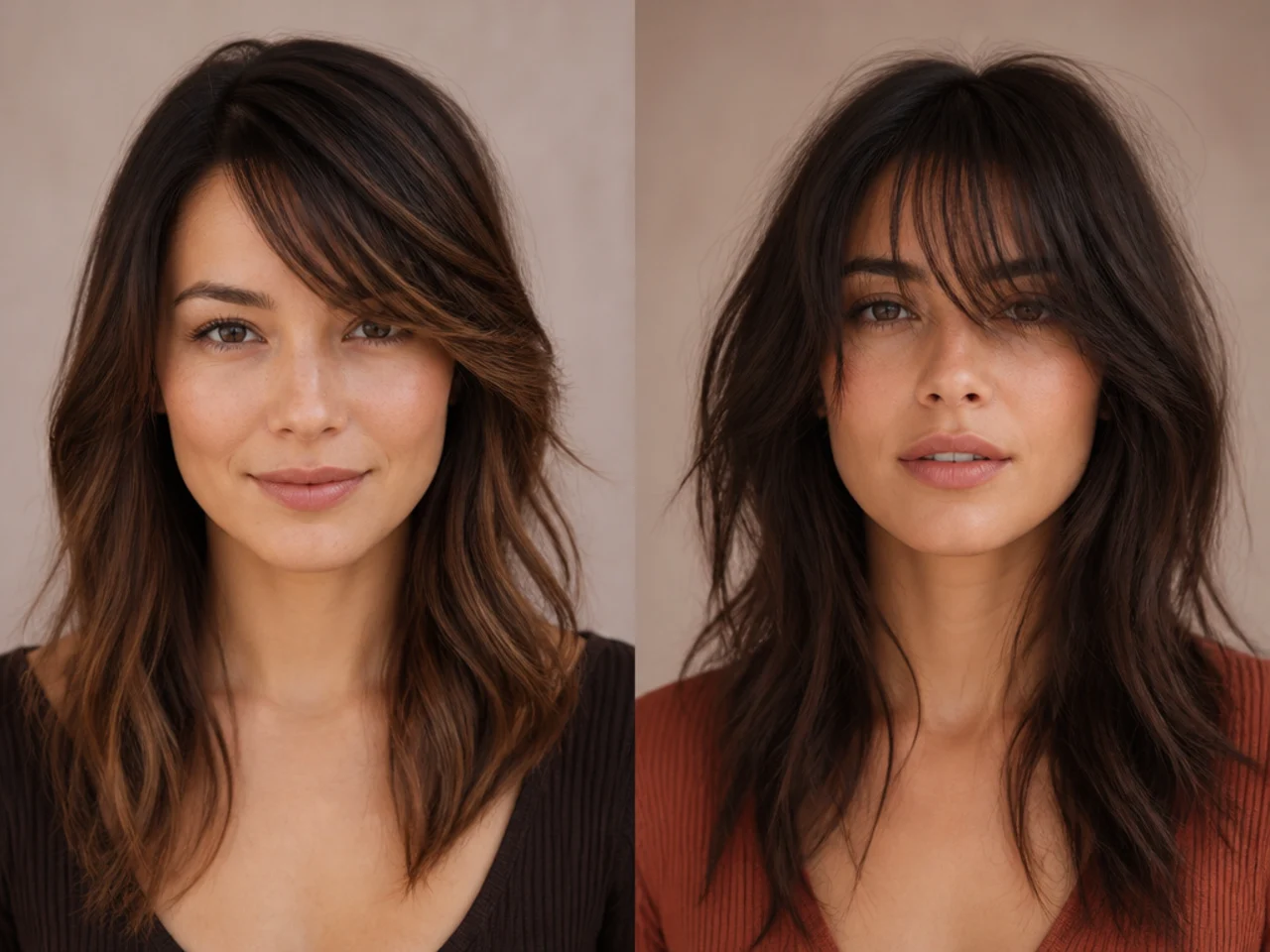
Ask for the last inch only. It is a specific, easy instruction and it prevents the usual failure.
Say "along the diagonal". Most stylists will do this anyway; saying it costs nothing and removes the stepped edge risk.
Start less wispy than the reference photo. More can be taken next time. Nothing can be put back.
Skip it entirely on very fine hair. Choose a soft blunt edge instead — it reads softer than a sparse wisp does.
The 20 Wispy Ideas
1. Lightly Wisped Cheekbone Sweep
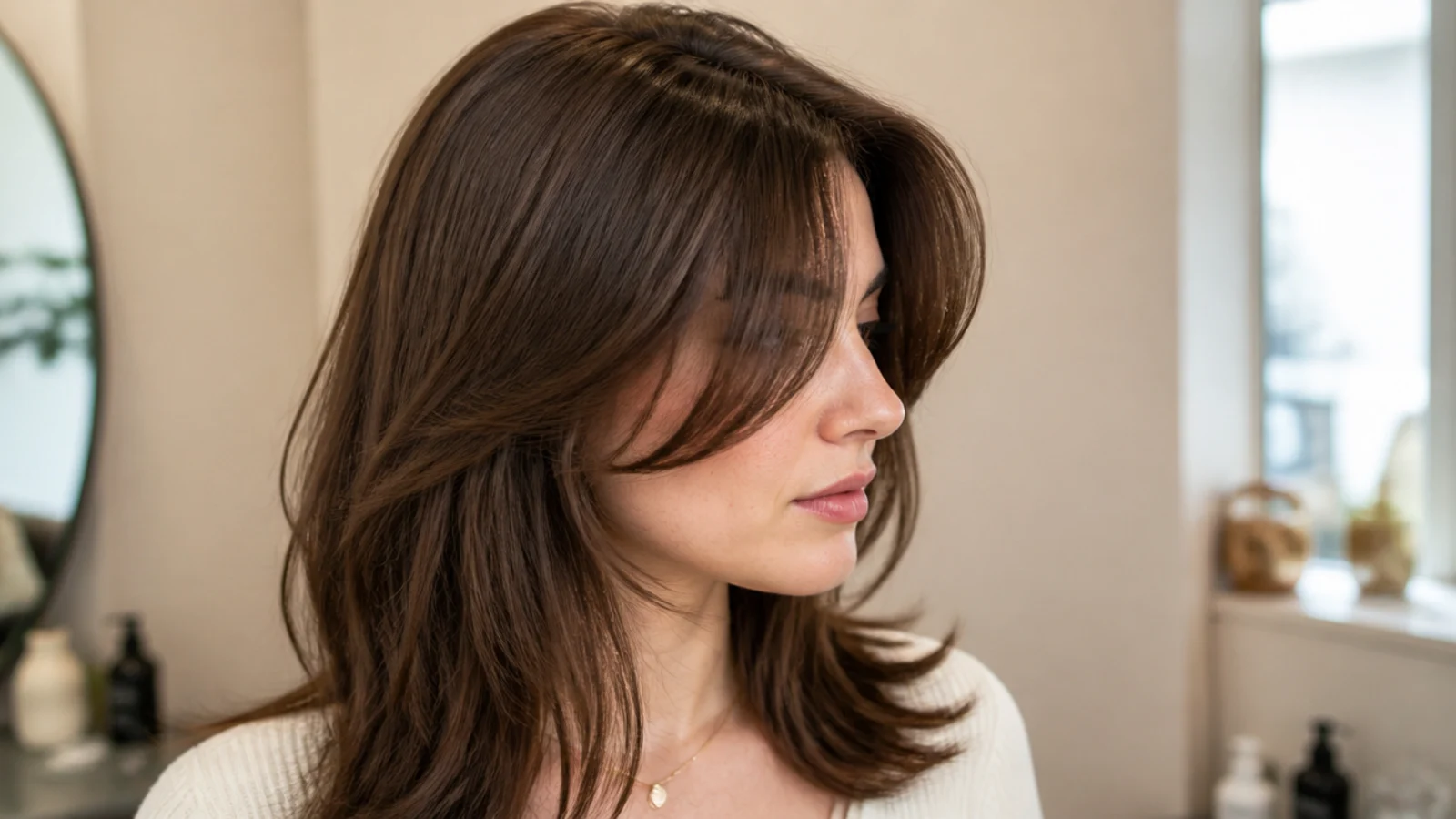
The last inch softened, everything above solid. The benchmark. One inch softens the edge without touching the body of the fringe, which is what still carries the direction.
2. Wispy Brow-Length Sweep
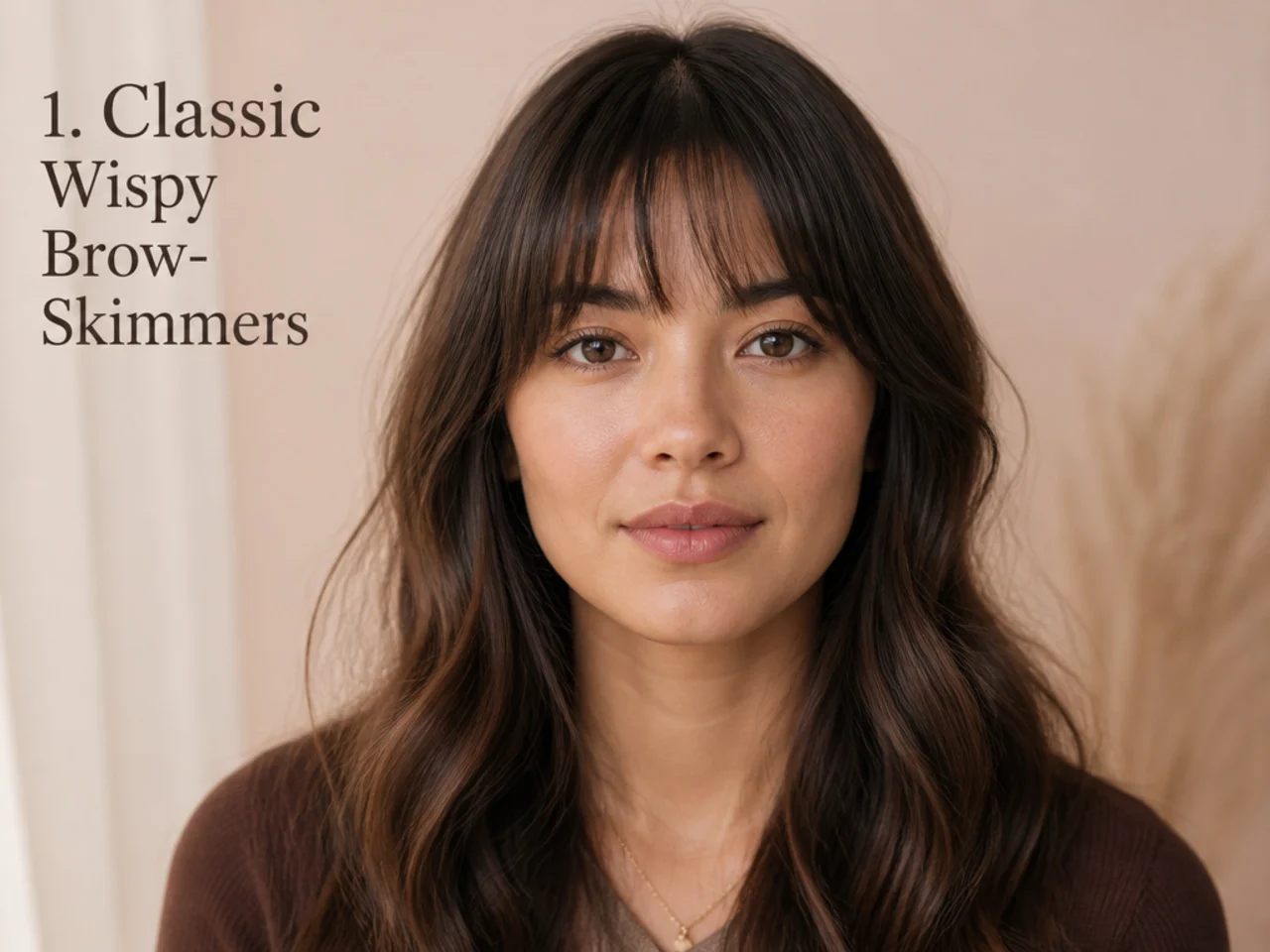
Short and soft, with the diagonal kept steep to compensate. A short fringe has less length to establish its angle, so the steepness has to do the work the length cannot.
3. Wispy Long Sweep
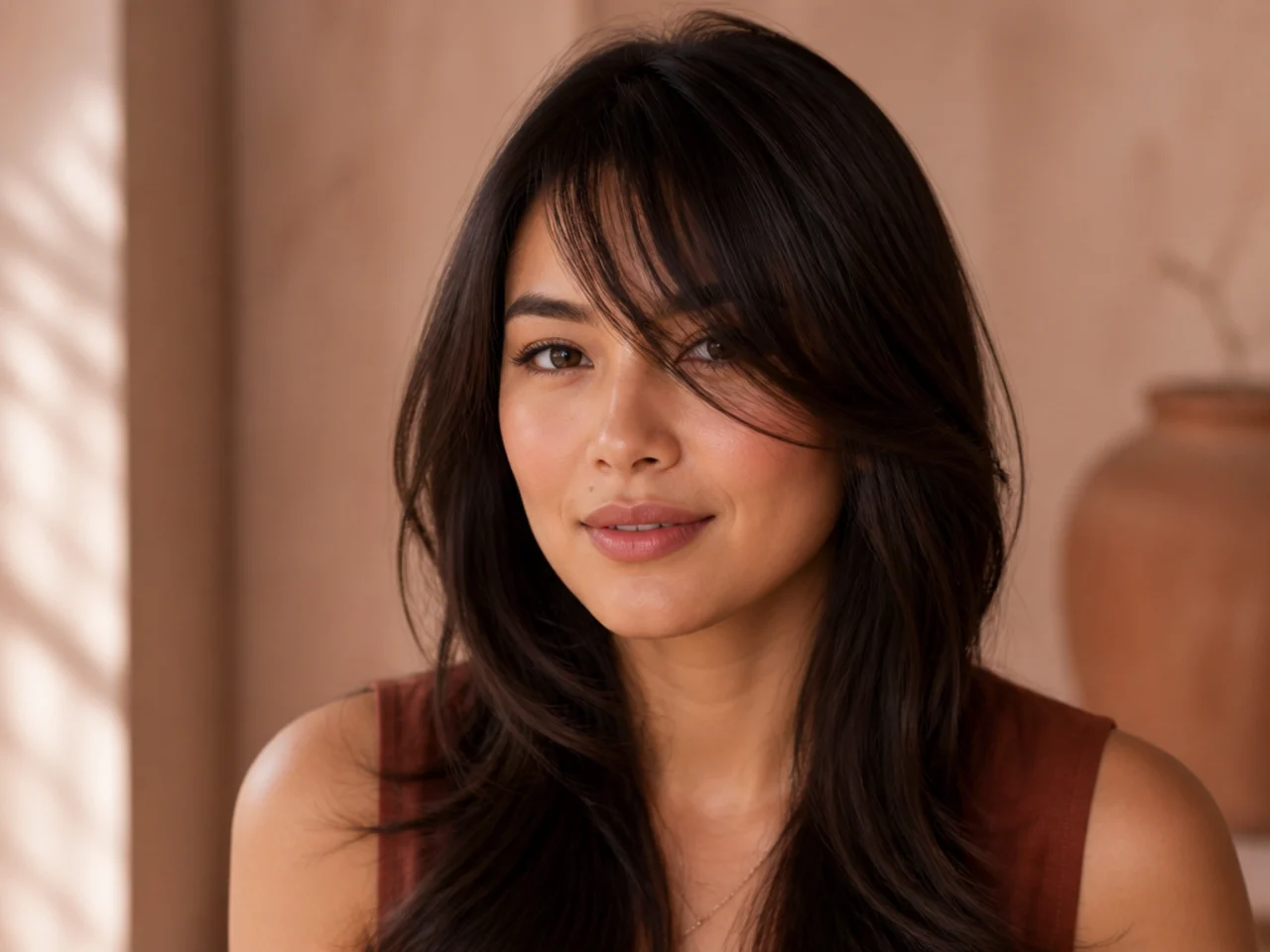
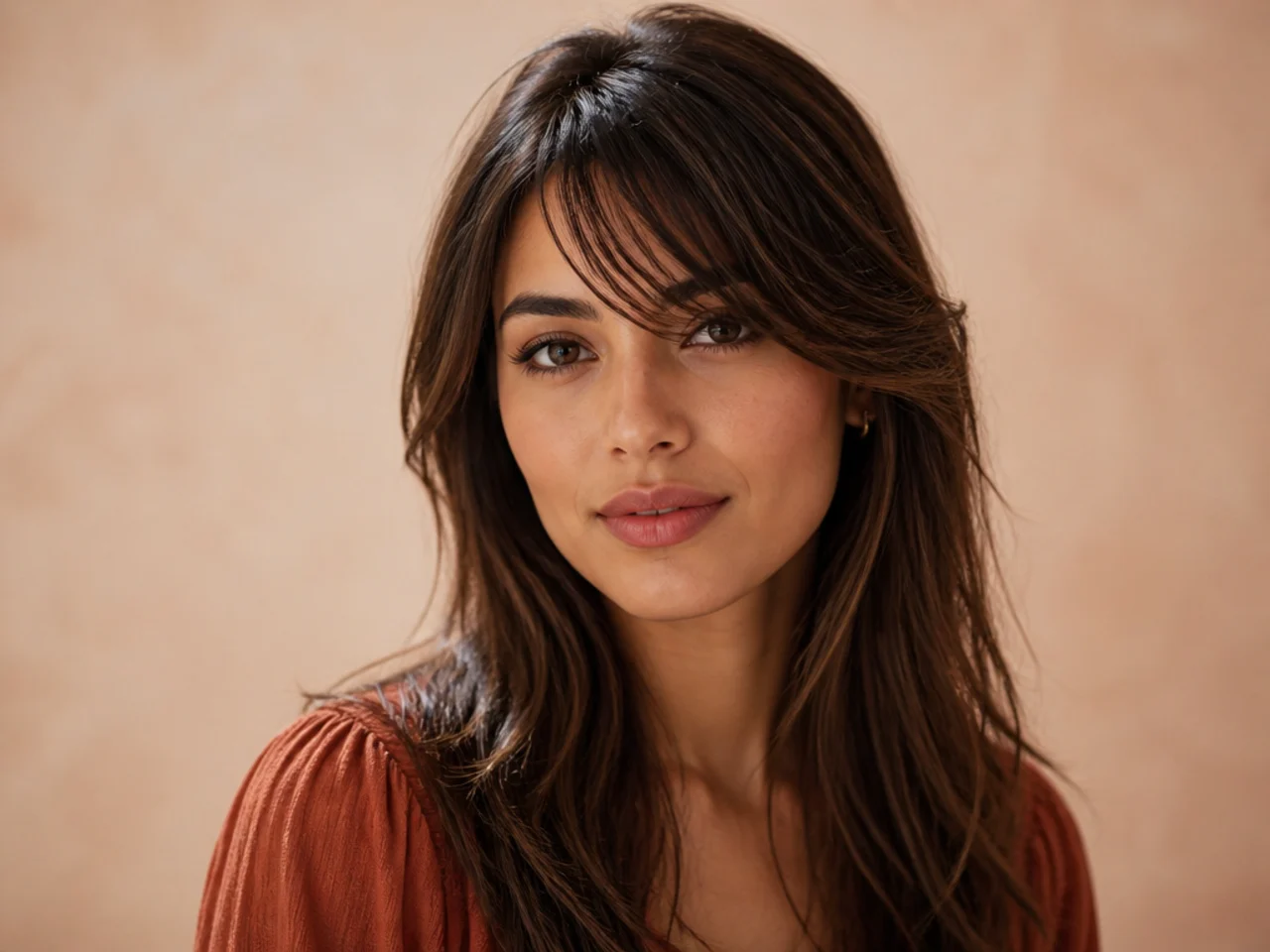
Length plus softness, which needs the body kept solid. Long and wispy together is the combination that stops reading as a sweep, so keep the wisping to the very tips.

4. Wispy Sweep with a Deep Part
The part carrying direction that the soft edge gives up. A soft end has no weight to hold a direction, so the root has to be pointed correctly from the start.

5. Wispy Sweep with Long Layers
Soft edges throughout, front and length matching. The wisping only reads as deliberate when the length behind it is finished the same way.
6. Wispy Sweep with a Bob
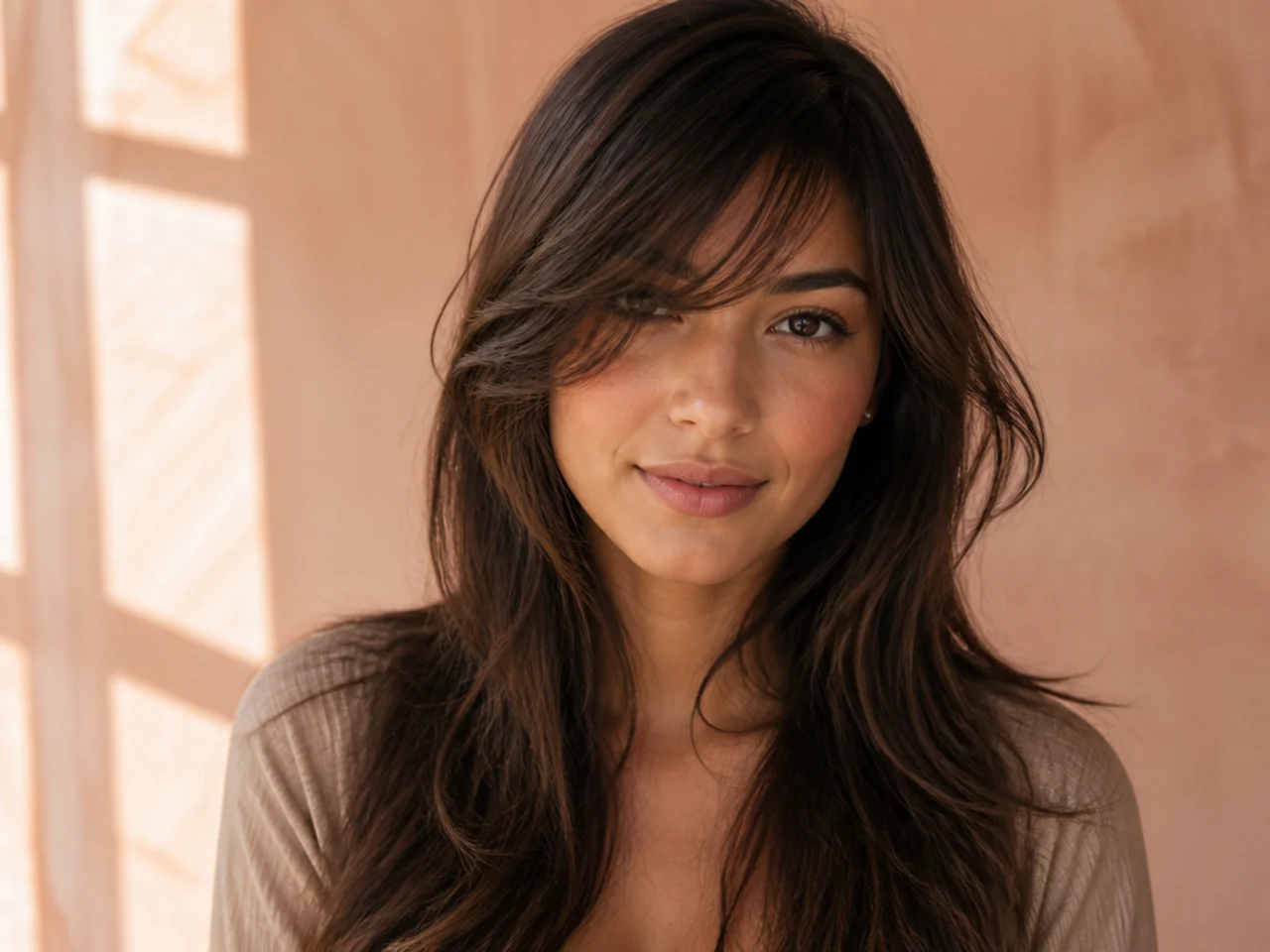
Soft front against a firm length line. The contrast is the point — a blunt perimeter makes the soft fringe look chosen rather than uneven.

7. Wispy Sweep with a Lob
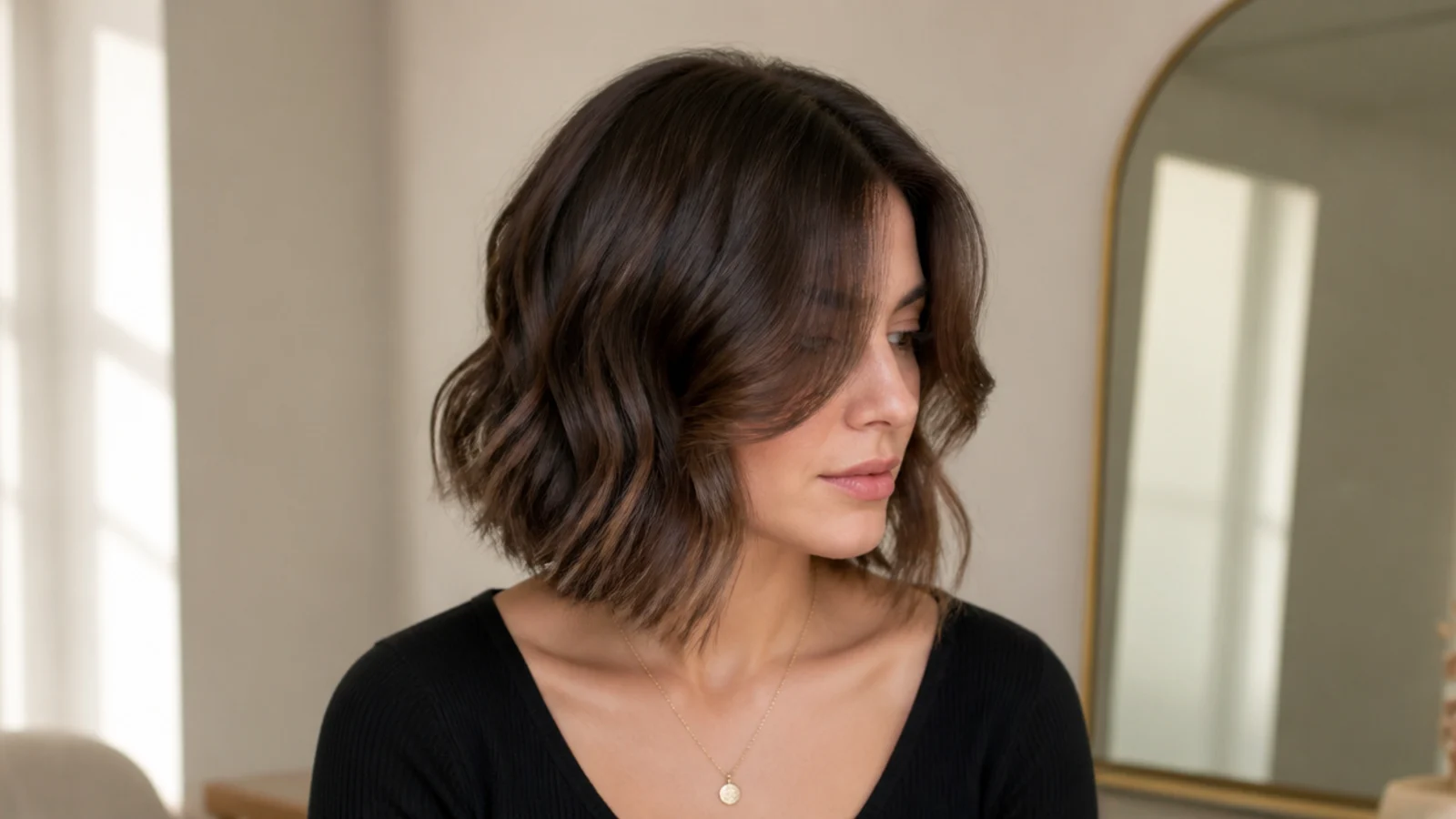
The most wearable pairing on this page. A lob is long enough to carry weight and short enough to keep movement, which suits a soft fringe either way.
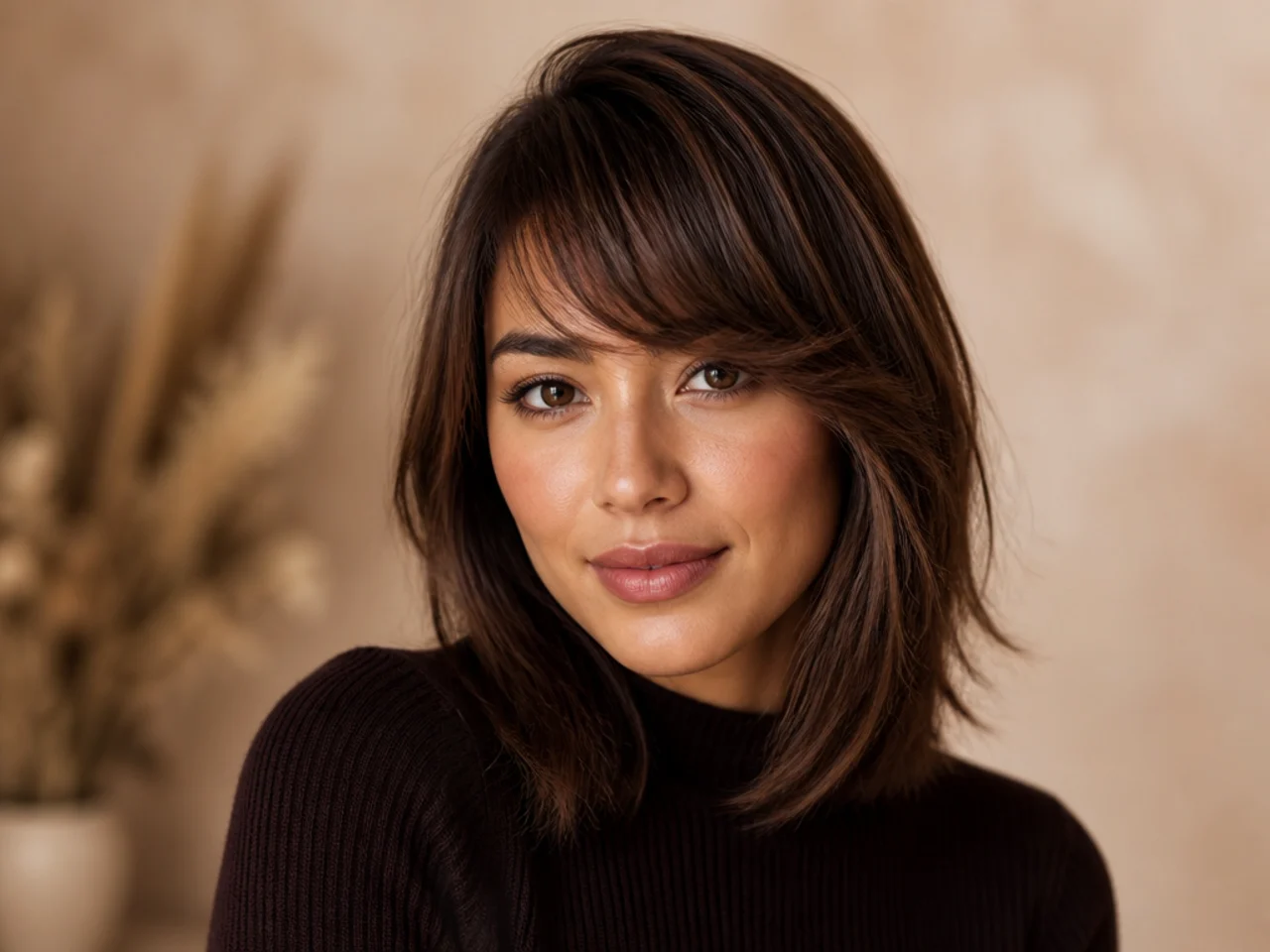
8. Wispy Sweep on Thick Hair
Where wisping does the most good, because there is density to spare. Thick hair can lose weight at the tips and still read solid, which is exactly what fine hair cannot do.

9. Wispy Sweep on Medium Density
Enough body to keep the line, enough softness at the edge. Medium density is the easiest to wisp because there is margin in both directions.

10. Wispy Sweep on Wavy Hair
Texture and soft edges together, which reads very undone. Wave already separates the ends, so the wisping needs to be lighter than it would on straight hair.
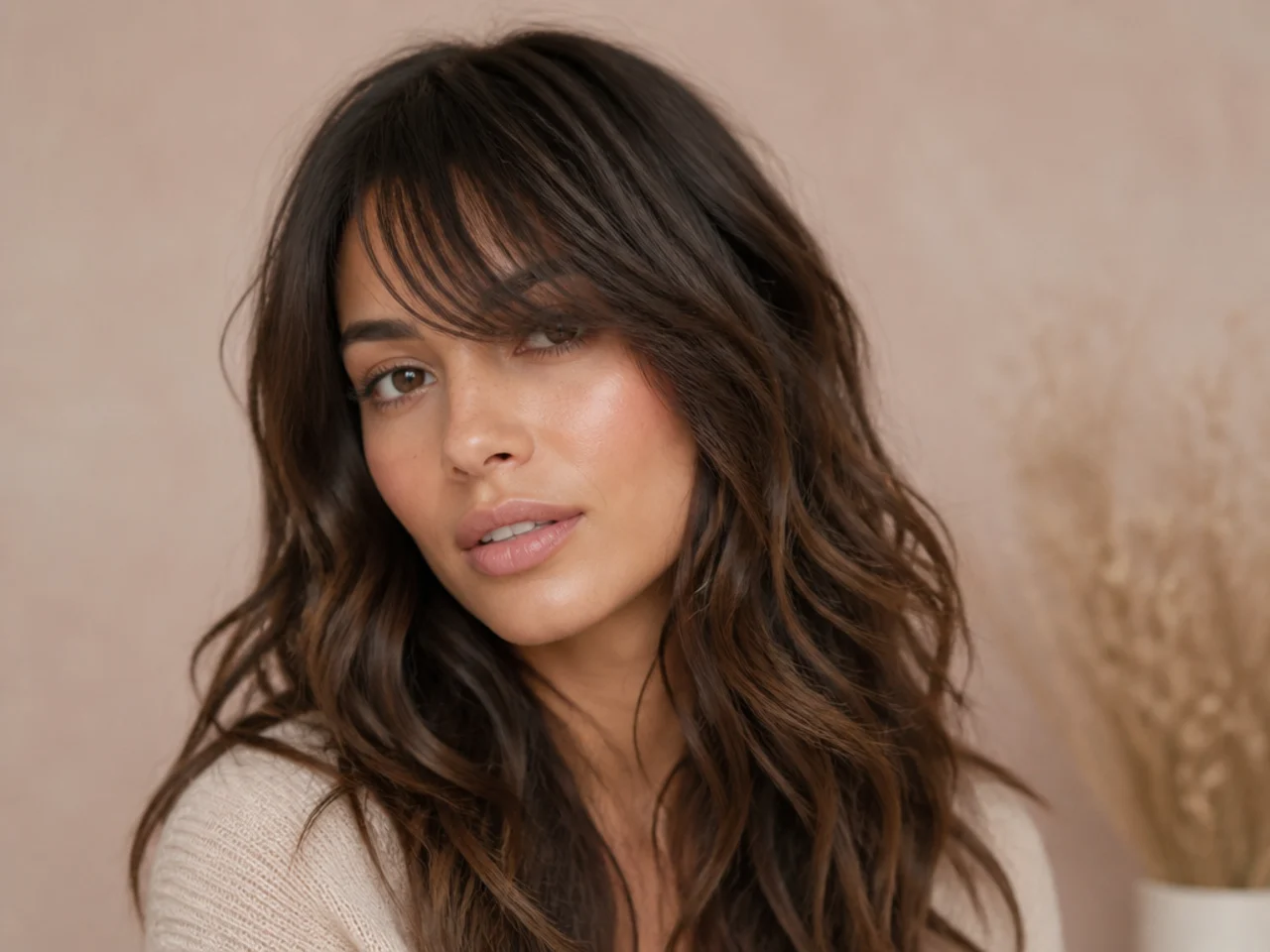
11. Wispy Sweep with Face-Framing Length
The wisp continuing past the fringe into longer pieces. Carrying the softness down past the fringe removes the boundary where the fringe would otherwise end.
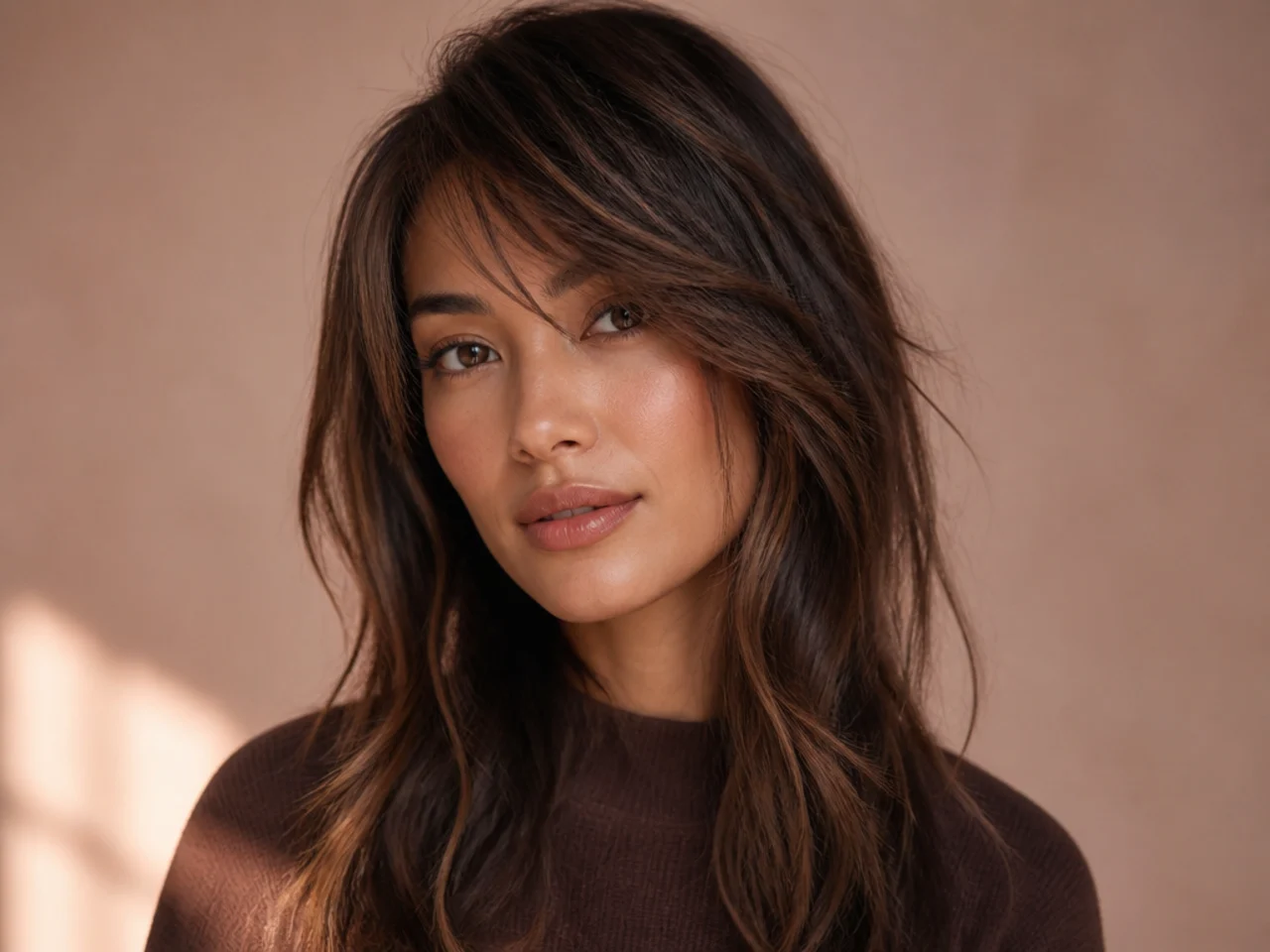
12. Wispy Sweep Tucked Behind One Ear
Soft edges are at their best half-tucked. Tucking removes the weight from one side and lets the soft edge fall exactly where it wants to.

13. Wispy Sweep with an Updo
The softest possible framing against a gathered shape. A gathered style is severe by nature, and a soft diagonal is the cheapest way to break that.

14. Wispy Sweep with a Ponytail
Everything back, one soft diagonal left out. Gathering everything puts all the attention on the fringe, which is an argument for wisping lightly rather than heavily.
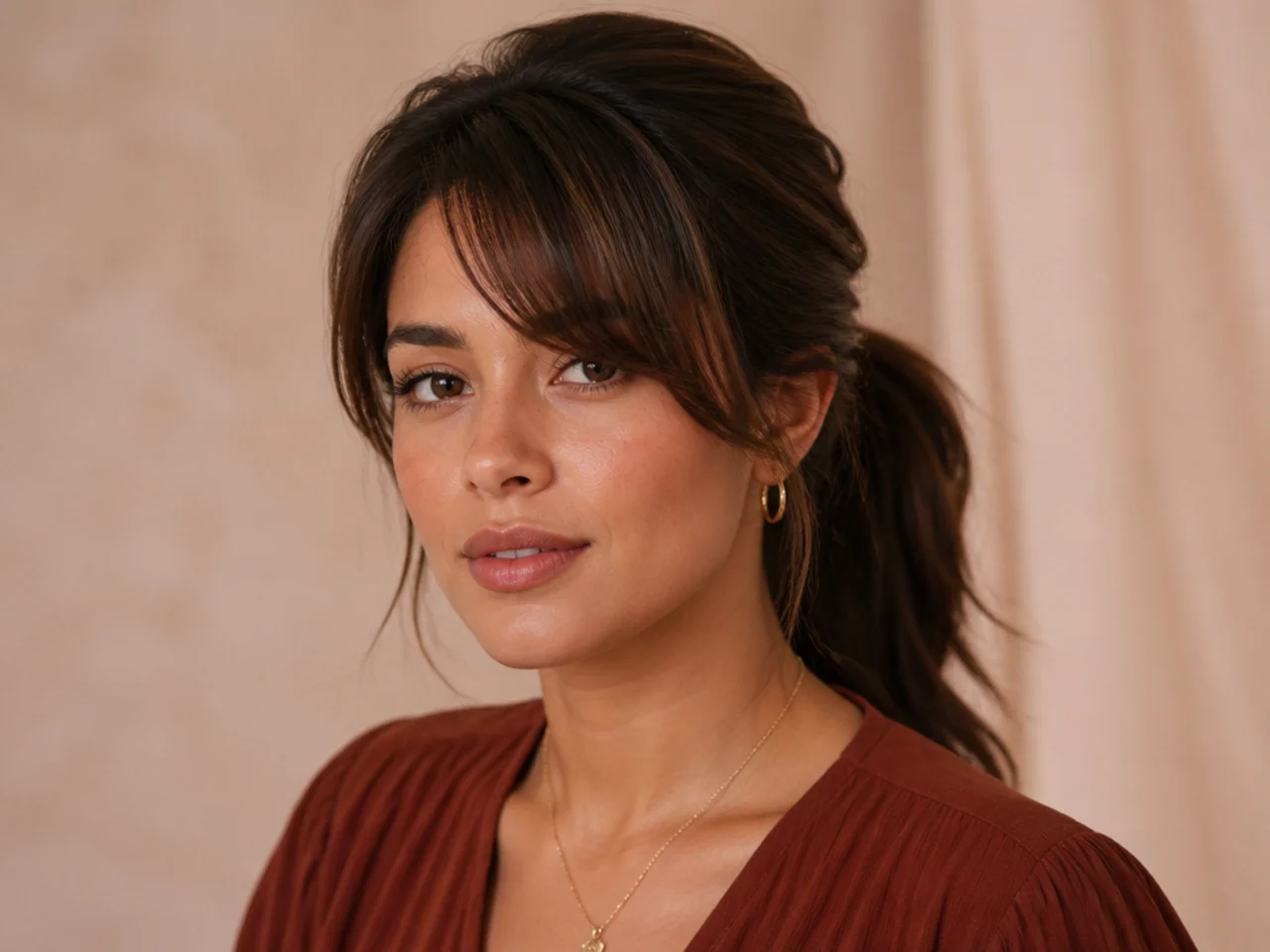
15. Wispy Sweep with Highlights
Colour catching in the separated ends. Separated tips catch light individually, so highlights read brighter in a wisped fringe than in a blunt one.
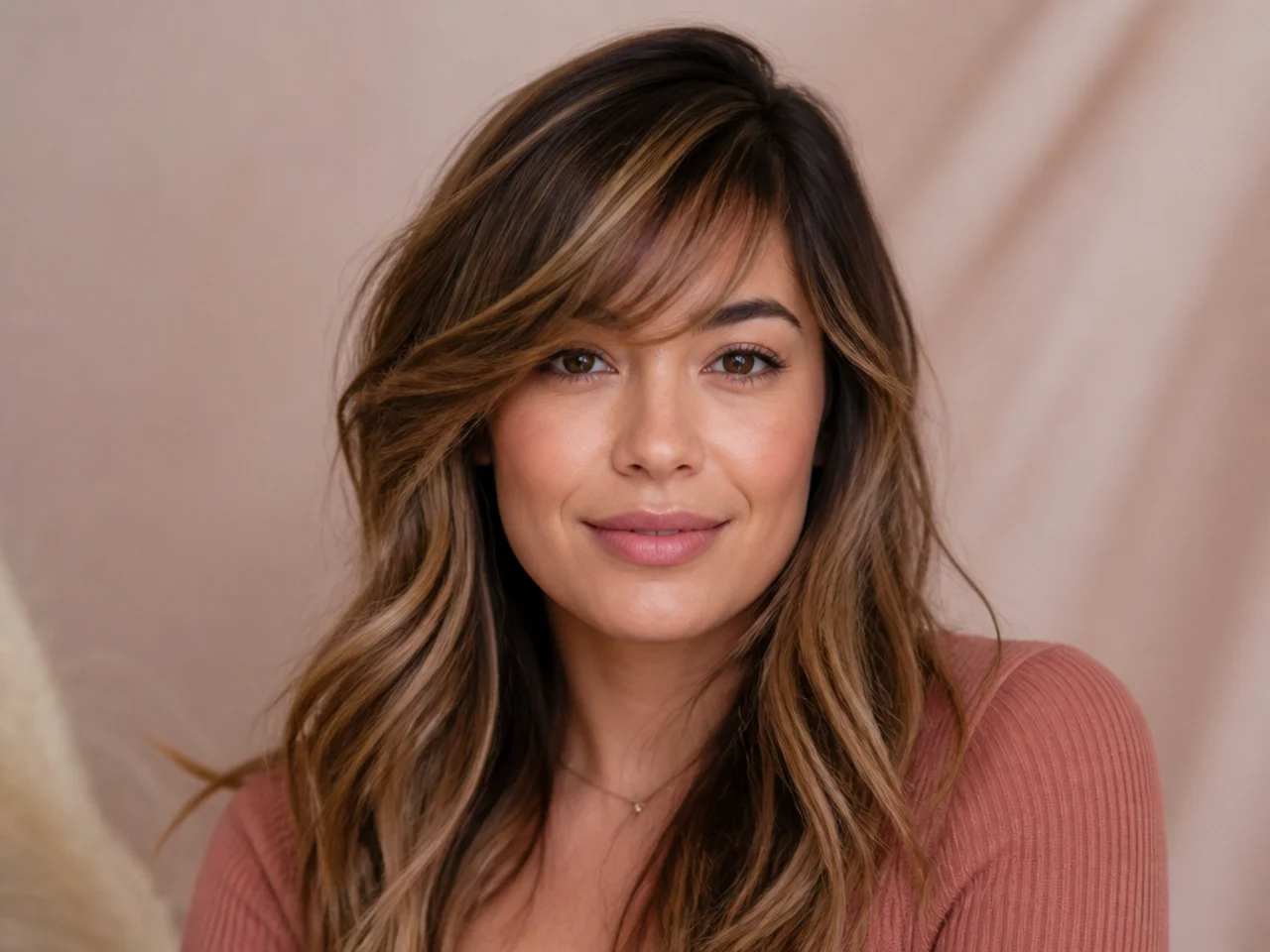
16. Barely-There Wisp
A single pass at the edge. The most conservative version. Worth starting here — you can always take more off, and you cannot put it back.

17. Textured Wispy Sweep
Point-cut with more separation between pieces. Point-cutting removes weight at different depths, which is what creates separation rather than a uniform soft edge.

18. Wispy Sweep with a Blunt Body
Hard line above, soft only at the very edge. The blunt body holds the direction and the soft edge removes the severity, which is the best of both.
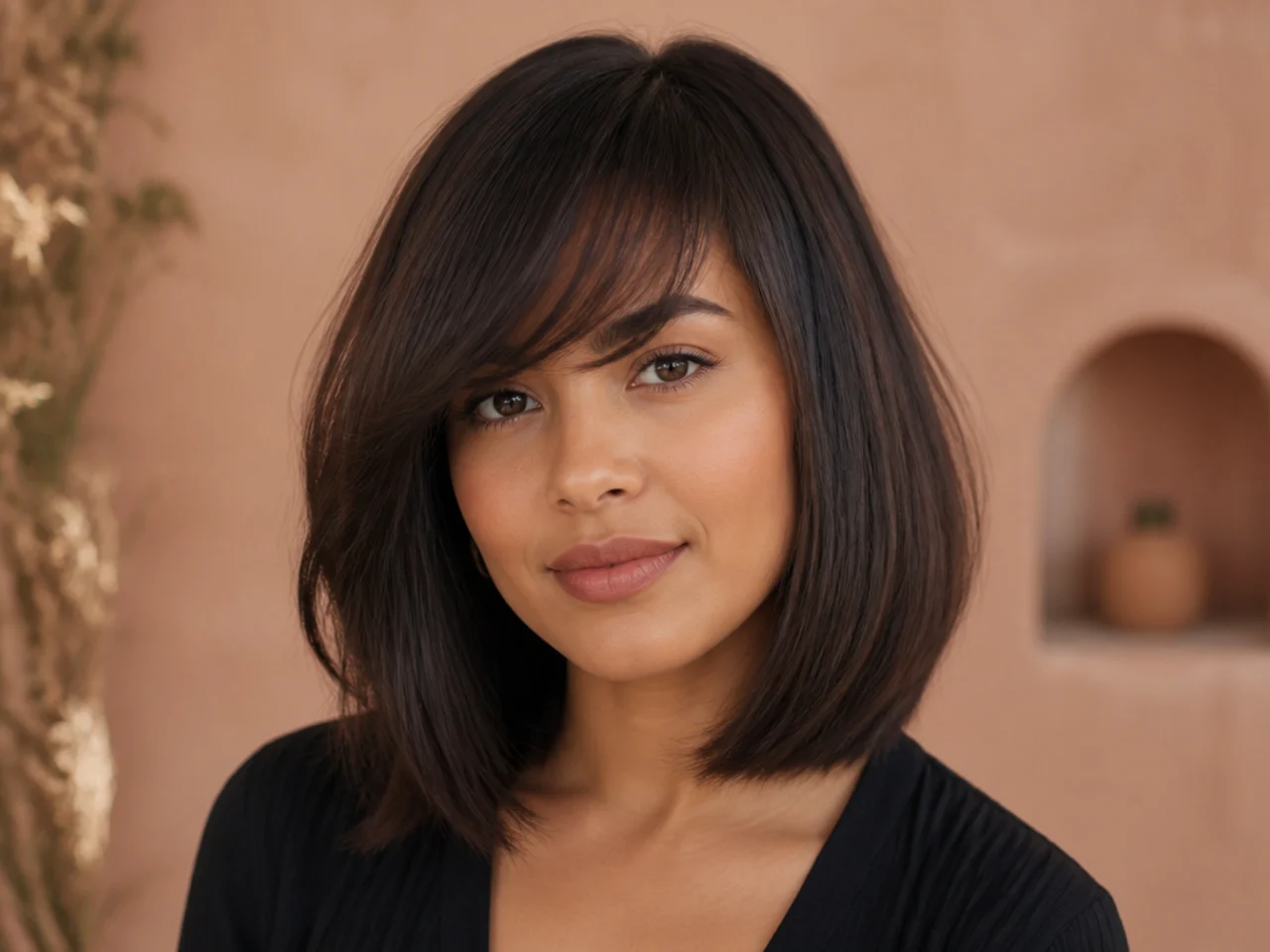
19. Wispy Sweep Grown Out a Fortnight
Where the wisp has softened further on its own. Wisped ends keep separating as they grow, so a fringe wisped lightly at the cut is wisped correctly a fortnight later.

20. An Over-Wisped Sweep
Softened too far up. The diagonal has stopped reading. Once the softening reaches the body of the fringe there is no solid line left, and a fade is not a sweep.
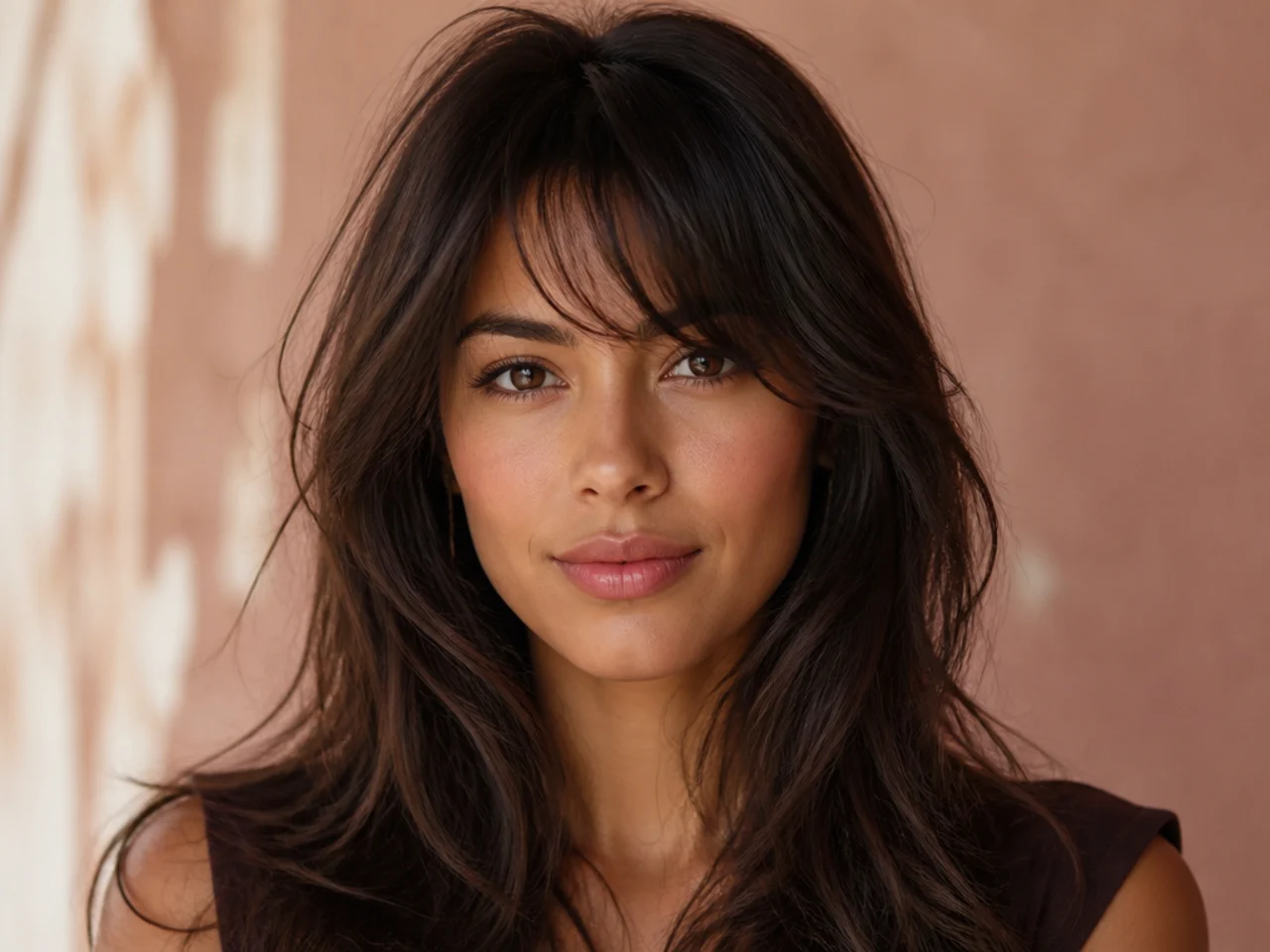
Styling and Upkeep
Dry the body, leave the wisp alone. Direct heat on separated ends frizzes them, and frizz and wisp are not the same thing.
No product on the ends at all. Wisps clump the moment anything is applied to them.
Refresh with fingers, not a brush. A brush pulls the separated pieces back into a single edge.
Ask for the wisp to be redone at each trim. It grows back into a blunt edge within about six weeks.
Trim on the same cycle as the base cut. Three to four weeks for a side sweep, wispy or not.
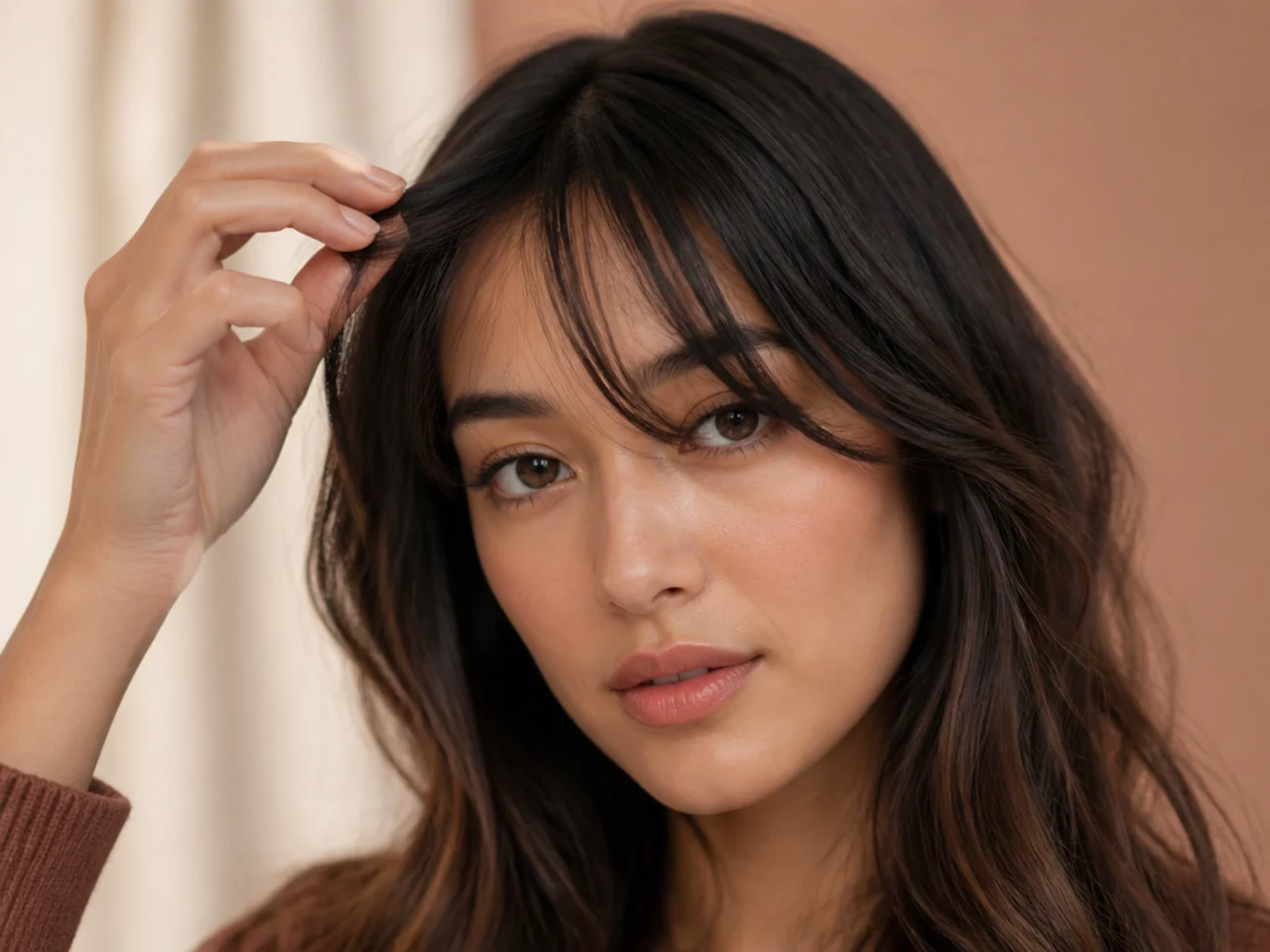
Mistakes to Avoid
Wisping into the body of the fringe. It removes the line that makes the diagonal legible.
Point-cutting across the diagonal. It leaves small steps down the edge.
Wisping very fine hair. A soft blunt edge reads softer than a sparse wisp.
Product on the ends. It clumps the separation you just paid for.
Brushing it. The wisp becomes an edge again.
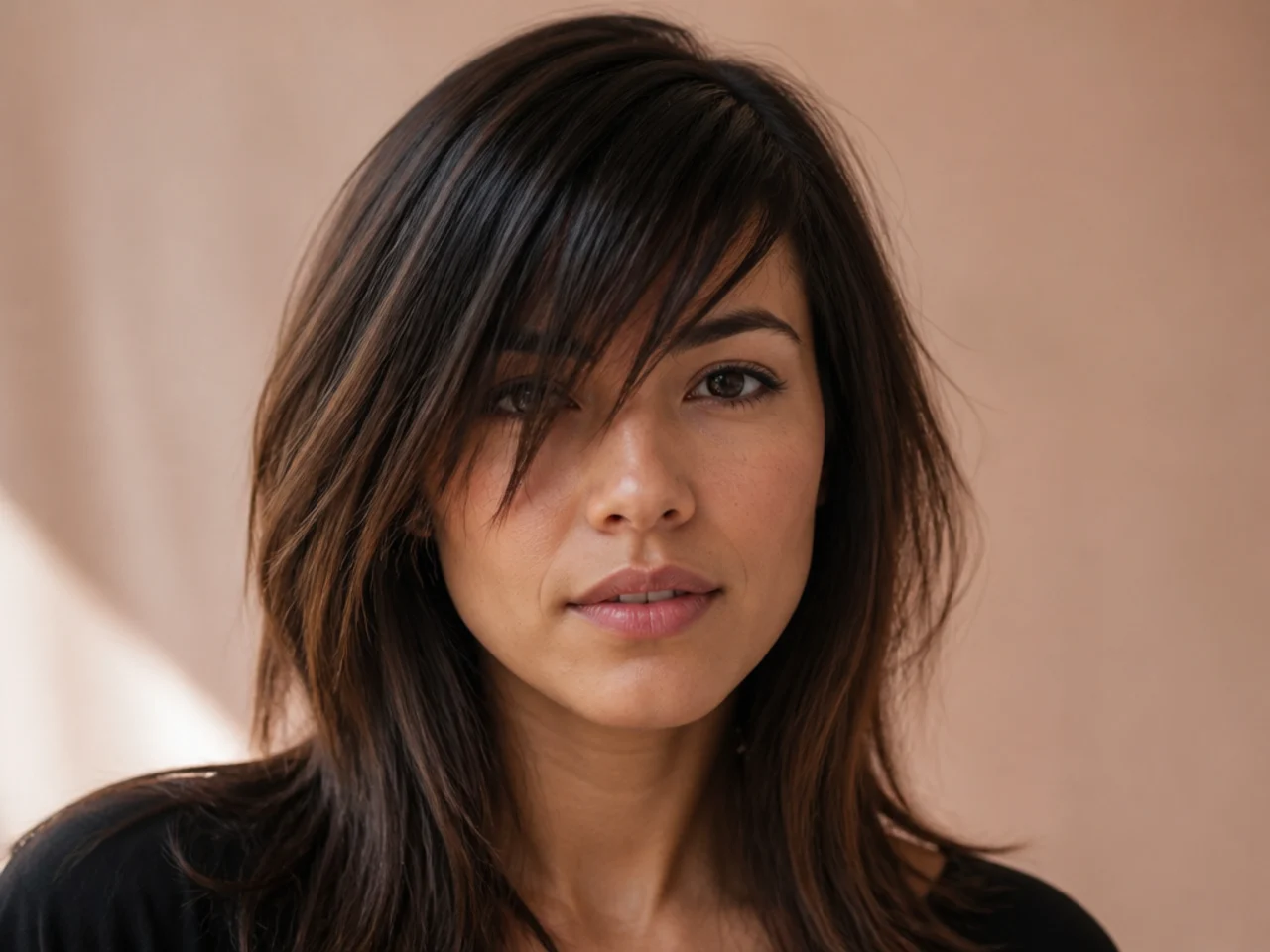
FAQ
Can they be too wispy? Yes — soften too much of the diagonal and the sweep stops reading.
How far up should it be point-cut? The last inch, not the whole length.
Along or across the diagonal? Along it, or you get a stepped edge.

Final Thoughts
Ask for the last inch and no further. Wispy side swept bangs go wrong in one direction only — too much of it — and the failure is quiet, because the fringe still looks soft. It just stops looking swept.
For very fine hair, where wisping is the wrong tool entirely, see 15 side swept bangs ideas for thin hair, and for a blunter wispy fringe see wispy french bangs. More in Bangs & Fringe.