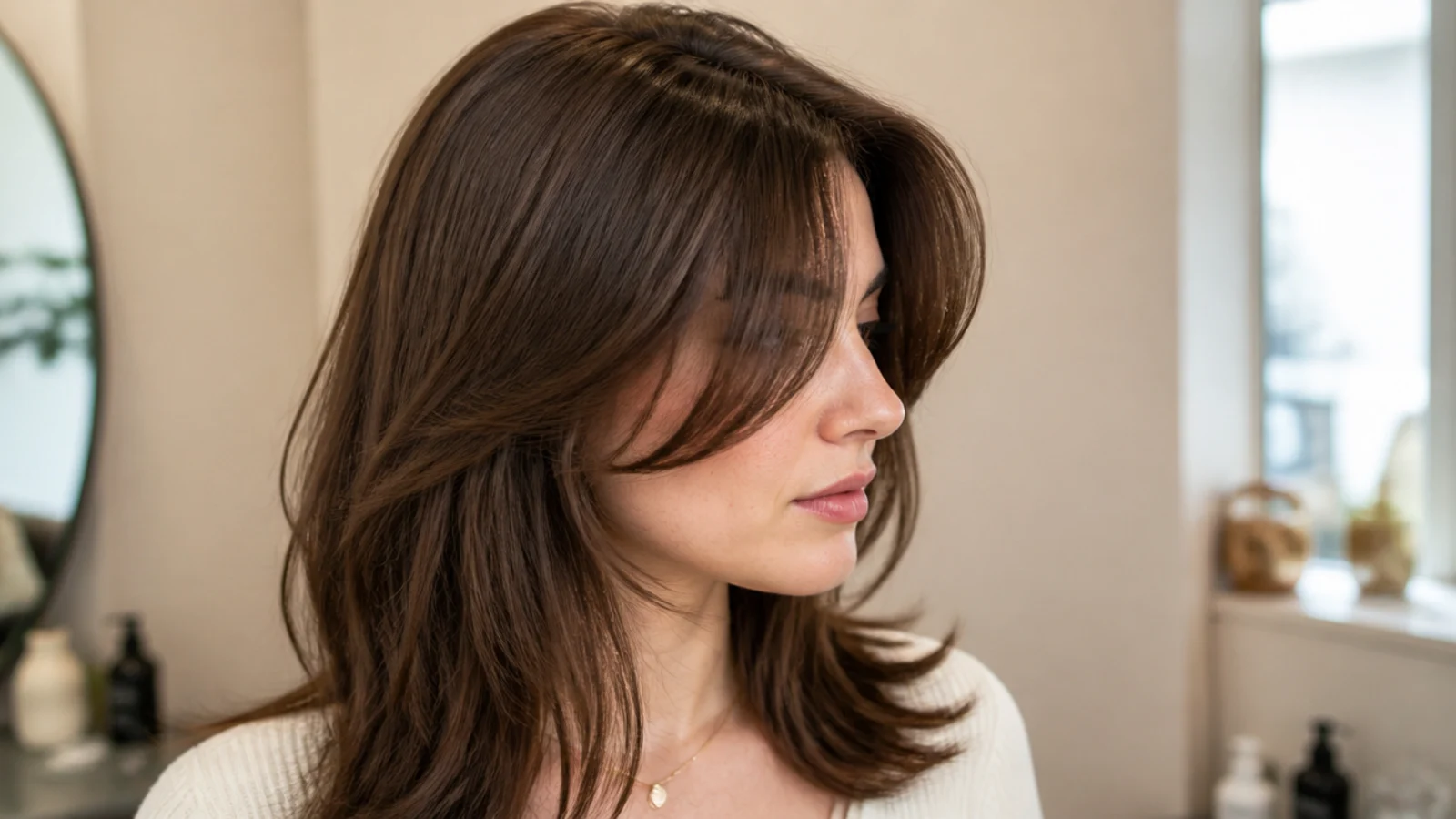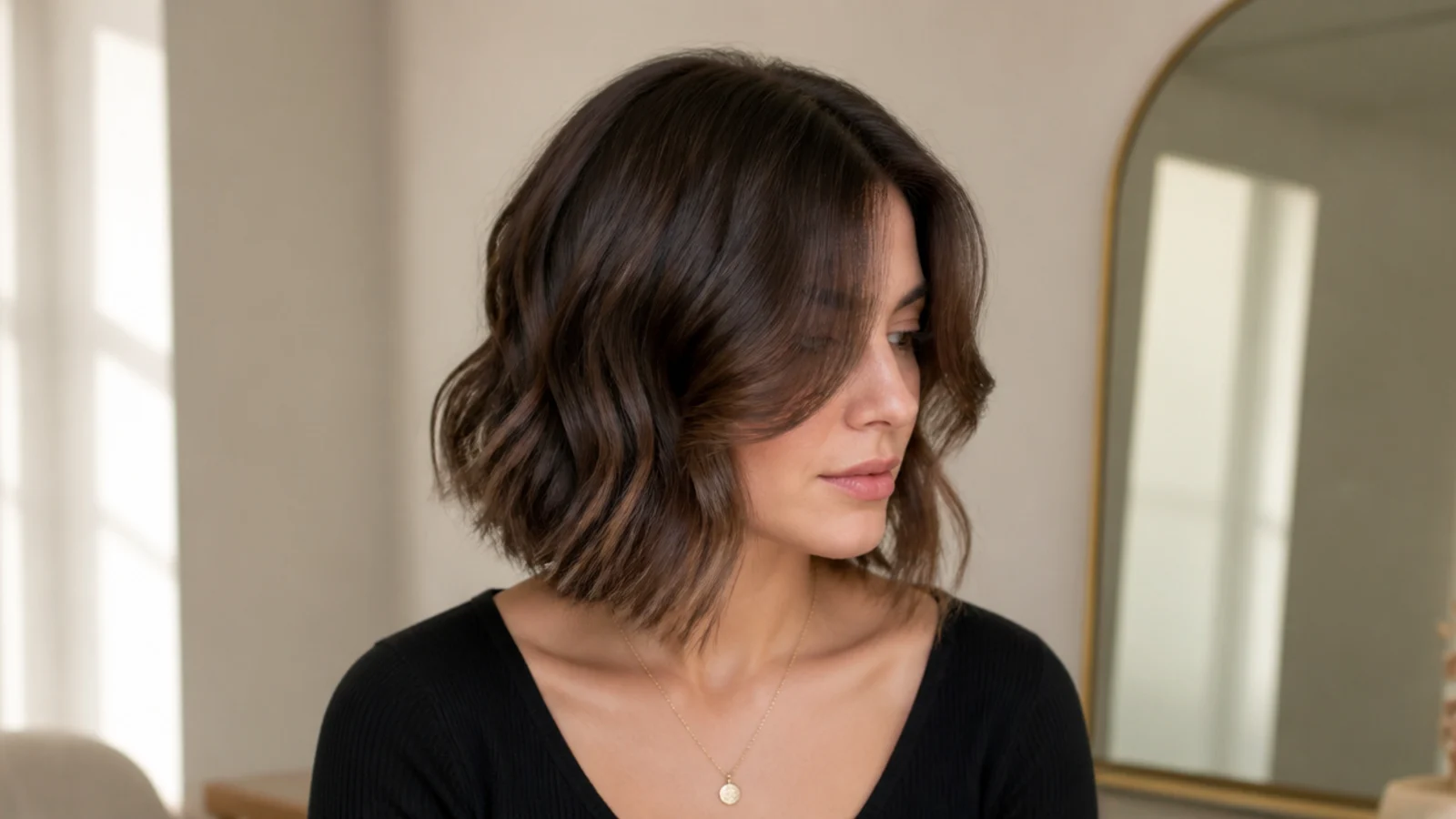
20 Wavy Short Curtain Bangs Ideas That Hold Their Shape
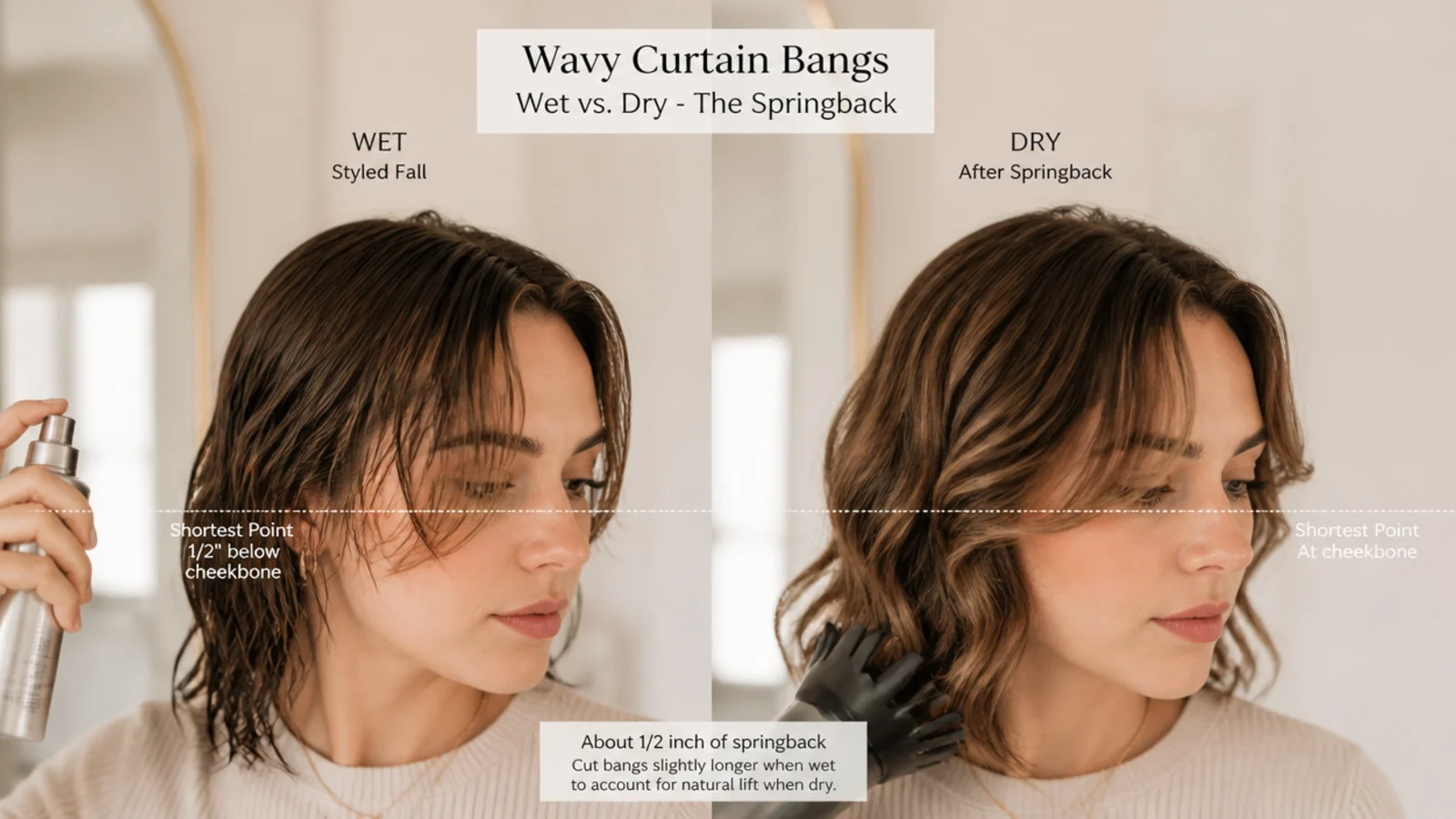
Twenty short curtain bangs cut for wavy hair, and the half inch that ruins most of them. A wave lifts as it dries, so a fringe measured wet arrives roughly half an inch shorter than the one you asked for.
In this article · 28
- What Short Curtain Bangs Are
- Springback and Dry Cutting
- Face Shapes
- Styling at Home
- Fixing Common Problems
- Trims and Growing Out
- The 20 Wavy Short Curtain Bangs Ideas
- 1. Brow Grazing on 2A Waves
- 2. Collarbone Lob
- 3. French Bob
- 4. Cheekbone Length for a Round Face
- 5. Wispy on Fine Hair
- 6. Dry Cut on 2C Waves
- 7. Shag
- 8. Air Dried With No Heat
- 9. Chin Bob
- 10. Side Sweep
- 11. Diffused Root Lift
- 12. Thick Hair
- 13. Wolf Cut
- 14. Baby Bangs Above the Brow
- 15. Money Piece
- 16. Seventies Flick
- 17. Pixie Shag
- 18. Headband
- 19. Wand Bend for an Oval Face
- 20. Grown Out to the Cheekbone
- Final Thoughts
Most wavy curtain bangs come out shorter than the picture, and the missing length was never cut off — it lifted.
A wave costs you roughly half an inch between wet and dry. Wet hair hangs nearly straight under its own weight. As it dries the strand gathers back into its bend and the end travels upward, so the finished shortest point sits well above the wet one.
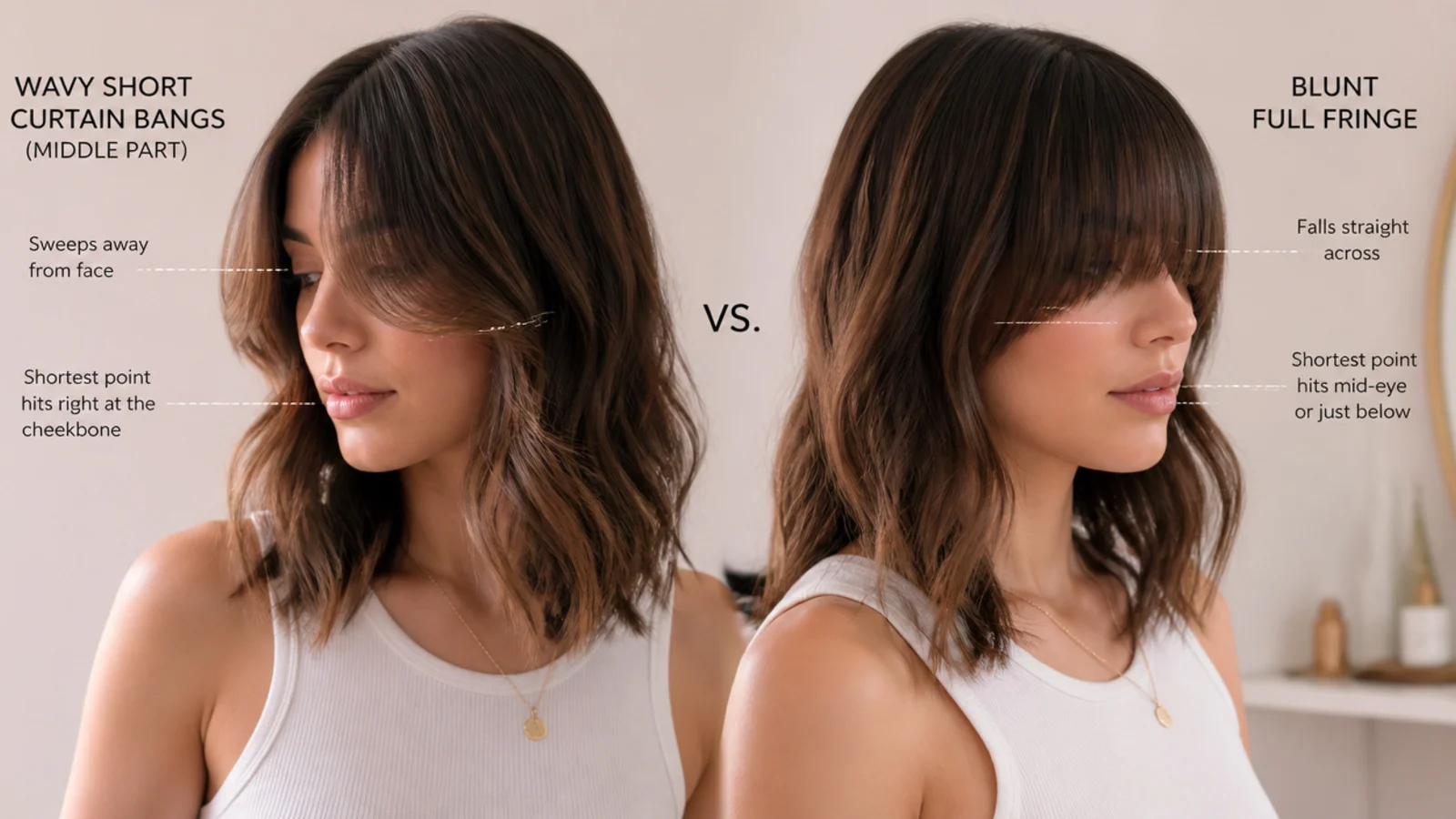
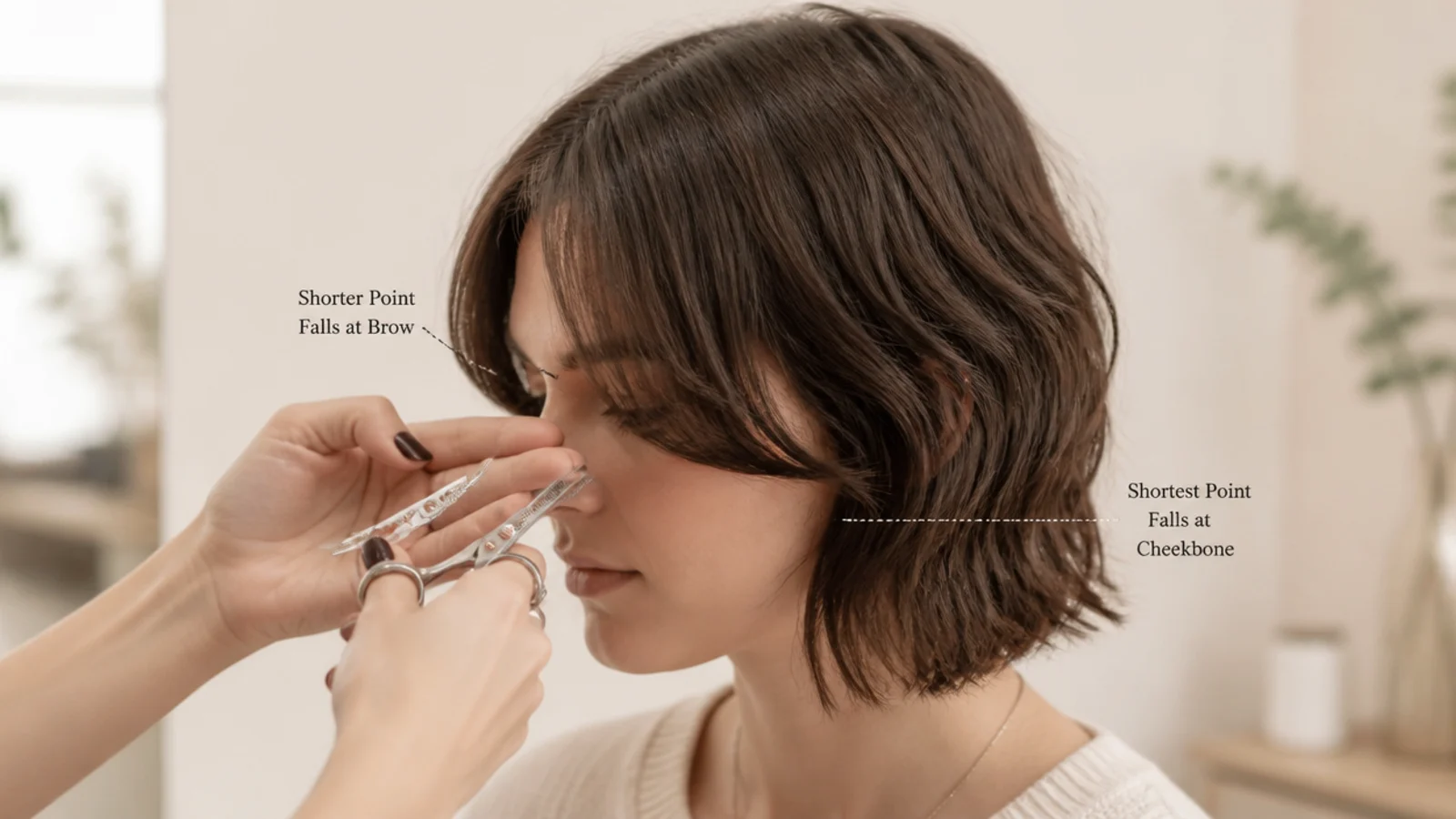
The shortest point belongs at the cheekbone. From there the sweep runs longer and outward, away from the face, which is what separates this cut from a fringe that falls straight down across the eye.
What Short Curtain Bangs Are
A blunt fringe falls straight across and stops mid eye. Every strand finishes on one level line, and it hangs down the face rather than around it.
A curtain bang sweeps away from the face. The shortest point sits at the cheekbone and each strand runs longer as it moves outward, so the two halves open from a middle part instead of closing over the eyes.
On wavy hair the sweep is half the cut. A wave already wants to bend somewhere. Cutting the grade so the bend lands outward rather than inward is what stops the bang curling onto the cheek.
The middle part is structural. It is the line the two halves fall away from, and without it a wavy bang finds its own parting along whichever cowlick is strongest.
Springback and Dry Cutting
Wet waves lie about half an inch. The same section that reaches below the cheekbone soaking will sit at the cheekbone dry, because the bend shortens the strand as it forms.
Cut it longer wet, or cut it dry. Those are the only two honest options. Cutting to the target length on wet wavy hair guarantees a bang that finishes above where you asked for it.
Dry cutting shows you the finished bend. Wave pattern changes along a single strand, so where a bend lands is not predictable from a straight wet section — you have to see it sitting.
Cut it styled the way you wear it. Diffused hair and air-dried hair sit at different heights on the same head, and the bang has to work in whichever one you do most mornings.
Face Shapes
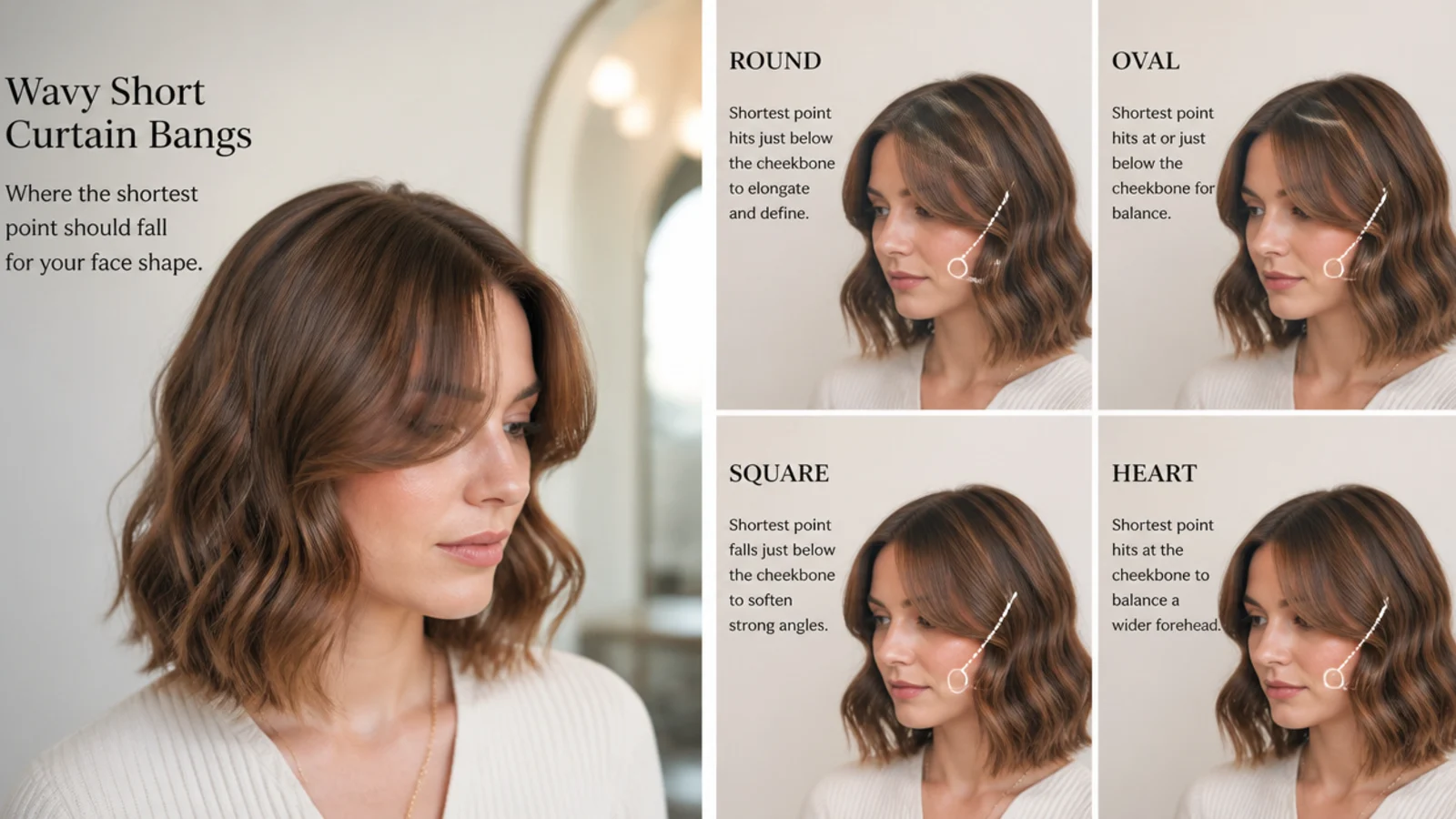
Round faces want the shortest point just below the cheekbone. Carrying length past the widest part of the face gives the eye a vertical to follow, which elongates and defines an outline that has no strong angles of its own.
Square jaws want it just below the cheekbone too. The sweep passes the jaw corner rather than stopping on it, so the angle is softened instead of underlined by a second horizontal.
Heart faces want it right at the cheekbone. A wider forehead is covered while the sides bring visual weight down toward the narrower chin, balancing the two ends against each other.
Oval faces can take it at or just below the cheekbone. The proportions are already balanced, so the placement is a preference rather than a correction.
Styling at Home
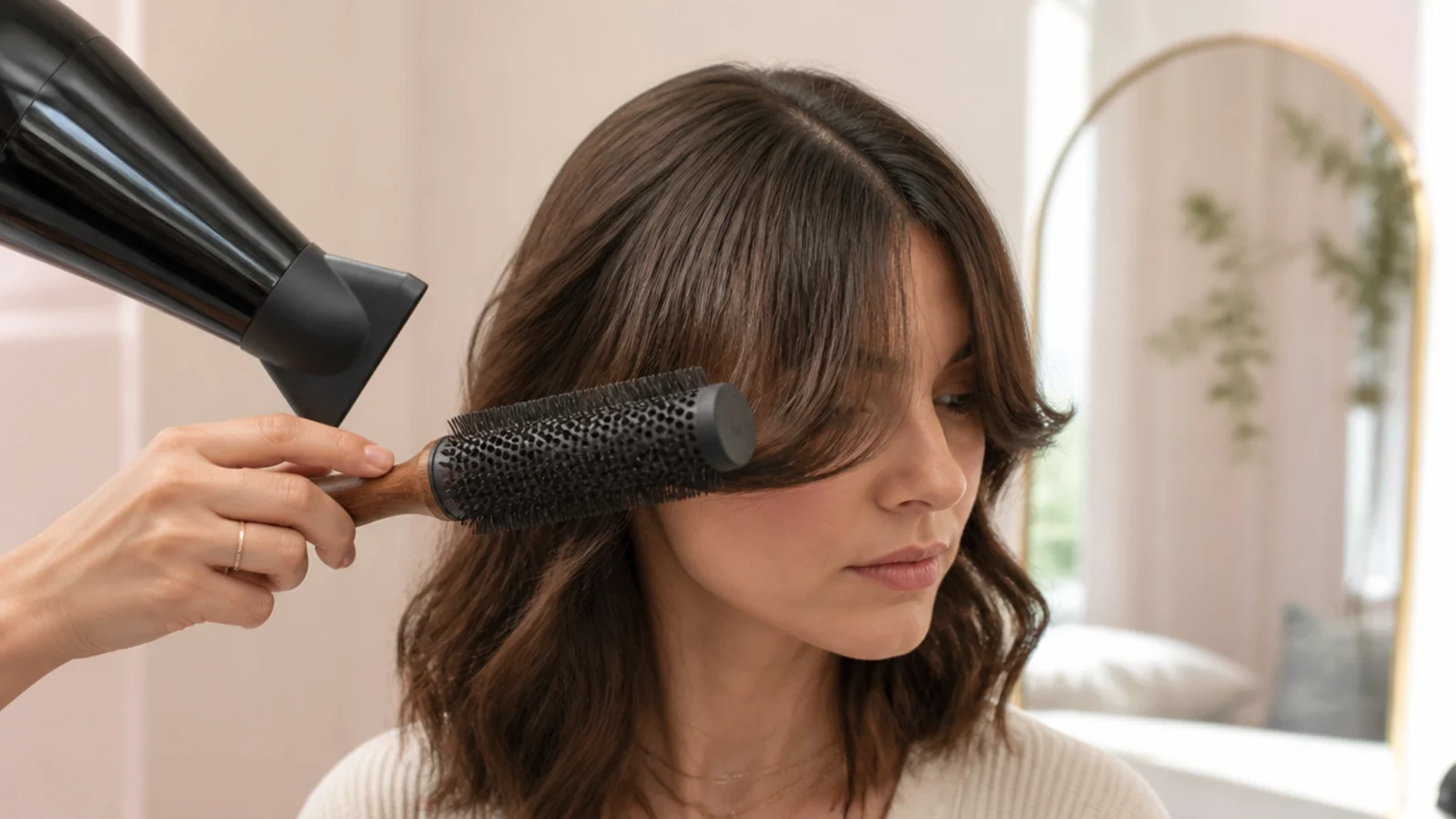
Dry the bang first, wet, before it decides for itself. A wave sets its root direction in the first minute of drying and will not move afterwards without water.
Overdirect each half across the parting. Blow the right side to the left and the left side to the right, then let them fall back. The root ends up standing away from the scalp, which is what stops the split gapping.
Use the round brush for direction and the diffuser for volume. The brush sets where the sweep goes, the diffuser dries the bend without disturbing it. Doing both jobs with the brush flattens the wave you were trying to keep.
Finish on cold and stop touching it. The bend locks as the strand cools, and every pass of a hand after that transfers oil and drags the shape flat.
Fixing Common Problems
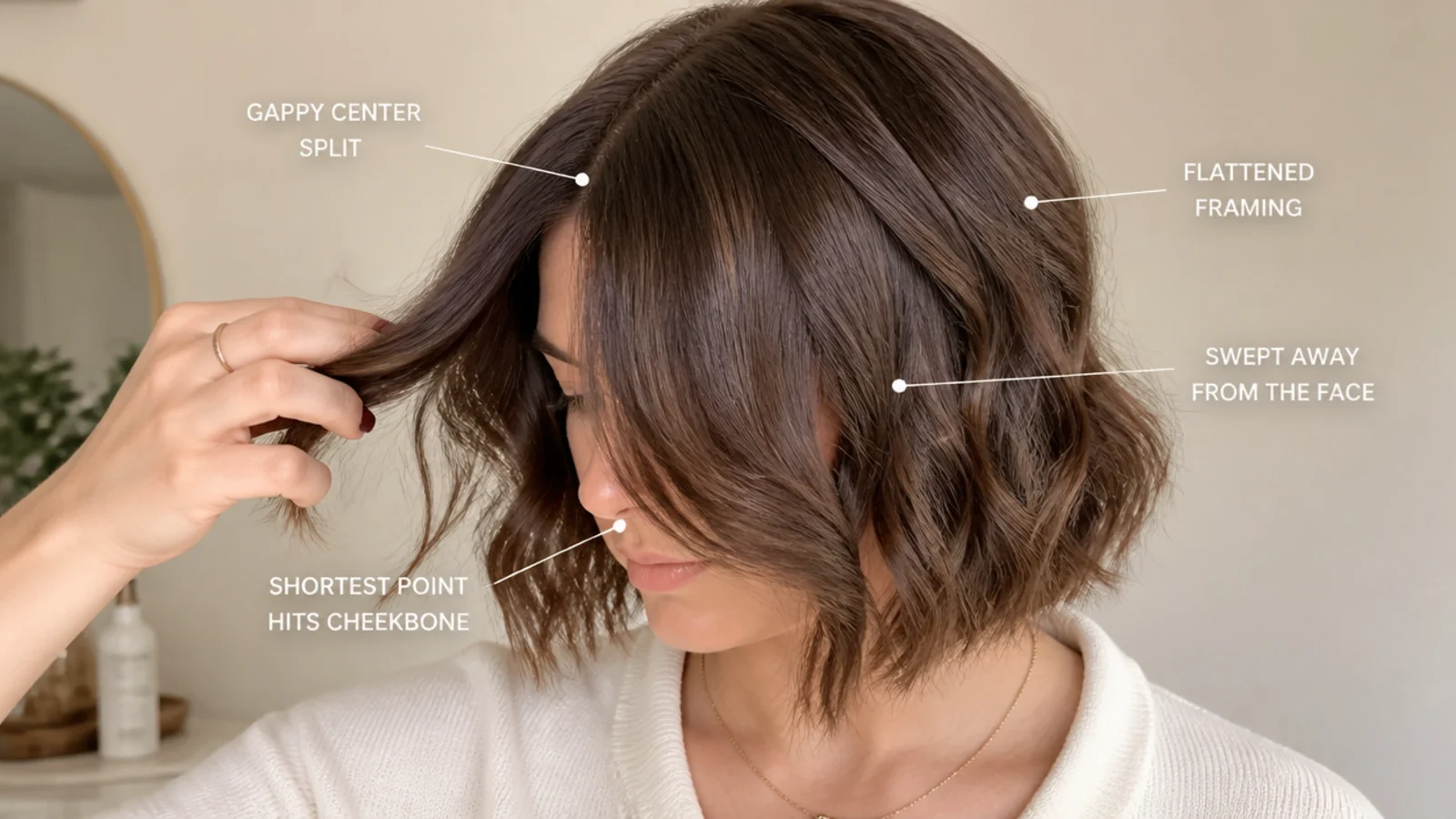
A gappy centre split means the roots dried flat. Both halves have fallen toward the parting and left a stripe of scalp showing. Rewet the first inch, dry it across the parting, and the gap closes without cutting anything.
Flattened framing means the sweep lost its lift. Warm hair holds no shape, so a bang that was styled and then handled while still warm ends up lying against the head. Set it with a cold shot before you touch it.
The sweep should travel away from the face. If the ends curl inward onto the cheek, the bend is landing on the wrong side of the strand — turn the brush outward at the last inch rather than under.
The shortest point still has to hit the cheekbone. Most problems that look like styling faults are a centre cut too high, and no amount of drying will put length back.
Trims and Growing Out
Two checkpoints, every trim. The inner piece against the brow and the outer sweep against the cheekbone. Reset both and the grade between them takes care of itself.
Every six to eight weeks holds the shape. Hair grows roughly half an inch a month, so the whole bang drops about three quarters of an inch between appointments — enough to move it a full landmark.
Trim dry, always. A wave that has been wet down is a straight strand pretending, and cutting it in that state hands you the springback problem a second time.
To grow them out, keep trimming the outer edge only. The sides are what has to reach your face-framing length for the bang to disappear into it, and leaving them ragged is what makes a grow-out look accidental.
The 20 Wavy Short Curtain Bangs Ideas
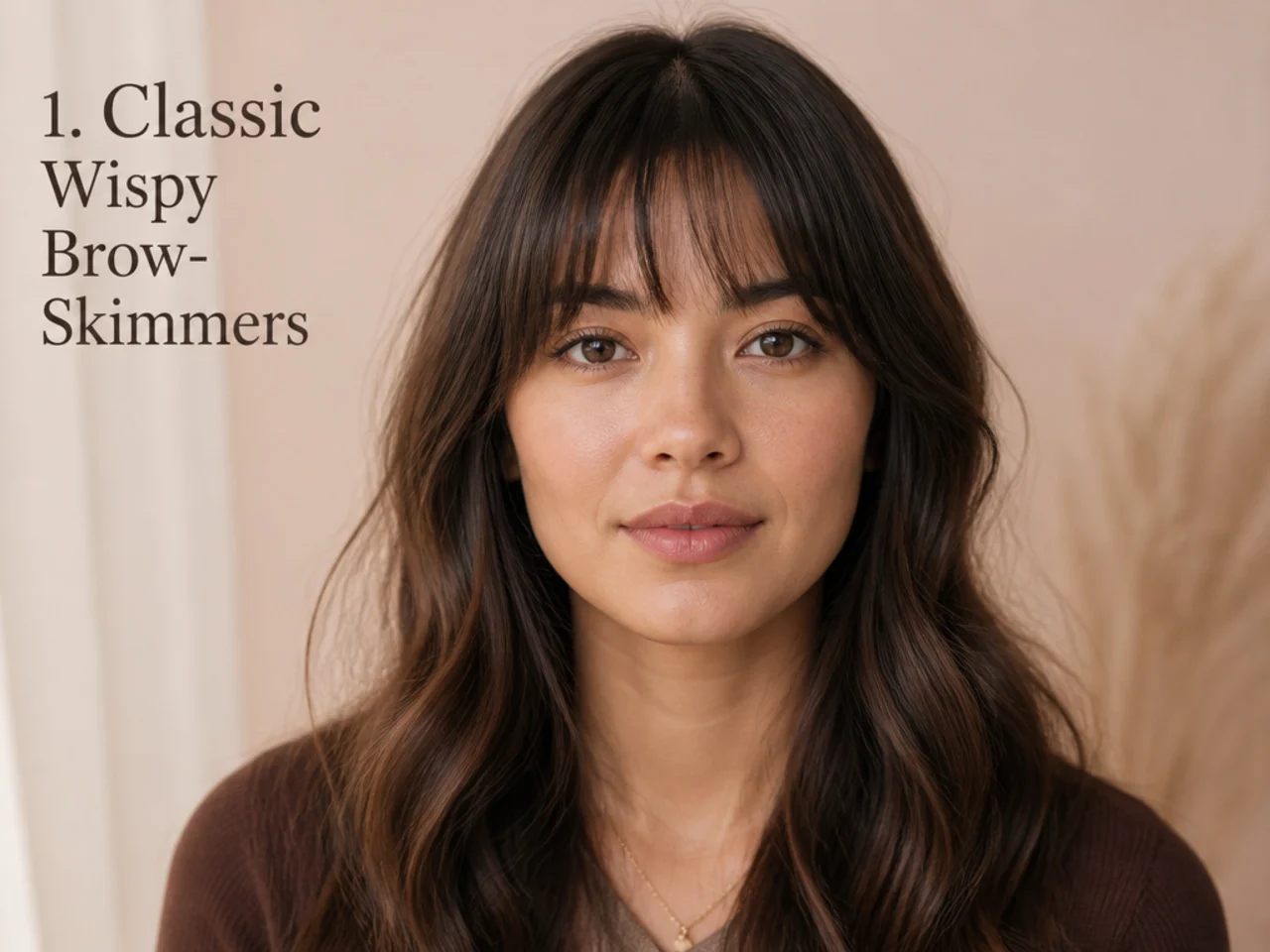
1. Brow Grazing on 2A Waves
A loose 2A bend springs back least of the wavy types, so a brow-grazing centre stays close to where it was cut. It is the safest short length on wavy hair for that reason, and the one least likely to surprise you the first morning you dry it yourself.
2. Collarbone Lob
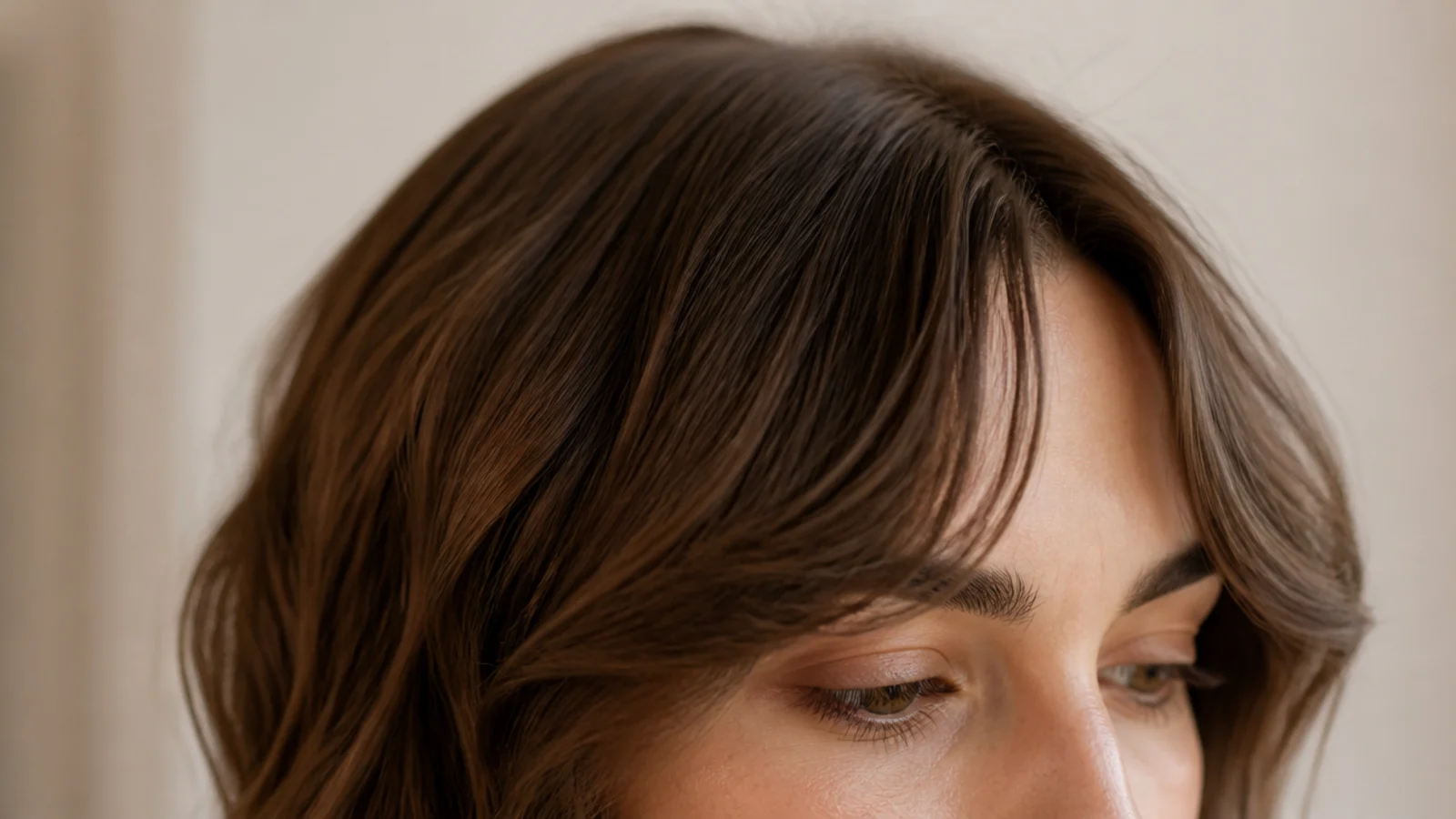
At collarbone length the sides have a long way to travel before they meet your length, which makes the grade from centre to outer edge gradual. That long run is what stops a wavy bang looking like a separate shorter section sitting on top of the lob.
3. French Bob
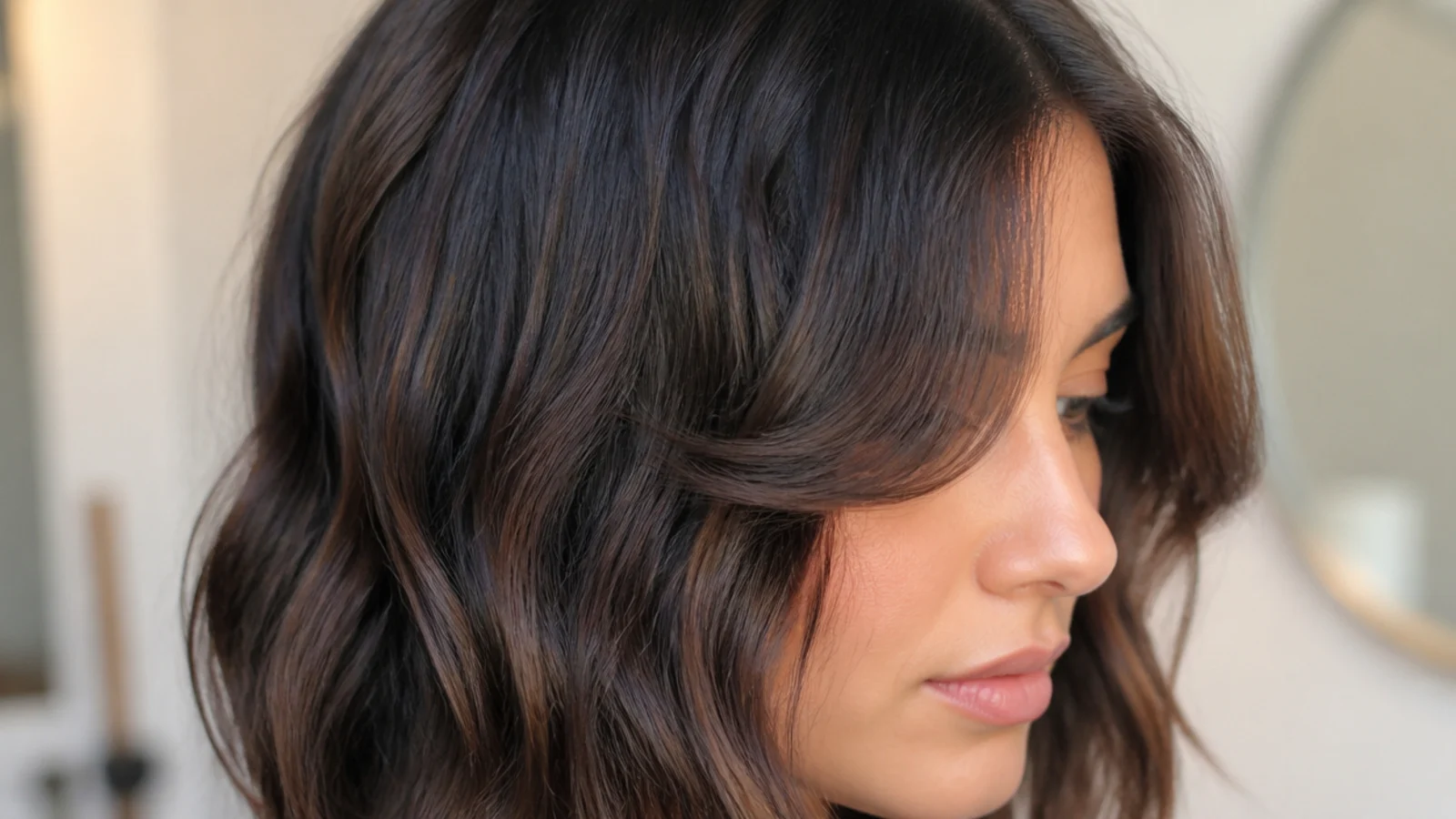
The fringe is cut as part of the bob perimeter rather than added afterwards, so both lines were placed in the same appointment. They then grow at the same rate, which keeps the balance between fringe and bob correct for far longer than a fringe added later.
4. Cheekbone Length for a Round Face
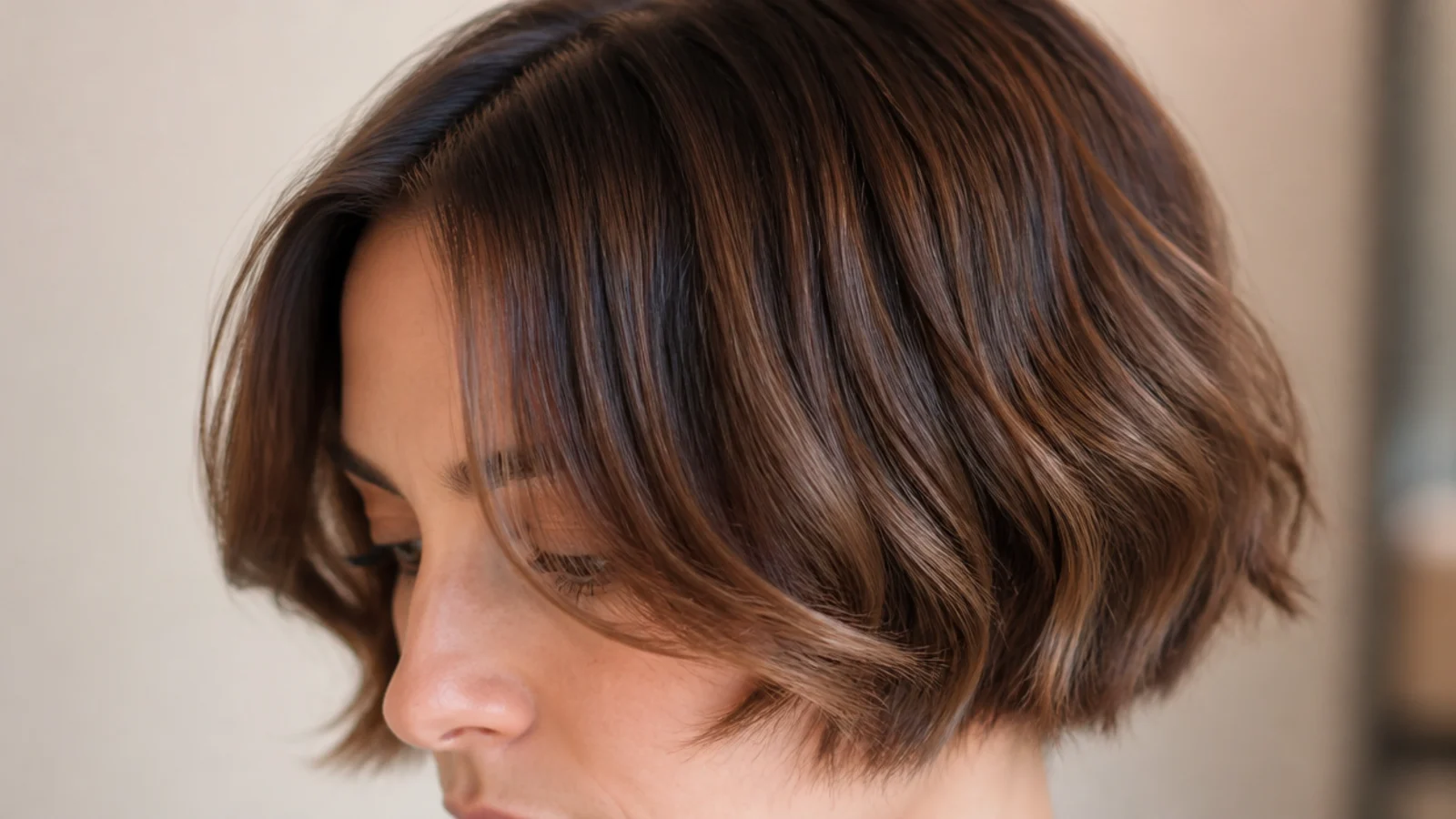
The shortest point lands just under the cheekbone so the sweep runs down the widest part of the face. The eye follows the longest line it can find, and a vertical sweep gives it one that argues with the width.
5. Wispy on Fine Hair
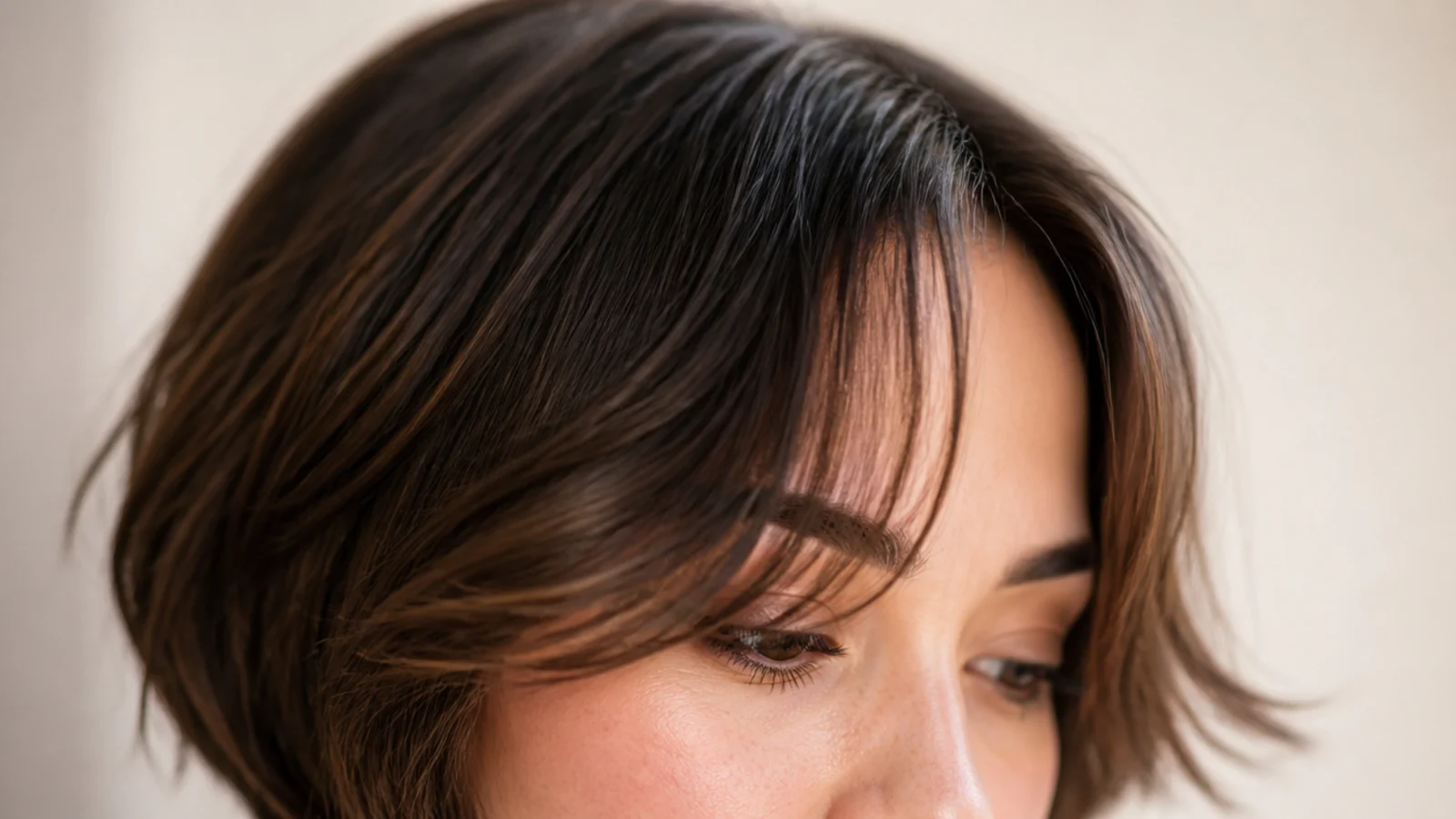
Fine wavy hair cannot spare much from the top, so the bang is taken from a shallow triangle and point cut into. A staggered edge reads as more hair than a blunt one, because the eye counts ends rather than measuring density.
6. Dry Cut on 2C Waves
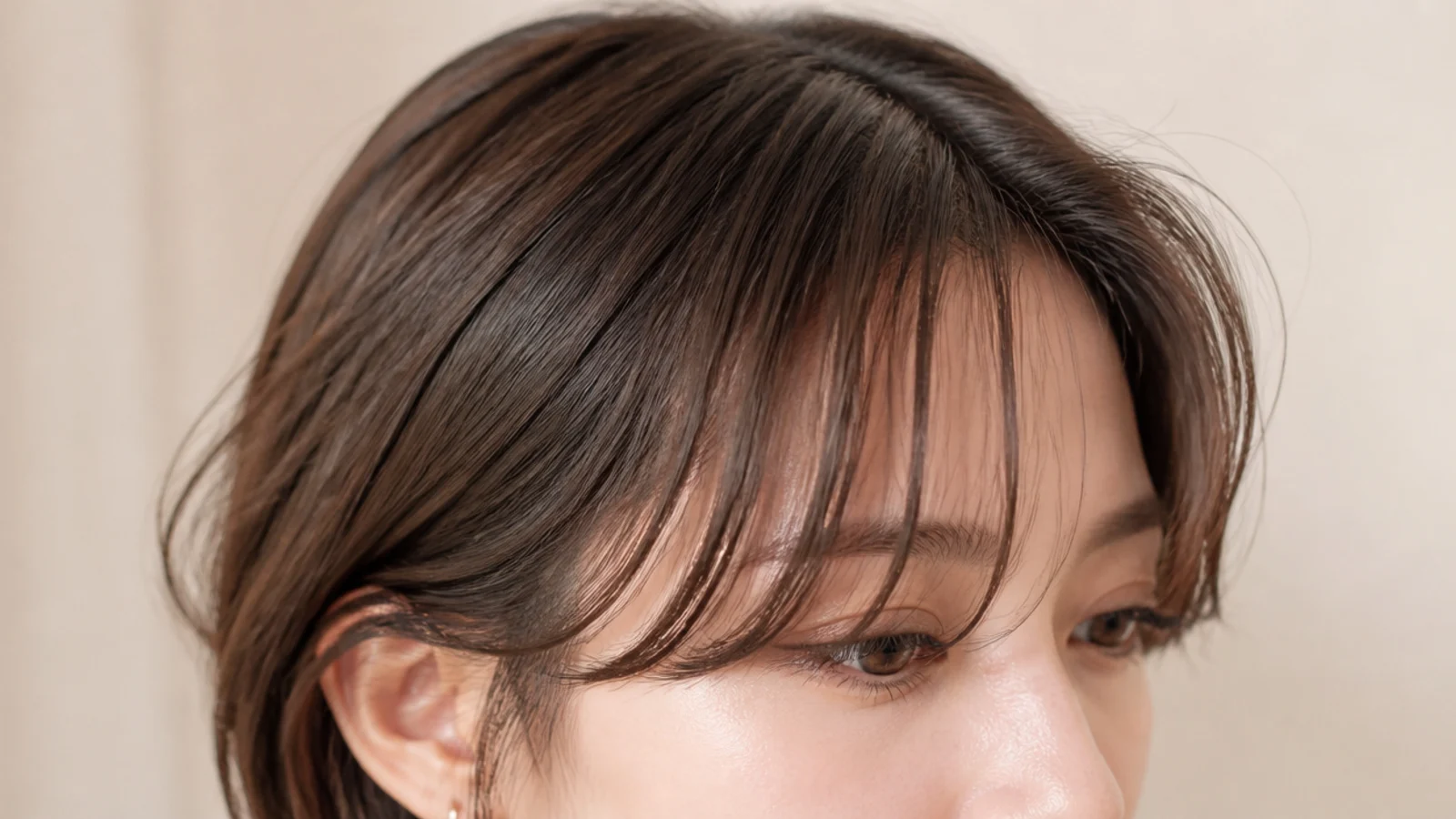
A 2C wave has a tight enough bend that springback is at its worst, so this is the texture where a dry cut stops being optional. Cutting curl by curl where it already sits is the only way to know what the finished height will be.
7. Shag
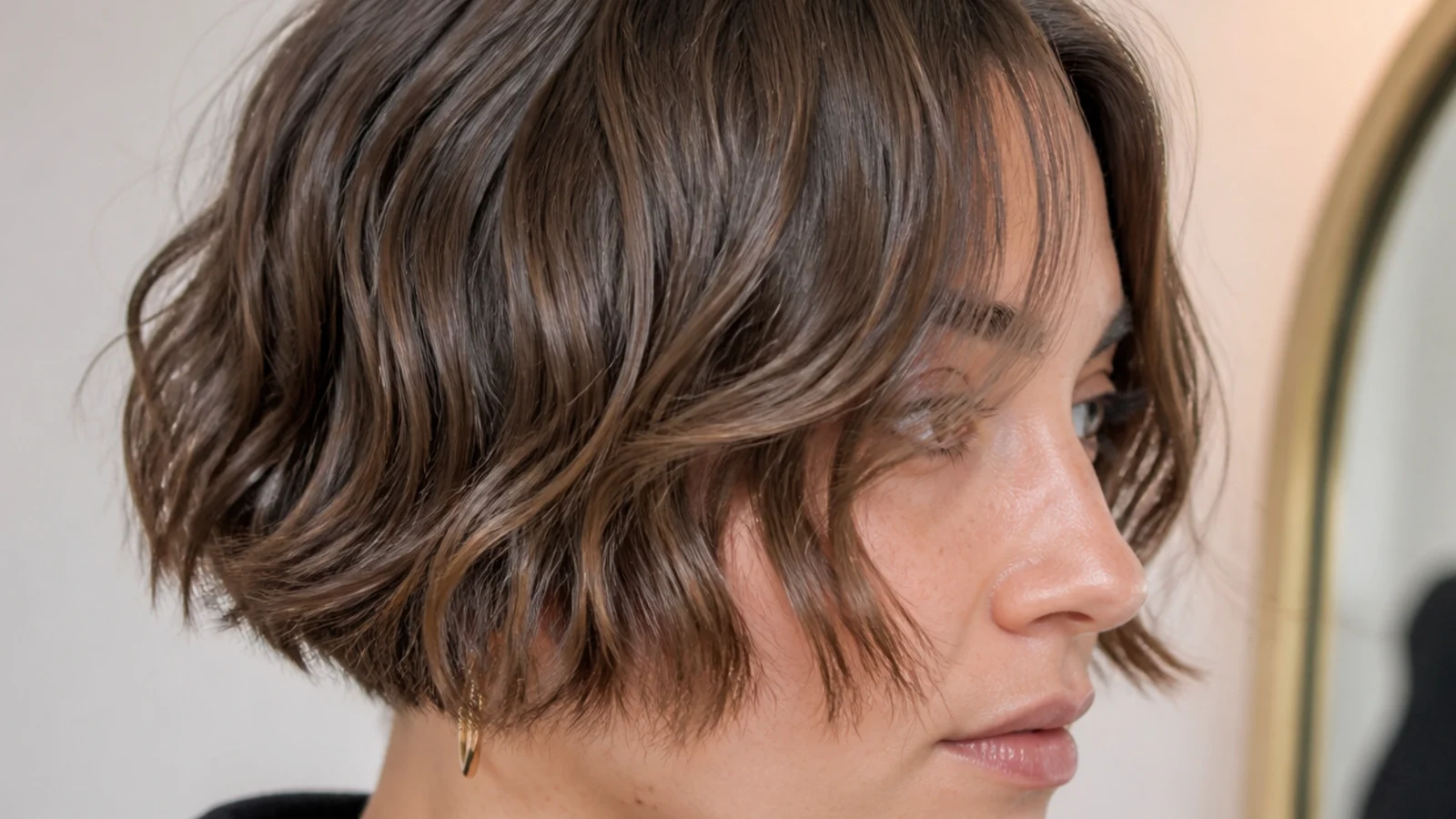
A shag is already built shortest at the crown and longer outward, which is the same logic as a curtain bang. The bang has layers to disappear into instead of a flat surface to sit on, so the join between the two never shows.
8. Air Dried With No Heat
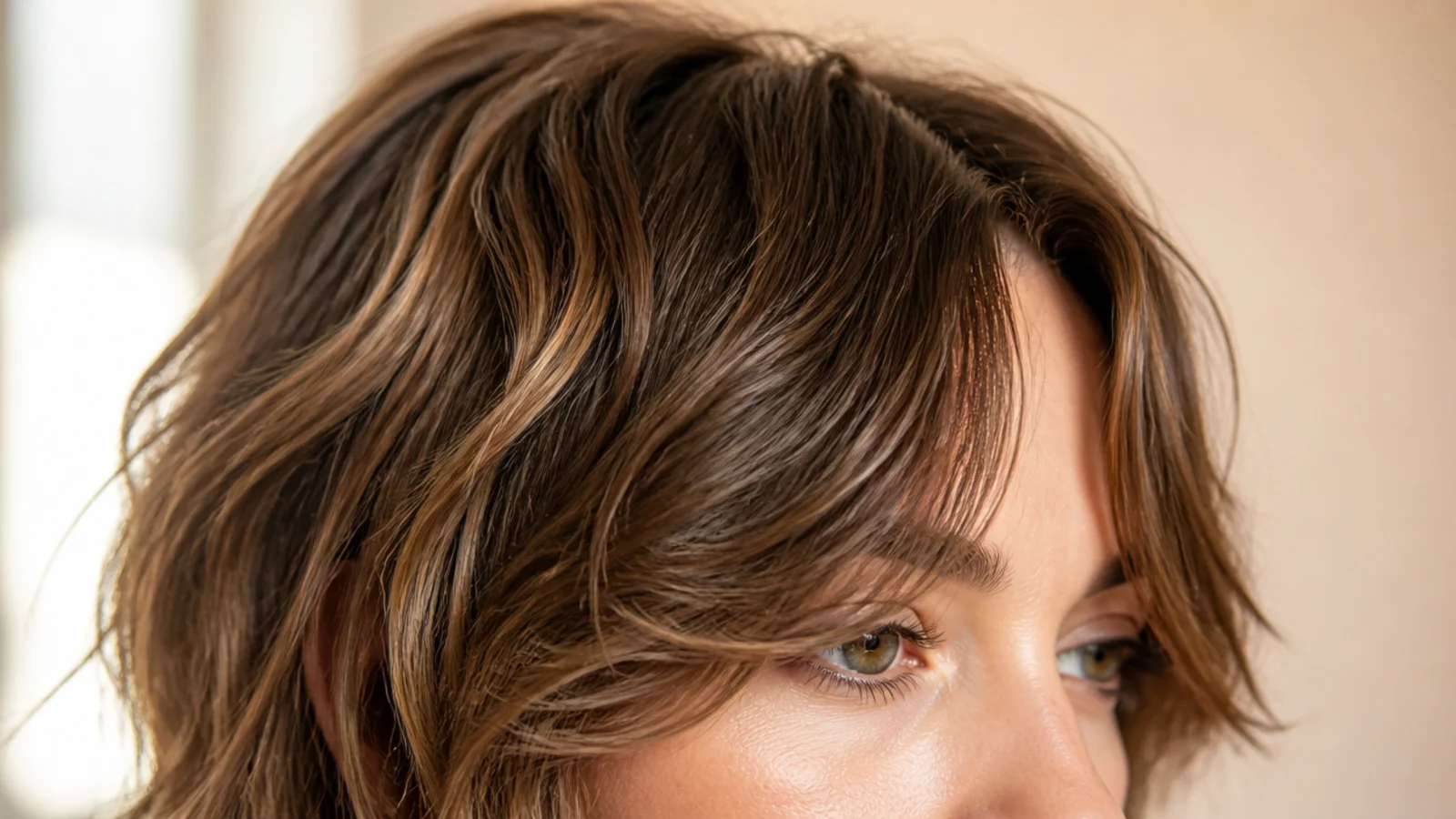
Left to dry on its own, the bang takes the shape the wave gives it, so the cut has to be right rather than the styling. Clip the damp halves across the parting while everything else dries and the roots set standing without a dryer.
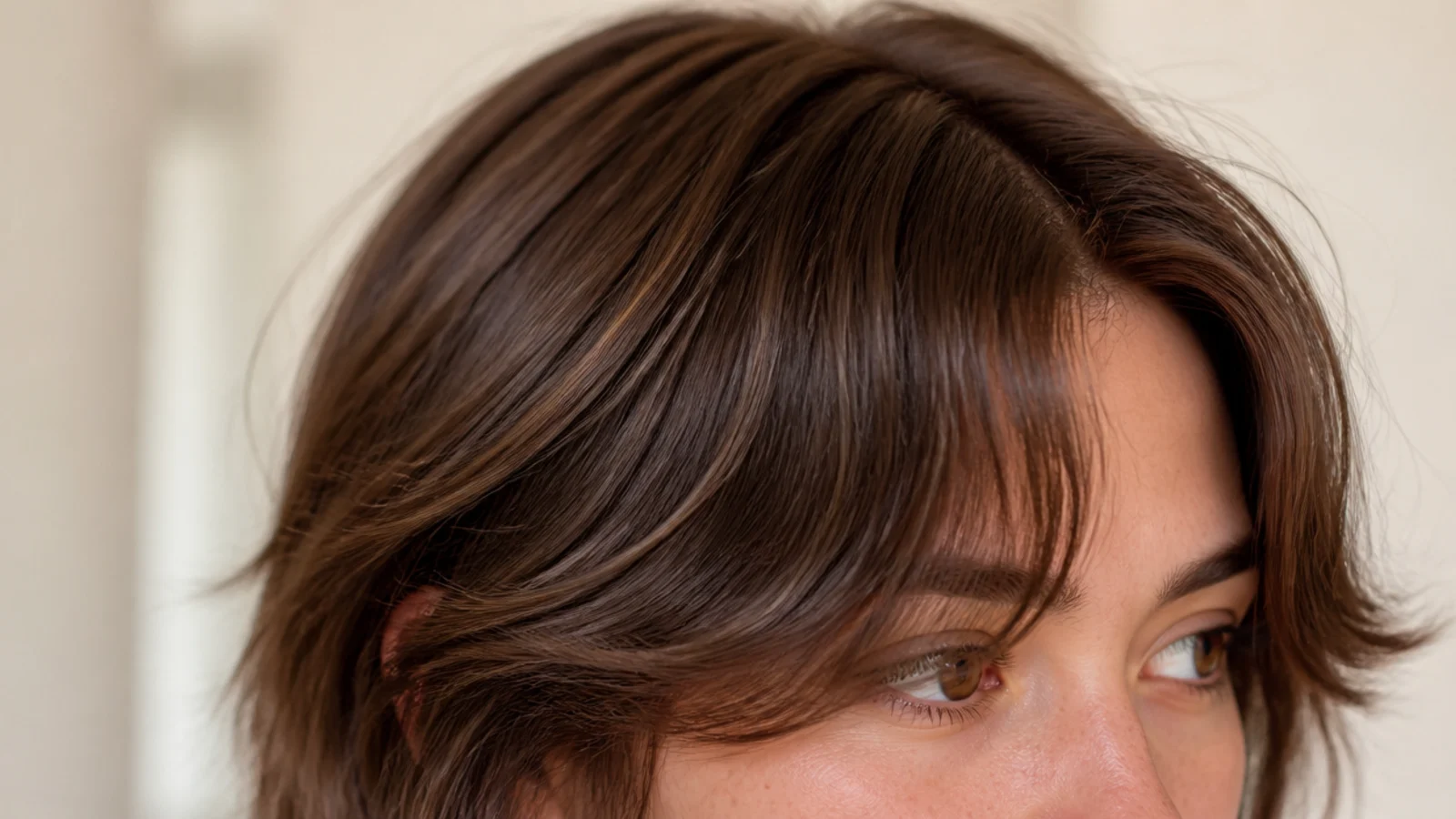
9. Chin Bob
A chin-length bob puts the perimeter within reach of the sweep, so the outer edge of the bang meets the bob line rather than hanging above it. Those two lines meeting is what makes the whole thing read as one cut.
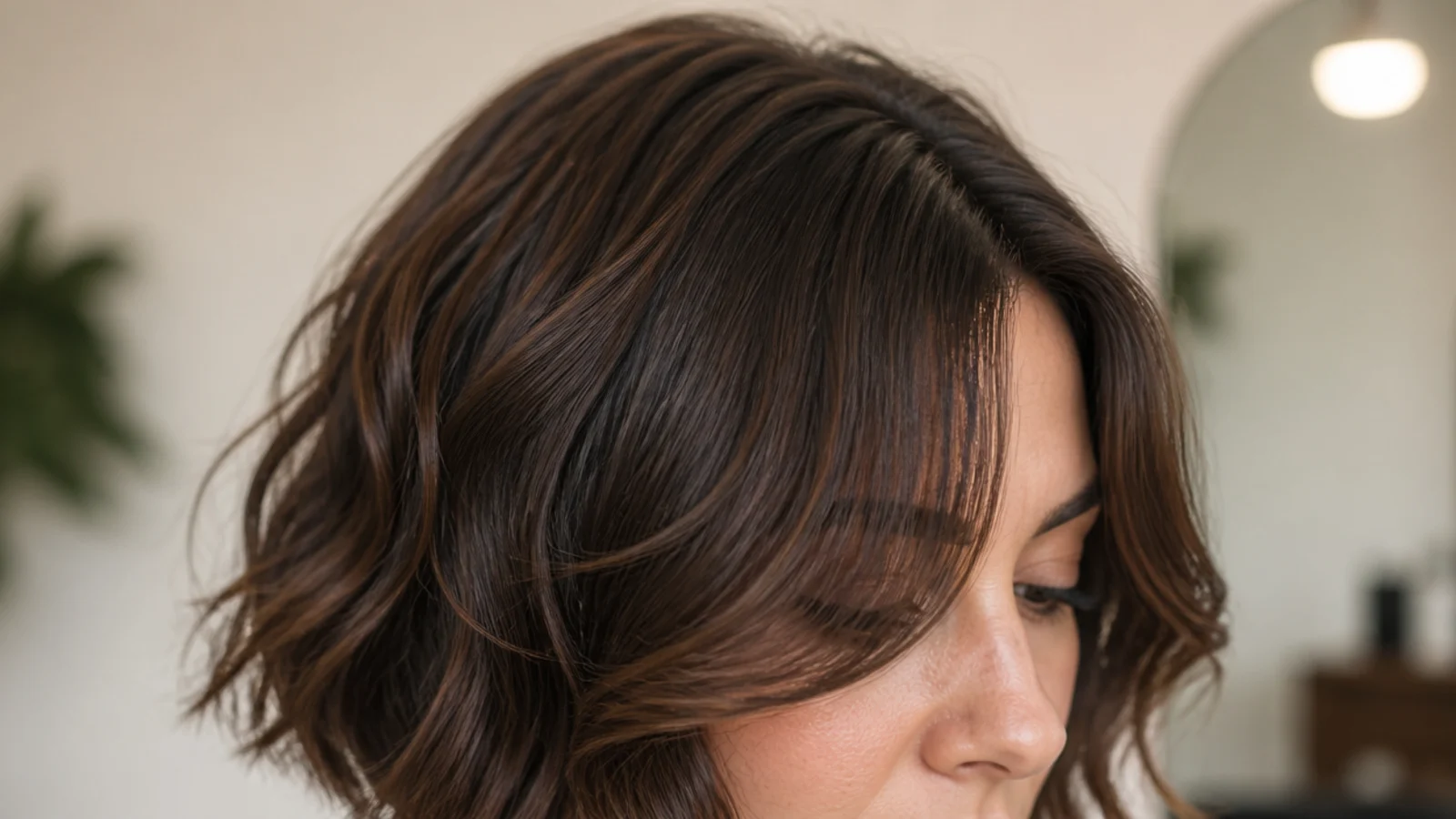
10. Side Sweep
Moving the split off centre gives one long half and one short one, which is a different cut under the same name. The heavy side needs enough weight left in it to stay put, so ask for the split to be cut in rather than combed over.

11. Diffused Root Lift
The diffuser dries the root while it is held away from the scalp, which is the only way to get height into wavy hair without pulling the bend out of it. A round brush would do the same job and flatten the wave in the process.
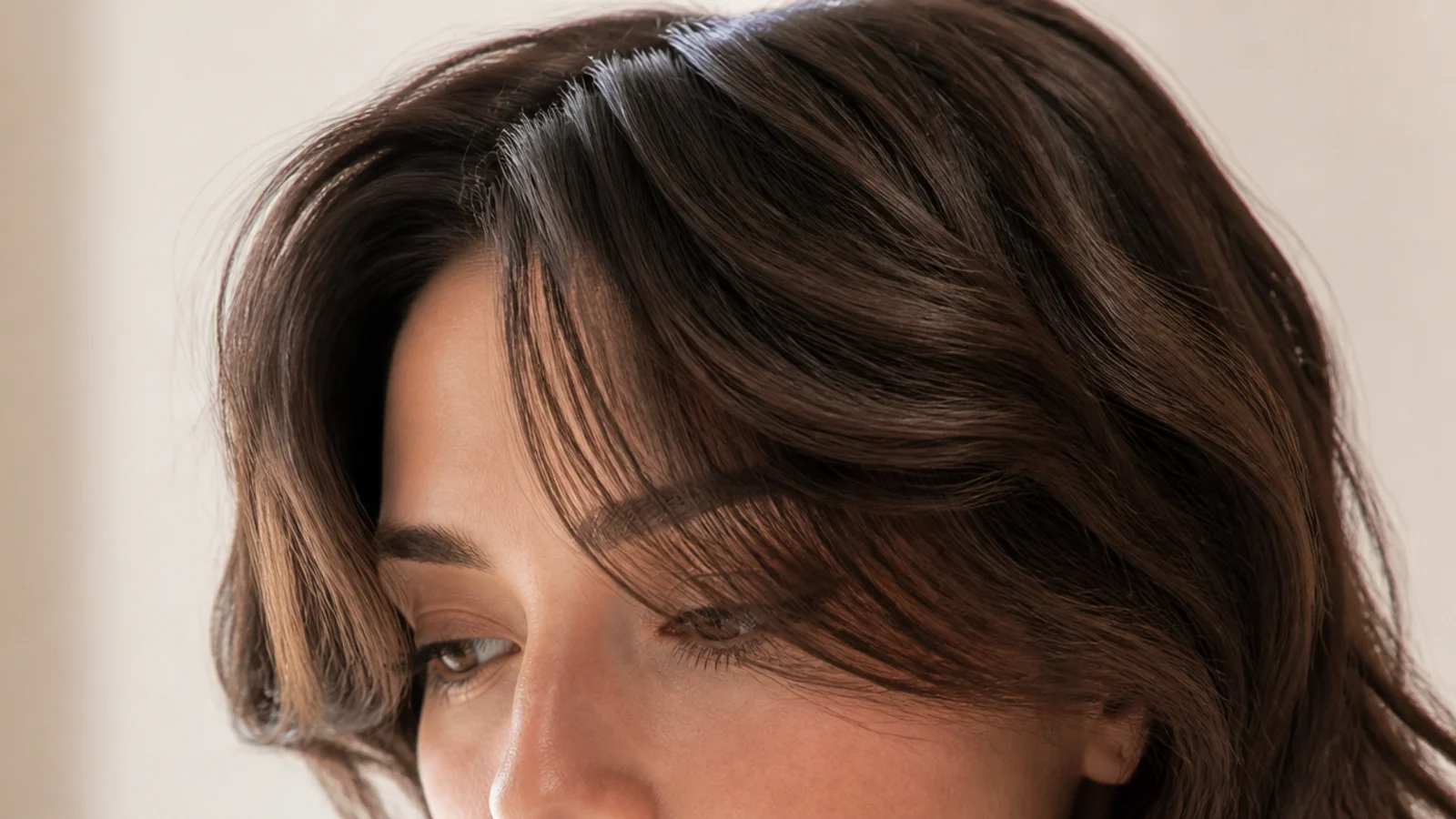
12. Thick Hair
Thick waves refuse to split unless weight comes out of the mid-lengths, because two dense halves push against each other at the parting. Remove the bulk from the middle of the section and leave the ends alone, or you shorten the line you just placed.
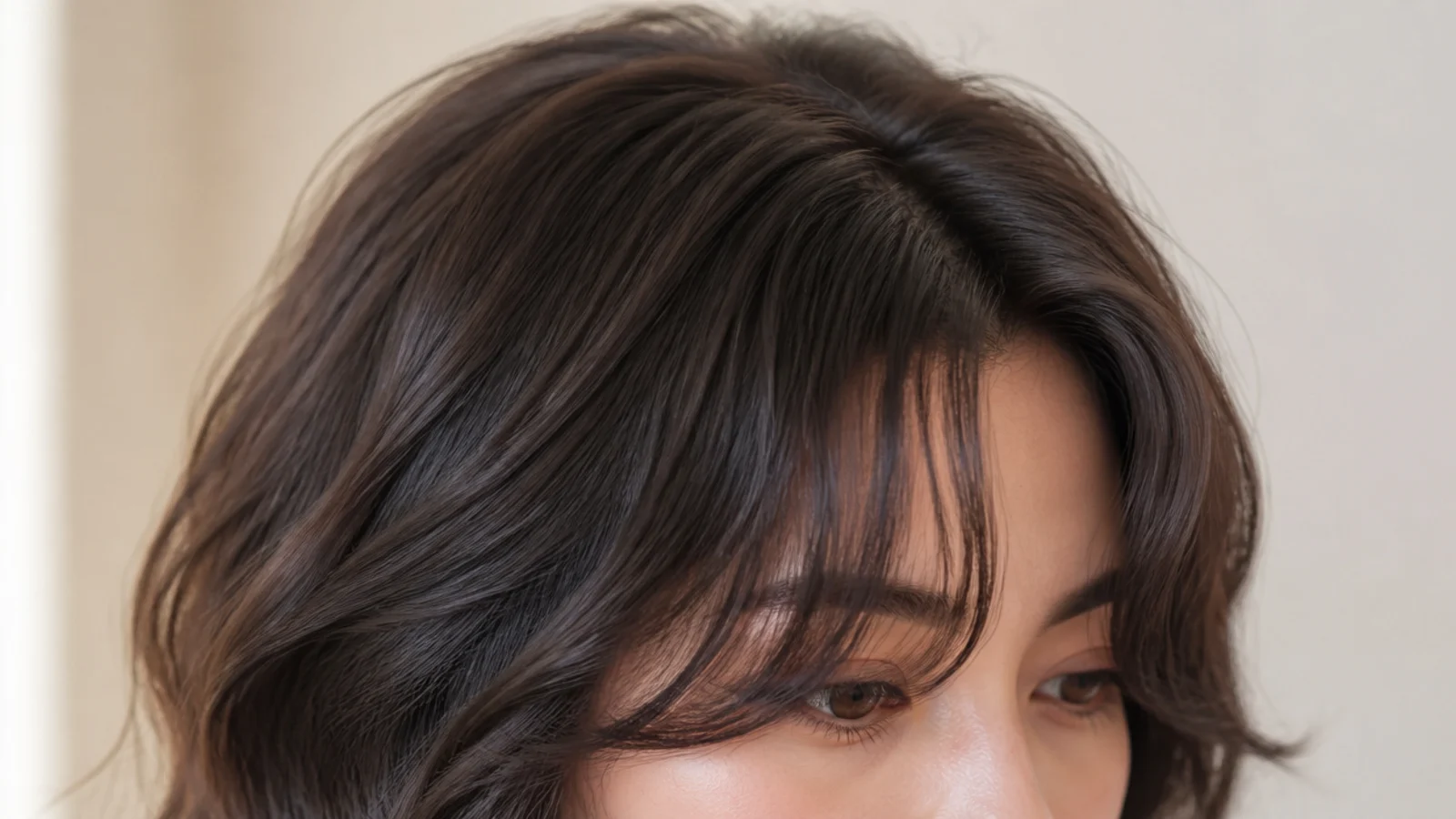
13. Wolf Cut
A wolf cut is short and heavily layered on top with length kept underneath, so the bang is the front of a shape that is already graded. It needs the sweep to be long enough to reach the first layer below it, or the two tiers read as separate cuts.
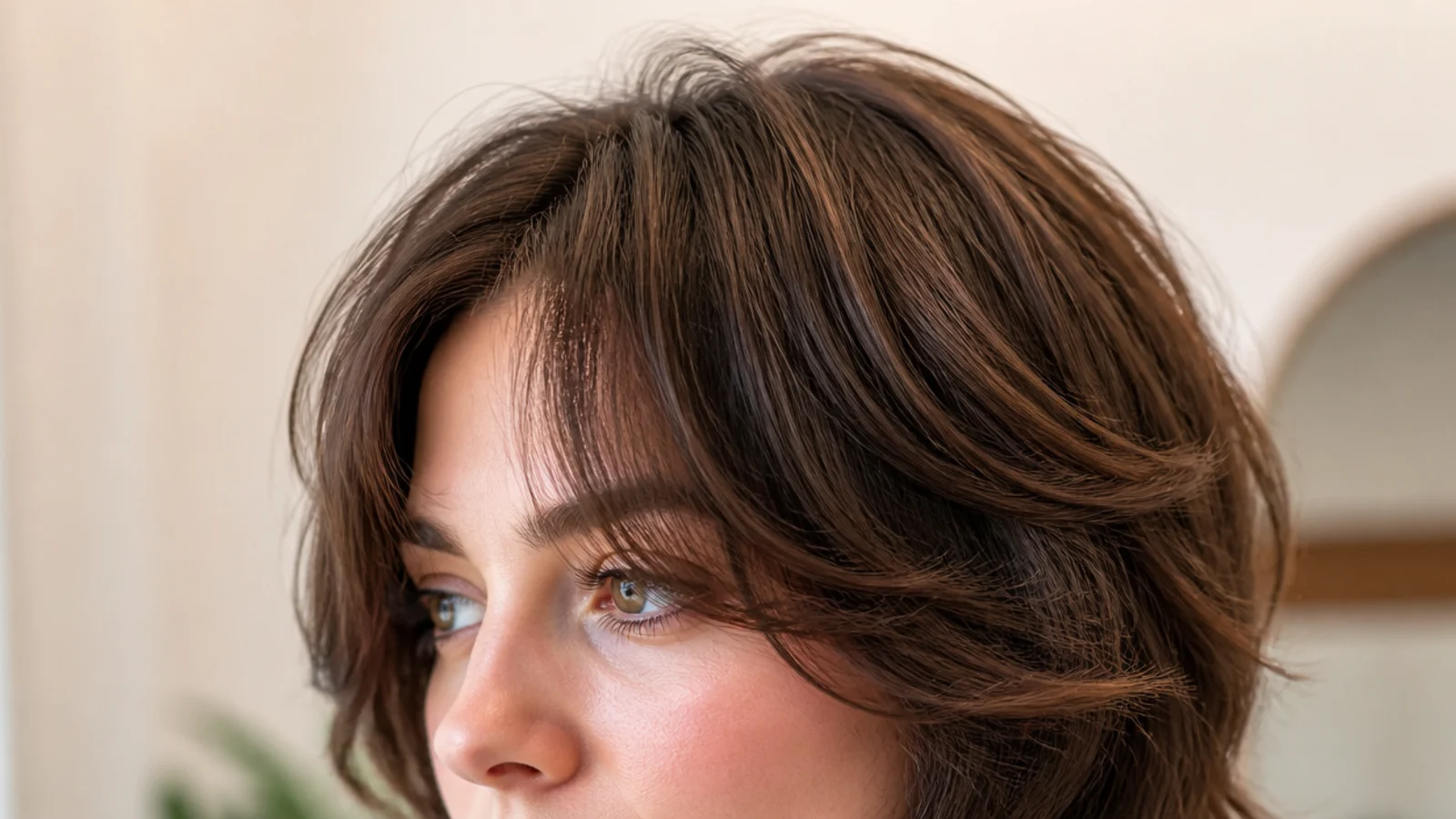
14. Baby Bangs Above the Brow
The shortest version here, sitting above the brow with no length below to disguise an uneven line. On wavy hair it also has the least tolerance for springback, so it is the one to have cut dry in a chair rather than at home.
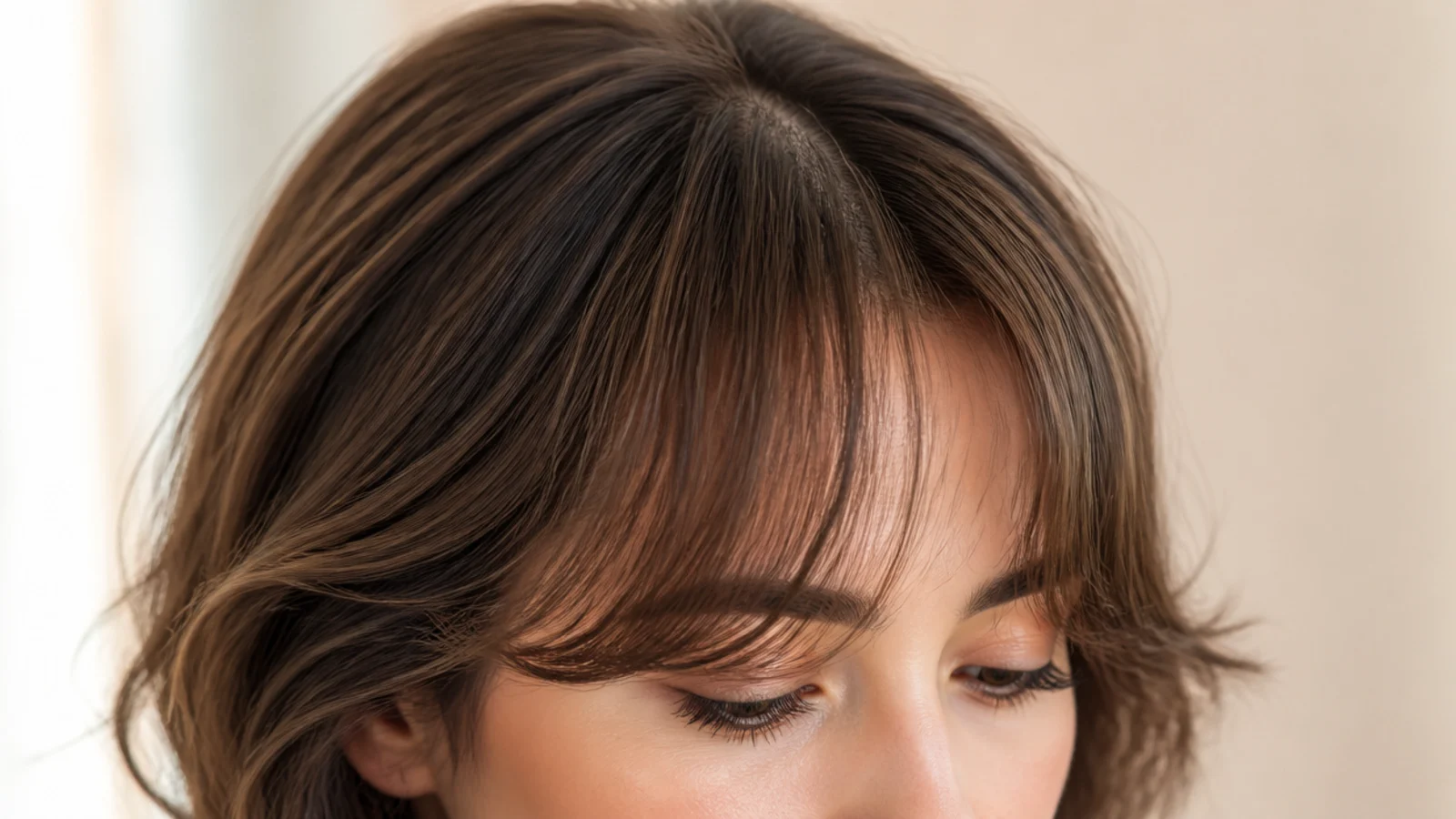
15. Money Piece
The two front sections are lifted a few shades against the rest of the length. Tone contrast blurs where the cut line actually sits, so a bang that feels slightly heavy reads soft without anything more being taken off it.
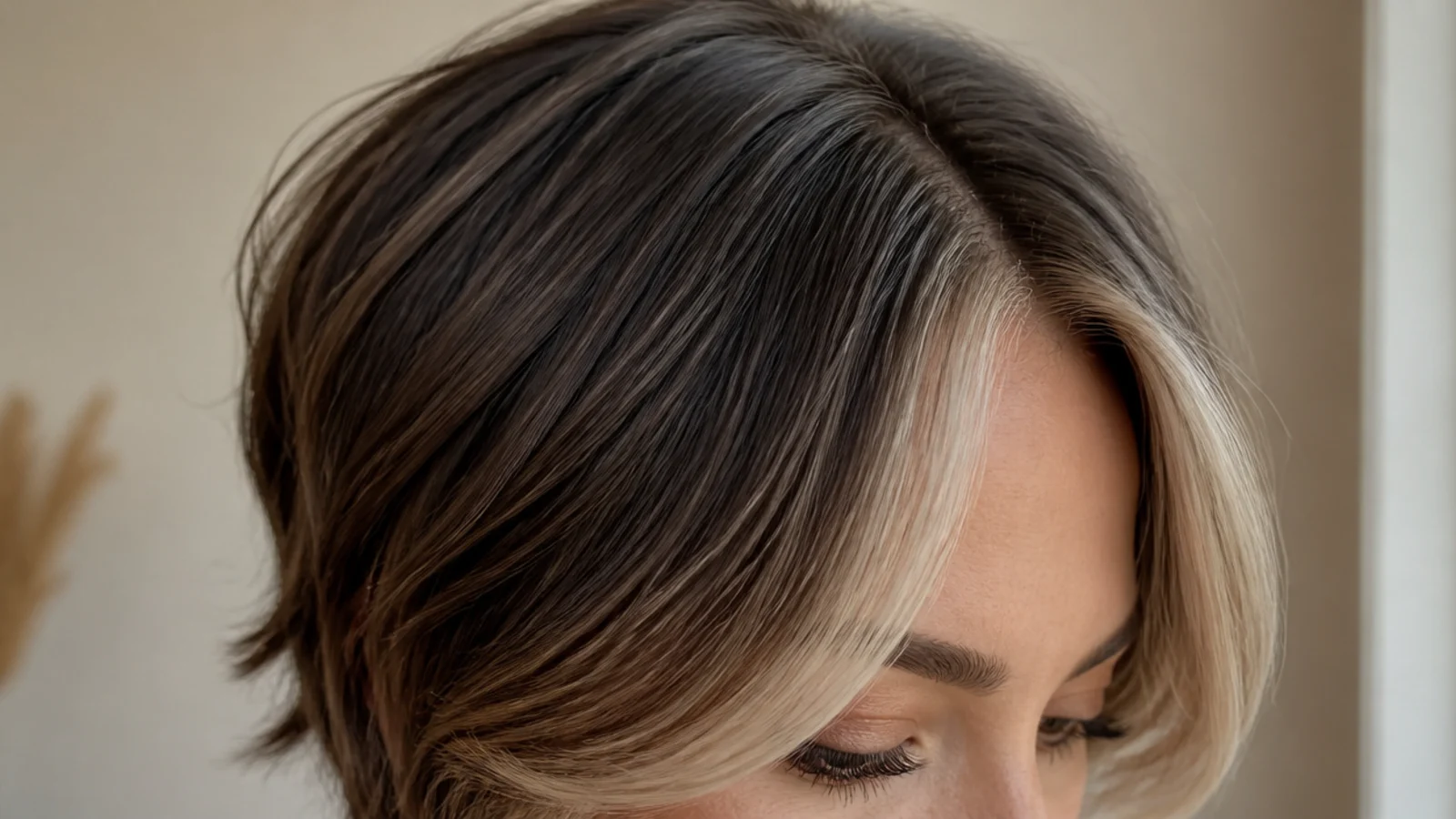
16. Seventies Flick
The ends are turned outward rather than left to fall, which sends the sweep away from the cheek. On wavy hair the bend is already there — the flick just decides which way it points, and outward is what keeps the split open.

17. Pixie Shag
On a pixie the bang is the longest hair on the head, so it carries the whole frame of the cut. Keep the sweep long enough to pass the ear or the crop loses its shape and reads as a uniform short cut with no front.
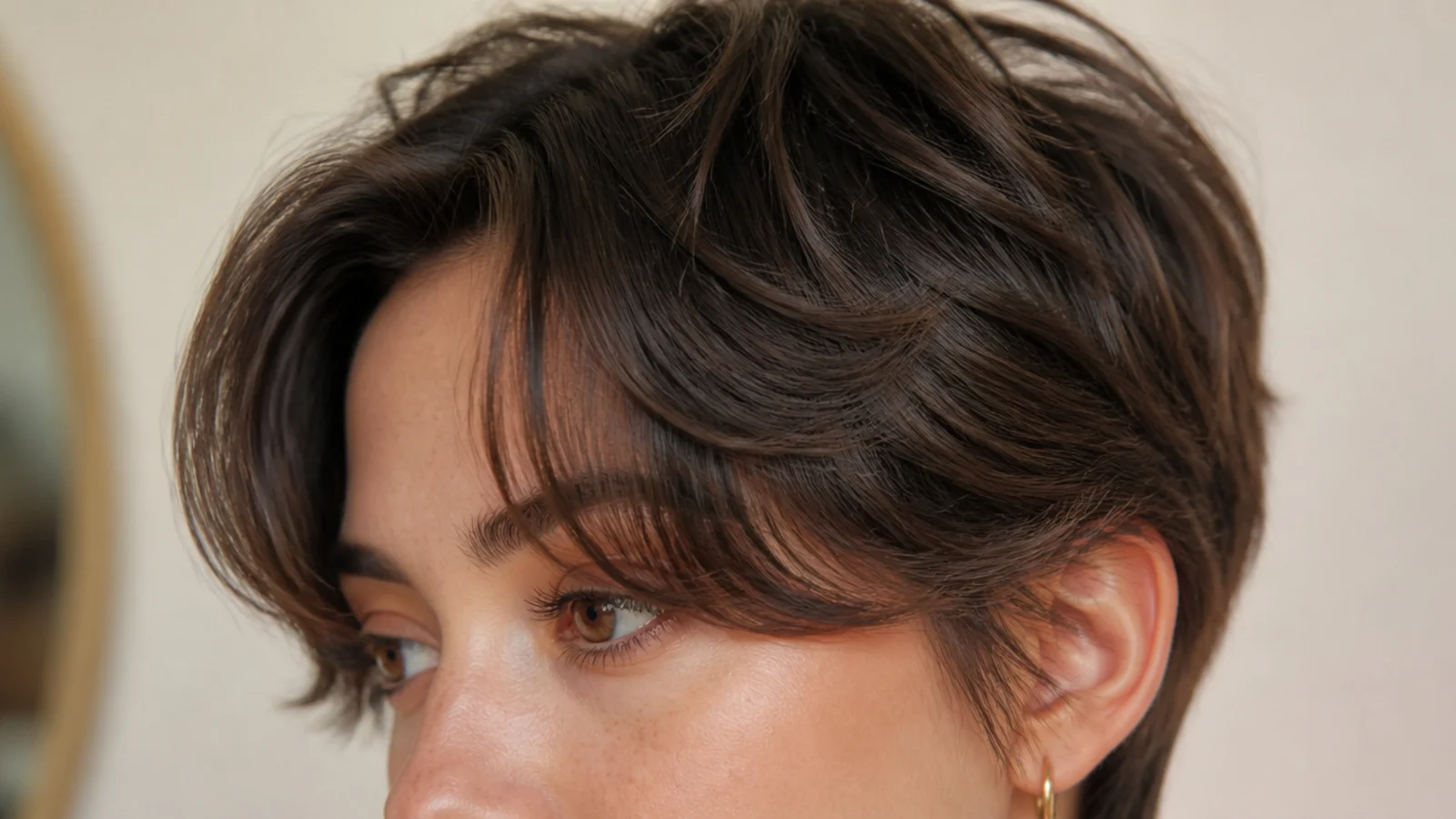
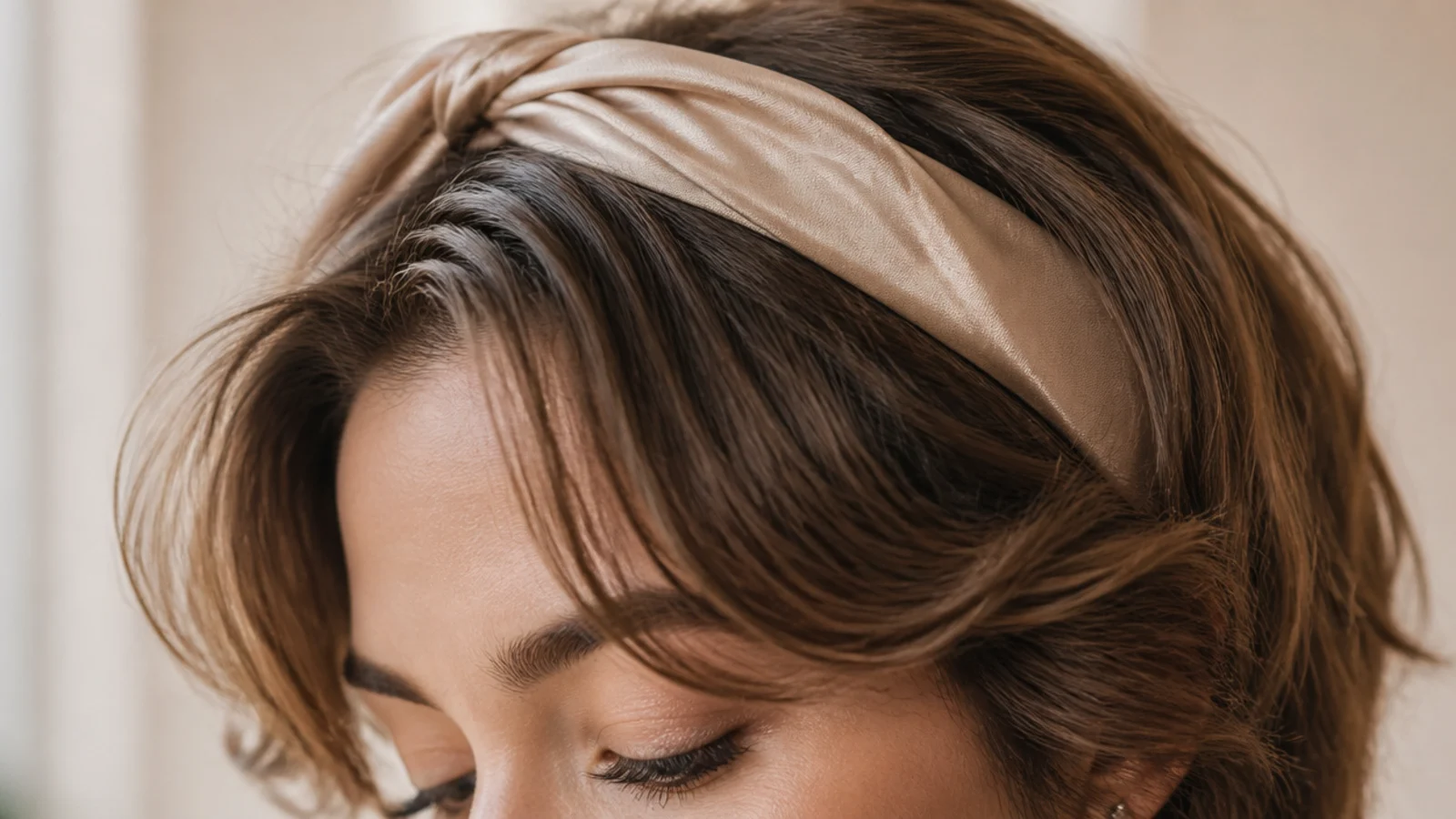
18. Headband
A wide band pushes the roots up rather than flattening them, provided it sits behind the split rather than on top of it. Placed forward it presses the lift out of exactly the section that needs it and the bang spends the day flat.
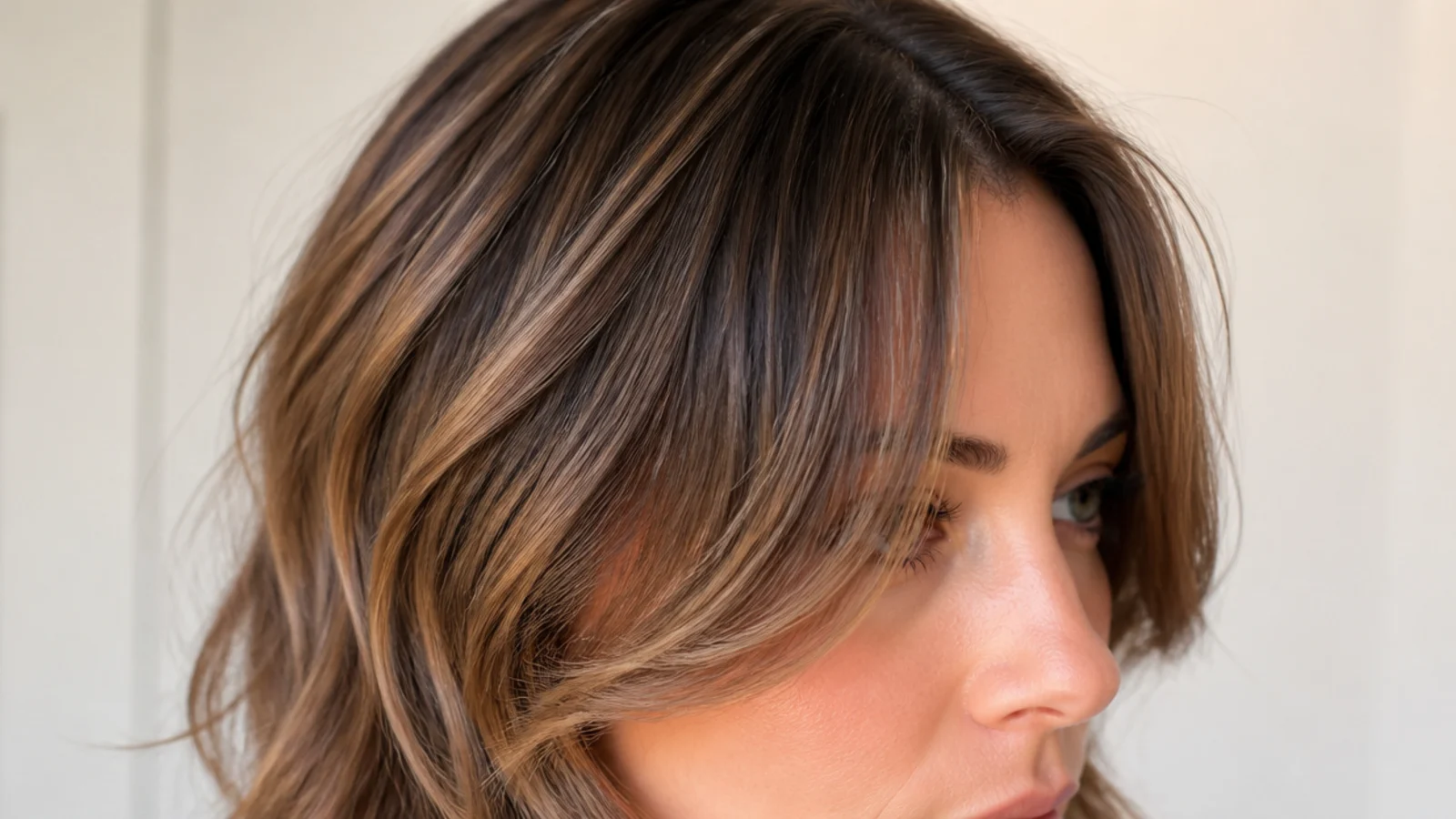
19. Wand Bend for an Oval Face
One pass with a wand, held vertically and turned away from the face, puts a bend in the last two inches without curling the whole section. It is the fastest correction for a day when the bang dried in the wrong direction.
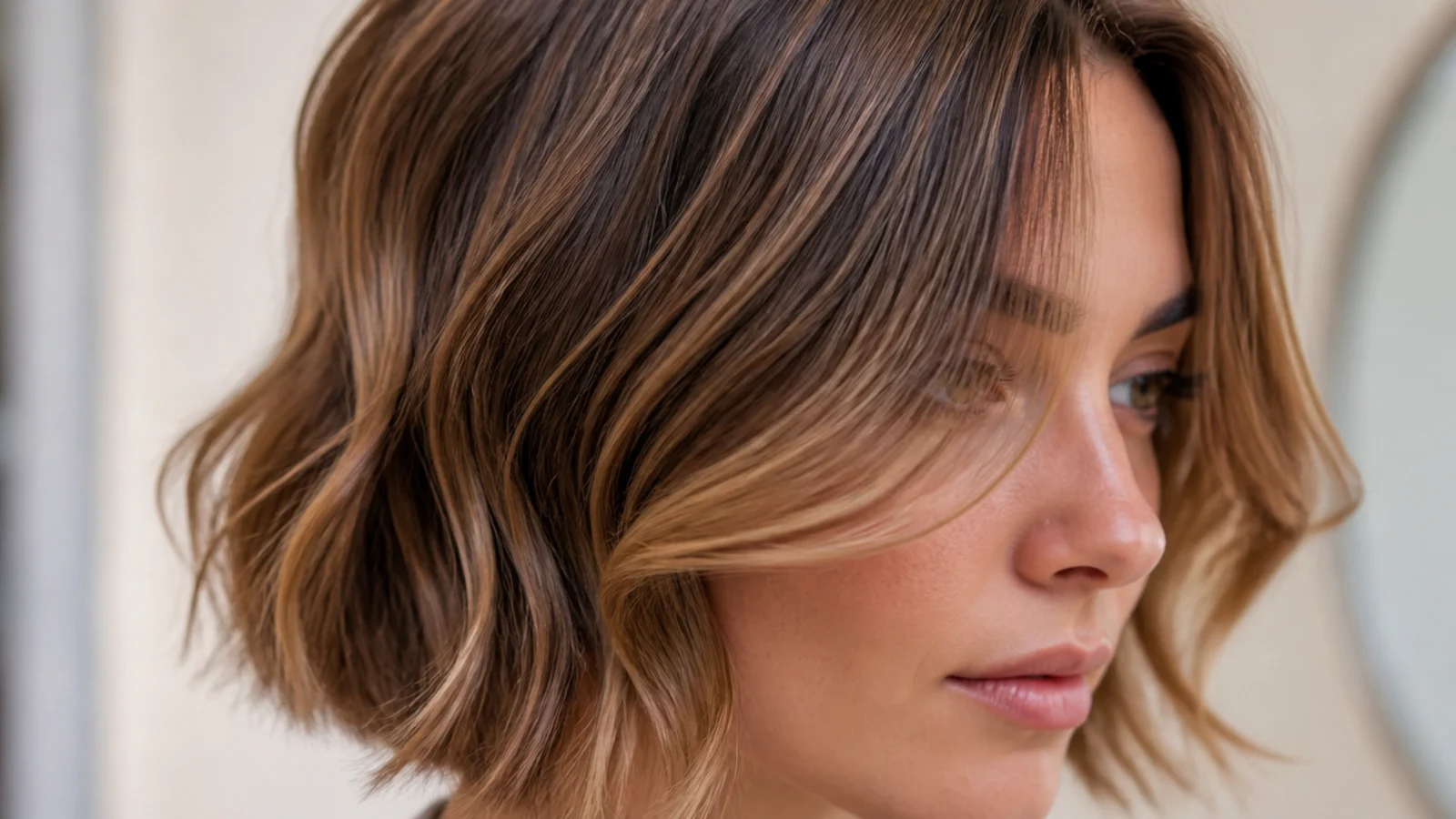
20. Grown Out to the Cheekbone
Two months on, with the centre at the cheekbone and the split loose enough to move. It is the stage most people are actually after, and knowing that saves you asking for it a full landmark too short.
Final Thoughts
Say half an inch out loud at the appointment. Springback is the whole difference between the bang in the photograph and the one you leave with, and a stylist cutting wavy hair dry has already solved it — one cutting it wet needs telling.
For the same cut on longer waves see 25 curtain bangs ideas for long wavy hair, and for the shortest lengths generally see 20 easy short curtain bangs ideas. More in Bangs and Fringe.