25 Curtain Bangs Ideas For Long Wavy Hair
Twenty five curtain fringe ideas for long wavy hair, and the one thing that ruins most of them — cutting the fringe wet. Wave shortens as it dries, so a fringe cut at the cheekbone can finish above the brow by the time it is dry.
In this article · 32
- Why Wave Changes the Cut
- How to Choose Your Version
- The 25 Curtain Bangs Ideas for Long Wavy Hair
- 1. Classic Cheekbone Curtain Bangs
- 2. Curtain Bangs on 2A Waves
- 3. Curtain Bangs on 2B Waves
- 4. Curtain Bangs on 2C Waves
- 5. Air Dried Curtain Bangs
- 6. Diffused Curtain Bangs
- 7. Curtain Bangs With Long Layers
- 8. Curtain Bangs Cut Dry
- 9. Wispy Curtain Bangs on Fine Waves
- 10. Heavy Curtain Bangs on Thick Waves
- 11. Curtain Bangs With a Straighter Fringe
- 12. Curtain Bangs With a Deeper Section
- 13. Curtain Bangs With a Middle Part
- 14. Off Centre Curtain Bangs on Waves
- 15. Curtain Bangs With Face Framing Layers
- 16. Curtain Bangs With Beach Waves
- 17. Curtain Bangs Over a Blunt Length
- 18. Curtain Bangs on Wavy Hair With a Cowlick
- 19. Curtain Bangs With a Money Piece
- 20. Curtain Bangs in a Half Up Twist
- 21. Curtain Bangs With a Low Bun
- 22. Curtain Bangs on Second Day Waves
- 23. Curtain Bangs With Root Lift
- 24. Grown Out Curtain Bangs on Waves
- 25. Curtain Bangs in Humidity
- Styling and Upkeep
- Mistakes to Avoid
- FAQ
- Final Thoughts
On wavy hair a curtain fringe usually fails at the cut, not the styling — it was measured while wet and it dried a full inch shorter.
Wave shortens as it dries. The strand takes a longer path through each bend, so length measured under tension vanishes the moment it is released.
Wave also does half the styling for you. The natural bend pushes the two halves apart before you touch them, which is why this texture needs the least work to hold a split.
Why Wave Changes the Cut
Shrinkage scales with the tightness of the pattern. Loose waves pull back about a centimetre as they dry. Tighter ones take back two or three.
Where you cut on the bend decides which way the end points. Cut at the top of an S and the end flicks outwards. Cut at the bottom of the same S and it tucks under.
The hairline hair is finer than the rest. It carries less pattern and dries straighter, so the fringe rarely matches the wave of the hair behind it.
Wave hides an uneven line. A bend scatters light in several directions at once, so a small step in the diagonal is read as shadow rather than as a mistake.

How to Choose Your Version
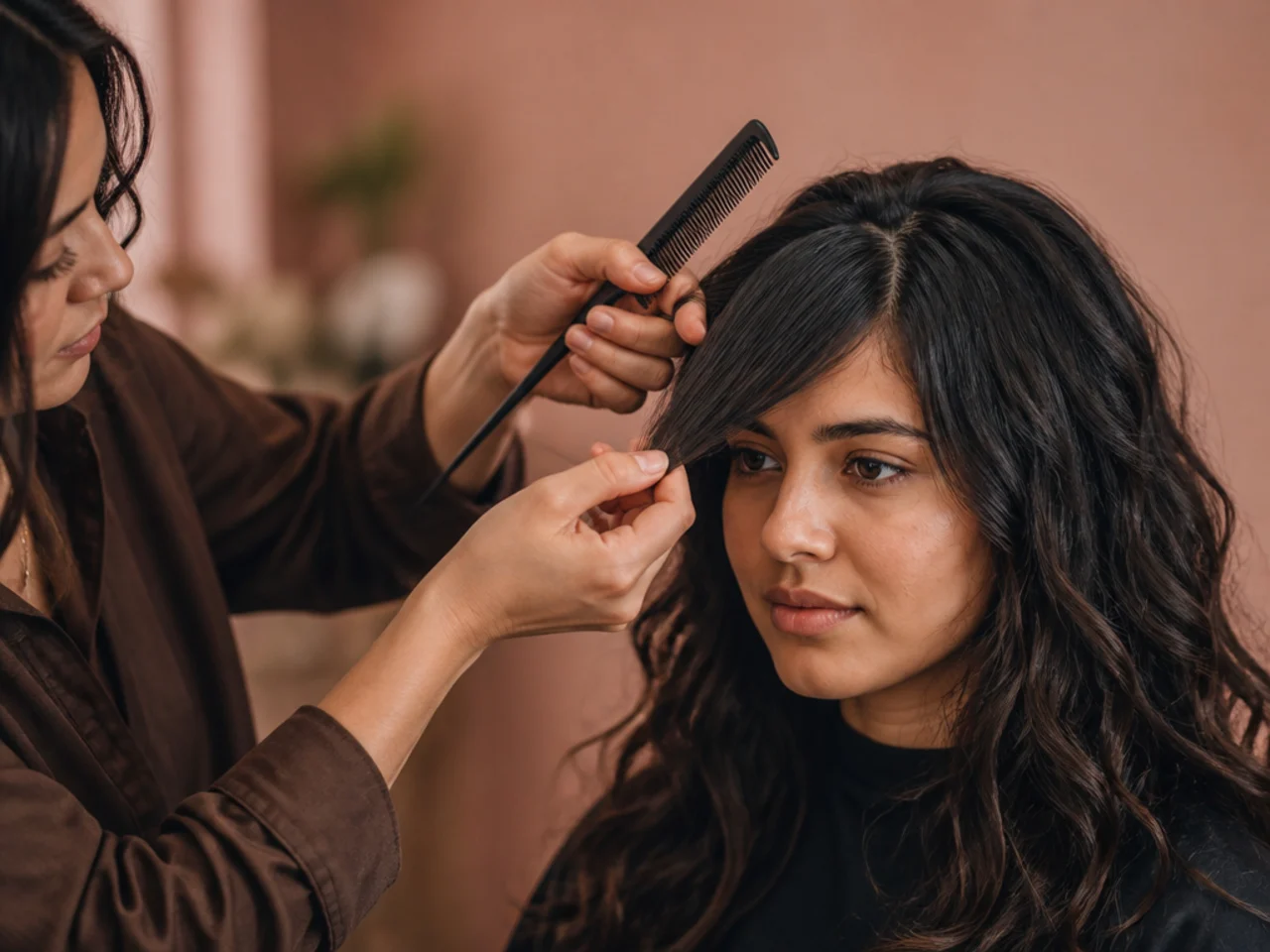
Choose the shortest point after the hair has dried. Cheekbone on dry hair is the safe default, and it is roughly the brow when the same hair is wet.
Match the section depth to your density, not your wave. Around two centimetres for fine hair, three to four for thick, measured back from the hairline.
Decide now whether you will diffuse or air dry. Diffusing keeps the pattern tight and short. Air drying stretches it slightly under its own weight and gives a longer, looser fringe.
Keep product off the first two centimetres of root. Cream and gel weigh the root down, and the root is where the whole shape comes from.
The 25 Curtain Bangs Ideas for Long Wavy Hair
1. Classic Cheekbone Curtain Bangs
The shortest point measured on dry hair, level with the top of the cheekbone. At that length the fringe carries enough weight for gravity to open it, and the natural bend of the wave finishes the job without a brush.
2. Curtain Bangs on 2A Waves
The loosest pattern, closest to straight, and the one that shrinks the least — roughly a centimetre between wet and dry. It also holds the least bend, so the root has to be dried away from the face or the fringe hangs forward. The rest of a 2A routine applies to the fringe too.

3. Curtain Bangs on 2B Waves
The S bend is defined from the mid lengths down, which means the fringe opens by itself but frizzes at the hairline first. A 2B routine that keeps moisture in the front section is worth more than any amount of brushing.

4. Curtain Bangs on 2C Waves
The tightest wave, starting close to the root, and the biggest shrinkage of the three. Cut this one dry without exception, because two or three centimetres come back the moment the tension is released and there is no way to put them back.

5. Air Dried Curtain Bangs
Left to dry with no heat, so the wave stretches slightly under its own weight and sits longer and looser. Clip the fringe into its parted position while it is damp — the direction it dries in is the direction it keeps until the next wash.

6. Diffused Curtain Bangs
A diffuser dries the hair without pushing air through it, so the pattern stays where it formed instead of being blown apart. Keep the dryer on low speed, because it is airflow rather than heat that breaks a wave into frizz.

7. Curtain Bangs With Long Layers
Layers give the wave room to bend and give the fringe somewhere to land. Without them the fringe stops dead against a solid perimeter, and on wavy hair that junction bulks outwards instead of blending.

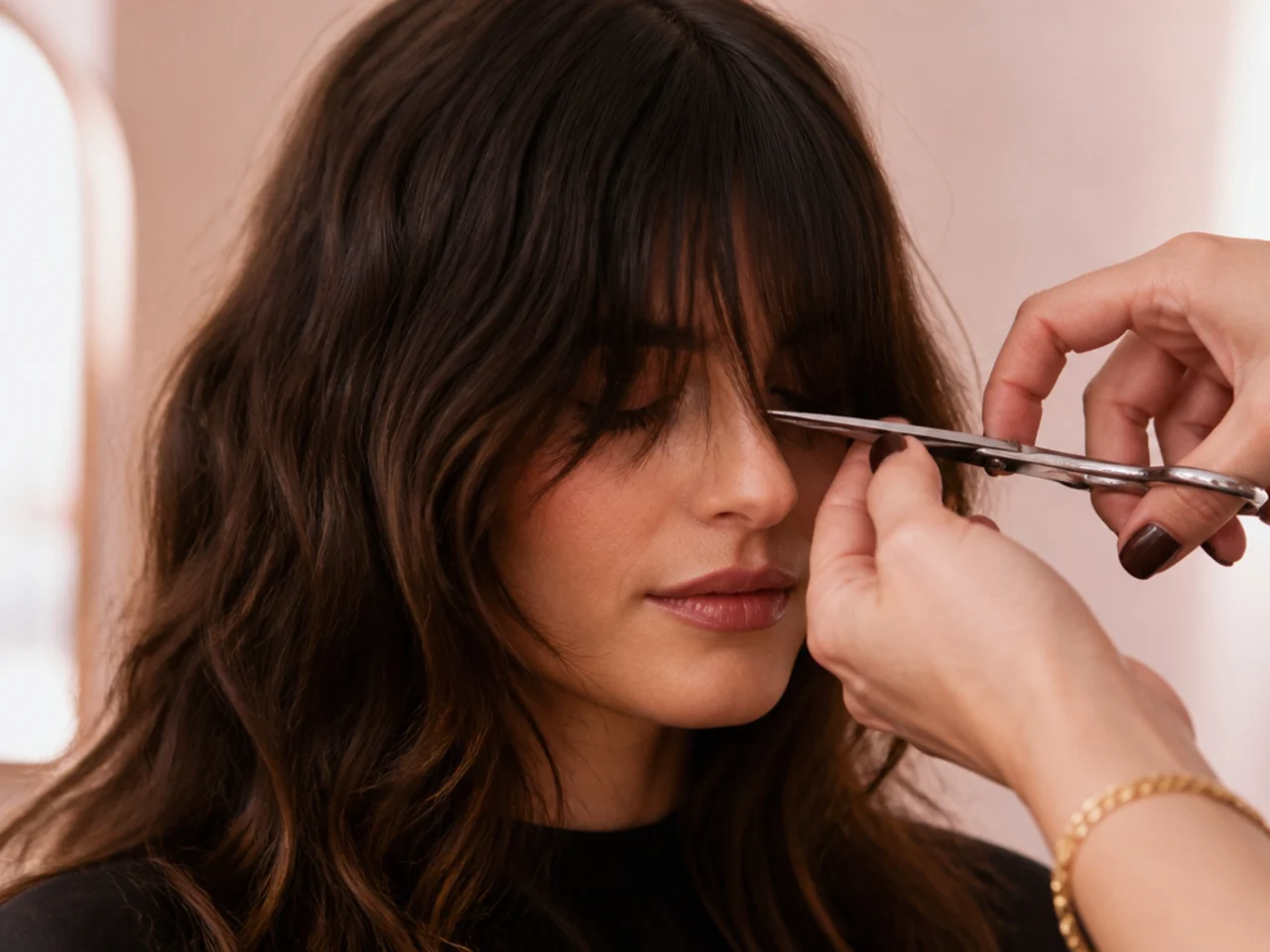
8. Curtain Bangs Cut Dry
The only reliable way to cut this texture. Each piece is shortened where it actually sits, so what you see during the cut is what you keep, rather than a length that disappears as the bend re-forms.
9. Wispy Curtain Bangs on Fine Waves
A shallow section, around two centimetres, so the fringe stays see through. Fine wavy hair has no spare density, and a deep section pulls hair the crown needs into a fringe that then looks heavy and flat anyway.

10. Heavy Curtain Bangs on Thick Waves
A deeper section and weight removed from the mid lengths rather than the ends. Thinning the ends of a thick wavy fringe leaves short pieces sitting under long ones, and on this texture they push the outer layer out into a triangle.

11. Curtain Bangs With a Straighter Fringe
Smoothing only the fringe while the lengths stay wavy. It works because the contrast makes the fringe look placed, and it is easy to achieve since the hairline hair is naturally finer and less patterned to begin with.

12. Curtain Bangs With a Deeper Section
Taking the section three or four centimetres back gives a fringe with real weight, which on wavy hair is what stops it lifting away from the forehead. Only worth doing on dense hair, since the depth comes out of the top of the head.

13. Curtain Bangs With a Middle Part
The default, and the one the cut is designed around. The apex of the fringe triangle sits on the parting, so both halves fall away evenly and the wave carries them outwards from there.

14. Off Centre Curtain Bangs on Waves
Shifting the split a few centimetres to one side gives one heavier half that sweeps across the forehead. On wavy hair the heavier side needs slightly more length, because the bend lifts it and a short sweep will not reach the cheekbone once dry.

15. Curtain Bangs With Face Framing Layers
The fringe and the face framing are one continuous diagonal rather than two separate cuts. Broken into two, the wave bulks at the join, because a bend needs a graduated length to travel through and a hard step gives it nowhere to go.

16. Curtain Bangs With Beach Waves
Salt spray and a loose set through the lengths, with the fringe left softer. Salt draws moisture out and stiffens the strand, which is why it should stay off the fringe — a stiff fringe holds a shape but stops moving with the face.

17. Curtain Bangs Over a Blunt Length
A hard perimeter under a soft fringe. On wavy hair a blunt line keeps weight at the bottom, which stretches the wave slightly and stops the whole outline widening into a triangle.

18. Curtain Bangs on Wavy Hair With a Cowlick
A cowlick sets a fixed growth direction at the hairline, and wave amplifies it by lifting the piece further. Leave the fringe long enough that its own weight beats the lift, which on this texture usually means cheekbone at the shortest.

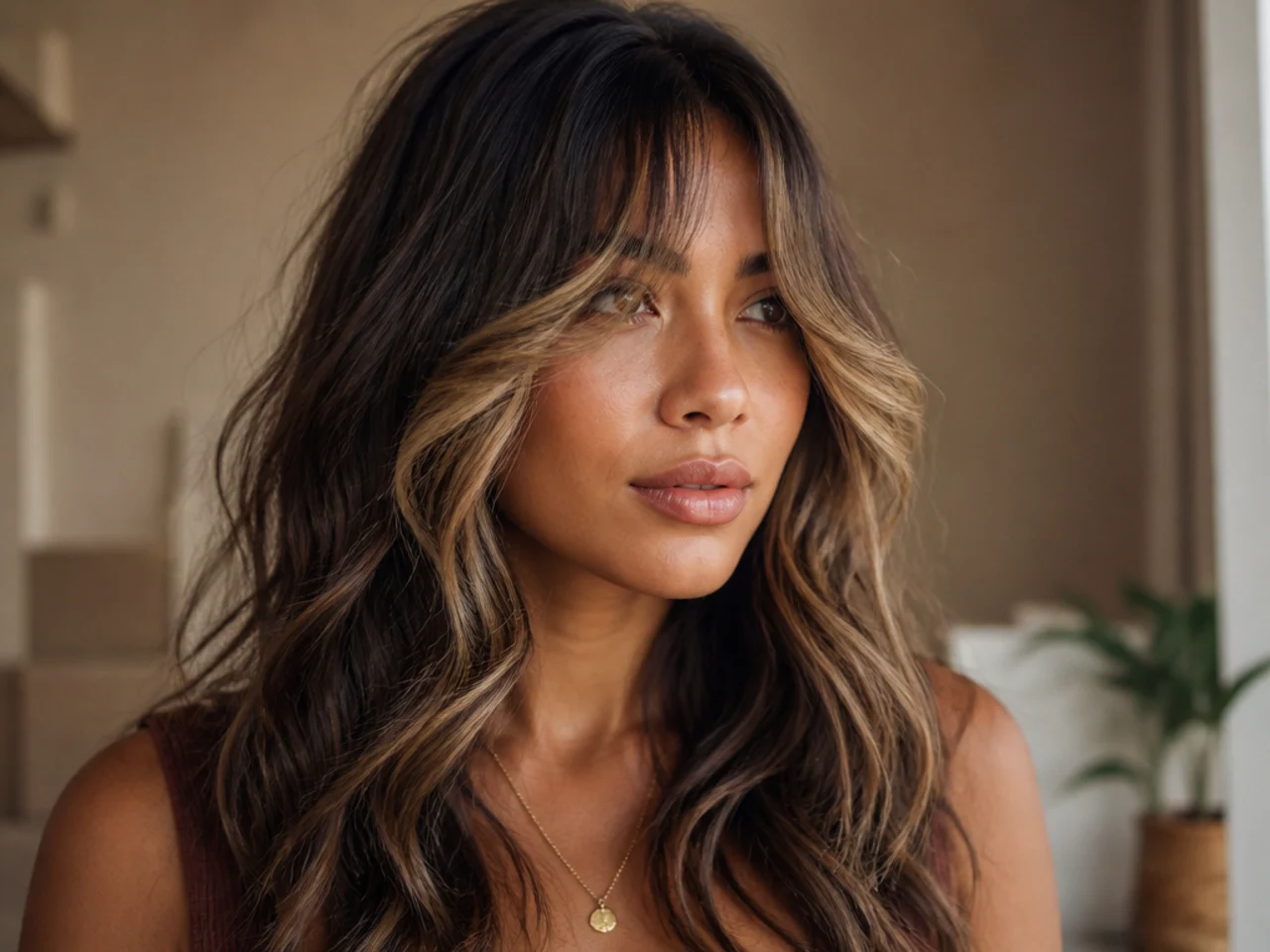
19. Curtain Bangs With a Money Piece
Lightening the fringe and the pieces just behind it puts a tonal edge along the split, and the eye follows tone before it follows shape. On wavy hair it also picks out the bends, since lighter hair shows the curve of each S more clearly.
20. Curtain Bangs in a Half Up Twist
Twisting the top section back leaves the fringe as the whole front outline. Start the twist behind the fringe apex, because pulling the fringe roots backwards flattens the lift the split relies on.

21. Curtain Bangs With a Low Bun
The bun takes the wave out of the picture and leaves the fringe carrying the shape. Keep the front loose, since tension at the hairline drags the fringe root back and the halves then fall inwards instead of out.

22. Curtain Bangs on Second Day Waves
Day two waves are looser and slightly stretched, so the fringe reads longer than it did on day one. Refreshing with water rather than product re-forms the bend, because it is water that lets hair re-set its shape.

23. Curtain Bangs With Root Lift
Drying the root against its growth direction for the first thirty seconds, then back into position. The root ends up standing rather than lying flat, and that standing root is what holds the fringe away from the forehead all day.

24. Grown Out Curtain Bangs on Waves
At three or four months the shortest point has dropped to the jaw and the fringe has become face framing. On wavy hair the transition is even smoother than on straight, because the bend disguises the diagonal as it lengthens.

25. Curtain Bangs in Humidity
Damp air lets hair re-form the bonds that hold its shape, so anything set purely with heat relaxes back towards its natural pattern. A fringe shaped while damp and dried in position survives that far better than one brushed straight.

Styling and Upkeep
Shape the fringe while it is damp, not dry. Water is what lets hair take a new shape, so the direction it dries in is the direction it keeps.
Dry the fringe before the lengths. It is the first section to set and the hardest to correct once it has.
Keep product off the root. Cream and gel add weight exactly where the lift has to come from.
Refresh with water, not more product. Product builds up and stiffens the bend, while water re-forms it.
Trim every six to eight weeks, dry. The diagonal closes as it grows, and ten minutes restores it without touching the length.

Mistakes to Avoid
Cutting it wet. It dries between one and three centimetres shorter depending on the pattern, and there is no way to undo that.
Brushing the fringe dry. A brush pulls the bend apart into separate strands, which is what frizz actually is.
Blasting it on high speed. Airflow breaks a wave far faster than heat does. Low speed, more time.
Taking the section too deep on fine hair. The crown thins out and the fringe ends up heavy rather than soft.
Matching the fringe length to the lengths. The hairline hair is finer and dries straighter, so it needs its own measurement.

FAQ
Wet or dry? Dry, always. Wave takes back one to three centimetres as it dries.
Why is my fringe straighter? Hairline hair is finer and carries less pattern than the rest.
Diffuse or air dry? Diffusing keeps it shorter and tighter, air drying leaves it longer and looser.

Final Thoughts
Cut it dry and measure it dry. Everything else about a curtain fringe on wavy hair is recoverable, but two centimetres lost to shrinkage is a four month wait.
For the wider range of lengths see curtain bangs on long hair, and for the drying method the fringe borrows from see the wavy hair routine. More in Bangs & Fringe.