25 Stunning Curtain Bangs Ideas For Long Hair
Twenty five curtain bangs ideas for long hair, and the two measurements that decide all of them — where the shortest point sits and how deep the section is taken. Get the section wrong and no amount of styling will fix the fringe.
In this article · 32
- What Makes a Fringe a Curtain
- Choosing Your Length and Section
- The 25 Curtain Bangs Ideas for Long Hair
- 1. Classic Centre Split Curtain Bangs
- 2. Cheekbone Length Curtain Bangs
- 3. Jaw Length Curtain Bangs
- 4. Brow Skimming Curtain Bangs
- 5. Wispy Curtain Bangs
- 6. Heavy Curtain Bangs
- 7. Curtain Bangs With a Deep Side Part
- 8. Curtain Bangs on Straight Long Hair
- 9. Curtain Bangs on Wavy Long Hair
- 10. Curtain Bangs on Curly Long Hair
- 11. Curtain Bangs on Coily Long Hair
- 12. Curtain Bangs on Fine Long Hair
- 13. Curtain Bangs on Thick Long Hair
- 14. Curtain Bangs With Long Layers
- 15. Curtain Bangs With a Blunt Perimeter
- 16. Curtain Bangs With Face Framing Layers
- 17. Curtain Bangs With a Money Piece
- 18. Curtain Bangs With a Long Wolf Cut
- 19. Short Curtain Bangs
- 20. Curtain Bangs Over a Cowlick
- 21. Curtain Bangs Worn Side Swept
- 22. Curtain Bangs With a Half Up Style
- 23. Curtain Bangs Pushed Back
- 24. Curtain Bangs With a Middle Part Blowout
- 25. Curtain Bangs at Week Ten
- Styling and Upkeep
- Mistakes to Avoid
- FAQ
- Final Thoughts
Curtain bangs on long hair fail at the section, not at the cut — too much hair taken back from the hairline and the fringe is heavy before a single snip is made.
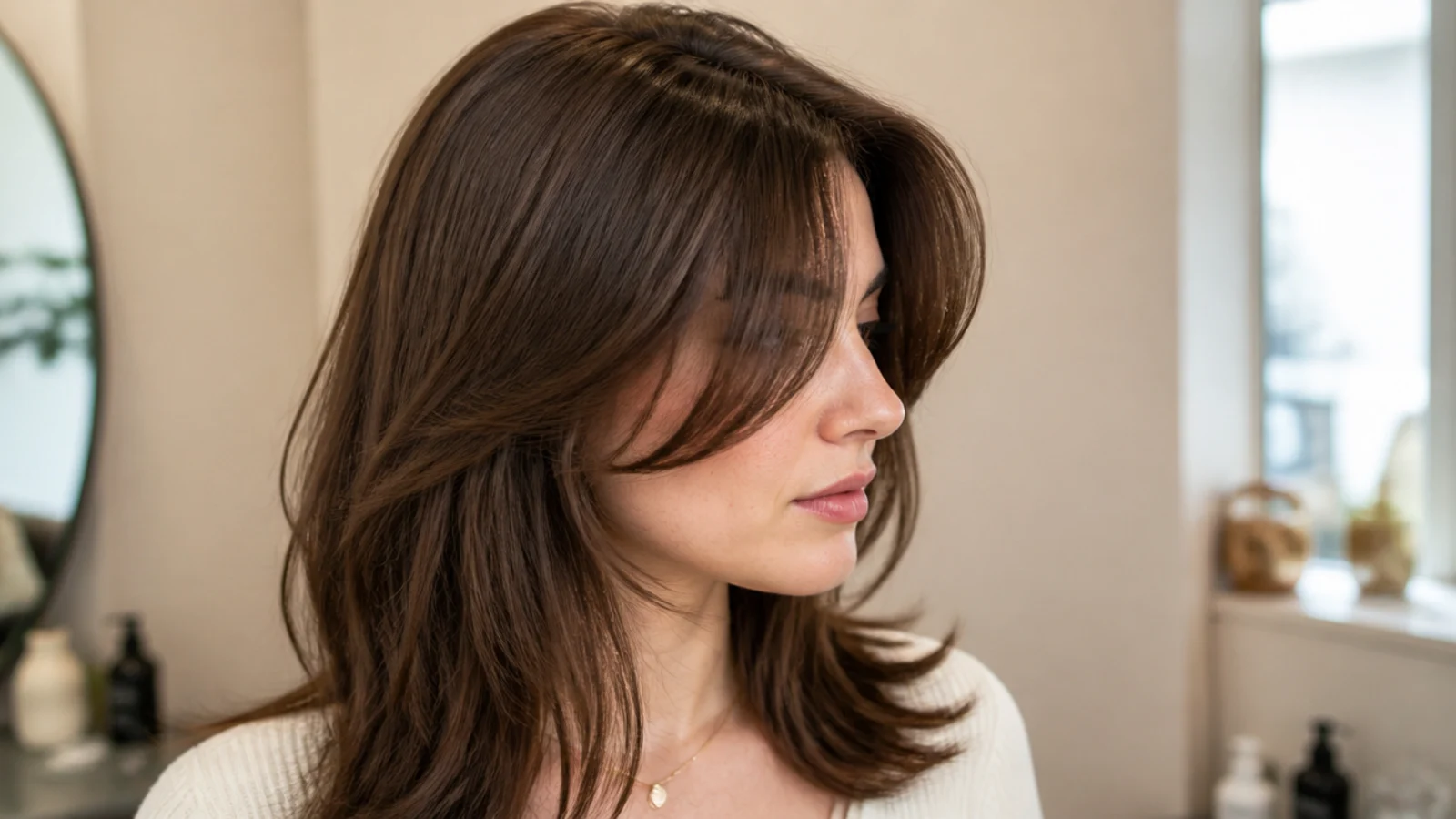
Curtain bangs are defined by their slope. Shortest in the middle, longest at the outer corners, so the halves fall away from the face rather than across it.
That slope is why they grow out cleanly. The outer edges are already long enough to merge into the face framing layers, so there is no stage where they read as a mistake.
What Makes a Fringe a Curtain
The centre is the shortest point. Usually brow to nose bridge. Everything else in the fringe is measured against it, so it is the number to name out loud.
The outer corners have to reach the layers. If the longest fringe piece stops above the shortest face framing piece, you get a visible step in the front of the cut.
Depth sets weight, not length. A shallow section gives a fringe that sits lightly on the forehead; a deep one gives a curtain that has to be blown back to stay off the face.
They are not French bangs. French bangs are shorter, rounder and cut with far less graduation, which is what makes them commit rather than blend.

Choosing Your Length and Section
Pick the shortest point by your forehead. A high forehead takes a brow length centre; a short one is crowded by it and does better at nose bridge length.
Take the section shallow on fine hair. Every centimetre of depth is density removed from the top of the head, and on fine hair the crown cannot afford it.
Add length for curl. Curl shrinks as it dries, so curtain bangs cut wet on curly hair arrive an inch shorter than agreed. Cut dry, or cut long deliberately.
Check the hairline for a cowlick first. A swirl at the front lifts a short fringe permanently. The fix is length — weight is the only thing that overcomes a cowlick.

The 25 Curtain Bangs Ideas for Long Hair
1. Classic Centre Split Curtain Bangs
The middle at brow height, the outer corners at the cheekbone, split straight down the centre. It is the reference version because the split falls where most hairlines naturally part, so the fringe holds its shape without being trained into it every morning.
2. Cheekbone Length Curtain Bangs
The shortest point dropped to the cheekbone rather than the brow. Longer bangs carry more weight, and weight is what keeps them lying flat against the face instead of lifting, which makes this the version that survives humidity.

3. Jaw Length Curtain Bangs
Long enough to read as face framing pieces rather than as a fringe. There is almost nothing to grow out, which is the point — this is the version to ask for if you have wanted bangs for a year and never committed.

4. Brow Skimming Curtain Bangs
The centre cut to sit just on the eyebrow. It is the shortest curtain length that still behaves like a curtain, and it needs a trim every four weeks, because a centimetre of growth here lands the fringe in your eyeline.

5. Wispy Curtain Bangs
The fringe point cut so the ends finish at uneven lengths and light passes through them. Because no single hard line crosses the forehead, the fringe reads as soft, and any small unevenness in the cut disappears into the texture.

6. Heavy Curtain Bangs
A deeper section and a blunter finish, giving a dense curtain that covers the forehead completely. It needs enough hair behind it to lose, so it suits thick hair and thins the crown noticeably on anyone else.

7. Curtain Bangs With a Deep Side Part
The split moved well off centre, so one side of the fringe is much heavier than the other. The asymmetry crosses the face on a diagonal, which breaks up a wide forehead more effectively than a centre split can.

8. Curtain Bangs on Straight Long Hair
Straight hair holds the slope exactly as it is cut, which is both the advantage and the difficulty. Every uneven snip reads as a step because there is no bend to scatter the light, so the fringe has to be checked dry before you leave the chair.

9. Curtain Bangs on Wavy Long Hair
The wave adds its own bend away from the face, which is the shape a curtain fringe is blow dried into anyway. That means less styling, but also less control, so the fringe should be cut slightly long to allow for where the wave lifts it.
10. Curtain Bangs on Curly Long Hair
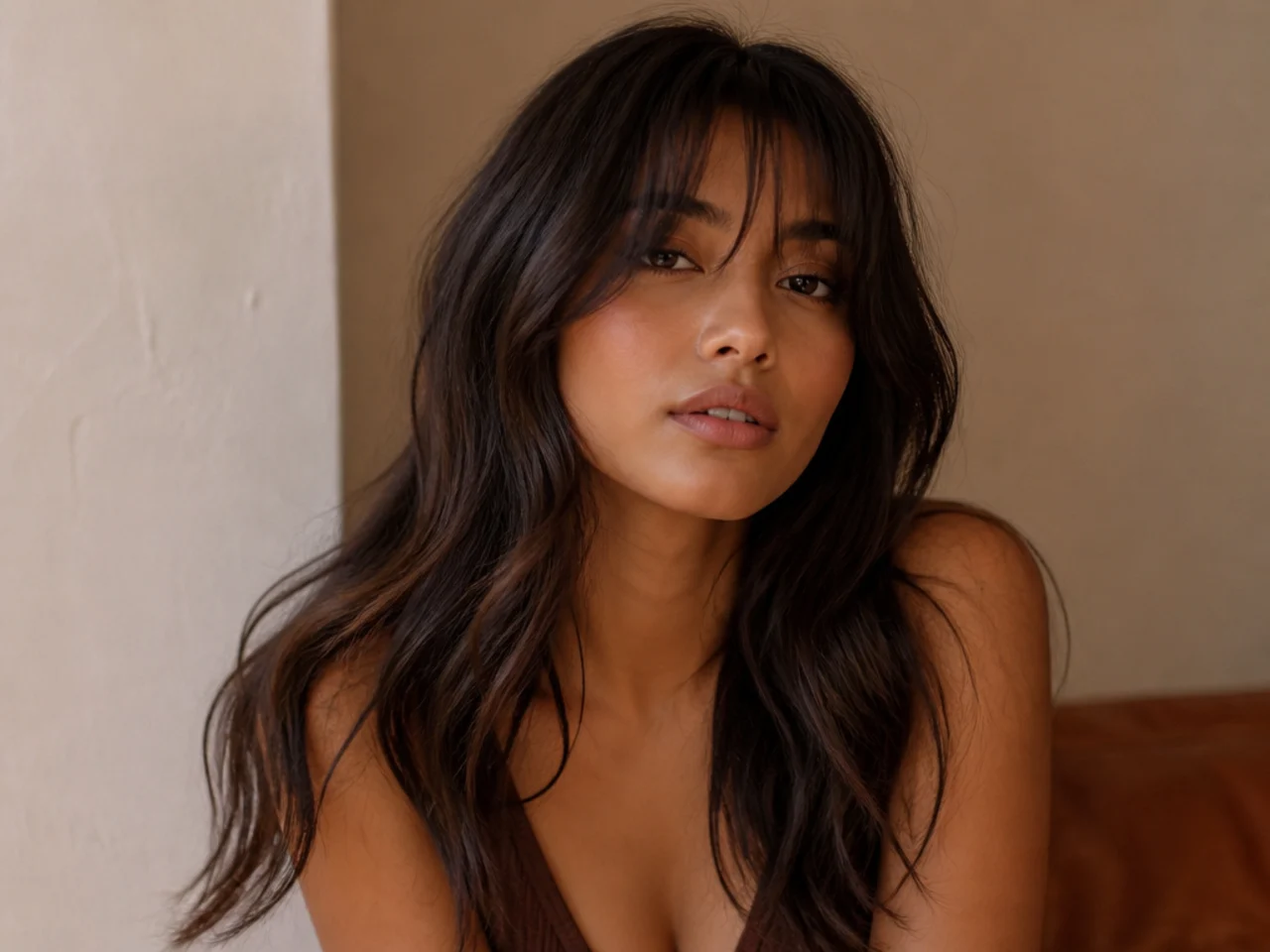
Curl pulls the fringe up as it dries, so the length agreed wet is not the length that appears. Cut dry, curl by curl, and set the shortest point a full inch lower than you would on straight hair.

11. Curtain Bangs on Coily Long Hair
Coily hair grows out from the head before it grows down, so a fringe reads as height at the front rather than as length over the forehead. The slope has to be cut into the shape the hair actually takes, not into the shape it stretches to.

12. Curtain Bangs on Fine Long Hair
The section has to stay shallow, because on fine hair every strand moved into the fringe is a strand removed from the crown. A three centimetre triangle gives enough fringe to read as bangs without leaving a visible thin patch behind it.

13. Curtain Bangs on Thick Long Hair
Thick hair can afford a deep section but not a blunt one. Without internal thinning the fringe has too much weight to hold the slope and collapses into a solid block over the forehead by the middle of the day.

14. Curtain Bangs With Long Layers
Layers through the length give the fringe somewhere to arrive. With the outer corners of the curtain cut to meet the shortest layer, the front of the cut reads as one continuous slope from cheekbone to ends.

15. Curtain Bangs With a Blunt Perimeter
A hard line at the ends and a soft fringe at the front. The contrast is deliberate — the blunt perimeter holds the density that long hair loses at the bottom, while the fringe keeps the face open.

16. Curtain Bangs With Face Framing Layers
Face framing pieces cut at the jaw so the fringe hands off to them without a gap. The measurement that matters is the overlap — the longest fringe piece has to be at or below the shortest framing piece, or a step appears.

17. Curtain Bangs With a Money Piece
The two fringe halves lightened several shades against the base. A colour boundary registers faster than a length boundary, so lightening exactly the pieces that frame the face makes a soft fringe read as a deliberate one.
18. Curtain Bangs With a Long Wolf Cut
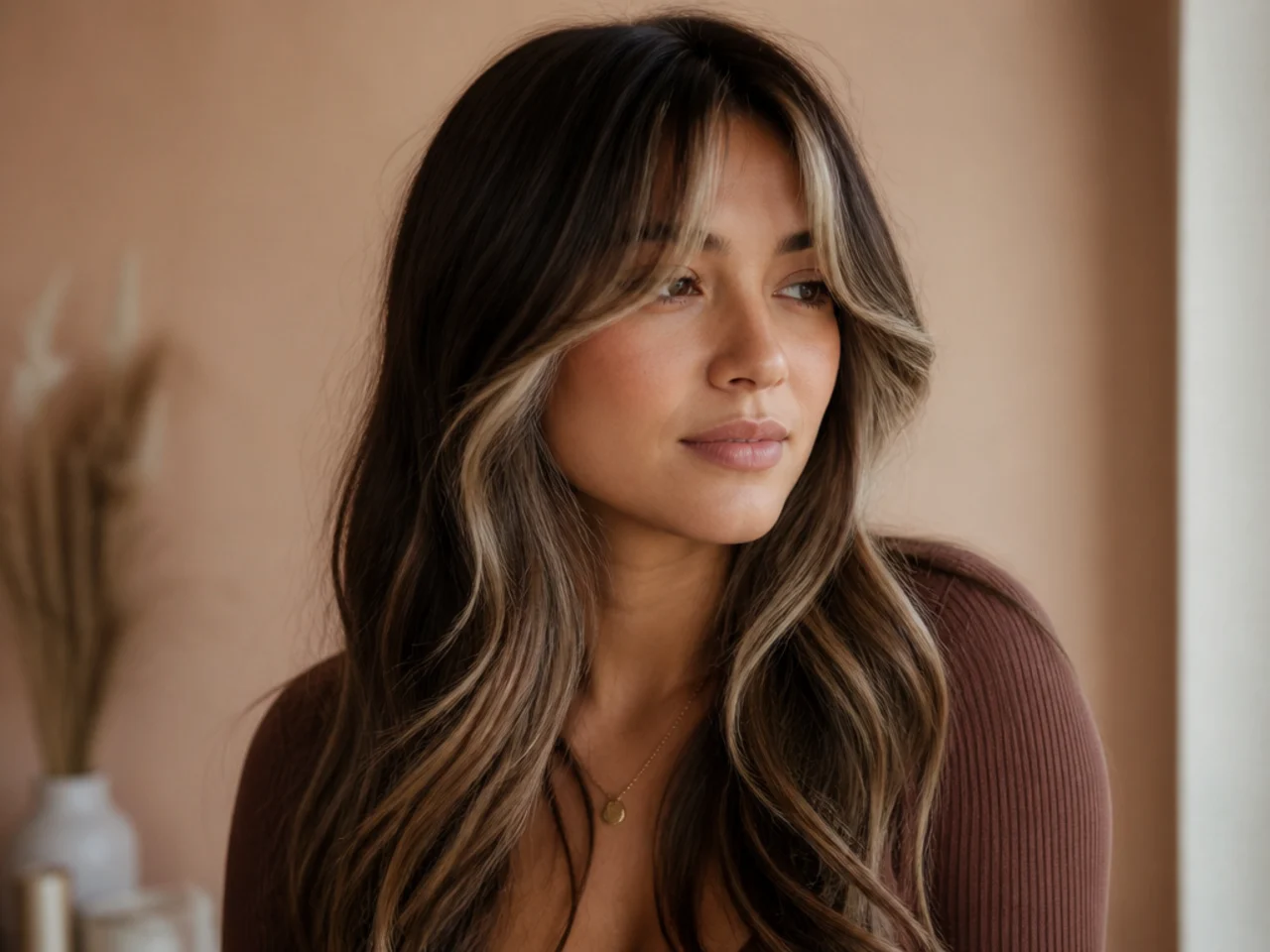
Stacked crown layers above a long perimeter, with the fringe as the front edge of the stack, as in the long wolf cut. The fringe is not a separate feature here — it is the shortest layer in a continuous sequence.

19. Short Curtain Bangs
Cut above the brow with the slope kept shallow, which puts them on the border with French bangs — the distinction is set out in French bangs versus curtain bangs. The shorter the centre, the less the fringe can fall away, so it starts behaving like a fringe rather than a curtain.

20. Curtain Bangs Over a Cowlick
A swirl at the front hairline pushes a short fringe upward permanently, and no product holds against it for a full day. Cutting the fringe two inches longer adds enough weight to pull the swirl flat, which is the only reliable fix.

21. Curtain Bangs Worn Side Swept
Both halves brushed to one side so the fringe crosses the forehead on a diagonal. Because a curtain fringe is already graduated, it sweeps without leaving a blunt edge, which is what a level cut fringe cannot do.

22. Curtain Bangs With a Half Up Style
The back pulled up while the fringe stays down. Taking the bulk off the shoulders removes the weight that flattens the front, so the fringe lifts slightly and the split opens without any extra styling.

23. Curtain Bangs Pushed Back
Once the centre reaches the cheekbone the fringe can be swept off the face entirely and pinned or tucked. This is the stage that makes curtain bangs low risk — the awkward phase of a blunt fringe simply becomes another way to wear these.

24. Curtain Bangs With a Middle Part Blowout
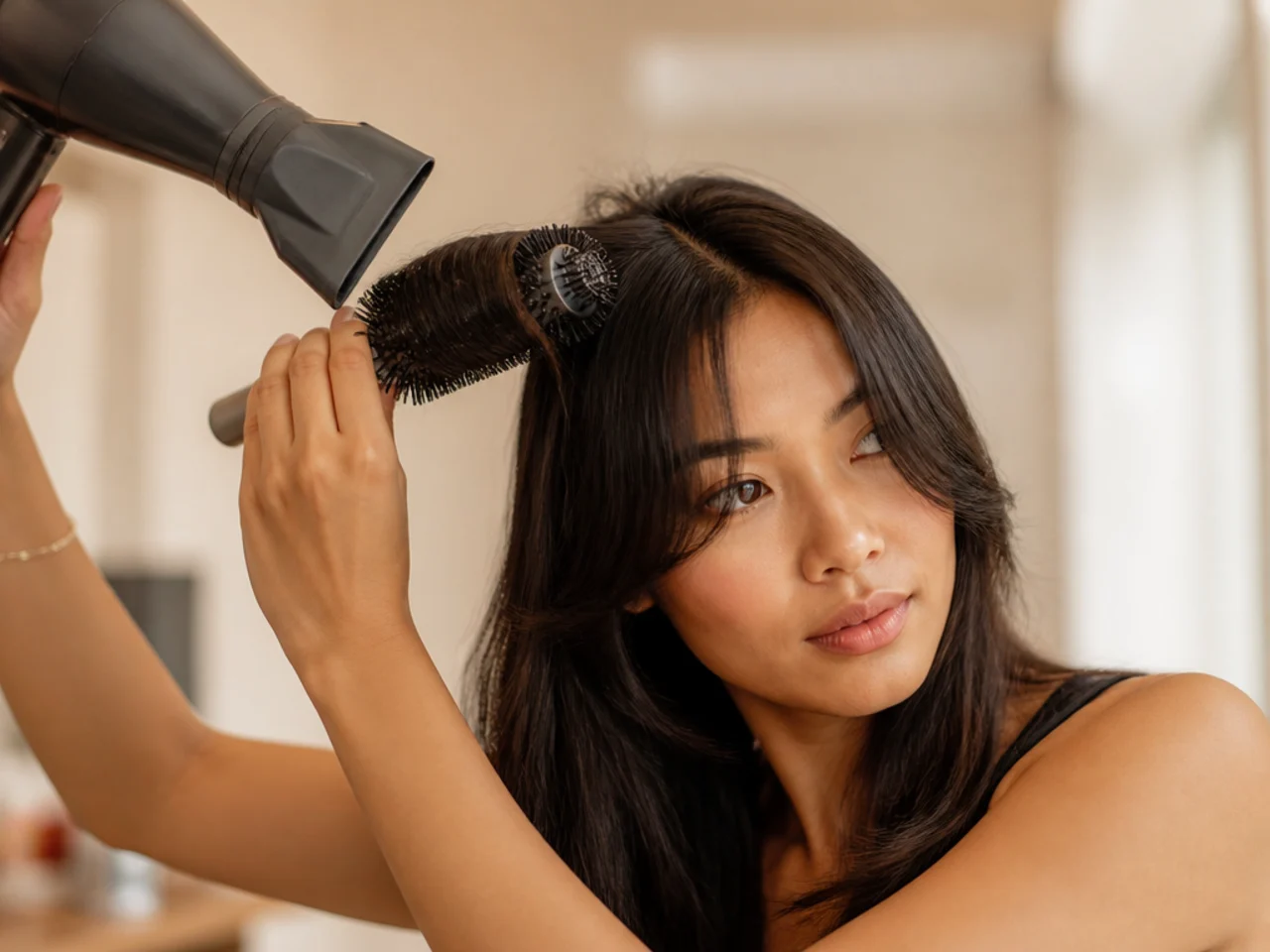
The fringe dried backwards over a round brush so the ends turn away from the face. Hair holds the shape it cools in, so the bend is set by letting each section cool on the brush rather than by how hot the dryer was.

25. Curtain Bangs at Week Ten
The centre has dropped to the cheekbone and the outer corners have merged into the layers. Nothing here reads as overgrown, which is the argument for this fringe over any other — it has no bad stage, only a longer one.

Styling and Upkeep
Dry the fringe first, and dry it backwards. It sets in the shape it dries in, and a fringe left damp while you do the rest will set flat against the forehead.
Let each section cool on the brush. The bend is fixed as the hair cools, not while it is hot, so pulling the brush out immediately undoes the work.
Trim at four to six weeks. A centimetre of growth moves a brow length fringe into your eyeline. The rest of the cut can wait three times as long.
Keep conditioner off the fringe roots. The fringe is the lightest section on the head and the quickest to be weighed down into a flat sheet.
Wash the fringe on its own between washes. It sits against skin all day, so it collects oil faster than the rest and can be rinsed and dried in two minutes.
Mistakes to Avoid
Taking the section too deep. Depth is weight. A deep section on anything but thick hair gives a heavy fringe and a visibly thinner crown behind it.
Cutting curls wet. An inch of shrinkage turns a cheekbone fringe into a brow fringe you did not agree to.
Leaving a gap between the fringe and the layers. If the longest fringe piece stops short of the shortest layer, the front of the cut has a step in it from every angle.
Cutting short over a cowlick. The swirl wins. Length is the only thing that holds it down, so add two inches rather than more product.
Trimming your own fringe wet and pulled straight. It dries shorter than it was cut, and on a slope both halves rarely come back the same length.

FAQ
How short in the middle? Brow for open, nose bridge for forgiving.
How deep a section? Three or four centimetres back from the hairline for most heads.
How often trimmed? Every four to six weeks, separately from the rest of the cut.

Final Thoughts
Bring two numbers to the appointment: where the centre stops and where the outer corners land. Those two points define the slope, and the slope is the whole difference between curtain bangs and a fringe that happens to be parted.
For the shorter and denser relative see long French bangs, and for wearing the same length on a diagonal see long side swept bangs. More in Bangs and Fringe.