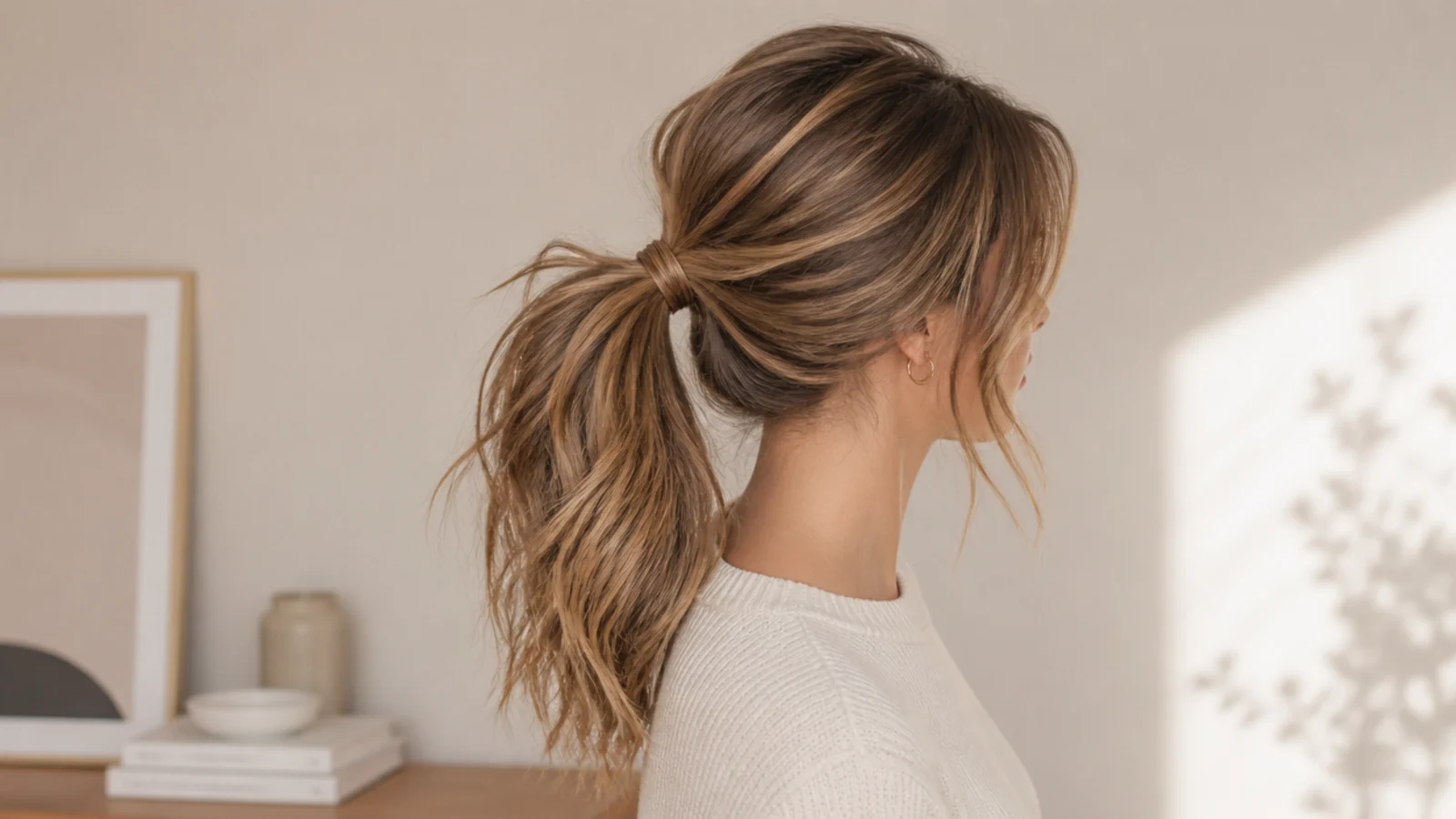
20 Messy Ponytail Ideas With Bangs
Twenty messy ponytails built around a fringe, and the thing that decides whether they work — a fringe sits against the forehead all day, so it goes flat and oily a day or two before the rest of your hair does.
In this article · 28
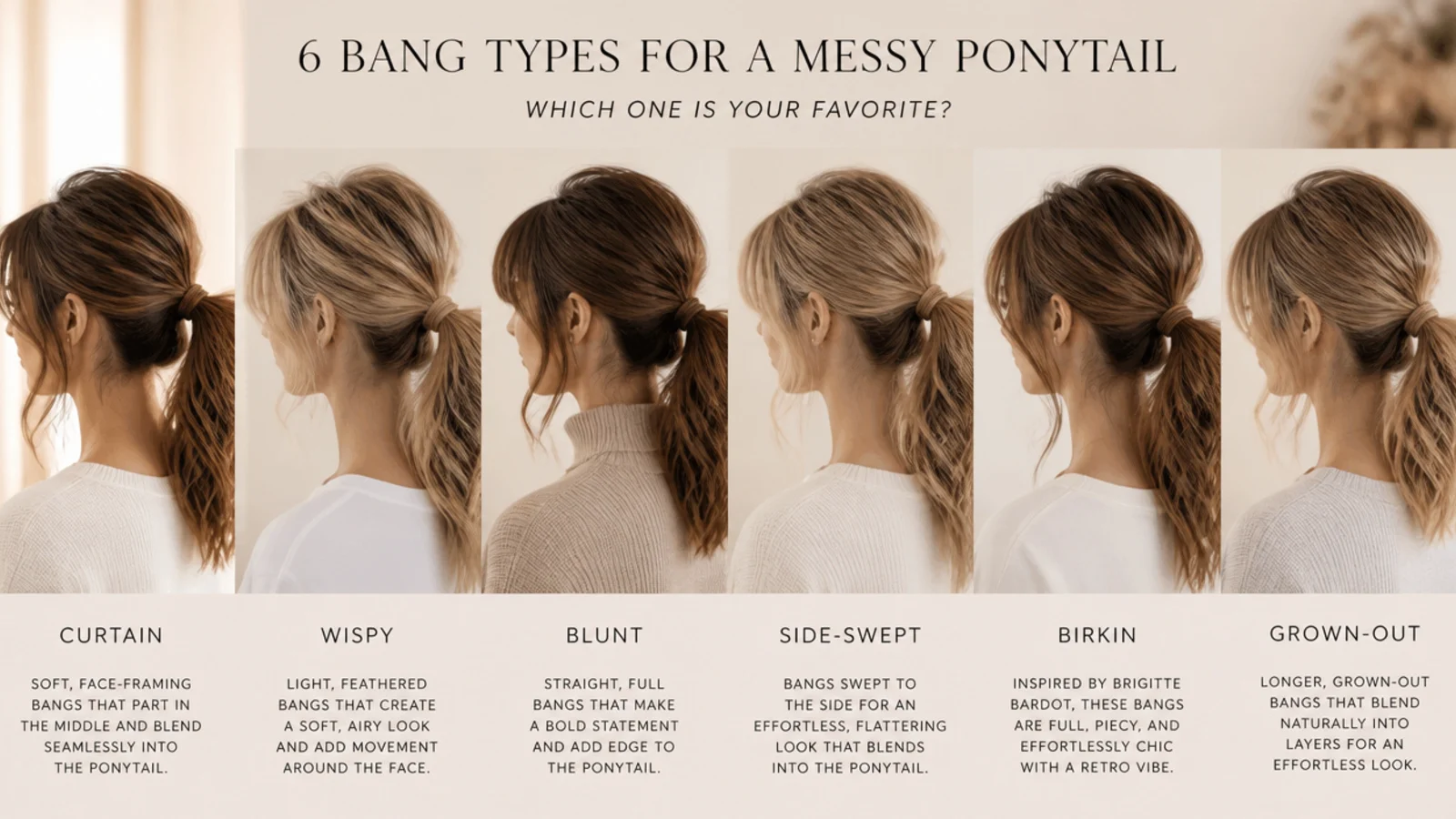
- Bang Type Guide
- Messy Versus Sleek Bangs
- Tie Height and Face Shape
- The Greasy Bangs Fix
- Curtain Bangs in Five Minutes
- Growing Out Bangs With a Ponytail
- The 20 Messy Ponytails With Bangs
- 1. Curtain Bangs With a Low Pony
- 2. Wispy Bangs With a High Pony
- 3. Blunt Bangs With a Slicked Root
- 4. Side Swept Bangs With a Side Pony
- 5. Birkin Bangs With a Nape Pony
- 6. Grown Out Bangs Pinned Back
- 7. Curly Bangs With a Pineapple
- 8. Baby Bangs With a Sleek Messy Pony
- 9. Round Face With a Mid Pony
- 10. Shag Bangs With a Bubble Pony
- 11. Long Curtain Bangs Tucked Back
- 12. Fine Hair With a Teased Crown
- 13. Korean Air Bangs
- 14. Bottleneck Bangs With a Half Up
- 15. Blunt Bangs With a Bandana Pony
- 16. Curtain Bangs With a Braided Base
- 17. Two Day Bangs With Dry Shampoo
- 18. Micro Fringe With a Ballet Pony
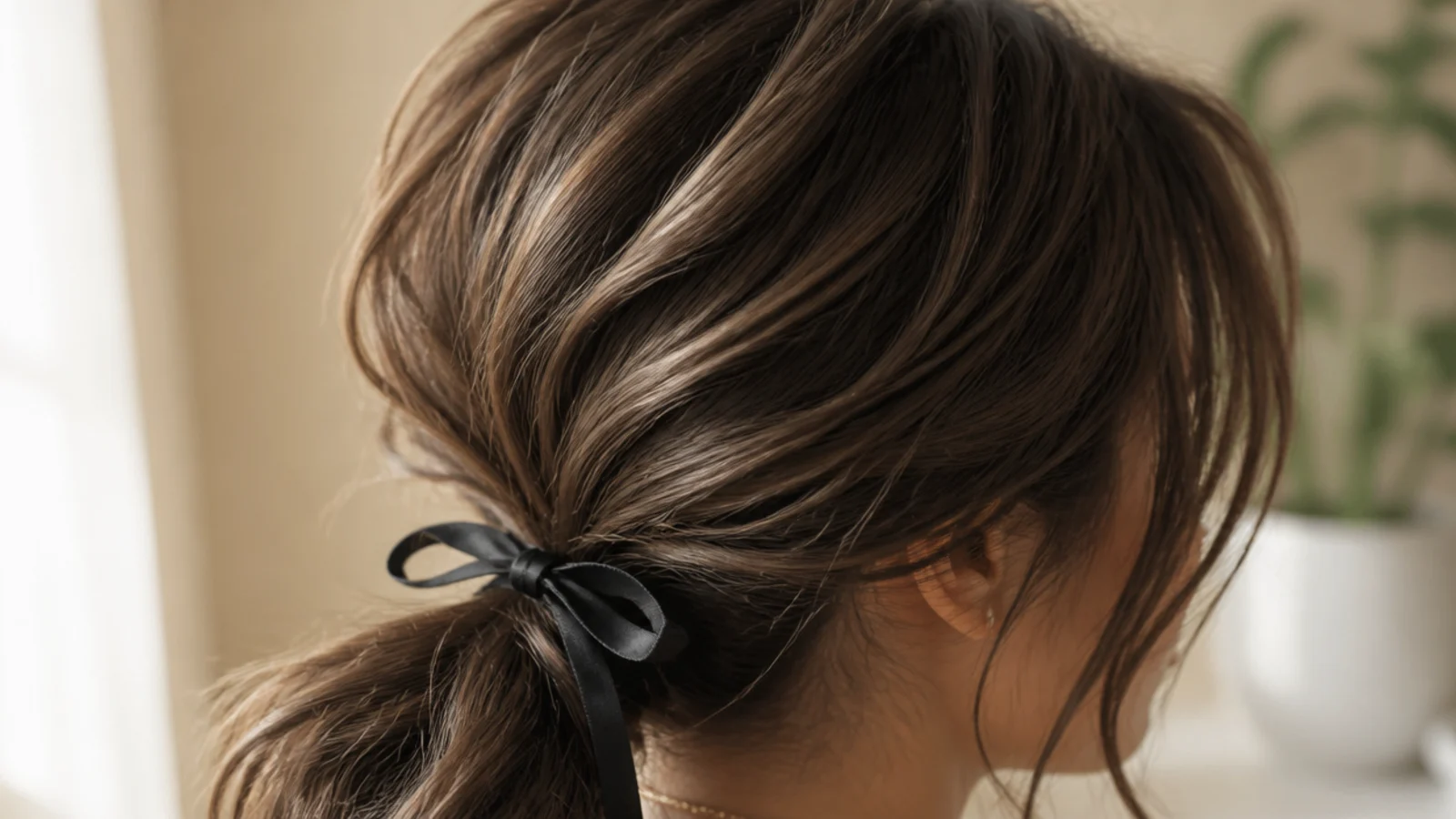
- 19. Curtain Bangs With a Ribbon Pony
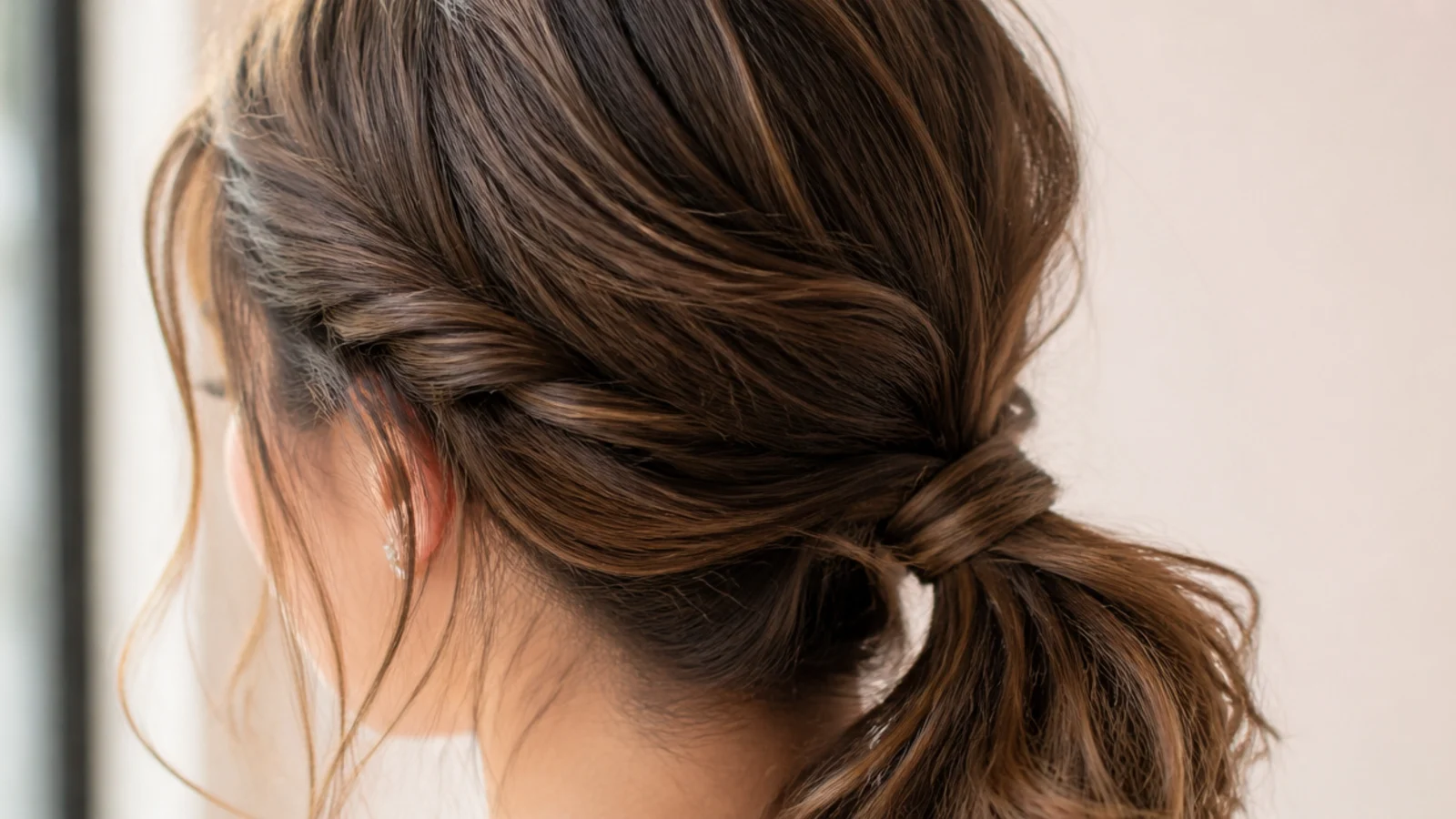
- 20. Grown Out Bangs With a Twisted Pony
- Final Thoughts
A ponytail with a fringe fails at the fringe, not at the ponytail.
A fringe touches skin all day. It picks up oil directly from the forehead on top of the sebum travelling down from the roots, which is why it flattens a day or two before the rest of your hair does.
The fringe sets the tie height, not the other way round. A short blunt fringe wants weight above the brow, and a long curtain fringe wants it at eye level.
Bang Type Guide
Curtain bangs part in the middle and sweep out. The shortest point is at the centre, so they fall away from a gathered style rather than into it.
Blunt bangs end on one line across the brow. Every strand finishes at the same point, which is what makes them read as a hard horizontal against a soft tail.
Wispy and air bangs are thinned deliberately. Very little hair is taken, so the forehead shows through and the fringe stays light enough not to sit flat.
Side swept and bottleneck bangs are shaped rather than cut short. They are longest at the outer edges, so they continue into the face framing pieces instead of stopping abruptly.
Messy Versus Sleek Bangs
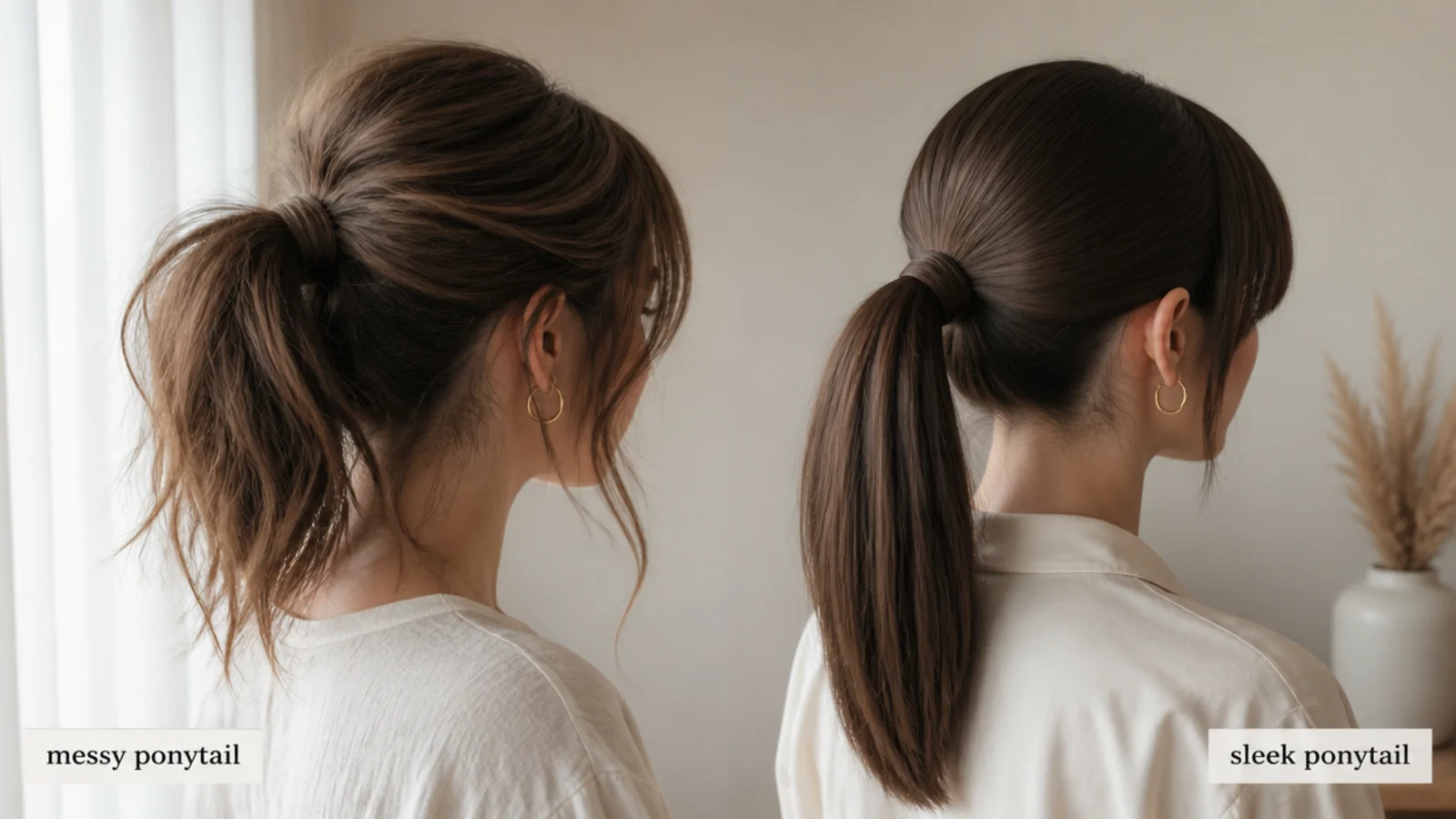
A sleek fringe needs a sleek root behind it. A smooth fringe above a roughly gathered crown reads as two different styles sharing a head.
A messy fringe needs separation, not volume. Piecey strands with visible gaps look intentional. A fringe with body but no separation just looks like it has grown out.
Blunt fringes cannot be worn messy. The hard line is the whole point of the cut, and roughing it up removes the only thing distinguishing it.
Match the finish at the temples. Whatever the fringe is doing, the pieces beside it should be doing the same thing, because that is where the eye compares them.
Tie Height and Face Shape
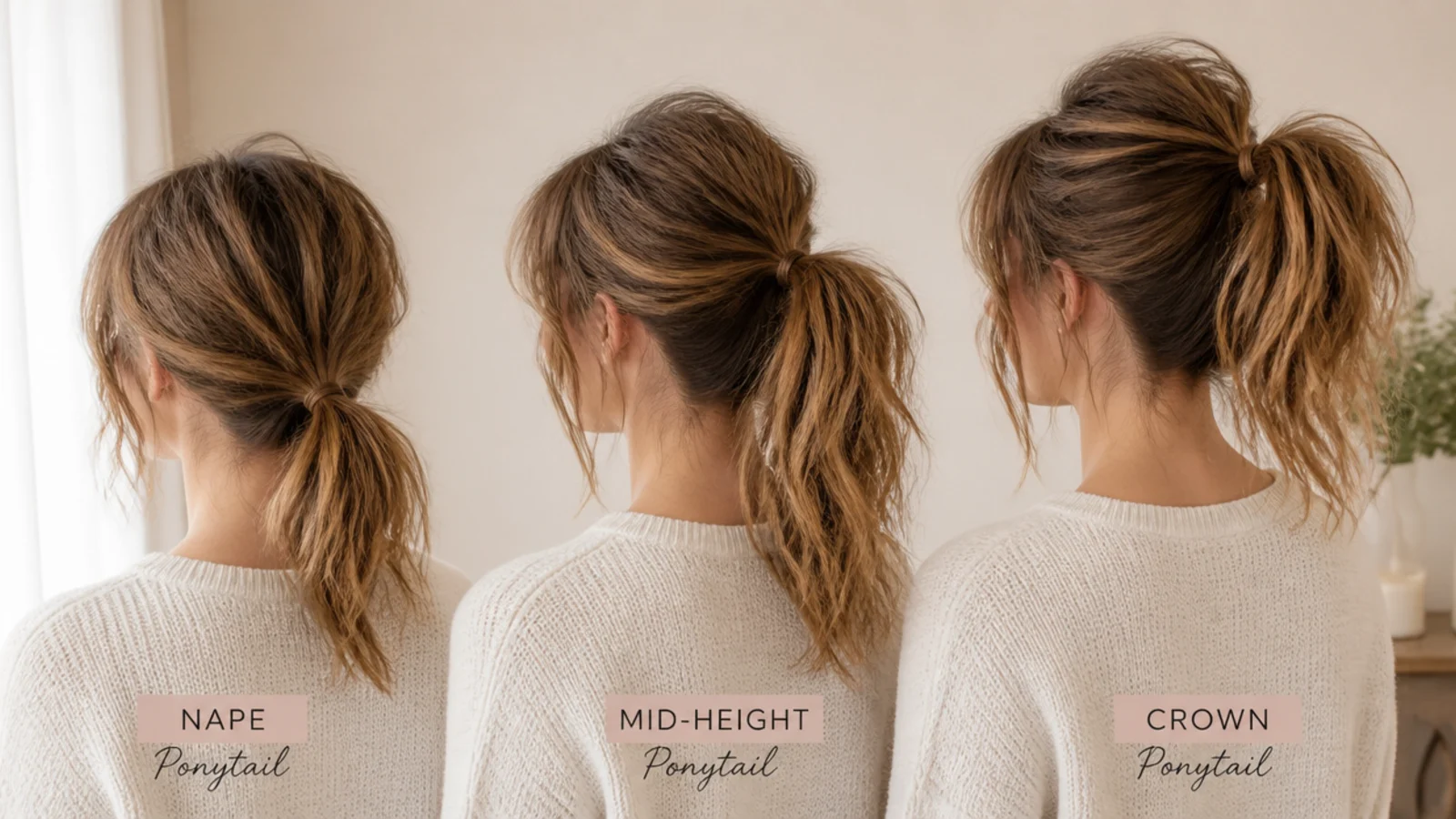
A high tie lifts everything above the brow. All the visual weight goes to the top of the head, which suits a short or blunt fringe that already sits high.
A mid tie keeps weight at eye level. It balances a long curtain fringe, because the temple pieces continue the line the tail starts rather than competing with it.
A round face gains from length at the sides. A longer curtain fringe left out beside a mid height tail adds vertical lines either side of the cheek.
A long face wants a fuller fringe and a lower tie. Both put width across the middle of the face rather than height above it.
The Greasy Bangs Fix
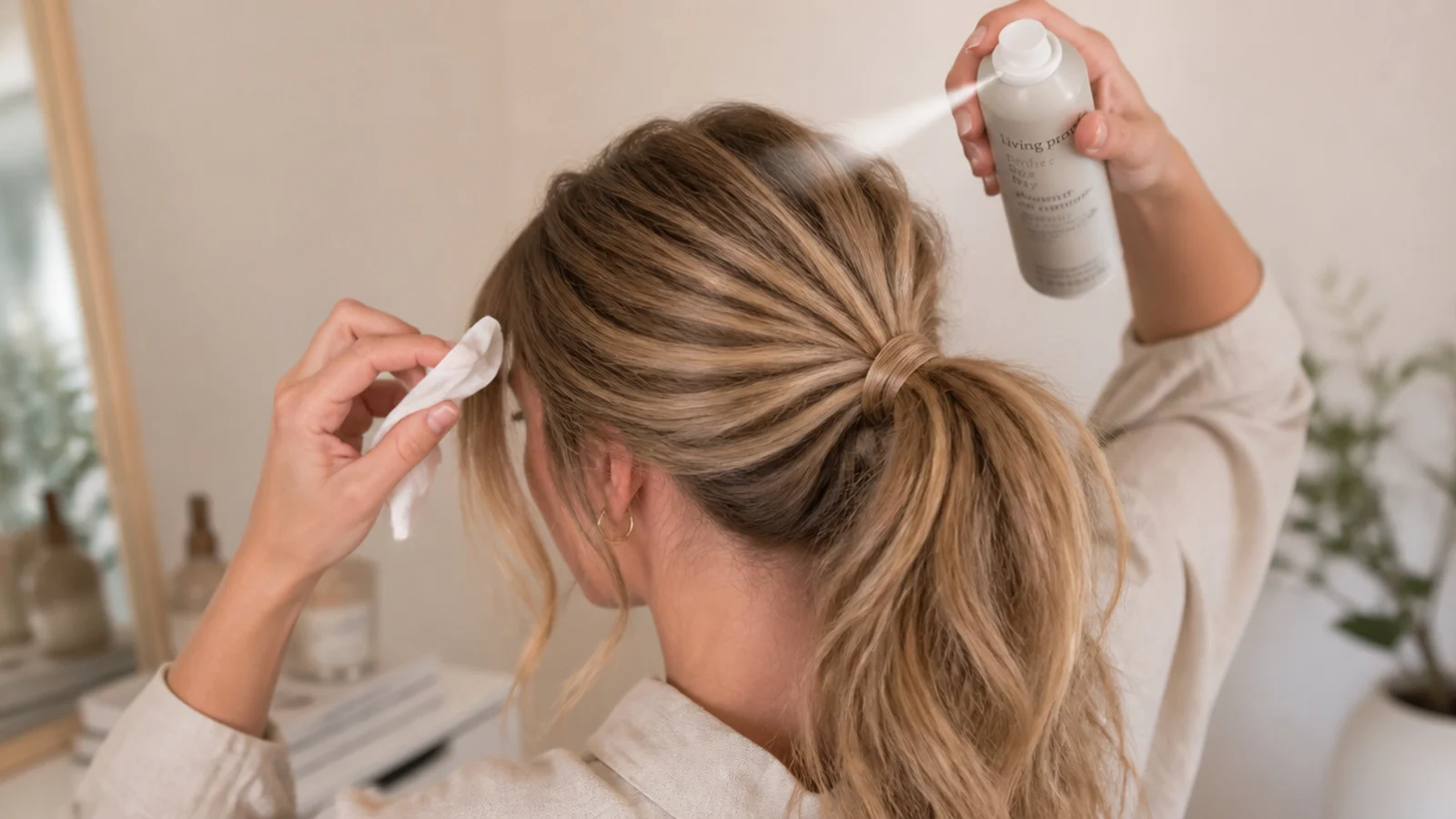
Powder the fringe roots first. Lift the fringe away from the forehead and aim dry shampoo underneath it, where the oil is actually arriving.
Wash the fringe alone. It takes two minutes at a basin and saves washing a whole head that is otherwise fine.
Blot the forehead, not the hair. Oil transfers both ways, so a clean forehead keeps a clean fringe for noticeably longer.
Pin it up on the worst day. A fringe pinned back off the face on day three reads as a deliberate change rather than as a flat fringe you gave up on.
Curtain Bangs in Five Minutes
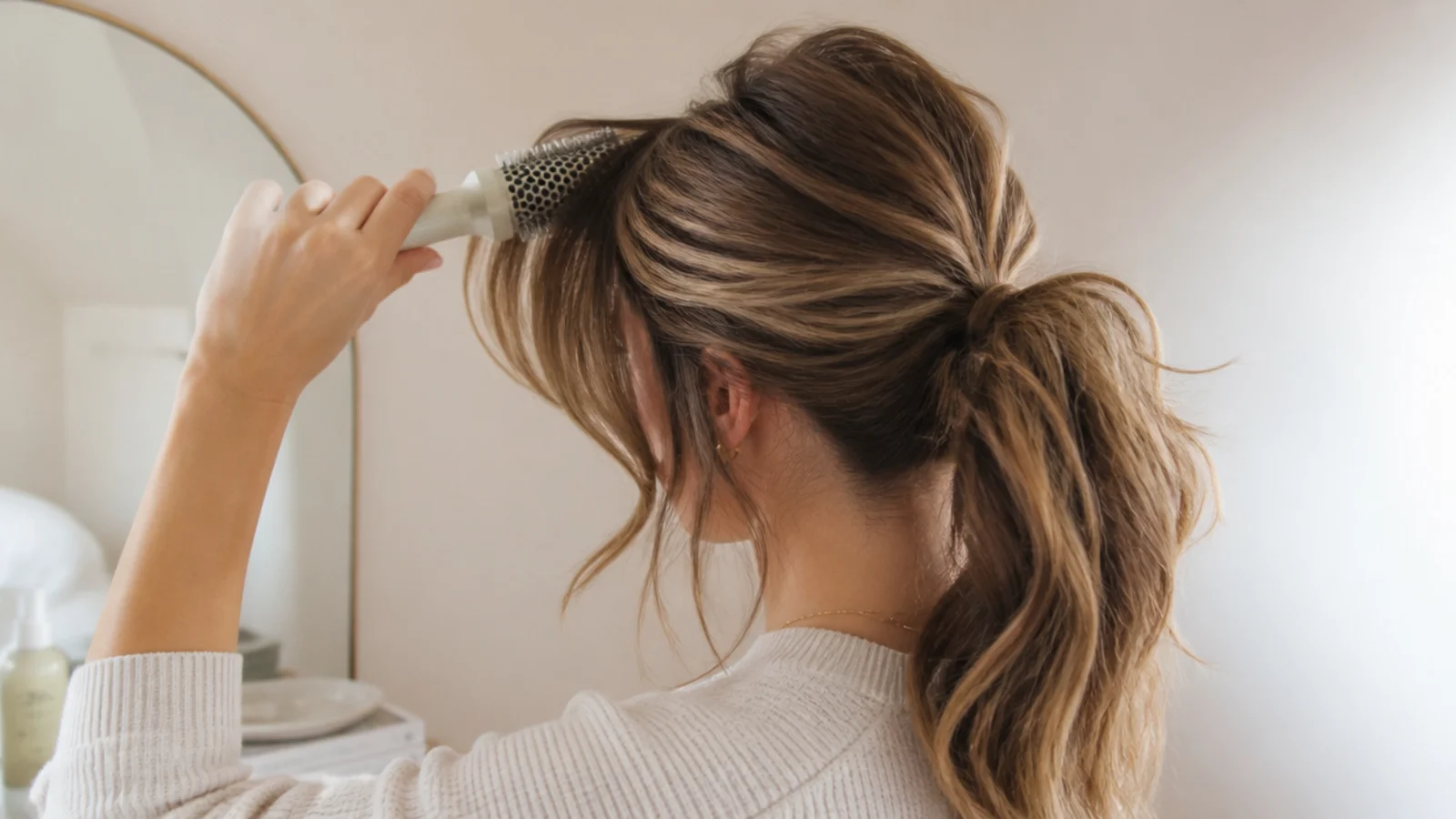
Dry them first and dry them forward. A curtain fringe sets in the direction it dries, so pulling it forward with a dryer while it is damp does most of the work.
Then split and sweep back. Part down the centre and direct each half away from the face with a round brush or your fingers as it cools.
Cool air locks the shape. Hair holds whatever position it was in when it cooled, which is why the last ten seconds matter more than the first minute.
Tie the rest afterwards. Gathering first pulls tension into the fringe roots and drags the shape you just set backwards.
Growing Out Bangs With a Ponytail
Four months to the cheekbone, ten to the jaw. Hair grows roughly half an inch a month, so a brow length fringe has a long and predictable journey.
The awkward stage is the middle. Too long to sit as a fringe, too short to reach the band, so it sticks out of the gather at the temple.
A ponytail is the best stage manager there is. It lets the growing pieces sit forward as face framing instead of being fought into the tail.
Have the ends shaped, not shortened. Softening the corners lets a grown out fringe blend into the lengths beside it rather than ending on a visible step.
The 20 Messy Ponytails With Bangs
1. Curtain Bangs With a Low Pony
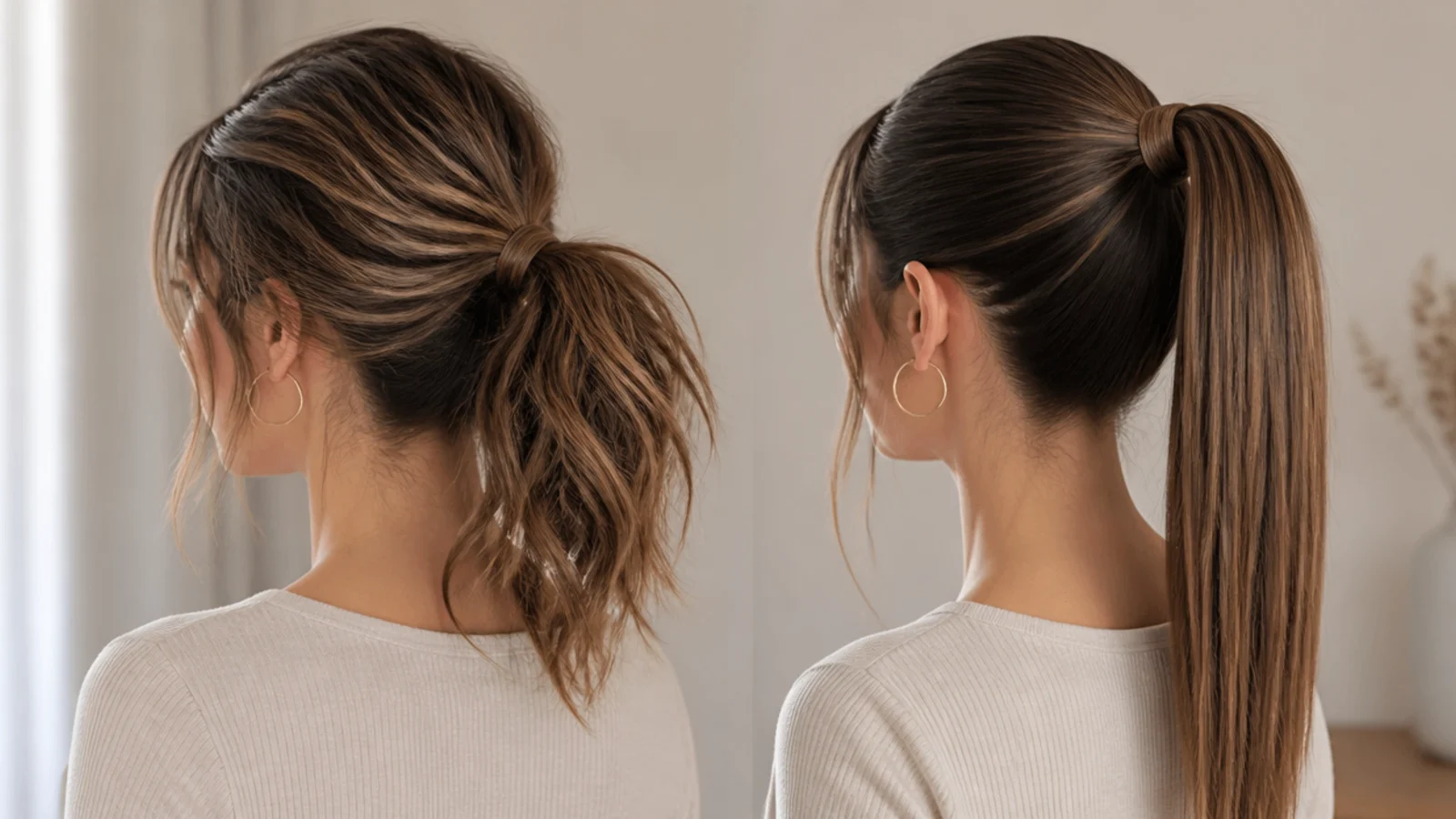
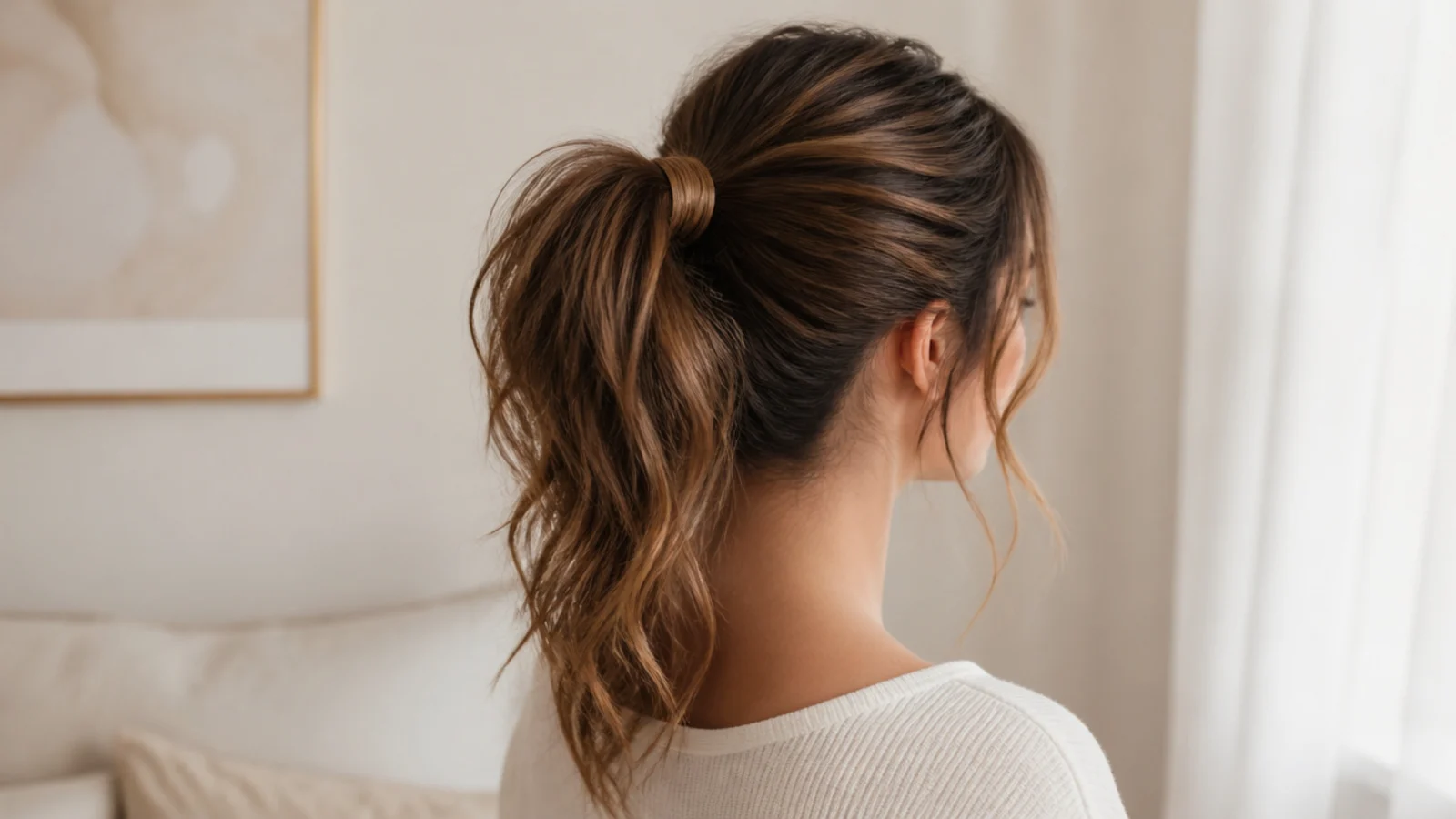
The most balanced pairing here, because the fringe sweeps outward at exactly the height the low tail sits behind. Weight stays at eye level rather than being pulled to the top of the head, so nothing in the face is stretched upward.
2. Wispy Bangs With a High Pony
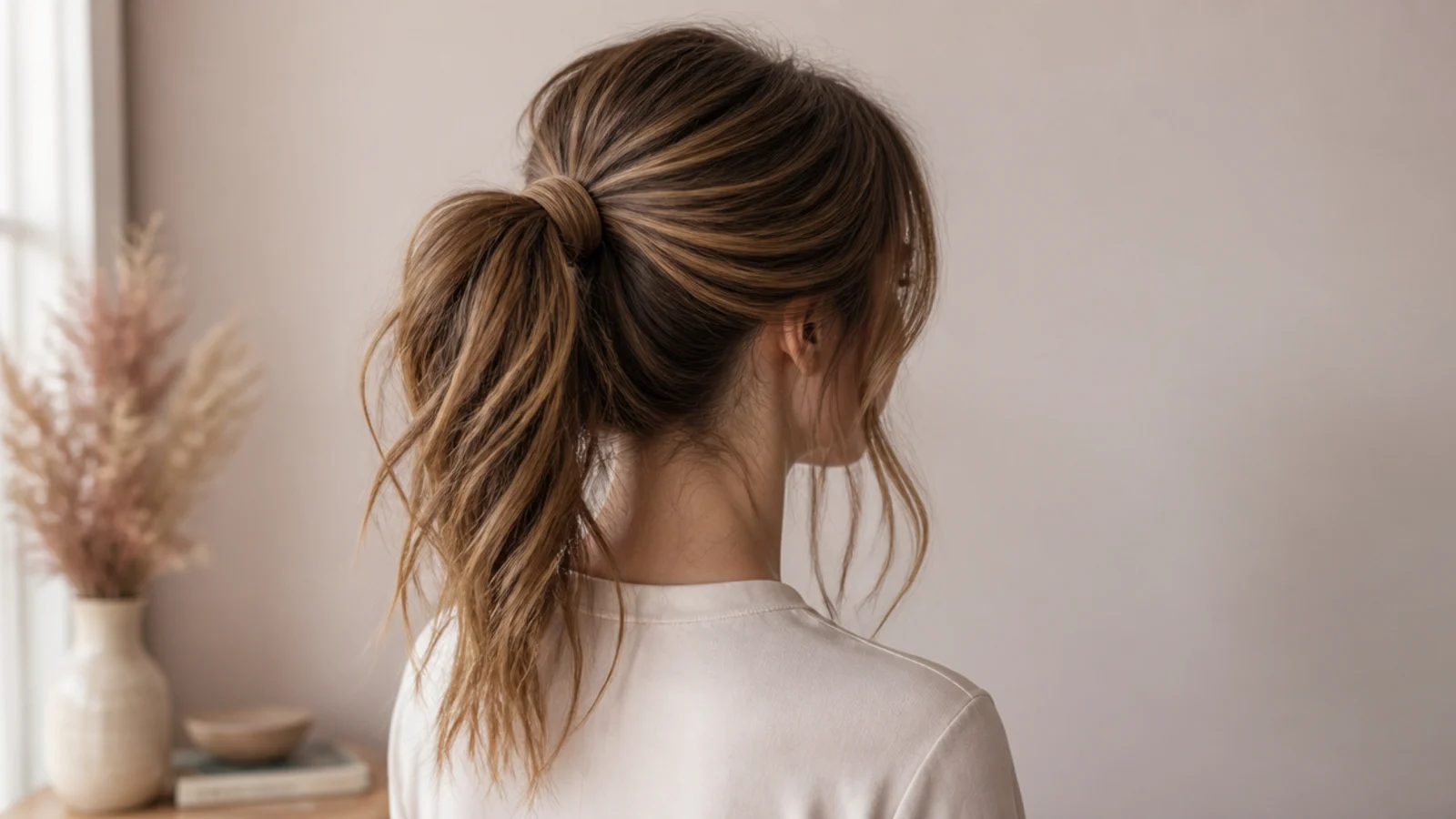
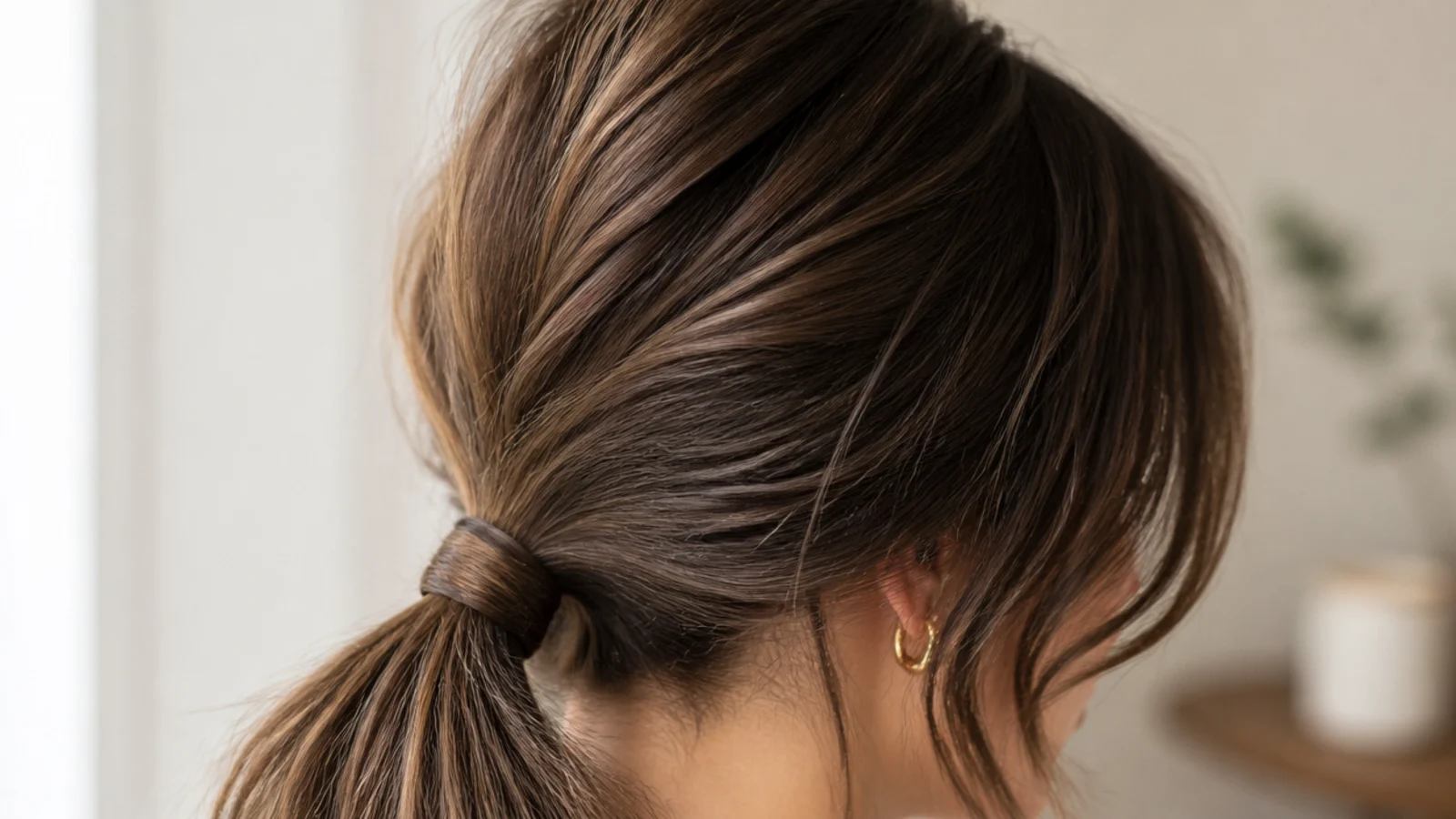
A wispy fringe is thinned so the forehead shows through, which keeps it light enough not to flatten when the tail pulls the scalp tight. That is why it survives a high tie where a heavier fringe would sit dead against the skin.
3. Blunt Bangs With a Slicked Root
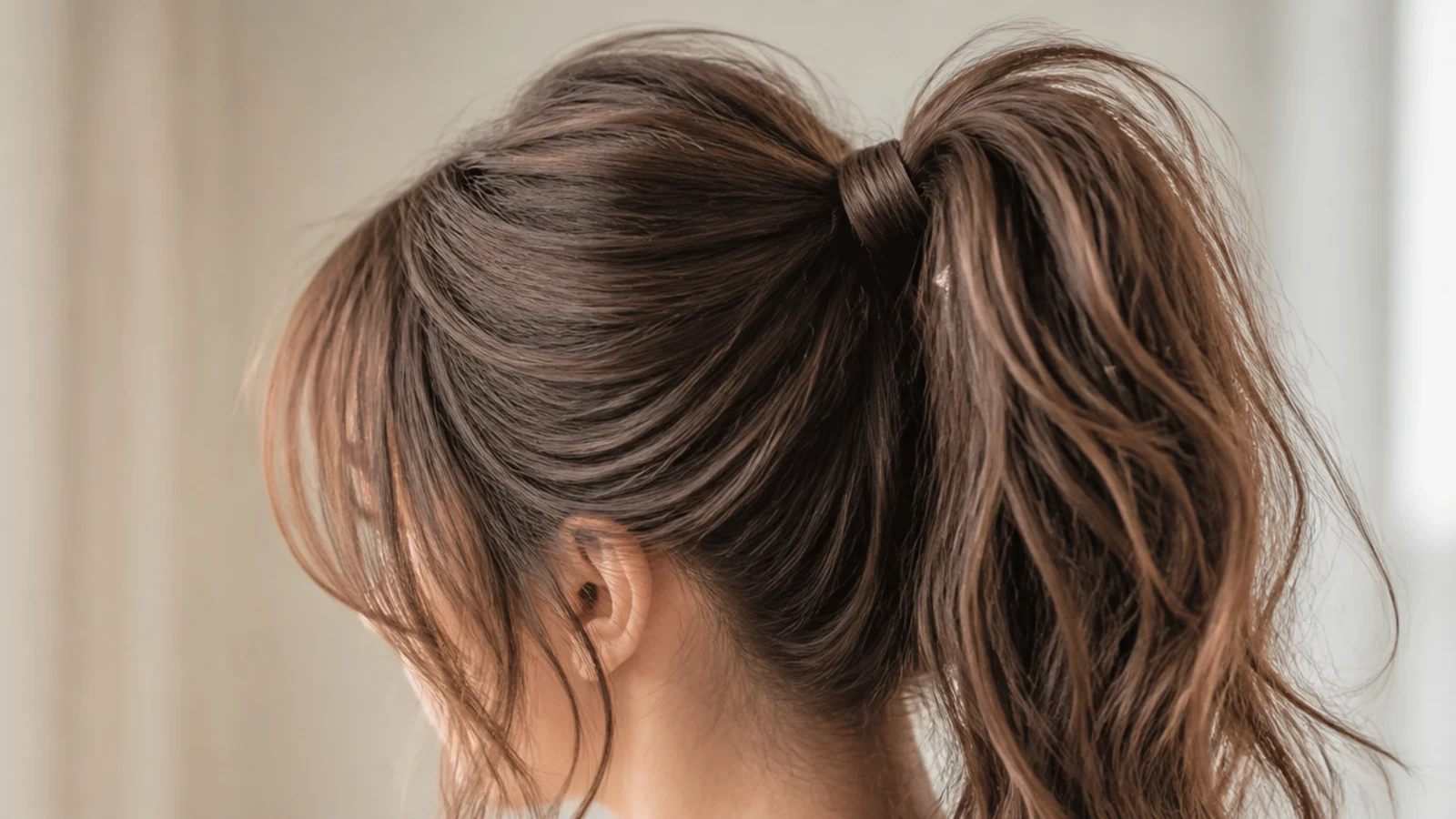
A blunt fringe is a hard horizontal, and a rough crown behind it makes the two read as unrelated. Smoothing the first two inches from the hairline gives the fringe a matching finish, and the tail can stay as undone as you like.
4. Side Swept Bangs With a Side Pony
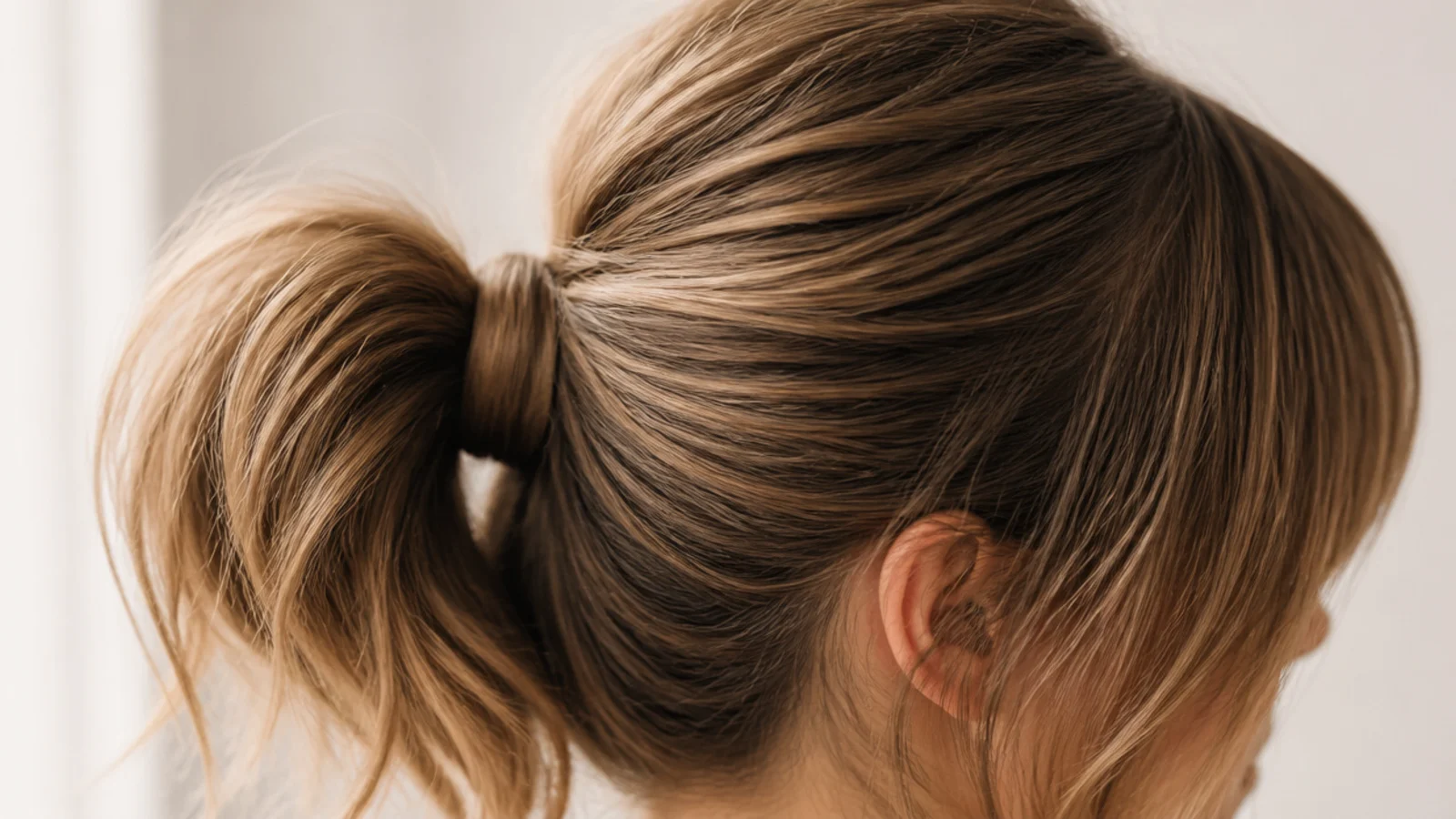
Both the fringe and the tail are working on the same diagonal, which is what stops them competing. A side fringe over a centred ponytail sets up two conflicting directions and the face ends up caught between them.
5. Birkin Bangs With a Nape Pony
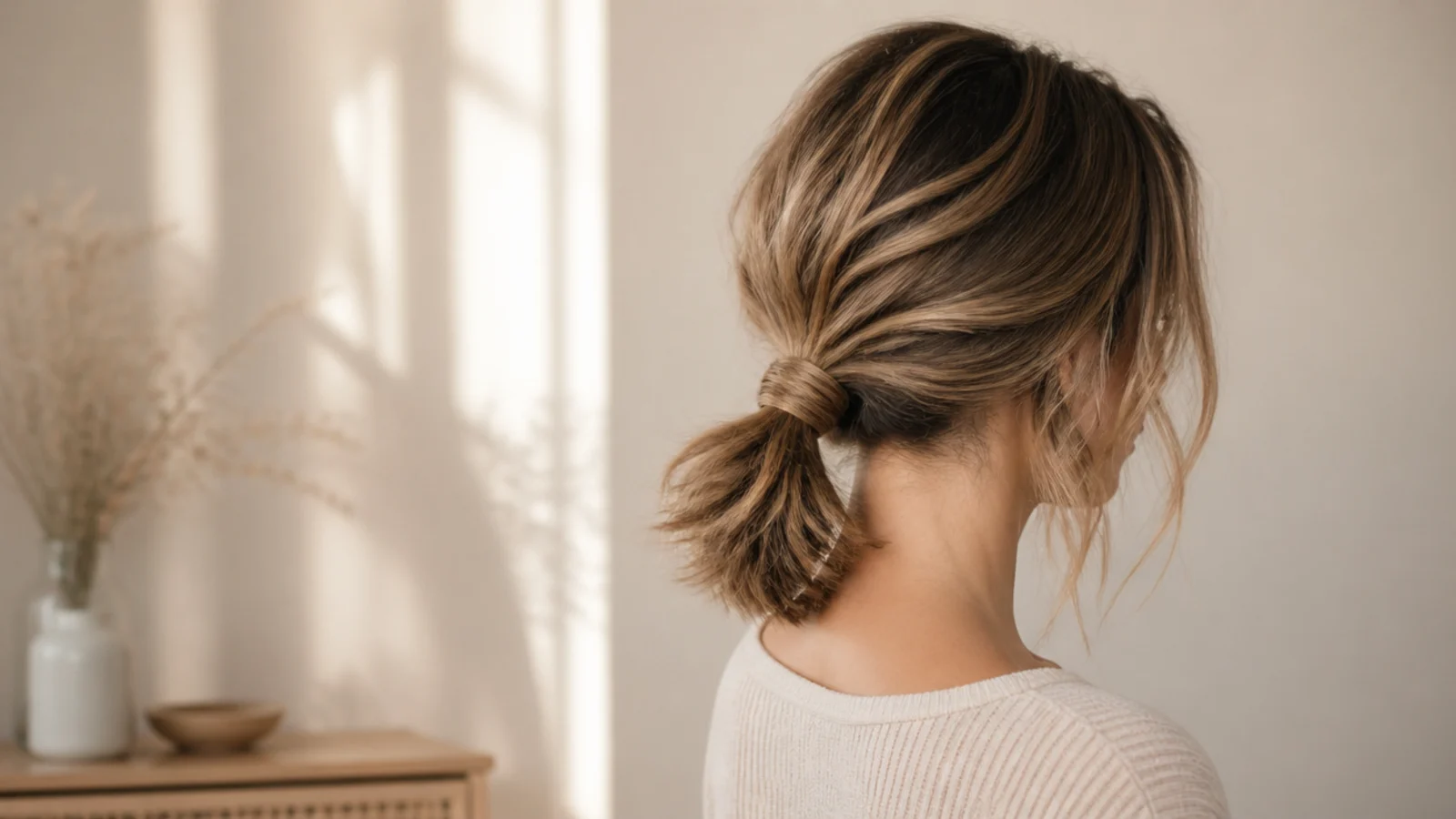
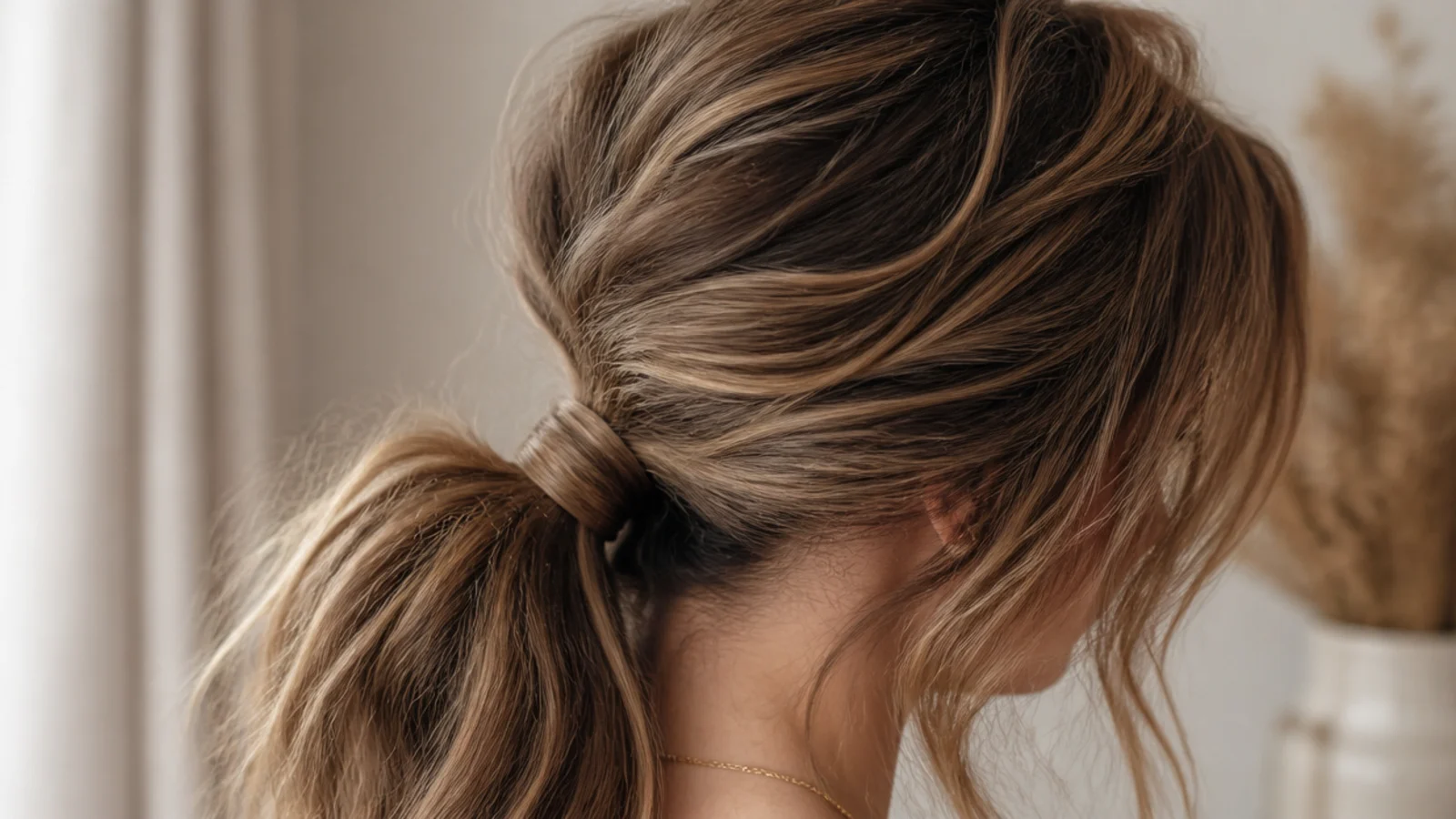
Birkin bangs are long, brow skimming and split loosely rather than cut to a line, so they blend into the temple pieces instead of stopping at them. Against a nape tie the whole style stays low and horizontal, which is the register this fringe belongs to.
6. Grown Out Bangs Pinned Back
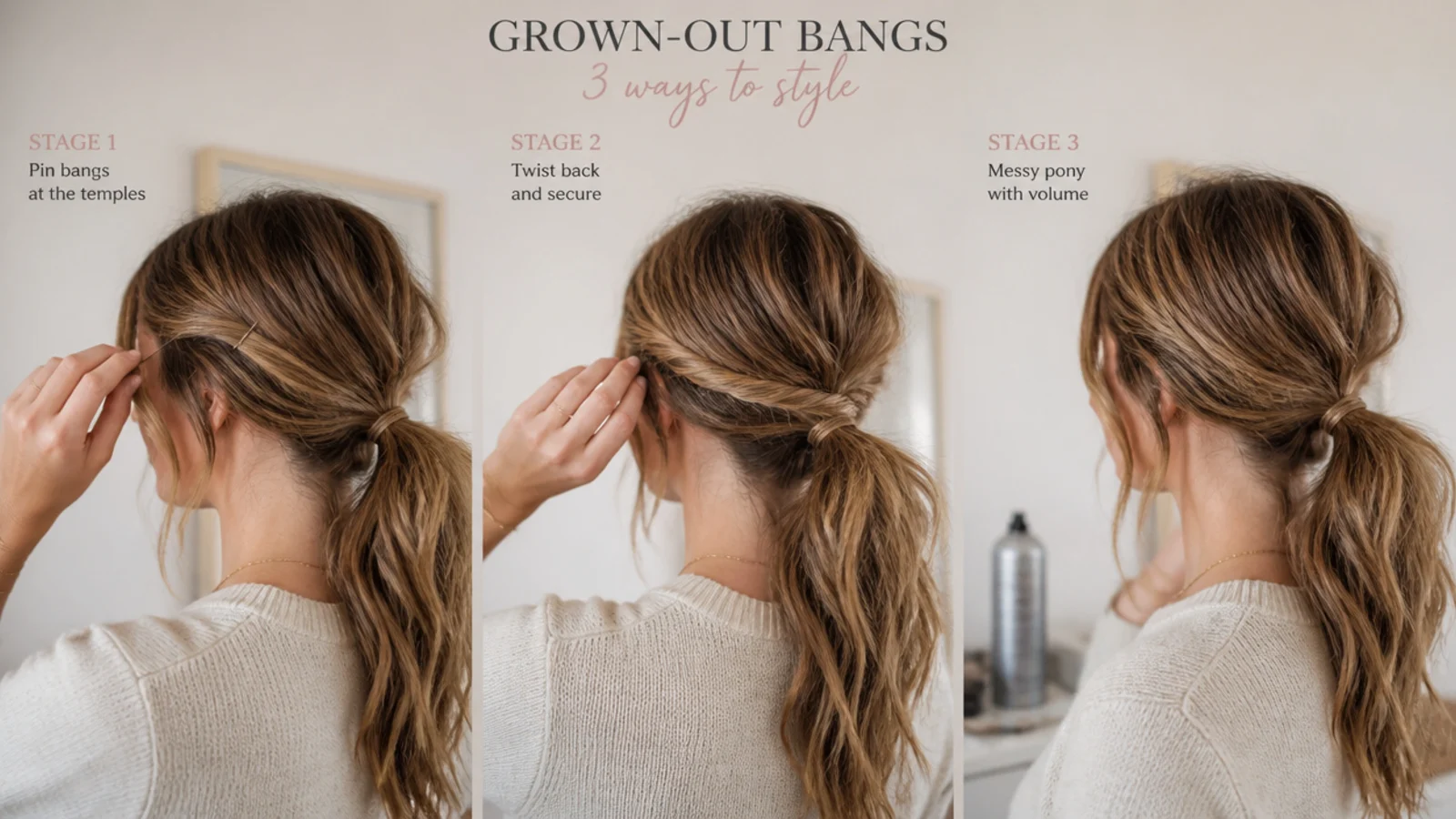
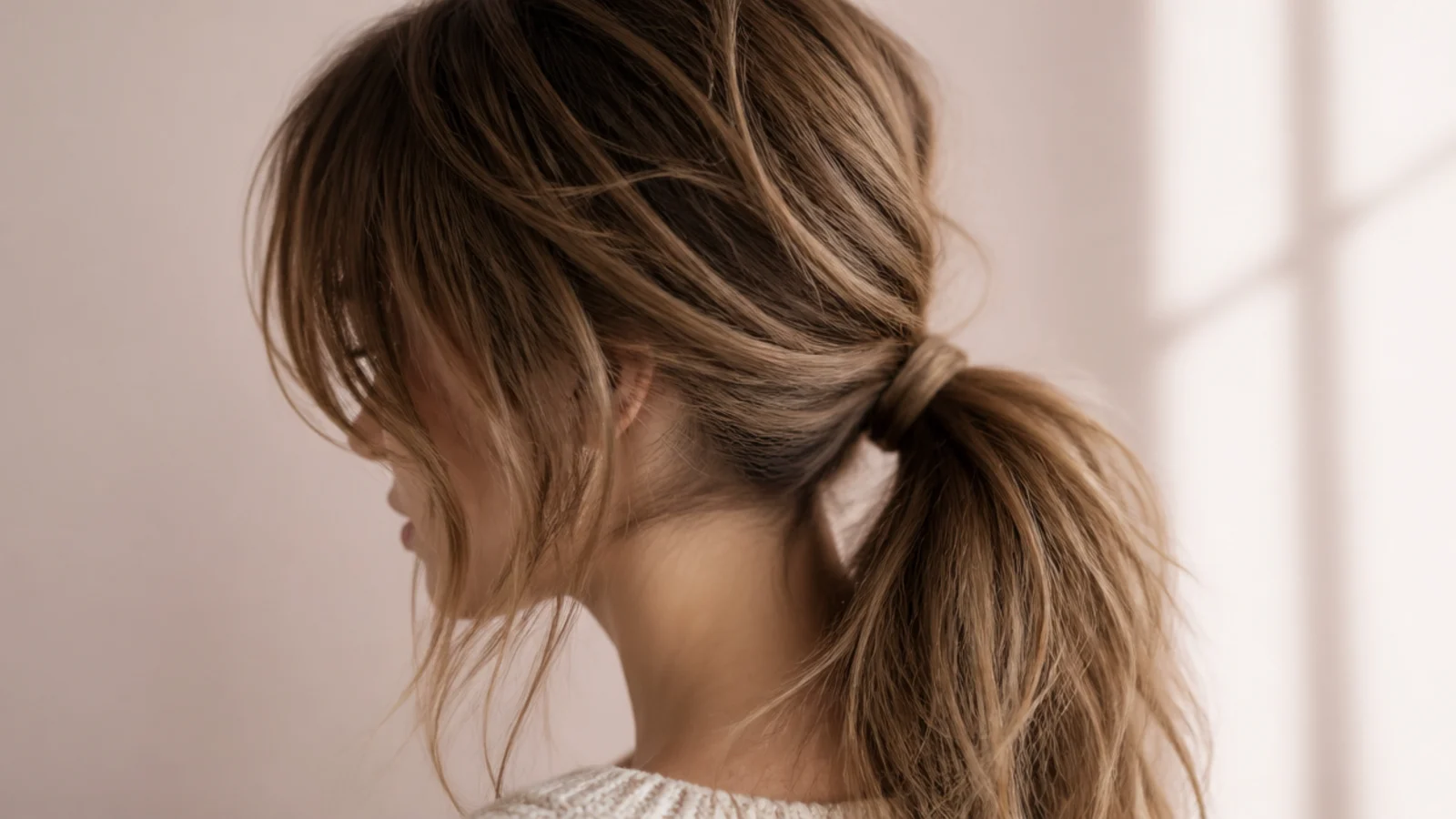
At the stage where a fringe reaches the cheekbone it is too long to hang and too short to gather. Two pins sweeping it back into the crown remove the problem entirely, and the pinned section adds height where a flat fringe was taking it away.
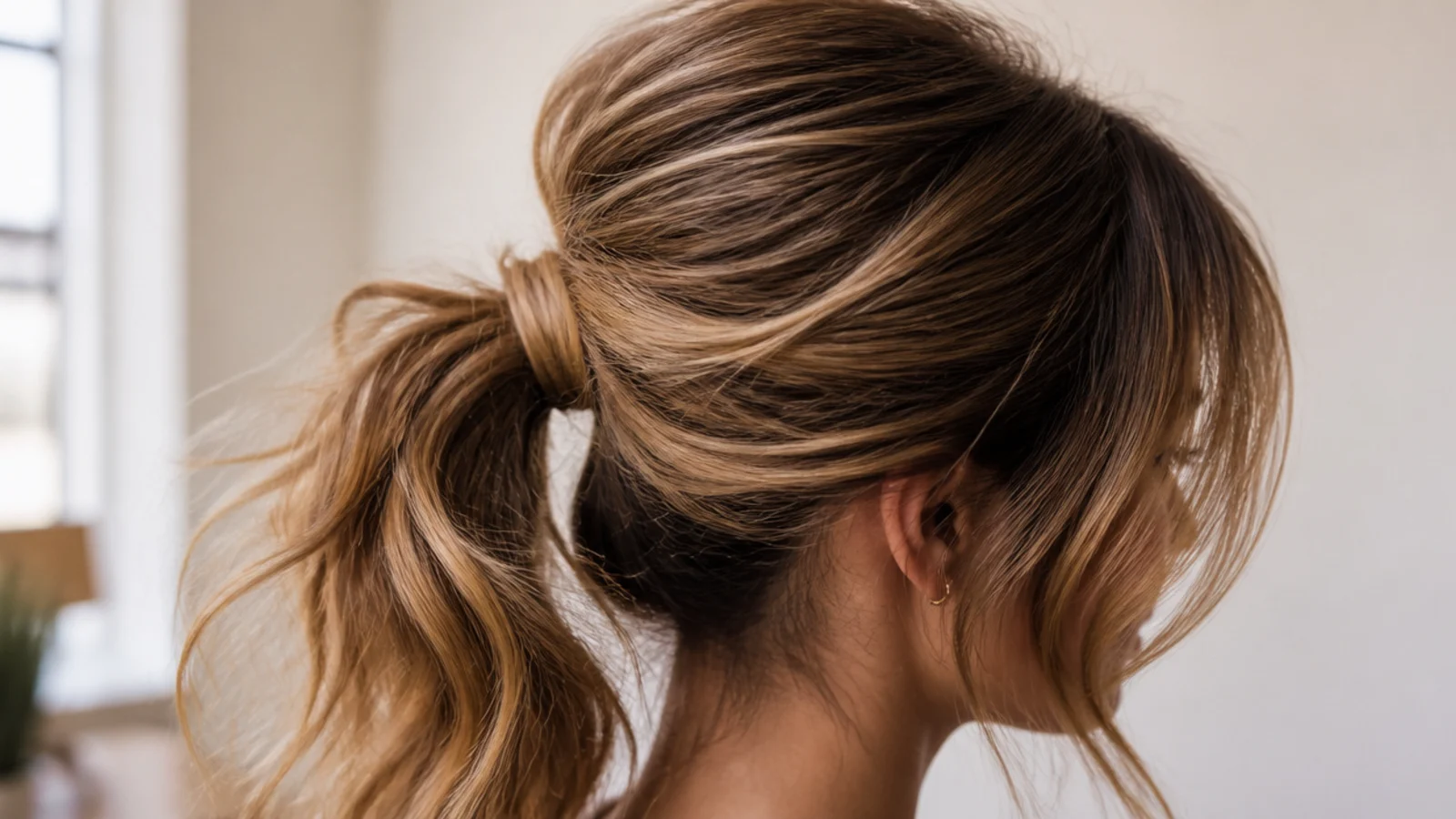
7. Curly Bangs With a Pineapple
Curly bangs shrink as they dry, so they are cut long and end up short. Gathering the rest into a loose pineapple keeps the tie off the curl pattern, and it puts the whole style above the fringe where nothing is pressing on it.
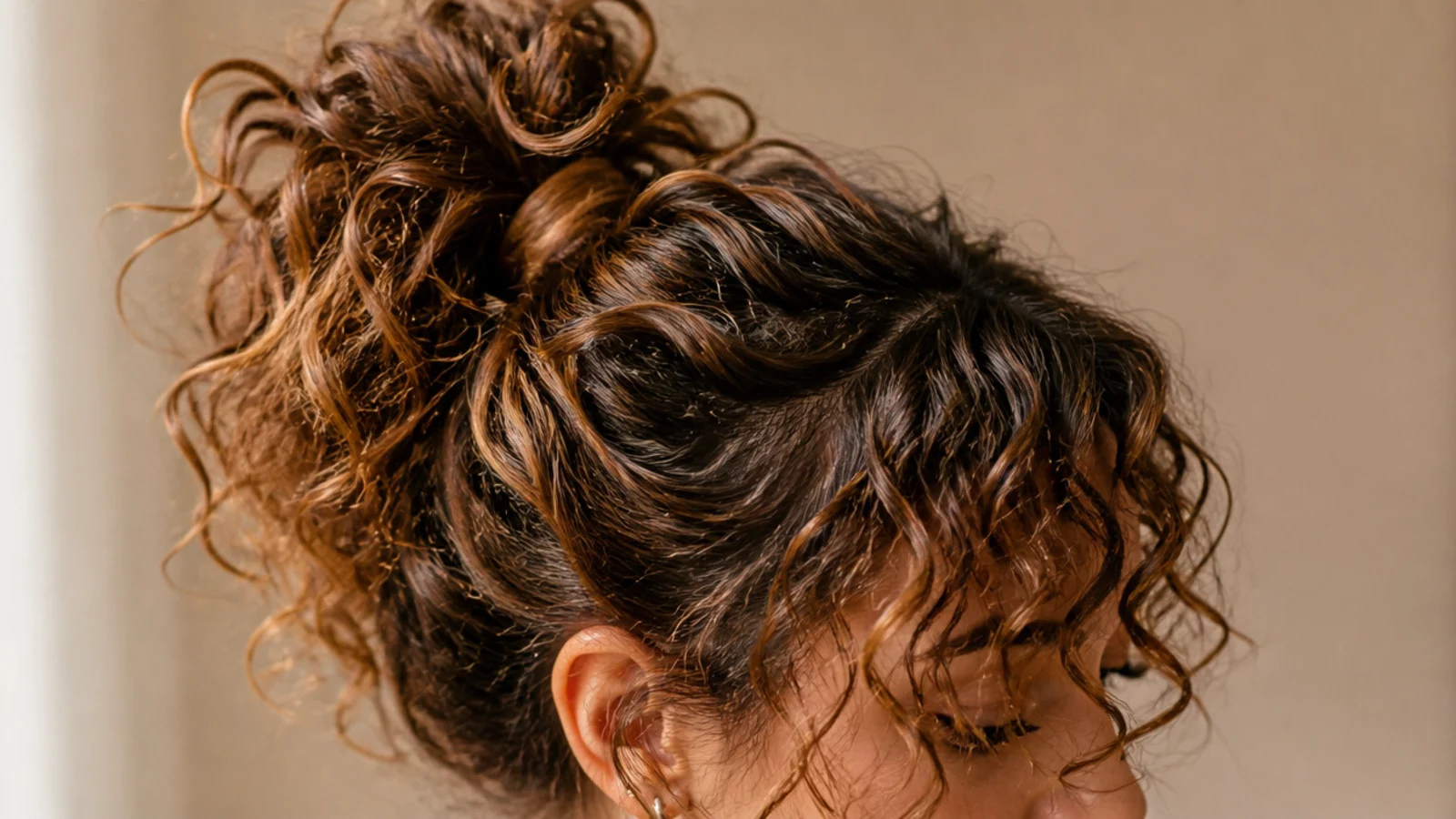
8. Baby Bangs With a Sleek Messy Pony
Baby bangs sit well above the brow, so there is a band of bare forehead between the fringe and the eyes. That gap is what the rest of the style has to be tidy enough to justify, which is why the base is smoothed and only the tail is left rough.
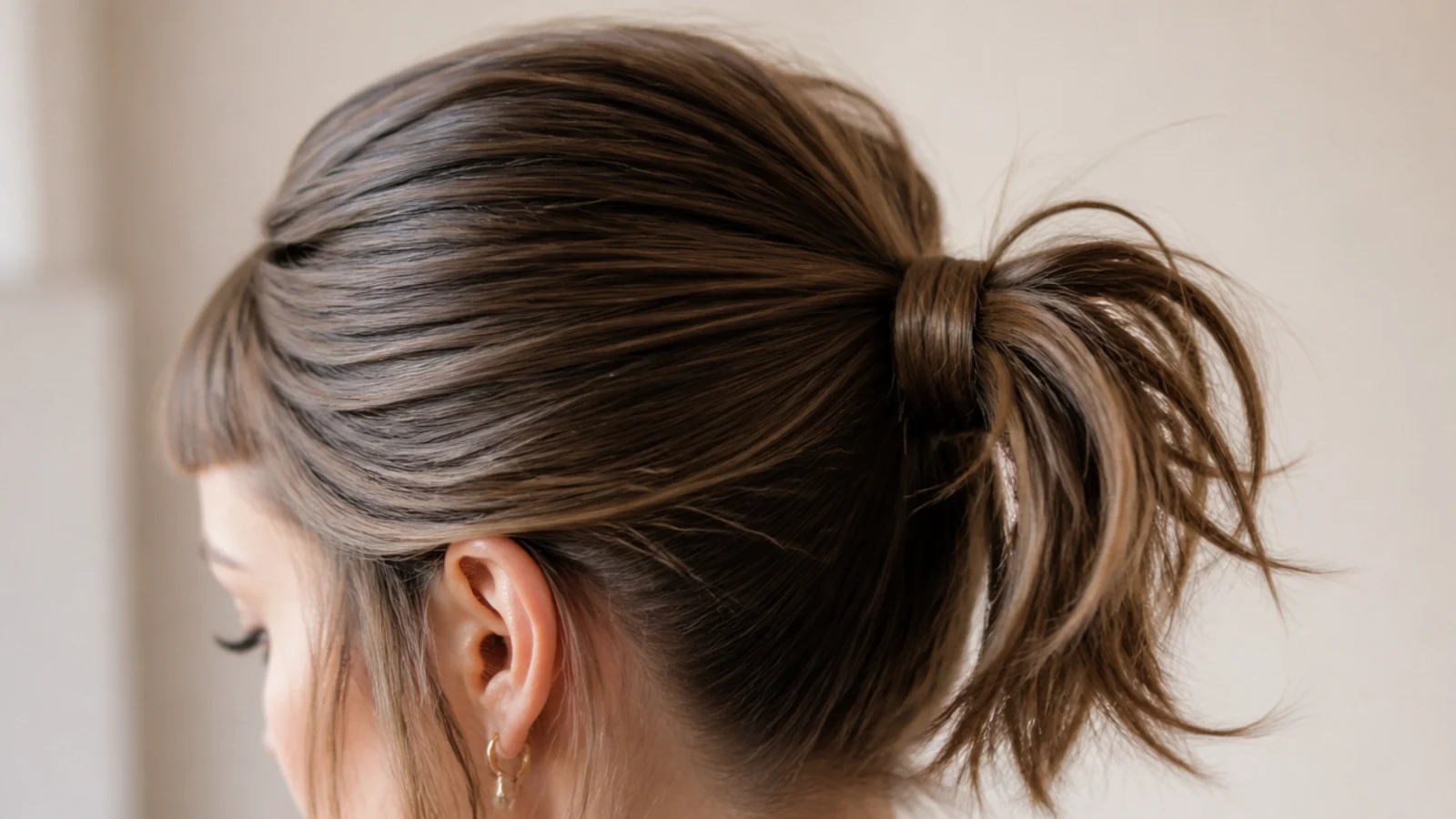
9. Round Face With a Mid Pony
A mid height tie plus longer pieces left down at the temples puts two vertical lines either side of the cheek. Vertical lines read as length, which is the opposite of what a high tight ponytail and a blunt fringe do together.
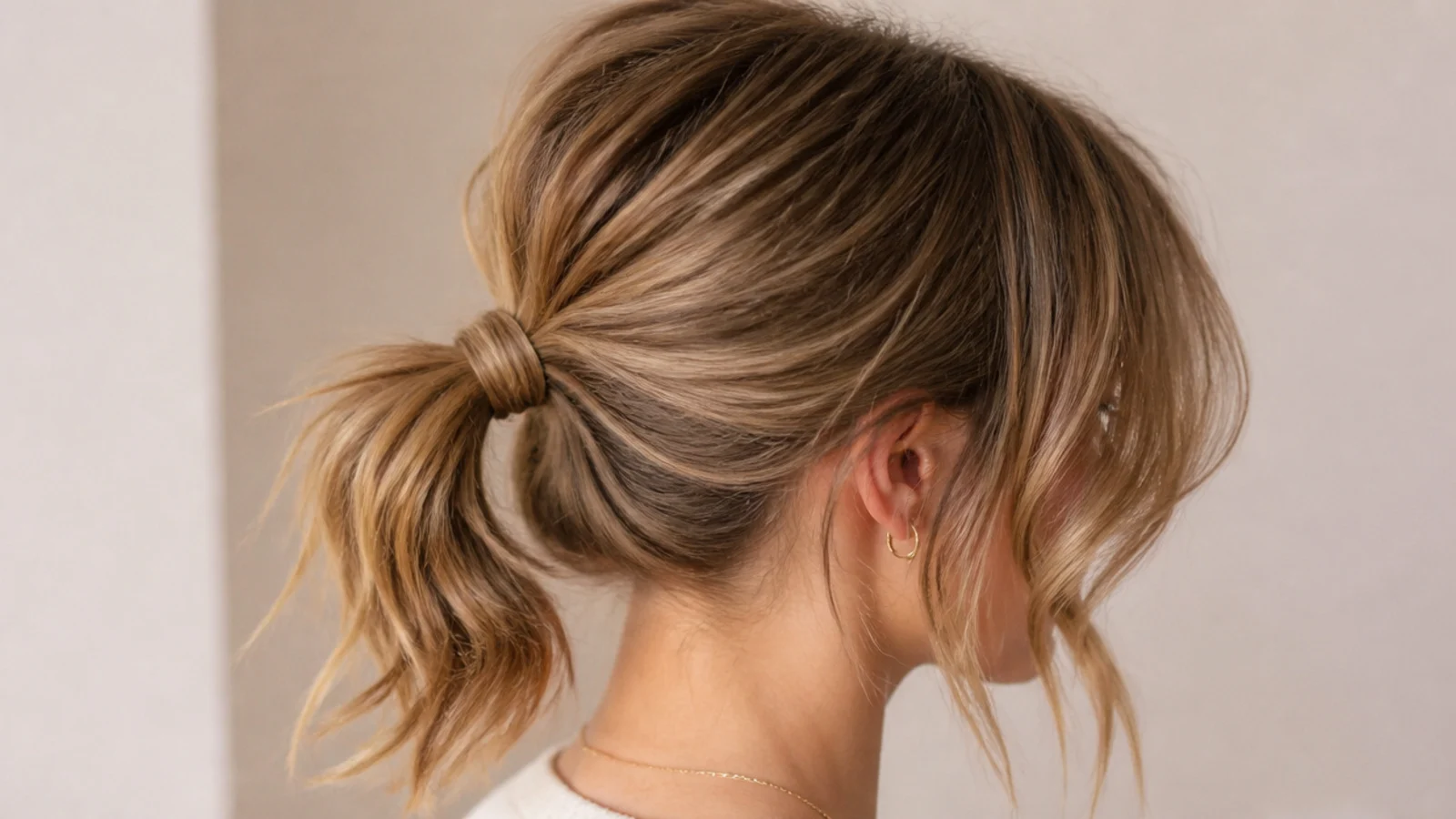
10. Shag Bangs With a Bubble Pony
A shag is cut in layers of very different lengths, so the shortest pieces around the face were never going to reach the band. Bubbles down the tail give the rest of the style the same broken up rhythm, so the escaping layers look like part of the plan.
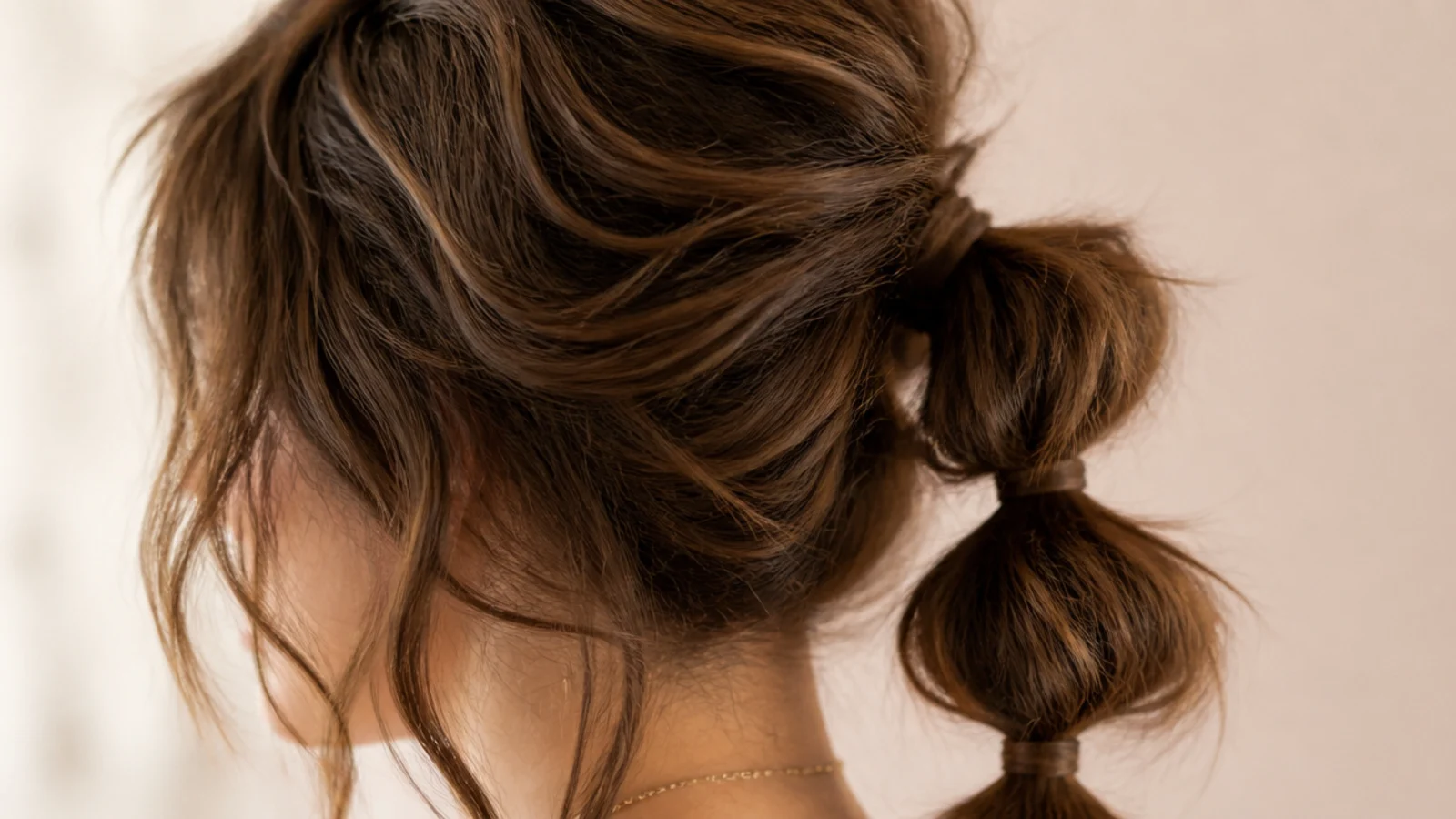
11. Long Curtain Bangs Tucked Back
Once a curtain fringe passes the cheekbone it can be tucked behind the ear on one side only. Keeping the other side out preserves the asymmetry the fringe was cut for, where tucking both sides just looks like the fringe has been removed.
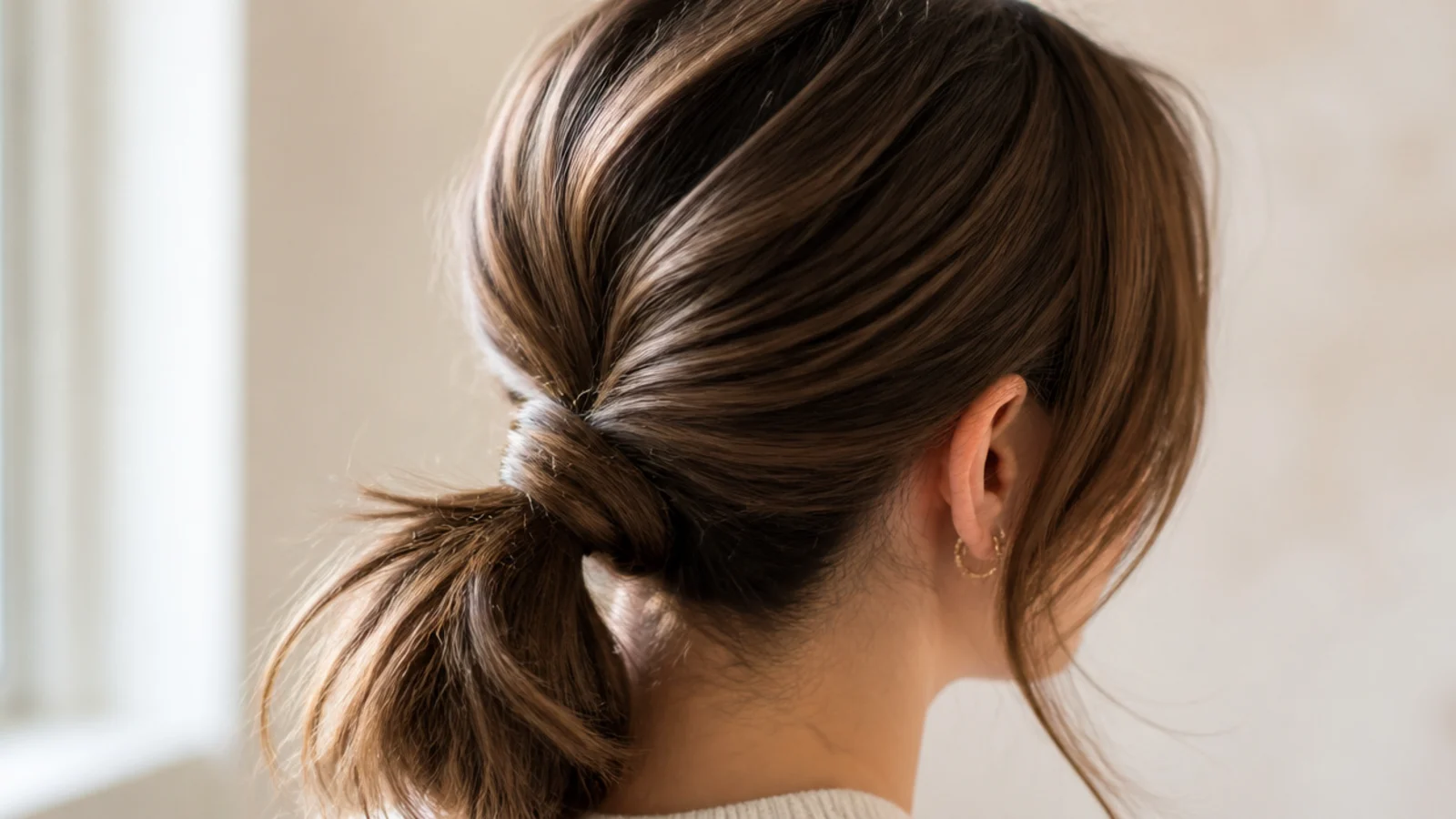
12. Fine Hair With a Teased Crown
A fringe takes hair from the front of the head, which is exactly where fine hair looks thinnest once it is gathered back. Backcombing the crown after tying restores the height the fringe removed, and it lifts the fringe roots off the forehead at the same time.
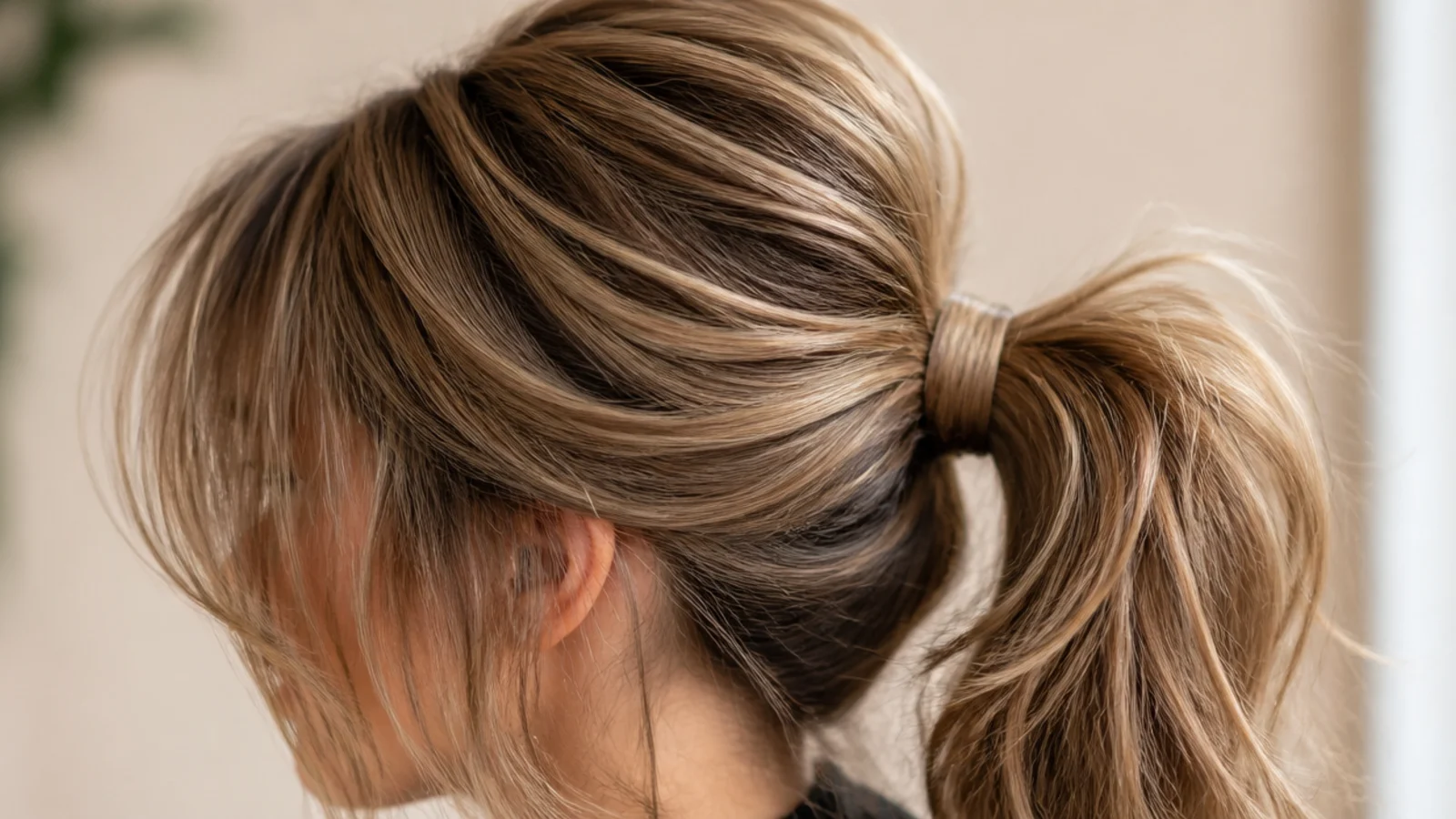
13. Korean Air Bangs
Air bangs are cut from a very thin front section and thinned further, so the forehead shows through them. That transparency is what keeps them from going flat when the ponytail pulls the scalp tight, because there is not enough hair to lie heavily on anything.
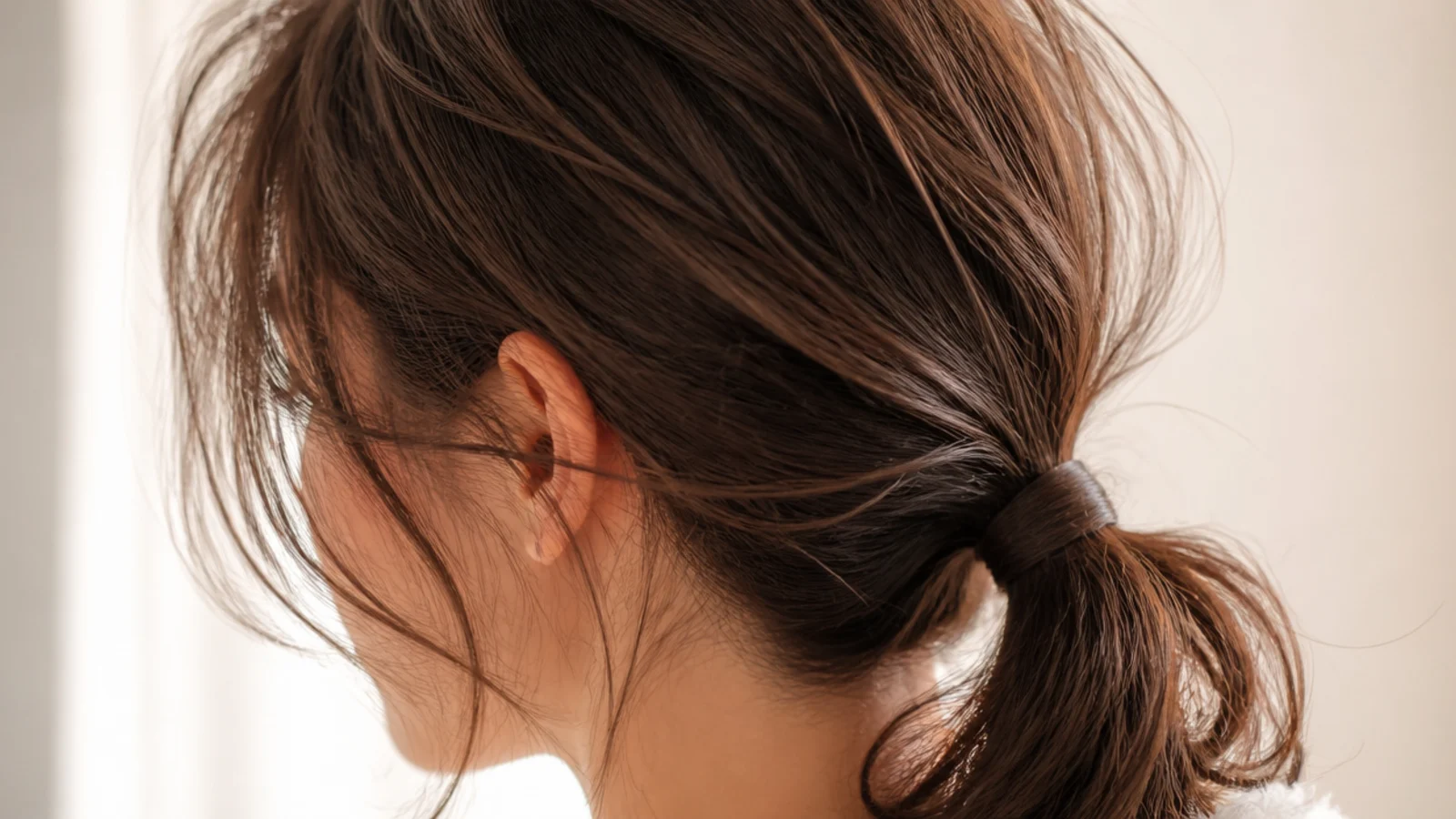
14. Bottleneck Bangs With a Half Up
Bottleneck bangs are shortest in the centre and lengthen sharply at the sides, curving out like the neck of a bottle. A half up leaves the lengths down beside them, so the fringe flows into the loose hair rather than ending against a gathered edge.
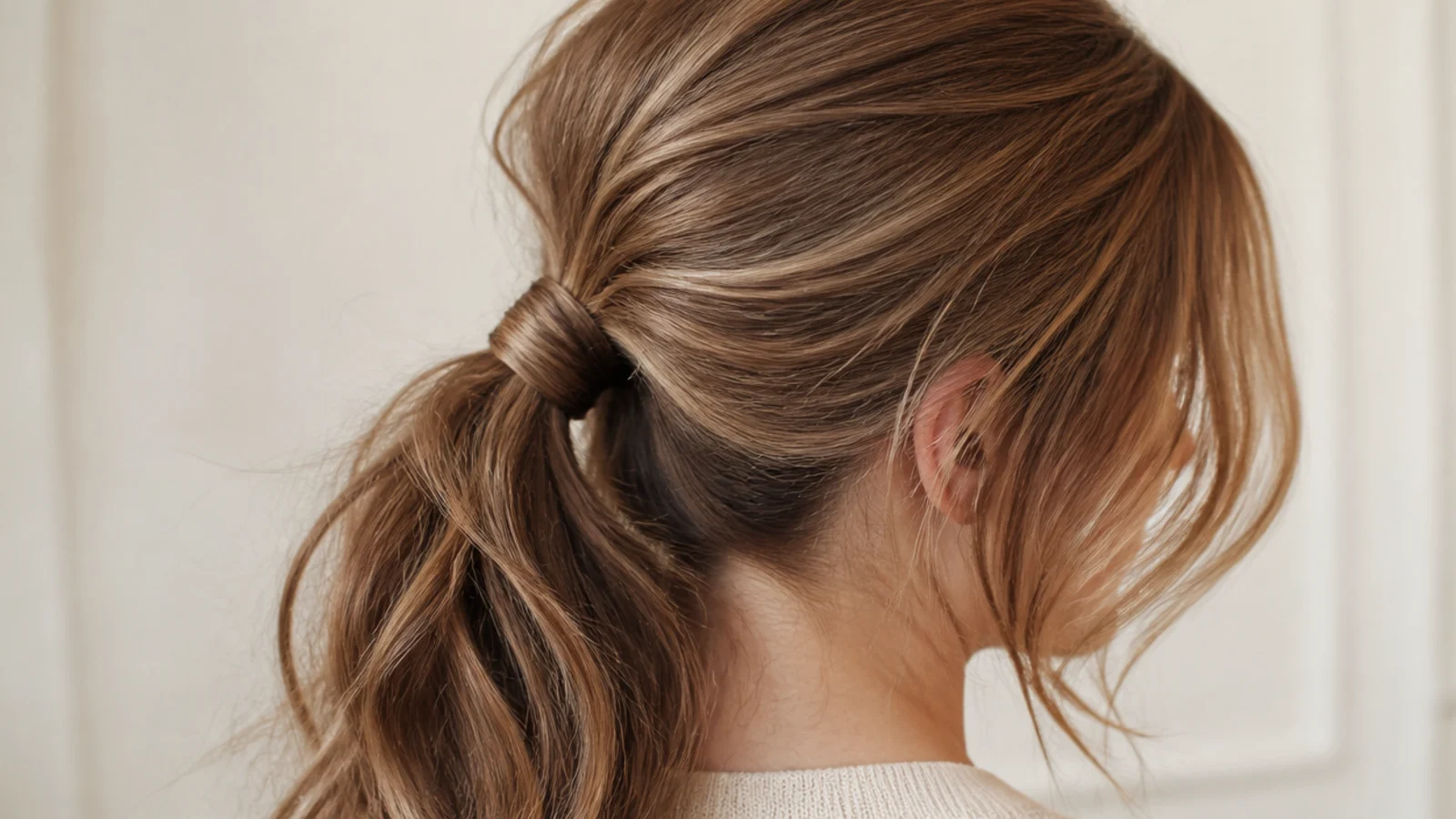
15. Blunt Bangs With a Bandana Pony
A bandana across the crown gives a blunt fringe a second horizontal to sit under, so the hard line stops being the only one in the style. It also covers the flat root area behind the fringe, which is where the oil arrives first.
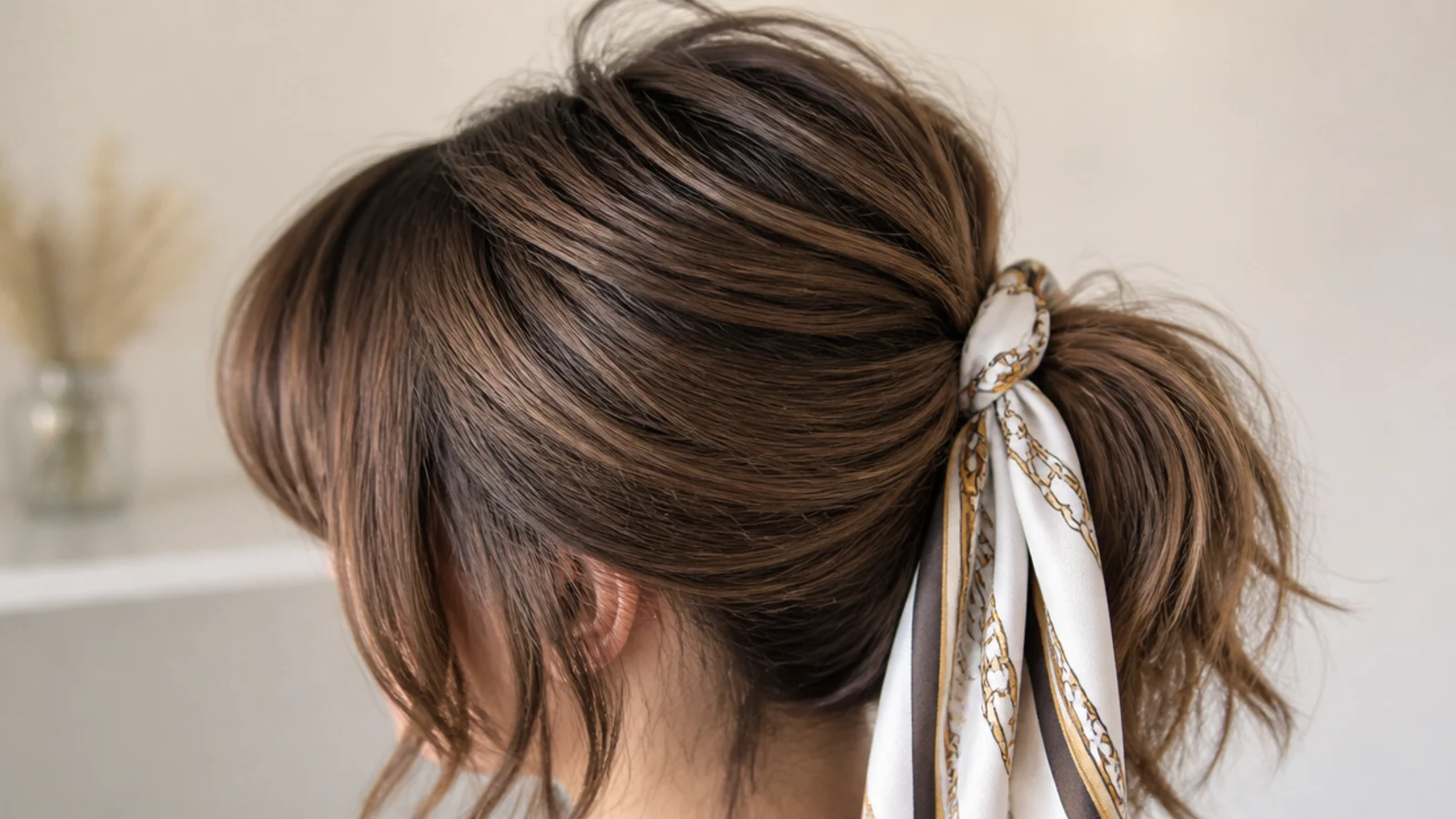
16. Curtain Bangs With a Braided Base
A braid worked into the base gives the elastic a ridged surface to grip, which matters here because a fringe removes hair from the front and leaves less to gather. The braid also holds the temple sections in place so they do not creep forward into the fringe.
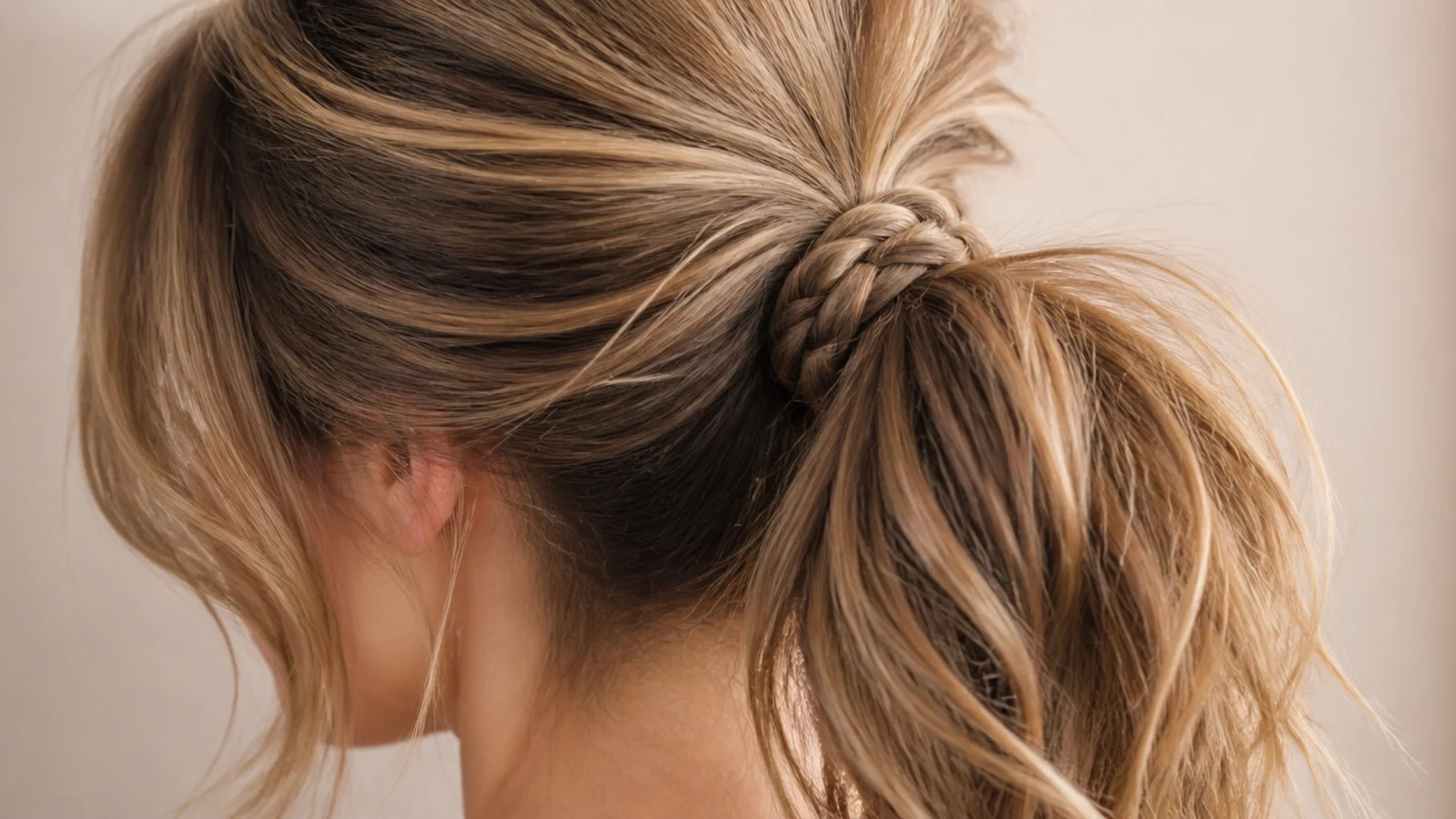
17. Two Day Bangs With Dry Shampoo
By day two the fringe has been in contact with the forehead for forty odd hours and is carrying oil from both directions. Lifting it and powdering underneath restores the separation, and the rest of the head usually needs nothing at all.
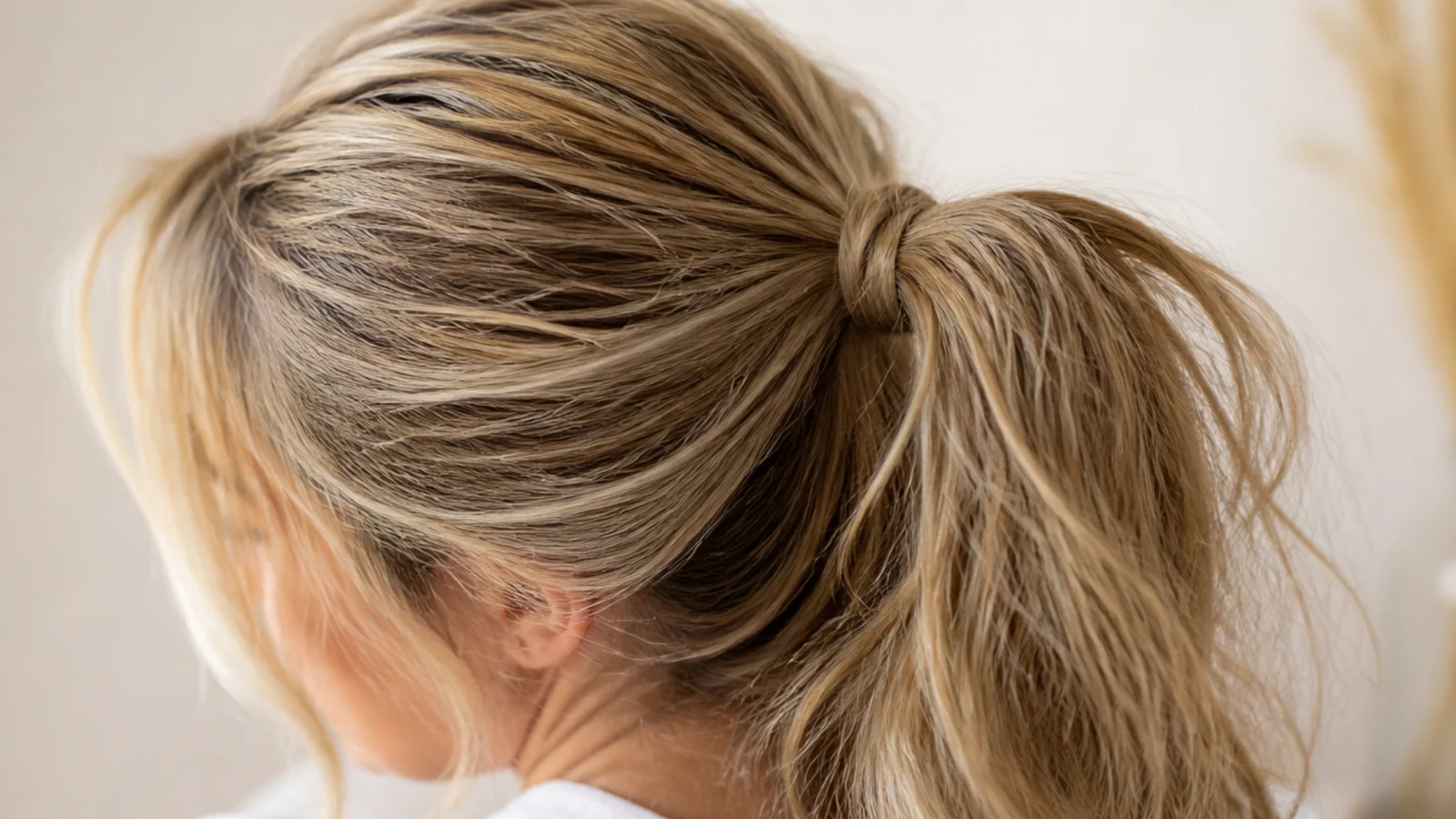
18. Micro Fringe With a Ballet Pony
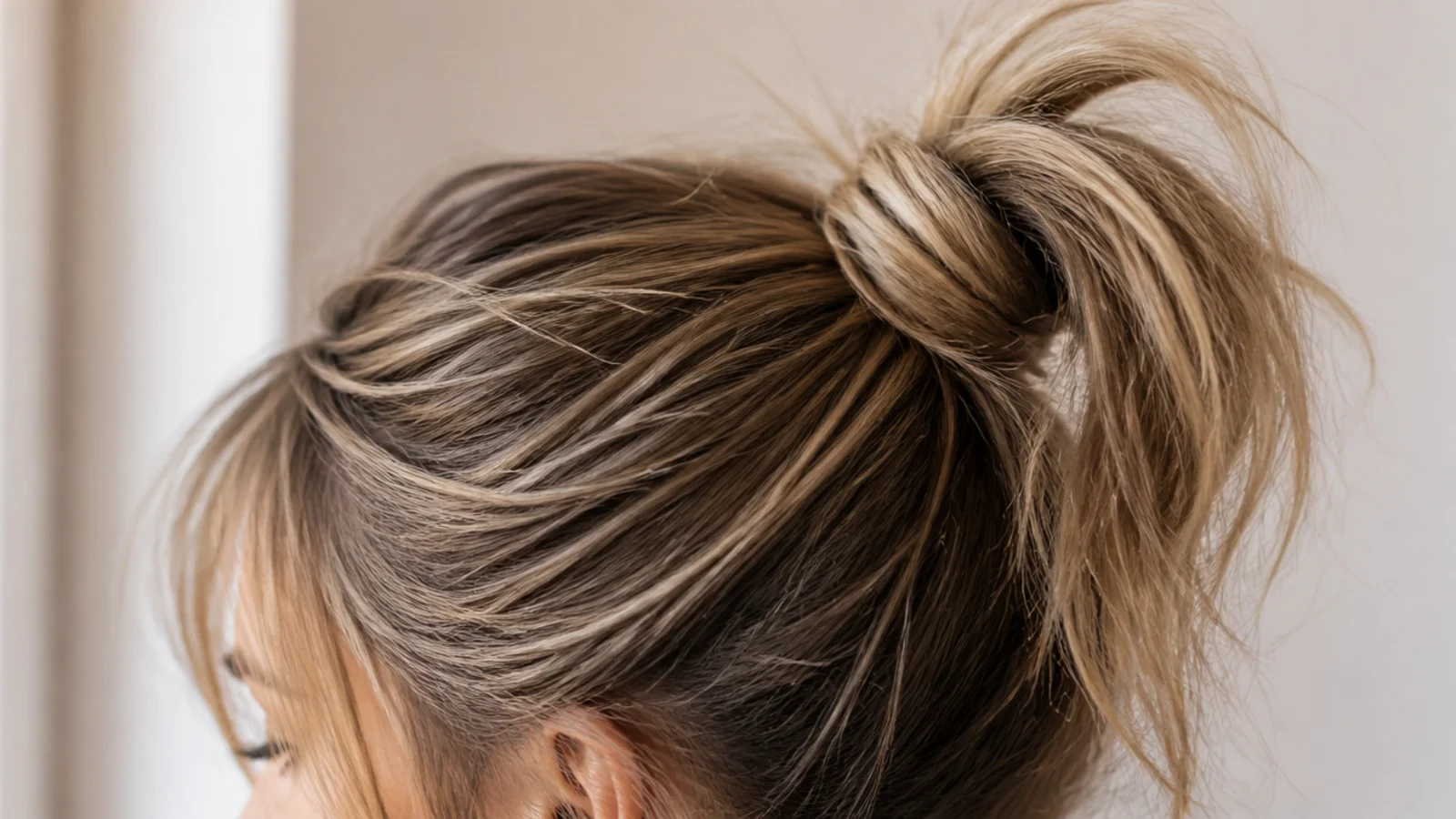
A micro fringe sits high on the forehead, and a tightly gathered high tail puts everything else above the brow with it. The two share one line of tension across the top of the face, which is what makes this read as severe by design rather than by accident.
19. Curtain Bangs With a Ribbon Pony
A ribbon tied over the elastic adds a second point of hold and covers the band, which is the detail that reads as unfinished on a style whose face framing is otherwise deliberate. Silk ribbon also slides over the cuticle rather than catching it.
20. Grown Out Bangs With a Twisted Pony
Twisting the front sections back and catching them in the elastic recruits the awkward mid length pieces that will neither hang nor gather. The twist is anchored at both ends, so those pieces stay put instead of working forward over the course of the day.
Final Thoughts
Choose the tie height from the fringe rather than from habit. A short or blunt fringe already puts weight above the brow and pairs with a high tail, while a long curtain fringe wants a mid or low tie so the temple pieces continue the line instead of fighting it.
The upkeep is a separate problem from the styling. A fringe touches skin all day and will always need refreshing before the rest of your head does, so learn to powder underneath it and wash it alone at a basin. That habit is worth more than any of the twenty arrangements above. For higher versions of this pairing see the high version. More in Updos and Clips. See also the curly version.