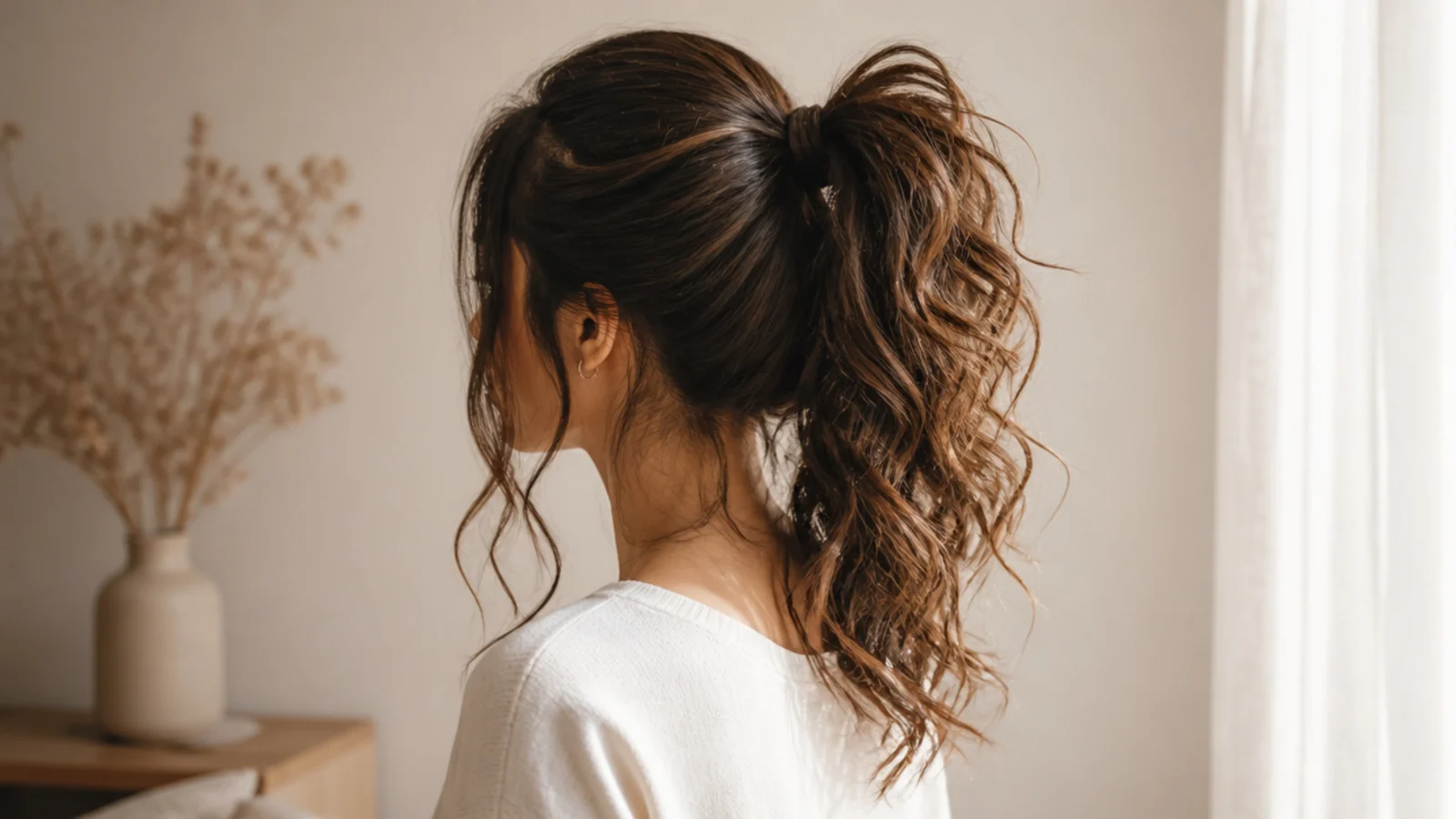
15 Curly Messy Ponytail Ideas That Hold All Day
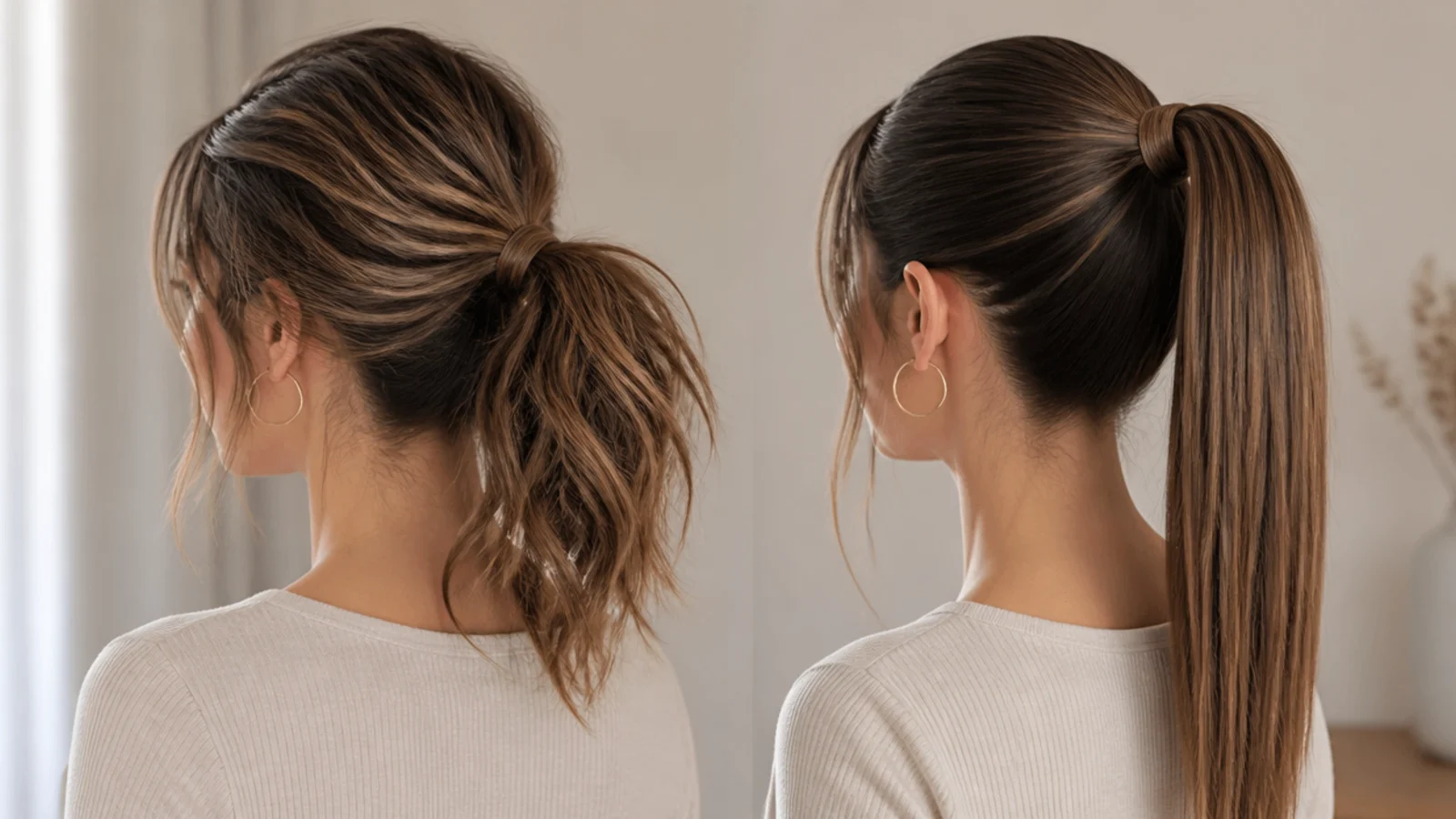
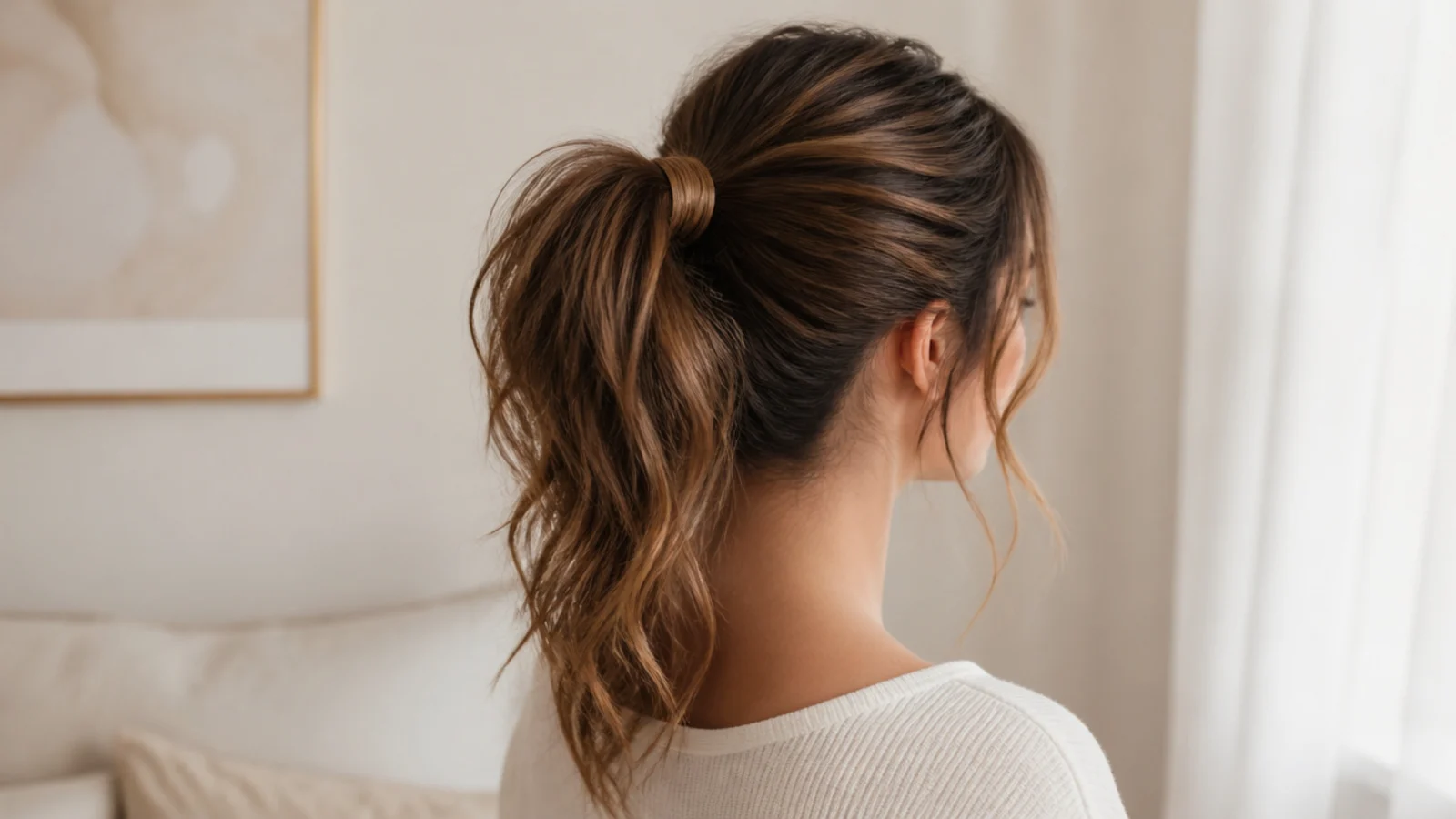
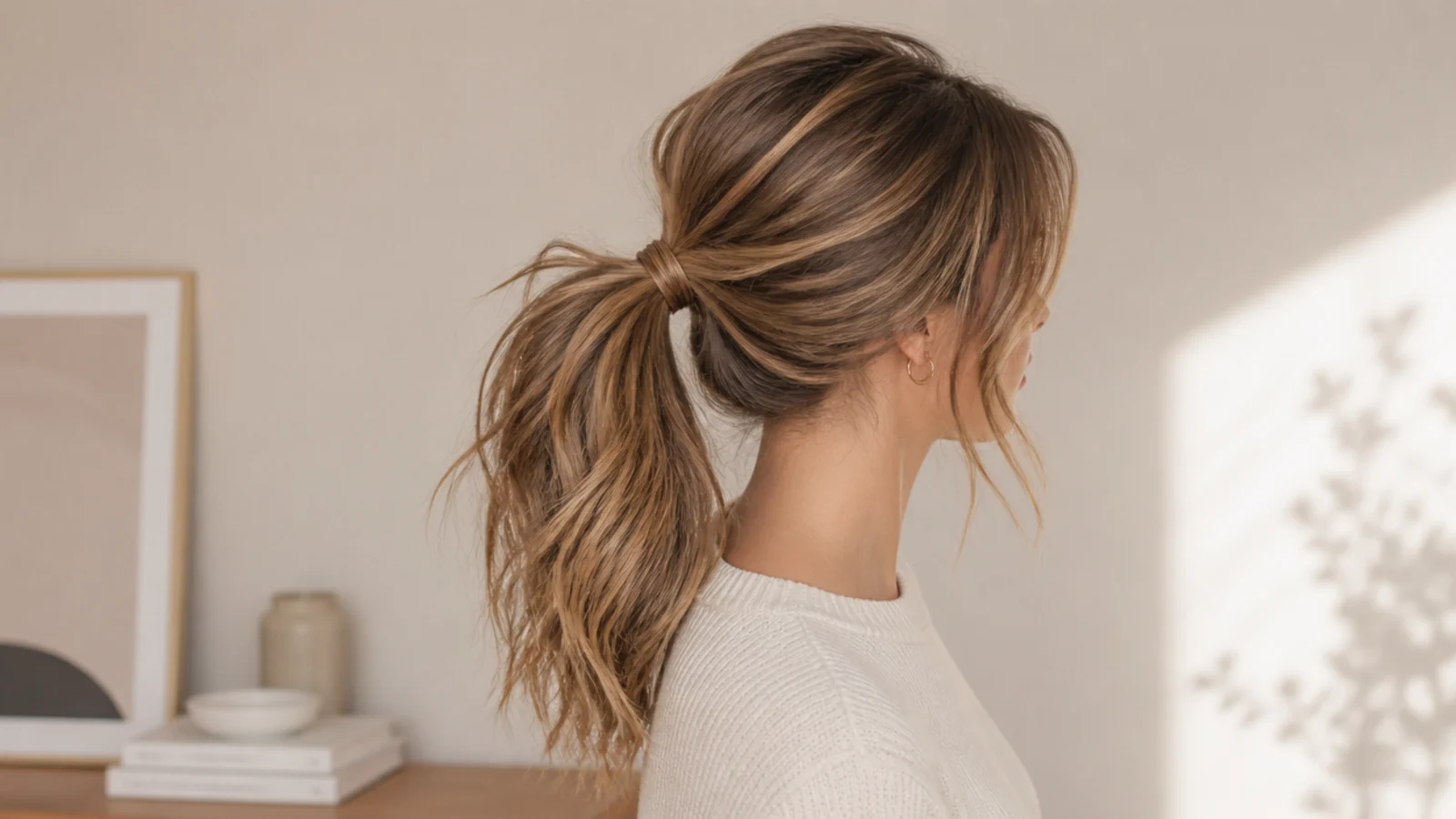
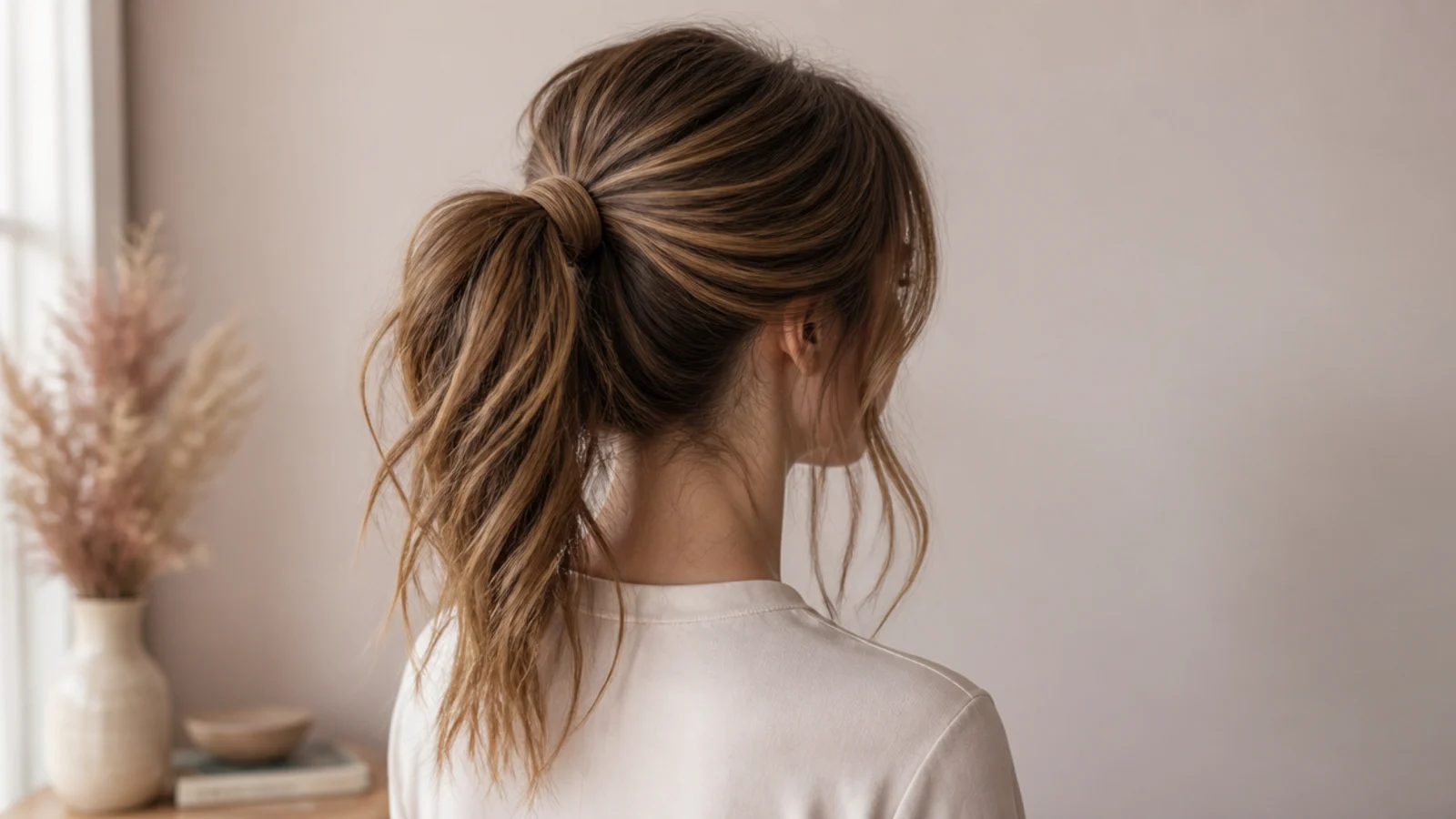
Fifteen curly messy ponytails, and the line that separates the good ones from the bad — messy is one crisp element surrounded by soft ones, and a loose tie under a soft tail simply reads as untidy.
In this article · 23
- What Makes It Read Messy Rather Than Untidy
- By Curl Type From 2A to 4C
- Crown Tie Versus Nape Tie
- Fine Curls Versus Thick Curls
- Products That Matter
- Volume and All Day Hold
- The 15 Curly Messy Ponytails
- 1. The Pineapple on 3B
- 2. Low at the Nape on 3A
- 3. Half Up on 2C
- 4. The Day Two Refresh
- 5. A Bungee Cord on 4A
- 6. Wrapped Elastic
- 7. Side Swept on 3A
- 8. With Curtain Bangs
- 9. Twisted Front on 2B
- 10. Bubble Ponytail on 2C
- 11. Satin Scrunchie on 4C
- 12. Braided Base
- 13. Sleek Roots With a Messy Tail
- 14. Short 3B Bob Ponytail
- 15. Crown Tie on 3C
- Final Thoughts
A curly messy ponytail is easy to get wrong in a way that has nothing to do with the curls.
Messy means one crisp element surrounded by soft ones. The tie point is that element. A clean, deliberate base under a loose textured tail reads as styled, and the contrast is doing the work.
Soften everything and there is nothing left to read against. A slack base under a soft tail has no reference point, so the eye files the whole thing as untidy rather than undone.
What Makes It Read Messy Rather Than Untidy
The base is the one tidy thing. Everything above the tie should be smooth enough to look intended, and everything below it should be left alone.
Pieces come out at the front, not at the back. Face framing strands read as deliberate because they frame something. Strands escaping at the crown just read as escaped.
Volume has to be uneven on purpose. Symmetrical volume is a blow dry. Pull more from one side than the other and the shape looks worn rather than set.
Nothing should be brushed. A brush through dry curls separates every clump and turns the tail into a triangle, because a clump is what was holding each bend in place.
Do it on day two hair. Sebum and yesterday's product give the strands friction, and friction is what lets a loose tie stay where you put it.
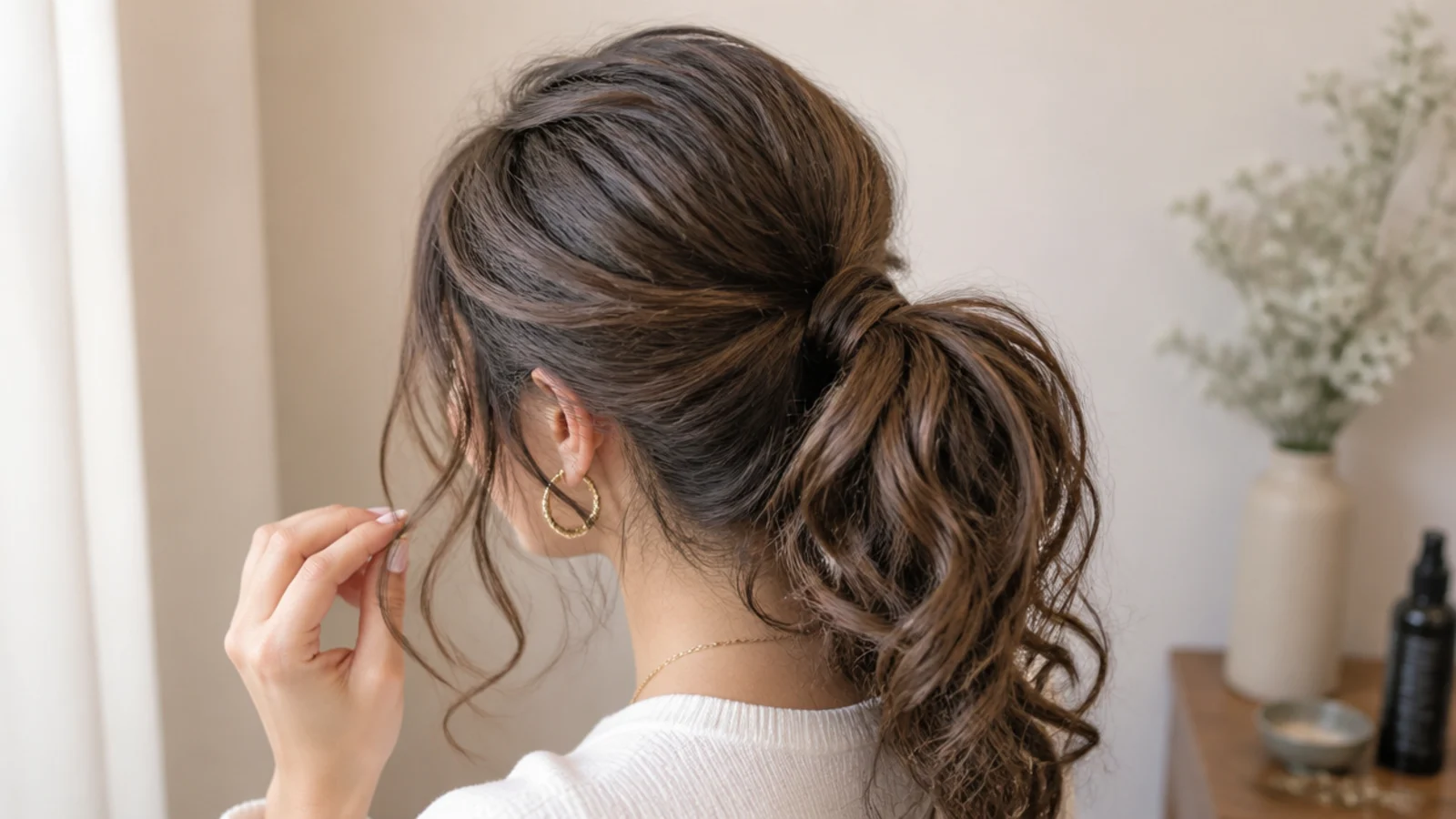
By Curl Type From 2A to 4C
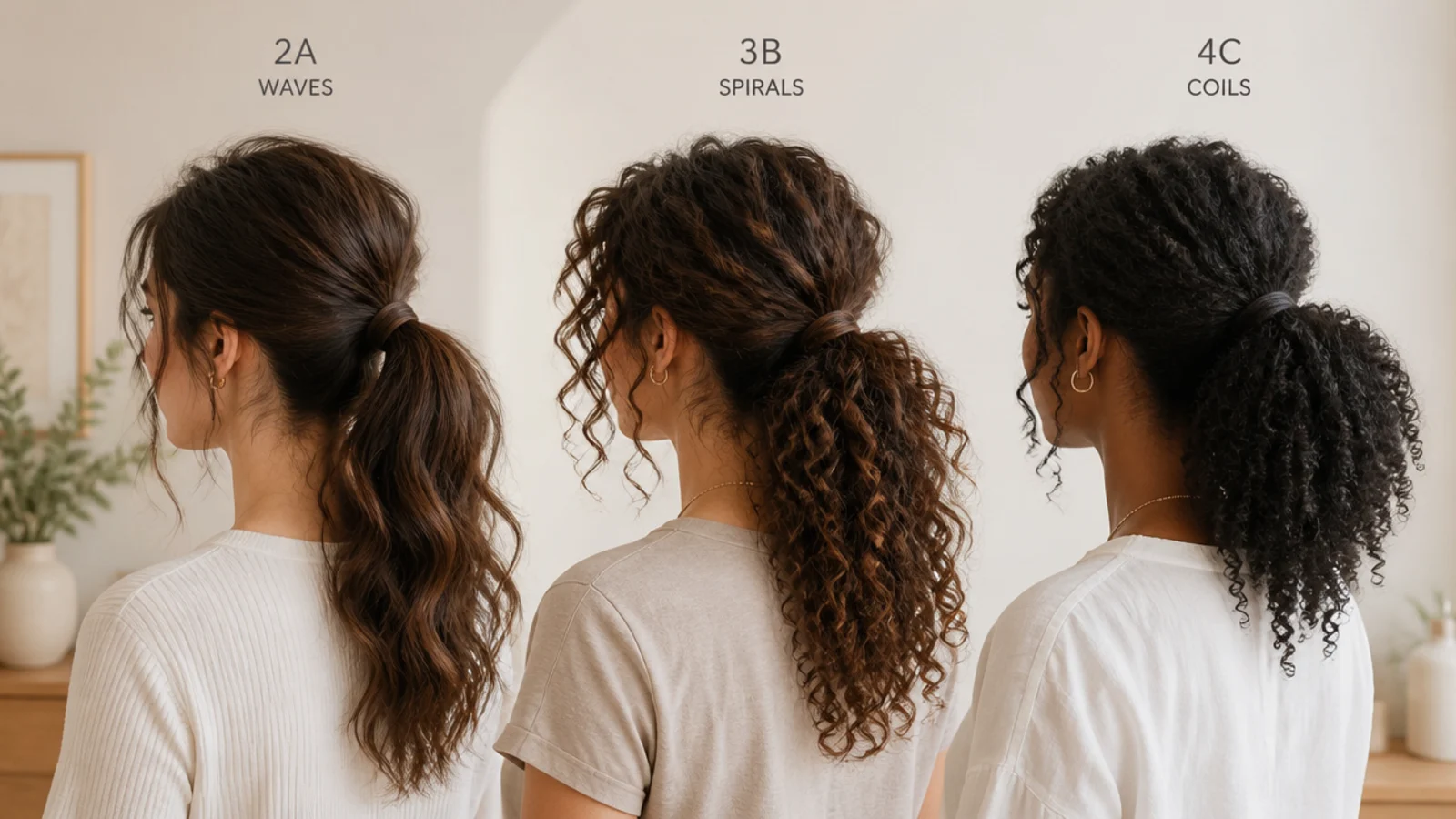
2A and 2B slip out of everything. A shallow wave has almost no surface irregularity to grip with, so the tie needs to be genuinely tight even though the finish is meant to look loose.
2C and 3A hold a tie without help. The bend is deep enough for strands to catch on each other, which is why this is the easiest range to get a messy ponytail out of.
3B and 3C build height on their own. The spring in the curl lifts the tail away from the head, so a mid height tie already looks high.
4A to 4C shrink dramatically. The tail is far shorter than the stretched length, so gather from a stretched state if you want visible length rather than a puff.
Density and curl type are separate questions. A fine 3C head and a dense 3C head want completely different ties, and the curl number tells you nothing about which one you have.
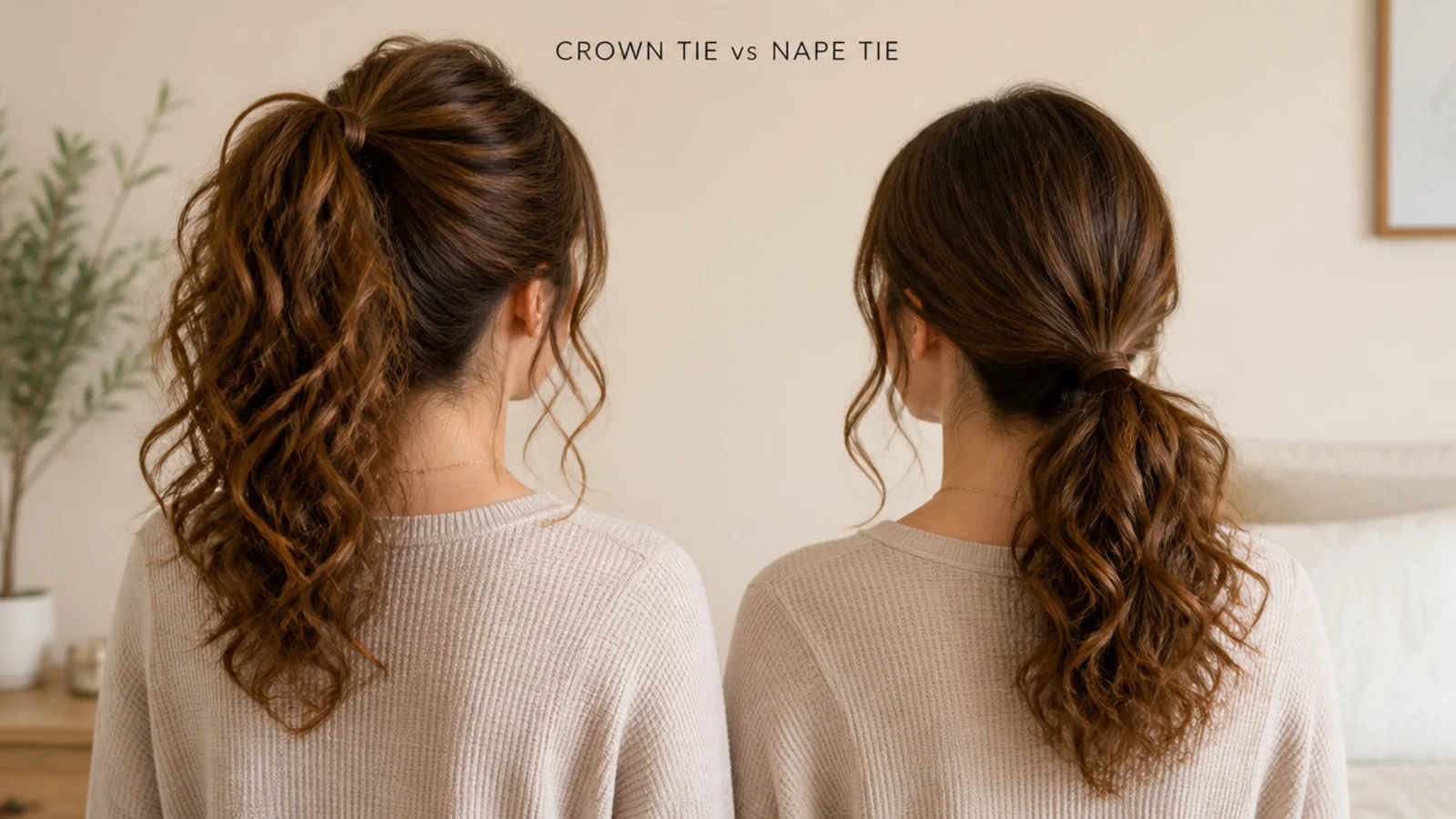
Crown Tie Versus Nape Tie
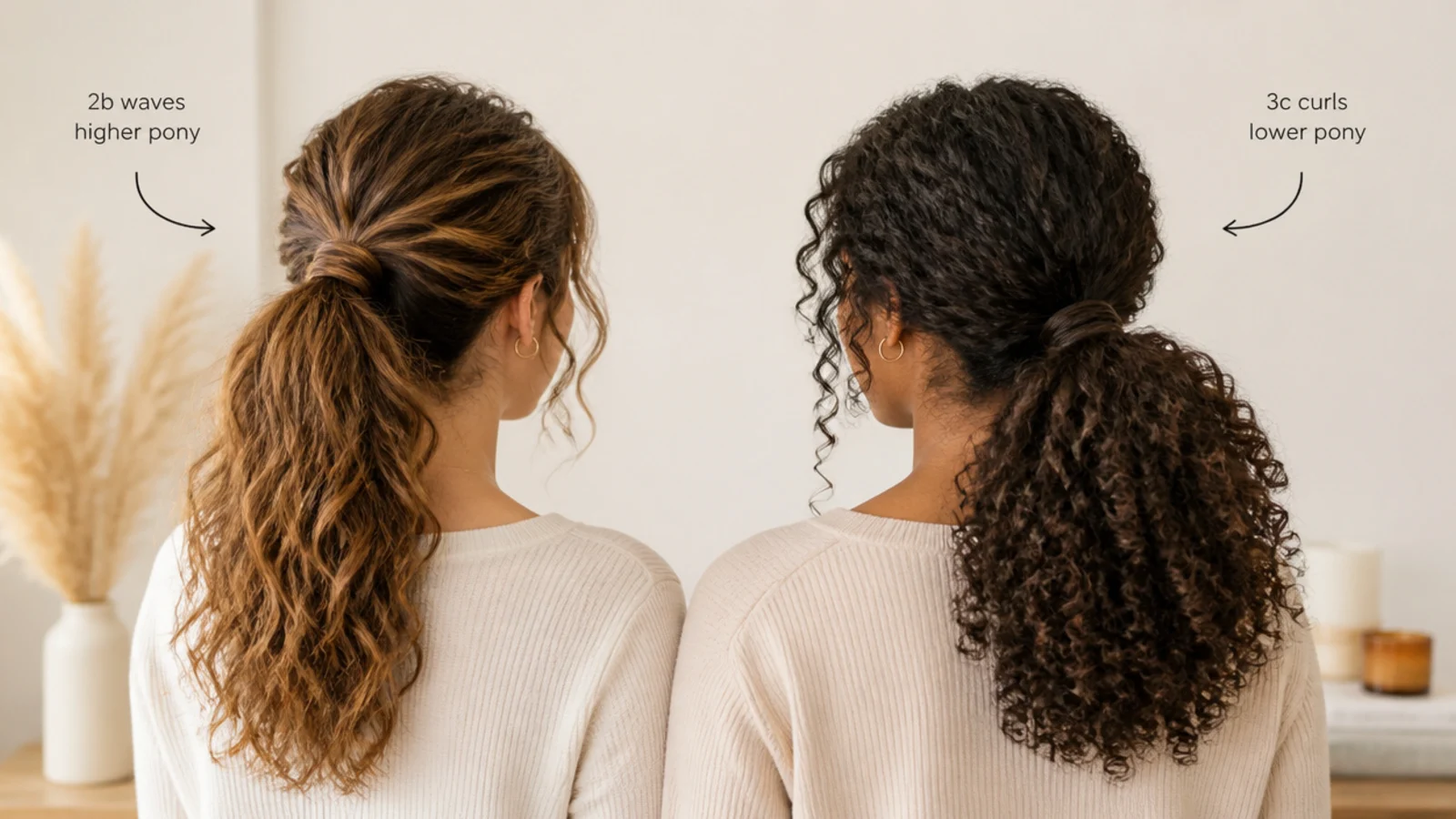
A crown tie lifts the whole face. Everything is pulled upward and back, and it exposes more of the hairline, which is why it looks alert and also why it is the harder one on your edges.
Tension at the crown is constant. The full weight of the tail hangs from the hairline all day, and repeated daily is the classic route to thinning at the temples.
A nape tie keeps the front soft. No hair is pulled from the face, so curls at the temple stay in their own shape rather than being stretched into the gather.
The nape flattens one side of the tail. It rests against the neck and a collar, so the back of the ponytail compresses while the front stays full.
Alternate rather than committing. Moving the tie point every other day means no single section of hairline carries the load twice running.
Fine Curls Versus Thick Curls
Fine curls cannot carry a heavy tie. A thick scrunchie outweighs the tail and drags the whole shape down, so a small elastic wrapped once is the better call.
Fine curls need volume built before gathering. Once the hair is in your hand there is no adding to it, so root lift has to happen at the drying stage.
Thick curls fight the elastic itself. Stretching a band over a dense tail three or four times puts enormous drag on the strands at the base, which is exactly where they are already under load.
A bungee cord solves the thick tail. It hooks in at one side, wraps, and hooks at the other, so the band never has to be stretched over the hair at all.
Split the tail if it is very dense. Two ties an inch apart share the load and stop the base collapsing under its own weight by the afternoon.
Products That Matter
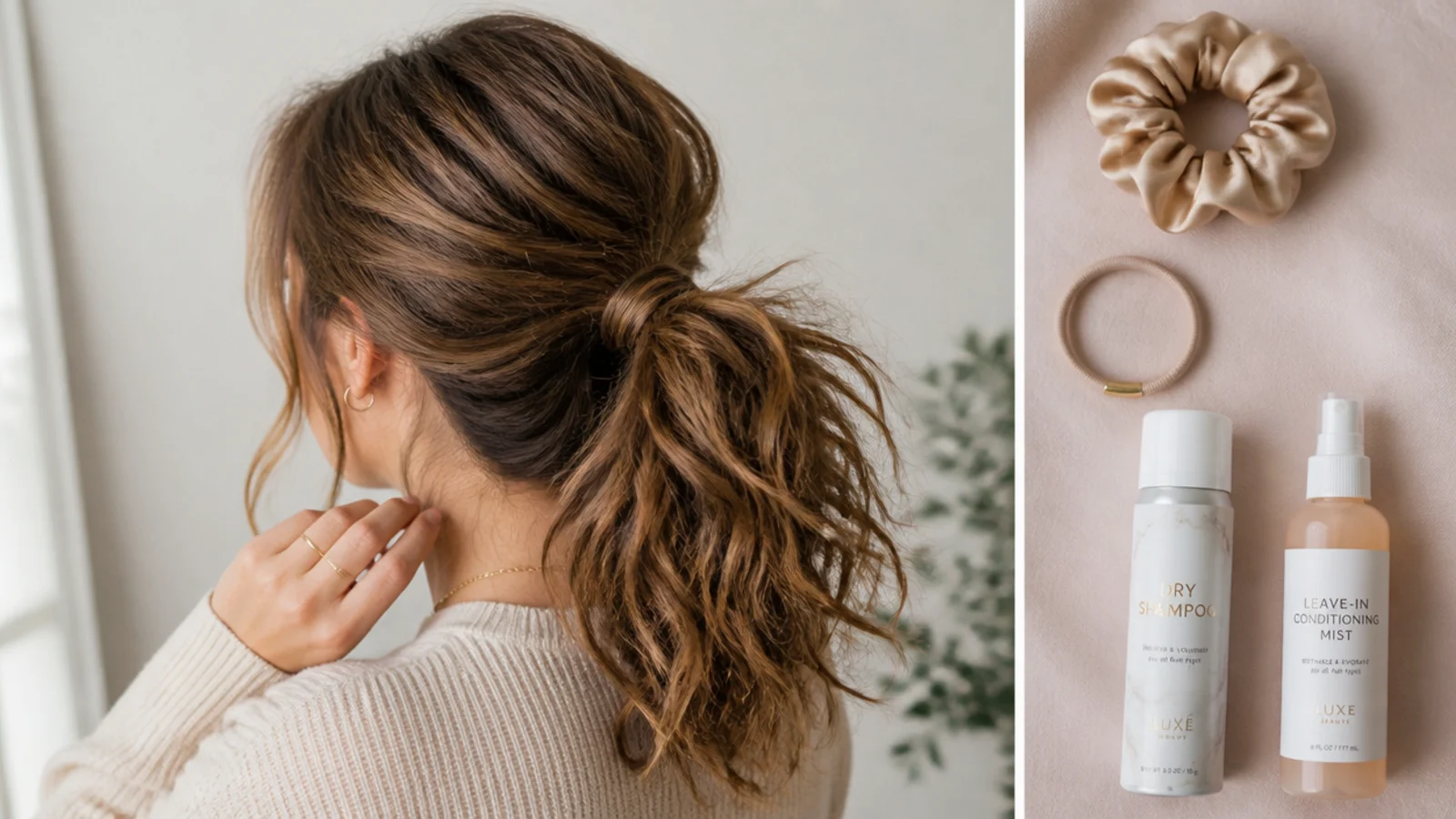
Mousse for fine curls, cream for coarse ones. Mousse is mostly film former carried in air, so it holds without weight. Cream adds slip between strands, which coarse hair needs and fine hair collapses under.
Gel at the base only. A film former around the tie holds the smooth section that gives the ponytail its contrast, and gel anywhere in the tail glues clumps into a single sheet.
Water is the best refresher there is. It breaks and re-forms the hydrogen bonds that hold each bend, which is why a damp spray resets a curl and an oil never will.
Hairspray kills movement. A curl that cannot move looks like a wig, and the whole point of this shape is that the tail is soft.
Less product, applied wetter. Anything applied to a dry curl sits on the outside in patches. The same amount on soaking hair spreads through the water already on the strand.
Volume and All Day Hold
Lift the roots before you gather. Clipping at the root while the hair dries holds the section off the scalp until the bonds set, and that lift is what survives being tied.
Tie it, then pull the tail apart. Gathering compresses the curls into the elastic. Teasing the tail outward afterwards restores the width the tie took away.
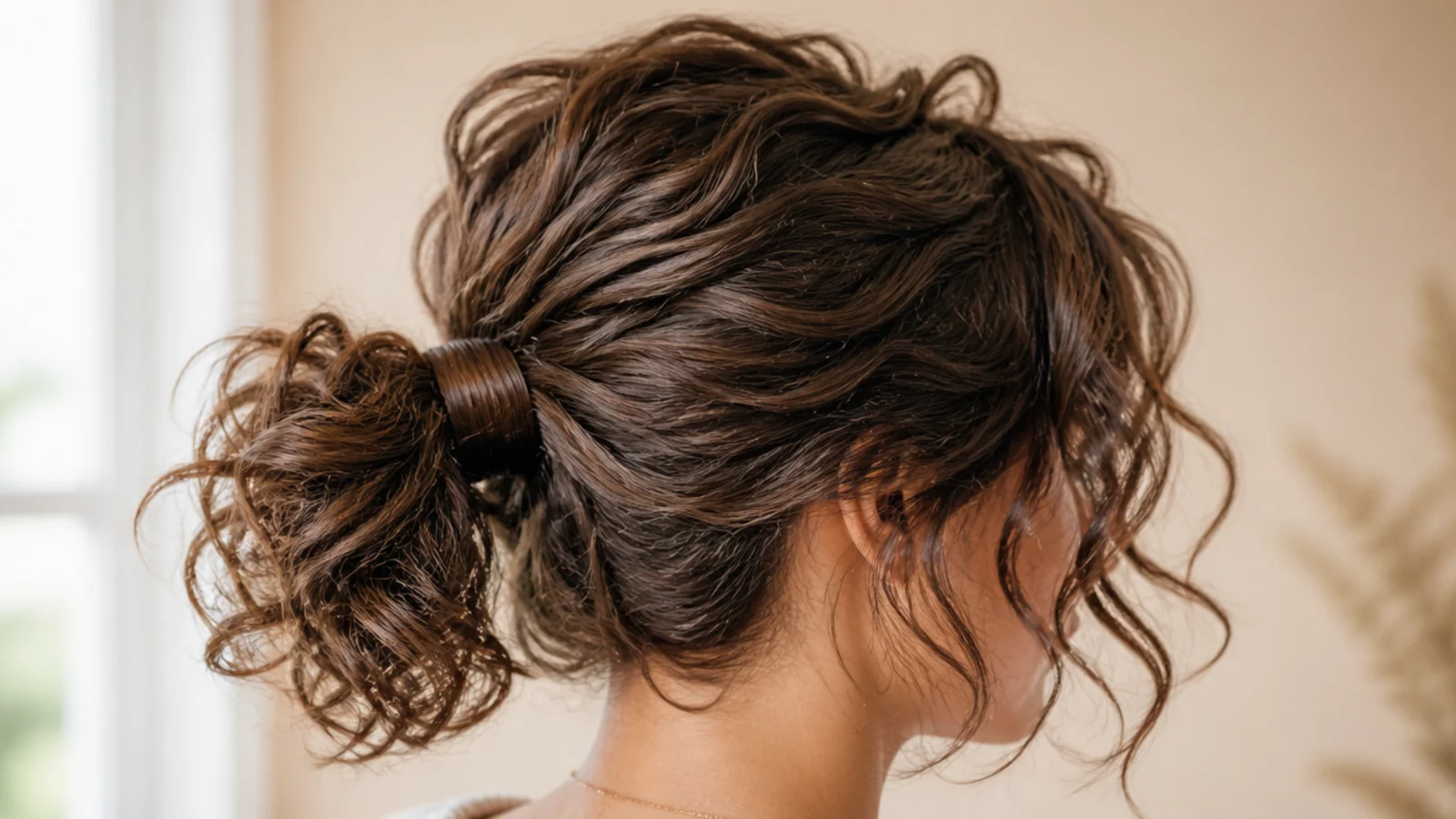
Wrap a strand around the elastic. Hiding the band removes the one hard visual line in the style, so the base reads as a shape rather than as hardware.
Expect to retie once. Curly hair settles and drops as the day warms, and the honest fix is thirty seconds of retying rather than a tighter tie in the morning.
Sleep in a loose gather on top. Keeping the curl off the pillow means friction lands on the tie rather than on the cuticle, and there is less to reset the next morning.
The 15 Curly Messy Ponytails
1. The Pineapple on 3B
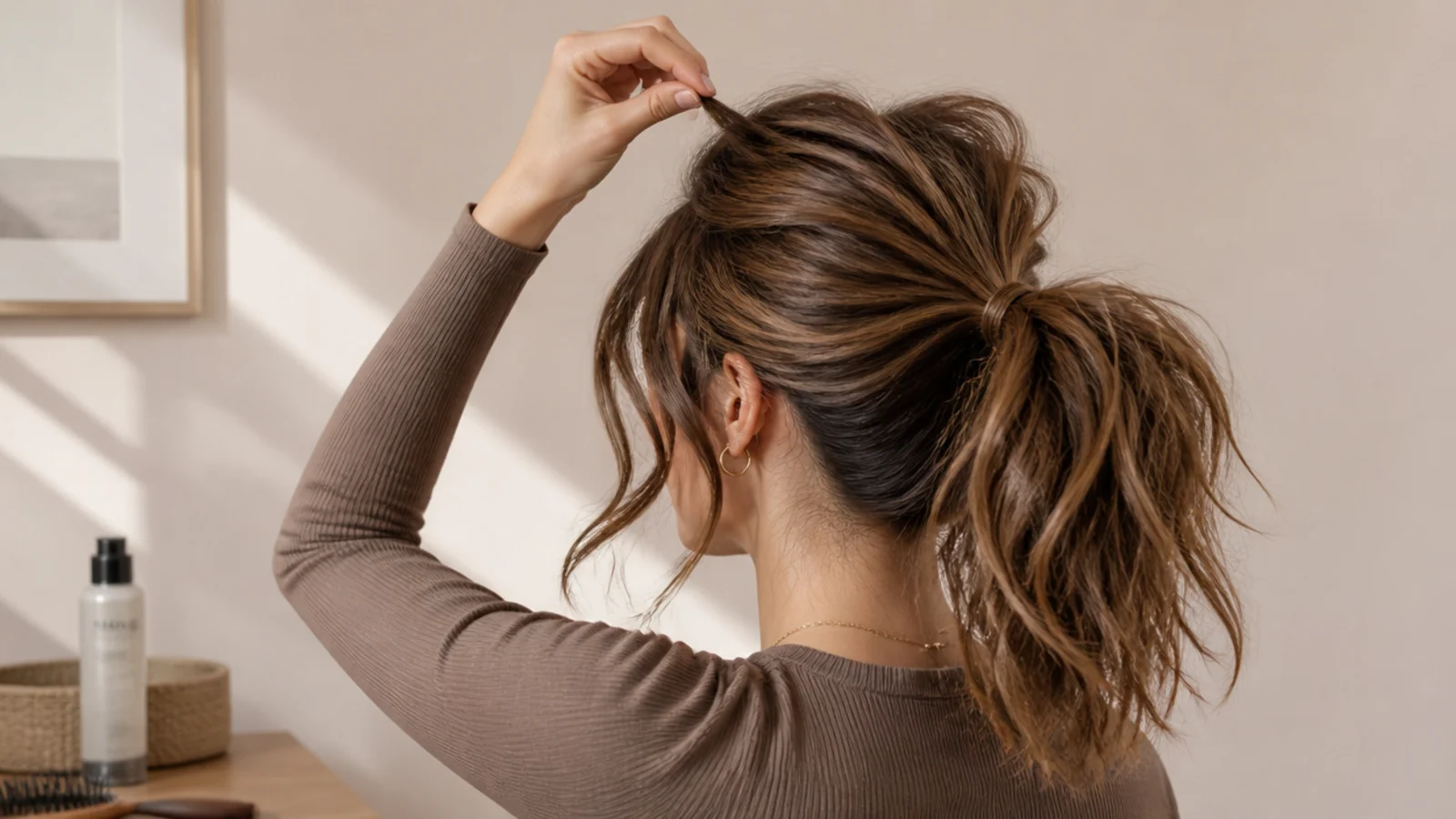
Gathering the curls loosely on top of the head keeps the pattern off the pillow, so friction lands on the tie rather than on the curl itself. On 3B the spring in the coil pushes the tail upward and outward, which is why this reads as volume rather than as a knot on the crown.
2. Low at the Nape on 3A
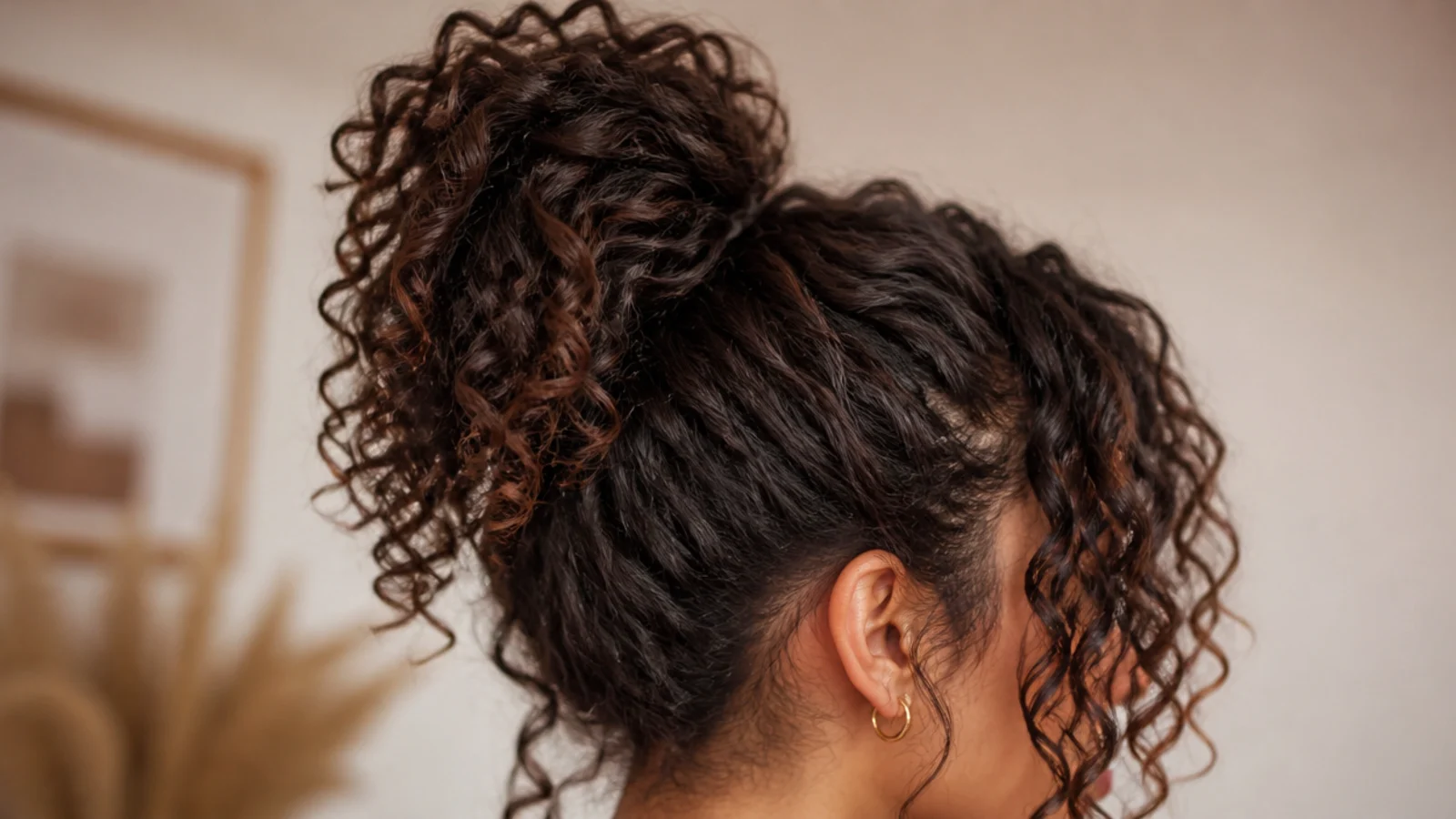
A nape tie takes all the tension off the hairline, so the looser 3A curls at the temple keep their own shape instead of being stretched into the gather. The trade is that the tail rests against the neck and flattens on that side, which is worth remembering before a long car journey.
3. Half Up on 2C
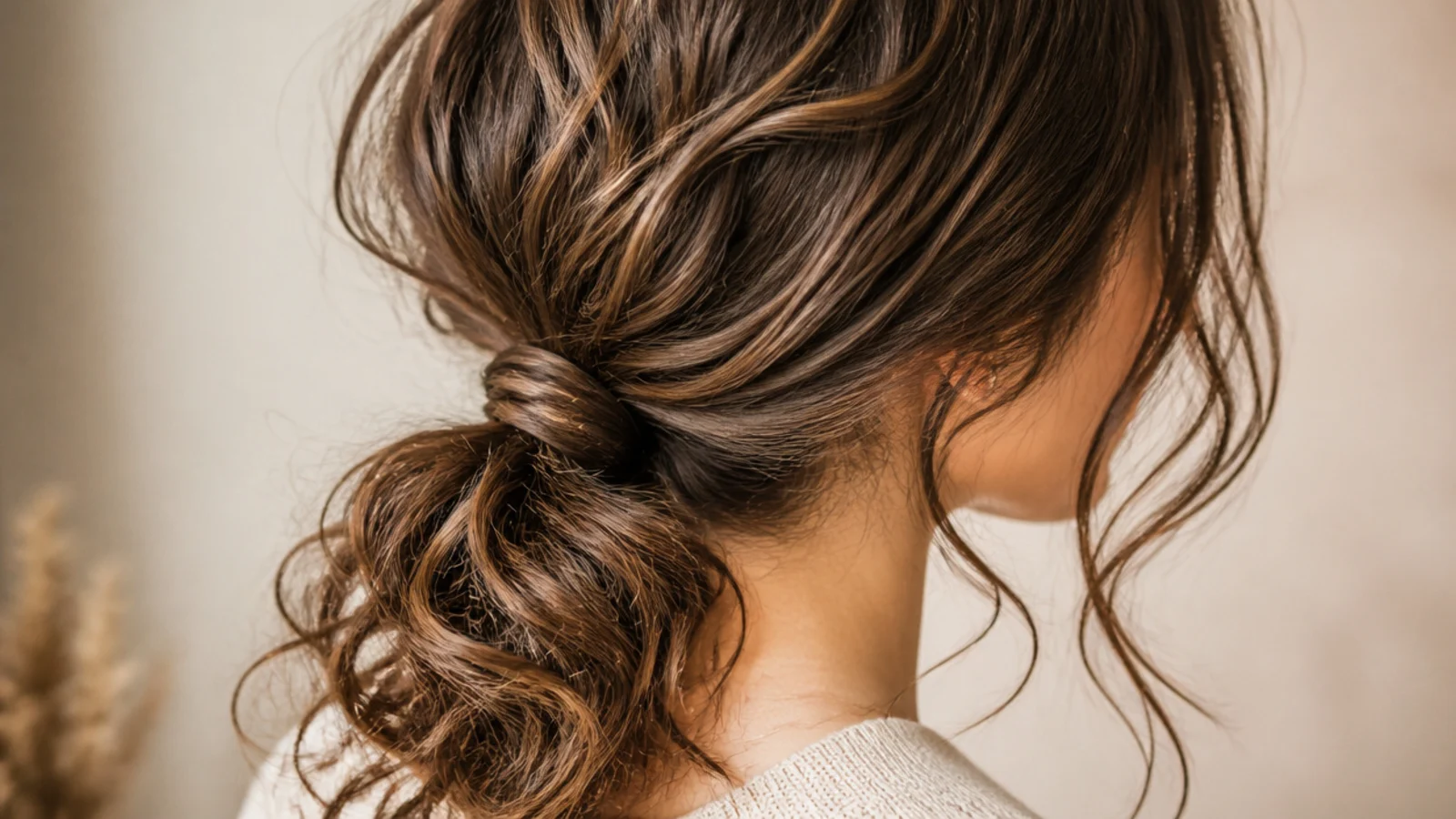
Taking only the top section lifts weight off the crown, which is where a looser wave collapses first, and leaves the length below fully visible. On 2C the released hair still has enough bend to look intentional, which a straighter texture would not.
4. The Day Two Refresh
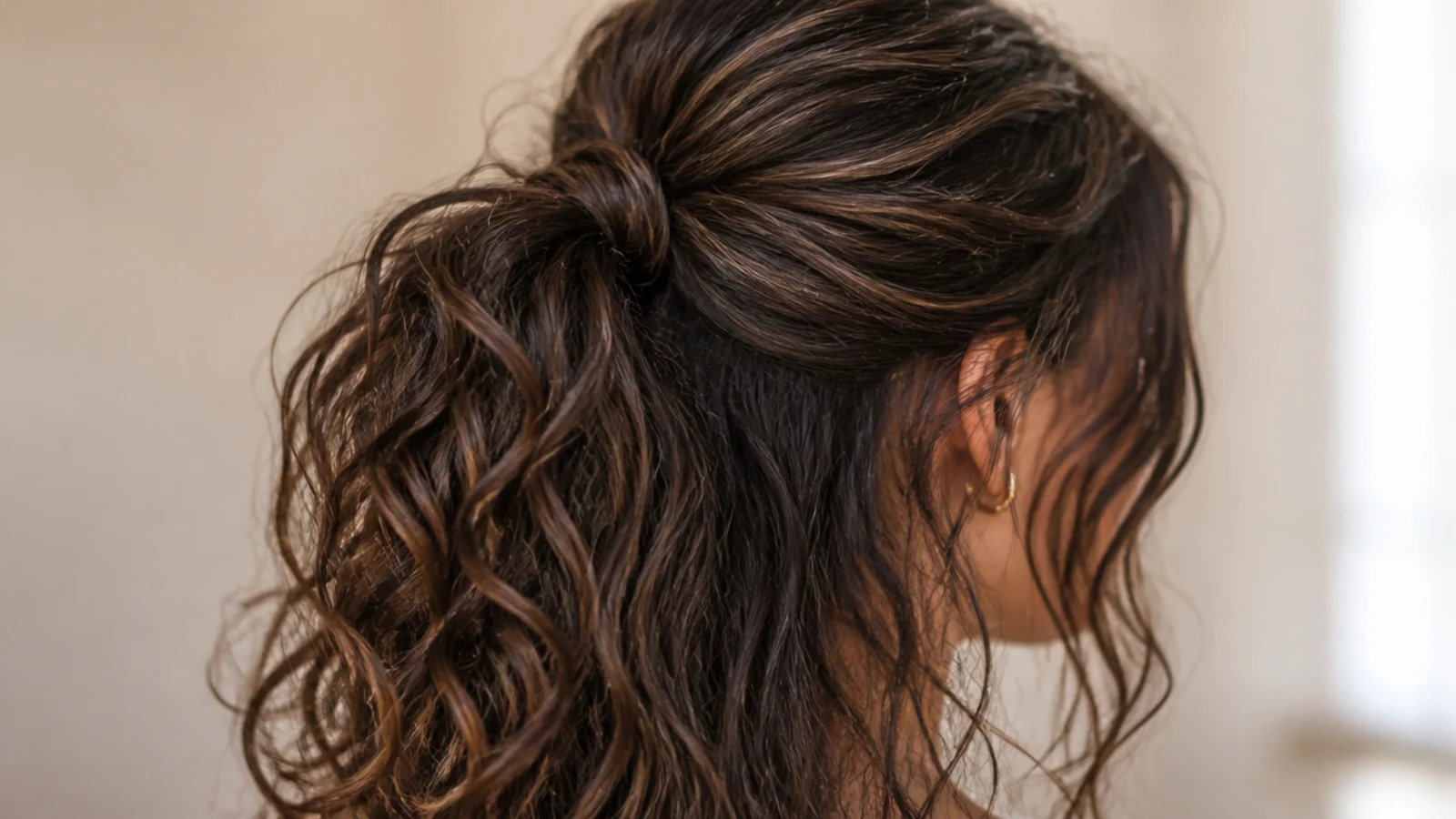
Water breaks and re-forms the bonds holding each bend, so a spray bottle with a little leave in diluted through it resets the curl without a wash. Spray until the section is genuinely damp rather than misted, squish upward, then gather while it is still soft.
5. A Bungee Cord on 4A
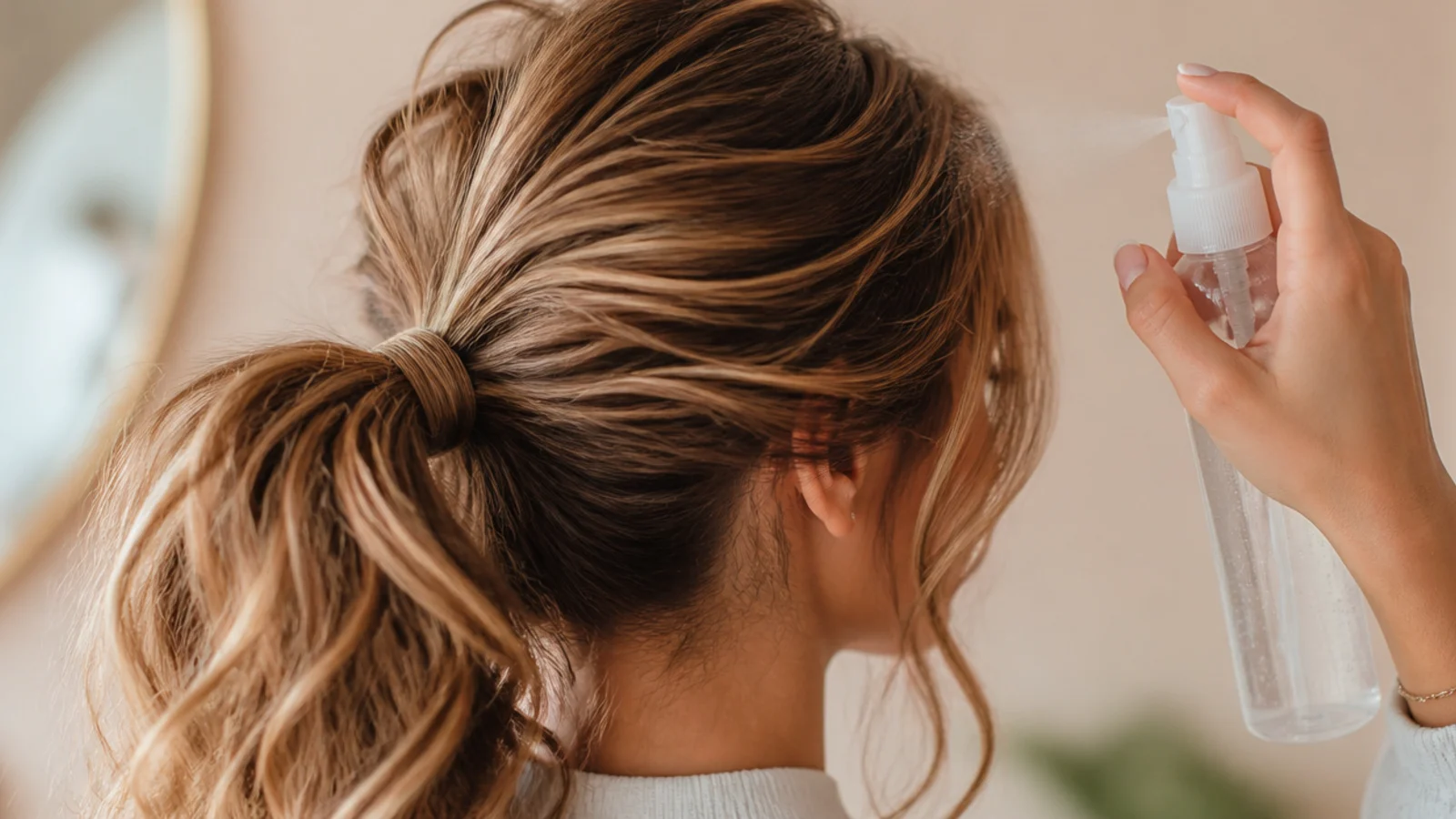
A bungee hooks into the hair at one side, wraps, and hooks at the other, so the band is never stretched over the tail. On a dense 4A head that removes the repeated dragging at the base, which is where breakage concentrates because it is where all the load sits.
6. Wrapped Elastic
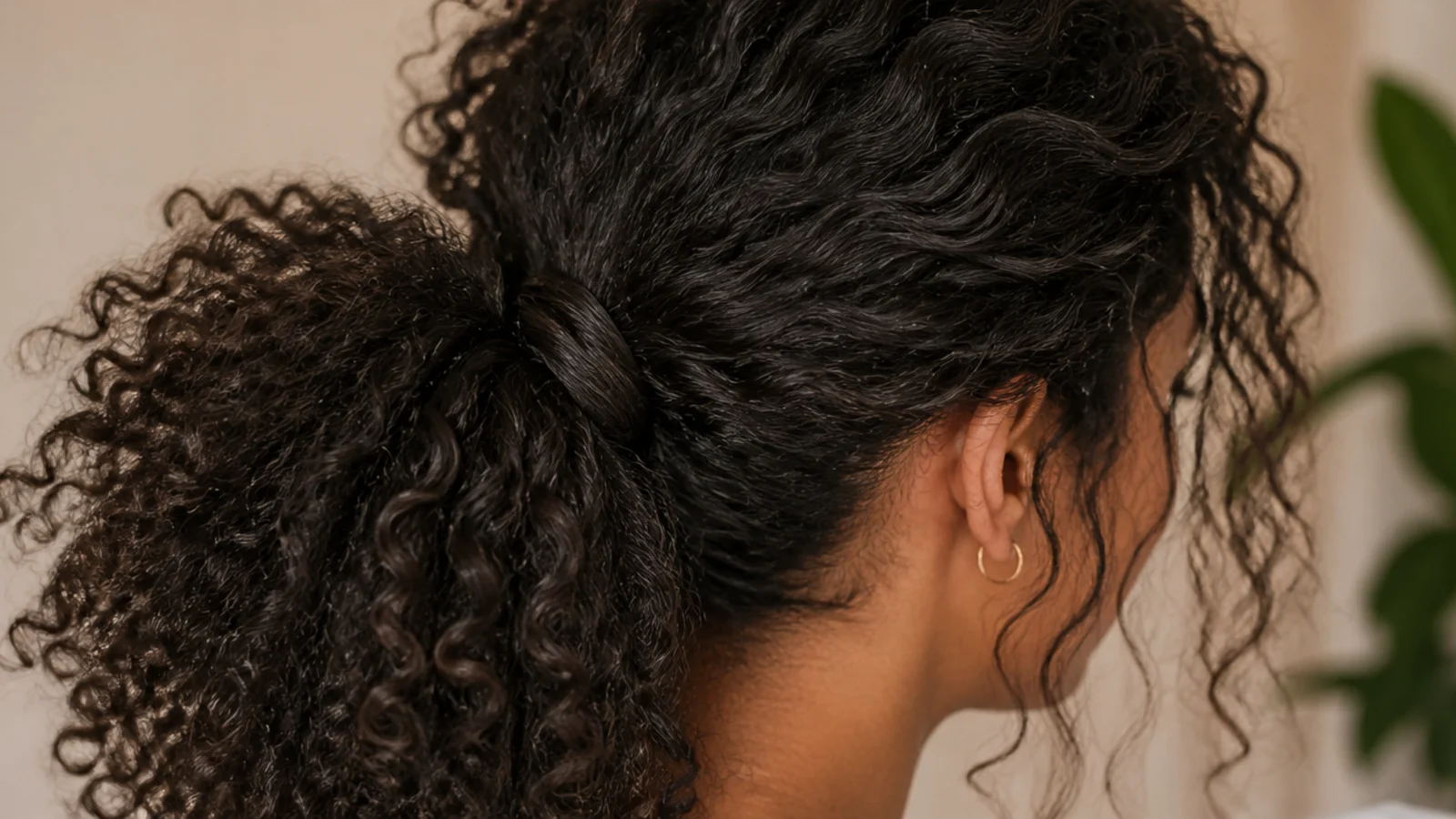
Taking one strand from the tail and winding it around the band hides the only hard line in the whole style. It also adds a little friction around the base, so the tie is slightly less inclined to creep down the tail over the afternoon.
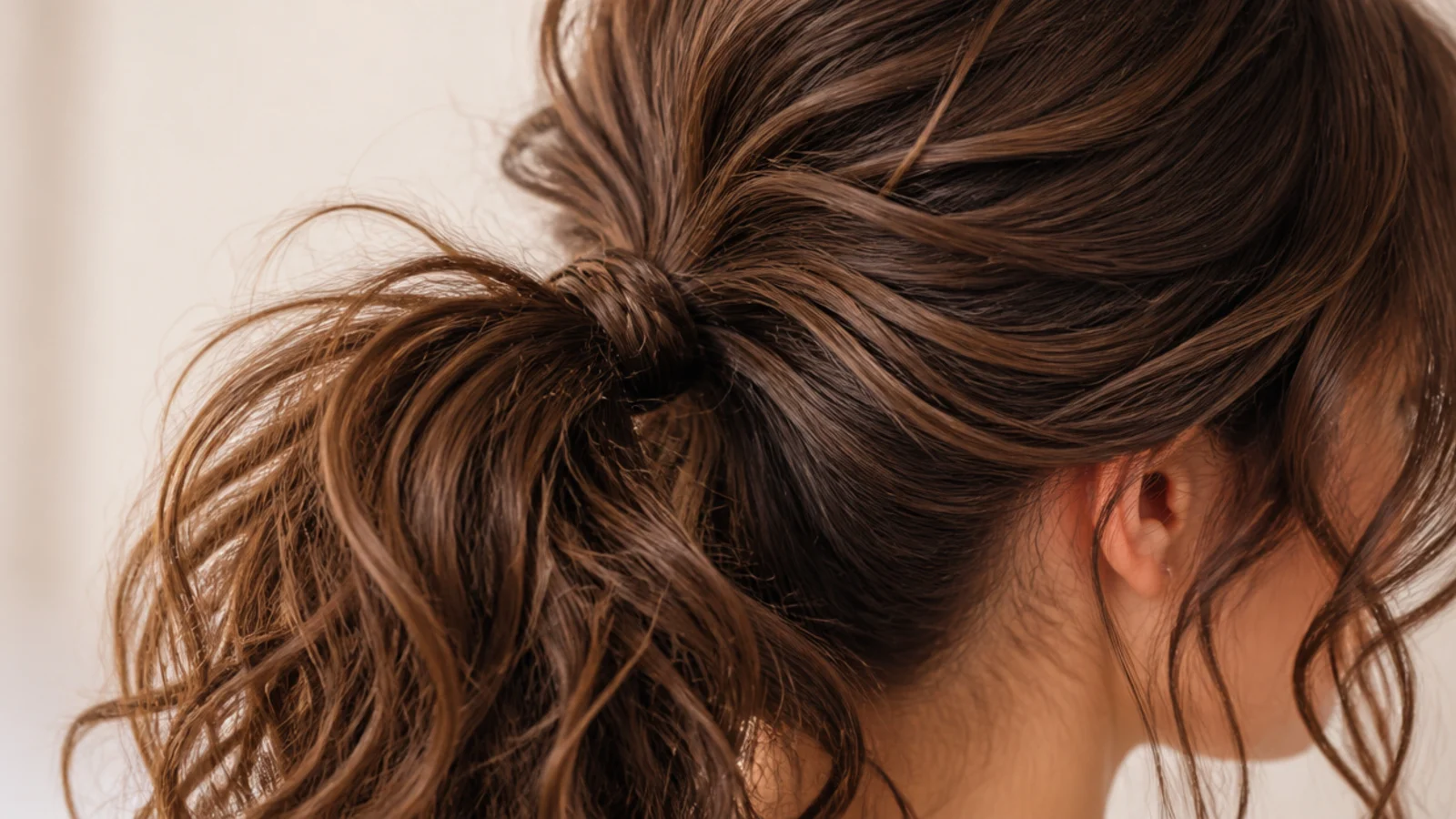
7. Side Swept on 3A
Sweeping everything to one side before tying gives the ponytail a diagonal to sit on, and a diagonal reads as length where a centred tail reads as bulk. Keep the part deep, since a shallow one lets the hair fall back to centre within the hour.
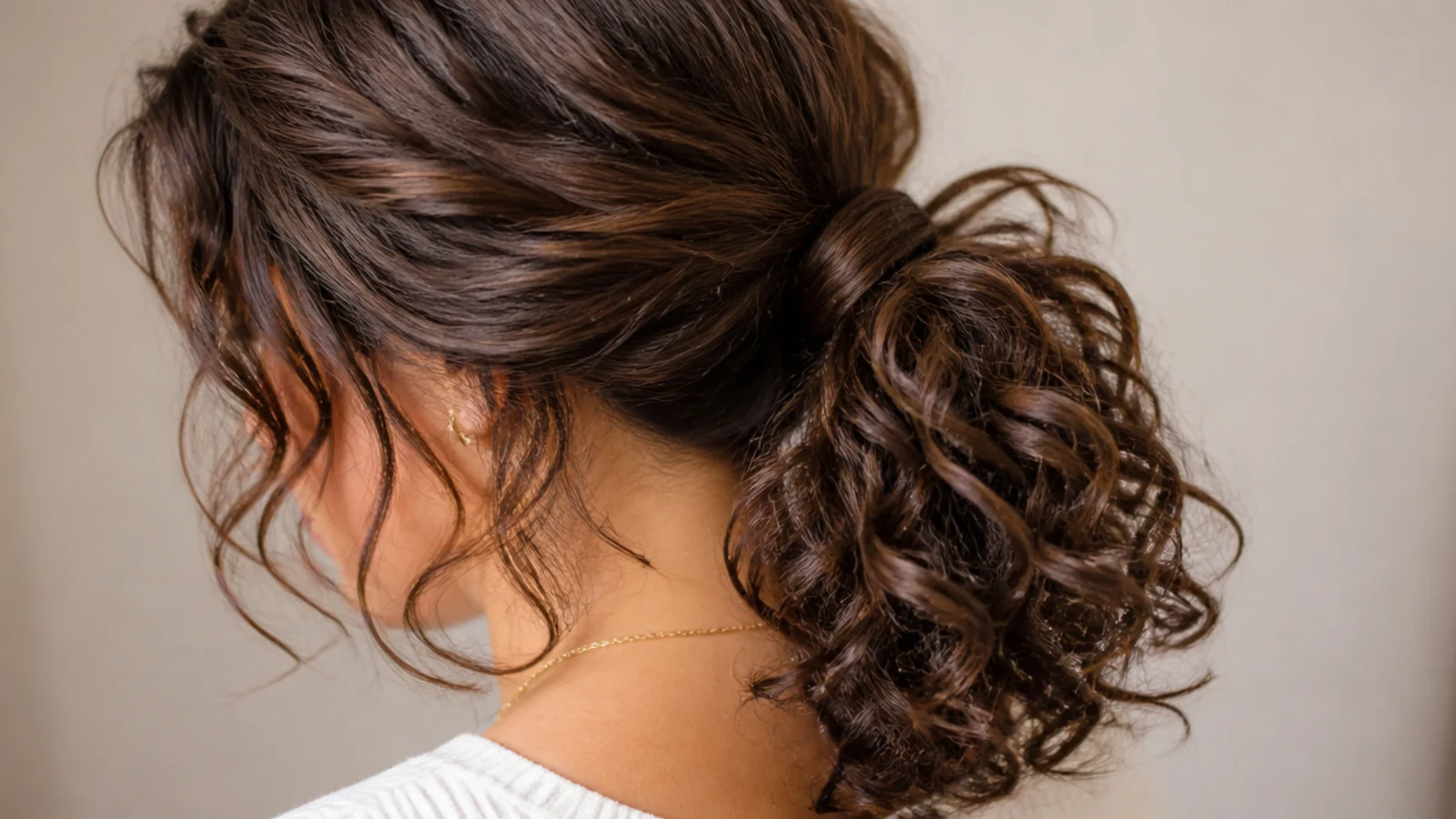
8. With Curtain Bangs
Curtain bangs give the front hair a deliberate shape, which stops the pieces at the face reading as strands that escaped. On curly hair they need cutting dry, because a curl stretches when wet and comes up shorter than intended by an inch or more.
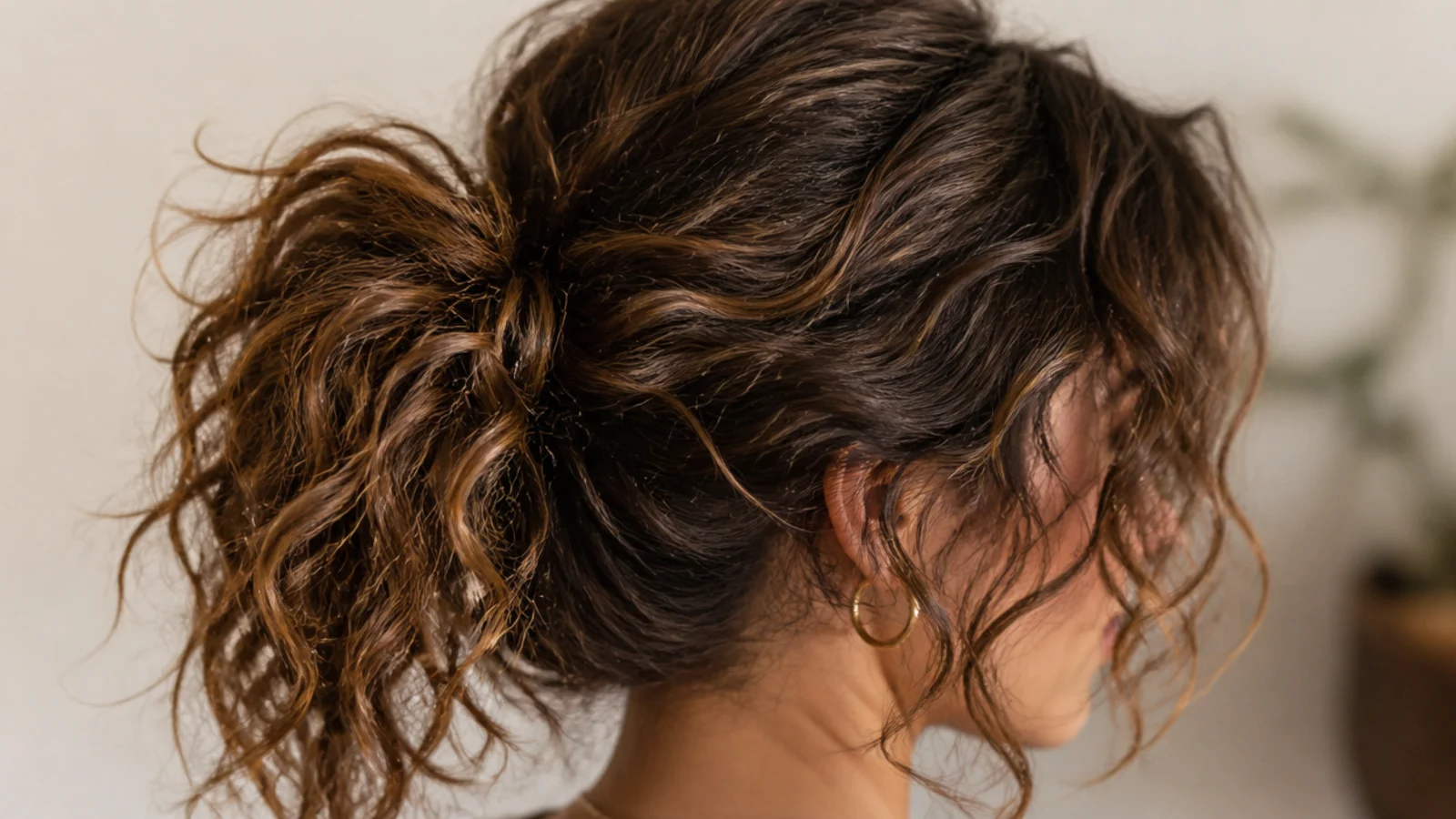
9. Twisted Front on 2B
Twisting the front sections back before they join the gather keeps a looser wave from going flat against the head, which is the usual failure on 2B. The twist also holds the front hair in position without pins, since each turn presses the strands against each other.
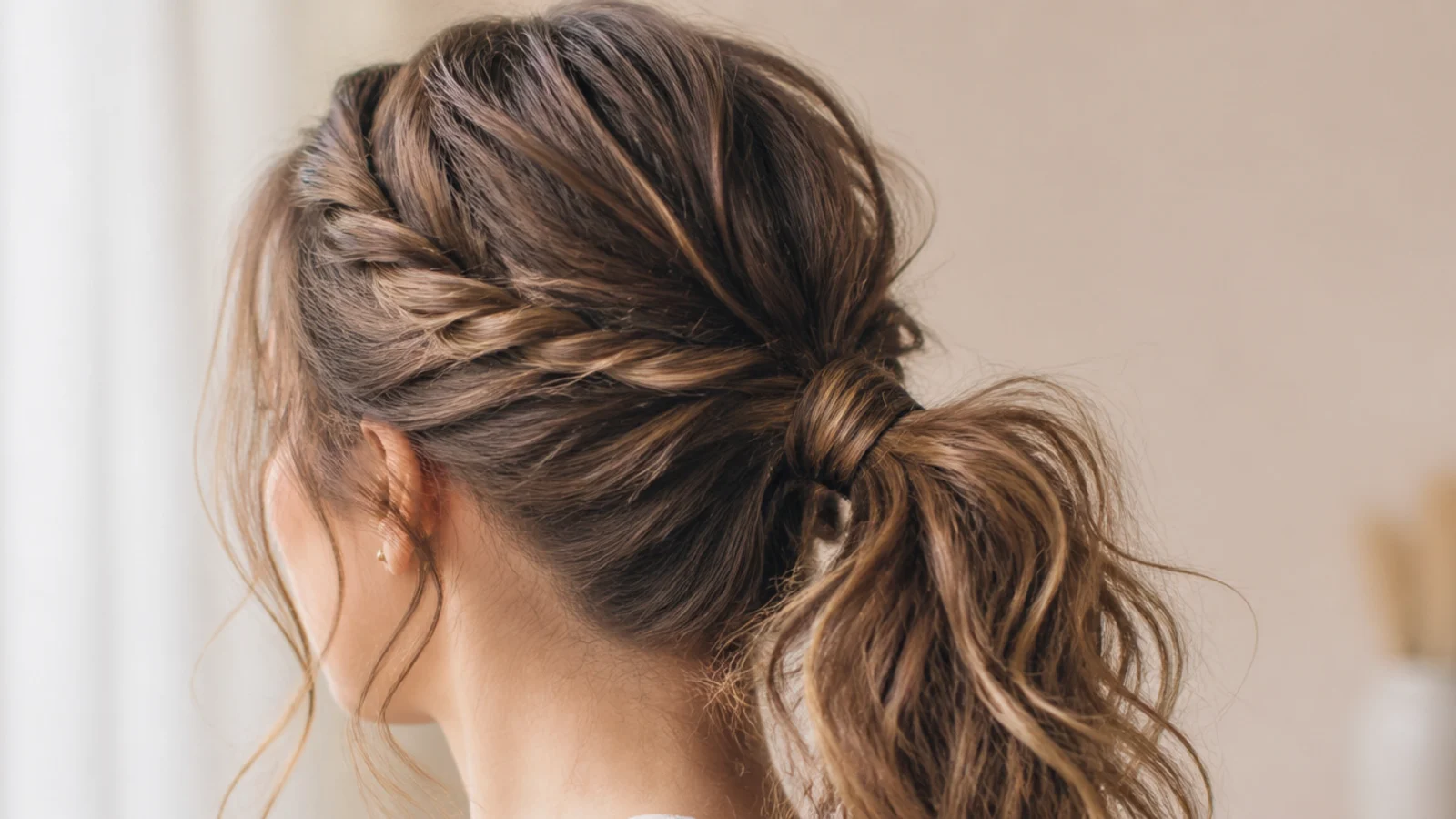
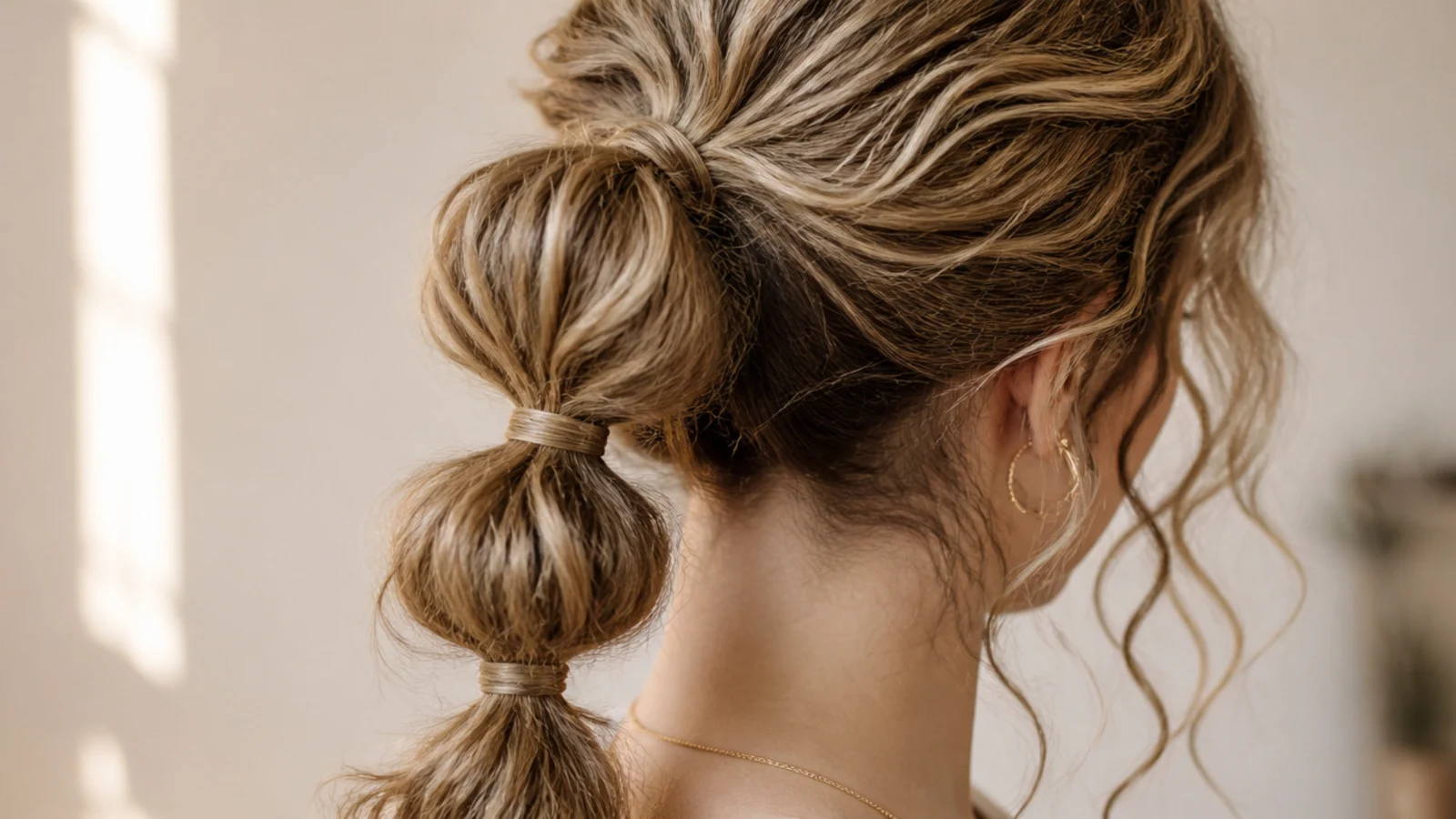
10. Bubble Ponytail on 2C
Elastics set at intervals down the tail with the hair pulled outward between them turn a thin tail into a series of widths. On 2C it works particularly well because the wave gives each bubble enough irregularity to look soft rather than sculpted.
11. Satin Scrunchie on 4C
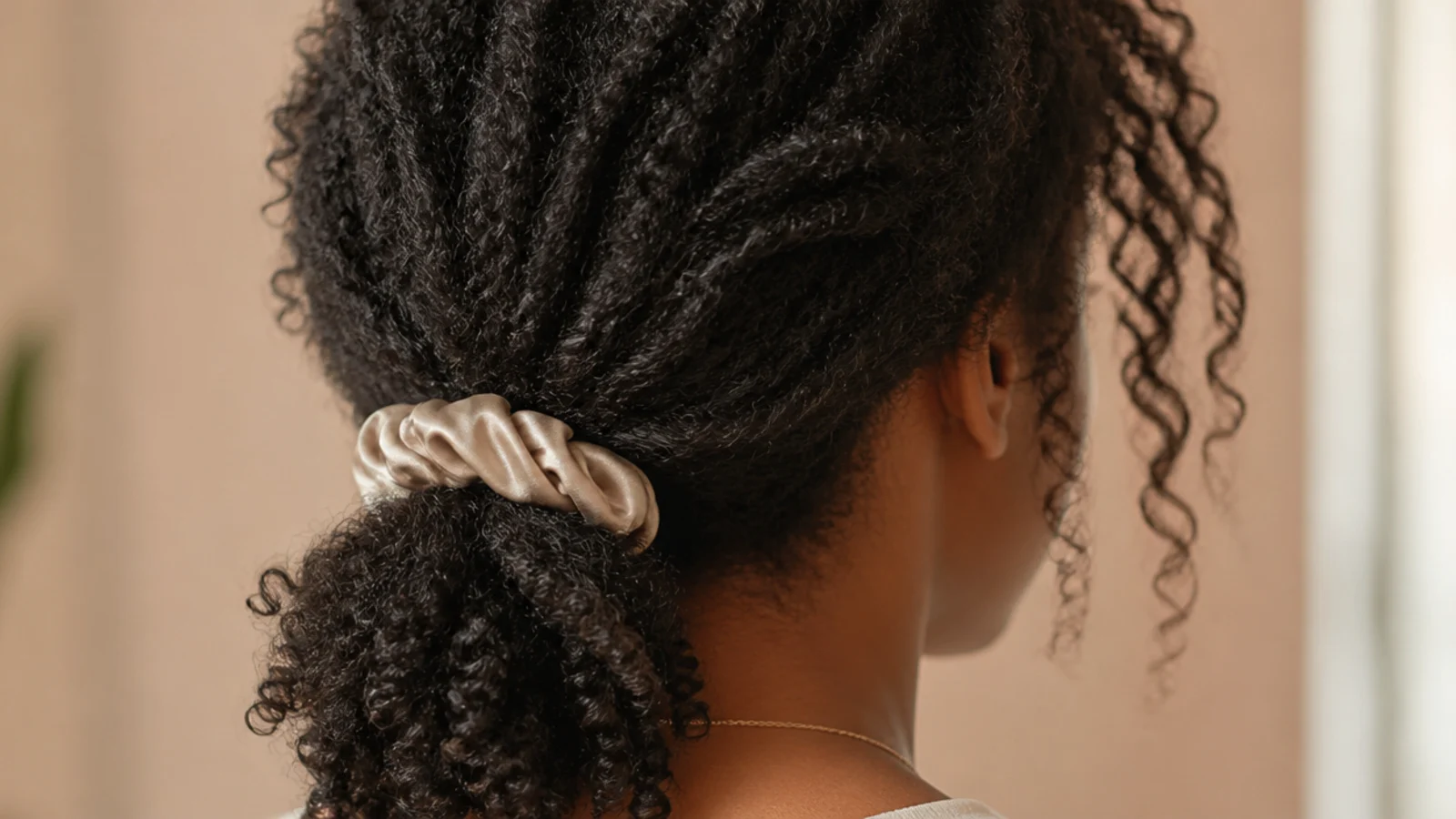
Satin has a far lower friction coefficient than cotton or bare elastic, so it does not grab the cuticle at the point where the tail is under the most tension. On 4C that matters more than on any other texture, because the bend is tightest and the strand is most fragile exactly there.
12. Braided Base
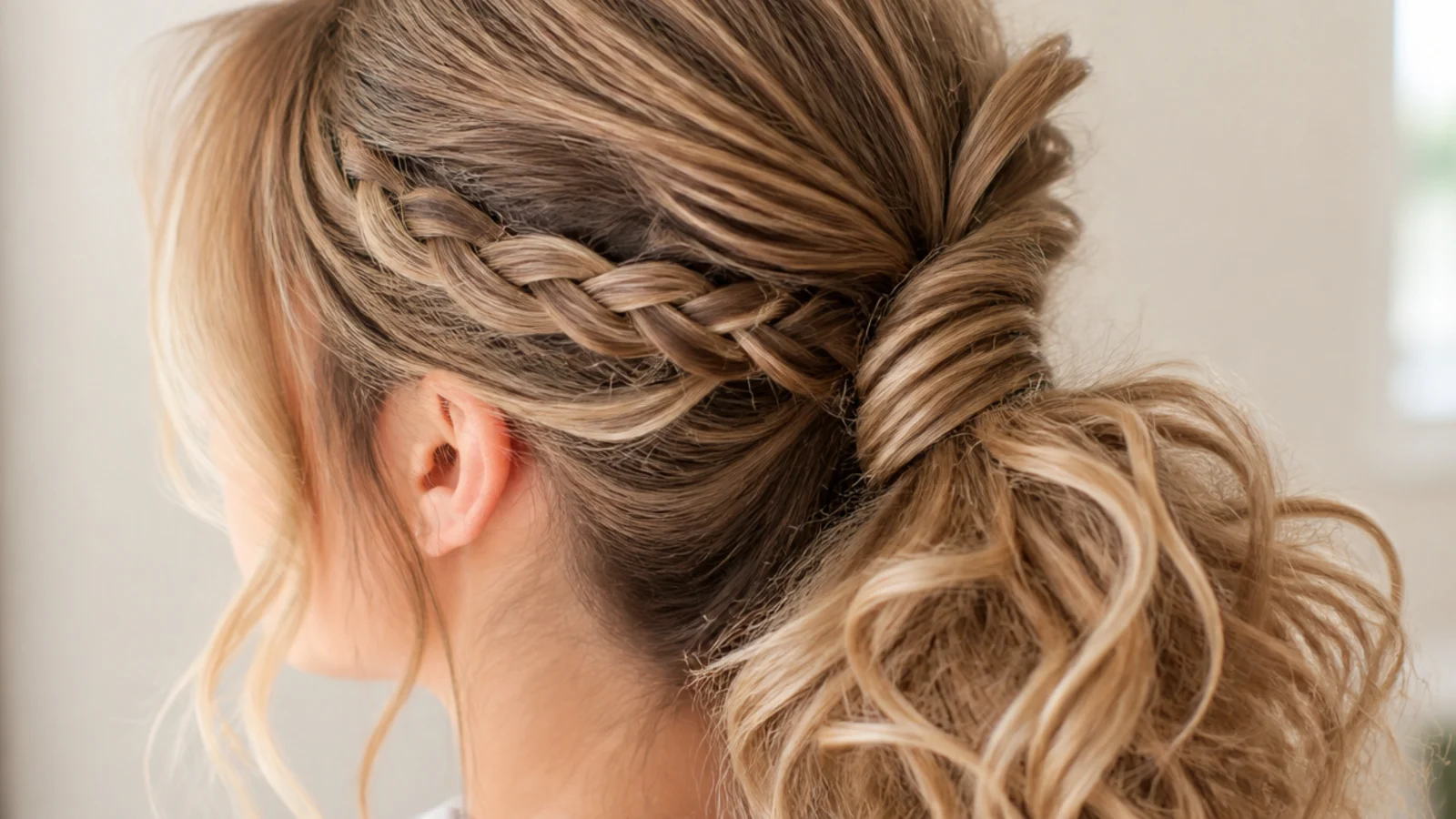
Braiding the front and side sections back before they reach the elastic gives the tie something structural to sit against, so it cannot slide down the tail. It also creates the crisp element the style needs while leaving the whole tail free to stay soft.
13. Sleek Roots With a Messy Tail
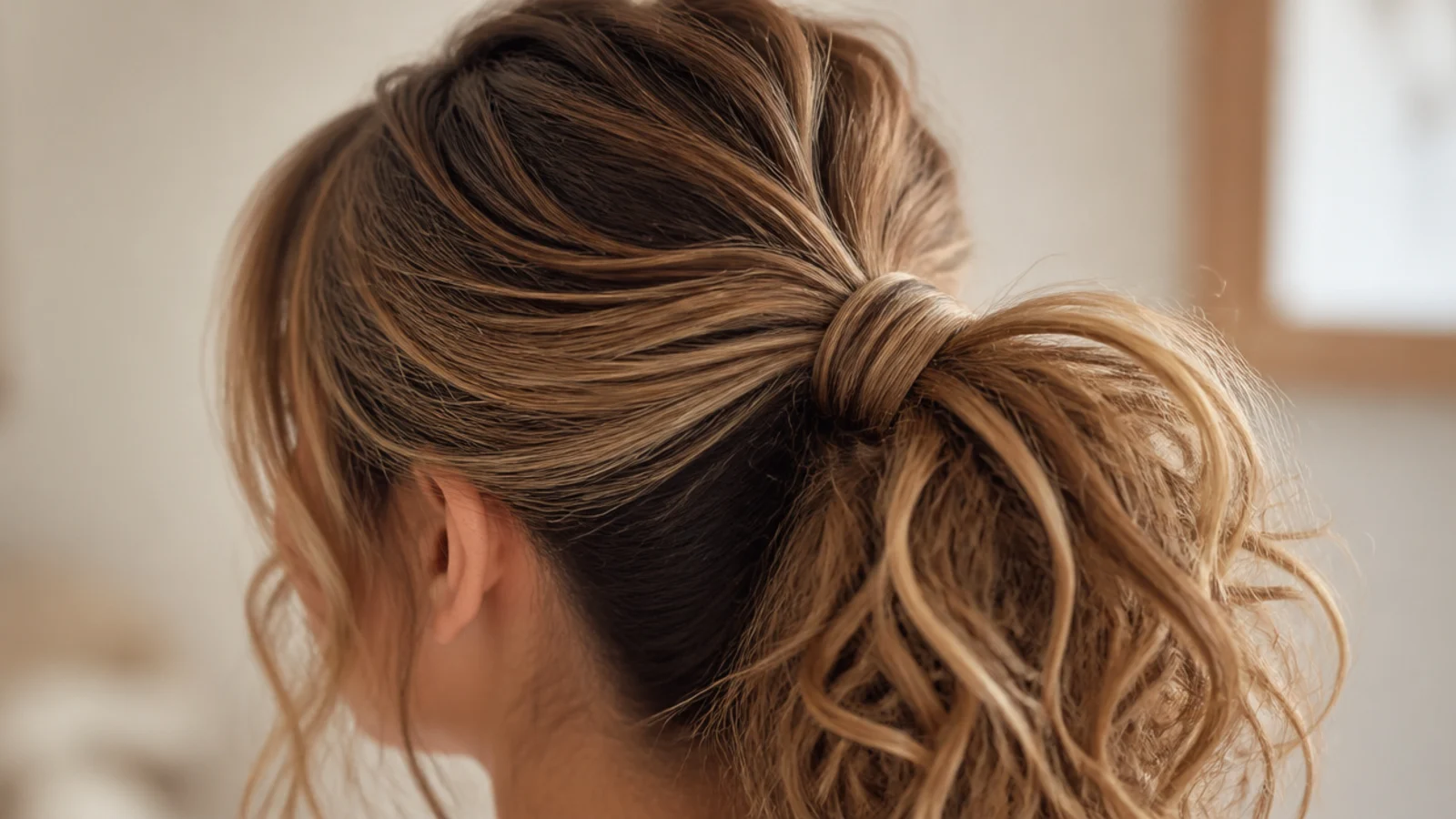
Smoothing gel through the roots and leaving the tail untouched is the clearest version of the contrast this whole style depends on. The flat section reflects light as one surface while the tail scatters it, and that difference is what the eye reads as deliberate.
14. Short 3B Bob Ponytail
A curly bob gathers into a very short tail, and that stub is the whole shape rather than a compromise on it. Tie low and leave the front sections out, since a high tie on short hair pulls the shortest layers free and they stand up around the crown.
15. Crown Tie on 3C
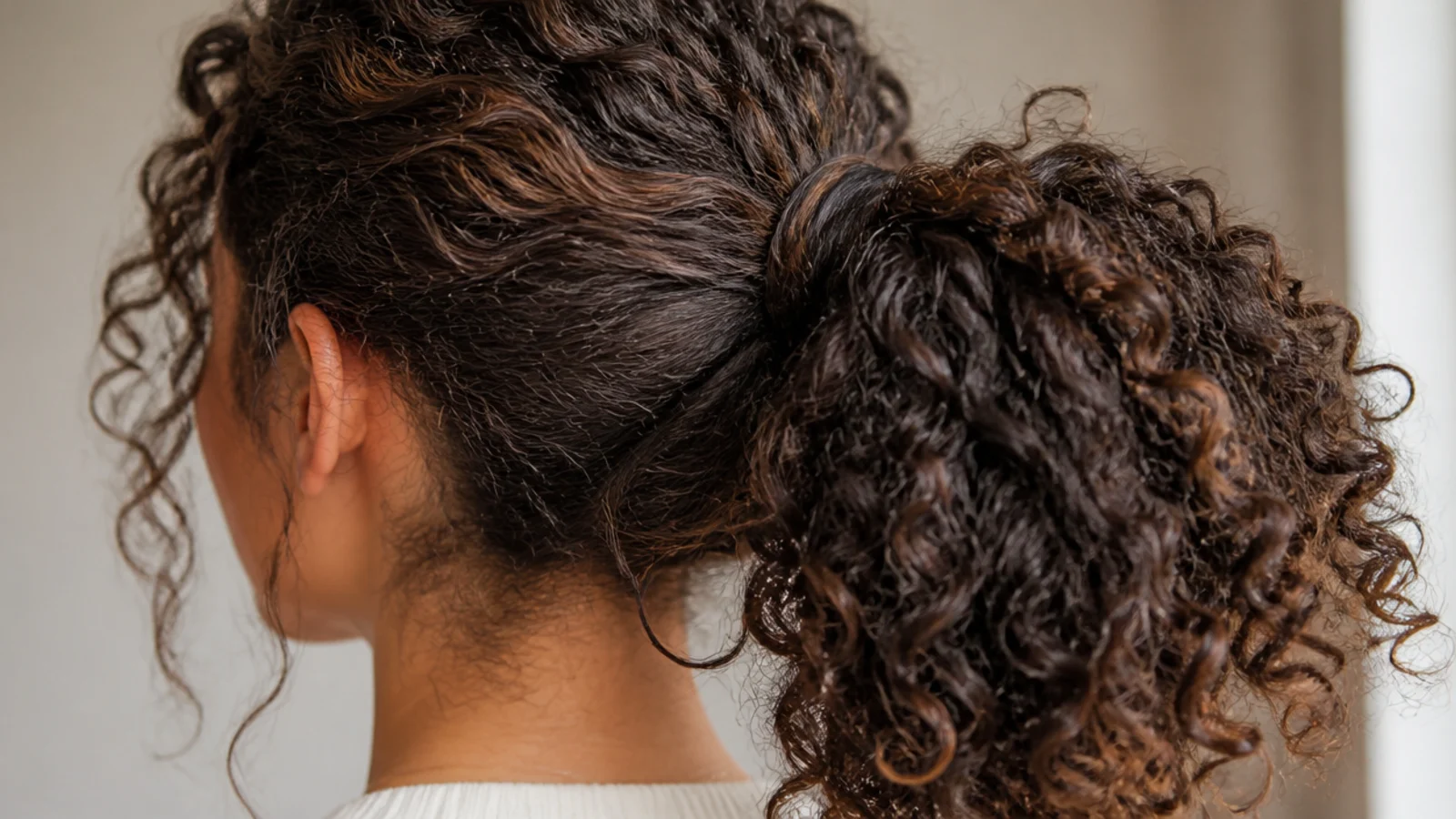
Tied at the crown, 3C curls fall outward in every direction from a single point, which produces the maximum height and width the texture can give. Keep it to occasional wear, because the full weight of a dense tail hangs from the hairline the whole time it is up there.
Final Thoughts
Build the contrast first and the mess second. Get the base clean, hide the band, and then leave every single thing below it alone. Almost every curly ponytail that looks unkempt rather than undone has a soft tie holding a soft tail, with nothing crisp anywhere for the eye to measure against.
Then treat the tie point as the part that needs protecting. It carries the entire weight of the tail, and on curly hair it is also where the bend is tightest and the strand is weakest. A bungee or a satin scrunchie instead of a stretched elastic, and a different tie height every other day, costs nothing and is the difference between a style you can wear all week and one that thins your hairline.
For the pulled up version in more detail see 20 curly high ponytail hairstyles for women. More in Updos and Clips. See also the easy school version.