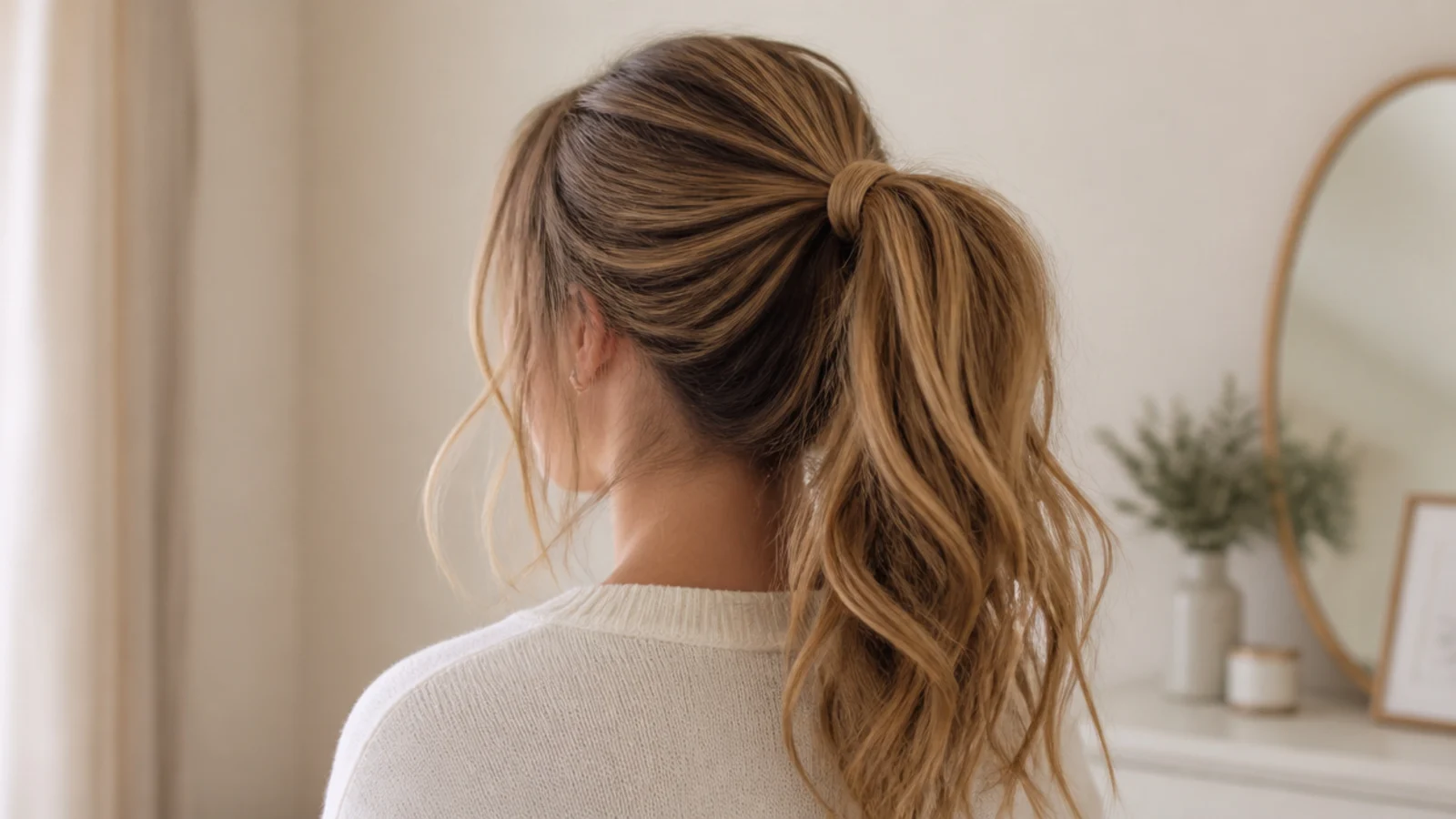
15 Easy Messy Ponytail Ideas for School
Fifteen two minute ponytails for a school morning, and the reason most of them fall out by lunch — a freshly washed head is slick, and a ponytail is held by friction between strands long before it is held by the elastic.
In this article · 23
- What Makes It Messy
- Messy Versus Sleek
- The Time Budget Before School
- Fine Versus Thick Hair
- Products That Actually Help
- All Day Hold
- The 15 School Ponytails
- 1. The 60 Second Ponytail
- 2. Face Framing Pieces
- 3. Dry Shampoo Ponytail
- 4. Wrapped Elastic
- 5. Bubble Ponytail
- 6. Half Up Ponytail
- 7. Low Ponytail Under a Hood
- 8. The PE Class Ponytail
- 9. Scrunchie Ponytail
- 10. Braided Front Ponytail
- 11. Twisted Sides
- 12. Curtain Bangs Ponytail
- 13. Curly Pineapple Ponytail
- 14. Short Hair Bungee Ponytail
- 15. Two Elastic Ponytail
- Final Thoughts
The school ponytail that has slid halfway down the back of the head by lunch is almost never a problem with the elastic. It is a problem with how clean the hair was when you tied it.
A ponytail is held by friction first. Strands gripping each other inside the band do most of the work, and a freshly washed cuticle is smooth, slick and gives them almost nothing to grip.
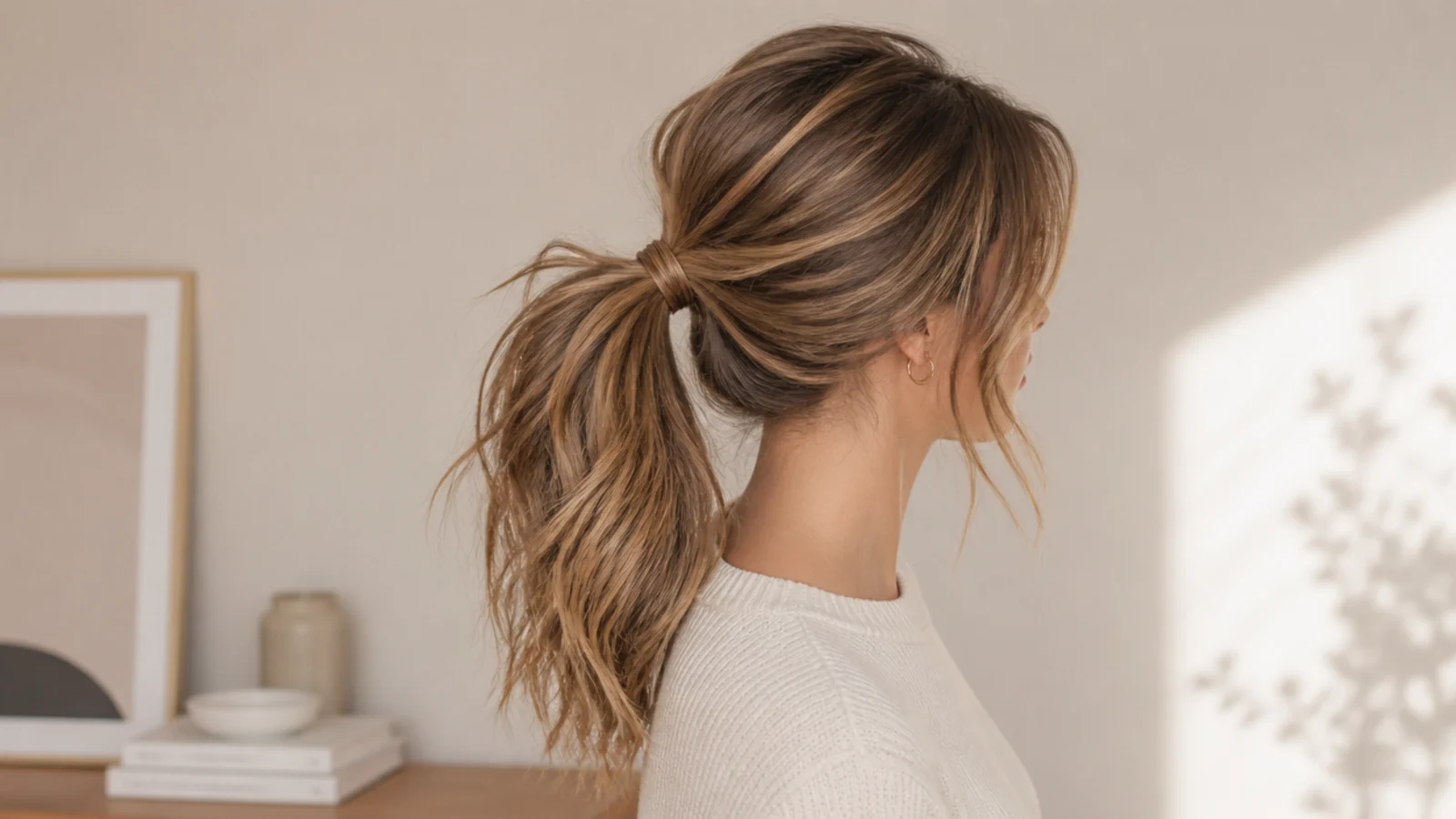
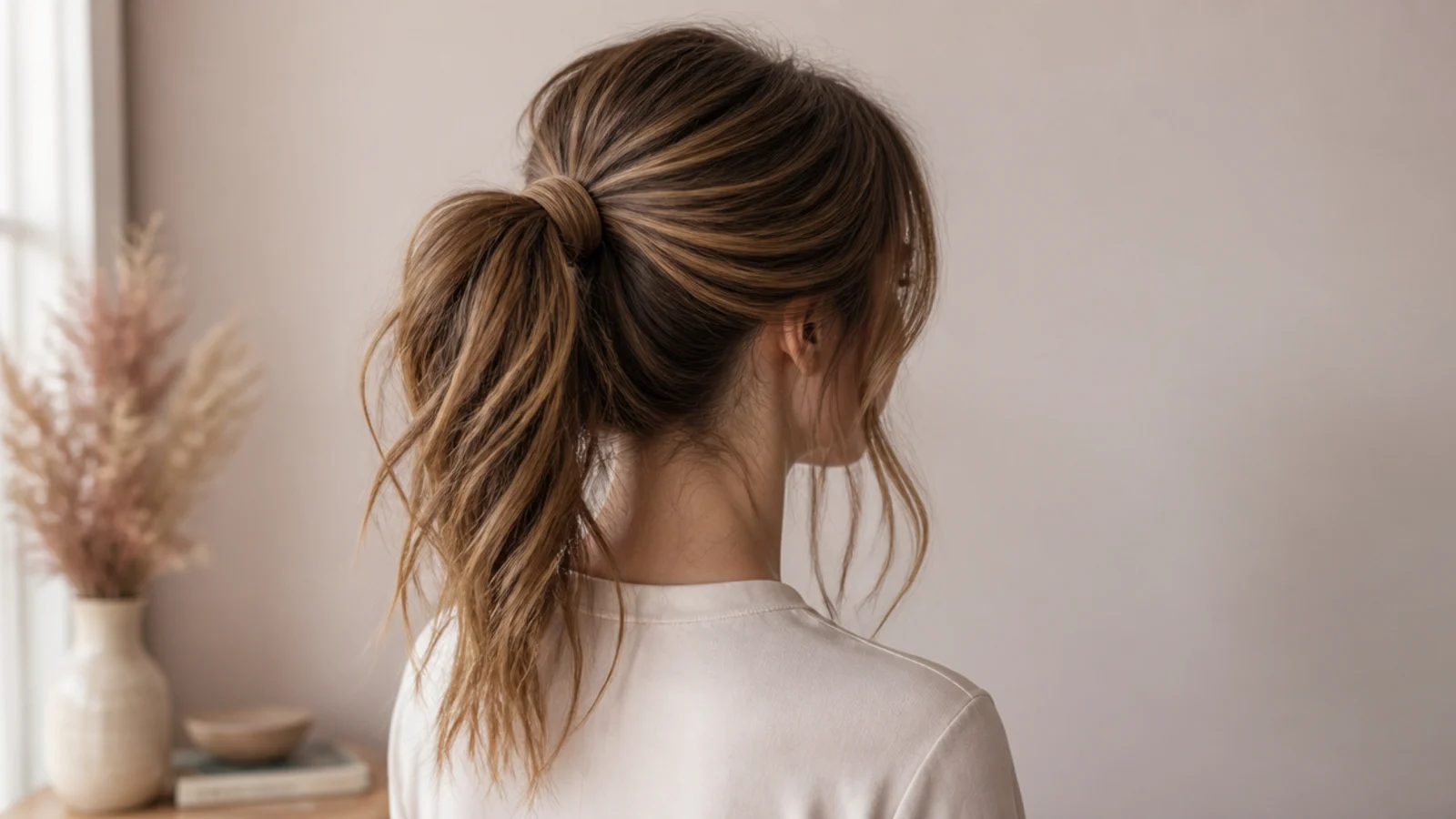
Messy is a texture you add, not effort you skip. The bumps, the widened crown and the loose pieces at the temples are all put there on purpose, in the last twenty seconds.
What Makes It Messy
Texture, not neglect. Every version below is a deliberate surface. A tail that simply came loose looks like a tail that came loose.
Fingers instead of a brush. A brush aligns every strand into one flat sheet. Fingers leave the natural separations that read as texture from across a room.
Pieces pulled after tying, never before. Anything you release before you gather gets dragged back into the elastic, and you end up with two different amounts of hair at the temples.
Grip beats hold. Friction between strands is what keeps a messy tail up. A stiff spray only freezes a shape that is already slipping.
Loose to look at, firm at the band. Those are two separate decisions, and most failed ponytails get them the wrong way round.
Messy Versus Sleek
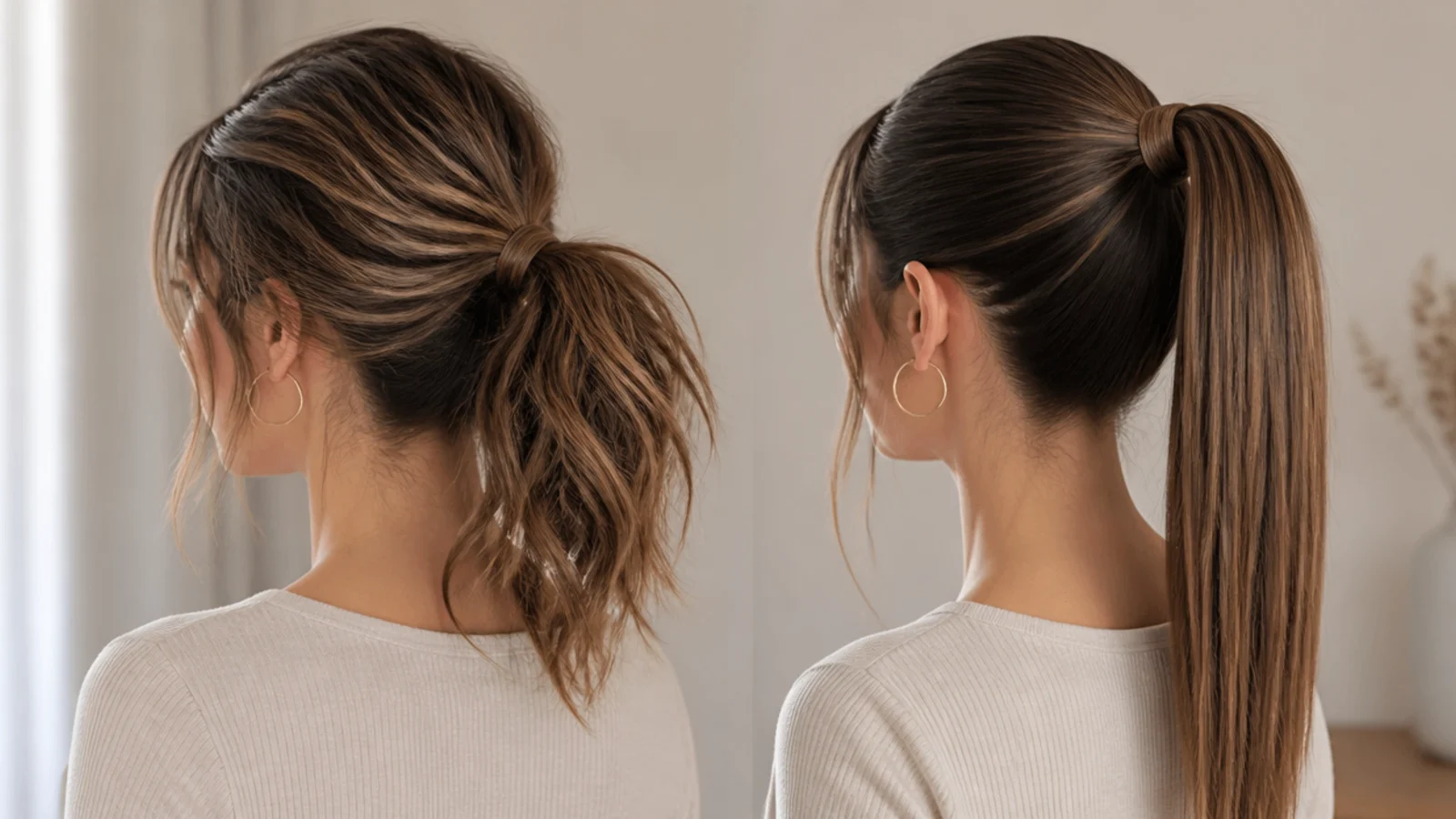
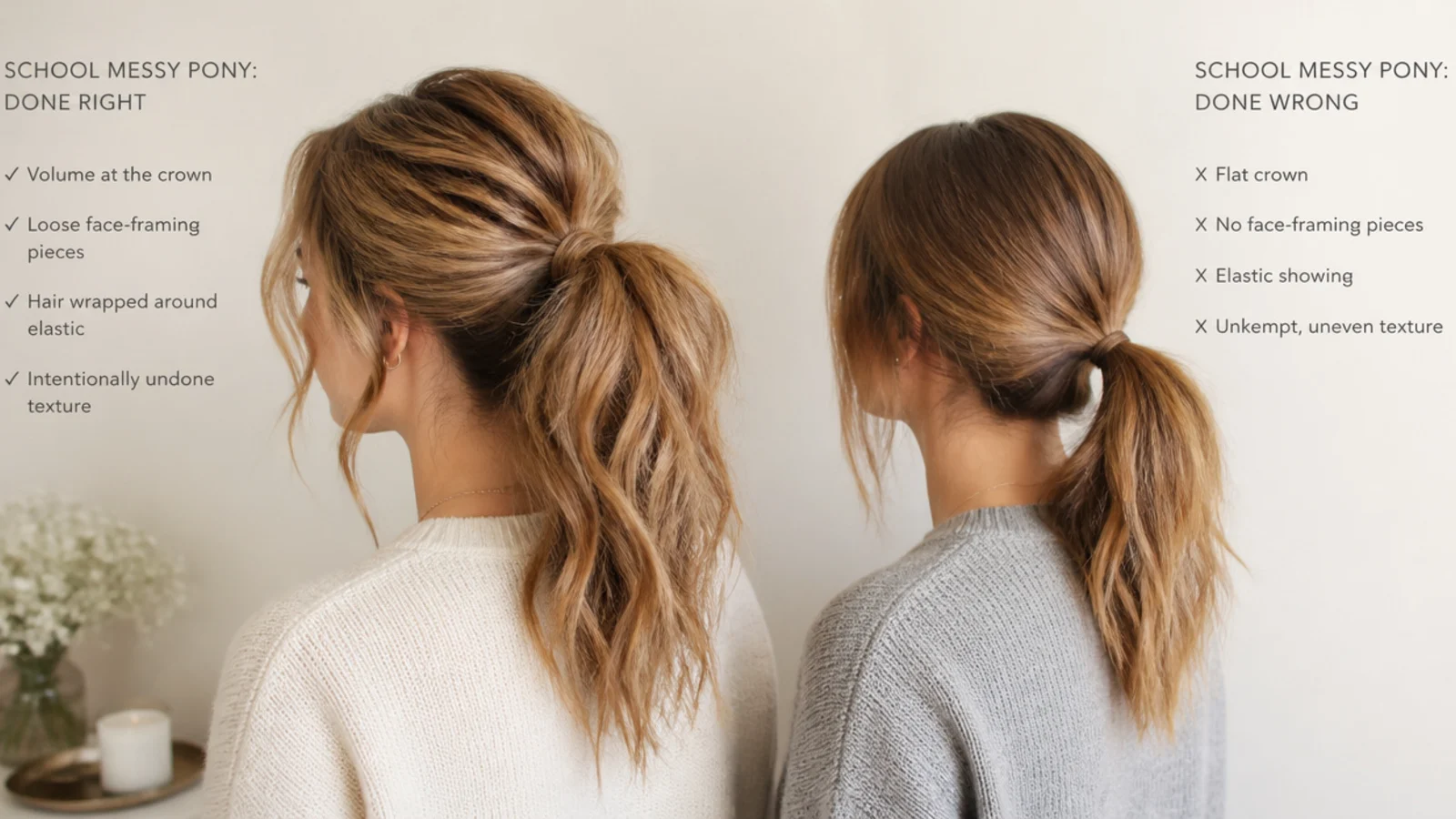
Sleek needs a perfect cuticle. Every stray hair is visible against a flat surface, which is why it takes fifteen minutes rather than two.
Messy needs the opposite. A piece out of place belongs to the look instead of ruining it, so there is almost nothing to correct.
Rain ends a sleek ponytail. Water breaks the hydrogen bonds holding a smoothed set, so the surface lifts. A textured tail has no set to lose.
Sleek is a damp hair style. It is built with gel on wet hair and dried into place. Messy is built on dry hair, ideally on the second day.
Choose by the morning you actually have. On a school run there is one honest answer, and it is not the one that needs a flat iron.
The Time Budget Before School
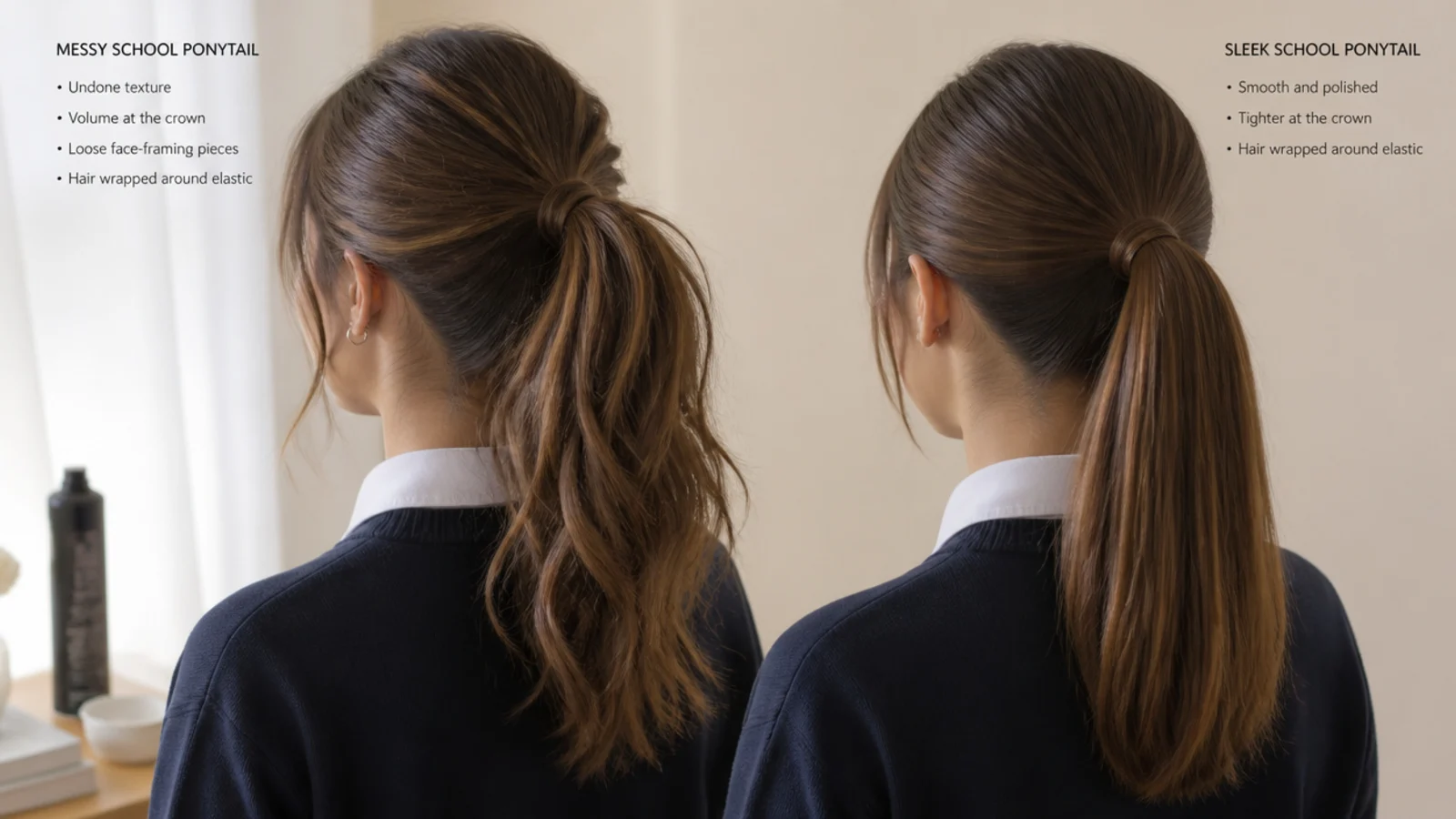
Two minutes is the real allowance. Build the routine around that number and it survives the term.
Do the prep the night before. Dry shampoo worked into the roots at bedtime has hours to absorb oil, rather than sitting on the surface as powder.
Sleep in a loose plait. It costs thirty seconds and leaves a bend through the mid lengths that gives the elastic something to bite on in the morning.
Do not check the back. You cannot see it properly in one mirror, and the checking is what eats the minute you were saving.
Keep the whole kit in one pot. Two elastics, a scrunchie and a dry shampoo. Hunting for a hair tie costs more time than the style does.
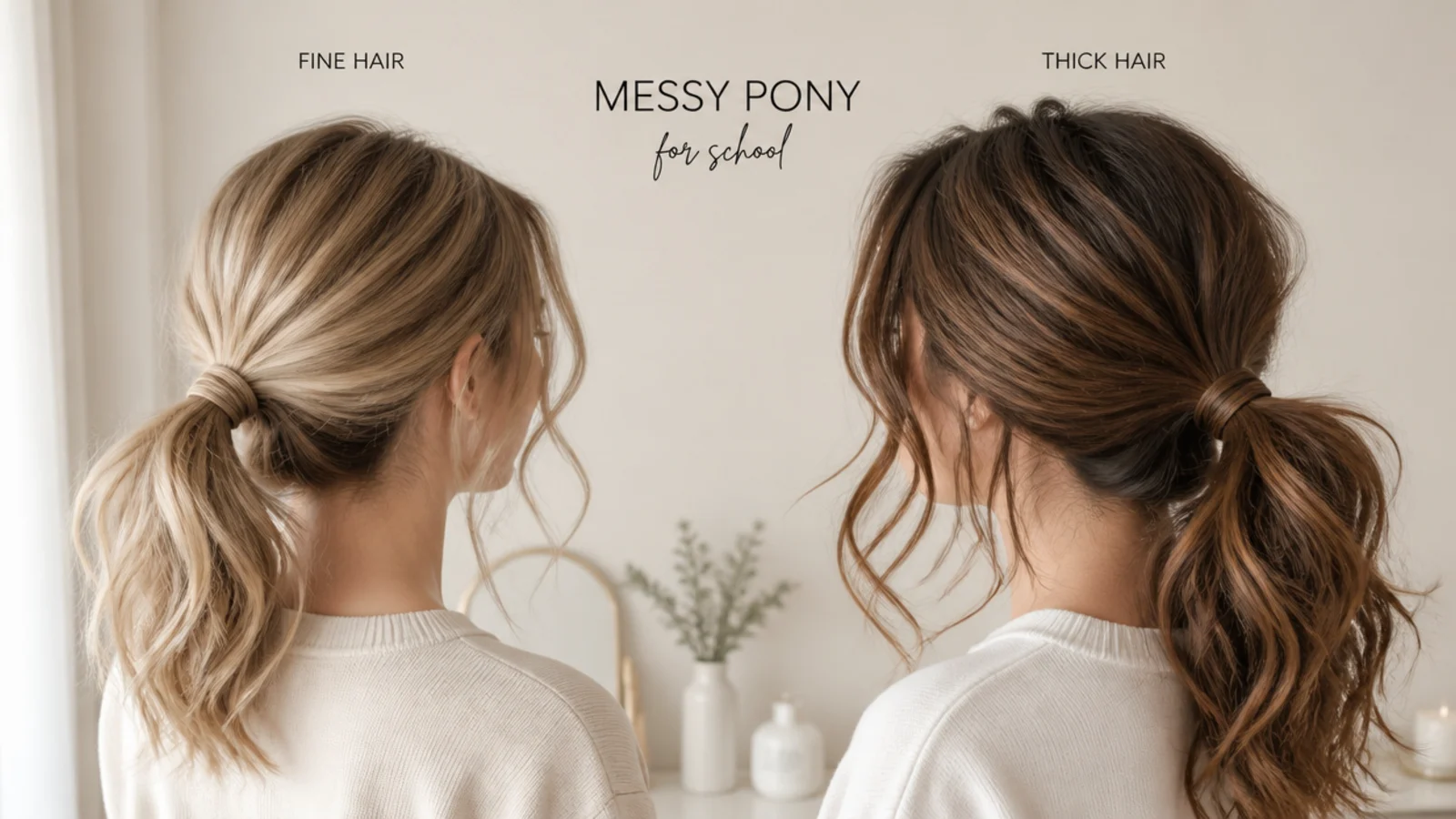
Fine Versus Thick Hair
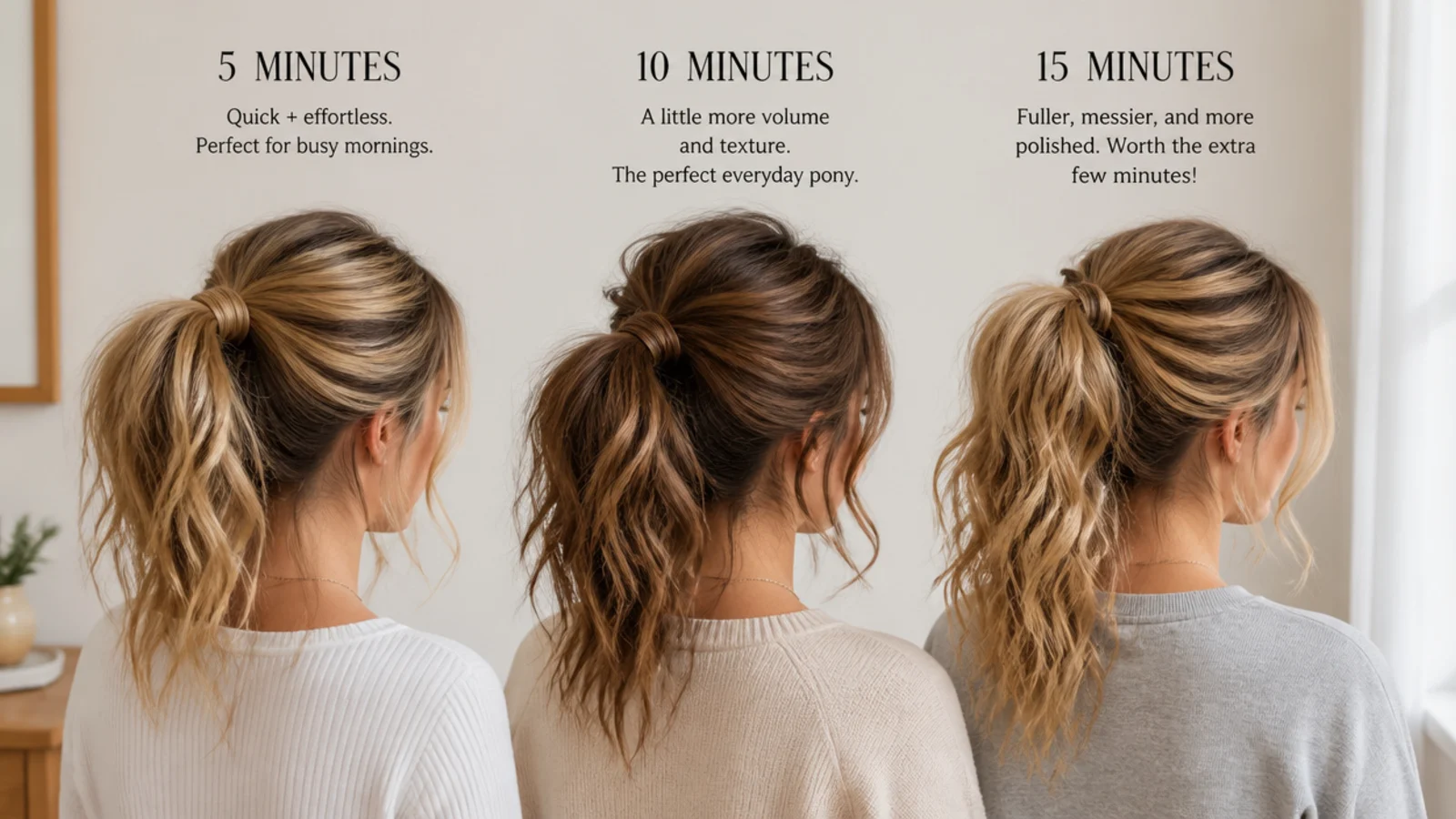
Fine hair slides. Fewer strands with a smoother surface means less friction inside the band, so one elastic slowly works itself loose.
Thick hair drags. Grip is not the issue here. Weight is, and weight always pulls straight down.
Fine hair wants two bands stacked. The second one a finger width below the first shares the load and stops the base collapsing.
Thick hair wants a lower tie. Below the occipital bone the head itself carries some of the weight instead of the elastic carrying all of it.
Both want texture at the root. For fine hair it supplies grip. For thick hair it stops the crown flattening under the pull.
Products That Actually Help
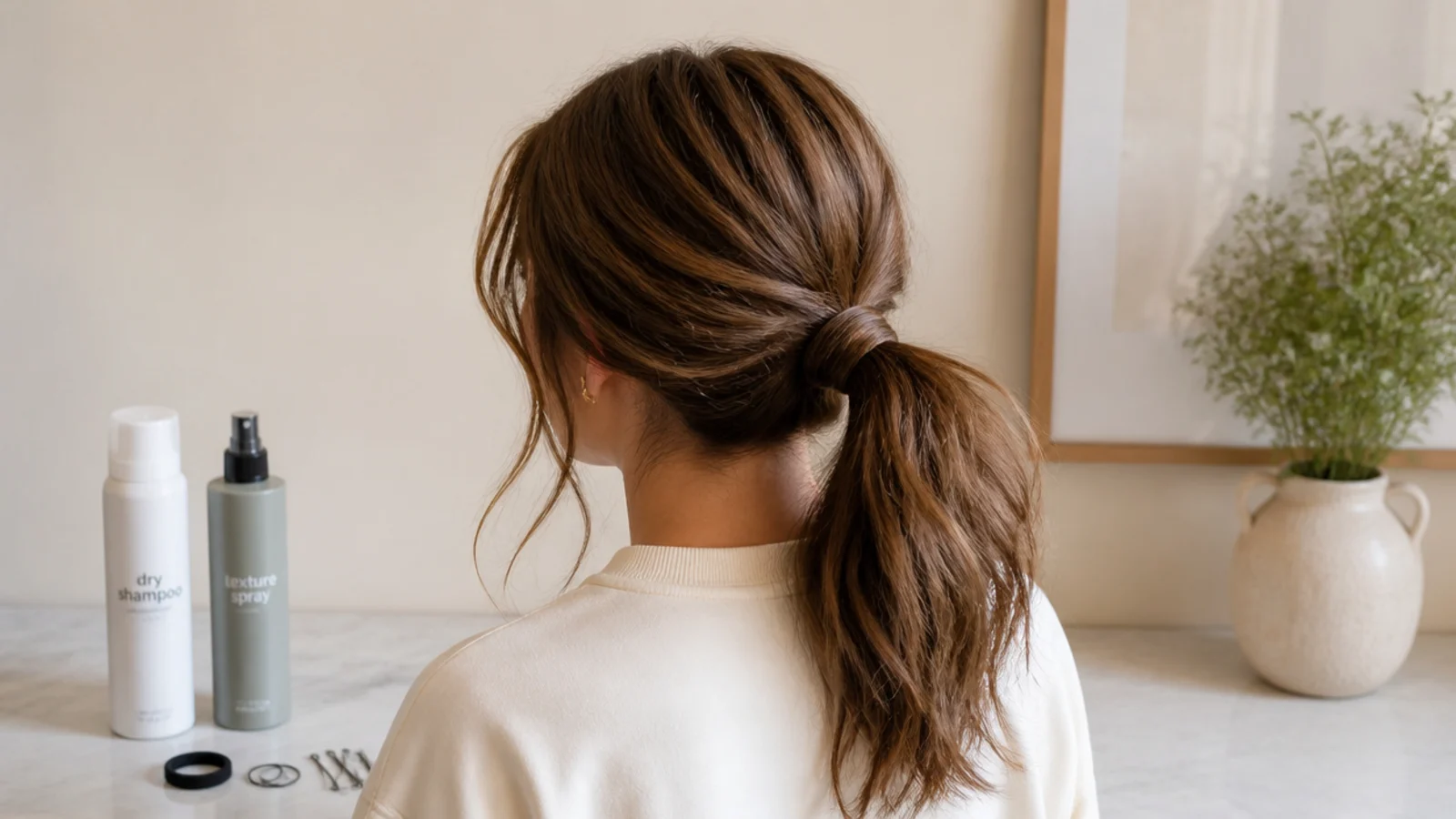
Dry shampoo, roots only. It works by leaving fine particles between strands so they catch on each other. On the lengths it just looks dusty.
Texture spray through the mid lengths. Salt or polymer, either way it roughens the surface so the tail holds its width instead of dropping into a point.
A fabric covered band rather than bare rubber. Bare rubber grabs individual hairs and snaps them at the same spot every morning.
Skip oil and serum before school. They smooth the cuticle, which is exactly the surface you do not want inside an elastic.
Nothing here needs to be expensive. The cheapest dry shampoo and the cheapest texture spray do the same physical job as the expensive ones.
All Day Hold
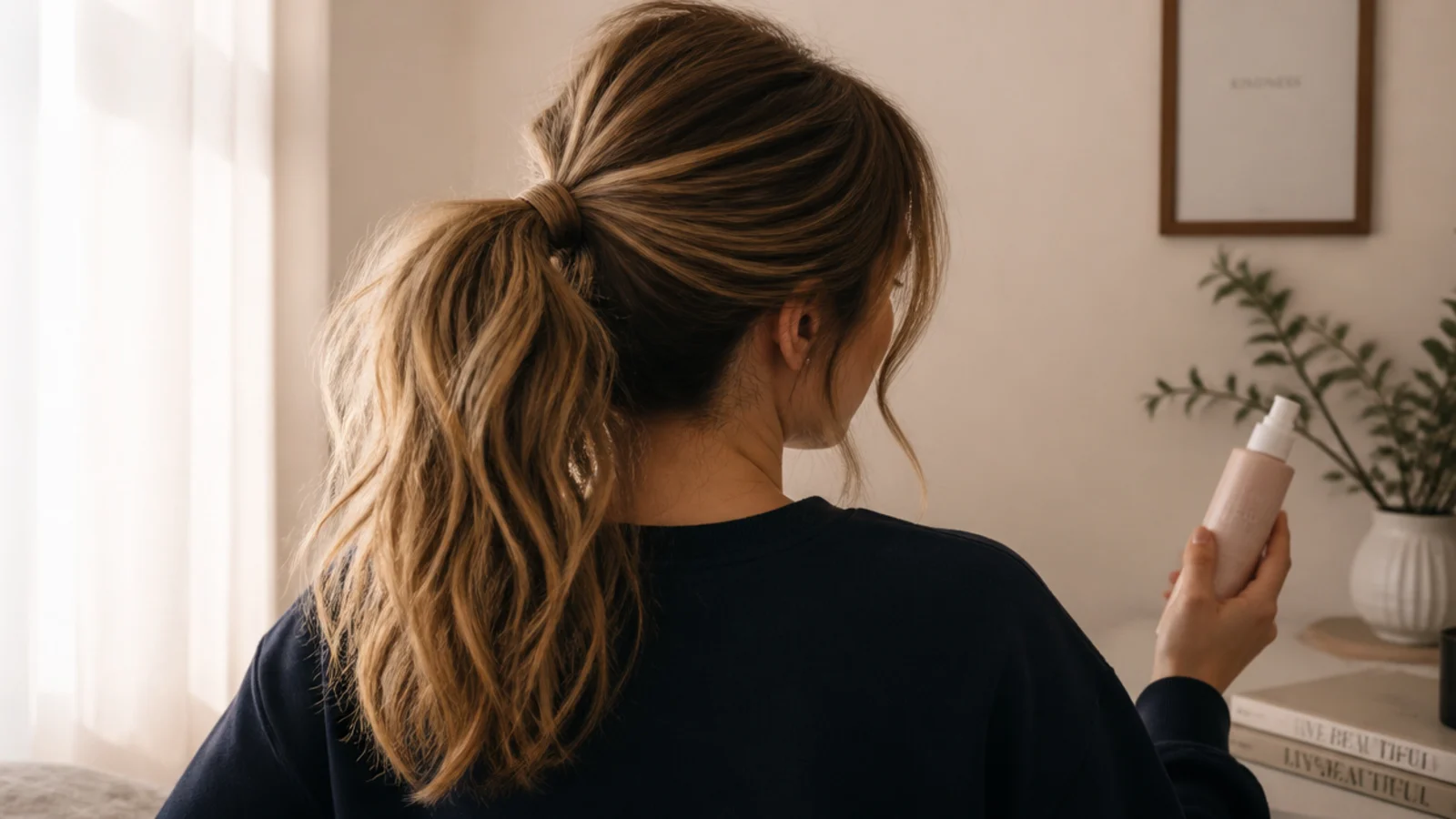
Tie above or below the bone, not on it. The occipital bump at the back of the skull is a slope, and a tail placed on the slope slides down it.
Give the elastic one turn more than feels needed. The last turn is the one that stops the band rotating once the tail starts swinging.
Widen the crown after tying, not during. Pulling sections while you gather loosens the base. Pulling them afterwards borrows slack from hair already inside the band.
Retie at lunch rather than tightening. Dragging a slipped band back up puts all the tension on hair that has already been pulled once.
Move the placement day to day. Tying at exactly the same point every morning concentrates the strain on one line of hair, and that line is where breakage shows first.
The 15 School Ponytails
1. The 60 Second Ponytail
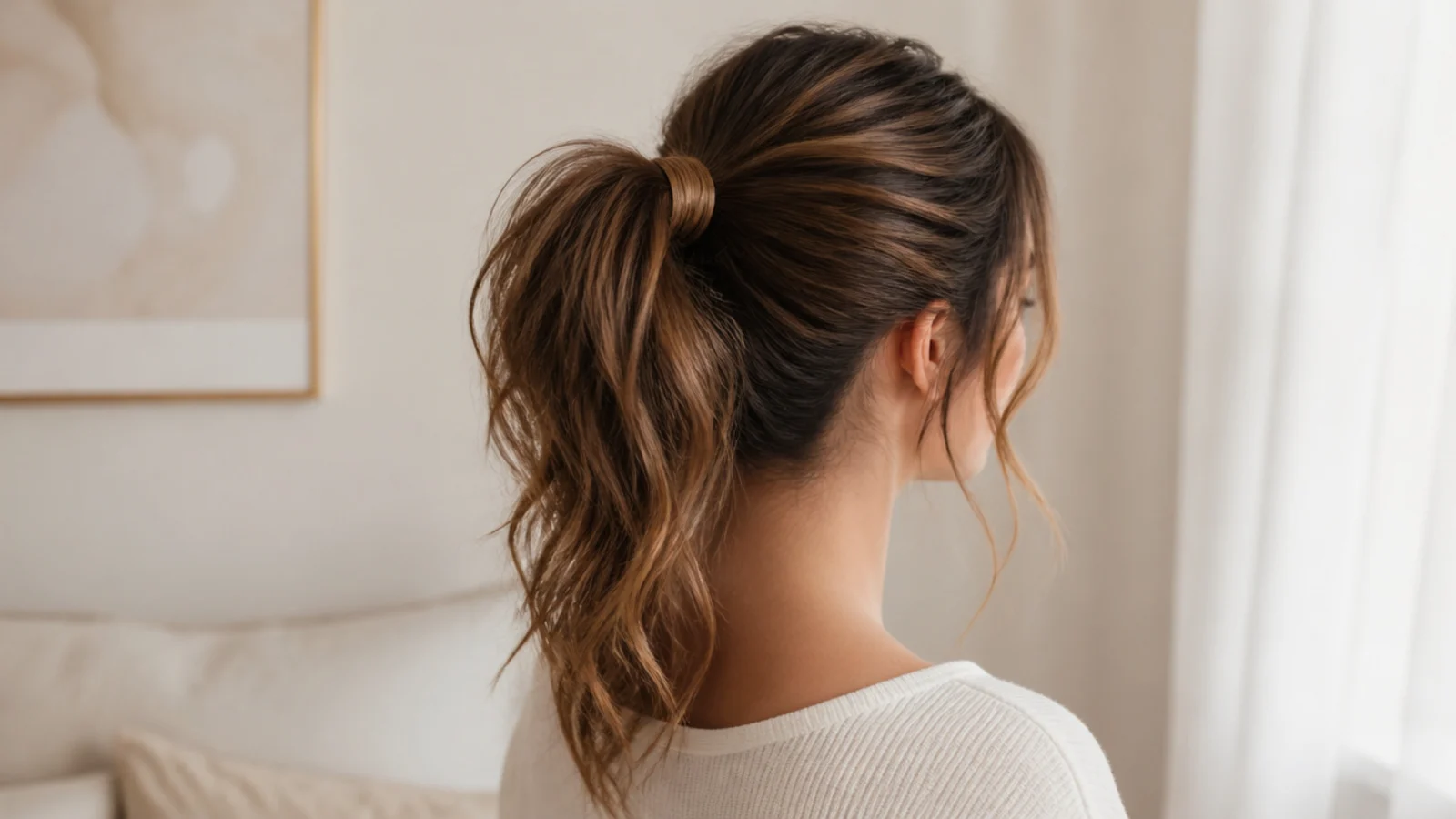
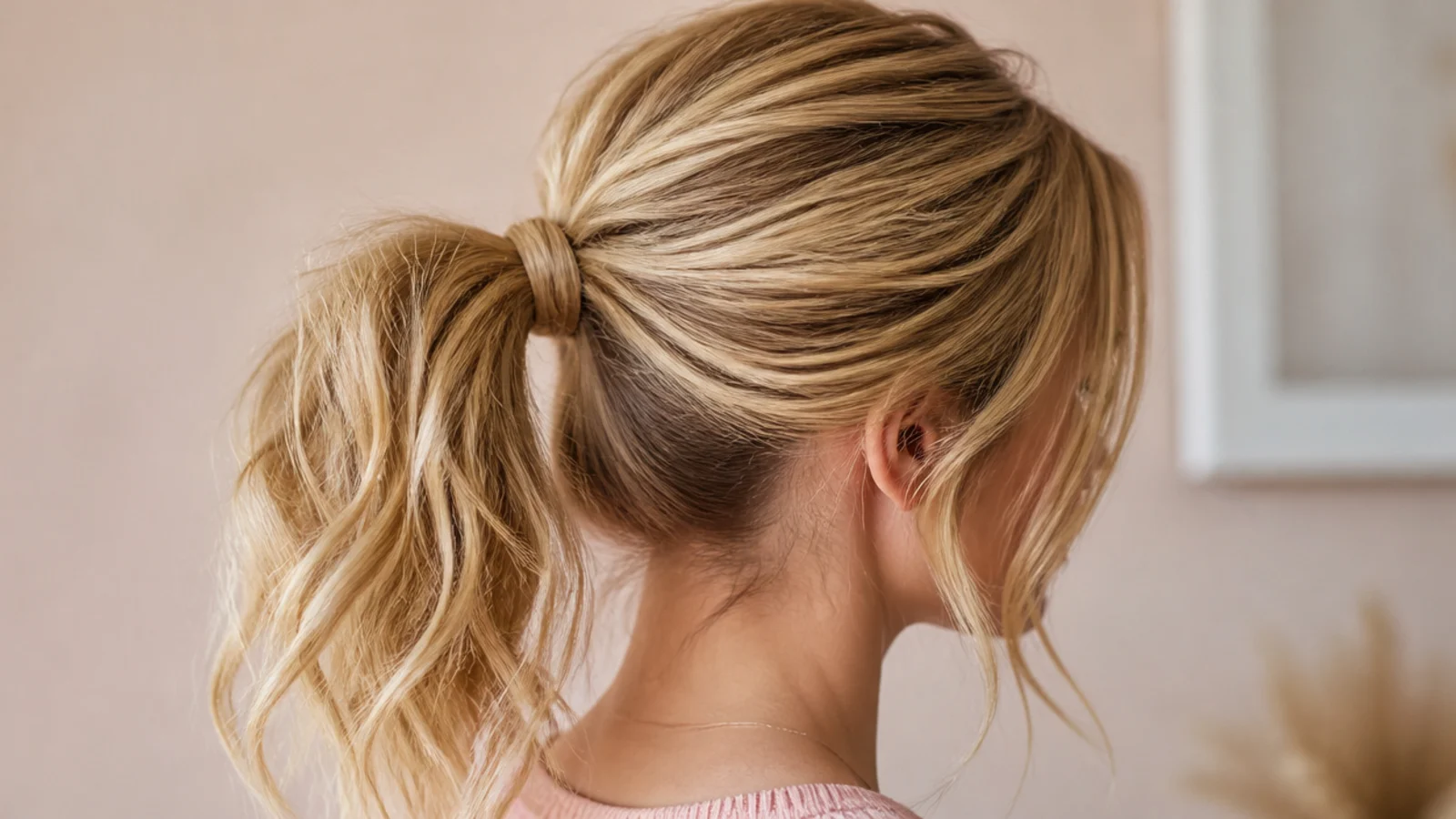
Gather with your fingers, tie once, then pull two sections free at the crown and stop. Finger gathering leaves the natural surface bumps in place, and those bumps are the entire difference between a style and a tail you scraped back in the hallway.
2. Face Framing Pieces
Pull a thin section down at each temple once the tail is already tied, never before you gather. Hair released first gets swept back into the elastic as you collect the rest, which is why one side usually ends up with twice as much falling forward as the other.
3. Dry Shampoo Ponytail
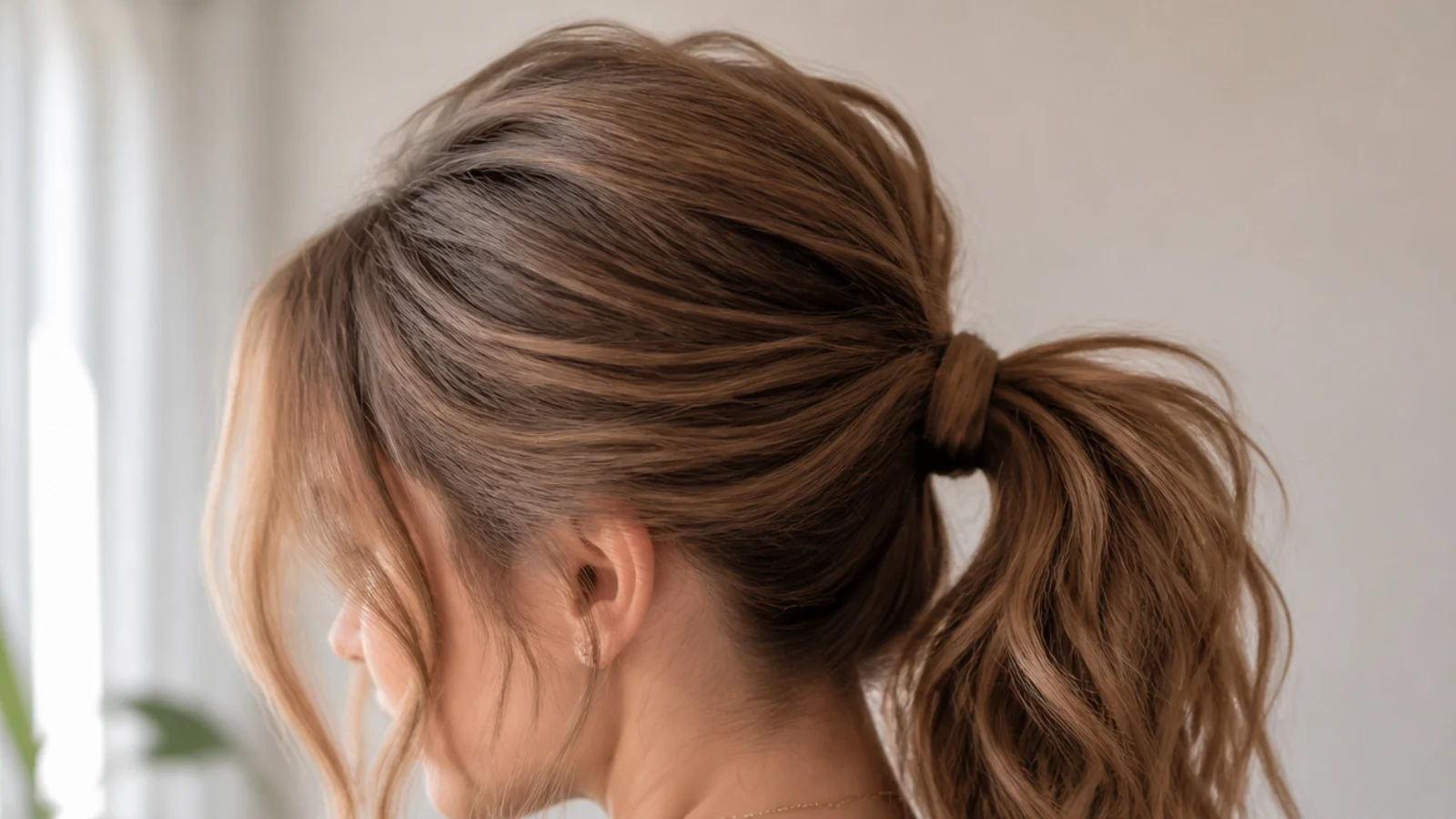
A mist at the roots before you gather leaves fine particles sitting between the strands, and that raises the friction so the hair grips itself instead of sliding through the band. On a washed head it is the fastest single thing you can do to make a ponytail survive to the afternoon.
4. Wrapped Elastic
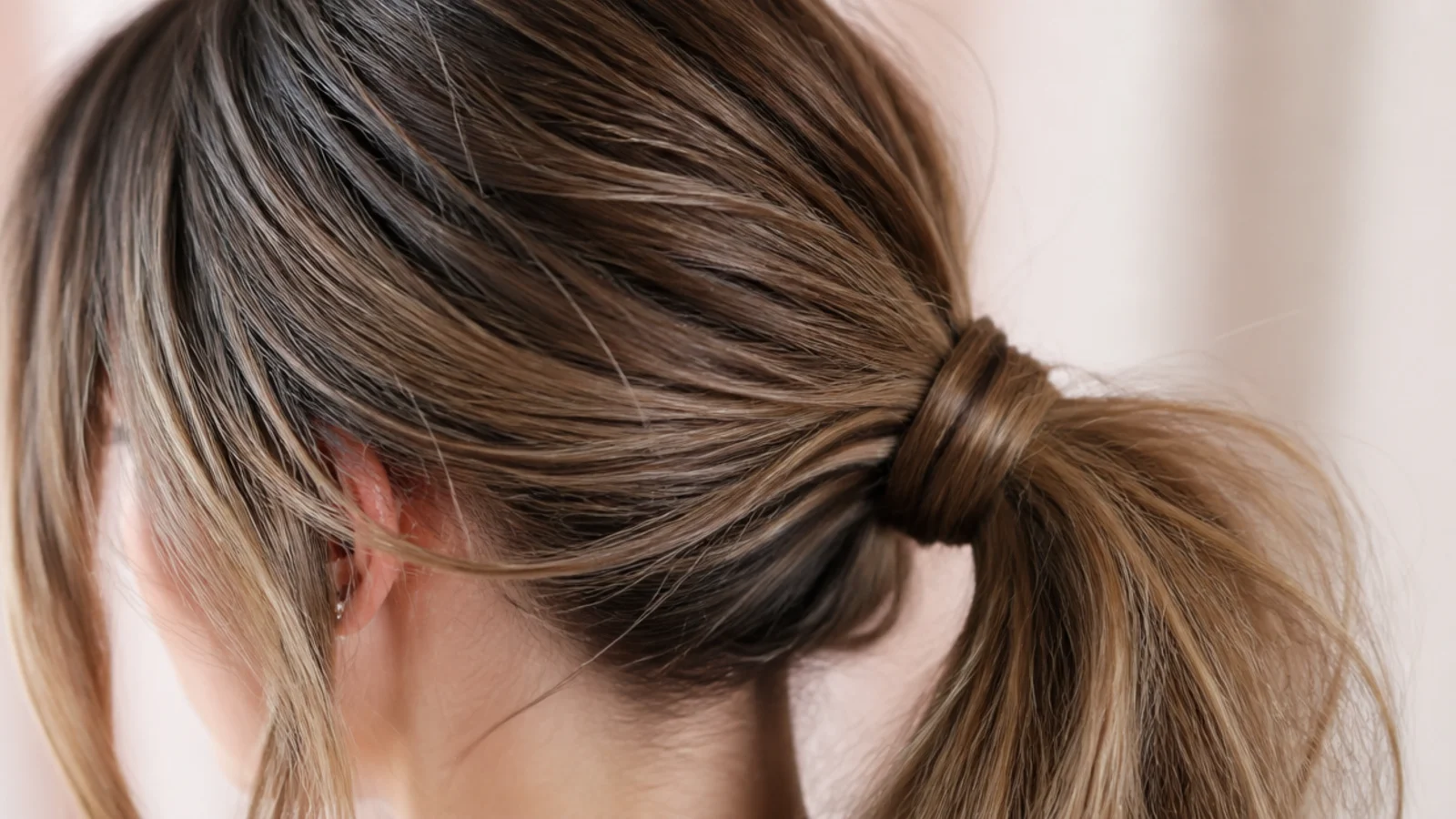
Take a thin strand from underneath the tail and wind it around the band, then tuck the end under with a pin. The wrap clamps the elastic against the base so it cannot rotate, and rotation is what quietly loosens a ponytail over the course of a morning.
5. Bubble Ponytail
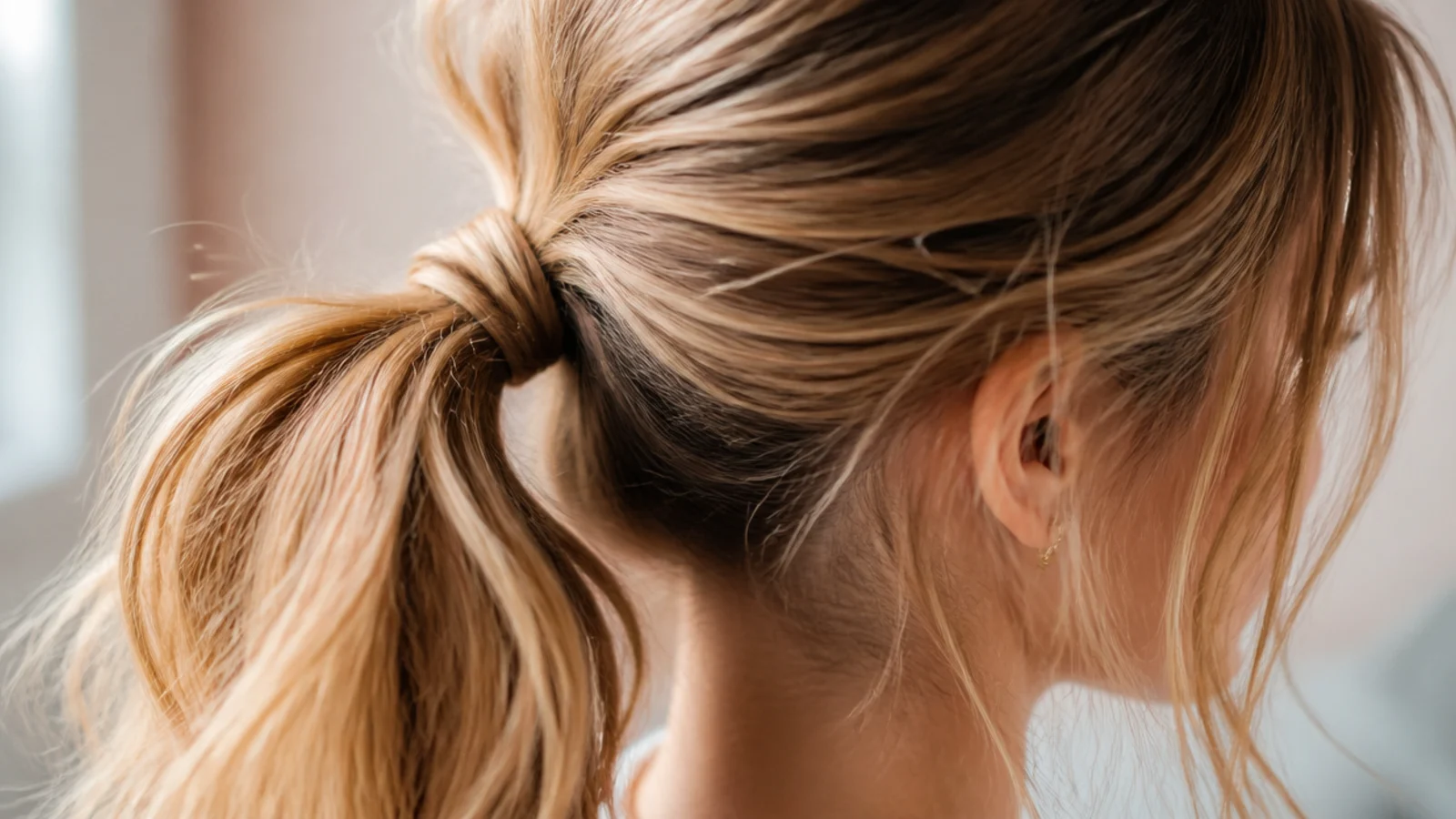
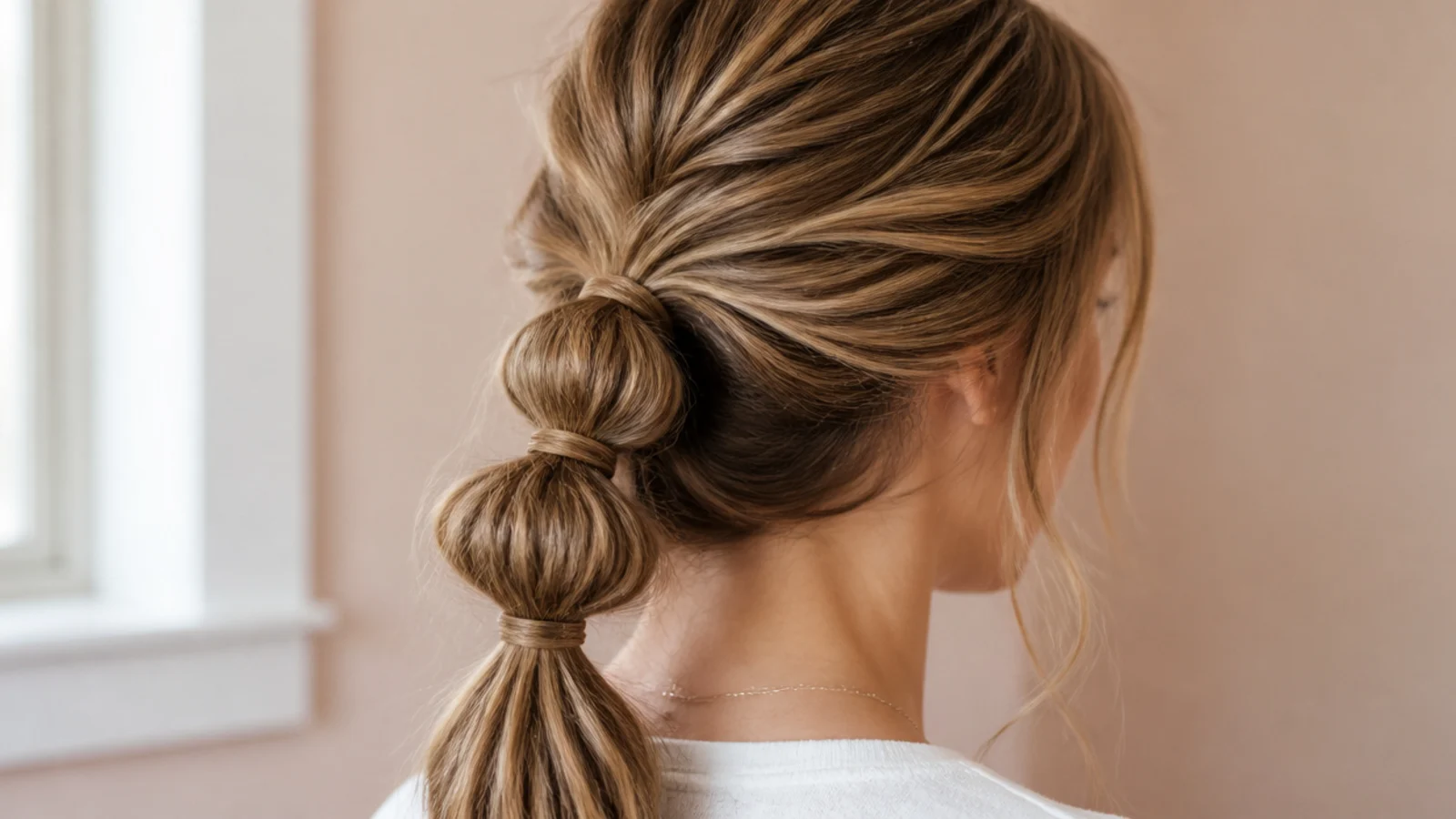
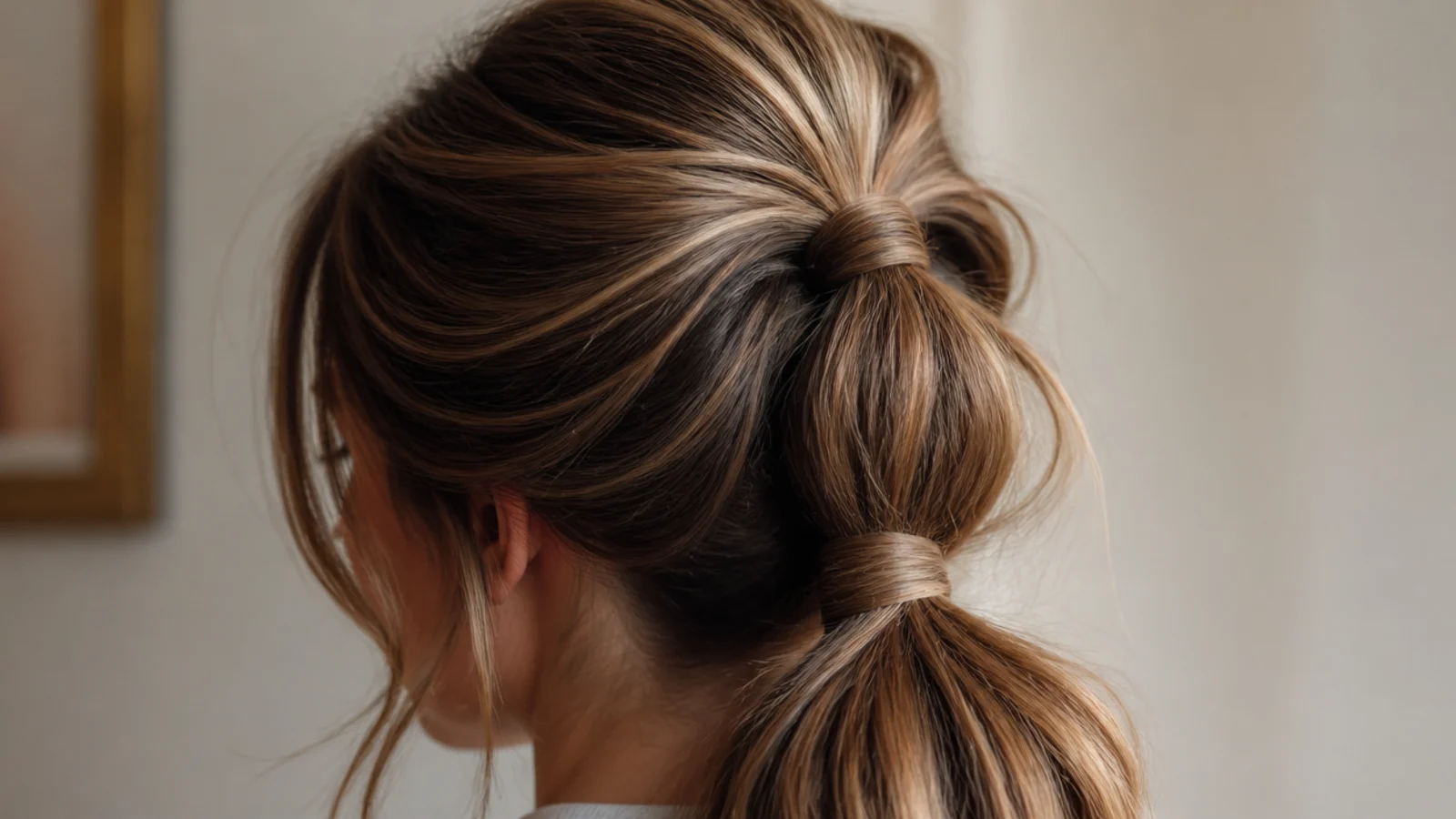
Small clear elastics spaced down the length split the weight so no single band carries the whole tail. Puff each segment outward after every tie, because the width comes from spreading the hair between the bands rather than from having long hair in the first place.
6. Half Up Ponytail
Only the top section goes into the band, so the elastic carries roughly a third of the weight and the pull on the scalp drops with it. It is also the version most likely to survive a full school day, since there is far less mass swinging against the tie every time you turn your head.
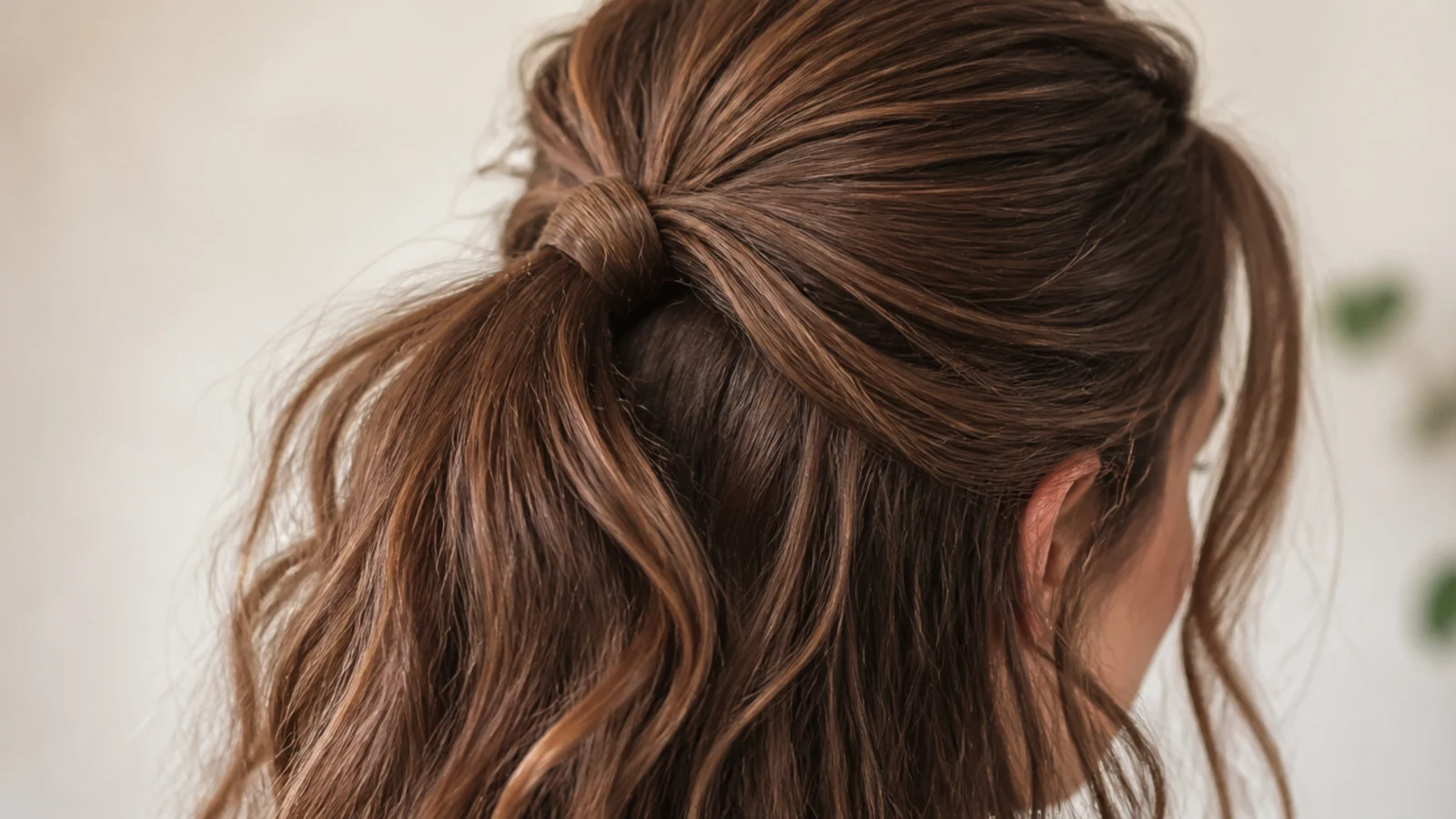
7. Low Ponytail Under a Hood
Tied at or just below the nape, the tail sits clear of a hood seam and a rucksack strap rather than being shoved sideways by both all day. A high tie worn under a hood is flattened within minutes, and the crease it leaves does not brush out at break.
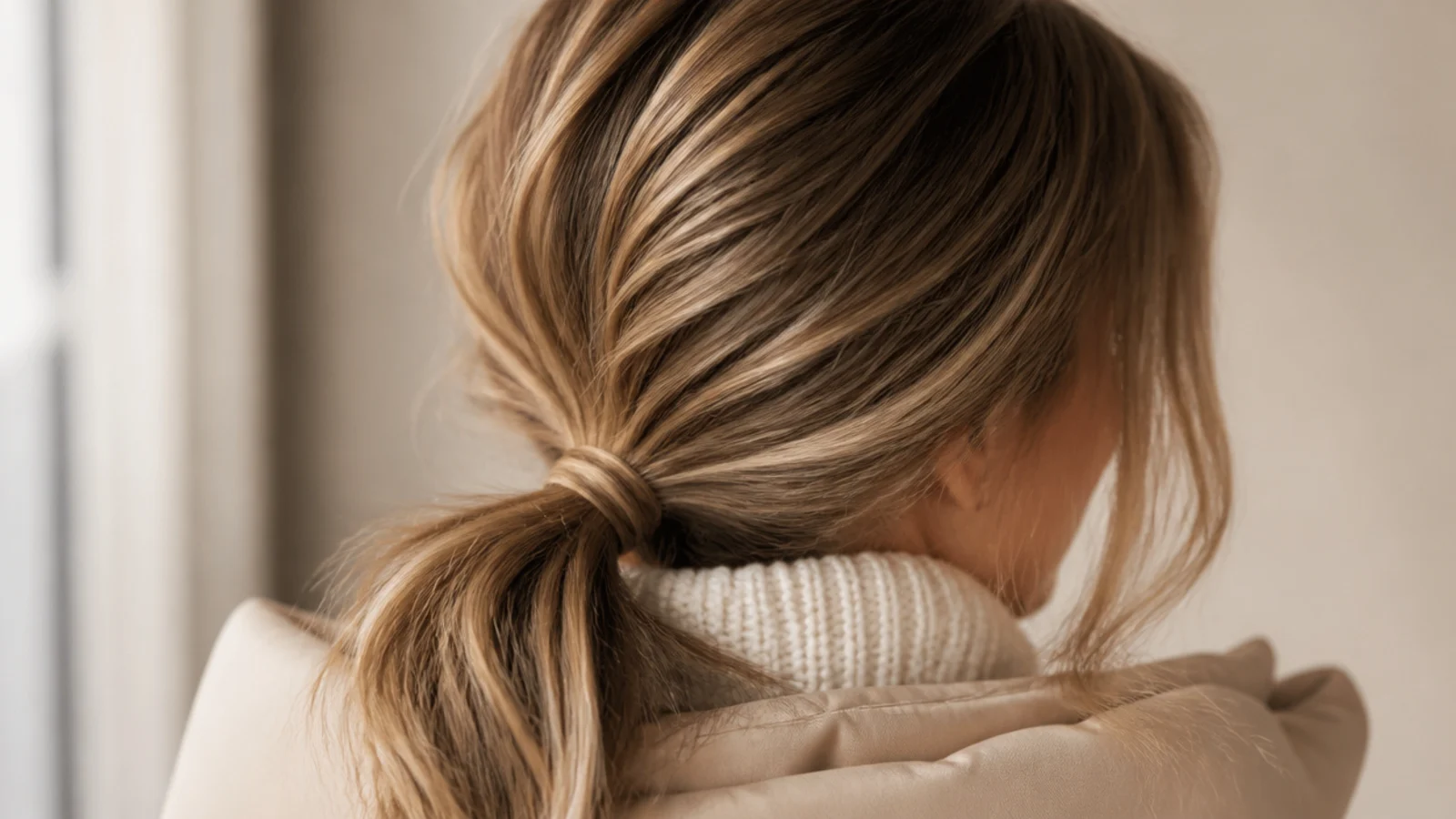
8. The PE Class Ponytail
Tie it high, above the bump at the back of the skull, and give the elastic an extra turn. Placed above that bone the tail swings clear of a collar and a bench back, so the movement pulls against the band instead of dragging the whole base sideways.
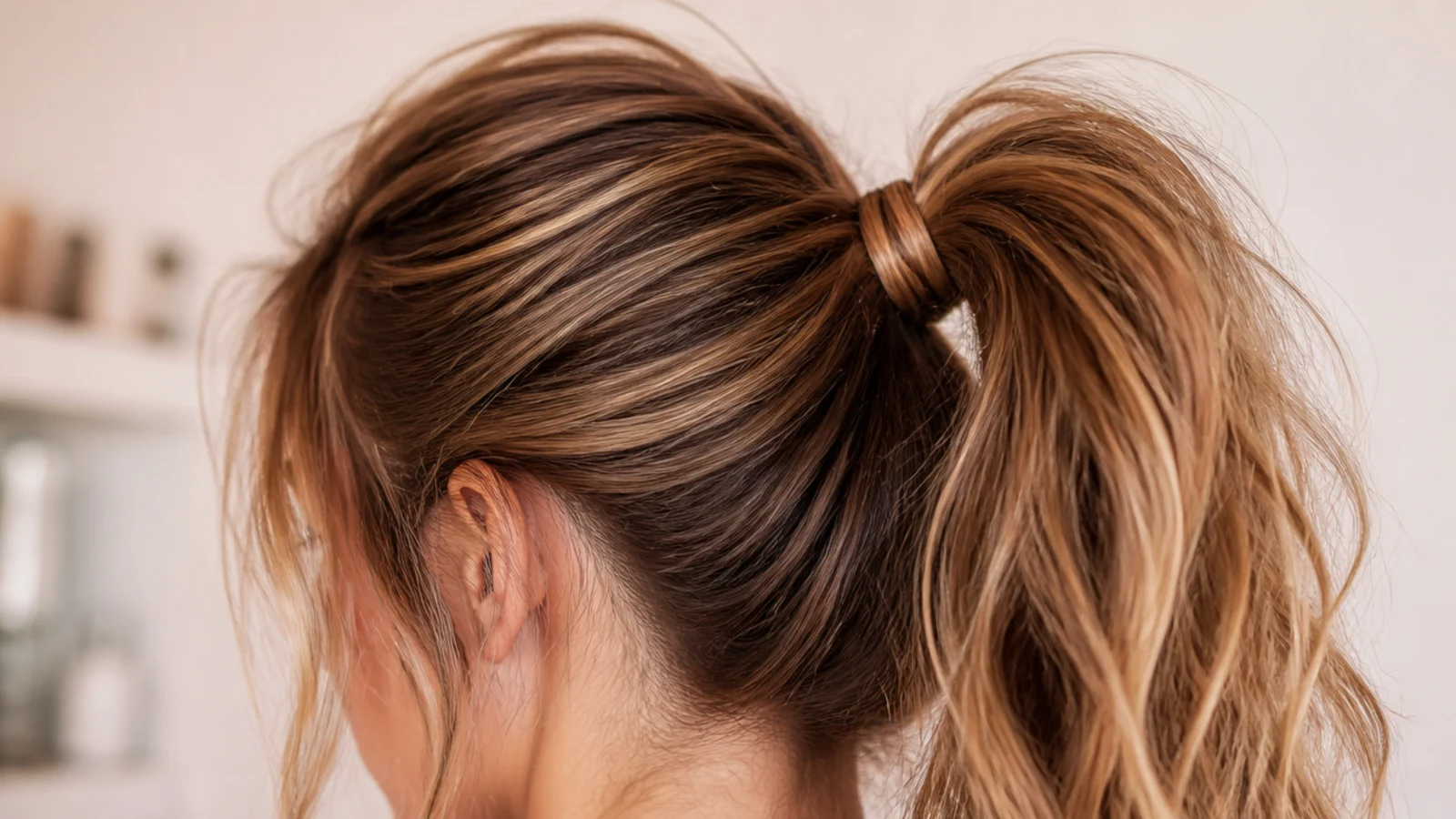
9. Scrunchie Ponytail
The fabric spreads its grip across a wide contact band rather than a thin rubber ring, so the pressure on any one point of hair is much lower. That is why it leaves a softer dent and far less of the snap line that a bare elastic cuts into the same spot every morning.
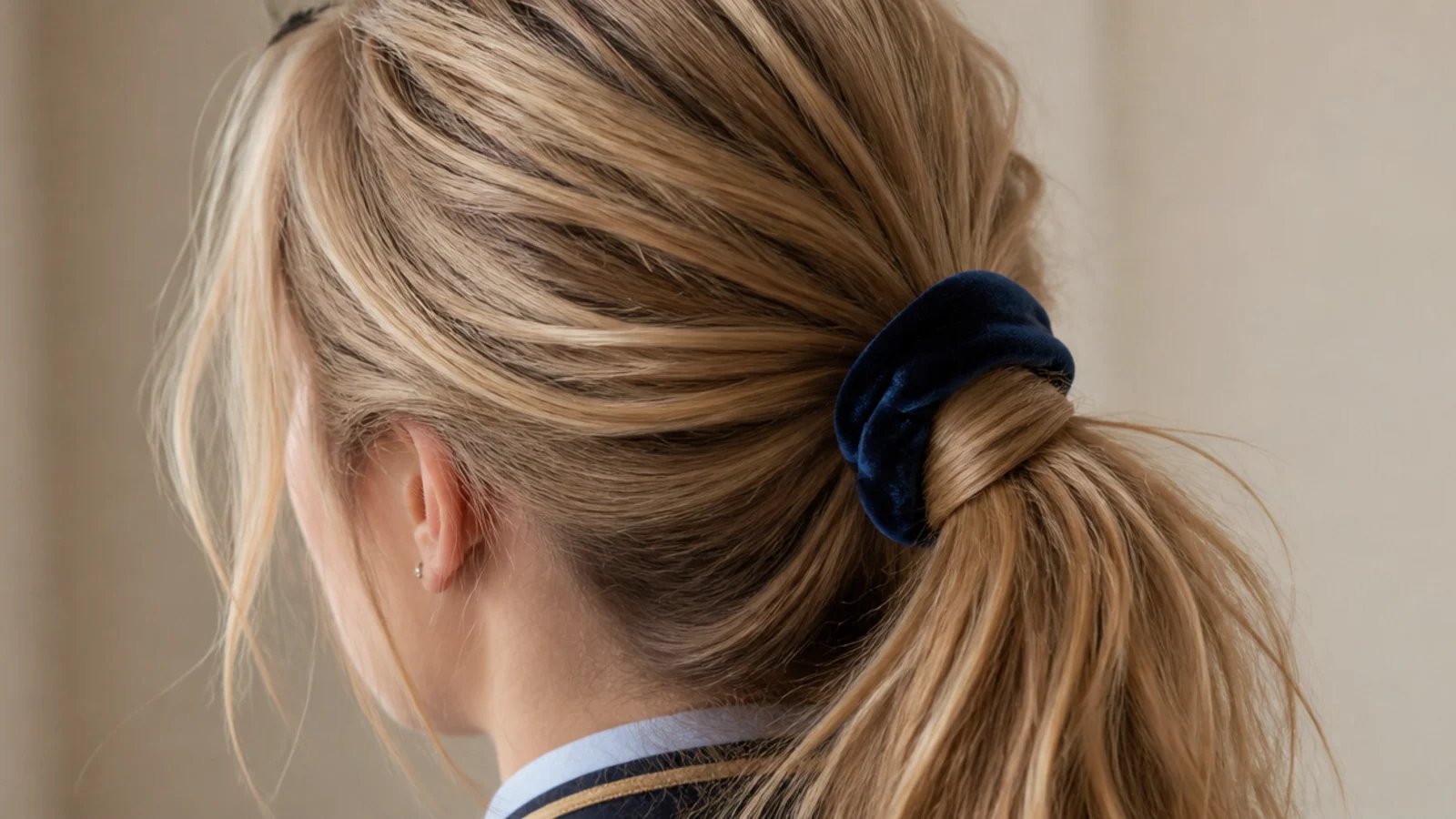
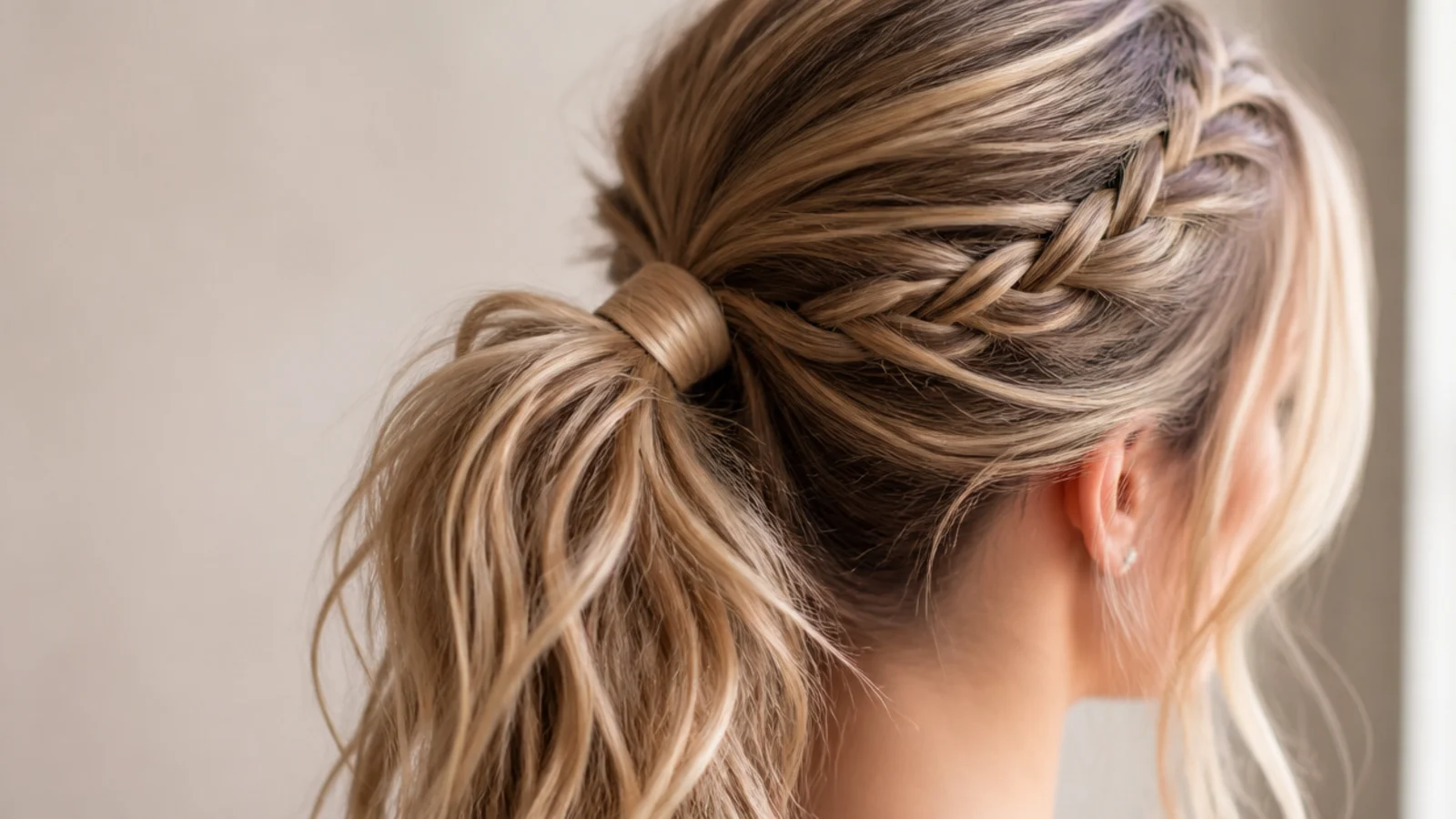
10. Braided Front Ponytail
A small braid running from the parting back into the tail holds the front hair down without a clip to lose. Braided hair is locked against itself along its whole length, so it stays flat through PE and a coat hood where a pinned section works free.
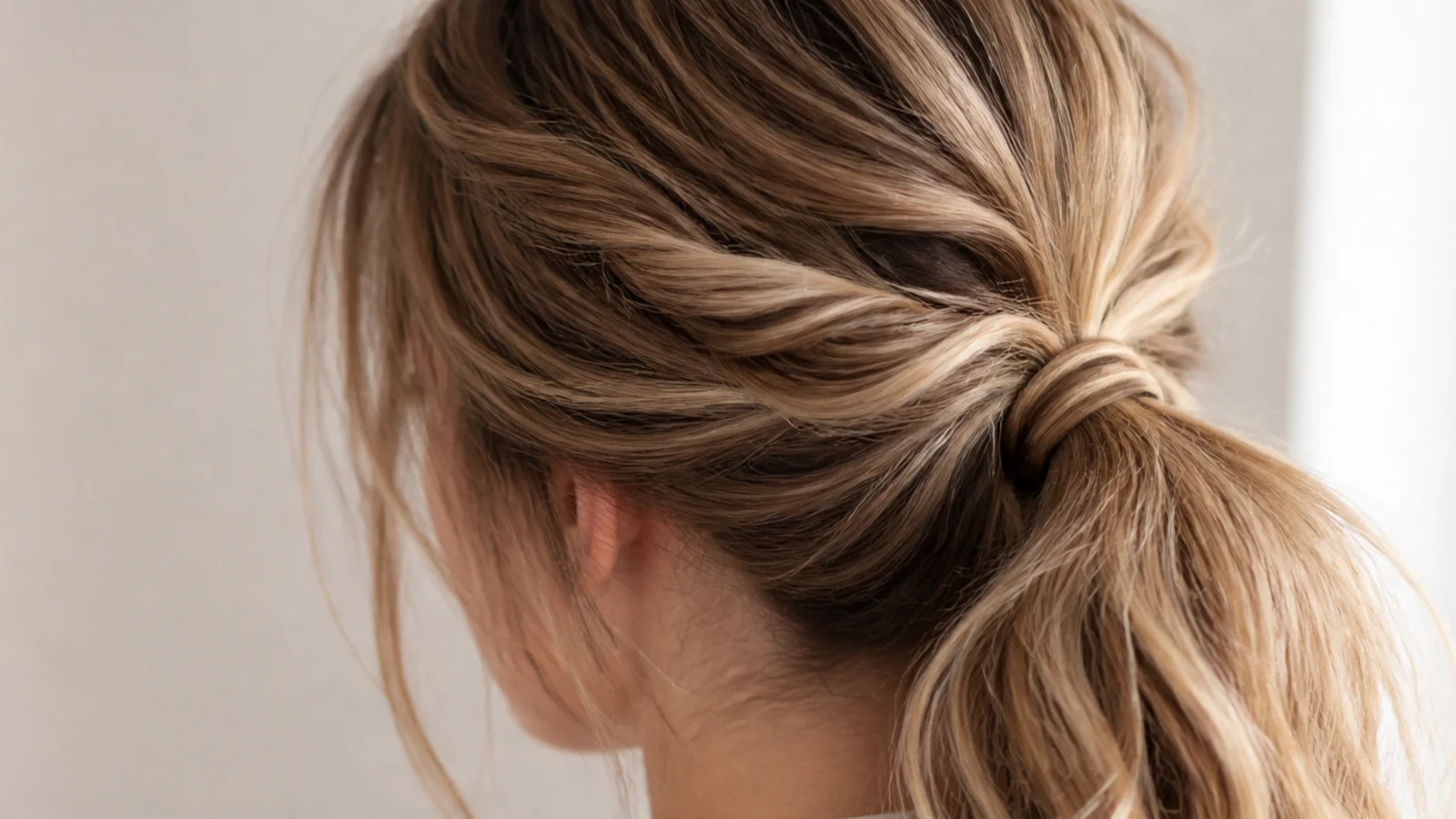
11. Twisted Sides
Twist each side section back toward the crown and take both into the elastic with the rest. A twist compresses hair into a rope, and a rope keeps its shape under a hood far better than a smoothed flat piece with nothing to hold it together.
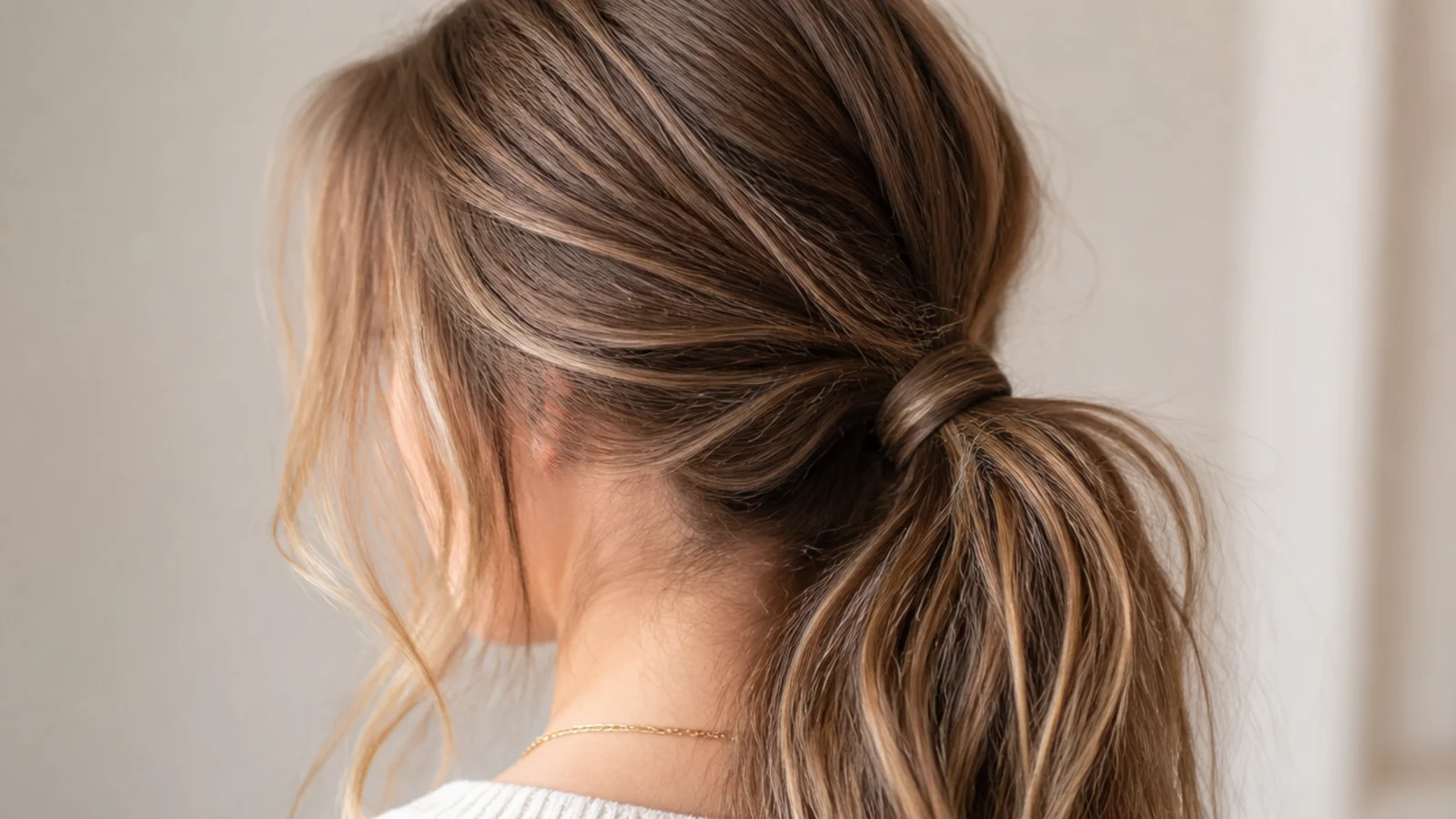
12. Curtain Bangs Ponytail
Leave the fringe out completely and gather everything from behind it. Curtain bangs are cut on a long angle, so any piece caught in the elastic drags the whole curtain to one side and the centre split stops sitting where it was cut to sit.
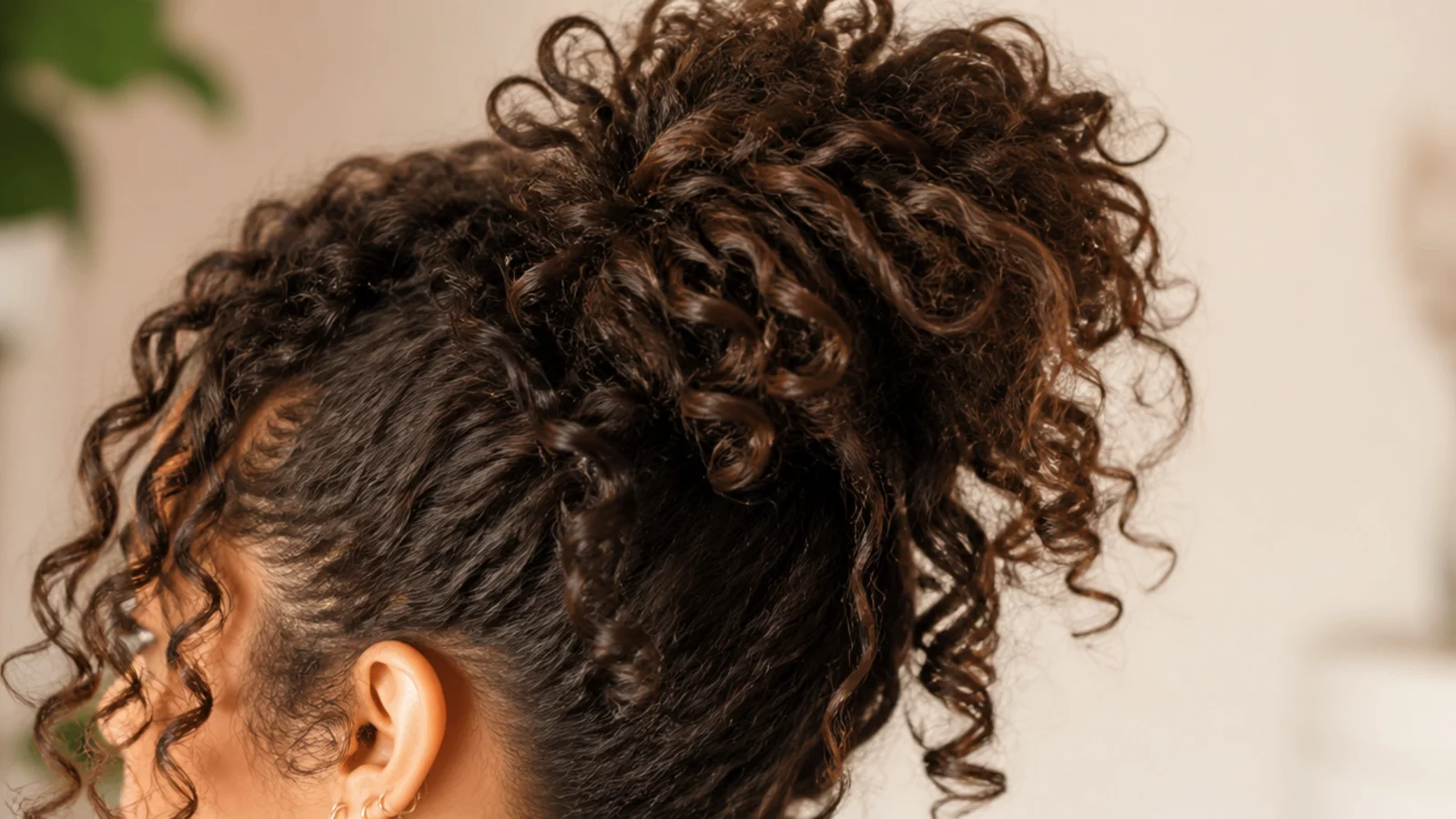
13. Curly Pineapple Ponytail
Gather high and deliberately loose on top of the head so the curls sit above the band rather than being crushed inside it. Tension flattens a curl pattern at the root, and a loose gather is the whole difference between defined curls at three in the afternoon and a flat crown.
14. Short Hair Bungee Ponytail
A bungee hooks at each end, so you set the tension yourself instead of forcing a third turn of elastic over a short tail. Every wrap costs you length, which is why a standard band so often will not close at all on hair above the shoulder.
15. Two Elastic Ponytail
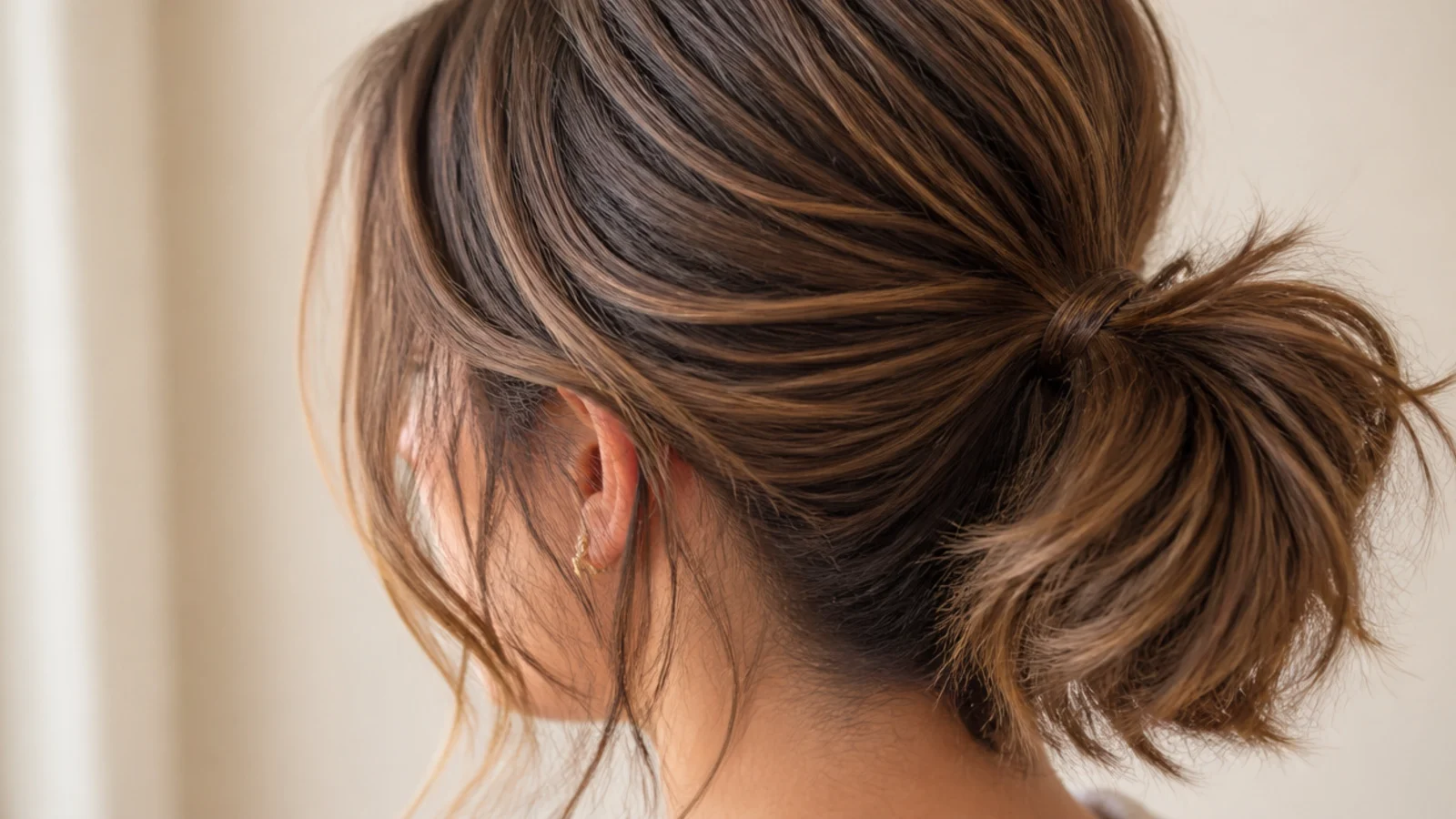
Tie once, then add a second band a finger width below the first. The lower band takes the share of the weight the upper one would otherwise carry alone, and that is what stops a heavy tail creeping down the back of the head by the afternoon.
Final Thoughts
Start with the hair, not the technique. A ponytail tied into second day hair, or into clean hair given twenty seconds of dry shampoo at the roots, holds with an ordinary elastic and no skill at all. The same tail tied into a freshly washed head slips no matter how hard you pull, and pulling harder is how a school routine turns into breakage along one line above the ear.
After that it is placement and one habit. Tie above or below the occipital bump rather than on the slope of it, wrap the band one turn more than feels necessary, and spend the last twenty seconds widening the crown rather than tightening the base. For the tidier end of the same idea see the high version. More in Updos and Clips. See also the curly version.