
15 Graduation Hairstyles That Work With a Cap
Fifteen graduation styles built around the one measurement nobody takes — the cap band line. Bulk below it is invisible to the mortarboard; bulk above it turns into a wedge that tips the board and slides all morning.
In this article · 23
- Where the Cap Sits
- Updo Versus Down
- By Hair Length
- All Day Hold
- Morning Timing
- Cap Off Recovery
- The 15 Cap Friendly Graduation Styles
- 1. Low Chignon
- 2. Flat Half Up
- 3. Side Swept Waves
- 4. Sleek Low Ponytail
- 5. Dutch Crown Braid
- 6. Twisted Bun for Fine Hair
- 7. Two Dutch Braids Into a Bun
- 8. S Wave Blowout
- 9. Textured Bob
- 10. Anchored Pixie
- 11. Flat Twists Into a Low Bun
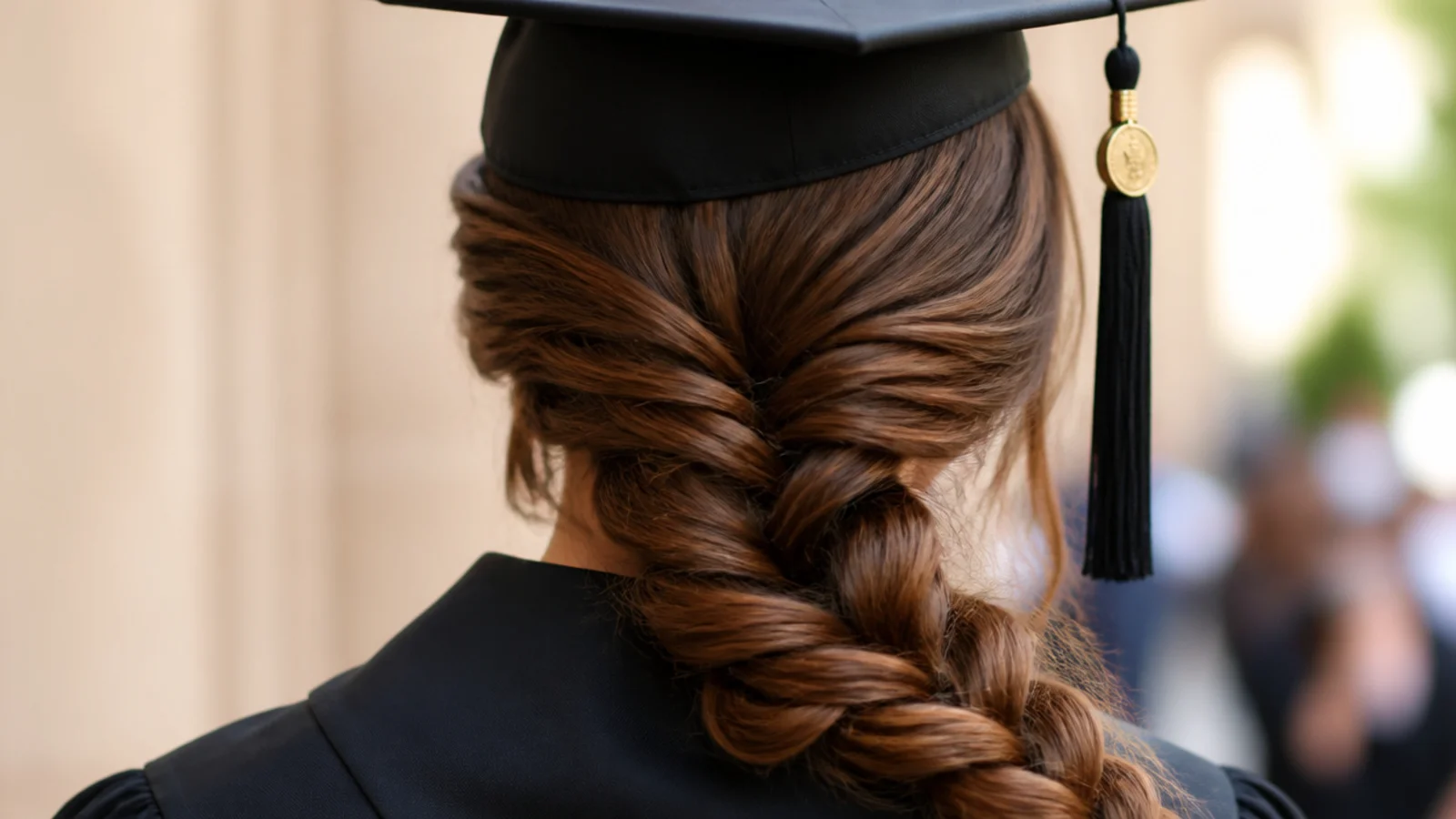
- 12. Low Fishtail
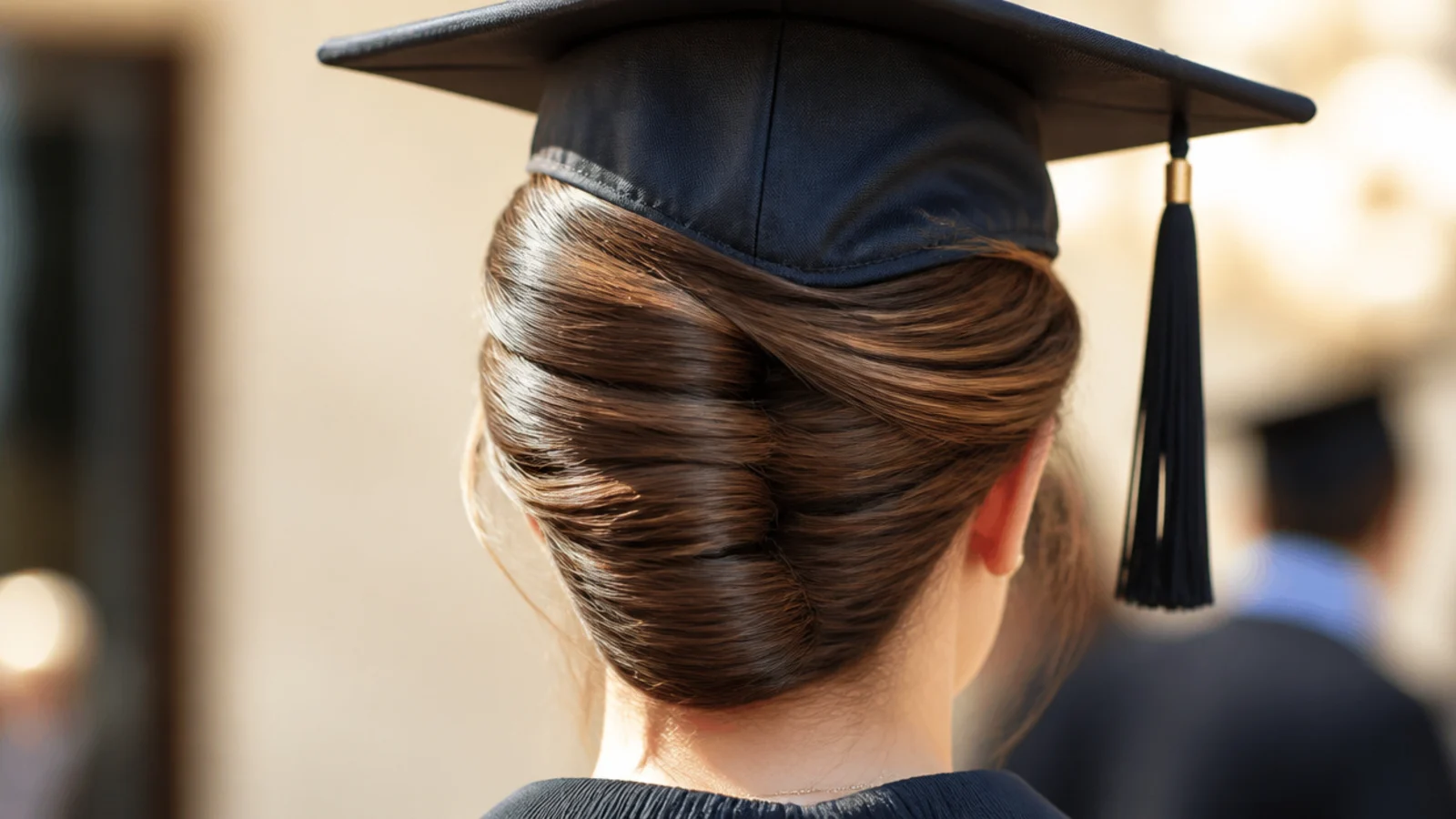
- 13. French Twist
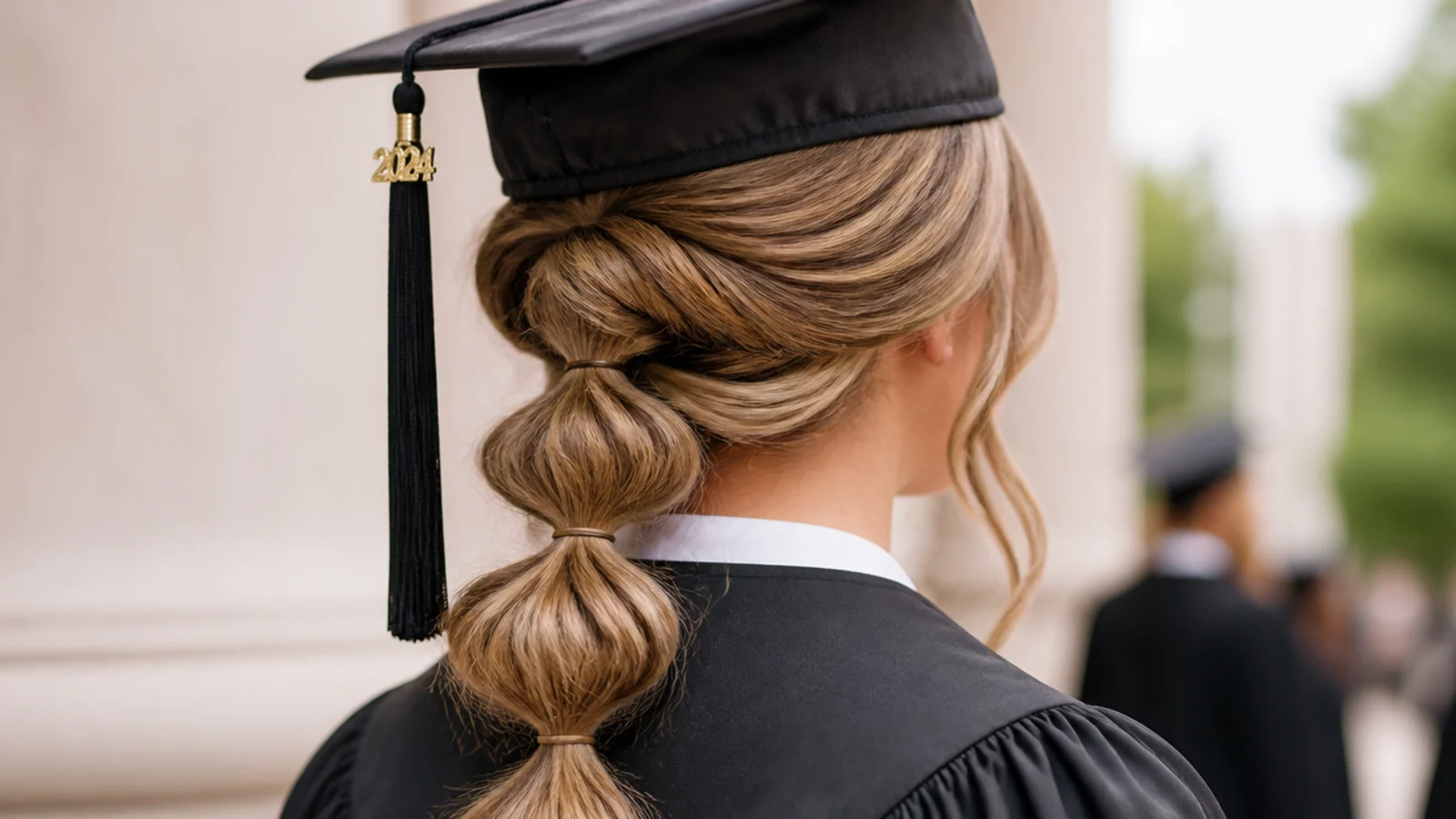
- 14. Bubble Half Up
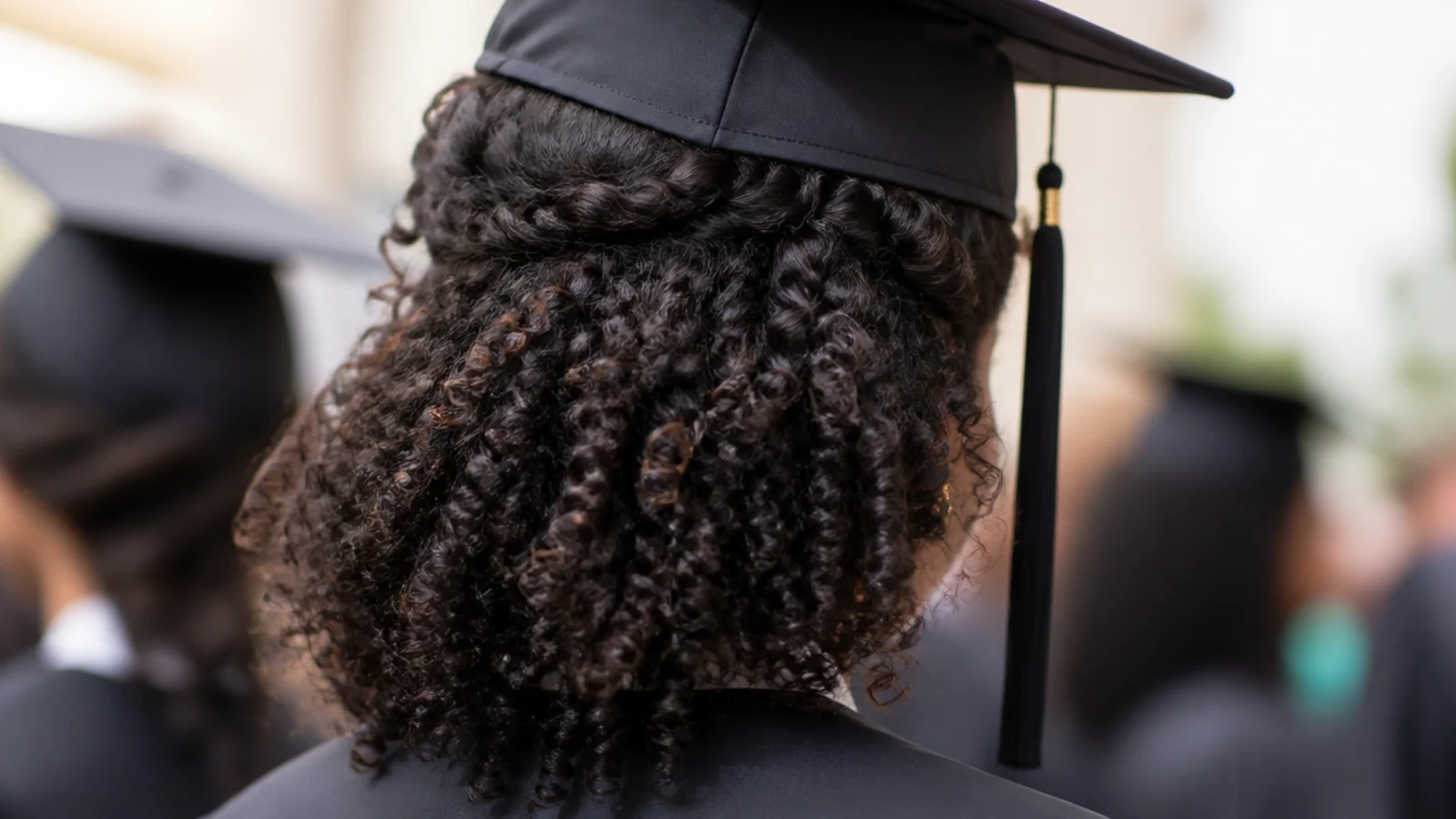
- 15. Curly Wash and Go
- Final Thoughts
Most graduation hair fails at one moment, and it is not the ceremony — it is the fitting room, when the cap goes on over a style that was never measured against it.
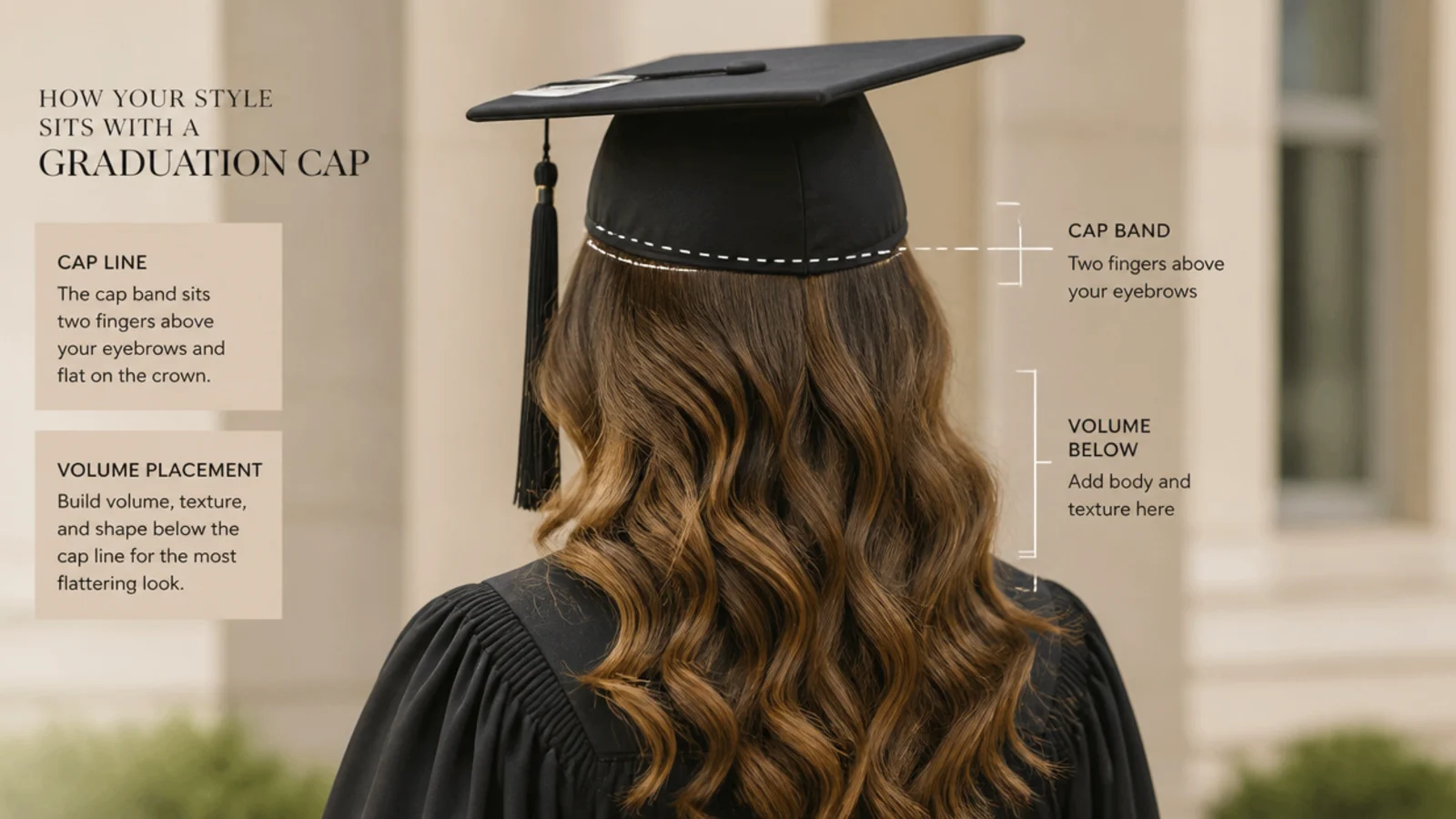
The mortarboard band is a fixed circumference. It sits about a finger width above the eyebrows at the front and drops to the occipital bone at the back, and it cannot be shifted backwards to make room for a bun.
Height is the problem, not volume. Hair that sits flat can be wide and the cap never notices. Hair that stands up under the rear edge acts as a wedge, tips the board and slides for four hours.
Where the Cap Sits
Front edge, one finger above the brows. That is the fitting the cap was designed for, and it is where photographers expect it.
Back edge, on the occipital bone. The bony ridge at the base of the skull is the rear contact point. Anything piled on top of that ridge lifts the band off it.
The band cannot move back. It is a closed loop of stiff fabric. Pushing it back to clear a bun only shortens the front overhang, so the board tips.
Below the occipital bone is free space. A nape-level bun sits entirely under the rear edge and touches nothing.
Updo Versus Down
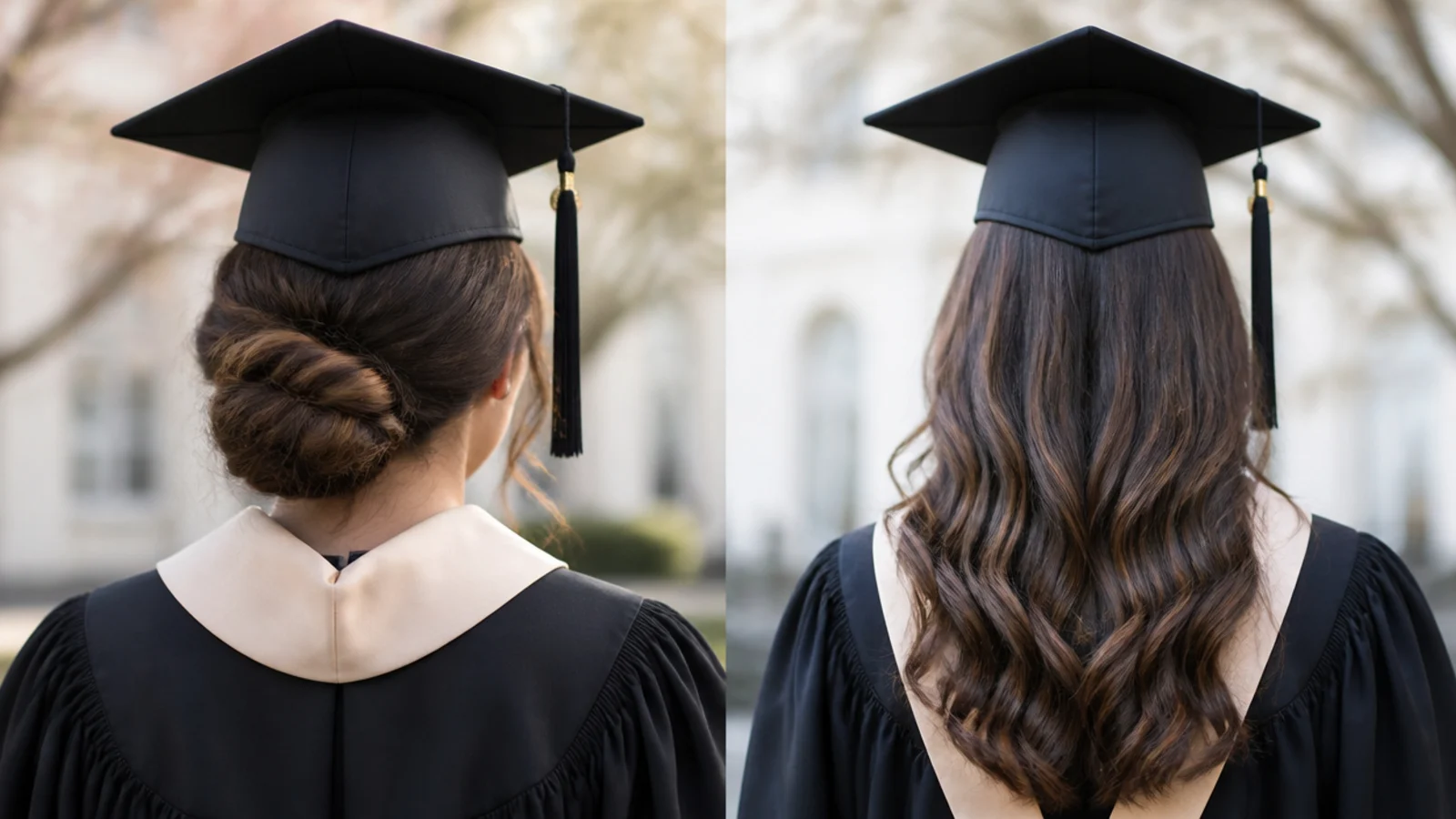
An updo removes the conflict entirely. Nothing under the band except scalp, so the cap sits where it was cut to sit.
Hair worn down puts the band across the crown. It compresses one horizontal stripe of hair for the length of the ceremony, and that stripe is what you see in the photographs afterwards.
Half up splits the difference. The gathered section sits low at the back, the length hangs below the band, and nothing under the cap has height.
Judge it by which photograph matters. Cap on, only your face shows. Cap off, the hair is the picture. Most people want both to work.
By Hair Length
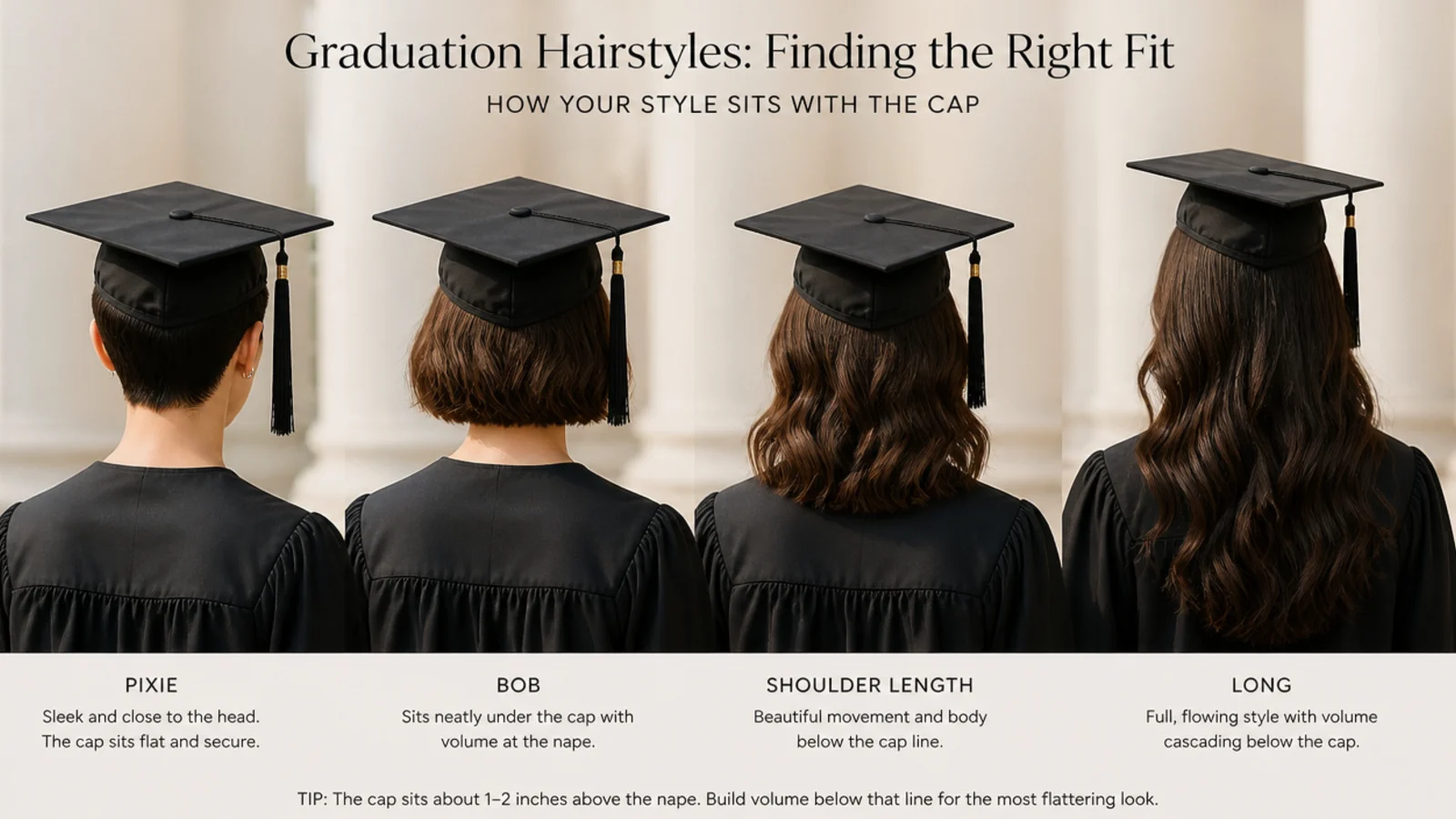
Pixie and short crops. Nothing to gather, so the cap rests on hair rather than on a style. Grip comes from pins driven into the cap band itself.
Chin to shoulder. Long enough for a low chignon or a French twist, short enough that the whole thing stays flat. The easiest length to work with.
Past the shoulders. Weight becomes the variable. A heavy low bun pulls backwards on its pins all day, so it wants more anchors than it looks like it needs.
Coils and tight texture. Flat twists and cornrows lie against the scalp with zero height, which is the single best relationship any style has with a mortarboard.
All Day Hold
Plan for four hours, not one. Seating, the procession, the names, the photographs afterwards. Style for the last hour, not the first.
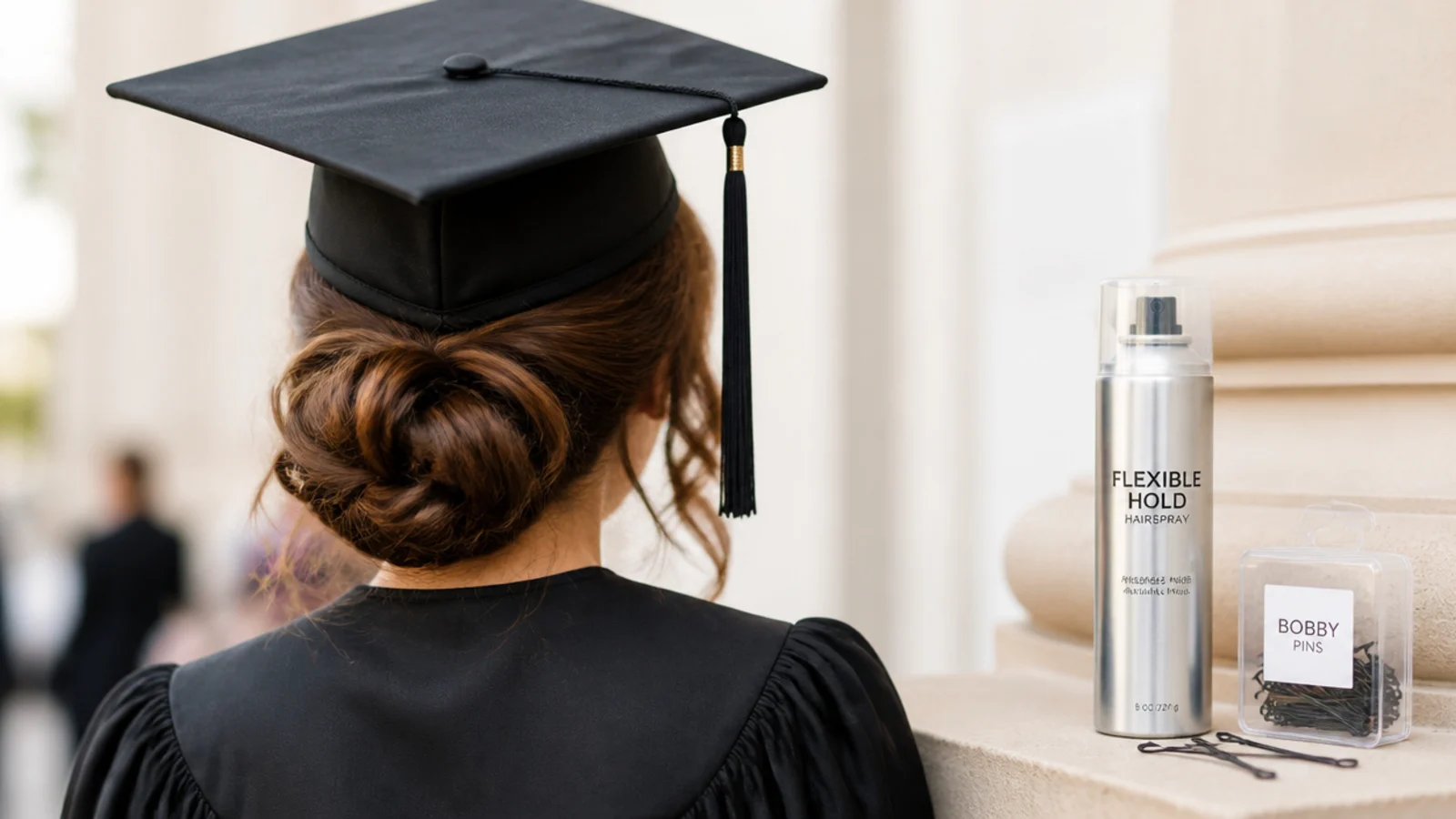
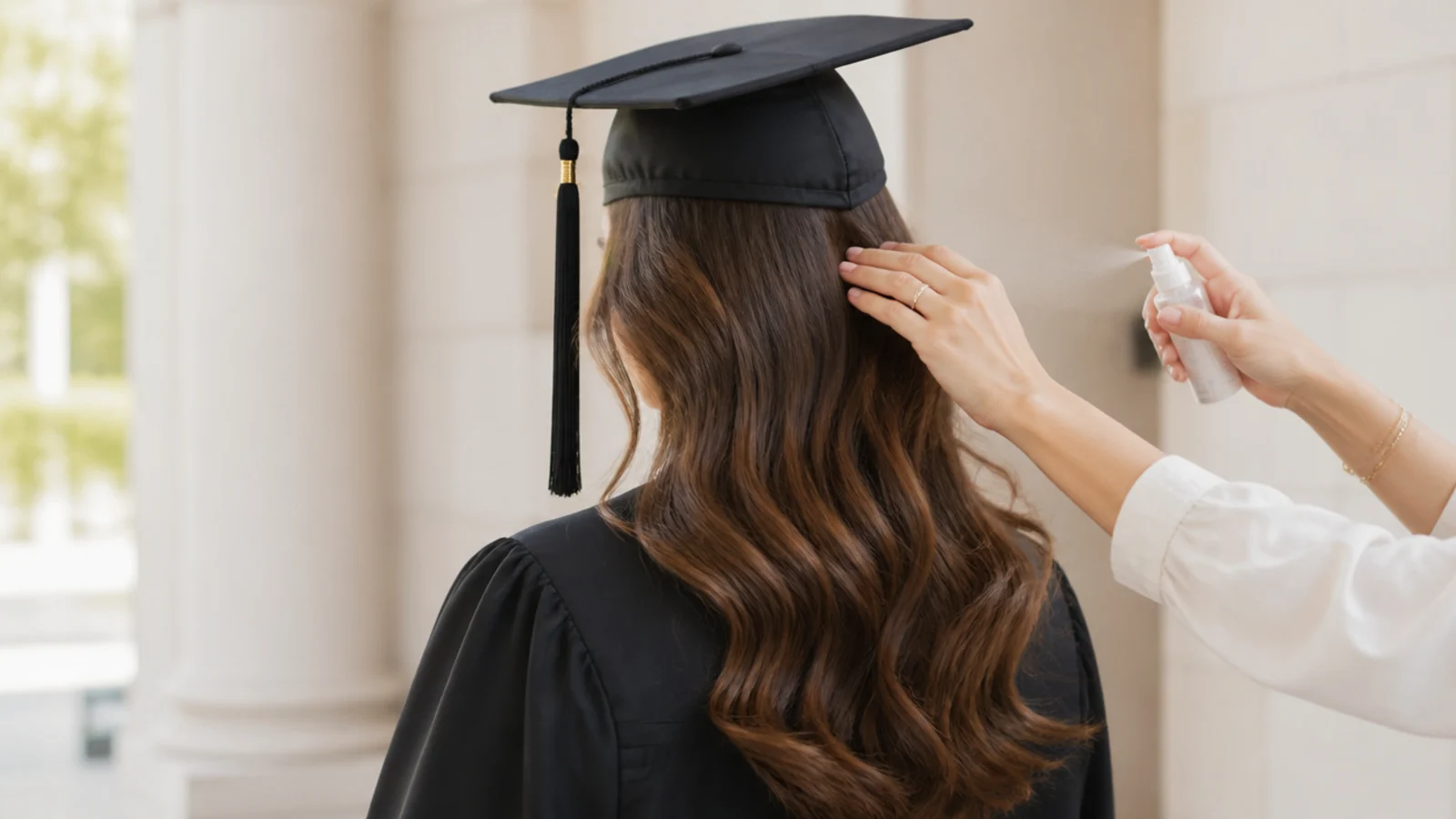
Flexible hold beats firm hold here. A flexible polymer film bends when the cap knocks it and springs back. A hard film cracks at the same knock and the section drops.
Grip is friction, not product volume. Freshly washed hair is slippery because there is no sebum on the cuticle. Day-old hair, or clean hair with texture spray through it, gives pins something to bite.
Cross every pin. Two pins at opposing angles resist rotation in both directions. One pin resists one direction and swivels out of the other.
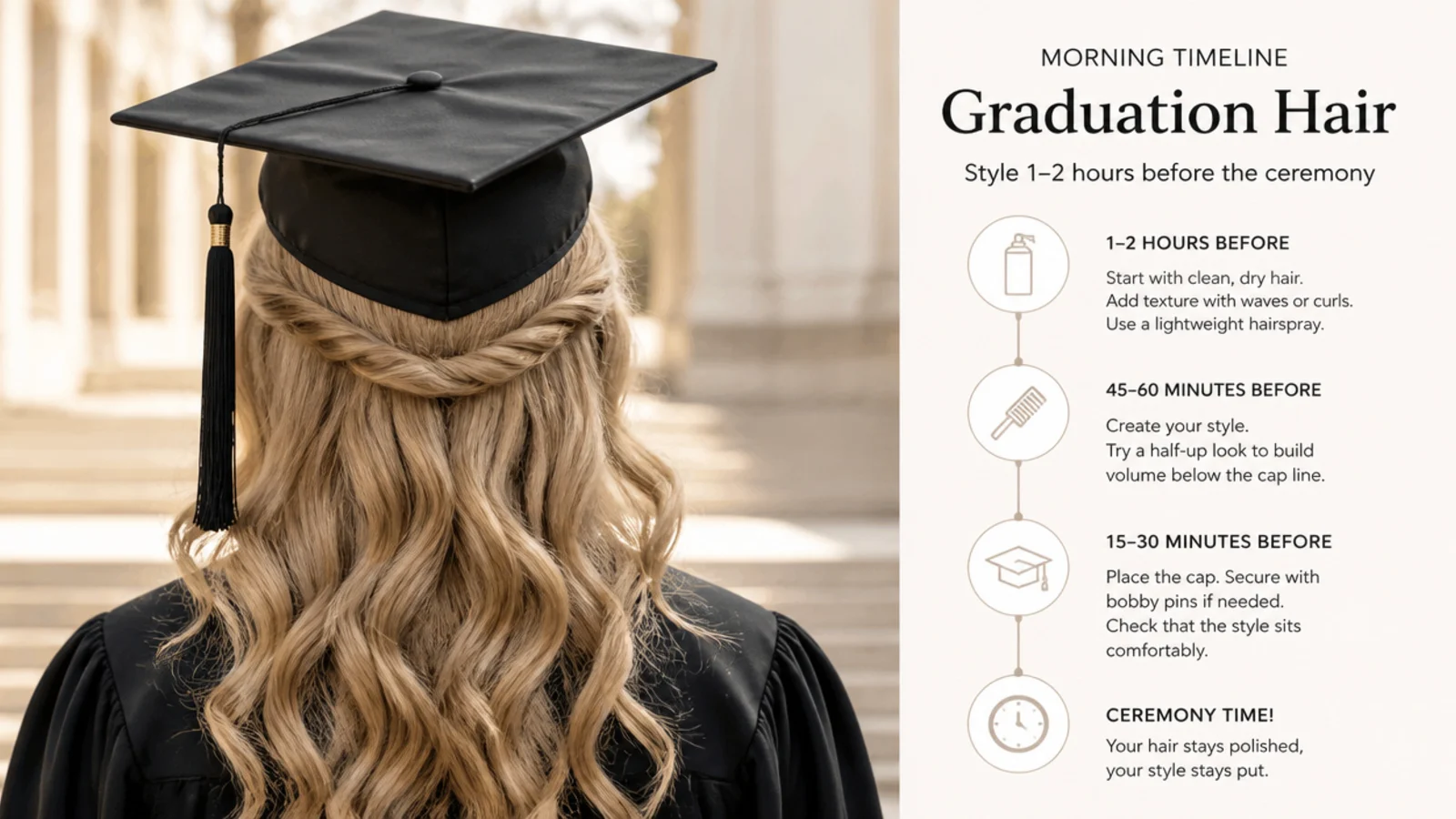
Morning Timing
Wash the night before, not that morning. A few hours of sebum on the cuticle is the cheapest grip you will get, and it costs nothing.
Style ninety minutes before you leave. Sprayed hair needs to dry fully before anything touches it, or the film sets around a dent.
Do a full cap fitting at home. Put it on, turn your head hard both ways, and look down. Anything that moves at home moves worse in a wind.
Pack pins, a mini spray and a mirror. The gap between the ceremony and the photographs is when everything is fixed.
Cap Off Recovery
The dent is compression, not damage. Hours of even pressure along one line flattens the hair against the scalp and the oil at the root holds the shape.
Lift at the root with fingers. Work under the flattened stripe and shake, rather than brushing the surface. Brushing spreads the flat across the whole crown.
Dry shampoo does the actual work. It absorbs the sebum that is holding the compressed shape, so the root can stand again.
Updos have nothing to recover. This is the strongest practical argument for pinning it up, whatever the photographs are meant to look like.
The 15 Cap Friendly Graduation Styles
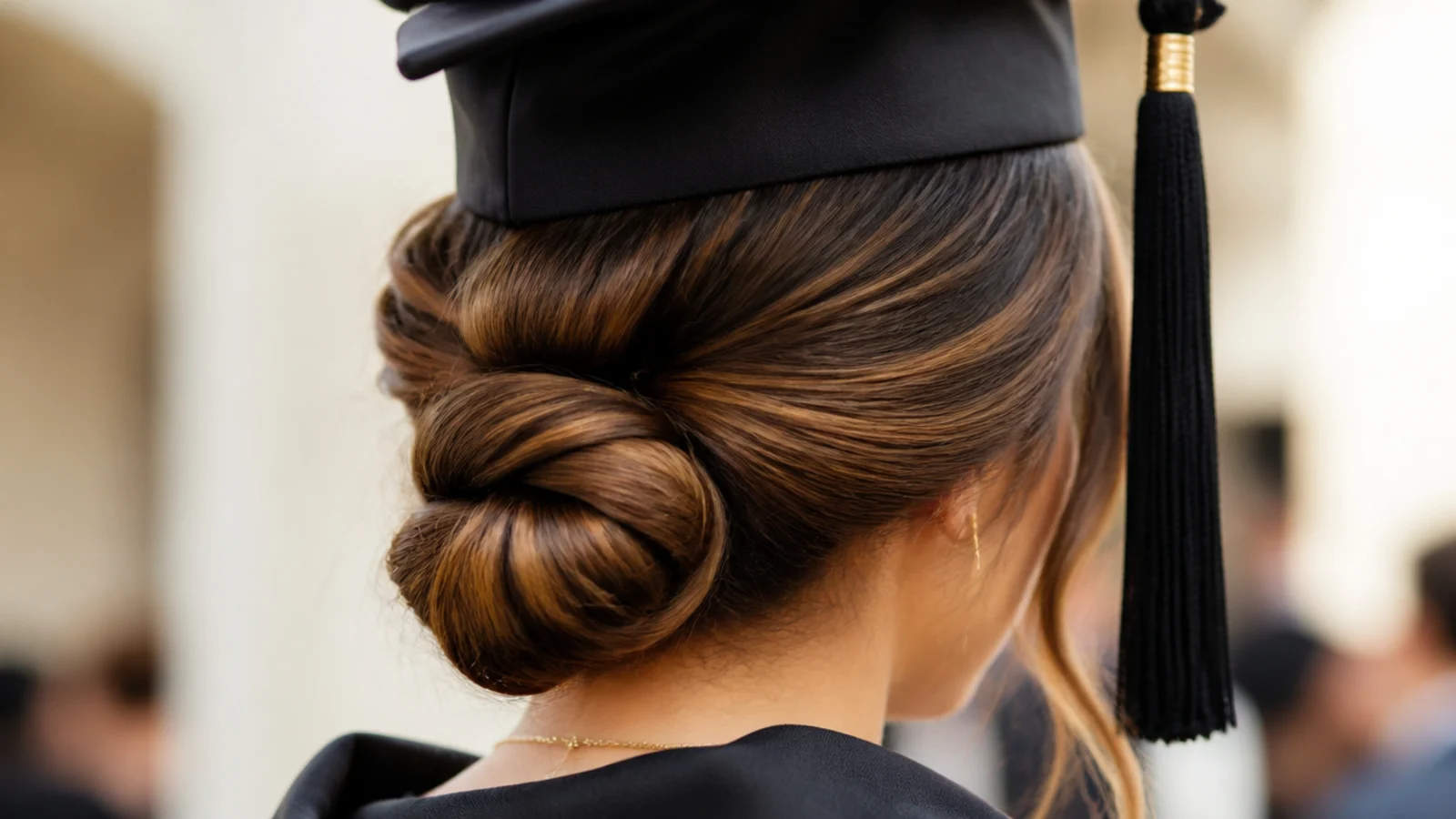
1. Low Chignon
The default for a reason. Coiling the length flat against the nape puts the entire mass below the occipital bone, so the rear edge of the band still meets bone rather than hair. It also survives being sat on in a plastic chair for two hours, which a rounded bun does not.
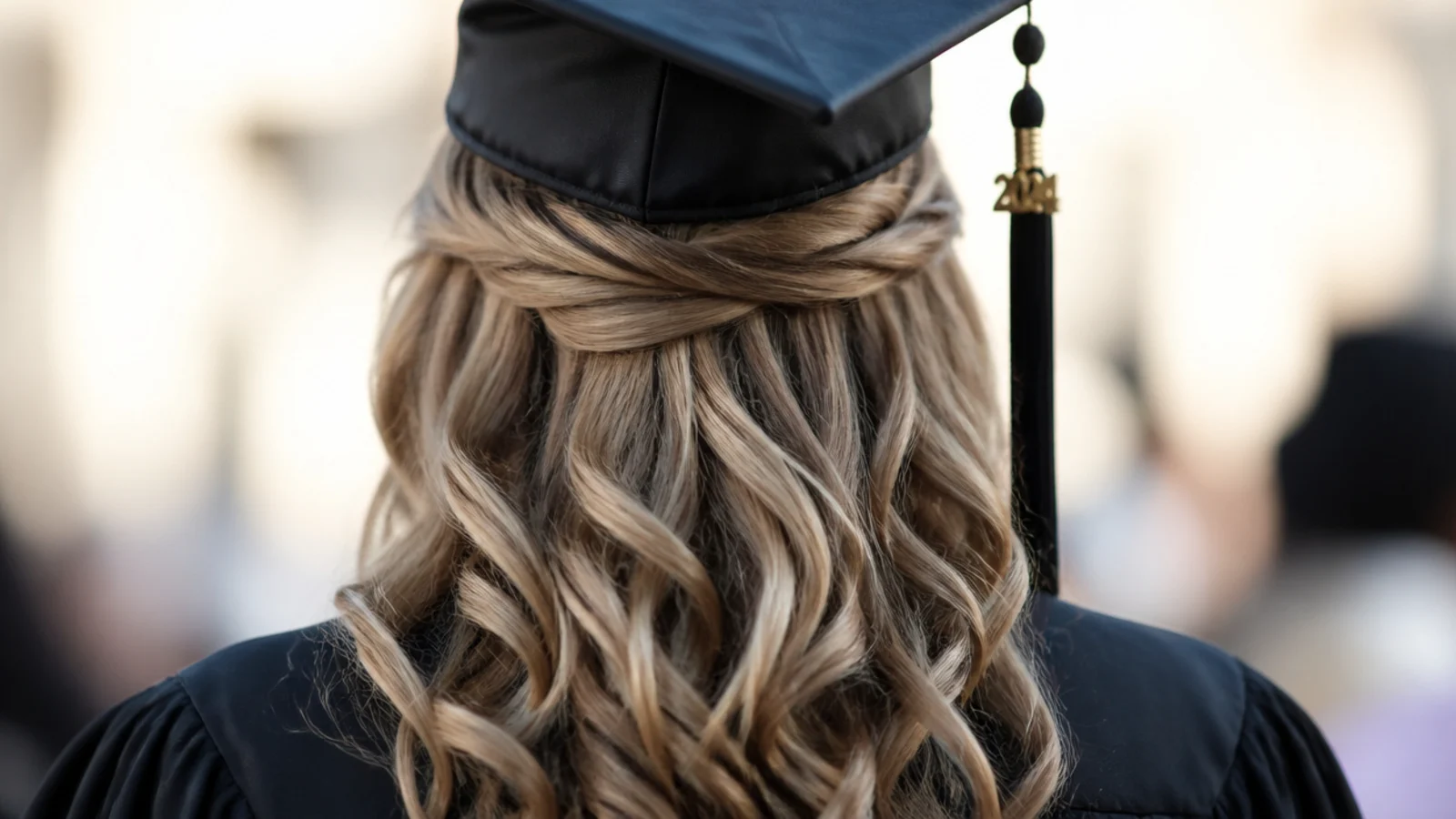
2. Flat Half Up
Only the top section is gathered, and it is pinned down rather than back, so nothing gains height where the band crosses. The remaining length hangs below the cap entirely, which means the cap dent lands on hair that is already smoothed flat.
3. Side Swept Waves
Sweeping the whole length over one shoulder moves the bulk off the crown and onto the collarbone, so the band only ever crosses smooth hair. Wave the mid lengths and leave the roots straight, because a curled root is exactly the height the cap will flatten first.
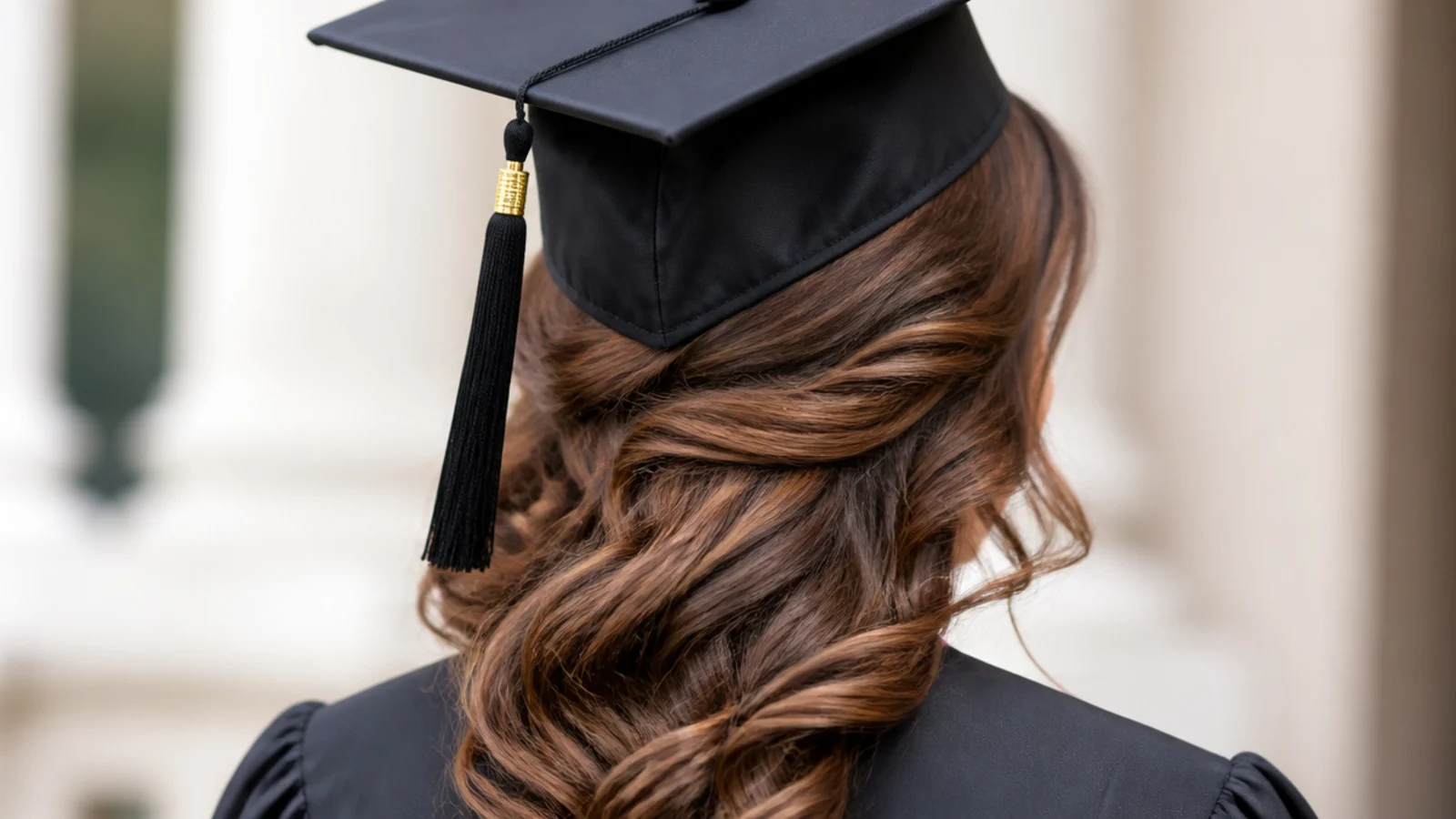
4. Sleek Low Ponytail
Gathering at or below the occipital bone keeps the elastic itself under the rear edge of the band. Tie it higher and the knot becomes the wedge, which is why a mid ponytail is the single most common cause of a cap that will not stay put.
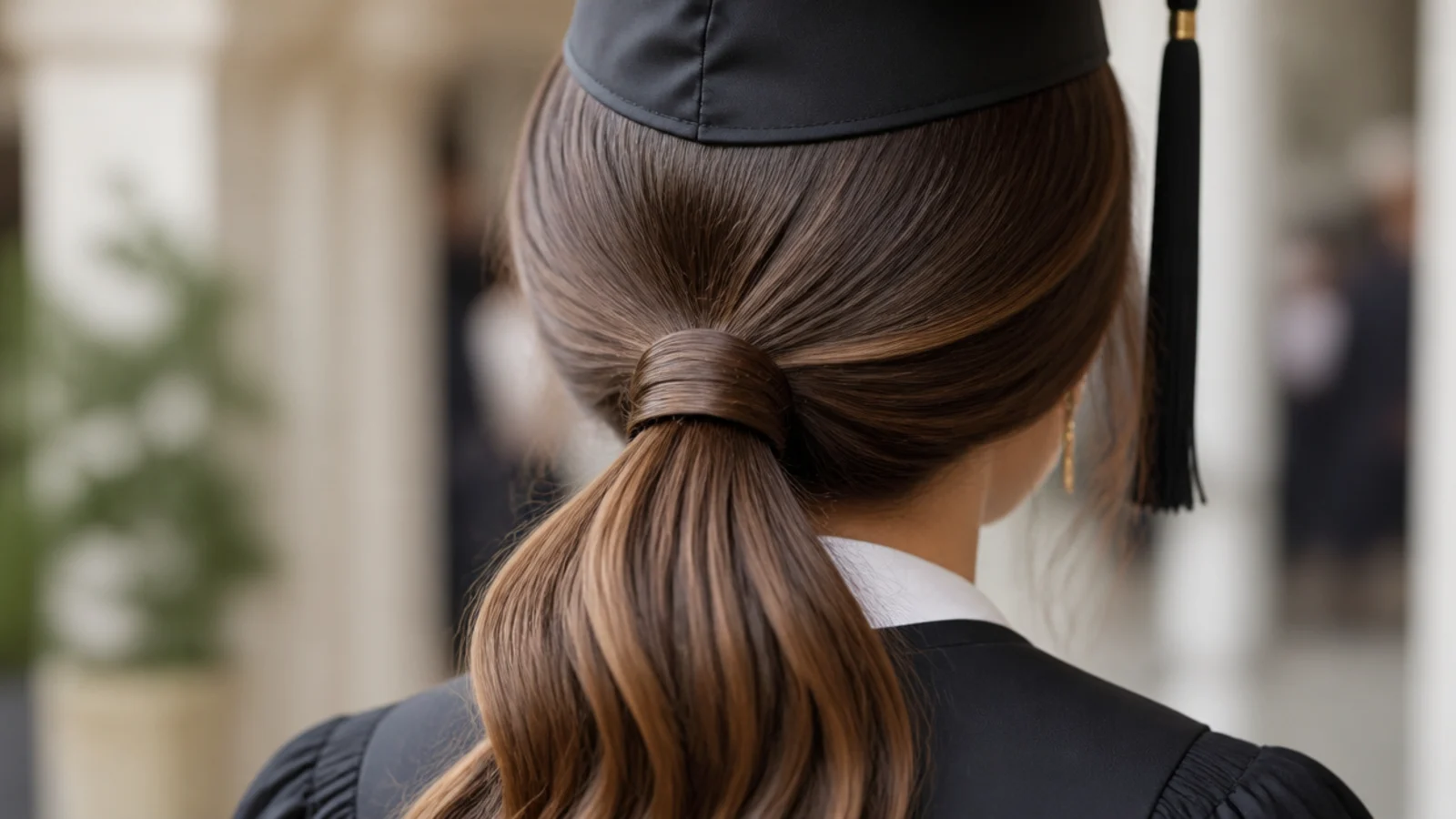
5. Dutch Crown Braid
A Dutch braid crosses strands underneath, so the plait sits proud of the scalp — but a crown braid wraps that plait around the head at ear level rather than piling it on top. The result adds width where the cap has clearance and almost no height where it does not.
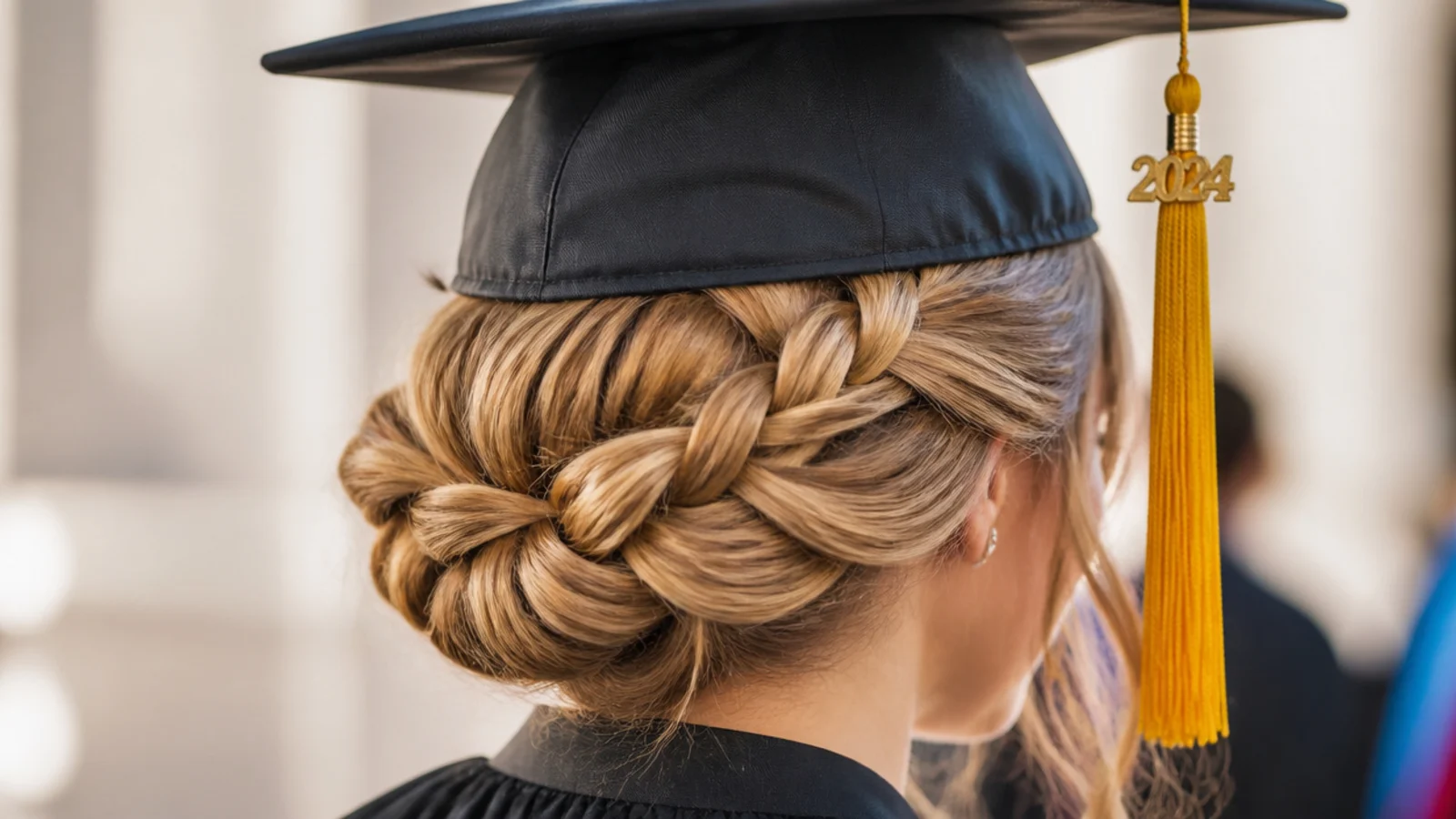
6. Twisted Bun for Fine Hair
Fine hair gives pins fewer strands to hook, so a twisted bun works better than a coiled one — the twist itself traps the pin between two opposing tensions. Backcomb the base lightly first to build a mesh, and the same three pins hold twice as long.
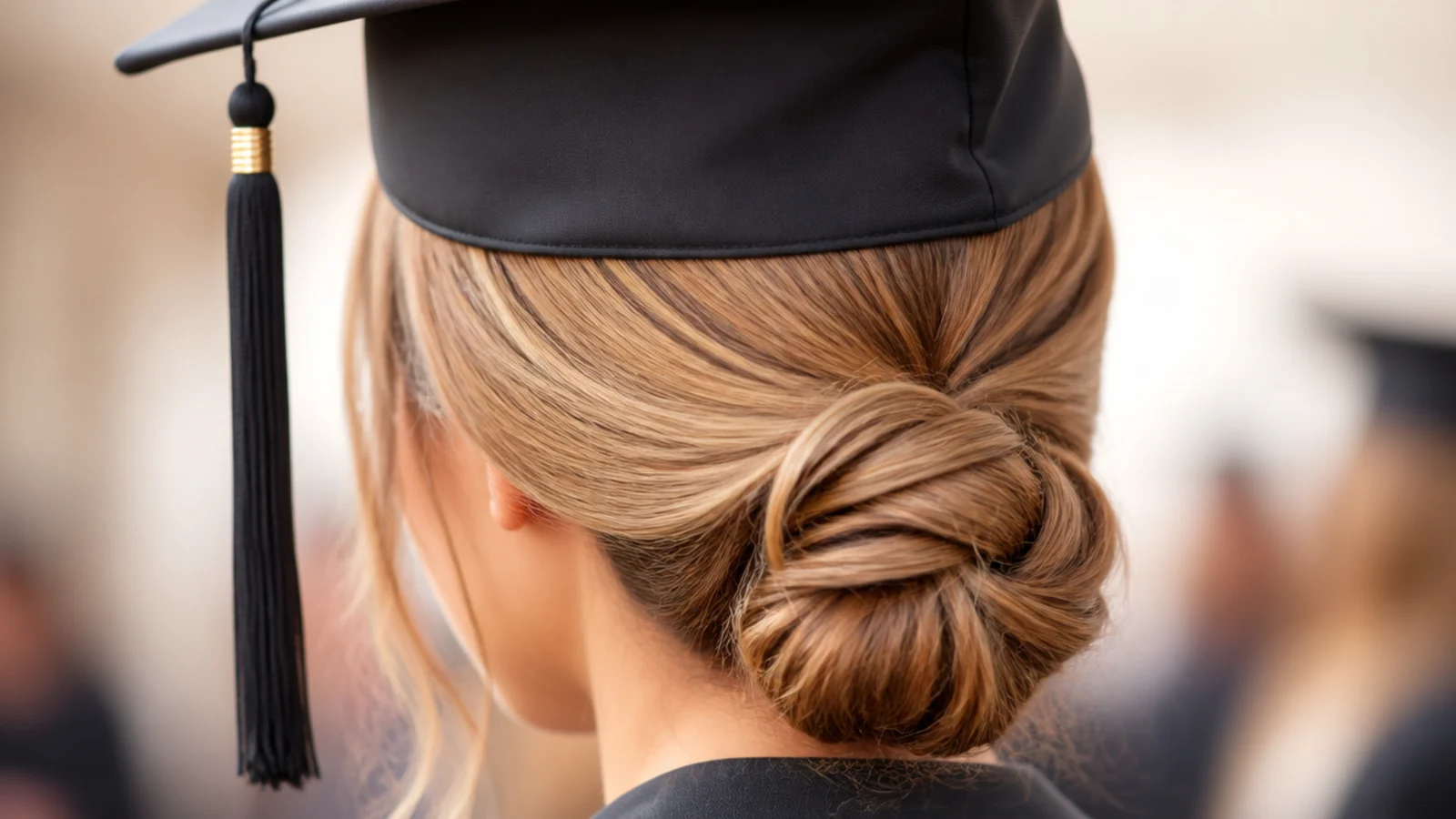
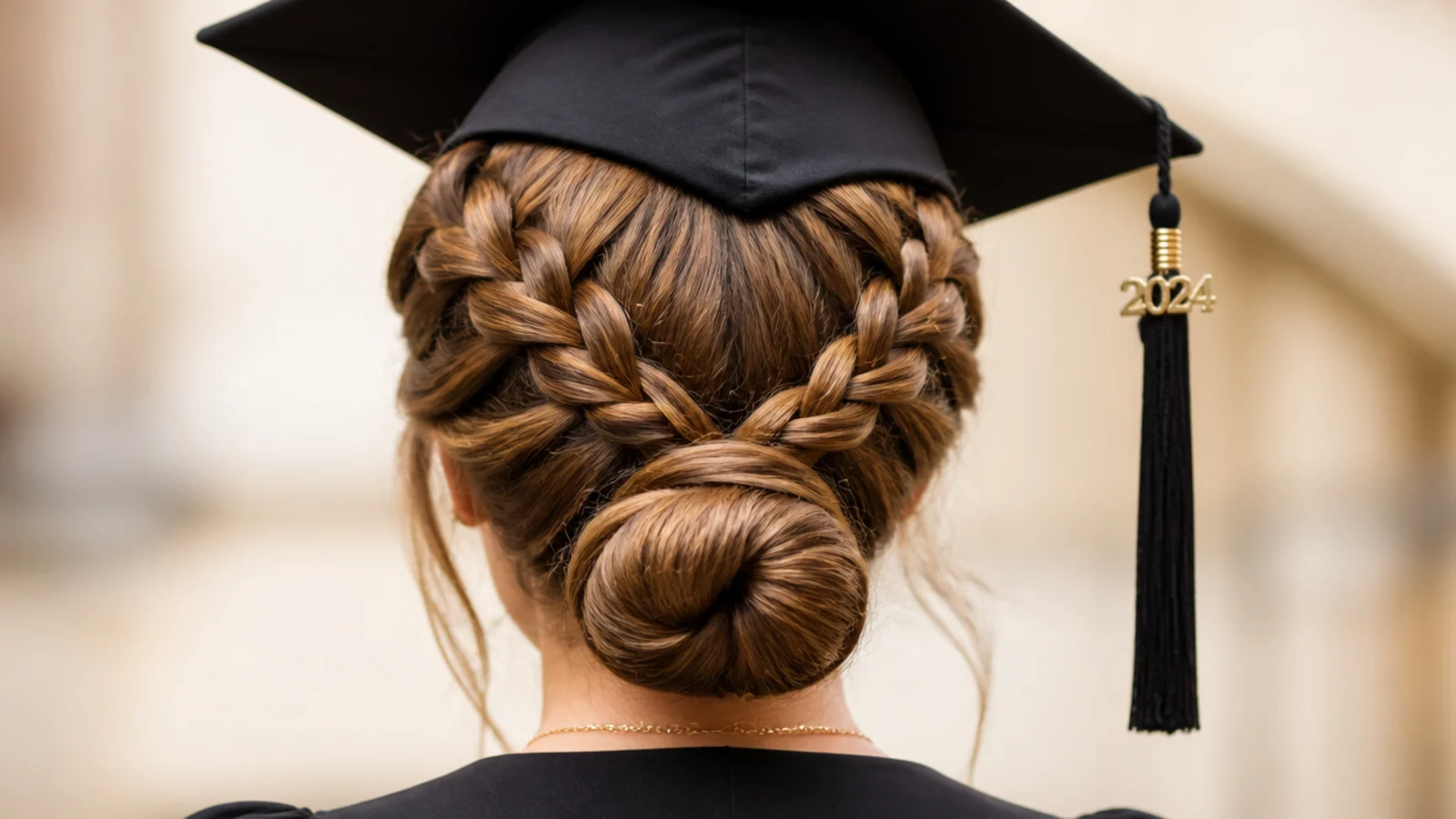
7. Two Dutch Braids Into a Bun
The two braids take all the weight off the pins and hand it to the scalp, which is why this holds when a plain bun sags. It also gives the cap something to pin into — a bobby pin through a braid grips woven hair rather than loose strands.
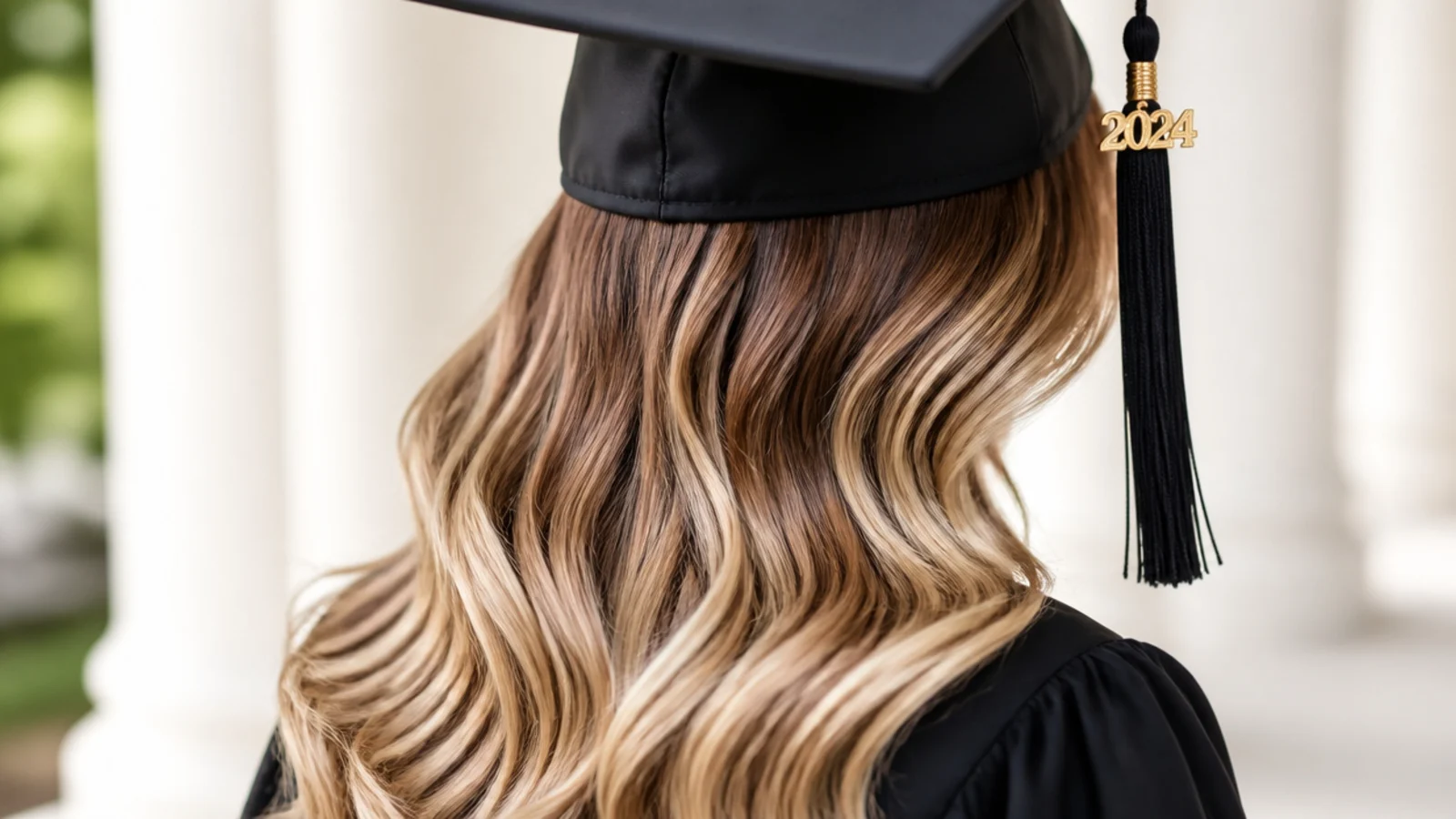
8. S Wave Blowout
A brushed out S bend holds its shape from cooled hydrogen bonds rather than from product, so it recovers after the cap comes off instead of collapsing. Set the bend below the ear and the compression line falls on straight hair, where a dent barely reads.
9. Textured Bob
At bob length there is no weight for the band to fight, and the ends sit well below the cap. Texture helps here rather than hurting — separated ends disguise the horizontal compression line that a single smooth surface would show clearly.

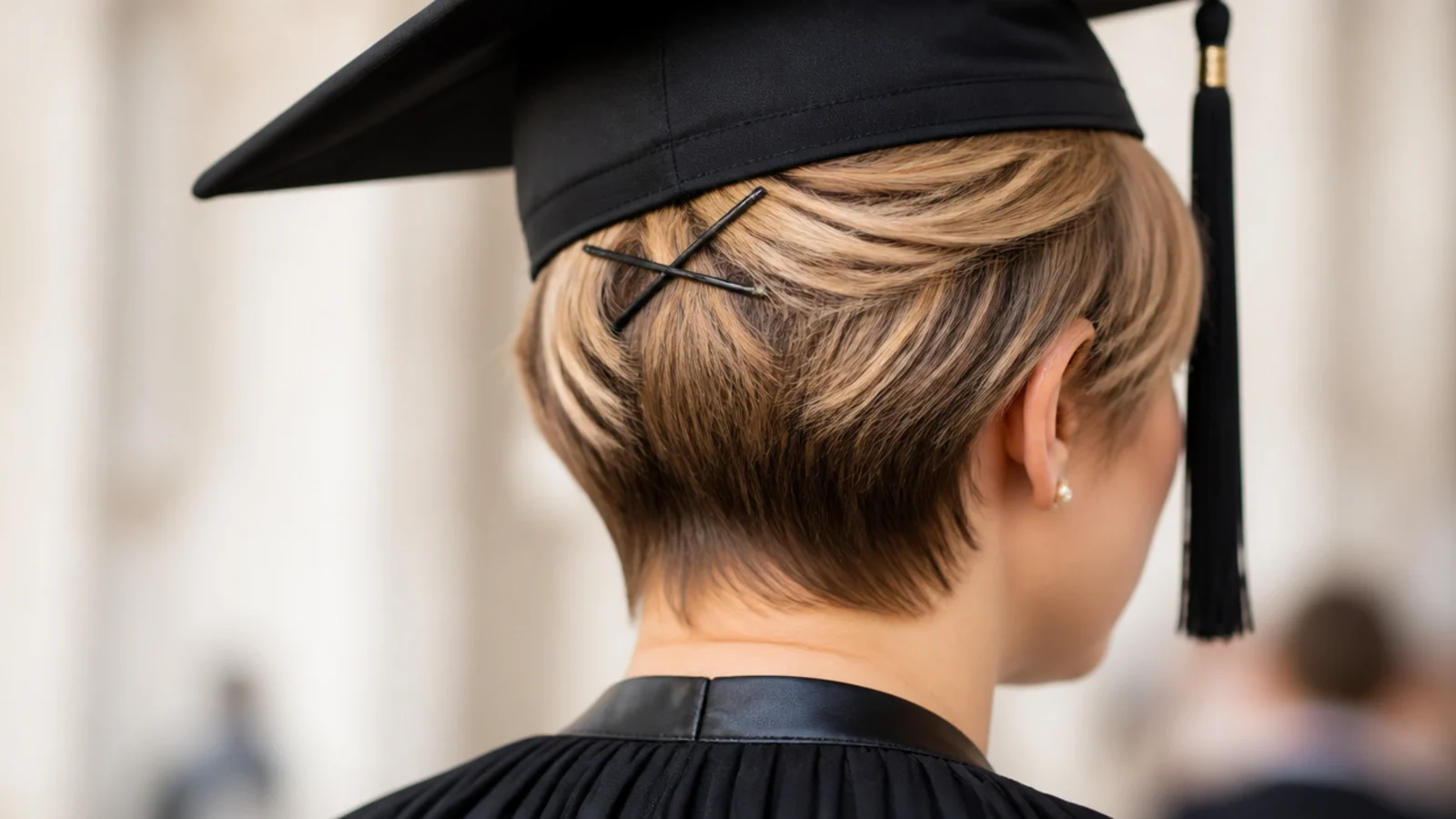
10. Anchored Pixie
Short hair has nothing to gather, so the hold has to come from the cap side — two crossed pins through the inner band into the hair above each ear. Spray before the cap goes on, not after, because a pixie sets in whatever shape the band presses it into.
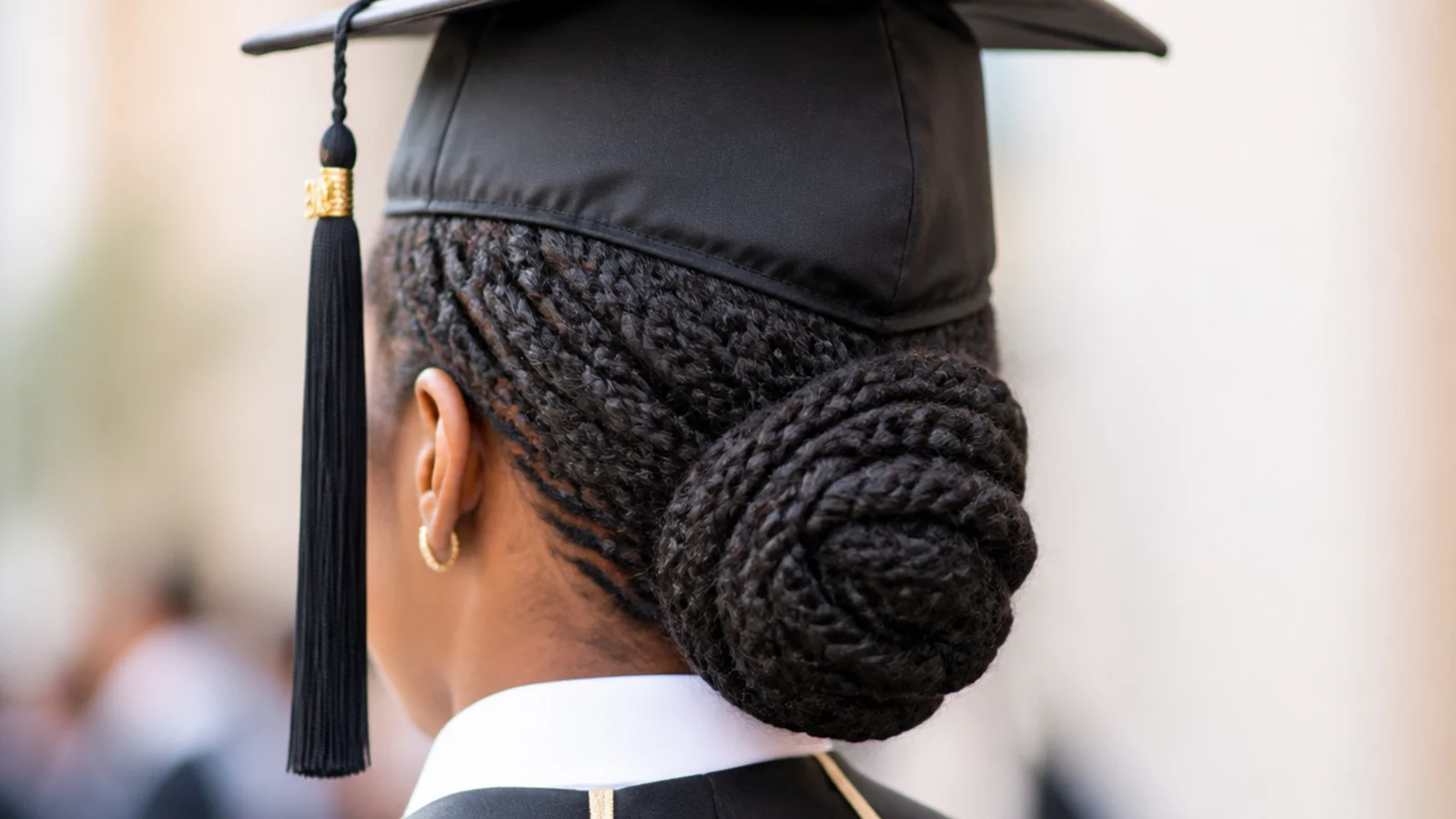
11. Flat Twists Into a Low Bun
Flat twists follow the scalp with essentially zero lift, so the band sits on the head shape itself rather than on a style. Collecting them into a low bun at the nape keeps the ends contained without ever building height above the occipital bone.
12. Low Fishtail
A fishtail is the flattest braid there is, because it crosses thin sections over the top rather than under, so the plait lies against the back rather than standing off it. That flatness is what lets it hang straight down from under the rear edge of the cap.
13. French Twist
Rolling the length vertically against the back of the head puts the entire mass in a column that sits below the band and inside the gown collar. Pin along the seam of the roll rather than through the outside, so the pins are loaded in shear instead of being pulled straight out.
14. Bubble Half Up
Segmenting the gathered tail with clear elastics distributes the weight down its length instead of hanging it all from the first band. That matters over four hours, because a single elastic slowly slides and takes the whole shape down with it.
15. Curly Wash and Go
Curls compress and rebound, so a wash and go recovers from the band far better than a blow dried style. The catch is that the compression is real while the cap is on, so define the pattern low and expect the crown to need a shake out afterwards.
Final Thoughts
Take one measurement before you choose anything. Put the cap on, run a finger along the bottom edge of the band, and note where that line falls on your head. Every style in this list works because its bulk sits below that line, and every style that fails on the day failed the same test.
The second decision is honesty about the photographs. If the cap comes off for pictures, plan the recovery — dry shampoo and fingers, ninety seconds. If it stays on, put everything at the nape and stop thinking about it. More in Occasion Hair. See also the how to version and the braided version.
Frequently asked questions
Related posts
See all posts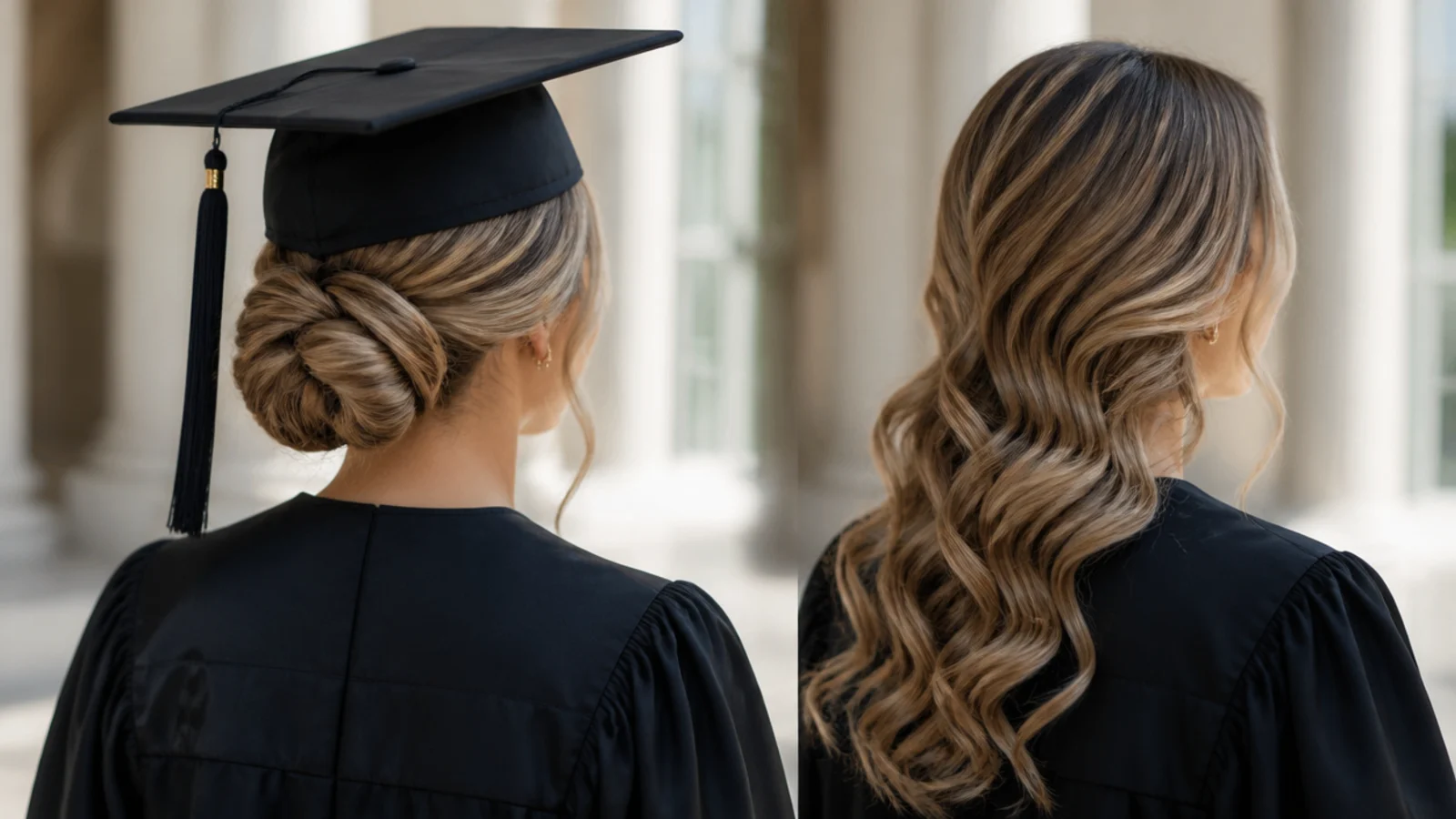
15 Graduation Hair Ideas for the Updo Versus Down Decision
Read more
15 Straight Hair Wedding Looks to Save
Read more
20 Gorgeous Prom Looks for Straight Hair
Read more