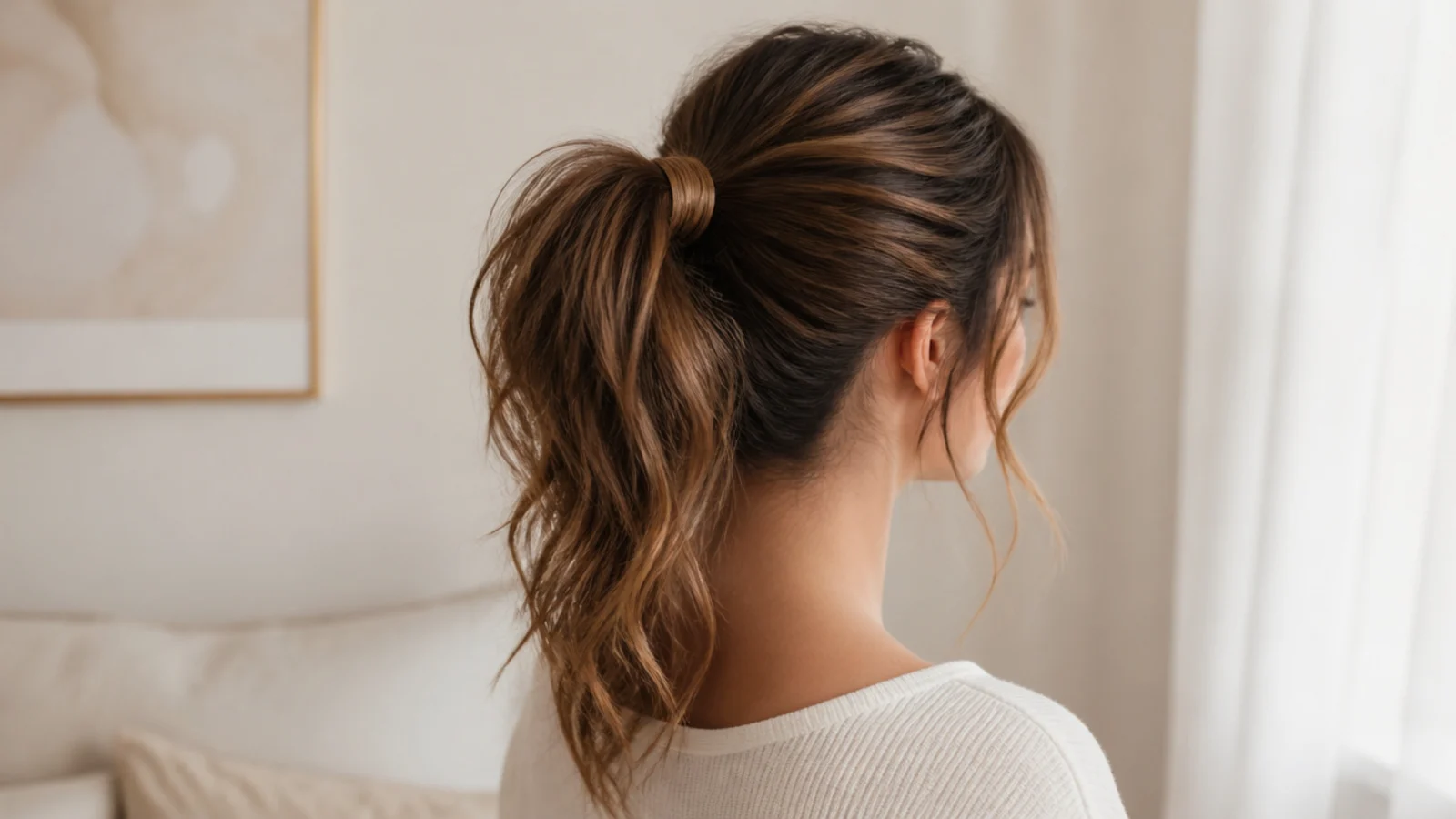
15 Messy Ponytail Ideas Worn Through a Real Day
Fifteen messy ponytails built for the hours after you leave the mirror, and the distinction that decides which way yours reads — messy is a texture you build, untidy is tension you left out.
In this article · 23
- Messy Not Untidy
- Messy Versus Sleek
- Crown Versus Nape Placement
- Fine Versus Thick Hair
- All Day Hold
- Products That Matter
- The 15 Messy Ponytails
- 1. Day Two Crown
- 2. Nape Tie for the Office
- 3. School Run
- 4. Wrapped Elastic
- 5. Two Elastics Stacked
- 6. Bungee Band on Short Hair
- 7. Gym to Desk
- 8. Rainy Day Frizz
- 9. Backcombed Fine Hair
- 10. Pineapple for Curly Hair
- 11. Deep Side Part
- 12. Oversized Scrunchie
- 13. Bubble Segments
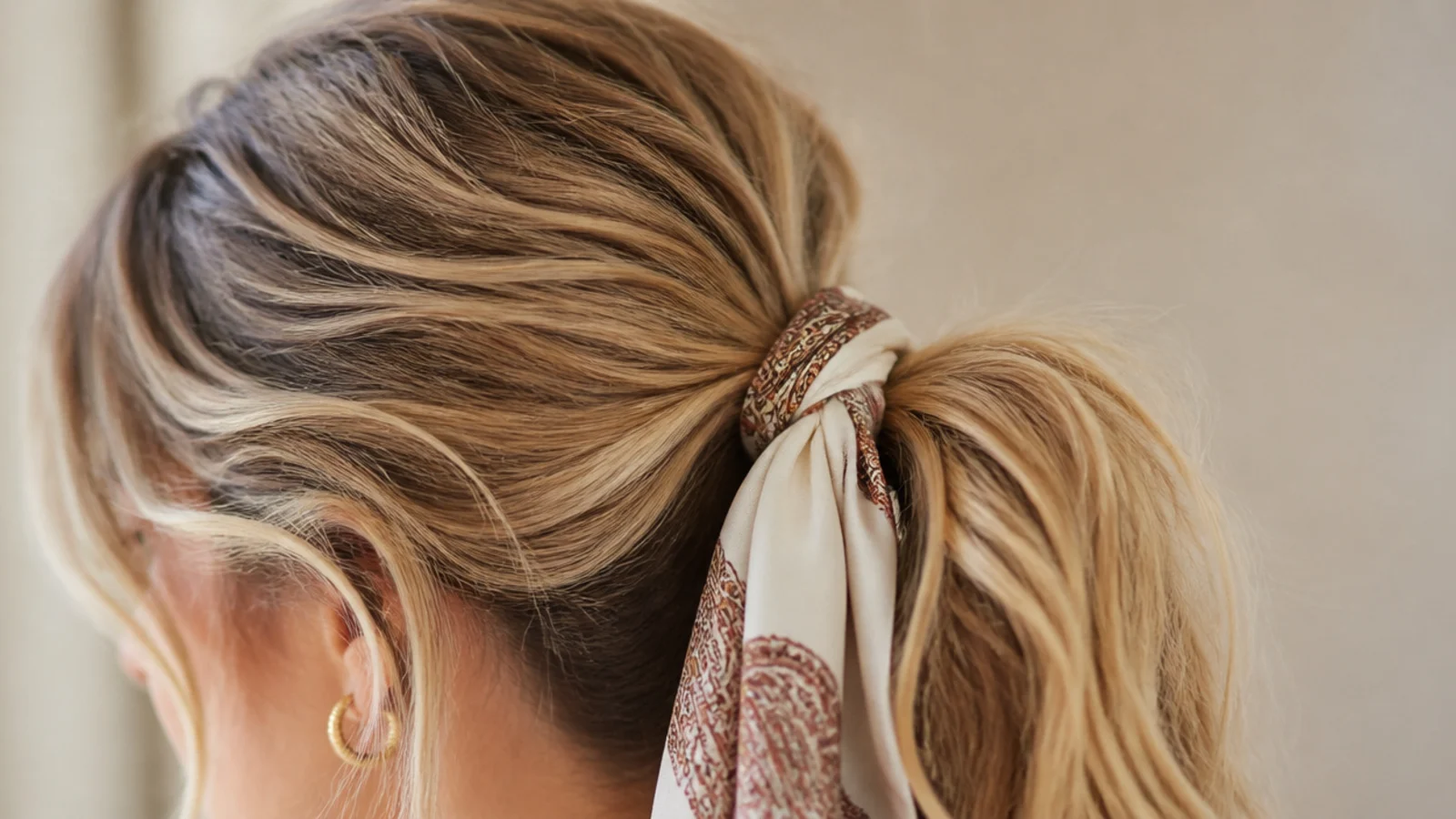
- 14. Scarf Wrapped
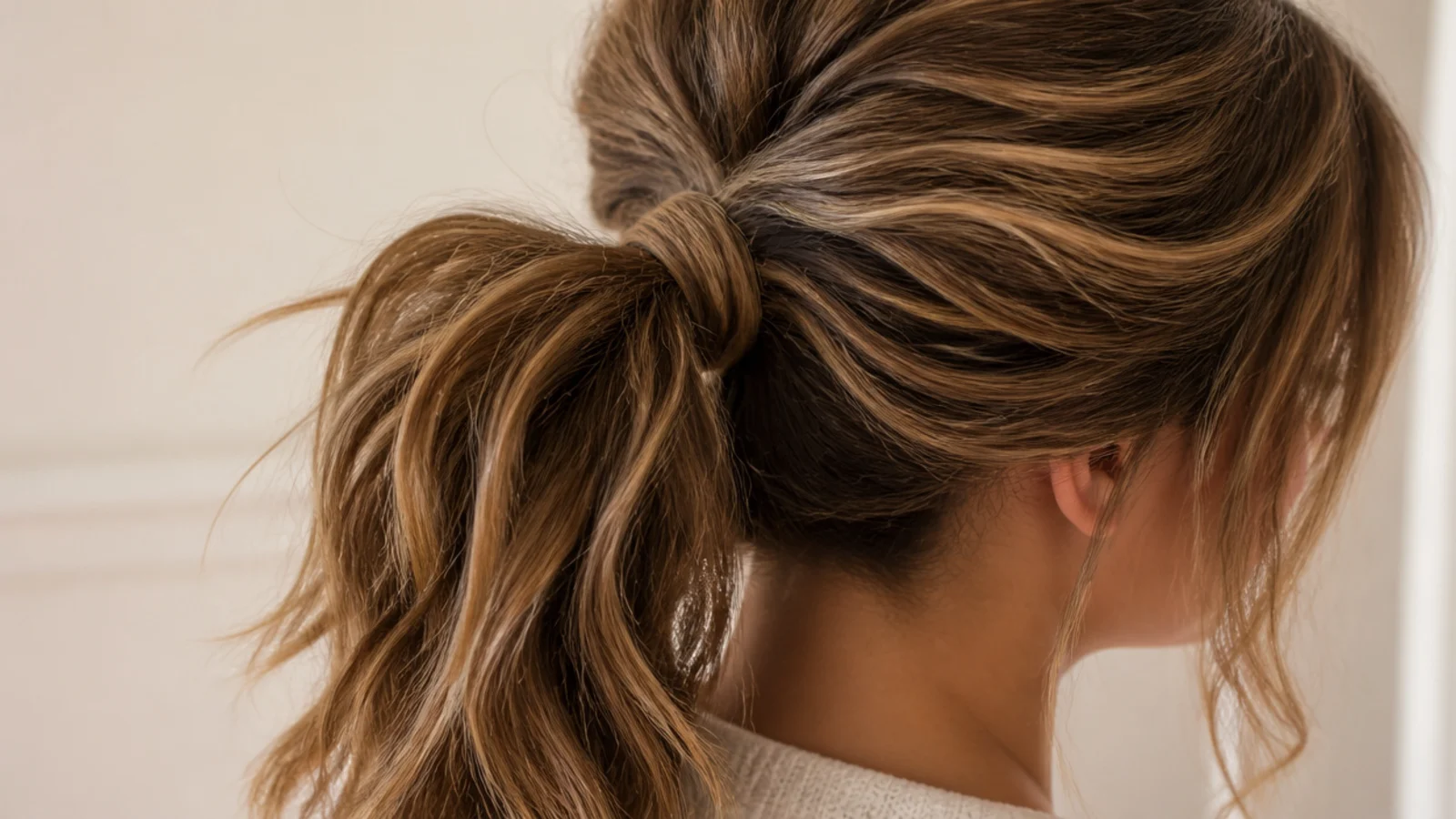
- 15. Overnight Braid
- Final Thoughts
A messy ponytail that has collapsed by lunchtime was never messy. It was slack, and slack is a different thing entirely.
Messy is a texture you build, not tension you leave out. The volume comes from roughened strands gripping each other, which is why it survives a day that a loose elastic never would.
Nearly all of the work happens before you gather. Once the hair is in your hand the result is already decided — grip, root lift and placement are settled in the ninety seconds before the band goes on.
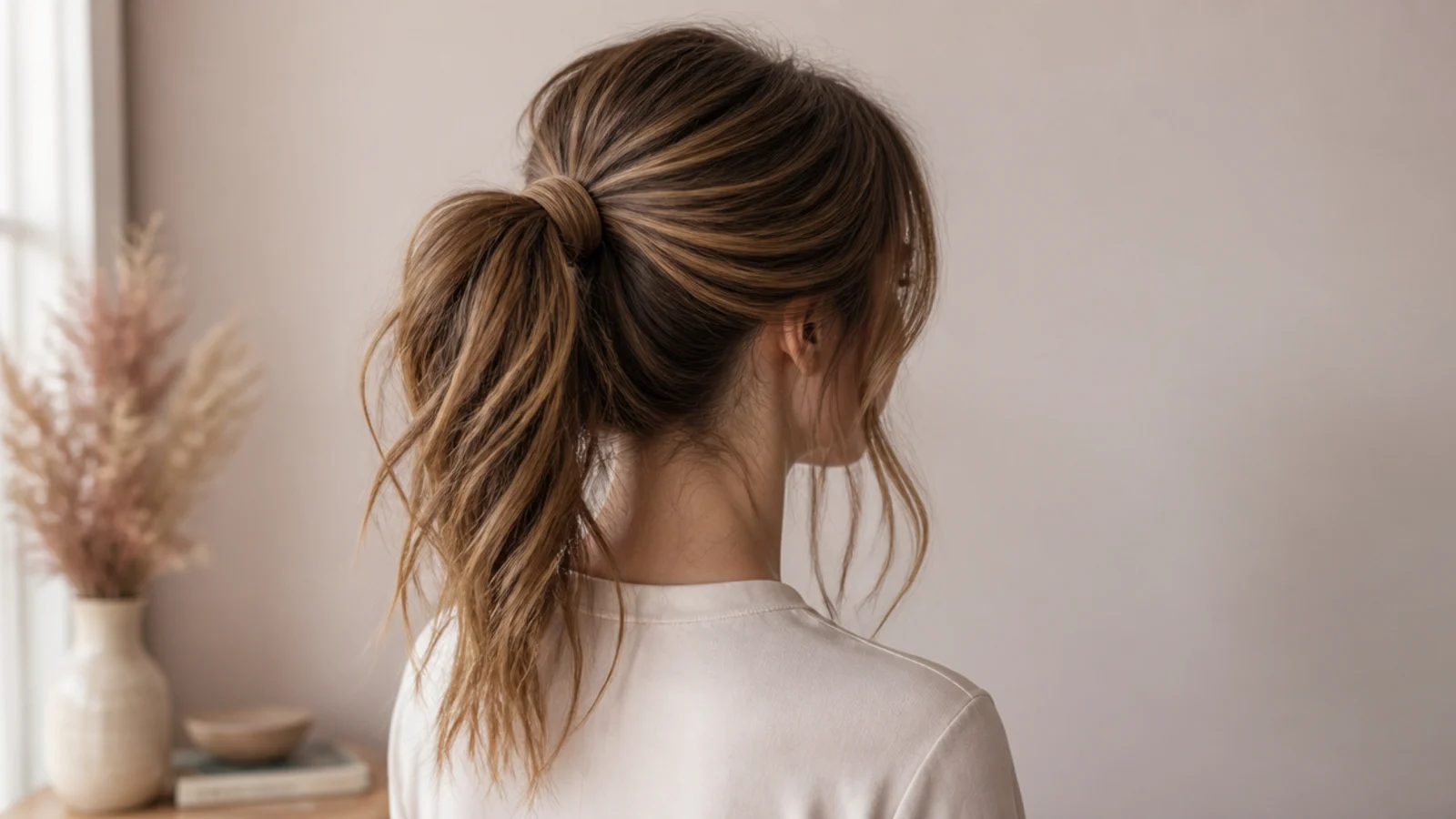
Messy Not Untidy
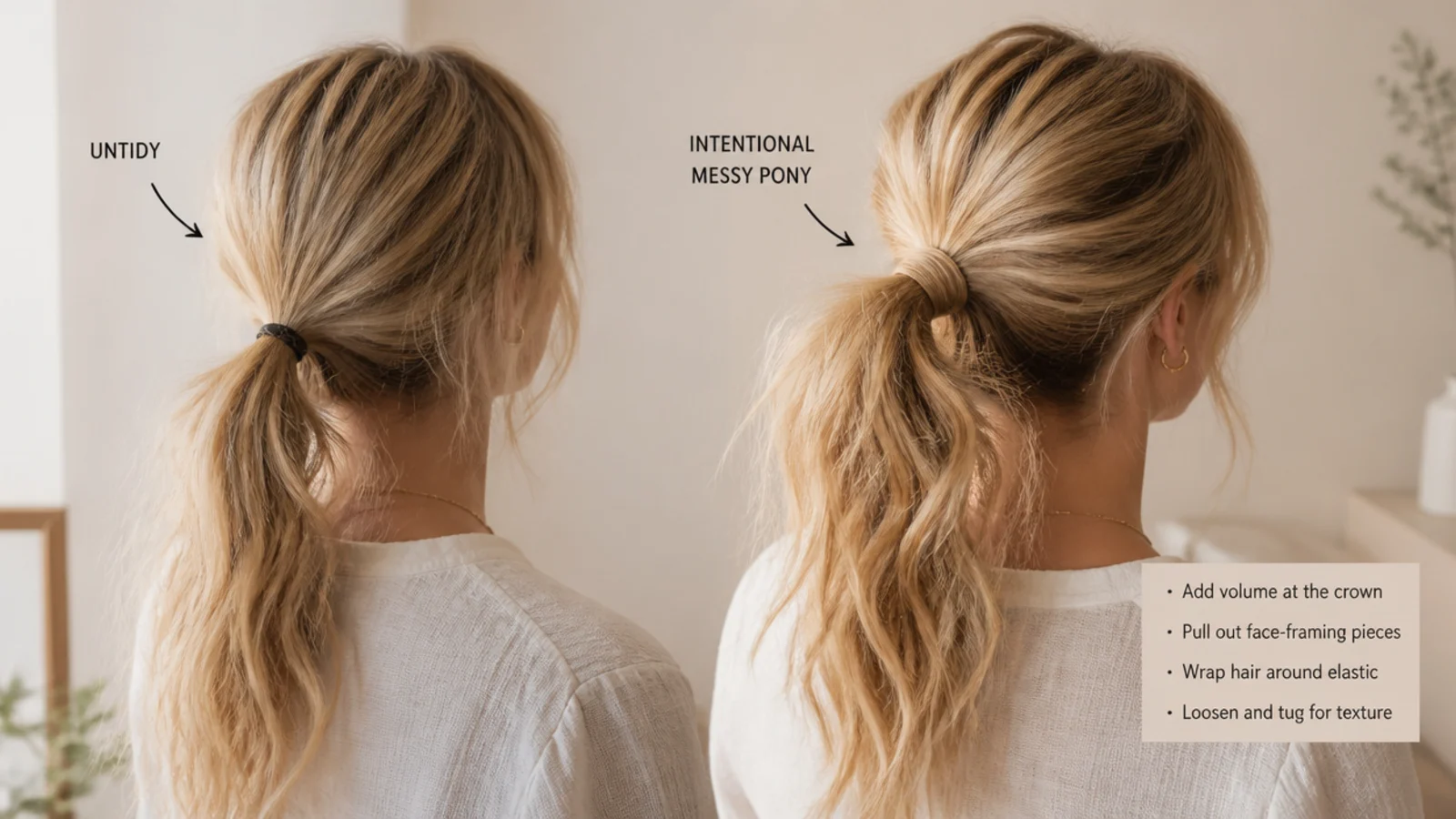
Messy has structure underneath it. A firm base with texture above it. The base never moves, so the pieces that fall stay exactly where you left them.
Untidy is a hold failure wearing the same clothes. Slack at the base means the whole thing keeps shifting, and every piece that escapes escapes somewhere new.
Pieces should leave from the front, not the base. A strand pulled down at the temple looks intentional. A strand sagging out of the elastic looks like the elastic is losing.
Even looseness is what sells it. Roughen both sides equally. One flat side beside one lifted side reads as an accident, because that is what accidents look like.
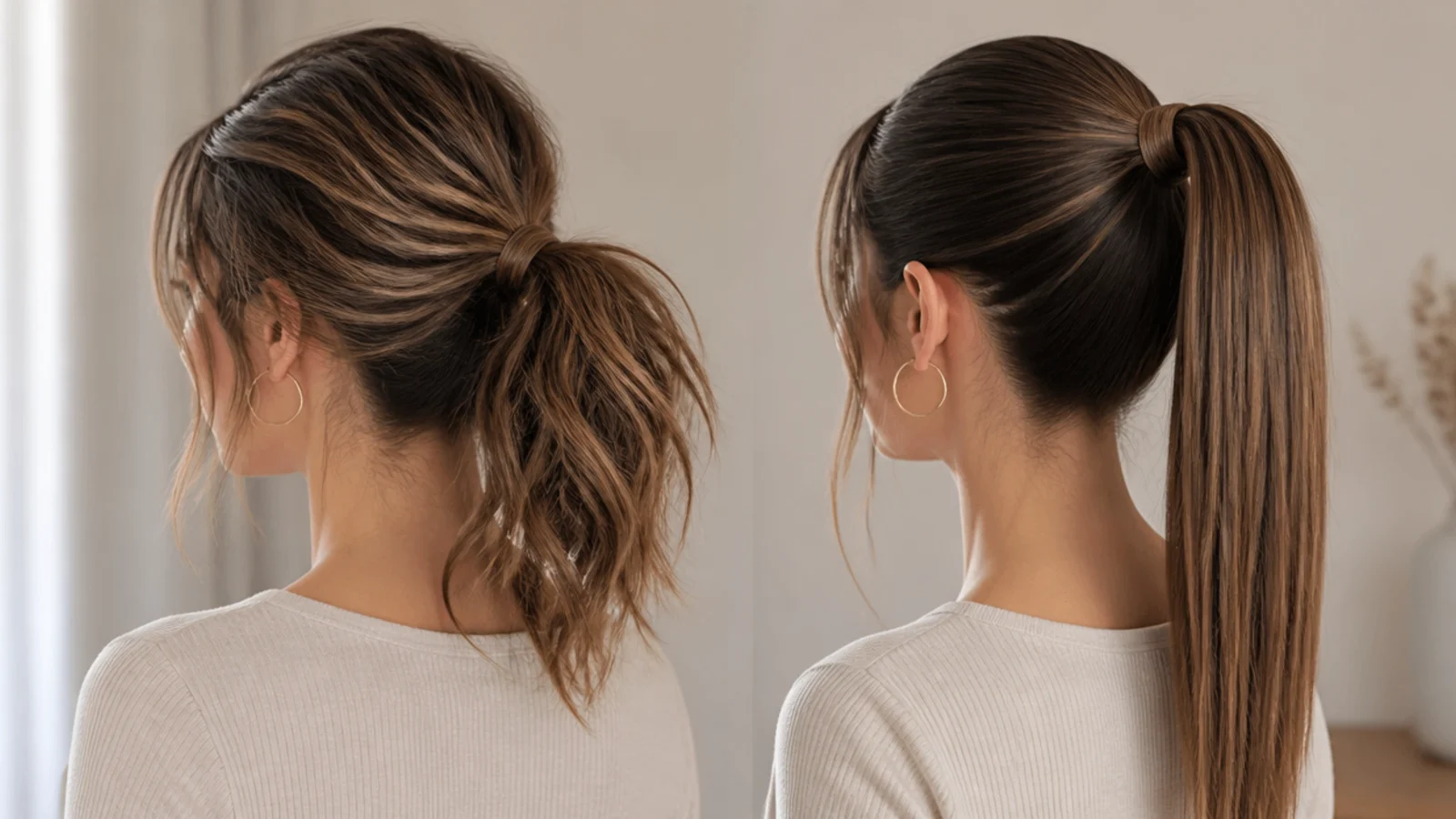
Messy Versus Sleek
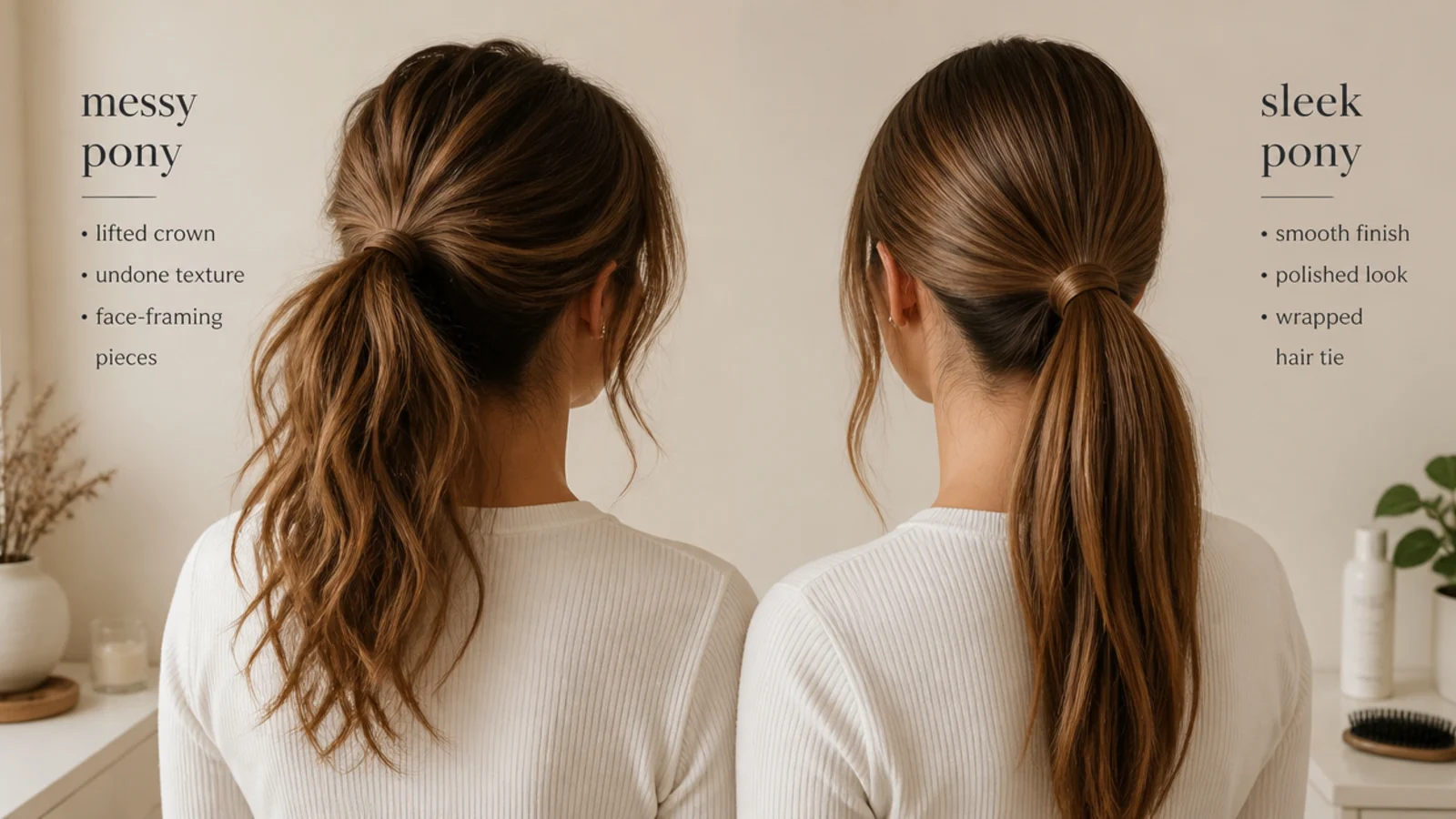
Sleek wants a flat cuticle, messy wants a raised one. Flat reflects light in one direction and reads as glass. Raised scatters it, and that scatter is what your eye reads as volume.
Sleek exposes condition, messy hides it. Every dry end shows on a slicked surface. A textured pony absorbs the same ends into its outline.
Sleek prefers freshly washed hair, messy prefers day two. Sebum coats the strand and raises friction between hairs, which is exactly the property messy is built on and sleek has to fight.
They fail in opposite directions. Sleek fails into frizz, one hair at a time. Messy fails into droop, all at once, which is why the base matters more here.
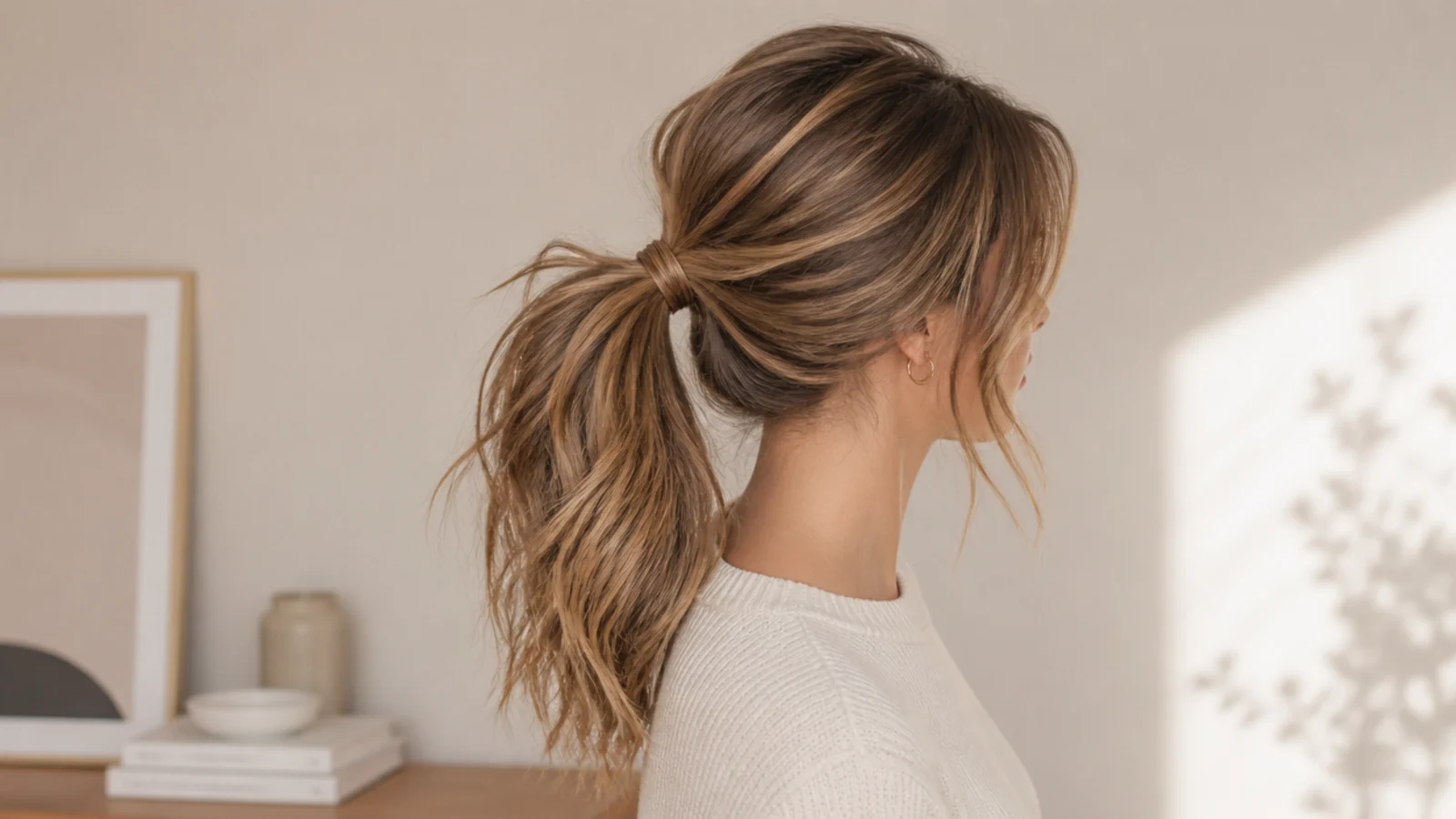
Crown Versus Nape Placement
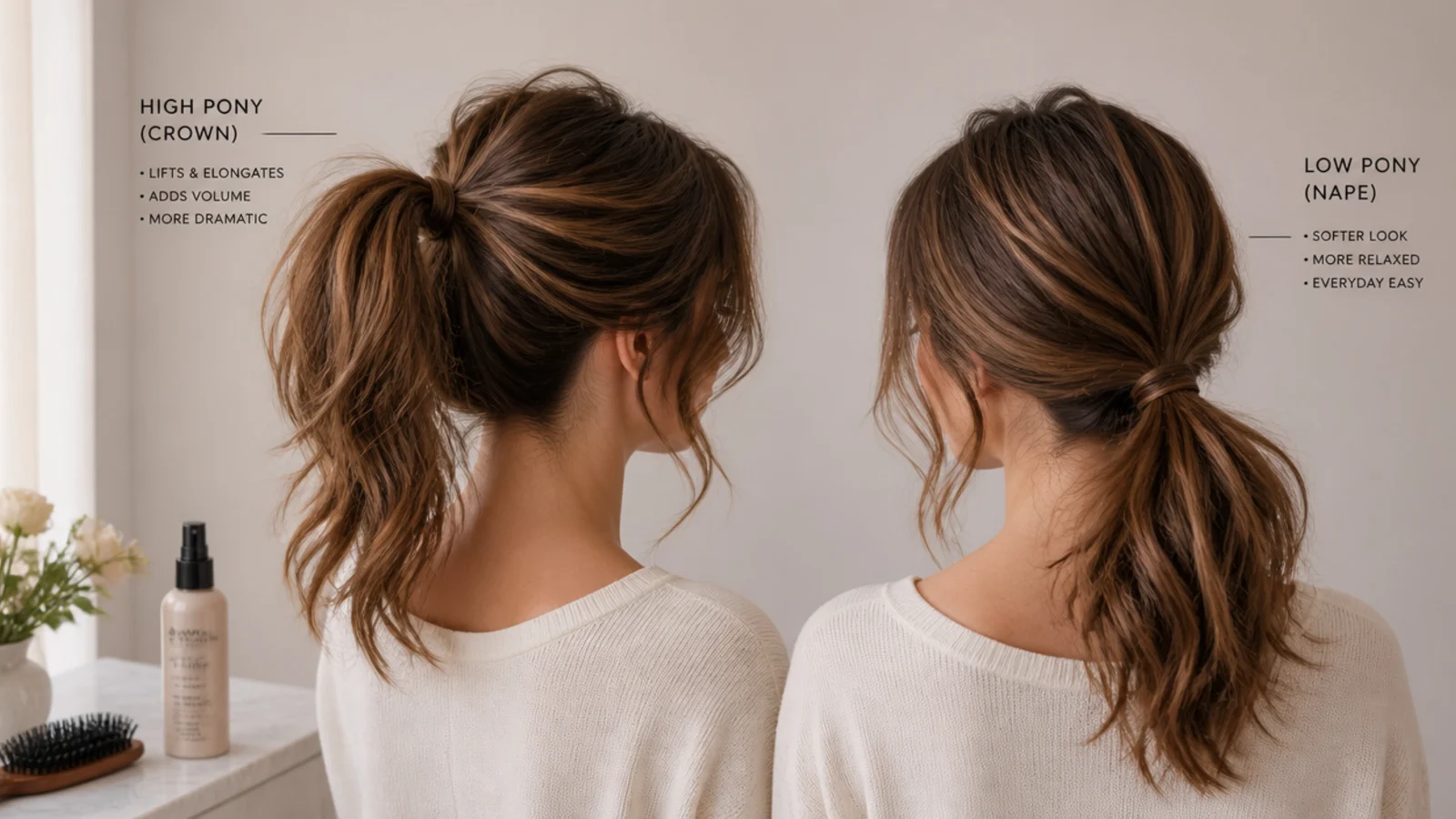
A crown tie carries the full weight on the elastic. Above the occipital bone nothing supports the length except the band, so it needs real grip and it will test your scalp by mid afternoon.
A nape tie is supported by the skull. Below the occipital bone the head takes part of the load, so the same hair holds at a much looser tension and stays comfortable for hours longer.
Height changes the silhouette, not just the position. A crown pony lifts the outline above the head; a nape pony keeps everything inside the shoulders, which is why it reads as the tidier of the two on camera.
Pick by how long you have to wear it. Two hours out, tie it high. A nine hour day, tie it low and move it up later if you want to.
Fine Versus Thick Hair
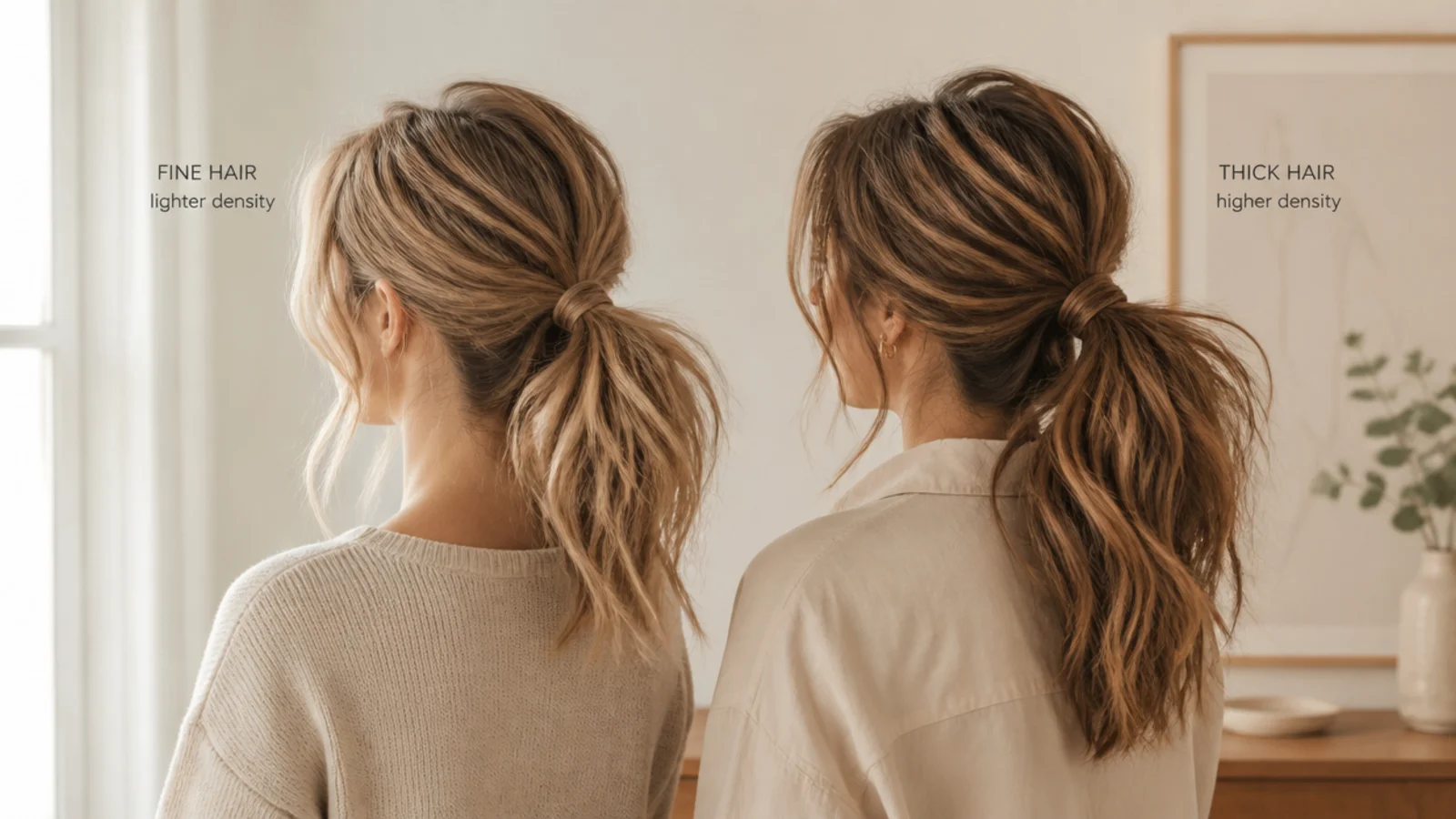
Fine hair slips because it is smooth, not because it is weak. A fine strand has less surface texture to catch on its neighbours, so the section slides through the band. Add friction, not tension.
Thick hair drops because it is heavy. The elastic is fine; the mass hanging off it is not. Split the load across two anchor points instead of pulling one harder.
Fine hair needs volume built, thick hair needs it placed. Backcombing at the crown for one. Removing bulk from the base and letting it sit wide for the other.
Band size is a real variable. A fine section in a thick scrunchie will always work loose. Match the band to the section, then adjust grip with product rather than with more turns.
All Day Hold
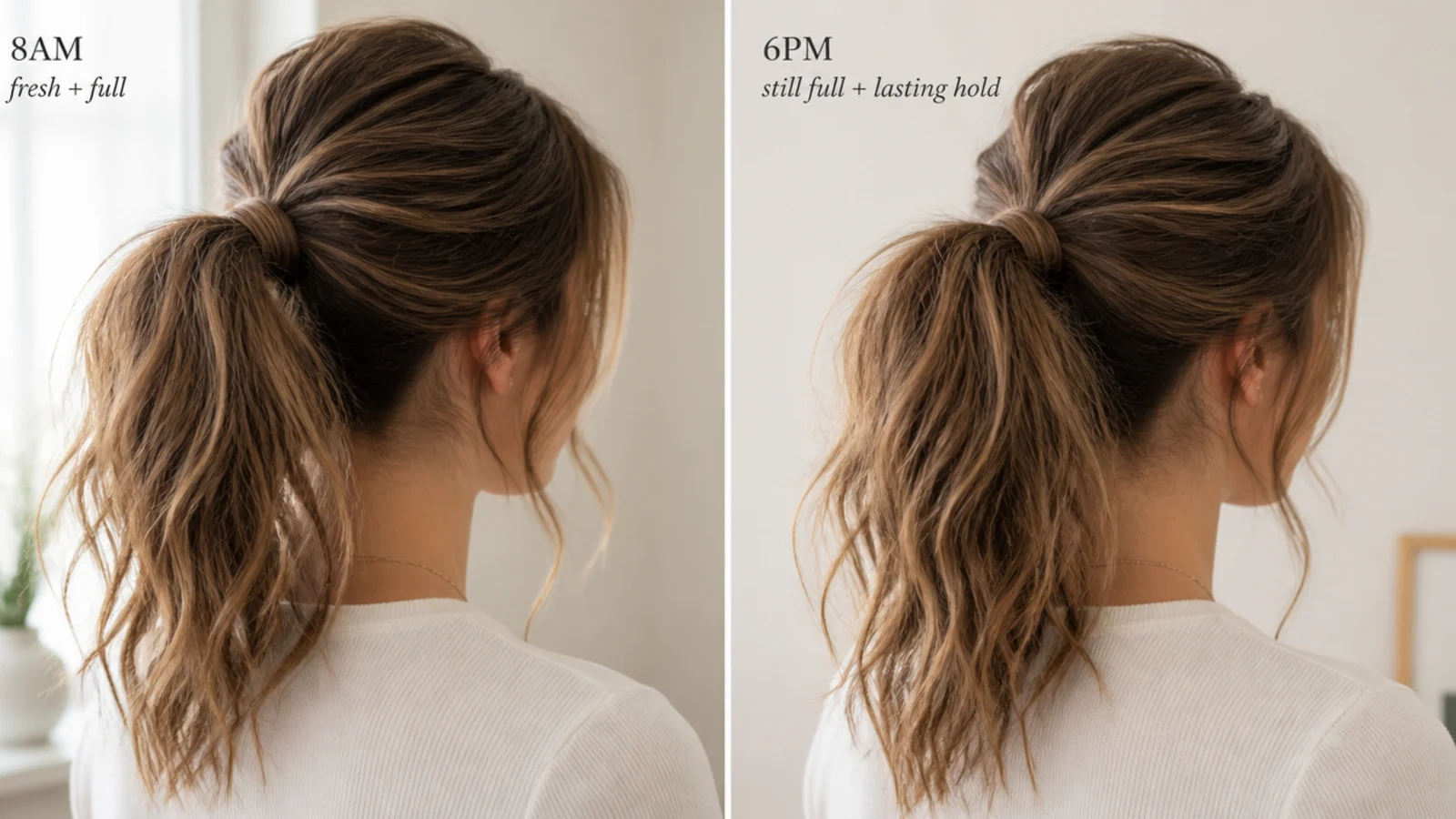
Grip is friction, not force. Two hairs slide past each other until something roughens them. Dry shampoo at the roots does more for hold than another turn of the elastic ever will.
Two anchor points beat one tight one. A second band down the length, or a wrapped section at the base, spreads the pull instead of concentrating it on one ring of hair.
Set it slightly damp when you can. Hair takes its shape as it dries, so a pony tied on damp hair holds its position far better than one tied on hair that dried in a different shape.
Retie once, deliberately. Every pony drops a little as the day warms up. One planned reset beats six small tugs, each of which loosens the base further.
Products That Matter
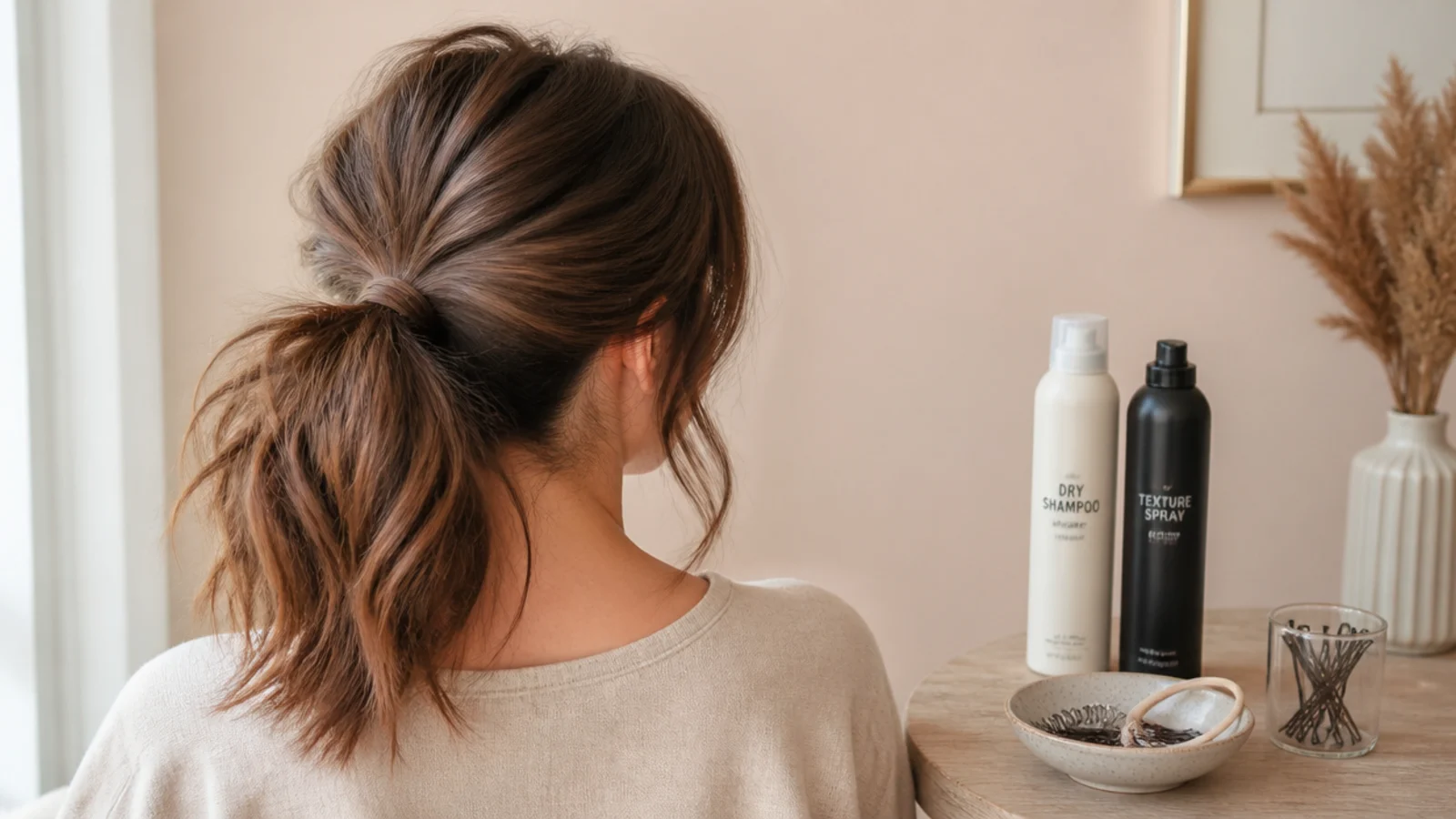
Dry shampoo, at the roots, before you gather. It works by absorbing oil and adding grit at the scalp, which is the one place grip actually decides whether the pony stays up.
Texture spray through the mid lengths. It roughens the strand surface so the section holds its width instead of collapsing into a rope.
A fabric covered elastic, never a bare rubber band. Bare rubber grips by biting into the cuticle, which is how ponytails end in breakage at the exact same point every time.
A wax stick for the halo, not hairspray. Wax lays short hairs flat. Spray freezes them wherever they happen to be standing, which is usually up.
The 15 Messy Ponytails
1. Day Two Crown
Sebum and yesterday's product coat the strand and raise the friction between neighbouring hairs, so day two hair grips at a looser tension than clean hair ever manages. That is the whole reason a high pony holds on Tuesday and slides on Monday, and why washing the night before a big day is usually the wrong call.
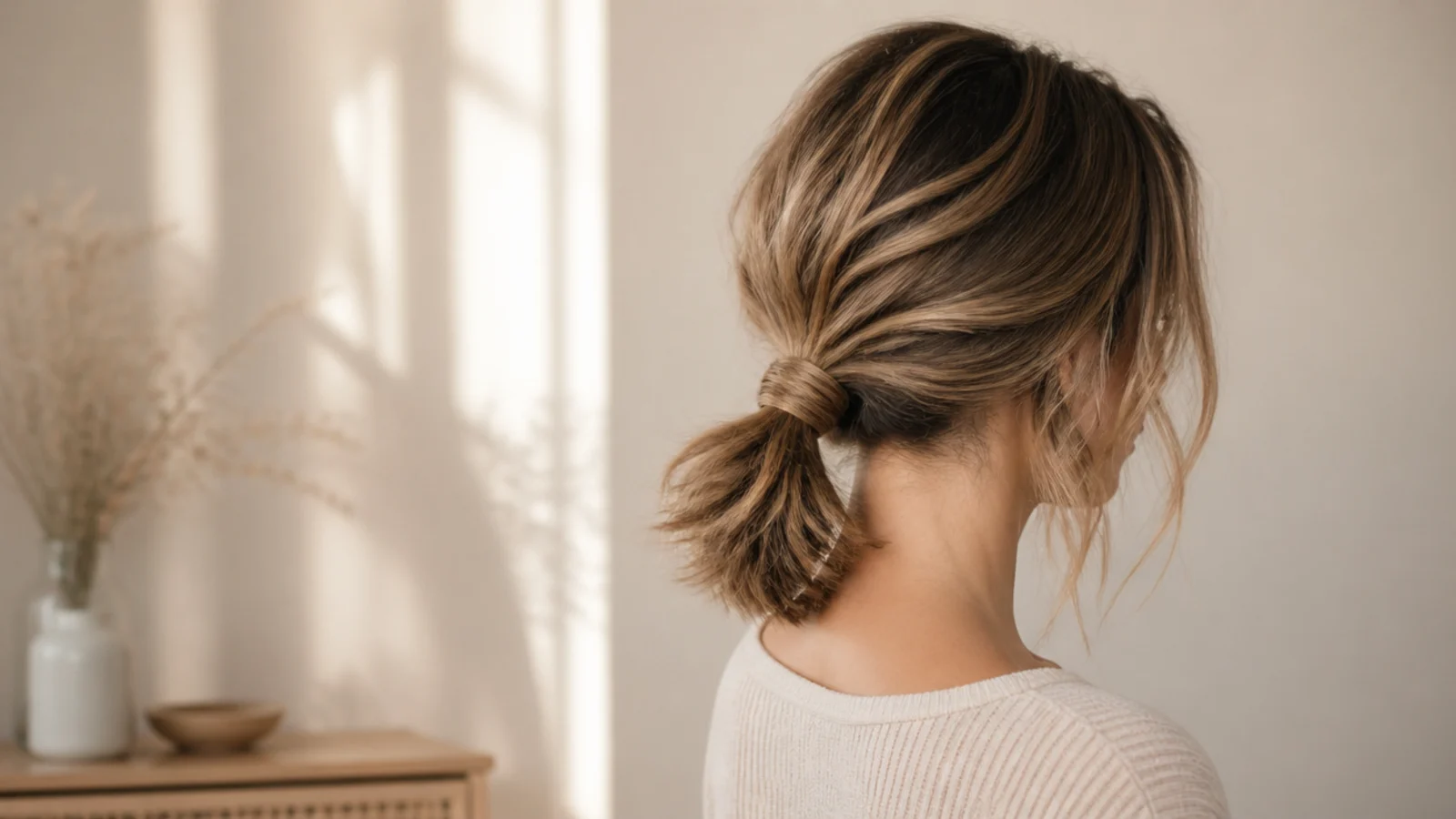
2. Nape Tie for the Office
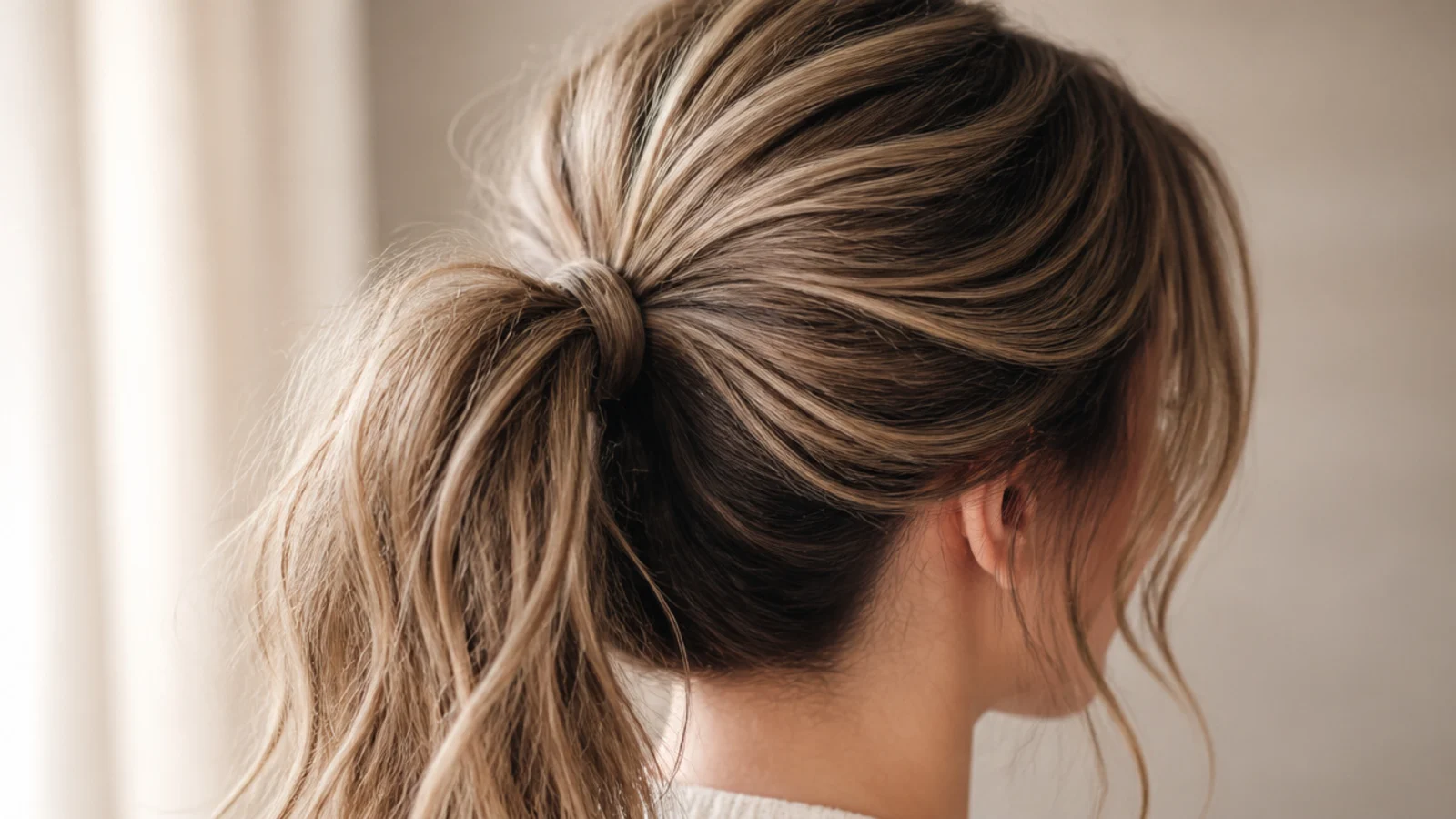
Sitting below the occipital bone means the skull takes part of the weight rather than leaving all of it on the elastic, so the band can sit looser without dropping through the morning. Lower placement also keeps the whole outline inside the shoulders, which is what makes it read as neat on a video call.
3. School Run
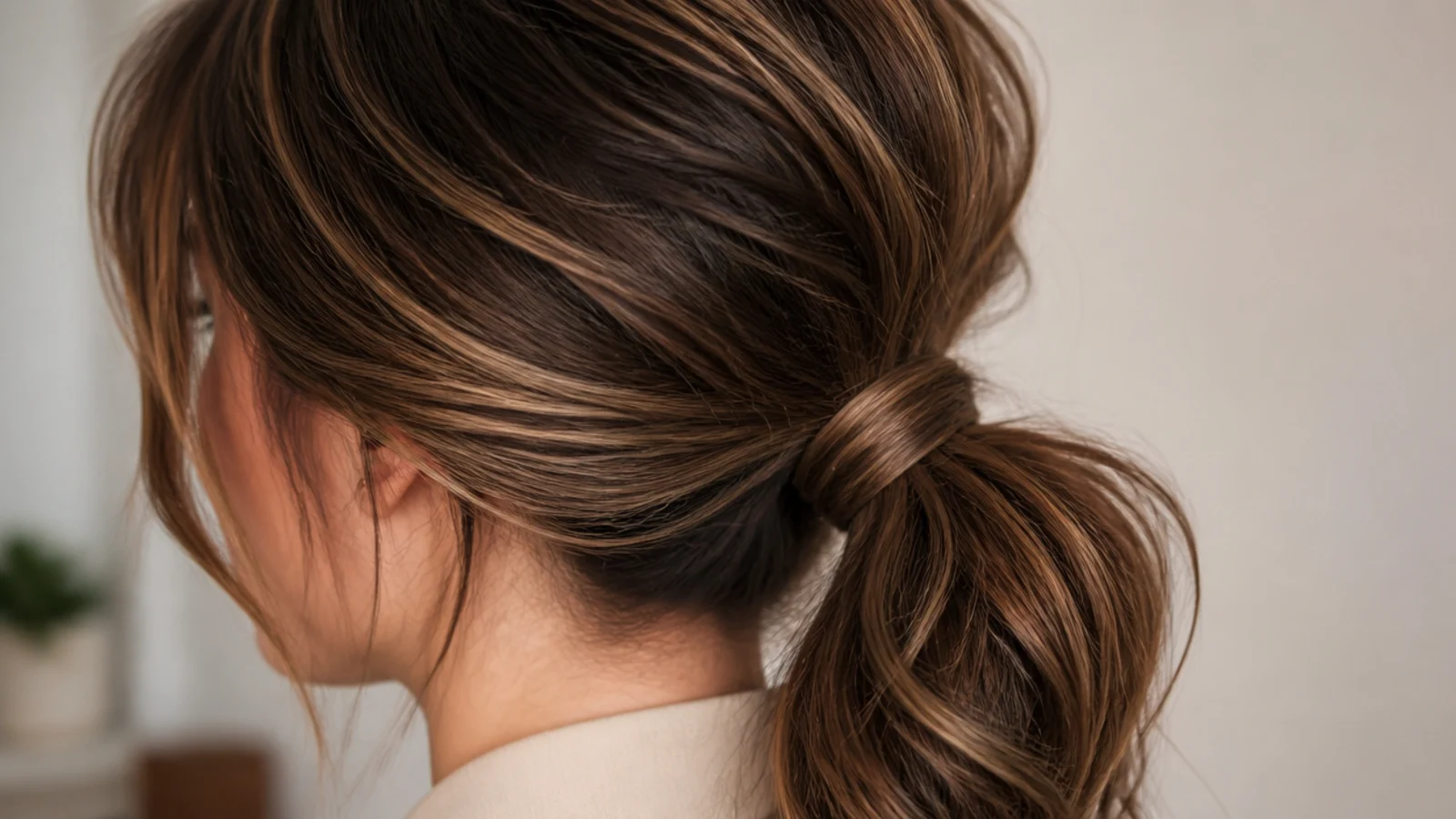
Gather with your head tipped forward so every strand arrives at the tie under the same tension, then lift the crown once with two fingers before you let go. That single lift is the difference between fast and rushed, because a flat crown is the one thing that announces a ponytail was done in eight seconds.
4. Wrapped Elastic
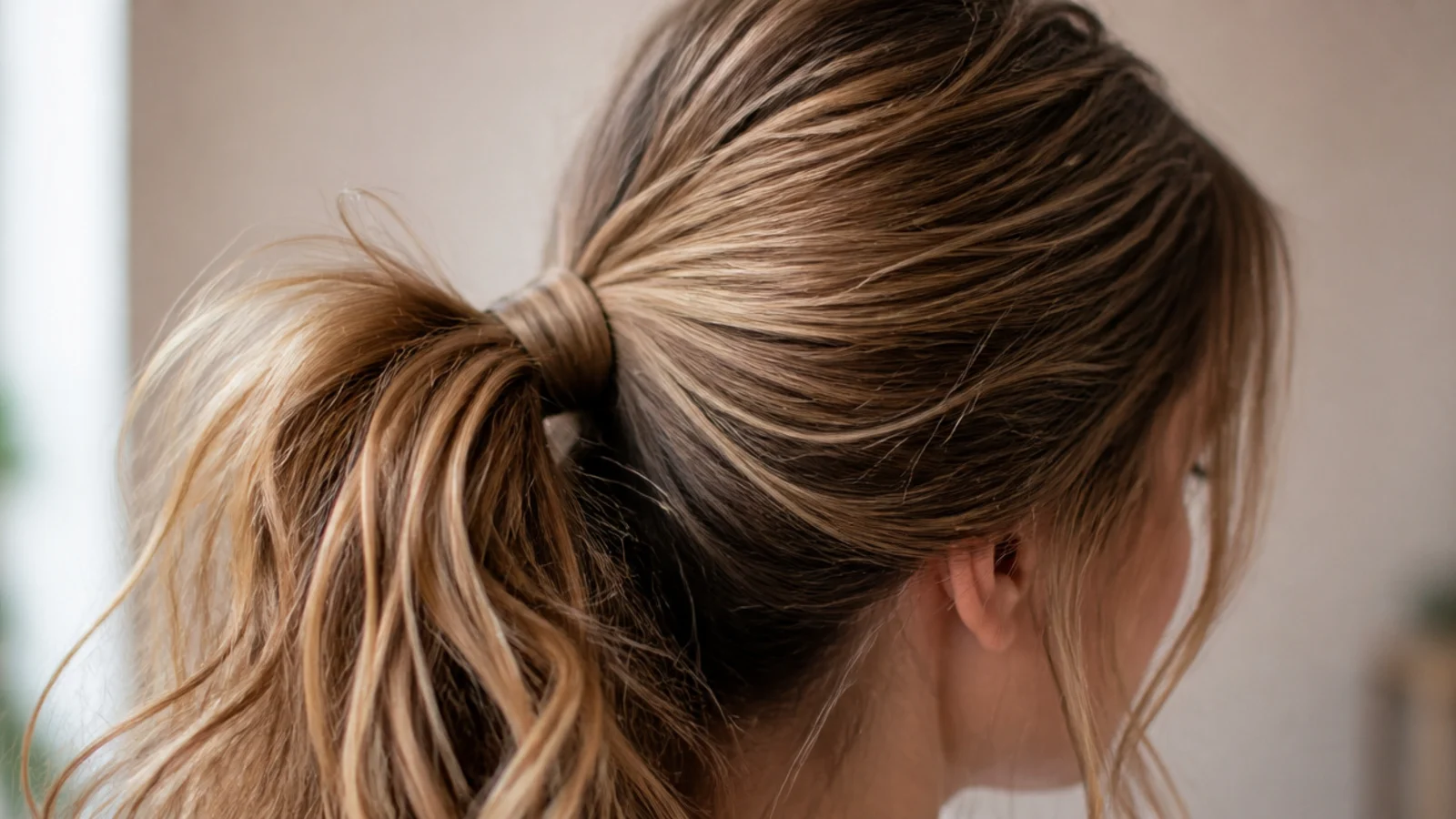
A section of the ponytail wound around the base adds a collar of hair whose own friction locks the band against the section underneath it. It hides the elastic and gives you a second grip surface at the same time, so pin the wrapped end underneath rather than tucking it, because a tuck works loose within the hour.
5. Two Elastics Stacked
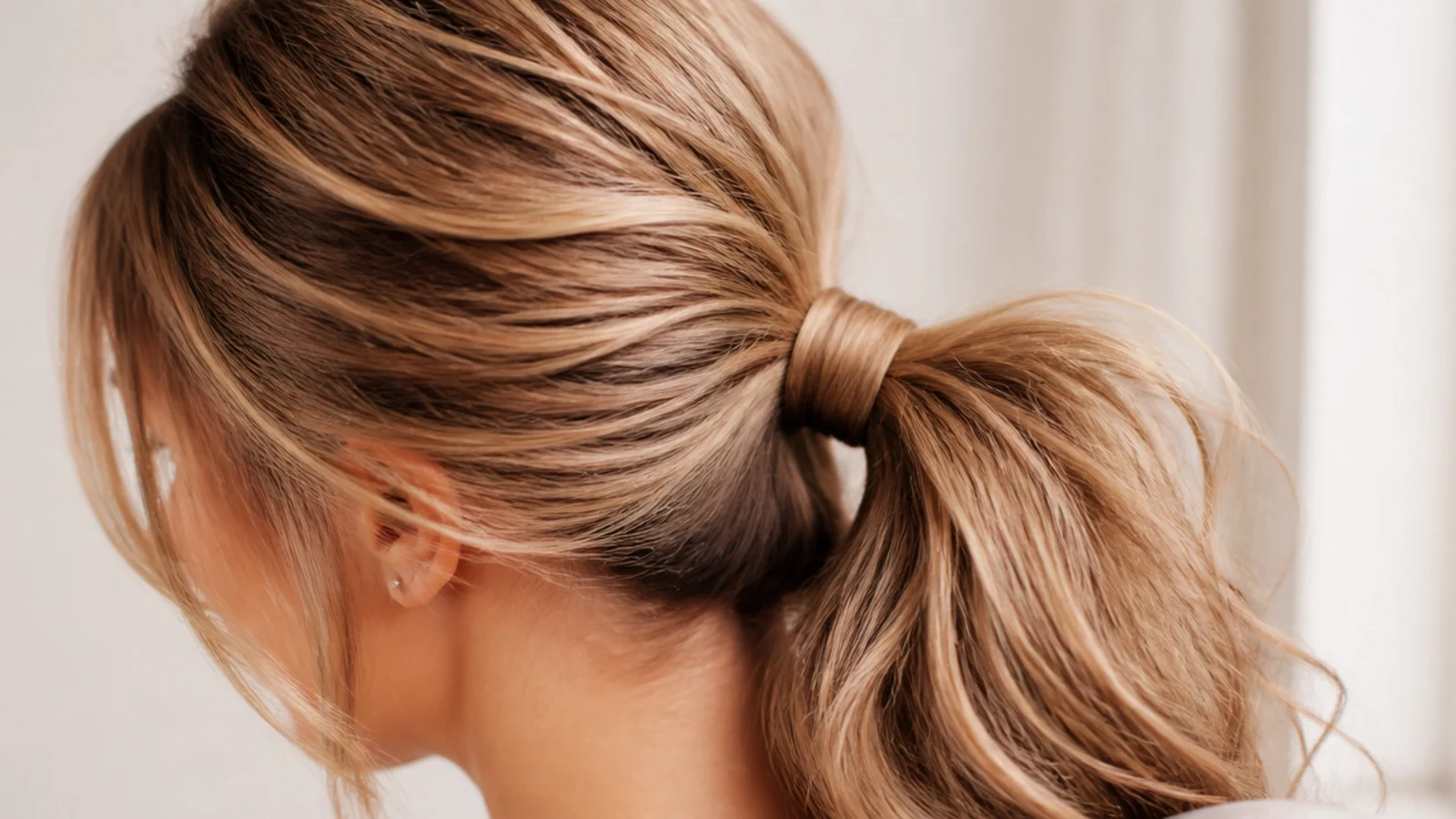
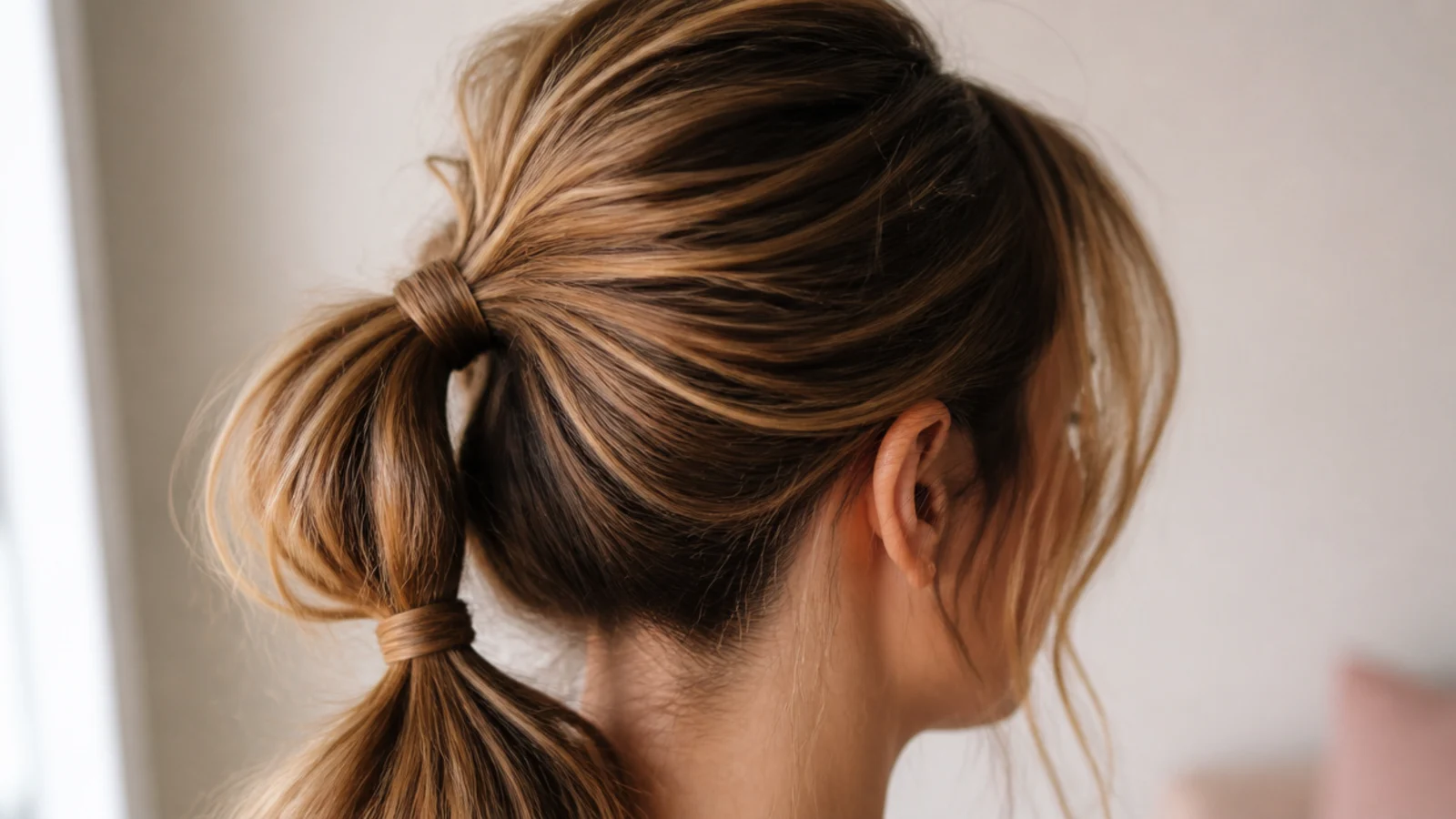
One band at the base and a second an inch or two down the length. The lower band carries part of the weight of the hair, which stops the base tie being dragged downward by the full mass, and the section trapped between the two can be pulled wide for free volume.
6. Bungee Band on Short Hair
A bungee has a hook at each end and is wrapped around the section rather than stretched over it, so you set the tension precisely instead of losing hair through the loop. On short hair, where an ordinary elastic needs three passes and still slides out, wrapping is the only reliable way to reach a firm base.
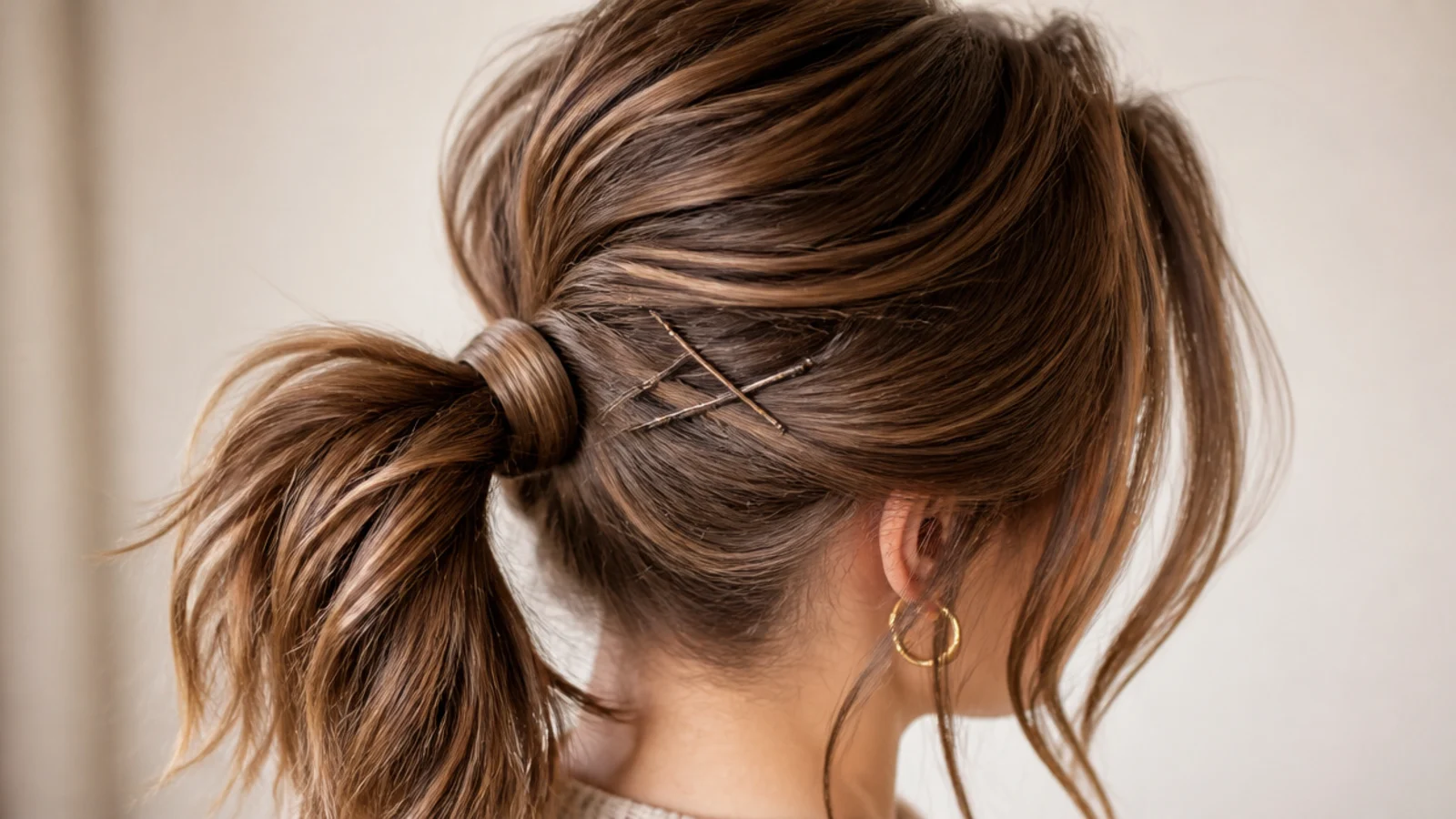
7. Gym to Desk
Sweat rewets the hair, and hair sets into whatever shape it dries in, so retie while it is still slightly damp and the new position holds through the afternoon. Dry shampoo goes on after that, not before, because applied to damp roots it absorbs the moisture instead of sitting on top of it in a visible film.
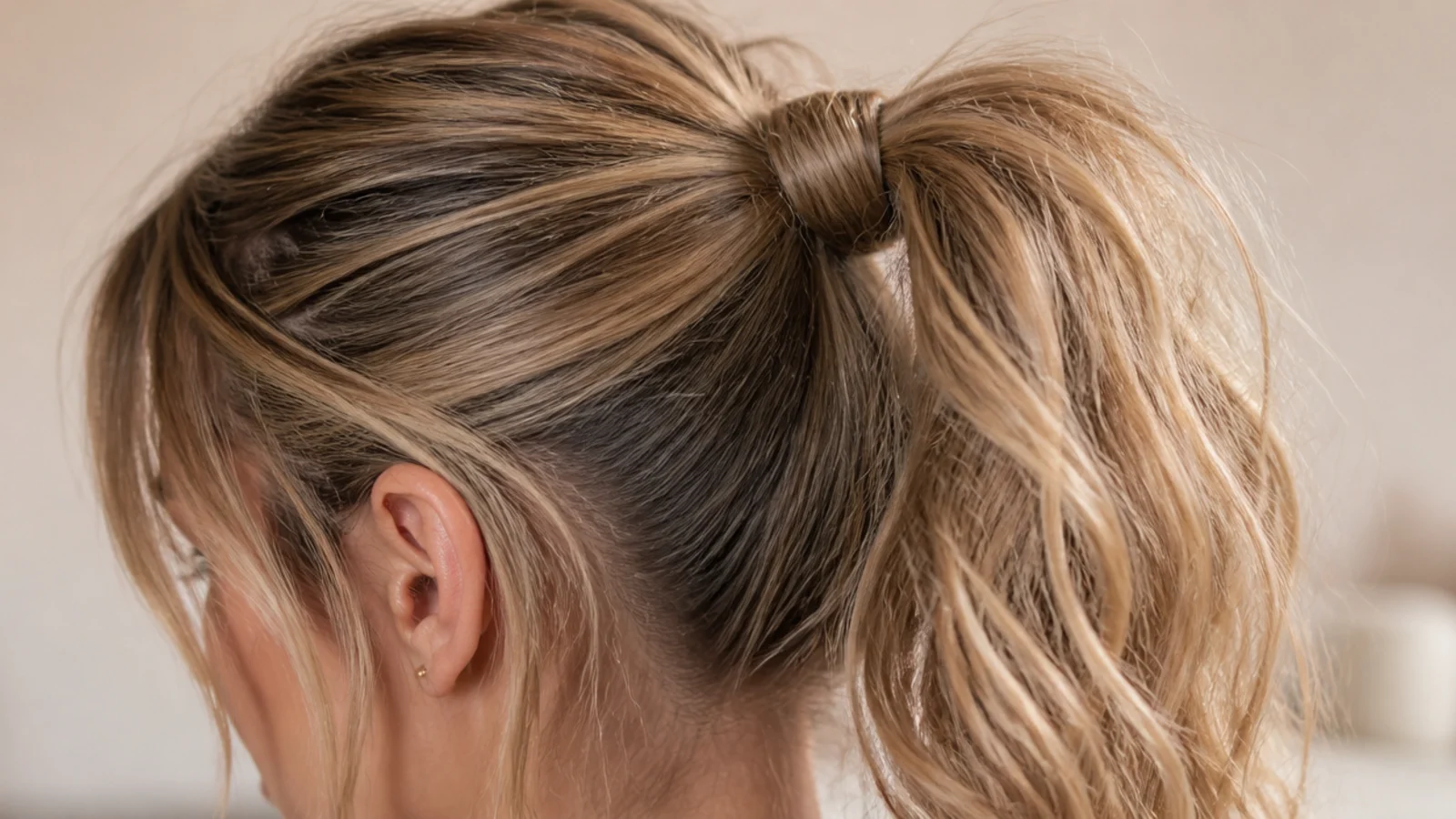
8. Rainy Day Frizz
Humidity swells the cortex and lifts the cuticle, which is what pushes short broken hairs out through the surface of an otherwise tidy ponytail. Lay them down with a wax stick or a fingertip of cream rather than hairspray, because spray sets each one exactly where it is standing instead of flattening it first.
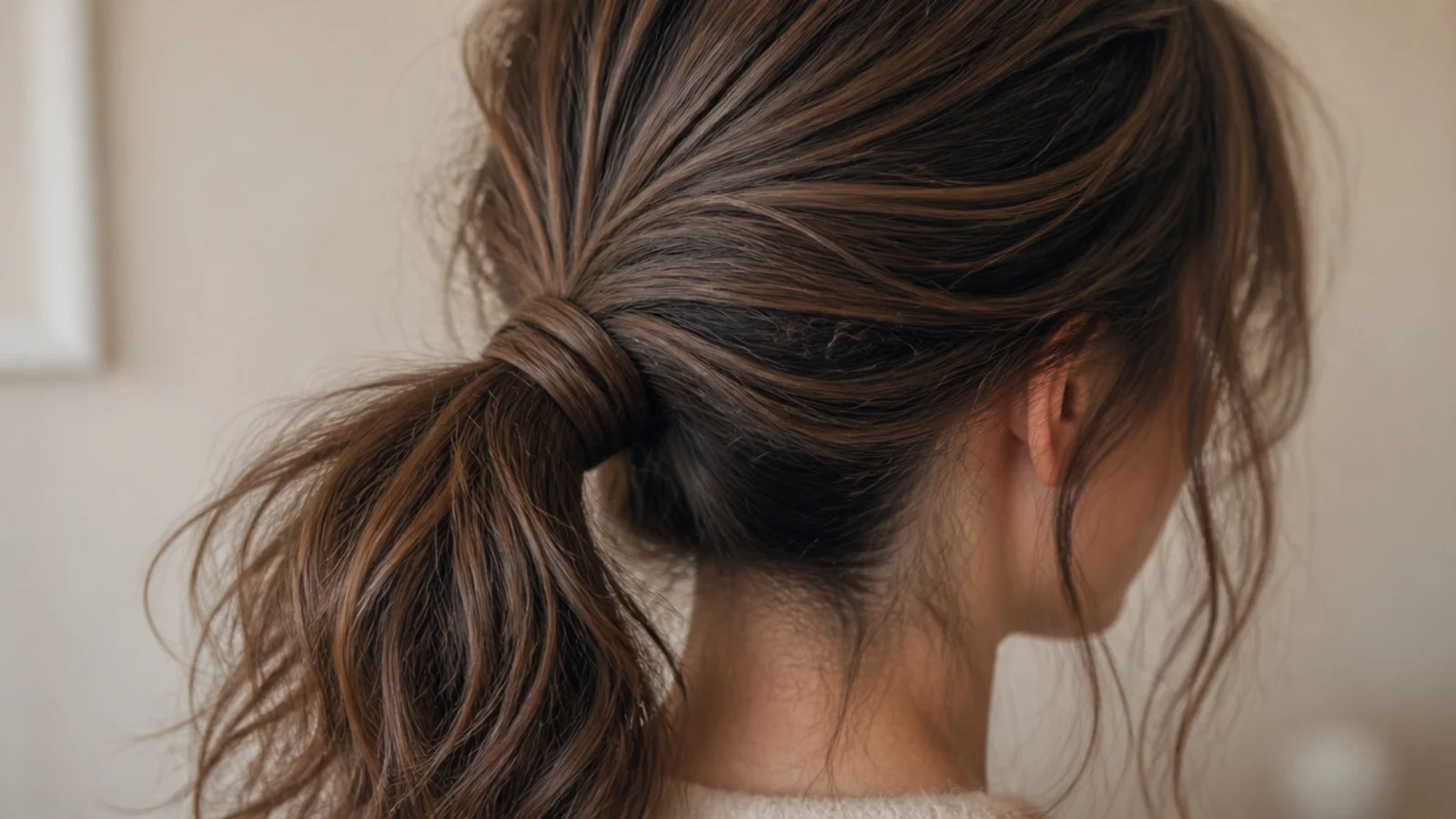
9. Backcombed Fine Hair
Backcombing at the crown pushes short hairs down into a tangled cushion that physically props up the smooth section lying over it. Two or three light passes at the root is the whole job — anything higher up the strand breaks the surface layer, and on fine hair a broken surface is immediately visible.
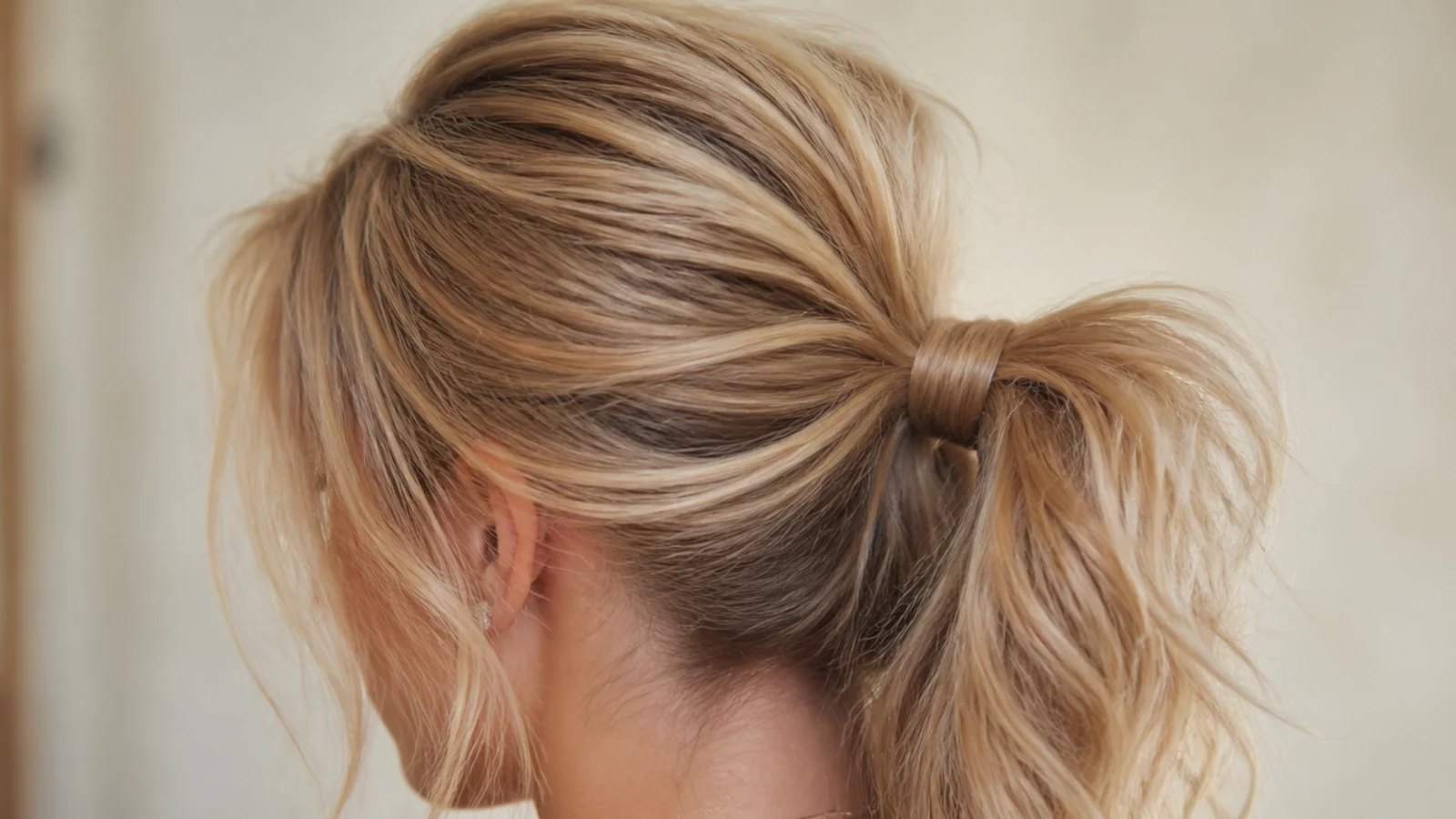
10. Pineapple for Curly Hair
Gathering the curls loosely at the very top of the head keeps the pattern off the pillow, so overnight friction lands on the tie rather than on the curl itself. The looser the band sits, the fewer flattened sections you have to wet down and reshape in the morning.
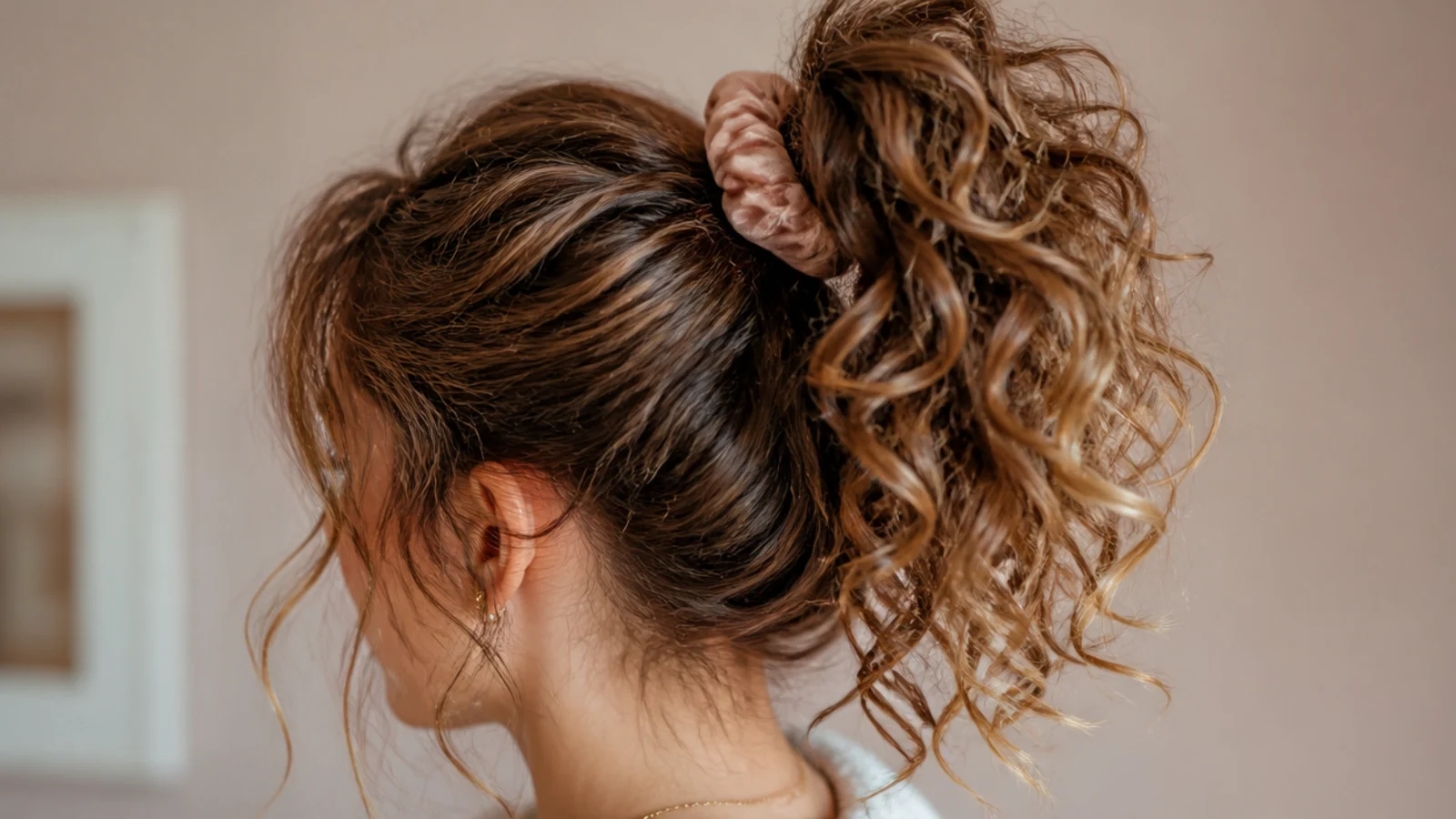
11. Deep Side Part
A part taken well off centre sends most of the hair across to one side, and that bank of hair arrives at the tie with a sweep already built into it. The asymmetry does the job a curling iron would otherwise have to do, which is why this version survives a morning with no tools at all.
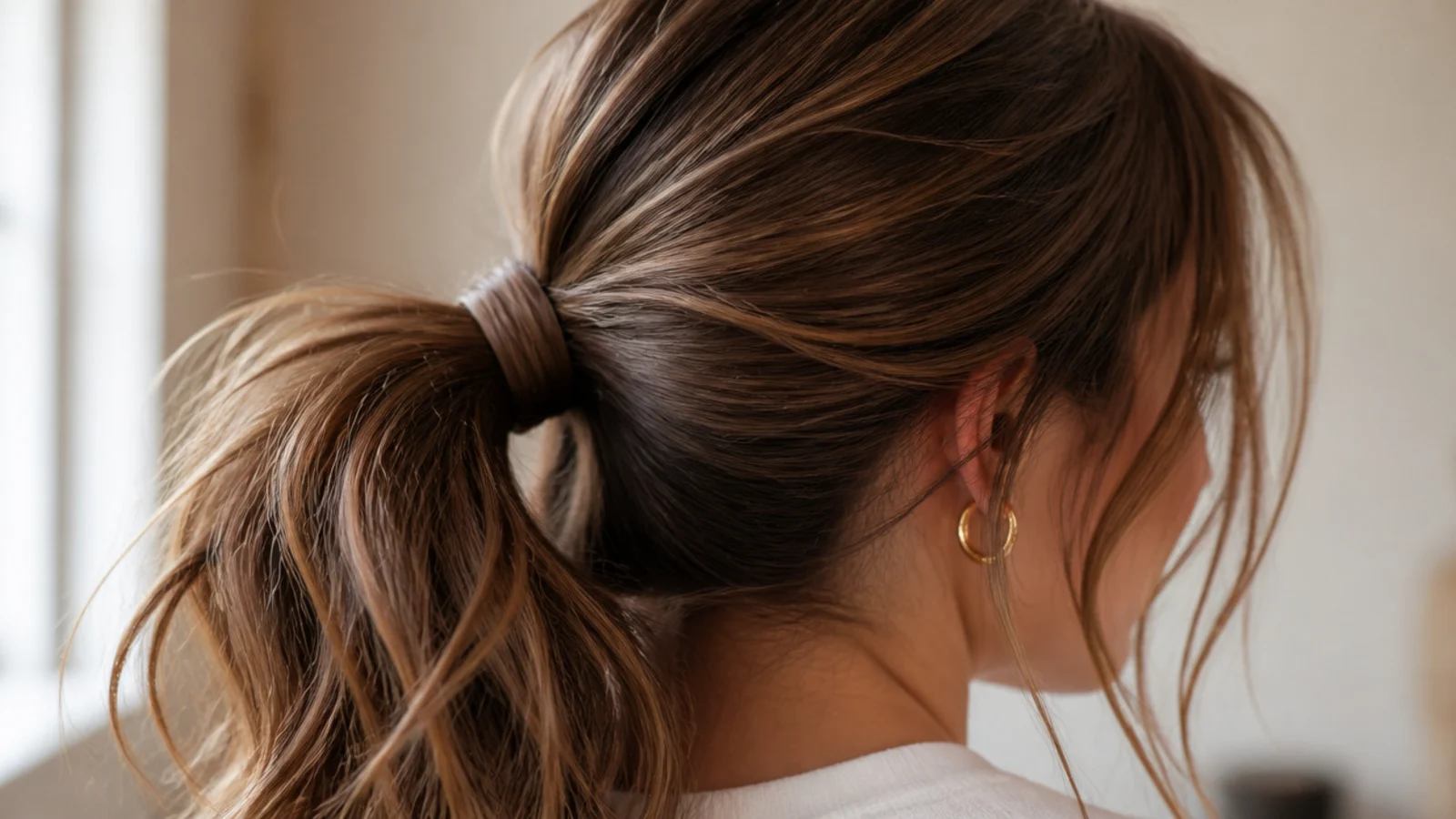
12. Oversized Scrunchie
A wide fabric band spreads the pull across a broader ring of hair, so no single line of strands takes the full tension. That is why a scrunchie leaves no dent, and why it is the right choice on hair that is fragile, freshly coloured or already breaking at the tie line.
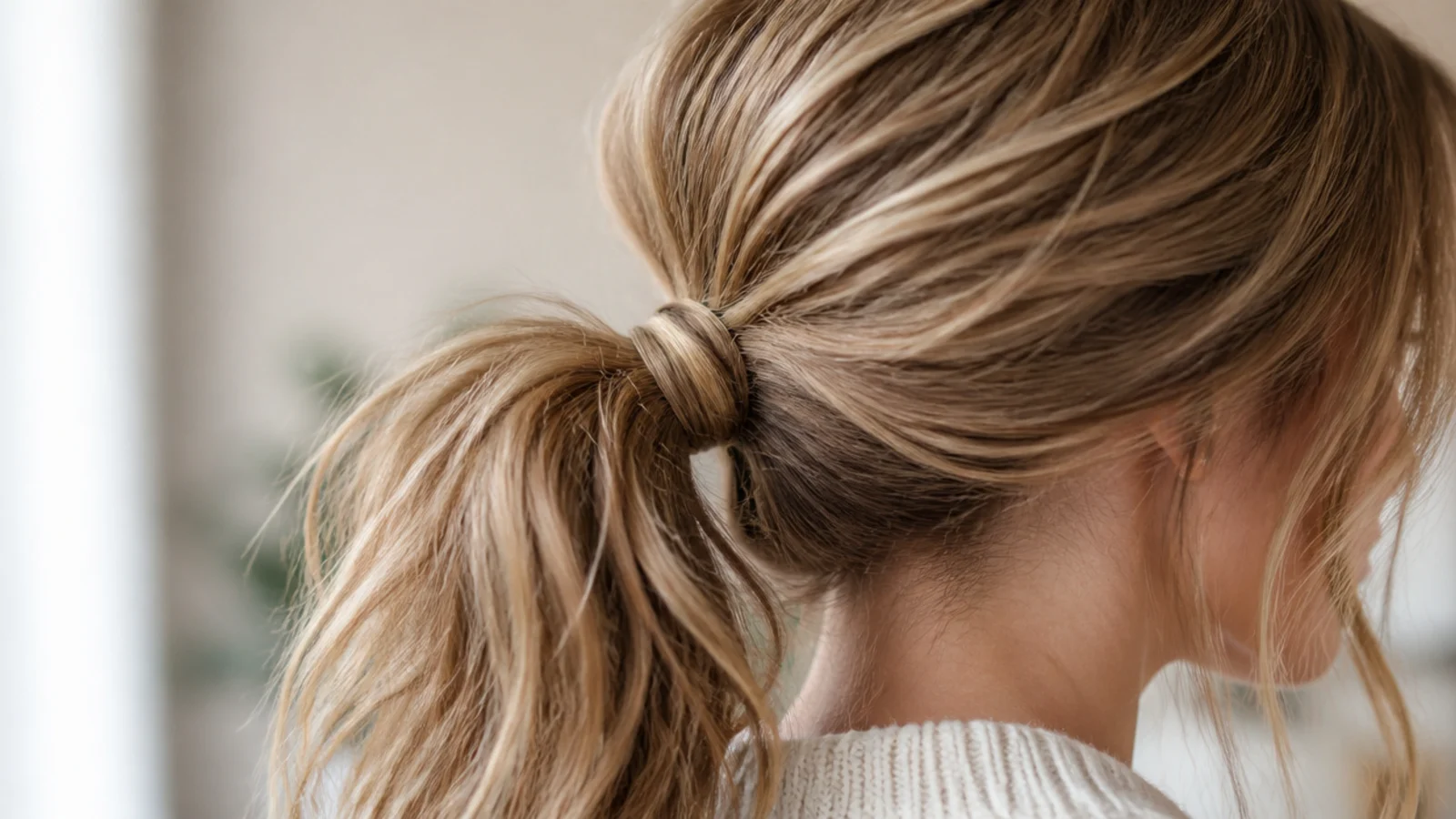
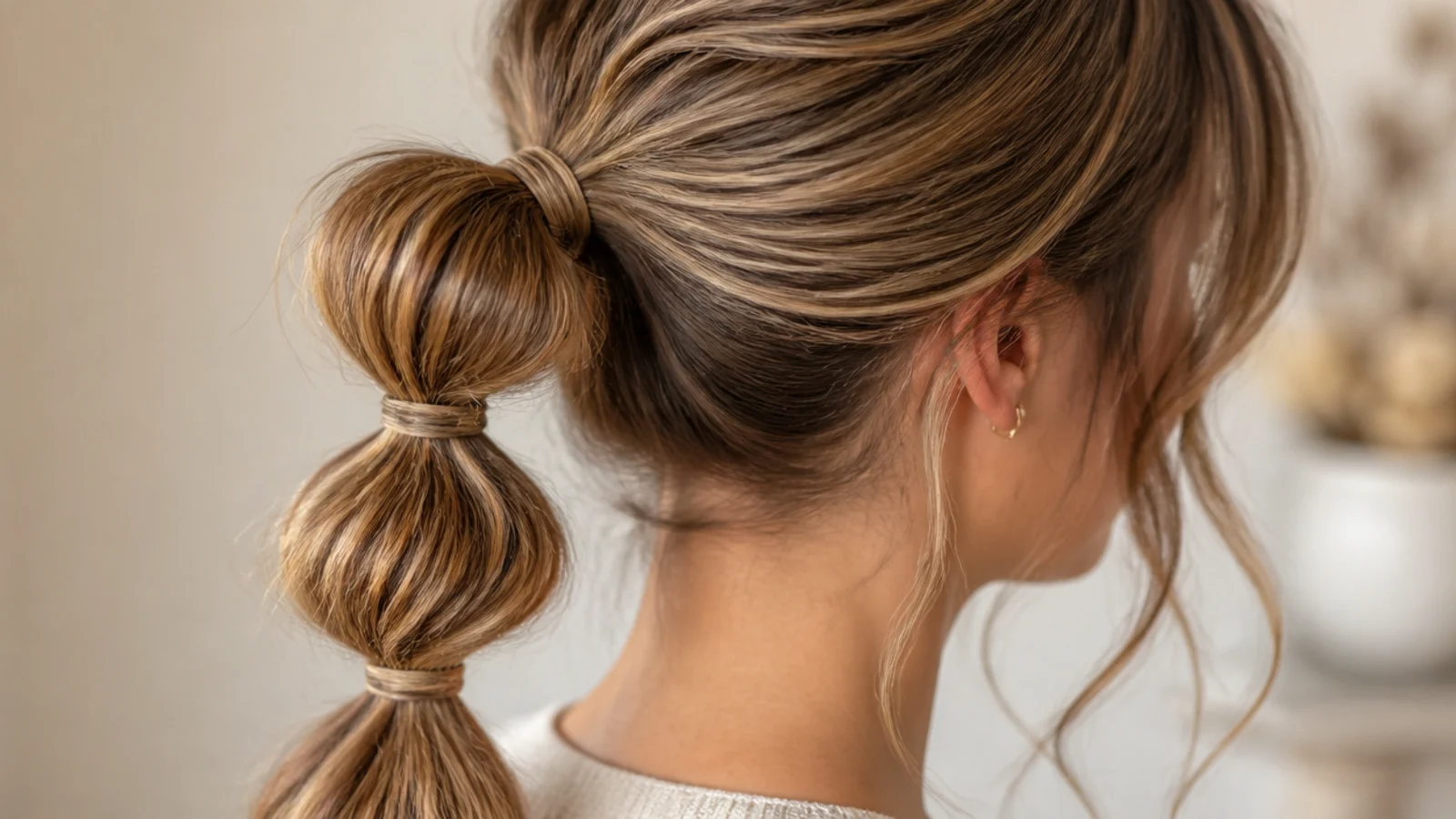
13. Bubble Segments
Elastics spaced down the length divide the weight into short spans, each held by its own band rather than all of it hanging off the base. Pull every segment wide before you tie the next one down, because once the band below is on, the section above it can no longer be opened out.
14. Scarf Wrapped
Fabric against hair grips better than hair against hair, and the width of a scarf spreads the load the same way a scrunchie does. It also covers the base, which is the single point where a messy ponytail always looks its worst by the end of the day.
15. Overnight Braid
A loose braid slept in sets a bend along the entire length, and a bent strand occupies more space than a straight one. Gathered the next morning, that bend is what fills the ponytail out sideways, which is volume you did not have to heat into the hair.
Final Thoughts
Build the grip first and decide the height second. Almost every messy ponytail that fails does so because it was tied on hair too smooth to hold itself, and no amount of pulling fixes a friction problem — a pass of dry shampoo at the roots and a second band down the length will outlast a base you tightened until it ached.
Then leave it alone. The pieces you pull out at the temples are the styling; the base is the engineering, and picking at one while the other holds is how a good messy ponytail turns into an untidy one by three in the afternoon. More in Updos & Clips. See also the curly version and the easy school version.