15 Sleek Slick Back Bun Looks to Try
Fifteen slick back bun looks, and the rule that stops yours going stiff and flaky — gel belongs on the hairline, not on the length. What you are controlling is the baby hairs, and they are all at the perimeter.
In this article · 22
- What Makes a Slick Back Work
- How to Choose Yours
- The 15 Slick Back Looks
- 1. Classic Slick Back Low Bun
- 2. Slick Back High Bun
- 3. Slick Back with a Centre Part
- 4. Slick Back with a Deep Side Part
- 5. No-Part Slick Back
- 6. Wet-Look Slick Bun
- 7. Slick Back with Laid Edges
- 8. Slick Back Bun with a Wrapped Base
- 9. Slick Back Bun on a Bob
- 10. Slick Back Bun on Curly Hair
- 11. Slick Back Bun on Fine Hair
- 12. Slick Back Bun on Thick Hair
- 13. Slick Back for an Evening
- 14. Slick Back on Second-Day Hair
- 15. A Slicked Bun Gone Flaky
- Styling and Upkeep
- Mistakes to Avoid
- FAQ
- Final Thoughts
A slick back bun that looks wet and expensive and one that looks stiff and flaky are usually made with the same product, applied in different places.
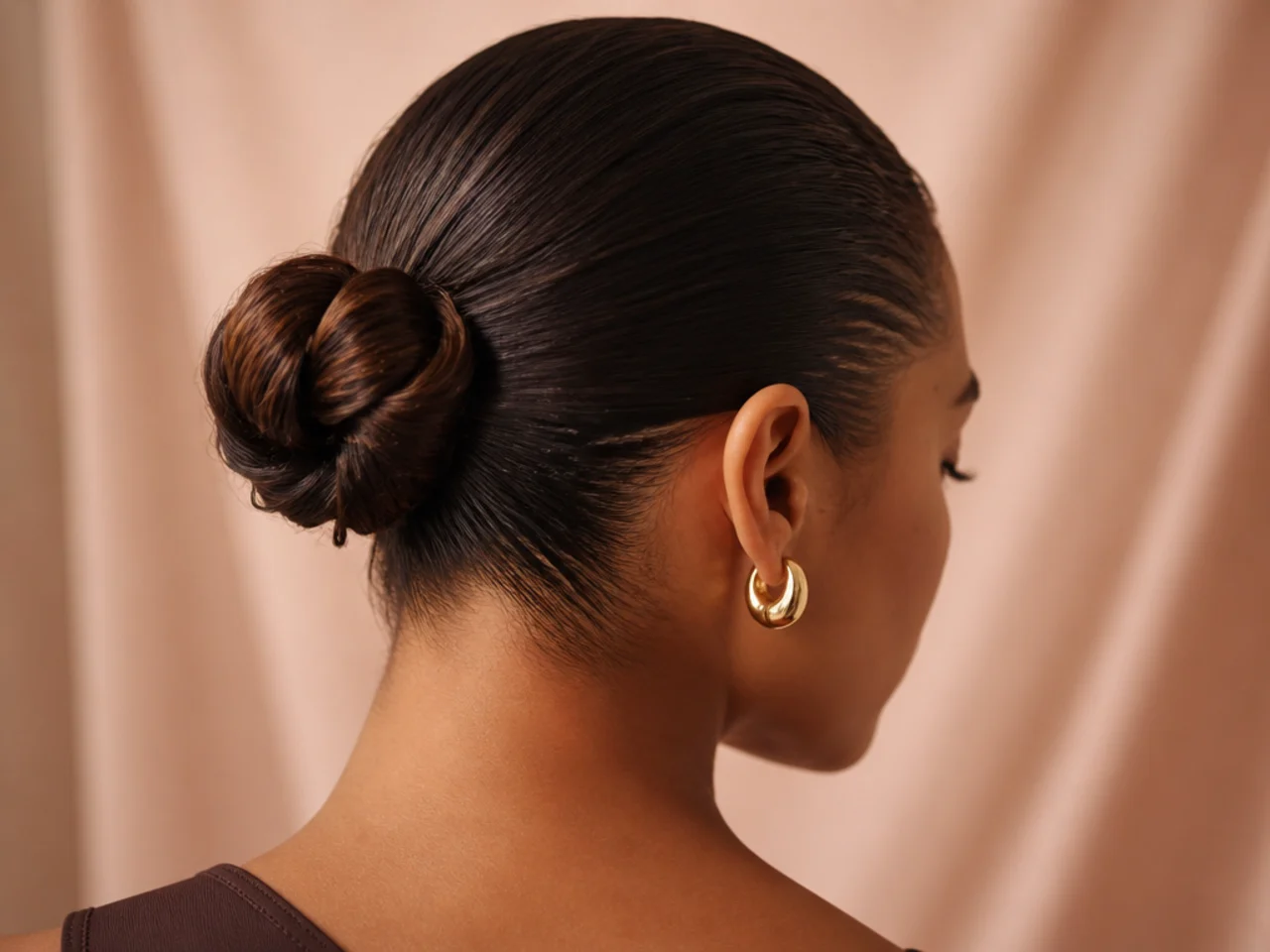
Gel belongs on the hairline, not the length. The look comes from flattening the short baby hairs around the perimeter — the ones too short to reach the bun. Those are all within a few centimetres of your face and neck.
Gel through the mid-lengths has nothing short to control. It just coats hair that will be bent and gathered, and that is what cracks.
What Makes a Slick Back Work
The perimeter is the whole job. Hairline, temples, nape. That is where the short hairs are. Everything else is long enough to reach the bun on its own.
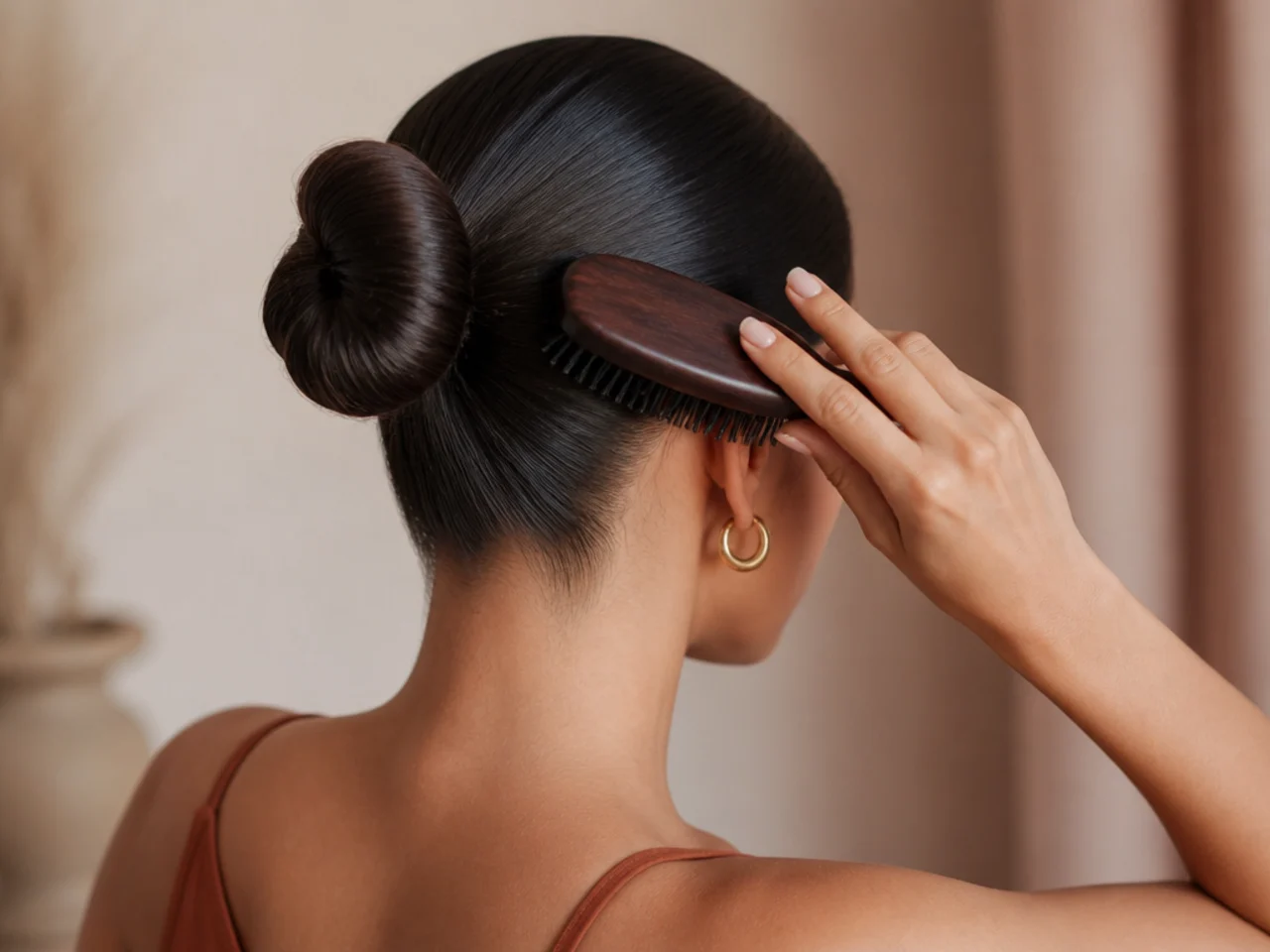
The length just needs brushing. A boar bristle brush does more for the mid-lengths than any product. It distributes the natural oil already there and lays the surface flat.
Second-day hair takes a third of the product. Natural grip means less gel to achieve the same hold. It is the cheapest improvement available to this style.
Less product, applied precisely, looks wetter. Overapplication reads as stiff rather than glossy. Shine comes from a flat surface, not from quantity.
How to Choose Yours
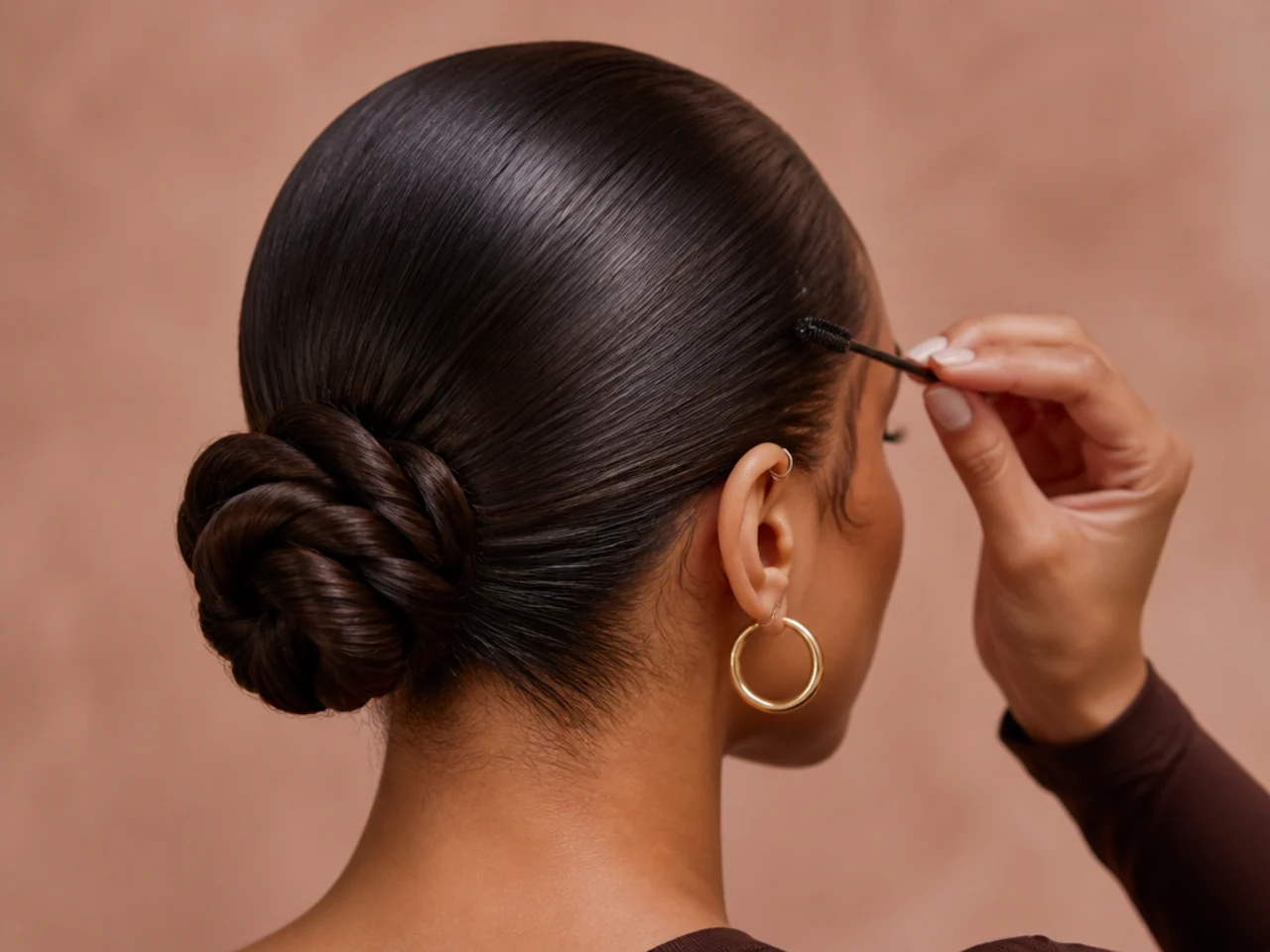
Use a small brush for the hairline. An old toothbrush or an edge brush places gel far more precisely than fingers.
Brush the length separately. Smooth it before gathering, with no product on it.
Start on unwashed hair. It is the difference between a pea of gel and a palmful.
Pick your parting first. On a slicked style the part is the only line there is.
The 15 Slick Back Looks
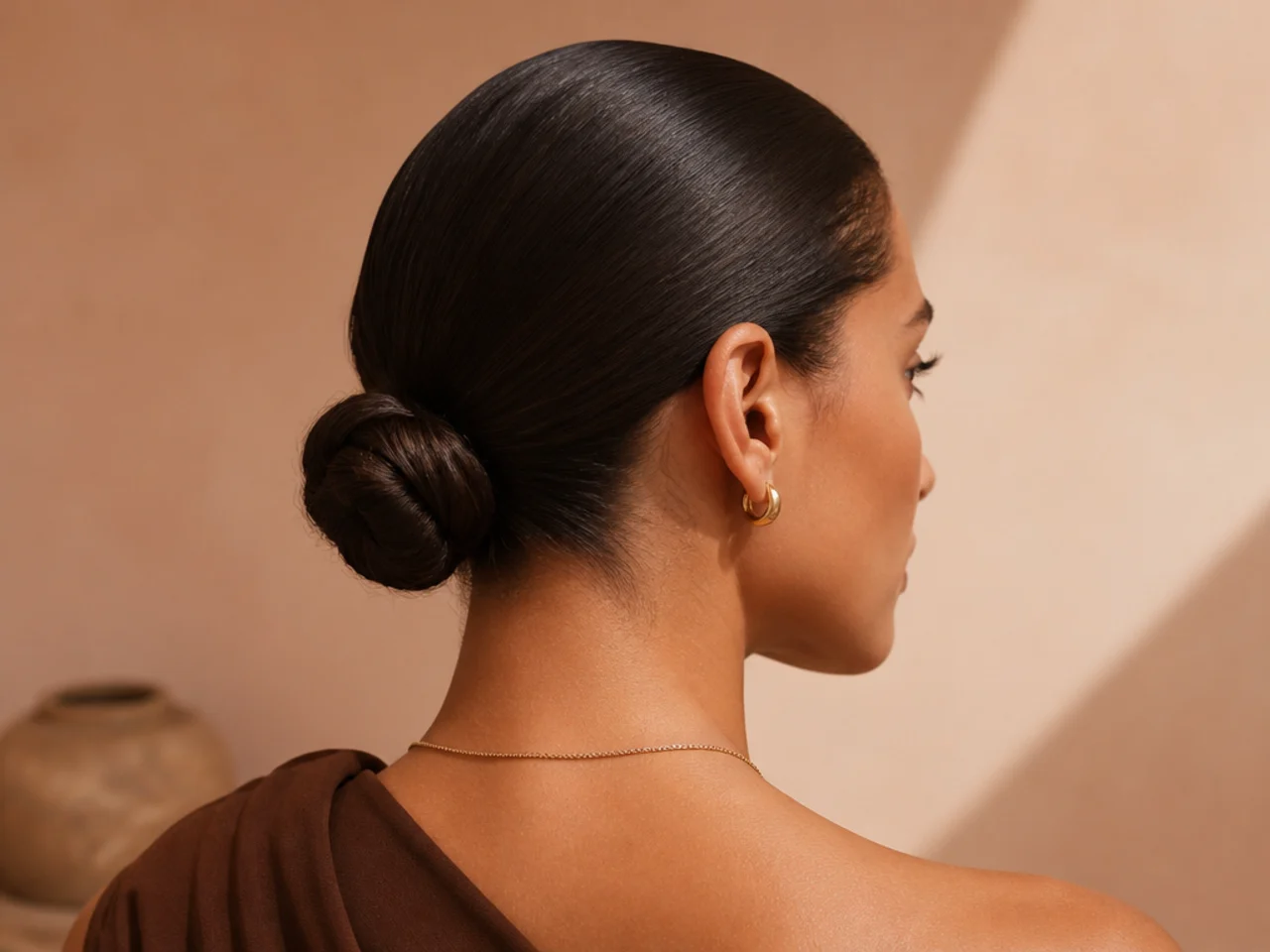
1. Classic Slick Back Low Bun
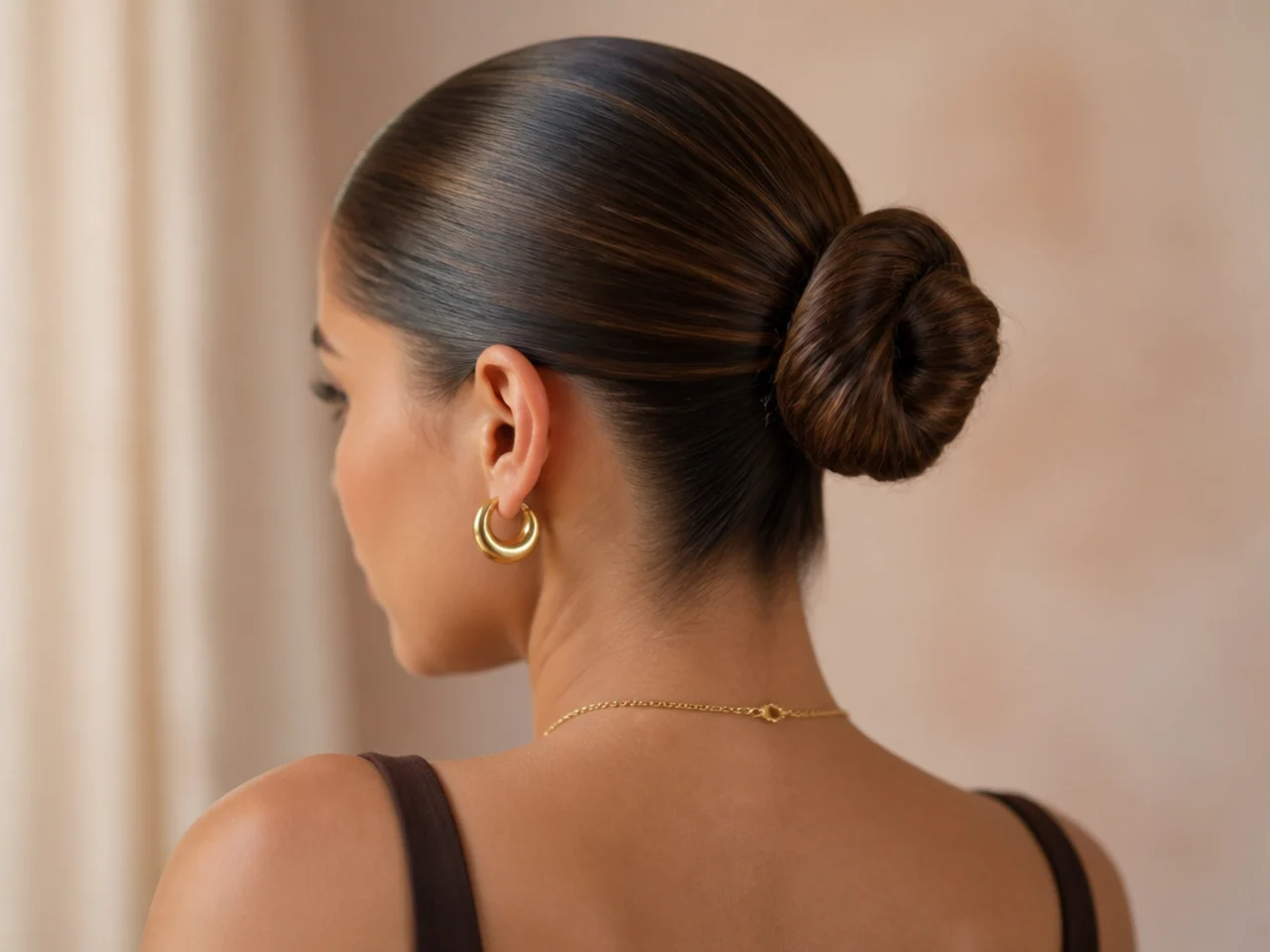
Gel at the perimeter, brushed length, small tidy coil. Three separate operations, and the mistake most people make is treating them as one by putting product through everything.
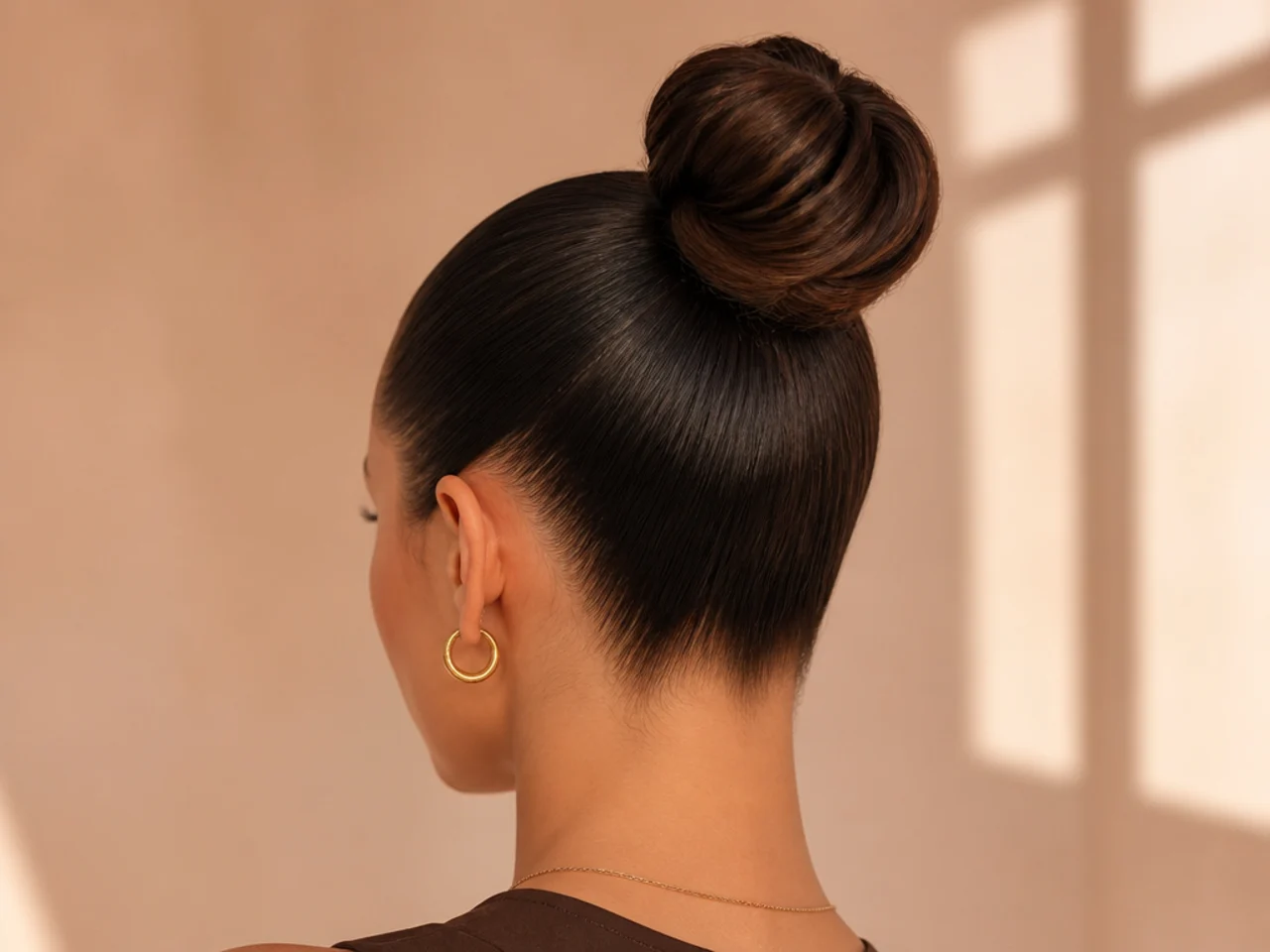
2. Slick Back High Bun
The same finish, gathered at the crown. The gel work is identical; only the gather moves, so nothing about the technique changes with the position.
3. Slick Back with a Centre Part
A hard part running back into the gather. A slicked centre part is the most exposed line there is, so comb it against a straight edge rather than by eye.
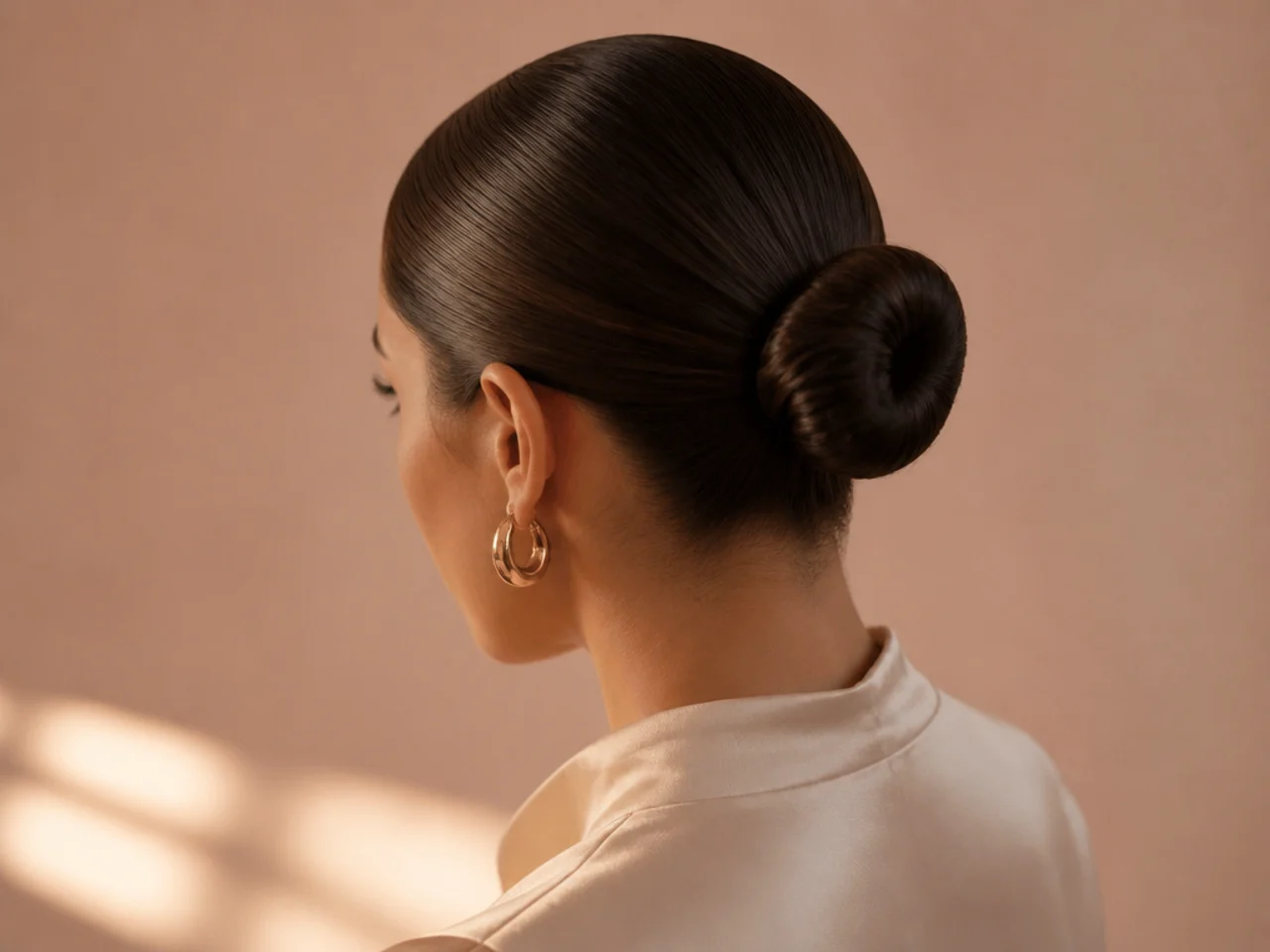
4. Slick Back with a Deep Side Part
Asymmetric, and the strongest line available in this style. The deeper the part, the more hair crosses over, which is what gives this version its weight on one side.
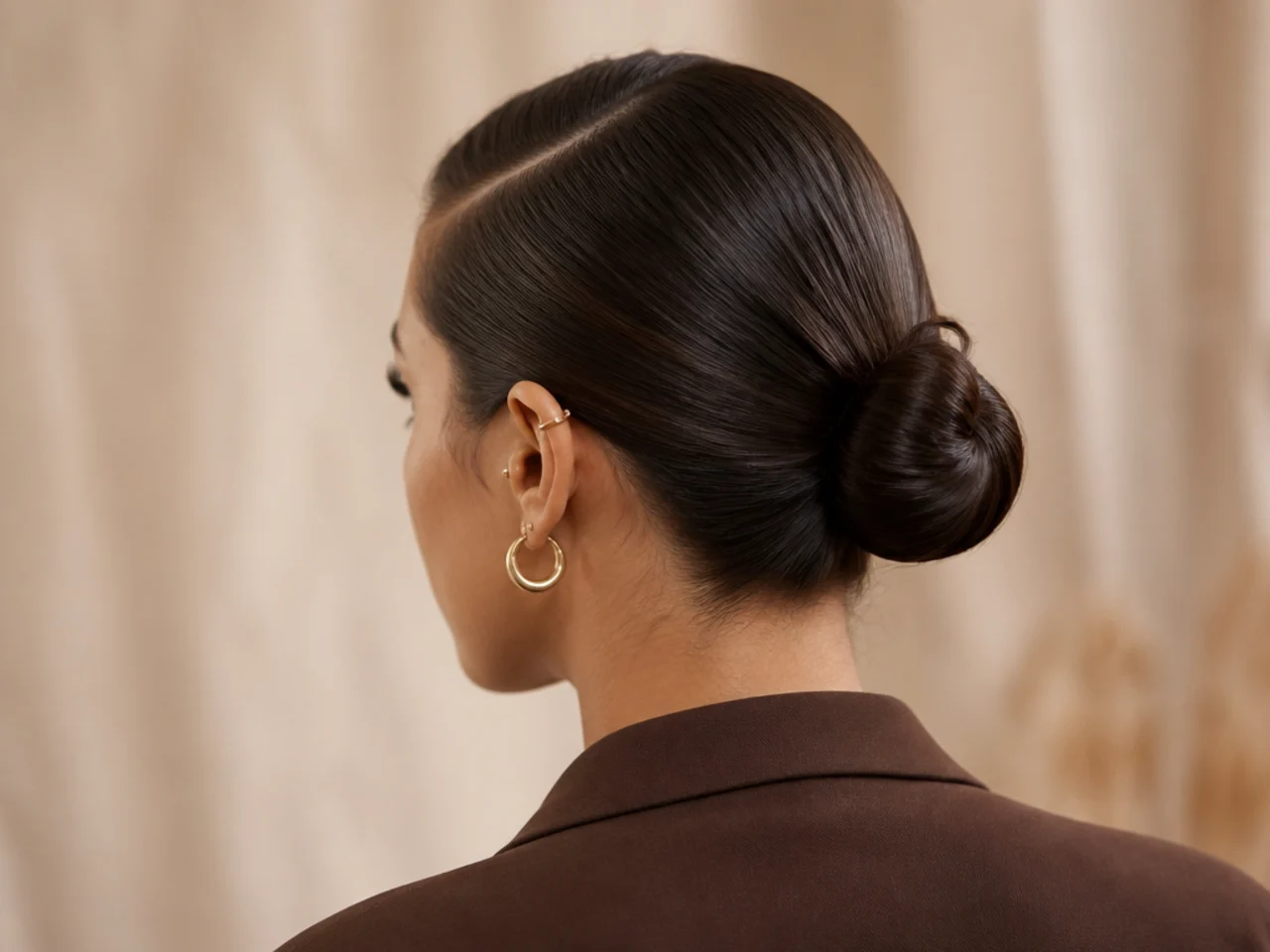
5. No-Part Slick Back
Everything brushed straight back, no line at all. Without a part there is nothing to get wrong, which makes it the most forgiving version of the style.
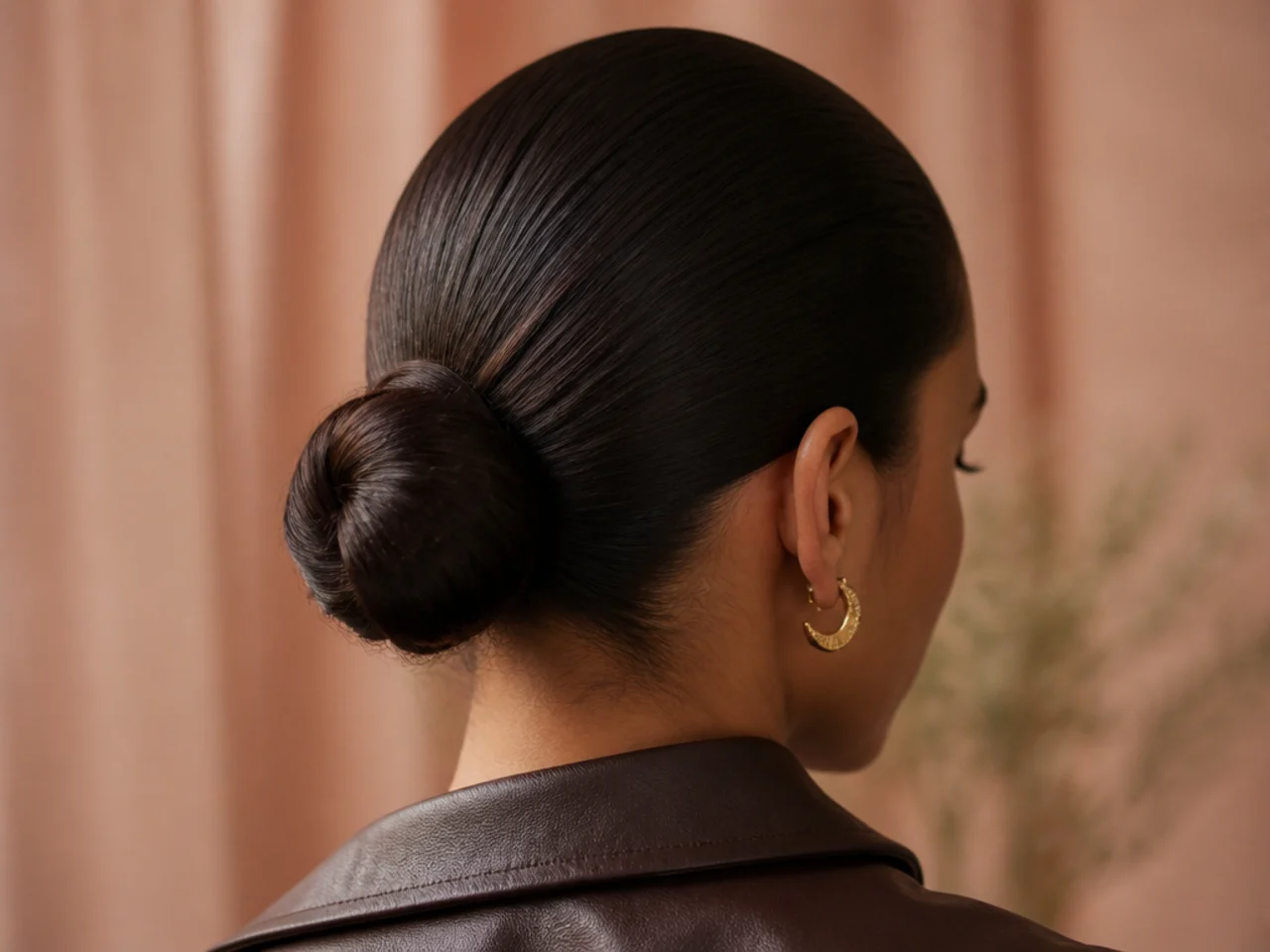
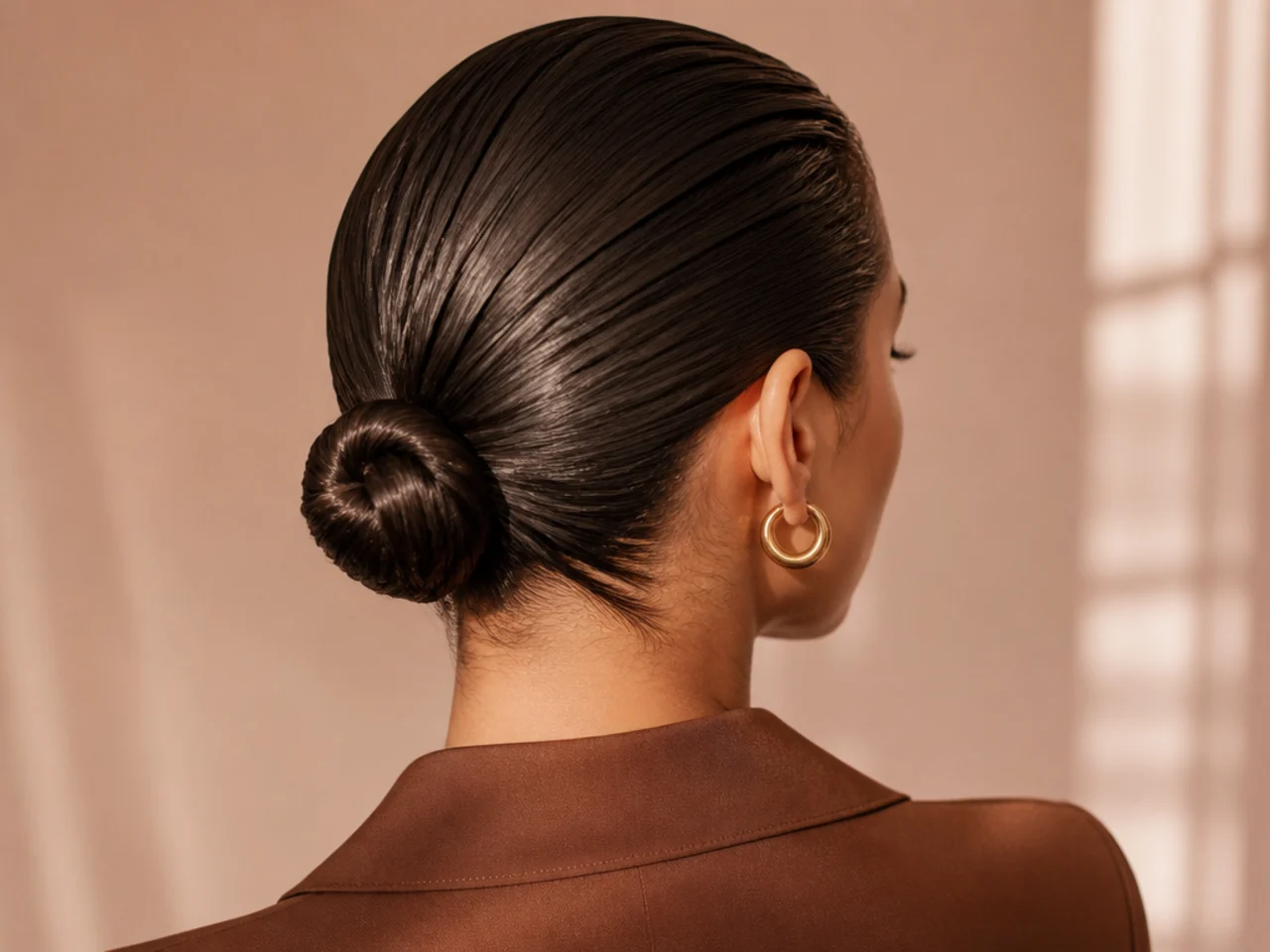
6. Wet-Look Slick Bun
More gel at the perimeter for a genuinely wet finish. More at the perimeter, not more overall — the length still gets nothing, or it will crack where it bends.
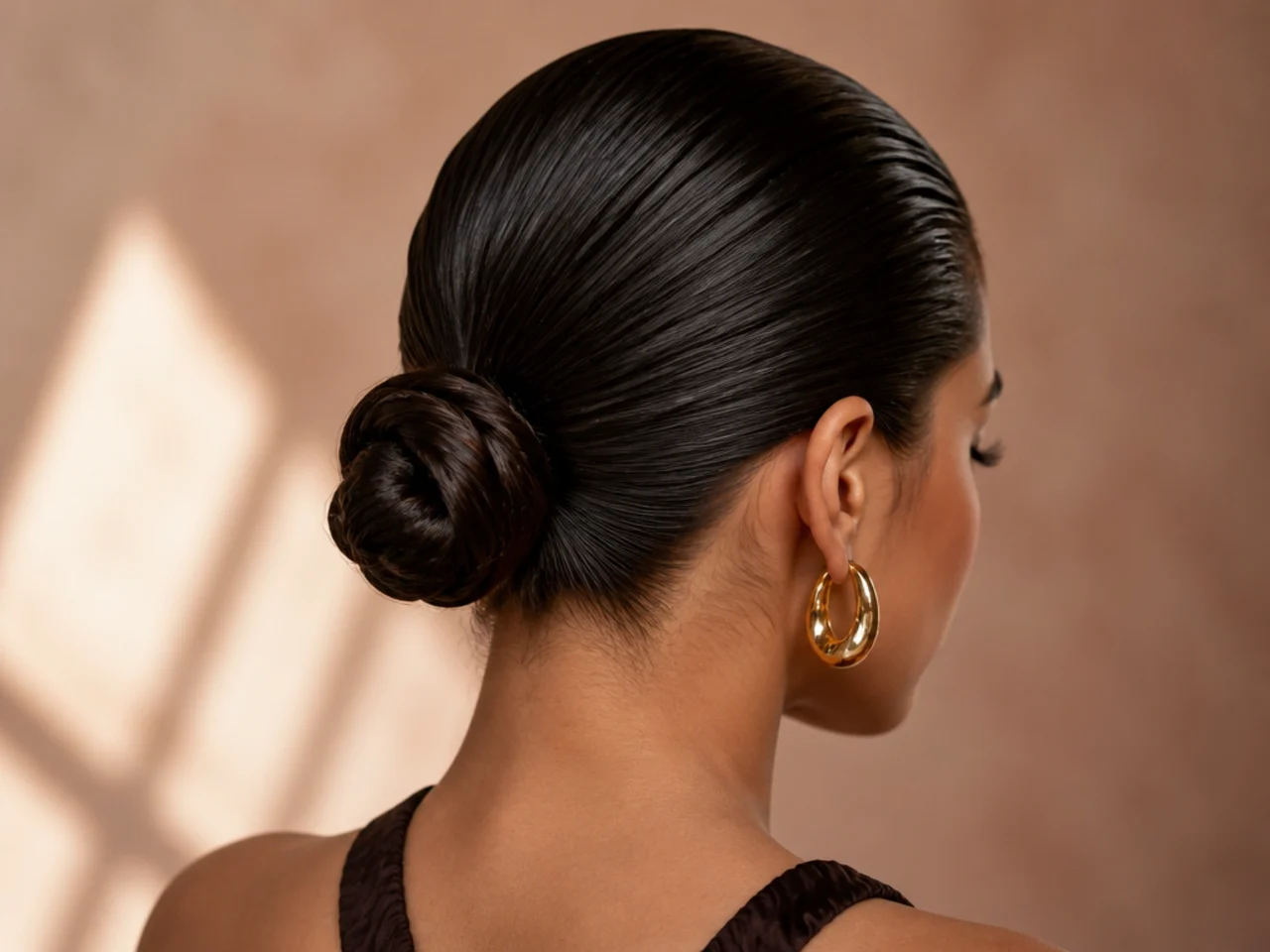
7. Slick Back with Laid Edges
Baby hairs shaped rather than just flattened. Use a small brush and work in the direction the hair already grows, because edges pushed against their growth spring back within the hour.
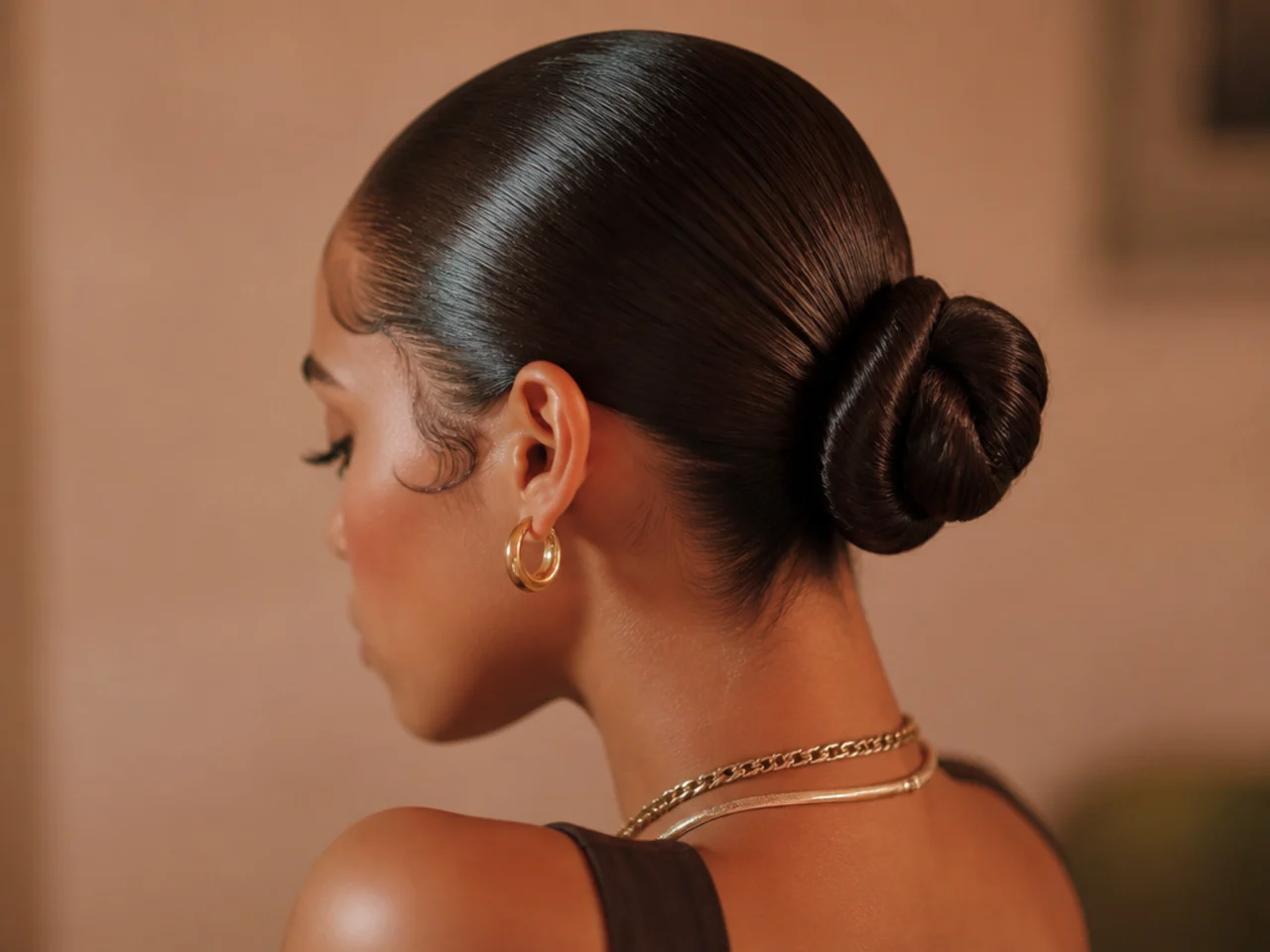
8. Slick Back Bun with a Wrapped Base
The tie hidden by a wound section. It also gives the base a second layer of hold, which is worth two seconds on a style meant to look immaculate.
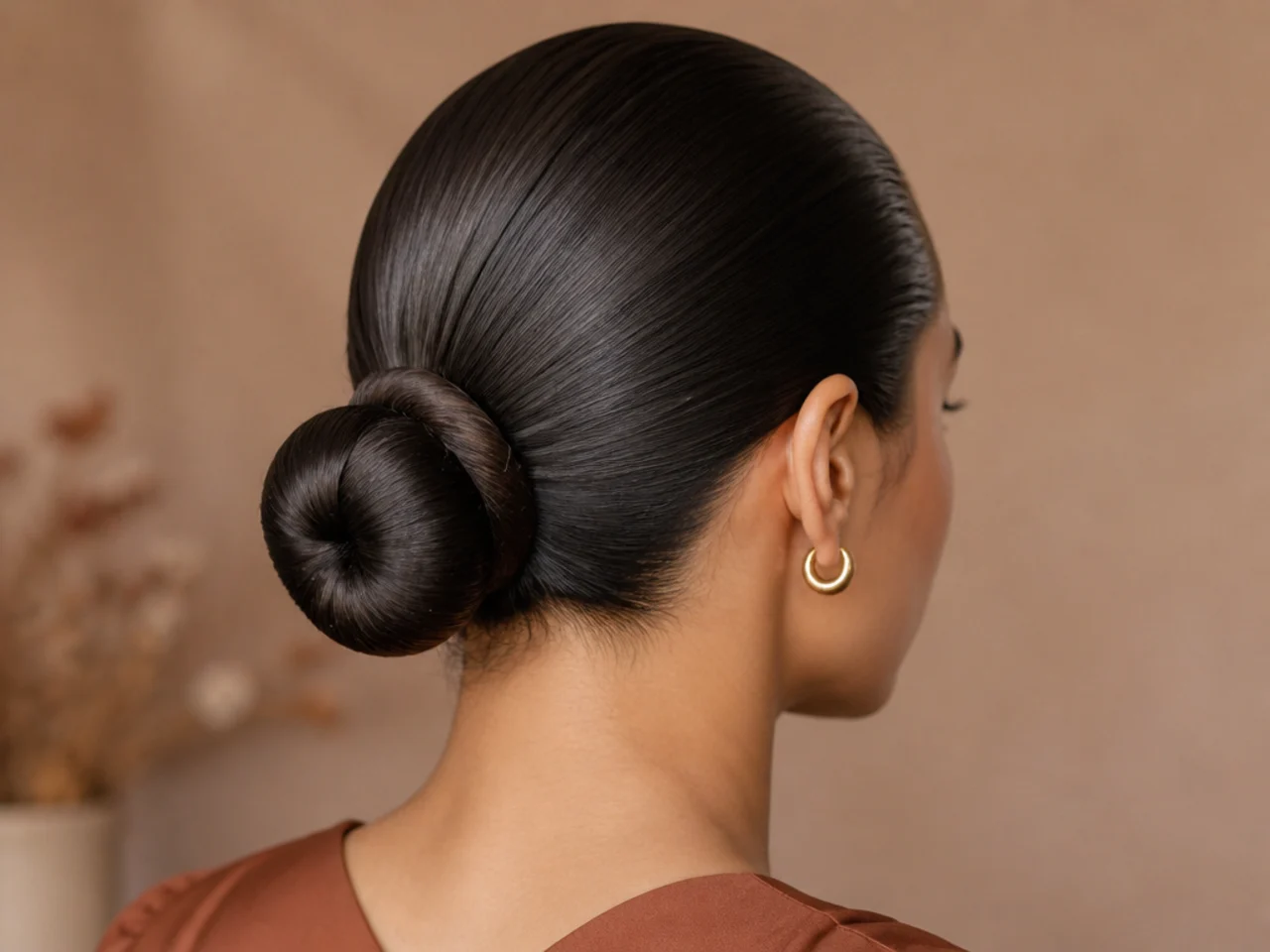
9. Slick Back Bun on a Bob
Short hair, minimal gel, very small knot. A bob has fewer short hairs escaping in the first place, so the perimeter work is quicker than on longer hair.
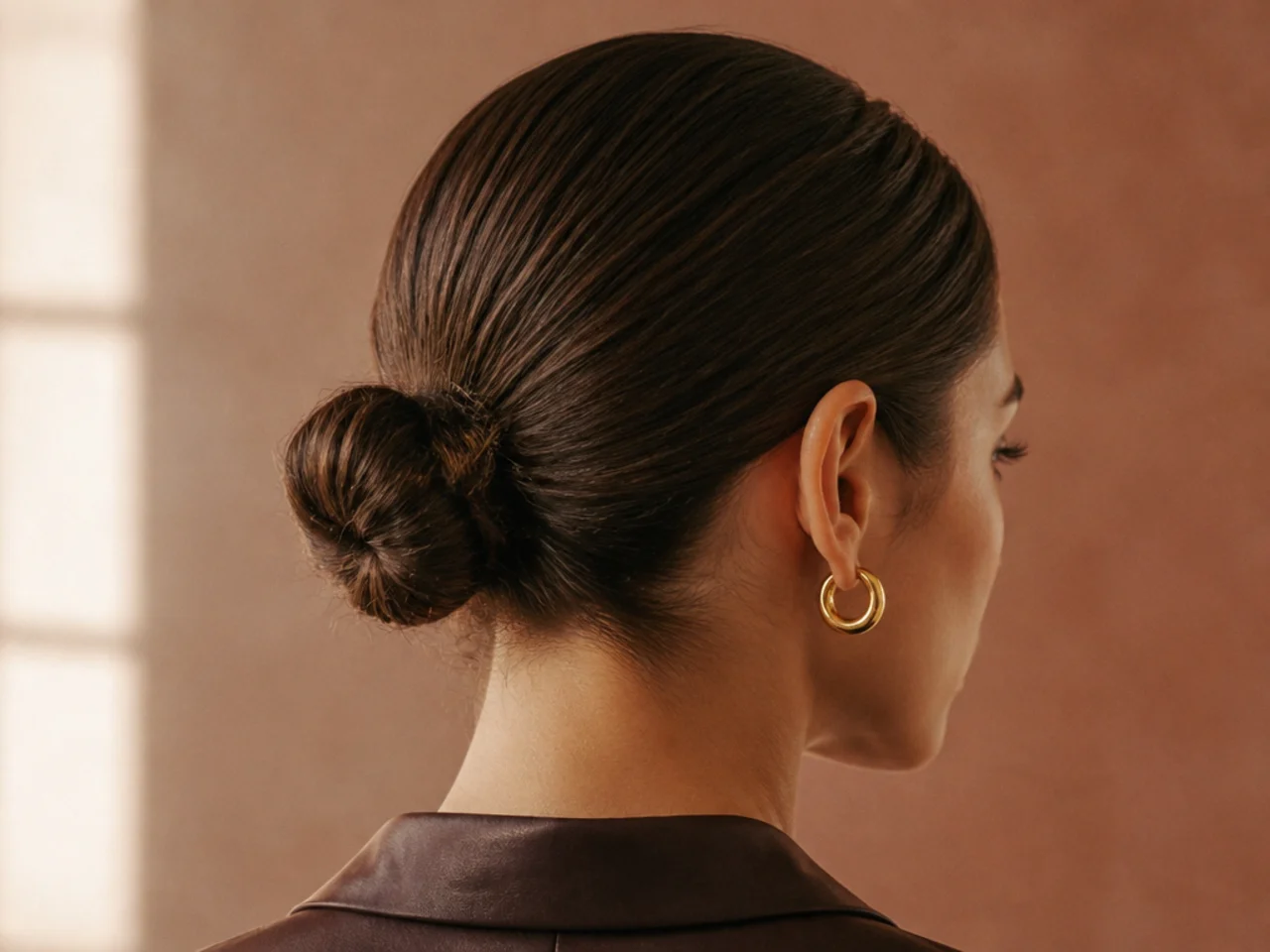
10. Slick Back Bun on Curly Hair
Perimeter smoothed, the bun itself left as a puff. Smoothing only the perimeter gets the sleek line without straightening the pattern, which is the version that actually holds.
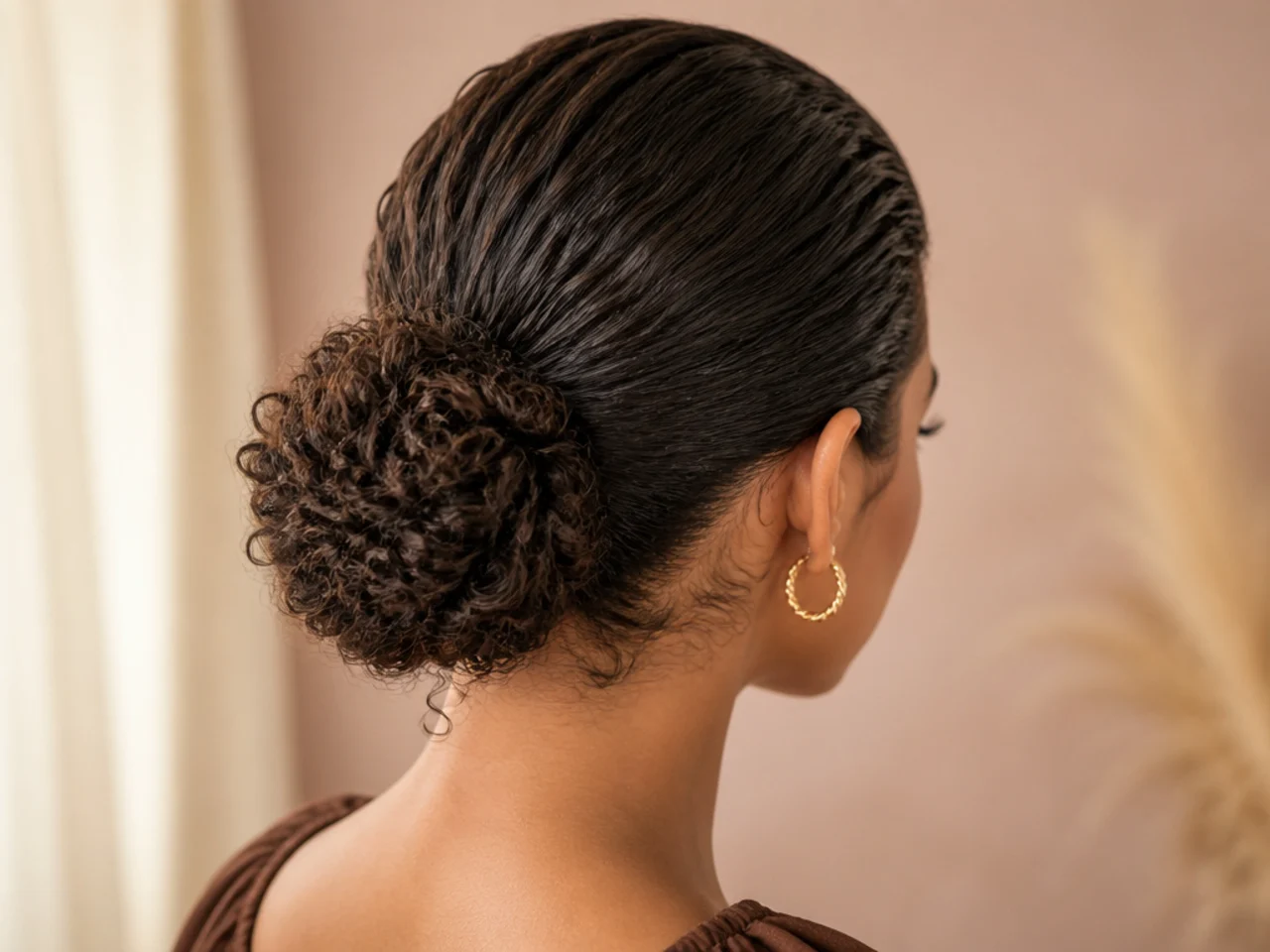
11. Slick Back Bun on Fine Hair
Very little gel needed, and it flattens easily. Fine hair is the easiest to slick and the easiest to overdo, because the same amount of product goes much further.
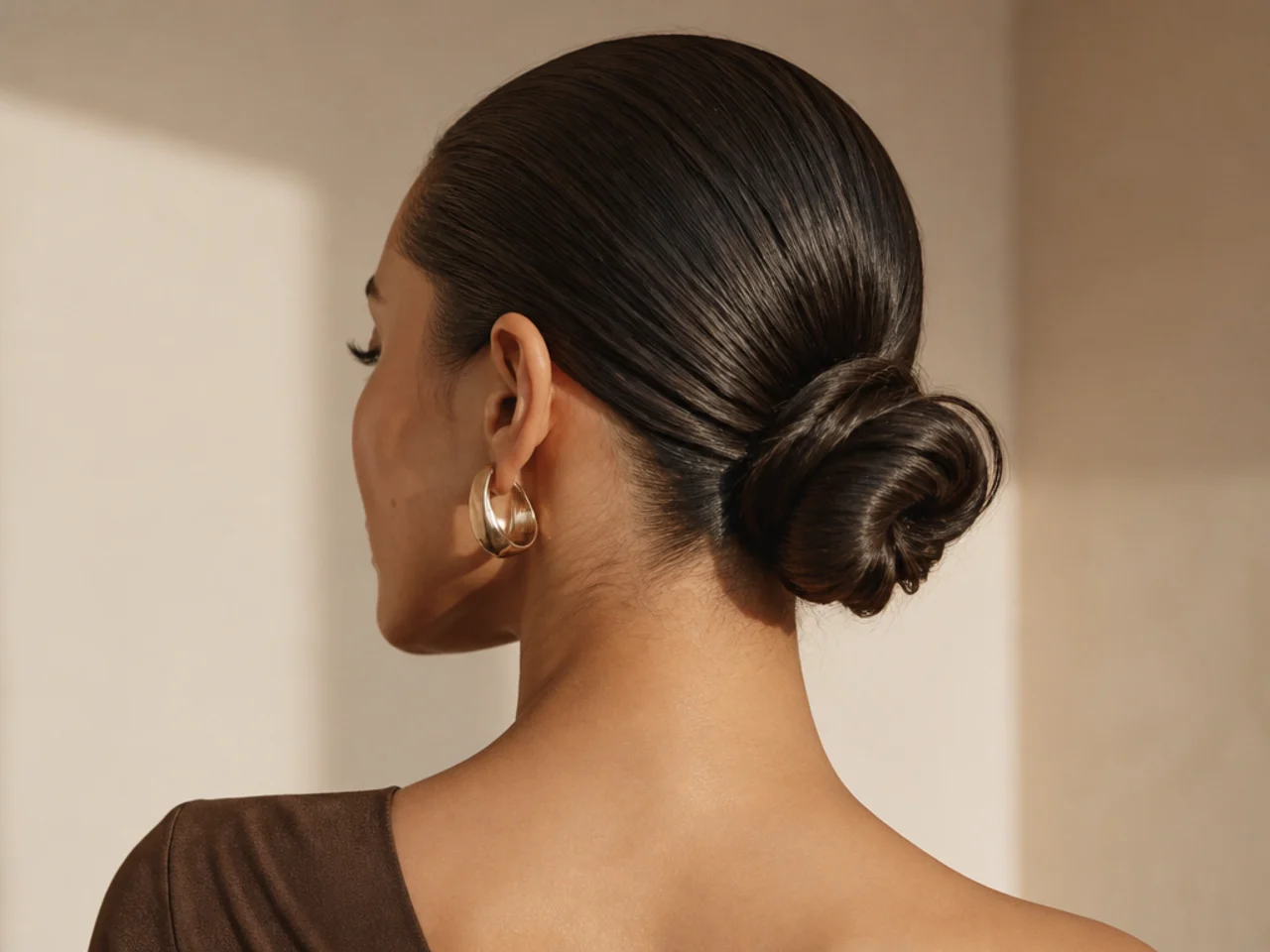
12. Slick Back Bun on Thick Hair
More brushing, same amount of gel at the edges. The extra work is in the length, not the perimeter — the number of short hairs at the hairline does not change with density.
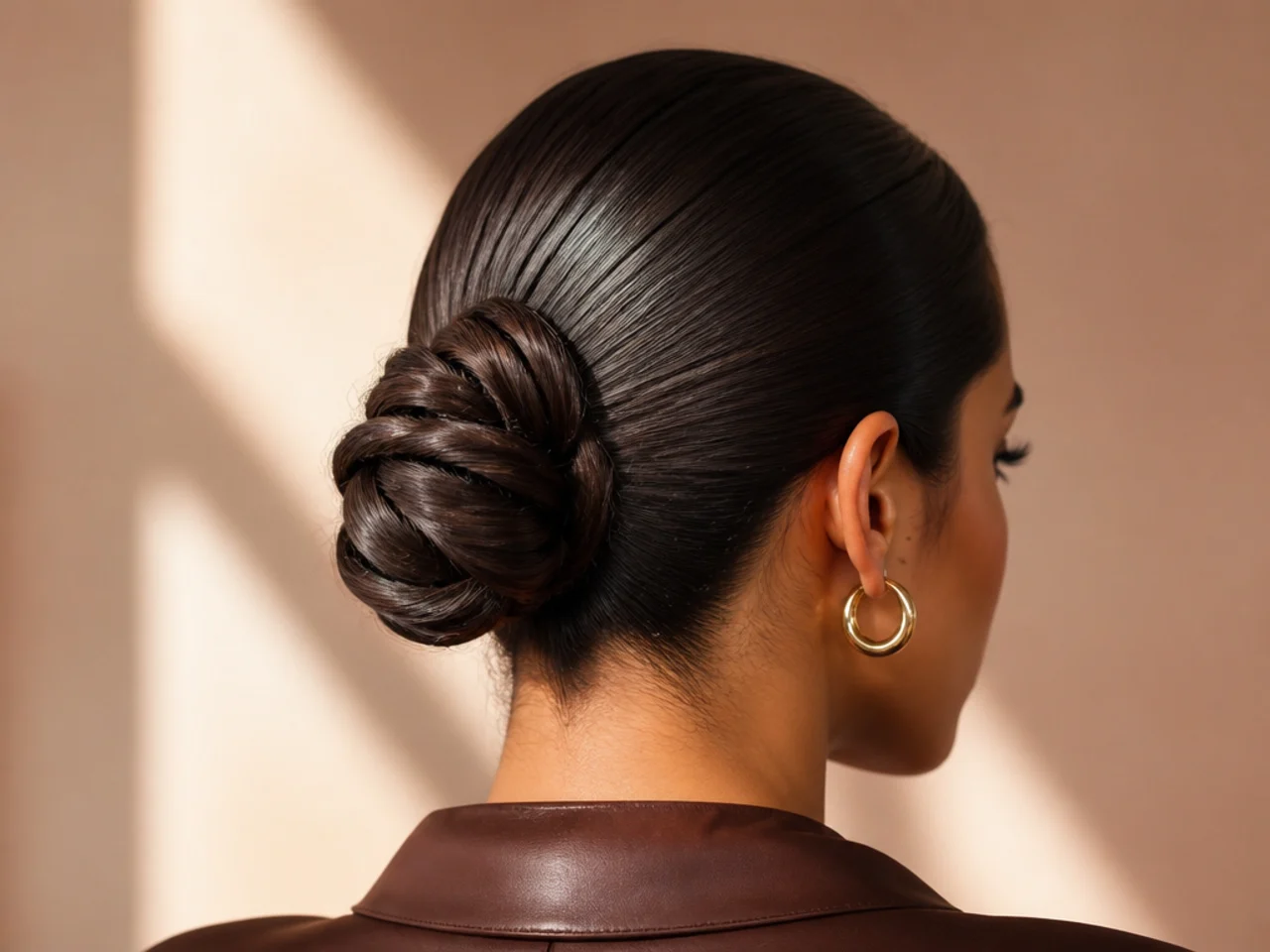
13. Slick Back for an Evening
Higher shine, and a finish best suited to a few hours. A high-shine gel sets harder, which looks better and washes out less easily, so it is an evening choice rather than a daily one.
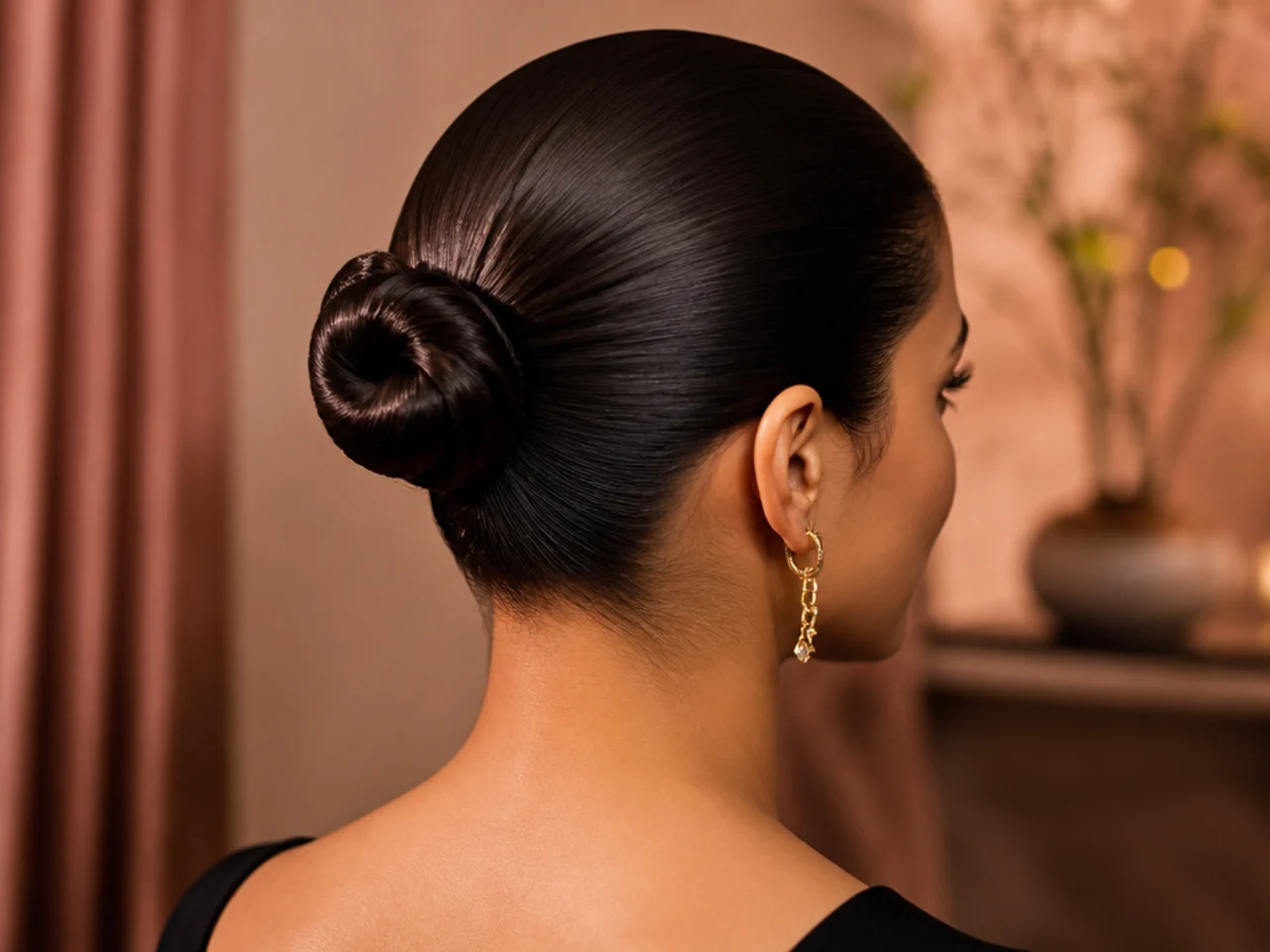
14. Slick Back on Second-Day Hair
A pea of gel instead of a palmful. The practical version. Natural oil at the hairline is already doing part of the job, which is why the same finish costs a third of the product.
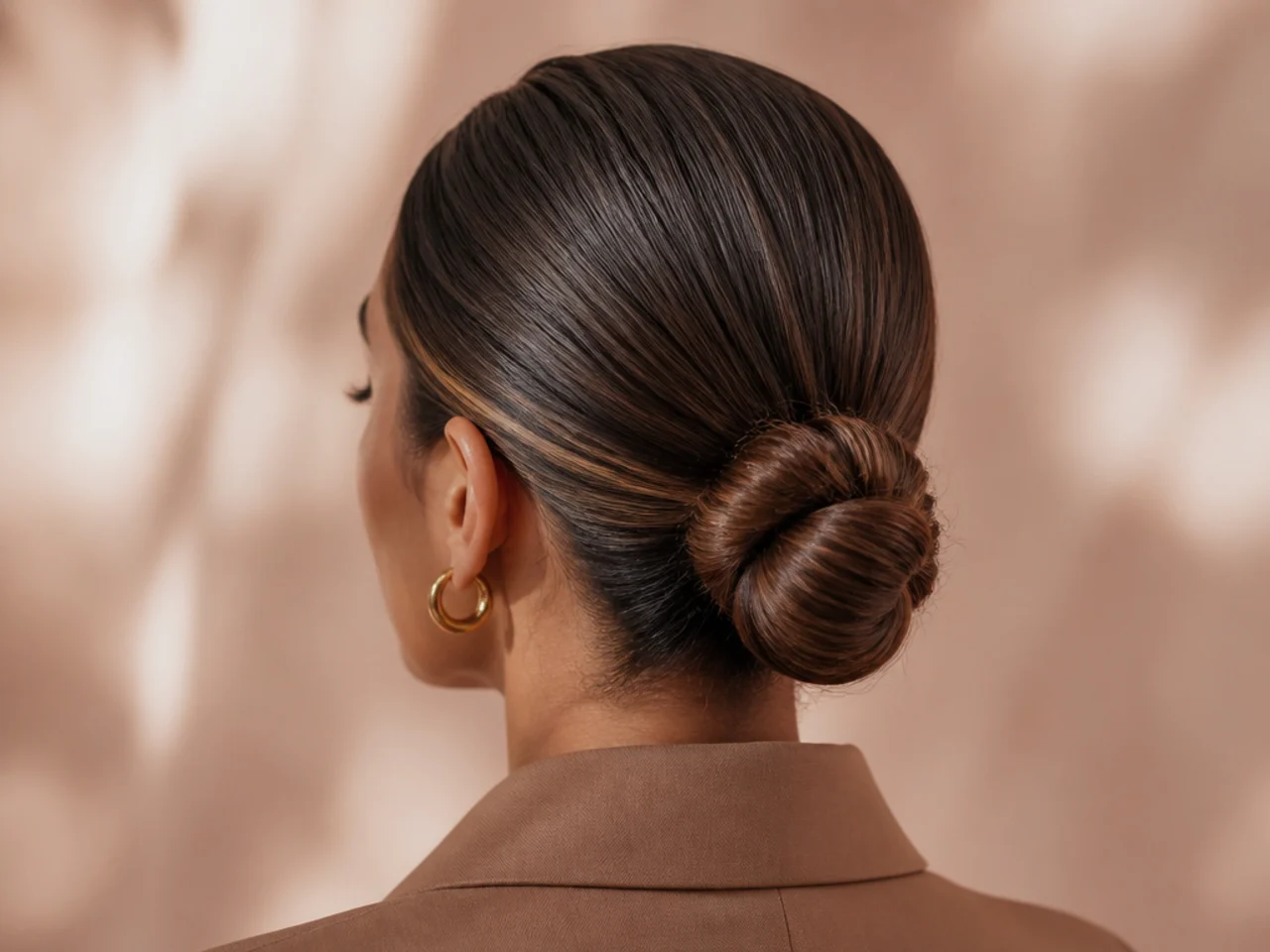
15. A Slicked Bun Gone Flaky
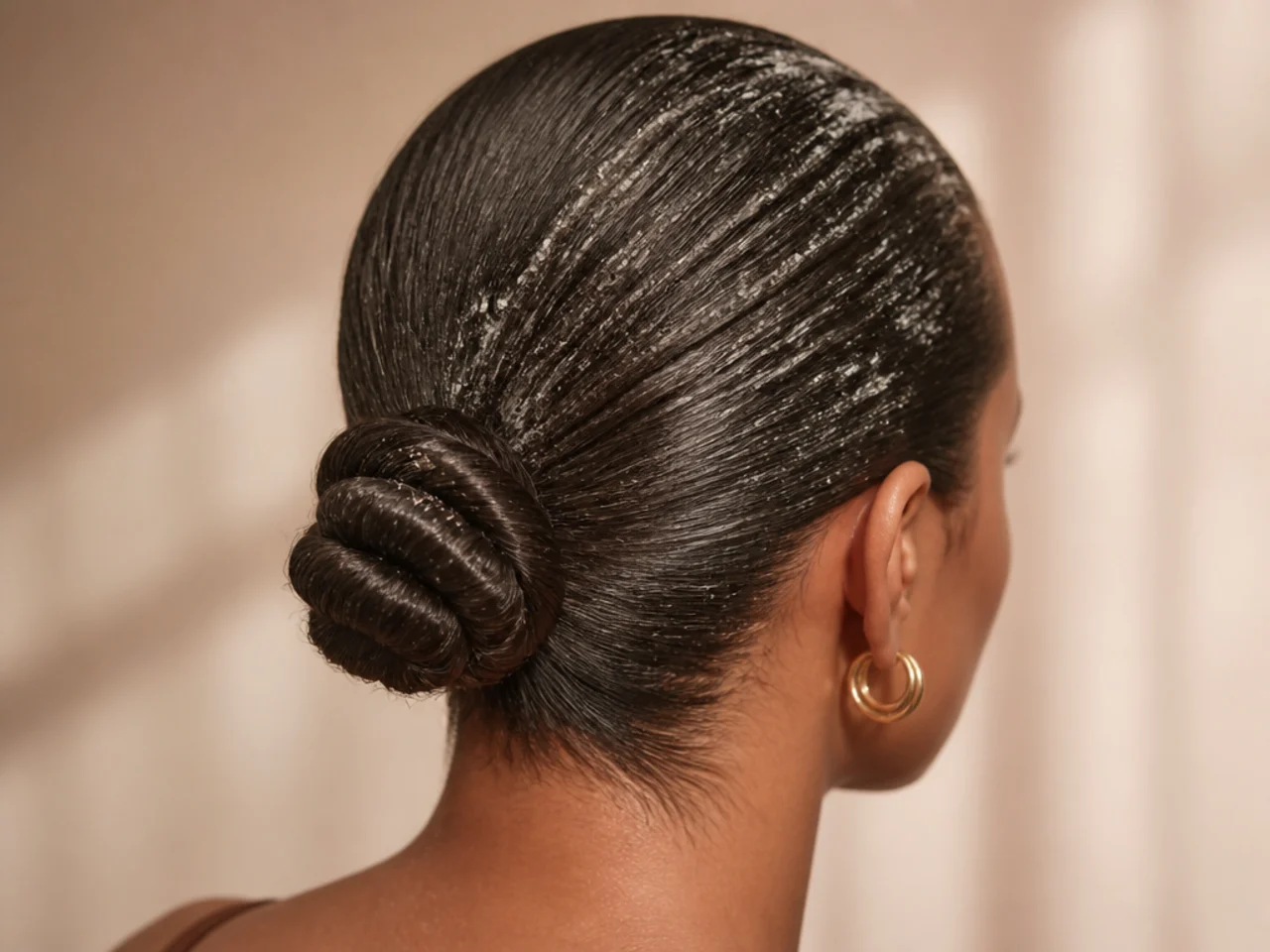
Gel down the length, cracked where it bends. The length moves and the gel does not, so it fractures at the coil and shows as white flakes on dark hair.
Styling and Upkeep
Apply with a small brush, not your hands. Precision at the perimeter is the entire technique.
Brush the length before you gather, not after. Once it is tied you cannot smooth it properly.
Wash it out the same day. Gel left overnight hardens and breaks hair at the pull points.
Do not add more product to fix a flyaway. A damp brush lays it down without building up.
Use a residue-removing shampoo weekly. Gel accumulates and dulls the shine it created.
Mistakes to Avoid
Gel down the length. Nothing to control there, and it flakes where the hair bends.
Applying with your palms. It spreads product everywhere it is not needed.
Starting on freshly washed hair. No grip, so you use three times as much.
Adding gel to a flyaway. Use a damp brush instead.
Sleeping in it. It hardens and breaks hair at the tightest points.
FAQ
Where does the gel go? The hairline and the first few centimetres only.
Why does it flake? Product on the length, which bends and cracks.
Clean or dirty hair? Second-day, without question — a third of the product.
Final Thoughts
Put the gel where the short hairs are and nowhere else. A slick back bun is a perimeter job with a brushed bun attached, and almost every stiff, flaky, crunchy version is product doing nothing useful in the middle of your hair.
For the polished low version see 15 elegant low bun looks to try tonight, and for the opposite finish see 20 trendy spiky bun ideas to save now. More in Updos & Clips.