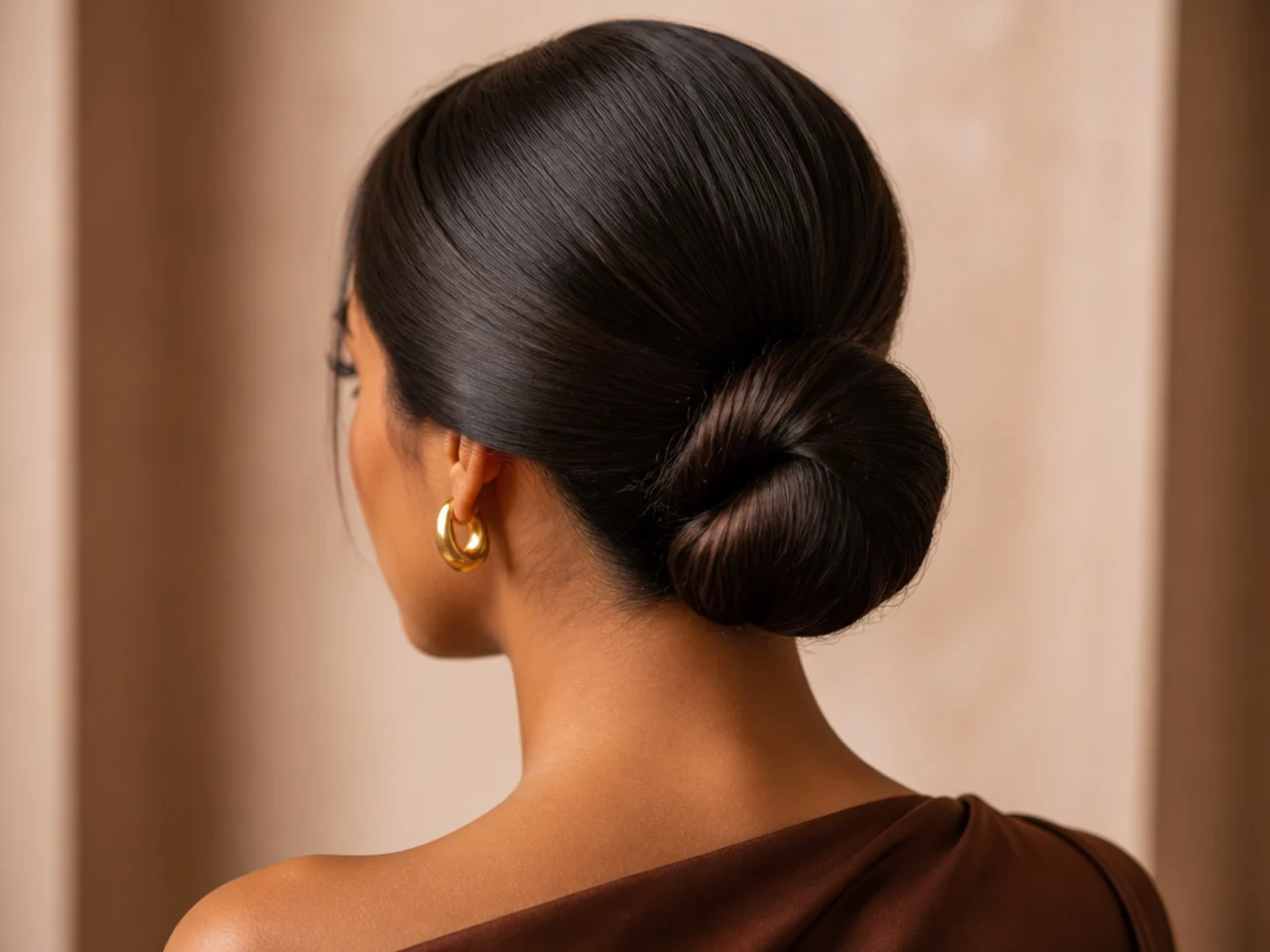
15 Elegant Low Bun Looks to Try Tonight
Fifteen elegant low bun looks, and the detail that separates a chignon from a ponytail wound up — the coil has to sit flush against the head. Any gap where the smooth surface meets the bun undoes the whole thing.
In this article · 22
- What Makes a Low Bun Elegant
- How to Choose Yours
- The 15 Elegant Low Buns
- 1. Classic Flush Chignon
- 2. Nape Knot
- 3. Chignon at the Occipital Bone
- 4. Rolled Chignon
- 5. Twisted Chignon
- 6. Low Bun with a Centre Part
- 7. Low Bun with a Deep Side Part
- 8. Low Bun with the Tie Wrapped
- 9. Braided Chignon
- 10. Low Bun with a Single Pin
- 11. Low Bun with Two Face-Framing Pieces
- 12. Low Bun on Fine Hair
- 13. Low Bun on Thick Hair
- 14. Low Bun for an Evening Out
- 15. A Ponytail Wound Up
- Styling and Upkeep
- Mistakes to Avoid
- FAQ
- Final Thoughts
An elegant low bun and a casual one differ in exactly one place, and it is visible only in profile.
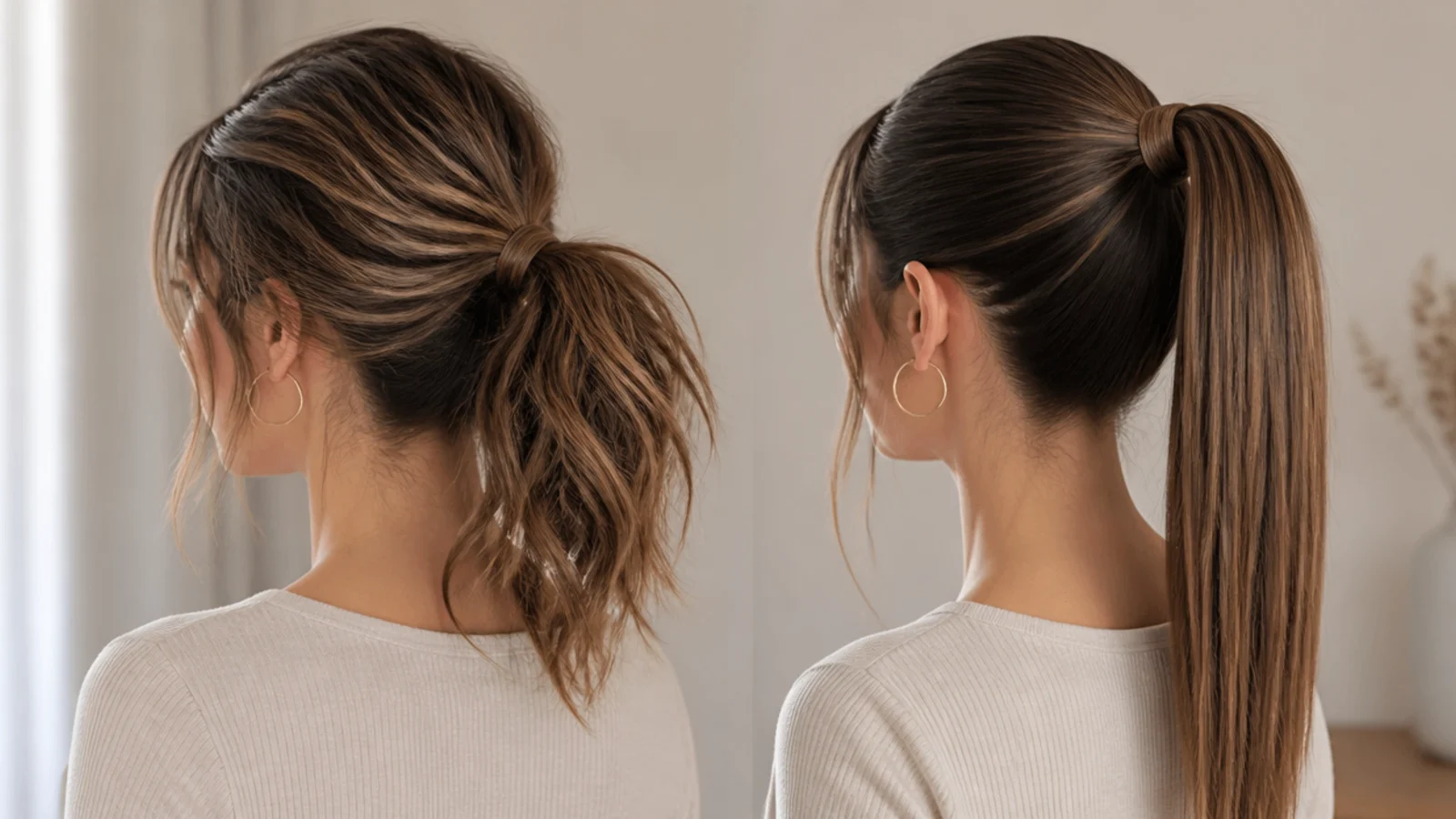
The coil has to sit flush against the head. A chignon has an unbroken surface running from the crown straight into the bun. A ponytail that has been wound up has a step at the tie, a small gap, and a bun that hangs slightly away from the scalp.
That step is the whole difference, and it takes one pin to remove.
What Makes a Low Bun Elegant
No step at the join. The surface should run continuously from the crown into the coil. Any break in that line is what the eye reads as untidy.
Anchor the coil to the head, not to the tie. Pinning it flat pulls it in against the scalp. Pinning to the elastic instead leaves the coil hanging off it.
Smooth beats tight. What you are removing is lumps and flyaways, not slack. Tension and polish are unrelated problems.
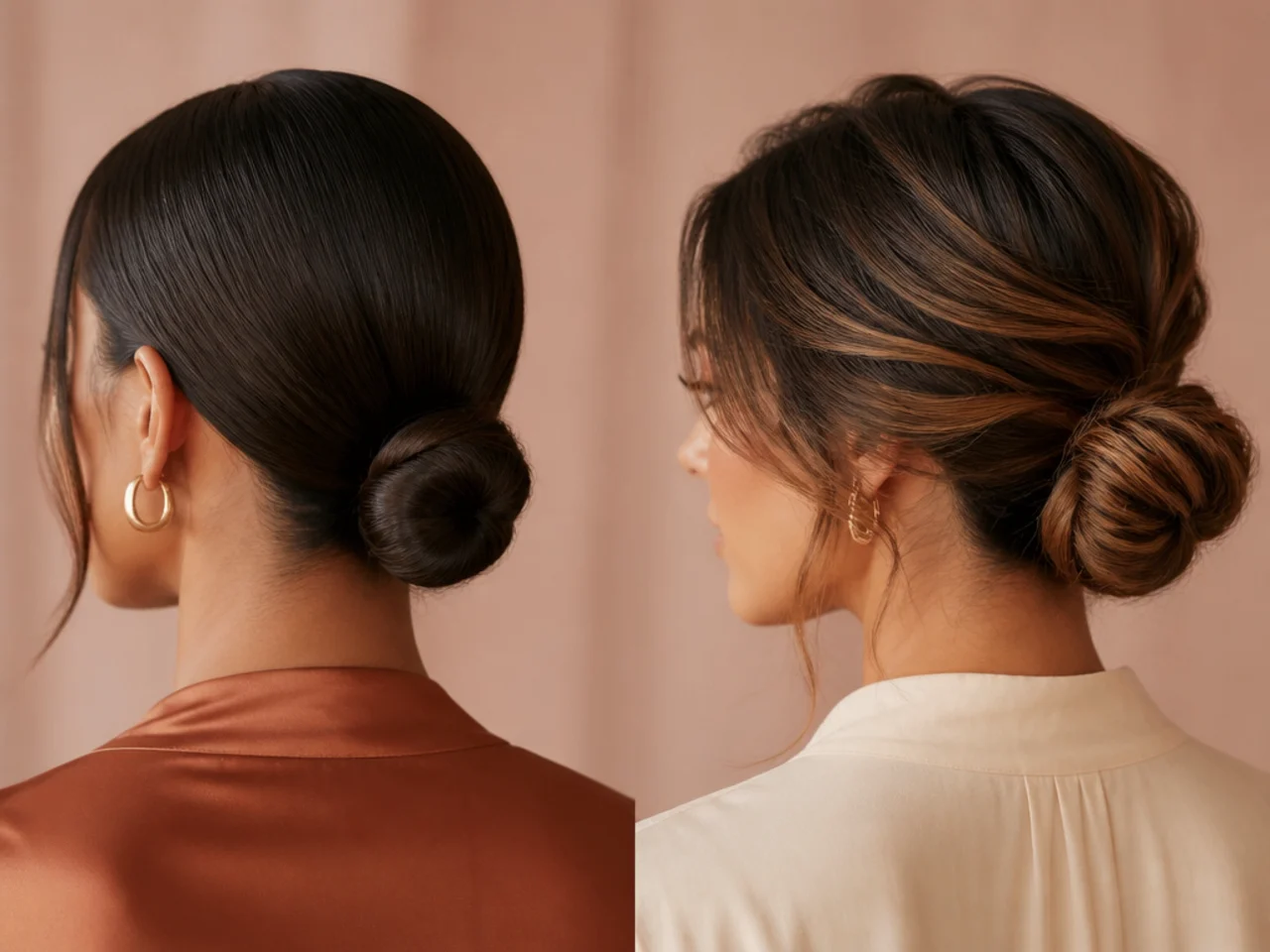
Profile is the test. From the front almost any low bun looks fine. From the side the join tells you everything. It is the view everyone else has of you.
How to Choose Yours
Check it side-on. A hand mirror, once, before you leave. Ten seconds, and it catches the only fault that matters.
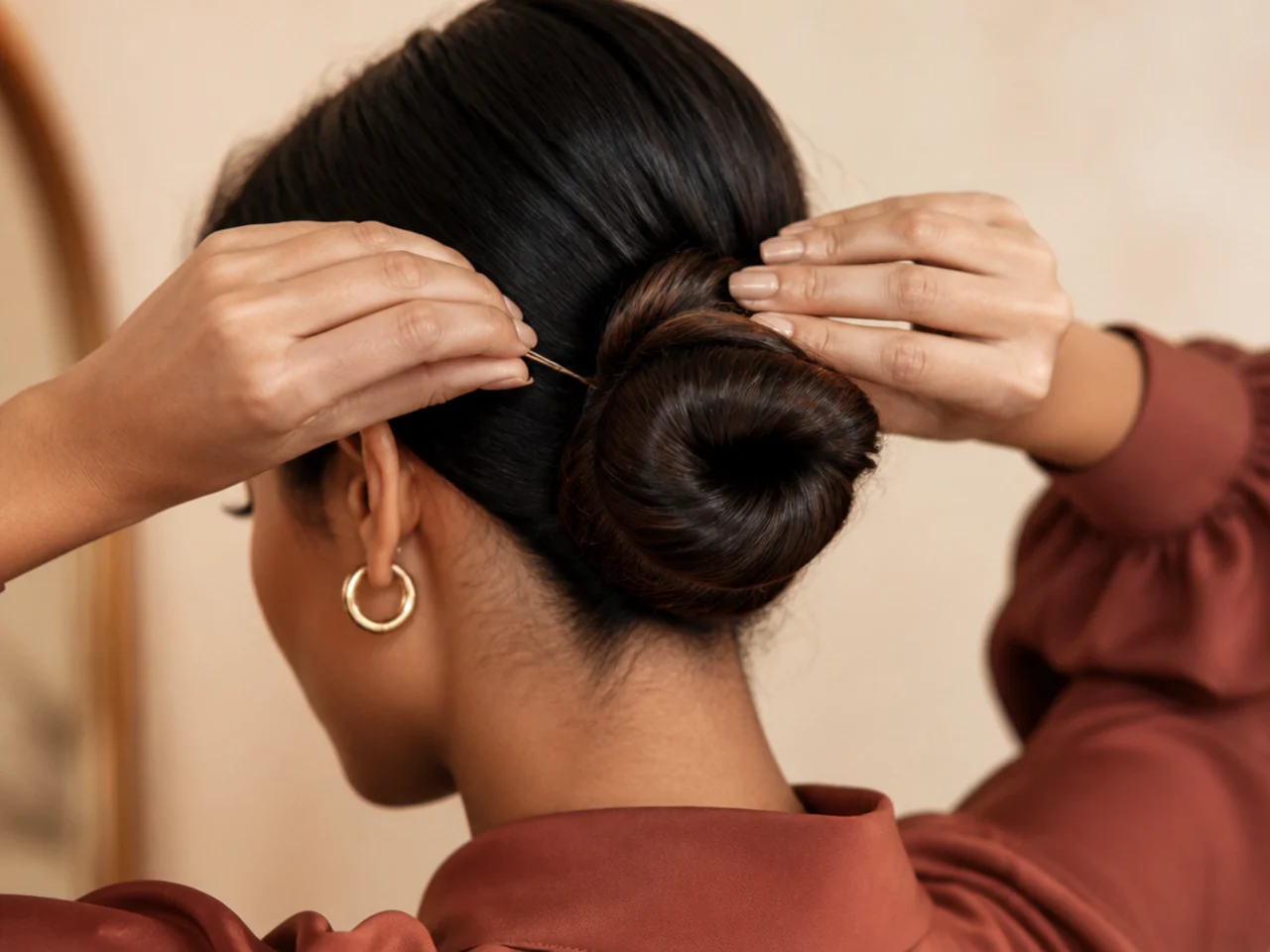
Pin the coil to the hair beneath it. Two crossed pins, close to the scalp. Crossed, because parallel pins slide out the way they went in.
Smooth the surface with a brush, not your hands. Fingers leave a partly-smoothed finish. A brush reaches the strands underneath that fingers glide over.
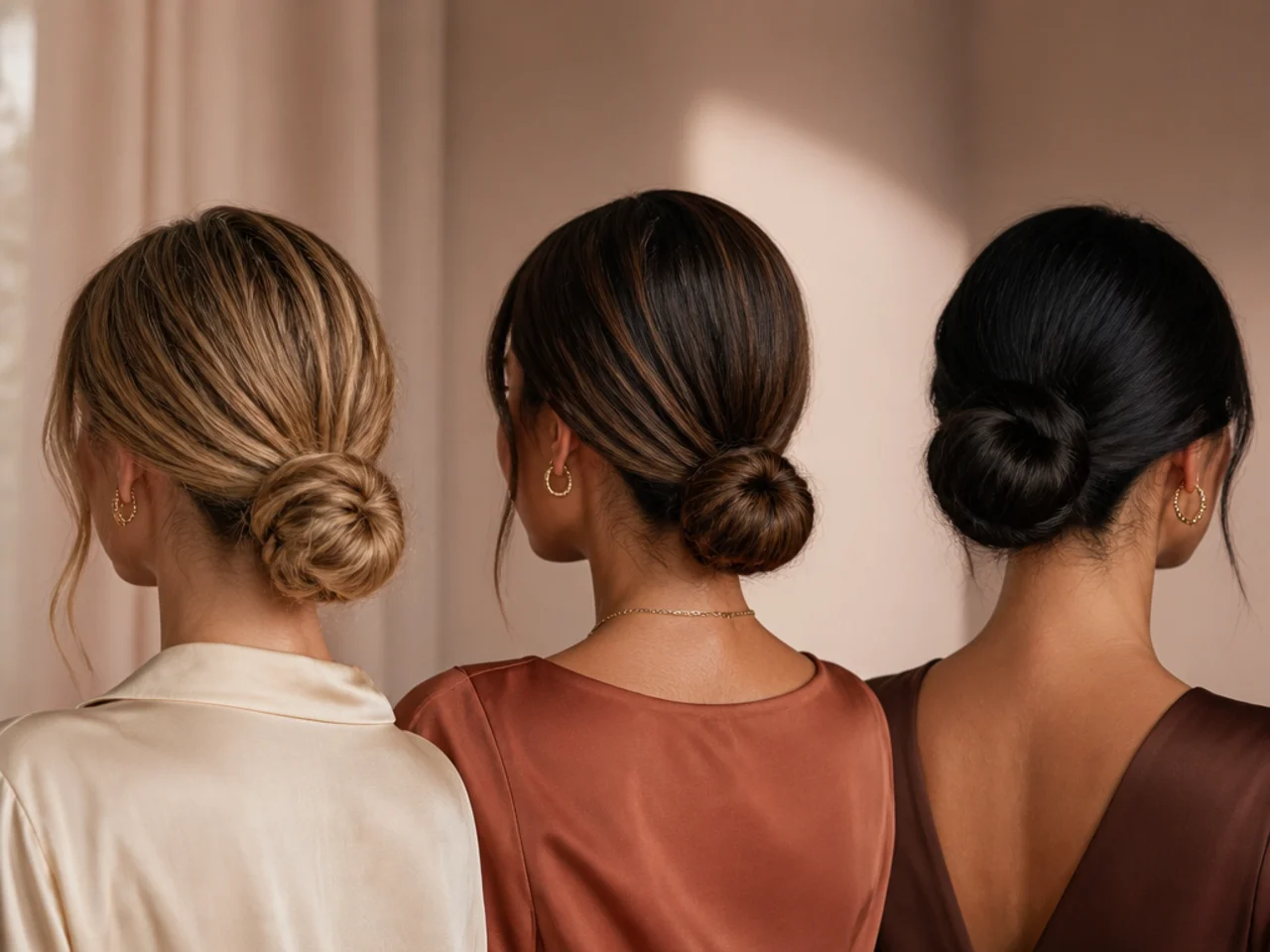
Choose the height deliberately. Nape, just above it, or at the occipital bone — three different registers. They read as formal, classic and soft respectively.
The 15 Elegant Low Buns
1. Classic Flush Chignon
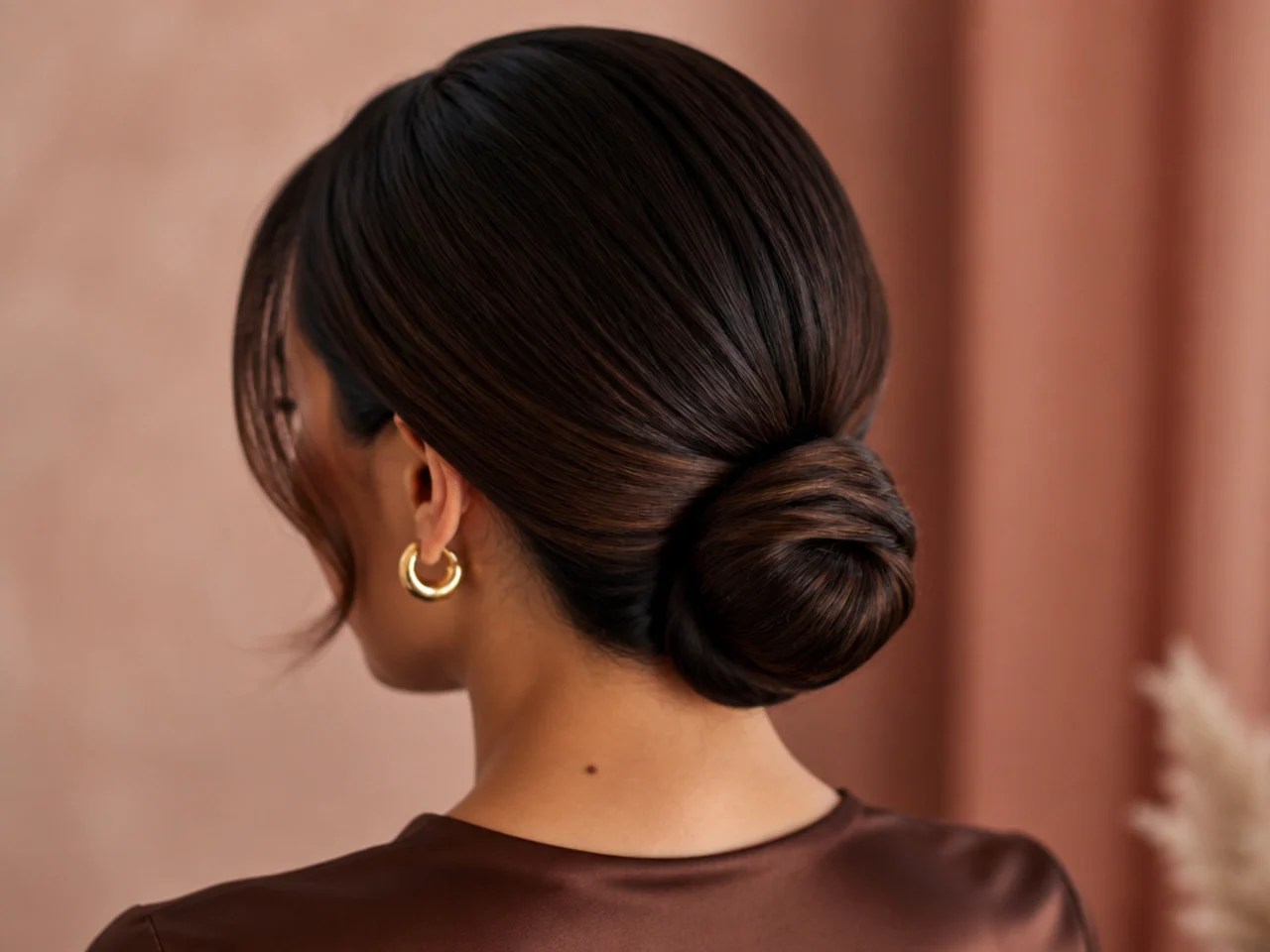
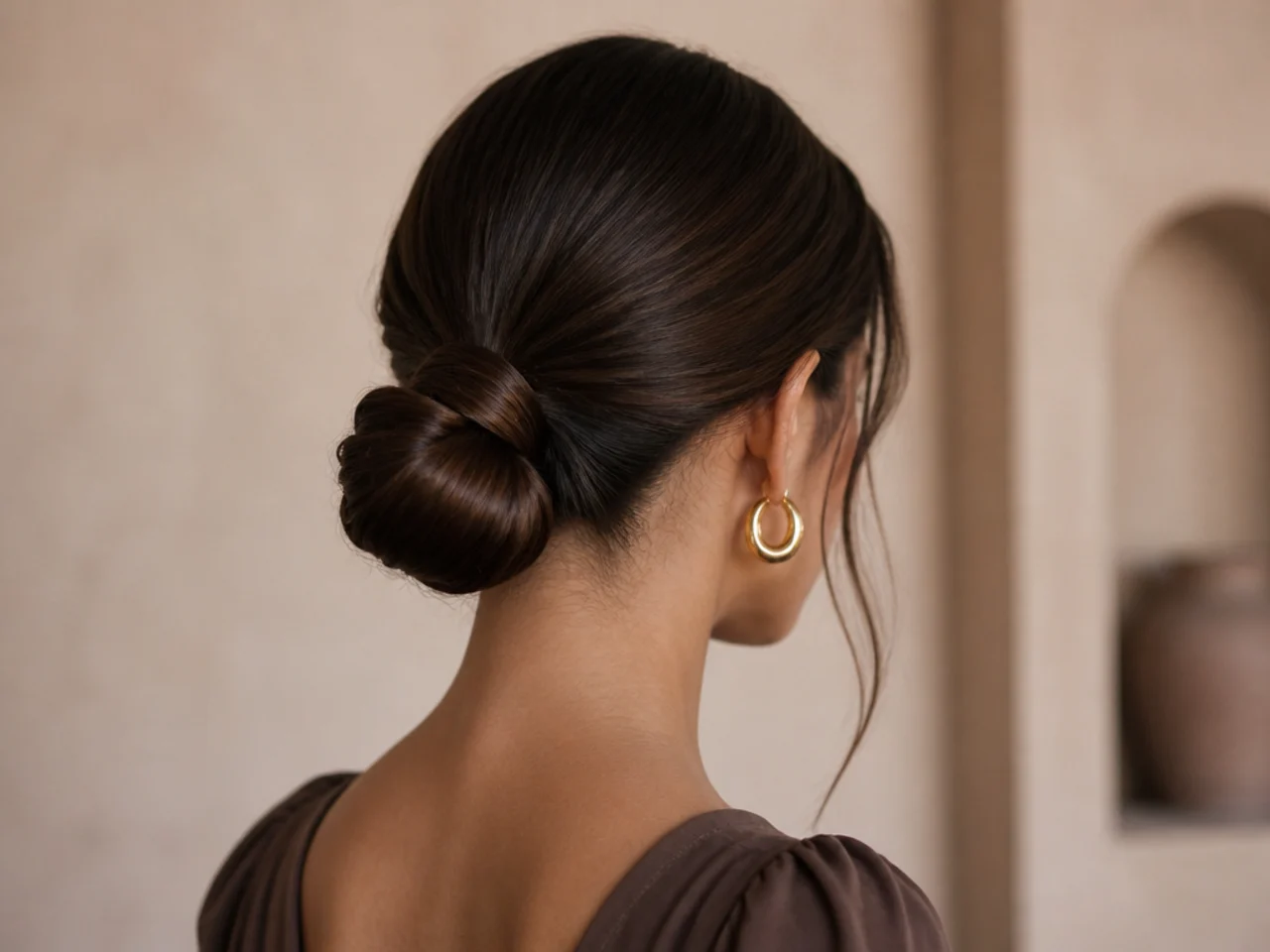
Smooth surface, flat coil, no step at the join. The benchmark. Everything else on this page is a variation on getting those three things right at the same time.
2. Nape Knot
Sitting right at the neck, as flat as this style goes. The lowest placement also means the least leverage, so a nape knot stays put with the fewest pins.
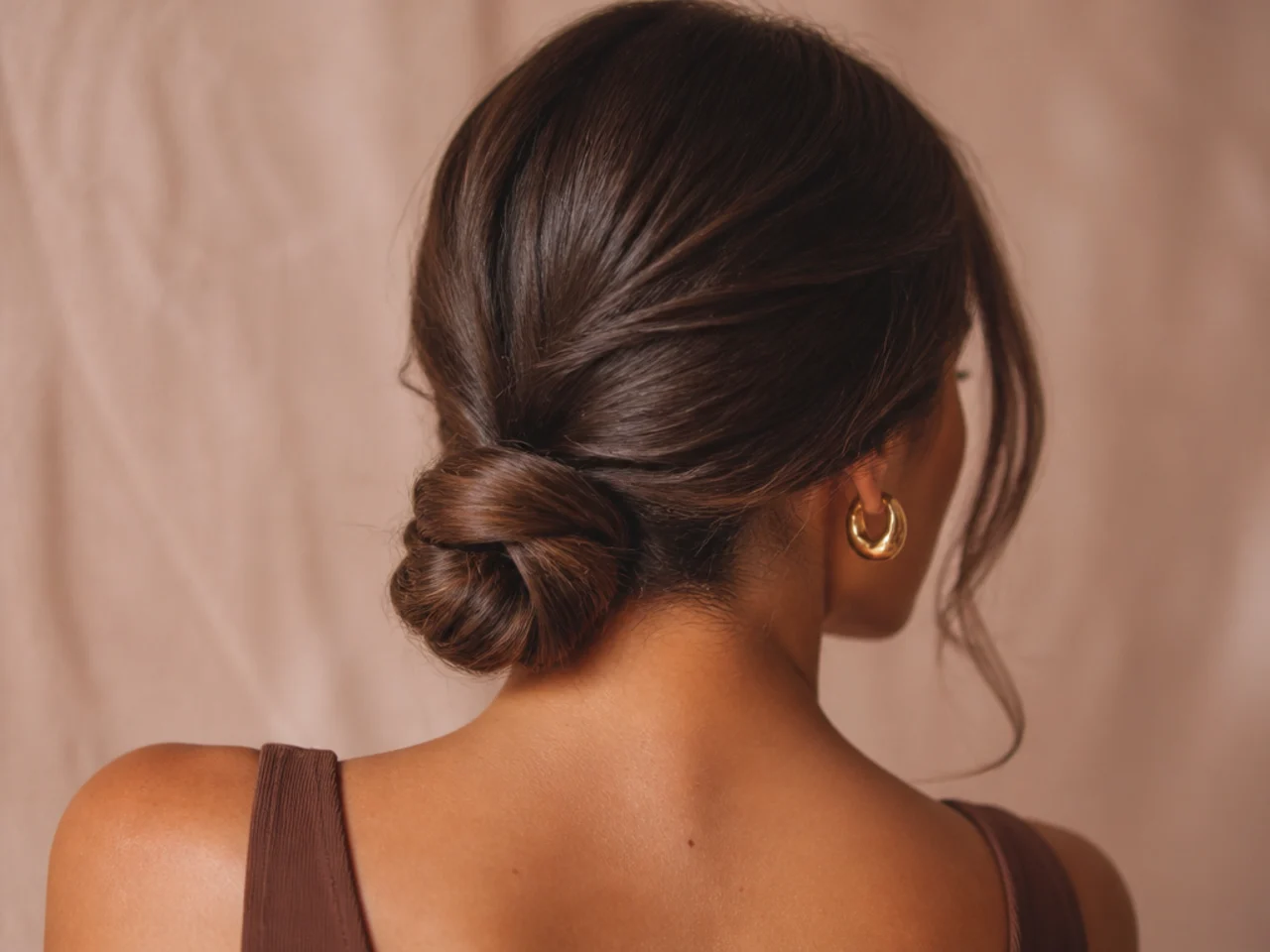
3. Chignon at the Occipital Bone
Slightly higher, which flatters most head shapes. The occipital bone is the natural curve at the back of the skull, and a coil sitting on it follows the head rather than fighting it.
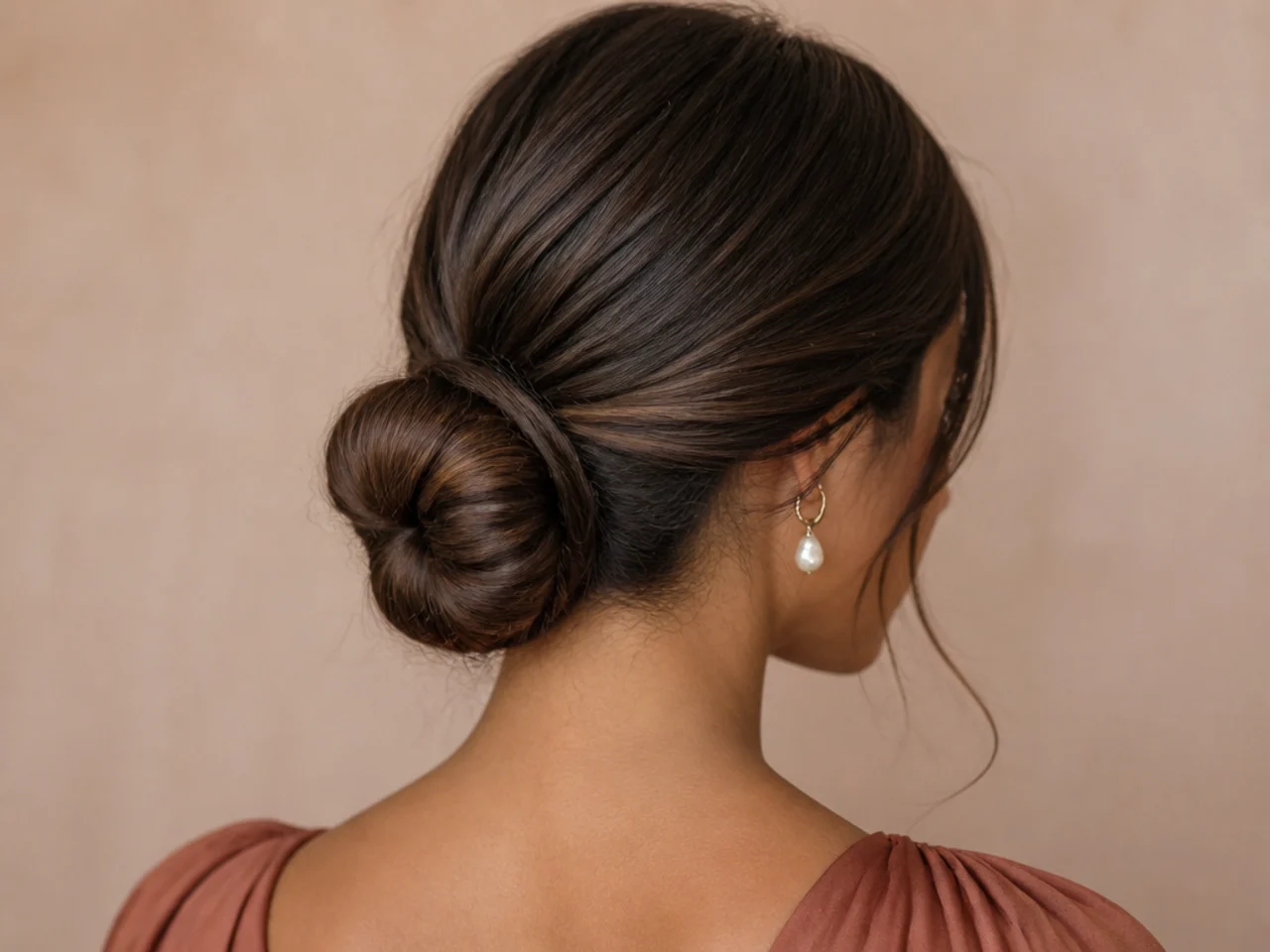
4. Rolled Chignon
The length rolled inward and pinned flat. Rolling gives a wider, flatter shape than coiling does, which is what makes it read as formal rather than casual.
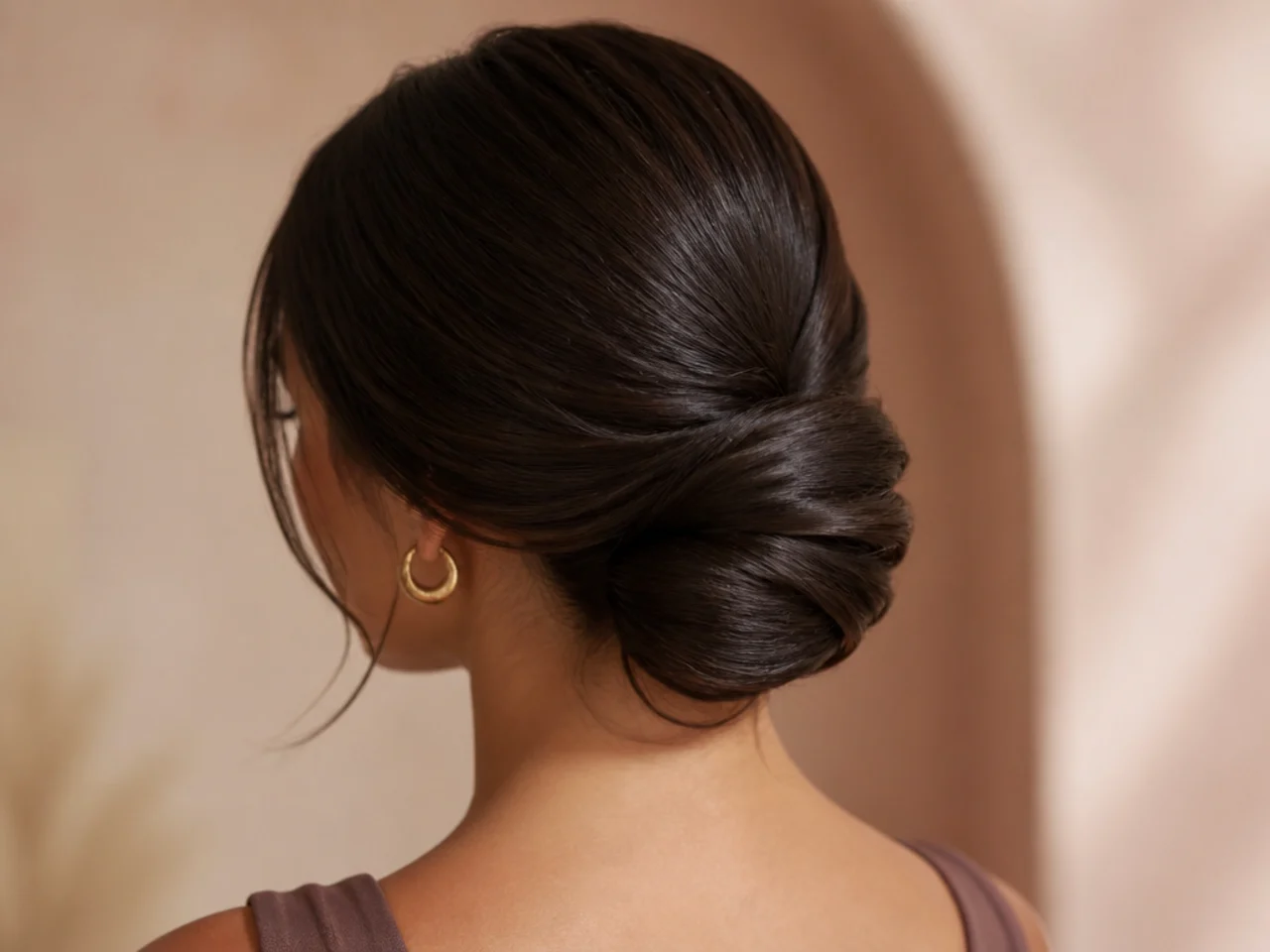
5. Twisted Chignon
One twist, coiled and anchored. Softer than a roll. The twist holds itself by its own tension, so it needs fewer pins than a smooth coil of the same size.
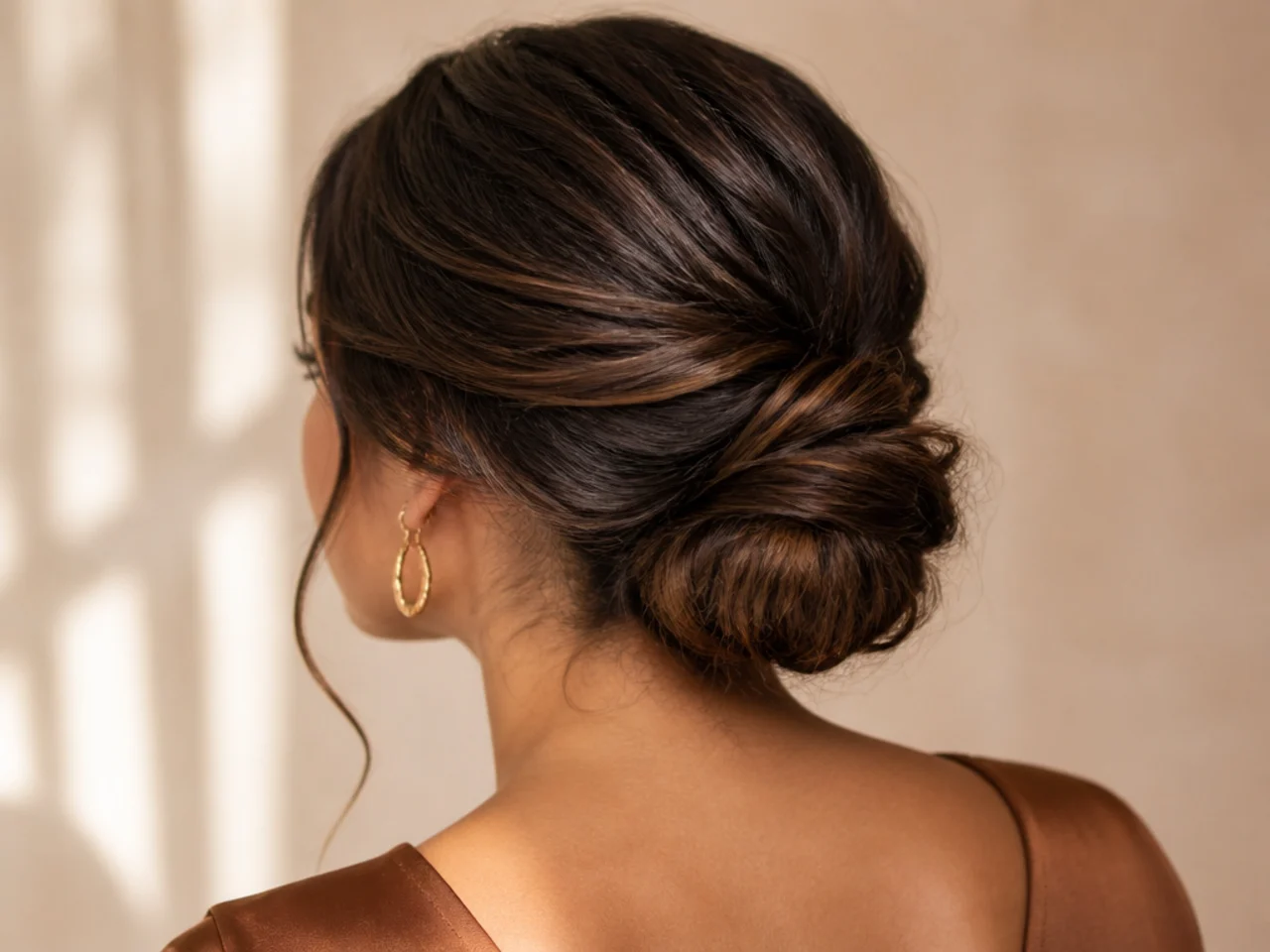
6. Low Bun with a Centre Part
Symmetry above a symmetrical coil. A centre part is the most exposed line on the head, so it needs the surface either side of it genuinely smooth.
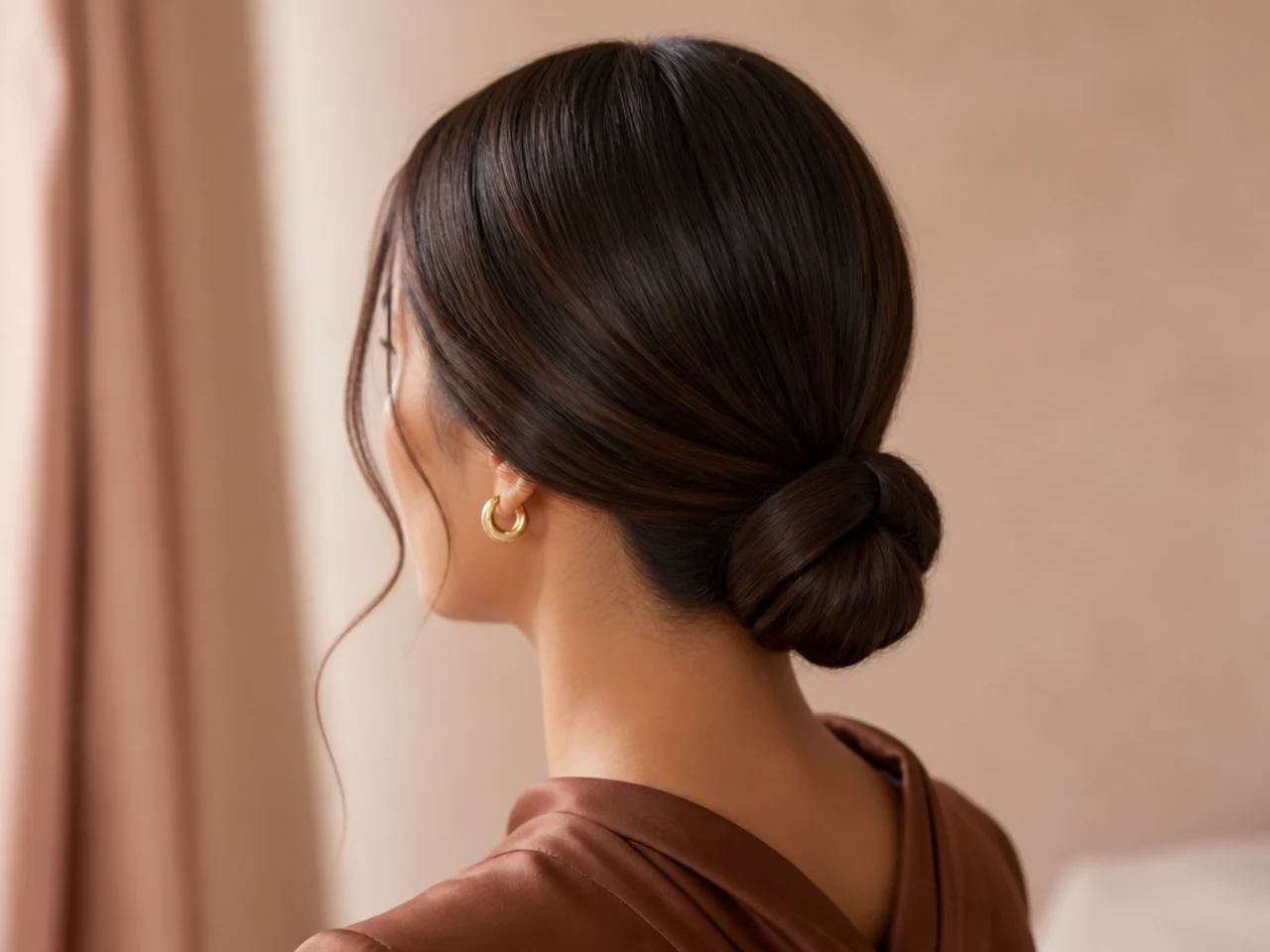
7. Low Bun with a Deep Side Part
The one asymmetric version, and it reads very polished. A deep part also pushes more weight to one side, which gives a little lift at the parting for free.
8. Low Bun with the Tie Wrapped
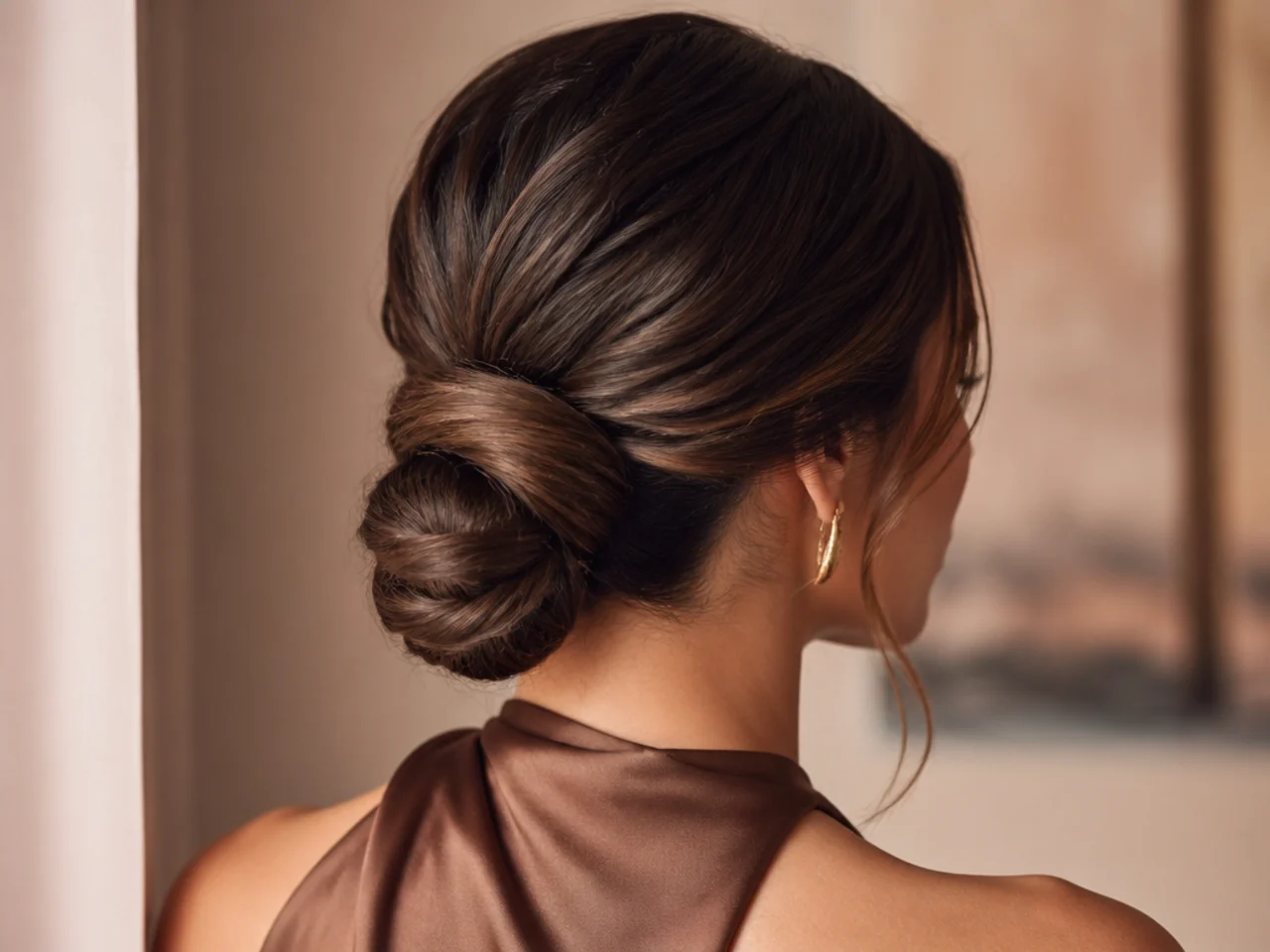
One section wound around the base to hide the elastic. It also adds a second holding system, so the bun survives the elastic loosening rather than failing with it.
9. Braided Chignon
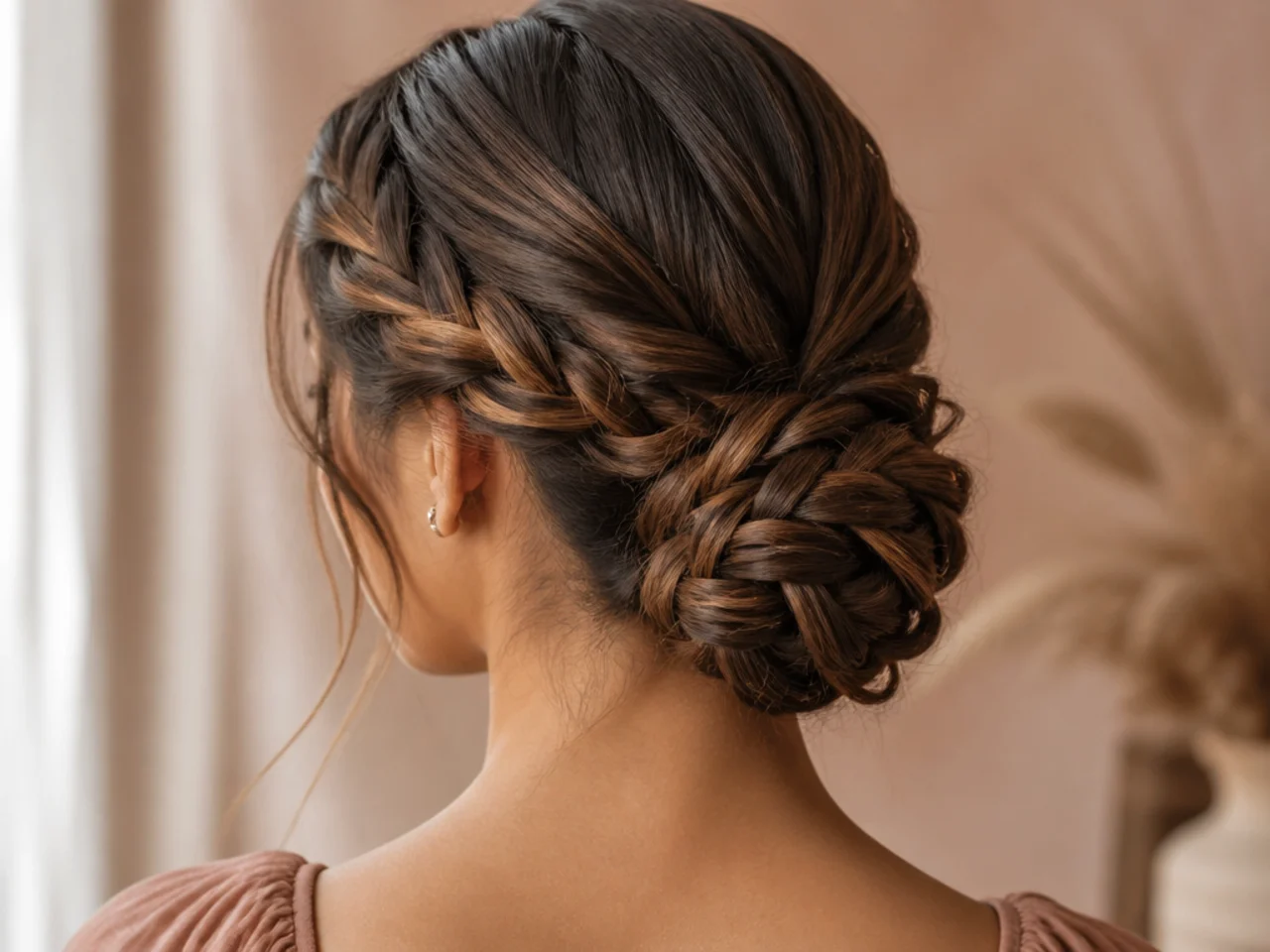
The length plaited before coiling, which adds texture without mess. The plait also gives the pins something textured to bite into, which matters on smooth hair.
10. Low Bun with a Single Pin
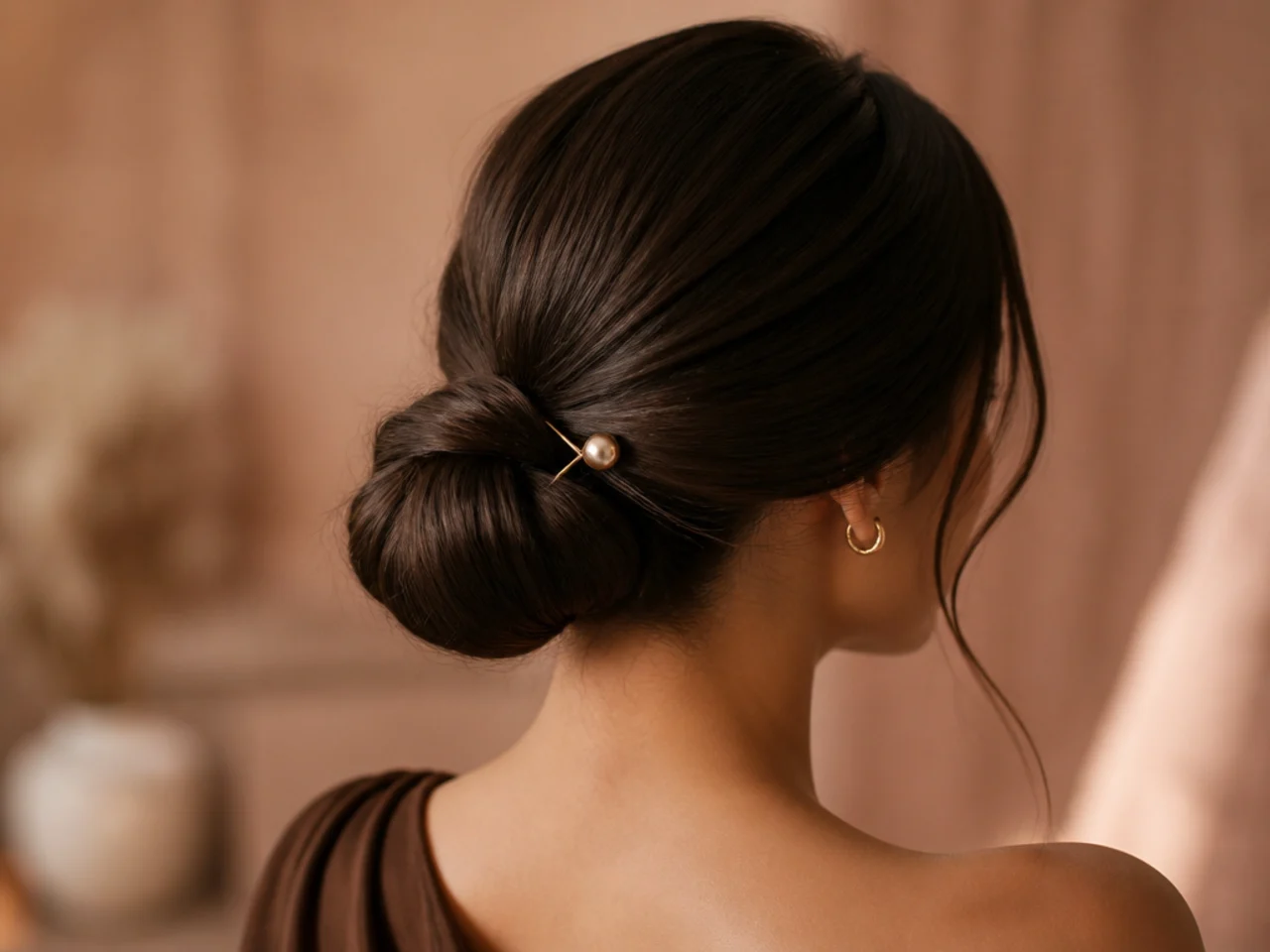
One decorative pin at the base, and nothing else. Choose one with a real shaft rather than a flat ornament, so it is holding as well as decorating.
11. Low Bun with Two Face-Framing Pieces
Softening the front without touching the coil. Two pieces reads as deliberate; more than two reads as a bun that is coming down.
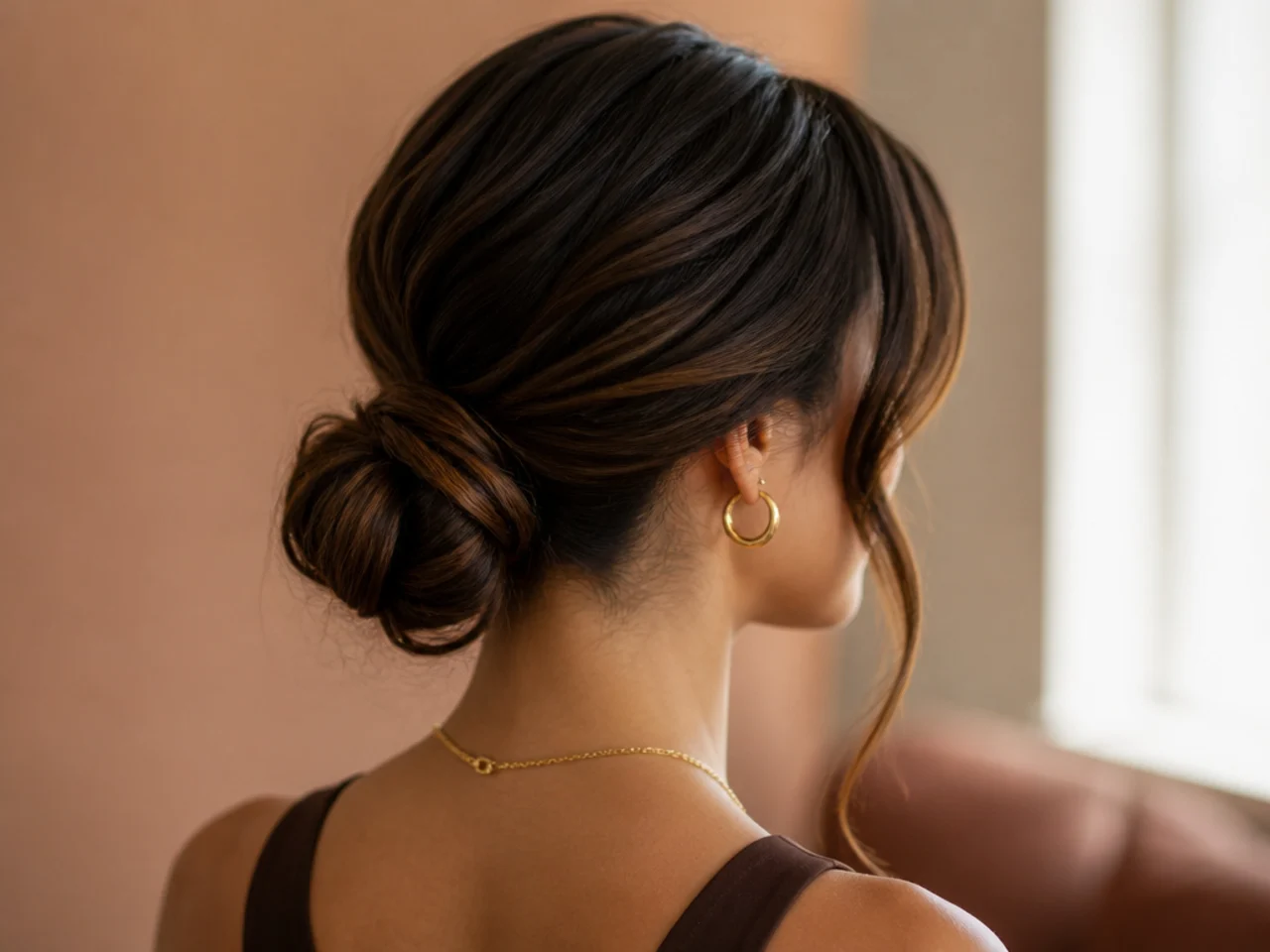
12. Low Bun on Fine Hair
A smaller, flatter coil that still reads finished. Fine hair looks better in a small tidy coil than in a padded one, because the padding is what shows.
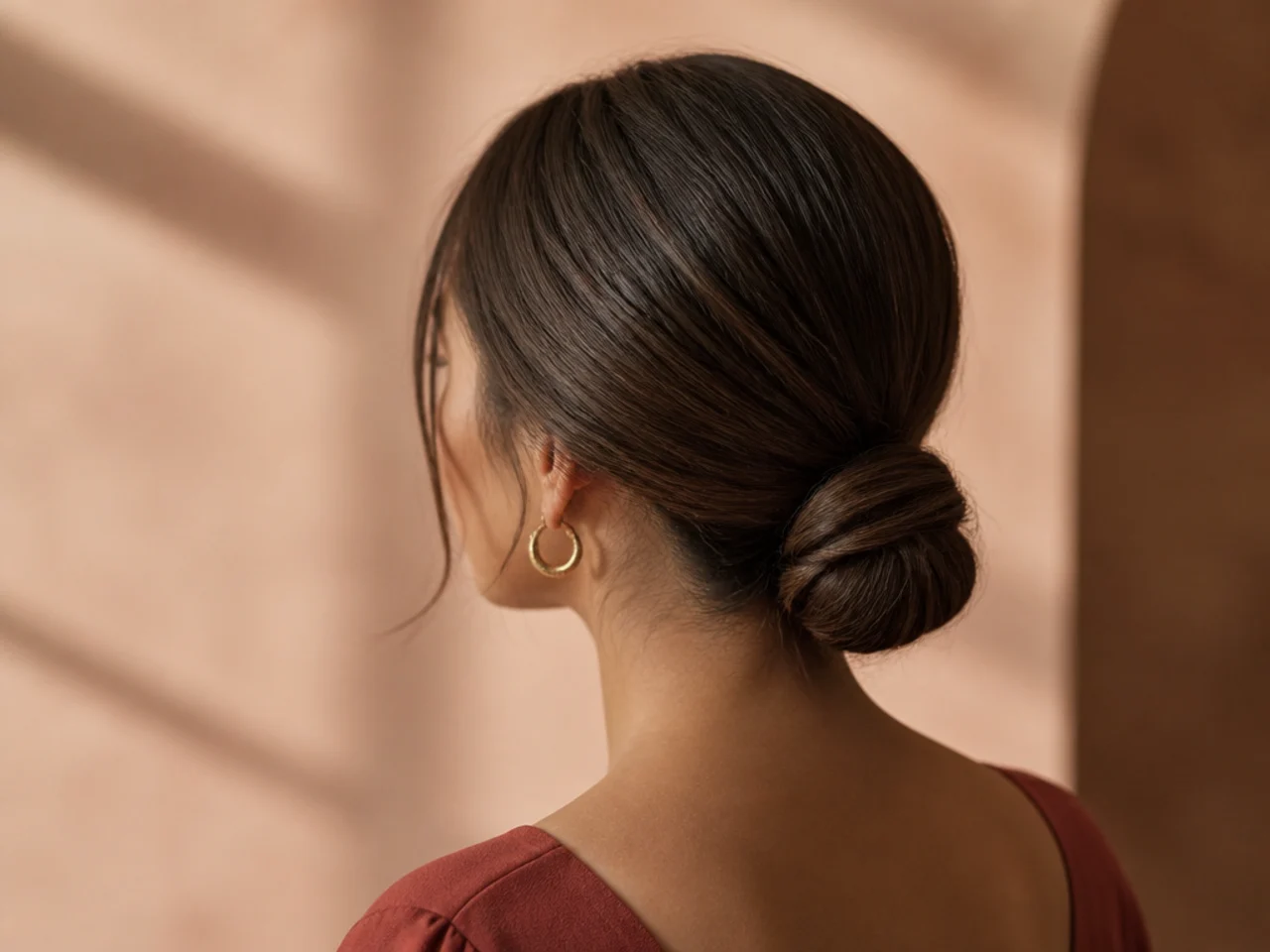
13. Low Bun on Thick Hair
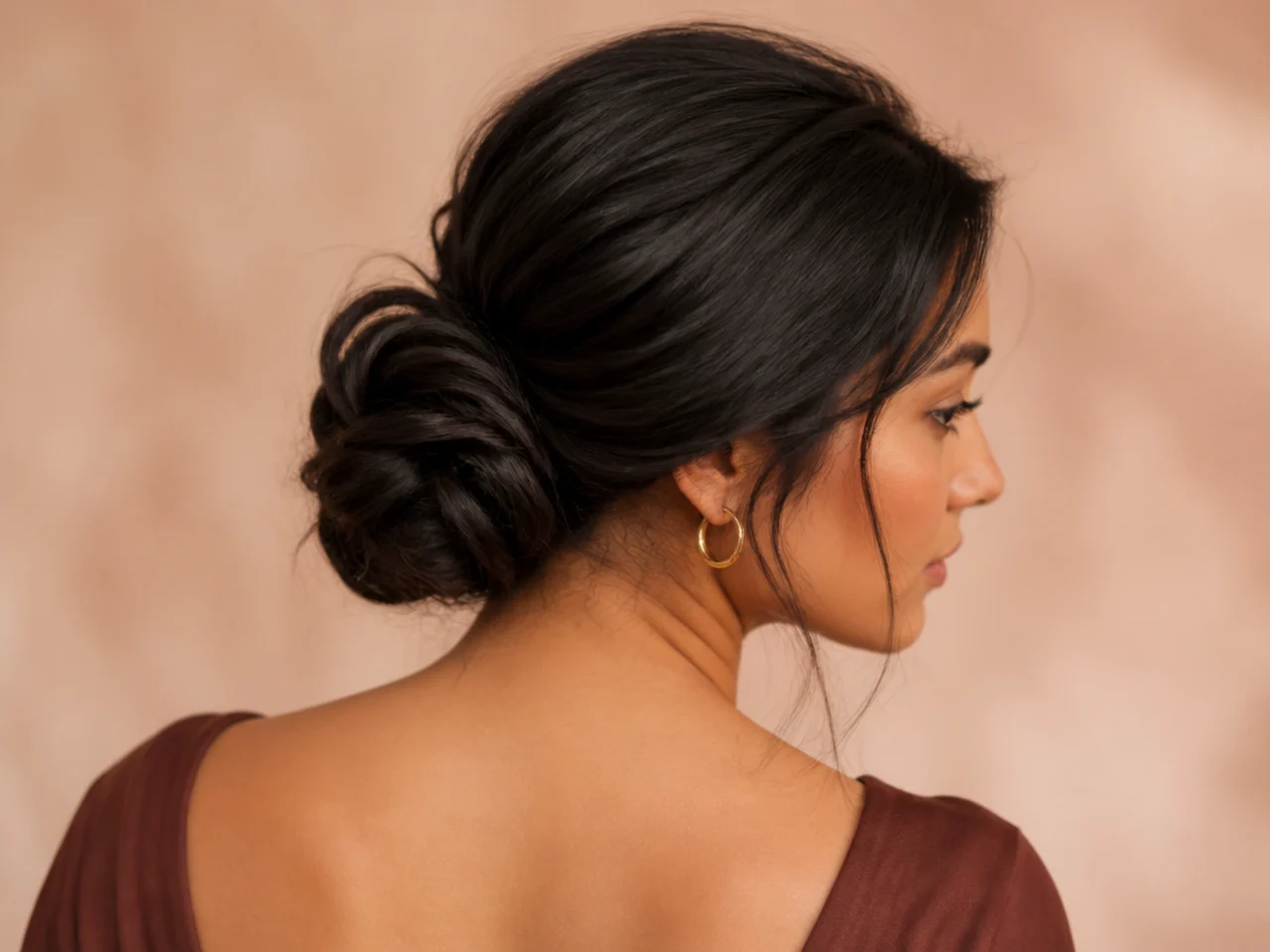
Divided and coiled in two to keep it flat to the head. Two smaller coils sit flatter than one large one, and each stays inside what a pin can comfortably hold.
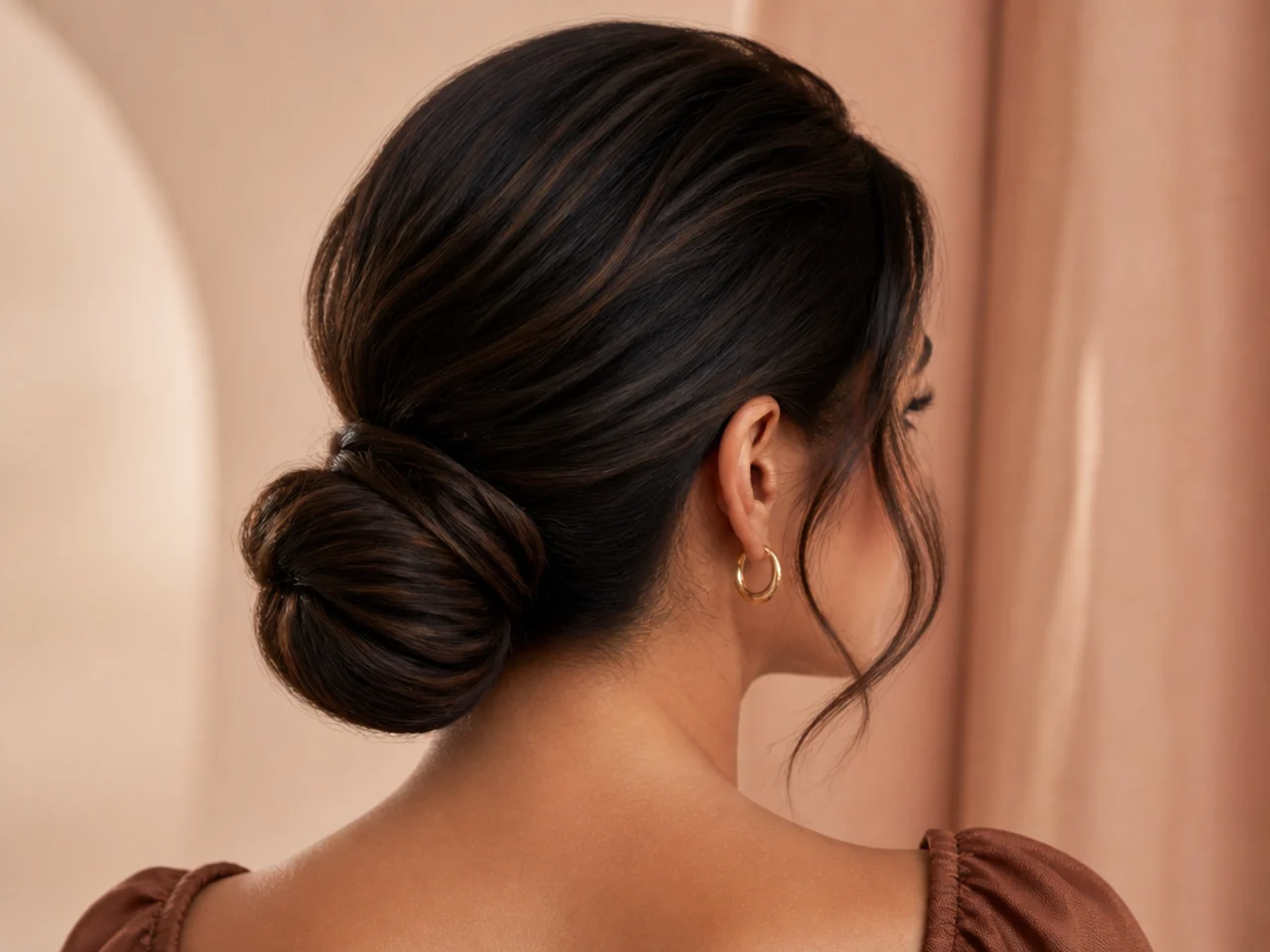
14. Low Bun for an Evening Out
Smoothed, glossed, pinned flush. The full version. Serum on the surface only, never on the coil, or the pins will slide out during the evening.
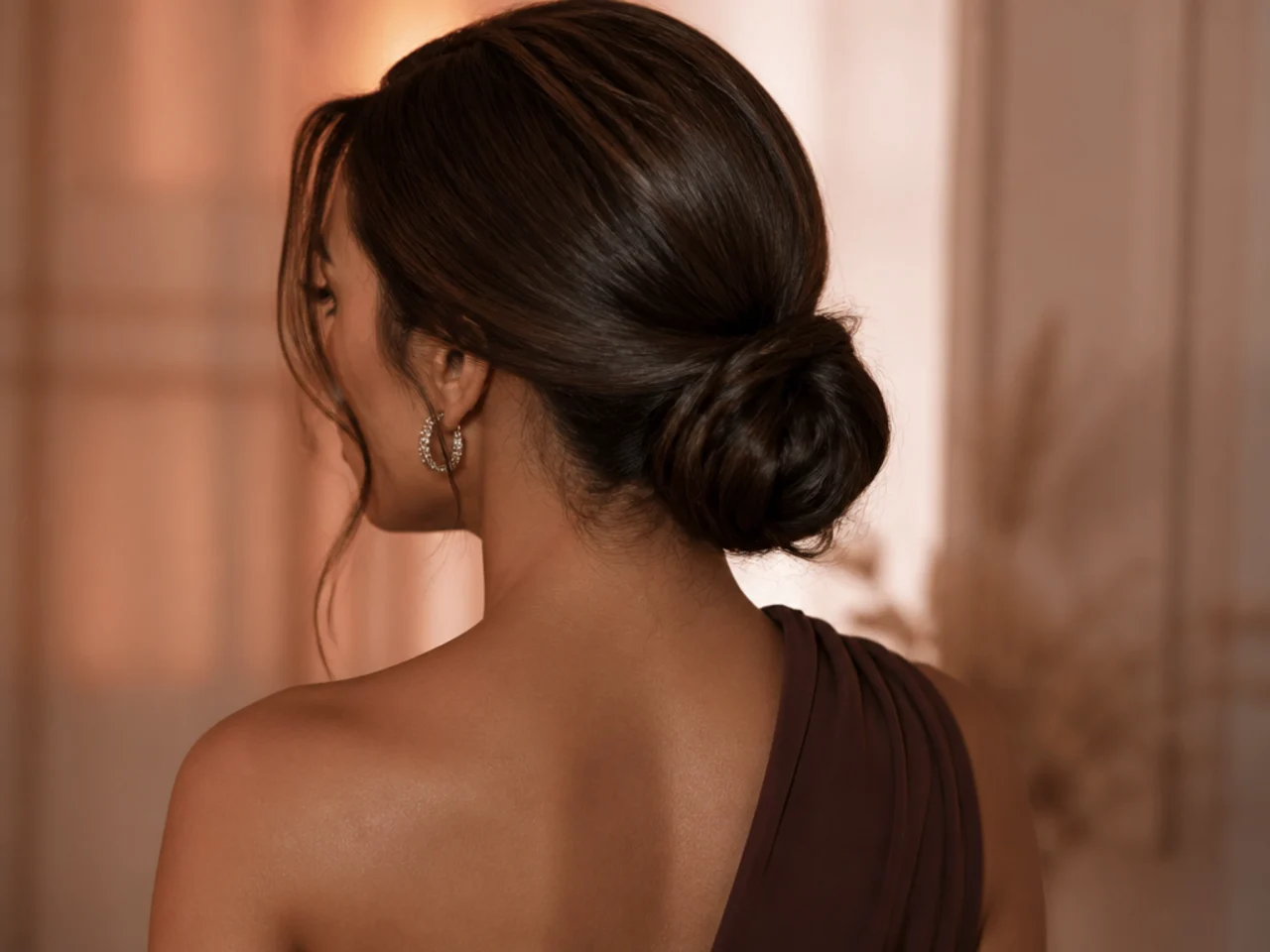
15. A Ponytail Wound Up
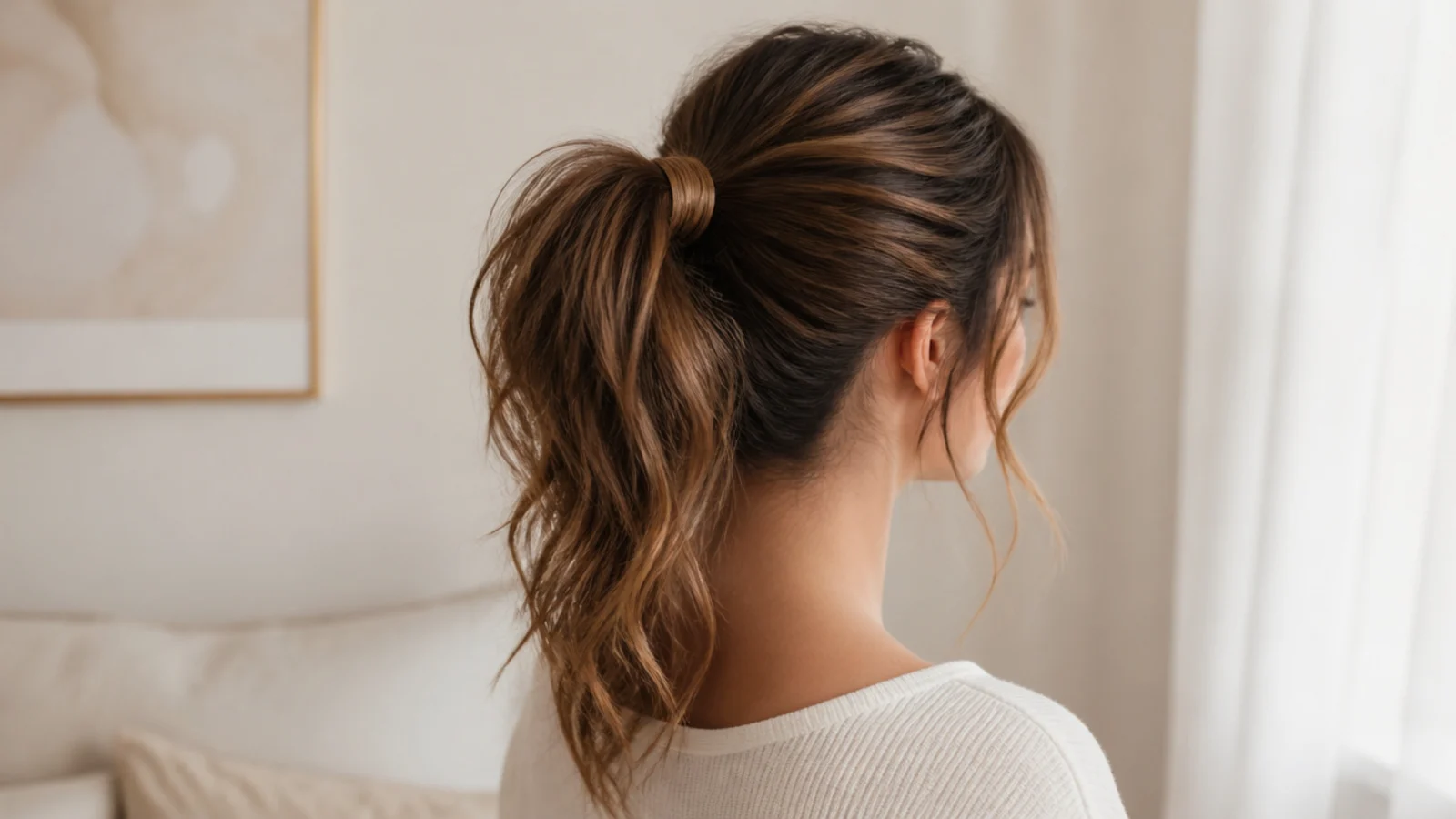
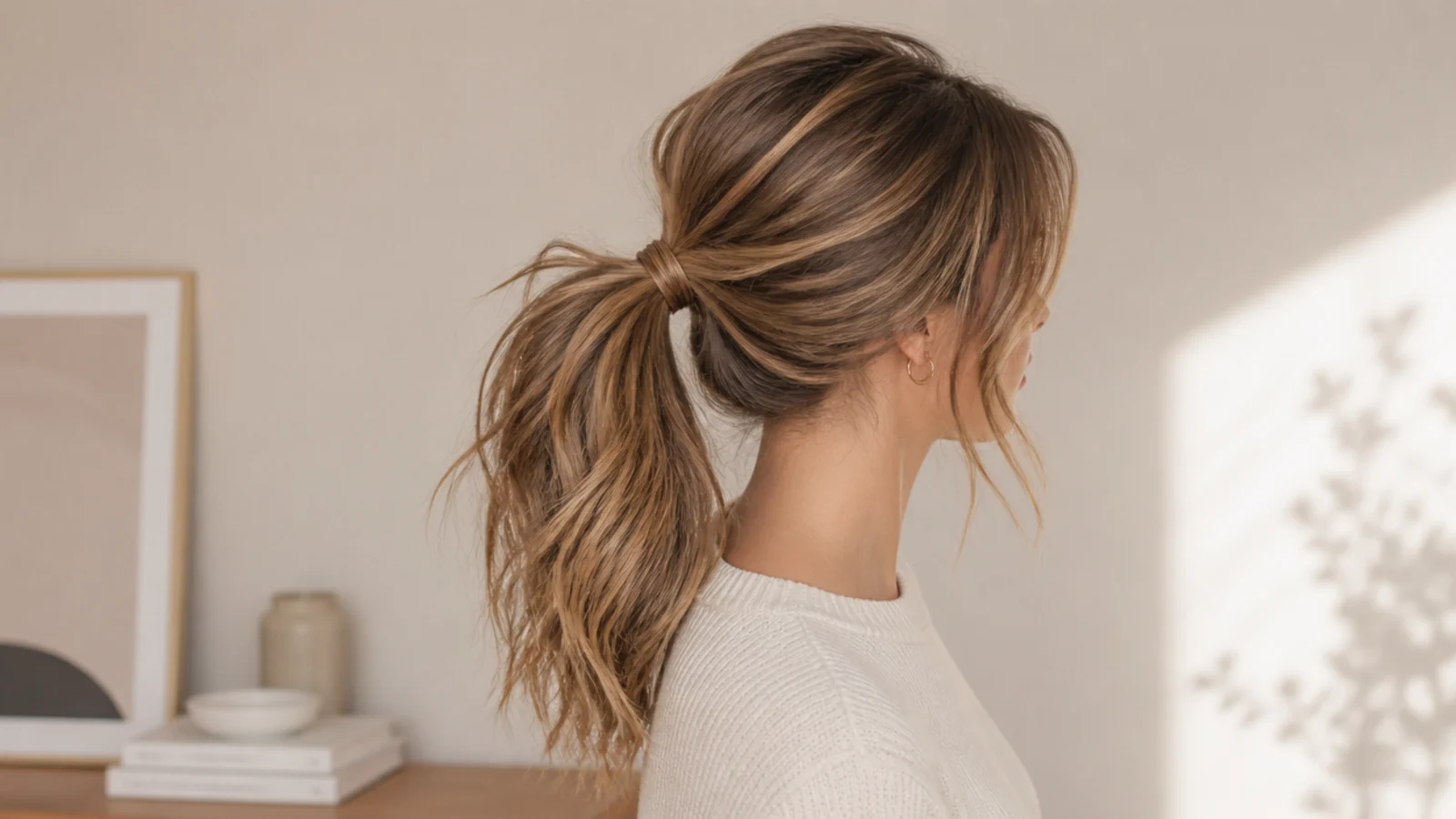
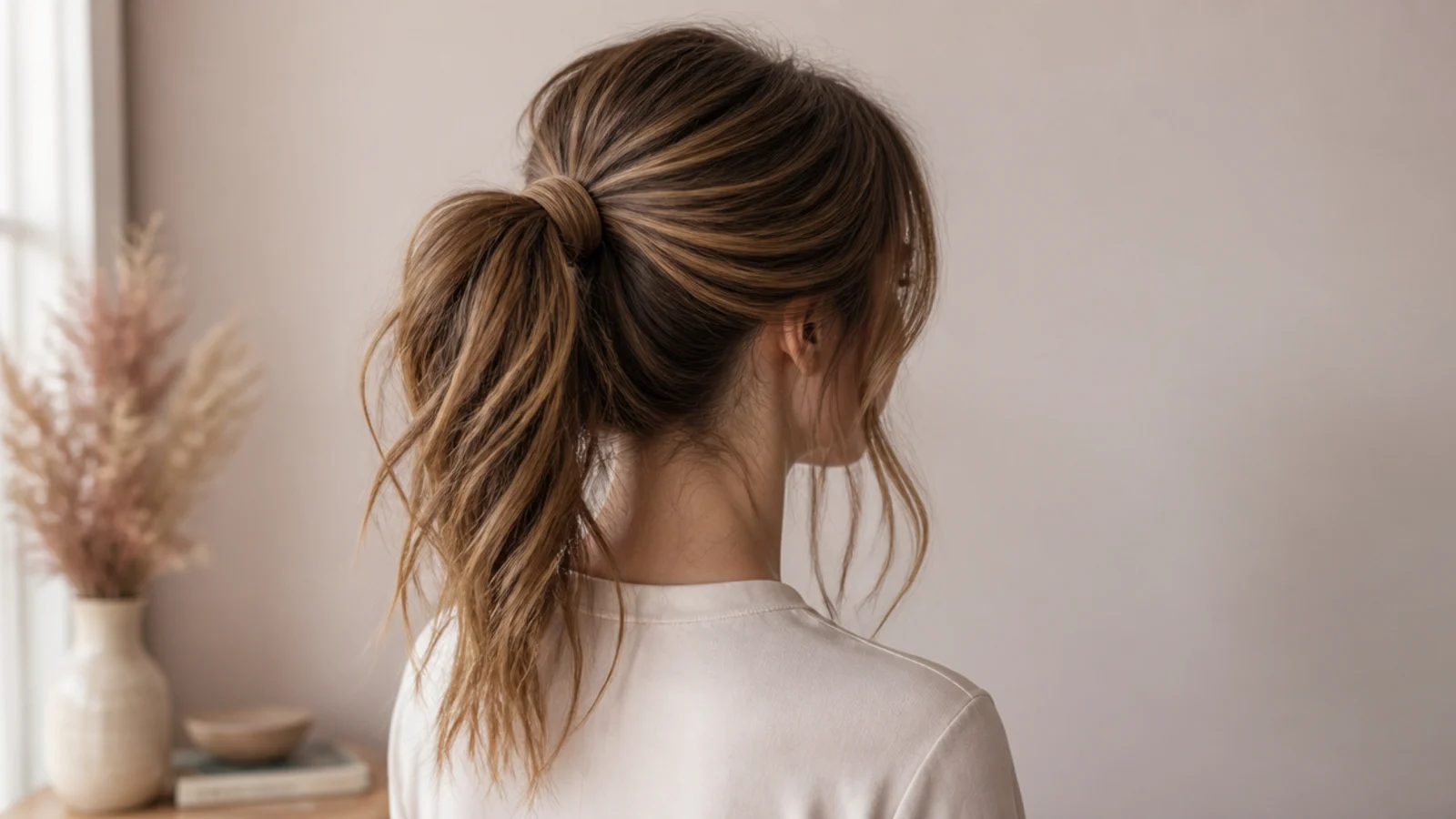
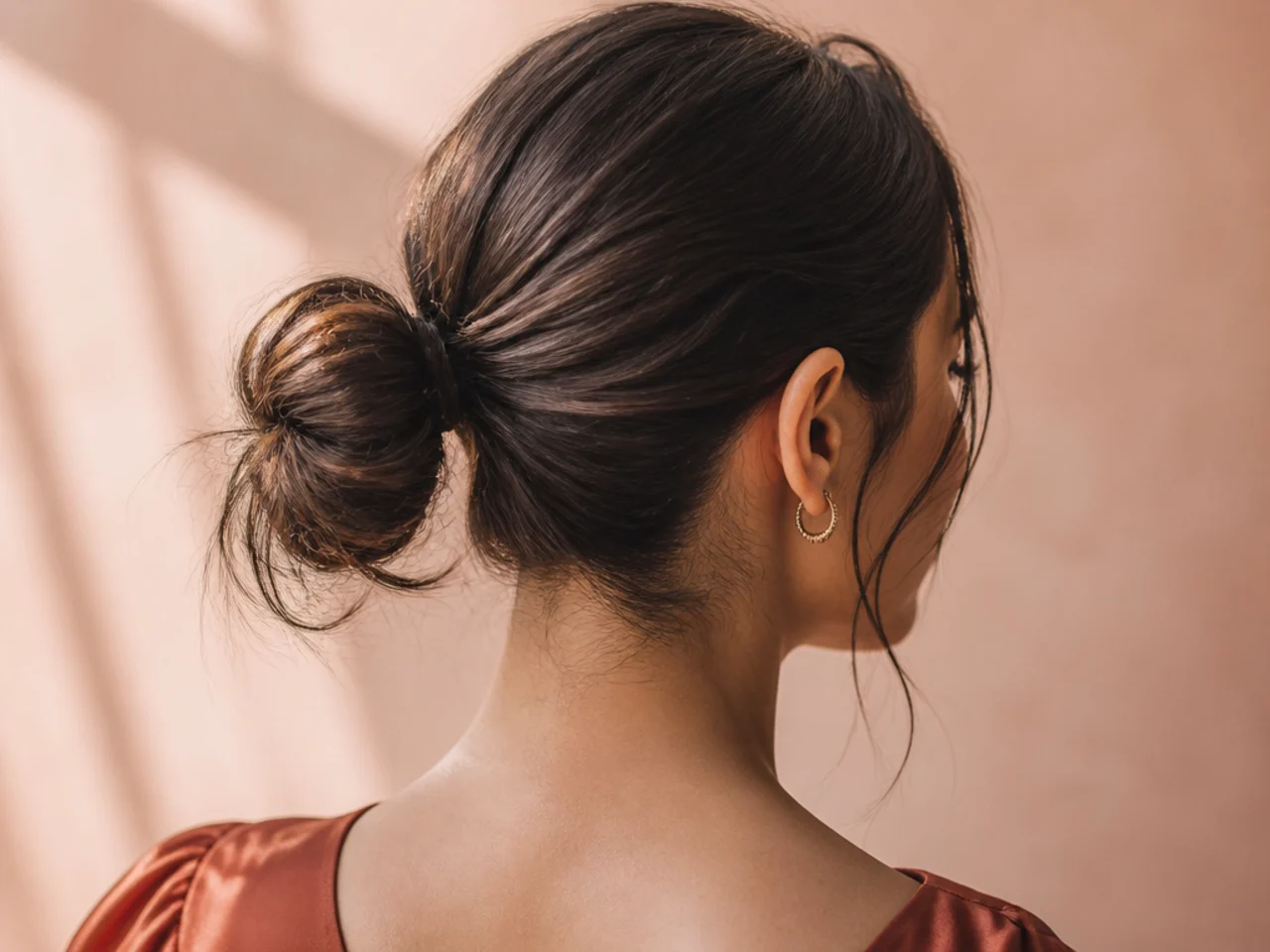
The step visible at the tie. What this page is avoiding. The gap is small, it is invisible from the front, and it is the whole difference between a chignon and a wound-up ponytail.
Styling and Upkeep
Brush the surface smooth before gathering. A brush removes what fingers leave behind. Brush before gathering, not after — once it is up you cannot reach the surface properly.
Pin the coil in, not around. Crossed pins into the hair beneath the bun.
Check the profile in a hand mirror. It is the only view that shows the join.
Use a little serum on the surface, none on the coil. Shine on top, grip underneath. Serum where it is seen, nothing where the pins go in.
Reset rather than adjust. Once the join has opened up, pinning it again rarely closes it.
Mistakes to Avoid
Letting the coil hang from the tie. That is the step you can see in profile.
Smoothing with your hands. Use a brush.
Pulling it tight instead of smooth. Tension does nothing for polish.
Checking only from the front. The front hides the problem.
Serum on the coil. It makes the pins slip.
FAQ
What makes it elegant? A flush join, with no step where the surface meets the coil.
How do you remove the bump? Pin the coil to the hair underneath rather than letting it hang from the tie.
Should it be tight? Smooth rather than tight — tension adds nothing.
Final Thoughts
Look at it side-on before you leave the house. The difference between a chignon and a wound-up ponytail is one pin and one glance in profile — and it is the only thing separating the version that looks done from the version that looks tied.
For the relaxed version of the same position see 20 low messy bun ideas that look effortless, and for gathered styles more broadly see low updo hairstyles. More in Updos & Clips.