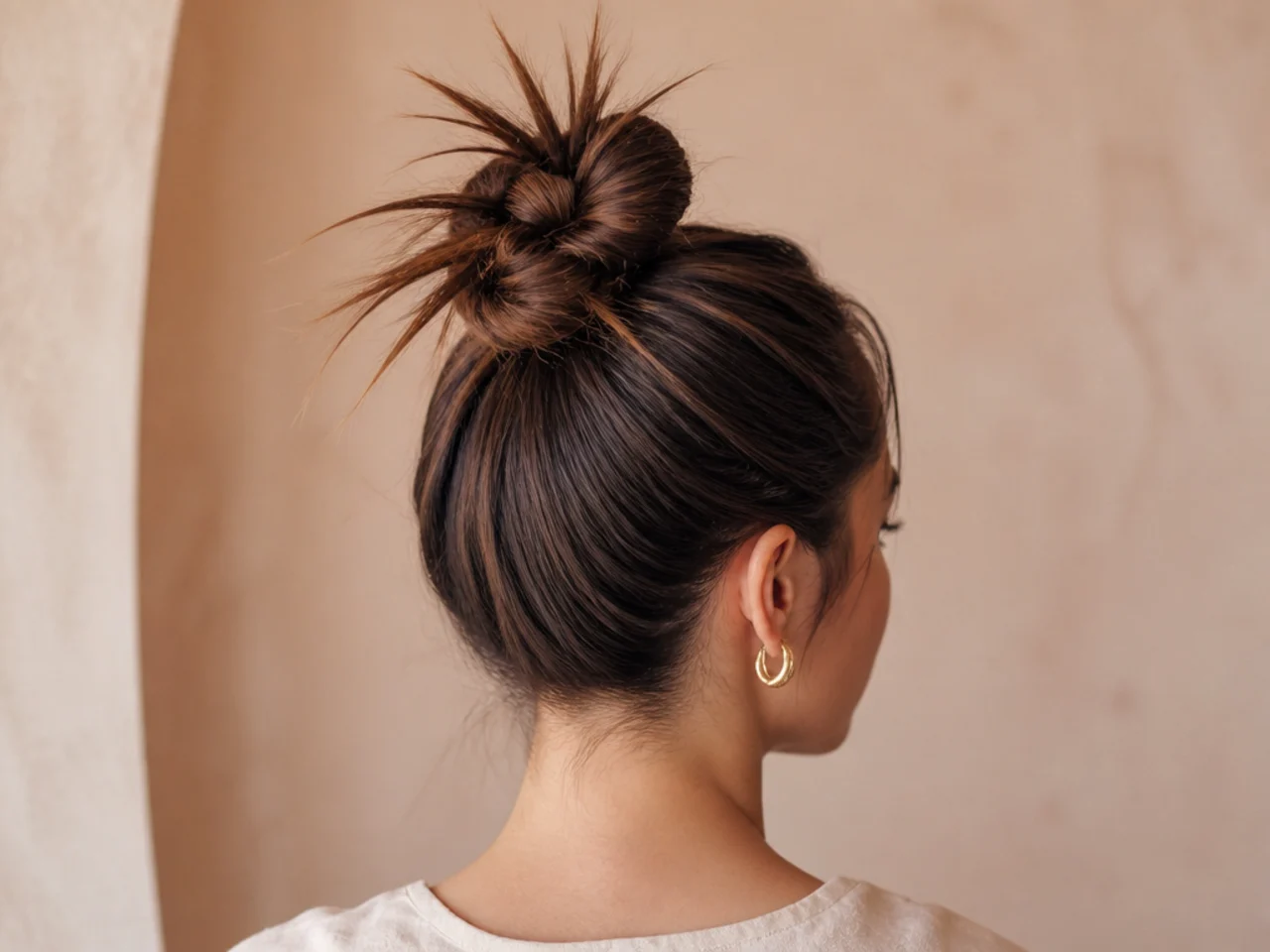
20 Trendy Spiky Bun Ideas to Save Now
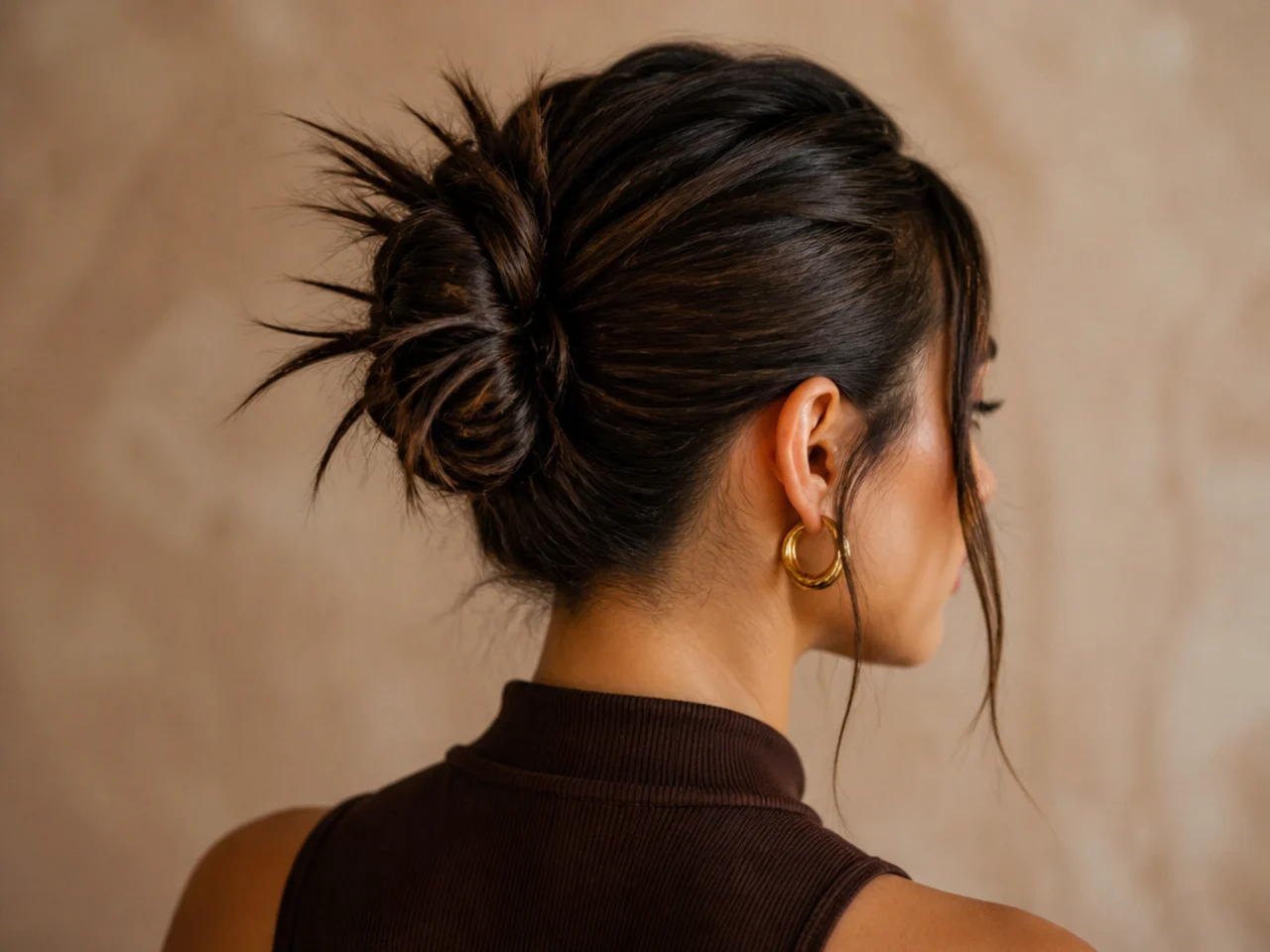
Twenty spiky bun ideas, and the thing that decides whether yours works — your haircut, not your technique. Blunt ends stand up on their own. Tapered or heavily layered ends flop over no matter what you do.
In this article · 27
- What Makes a Spiky Bun Work
- How to Choose Yours
- The 20 Spiky Bun Ideas
- 1. Classic Spiky Top Knot
- 2. Low Spiky Bun
- 3. Mid-Height Spiky Bun
- 4. Short Spikes
- 5. Long Spikes
- 6. Spiky Bun with a Claw Clip
- 7. Spiky Bun with a Scrunchie
- 8. Double-Loop Spiky Bun
- 9. Spiky Half Bun
- 10. Two Spiky Buns
- 11. Spiky Bun on Thick Hair
- 12. Spiky Bun on Coarse Hair
- 13. Spiky Bun on Fine Hair
- 14. Spiky Bun on a Bob
- 15. Spiky Bun on Curly Hair
- 16. Spiky Bun with a Centre Part
- 17. Spiky Bun with Slicked Sides
- 18. Spiky Bun with a Headband
- 19. Spiky Bun on Second-Day Hair
- 20. Spikes That Have Flopped
- Styling and Upkeep
- Mistakes to Avoid
- FAQ
- Final Thoughts
The spiky bun is presented as a technique. It is mostly a haircut.
Leave the last wrap undone and the ends stick out. That part is easy — it is a shortcut rather than a skill. What decides whether the result looks deliberate is whether those ends are stiff enough to stand.
Blunt ends spike. Tapered or heavily layered ends flop. If your ends have been thinned or point-cut, there is no body left at the tip and nothing you do at the gathering stage will change that.
What Makes a Spiky Bun Work
The last wrap is left incomplete. That is the whole technique.
Blunt ends carry it. Weight at the tip is what lets a released end hold its direction.
Thick and coarse hair spikes best. More individual stiffness per strand.
Shorter spikes better than longer. Less weight hanging off each released end.
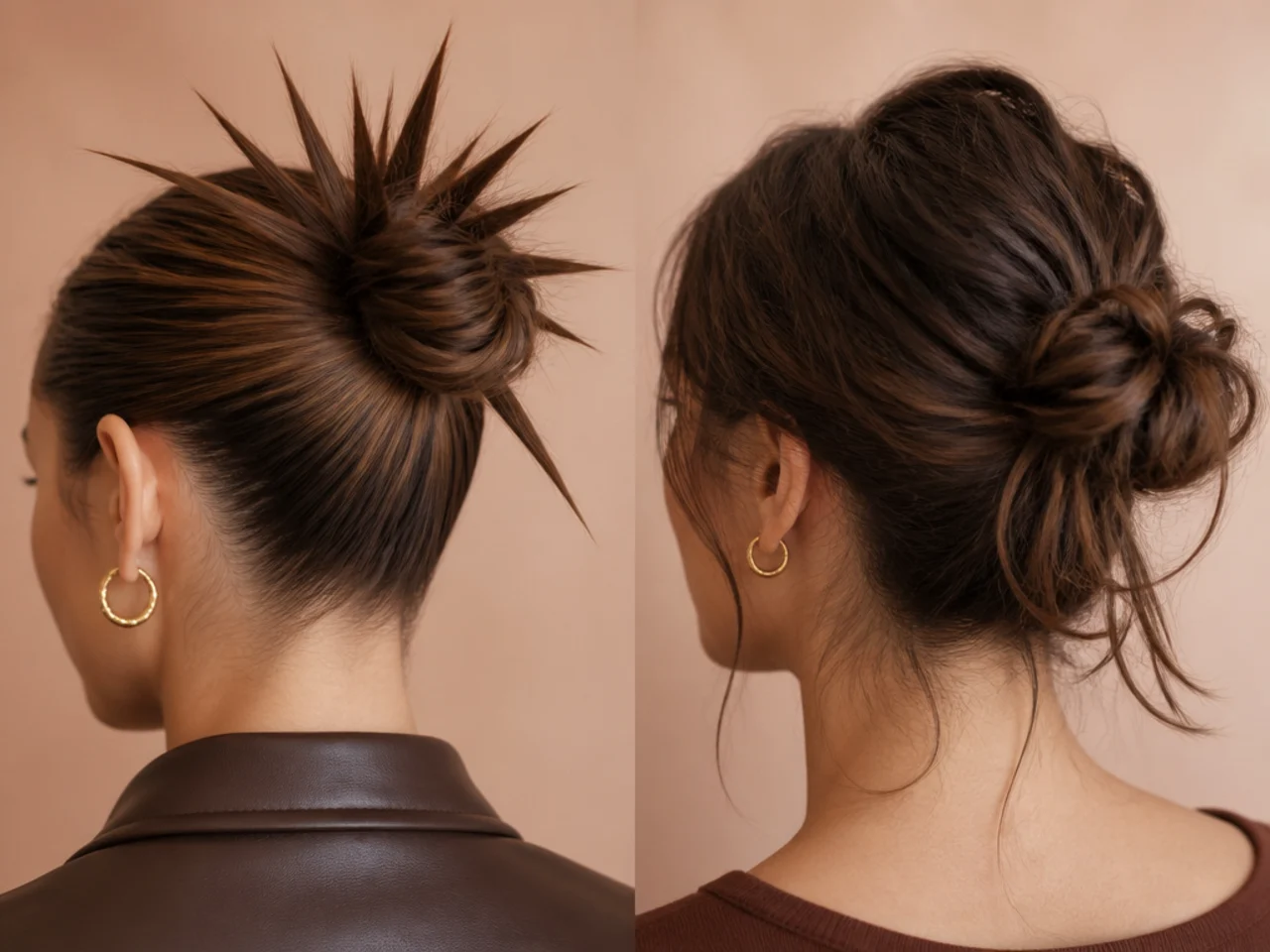
How to Choose Yours
Check your ends first. Hold a section up. If it falls immediately, this style will not hold for you without product.
Leave less out than you expect. Two or three centimetres of end. More becomes a fountain rather than a spike.
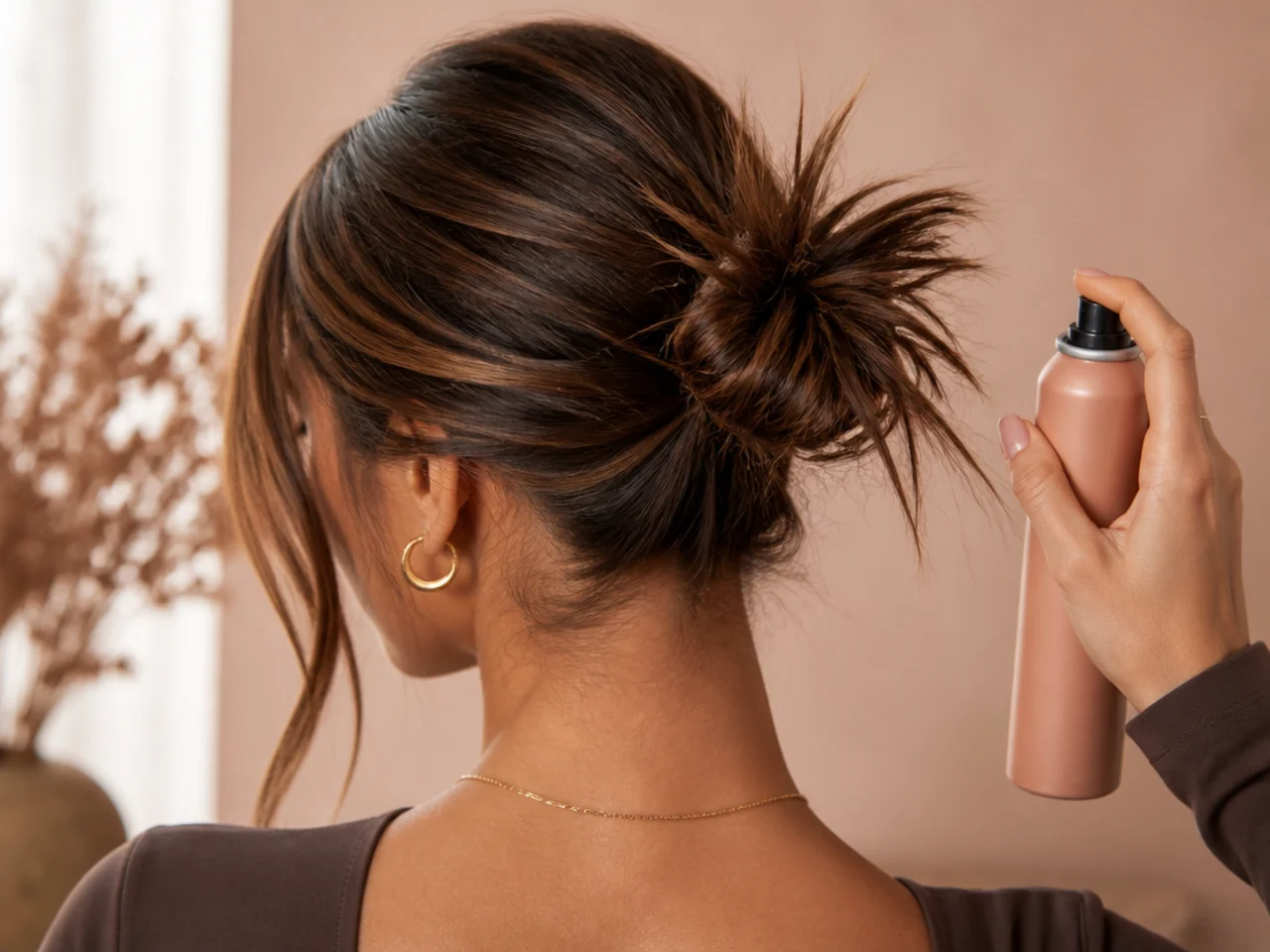
Use a strong hold spray on the ends only. It is the workaround for tapered ends, applied nowhere else.
Keep the base neat. As with any messy style, the base is tidy and only the ends are not.
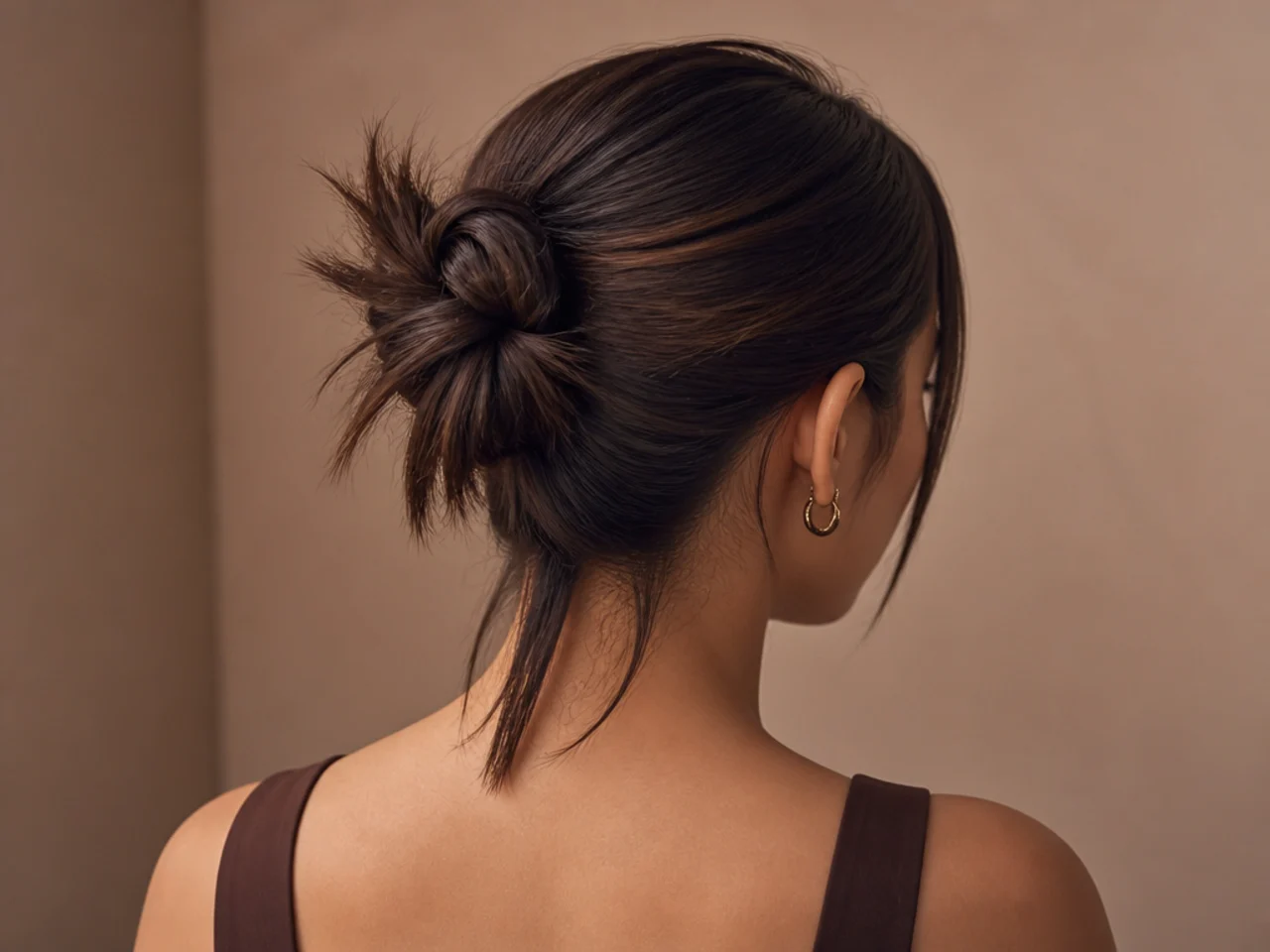
The 20 Spiky Bun Ideas
1. Classic Spiky Top Knot
High, tight base, ends released at the last wrap. High placement gives the ends the most room to stand, because nothing is behind them to push against.
2. Low Spiky Bun
The same finish worn at the nape. Softer overall. Low ends have the collar behind them, so they read as texture rather than as spikes.
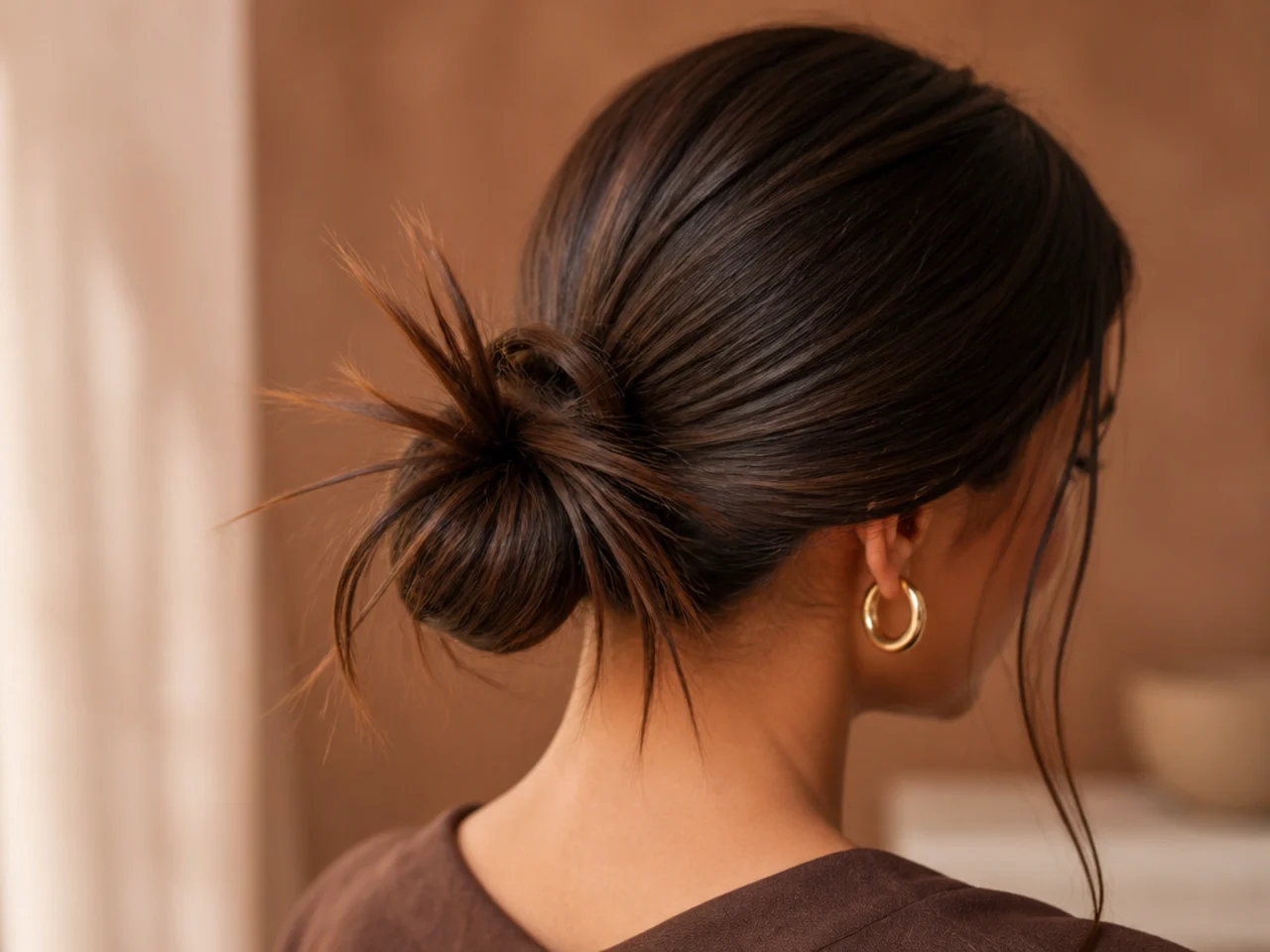
3. Mid-Height Spiky Bun
Between the two, and the most wearable version. Mid-height keeps the ends clear of the collar without the severity of a top knot.
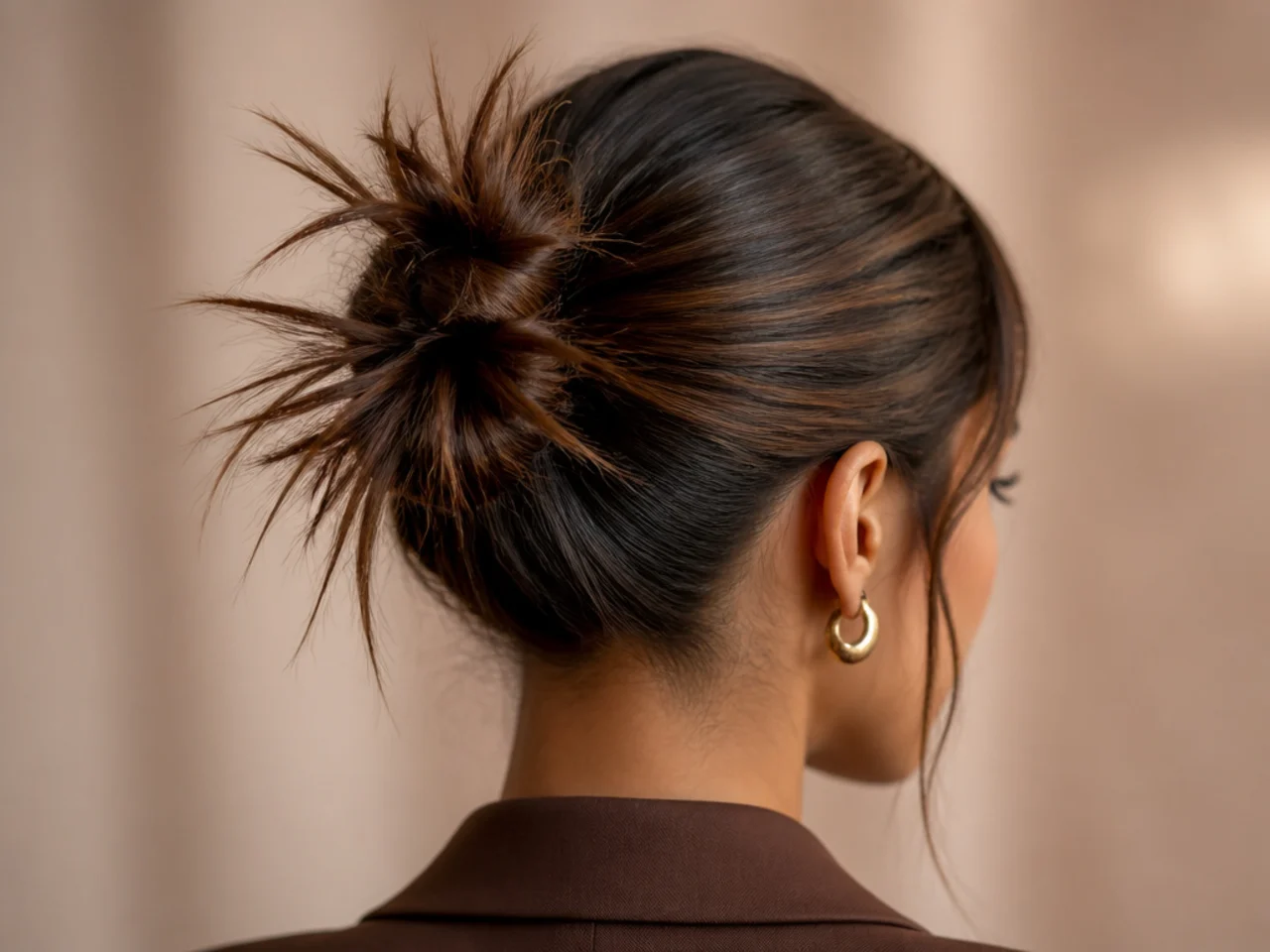
4. Short Spikes
Two centimetres of end released. Deliberate rather than dramatic. Short spikes also hold on more hair types, because each end has less weight to support.
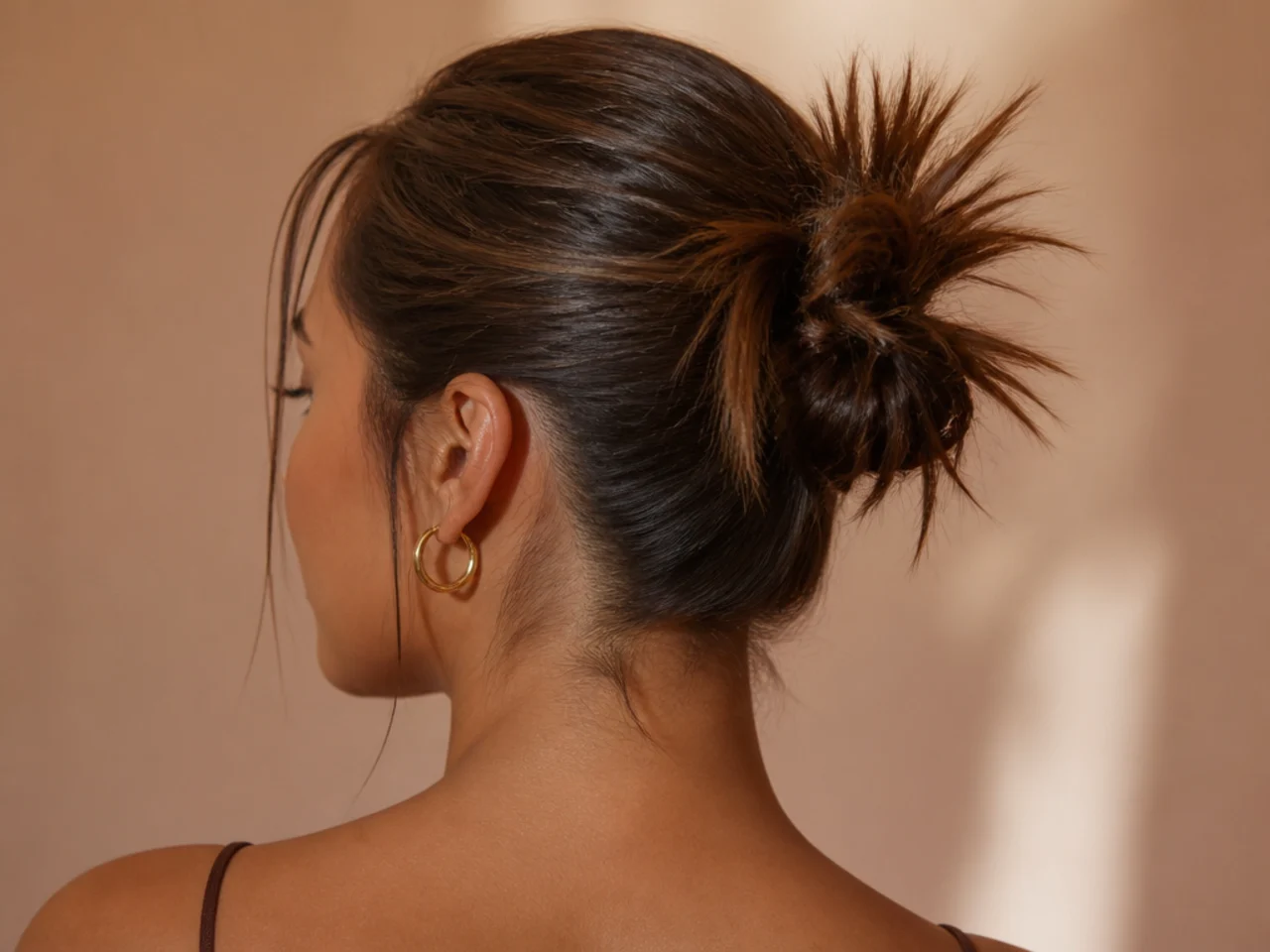
5. Long Spikes
More length released, which needs stiffer ends to hold. Every extra centimetre adds weight at the tip, and weight is exactly what makes an end droop.
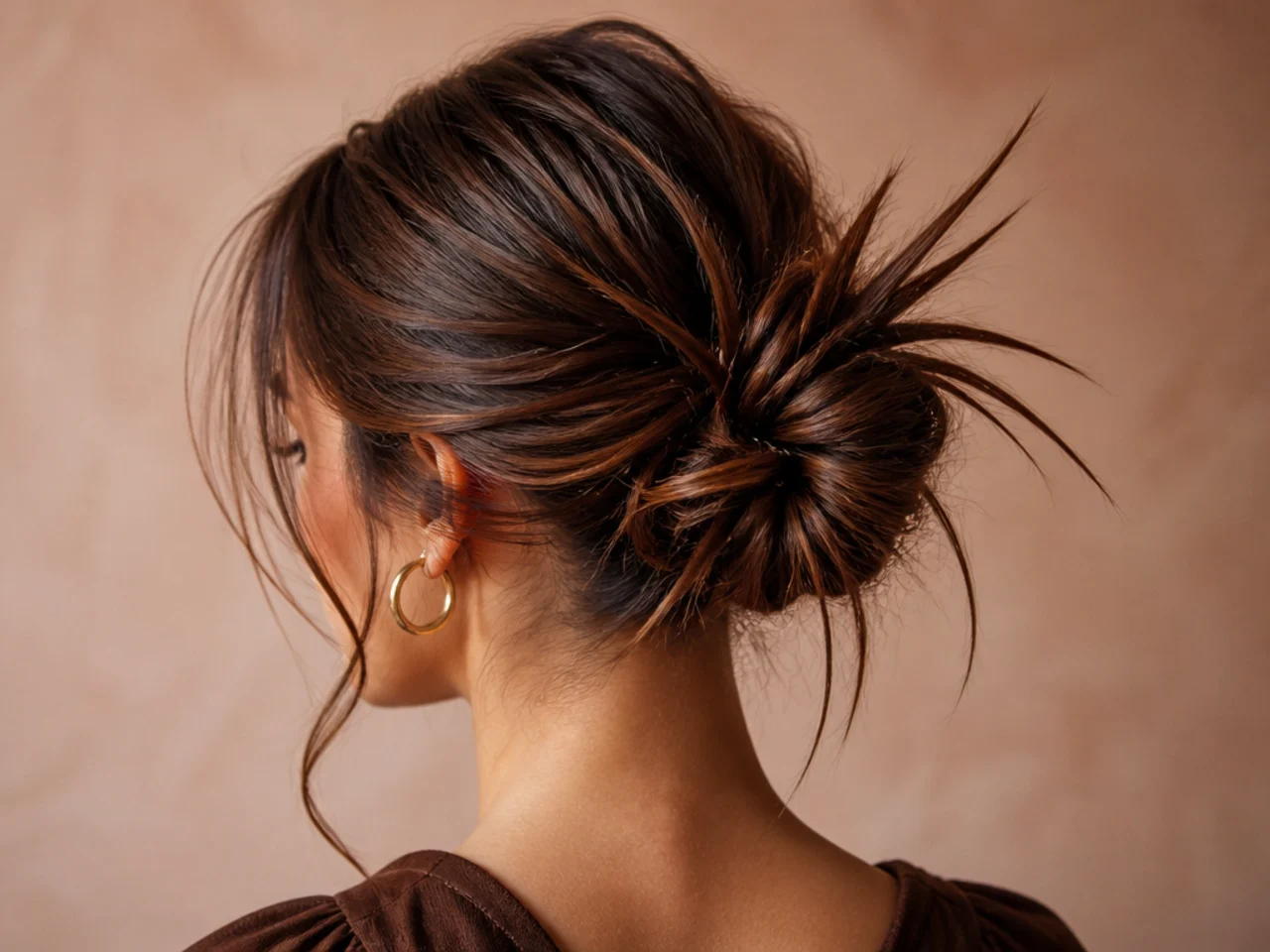
6. Spiky Bun with a Claw Clip
Clipped rather than tied, with the ends fanning out above. A clip holds the base without compressing it, so the ends leave at a wider angle.
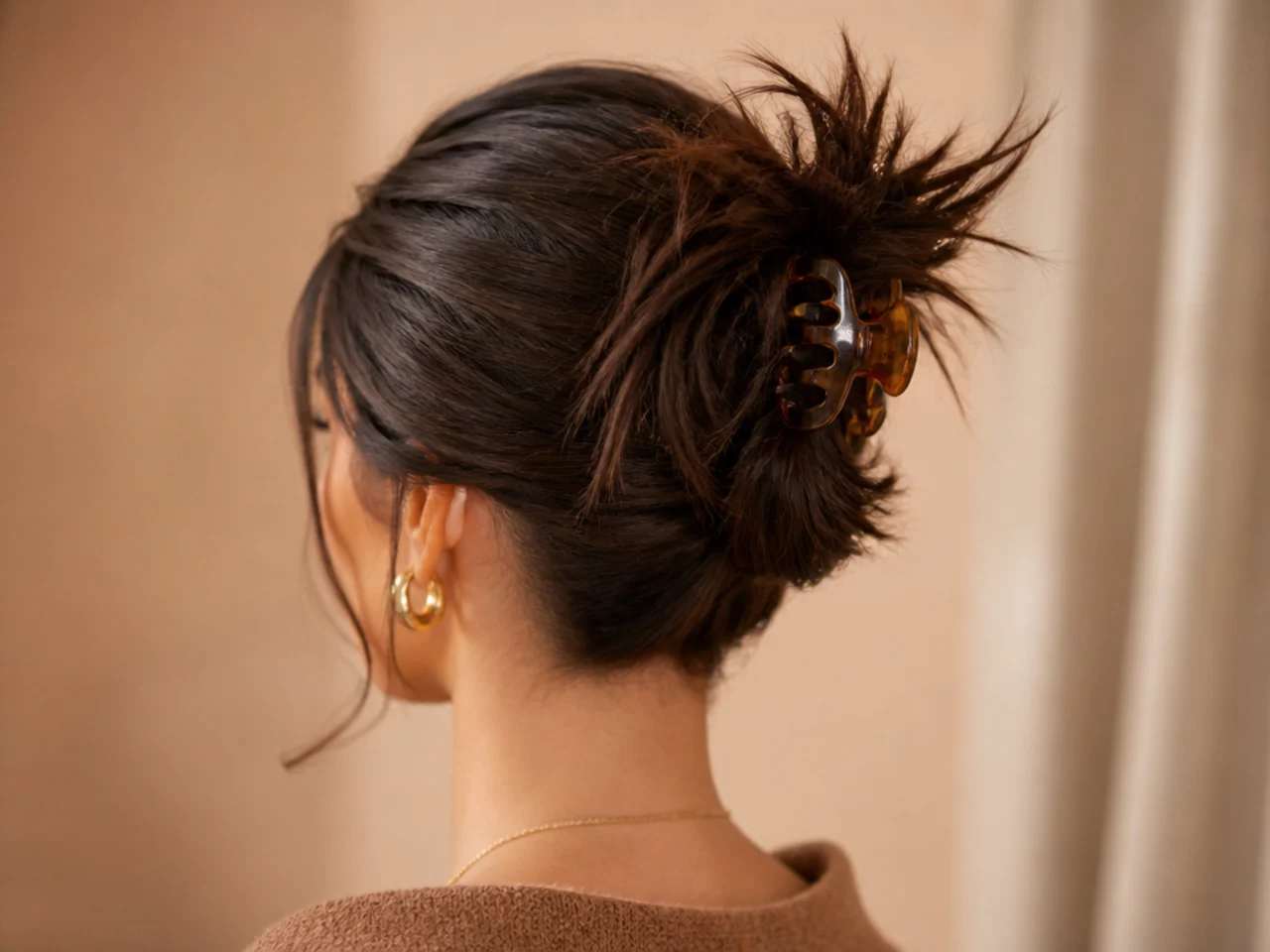
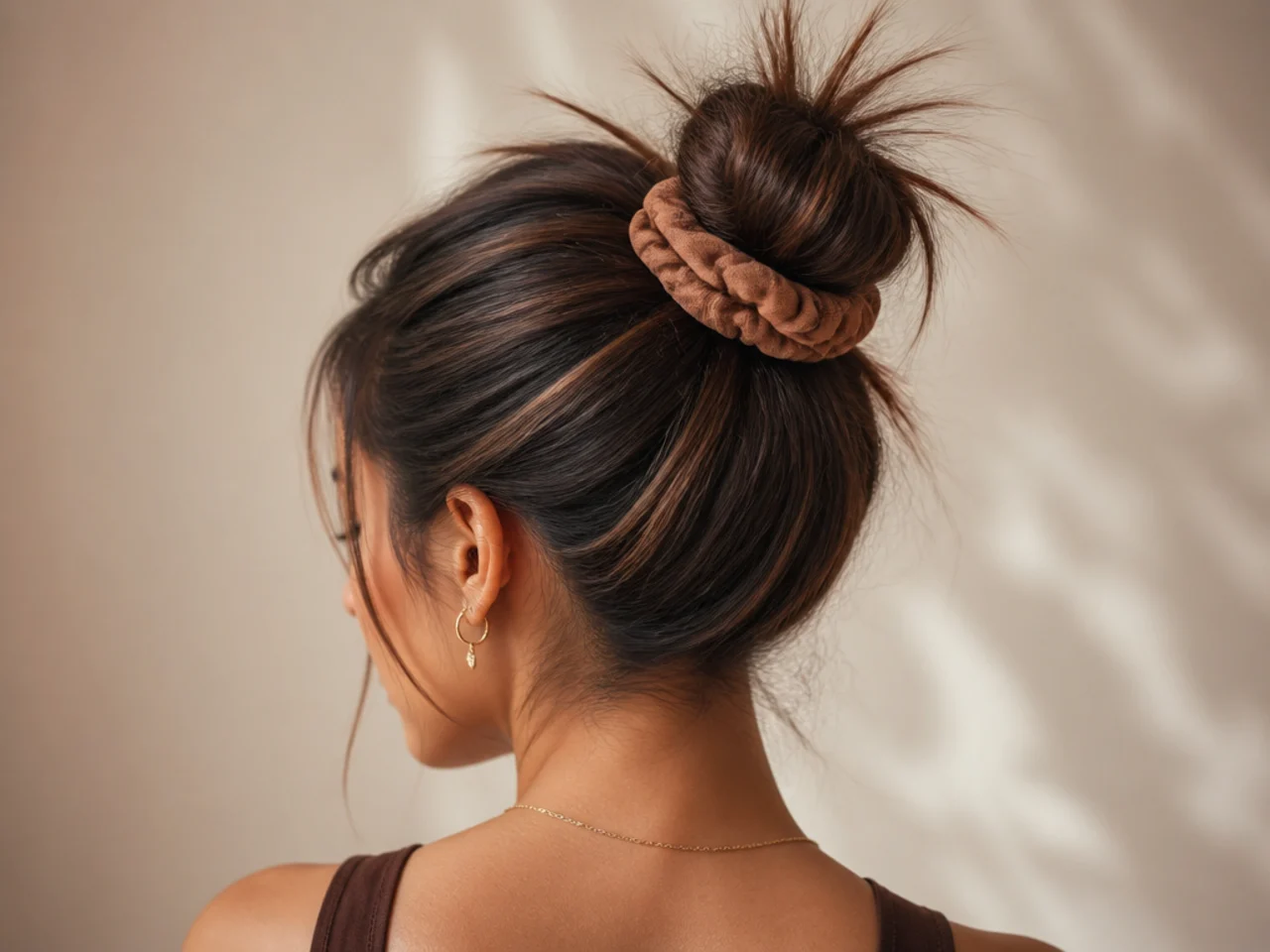
7. Spiky Bun with a Scrunchie
Fabric base, ends released over the top of it. The scrunchie adds bulk under the ends, which props them up slightly before they have to stand on their own.
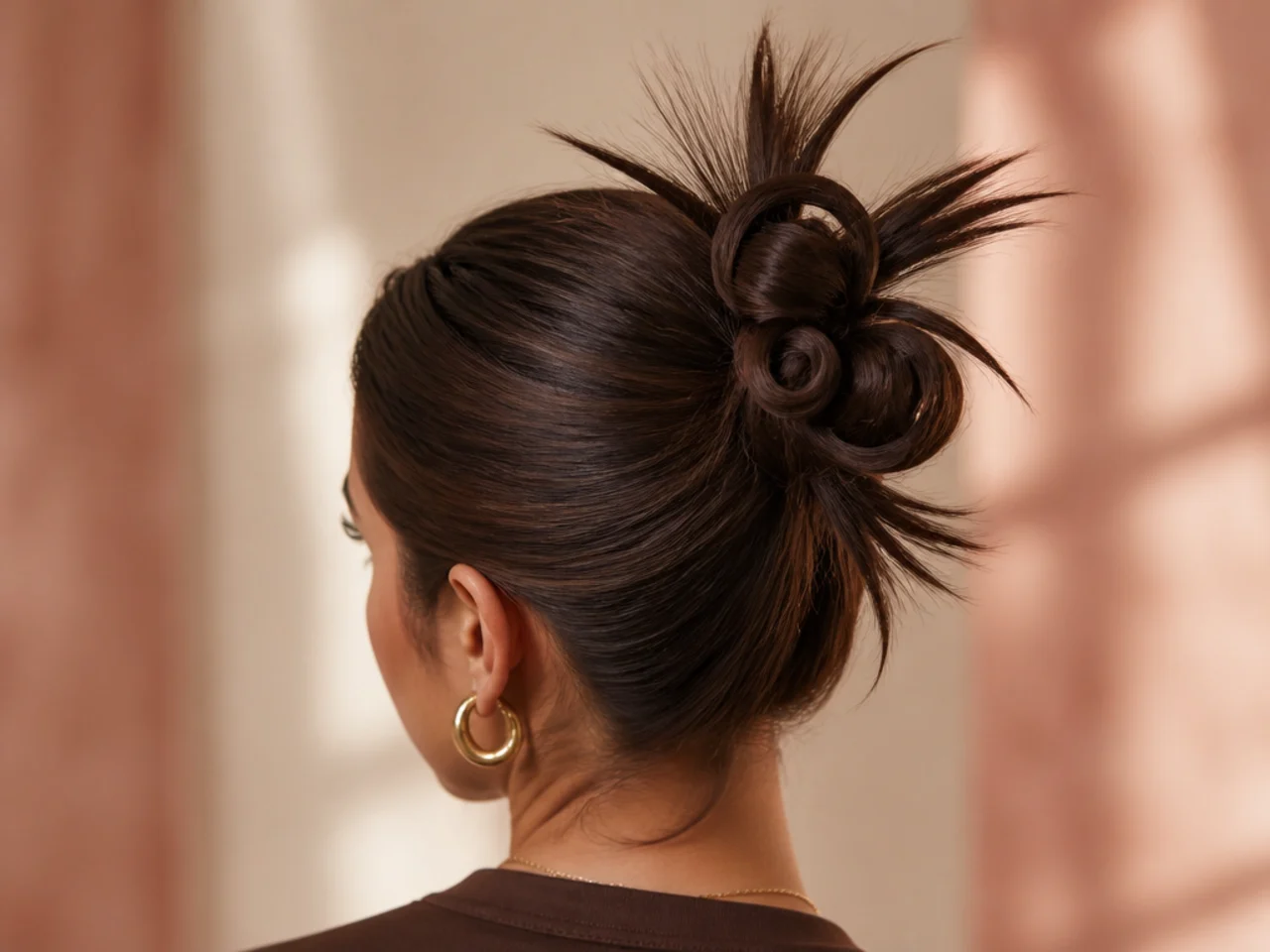
8. Double-Loop Spiky Bun
Pulled through twice, ends left out on the second pass. Two passes tighten the base, and a tighter base is what keeps the ends pointing where you left them.
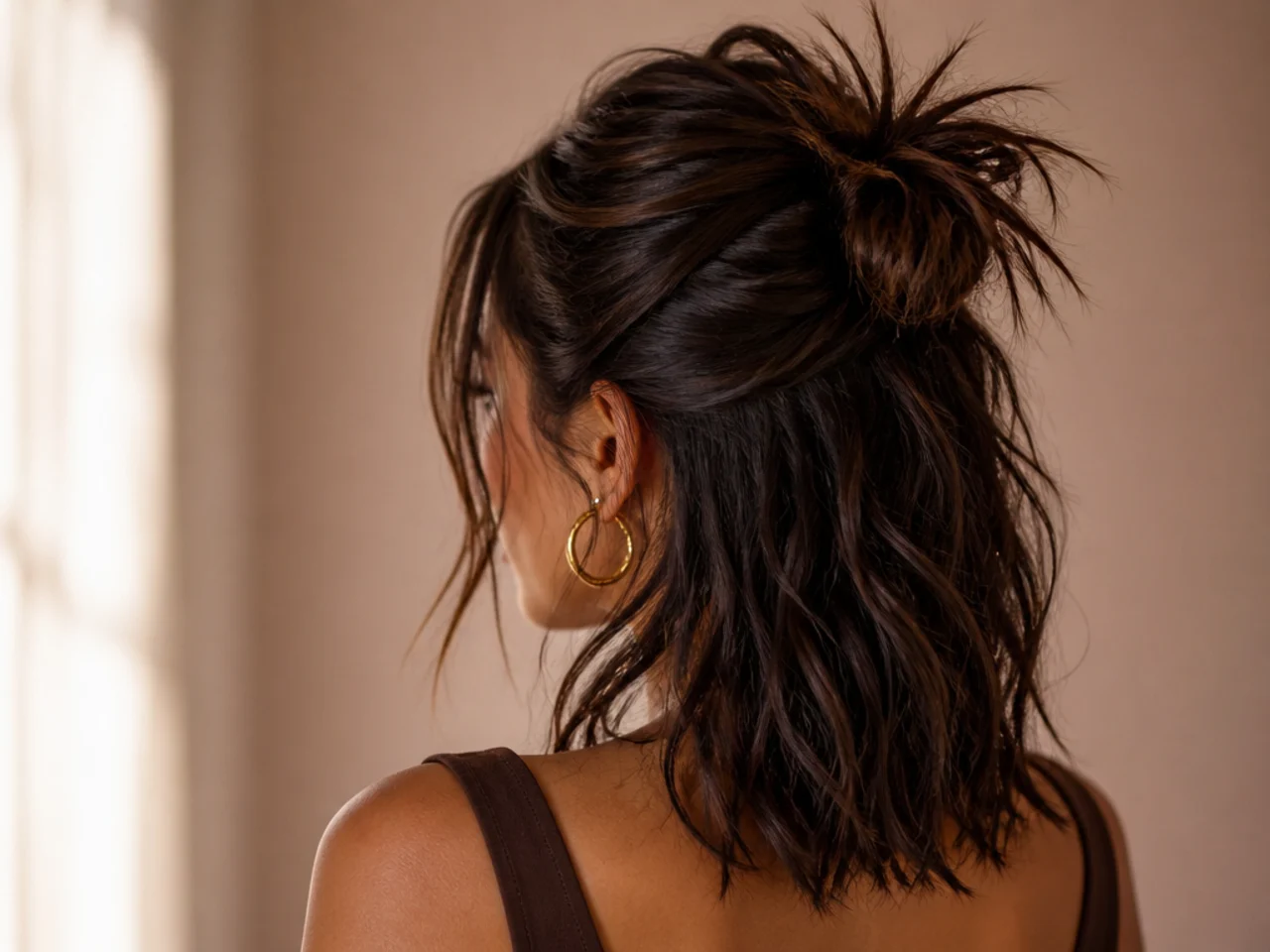
9. Spiky Half Bun
Top section only, with the rest left down. The released ends sit against the hair below, which supports them and makes this the easiest version on fine hair.
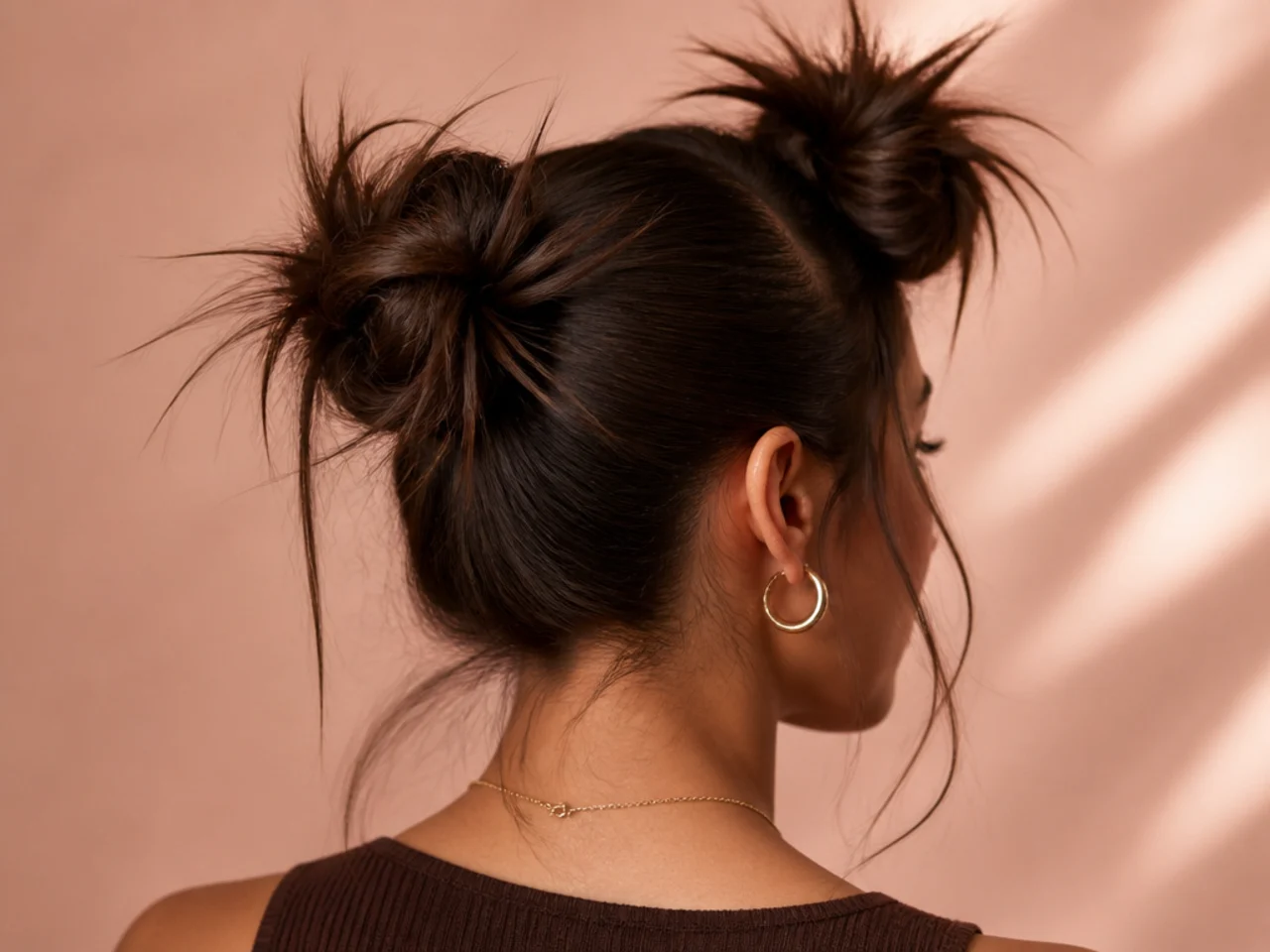
10. Two Spiky Buns
Split and released on both sides. Two smaller gathers means less weight in each, so both sets of ends stand more easily than one would.
11. Spiky Bun on Thick Hair
The easiest hair type for this, and the most dramatic result. More strands in each released end means they support each other, which is a different mechanism from individual strand stiffness.
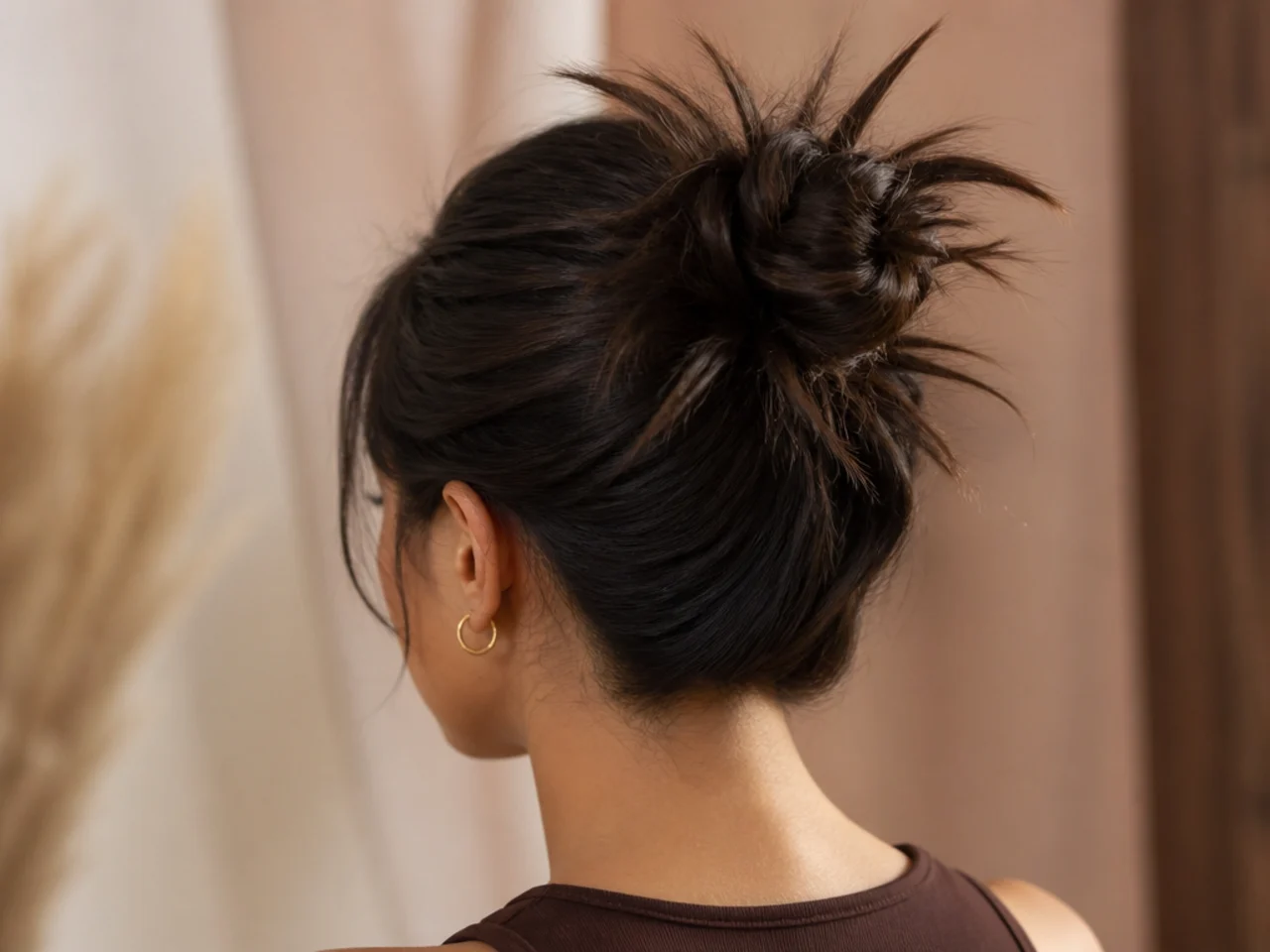
12. Spiky Bun on Coarse Hair
Individual strand stiffness doing the work. A coarse strand has a wider diameter, and bending stiffness rises sharply with diameter, so coarse ends hold a direction on their own.
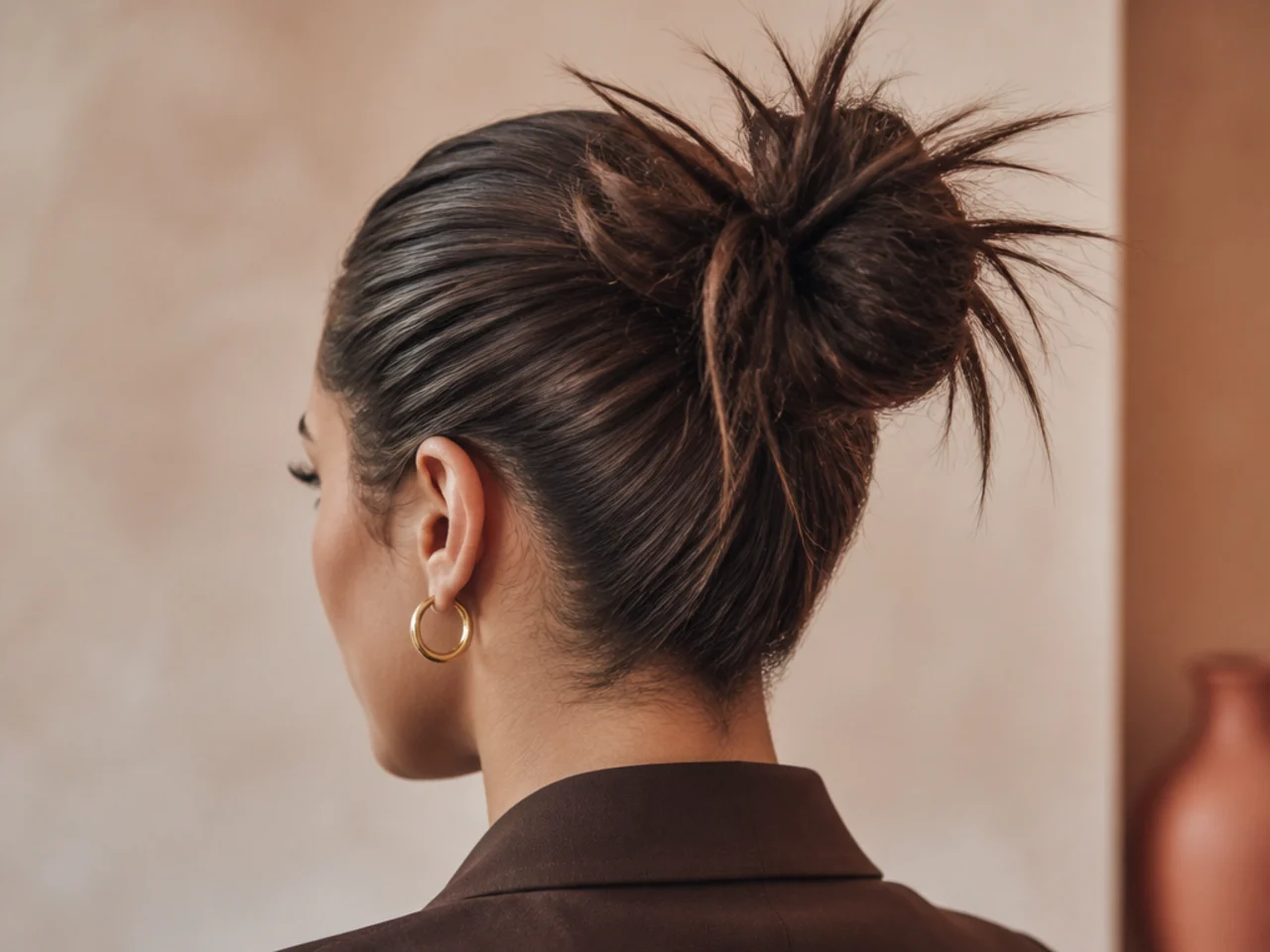
13. Spiky Bun on Fine Hair
Possible with hold spray on the ends and very short spikes. Fine hair has neither the strand stiffness nor the bulk, so both compensations are needed together rather than one or the other.
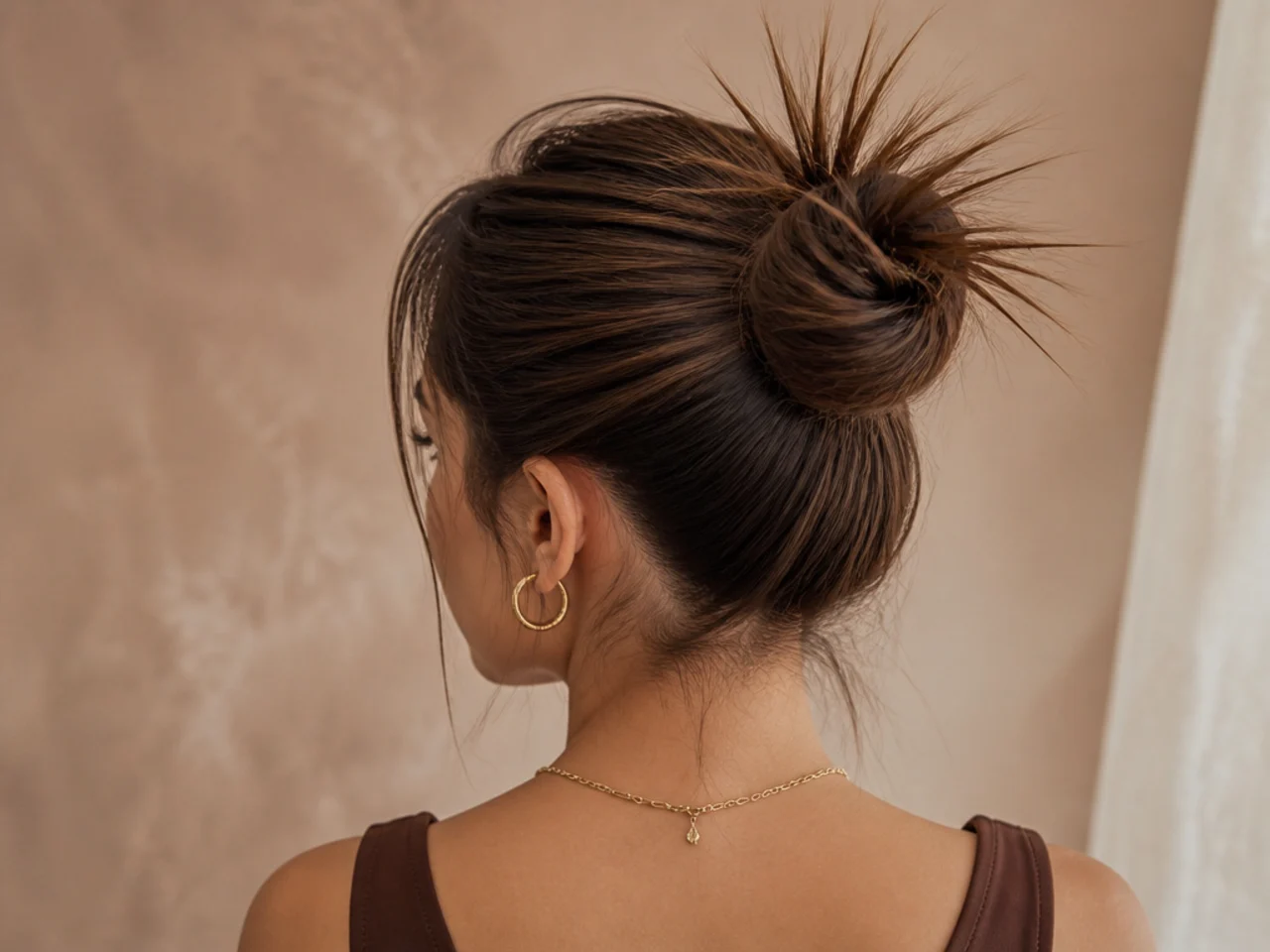
14. Spiky Bun on a Bob
Short length, so the ends barely have to fight gravity. A bob is the easiest length for this after coarse hair, purely because there is so little weight at the tip.
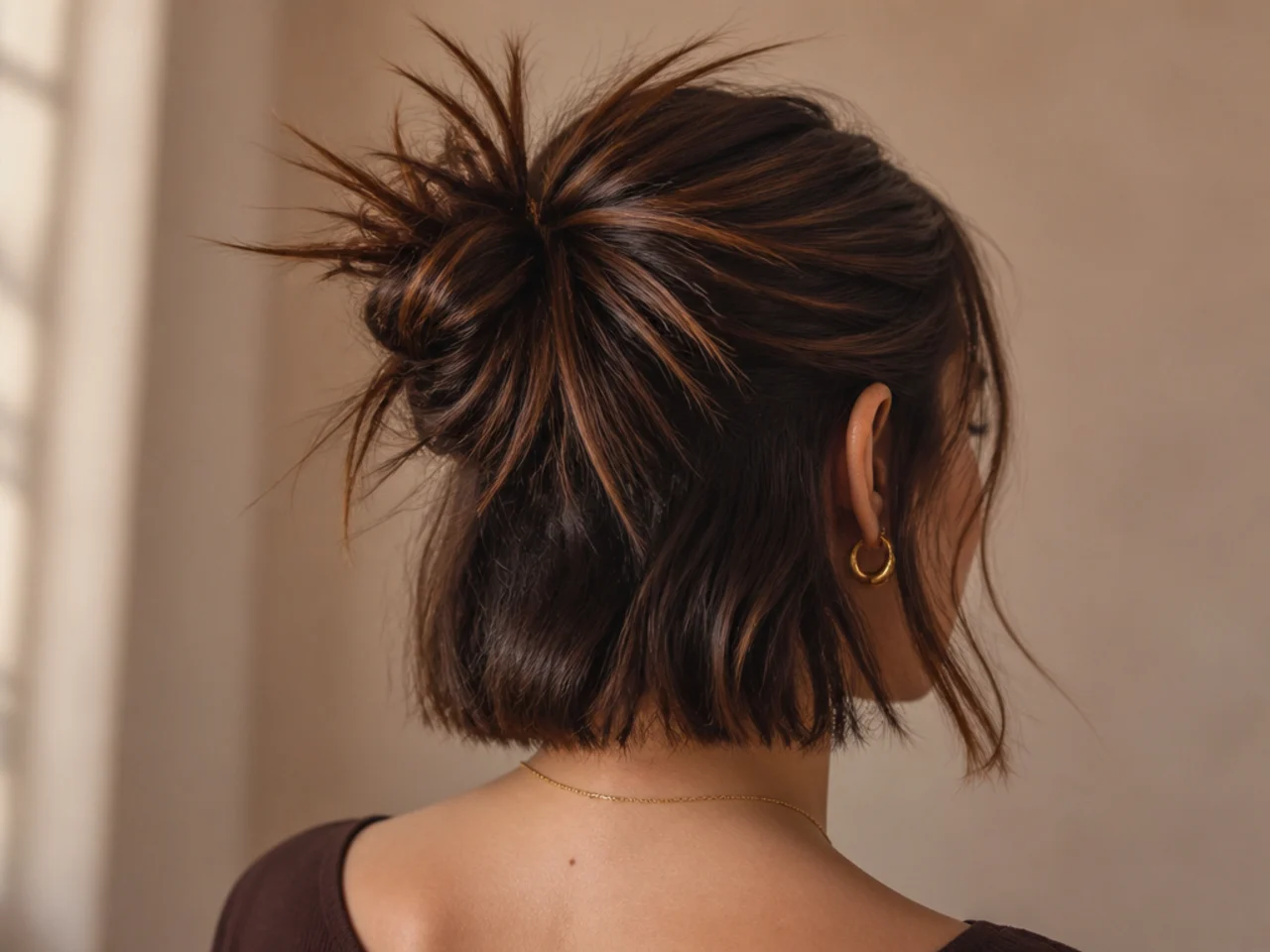
15. Spiky Bun on Curly Hair
Curl gives natural body at the tip, so it holds easily. A curled end is already bent away from vertical, so it does not have to be held there.
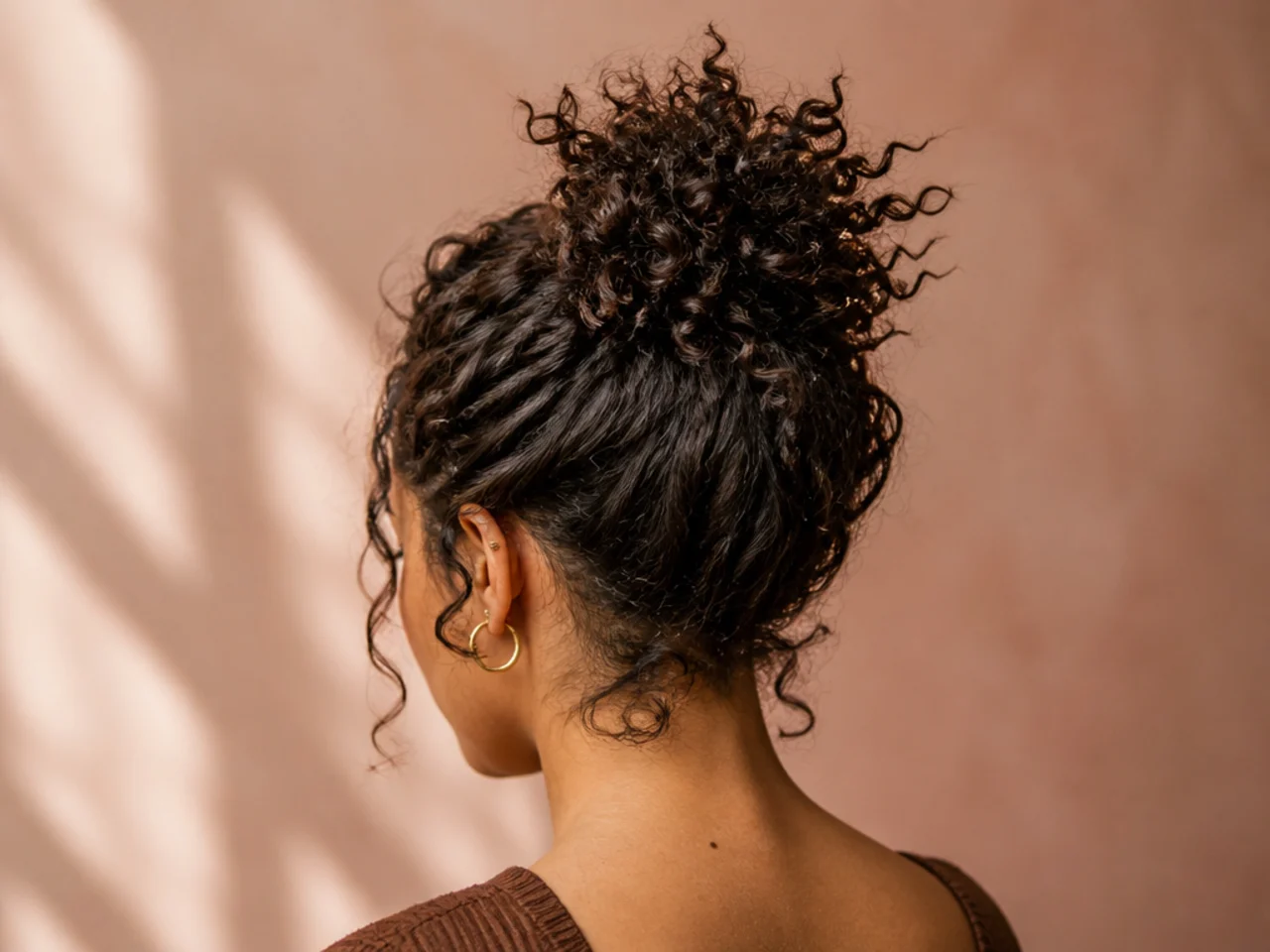
16. Spiky Bun with a Centre Part
Clean part below a deliberately messy finish. The contrast is the point — a sharp line makes the released ends read as intentional rather than as a bun coming apart.
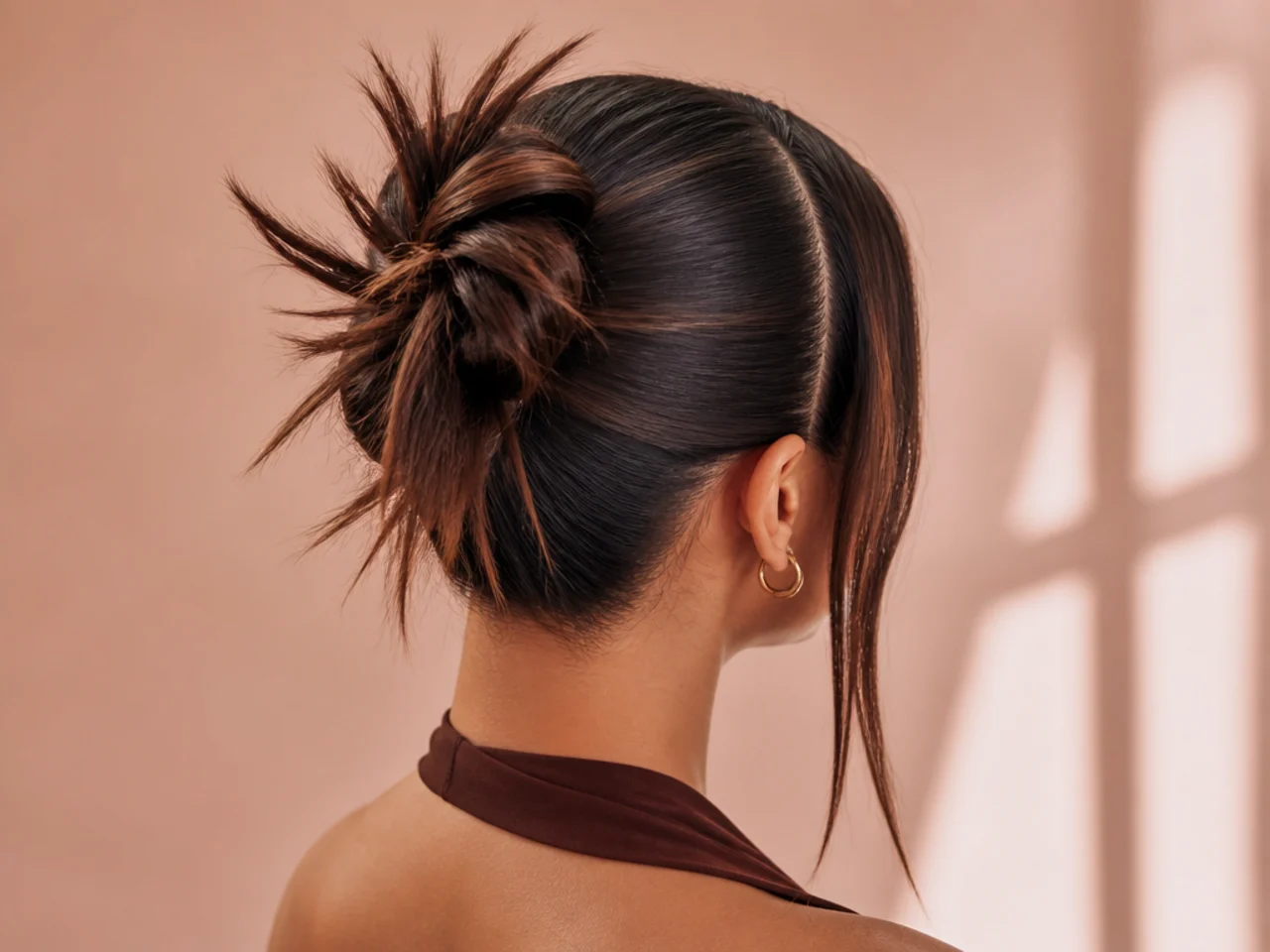
17. Spiky Bun with Slicked Sides
Controlled below, chaotic above. A strong contrast. Slicking the sides also removes the flyaways that would otherwise compete with the spikes for attention.
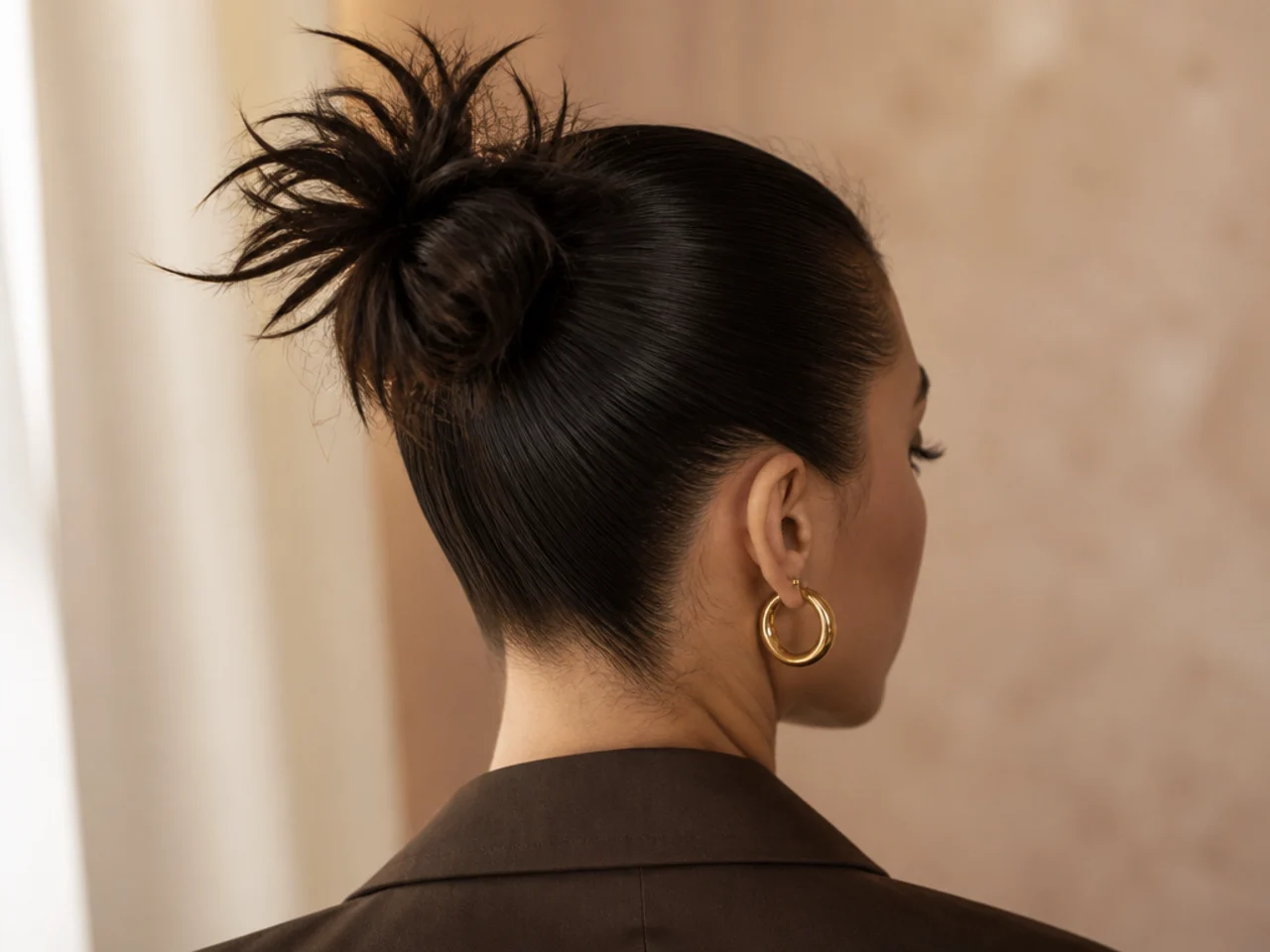
18. Spiky Bun with a Headband
The band tidying the front while the ends stay loose. It also holds the shortest front pieces, which are the ones that will not reach the gather.
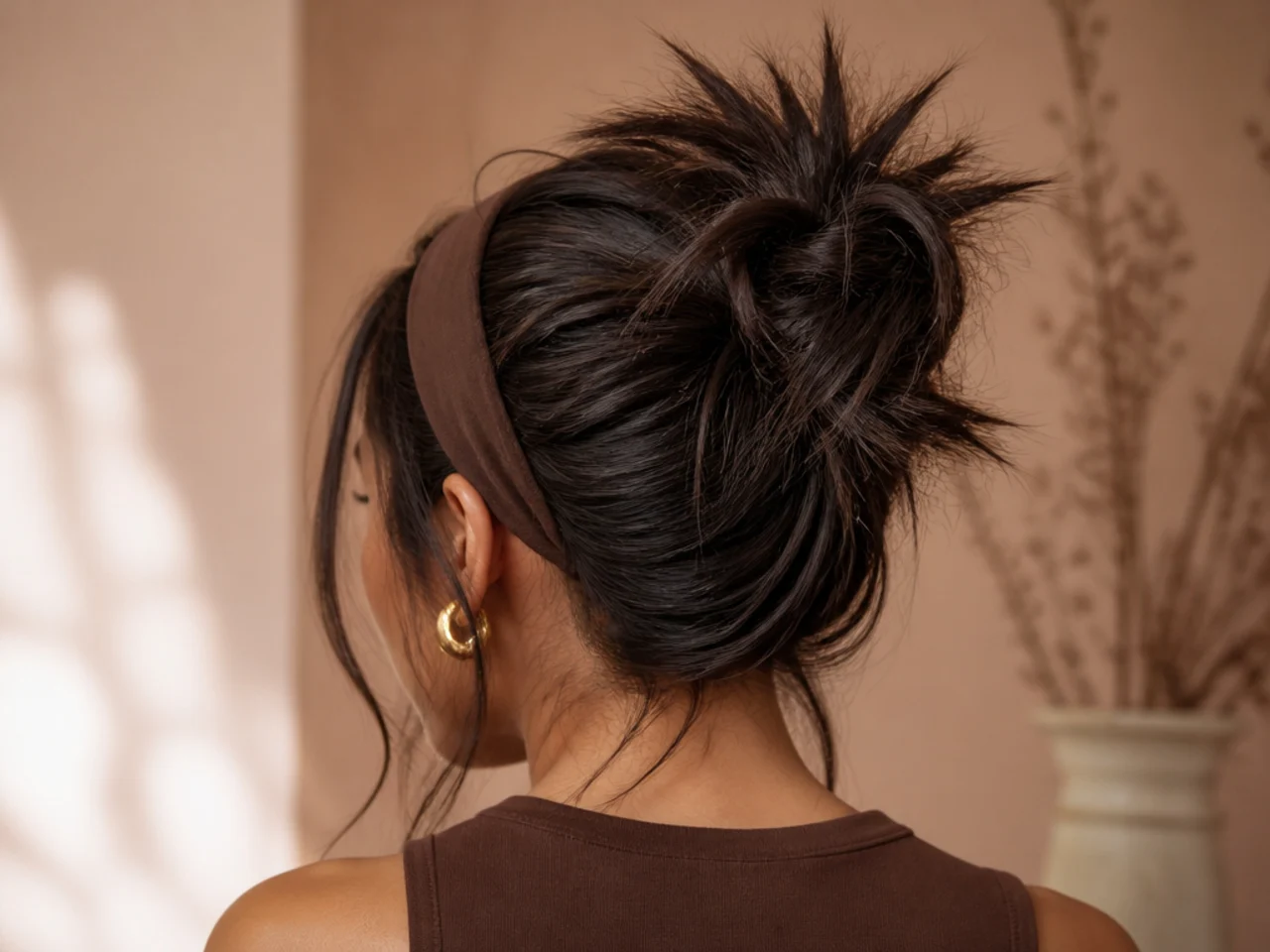
19. Spiky Bun on Second-Day Hair
More grip at the base, more body at the ends. Natural oil helps the base hold and gives the ends a little weight to grip each other with.
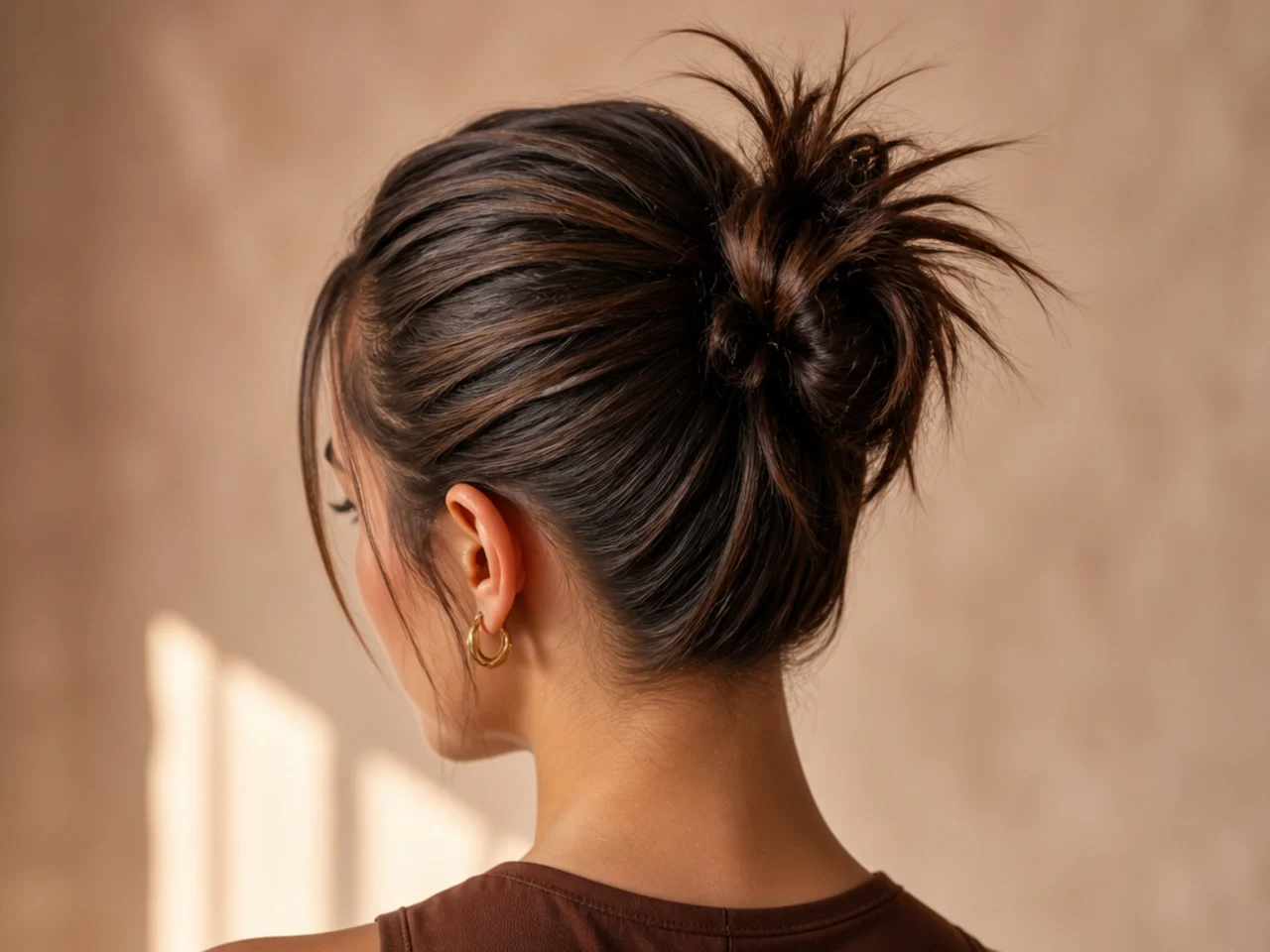
20. Spikes That Have Flopped
Tapered ends, no product. The haircut deciding the outcome. Point-cutting and thinning remove weight from the tip, and there is nothing left to hold a direction.
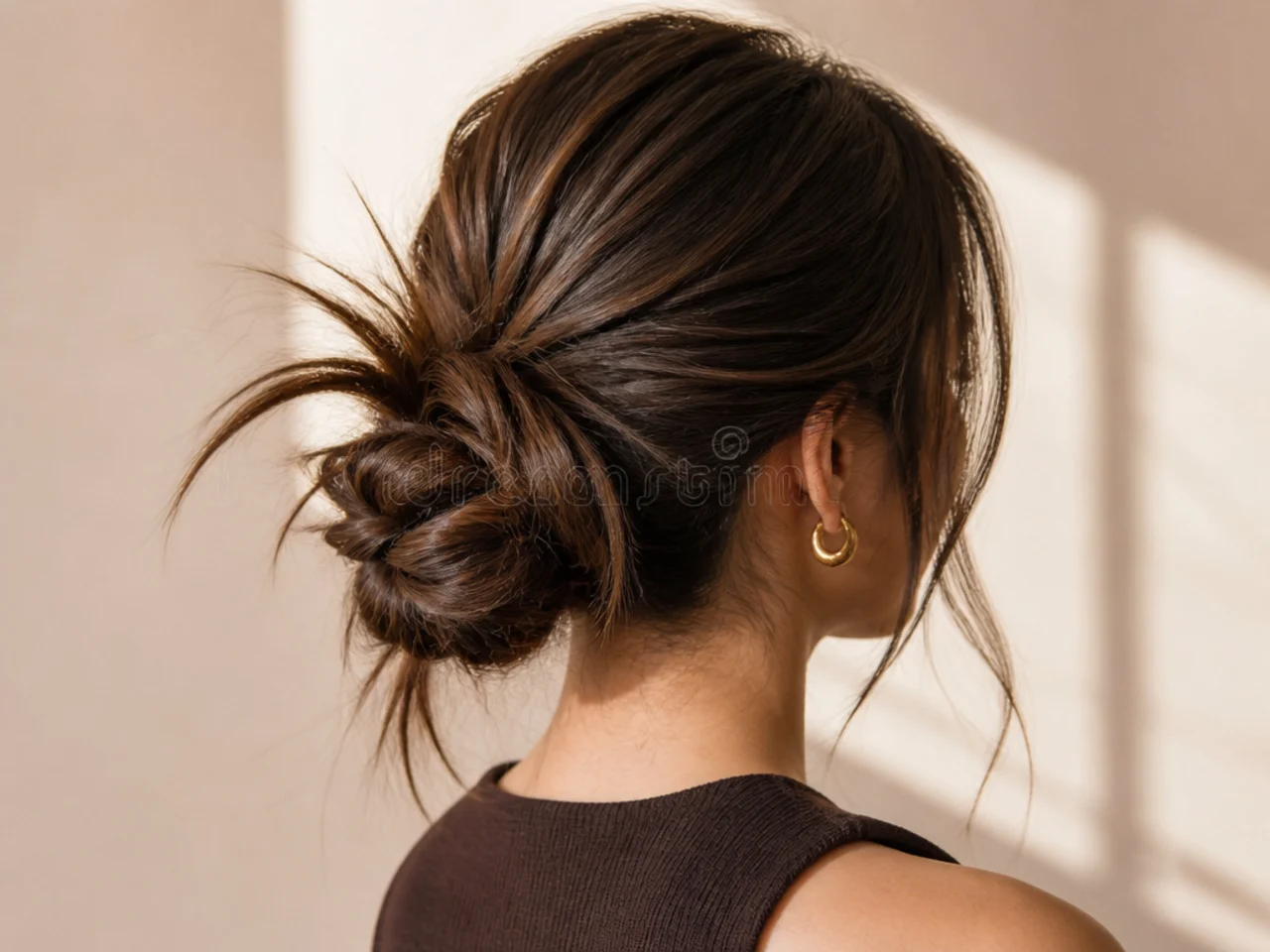
Styling and Upkeep
Spray the ends before releasing them. Not after, when they are already lying flat.
Keep the base as tight as any other bun. Loose base, and the spikes go down with it.
Fan them with your fingers, not a comb. A comb separates them into single strands.
Ask for blunt ends at your next trim. It is the real fix if this style keeps failing.
Redo rather than re-spray. Adding more product to drooping ends makes them heavier.
Mistakes to Avoid
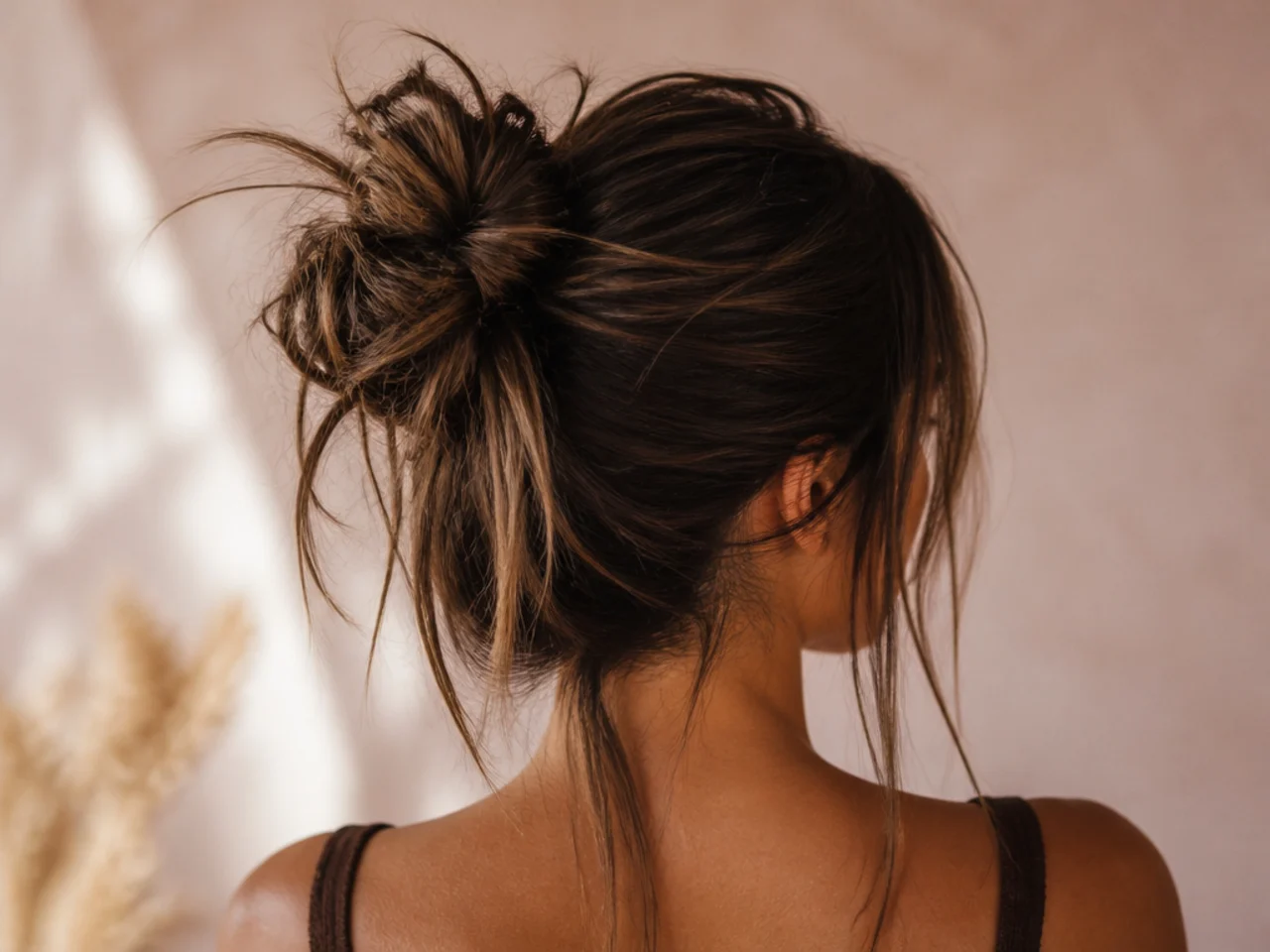
Releasing too much length. It becomes a fountain rather than a spike.
Expecting layered ends to stand. They will not, without help.
A loose base. The spikes sink with everything else.
Combing the ends. They separate into individual strands and look thin.
Product on the whole bun. Only the ends need it.
FAQ
How do you make one? Leave the last wrap undone so the ends stick out.
Why do the ends flop? They are tapered or layered — blunt ends have the body to stand.
Does it work on all hair? Best on thick, coarse, blunt-cut hair; hardest on fine layered hair.
Final Thoughts
Test your ends before you blame your technique. Hold a section straight up — if it falls over immediately, no amount of practice will produce this look, and one blunt trim will.
For the opposite finish see 15 sleek slick back bun looks to try, and for the messy version see 25 easy messy bun tutorials anyone can do. More in Updos & Clips.