![25 Easy Edgar Haircut For Men [With Photos]](/images/article-edgar-haircut/1-classic-edgar-4x3.webp)
25 Easy Edgar Haircut For Men [With Photos]
The Edgar haircut's signature blunt fringe has been one of the most-searched men's cuts every year since 2020. This guide walks through 25 variations — from the classic straight-across fringe to Edgar fades, Takuache hybrids, and modern textured versions — with photos and the exact wording to get the version you want.
In this article · 77
- What Is Edgar Haircut?
- History and Cultural Significance
- 25 Types of Edgar Haircuts
- 1\. Classic Edgar
- 2\. High Fade Edgar
- 3\. Mid Fade Edgar
- 4\. Low Fade Edgar
- 5\. Skin Fade Edgar
- 6\. Taper Fade Edgar
- 7\. Drop Fade Edgar
- 8\. Curly Edgar
- 9\. Wavy Edgar
- 10\. Textured Top Edgar
- 11\. Long Fringe Edgar
- 12\. Short Fringe Edgar
- 13\. Edgar with Line Up
- 14\. Edgar with Designs
- 15\. Disconnected Edgar
- 16\. Asymmetrical Edgar
- 17\. Edgar with Hard Part
- 18\. Colored Edgar
- 19\. Edgar with Undercut
- 20\. Messy Edgar
- 21\. Slicked Back Edgar
- 22\. Edgar with Mullet
- 23\. Edgar with Fade Art
- 24\. Mini Edgar
- 25\. Long Top Edgar
- How to Ask Your Barber for an Edgar Haircut
- Essential Terminology
- Bring Reference Photos
- The Cutting Process
- Communication Tips
- Face Shapes That Work Best with Edgar Haircuts
- Square Face
- Oval Face
- Round Face
- Heart-Shaped Face
- Diamond Face
- Long/Rectangular Face
- Triangular Face (wider at jaw)
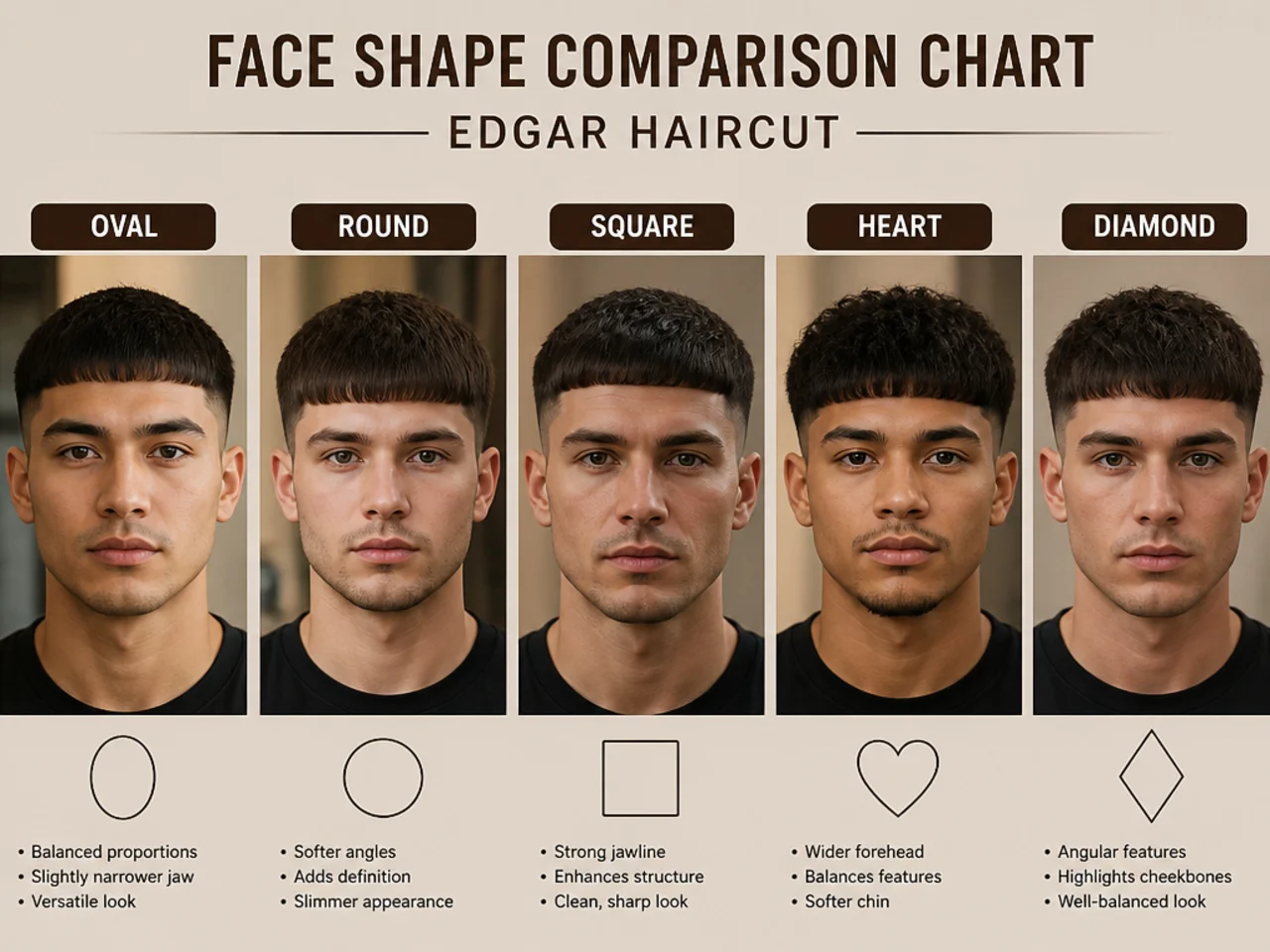
- Face Shape Comparison Chart
- Why It’s Trending in 2025
- Styling an Edgar Haircut at Home
- Essential Styling Products
- Step-by-Step Styling Guide
- Essential Tools
- Common Styling Mistakes to Avoid
- Maintenance and Upkeep
- Touch-Up Schedule
- Daily Maintenance Routine
- Product Recommendations for Maintenance
- Troubleshooting Common Issues
- Edgar Haircut Variations for Different Hair Types
- For Straight Hair
- For Curly Hair
- For Wavy Hair
- For Coarse Hair
- For Fine Hair
- For Thinning Hair
- Pros and Cons of Getting an Edgar Haircut
- Pros
- Cons
- Time Commitment
- Cost Considerations
- How to style an Edgar at home
- FAQs About Edgar Haircuts
- How Much Does An Edgar Haircut Cost?
- How Long Does An Edgar Haircut Take To Grow Out?
- Can I Get An Edgar Haircut With a Receding Hairline?
- What's The Difference Between An Edgar Cut And A Caesar Cut?
- Does An Edgar Haircut Work For All Hair Colors?
- How Do I Know If An Edgar Haircut Will Suit Me?
- Is The Edgar Haircut Appropriate For Professional Settings?
- Why Do They Call It An Edgar Haircut?
- What Is The Gen Z Male Haircut Called?
- Conclusion
The Edgar's signature is one thing: a sharp, straight-across fringe cut blunt across the forehead. Born in Mexican-American communities in the U.S. Southwest and mainstream since 2020, it's now on teenagers, athletes, and grown men across the country. This guide runs through 25 Edgar variations — the fade height, the fringe length, the top texture — plus exactly how to ask for each and how to keep the line clean between cuts.
What Is Edgar Haircut?
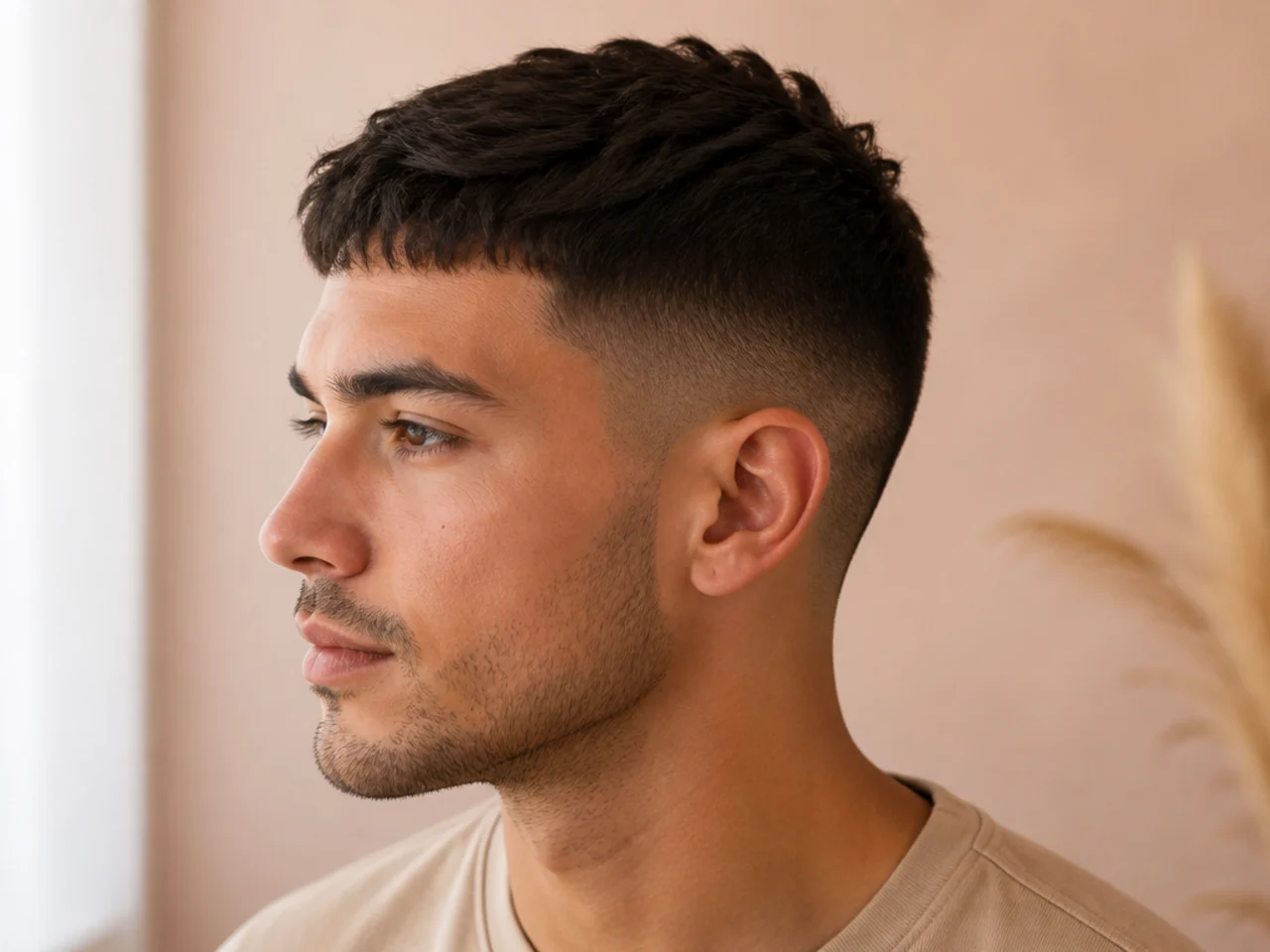
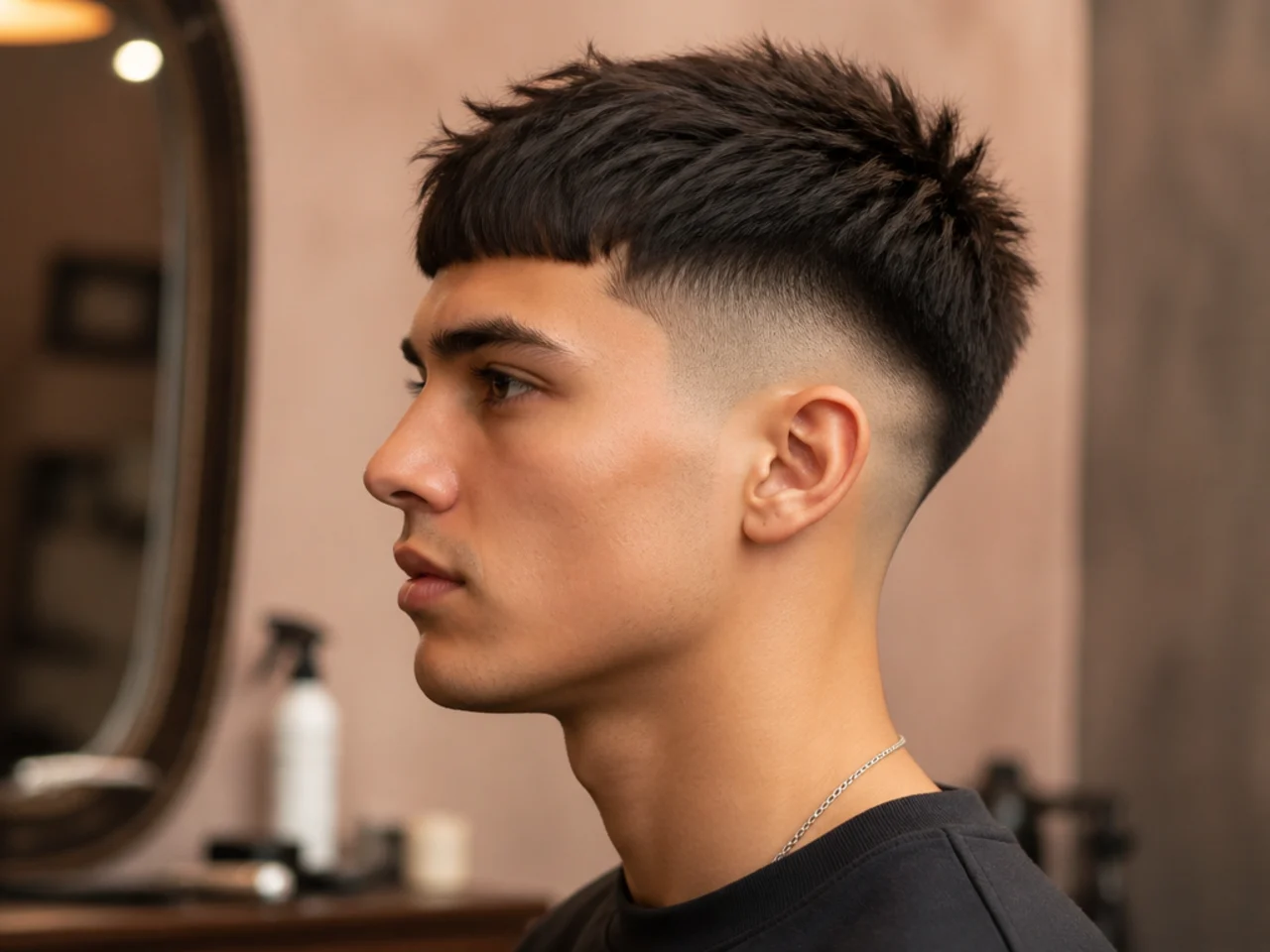
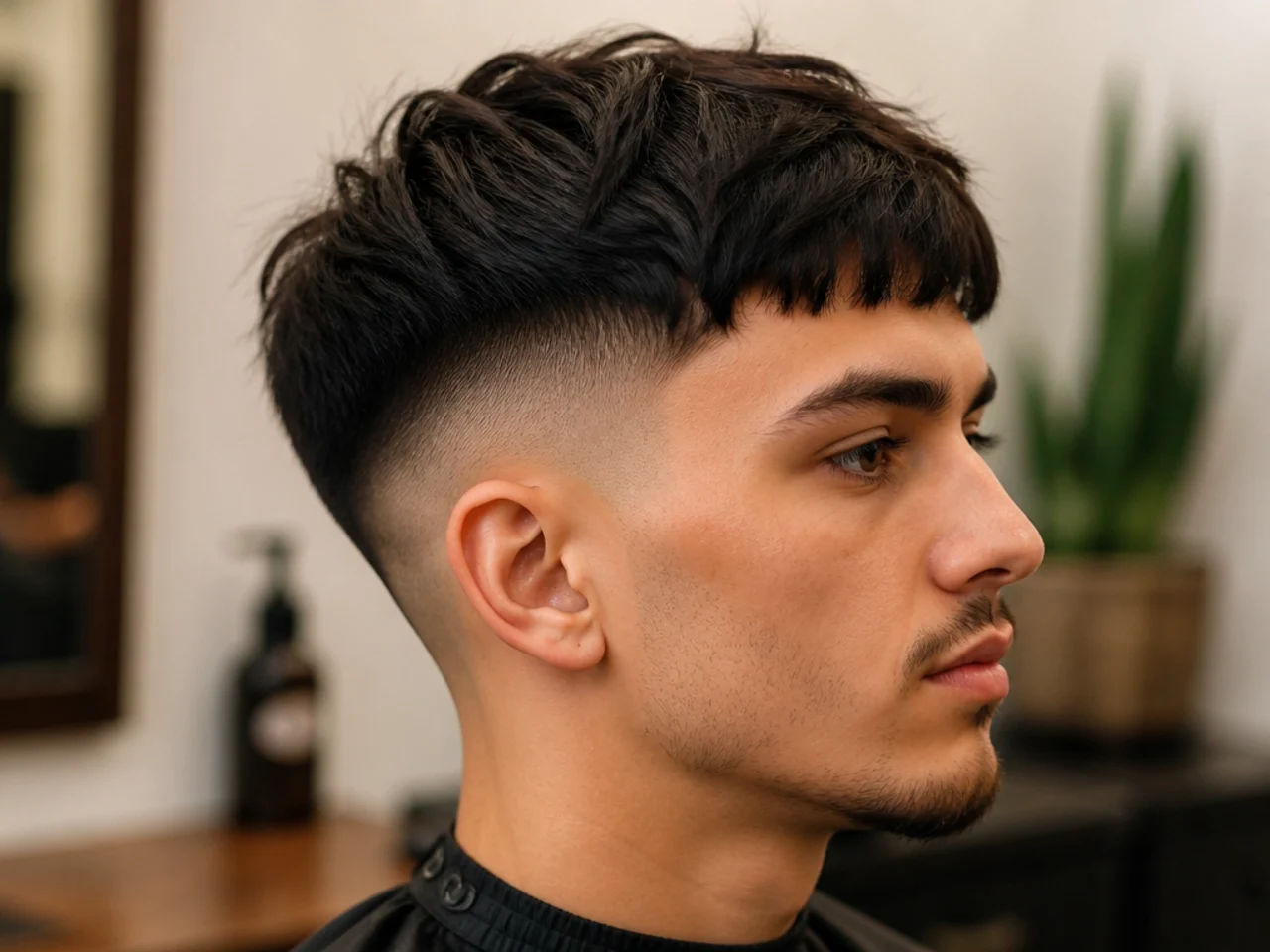
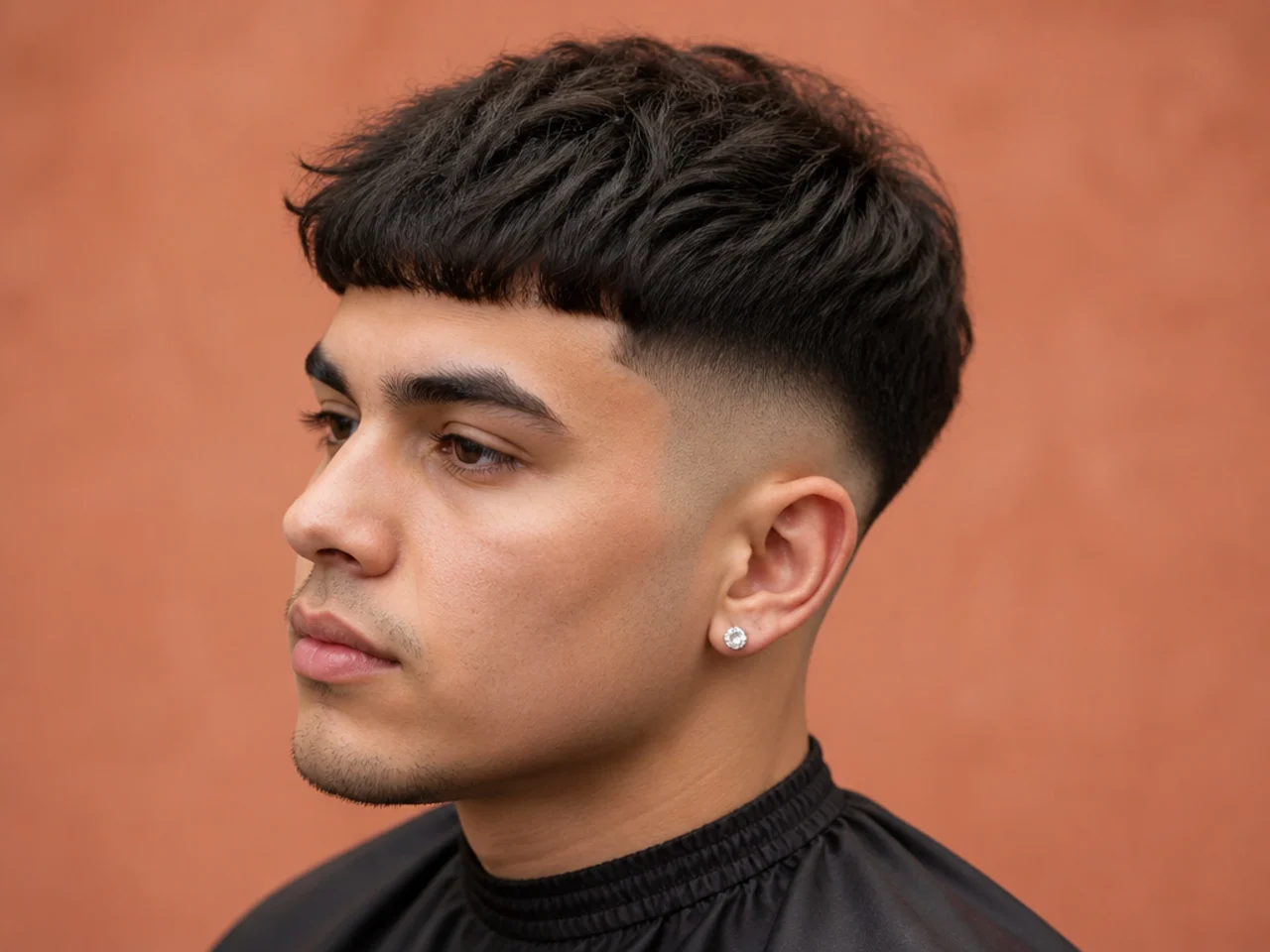
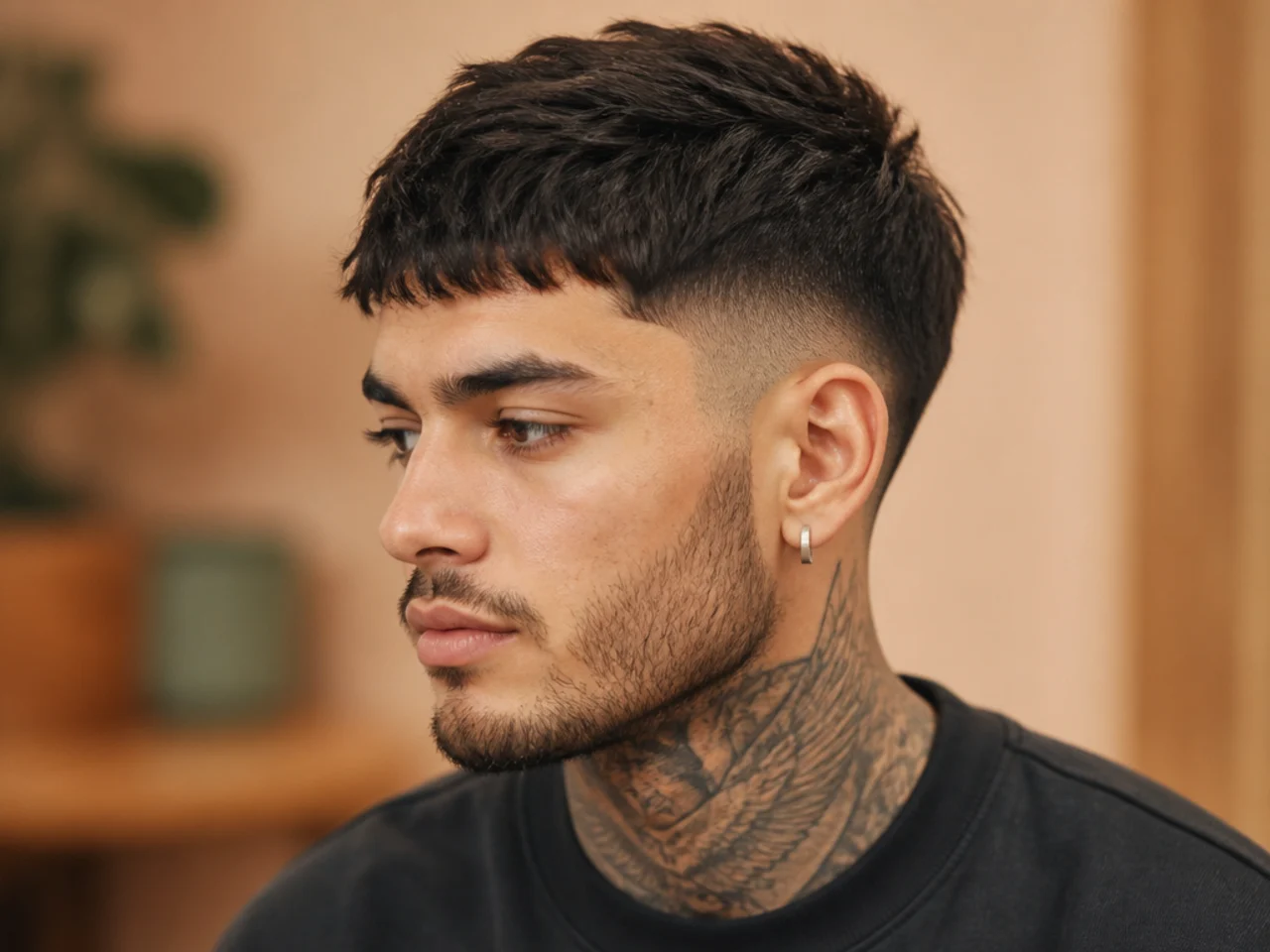
An Edgar is a blunt-fringe crop with faded or tapered sides. The top hair gets combed forward and cut in one straight, unbroken line across the forehead. That line is the whole point. Sides can be low, mid, high, or skin-faded. The top can sit blocky or textured. But if the front edge isn't a hard horizontal, it isn't an Edgar.
You'll also hear the cut called the takuache haircut, especially in the Latino youth circles where it first caught on. It gets confused with the middle part cut, but the Edgar is the opposite — forward-combed, no part, all edge.
History and Cultural Significance
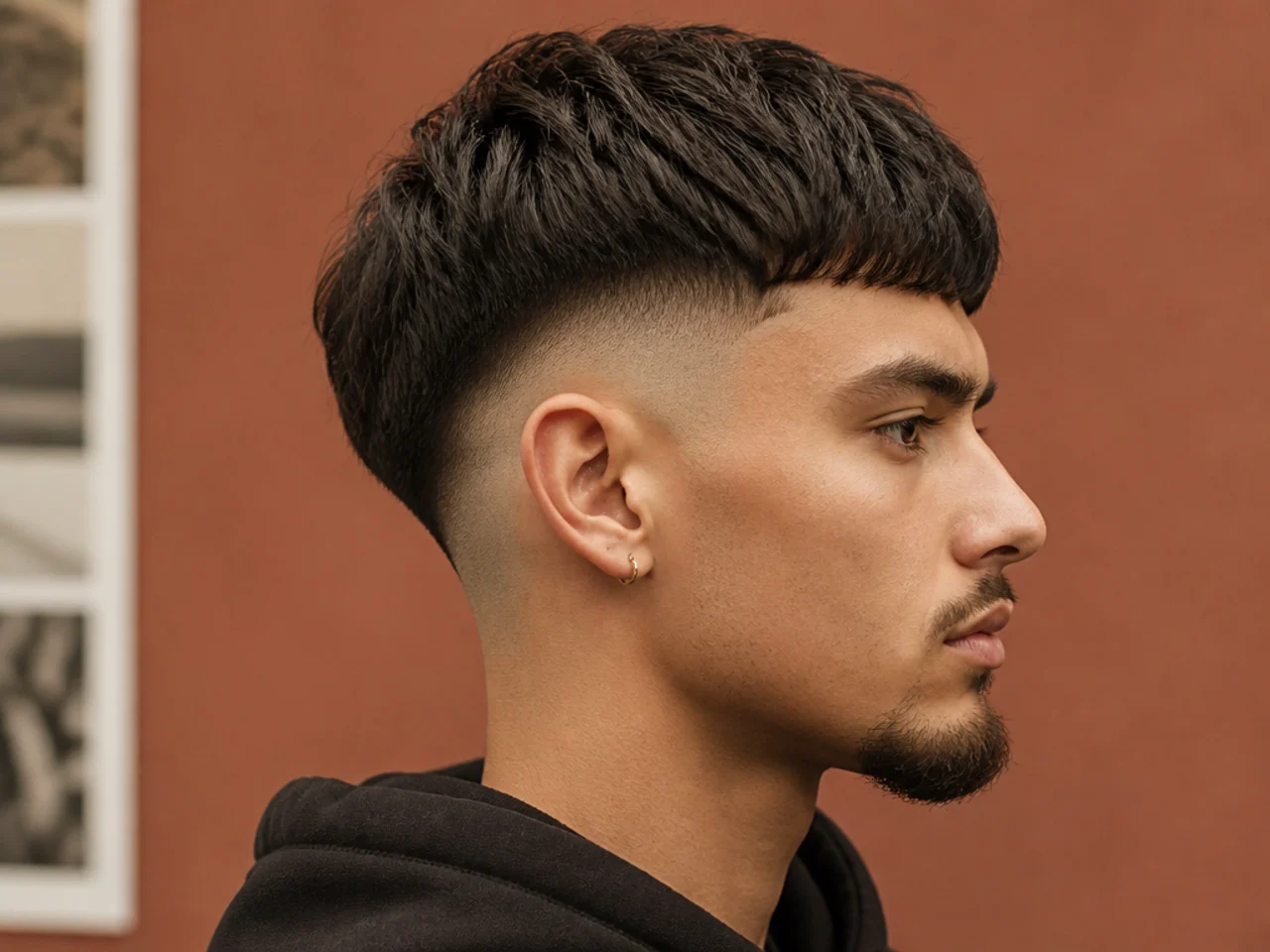
The Edgar came out of Mexican-American communities in Texas and California in the mid-2010s. It took off inside the takuache subculture and spread through Instagram and TikTok barber videos around 2019 and 2020.
Latin music artists and soccer players pushed it further. Peso Pluma made the blunt-fringe silhouette a global look (see Peso Pluma's new haircut for that specific take), and by 2022 you'd find Edgars at any barbershop from LA to Madrid.
The style now sits alongside the broccoli haircut and comma haircuts on the standard teen barbershop menu. Latino in origin, mainstream in reach.
25 Types of Edgar Haircuts
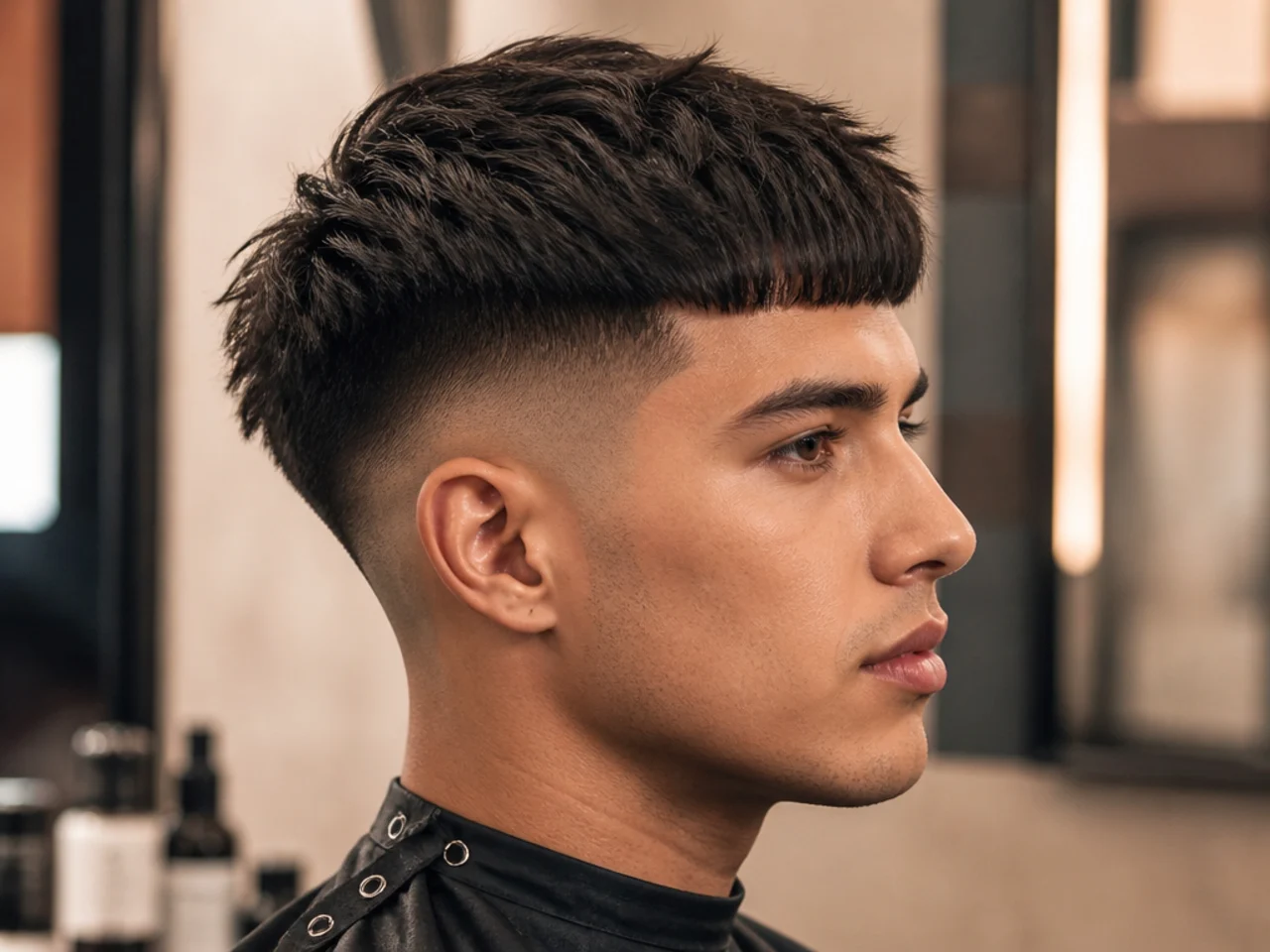
The blunt fringe never moves. What flexes is the fade height, the top length, and the texture. Here are 25 versions your barber will recognize by name.
1. Classic Edgar
The reference version. Straight blunt fringe at or just above the brows, blocky top, mid-to-high fade on the sides.
Who it suits: angular or square faces with a strong hairline.
How to ask: "Classic Edgar. Blunt straight fringe brow-length. Mid fade starting at the temples. Top left blocky."
Styling: blow-dry the fringe forward with a round brush, finger-comb a pea of matte cream through.
2. High Fade Edgar
The high taper fade climbs almost to the crown. Maximum contrast, hardest edges — the top and fringe read like a block floating on shaved skin.
Who it suits: long or oval faces. The vertical fade offsets face length.
How to ask: "High fade starting two fingers below the crown, skin at the bottom. Blunt fringe at brow level."
Styling: matte clay pressed forward, fringe combed flat, no shine.
3. Mid Fade Edgar
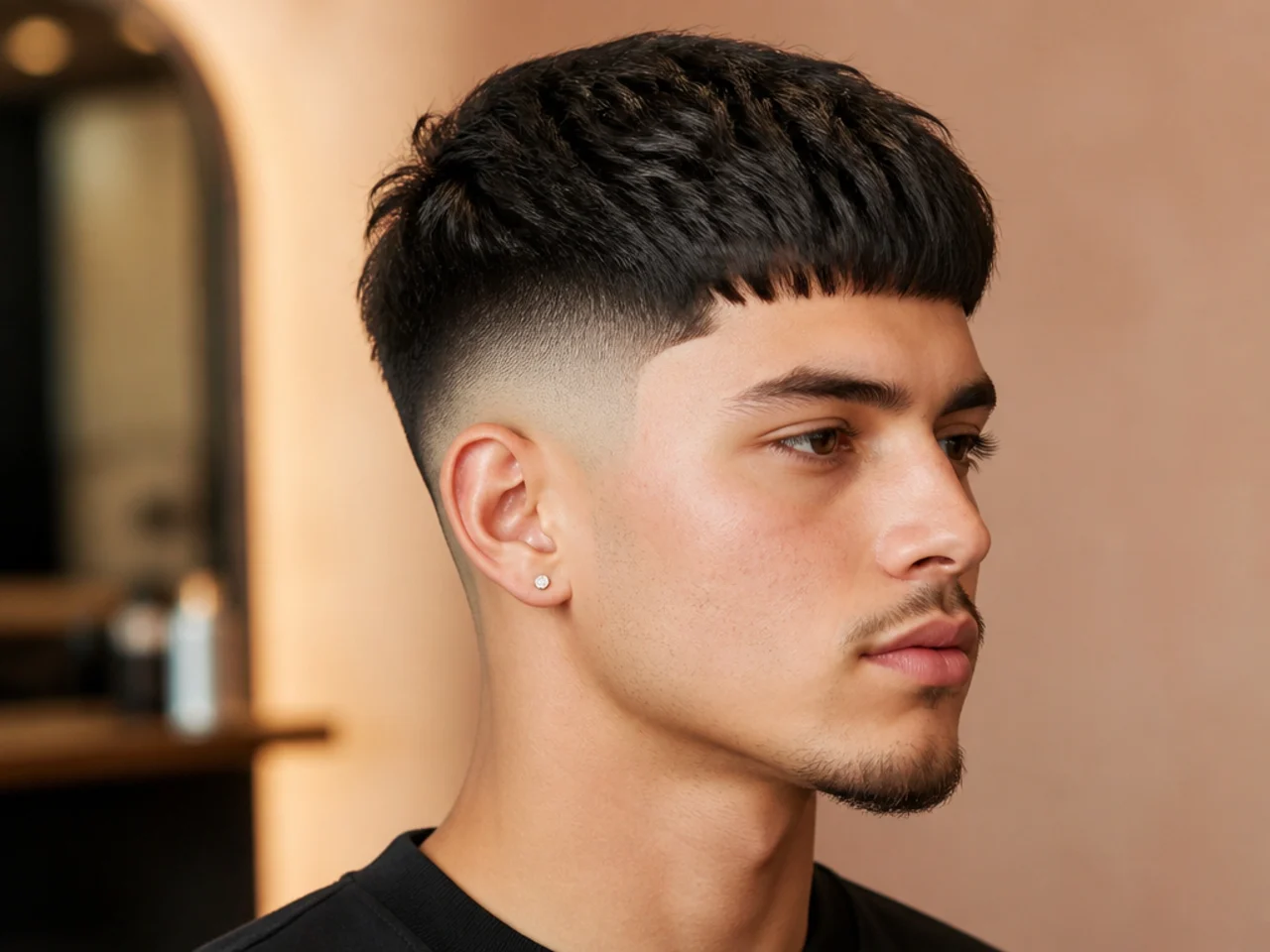
The mid fade sits at the temple line — between the top of the ear and the corner of the eyebrow. The most-requested Edgar fade for a reason.
Who it suits: almost anyone. Square, oval, and slightly round faces all wear it well.
How to ask: "Mid fade at the temple. Blunt fringe just above the brows. Natural top."
Styling: damp hair, matte cream, comb forward. Ninety seconds.
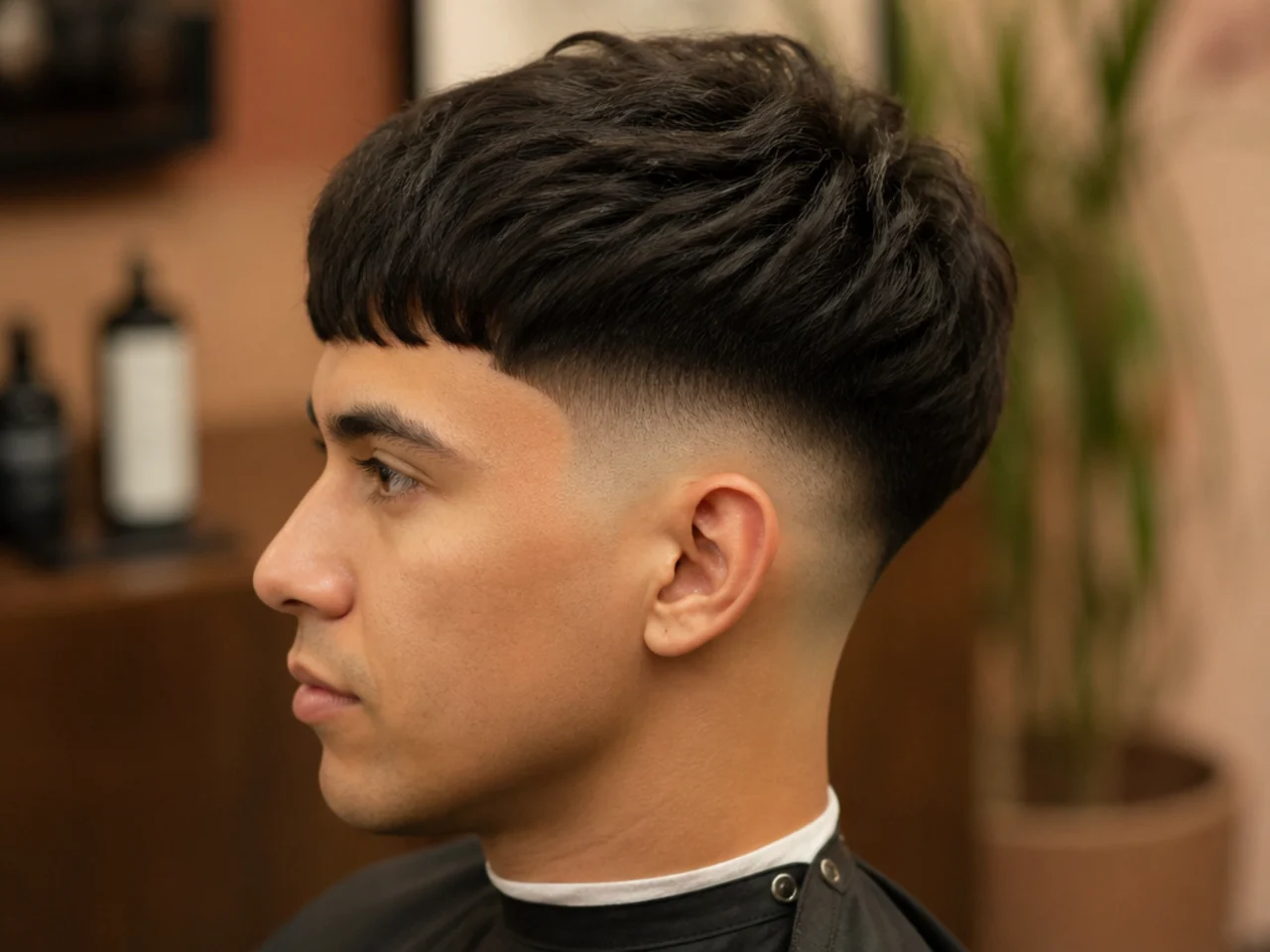
4. Low Fade Edgar
The low fade starts just above the ear and keeps most of the side length. The office-safe Edgar — sides read close to a normal short back and sides, but the blunt fringe is still there.
Who it suits: softer face shapes, and any workplace that would frown on a skin fade.
How to ask: "Low fade starting one finger above the ear. Blunt fringe at the brow. Blocky top."
Styling: light cream, comb forward, out the door.
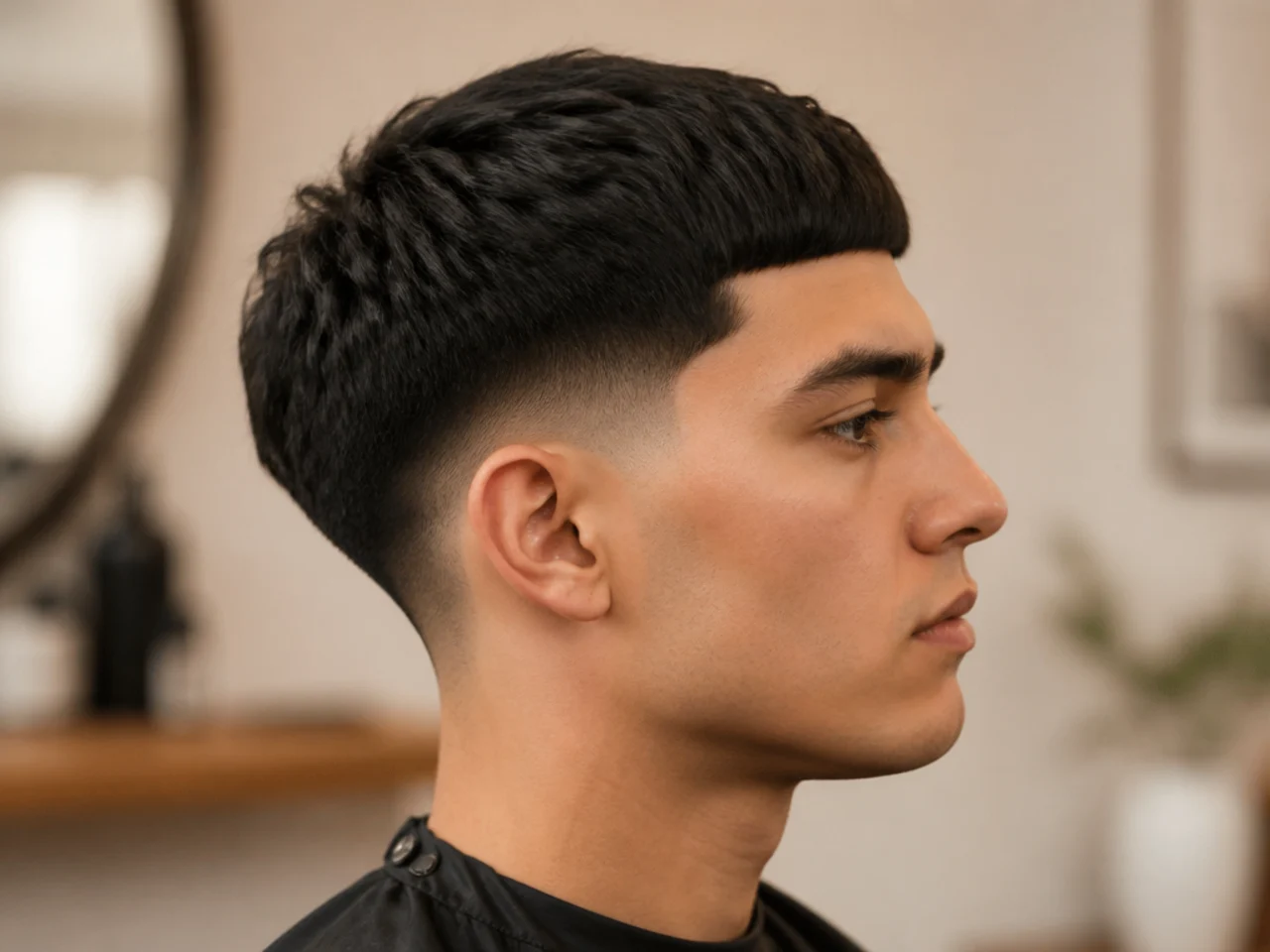
5. Skin Fade Edgar
The fade drops all the way to bare scalp — a bald fade. Combined with the blunt fringe, the most dramatic version of the cut.
Who it suits: square and diamond faces with strong bone structure.
How to ask: "Skin fade, mid or high height, blunt fringe brow-length. Bare skin at the bottom."
Styling: matte paste, forward. Book a touch-up every 10 days or the fade fuzzes.
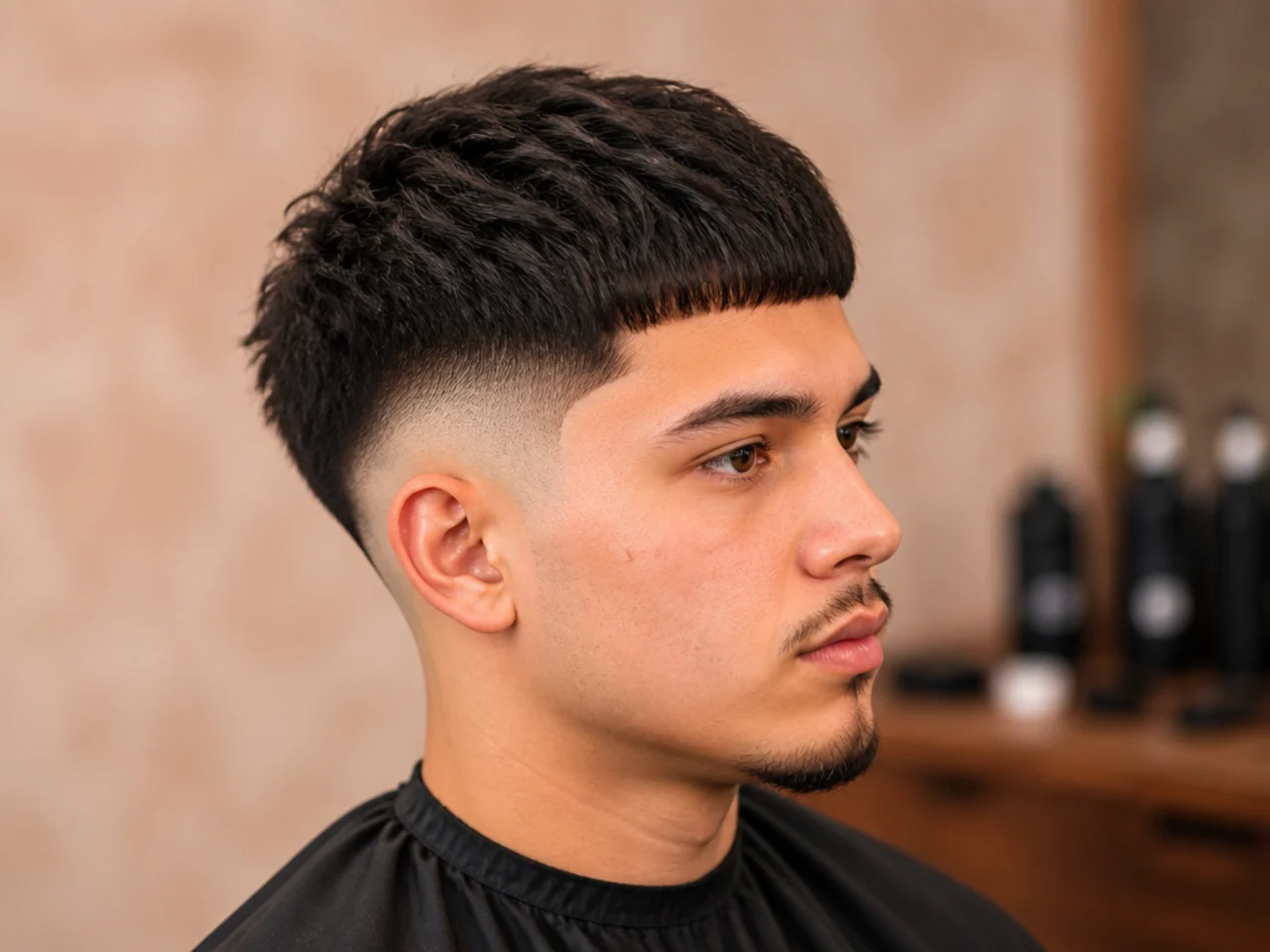
6. Taper Fade Edgar
A low taper fade softens the transition around the ear and neckline while keeping the sides essentially long — the least aggressive Edgar sides you can order.
Who it suits: round or heart-shaped faces where a hard high fade would feel like too much.
How to ask: "Low taper around the ears and neckline. Sides scissor-length. Blunt fringe on top."
Styling: matte cream, comb forward, go.
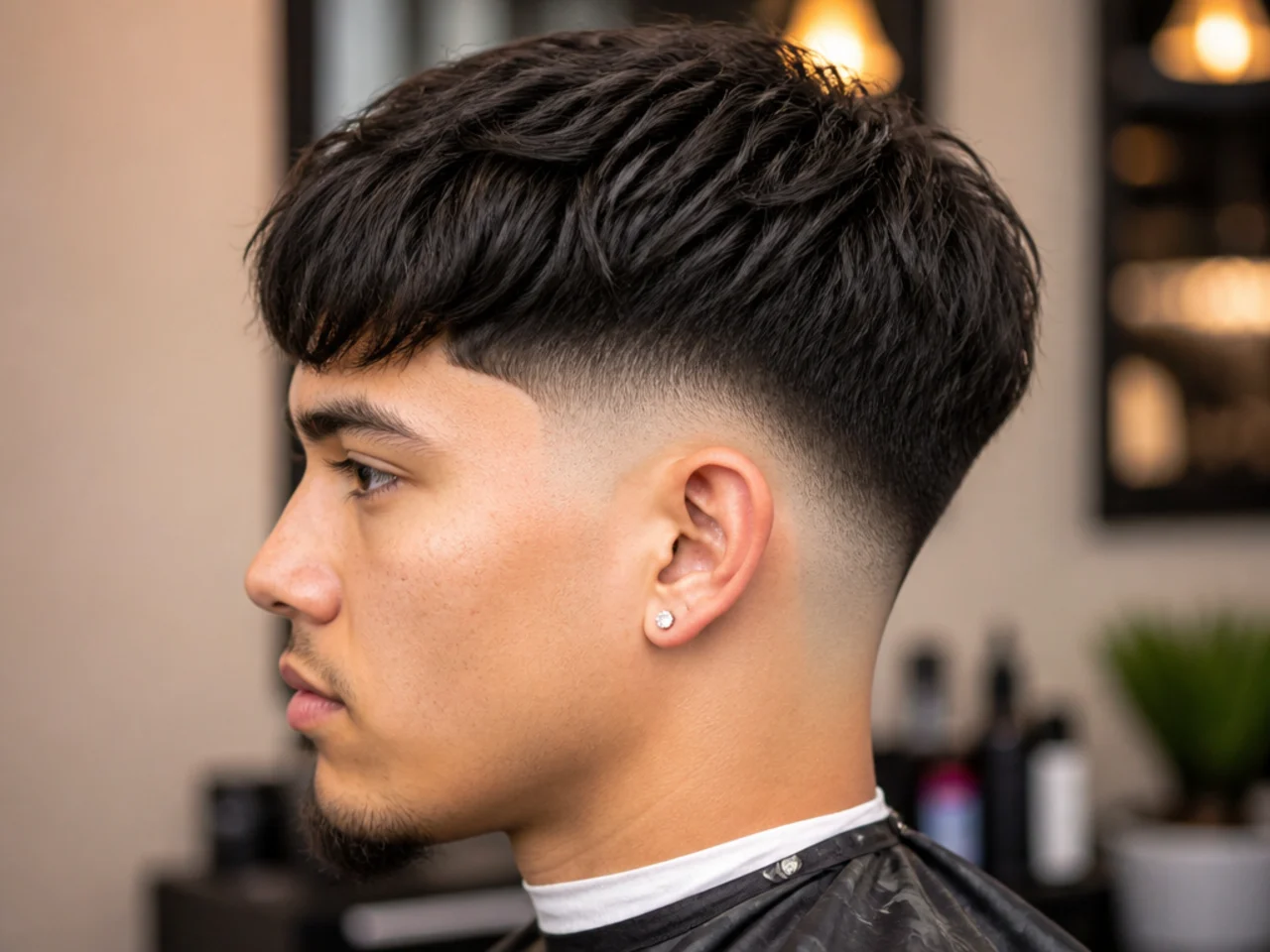
7. Drop Fade Edgar
The fade line drops behind the ear in a curve instead of holding straight across — follows the shape of the skull. Adds interest on the side profile.
Who it suits: oval and round faces. The curve breaks up hard angles.
How to ask: "Drop fade behind the ear, mid-height on the temple. Blunt fringe on top."
Styling: matte clay, forward-comb the fringe only.
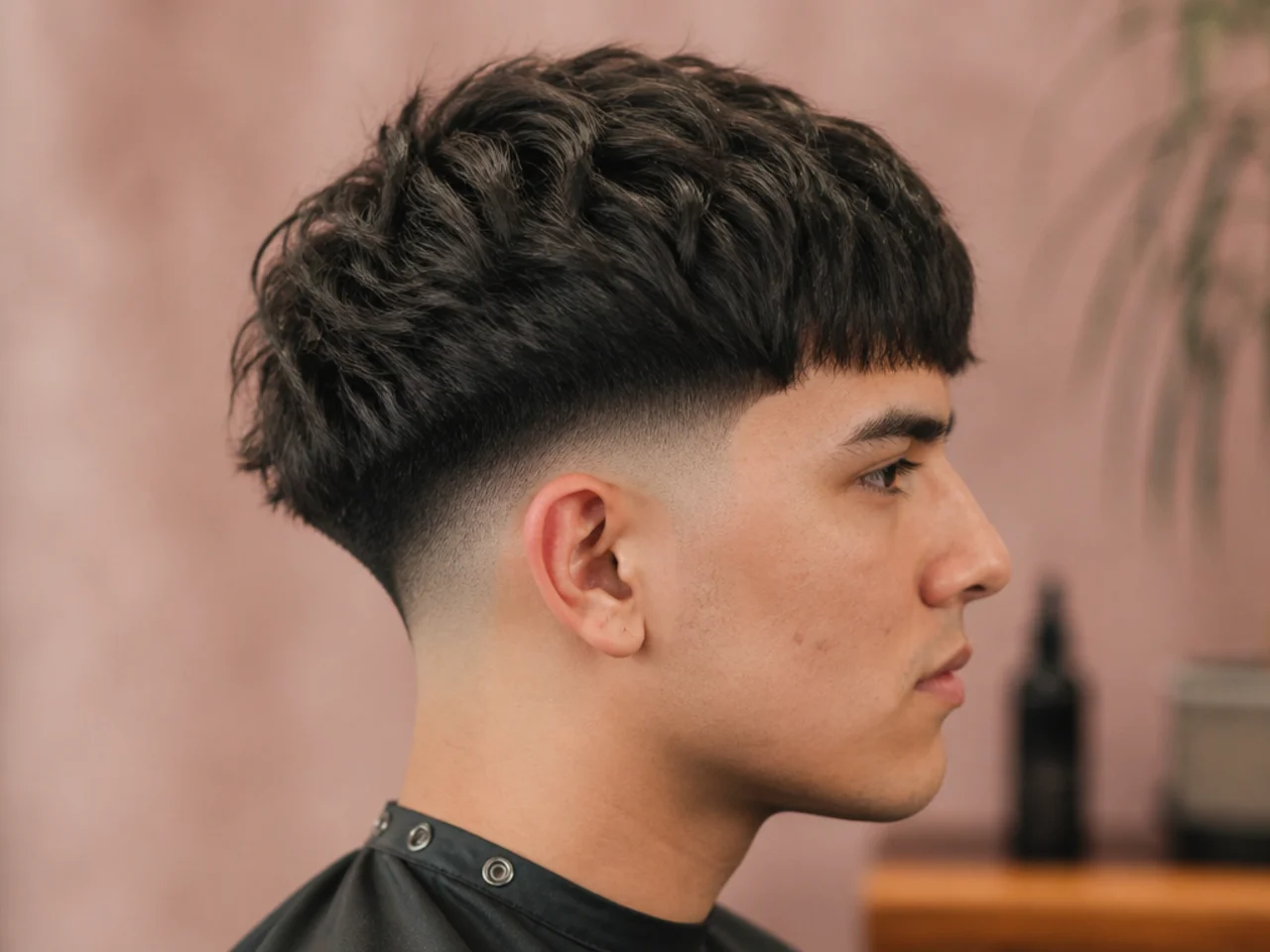
8. Curly Edgar
Same silhouette, top hair curly. The barber straightens the fringe section with a comb before cutting so the line lands even. Fringe shrinks about half an inch once dry — factor it in.
Who it suits: curly guys who want structure without straightening daily. Softer face shapes benefit — the curl adds volume that offsets the sharp fringe.
How to ask: "Edgar cut, leave half an inch extra on the fringe for curl shrinkage. Cut the fringe combed straight."
Styling: curl cream through the top. Blow-dry only the fringe flat with a round brush. Air-dry the rest.
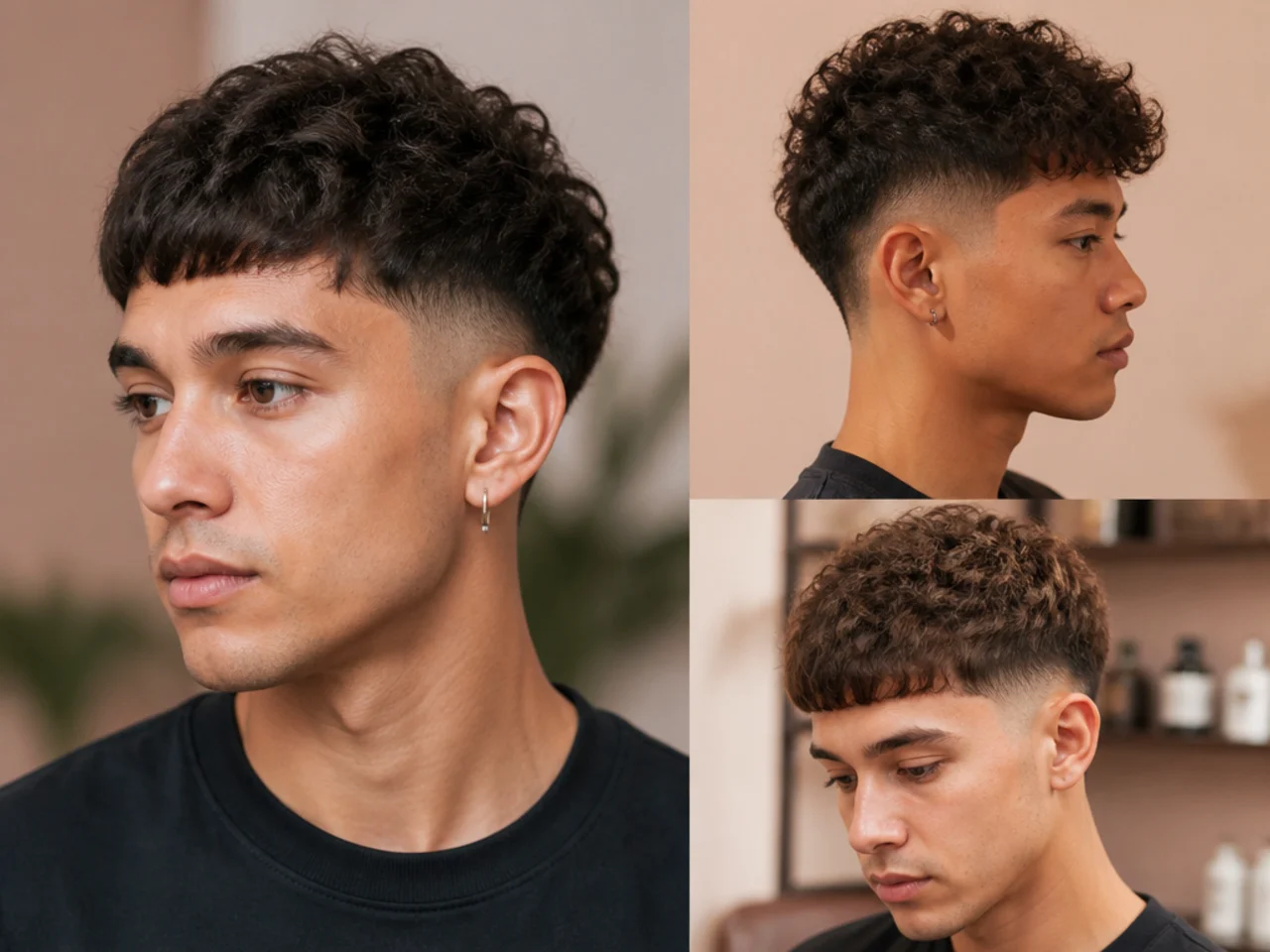
9. Wavy Edgar
Wavy hair holds a blunt fringe cleanly if you blow-dry it flat. The waves in the crown add movement straight-haired Edgars can't get without product.
Who it suits: oval and square faces with 2A–2B wave patterns.
How to ask: "Edgar with a straight fringe. Crown left wavy, don't over-thin. Mid fade sides."
Styling: round brush and dryer on the fringe. Sea-salt spray in the crown.
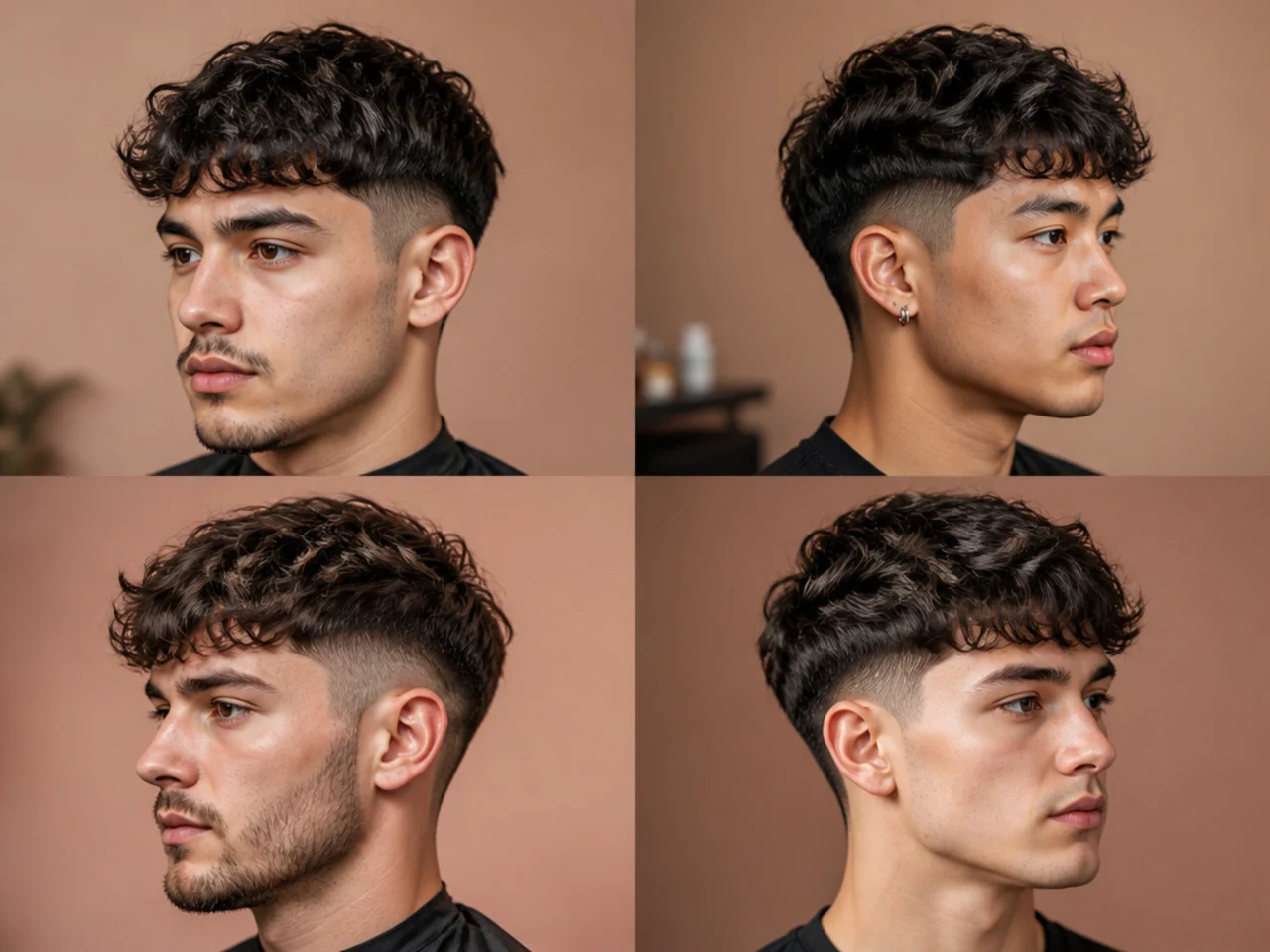
10. Textured Top Edgar
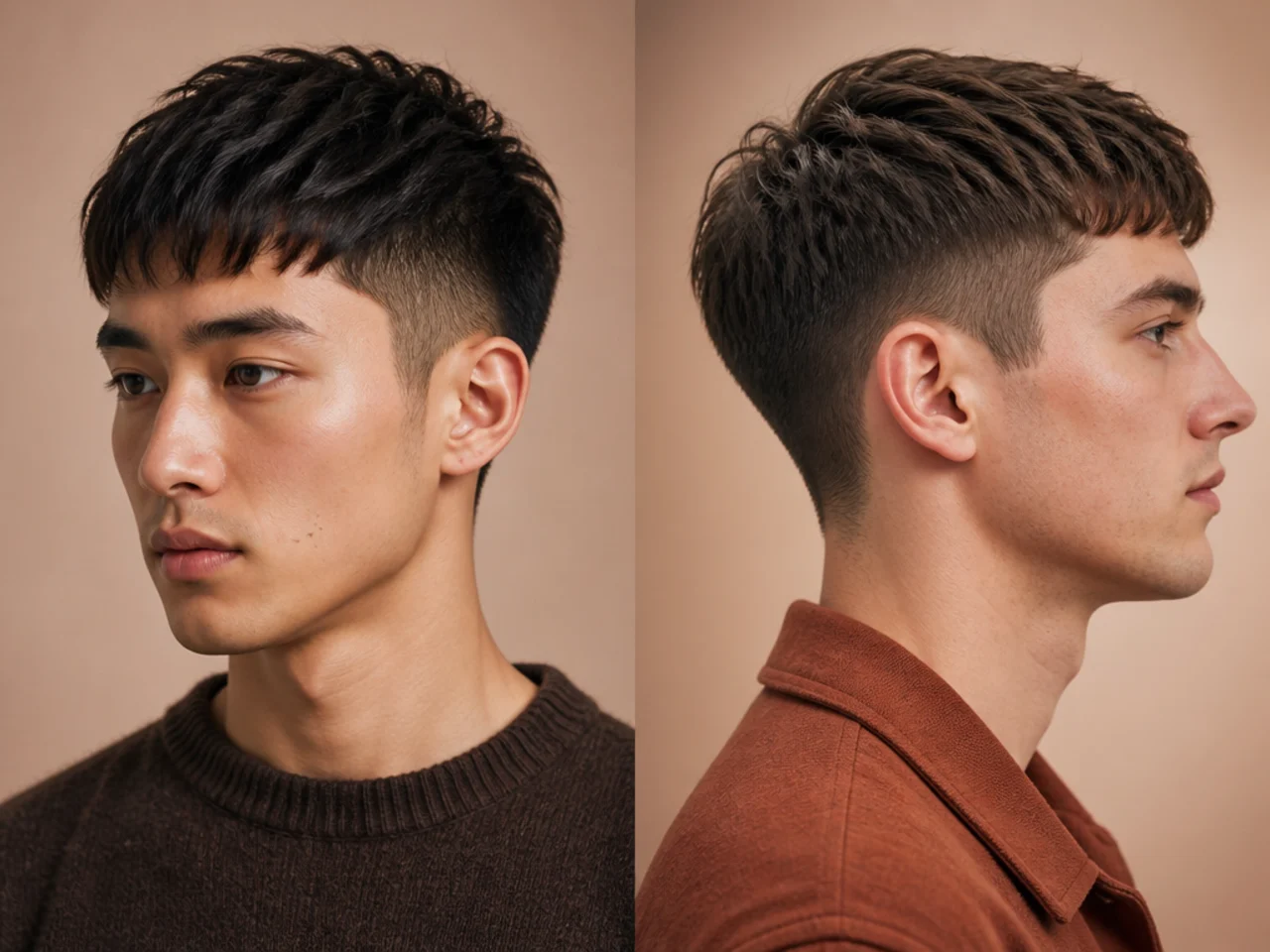
Blunt fringe stays, but the top gets point-cut and razored for movement. Reads more current than the blocky classic and skips the "helmet" look.
Who it suits: thick-haired guys who look too heavy in the classic. Also round faces — the texture adds vertical volume.
How to ask: "Point-cut textured top. Fringe blunt and straight across. Mid fade sides."
Styling: matte paste, worked in with fingers, don't over-comb.
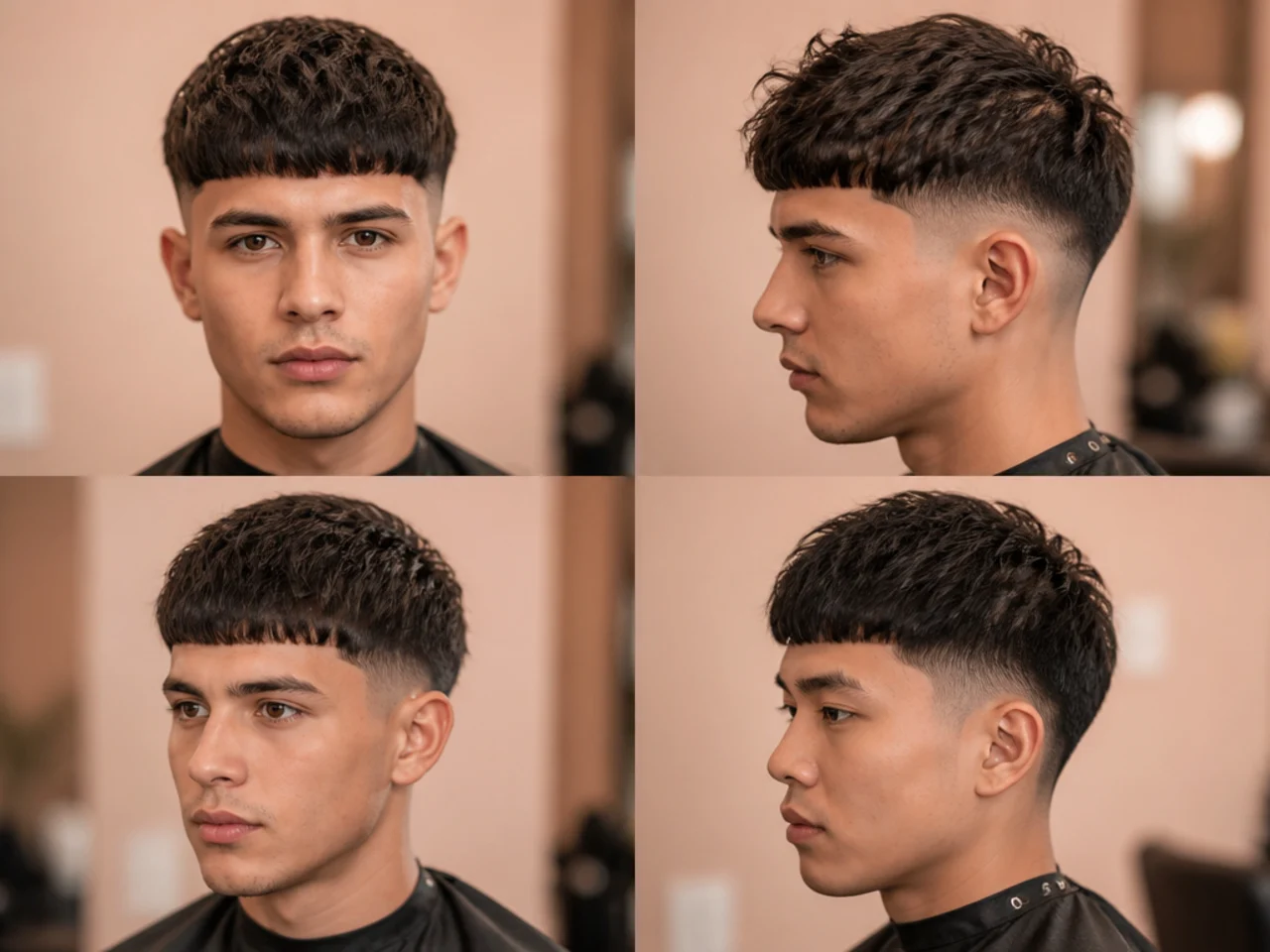
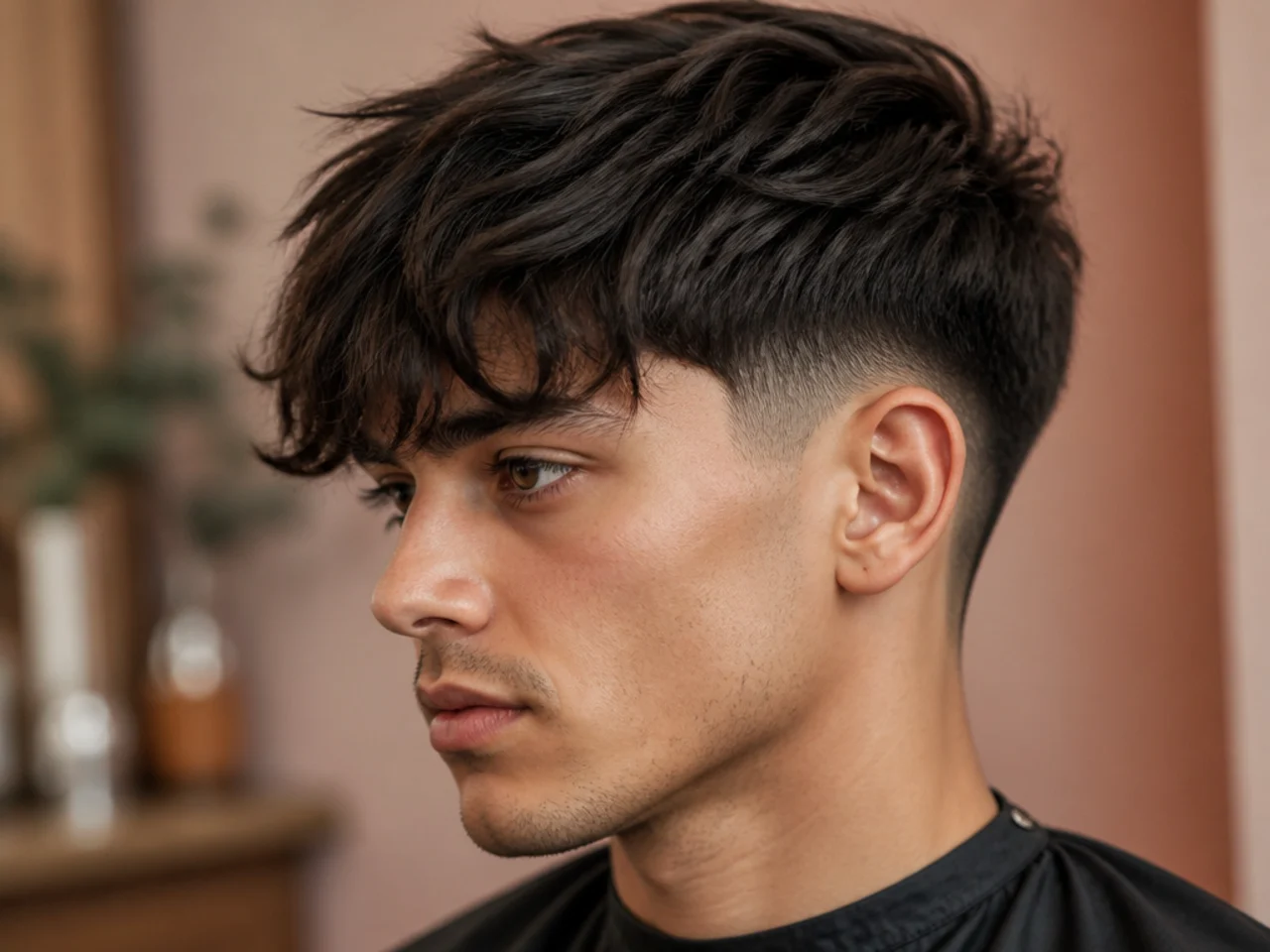
11. Long Fringe Edgar
Fringe extends past the brows, sometimes to the lash line. The blunt line stays razor-straight — just lower on the face.
Who it suits: longer face shapes where a low fringe shortens the forehead visually.
How to ask: "Blunt fringe cut to just touch the eyelashes. Mid fade sides."
Styling: blow it forward daily or it drifts sideways by lunch.
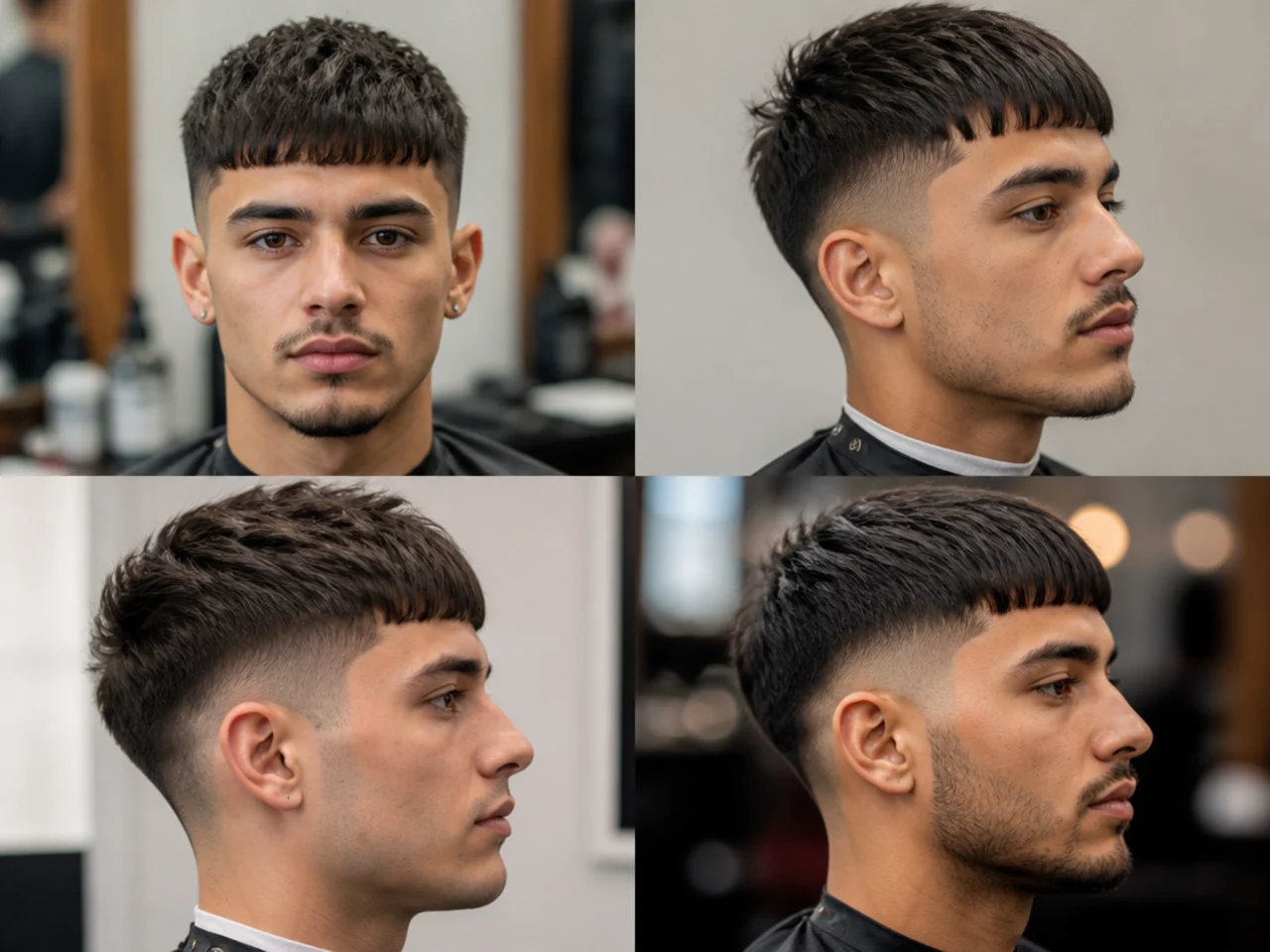
12. Short Fringe Edgar
Fringe sits well above the brows — about a finger's width up from the arch. Reads conservative, hides less of the face.
Who it suits: round faces where a lower fringe closes in the features, and workplaces where a long fringe reads too trendy.
How to ask: "Short blunt fringe sitting a finger above the brow line. Low or mid fade."
Styling: a light comb and go.
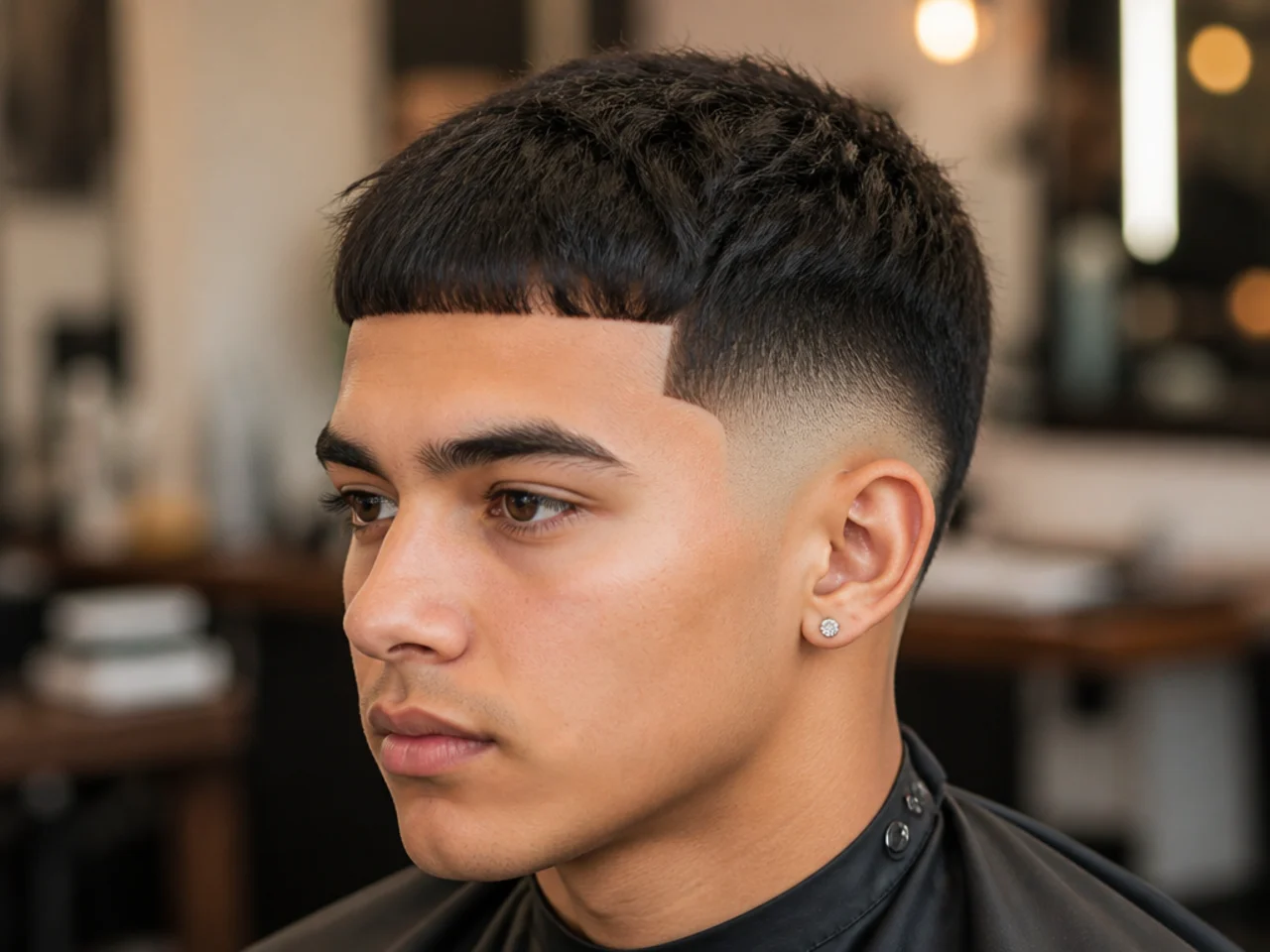
13. Edgar with Line Up
A razored line-up along the temples and forehead sharpens the perimeter. The line runs parallel to the blunt fringe — two hard horizontals stacked.
Who it suits: clean-edged hairlines that want the geometric look pushed further. Skip if you're receding — the razor line makes it obvious.
How to ask: "Edgar with a straight razor line-up on the temples and across the forehead."
Styling: normal Edgar. The line does the work.
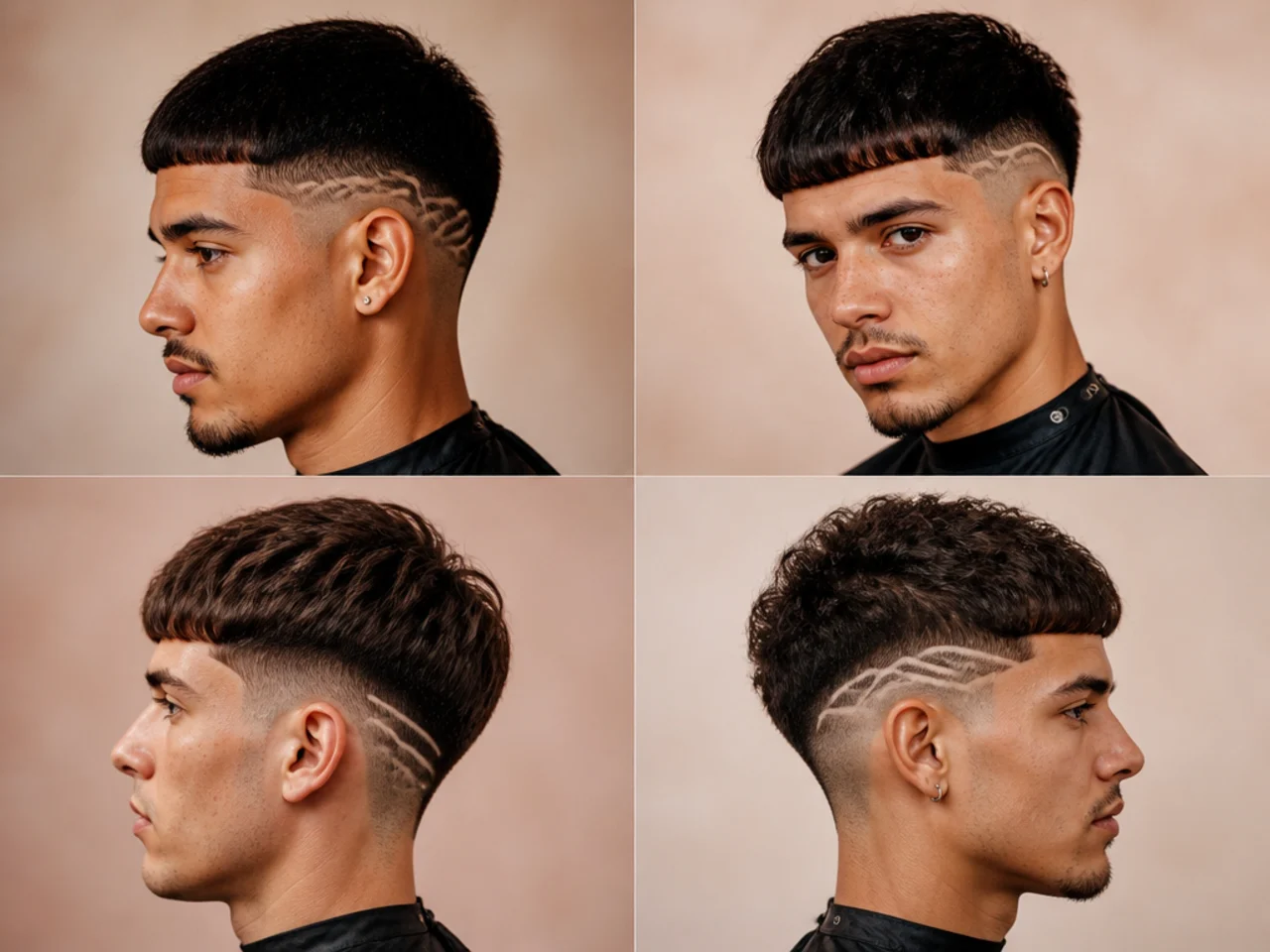
14. Edgar with Designs
Shaved lines, stars, tribal patterns, or logos etched into the faded sides. Any barber can do a basic single line. Complex art needs a specialist.
Who it suits: anyone who wants the Edgar plus visible personality.
How to ask: show a reference photo. Specify size and placement.
Styling: normal Edgar. The design fades faster than the rest — shape-up every 2 weeks.
15. Disconnected Edgar
No blend between top and sides. The top drops straight to the shaved sides — a visible ledge instead of a gradient. Sharpest version of the cut.
Who it suits: oval and square faces. Softer face shapes get overwhelmed by the hard step.
How to ask: "Disconnected undercut, no blend. Blunt fringe. Sides down to a number 1 guard or skin."
Styling: matte cream, forward-combed. Keep the top flat.
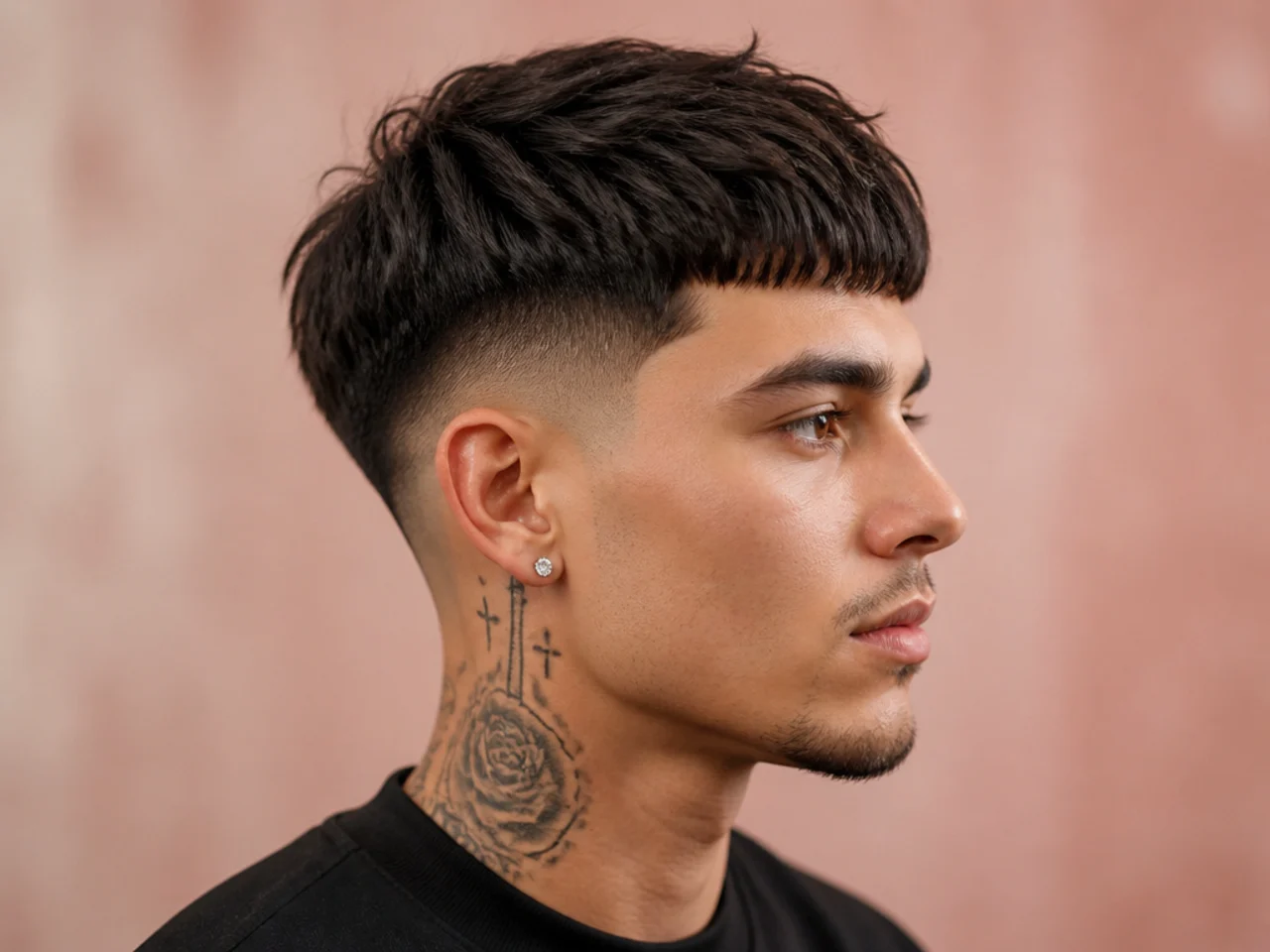
16. Asymmetrical Edgar
Fringe is intentionally longer on one side, or angled instead of straight across. Bends the Edgar's core rule — line still hard, just not level.
Who it suits: heart-shaped faces where breaking the horizontal line reduces forehead width.
How to ask: "Angled fringe, longer on the left [or right]. Drop of about half an inch across."
Styling: blow-dry the longer side down toward the low corner.
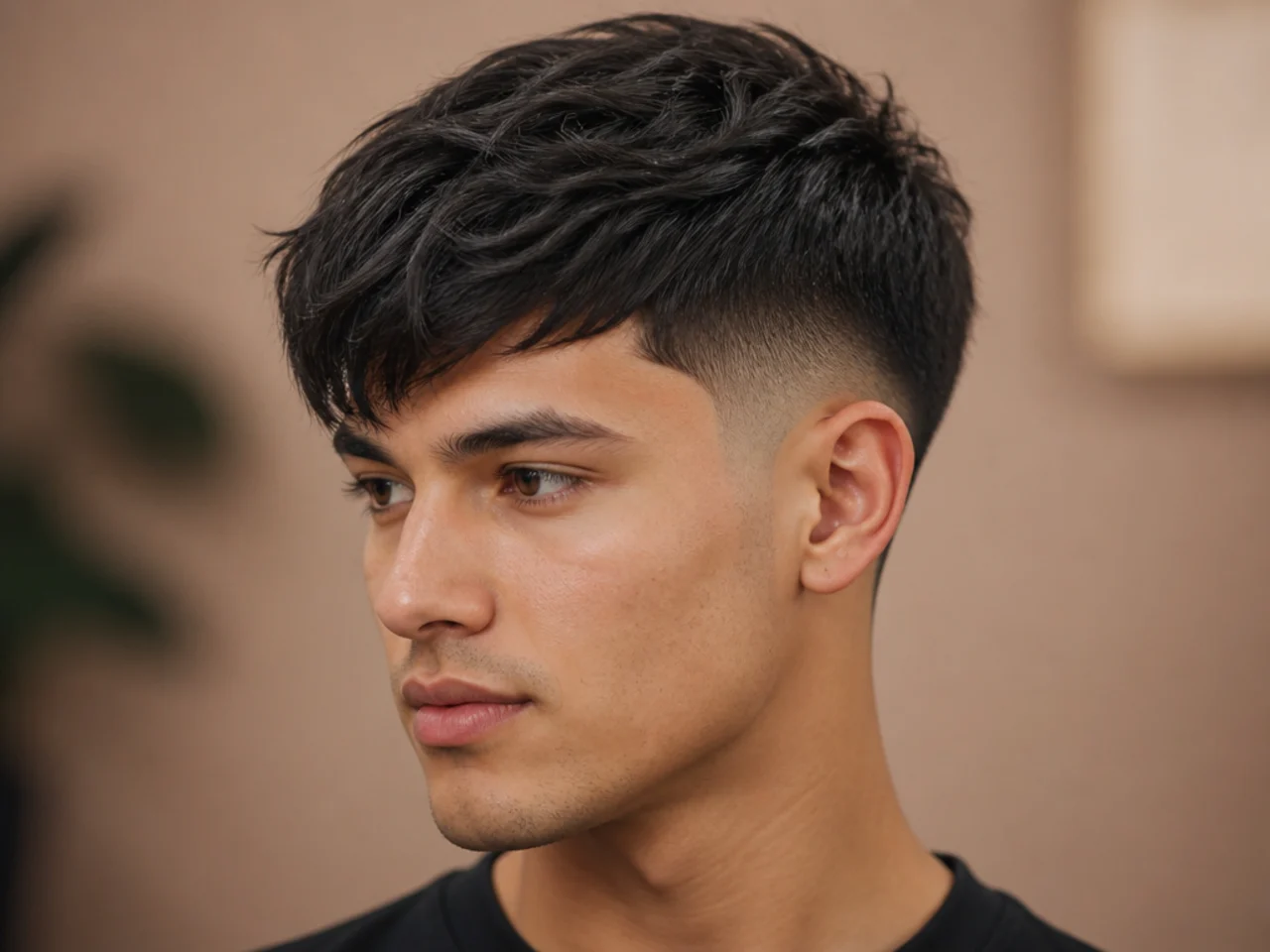
17. Edgar with Hard Part
A shaved line runs front to back on one side, separating the fringe section from the fade. Gives the cut a second reference line and reads more grown-up.
Who it suits: anyone. Especially good for weddings, work events, or older-skewing occasions where you want the Edgar without looking like a teenager.
How to ask: "Edgar with a hard part on the left [or right]. Razor line, about an eighth of an inch wide."
Styling: normal Edgar. The part reads on its own.
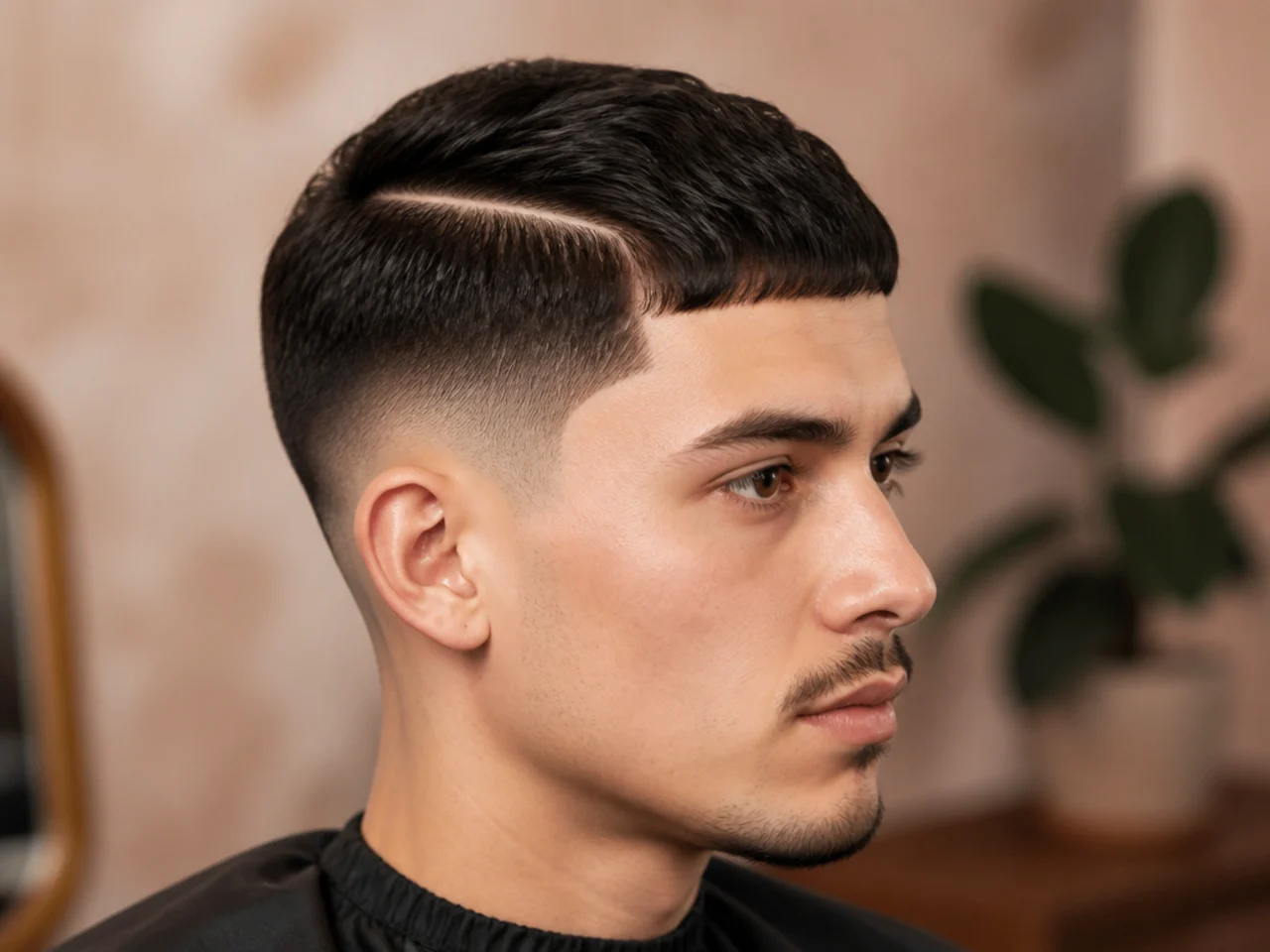
18. Colored Edgar
Same shape, dyed top. Platinum, bleached blond, and pastel tones make the fringe line jump. Darker colors read subtle and let the shape talk.
Who it suits: anyone who can commit to bleach maintenance. Skip if your hair is fragile.
How to ask: cut first, color after — usually two appointments. Bring a color reference to the salon.
Styling: purple shampoo weekly for platinum. Otherwise standard matte cream.
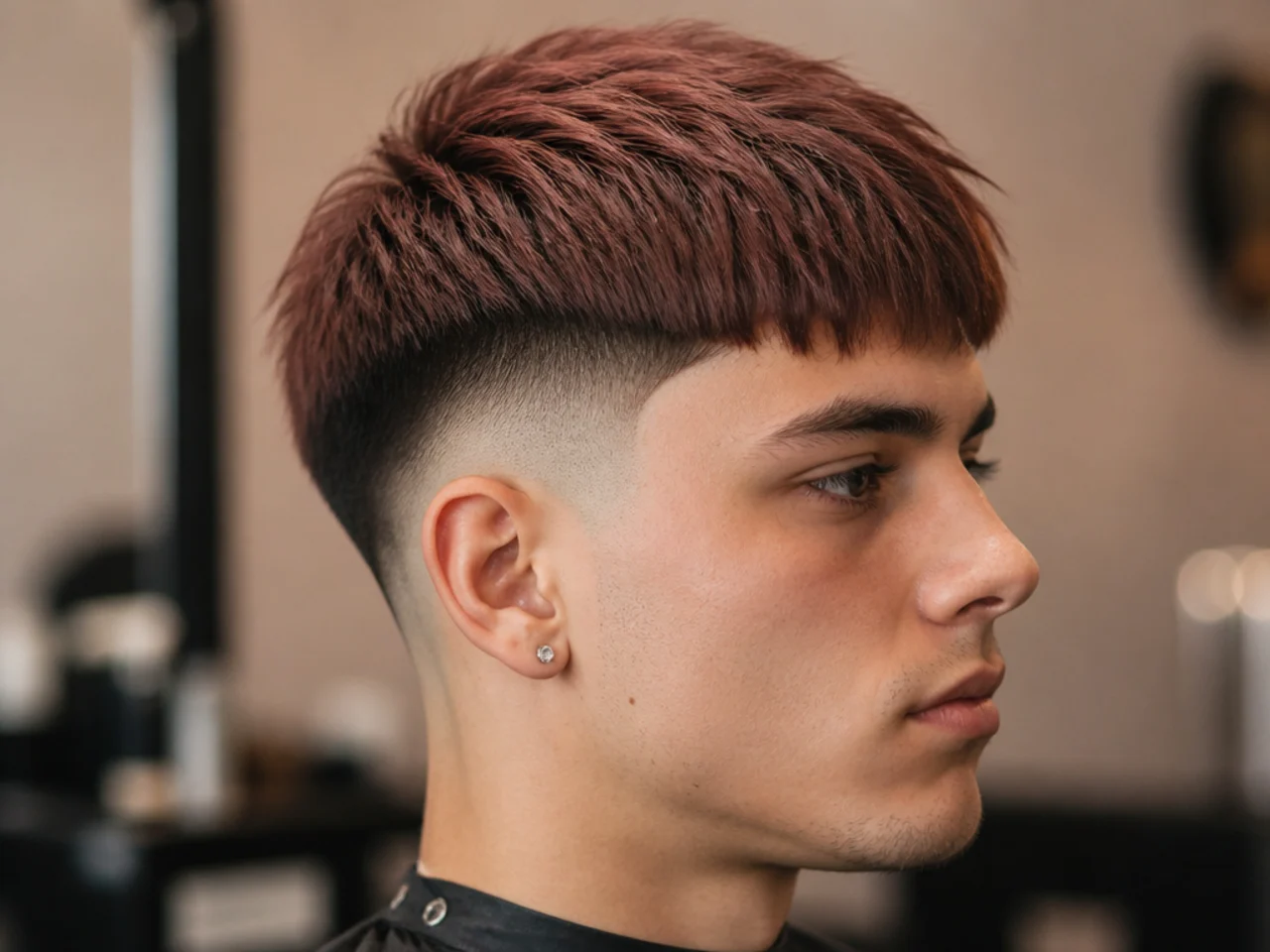
19. Edgar with Undercut
Instead of a fade, sides are shaved to one uniform length — usually a number 1 or 2 guard — with no gradient. Sharp edge where the top meets the sides.
Who it suits: thick-haired guys who want the disconnected look without skin-fade maintenance.
How to ask: "Undercut sides at a number 1 guard, no fade. Blunt fringe on top."
Styling: matte paste through the top, comb the fringe forward.
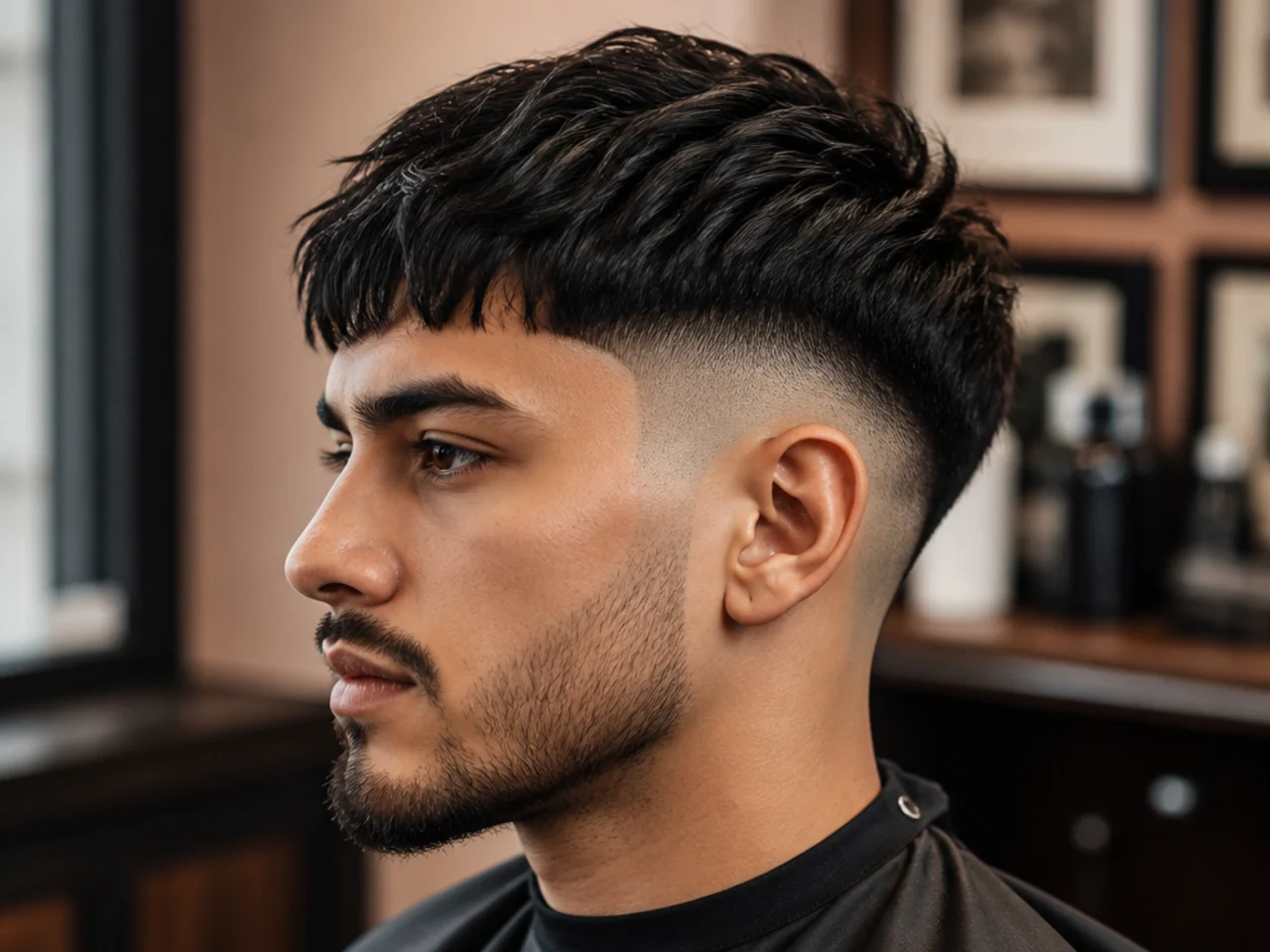
20. Messy Edgar
Top is tousled instead of combed flat. The fringe still lands as a blunt line at the front, but the crown is pushed up and around. Reads casual, less "just cut."
Who it suits: medium-thick hair and a laid-back style. Great for softer face shapes — the mess offsets the sharp fringe.
How to ask: "Edgar with a longer, textured top for a messy finish. Blunt fringe up front."
Styling: sea-salt spray, rough dry with your fingers, matte paste on the ends.
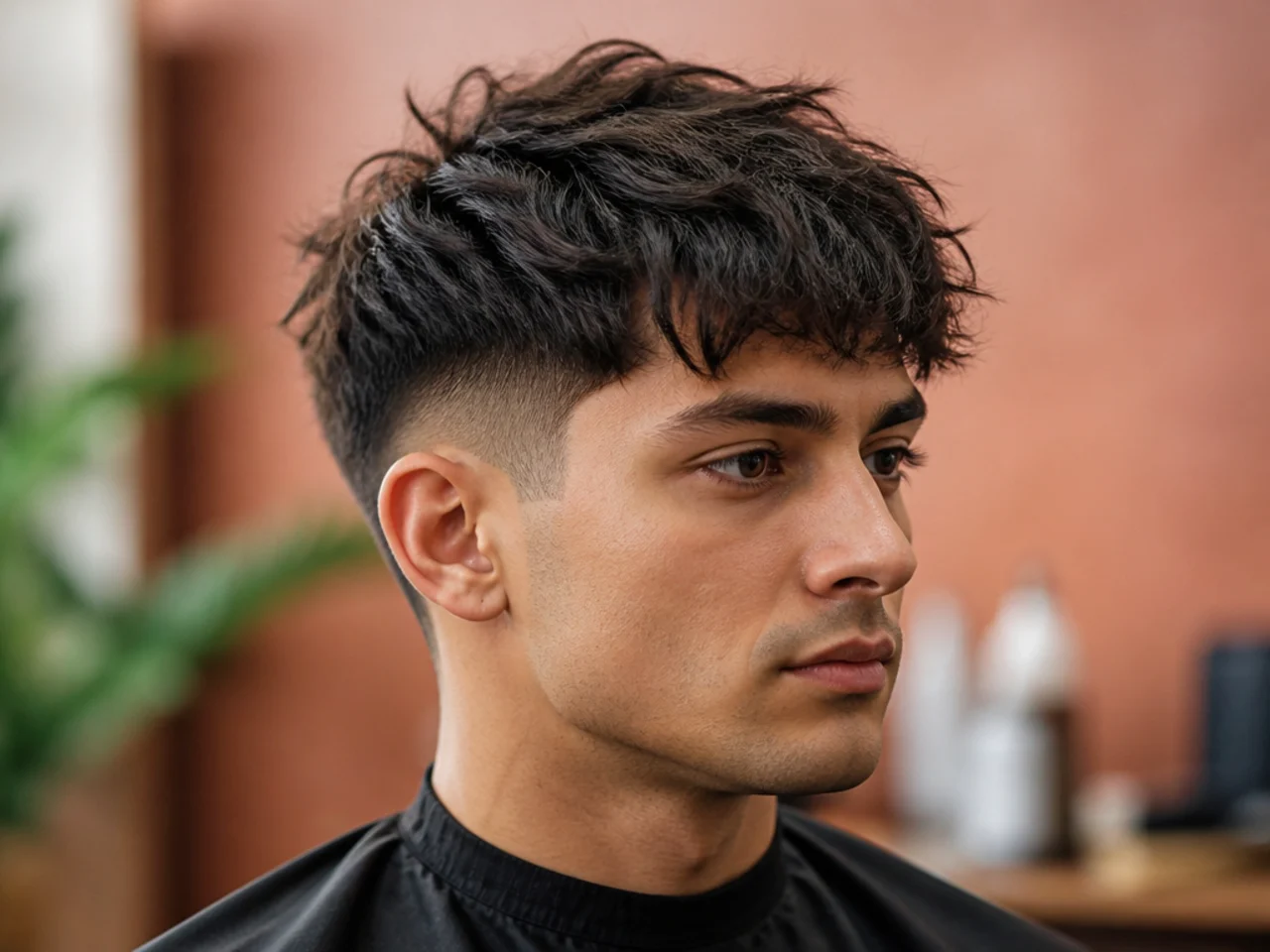
21. Slicked Back Edgar
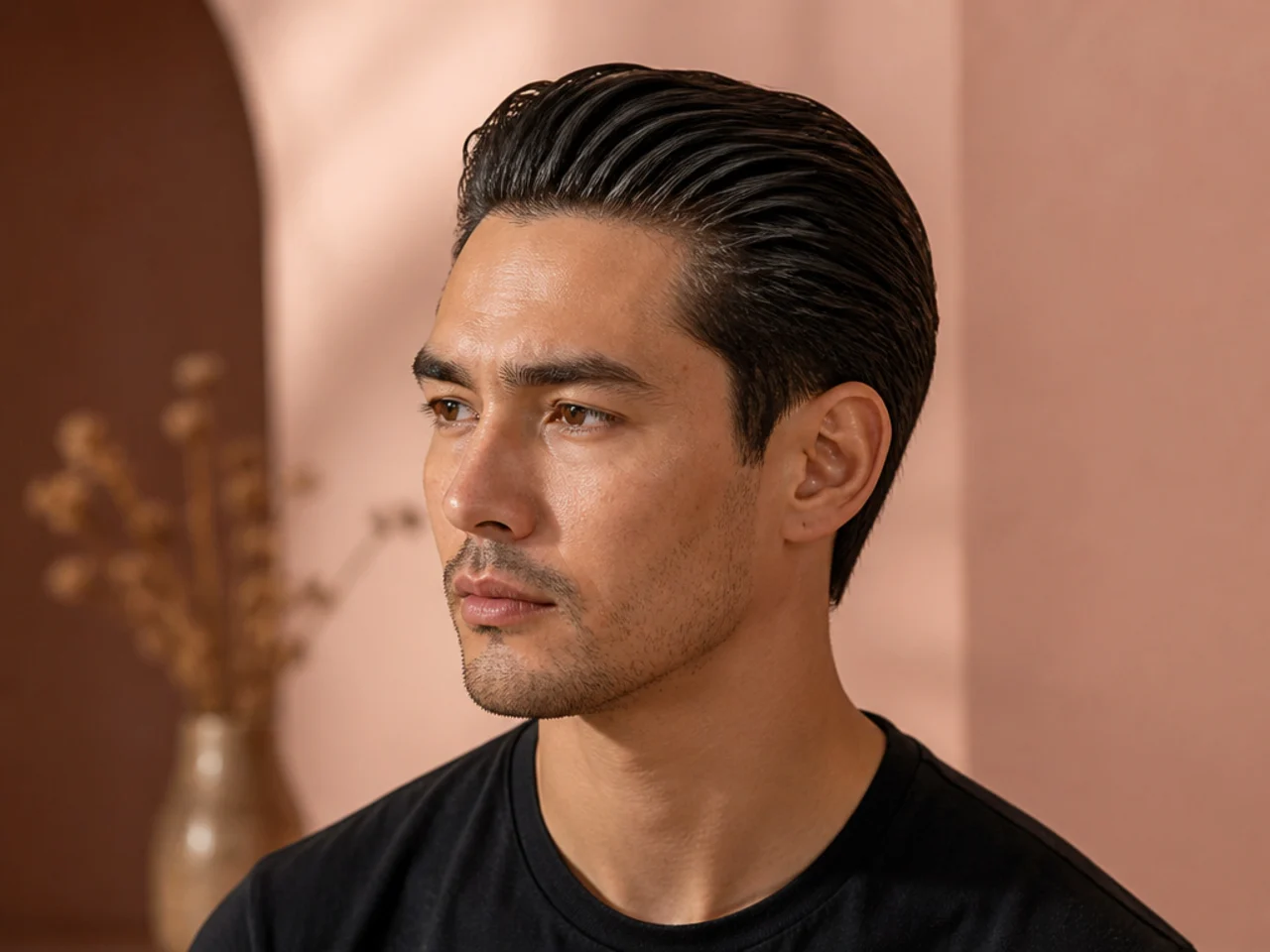
Top hair pushed straight back instead of forward. The blunt line still exists at the front edge — visible when the light hits — but the everyday look is slicked. A hybrid.
Who it suits: oval and square faces. Not for a receding hairline.
How to ask: "Edgar shape with the top long enough to slick back. Mid fade sides."
Styling: pomade with shine, comb straight back from the hairline.
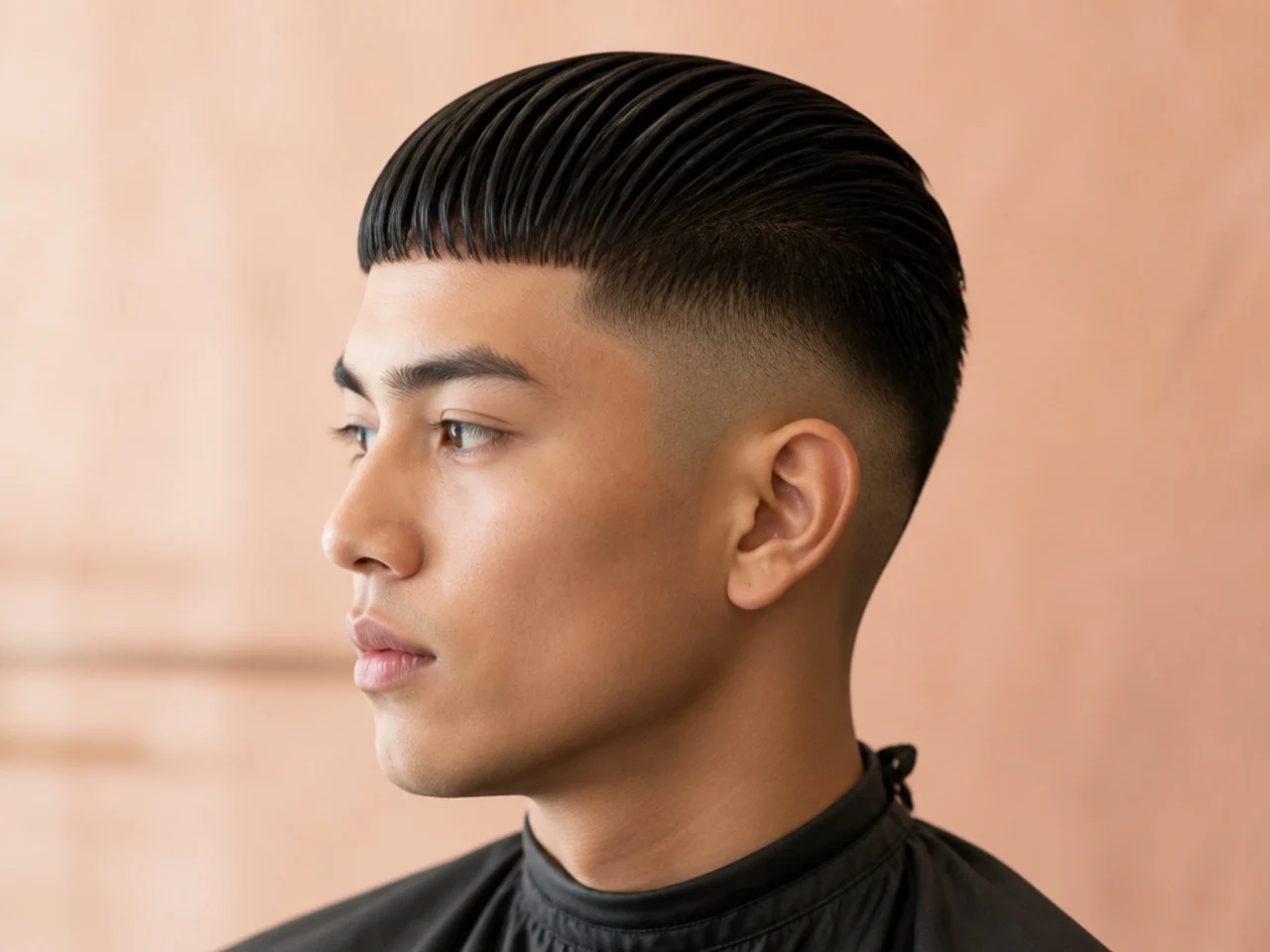
22. Edgar with Mullet
Front is Edgar — blunt fringe, faded sides. Back grows out into a mullet-style tail. Peak trend for teens and skater culture right now. See teen boy haircuts for more takes.
Who it suits: young guys who want the loudest current cut going.
How to ask: "Edgar front, mullet back. Mid fade sides. Blend the back so it doesn't step."
Styling: cream through the top, comb the front forward, let the back drop natural.
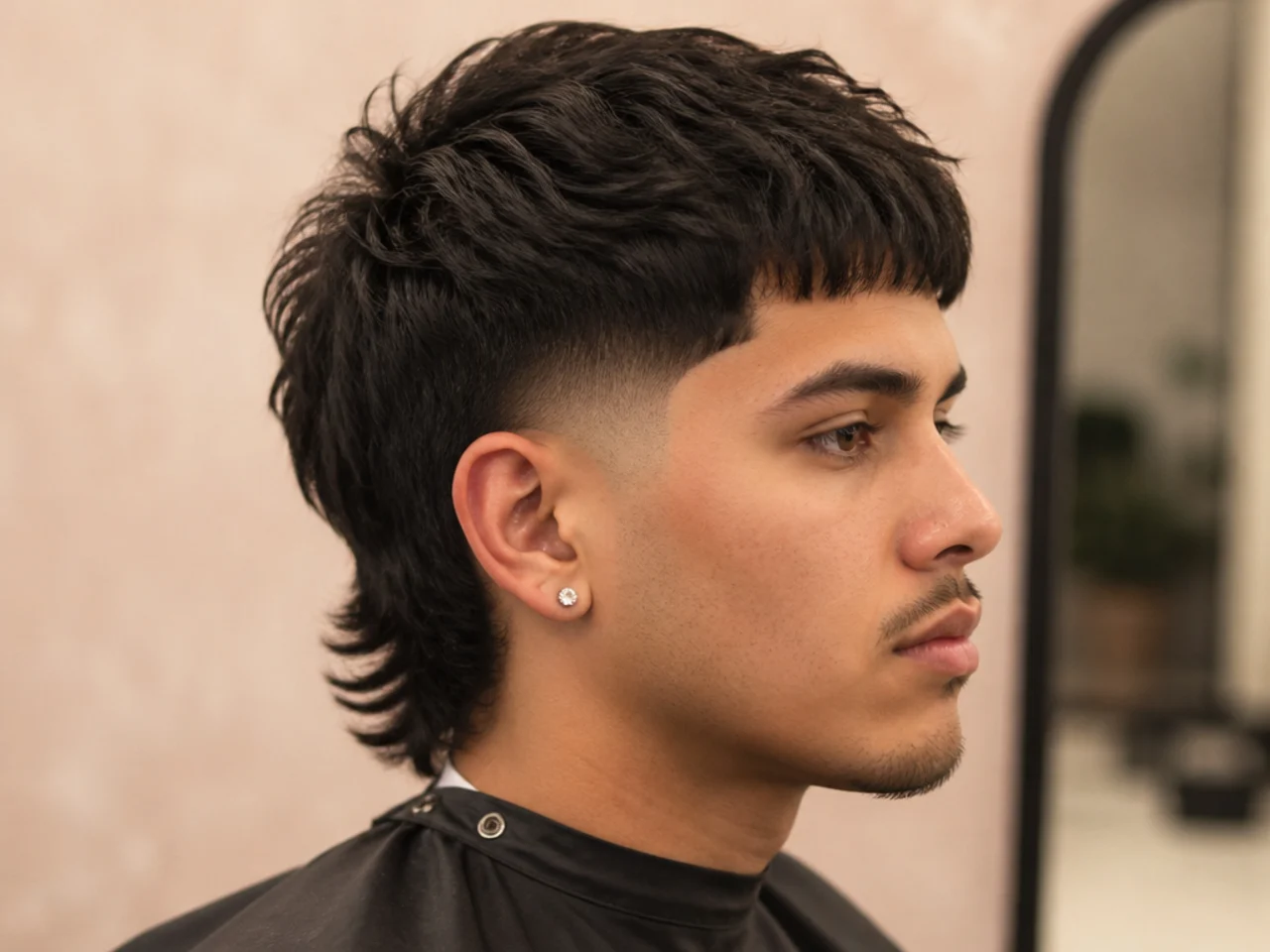
23. Edgar with Fade Art
Multi-level fades on the sides create stepped patterns — three or four distinct levels visible instead of one smooth gradient. Requires a barber who does competition work.
Who it suits: anyone who wants an Edgar plus a piece of art on the side of their head.
How to ask: show reference photos. Book a specialist barber, not your regular.
Styling: standard Edgar. Book maintenance every 2 weeks or the pattern blurs.
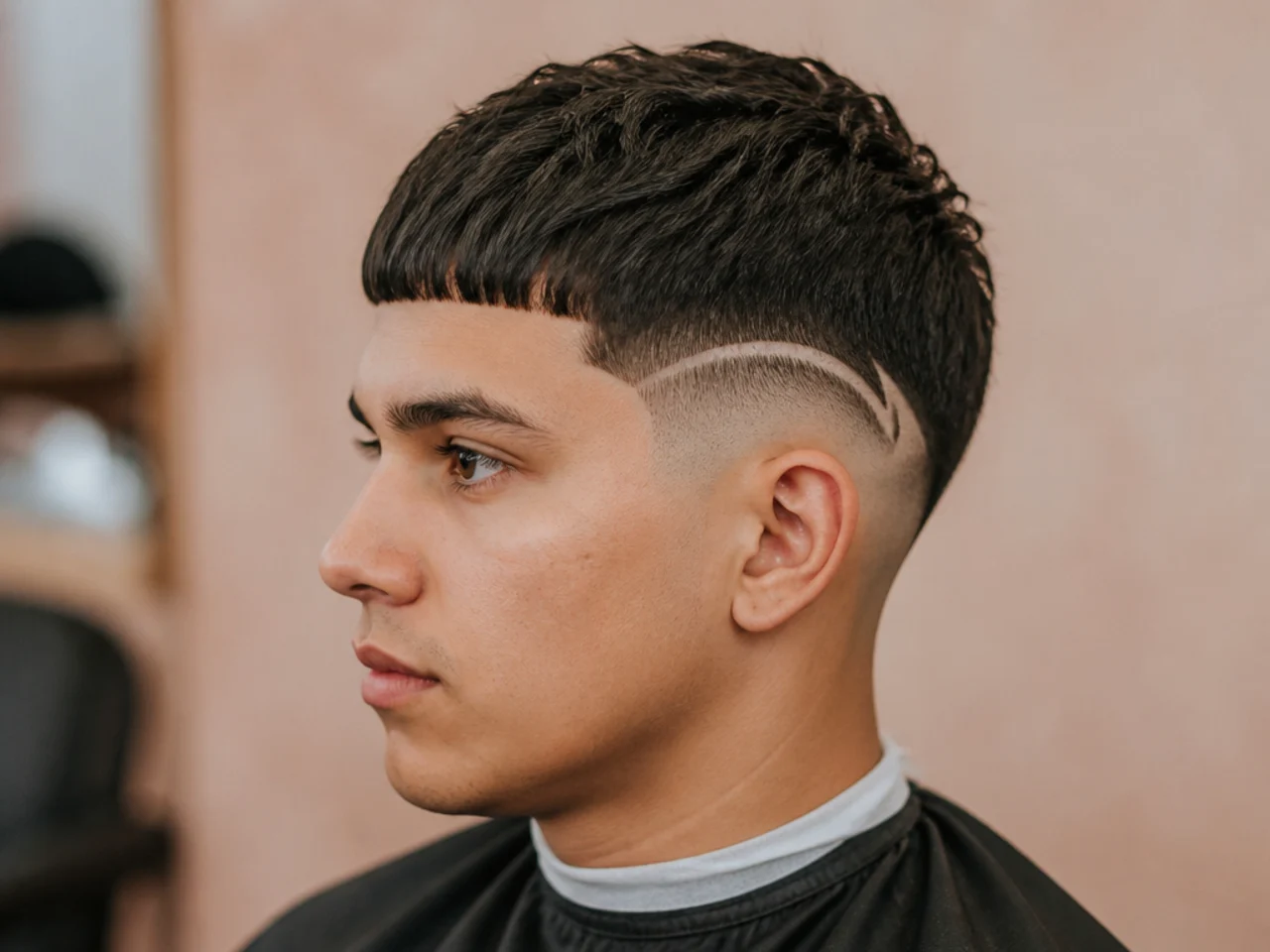
24. Mini Edgar
Edgar with the volume dialed down — shorter top, less contrast, a fringe that's blunt but subtle. Good starter version if you're testing the shape.
Who it suits: anyone new to the Edgar, or workplaces where the full version is a stretch.
How to ask: "Short Edgar. Low fade. Fringe just above the brow. Keep it subtle."
Styling: none required beyond a quick comb.
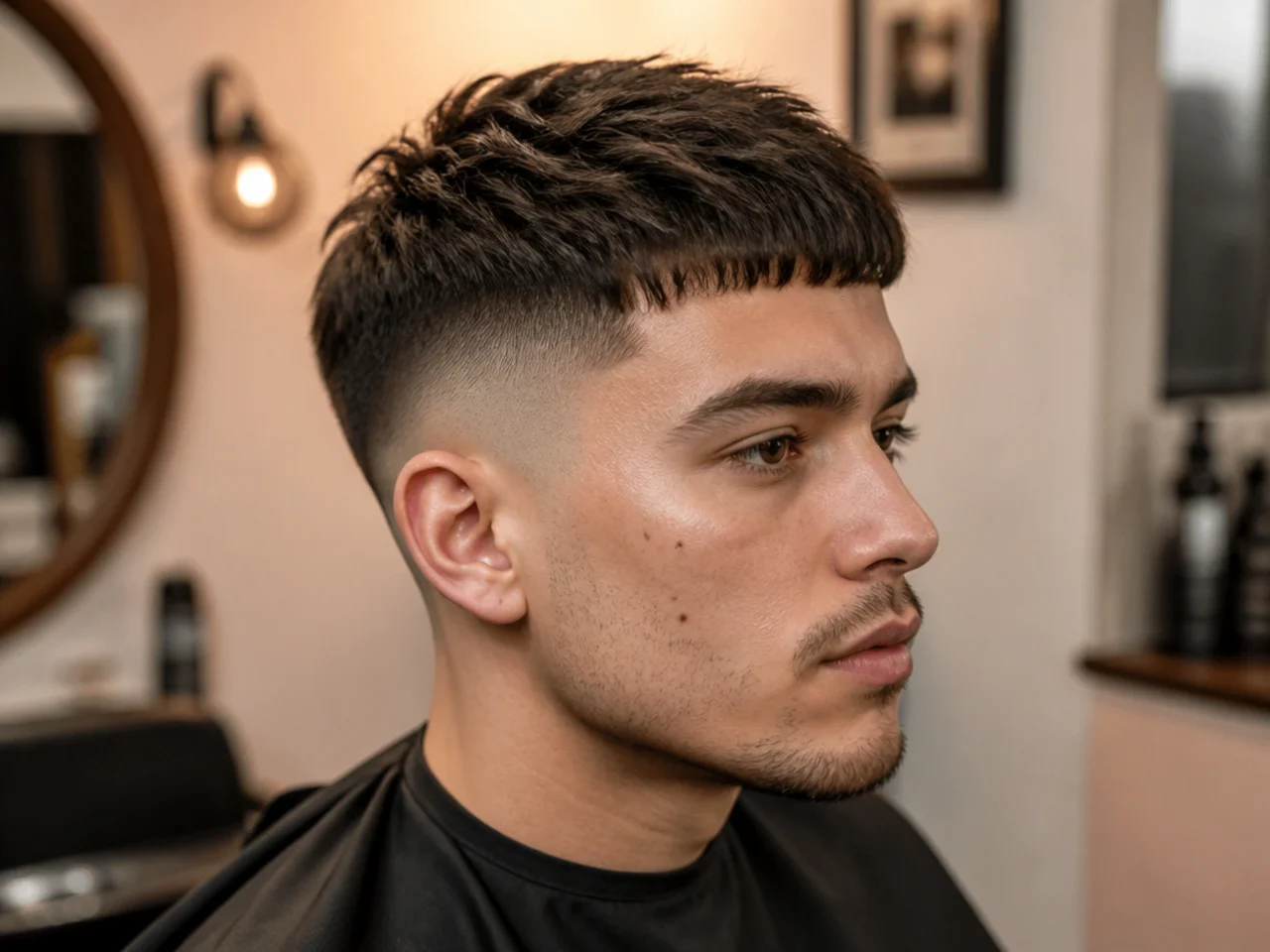
25. Long Top Edgar
Significantly longer hair on top — 3 to 4 inches — while the fringe stays blunt and the sides fade. Styles like a quiff or forward crown, blunt only at the front edge.
Who it suits: guys who want the Edgar signature but hate short tops.
How to ask: "Long-top Edgar, 3 to 4 inches on top. Fringe blunt at brow level. High fade sides."
Styling: blow-dry the crown up and forward. Fringe blown straight down.
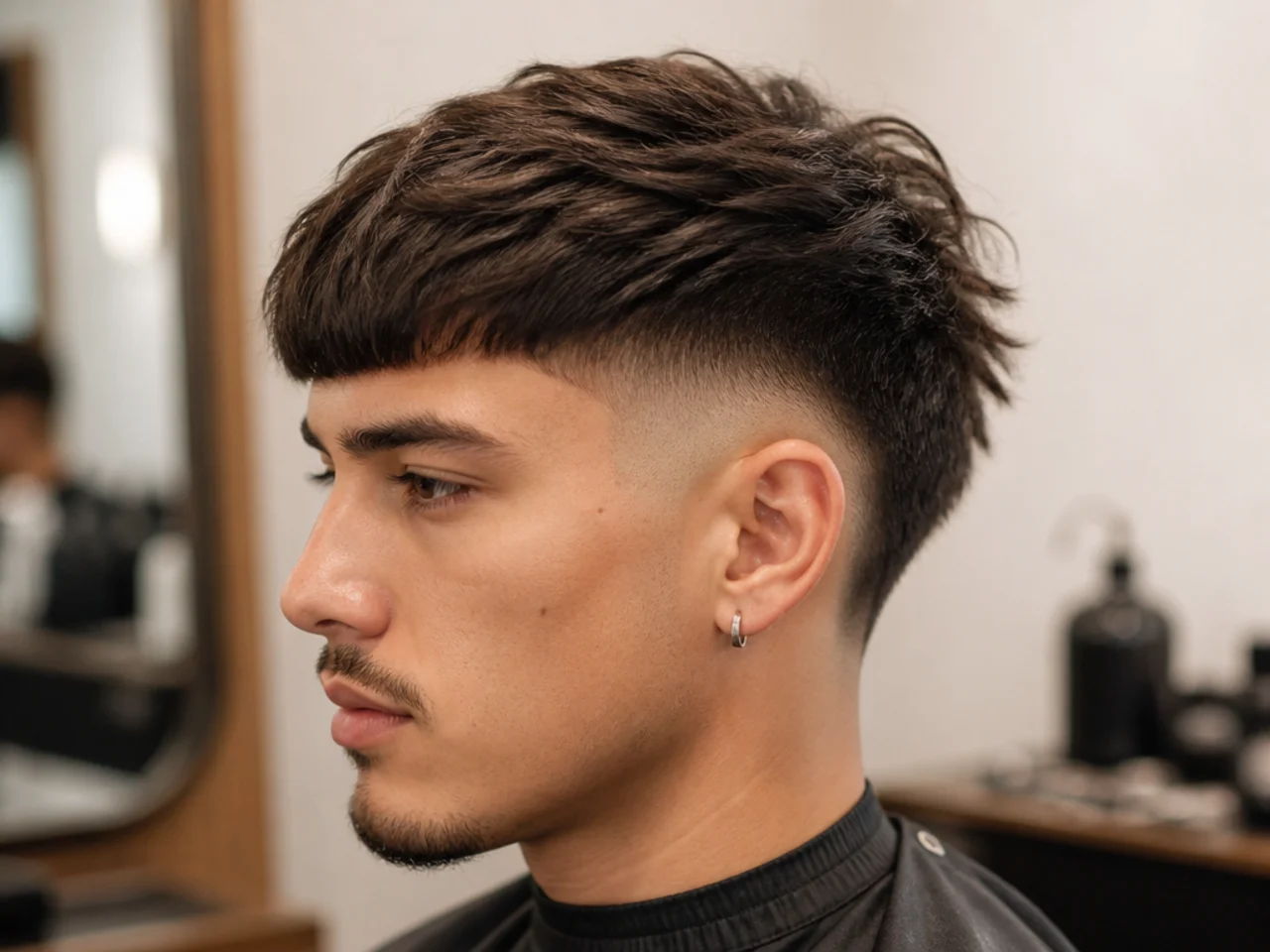
How to Ask Your Barber for an Edgar Haircut
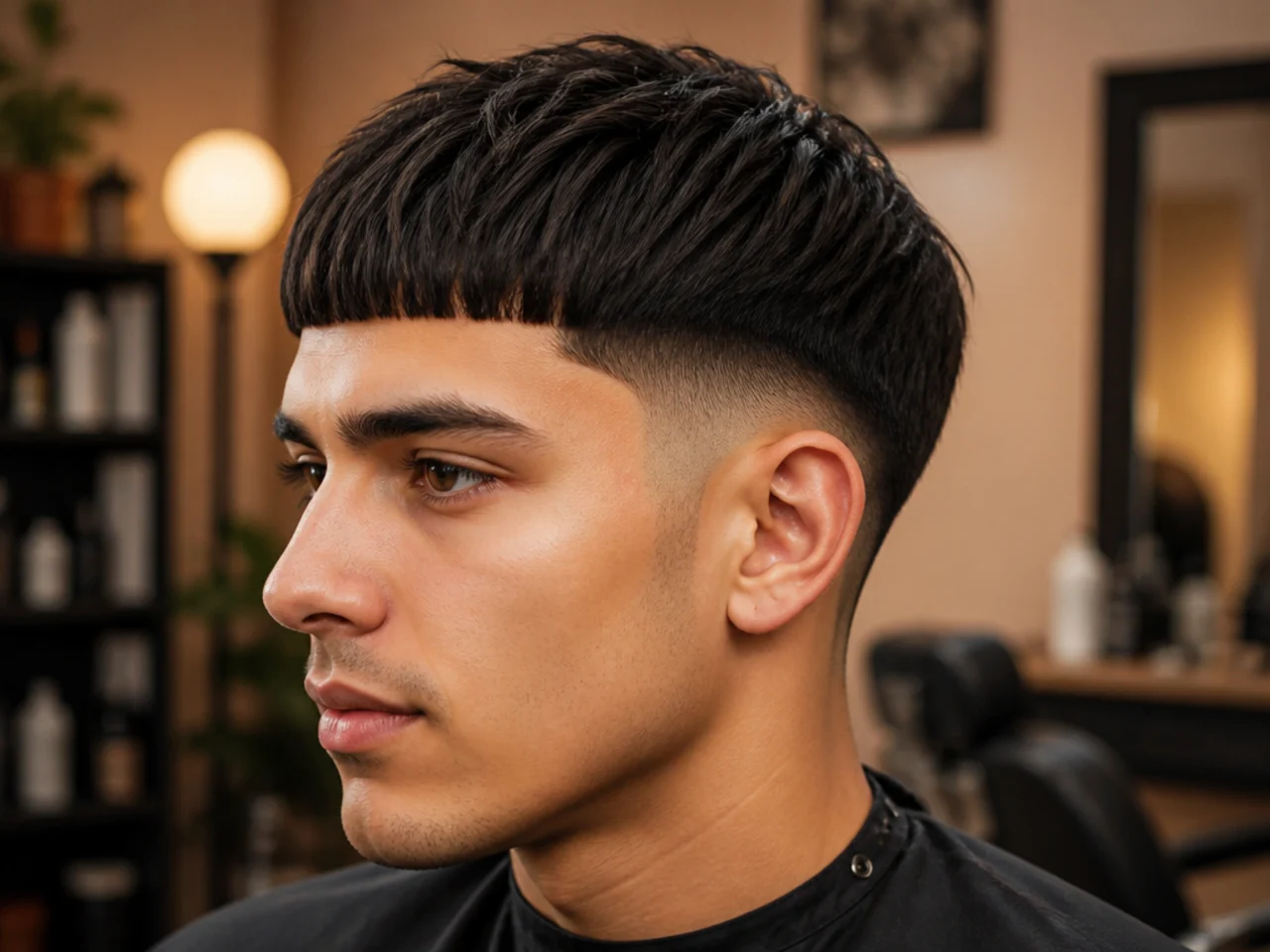
Walk in with three specifics: the fade height, the fringe length, and how you want the top finished. Barbers recognize "Edgar" by name almost everywhere now — the details separate a good cut from a bad one.
Essential Terminology
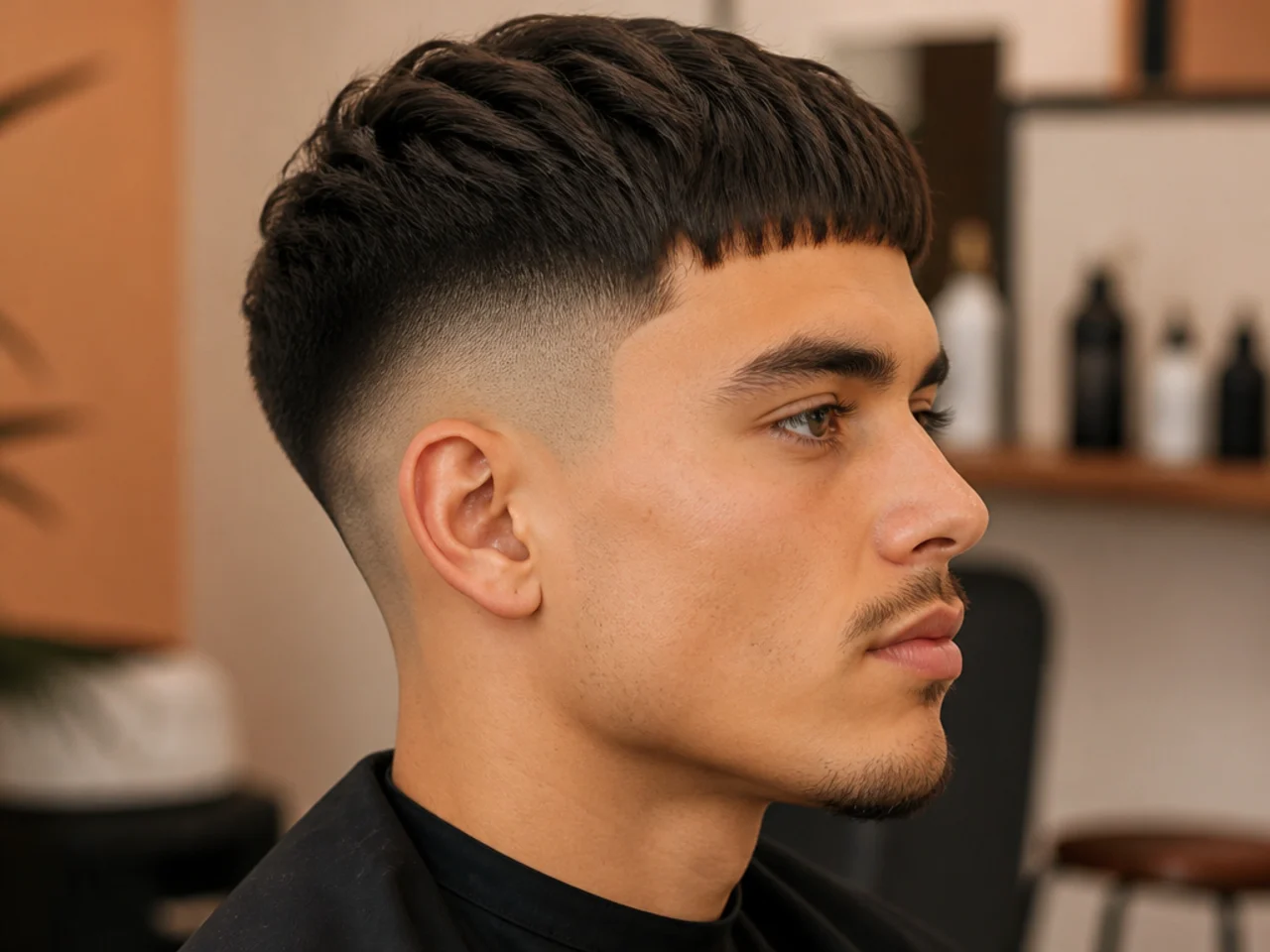
Use these phrases:
- "Edgar cut" or "takuache haircut" — both recognized
- "Straight-across blunt fringe" — the defining feature
- "Low, mid, high, or skin fade" — pick one
- "Brow-length" or "one finger above the brow" — specify the fringe drop
- "Blocky top" or "point-cut textured top" — decide the finish
Bring Reference Photos
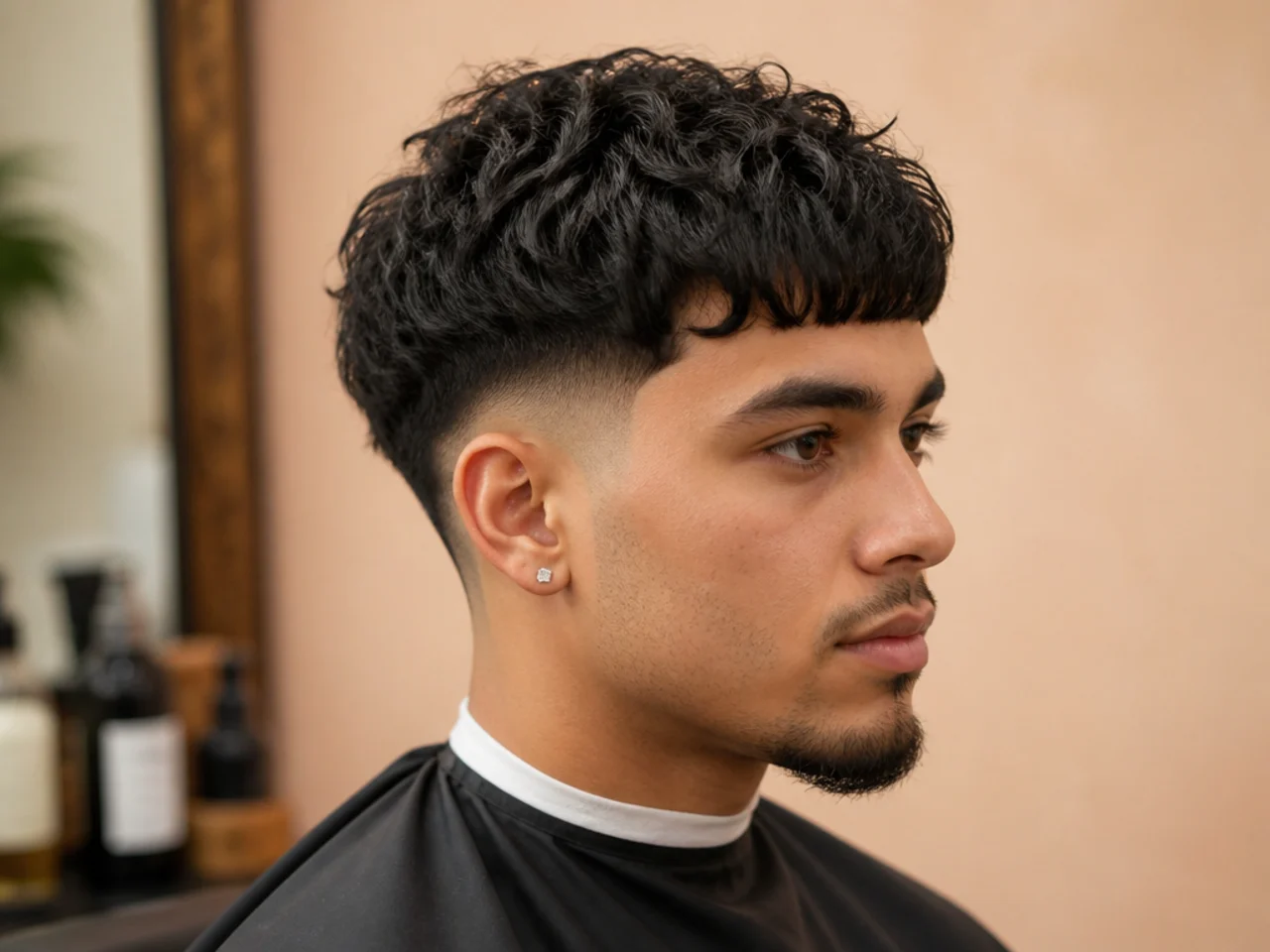
A photo skips the guessing. Bring:
- A front view showing the fringe length and hairline
- A side view showing where the fade starts
- A back view if you're adding a mullet or hard part
- Multiple angles of the same look, not five different Edgars
The Cutting Process
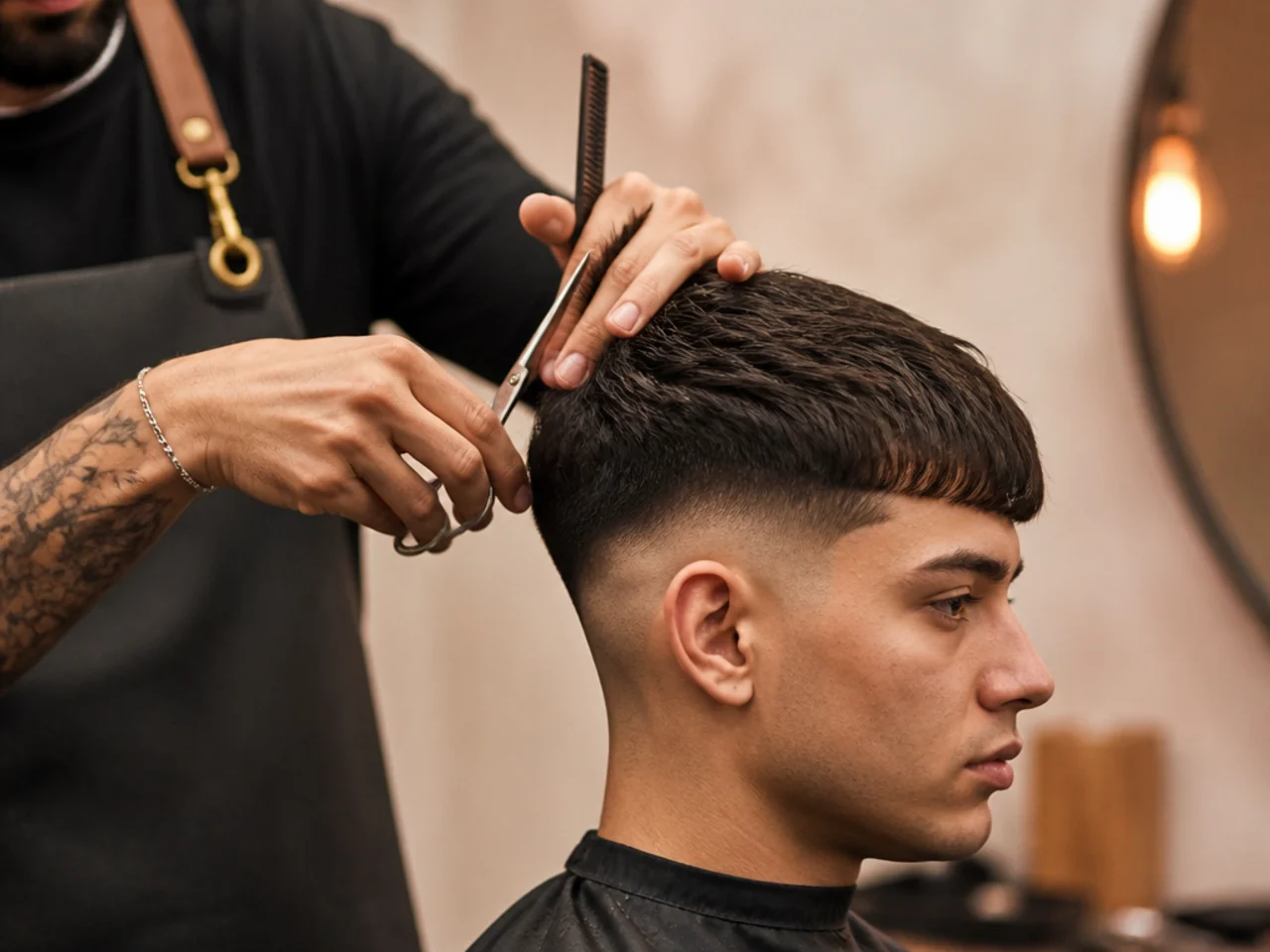
Here's what a proper Edgar cut looks like from the chair:
- Hair washed and towel-dried to slightly damp
- Top section clipped away
- Fade worked in — clipper over comb, dropping guard sizes from temple down to skin
- Top hair released, combed flat over the forehead
- Blunt fringe cut with scissors in one straight pass
- Top point-cut for texture or left blocky, depending on your ask
- Line-up razored along the temples and neckline
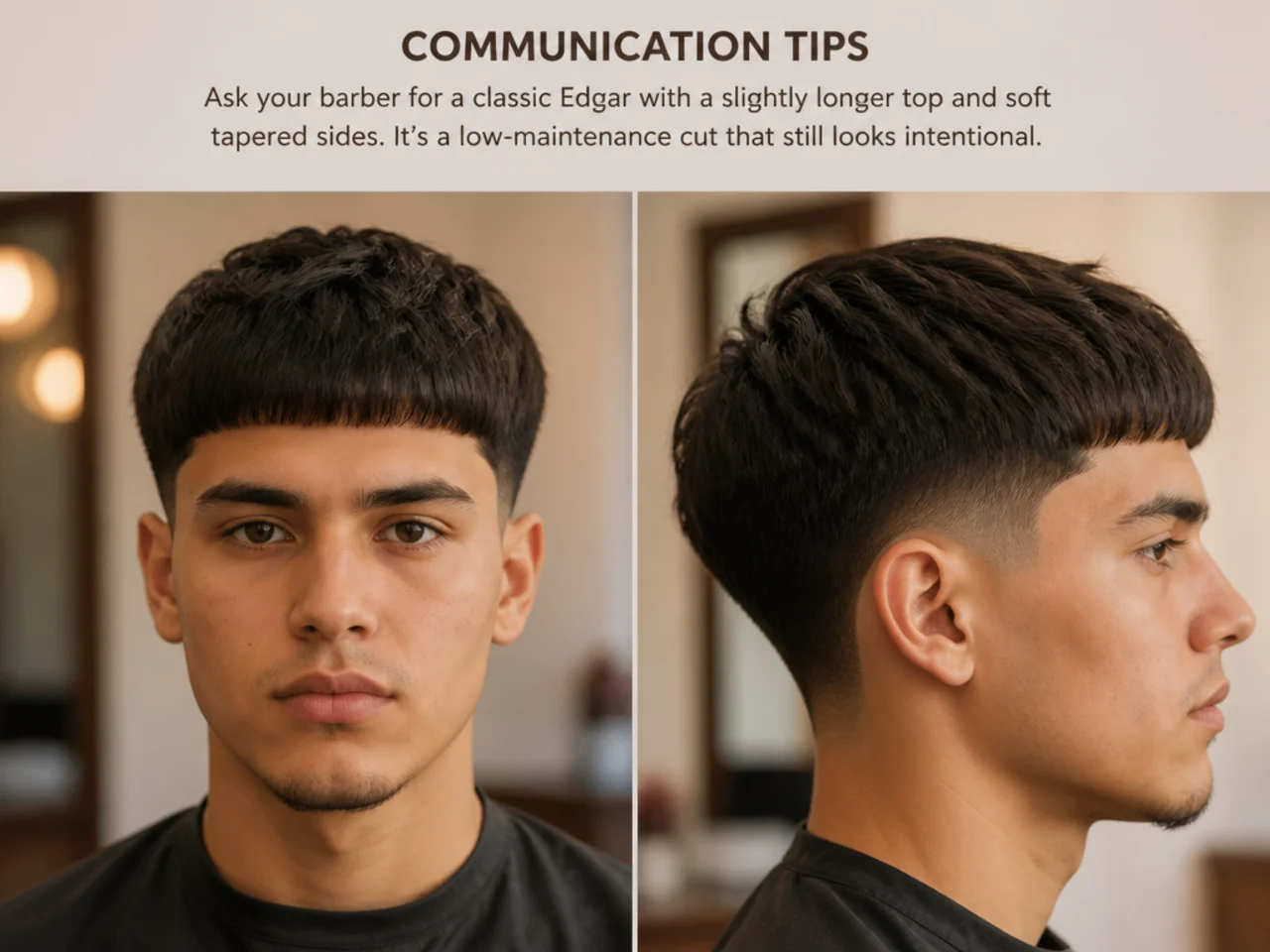
Communication Tips
- Point to where you want the fringe to land — "brow-length" means different things to different people
- State the fade starting point in fingers above the ear ("two fingers" is roughly mid fade)
- Speak up while the fringe is being cut — once it's short, it's short
- Ask for point-cut top if you don't want the blocky look
- Confirm the neckline shape — blocked, rounded, or tapered
Face Shapes That Work Best with Edgar Haircuts
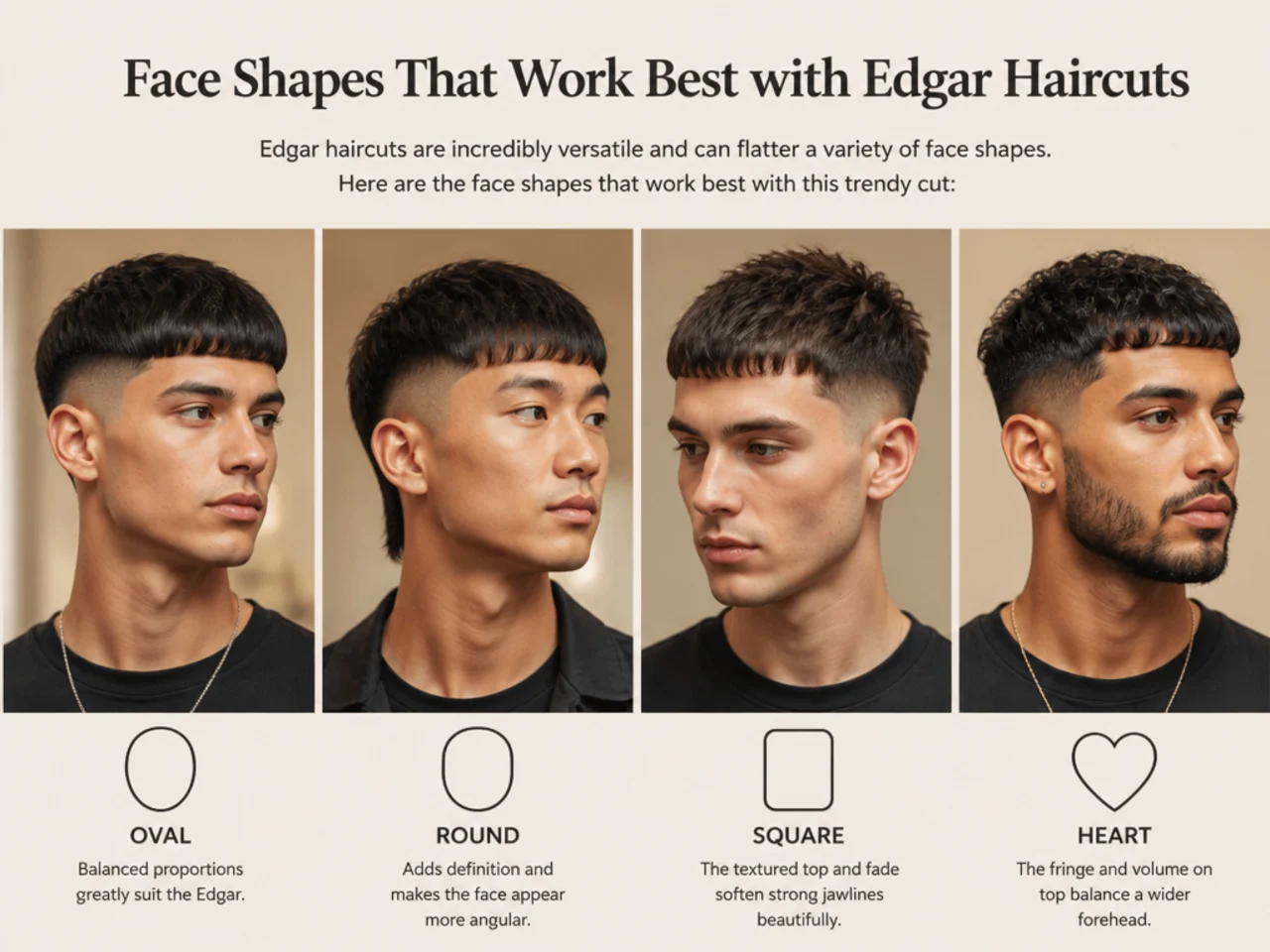
The Edgar reads sharpest against angular faces with strong hairlines. Softer shapes can still wear it — you just need the right variation.
Square Face
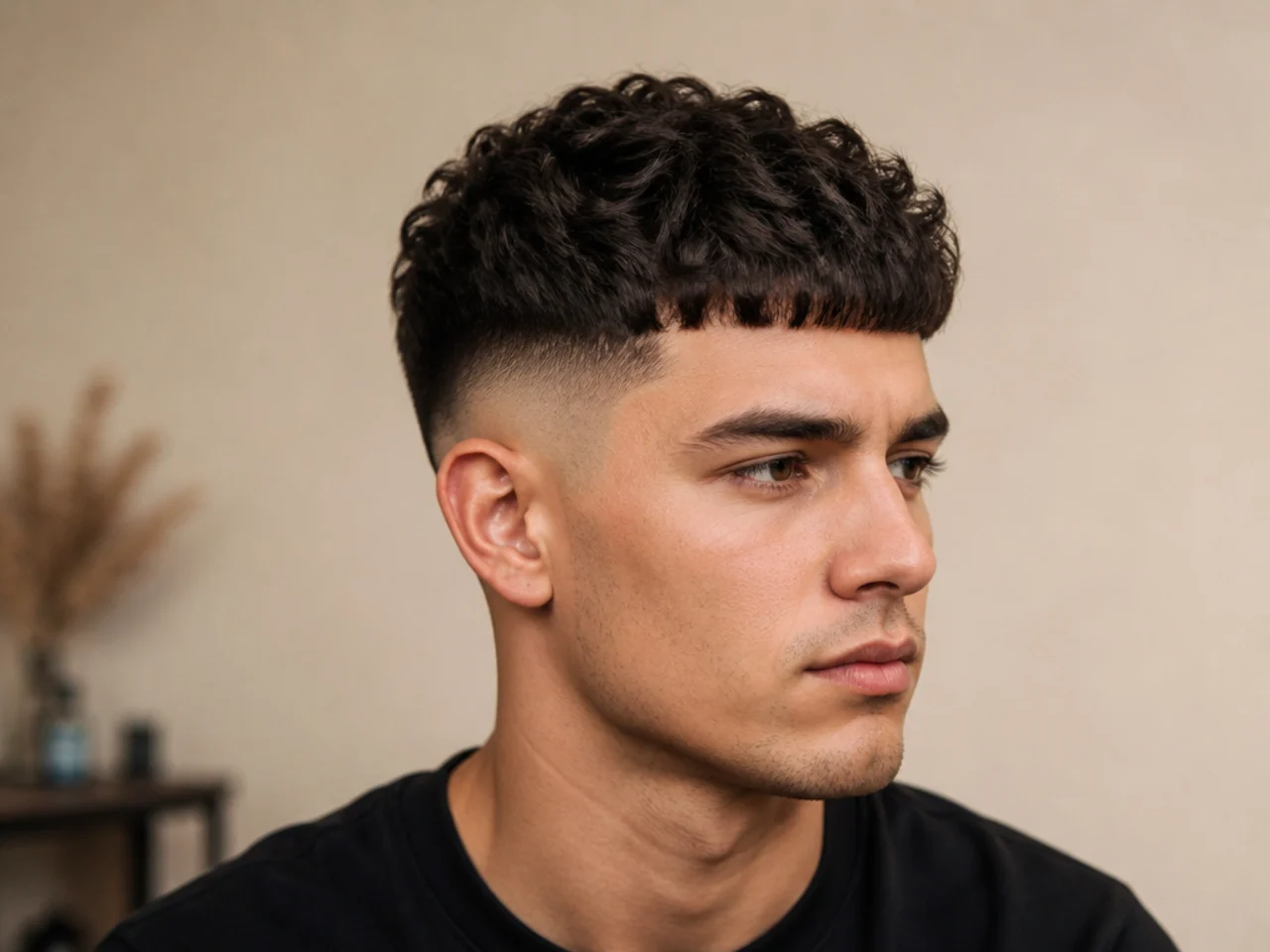
Compatibility: Excellent. The straight fringe mirrors the strong jaw and cheekbones.
Best variations: Classic, High Fade, Skin Fade, Disconnected.
Oval Face
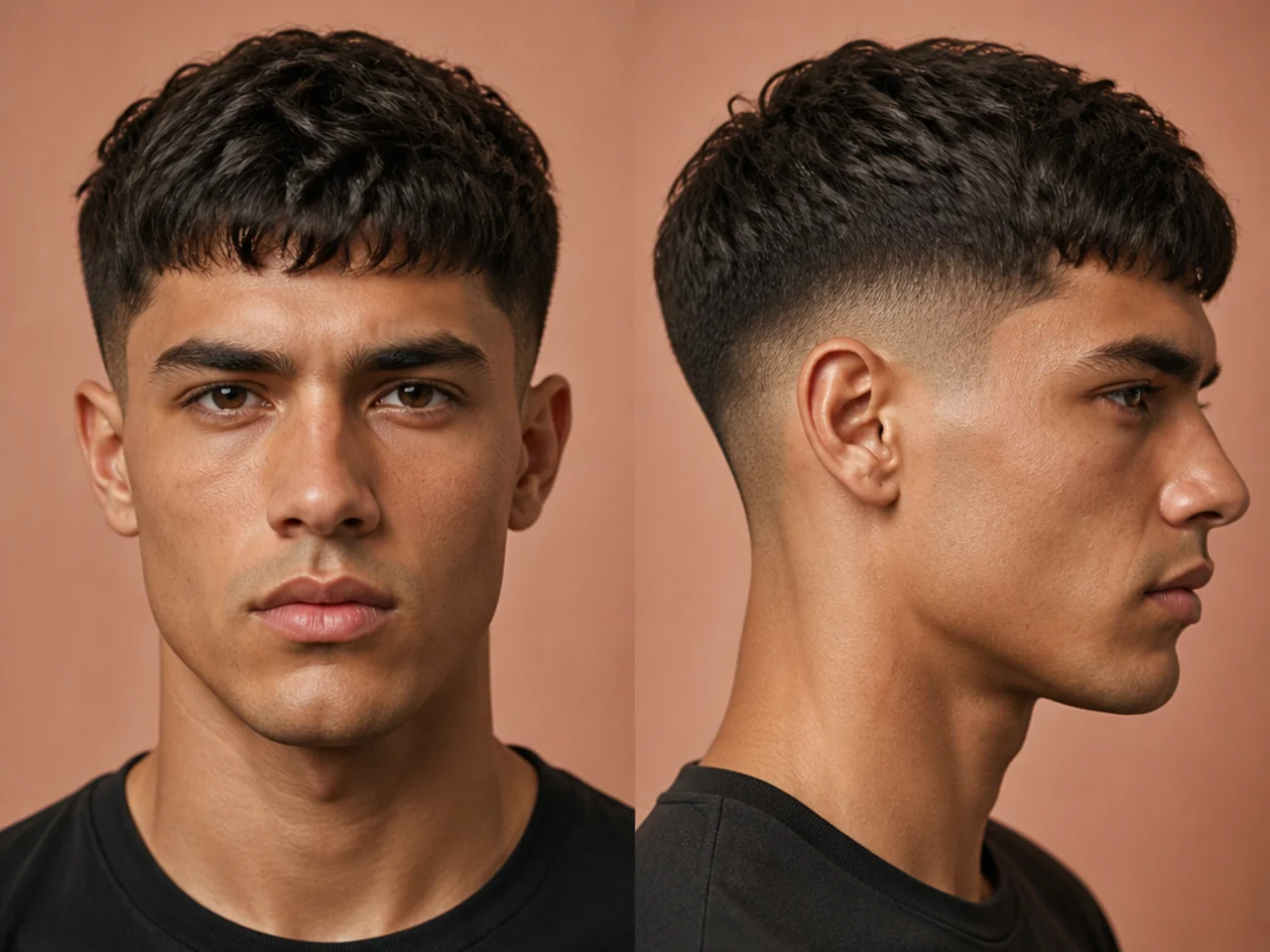
Compatibility: Very Good. Ovals wear any Edgar cleanly and can push texture or contrast further than most.
Best variations: any of the 25 works.
Round Face
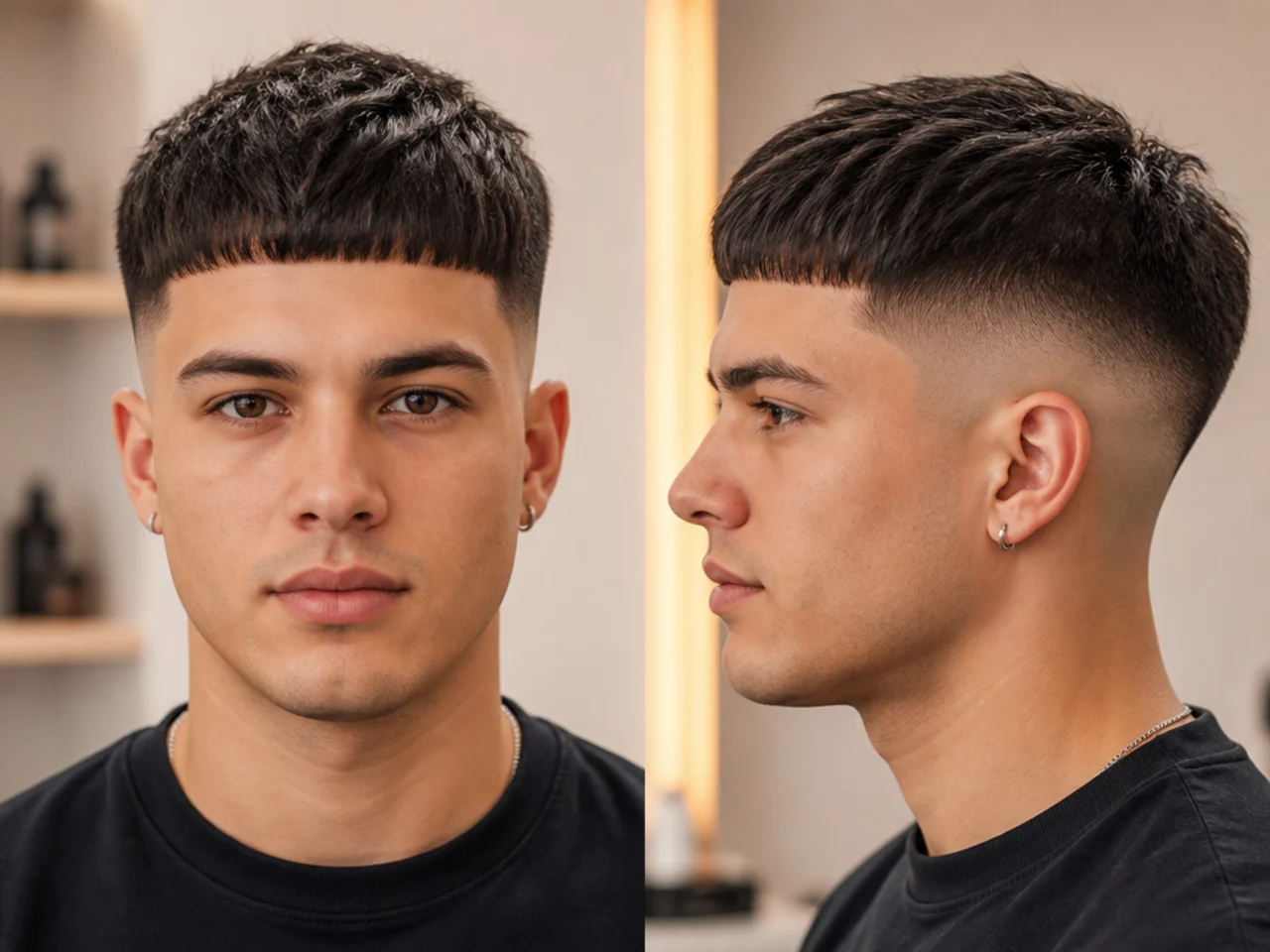
Compatibility: Good with the right variation. Avoid a low fringe that shortens the face further. Go higher on the fade for vertical length.
Best variations: High Fade, Disconnected, Short Fringe, Long Top.
Heart-Shaped Face
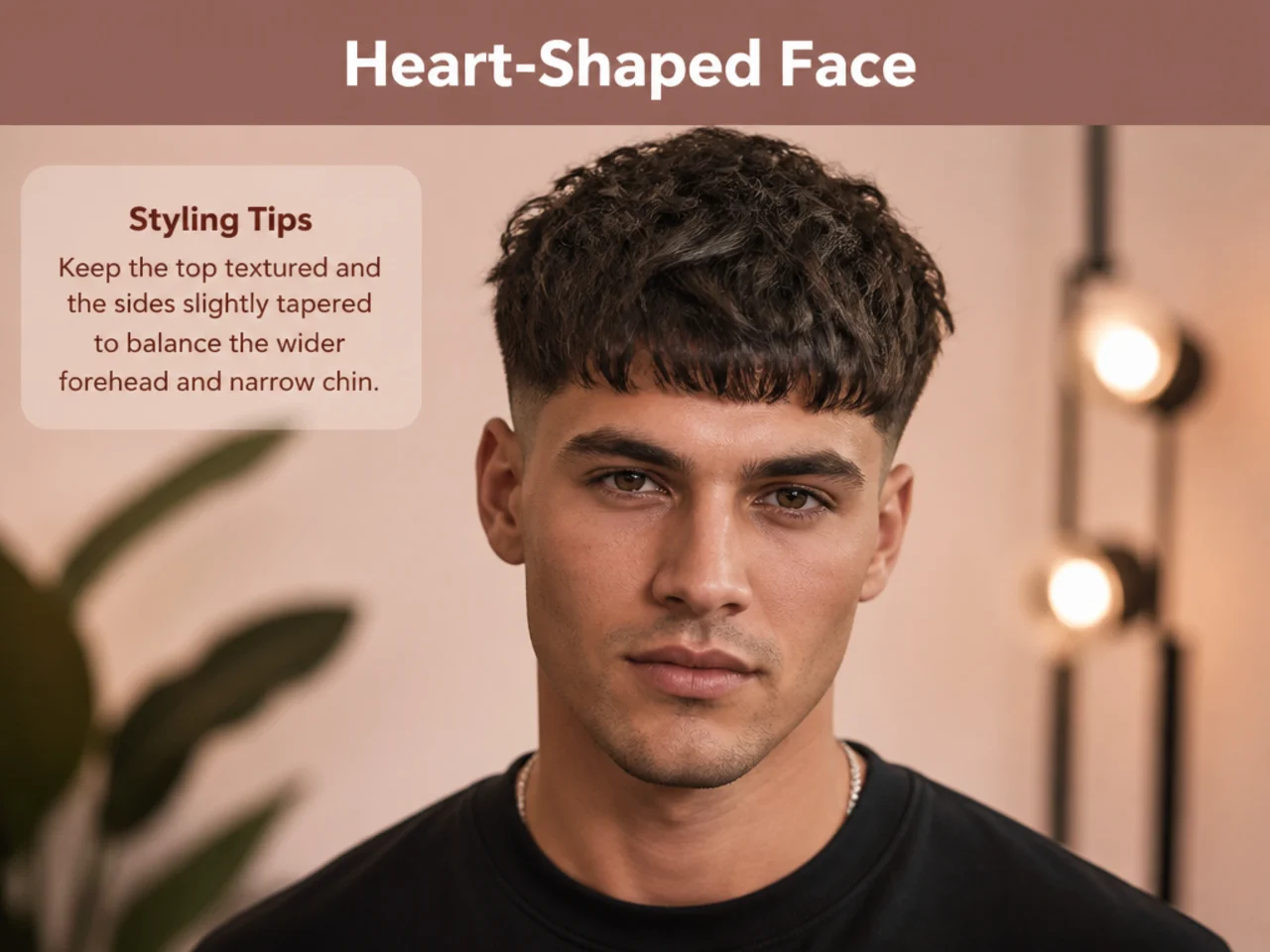
Compatibility: Fair. A wide forehead plus a straight fringe amplifies the width. Break the horizontal line up with an angle.
Best variations: Asymmetrical, Long Fringe, Textured Top.
Diamond Face
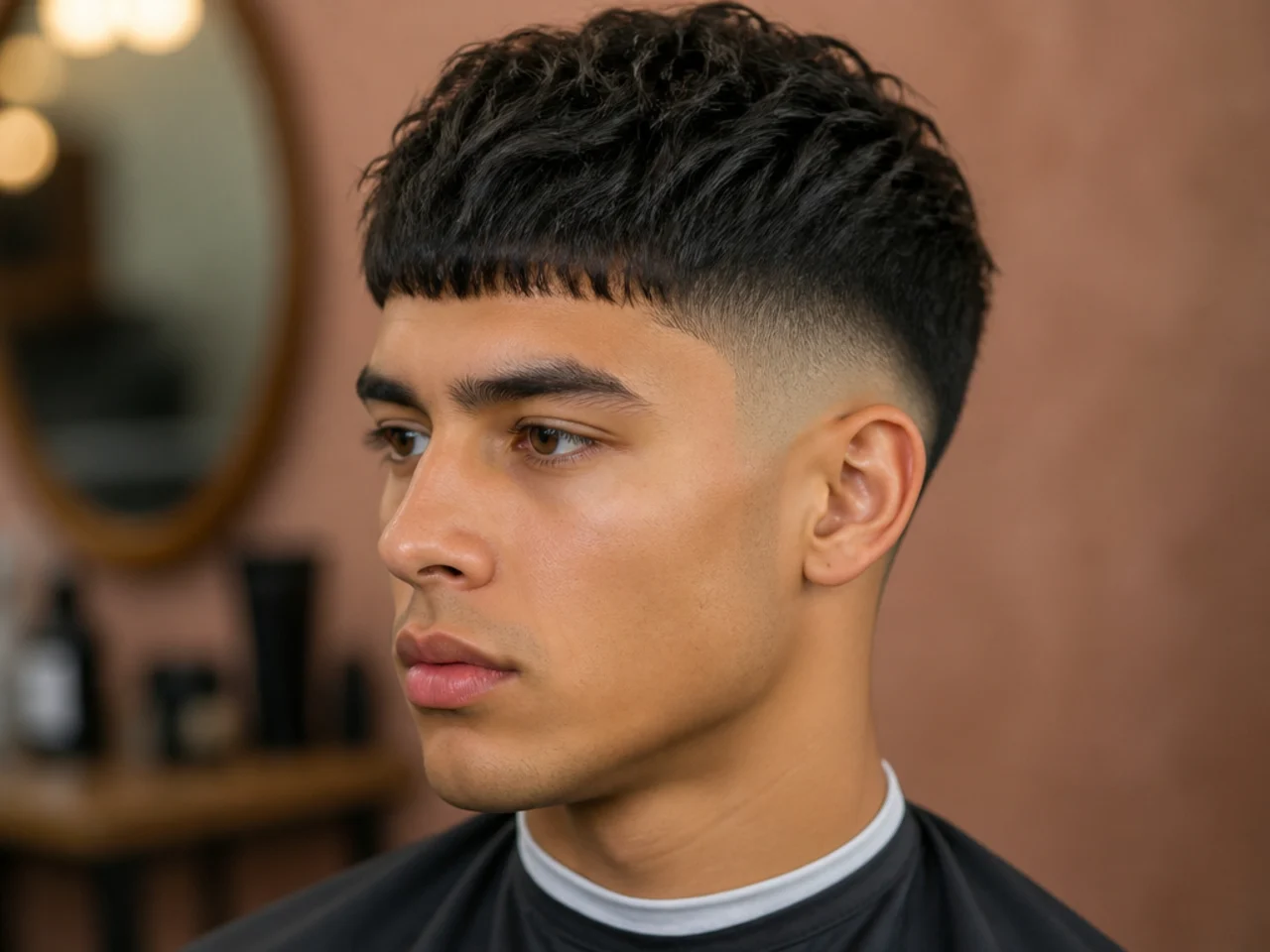
Compatibility: Good. Cheekbones already do the geometric work. A mid-height fade adds structure without competing.
Best variations: Mid Fade, Line Up, Textured Top.
Long/Rectangular Face
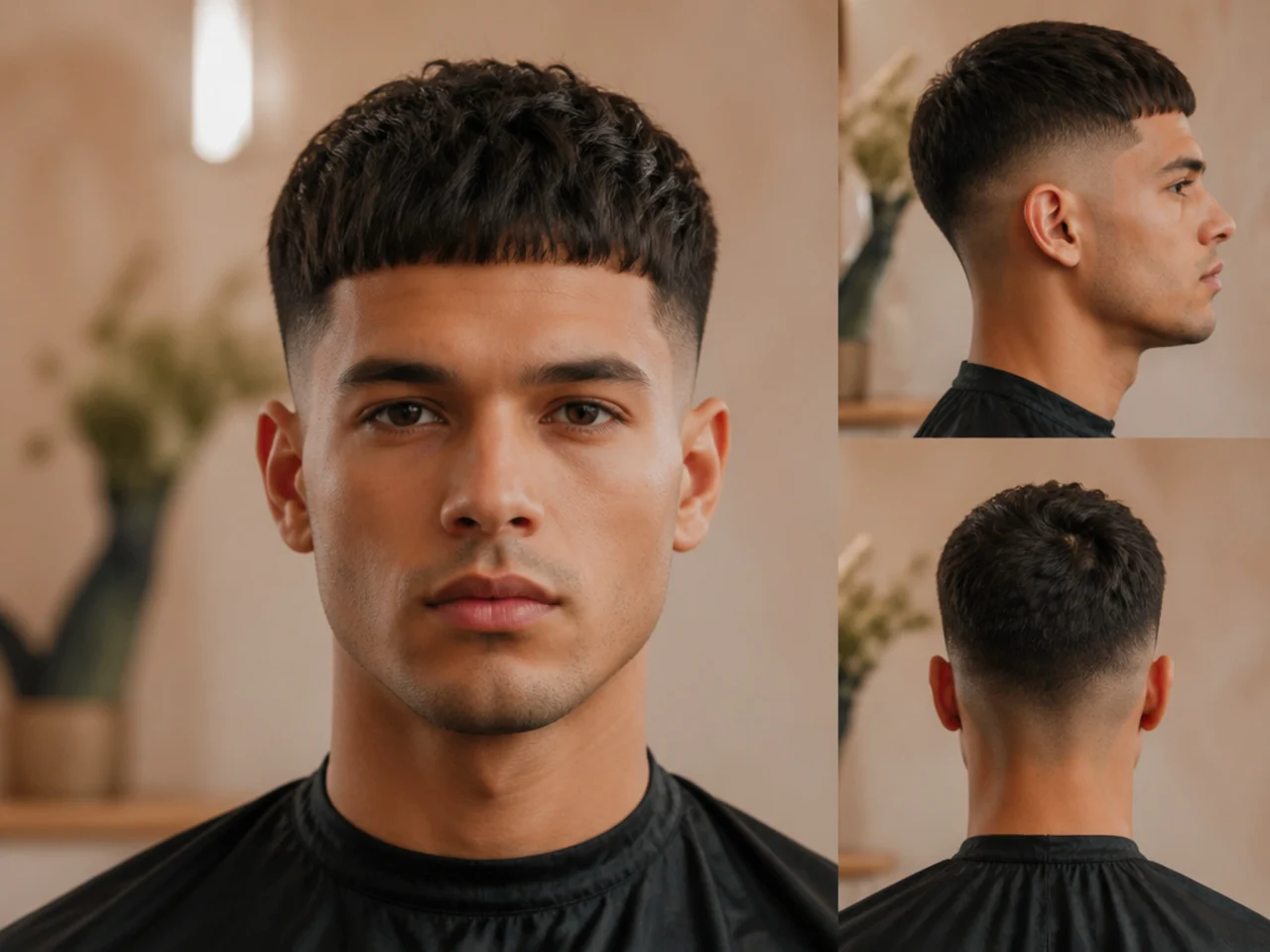
Compatibility: Workable with modifications. A high fade adds face length — the wrong direction. Add width with a low fade and longer fringe.
Best variations: Low Fade, Long Fringe, Taper Fade.
Triangular Face (wider at jaw)
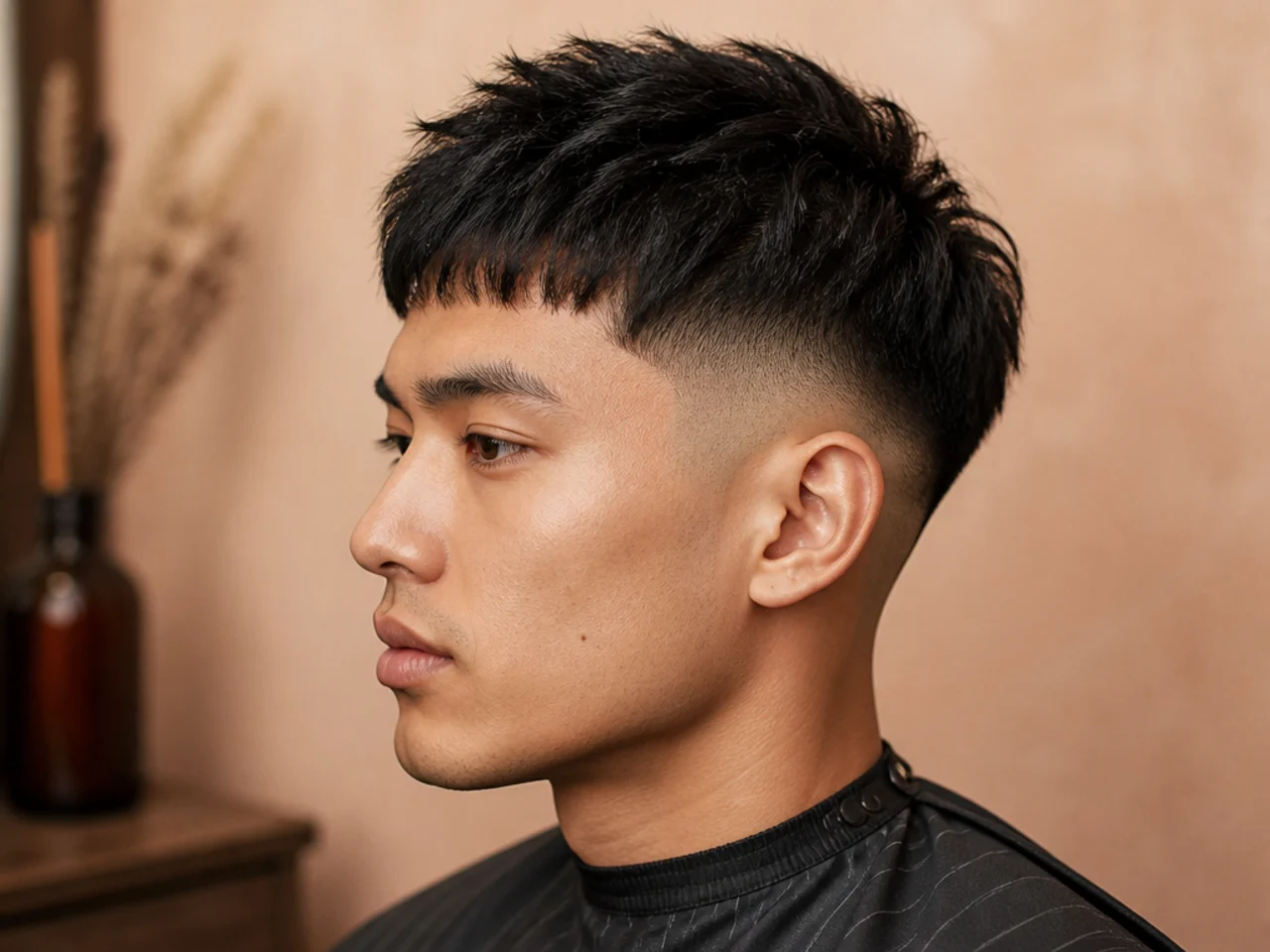
Compatibility: Moderate. A high fade with volume on top balances a heavy jawline by adding weight above the temples.
Best variations: High Fade, Long Top, Textured Top.
Face Shape Comparison Chart
Why It’s Trending in 2025
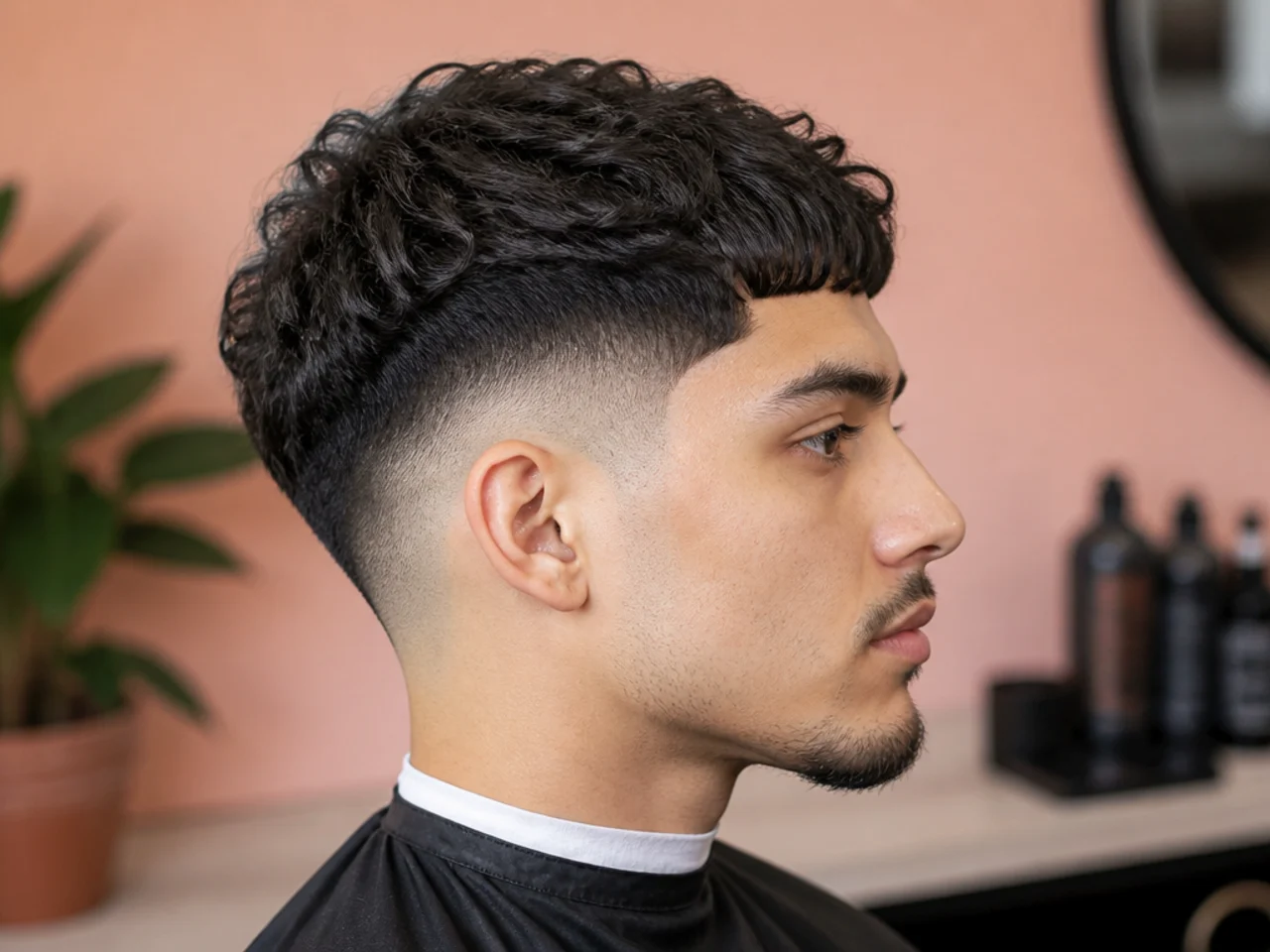
The Edgar is doing what a great cut always does — refusing to age out. Peso Pluma, Bad Bunny, and Ryan Garcia keep the blunt fringe visible. The mullet variant dominates teen barbershop menus.
There's also the utility. It grows in cleanly, works for straight and wavy hair, and takes 90 seconds to style. Trend plus low effort is how a cut sticks — the Edgar cleared both bars years ago and hasn't looked back.
Styling an Edgar Haircut at Home
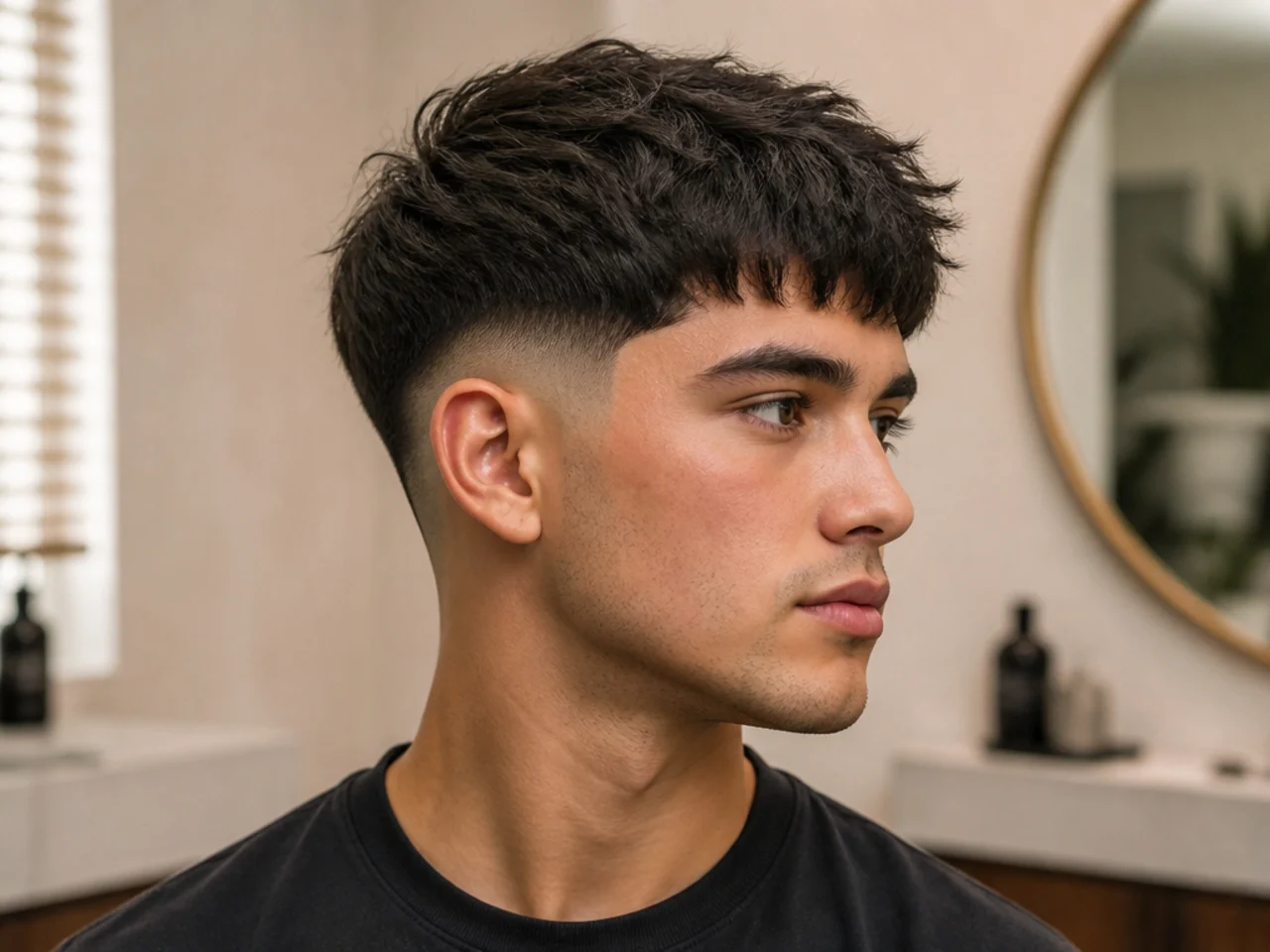
The fringe does the work. Keep it flat, keep it straight, don't over-product it.
Essential Styling Products
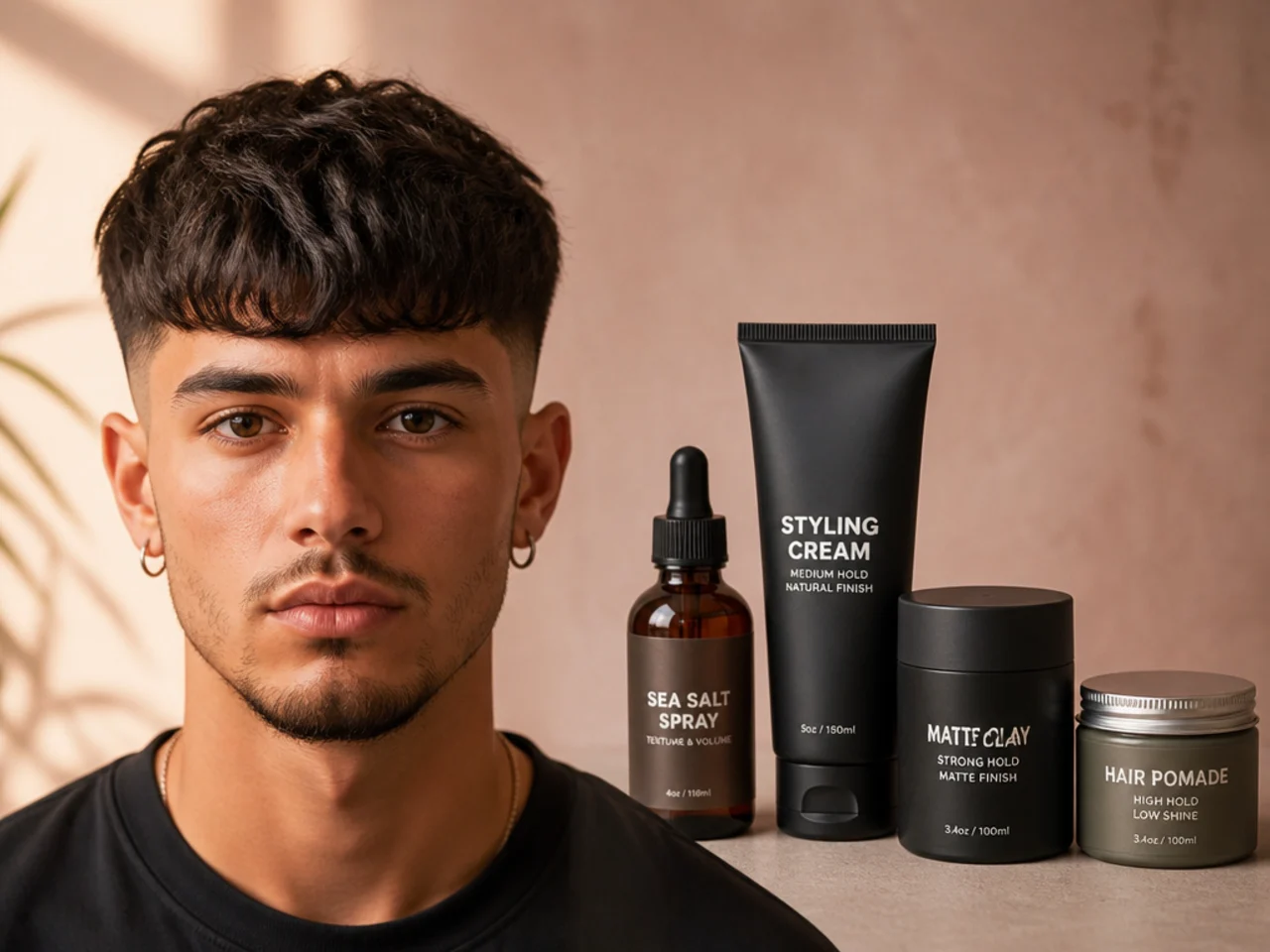
- Matte cream — default for a classic Edgar. Light hold, no shine, doesn't crust.
- Matte clay — for thicker hair or textured tops. Stronger hold, still matte.
- Sea-salt spray — for wavy or messy variations. Adds grit before anything else.
- Round brush — non-negotiable for wavy or curly hair.
Step-by-Step Styling Guide
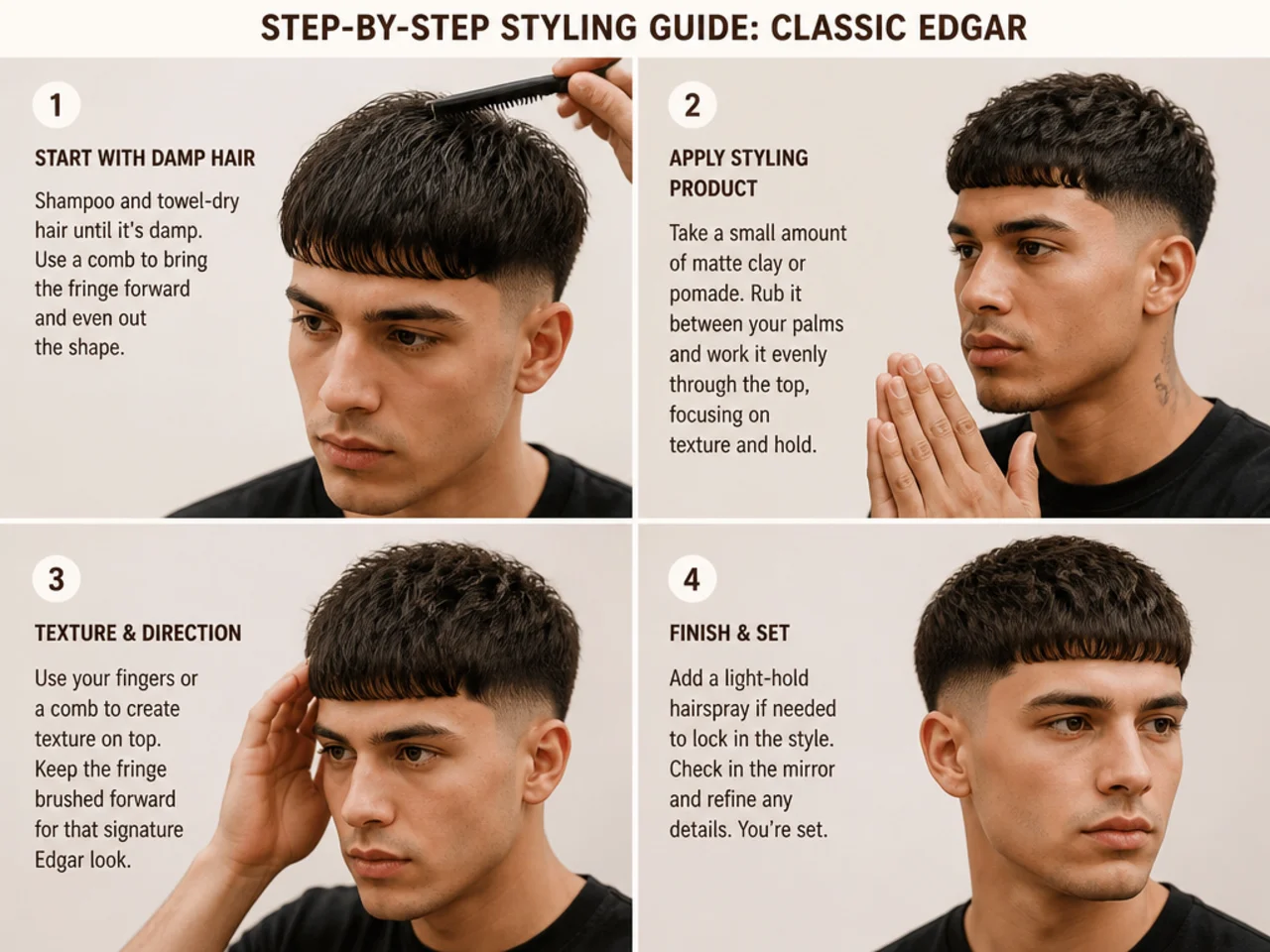
- Wash and towel-dry — hair damp, not wet, not dry.
- If wavy or curly, blow-dry the fringe flat with a round brush before adding product.
- Warm a pea of matte cream between your palms.
- Push it through the top from crown to fringe, then comb forward with a fine-tooth comb.
- Reset the fringe line — comb straight down from the crown to the forehead in one motion.
- If the top is textured, break the crown up with your fingers after combing.
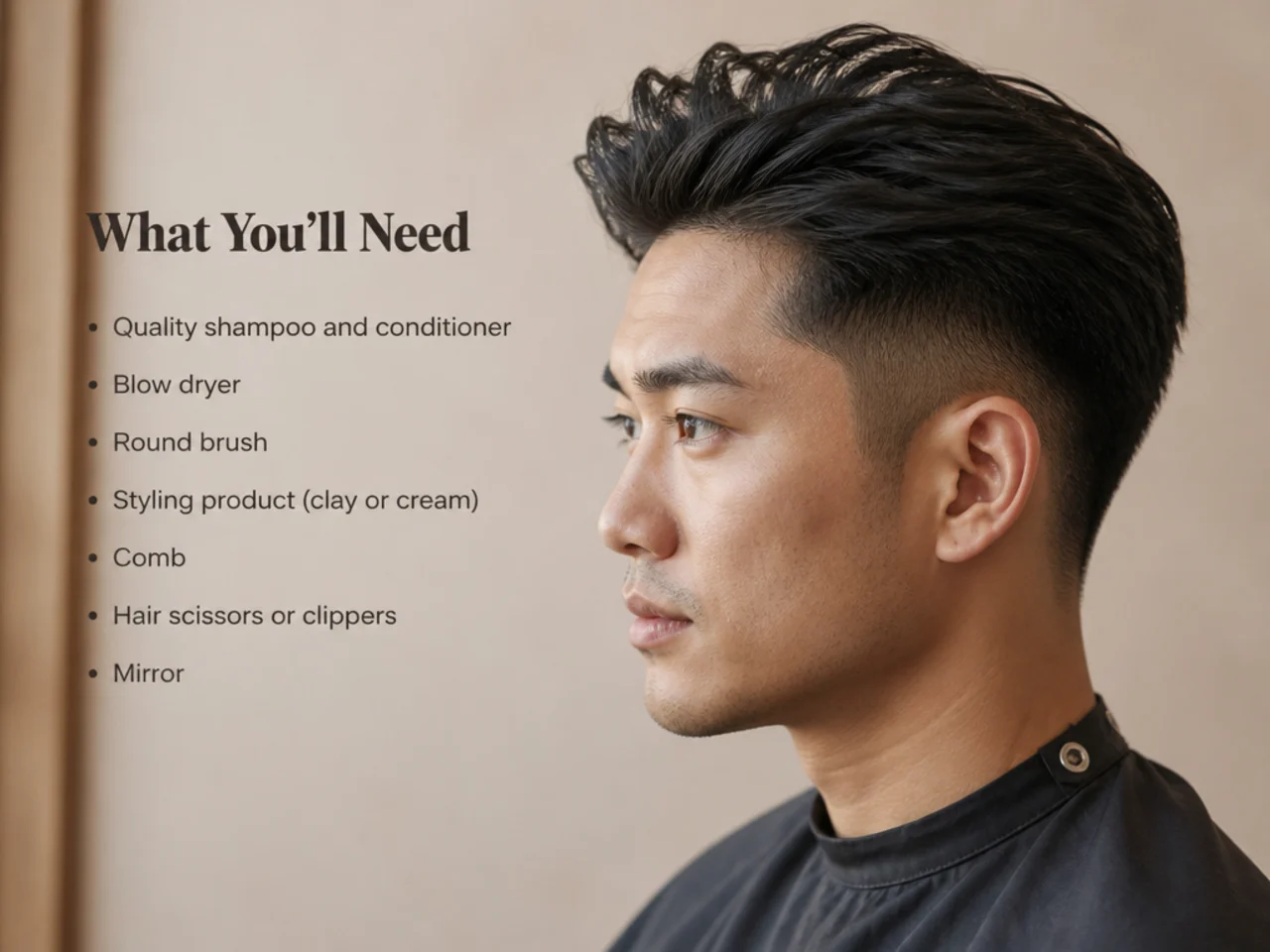
Essential Tools
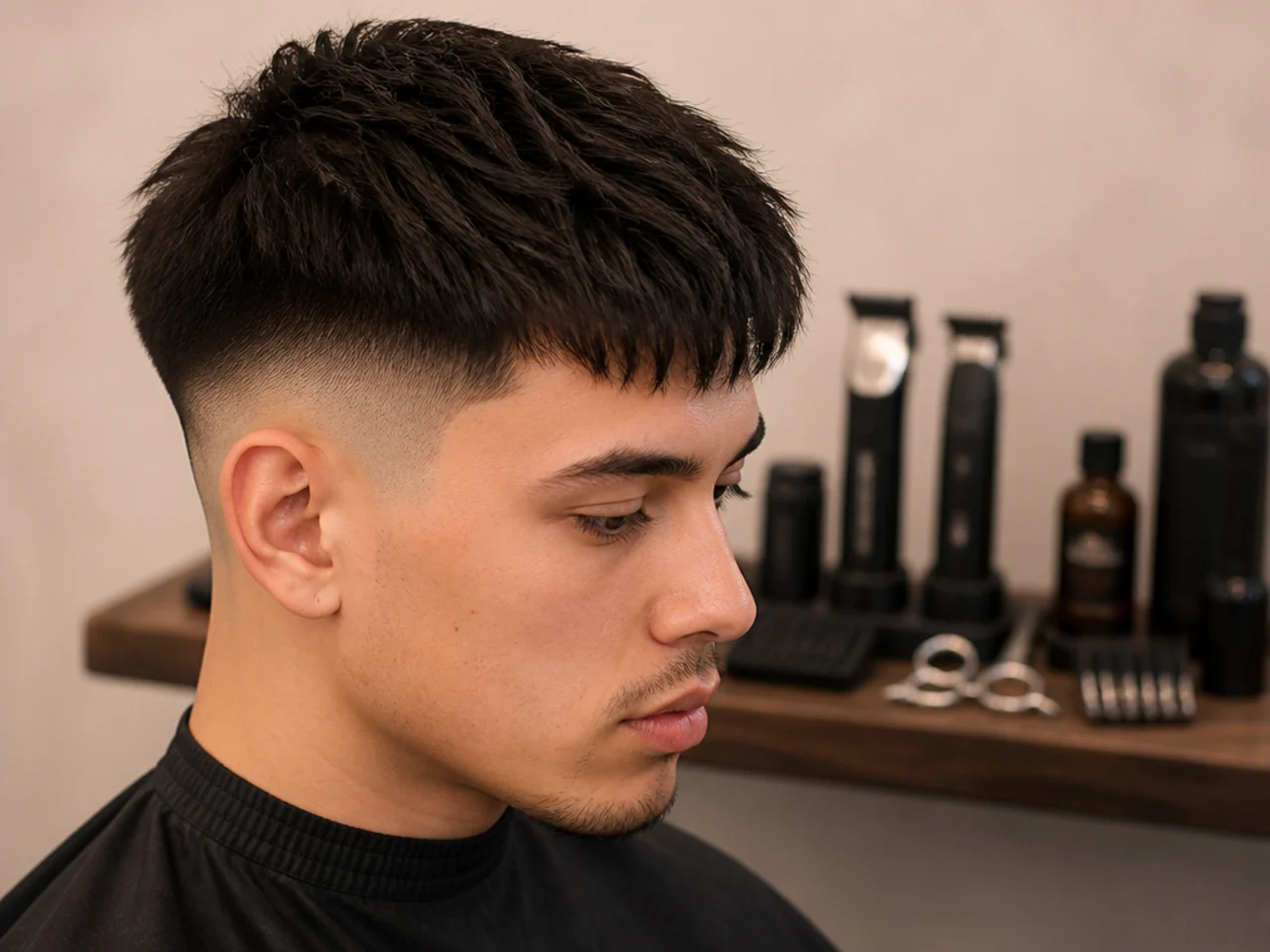
- Fine-tooth comb — for the fringe line
- Round brush — for straightening waves and curls
- Blow dryer with nozzle — angle it down for a flat fringe
- Small mirror — check the line from the side
- Hair clips — only for long-top variations
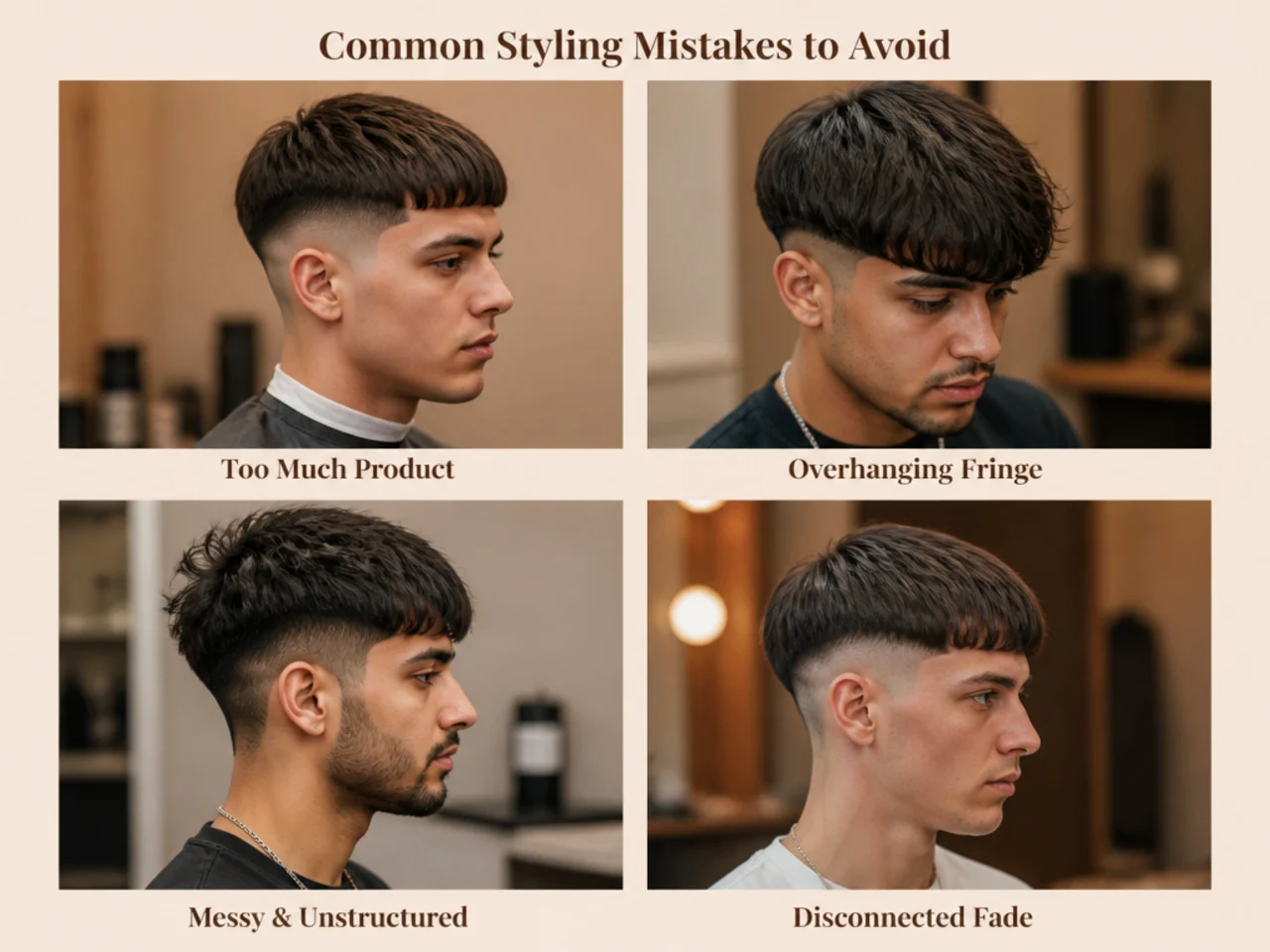
Common Styling Mistakes to Avoid
- Too much product — fringe goes limp and greasy. A pea. Not a walnut.
- Combing the fringe sideways — pulls the line out of horizontal. Always comb straight down.
- Skipping the blow-dry on wavy hair — the fringe curls up by lunch.
- Using pomade with shine — Edgar reads matte. Shine kills the sharp line.
- Not resetting the line midday — carry a comb.
Maintenance and Upkeep
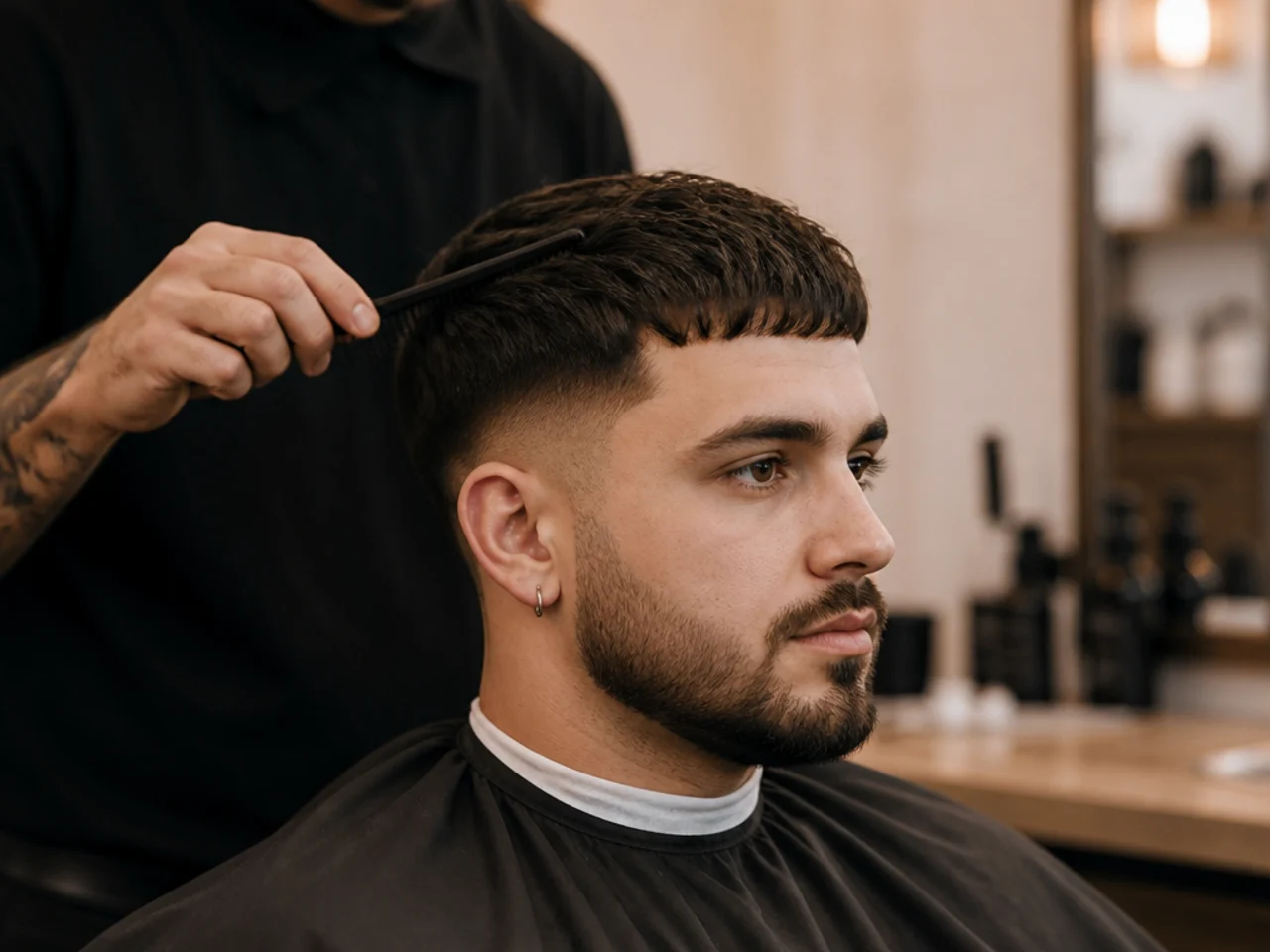
The Edgar goes out of shape faster than most cuts. Fade fuzzes at 10 days, fringe drifts past the brows at 3 weeks. Build the schedule into your calendar.
Touch-Up Schedule
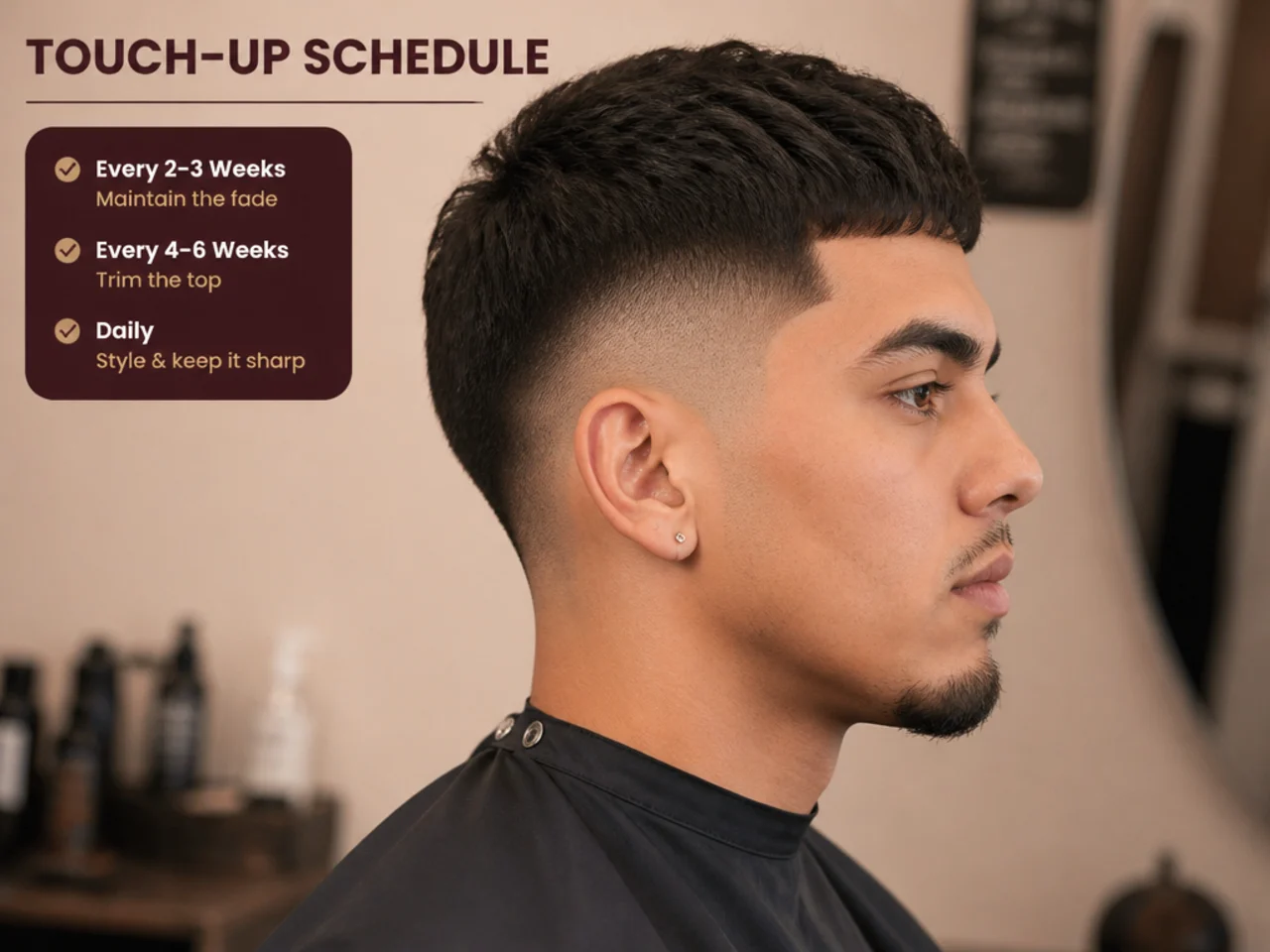
- Skin fade Edgar: every 10–14 days
- Mid or high fade Edgar: every 2–3 weeks
- Low fade or taper Edgar: every 3–4 weeks
- Fringe trim only (between fade appointments): every 2 weeks
Daily Maintenance Routine
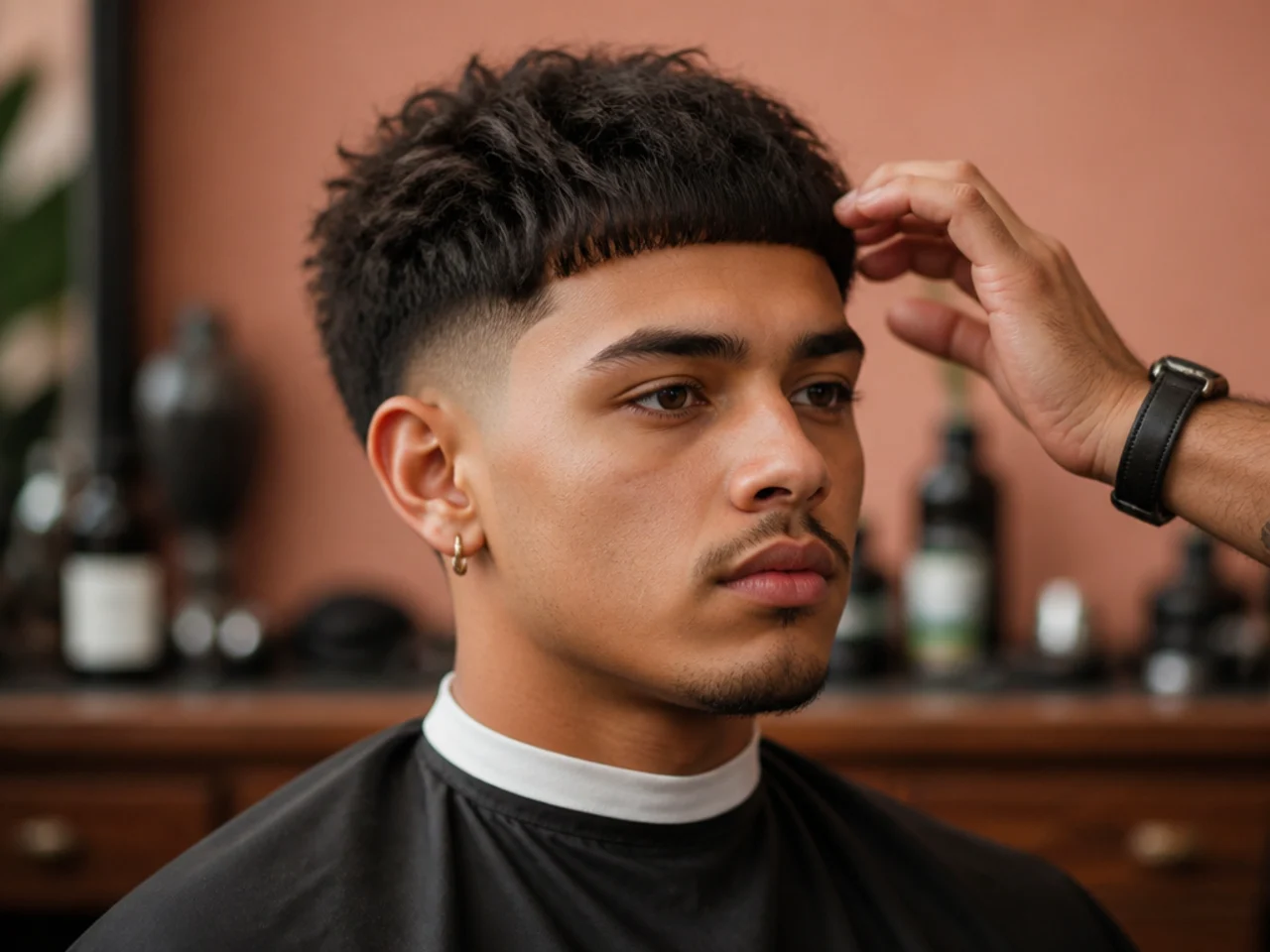
- Morning rinse and comb — resets the fringe line even without product
- Wash 2–3 times a week — over-washing thins the fringe faster
- Conditioner through the top only — not the sides
- Carry a comb — reset the fringe once mid-afternoon
Product Recommendations for Maintenance
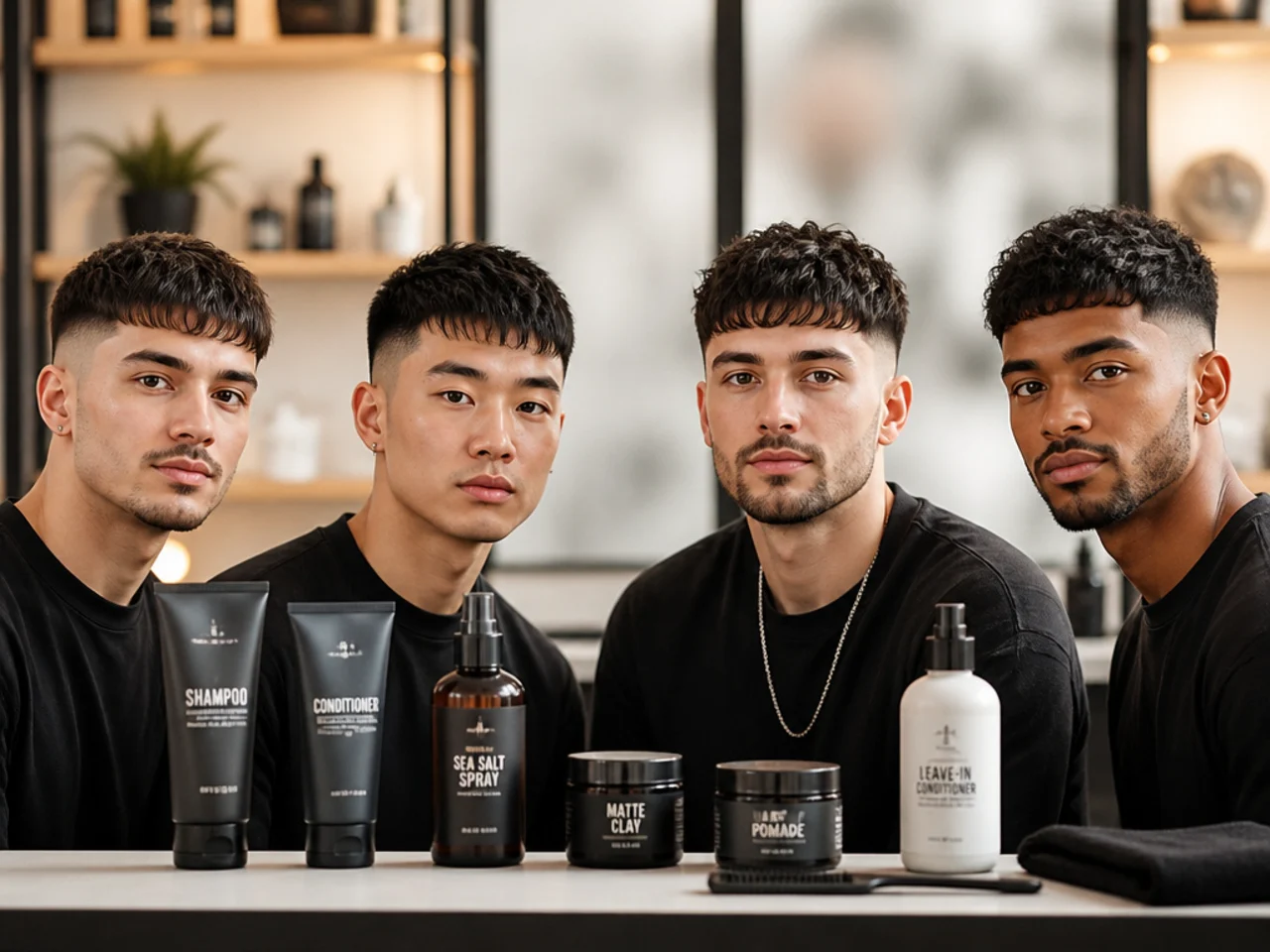
- Clarifying shampoo once a week — clears cream and clay buildup
- Sulfate-free daily shampoo — for other washes
- Light conditioner through the top length only
- Scalp scrub twice a month — keeps shaved skin clean, reduces bumps
- One drop of beard oil — softens a stubborn fringe
Troubleshooting Common Issues
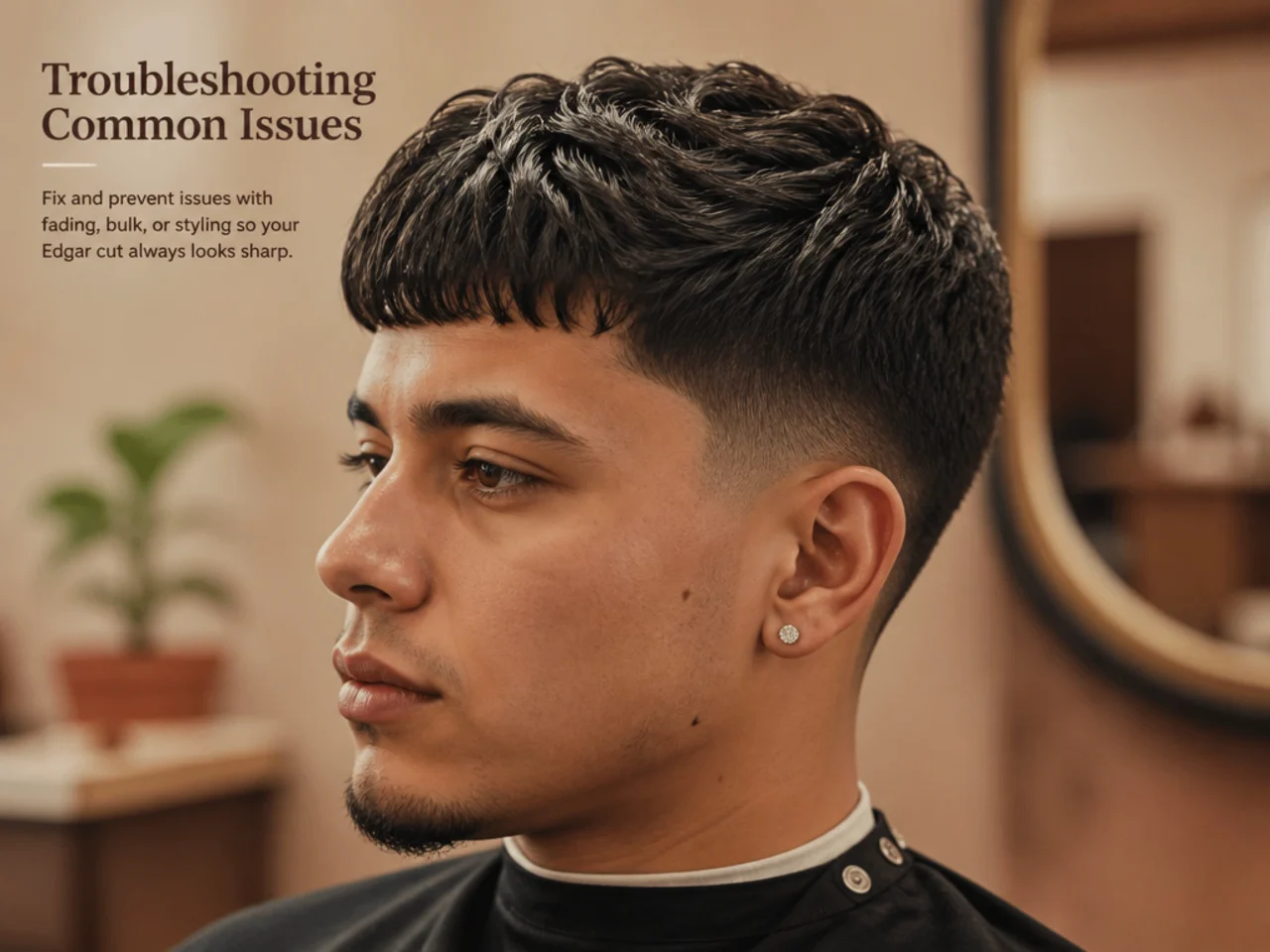
- Fringe won't lie flat: blow-dry with a round brush before any product.
- Fringe splits in the middle: cowlick at the front. Have your barber point-cut the split area next visit.
- Fade lines look uneven: you waited too long. Book weekly for a month to reset.
- Product buildup after a week: switch to a lighter cream, or clarify once.
Edgar Haircut Variations for Different Hair Types
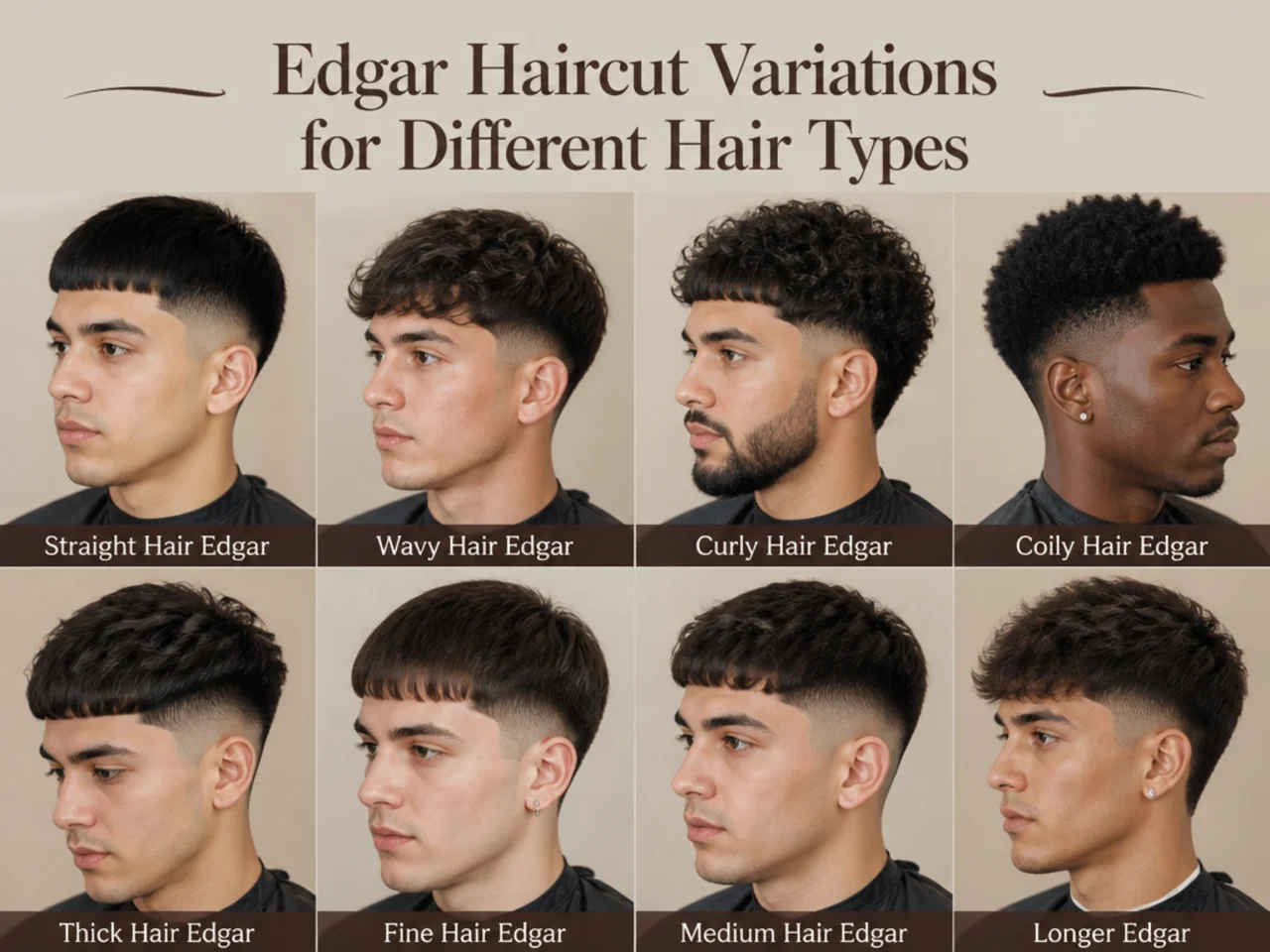
The blunt fringe demands a hard, straight line. Different hair textures cooperate to different degrees.
For Straight Hair
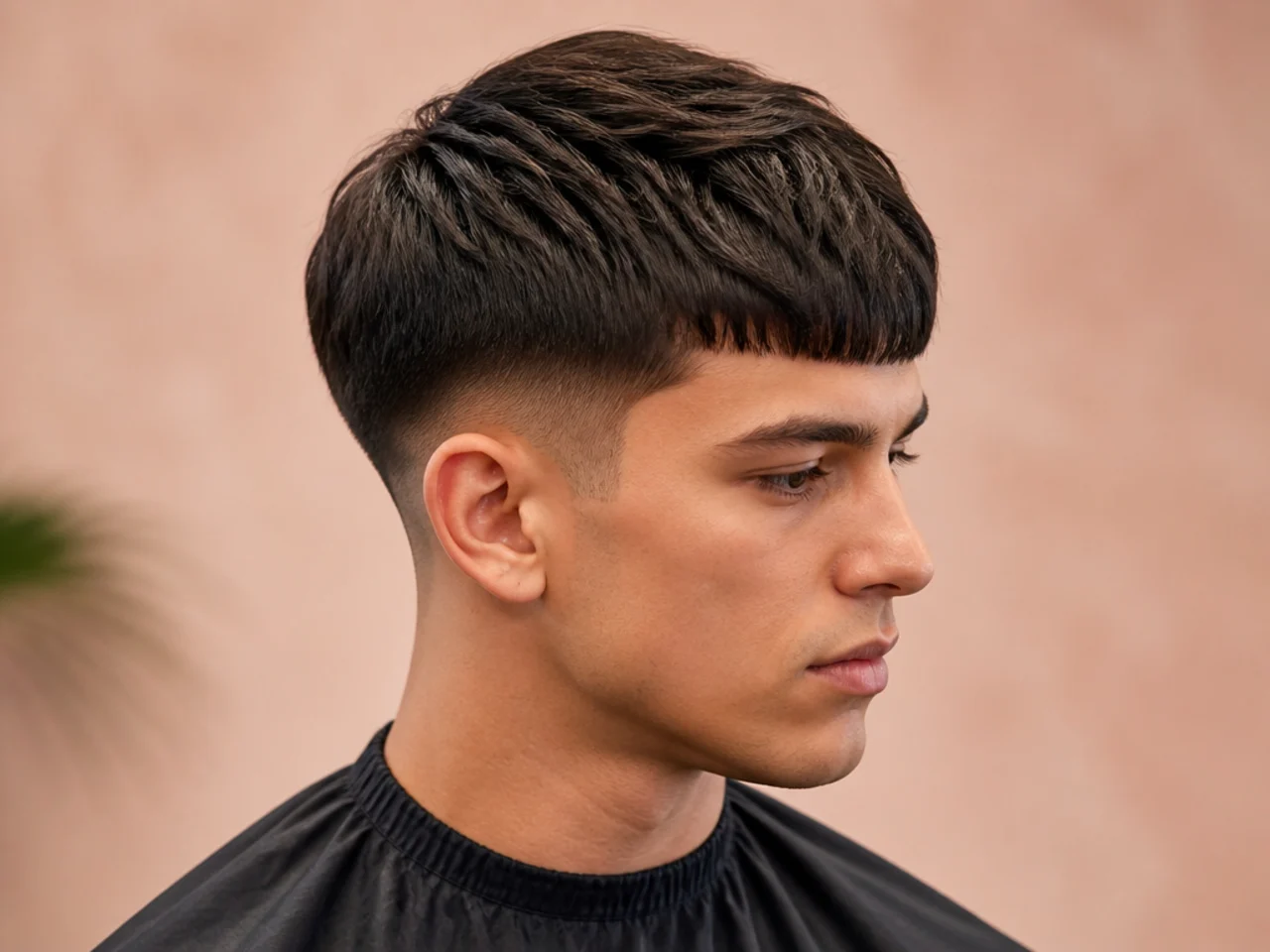
The Edgar was invented for straight hair. The line cuts crisp and holds with minimal product. Any of the 25 variations works.
Styling tip: a small amount of matte cream is enough. Don't over-style.
For Curly Hair
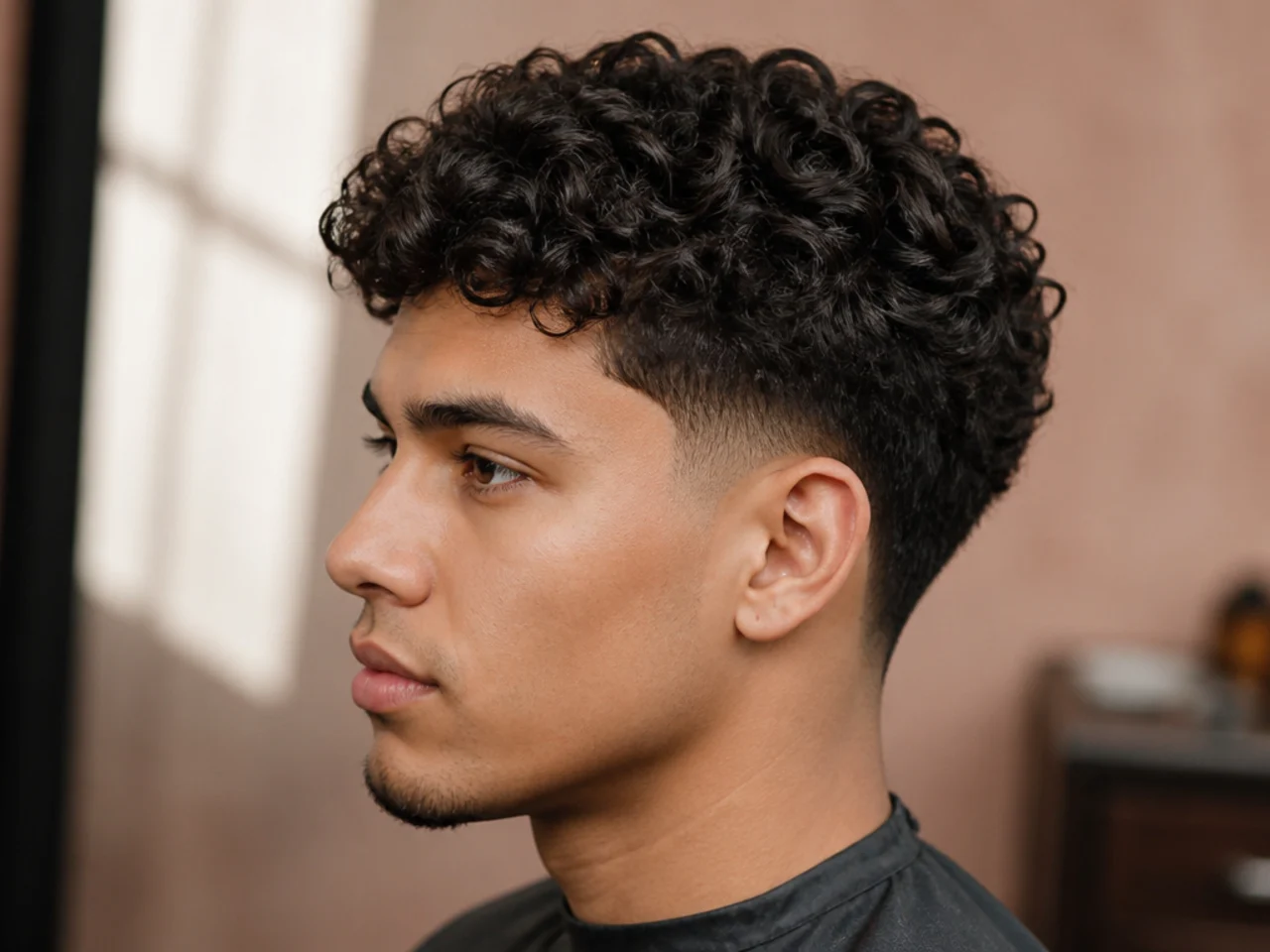
The fringe needs to be blown out flat before cutting, or the curl pulls the line uneven. Fringe shrinks about half an inch once dry — factor that in.
Best variations: Curly Edgar, Textured Top, Mini Edgar.
Styling tip: round brush and dryer on the fringe every morning is mandatory.
For Wavy Hair
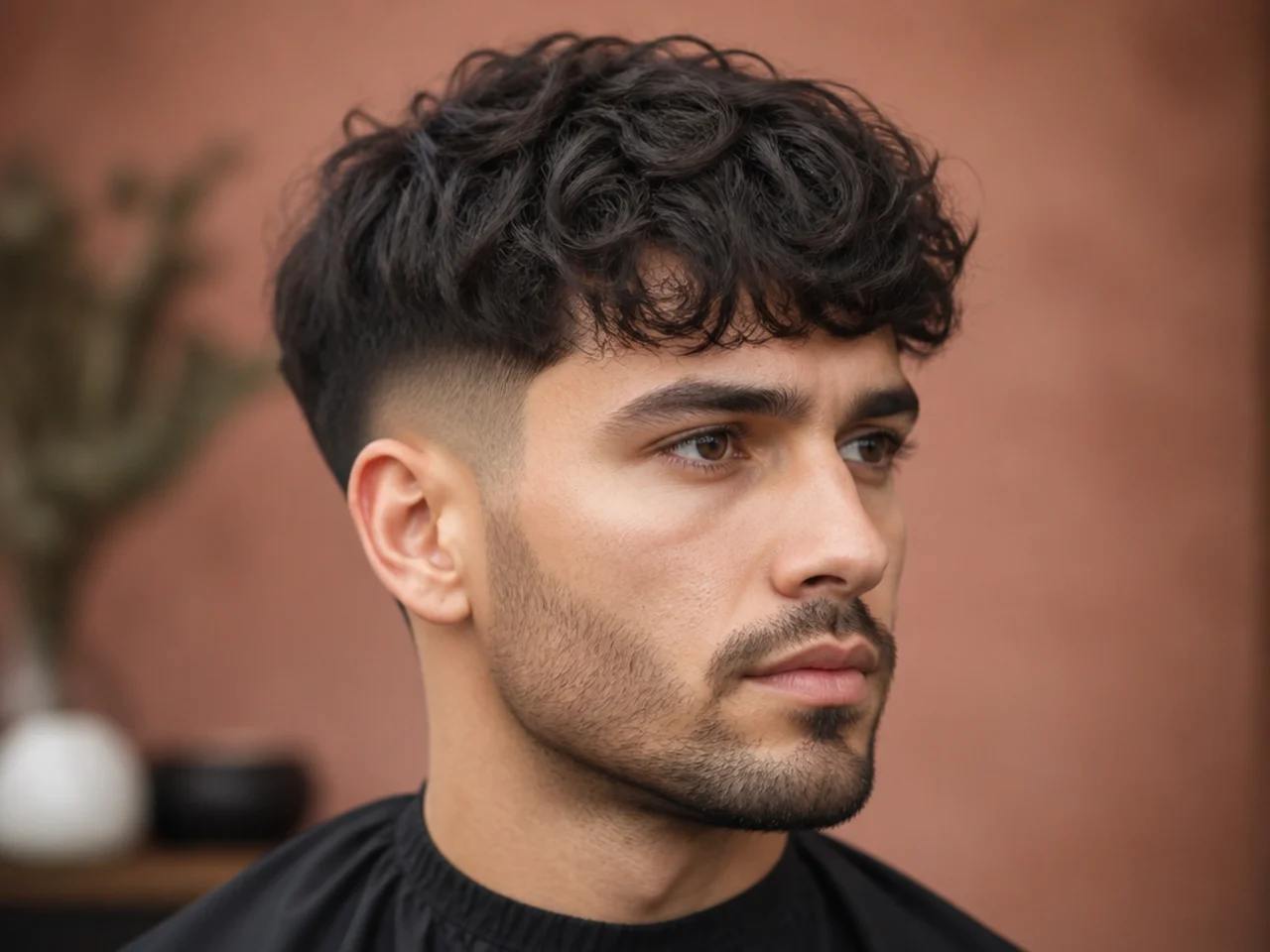
Wavy sits between straight and curly. A quick blow-dry gets the fringe straight enough to hold, and the crown keeps natural movement.
Best variations: Wavy Edgar, Textured Top, Messy Edgar.
Styling tip: sea-salt spray in the crown, cream only through the fringe.
For Coarse Hair
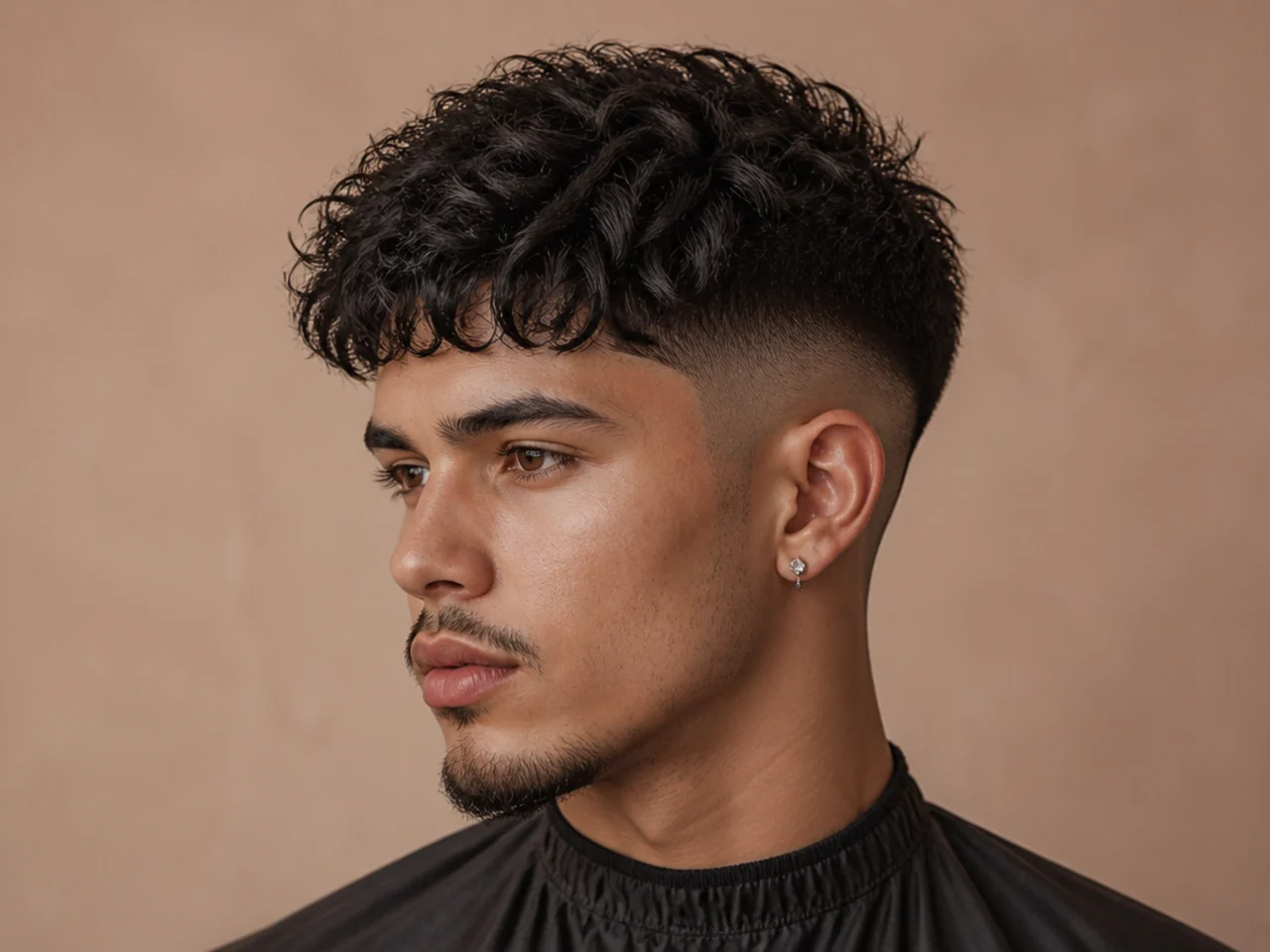
Coarse hair holds structure but resists lying flat. The fringe springs up unless you use enough product weight.
Best variations: Classic, Line Up, High Fade.
Styling tip: apply product to damp hair for better distribution.
For Fine Hair
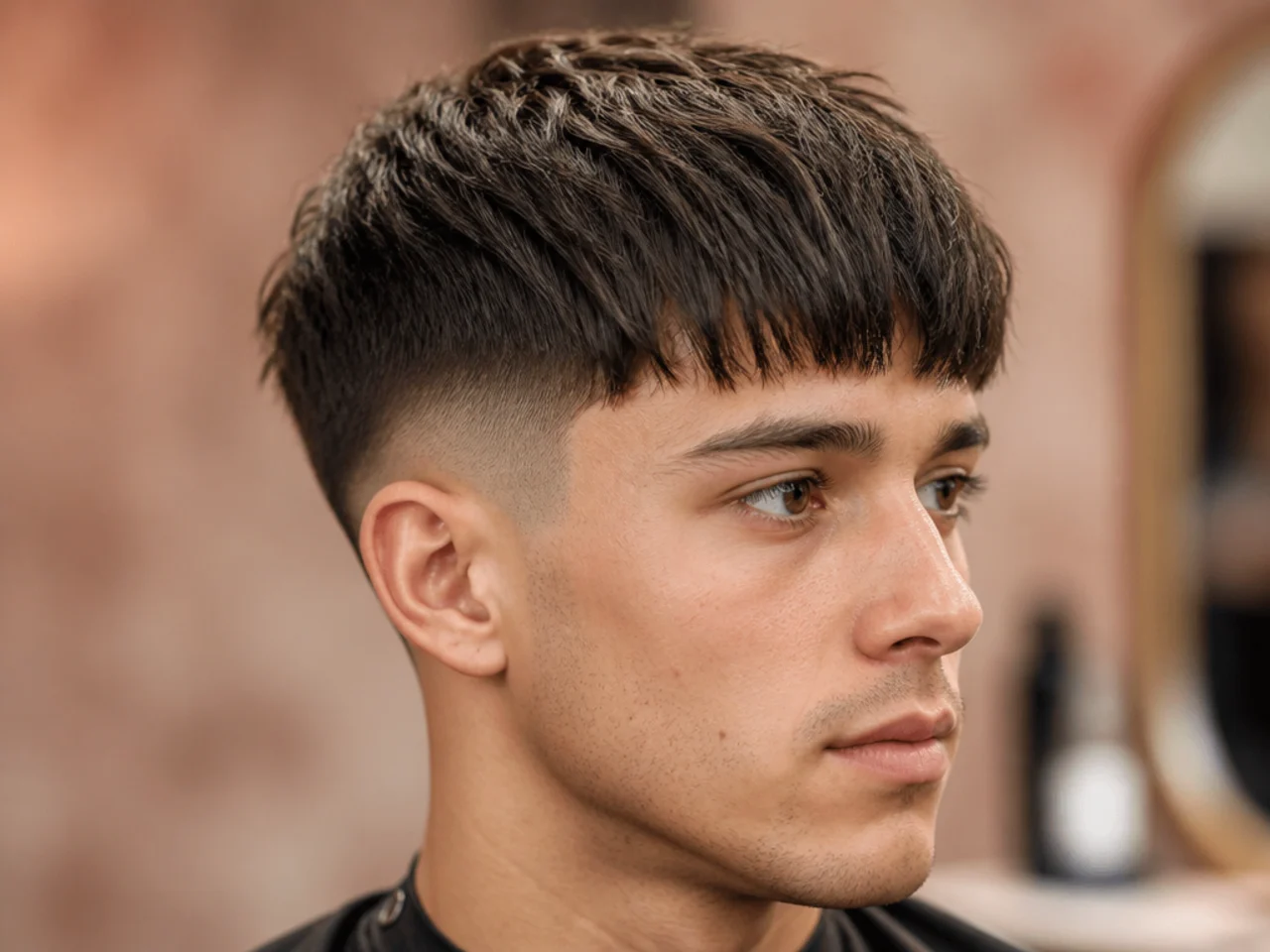
Fine hair goes limp under a blunt fringe. Add lift at the roots, pick a lighter variation.
Best variations: Textured Top, Messy Edgar, Short Fringe.
Styling tip: volumizing mousse at the roots, blow-dry the crown up before styling forward.
For Thinning Hair
The Edgar hides light thinning at the temples because the fringe covers the front hairline. Stick to shorter variations — long tops emphasize sparse crowns.
Best variations: Short Fringe, Mini Edgar, Textured Top.
Styling tip: matte products make hair read fuller than shine does.
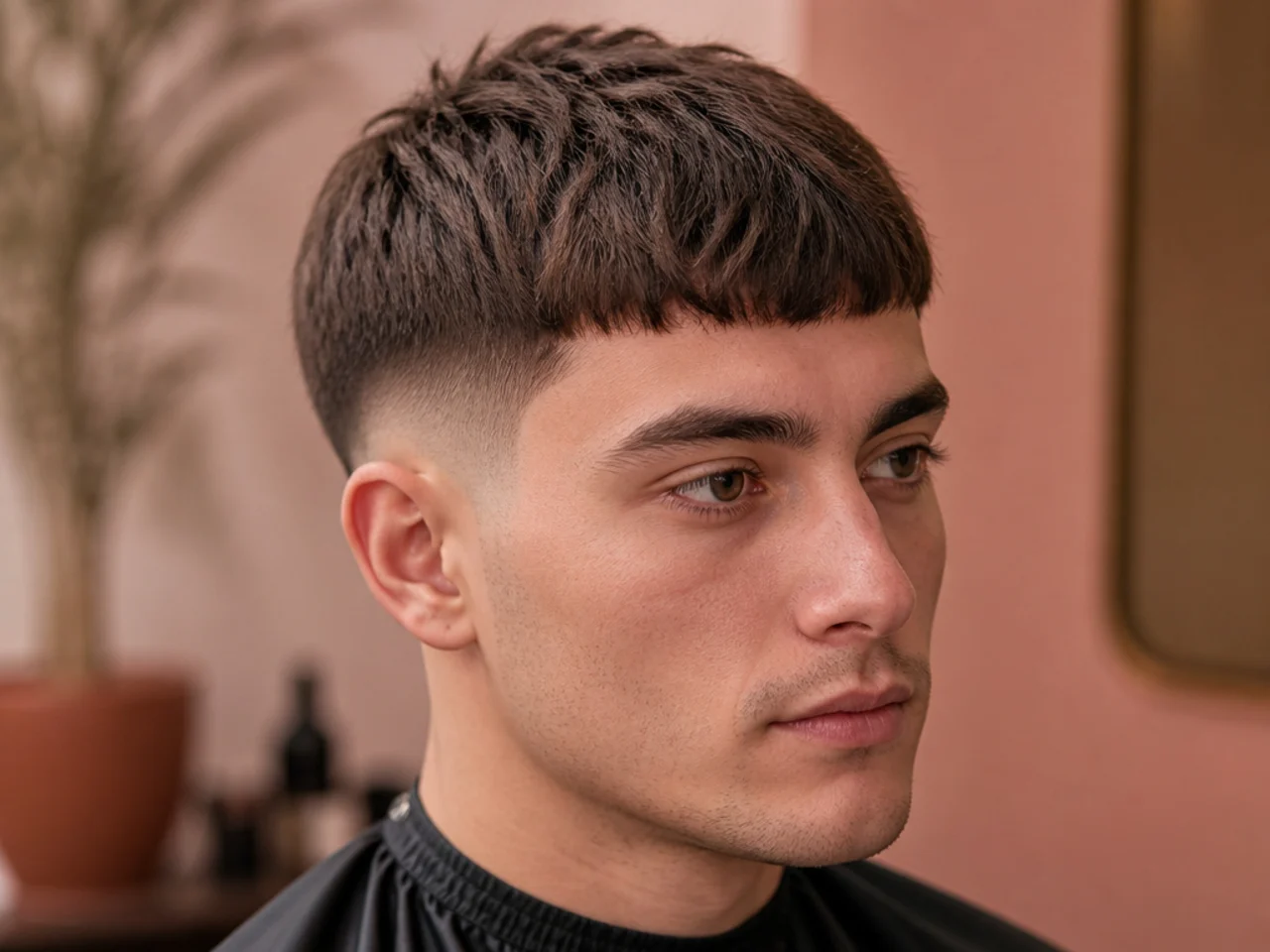
Pros and Cons of Getting an Edgar Haircut
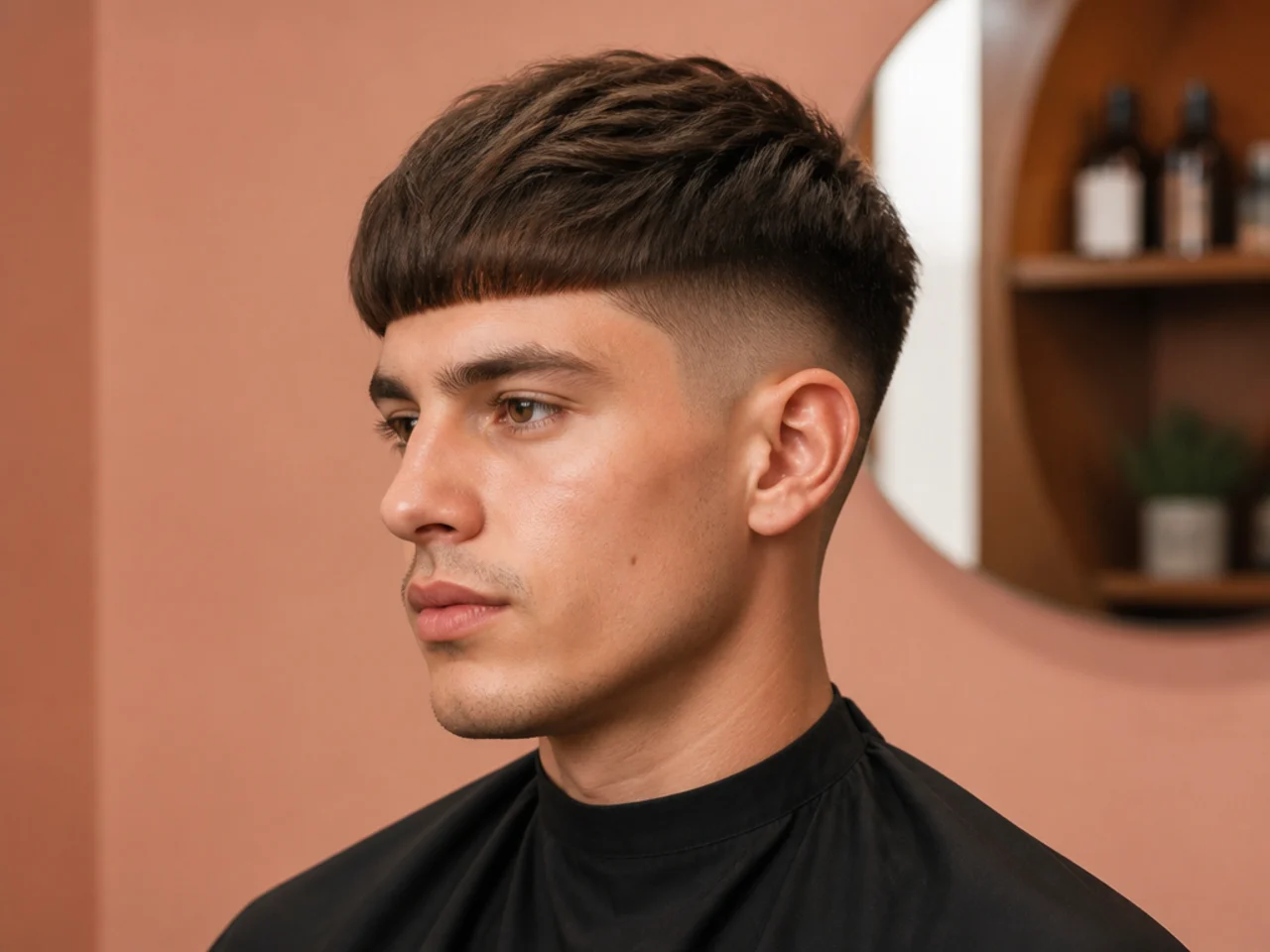
Every cut has trade-offs. The honest ledger.
Pros
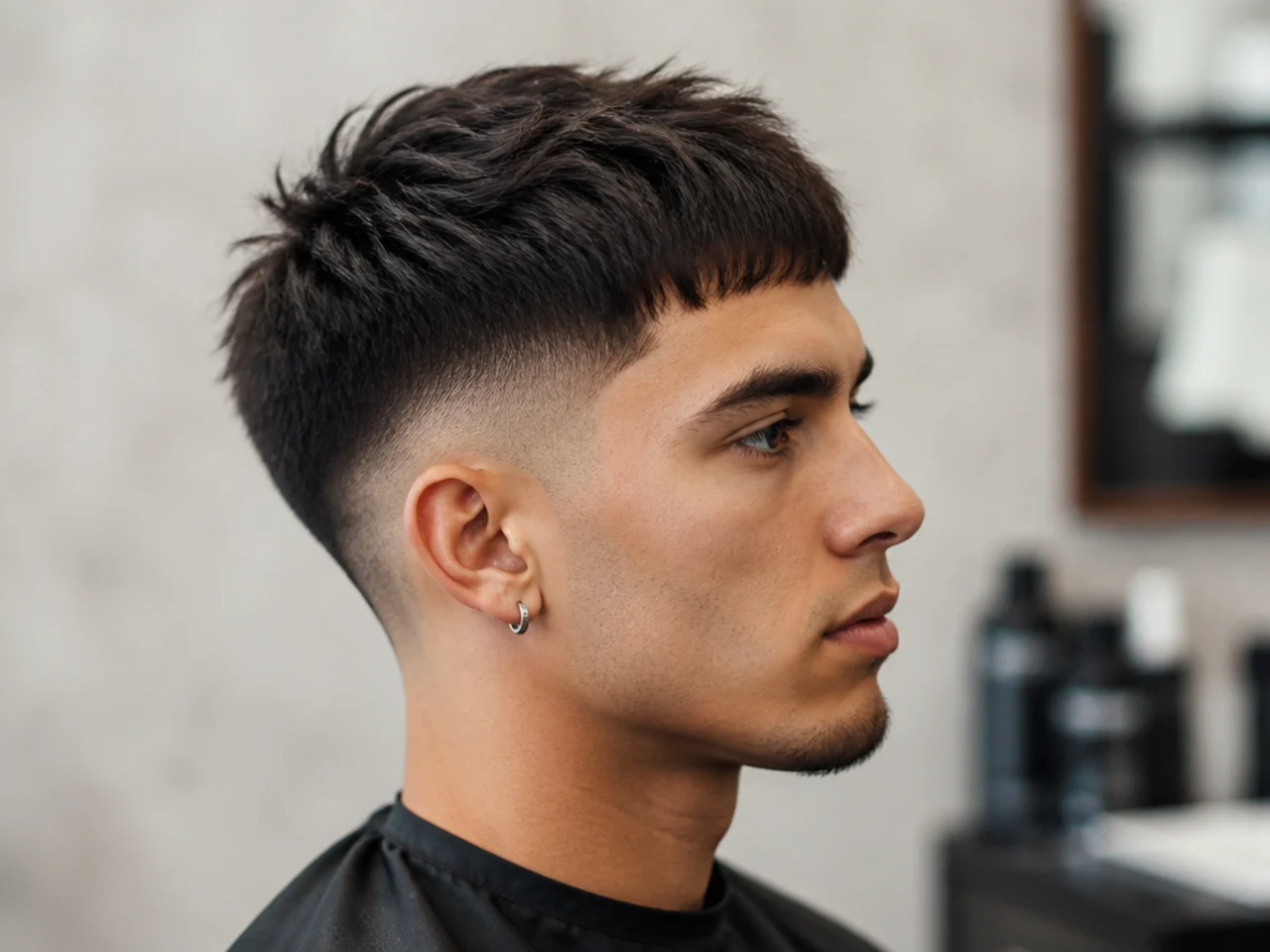
- Instantly recognizable — nobody asks what cut you got
- Every barber knows it — no need to explain
- Fast to style — 90 seconds most mornings
- Works with a beard — sharp line up top, defined line on the jaw
- Frames the eyes — the fringe pulls attention up
- Fade adapts to the season — high in summer, low in winter
- Cheap to test — start with the Mini Edgar and grow out if you don't like it
Cons
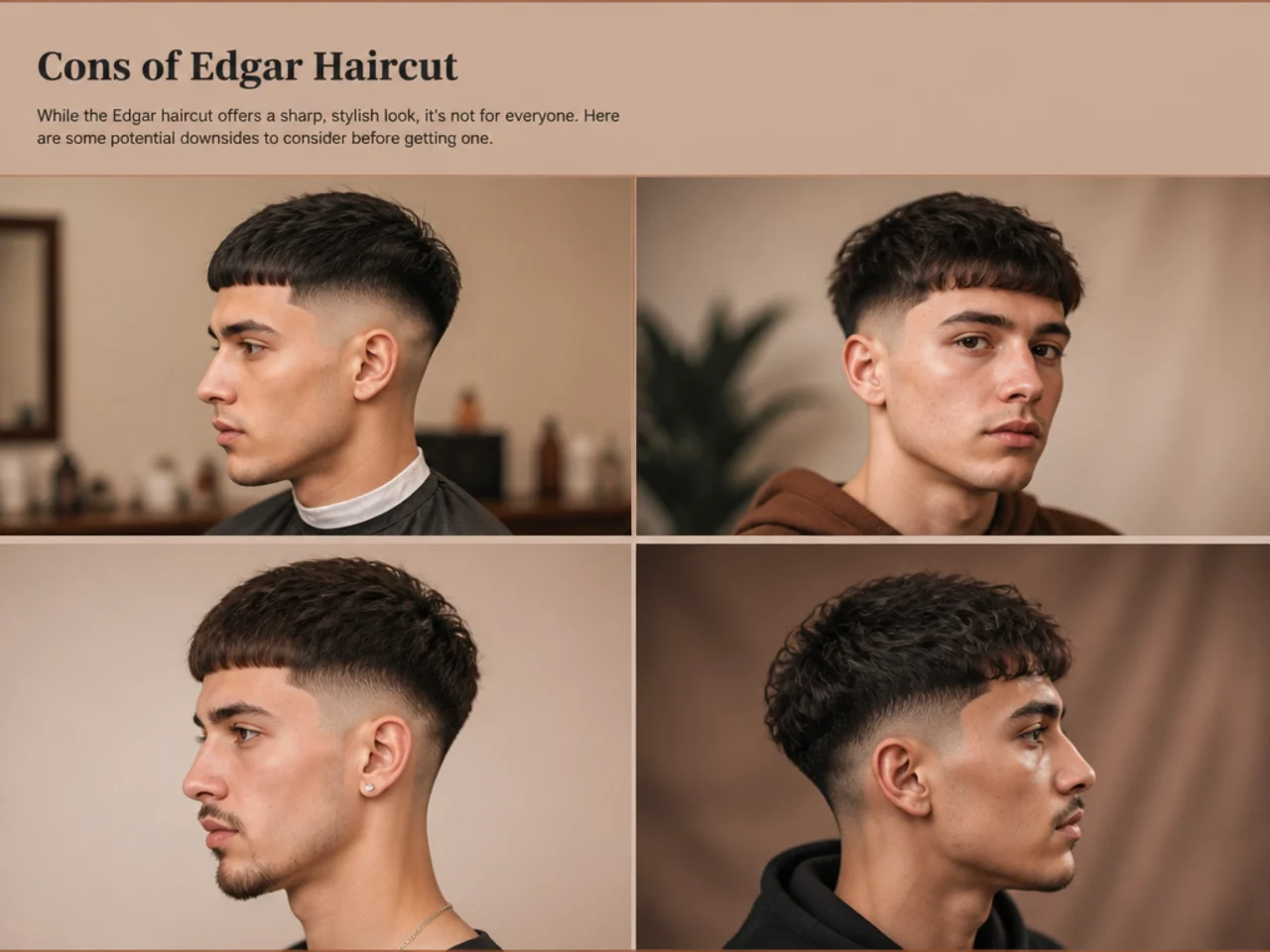
- Frequent fade touch-ups — skin fades every 10 days
- Not for every face shape — heart and long faces fight the horizontal fringe
- Awkward grow-out — the fringe hits the eyes for 6 weeks
- Right product required — matte cream, not pomade with shine
- Reads young — some corporate settings won't love it
- Cowlicks show — a stubborn front hairline can't hide behind the fringe
Time Commitment
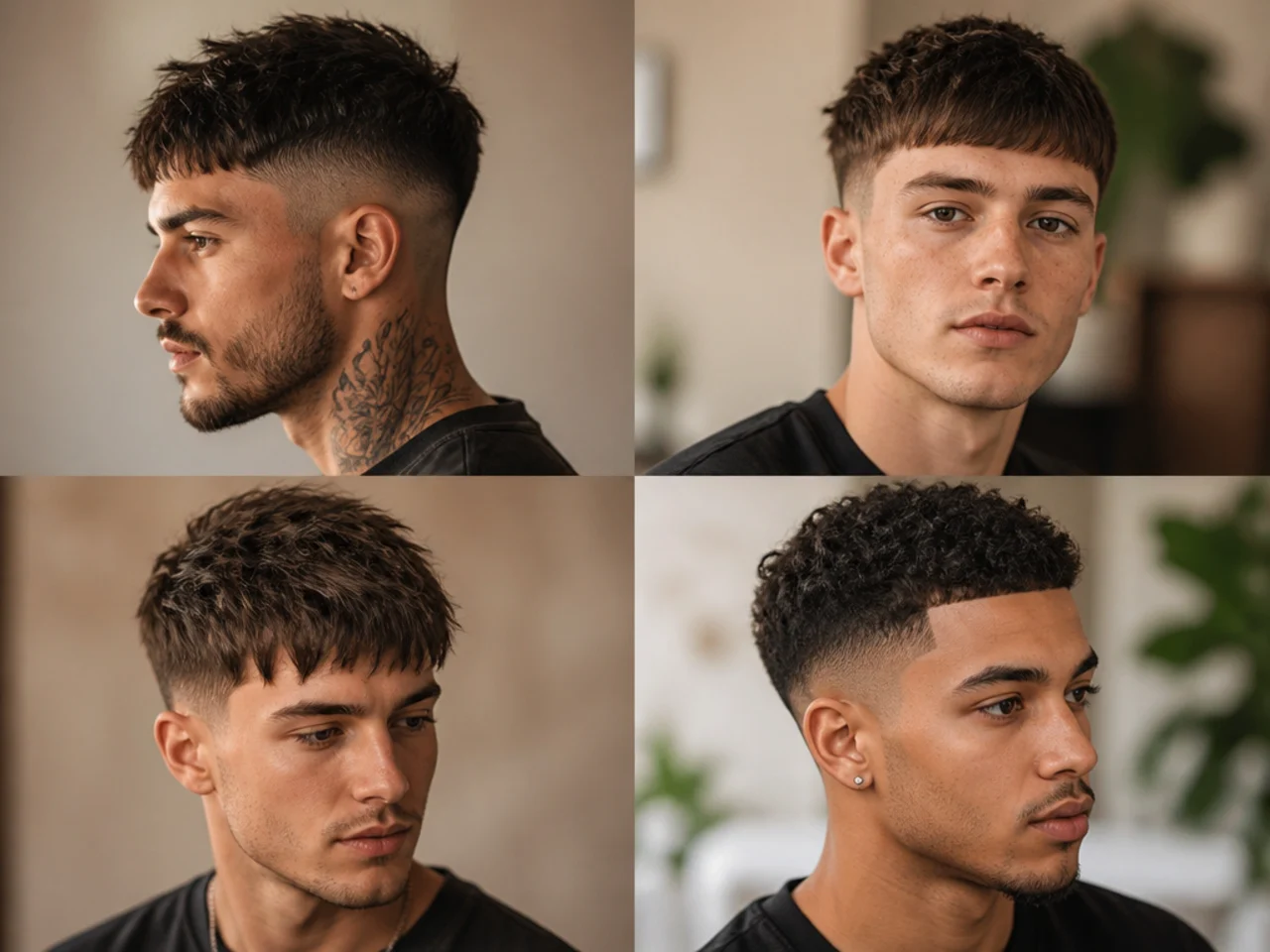
- Initial cut: 30–45 minutes
- Touch-up: 15–20 minutes
- Daily styling: 90 seconds to 2 minutes
- Weekly total: roughly 30 minutes
Cost Considerations
- Initial cut: $25–$50 standard, $50–$75 in major cities
- Skin fade touch-ups: $15–$30 every 10–14 days
- Products: one matte cream lasts 2–3 months at $15–$25
- Annual total: $500–$1,000, more with a skin fade
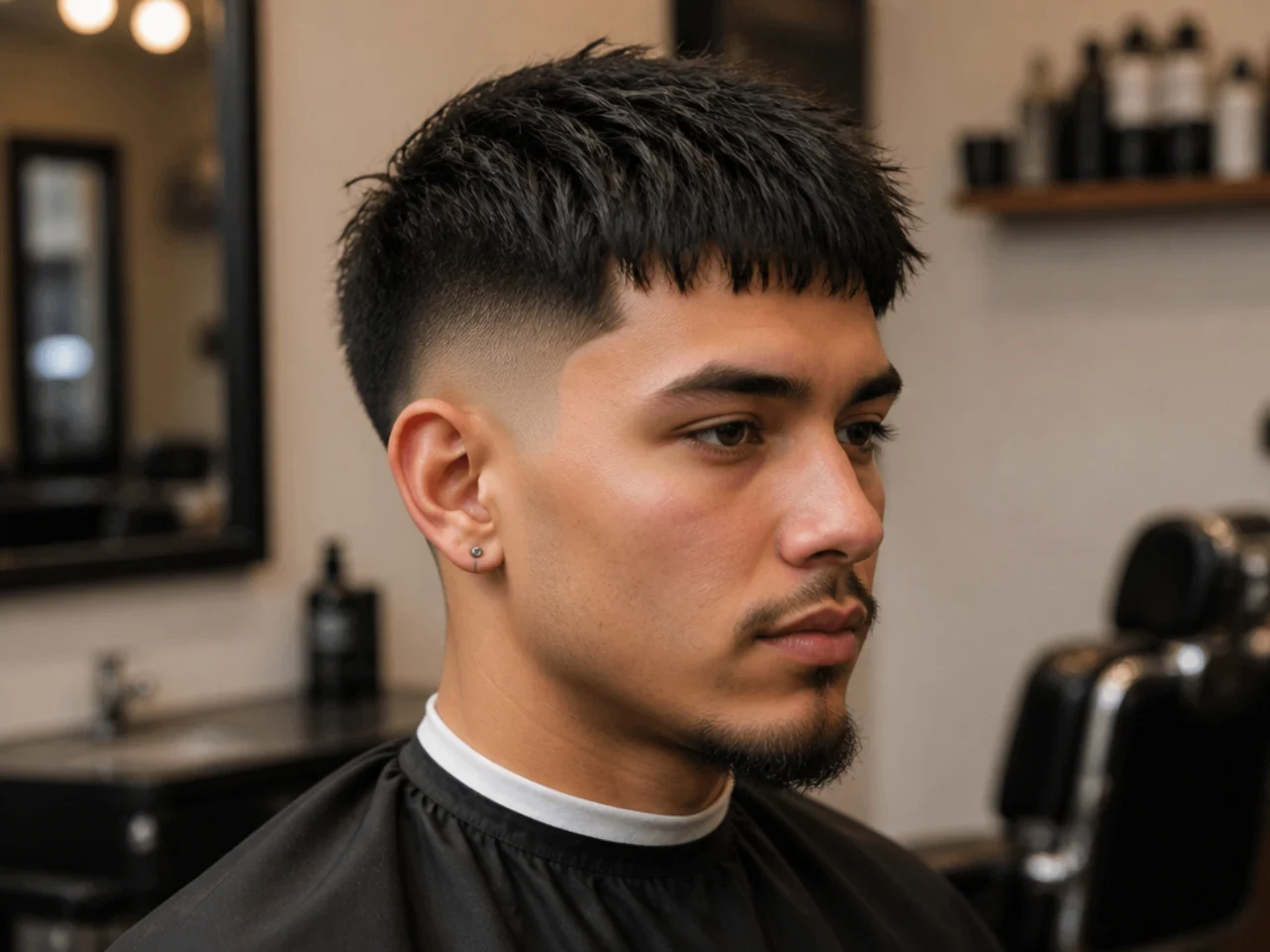
How to style an Edgar at home
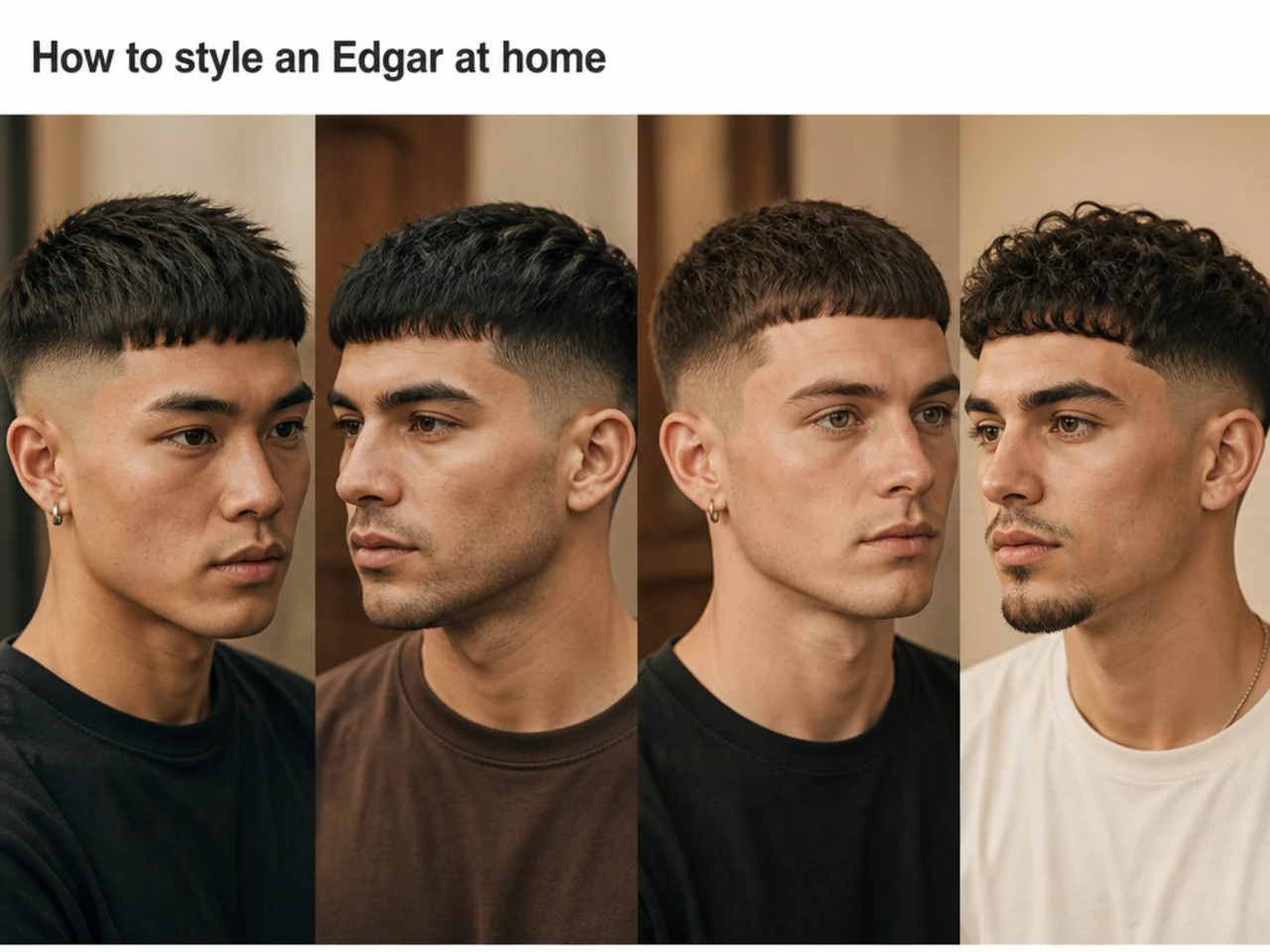
Four steps. Under two minutes.
- Blow the fringe flat. Damp hair, round brush, medium heat. Angle the dryer down toward the forehead so the fringe dries straight and pointed down.
- Warm a pea of matte cream between your palms — thumb-and-forefinger amount, no more.
- Push the product through the top, then comb the fringe straight down from the crown to the forehead in one clean motion with a fine-tooth comb.
- Reset the line. Look in the mirror straight on. Comb the fringe once more. Nudge stray hairs back into the horizontal with a fingertip.
FAQs About Edgar Haircuts
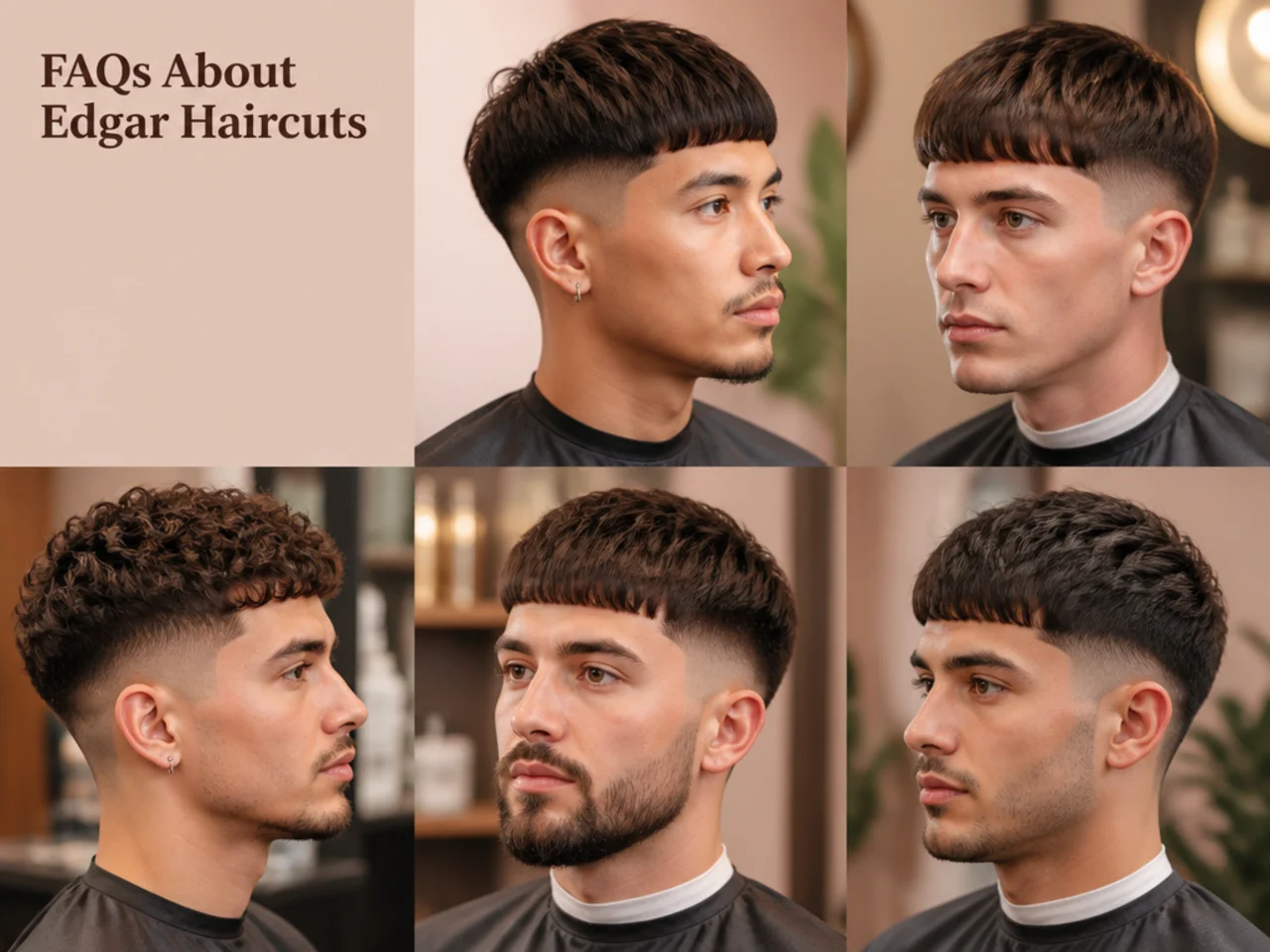
How Much Does An Edgar Haircut Cost?
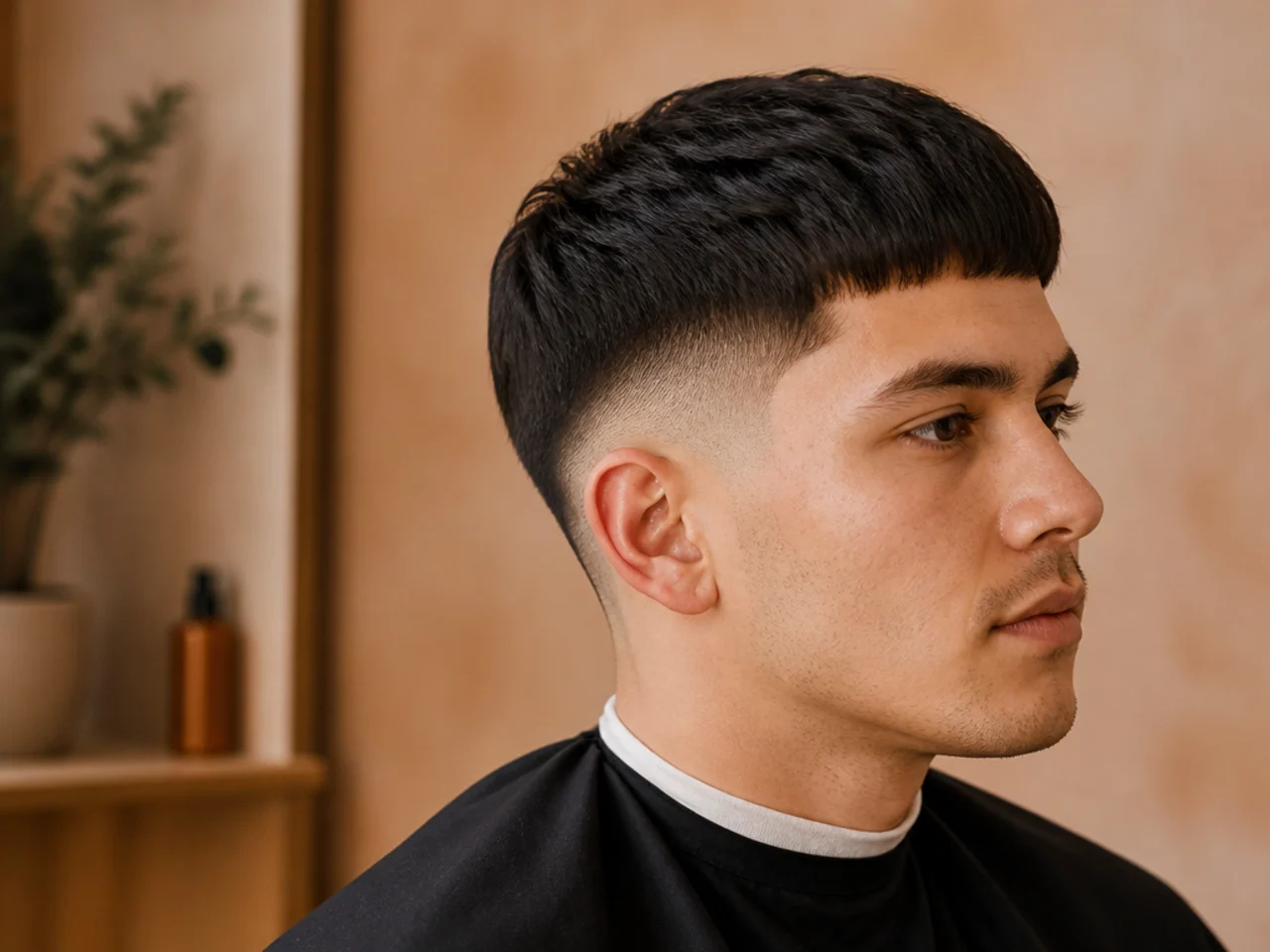
Expect $25–$50 for the first cut at a standard barbershop, $50–$75 at premium shops in major cities. Skin-fade touch-ups run $15–$30 every 10–14 days. Custom line designs add $10–$20.
How Long Does An Edgar Haircut Take To Grow Out?
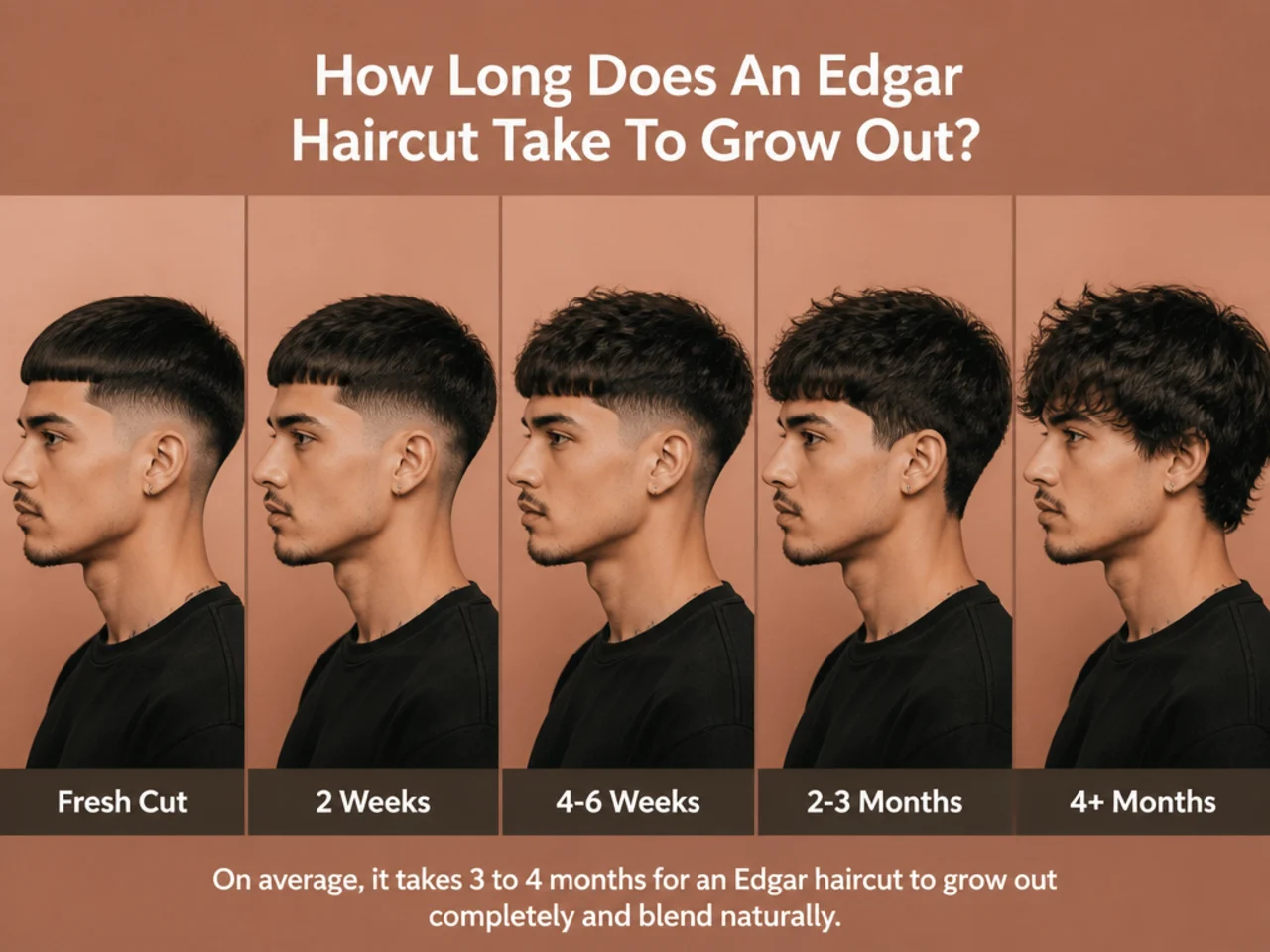
Fringe grows past the brows in 4–6 weeks. The fade blends into surrounding hair in 6–8 weeks. Full transition to a different cut takes 3–4 months — book a shape-up halfway through so it grows out cleanly, not shaggy.
Can I Get An Edgar Haircut With a Receding Hairline?
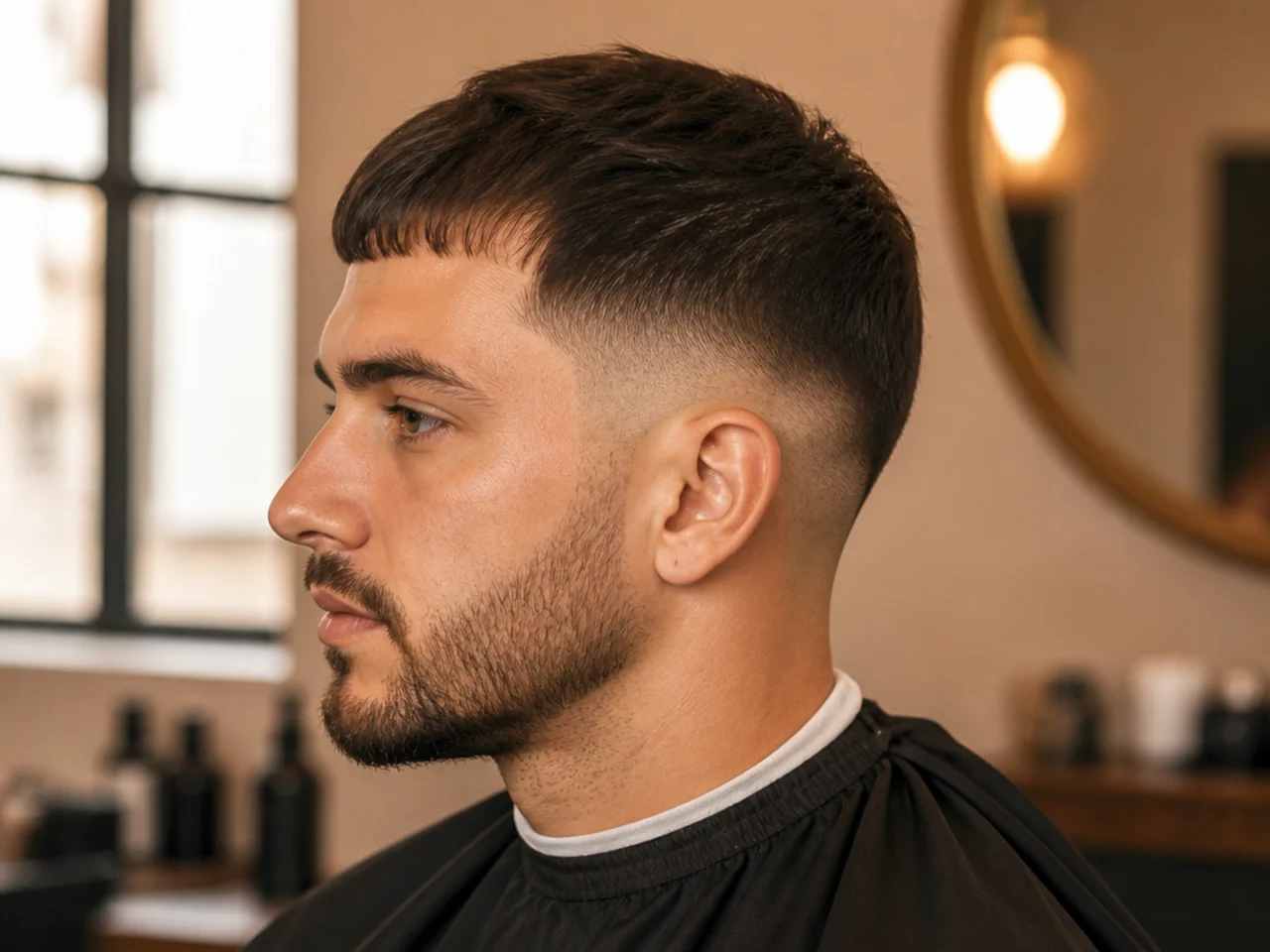
Yes. The blunt fringe hides a receding front hairline better than most cuts because it covers the corners. Ask for a slightly longer, textured fringe rather than laser-straight — it looks less deliberate over receded temples.
What's The Difference Between An Edgar Cut And A Caesar Cut?
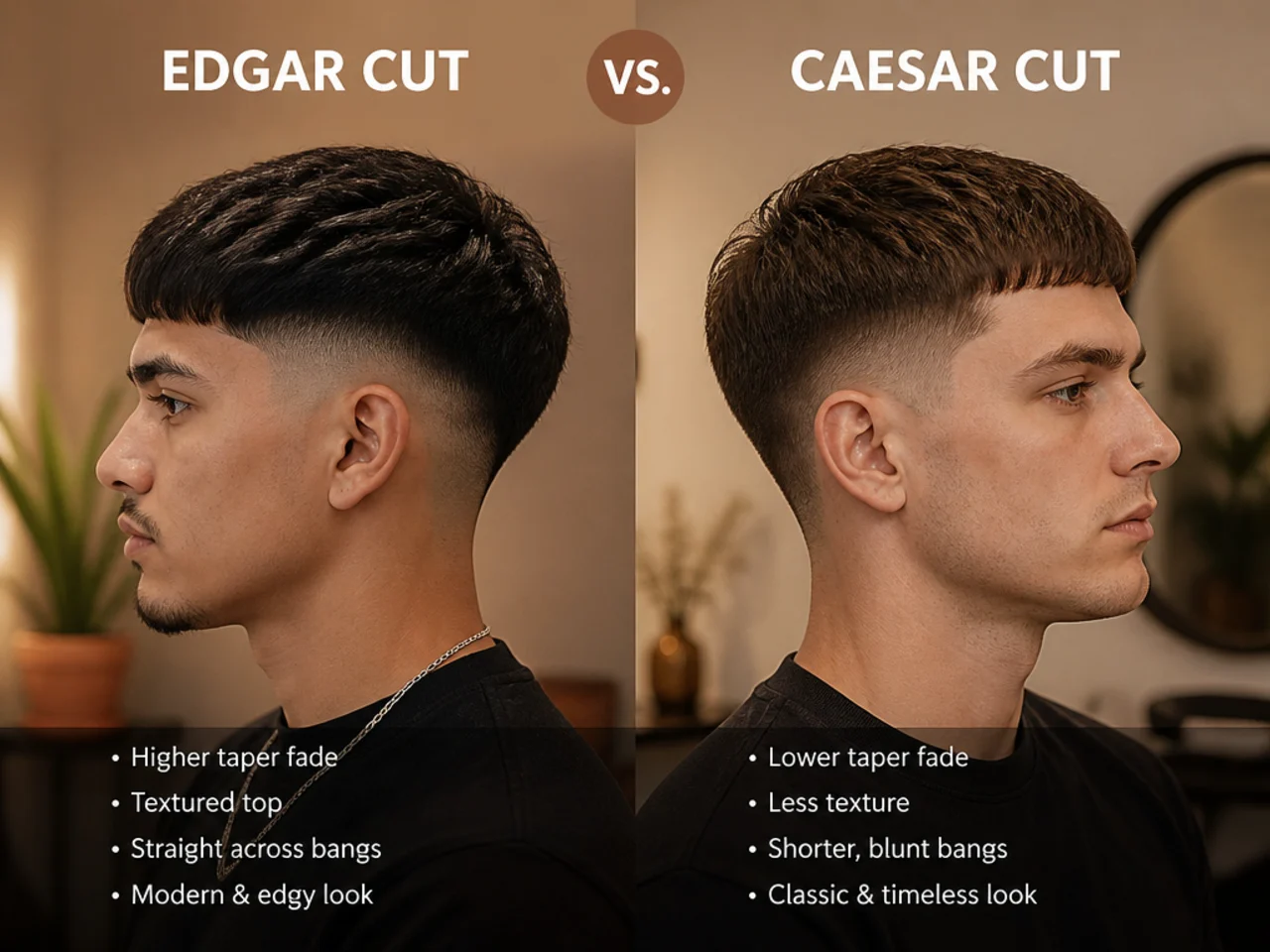
The Caesar has a short, forward-brushed fringe with soft edges. The Edgar has a longer, blunter, sharper-edged fringe with modern fades. Caesar reads Roman-classic. Edgar reads modern-geometric. The hard horizontal line across the forehead makes it an Edgar.
Does An Edgar Haircut Work For All Hair Colors?
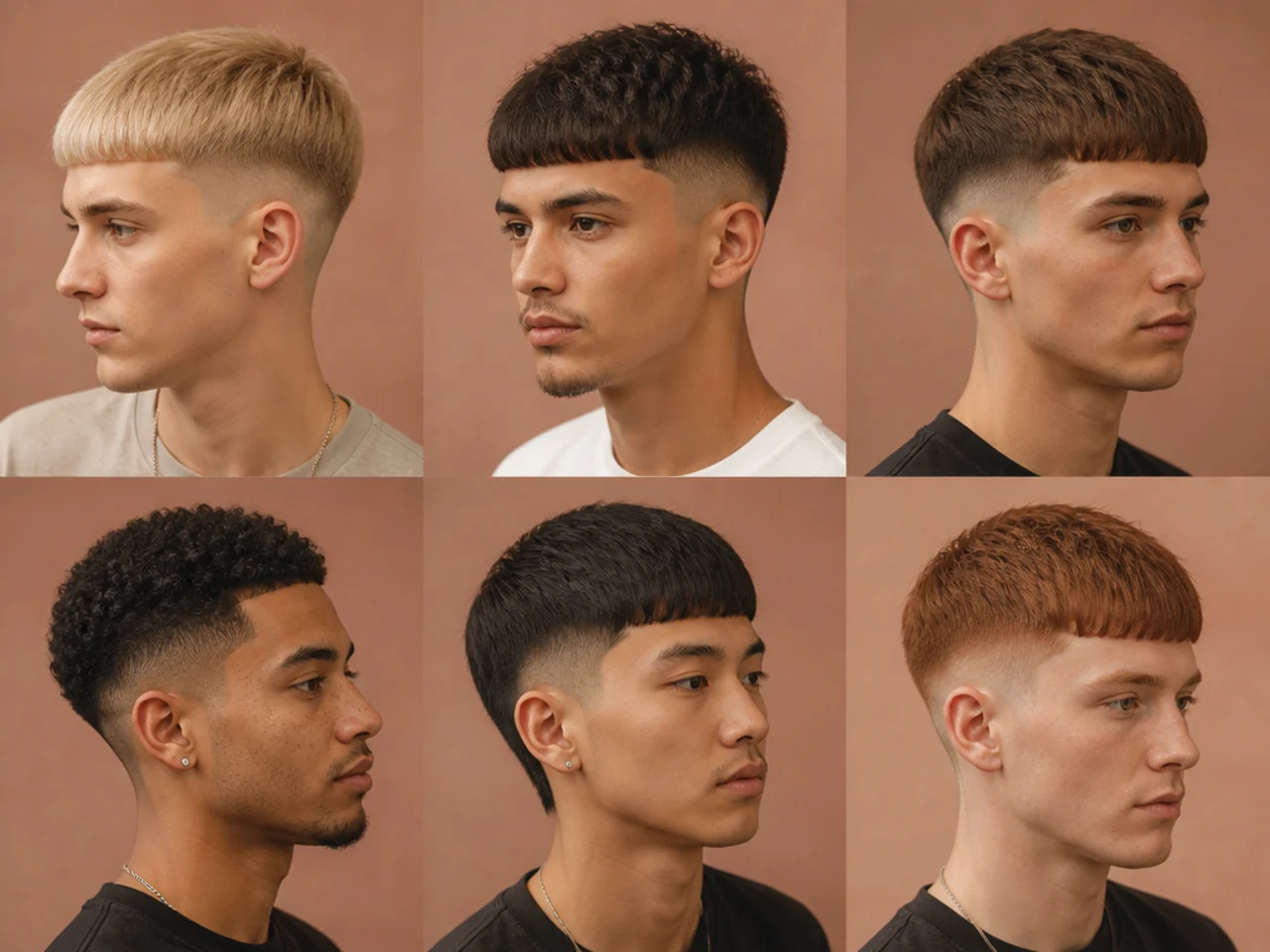
Yes, but contrast changes the read. Dark hair against a skin fade looks sharpest. Blond and platinum soften the geometry — pair with a skin fade to keep the line visible. Gray hair often looks the most polished version.
How Do I Know If An Edgar Haircut Will Suit Me?
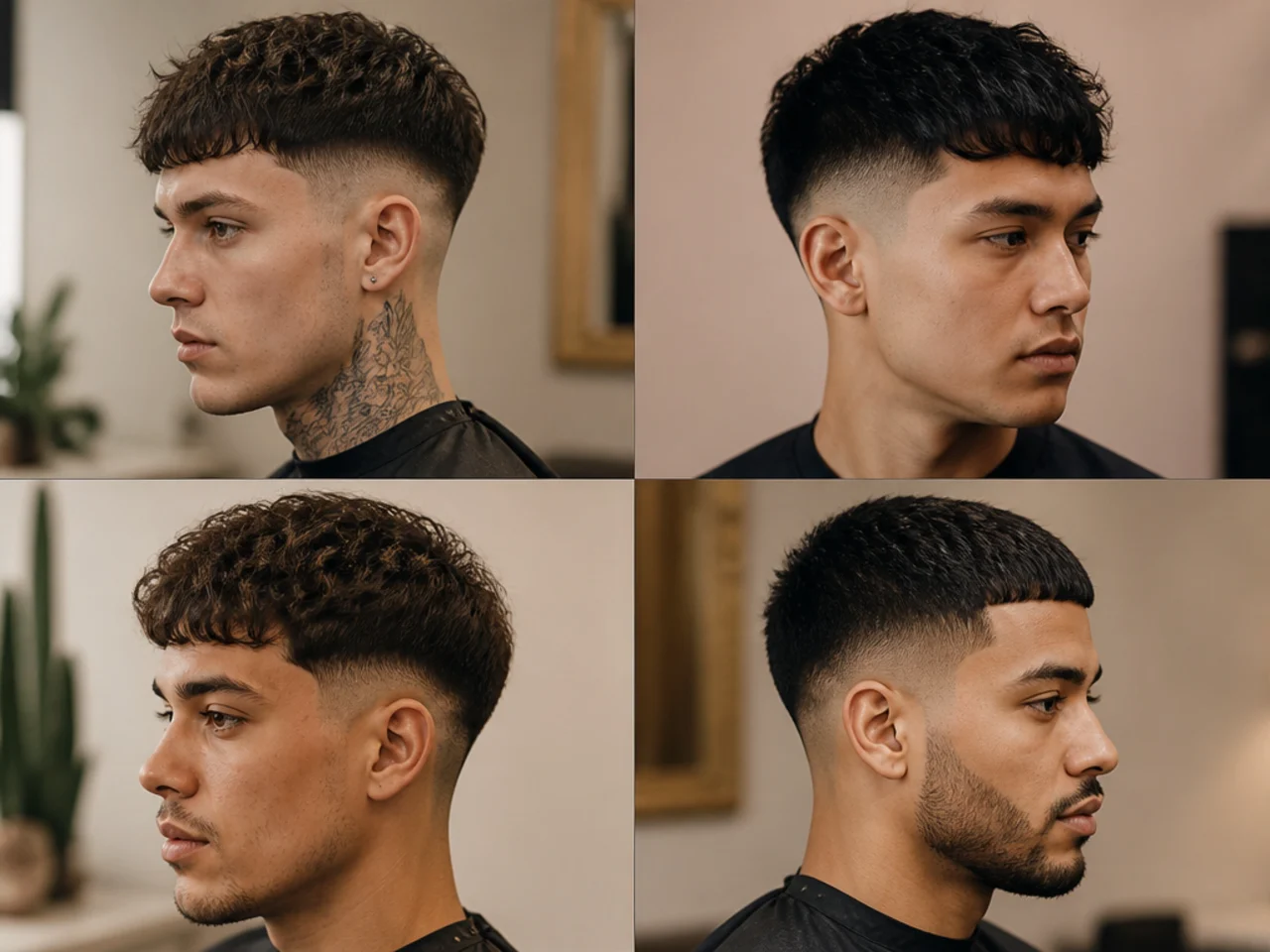
Check three things: face shape (square, oval, or diamond wear it easiest), hair texture (straight to wavy holds the line), and maintenance appetite (willing to book touch-ups every 2 weeks?). Two out of three yes, book the cut.
Is The Edgar Haircut Appropriate For Professional Settings?
The full high-fade version reads young in conservative offices. The Low Fade or Mini Edgar with a short fringe reads professional almost anywhere. Creative industries — design, media, tech — accept the full version.
Why Do They Call It An Edgar Haircut?
Most cited origin is a 2010s meme referencing a character named Edgar, though the exact naming path is debated. What's clear: the cut came out of takuache culture in Texas and California and picked up "Edgar" as its label before spreading nationally.
What Is The Gen Z Male Haircut Called?
Depending on the year and region, the answer changes. The Edgar sits at the top of the list along with the broccoli cut, comma haircut, and mullet variants. Most-requested teen cut in barbershops since 2022.
Conclusion
One cut, 25 dialects. The blunt fringe never leaves — the fade, the top length, the texture, and the extras (line-ups, mullets, colors, hard parts) do the varying. Pick the variation that matches your face and your daily effort. Book the touch-up before it's overdue.
New to the cut? Start with the Mid Fade Edgar and a brow-length fringe. Already run the classic? The Textured Top or Long Top expands your options without changing the signature. Walk in with a reference photo and the specific fade height — you'll walk out with what you asked for.