5 Steps to a Timeless Professional Haircut
A five-step guide to booking a timeless professional haircut for men — the shape, the reference photo, the exact language for your barber, and the routine that keeps it sharp.
In this article · 14
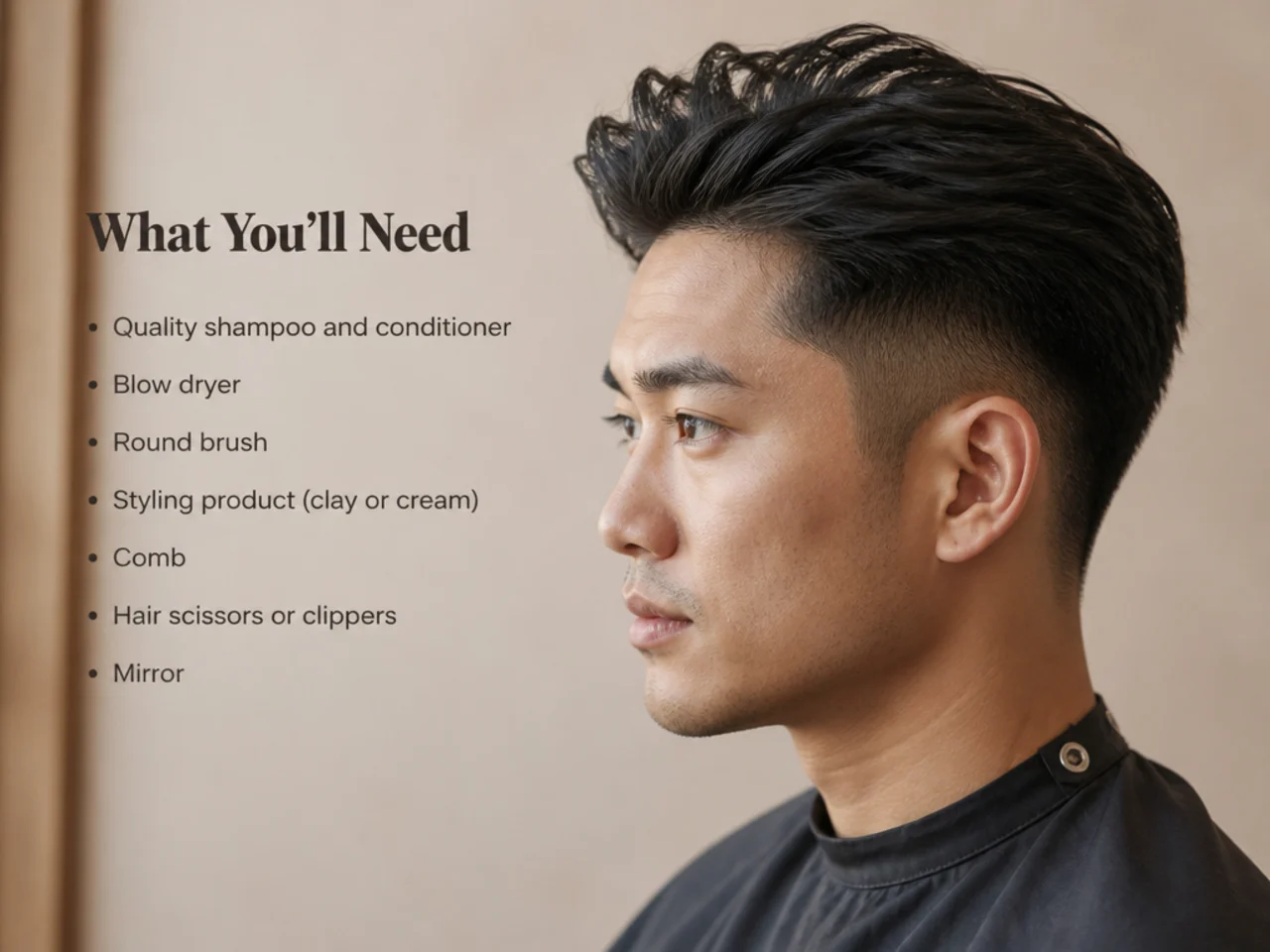
- What You'll Need
- Step 1: Pick a Shape That Suits Your Face
- Step 2: Build a Two-Photo Reference Sheet
- Step 3: Translate the Photo Into Numbers
- Step 4: Book the Right Barber for Timeless Cuts
- Step 5: Style It the Same Night You Leave
- Troubleshooting Common Timeless-Cut Mistakes
- FAQ
- What makes a haircut timeless instead of trendy?
- Which cut is the safest choice for a professional setting?
- How often should I re-cut a timeless professional haircut?
- Can I get a timeless professional haircut with curly or wavy hair?
- What top length should I ask my barber for?
- What products do I actually need for a timeless professional cut?
A timeless professional haircut is the one you can wear to a wedding, a Monday standup, and a first date without changing anything except the shirt. The shape has to hold under pressure — daylight, group photos, a hot commute — and read considered rather than styled. This is the five-step booking guide barbers wish clients used: how to choose the shape, gather the right photos, translate them into numbers, find a chair that will do it well, and style it so it looks like you didn't try.
What You'll Need
Before you sit in the chair, get five things in front of you. Skip any of them and the cut you leave with is the cut the barber pictured, not the one you did.
- Two reference photos — one three-quarter front angle, one side profile. Screenshots from a stylist portfolio work better than celebrity photos, because celebrities get retouched.
- A mirror check on your part. Push your dry hair straight back with both hands, then let it fall. It will settle along your natural cowlick — that's the part your barber should follow.
- A tape-measured length in inches. Two, two-and-a-half, three. Say the number, not "medium."
- A calendar with the next haircut already blocked — four to six weeks out, before you forget.
- A basic product kit at home. One matte clay, one medium-hold pomade, a fine-tooth comb, and a boar-bristle brush cover every timeless cut on this list.
That's the whole toolkit. Everything else is instructions.
Step 1: Pick a Shape That Suits Your Face
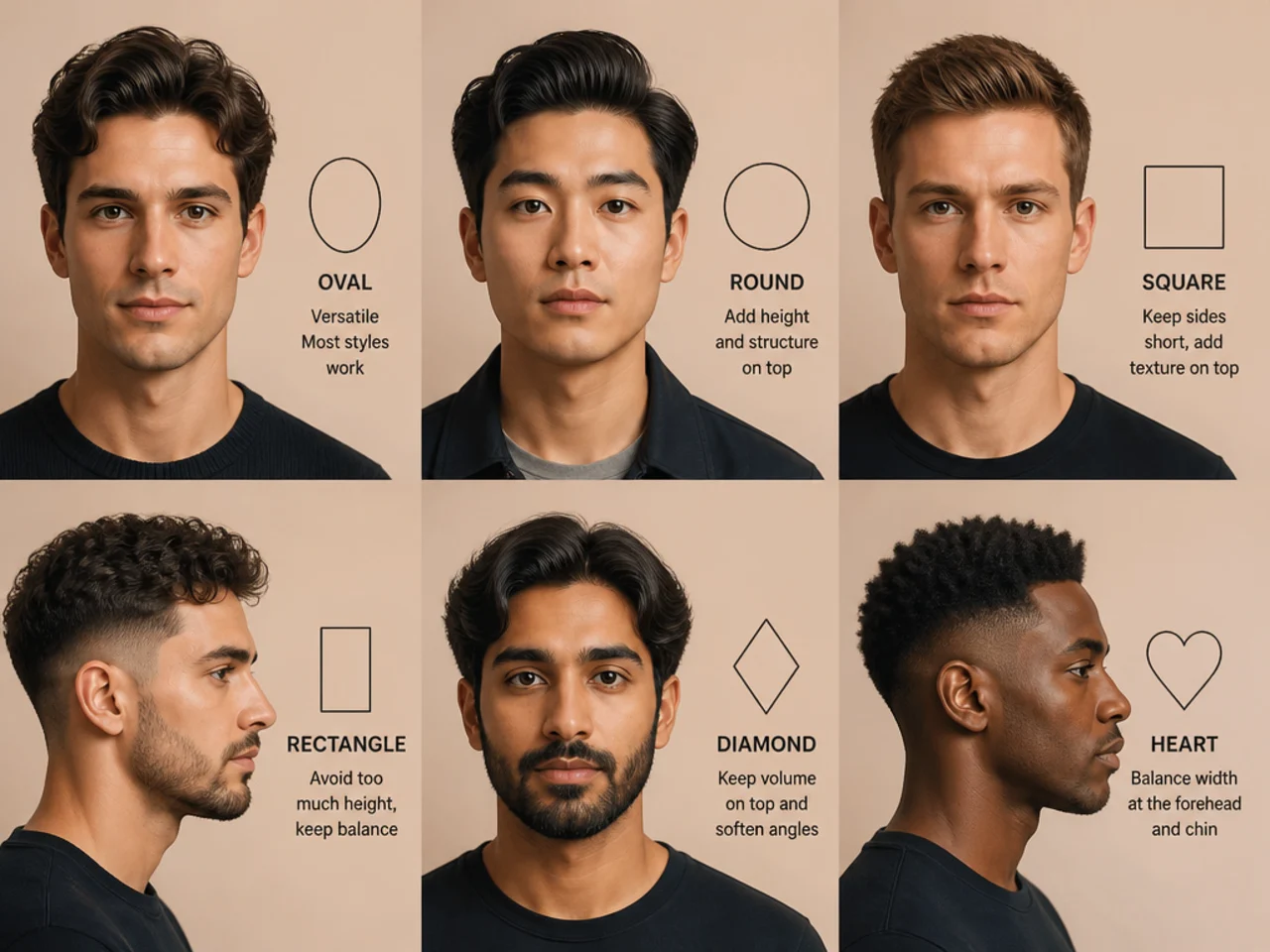
The mistake most guys make is picking a cut from a trending Pinterest board without checking whether it flatters their face. A timeless professional haircut men actually keep for years is one that works with the head, not against it. Start with your face shape.
Oval faces are the easiest to cut for. Almost every classic works — the ivy league haircut, a scissor-tapered side part, a crew cut, or a comb over all read balanced.
Square jaws want softer edges. Skip the disconnected undercut and the flat top. A scissor-tapered side part, a longer ivy league, or a classic gentleman's cut takes the sharp angle at the jaw and calms it. See the full range in the haircuts for square faces breakdown.
Round faces need vertical lift on top. Ask for a soft brush up, a modest quiff, or a taller side part with two to three inches on the crown. The height lengthens the visible face and stops the cut from reading wide.
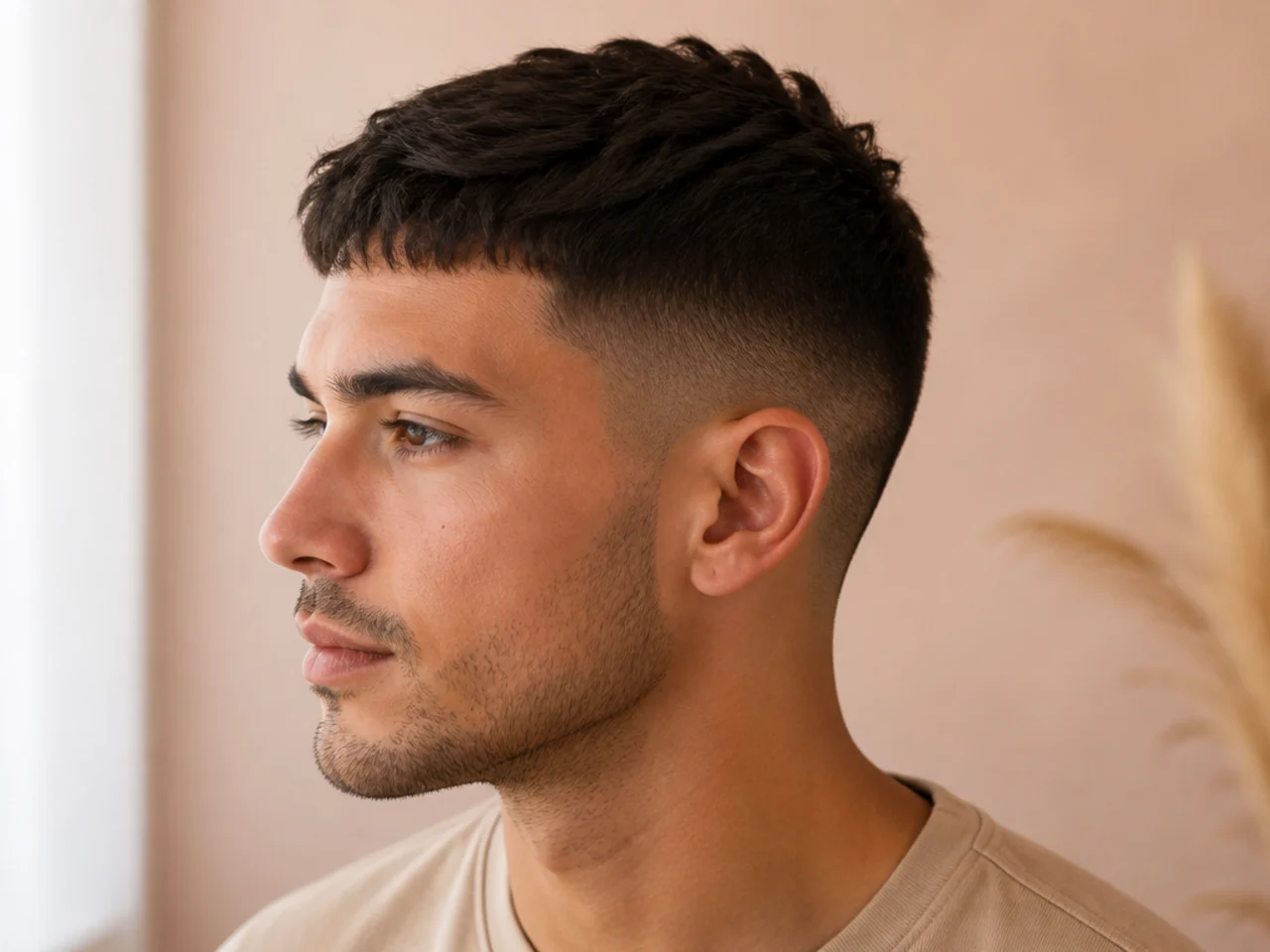
Long or narrow faces want the opposite — a shorter top with a horizontal fringe adds width. A crew cut, a caesar, or a French crop hits it without effort.
Then think about your hair type. Fine hair needs matte product and a shorter top so it doesn't collapse by 2 PM. Thick or coarse hair holds any shape you cut into it — you can push top length to three or four inches without losing the silhouette. Curly hair reads best in the same shapes but with slightly more length on top so the pattern sits, not springs.
Common mistake: picking a shape because it looks great on a stranger with a completely different face and hair type. If the reference photo shows fine straight hair combed into a glossy side part, and you have thick curly hair, you're going to leave the chair frustrated. Match the reference to your face and your texture, not just your taste.
Step 2: Build a Two-Photo Reference Sheet
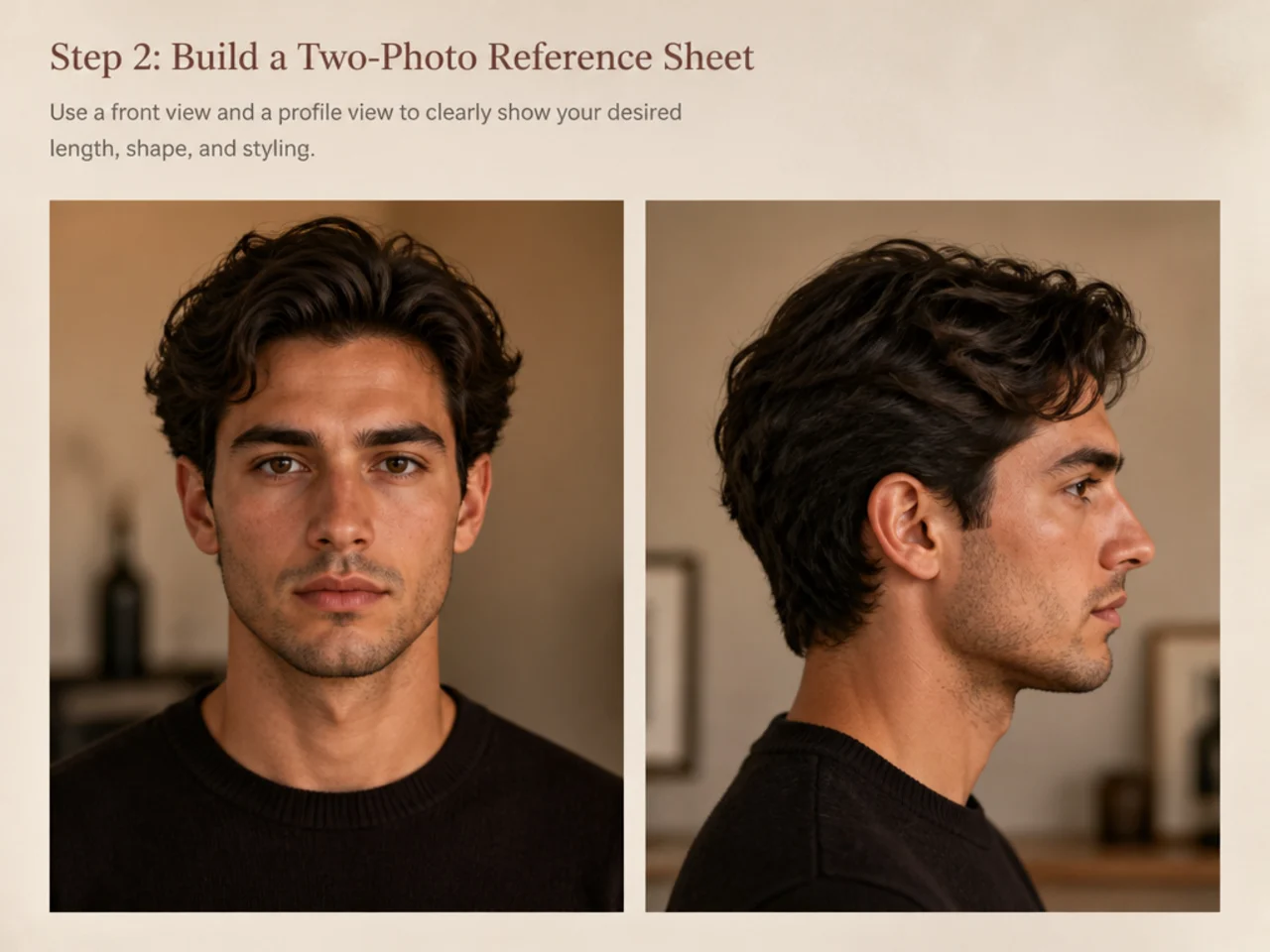
Barbers work faster and more accurately from two clear photos than from a mood board of thirty. The goal is to remove ambiguity, not add it. Here is what actually helps the person holding the shears.
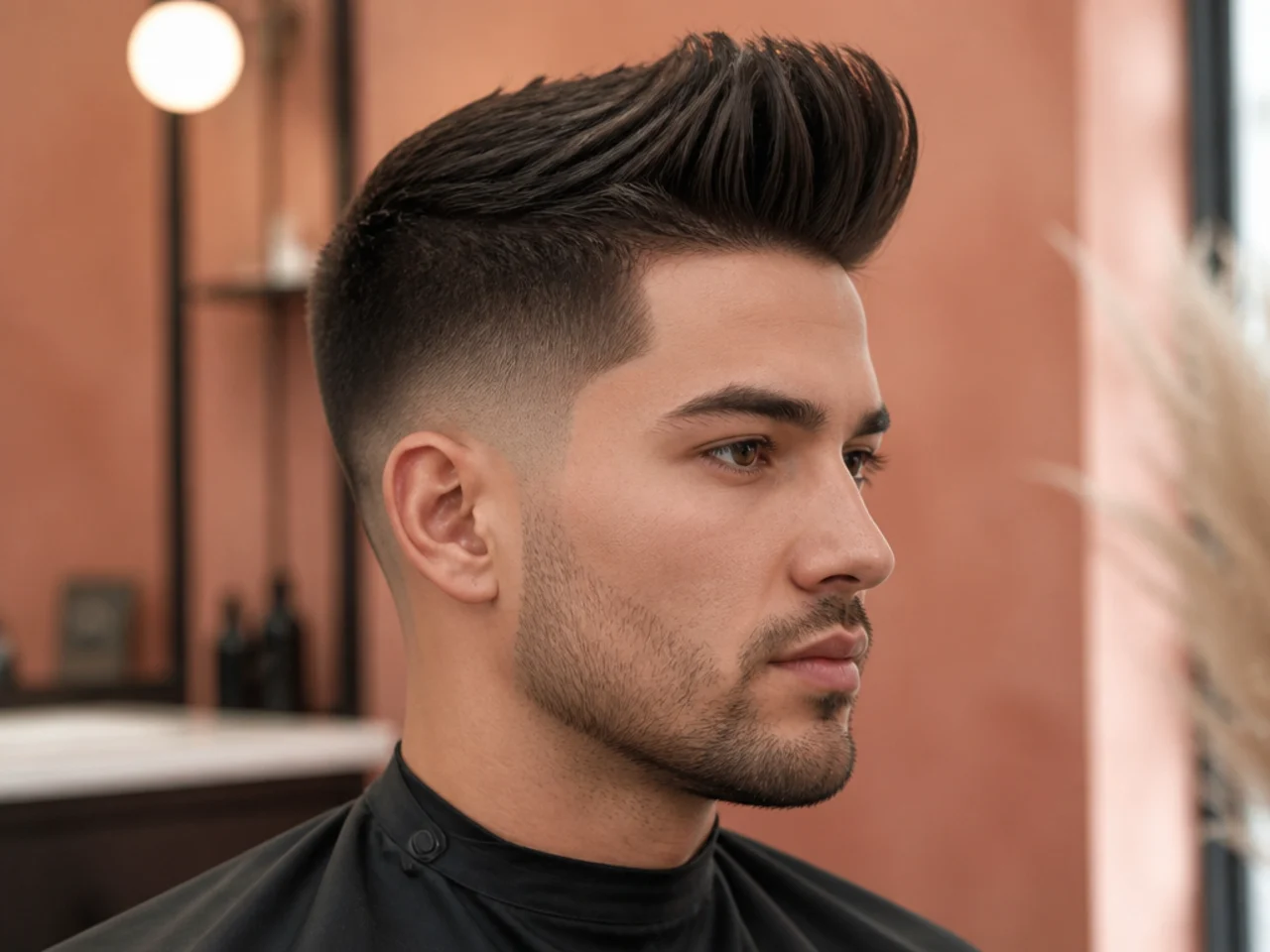
Photo one: three-quarter front. The head is turned about thirty degrees off camera-center. You can see the front sweep, the part, the temple, and the top length in one frame. This is the photo that answers "what does the shape look like from the outside world."
Photo two: side profile. Straight-on side. Barbers cut by geometry — the side profile tells them where the taper starts, how the sides connect to the top, and whether the neckline is squared, tapered, or blocked. Without it, they're guessing.
Choose subjects whose hair looks like yours before styling. If the reference has pin-straight fine hair and you have coarse thick hair, the photo lies about what you'll get. Screenshots from a real barber's Instagram portfolio are gold — the lighting is honest, the cuts are shot cold rather than after a styling session, and the models often have hair textures that match a wider range of clients.
Skip the celebrity carousel. Celebrities have full-time hairstylists, retouched photos, and cuts that were rebuilt three times before the shoot. Their look is not reproducible in a forty-five-minute appointment.
Save the two photos to your phone in a folder labeled with the cut name so you're not scrolling at the chair. If you already know the family — a side part, a crop, a shorter version — the 30 classic men's haircuts guide is the fastest place to find honest reference shots.
Common mistake: bringing ten photos and asking the barber to "combine them." Every extra photo dilutes the instruction. Two clear photos, one shape.
Step 3: Translate the Photo Into Numbers
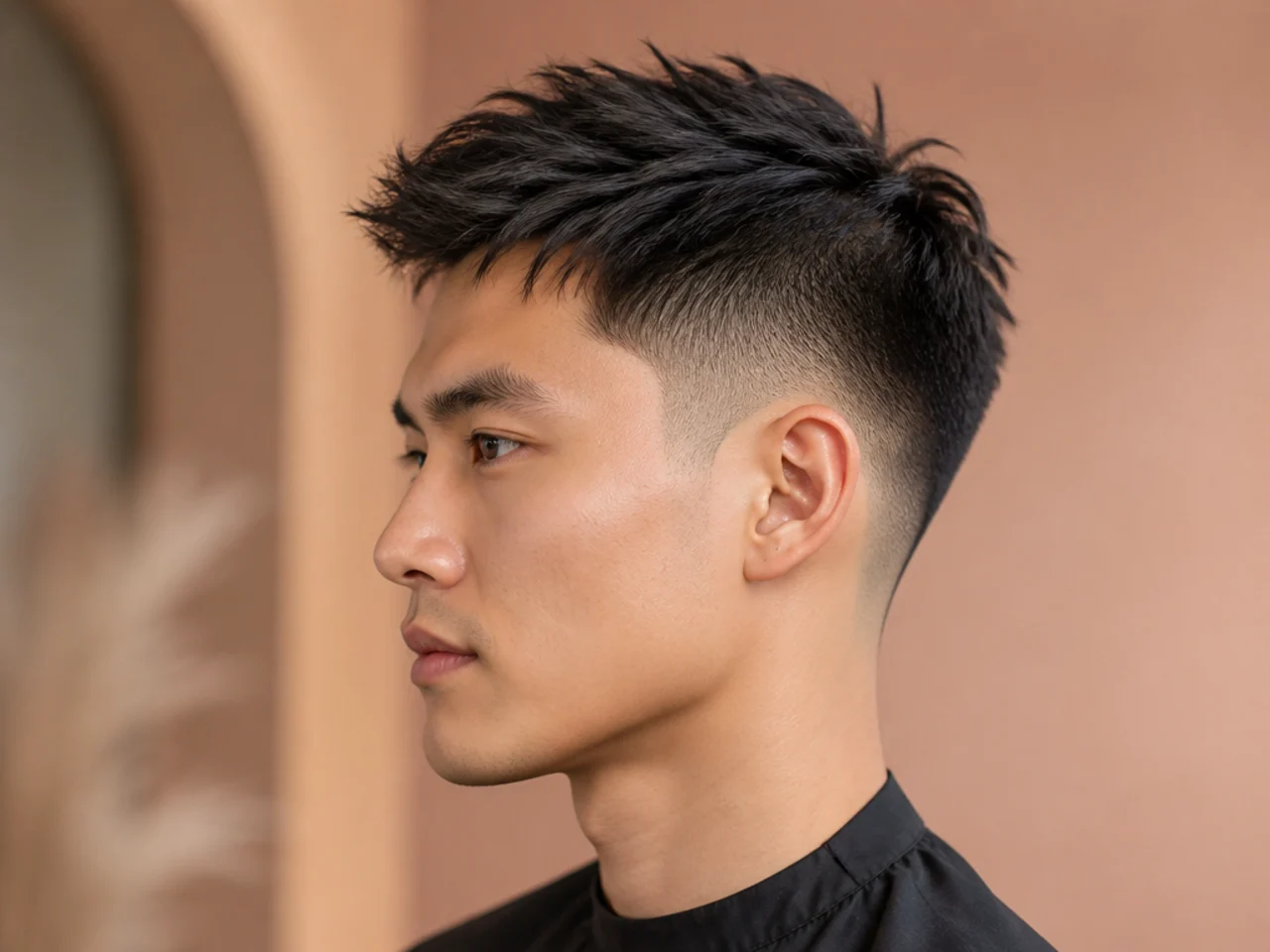
The photo shows the destination. The numbers get you there. This is the part most clients skip, which is why so many haircuts land in the "close but not quite" bucket. Say these five specifics out loud before your barber picks up the clippers.
1. The top length in inches. Not "medium," not "same as last time," not "a little shorter than the photo." Say "two-and-a-half inches on top." Barbers know exactly what that looks like. Vague words invite improvisation.
2. The side finish. Choose one of three:
- Scissor taper — sides graduated by scissor from a longer length at the crown to a shorter length above the ear. Softest read, holds the longest between cuts. This is the default for a timeless professional look.
- Clipper taper — sides cut with a guard (a #2 or #3), then tapered by hand at the perimeter. Cleaner than scissor, sharper than fade.
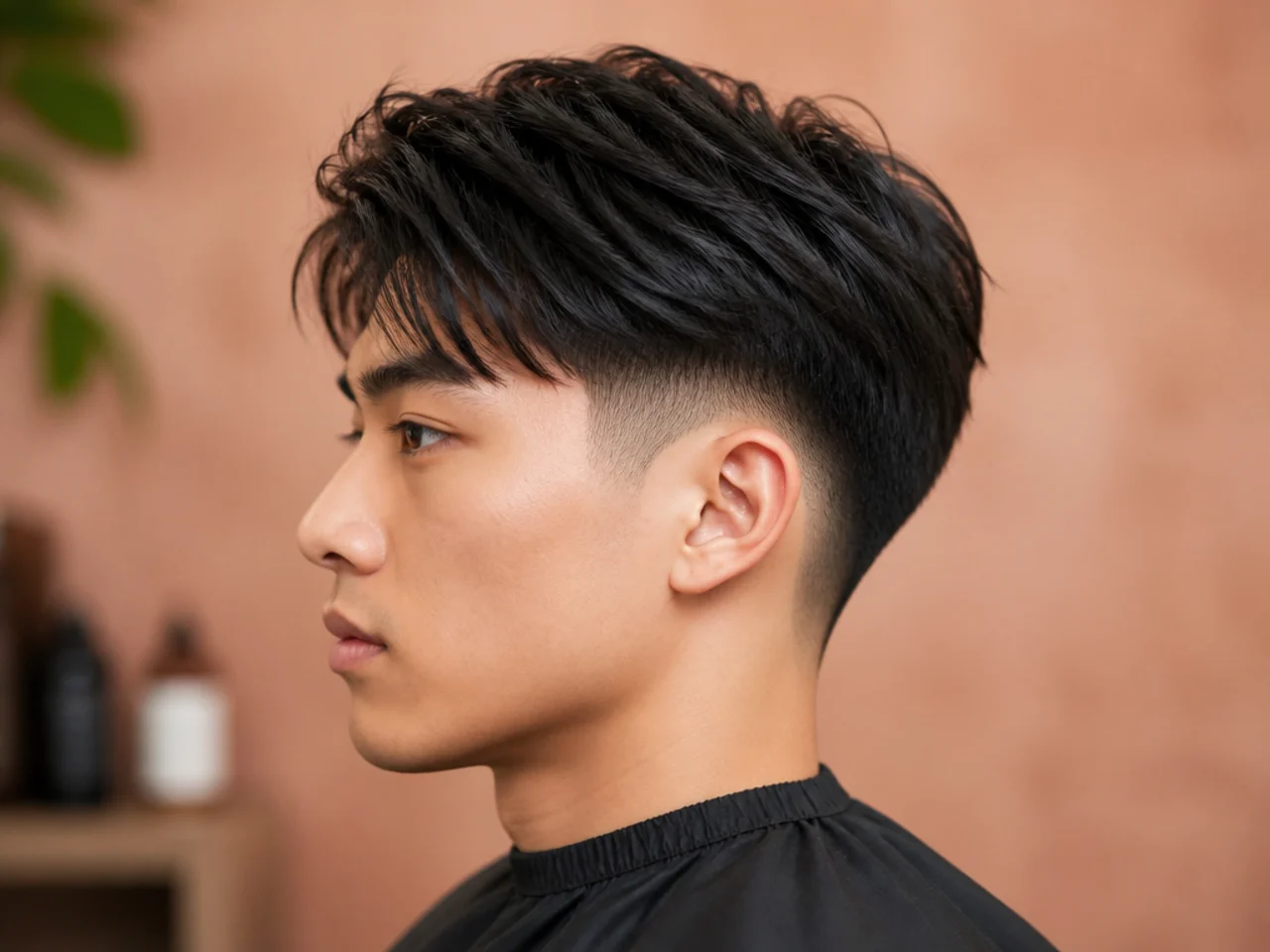
- Fade — sides blended from long to skin. If you go this route, specify the height: low, mid, or high. A low fade haircut is the safest professional choice — the transition sits under the temple and reads modern without looking loud.
3. The part. Point to your natural cowlick and say "natural side part along the break." For something crisper, say "razor-drawn hard part along the natural break." Don't fight your cowlick — a part that fights growth will re-settle wrong within an hour.
4. The neckline. Choose blocked (squared-off), tapered (softened into the neck), or natural (unshaved). Tapered reads cleanest for professional cuts and grows out the most gracefully.
5. The finish. Say "matte" or "shine." Matte pairs with clay or paste; shine pairs with pomade or cream. It also tells the barber what to check the shape against — a matte finish forgives movement, a shine finish needs the silhouette exact.
Read those five specifics before the cape goes on. If the barber pushes back on a spec — "a hard part isn't going to hold in your hair" — that's a good sign. Adjust and move on.
Common mistake: trusting the barber to "just clean it up." Cleanup is not a shape. A timeless cut is a specific silhouette — say what it is or you'll get whatever the barber cut before you sat down.
Step 4: Book the Right Barber for Timeless Cuts
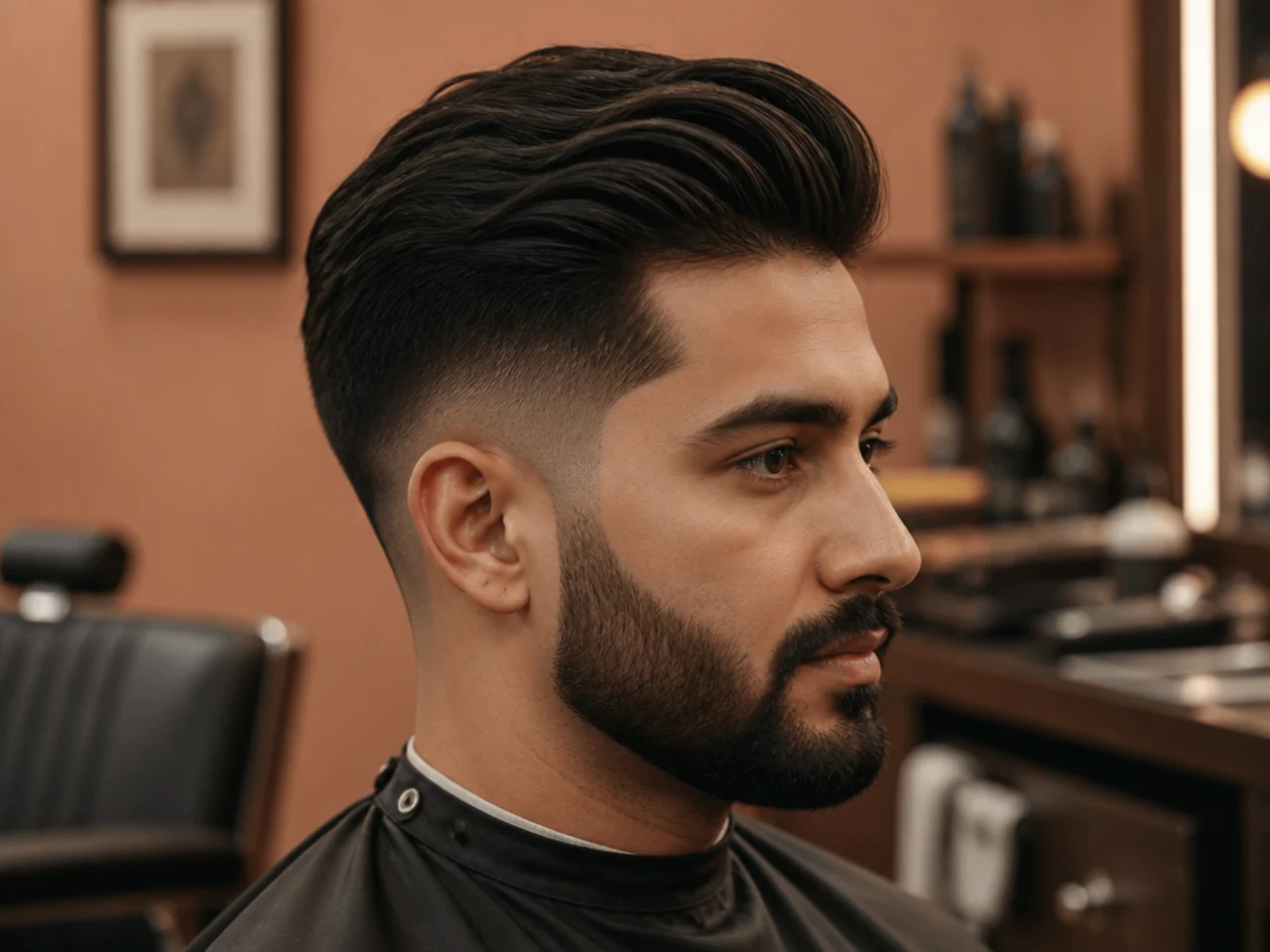
Not every barber has a repertoire built around timeless cuts. Some shops specialize in fades and designs, others in traditional scissor work, and the difference shows in the finished cut. For a timeless professional haircut, you want a barber who leans traditional — someone who reaches for scissors and a comb before they reach for a #1 guard.
Vet the shop before you book. Check three things on their Instagram:
- Ratio of scissor cuts to skin fades. If nine of every ten posts are high skin fades with hair designs, that shop is a fade shop. Great for what it is, wrong for what you want. A traditional barber's feed will have side parts, ivy leagues, crops, and clean tapers alongside the fades.
- Consistency of shape. Scroll a month of posts. If the same silhouette shows up on twenty different faces, that barber has a signature cut. If every post looks unrelated, they're chasing trends instead of building geometry.
- Neck and neckline quality. Zoom in on the neckline in three or four photos. Straight lines that follow the hairline, tapered edges that fade cleanly — that's a barber who cares about the hidden ninety percent of the cut.
Book a specific time. Tuesday through Thursday, mid-morning or early afternoon is when barbers are calmest. Friday evenings and Saturday mornings are the walk-in surge — even a great barber cuts faster than they'd like at those times. If you can't do a weekday, book the first appointment of the day on Saturday. Your cut is the one before caffeine wears off.
Ask for the barber by name. Once you find one who nails the timeless cut, book them again in four to six weeks — the how often should men get a haircut guide has cadence broken out by shape. Rotating barbers within the same shop is how you end up with three different versions of "your cut" over three months. Loyalty is the whole game with a professional look.
Tip on price: expect to pay above the $20 walk-in floor. Anywhere from $40 to $95 depending on your city, with a good tip. Cheap cuts on a timeless shape cost you two things — the botched cut itself, and the four weeks you'll spend growing it out.
Common mistake: booking whoever's available. If the barber you booked with cancels, don't automatically accept the substitute. Reschedule instead. A rushed replacement is the fastest way to end up with a cut you'll regret in every group photo for the next month.
Step 5: Style It the Same Night You Leave
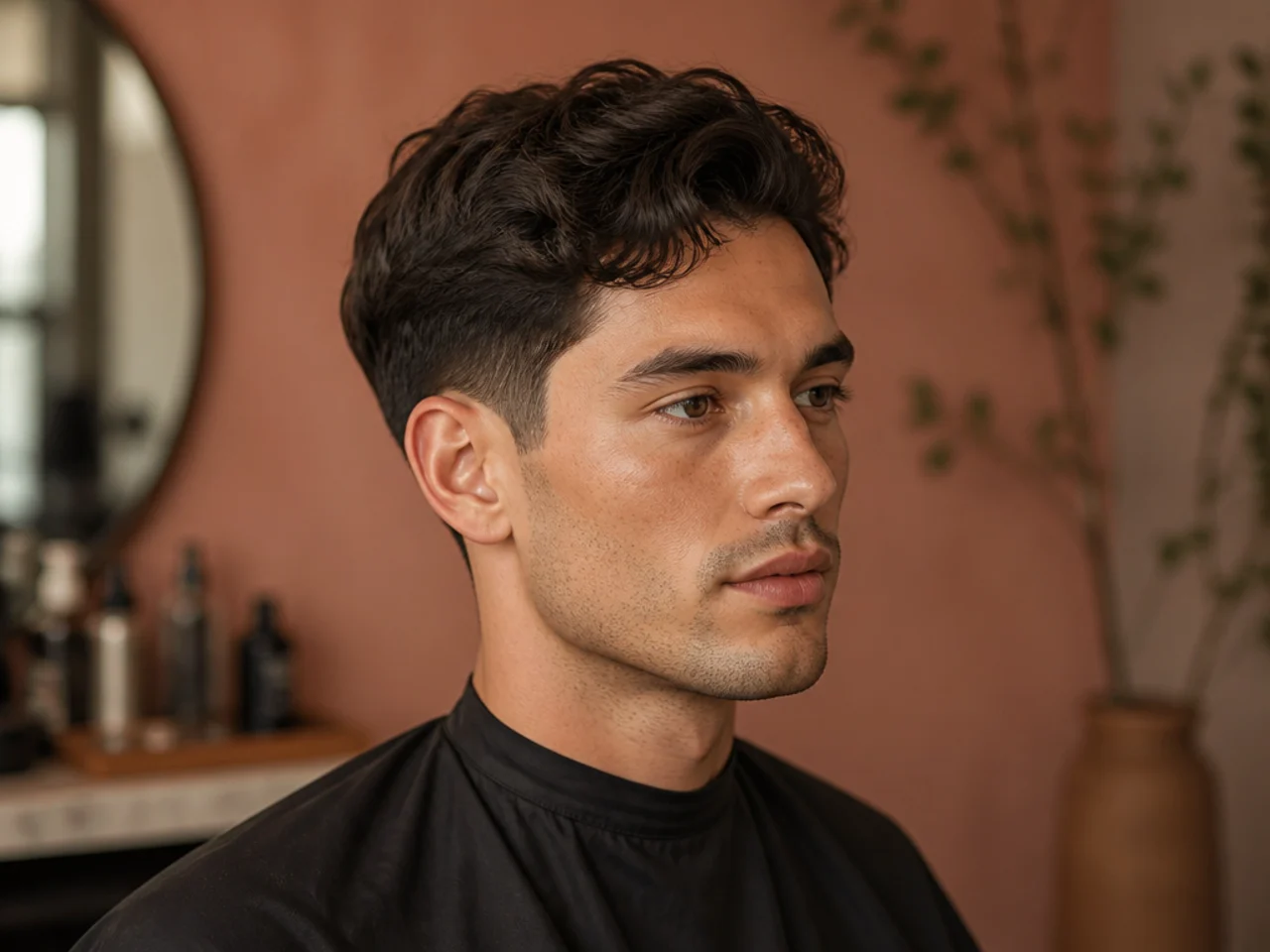
The barber styled your hair before you paid. Great — now go home and do it yourself. If you can't rebuild the shape in your own bathroom, the cut fails on day two. The five minutes you spend the same night is what turns a good chair session into a haircut you can keep for six weeks.
Wash it that night. Wet the hair, apply a pea of shampoo, rinse. Skip conditioner on the top length — conditioner weighs down fine and medium hair and softens the shape. Towel-dry until the hair is damp, not dripping.
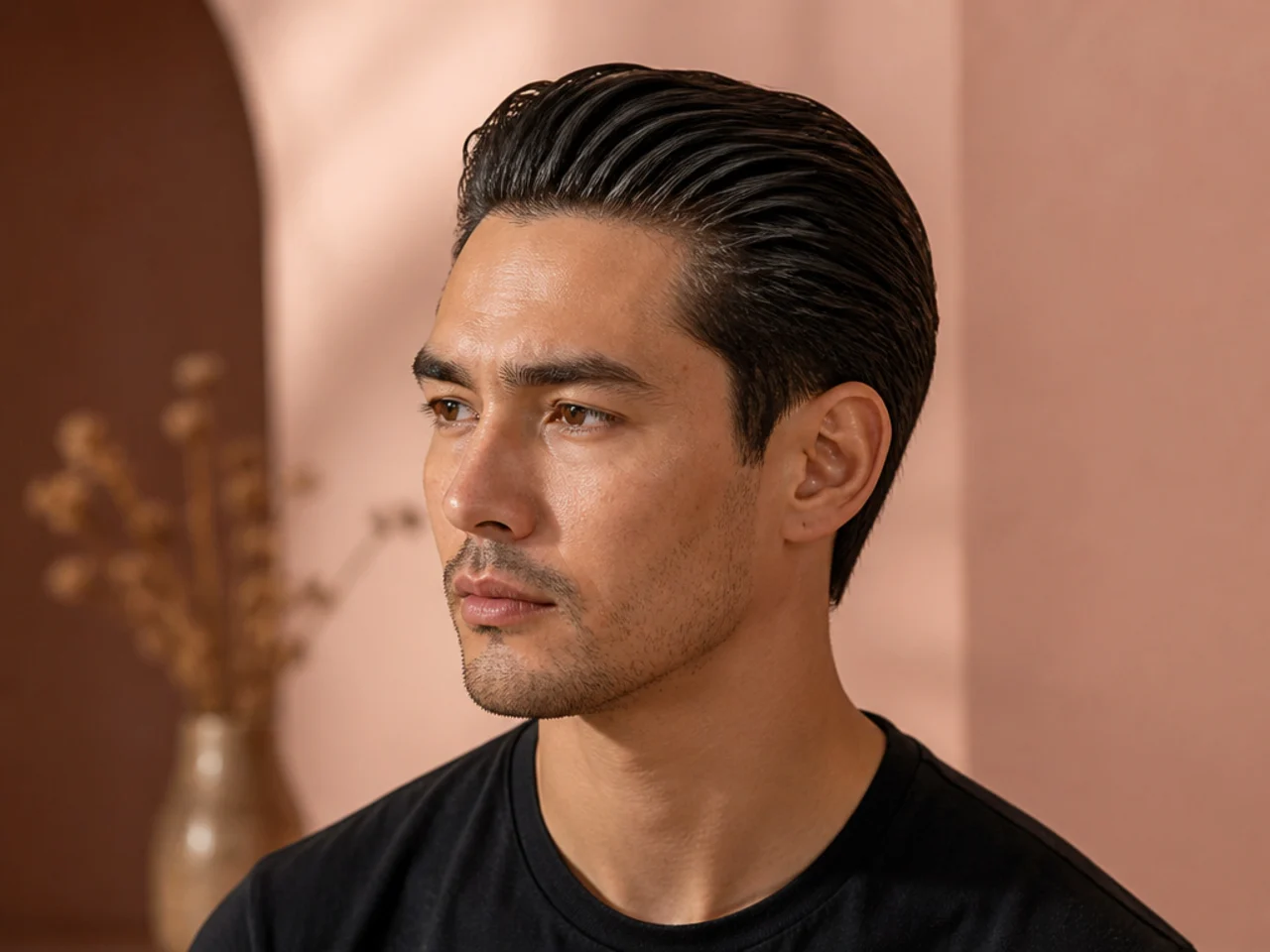
For shine styles (slick back, sculpted side part, pompadour, executive contour): scoop a nickel of medium-hold pomade. Warm it between your palms until it goes clear — clumps of pomade leave clumps in the hair. Rake it front-to-back with your fingers, then draw in the part with a fine-tooth comb. Blow-dry on low for twenty seconds against the direction of the comb to lock the shape.
For matte styles (ivy league, brush up, textured crop, gentleman's cut): apply a pea of matte clay to dry hair, not damp. Rub the clay between your palms until it disappears — you should not see product in your hands. Press it into the roots with your fingertips, then pull it through to the ends. Push the shape into place with your palm. No comb. This is the finish most timeless professional cuts want.
For crew, buzz, and high-and-tight length: skip product. Wash, towel-dry, run your hands through it once, walk out.
Practice the routine the night you leave. Then again the next morning. If you can rebuild the shape without looking at a photo by day three, the cut is a keeper. If you can't, take a two-minute video at the chair on your next visit and have the barber walk you through their finish. Most will do it without hesitation — they'd rather you look good in the wild than good only in their shop.
On the product side, the best hair clippers for men guide covers what to buy if you want to touch up your neckline between visits — one solid clipper set stretches every timeless cut in this guide by a week.
Common mistake: letting a barber load your hair with product you don't own at home. Ask what they used. Buy that exact category — not necessarily that brand, but the same type (medium-hold matte clay, shine pomade, sea-salt spray). Otherwise, day two is a guessing game.
Troubleshooting Common Timeless-Cut Mistakes
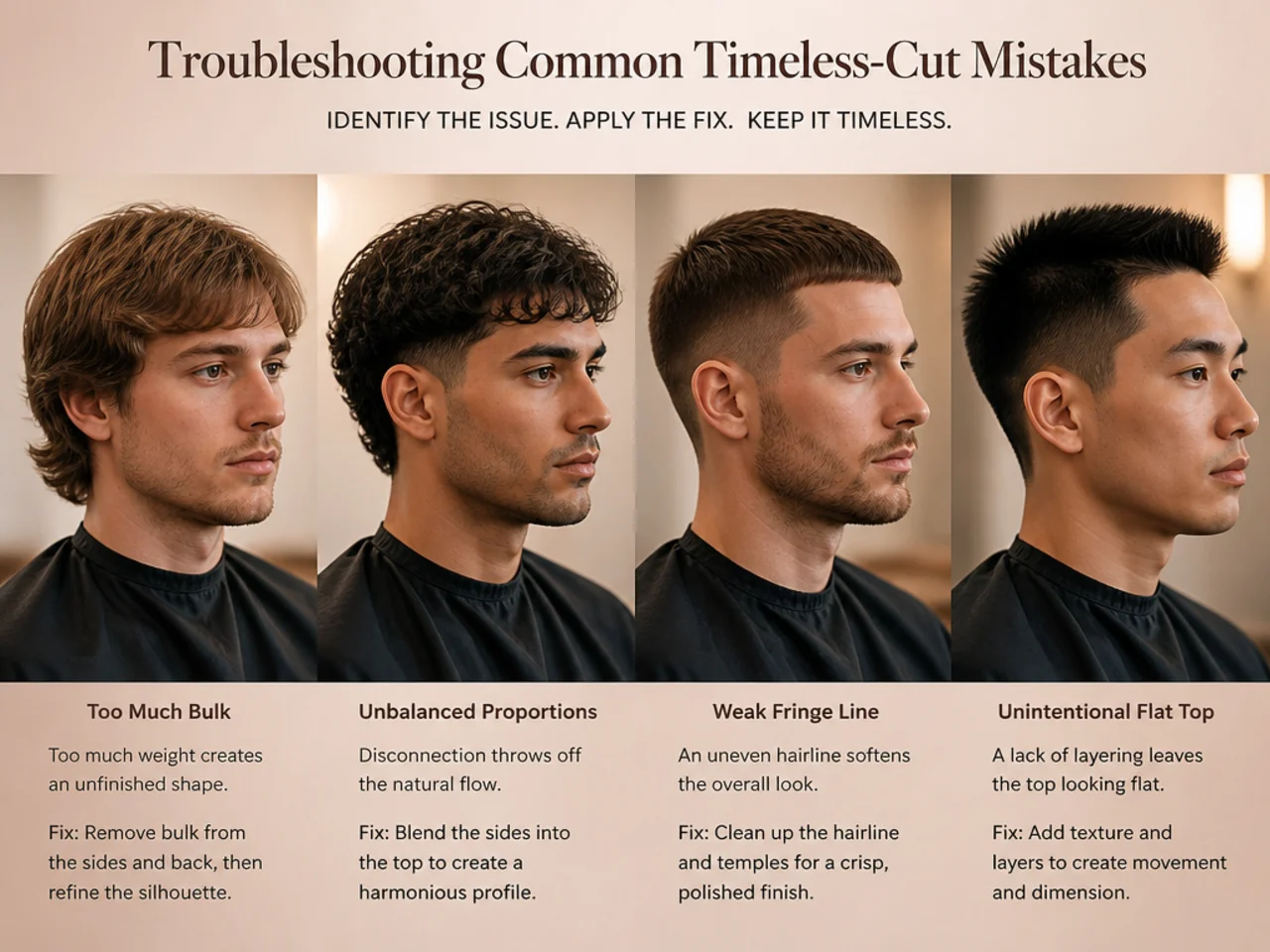
Every timeless cut has three or four ways it can fail. The fix is almost always small — a product swap, a repositioned part, an extra week between cuts. Read this before your first attempt so you know how to catch a problem before it grows out.
-
The part won't hold and keeps shifting. You're fighting your cowlick. Push your dry hair straight back with both hands, let it fall, and follow the settle line. Ask your barber to reset the part along that line next visit — the part that fights your growth pattern will always lose.
-
The shape looks flat by lunchtime. Fine or medium-density hair collapses under heavy pomade. Swap to a matte clay, apply to dry hair, and skip the comb. Matte adds grip without weight, and dry hair holds the shape hours longer than damp.
-
Top length looks great from the front, wrong from the side. The top wasn't graduated — it was cut to one length across the crown. Ask for point-cut ends and a slight graduation from front to back next visit. This is the difference between a crew cut and a "grown out crew cut."
-
Sides regrow faster than the top and throw the ratio off. Book a mid-cycle neckline cleanup at three weeks — most barbers will do it in ten minutes for $15 to $20, no full cut needed. Or buy the clippers and do it yourself with a #2 guard, following the natural neckline.
-
The cut feels "off" the day you leave. Wait three days before deciding. Freshly cut hair sits stiff for forty-eight hours and settles by day three. If it still reads wrong at day four, book a courtesy trim — most good barbers will fix a cut within the first week for free. Ask politely, bring the same photo you brought the first time, and point to what's different.
-
The cut ages you. Two things usually cause it: too much shine on top, or sides that are too short for the length on top. Swap to matte, and next visit ask for the sides half a guard length longer. That single change moves the read from "corporate" to "timeless" without touching the shape.
If none of the fixes land, the cut may not be the right shape for your face. Rebuild from step one — face shape decides everything, and a cut that fights your bone structure will never settle no matter how good the barber.
FAQ
What makes a haircut timeless instead of trendy?
Geometry does the work. A timeless professional haircut for men keeps short controlled sides, a top length that respects the head shape, and a silhouette that reads the same in a suit as it does in a t-shirt. It doesn't rely on a viral shape, a colored strip, or a design cut into the side to look intentional. It flatters the face and stays quiet — that's the whole test.
Which cut is the safest choice for a professional setting?
The scissor-tapered side part and the ivy league are the two safest bets in almost every office. Both keep the sides clean, sit around two to three inches on top, and photograph well in a suit. If you want it shorter, a crew cut with a graduated top does the same job at half the styling time.
How often should I re-cut a timeless professional haircut?
Every four to six weeks for a scissor-tapered side part, ivy league, or comb over — that's where the shape starts to soften. Every two to three weeks for a crew, buzz, or high-and-tight. Book the next appointment before you leave the chair. Waiting past six weeks on any classic cut is when it stops reading sharp.
Can I get a timeless professional haircut with curly or wavy hair?
Yes — the top length changes, but the shape doesn't. On curls, ask for three to four inches on top so the pattern reads defined instead of poofy, keep the sides scissor-tapered, and skip pomade. A curl cream applied to damp hair and air-dried gives the same "put-together" read as a straight-hair pomade finish.
What top length should I ask my barber for?
Two to three inches on top hits the sweet spot for almost every timeless professional cut — long enough to comb into a part, short enough to hold shape through a workday. Give your barber the number in inches, not "medium." Precision language leads to precision cuts.
What products do I actually need for a timeless professional cut?
Three things cover every version: one medium-hold pomade for shine styles, one matte clay for texture styles, and a fine-tooth comb for the part. A light-hold hairspray is optional if your hair fights the shape by lunchtime. Skip the multi-product bathroom shelf — timeless cuts need less product, not more.